Dem Bones, Dem Bones…

Dem dry bones!

I hoped to be able to visit the Waco Mammoth National Monument on my way out of town. It opened at 11:00 AM, and it all hinged on whether they had RV parking. I called right when they opened and I was informed that they did, indeed, have room for me to park. I finished getting hitched up and I headed over.
Mammoth site sign

I have the American the Beautiful pass that entitles me to enter all the national parks and monuments. I was a little annoyed that I had to pay to enter the mammoth site. They require that visitors enter with a guide. I did get a $1 discount because I am over 55, so that took the sting away a bit.

However, the guide, Dava, was fantastic – and totally worth the $4 I paid for the tour. She was a real scholar and very enthusiastic about her subject matter.

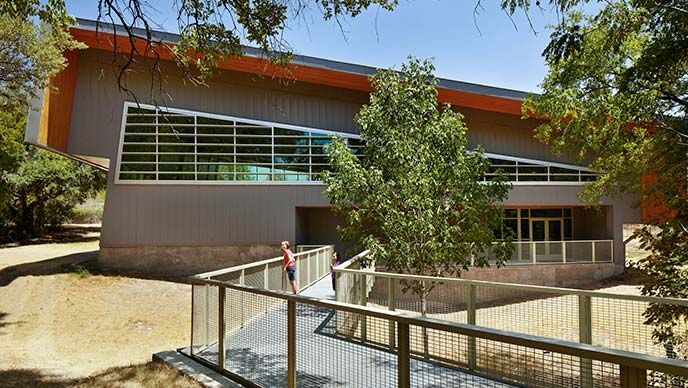
While she walked us over to the climate-controlled, air-purified building that is over the dig, she told us that these bones from mammoths that lived here 67,000 years ago during the last ice age were special because it is the site of the nation’s only recorded discovery of a “nursery herd” of Columbian mammoths.

Mammoths are closely related to elephants and they displayed the same behaviors as the elephants that are alive today. Columbian mammoths are the largest of all the mammoths.

Elephant herds are matriarchal, and the oldest mammoth is the leader. She is the one who has the greatest knowledge that is needed to preserve the herd. She knows where the dangers are and where the best food is.

This site was in a perfect spot for the herd. It was located between the Bosque River and the Brazos River, so there was plenty of water for drinking and for growing forage. The temperatures in this area during the Pleistocene era weren’t as cold as they were further north. Dava told us that the pleasant weather we were enjoying that day wouldn’t have been uncommon. The highs wouldn’t have been as high as they are these days.

The other feature that made this a good area for the mammoths was the lack of caves. Caves harbored predators. So, there was a lot of food and water and no predators. So, how did 24 Columbian mammoths end up here?
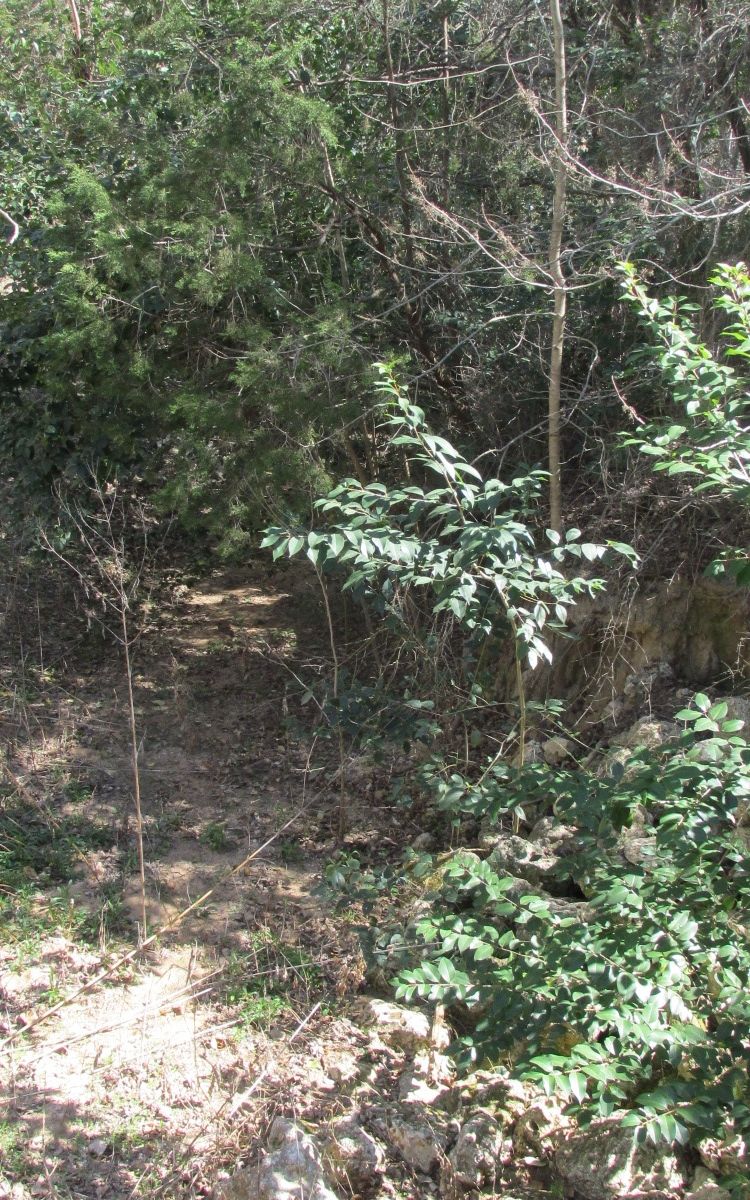
mammoth original dig

This is where the first bones were discovered. Two young men, Paul Barron and Eddie Bufkin, were exploring in this ravine. One was looking for copperheads, that his sister said were coming up to her house from the creek bed. He got his friend to come along with the promise that he could keep any arrowheads he found. I don’t know if they found snakes or arrowheads, but they did find a large bone sticking out of the ravine bank. They had the common sense to take the bone to Baylor University.
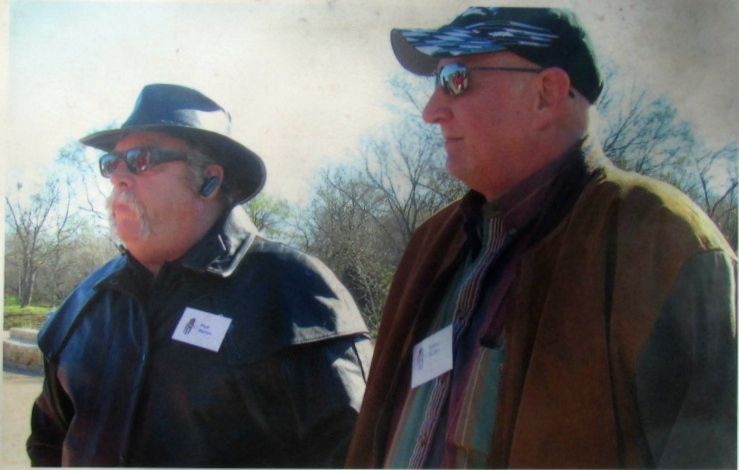
These are the teenagers all grown up at the dedication

The staff at Baylor identified it as a femur bone from a Columbian mammoth, and they obtained permission from the land owner to have a dig in the ravine. They only intended to do it for one season, but the site was so rich in bones that the dig went on longer than they had originally thought.
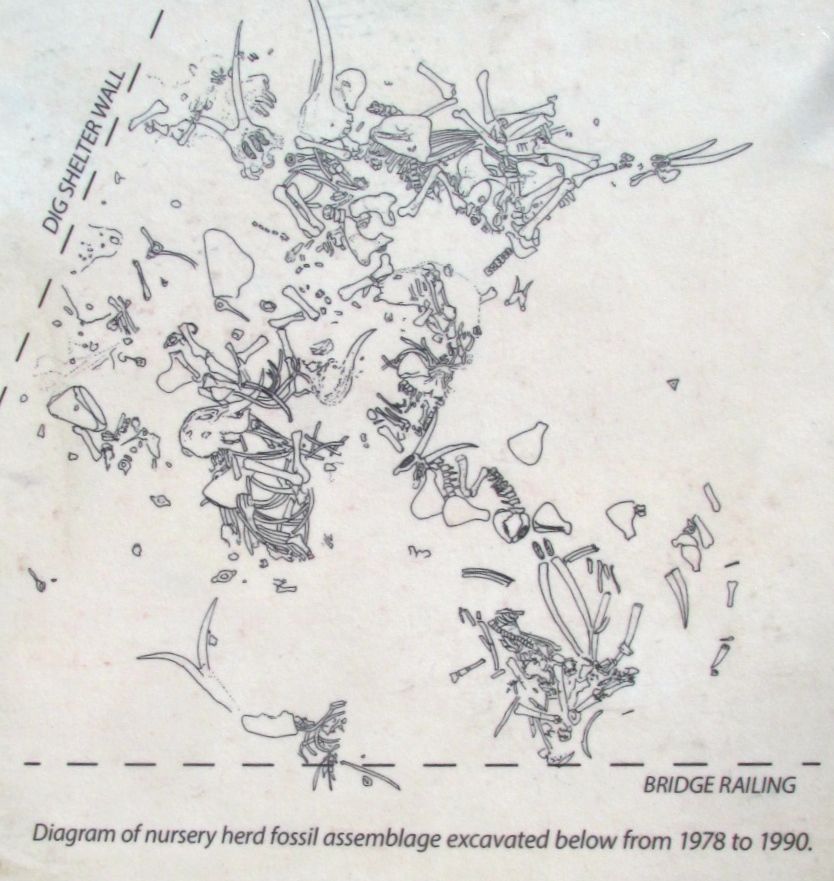
Diagram of nursery herd

While we were standing on the bridge, looking at the original dig site, Dava explained that this diagram showed typical herd behavior. The adult females made a ring around the juveniles. The part that is blank, on the right center side, is still in the side of the ravine, awaiting excavation at some later date.

Paleontology is a lot like investigating a crime scene. When they put all the pieces together, they determined that the herd had gotten trapped in a mudslide and then drowned in a flood.

That is why the herd got into the nursery formation. They were trying to protect the juveniles.

All the bones that were in the diagram were eventually encased in plaster jackets and moved to Baylor University. They had to be moved as the ravine still had water that would flow through it at times.

Plaster jacket
Plaster jacket

Encasing the bones in plaster was necessary because these bones were sub-fossils. Dava told us that due to the mineral composition of the soil, they didn’t turn into the fossils we usually think of. These bones were very brittle and would easily turn to dust if the utmost care wasn’t taken. Sometimes they disintegrated anyway.

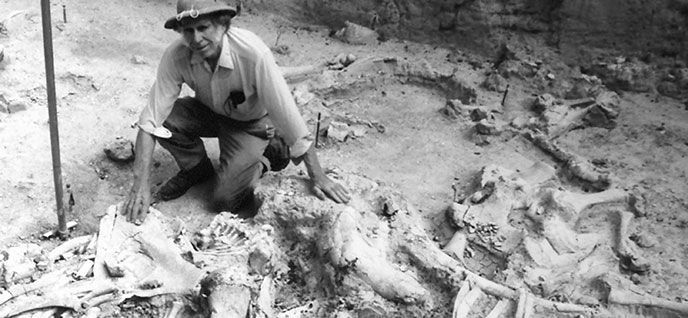
The part of the dig that was inside the building was essentially the work of one man, Ralph Vinson.
Ralph-Vinson-photo-by-Dominick-J688

From what Dava told us, Ralph kind of snuck in and continued to dig. This went on until he was given the job. The National Park Service website identifies him as a volunteer, but according to Dava, he was the one-man team that kept things going. He was a retired gym teacher who walked with a cane. She said that everyone assumed it was an old football injury. Actually, it was an injury sustained in a prisoner of war camp during World War II.

Ralph died in 2009 at the age of 87. According to the material I found about his work in the Texas Archeological Society newsletter, he contributed more than 14,000 hours, although the true number is much greater than that as he couldn’t be bother with signing in to get the credit for his work.
Building over th dig

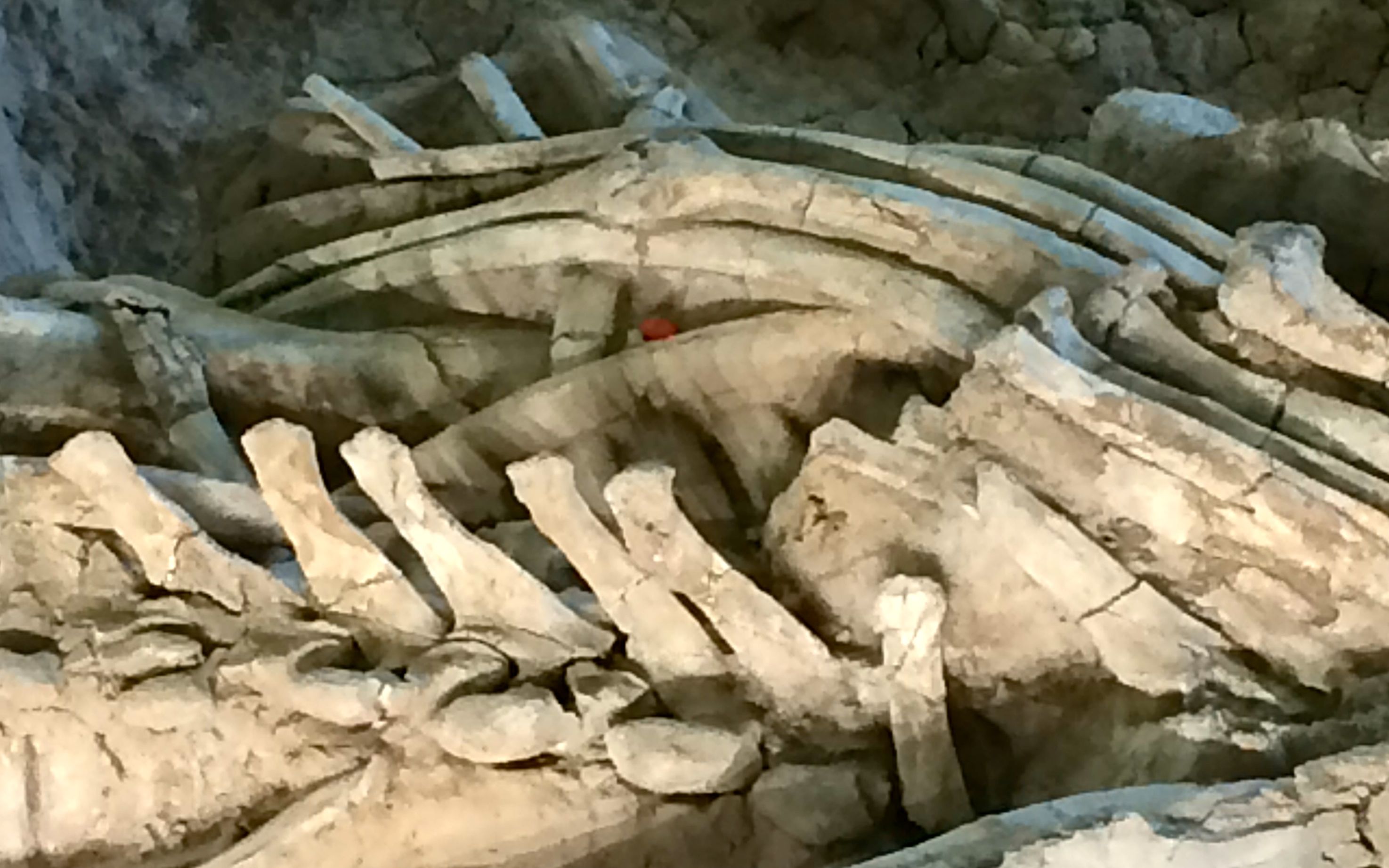
What he discovered is amazing! Those bones are still where he found them inside the building on the other side of the bridge.
Quincy's bones

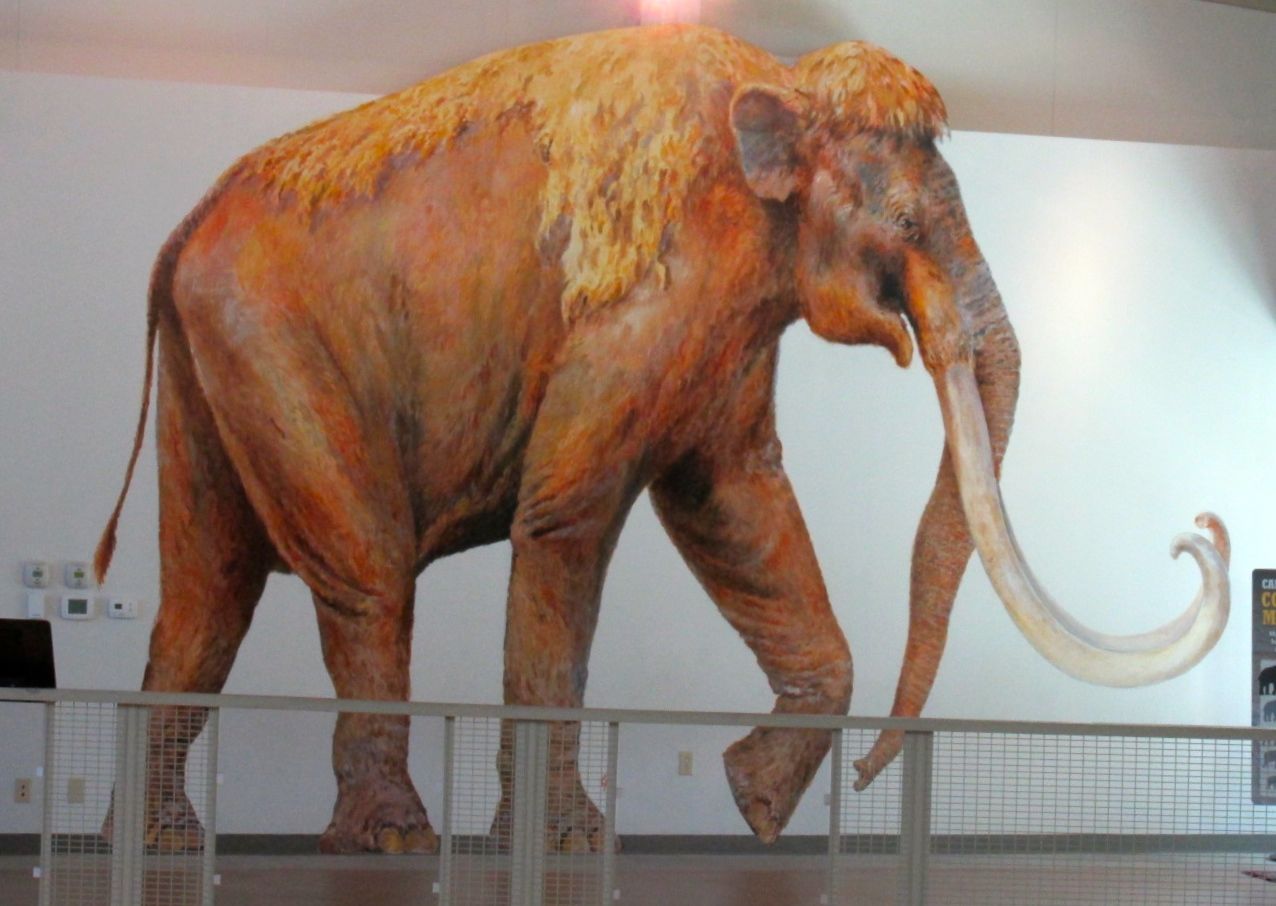
He discovered the bones of a male Columbian Mammoth that they have named Quincy. And, Quincy was one mammoth Mammoth!
mammoth Quincy painting

He stood 14 feet tall at the shoulder and they estimate that he would have weighed around 22,000. He was about 50 years old when he died, if I remember correctly.

In comparison, a regular Wooly Mammoth stood around 10 feet at the should and  weighed about 10,000. An African elephant stands about 12 feet at the shoulder and weighs about 12,000 pounds and an Asian elephant is about 9 feet tall at the shoulder and weighs about 10,000.
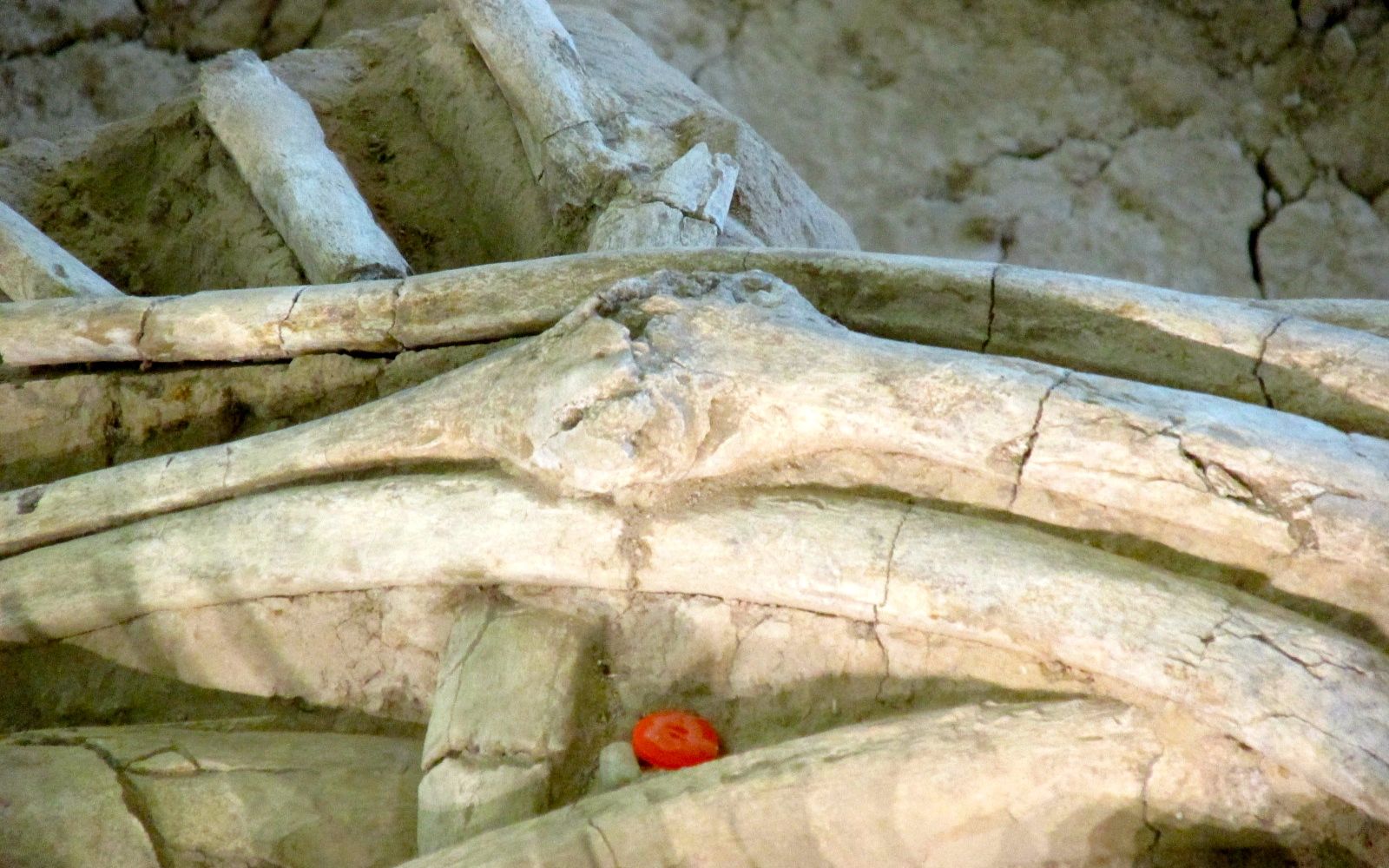
mammoth Quincy's wound

My photo of the painting doesn’t show it clearly, but Quincy had a wound. You can see how the broken rib he got mended in a messy way.
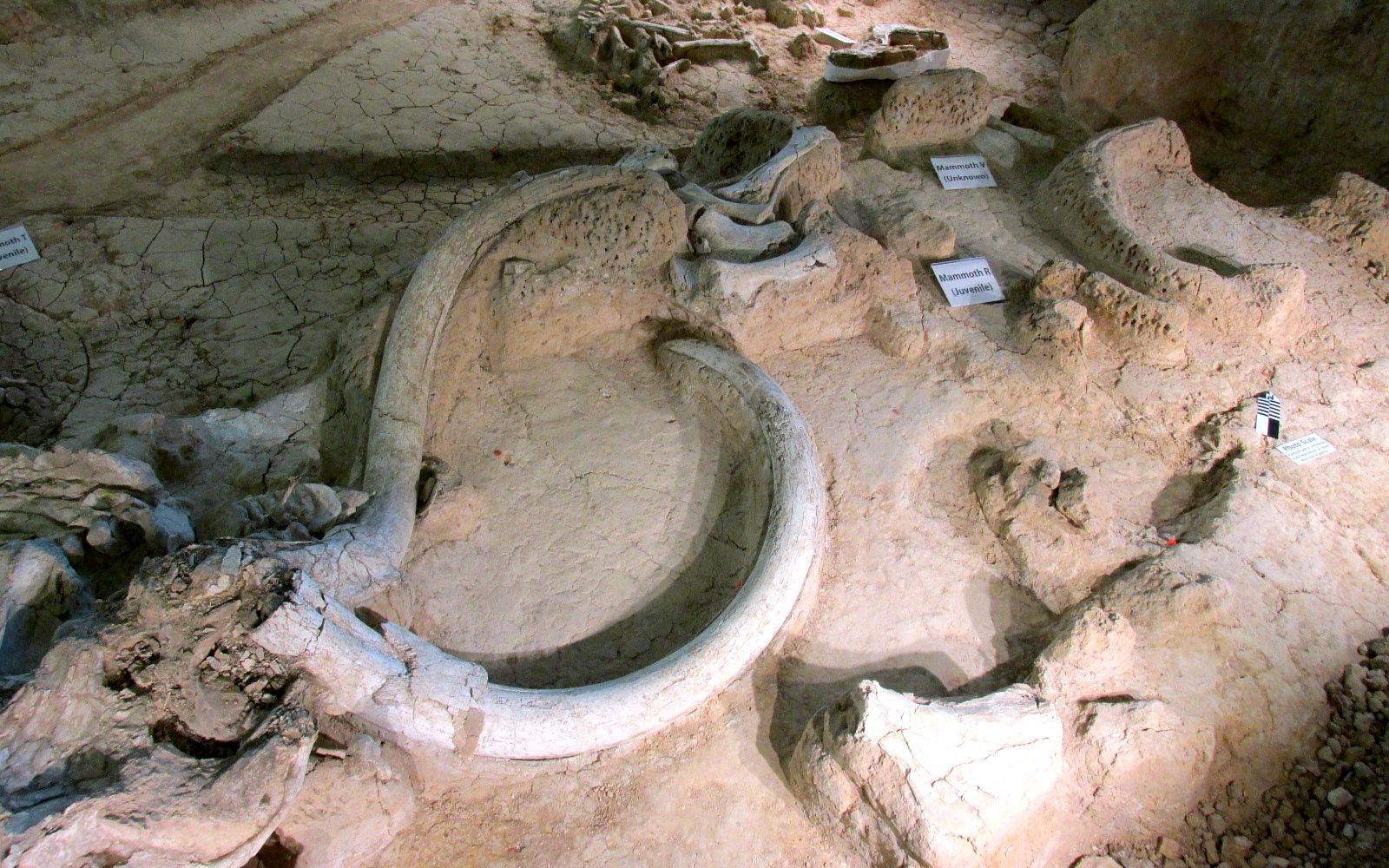
mammoth quincy's tusks

His tusks were enormous!

It appears that Quincy got caught in a mud slide and flood, just like the earlier fossils that were found in the nursery herd formation. I couldn’t get a good photo of it, but his bones were arranged as if he had been pushed over face first from behind.

mammoth layers of mud

You can see the layers of mud that flowed over the years and covered over whatever couldn’t get out of the way.

Dava told us that the amazing thing was that a juvenile mammoth was found with Quincy. Male mammoths are always kicked out of the herd, so it was perplexing as to why a young mammoth would have been with him.

The mystery remained for quite a while. After Ralph’s work, a woman named Anita started digging. She found a young female mammoth, about 28 years old, just a little ways in front of Quincy and her baby. Dava told us that Quincy must have put up with the young whippersnapper for the sake of a younger female to mate with.
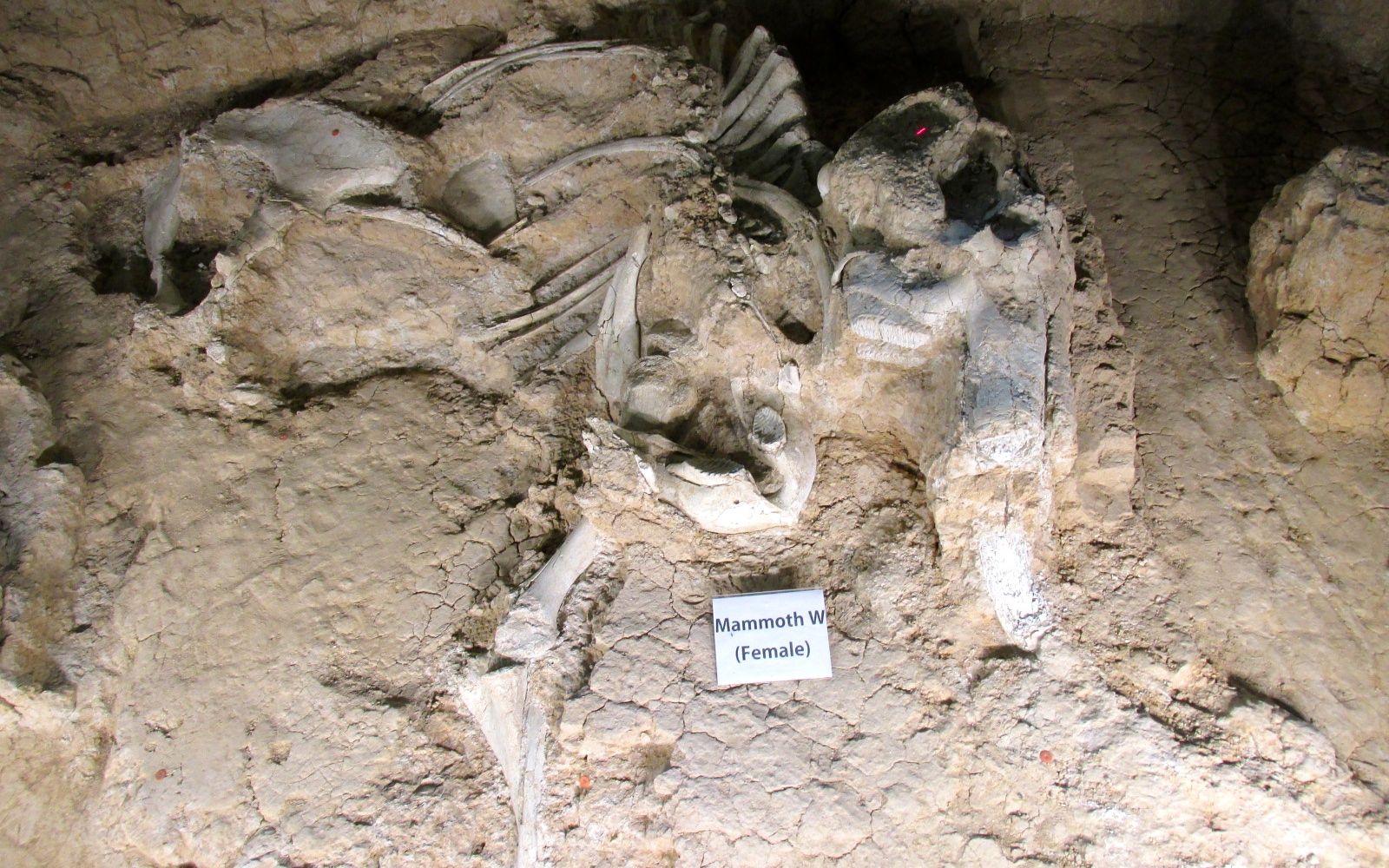
mammoth female

This was the female.

And how do they tell them apart? I can just hear you asking! Well, they can tell male from female by studying the pelvis bones.
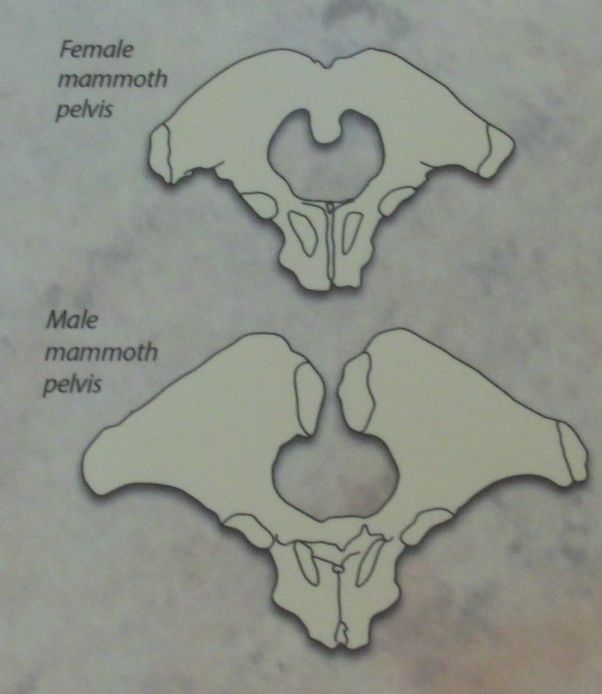
mammoth pelvis drawings

In addition to the two dozen or so mammoths, they also found a camel’s bones.
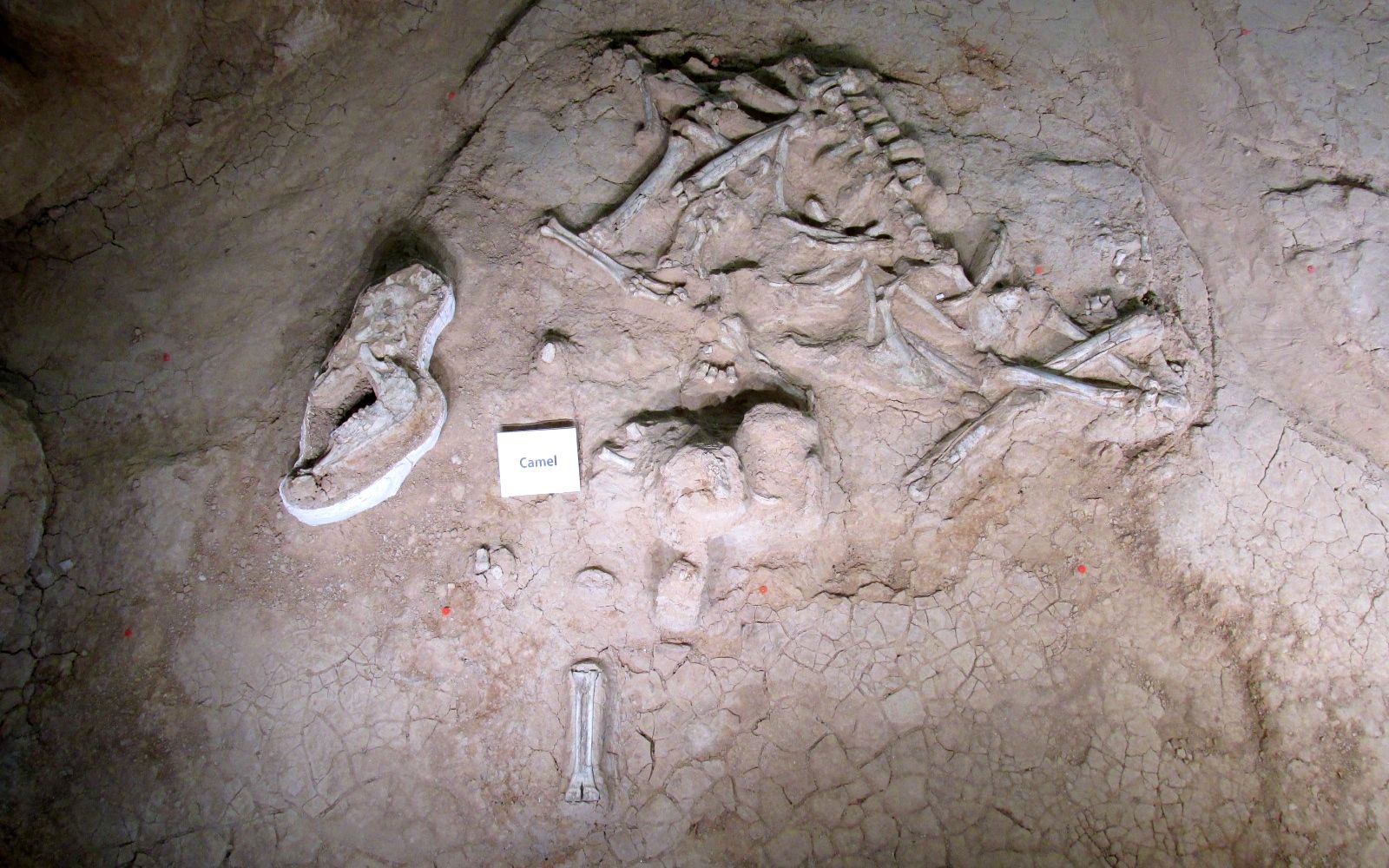
mammoth camel fossil

According to Dava, the mammoths liked having camels around because they were like watchdogs. Being smaller and more nimble, they could sense danger that the mammoths couldn’t.
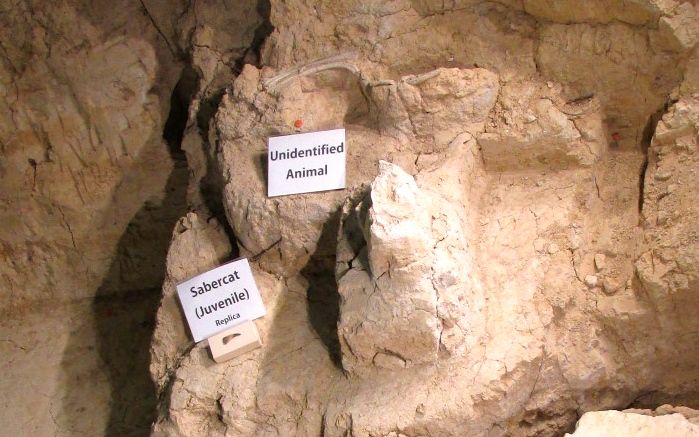
Mammoth unidentified mammal

Some of the things they have found they aren’t able to identify, like the bones of the creature they have labeled as “Unidentified Animal.” Right in that same spot, they have found a tooth from a juvenile Sabercat. Dava’s specialty is teeth, and she says that it is extremely rare to find such a tooth. When they are from juveniles, they tend to disintegrate quickly.

All of this earth was moved a little bit at a time.
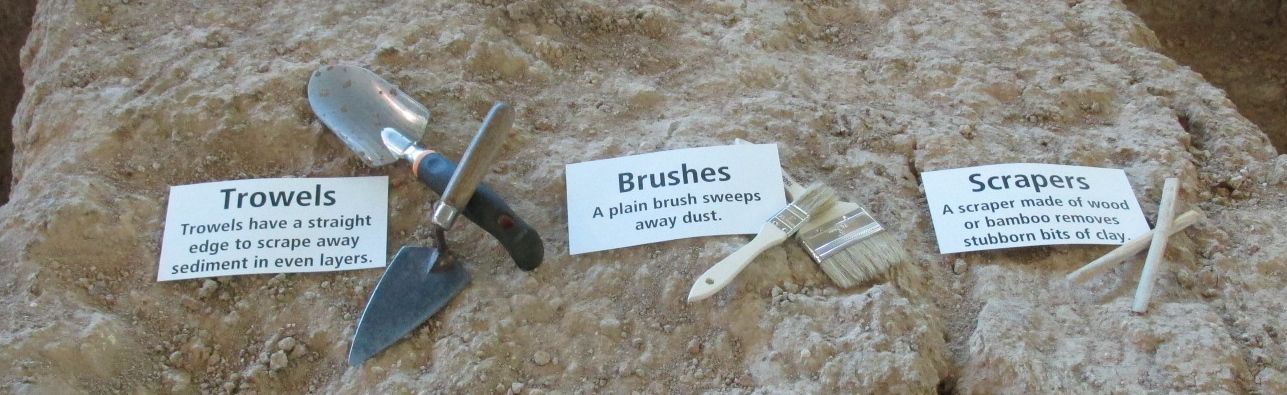
mammoth tools 1

They never knew what they might find, so they had to work carefully.
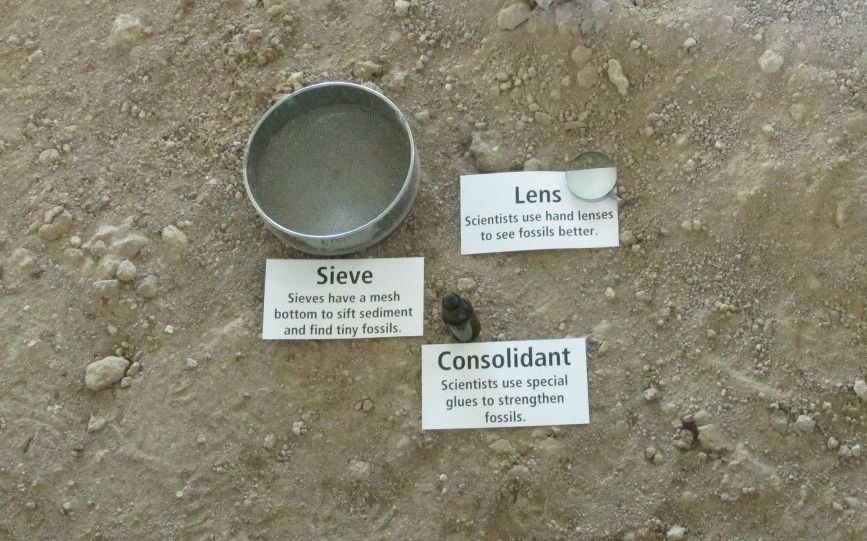
mammoth tools 2

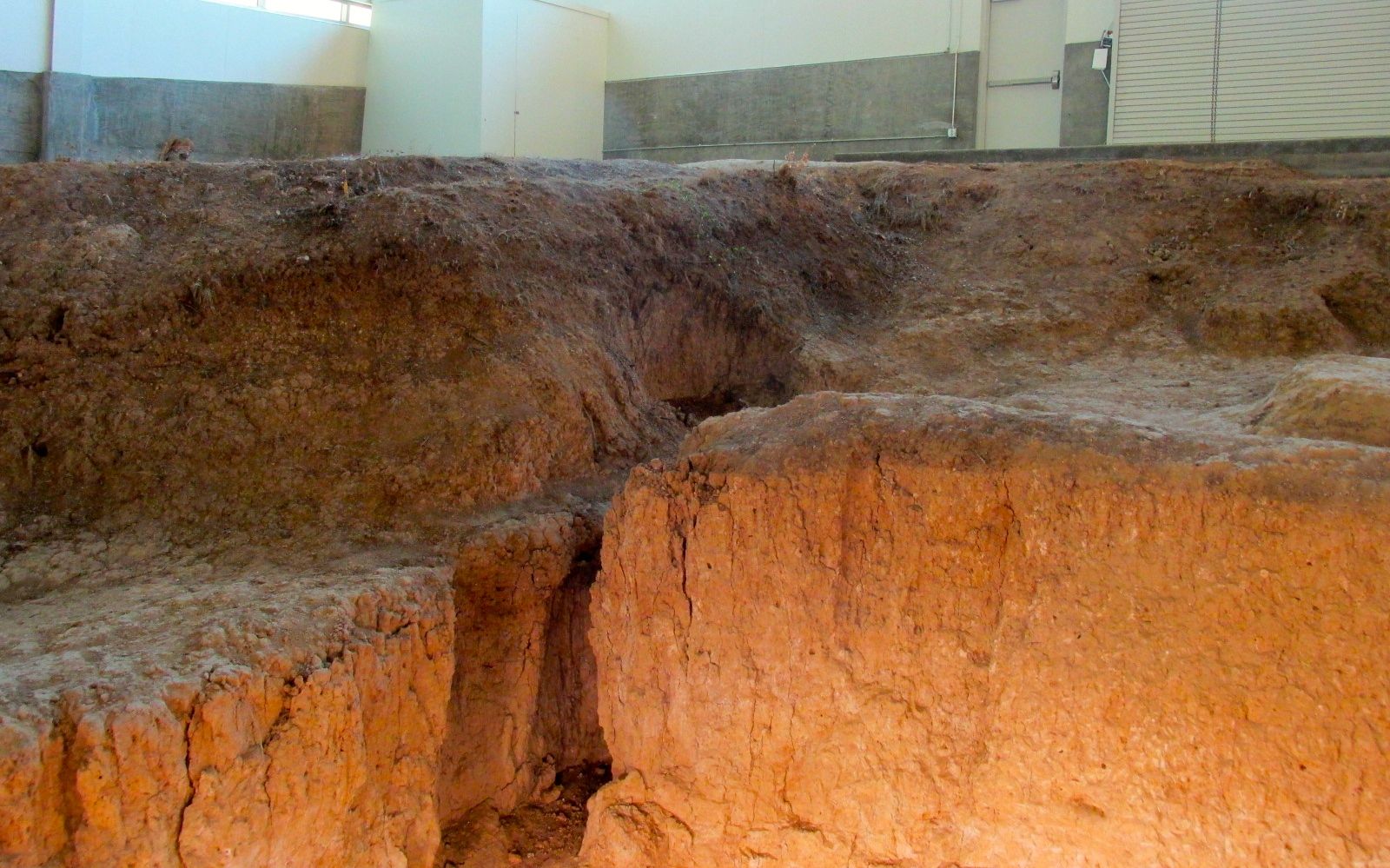
Dava pointed out a large mound of earth at the far side of the enclosure.
mammoth Ralph's gift

She told us that it was Ralph’s final gift. He knew that the soil was full of clues to the past – micro-fossils, pollen, and so on. He carefully piled up the soil he excavated so that future scientists would be able to study it.

It was a good visit, and well worth the price of admission.

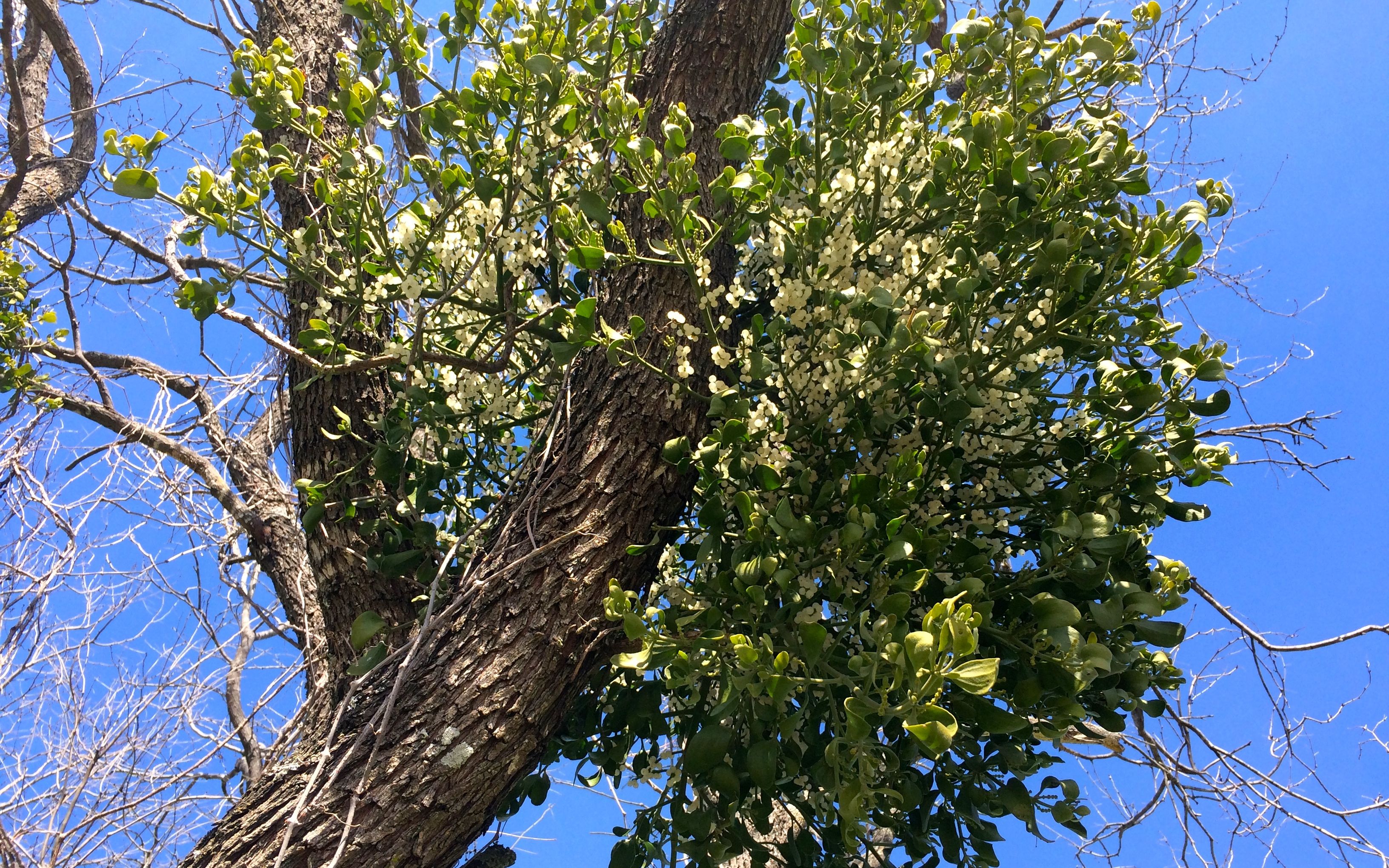
I returned to BART and Flo and prepared to leave. Much to my surprise, I had parked under the mistletoe!
mistletoe

And so, I give Waco a kiss goodbye. I hope to return some day.


Did you ever hear of…

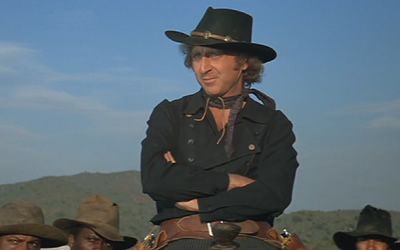
the Waco Kid?

The Waco Kid

I have to admit it – the main reason I put Waco on my “tour de Texas” was because of one of my favorite movies, Blazing Saddles.

I got a great campsite at Midway Park overlooking Lake Waco. Midway Park is a Corps of Engineers facility. It was scenic and well-maintained.

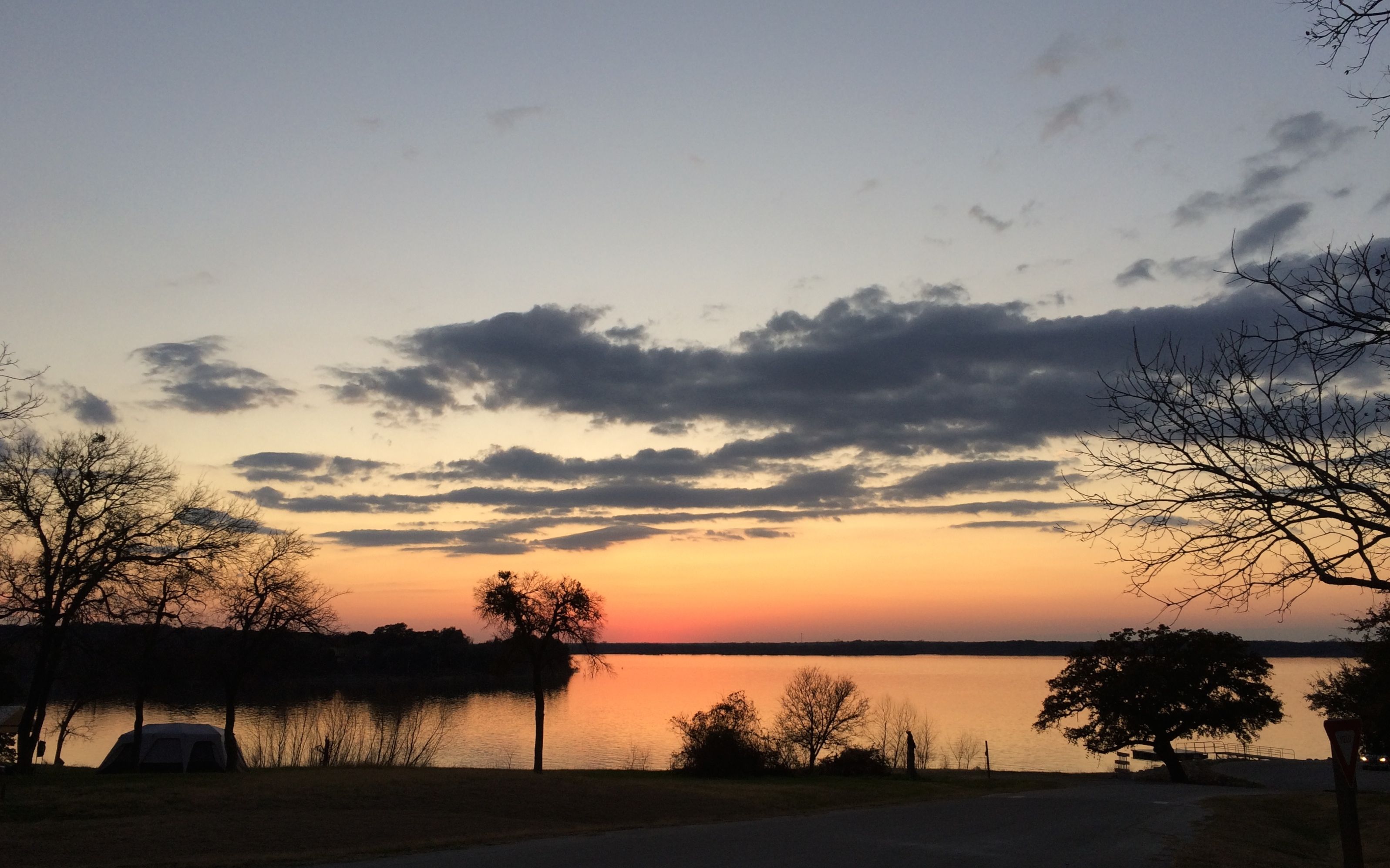
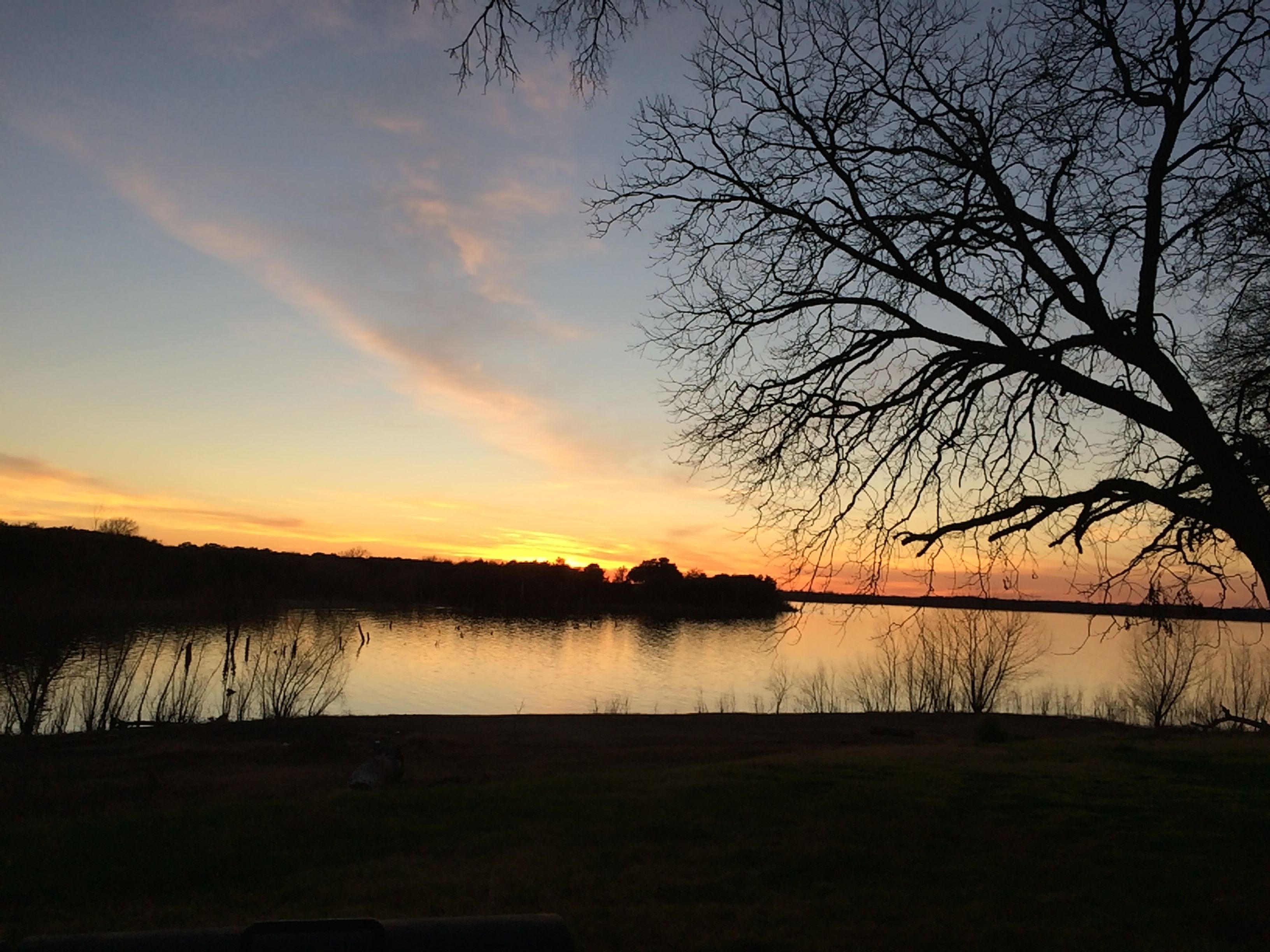
Sunset at Lake Waco
Sunset at Lake Waco

This was the view from my campsite the day I arrived.

That night, I did some research on what I wanted to see and do while I was in Waco. Unfortunately, two of the items on my list were closed on the day I hoped to visit. So, my first stop was to the tourism office, which was right next to the Texas Ranger Hall of Fame and Museum. When I finished at the tourism office, I headed right over there.

One of my reasons for wanting to go to the Texas Ranger Hall of Fame and Museum was to learn about them. In retrospect, I think that wasn’t a great idea. It would be kind of like going to Pro Football Hall of Fame to learn the rules of football.

The receptionist sold me my ticket and told me that the movie about the Rangers was just starting. The movie was produced by the History Channel, and so it had some good production values. But, it seemed like their mission was to report on all the Texas Ranger events that had tarnished their reputation.

I left the movie hoping that I never meet a Texas Ranger.

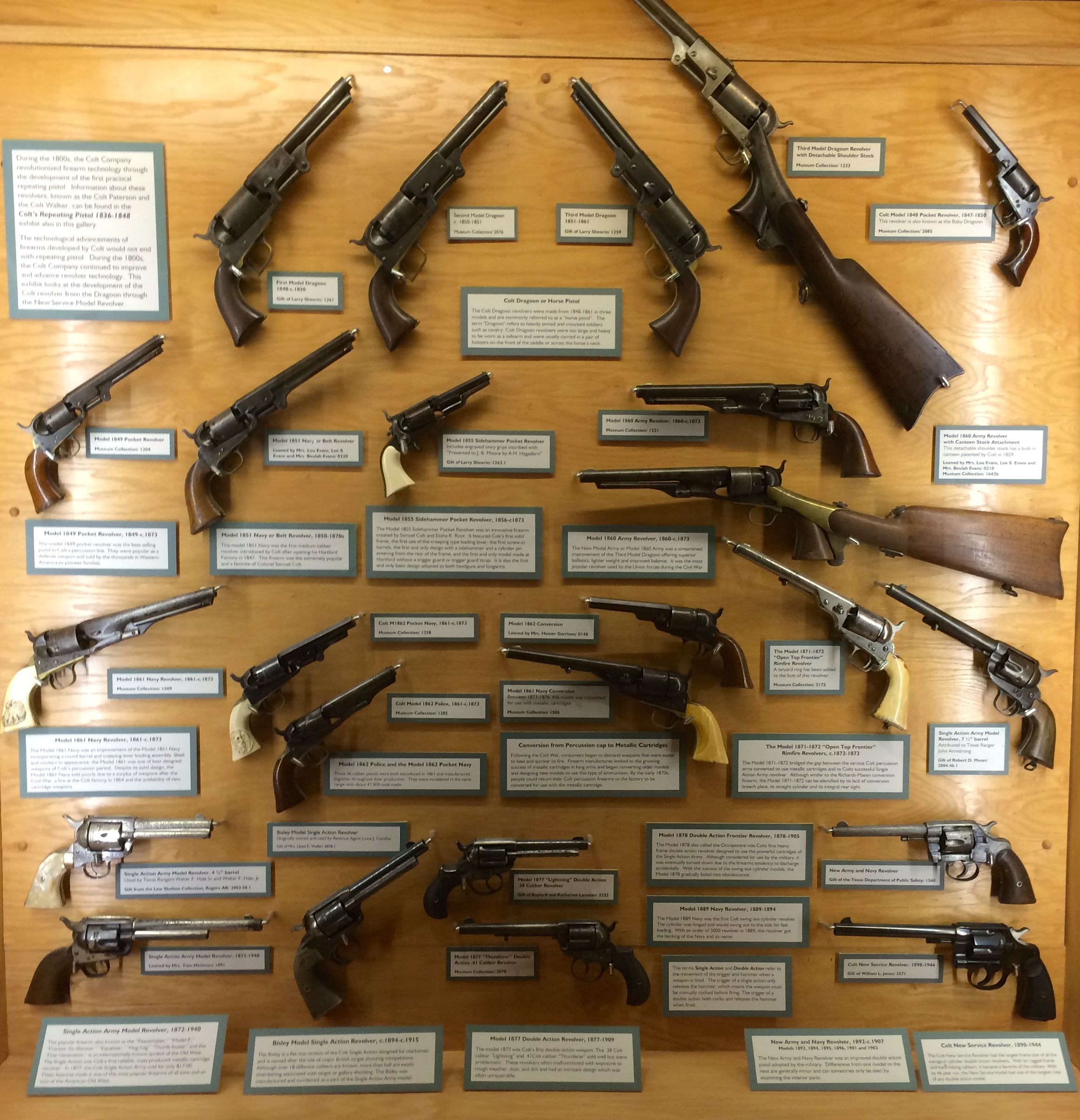
Then, looking around the museum, it seemed like it was guns…

rangers - guns 1

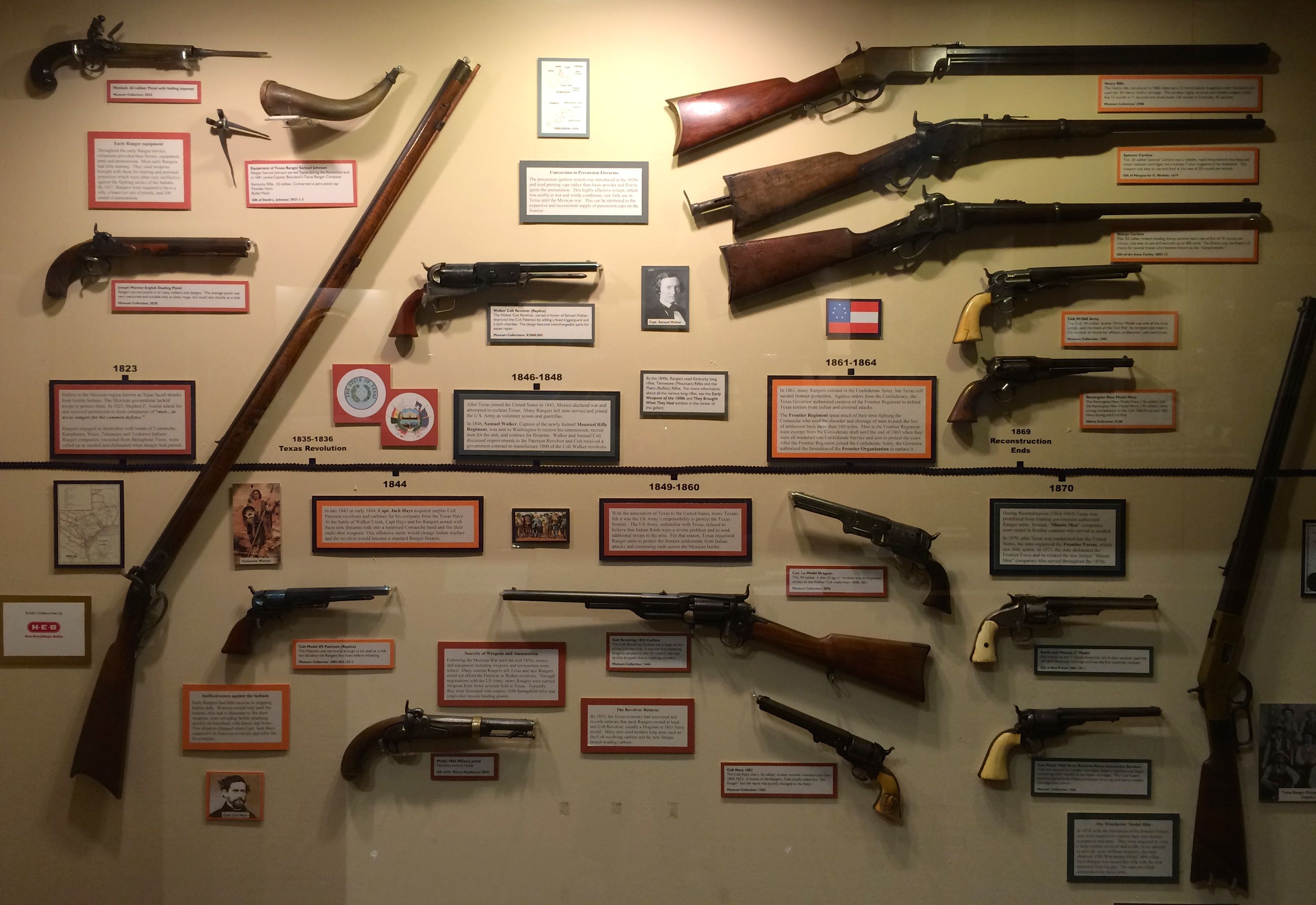
guns,

rangers - guns 2

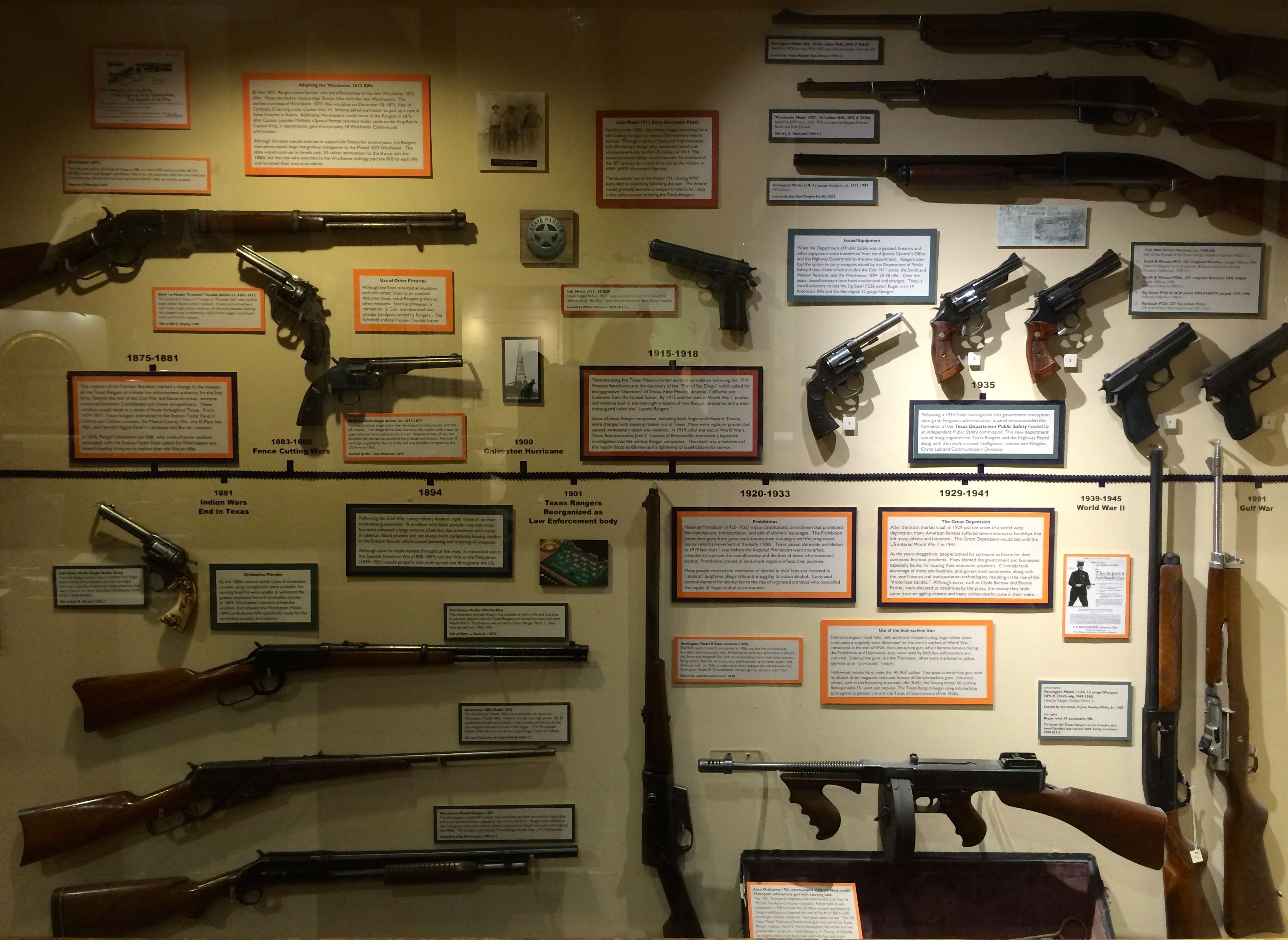
and more guns.

rangers - guns 3

I guess it’s going to take more than a driver’s license to make me a real Texan.

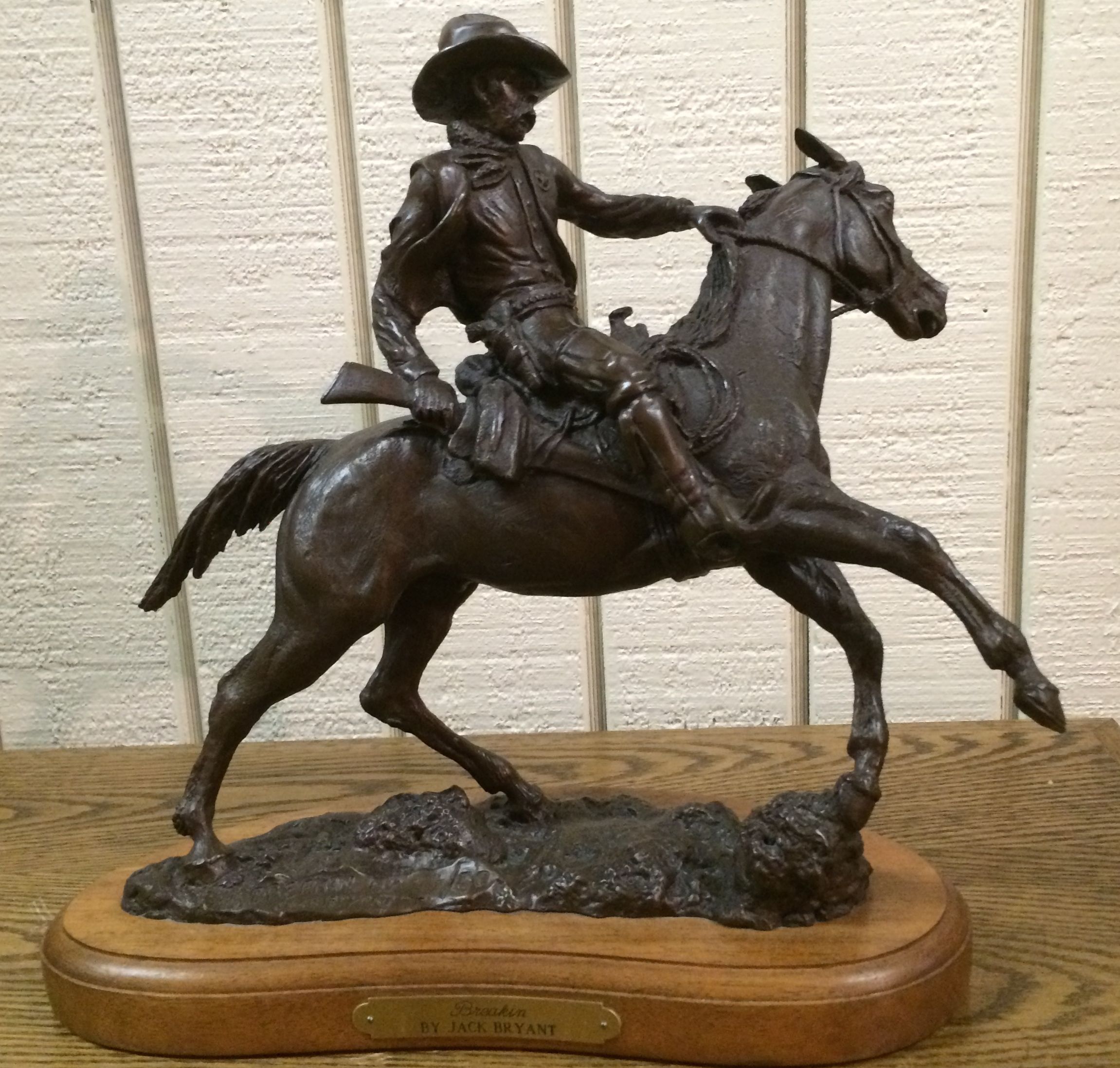
rangers - bronze model

There were some nice bronzes in the museum.

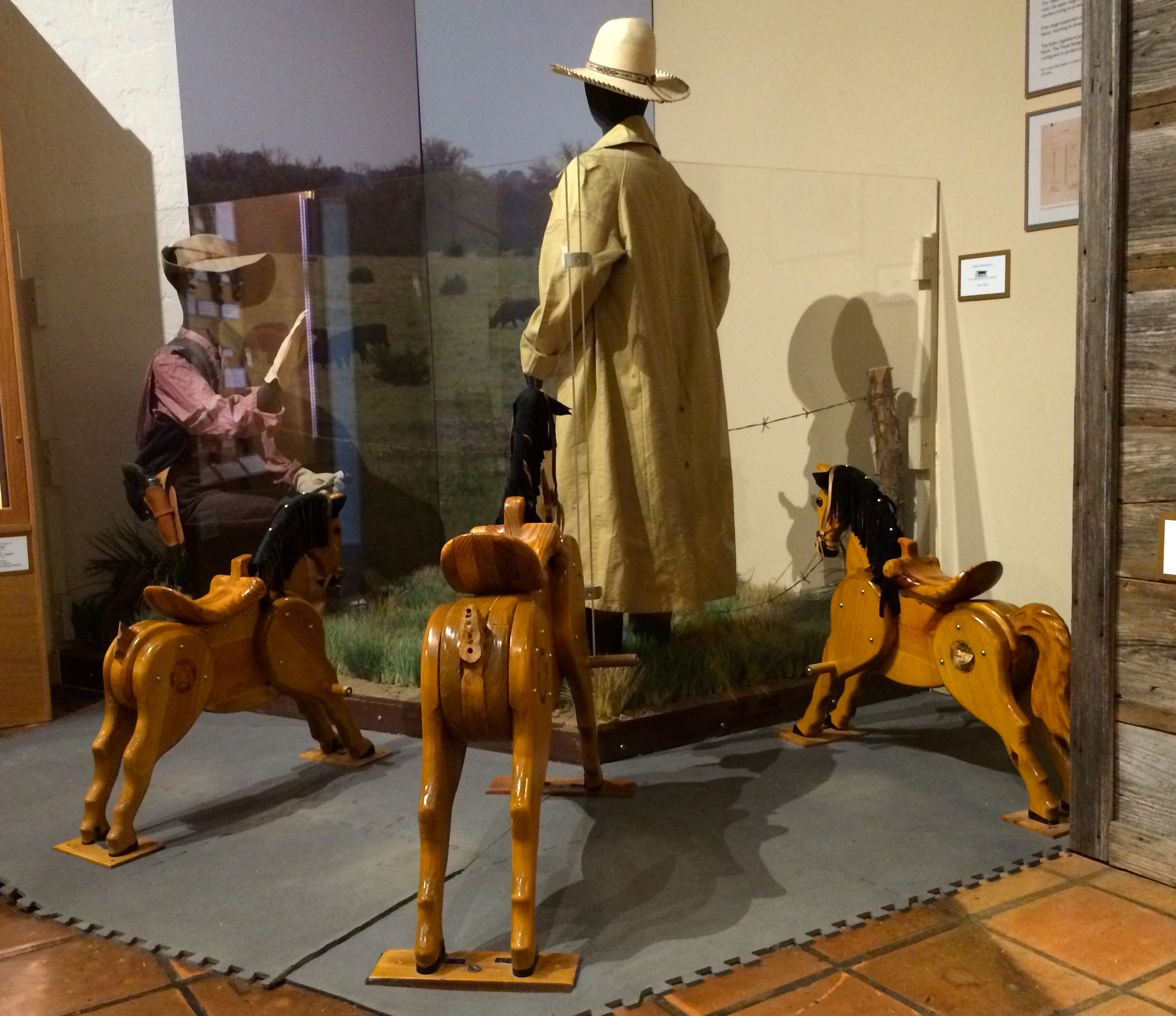
rangers - kids wooden horses

And some wooden horses for the kids to sit on.

There was also a gift shop.

rangers - prisoner leather goods

There were genuine leather goods handmade in the Texas Prison System.

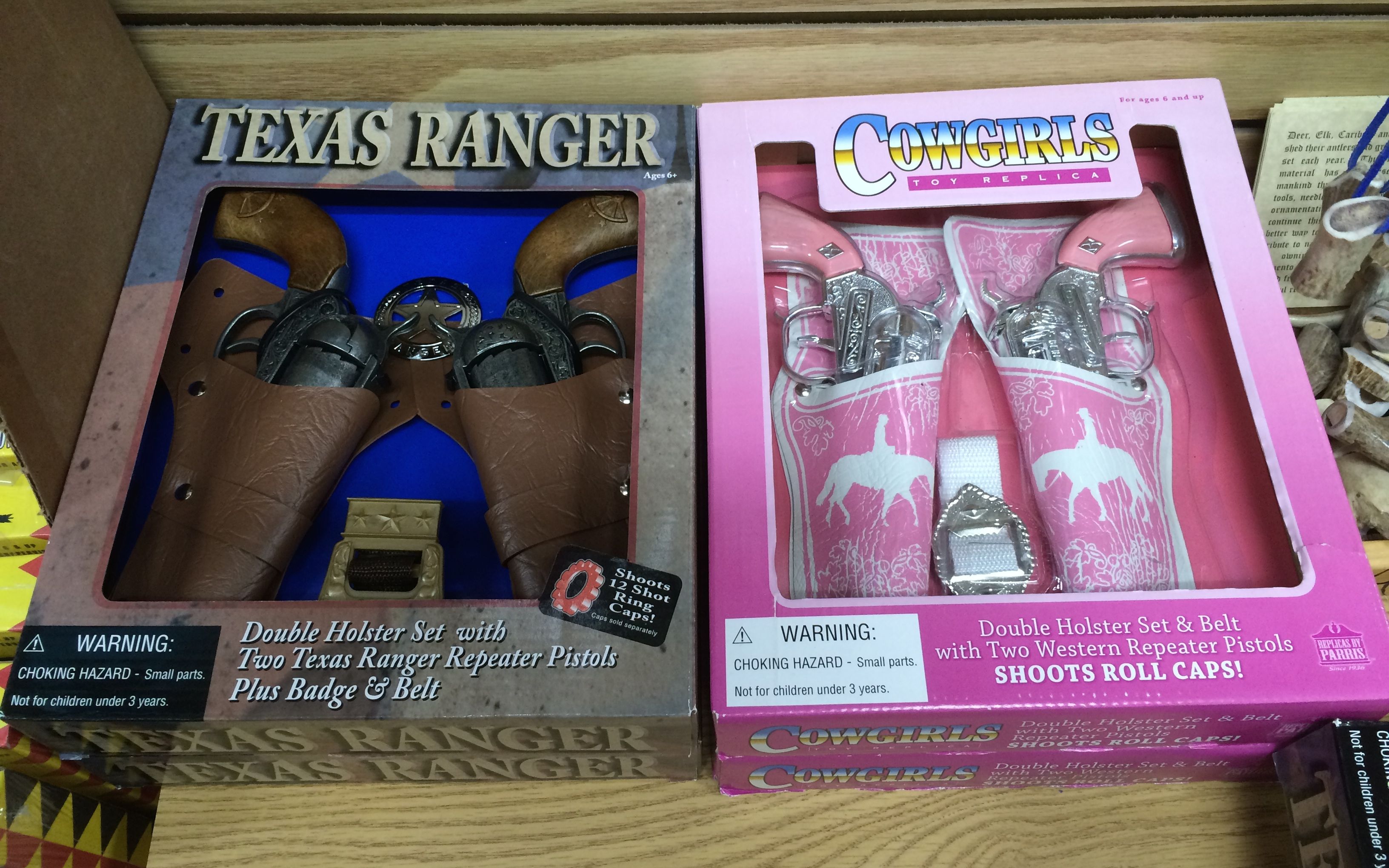
rangers - boy and girl guns

And toys for boys and girls.

Major George Erath
Major George Erath statue in front of the Texas Ranger Hall of Fame and Museum

George Erath was an immigrant from Austria. In addition to being a solider, he was also a surveyor and drew up the original street grids for Waco and other towns in Texas.

My next stop was one that I had been looking forward to: Magnolia Market at the Silos! It is a store run by some wonderful HGTV personalities, Chip and Joanna Gaines.

Chip and Joanna

I really enjoyed their show, called “Fixer Upper” back when I had cable. Unfortunately, since I don’t have cable in my life on the road, I haven’t seen it recently. If you haven’t seen it and you have cable, look it up.

And, no, I didn’t see them while I was there.

Magnolia - store

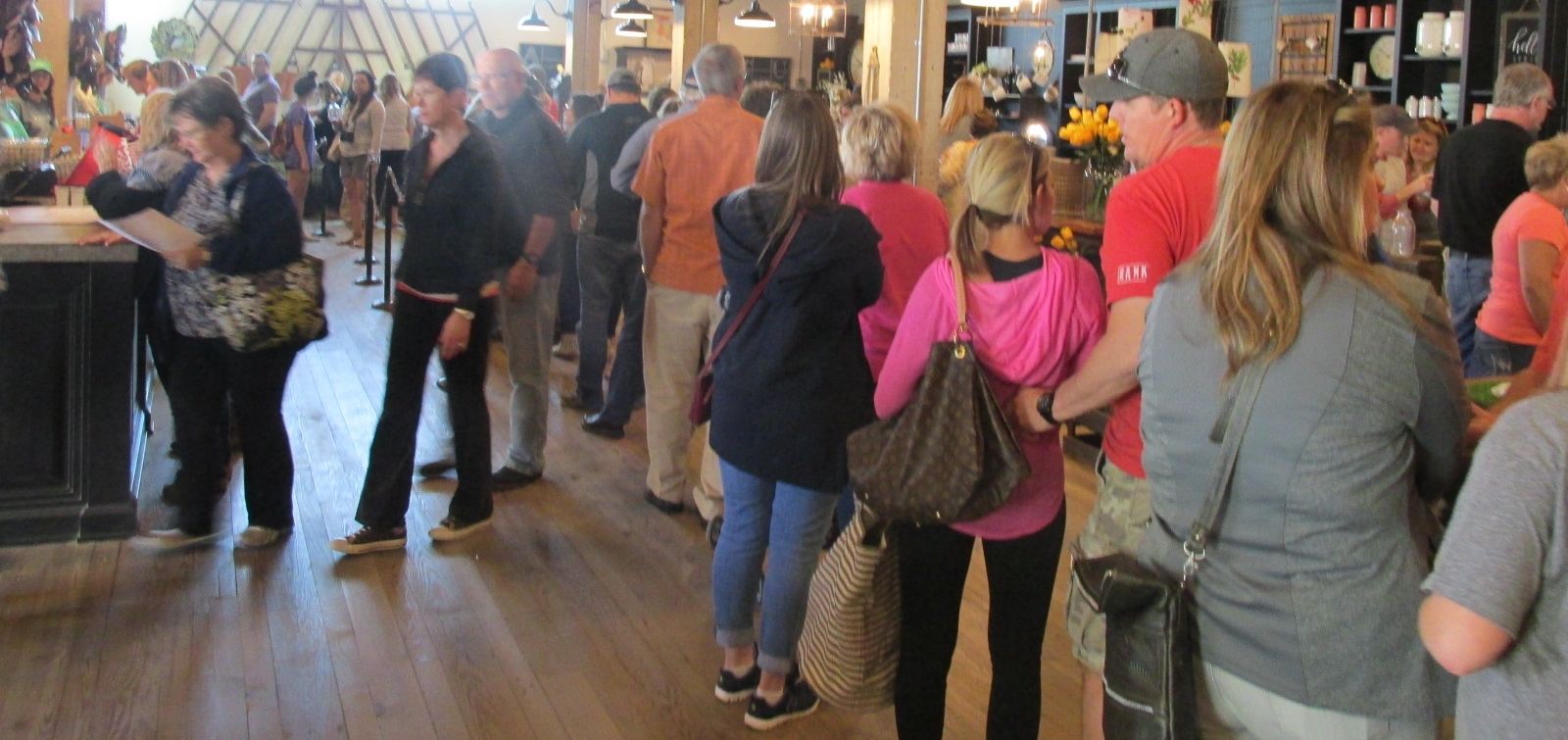
There were lots of people at the market, though. In fact, there were so many people there that it made the news that night.

Checking out at the upper registers
Checking out at the lower registers

Now, this will post more than a month after the fact, but the day I visited was Presidents’ Day. I spoke to some shoppers while I was in the bathroom line that had driven up from San Antonio for the day. Another way to tell I’m not a real Texan. I wouldn’t drive three hours one way to go shopping.
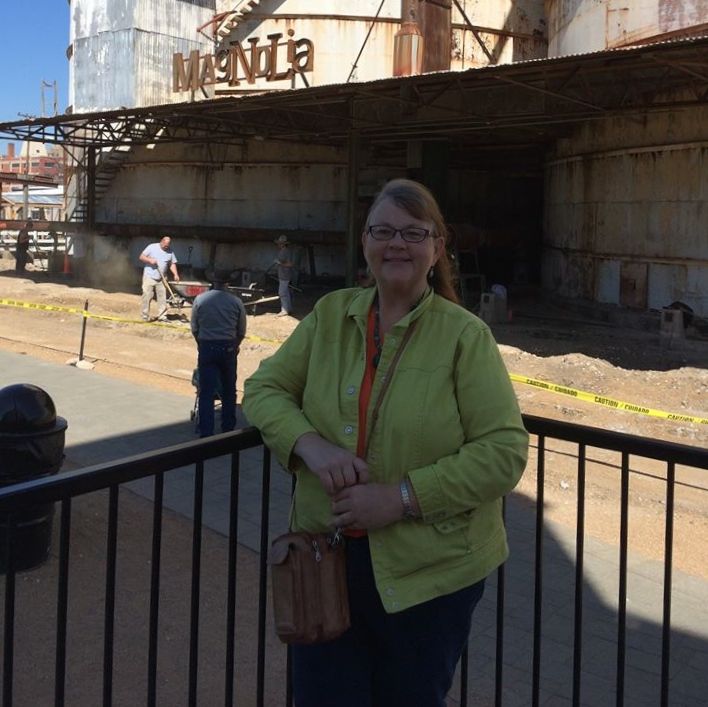
me at Magnolia

I took a photo of some other visitors and they took one of me. You have to have a photo, or how do you know it really happened?

I loved the merchandise for sale. What a gracious store! It was so crowded that I really don’t have pictures of the beautiful things for sale, but you can find them online, if you care to look.

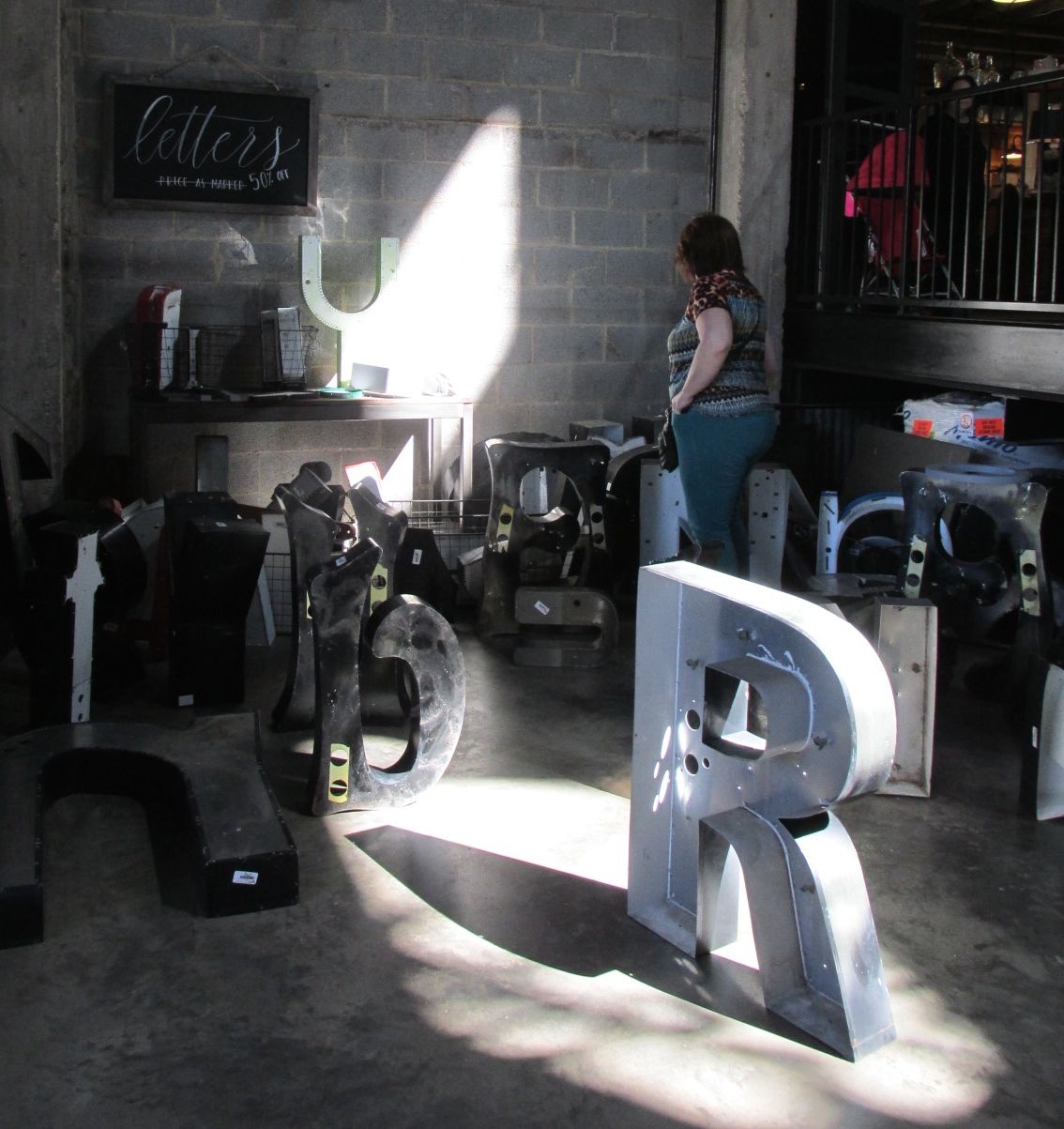
I did manage to grab a shot of some vintage metal letters left over from old neon lights.

Magnolia - letters

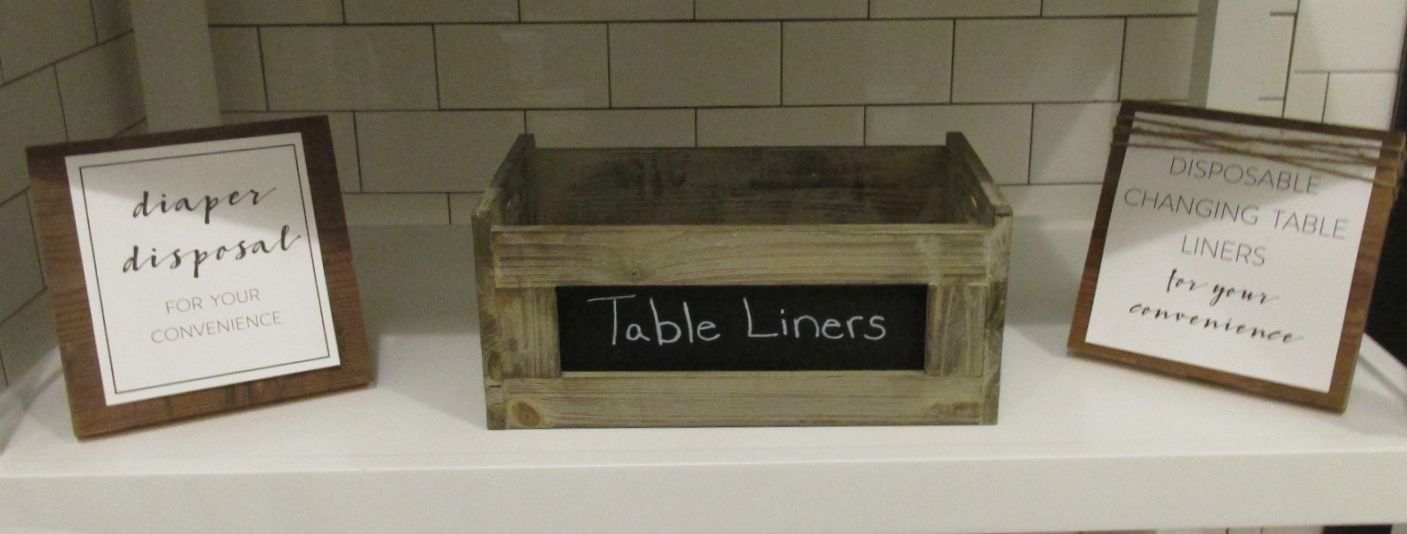
I mentioned the gracious touches. Well, in the rest room they have a candle burning and supplies you would want if you needed to change your baby’s diaper.

Magnolia - bathroom hospitality

Not only do they have a changing table but the actually supply liners for the table and a can to dispose of the diapers – and signs to help you with knowing where things are.

Outside the store, there is a large play area.

Magnolia - play area

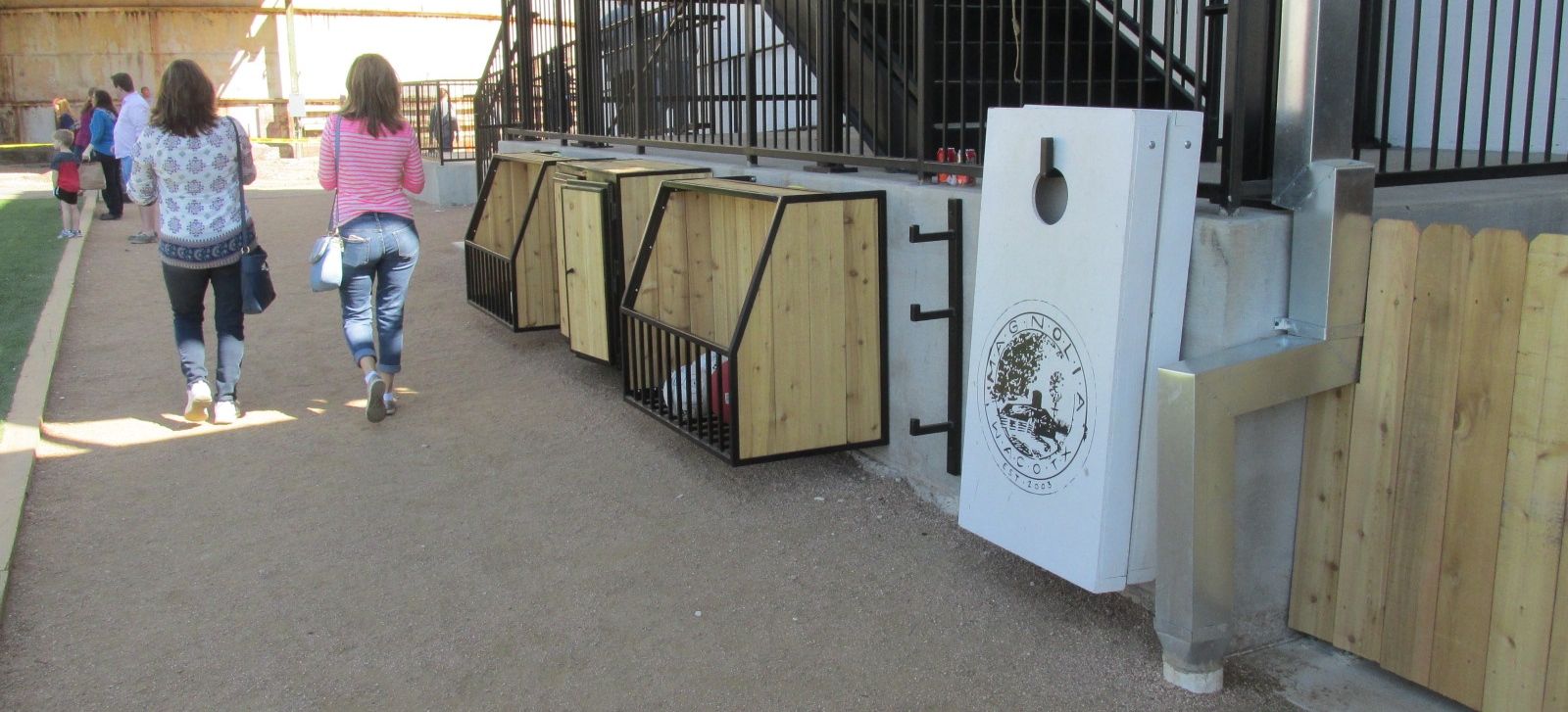
Not only is there an area to play, but they supply balls, hula hoops and corn hole games.

Magnolia - toys to use

A lot of the toys were in use, so the bins were mostly empty. It goes to show you that the store was really busy!

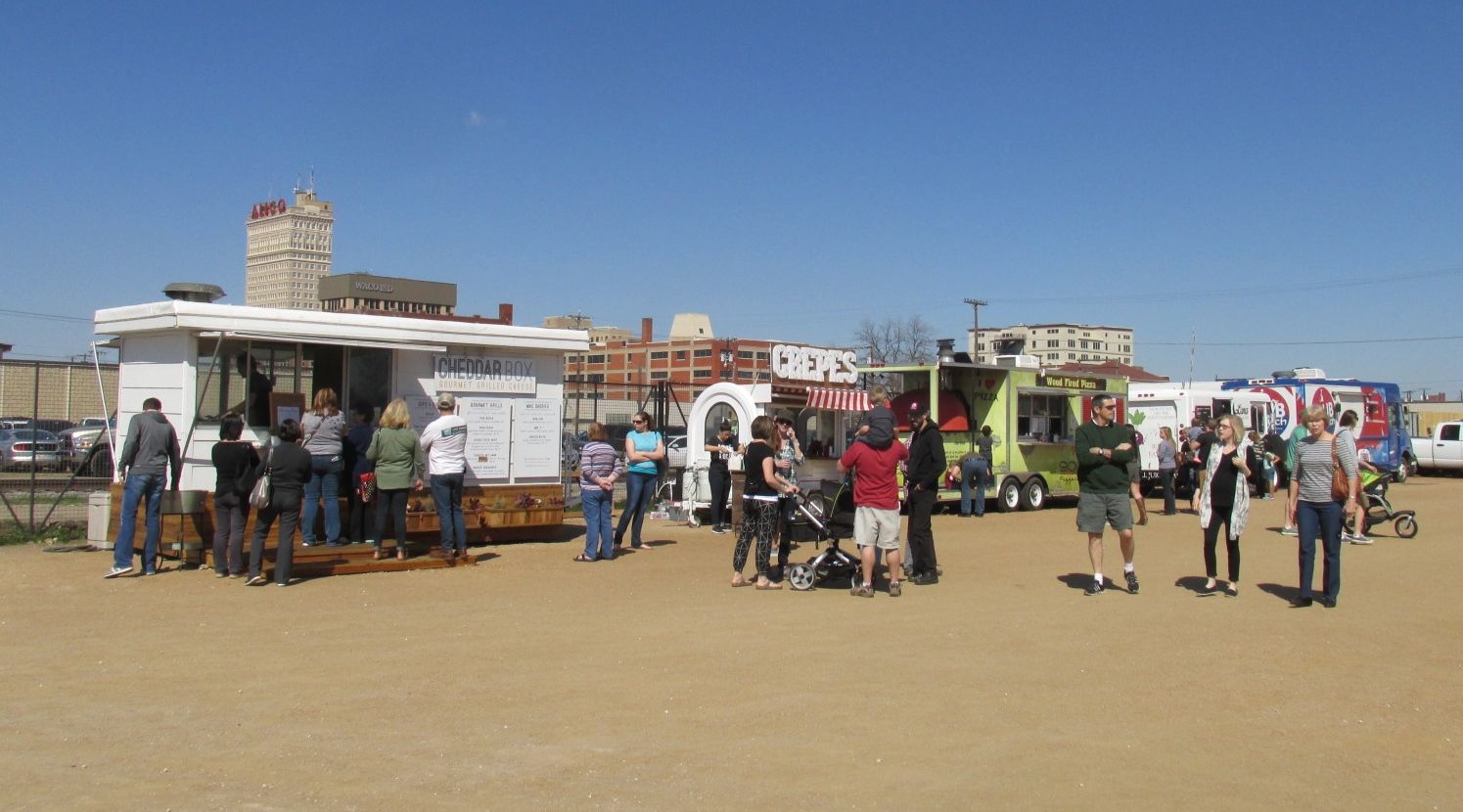
Ringing the play area are food trucks.

Magnolia - food trucks

There were some interesting offerings.

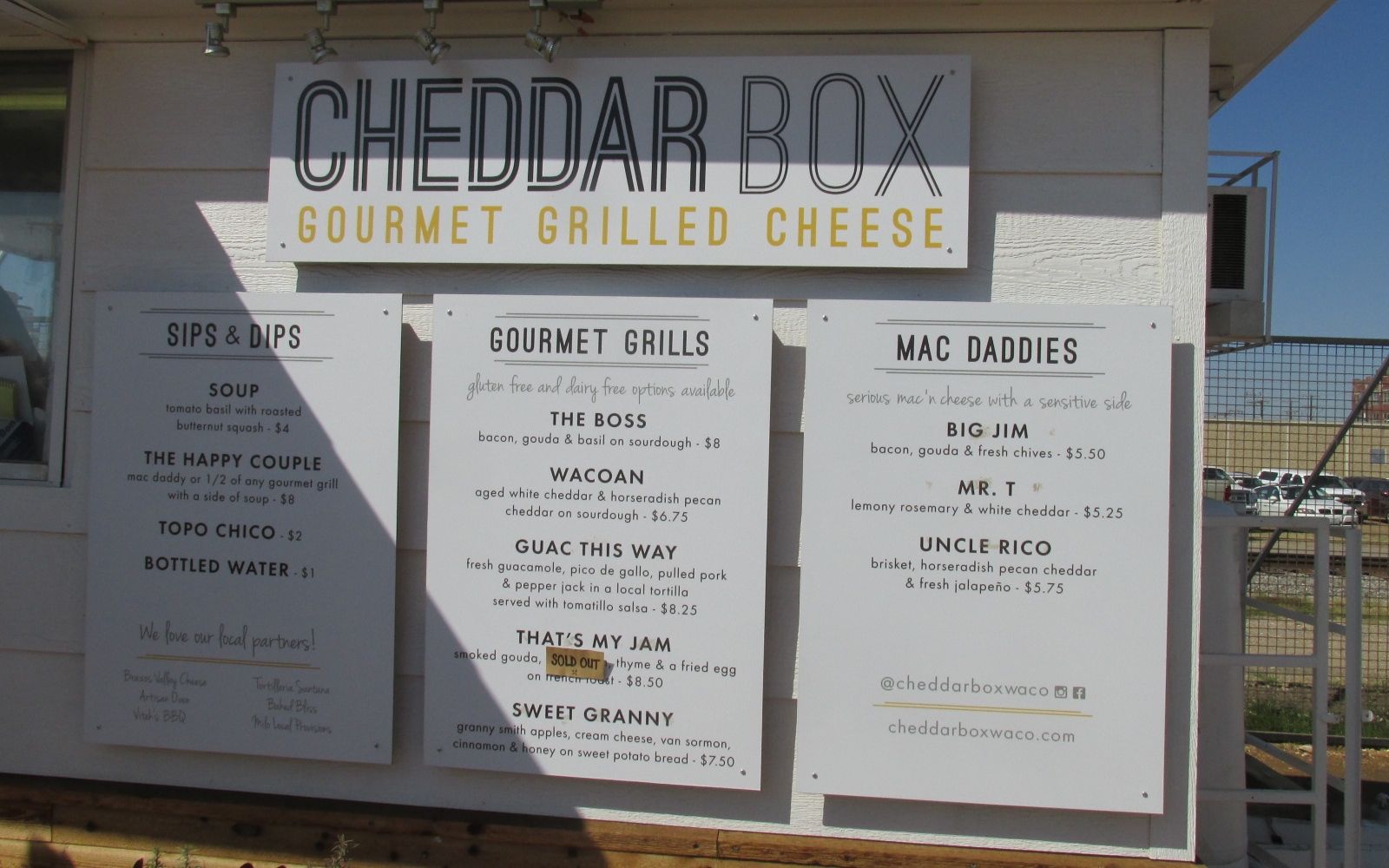
Gourmet Grilled Cheese Sandwiches
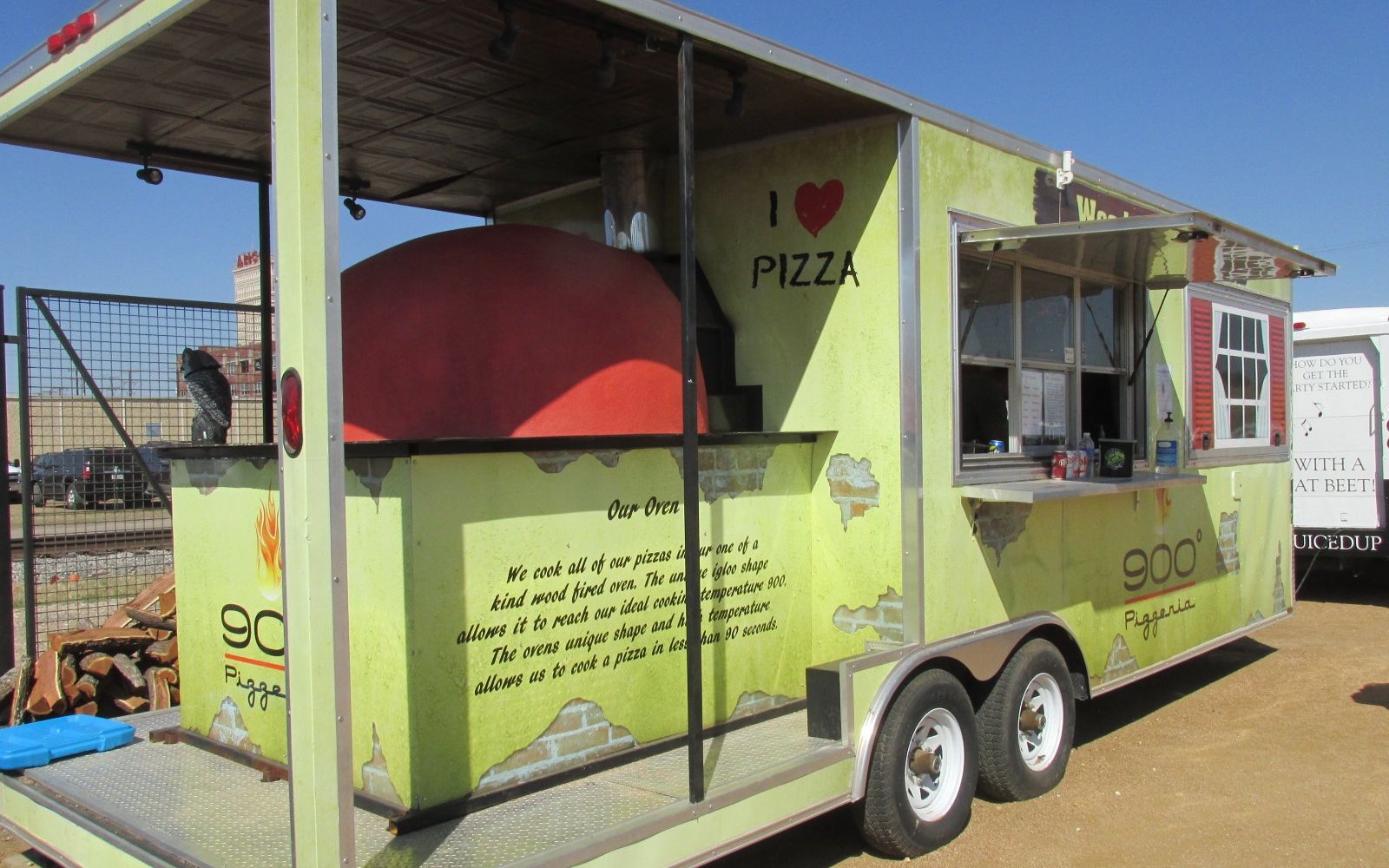
Wood-fired Pizza
Wood-fired Pizza

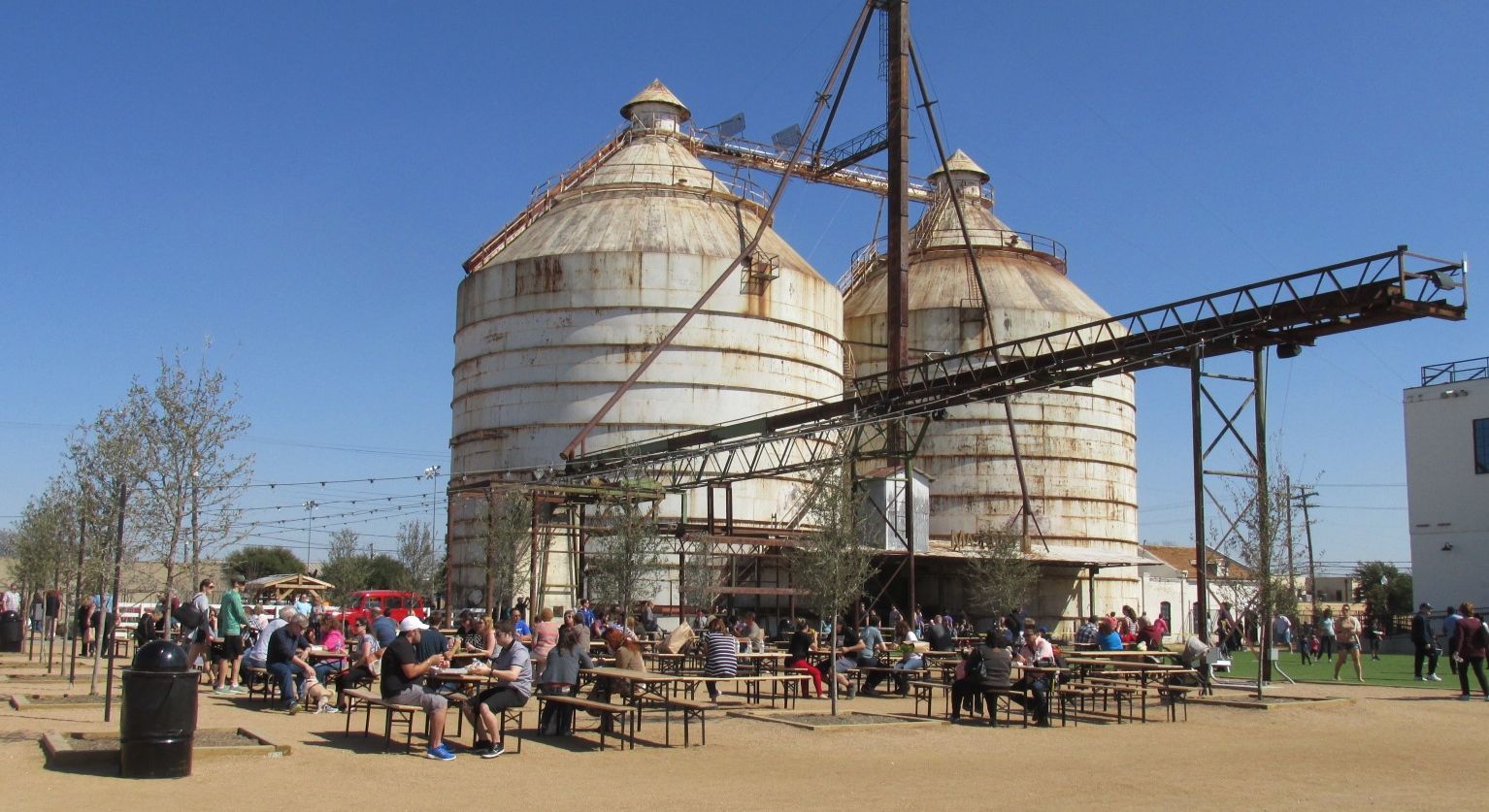
They have also provided an area to sit and enjoy the food from the food trucks.

Eating Area
Eating Area

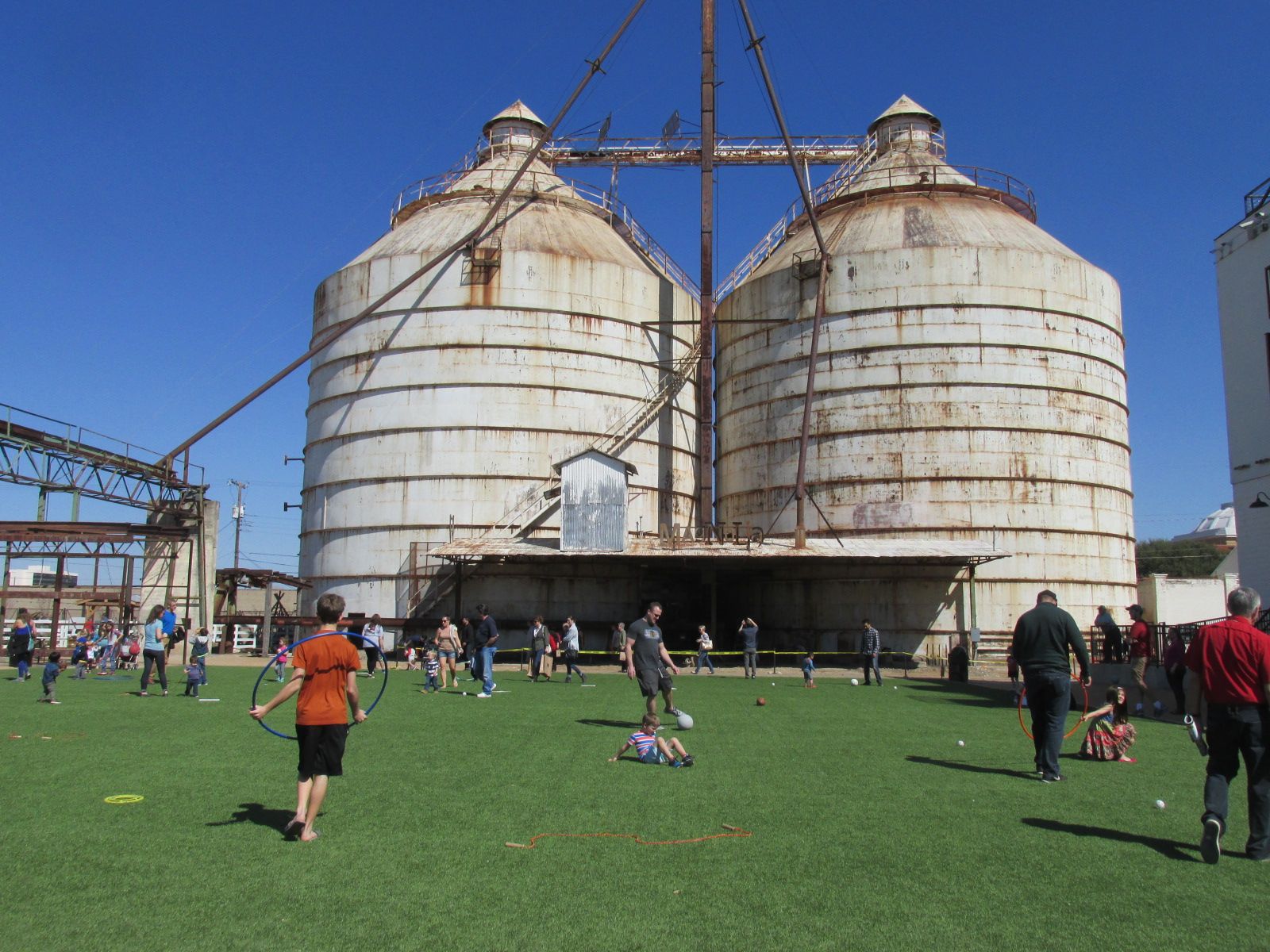
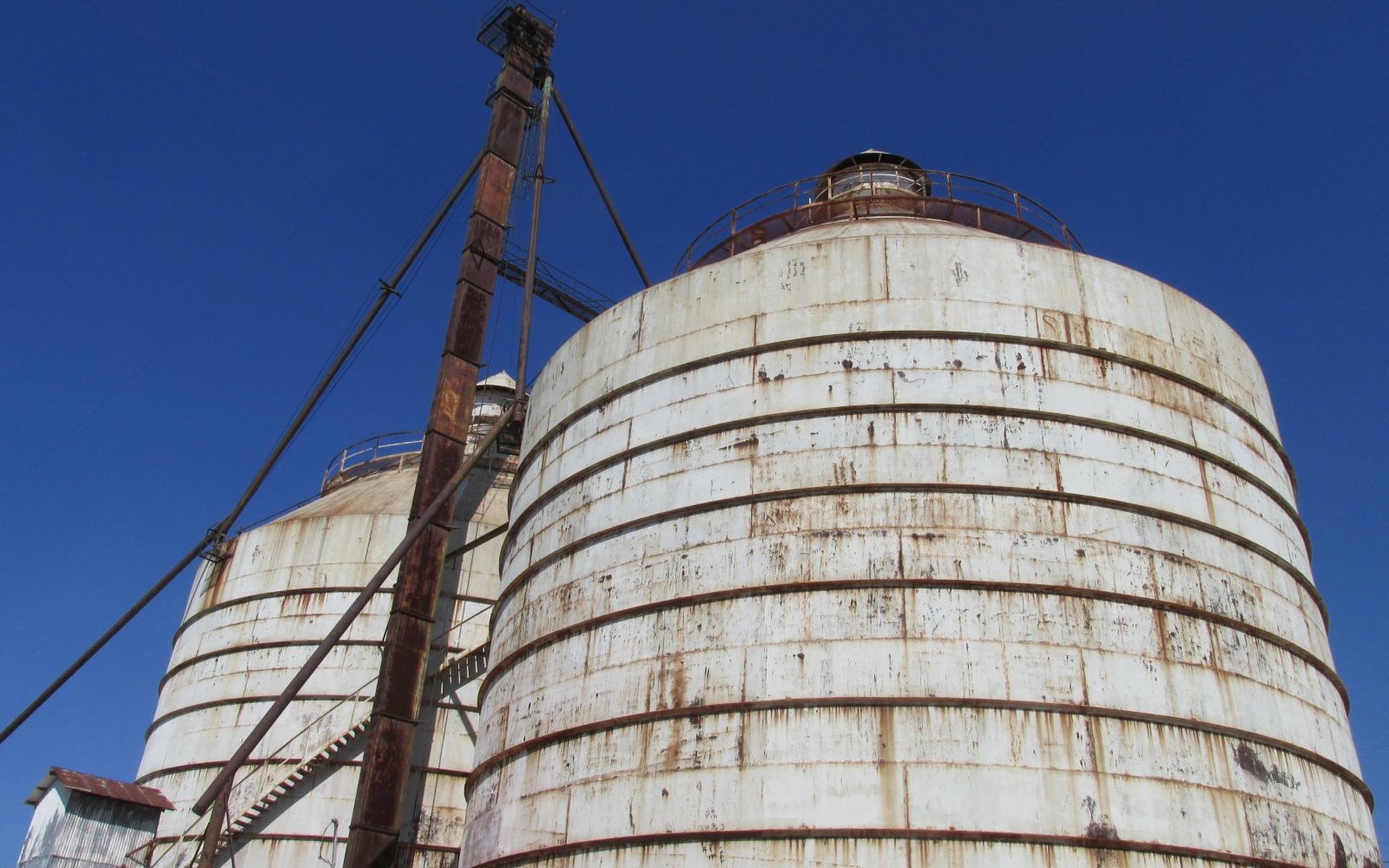
They have renovated an entire block and they have more projects coming. There were workers there putting in footings for something in front of the silos, and a small brick building says “Coming in 2016”.

Magnolia - the silos

I’d love to return to see what they are working on!

My next stop was the Waco Suspension Bridge. My HISTORY Here app plotted me a route right to it.

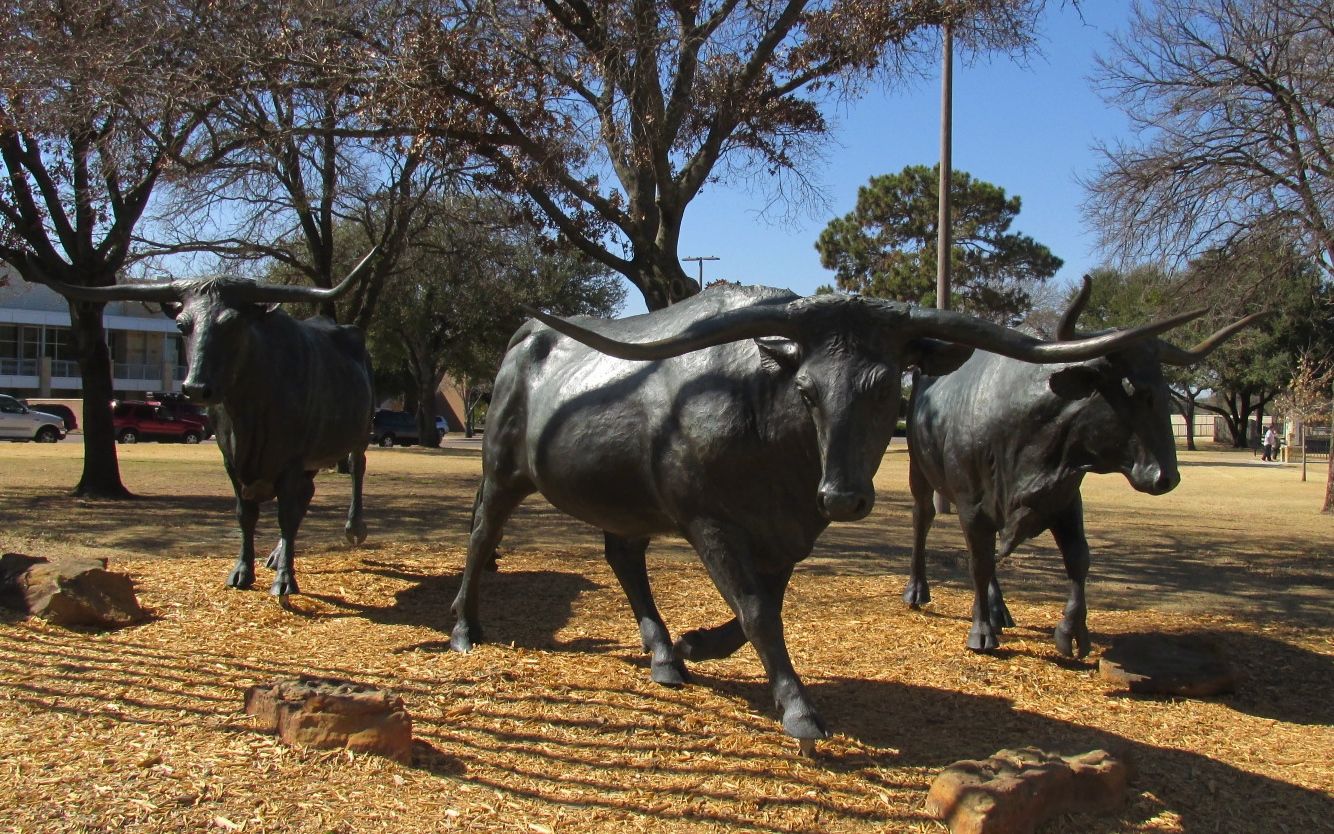
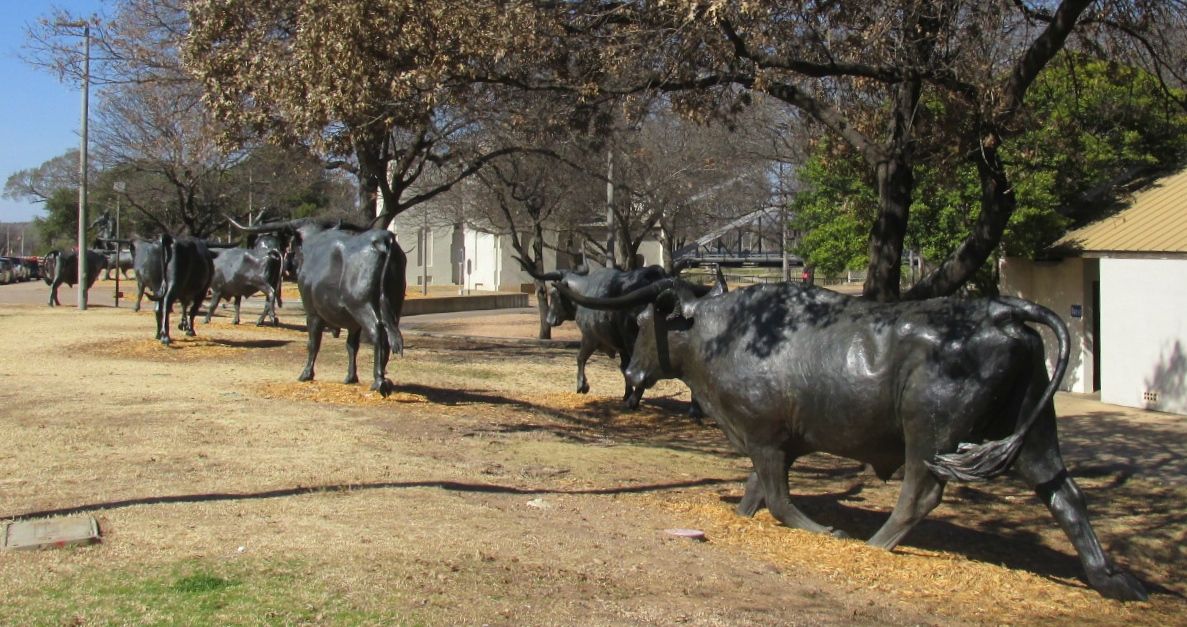
Imagine my surprise when I found a herd of Texas Longhorns there.

Bridge - longhorns

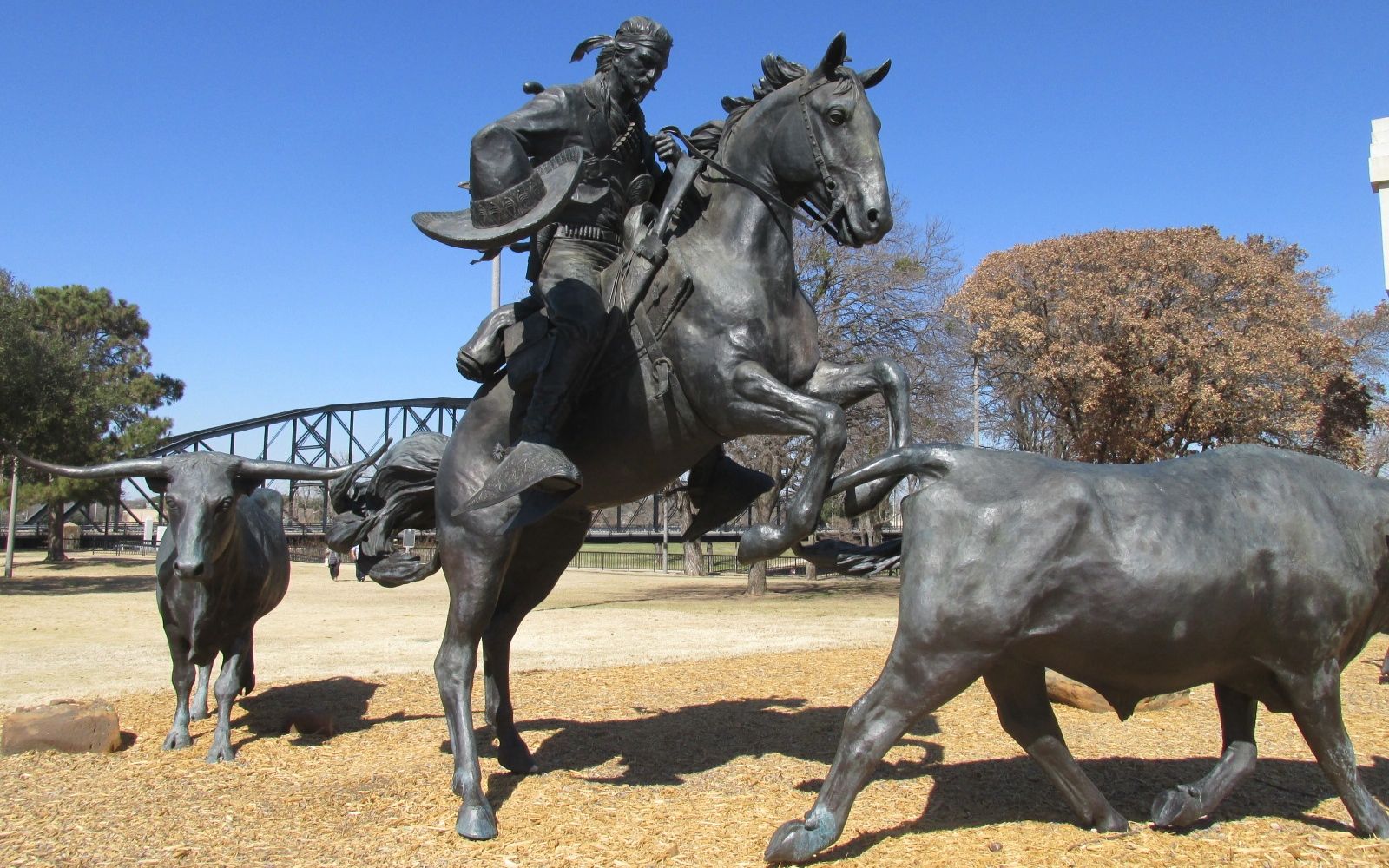
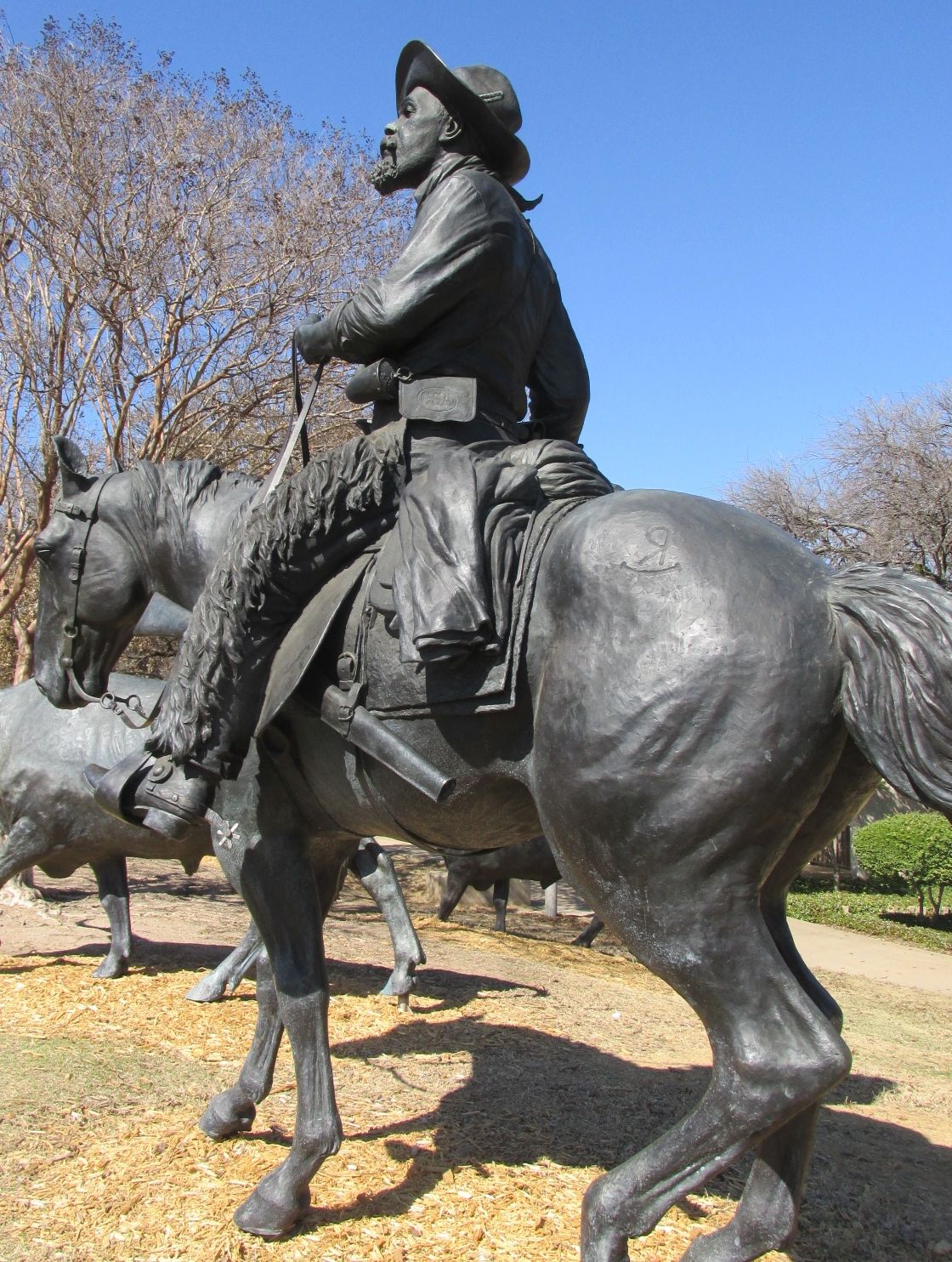
Okay, bronze longhorns, but something like twenty-five of them along with three cowboys on horses. What an enormous sculpture grouping – and it wasn’t mentioned in any of the sources I checked. Waco ought to promote it! I would have made a point of seeing it.

But, back to the bridge.

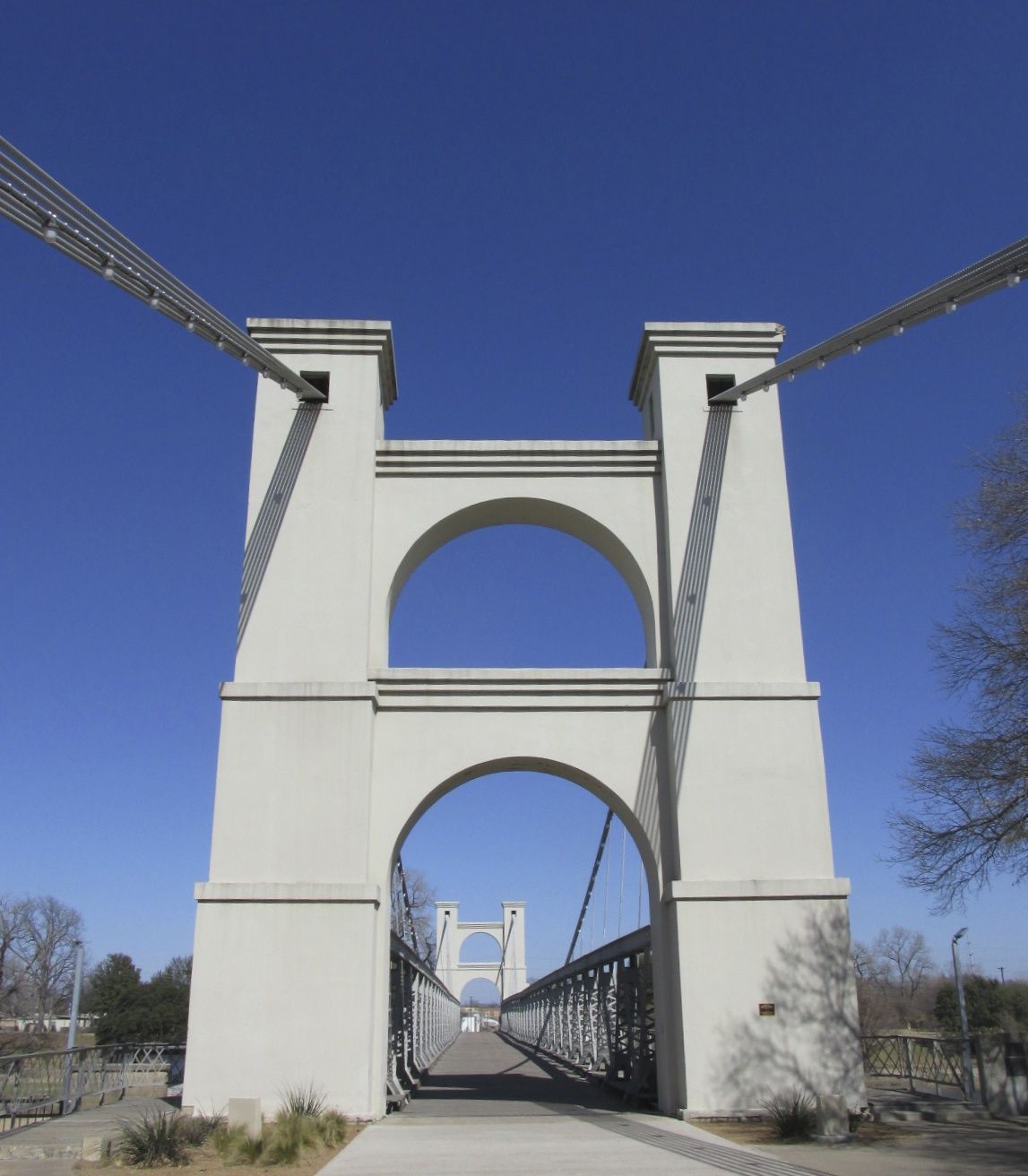
Bridge two towers

It was completed in 1870 and at the time it opened it was the longest single-span suspension bridge west of the Mississippi. It was a crossing on the Chisholm Trail, which moved cattle from Texas to Kansas. Imagine that! Cattle used to cross the Brazos on this bridge. This bridge and the railroad, which arrived shortly thereafter, made Waco a commercial hub of the region.

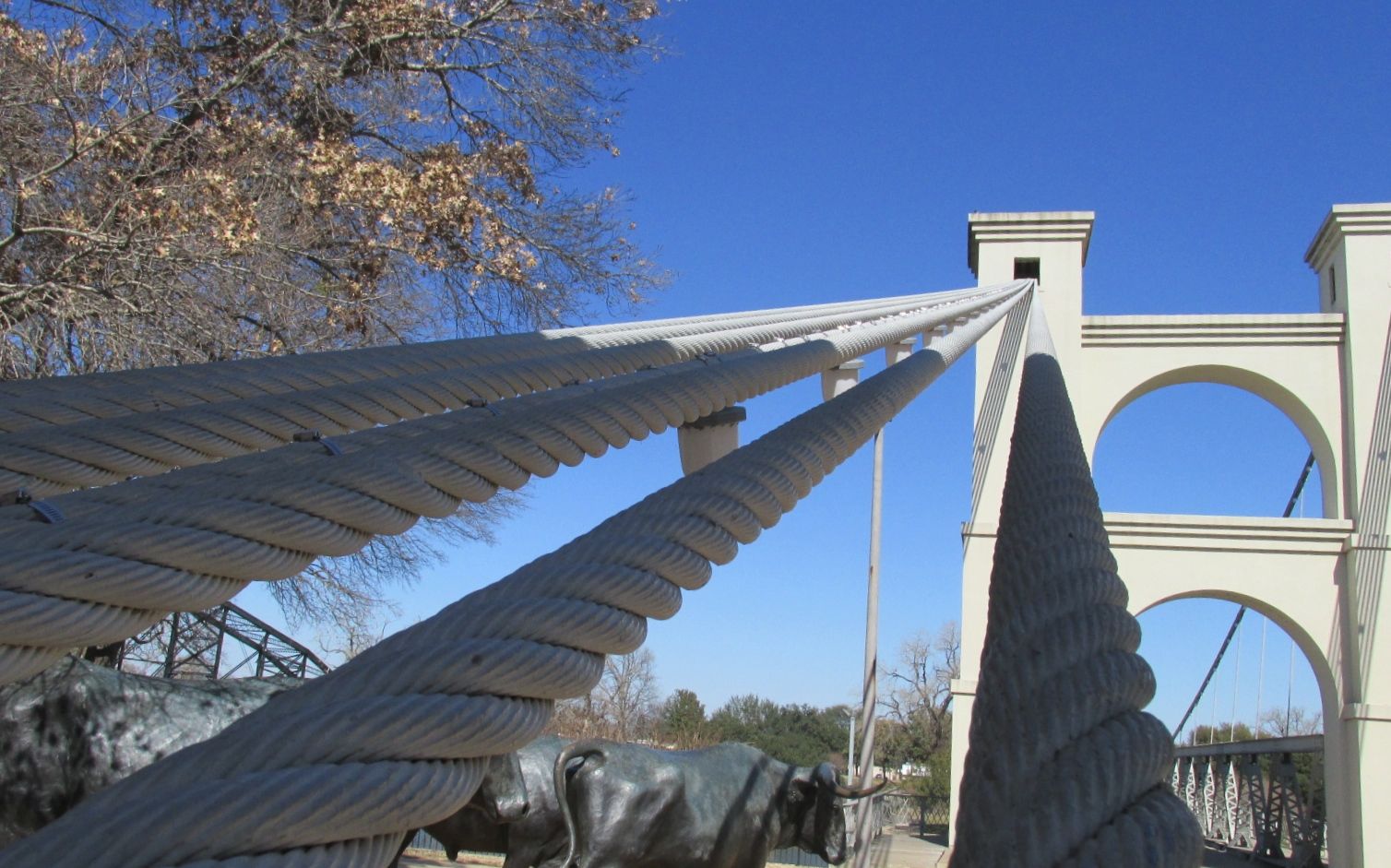
Bridge - cables and towers

The cables were supplied by the John Roebling Company, the builders of the Brooklyn Bridge. The Brooklyn Bridge didn’t open until 1883, although construction started in 1870. Maybe it is better said that the Brooklyn Bridge builders used the company that built the Waco Suspension Bridge.

Bridge - iron work

These days, this bridge is purely for pedestrians. Standing on this bridge, I think I could count seven bridges spanning the Brazos. Transportation is no longer at the premium it was when the cattle drives took place.

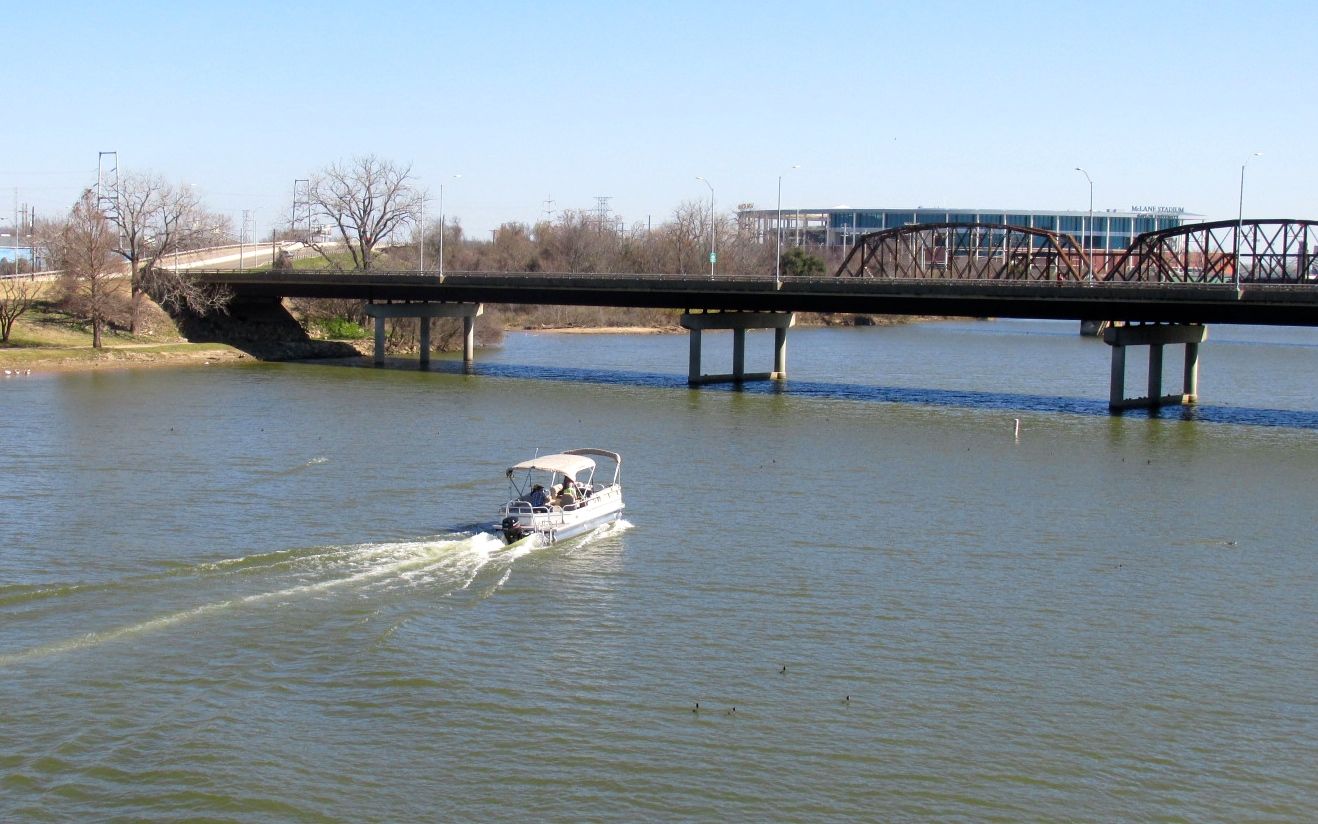
The river is a great source of recreation. In addition to the river walk and the statues, there is boating.

Bridge boating on the Brazos

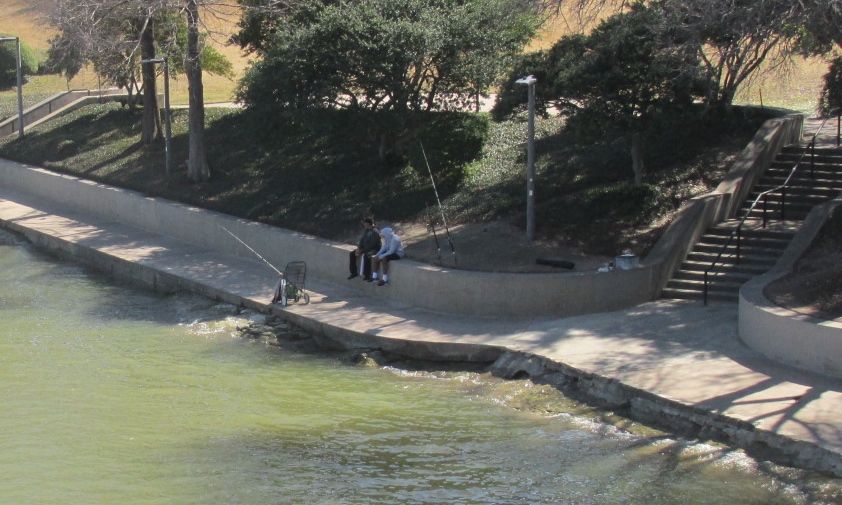
And fishing

Bridge - fishing on the Brazos

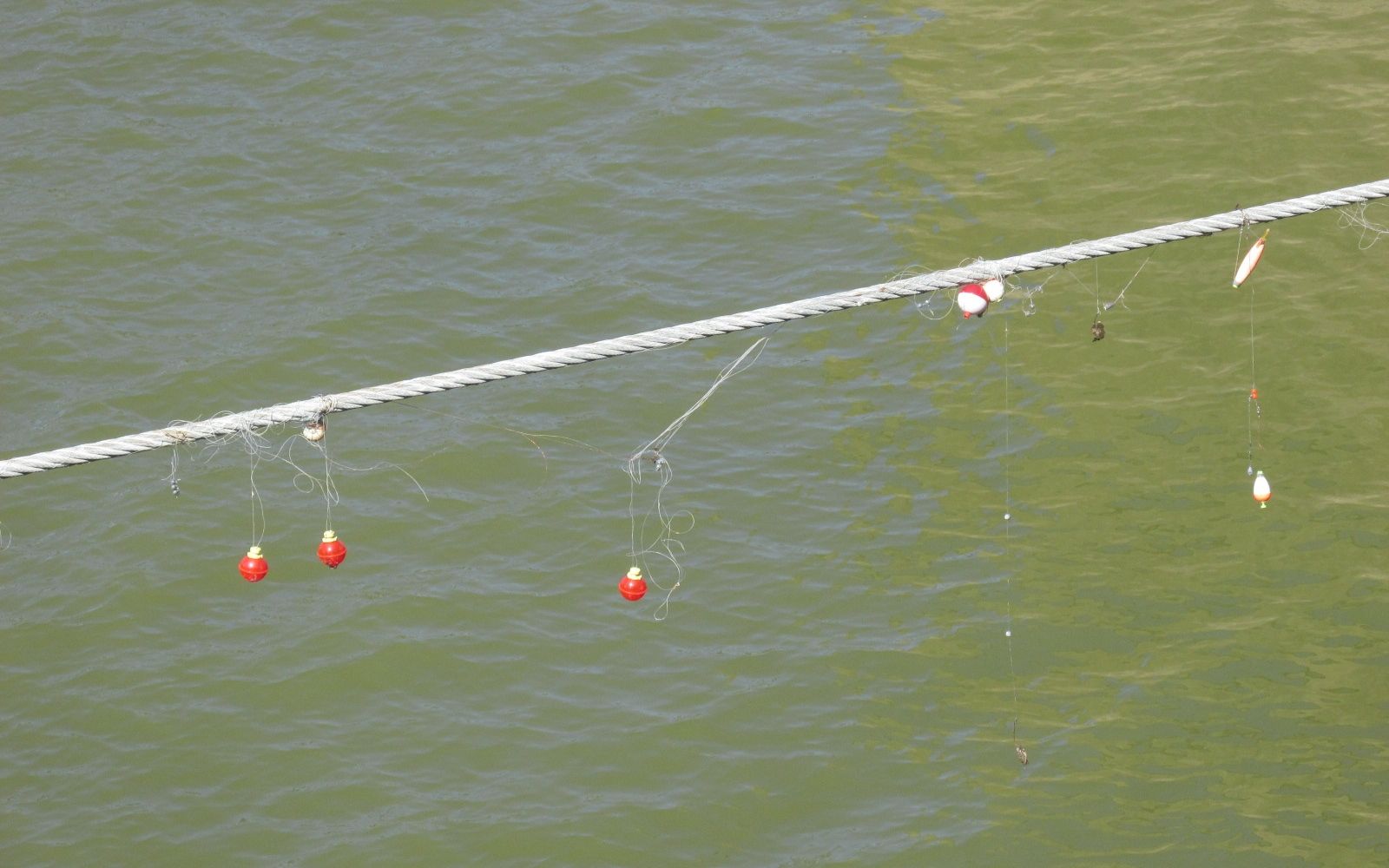
I thought I might find padlocks on the bridge, like I’ve found on other bridges, but there weren’t any. I did find fishing bobbers hanging on cables, though.

Bridge - bobbers

Not nearly as romantic.

The statues were really impressive.

Bridge - cowboy and longhorns on the left

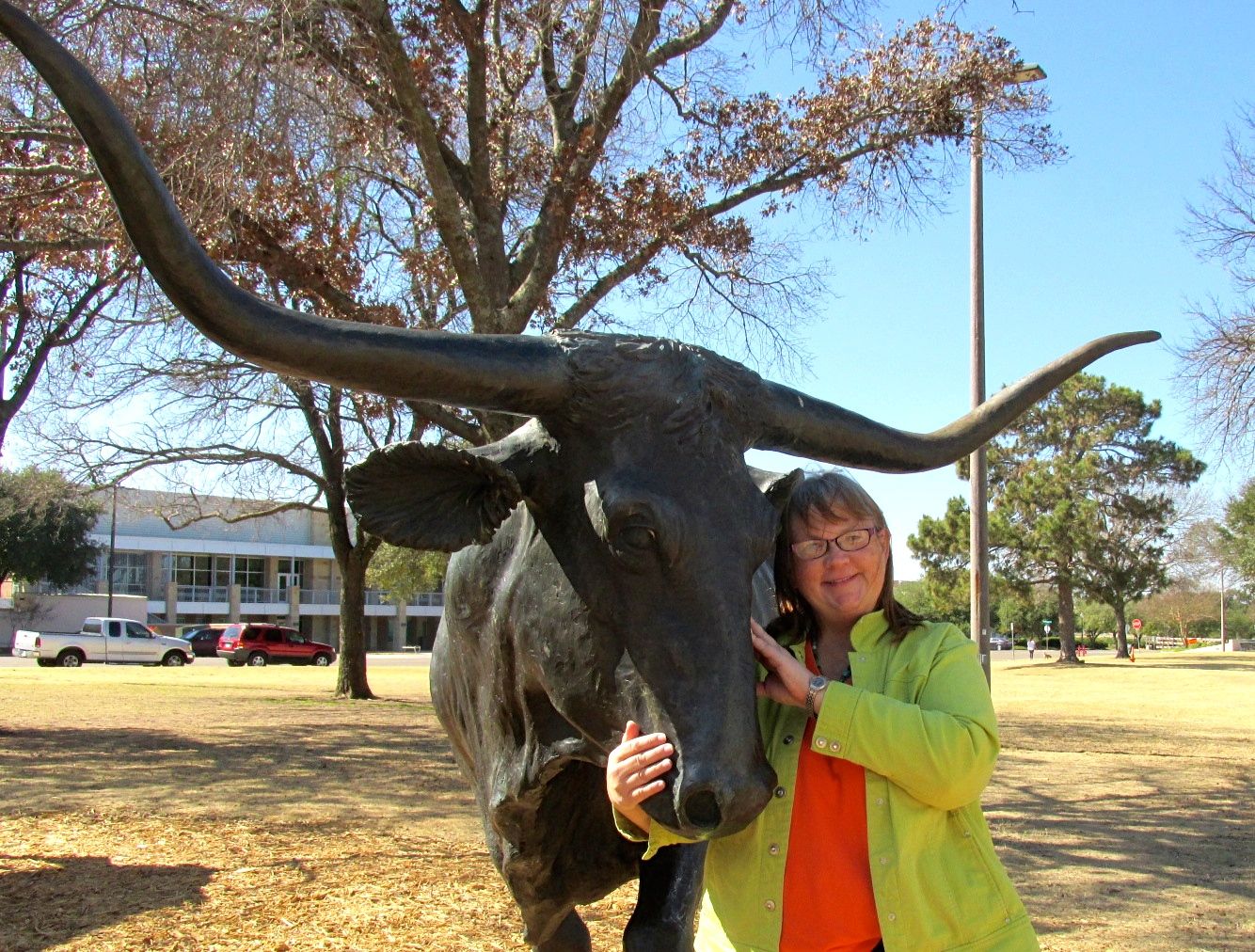
They were larger than life-size.

Bridge - me and the longhorn

Bridge - longhorn herd

Bridge - cowboy on the right

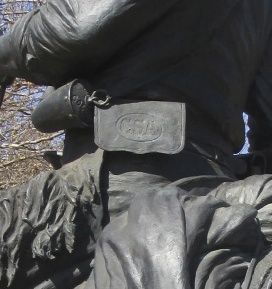
Texans take their Confederate history seriously.

Bridge - cowboy on the right CSA

You can see CSA on the pouch of this cowboy.

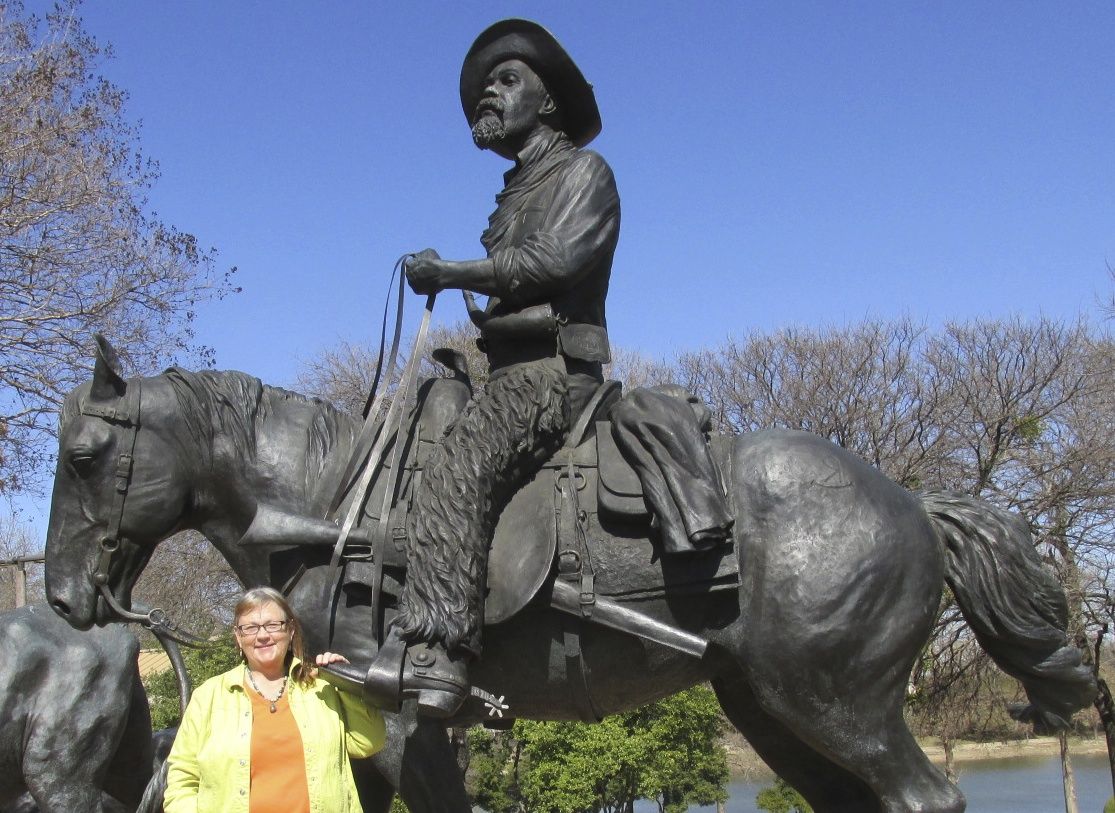
Bridge - me and the cowboy on the right

You can see how much larger than life-sized these sculptures are!

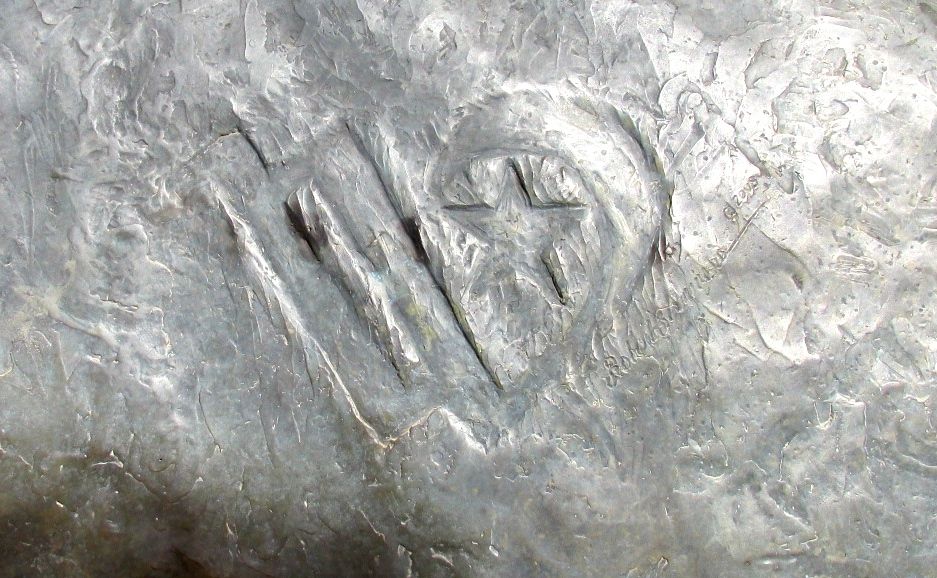
Bridge - waco brand

All the cattle are branded with Waco’s city logo.

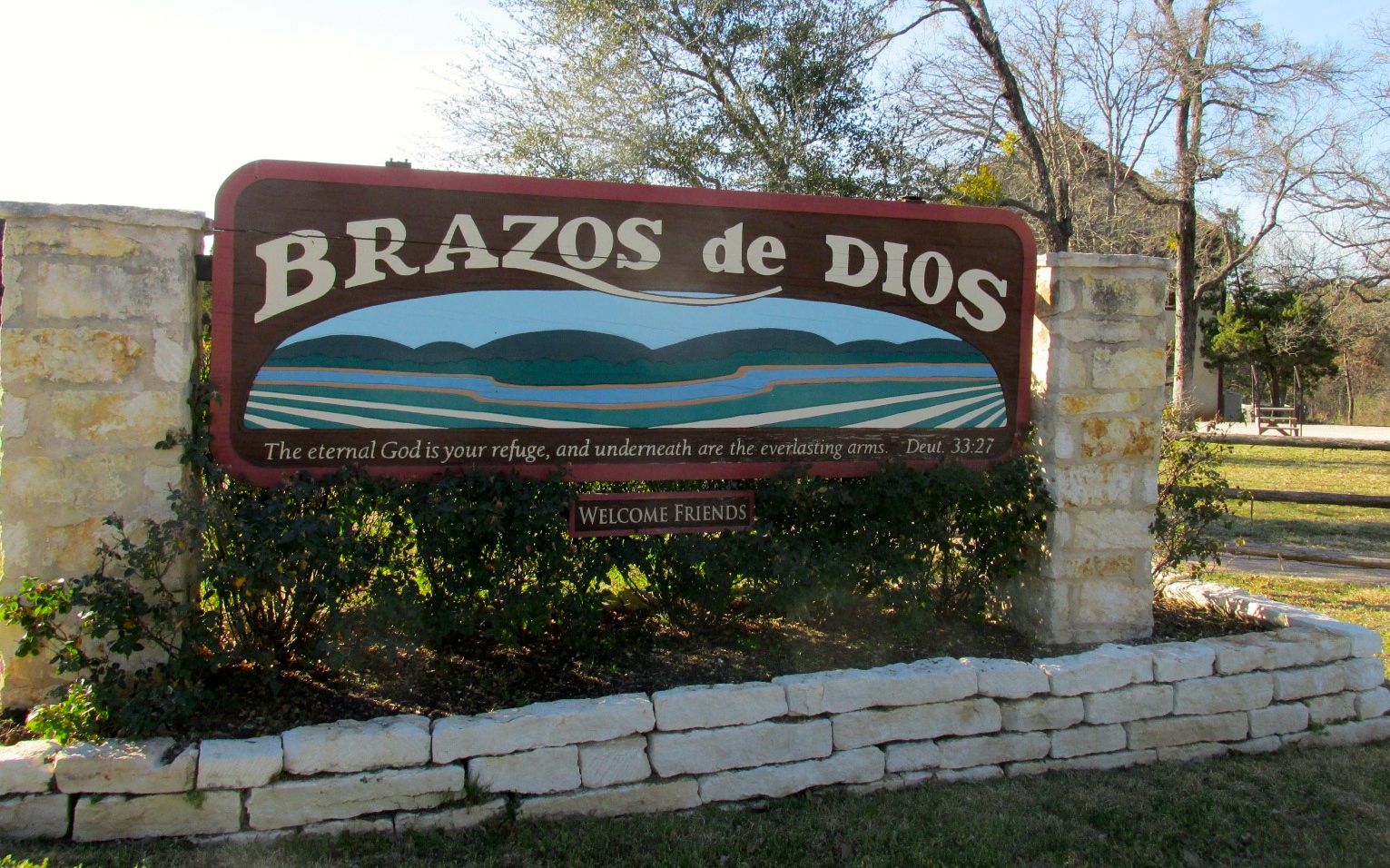
My next stop was lunch, and it was a recommendation given me by the lady in the tourist information office. I went to The Homestead at Brazos de Dios just outside Waco.

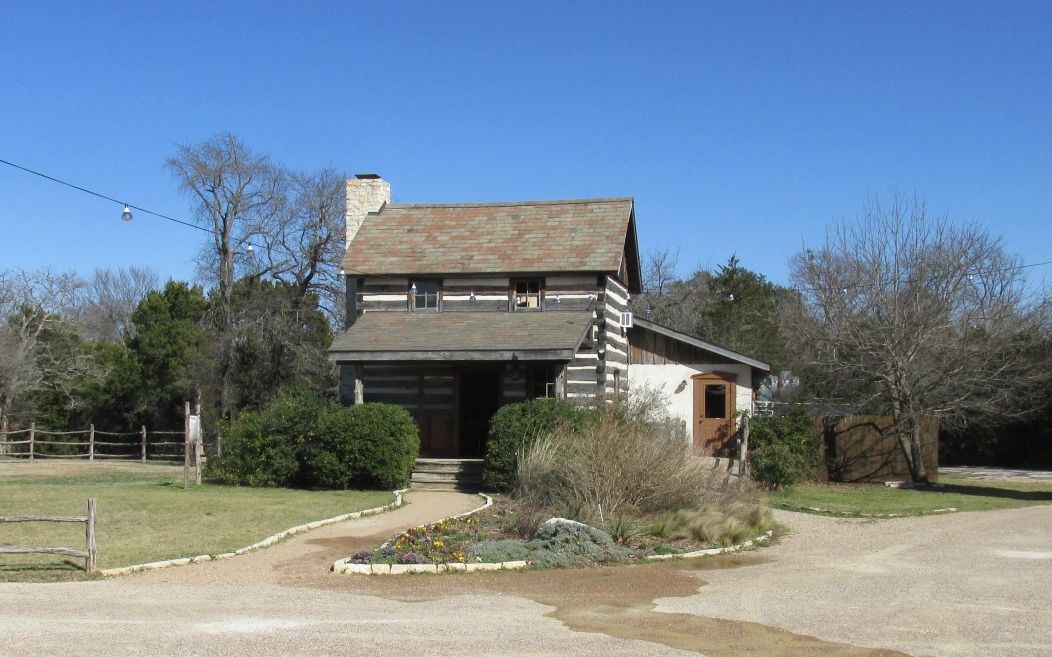
Homestead - sign

Homestead Heritage is an agrarian- and craft-based intentional Christian community. Its literature stresses simplicity, sustainability, self-sufficiency, cooperation, service and quality craftsmanship. My first stop was the Cafe.

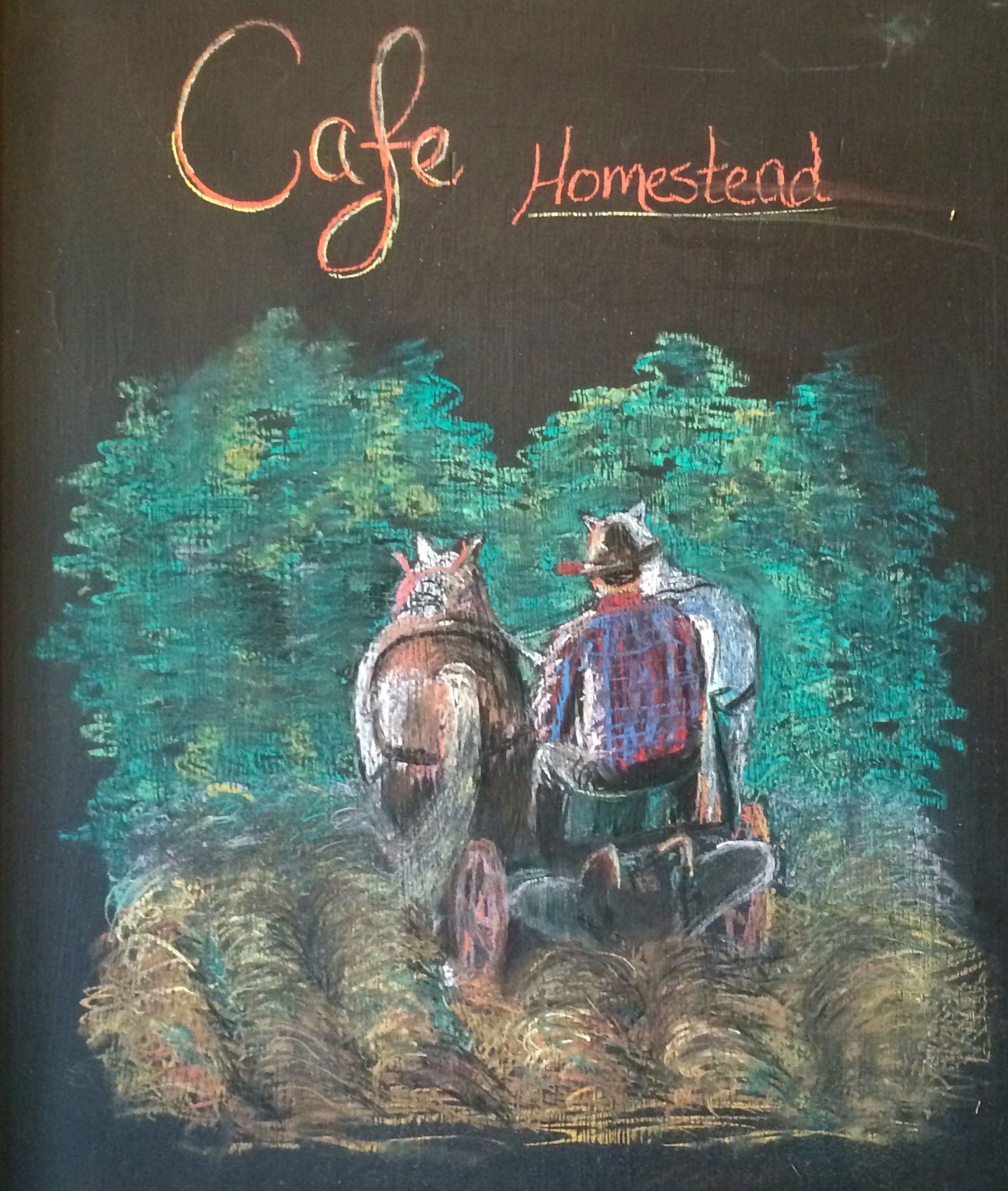
Homestead chalk sign

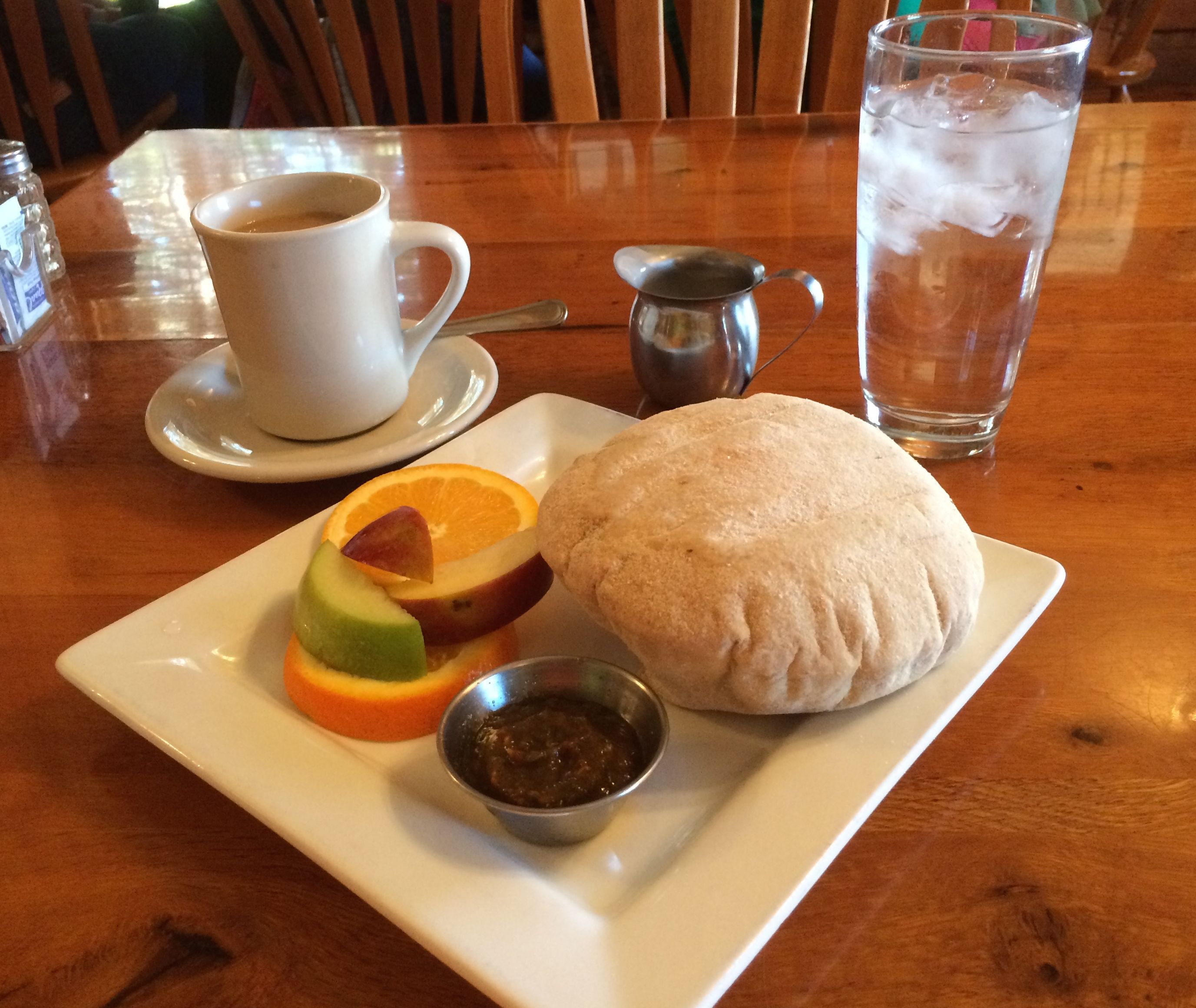
I was taken by the chalk drawing inside the restaurant. They had many interesting items on the menu, but I opted for something I hadn’t had in a while: falafel.

Homestead falafal pita

After lunch, I set out to visit the various buildings where they were practicing their crafts. The buildings were old buildings from around the country that had been dismantled and reassembled in the community.

The Basket House
The Basket House

There was a woman inside working on finishing baskets. She also told me of the classes they offer.

My next stop was the fiber house.

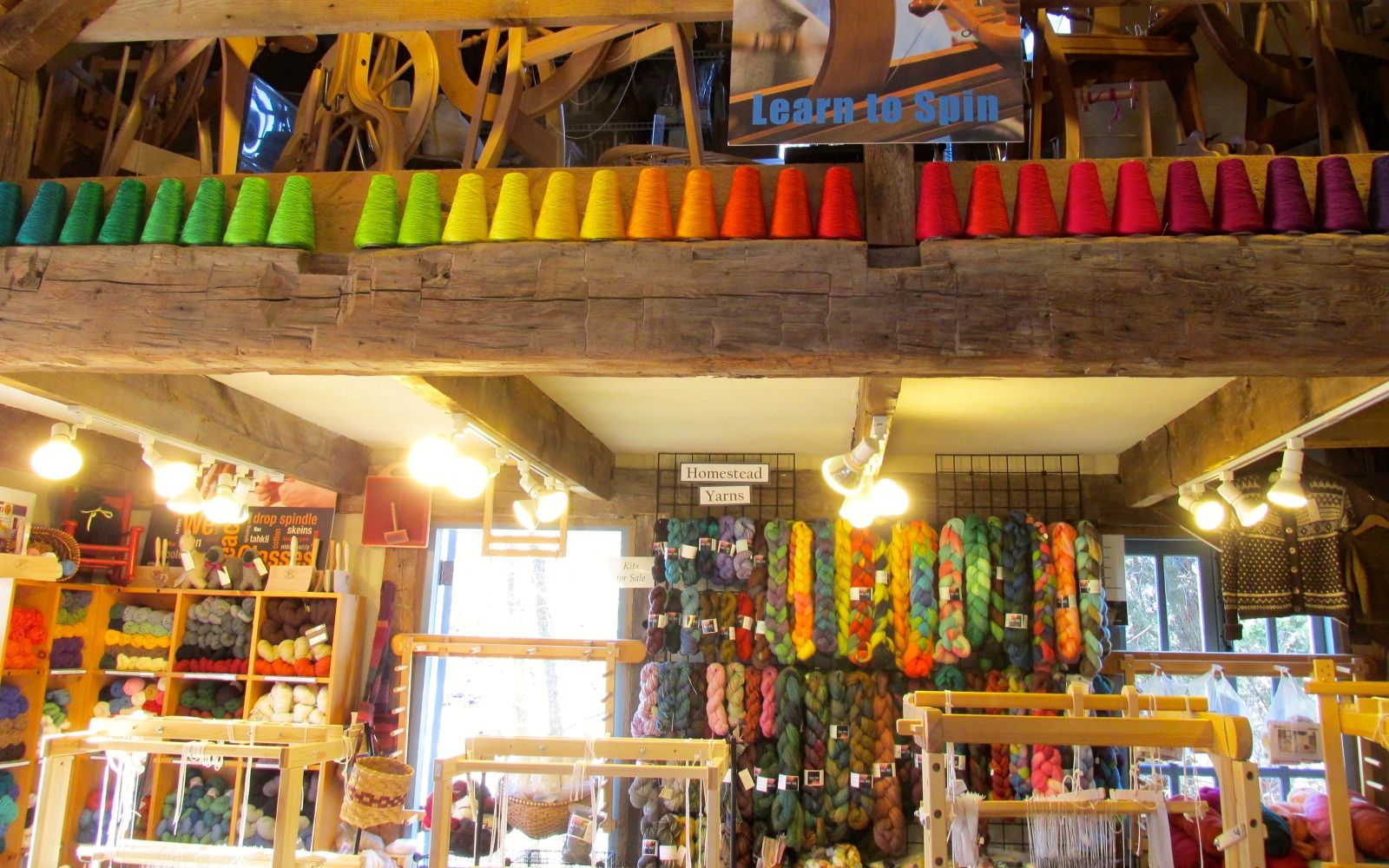
Homestead - fiber shed

They were teaching weaving. They also have spinning classes. And they sell what they produce.

1790 Gristmill
1790 Gristmill

The Gristmill came from New Jersey, and it is still in operation.

Homestead - sluice to mill

They depend on an artificial source of water to power the mill, though. This appeared to be a recirculating fountain. After the water went down the sluiceway and turned the waterwheel, it was pumped back up to make the trip again.

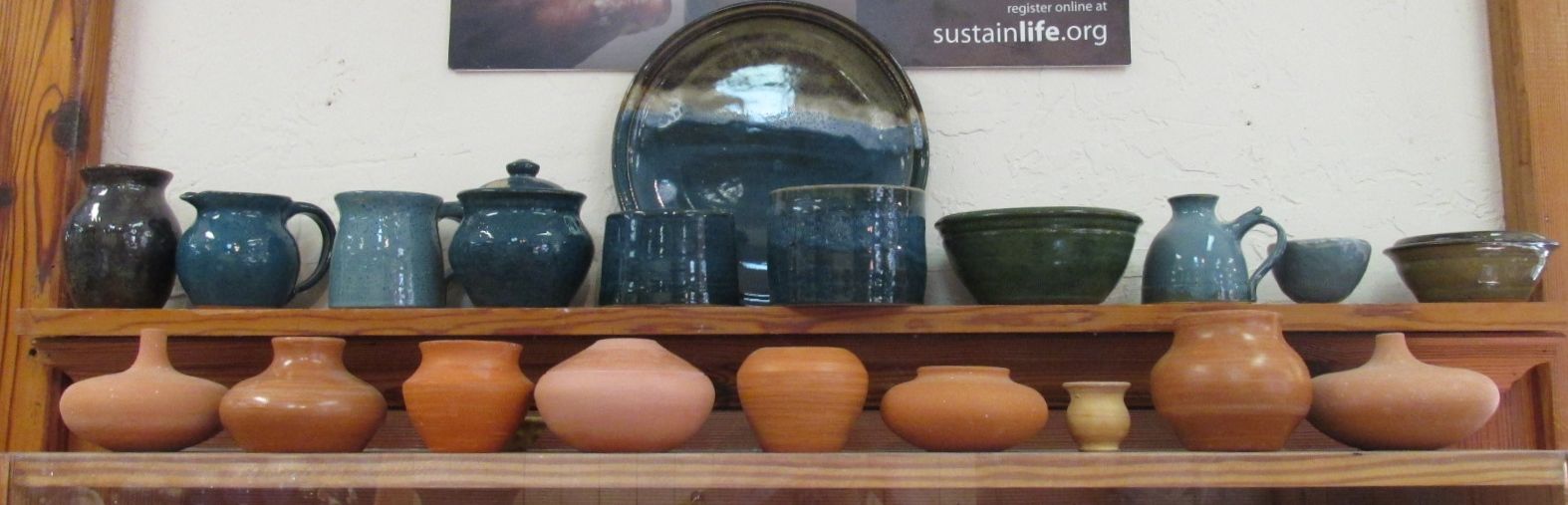
My next stop was the potter’s house.

Homestead - pots

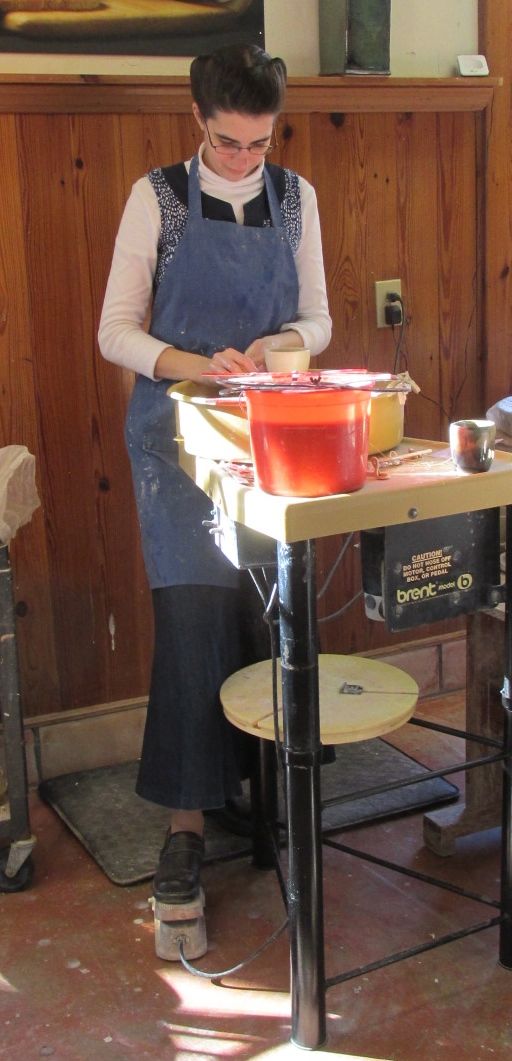
I had never seen a standing wheel before!

HOmestead - standing wheel

With their concentration on traditional methods, I was surprised that there were only electric wheels. I would have thought that they would have kick wheels.

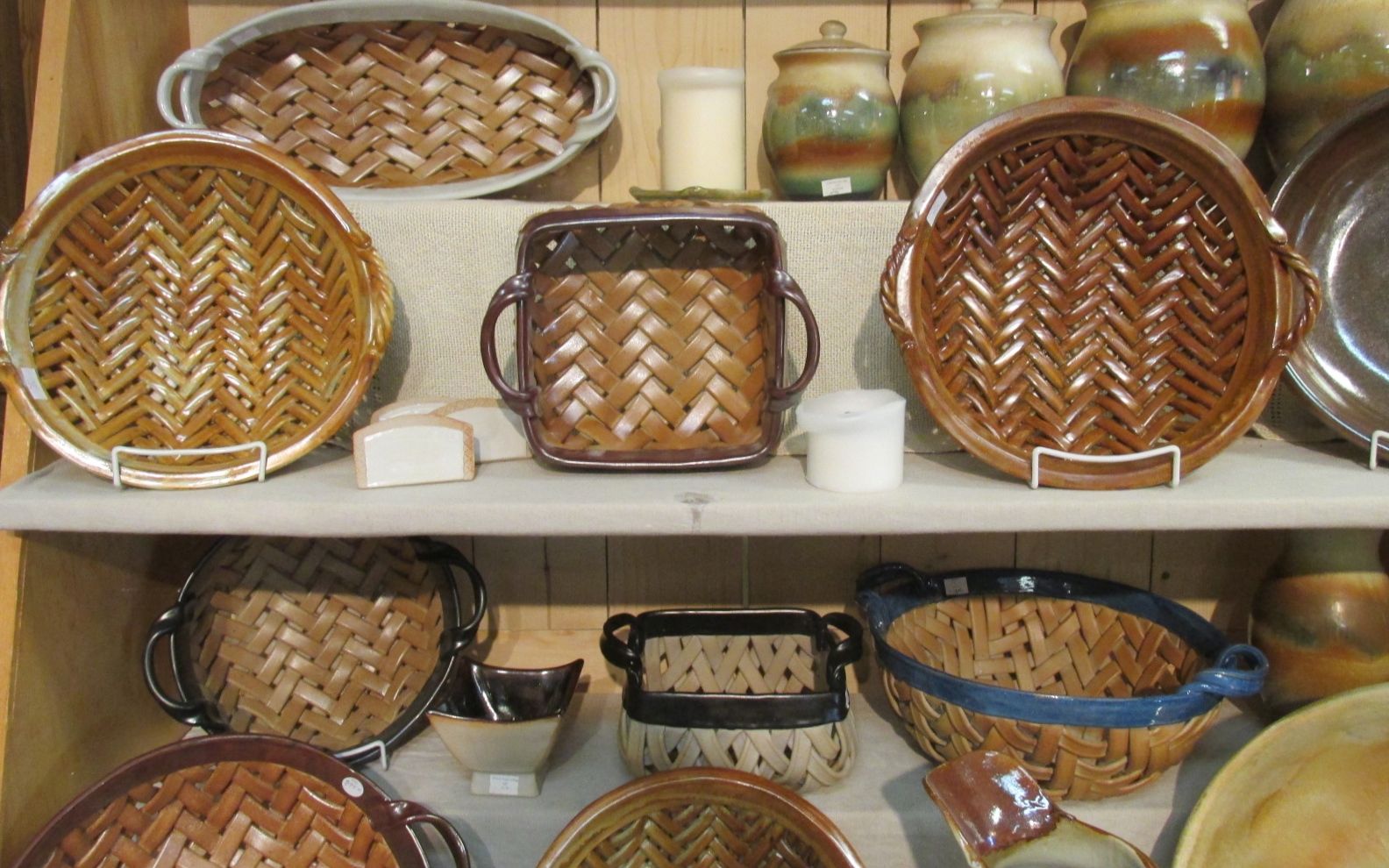
They had an inviting display of their wares. I was taken with the pieces that look like baskets made of clay.

Homestead - clay baskets

And what would an old-time place be without a blacksmith shop?

Homestead - blacksmith shop

They were between projects, but very friendly.

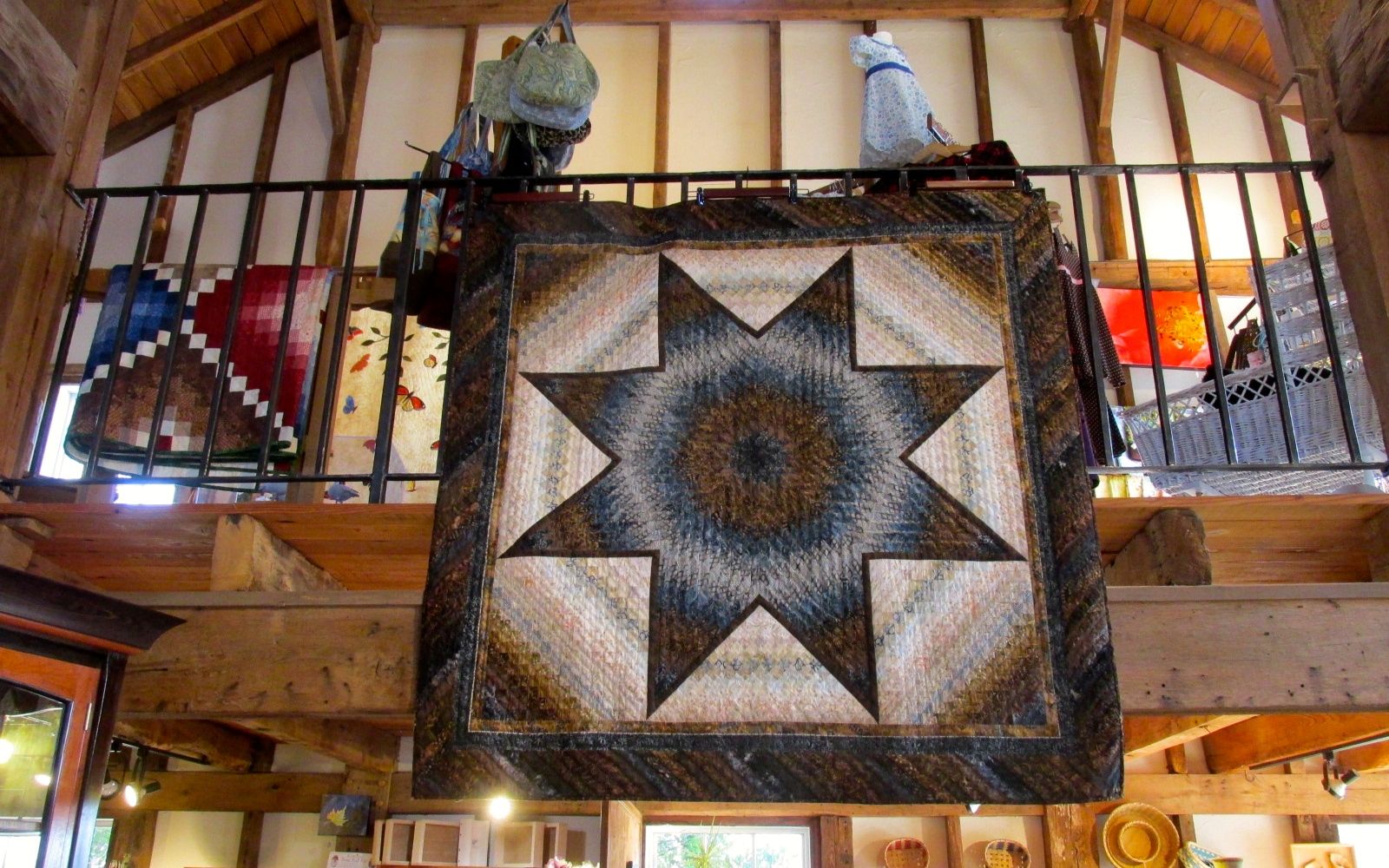
And then there was the Gift Barn – just in case you missed an opportunity to purchase things earlier. They also had furniture, quilts and other things.

Homestead - gift barn

After enjoying all that Brazos de Dios had to offer, I headed back to Midway Park.

Sunset day 2

I got there in time for another glorious sunset. The next day, on to Austin!


Livingston, I Presume?

I hitched up and rolled out of Louisiana and into Texas.

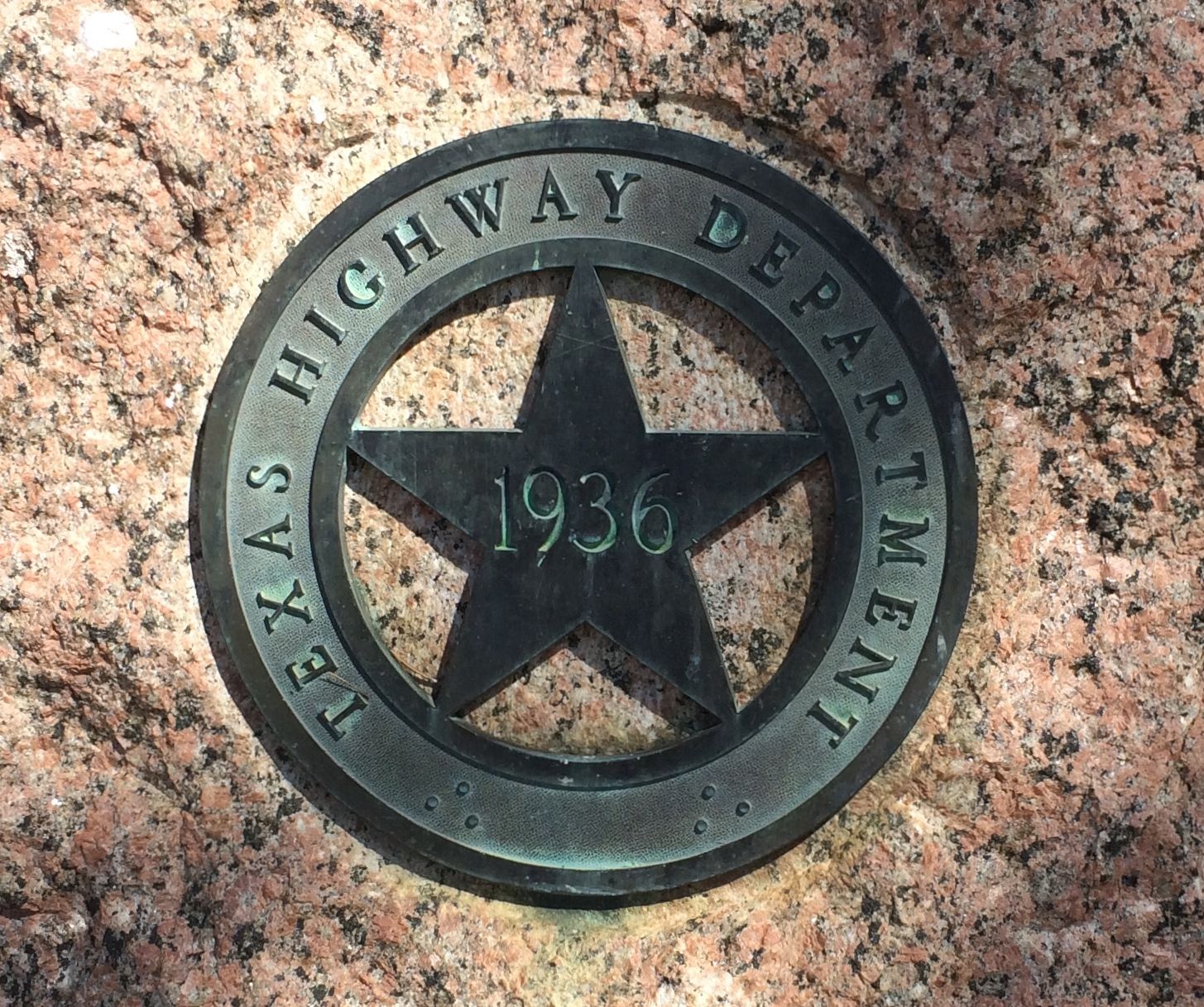
Texas Highway marker

What a beautiful day!

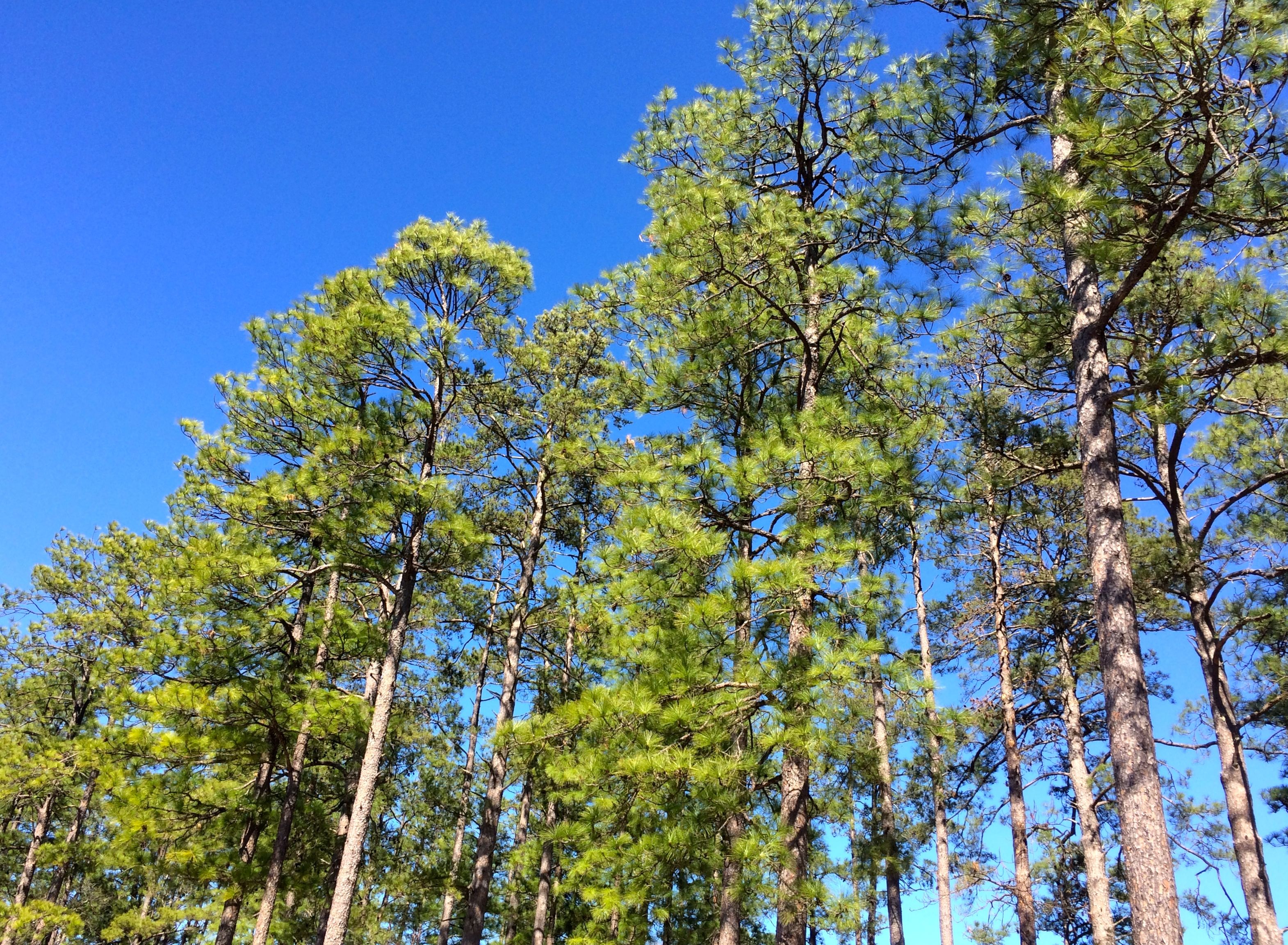
Pine trees and blue skies

My next stop was a short one in Livingston, Texas. There was some business I needed to take care of back “home”.

I registered at Rainbow’s End RV Park and zipped right out to get my truck and trailer inspected. I managed to renew my registration on line, but I needed to get them inspected when I got back into the state.

I had quite an adventure getting there. My phone sent me down Liberty Avenue. “What a nice name,” I thought. Then I saw a sign giving the speed as 20 MPH. “Must be a school,” I thought.

Nope.

The road was so poorly maintained that it was unsafe to go faster than 20 MPH. Well, I was on it, and there was no way to turn around. Forward was the only option.

I followed the directions – slowly, slowly, slowly. Finally, the voice in my phone told me that I had arrived. Hmm. No I hadn’t. I searched for another possible address and found that the address I wanted was on NORTH Washington, not south.

I did manage to bounce my way out of the neighborhood, although I felt like I was driving through people’s backyards at time. I arrived at the auto shop, passed the inspection and returned to Rainbow’s End.

The next day, I did a bunch of errands in the town. Banking, applied for a passport, and finally got my official driver’s license. My last task of the day was to take care of my income tax.

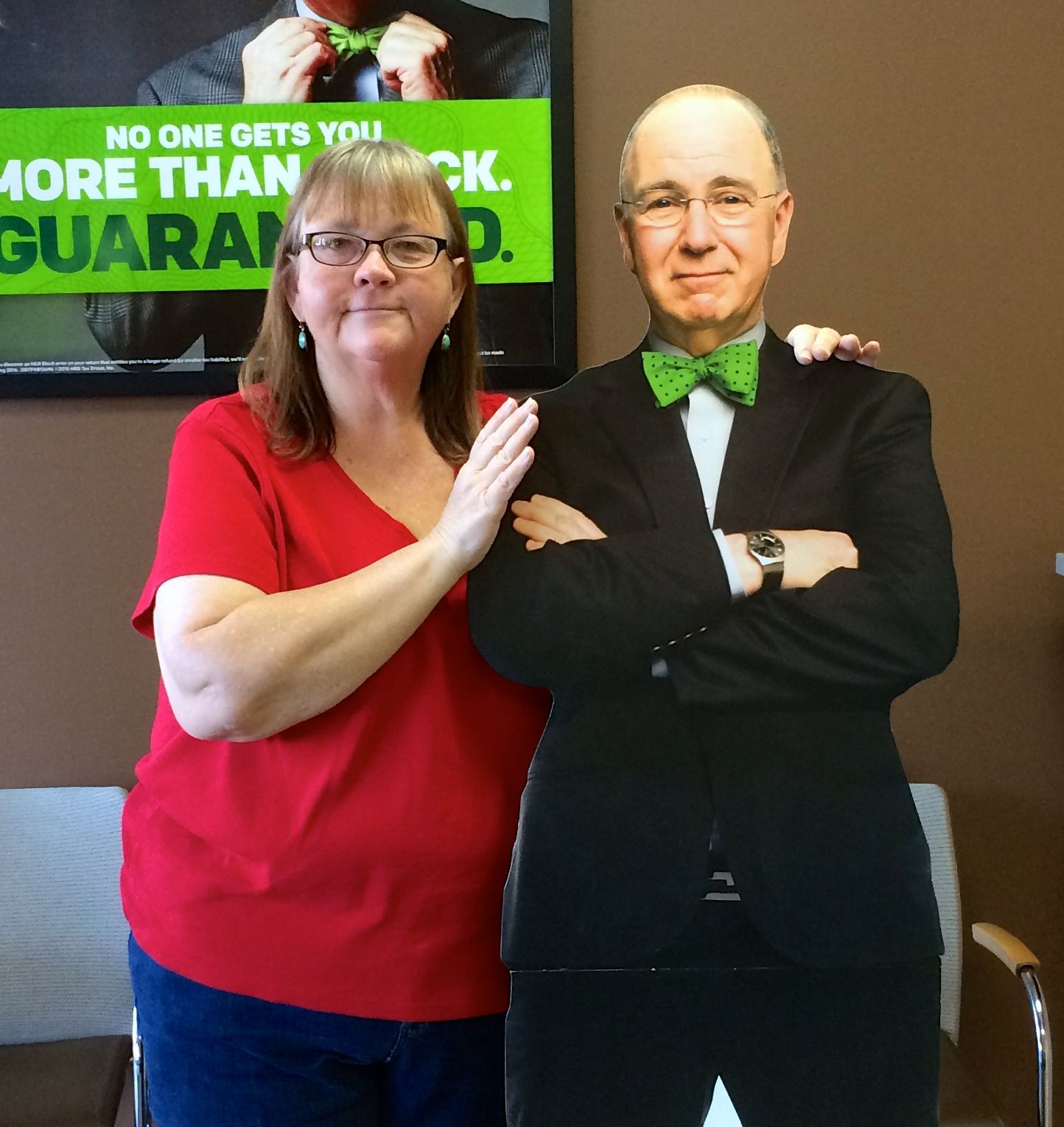
The H&R Block guy and me

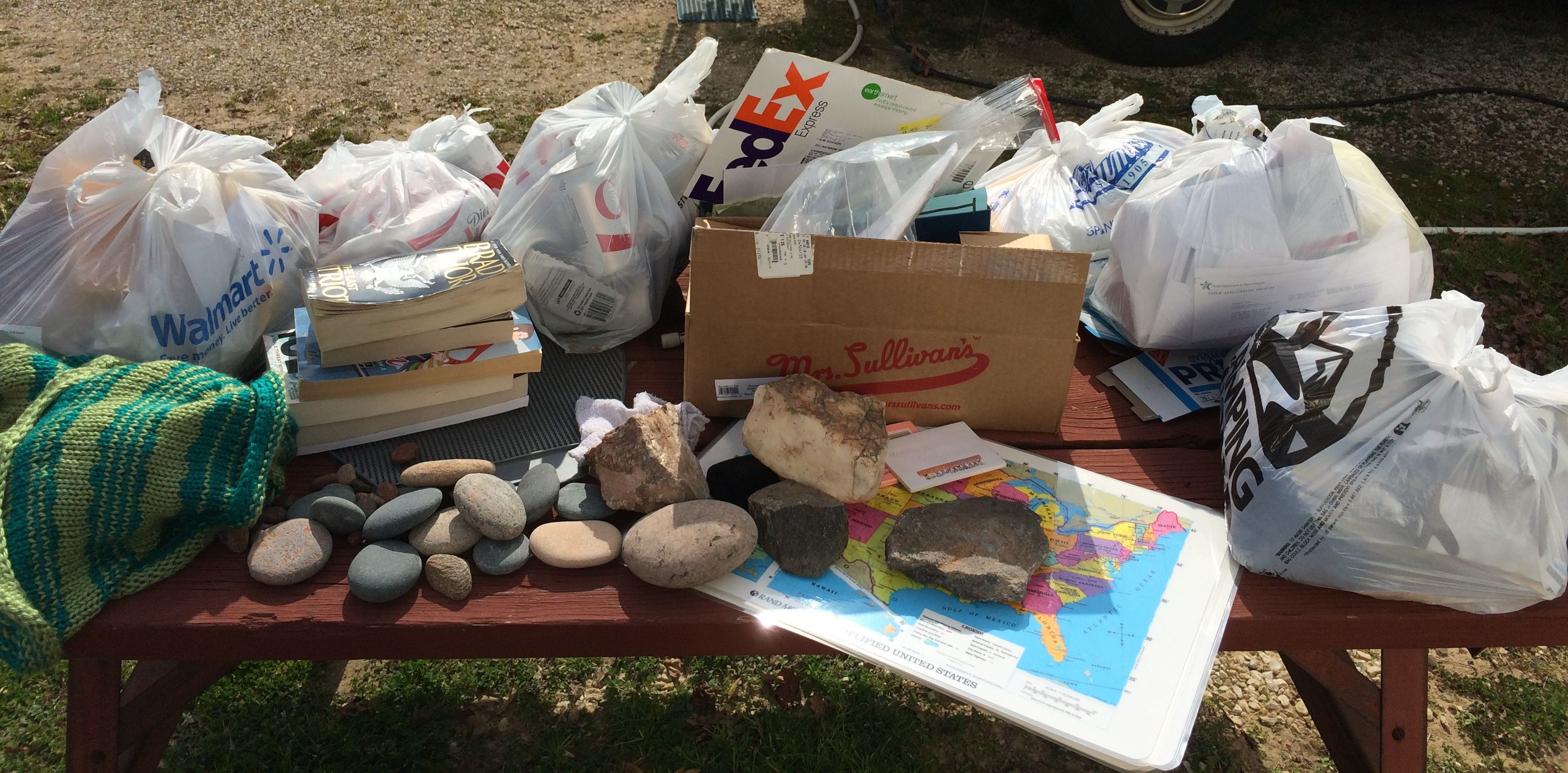
The next day, my prime objective was to do some purging. Every now and then, I have to go through things and see what I can get rid of. This is what I managed to get rid of this time.

clean out 2

Rocks?! Why in the world was I hauling around all those rocks?

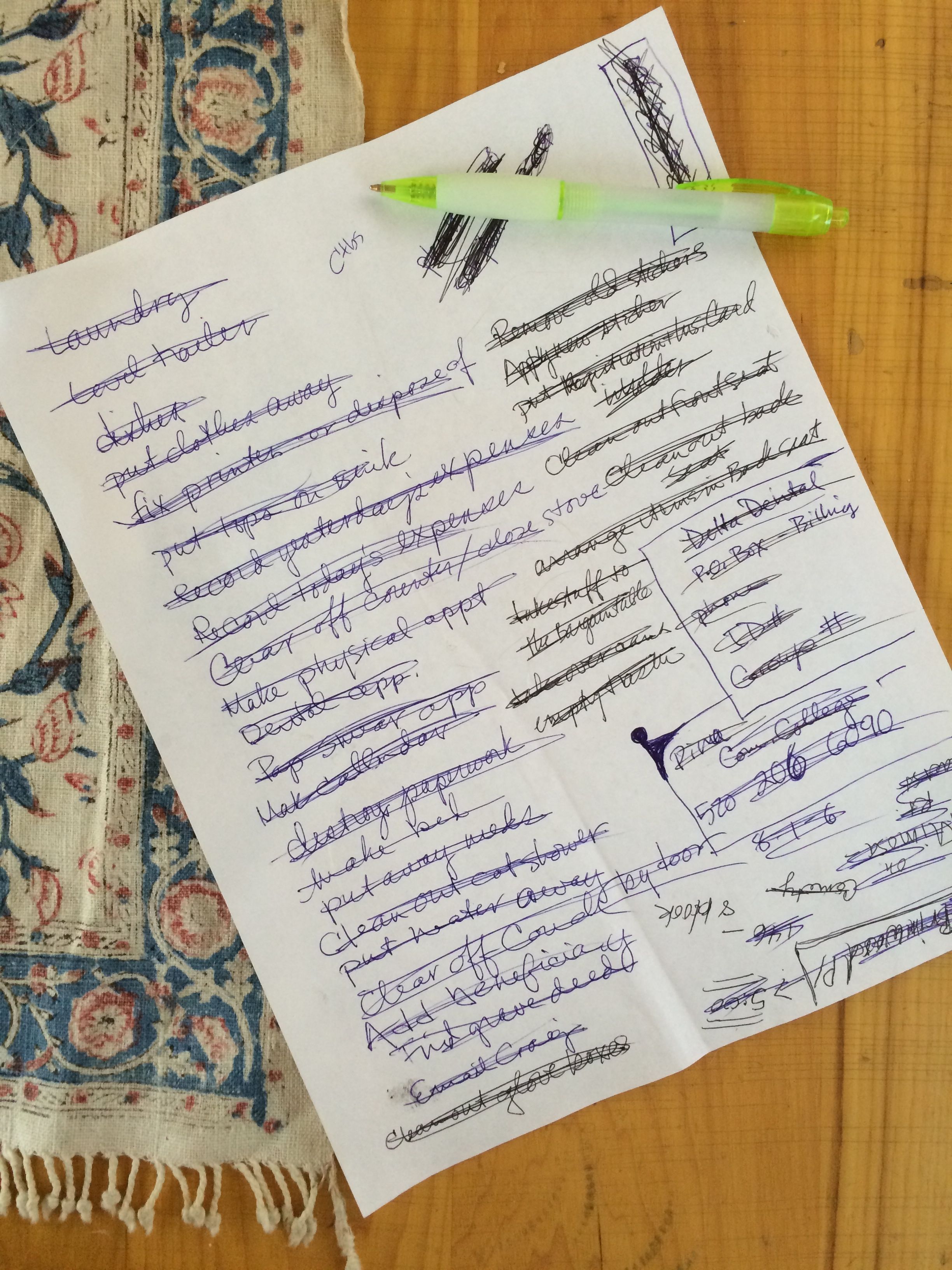
I got a lot of things done.

to-do list

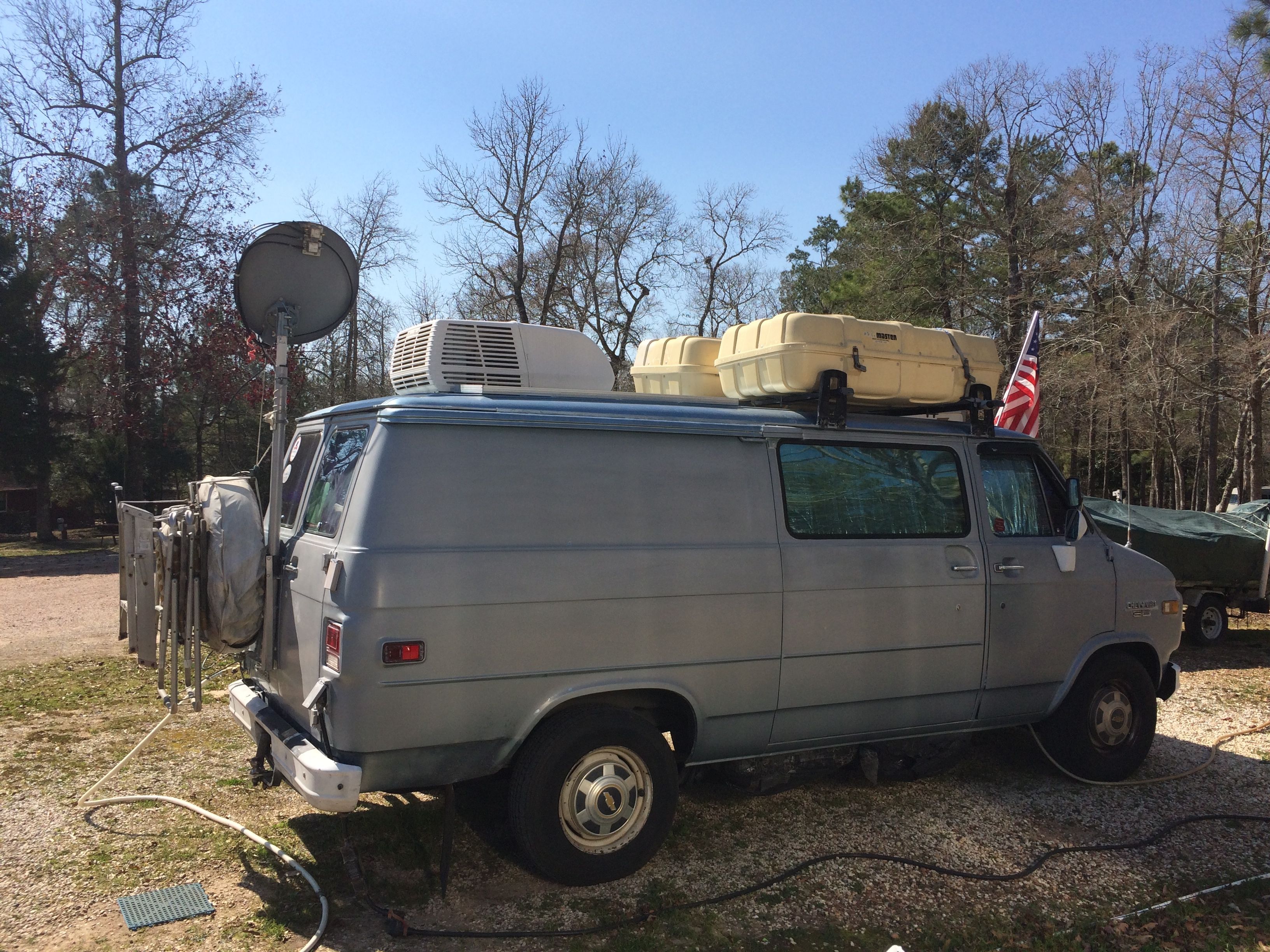
There was a guy in the site next to mine who had some real skills. His name was George and he lived in his van.

george's van

He proudly showed it off. I couldn’t believe what he had packed inside.

  • Solar power
  • Six batteries
  • Inverter
  • TV
  • VCR
  • Refrigerator
  • Microwave
  • Washer/dryer combination
  • Water heater
  • Sink
  • Bed
  • Port-o-potty

And, you can see the dish TV, AC and the storage on top. You can’t really make out the storage he has strapped underneath.

He says that he keeps a storage locker in town for things he doesn’t use all the time – like ladders and his sewing machine. (sewing machine?)

The boat you see in his behind the van is his. He says he hitches up and goes out for a month or more at a time and goes fishing.

Now, I couldn’t possible live it his van. It was really full, but I sure do admire what he was able to accomplish.

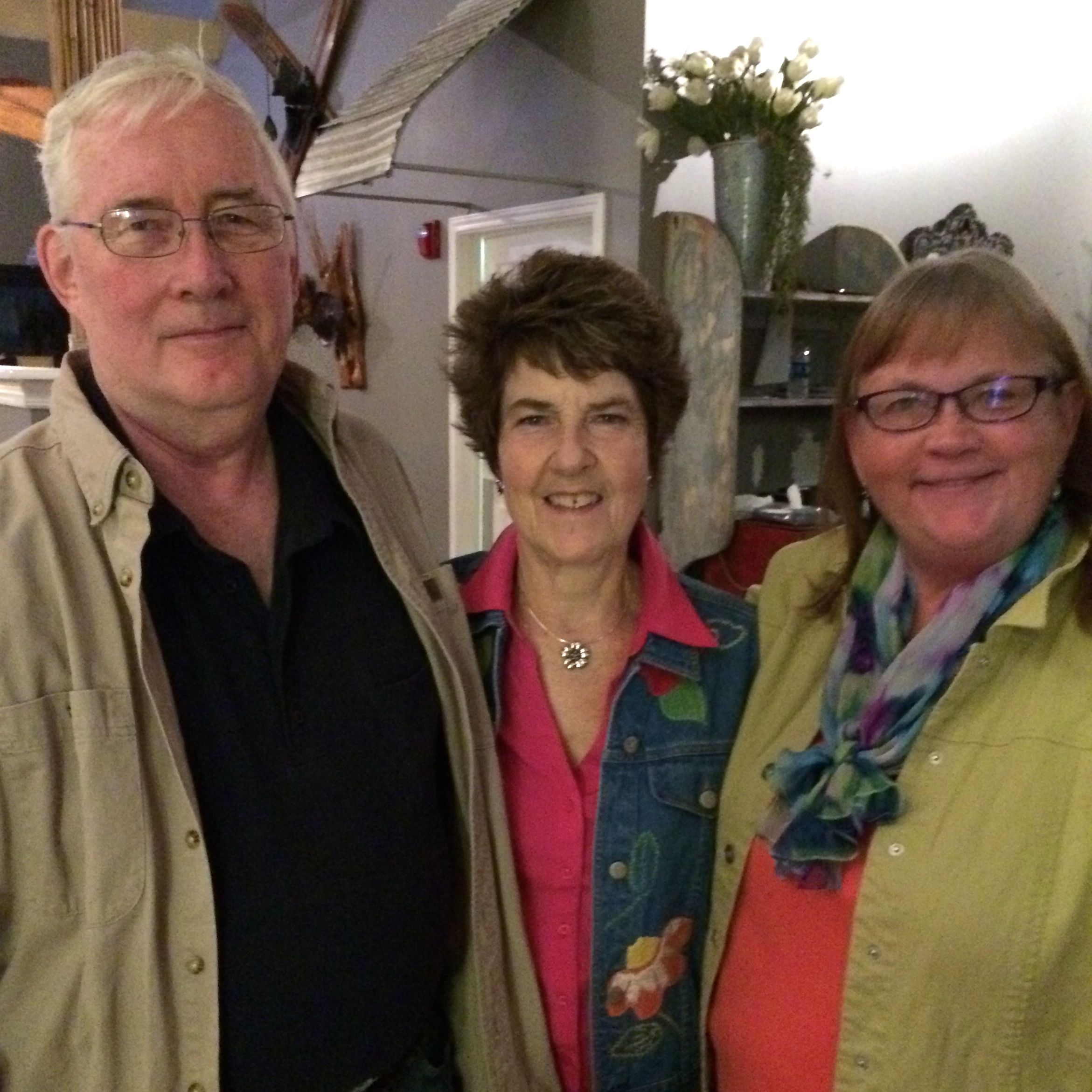
My last night in Livingston, I went out to dinner with my old friend, Don and his wife, Sue.

don, Sue and me

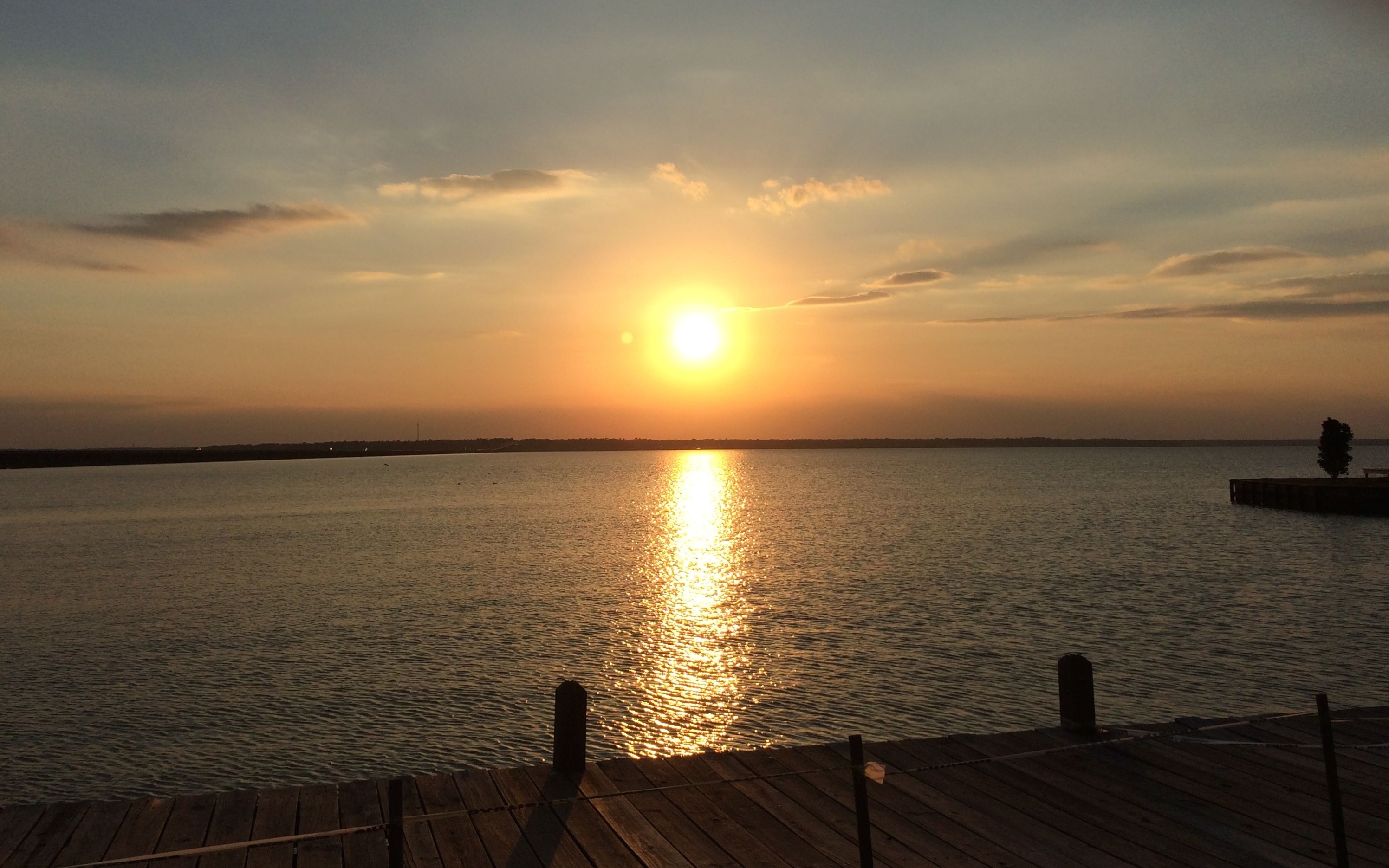
We headed out of town to a restaurant on Lake Livingston and arrived just as the sun was setting.

Lake Livingston sunset

The next day, it was time to hitch up and head out.

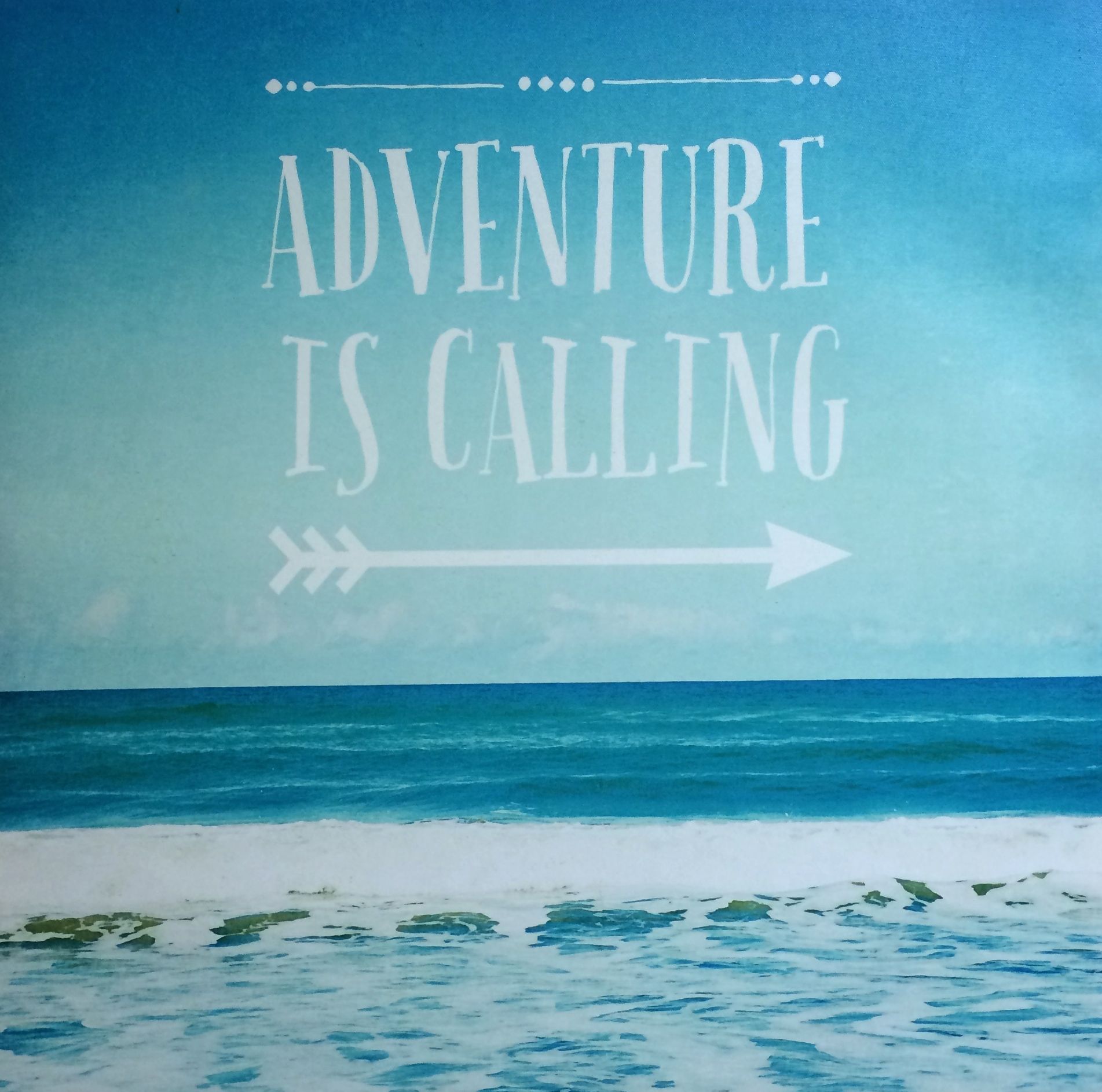
adventure is calling

Prophetic sign in the restaurant’s restroom.


Cajun Mardi Gras

On Facebook, I became acquainted with a bunch of solo travelers called “Freeroaders”.  They were talking about a week-long gathering in Eunice, Louisiana focused on Mardi Gras done Cajun style. It sounded interesting, so I reserved a site at the Cajun Campground so I could join them.

Unfortunately, I came down with a cold. I felt miserable! That’s what I get for stating flat-out that I had decided that I wasn’t going to get sick any more. I joined up with the group when I felt up to it, though.

The campground was nice. It had lots of trees and all the sites were full hook up, which means electricity, water and sewer. I could get some broadcast television signals and they even even had wifi, so I managed to keep myself entertained.

The first event I joined was the pot luck for the entire campground. This is the Freeroaders group.

Freeroaders group shot


Liz

Liz was quite a character. I especially liked her hat. I’m not sure if it is a crawfish or a lobster.

Me and wig woman

Here I am posing with Mary. And yes, that is a wig. I made my hat with plastic bags in the Mardi Gras colors of purple, green and yellow.

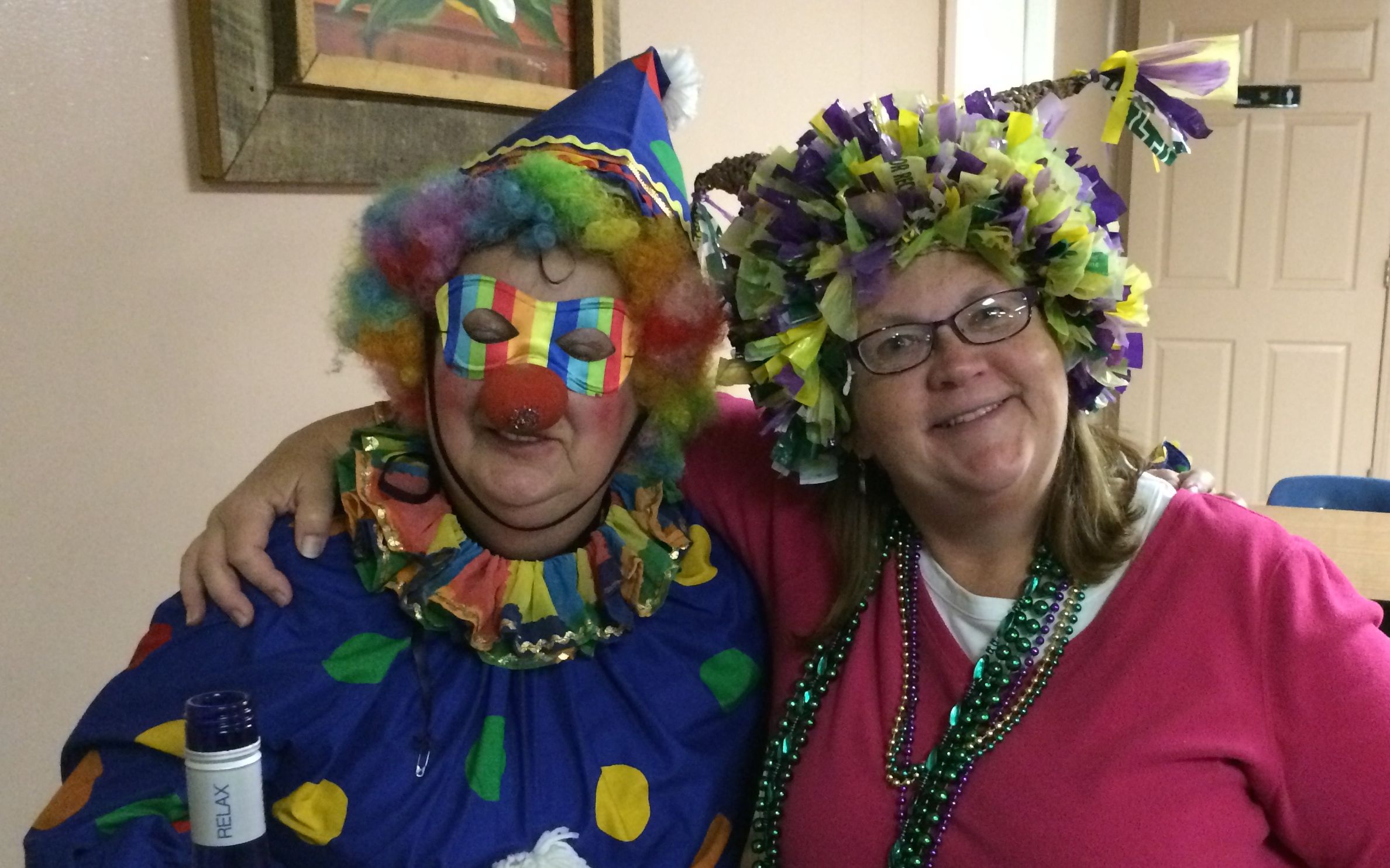
The Clown and me
The Clown and me

A couple of fellow Michiganders

These folks weren’t part of the Freeroaders group, but they were from Michigan! It’s always fun to run into people from “home”.

I started feeling kind of wimpy after dinner and I skipped out on the music and dancing.

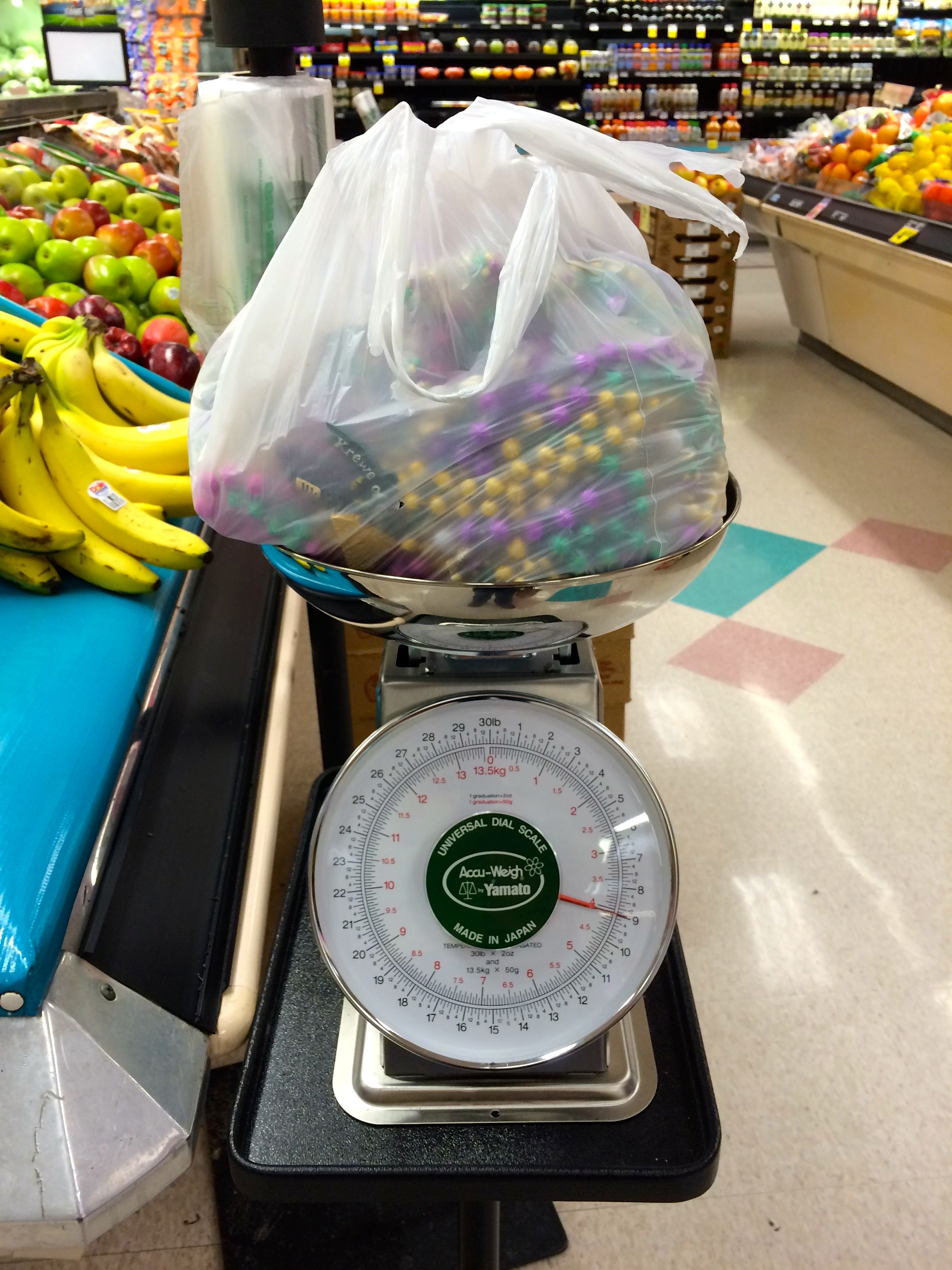
In fact, I kind of laid low for several days. I did go out and do a grocery run and take care of a few things. I took the beads I got in New Orleans with me and weighed them at Winn Dixie.

Nine pounds of beads!

I gassed up Bart the Big Assed Red Truck.

Casino

I was amazed that they had casinos attached to many of the gas stations. I guess they can’t comp you a room, but maybe they would let you sleep in your car.

Crayfish traps in the flooded fields

As you drive around, you will see these little cylinders just above the water. I stopped in at the Prairie Acadian Cultural Center and I spoke with a ranger about fishing for crayfish. She was from Eunice, and told me of going fishing for them as a child. She used a string net. They would bait it with whatever they had – chicken skin, gizzards, and so on and then set them in some shallow water and wait for the crayfish to take the bait. Then she would pull it up and put the catch in a bucket.

Crawfish trap - old fashioned

The comercial traps are much more durable and are designed to sit there until they are ready to be harvested.

Commercial crayfish trap

I never did eat any crayfish. I’m not all broken up about that. People tell me that they are like lobster – but I don’t like lobster. And they tell me that they are like shrimp – but I don’t like those either.

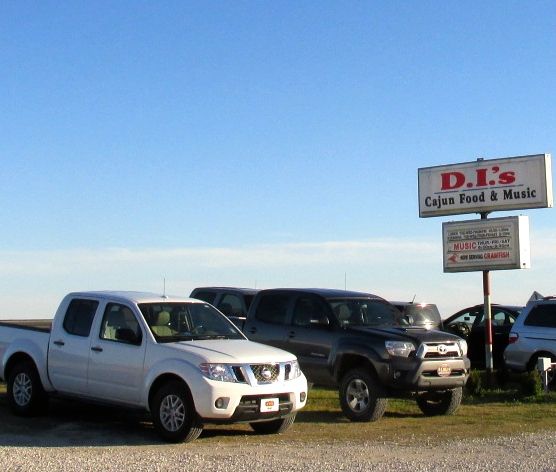
DI's Cajun Restaurant

But, I was determined that if the opportunity arose I would at least try one. I joined the group in a big outing to a very popular restaurant. It is so popular that they open up the to take reservations at 4:00 – you just write your name and number in the party on a list. They began seating at 5:00 they had all the tables filled by 5:30. No one in my group got seated.

Along about 6:00, I went in to use the bathroom and scope things out. There was a band playing and some folks were dancing. I stopped at the cashier’s counter and asked if people left after they finished eating. She said that some do, but they probably wouldn’t leave until after the Mardi Gras people went through. That wouldn’t be until after 8:00.

Oh, you all know how much I like crowds. Standing in a crowd for hours for the chance of maybe getting to eat…No, that’s not going to work for me. I decided to head back to the trailer and have some good old soup.

Freeroaders at the parade

The next day, it was the big day! Mardi Gras! We all got together and headed to downtown Eunice for the parade.

While we were waiting, Liz, who is now wearing a chicken hat, and I untangled the nine pounds of beads I brought with me from New Orleans. Then, we proceeded to hand them out to kids and people who looked like they needed some beads.

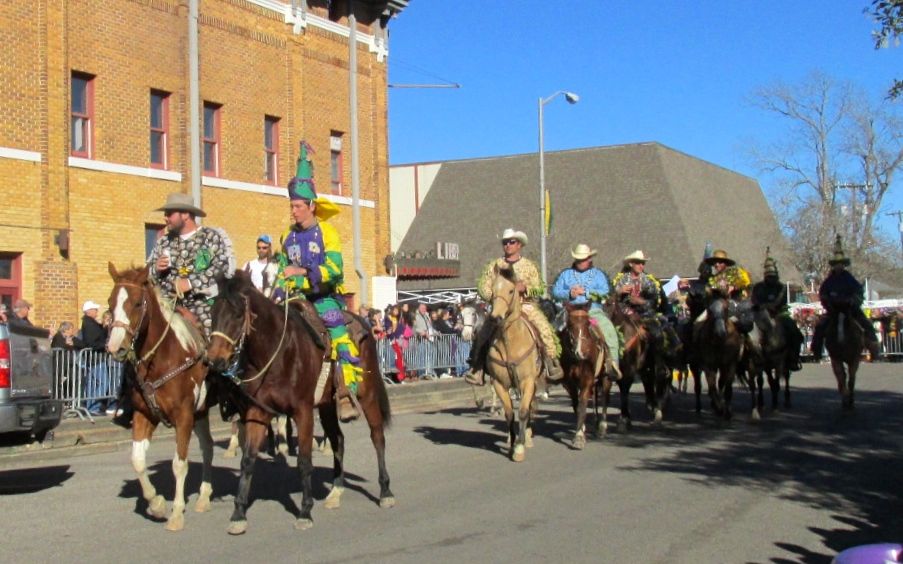
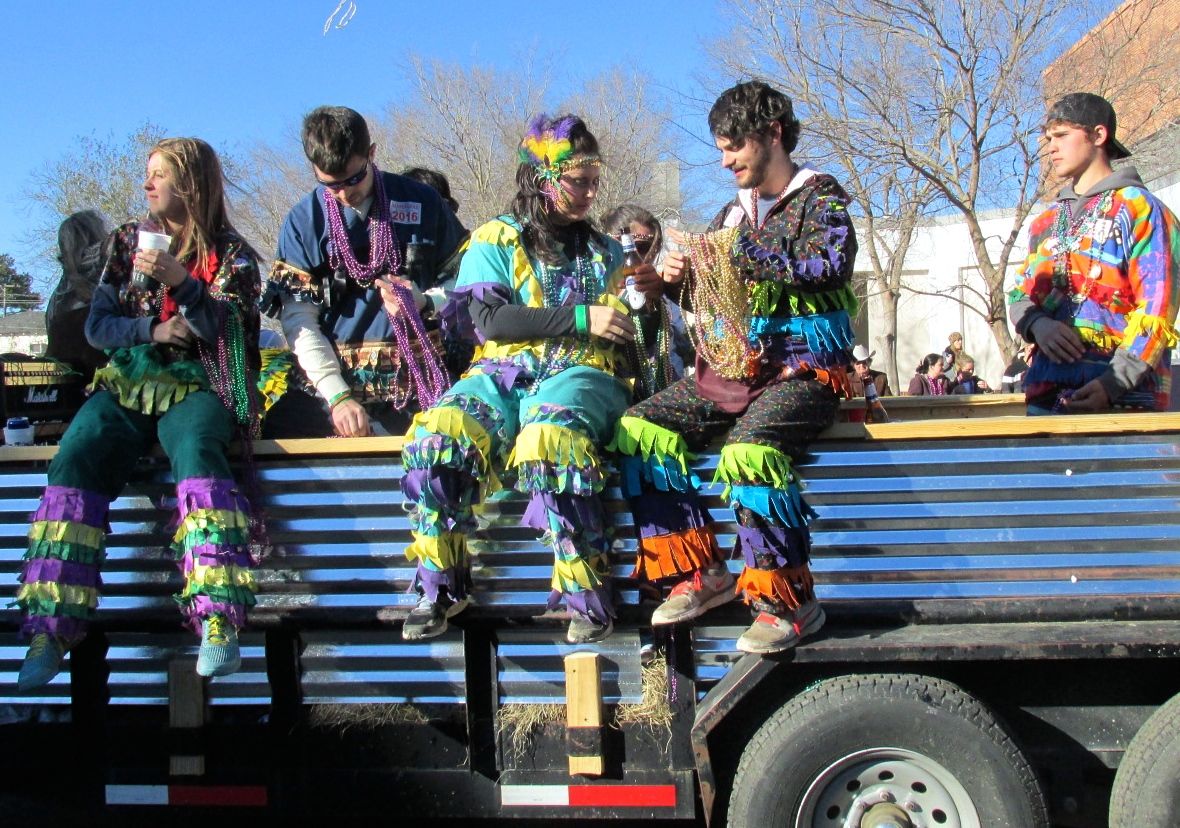
We waited and waited and finally the parade started. Well, actually, it’s more accurate to say that they parade finally reached where we were waiting. A guy next to me told me that they registered at 6:30 and their activities started shortly thereafter. He also said that the first thing they did after signing in was to start popping beers.

The first car in the parade

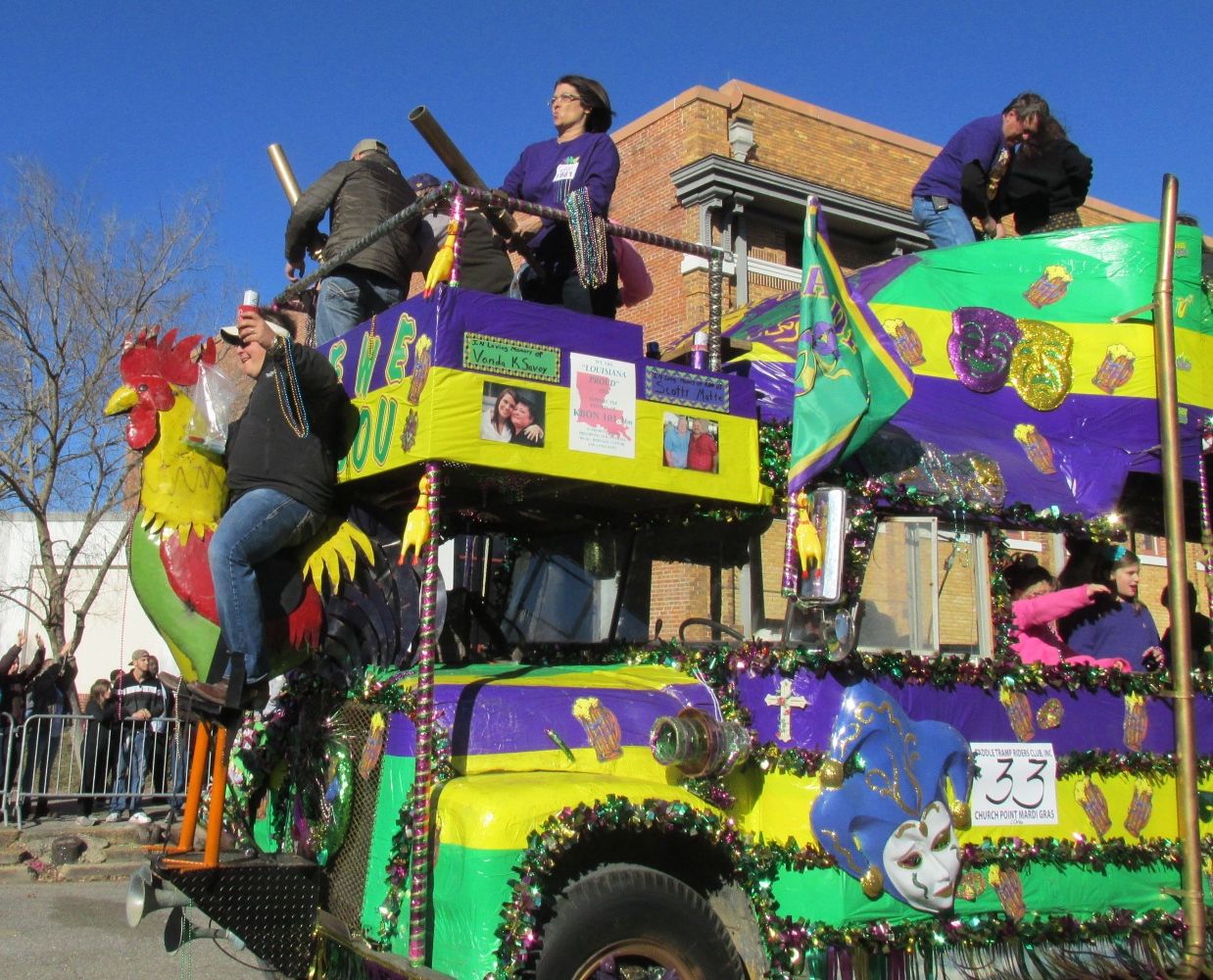
Float with chicken on the front 1b

This was the first krewe in the parade. I liked the chicken on the front and the air cannons on top that they used to fire beads to the people lining the route.

The Capitaine
The Capitaine

The first rider was the Capitaine, who is the leader of the event. Then followed other riders.

Riders 1

Riders 2

Riders 3

Riders 4

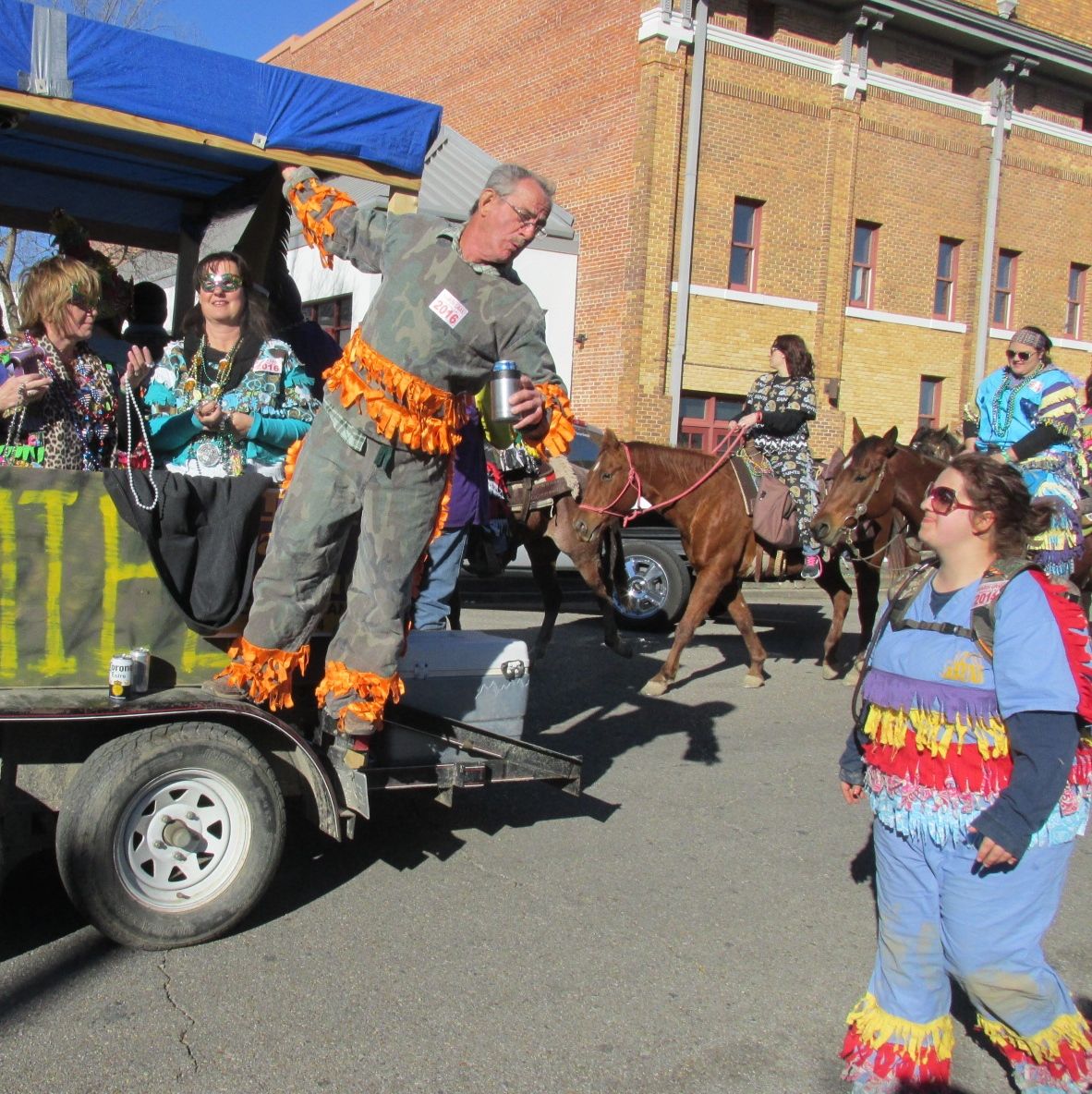
Then there were the floats and the krewes and more beads.

Float 1

Float 1b

Float 8

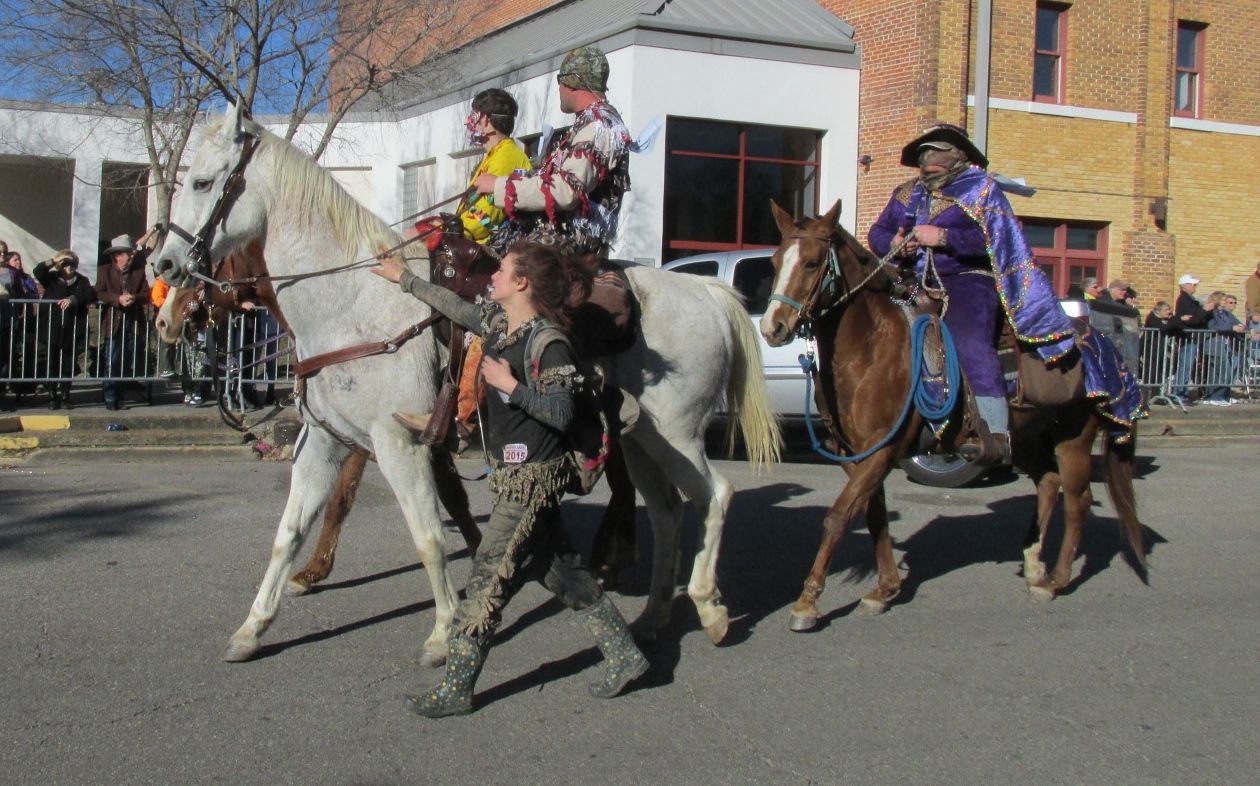
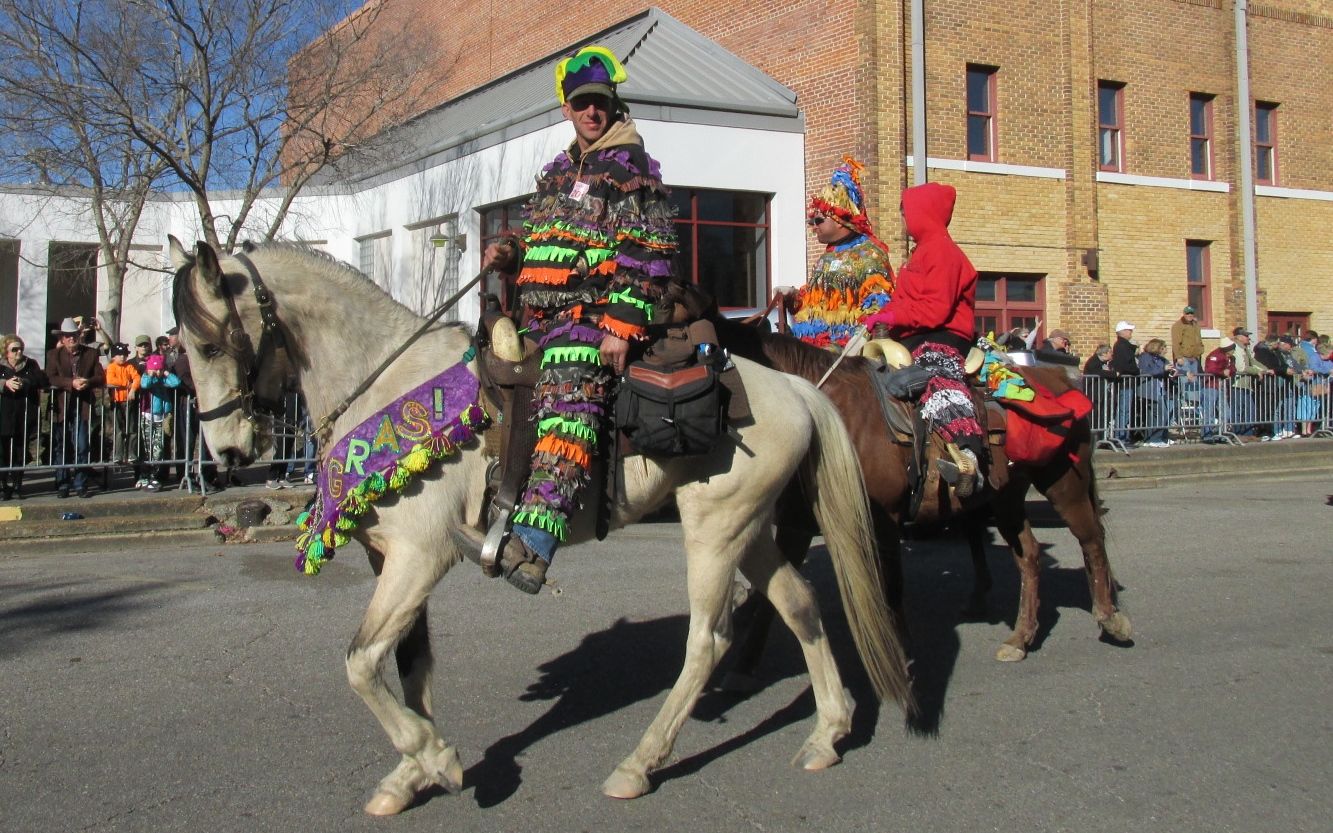
Then there were more riders.

Riders 8

Riders 9a

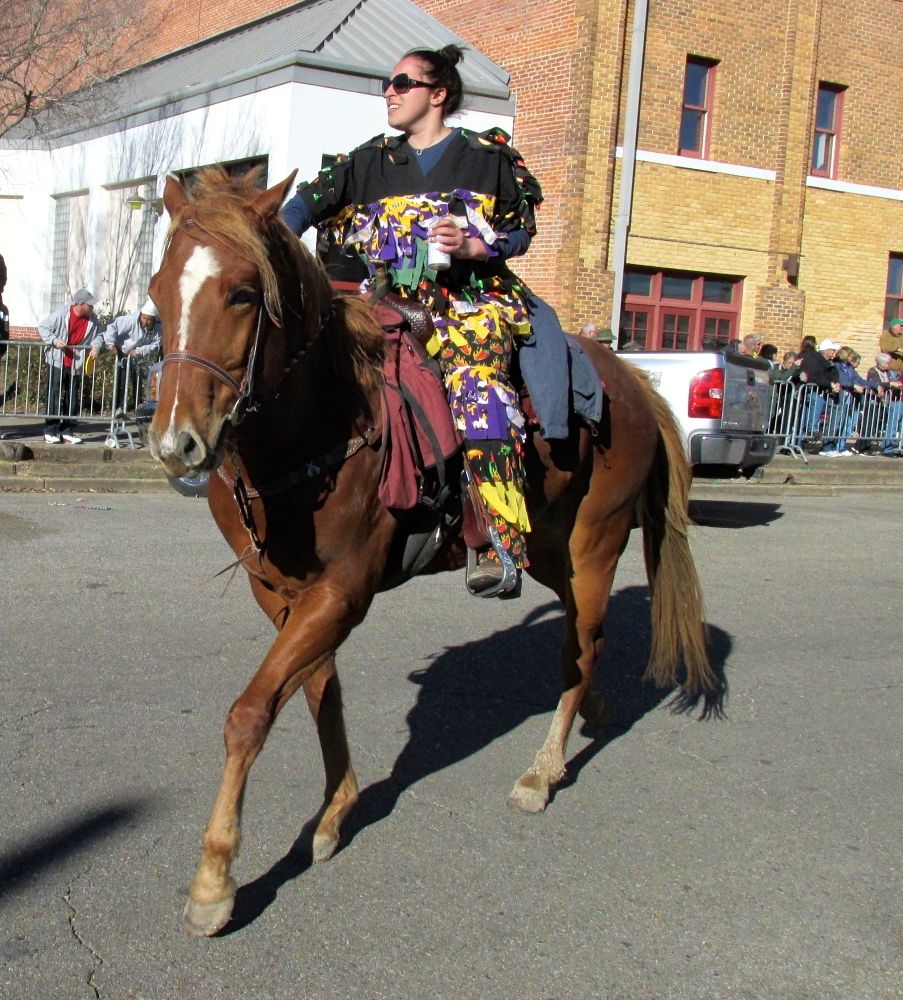
If you look carefully, you can see many of the participants holding beverages. Some of the participants were on foot.

marchers 1

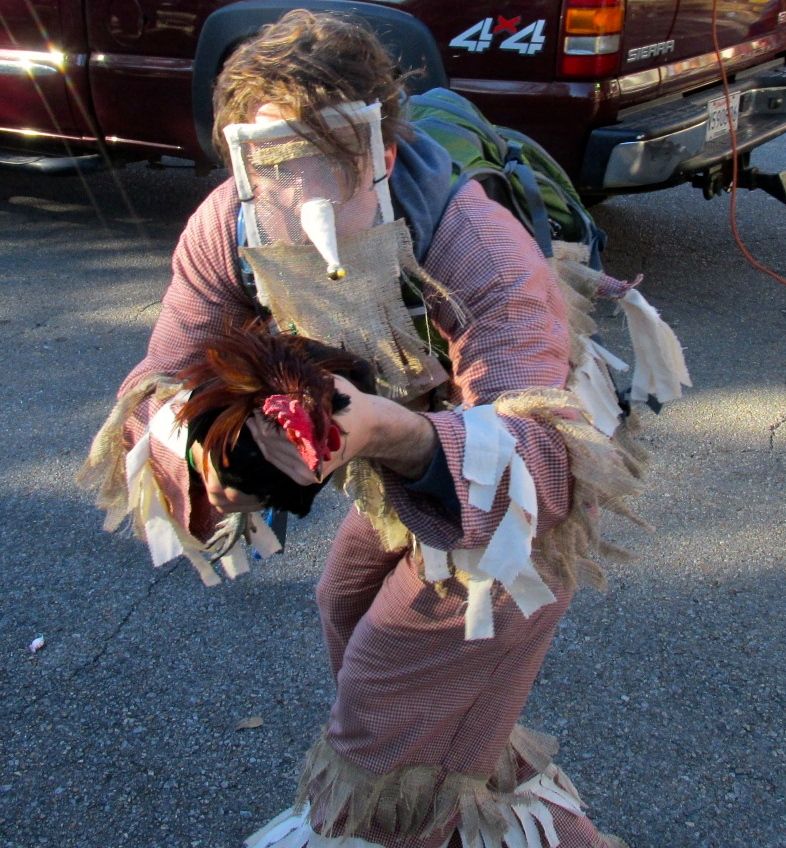
There were people carrying chickens. Tradition has it that they would be finding their way into the gumbo at the end of the parade.

Guy with chicken

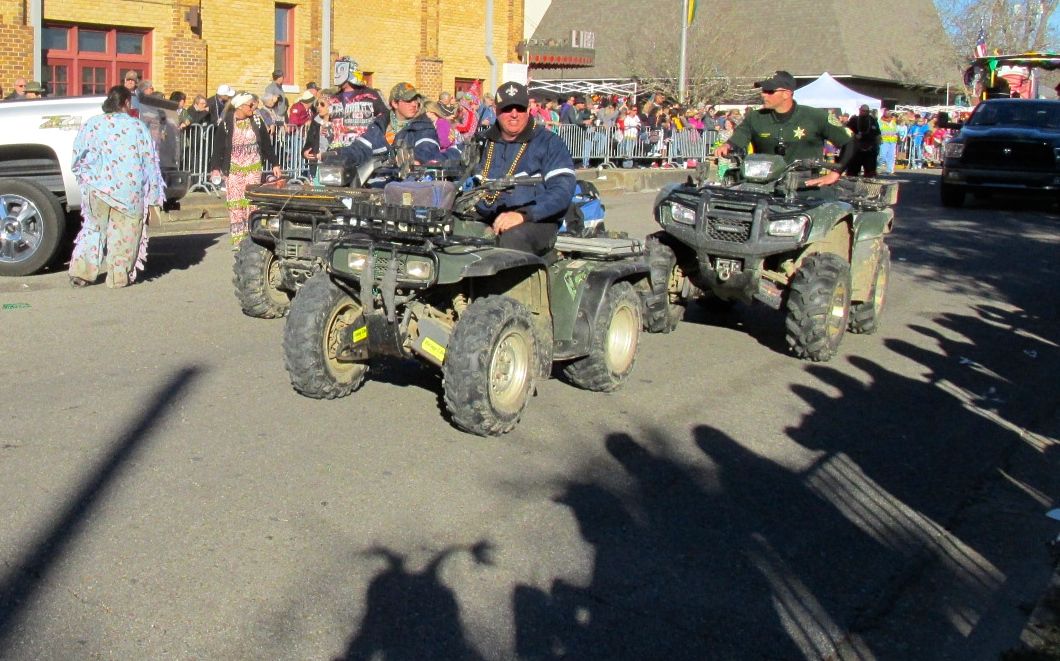
What would a parade be without the quads?

quads

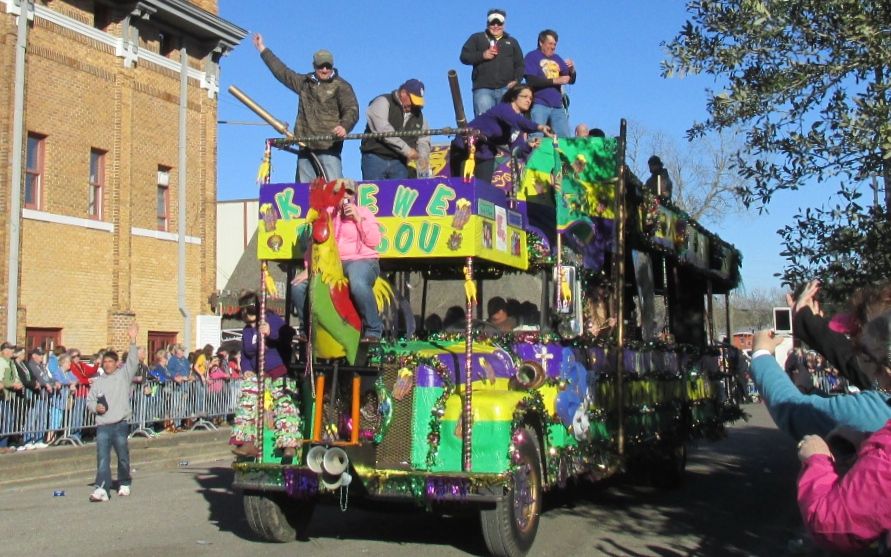
More floats

Float again

More marchers

Marcher throwing beads

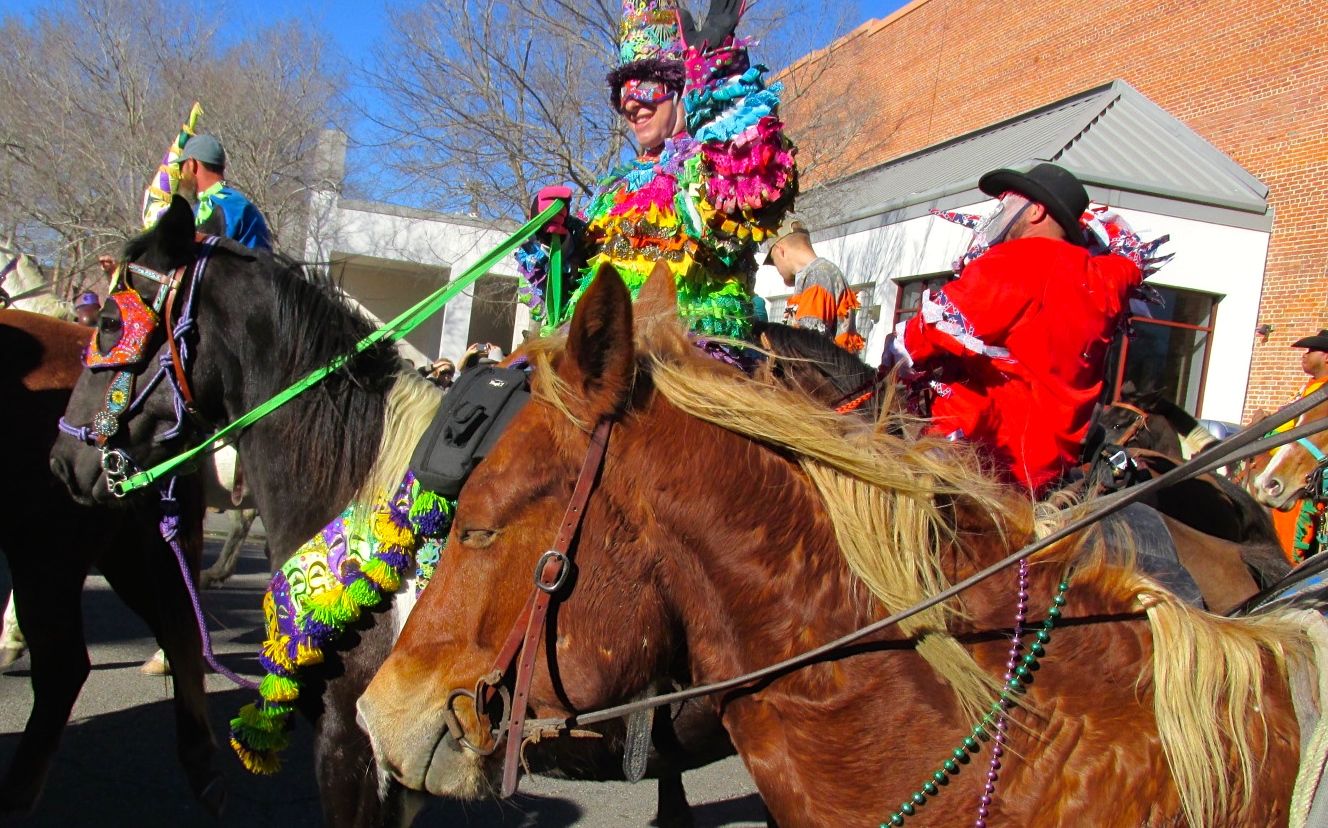
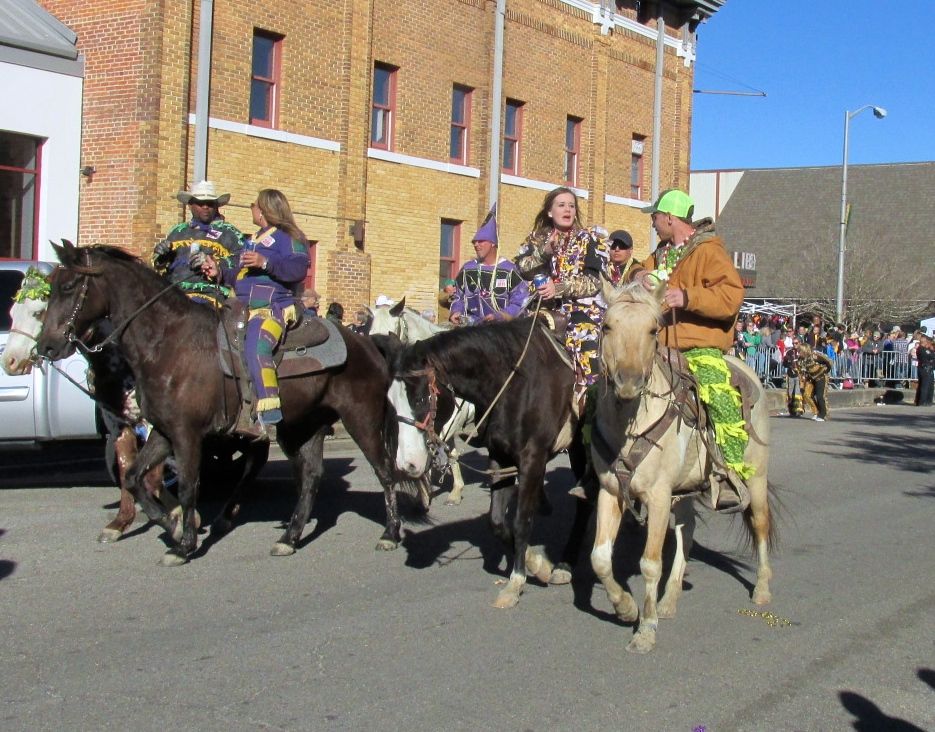
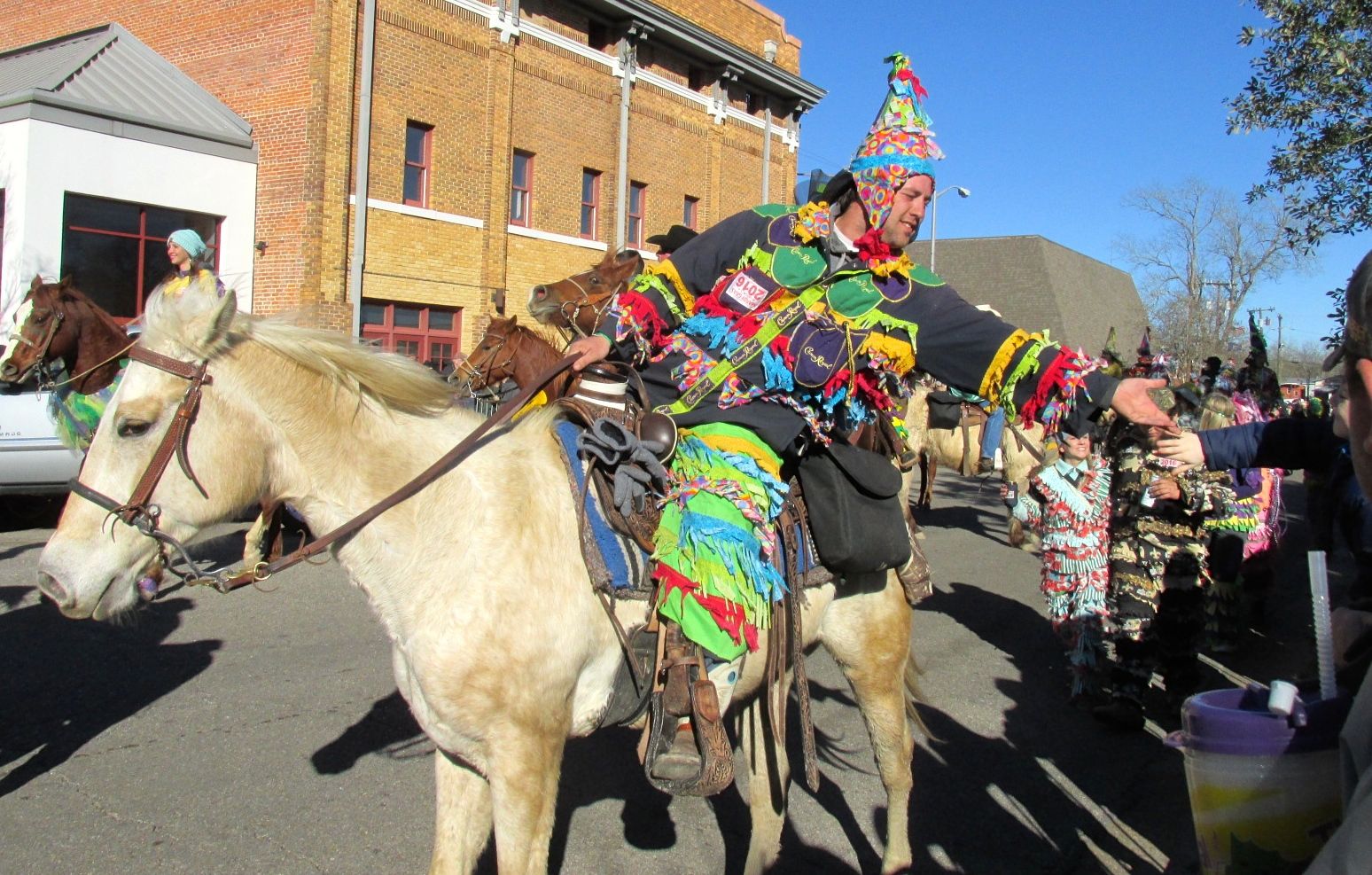
More horses

Riders slapping hands

And finally the end of the parade.

The last of the parade

The float with the chicken on the front made one last pass to bring the parade to a close.

The next day, I hitched up and and headed out.

Next stop: TEXAS!


Chicot State Park

My next destination was Chicot State Park near Ville Platte, Louisiana.

I found it easily and pulled up to the gate. The ranger asked me if I had a reservation. I did, so I wasn’t worried that they wouldn’t have a site for me. Turns out I REALLY didn’t need to worry if they would have a site.

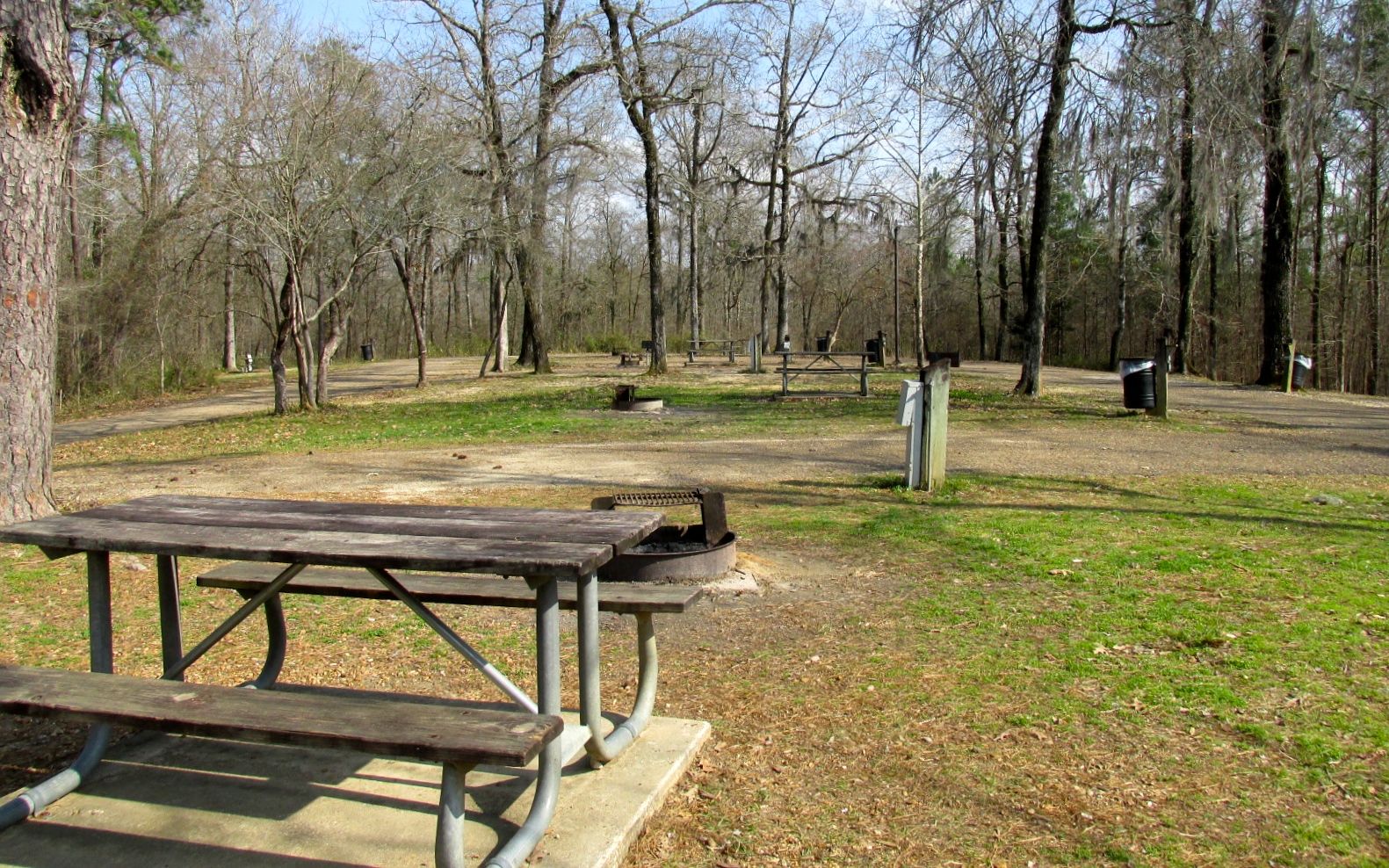
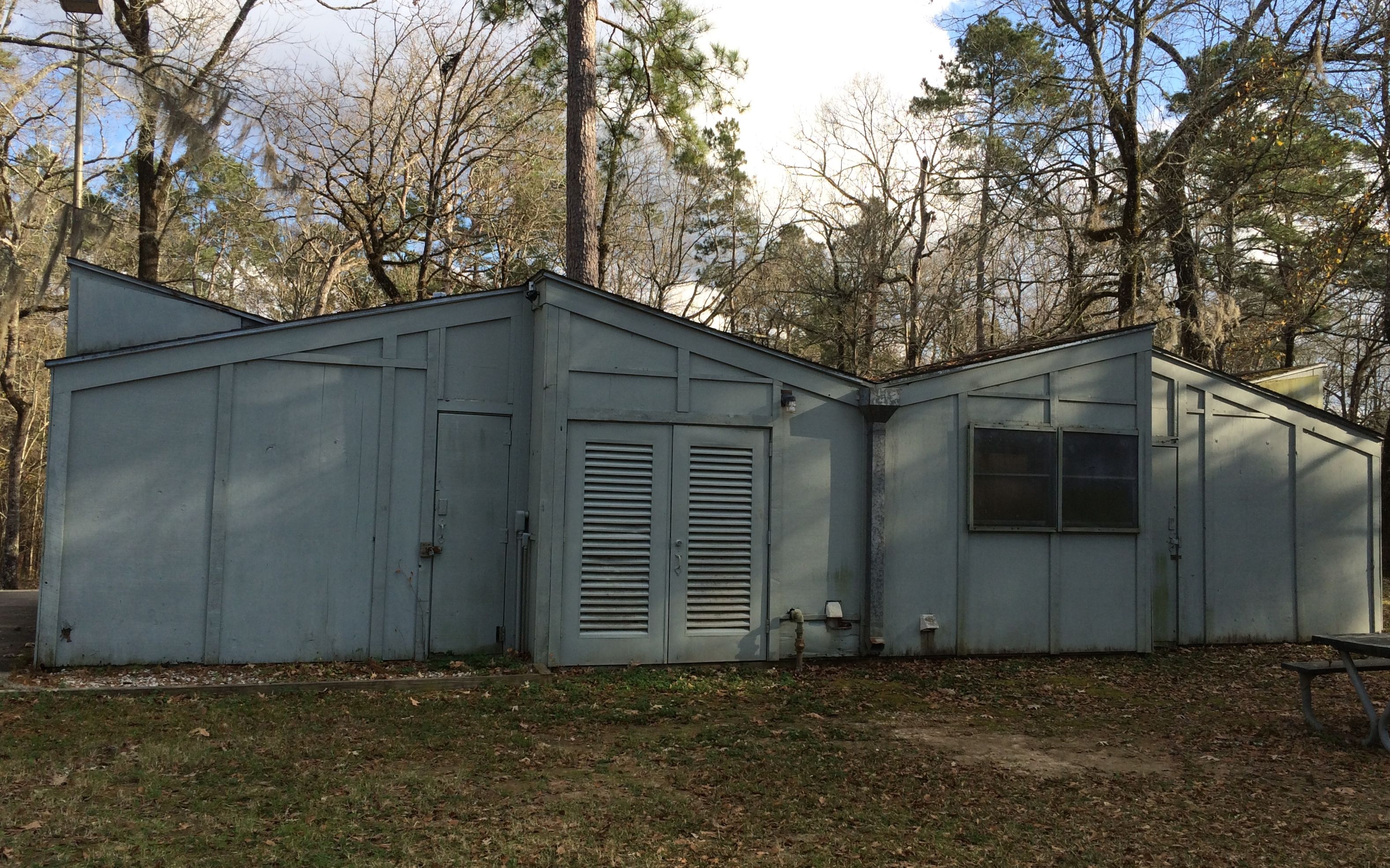
Here are the views from my trailer.

Looking out the door
The view from the other side
The view from the back
The view from the front

Nice park, right? Notice anything missing? Like, maybe campers?

The park had two campgrounds. I never made it over to the South Campground, but in the North Campground, there were a total of seven sites occupied!

The park was kind of a study in contrasts.

For instance, the office was really welcoming. It felt like they actually wanted you to come in. The door was easy to open and they had a bathroom right there for people to use. I can’t tell you the number of times that I was in dire need of one by the time I arrived at a campground, only to be directed to one on the other side of the park.

They also sold shot glasses and beer can koozies. Most state parks usually hand you a long list of “don’ts” when you come in and one of the top “don’ts” pertains to alcohol. Here they even will sell you things that you can use with your drinks!

The park is huge, and in the campground they posted information you might need in an emergency.

Phone numbers

They give you every phone number you might need, but then tell you that cell phone and pager reception are unreliable in the campground.

There is no phone reception, but they do provide free wifi service. Yes! Free wifi! But, they have many of the useful and entertaining sites blocked.

Old bath house

One of their bath houses is kind of dated.

bathouse

The other one is beautiful, with large, spacious showers, good water pressure and plenty of hot water.

There is a laundry room in the bath house, too. There are two washers and two dryers and they are free! But, only one of each works.

Generator and dump station

Each campsite has electricity, but the electricity is supplied by an enormous generator. It sounds kind of like having a big truck running all the time. The electricity wasn’t consistent, but my surge protector would flip off when the voltage was too low or too high, so at least my electronics were protected.

Now, this generator was a couple hundred feet from my site and it was noisy enough. However, there are sites directly on either side of it. If the noise wasn’t enough, the scenic view of the dump station was just a little added touch.

I decided to drive over to look at the lake.

substandard road sign

I guess it is more economical to put up signs than to fix the road.

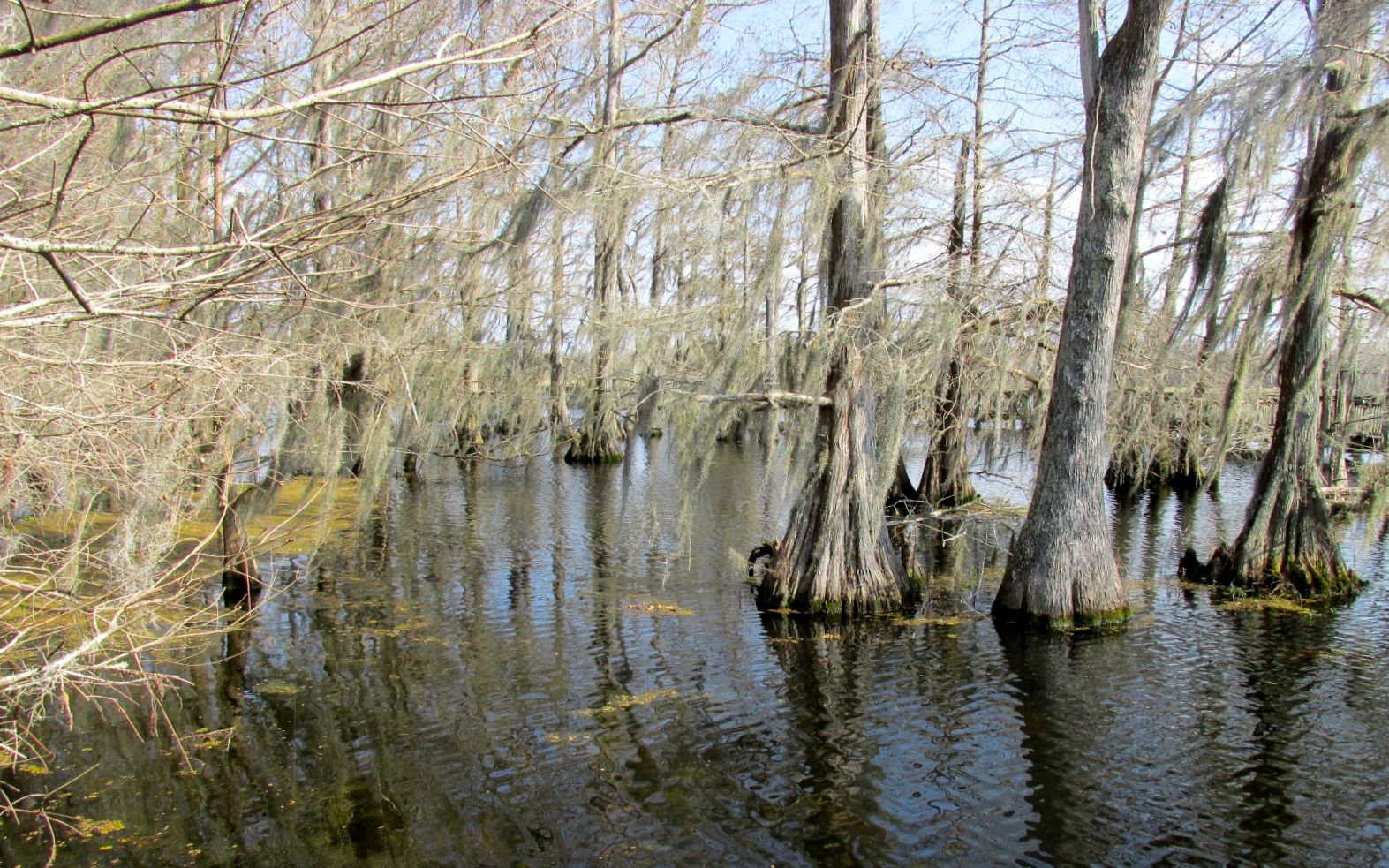
Lake trees

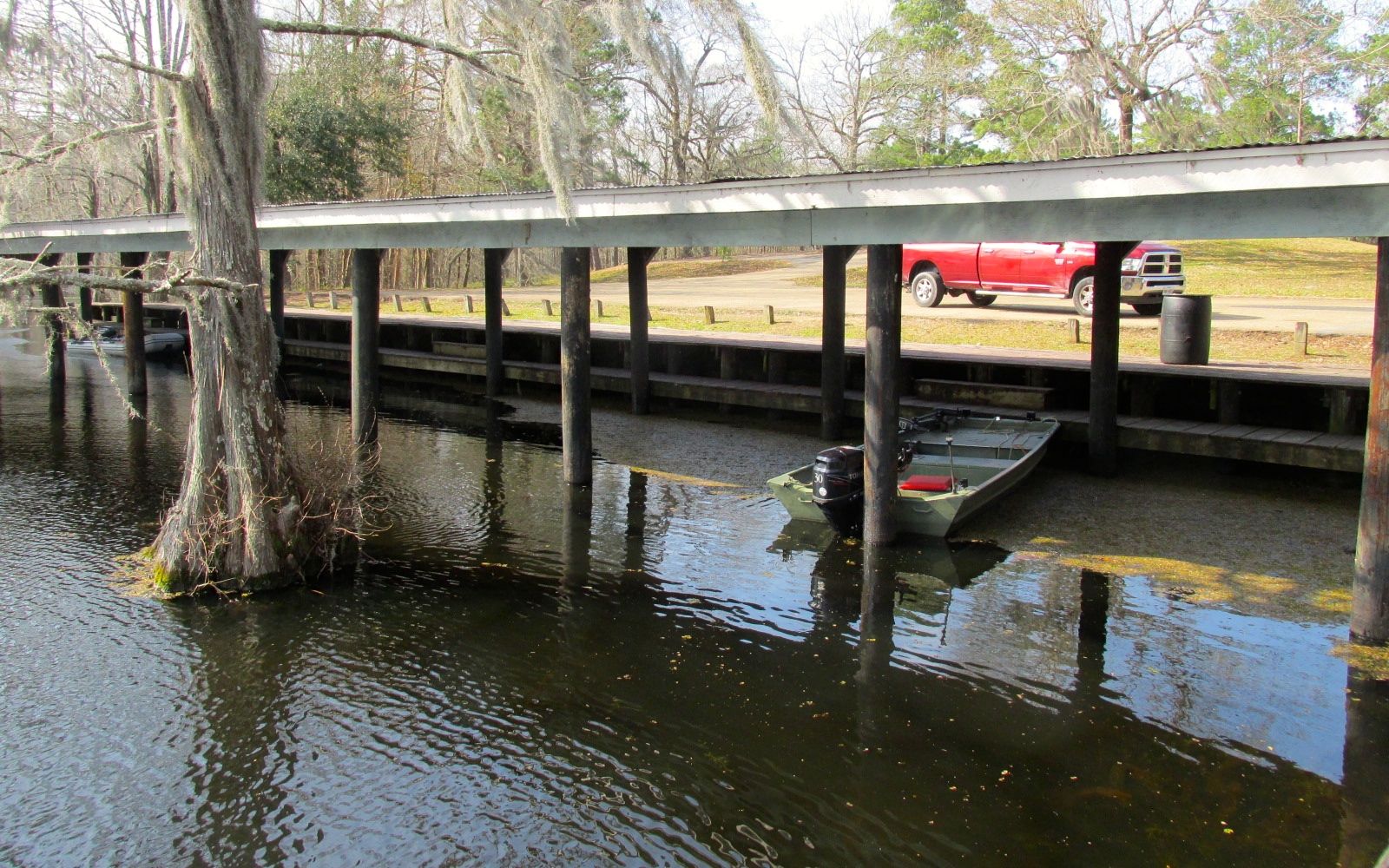
I was kind of impressed by the covered boat dock.

covered dock

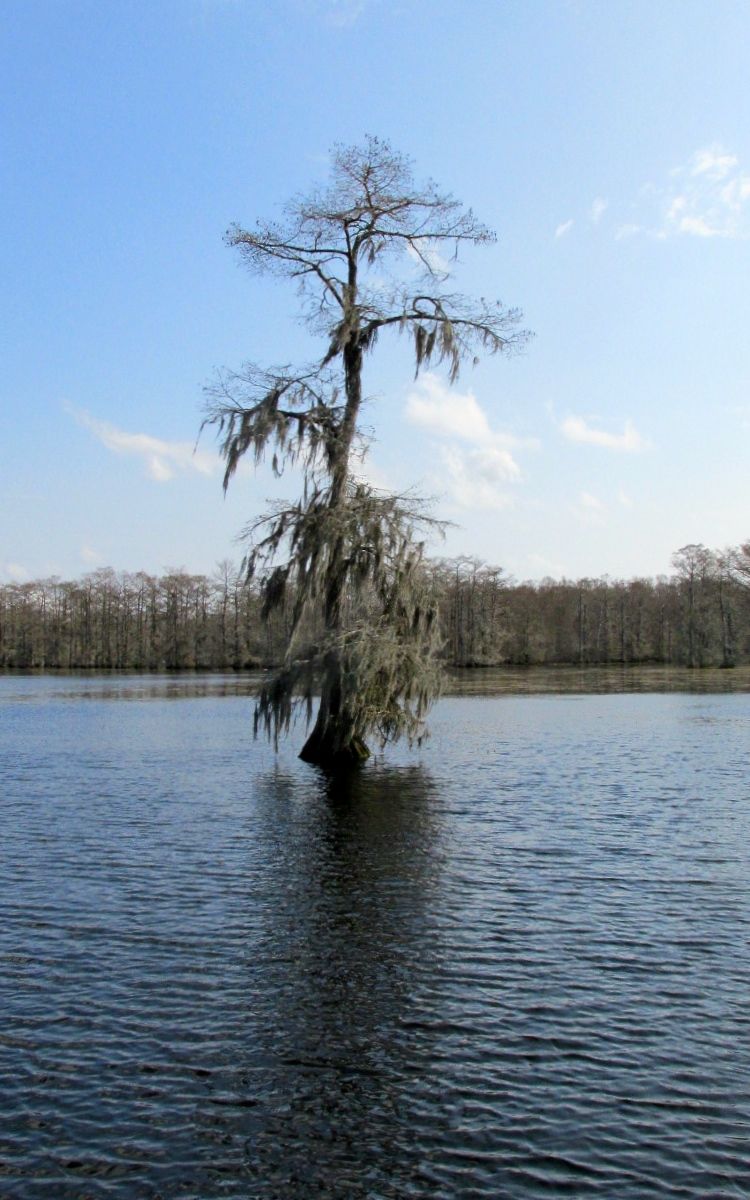
You have to look out for the trees, I guess.

tree in the lake

Well, it was a quiet place. It met my needs – most of the time – and it only cost $20 a night. I guess I can’t complain. Besides, it was only for a couple days until I met the Freeroaders in Eunice, Louisiana for Cajun Mardi Gras.

My Second Day in New Orleans

After being out until all hours, I didn’t exactly pop awake at the crack of dawn.

Okay, I realize that my idea of being out late is rather tame, when you compare it with other people’s behavior. However, I am not other people!

I managed to make it out of the park and walk about two blocks over to St. Louis Cemetery No. 1 in time to take a tour. I think I got on the last tour of the day. Am I lucky or what?
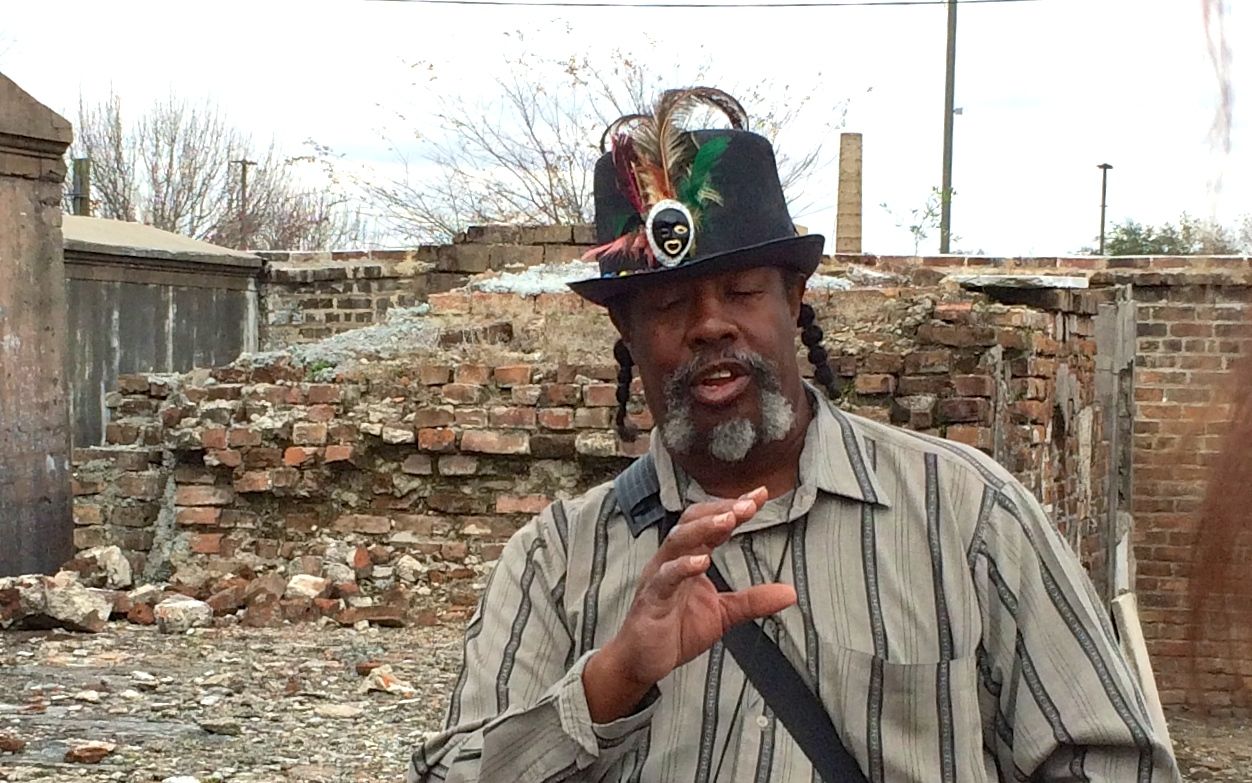
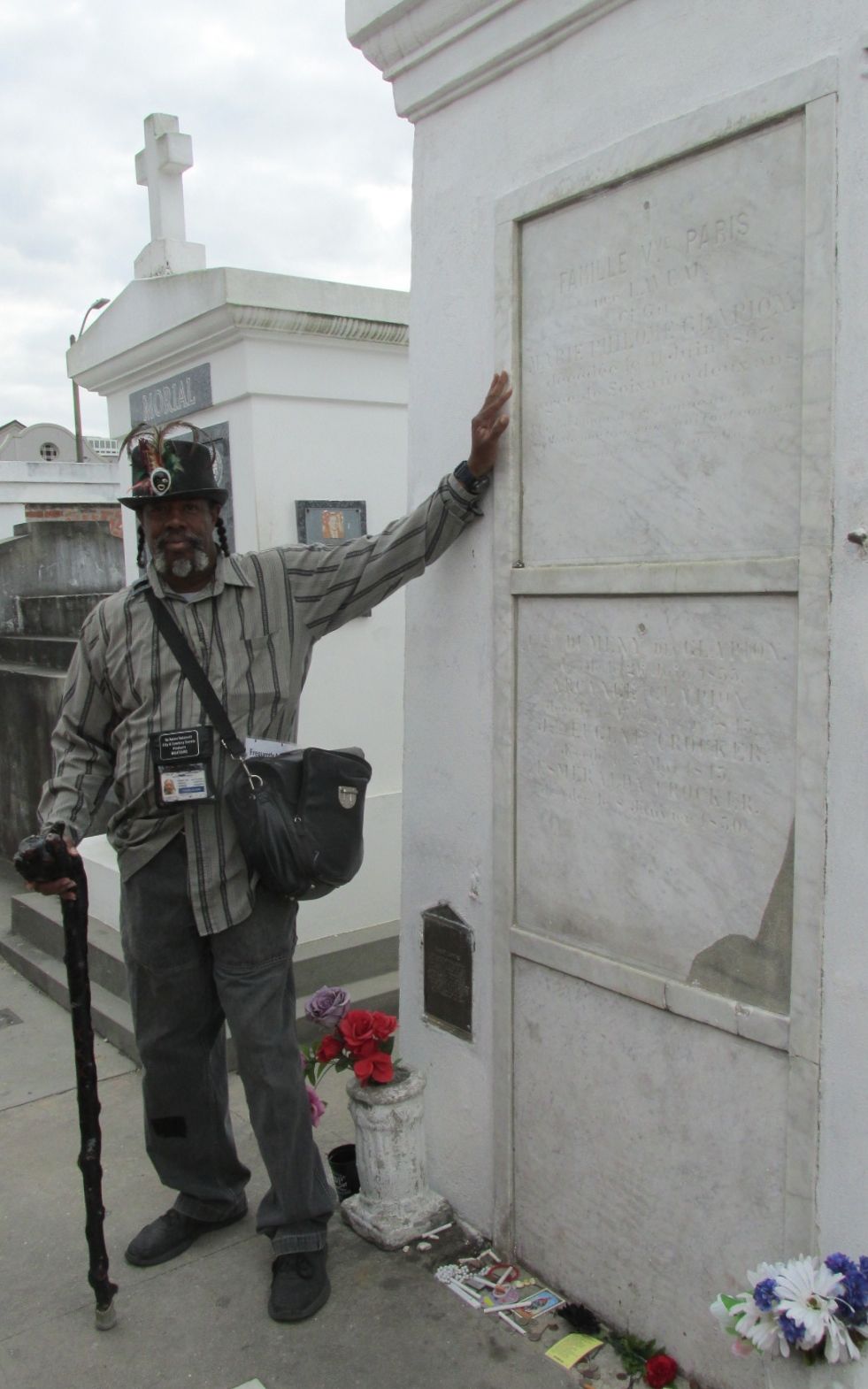
Tour Guide
Tour Guide Nate Scott

There were about twenty people on my tour. At $20 a head, that was quite a haul for an hour’s work! I hope he was well-paid because he gave an interesting tour.

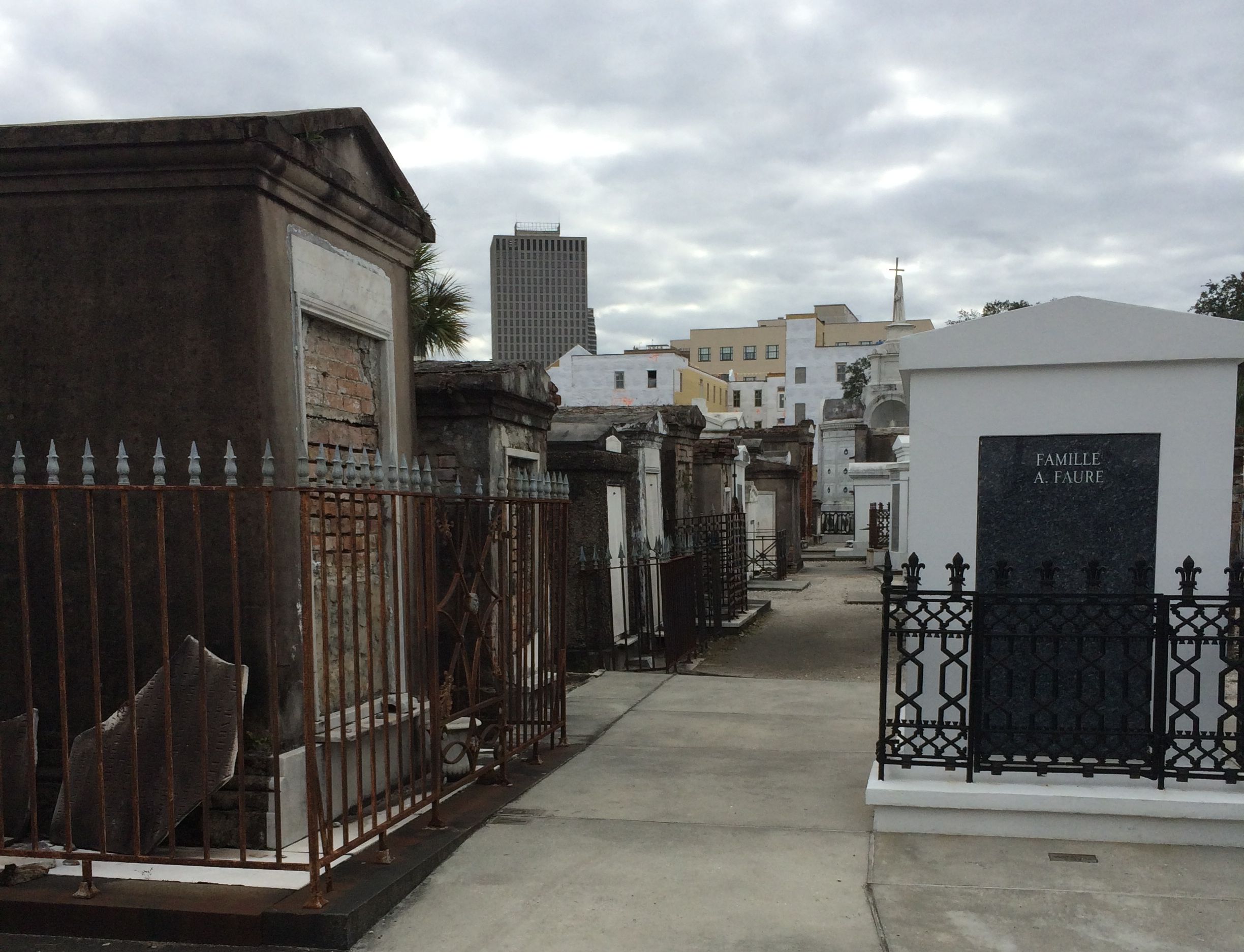
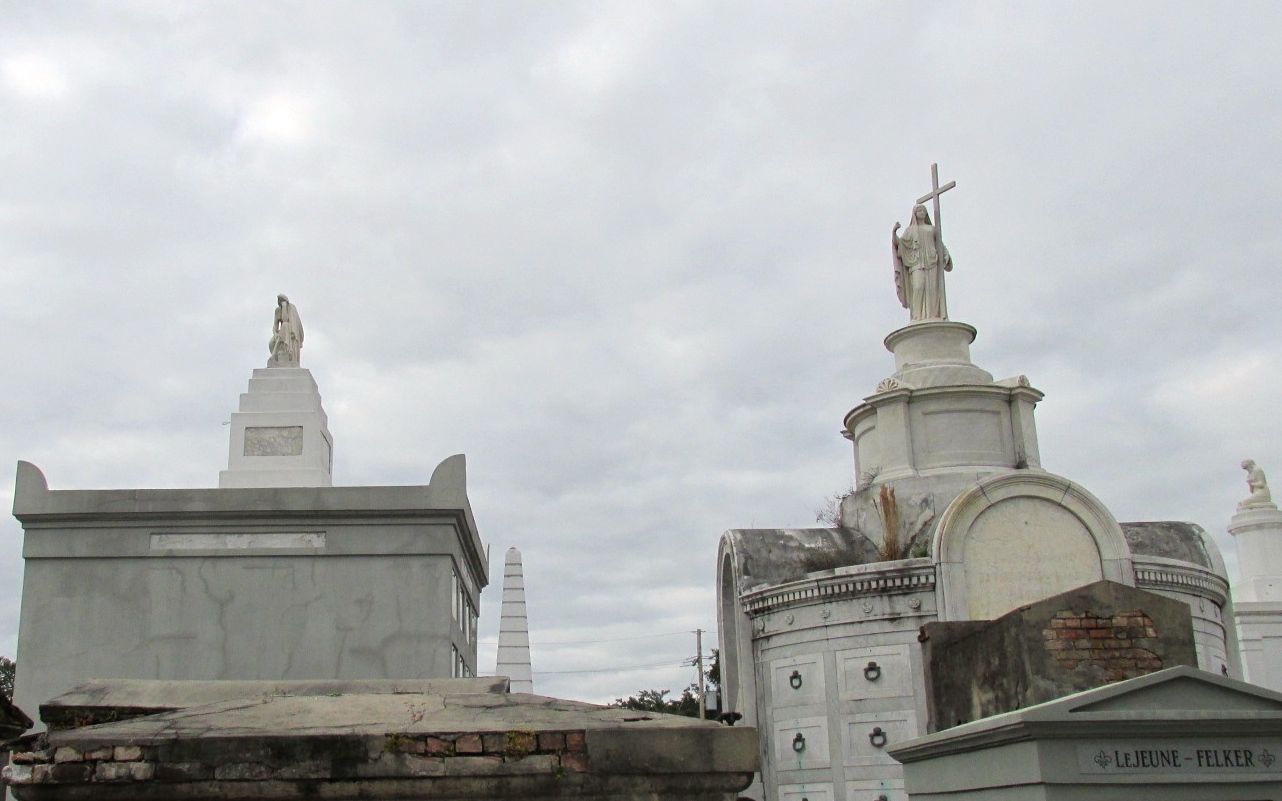
These old cemeteries are frequently called “Cities of the Dead”. I swear that I heard the guide say that Mark Twain was the first one to use that term about the cemeteries in New Orleans, but I haven’t found any attribution on line anywhere. Even if Mark Twain didn’t say it, these old cemeteries do certainly look like small cities.

City of the Dead
City of the Dead

There are nice neat “houses” surrounded by wrought iron fences.

City of the Dead
City of the Dead

You almost expect some one to come out, get in their car and drive away.

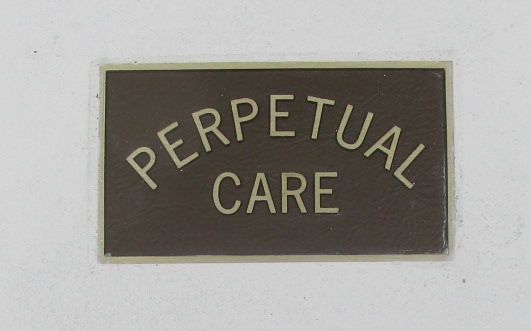
perpetual care 2

The really nice looking ones have these plaques on them that indicate that the family has purchased a plan to maintain the tombs.

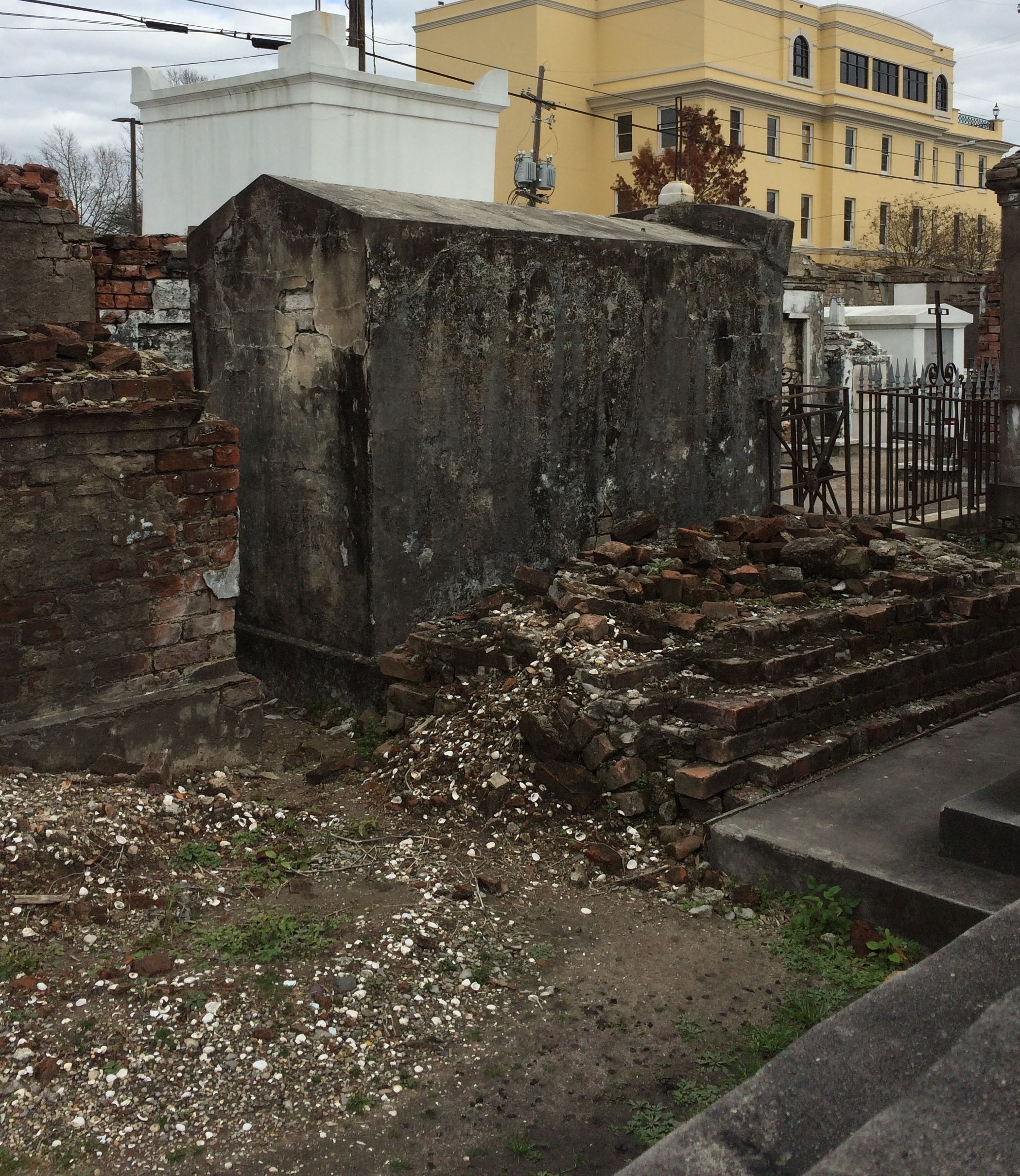
without perpetual care

If the plan wasn’t purchased and there are no family members surviving to keep up the graves, they eventually fall apart.

Alleged grave of Marie Leveau the Voodoo Queen
Alleged grave of Marie Laveau the Voodoo Queen

Our guide brought us to this tomb and said that it was the alleged grave of Marie Laveau the Voodoo Queen. Now, I have to admit that I don’t know much about the topic. Actually, I don’t know enough to even say that I don’t know much. I have done a little research on the web since taking the tour, but I still couldn’t tell you anything with confidence.

So, let me share the little bit I picked up from the tour.

He told us that people still came to seek Marie Laveau’s help. Some want to stop smoking, others to quit drinking, other have personal requests. They knock on the tomb and ask her for help. They leave items at the tomb that represent the help they are seeking and walk away.

Now, the first tomb he showed us isn’t the real tomb. I’m not sure why there is a plaque on it that says it is the alleged tomb of Marie Laveau. It may be that it was her daughter’s tomb, who was named Marie Leveau II.

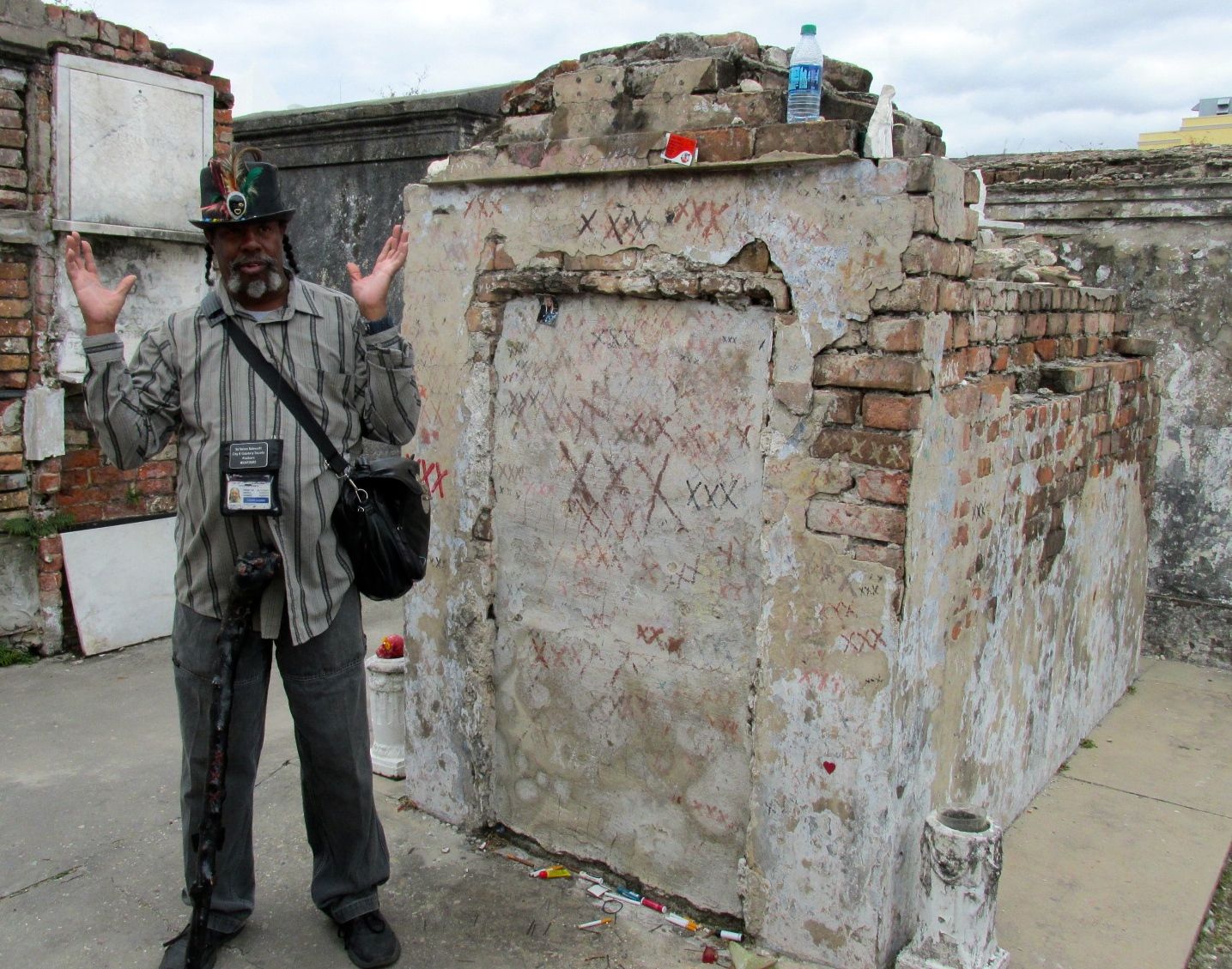
Real grave of Marie Laveau the Voodoo Queen

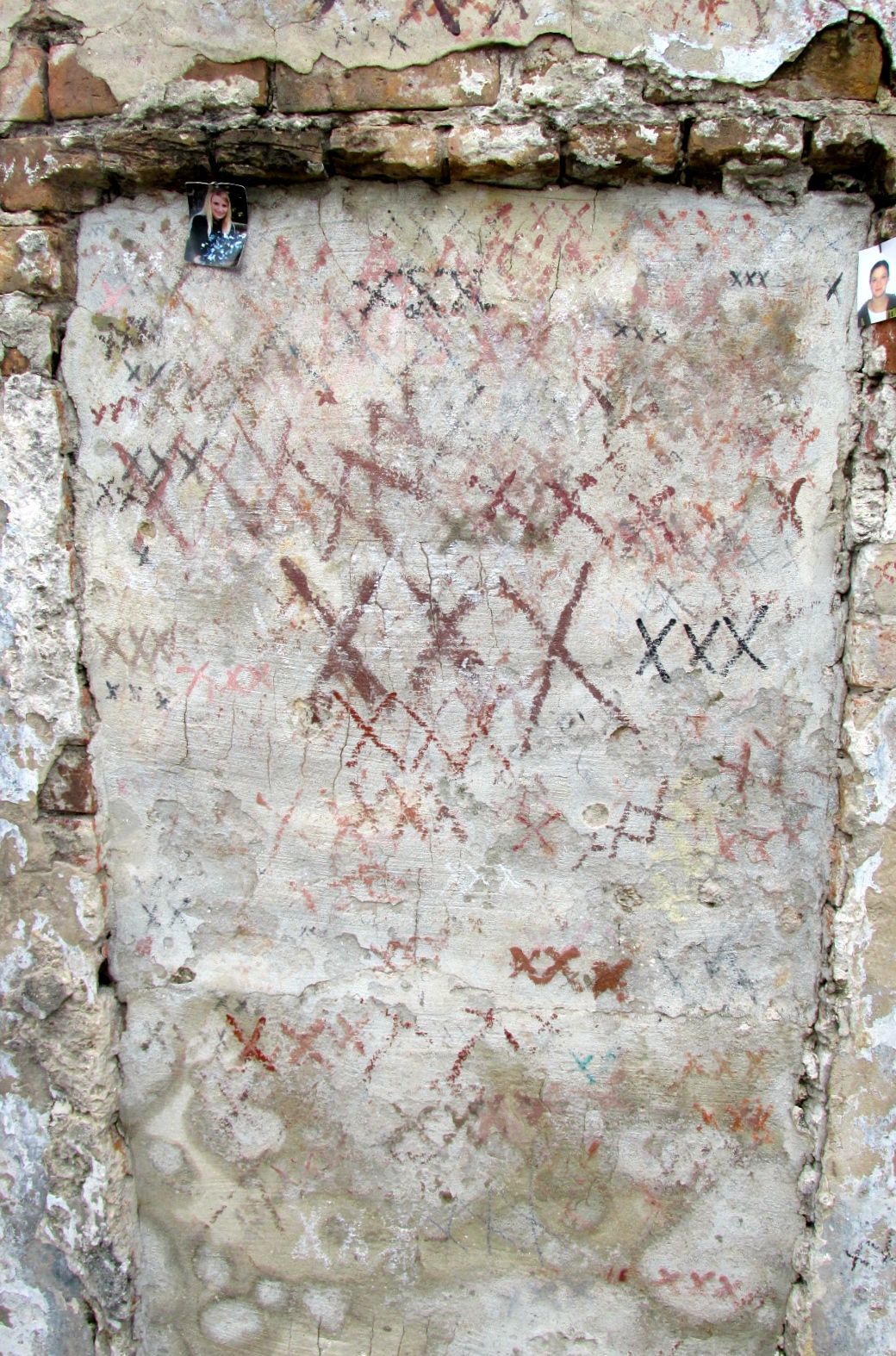
This is the real grave of Marie Laveau the Voodoo Queen, at least according to the guide. He said that people would write XXX on the graves as part of a ritual involving getting their wishes granted.

XXX on the tomb
XXX on the tomb

This is all new to me and I had a hard time hearing him over the ambient noise.

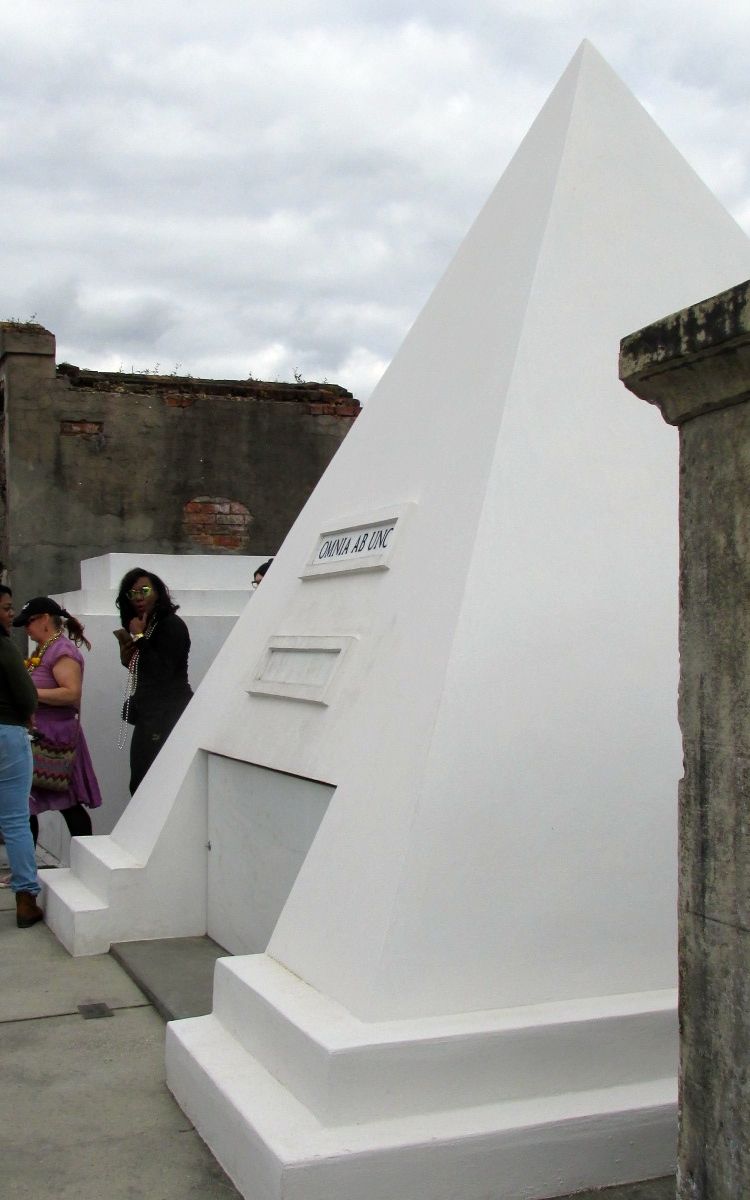
Nicolas Cage's Tomb
Nicolas Cage’s Tomb

The tombs are not all old. This one is awaiting the remains of Nicolas Cage’s family.

tall mausoleum

The guide told us that these were built by various groups – usually by ethnicity. He pointed out the damage on this tomb and said it was caused during the filming of Easy Rider.

Damage done during the filming of Easy Rider

I hate to admit it, but I have never seen Easy Rider. It came out in 1969, and I was far too young to have seen it at that time. After that, it was just an “old movie.” After reading up on the movie, I have to say that I don’t think that it would be my cup of tea.

In researching the movie and such, I came across this photo that ties in with the one I took.

Easy Rider Acid trip

And now time for a little snickering at funny names.

Poupart

Would you want to be buried in the Poupart family tomb?

It does illustrate that this is an active cemetery with burials still taking place.

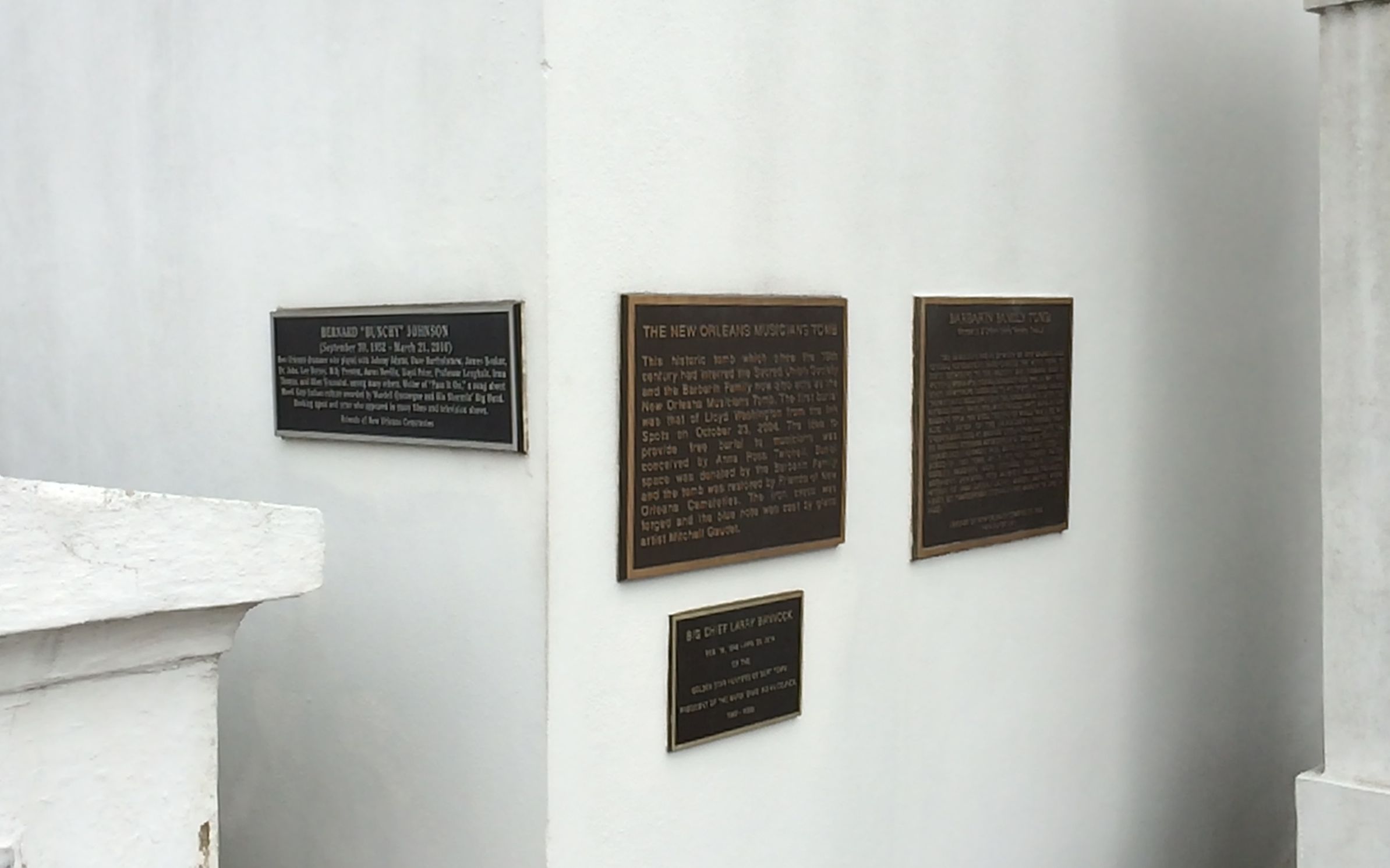
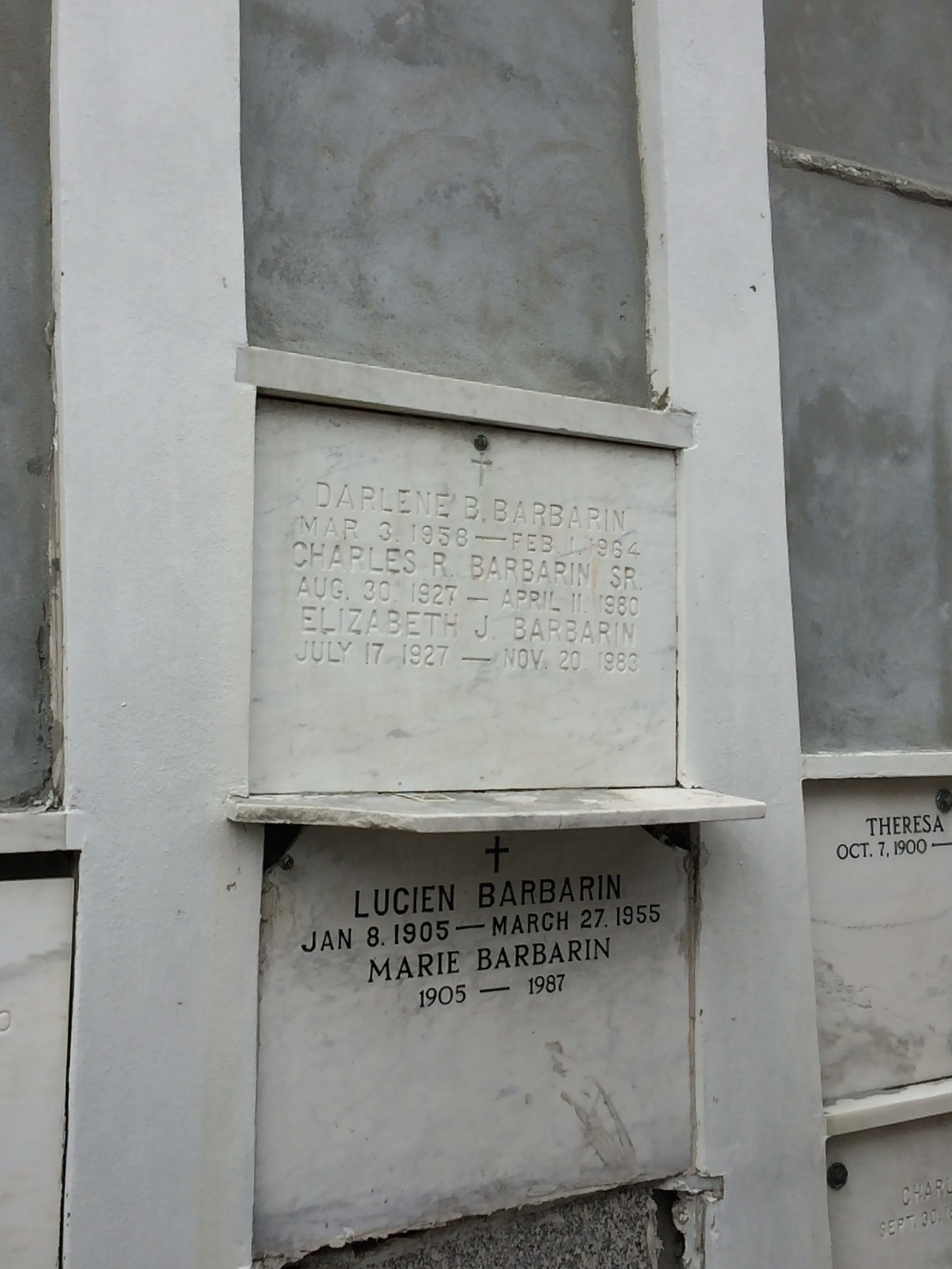
Another noteworthy site is The New Orleans Musicians Tomb. Since the 1800’s, it has been uses by the Sacred Union Society and the Barbarin Family. It s now also used as the New Orleans Musician’s Tomb. The first musician buried there was Lloyd Washington from the Ink Spots in 2004.

New Orleans Muscians Tomb plaques

These plaques are on the back side of the tomb.

New Orleans Muscians Tomb graveside

Our guide pointed out that the graves had been broken into by thieves looking for anything they could sell, such as gold teeth or jewelry.

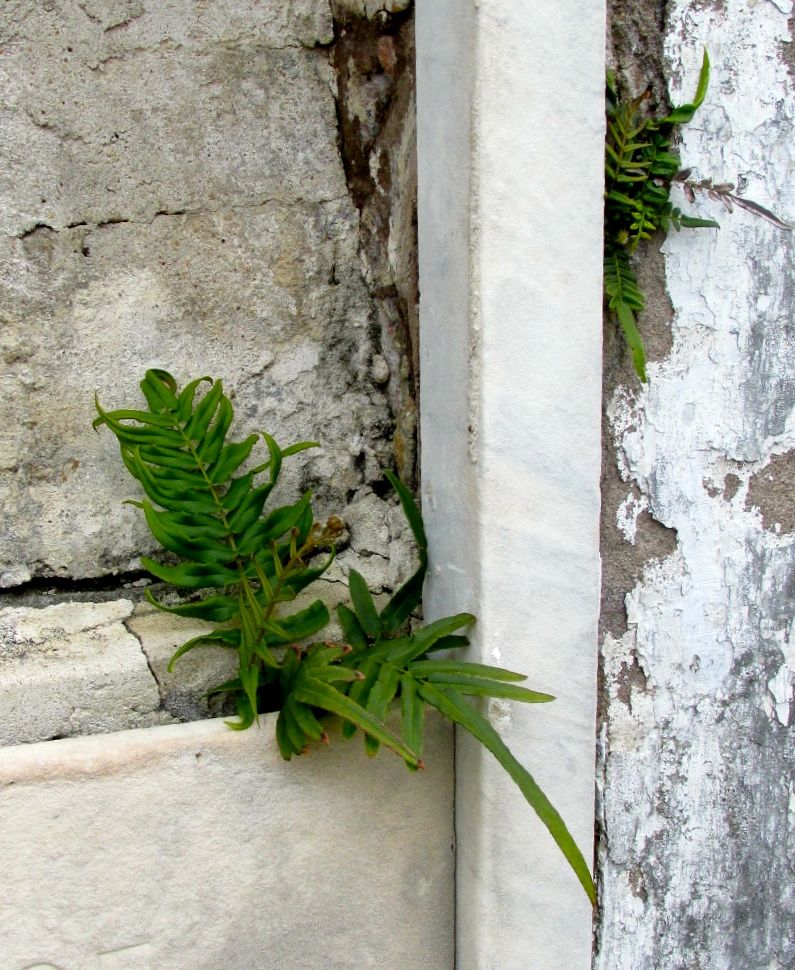
fern in tomb

Many of the tombs are in need of maintenance and I hope they receive it.

We all paid at the end of the tour. If anyone wants to take a tour with Nate Scott, He would be glad to show you around. (I know this because he gave each of us his business card on the way out.

So, I started walking over toward the neighborhood that was the site for the Tit Rex parade. I walked and snapped photos of things that caught my interest.

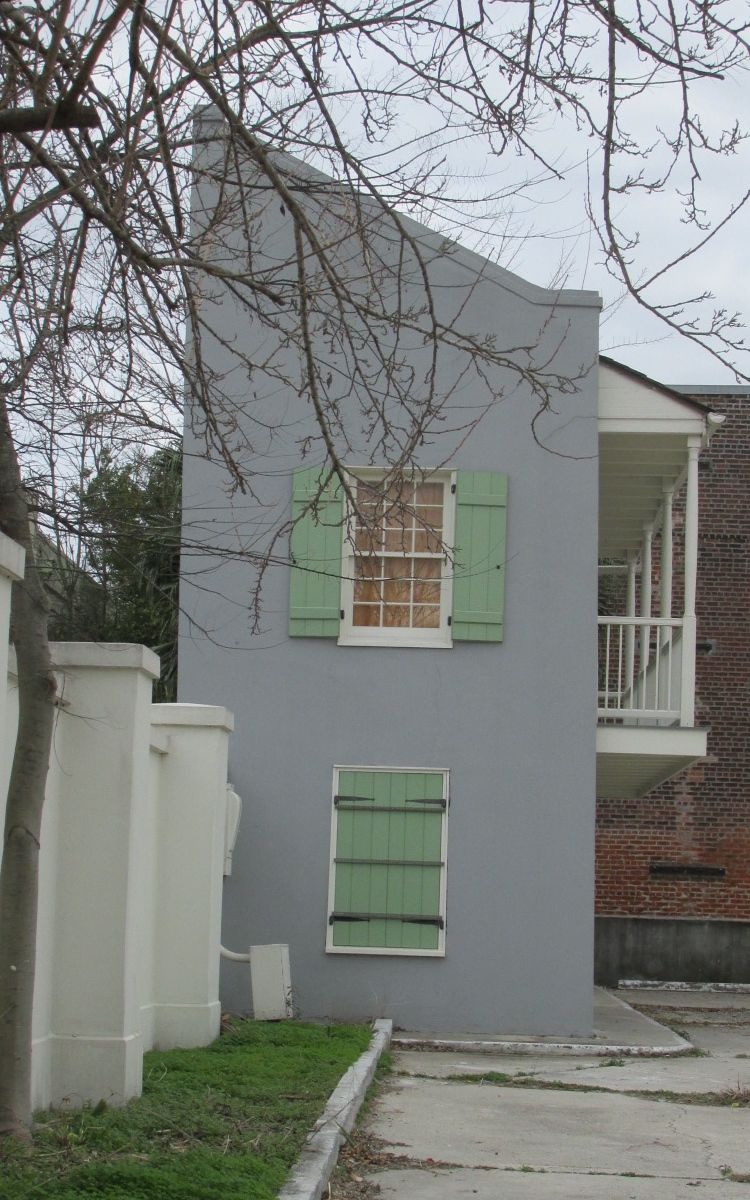
Half a house is better than none

Just a little slip of a house tucked into the corner of a lot. Maybe there was a bigger house in front of it at one time.

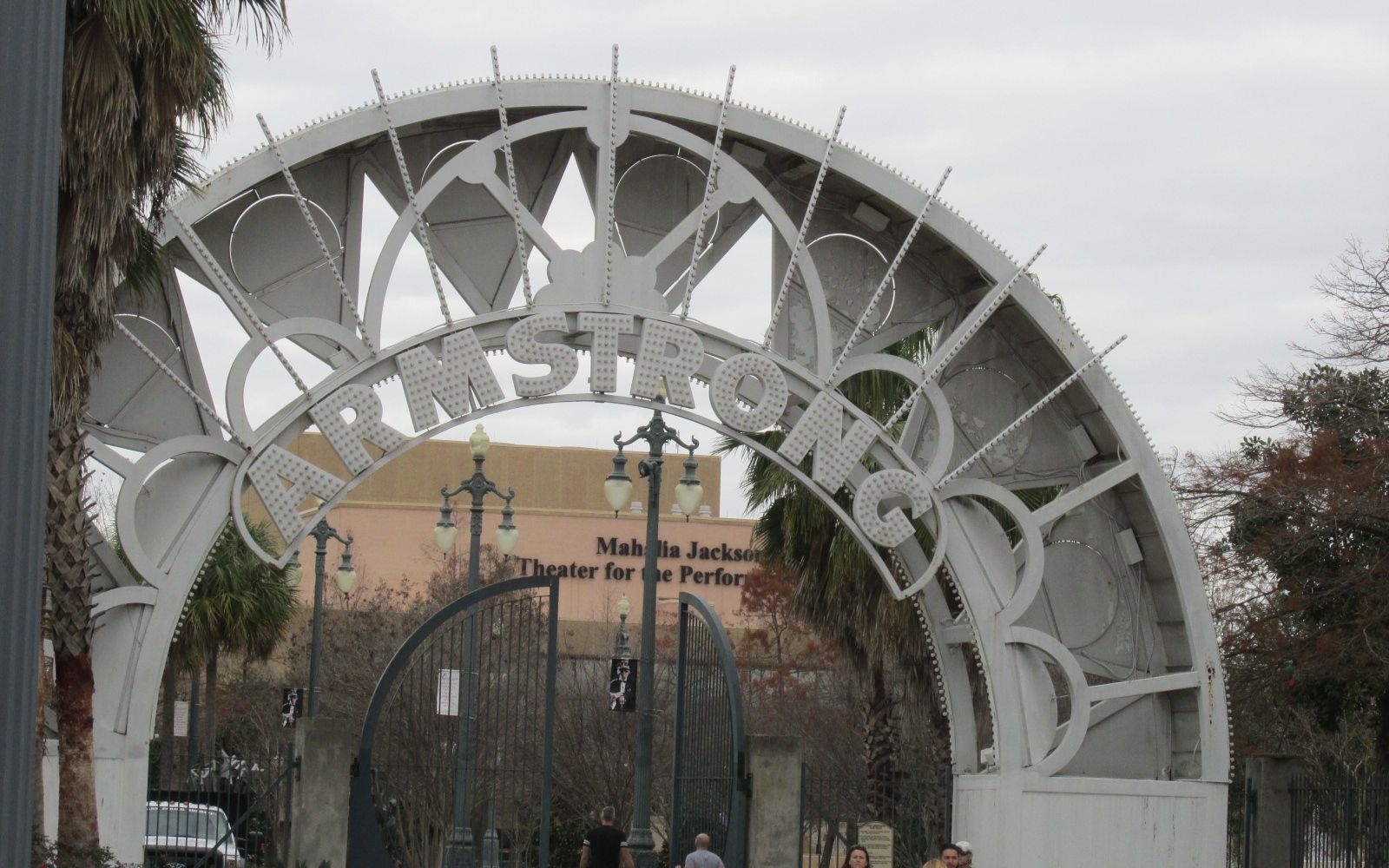
Armstrong park

I passed Armstrong Park with the Mahalia Jackson Theater visible in the background. According to tourist information, it is an interesting park but I didn’t have time for that. I had another parade to get to!

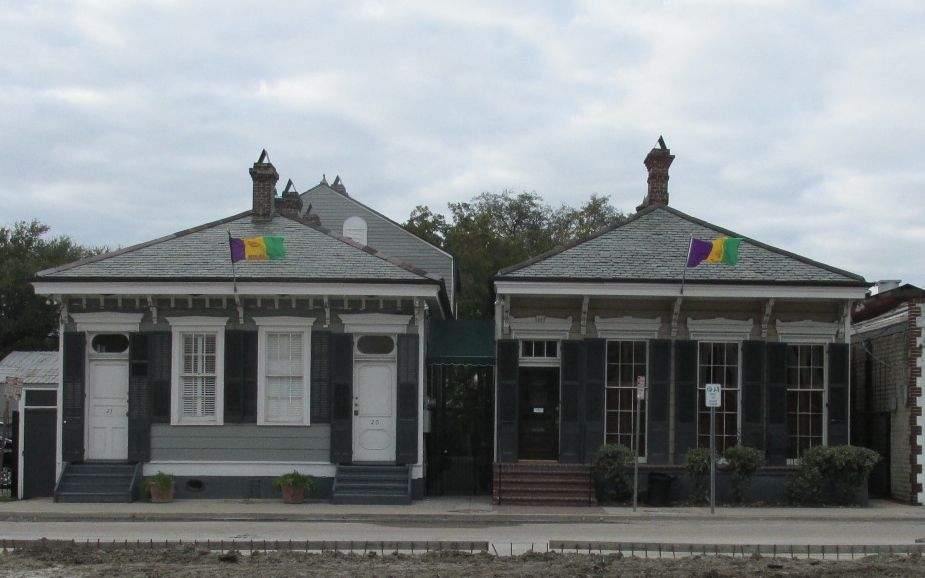
Twin houses
Twin houses

I walked past houses that probably started life as twins.

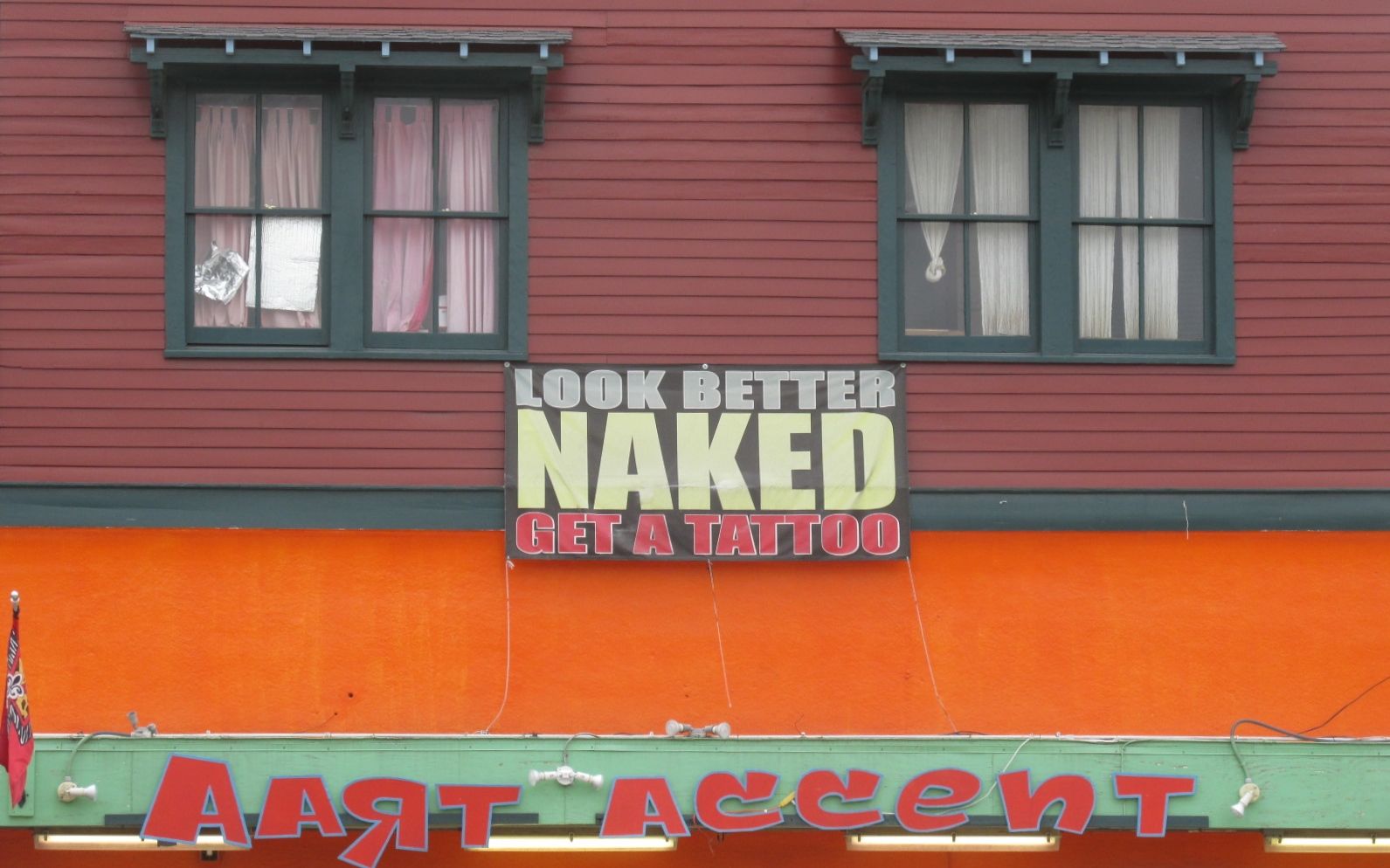
I don't think so
I don’t think so

And I passed a tattoo parlor. I didn’t even consider stopping. I had a destination in mind – a restaurant that Lisa had recommended.

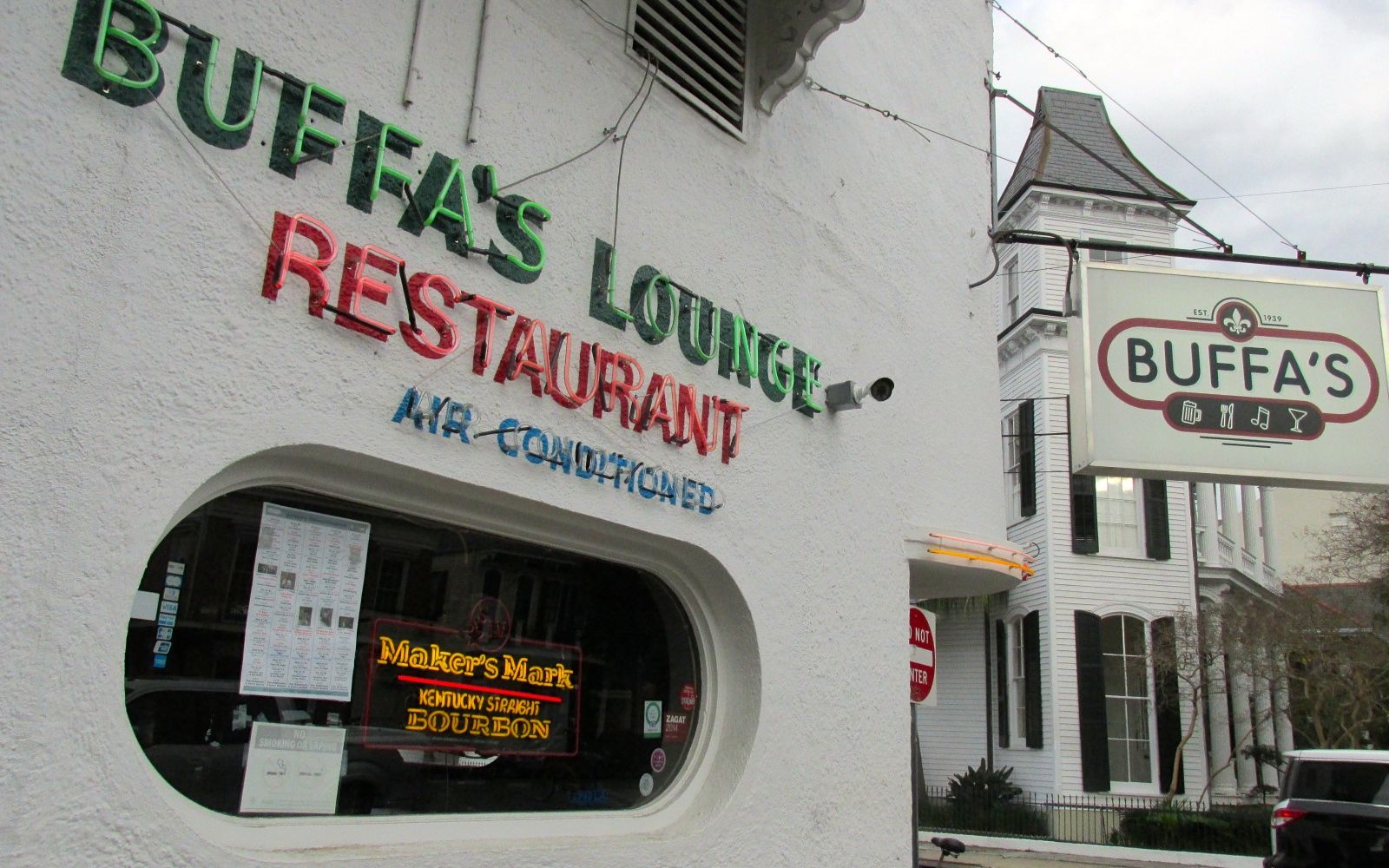
Buffa's Lounge

I got a seat in the backroom and ordered a Buffa burger – a half-pound of blackened ground beef, topped with cheddar cheese and sauces of some sort. I don’t know what sauce was on it, but after three treatments with Shout and wash cycles, I almost have the spots out.

There were musicians getting set up, but I left before they began. For one thing, my table was right in front of the speakers. And, I had a parade to get to!

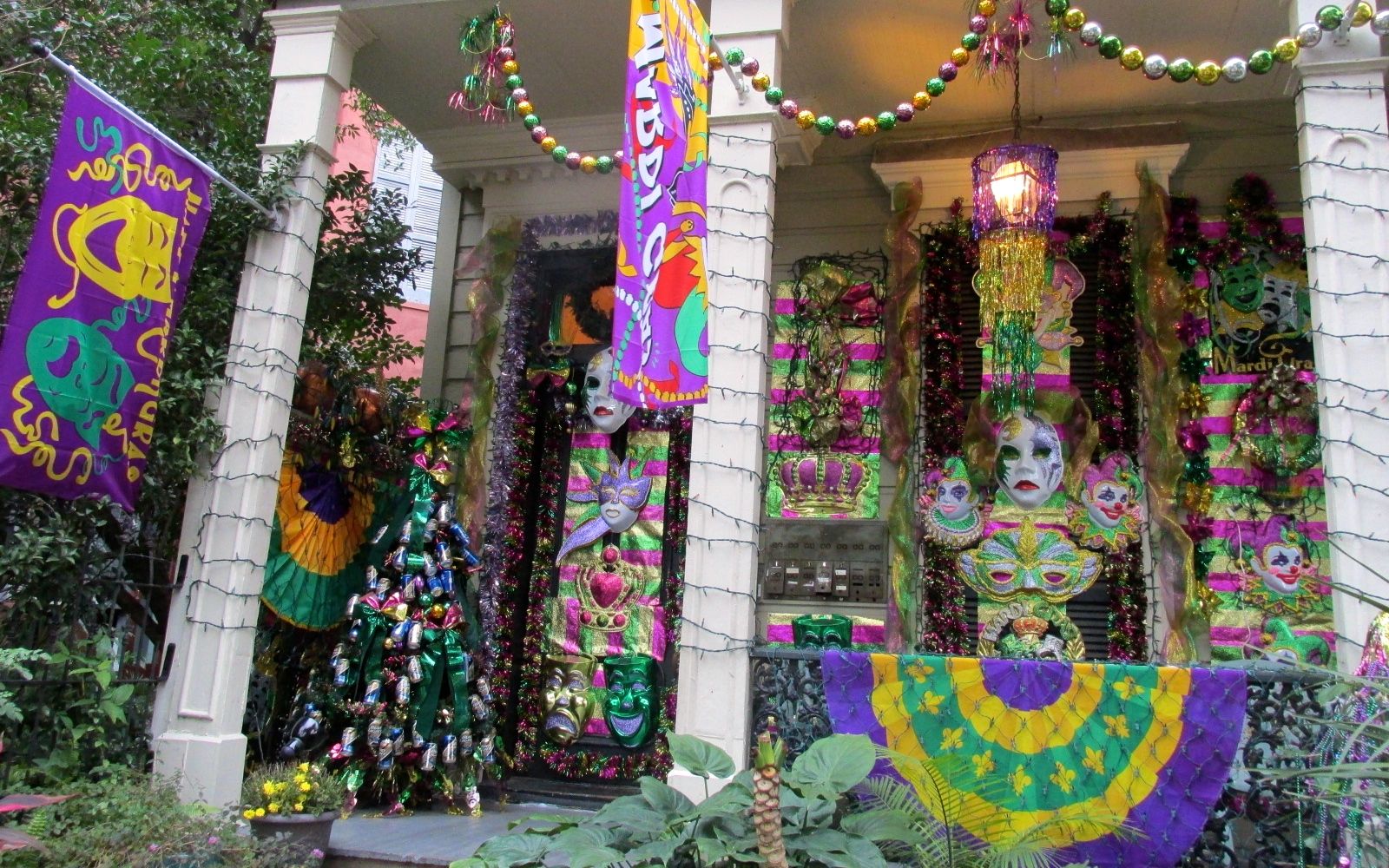
Too much is just enough

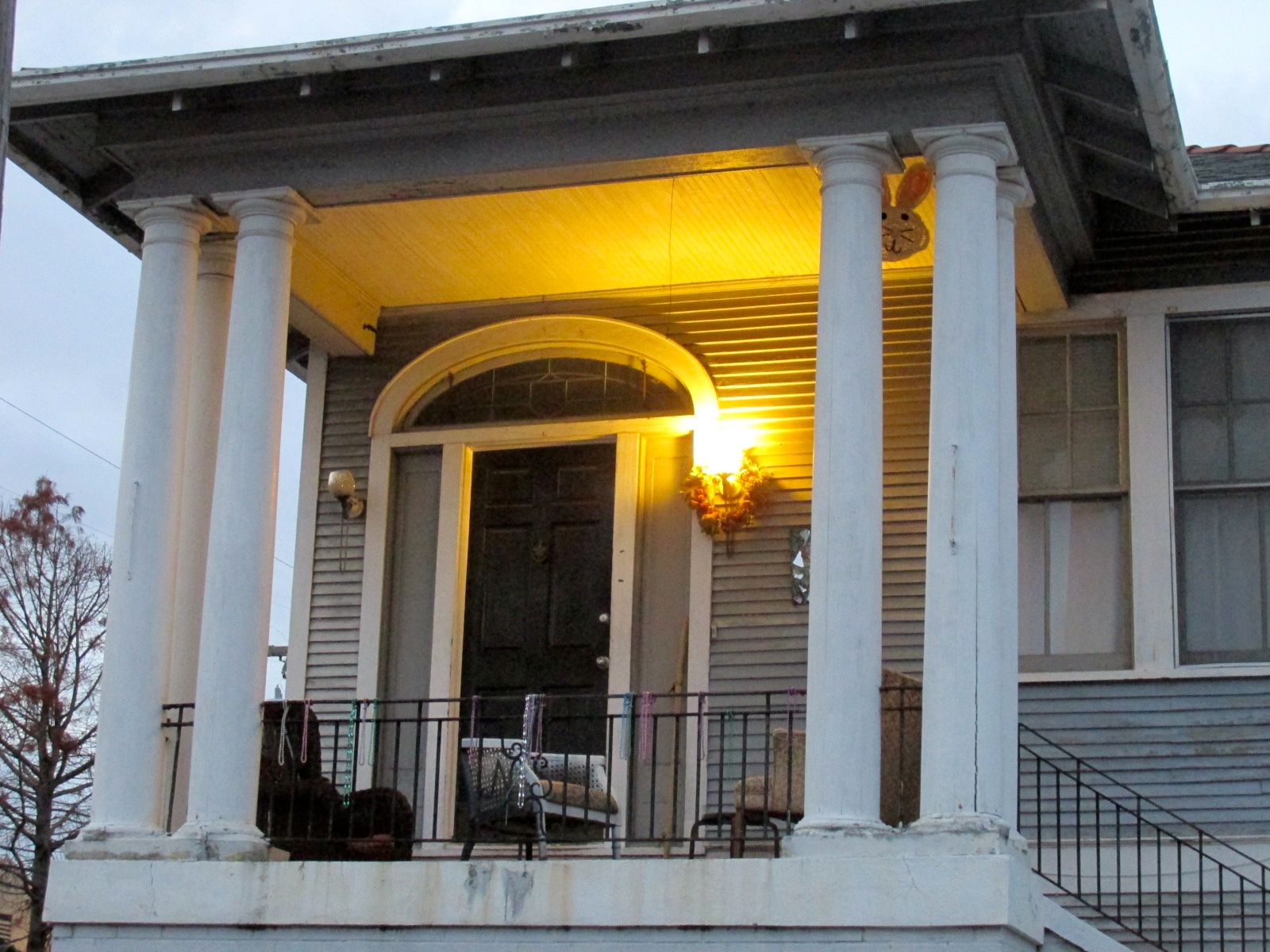
I walked past many houses that really got into the spirit of things. It’s not clear in this photo, but the tree on the left side of the porch is decorated with beer cans.

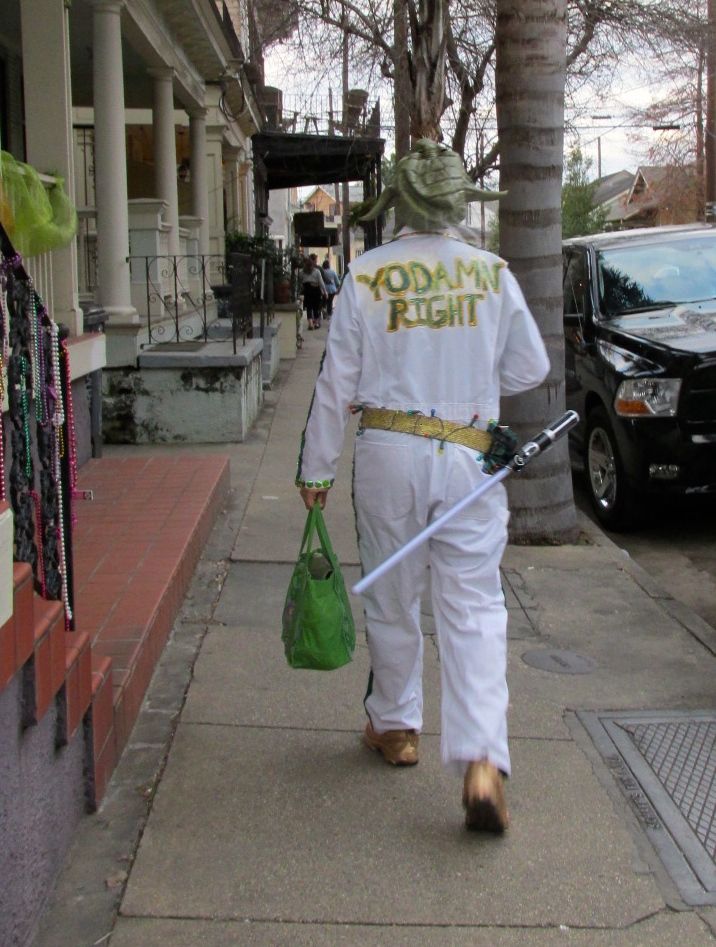
Yodamn Right!
Yodamn Right!

This guy was apparently heading in the same direction as me, but walking about twice as fast.

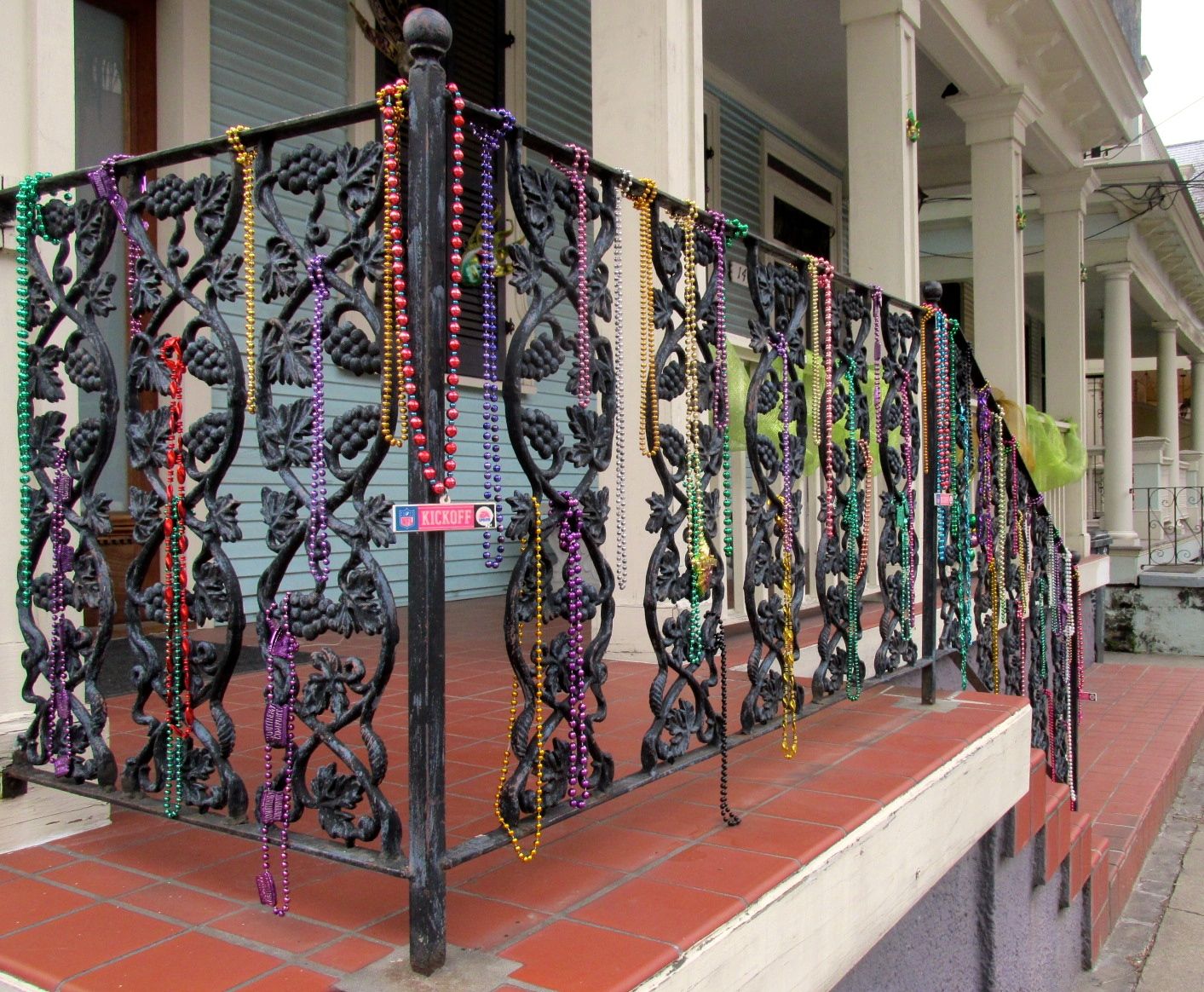
What to do with all the beads

This house gave me an idea of what I could do with all those beads I got last night. Understated, yet elegant.

Colorful houses

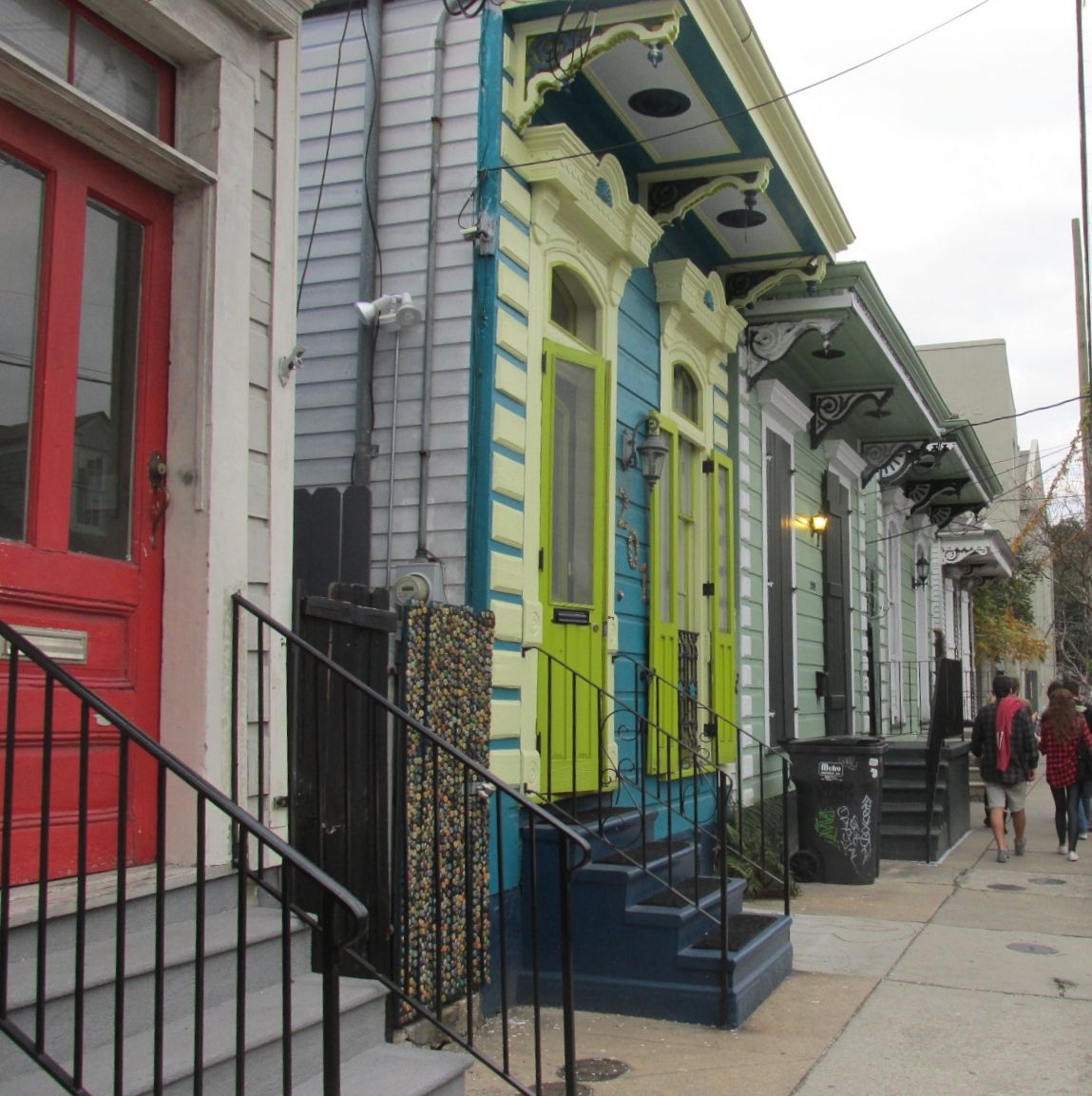
These houses are in Marigny, and you can really see how tiny Bernard de Marigny cut those lots. You’d just about have to go outside to change your mind – and this is doing from a woman who lives in an Airstream!

Waiting for Tit Rex

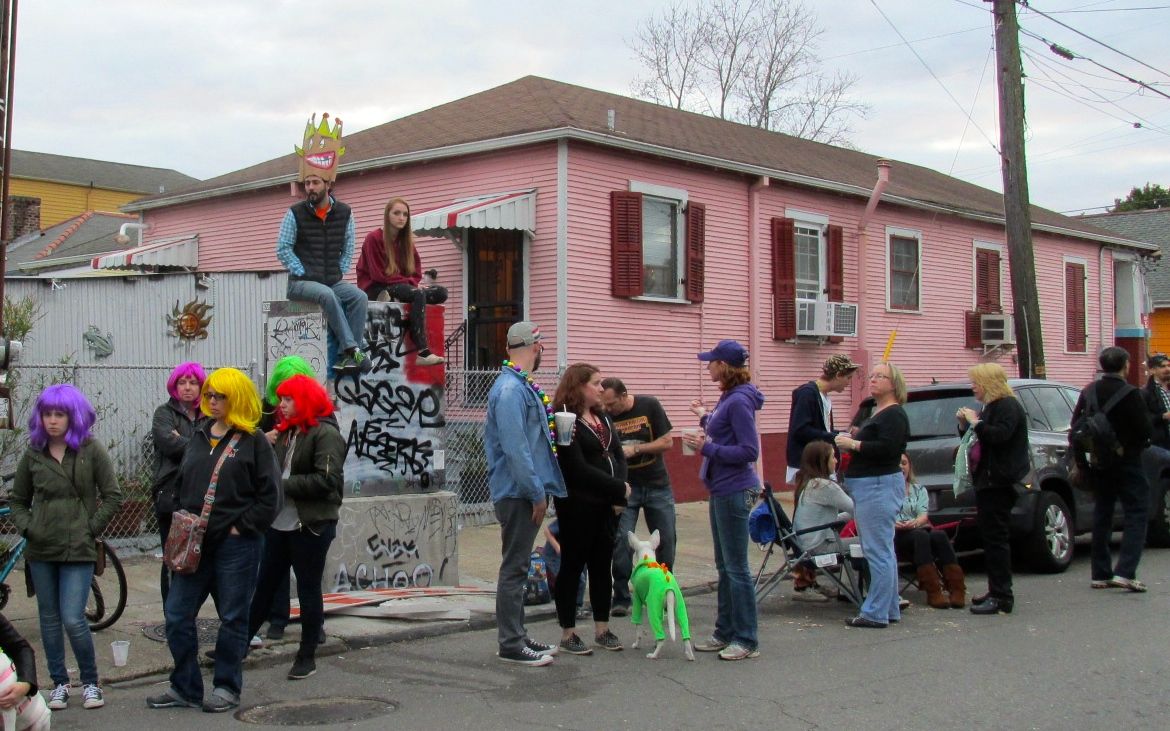
I found a good spot to wait for the parade. And I waited.

wigs

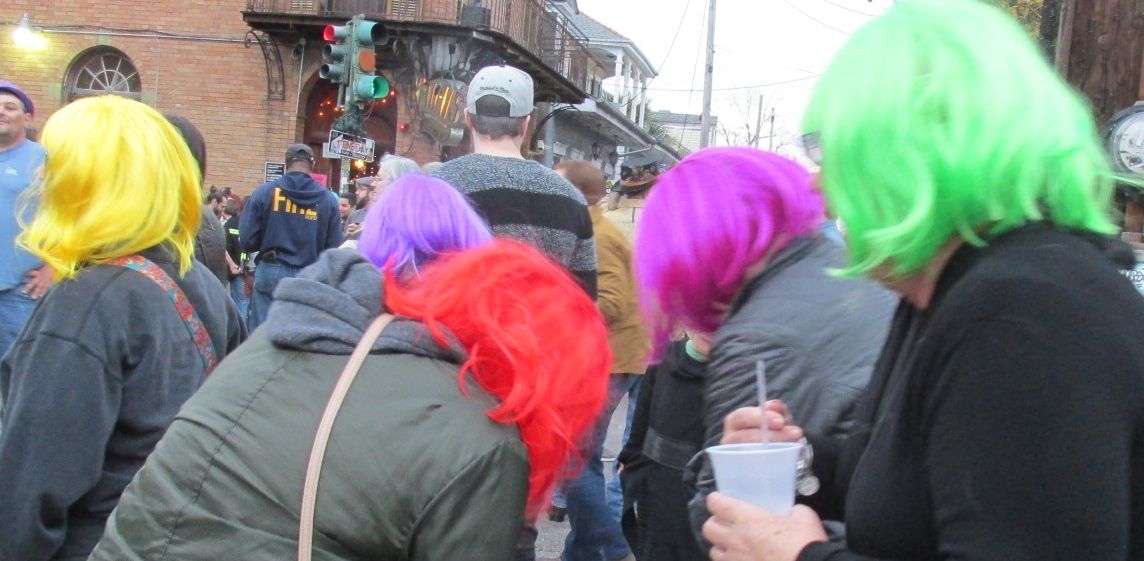
And I waited. Hmm…maybe I should have gotten a wig.

weather vane

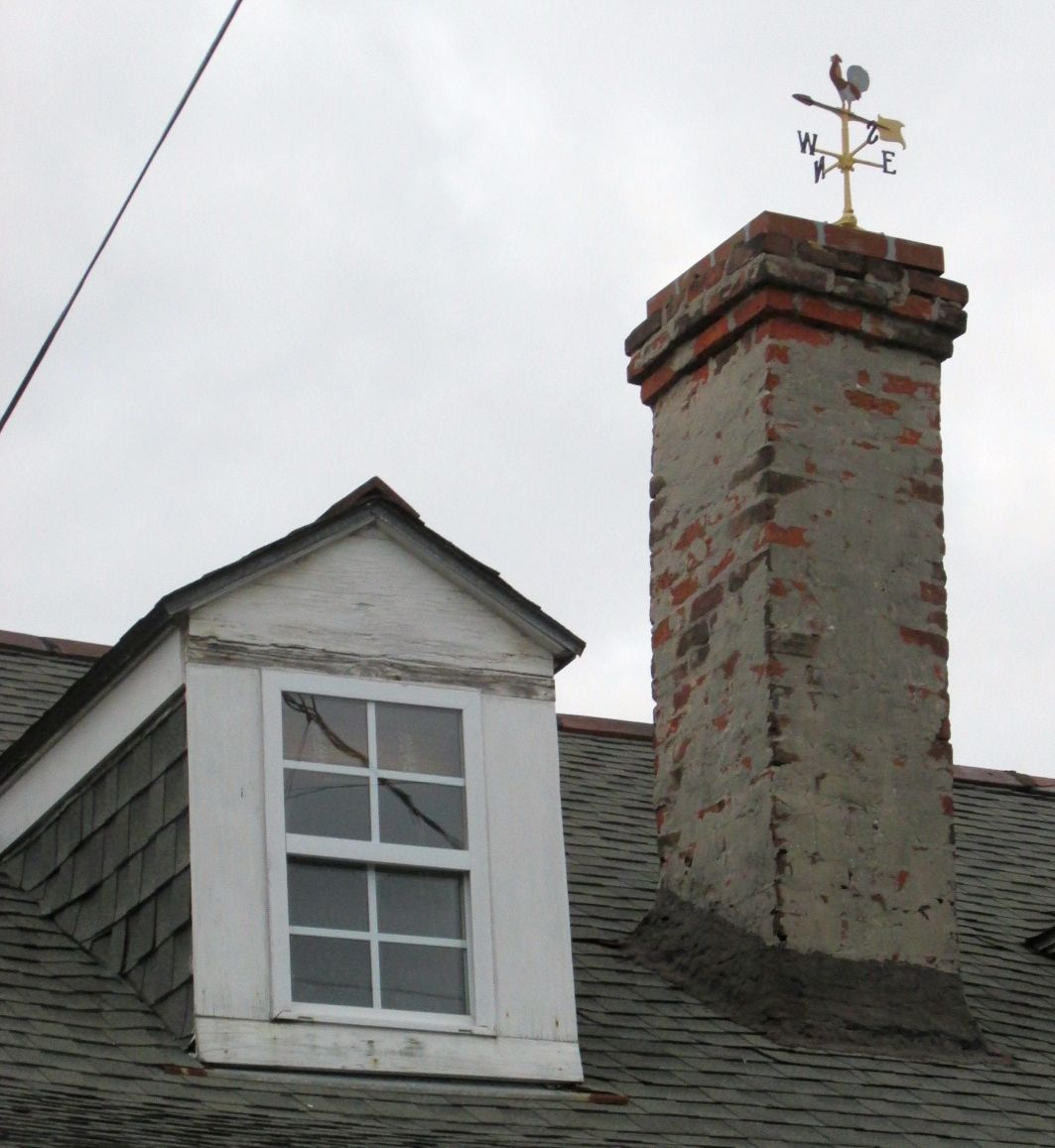
I looked at the buildings nearby. Oh look! A weather vane!

porch

Cute porch!

Fleur di lies

I reflected that I expected to see a Boy Scout convention, with all the fleur de lis all over town.

Then I realized that I was really tired of waiting. I enjoyed the parades the day before. I decided I had enough. And so I started walking toward the river.

Cafe du Monde

Another round of beignets and cafe au lait was just what the doctor ordered!

leftover sugar

It was a sweet ending to my New Orleans adventure.


Which Way to the Parade?

Friday morning, I hitched up and headed across the Causeway toward the French Quarter RV Resort. They were waiting for me when I got there, opened the gate to greet me and I was directed where to park.

billboard over the trailer

I had a nice, billboard-shaded site.

It’s urban camping at its finest.

The expansion joints on the Causeway set up quite a vibration in the trailer. I had to spend a few minutes setting thing aright, but then I was ready to head out and explore.

Taking the floats to the starting point

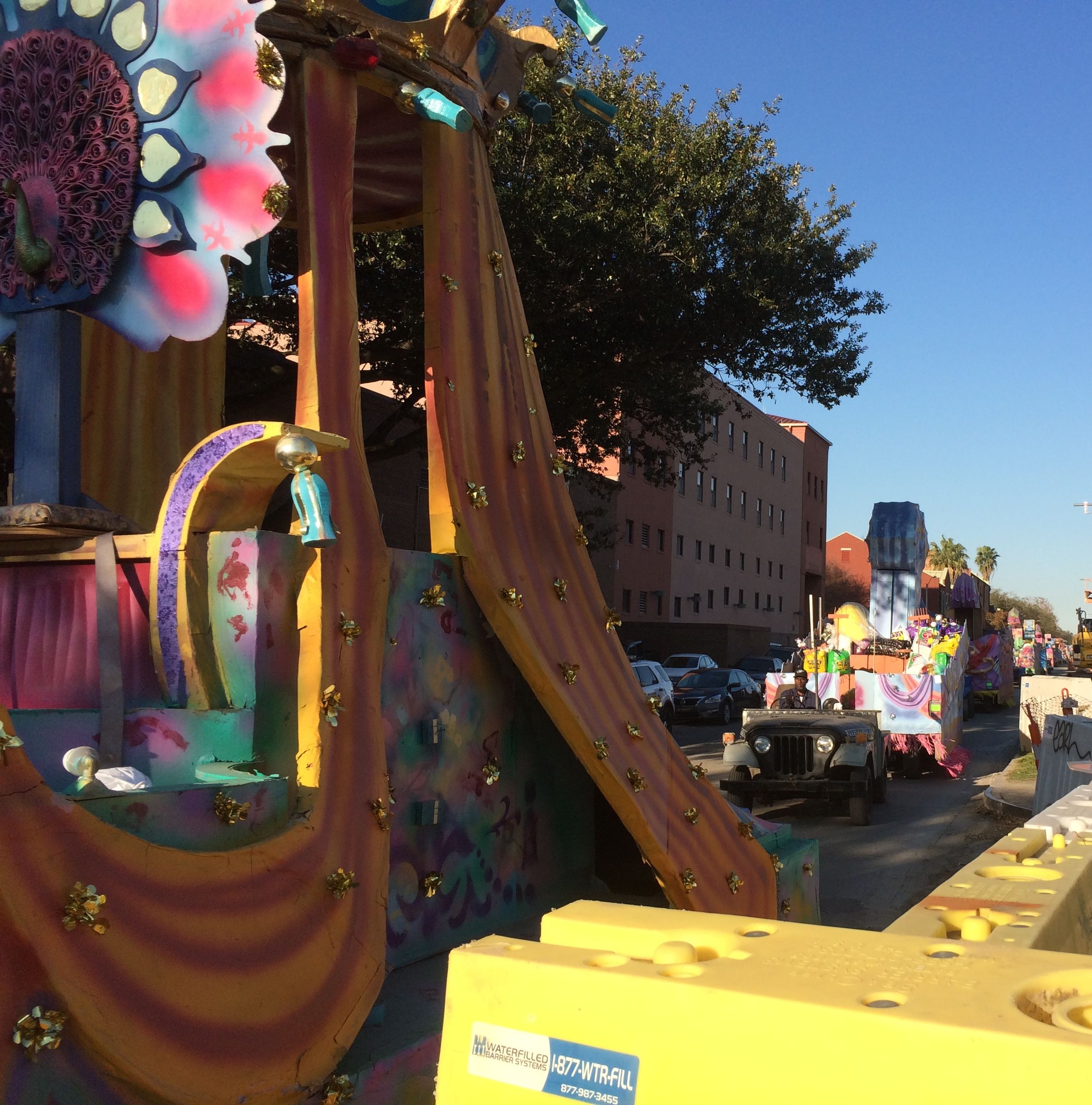
The first thing I discovered was a caravan of floats being moved into position for the evening’s parades.

taking the float to the starting point

I love coming across those unexpected treats!

I was heading toward the French Quarter. The folks in the office had given me a map of a parade I did have on my Mardi Gras Parade Tracker App.

I was having a little trouble figuring out the map. I thought I was where it was going to be arriving, but this woman looked like the parade had already passed by.

Wine glasses at Krewe of Cork

So, I asked her where the parade was.

She told me that they would be back this way soon. I complimented her on her glasses, and she told me that they had given them to her. She told me that I might be able to get some, too.

Ooh! Free stuff! I love it!

Soon, I heard the marching band, and then it was there in front of me!

https://www.facebook.com/kalamazookim/videos/10153396305791989/

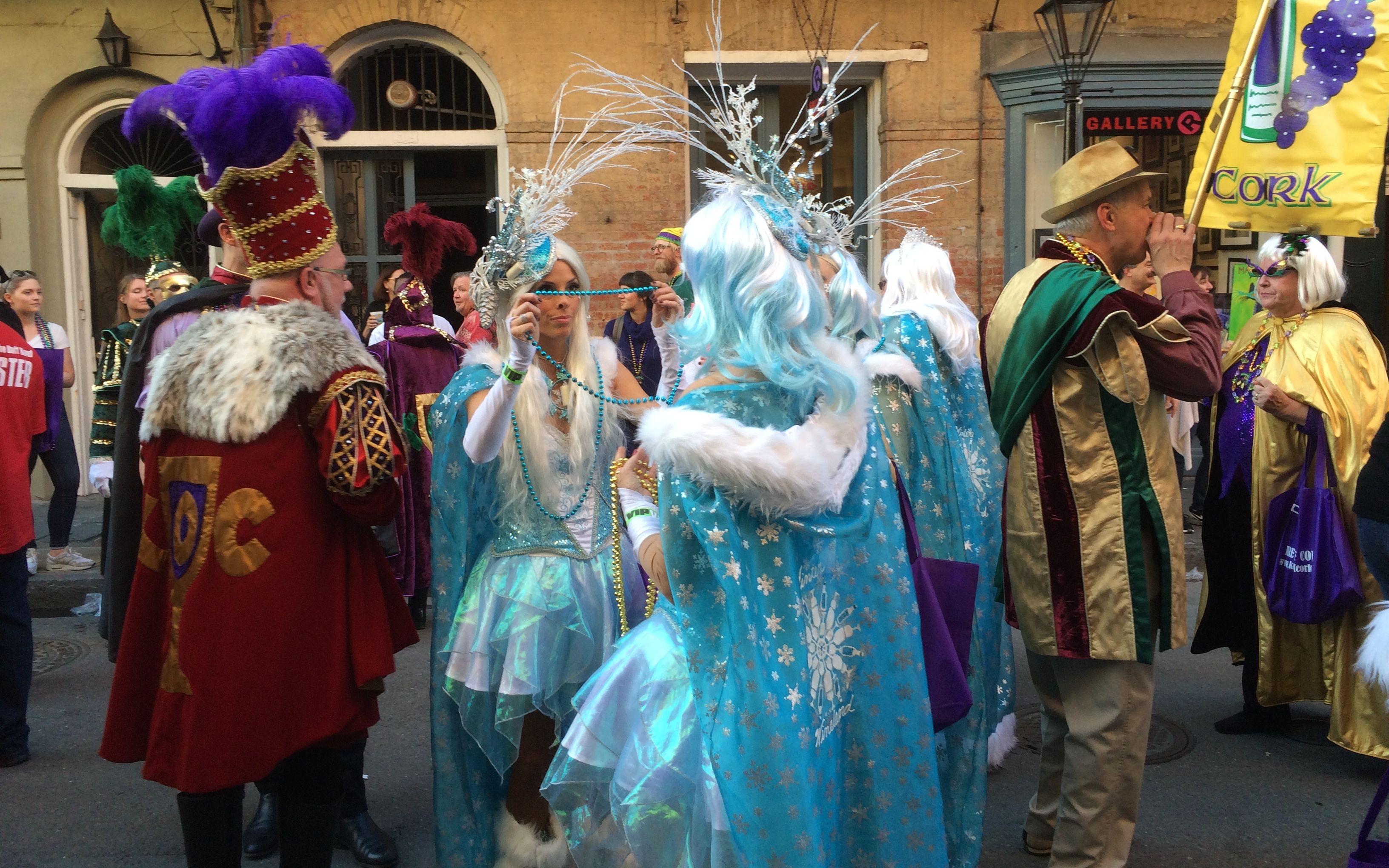
This was the Krewe of Cork, and the marching groups had themes based on wine. It was a walking parade. There weren’t any motorized floats, just groups of people walking along having a great time.

Krewe of Cork 3

And, rather than throwing stuff, they walk right up and hand it to you. It was so friendly!

Krewe of Cork

People sometimes ask me if I get lonely, traveling by myself. I make friends all the time. Sometimes we’re friends for ten minutes, like the woman with the wine glasses or the man I met with a small instrument case in his hand

I smiled and said, “I’ll bet you don’t play the tuba, do you?” I was thinking that maybe it was a flute or a clarinet. It turns out that he plays harmonica, and the case held all his harmonicas. He told me that he had bought a thirty day Amtrak pass. He started in Chicago, and was ending in New Orleans.

Now, this young man didn’t have any beads at all, having just walked up to the parade route. So, I tapped one of the marchers on the shoulder and told her of his sad plight. She obliged by draping a few strands around his neck.

To Serve and to Pour

And then the parade had passed. Everyone had a great time.

Krewe of Cork 2

It was time for me to wend my way out of the French Quarter to the Uptown area for the evening’s parades. These parades were listed on my tracker and I just went where my phone told me.

I got to the viewing area I had picked and then looked around for a bite to eat.

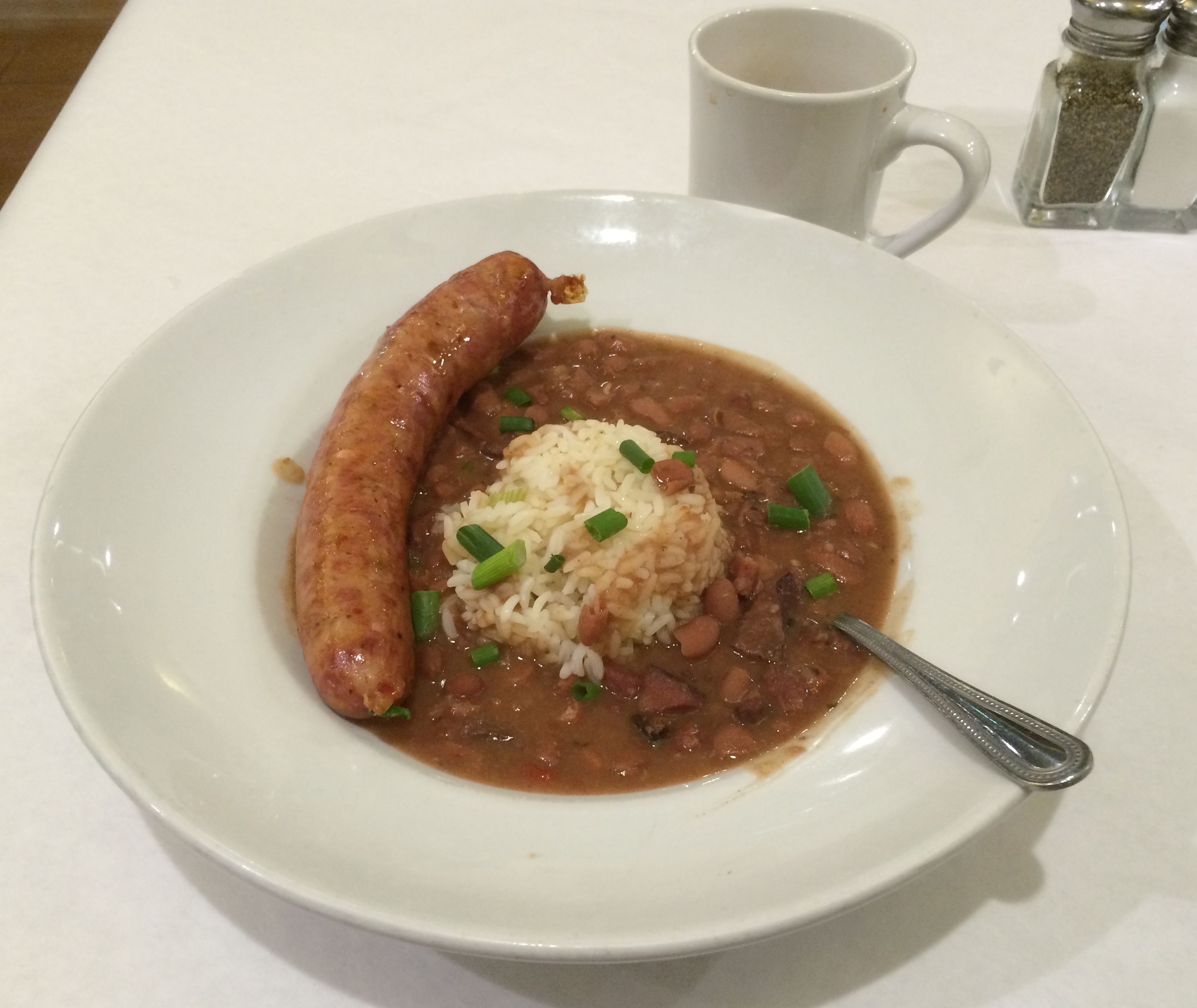
Red Beans and Rice with Alligator Sausage

Okay, who drinks coffee at a Mardi Gras parade? I guess I do!

Vendors at the parade

There was still a while to wait for the parade to start. These vendors were happy to fill in the time by selling stuff.

Girls waiting for the parade

These little girls were so cute to watch. Here they are checking the parade’s progress on the app on their father’s phone.

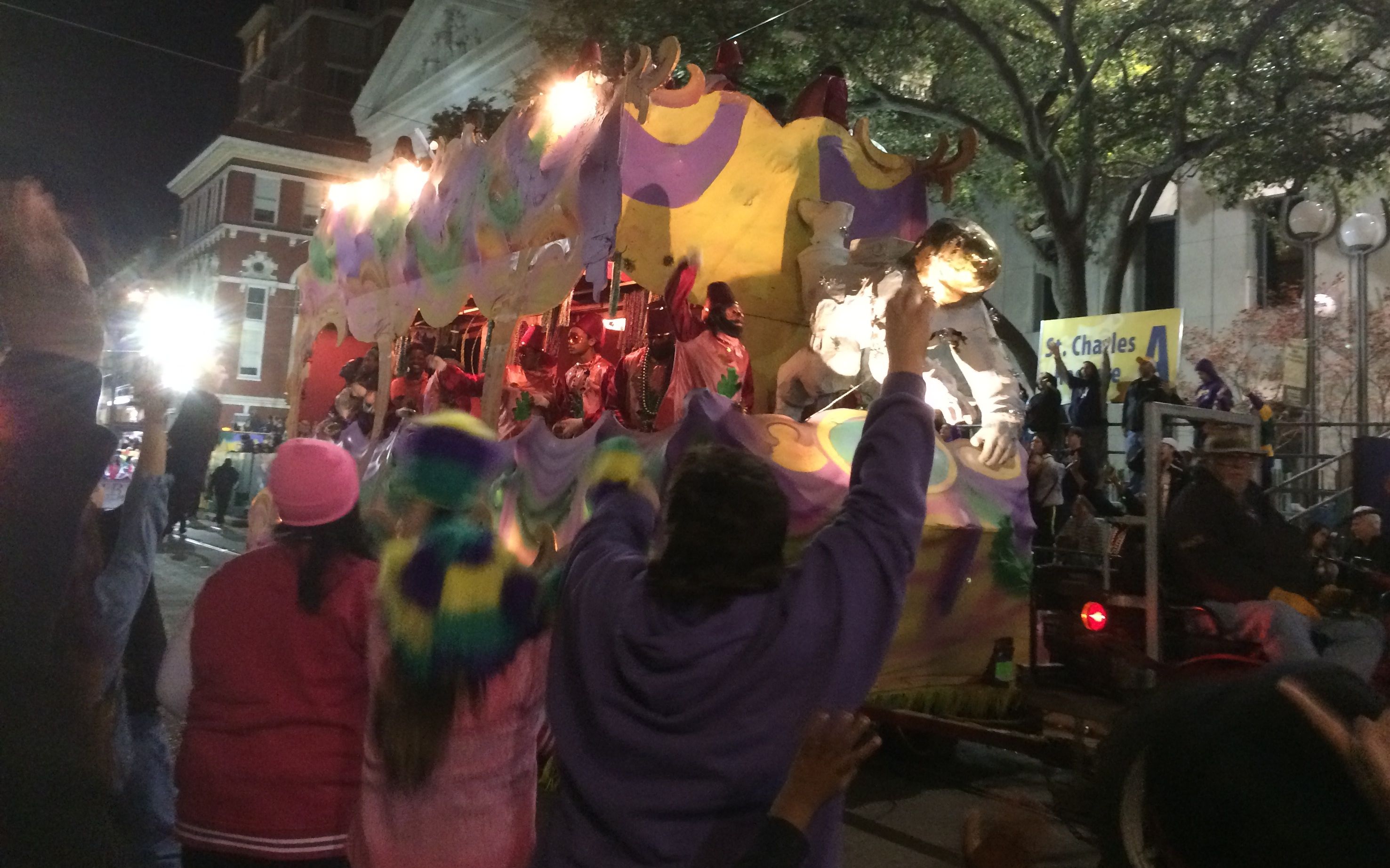
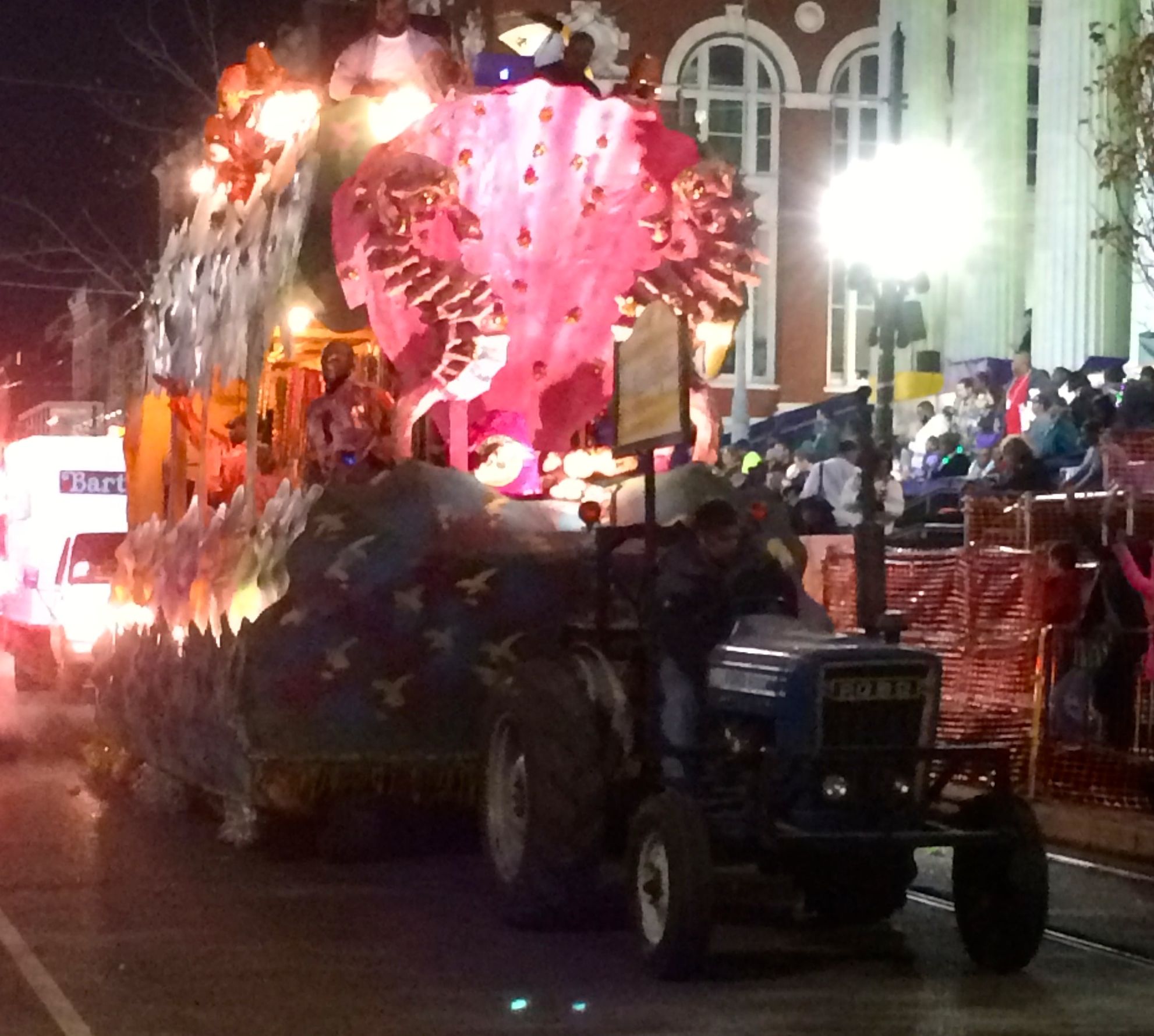
And then the parade reached us! This was the Krewe of Oshun.

Krewe of Oshun

And the beads started flying!

Krewe of Oshun float

It was kind of hard to catch photos, and I only picked up one string of beads in this location.

This parade finally got to the end, and I switched spots for the second parade, which was the Krewe of Cleopatra.

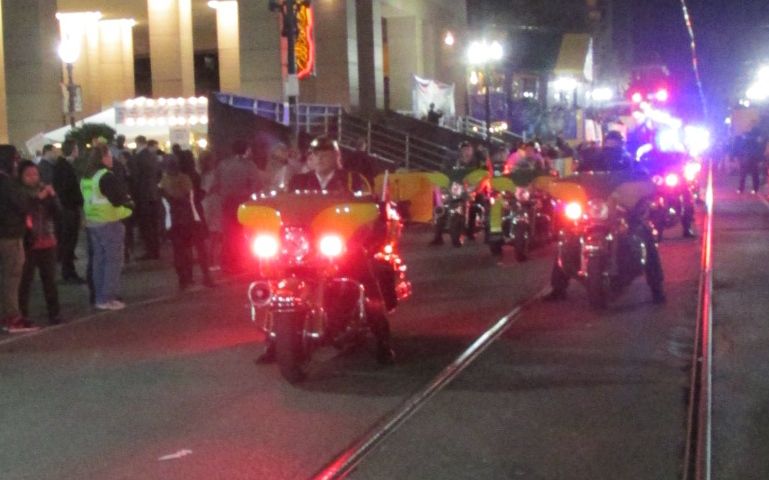
This parade was lead by the Shriners.

Here come the Shriners!

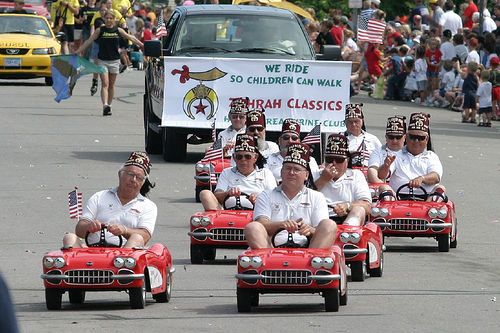
By the way, does anyone else remember when Shriners used to ride tiny cars in parades?

Shriners in little cars

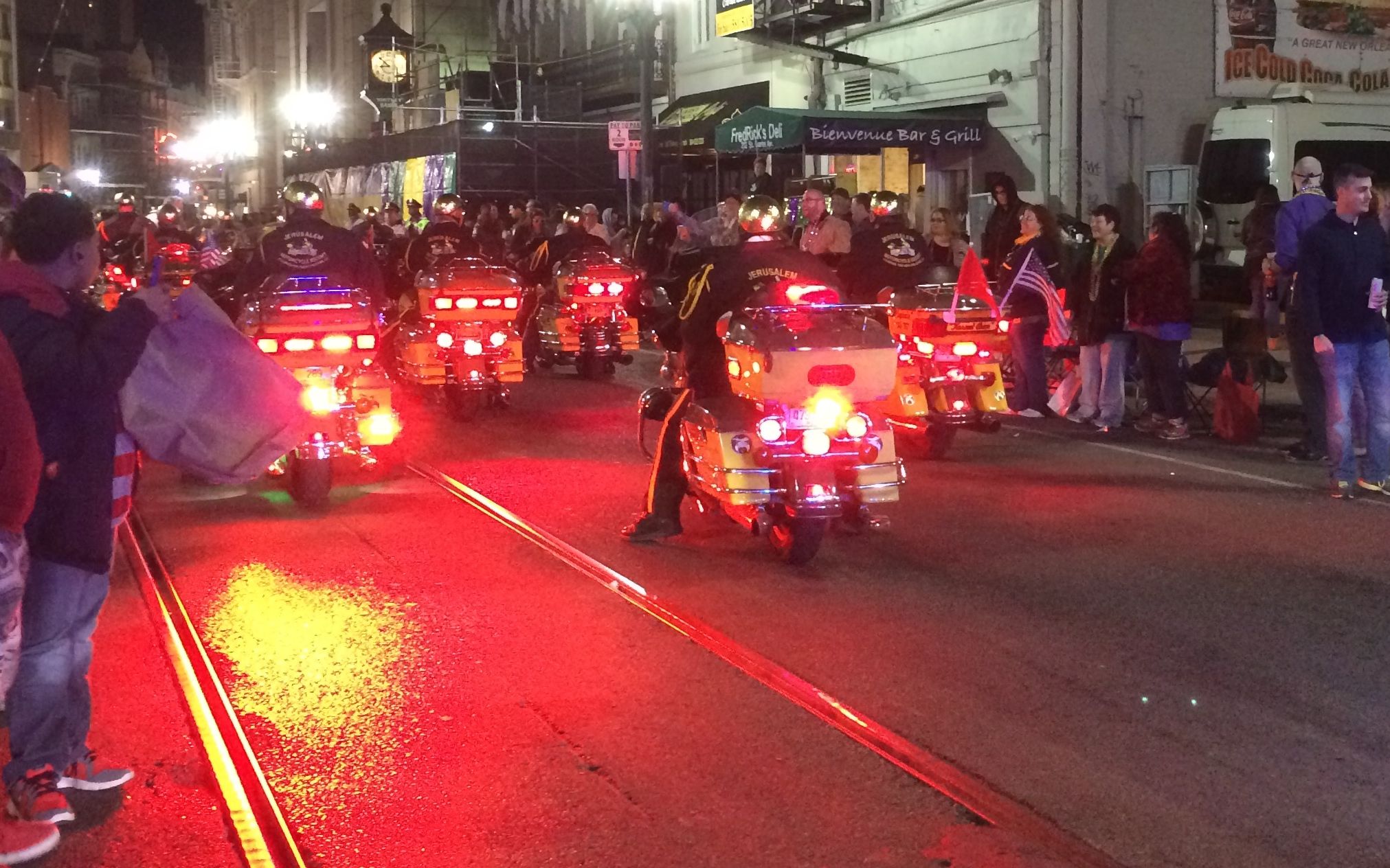
These guys were riding really big bikes! They waved and revved their engines and then lead the floats and marching bands along the parade route.

And they are ready to move off

Here comes the marching bands.

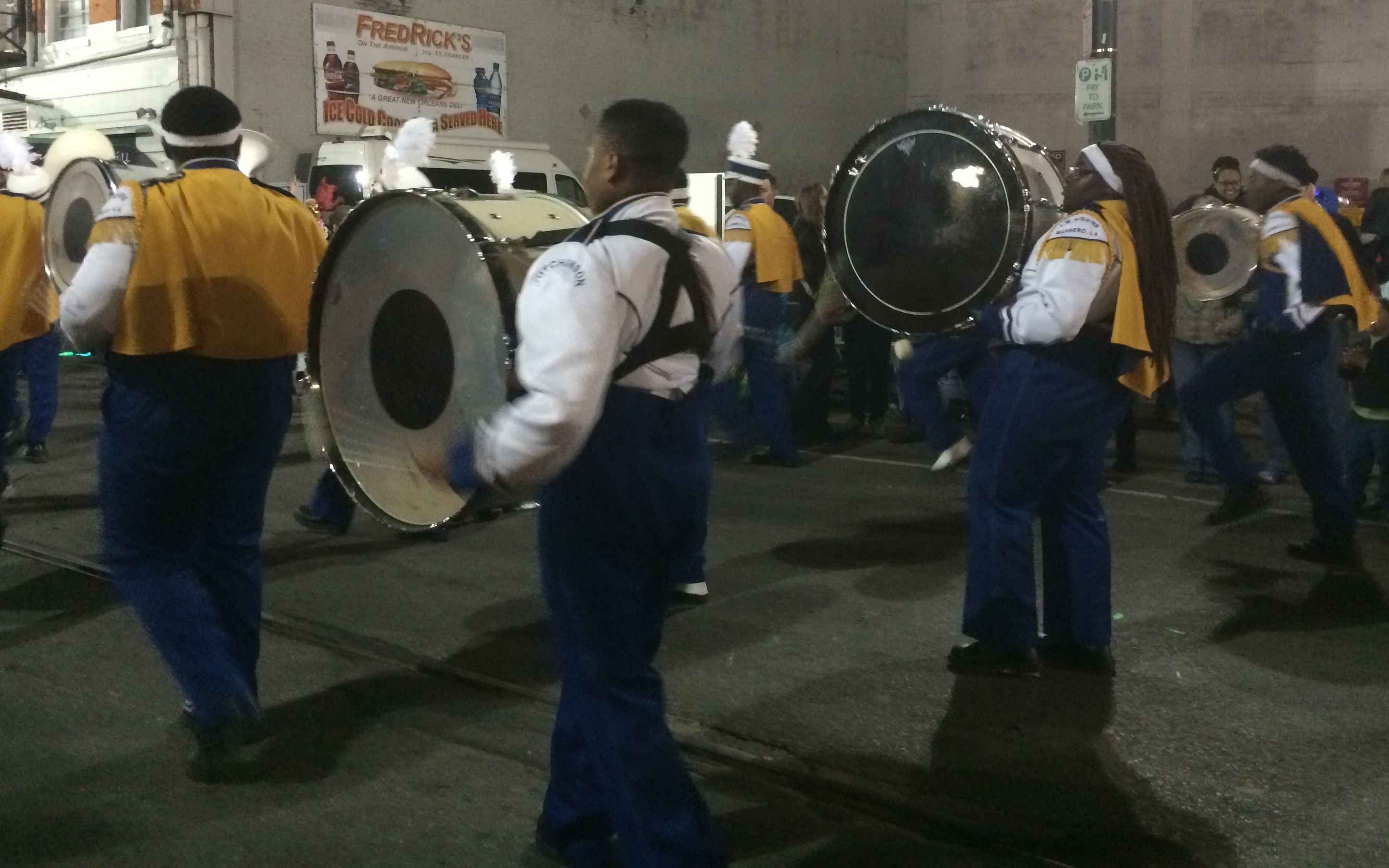
Drum line

This was the Krewe of Cleopatra.

Krewe of Cleopatra 1

I happened to stand in a spot where the floats slowed down. Sometimes they stopped. The beads were just a-raining down!

selfportrait 1

The beads are starting to add up!

Krewe of Cleopatra 2

The floats were elaborate and they just kept coming.

Santa float

Now, I am not quite sure how Santa Clause relates to the Cleopatra theme, but there he was.  And the beads kept raining down. At one point, I put up both hands to catch beads, and the krewe members threw them on my arms! I felt like a human ring toss game!

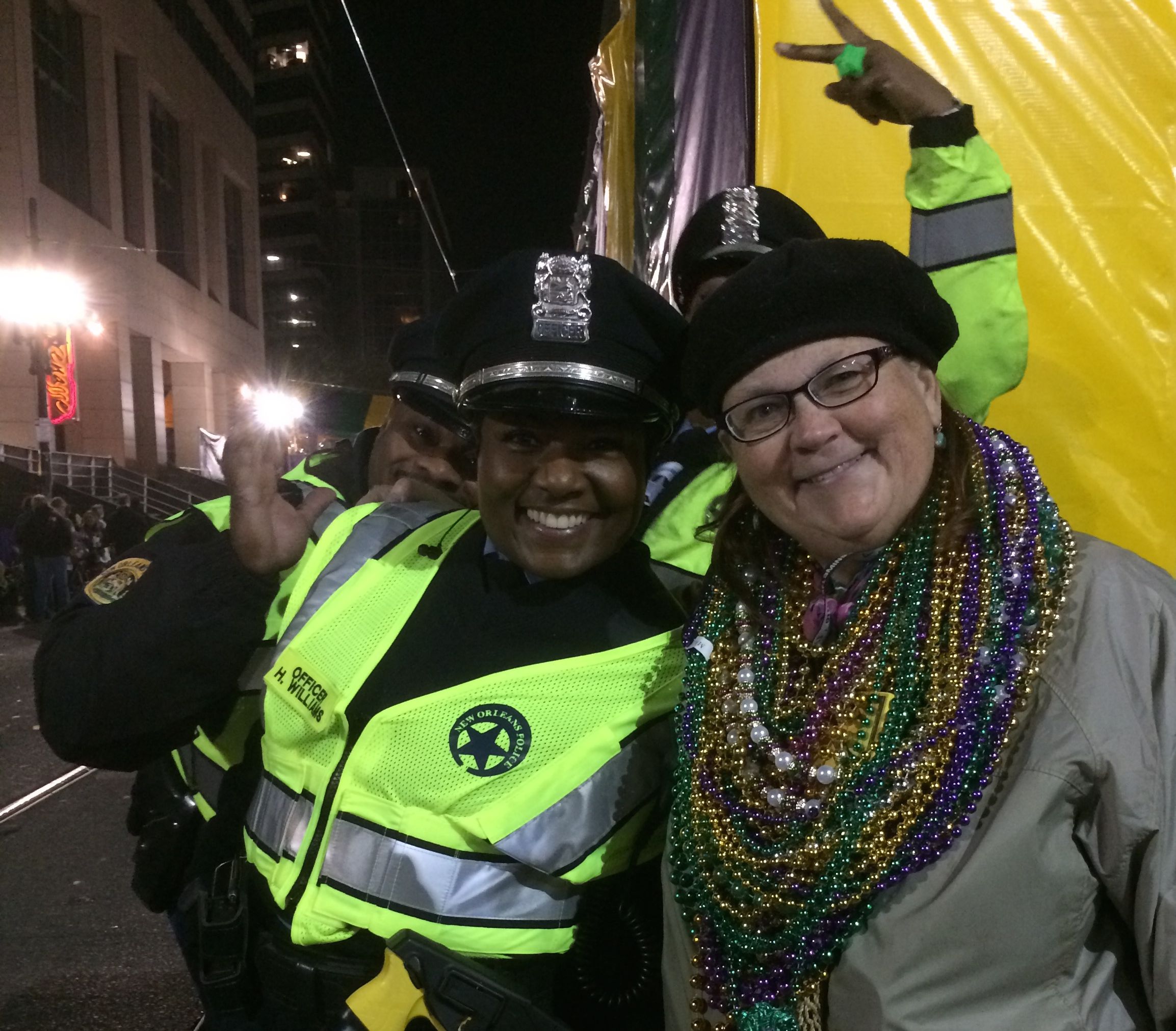
I was getting kind of tired, and the beads were getting heavy. I asked my new friend on the left of me to take a photo of me with my new friend on the right – and got photo-bombed by some of New Orleans’ finest.

Self Portrait 2

And a good time was had by all!

NOMA and Preservation Hall

I was fortunate to be invited to spend the day with Lisa, who is Deputy Director for Curatorial Affairs/Curator of Asian Art at the New Orleans Museum of Art.

She had work to do at home in the morning and I had to take Cora the Travel Cat to the vet. I wanted to have her chin looked at and her ears checked. It turns out that she has feline acne, and I need to wipe her chin down with a Stridex Pad every other day. Luckily, the treatment she received in Manassas last year did the trick for her ear infection. I got back to the campground and Lisa came over to pick me up.
After we skimmed across Lake Pontchartrain on the Causeway and wiggled our way over to the museum, my first stop was the cafe.

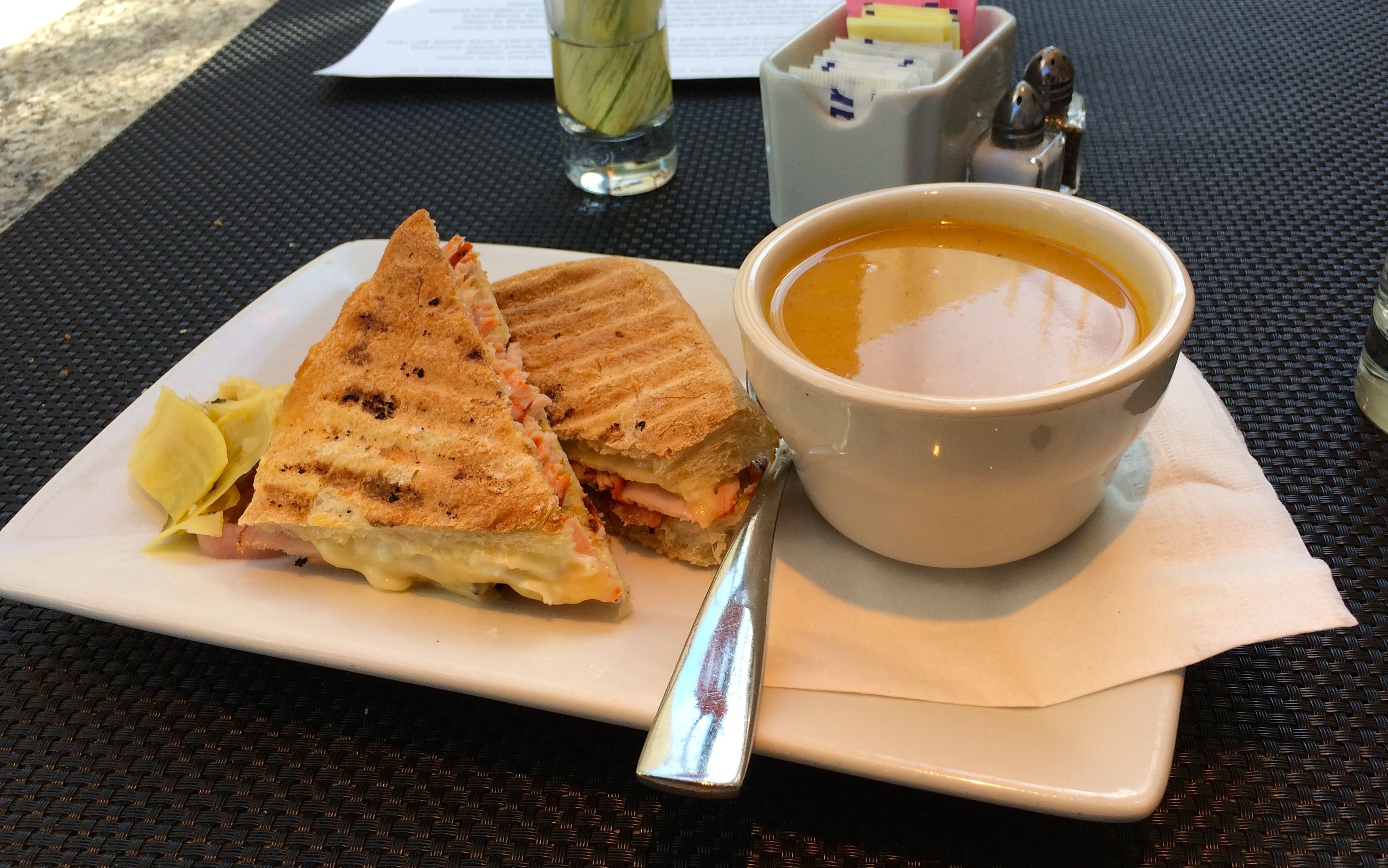
Turkey Bacon Panini with Butternut Squash Soup

It was a delicious treat and fueled me up for the three floors of art that awaited me.

I took the elevator to the top floor, because that is how I like to view museums, unless their is a reason to do it another way.
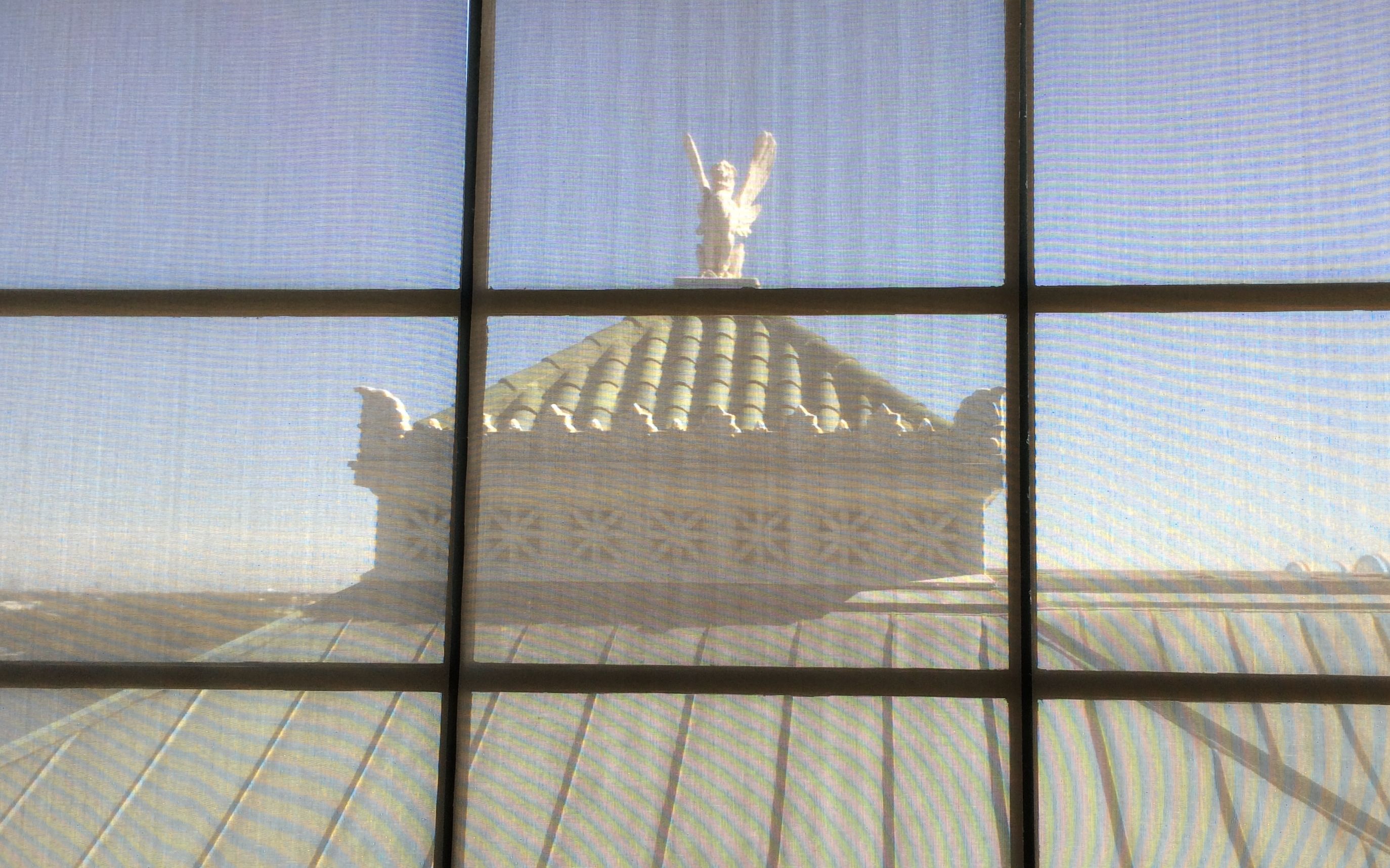
Noma roof with angel

On the top floor was Asian, African and Indigenous American Art – some of my favorite kinds of art.

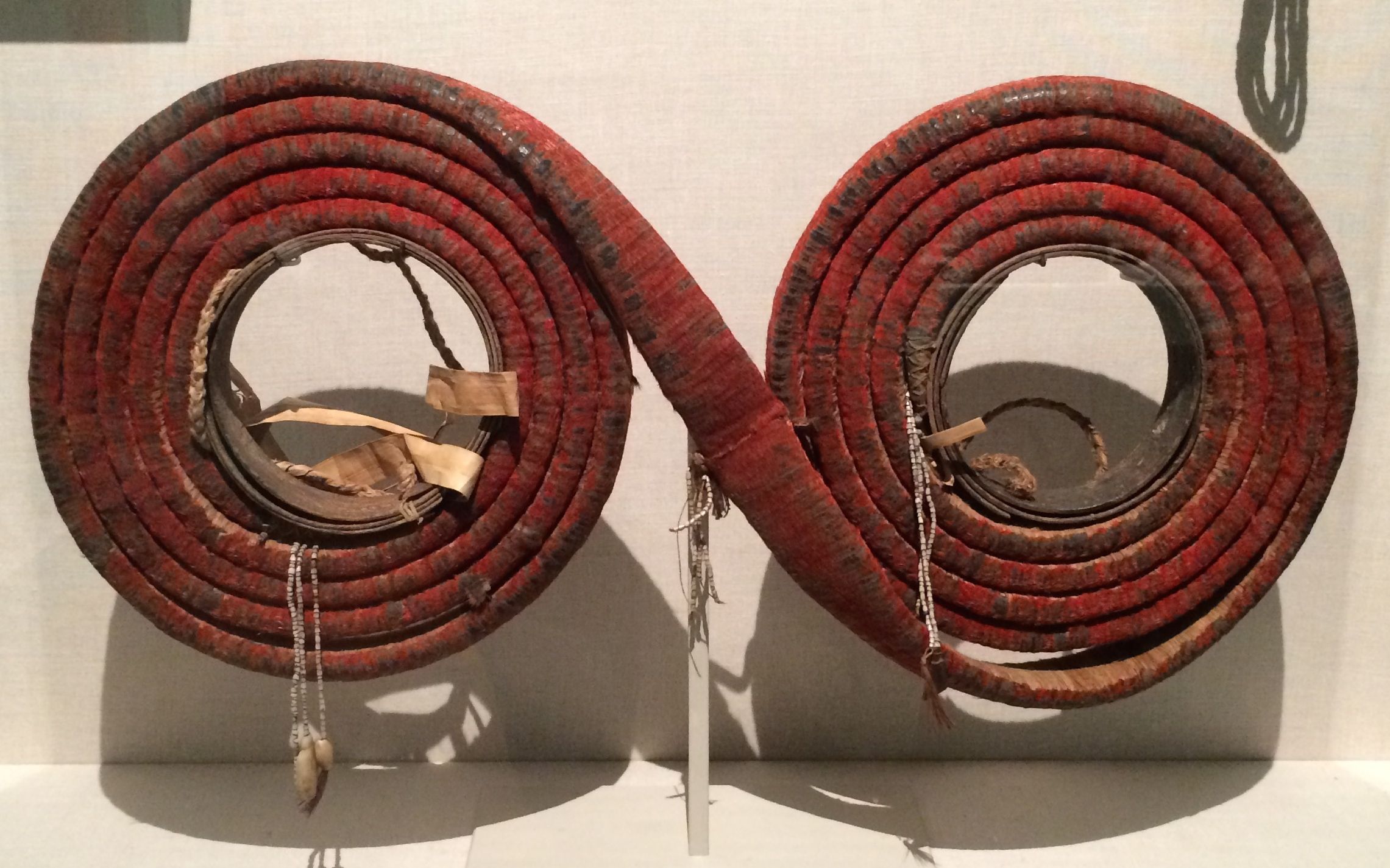
Money for Pacific Islands
Money from Pacific Islands

How would you like to have to carry this money around in your wallet?

Baskets by the Chitimacha peoples from Louisiana

These baskets bear a great resemblance to some of the baskets I bought in Guatemala. I love the similarities that arise when the same kinds of materials are put in the hands of different people.

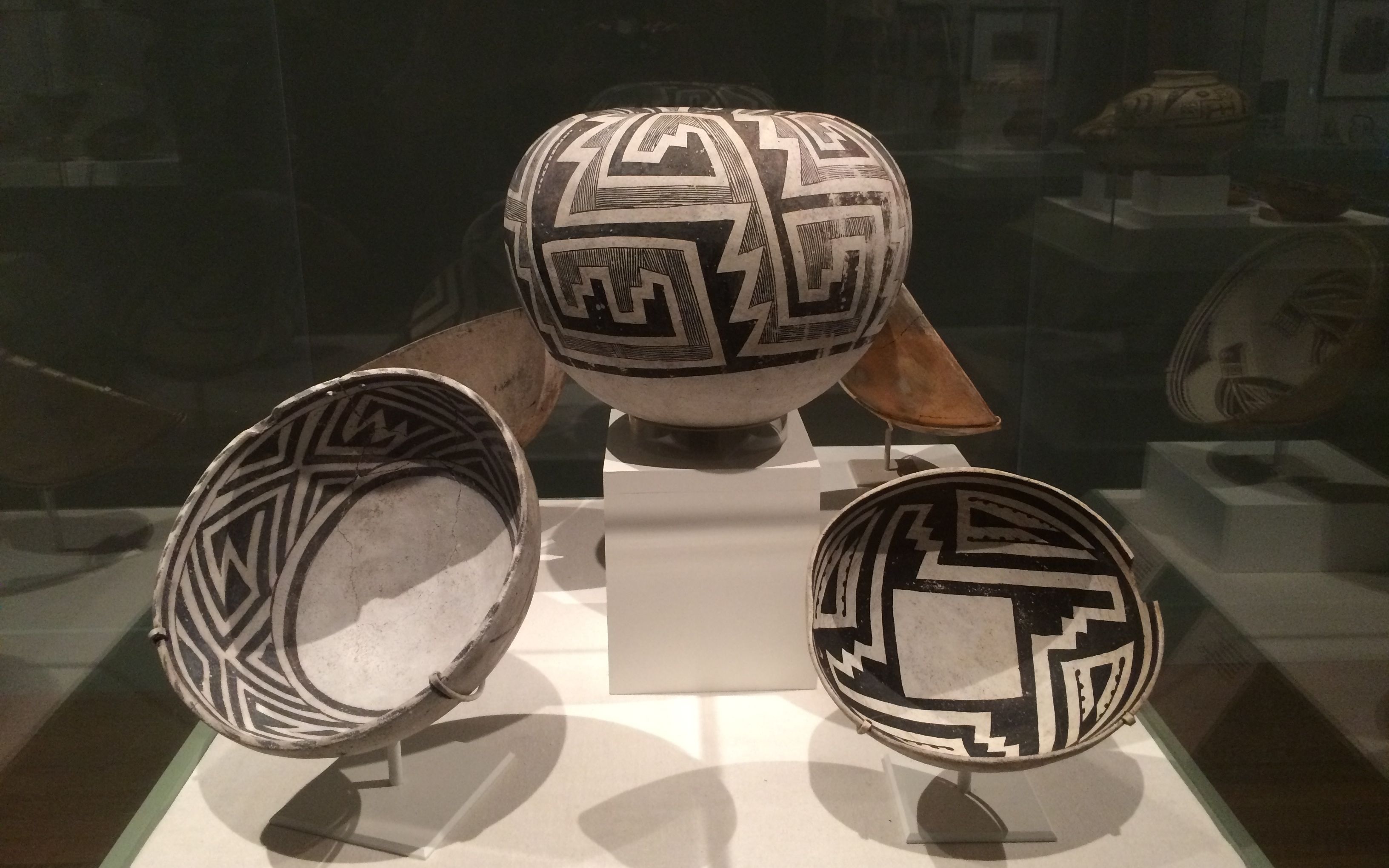
Anasazi Pots
Anasazi Pots

These pots reminded me of the wonderful time I spent in the southwest last spring. I can’t wait to return this year.

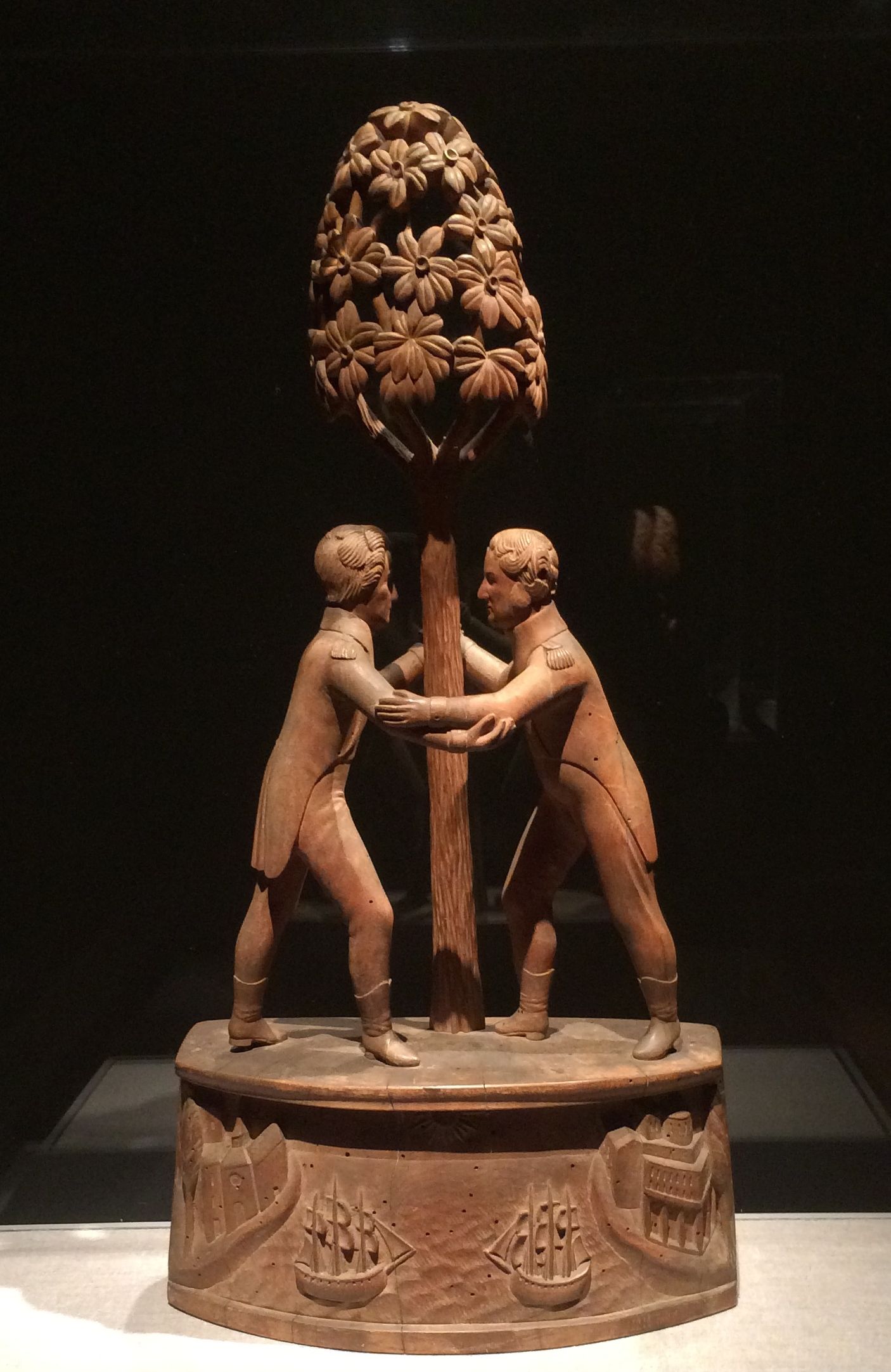
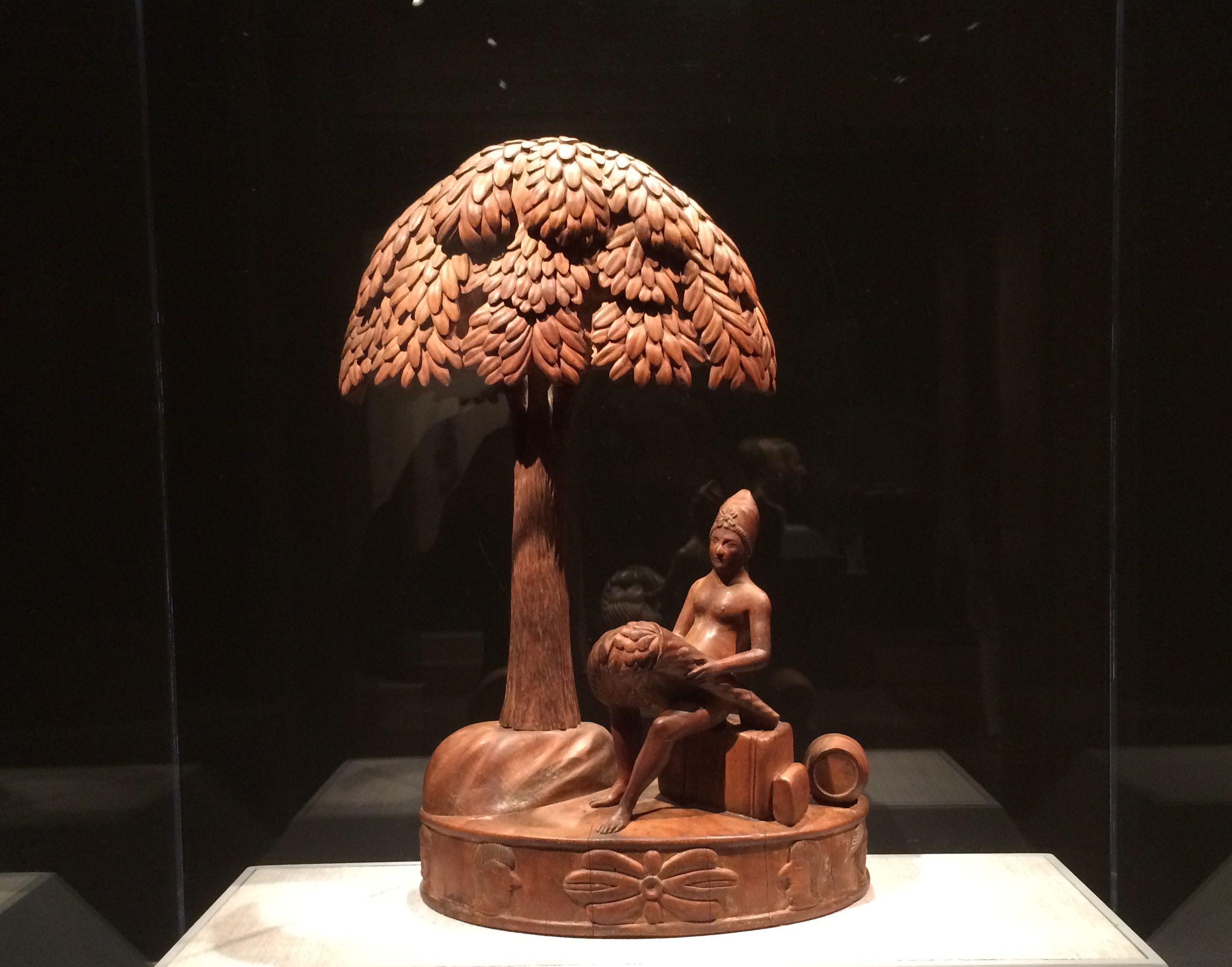
There was a display of a local artist from the early days of the colony. Pierre Joseph Landry was born in France in 1770. He came to Louisiana with his widowed mother and her father in 1785 in order to escape the coming revolution in France.
Carving 3

He received a land grant on the west bank of the Mississippi, and after fighting with General Andrew Jackson in the Battle of New Orleans, he returned Iberville Parrish to develop his land. His plantation was known as Home Plantation and he prospered as a sugar planter and refiner.

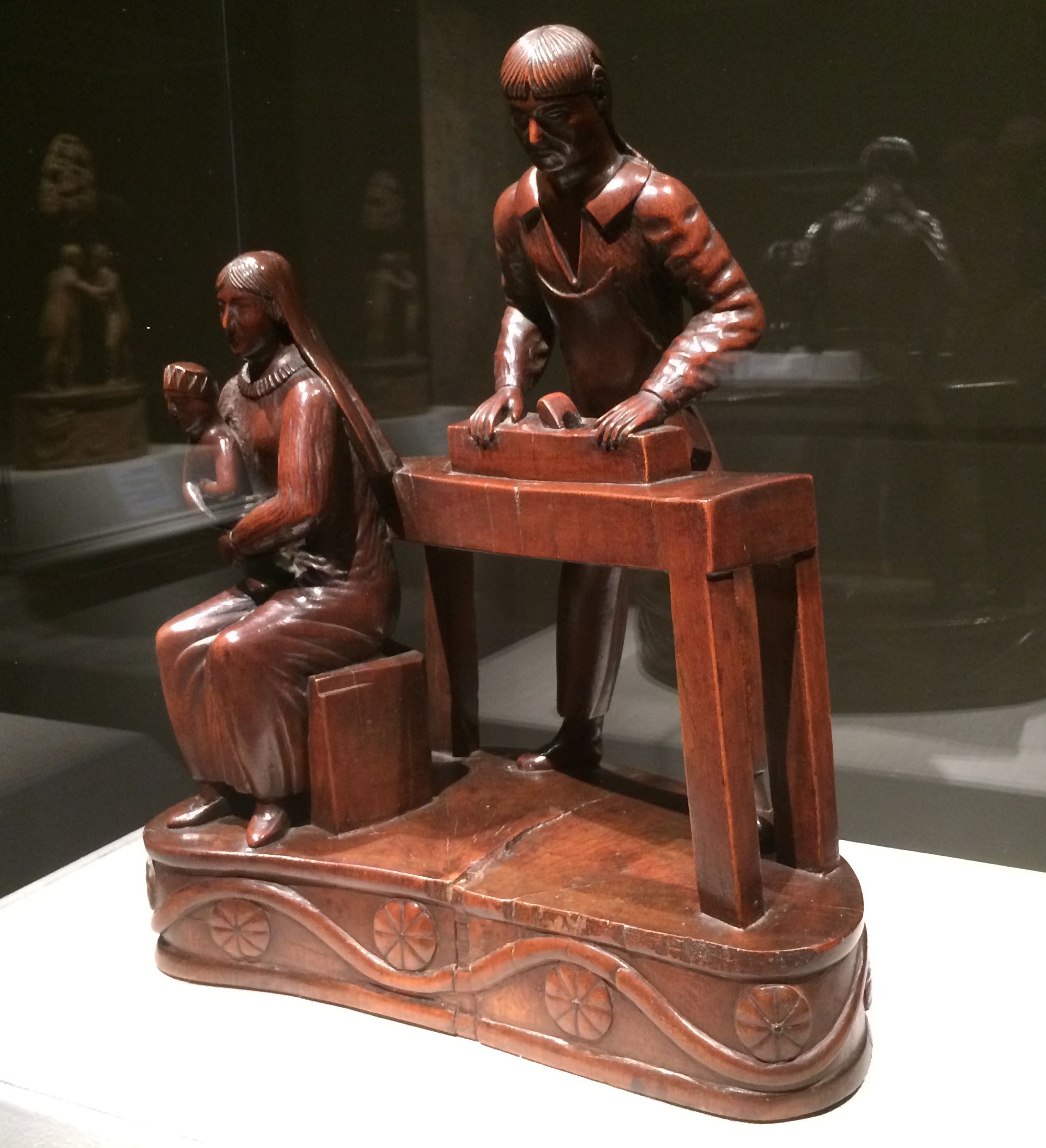
Carving 2

In the 1820’s Landry contracted a disease known as “white swelling”, which was tuberculosis of the knee. He was confined to a wheelchair and began passing the time making carvings. He used a common penknife and used local woods, such as magnolia, beech and elm.

Carving 1

He was a remarkable self-taught artist. While his output of artwork is small in number, it was sufficient to establish him as one of the self-taught artistic geniuses of early nineteenth-century America.

And, my thanks to the staff of NOMA for the excellent descriptive and informational signs with the exhibits.

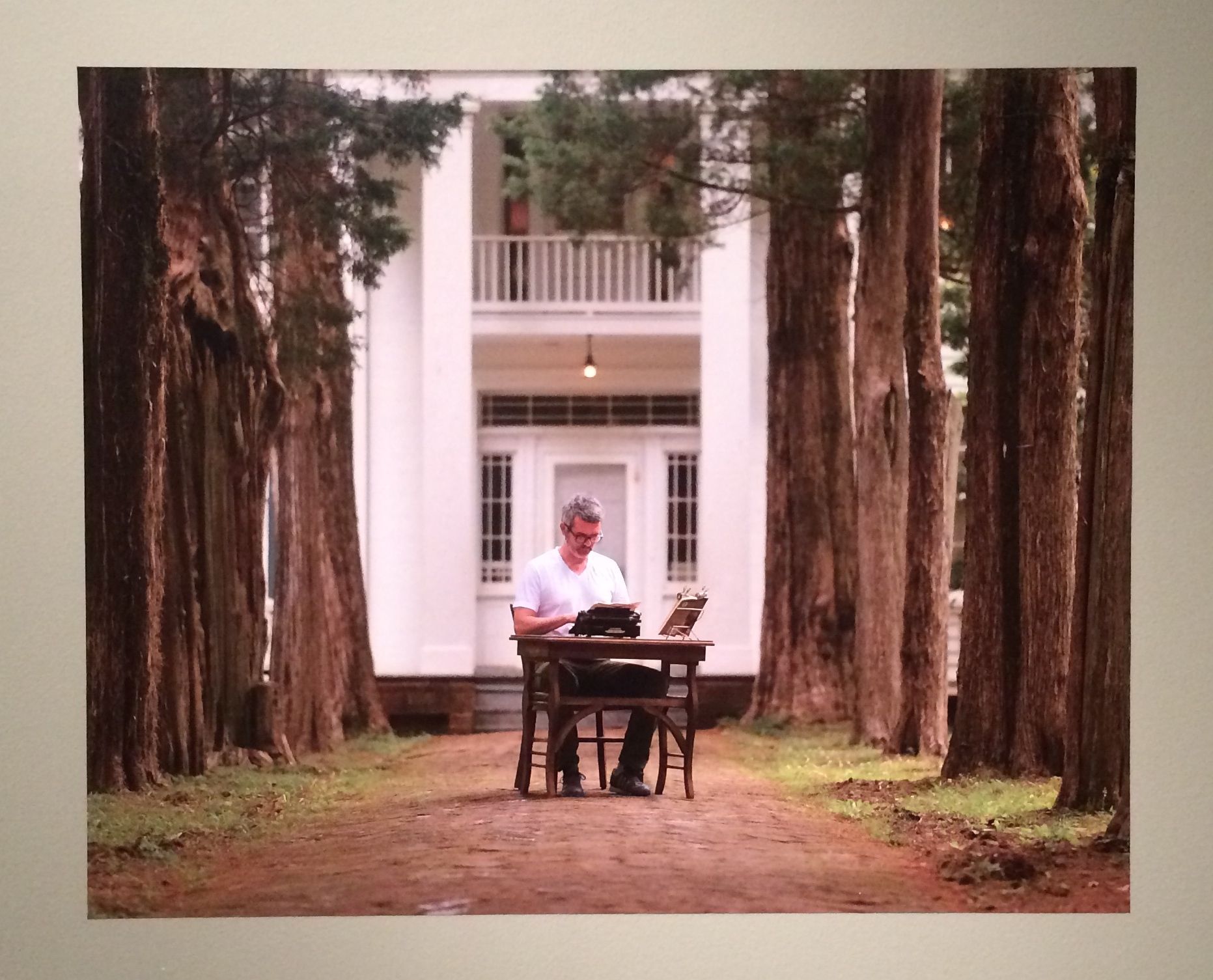
I enjoyed being introduced to some new contemporary artists, as well as early American ones. These works of art were created by Tim Youd.

Tim Youd in action
Tim Youd in action

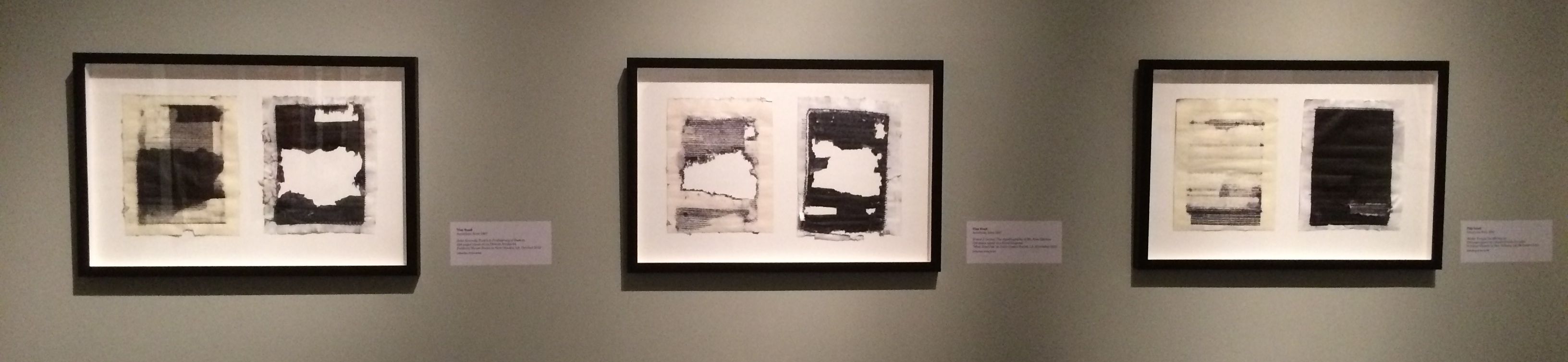
He did a combination performance art and visual presentation.  His display was called 100 Novels. He is retyping novels that are set in Louisiana using the the original make and model of typewriter used by the book’s author. He retypes each novel in its entirety on a single sheet over a backing sheet.

Noma Tim Youd pages 1

These are some of his works. The page he typed on is on the right side of the frame and the backing sheet is on the left.

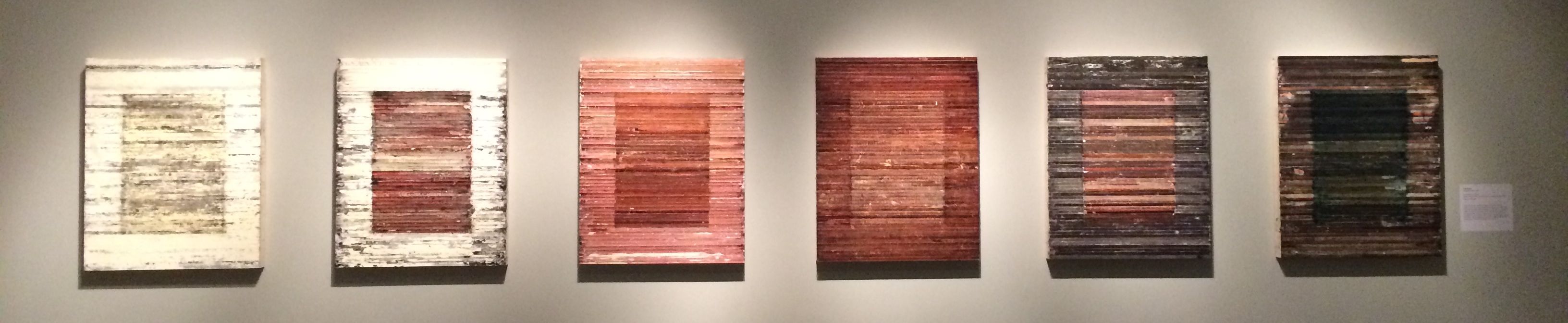
Noma Tim Loud 1

These works are made from the ribbons of the typewriters.

Raise your hand if you remember typewriters. Raise the other hand if you remember ribbons. Wiggle your fingers if you have ever typed on a typewriter with a ribbon.

Okay, back to NOMA.

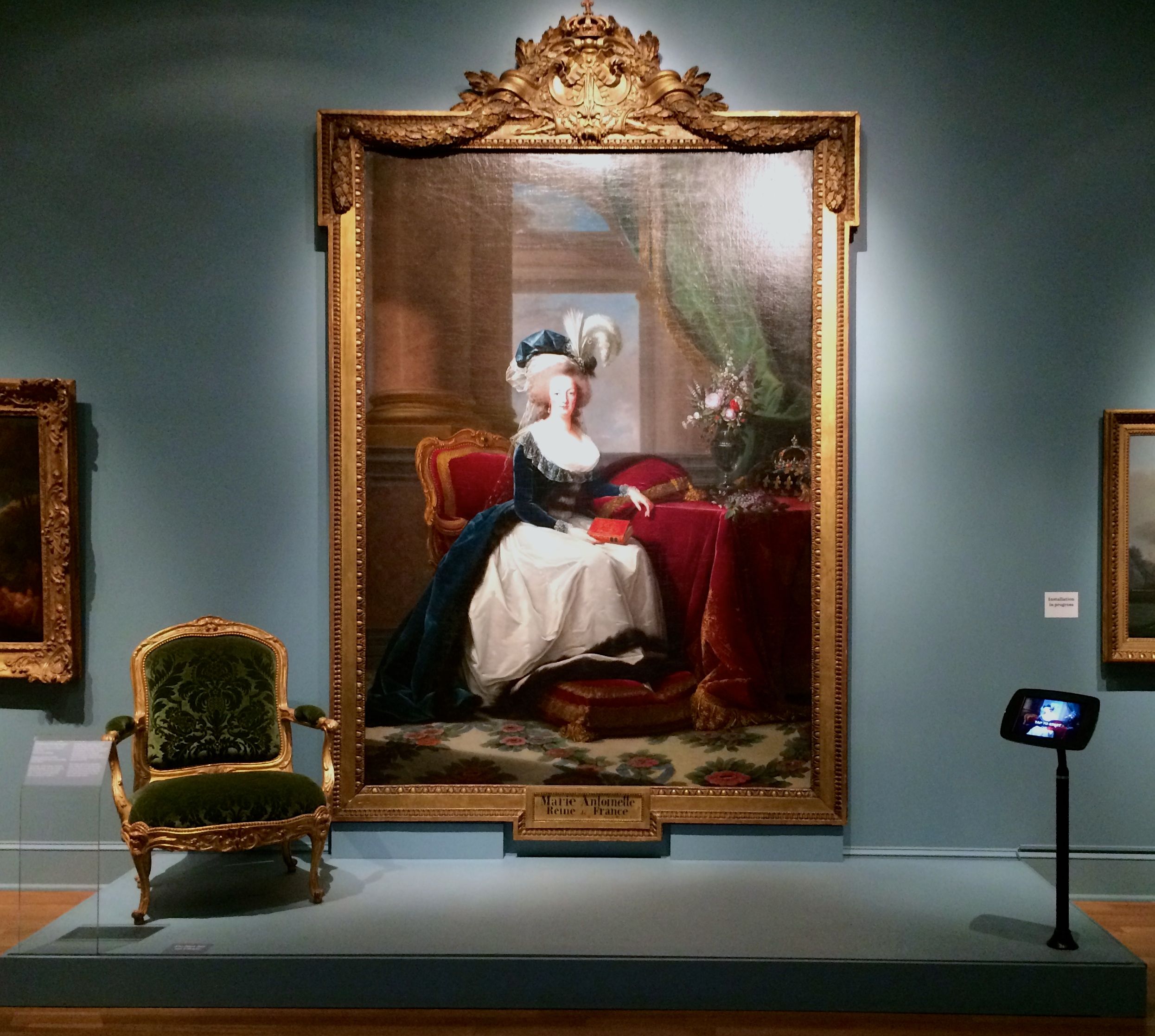
Noma Marie Antoinet portrait

Another prize in their collection is this portrait of Marie Antoinette. I really enjoyed the context in which it was displayed. On the left is a chair that was made back then. On the right is an interactive computer that allows you to get information about the various features of the painting.

I particularly appreciated the fact that the text was not mounted on the wall next to the painting. I could read the information on the digital display at the right and look at the painting to see how the parts related to each other. I didn’t have to walk up to the plaque, read the text and then back away to see the painting.

I know, it’s probably a small thing, but I appreciated it.

Another thing I appreciated was the fact that the painter was female! Elisabeth Vigeé-LeBrun (1755–1842) was earning enough from her portrait painting by the age of 15 to support herself, her widowed mother and her younger brother. Her father, Louis Vigeé, taught her to paint before he died in 1767. This painting was done around 1788.

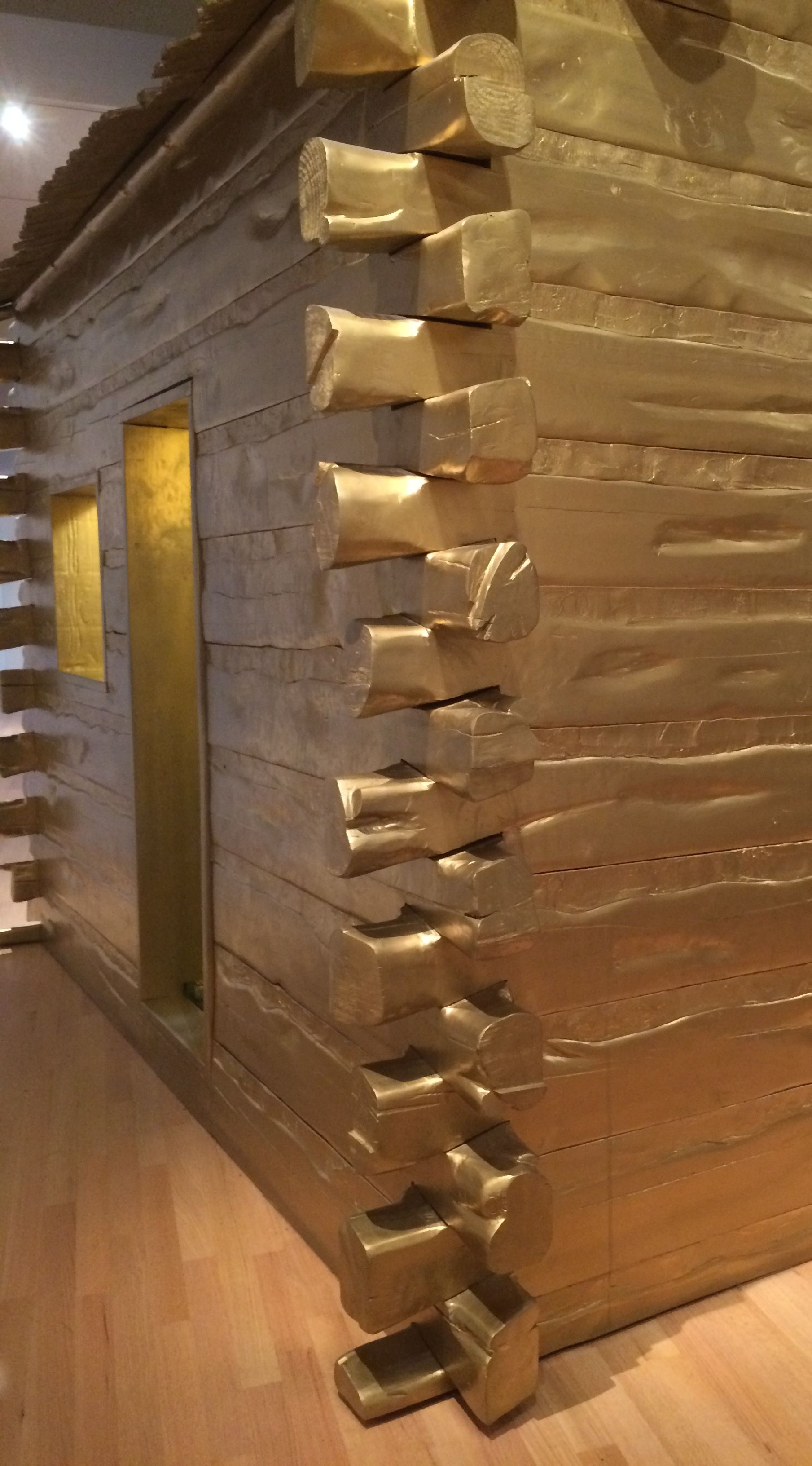
All the details crammed into Marie Antoinette’s portrait related well to Will Ryman’s work, “America.”

Noma Will Ryman Ameria 2013

It resembled the cabin that is enshrined in Hodgenville, Kentucky as Lincoln’s birthplace.

When I visited Abraham Lincoln’s birthplace in 2014, I found out that the log cabin inside the shrine couldn’t possibly be the one Lincoln was born in. Dendrochronology proved that the logs came from someone else’s cabin. But, it was already in the shrine by the time they figured it out, so it might as well stay, I guess.

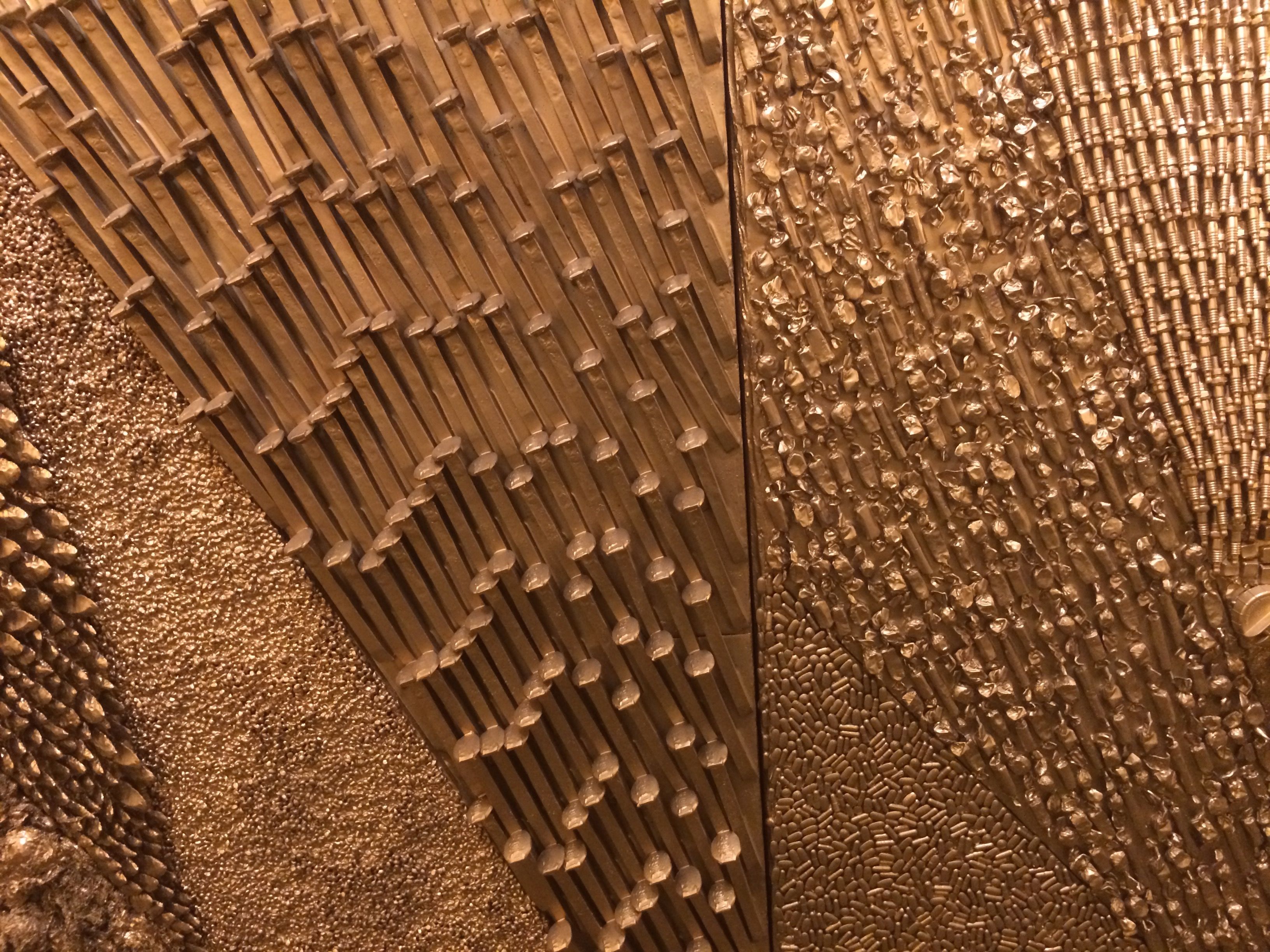
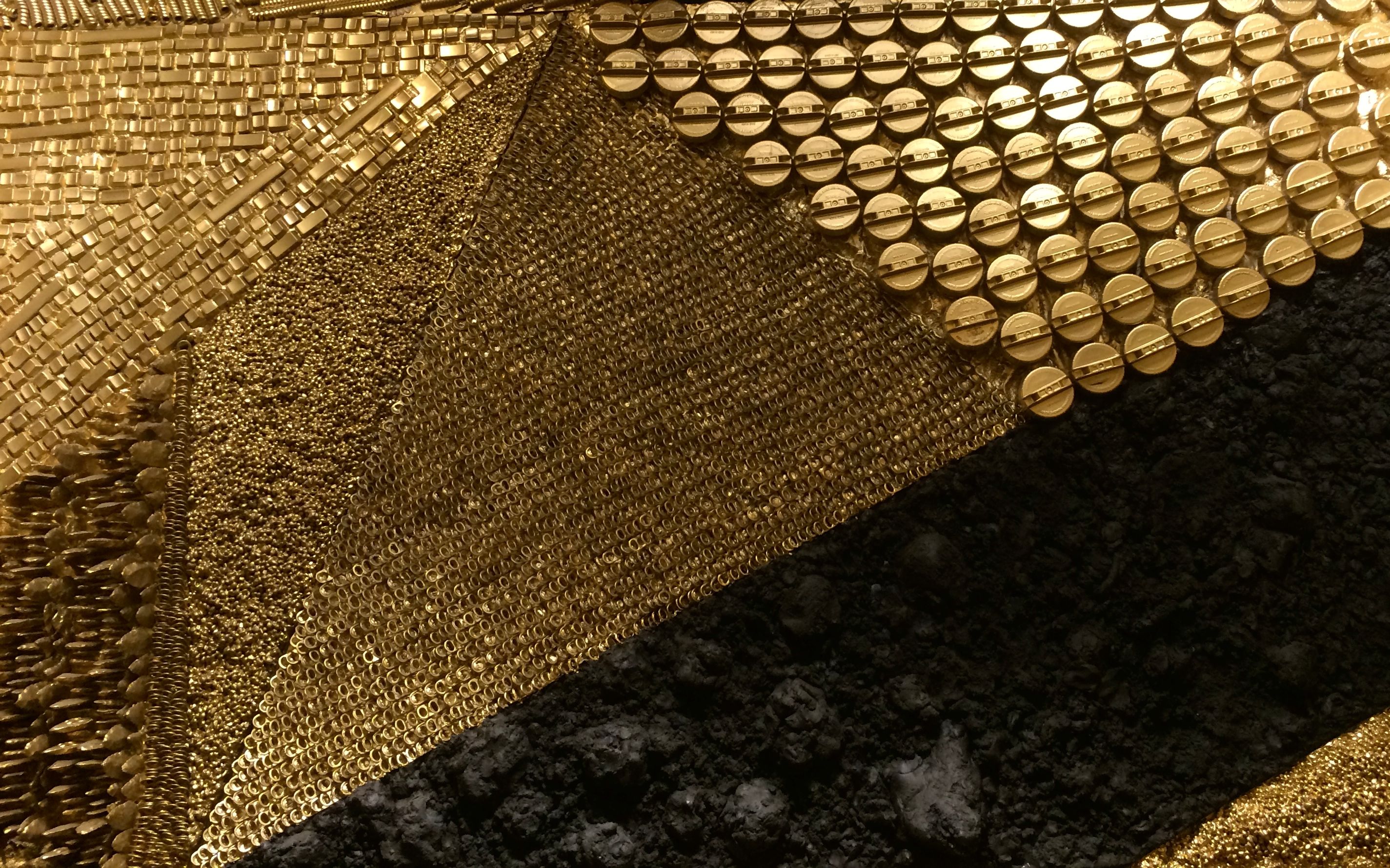
Ryman’s “America” is packed with items that help tell the country’s story – bullets, arrowheads, cotton bolls, chains, sparkplugs, iPhones, lumps of coal, and shackles of the enslaved.

Noma Will Ryman America 2013 2

The inside is rendered in gold and black.

Noma Will Ryman American 2013 3

This sculpture reminded me of the work of my favorite artist, Louise Nevelson.

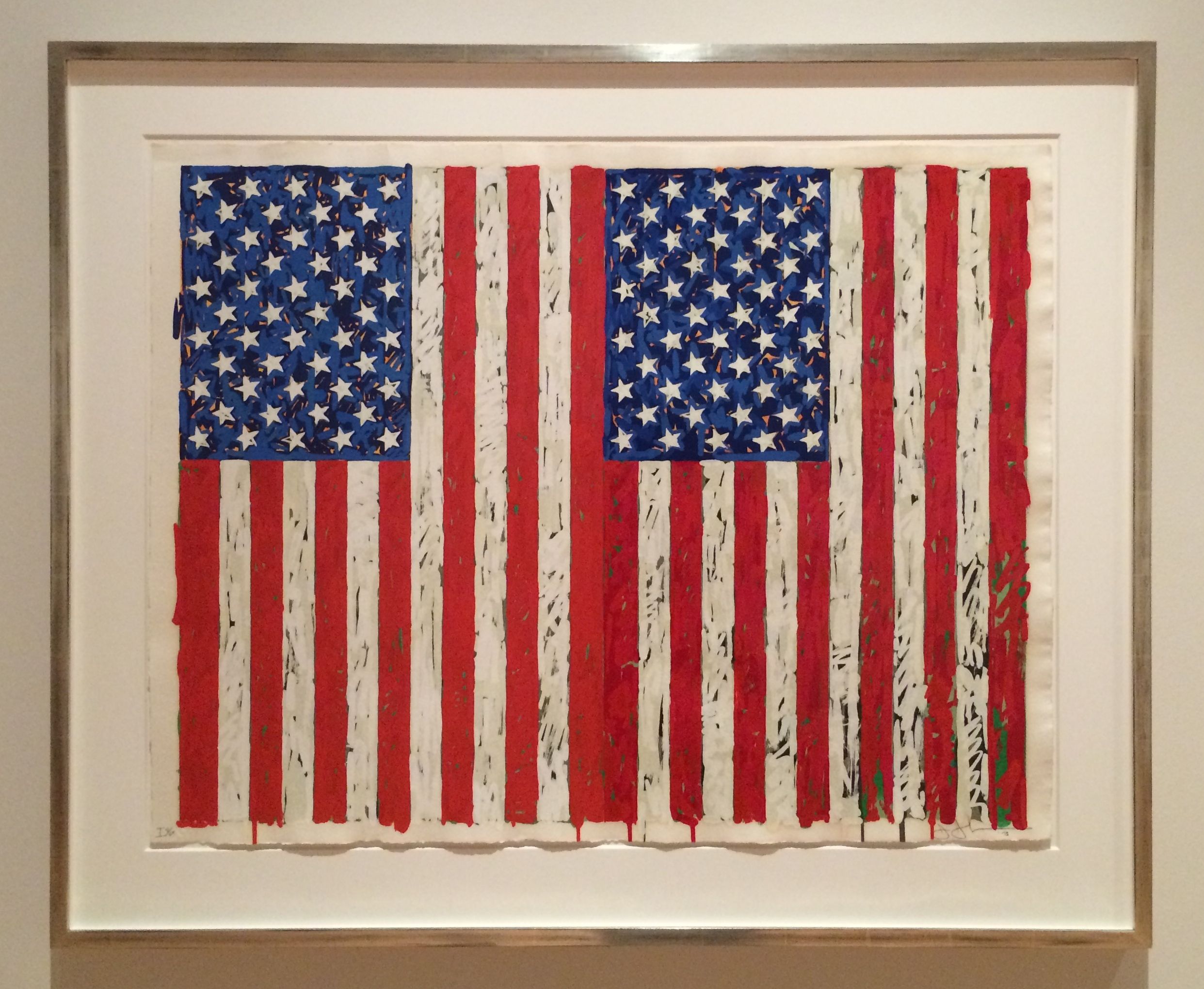
Jasper Johns was well-represented, too. Of course, they had some of his flag-based work.

Jasper Johns Flags 1
Flags 1

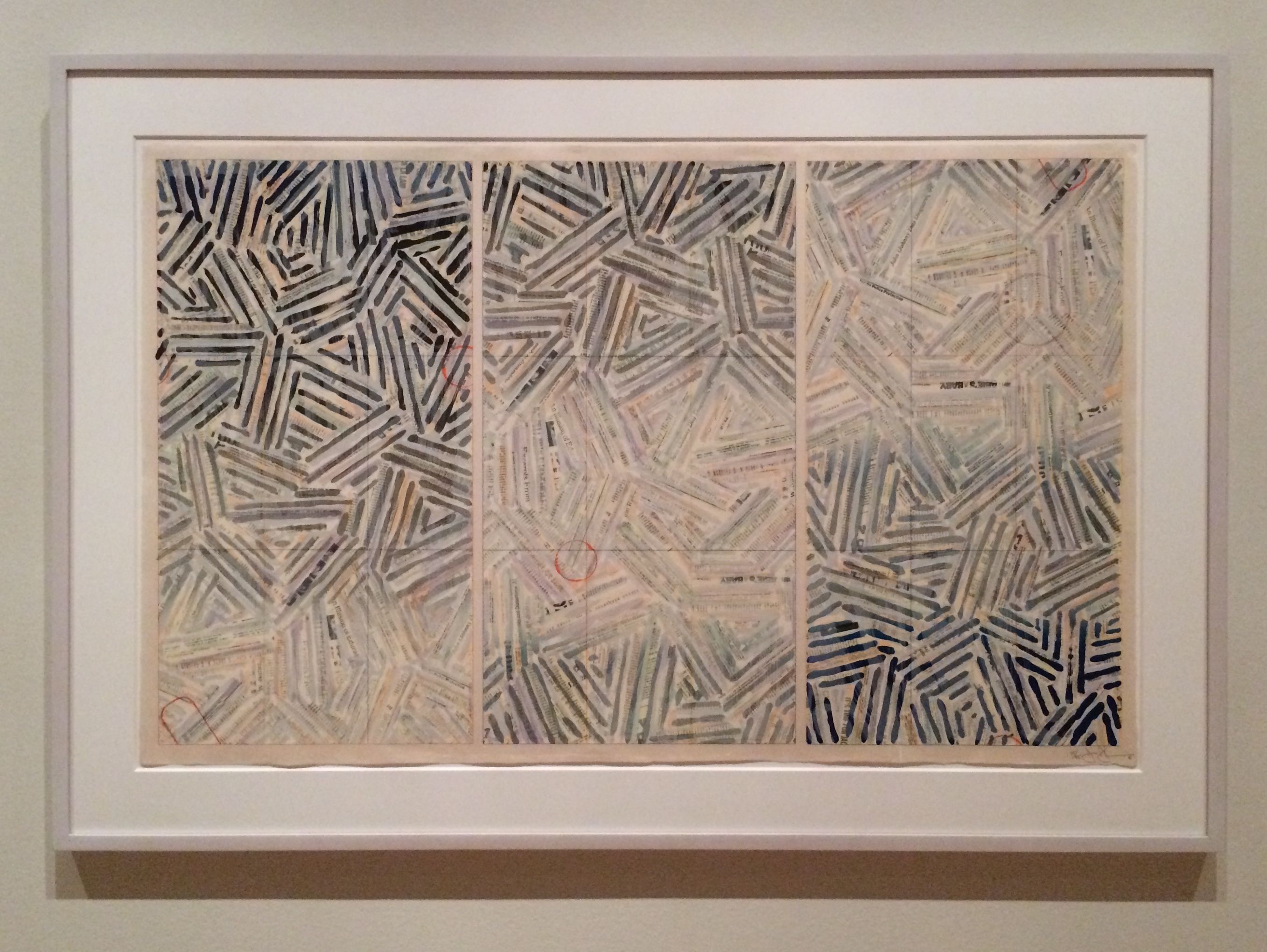
One theme of his that I hadn’t seen before this is Usuyki, which is Japanese for “light snow”.

Usuyki
Usuyki

I am delighted when I find new-to-me works of art from my favorite artists.

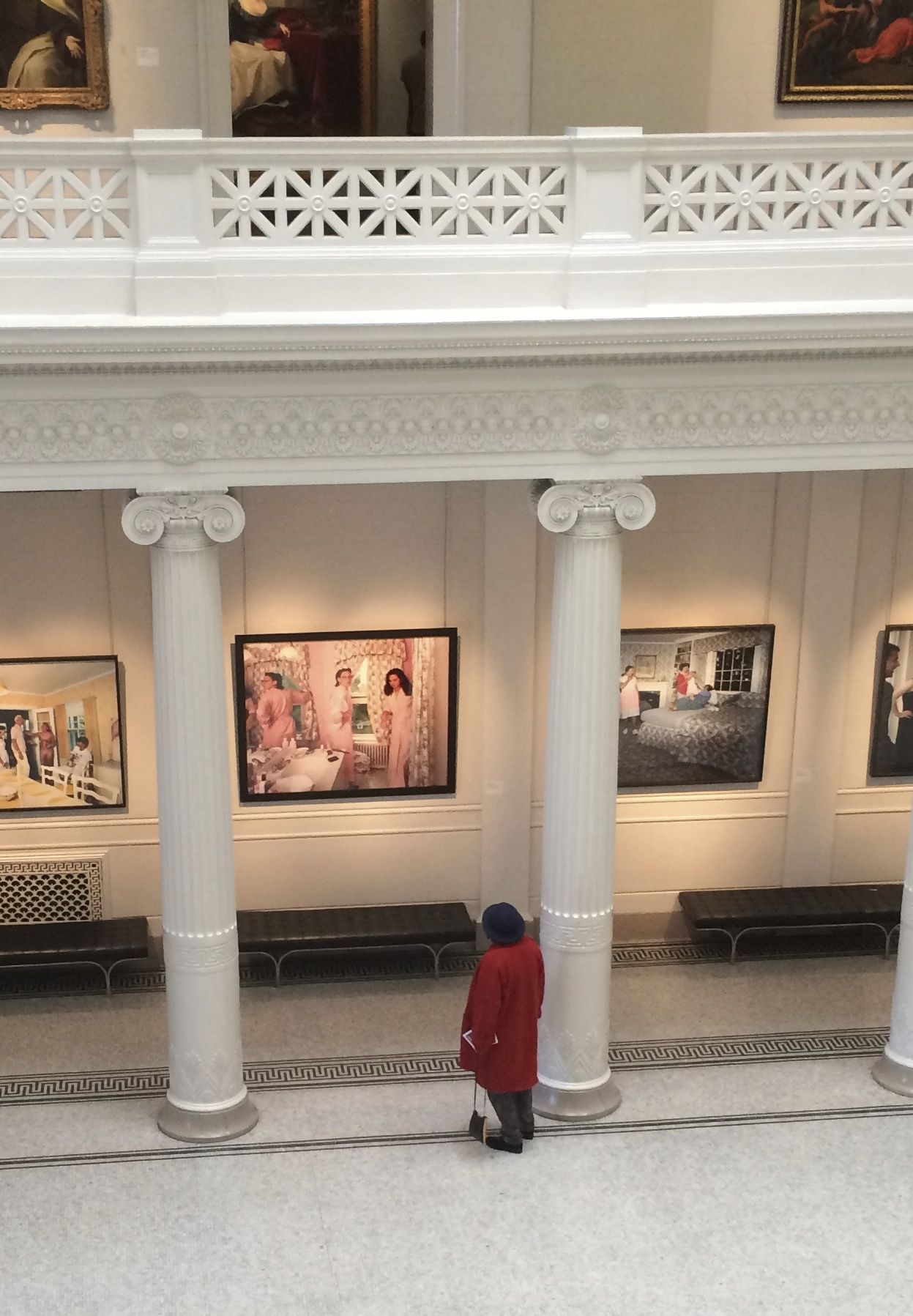
Noma woman in red

The building, itself, was delightful. I love a good, old-fashioned art museum.

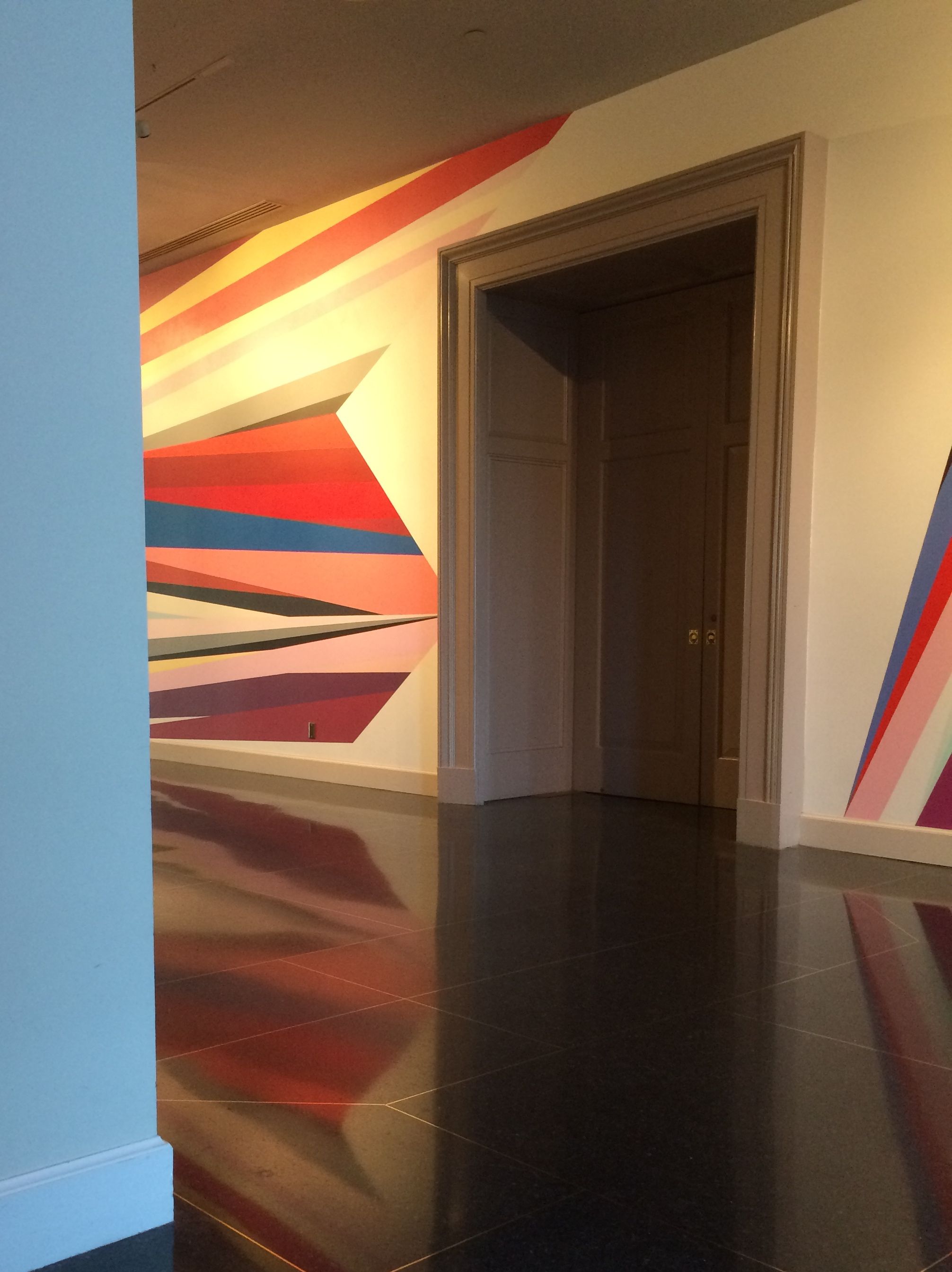
Noma Hall

Of course, it also had its modern touches.

I think that I have made my case that I thoroughly enjoyed my time at New Orleans Museum of Art, so I won’t go on any longer. (And, believe me, I could!)

There were two more stops to make.

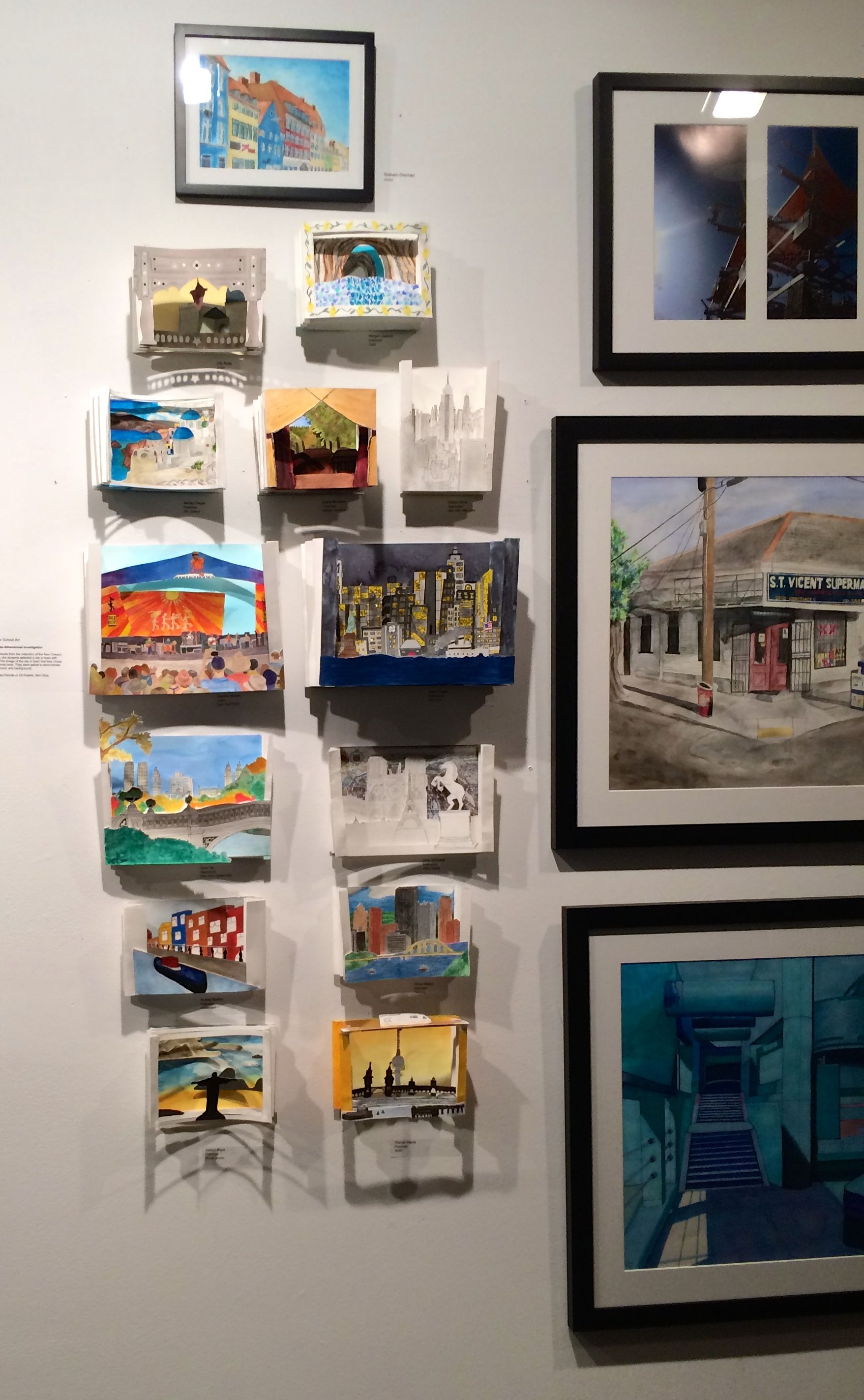
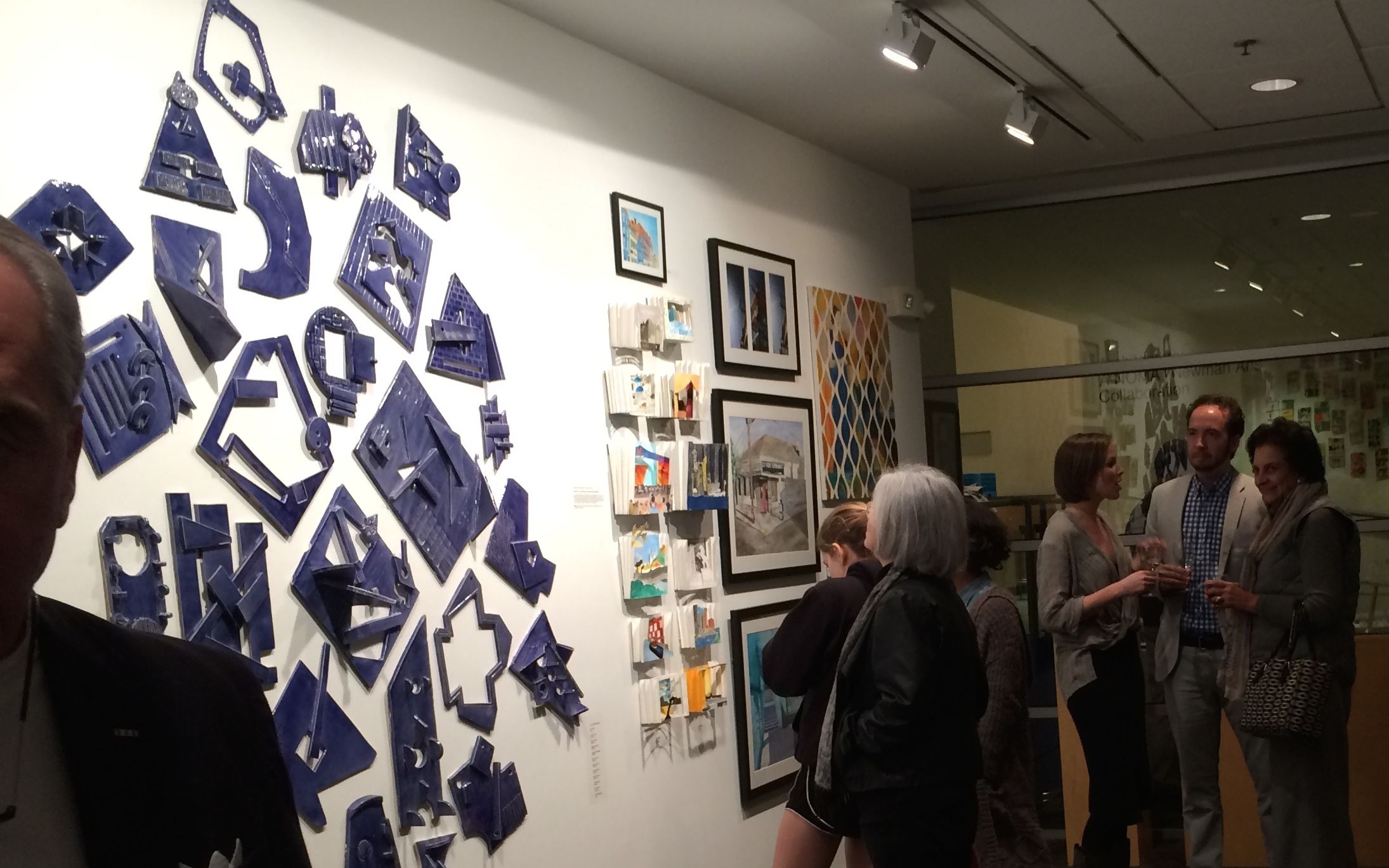
The first stop was at Newman School, for a reception celebrating a collaboration between the school and NOMA.

Noma Newmann 1

This was of particular interest to me, as my last teaching assignment was at Woods Lake School Magnet Center of the Arts, and we were lucky to be able to integrate the arts into our curriculum.

Noma Newmann 3

Their work looked really good. Our work looked good, too, back in the day.

Noma Newmann 2

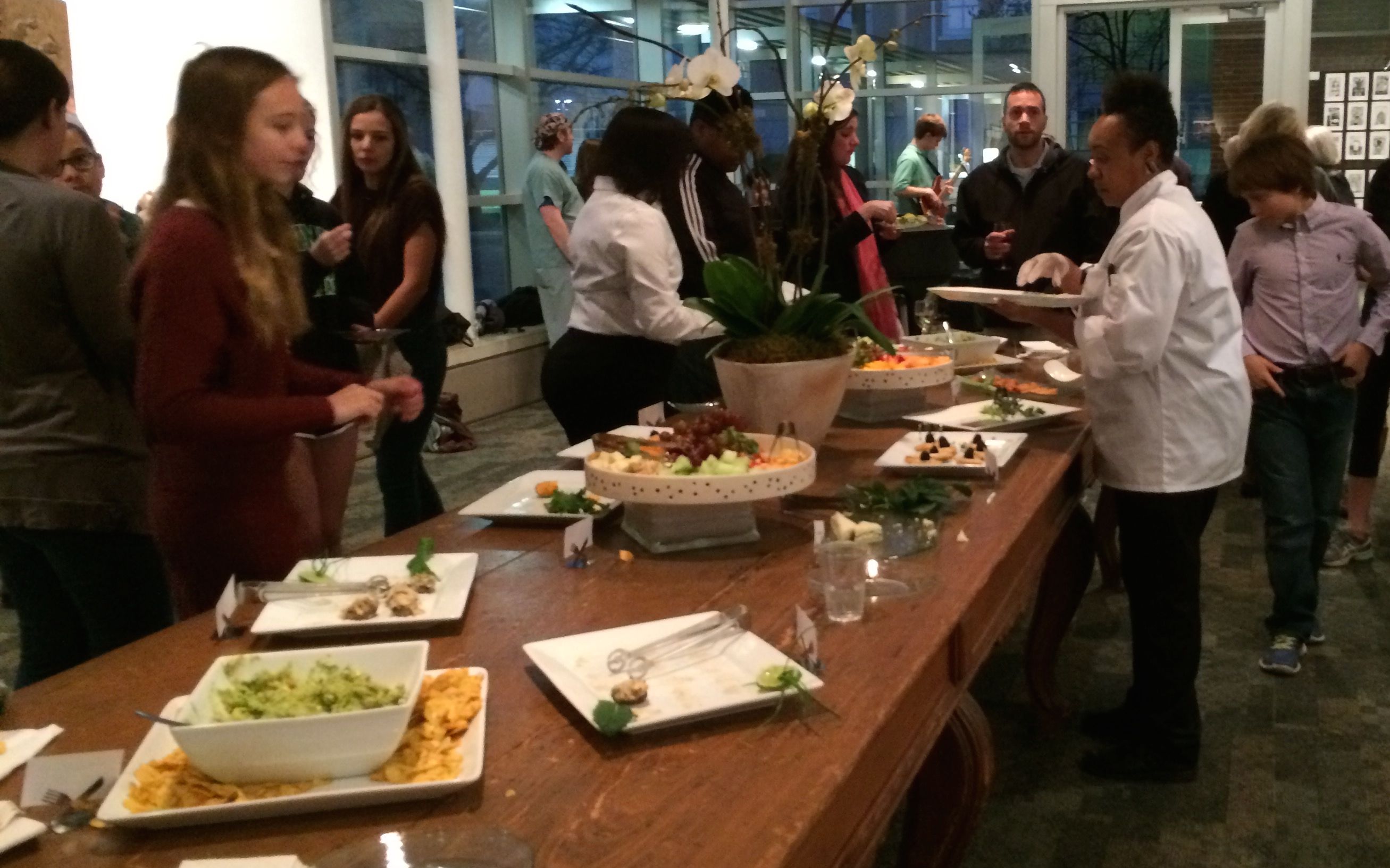
But, I have to say, they definitely had better refreshments. And wine!

The last stop of the night was Preservation Hall in the French Quarter, where we attended a party in the back.

Noma Preservation Hall dedication

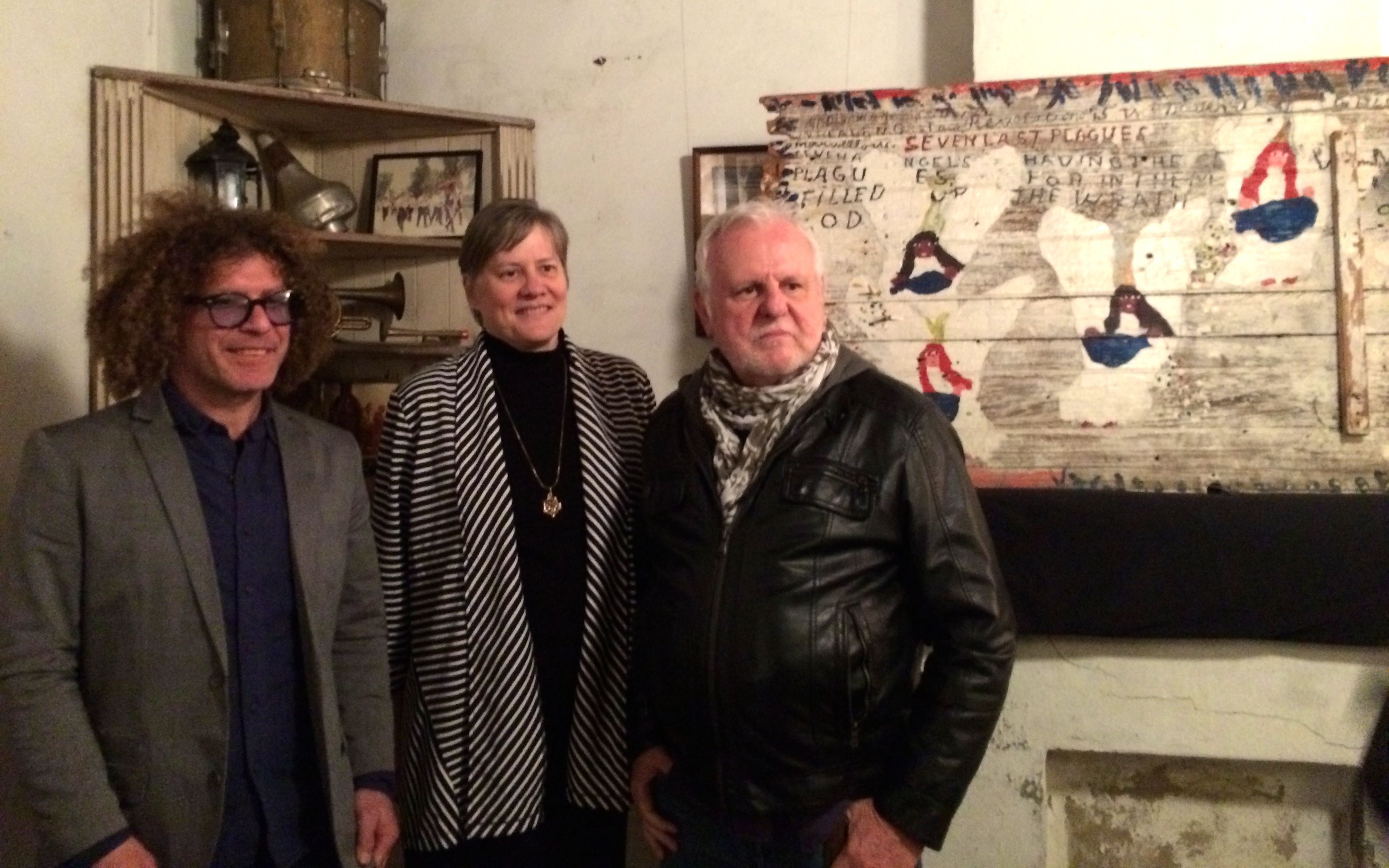
The man on the left of Lisa is Ben Jaffee, and he is the son of one of the founders of Preservation Hall. The man on the right of Lisa is William Fagaly, the curator of African Art. They are there to accept the work of art on the mantle, which is by Sister Gertrude Morgan. Her work contained religious topics and she painted as she felt directed to by God.

After the dedication, Lisa and I squeezed into the Hall to catch a bit of the performance. I was amazed at how small and beat-up the space was. It might have been 20 x 20. I was trying to estimate the space and the number of people in the audience.

Preservation Hall napkin

If this was a typical crowd, I have to say that traditional jazz is alive and well.

But, we couldn’t stay for the whole set. Lisa needed to get home. She had a work day in the morning.

I love retirement!

What a great day! Thanks Lisa, and thanks, Diane, for having such a wonderful and hospitable family.
New Orleans!

One of my father’s stories from his time in the service was about taking the train from basic training  near Washington DC to the west coast to get to his post in Alaska. He woke up while he was crossing Lake Pontchartrain and couldn’t figure out where he was. There was water on each side of the train and it went on and on.
His birthday fell while I was staying at Fontainebleau State Park, and I decided to celebrate his birthday by driving across the causeway to New Orleans. Last year, I went to one of his favorite restaurant chains for dinner.

Dad's birthday celebration 2015 Tucson, Arizona
Dad’s birthday celebration 2015 Tucson, Arizona

This year, I decided to celebrate by driving across Lake Pontchartrain on the Causeway from Mandeville into the New Orleans.

causeway 1

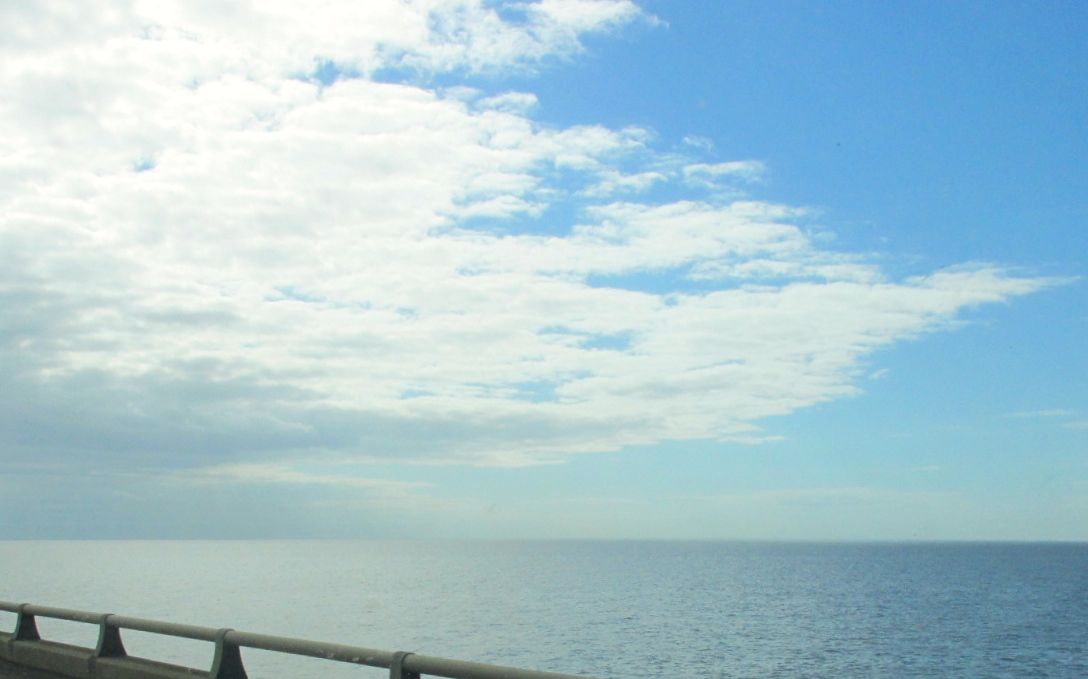
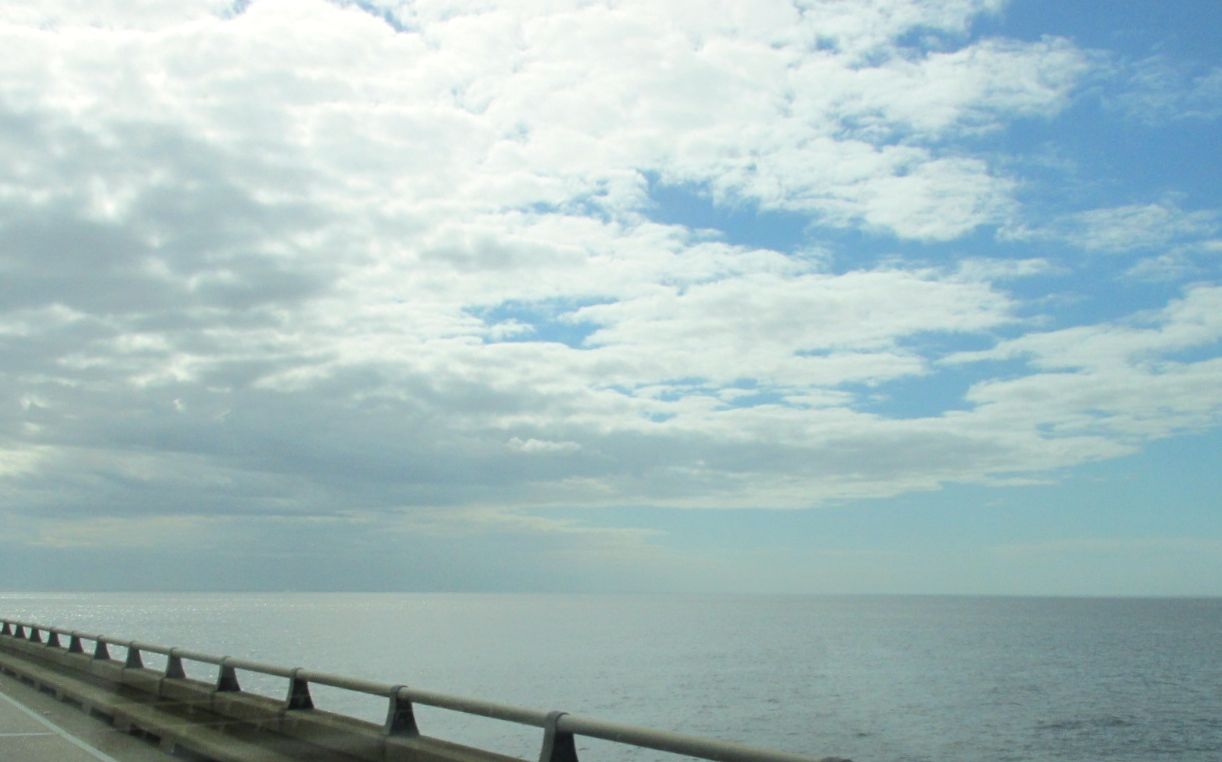
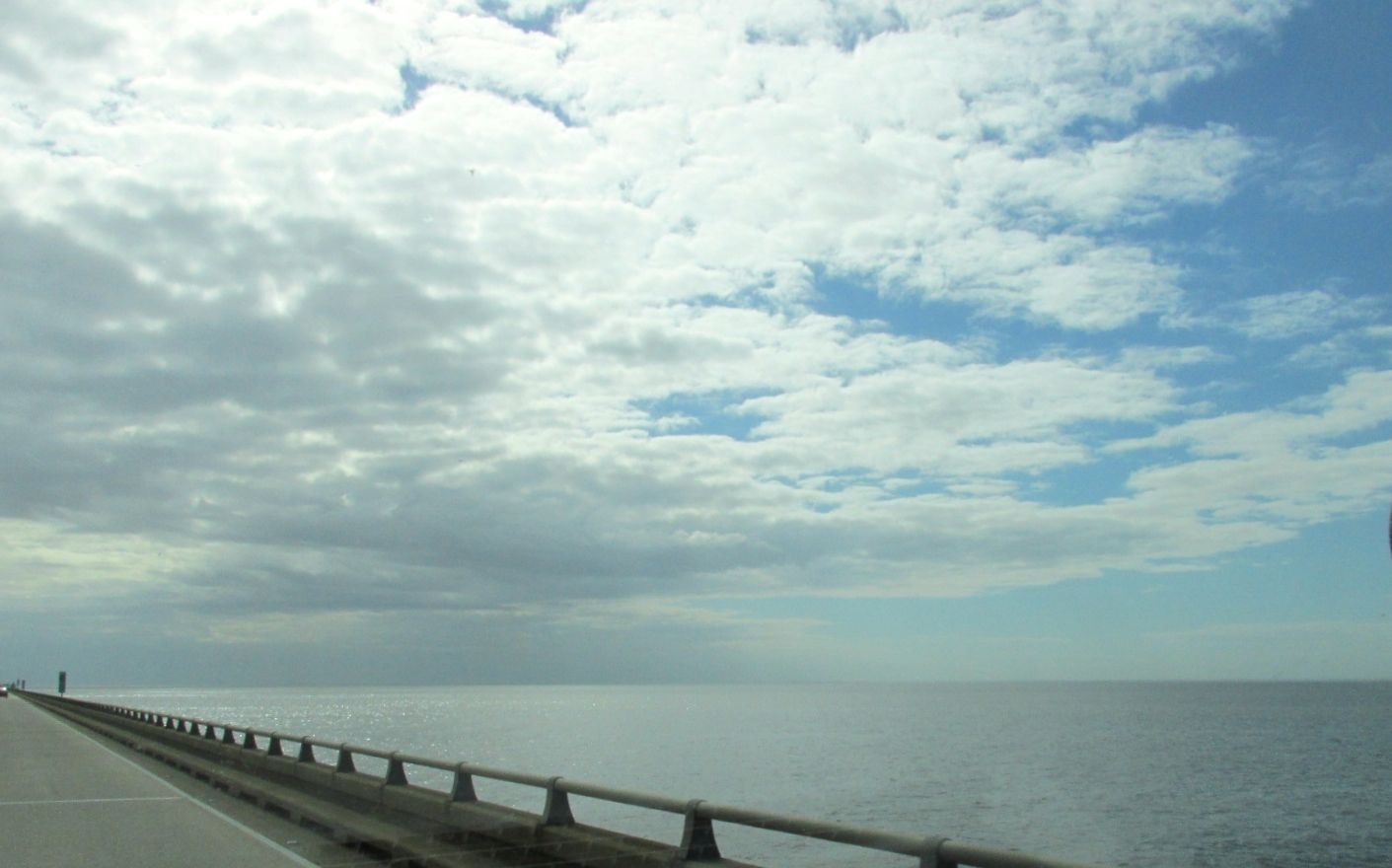
The Causeway is about 24 miles long and skims along about 15 feet above Lake Pontchartrain.

causeway 2

It cost $3 to cross from the north side, in Mandeville, and no toll is collected on the return trip.

Causeway

The speed limit is 65 mph. Do you know how hard it is to take pictures while zooming along on a two-lane bridge 15 feet over the water? Well, at least it’s a straight road.

The bridge my father crossed back when he was in the service wasn’t as long as this one. It crossed from Slidell to New Orleans. At almost 6 miles long, it is the longest rail bridge over water in the world. At least, I think that is the bridge he crossed. When I was talking with a guy who was trying to sell me a tour, he said that the rail bridge collapsed. So, without digging deeper, I don’t really know.

I didn’t really know where I was going. I kind of worked my way toward the Tourist Information Office my all-powerful phone told me about.

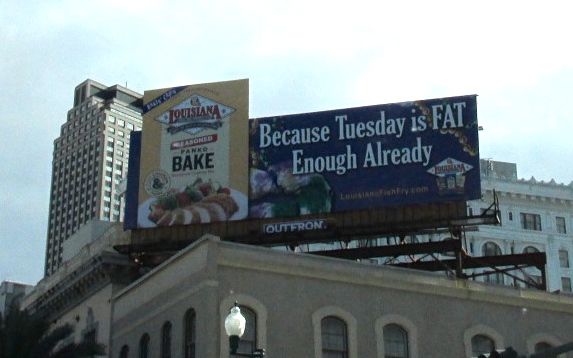
Because Tuesday is already fat enough.

Luckily, I was stopped at an intersection, so I could take a photo of this billboard. It gave me a chuckle.

Streeetcar
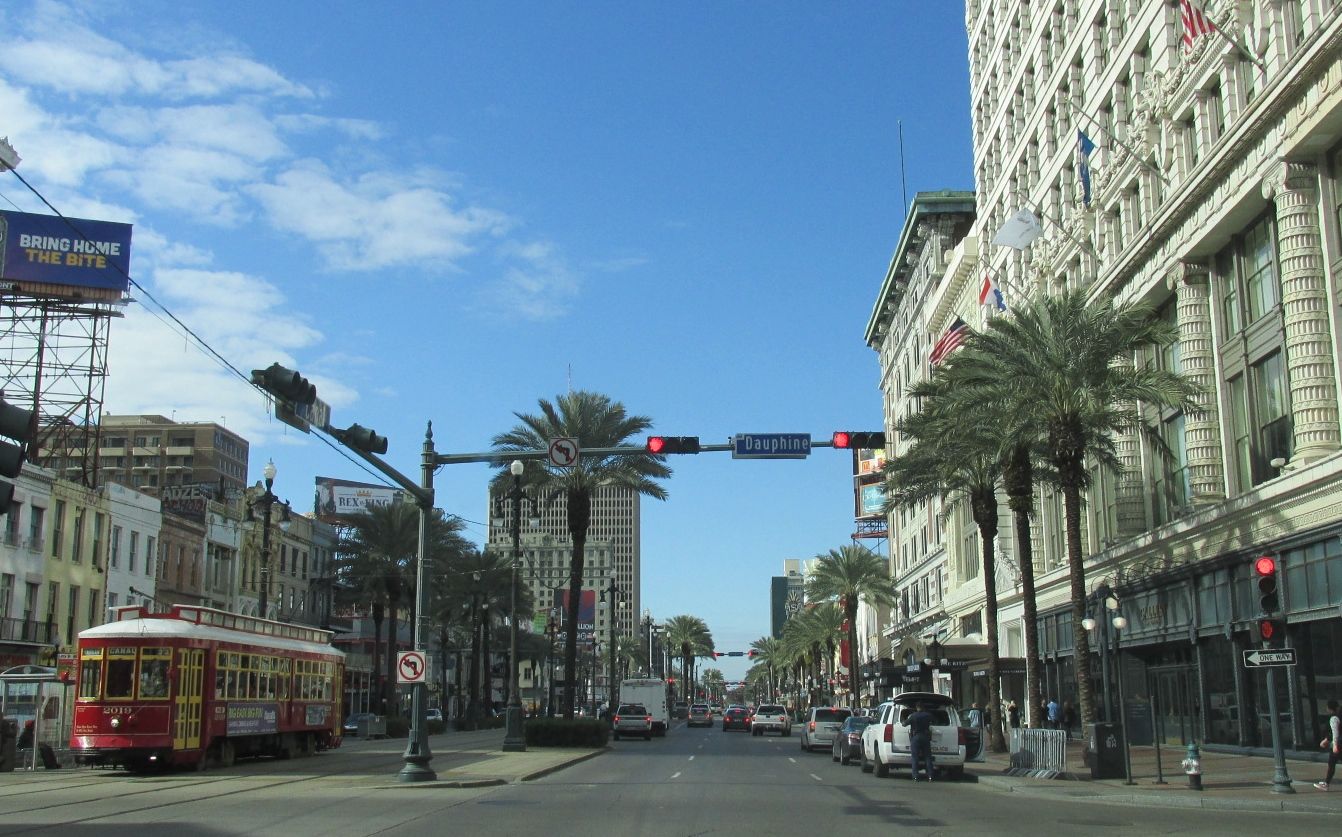
Streetcar

I saw a streetcar – but I don’t think it was named Desire.

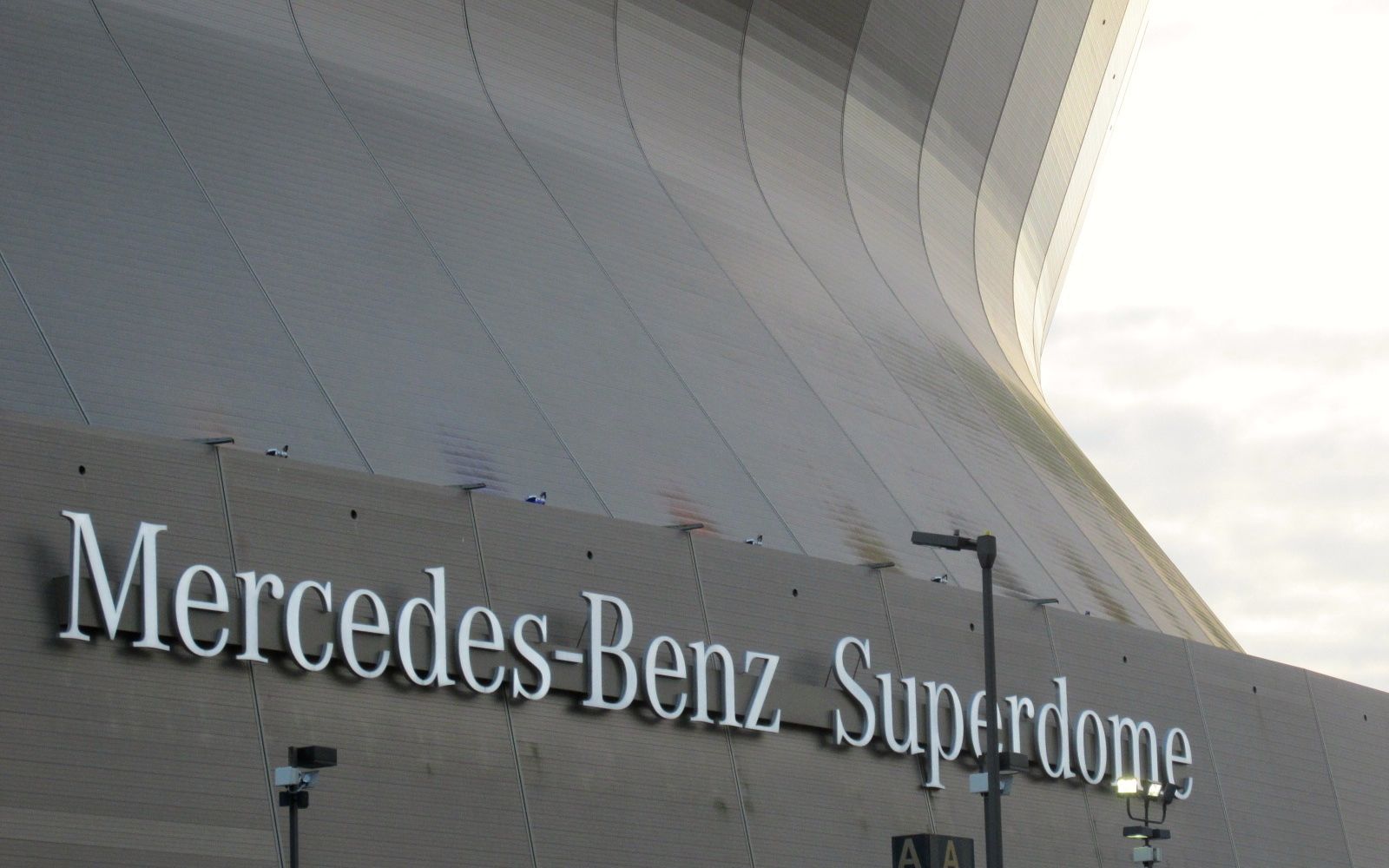
superdome

And the Superdome. It was right downtown! After living in Buffalo with Rich Stadium (now the Ralph Wilson Stadium) way out in Orchard Park, I assumed all stadiums were way out of town.

I finally got to the address that was listed as the Tourist Information Office, but there was no information to be had. There might have been a Tourist Information Office there at one time, but no longer.

So, I did the next best thing. I put “Cafe du Monde” into the search engine and got directions. I knew that was one place I wanted to go while I was in New Orleans. I found it!

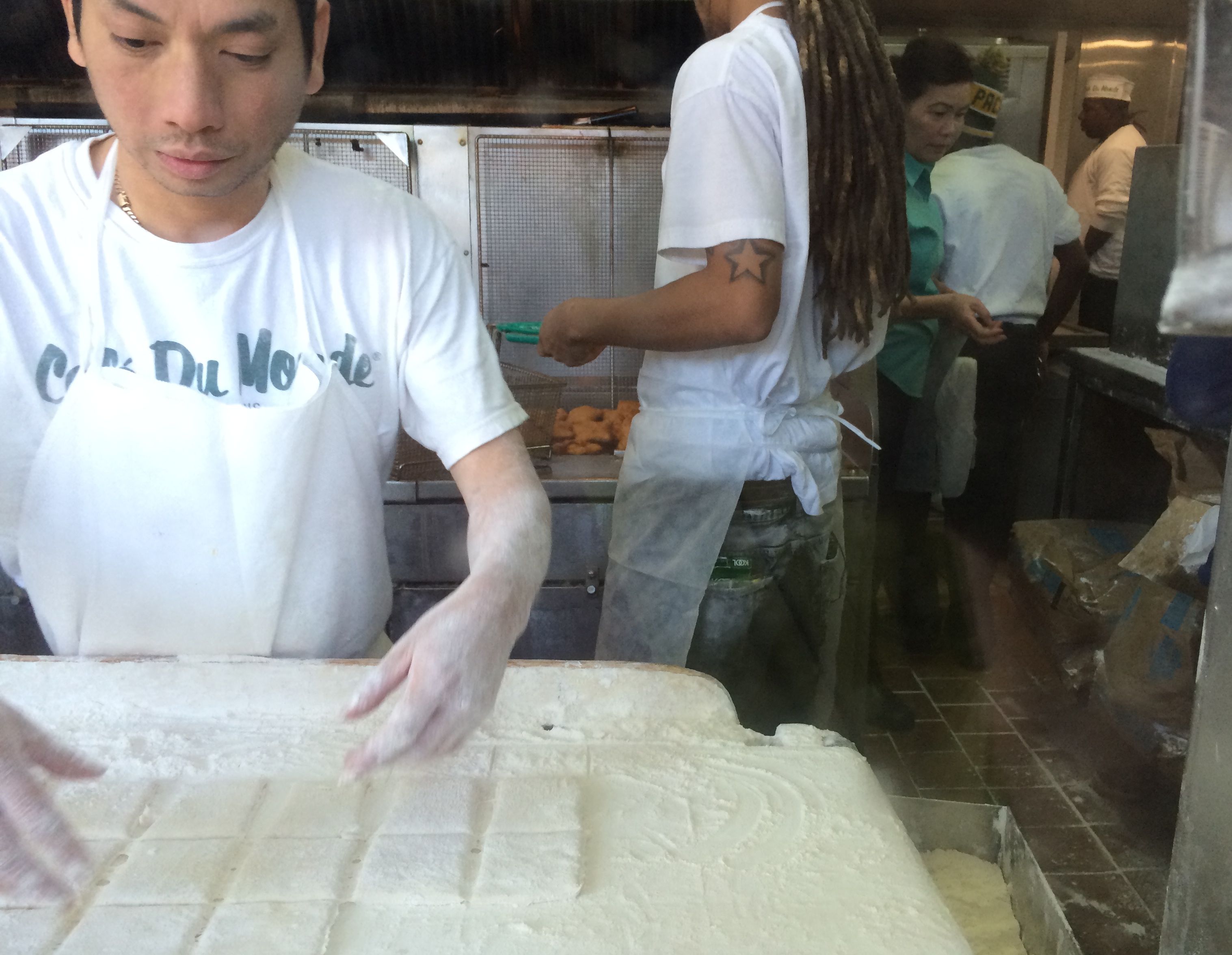
Time to make the beignets

One on-line source said to to go around to the back and watch them make the beignets. And there they were, cranking them out.

After watching the production for a few minutes, I went inside to sample their wares.

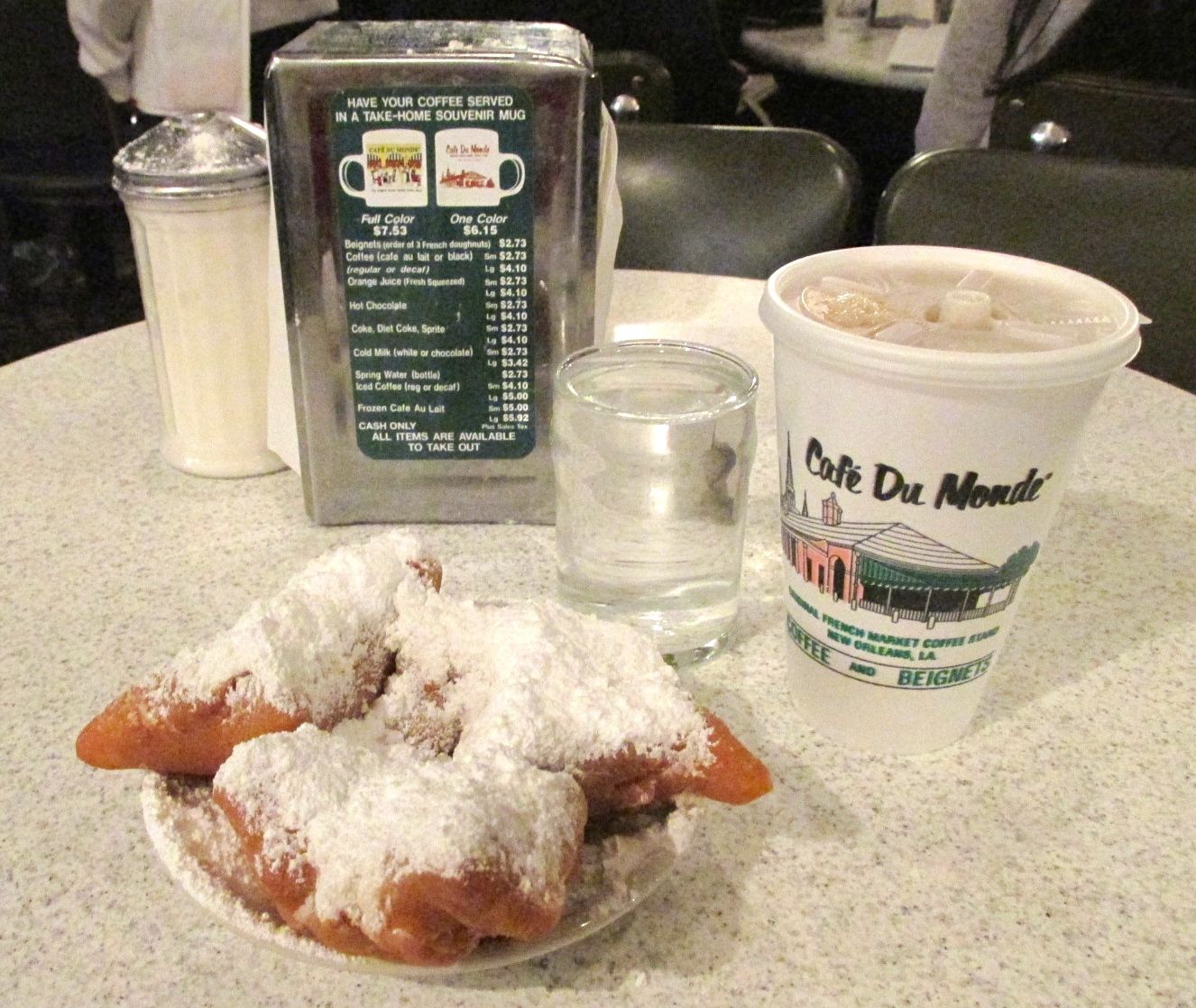
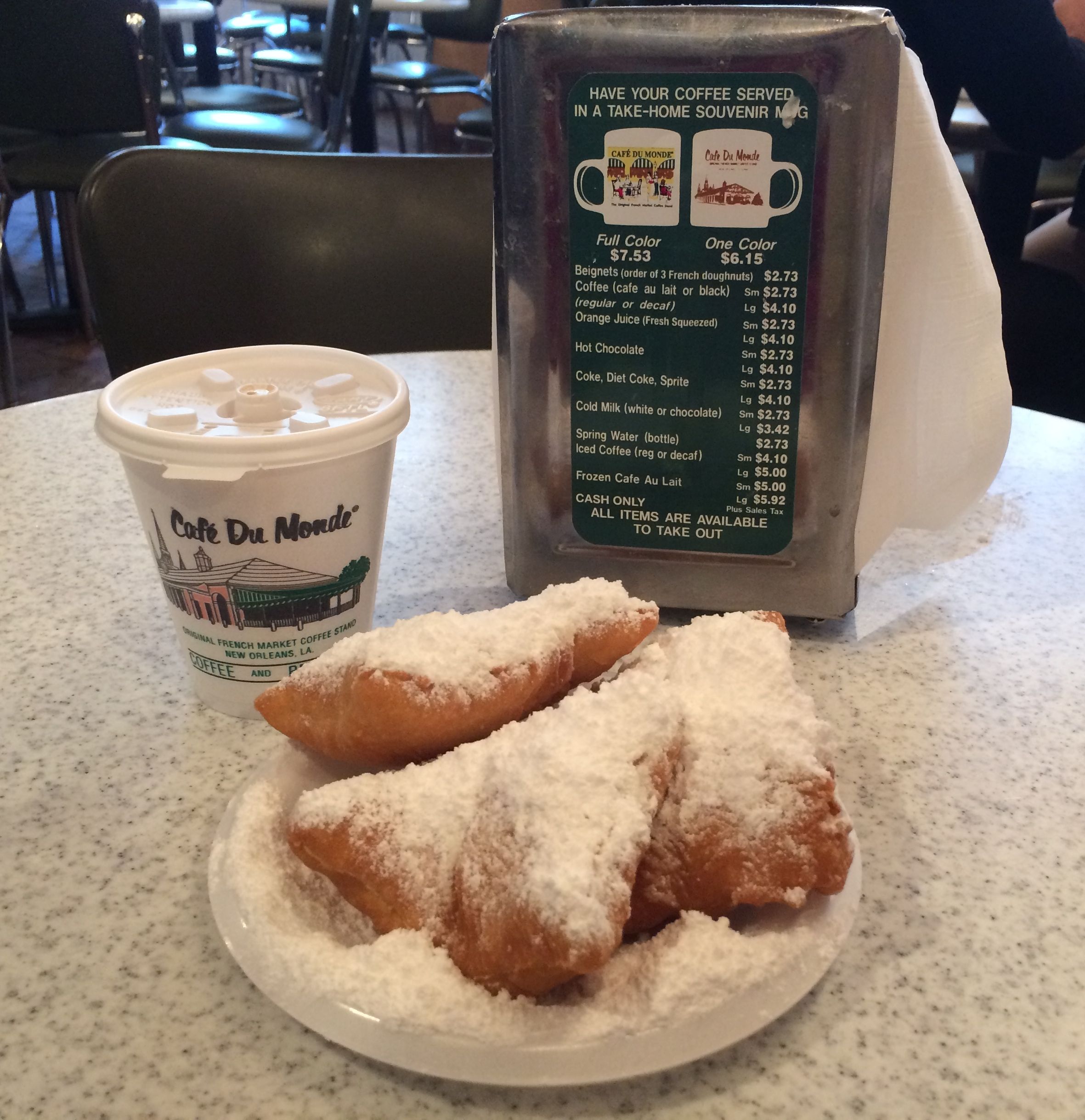
beignets and cafe au lait

With their limited menu, it didn’t take long to order and my beignets and cafe au lait were on my table before I knew it. They sure weren’t stingy with the powdered sugar!

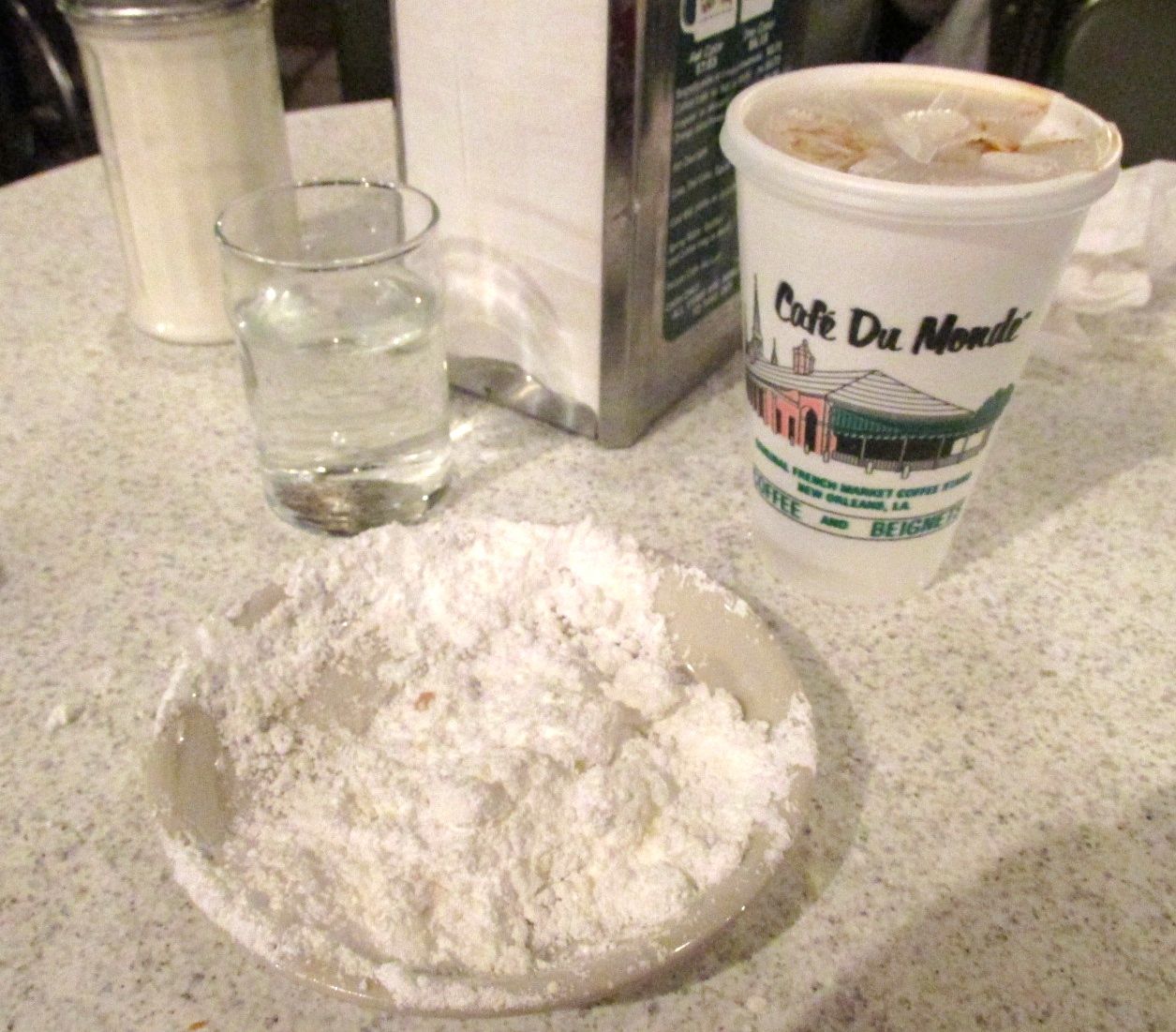
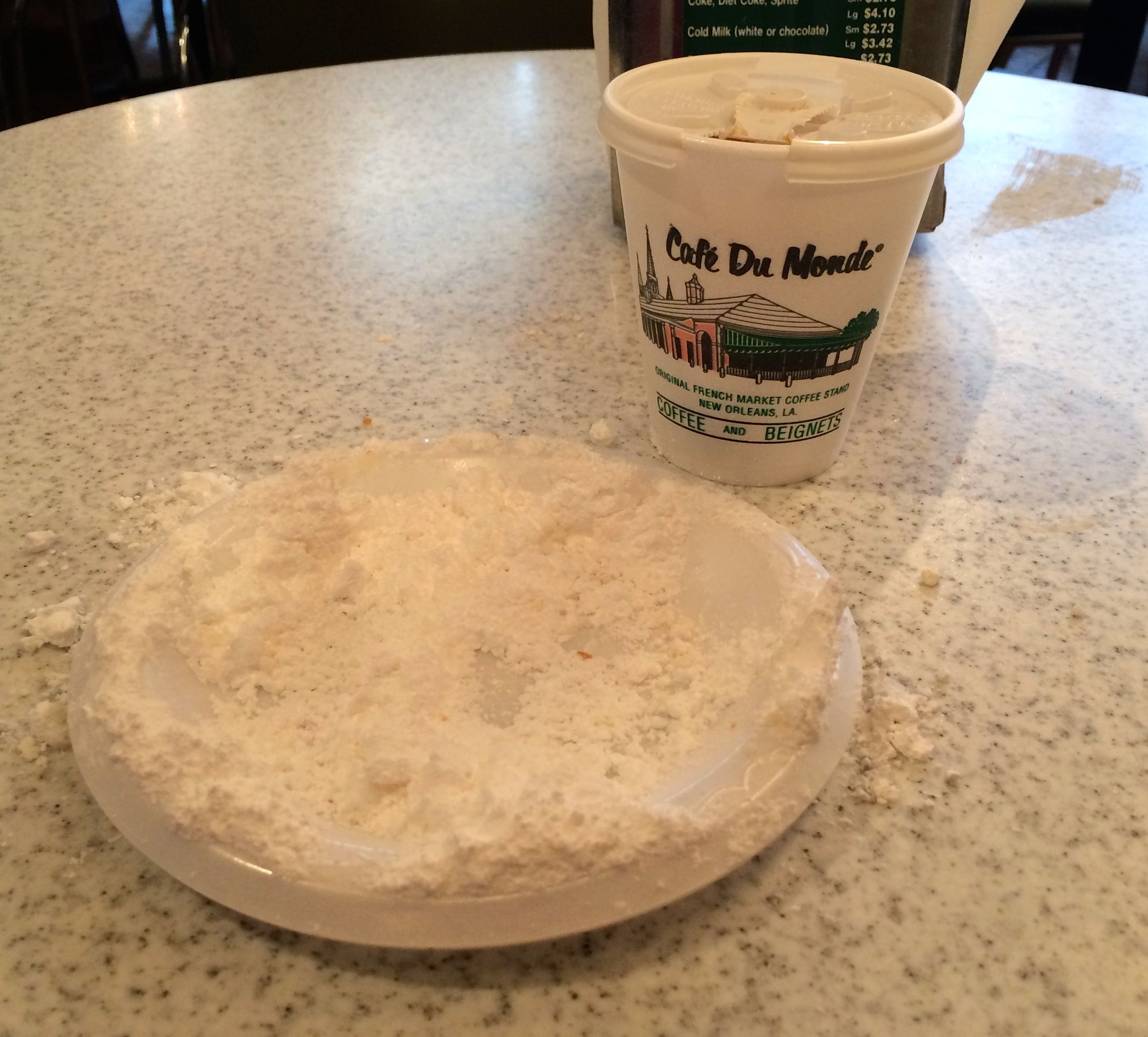
leftover powdered sugar

This is what was left over after I finished with the beignets.

Even though I ate as carefully as I could, when I left and got ready to cross the street, a fellow tourist smiled at me and said in a heavy drawl, “Either you been eatin’ beignets or you been doin’ cocaine.” I brushed off my face and he grinned and said, “I had ’em, too.”

I walked down Decatur Street. My wonderful phone told me that the Jean Lafitte French Quarter Visitor Center was just a few blocks down, so that is where I headed. I passed the usual assortment of businesses that seek to part tourists from their money.

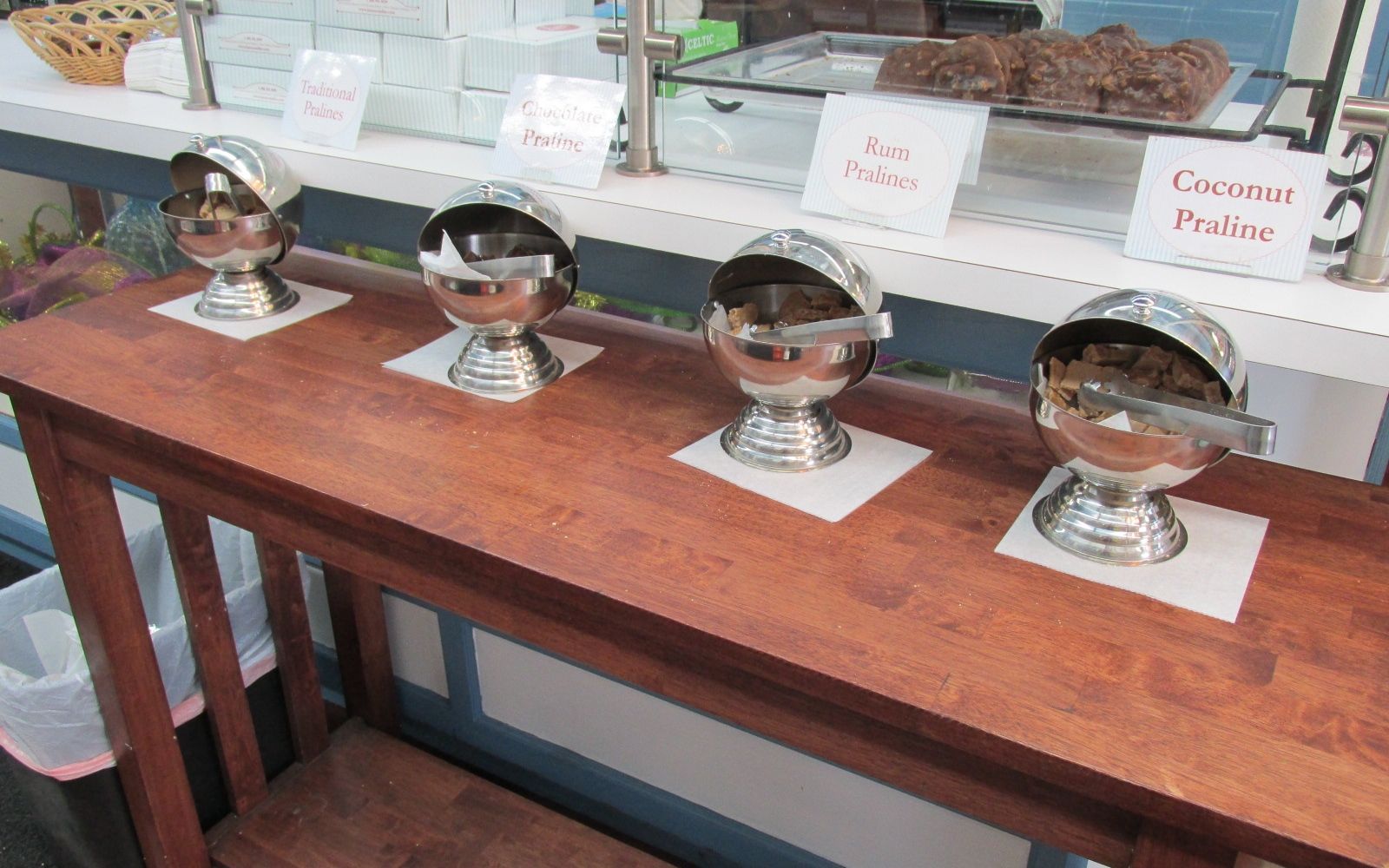
Pralines
Pralines

I had to go in to sample the pralines. And, I made a discovery – the chocolate pralines tasted just like the fudge my mother made growing up. I could never figure out why what was being sold as “fudge” didn’t seem like Mom’s fudge. Now I know – she was really making pralines.

I got down to the visitor center and it was CLOSED. Dang! I was batting zero on tourism centers. So, I just decided to roam about for a while.

street scene 2

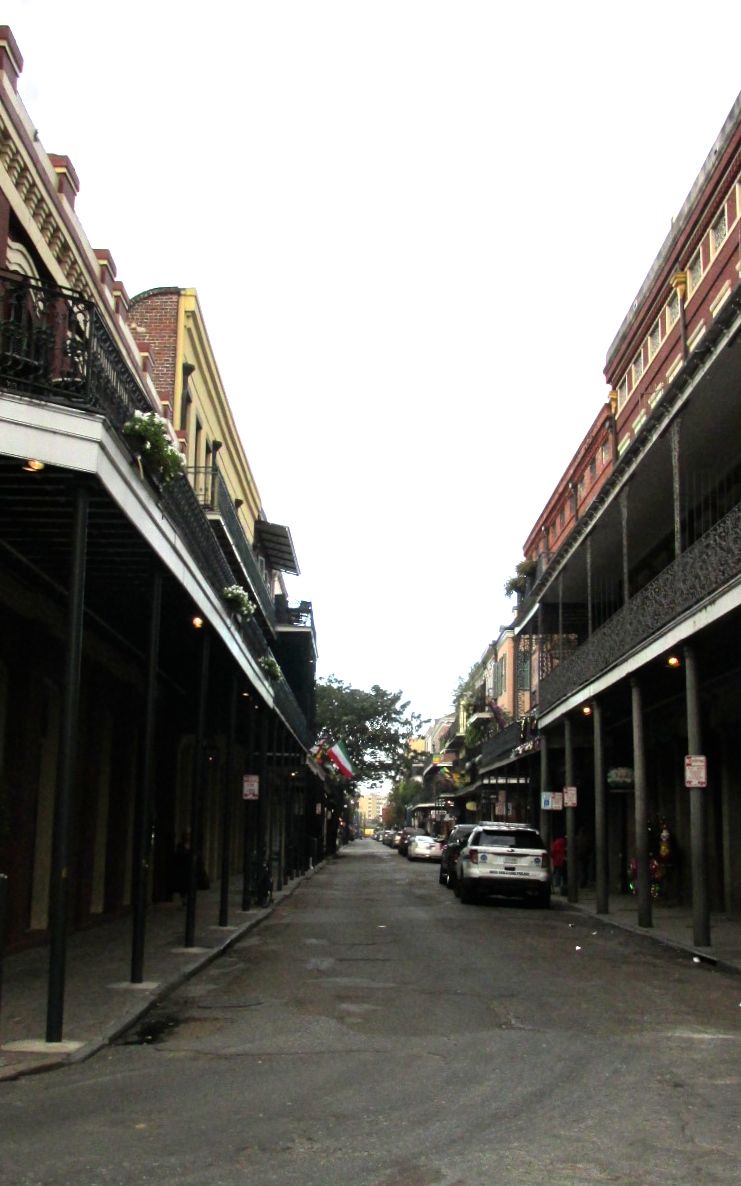
I admired the wrought iron balconies.

cathedral

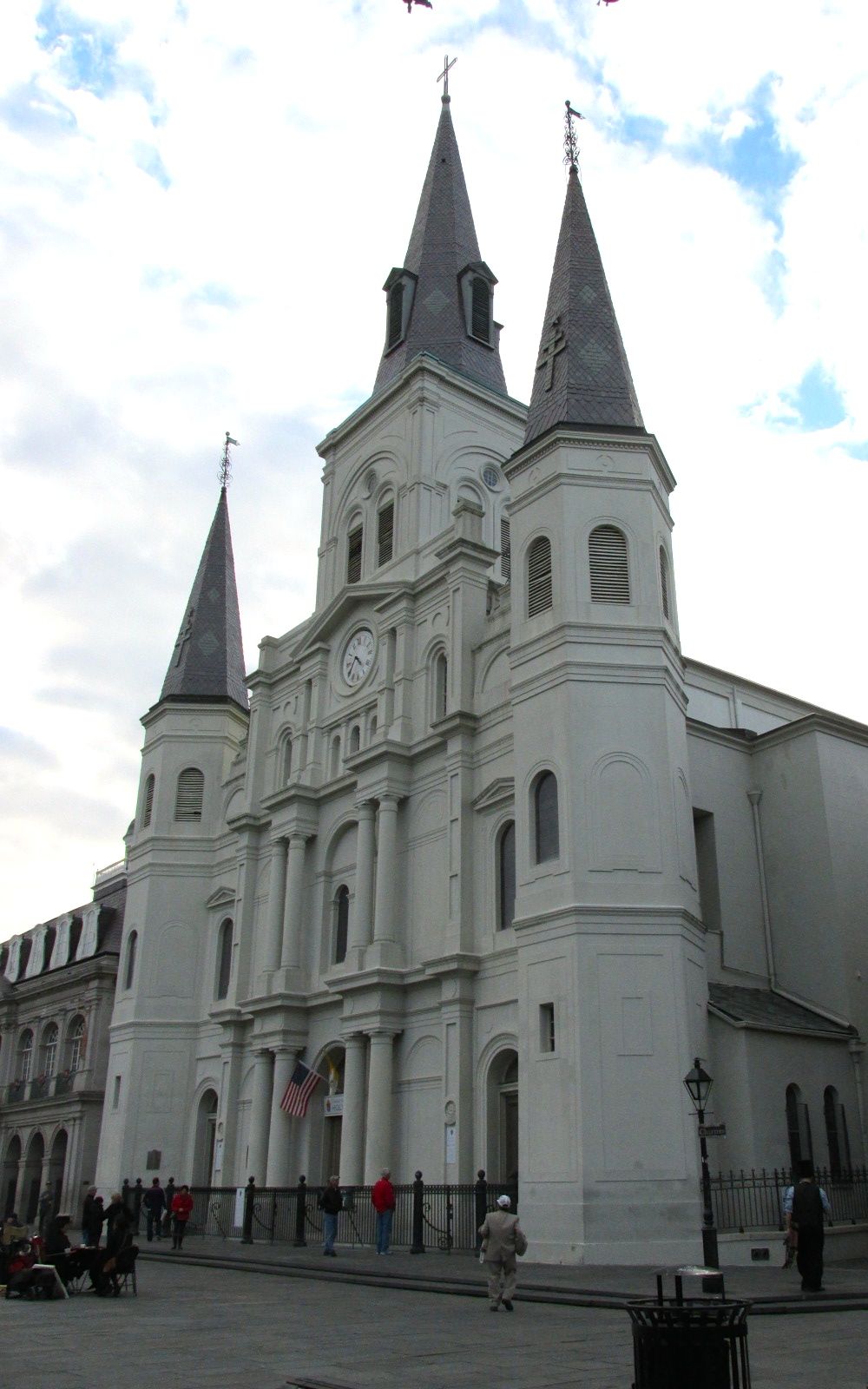
The St. Louis Cathedral was on the other side of Jackson Square from Cafe du Monde. I got over there just past the time when they let visitors in. I was really batting zero!

mediums at large

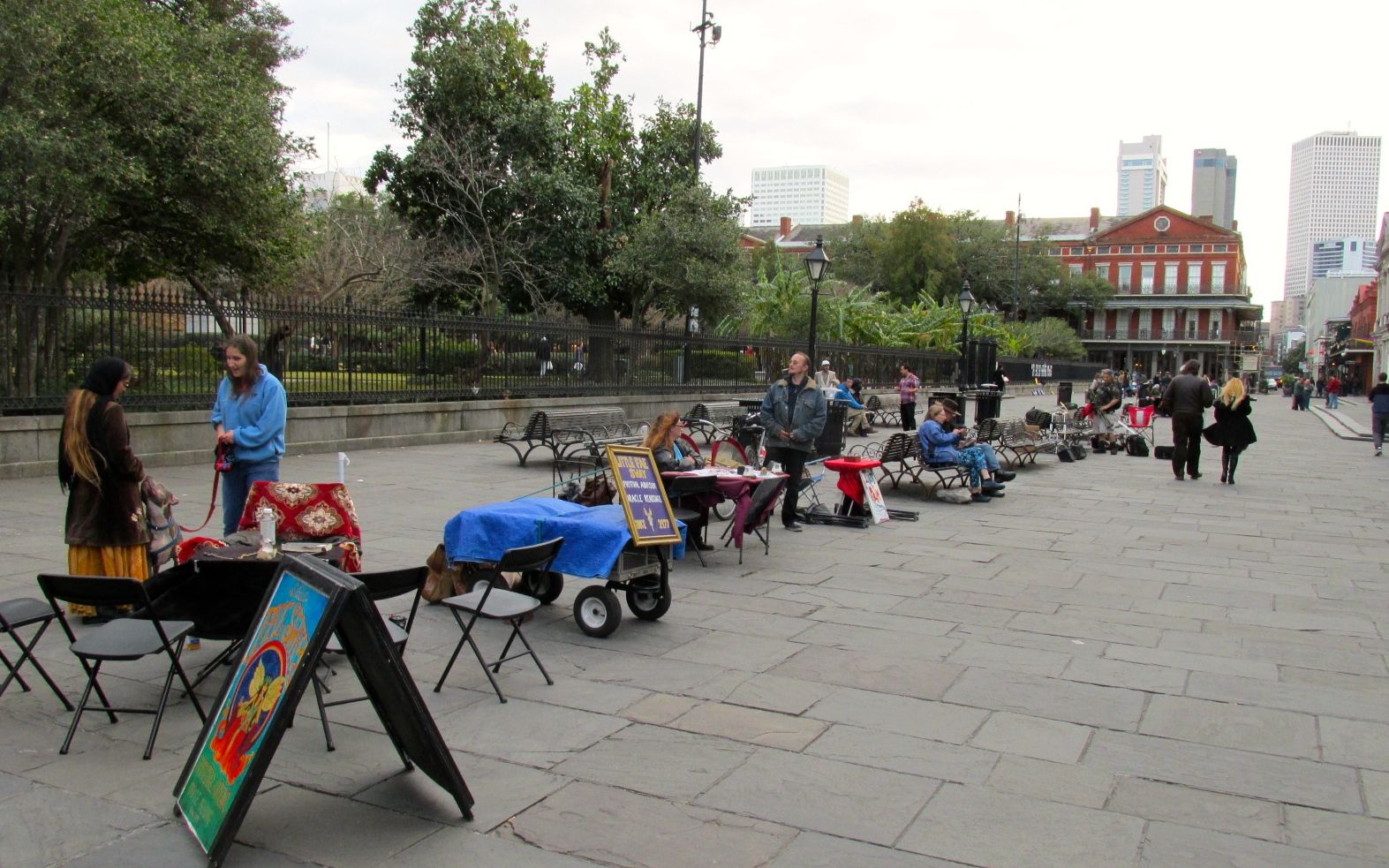
Perhaps I should have consulted the fortune tellers that were stationed in the plaza in front of the cathedral.

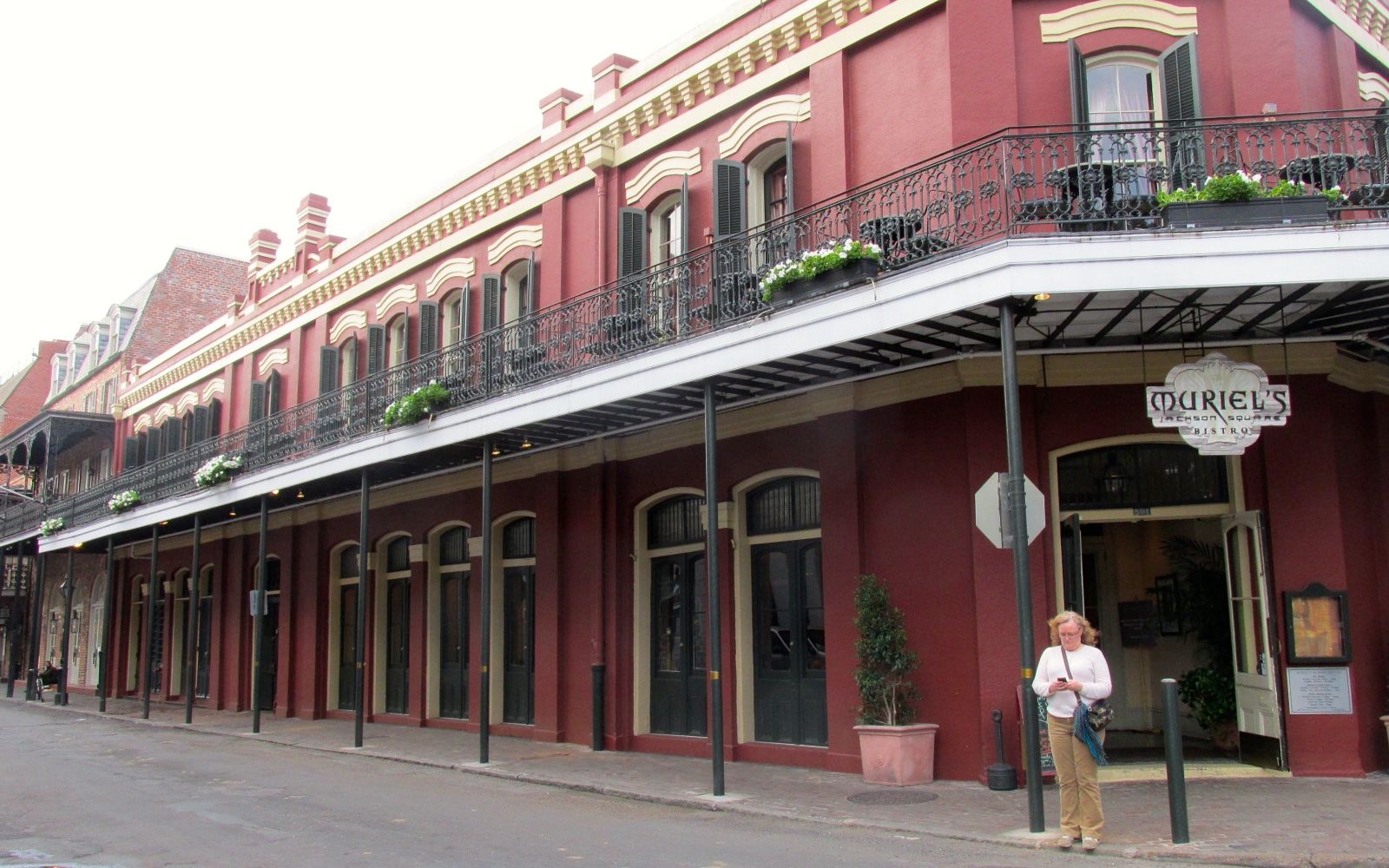
street scene

It was starting to get cool, so I decided to head back to the campground. I headed toward the levee, which is where I had parked.

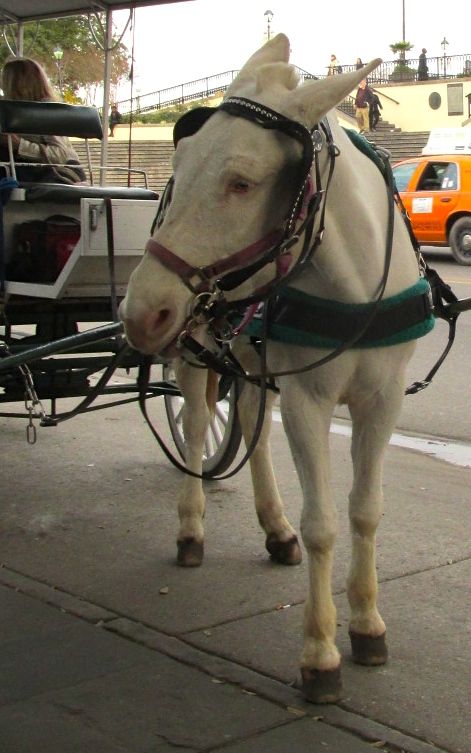
Working horse

I passed a string of carriages awaiting passengers. This one looked like he wanted to take a bite out of one.

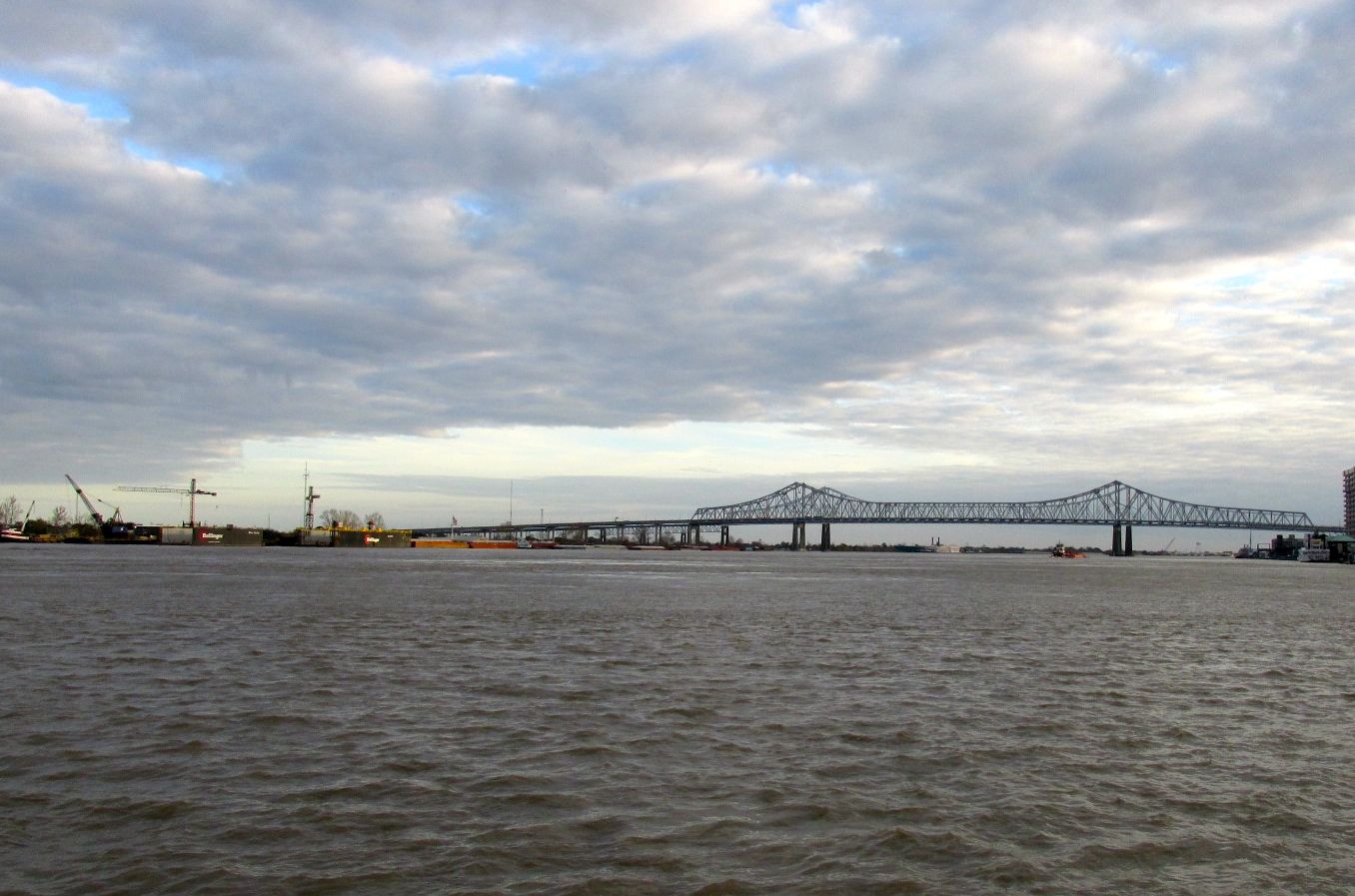
I could really tell that New Orleans was on low ground. I had to ascend to the levee to get to the river’s edge.

Missisippi River and bridge

The view to the right.

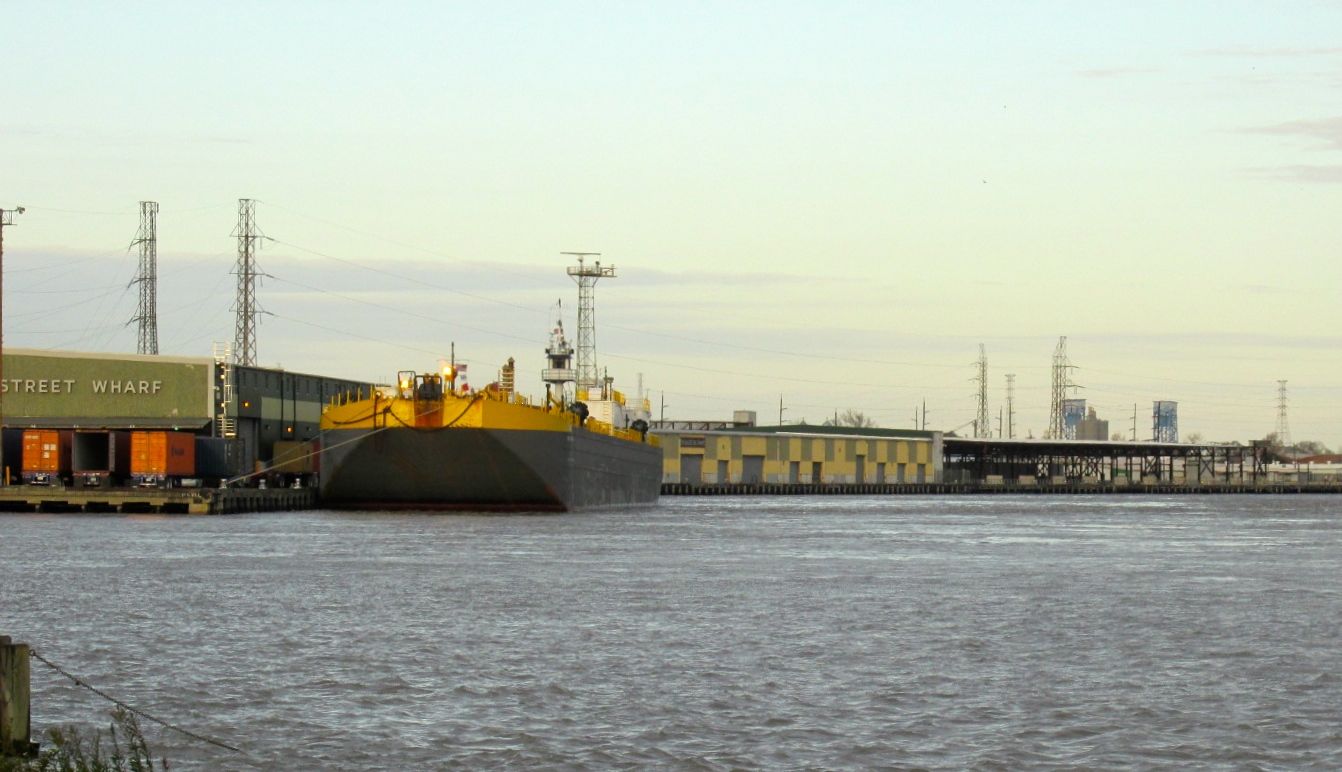
shipping on the big muddy

The view to the left. I imagine this is where they import all the “throwables” for the Mardi Gras parades.

And then it was time to head back, but I knew that I would return.


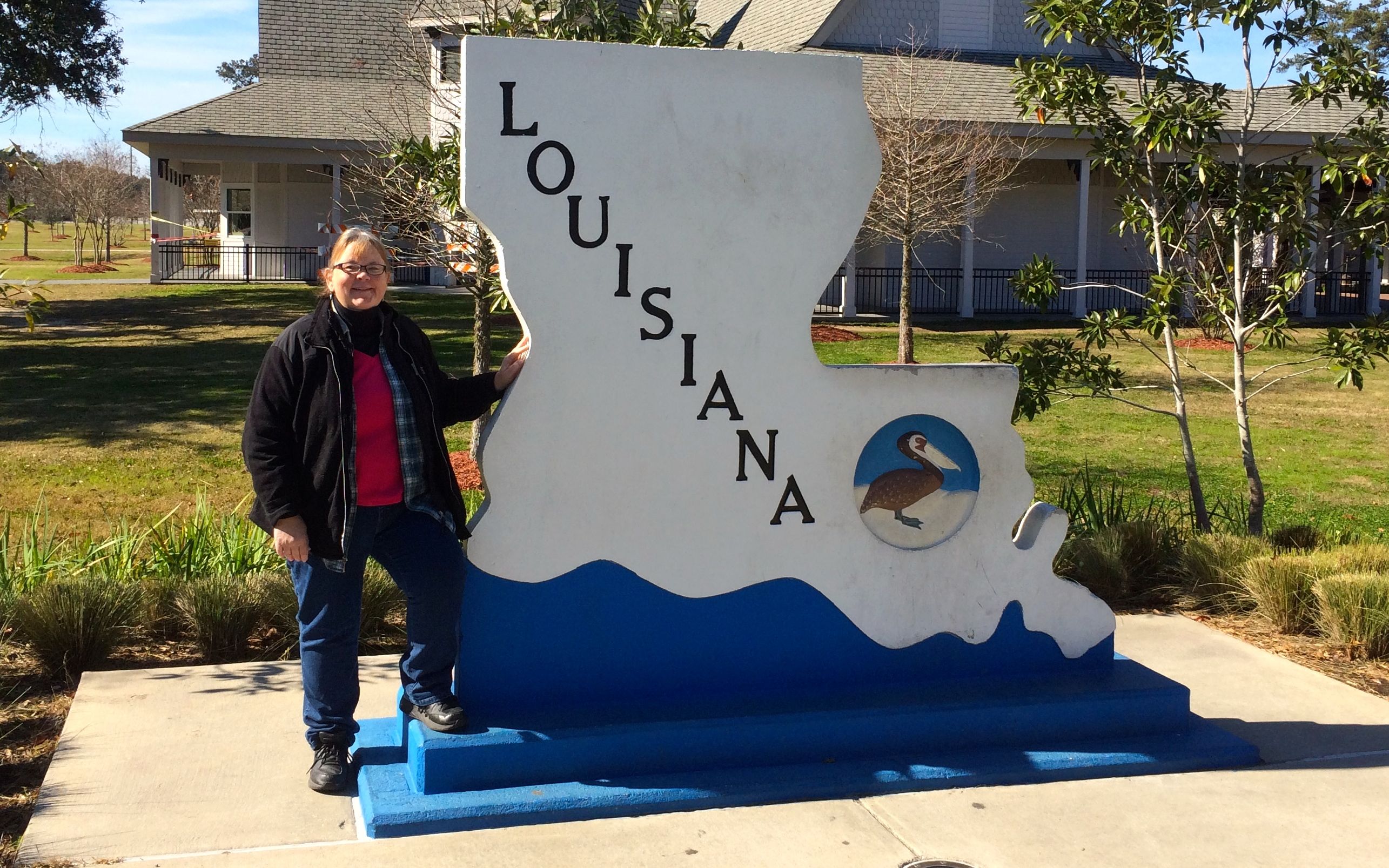
Hello, Louisiana!

After a short stay in Mississippi, it was time to head west.

Louisiana welcome stop

It was nice to see the sunshine, even if it wasn’t as warm as I would have liked.

I made it to my destination, Fontainebleau State Park, in Mandeville, on the north shore of Lake Pontchartrain. I checked in and the ranger gave me my paperwork and map and told me to turn right at the big dead tree.

Big Dead Tree
Big Dead Tree

She wasn’t kidding. It was an enormous dead tree!

The weather was variable during my visit. Some days, the skies were crystal clear. Other days the skies reminded me of good ol’ Buffalo.

my campsite

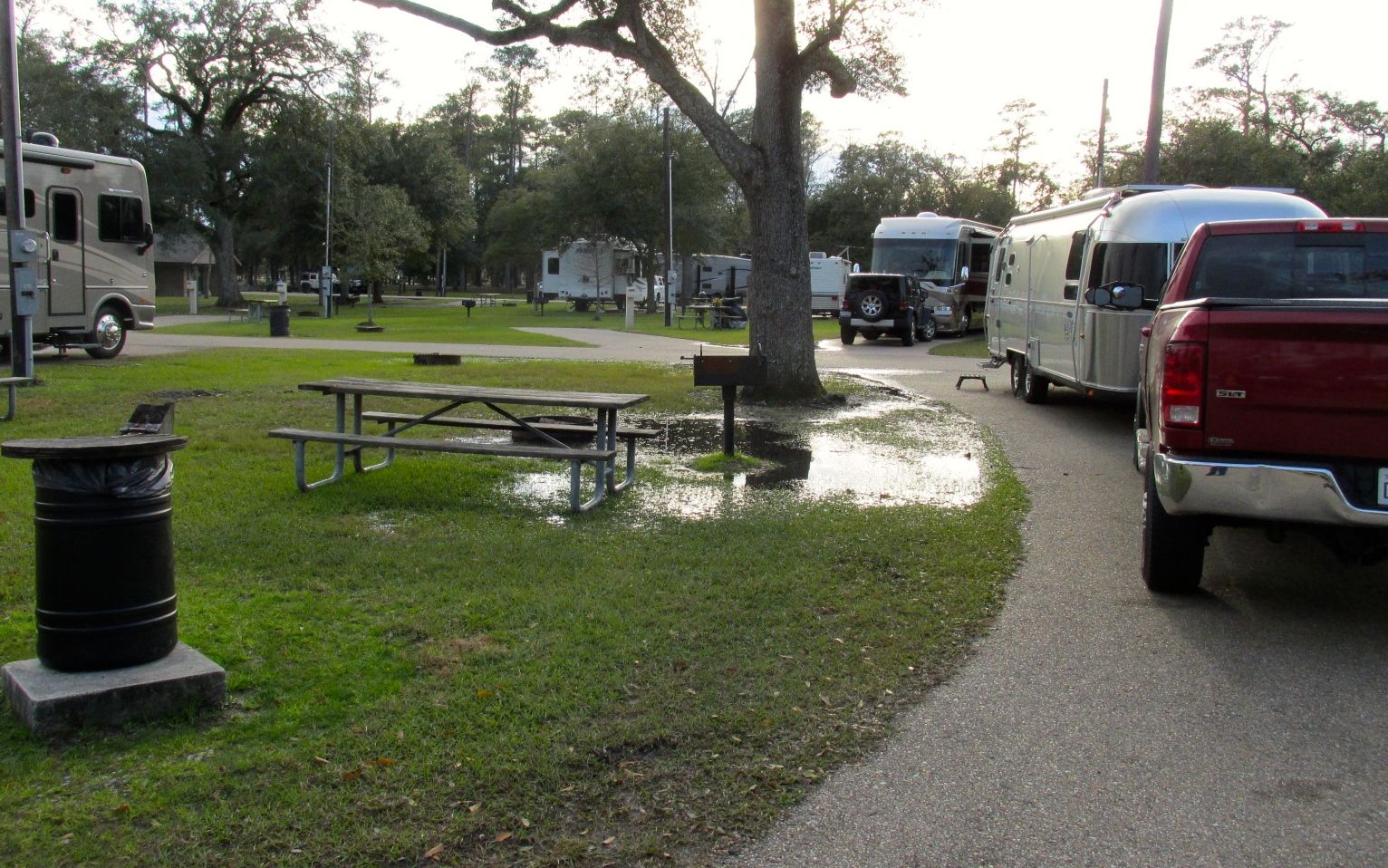
While it was overcast for much of the time I was in the area, it only rained torrentially once. The park never quite drained, however.

In spite of the soggy landscape, the park was quite nice. In addition to a pull-through site, with water and electricity at the site, I had my own trash can AND there was free wifi!

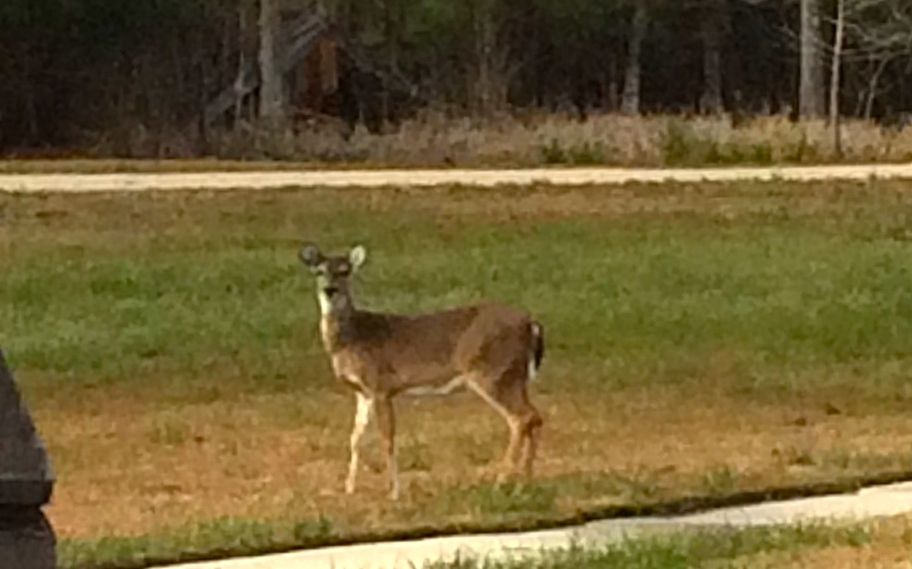
deer

There was abundant wildlife – especially deer. I drove past several small herds of them when I was coming and going.

Fontainebleau State Park is on the site of the plantation of Bernard de Marigny. He was born in New Orleans in 1785 and he was the third generation of his family to be born in colonial Louisiana. He was quite a playboy and gambler, and ended up selling off lots from the family plantation just outside the French Quarter – or “Vieux Carré ” as it is sometimes called. The lots were very popular, and he found that the smaller he made the lots, the more there were to sell.

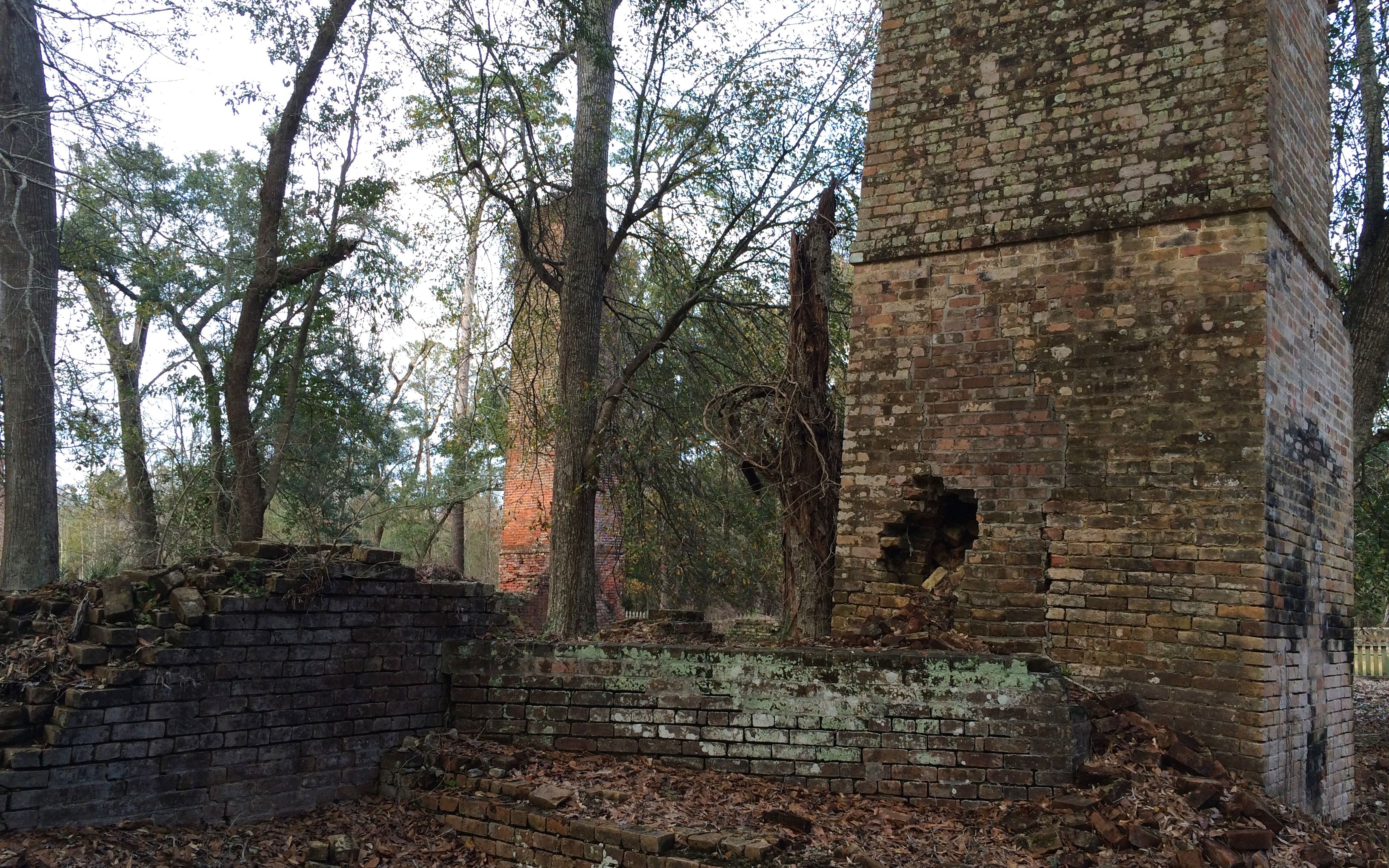
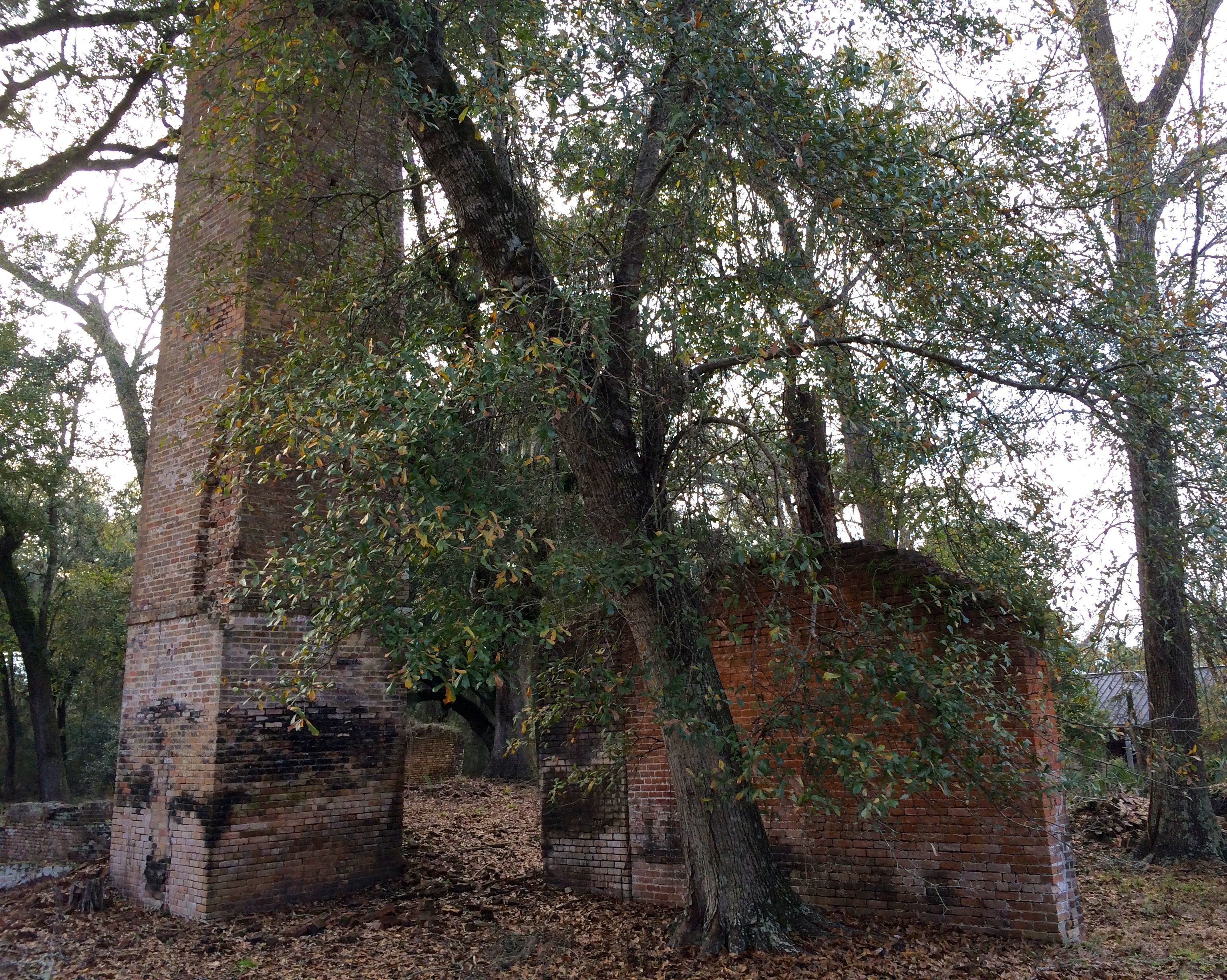
There isn’t much left of Bernard’s plantation, but I did take a stroll around the remnants of the sugar mill.

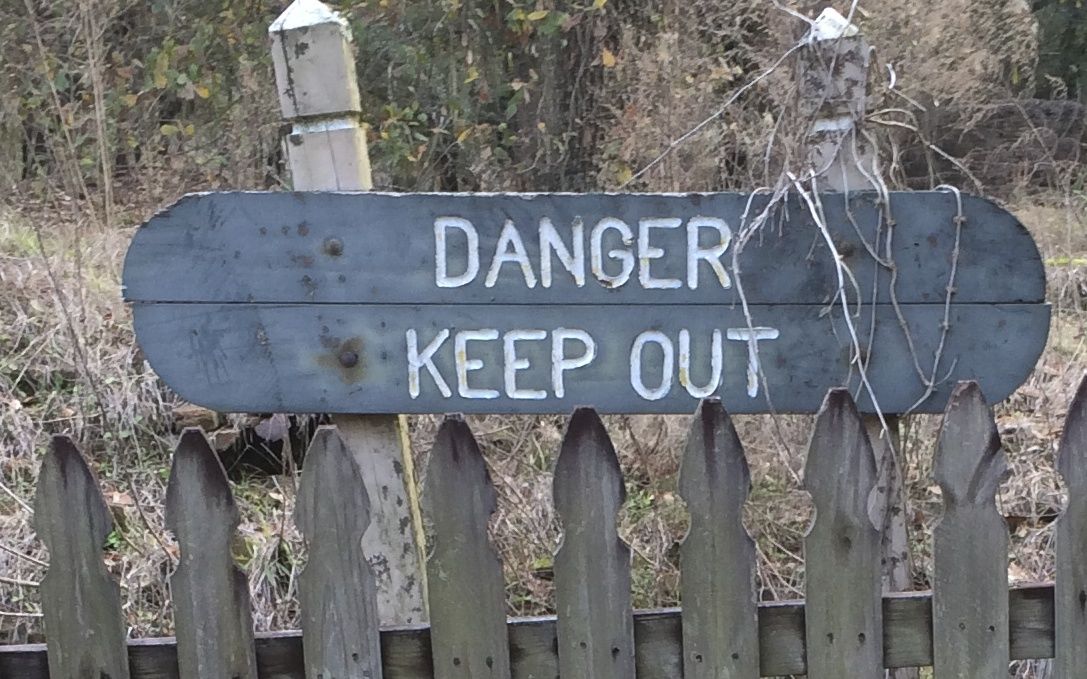
Danger Keep Out close up

The sign does convey a message.

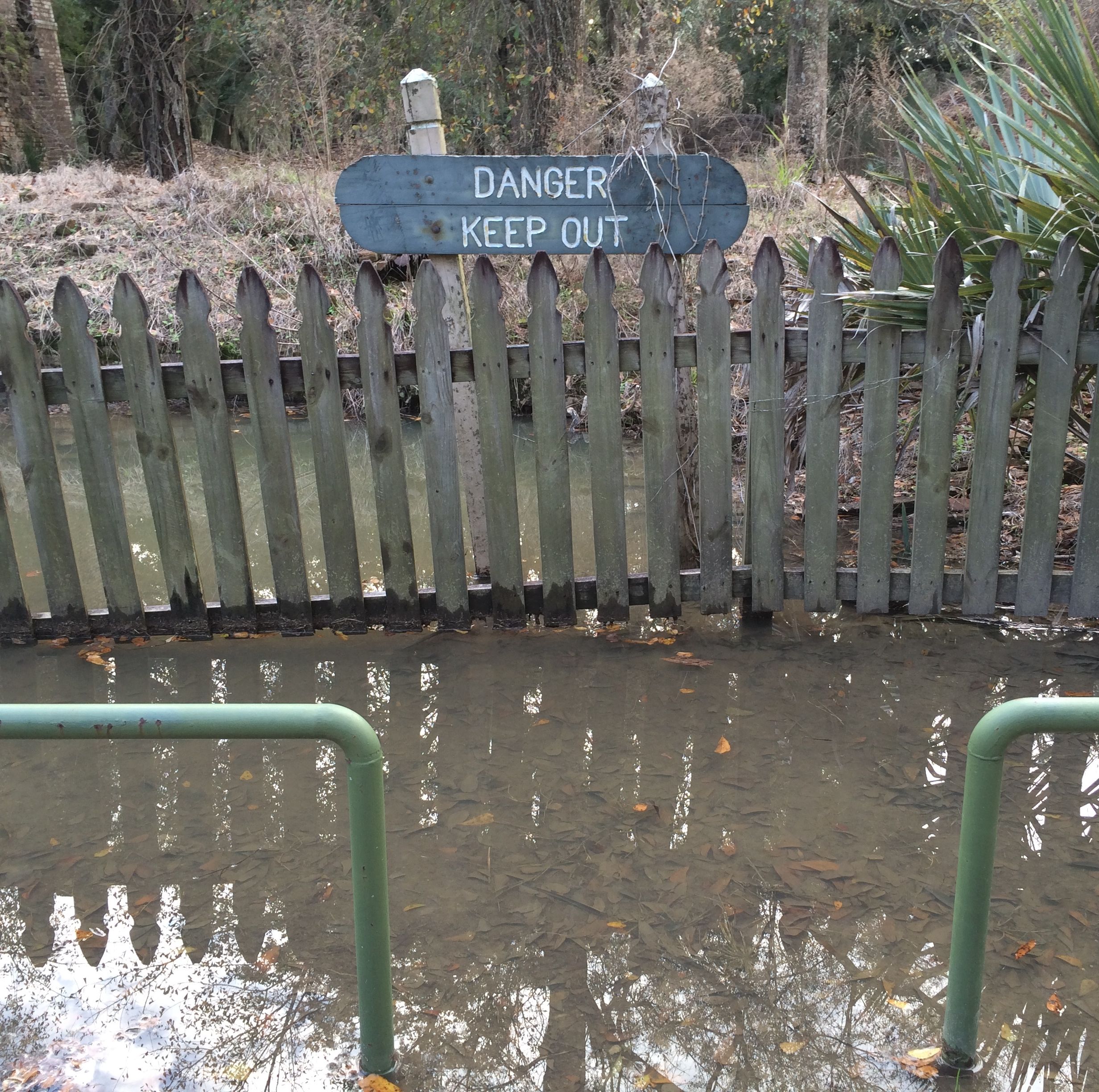
Danger Keep Out full Screen

The two fences and the puddles are even more effective.

sugar mill 3

sugar mill 1

It is amazing that there are any structures left standing. It was built in 1829 and was in operation until 1852. I do enjoy touring ruins.

Another thing that de Marigny is known for is bringing craps to this side of the Atlantic. He picked up the dice game called Hazard while he was in England and, in a simpler form, became known in the local dialect as “Crapaud.”

What a well-rounded fellow!

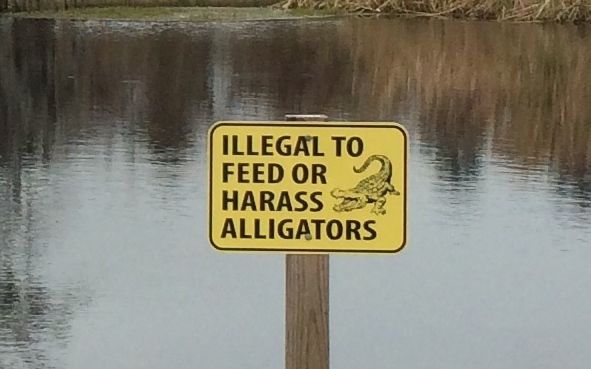
Illegal to feed or harrass the Alligators

I walked around the park and encountered this warning sign. I didn’t see any alligators, but I saw some interesting pond scum.

pond scum

As the water blew across the surface of the water, the scum swirled and slid across the pond in interesting designs.

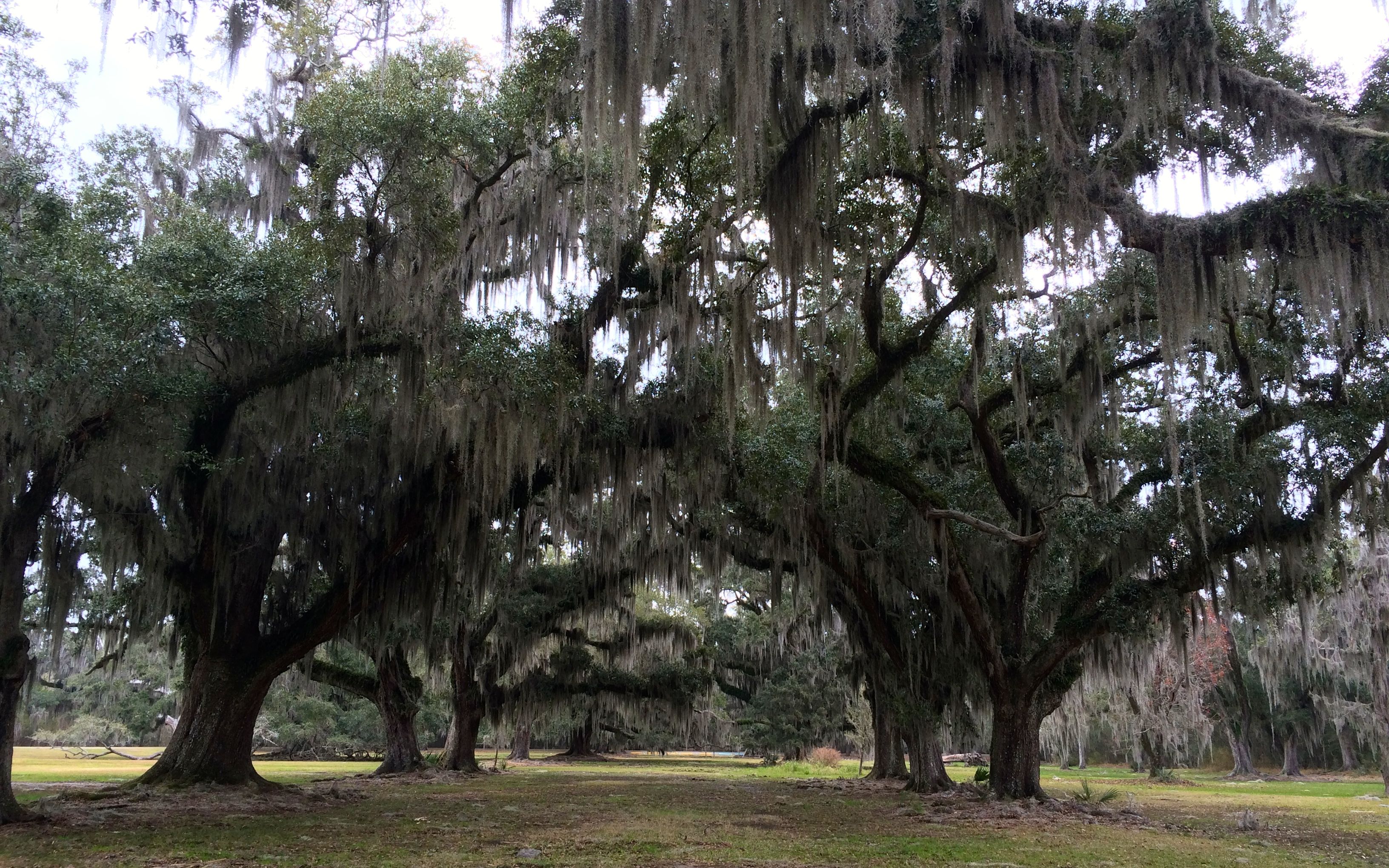
Spanish moss on live oaks

This is a pleasant park, and I’d be happy to stay there again.