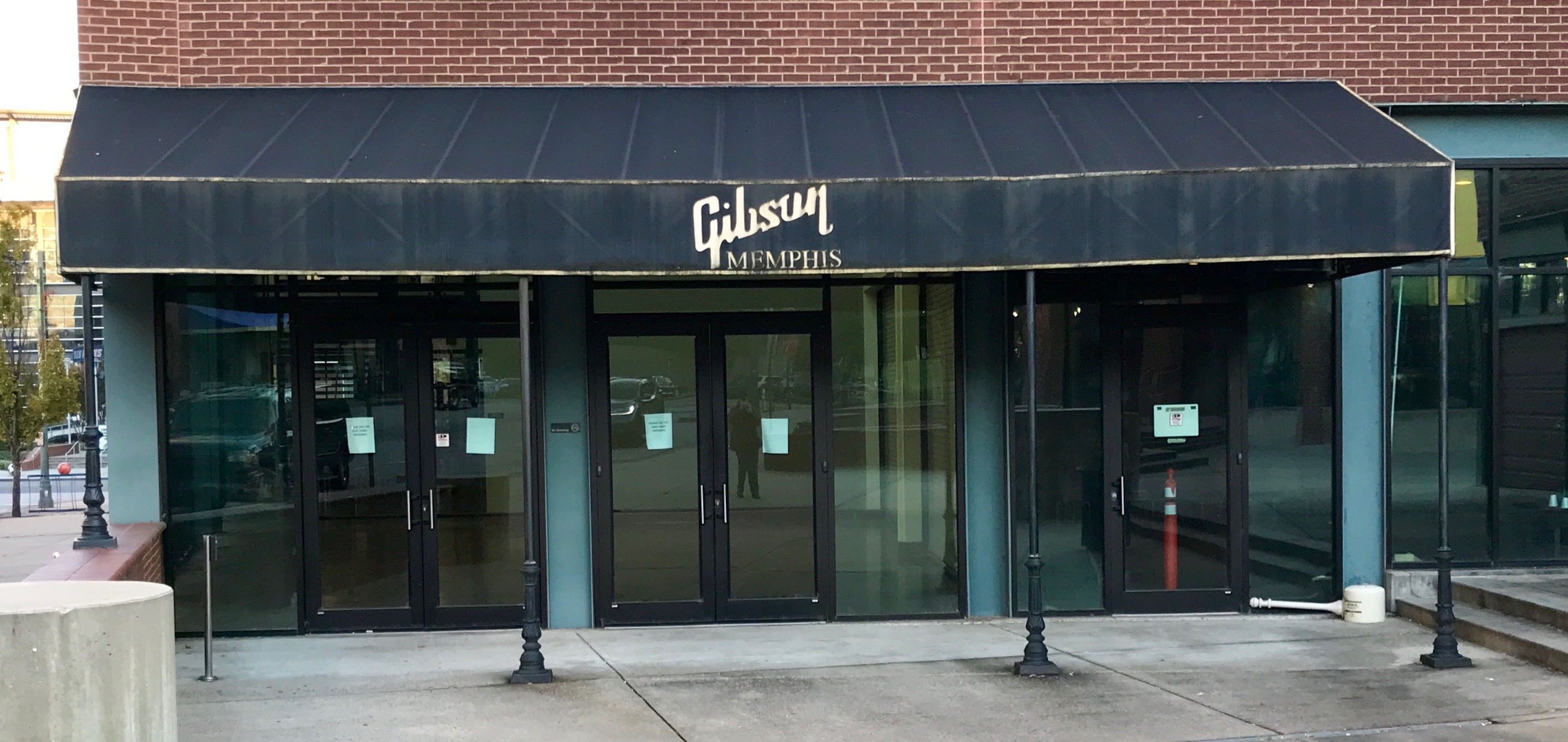
My plans for the next day included taking a tour of the Gibson Guitar Factory.
Fun fact: Gibson Guitars was founded in Kalamazoo, Michigan. Orville Gibson started making instruments in 1894 and founded the company in 1902. It was originally named Gibson Mandolin-Guitar Mfg. Co. Ltd.
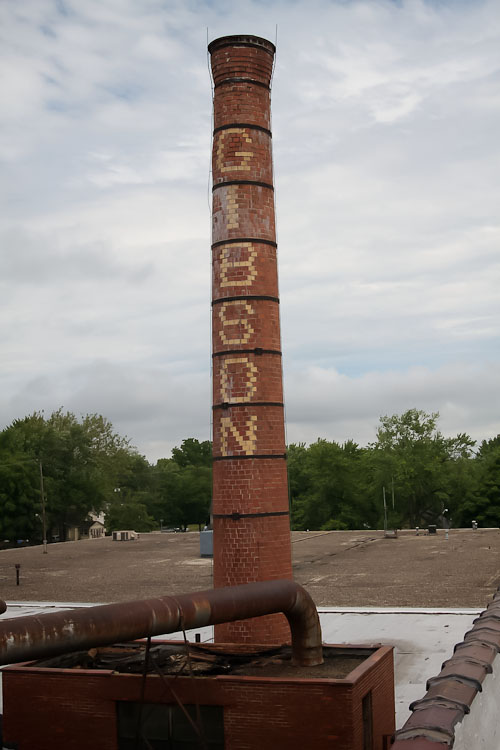
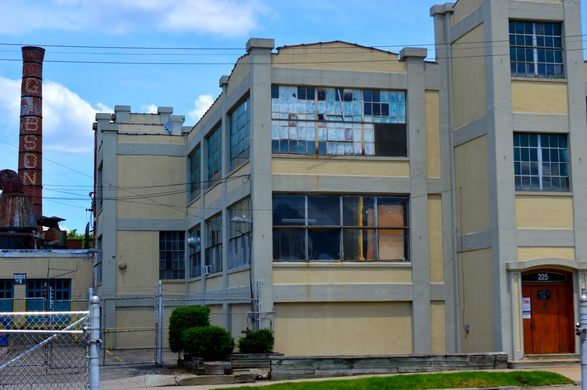
This is the smokestack from the original plant in Kalamazoo. I used to teach in a school that was kitty-corner from the factory. Gibson closed this plant in the early 1980s. Some of the luthiers got together and formed Heritage Guitars in 1985.
Heritage is a boutique manufacturer, making semi-hollow guitars, large jazz boxes and solid body electric guitars. I tried to track down a good definition of “jazz box”, but I found several conflicting sites. As close as I can tell, a jazz box is just another name for a jazz guitar
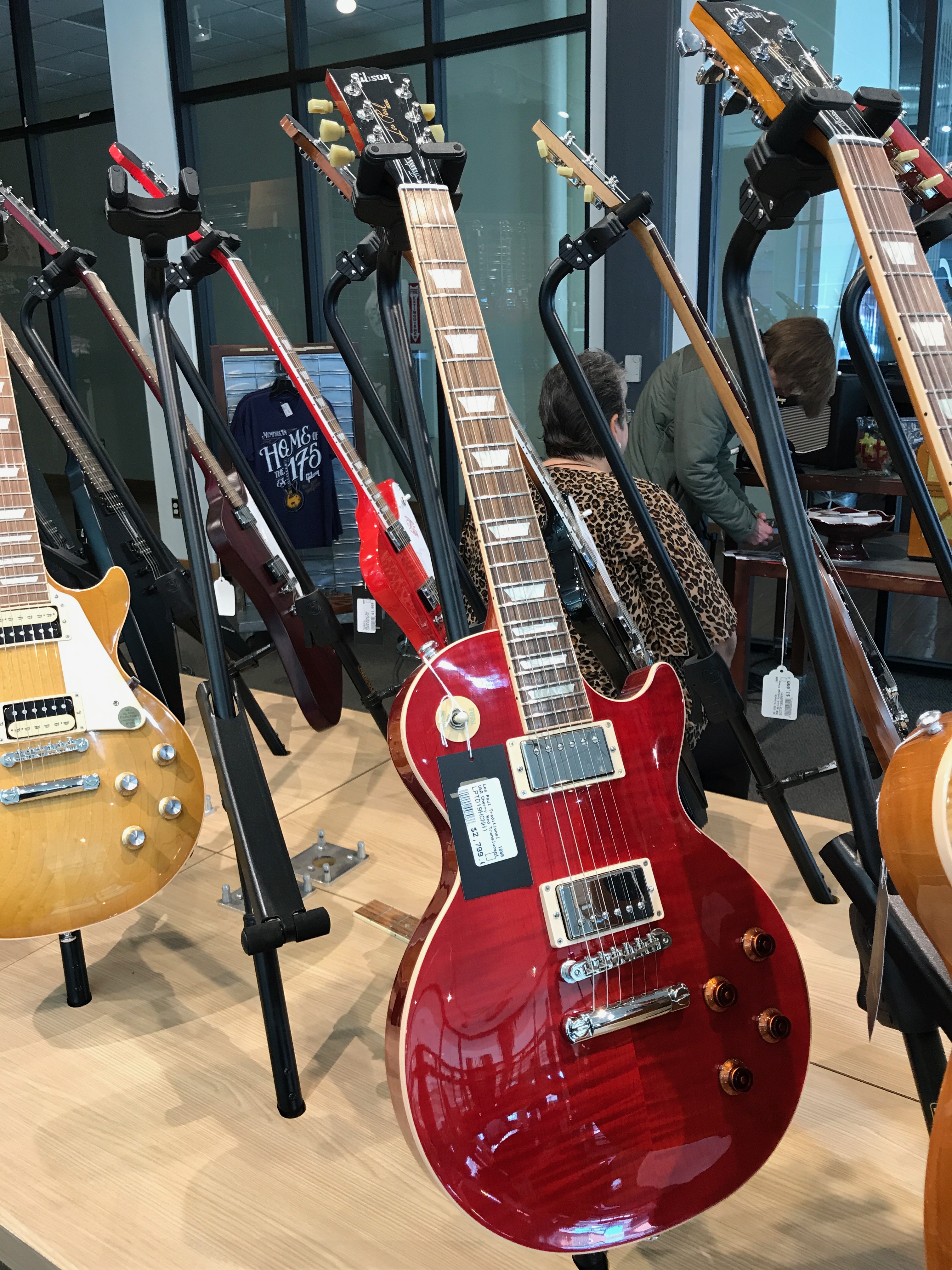
While I was waiting for the tour to start, I looked at all the colorful guitars for sale.
A rainbow of guitars.
I’ve always been partial to red.
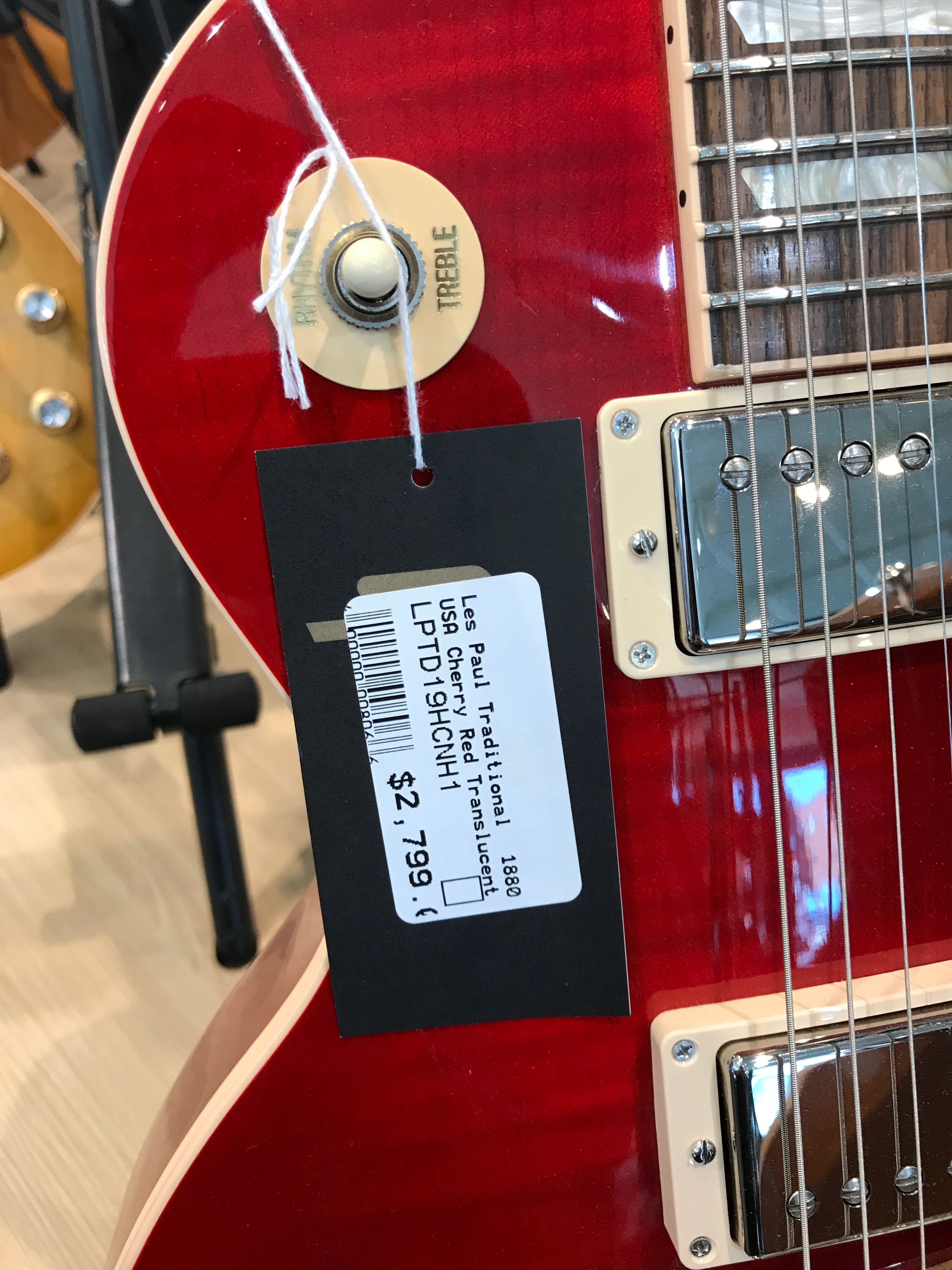
And just how much would I have to lay out for this pretty little guitar?
$2,799! Plus tax! Yikes!
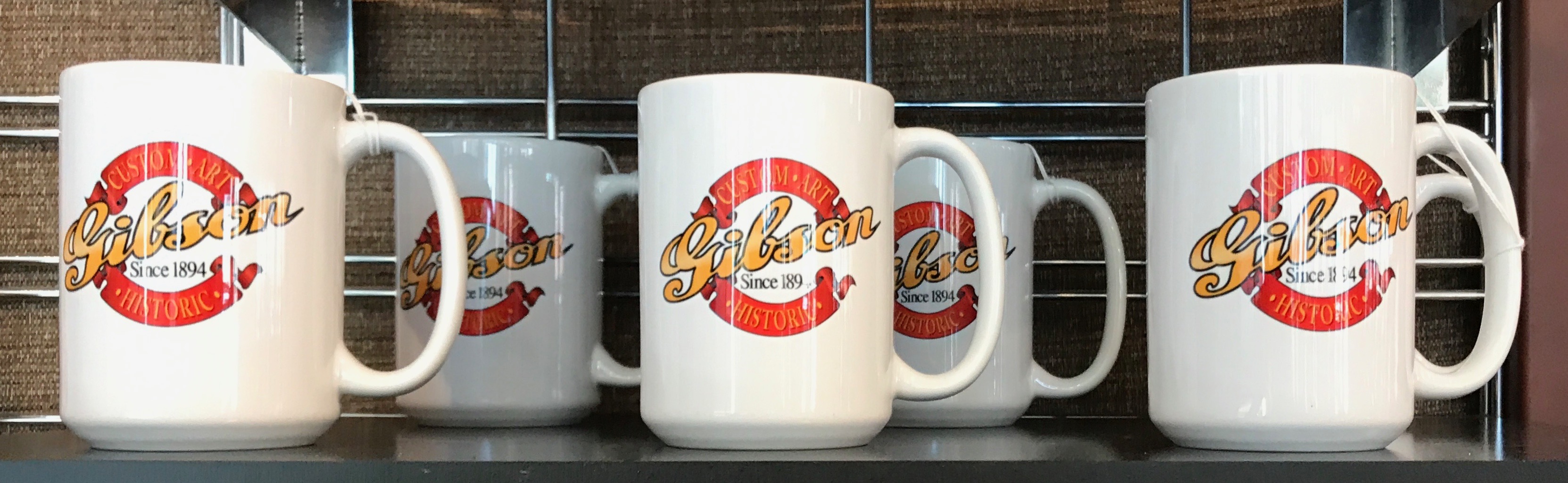
Uh…I think these mugs are more in my price range.
Eventually all the the members of the tour group made it, and we started into the factory.
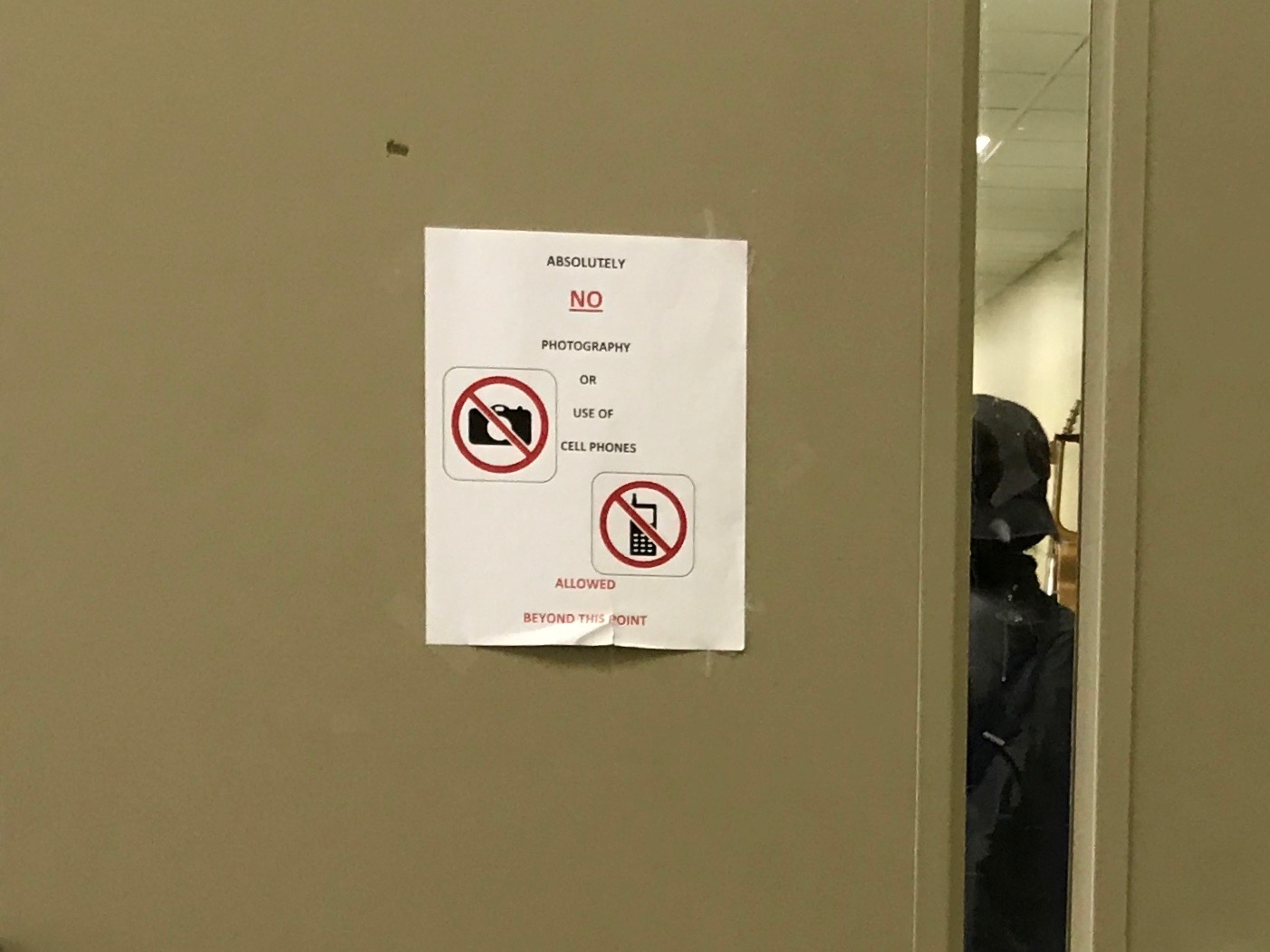
Oh, well. No photos on the factory floor. The tour was taking place on Saturday, and no one was working anyway. You can use your imagination. Machines, racks, wood…
At the end of the tour, I got someone to take my photo. There’s a photo, so it happened!
And it’s good that I took the tour in 2018. They have since discontinued tours and moved production to Nashville.
I set out to wander around and see what interesting things I could see.
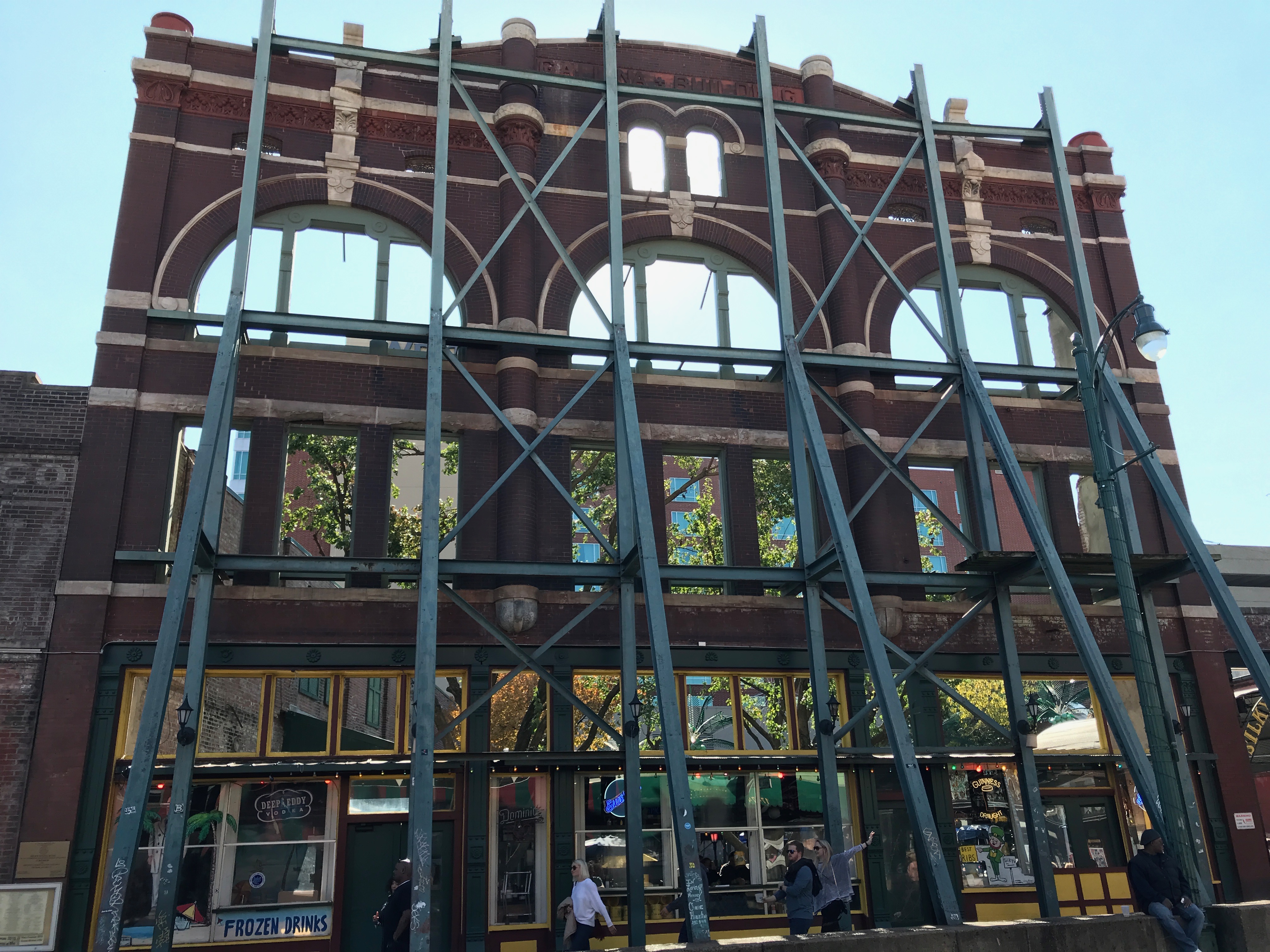
For instance, I was fascinated by the lengths they were going to preserve their architecture heritage.It would be interesting to see how this project turned out.
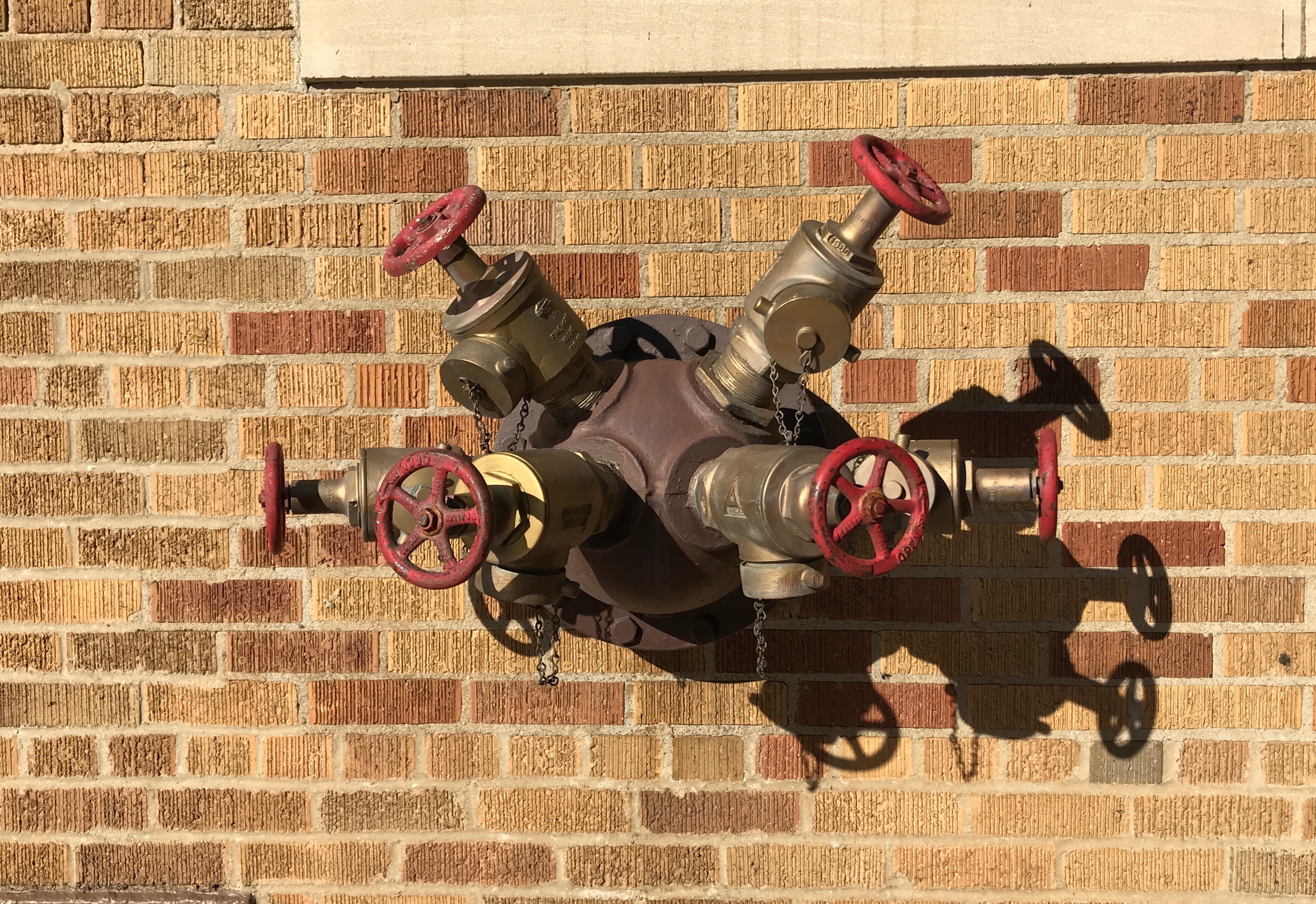
And, I have seen standpipes with two connections and with three, but I have never seen one with six links.
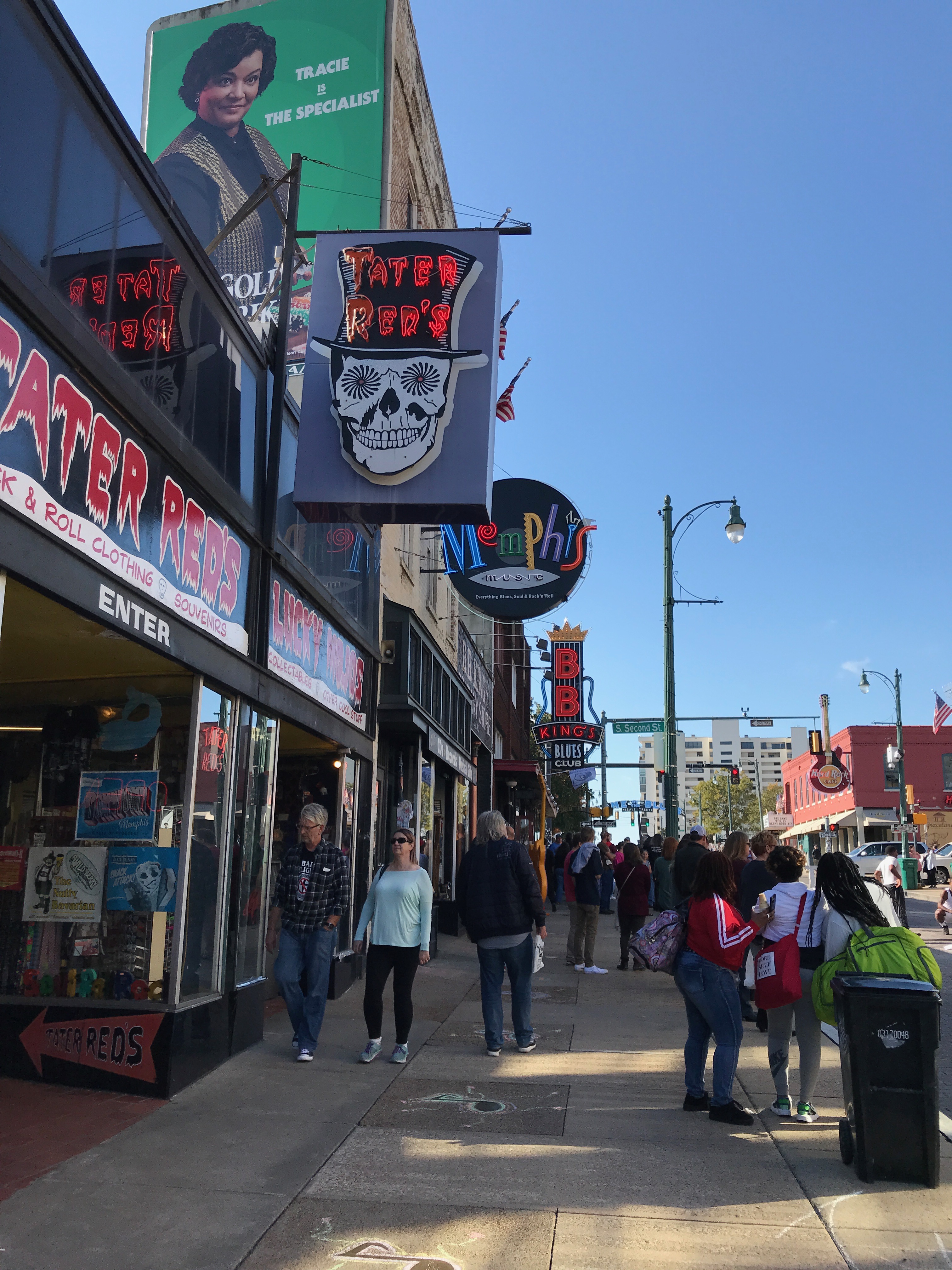
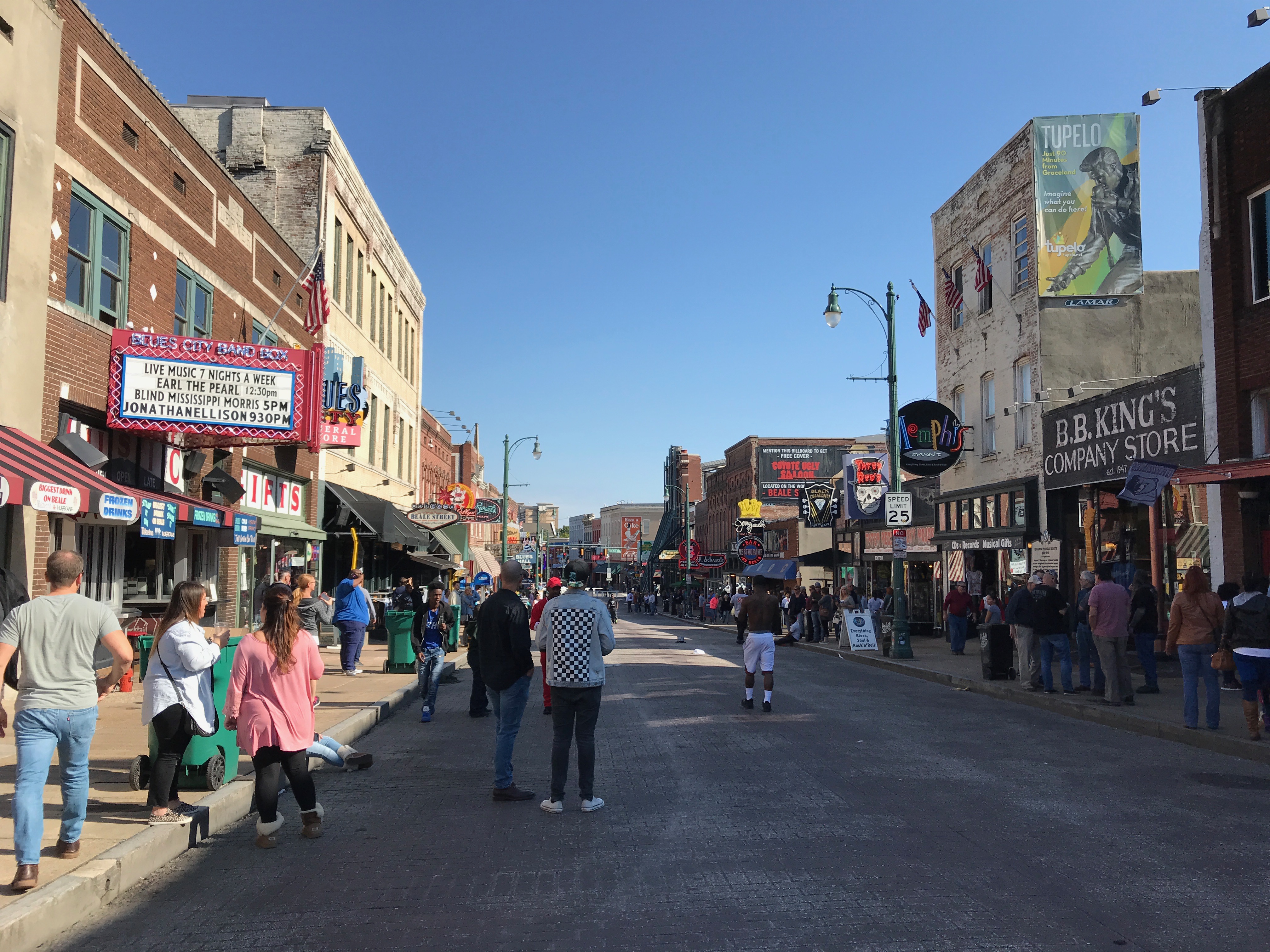
I strolled down Beale Street. It’s a tourist mecca, if ever I saw one.
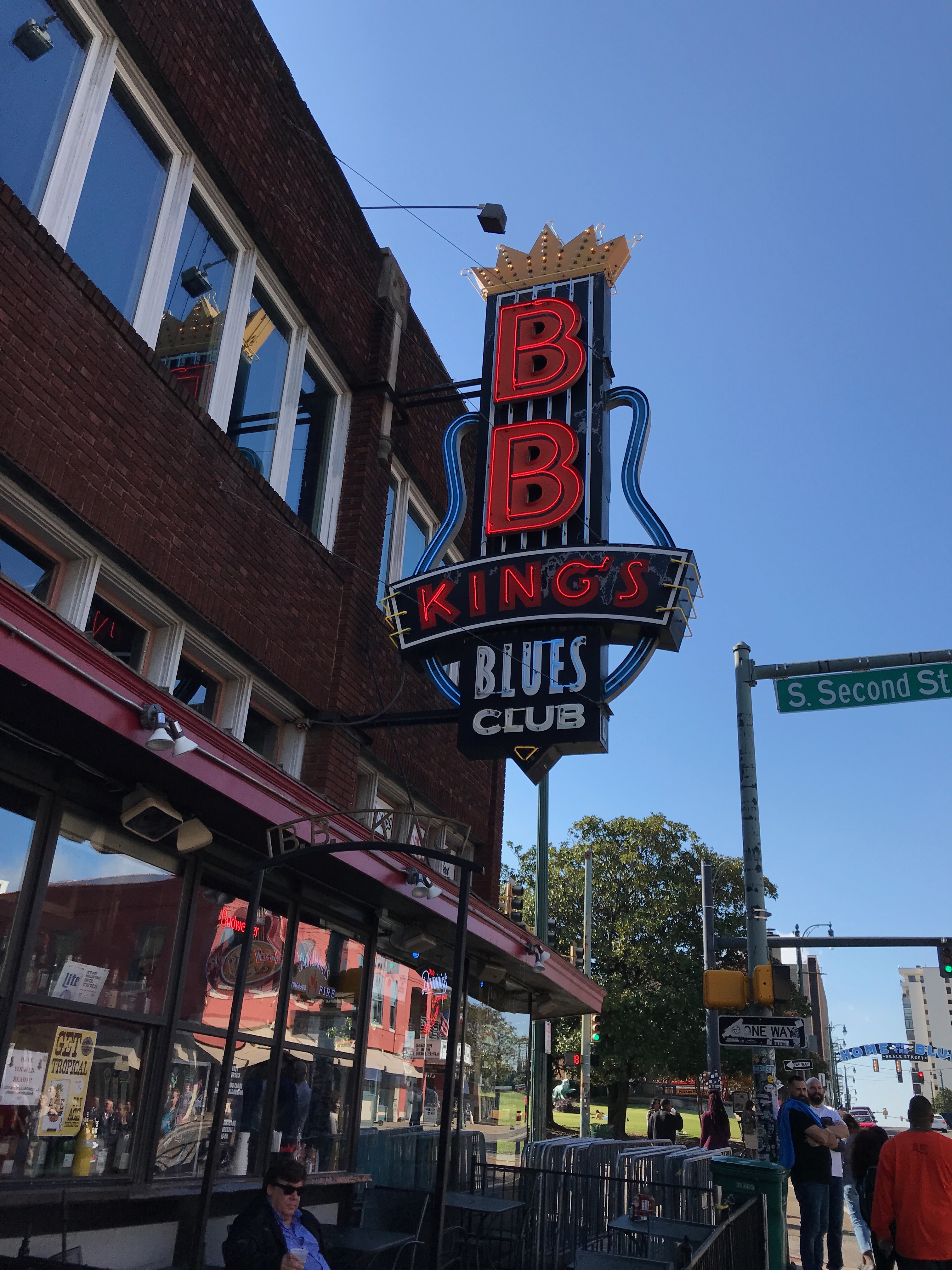
I stumbled upon BB King’s Blues Club. B.B. King named all his guitars “Lucille” and they were made by Gibson!
I wandered into some of the stores, but I really wasn’t into this sort of adventure.
You know what I wanted to do? I wanted to get my shoes polished! I headed back to The Peabody. I figured they had a shoe shine station. I got my shoes polished at The Francis in San Francisco a few years back, so I though I’d check it out.
I headed back over.
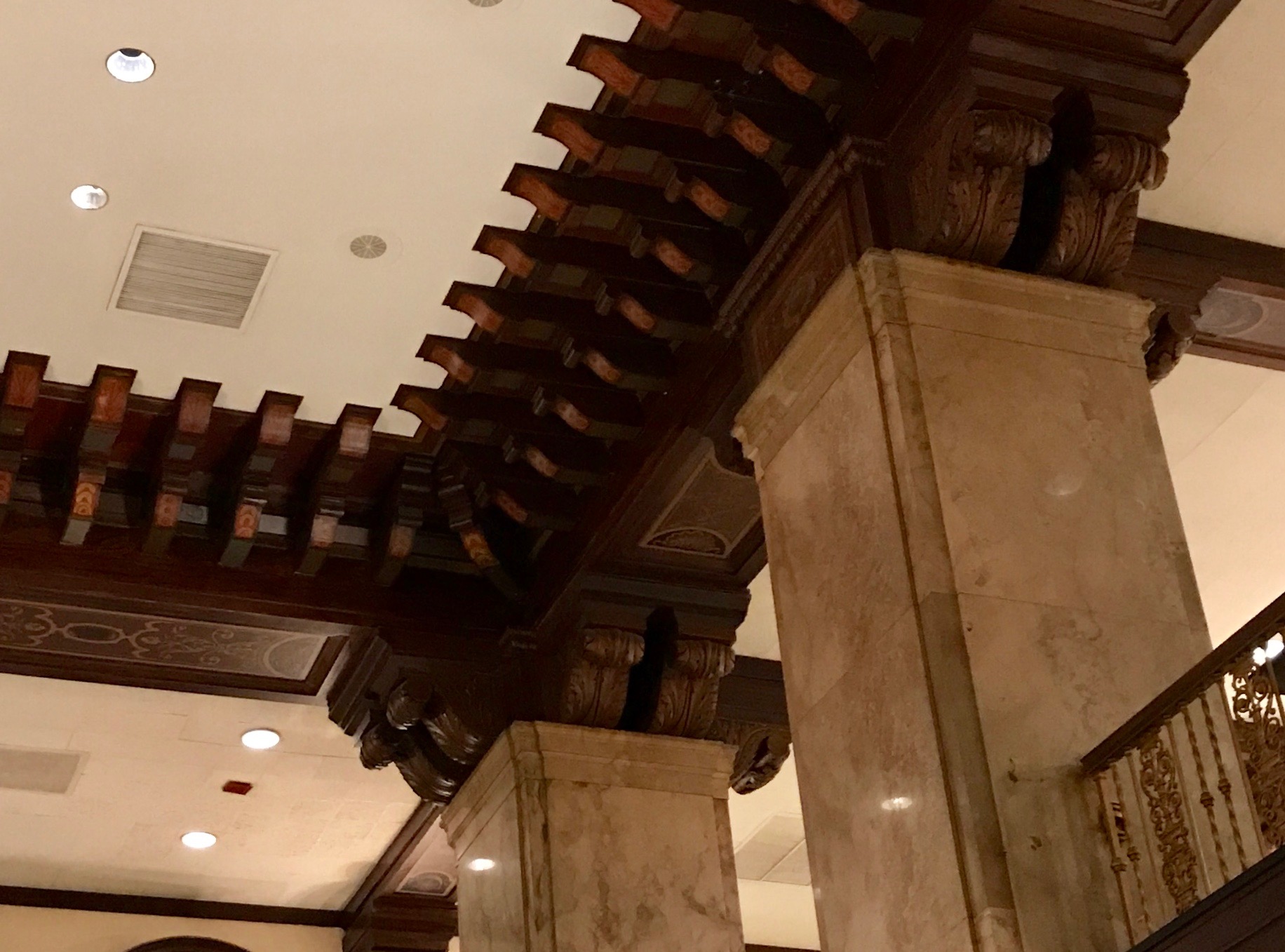
Really, I do love those fancy hotel lobbies! I headed down to the shoe shine station.
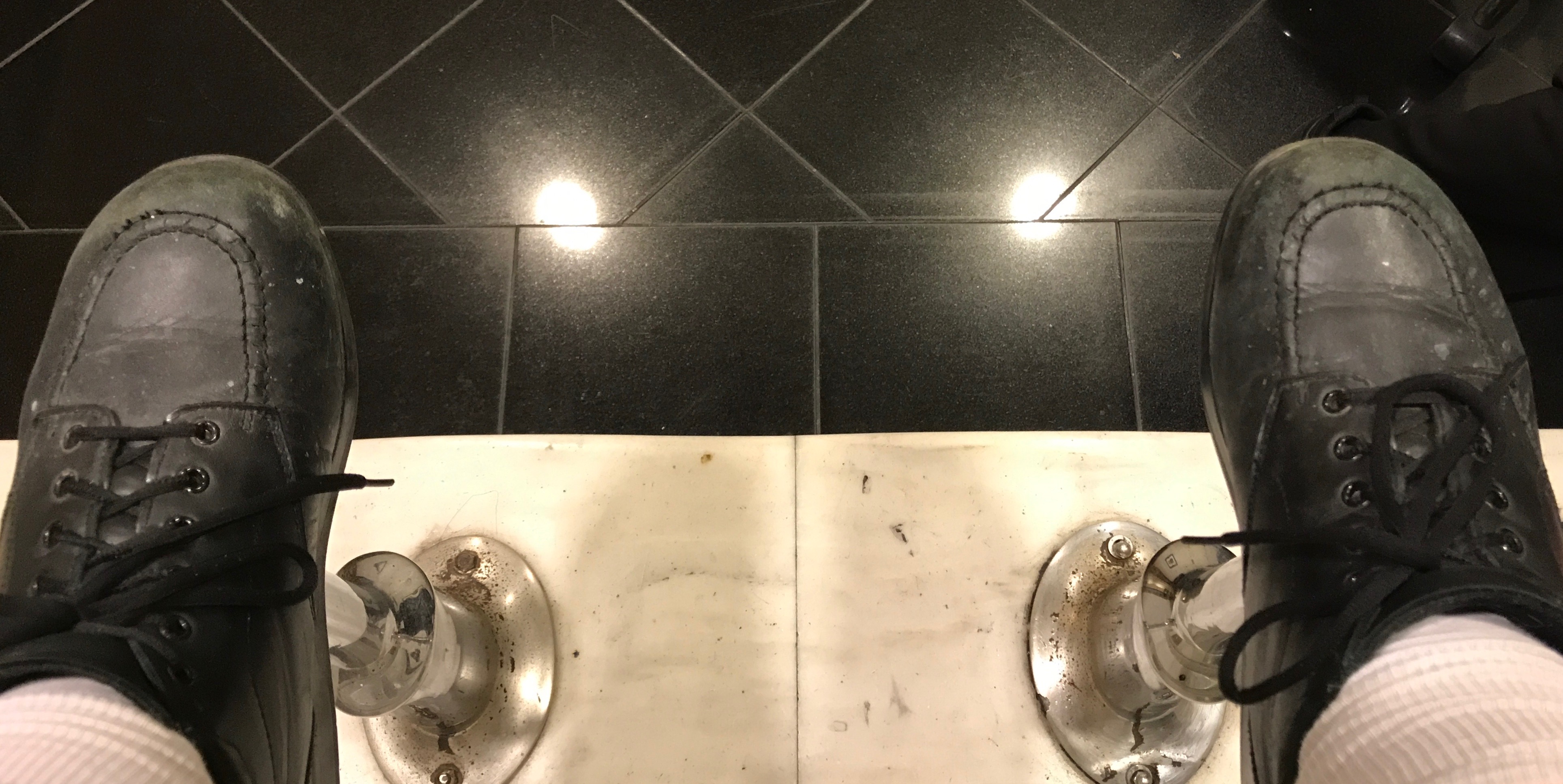
My goodness! My shoes really needed polishing.
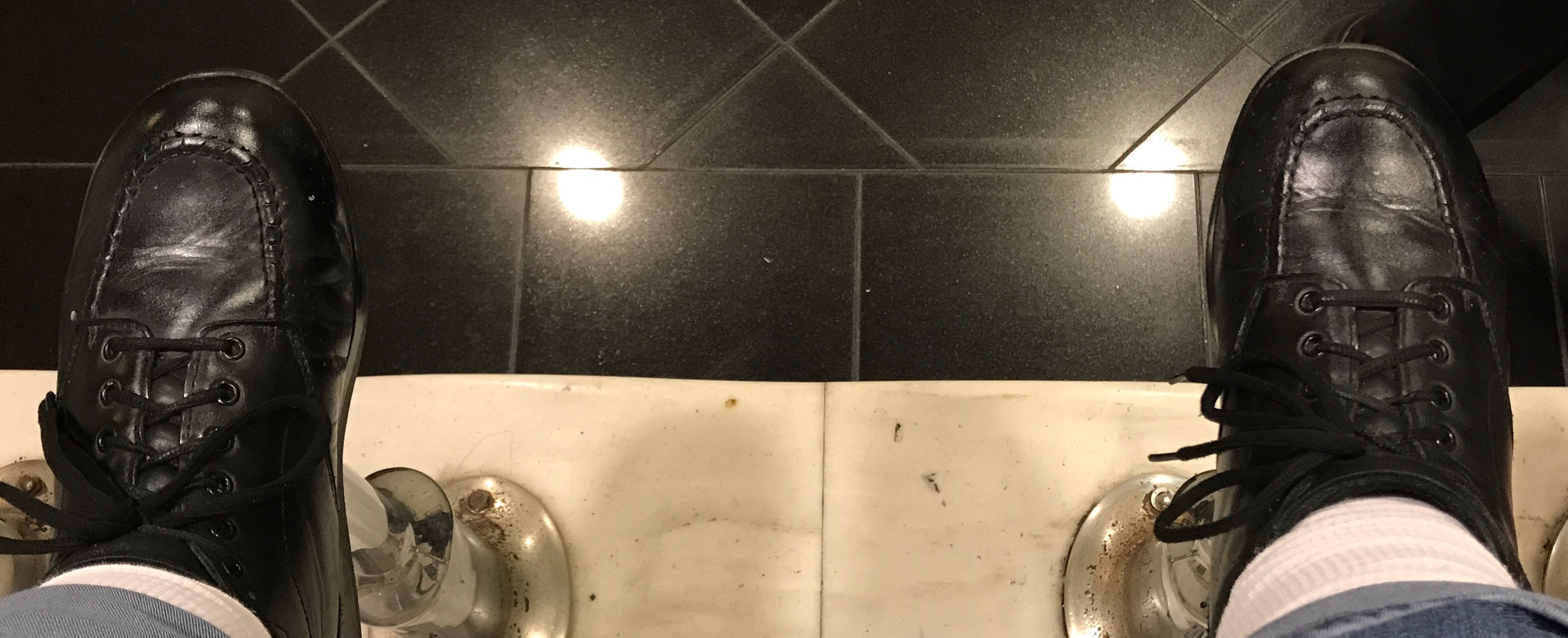
Ah! Much better! I set out to find some food. I checked with Yelp! and headed toward The Majestic Grille.
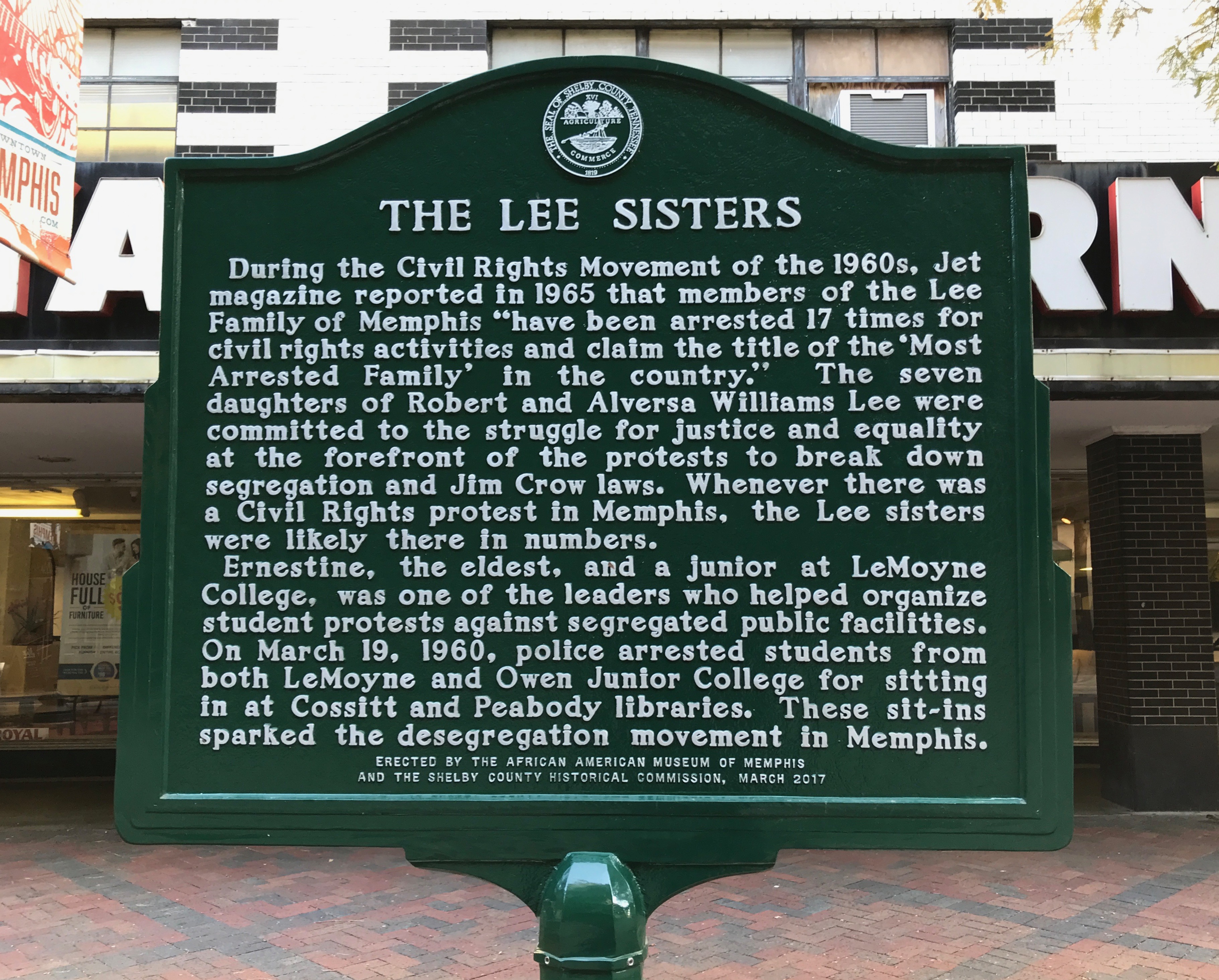
Along the way, I passed a plaque honoring the Lee sisters.
I arrived at the restaurant, got a seat and perused the menu.
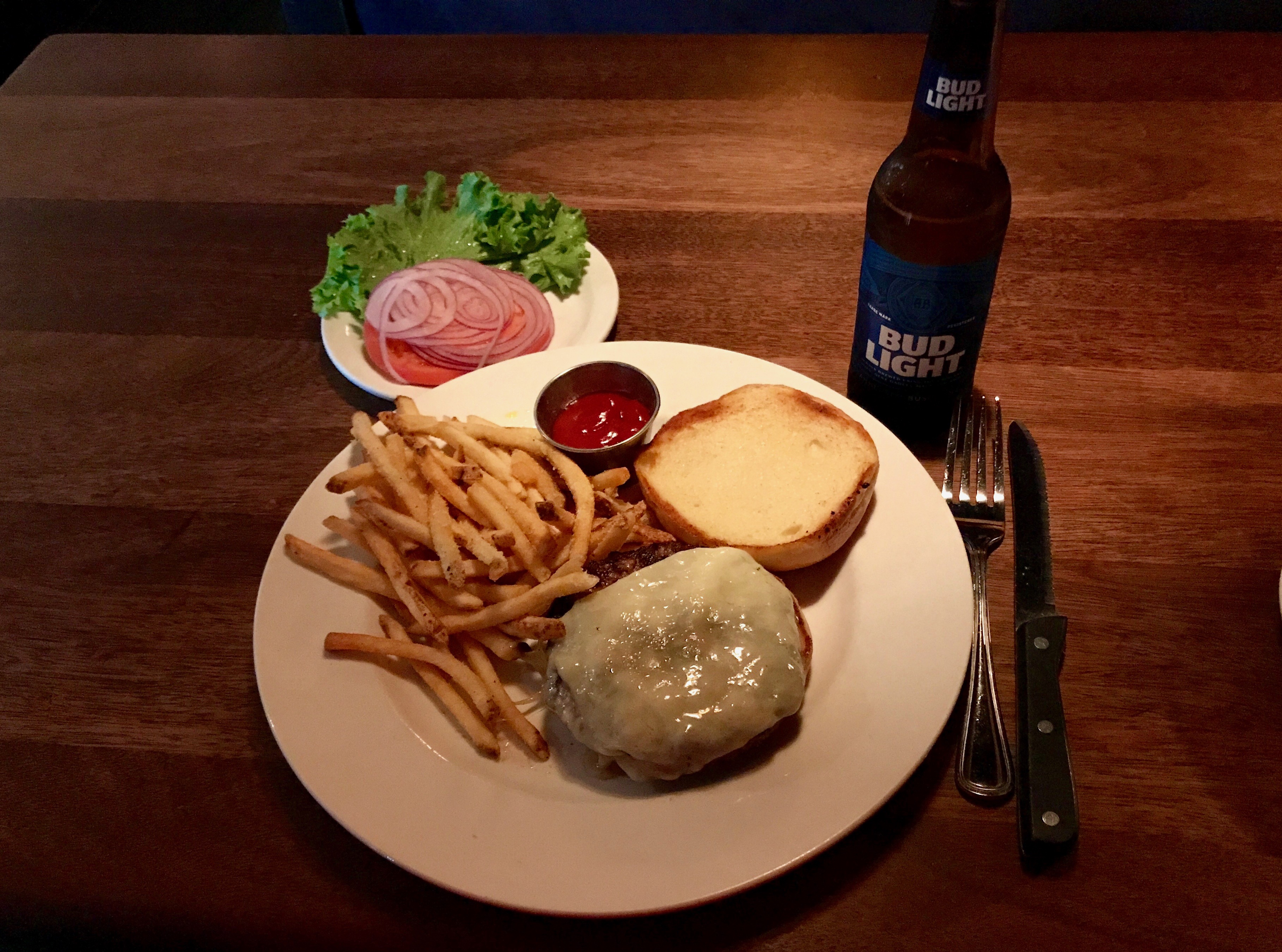
I got a burger. It was good enough to keep body and soul together.
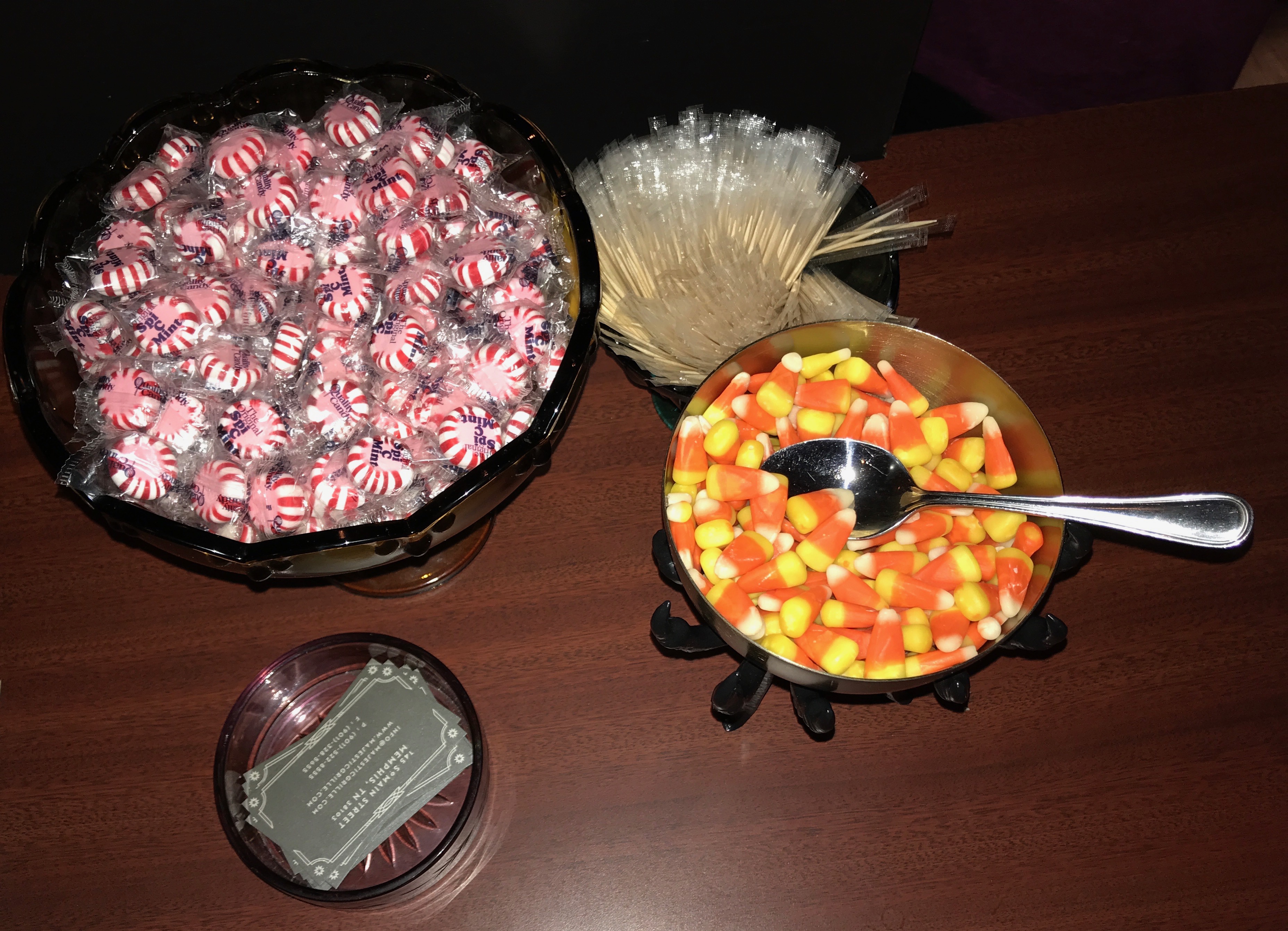
I was impressed with their complimentary toothpick/peppermint/candy corn offerings by the cash register.
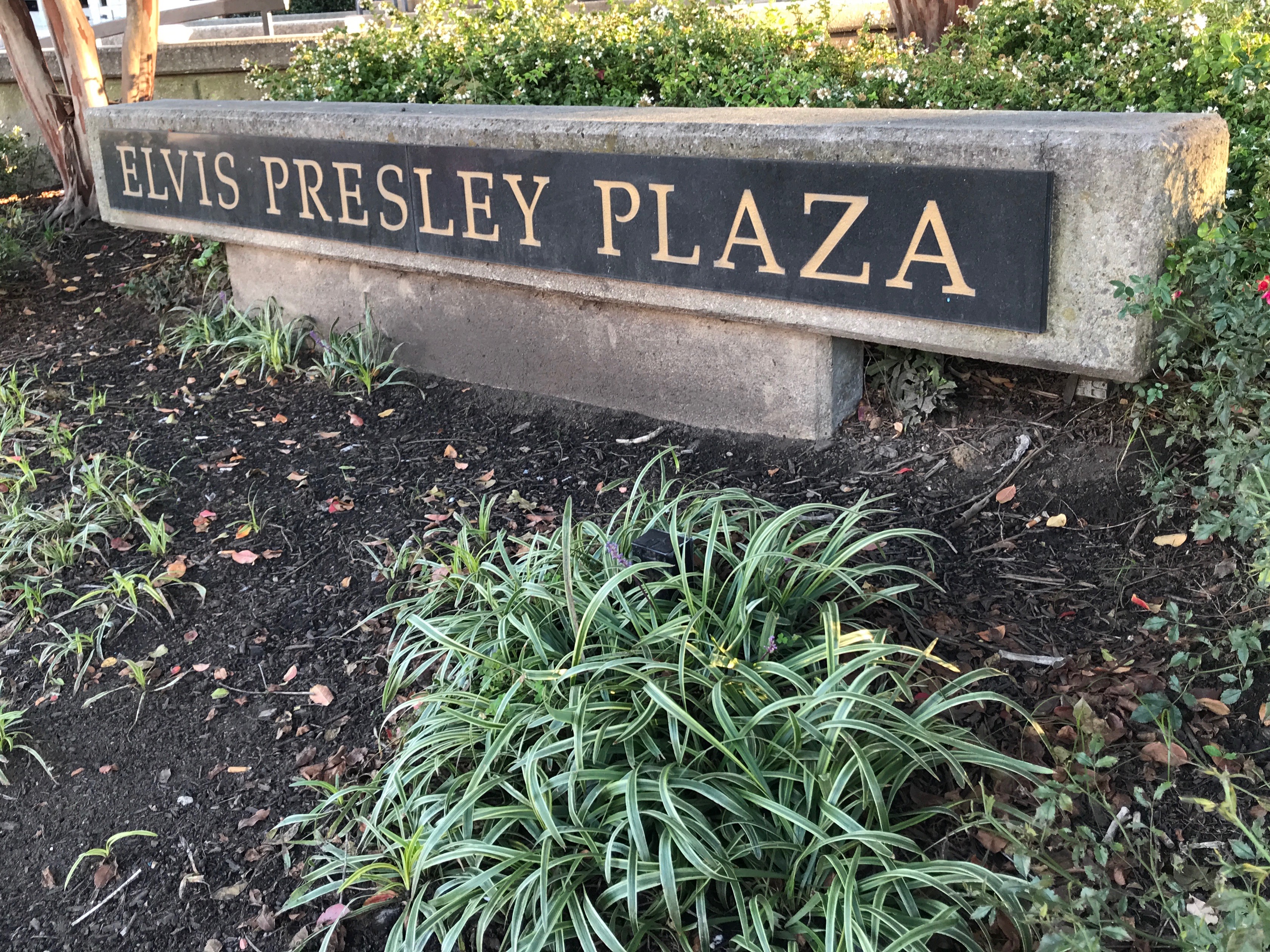
I strolled over to Elvis Presley Plaza.
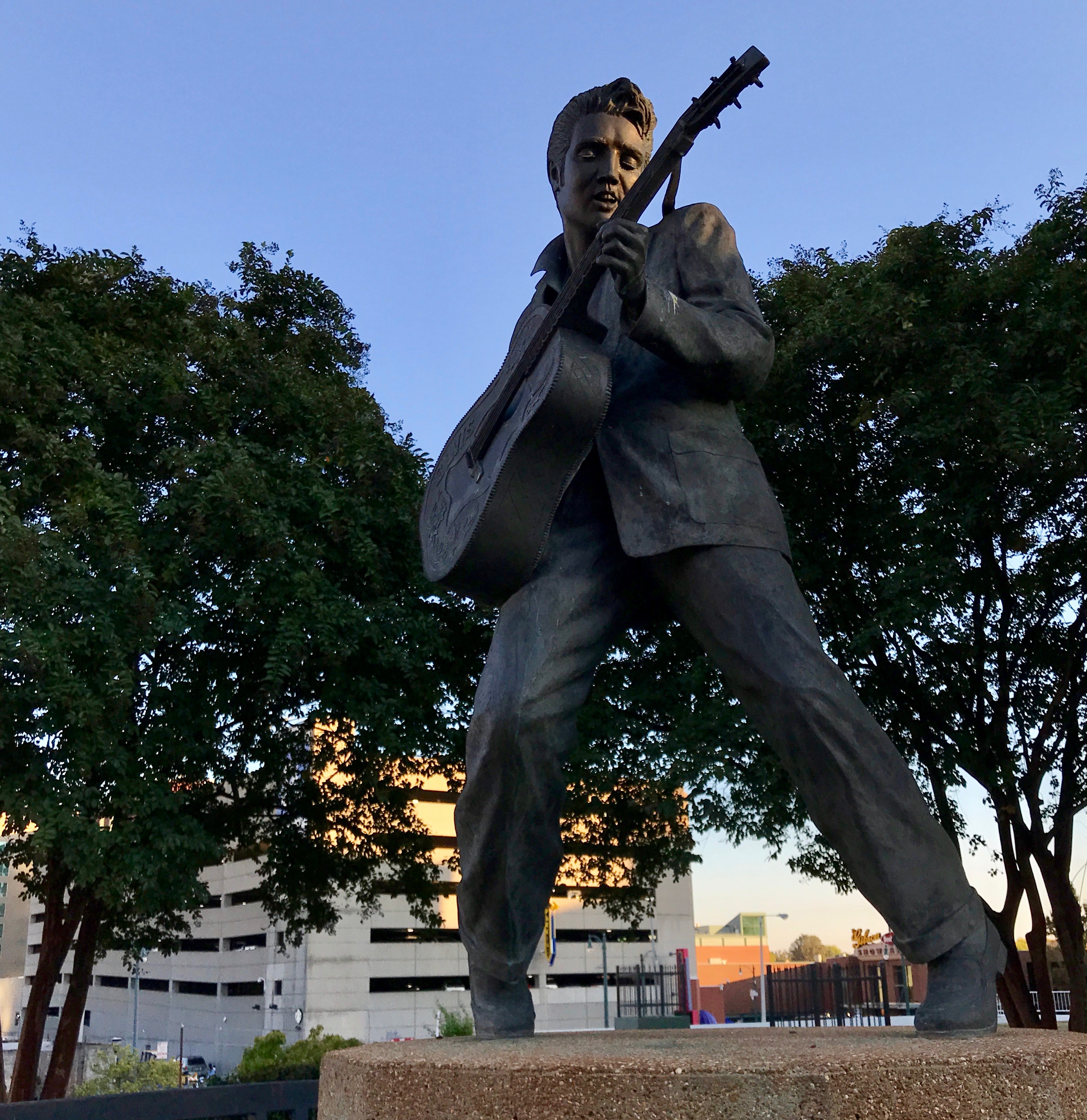
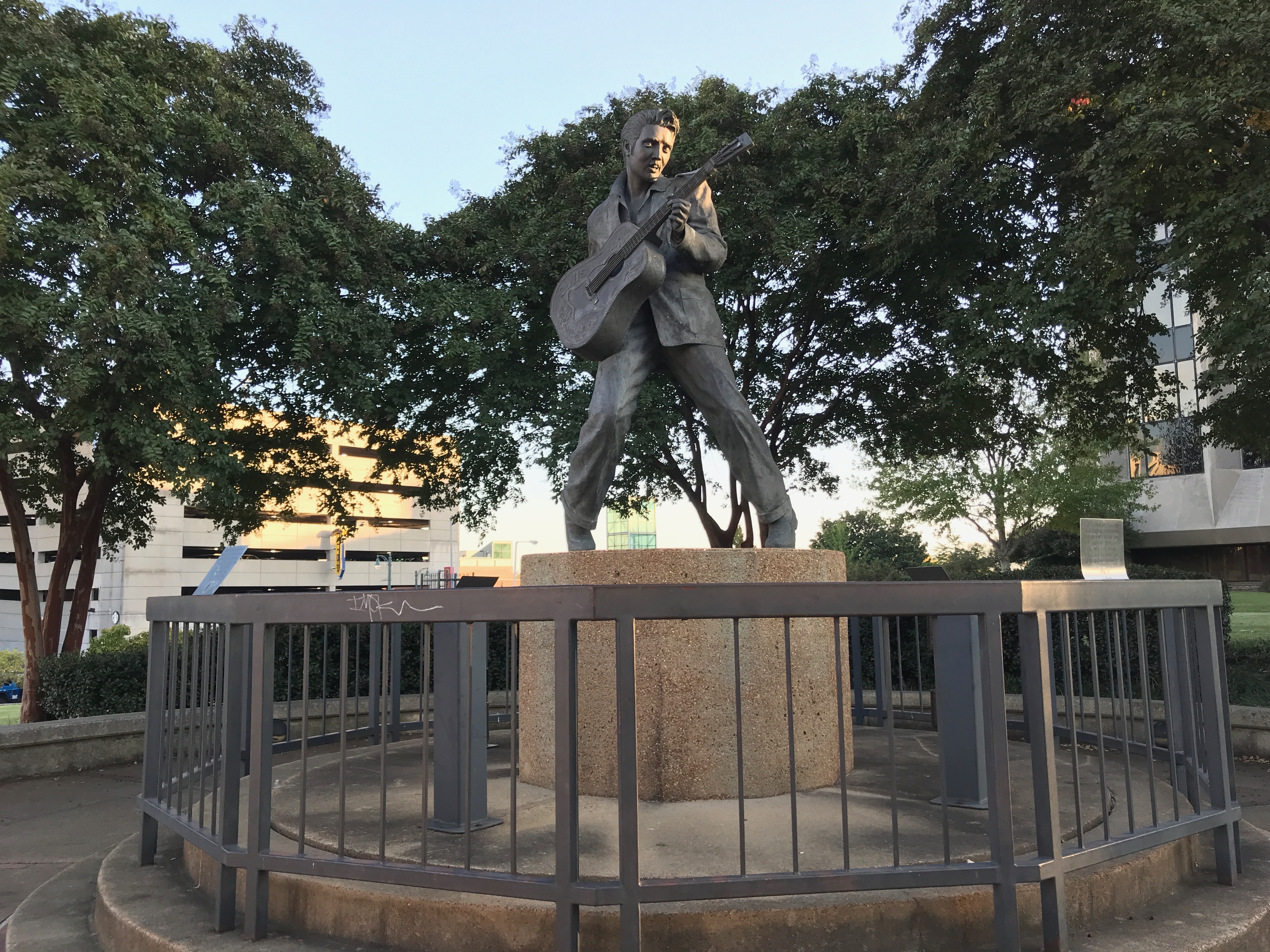
The King!
This is actually the second bronze statue on Beale Street. The first statue by sculptor Eric Parks wasn’t able to stand up to the elements and souvenir-crazed fans. The fans stripped its guitar string and tore the tassels from Elvis’s suit. It was taken down in 1994 and moved indoors to the Memphis T4ennessee Welcome Center.
In 1997, Elvis finally returned to the plaza. Sculptor Andrea Lugar created this statue to show him as he would have looked around 1955, when he played on Beale Street.
This statue was designed to be more sturdy that the previous statue. The fence around the statue helps, too.
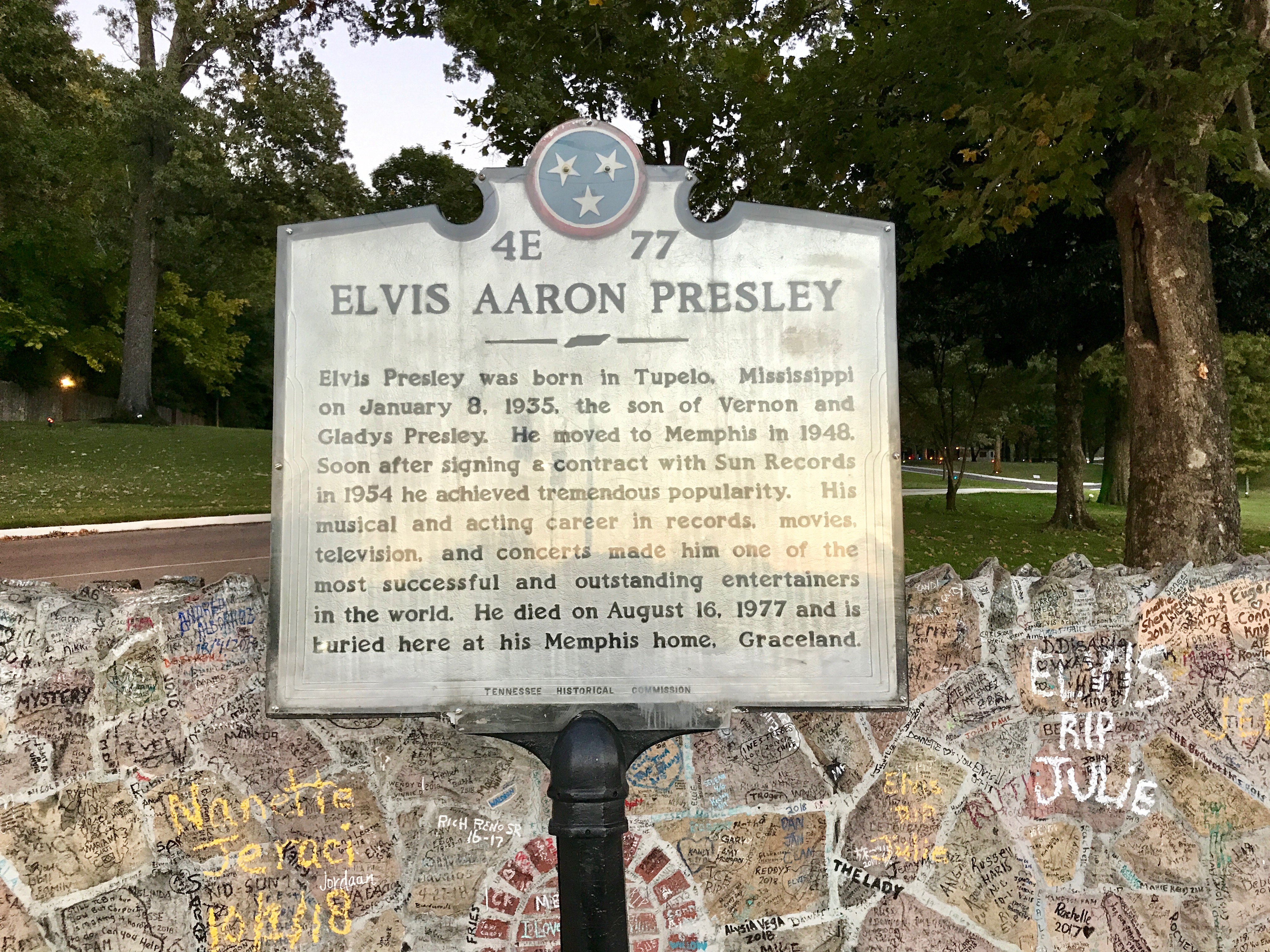
At this point, I decided I ought to go visit Graceland. Well, actually, I had no interest is paying to visit Graceland. The basic ticket is $41! But, it doesn’t cost anything to drive over and look.
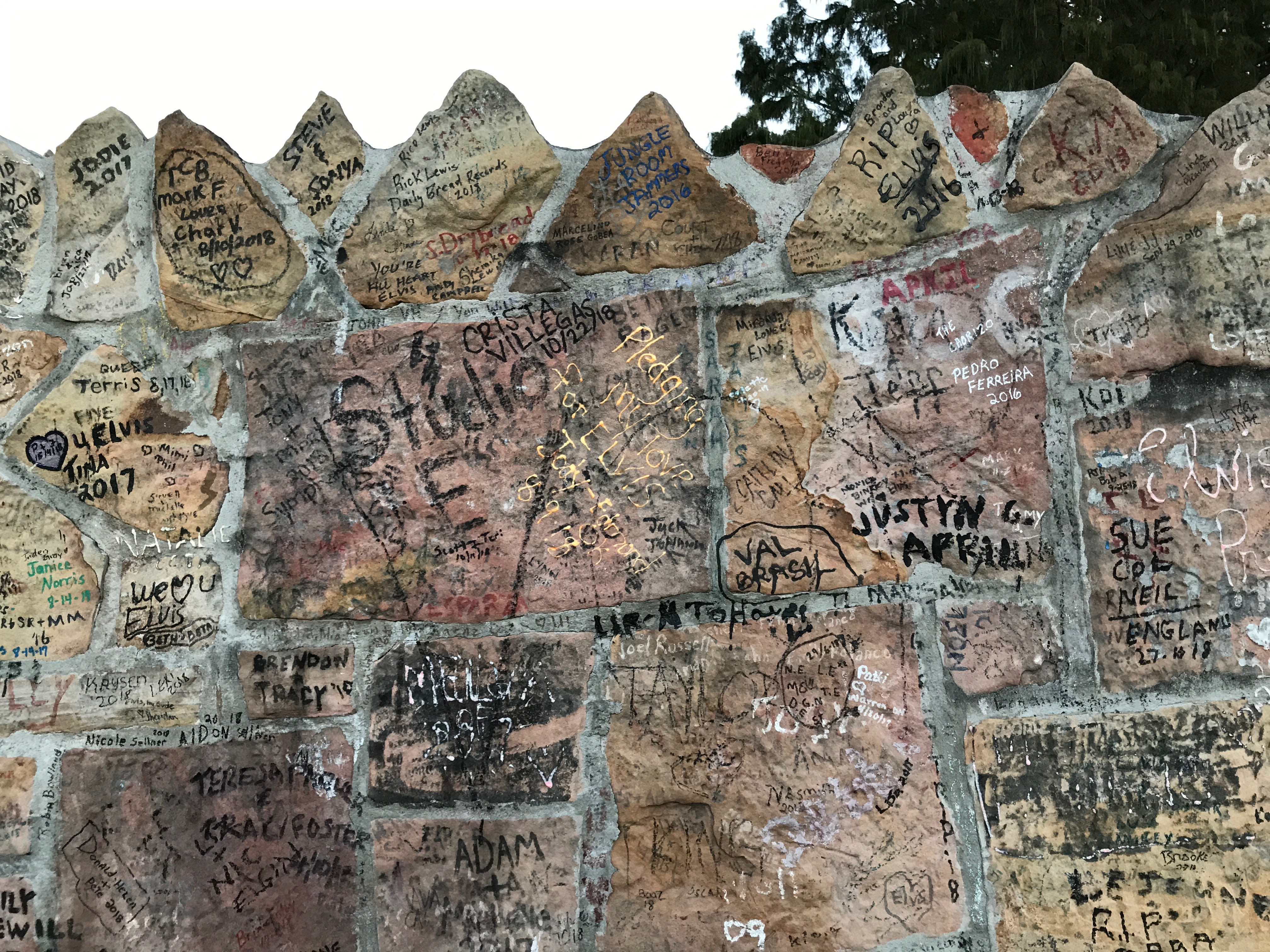
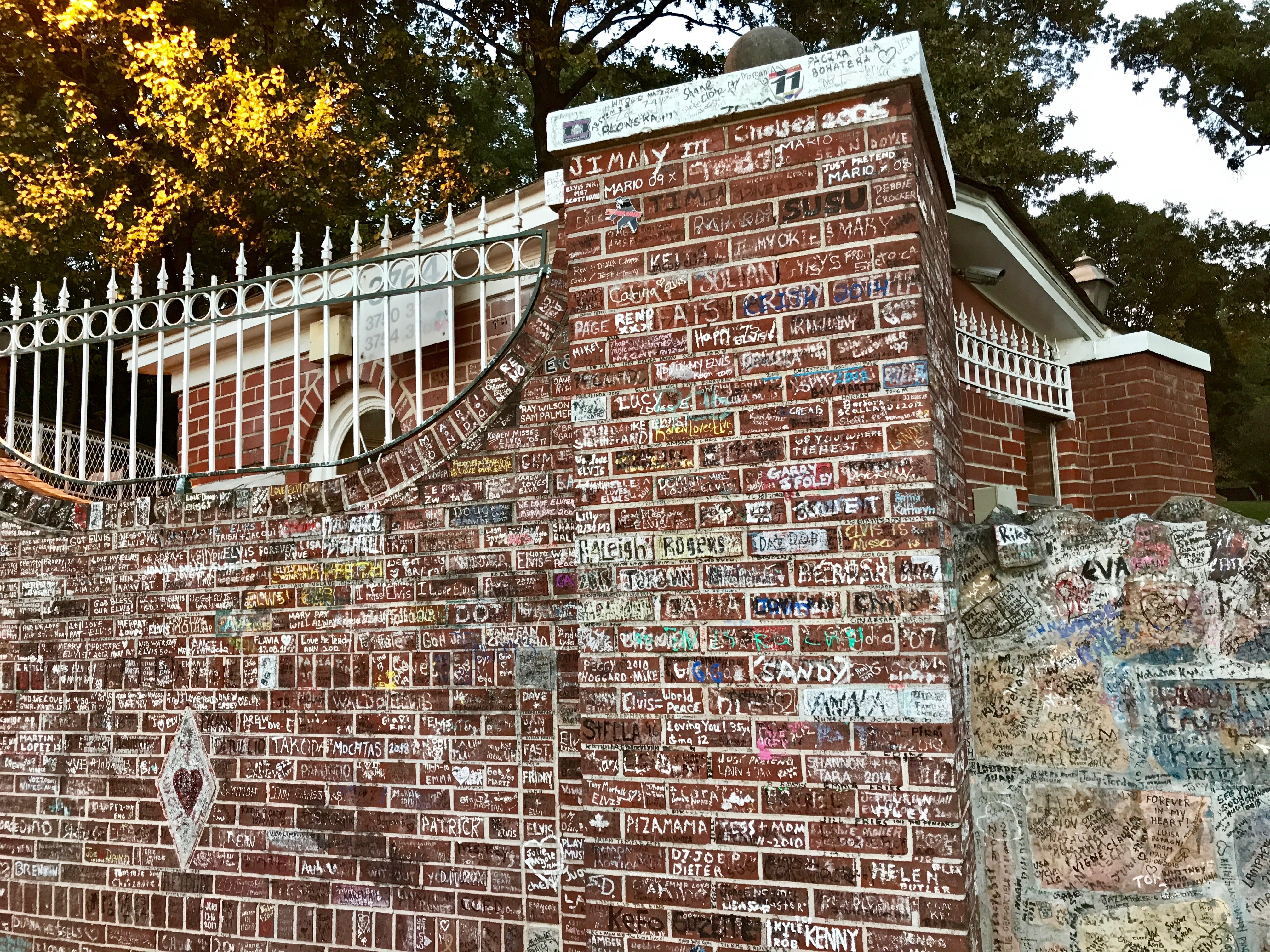
The thing that really caught my attention is the graffiti.
Fans would write on the stones in the wall.
The bricks in the wall.
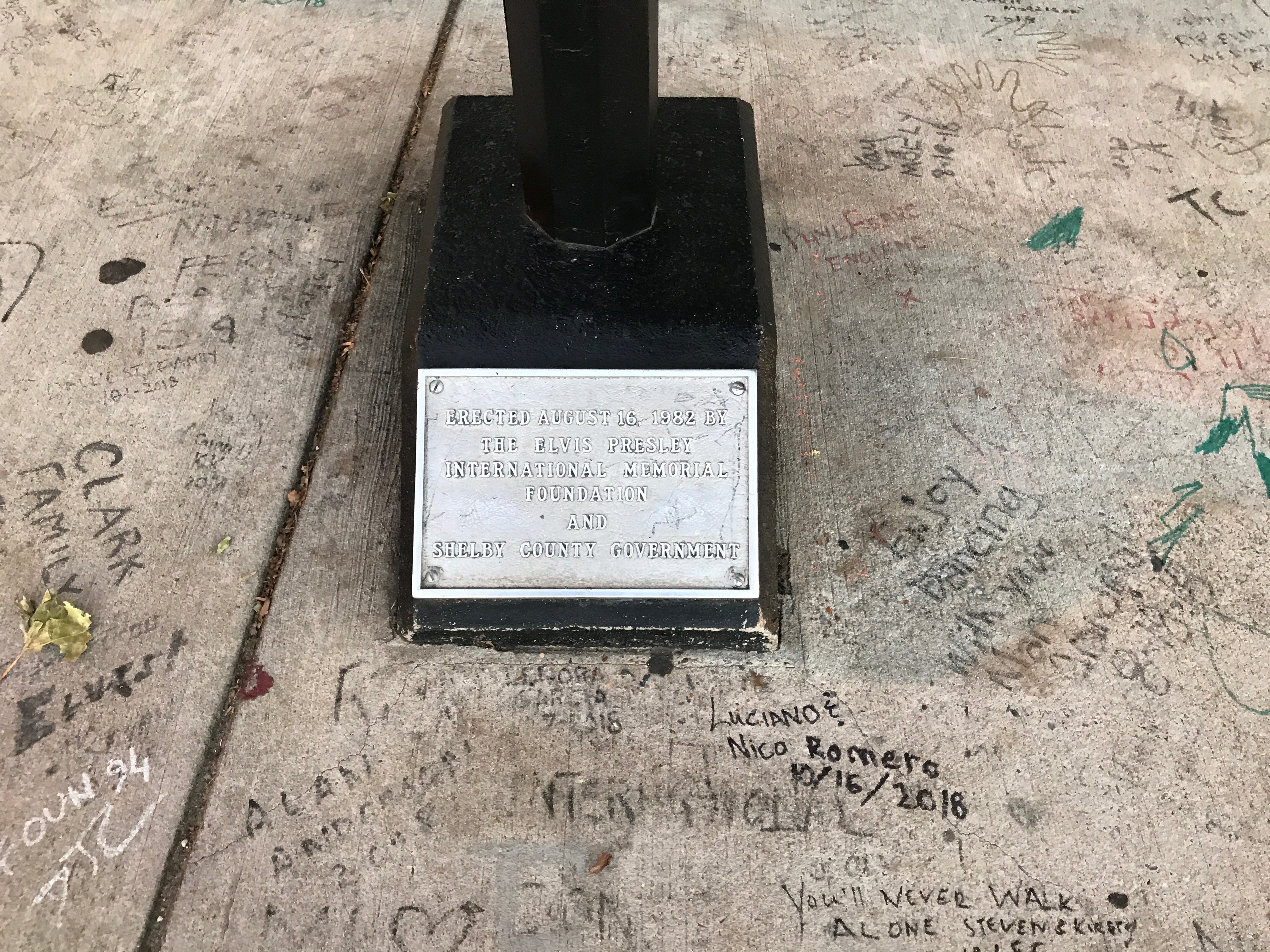
They even wrote on the sidewalk.
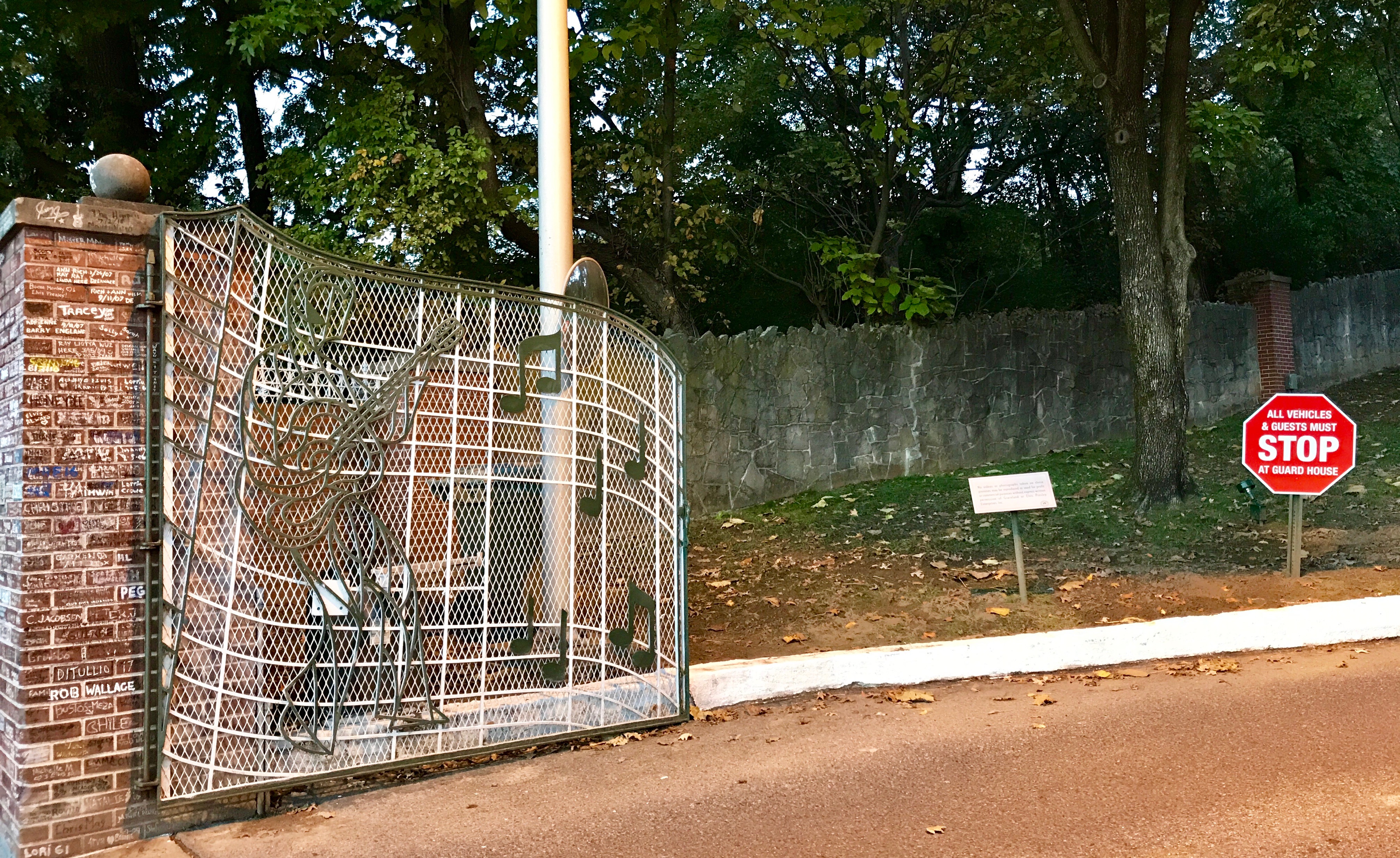
The gates were Elvis-themed.
I couldn’t go past the gates. If I had wanted to to go inside, you can go visit the Mediation Garden every day FOR FREE from 7:30-8:30. Elvis, who died in 1977, and members of his family are buried there.
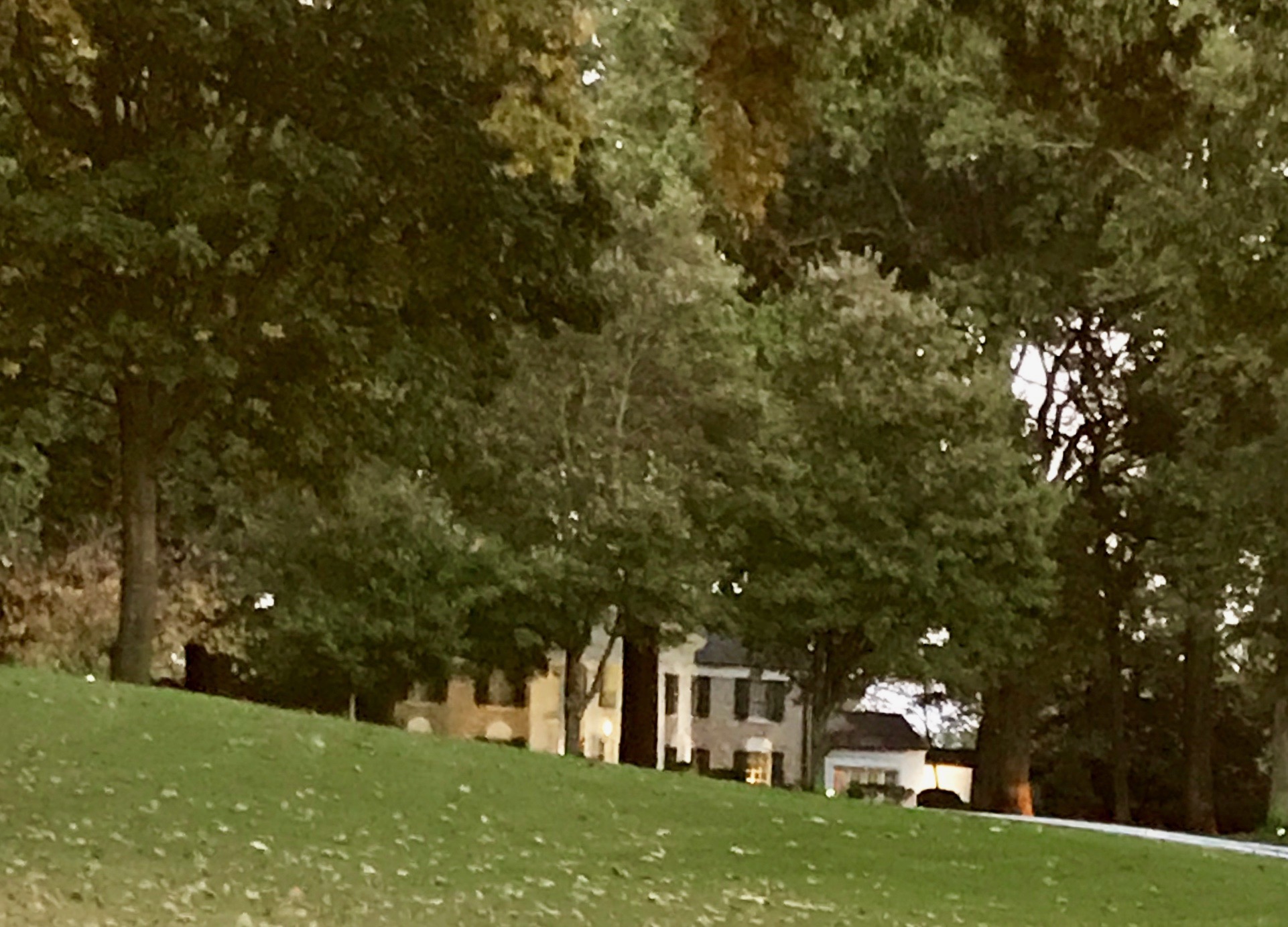
Looking carefully (and zooming in) I could see Graceland. That was good enough for me!
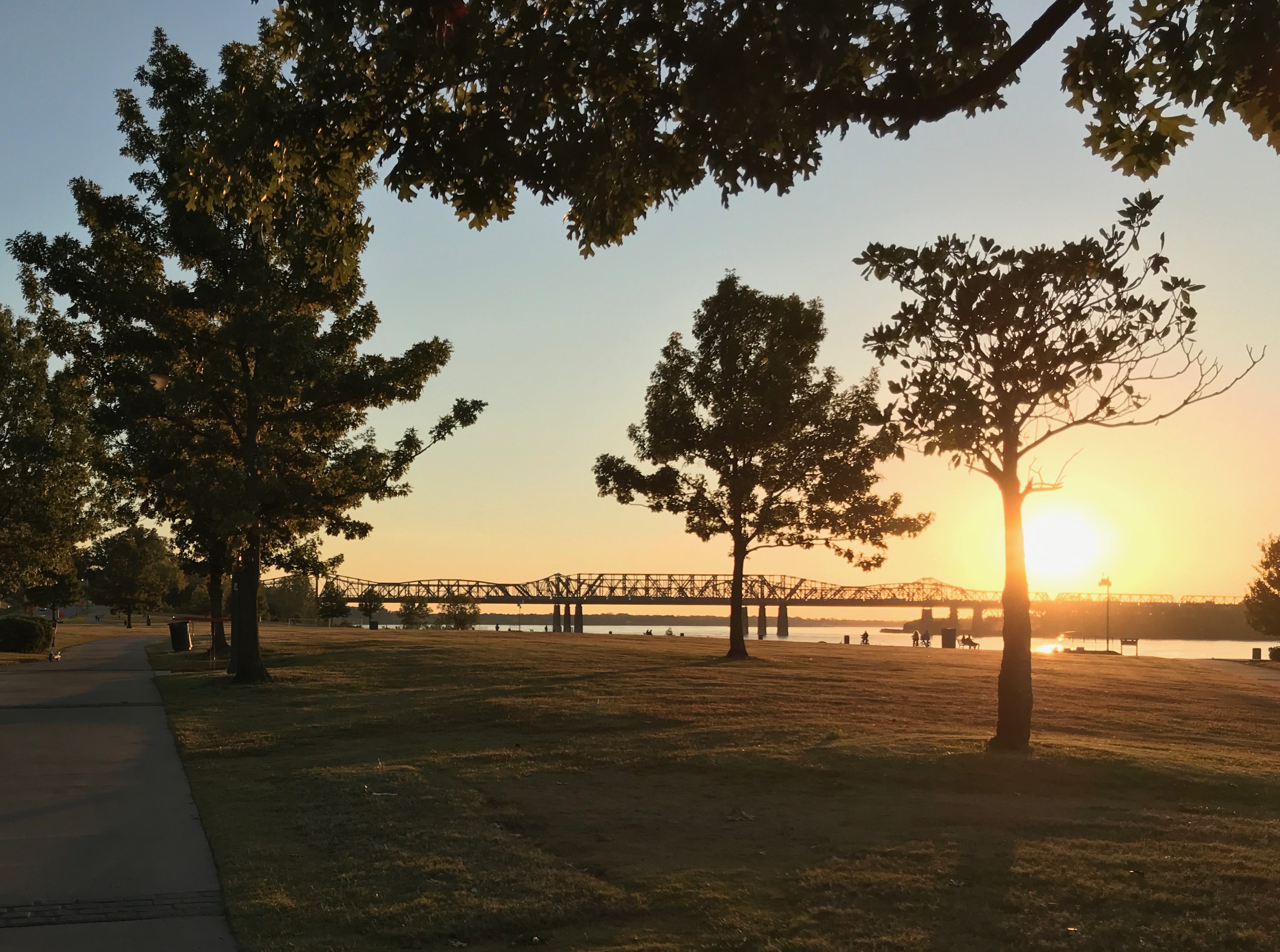
I headed over to the river to watch the sun set over the Mississippi.
One of the things on “The List” was to see the ducks at The Peabody Hotel. When I taught third grade, I had this book by Patricia Polacco in my library. It was based on the ducks that live-in the fountain at The Peabody Hotel.
Naturally, The Peabody was on my list for Memphis.
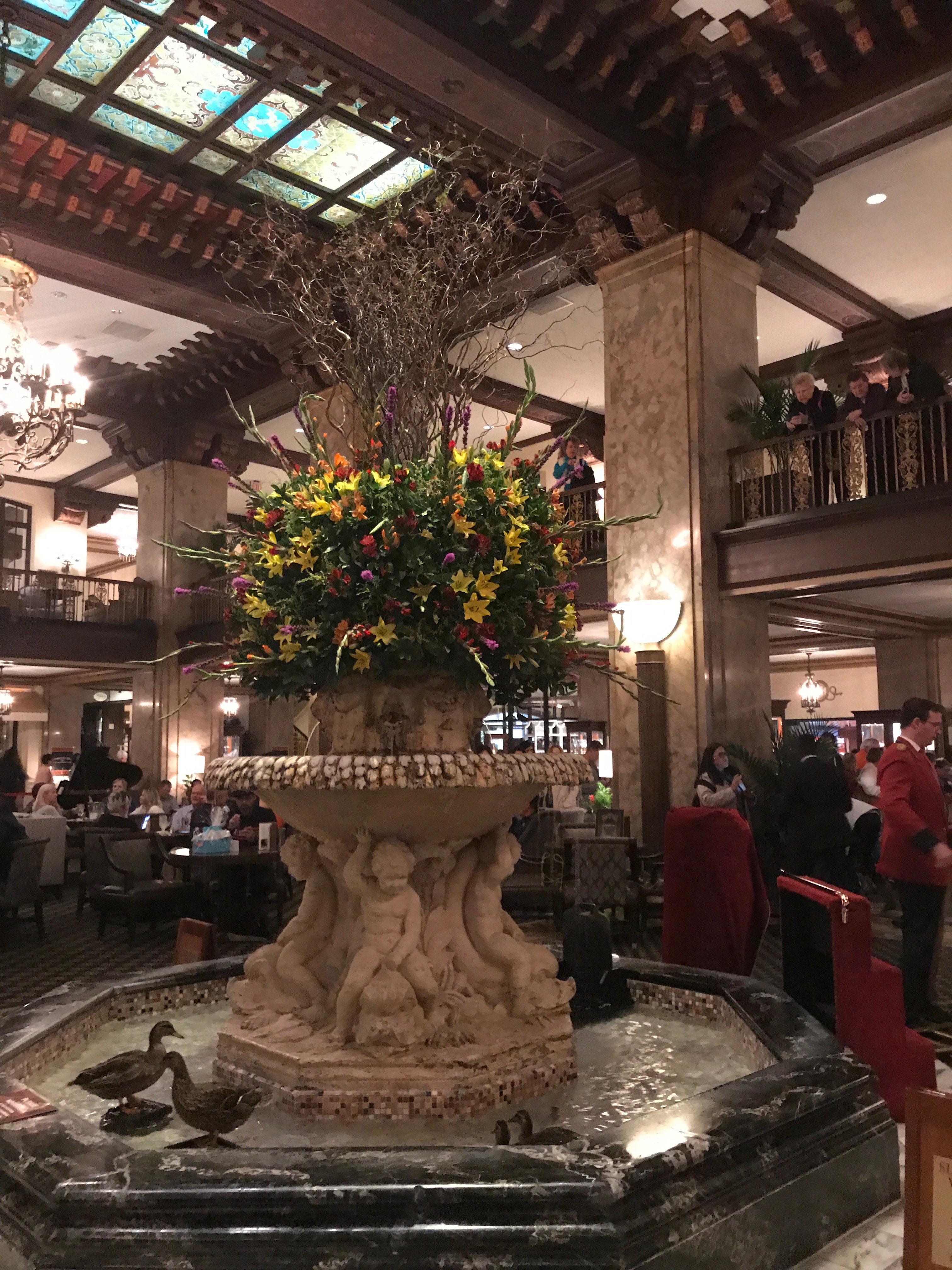
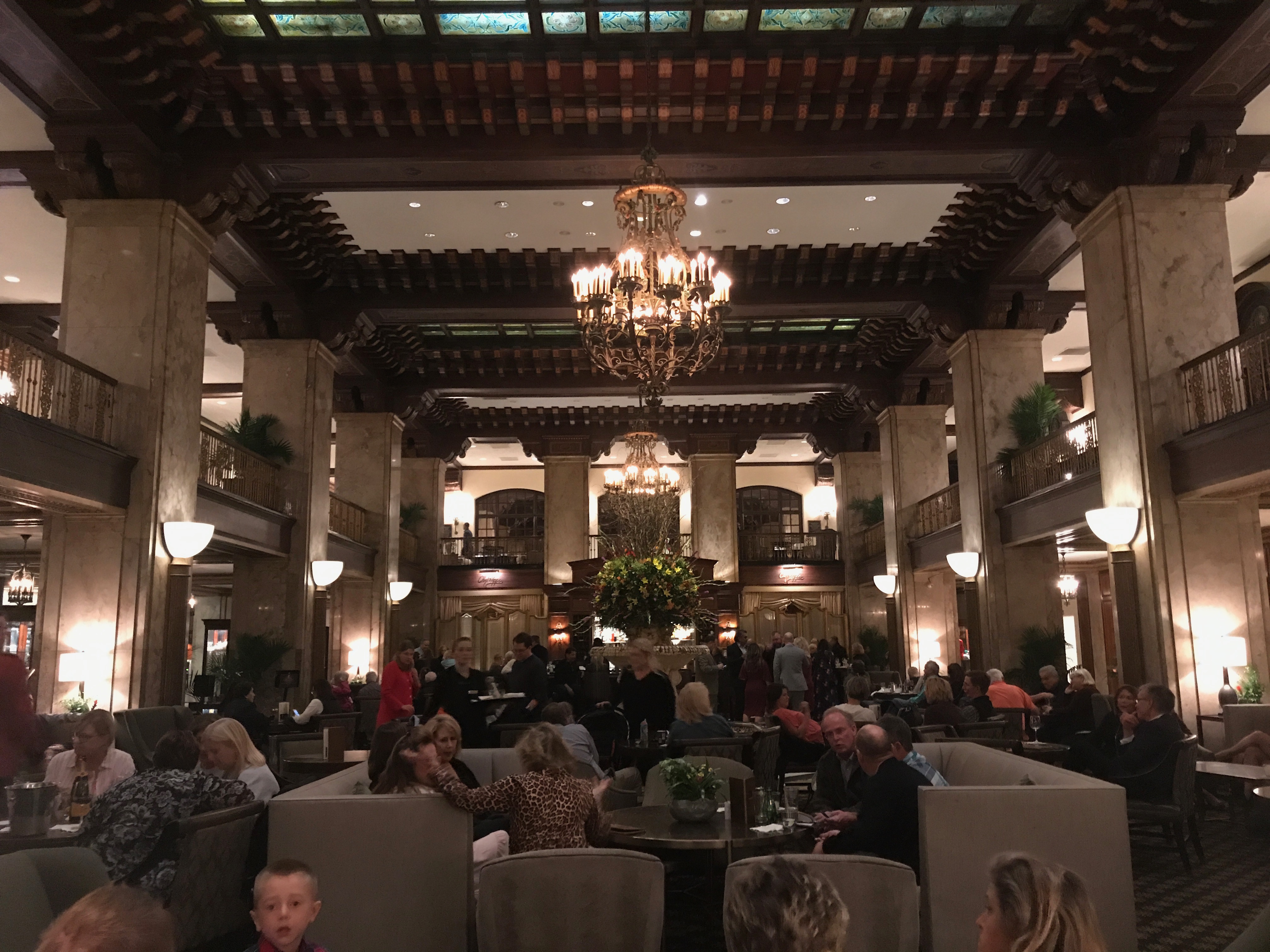
I love big, fancy hotels. I love their elegant lobbies.
The Peabody’s lobby’s centerpiece is this fountain, complete with ducks.
It was crowded, but I managed to find some friendly people who let me squeeze in to their bench area. I find the nicest people wherever I go.
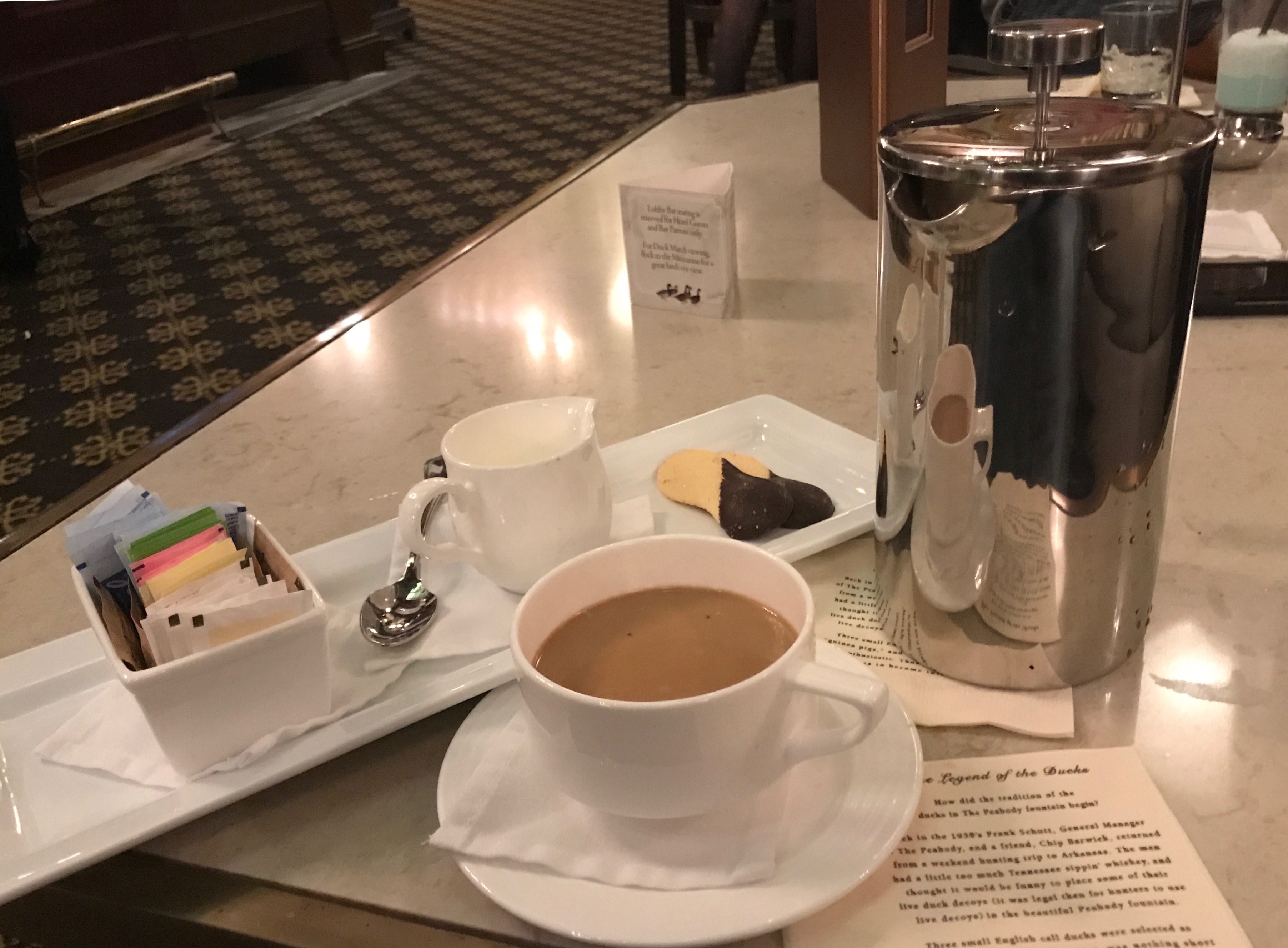
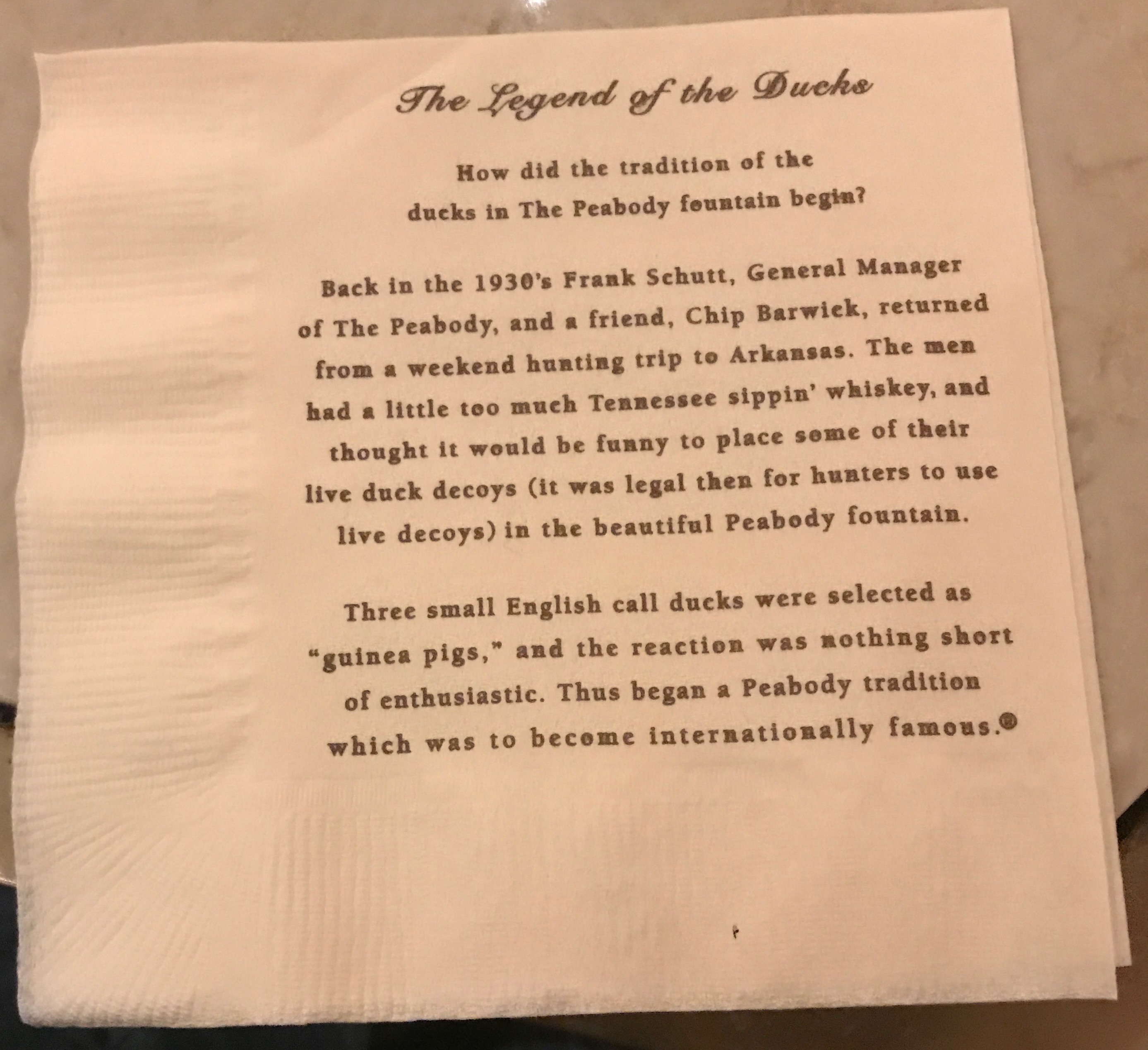
They had The Legend of the Ducks printed on their napkins.
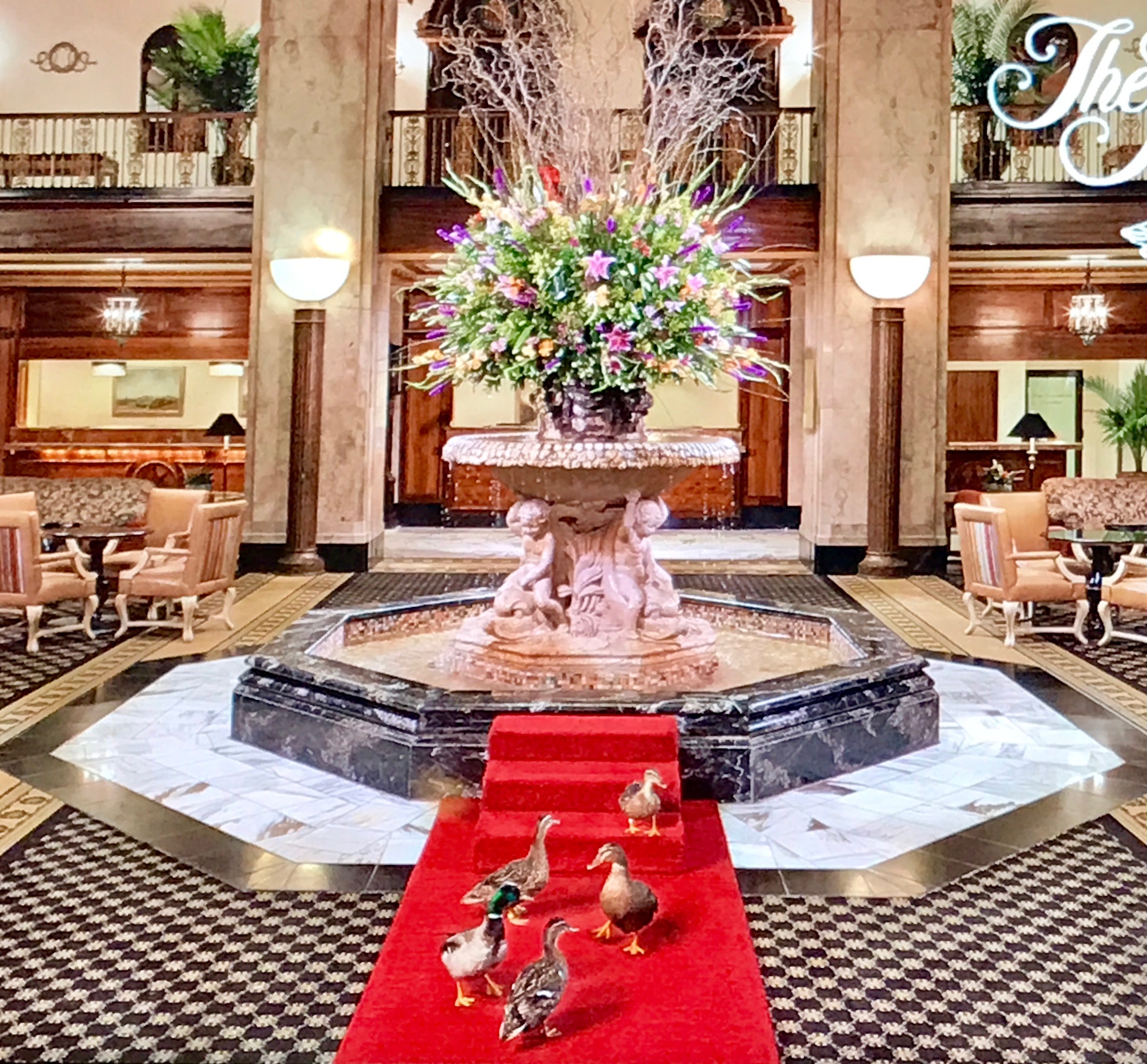
They had a publicity photo framed and hanging on the wall. How can you tell the photo was staged? No people!
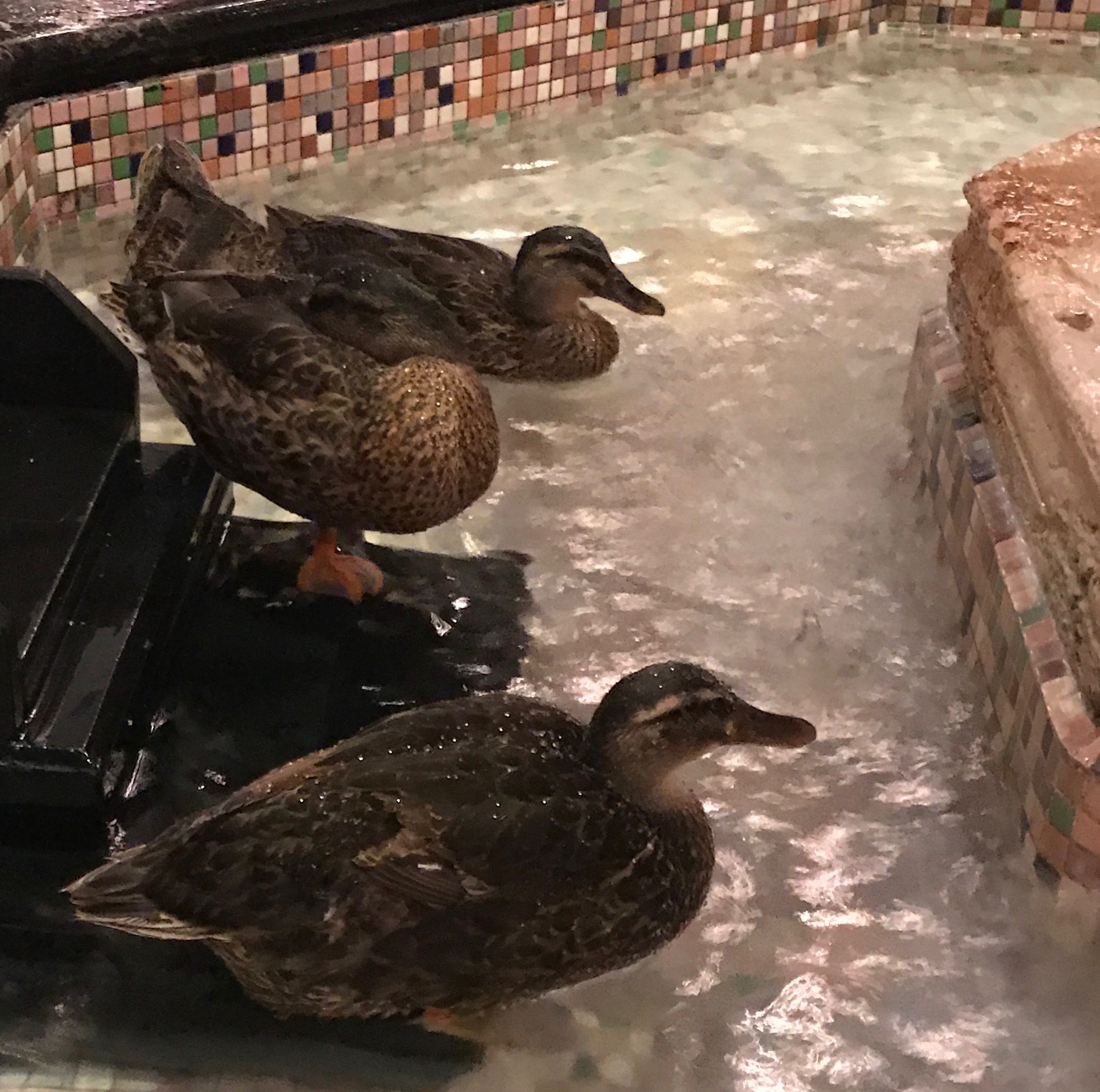
You could see the ducks, if you walked over to the fountain. And, when I crop it just so, I have a photo of ducks without people.
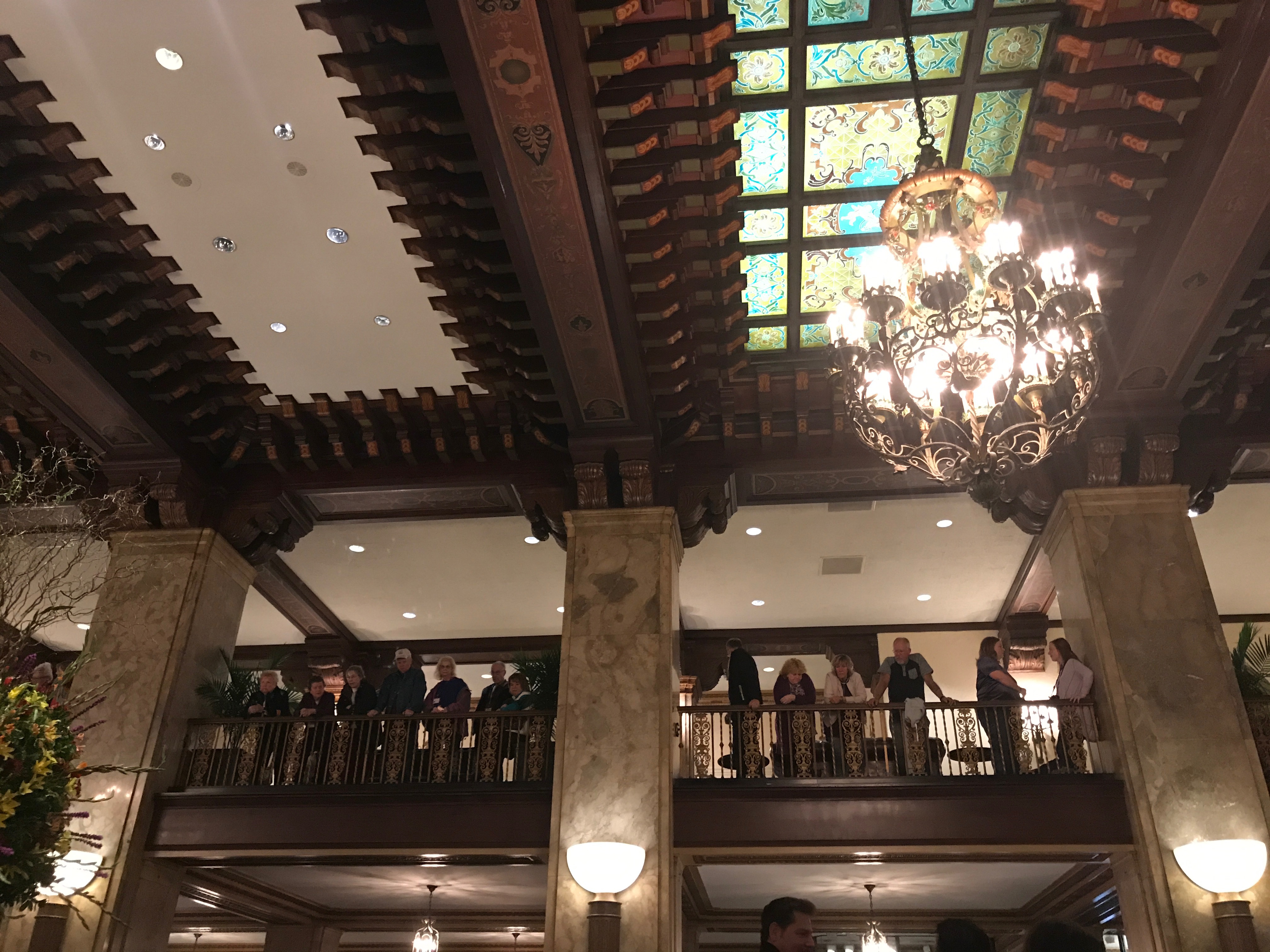
There were people everywhere. Up one the second floor looking down.
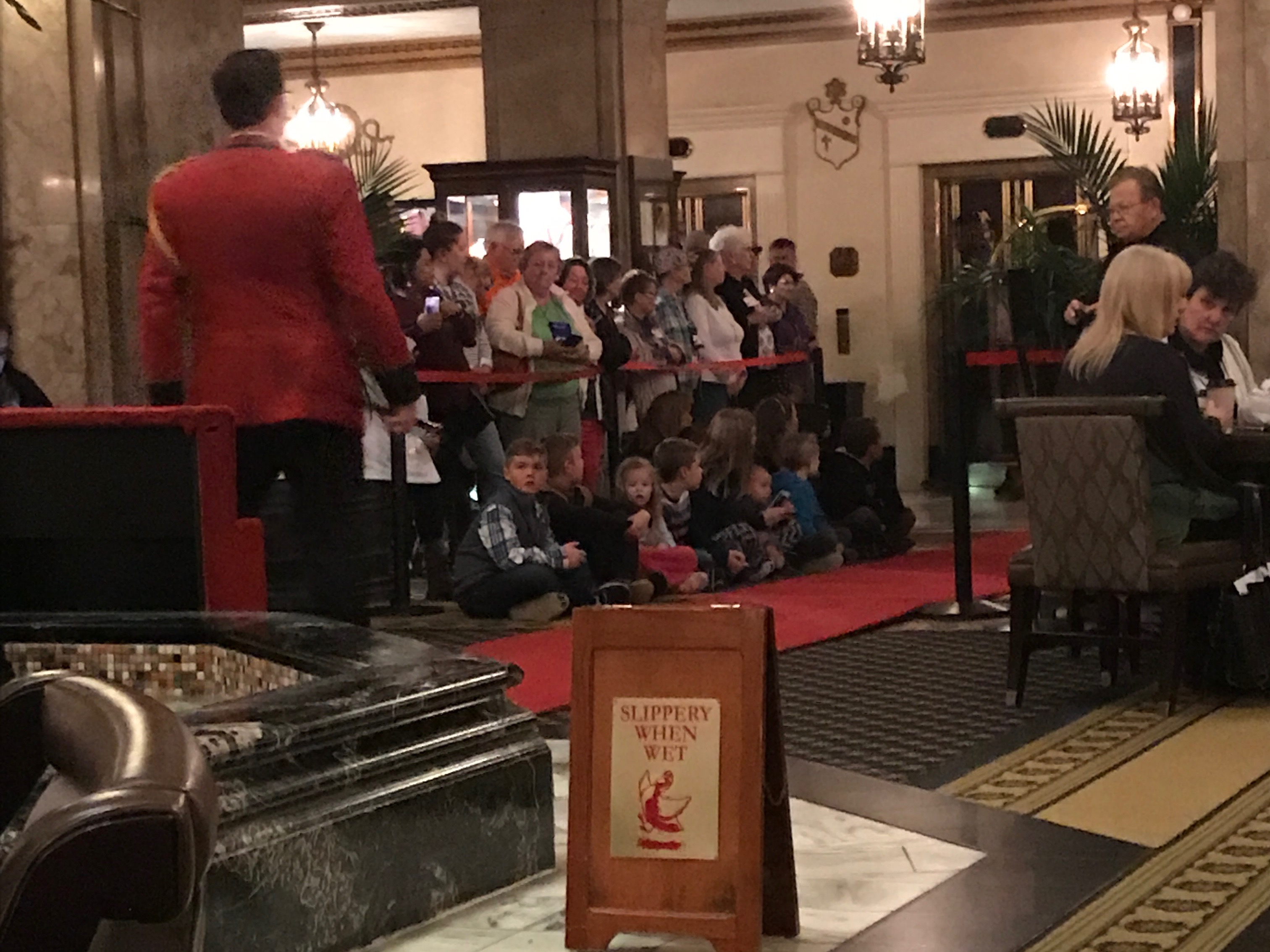
They had a special area for the kids to get an up close and personal view of the ducks marking out. The duckmaster was telling us about the history of the ducks in the lobby.
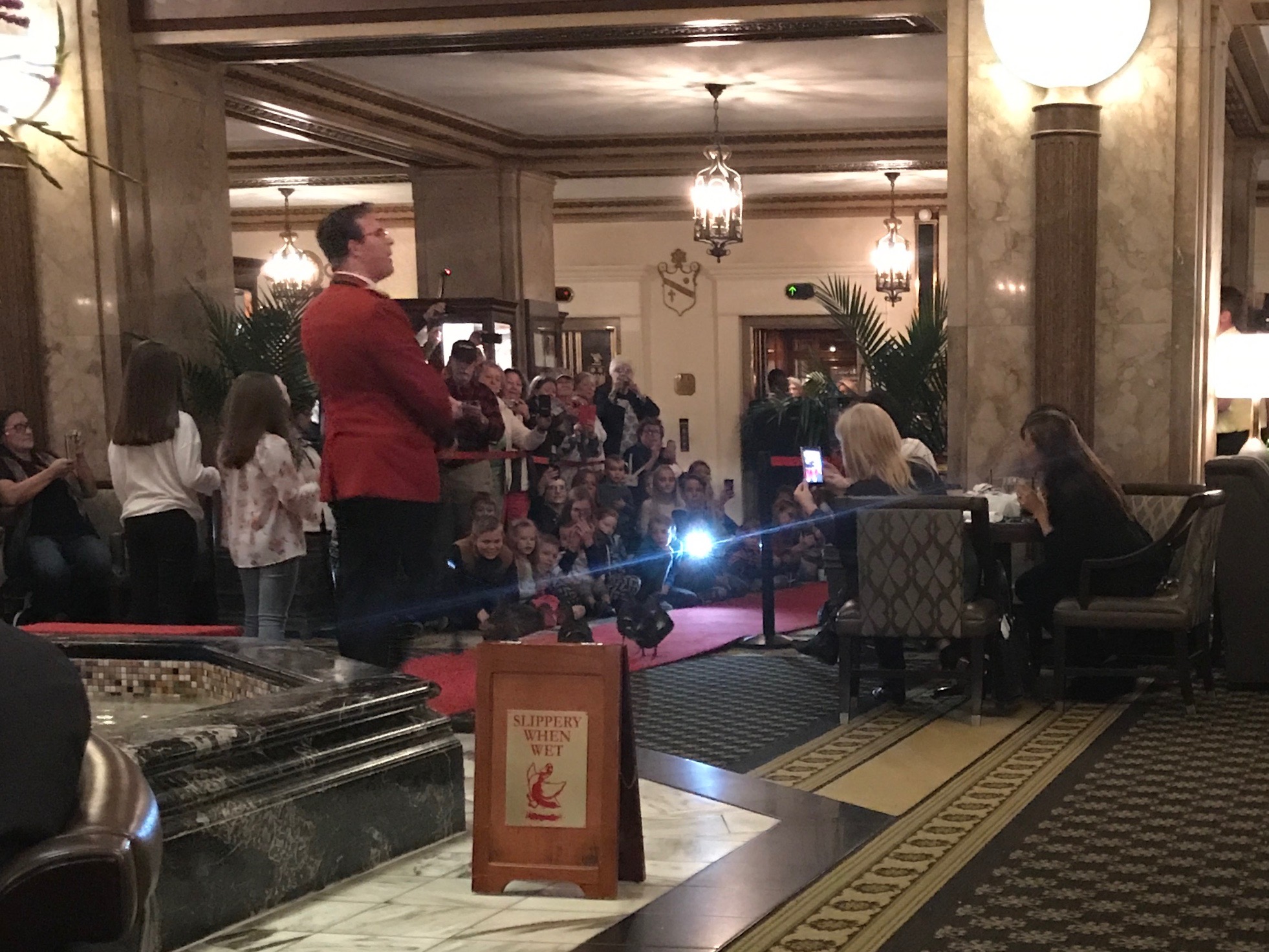
He recruited some assistants to help him escort the ducks to their overnight accommodations in the duck palace on the roof.
The ducks are marching down the red carpet and into the elevator.
I stopped in the restroom after the show. I thought the duck motif on the towels was a nice touch.
I took one last look back at the lobby and went on to my next adventure.
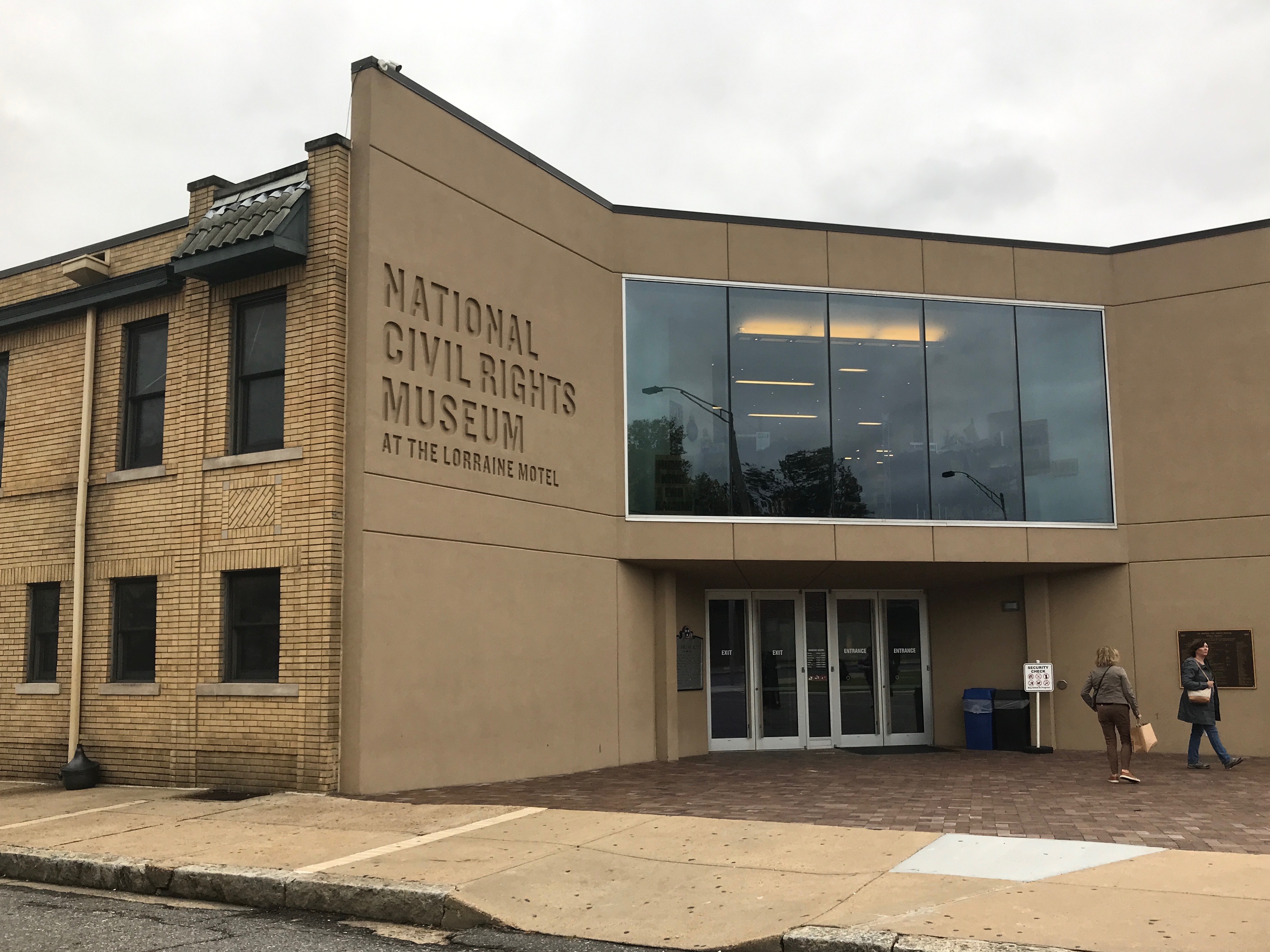
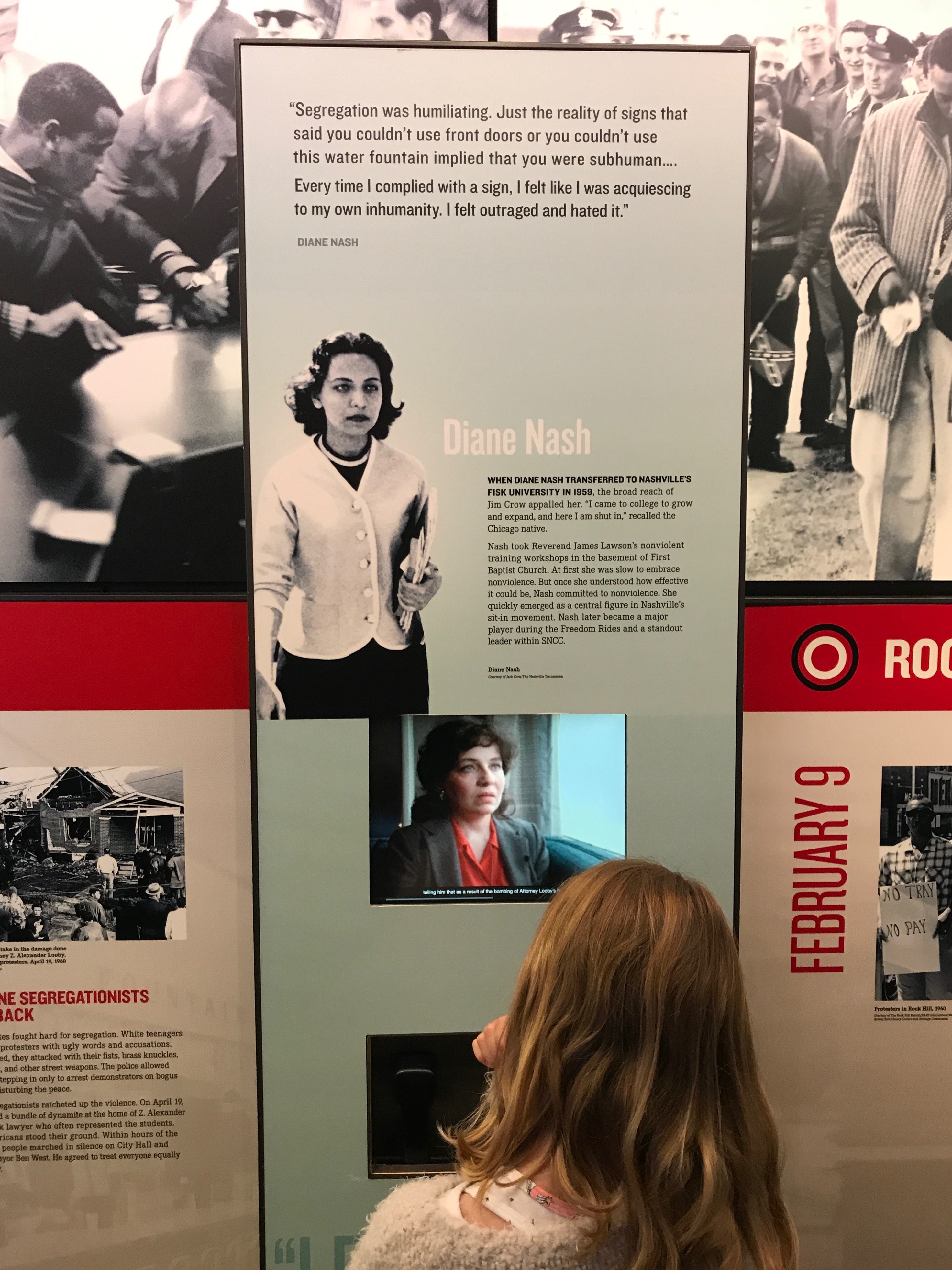
The museum has a wide range of exhibits that meet many learning styles. There are a lot of things to read, but there are also videos and recordings, as well as artifacts.
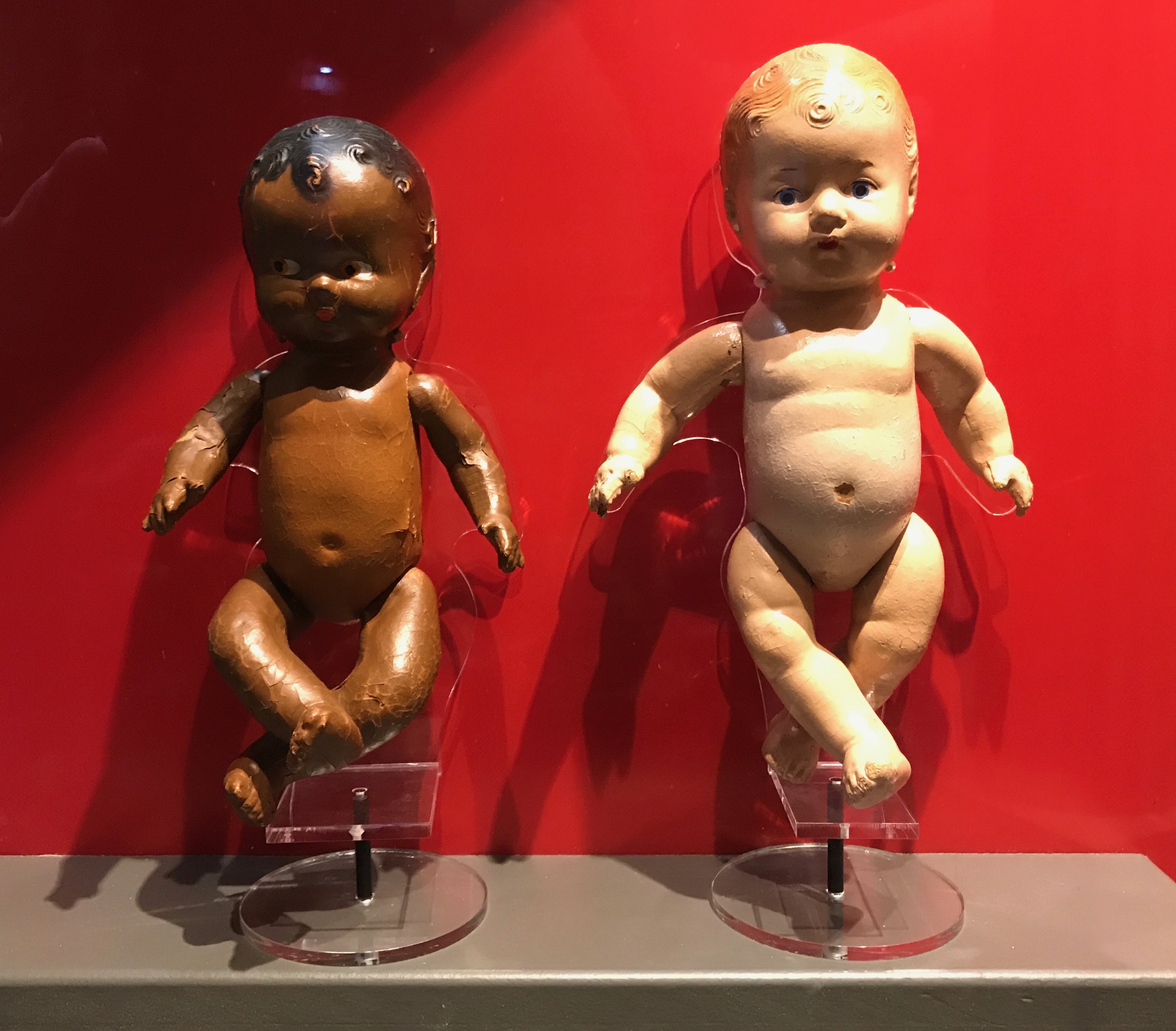
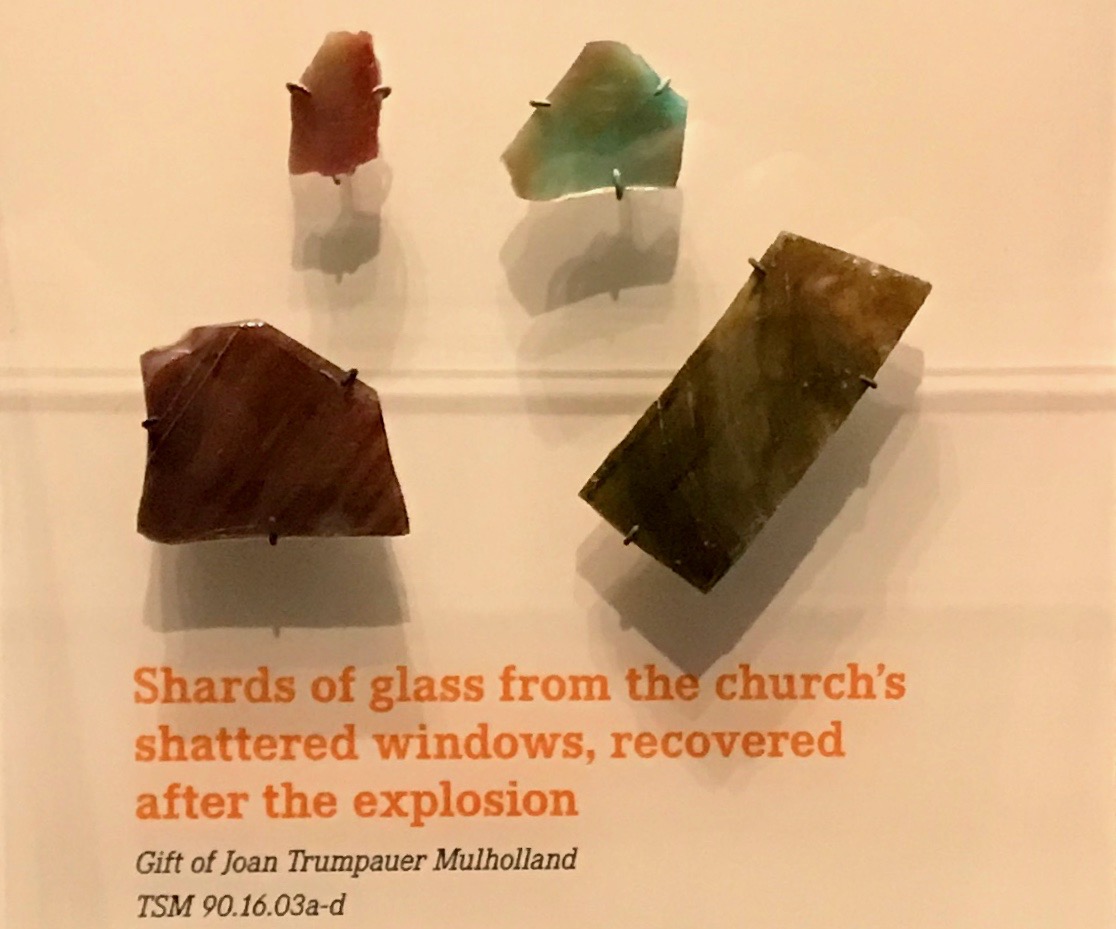
I was particularly interested in this display.
According to the text in the display, in arguing the Brown v Board of Education case, the NAACP legal team held that segregated schools negatively affected how black children saw themselves. To prove the point they called on black psychologists Kenneth and Mamie Clark, who had been studying the effects of segregation on black children since the late 1940s. Their research, based partly in what became known as the “doll test,” showed that segregated schools created “a sense of inferiority and self-hatred” in black children.
I’m not sure if these were the exact dolls they used or if they were replicas.
The Clarks used the dolls with children aged three to seven and asked them questions about the dolls. Most children preferred the white doll and described its attributes positively.
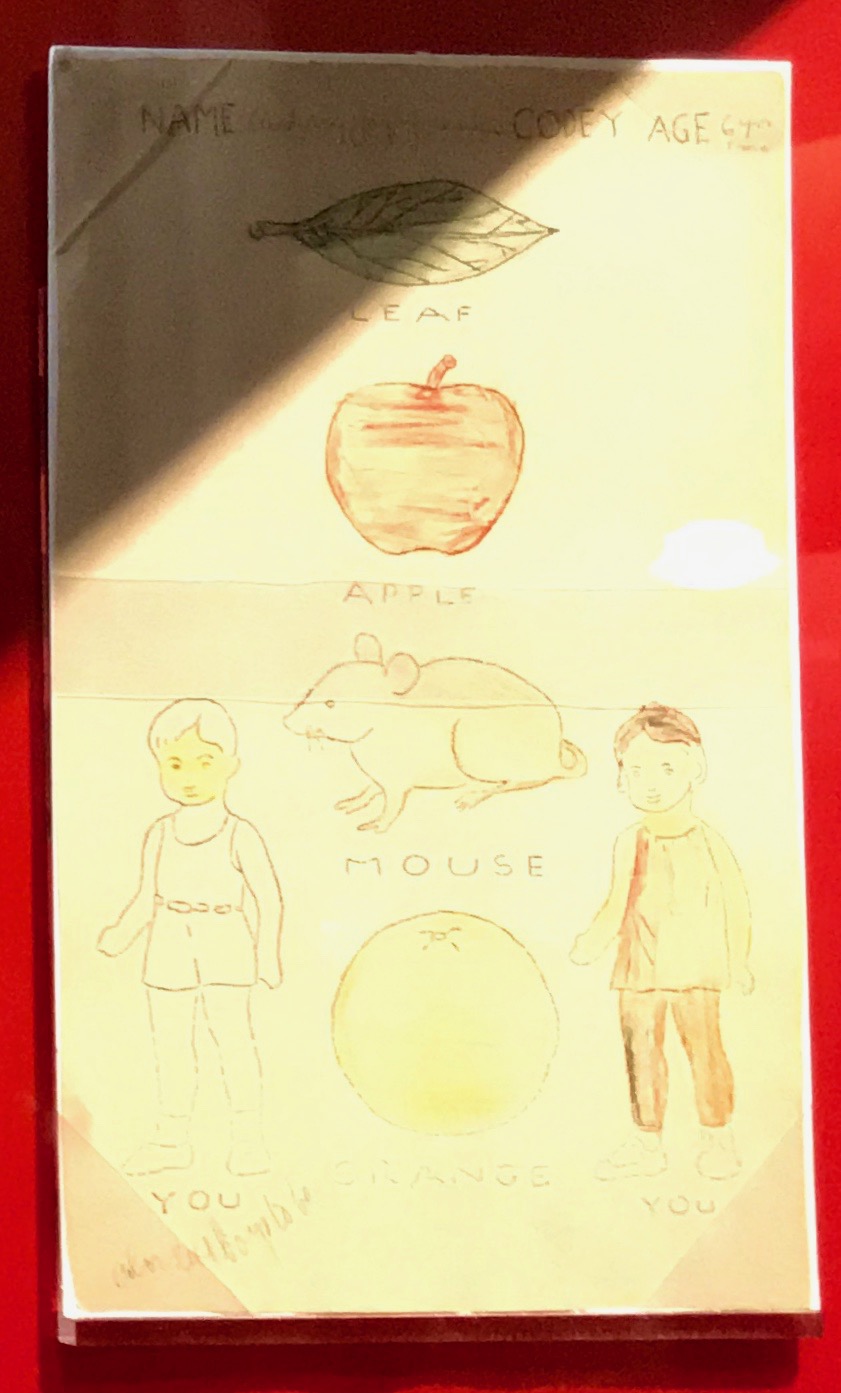
The Clarks also asked children to color in drawings using the same color as themselves. Many dark-complexioned children chose light colored crayons, such as yellow and white.
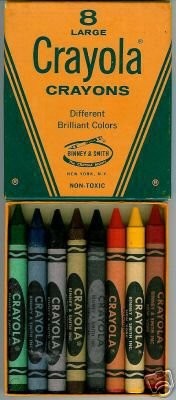
Just a sidebar: When I was a child just starting school and we were directed to draw ourselves, I always selected the yellow crayon out of the eight pack of Crayolas that we had to work with.
Apparently, the “correct” color for white kids in 1960 was orange.
A classmate made fun of me. “Are you a Jap?”
I guess we weren’t that far removed from World War II – and a good ways away from common decency.
Anyway, back to the museum.
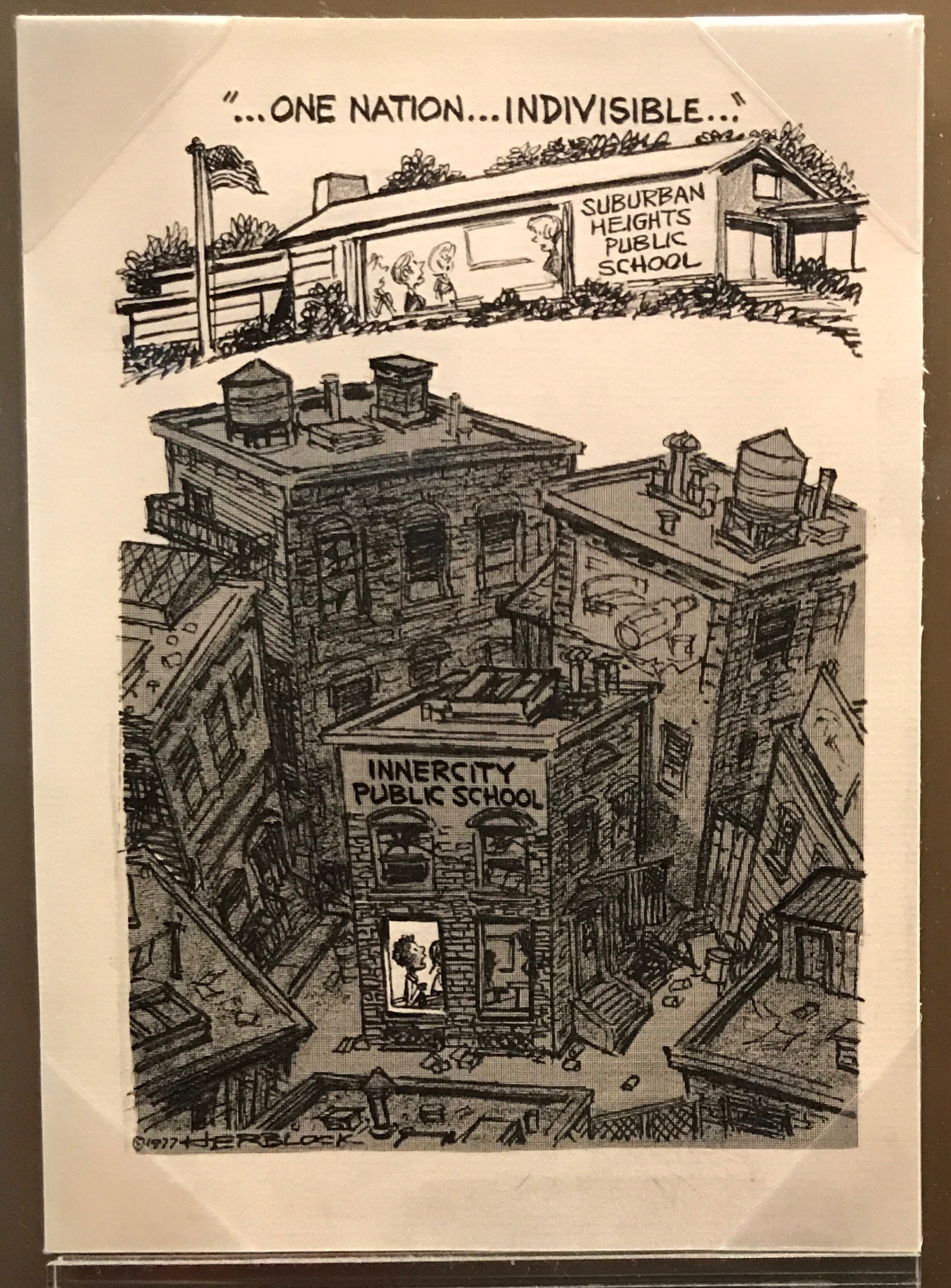
This political cartoon was published in The Washington Post, February 22, 1977.
As the Brown verdict was increasingly enforced in classrooms across the country, some white parents resorted to a drastic measure to keep their children from attending integrated schools: they moved to the white suburbs. Segregation actually increased after 1954 as a result of “white flight.”
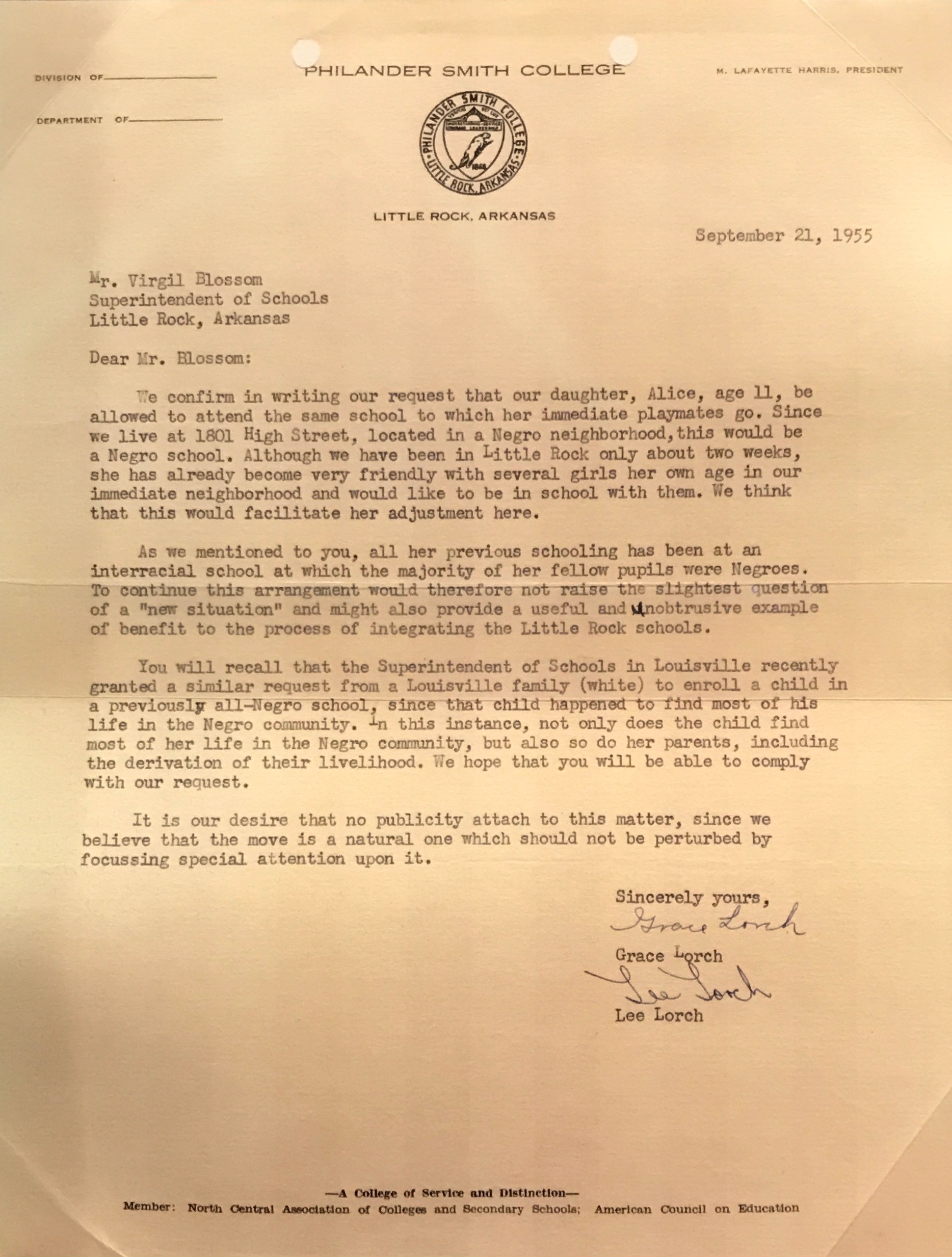
I do find it heartening that not all white families fled to the suburbs. This letter, written in 1955, documented the request of the parents of Alice Lorch that she be allowed to enroll in the neighborhood school that they describe as a “Negro school.”
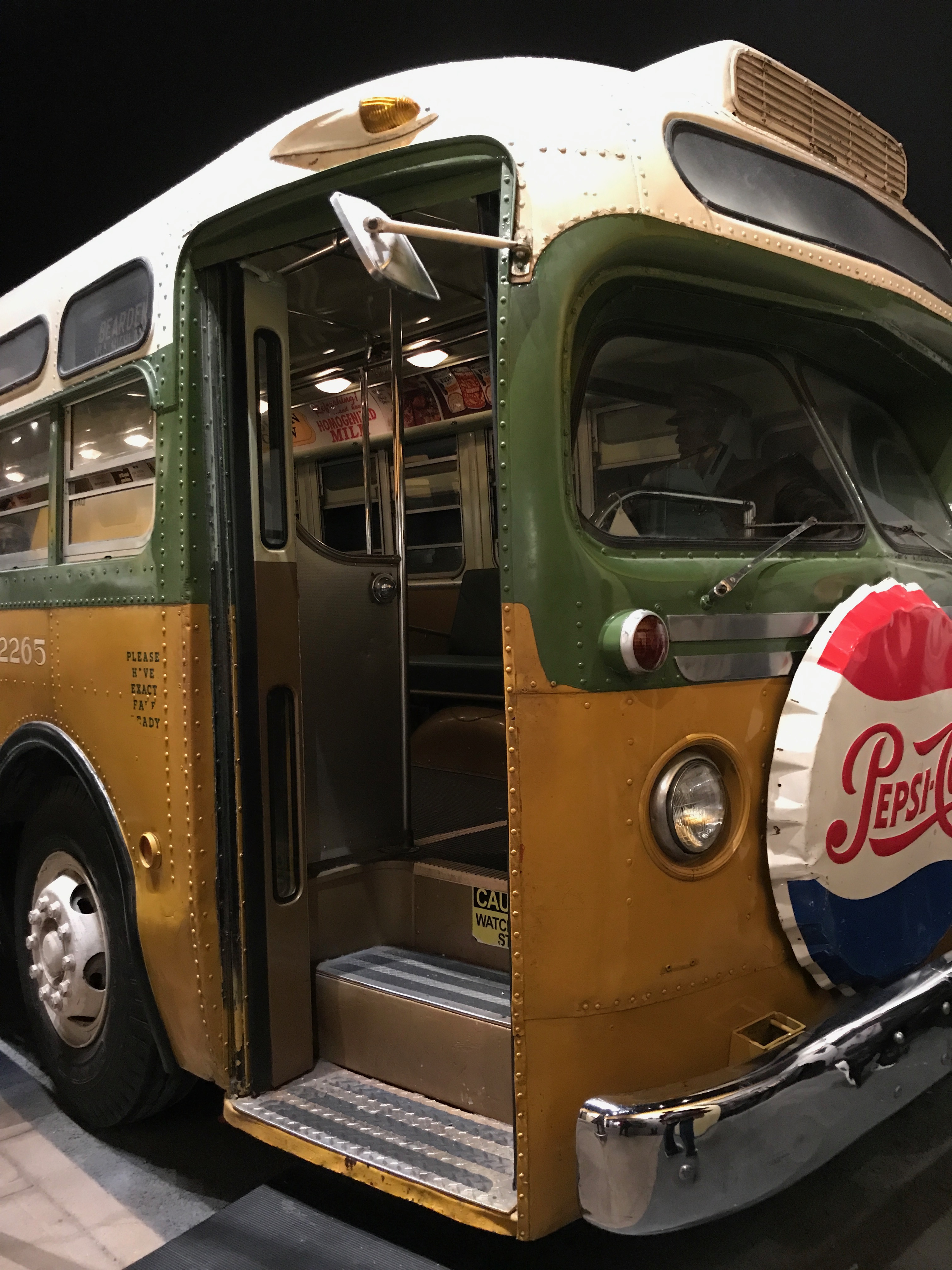
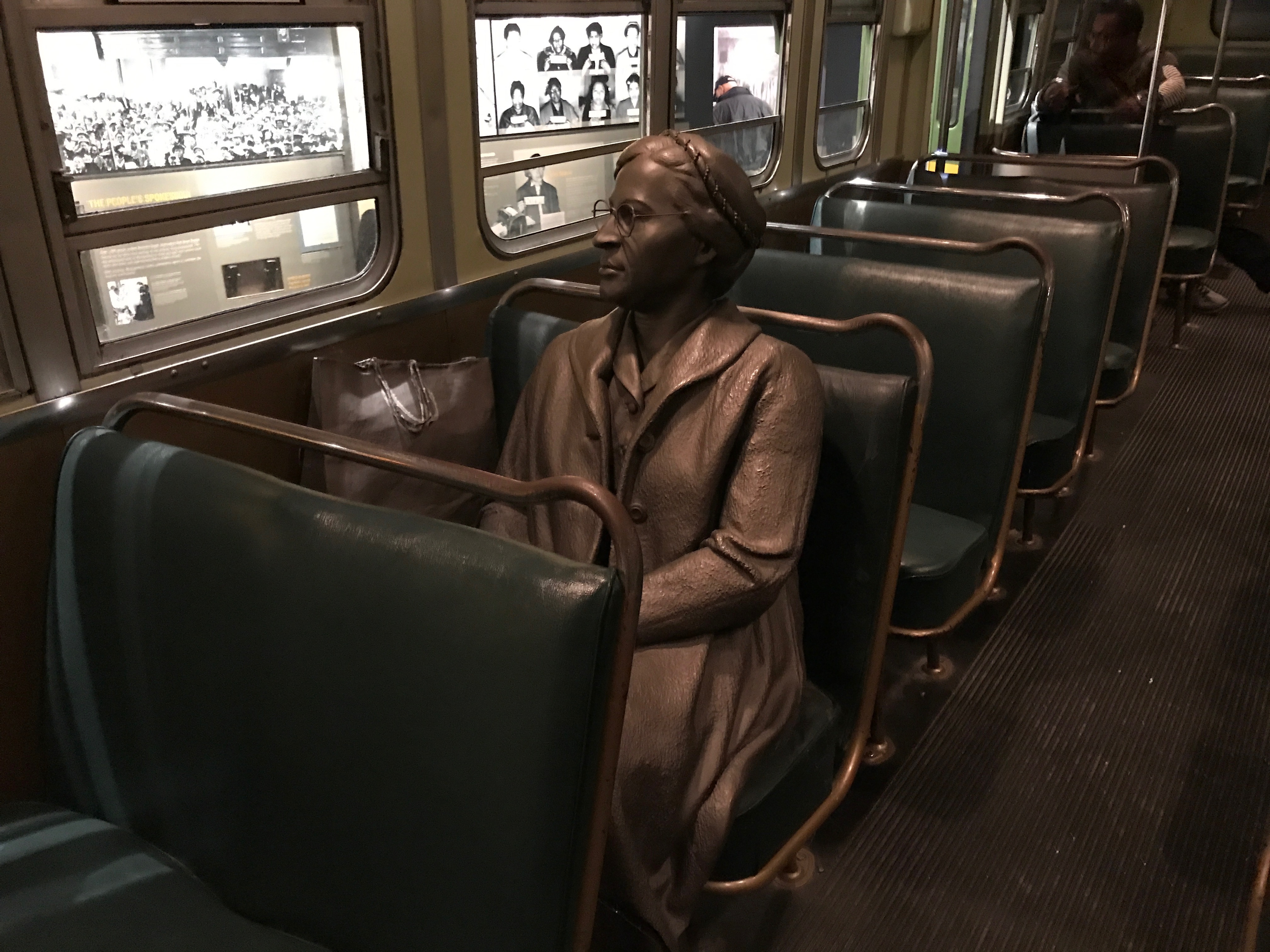
The struggle continued, though. A little later in 1955, Rosa Parks refused to get up and let a white person have her seat.
In Montgomery, Alabama, the first ten seats were reserved for white passengers. Rosa Parks was seated behind the line, but bus driver, James Blake, believed that he had the discretion to move the line separating black and white passengers. The law was actually somewhat murky on that point, but when Mrs. Parks defied his order, he called the police. Officers Day and Mixon came and promptly arrested her.
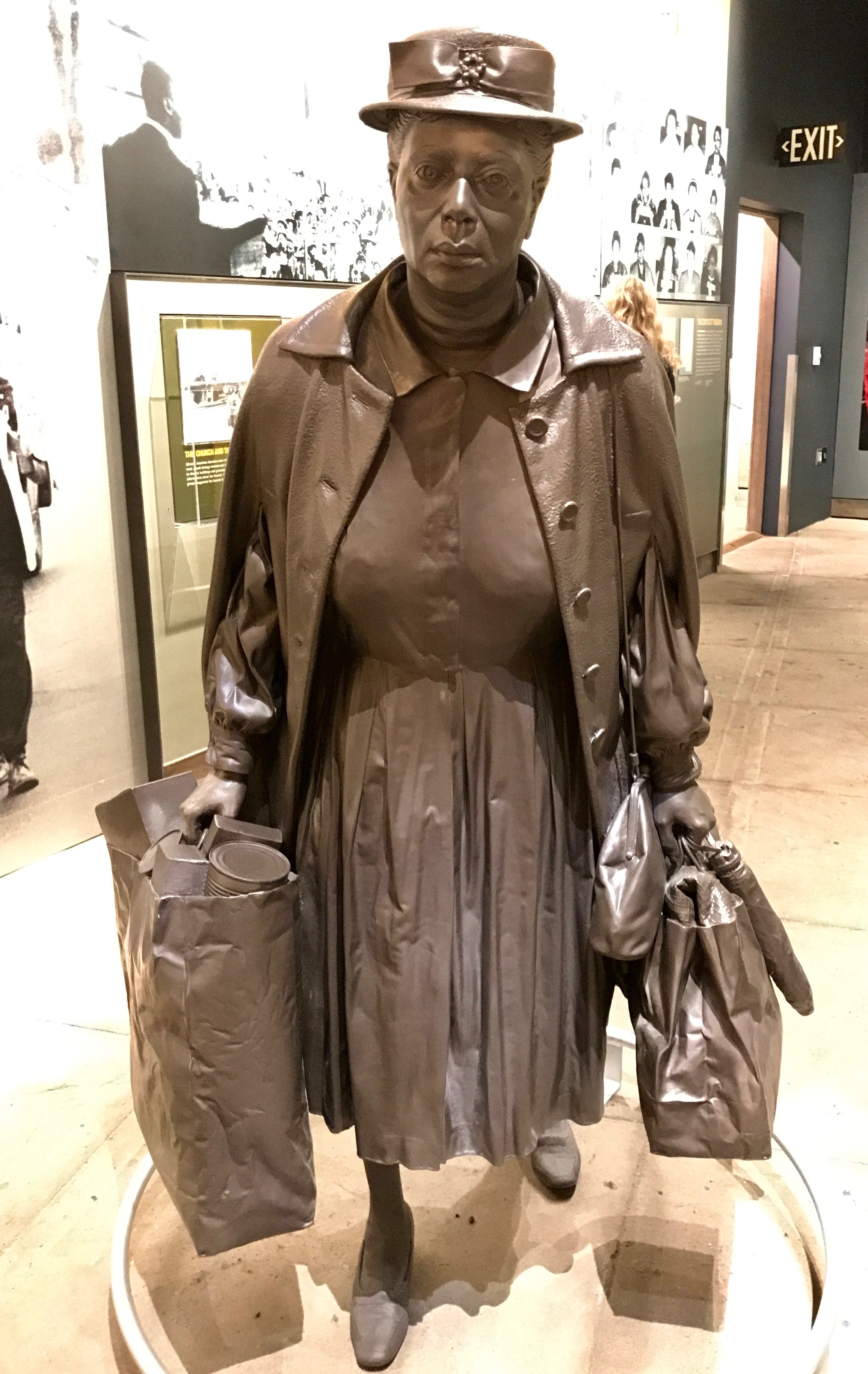
The Montgomery bus boycott started the next day and went on until December 20, 1956.
That is 381 days of walking, walking, walking. Carrying groceries and whatever else you needed.
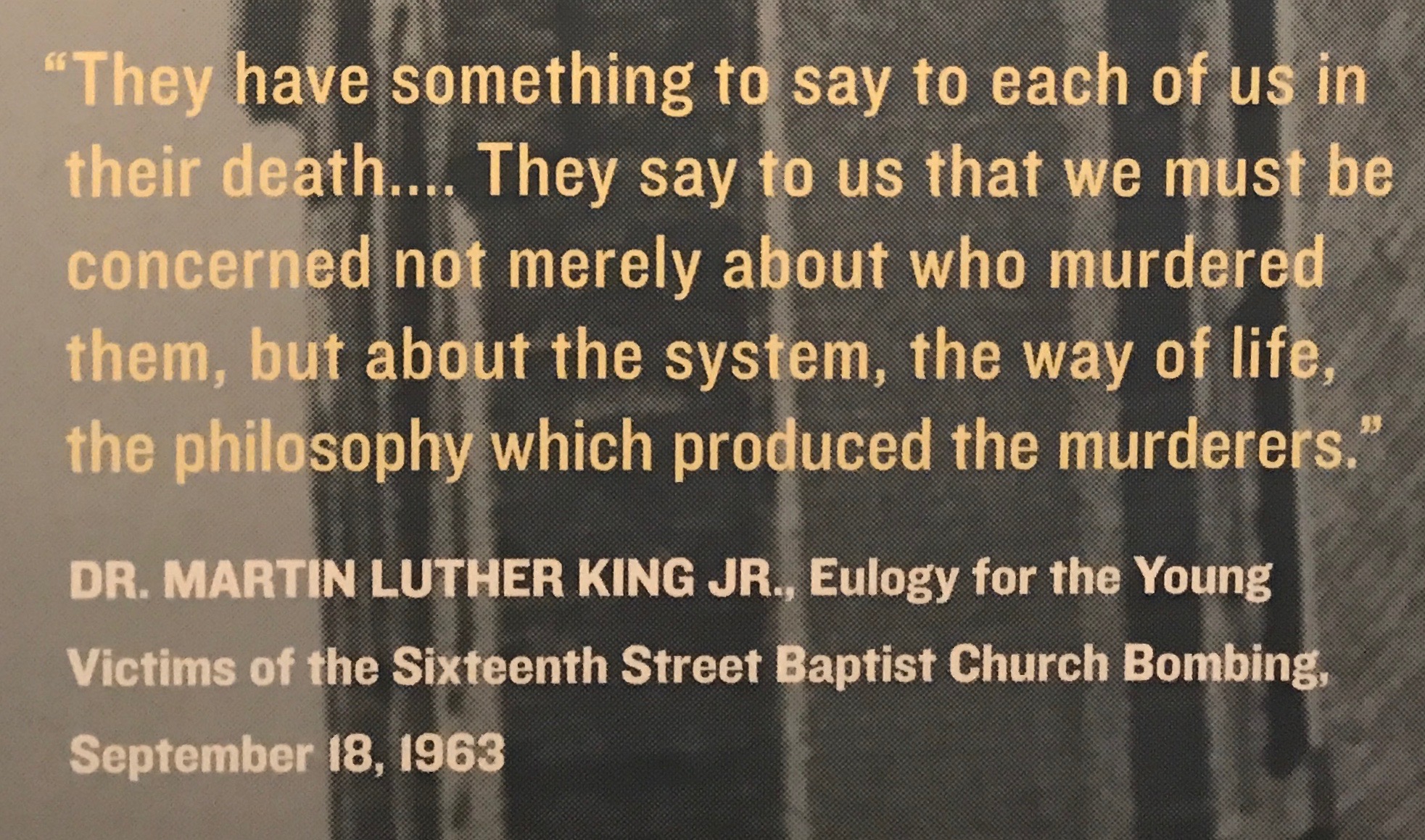
“There comes a time when people get tired…tired of being segregated and humiliated…If you will protest courageously and yet with dignity and Christian love…historians will have to pause and say ‘there lived a great people – a black people – while injected a new meaning and dignity into the veins of civilization.’ This is our challenged and our overwhelming responsibility.”
As I mentioned, this museum presented information in many different ways. Here you can see a young visitor watching a video about the topic.
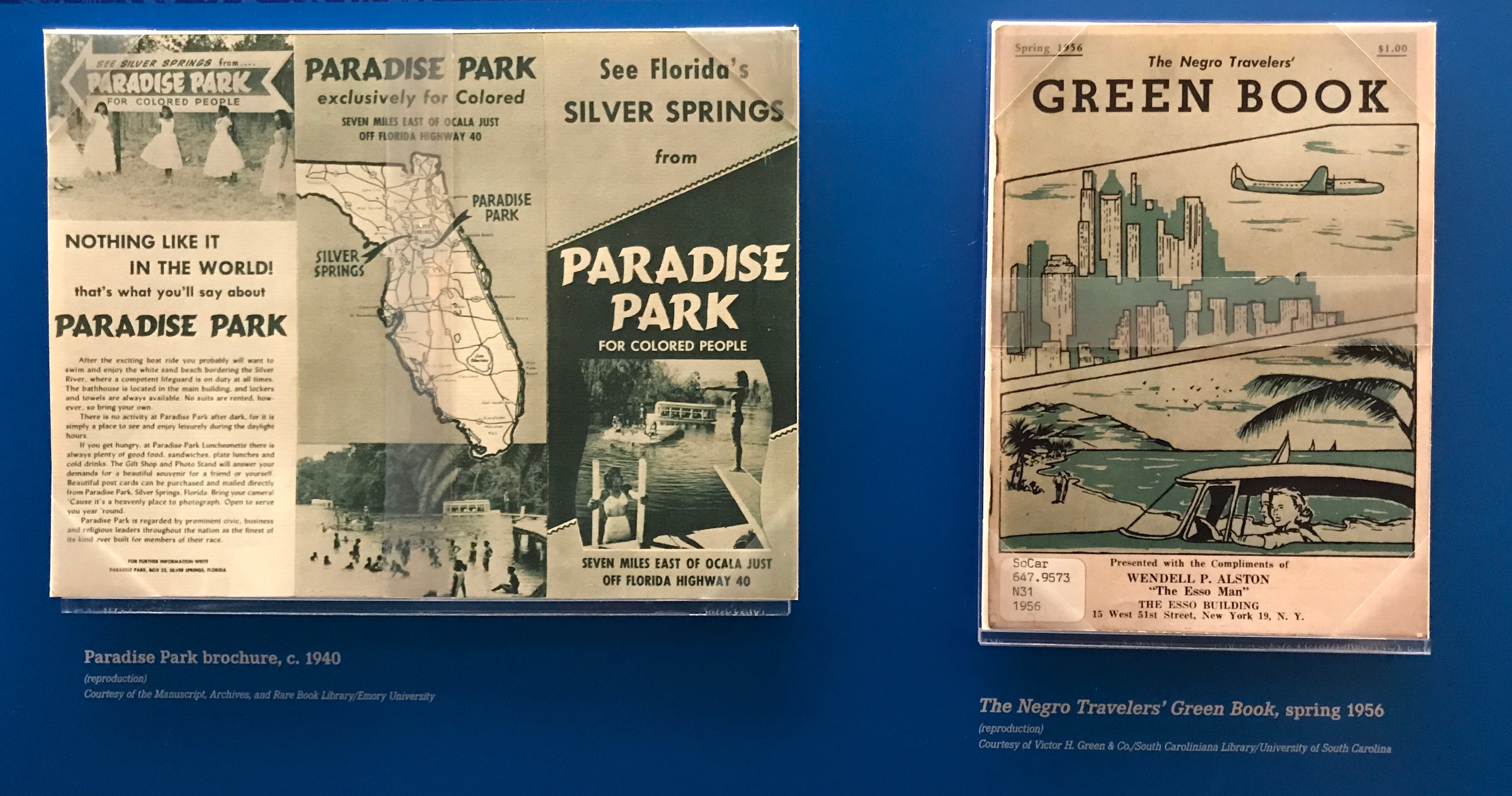
There were artifacts, too. I was particularly interested in The Negro Travelers’ Green Book. The “green” in the title referred to the author, Victor Hugo Green, rather than the color of the book. There was a movie, set in 1962, called Green Book, in case you are interested. I would recommend it.
Side note: Green Book won the 2019 Oscar for Best Picture, Best Original Screen Play and Best Supporting Actor. I was surprised that Mahershala Ali, who played the pianist Don Shirley, was a supporting actor. I understand that the driver, played by Vigo Mortensen, was crucial to the story. He was nominated for his performance in the Best Actor category. His performance was excellent. I do not want to take anything away from him, but it certainly seemed to me that they were costars. I wonder when we will ever stop viewing history from the perspective of privilege.
Okay, back to the tour.
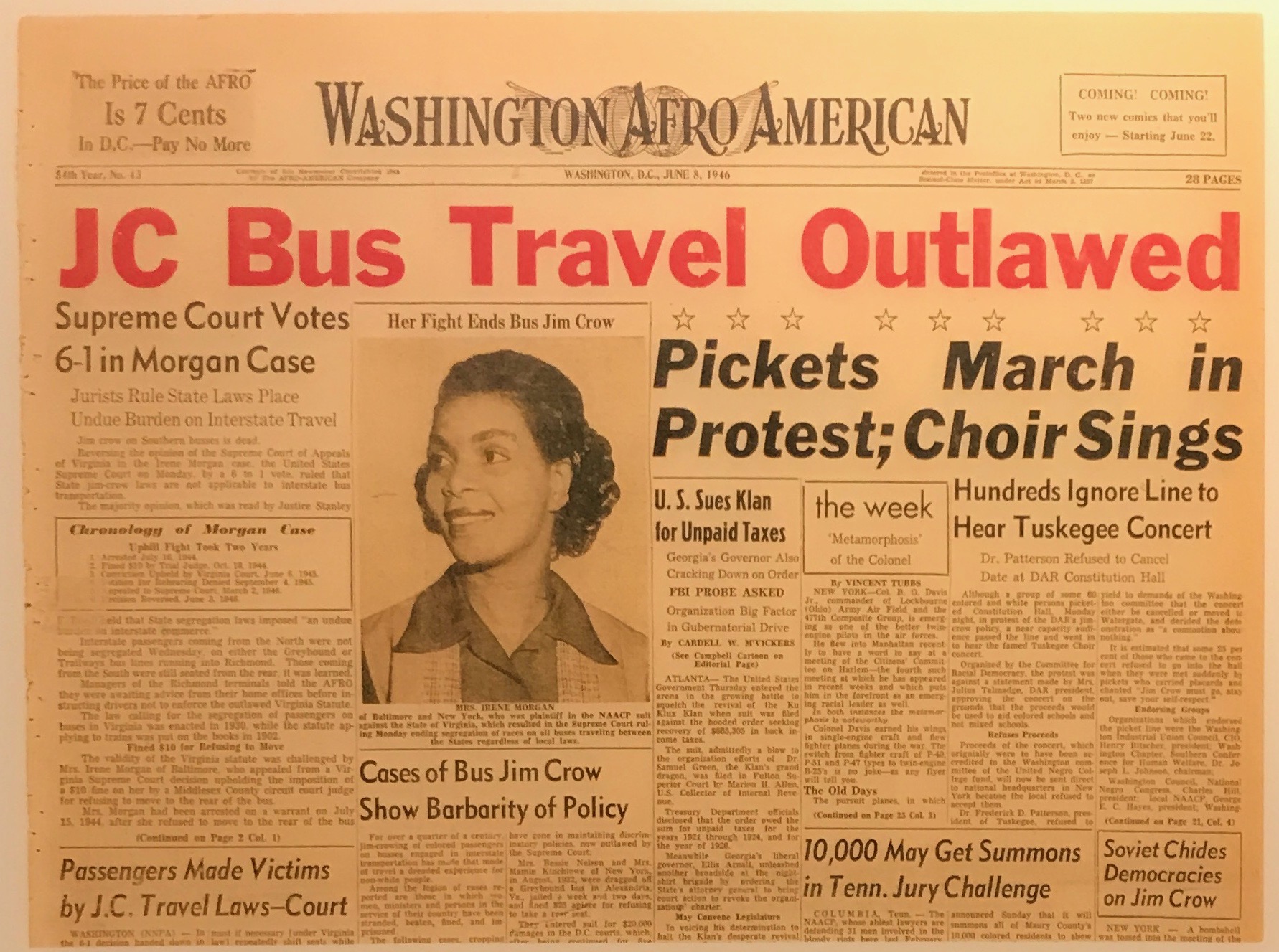
Interstate travel became a target for political action. In 1946, the US Supreme Court ruled that segregating passengers on busses and trains traveling between states was unconstitutional.
Southern officials refused to enforce the law. Incidentally, the JC in the headline refers to Jim Crow, the laws enacted in the Southern United States to enforce racial segregation.
The first Freedom Ride took place in 1947. They called it the Journey of Reconciliation. Eight black men and eight white men boarded buses in Washington DC, bound for Louisville, Kentucky. The bus ride was a test to see if the South would enforce the 1946 Morgan v. Virginia ruling that struck down state mandates that made it legal to segregate seating on trains and buses traveling state to state.
There was a total of 12 arrests during the rides. In North Carolina, Bayard Rustin, who helped organize the protest, was sentenced to the chain gang.
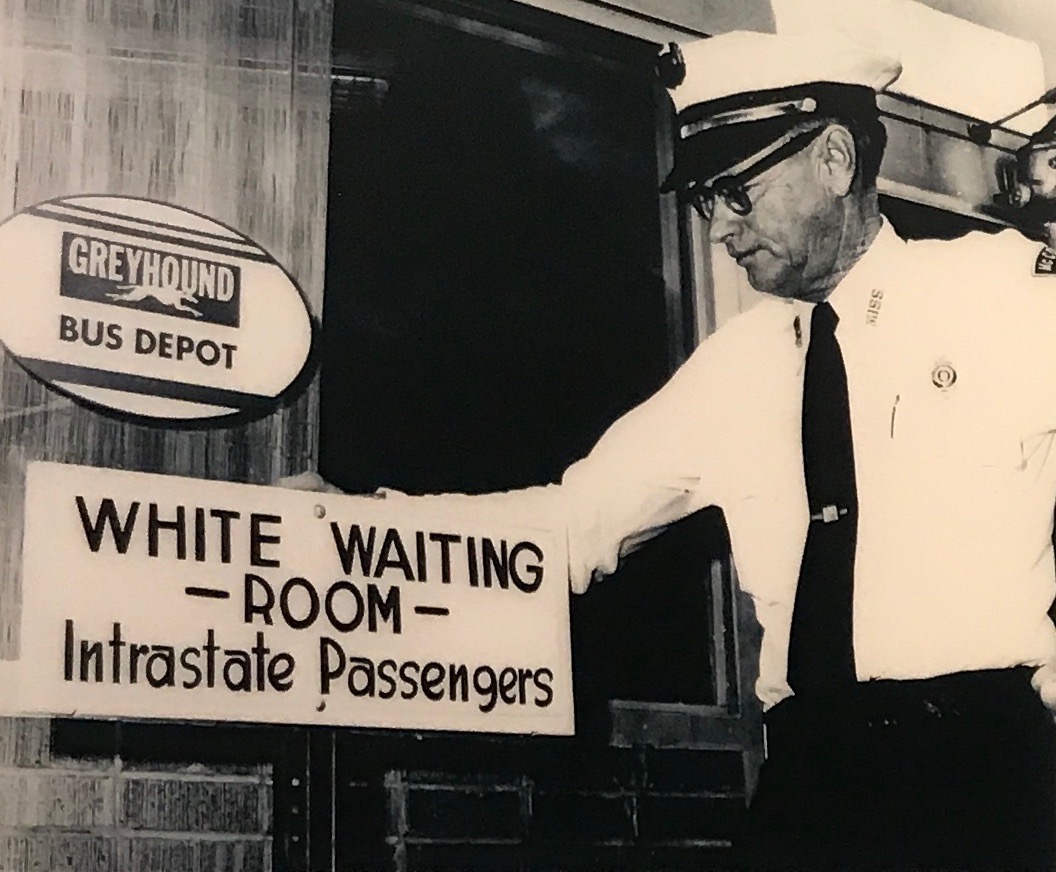
Southern states ignored the Court again in 1960 when it banned segregation in bus and train station waiting rooms, restaurants and bathrooms. Perhaps they thought they could just label waiting rooms as “Intrastate” rather than “Interstate” and that would take care of things.
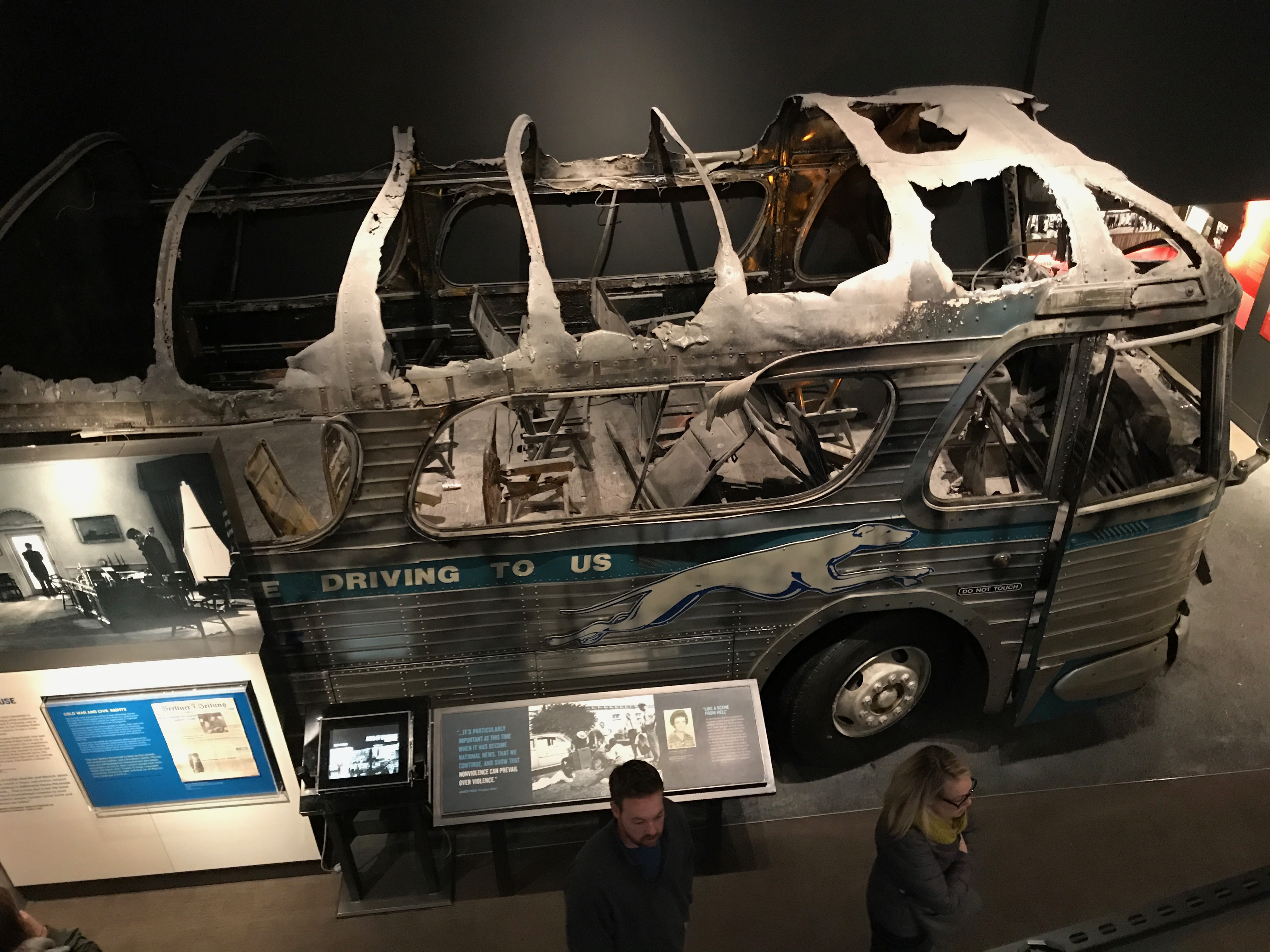
The Freedom Rides of 1961 are the bus rides I remember hearing about.
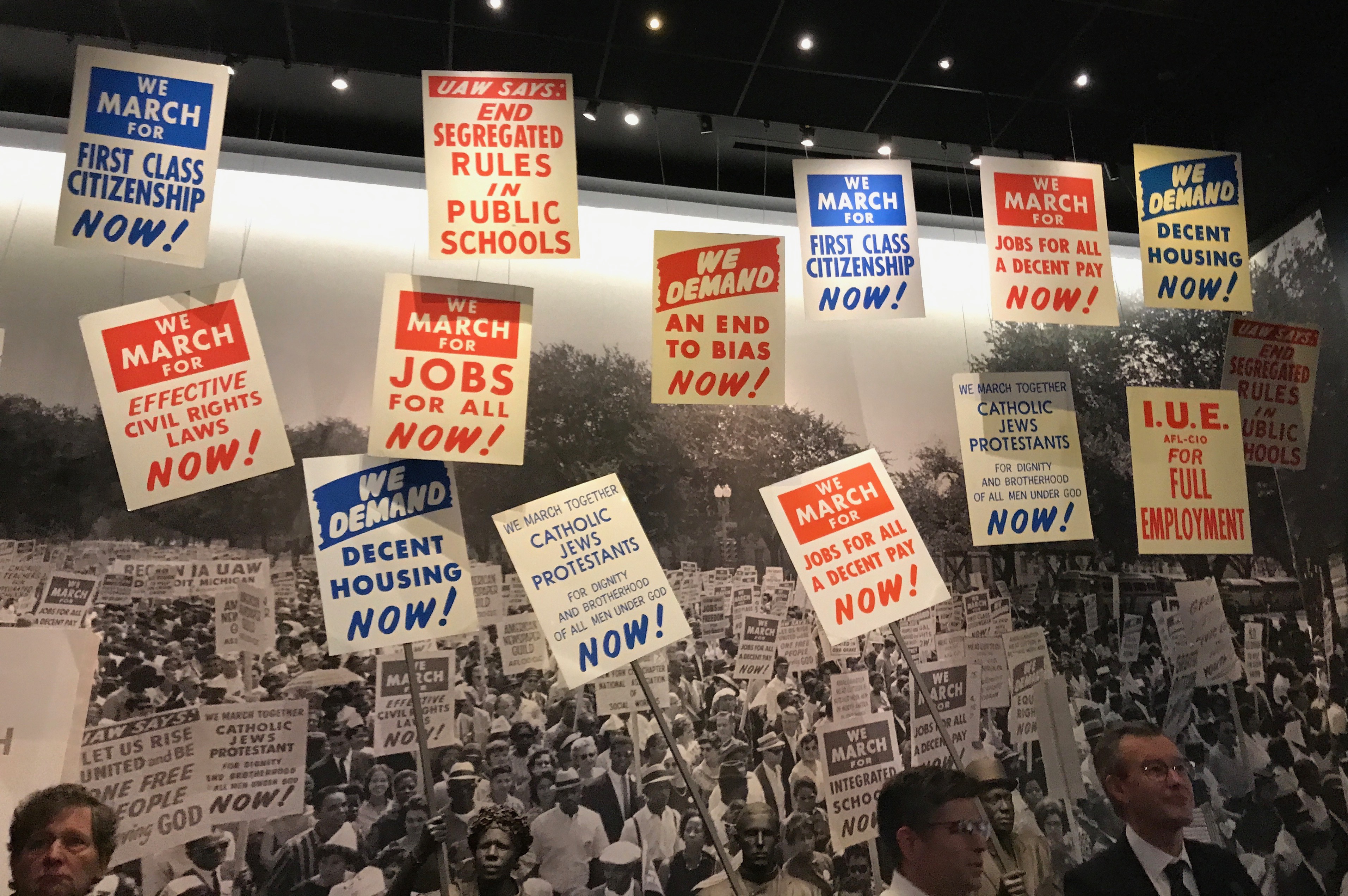
An estimated 250,000 people came to Washington to peacefully make known their demands for civil rights. Observers estimated that 75%-80% of the marchers were black.
According to information at the museum, the march vastly exceeded its organizers’ expectations in terms of participation and media attention and it remained peaceful. It prompted President Kennedy to strengthen safeguards against employment discrimination in his civil rights bill and it provided Dr. King with a platform to share his vision of a democratic society.
However, the march didn’t transform America. Unfortunately, the media focused on how many people marched rather than why they marched and Congress did not embrace President Kennedy’s civil rights bill until after he was assassinated.
The march was a remarkable moment that offered America a vision of a better society, but it was only a single day in the African American freedom struggle. Sadly, many Americans ignored, misunderstood or rejected the vision it offered.
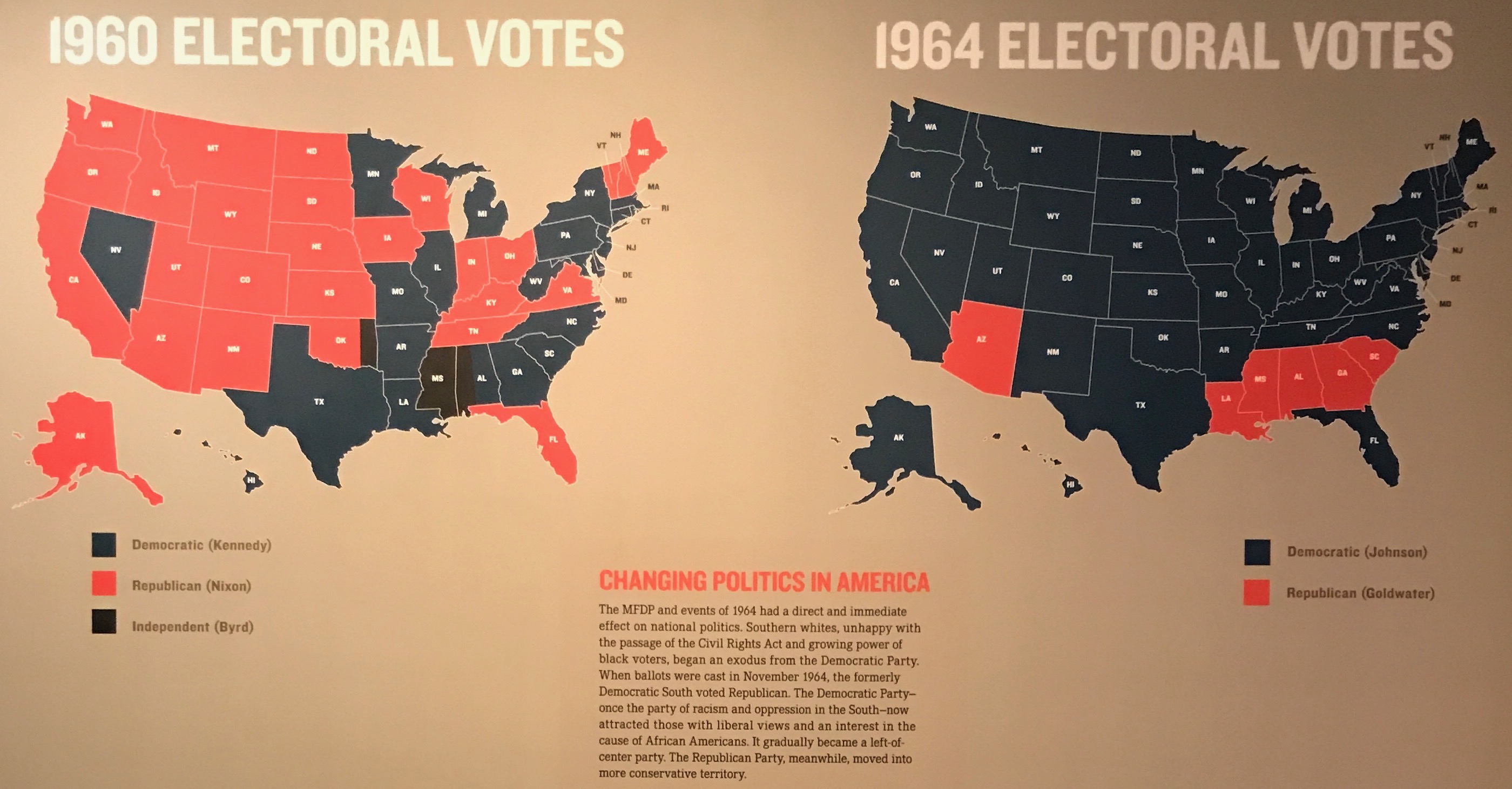
I found this map of the electoral votes in 1960 and 1964 interesting. I must admit that I haven’t quite digested it, but I offer it up for your consideration, along with a link to an article about the MFDP.
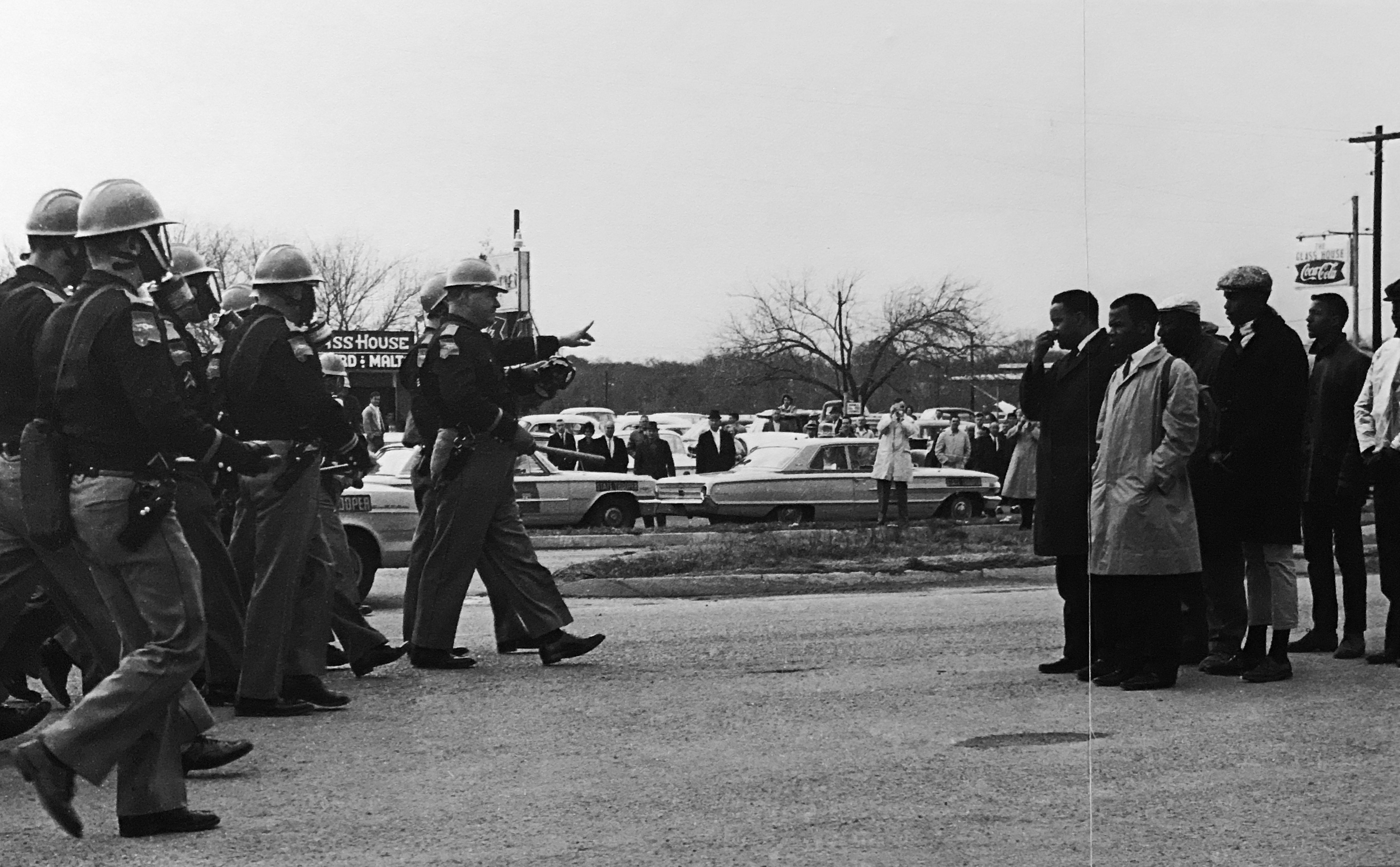
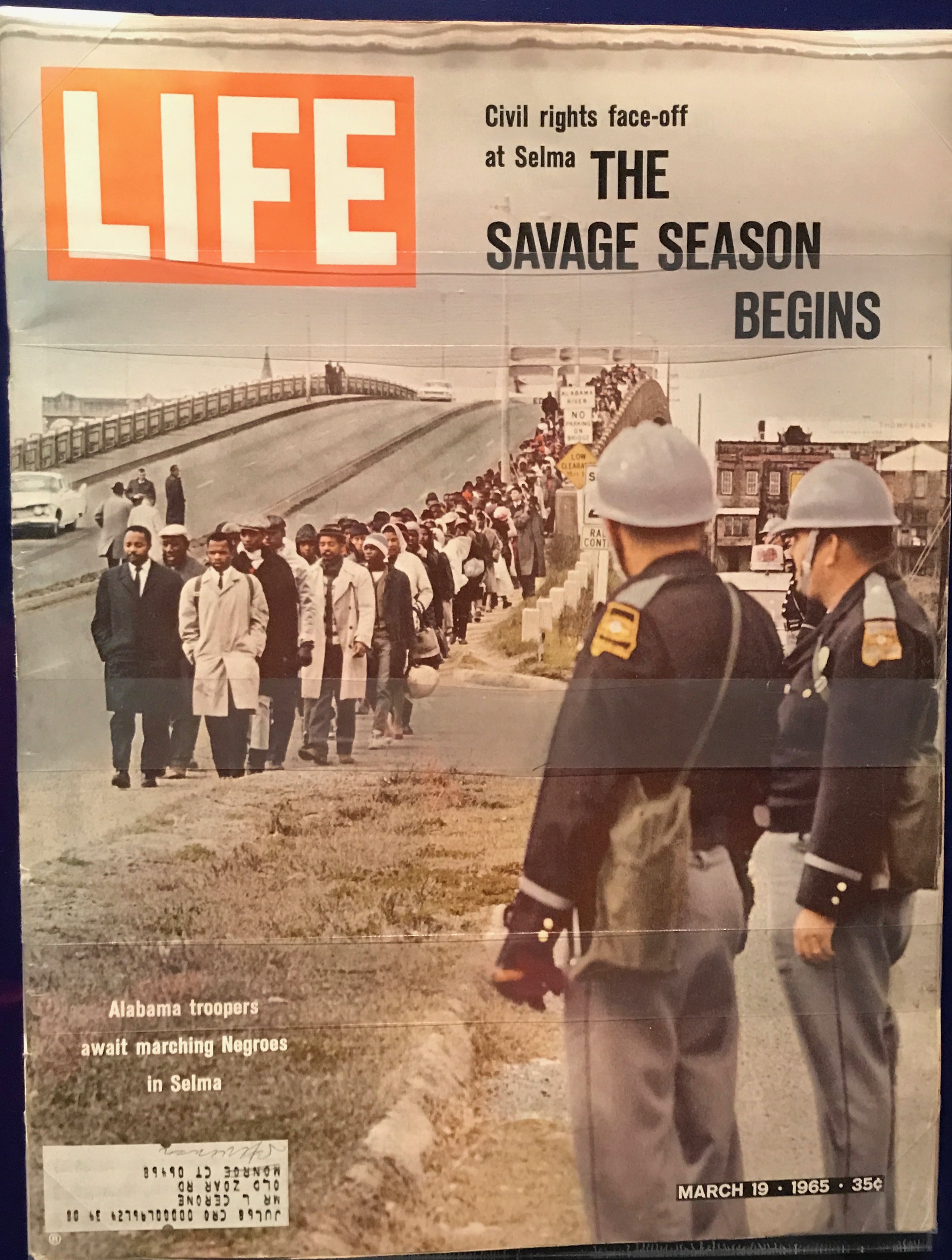
A photo of the march from Selma to Montgomery was included in the exhibit. I had the sad honor of visiting the site of this event, as I have written about in an earlier post.
There were three marches in all. The first march began on Sunday, March 7, 1965. That resulted in what is known as “Bloody Sunday.” The second one was on Tuesday, March 9.
There was a movie made about this, too. Selma. It was nominated for the Best Picture Oscar in 2015, which it did not win. It did take home the Oscar for Best Song, Glory, by John Legend and Common.
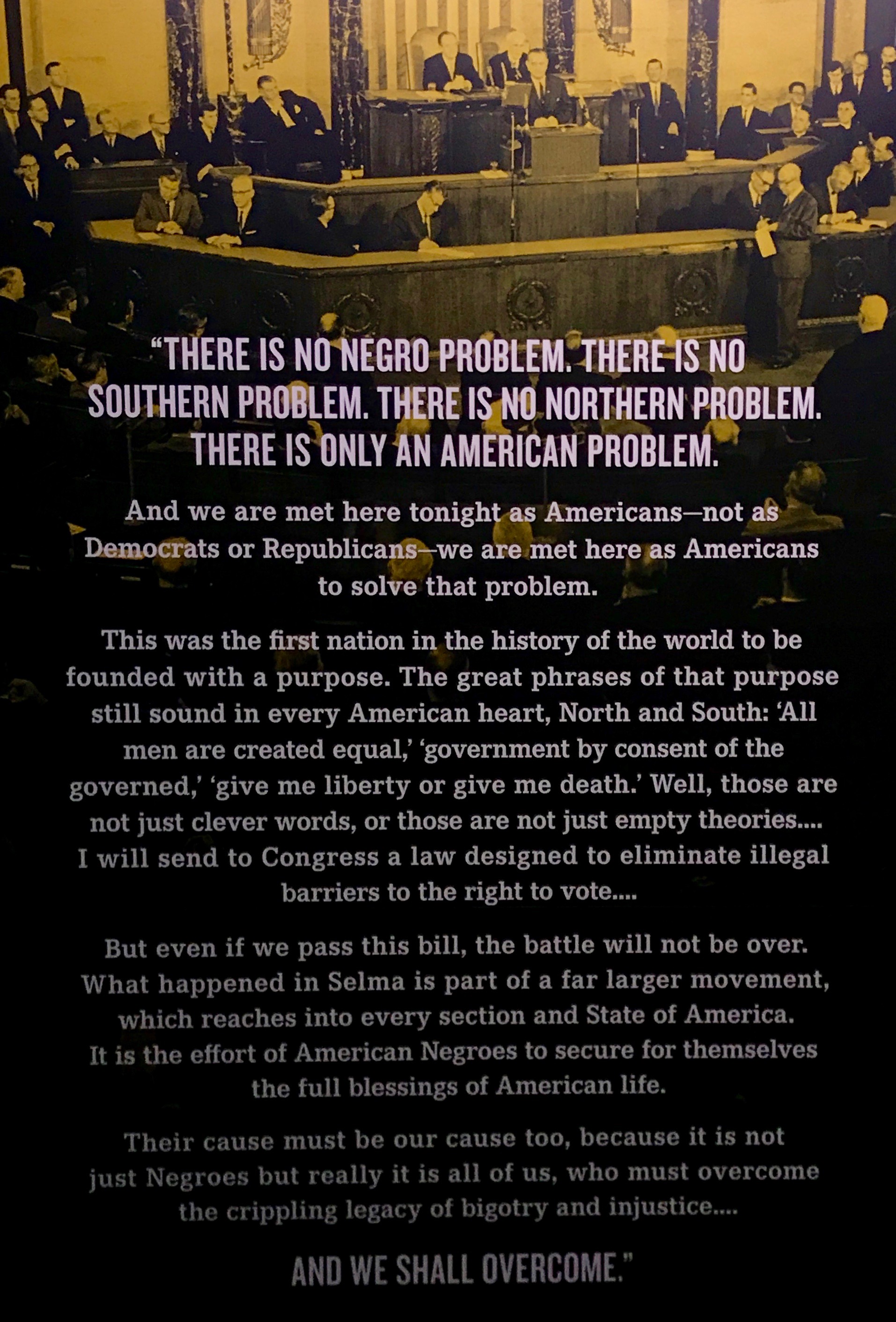
LBJ addressed a joint session of Congress on March 15th.
If you would like to hear LBJ deliver this speech to Congress, click here. Incidentally, this address was given in 1965.
The third march began on Sunday, March 21. When Governor Wallace refused to protect the marchers, LBJ federalized the Alabama National Guard. Under federal command and accompanied by many FBI agents and federal marshals, they escorted the marchers from Selma to Montgomery.
There were conditions placed on the marchers about the numbers that would be permitted on the two-lane section of the U.S. Route 80. When the march reached the two-lane section, 300 continued and the rest turned back, slogging through the rain and the mud, averaging about 10 miles a day.
Once they reached the four-lane section of the highway again, the marchers who had turned back were ferried by bus and car to rejoin the march. When they arrived in Montgomery on March 24, and reached the state capitol on March 25, the crowd was 25,000 strong.
Dr. King gave his How Long Not Long speech on the steps of the capitol.
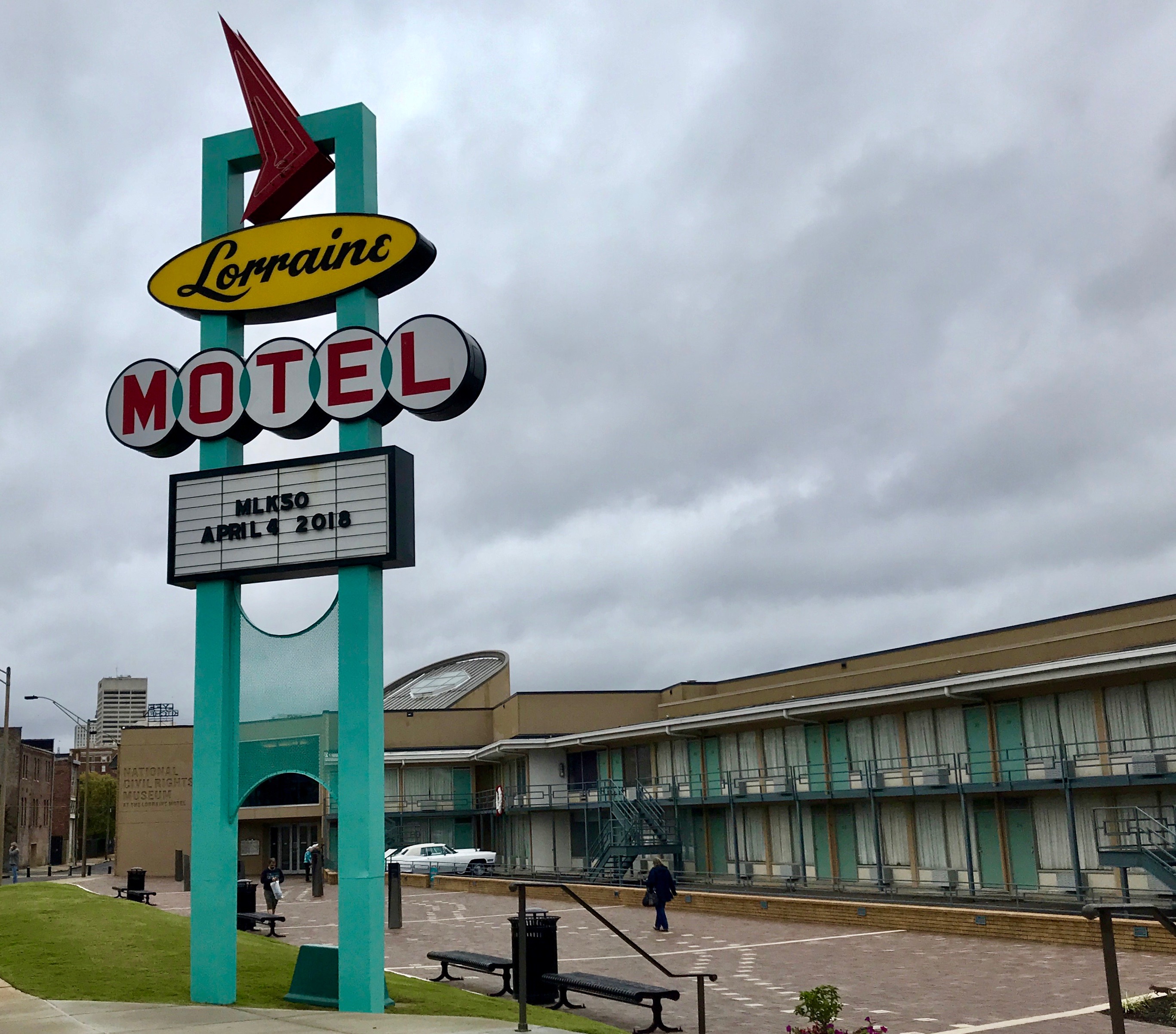
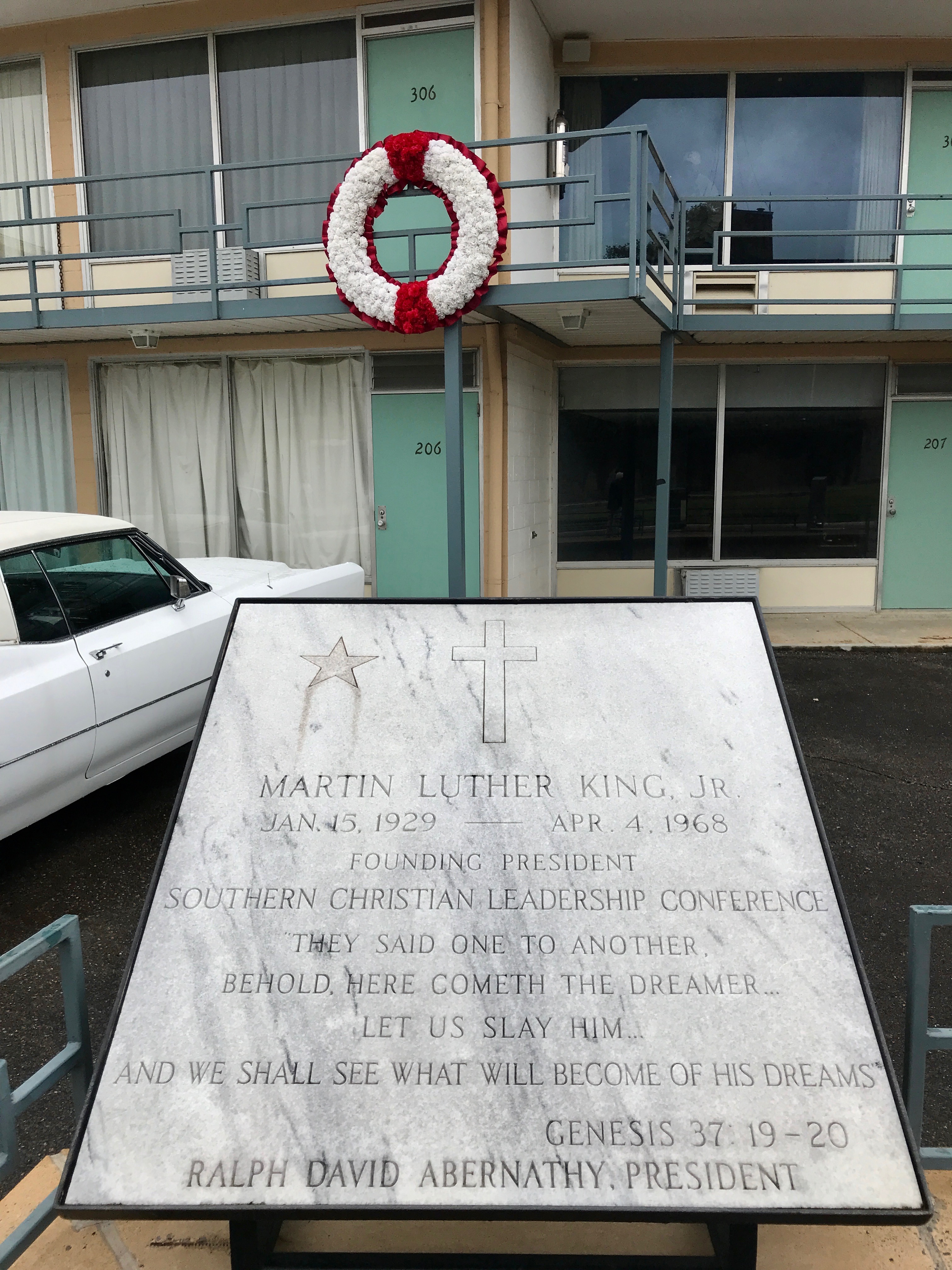
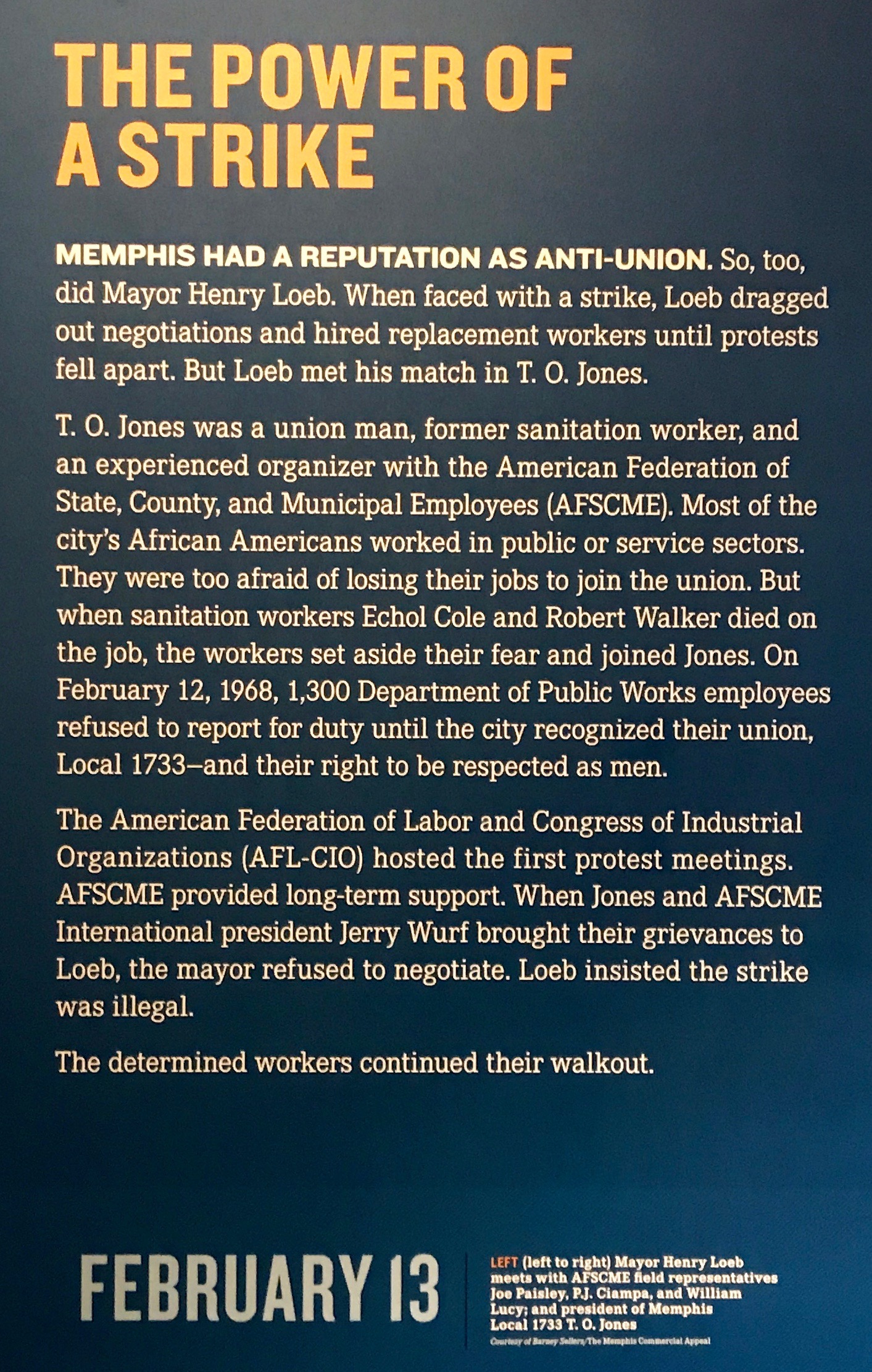
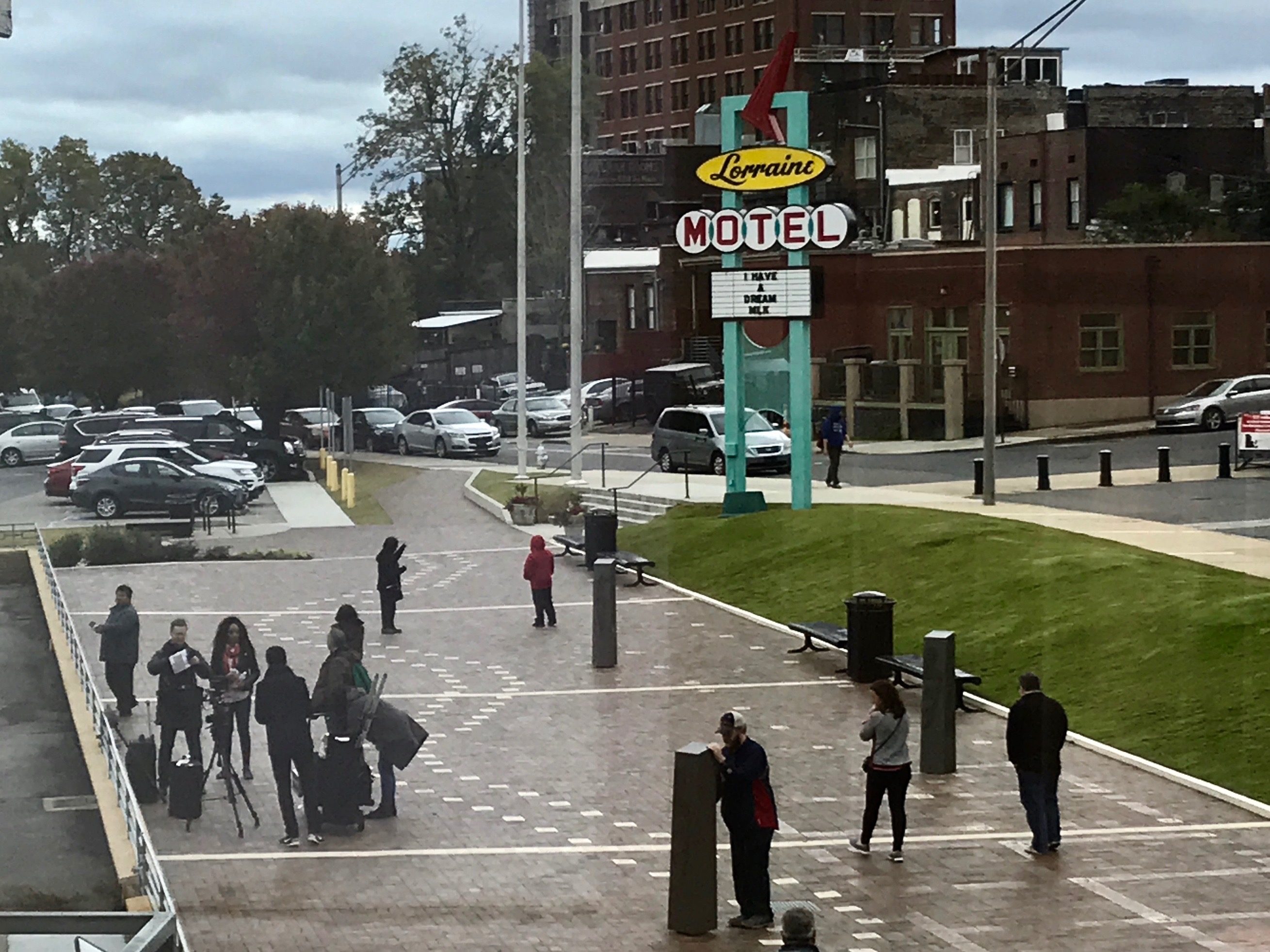
In 1968, Dr. King went to Memphis to support the sanitation workers’ in their struggle for better working conditions and the right to unionize.
In 1968, Dr. King came to Memphis to support the sanitation workers’ strike.
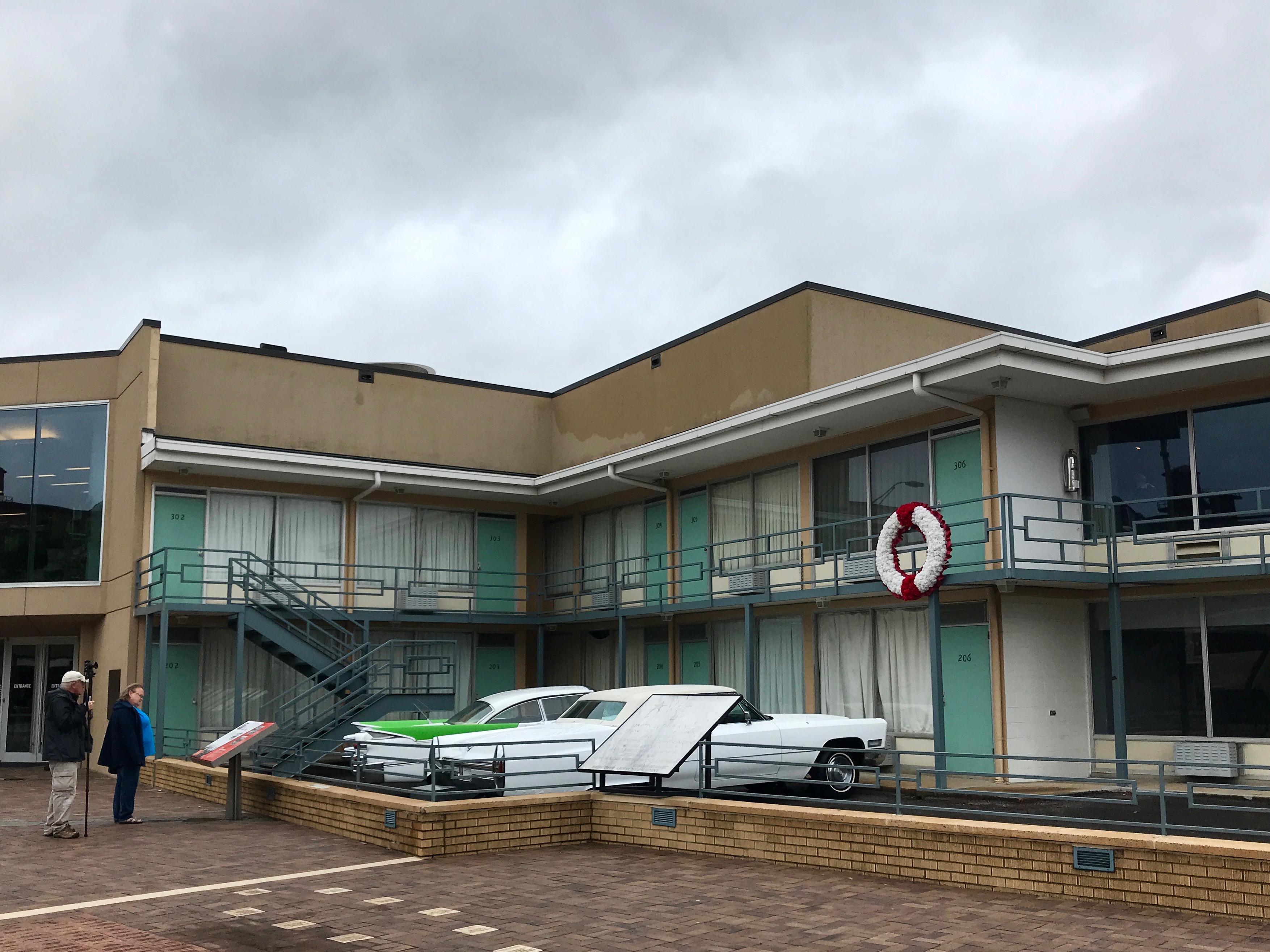
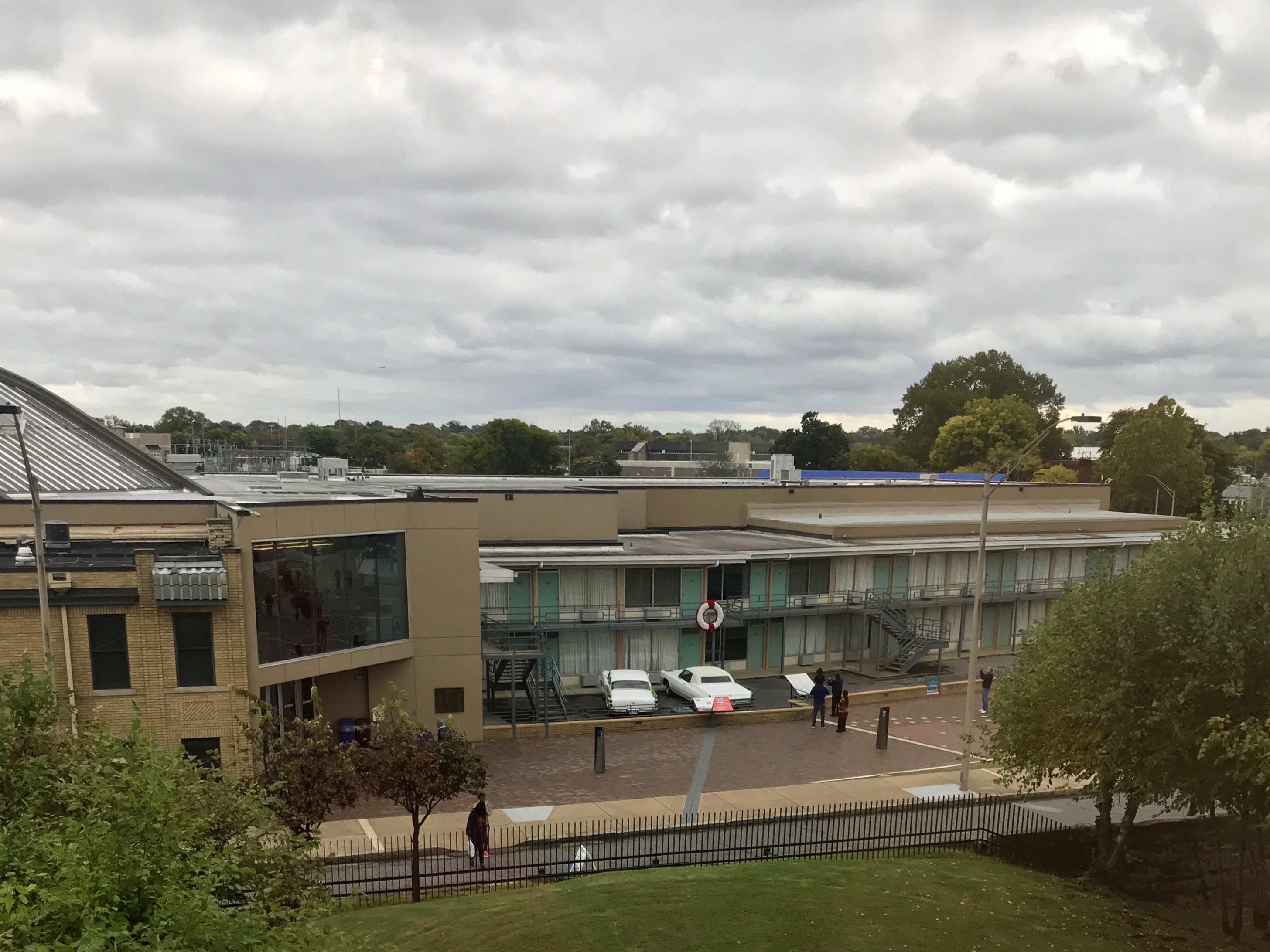
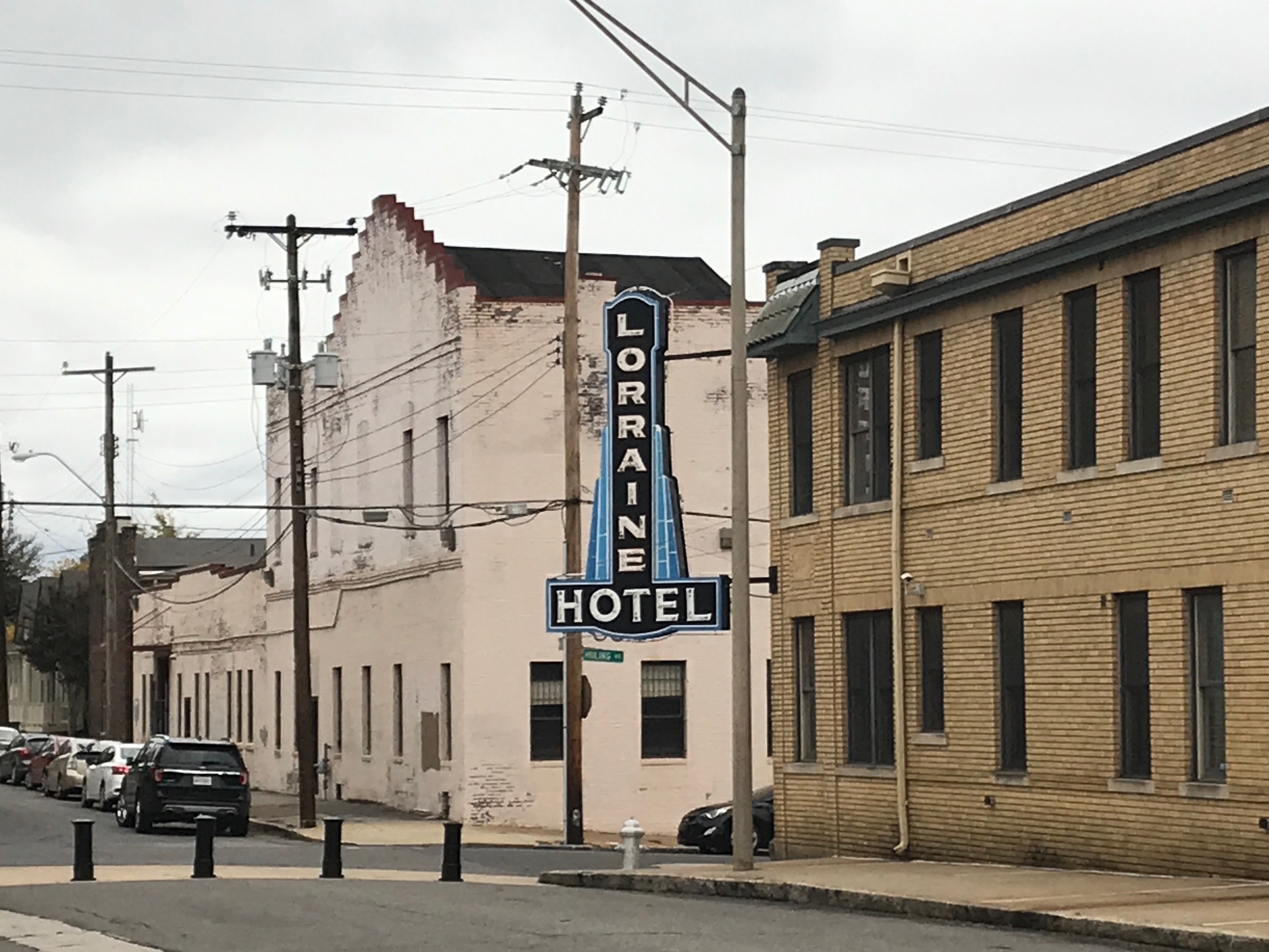
Chicago’s Operation Breadbasket Orchestra came to Memphis to perform at a rally supporting the sanitation strikers.Delayed by bad weather, Ben Branch – Memphis native, orchestra leader and tenor saxophonist – arrived at the Lorraine Motel just before 6:00 PM on April 4.
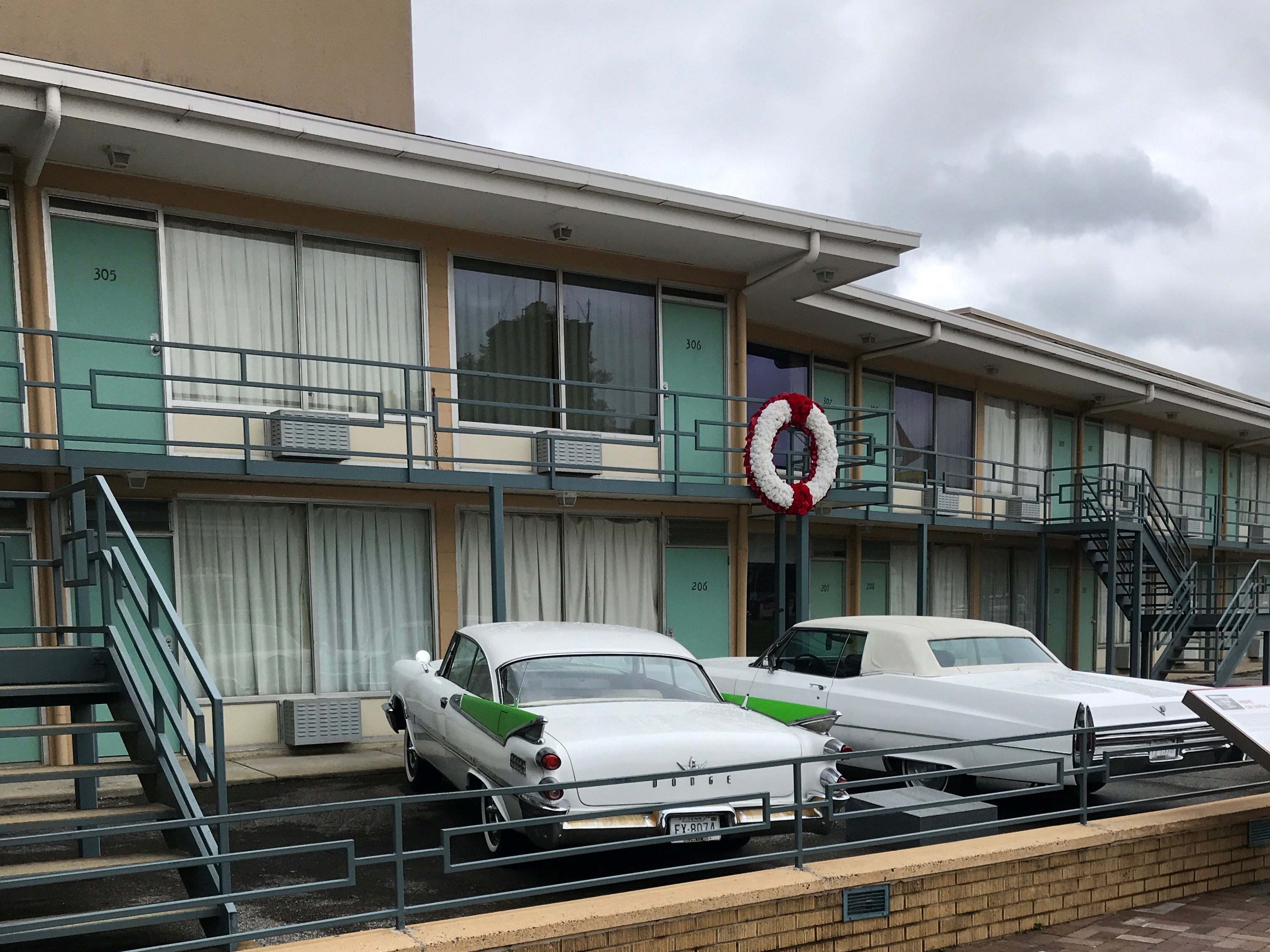
Dr. King greeted Branch from the balcony. King called down to Branch and requested that Branch play his favorite song at the rally, Precious Lord Take My Hand.
King said, “I want you to play it real pretty.” Branch responded, “You know I will, Doc.”
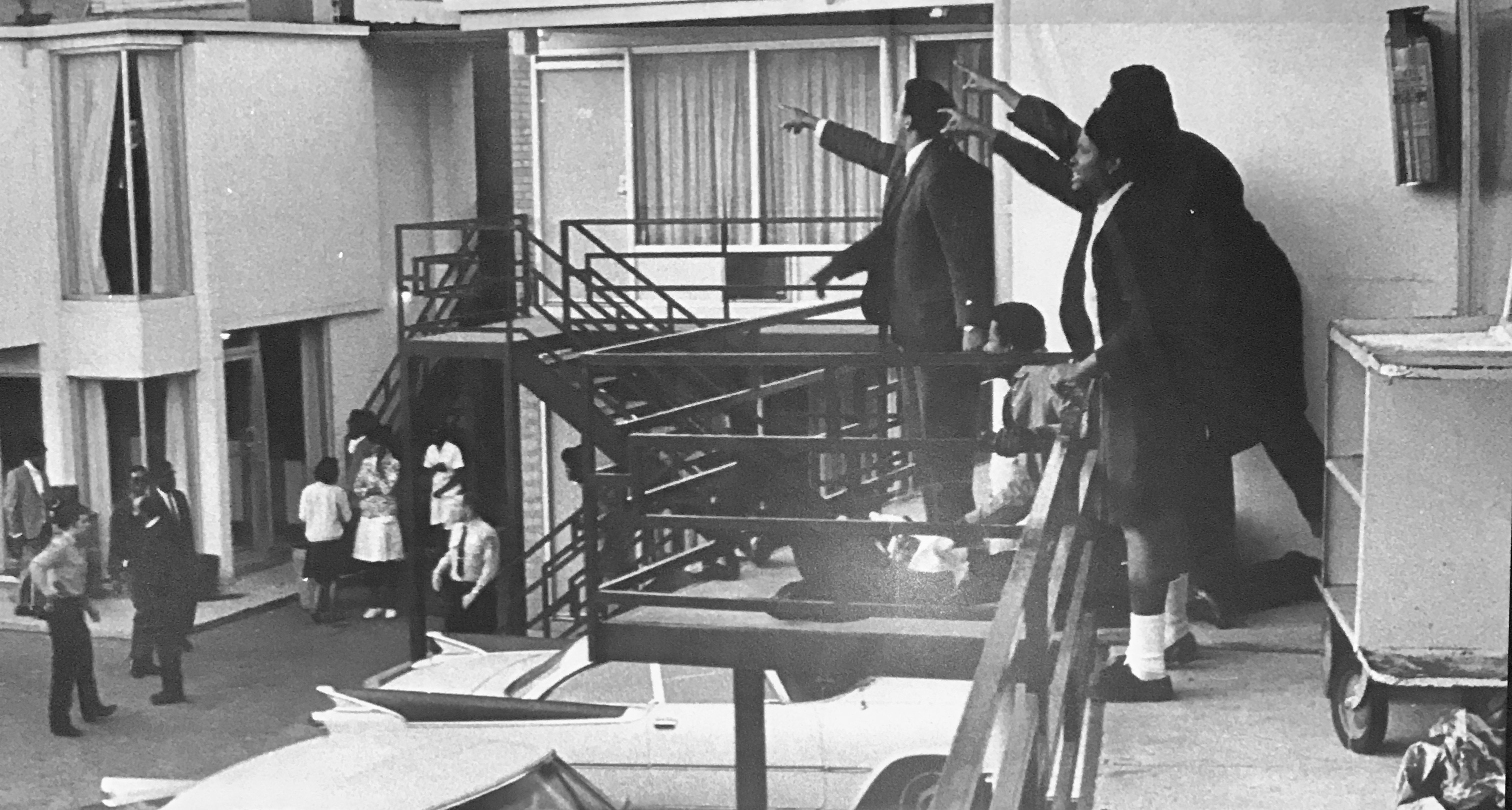
Moments later, the assassin’s bullet struck King.
A single bullet fired from the boarding house across Mulberry Street struck Dr. King in the neck. He collapsed instantly and lay motionless.
Rev. Abernathy rushed to King’s side, whileRev. Kyles retrieved a bedspread from the room to lay over him.
Those who heard the shot pointed toward the boarding house. Police, who had been monitoring King during his stay in Memphis, ran from the fire station and scrambled to find the shooter.
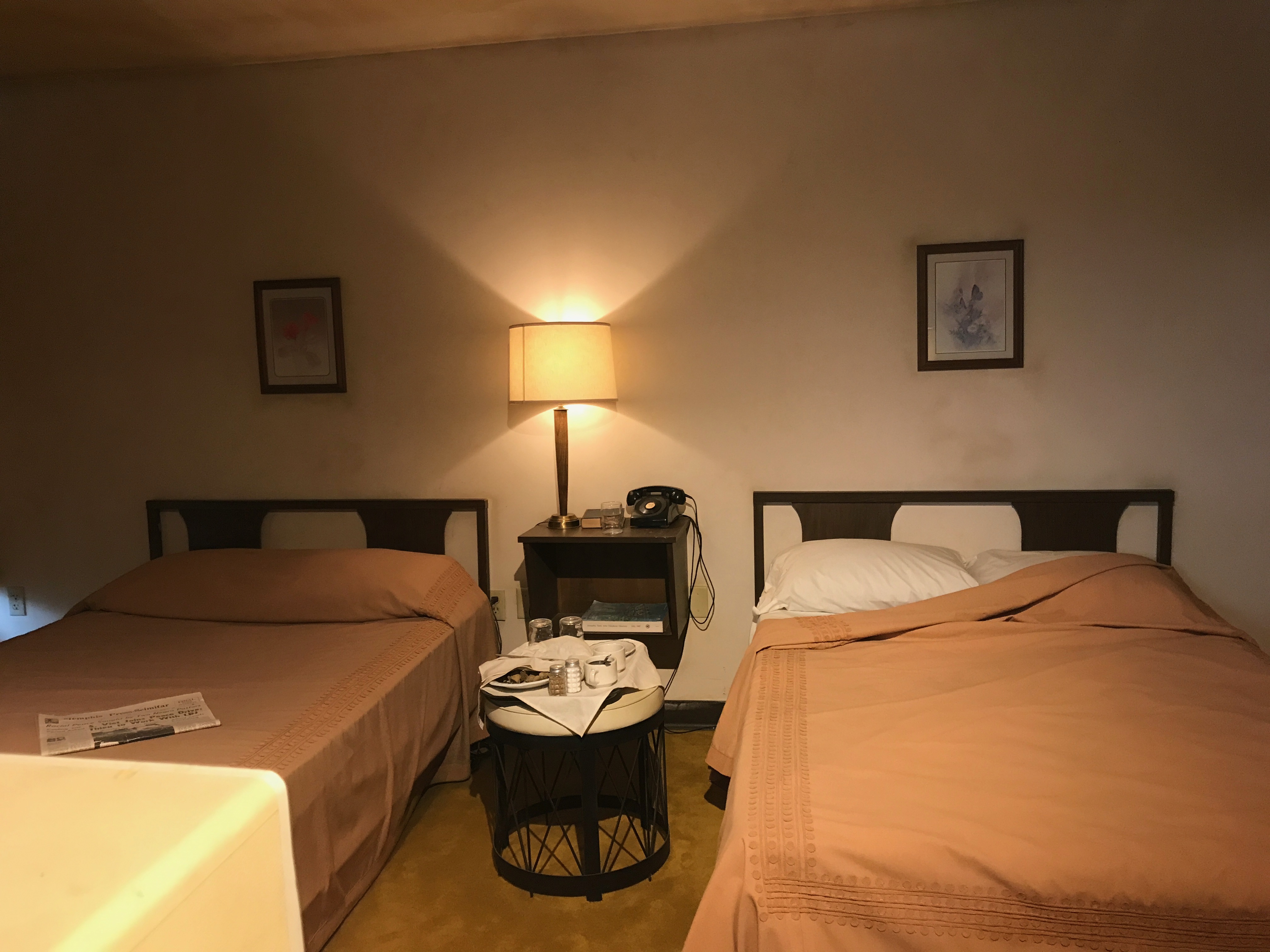
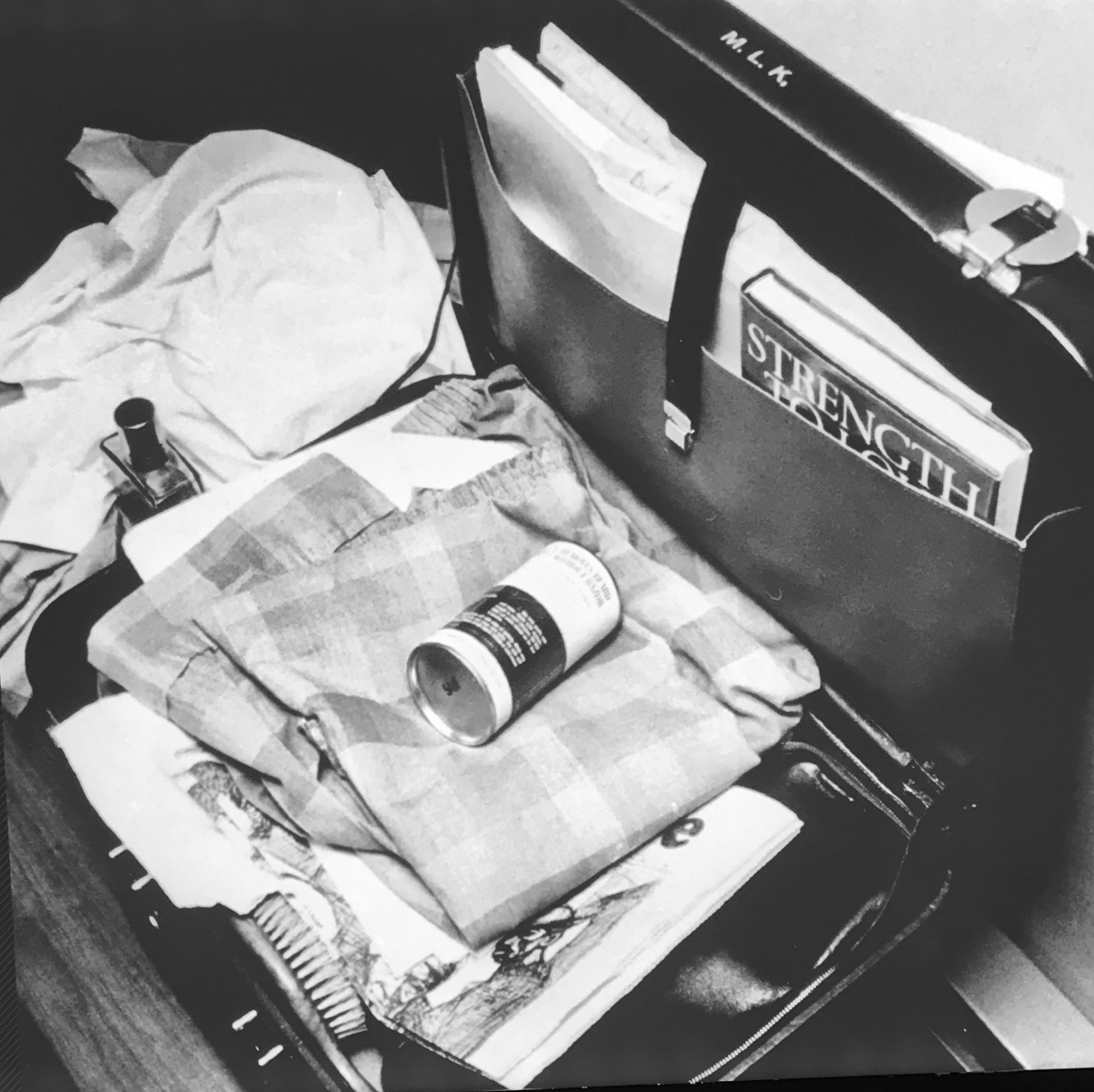
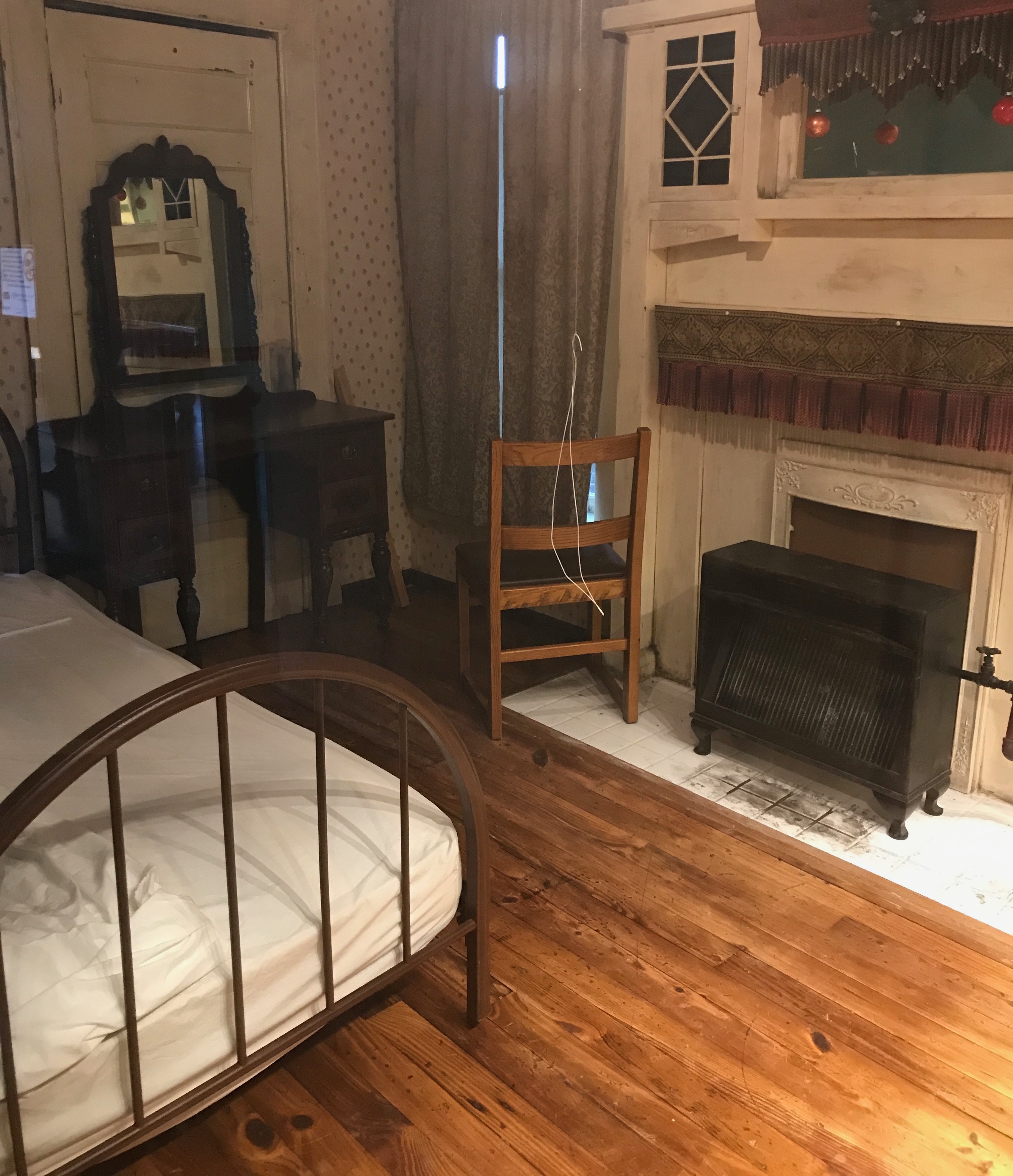
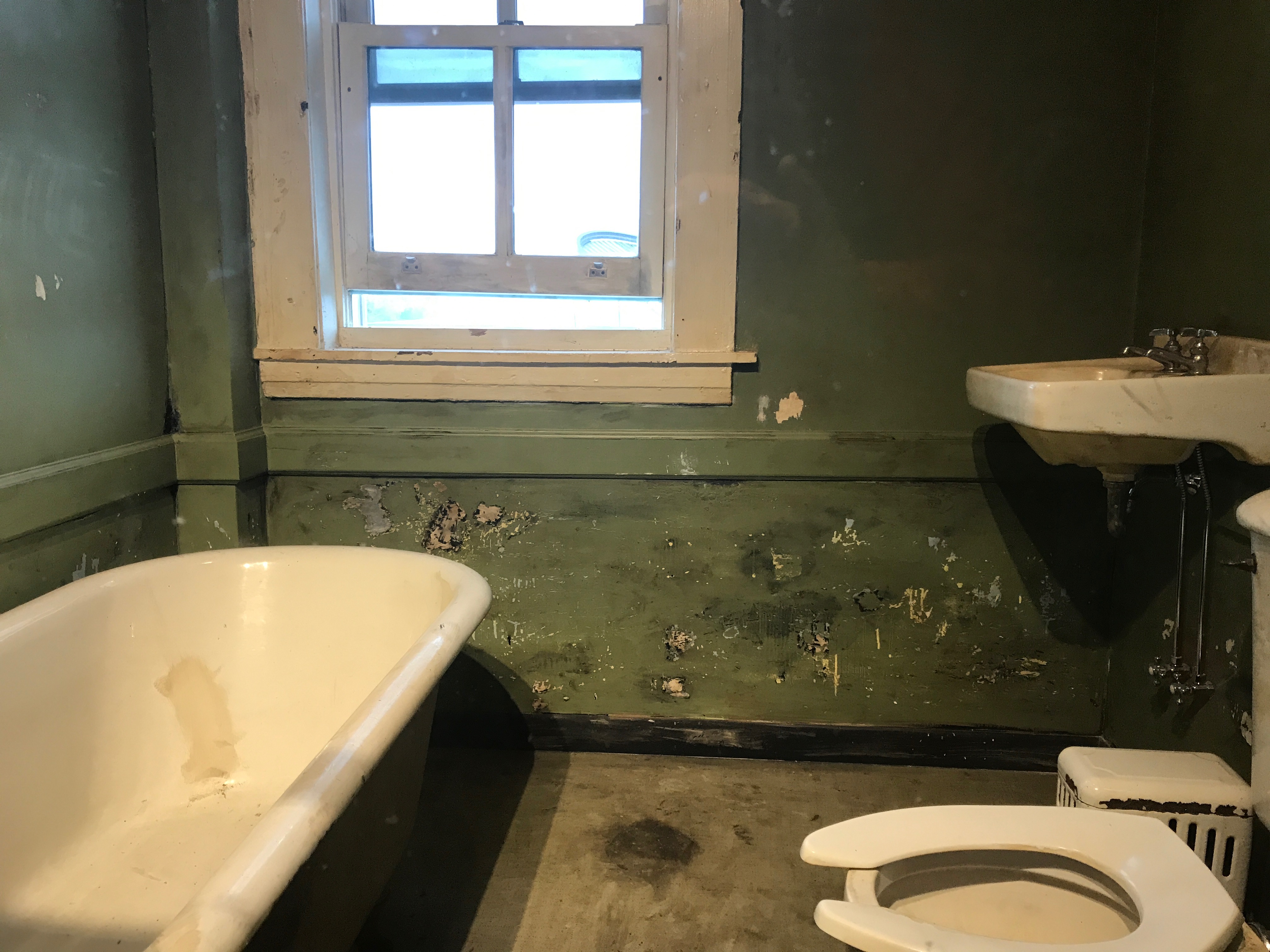
They had a room set up the way Dr. King’s room was arranged.
We were allowed to stand and contemplate as long as we wished.
Then it was time to exit.
I paused on the balcony and looked out at the people that were coming in or pausing before they left.
One look back at the room.
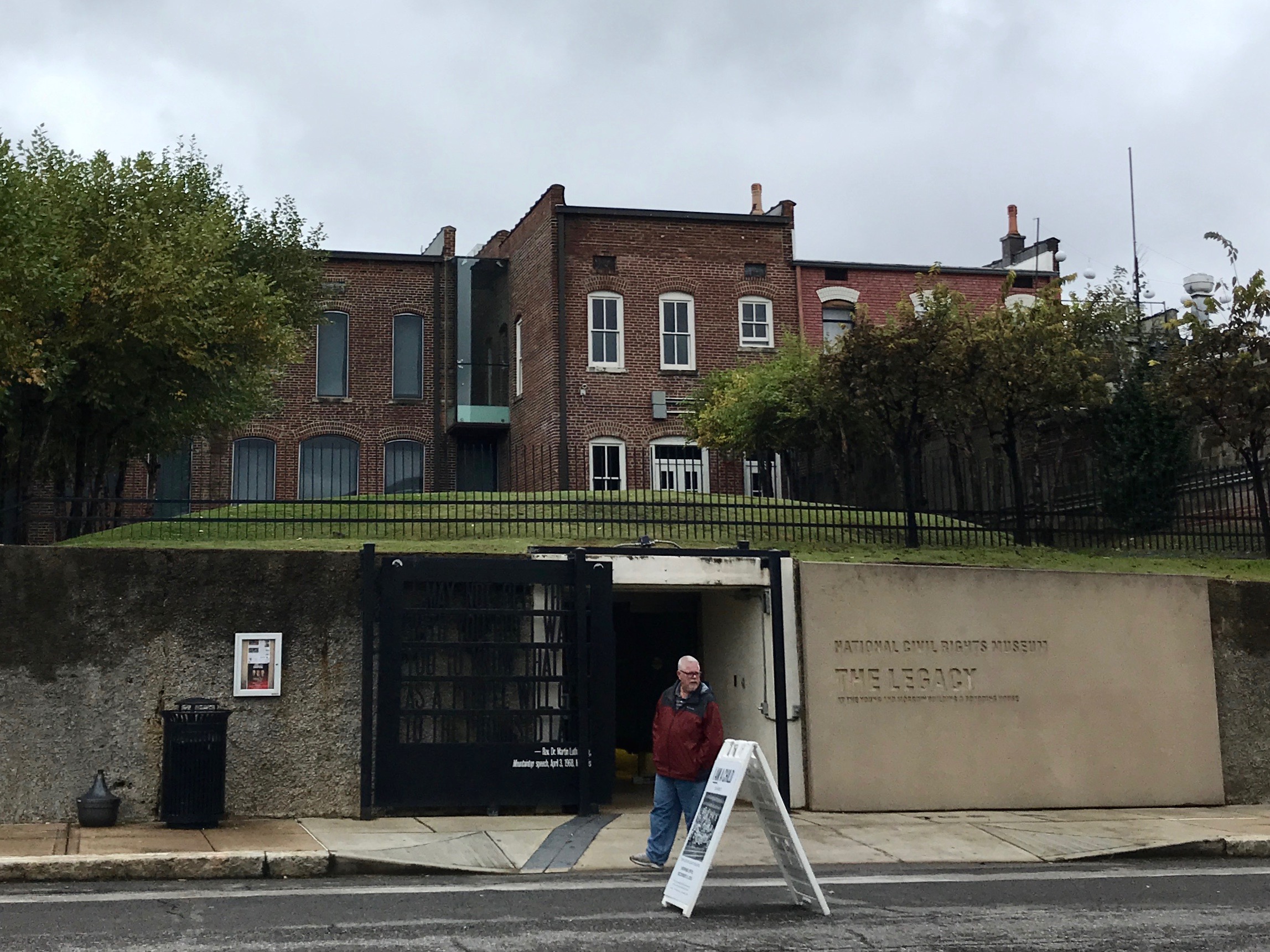
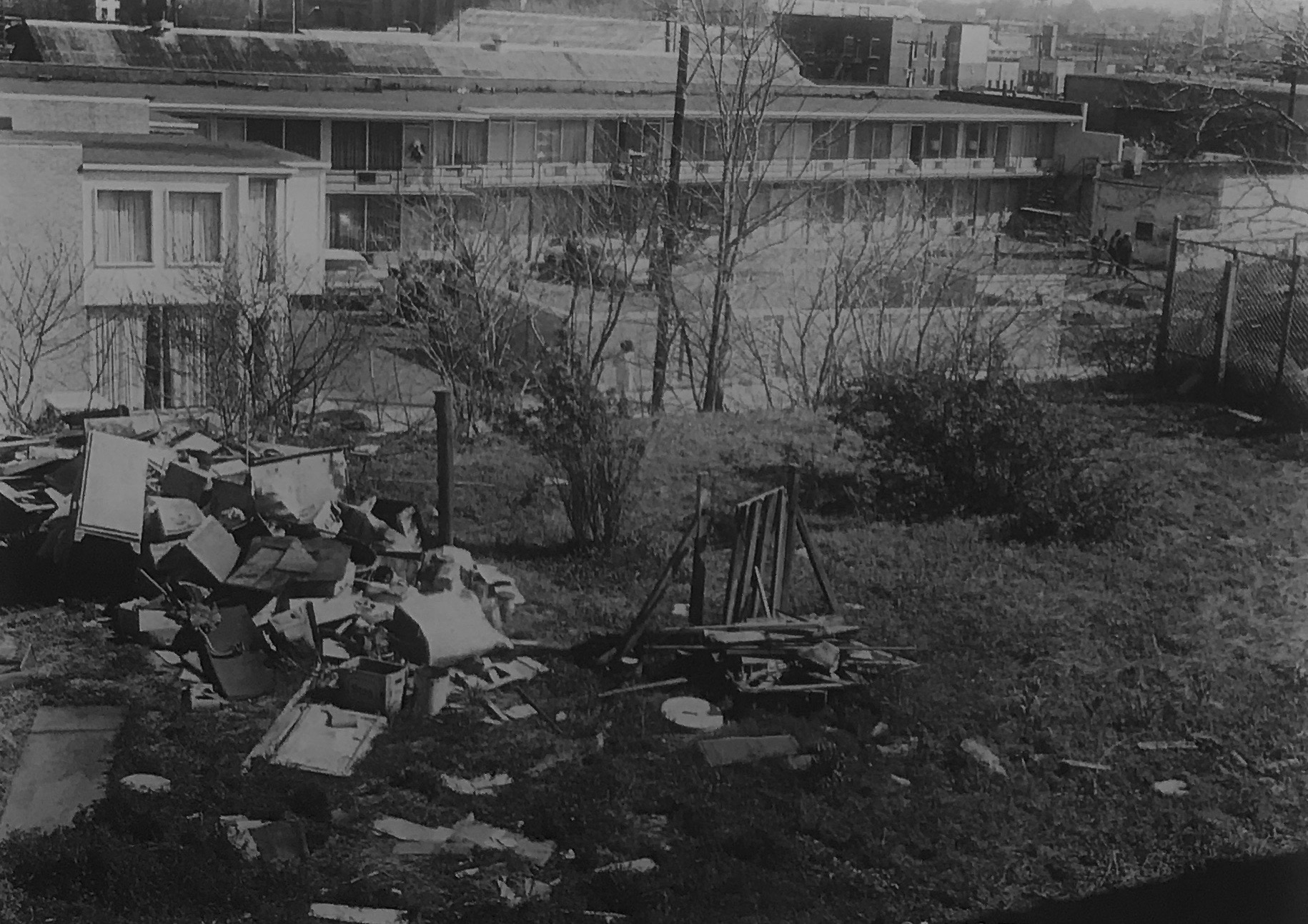
Then it was time to visit more displays in the boarding house across the street. The shots were fired from here.
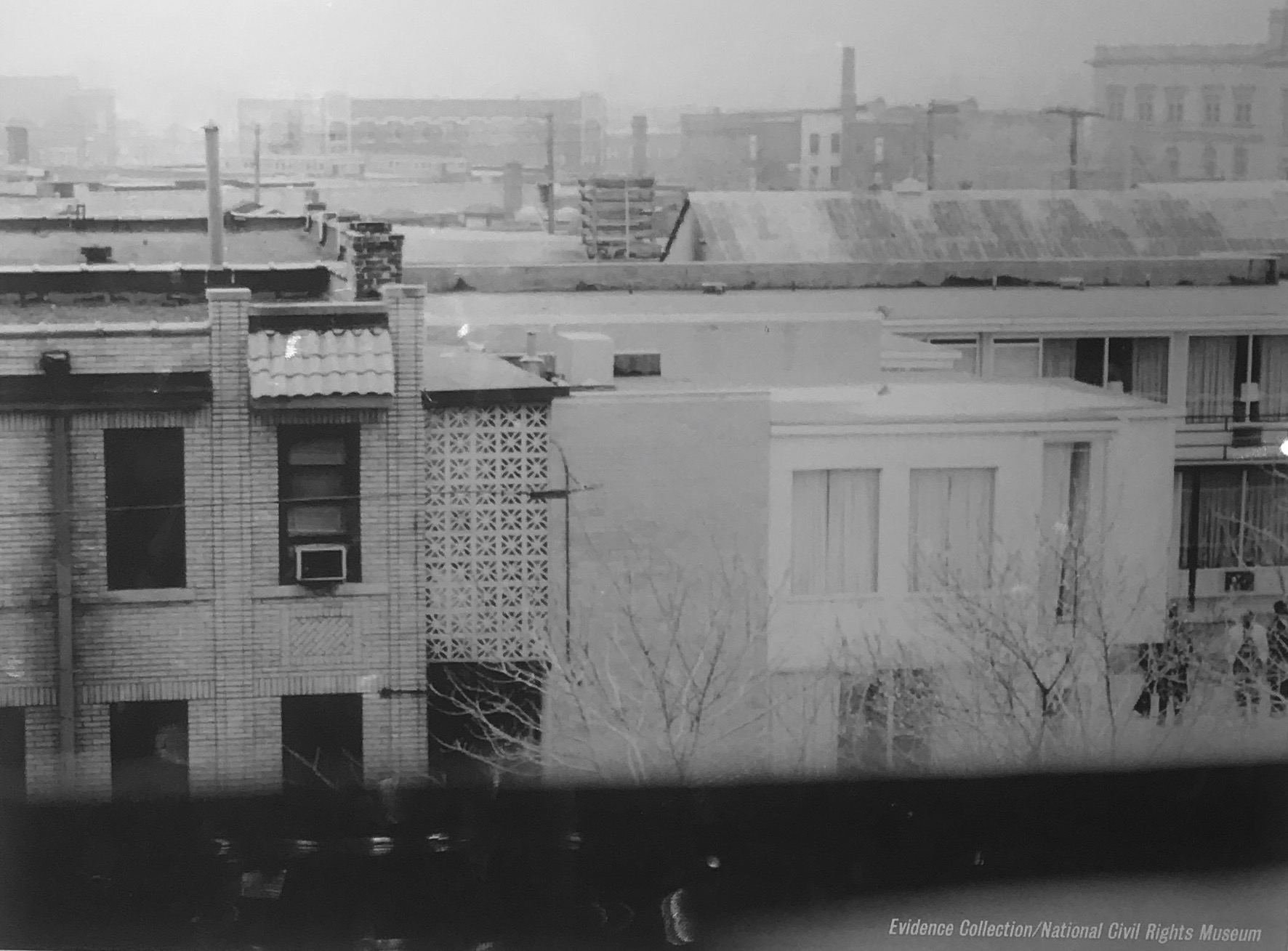
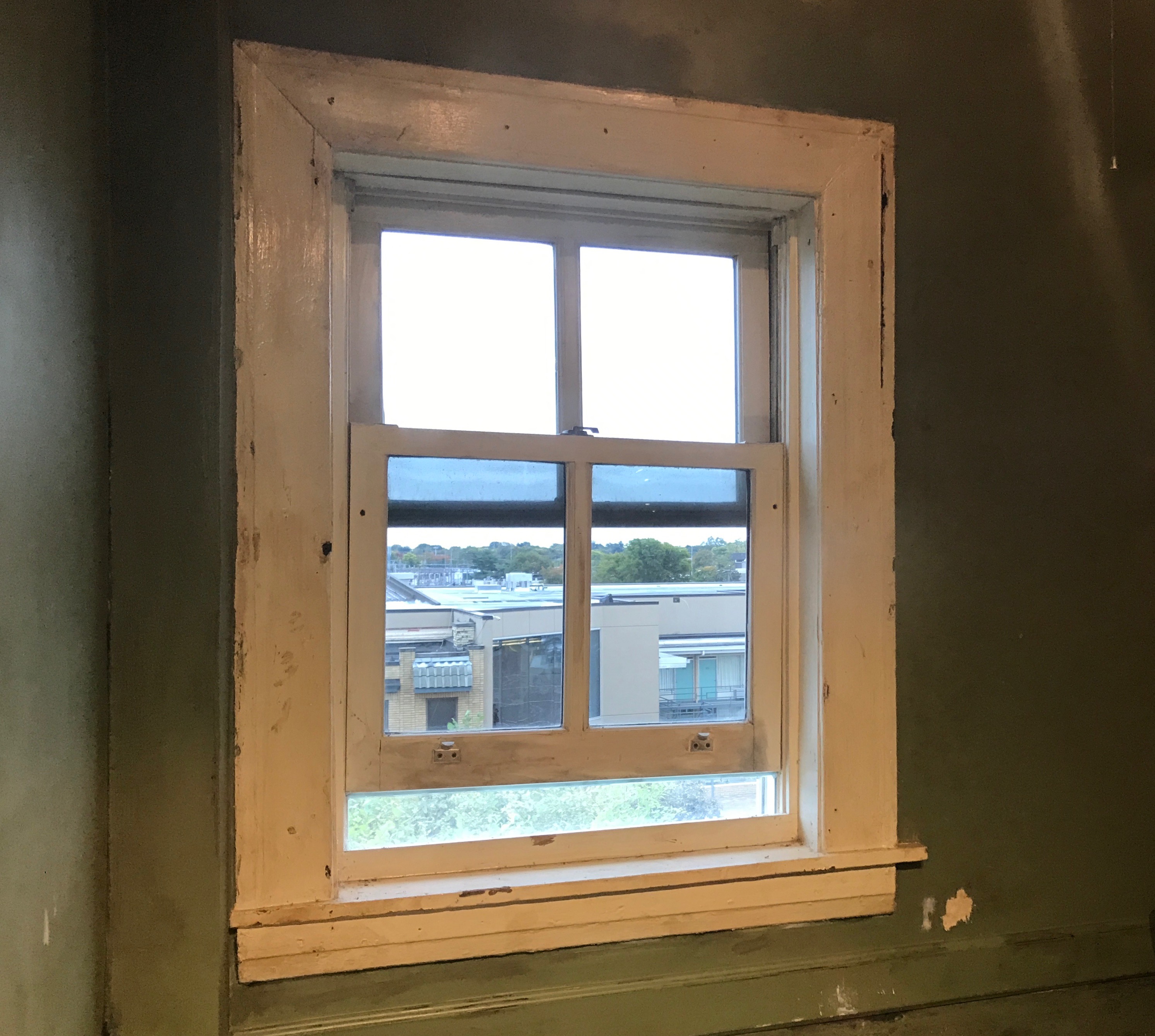
This is the view from the window. It was taken after the seventh, because there is a wreath at the scene.
Although the photo doesn’t show it very well, the display said that this photo was part of the evidence that shows the window partly open.
There was more too look at, but, as you can well imagine, I was pretty worn out from trying to remember my experiences from the time and attempting to assimilate new information.
I headed back to my car.
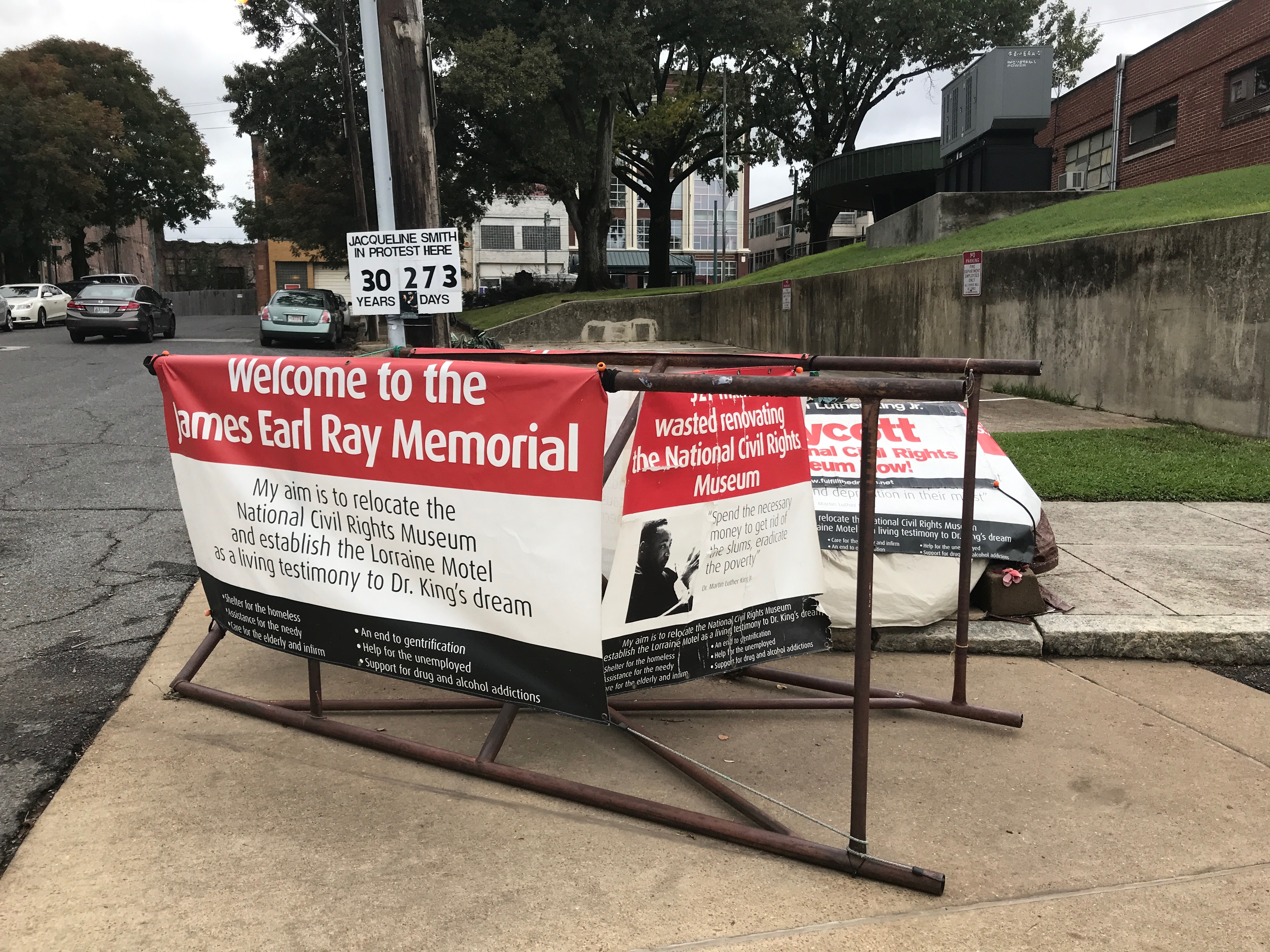
I saw this when I went in. At that time, there was a woman with these items. I wanted to ask her about her point of view, and what she hoped to accomplish. However, she wasn’t there when I was finished with my tour.
I guess I’ll have to save my questions for the next time. At the time I visited, Jacqueline Smith had been protesting for 30 years and 273 days.
Barring any ill fortune, I imagine she is still there.
Let me close this post with Dr. King’s last request.
After my day of diamond mining without turning up even so much as a quarter karat, I decided that I pretty much had the basic idea of what was involved. I had booked my campsite to allow for two days of mining, but decided that I didn’t need more diamond mining. What I needed was a bath!
I headed down to Hot Springs to indulge myself.
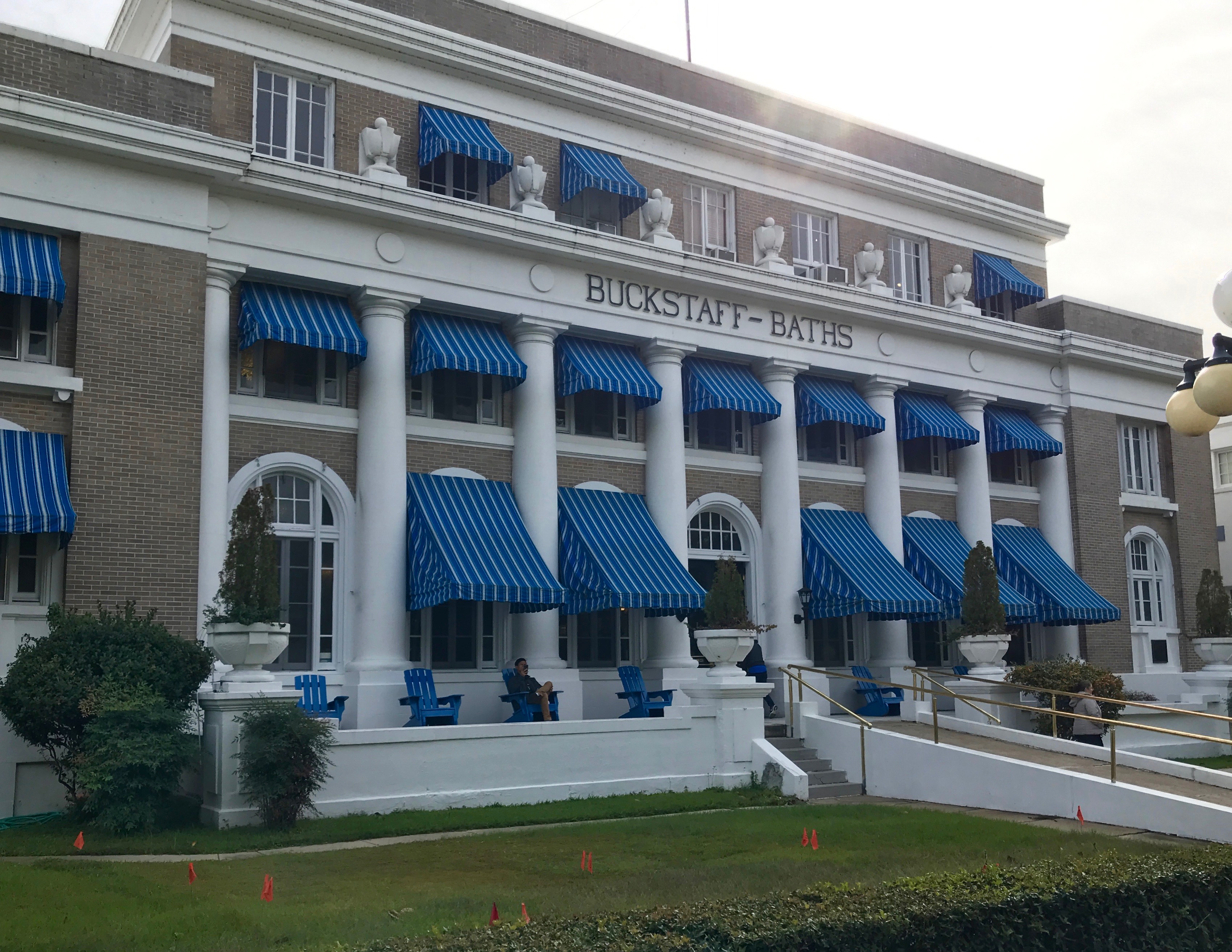
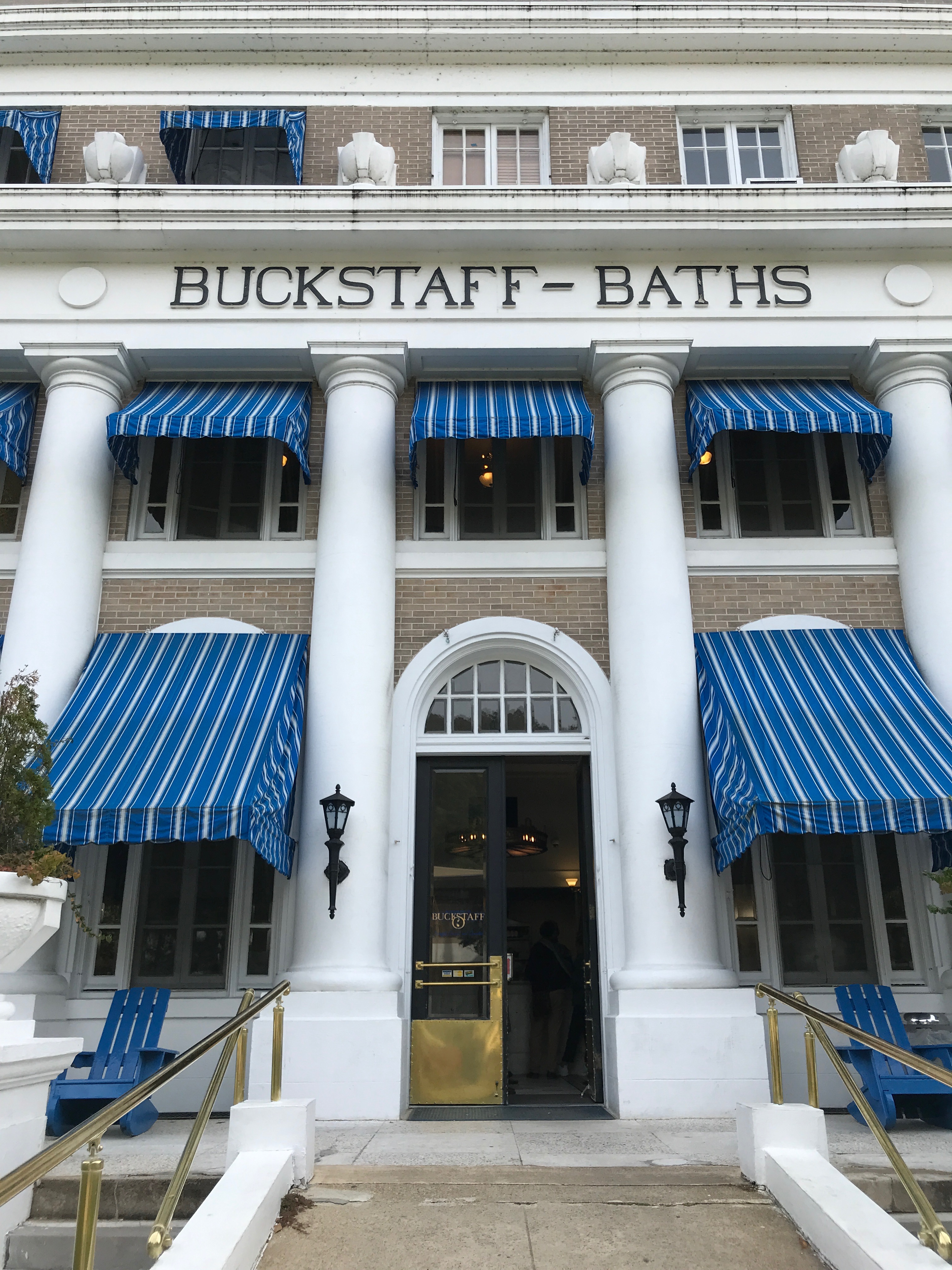
I wasn’t sure how I’d like it, but I figured that I wouldn’t know until I tried. I climbed the stairs to the Buckstaff Baths. I went up to the counter and paid for the least expensive package they had – The Whirlpool Mineral Bath. It cost $38. I felt a little bit like Jack Benny as I dug the money out of my wallet. I kept expecting moths to flutter out.
Just in case you are wondering what I paid for, this is how their website describes it:
“A 20-minute tub bath with whirlpool at a maximum temperature of 102 degrees. This bath includes, hot packs, sitz bath, vapor cabinet, needle shower, and whirlpool turned on in your tub.”
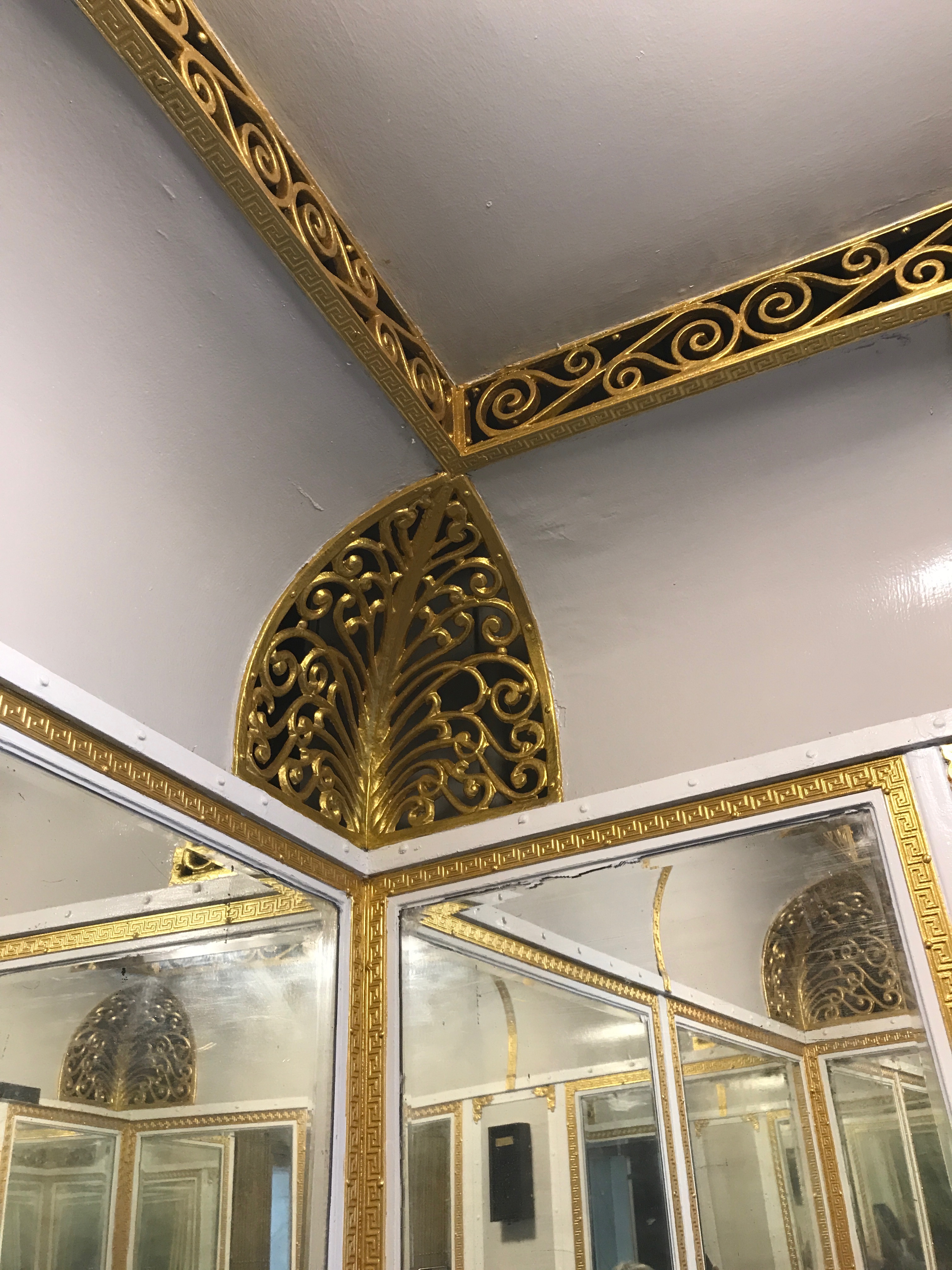
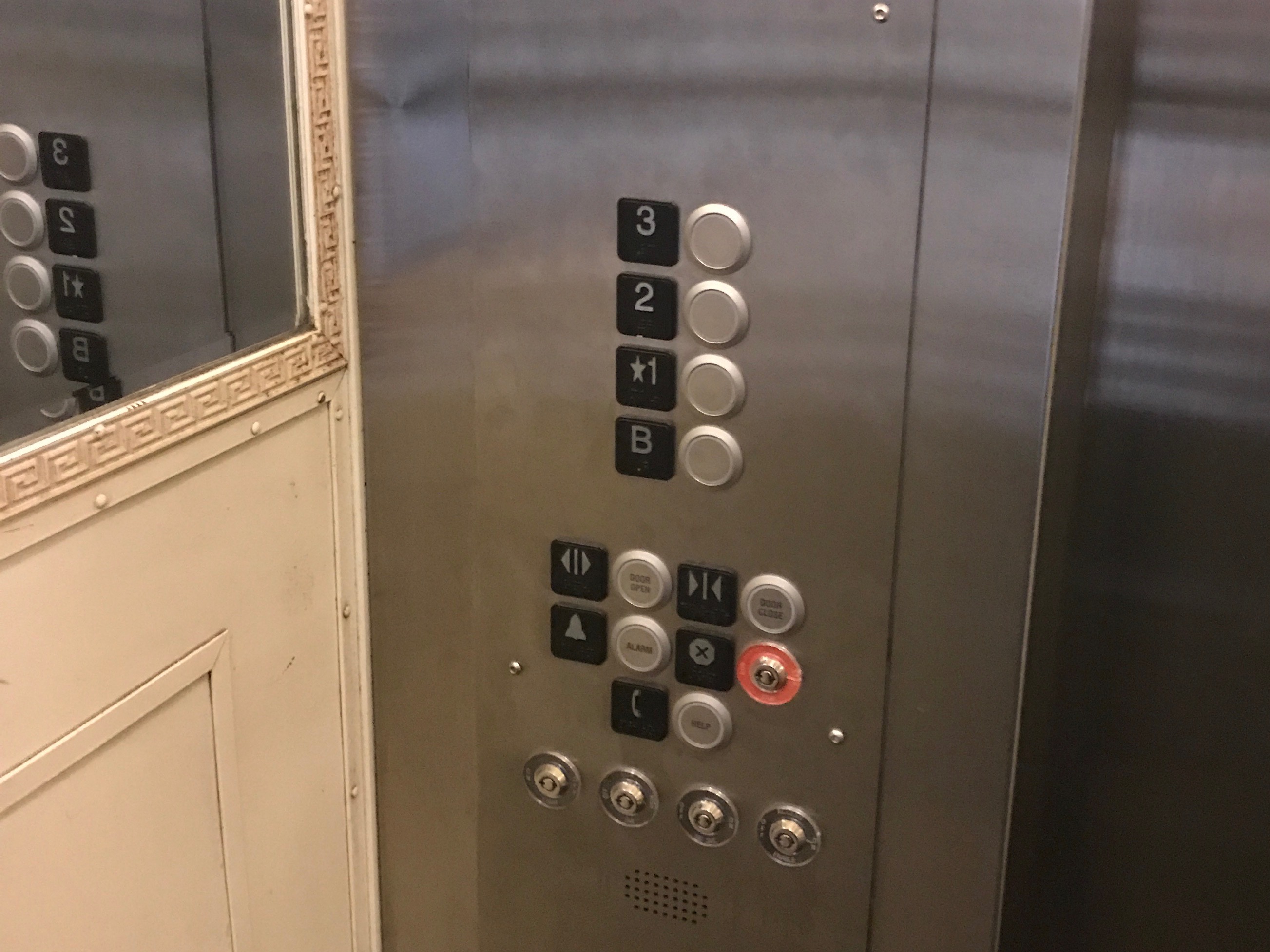
I got in the elegantly appointed elevator – complete with elevator operator – and rode up to the second floor.
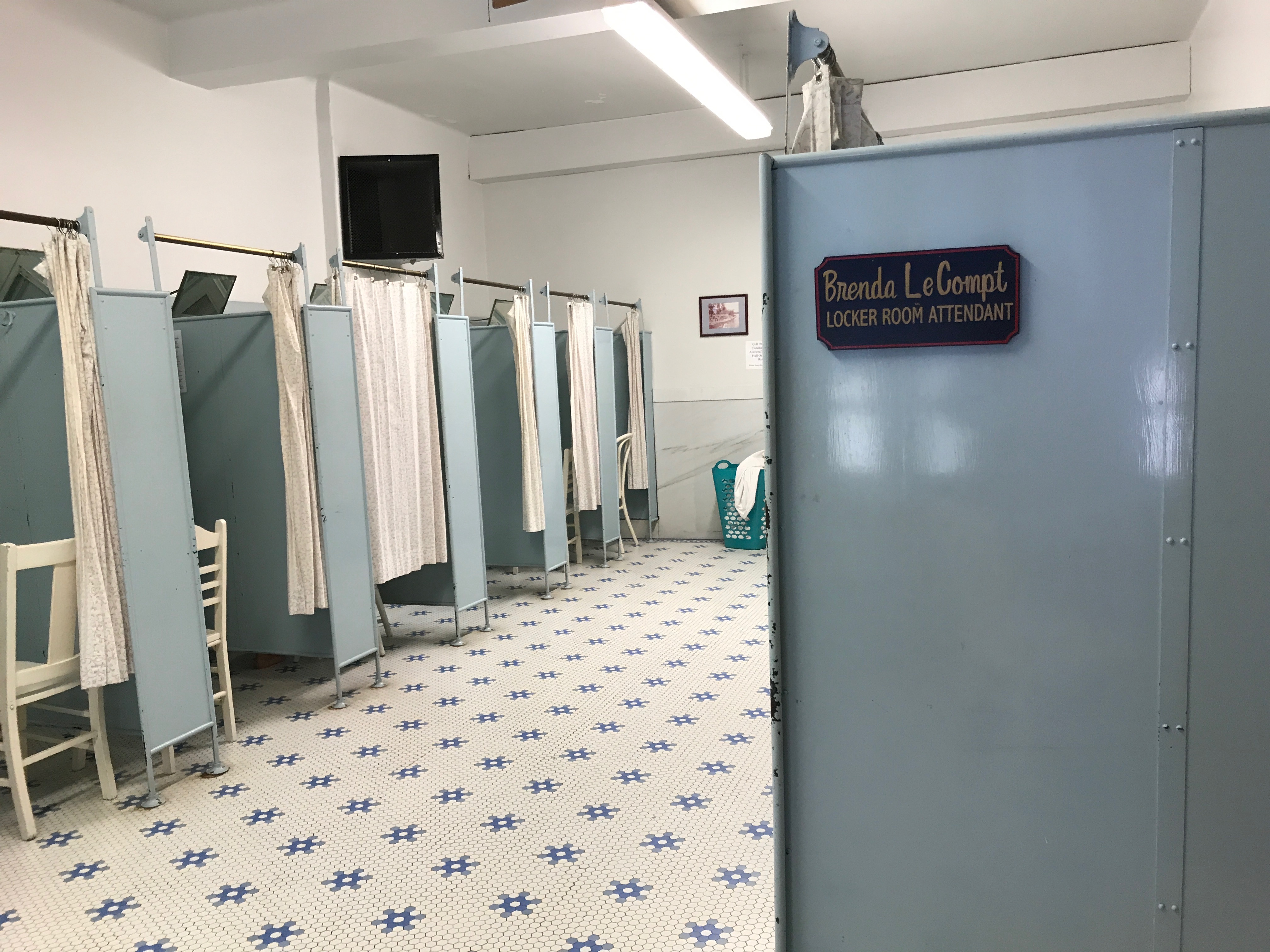
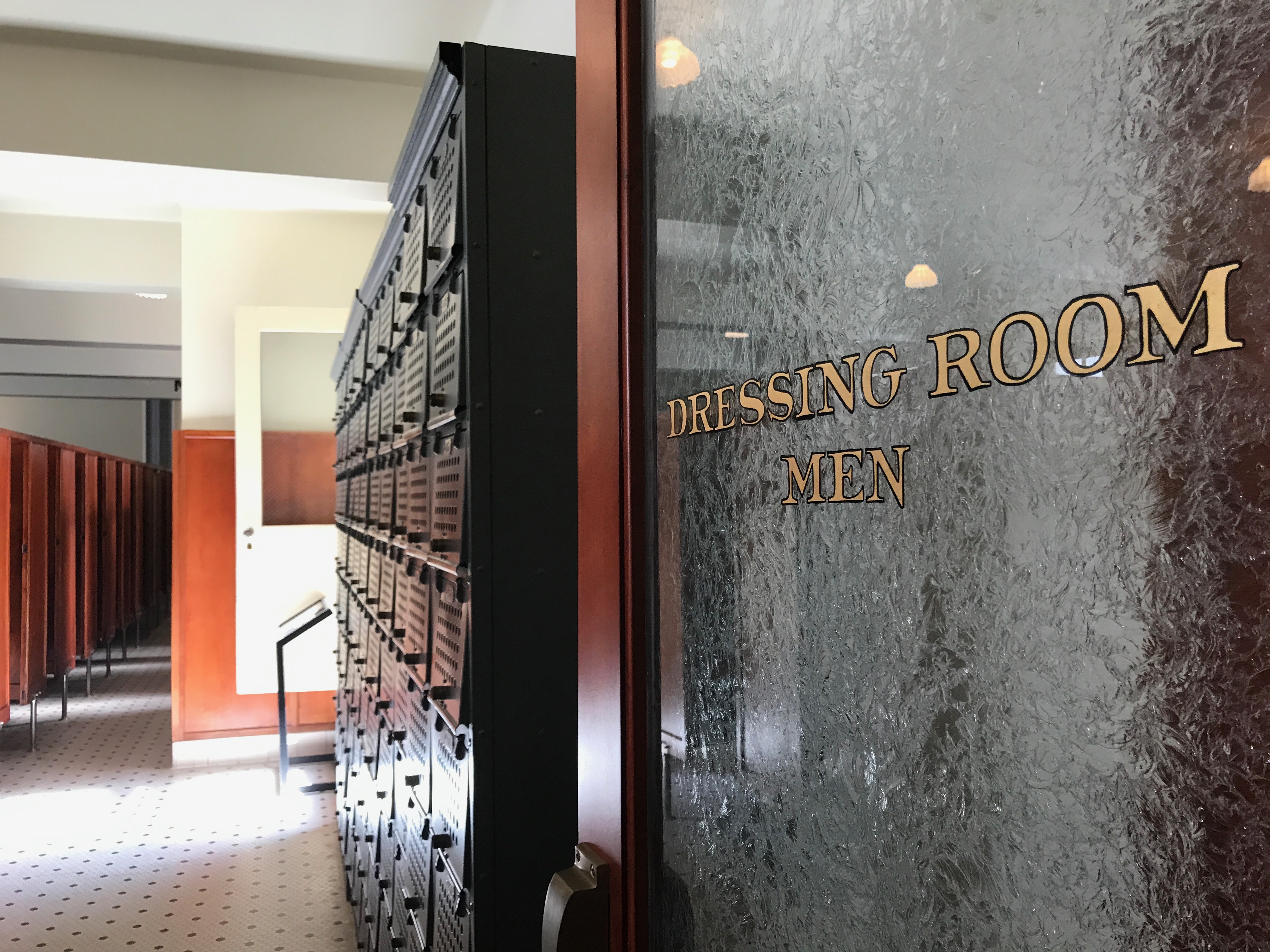
I arrived at the locker room.
The attendant showed me to my cubicle.
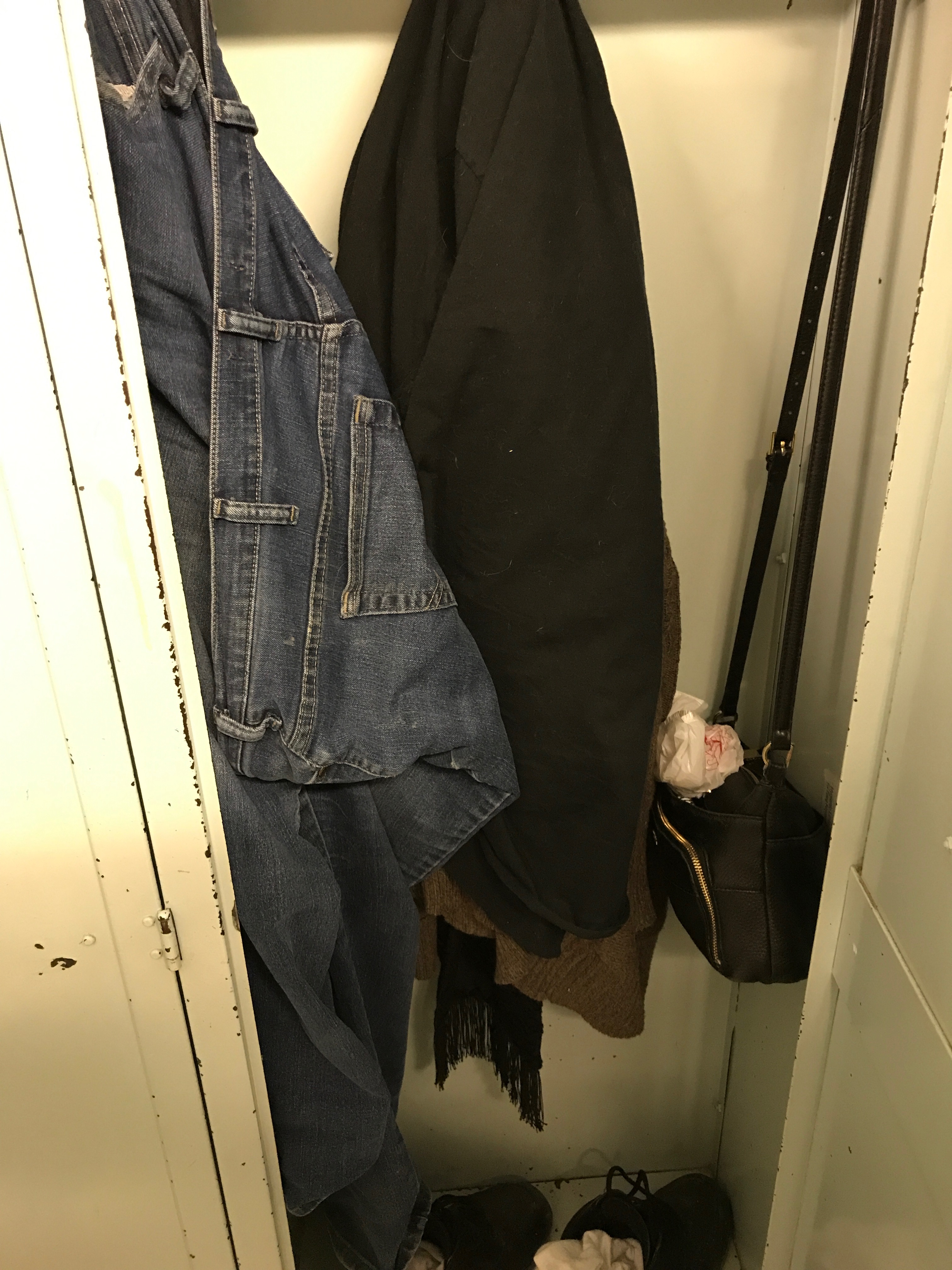
My locker even had a small hoop to hold my walking stick, cane or umbrella upright, just in case I had one.
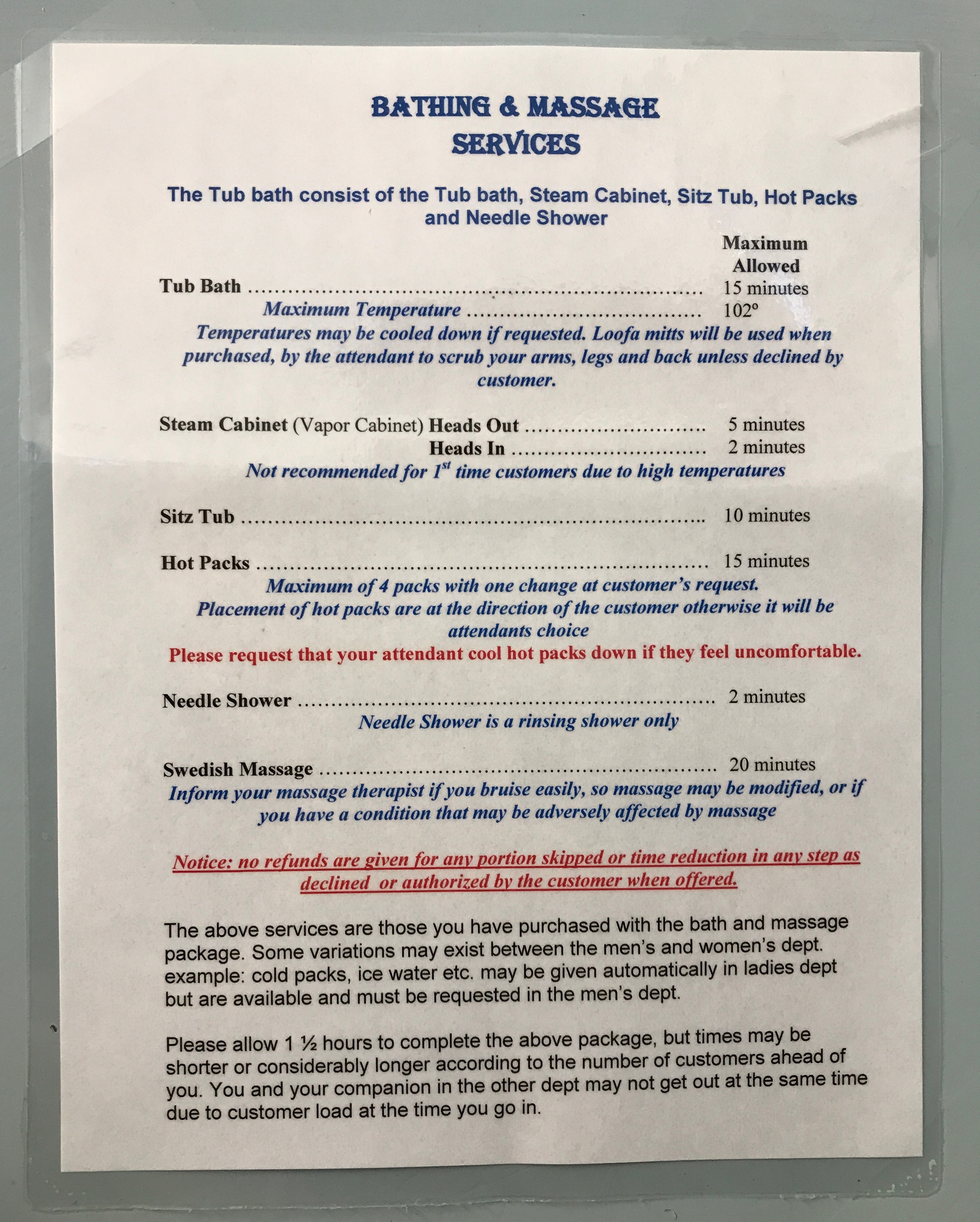
I undressed. While I waited for the attendant, I read the informational sheet about what to expect.
And that’s the end of the photos I have for the bath portion of my visit to Hot Springs. I’ll do my best to fill you in one what came next.
When I had undressed, the locker room attendant instructed me to raise my arms to shoulder height and she wrapped me in a large white sheet and then handed me off to the bath attendant.
She lead me to a long, deep white tub that was filled with hot water. As I remember, it had a whirlpool attachment that kind of reminded me of an outboard motor, except that in place of a propeller it had a water jet. I sunk down to my ears in the lovely hot water. It was great to be almost totally submerged in that long, deep tub.
After the specified 15 minutes, the bath attendant wrapped me up again and took me to a table. She had me lie down and then she applied hot packs. I rested there until they cooled down.
After that, it was off to the steam cabinet.
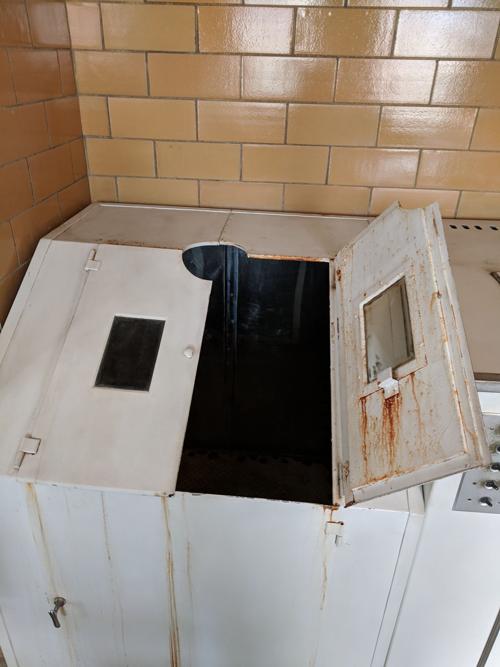
This is not the steam cabinet I was in. It is similar, though. I seem to remember seeing them in old movies as an example of hedonism. They way these are set up, you couldn’t really do it yourself. You needed an attendant to help.
The attendant opens them up, you sit inside and then they close it up around you so that only your head is sticking out, and a towel is wrapped around your neck so that none of the steam is lost.
Next, I was off to the sitz bath. You sit down with your bottom in a smaller tub of hot water and soak.
Then it was off to the needle shower. That sounds a little uncomfortable, but it wasn’t. As I remember, I stepped into concentric copper pipes – maybe four or five of them arranged in a “C” shape. The pipes were fitted with nozzles that sprayed you with cooler water from about your shoulders to your ankles.
At the end of that, you were escorted back to your locker to get dressed.
I didn’t know what to expect, but I felt marvelous! Completely clean and relaxed and ready for lunch.
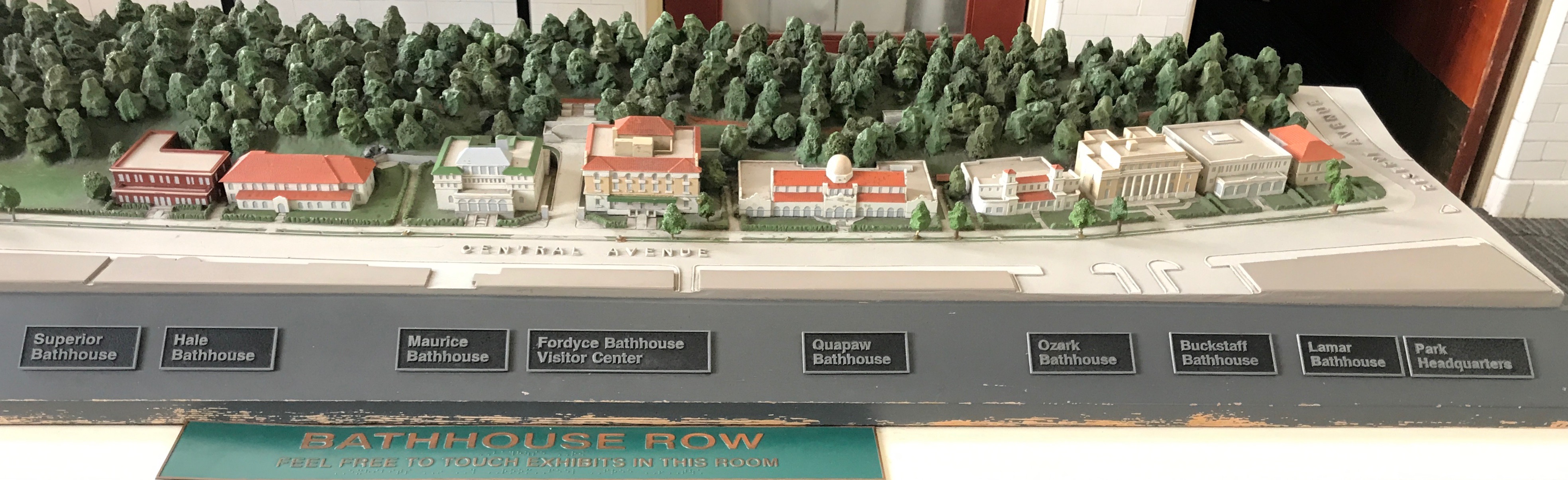
I headed down Bathhouse Row to find sustenance.
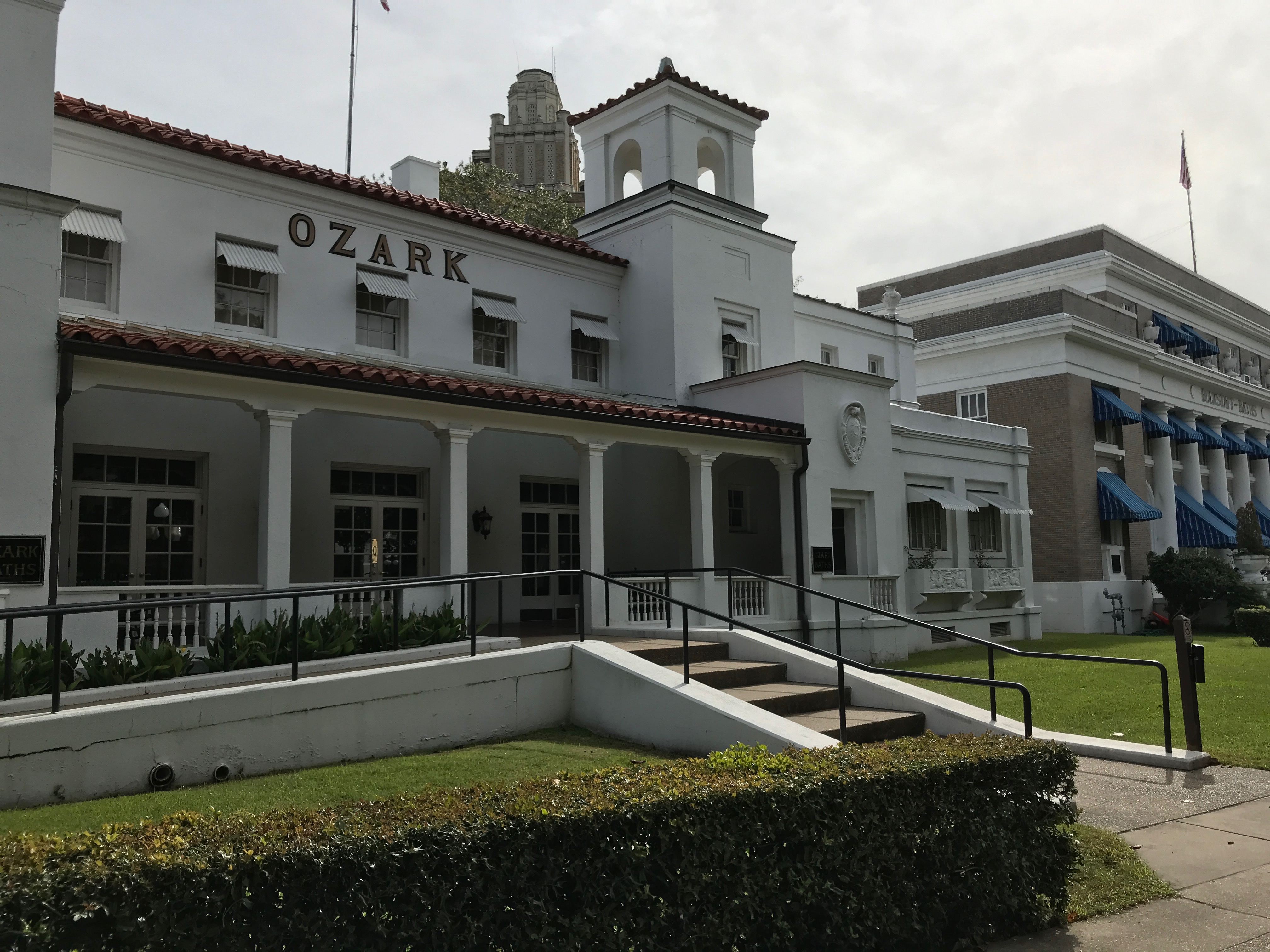
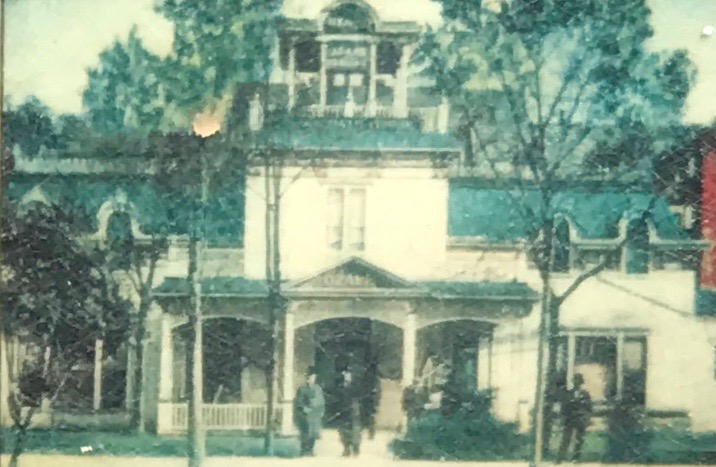
I passed by the Ozark Bathhouse, which was completed in the summer of 1922. It was built in the Spanish Colonial Revival style at a cost of $93,00.
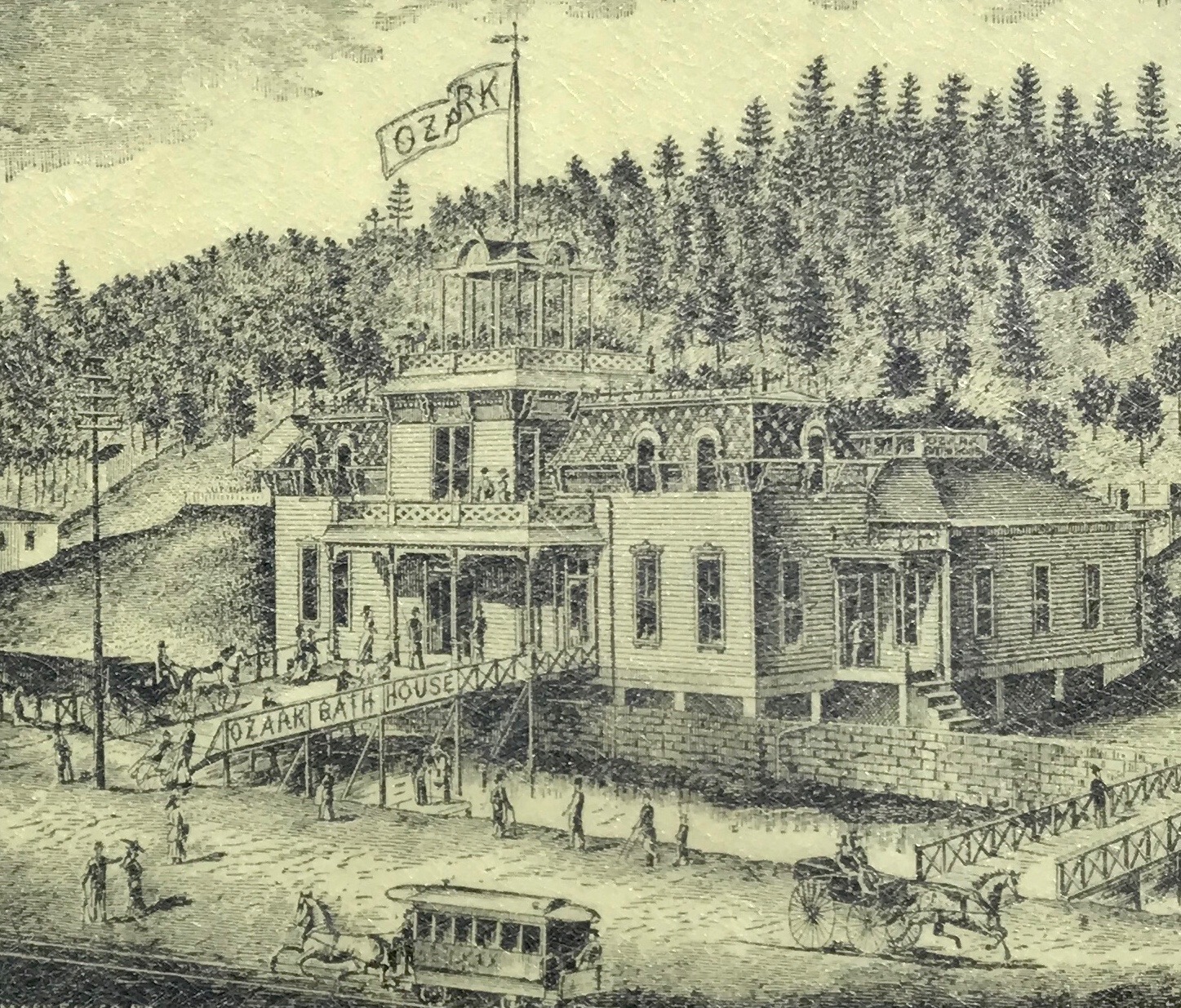
Originally, the Ozark Bathhouse looked quite different. Here it is in 1882.
They don’t seem to be satisfied with their design, as this photo from 1915 demonstrates. Or, maybe, the person who made the 1882 drawing took some artistic liberties.
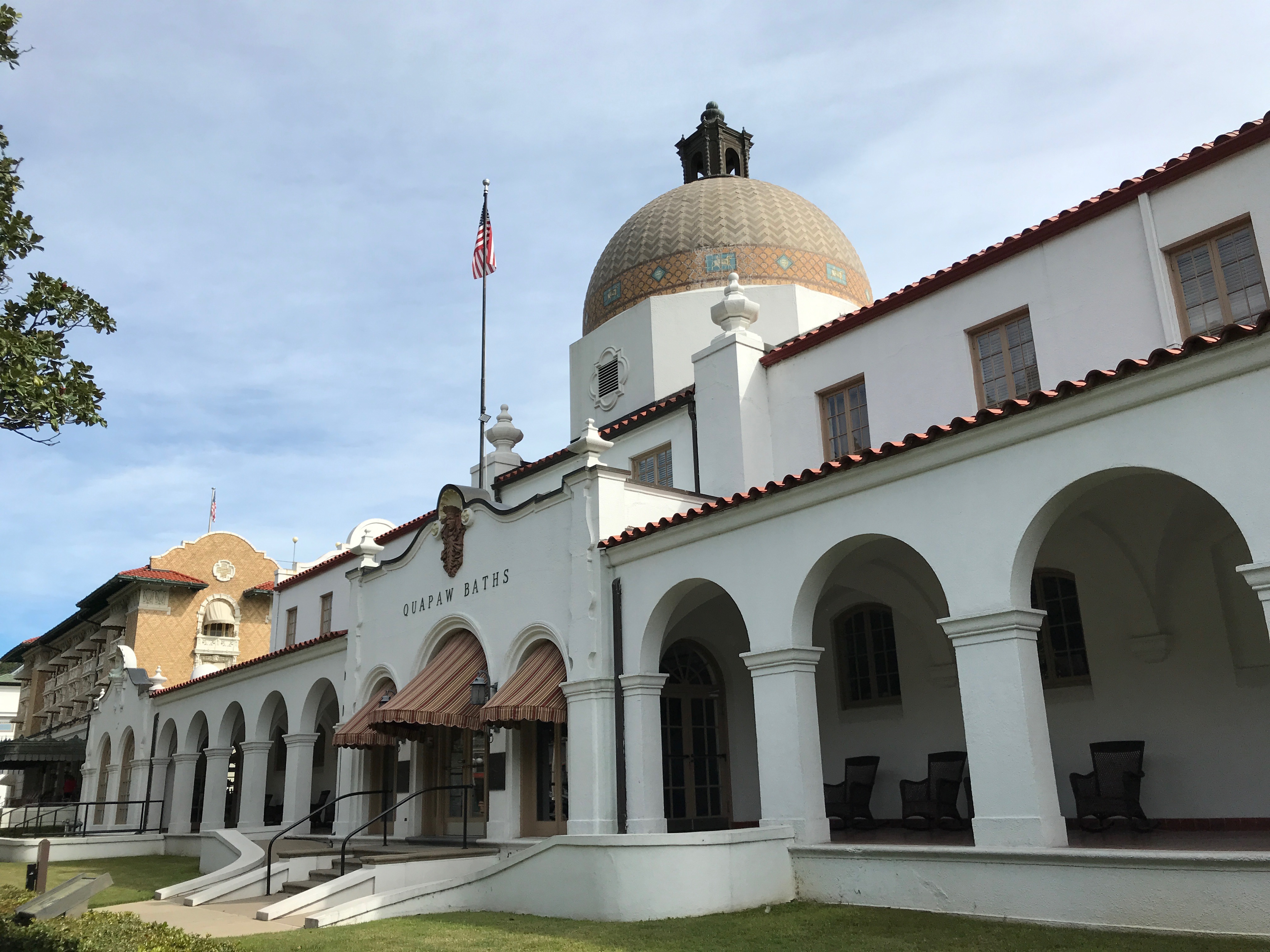
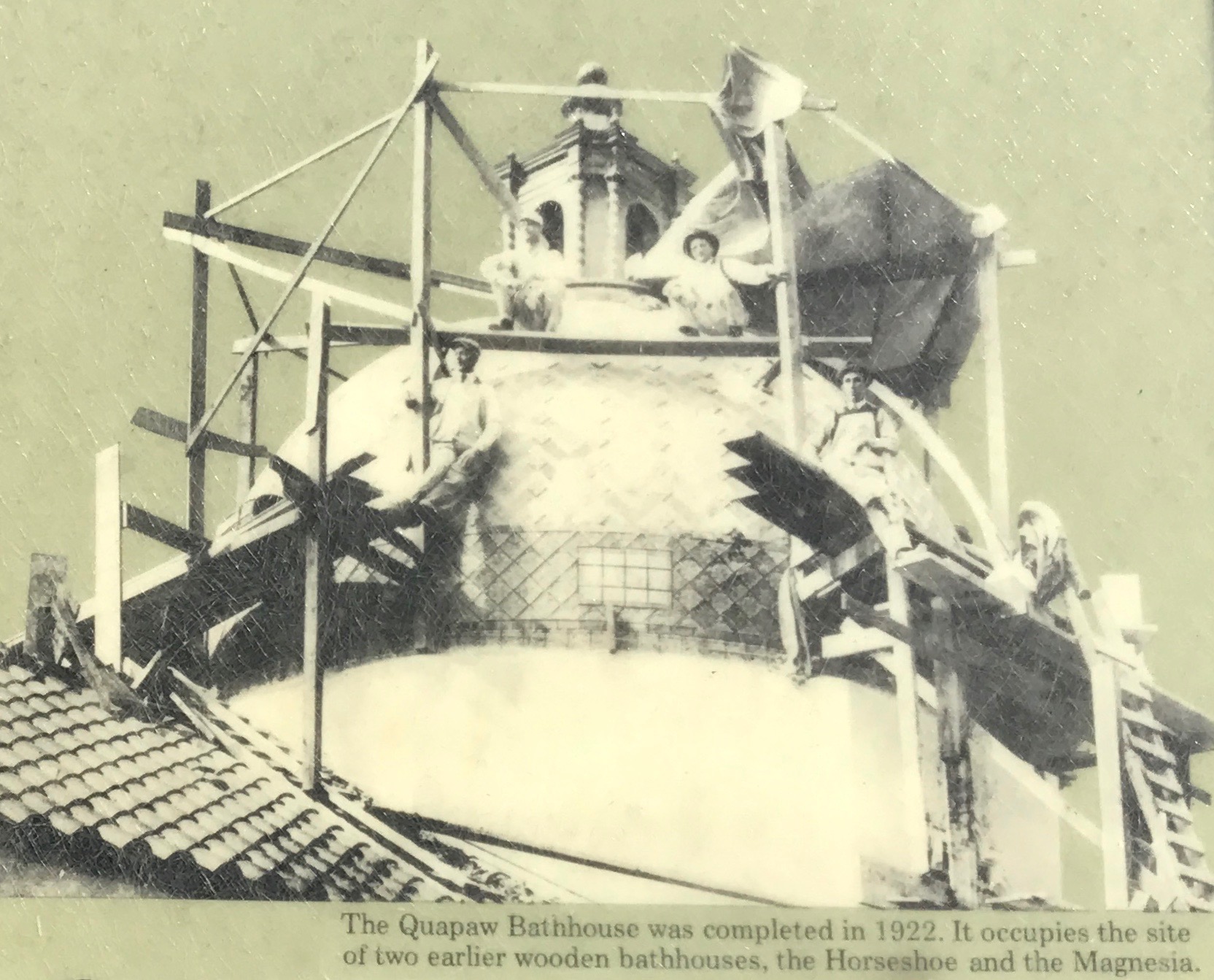
I passed by the Quapaw Bathhouse, which is also built in the Spanish Colonial Revival Style and also opened in 1922. Its most notable feature is its dome covered with colorful tiles.
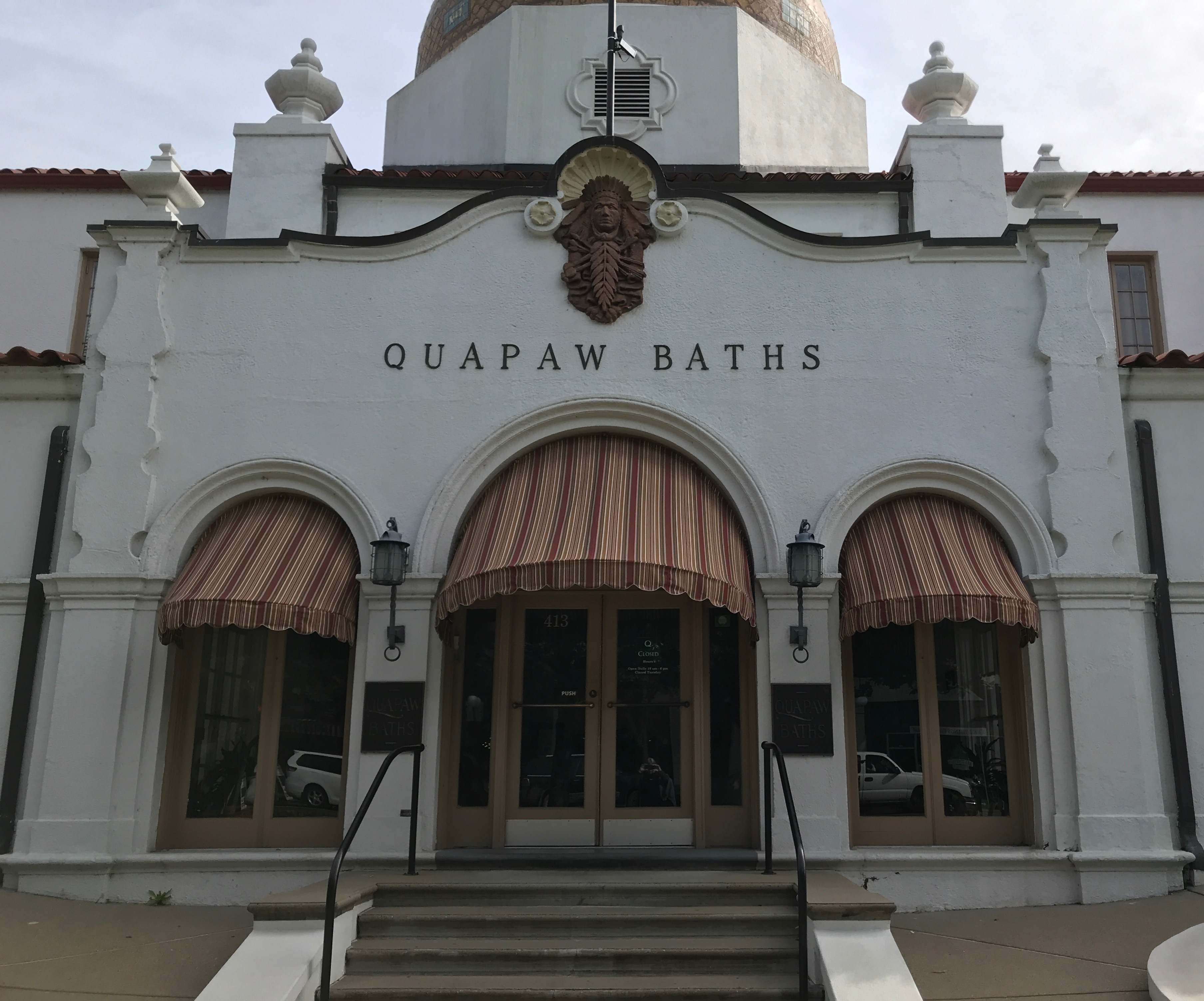
It was originally going to be named The Platt Bathhouse, after one of the owners. However, during construction, a cavity in the rocks in the building site was found, and the owners decided to promote it as an Indian cave. They named it after the Quapaw Indians that had occupied the area for a while in the early 1800s.
I walked up to the doors to take a peek inside.
Naturally, it was closed. That’s how I roll!
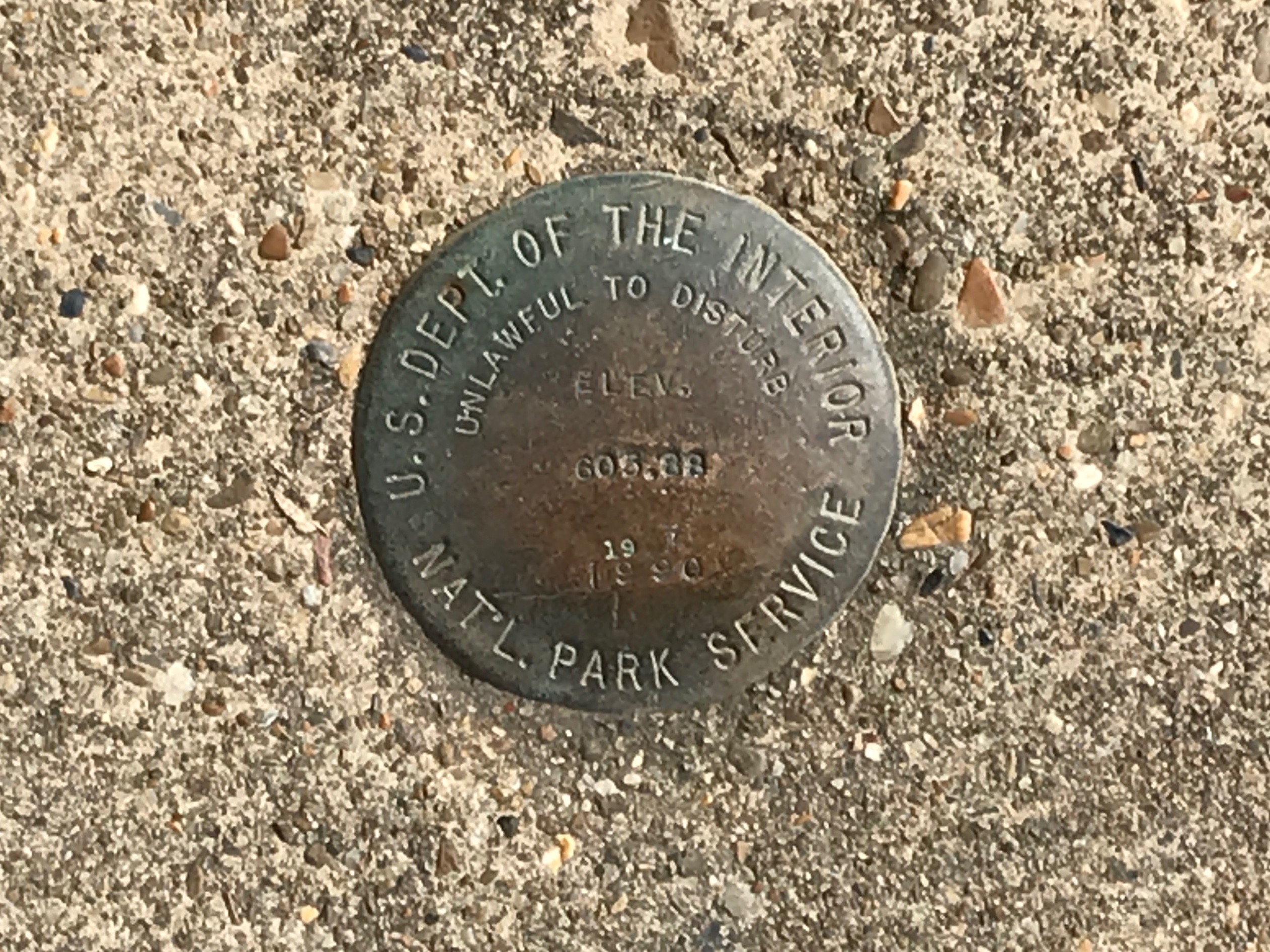
I came across this elevation marker as I continued my hunt for lunch.
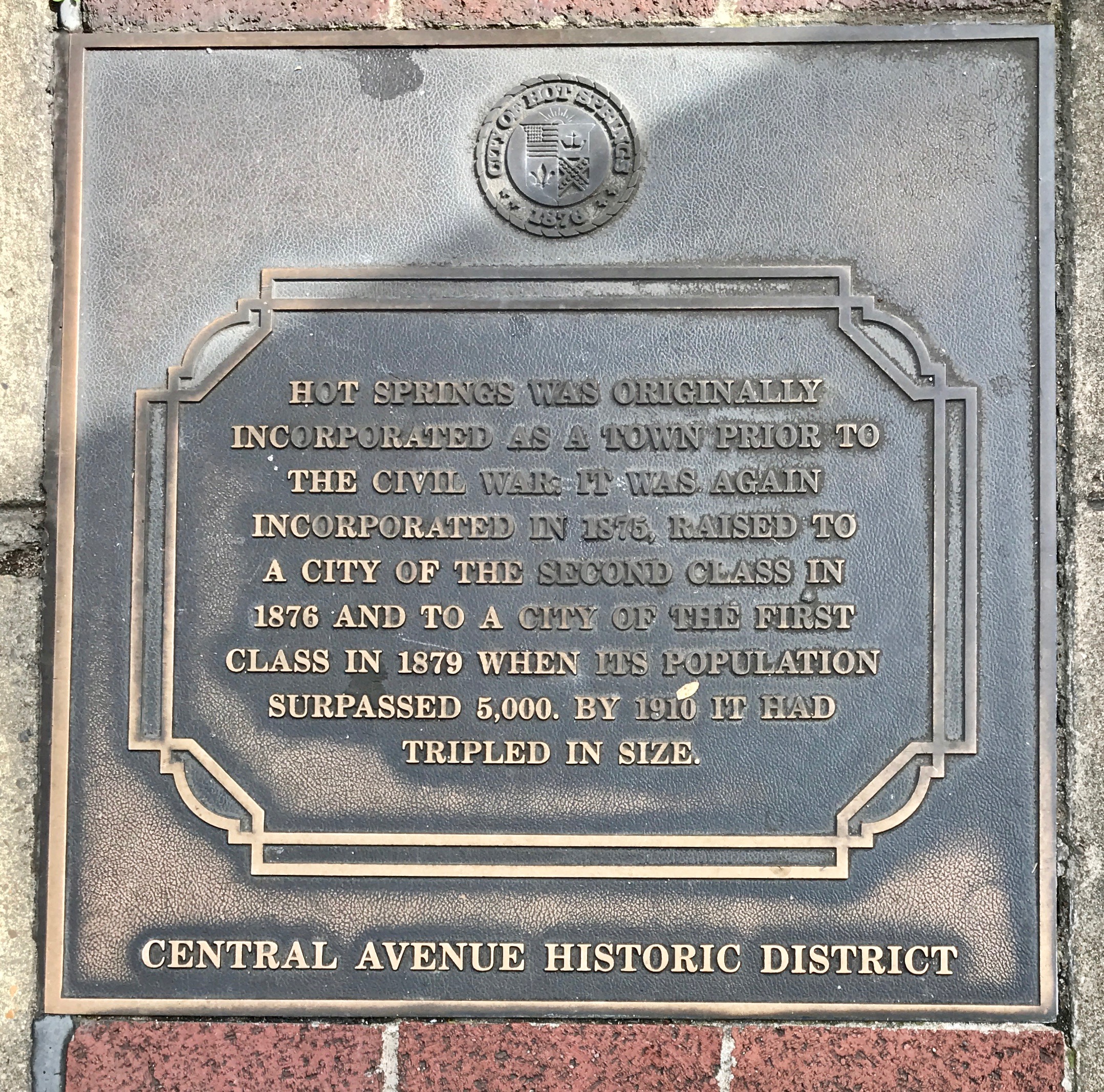
I noticed this plaque set into the pavement as well.
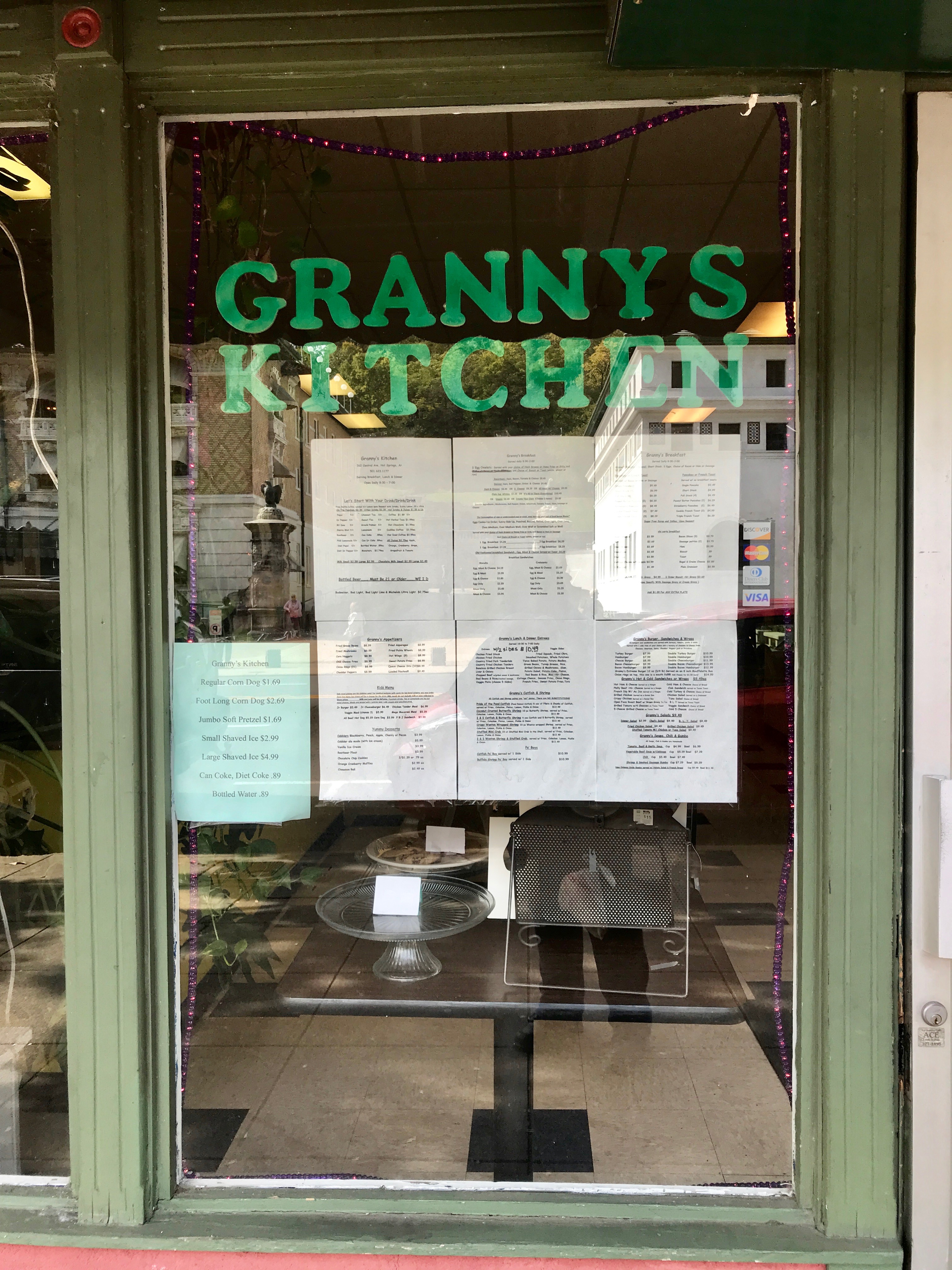
Finally, I crossed the street and I found lunch.
Lunch!
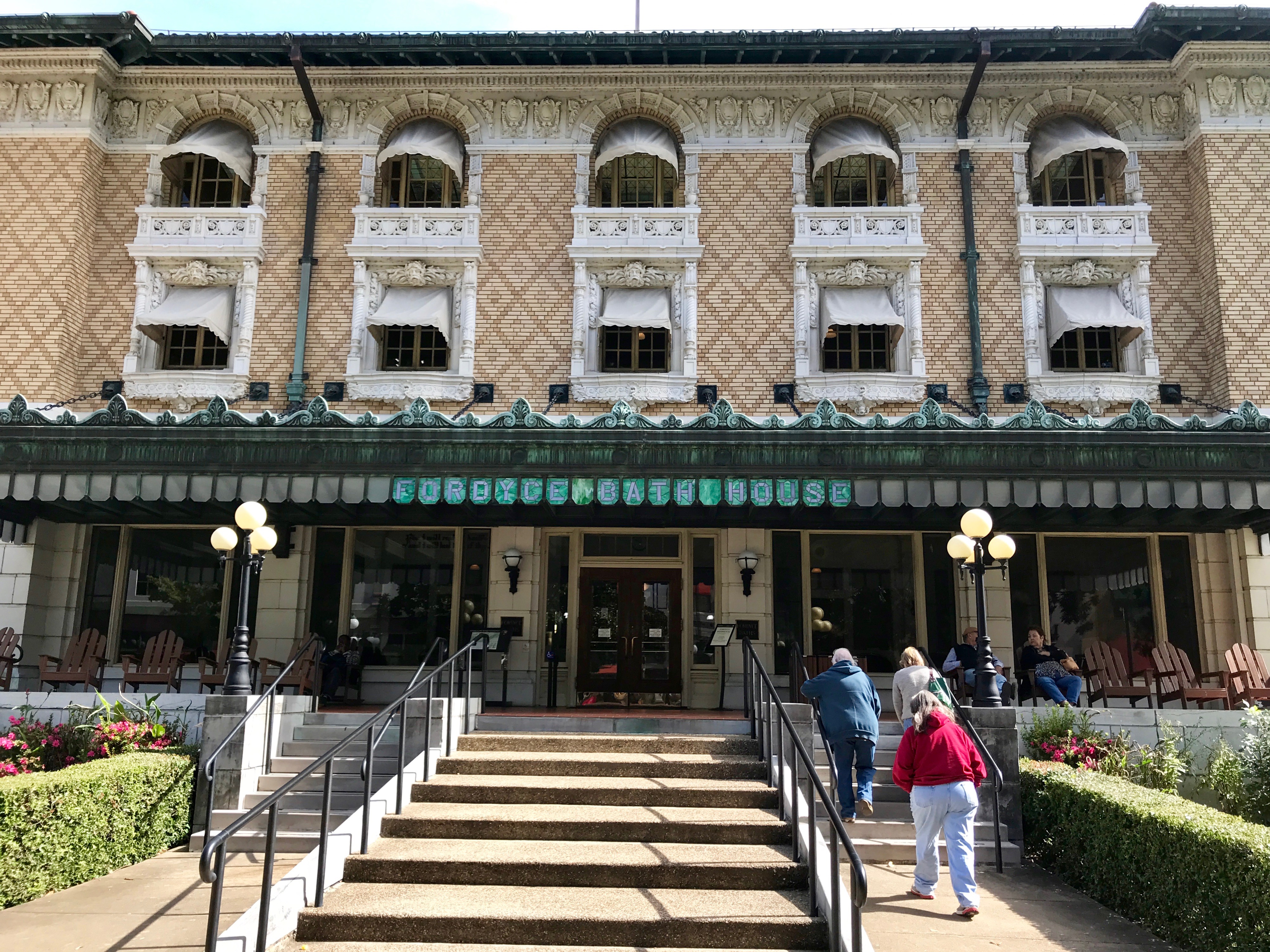
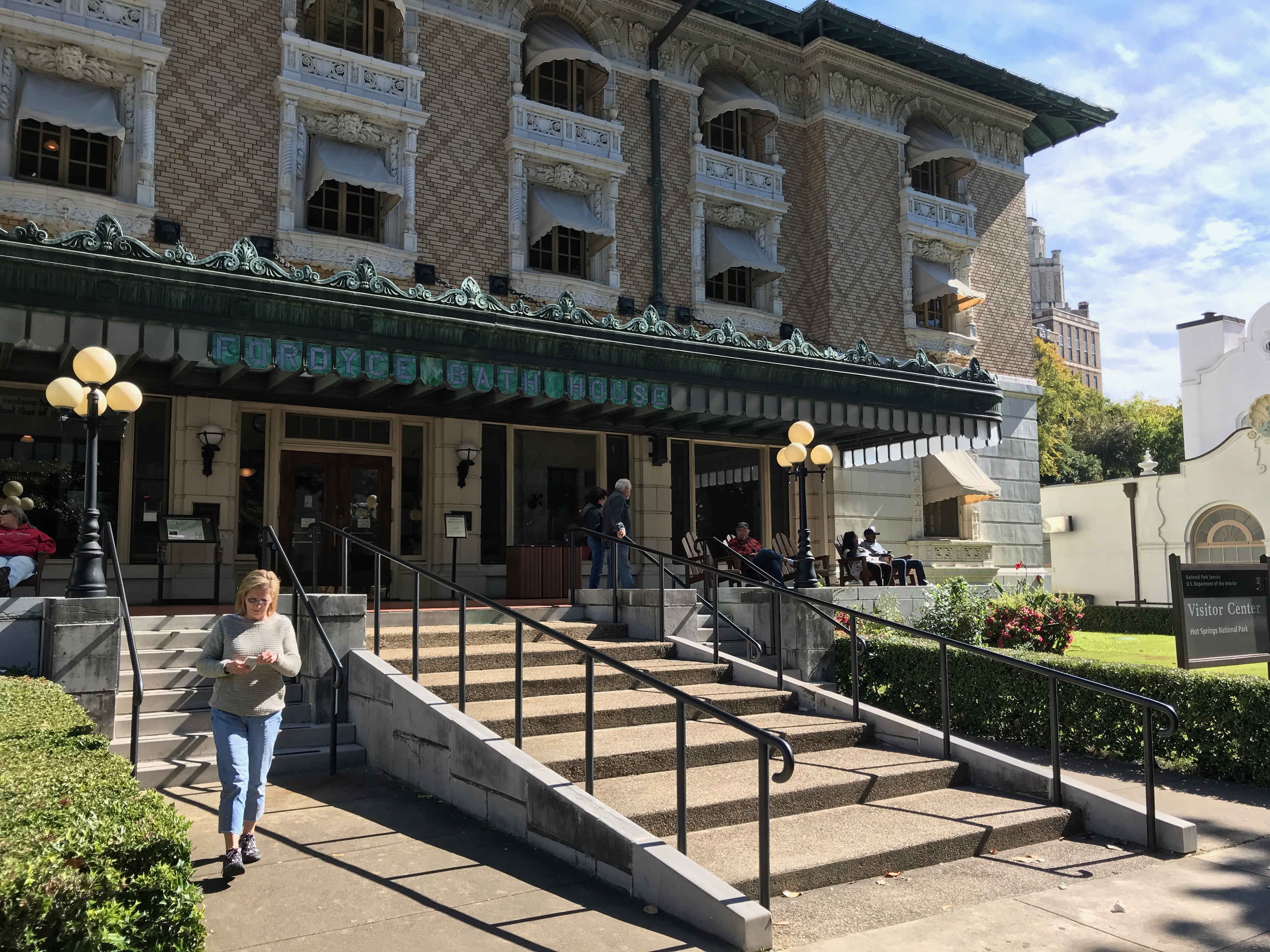
Thus fortified, I headed back across the street to the Fordyce Bathhouse, which is now the Visitor Center for the Hot Springs National Park. Yes, this whole area is one of our national parks!
The Fordyce Bathhouse was built by Colonel Samuel Fordyce. Inspired by the spas of Europe, it opened in 1915 and was the largest bathhouse on the row. Built in the Renaissance Revival style, it eventually cost over $212,000 to build and equip and had 28,000 square feet on three floors.
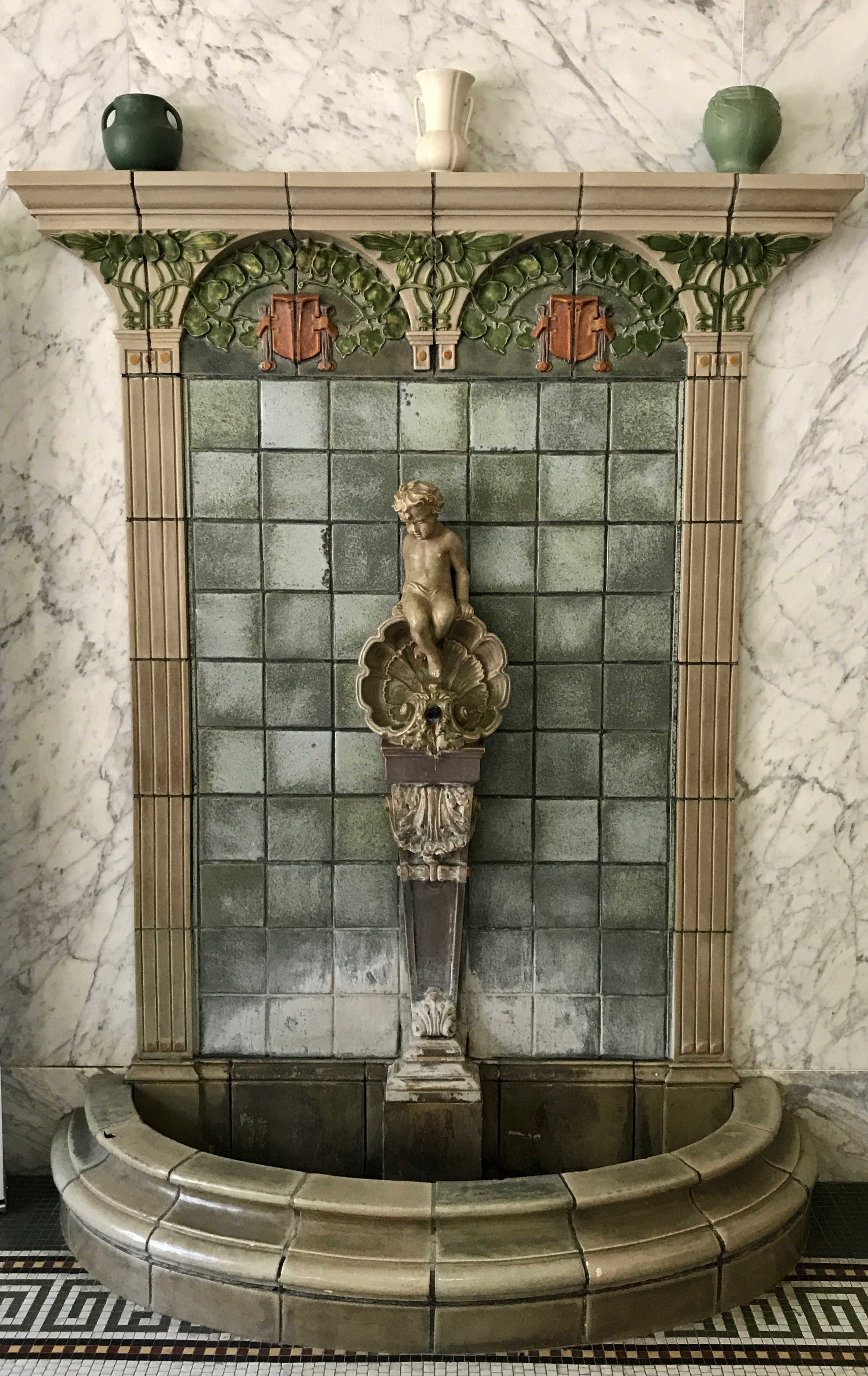
I stepped inside and was greeted by terra cotta fountains.
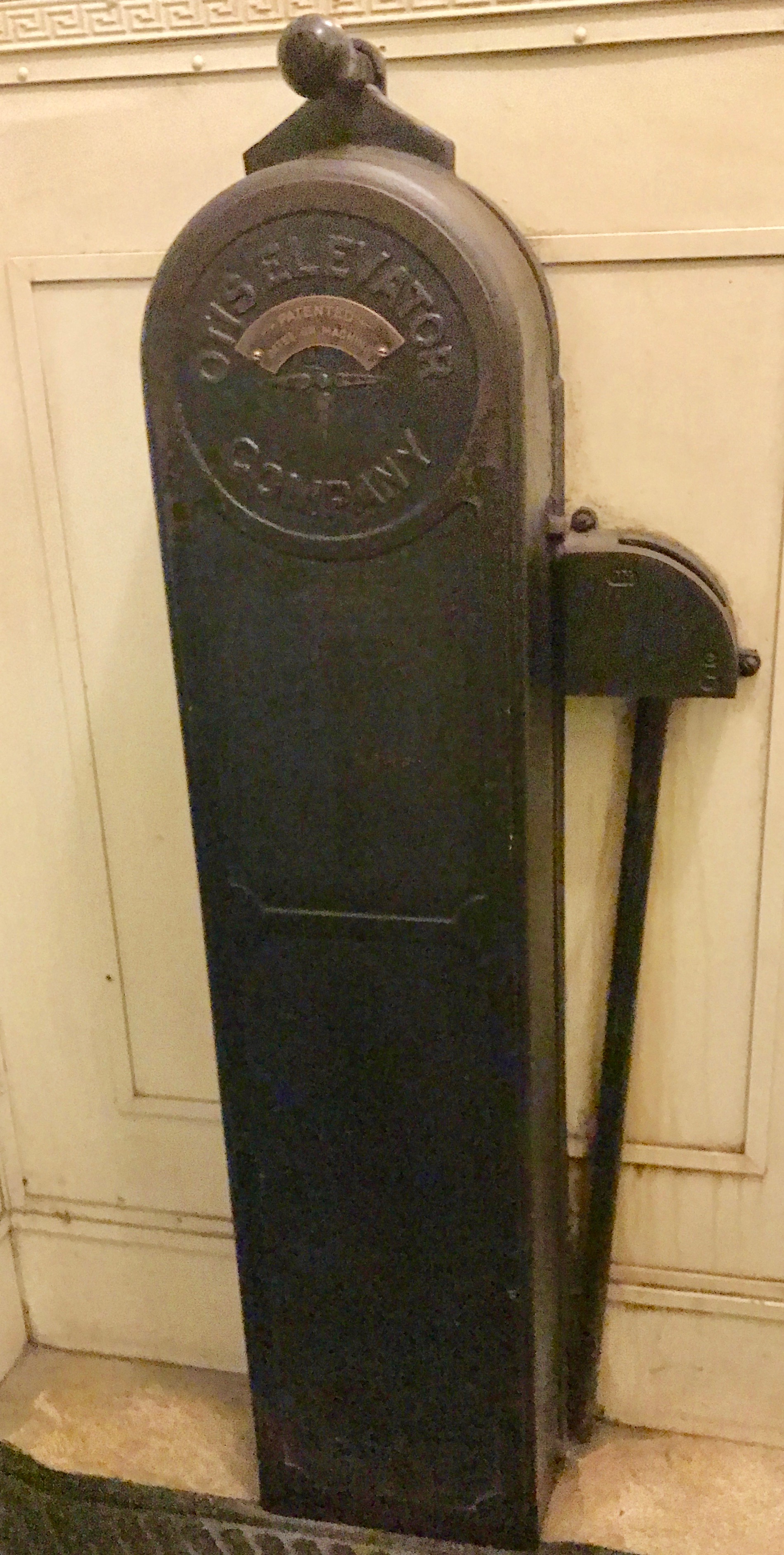
I took the elevator up to see what I could see. The original equipment was there.
They had upgraded it to modern standards, though.
As I remember, I just kind of wandered around.
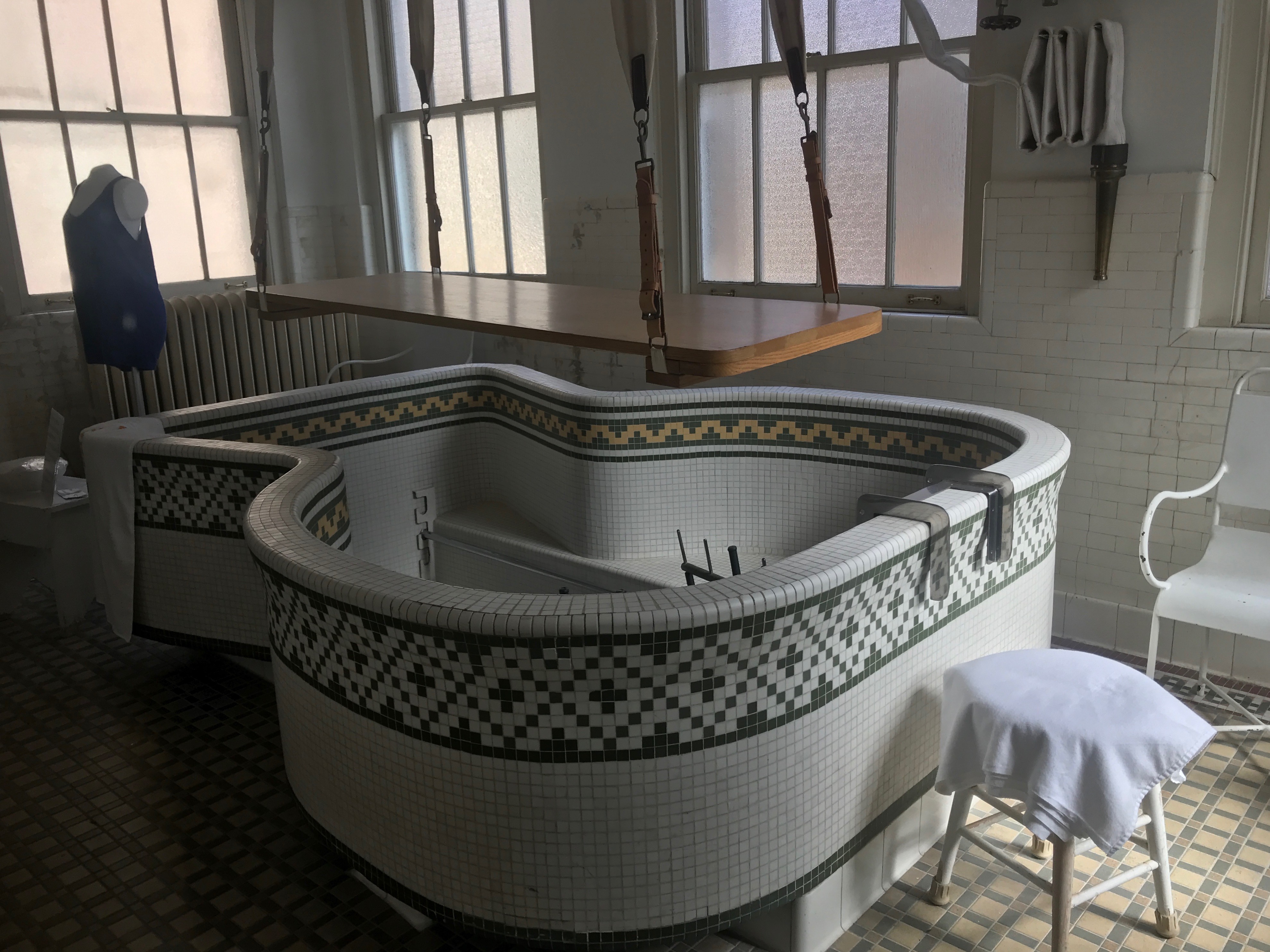
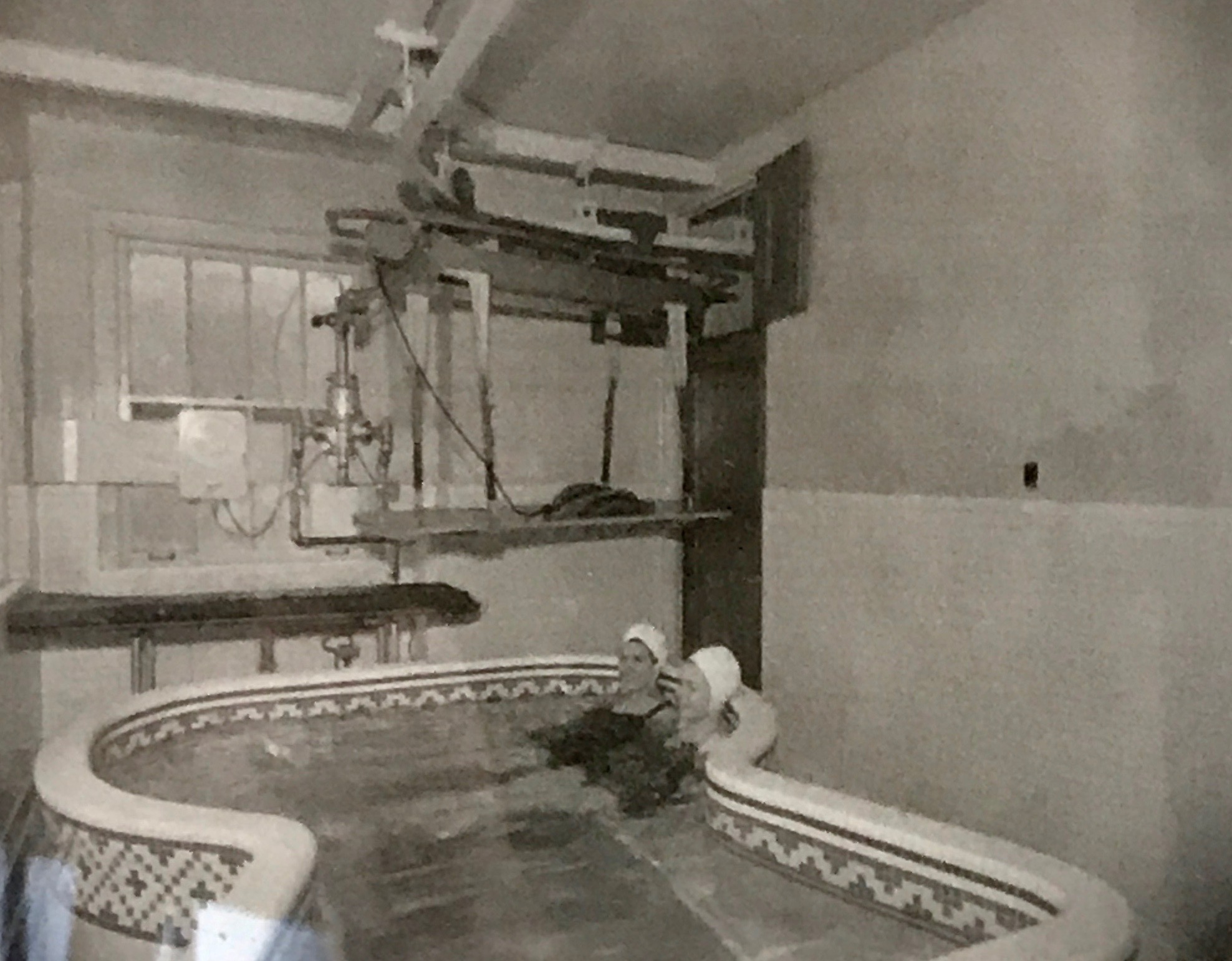
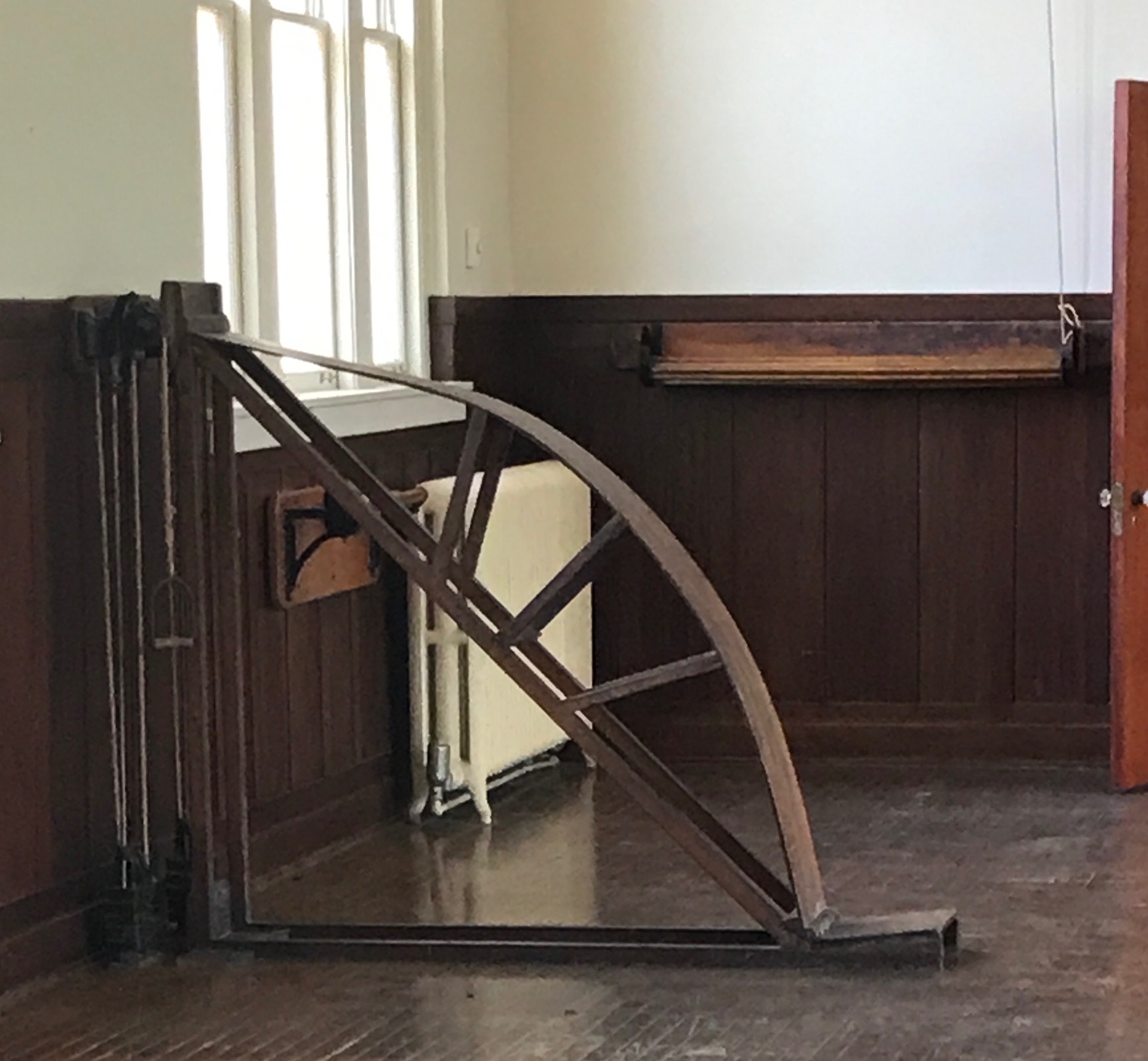
The first thing I came upon was The Hubbard Tub. It was installed in 1939 for conducting physical therapy with non-ambulatory patients. The therapist was normally in the water with the patient, manipulating the affected parts of the body. The buoyancy and warmth of the water enabled people to move joints and exercise muscles impossible to use elsewhere.
Here is a photo of the tub in use. You can see the lift that was used to get the patients into the tub.
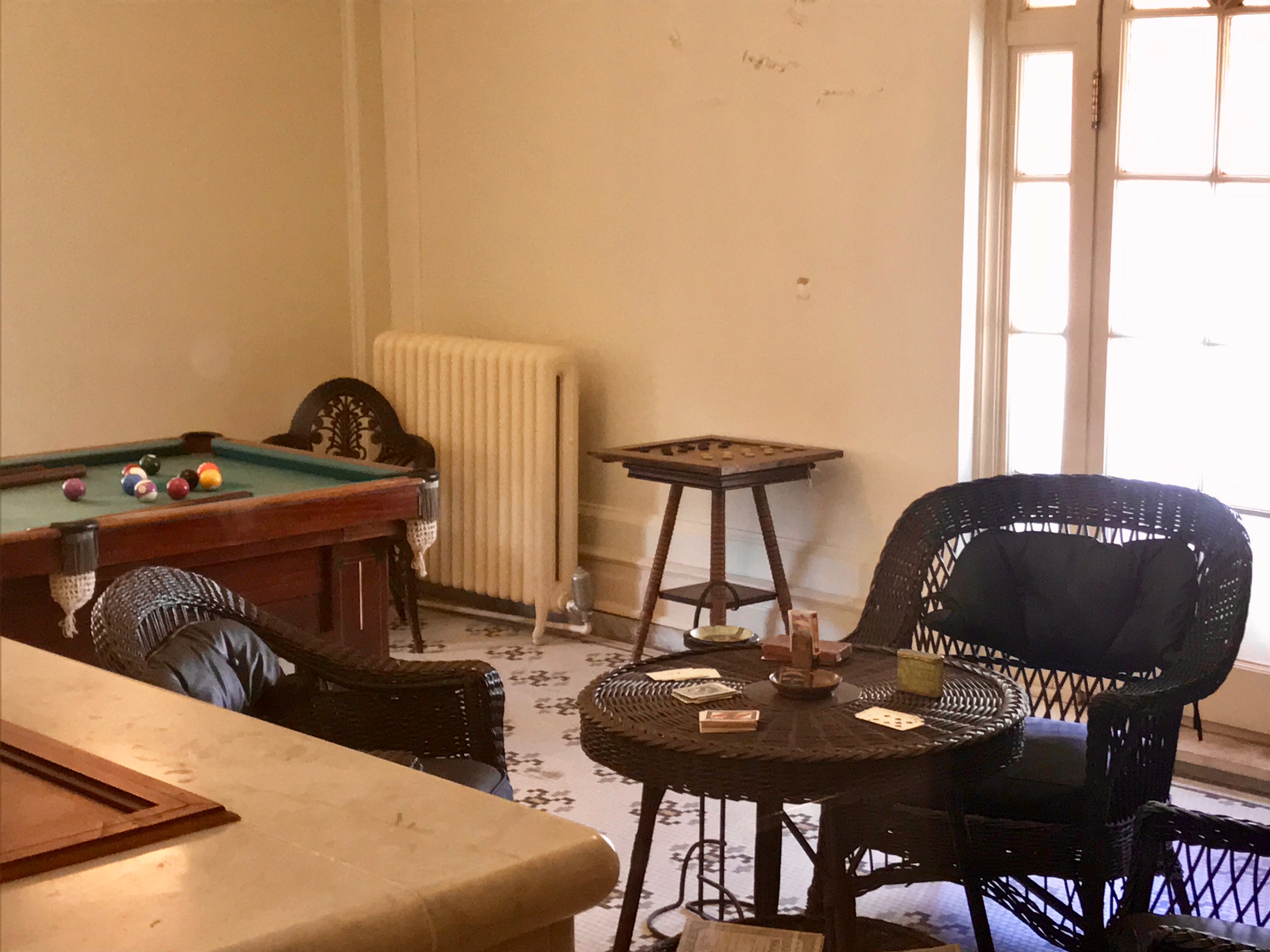
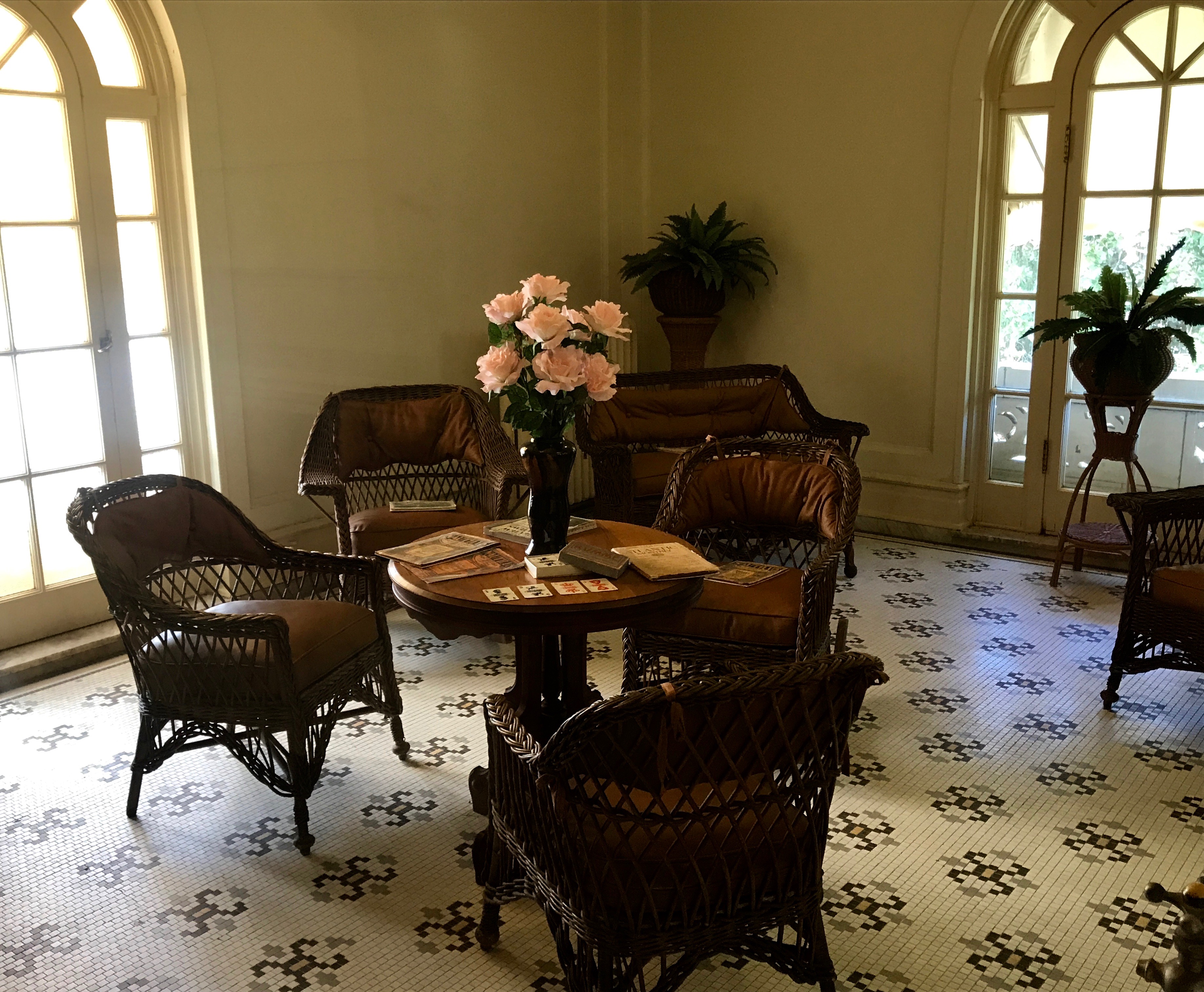
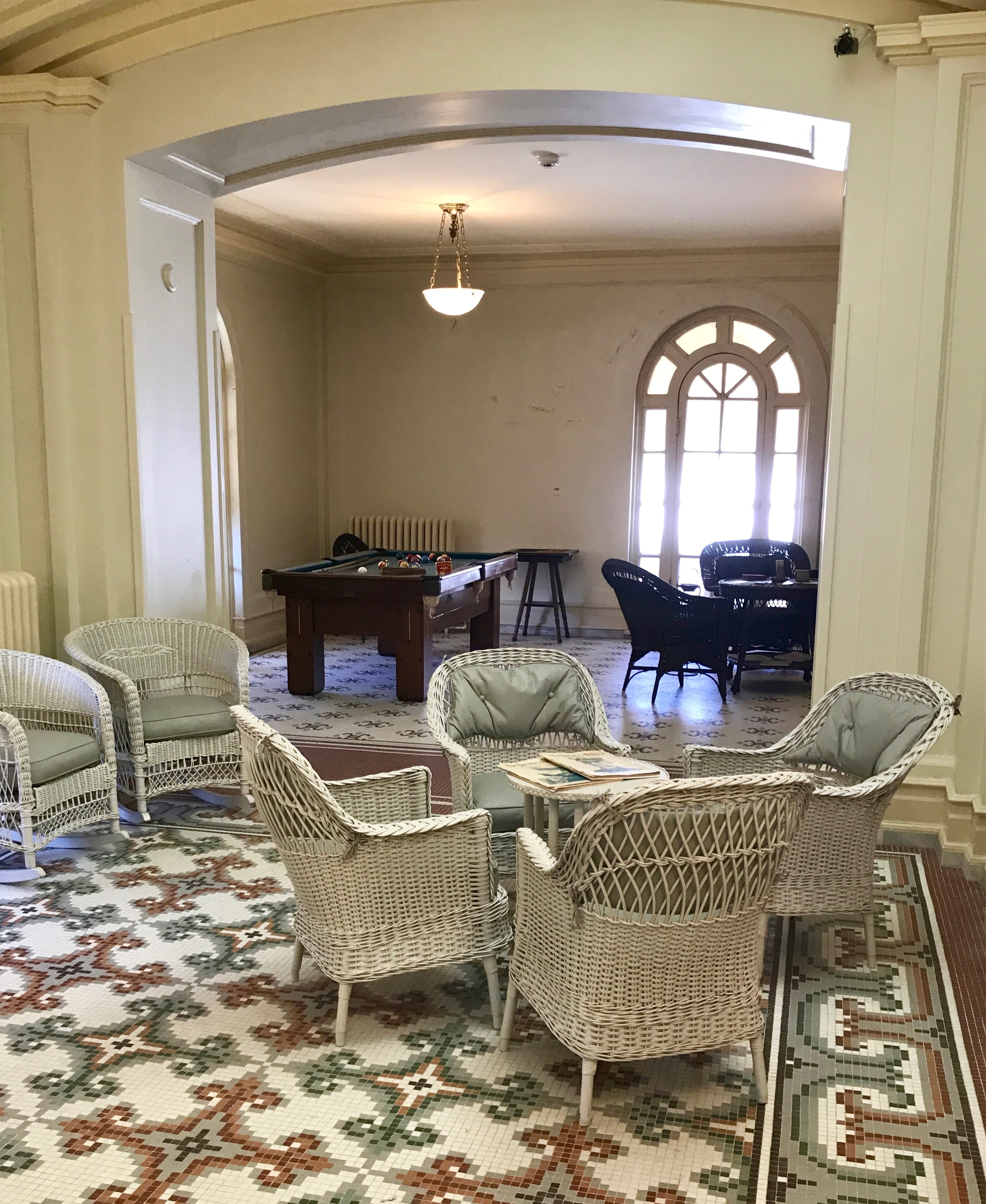
As I wandered, I came across the men’s lounge.
The women also had a lounge.
There was an assembly hall between the two segregated lounges,
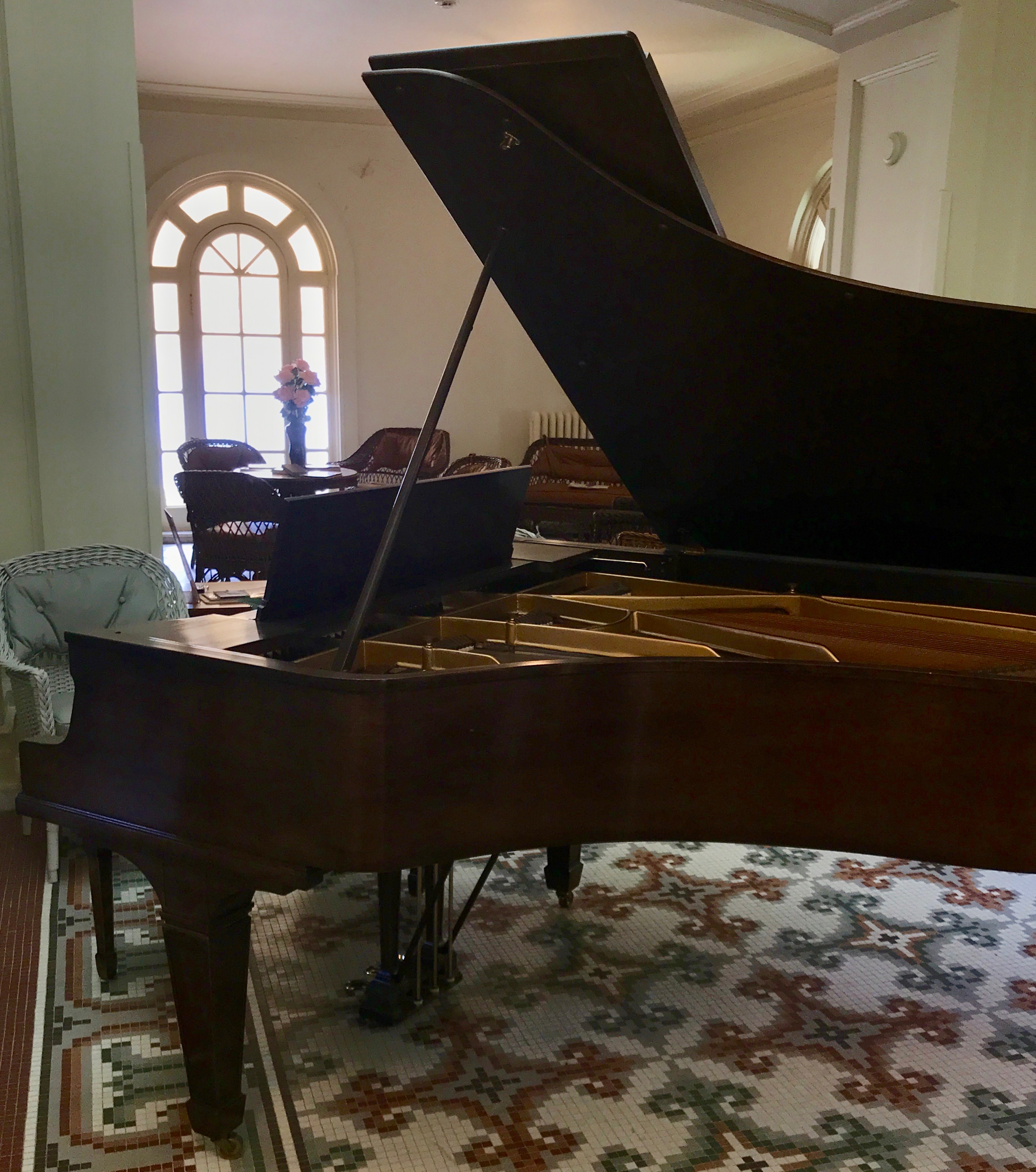
It was complete with a grand piano.
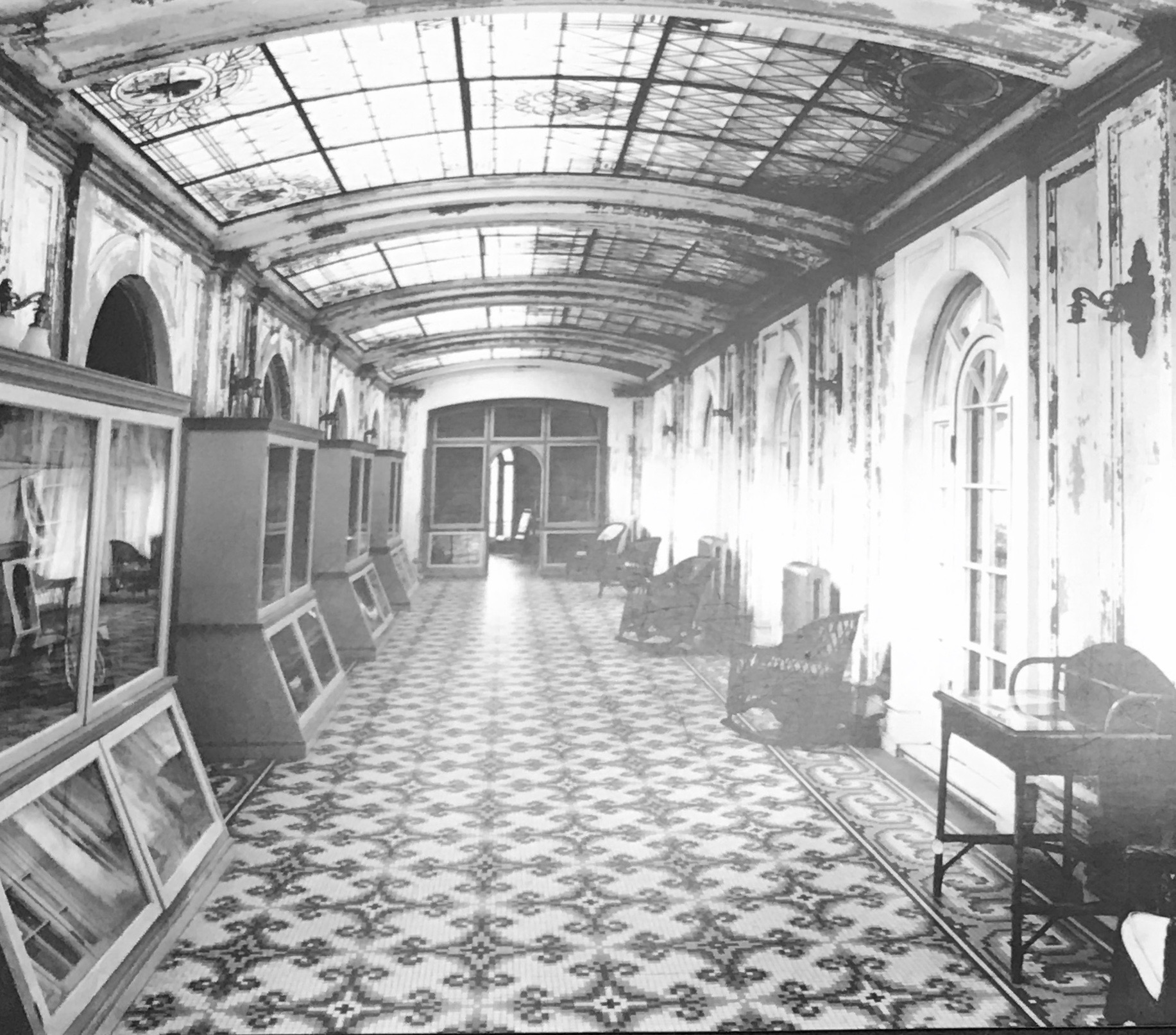
This photo from the past shows display cases where Fordyce displayed his Indian artifacts.
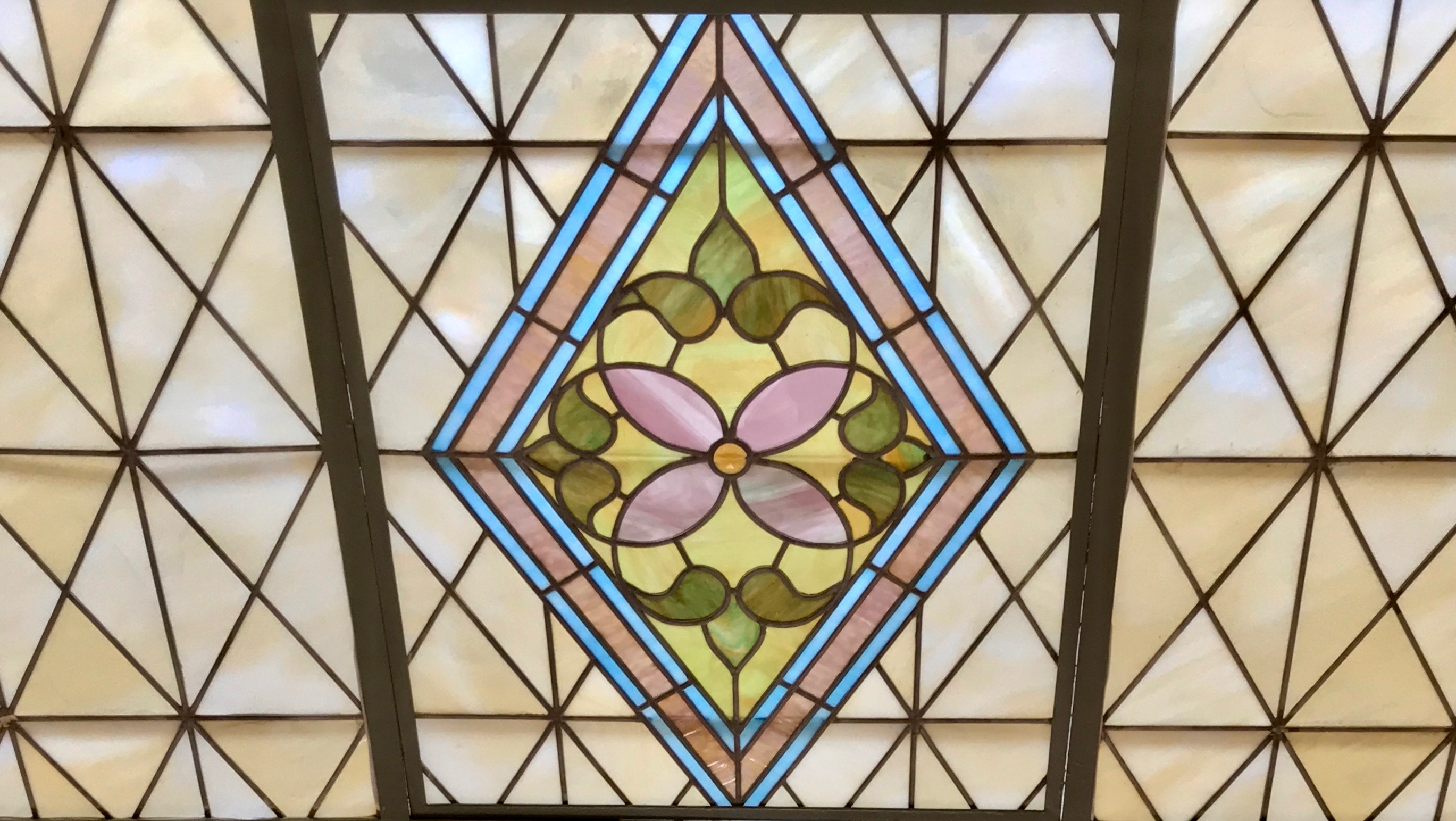
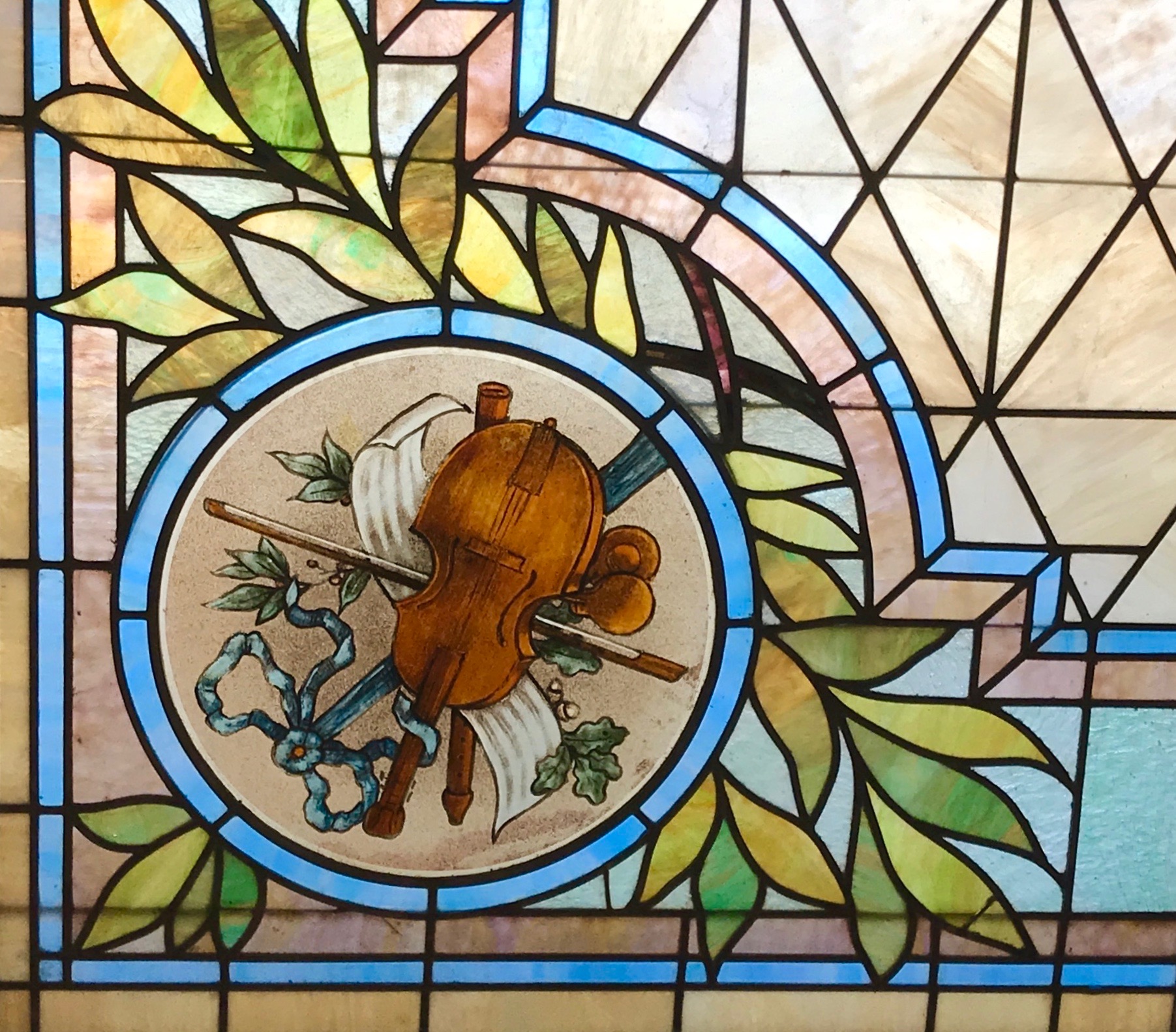
The stained glass in the vaulted ceiling was quite lovely.
It appears that music was encouraged.
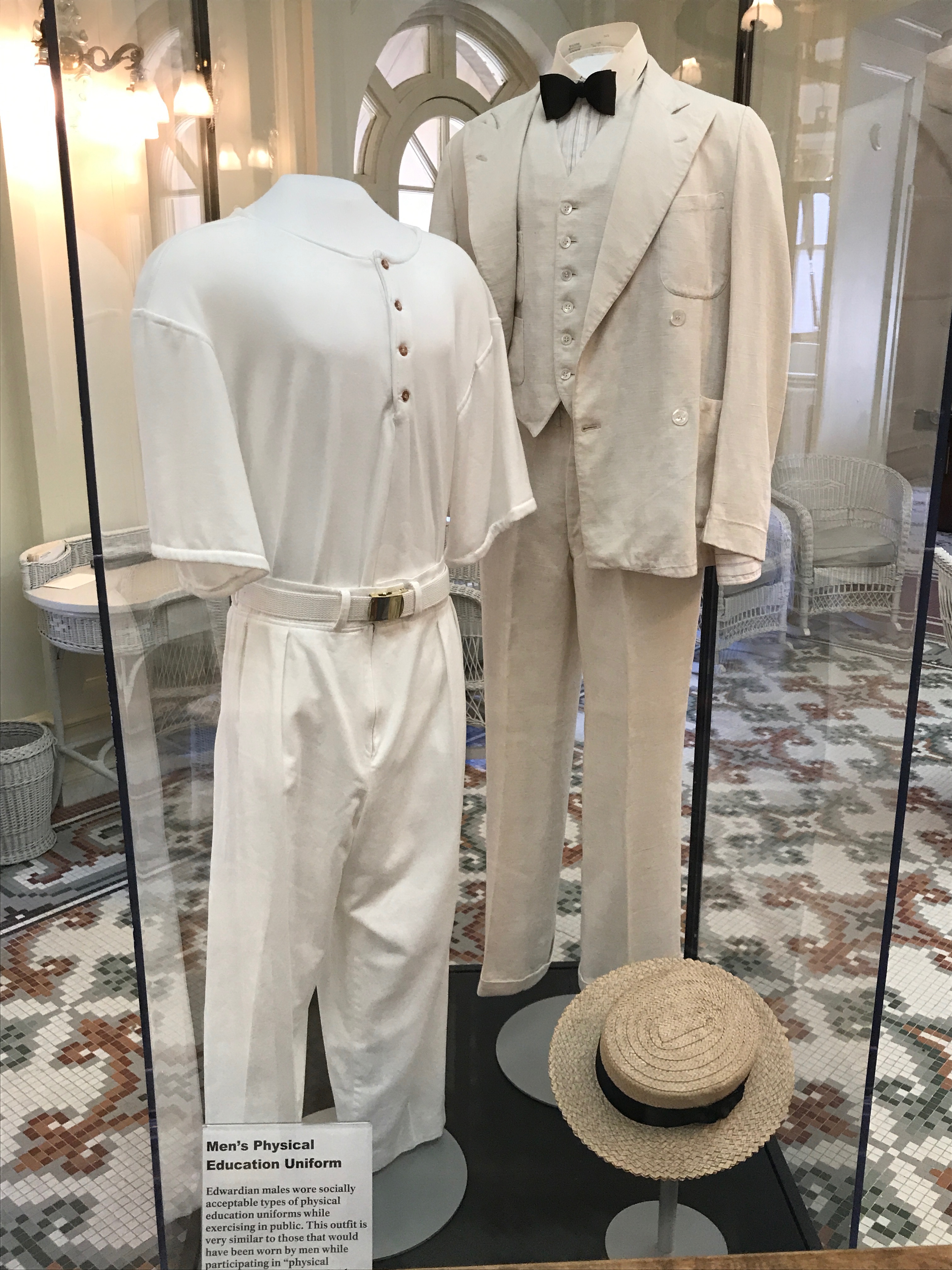
They also displayed what the well-dressed male wore during the Edwardian era, which was 1901-1910. The outfit for physical education looks much more comfortable than the three-piece double-breasted linen suit. Just in case you were curious, the jacket and vest have mother-of-pearl buttons. I am not sure what kind of buttons were used on the button fly trousers. The cotton shirt has French cuffs and no collar.
I can see you scratching your head. You see a collar, don’t you? Well, that is a separate starched collar. It is double folded and has buttonholes to fasten it at the front. Do you suppose that they or their man servant tied the bow tie? They did not. The black silk bow tie has an adjustable elastic band with hook and eye clasp.
And there you have it – more information than you ever wanted about resort wear for men in the Edwardian era.
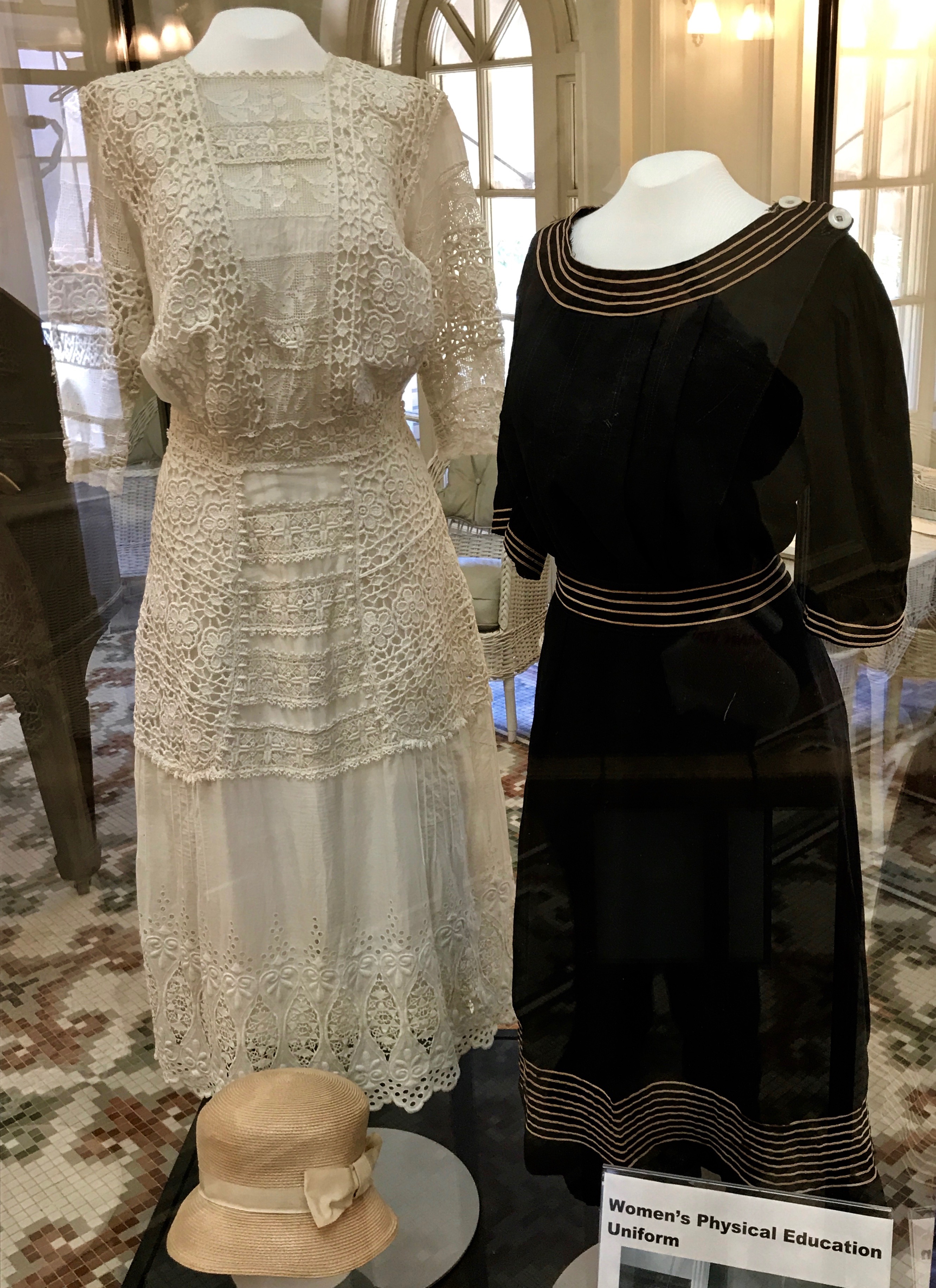
You might wonder why I have little to say about women’s fashion during this period. Well, the answer is quite simple. If they had an information sign about it, I neglected to take a photo of it! (You didn’t really think I remembered all these details, did you?)
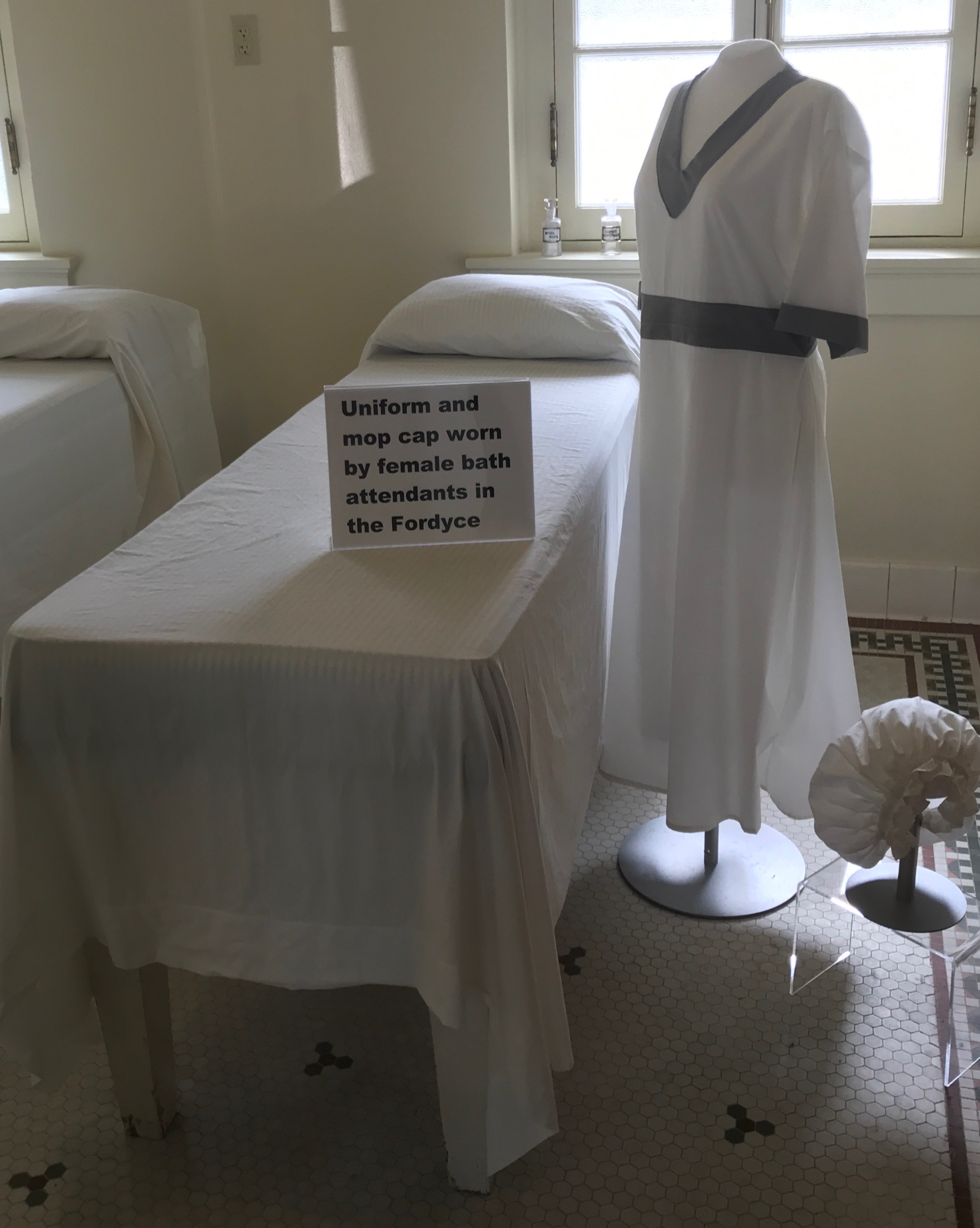
I do like the women’s clothing. I could even see myself wearing the physical education uniform. The white dress is lovely, but doesn’t look particularly comfortable. I do like the hat, though.
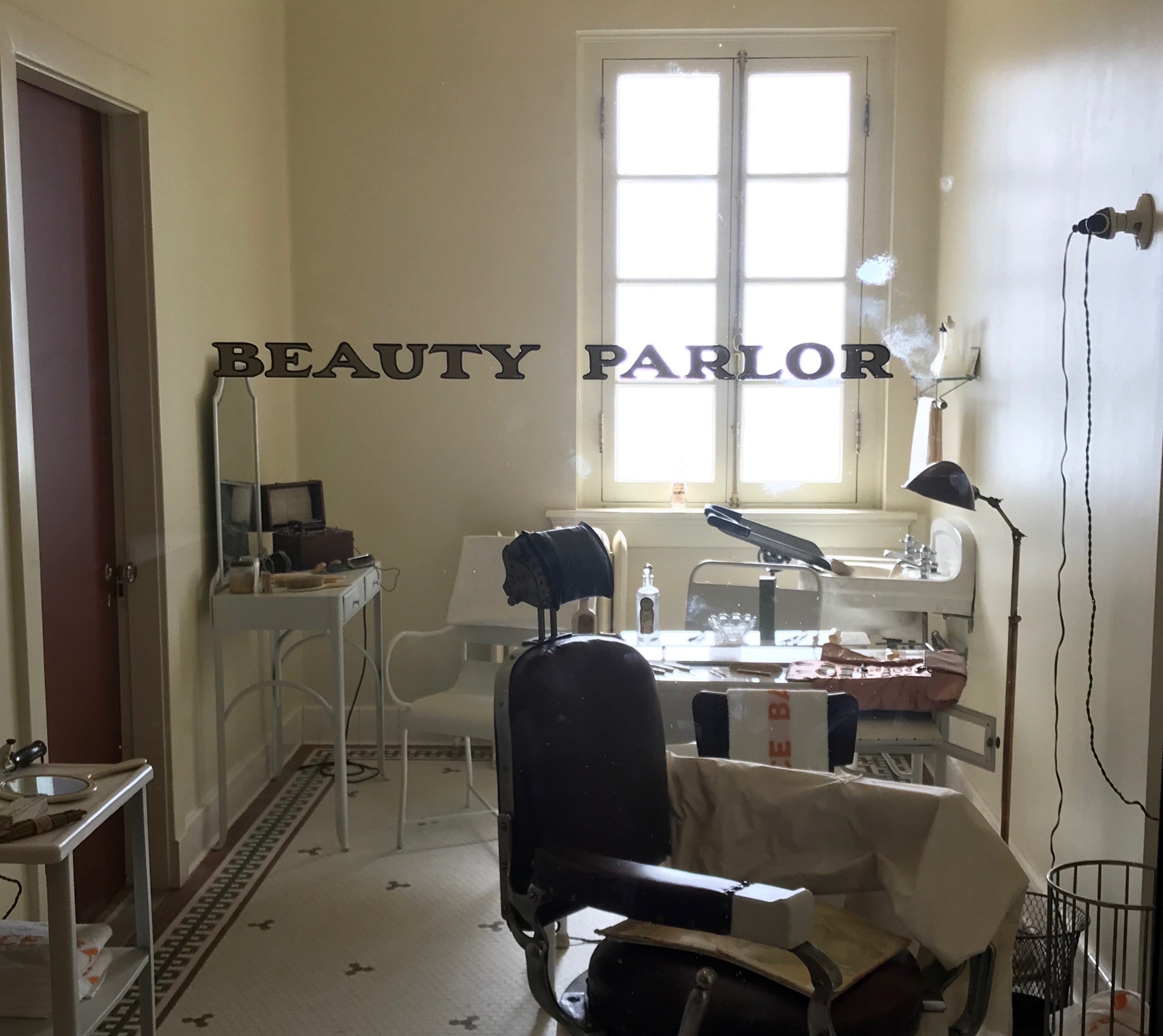
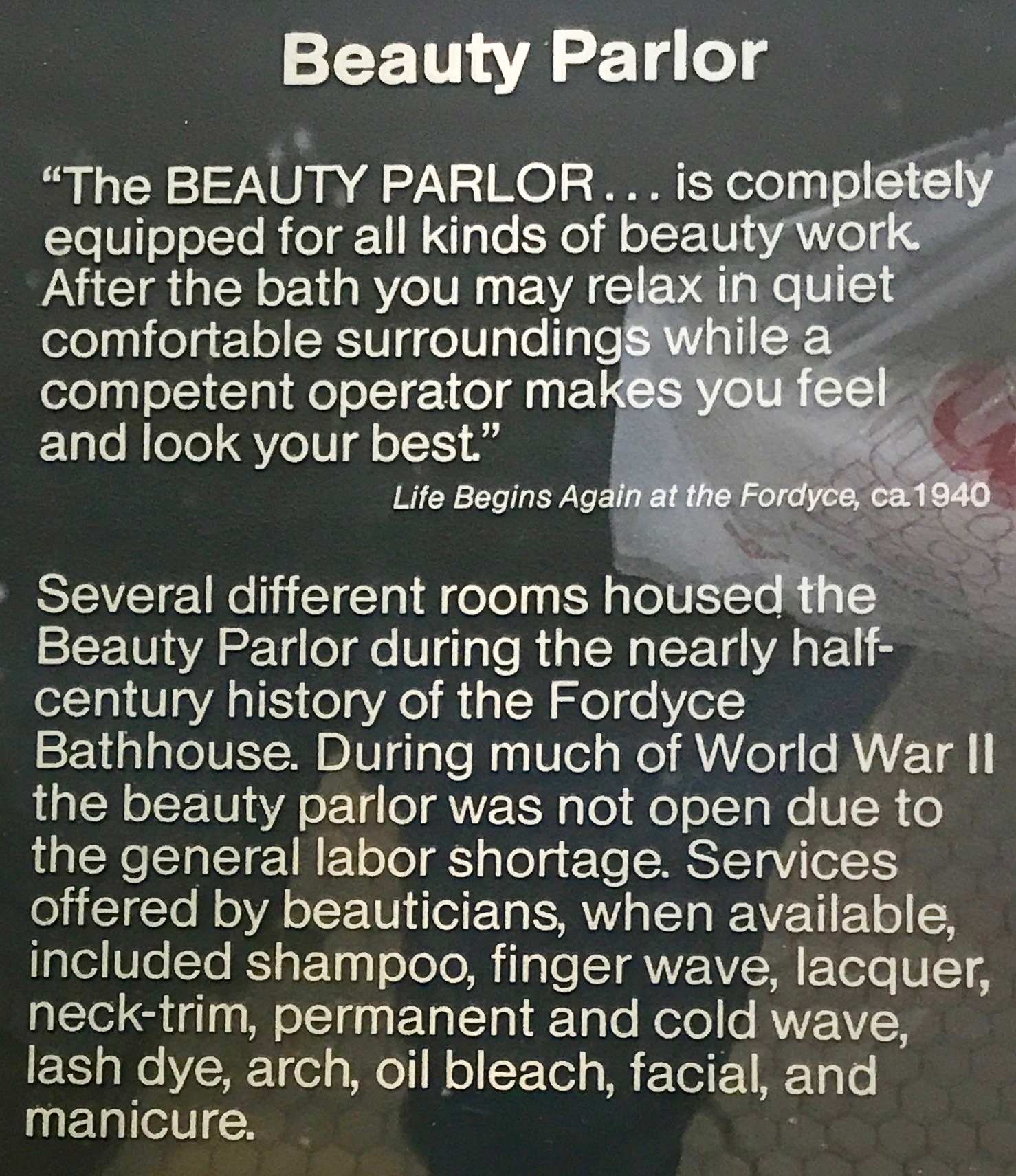
They had a beauty parlor at the Fordyce. After all, what is a spa without beauty services? I’ll let you read about what they offered.
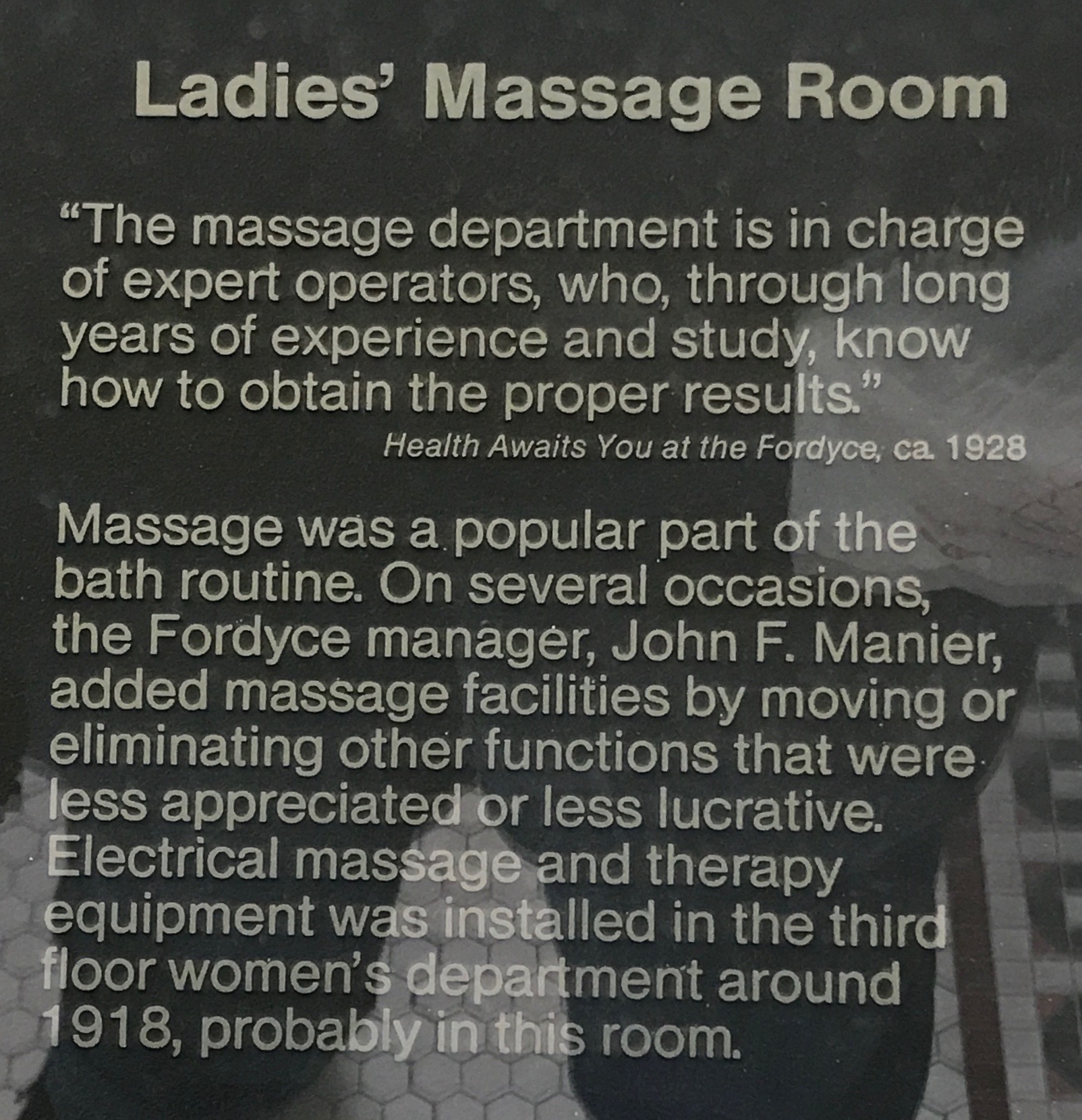
Massages were also available.
You can read about what they shared about the massage room and services.
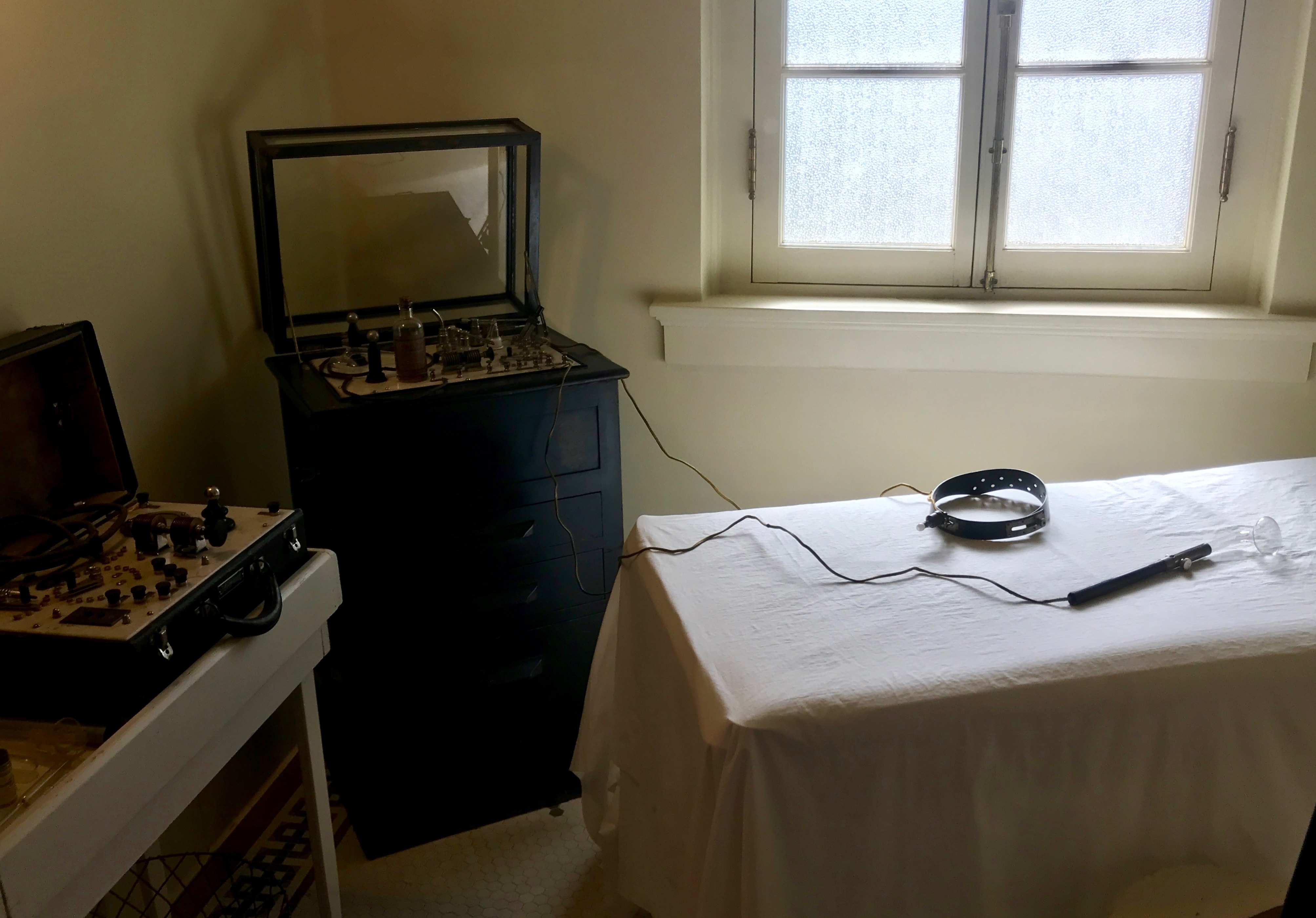
They also had an extra massage room that used various electro-massage machines. The glass objects on the end of the wand are interchangeable high-frequency vacuum electrodes used for applying electric charges to various parts of the body.
In 1936, this room was converted for use as a mercury rub room.
What?! They rubbed mercury on people?! Well, that’s what the information said.
They were truly full service.
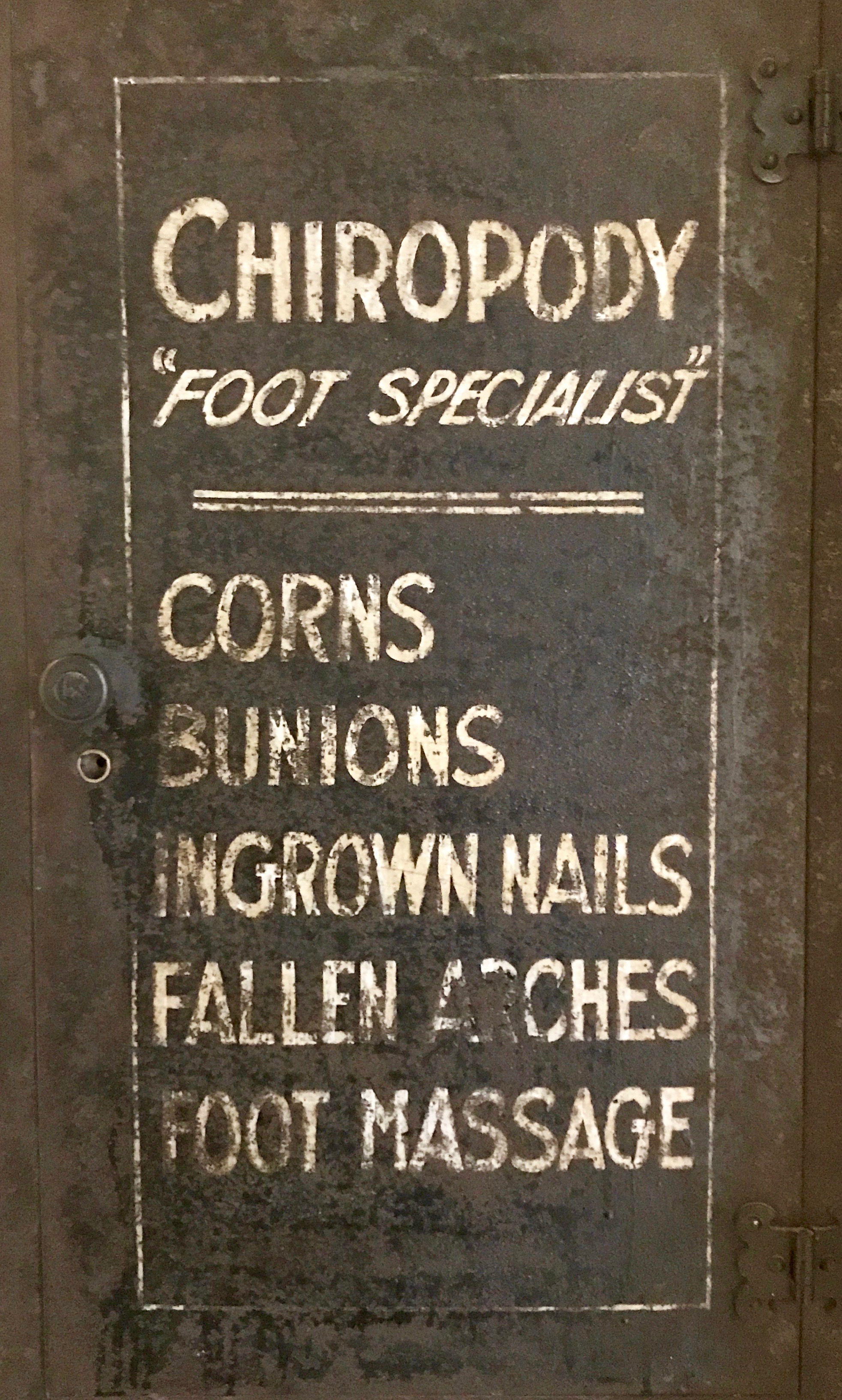
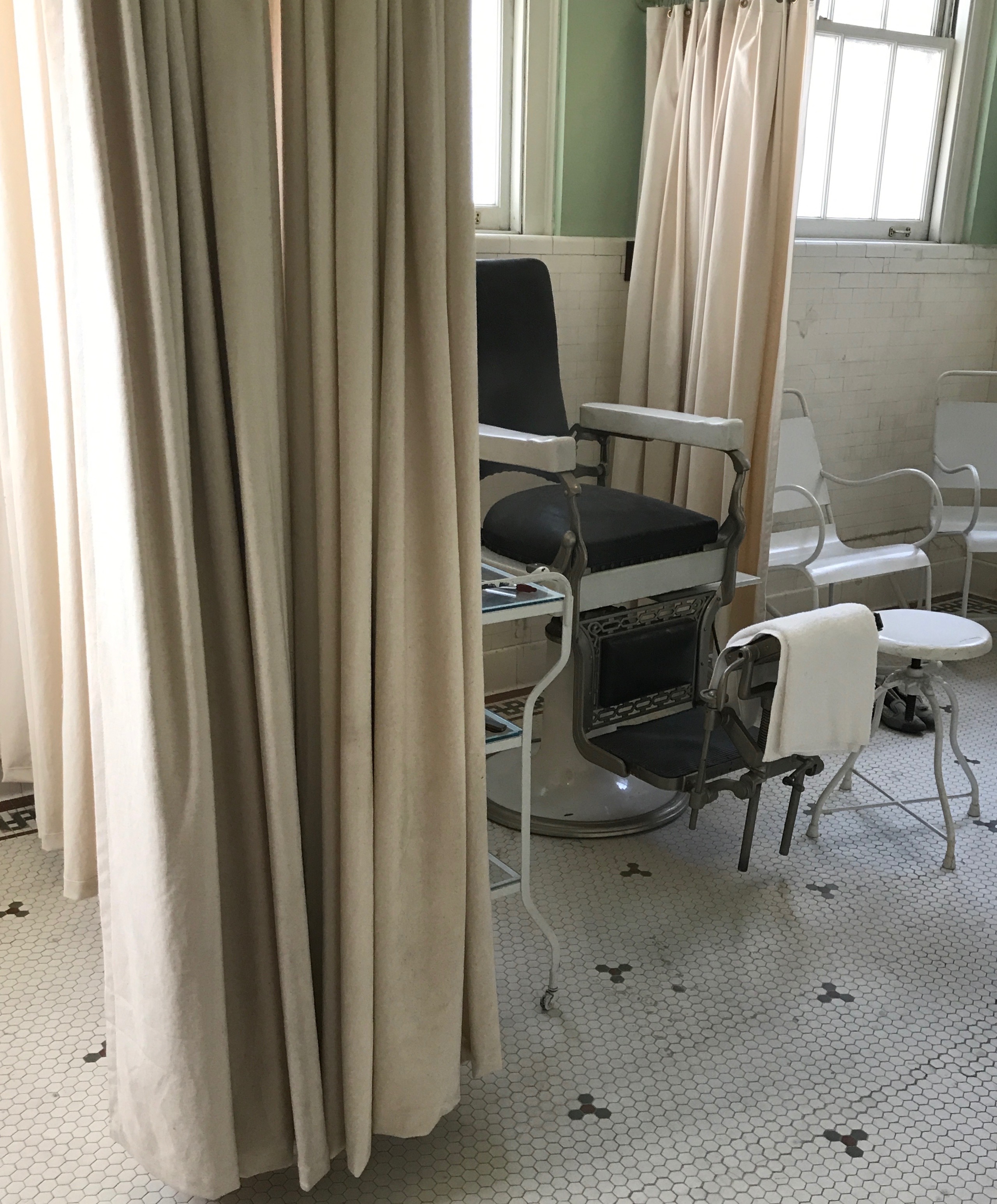
You could get it all done here. According to a guide written in 1917, they had “…a Chiropody Department to satisfy the most fastidious.”
Apparently fastidiousness declined because patient use of the chiropody room declined in the 1930s.
I wonder if they resorted to soaking their feet in mercury instead?
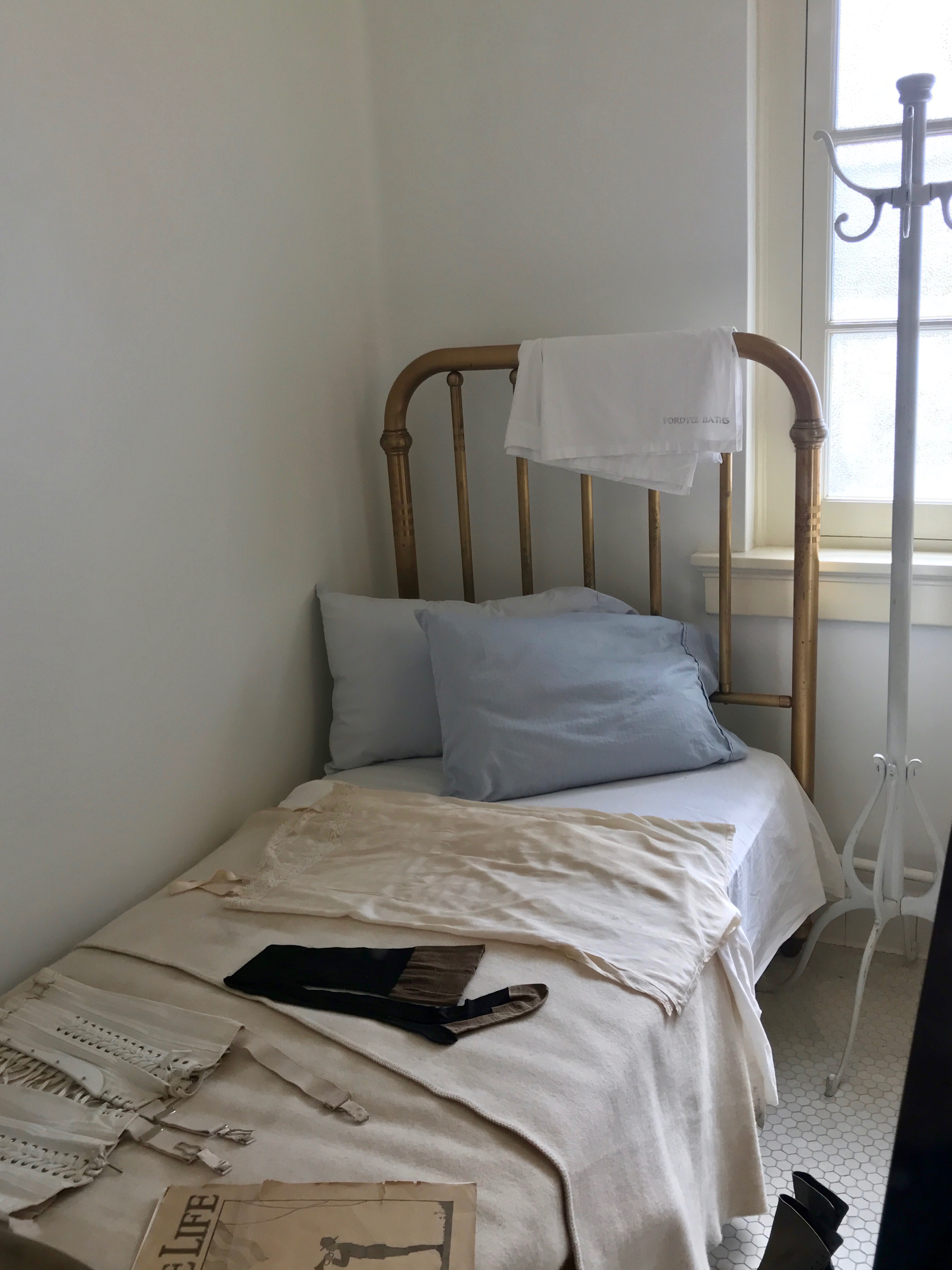
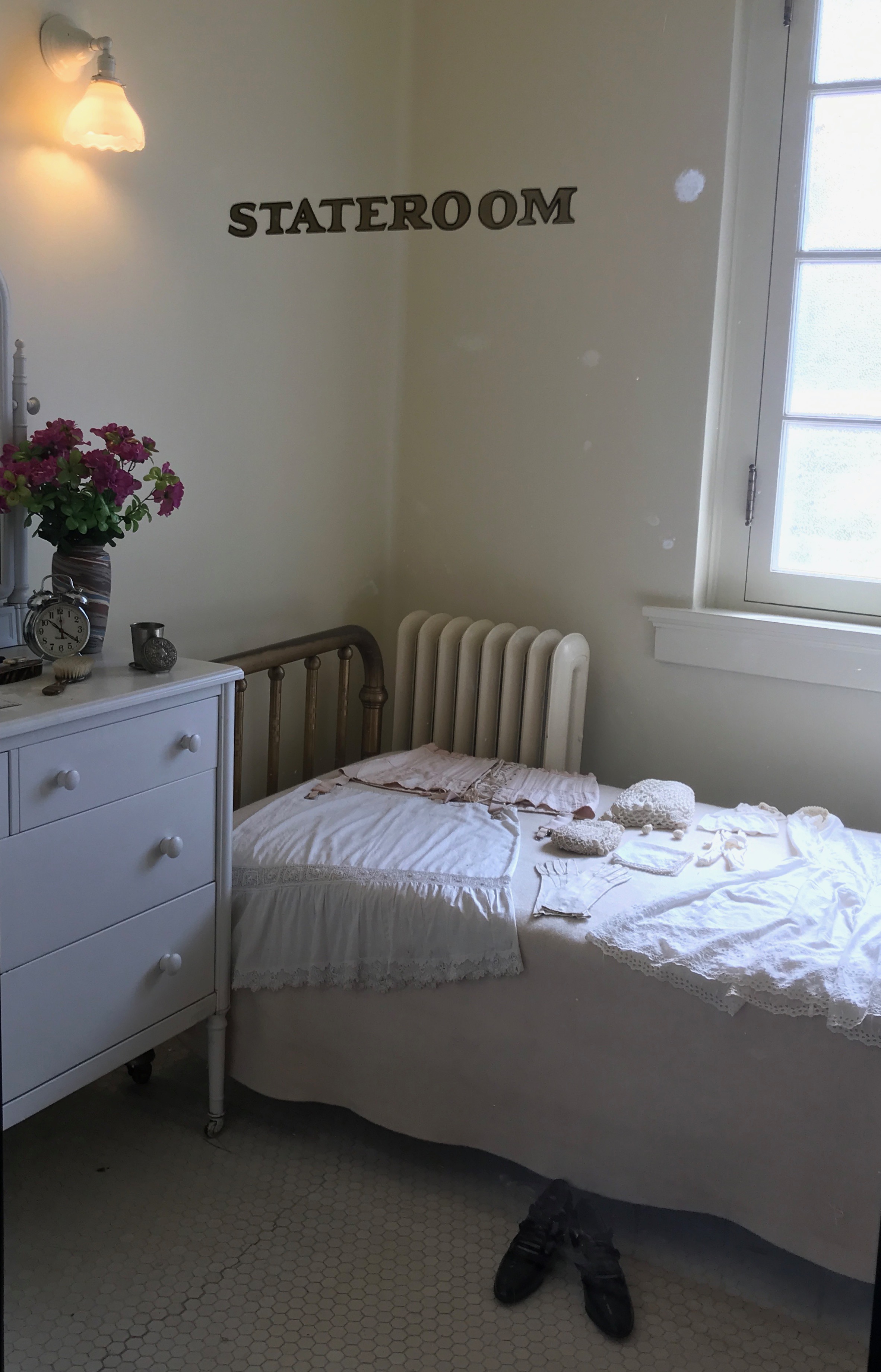
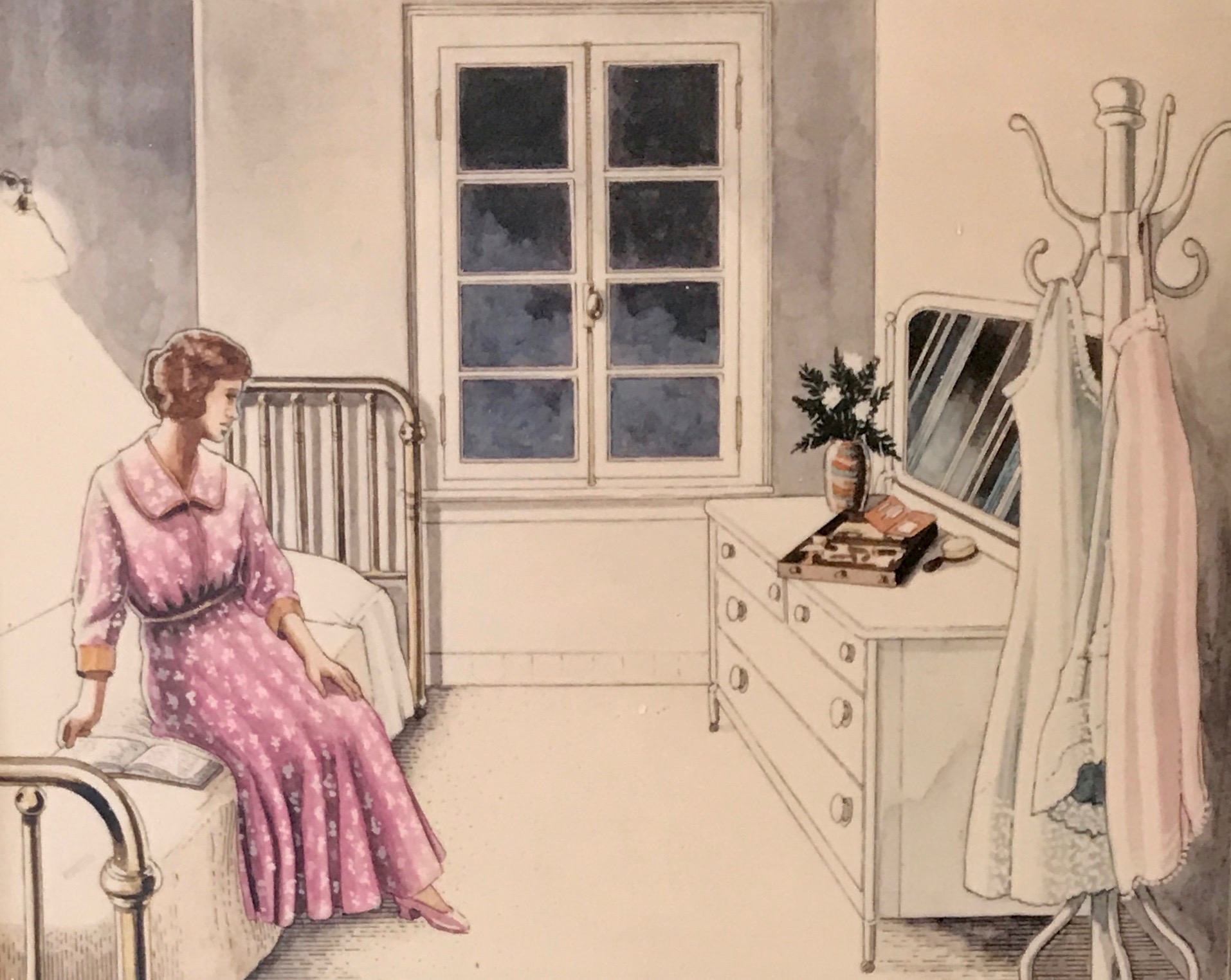
If all this pampering left you needing to recover, there were staterooms available.
According to what I read there, “Twenty-two private staterooms occupied part of the third floor. Each came equipped with a metal bed, dresser, and coat rack. A few rooms even offered hot and cold running water and telephones.
Valet or maid service was provided, however, no overnight accommodations were available to the customers
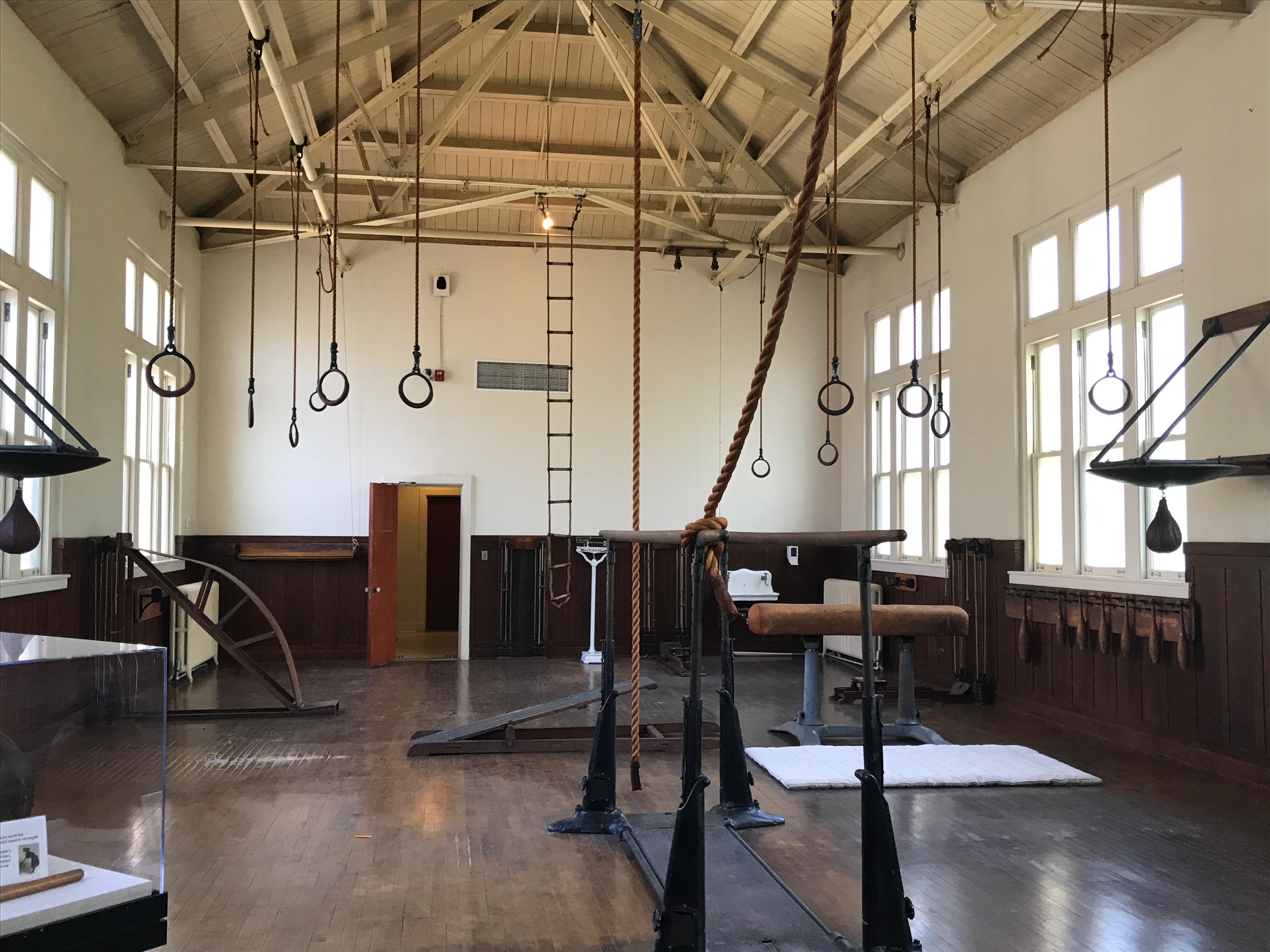
I don’t know for sure, but I think the gymnasium was exclusively for men. I could be wrong, but if women used a gymnasium, I imagine they had their own separate room.
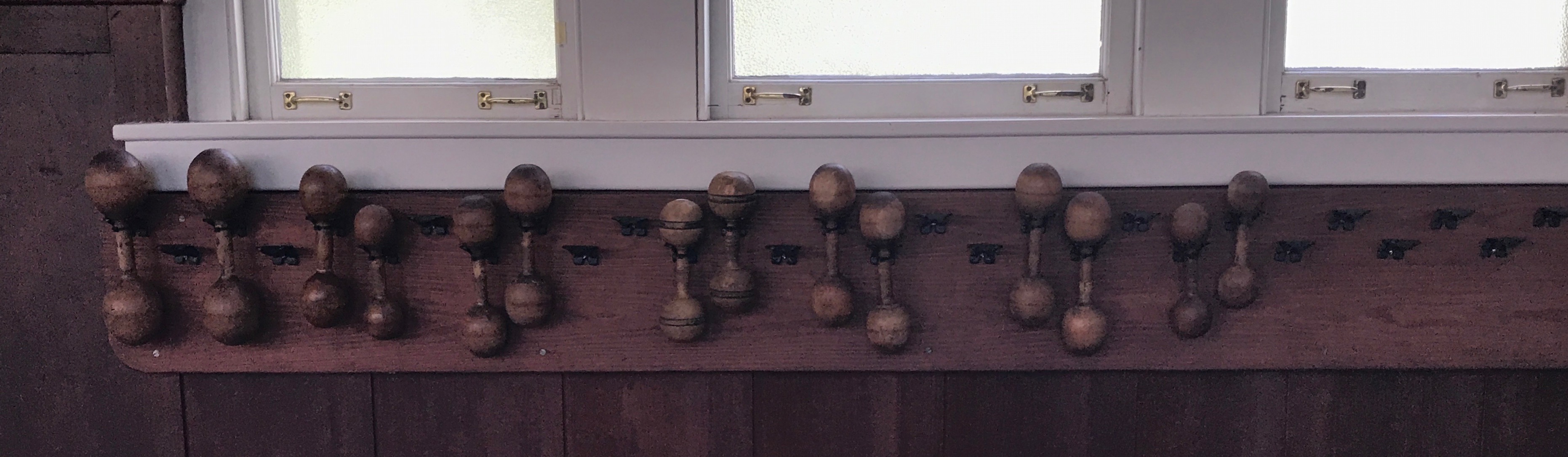
Dumbbells have changed a bit in the last century. I guess “free weight” is the more correct term.
Here you can stretch out any kinks that the masseuse wasn’t able to exorcise.
Then, head off to the dressing room and get ready for what ever came next. I imagine they had to take off their physical education uniforms and get back in their three-piece double-breasted linen suits with the mother-of-pearl buttons, starched collar and black silk bow ties.
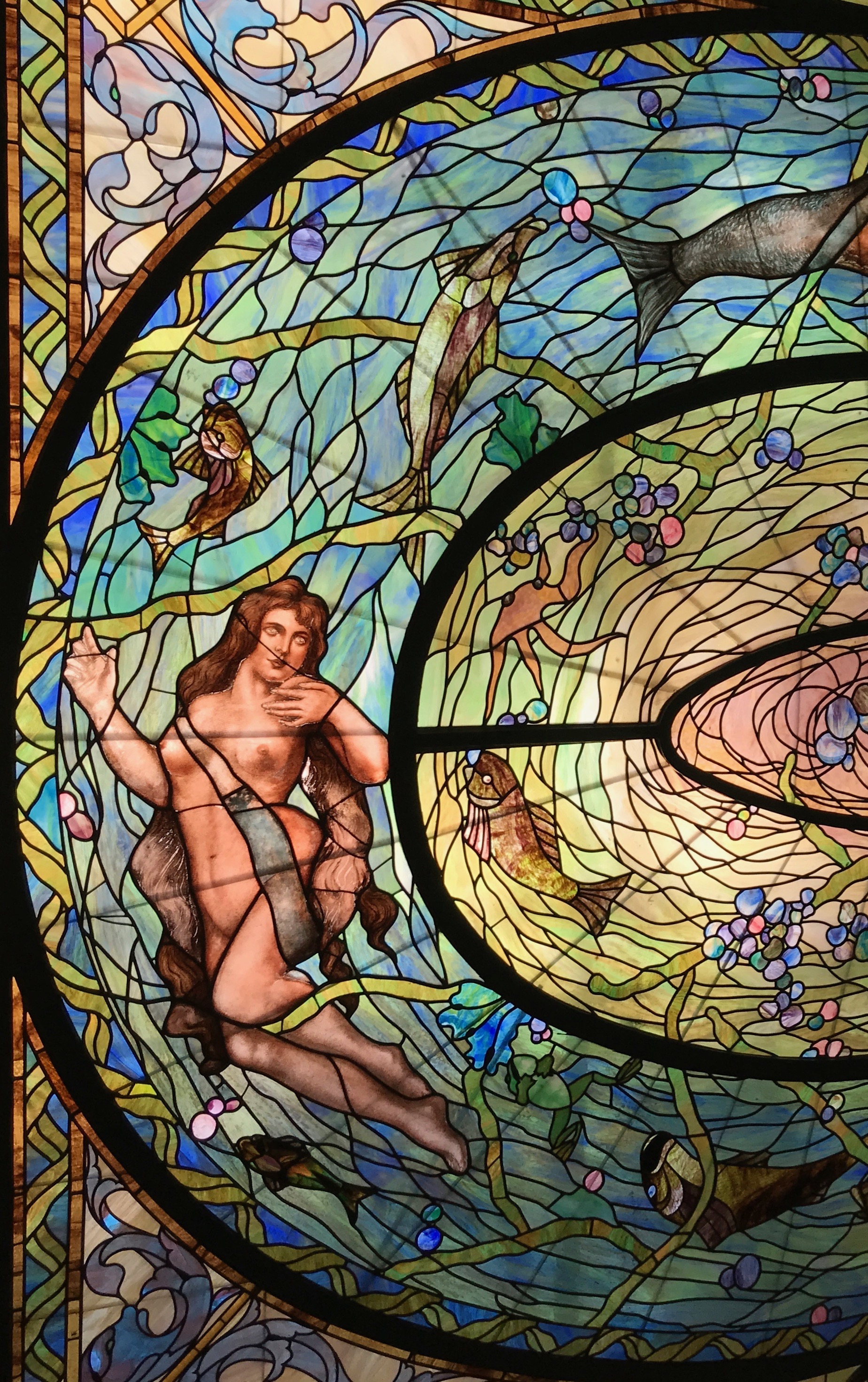
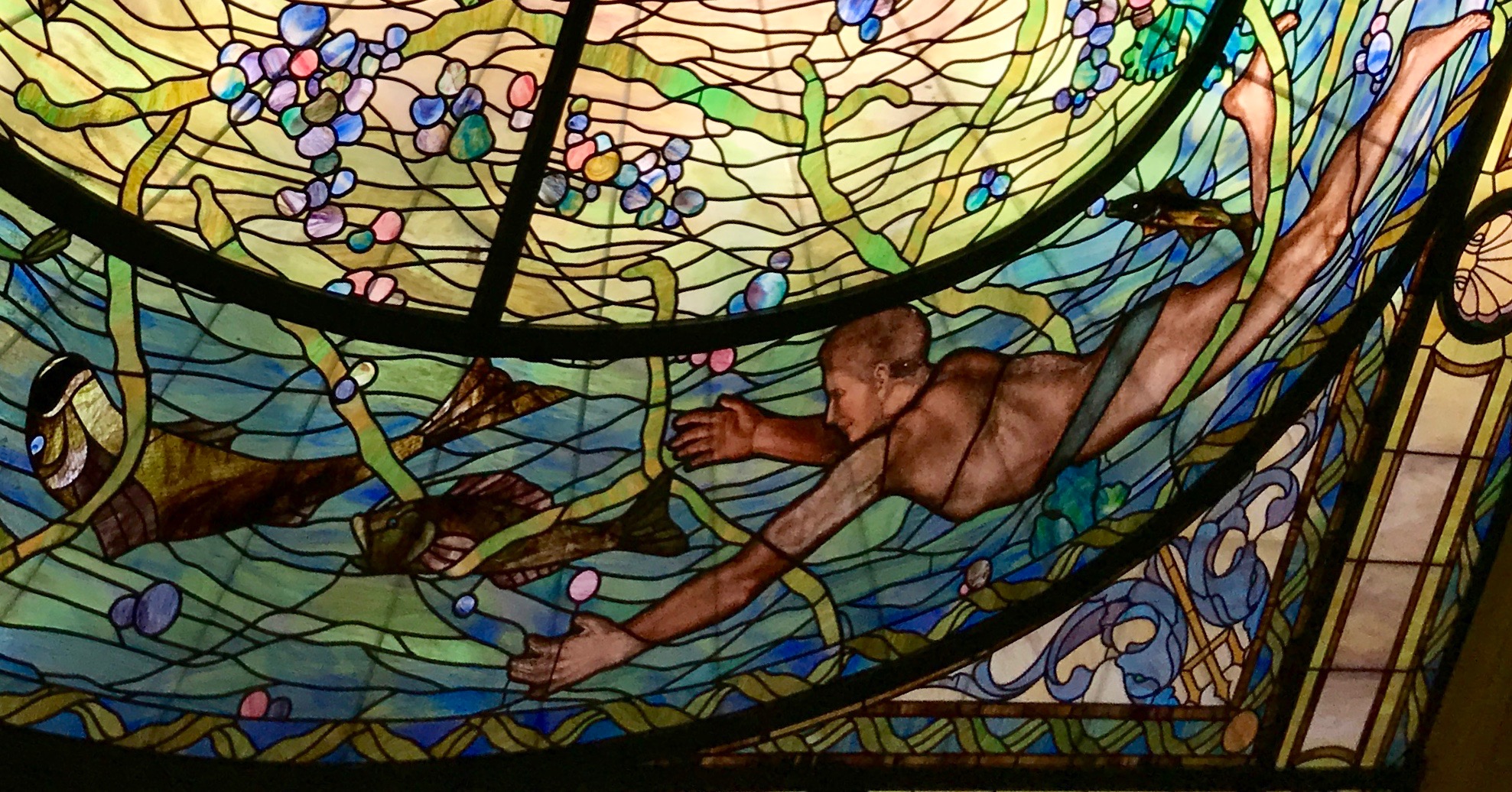
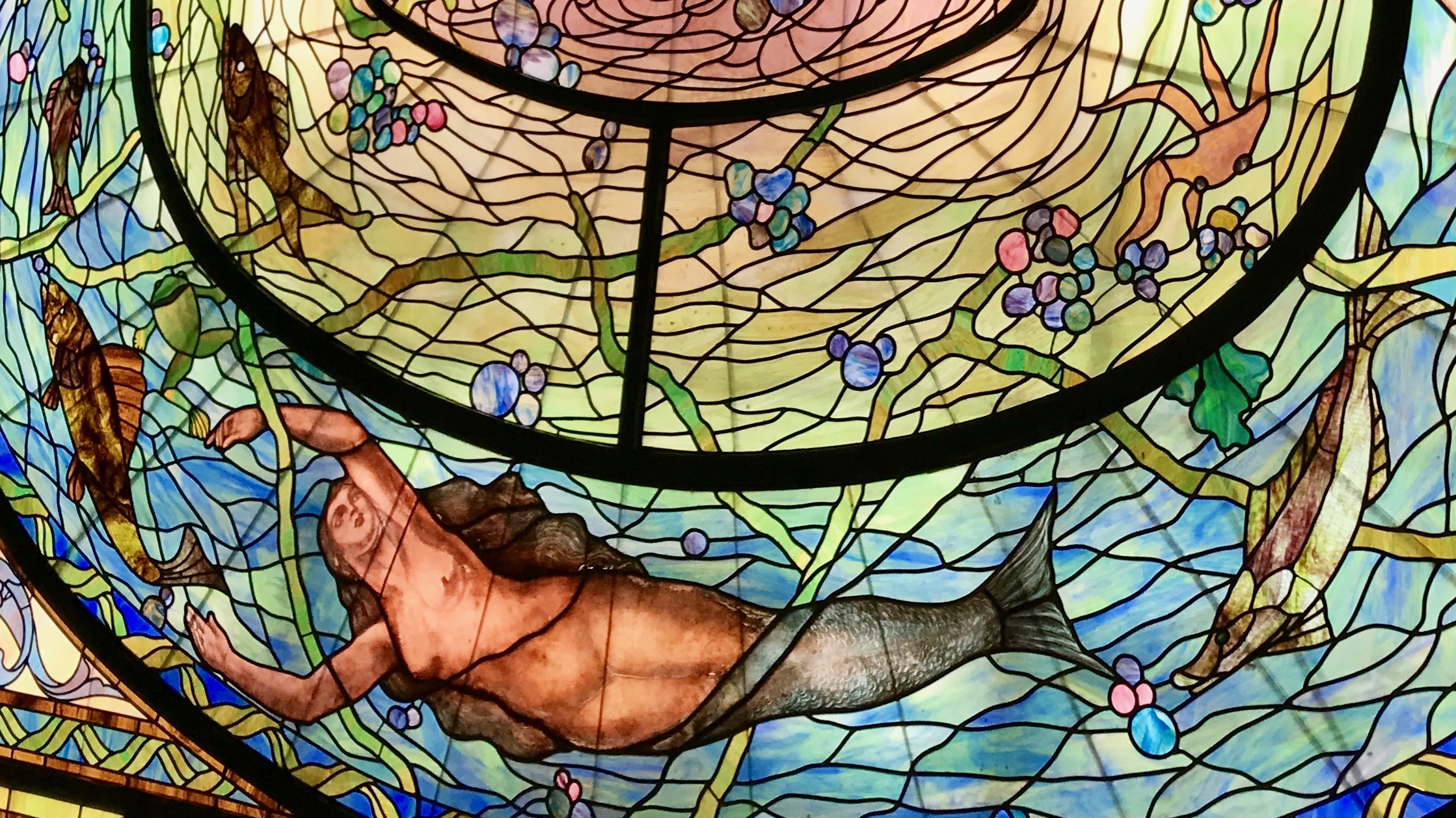
This stained glass ceiling was in the men’s bath hall.
It was full of all sorts of flora and fauna…
…and mystical creatures.
Before I left the Fordyce, I checked out some of their exhibits. This was the Bathhouse Row.
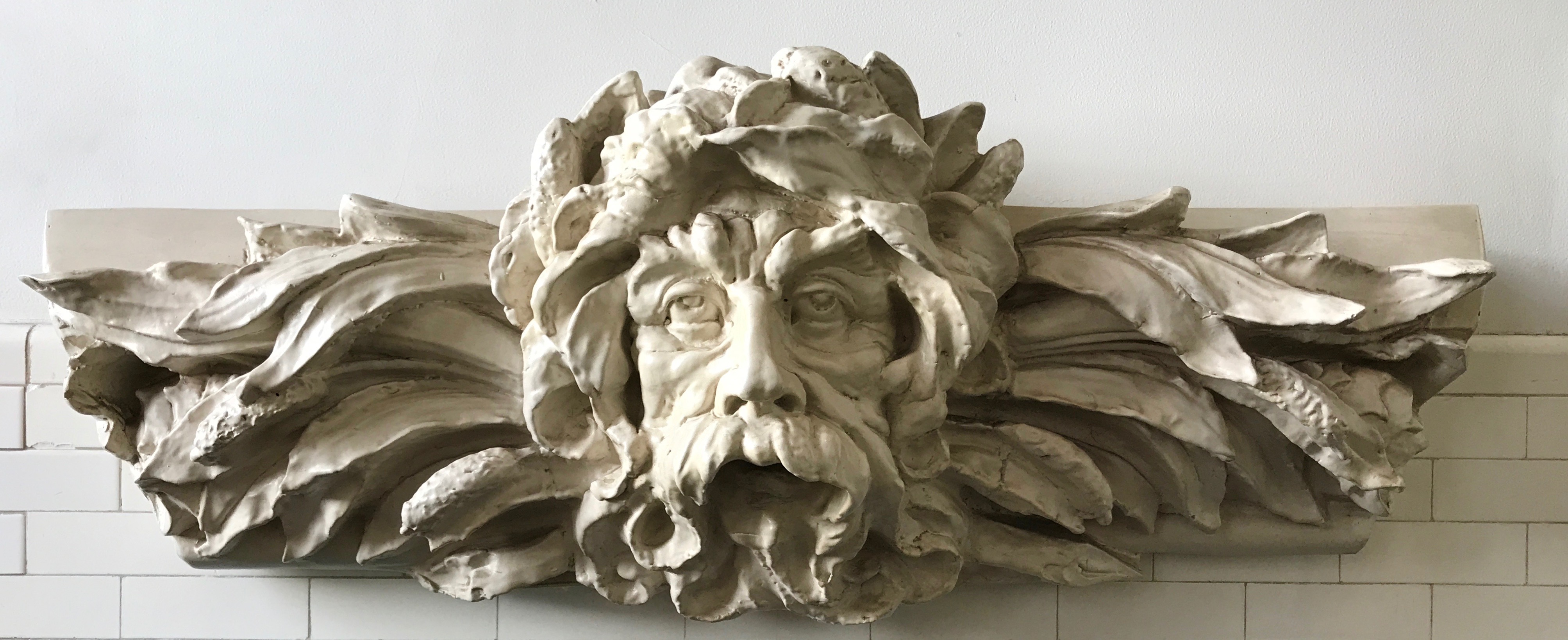
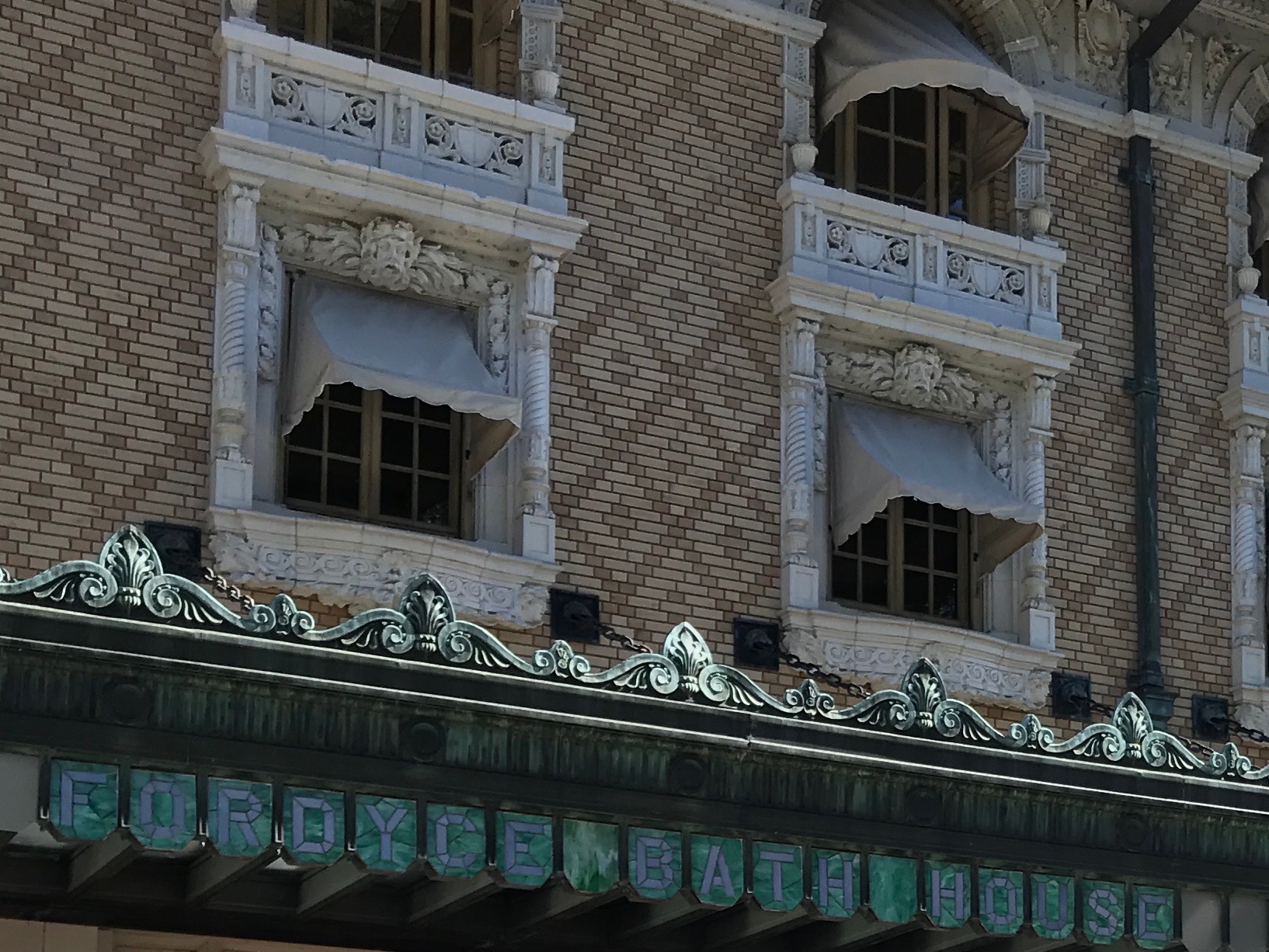
This ornament came from the Fordyce Bathhouse. The second floor windows have them on the lintels above the awnings
Do you see them?
With that, my visit to Hot Springs National Park drew to a close. There was one thing I still had to track down in Hot Springs, though.
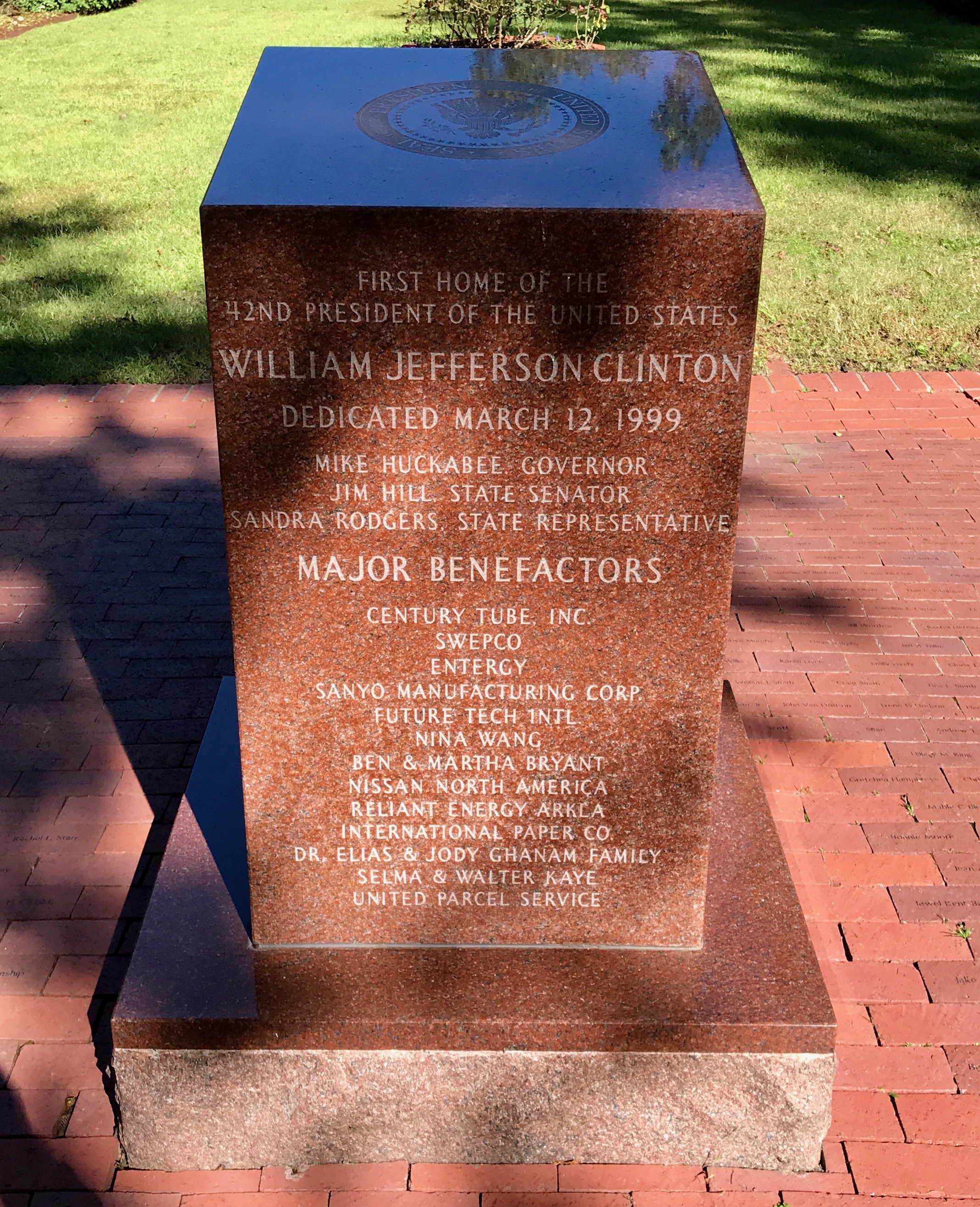
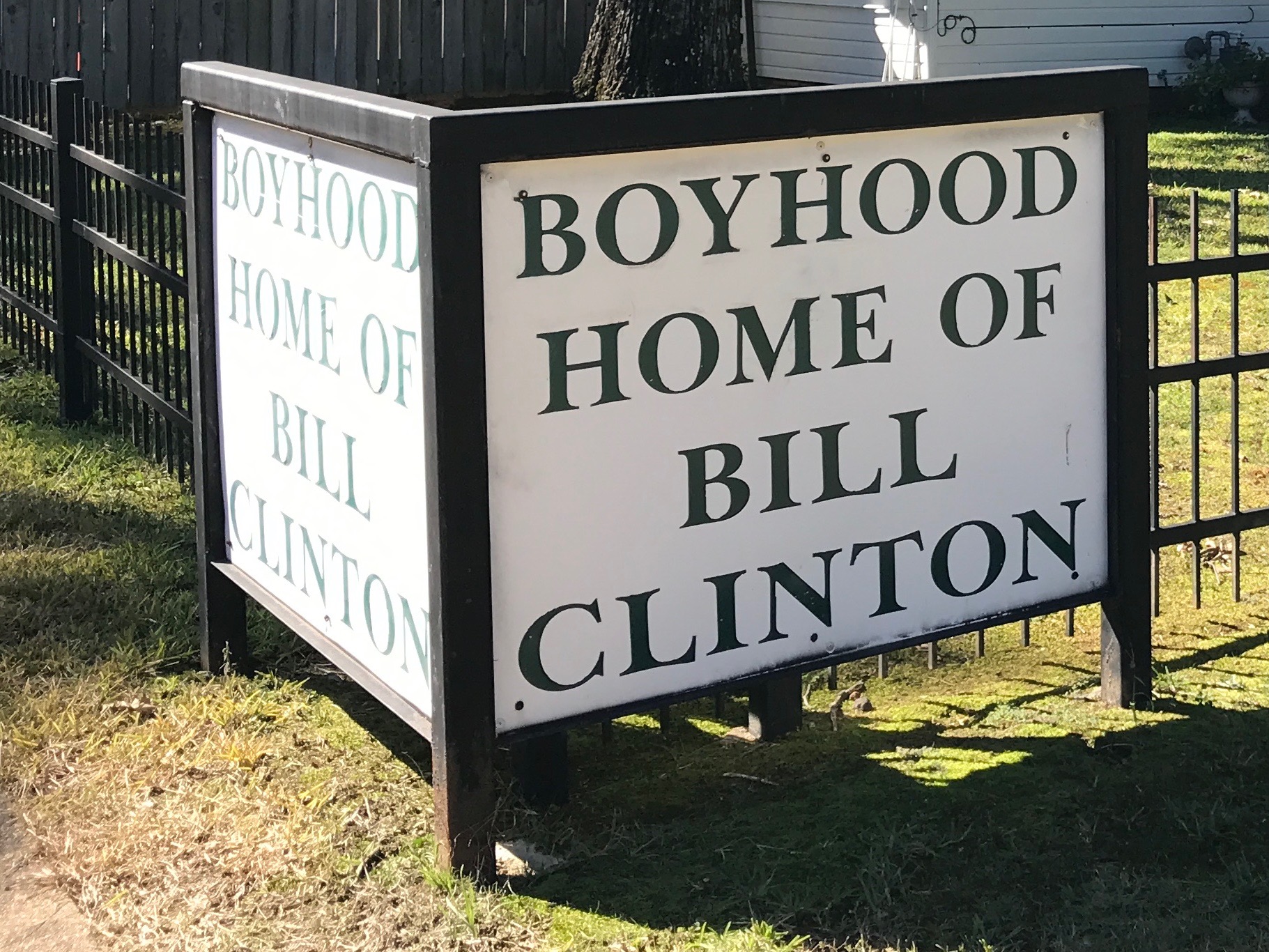
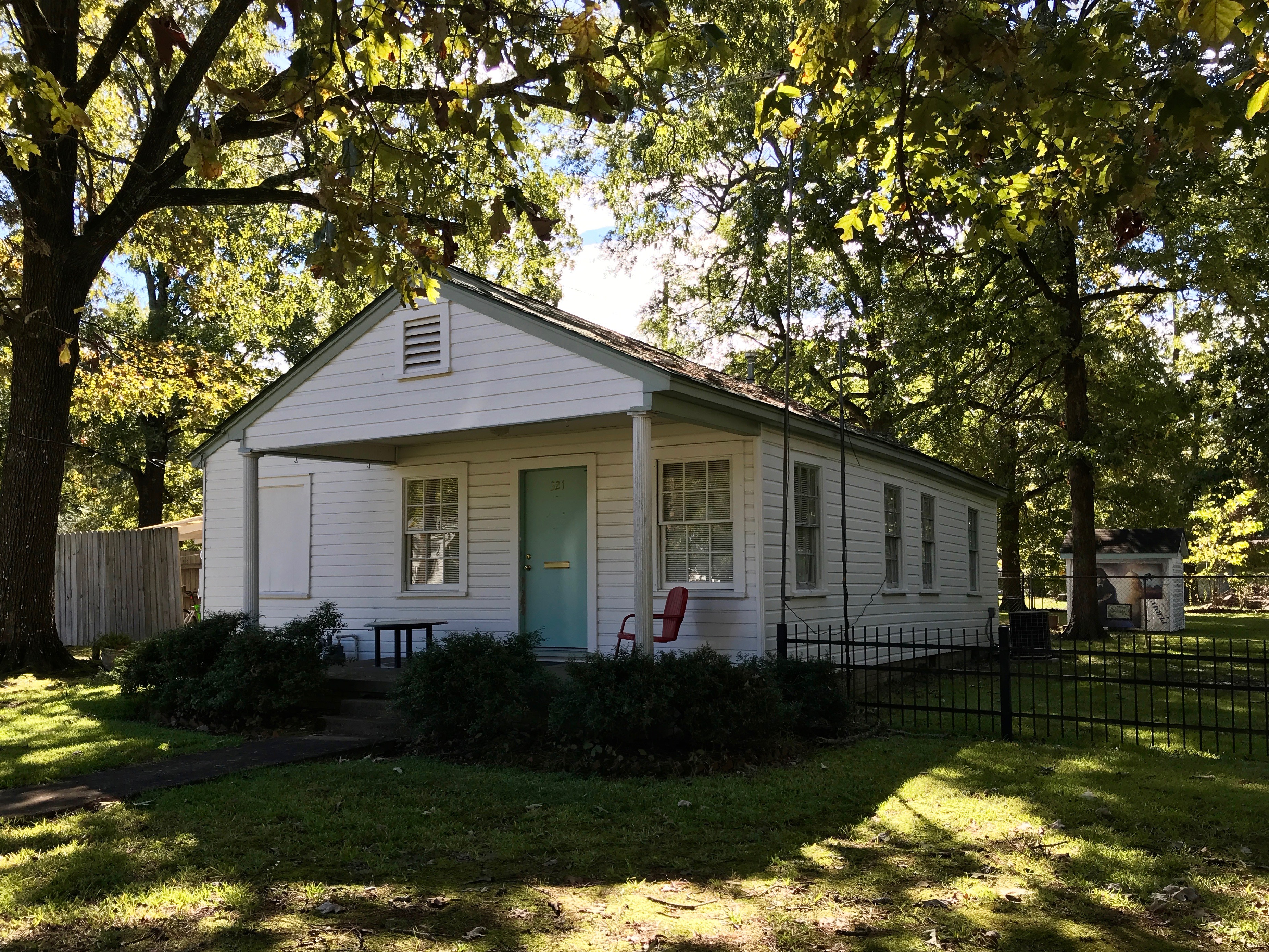
I wanted to find where Bill Clinton lived. I found it.
The current owners were not particularly welcoming, though.
That is putting it mildly. In fact the guy on the porch was even yelling at me, and I was standing across the street!
I headed back to Crater of Diamonds State Park. I had to get ready for a day of travel in the morning.
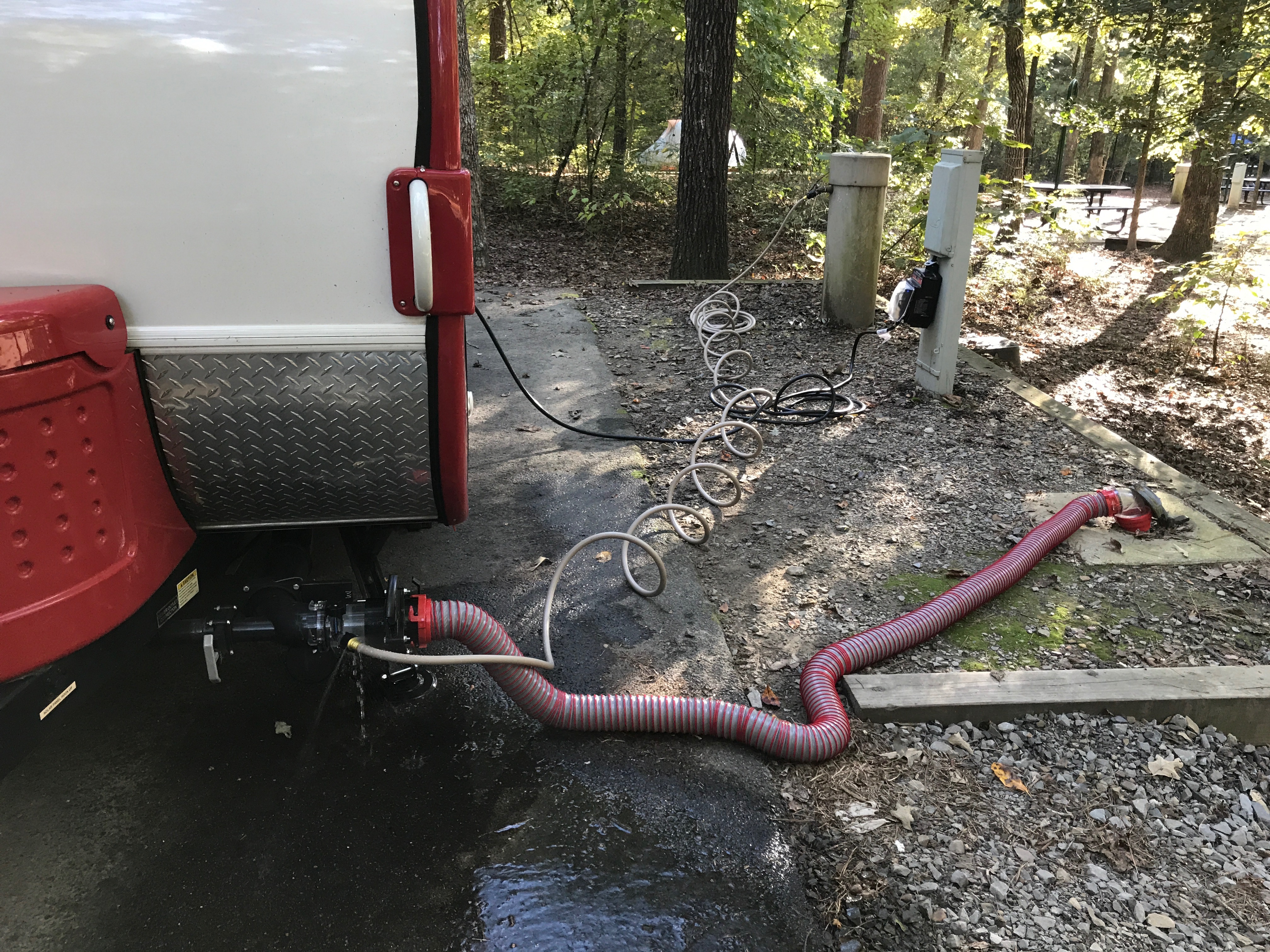
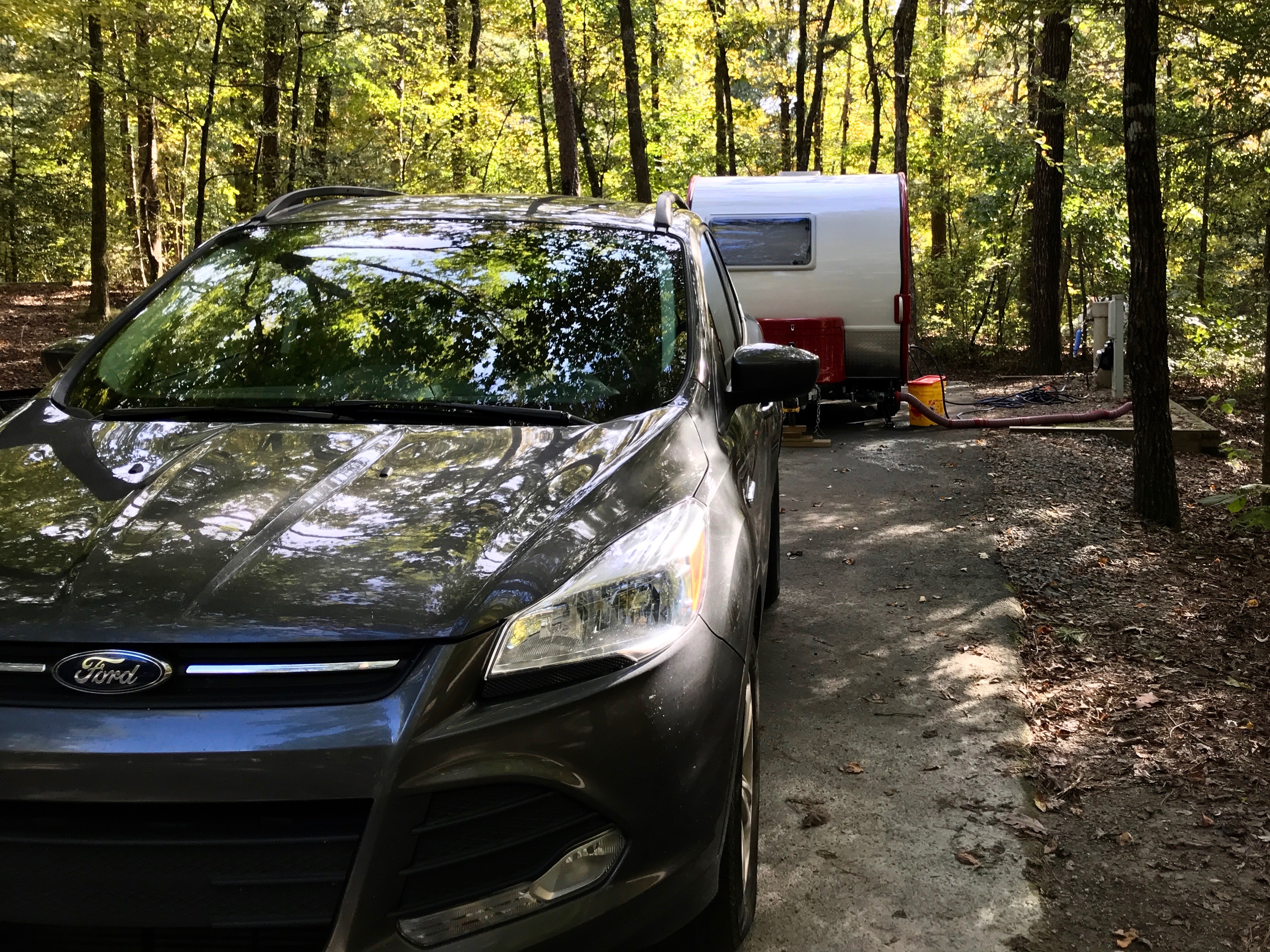
I dumped my waste tanks. I took advantage of having a full hookup (which means water, electric and sewer, for the non-RVers among you.) I gave my tanks a good rinsing out.
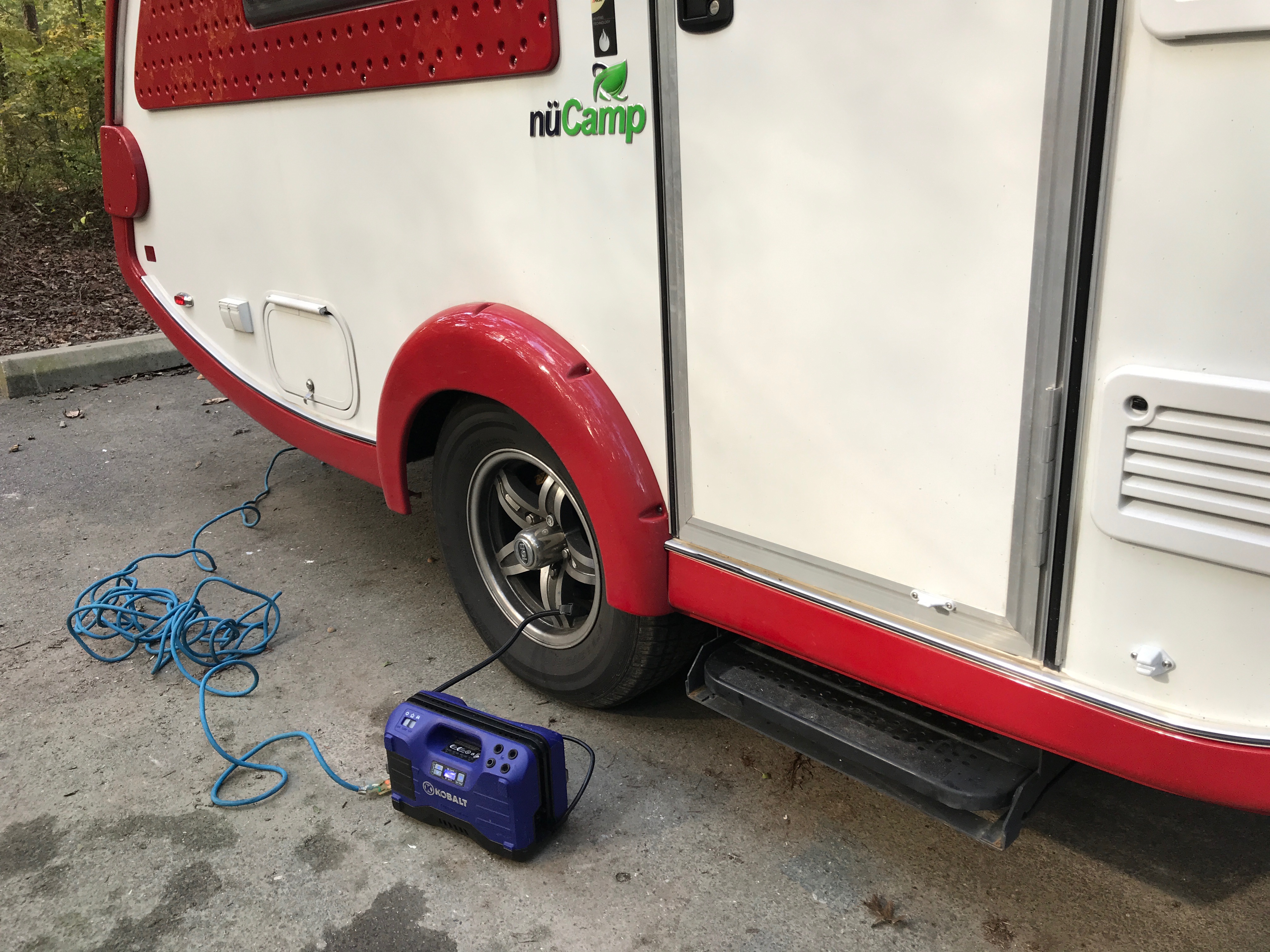
I checked my tires and made sure they were all inflated to the proper psi and then I got ready to roll in the morning.
In the morning, after coffee, breakfast, cat cuddling and more coffee, I headed over to the diamond mine.
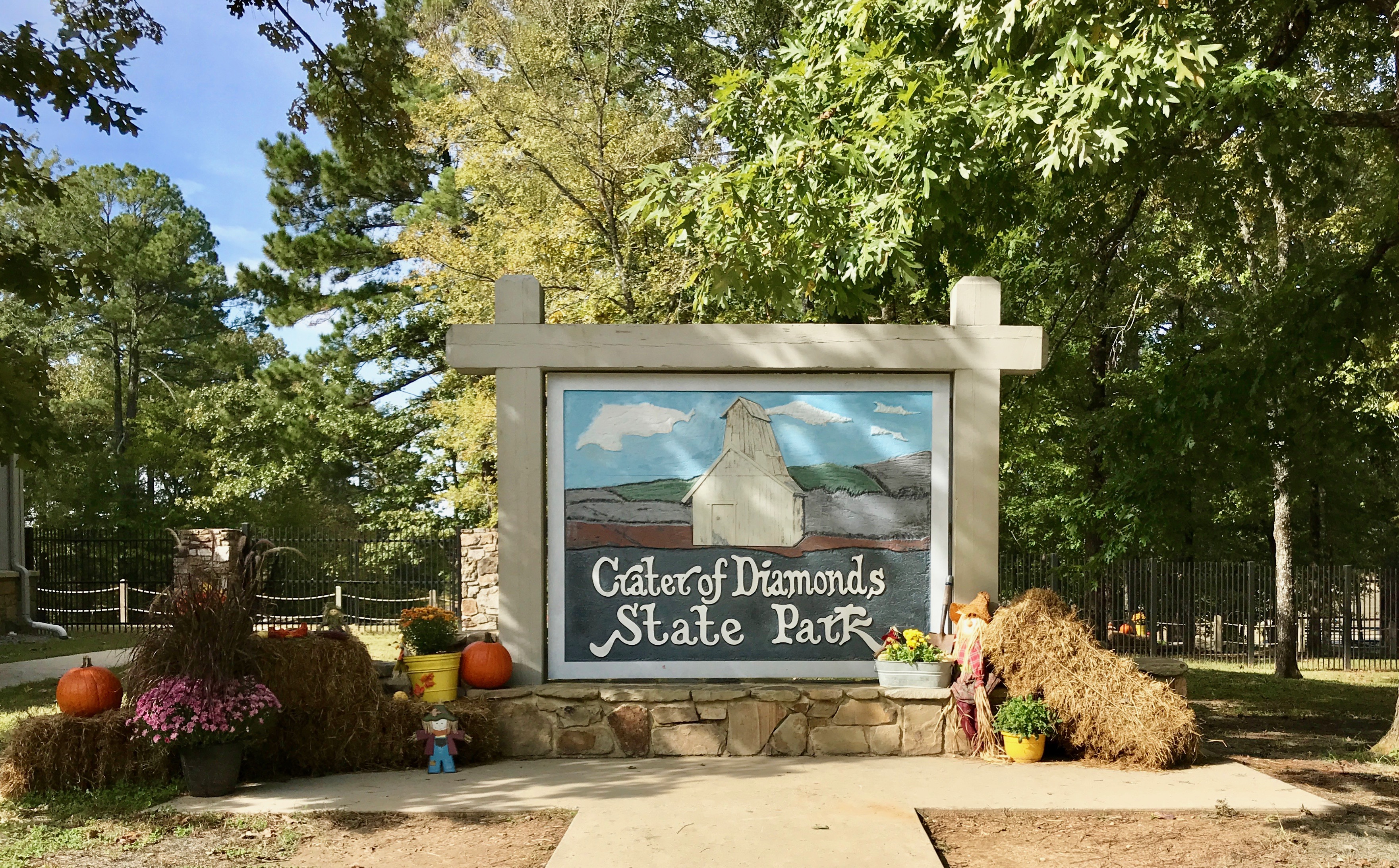
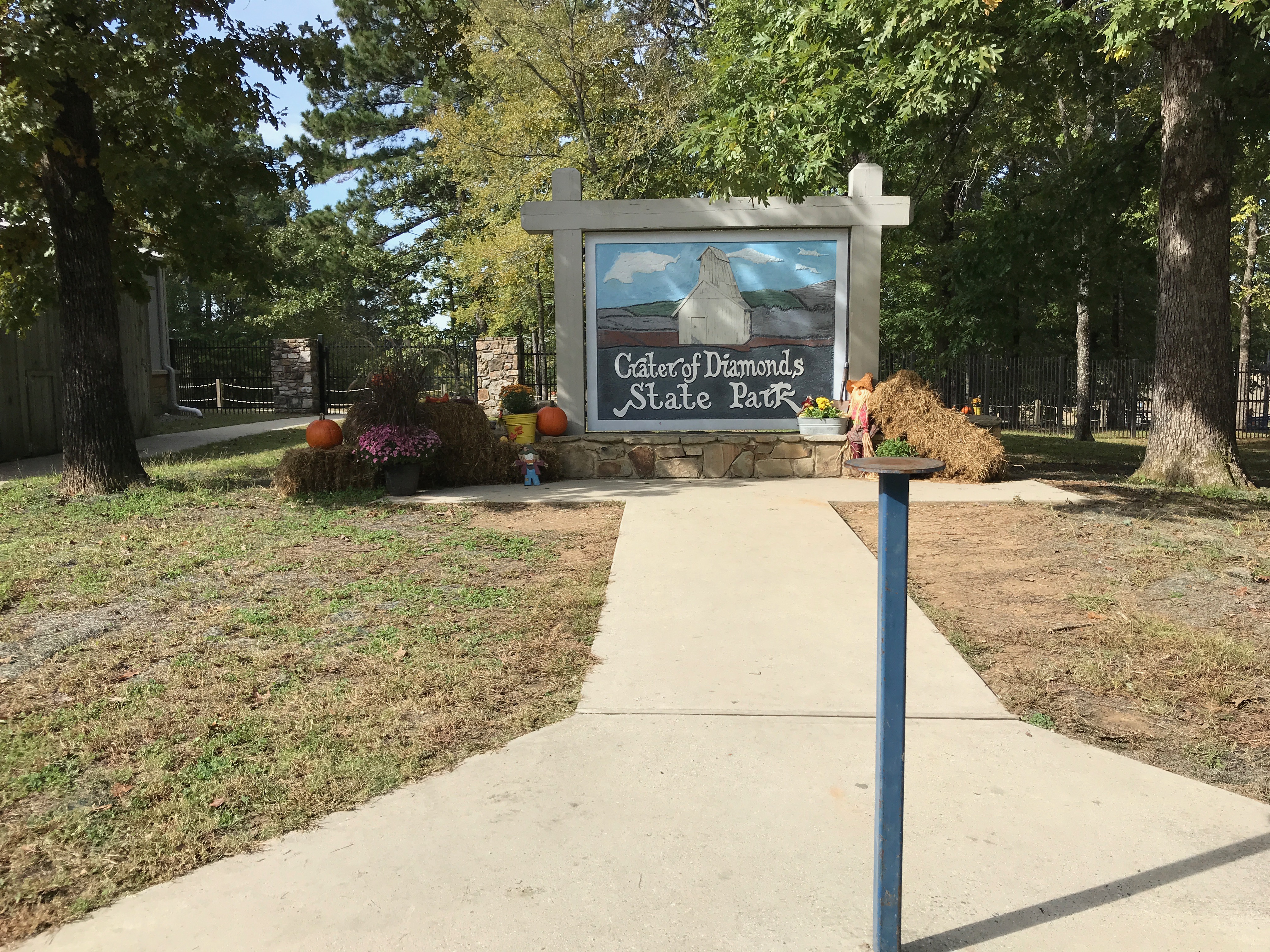
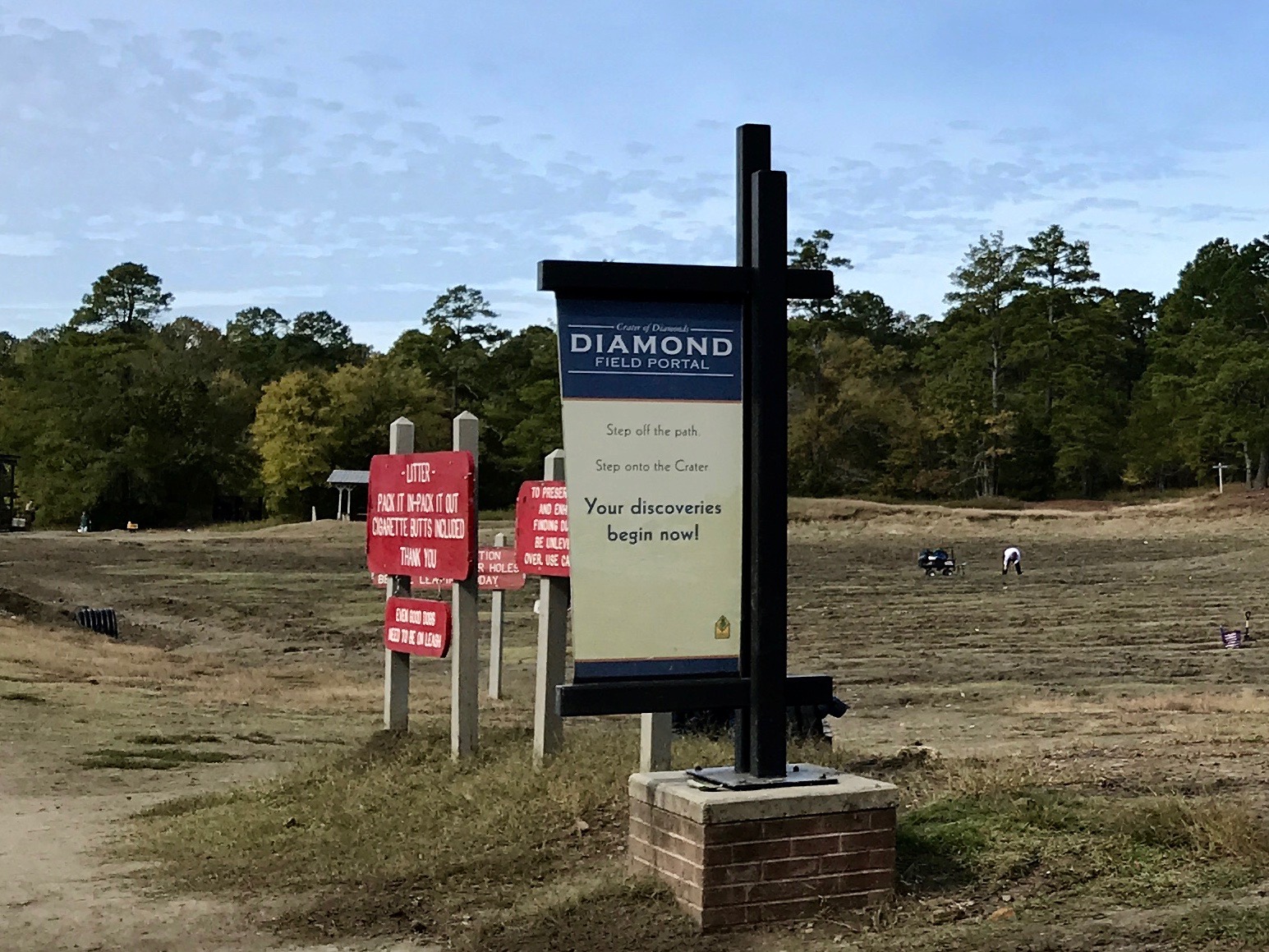
They are really into making their already attractive signs even more photogenic. They even have a little post for taking selfies with a timer.
I thought that was ingenious, although it’s not quite as useful these days. Cell phones don’t sit up as well as cameras used to.
I went in, paid my fee, and headed for the mine.
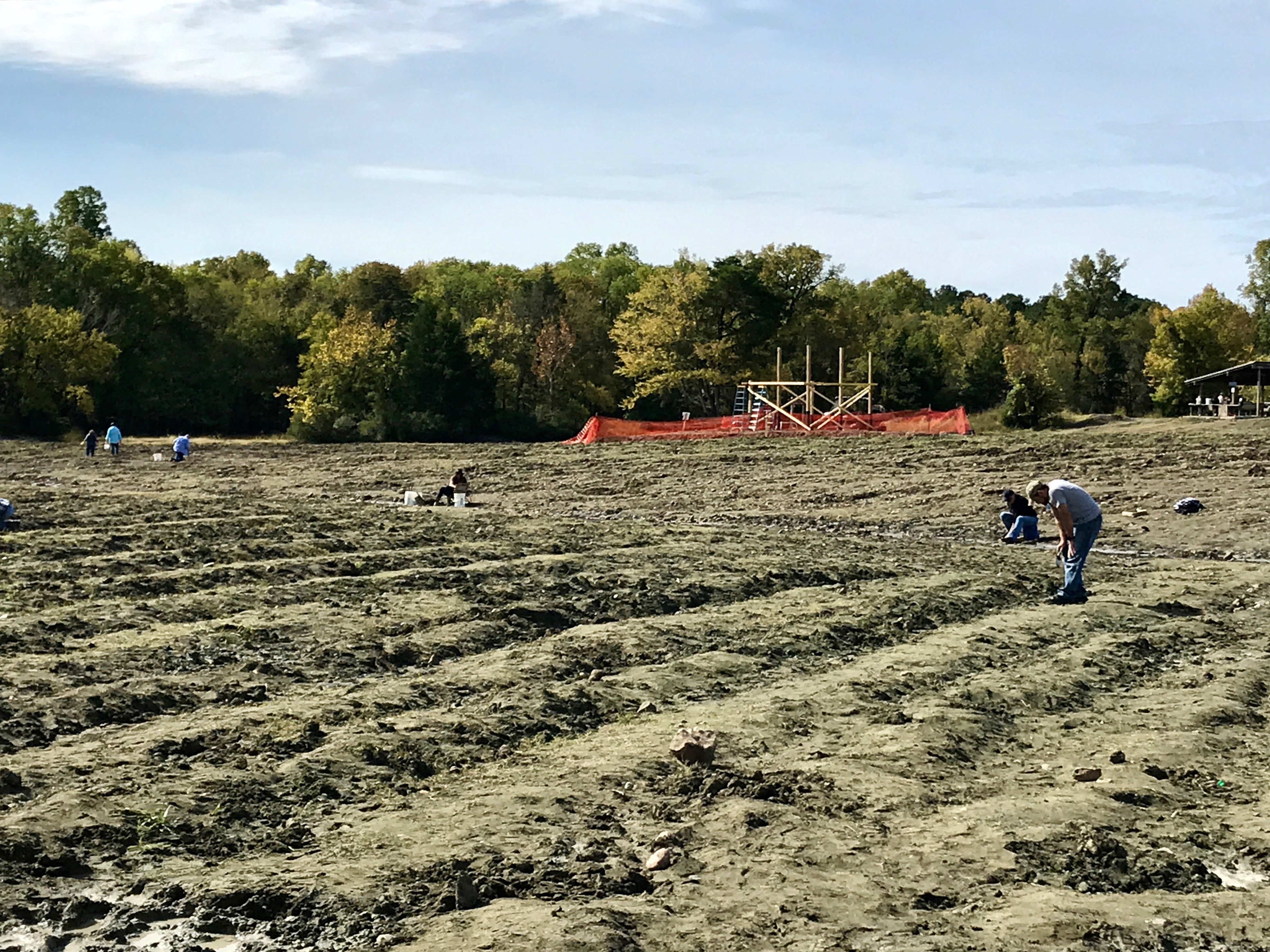
Incidentally, this is the mine.
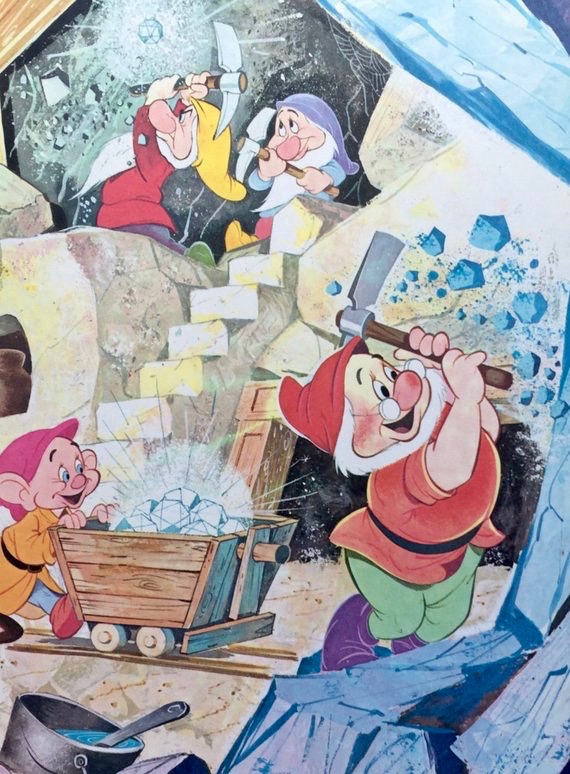
It’s a far cry from the Disney version.
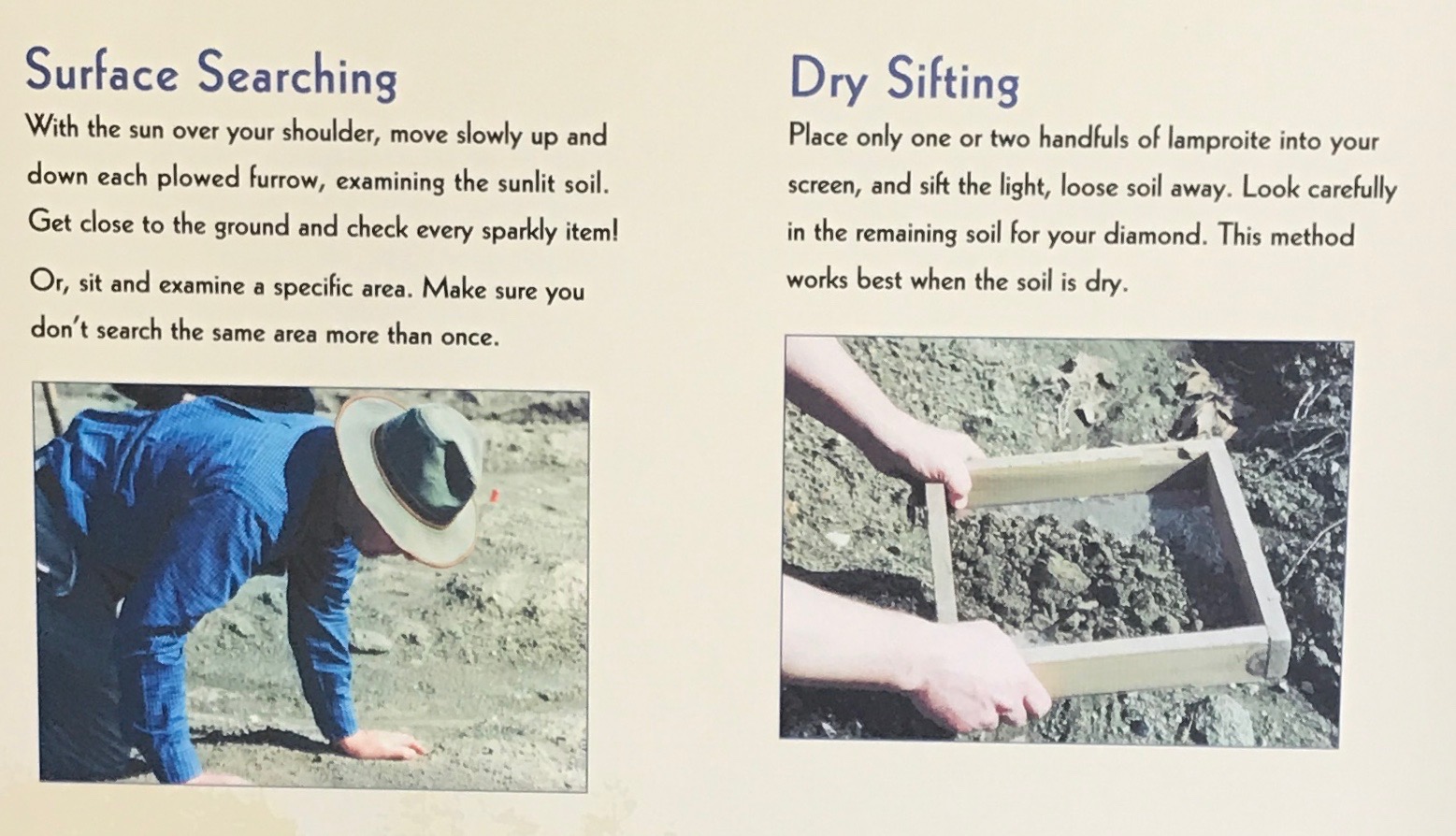
All the things I read up in the display near where I paid to go in gave me the idea that many of the best diamonds are found on the surface, so I didn’t invest in the sifting equipment that they have available for rent just before you enter the mine. After all, I had already paid to enter the mine and I did bring some of my own stuff.
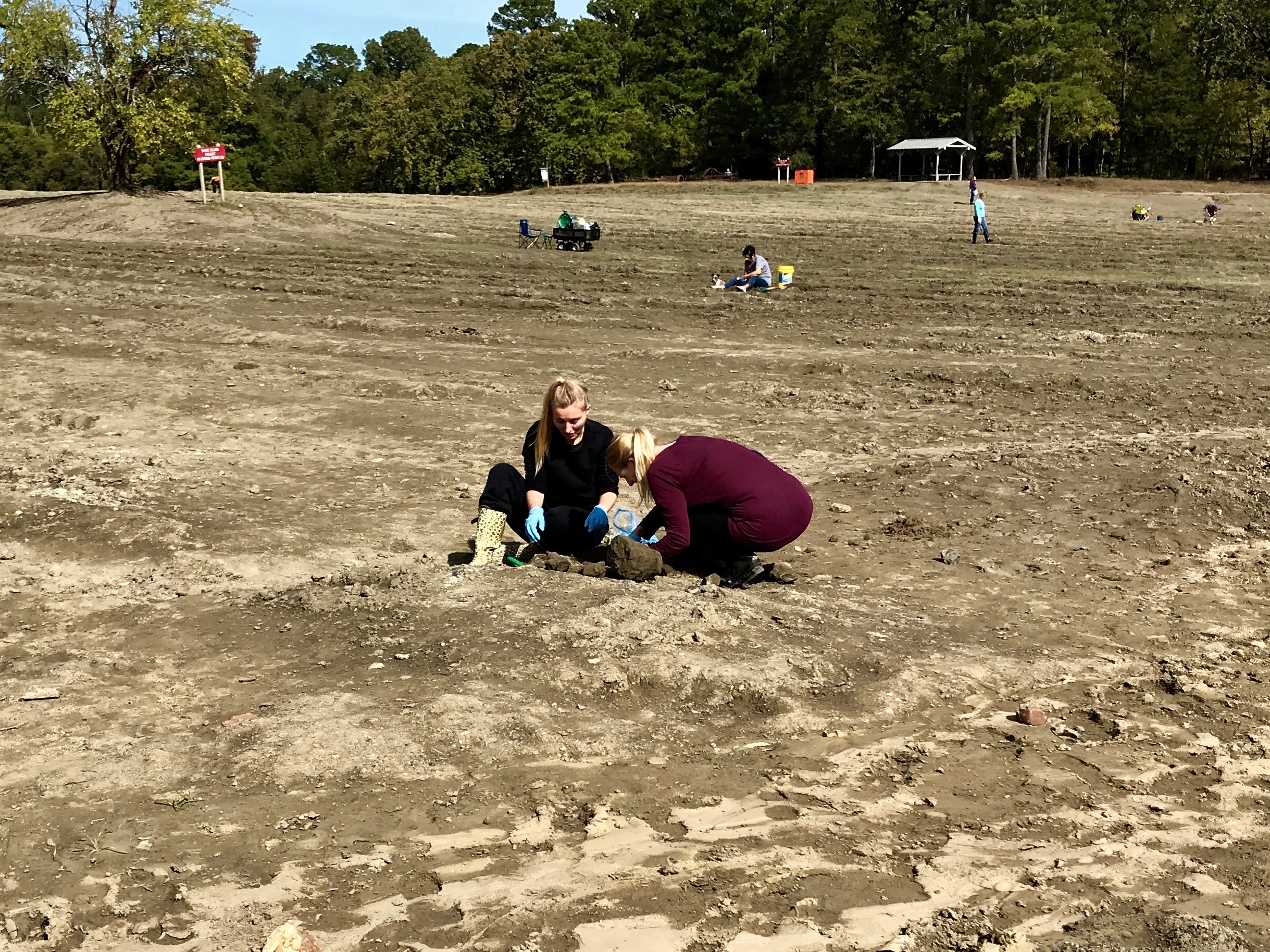
I walked in, looked for a likely spot and started looking.
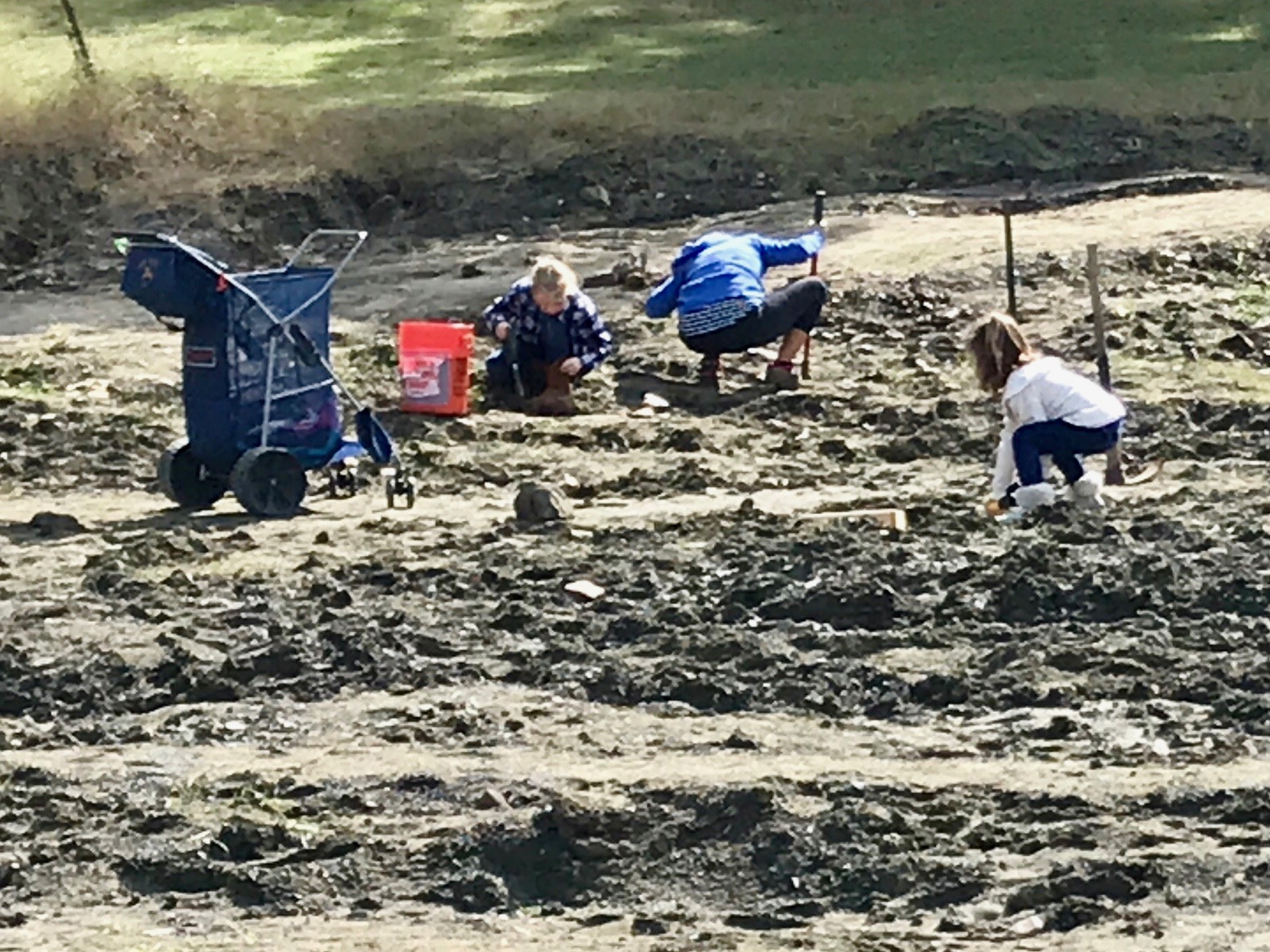
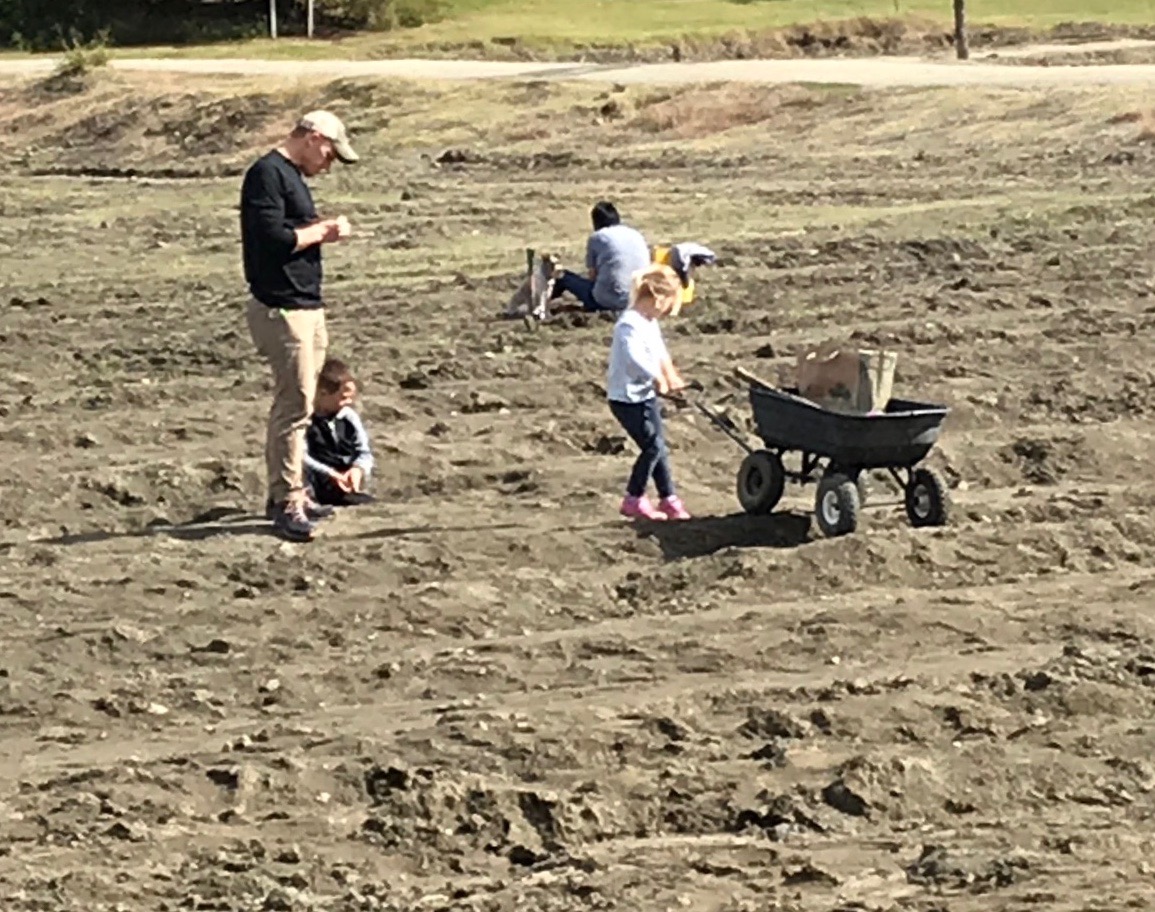
Lots of people were out hoping to hit it big. I hope this little girl found something.
Maybe these young women found something.
I guess this is a family friendly activity. I didn’t hear one child complaining about sitting and looking at dirt.
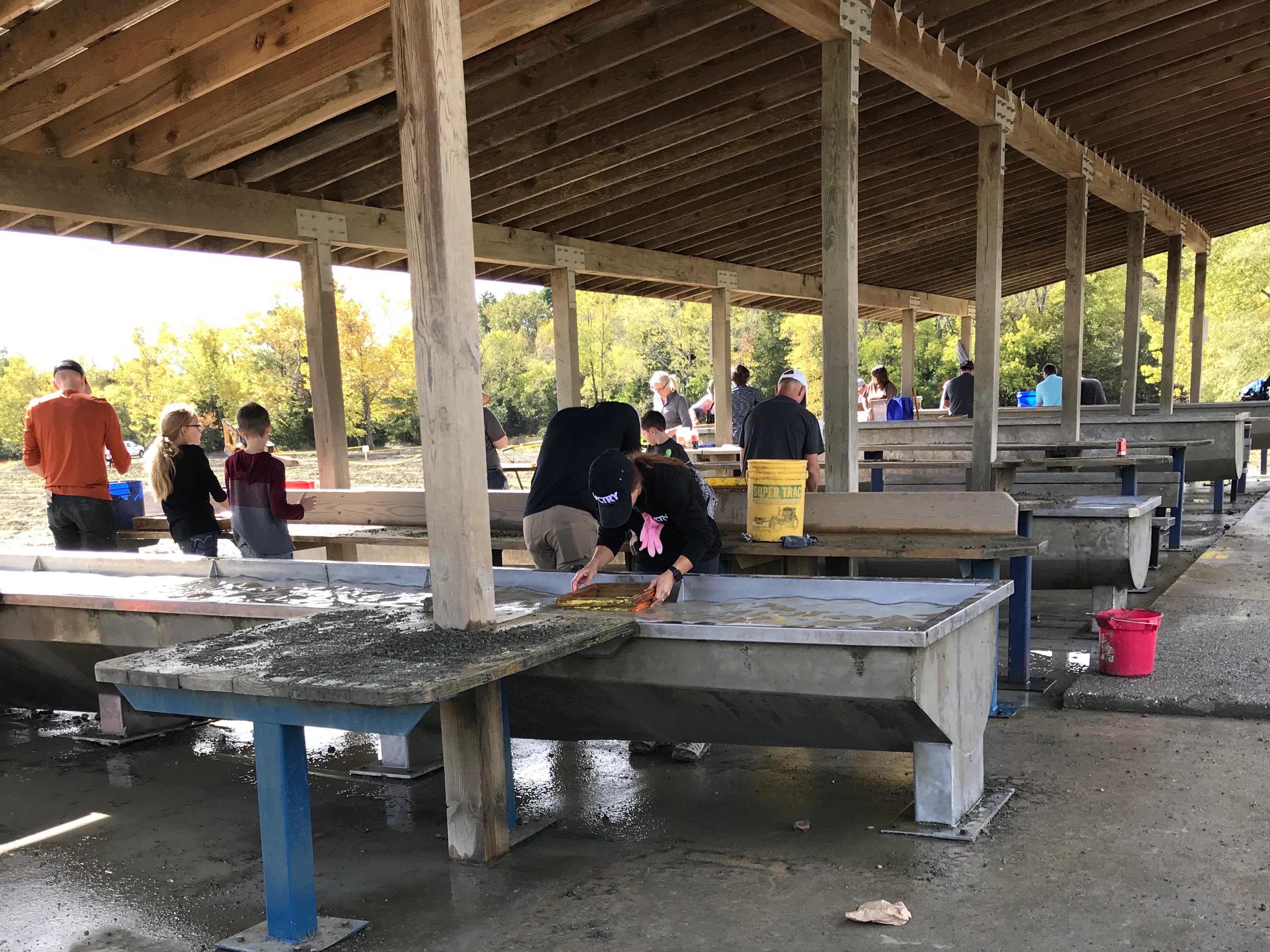
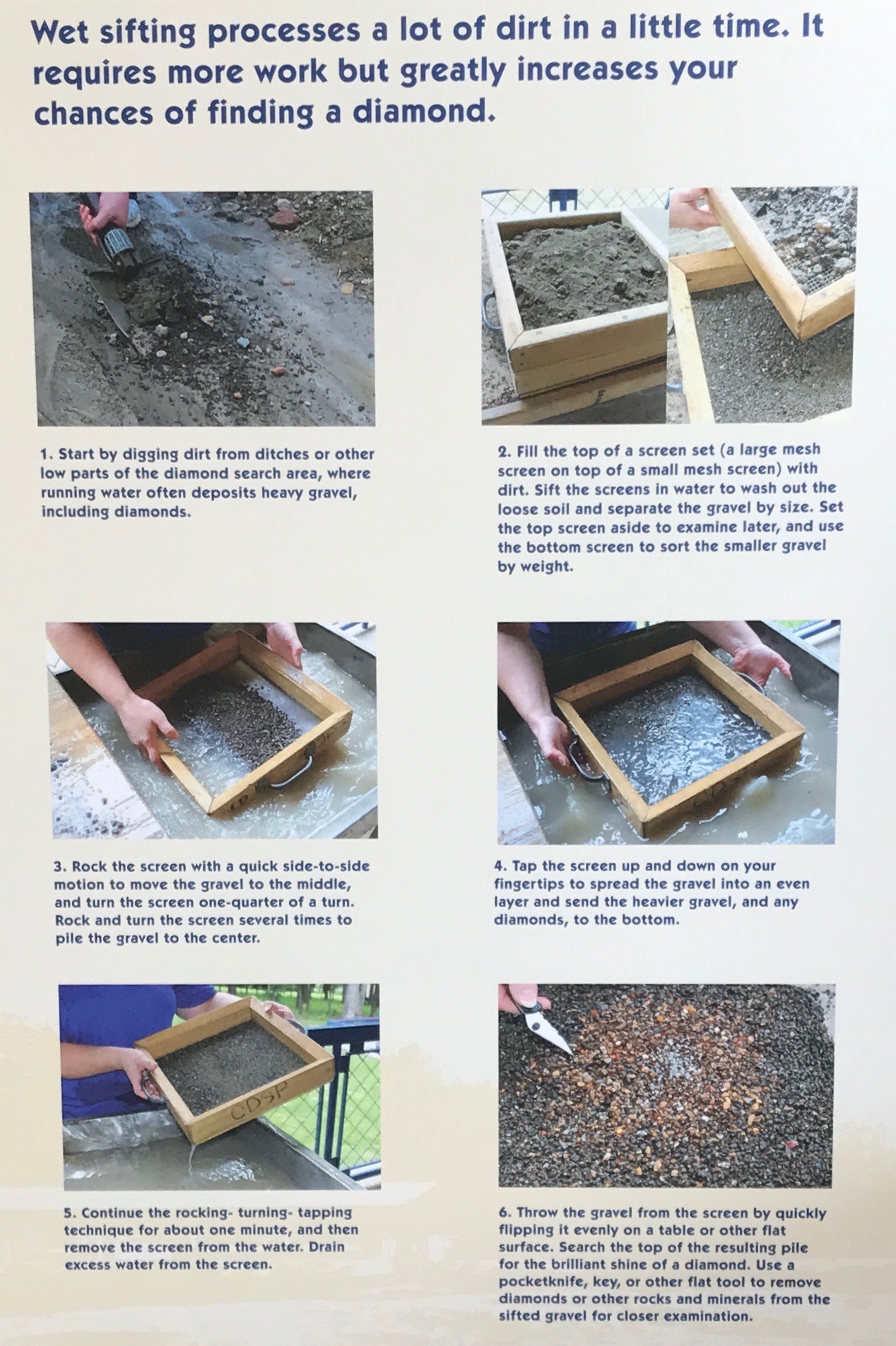
The serious hunters don’t settle for looking on the surface, though. They scoop up gravel and do what they call a “wet sift.”
They make these troughs available for all.
The serious prospectors use the wet sift method.
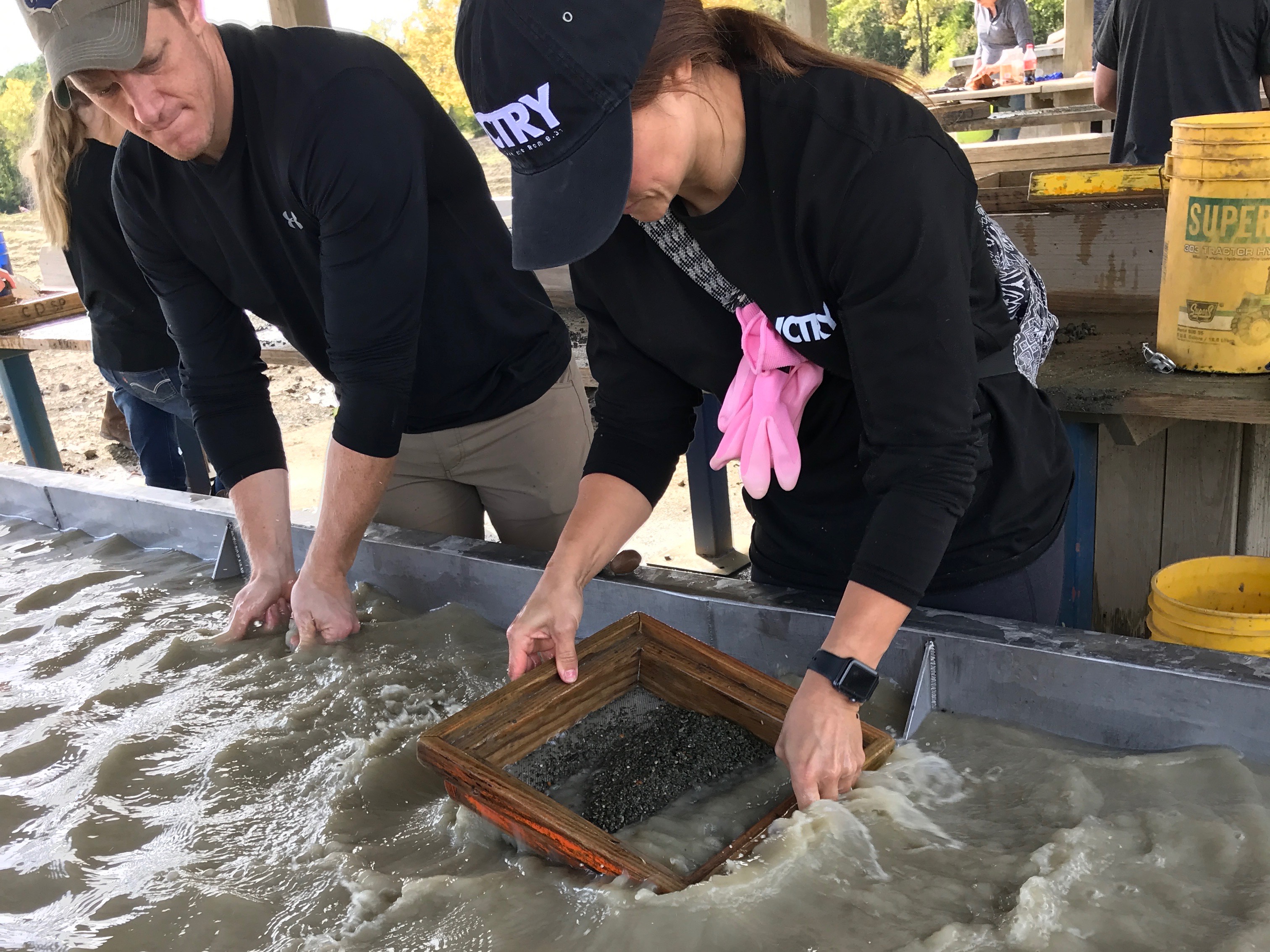
These folks were kind enough to let me snap a photo of them washing their gravel.
There are people back in the visitor’s center that will help you identify what you found.
Here I am, heading to the visitor’s center to check my haul.
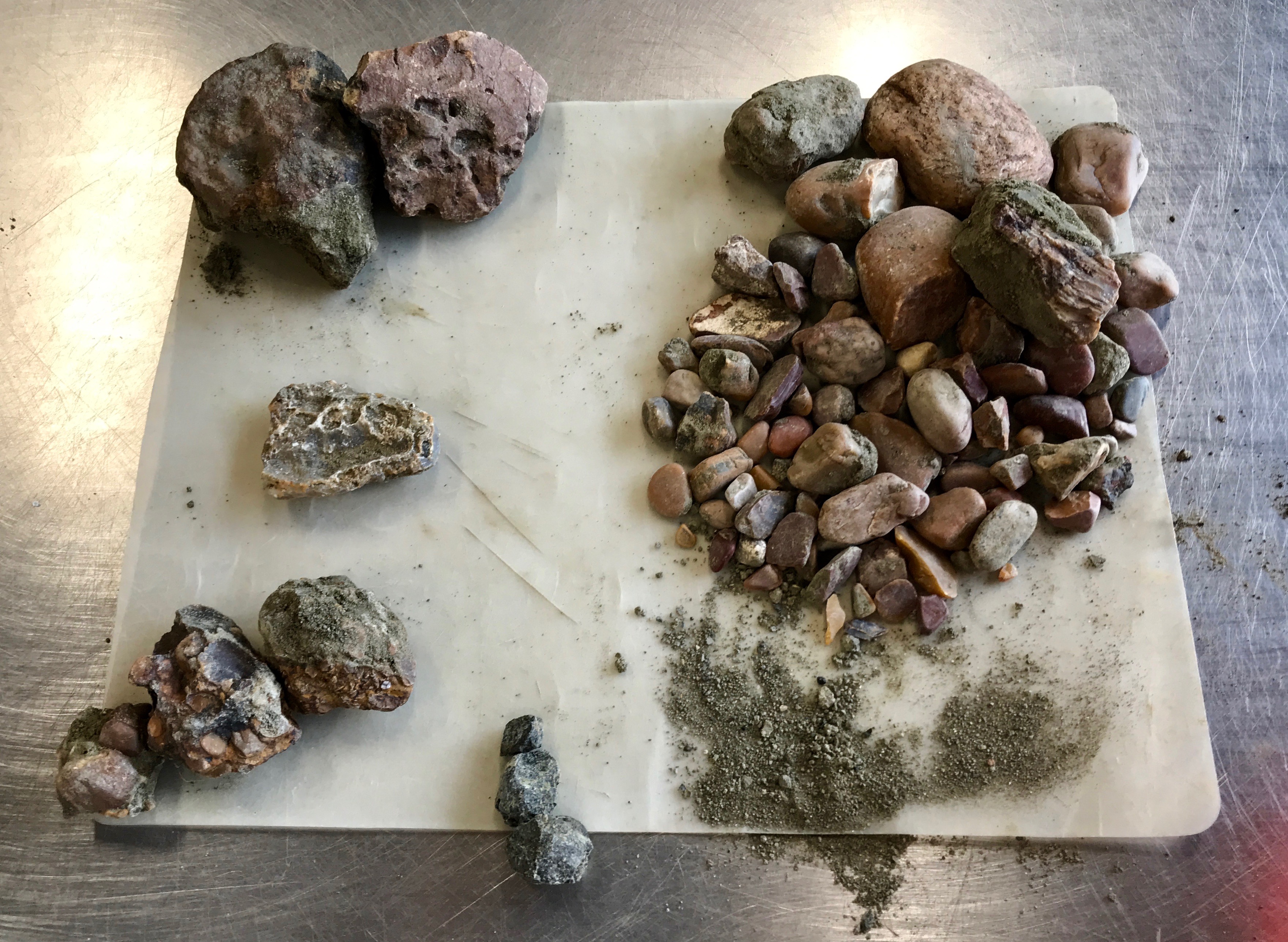
This is pretty much what I found. Do you see any diamonds?
No? Well, they didn’t, either.
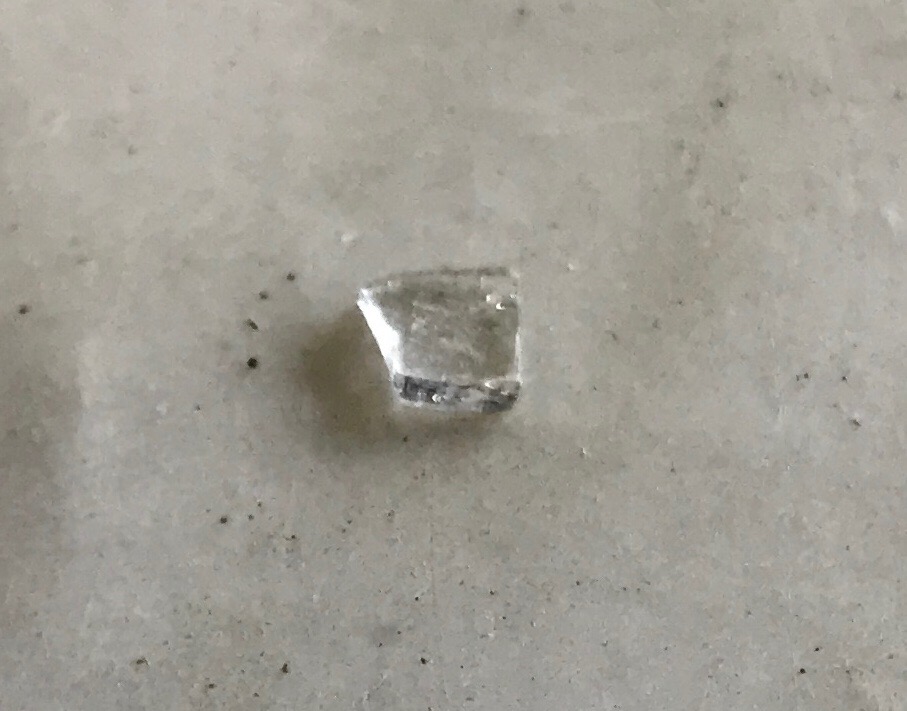
The closest I got was this chip of glass, which kind of reminds me of the “crystal” I found in Payson, Arizona.
But, hey! I didn’t really think I would find a diamond. I did what I came to do, which was look for diamonds. Mission accomplished!
Now on to the historical and informational displays in the visitor center.
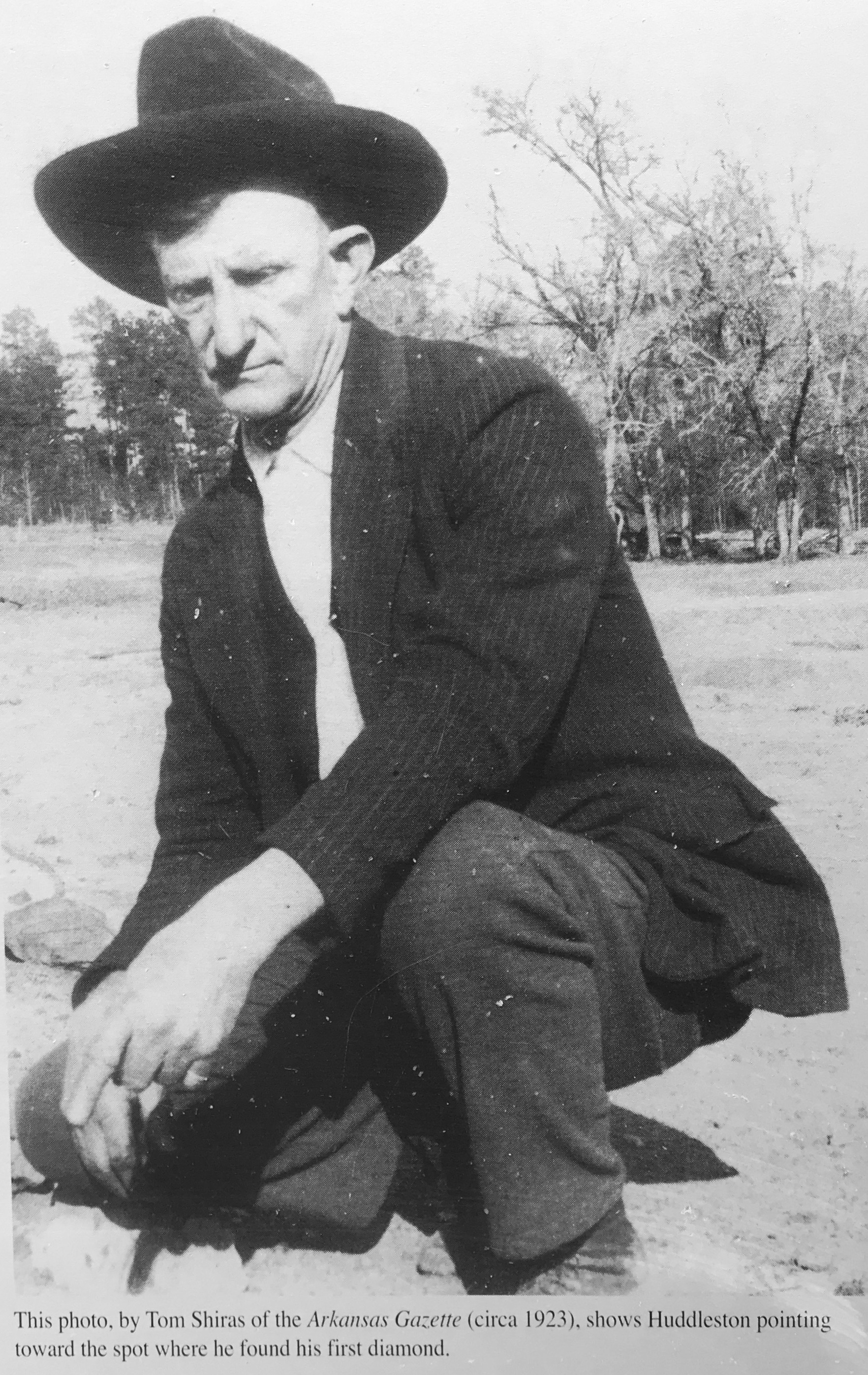
The first diamonds found in Pike County, were discovered in 1906 by John Huddleston on the farm that he had purchased earlier in the year.
Huddleston, recounted how he found the first diamond to Tom Shiras the Arkansas Gazette.
“I was crawling on my hands and knees…when my eyes fell on another glittering pebble…I knew it was different from any that I had ever seen before. It had a fiery eye that blasted up at me every way I turned it. I hurried to the house with the pebble, saddled my mule and started for Murfreesboro…riding through the lane, my eye caught another glitter, and I dismounted and picked it up out of the dust.”
The stones were sent to Charles Stifft, a Little Rock jeweler, who confirmed that they were genuine diamonds. He described tham as blue-white diamonds, one weighing 2 5/8 carats and the other 1 3/8 carats. To verify his findings, Stifft sent them to New York and said, “…after subjecting them to every test they were pronounced to be diamonds of fine grade.”
Huddleston sold his diamond bearing land for $36,000.
$36,000 seems to me like a small amount of money for a diamond mine. Well, I guess the State of Arkansas wanted to know the answer, too. They did some testing in two phases.
In Phase 1, They found that the “pipe” containing diamond bearing soil extends to more that 669 feet deep and is shaped like a martini glass. They extimated that the volume of the diamond bearing soil equals more than 46 million cubic yards.
In Phase 2 they found that the ore in the pipe is diamond bearing, but to varying degrees. They found a range of diamond content ranging from 1.2 carats per 100 tons to 0 carats per 100 tons. The average value of the diamonds was $12.31 per carat and the value of the higher grade ore was $0.12 per ton. In total, they recovered 210 diamond weight a total of 47.78 carats.
Their conclusion: There are plenty of diamonds but not enough to make a profitable commercial mining operation.
The State of Arkansas may not have found that they have a valuable diamond mine, but I think they have done quite well mining for tourists. At $10 per adult (children get in free) I’m guessing they more than recoup their expenses. When you add in the camping fees and benefit to local businesses, I’d say their investment has been worth it.
Oh, and if you are interested in making this a major pastime, you can buy a 20 visit pass for $170.
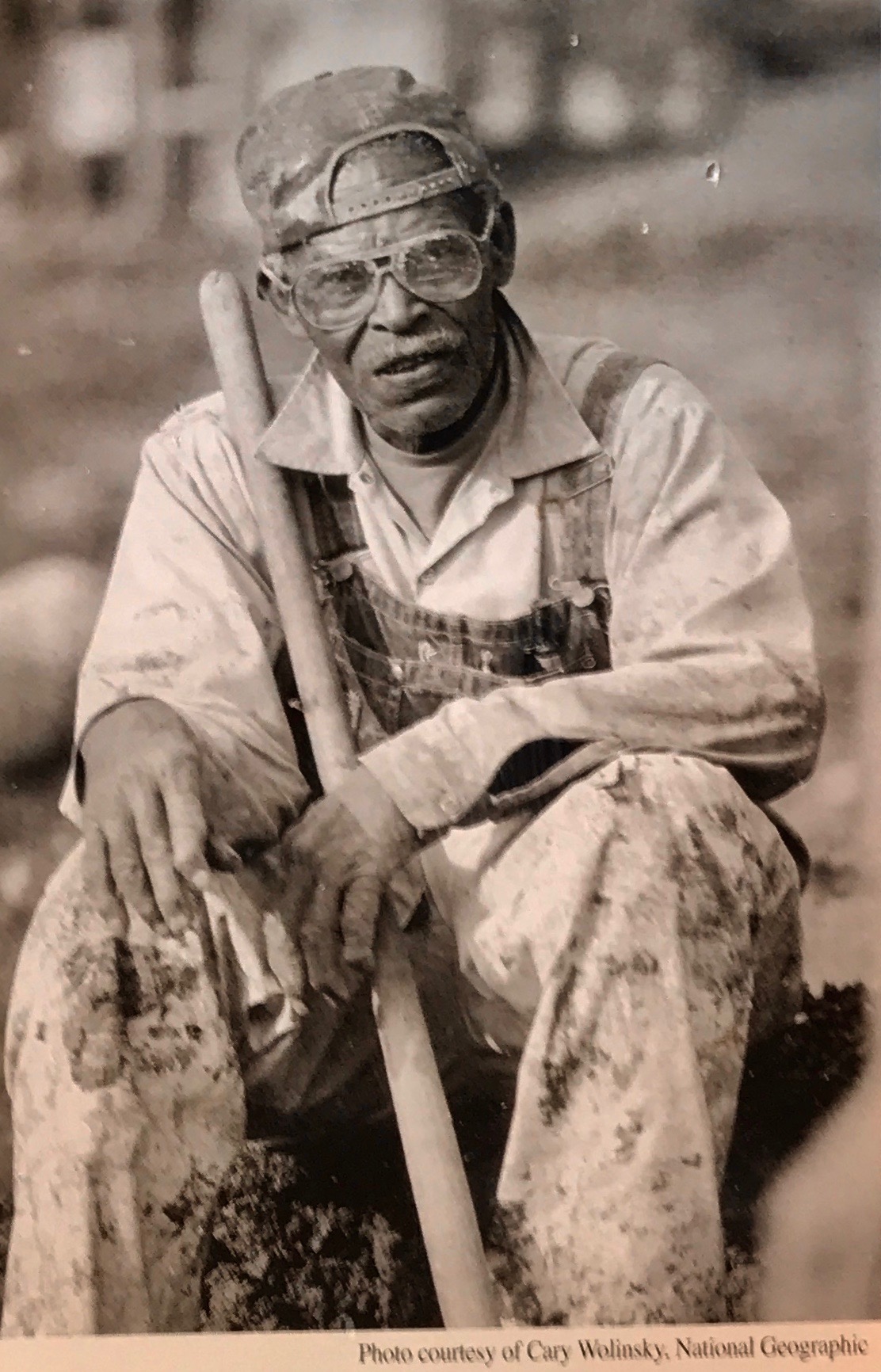
I imagine James Archer might have had a special pass. He prospected here for 30 years, almost full time since his retirement in 1987. During that time he found over 5,000 diamonds and helped countless others enjoy and understand what had become his favorite pastime.
James didn’t hunt for diamonds to get rich, but he did make some exciting finds. His two largest stones were 7.95 carats and 5.25 diamonds. He fine-tuned the art of studying the dirt and minerals in it. According to Harold Lay, a friend and fellow diamond prospector, “James was an artist with a shovel. He made it seem so effortless. No one knew that place like James Archer.”
His cheerful disposition and willingness to help made him the focus of many park interpretive programs. HIs popularity with visitors eventually led to his well-deserved billing as “The Living Legend.”
Archer died January 8, 2003, at age 77, on the diamond field he loved at Crate of Diamonds State Park.
Incidentally, the information about James Huddleston and James Archer were taken from informational signs at the park. I just read the information now. I do wish parks, museums and visitor centers would take the wearers of bifocals into account when posting signs. They were posted at an angle that made them hard to read. This is a pity because they had some interesting information on their signs.
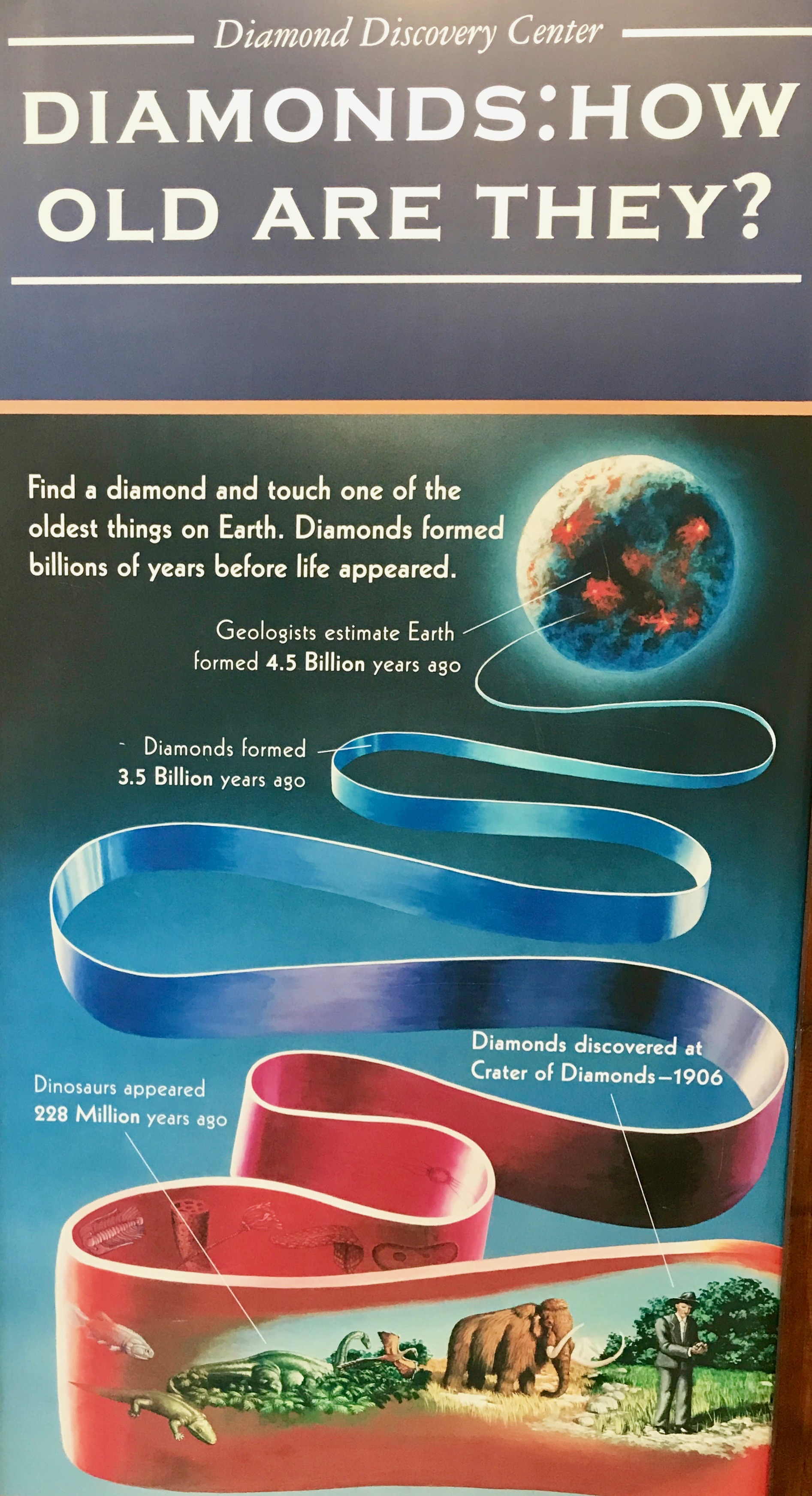
So, if you own diamonds, whether from Crater of Diamonds or some family heirloom, your gems are over 3.5 million years old. If someone compliments you on your jewelry, you can just wave your hand and say, airily, “This old thing?
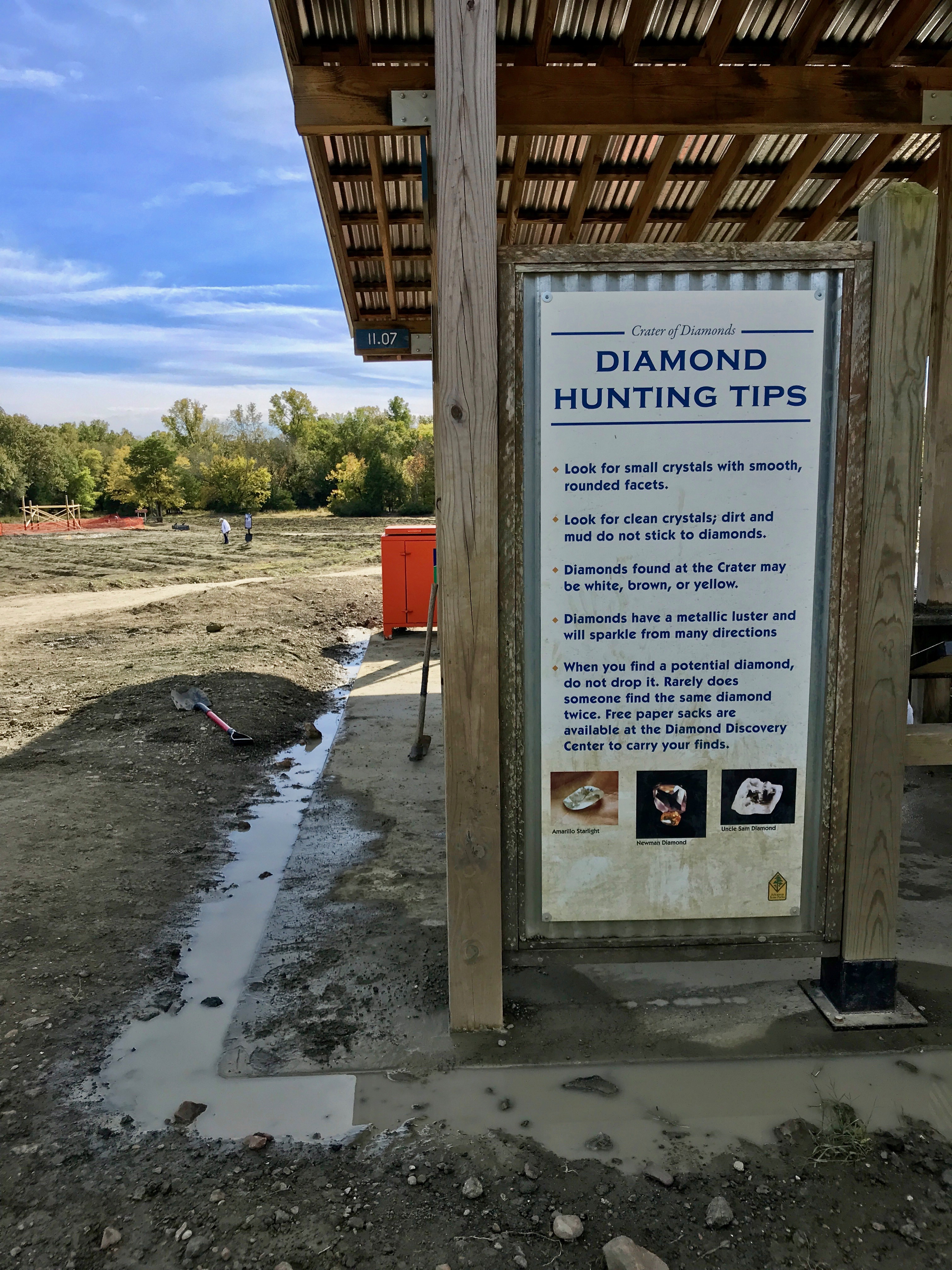
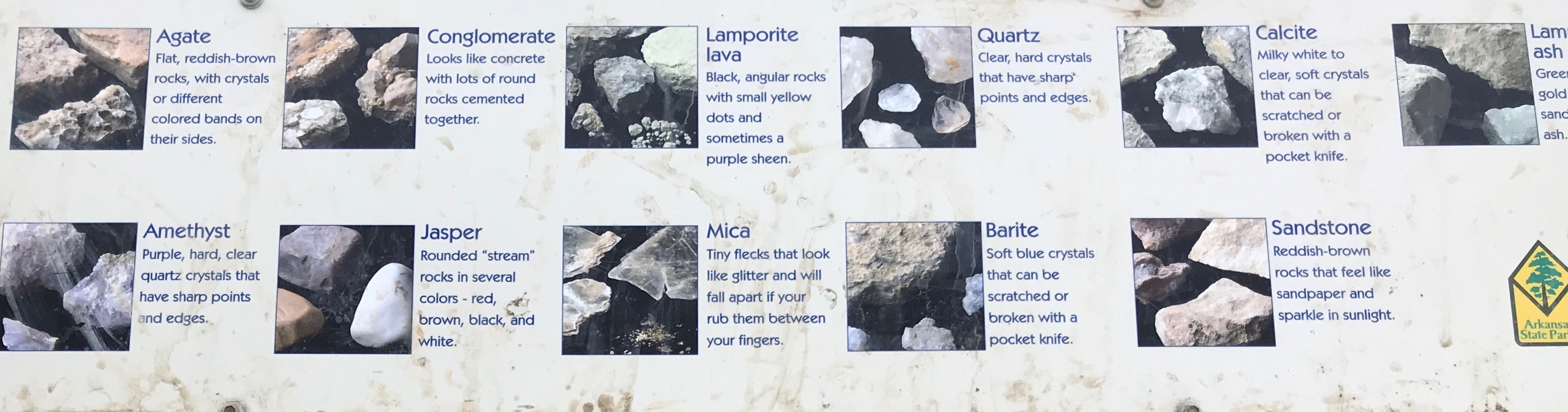
I also came across this panels than might have been useful information before I started prospecting.
Oh, well…
It was about time for me to leave. Of course, I had to exit through the gift shop. But, to be fair, the entrance was also through the gift shop.
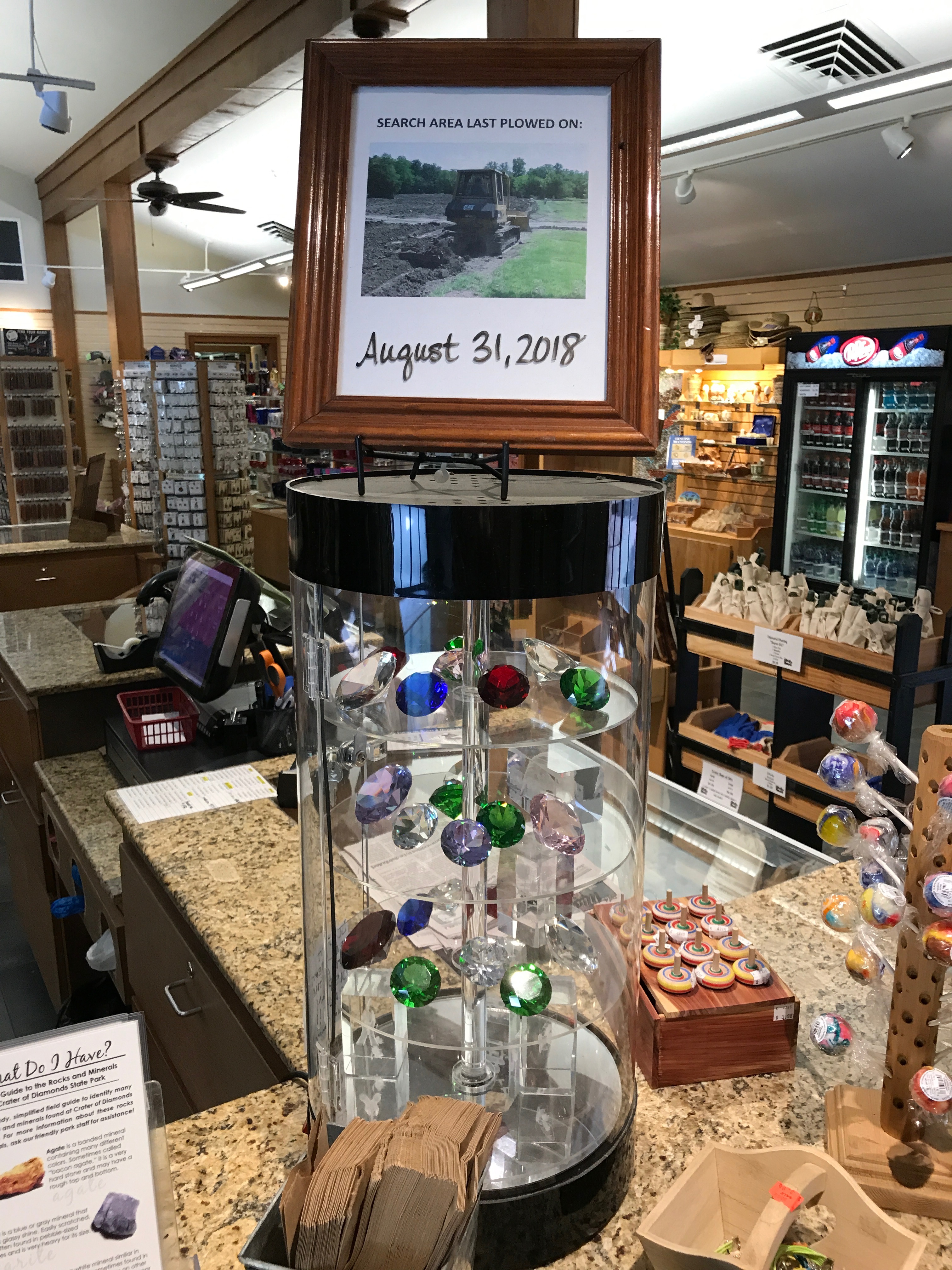
Hmm. I visited in October 2019. I wonder I I would have had better luck if I had visited when the mine was freshly plowed? Eh…probably not!
I headed back to camp. What a beautiful park! I decided to head into Murfreesboro for dinner.
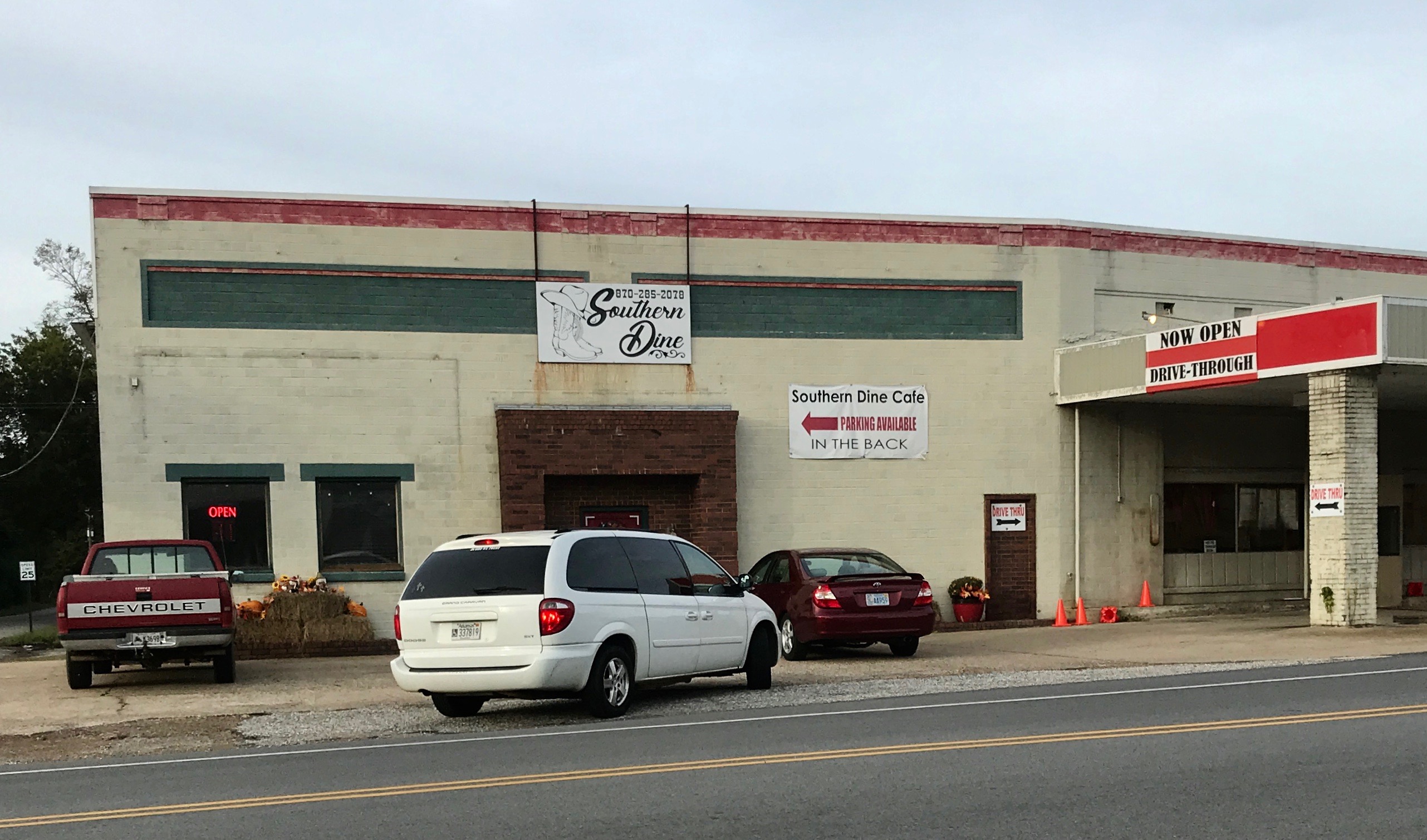
The Southern Dine Cafe looked interesting.
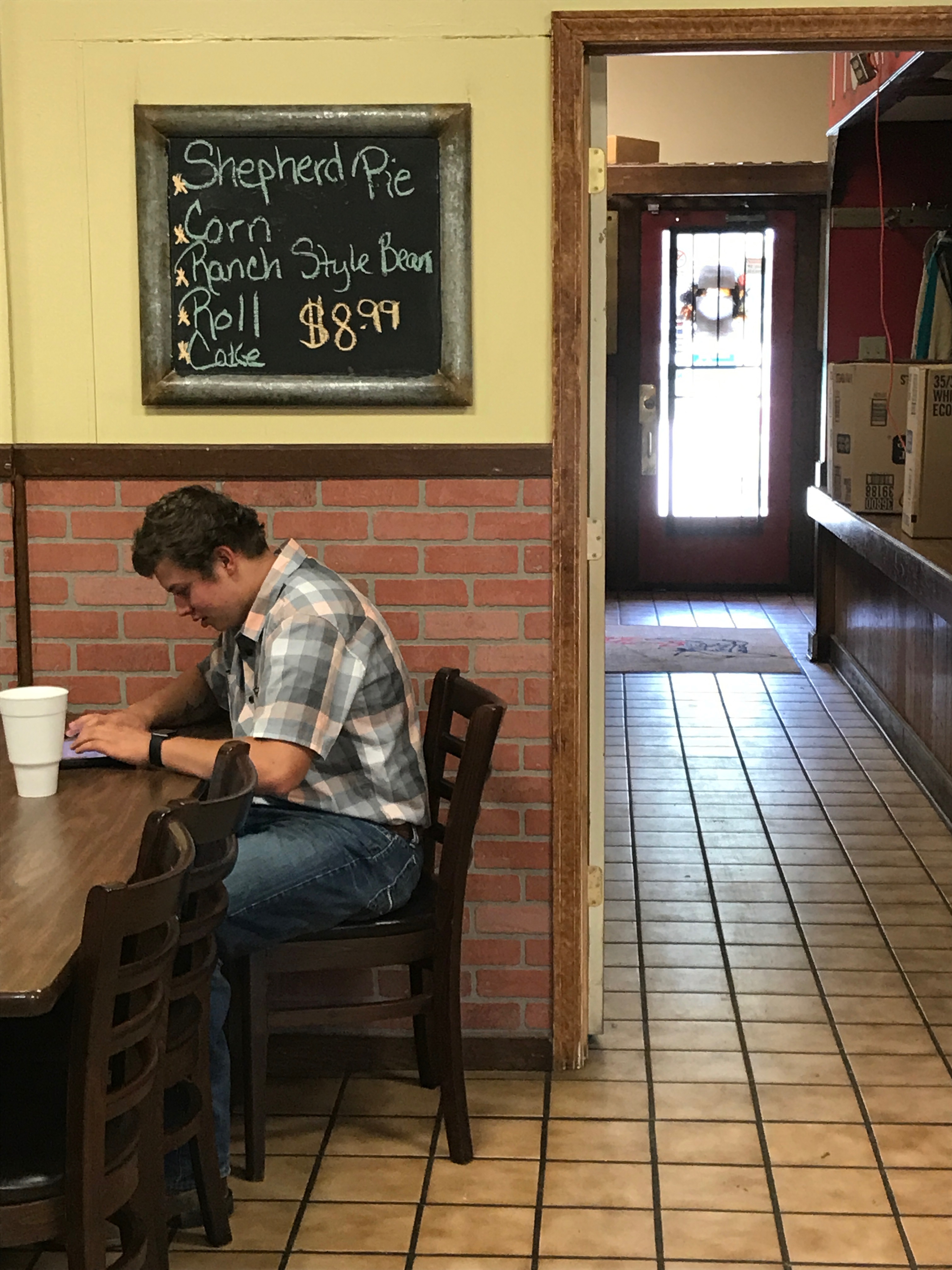
They had the Special of the Day posted, and I decided to go with that. I was tired and hungry and didn’t want to consider all the options at that point.
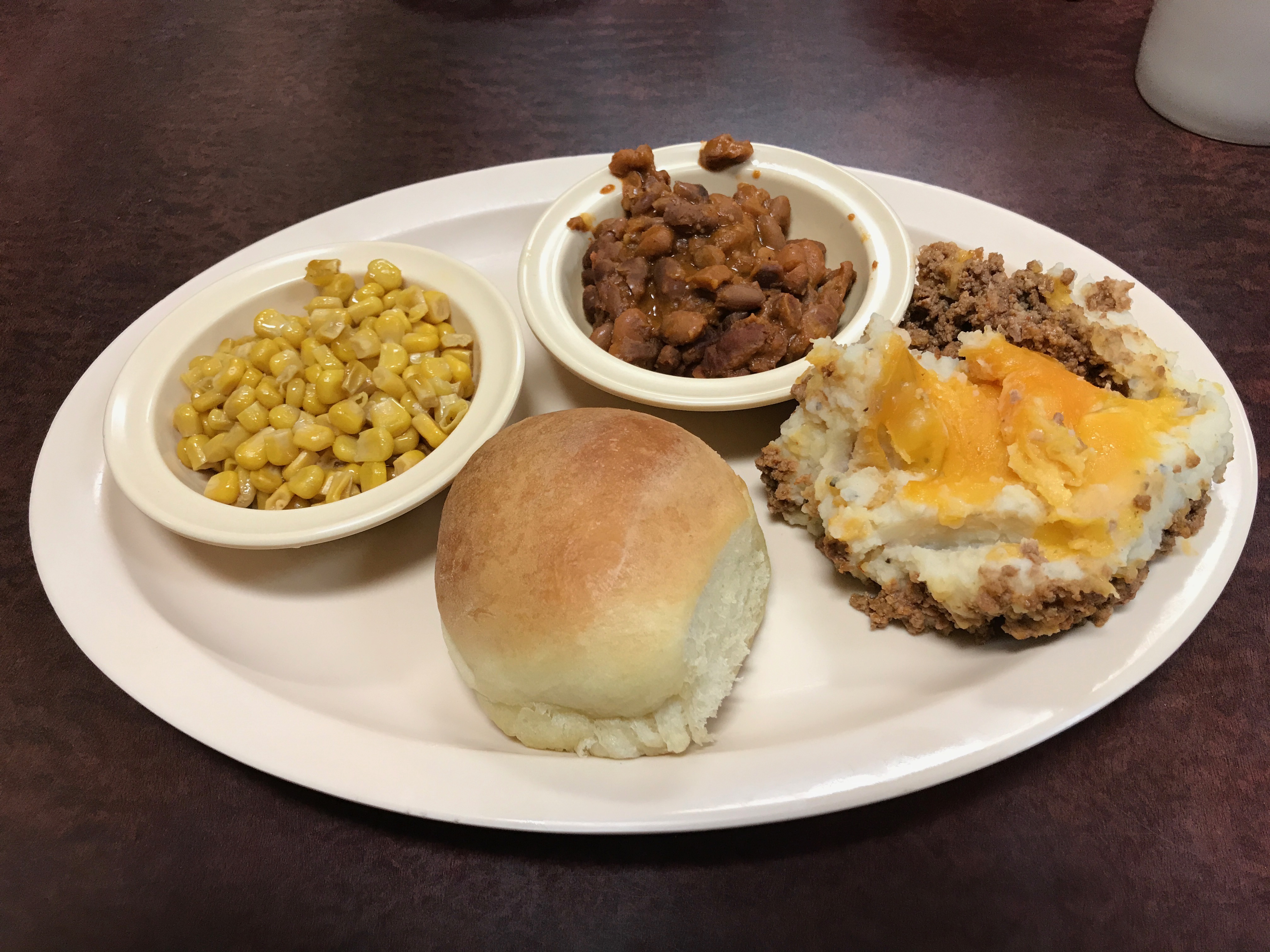
So, this is what Shepherd’s Pie is in Murfreesboro. It’s different from what I grew up with. For starters, we never put cheese on it. But, I ate every last bit!
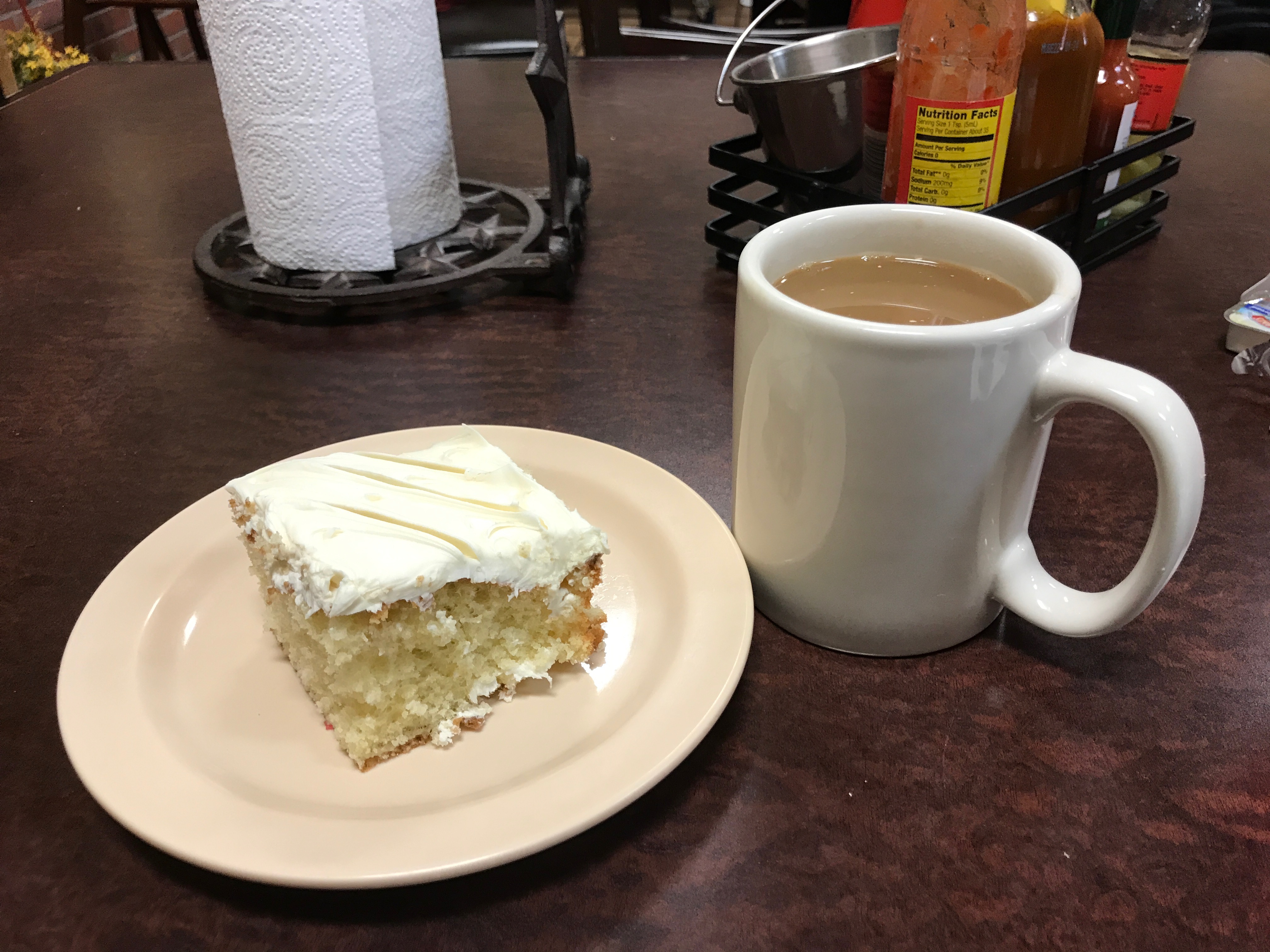
There was even dessert included in the meal.
If I hadn’t been full to the gills (and if dessert hadn’t been included with the meal) I might have investigated an alternative dessert.
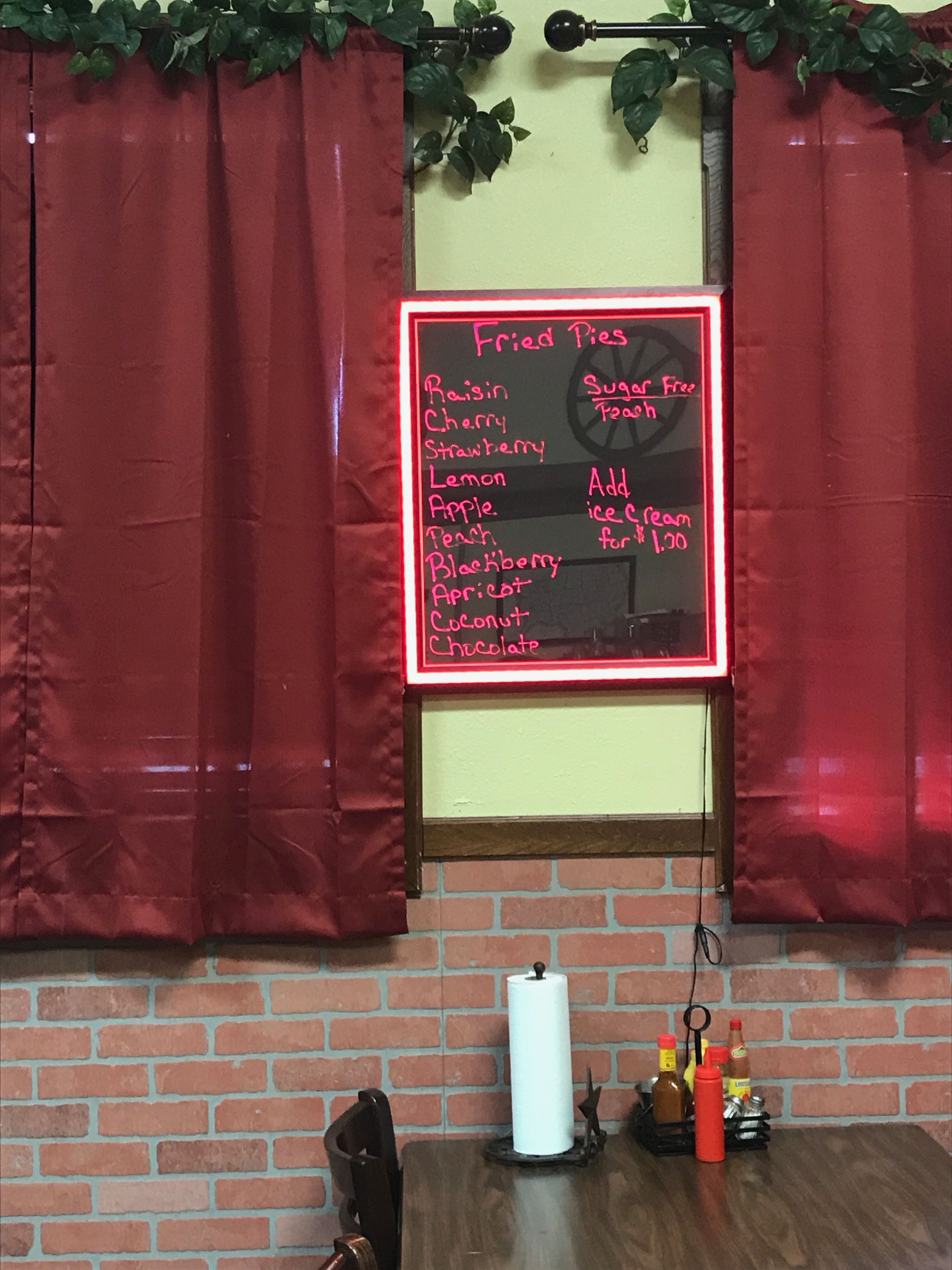
Fried pies!
Fried pie a la mode!
But, for now, it’s time to head back to the campground.
When I heard that there was a real diamond mine where you could look for diamonds and keep all the diamonds you find, that was the mental image I had. I was singing all the way there!
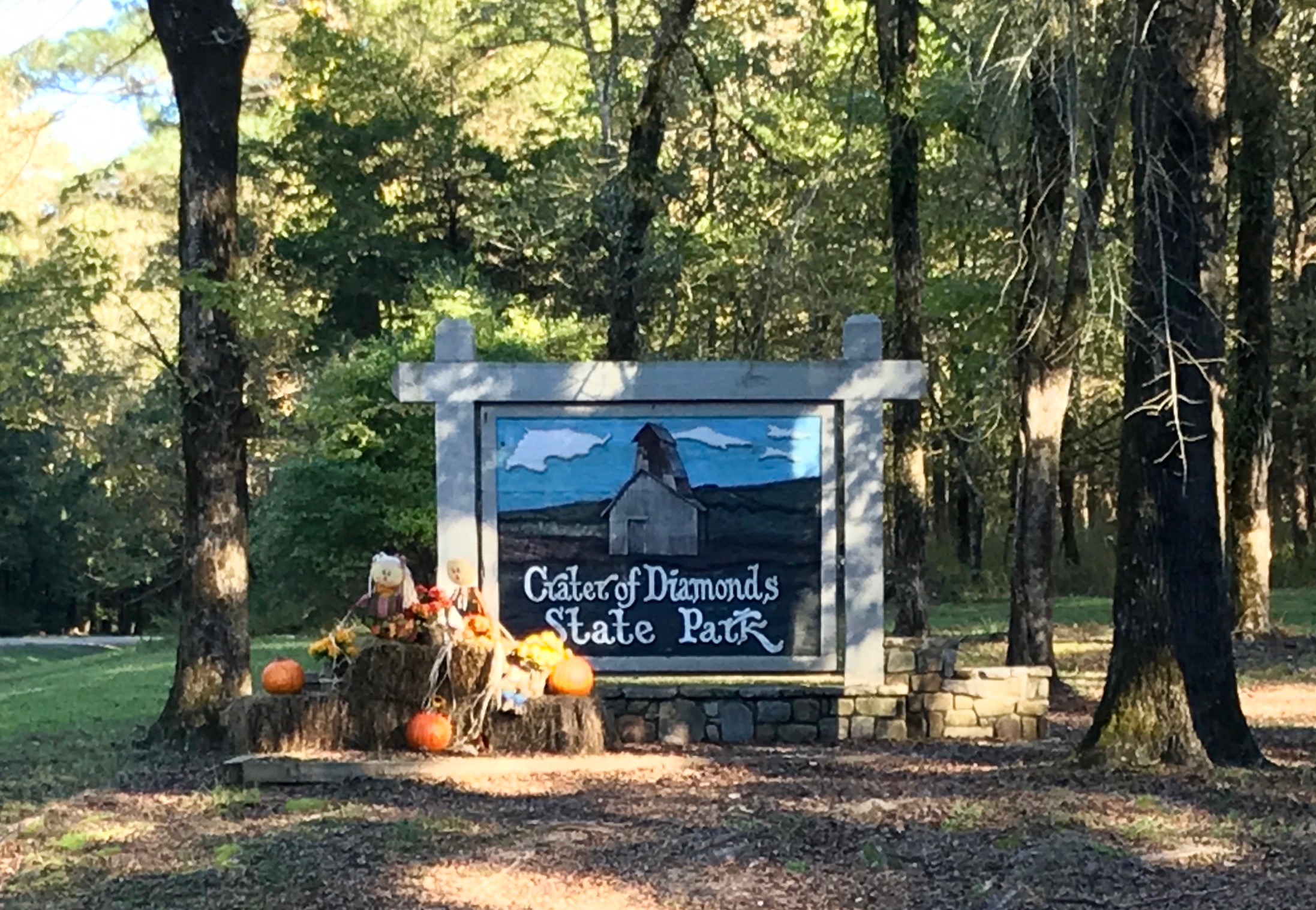
I was excited to finally get to Crater Of Diamonds State Park near Murfreesboro, Arkansas.
I booked three nights there. Today I would get set up and explore Murfreesboro a bit. Tomorrow: DIAMONDS!
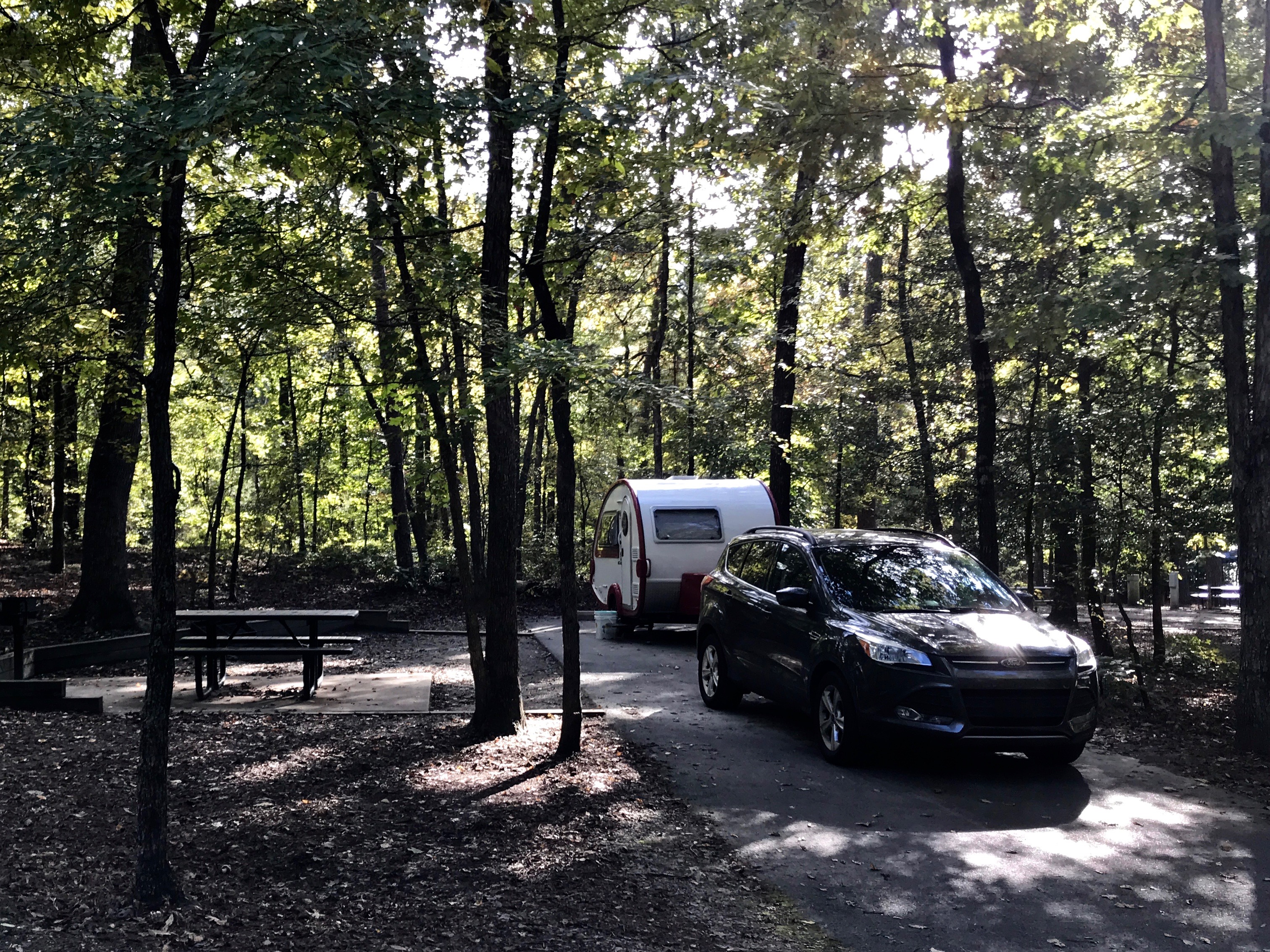
My site was lovely. It was level and paved and was under some beautiful trees. The picnic table was in good shape and there was a fire ring.
I was really impressed that it was a full hook up site – water, electric AND sewer. I’ve never found a campground that didn’t at least have a dump station, but having it right at the site is a real luxury.
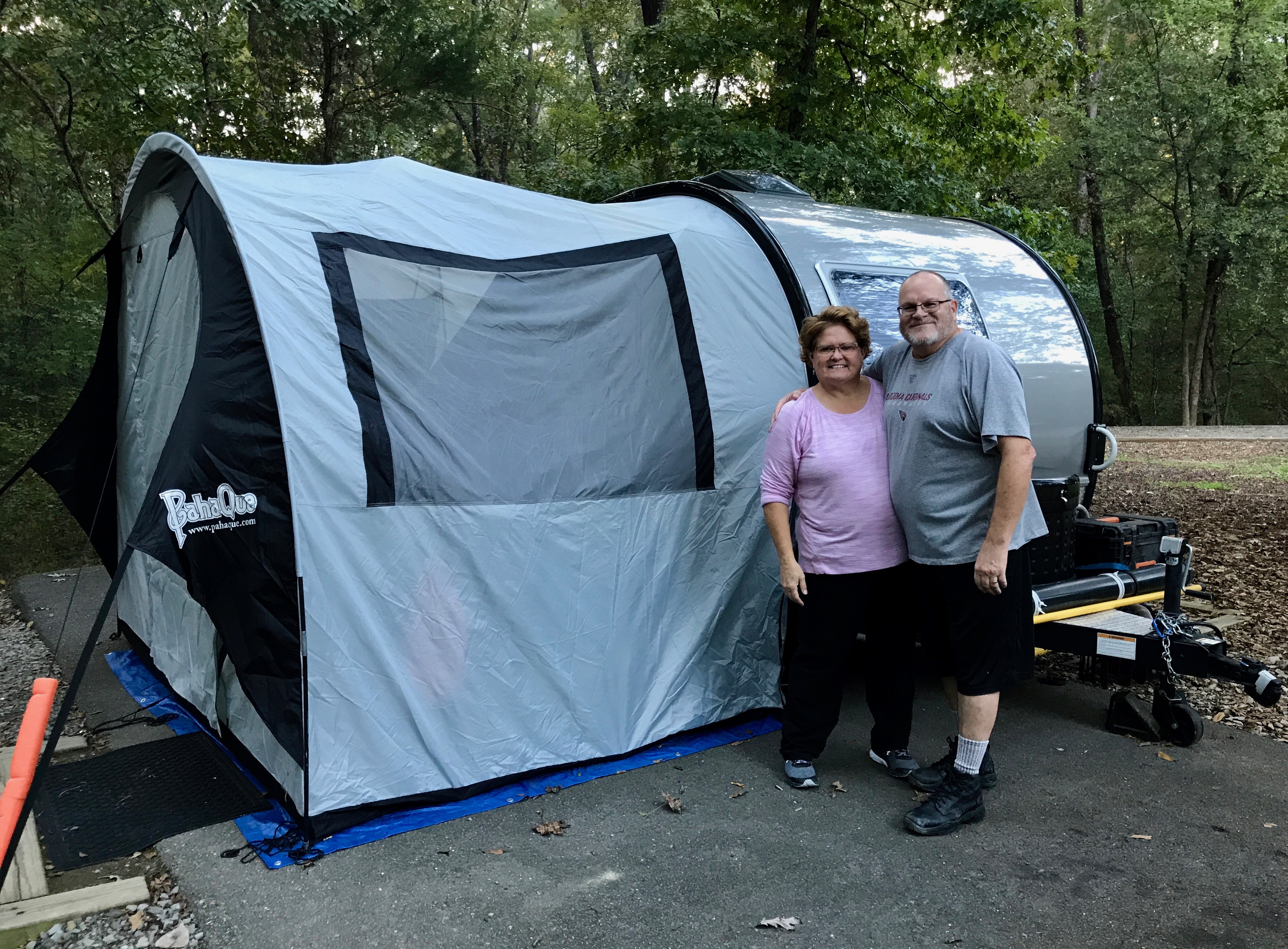
I also met my first T@bbers in real life – Julie and Mike. They were very obliging in showing my how they had their rig set up. The side tent is nice for the extra space, although I probably won’t be getting one myself.
With set up and introductions complete, I headed into town.
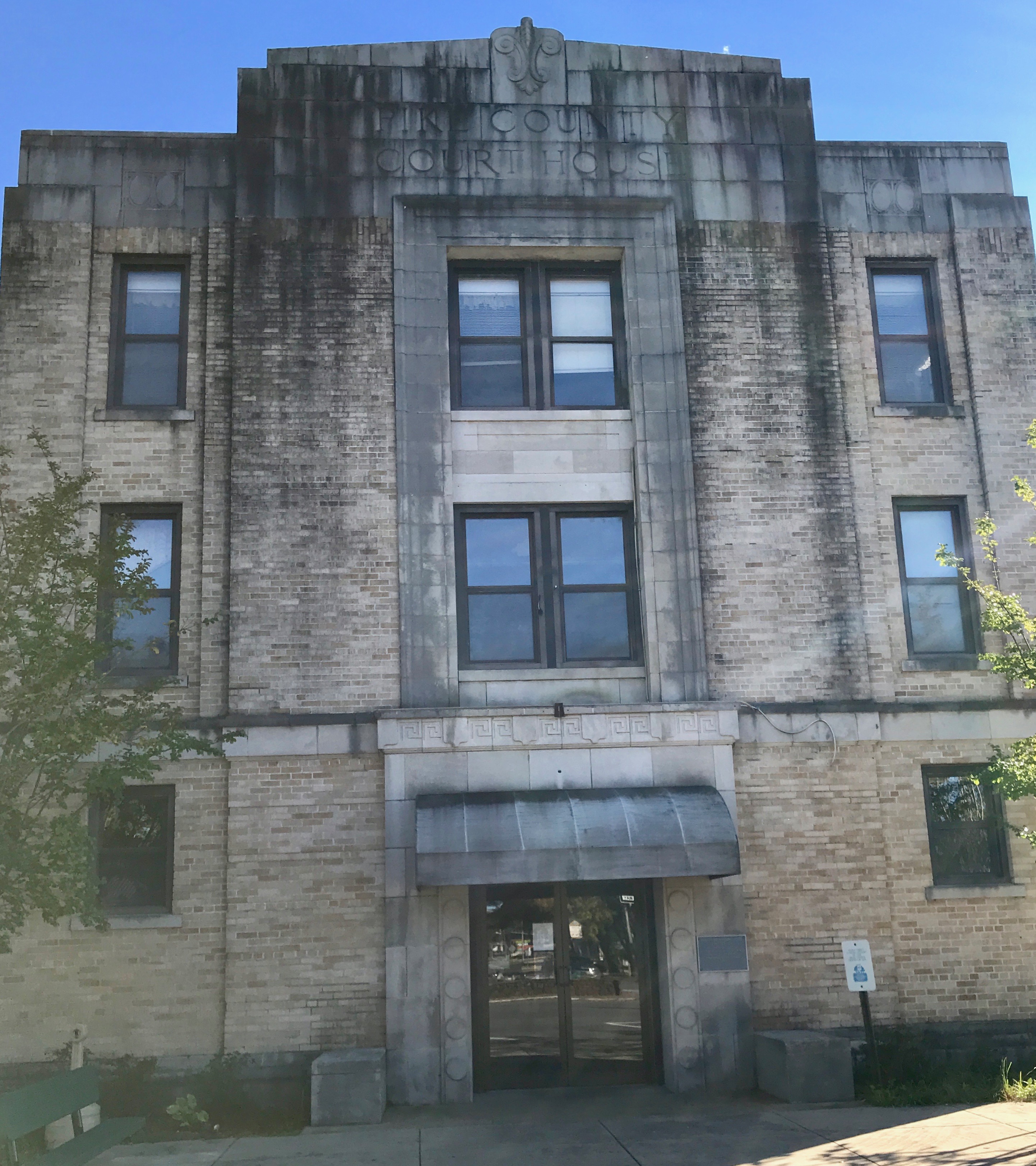
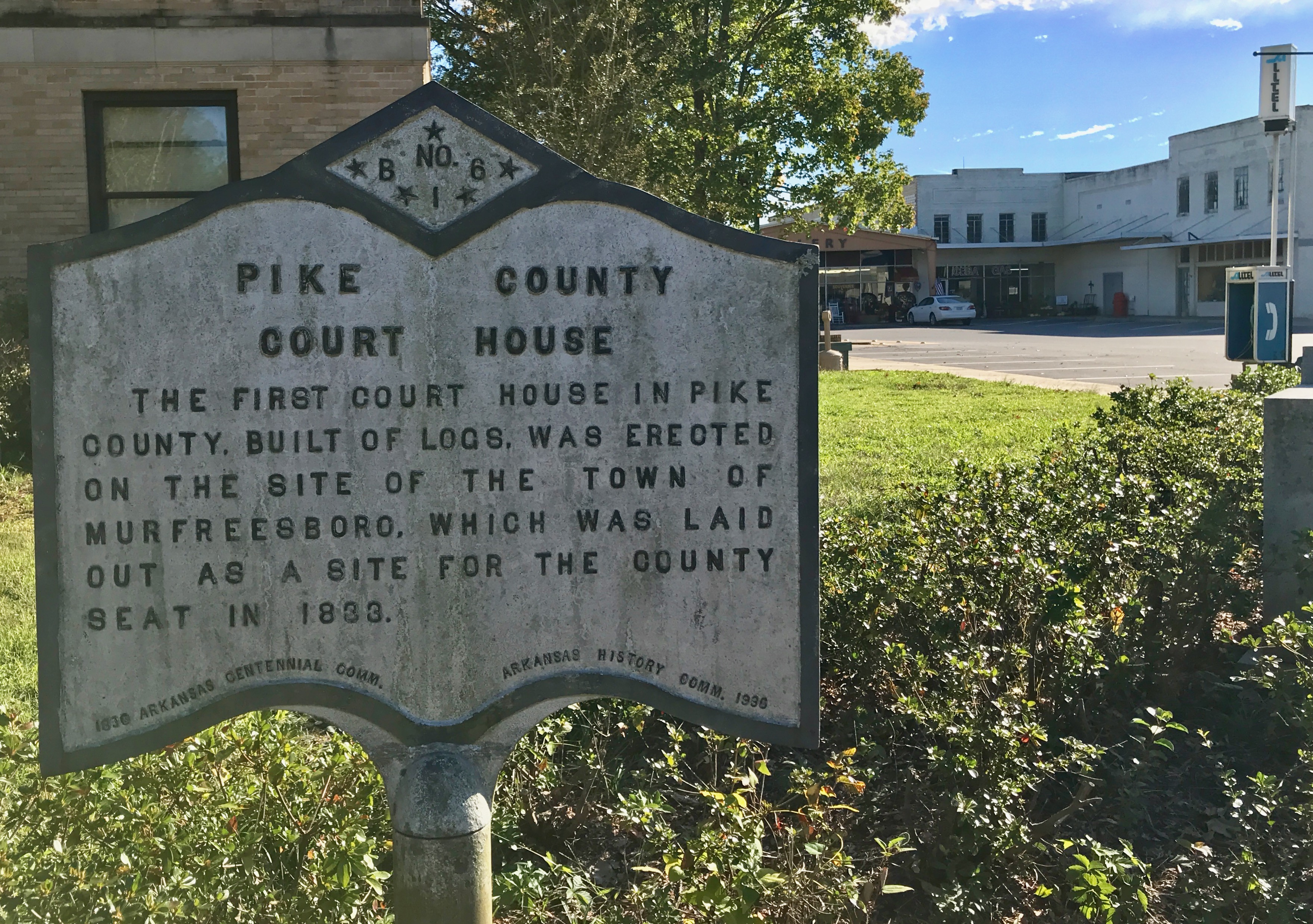
I noticed this building, occupying the square in the center of town. I figured that is was probably the courthouse.
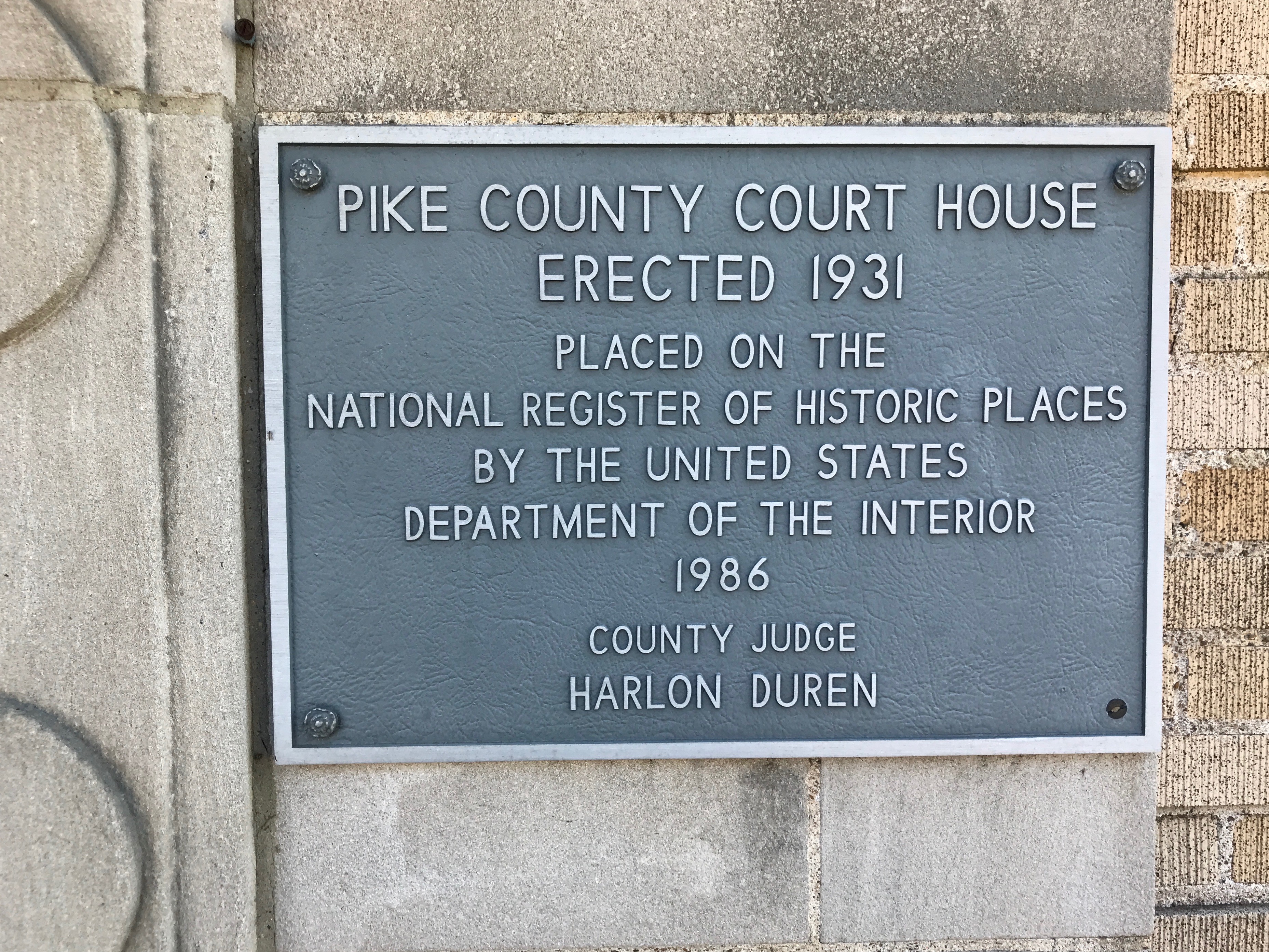
It turns out that Murfreesboro is the county seat for Pike County. Pike County was formed in 1833 and was actually named for Zebulon Pike, of Pikes Peak fame. It would be interesting to know why they chose to name the county after him. In fact, it would be interesting to know why tenstates chose to name counties after him. Georgia even went so far as to name the county seat Zebulon!
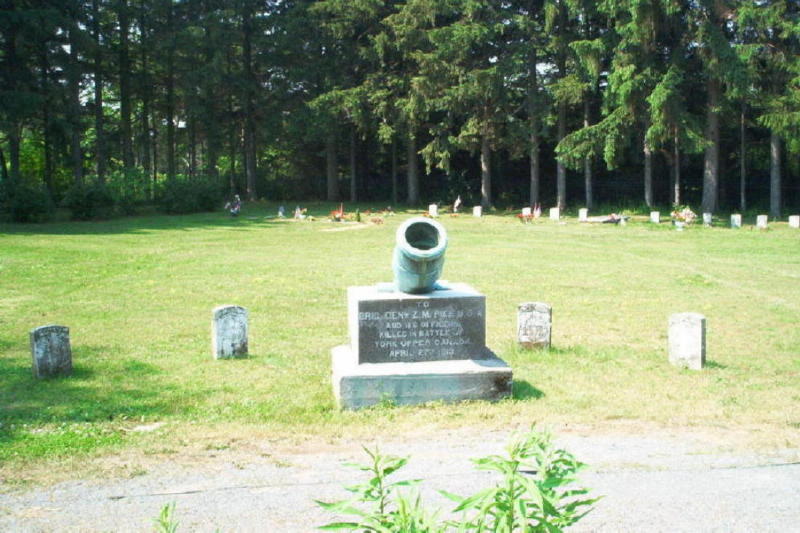
Pike was born in New Jersey in 1779, and was quite the explorer. Lewis and Clark weren’t the only explorers that Thomas Jefferson sent out. He went on two expeditions. in 1805-1806, he was sent to find the headwaters of the Mississippi. In 1806-1807, he set out to explore the Southwest to the edge of the northern Spanish-colonial settlements of New Mexico and Texas. In 1810, he wrote a book about his expeditions was so popular that it was translated into French, Dutch and German. He fought as a Brigadier General during his last battle in the War of 1812. That battle was in Fort York, Upper Canada, which is now known as Toronto, Ontario.
His body was brought back across Lake Ontario and he was buried in the military cemetery in Sackets Harbor, New York.
I still wonder how they happened to name the county after him about 20 years after his death.
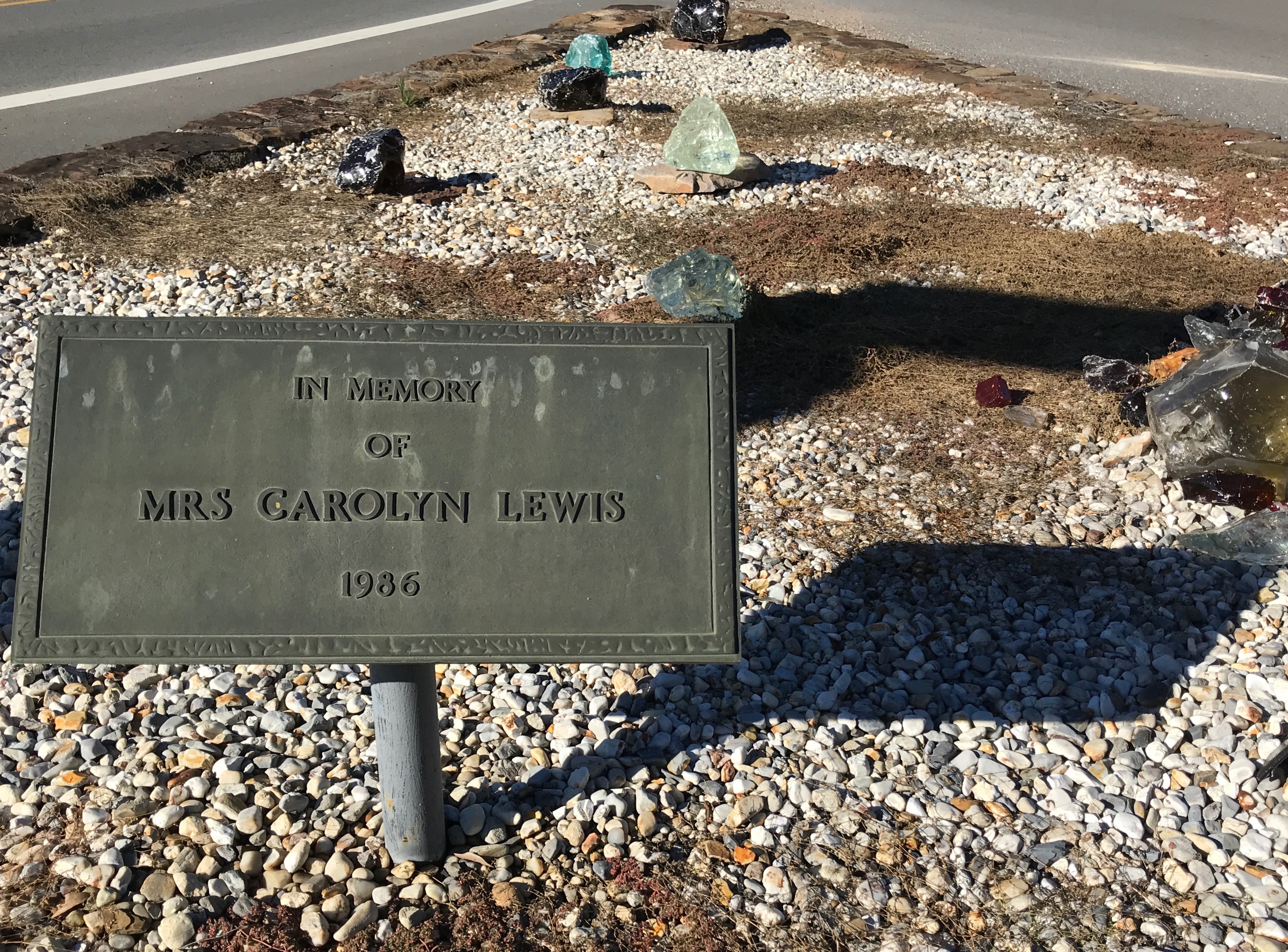
These days, Murfreesboro’s claim to fame is the diamond mine. They have a little display in a small area across the street from the courthouse. They also had a store that would be happy to sell you chunks of glass like those on display. They sell them by the pound. I’ve seen shops like that in many places during my travels. Why someone would want to buy a heavy chunk of glass and haul it around with them is another thing I don’t understand, but I guess that’s something Idon’t need to understand.
Different strokes for different folks.
That little display was dedicated to the memory of Mrs. Carolyn Lewis. I wonder what she did to deserve this memorial? Someone must know, but there were no residents around to ask.
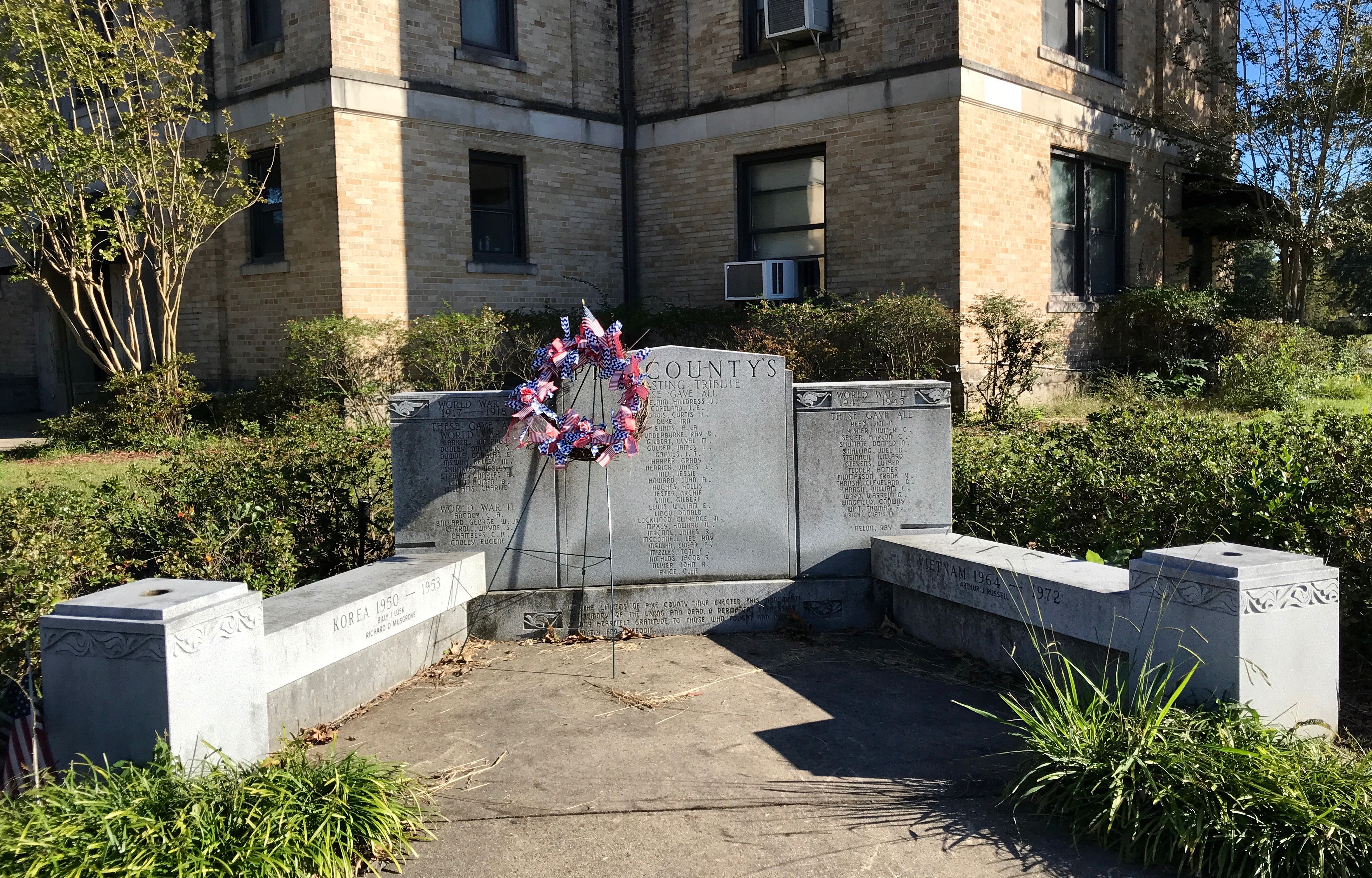
I continued looking around and came across the county’s war memorial.
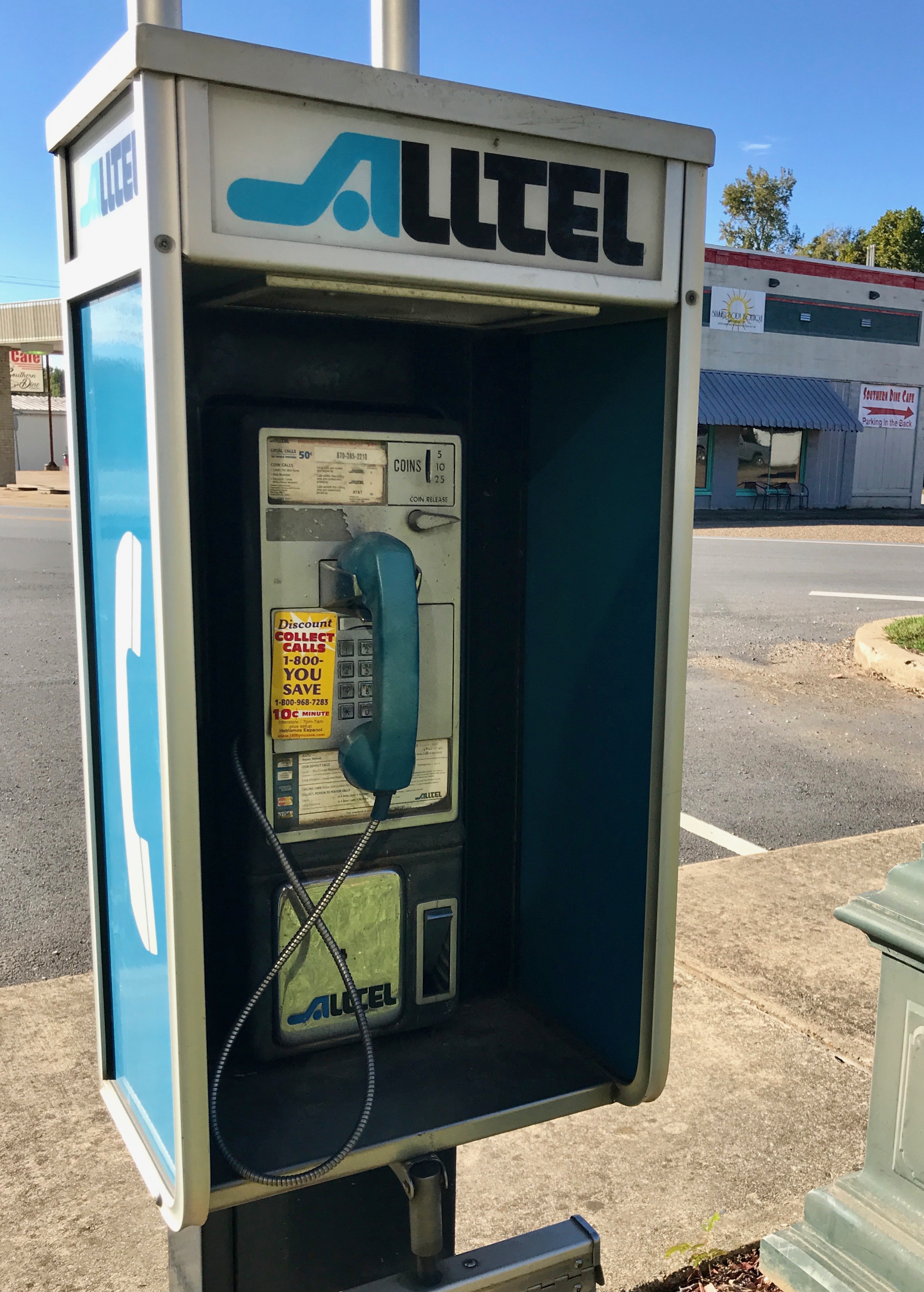
There was also a pay phone that looked like it might have been in working condition.
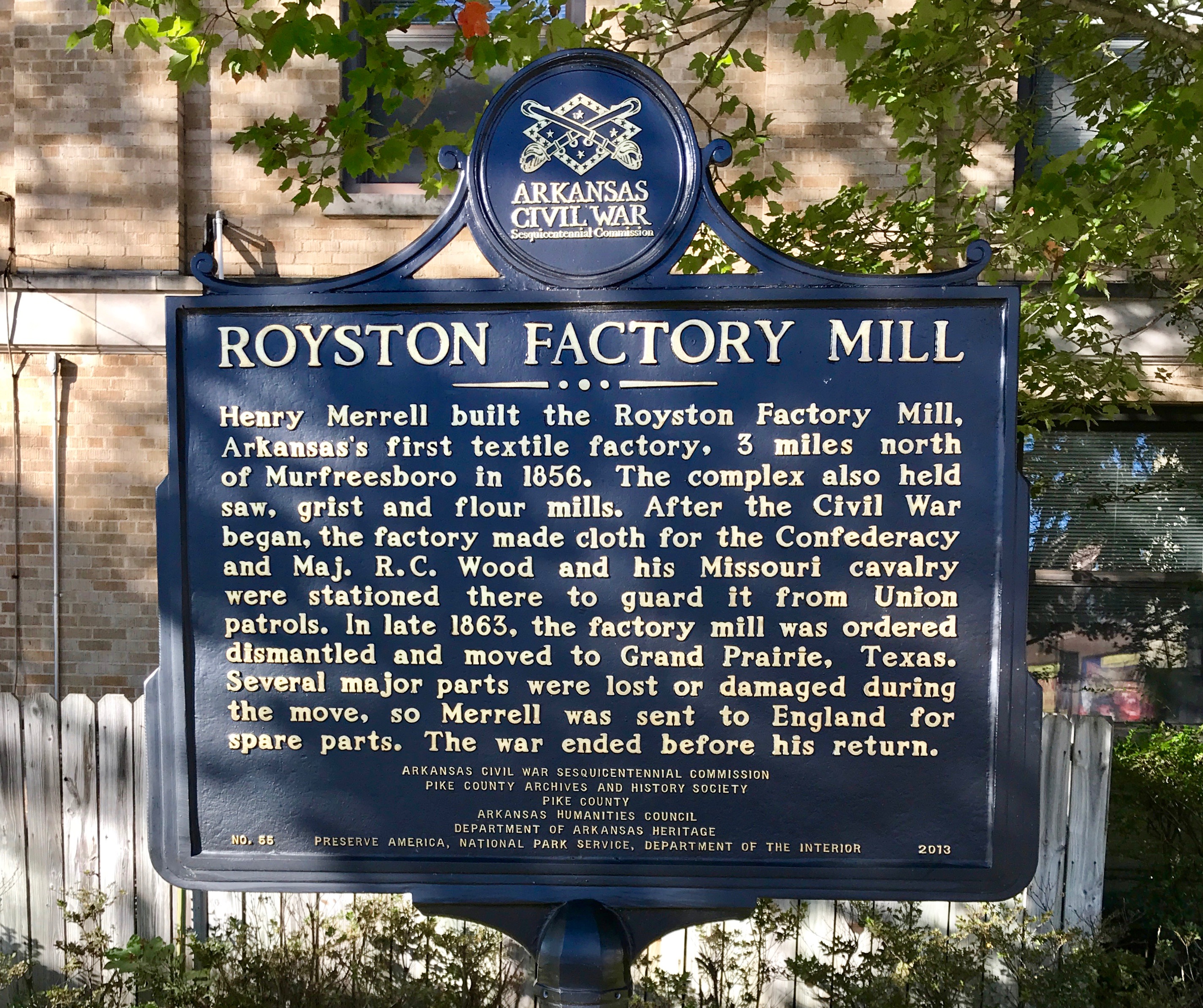
I came across a plaque that commemorates Arkansas’ participation in the Civil War.
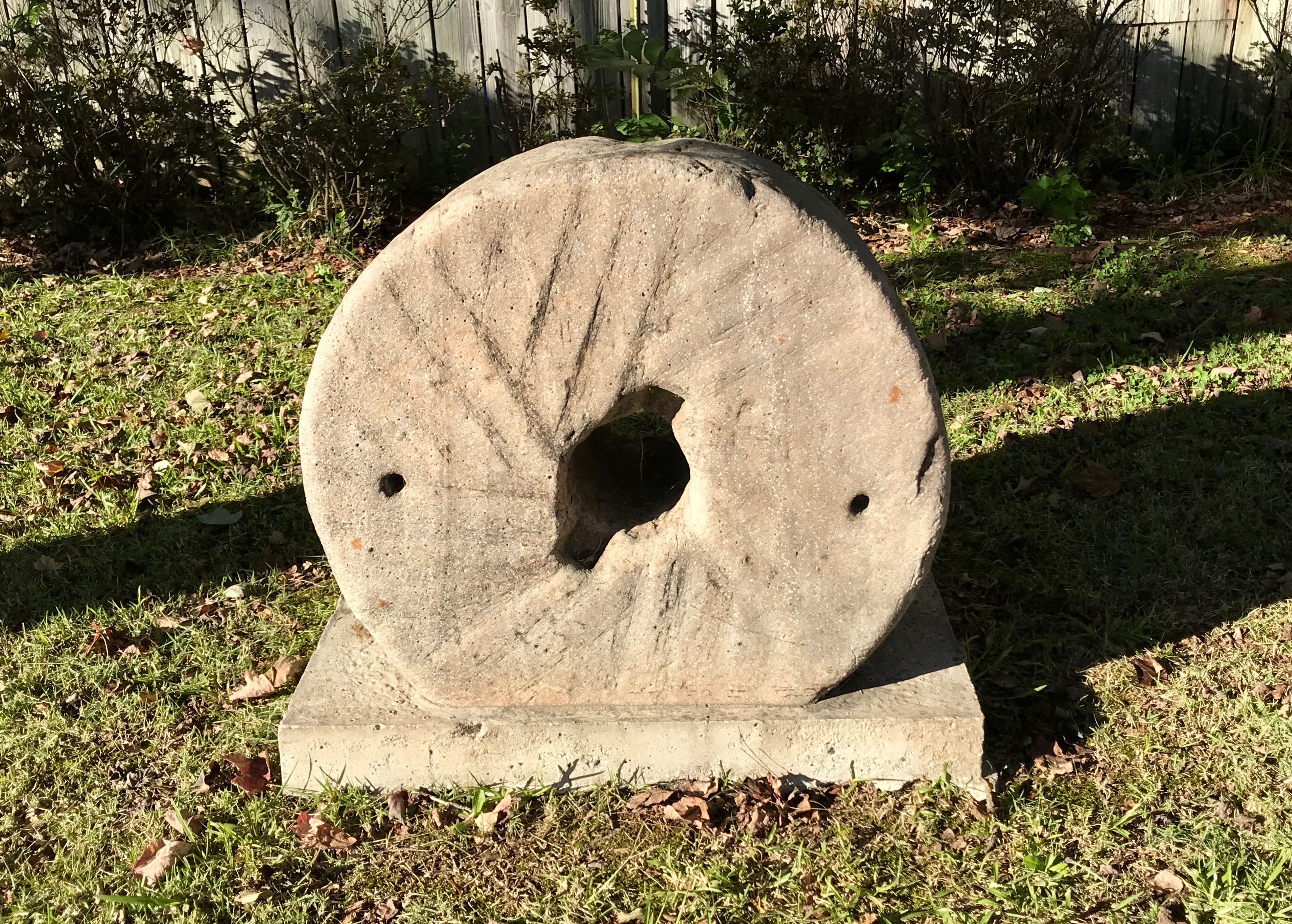
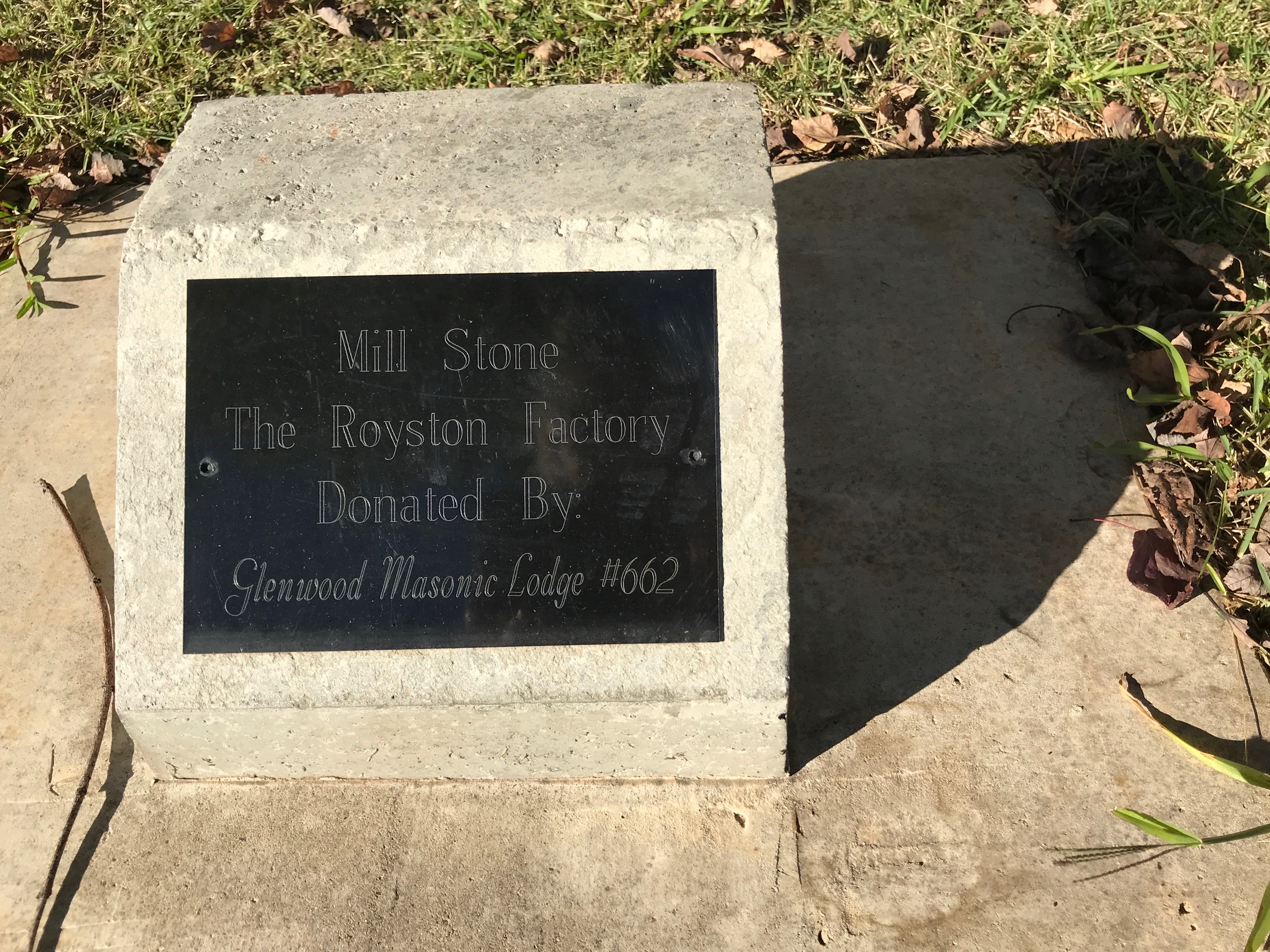
There was a mill stone that came from the Royston Factory Mill.
I mean, if you can’t take the word of the Masons, who can you trust?
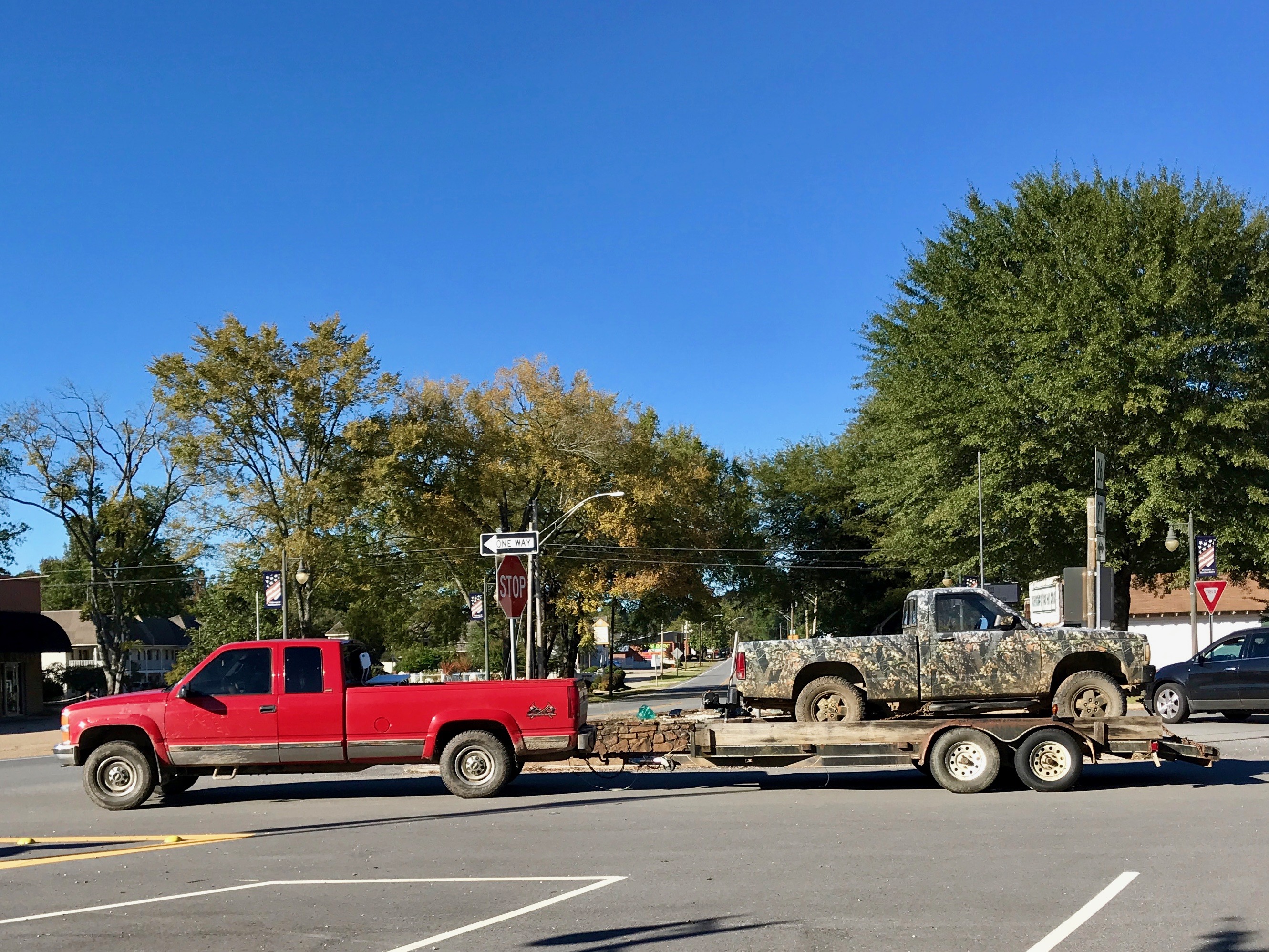
This gave me the giggles.
I couldn’t get the image of Dr. Doolittle’s Pushmepullyou out of my head.
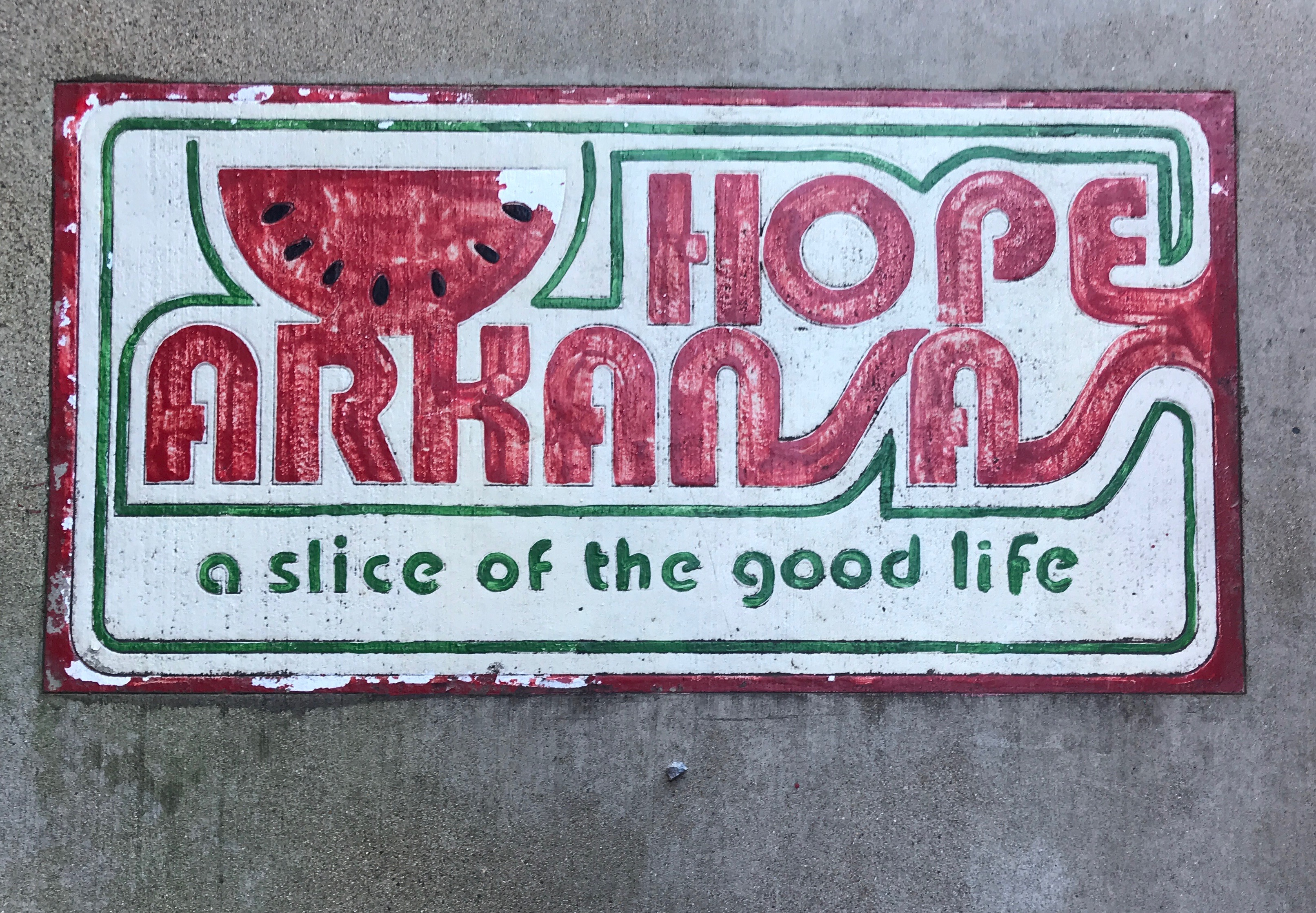
I had a day to explore somewhere in Arkansas. I had a reservation at the next stop, which was a place that was officially on my “Next Time” list. I decided to spend it in Hope. Was I looking for “a slice of the good life?”
No.
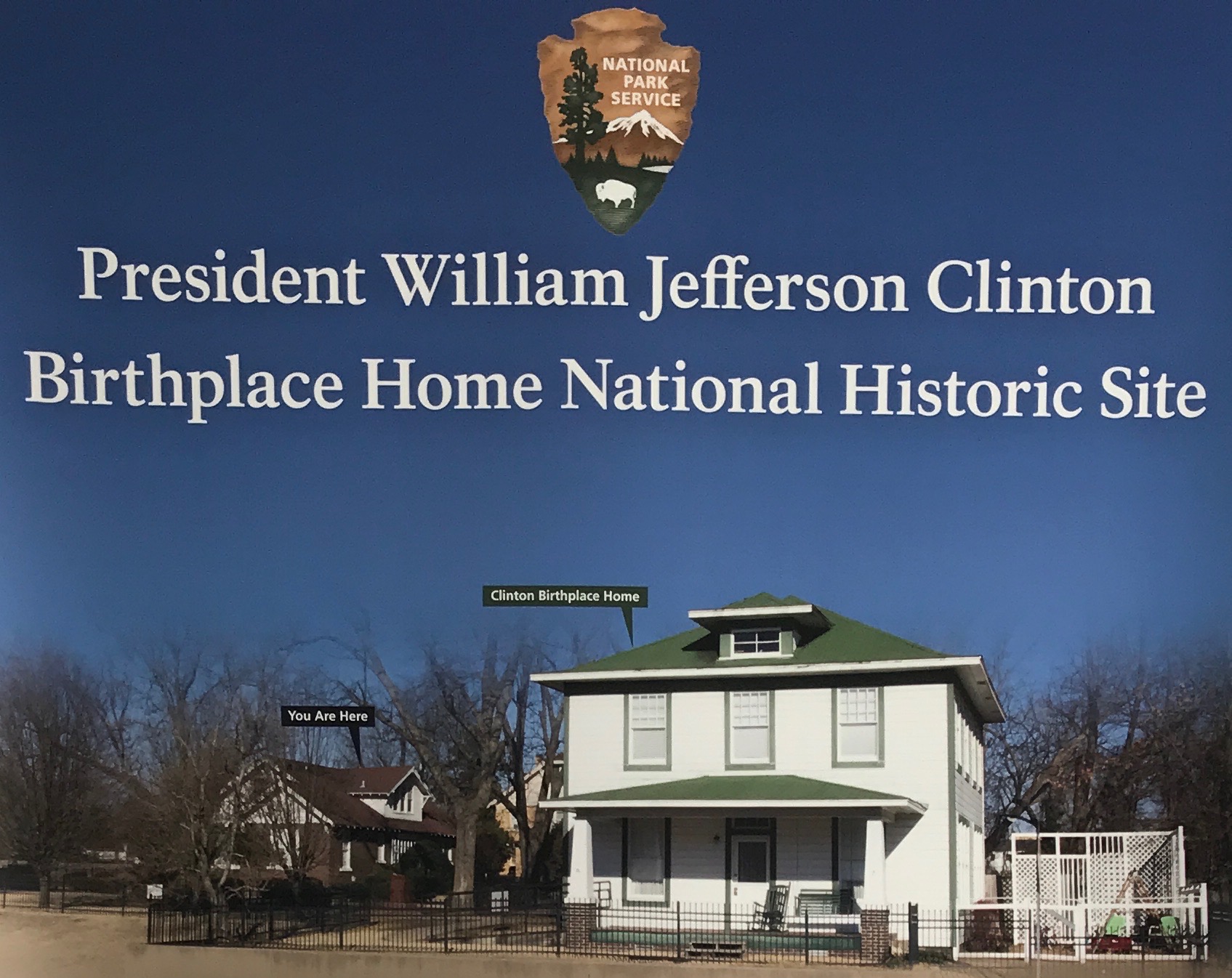
I chose to visit Hope so that I could see Bill Clinton’s birthplace. After dropping my trailer at the RV park, I headed over.
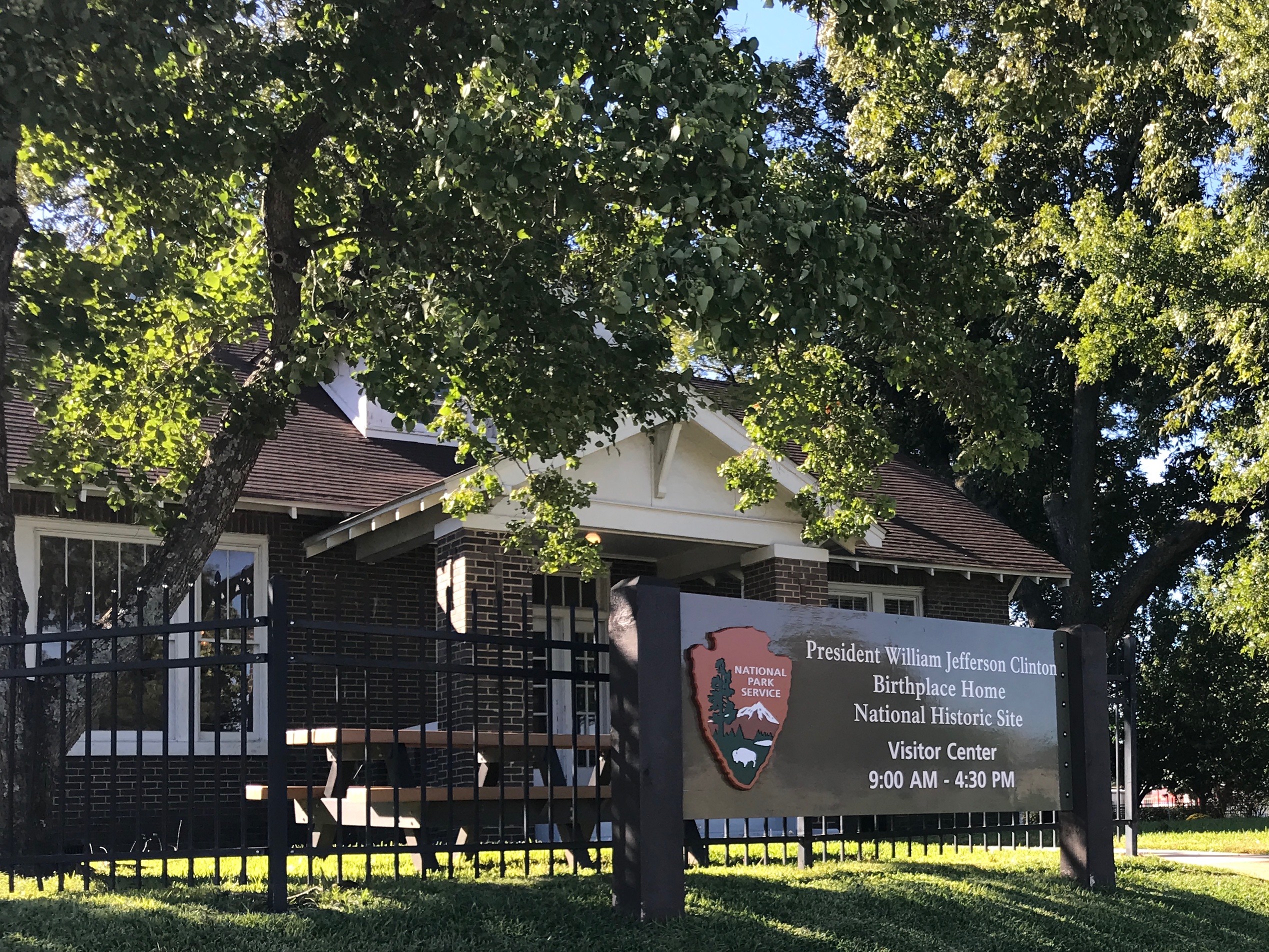
I parked and went into the Visitor Center and got myself signed up for a tour. Luckily for me, one was about to start.
Bill’s first home was in the home of his grandparents, Eldridge and Edith Cassidy. He was born as William Jefferson Blythe III on August 19, 1946, three months after his father, William Jefferson Blythe Jr, died in a car crash. Virginia, his mother, had married his father on September 4, 1943. Unfortunately, Bill’s father hadn’t quite bothered to divorce wife number three, so the marriage was declared to be bigamy. I guess multiple wives might be an occupational hazard when you are a traveling salesman.
I went looking for some additional information about Bill’s grandparents and ran into this interesting Washington Post article by Gene Weingarten about Bill’s father and what he had to endure during the Great Depression. Although it didn’t have the information I was looking for, it was riveting. If you want a window into the lives of people who endured poverty and the dustbowl, you might want to set aside a few minutes to read it.
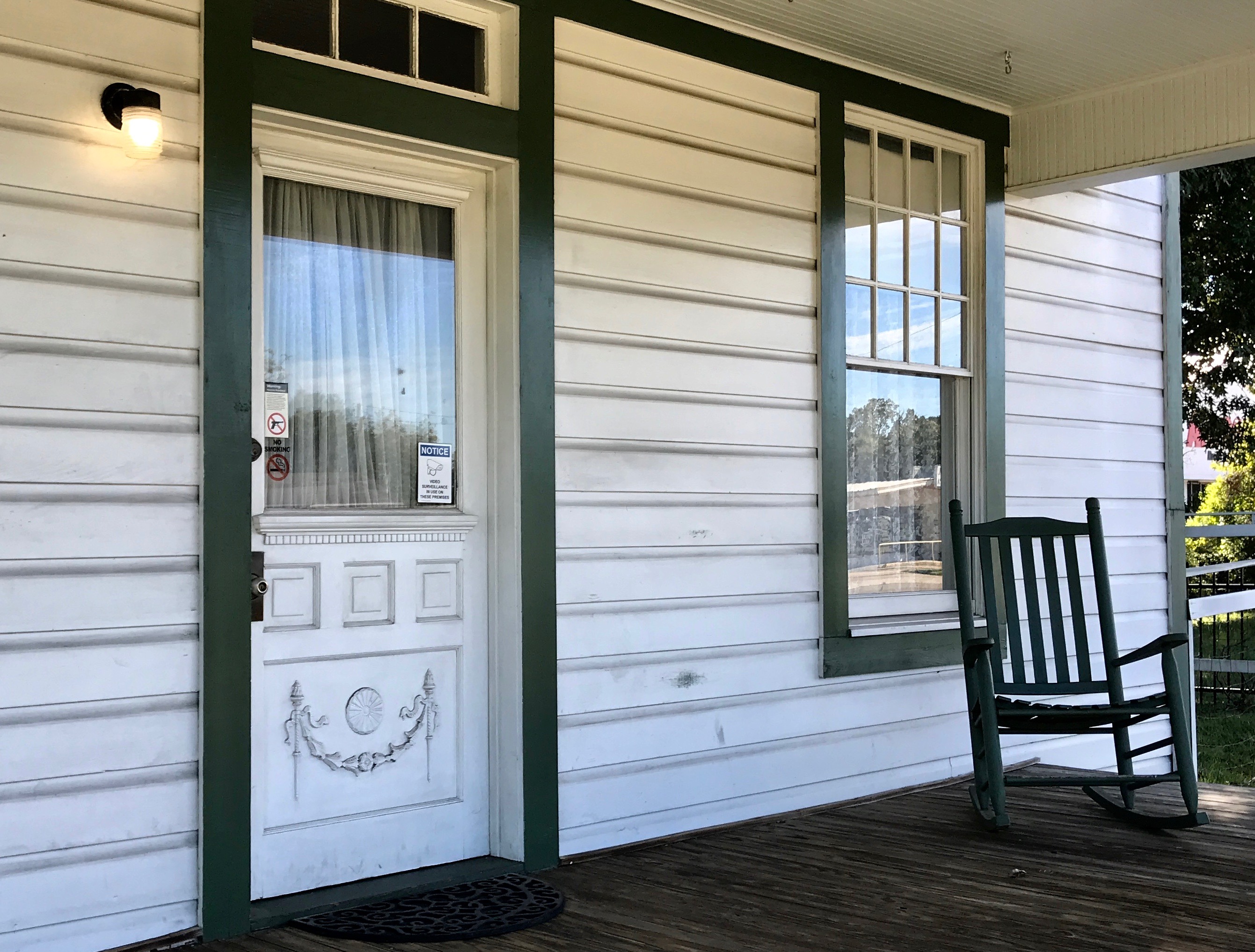
We walked over from the visitor center. The ranger unlocked the door and invited us inside.
Bill’s grandparents owned and ran a small grocery store. My Preferred Source mentions that they sold goods on credit to people of all races, an unusual thing back in those days. Apparently, treating people like human beings is a good business model, because their house looks quite comfortable, in a 1940s sort of way.
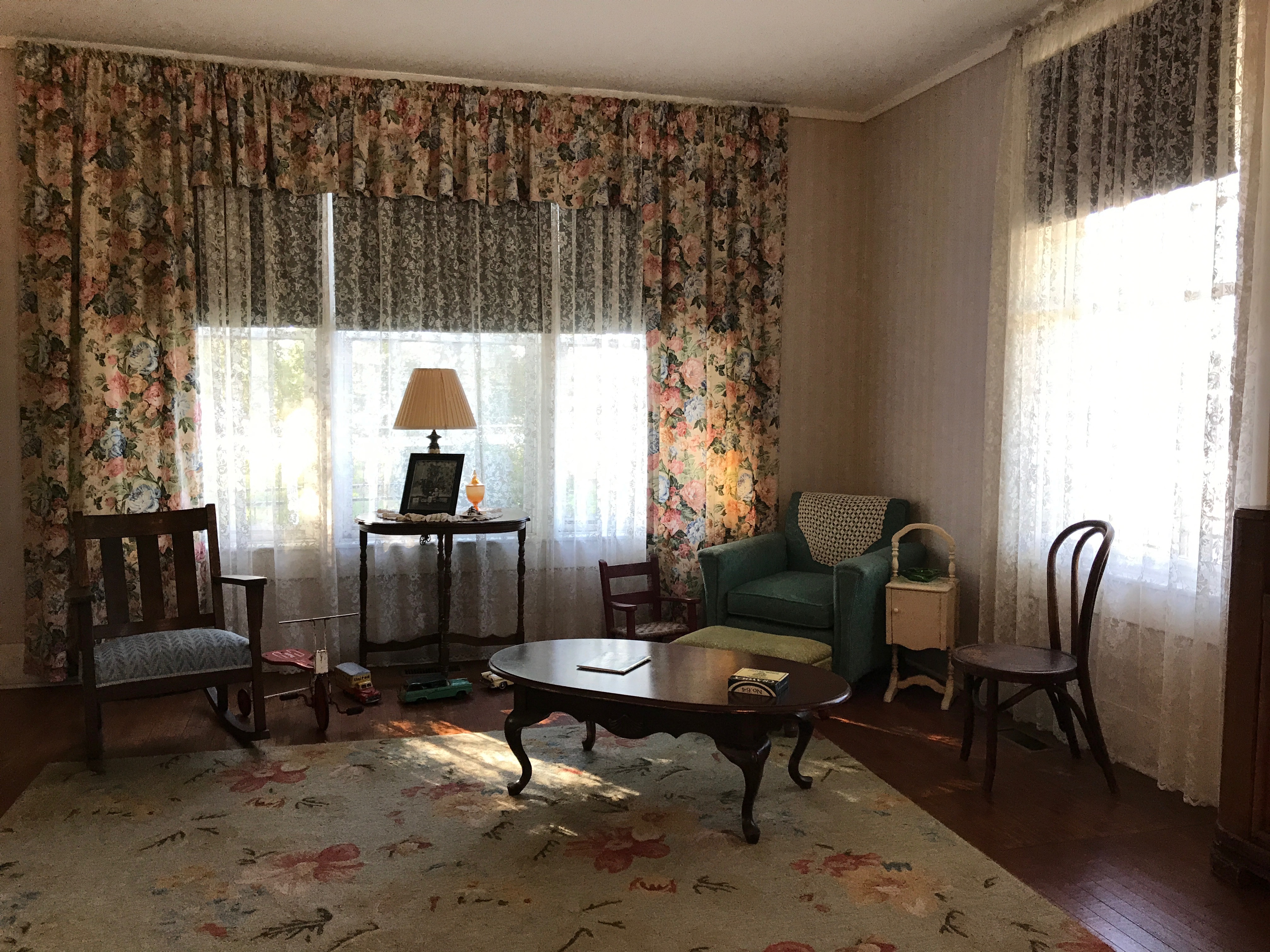
Most of the furnishings are not original to the house. In fact, I don’t think any of them are “family pieces.” But, they have added touches that help to envision what life would have been like back when Bill and his mother lived there with her parents.
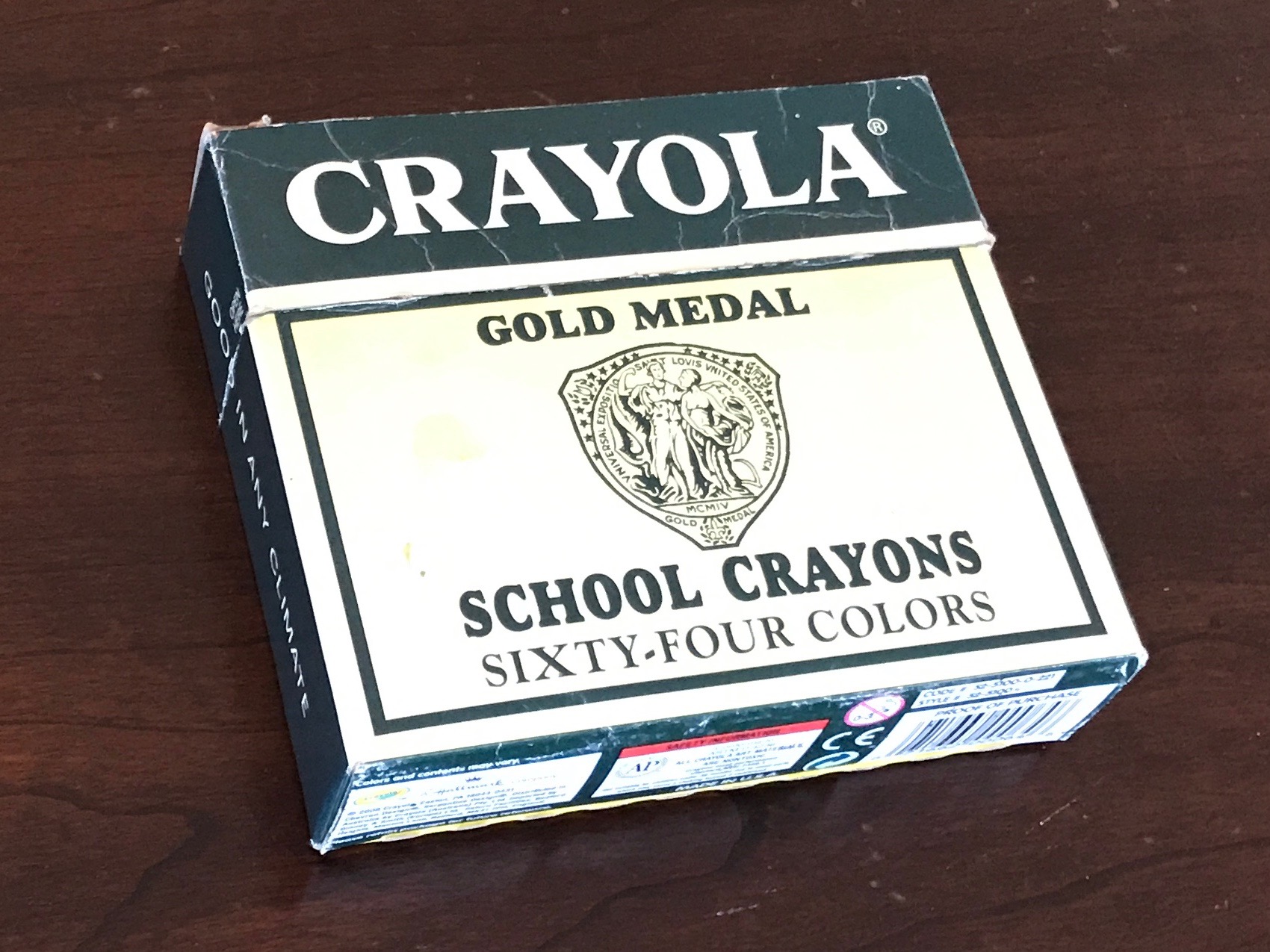
When I saw this old-timey box of Crayolas, I was impressed that it had survived all those years.
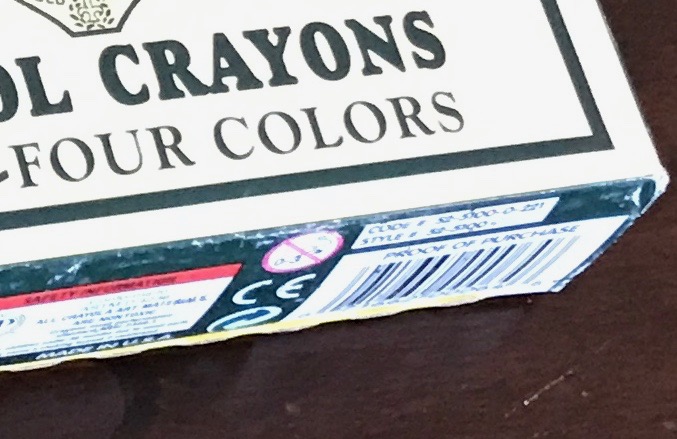
I was impressed, that is, until I noticed the bar code and the CE marking on the bottom of the box. Just in case you had noticed the CE mark and wondered about it, my Preferred Source says that it is a certification mark that indicates conformity with health, safety and environmental protection standards for products sold within the European Economic Area.
Now you know. (And so do I!)
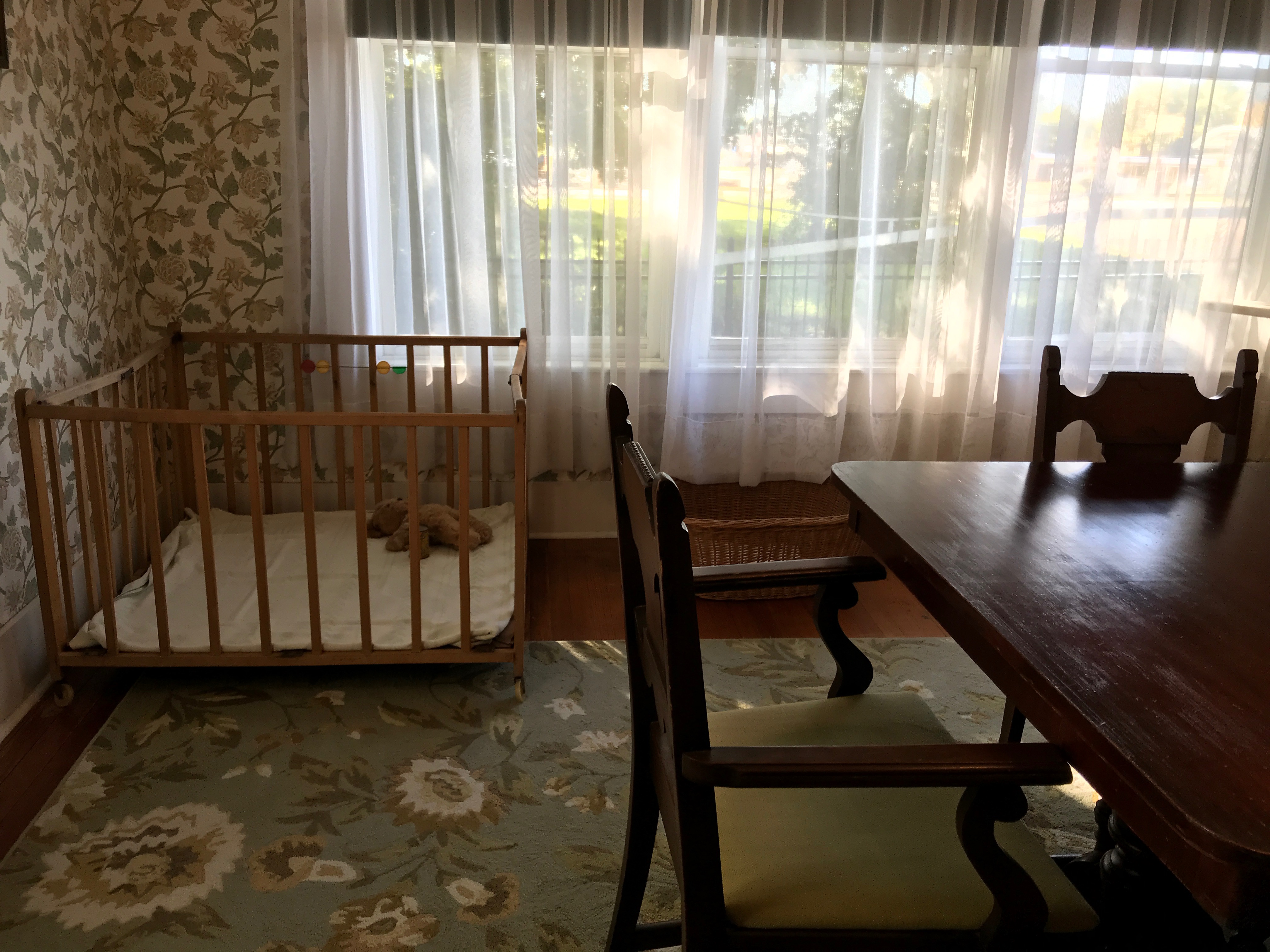
After we looked around the living room, it was on to the dining room. Baby Bill probably spent a good deal of time in a playpen like this one. Eldridge and Edith cared for Bill when his mother went to finish her nursing studies in New Orleans. I remember having one of those folding wooden playpens in our house when I was growing up.
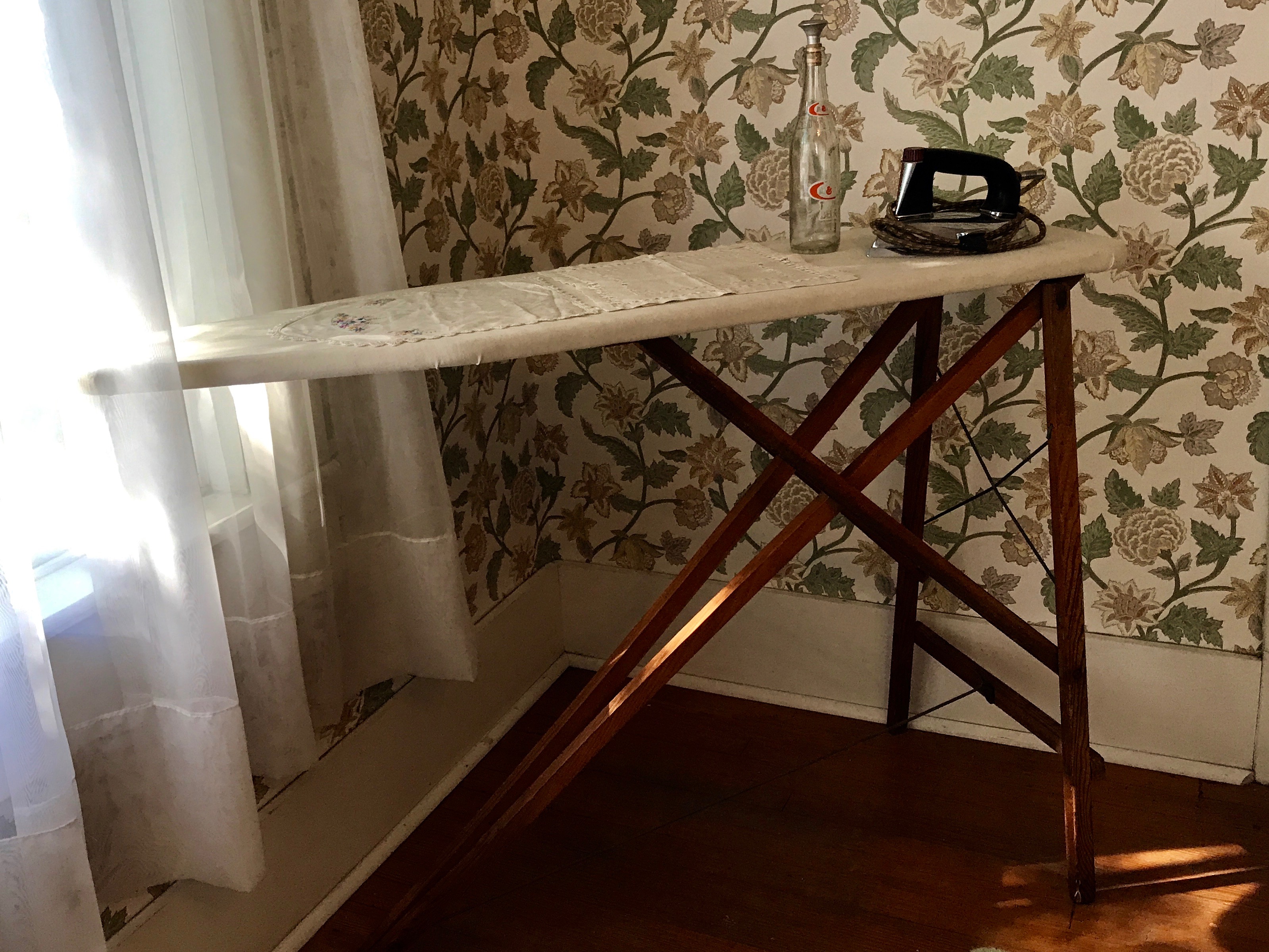
This practical little vignette was in the corner opposite the playpen.
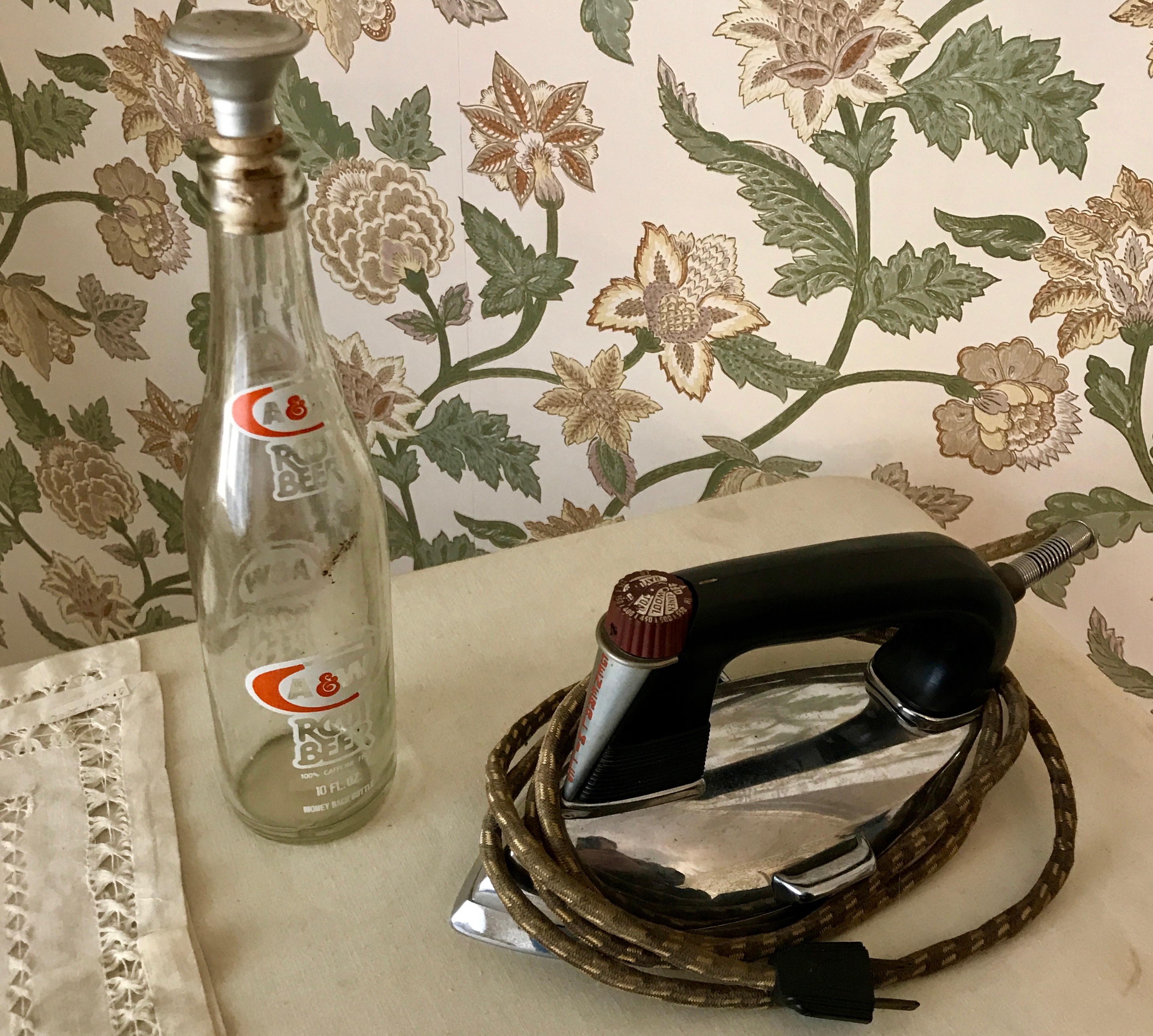
We didn’t have a wooden ironing board, and I don’t remember an iron like this one, but I do remember bottles with those sprinkler tops on them. After all, Bill Clinton was the first Baby Boomer President and I am a Baby Boomer.
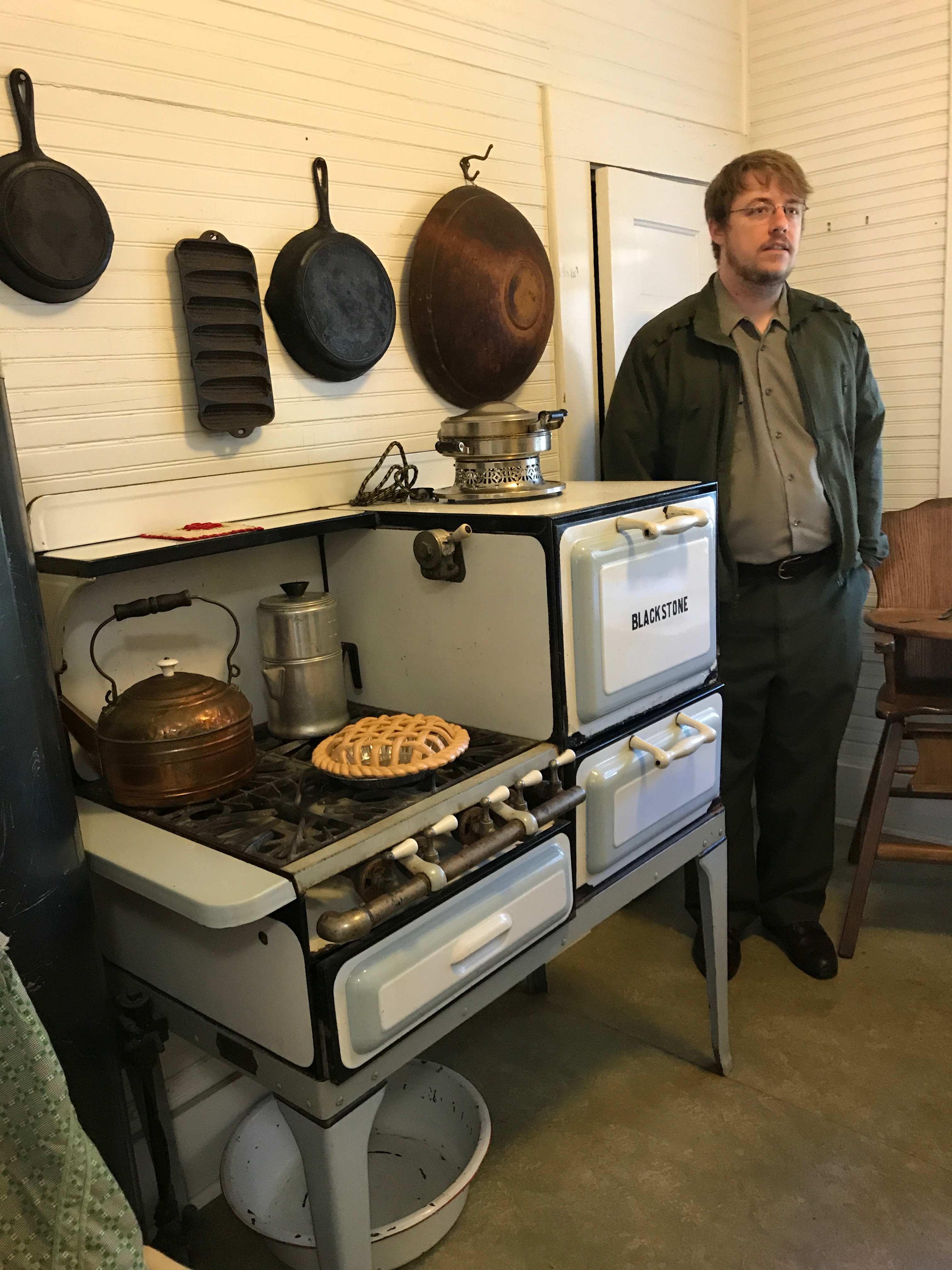
We never had a stove like that one, but it sure looks cool!
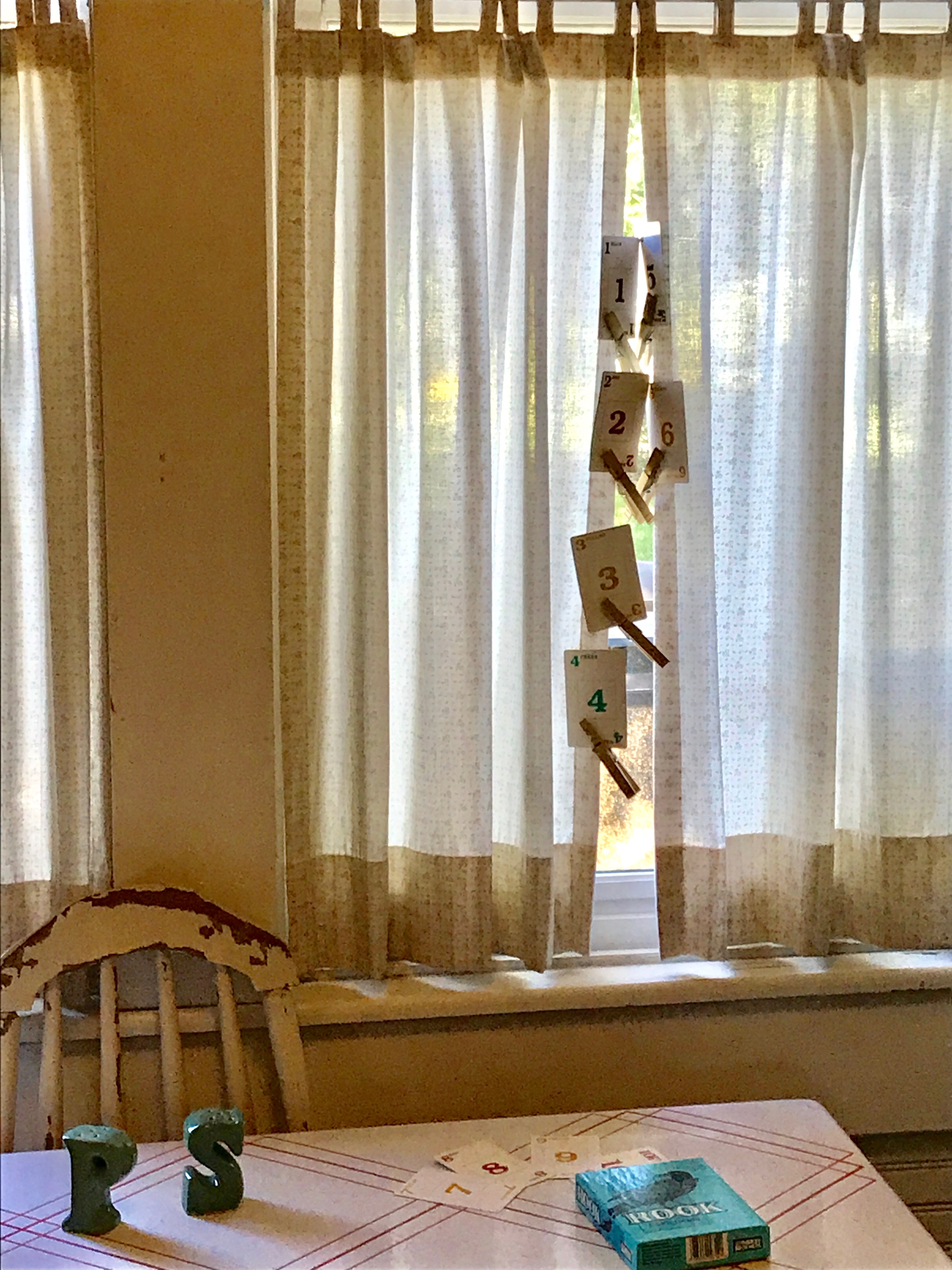
Bill’s grandfather used to pin up cards on the curtain in the kitchen to teach Bill his numbers.
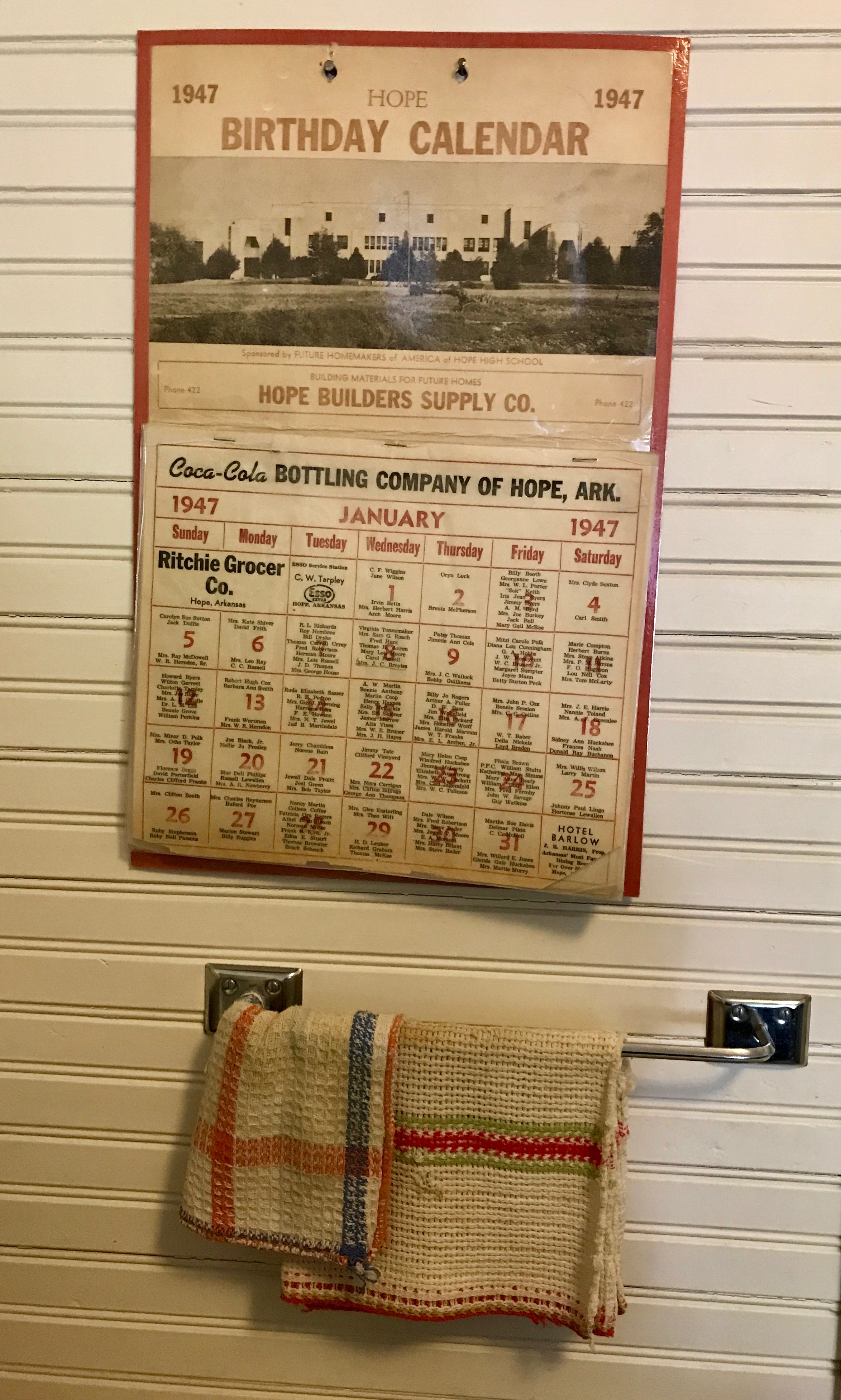
Bill would have been about four months old in January of 1947.
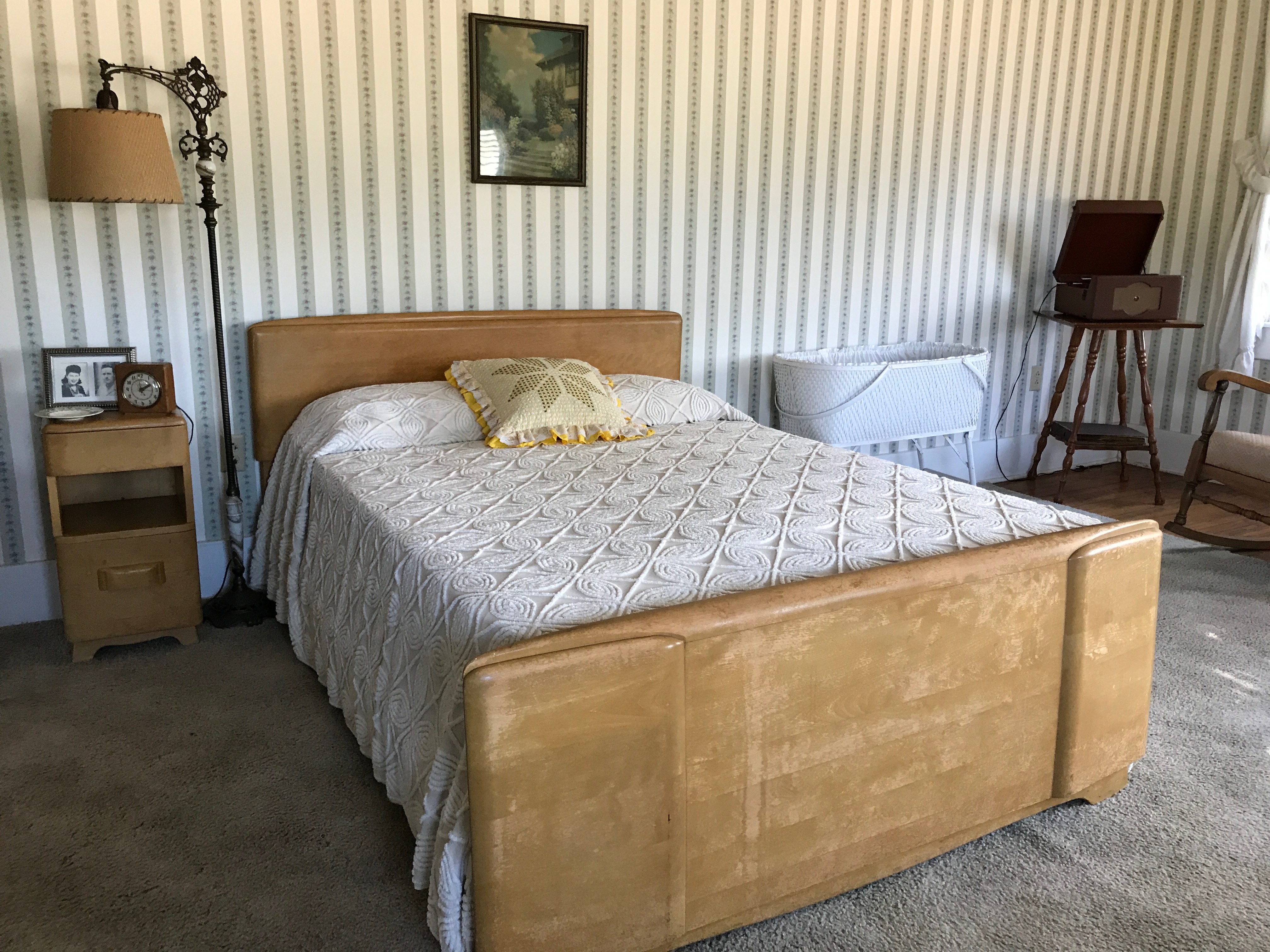
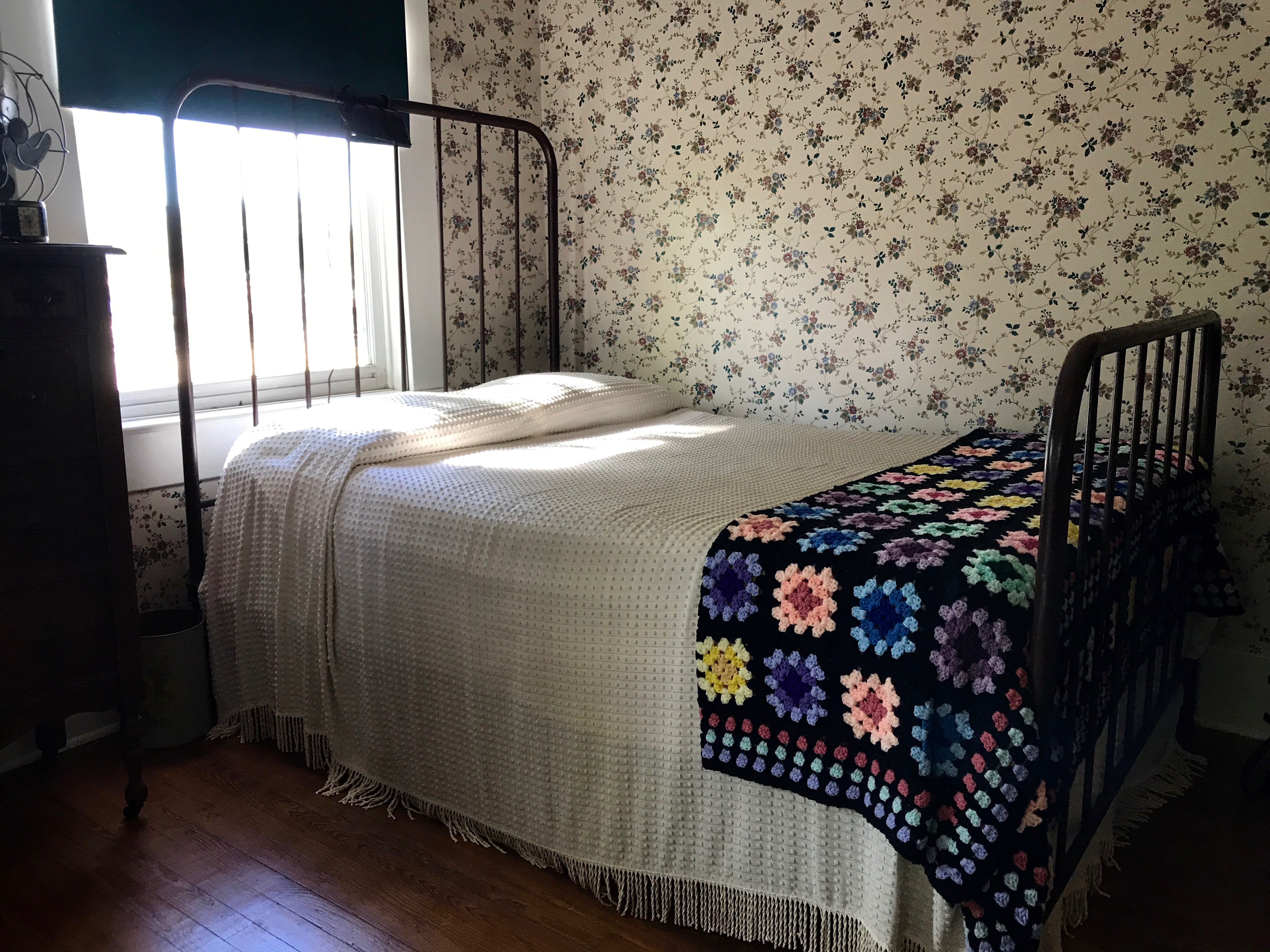
Bill and his mother shared this bedroom. I clearly remember my two youngest siblings using a bassinet like the white one next to Virginia’s bed. We must have come up a bit in the world by then, as this is a photo of what I slept in when I was tiny.
But, enough about me. Back to the tour.
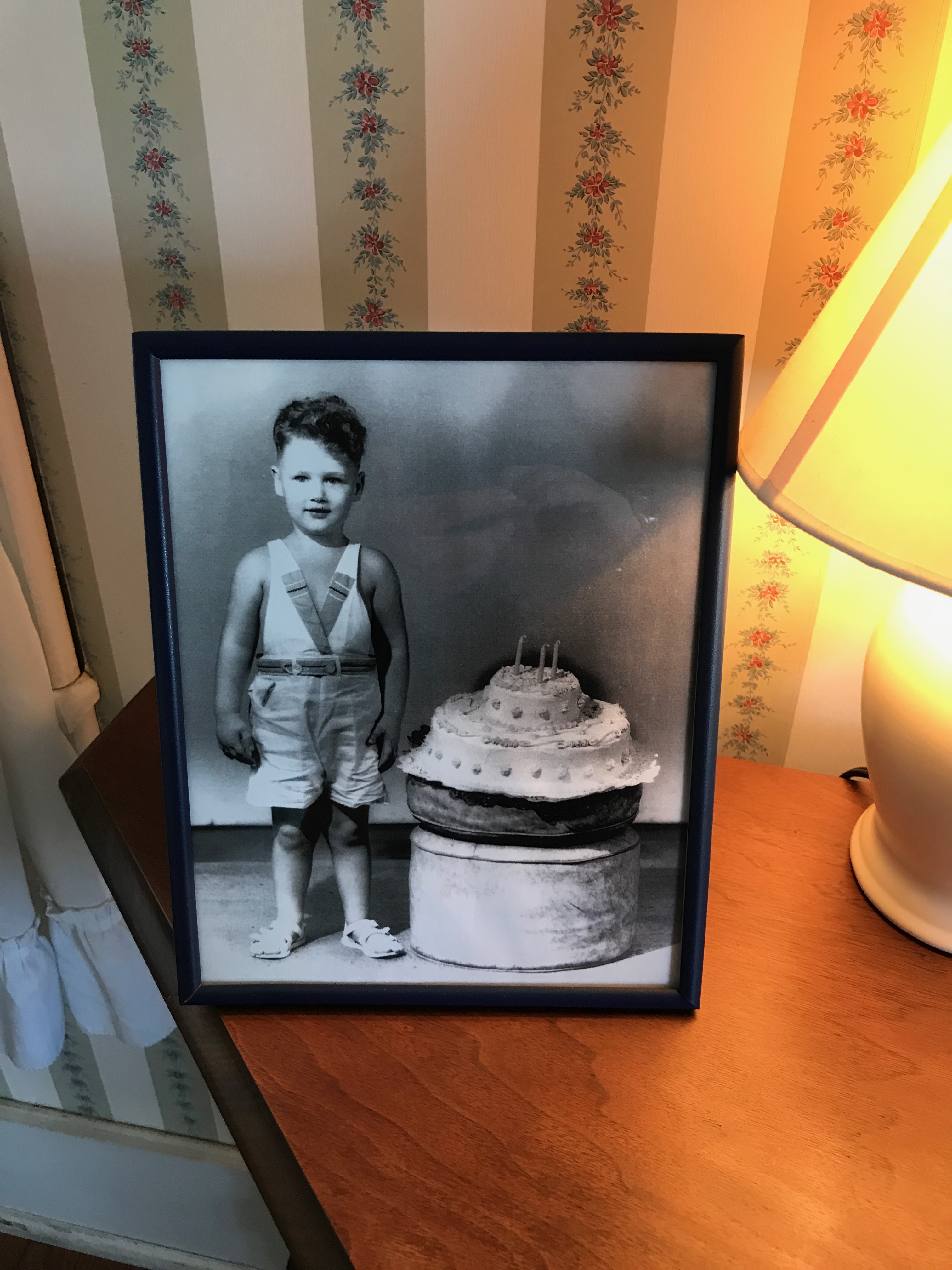
There is a charming photo of Bill and a giant cake at what must have been his third birthday, judging by the candles.
If I remember correctly, this book is the one of the few things in the house directly related to Bill. Little Golden Books started publishing in 1942. I imagine most of the people reading this post have fond memories of Little Golden Books. I know I do.
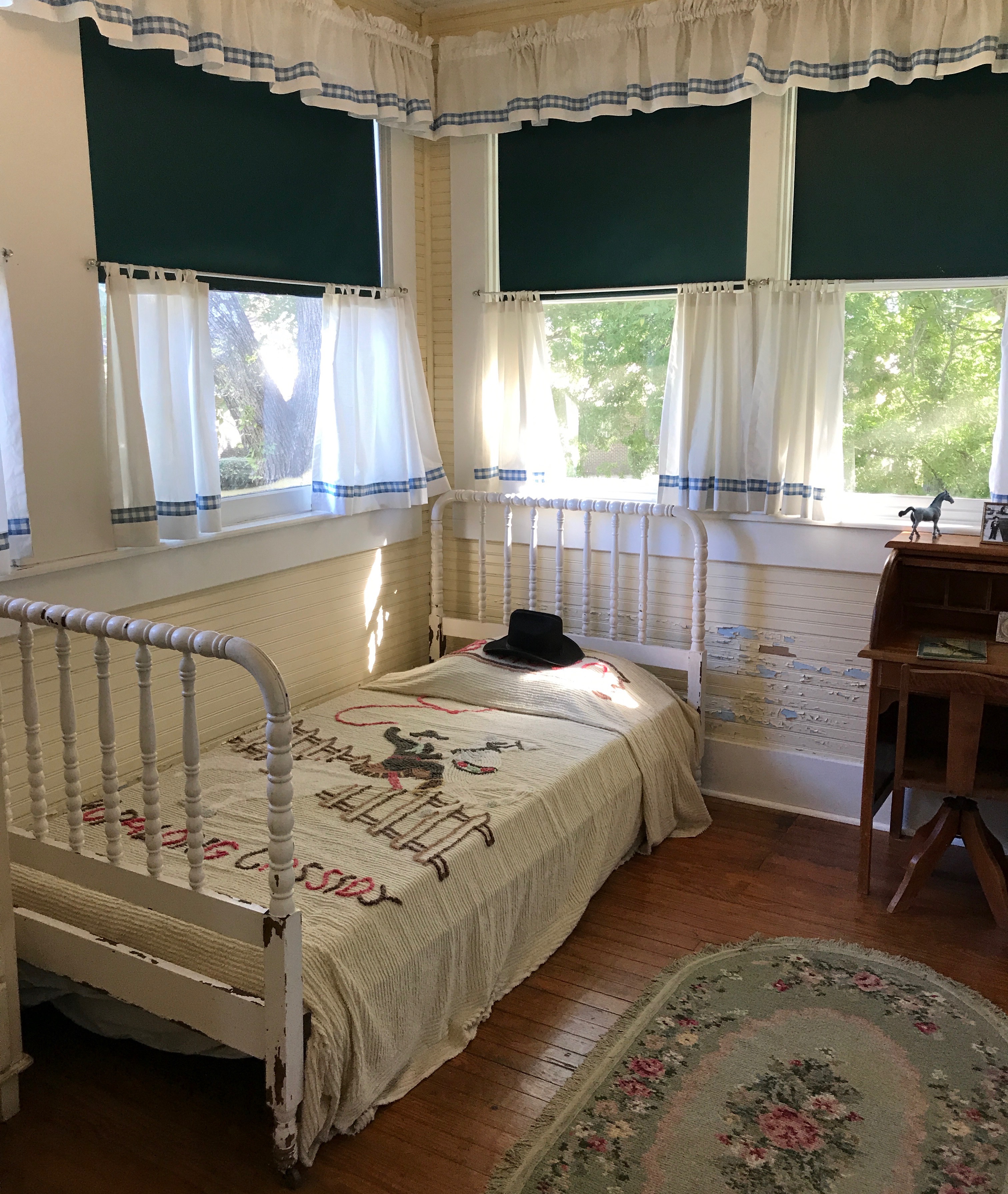
When Bill got older and would come to stay at his grandparents’ house, he got his own little room.
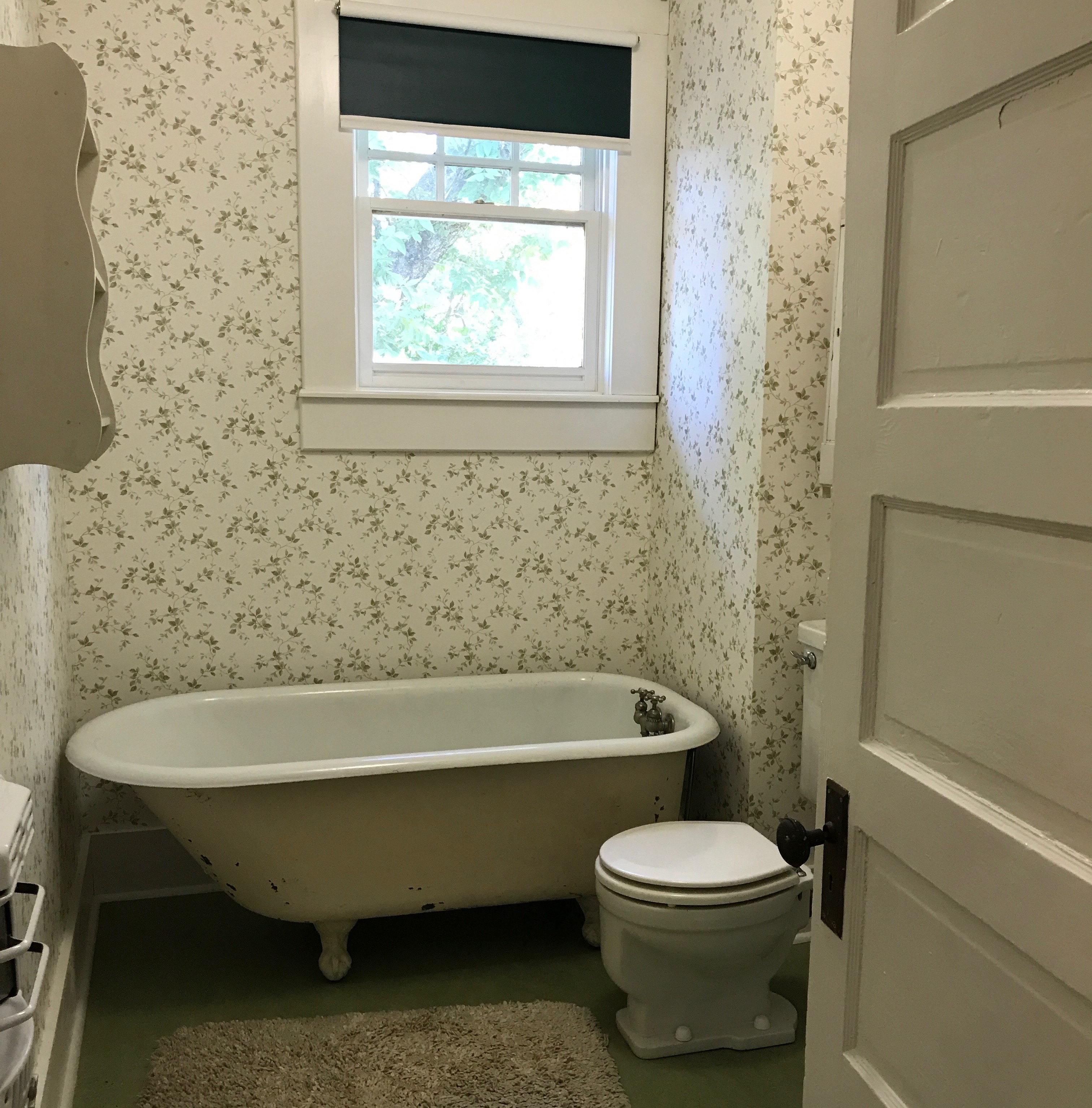
When I visited Harry S Truman’s birthplace in Lamar, Missouri, I saw his outhouse and did some research to try to find out if he was the last President to not have indoor plumbing. The source that I found said Bill had an outhouse. He might have had one when living with his mother and stepfather, but not at this house!
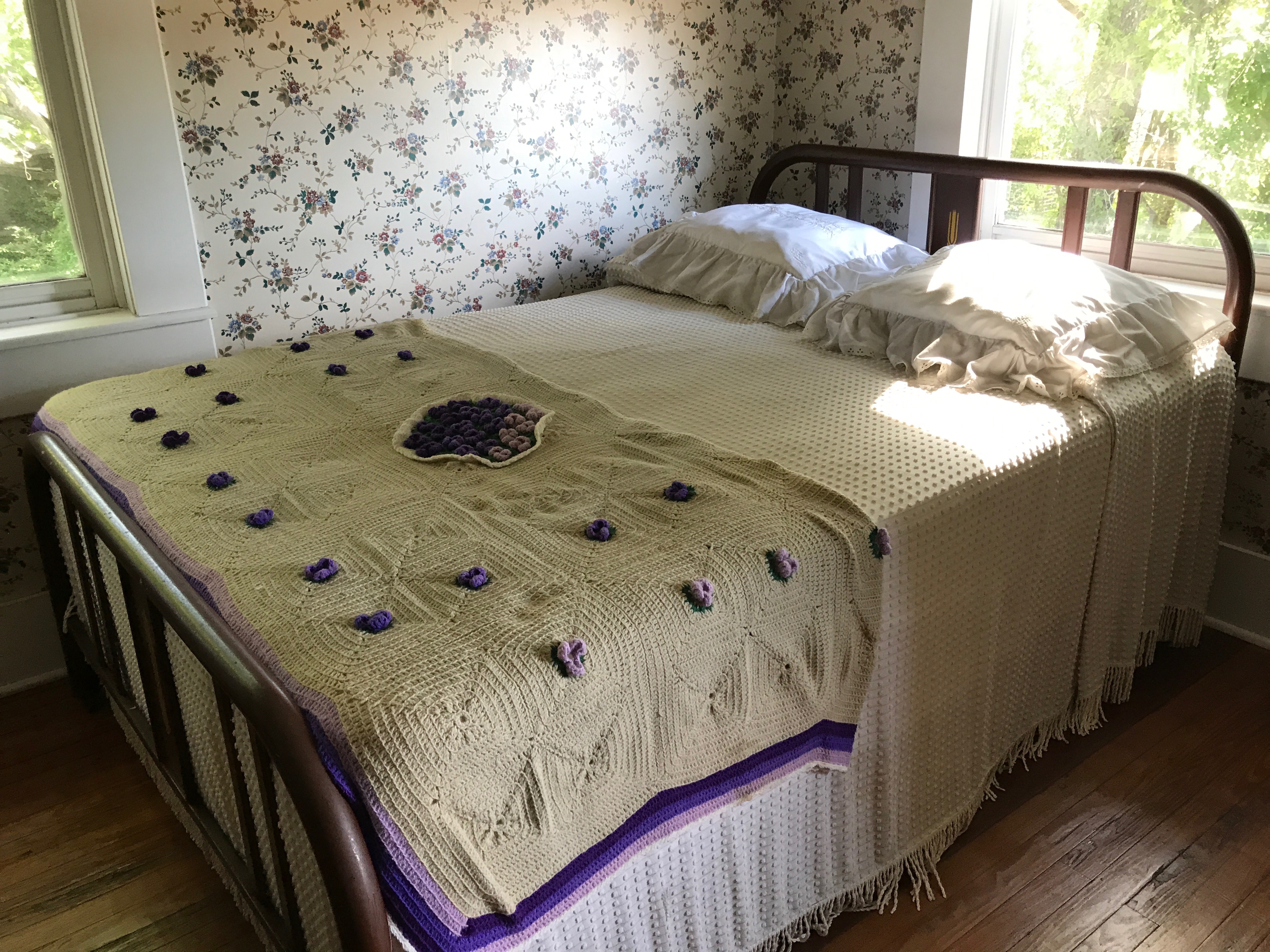
I believe that his was his grandmother’s bedroom.
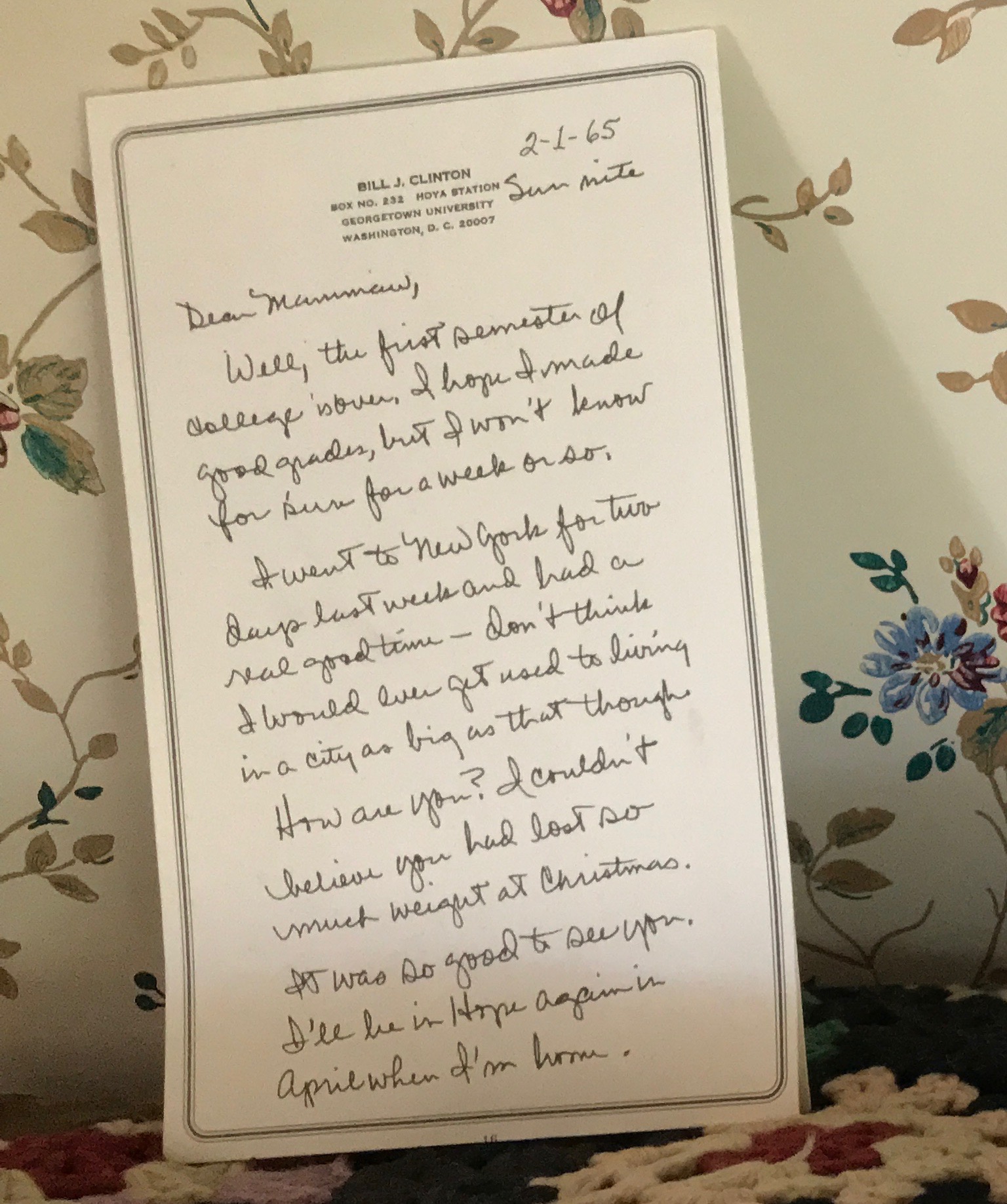
There was a letter from Bill to her in the room.
I was amazed that he had letterhead note paper as a student. I wonder if that was “a thing” back then?
I imagine that this room was set up as his grandfather’s bedroom. That afghan is a bit more “manly” than the one in his grandmother’s room.
And that was pretty much it for the tour.
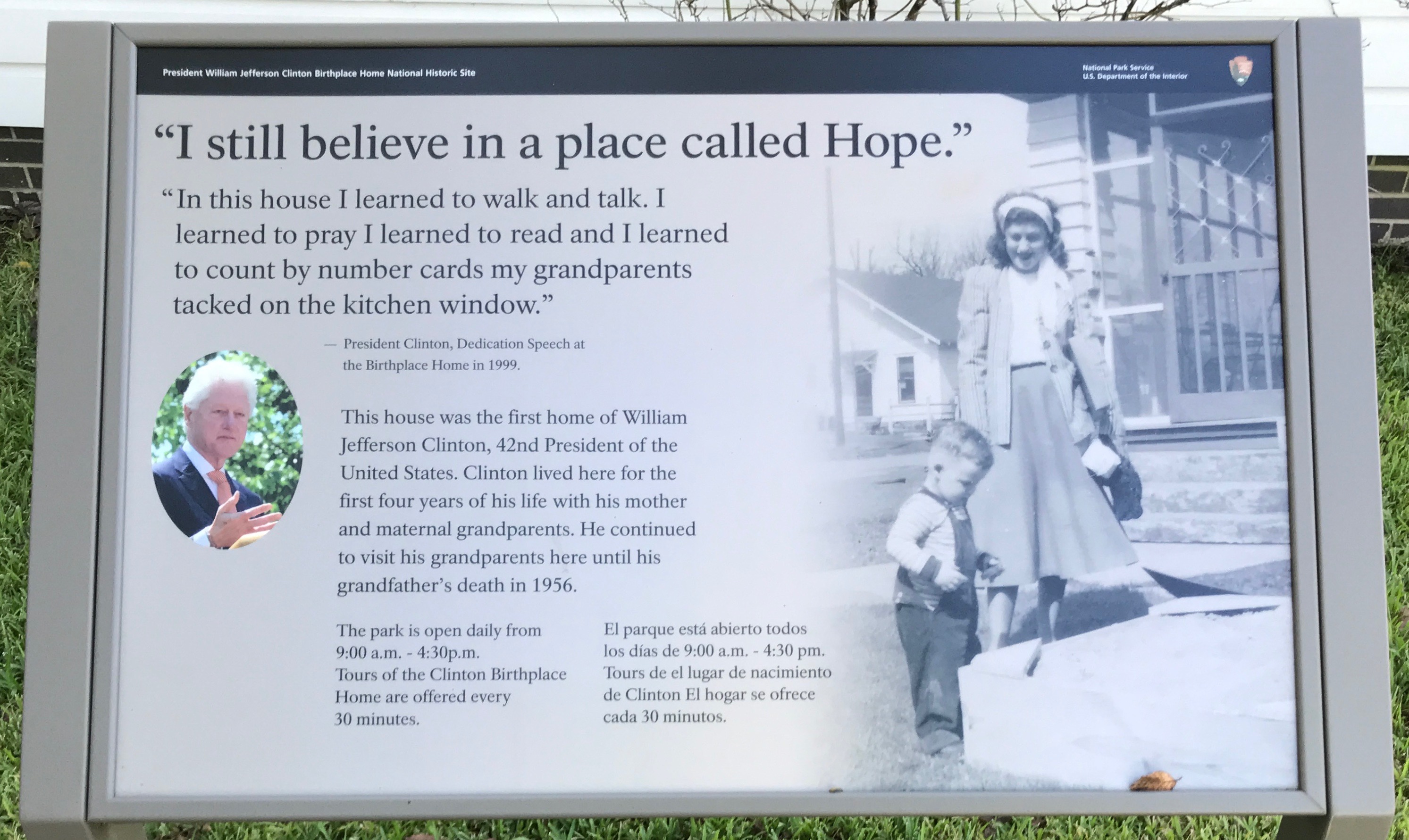
I enjoy taking photos of the informational signs. I get some of my best information from them!
Fun fact: Mike Huckabee, who was governor of Arkansas from 1996 – 2007, was also born in Hope. I am sure that he wanted to be the second Baby Boomer president, but George W. Bush, who as born in 1946, actually got that honor. So, he would have been the third Baby Boomer, except that he didn’t get the nomination.
I headed back into the Visitor Center, to see what I could see.
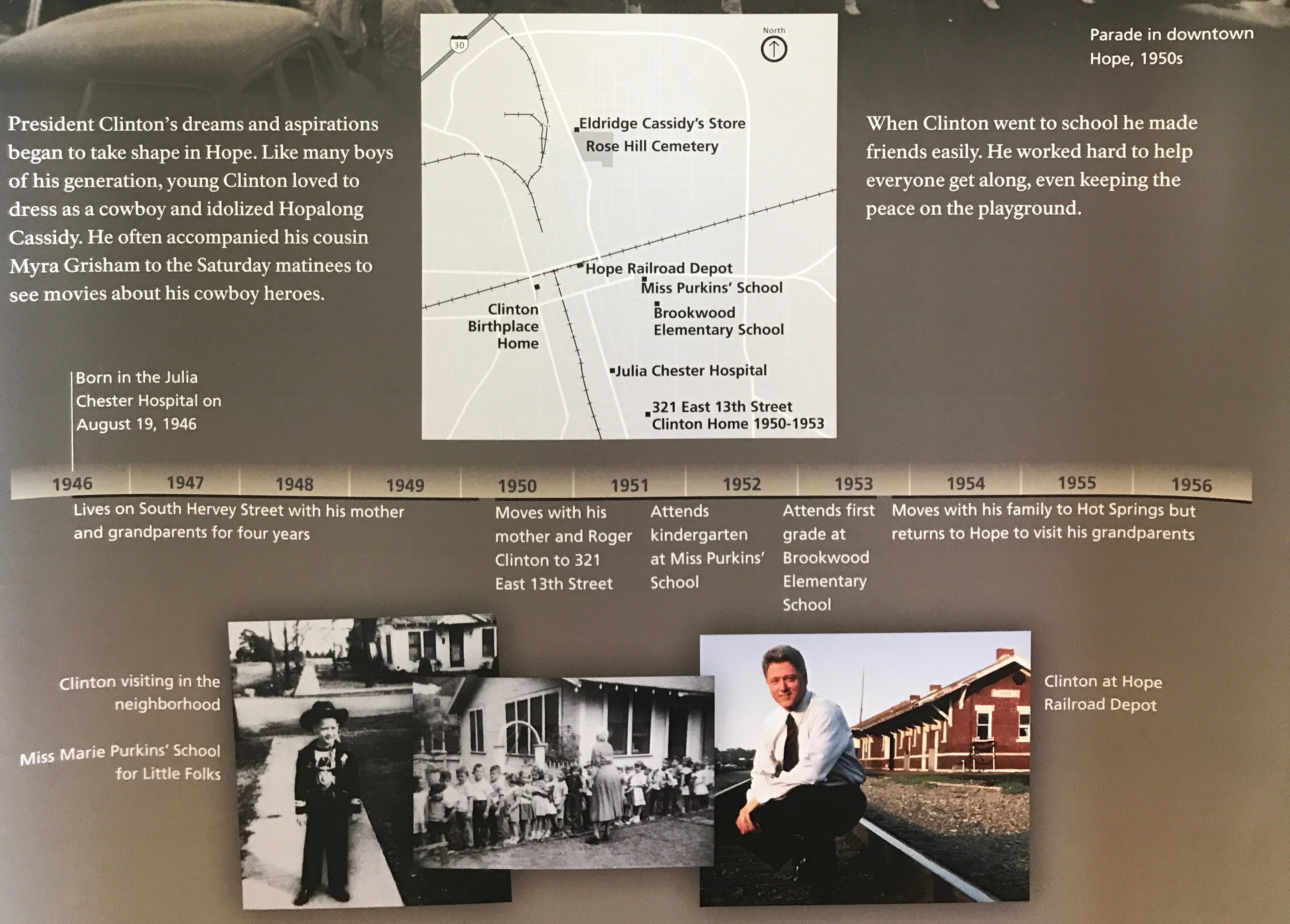
I like how timelines lay information out so…linearly. And I do love maps! I decided to try to find the home he lived in 1950-1953 when I was done in this part of town.
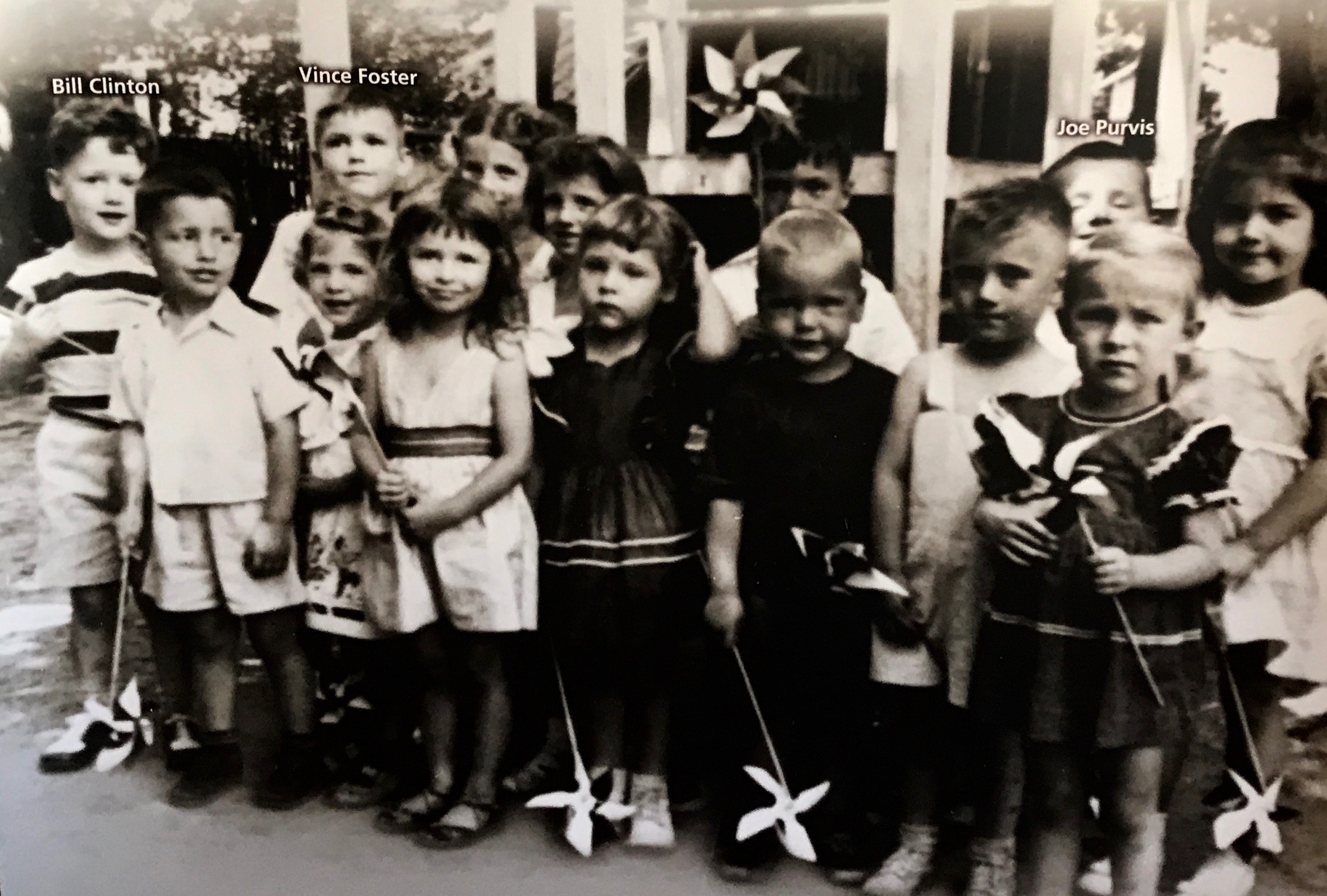
Here’ a photo of Bill and his classmates at Miss Purkins’ School. Notice that Vince Foster, who lived just next door, was a classmate. Joe Purvis is also identified in the photo. I didn’t remember that name, so I went looking. It sounds like Hope produces a lot of lawyers and politicians!
Do you suppose that it’s something in the water?
This was labeled as a mother’s day photo.
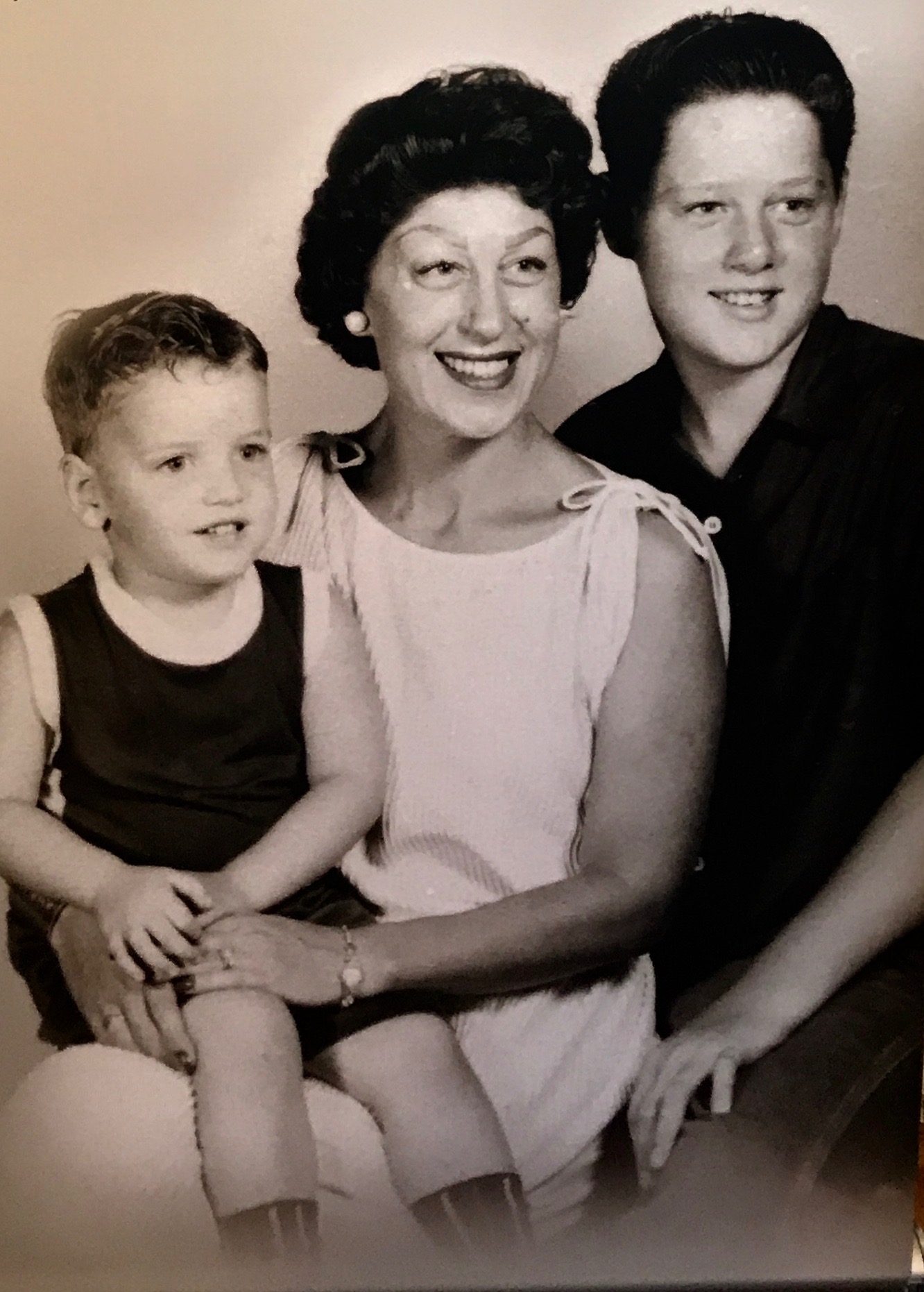
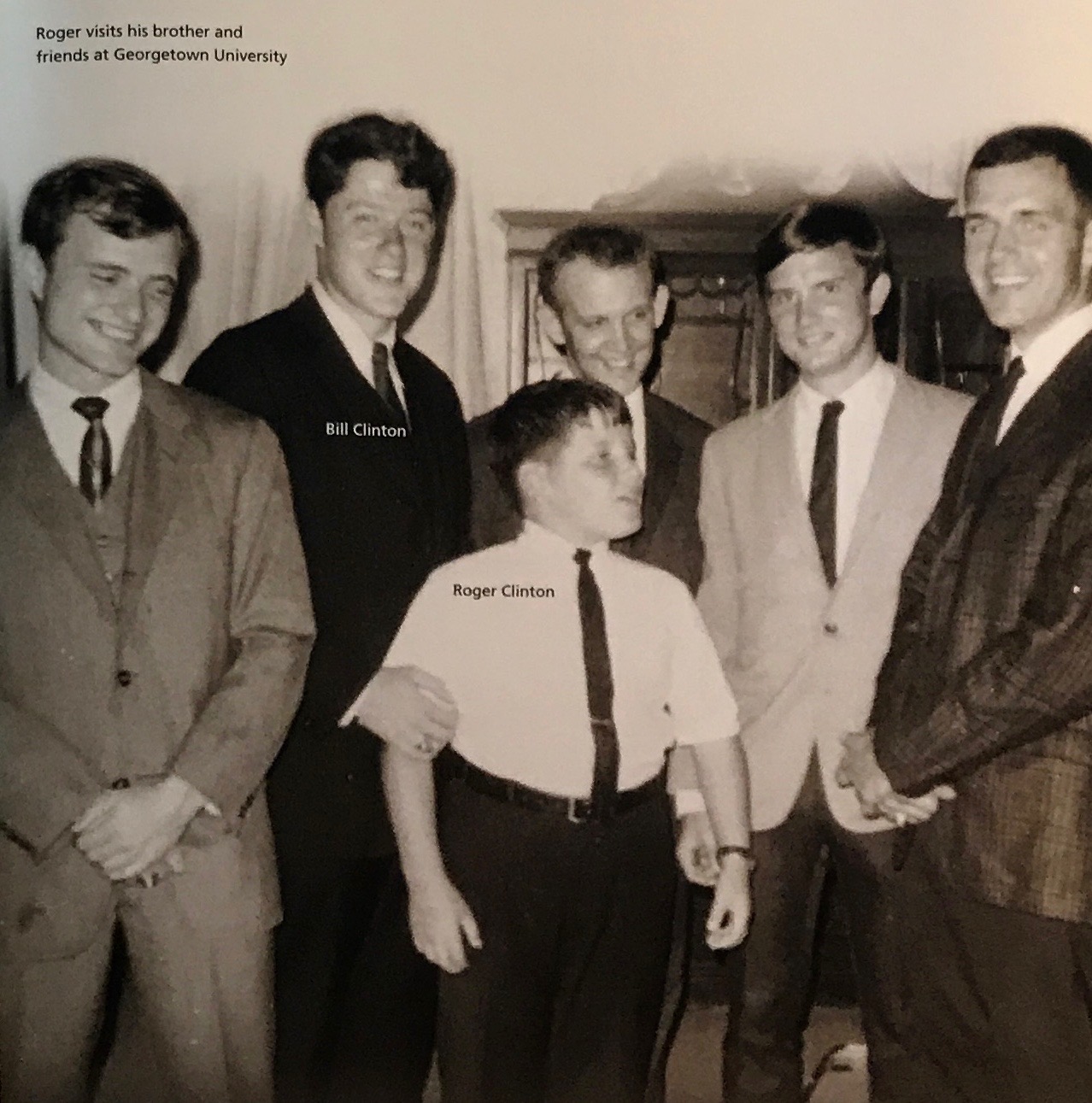
A sweet photo of Bill, his brother, Roger, and his mother, Virginia. I imagine that it is from 1959 or 1960, judging by the size of Roger.
I do hope that Bill’s mother took this photo. I can’t imagine just putting a young child on a train and sending him off to visit his brother in college several states away!
According to the information in the Visitor Center, Bill went down to the courthouse and had his name changed legally from Blythe to Clinton. One of the reasons he did it was because Roger was about to start school and he didn’t want the differences in their lineage to ever be an issue for him. He thought that it would be good to have the same name as the rest of the family. He also thought that he might have wanted to do something nice for his Daddy, even though he was glad that his Mother had divorced him in 1962.
Ah! Another time line! This one shows when Bill’s stepfather entered and left his life.
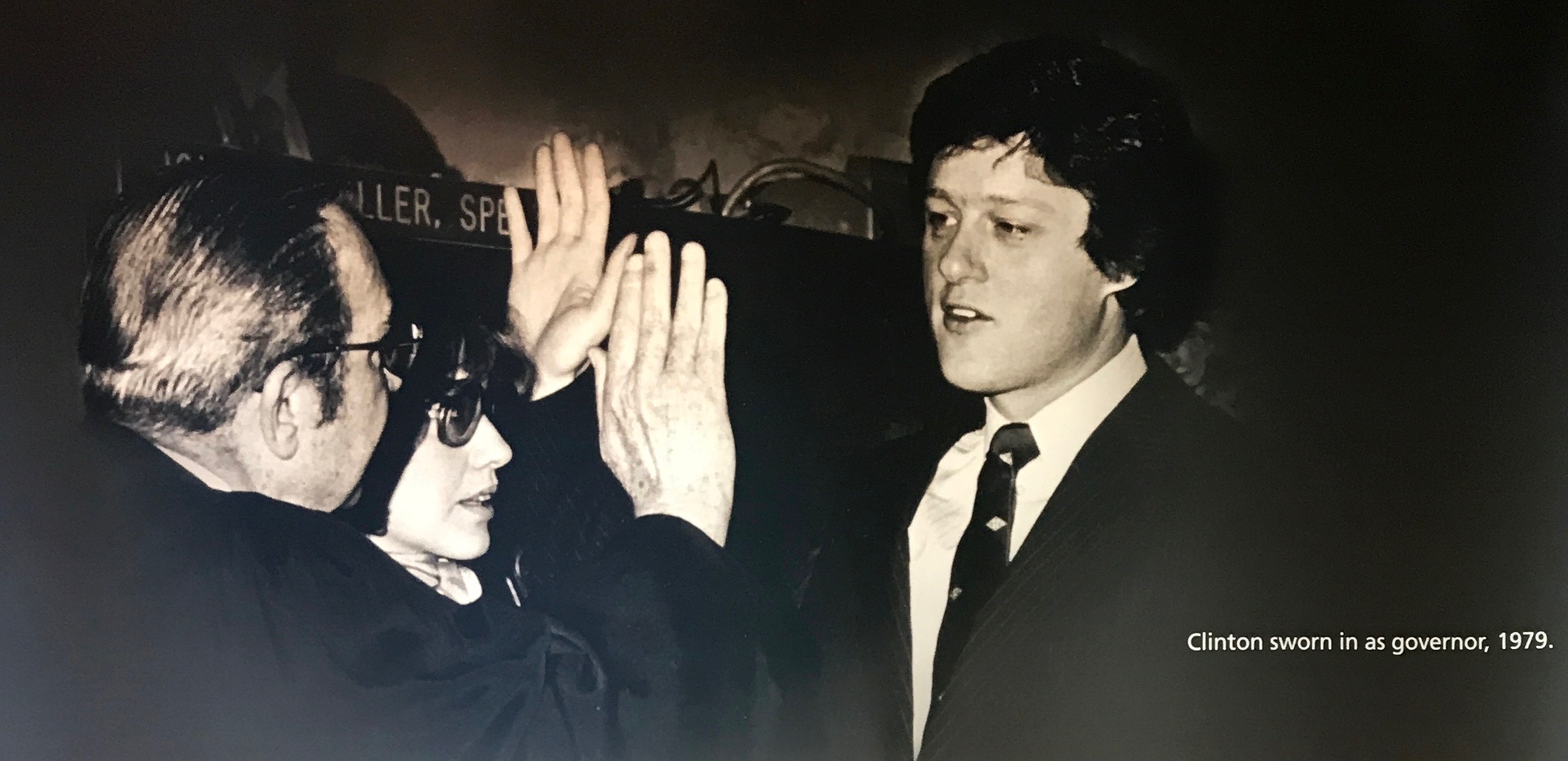
This photo shows Bill being sworn in as governor of Arkansas in 1979, at age 32. He was the youngest governor in America at that time, and the second youngest governor ever in the state of Arkansas.
(If you were wondering, I did manage to track down the name of the youngest Arkansas governor. It was John Roanne, who was also age 32. He was the fourth governor, 1849-1852. If you are curious about the governors of Arkansas, the Secretary of State has a PDF you can download.)
A little more Fun with Timelines…
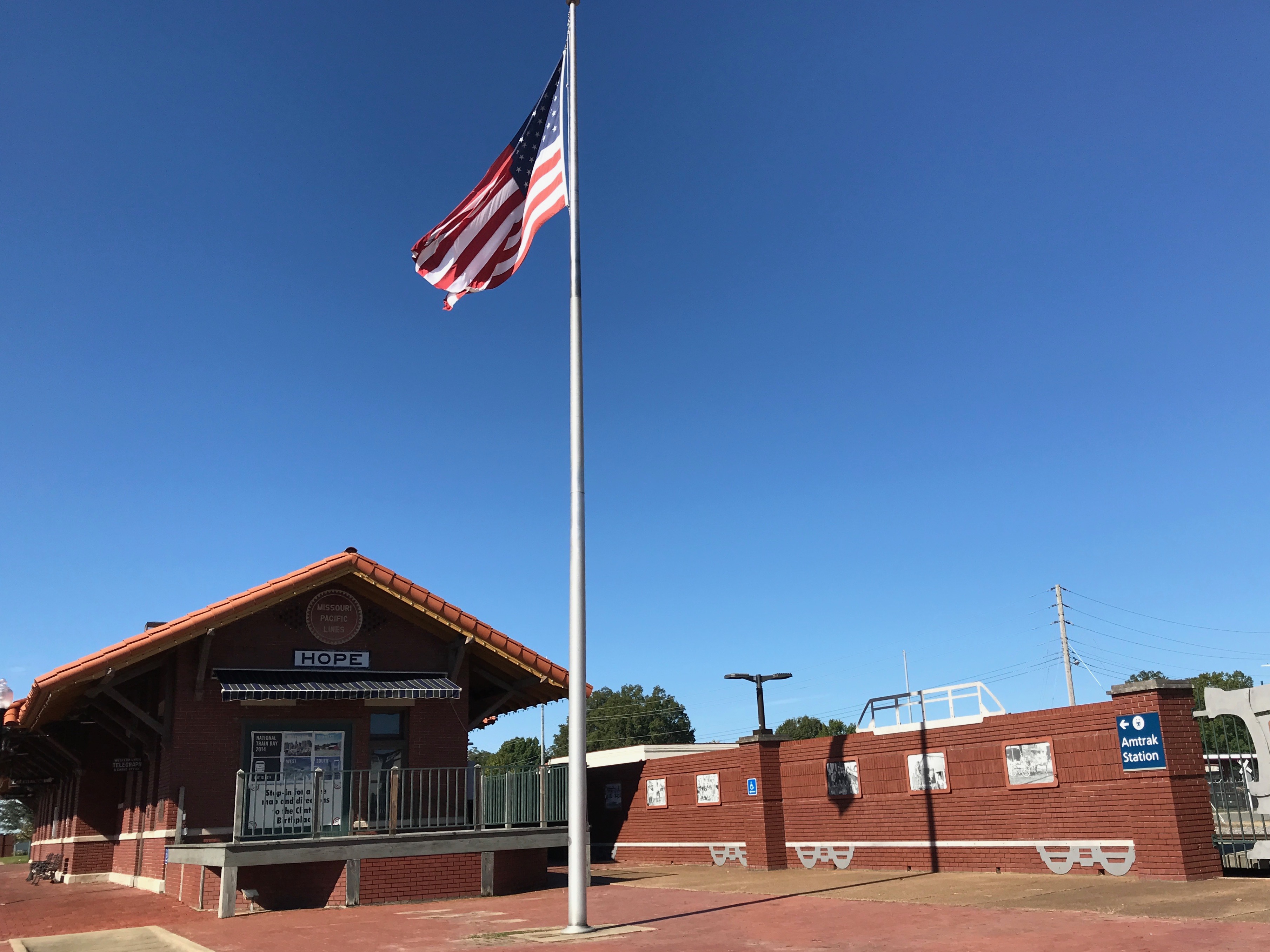
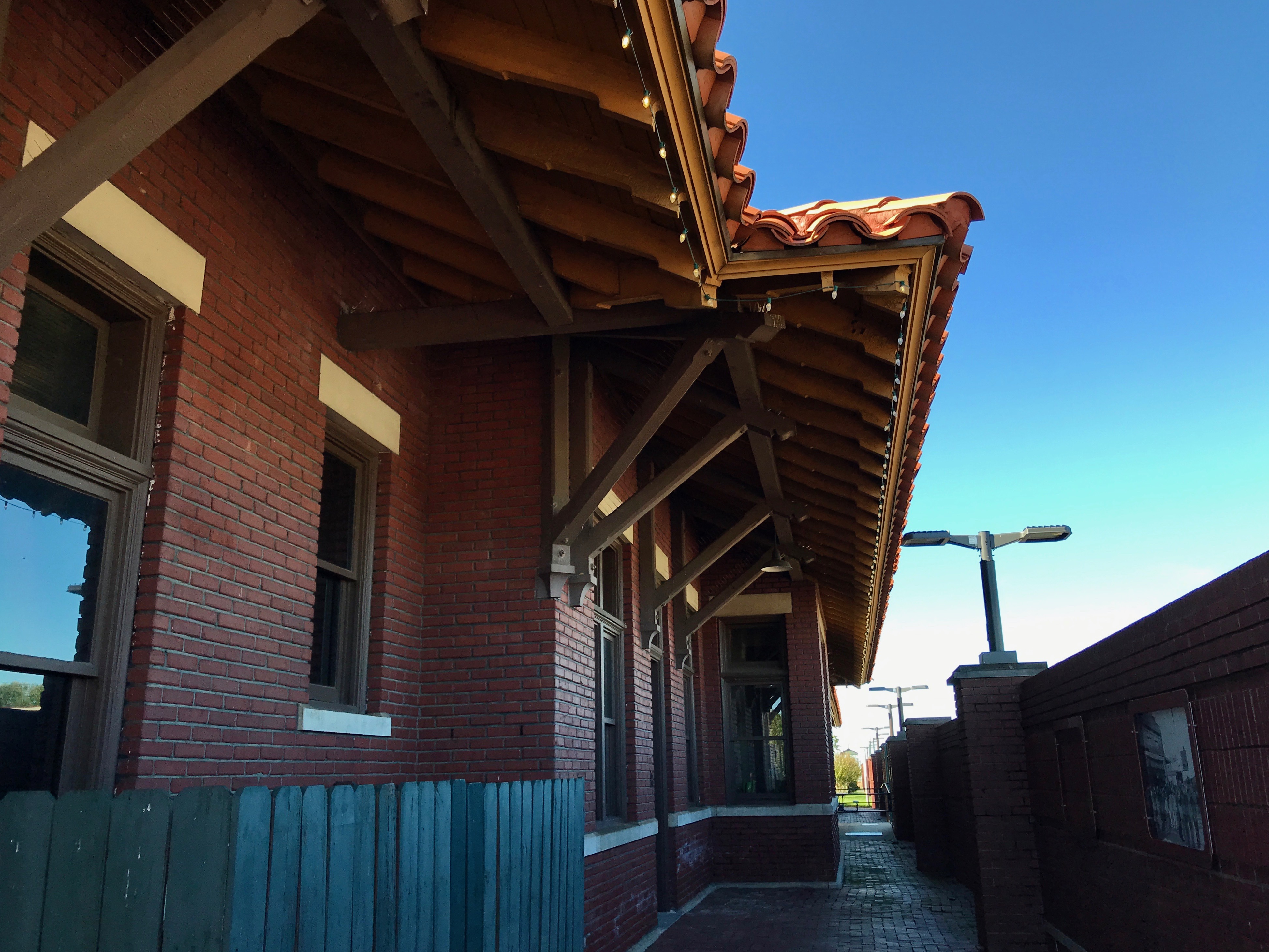
And then it was time to head out. I walked down the street to the train station. What a beautiful fall day it was! Look at that clear blue sky!
I was expecting that the train station had been converted to some other use, like most train stations have been. Believe it or not, this 1912 station still has passenger service! Trains run daily between Chicago, Illinois and San Antonio, Texas.
I did a little exploring around the station.
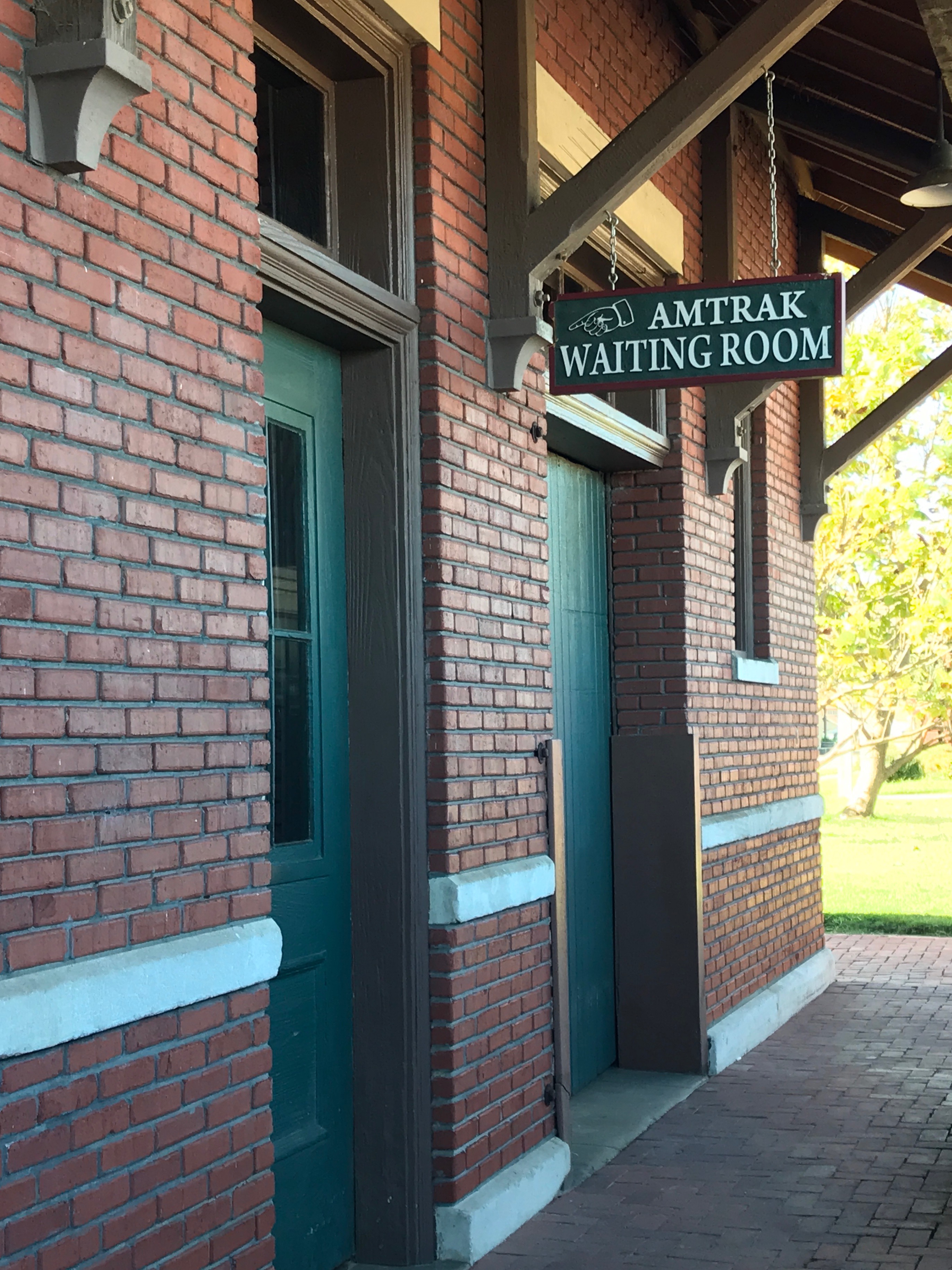
Hey! They even have a place for you to wait.
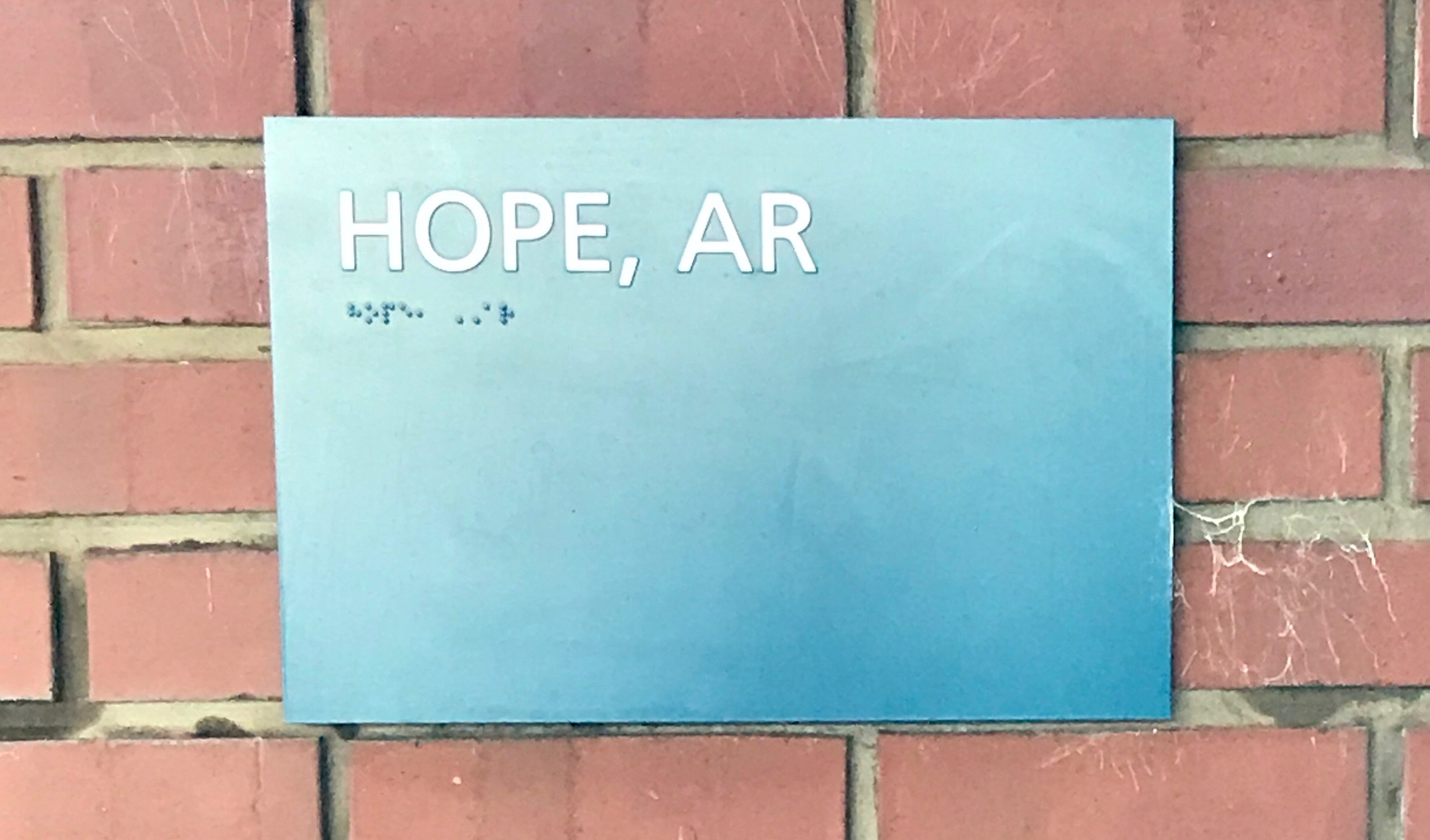
Not being visually impaired myself, I often wonder how useful signs like this are. Don’t get me wrong – I’m glad that we are working toward a world that enables all to take part. I just would like to know how a person who wasn’t sighted would know that there was a sign there to read.
If anyone knows, please fill me in.
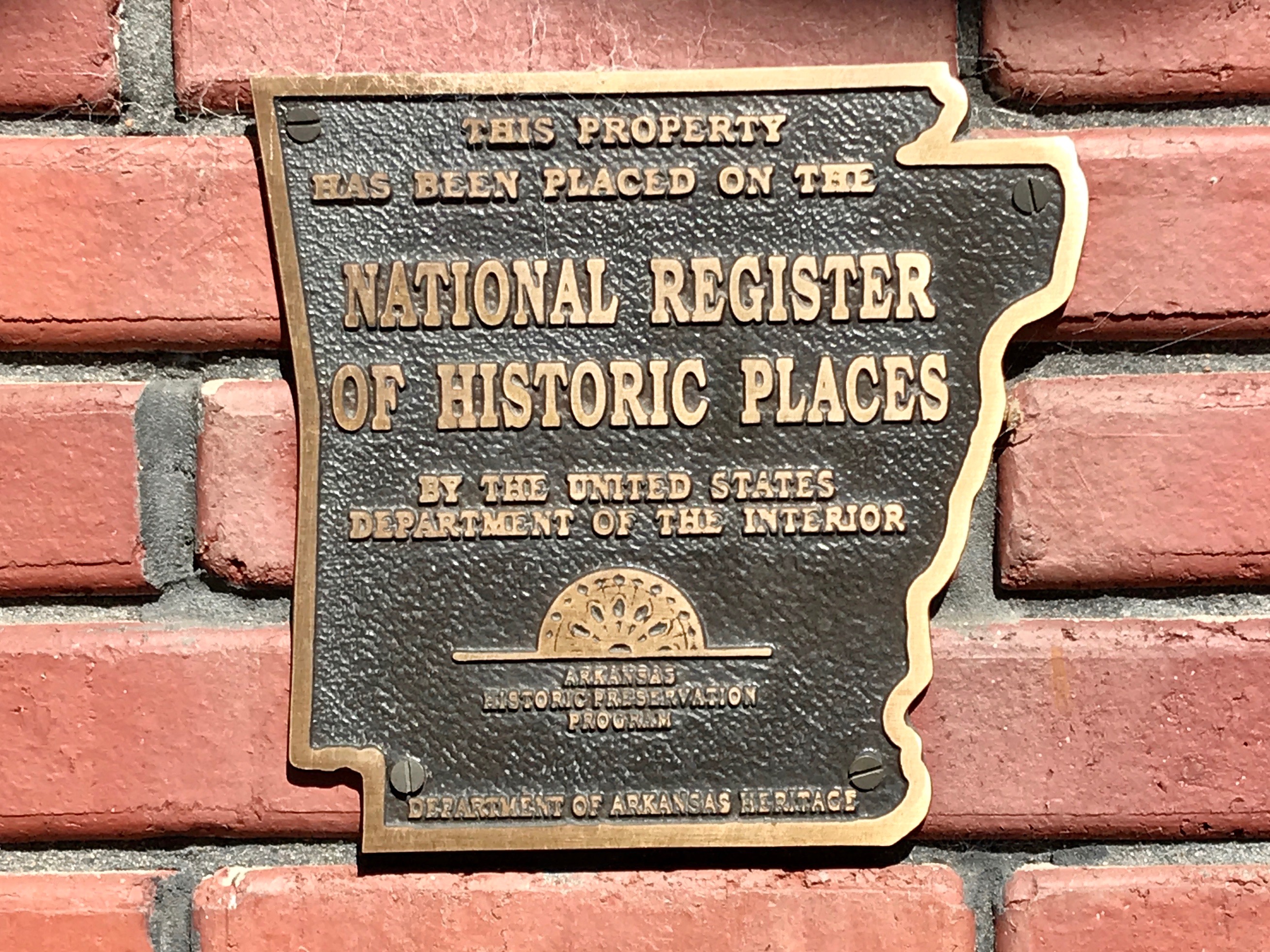
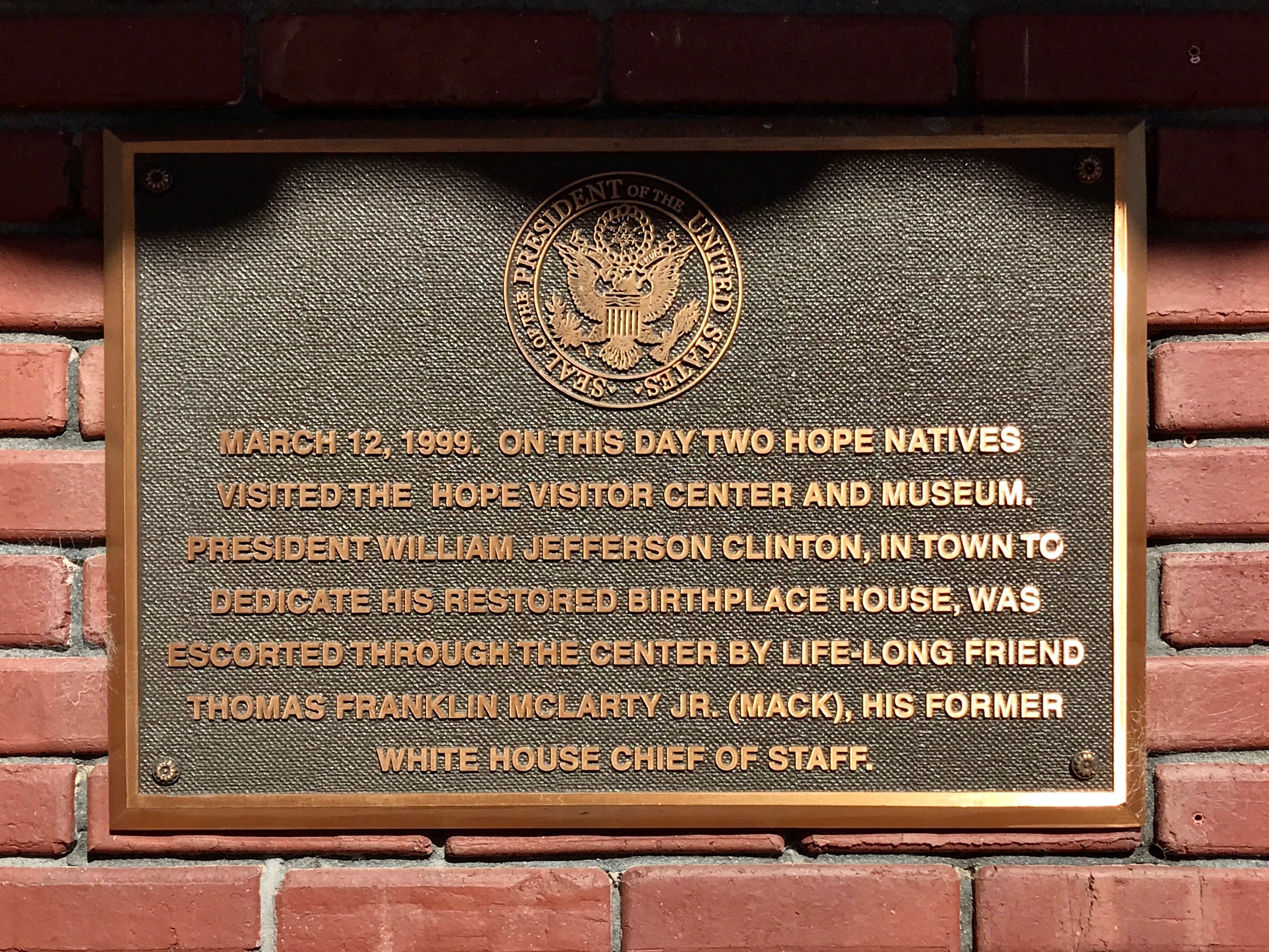
On the sunny side of the building, there were a few plaques.
Golly! Yet another Hope native that was involved in Clinton’s presidency.
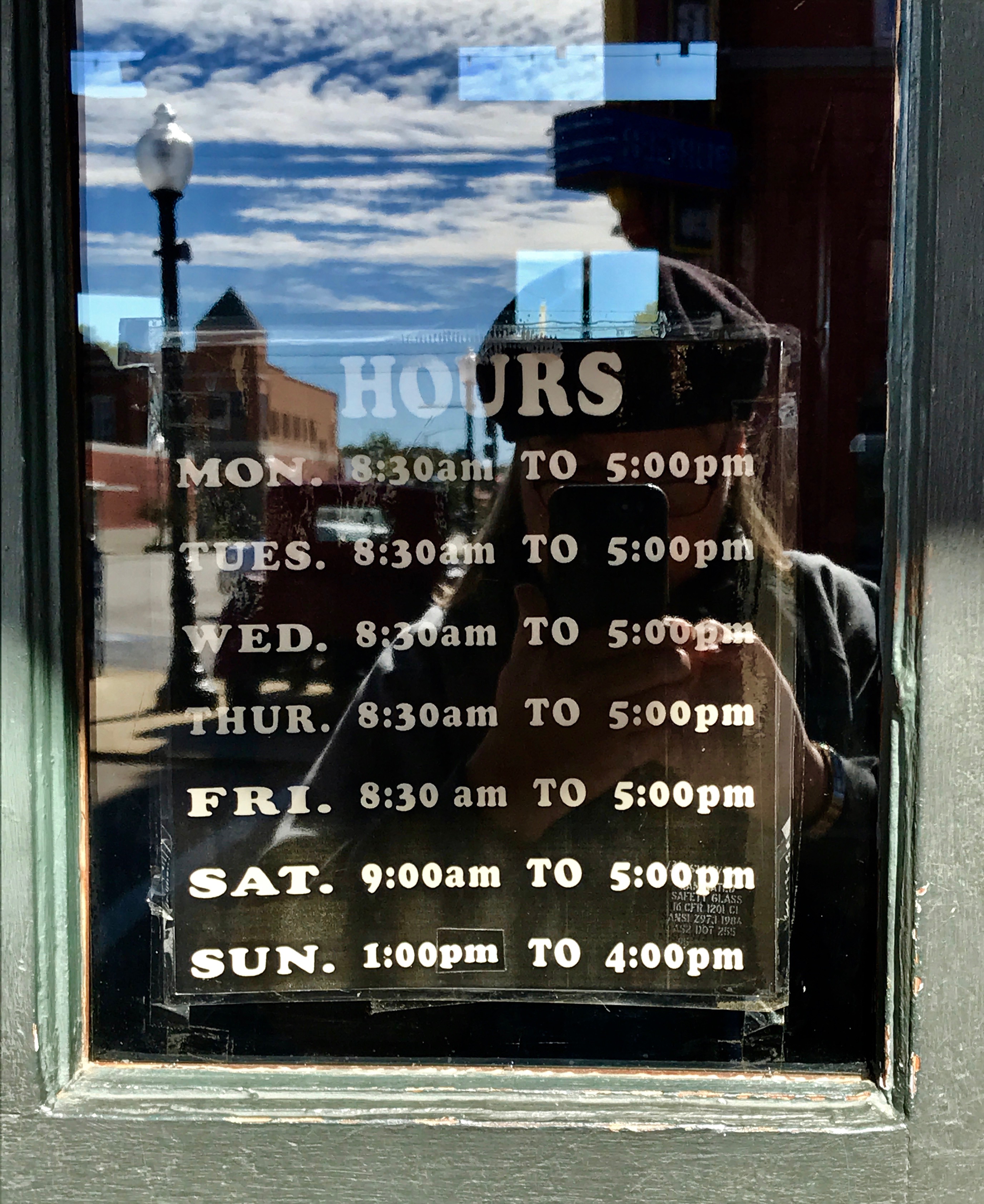
Oh! This is also a visitor center?
Ah, yes…
Of course, it is closed!
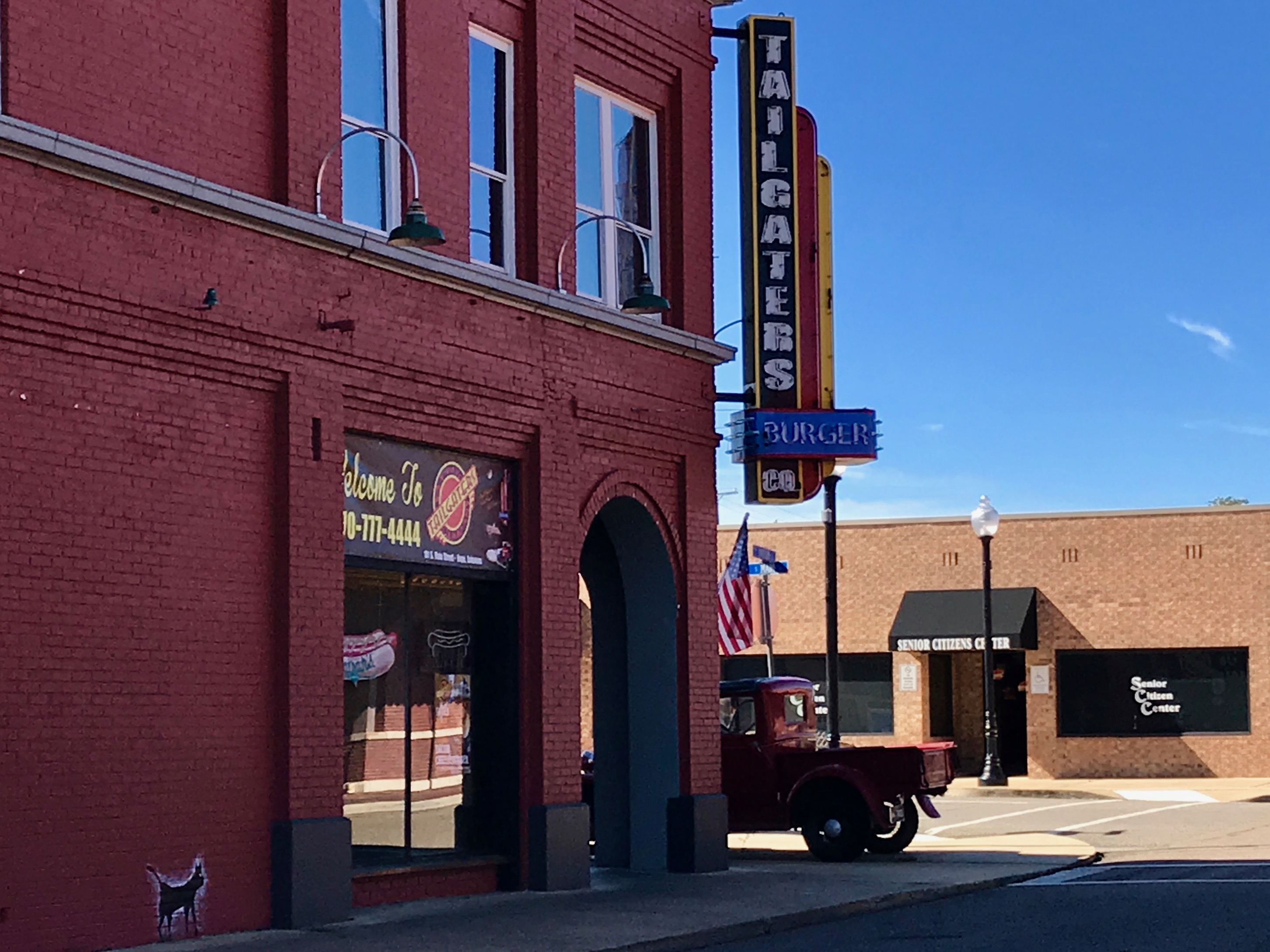
Across the street from the train station was a local watering hole. Apparently, the burgers are quite good, judging by the Yelp reviews. Then it was time to get in my car and look for the other home of Bill Clinton in Hope. I wondered if I would have trouble finding it.
No, it wasn’t hard at all!
It wasn’t as impressive as his grandparents’ house, but it looks like a nice place. Since this was obviously a neighborhood full of private homes – including this one – I didn’t want to overstay my welcome. So, I snapped a few shots and moved on.
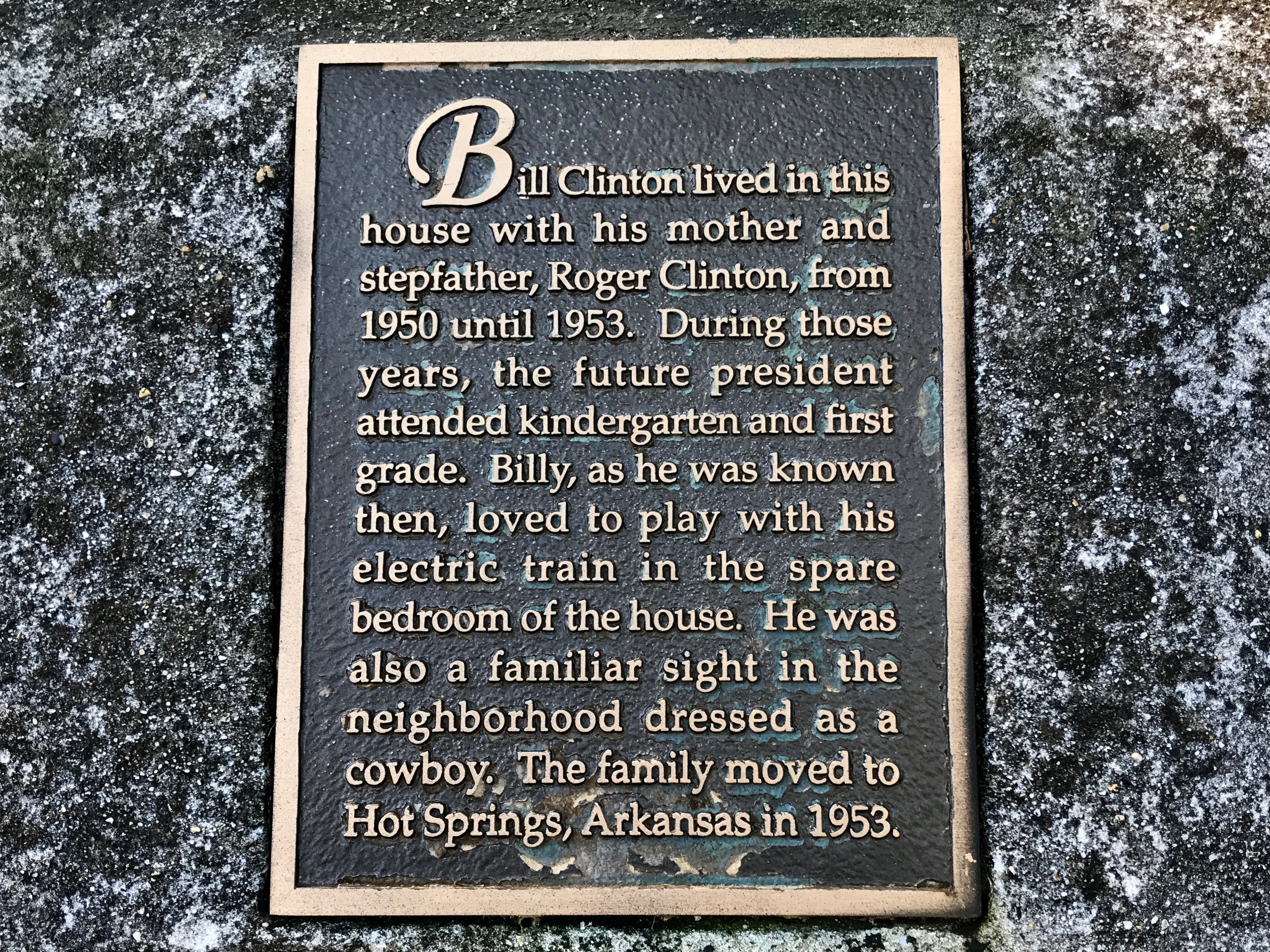
This plaque was on a boulder in front of the house.
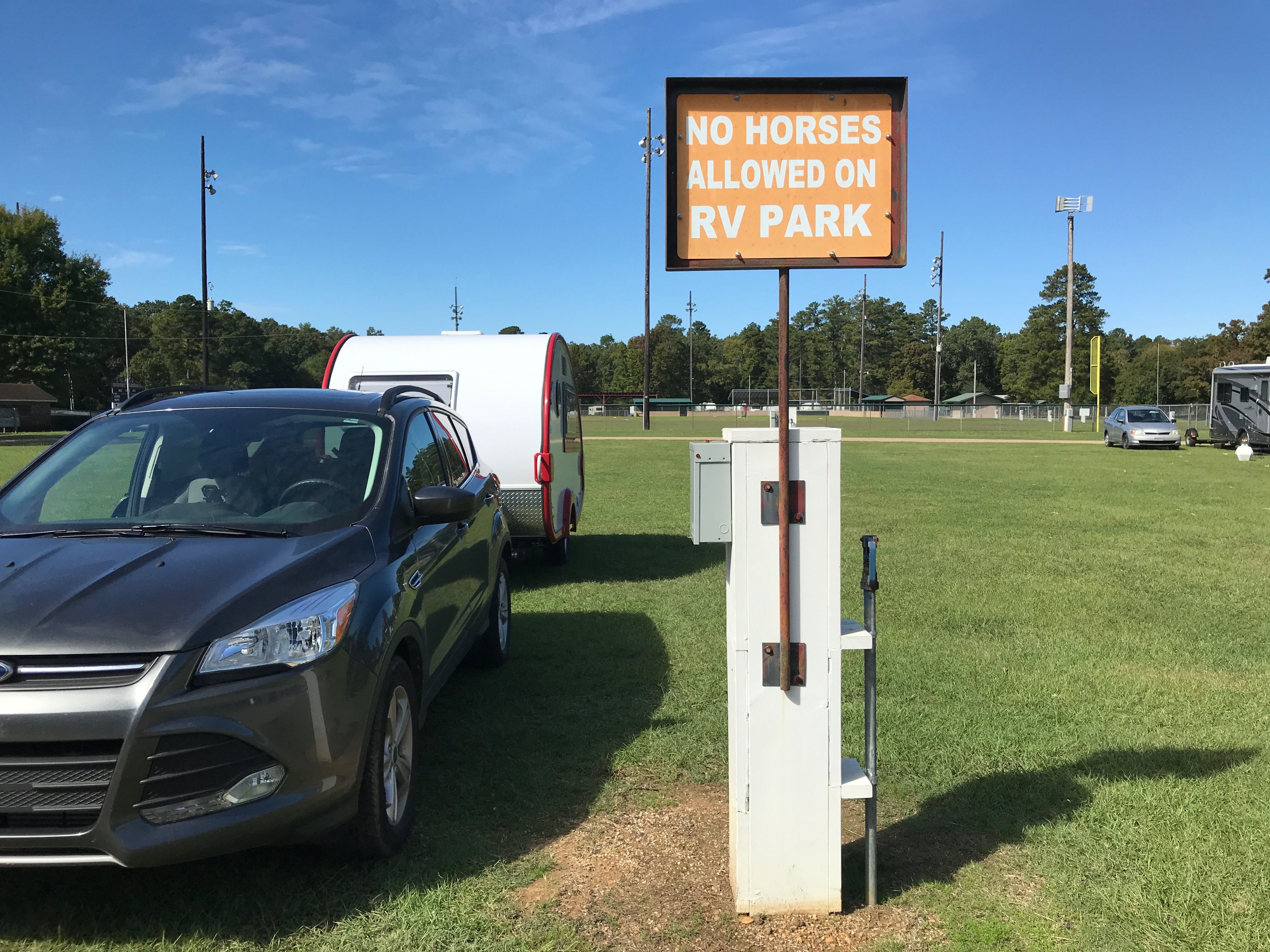
With my tasks in Hope complete, I headed back to the RV park, which also happened to be at the county fairground.
Good thing I didn’t bring my horse!
It was time to get packed up and ready to head to my next destination: Crater of Diamonds State Park.
I love it when I have the opportunity to revisit places – especially when those returns are to places where I know people.
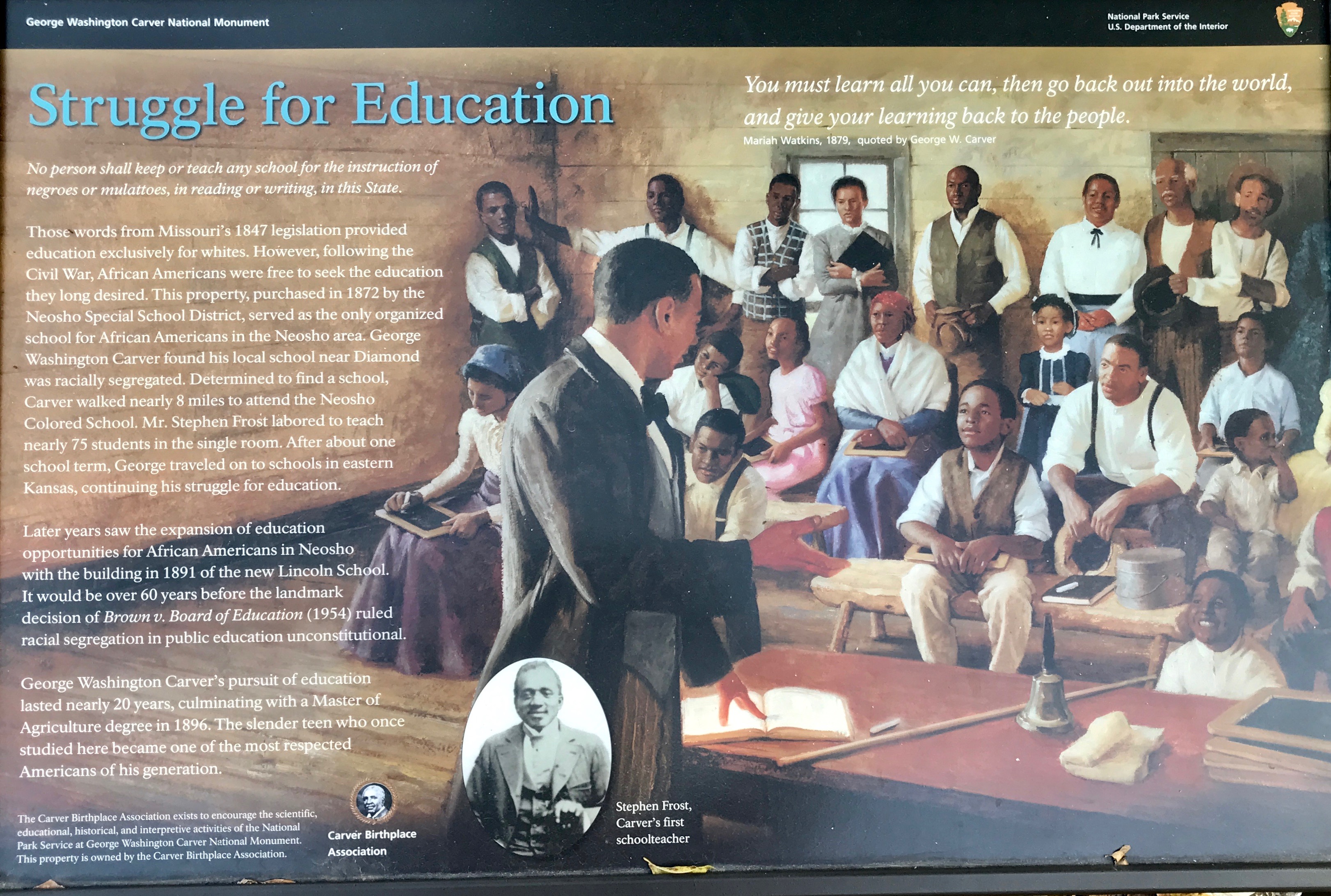
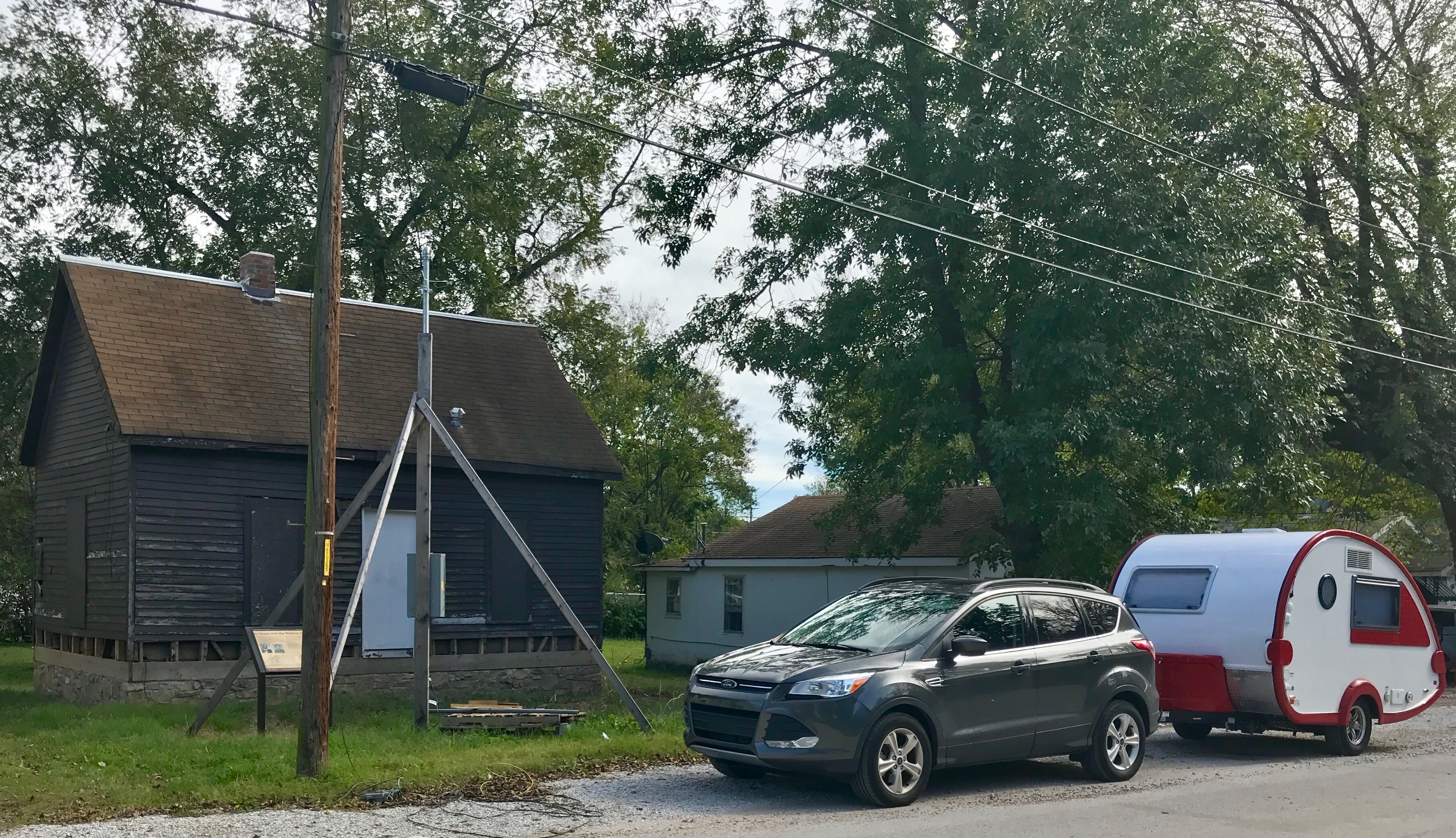
My first stop was just a quick one – Neosho, Missouri. I wanted to check on the progress that had been made on the 1872 school that George Washington Carver attended since my participation in a 2016 HistoricCorps project. (Just for the record, this visit took place in 2018.)
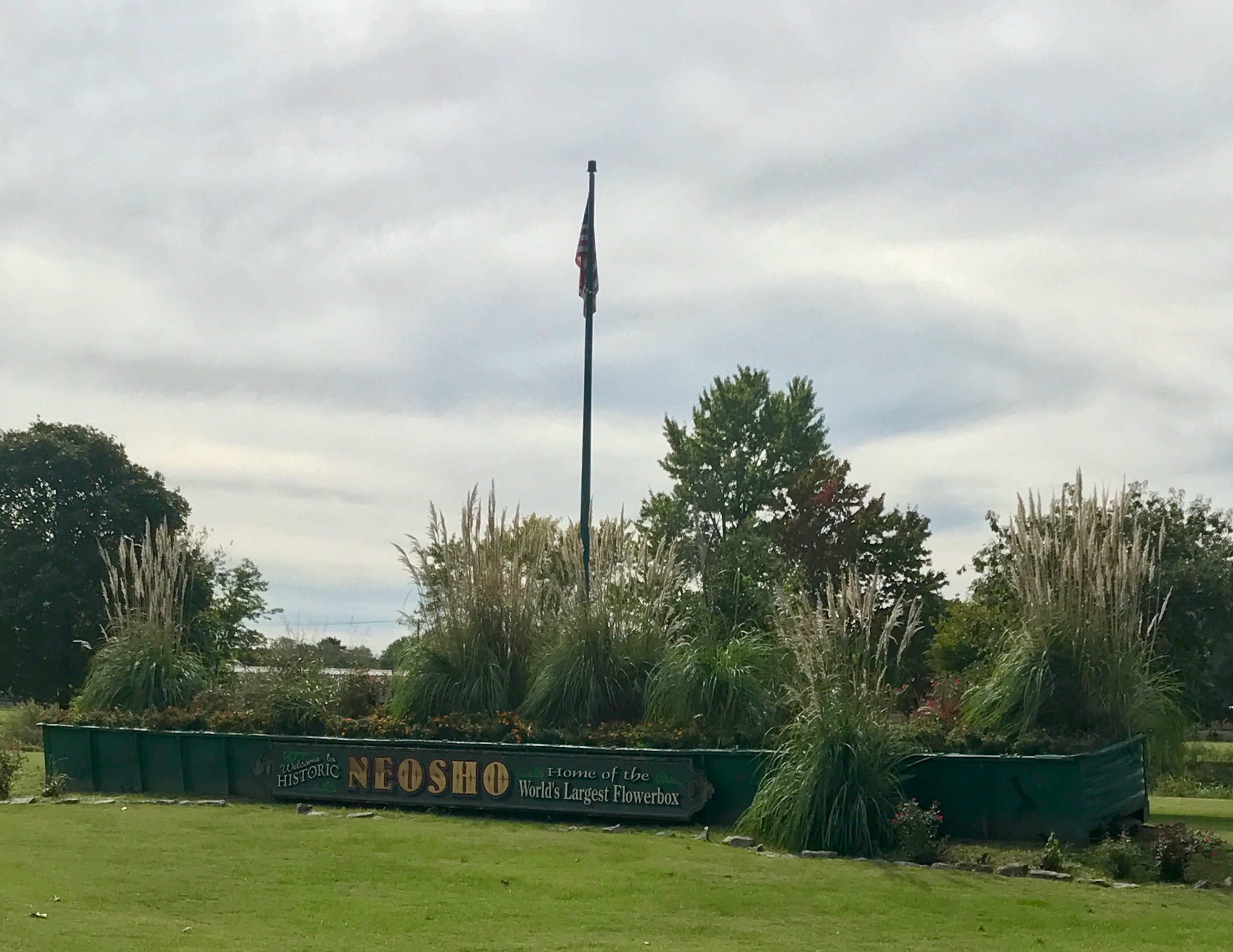
As I pulled into town, I noticed something I hadn’t seen before. Neosho is the Home of the World’s Largest Flowerbox!
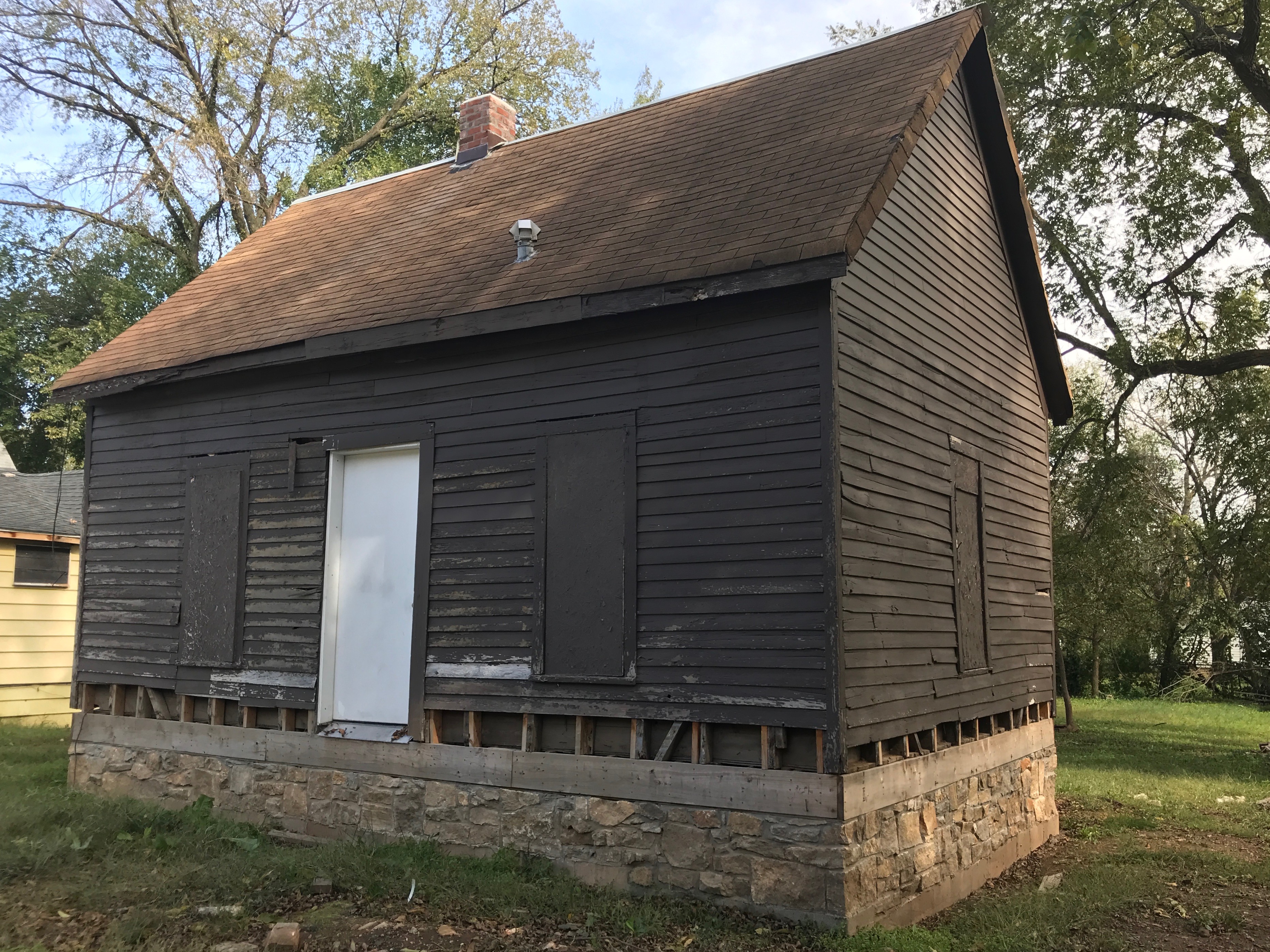
I made my way over to the school house to inspect the progress. This is a project that is funded by private donations, so it takes a while to complete each step.
When I consider what had to be done to get it this far, I am amazed at the progress – even though this place doesn’t look like much right now. I knew that they had gotten the siding completed, but I hadn’t seen a photo of the great foundations that were added. When I was there, the building was sitting on a few stacked stones at each corner.
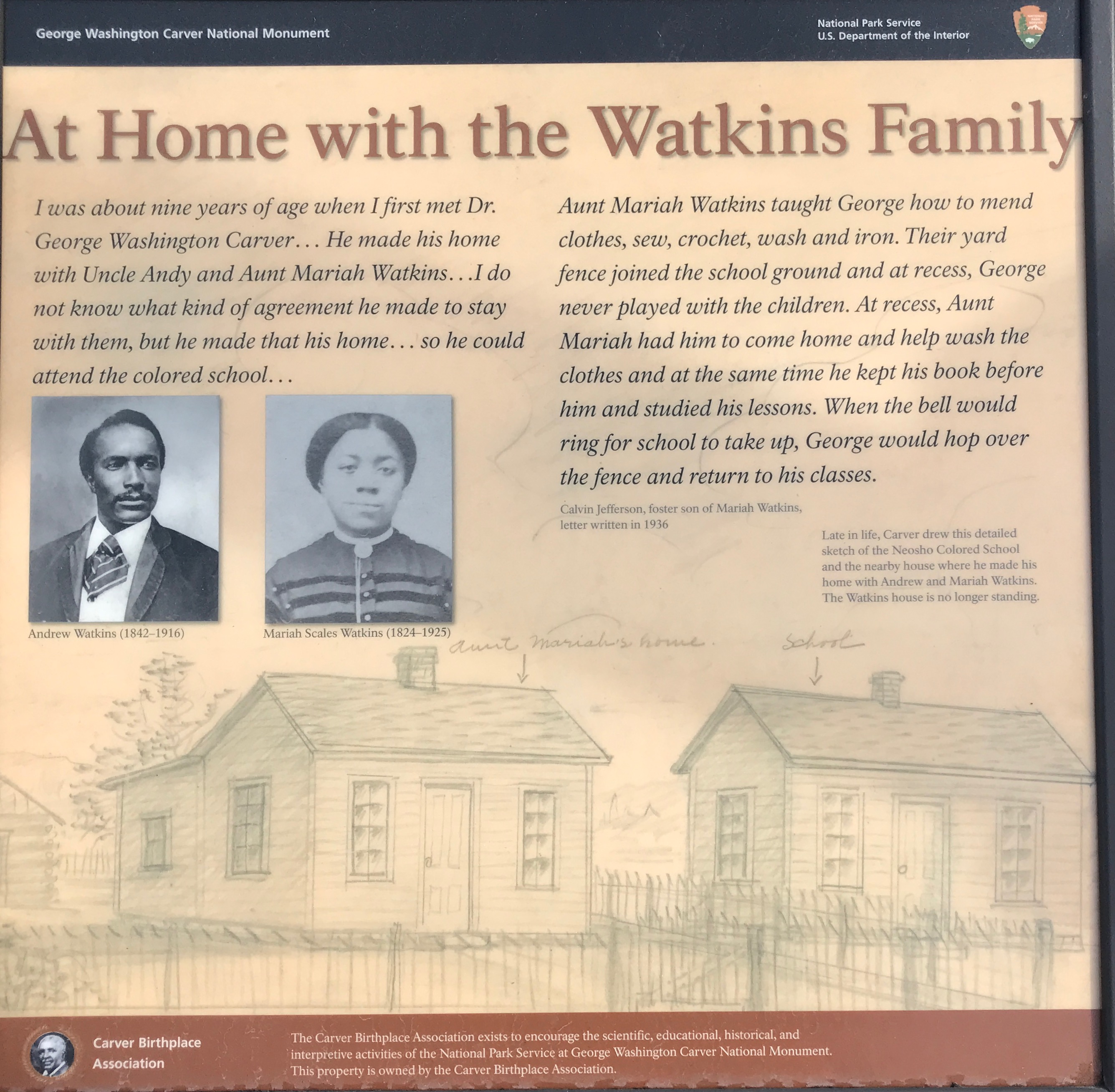
They have added some new informative signage at the site.
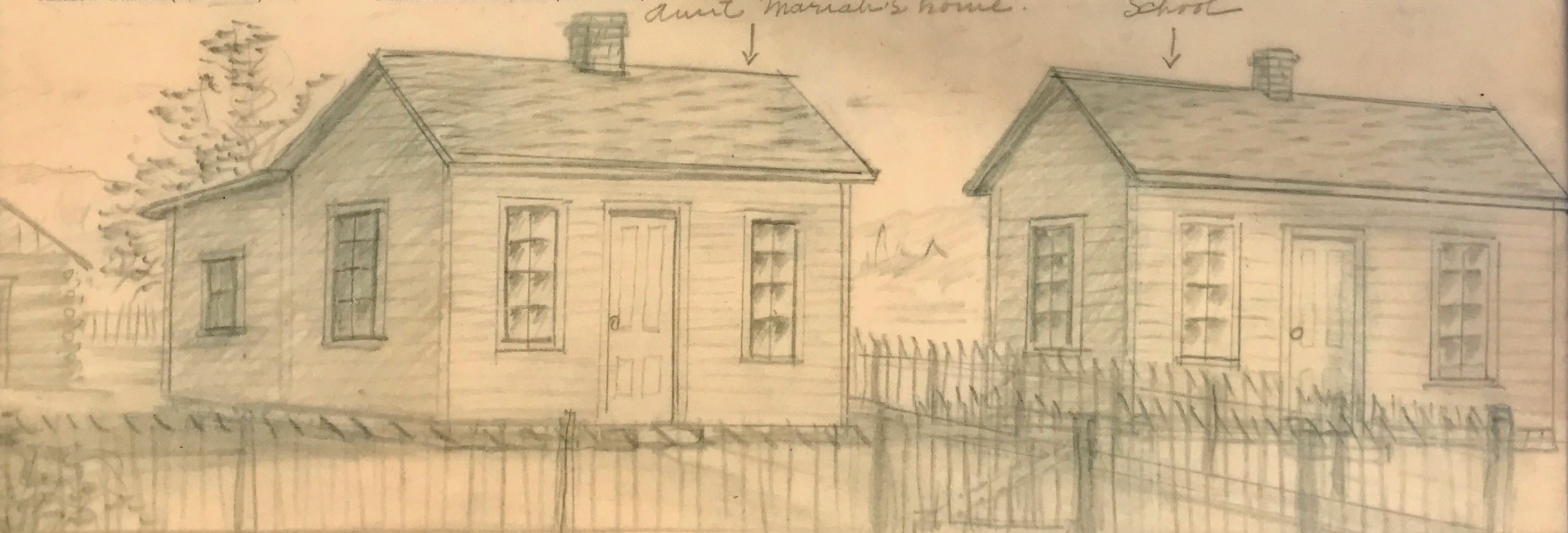
I particularly like this sketch that George Washington Carver made of how he remembered the school and the house that Uncle Andy and Aunt Mariah Watkins shared with him. The house that is currently next door to the school is not the house he lived in. As I remember, the archeologist that worked with us during the HistoriCorps project said that the house he lived in was most likely the one at the corner, but they couldn’t verify that.
In any event, he remembered that school house very clearly.
There was also a sign about the what the formerly enslaved and their offspring had to go through to achieve an education.
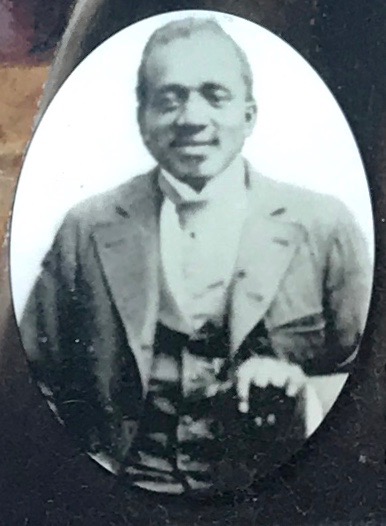
It warmed my heart to see photo of Stephen Frost, George’s first teacher. There is nothing that satisfies a teacher more that to see their students succeed. I hope he lived long enough to know of the fruits of the seeds of knowledge he planted in his student.
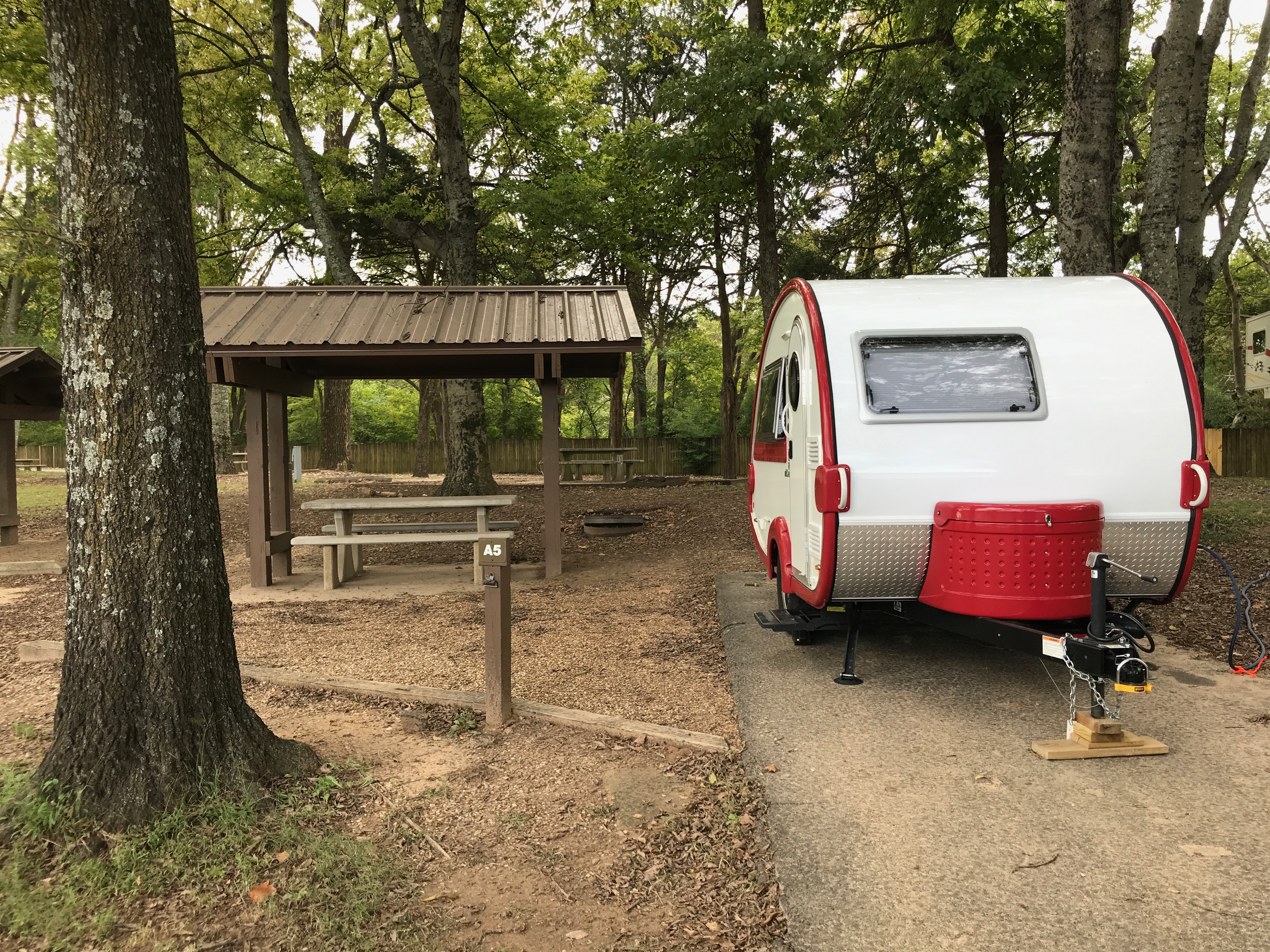
I couldn’t resist the opportunity for a little T@b glamour shot before I headed out of town.
Next stop was Conway, Arkansas. I had been there in 2014, when I first started out on my Airstream adventure. Conway was a destination for me because an internet friend I had known since before Facebook lives there!
Nancy is a very busy person with many irons in the fire, so I was pleased that we could squeeze in some time to catch up with each other.
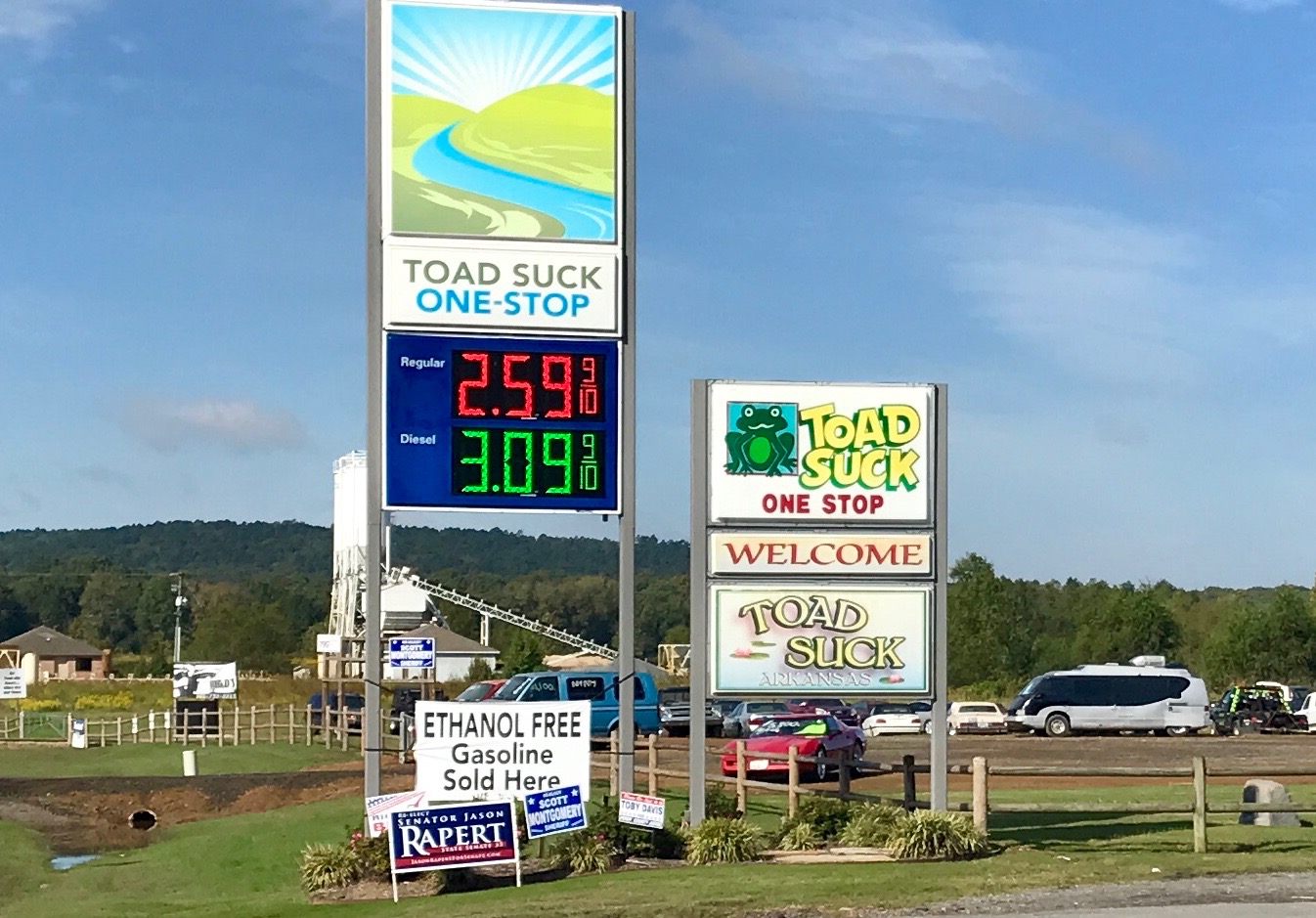
I booked a site at one of my favorite campgrounds – Toad Suck Park. Isn’t that a great name? It sits right on the Arkansas River. It’s an Army Corps of Engineers facility, which means three things:
1. The park is well constucted.
2. Everything works.
3. It’s economical – especially since I have the America the Beautiful Senior pass.
I’m pretty sure that I even got the same site I had before…
with the same great view!
Nancy and I met up for lunch at a very nice restaurant. In fact, we ate here on my last visit. Unfortunately, there are no photos of the food or of us, so you will just have to take my word for it.
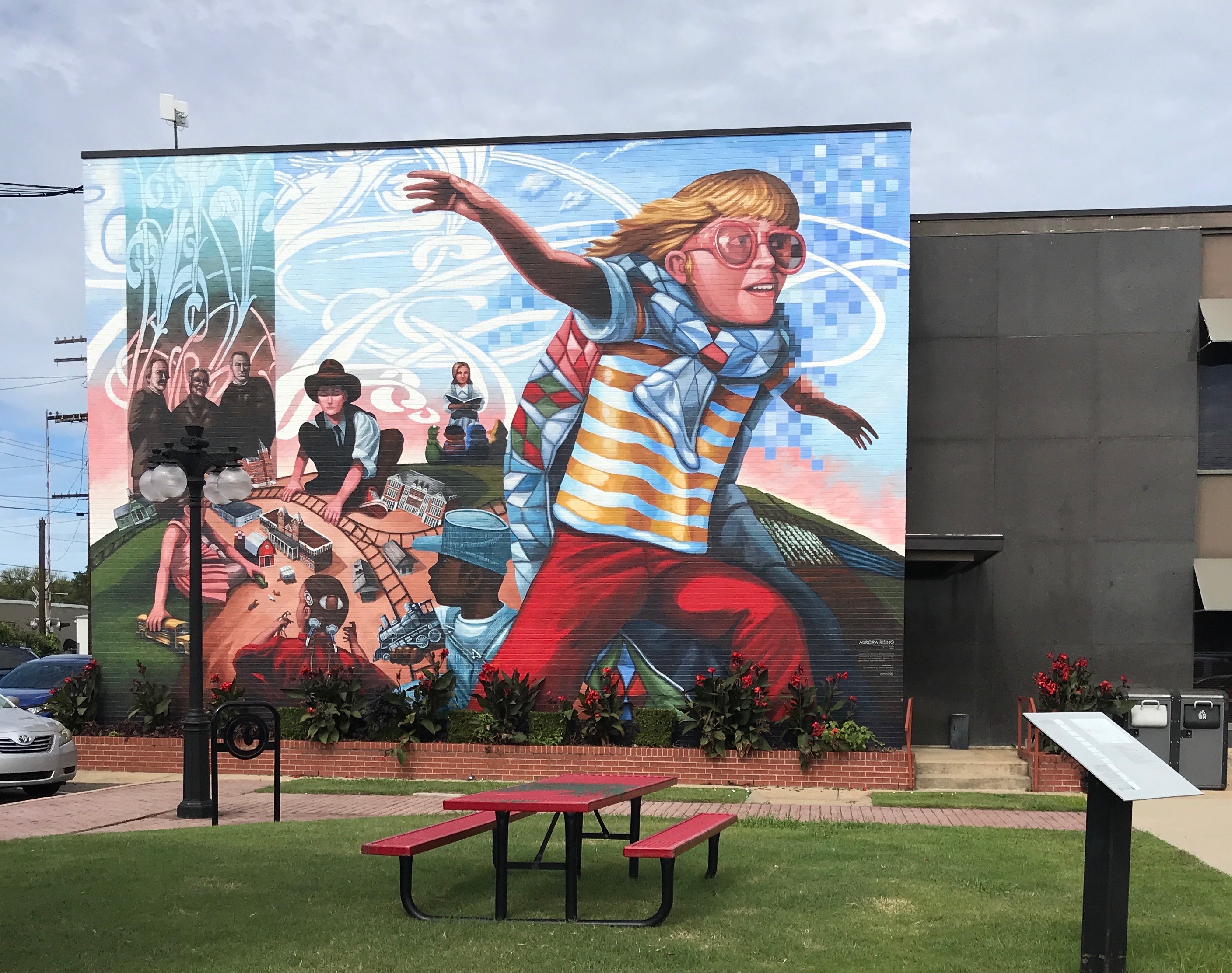
Nancy had things to attend to, so I prowled around Conway for a bit. This vibrant mural across the street in Simon Park demanded my attention.
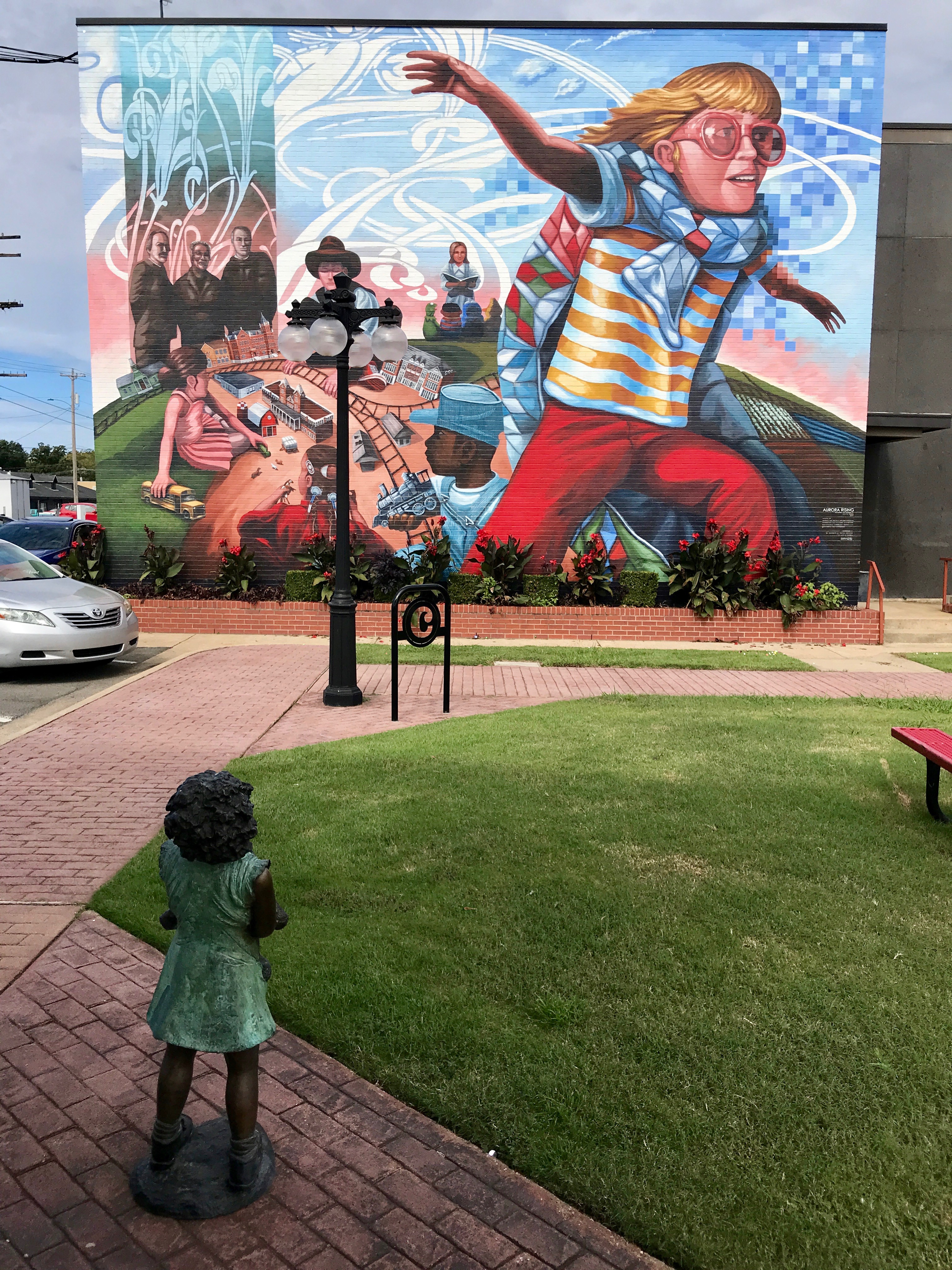
This mural is titled “Aurora Rising.” The sign on the right side of the photo tells the significance of all the components. Unfortunately, it was so sun-faded that I couldn’t piece the information together. However, it was designed and painted by Morton Brown in 2007. I hope he has gone on to other great works of art.
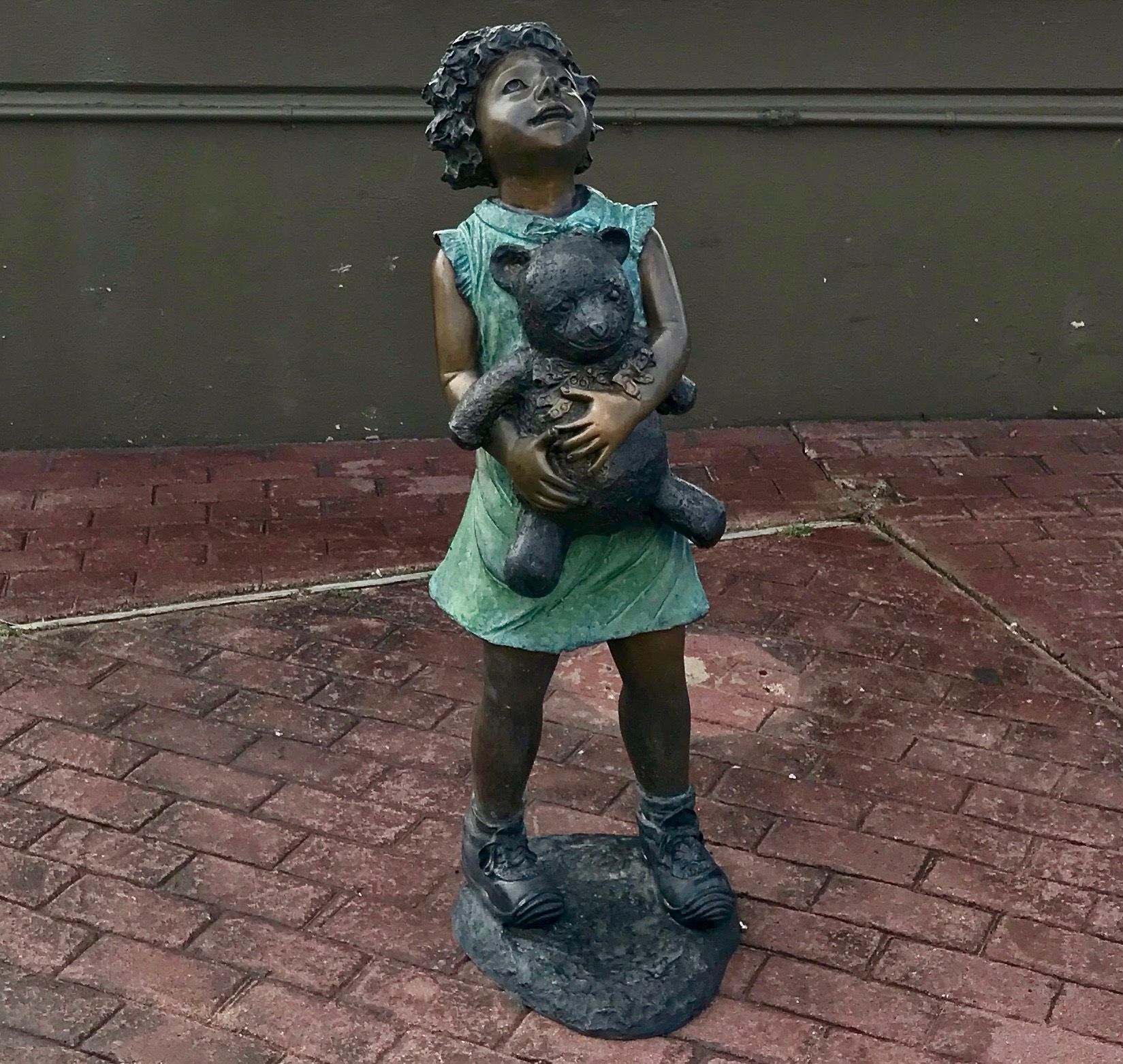
I loved this statue of a young girl looking up at the mural.
Look at the wonder in her face.
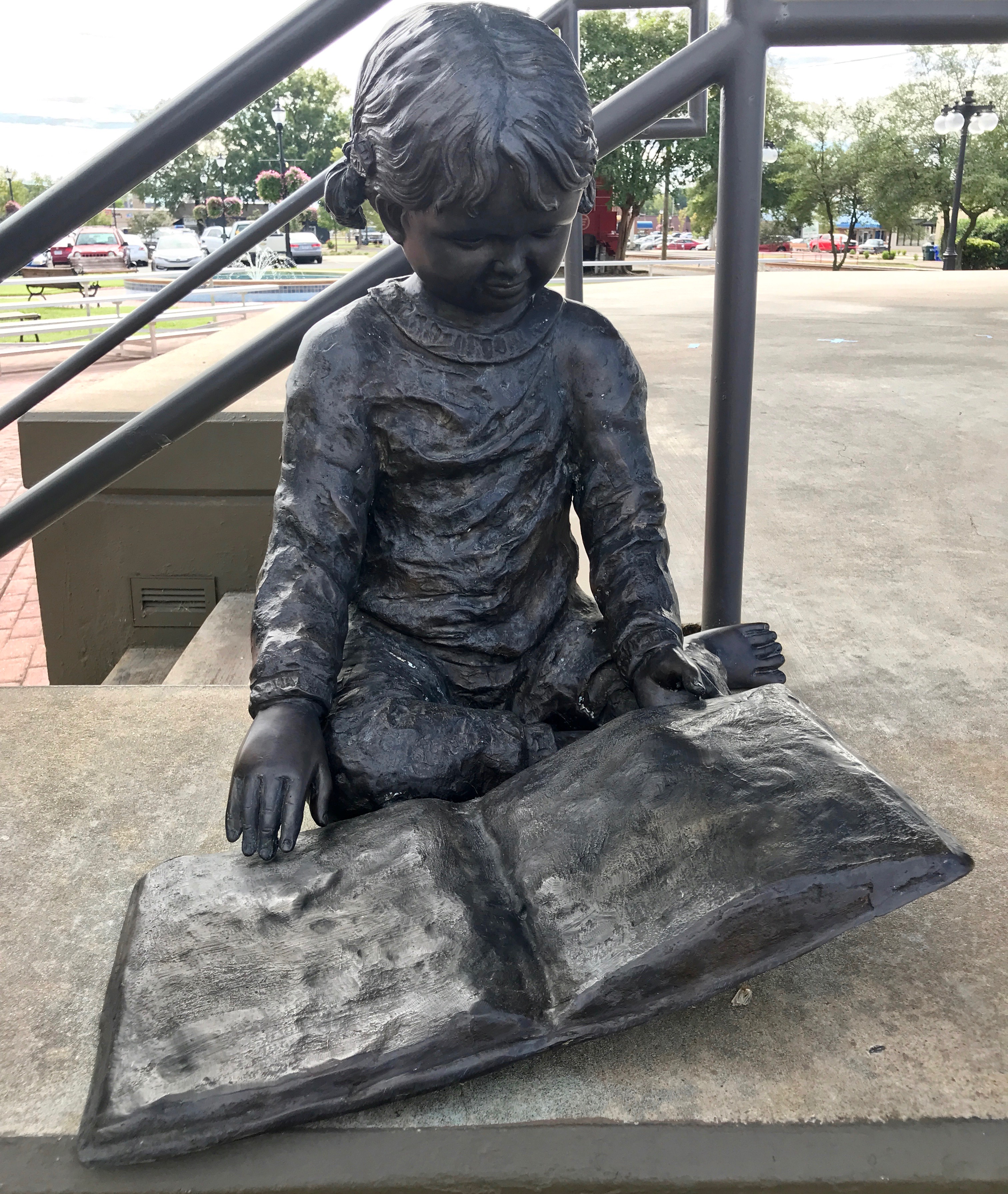
Behind her is a statue of a young reader, totally engaged in a book.
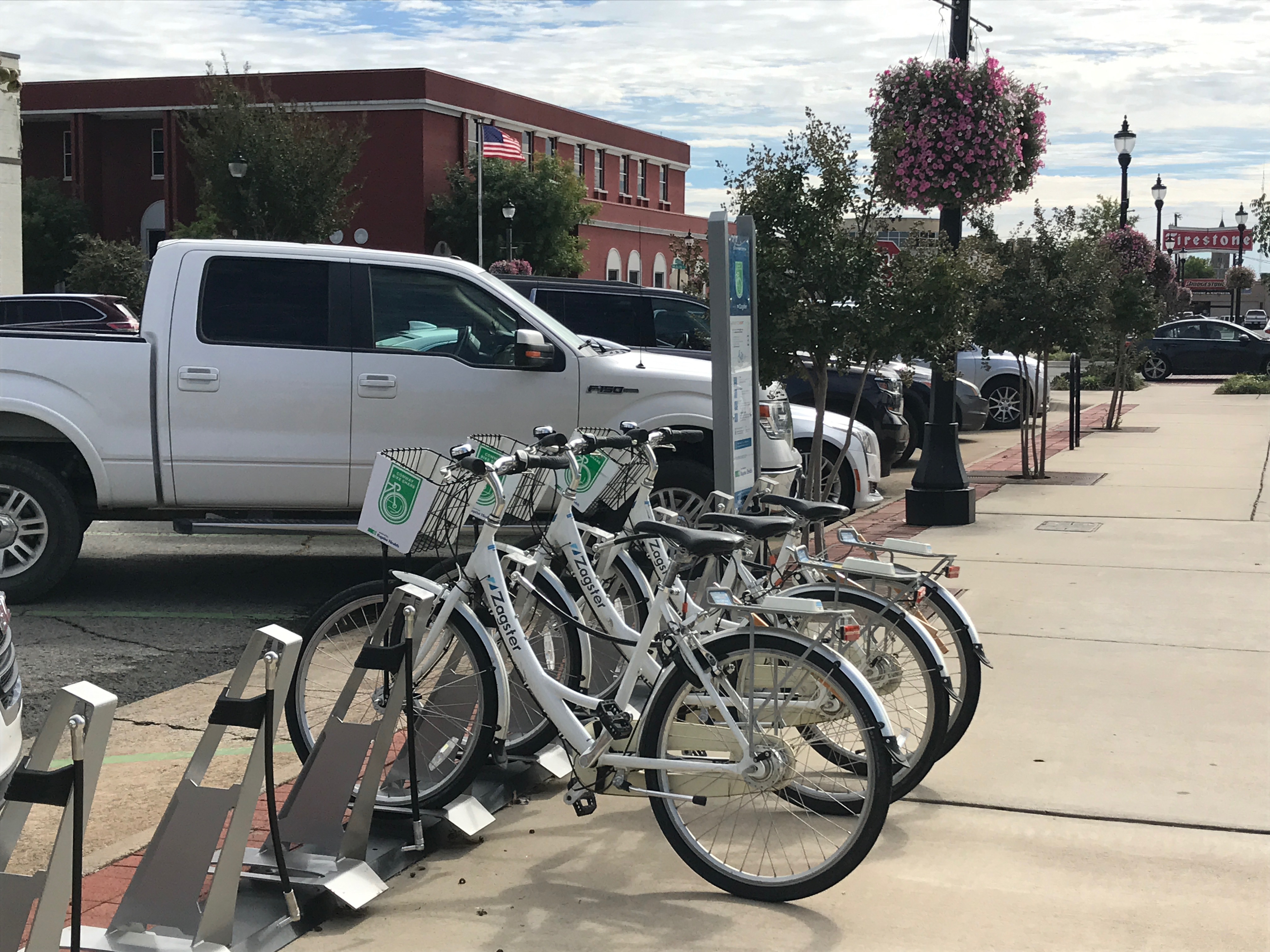
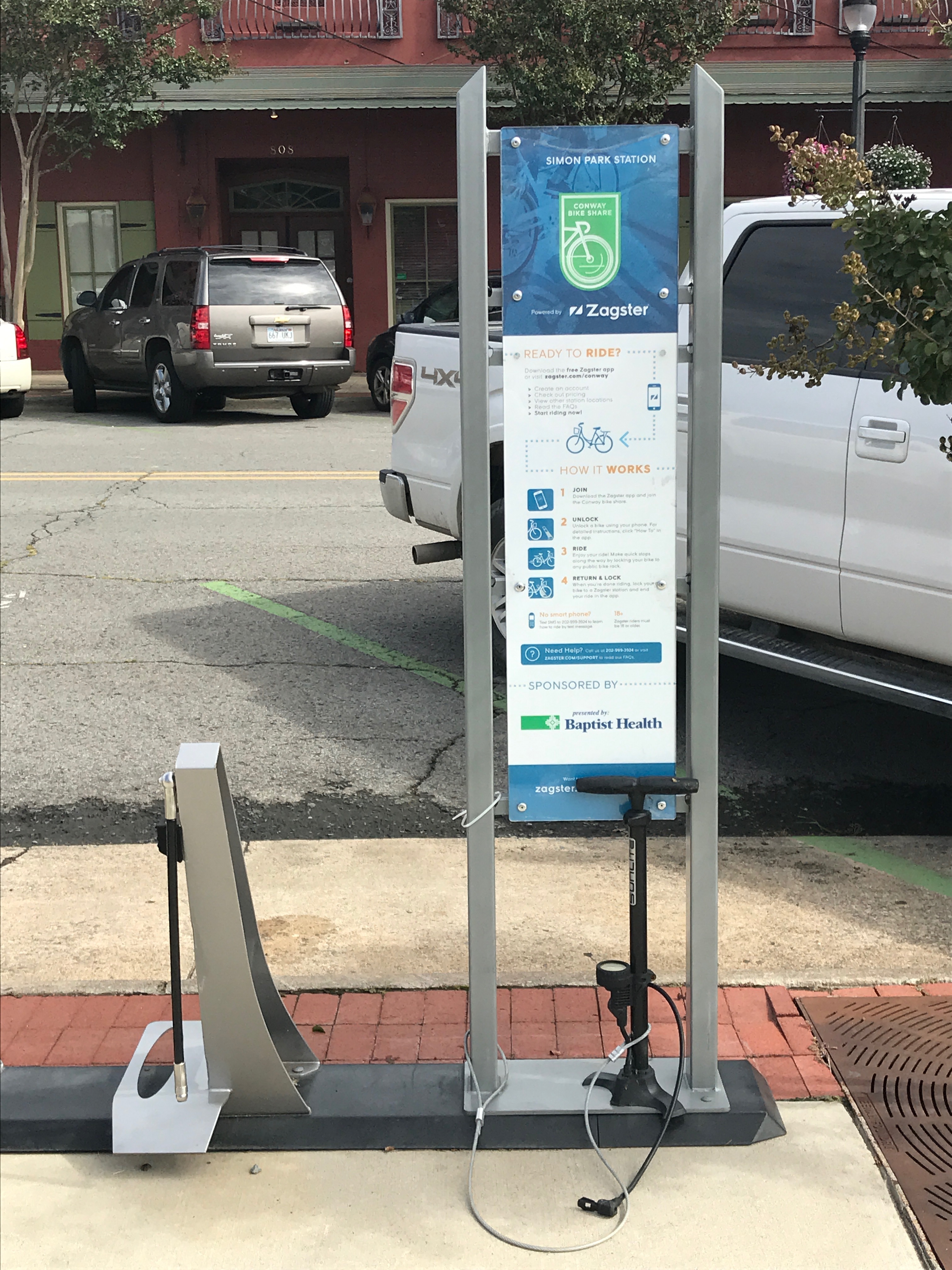
I looked around and saw a bike sharing station.
It’s part of the Zagster program and is sponsored by Baptist Health. Cycling is a good form of exercise. And, if you are not a good cyclist, encouraging people to ride could insure that they have more customers from people falling off. (I would be one of them.)
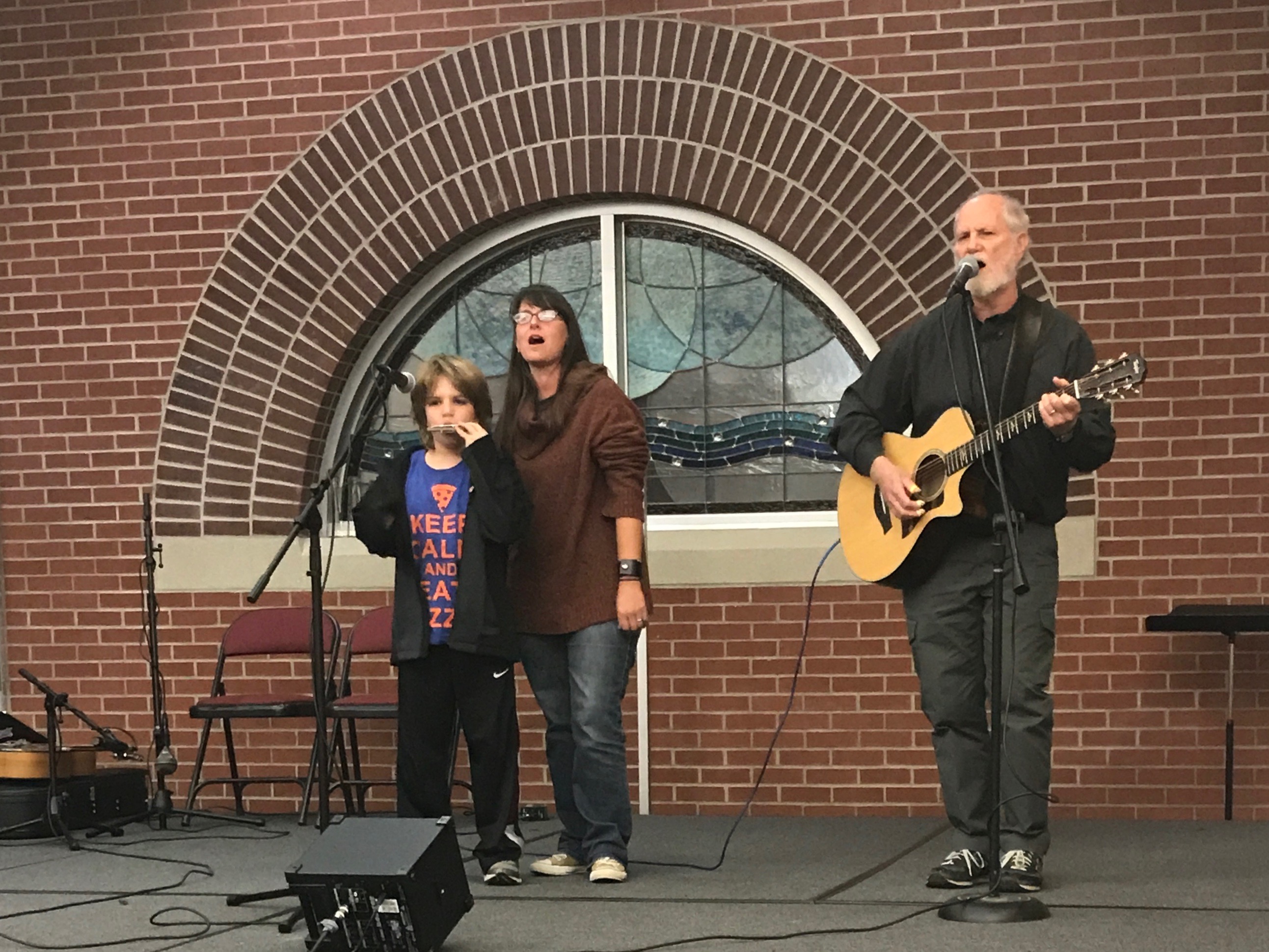
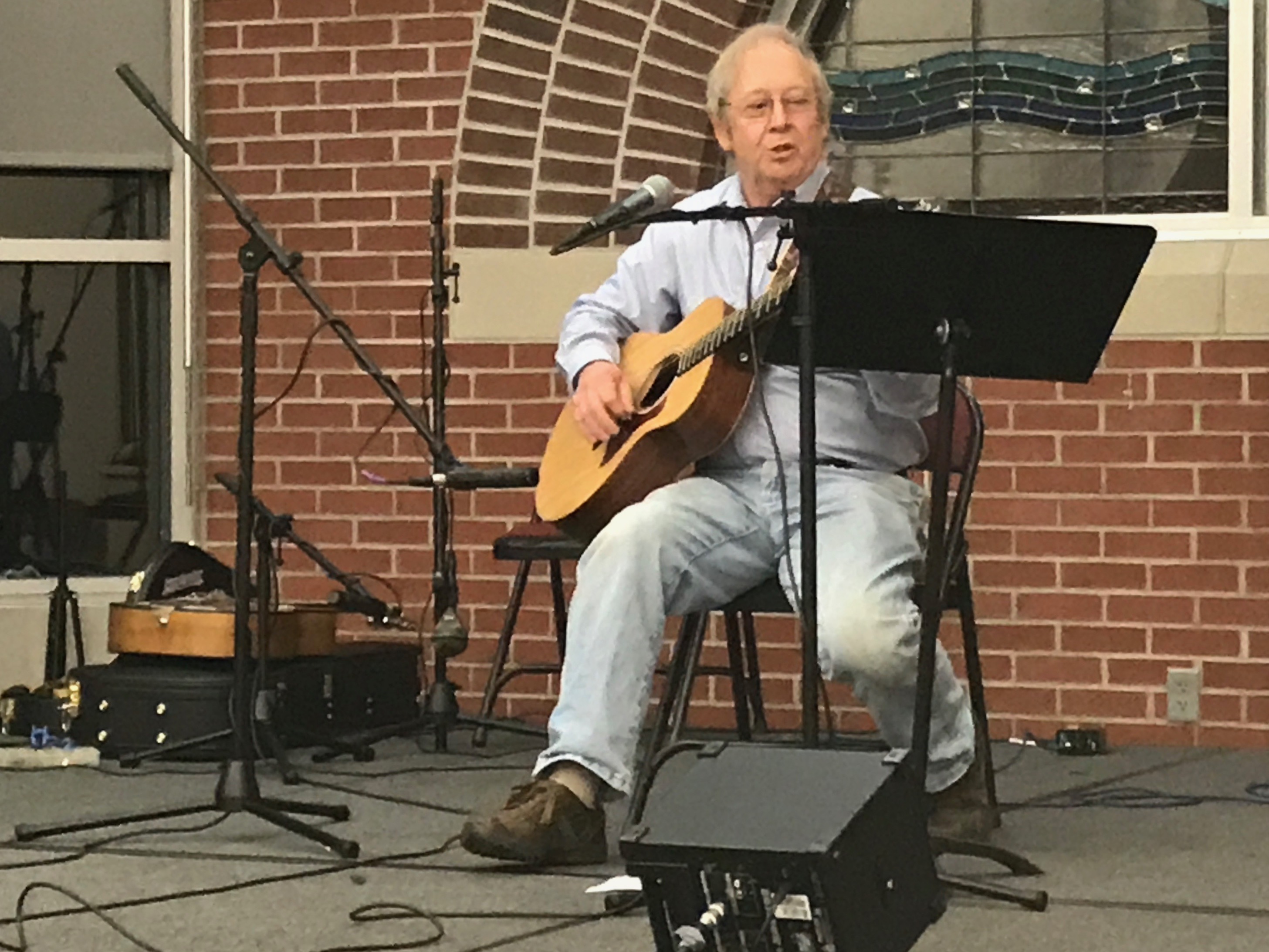
That evening, I joined Nancy at her library for an open night mike. It’s fun to watch people pursuing their passions, whether in a group…
or doing a solo.
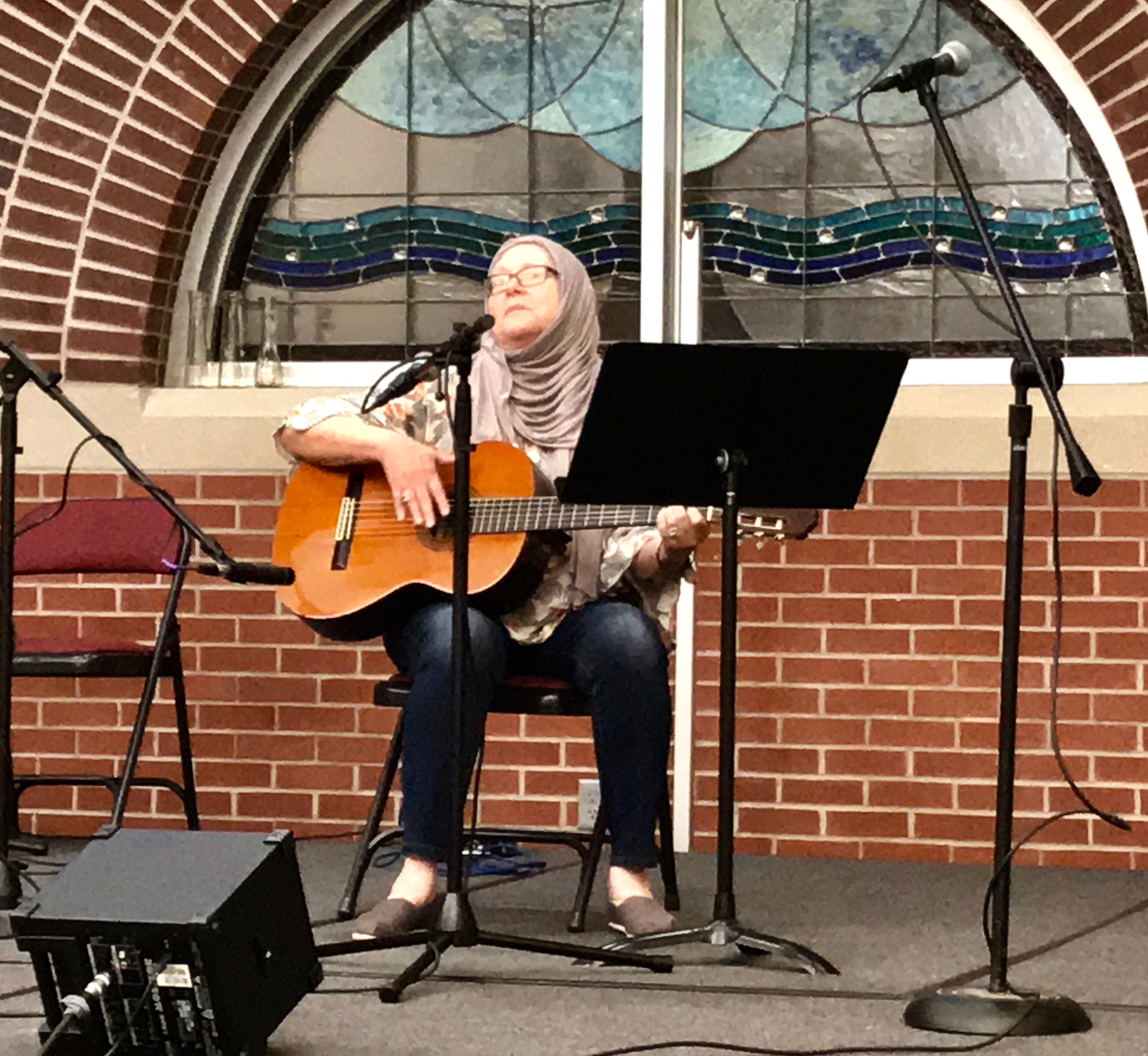
Nancy is also a talented musician, and she took a turn on the stage.
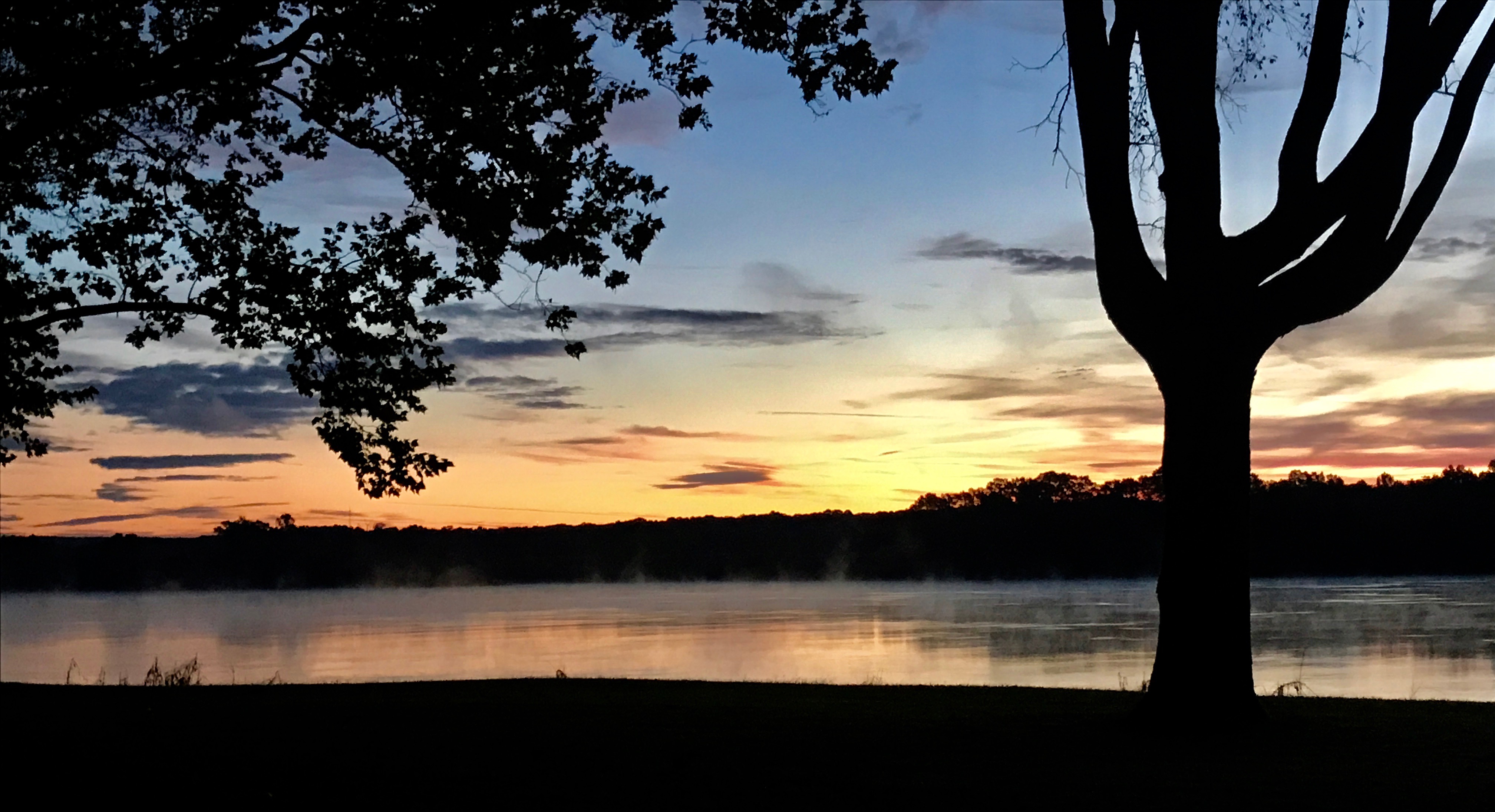
I made it back to Toad Suck Park in time to enjoy the last bits of a lovely sunset.
Incidentally, my Preferred Source has an entry about Toad Suck. There it says that the origin of the name is disputed. Some believe that is came about when idle rivermen would congregate at the local tavern where the would “suck on a bottle ’til they swell up like toads.” Others believe it is a corruption of a French phrase meaning “a narrow channel in the river.”
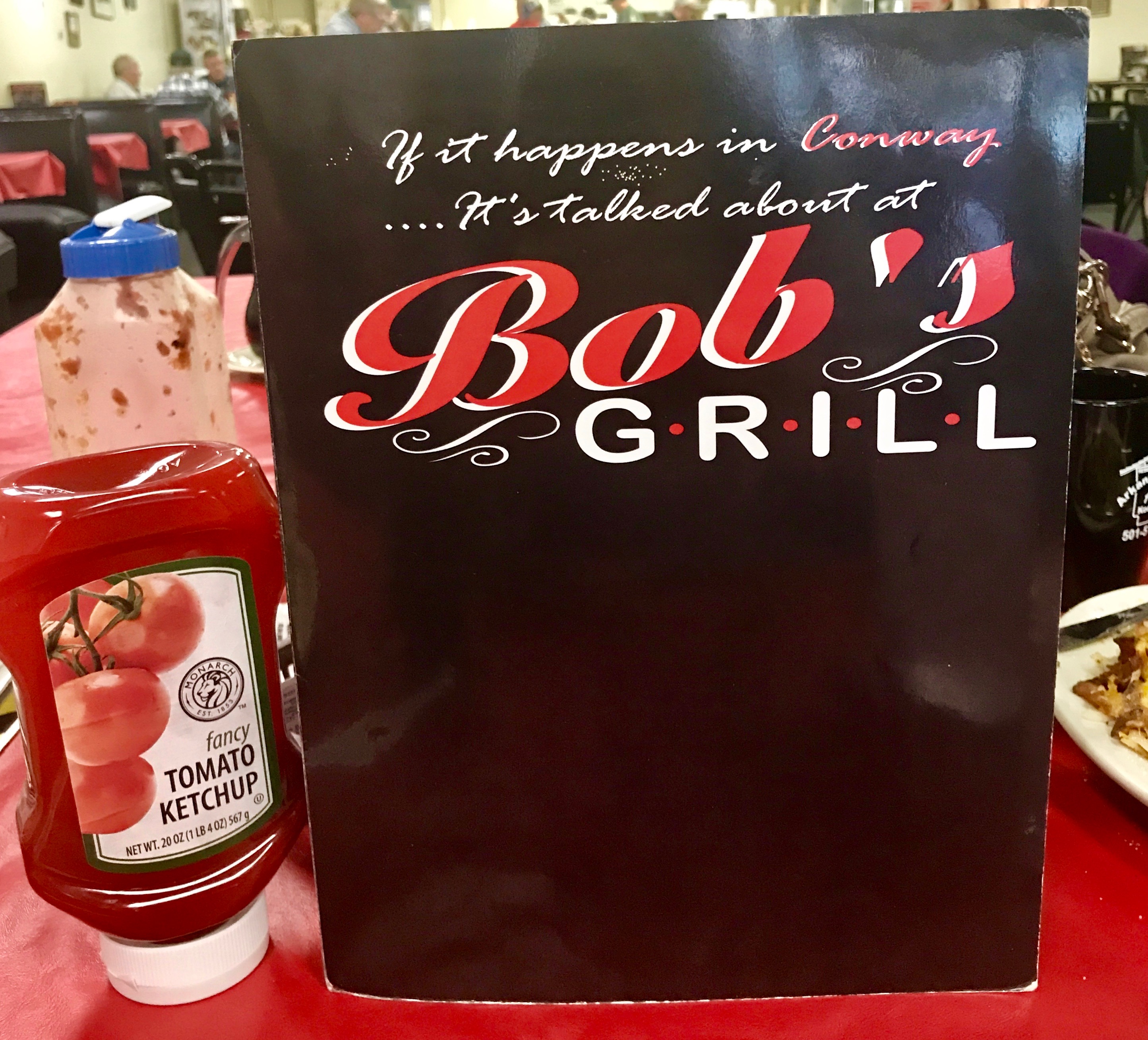
The next morning, we met up for breakfast at Bob’s Grill. Nancy’s husband, Dan, stopped in for a few minutes. We had met the last time I passed through. This is one busy family!
After that, it was back to her house for a bit. I took about a dozen photos of Nancy and her dog, whose name escapes me at the moment. I decided I liked this shot the best.
Then we managed to tag-team a selfie. I think I held the camera and she hit the button. (Or was it the other way around?)
And then it was time to go. Thanks for making time to visit with me, Nancy!
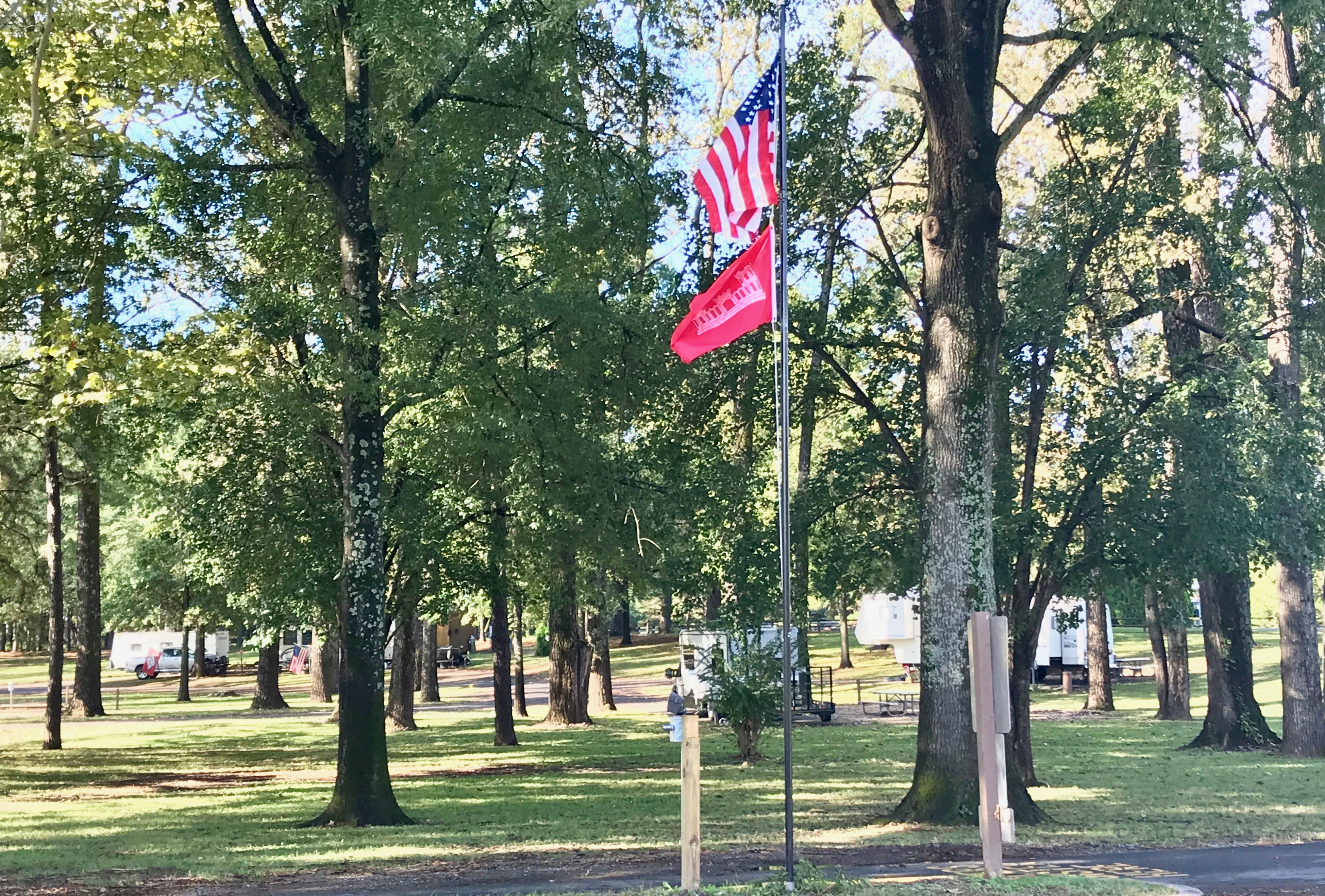
On my way out of the park the next day, I managed to snap a photo of the flags. It took a few shots, but I finally managed to snap on that showed the Corps of Engineers flag with most of their insignia visible.
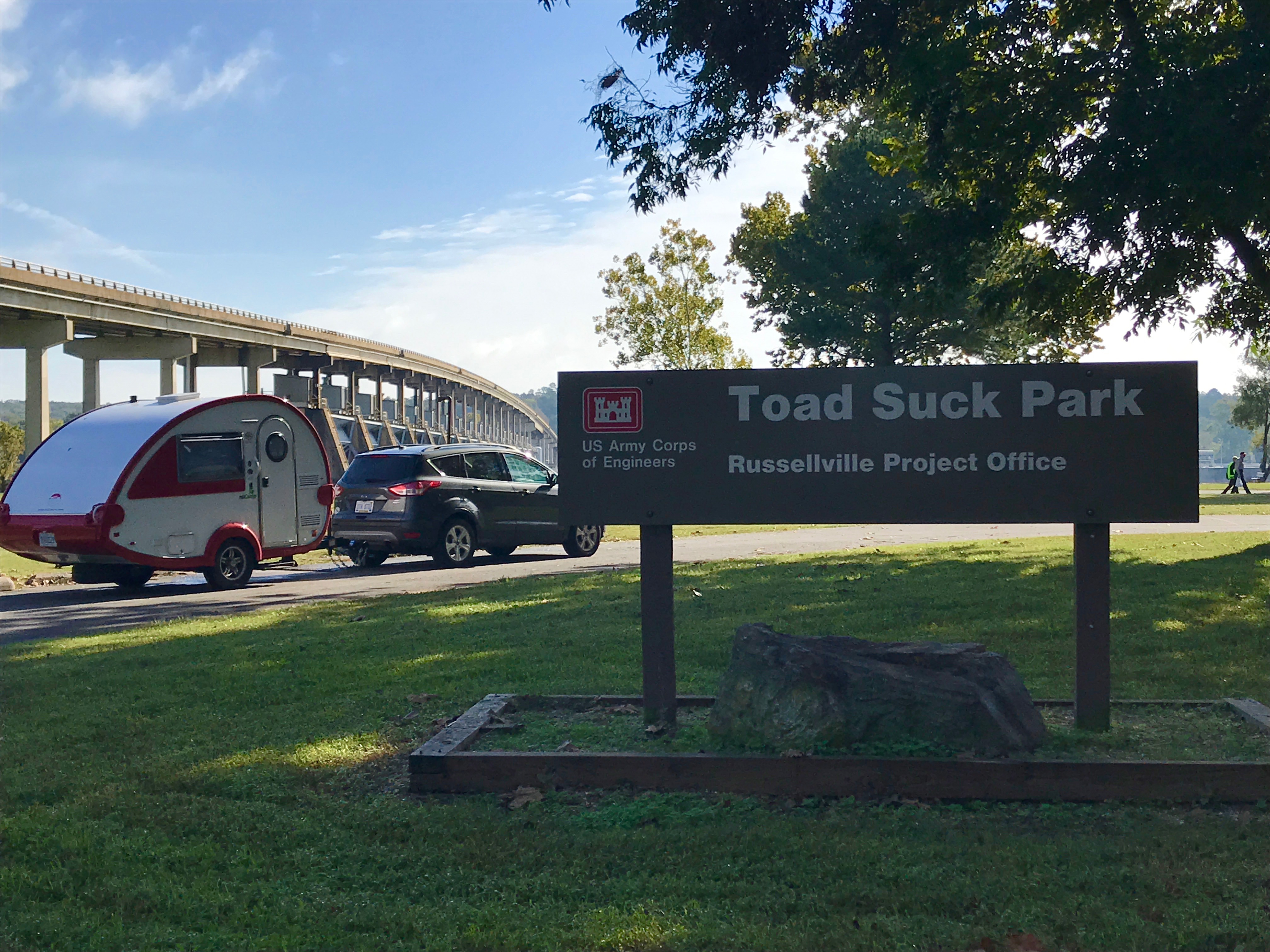
After I dumped my tanks, I also got a shot of the T@b with the sign. And then it was time to hit the road.
Let me share just a few more photos I took while I was in Kansas City.
First of all, here’s a little decor.
Very little…
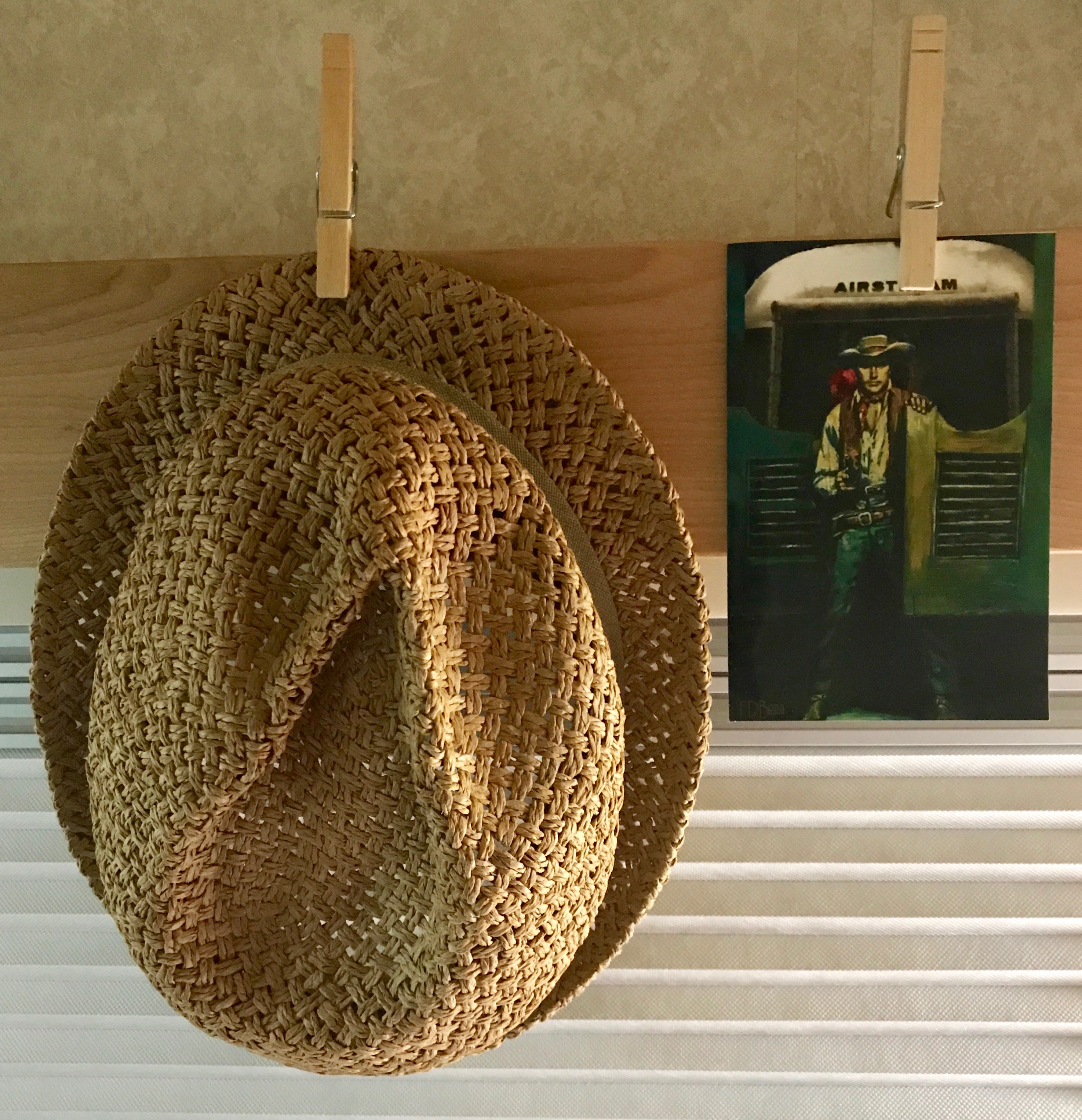
I am amazed by all the decor people add to their trailers. It just doesn’t seem to be my thing. But, I love the simple elegance of spring clothes pins. I clipped up my hat and a piece of artwork done by my friend, Frank DiBona.
Frank does what he calls “mashups” and he inserts Airstreams into the works of art via Photoshop. (Personally, I think he uses magic.) A while back, he asked me to come up with some works of art he hadn’t been using and to send me some photos of Flo, the Airstream. If you want to see some of his other work, he has an online business that sells tee shirts and other items with his parodies. (I have a few of his tee shirts.)
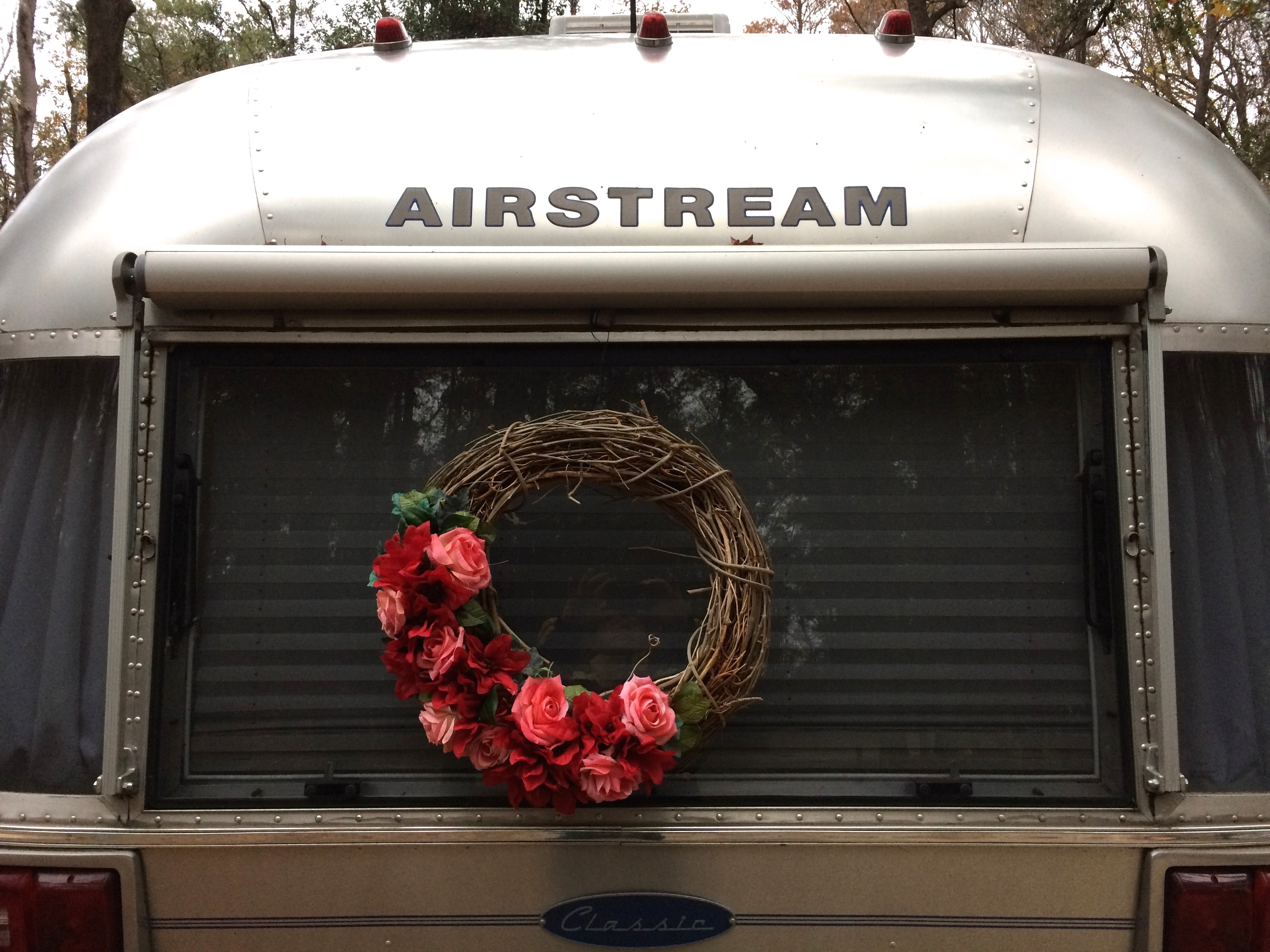
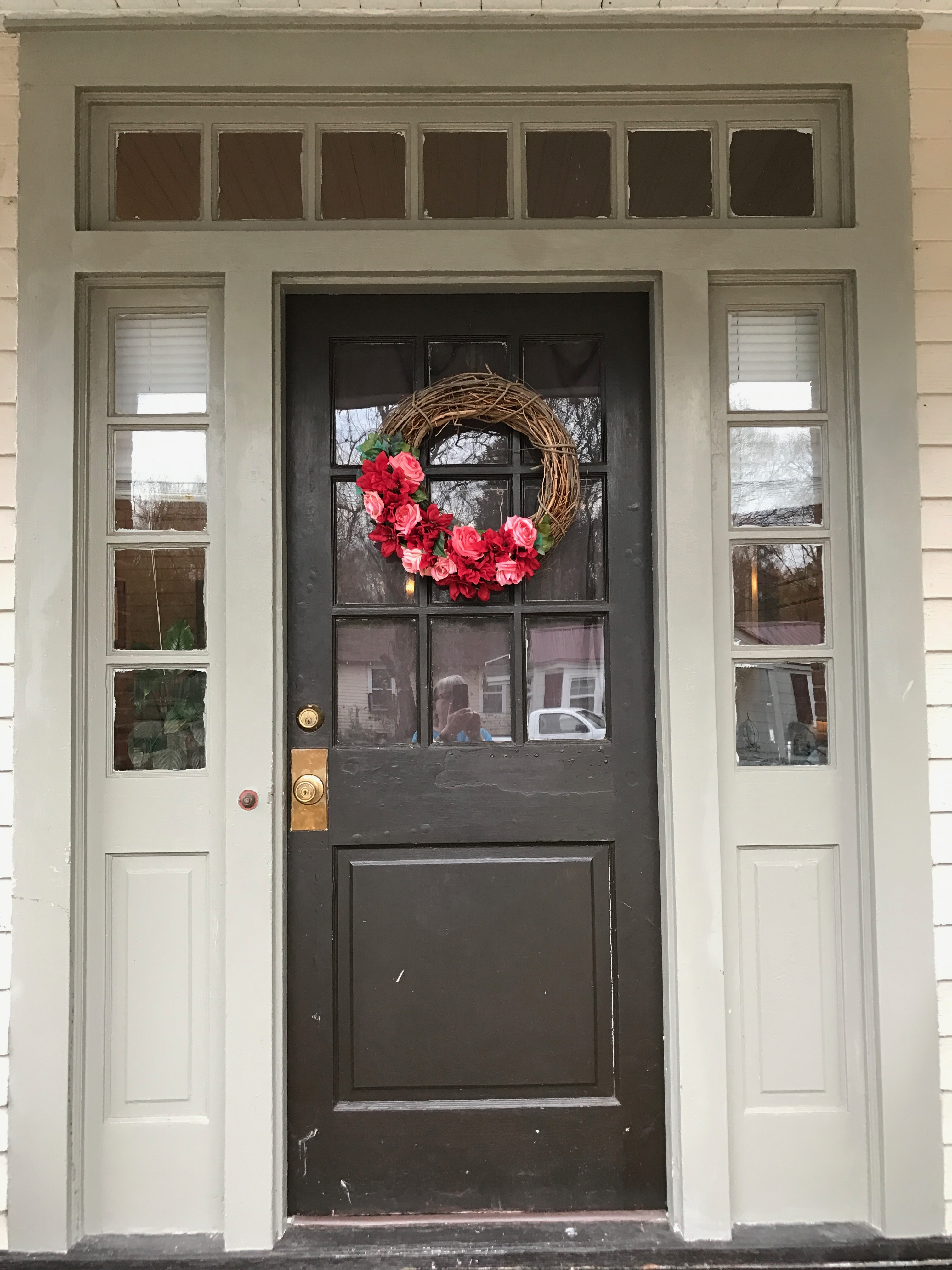
Anyway, that’s Flo behind the gunslinger. You can tell it’s Flo – and not just any old Airstream – because she is decorated with the wreath I rescued from brother Craig’s house when I helped him move in 2016. I was going to a pre-Christmas rally near Savanah, Georgia, so I hit up a Dollar Tree and prettied it up.
After the rally, I headed to my other brother’s house and gave Scott and Lesley the wreath.
So, the only one of the Davison siblings that didn’t have the wreath was my sister. Sorry about that, Amy.
My first trip to Kansas City was in 1974. I took part in a national Girl Scout event at the Nelson-Atkins Museum of Art. I wanted to go visit it again. As luck would have it, I tried to visit it on one of the days it was closed. I knew it was closed when I headed over, so I wasn’t horribly disappointed.
Big art museums like the Nelson-Atkins frequently have interesting artwork around it, so I thought it was worth a trip. Quite frankly, I didn’t remember much about the museum, as my last visit had been 44 years ago!
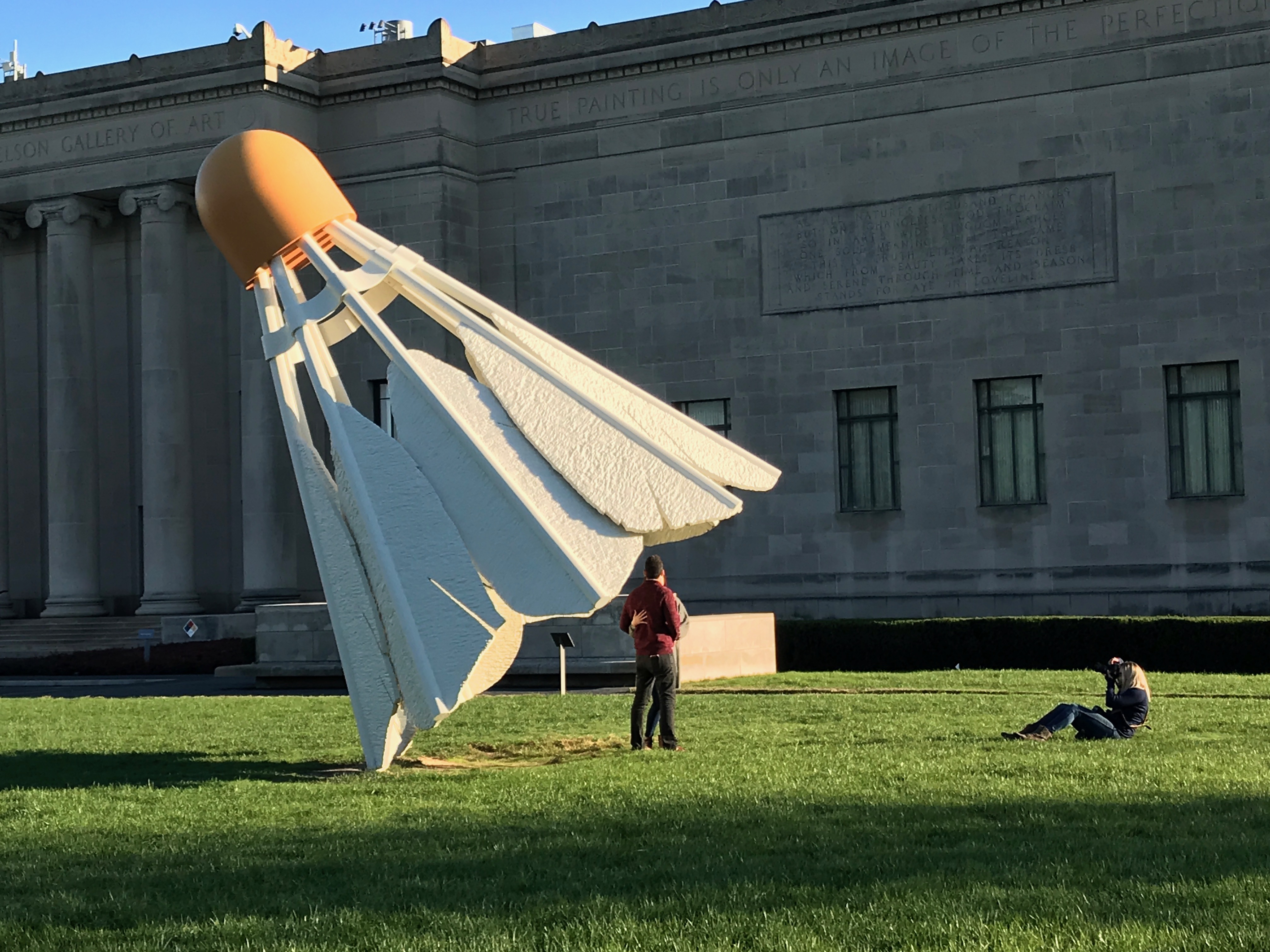
I didn’t remember these enormous shuttlecocks, and that concerned me. I was kind of wondering if I my memory was slipping altogether. I found an information plaque, and I was relieved when I learned that the four shuttlecocks were installed in 1994 – twenty years after my visit.
My photo of the information plaque didn’t turn well, so I will type out what it says, in case you want to learn more.
“The husband and wife team of Claes Oldenburg and Coosje van Bruggen were commissioned in 1994 to design a sculpture for The Nelson-Atkins Museum of Art. They responded to the formality of the original neoclassical building and the green expanse of its lawn by imagining the Museum as a badminton net and the lawn as a playing field. The pair designed the four birdies or shuttlecocks that were places as through they had just landed on opposite sides of the net. Each shuttlecock weighs 5,500 pounds, stand nearly 18 feet tall and has a diameter of some 16 feet.”
There was a message at the bottom, too.
“Please do not touch the sculpture.”
Oh, and the title of that work of art: Shuttlecocks.
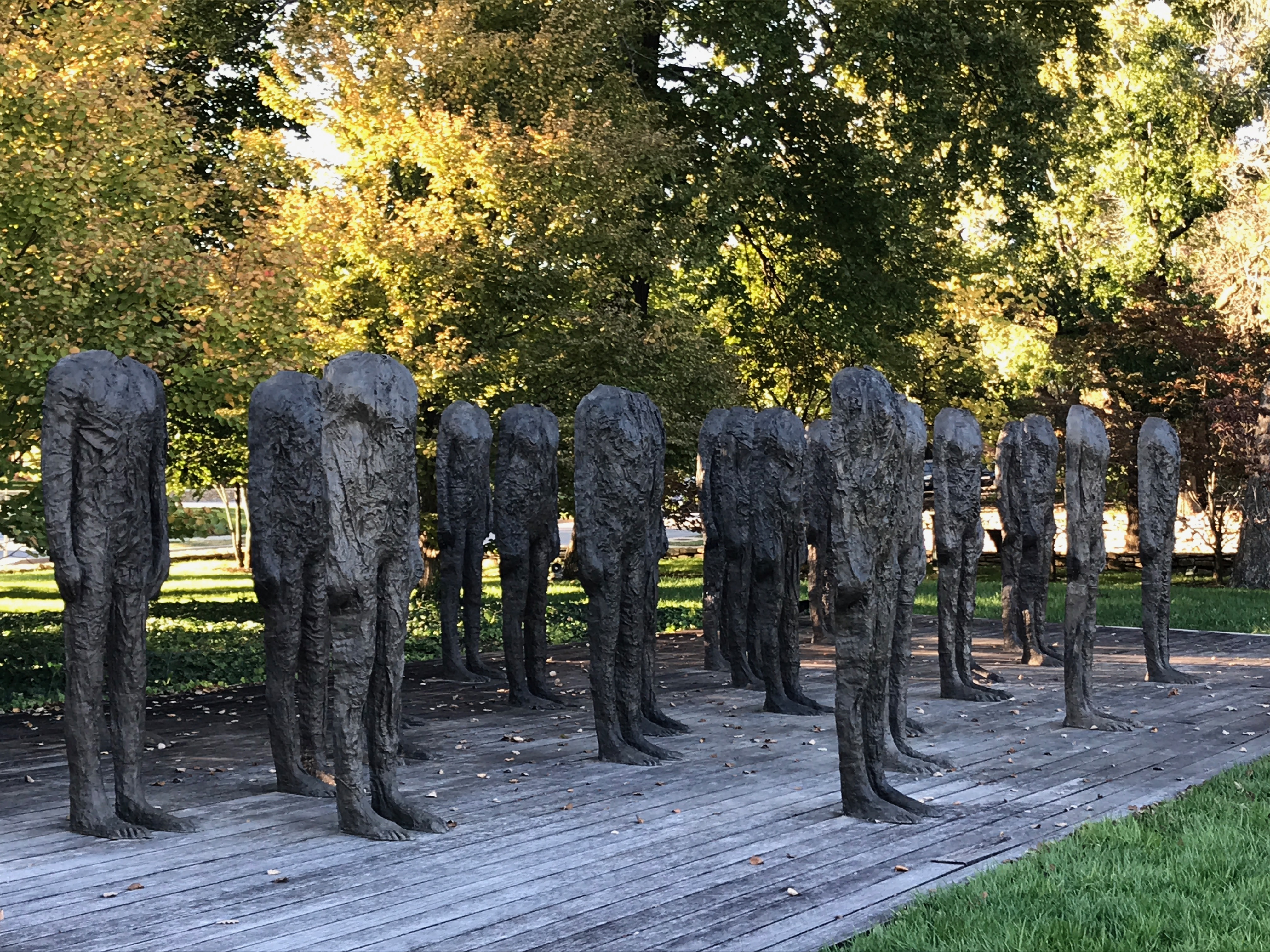
This work of art is titled Standing Figures (Thirty Figures). Polish artist Magdalena Abakanowicz began work on it in 1994 and finished in 1998.
Again, the photo of the information plaque didn’t turn out well, so I’ll type out what it says.
“Magdalena Abakanowicz’s figures are instantly identifiable by their stark imagery. The haunting power of these headless, standing figures invites many interpretations, and the artist welcome this approach. Could they be awaiting final judgement? Do they suggest war victims? Art they primordial beings in silent communication? Each figure is individually cast from a burlap-lined body mold.”
The message at the bottom of the plaque: Please do not climb on the sculpture. So, I guess you can touch them – just don’t climb on them.
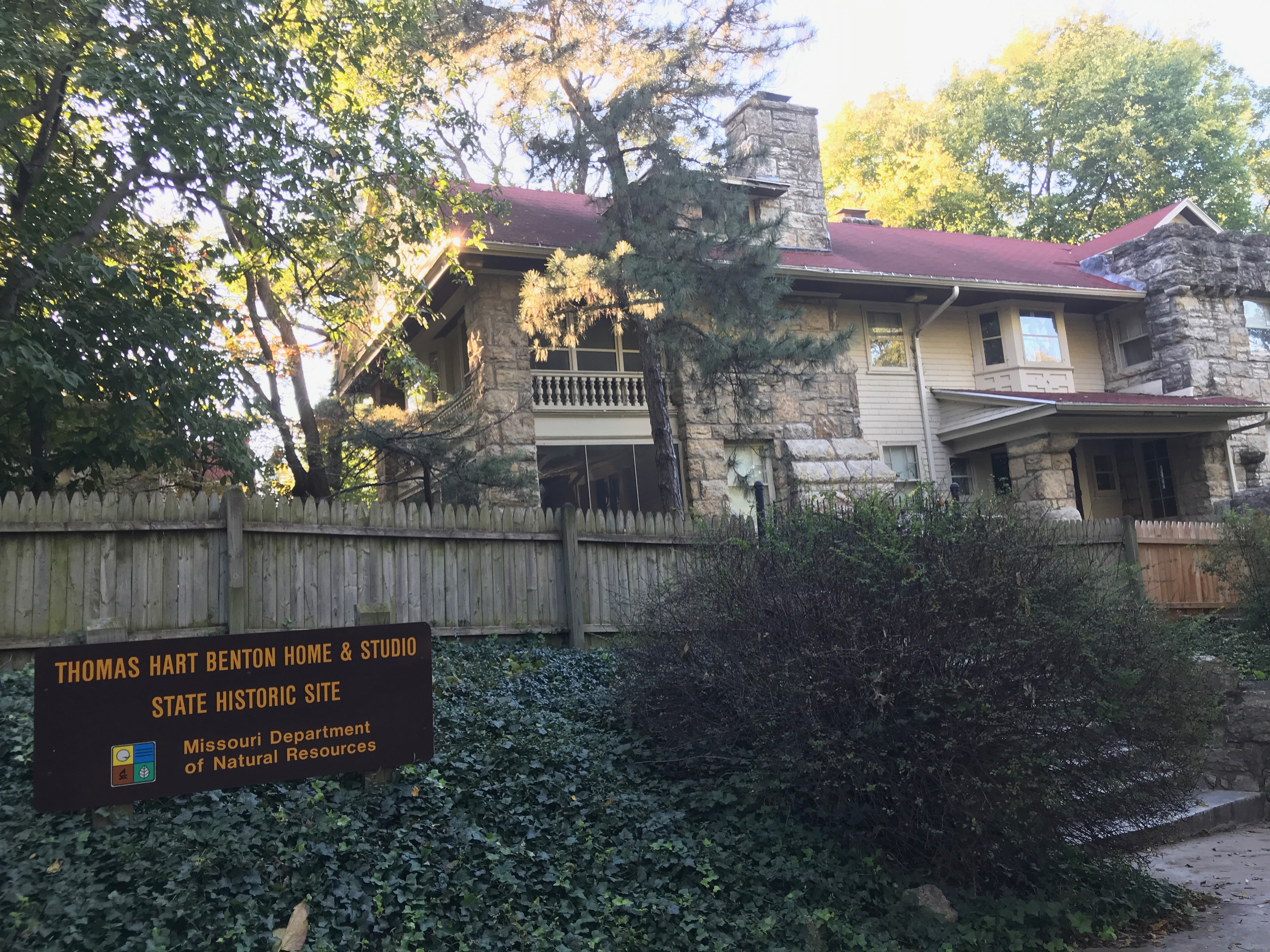
With that, I headed out to explore some more. I came across a sign pointing the way to Thomas Hart Benton’s home and studio. I decided to see what I could see.
I parked on the street and walked up to the State Historic Site.
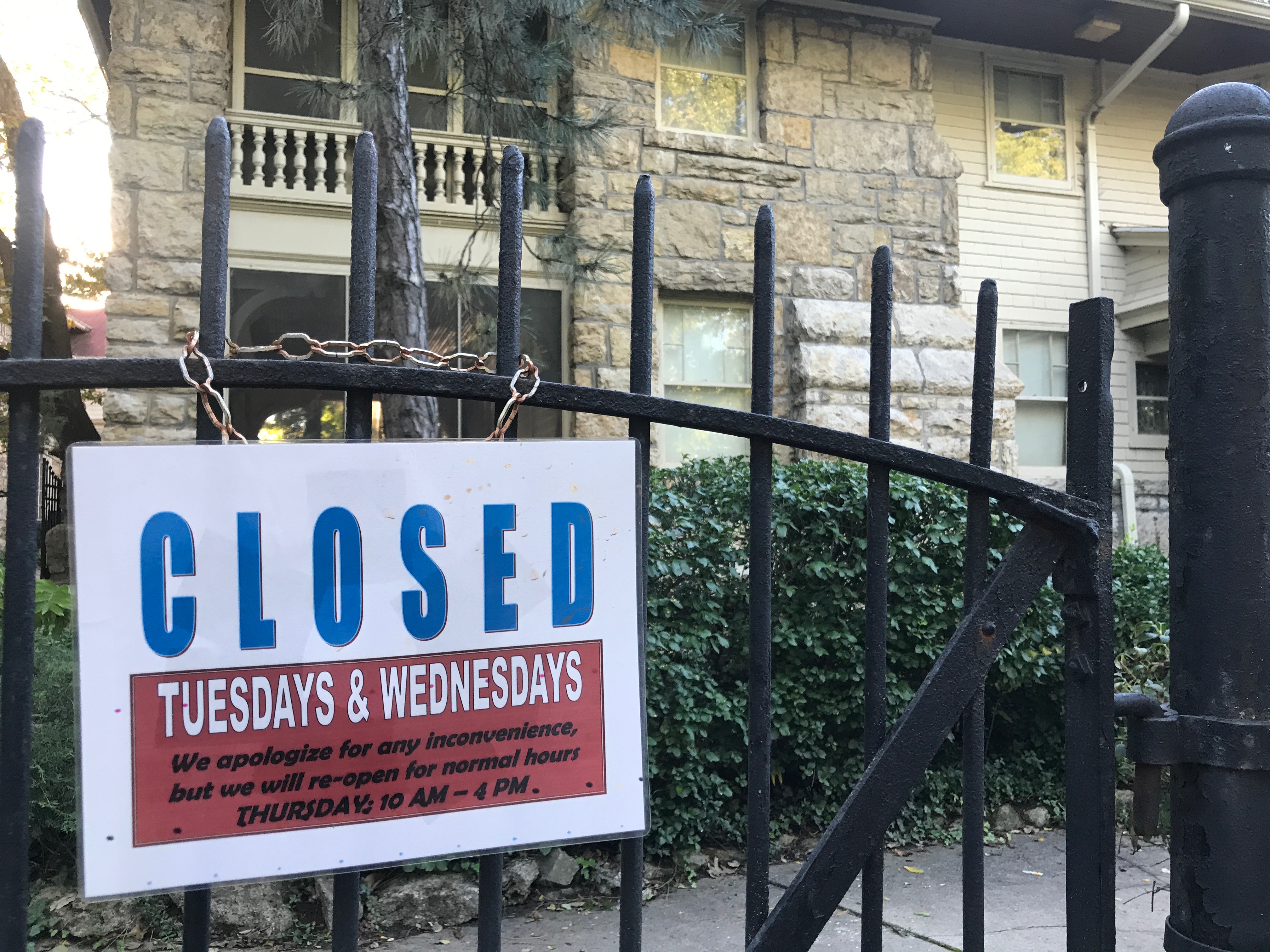
Naturally, it was closed. I decided to see what I could see over the fences.
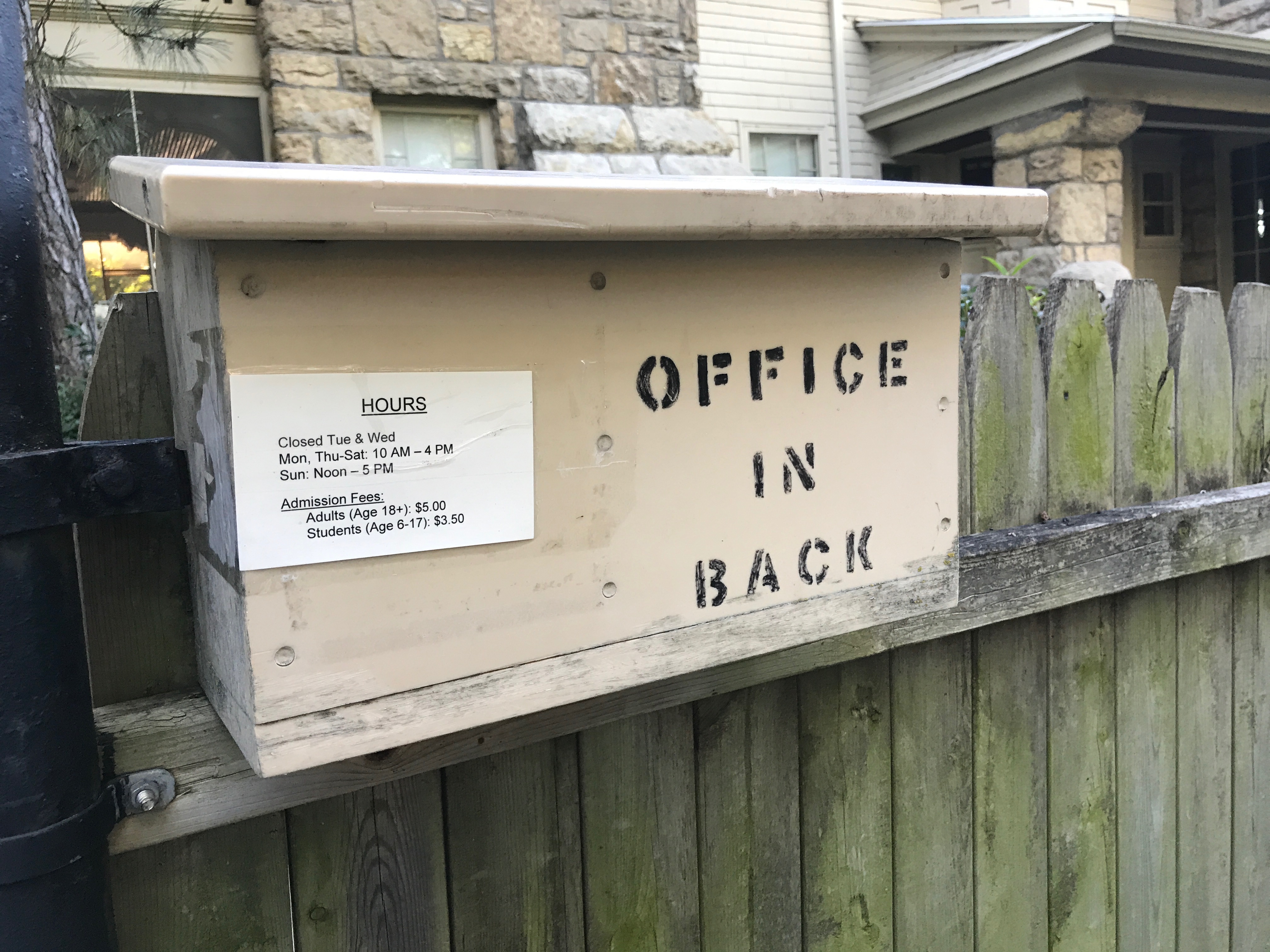
The office was in the back. Good to know, I guess.
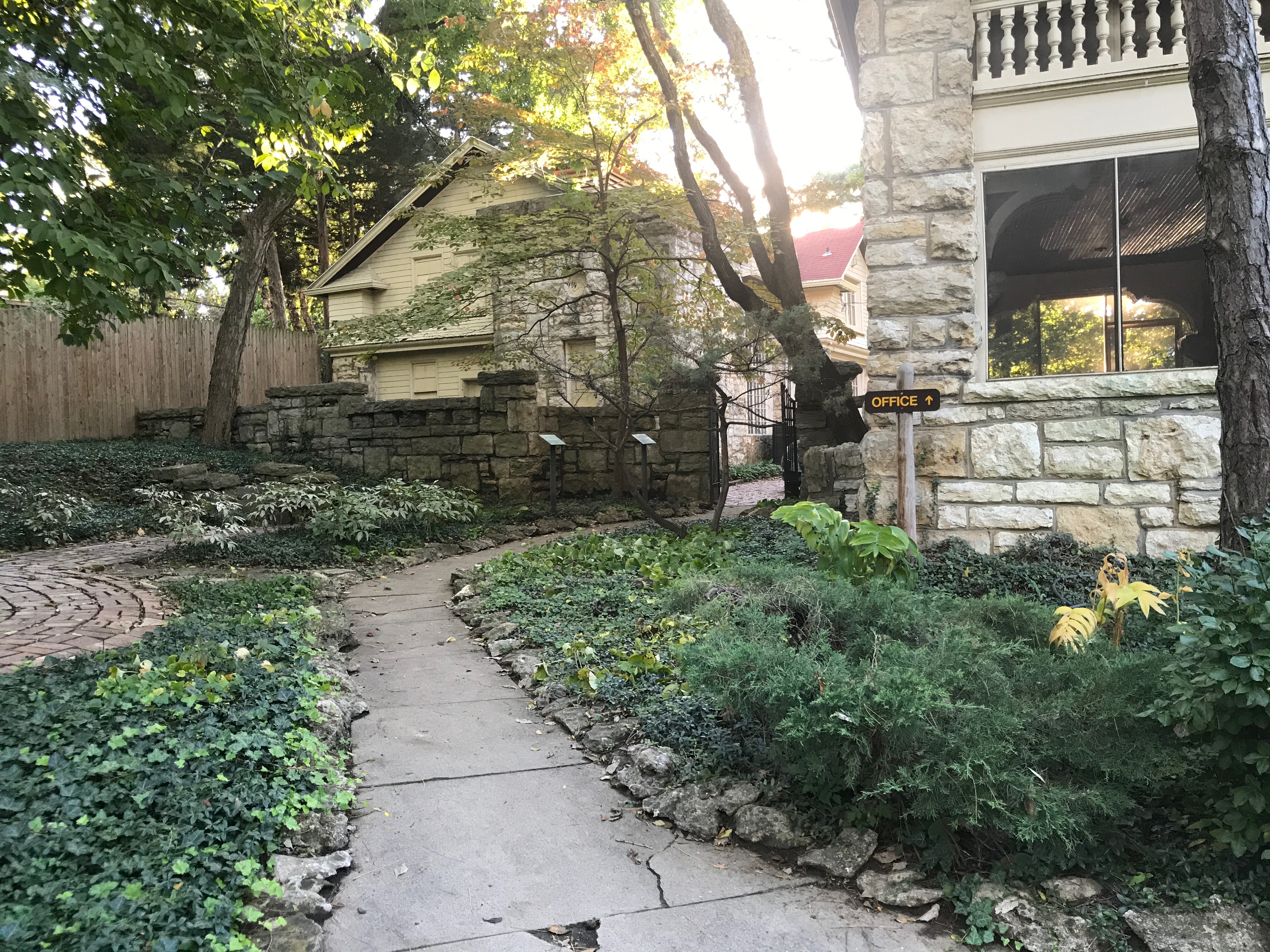
That way to the office.
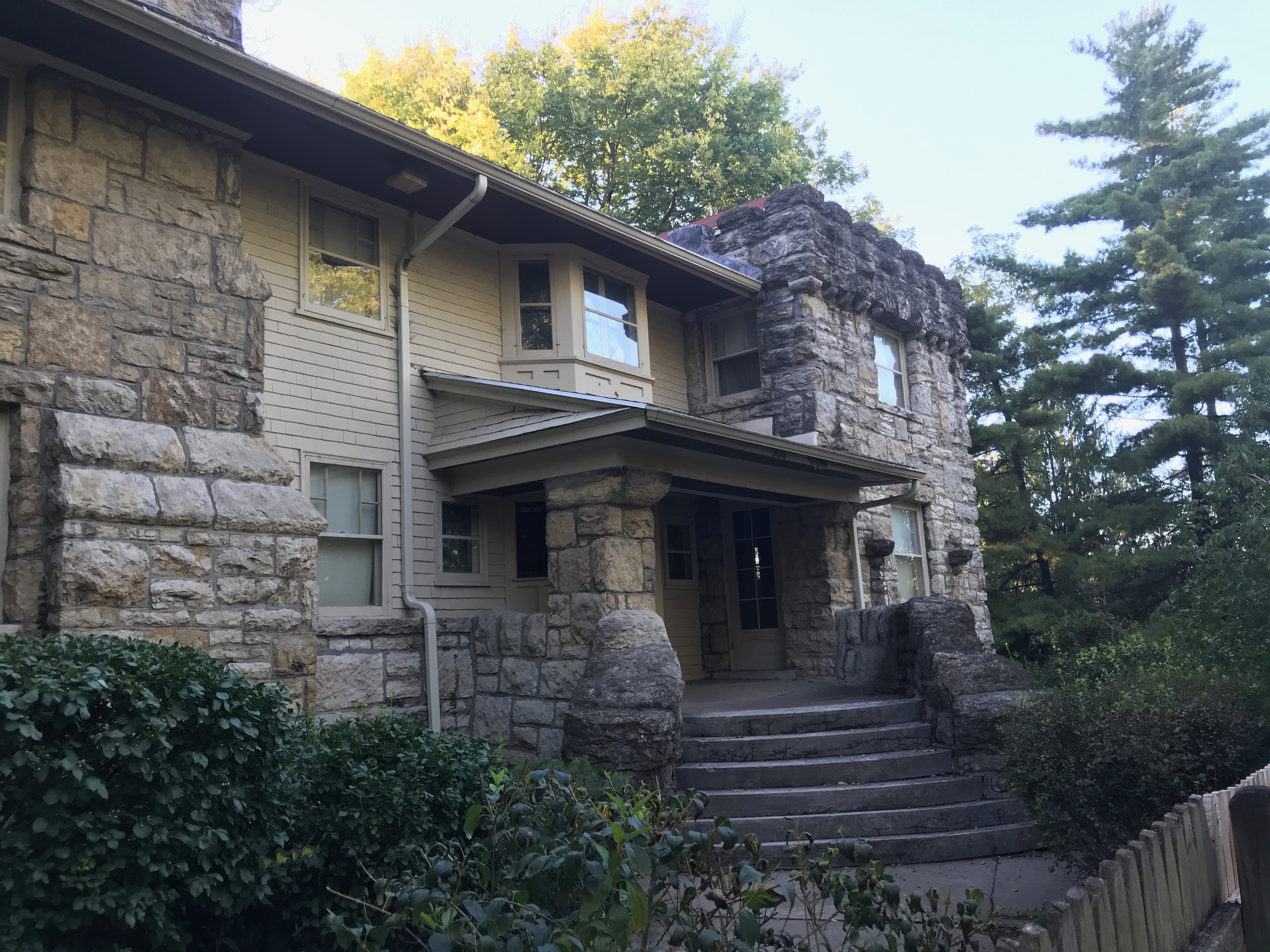
Ah! That must be the main entrance. Well, this is now on the “Next Time” list, so maybe one day I’ll visit.
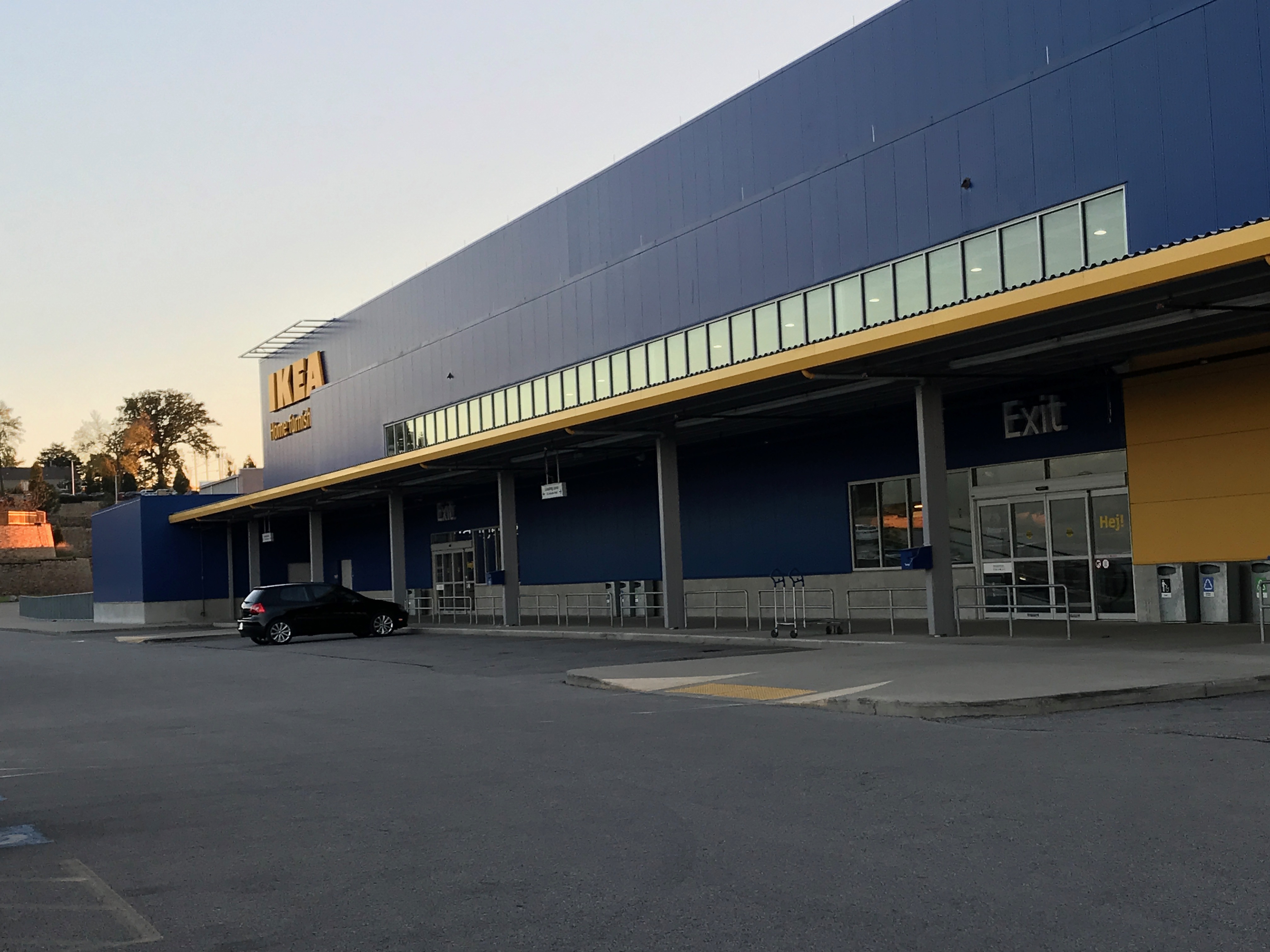
One place that was open: IKEA!
I made a quick pilgrimage and then headed back to the T@b to get packed up for travel the next day.
Just as I was getting ready to head down to the rest of the museum, the field trip caught up with me.
I’m glad I’m not jockeying for space with them! Besides, it was time for lunch. I decided to head to the Over There Café in the museum.
There they invite you to Eat Like a Soldier. They use the helmet icon to identify dishes that are meals that the soldiers would have eaten in World War I. Dishes like Trench Stew, Army Goulash, Chipped Beef, and a sampler platter containing tastes of the three dishes.
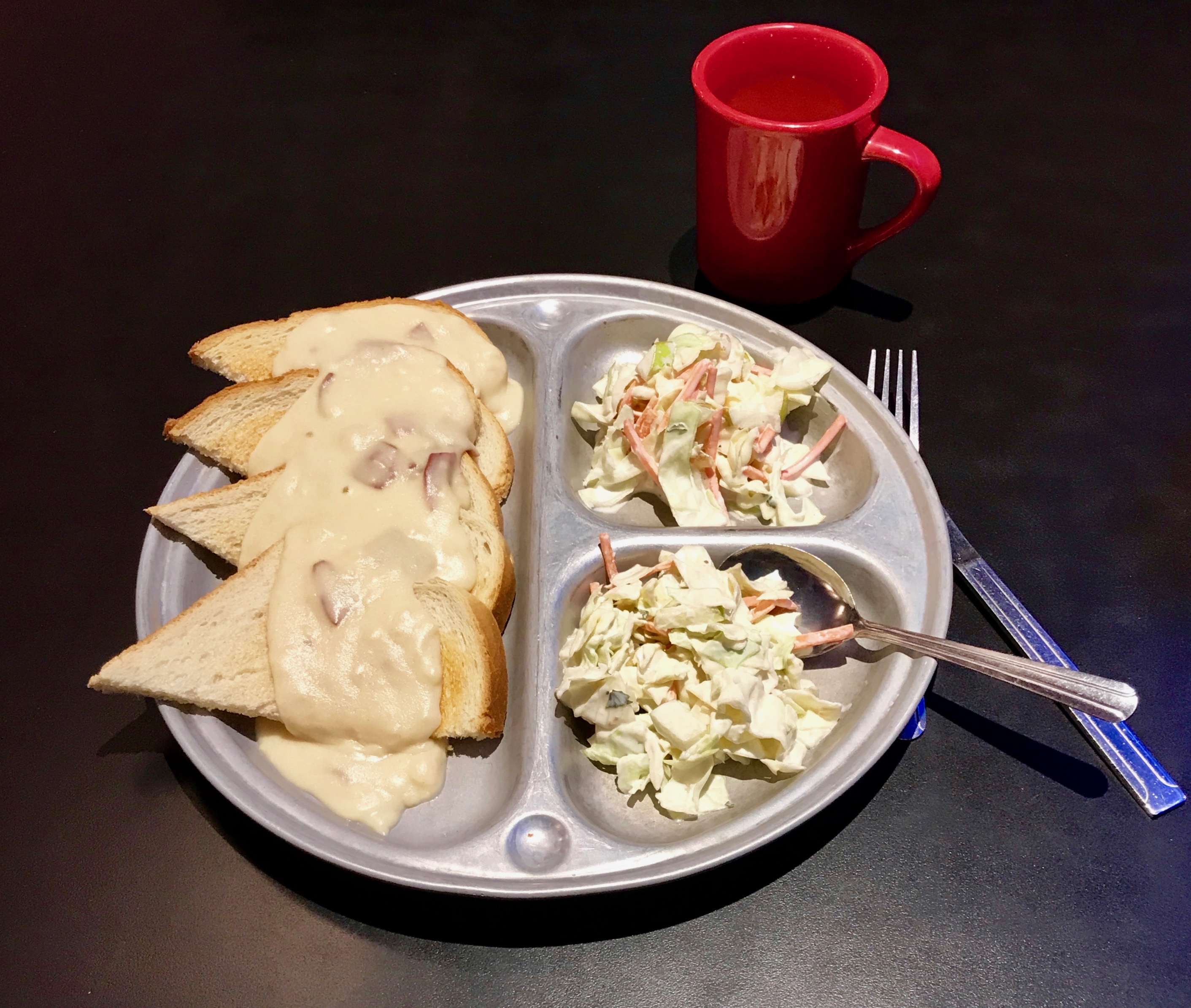
I opted for the Chipped Beef. (Here is a recipe in case you want to try it yourself.)
I always thought it was called “SOS” or “Sh*t on a Shingle” but I guess there is also a name that is used in polite society.
I thought the metal mess kit was a nice touch, as was the poppy-red coffee mug. Those poppies are everywhere!
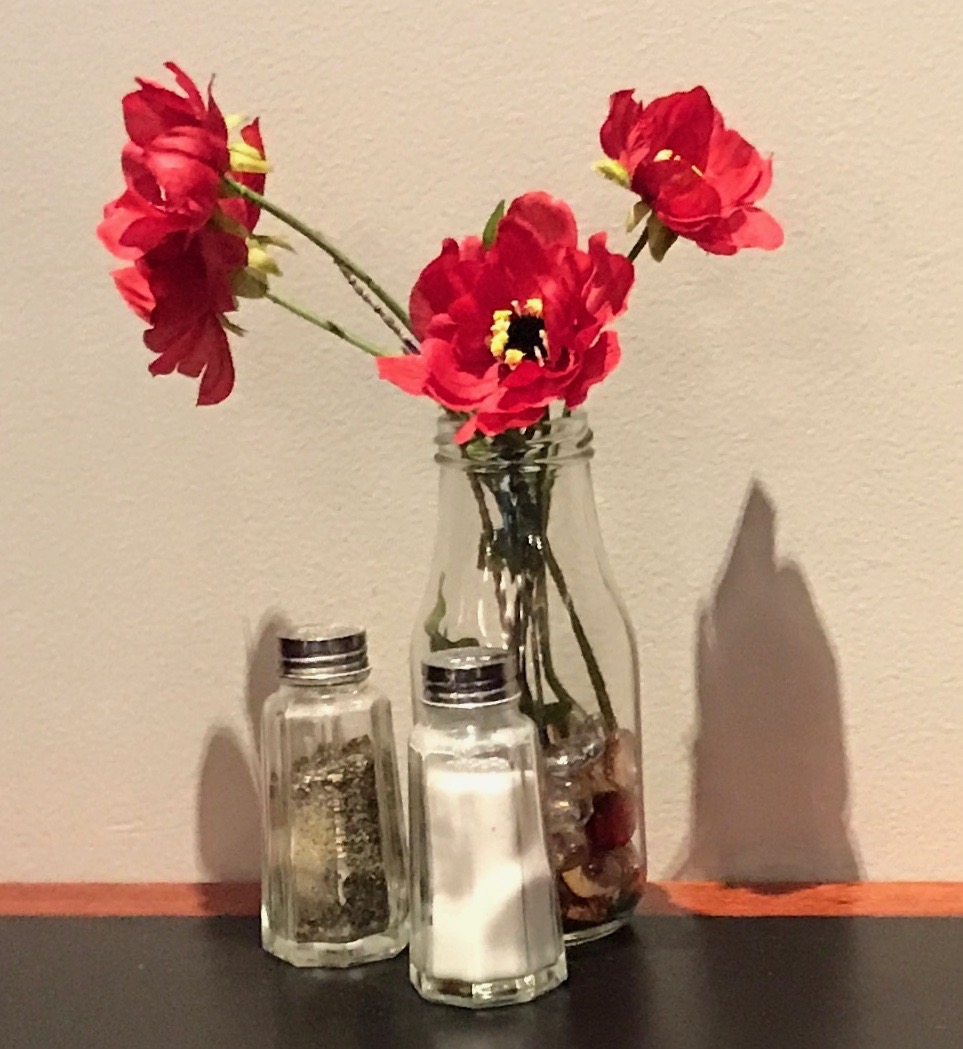
I had this cute little arrangement on my table.
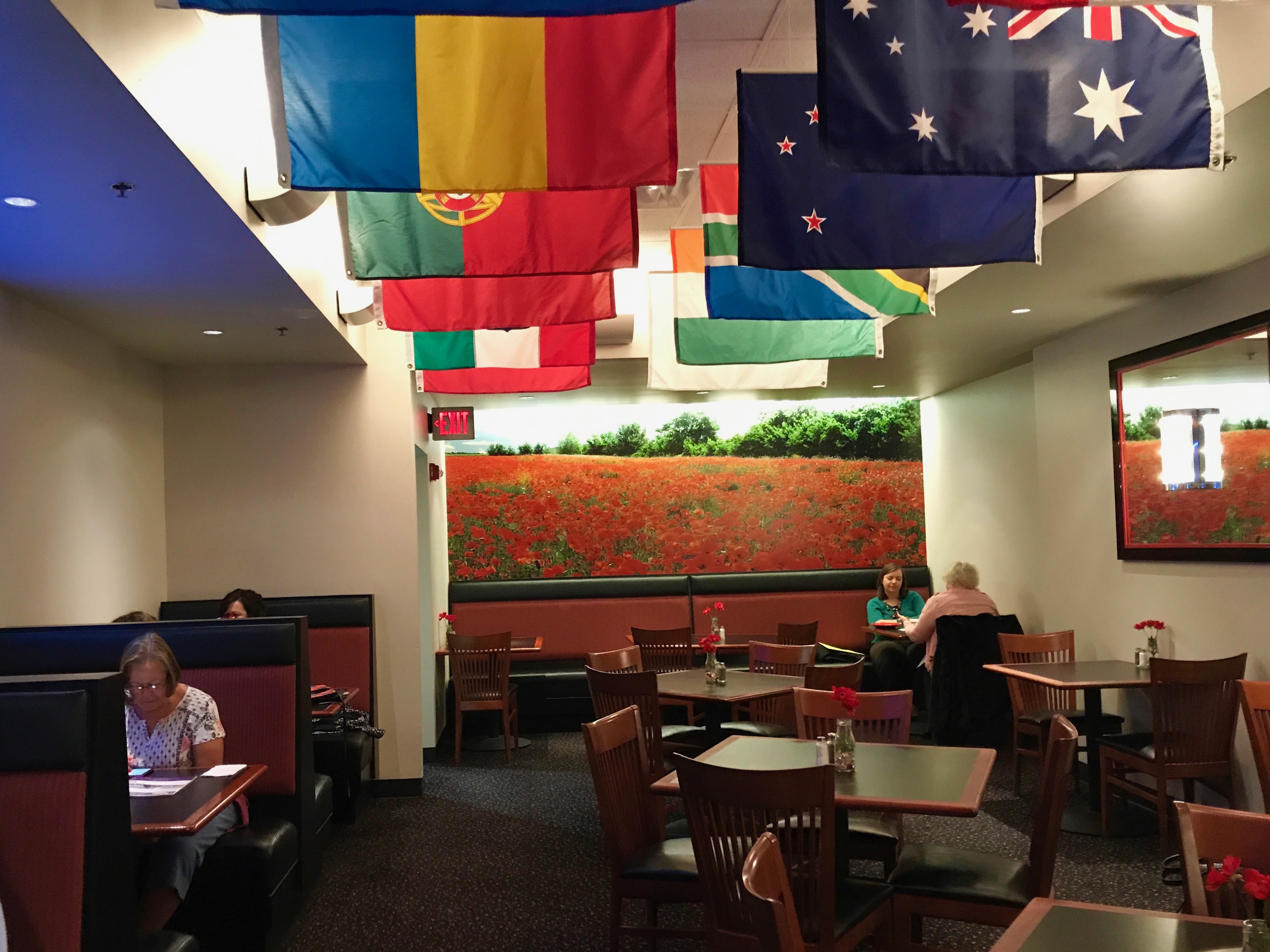
Each table had a little bouquet of poppies on it, and the walls were covered with poppy artwork. I thought the flags of the allies on the ceiling were a fitting bit of decor. I wonder how many soldiers ate like in such calm and clean dining halls?
Thus restored, I set out to see what I could see.
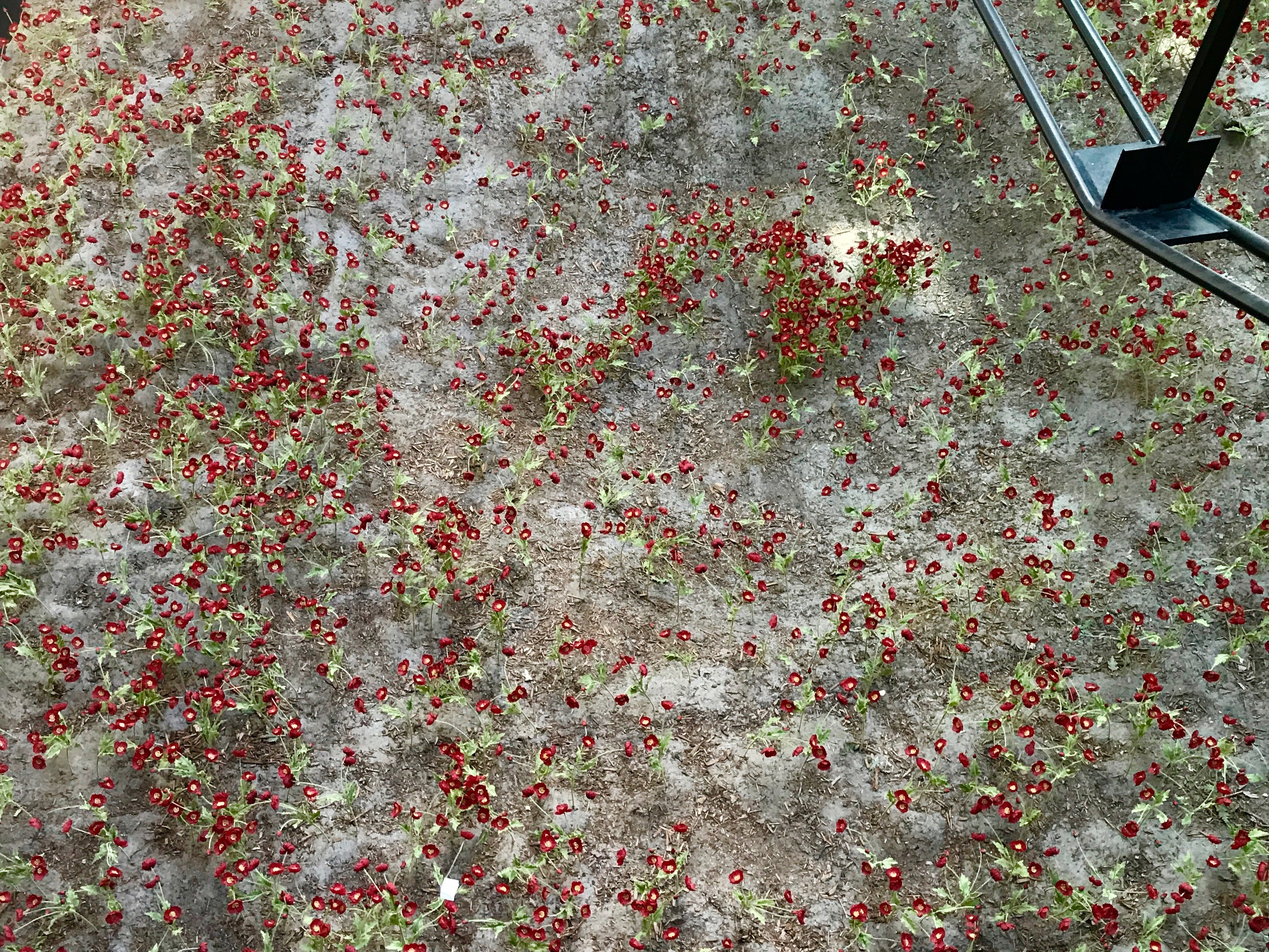
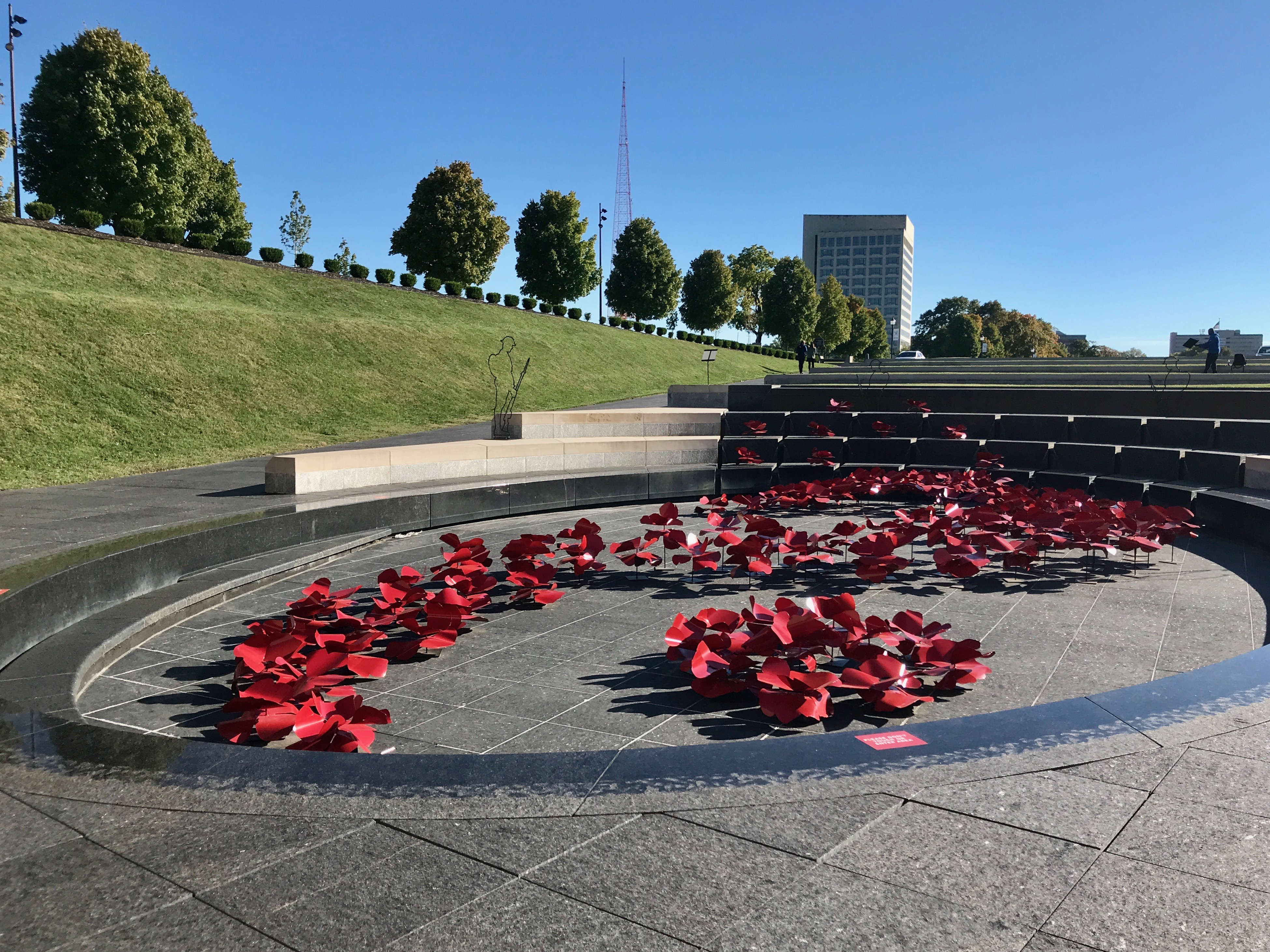
On the way to the displays, I passed another display of poppies. It runs in my mind that there are 9,000 of them massed in areas below the trusses, and each poppy stands for 1,000 dead combatants. That may be so, although I looked up the question “How many died in World War I?” 9,000,000 seems to be a bit on the low side. And you know what? That doesn’t even count the number of dead that were on “the other side.”
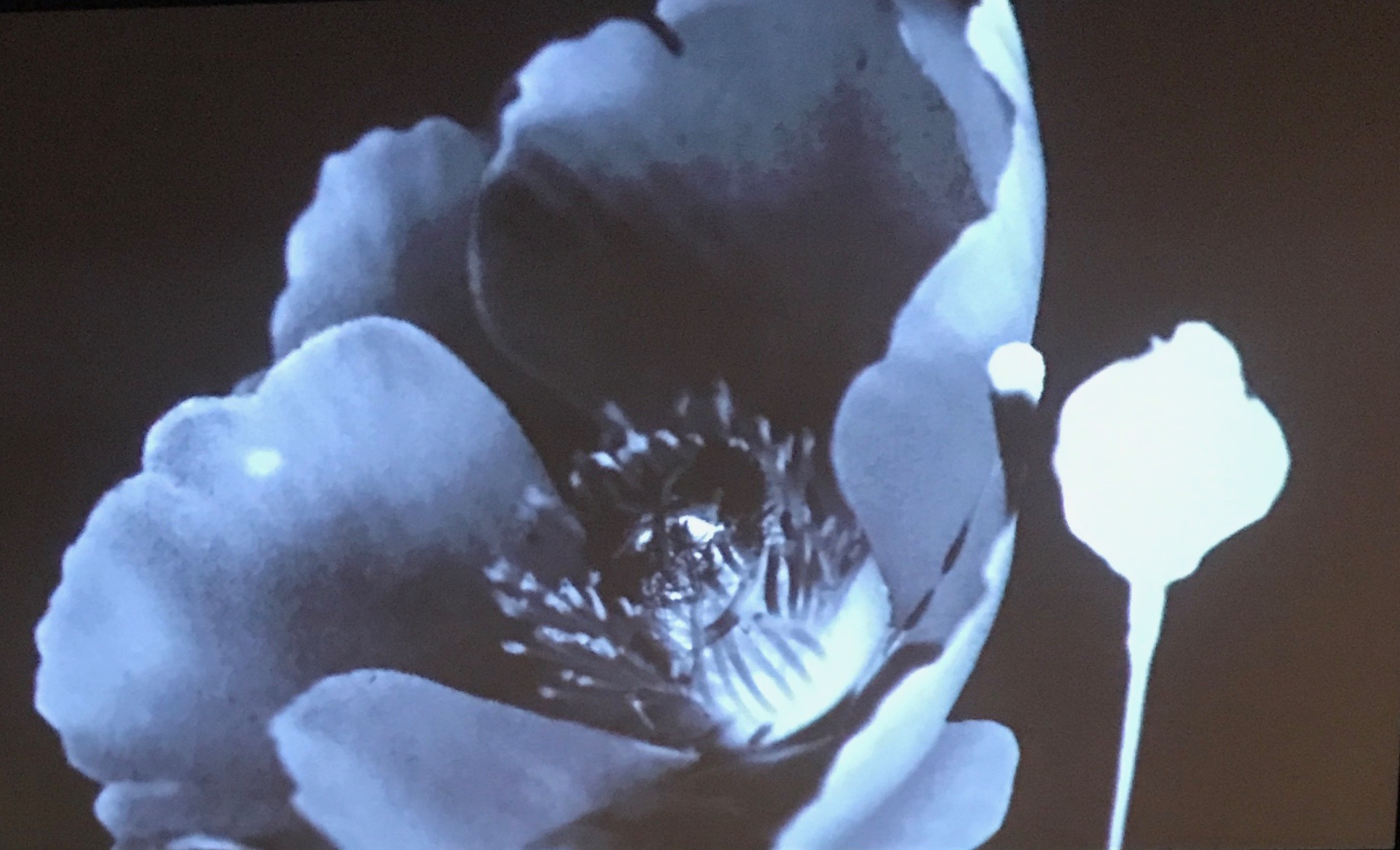
One more display of poppy art – this time, apparently x-rayed poppies – and it was time to enter the museum.
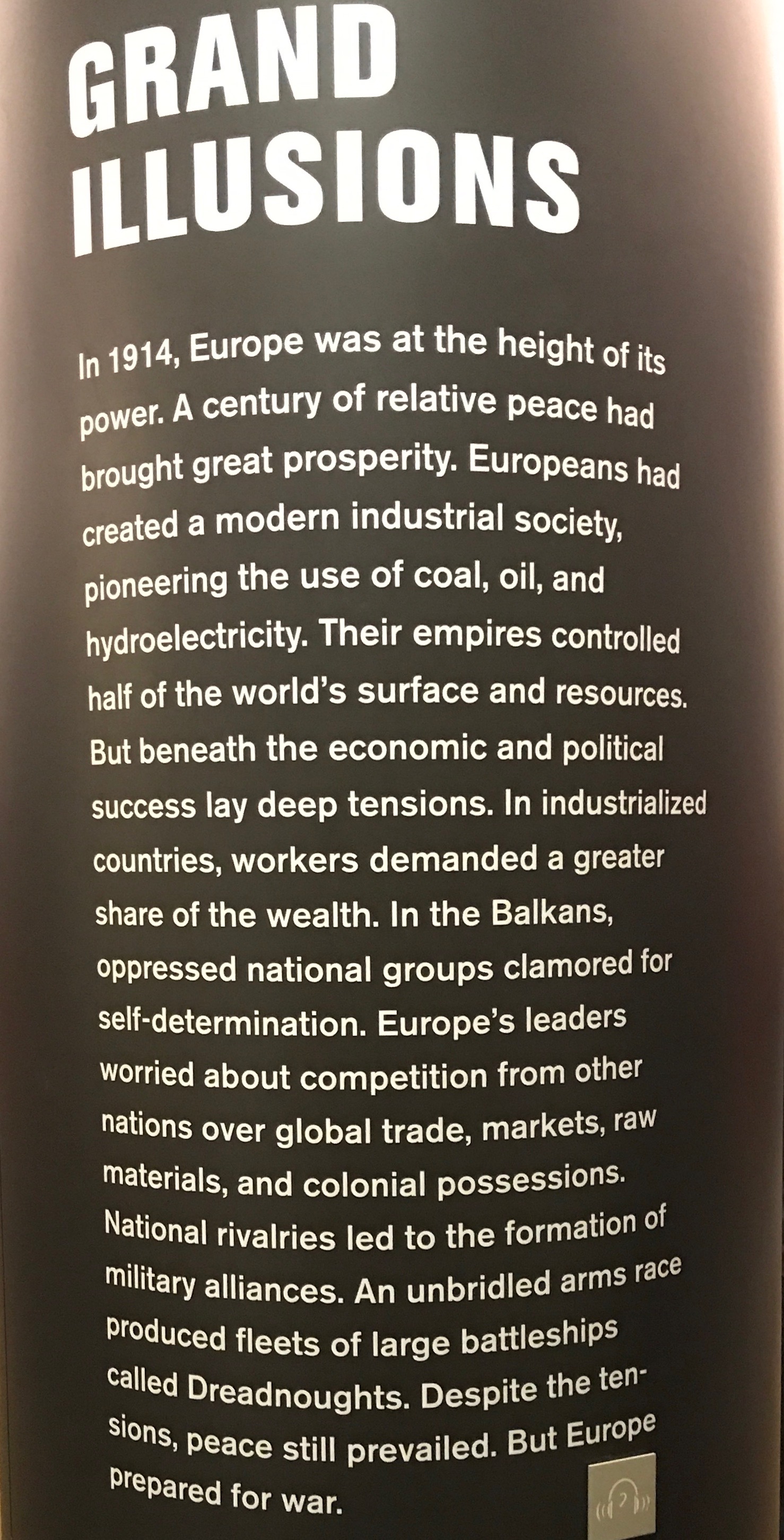
My loyal followers are probably just about to get up for some milk and cookies – or more substantial fare. You can relax. This time, I am going to give the museum a quick once-over. While the museum has a reputation for excellence, I found it to be extremely text-intensive.
Perhaps I should have sprung for the audio tour. I snapped some photos of the information, with intentions to return to it later. Since I have been writing these posts about my visit, I realized that World War I is an extremely complicated topic. I need to do considerable study and research before I can even begin to understand it.
Additionally, “reading a museum” with bifocals isn’t a lot of fun. So, friends, I’ll just share a few items that I could take photos of.
You can still have some milk and cookies (or something stronger) if you wish.
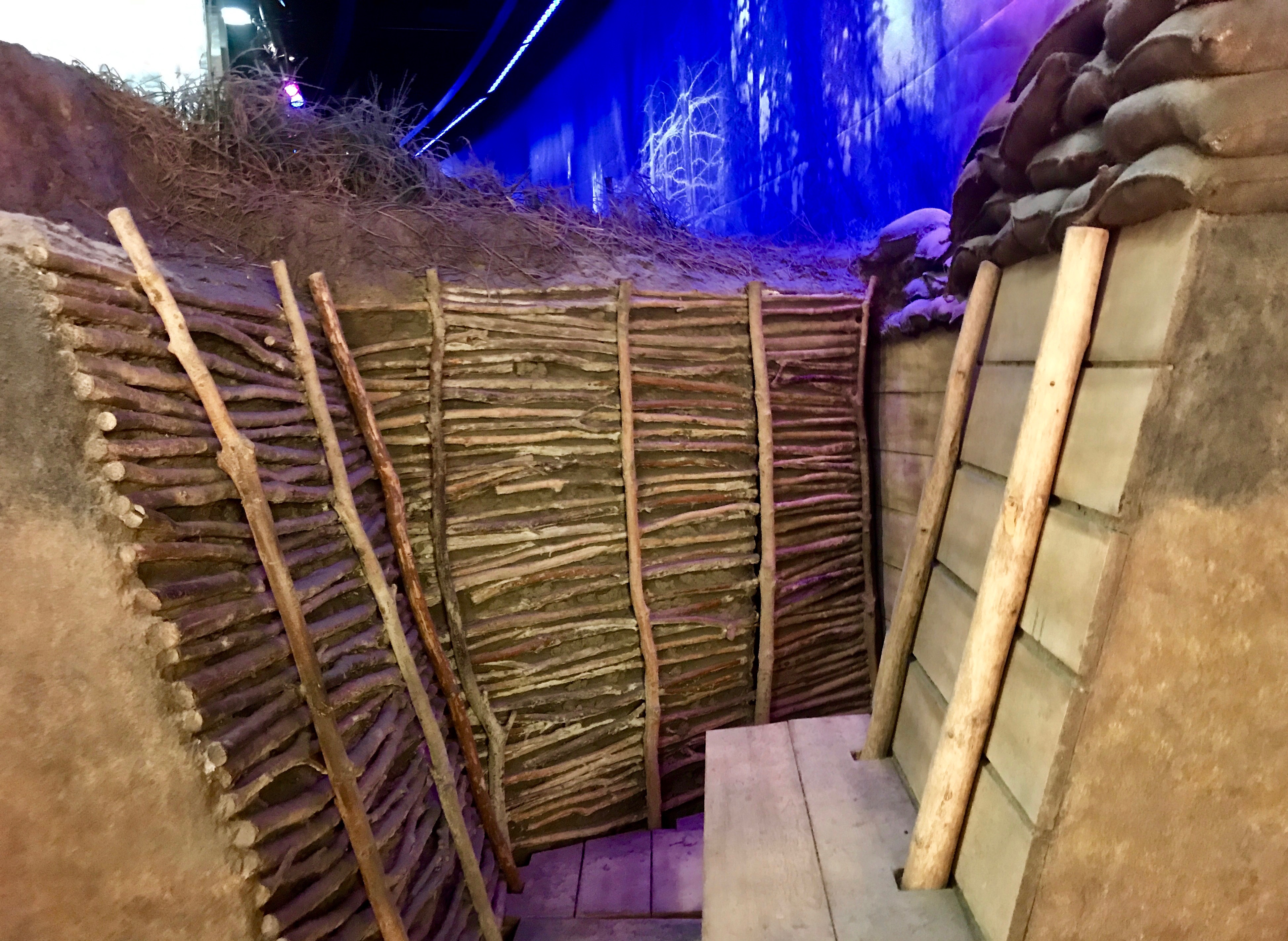
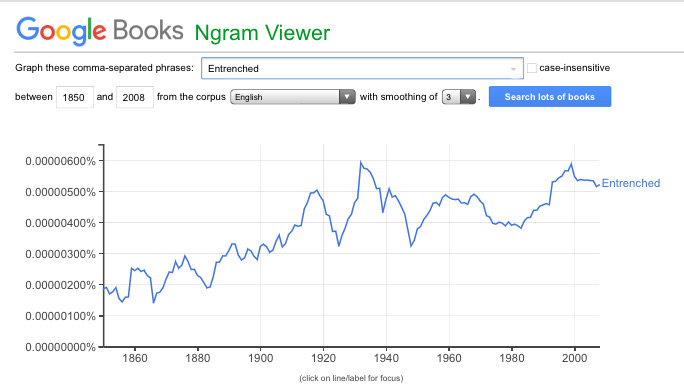
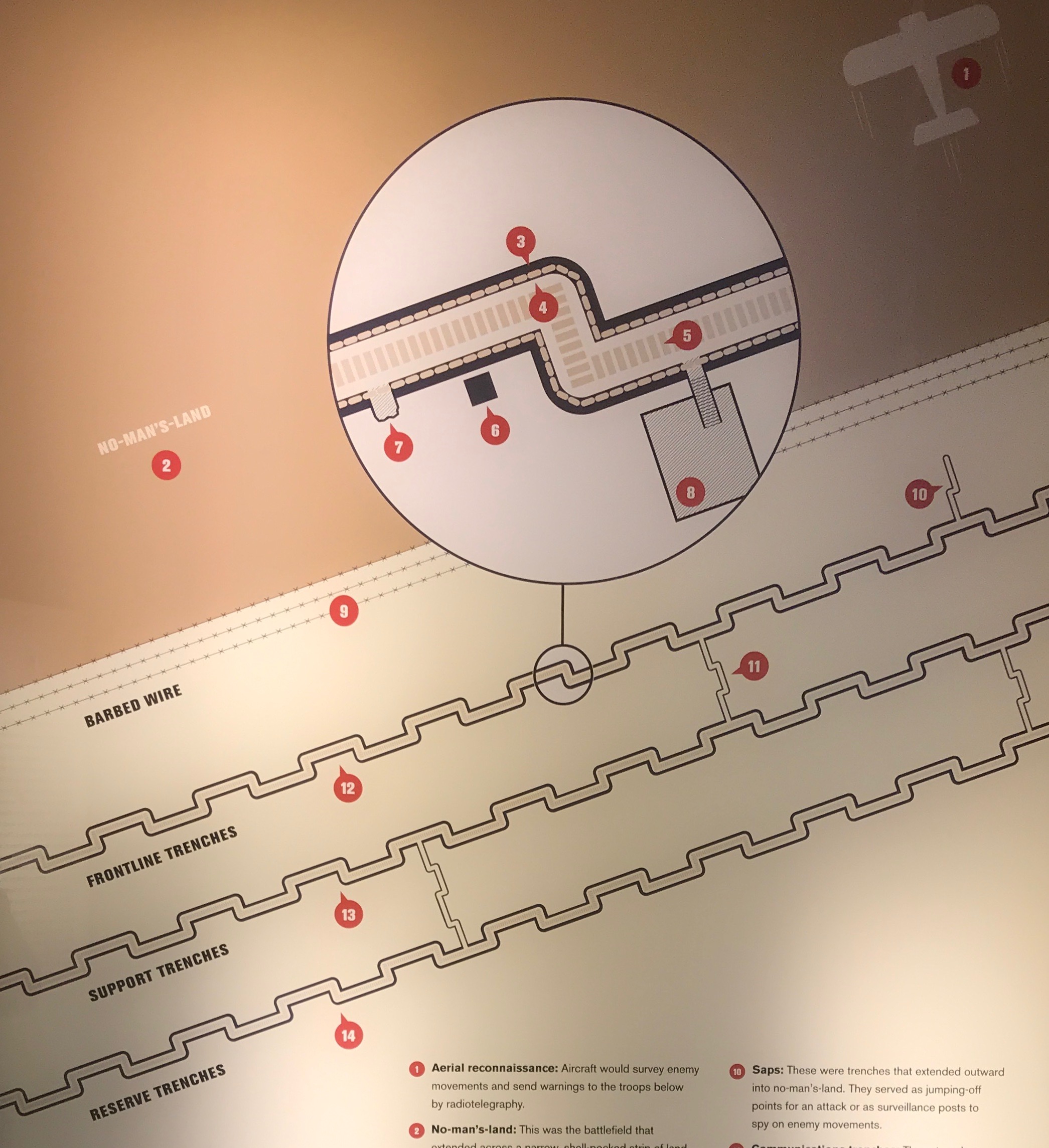
One thing that I think of when WW I comes to mind is trench warfare. This is a mock up of a trench. With so much support for the walls, you can easily see that these were positions they meant to hold. I wonder if the term “entrenched” comes from World War I?
I looked it up, but apparently it came into use in the figurative sense in the 1590s.
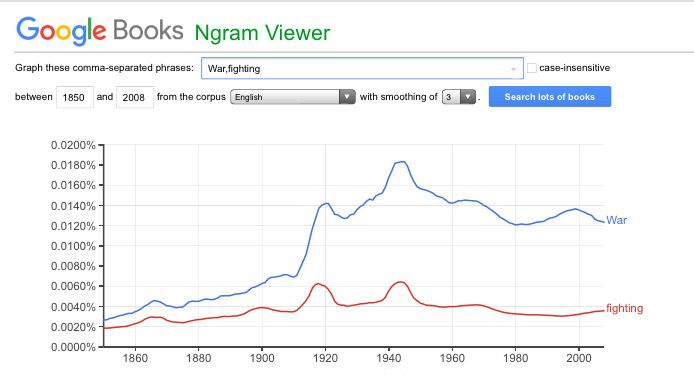
A examination of the word use on the Google Books Ngram Viewer shows its usage overtime. There are spikes in usage during the Civil War and World War I. I find it interesting that there are spikes in the 1930s and the 1990s. Currently, the word “entrenched” is used about as much now as it was during World War I.
If you’ve never used the Ngram Viewer, head over there and play around. You can even compare usage between terms.
Here is a map of the rings of trenches that are behind no-man’s land and the barbed wire fences. The zig-zag layout was designed to slow down attackers and to provide a little extra protection for the soldiers.
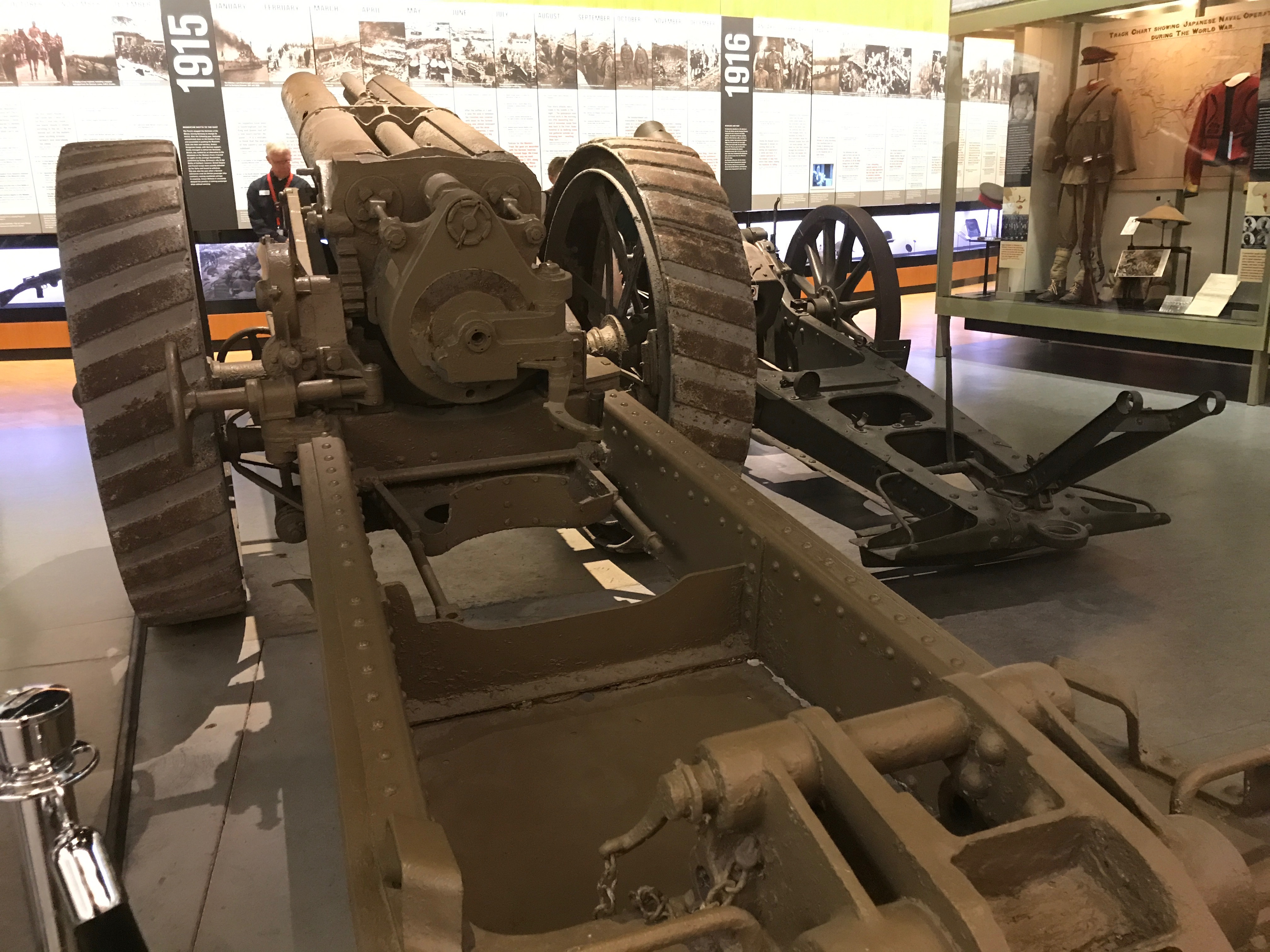
As you might expect, there were ordnance and uniforms on display.
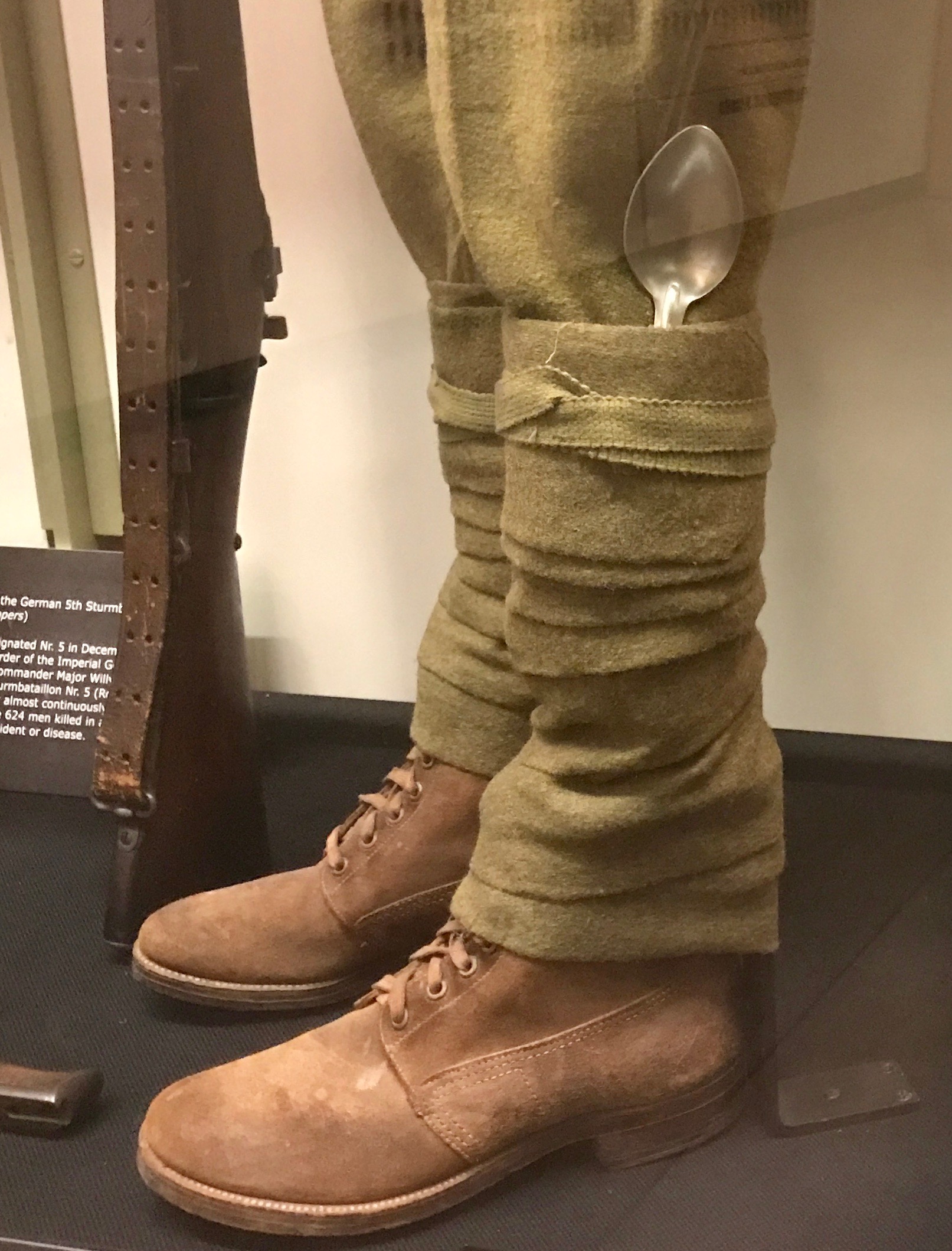
The A.E.F. (American Expeditionary Forces) often carried a spoon in the top of their spiral-wrap puttees in case they unexpectedly found some food. They wore wool uniforms, a steel helmet and hobnail boots. A soldier’s equipment included a U.S. Rifle Model 1903, with bayonet, a cartridge belt, a trench knife for hand-to-hand combat, gas mask, and entrenching tool, which those of us not in the military would probably call a folding spade. He also carried a first aid kit, mess kit, canteen and as many other small comforts as he could manage.
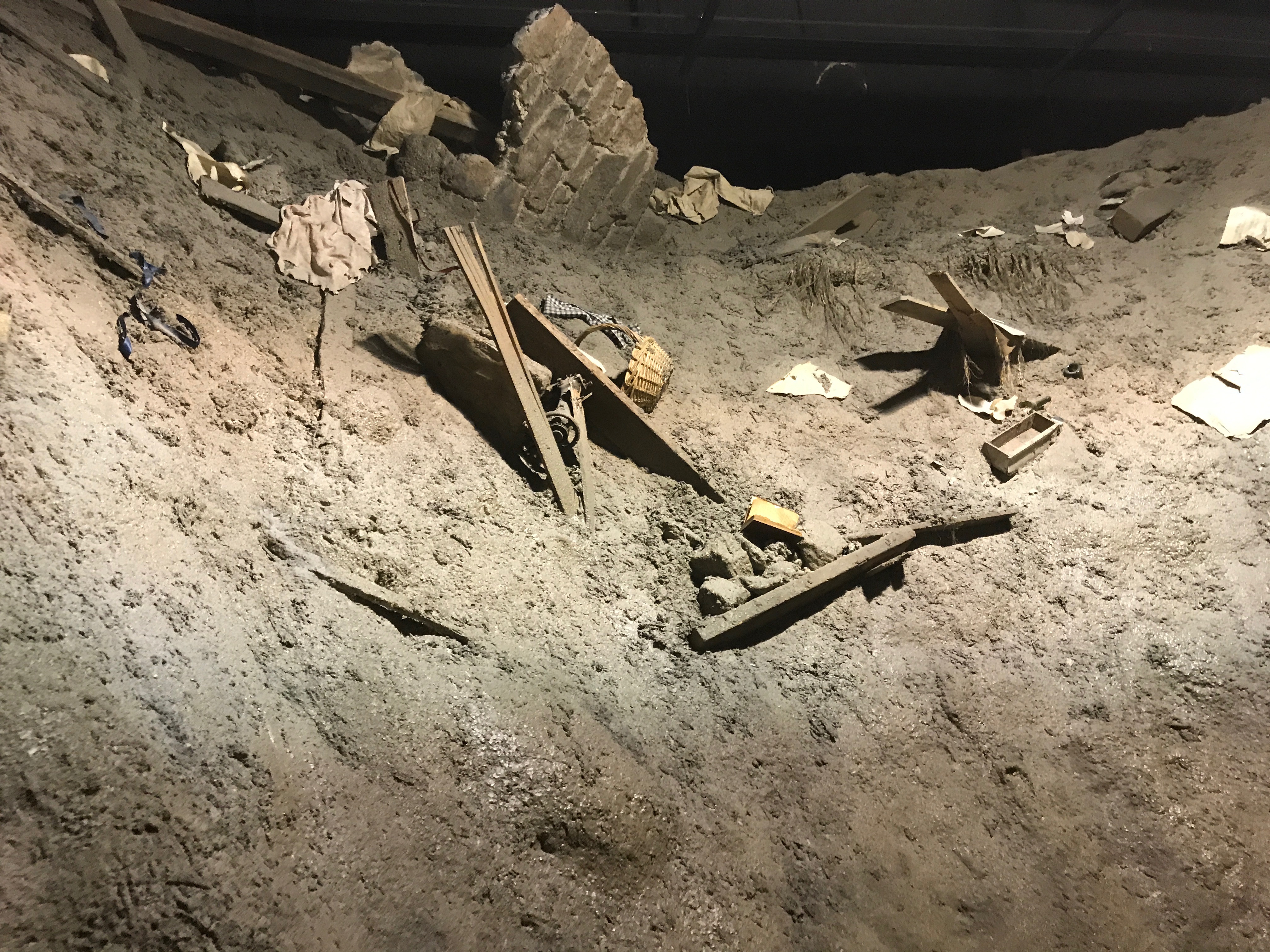
So, why do you suppose a soldier would need to carry a small shovel with him? Well, all that bombing trench making and such created a lot of debris.
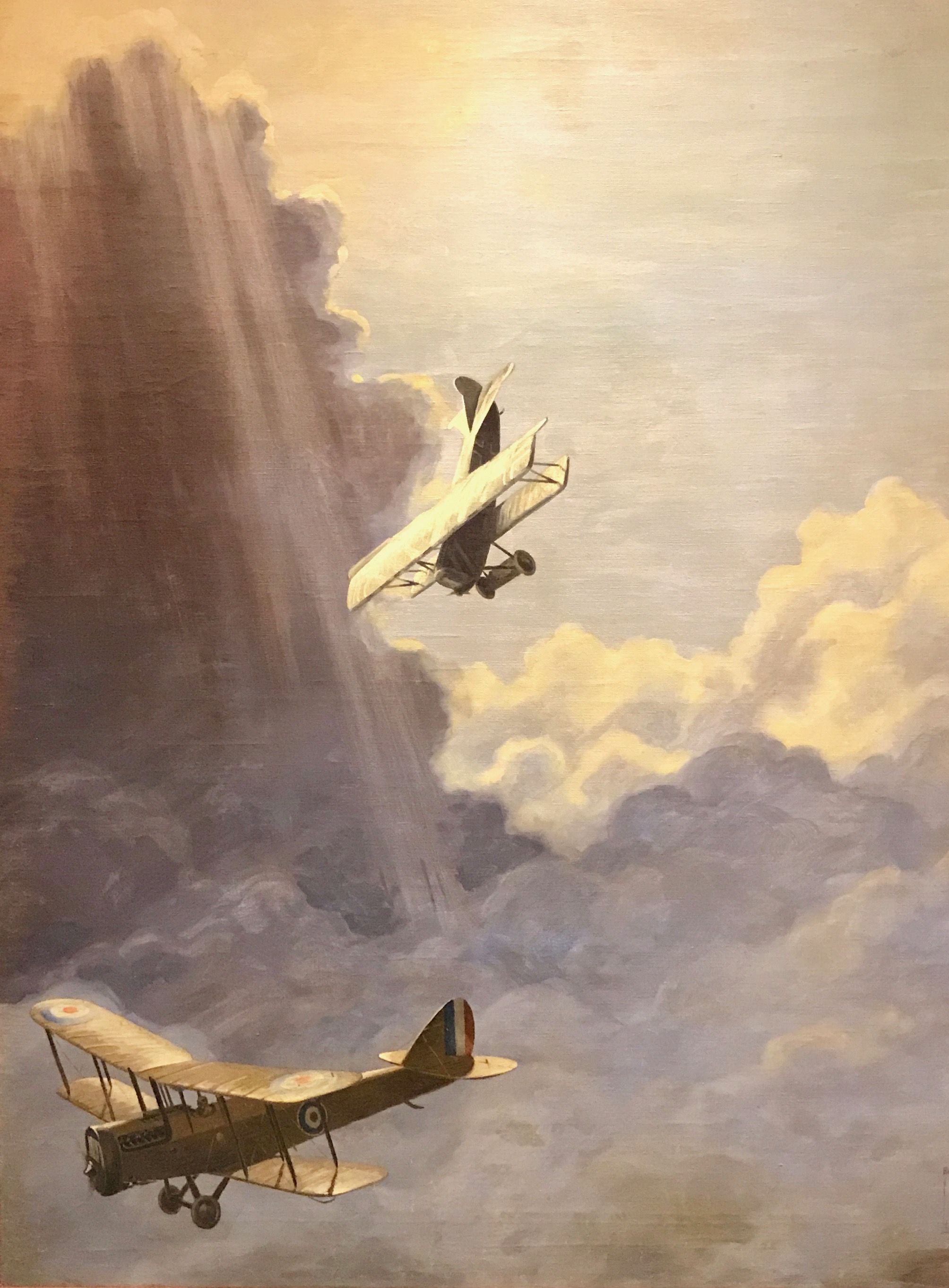
Another concept that might come to mind are the aerial dogfights that Charles Schultz made the baby boomers aware of with Snoopy’s imaginary battles on his doghouse “Sopwith Camel.”
They didn’t have a Sopwith Camel at the museum, but they did have this painting. Incidentally, the Airzoo in Kalamazoo has one that is in restoration. I saw it many years ago. I wonder if they are still working on it?
The Germans were the first to use flight schools that required hours of training. Veteran pilots served as instructors to train student pilots thoroughly before sending them to the front.
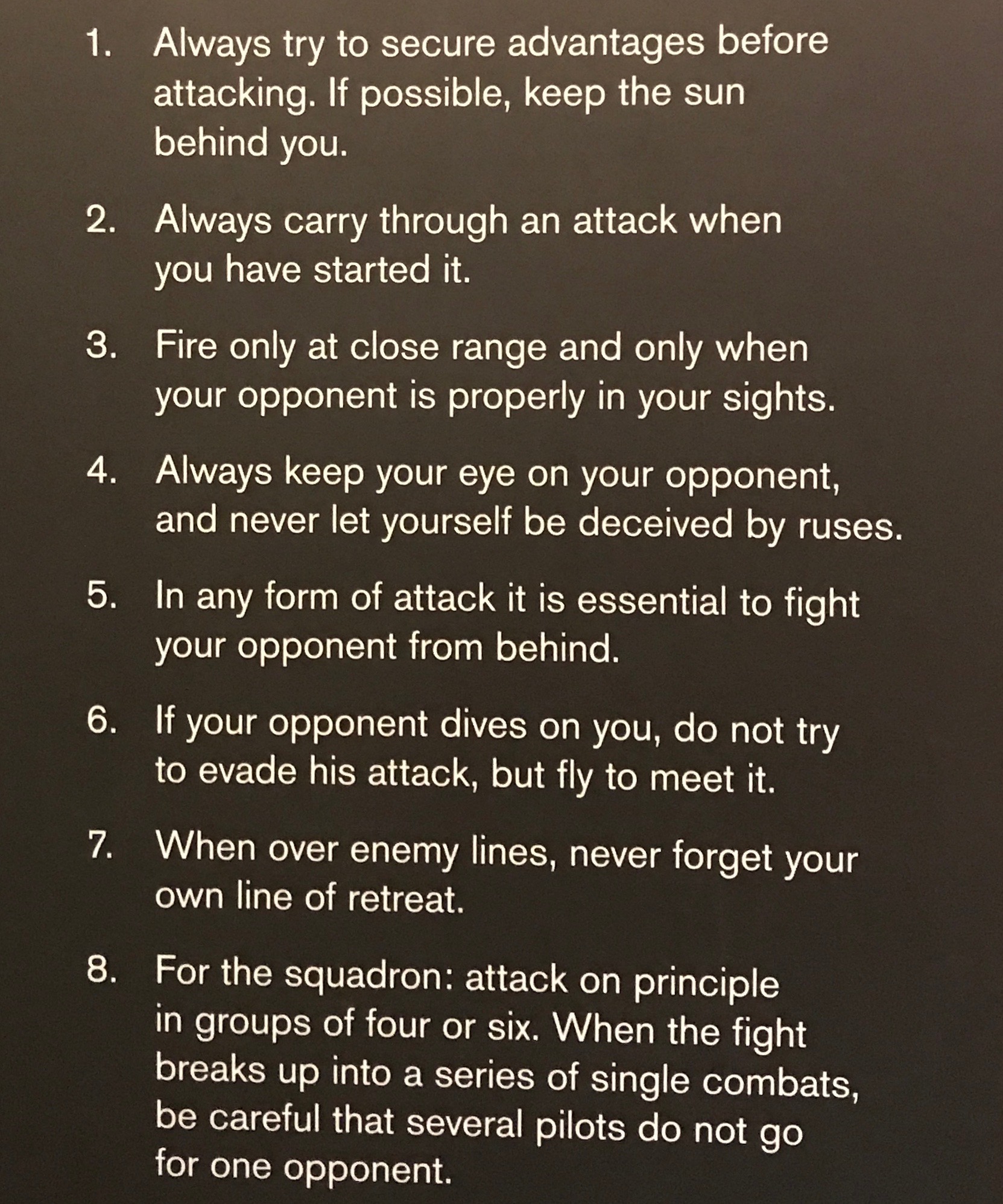
These rules of air combat were written by Oswald Beolcke, Germany’s leading ace at the beginning of the war.
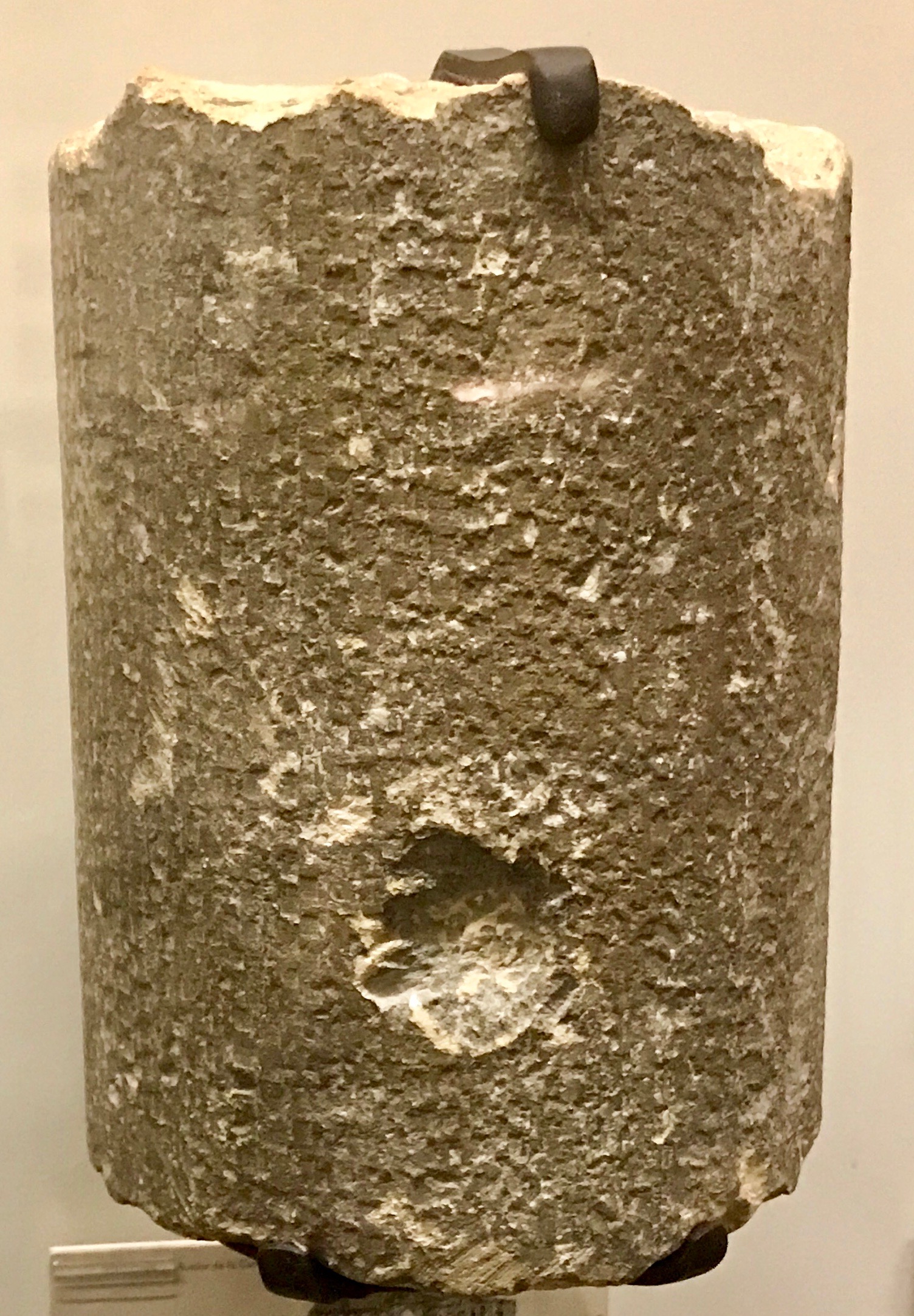
This pock-marked stone is a fragment of a small column from a window surround from the war-destroyed Cathedral of Reims. It was a gift from the Government of the French Republic to the Liberty Memorial and its museum in 1926. The letter that accompanied the fit said: ” May these sacred stones from the land of France recall both an unhappy past and the memory of the imperishable friendship and the union of two great people.”
If it weren’t for the French, the United States would never have been able to defeat the English in our War for Independence.
“Lafayette, we are here!”
Those words are often attributed to General Pershing, but they were actually said by Lieutenant Colonel Charles Stanton at the grave of The Marquis de Lafayette in Paris when the first contingent of the American Expeditionary Force arrived in 1917.
According to Ian C. Friedman, The Marquis de Lafayette was a 19-year-old military officer who was so moved by reports of the colonial use for independence that he decided to come to America and fight the British. Benjamin Franklin urged General Washington to accept Lafayette as an aide-de-camp because of his strong reputation and because they hoped that the young French officer could help increase French support for the revolutionary cause.
The Marquis de Lafayette died in Paris on May 20, 1834, almost ten years after returning to the United States as an official guest of President James Monroe. During this visit, he toured every state and traveled over 6,000 miles. In 2002, an act of the U.S. Congress made Lafayette an honorary citizen of the United States – only the sixth of eight people. He is buried in Paris under soil from the site of the Revolutionary War’s Battle of Bunker Hill.
Ah, but I digress…
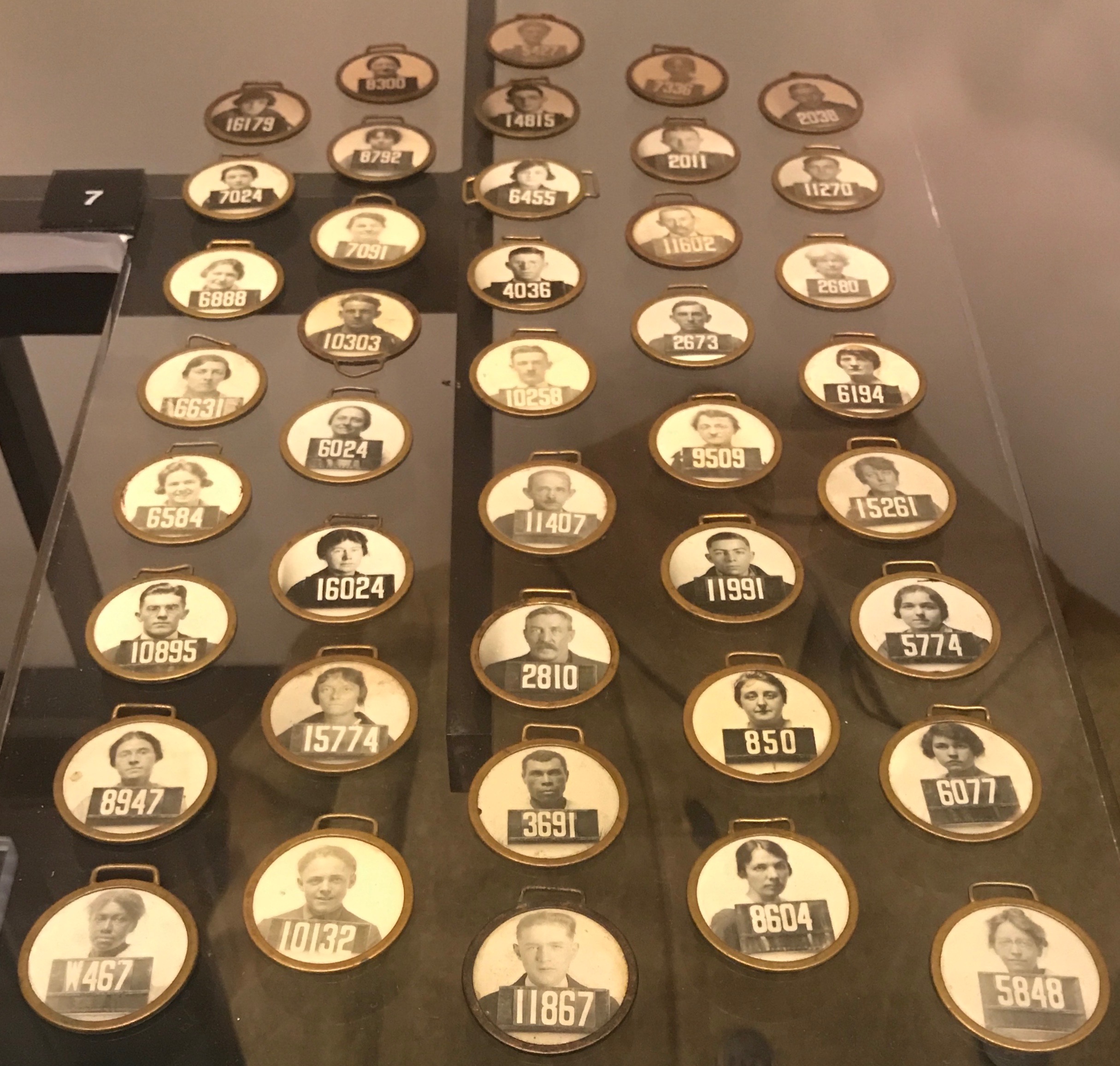
These rather somber photos are worker identity badges. They were worn by workers at the Woodbury, New Jersey, naval ammunition bag loading plant.
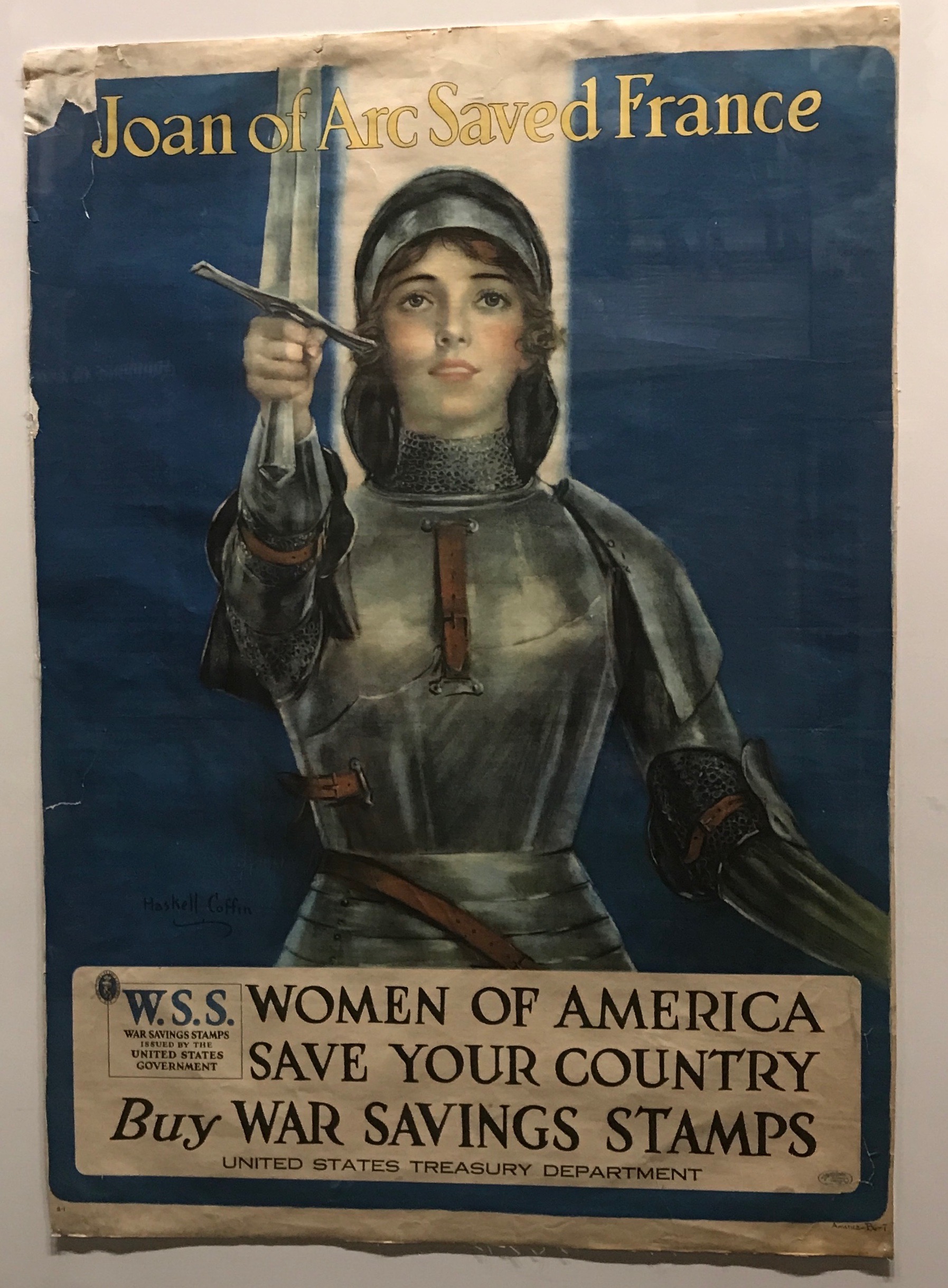
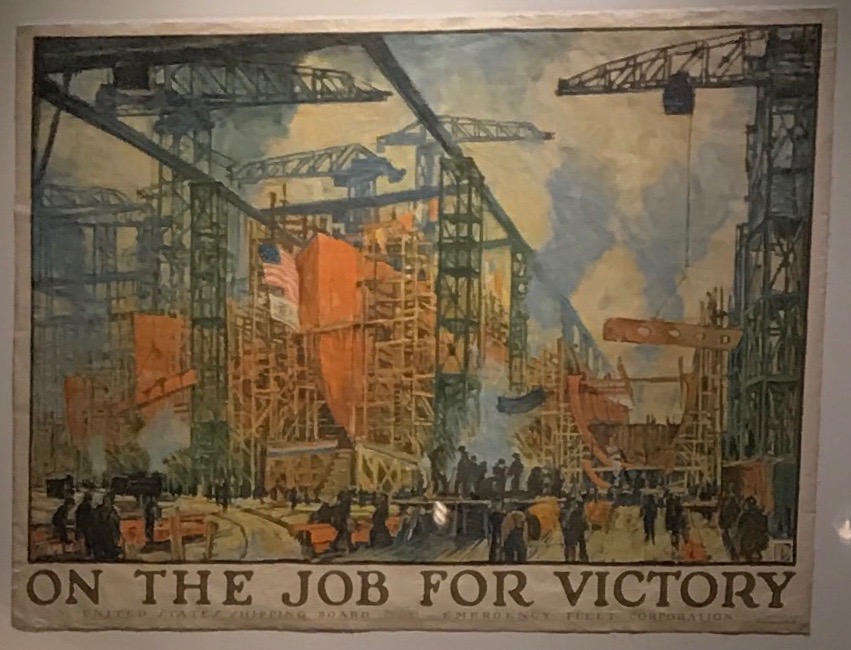
Long before the country officially entered the war in April 1917, posters began to make appeals to the “American sense of right and wrong.” Posters urged the country to prepare and, after the sinking of the Lusitania in 1915, to enlist.
After the United States entered the war, the poster campaign shifted into high gear.
“Posters literally deluged the country,” said one observer.
“On every city street, along the rural highways, posters were to be found repeating their insistent messages day and night.”
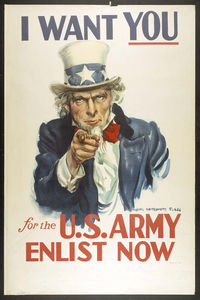
In many instances, art organizations and individual artists the highest standing volunteered their services to make posters. James Montgomery Flagg painted a self-portrait as Uncle Sam in 1917, creating probably the most recognizable poster from the war.
Flagg used his own face for that of Uncle Sam, although he did add age and the white goatee. He said that he did it to simply avoid the trouble of arranging for a model. When it was revived during World War II, President Roosevelt praised his resourcefulness for using his own face as the model.
Do you see the likeness?
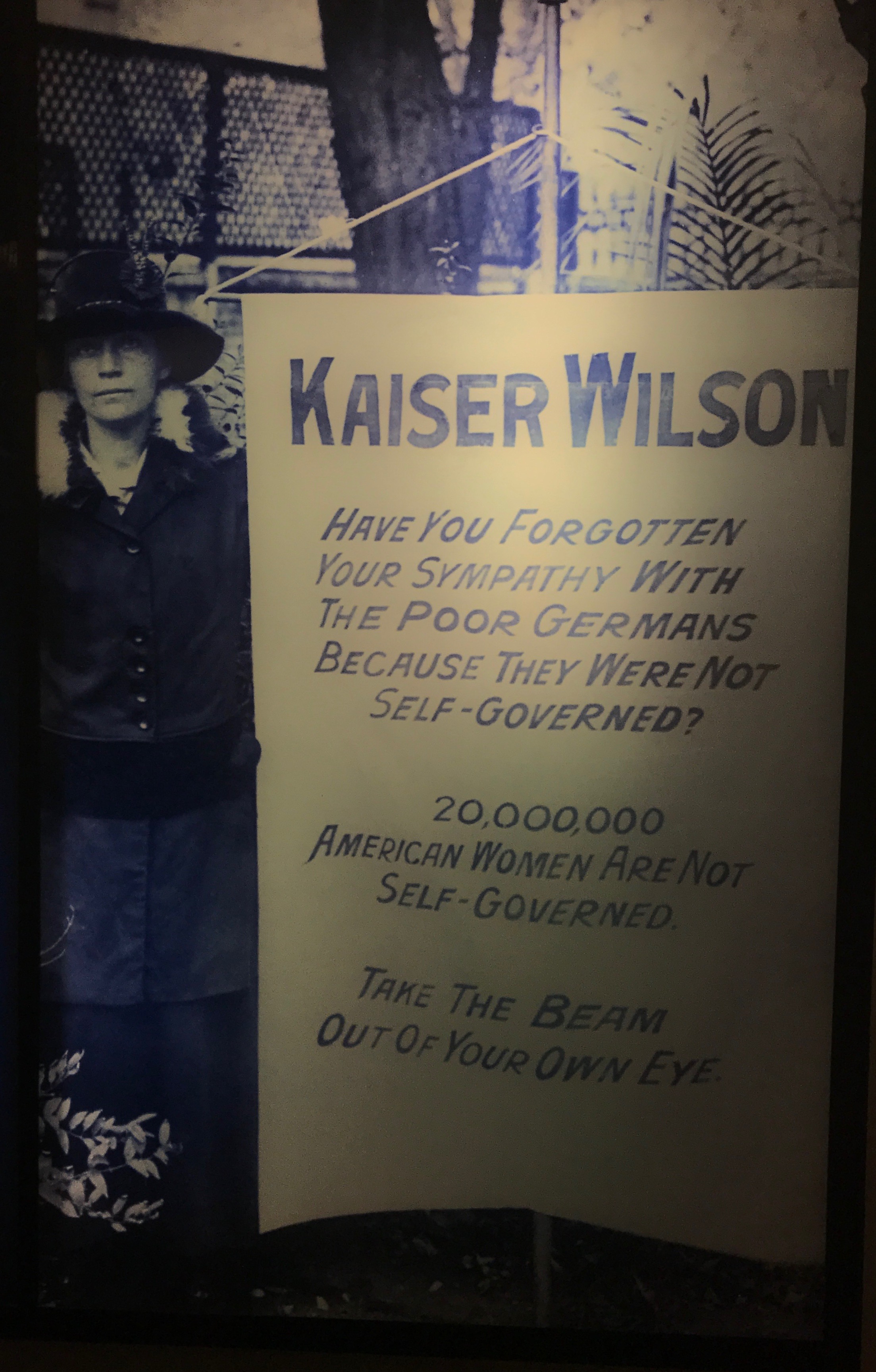
Not everyone was gung-ho enthusiastic about the war. Women continued to advocate for the right to vote. It’s hard to believe that half the population was disenfranchised by gender until 1920.
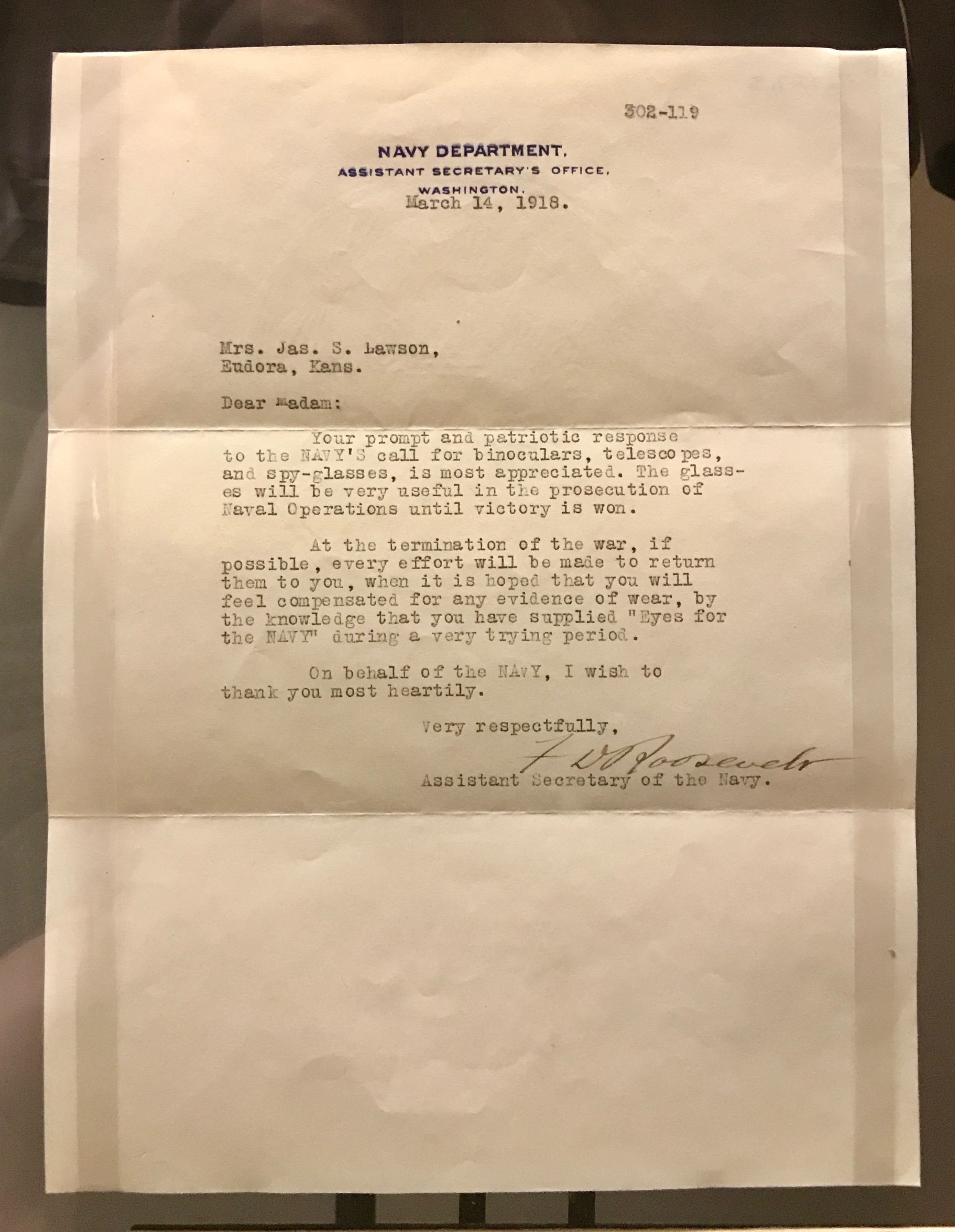
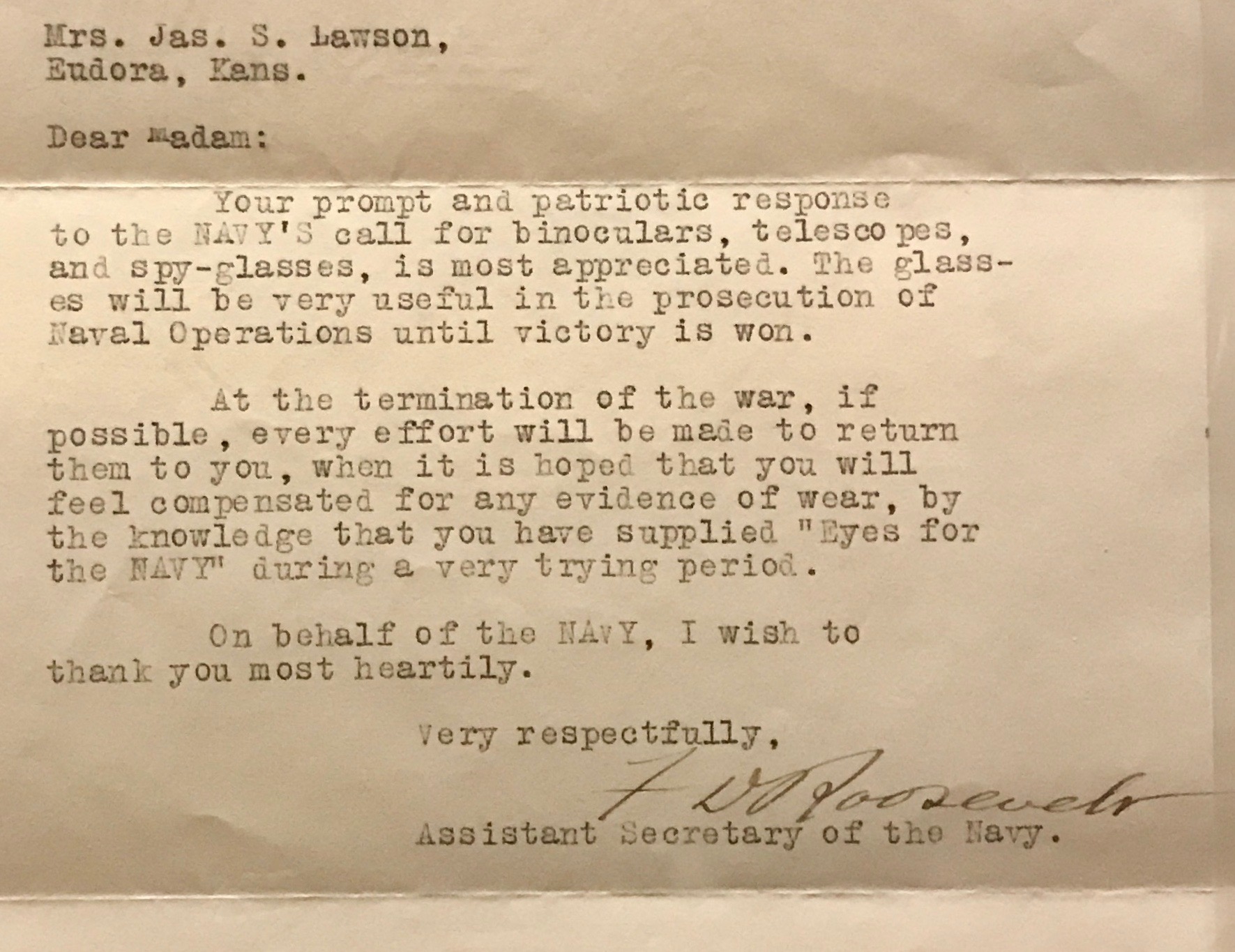
This letter caught my attention. Let me zoom in on the body of the letter so that you can see it clearly.
Can you imagine asking people to send in their binoculars? I guess they had to ramp up the military quickly and that they didn’t have a large stockpile of equipment. I wonder why NAVY is capitalized? And, did you notice who signed the letter? FDRoosevelt.
I have just a few more artifacts to share.
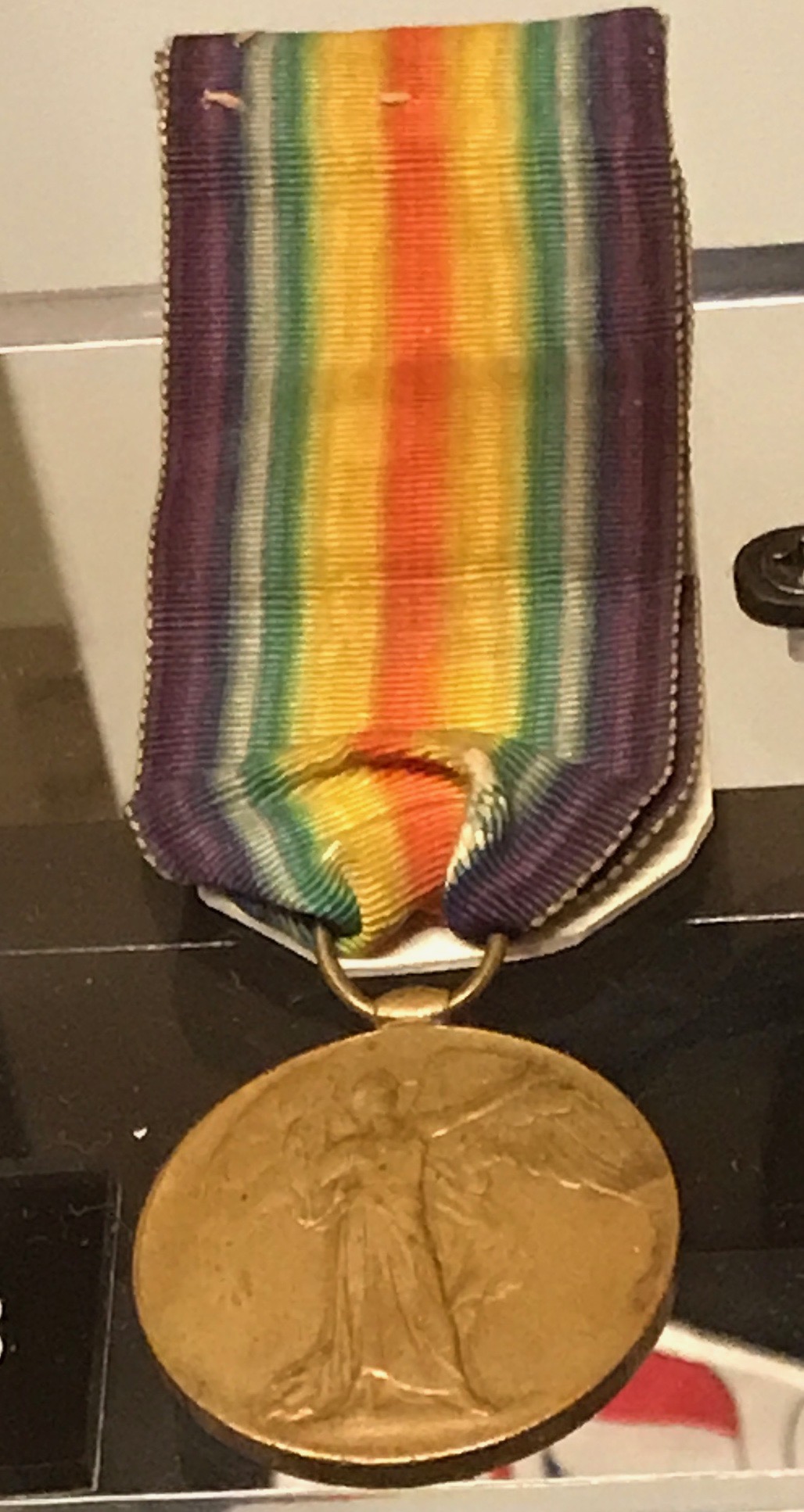
My grandfather, who served in the Canadian army, had a medal like this one. I had it for many years, but gave it to my brother when I set out to tour the country in the Airstream back in 2014.
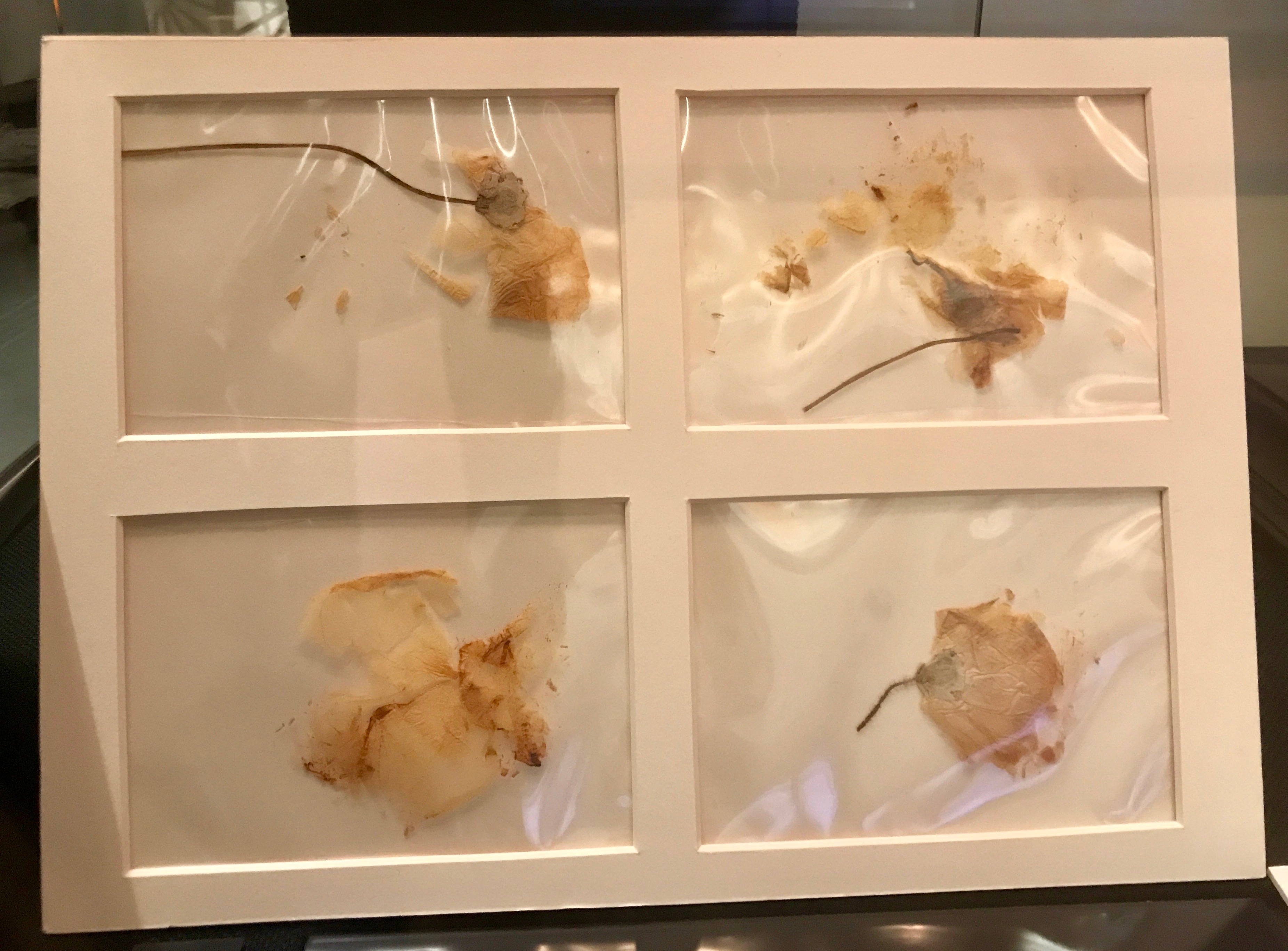
And some poppies…
These poppies were gathered from Belgium’s Flanders Fields by Arthur Massey, 20th Field Artillery, 5th Division, A.E.F.
And with that, it was time for me to head back into the sunshine.