Buffalo, as well as Kalamazoo, was on the yearly loops I took through the country.
Buffalo is where I was born and lived until I left for Guatemala in 1981. I still consider it “home” – or at least one of my homes. I had to move quickly to get there because my niece, Sarah, was graduating from high school! (I also had to vacate my campsite at Markin Glen in Kalamazoo, as they only allow you to stay for two weeks, and my two weeks was up.)
I made camp at Evangola State Park, the closest state park to my brother and sister’s houses and I got ready for the Main Event.
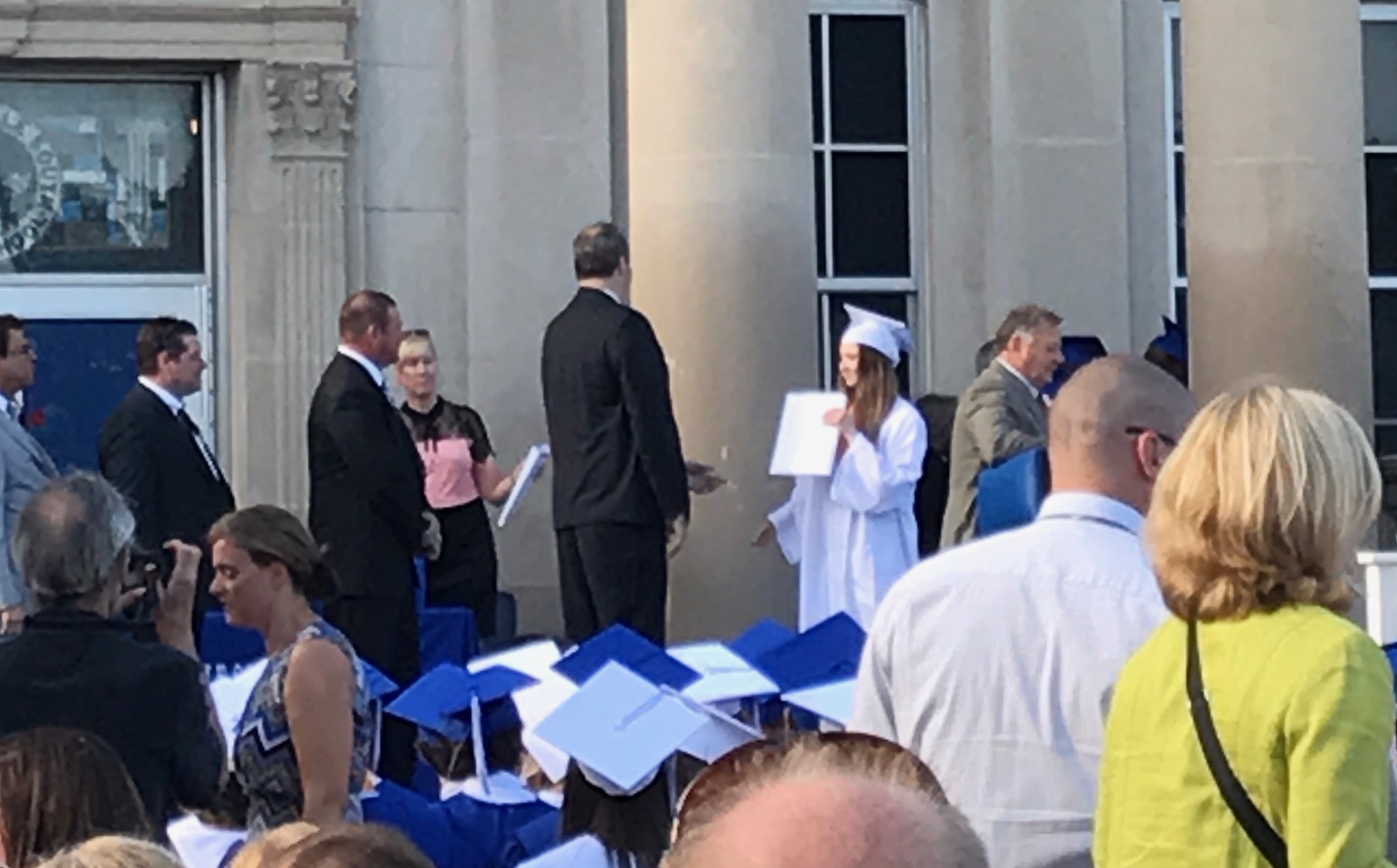
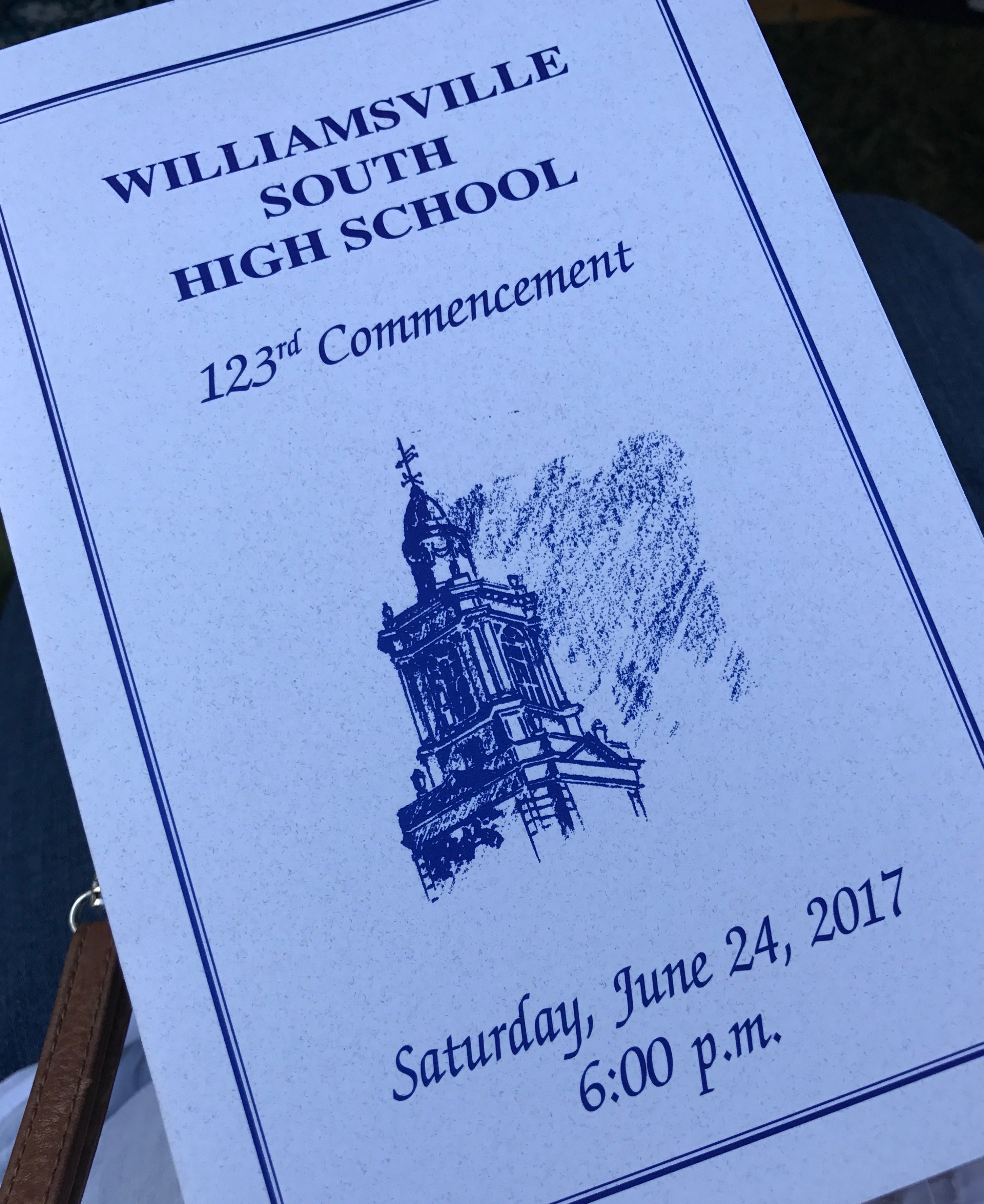
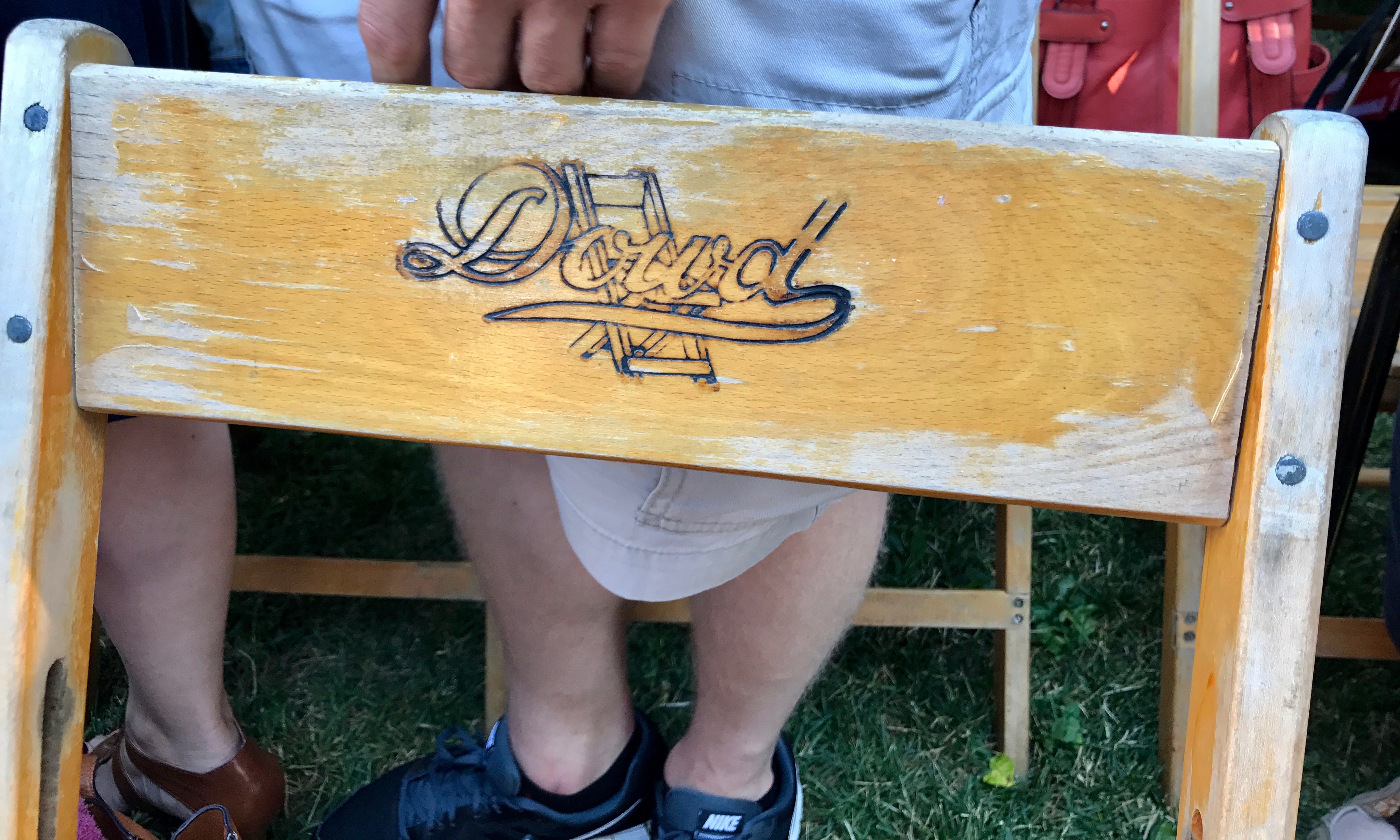
We took seats on the old wooden folding chairs. I remember these chairs from my old church when I was growing up.
I wonder how many backsides have graced this chair. It must be millions – or at least hundreds of thousands.
Sarah getting her diploma.
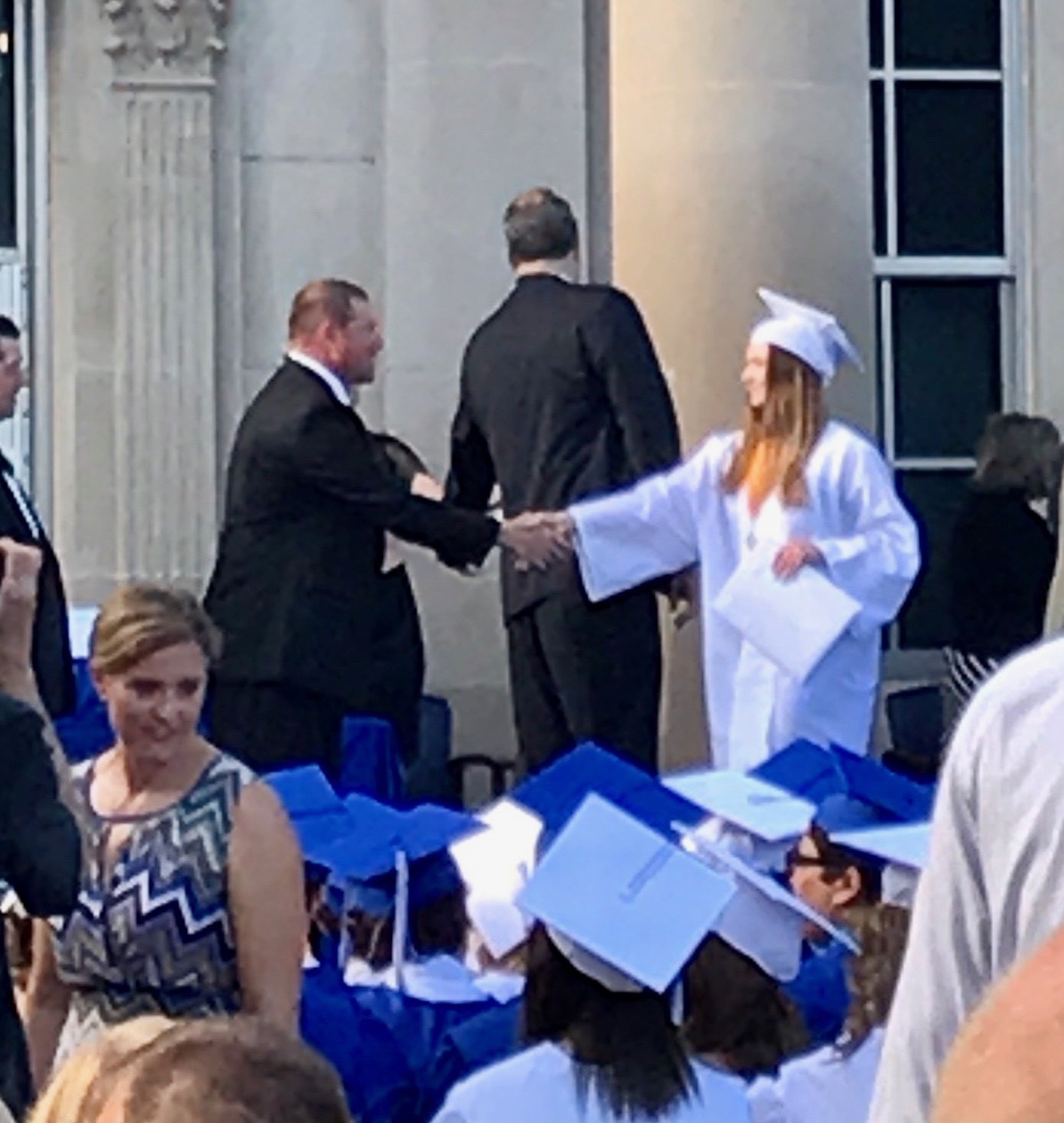
And shaking hands.
And the tolling of the bell after the graduation.
Sarah, the graduate!
Sarah, the graduate and Katie the flautist.
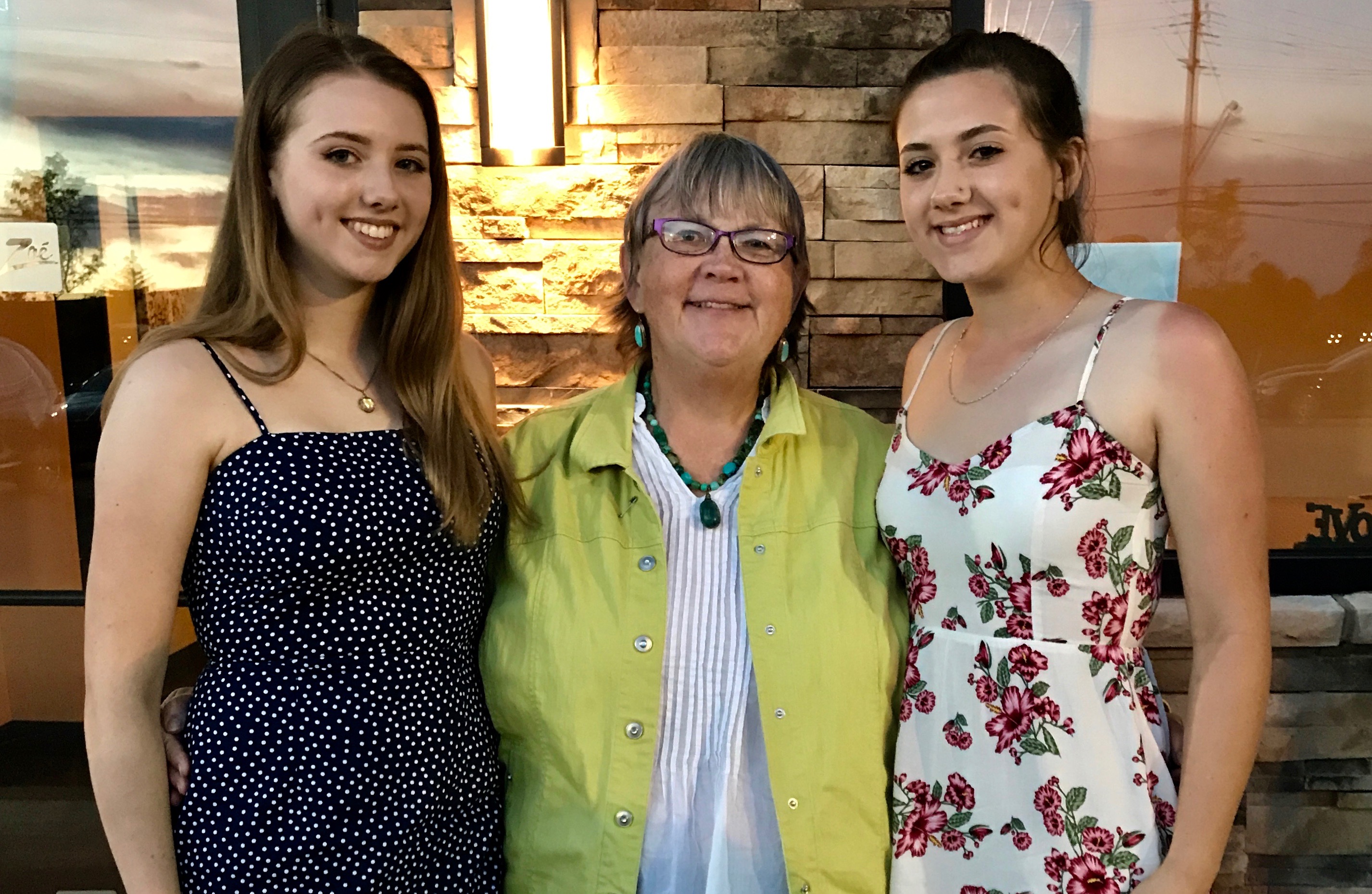
We went out for dinner afterward to celebrate. How did I get to be so short? How did they get to be so beautiful?
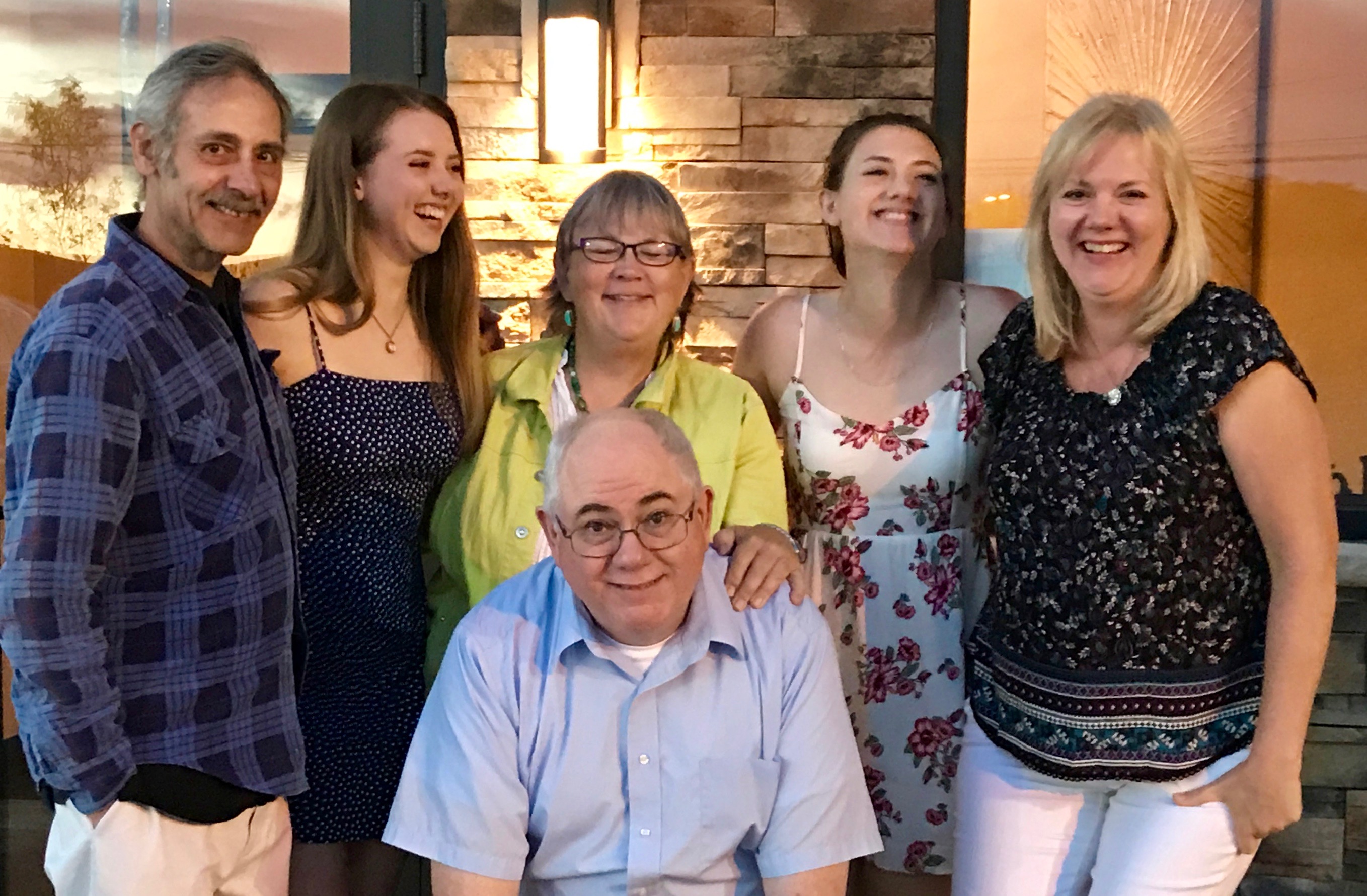
We posed for a family photo, including my sister, Amy, her husband, Steve, and my brother, Craig, who I was “helping” get posed. Fun times!
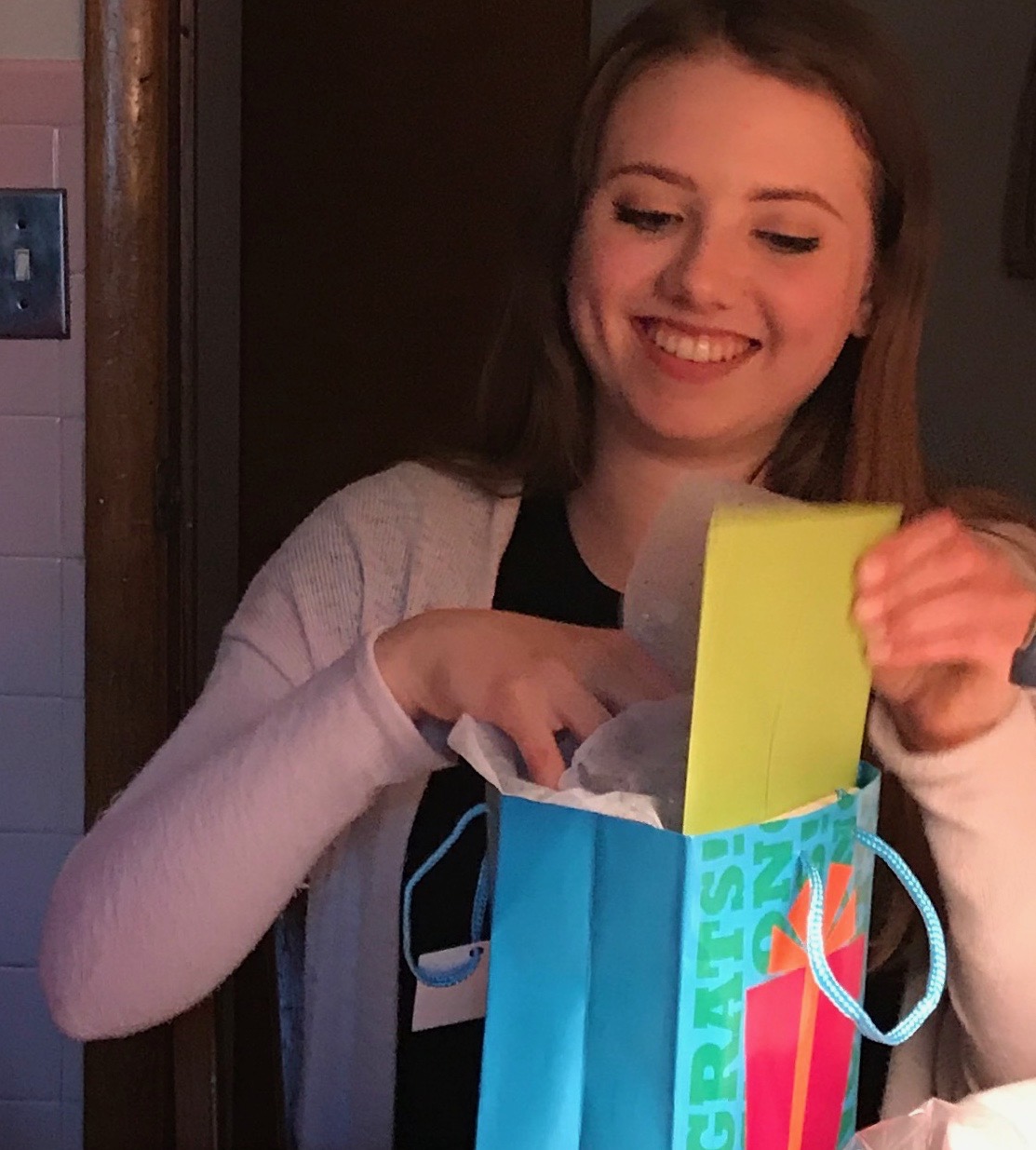
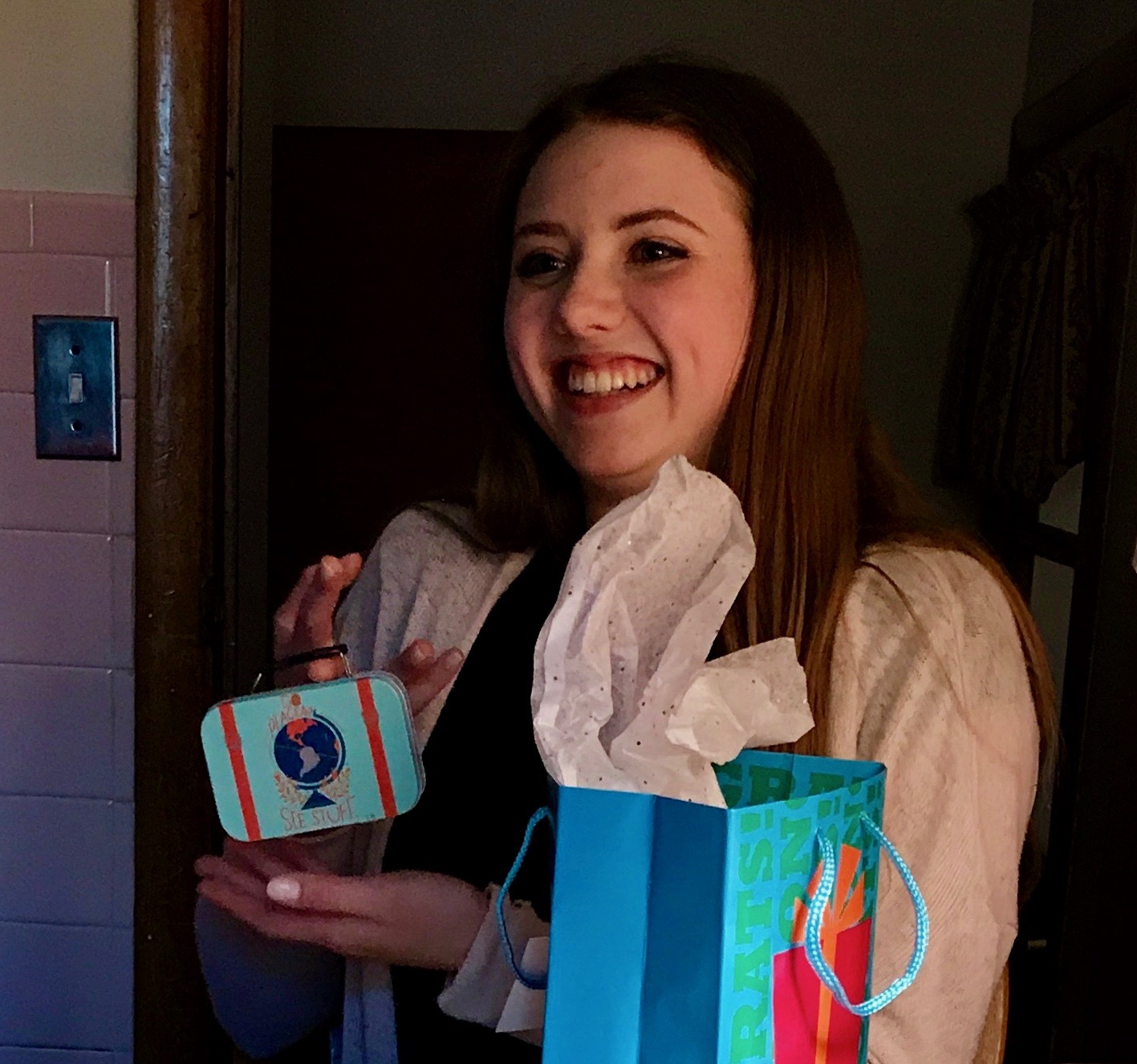
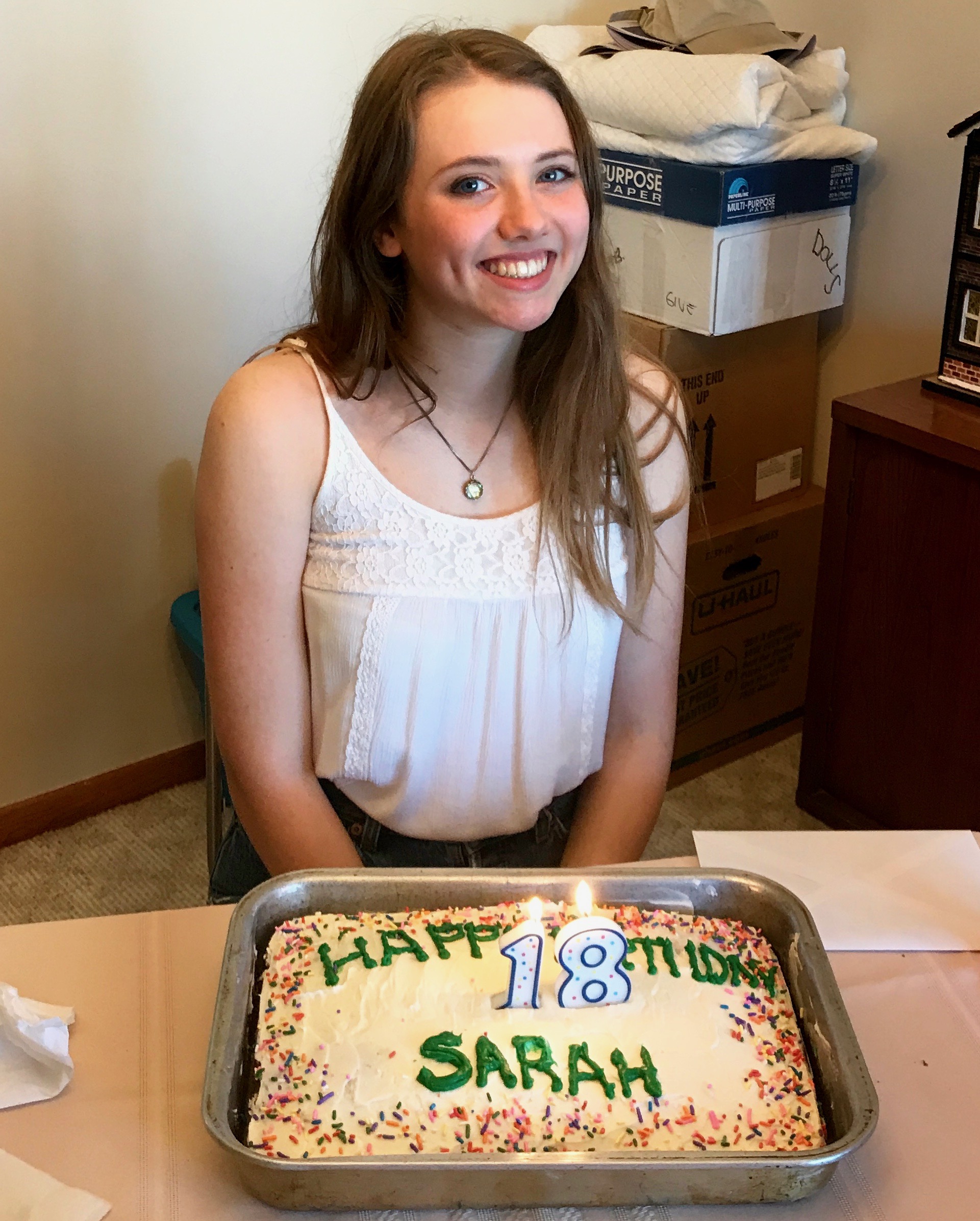
Speaking of fun times, Sarah figured prominently in the fun. We celebrated her birthday.
I guess she’ll be traveling light!
I predict that she’ll be traveling far!
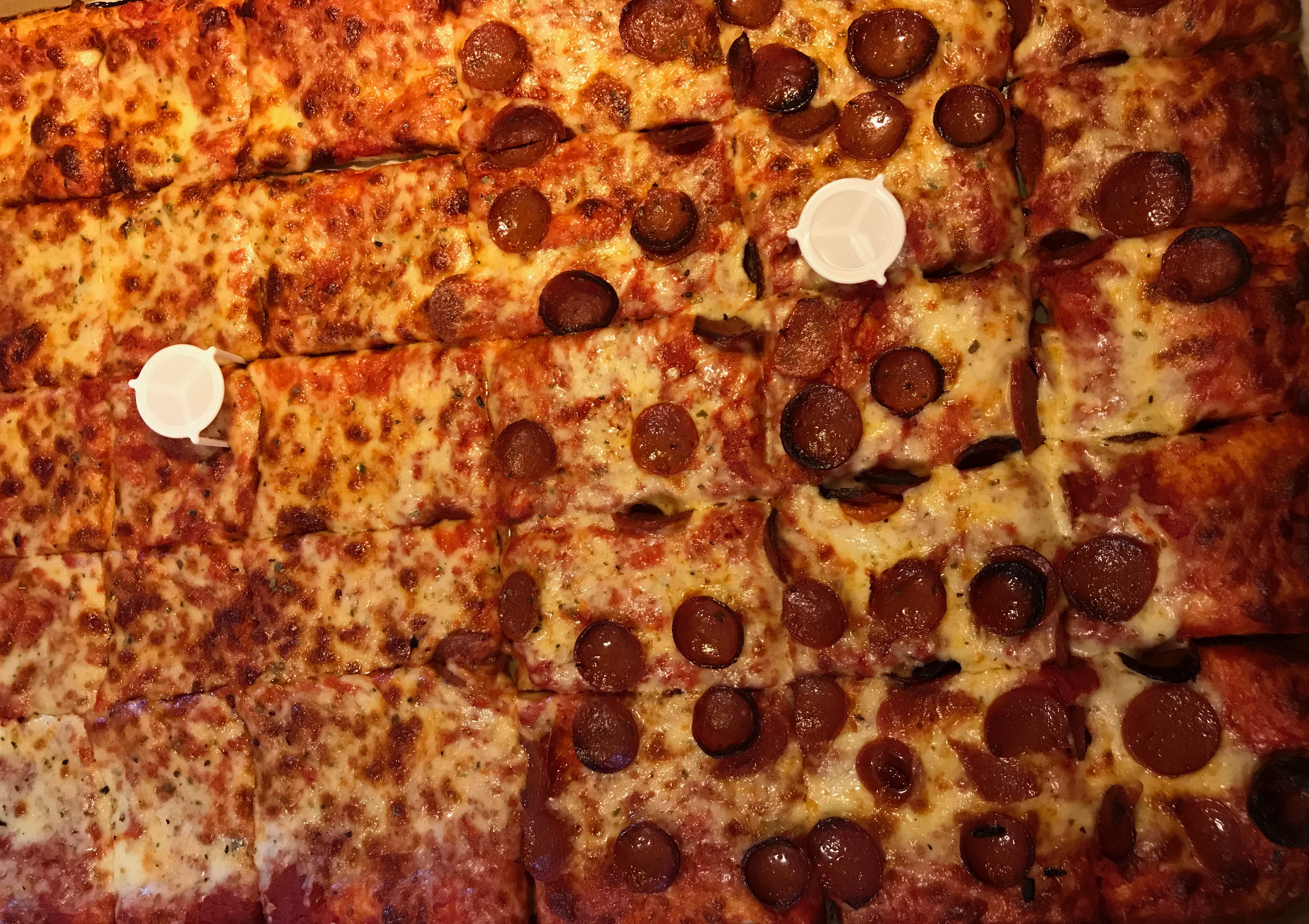
Speaking of celebrating Sarah, we had a pizza party over at Craig’s house.
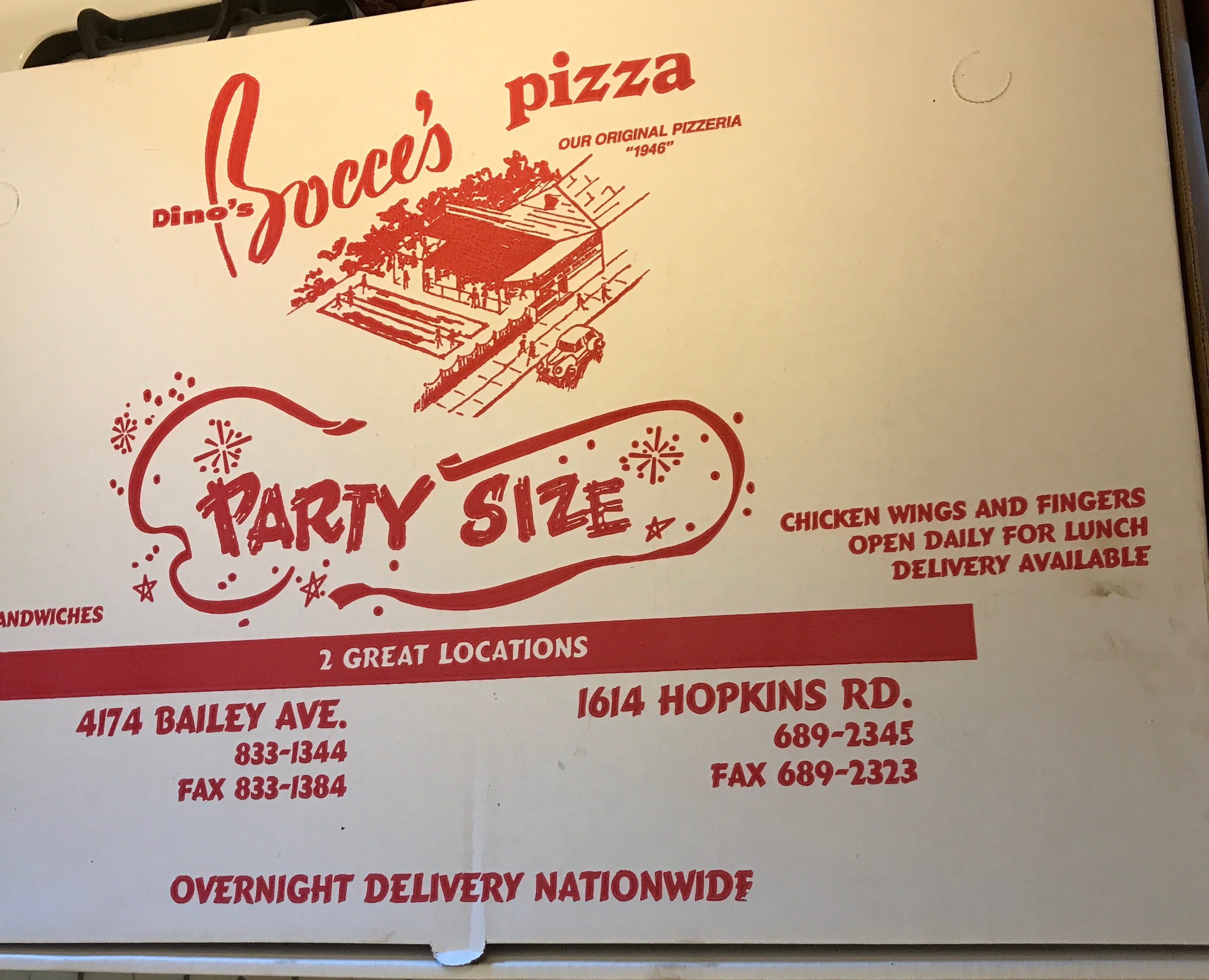
Bocce’s Pizza, of course! Hmm..I wonder how much it would cost to get one delivered to me here in Kalamazoo?
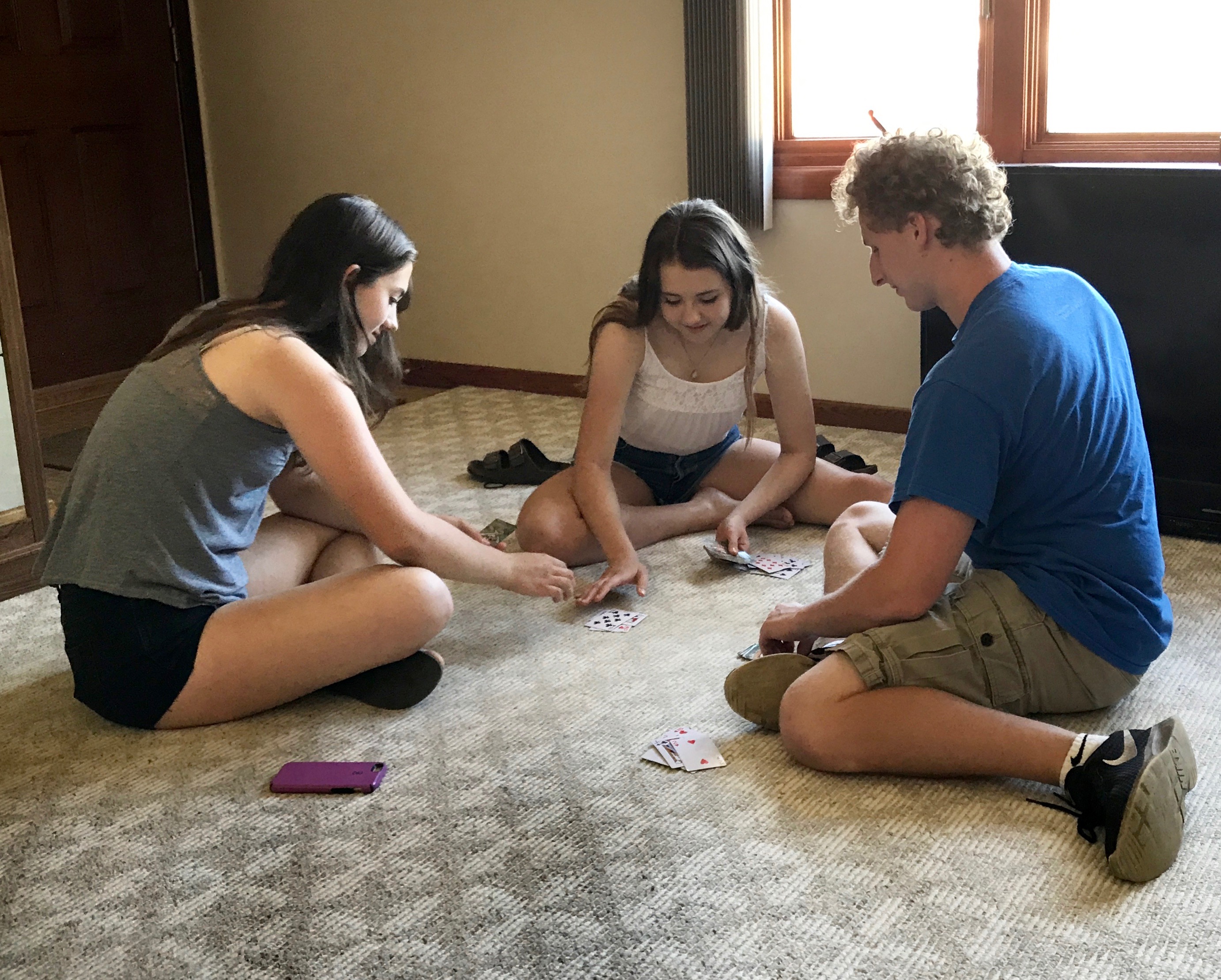
Katie, Sarah and Nick played cards.
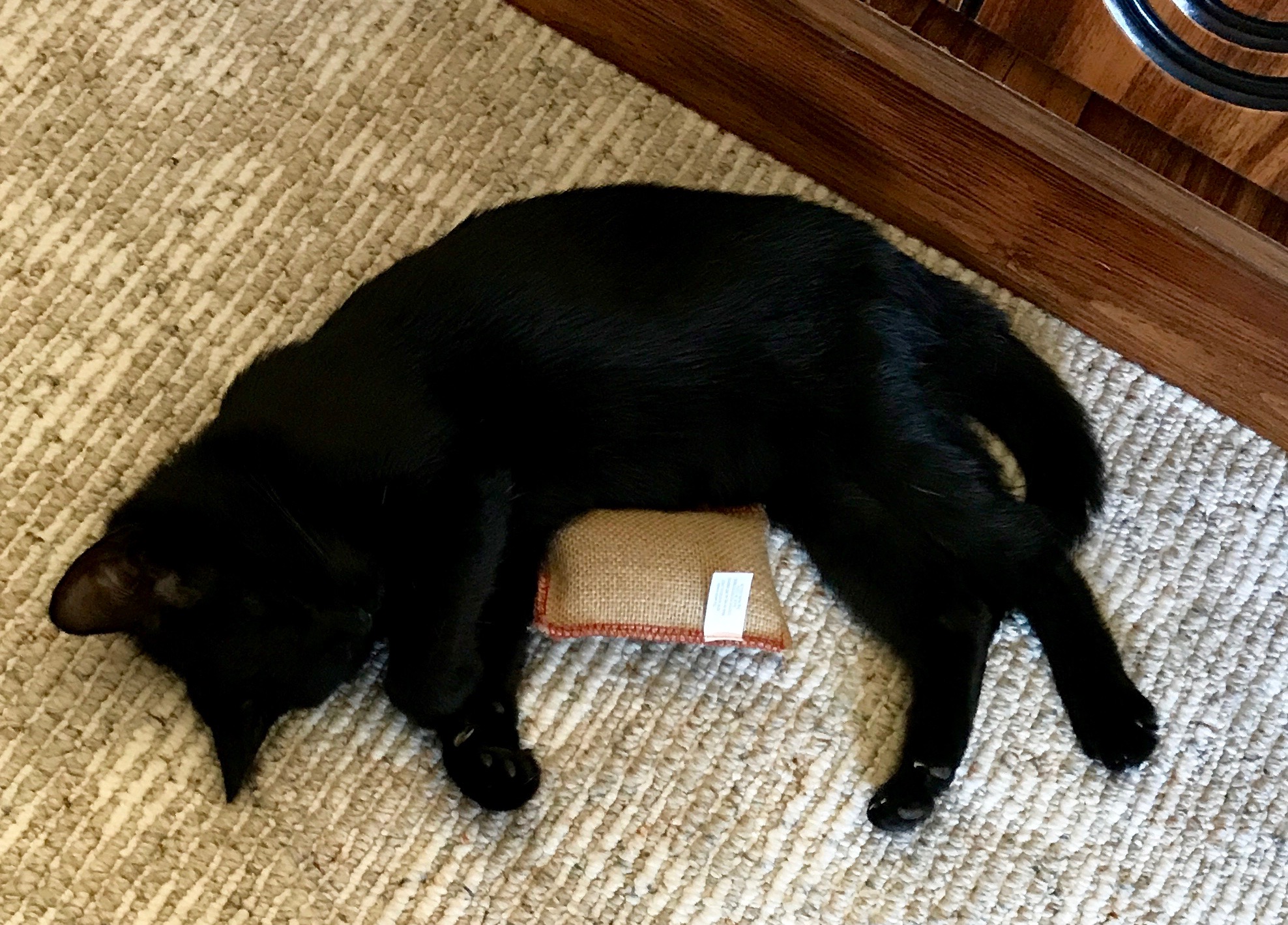
Bella, the new cat, really enjoyed her catnip!
And finally, one last birthday cake.
Congratulations, Sarah! It won’t be long now until we celebrate Katie’s graduation.
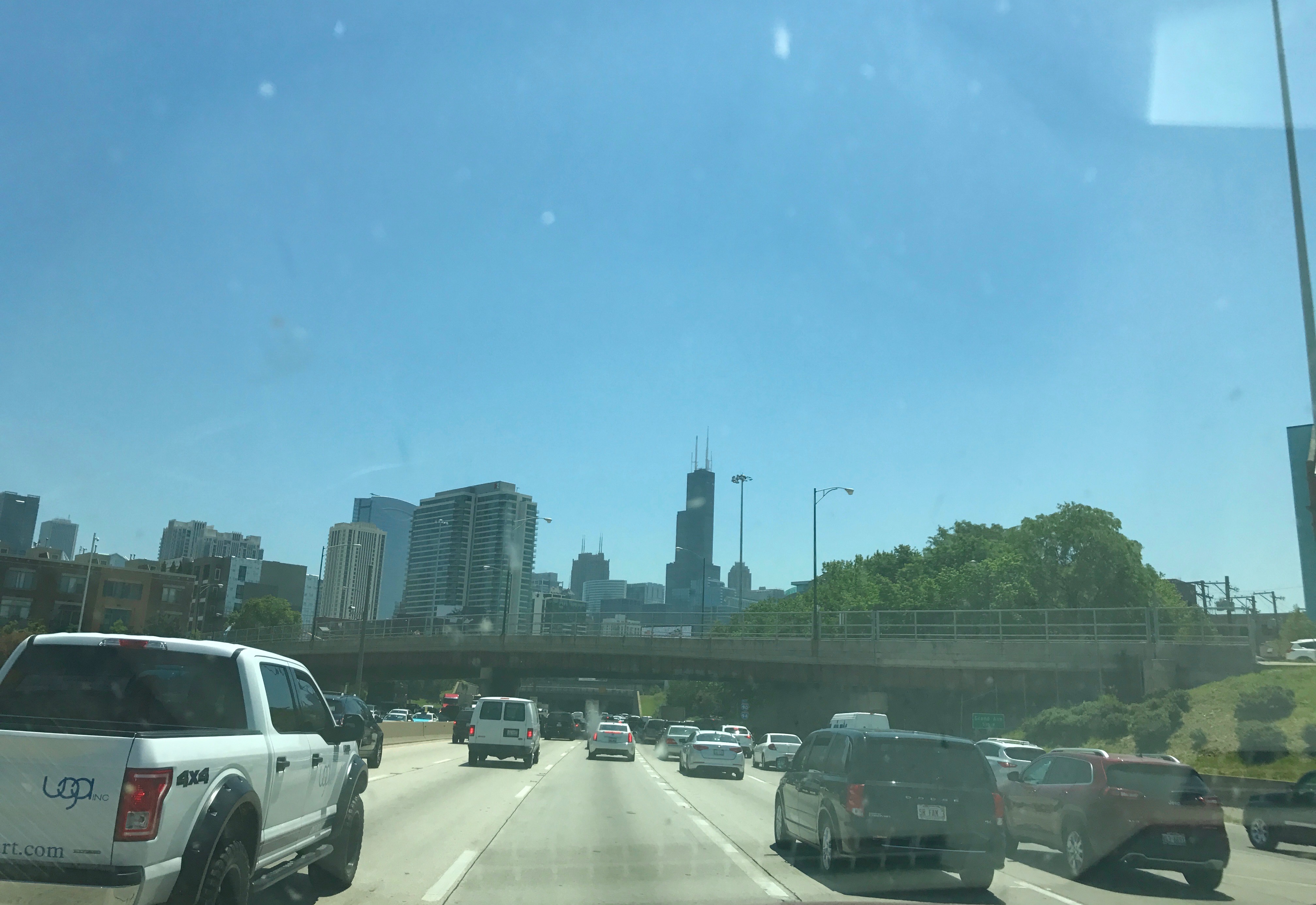
I hitched up and figured, “I don’t need no stinking maps!” Well, sure, I had driven home from Chicago hundreds of times – dozens of times, at least. But, maybe I should have consulted the all-knowing apps in my phone.
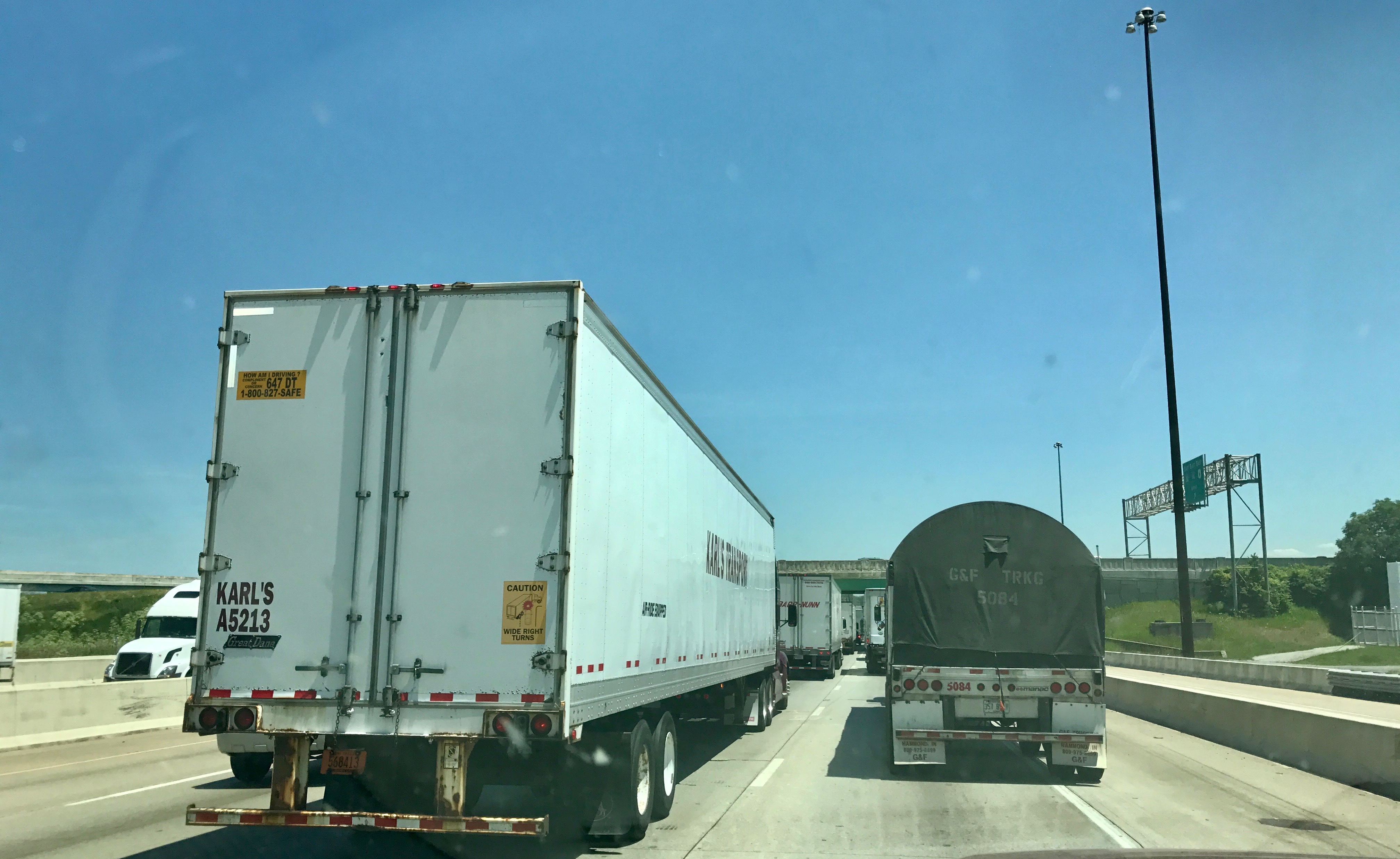
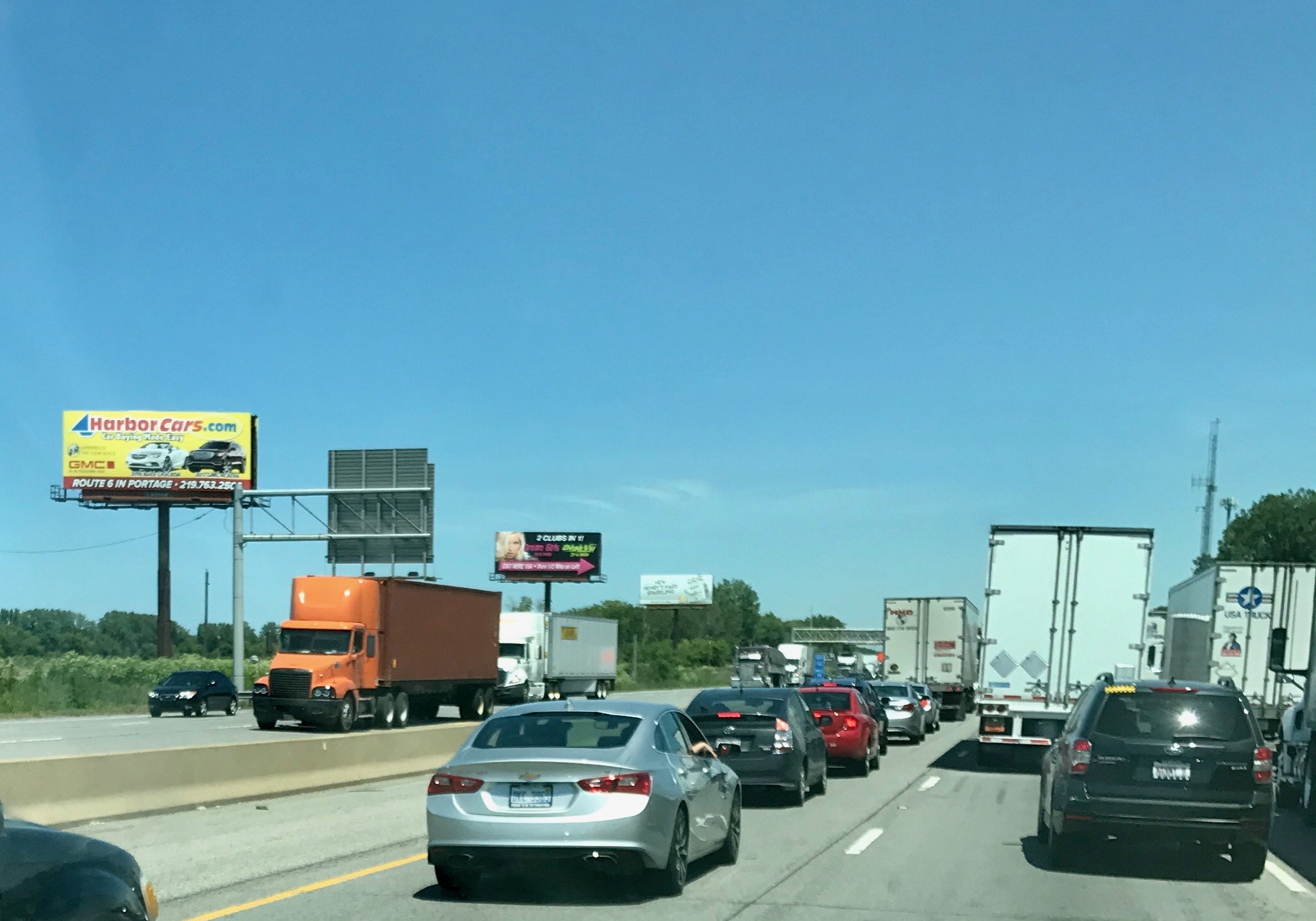
The traffic was horrendous!
About the only thing good about stop-and-go traffic is that you can safely take photos along the way.
I’ll admit it, I’d just as soon forgo the photos for a little faster trip. I was up by the Wisconsin state line, but still, I was astounded that it took me more than six hours to get to the Kalamazoo. I usually allowed two and half or three hours to make the trip from Chicago to Kalamazoo.
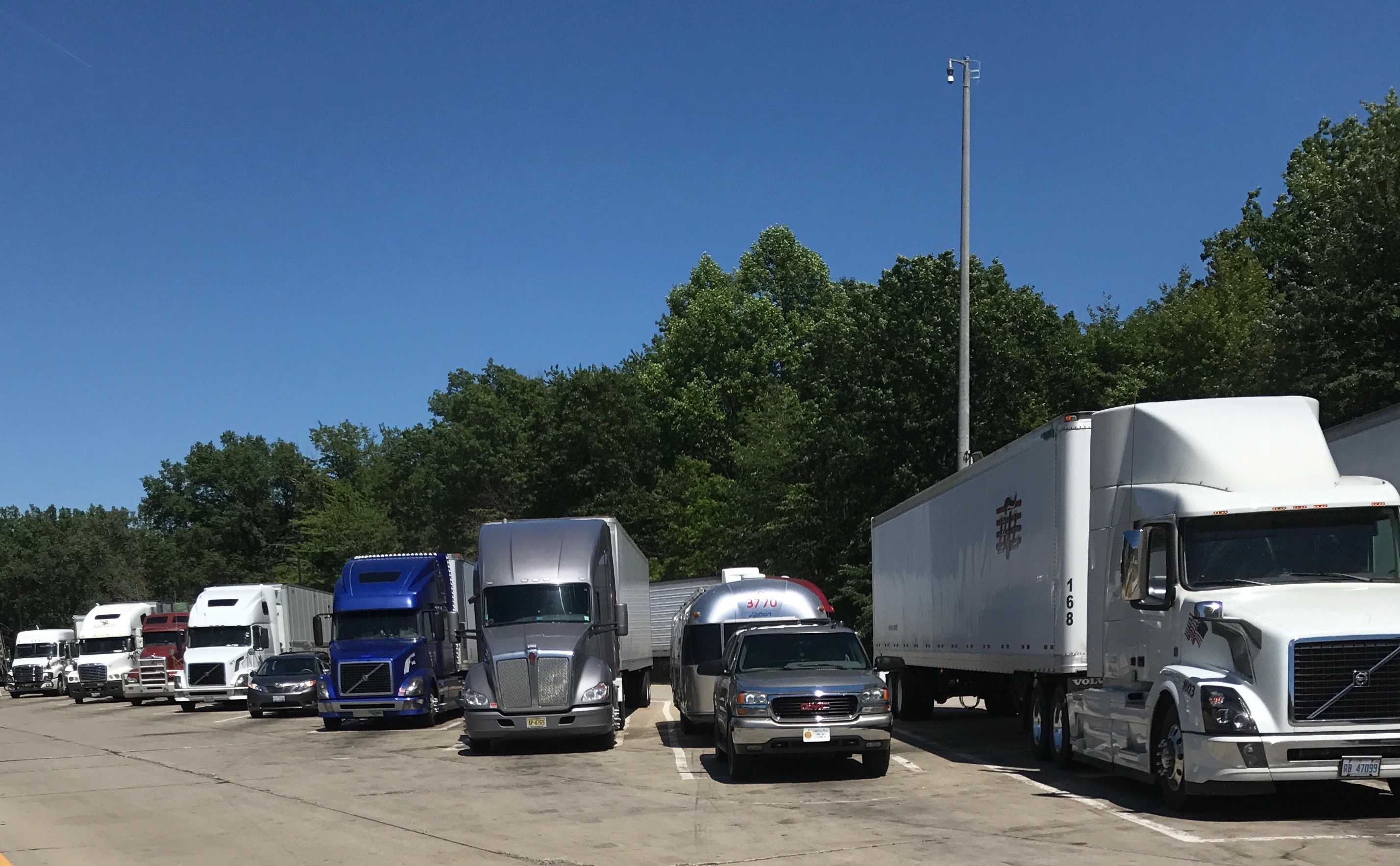
I pulled into the rest stop once I hit Michigan. How cool to see another Airstream in the parking lot!
I returned annually to Kalamazoo. There were doctor appointments to be attended to and friends to see.
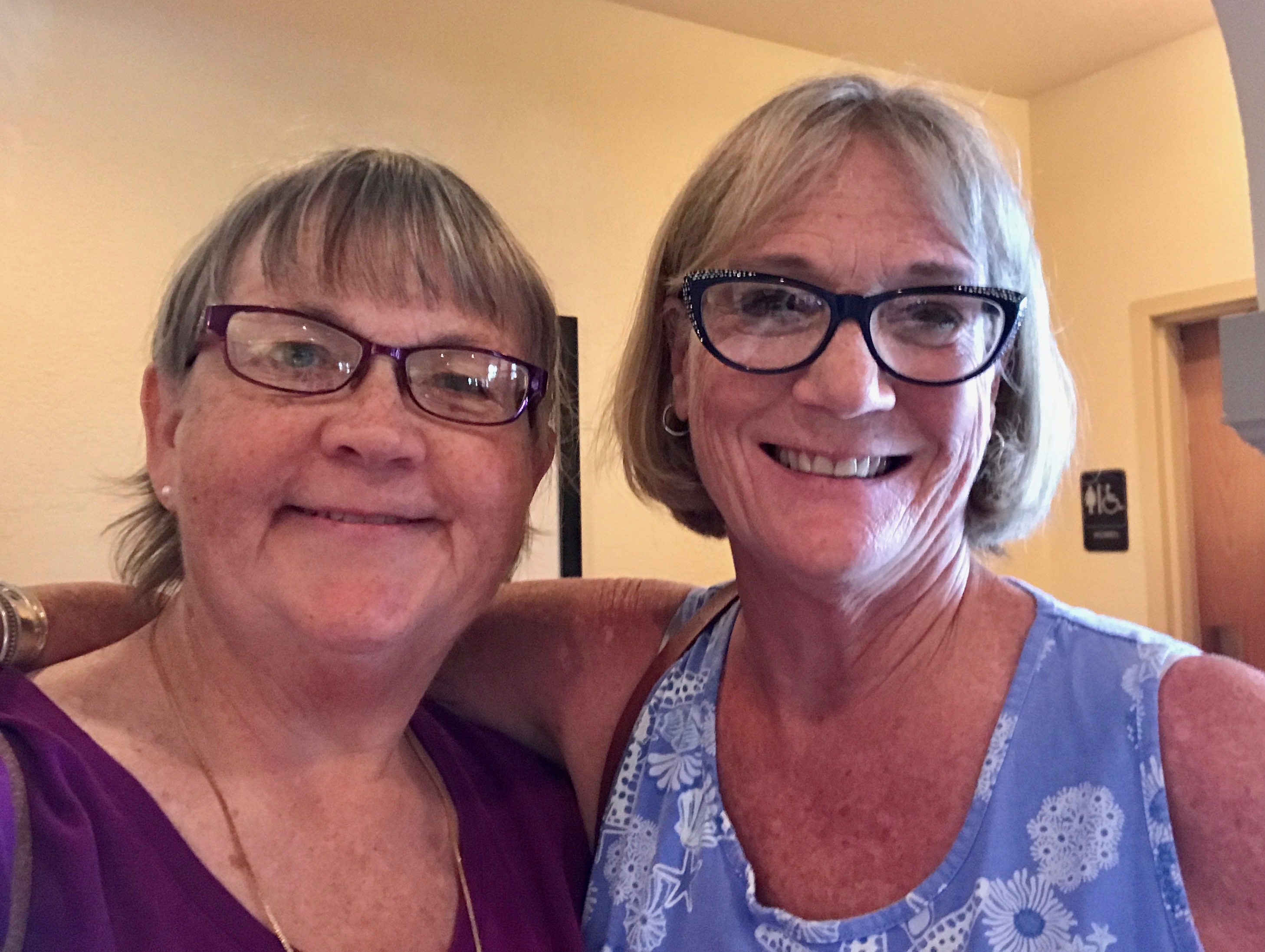
Friends like Leigh. We met in the early ’80s in Guatemala. We’re friends of “long standing” as I like to put it. At this point, it sounds better than “old friends.”
Of course, we generally go out to eat, as you can tell by the restroom sign in the background. Neither one of us are what you would call “culinary divas”.
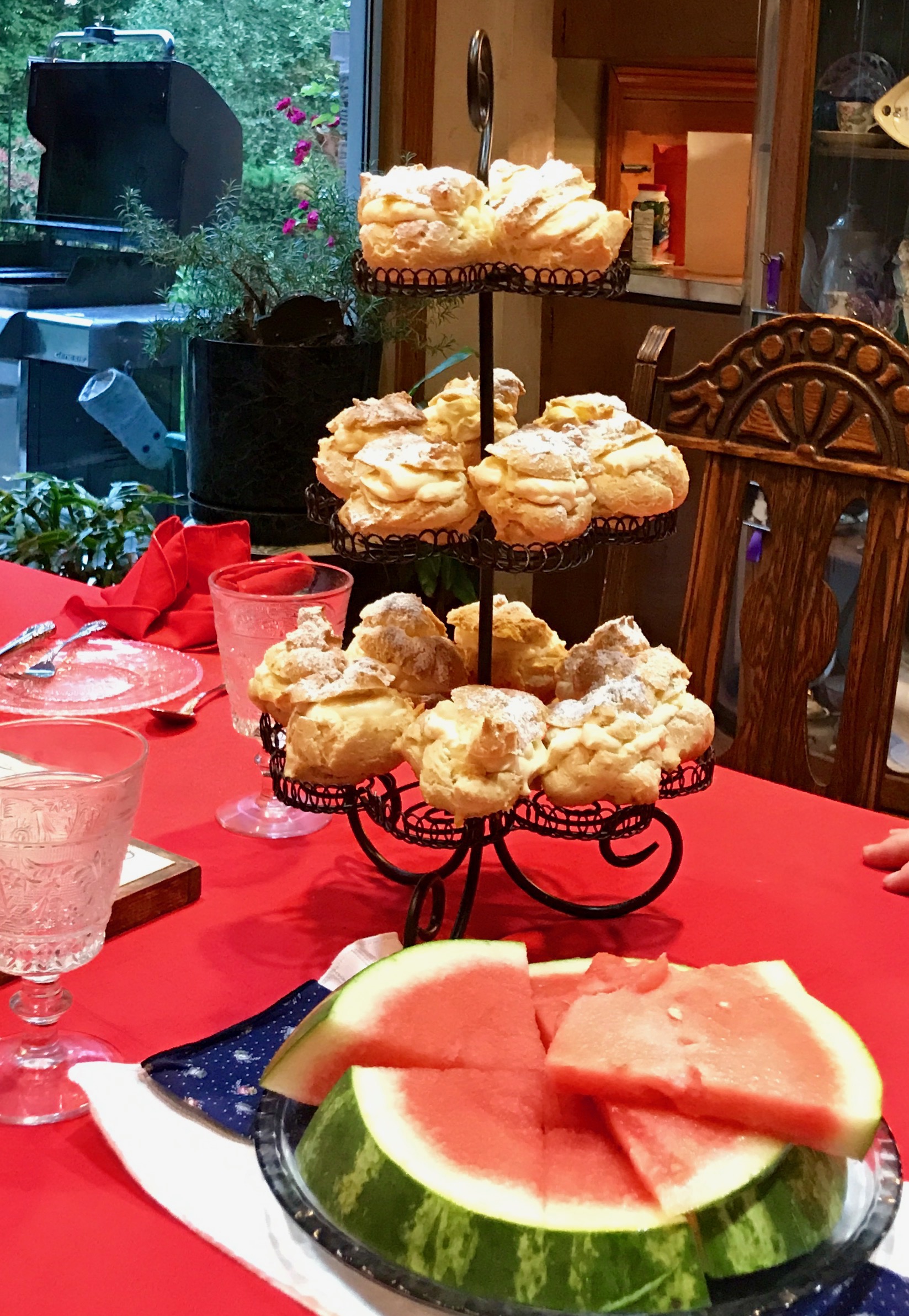
I do have “fancy food friends,” though. Ruth made her famous cream puffs.
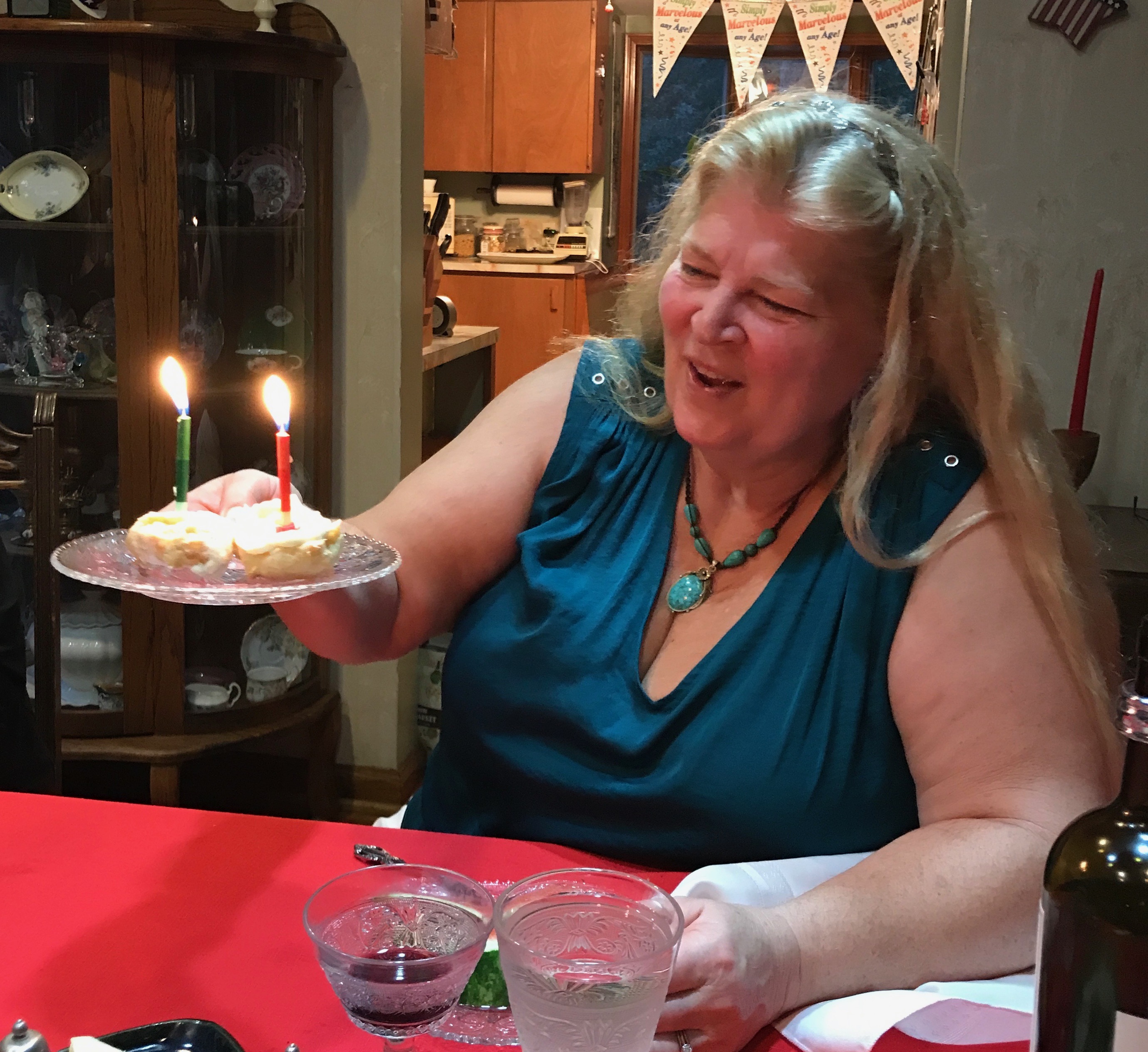
We were celebrating LaRue’s birthday. I think cream puffs make a lovely alternative birthday cake. LaRue prefers watermelon for her birthday cake, although I don’t see her refusing the cream puff.
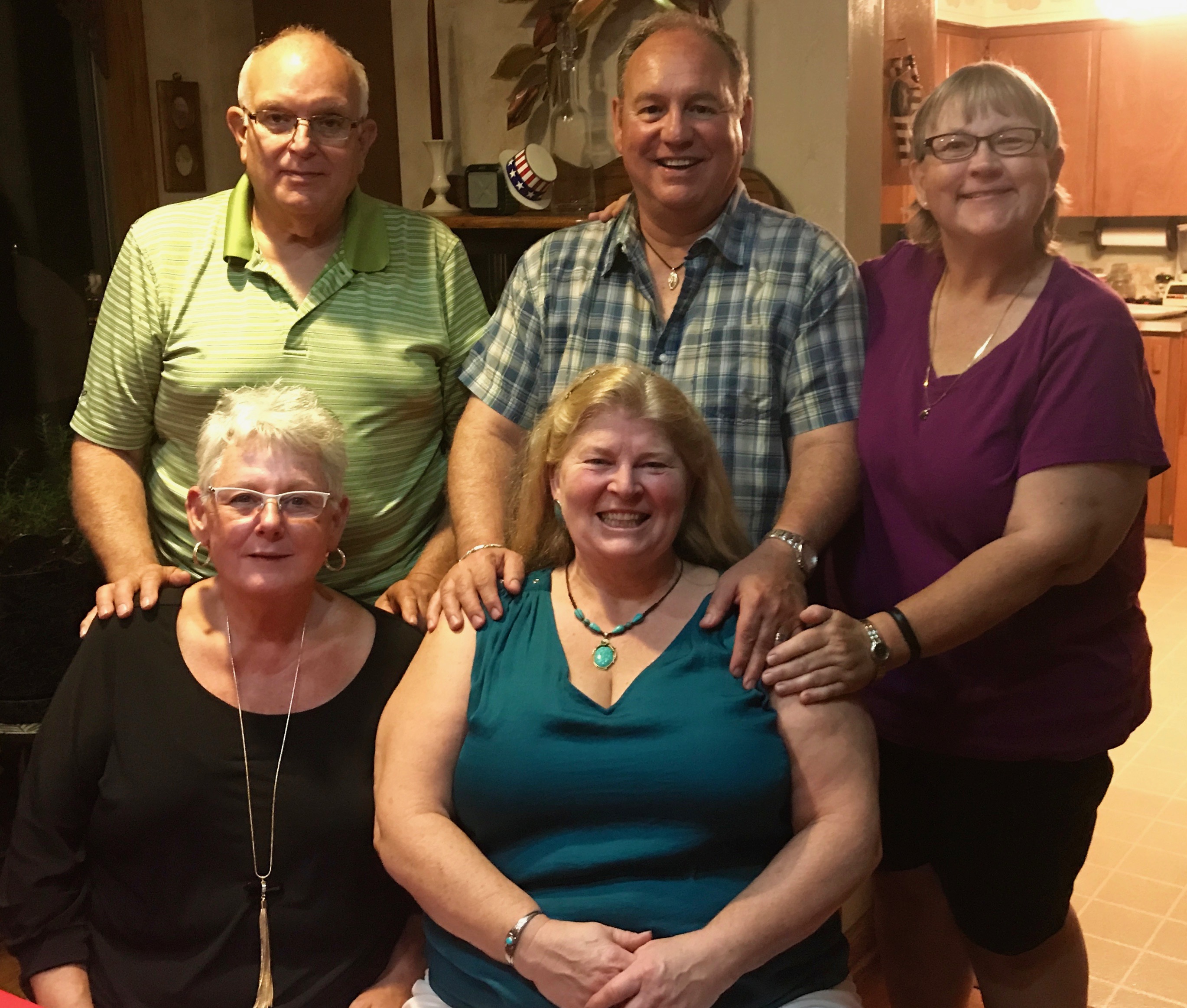
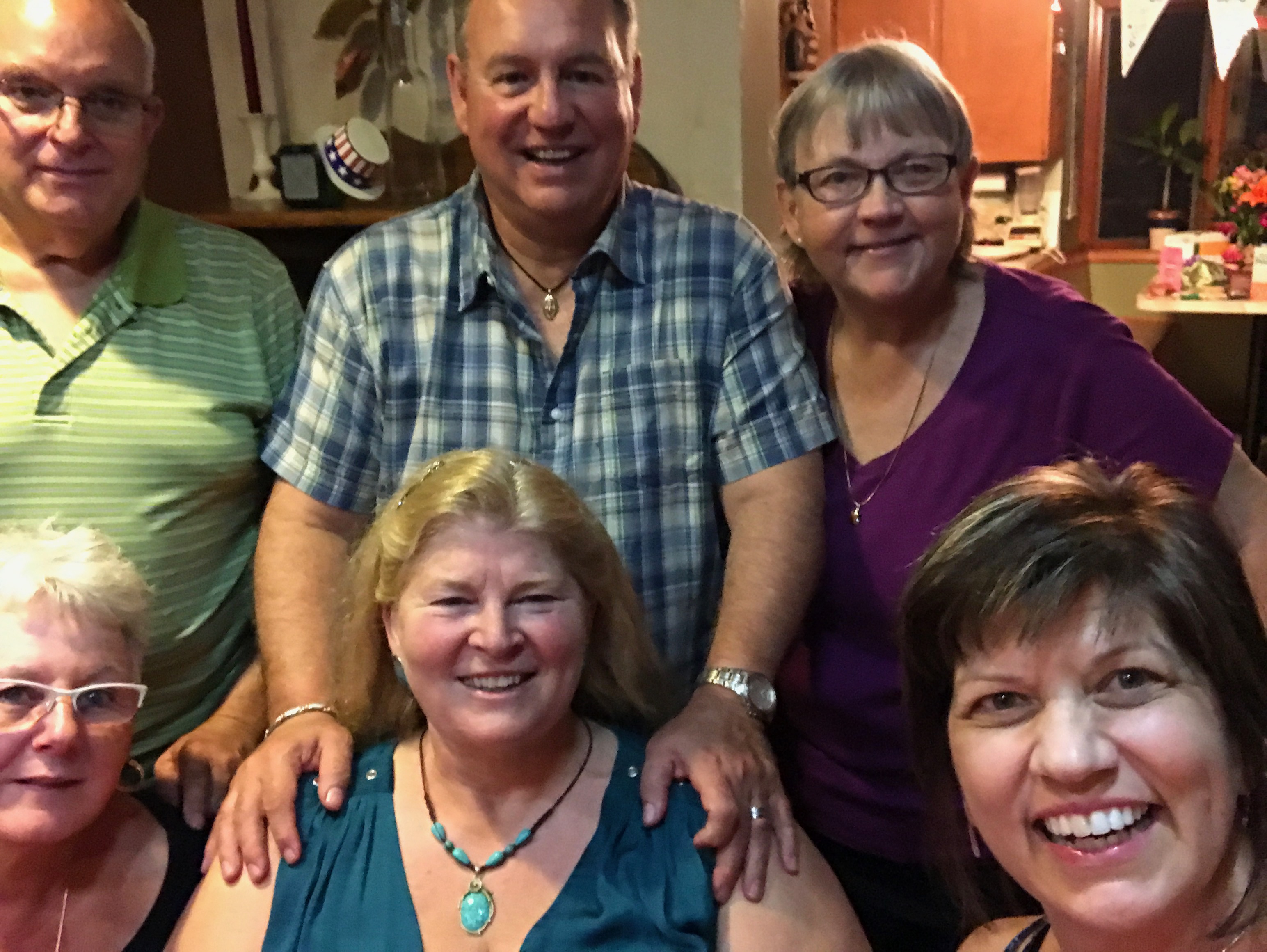
Ruth, LaRue, Stu, Paul and me. Who’s missing?
Oh, yeah. Cindy!
Diane is another of my “fancy food friends.” She had a little gathering for me.
Jan, the art teacher, Dawn, Kindergarten teacher extraordinaire, and Deb, the fantastic dance teacher, all from my days at Woods Lake.
Here’s a group shot. Diane, Linda, Deb, Jan, me and Dawn.
Who’s missing?
Oh, yeah. Diane! Diane on the right is the only one without a Woods Lake connection. Diane on the left and I went to Africa with her on a Fullbright trip back in 2003. Time sure flies!
I also went to a high school graduation party for Heaven, a former student. All grown up!
I even managed to catch up with some friends from out of town who were just passing through.
I saw Jim and Bill the last time I was in Vegas. Vegas, Baby! Jim is another “friend of long standing” from my days in Guatemala.
It wasn’t all visits with friends, though.
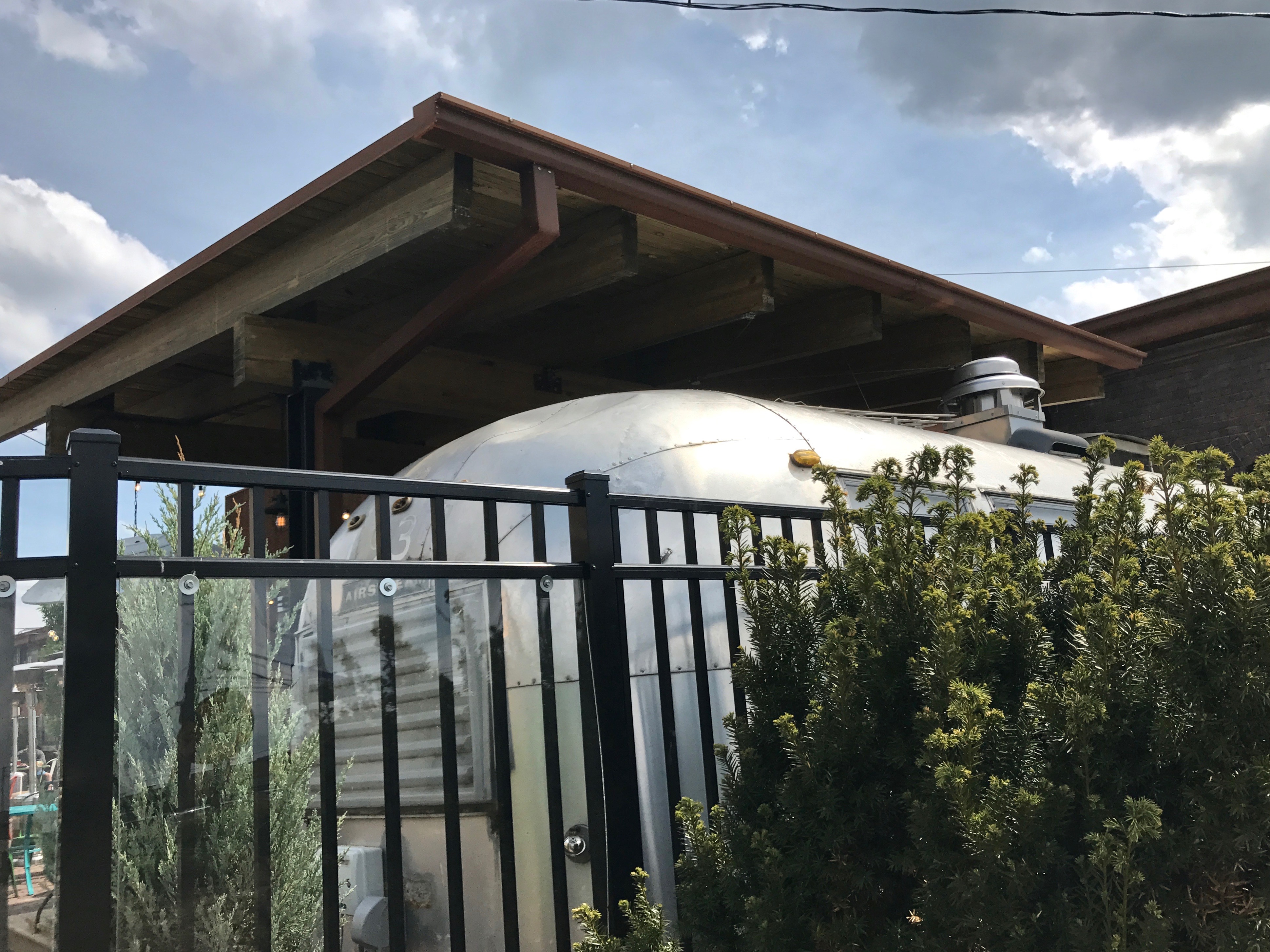
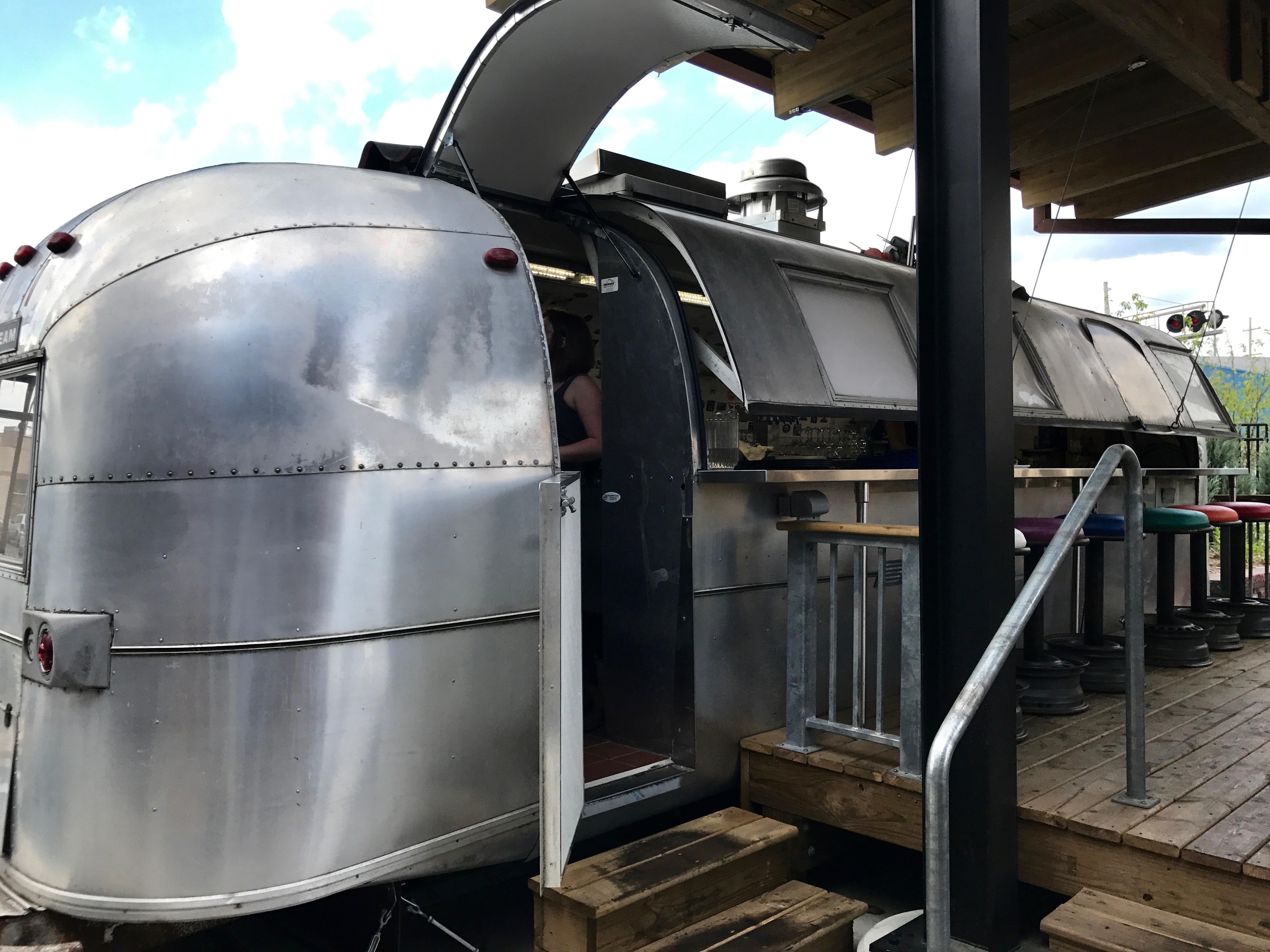
I managed to get a ticket for some sort of historical tour of Kalamazoo. Unfortunately, I got there a little late, so I kind of missed the tour. I did see this sweet Airstream bar in the garden of HopCat.
Kalamazoo is just a wonderful place to be! So wonderful, in fact, that I decided to get serious about settling down.
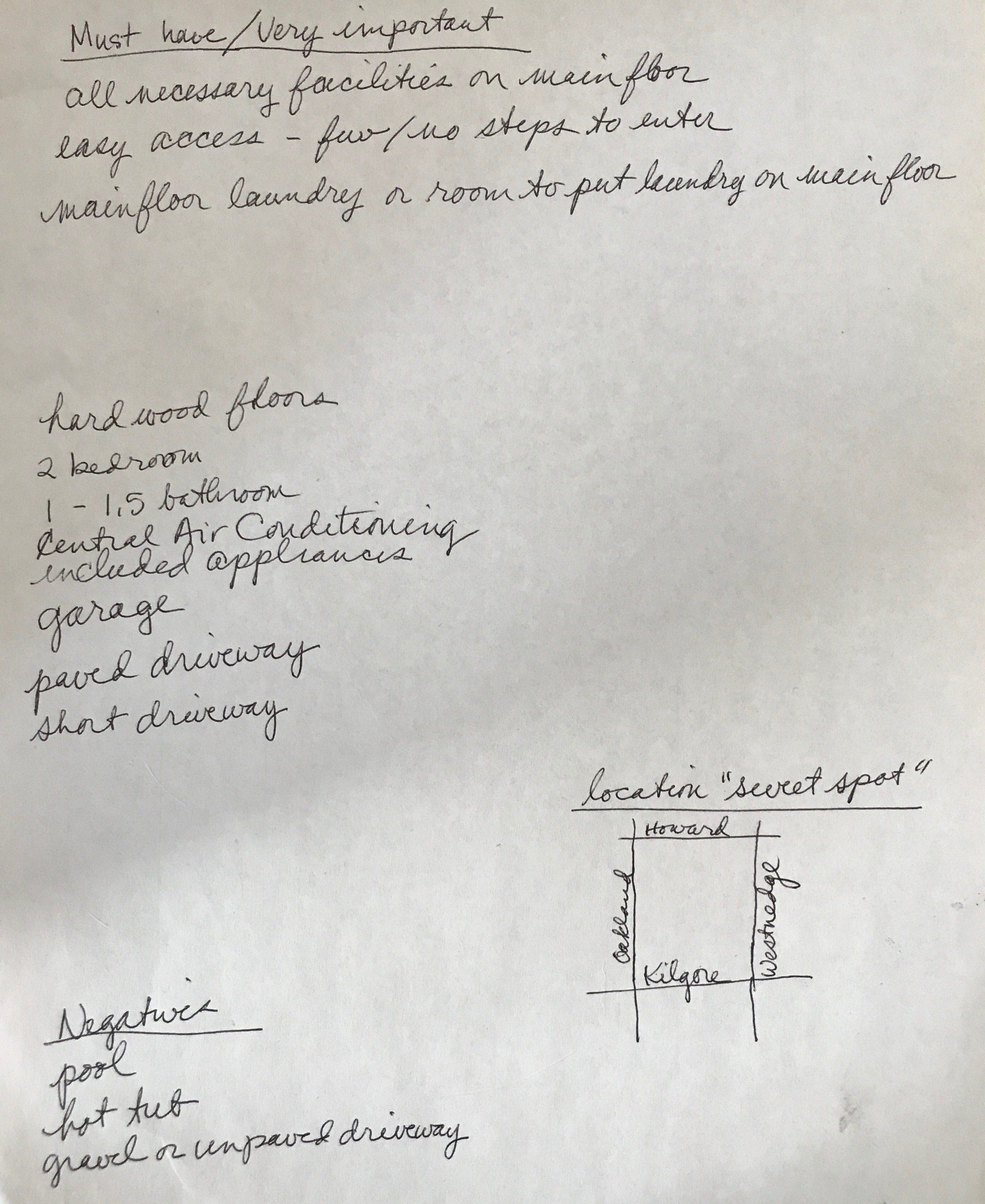
I drew up a list of what I was looking for in a house,
I visited my bank to get pre-approved for a mortgage, and…
I found a house!
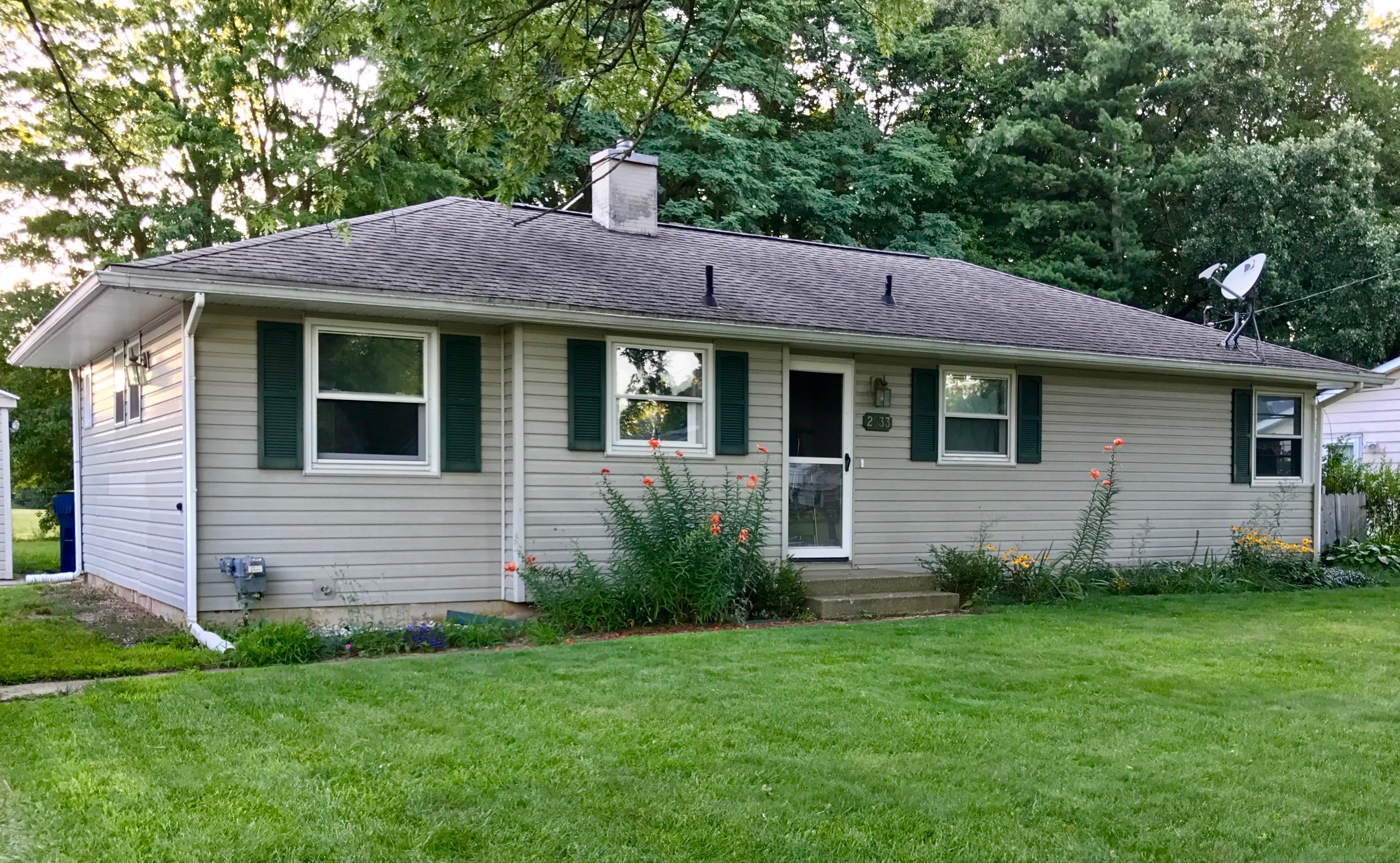
I even measured the driveway to make sure that Flo the Airstream would fit. I still wasn’t sure how to go about selling her. I needn’t have worried.
Airstream Addicts is a group I belong to on Facebook. In fact, I am one of the administrators of the group. I had mentioned that I was starting to get ready to sell my Airstream and I had been in communication with Joyce who was looking for her Airstream. It turns out that she and Jeff were driving to Grand Rapids from Philadelphia to see an Airstream in Grand Rapids.
They camped next to me at Markin Glen in their tent. They went up to Grand Rapids to look at a trailer and when they got back, they also looked at Flo. It was hot-hot-hot that day. And humid. Wouldn’t you know it that Flo’s AC took advantage of that time to go out?
Anyway, they took some time and went over Flo. In the morning, Joyce came over and offered to buy her.
Holy moly! From rolling stock to a homeowner in two days!
I really didn’t expect it to all happen so fast! I still had some things to take care of, so we made arrangements for me to take care of the things I had planned and then to drop it off at her house.
It was rather bittersweet when I left Markin Glen for the last time. It was my first campground and my home-away-from-home every time I’d pass through Kalamazoo.
The nearest campground I could find to Lake Forest was Illinois Beach State Park. As I remember, finding the correct entrance was a challenge. There is a day use area and a conference center, in addition to the campground. Even with the wrong turns and never-ending road construction, I eventually got to the office to check in.
It was kind of an oddly run place, but the worker was most accommodating. She said that she didn’t know if the site I had reserved was vacant, but that I could drive around and see what would work for me. She said that not all sites were created equal, and that some of the sites were narrow and far from level.
I took her advice. Truly, the sites were irregular.
There were lovely tree-shaded spots. They had electricity but no water at the sites.
If you were tent camping, these would have been great spots. I was not tent camping.
I decided that I didn’t want to try to dance Flo back between the trees, so I headed for what looked like a parking lot with electrical hook ups. It wasn’t as picturesque, but it would do.
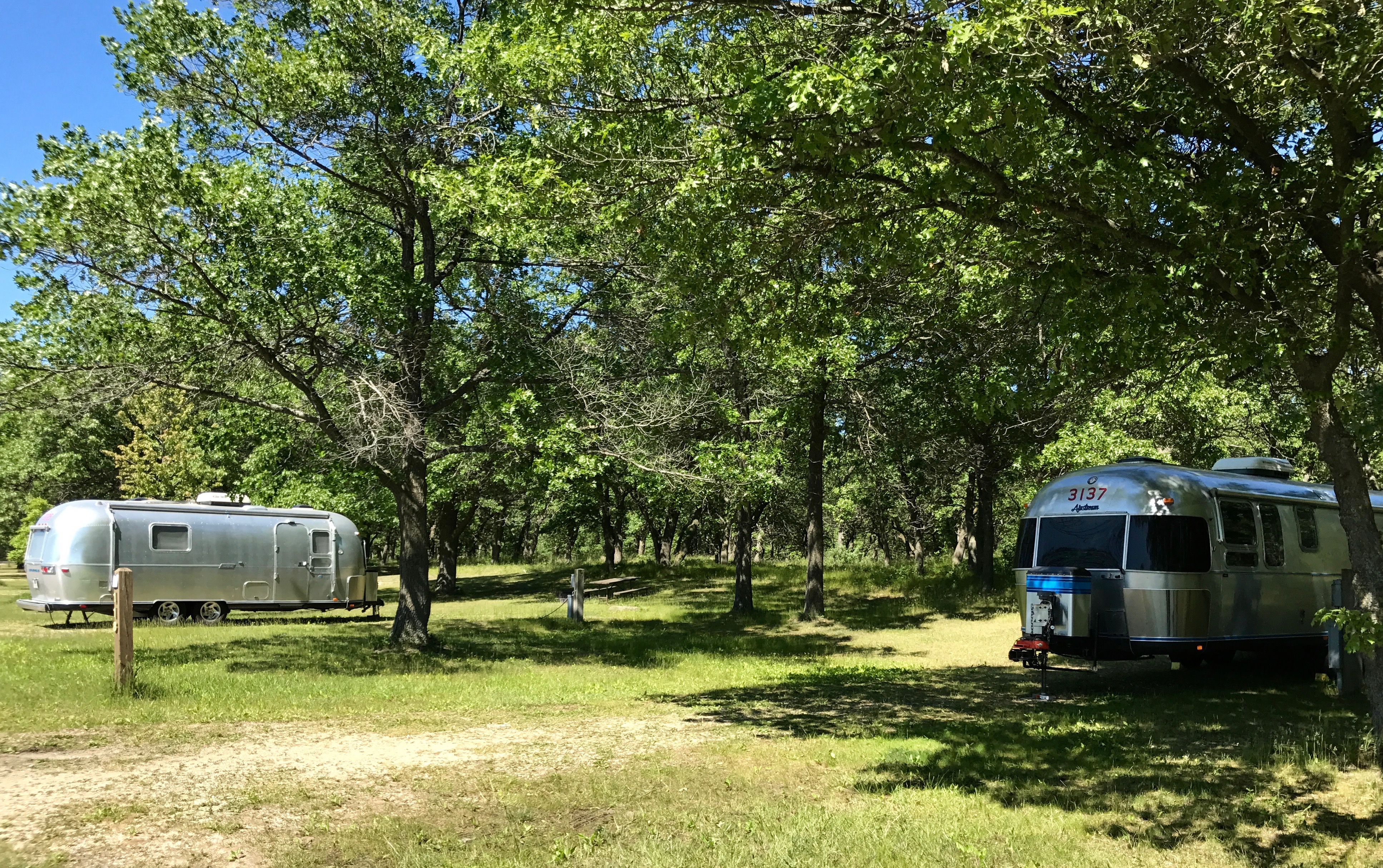
I came across these Airstreams in another part of the park. I passed by several times, but no one was ever there.
The day after I met up with Mary, I set out to enjoy the lake.
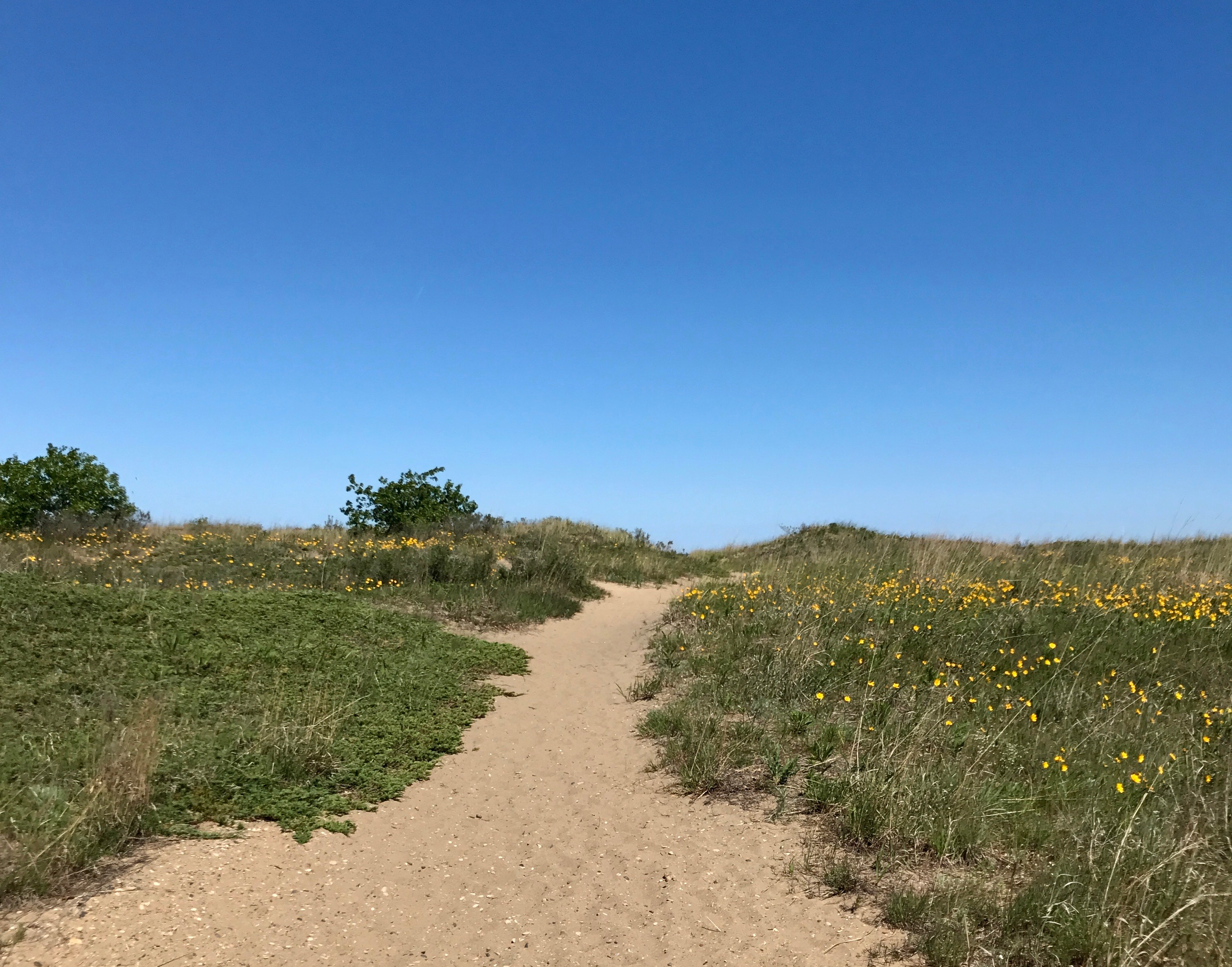
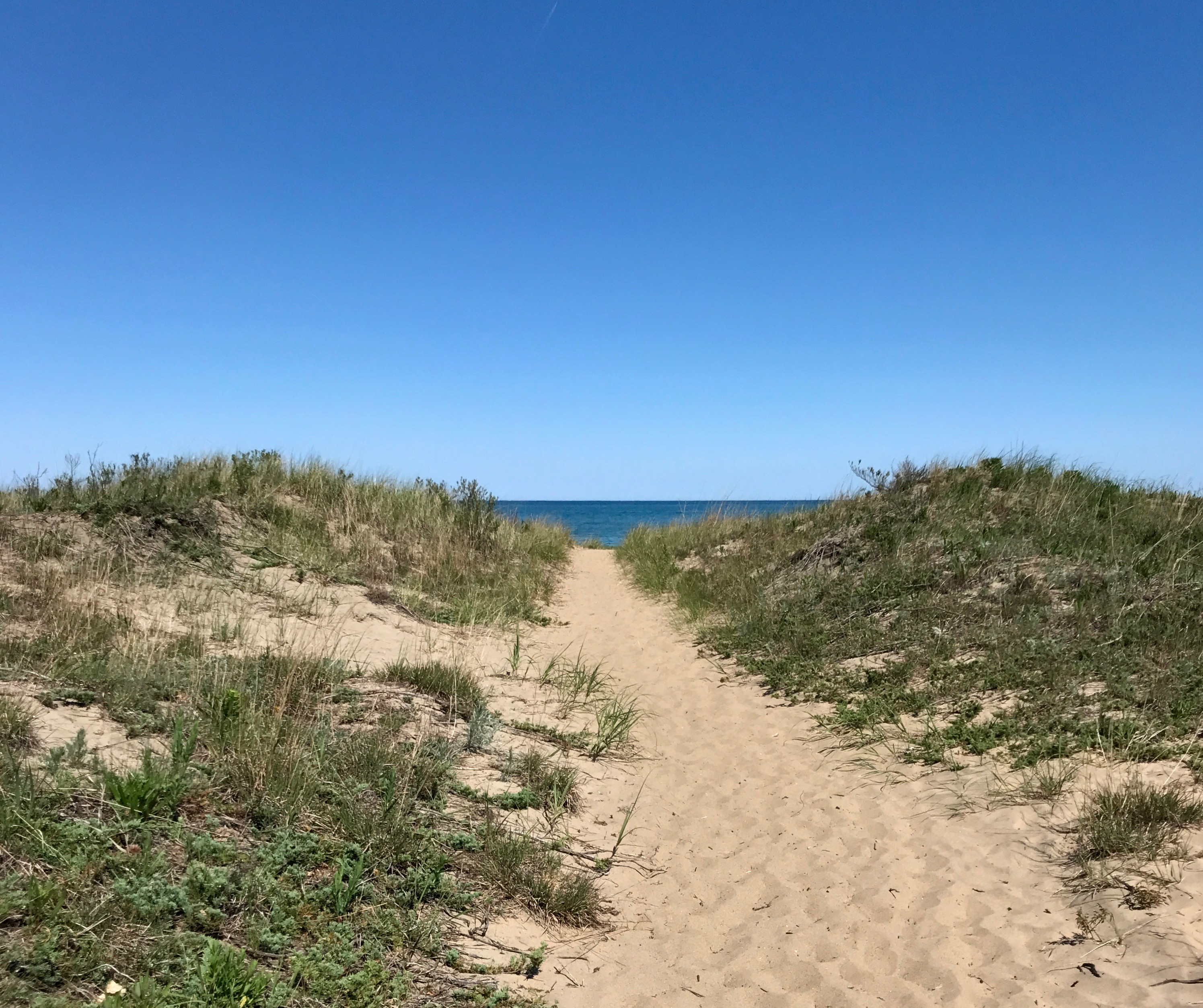
I set off on the trail to the beach.
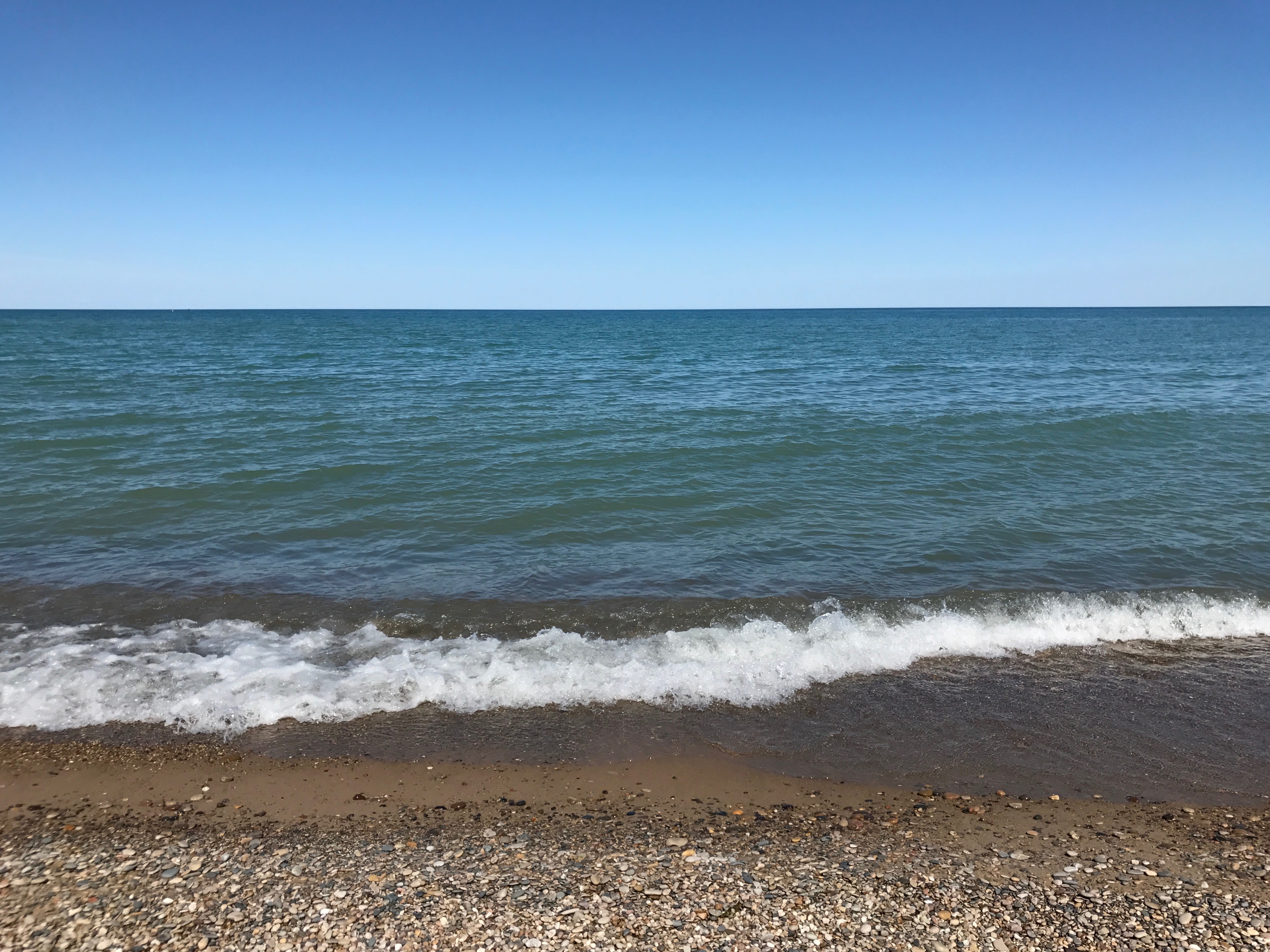
Ah! There’s Lake Michigan coming into view.
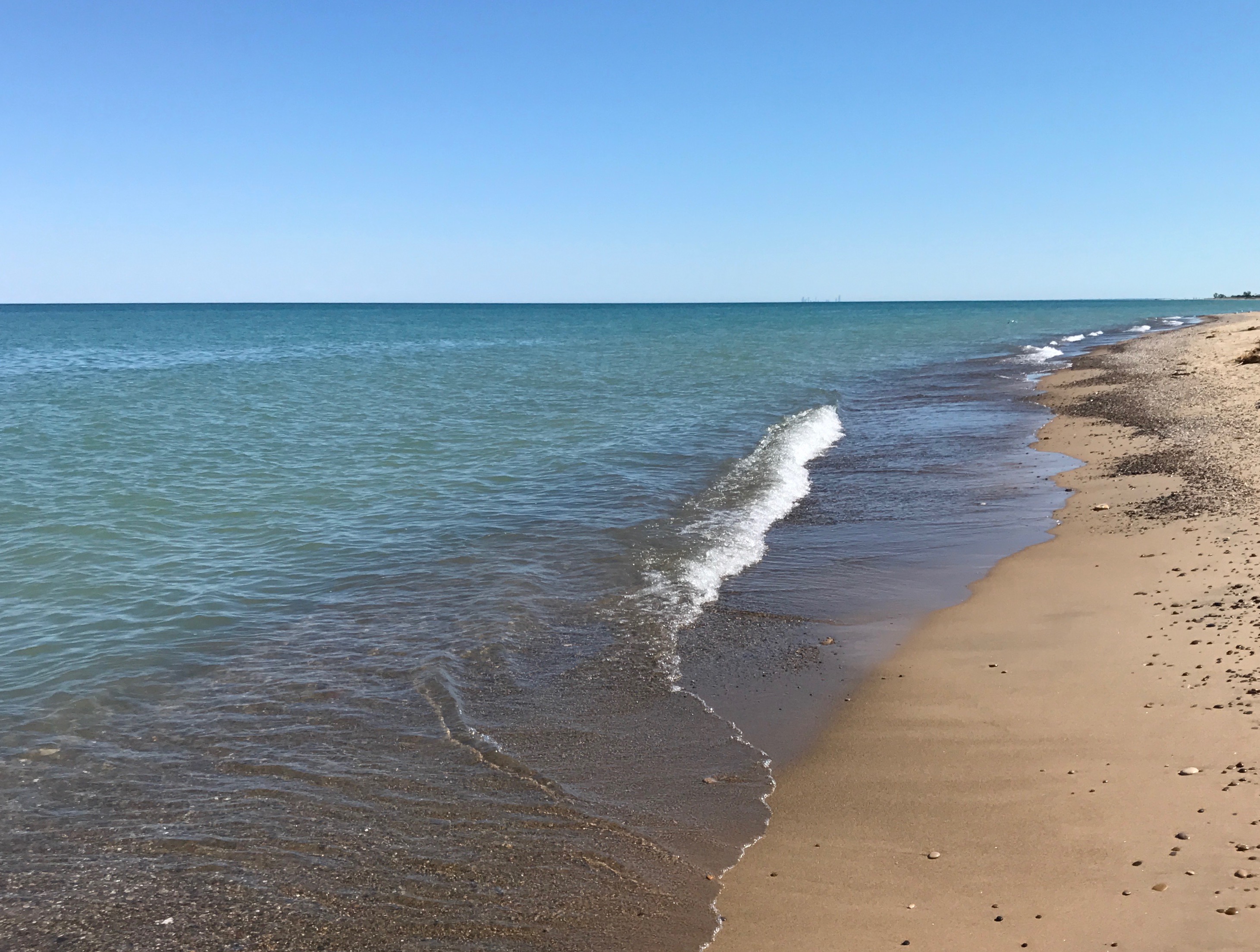
What a beautiful day!
Just the smallest amount of wave action. And all those pretty pebbles!
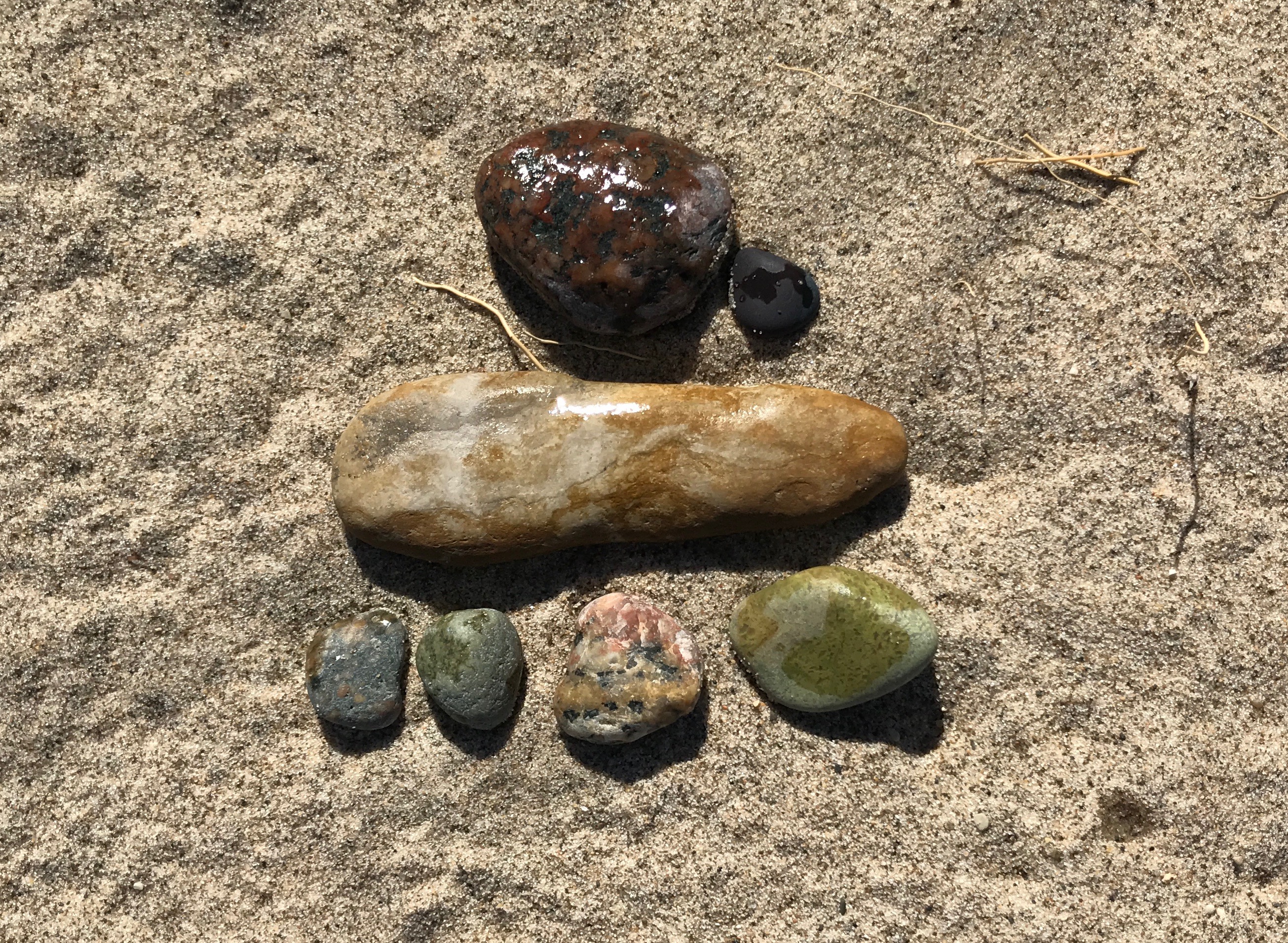
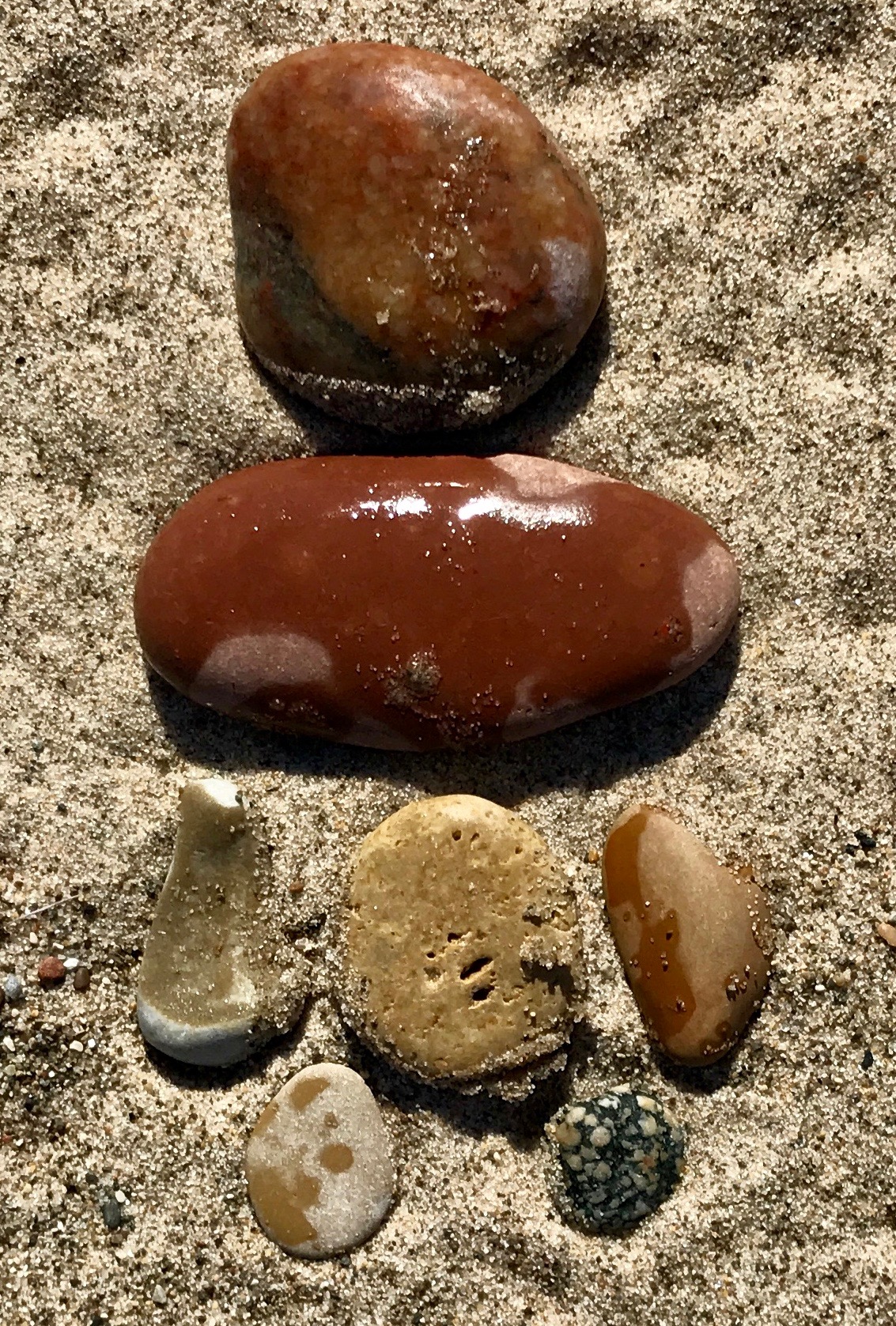
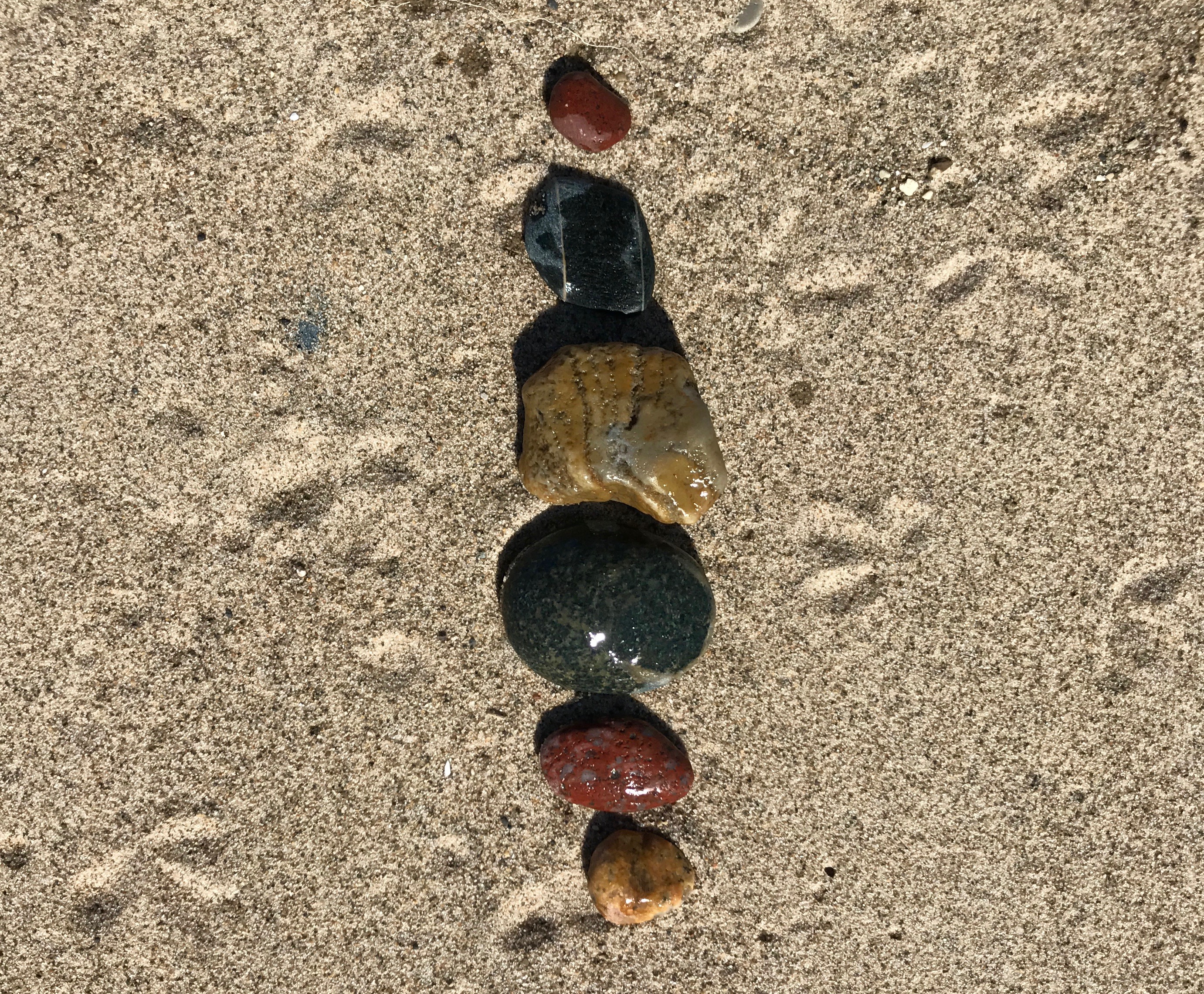
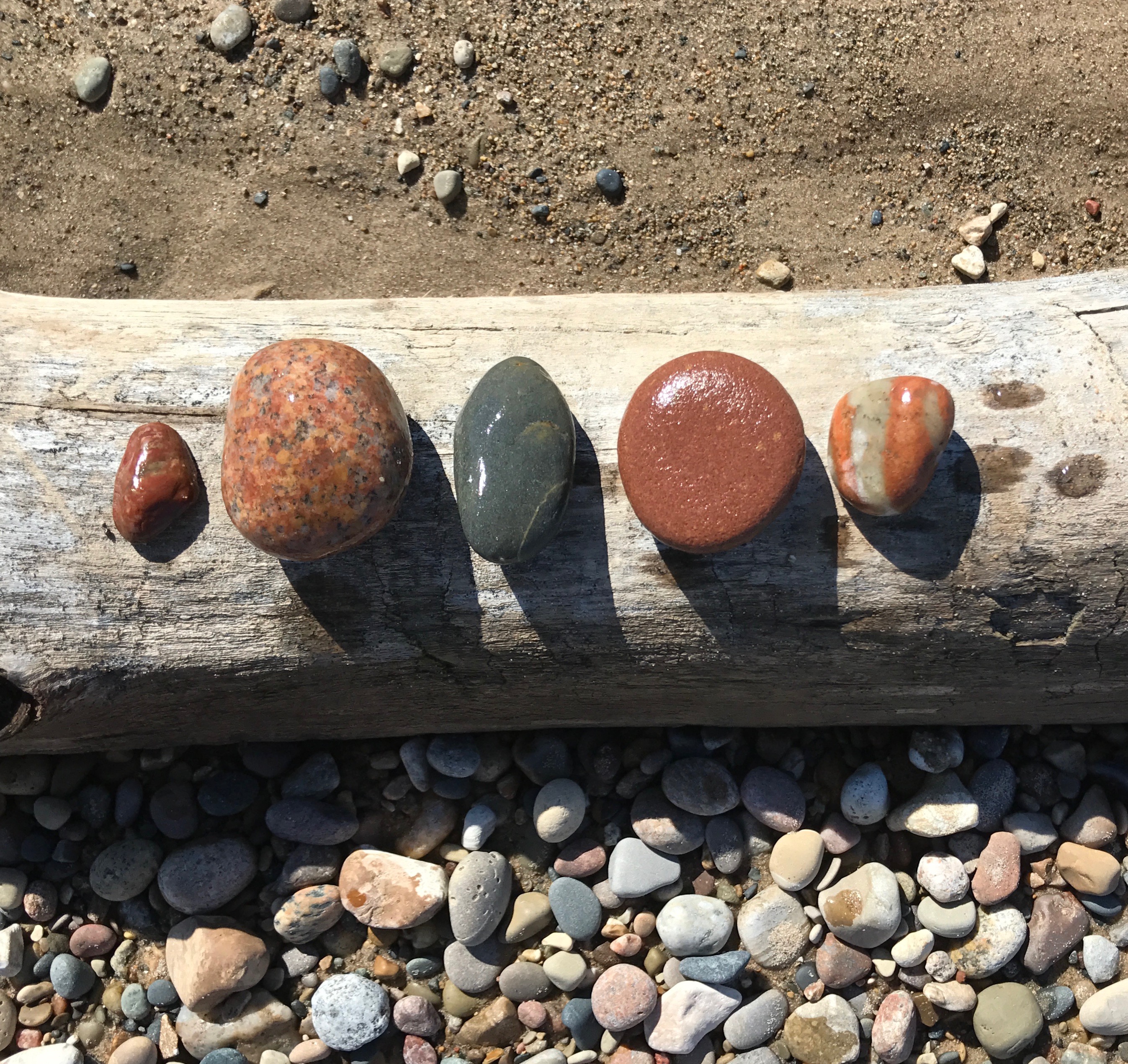
It’s time for a little “Catch and Release” rock collecting.
I enjoy this little hobby of mine.
Look at the remains of the bird footprints in the sand.
After I made a few arrangements and took my photos, it was time for one more look at the lake.
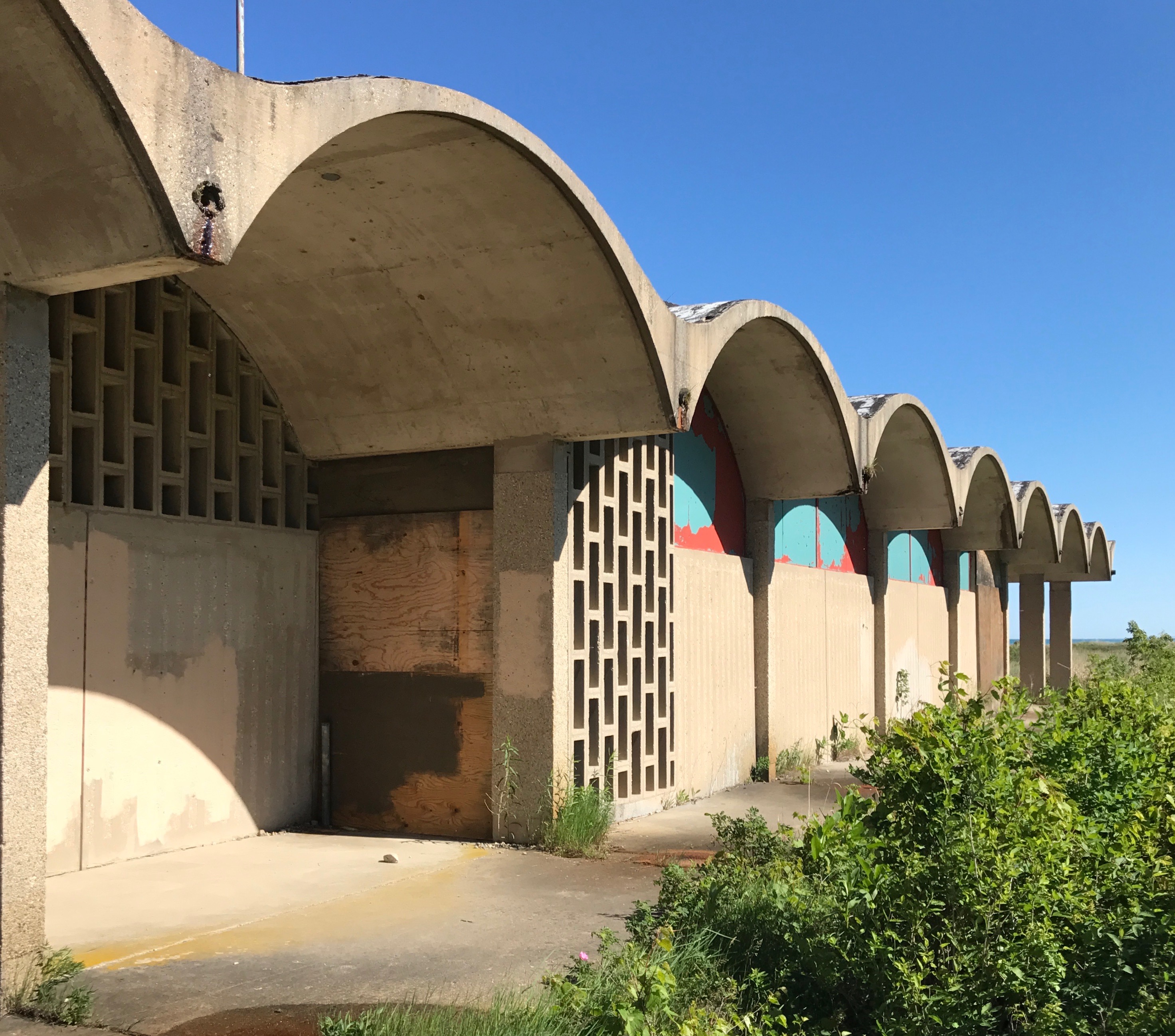
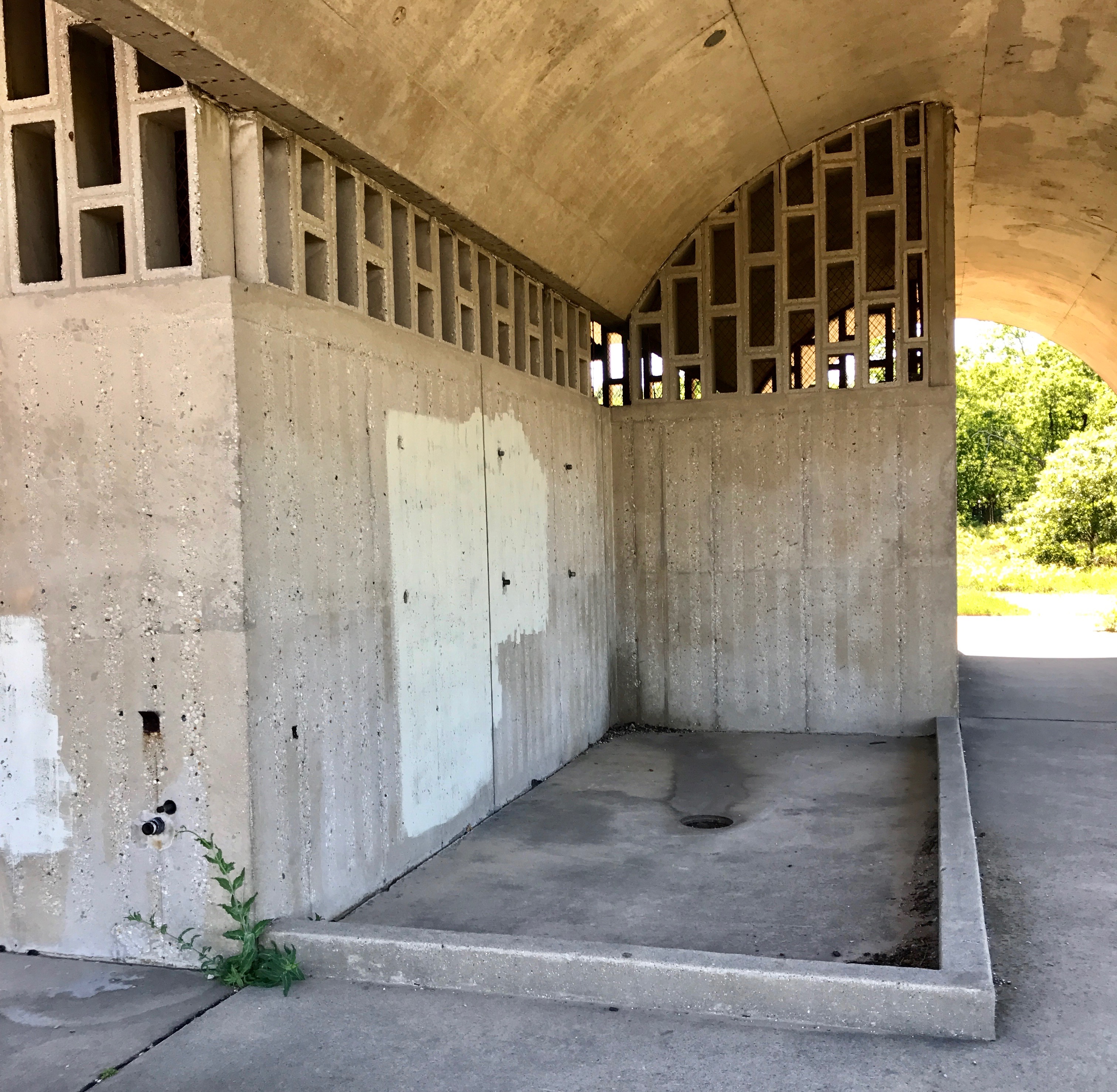
And I headed up toward what must have been a lovely bathhouse at one time.
I wonder how long it had been closed?
I love it when they have these places to get the sand off without taking a full shower.
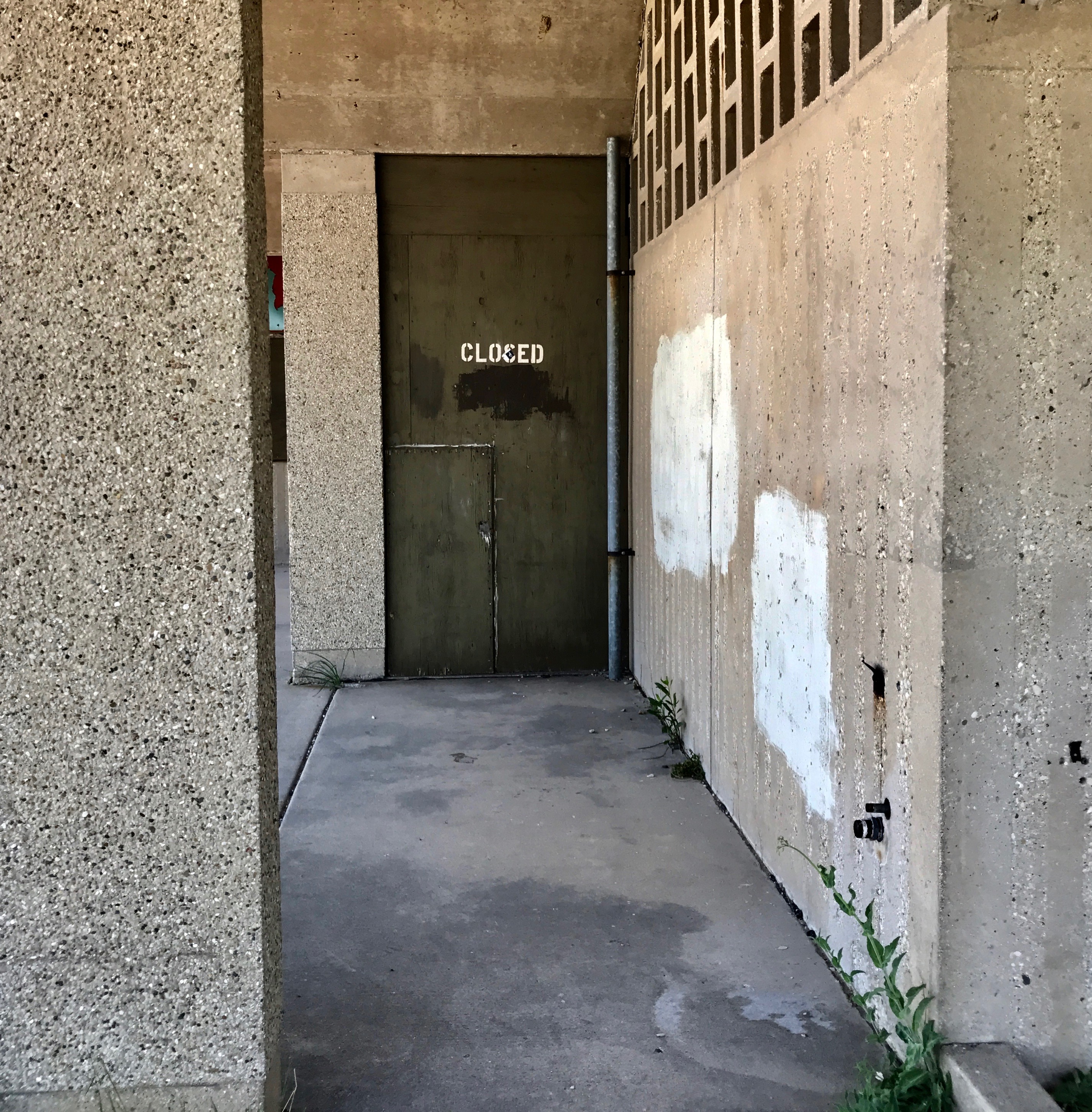
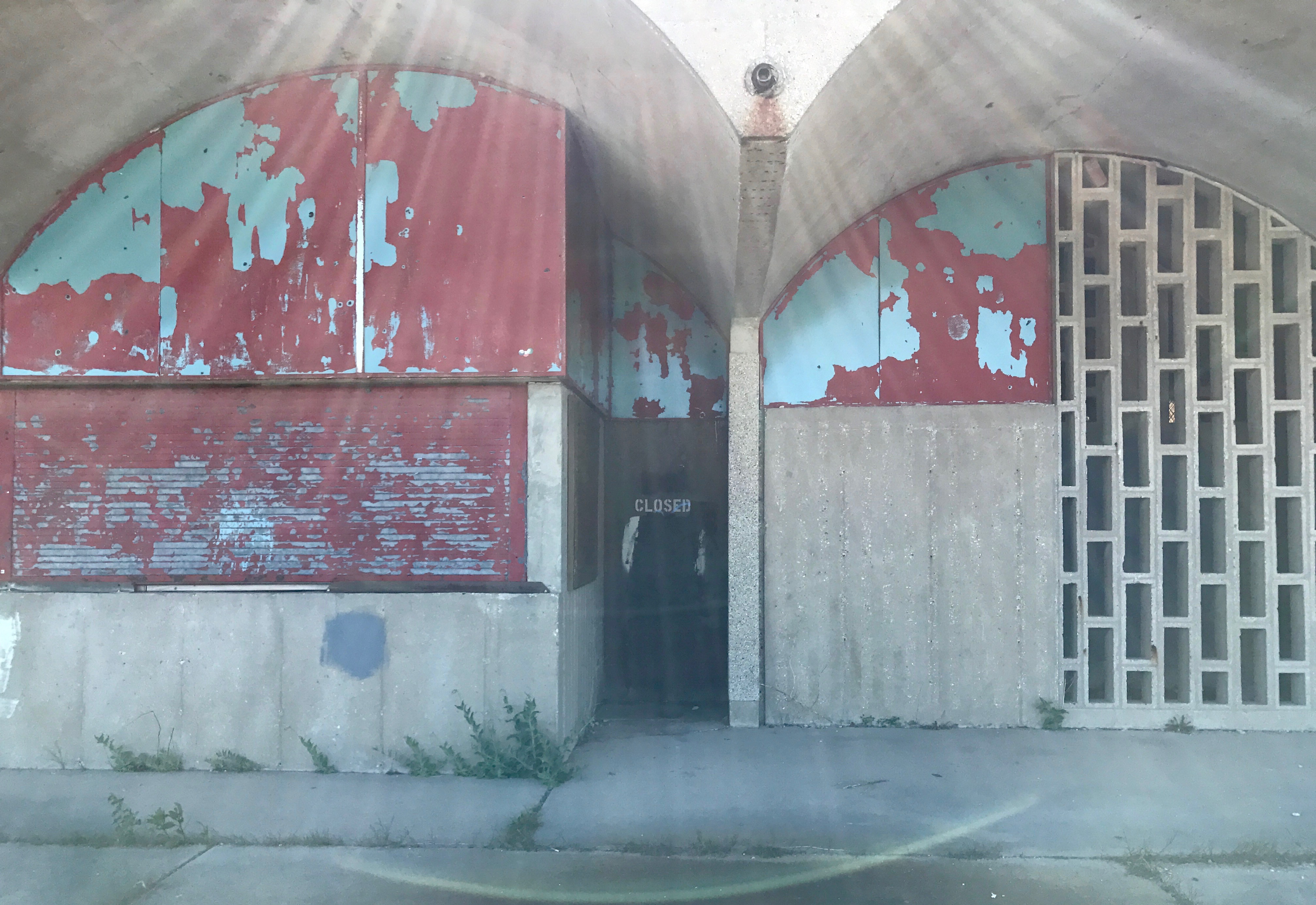
Nowadays, it was just closed.
Really closed. It must have been a great facility. It really makes me angry when resources are lost because of a lack of maintenance.
Speaking of maintenance, one piece of advice I give full time RVers is to go through your stuff every six months and get rid of what you don’t need. It looks like I haven’t been taking my own advice. But I had the time, so I went through all my stuff and got rid of a bunch of junk.
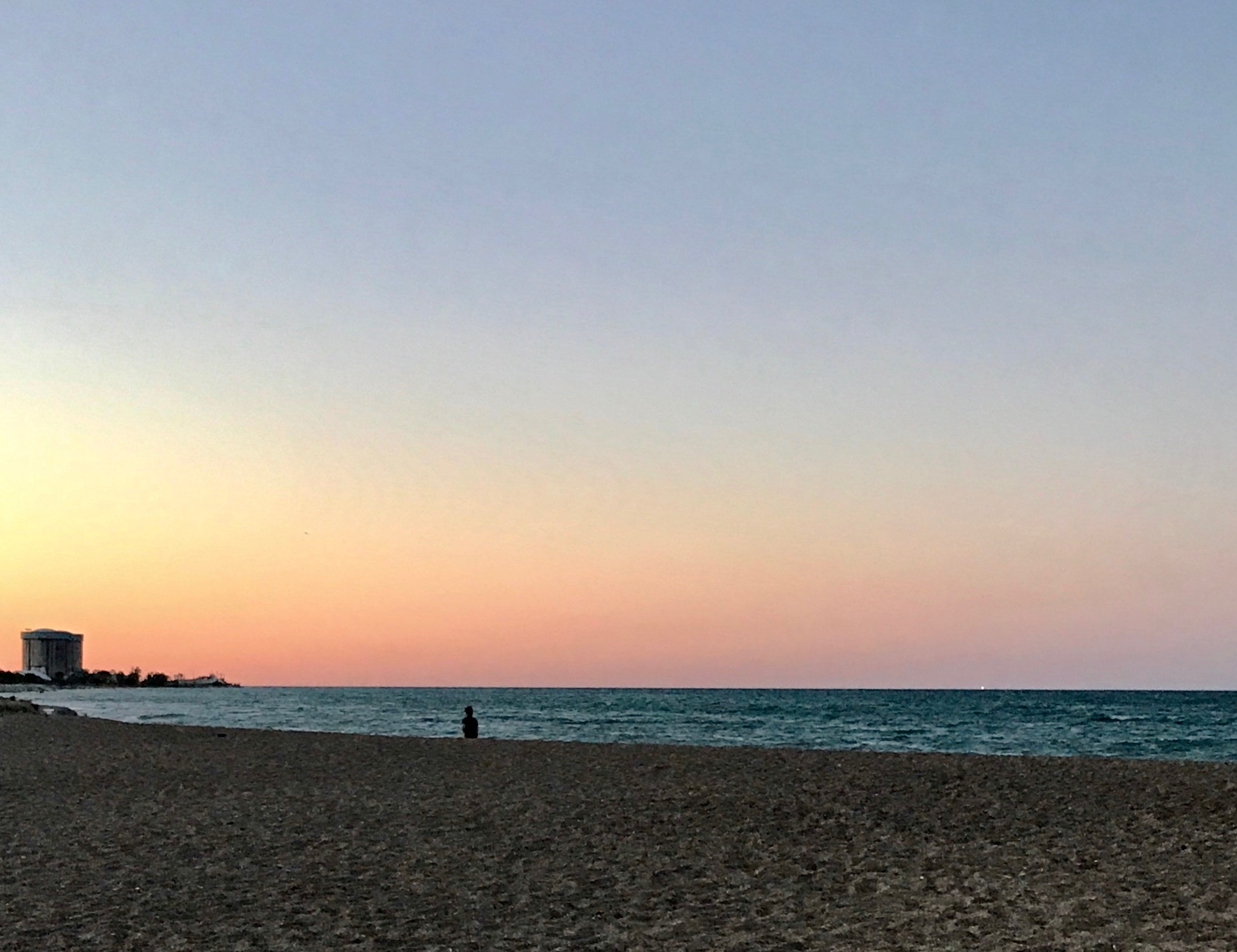
There was time for one last sunset. In the morning, I would set out for Kalamazoo.
In choosing my route back to Kalamazoo, I made meeting up with my Facebook friend, Mary, a priority.
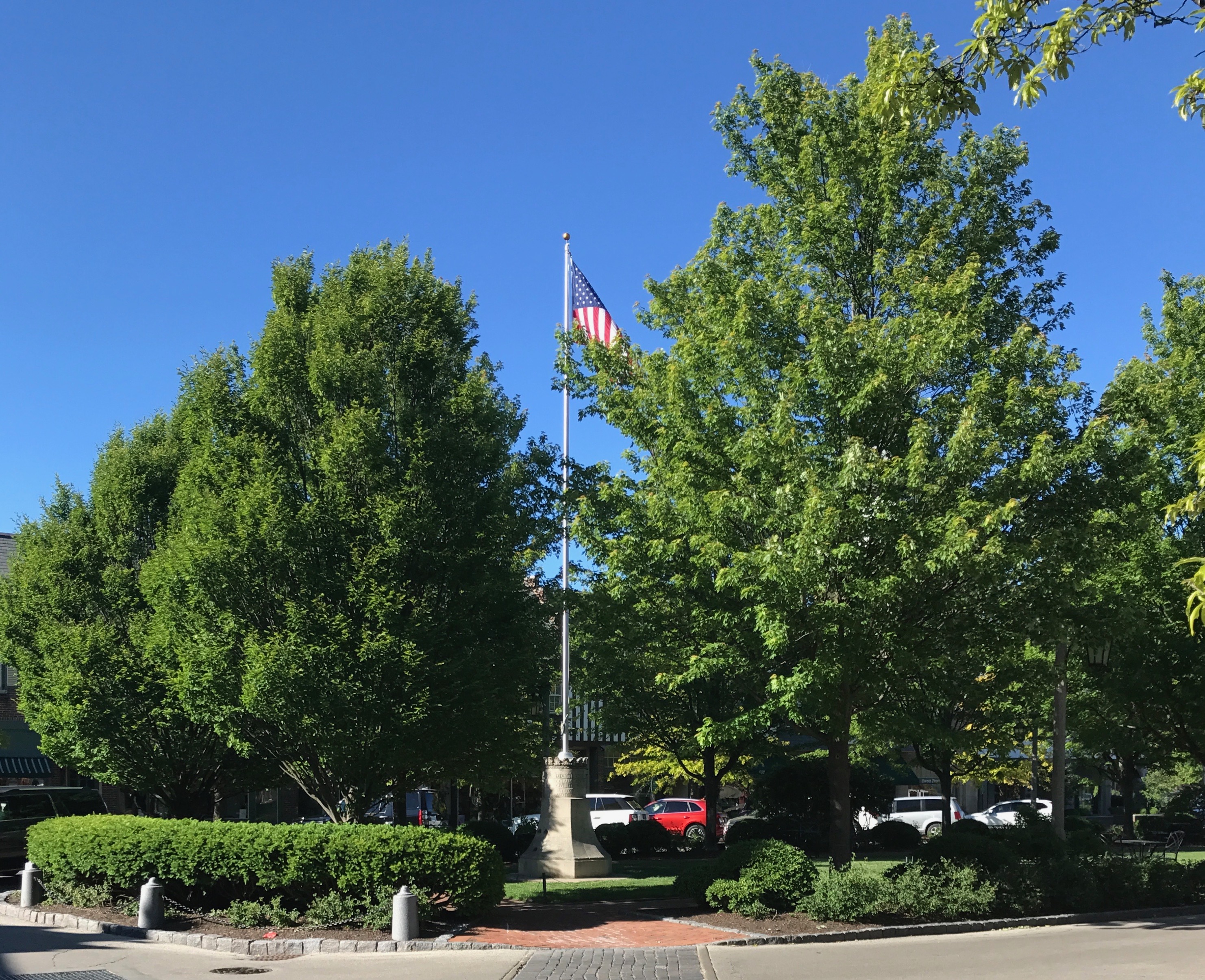
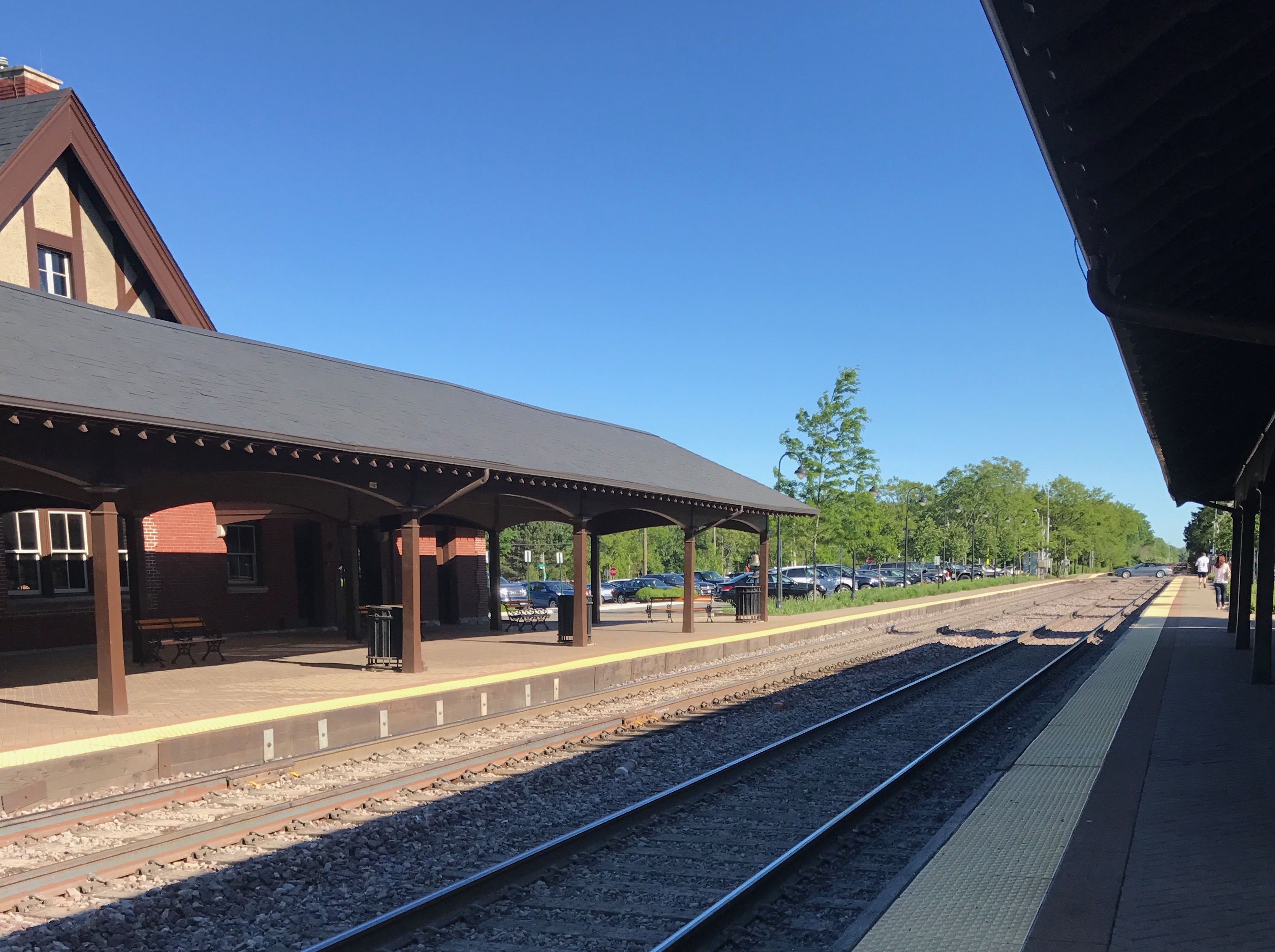
I got settled in at Illinois Beach State Park and headed to Lake Forest to rendezvous with her for dinner. I got there a little early and decided to look around. There was a quaint little town square in front of the train station where she would be arriving.
The flagpole looked like more than just a way to display the flag. I walked over to investigate.
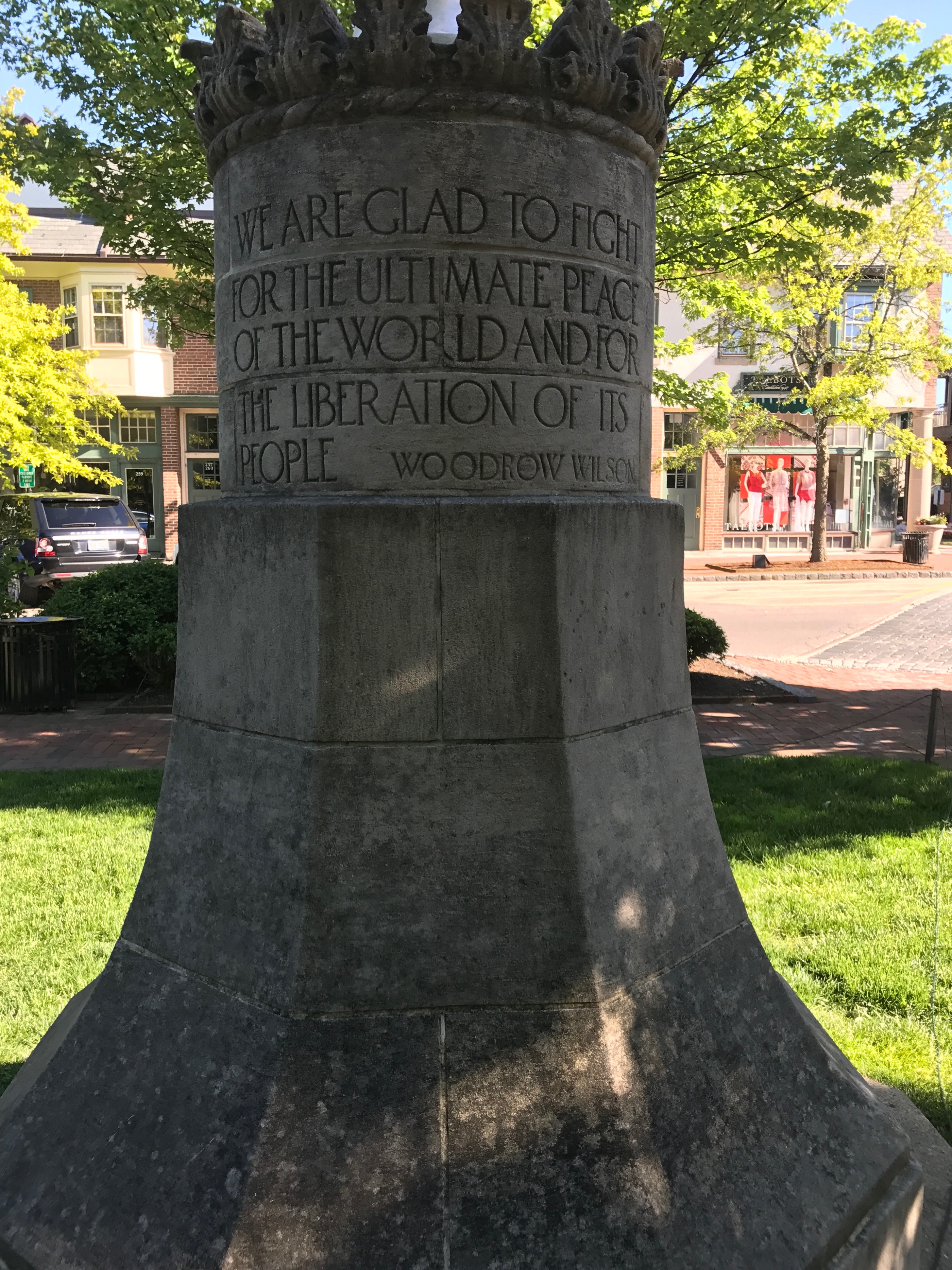
It was a World War I memorial with a quote from Woodrow Wilson.
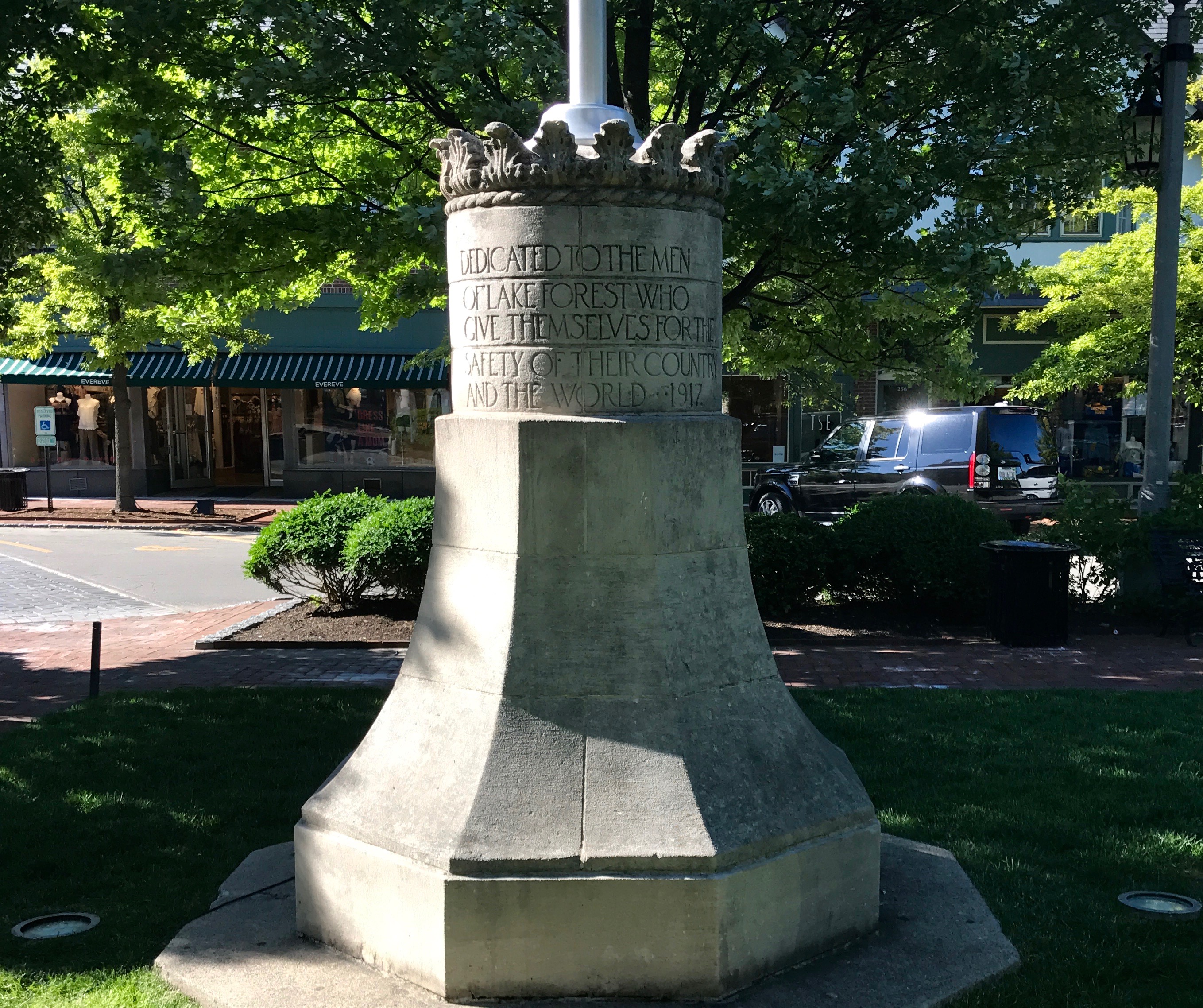
Apparently the good people of Lake Forest were right on top of getting this memorial up. The date is 1917.
After strolling around a bit and looking at all the upscale shops – Williams-Sonoma, J.McLaughlin, and Talbots – the overwhelming scent of money got to me and I headed over to the train station to wait.
I waited more or less patiently.
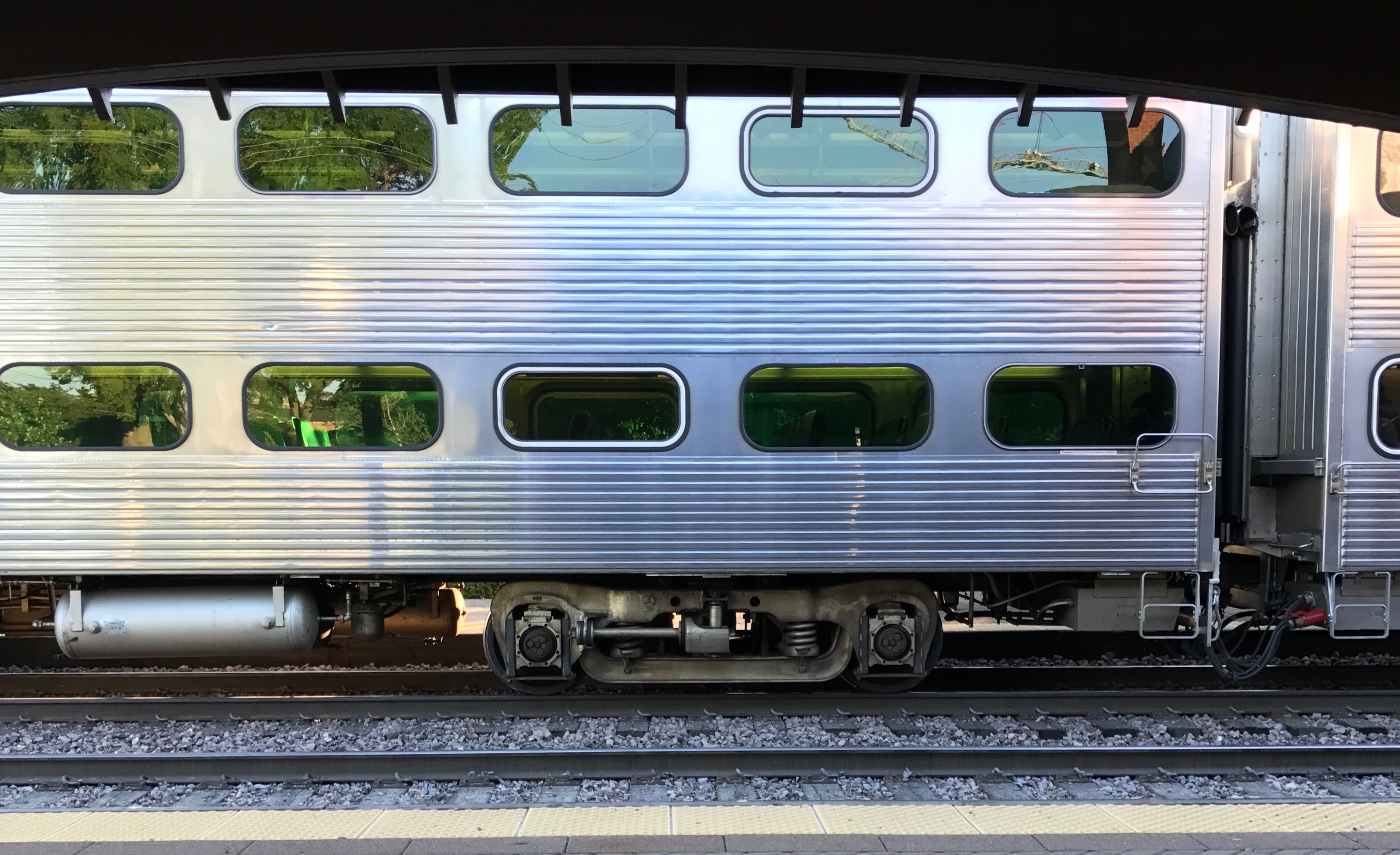
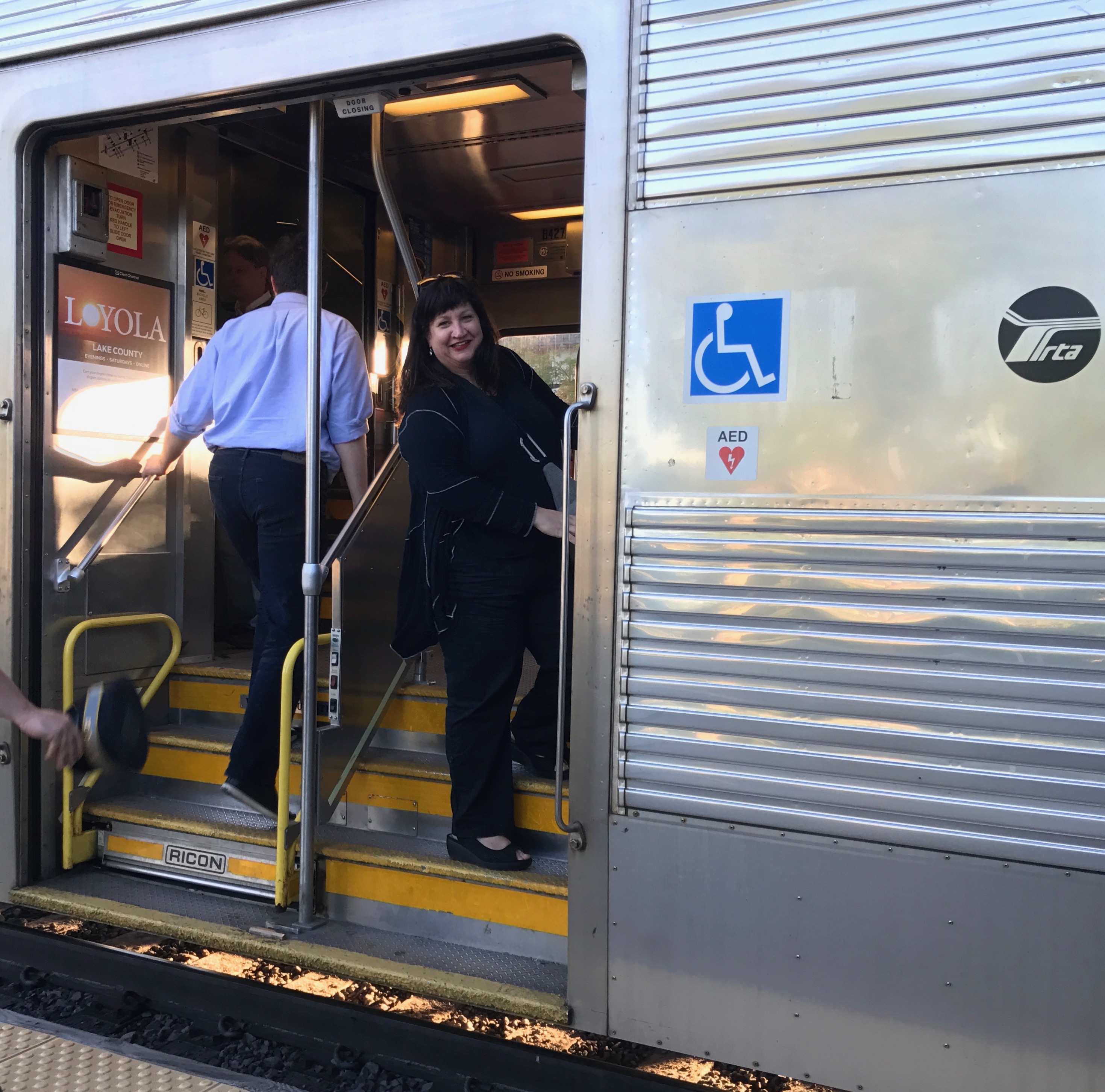
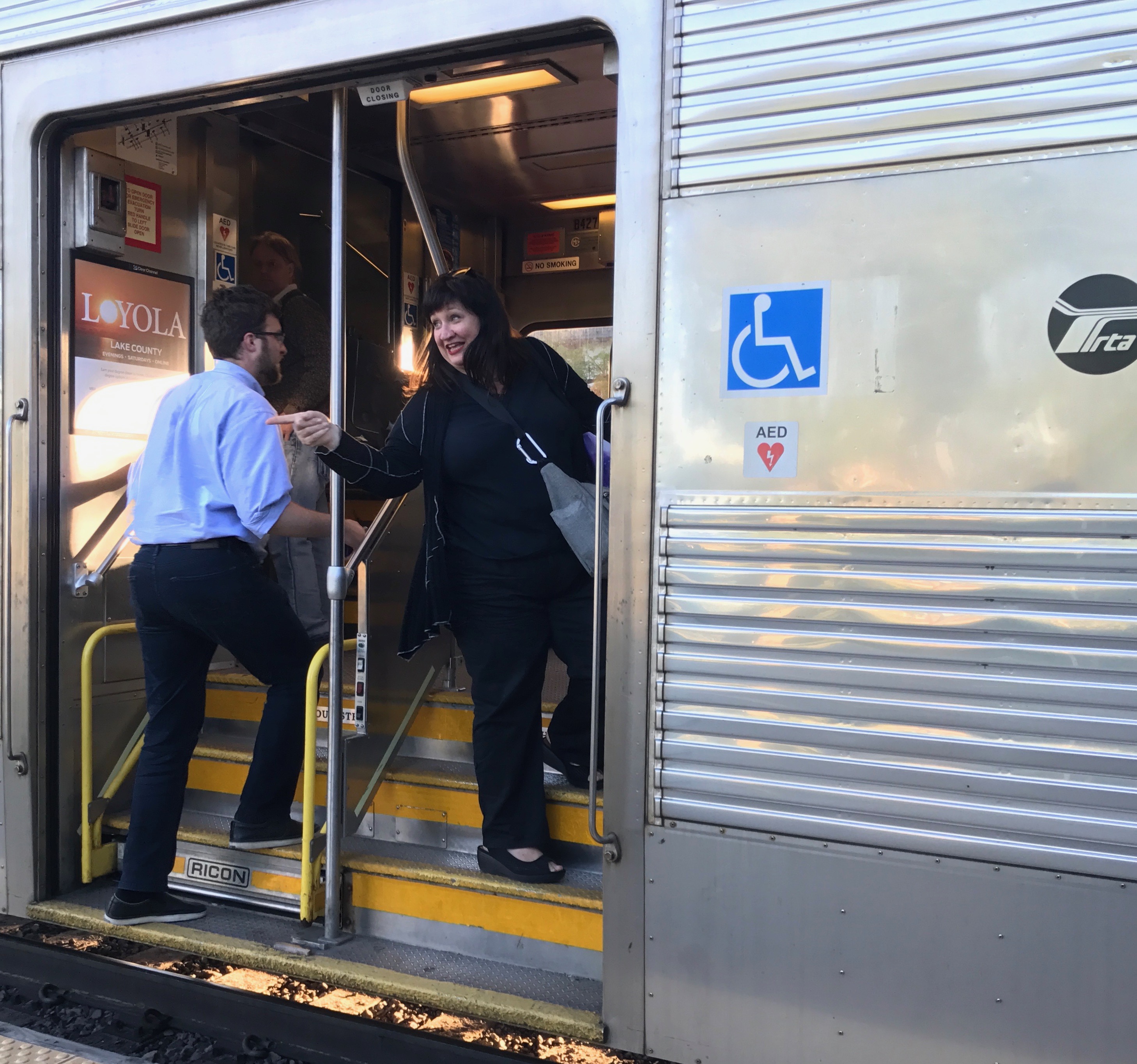
Finally, the train arrived.
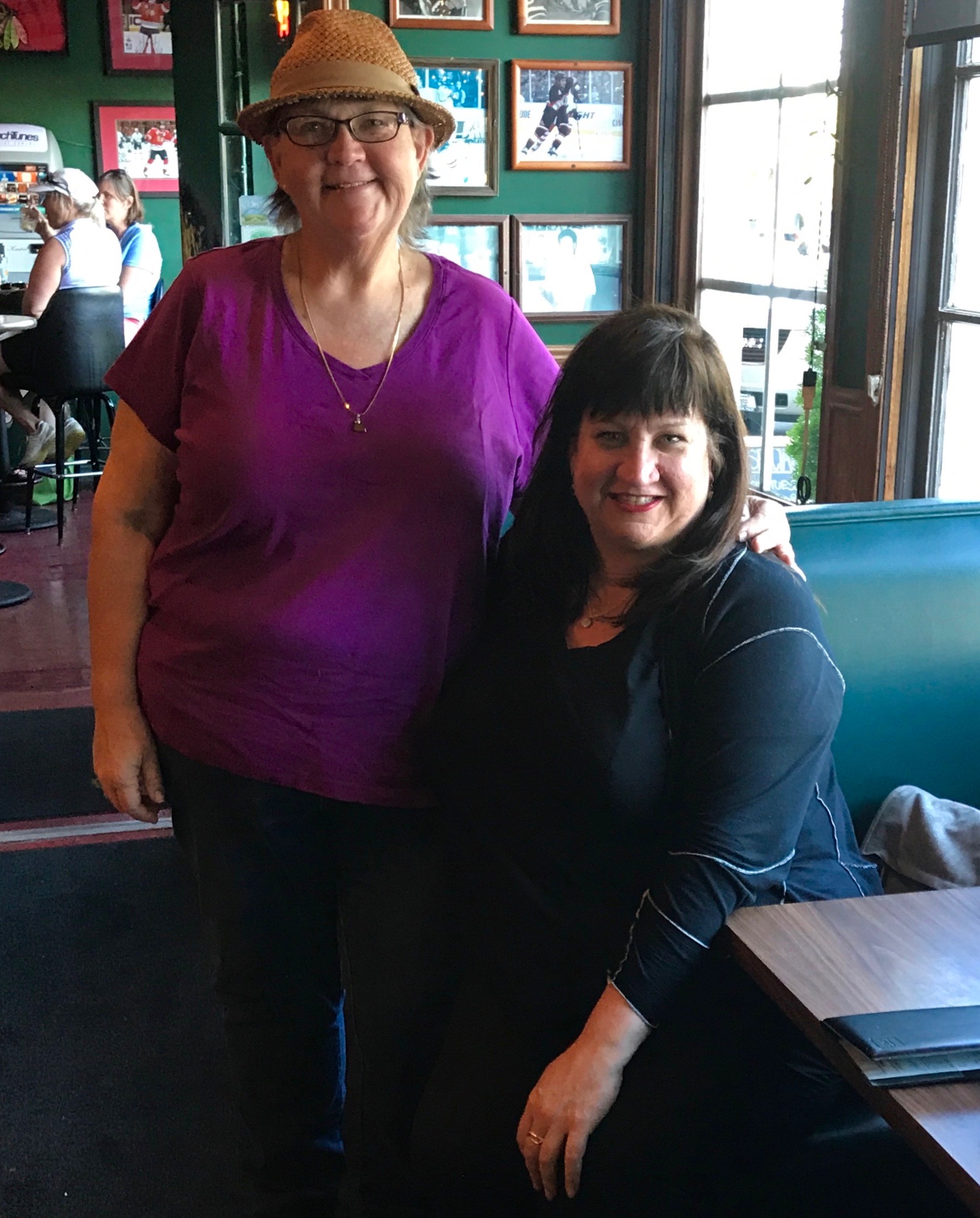
Mary got off the train and we were chatting like long-lost friends. After all, we had known each other for years – albeit on Facebook.
After we finished up our dinner, we finally got around to getting our picture taken. You know what they say, “If there’s no photo, it didn’t happen.” You’ll have to take my word that we did eat dinner.
We headed back over to the train station.
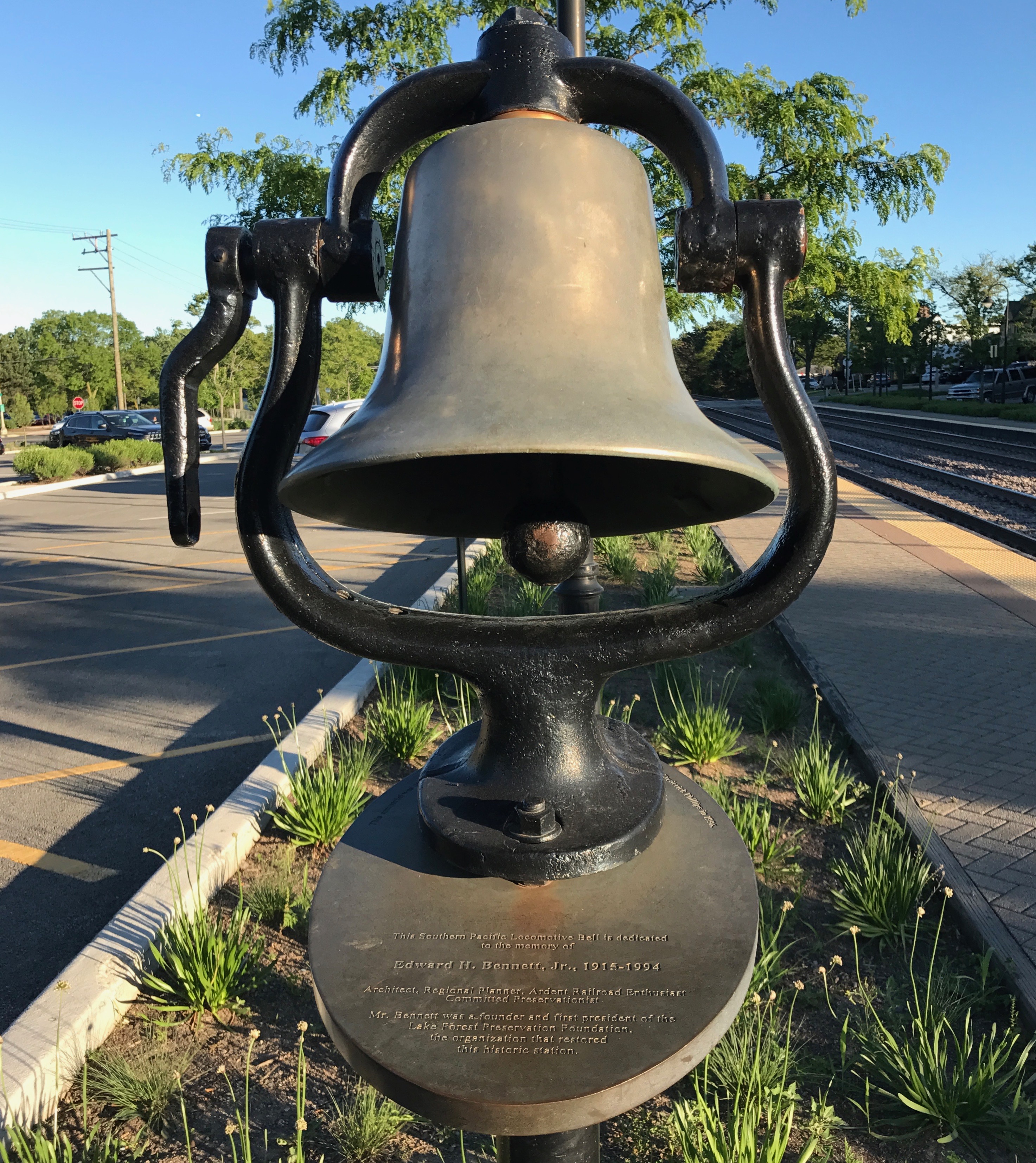
There was a bell on a pedestal. You could actually move the lever and ring it.
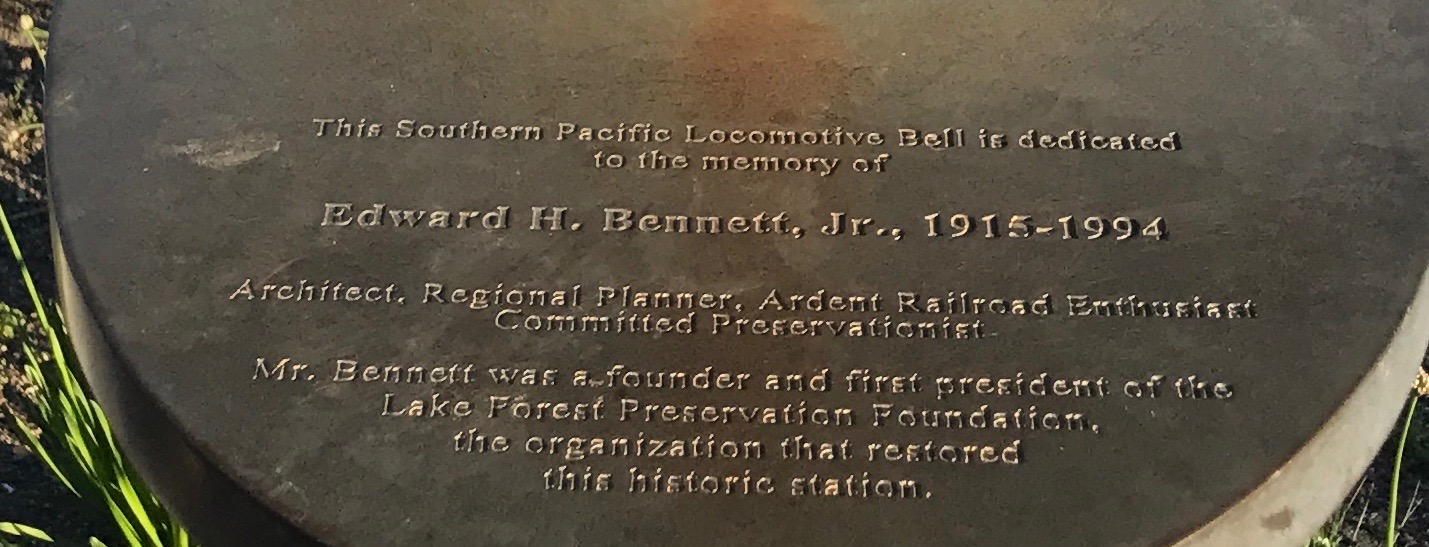
According to the inscription, this seems to be a suitable memorial for Edward H. Bennett, Jr.
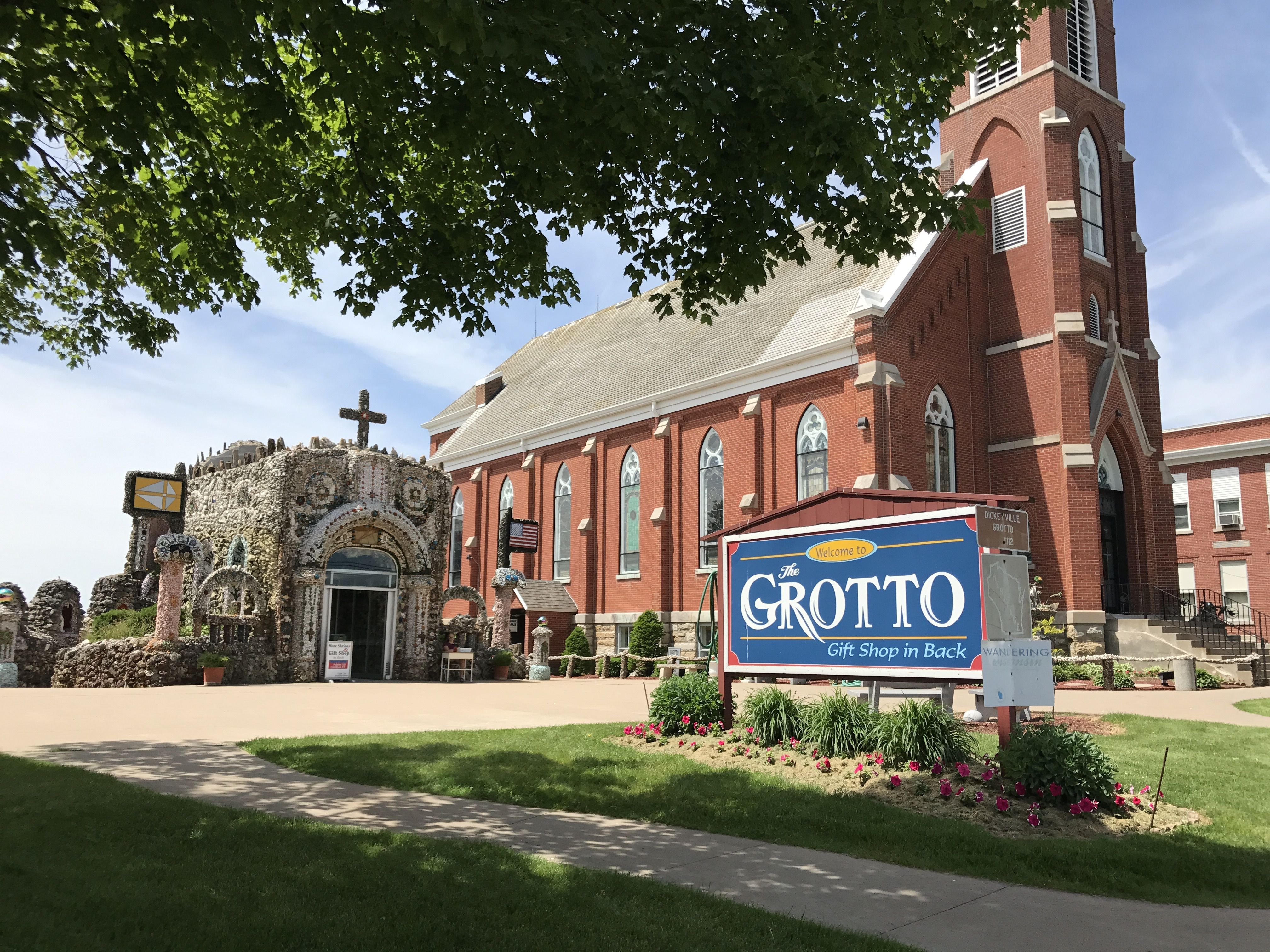
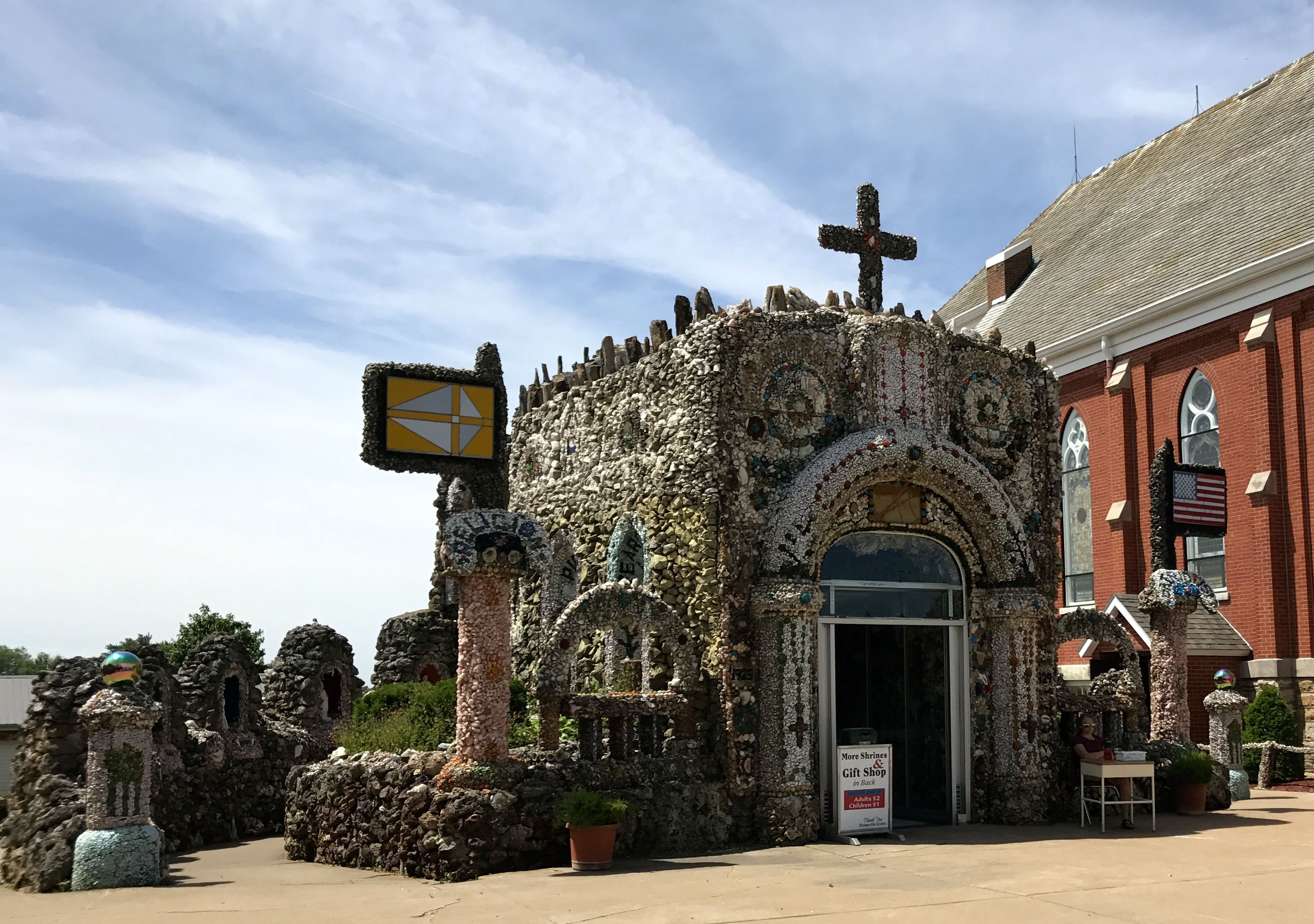
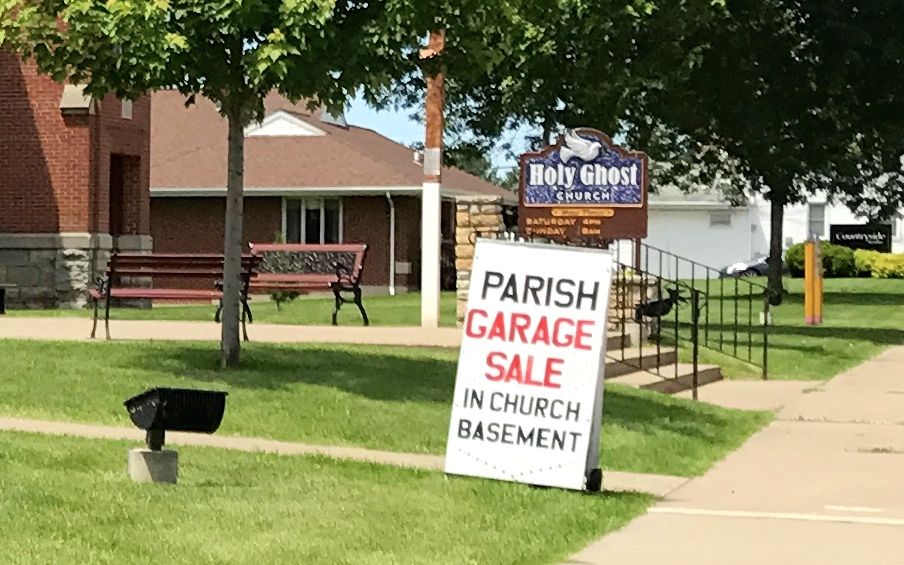
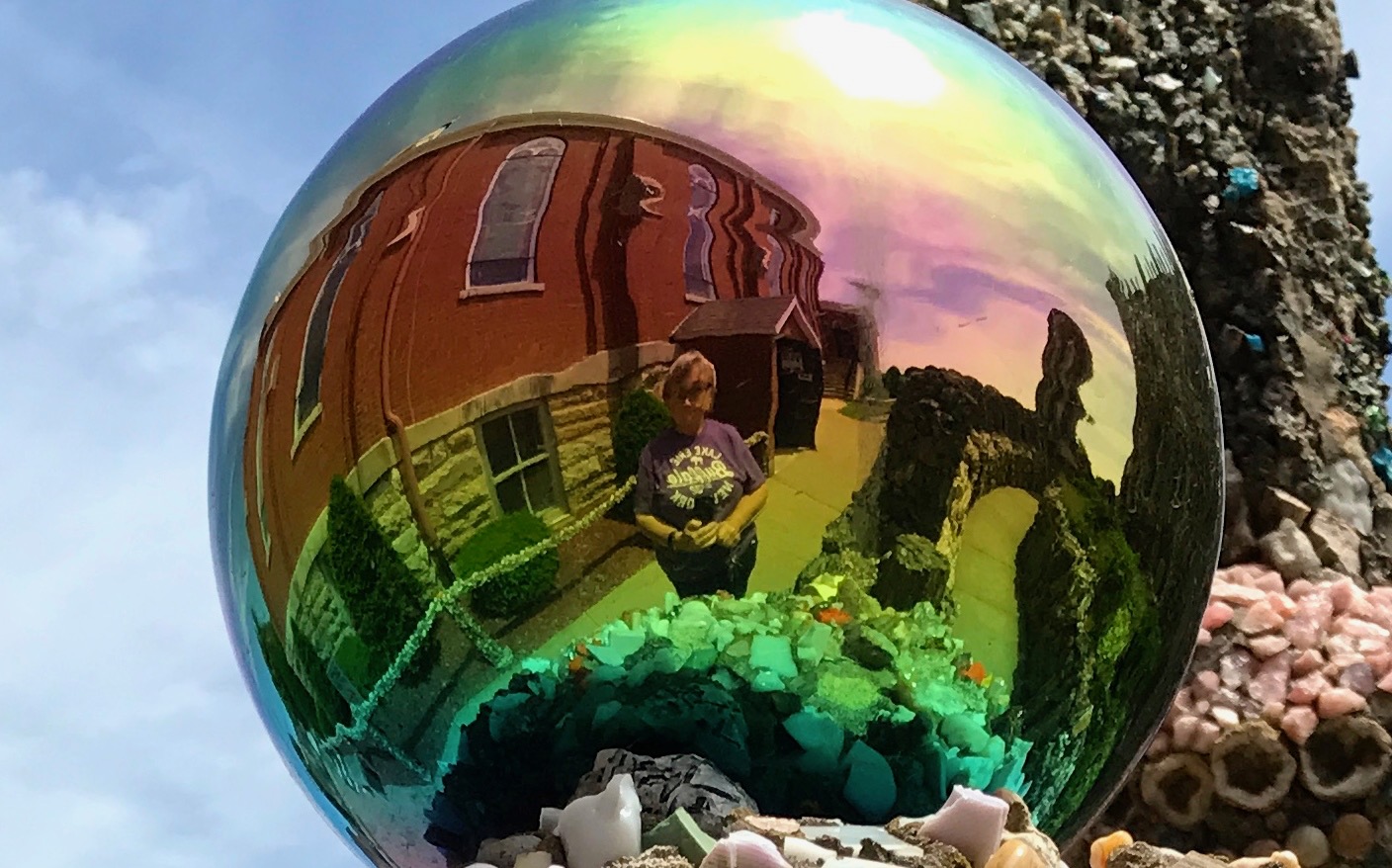
As if the world largest can of beer wasn’t enough excitement for a fairly rural area, just a few miles east of the campground was Dickeyville, and Dickeyville’s claim to fame is the Dickeyville Grotto.
I always thought that a grotto was a cave. It turns out that the definition is a cave, and it is usually a “small picturesque cave, especial and artificial one in a perk or a garden and it can also be an indoor structure resembling a cave.
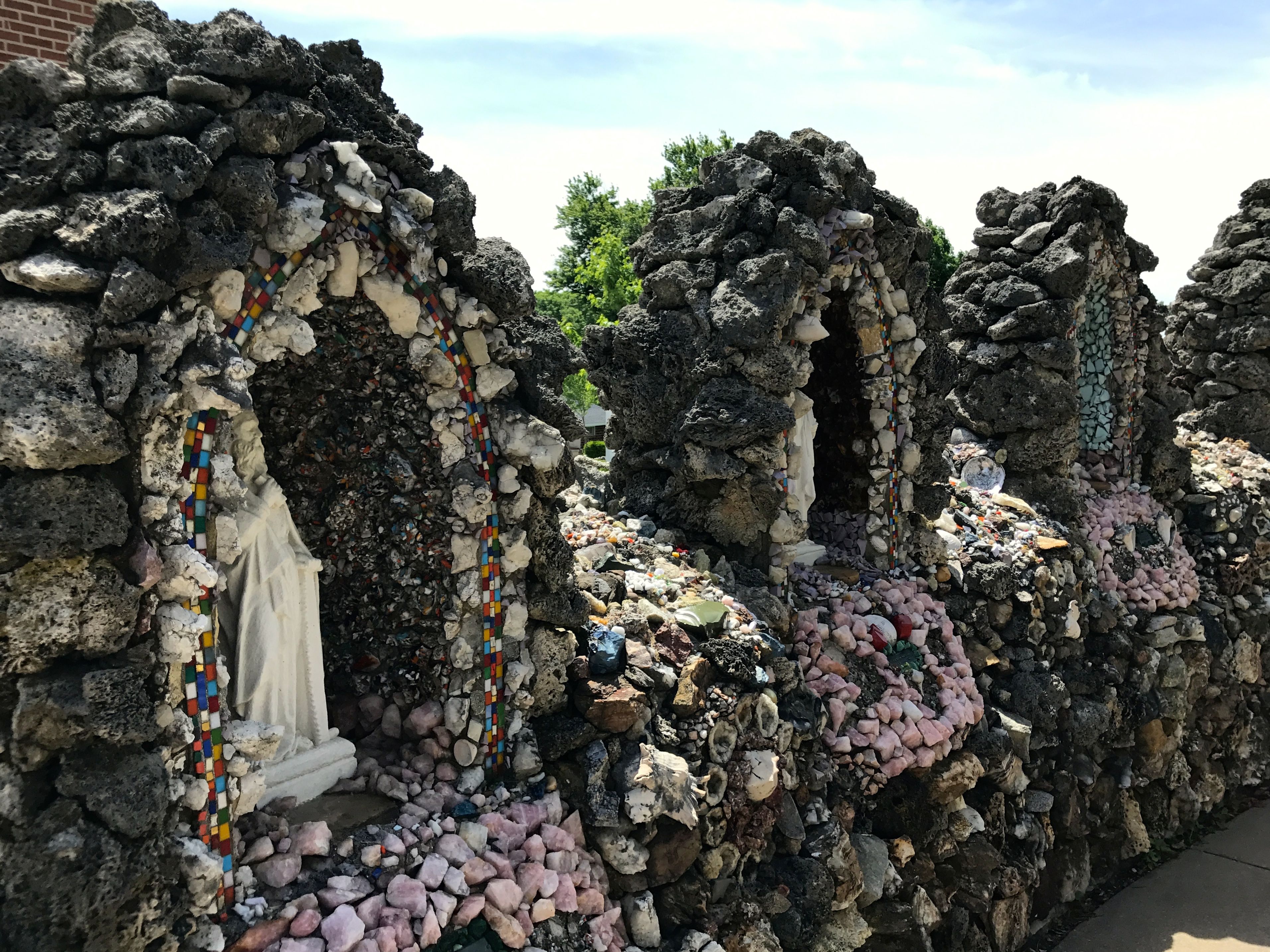
I parked Bart at the curb and walked over to examine the grotto. Its construction began in 1925 and it was dedicated in 1930.
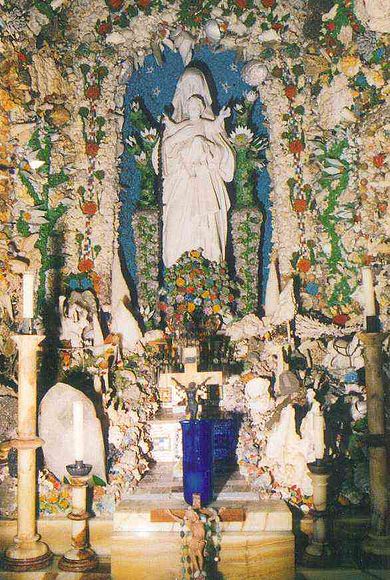
Father Matthias Wernerus was the man with the vision to build shrines to religion and patriotism in stone. This portion of his handiwork is a shrine dedicated to the Blessed Virgin.
I borrowed this photo from their website. It was dark inside and hard to make a good photo with my phone.
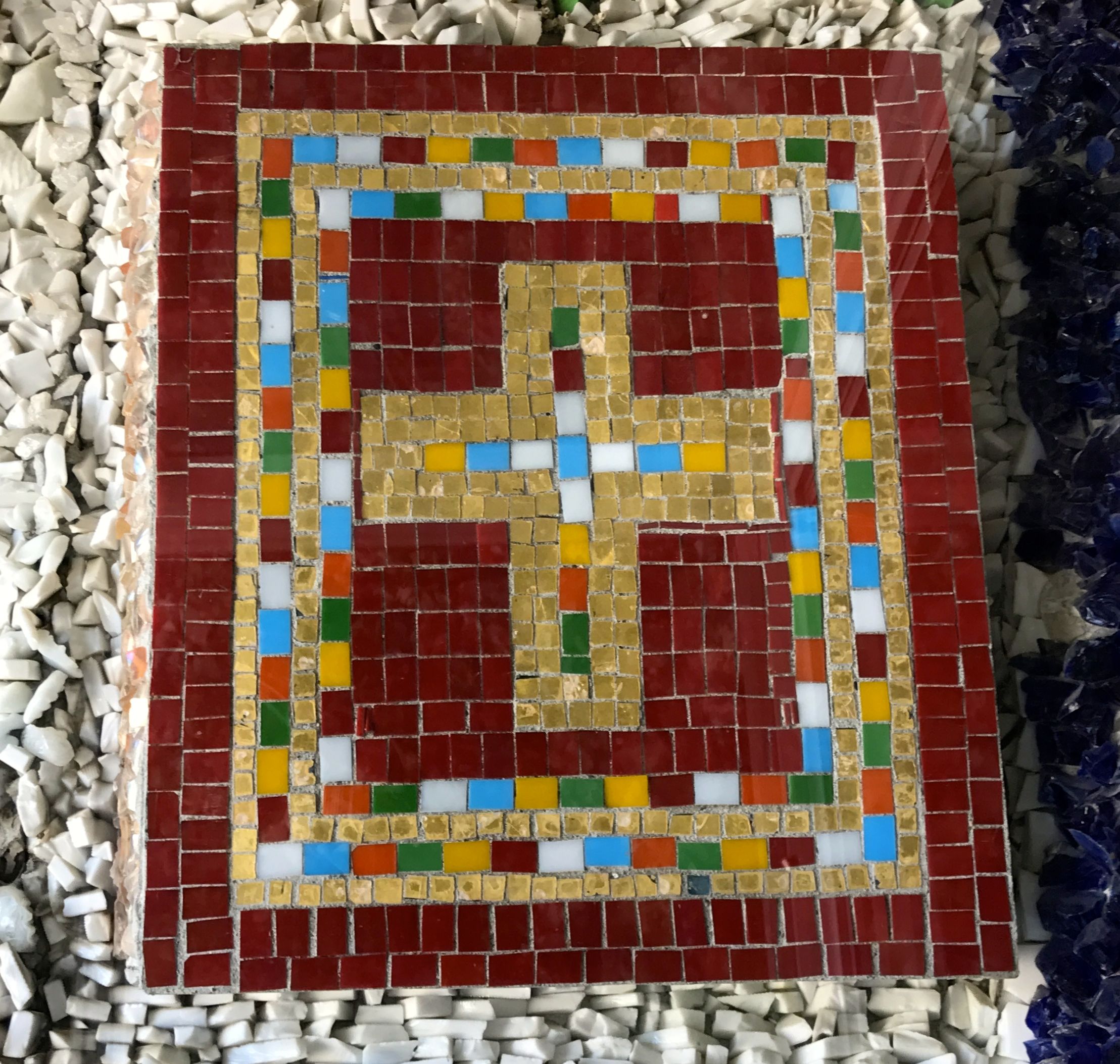
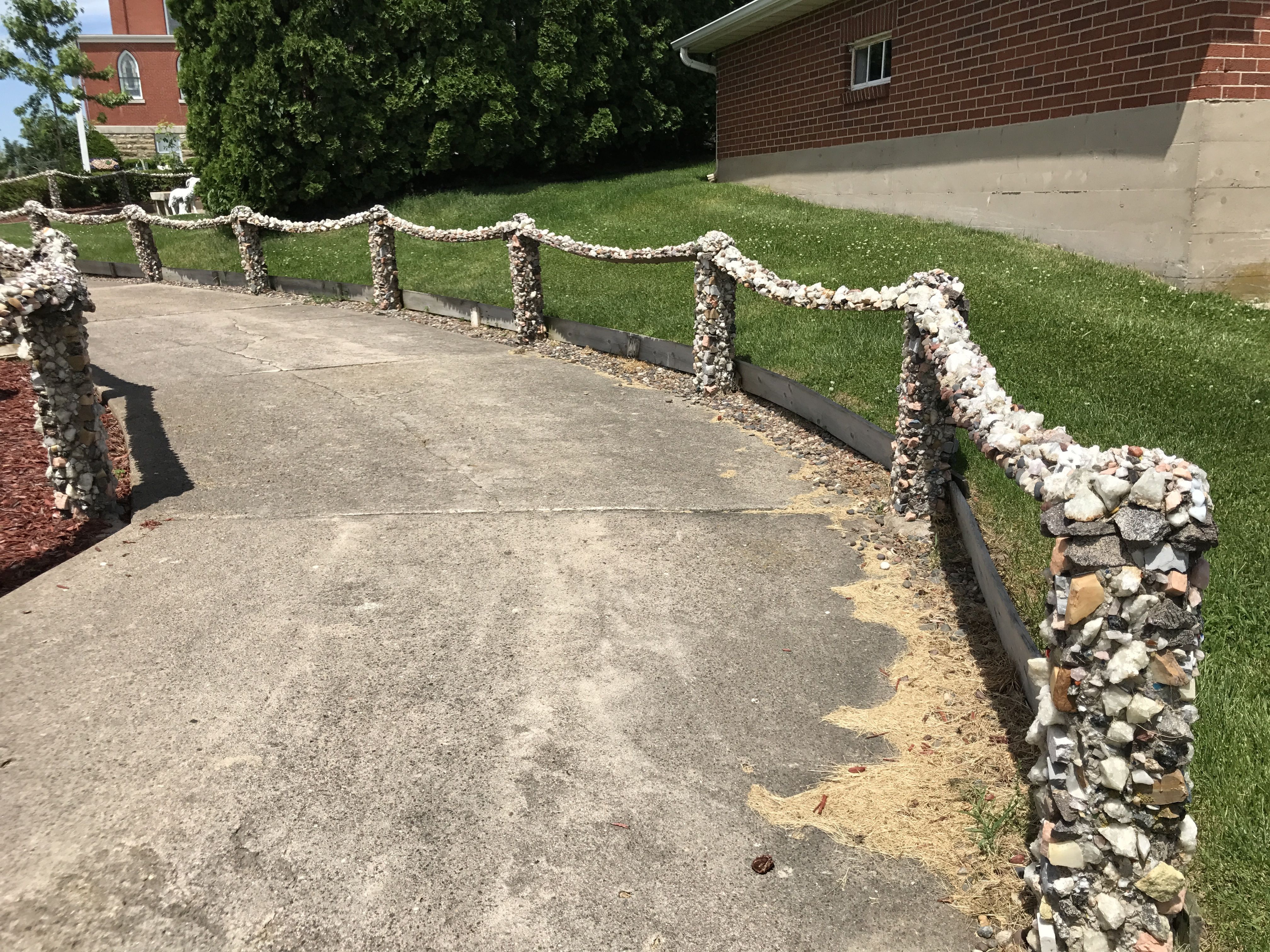
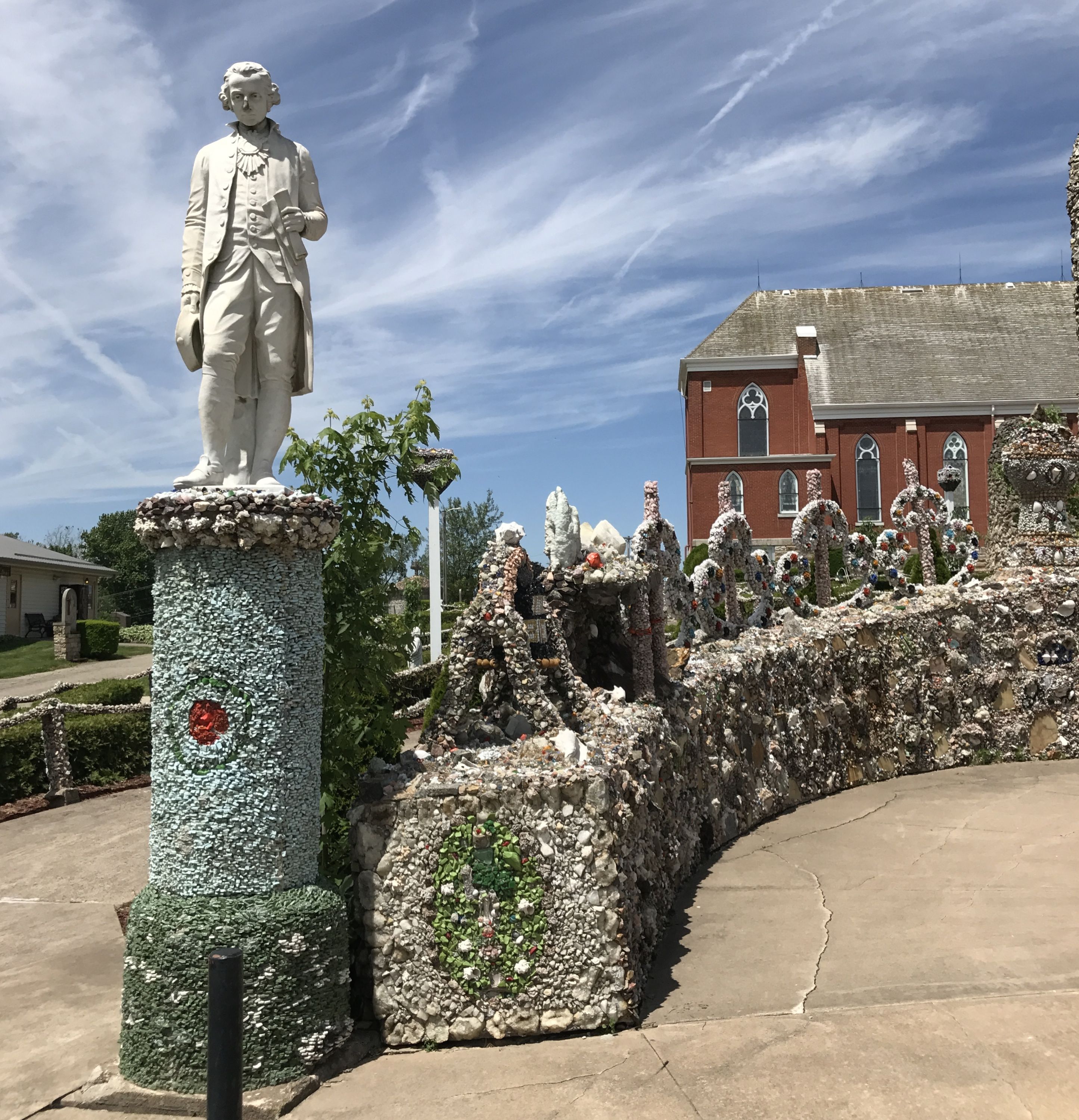
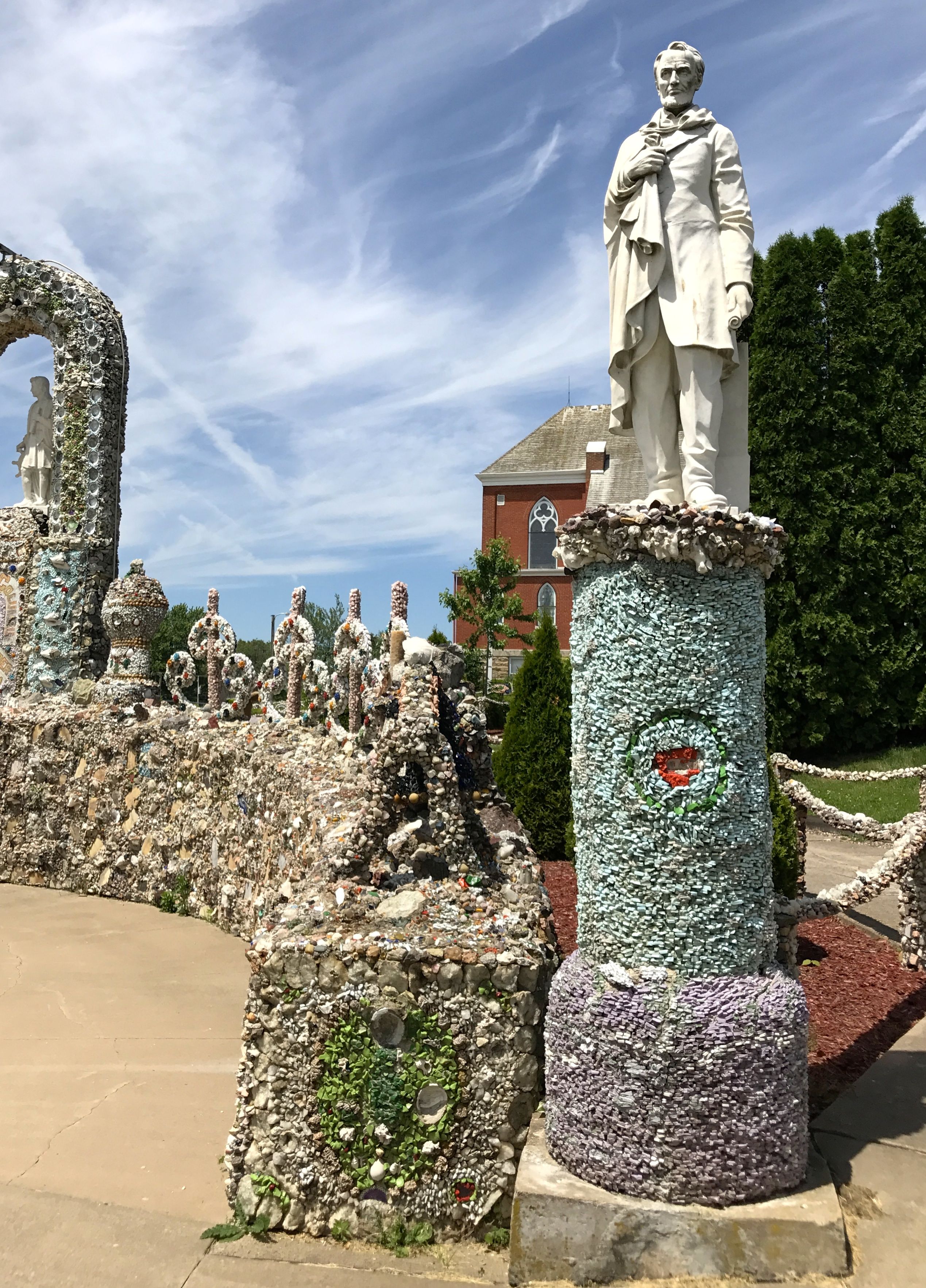
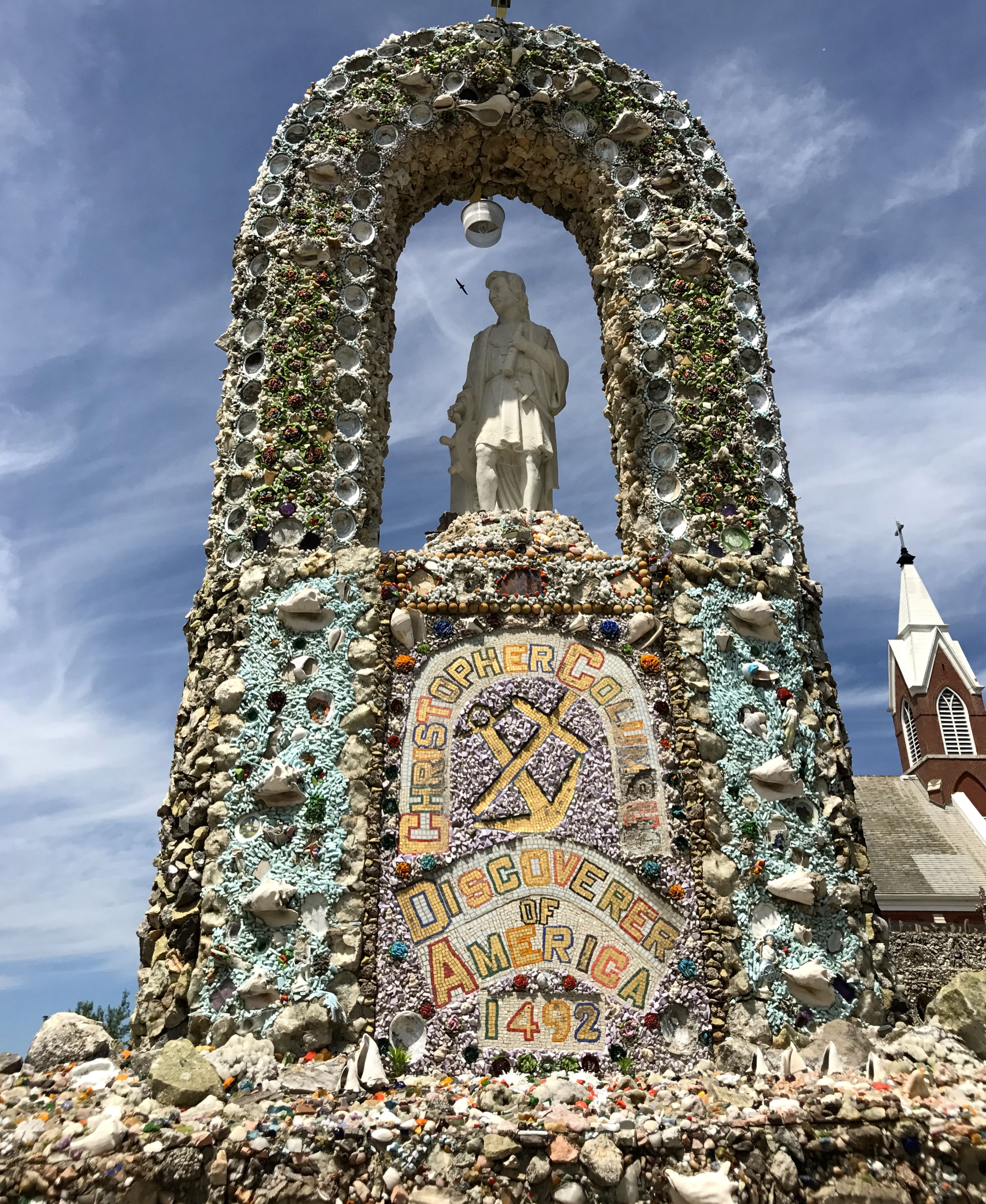
Father Wernerus used whatever he could get in creating the grottos. Sometimes he used rather standard ceramic tiles.
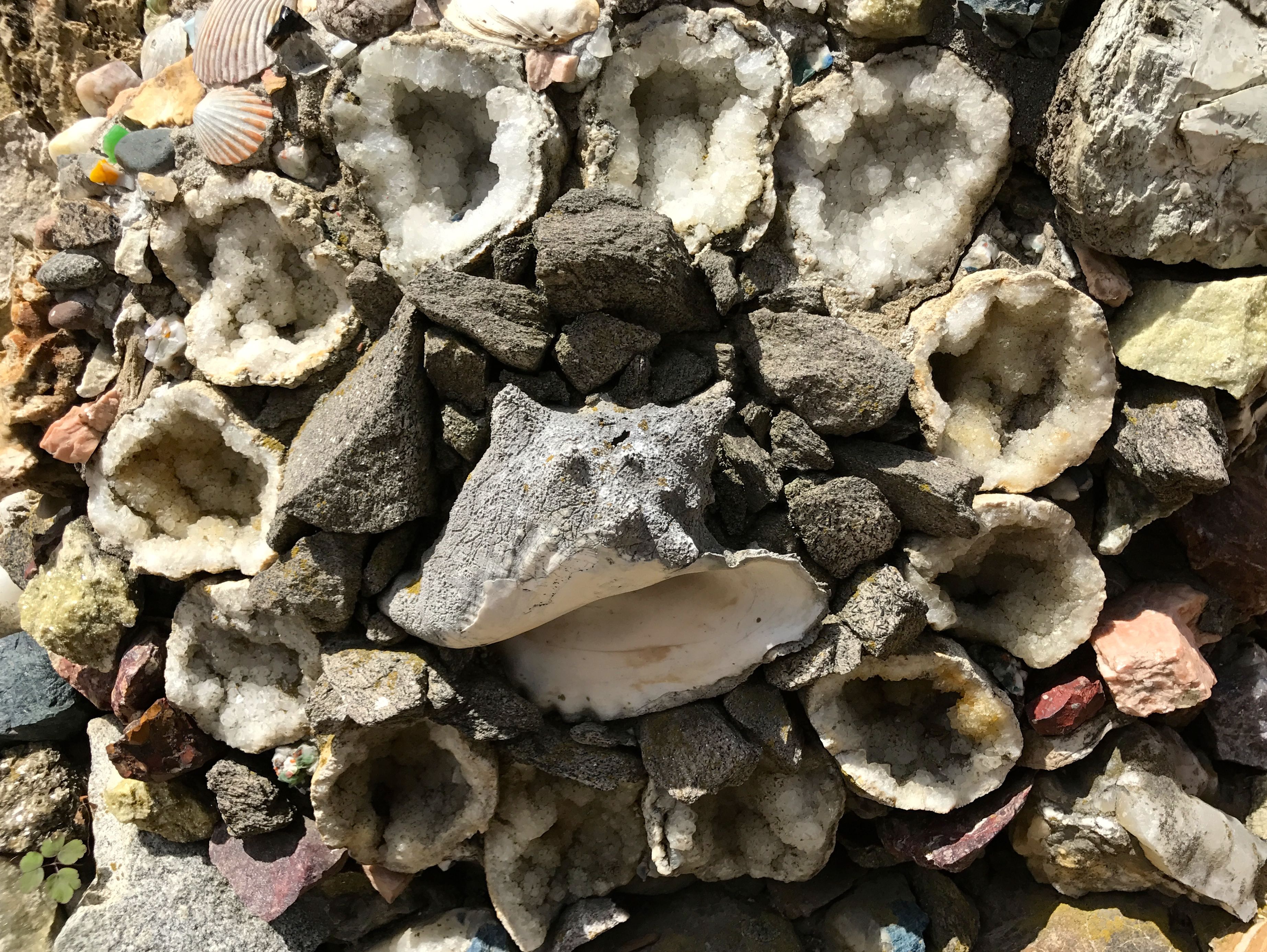
Other times he used shells, glass, corals and rocks.
I particularly like this ring of geodes. I remember my fruitless geode hunt in Arizona.
Ringing the main structure are niches with altars to various saints.
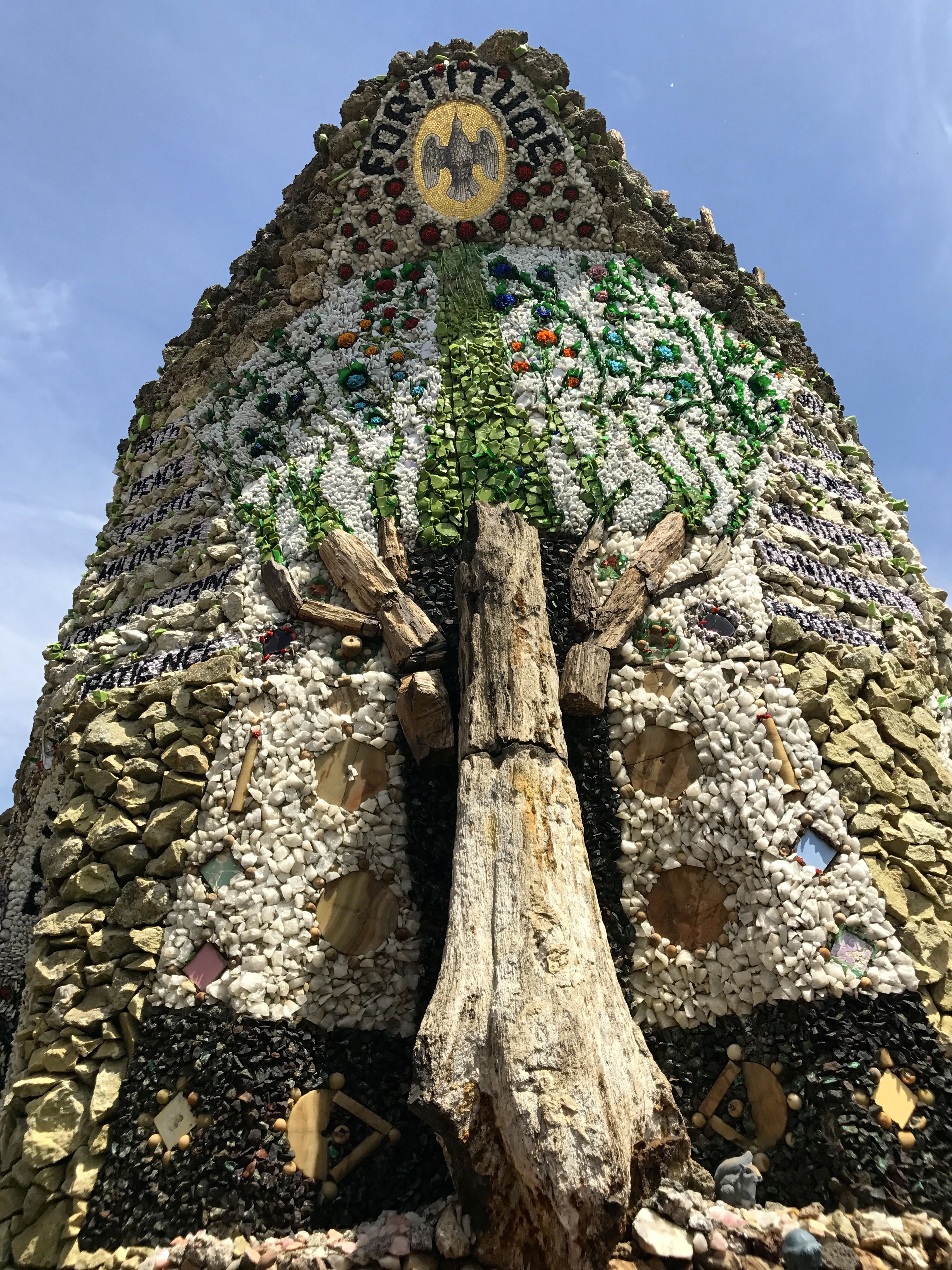
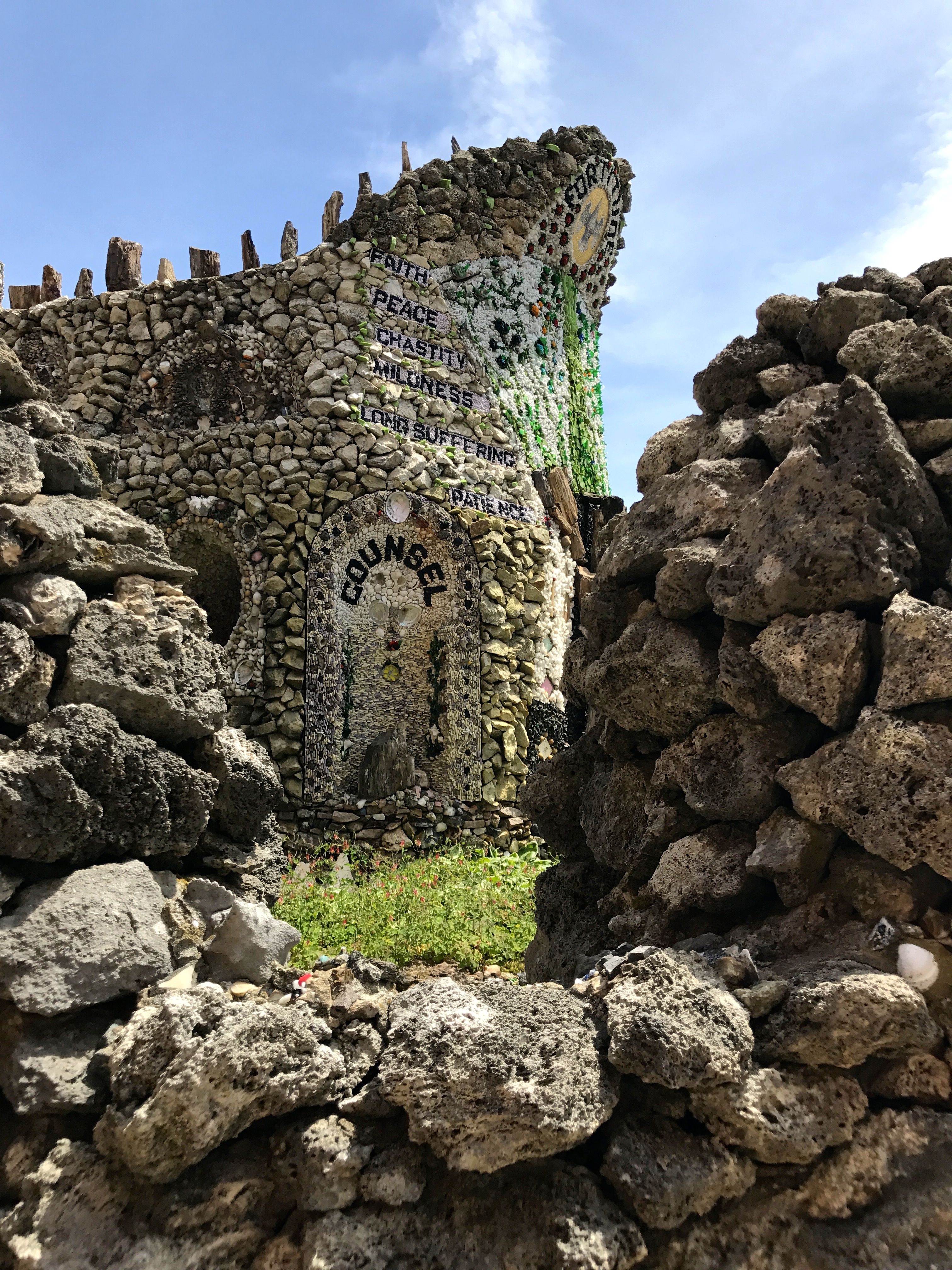
The back of the shrine is covered with the tree of life. On top of the tree of life is spelled out “fortitude.”
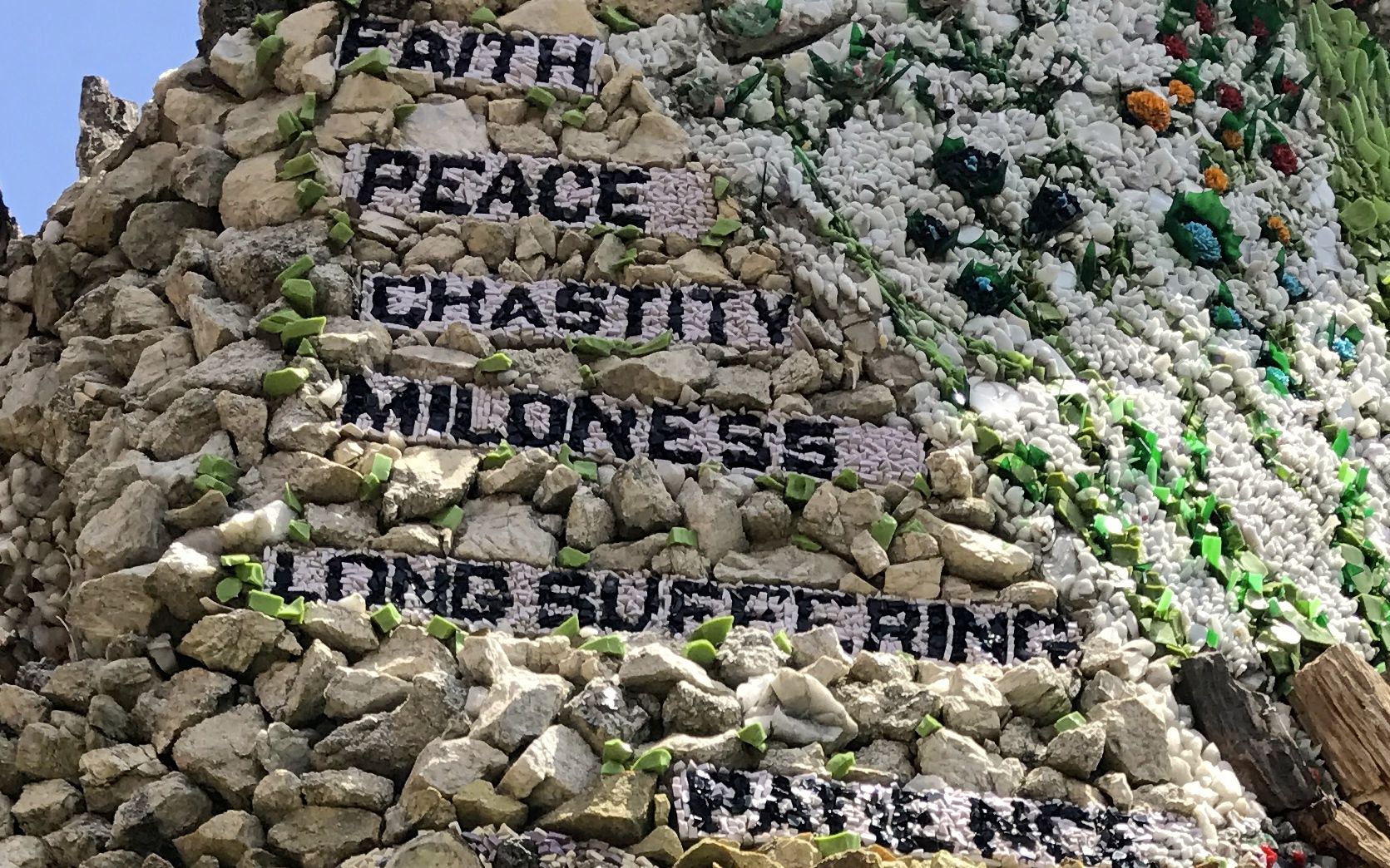
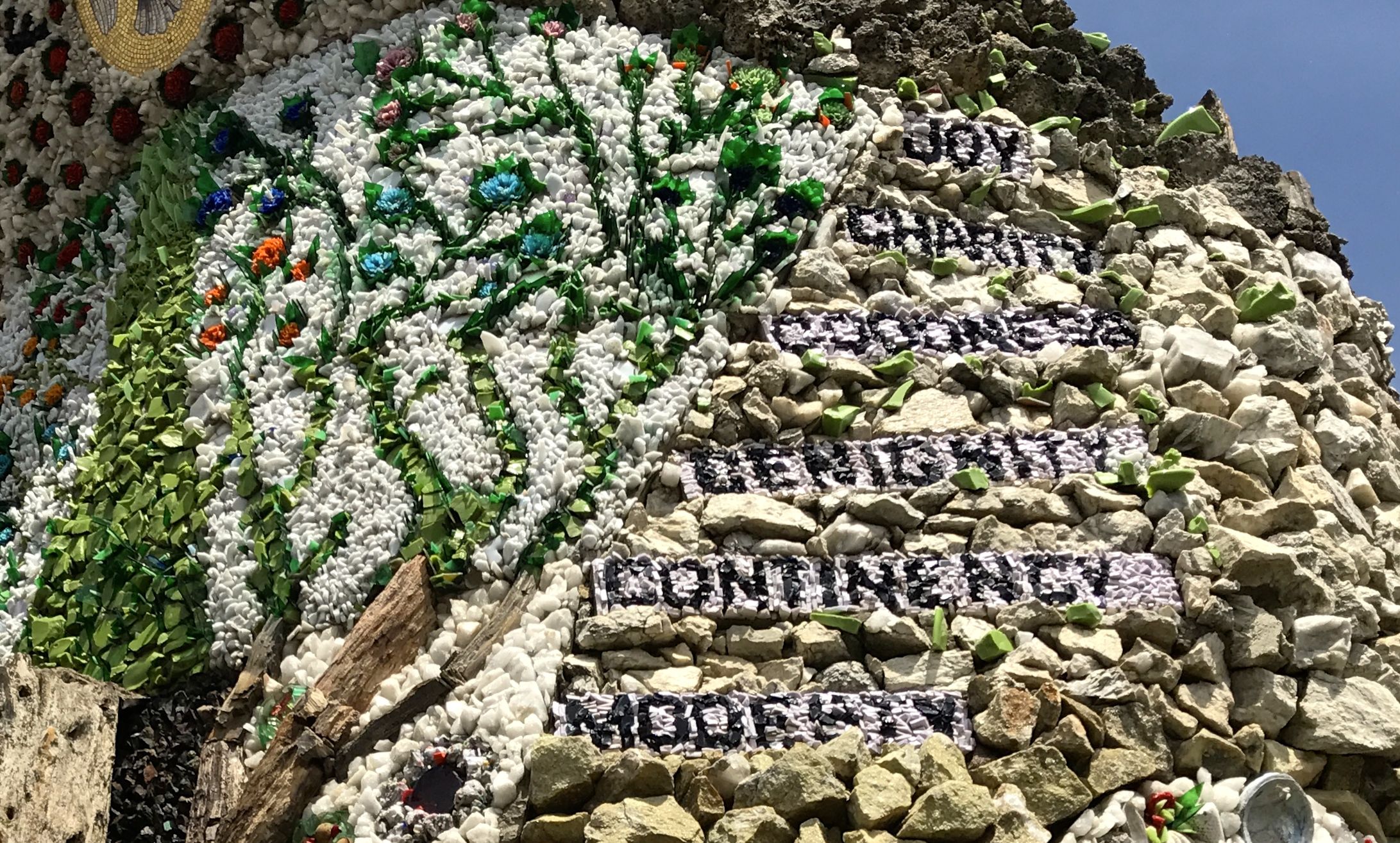
Flanking the tree on the right and left are various positive traits.
When I was visiting, I assumed they were the seven virtues. When I was writing up this post, I realized that there were more than seven listed. I went looking for other lists of virtues, to see if Father Wernerus had used them. I found the twelve virtues promoted by Aristotle, but there were thirteen spelled out on the wall. So, I guess these could be called “Father Wernerus’ good ideas.”
On the other hand, when I looked a little harder on the website, I saw that he represented the Seven Gifts and the 12 Fruits of the Holy Ghost on the outside walls. I guess I didn’t look hard enough.
After examining the Shrine of the Blessed Virgin, I headed down the walkway to see the patriotic shrine.
George Washington was at one end.
Abraham Lincoln was at the other end.
Right in the middle was Christopher Columbus.
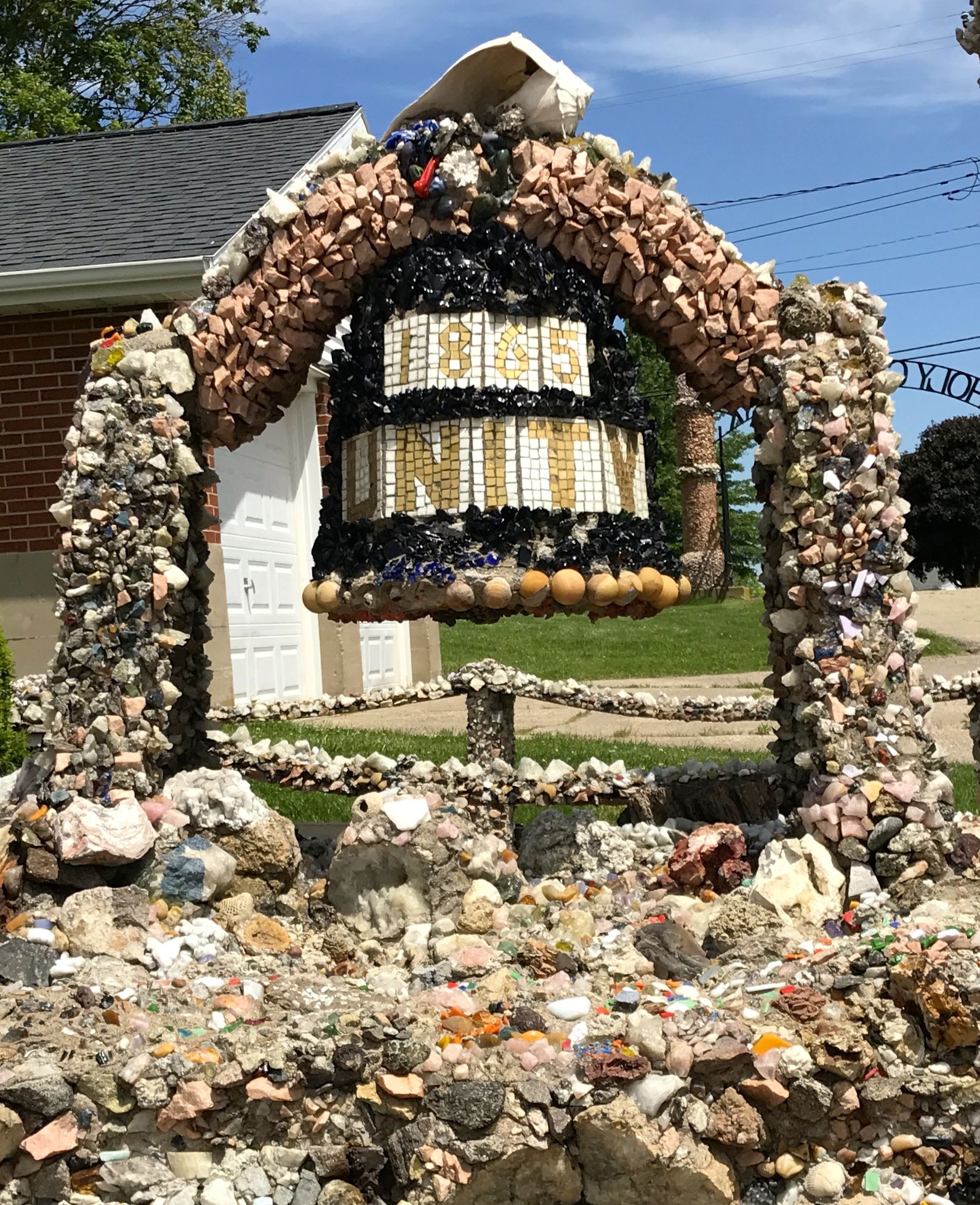
There was also a Unity Bell. I assume it was to honor the end of the Civil War.
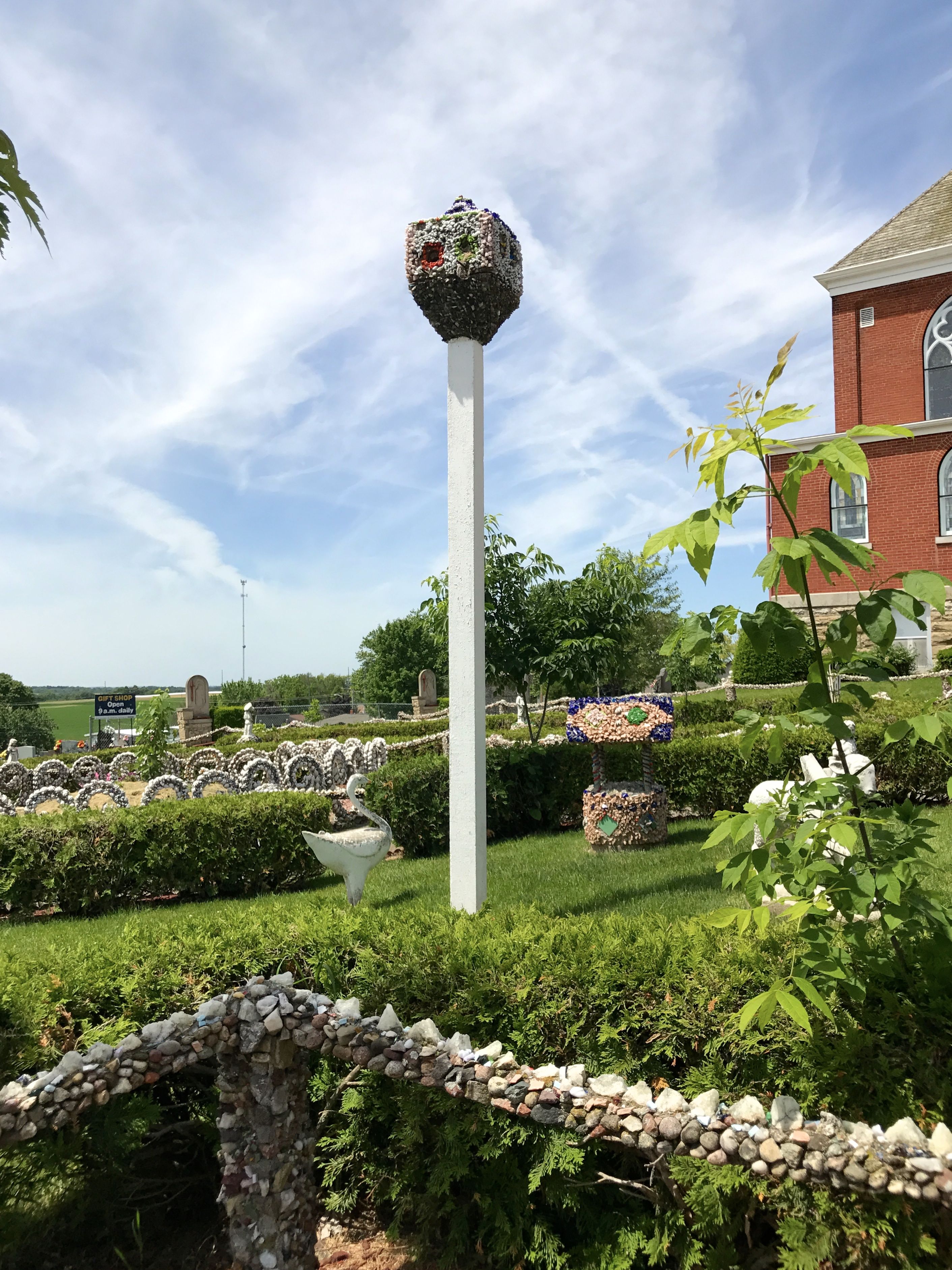
There were other structures scattered about the grounds.
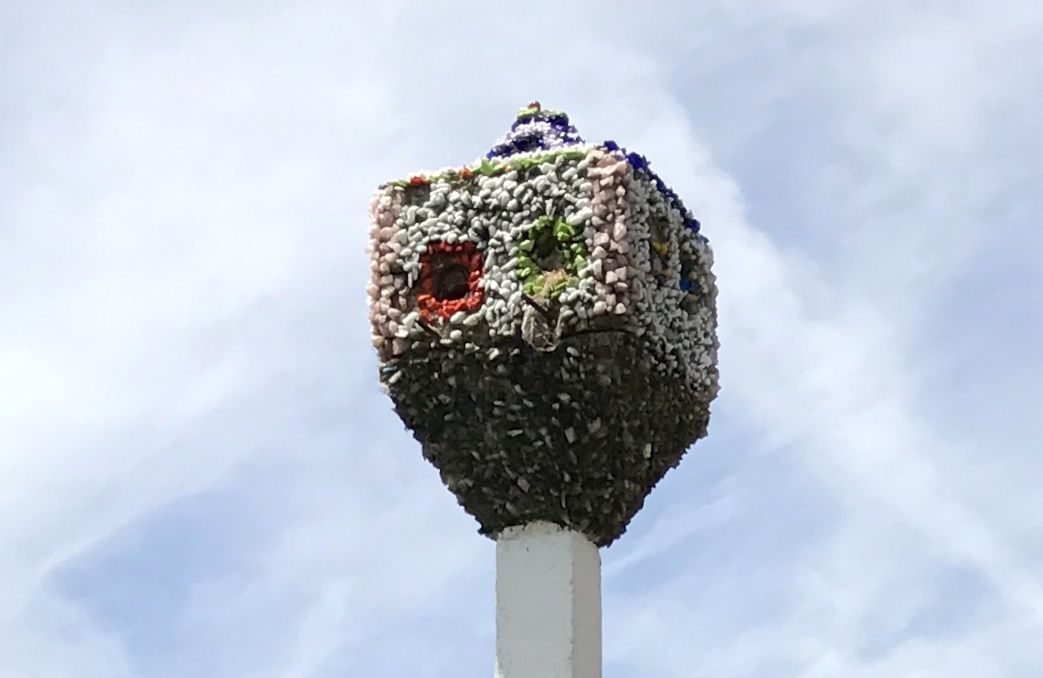
That looks like a birdhouse. I wonder if they even clear out the old nests?
I headed back toward the church. This was really quite an undertaking. I wondered why Father Wernerus began this labor. According to the website, this is his explanation:
“Many reasons urged me to put up ‘Religion in stone and Patriotism in Stone.’ The main reason why it was done I could not reveal. The last day will tell you more about that. I can only say that Almighty God and his Blessed Mother, in whose honor we worked, blessed us in such a way that ‘we built better than we knew.'”
As I headed back to Bart, I noticed this sign:
I went down to take a look and I actually bought something.
After I stuck the 48th state sticker on my map, I had started to think that my full time traveling life was coming to an end.
Buying this roll of cloth let me know that I was ready to settle down.
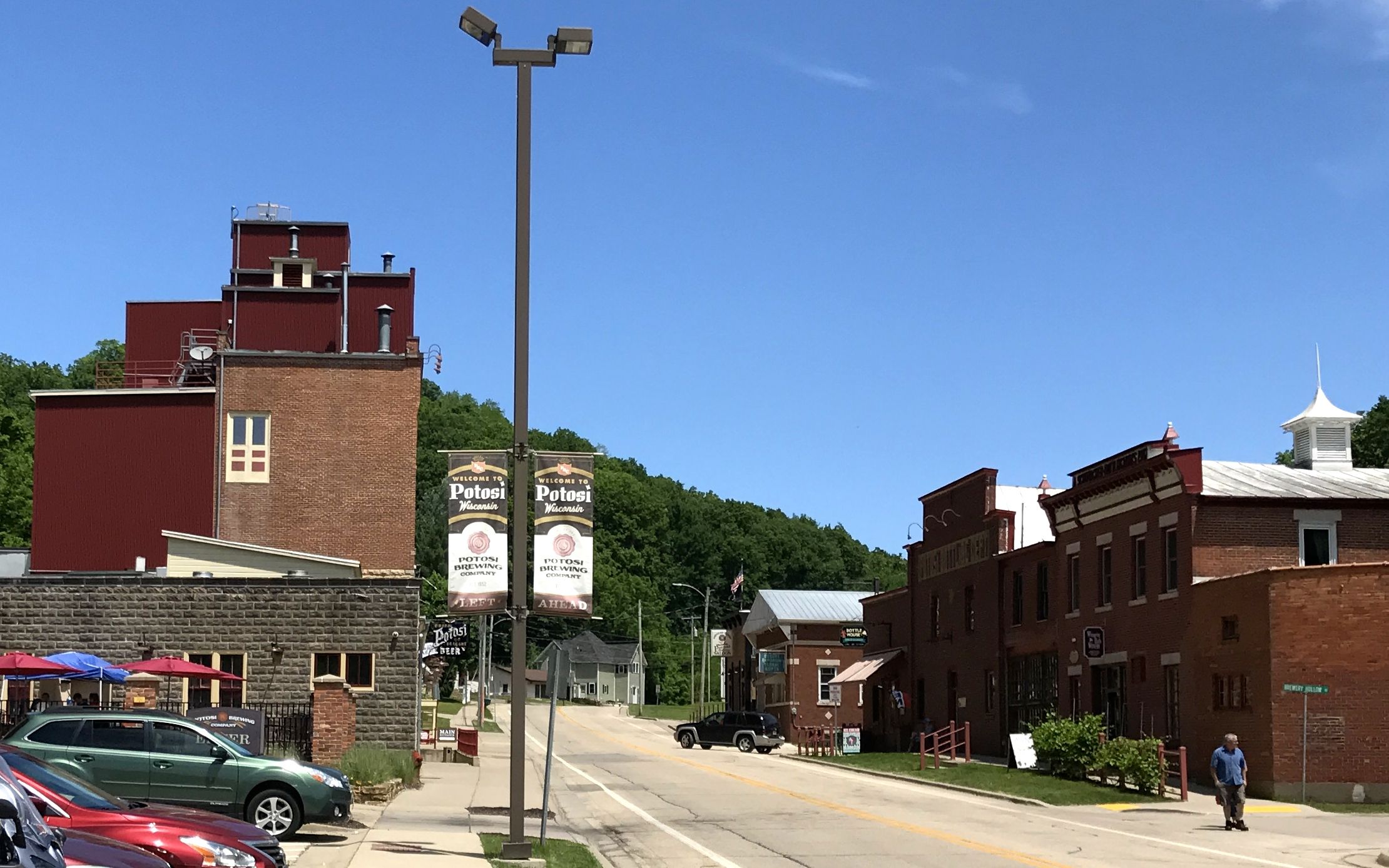
Just a few miles up the river was the little town of Potosi, one of Wisconsin’s early mining communities. Although it was named after the silver mining city of Potosi in Bolivia, the mineral that came out of the St. John Mine was lead.
It was located on the mouth of the Grant River, which fed into the Mississippi. Although Grant River was no Mississippi, it was a leading shipping port for lead ore and a supplier for the inland miners. The village was incorporated in 1841, and for a time it was one of the largest communities in the Wisconsin Territory. Its early boom was short-lived. By the late 1840s, the port filled with river silt. The California gold rush drew many of the miners away.
In spite of the population and industry decline, Gabriel Hall built the Potosi Brewery in 1852, and it remained an important industry until it finally emptied its tanks for the final time in 1972.
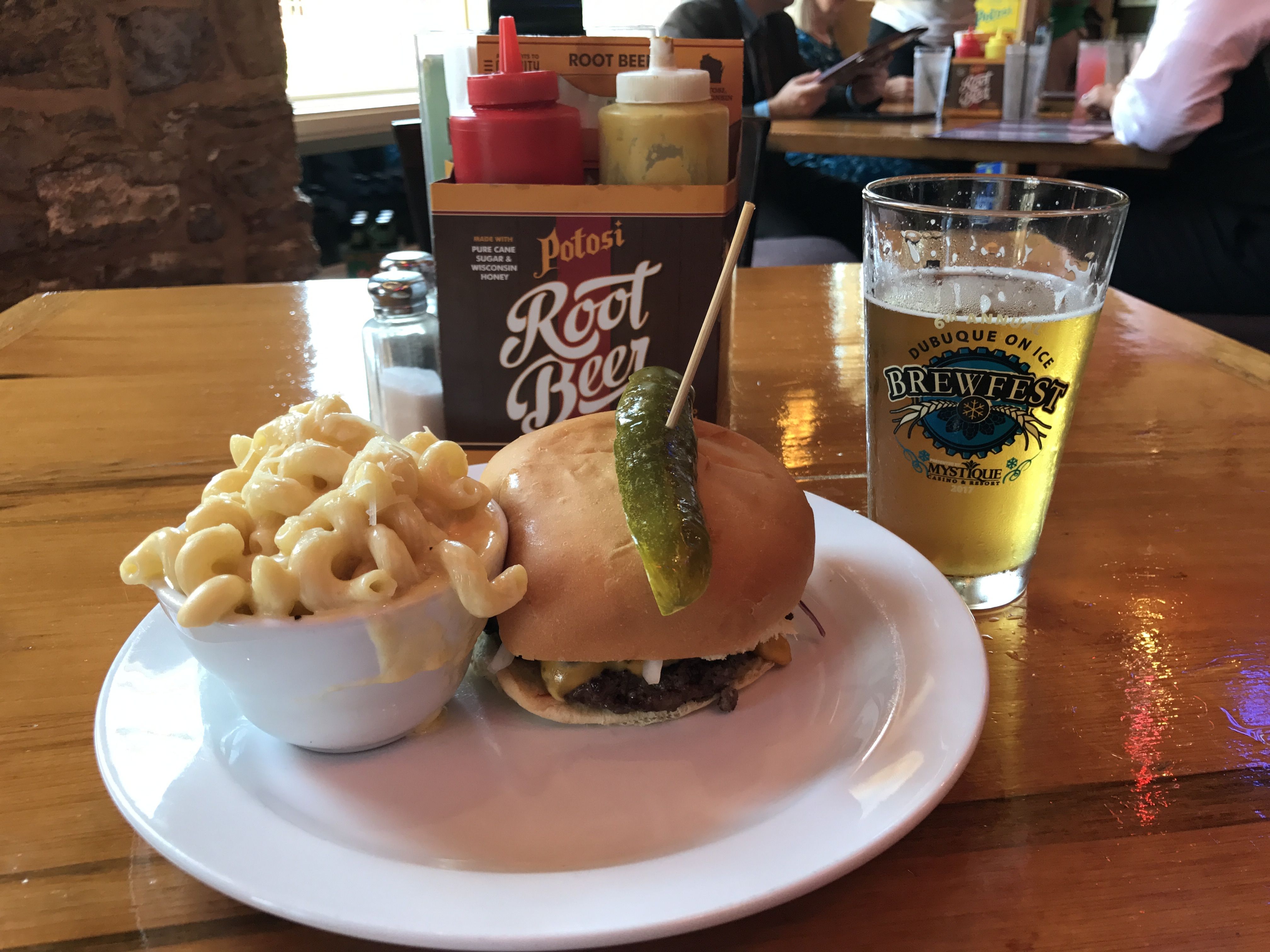
They re-founded the Potosi Brewing Company in 2008, and today they craft their beer in small batches and without compromise, according to their website. They have a brew pub, and lunch was what I was after.
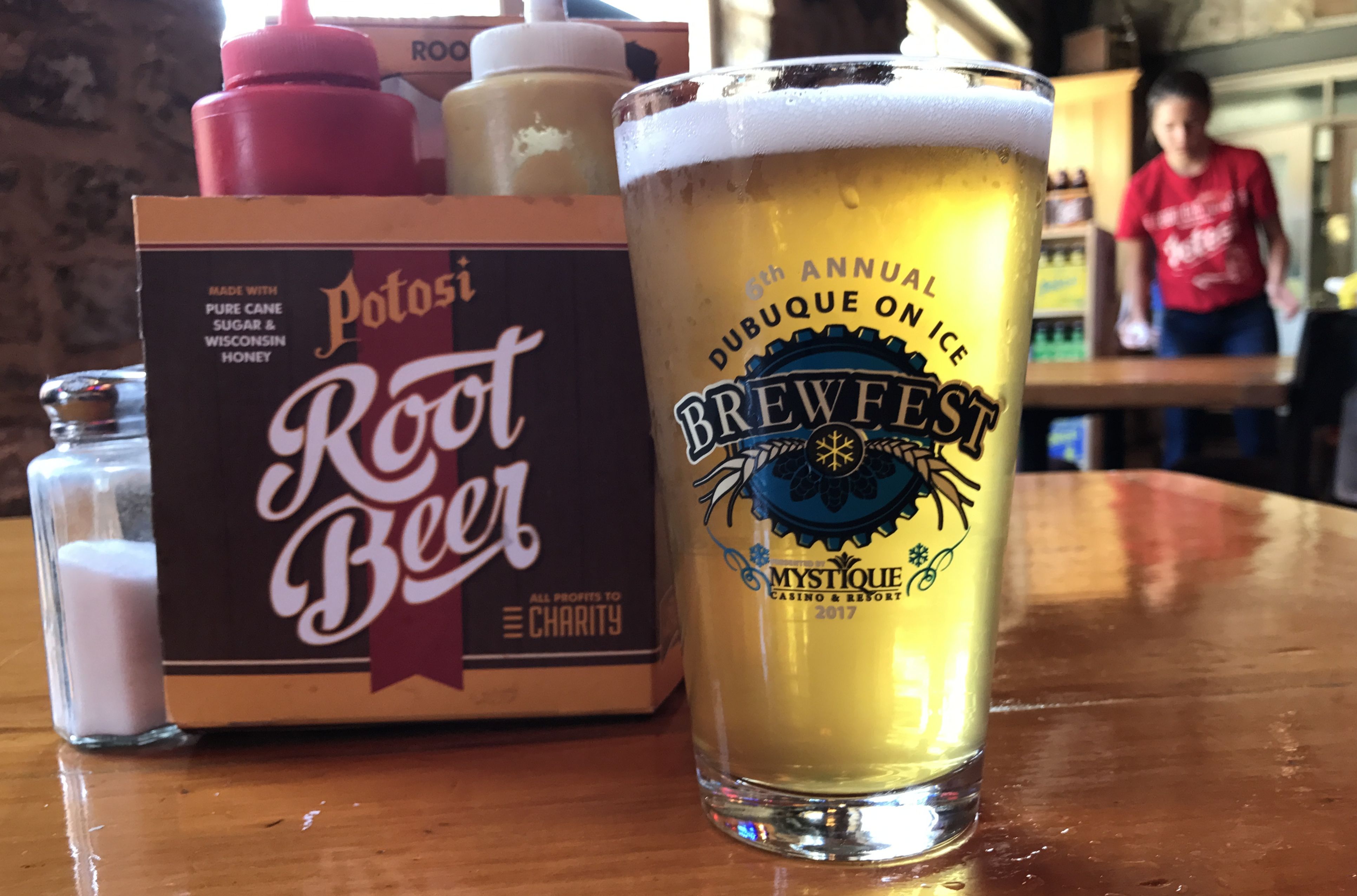
I decided to have a “Good Old Potosi” while I waited.
A big ol’ cheeseburger, a bowl of macaroni and cheese and a beer – how much more “Wisconsin” can you get?
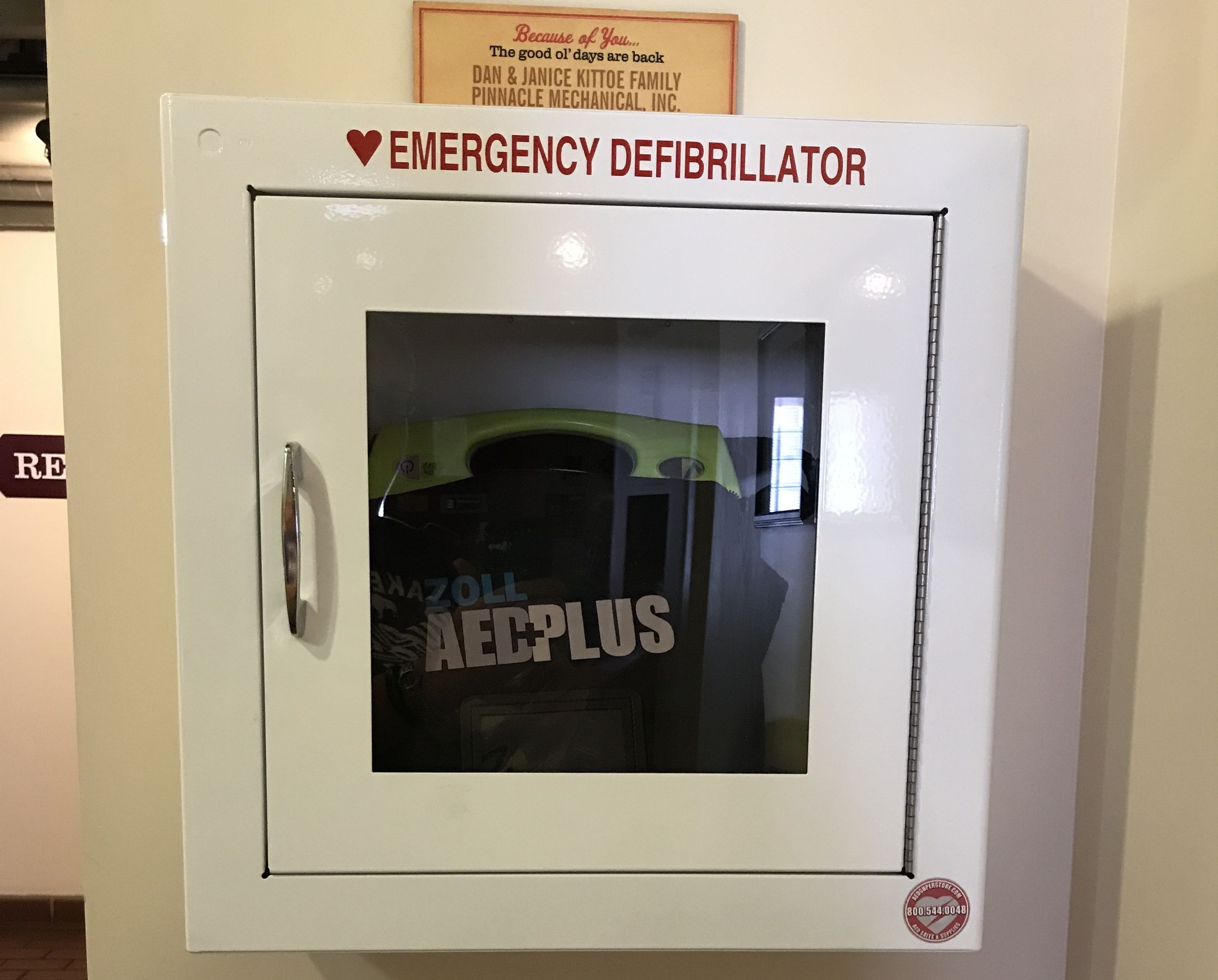
I was pleased to see this in the hallway. Good planning! You can just about hear the arteries slamming shut.
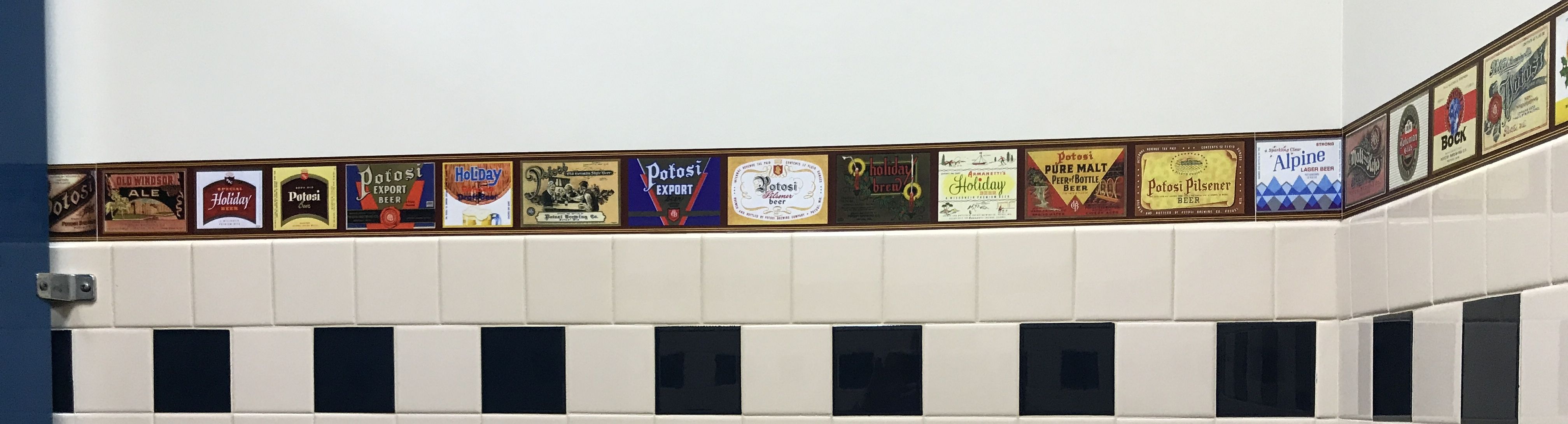
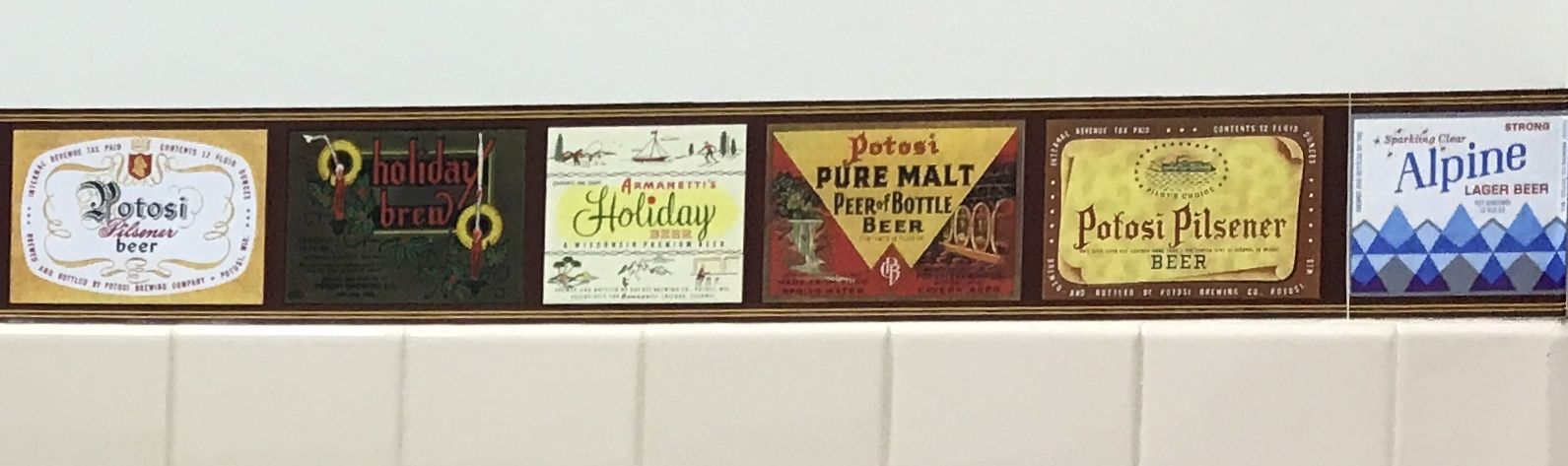
I like the decor in the restroom.
Beer everywhere you look!
And, that makes sense, as this is also the National Brewery Museum. I would have expected it to be in a more populous area, but no, it’s here is quaint little Potosi.
I can’t tell you about the museum, because I was feeling cheap and didn’t want to pay to see it. It was a reasonable fee, I just wasn’t in the mood for a museum on such a bright, sunny day.
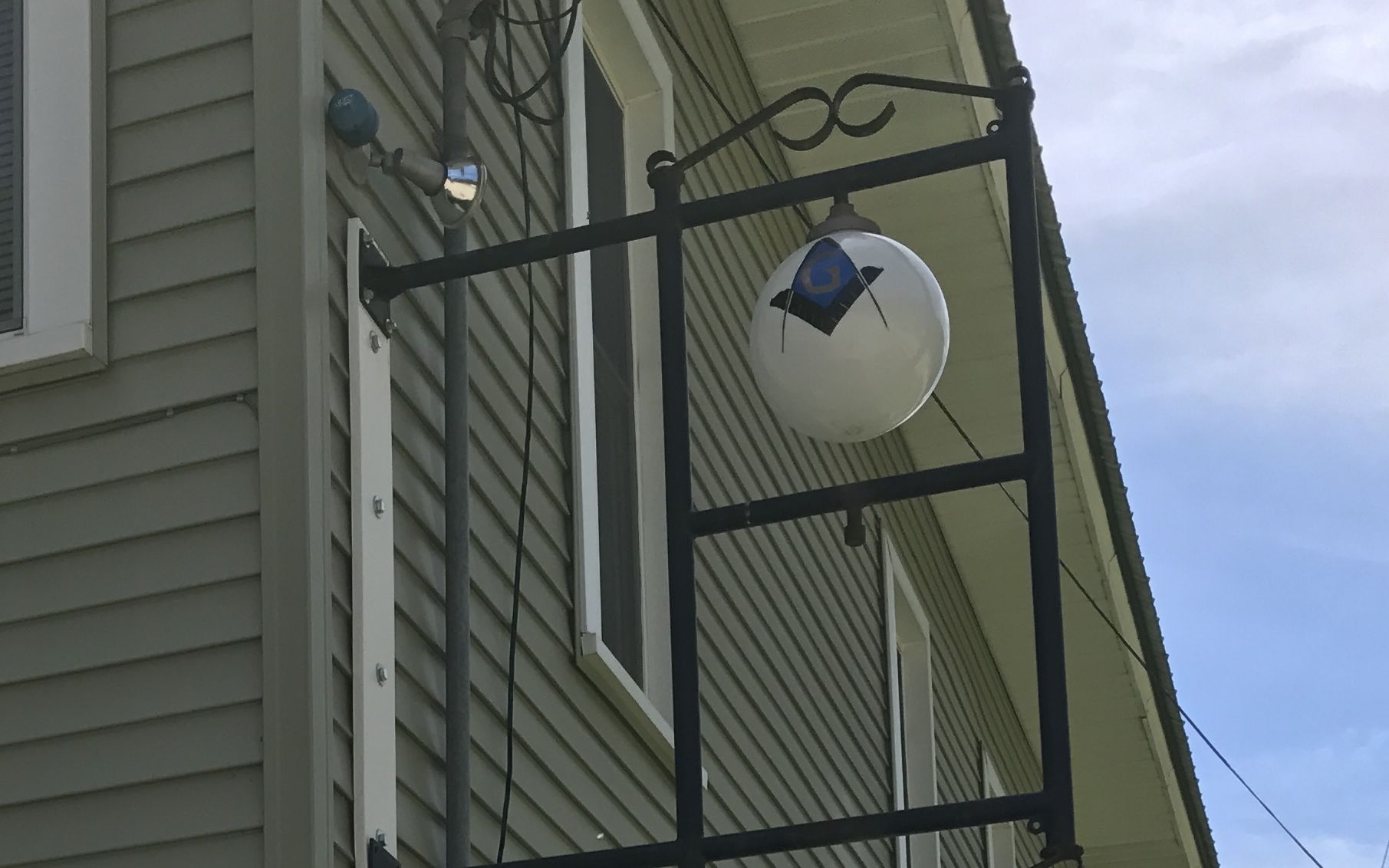
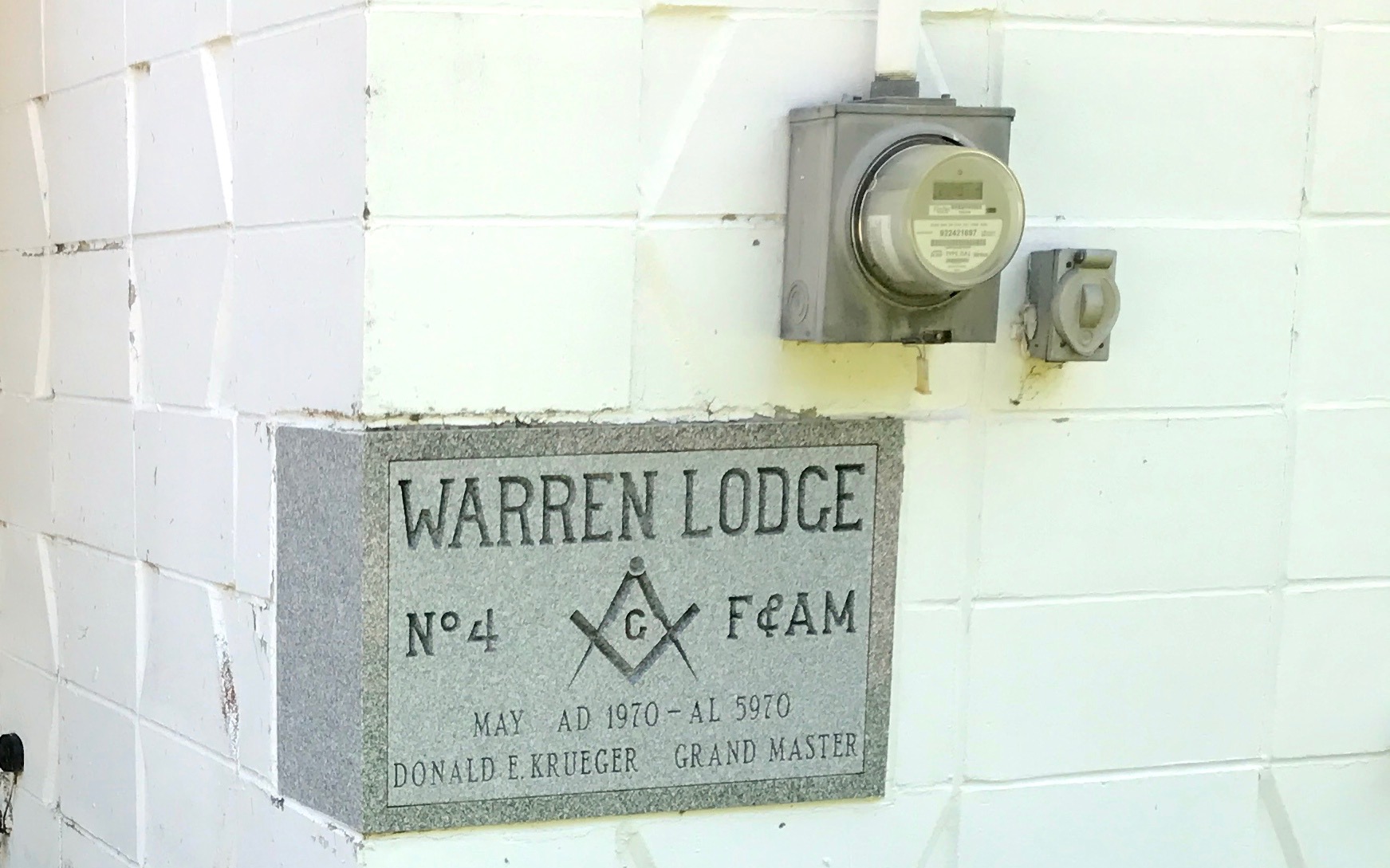
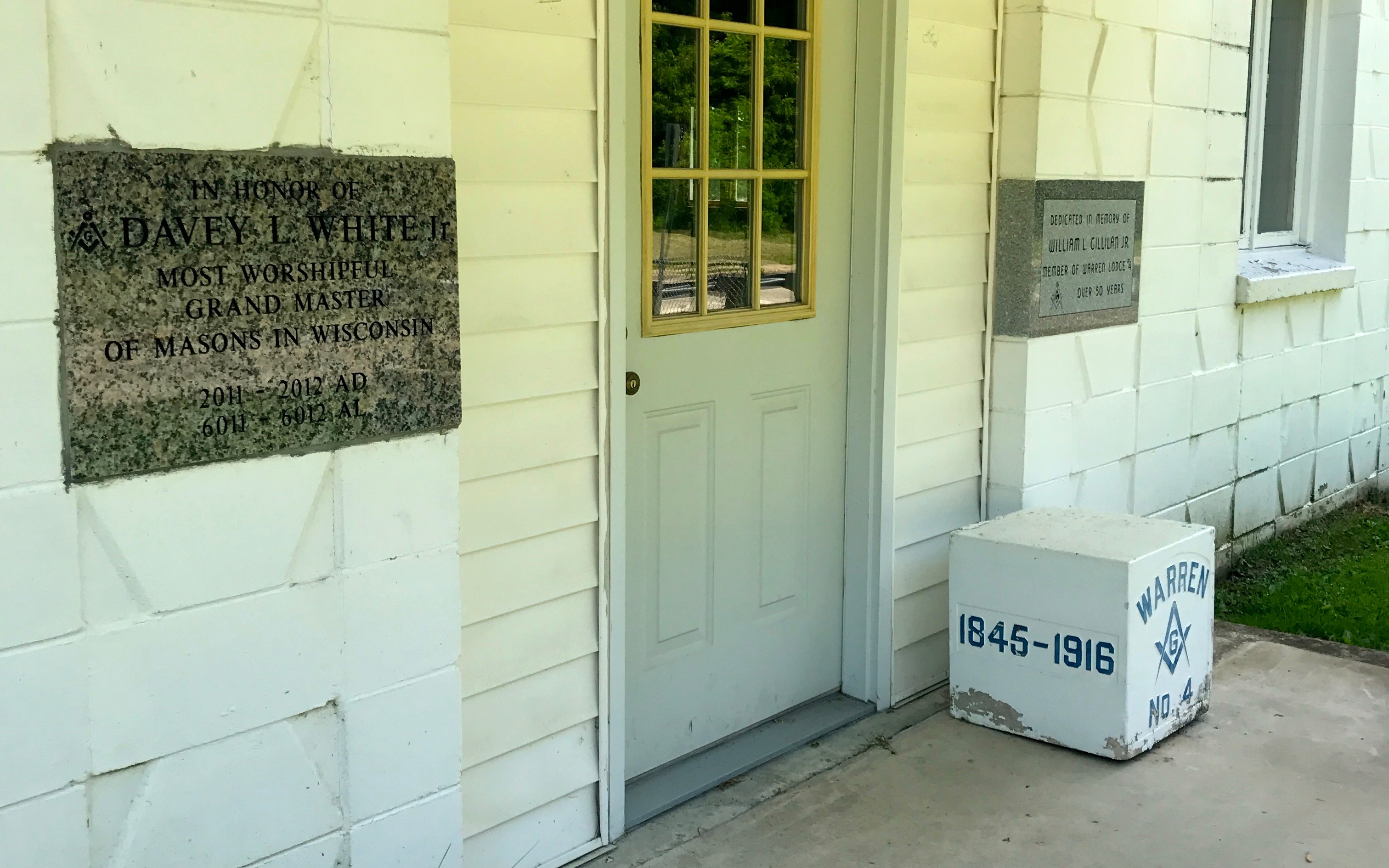
I strolled about and noticed the local Masonic Temple.
I am always amazed by how the Masons are in so many small places.
And they have been going on for so long.
Speaking of “so long,” it was about time to head back to Flo.
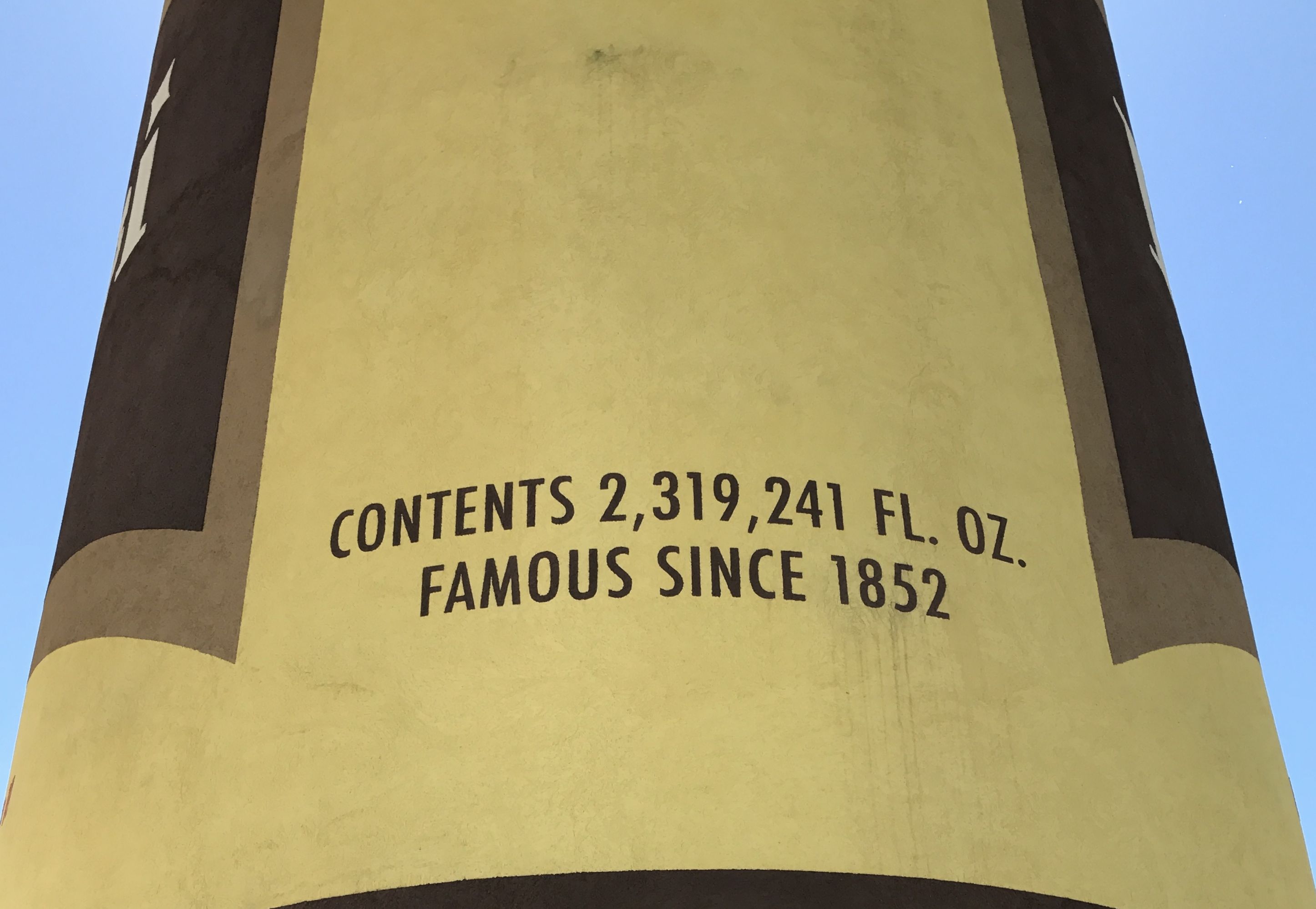
Oh, were you wondering how large the can of beer was?
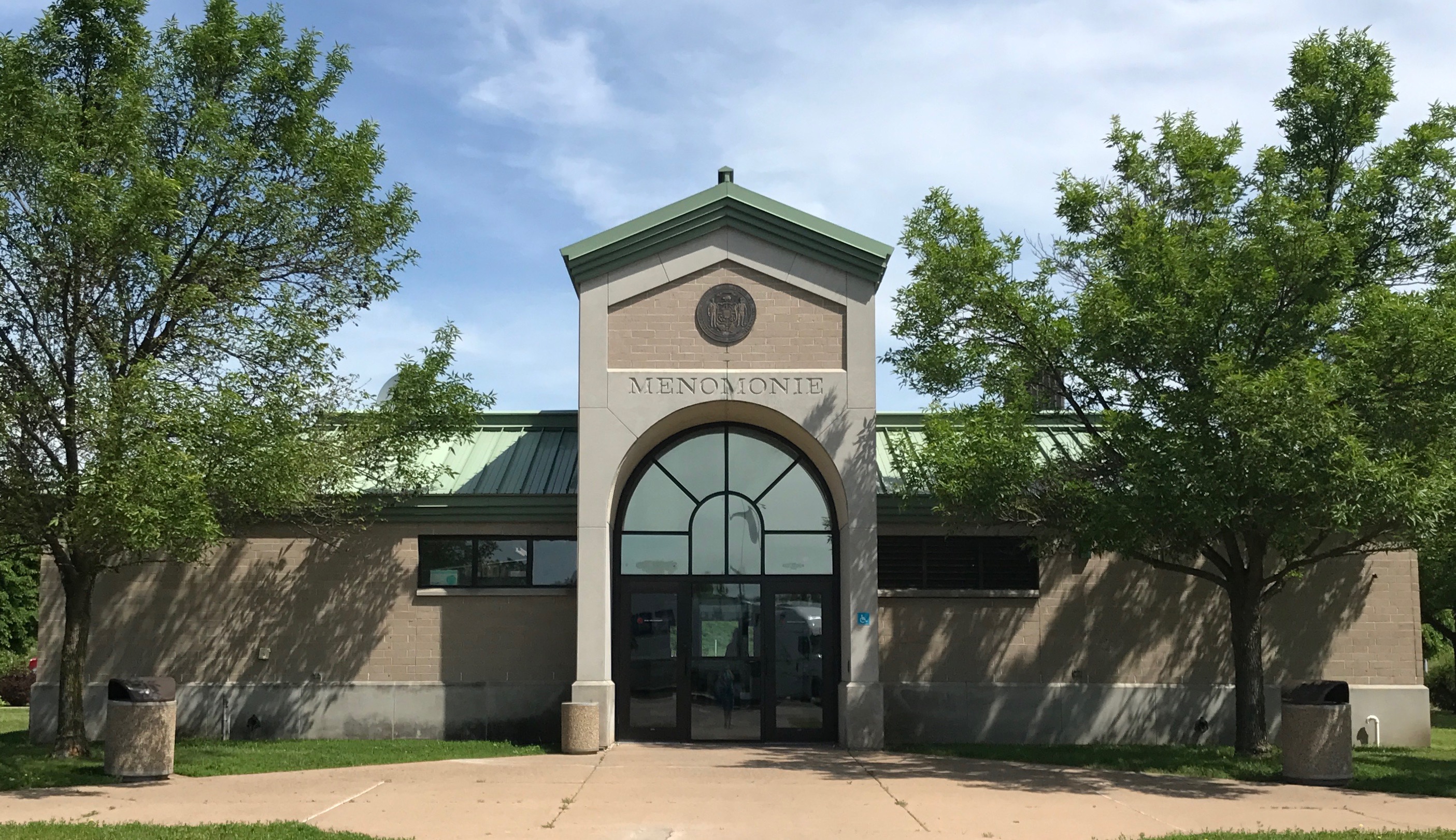
I hitched up and headed out. I was thrilled to find this rest stop with loads of information about Wisconsin.Menomonie… Does that name make anyone else think of this Muppet bit?
I was singing it for days!
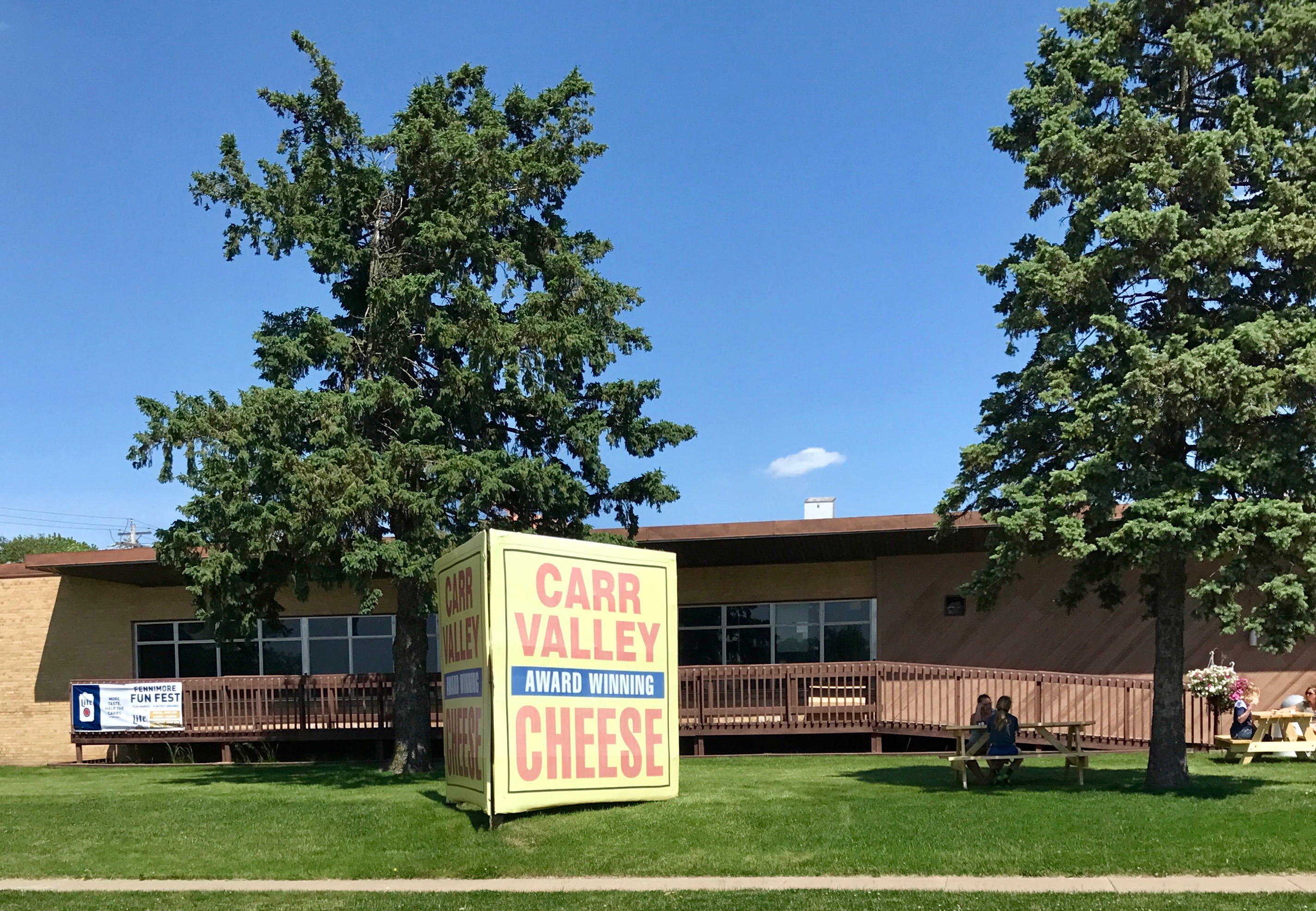
I reached a point when it was time for me to stop and stretch my legs. Cheese!
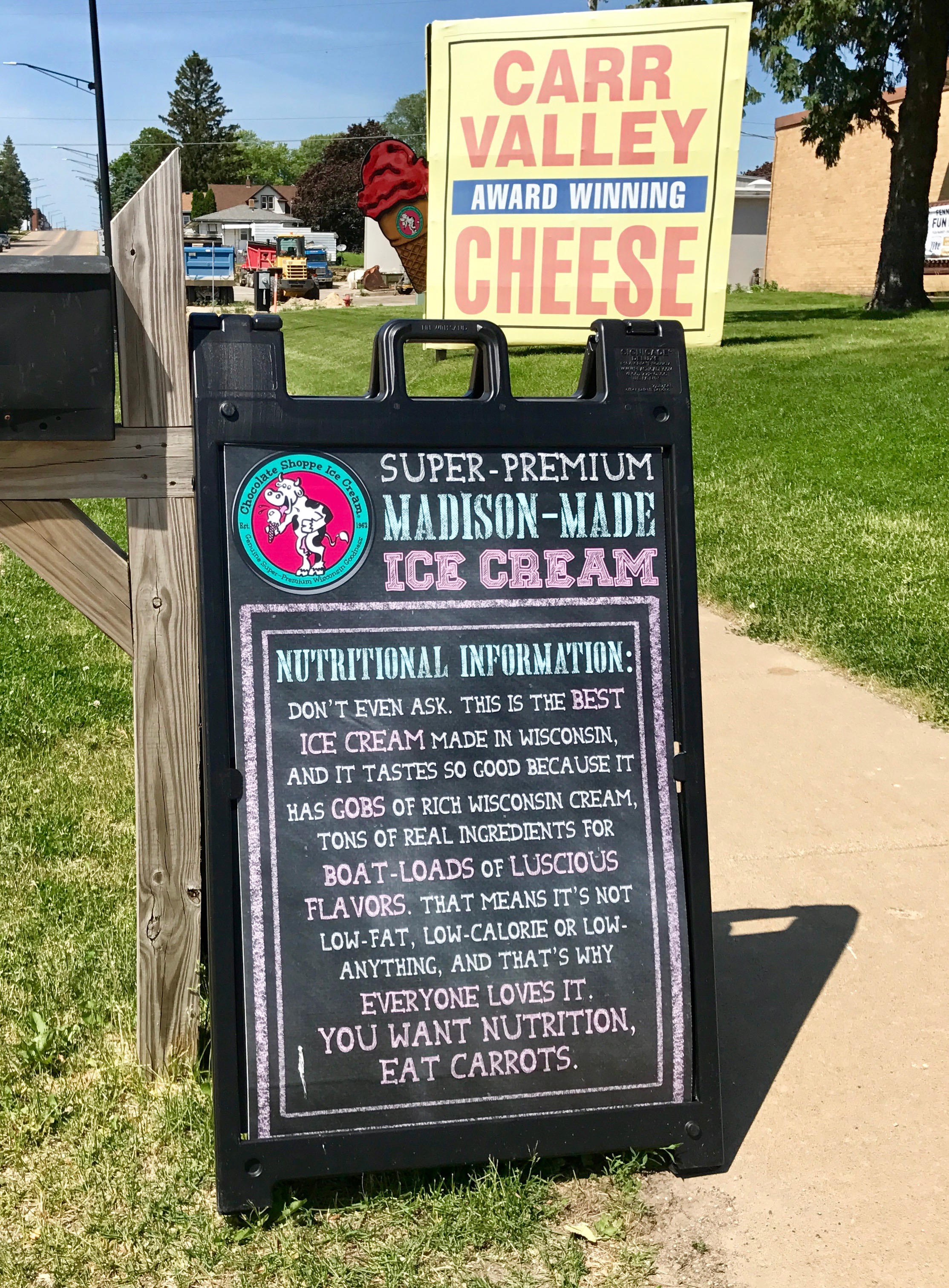
After all, I was in Wisconsin, land of the Cheeseheads. And ice cream!
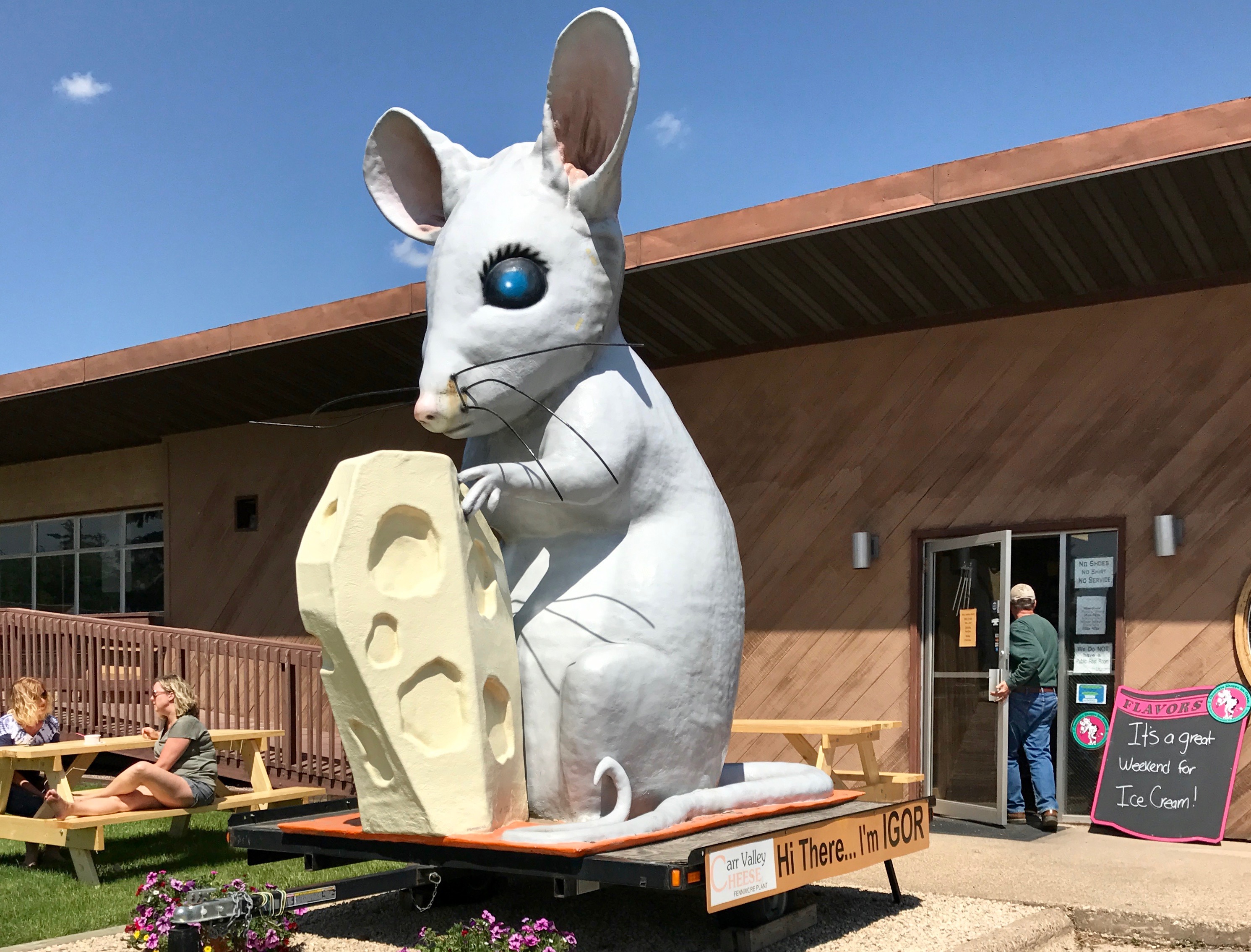
Get a load of the nutritional information. “YOU WANT NUTRITION, EAT CARROTS.” Igor the Rat met me at the door.
In spite of their persuasive argument for ice cream, I decided that I was more in the mood for cheese.
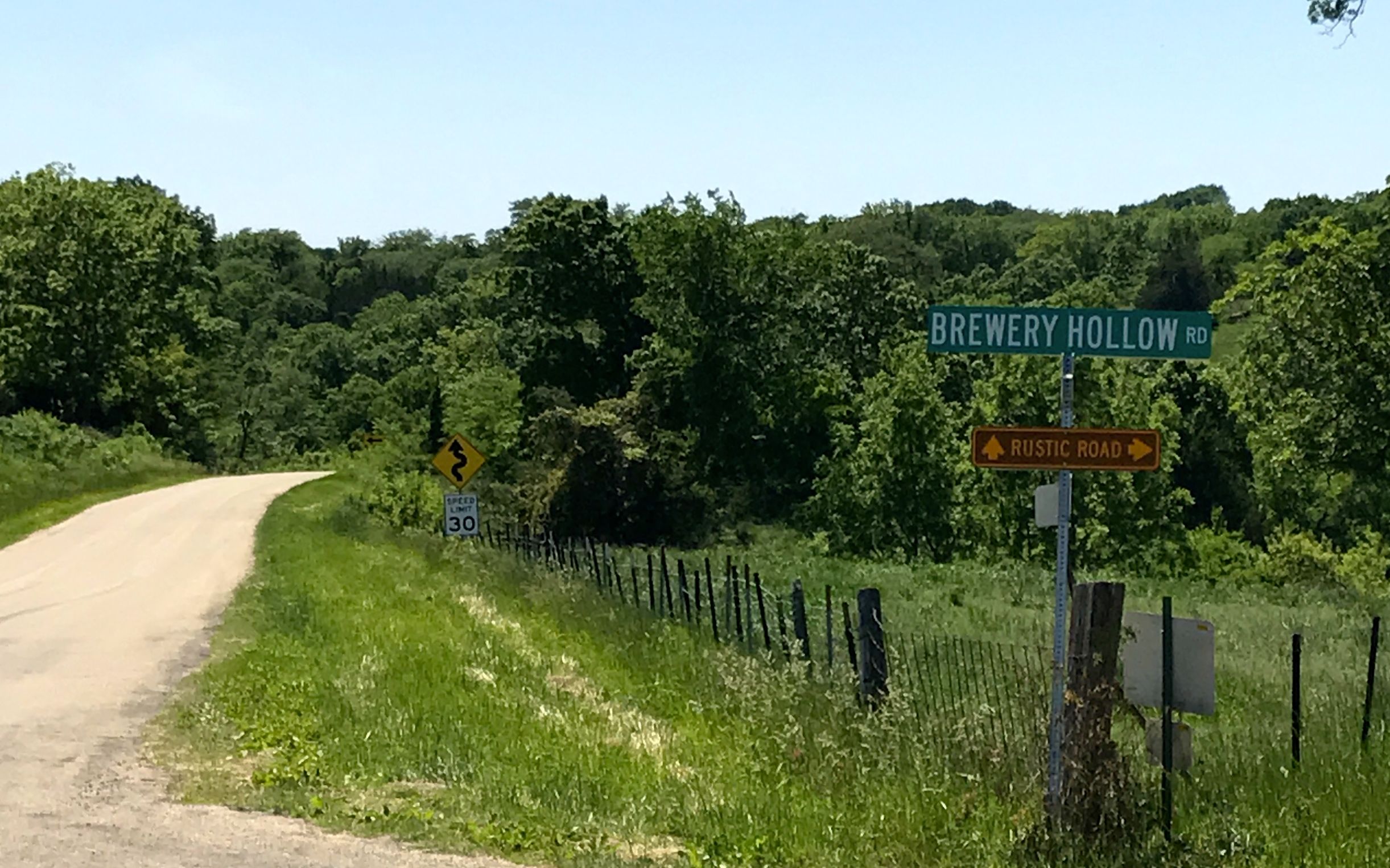
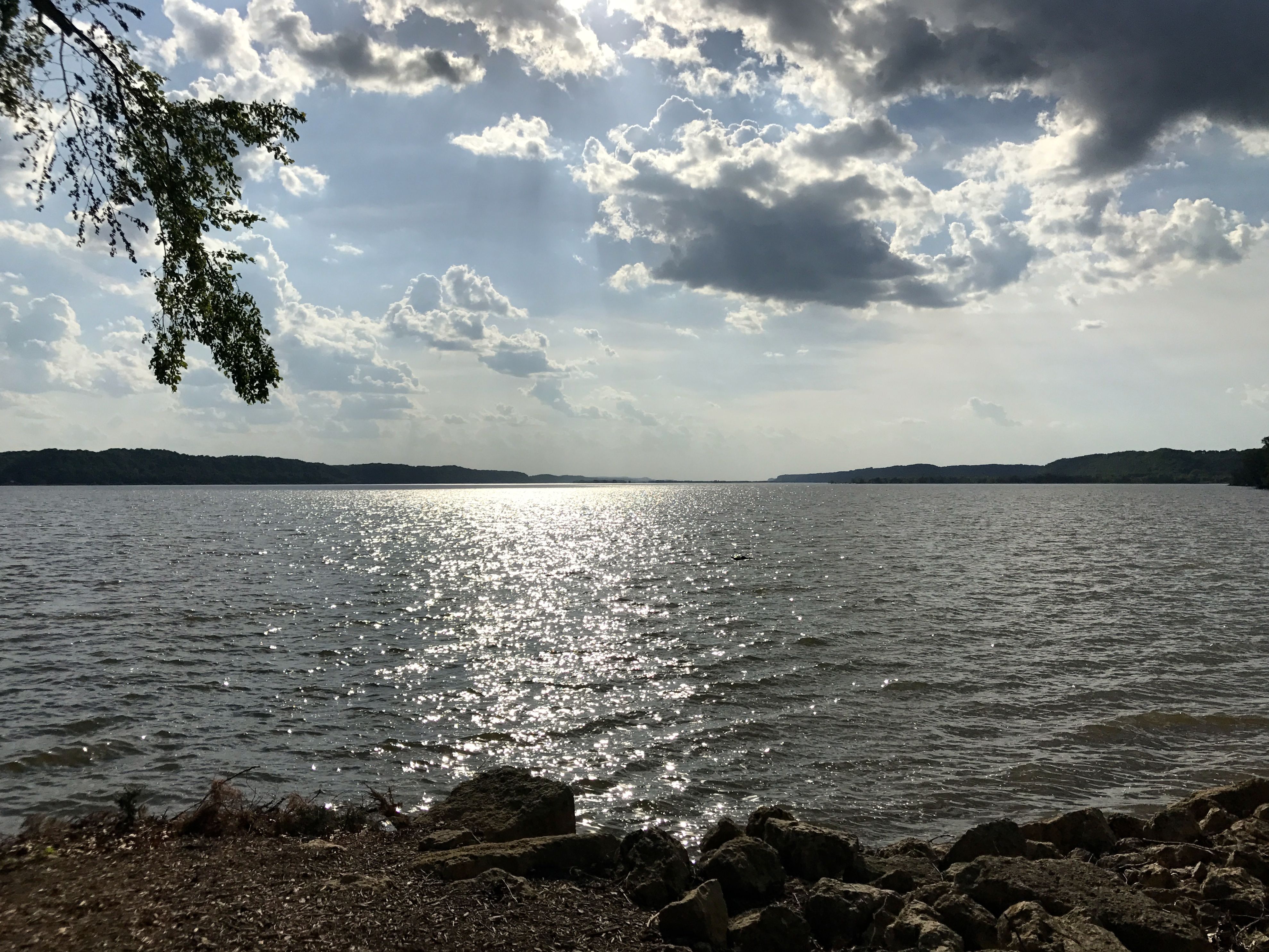
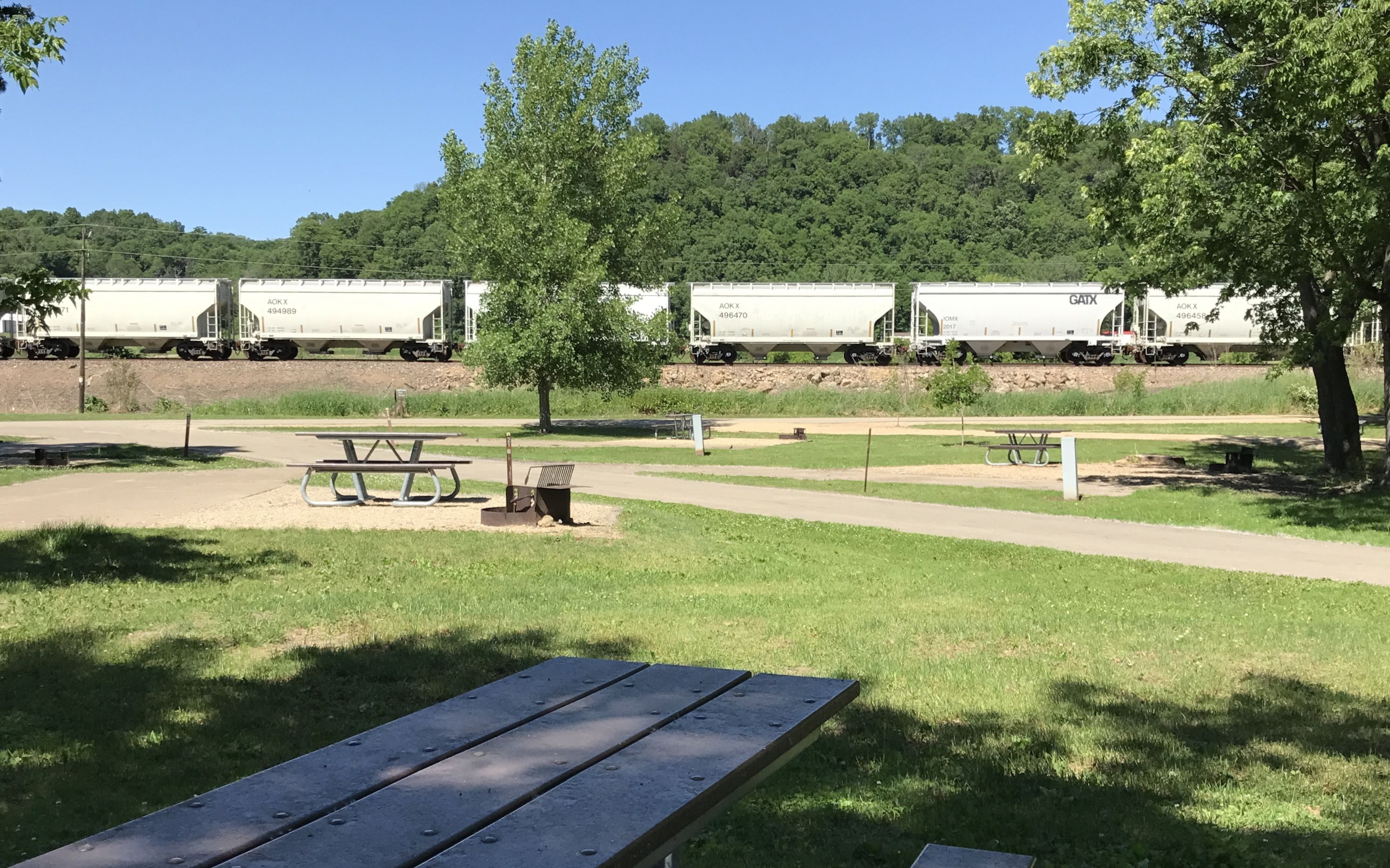
After a quick break I headed off for the day’s destination, Grant River Recreation Area. In spite of the name, it is on the Mississippi River. I was a little leery of the signs that proclaimed “rustic road”. Curvy, rustic roads with a 27 foot trailer are not my favorite thing. But the trip down the rustic, curvy road was worth it. This was an Army Corps of Engineers campground and it was lovely. My site was just a short stroll from the banks of the mighty Mississippi.Of course, train tracks many times follow river beds. My site was quite close to the railroad right of way.
It is kind of exciting when it rolls through. I am glad that I don’t live next to the tracks, though.
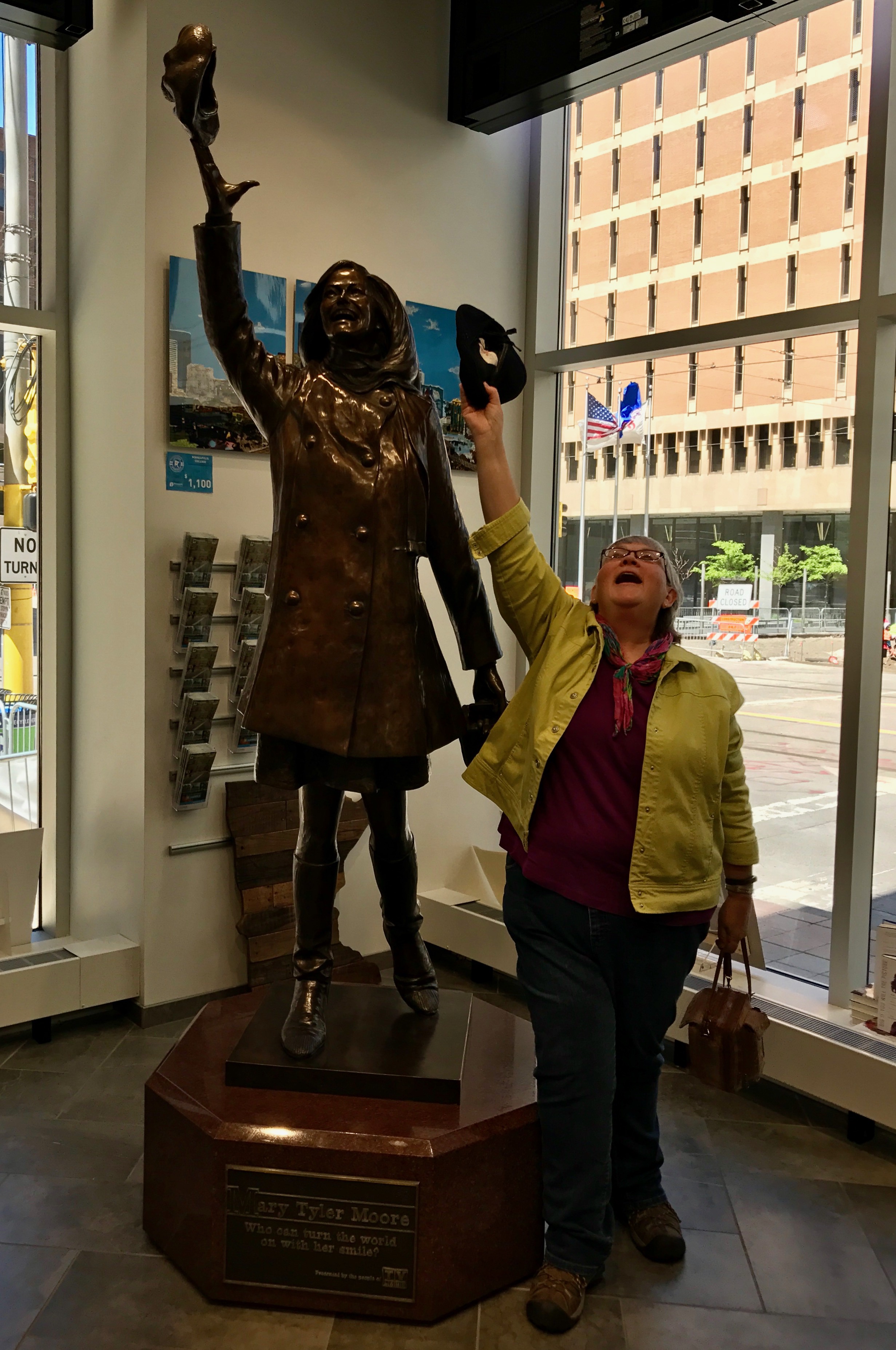
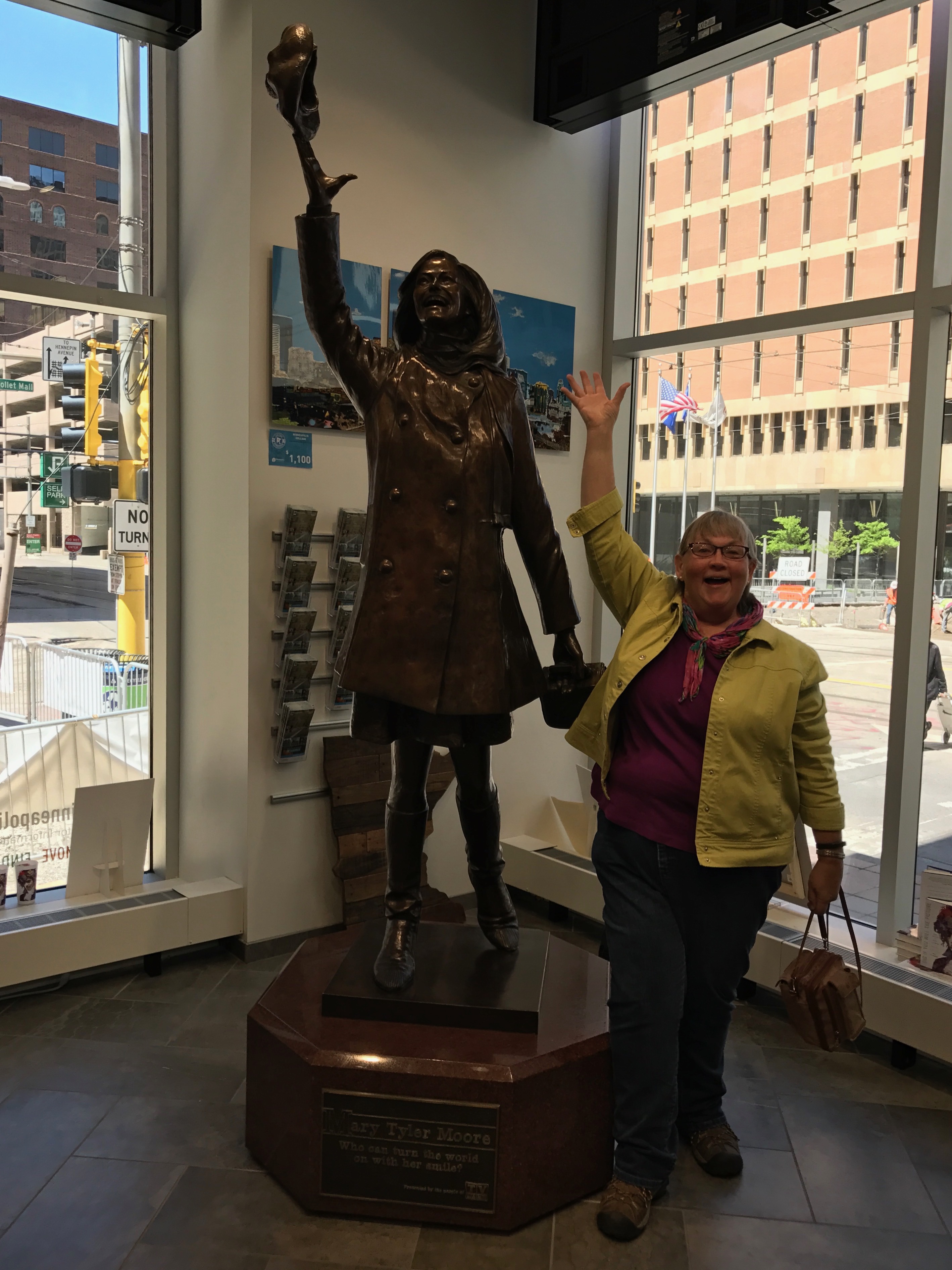
After my visit to St. Paul, my next venture was to Minneapolis. My intention was to visit the statue of Mary Tyler Moore throwing her hat into the air.
I did some research and found out where the statue was these day and set out to find it.
I figured I’d be able to find a spot, even if it meant paying (shudder) to park in a garage. I was kind of wrong.
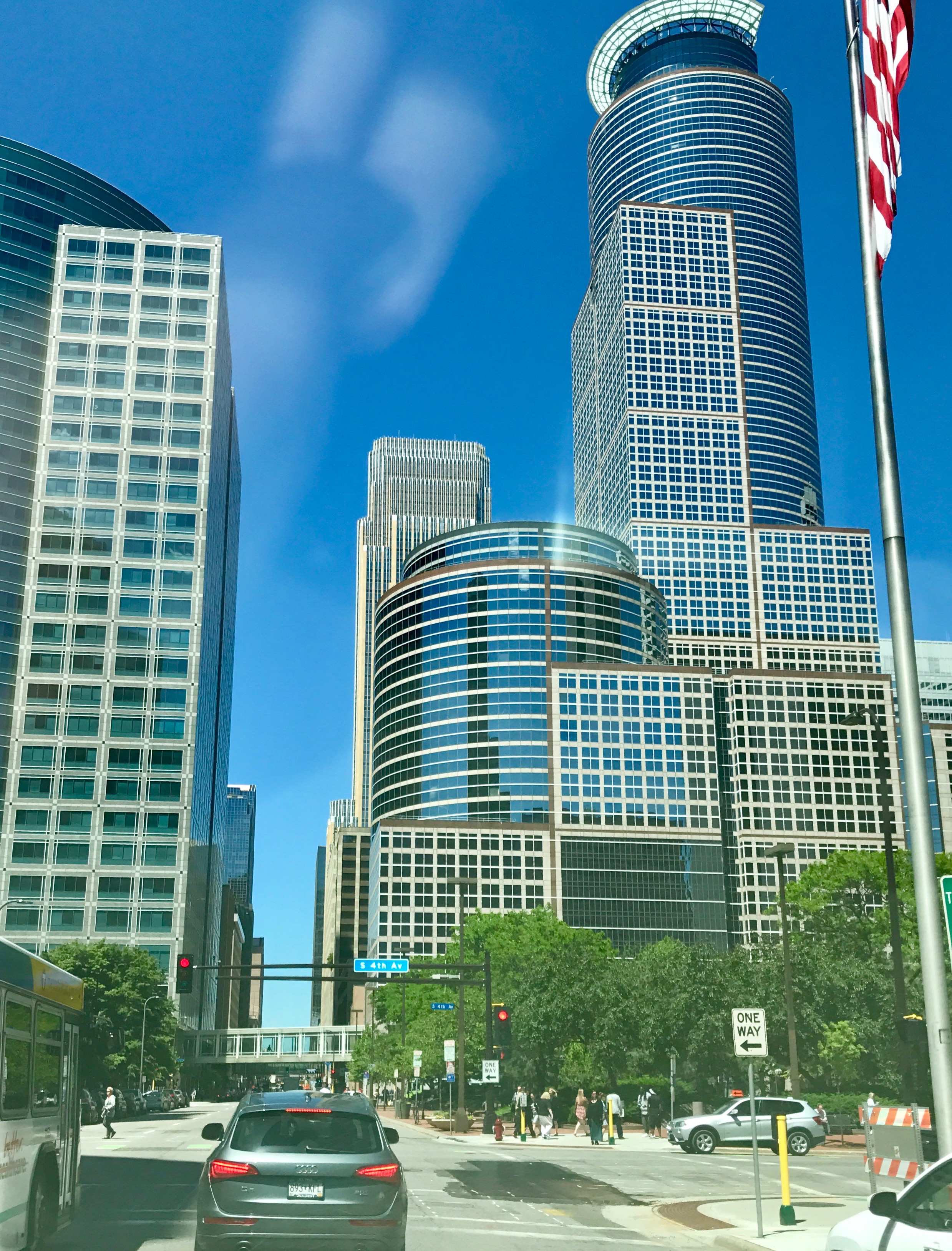
Traffic was incredible the were in the midst of a lot of road construction. I know it’s summer and places in the north have to do it while they can, but it was too much for me. I did manage to find one garage that said they had a spot. I went all the way up and all the way down and never found an empty one. I came up with plan B.
I drove across the river and found a place to park and I called an Uber. The driver took me right to where I needed to be.
These days, the statue is back at its original location on the Nicollet Mall. When I visited, it was at the city’s visitor center.
One of the workers was very obliging, and he took a couple of shots of me. This one was my favorite. They even had a basket of hats for people to throw.
After I got done with the requisite photo shoot, I headed out to see what I could see in Minneapolis.
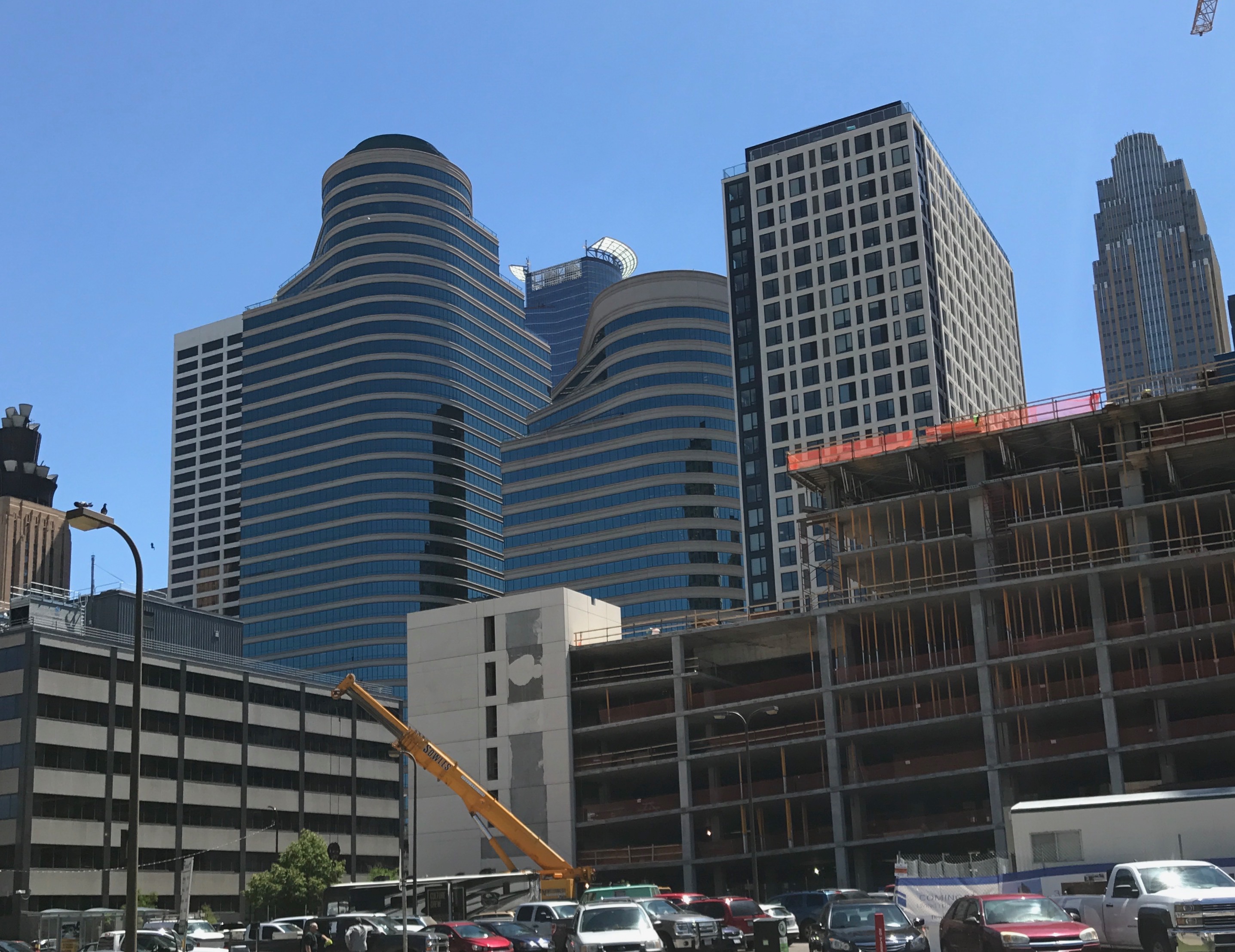
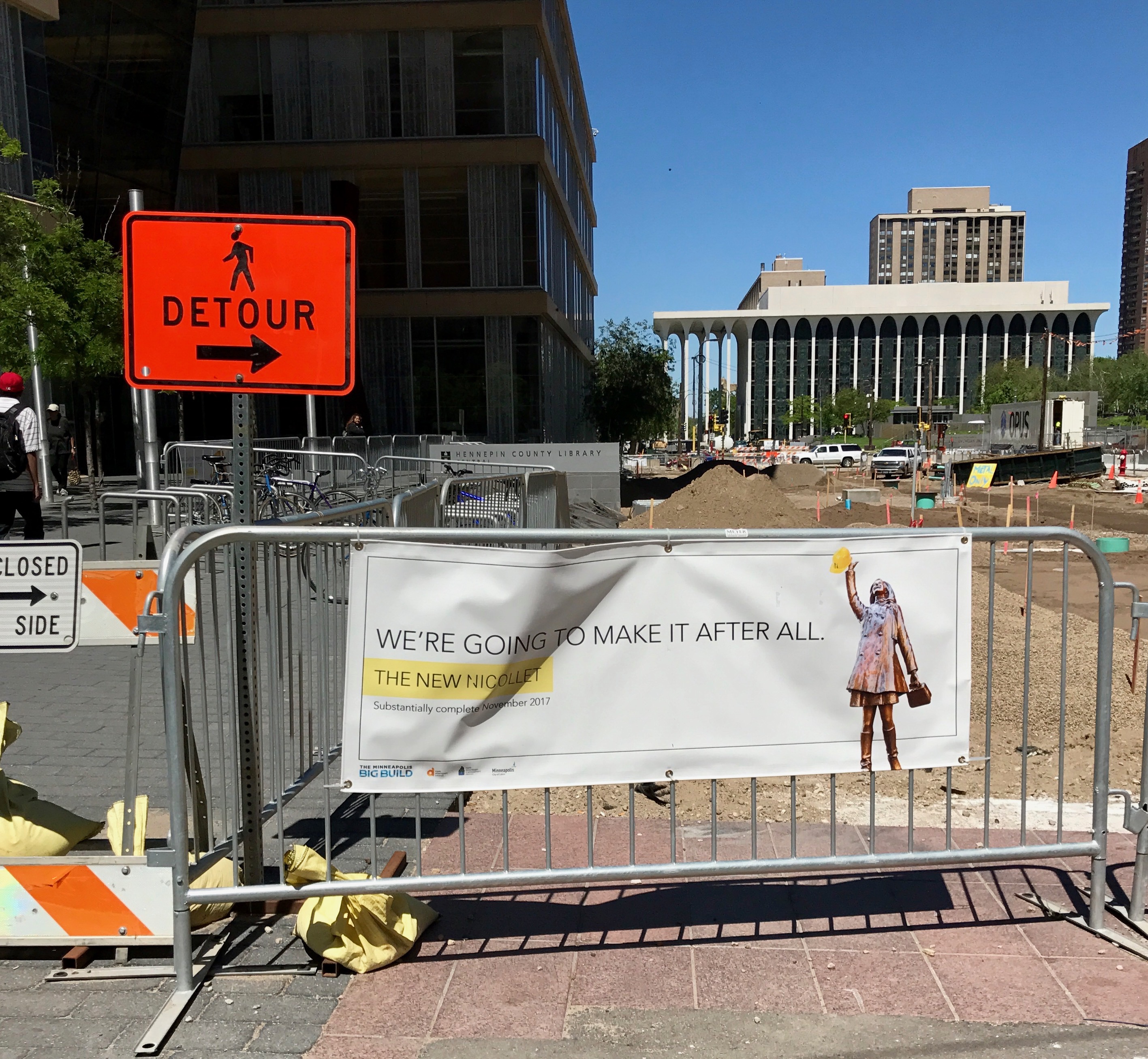
Did I mention that there was a lot of road construction going on?
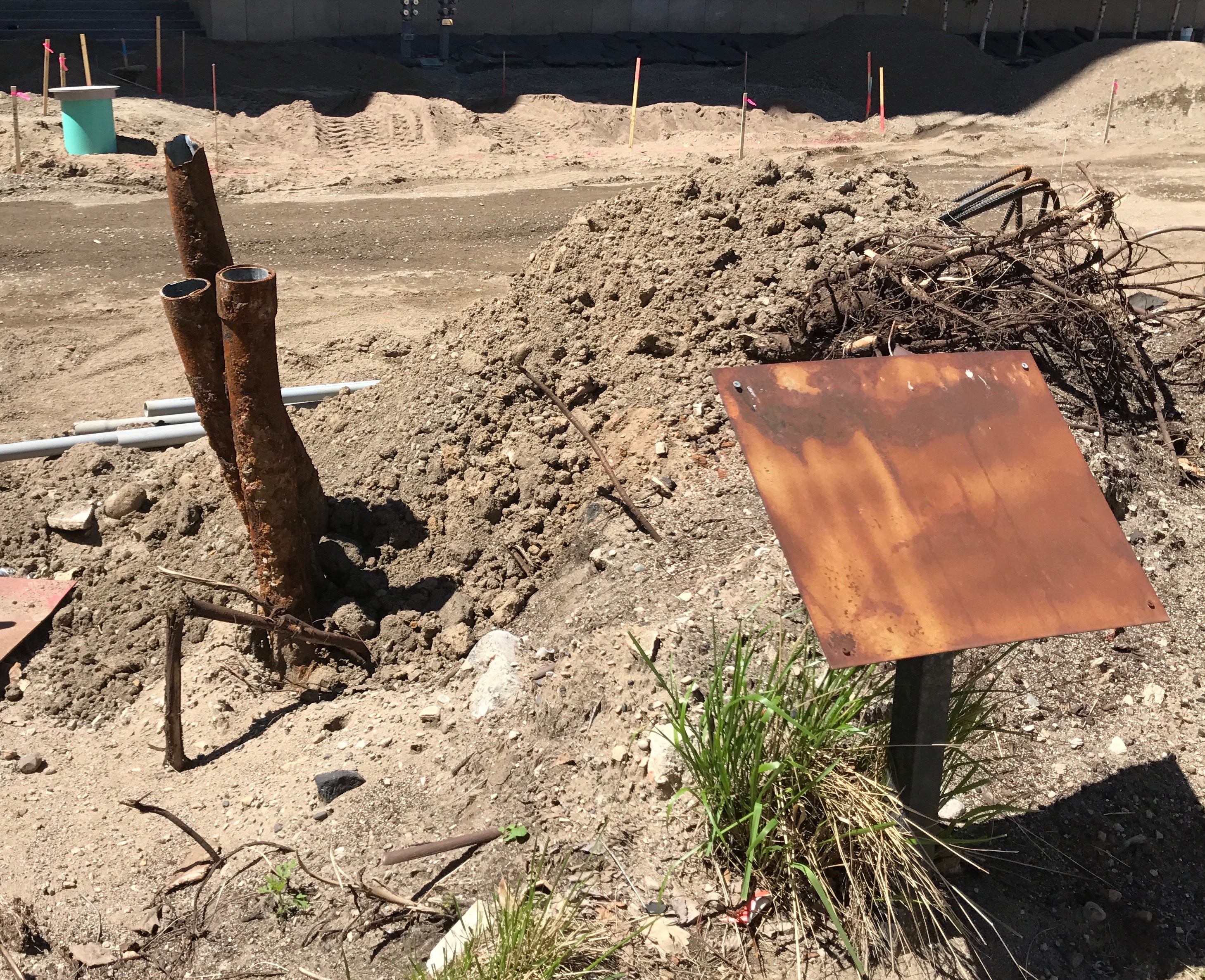
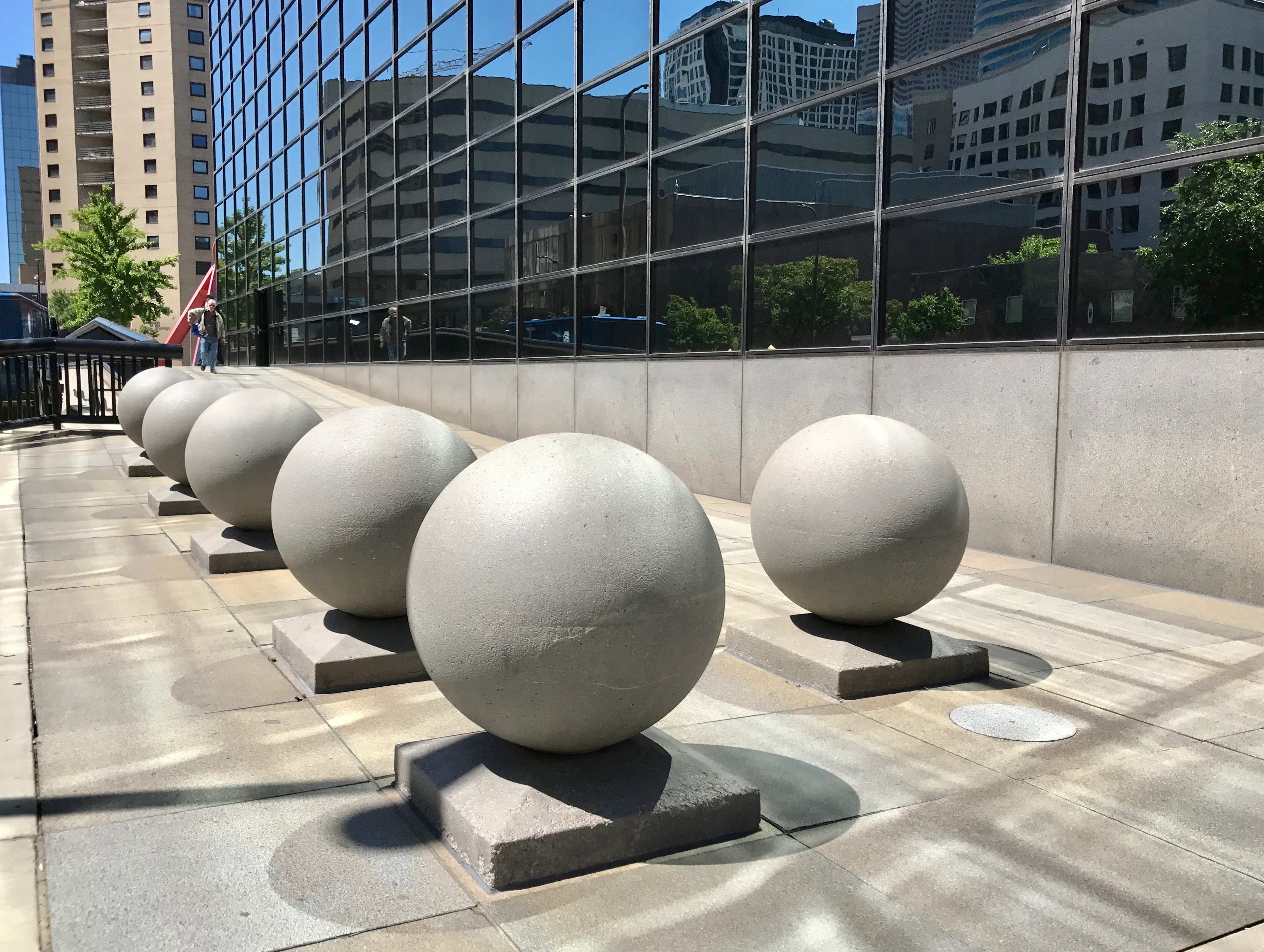
Road were torn up and random pieces of debris where here and there. There was a certain sculptural quality to some of the junk.
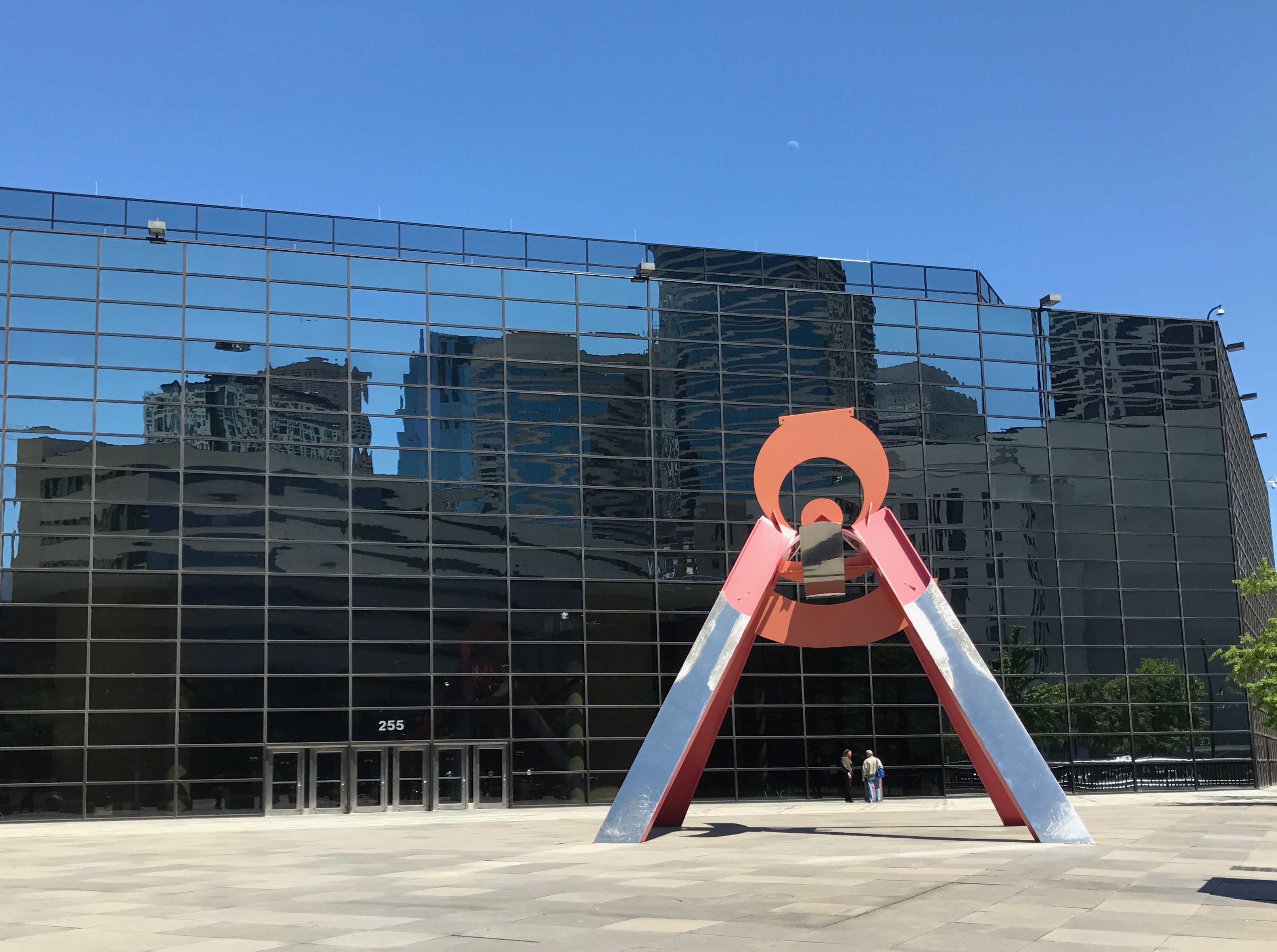
Of course, there was also real art. The orange paint on this one makes me think Alexander Calder, but other than the color, it doesn’t look much like his work. I did a little research, but couldn’t find any information on this one.
But, really, a modern city on a sunny day – doesn’t everything look like art?
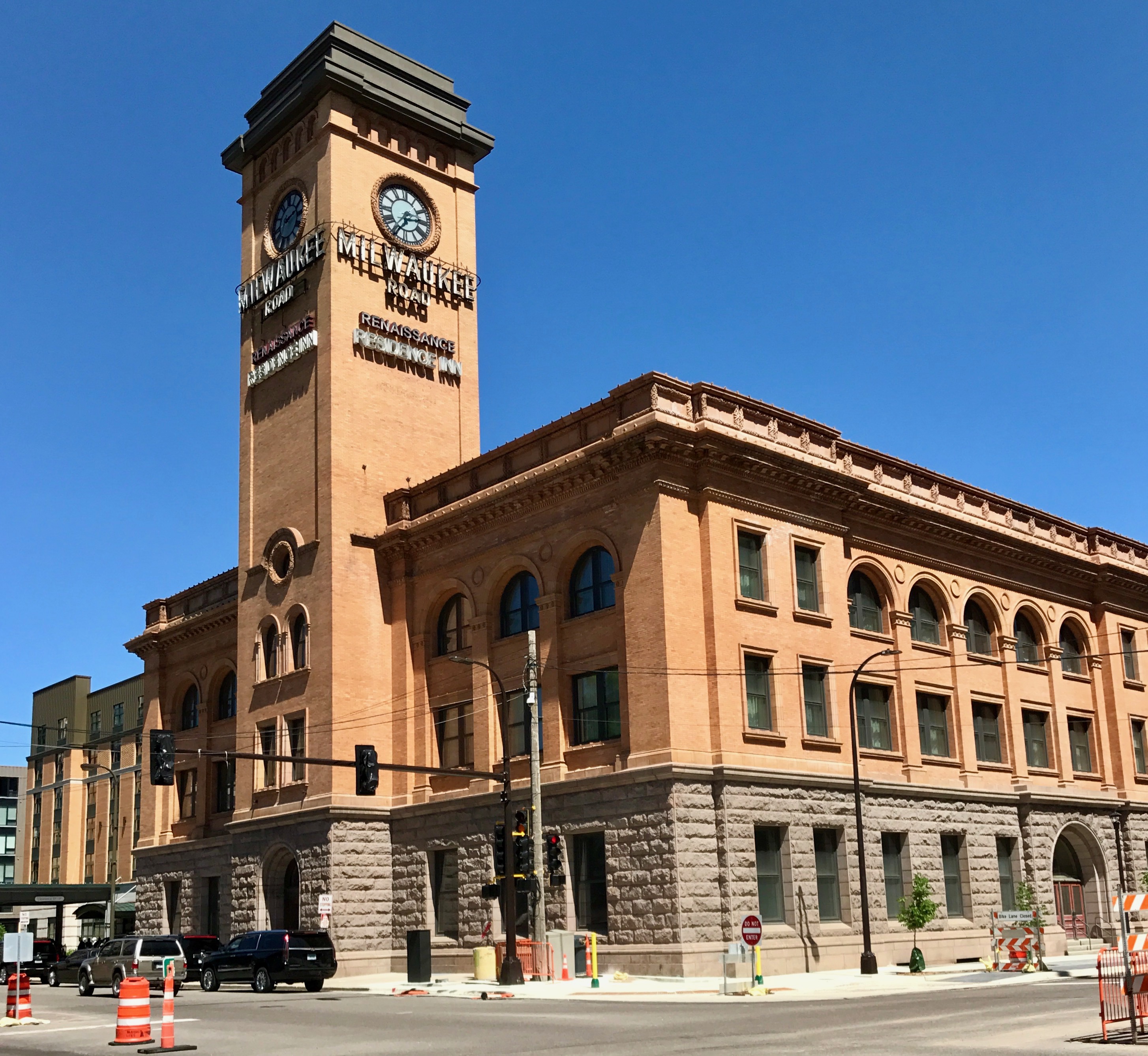
This repurposed train station, which was built in 1899. At its peak in 1920, 29 passenger trains a day used the depot. Through the years, passenger traffic decreased nationwide and freight facilities were moved to other places. The depot was closed in 1971 and it stood vacant for many years. In 2001, it opened as a hotel.
Train depots aren’t the only buildings being repurposed.
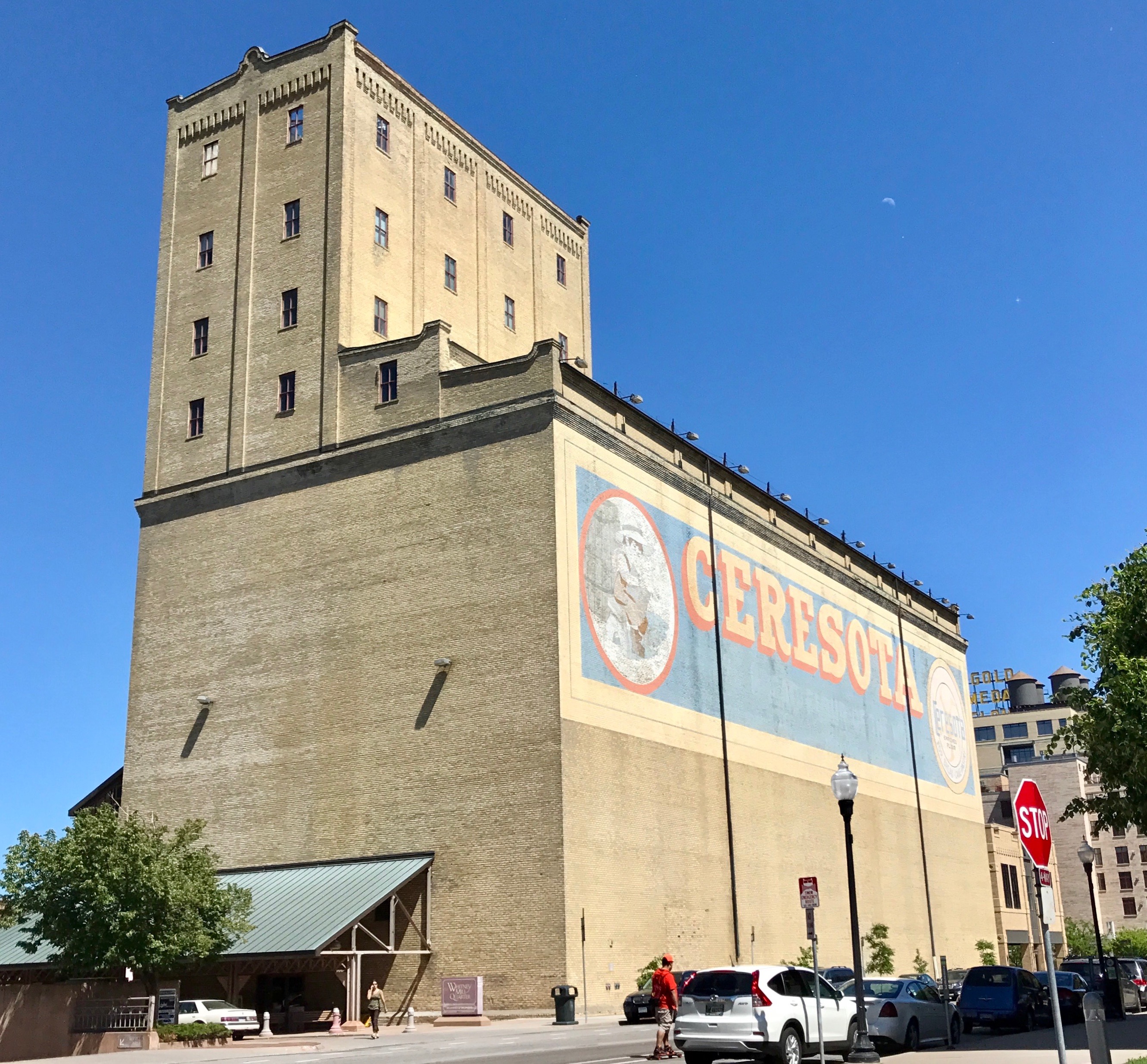
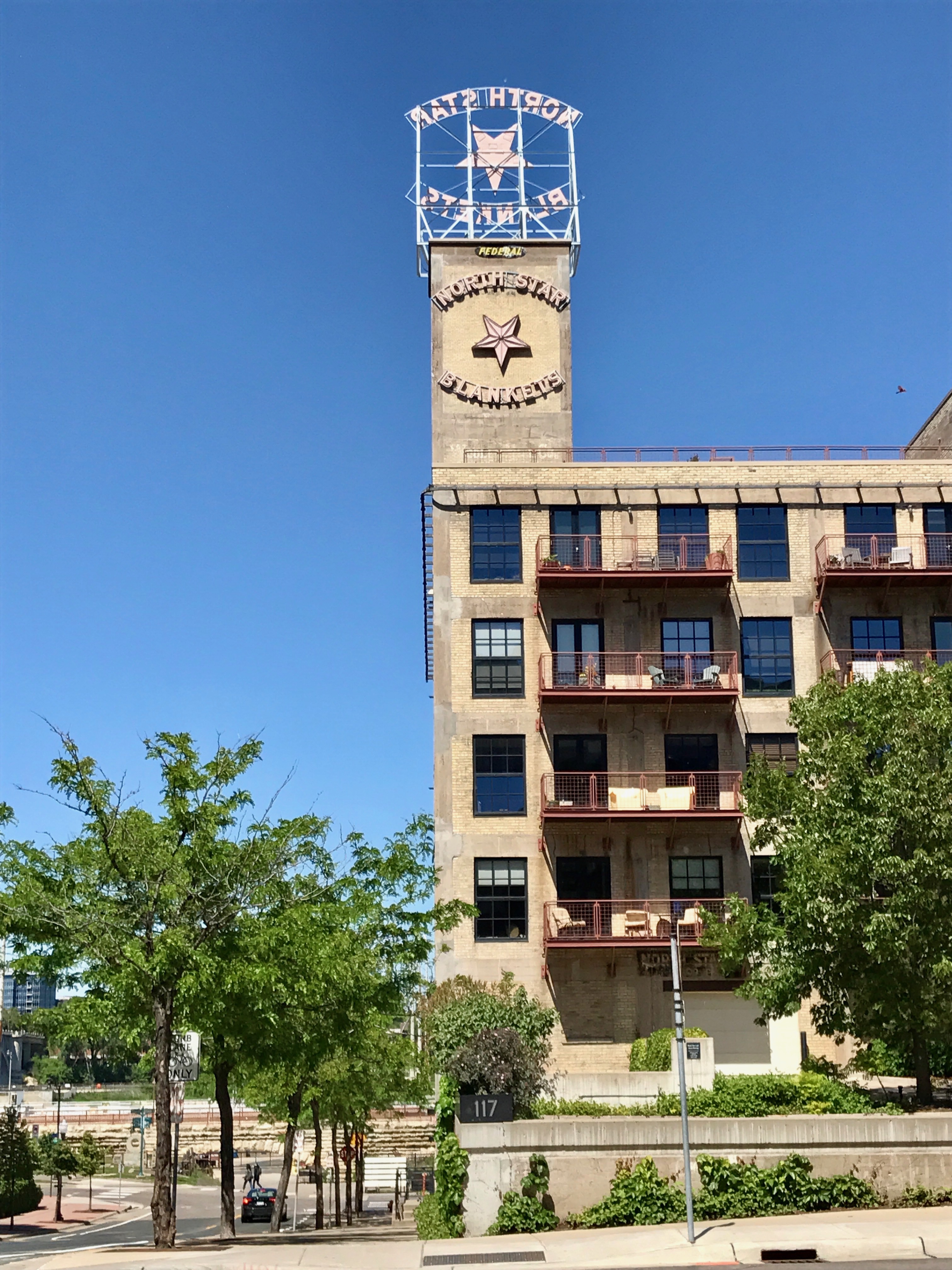
I rather fancy a condo in an old blanket factory. Doesn’t that sound cozy? Of course, I am sure I don’t have the funds for something in the cool and groovy part of town.
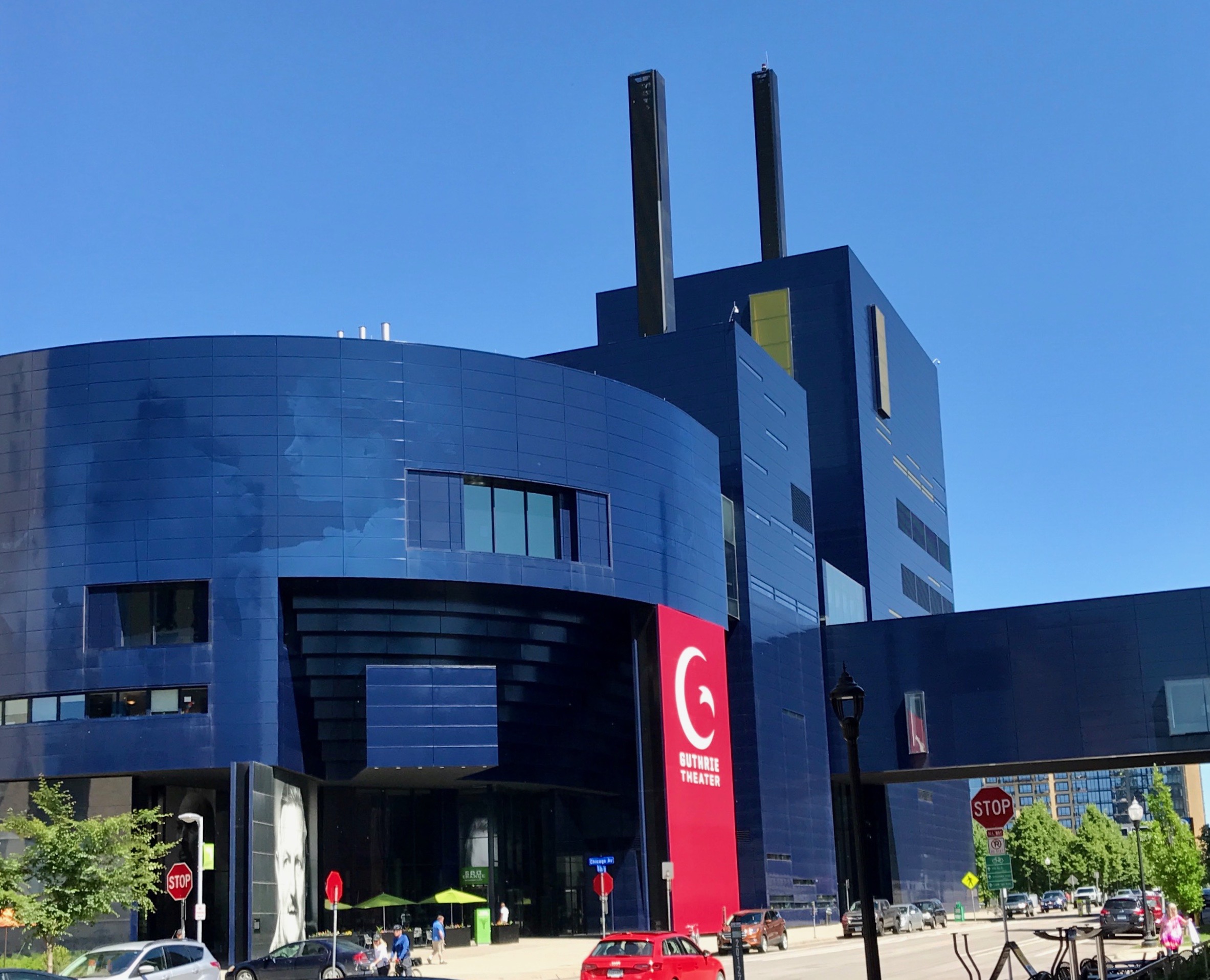
Speaking of cool and groovy, here is the Guthrie Theater.
The entrance rather reminds me of Darth Vader.
Or maybe I’m imagining things.
The theater is named after Sir Tyrone Guthrie, who was an Irish stage director.
And Sir Tyrone does remind me of my cousin, Bill.
Anyway, Sir Tyrone was influential in Canadian theater. He directed the first season at what its now the Stratford Festival, and his five years there proved to have lasting influence on Canadian theater. In the last 1950s, he and colleagues Oliver Rea and Peter Zeisler decided to create a resident theater away from New York. They opened the Guthrie Theater in 1963. Sir Tyrone remained artistic director until 1966. He returned to direct plays during the three seasons after that. He made his final curtain call in 1971.
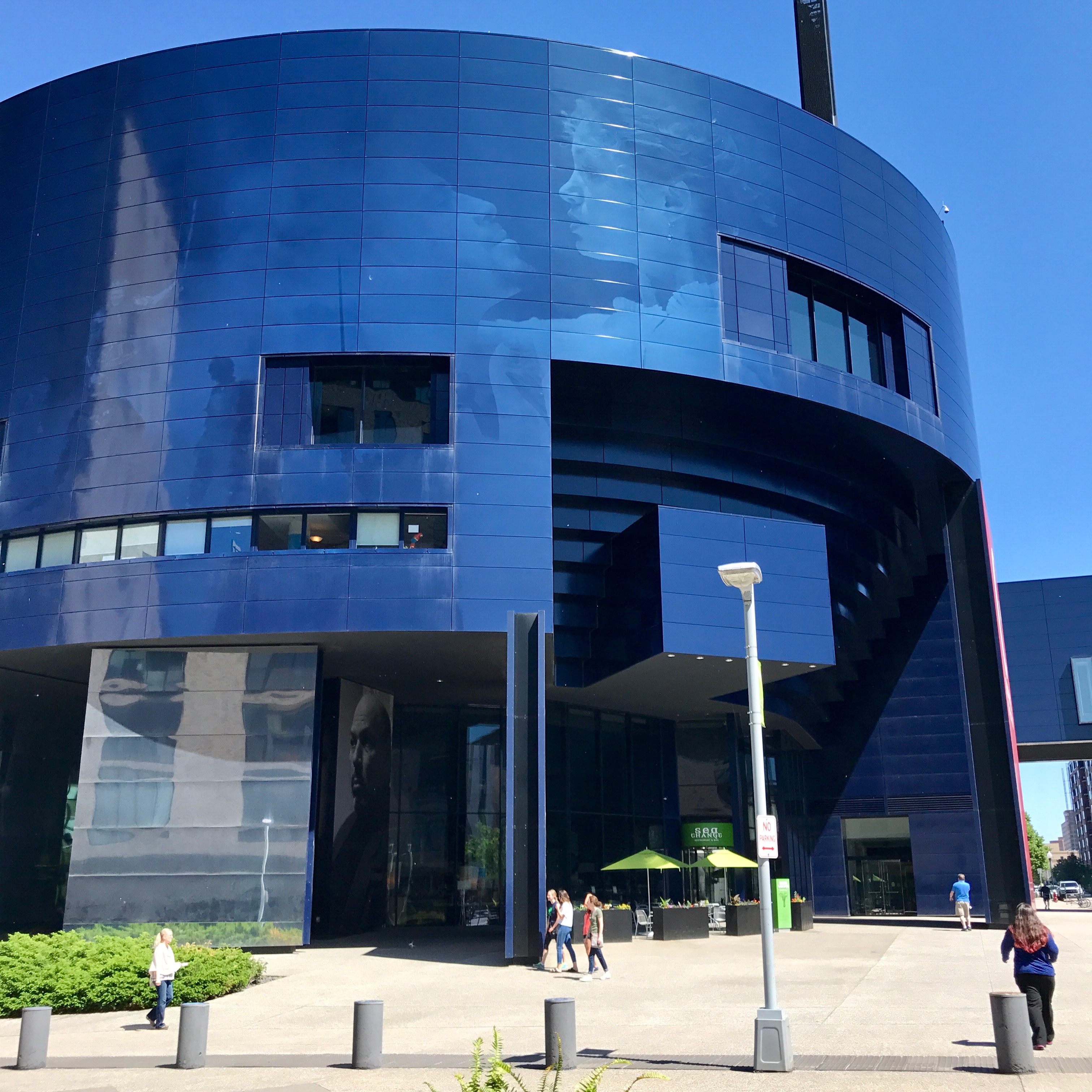
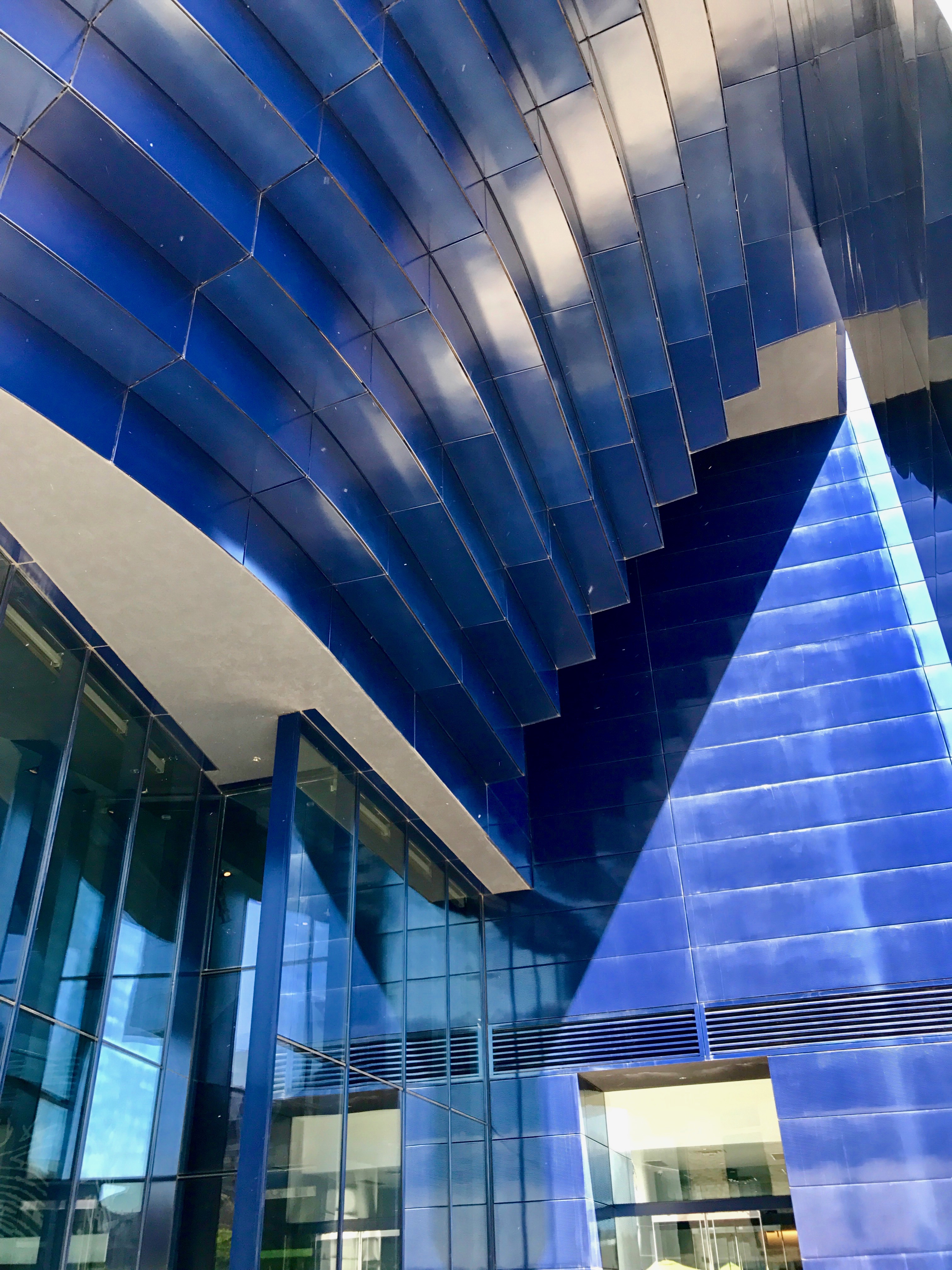
I passed the large portrait of Sir Tyrone and through the entrance. This is quite the sculptural building – and so monochromatic.
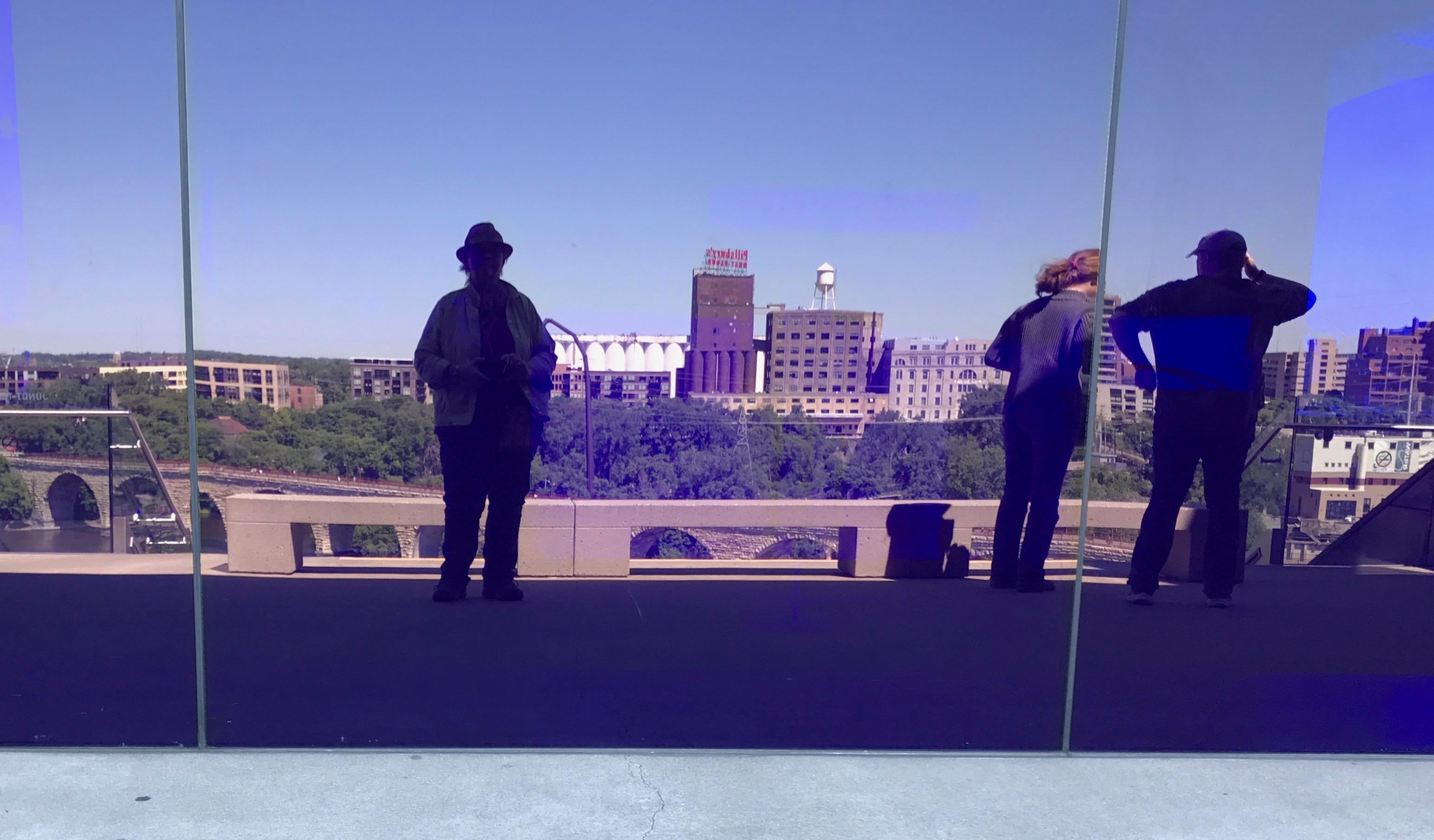
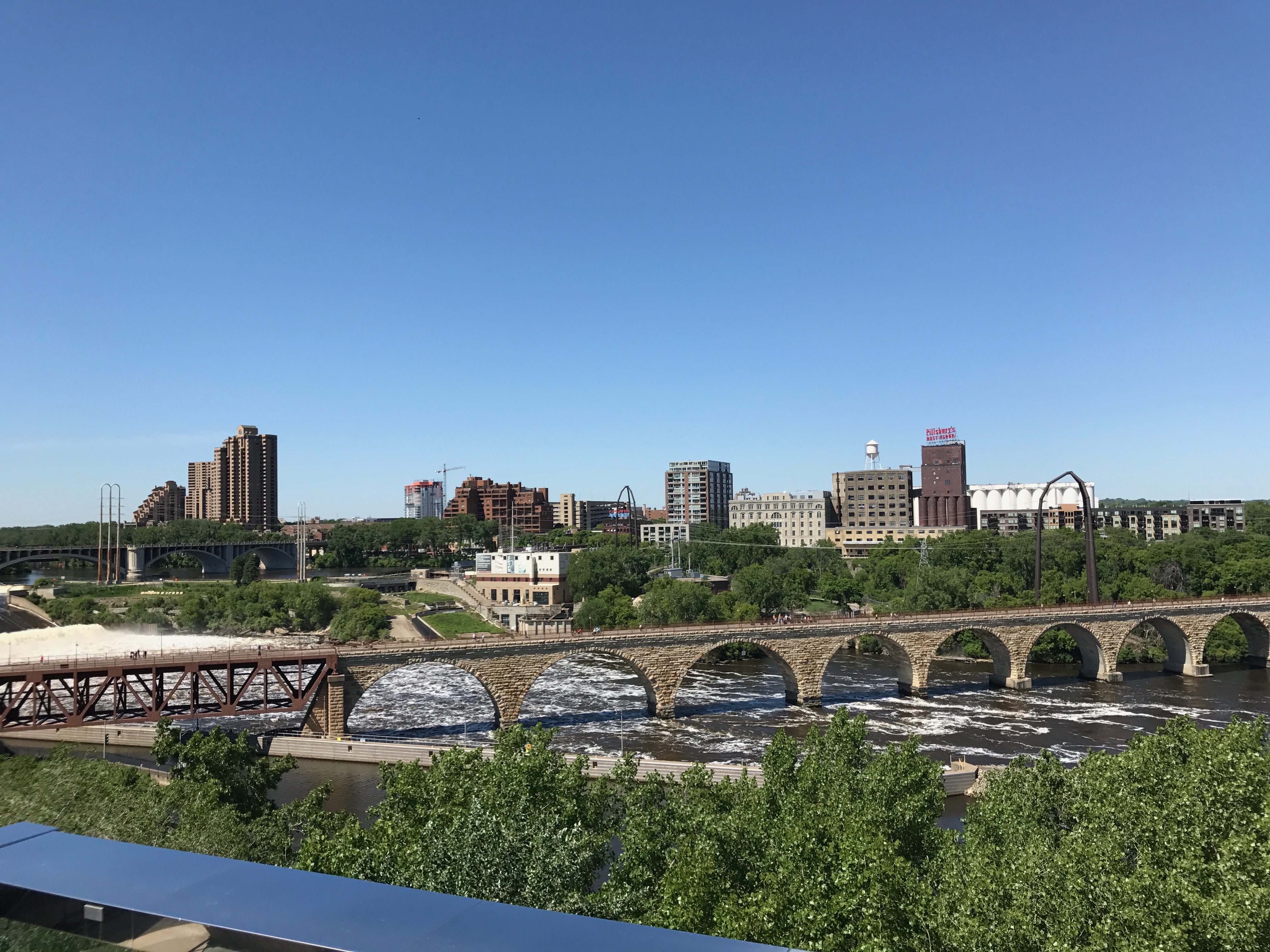
I made my way up to the observation deck. It was a perfect place to take a self portrait.There were some great views of the river. That’s the Mississippi down there!
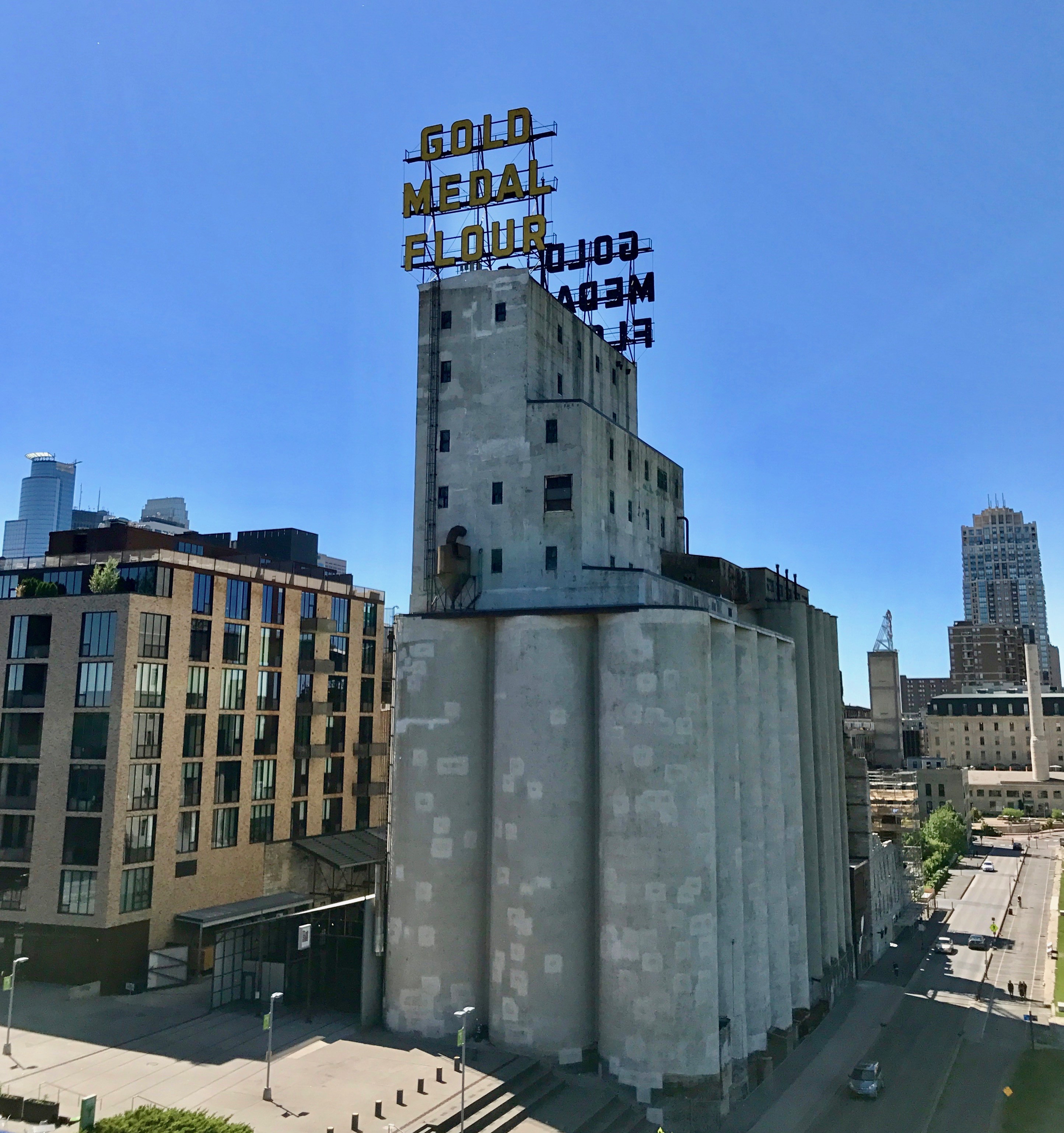
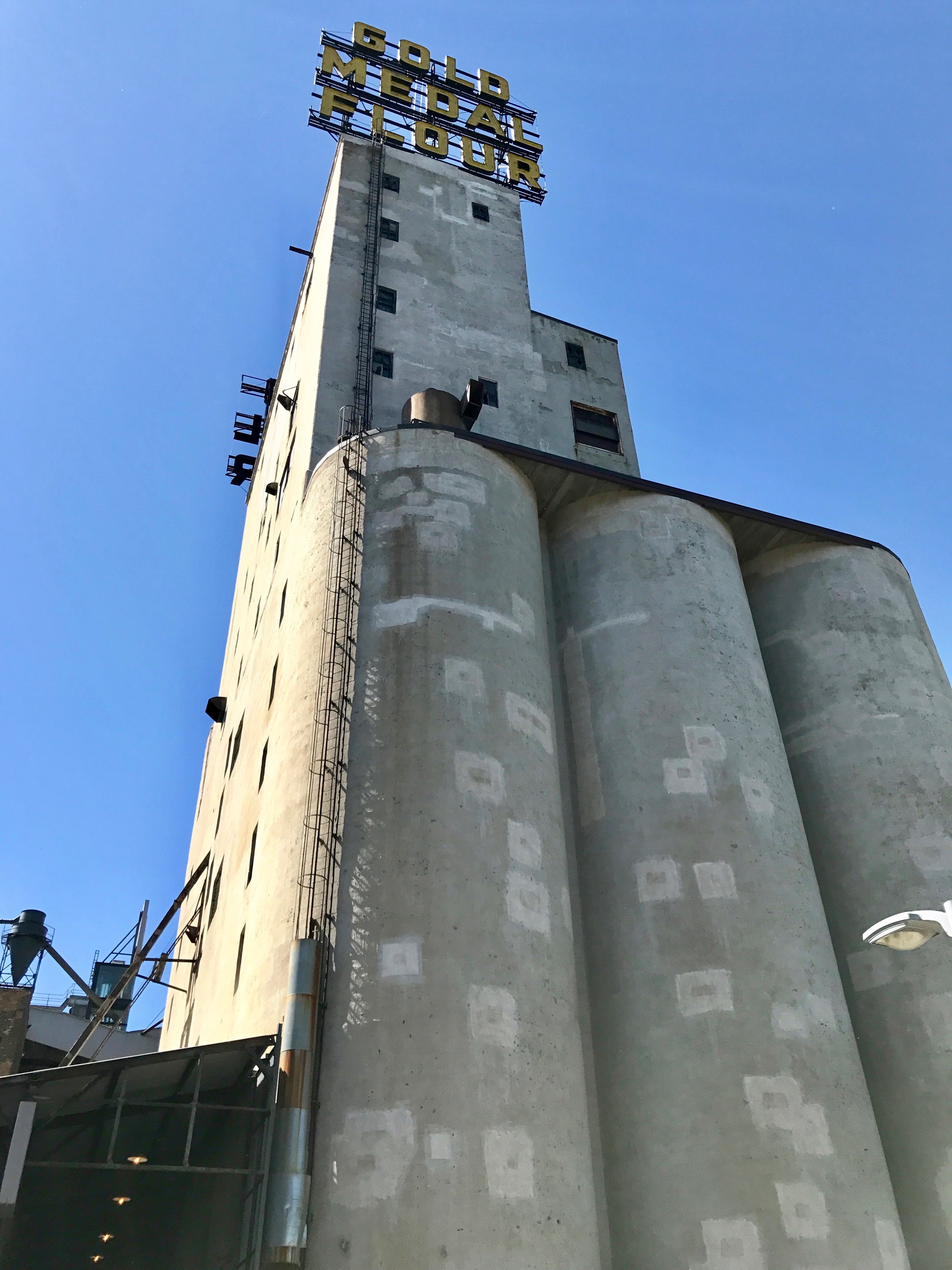
Off in another direction, there was a view of the old Gold Medal grain elevators. Really, doesn’t everything look beautiful with blue skies and bright sunshine?
I figured I had seen what there was to see at the theater, so I headed out.
Here’s Gold Medal from the street level.
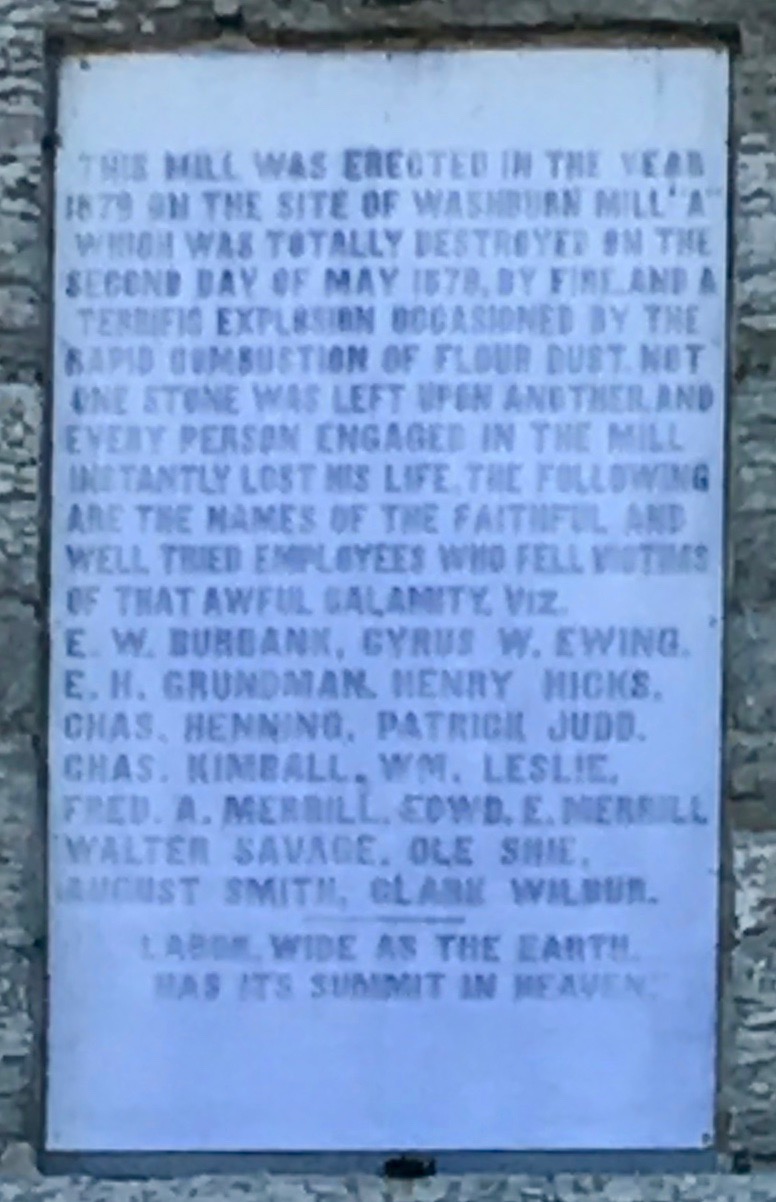
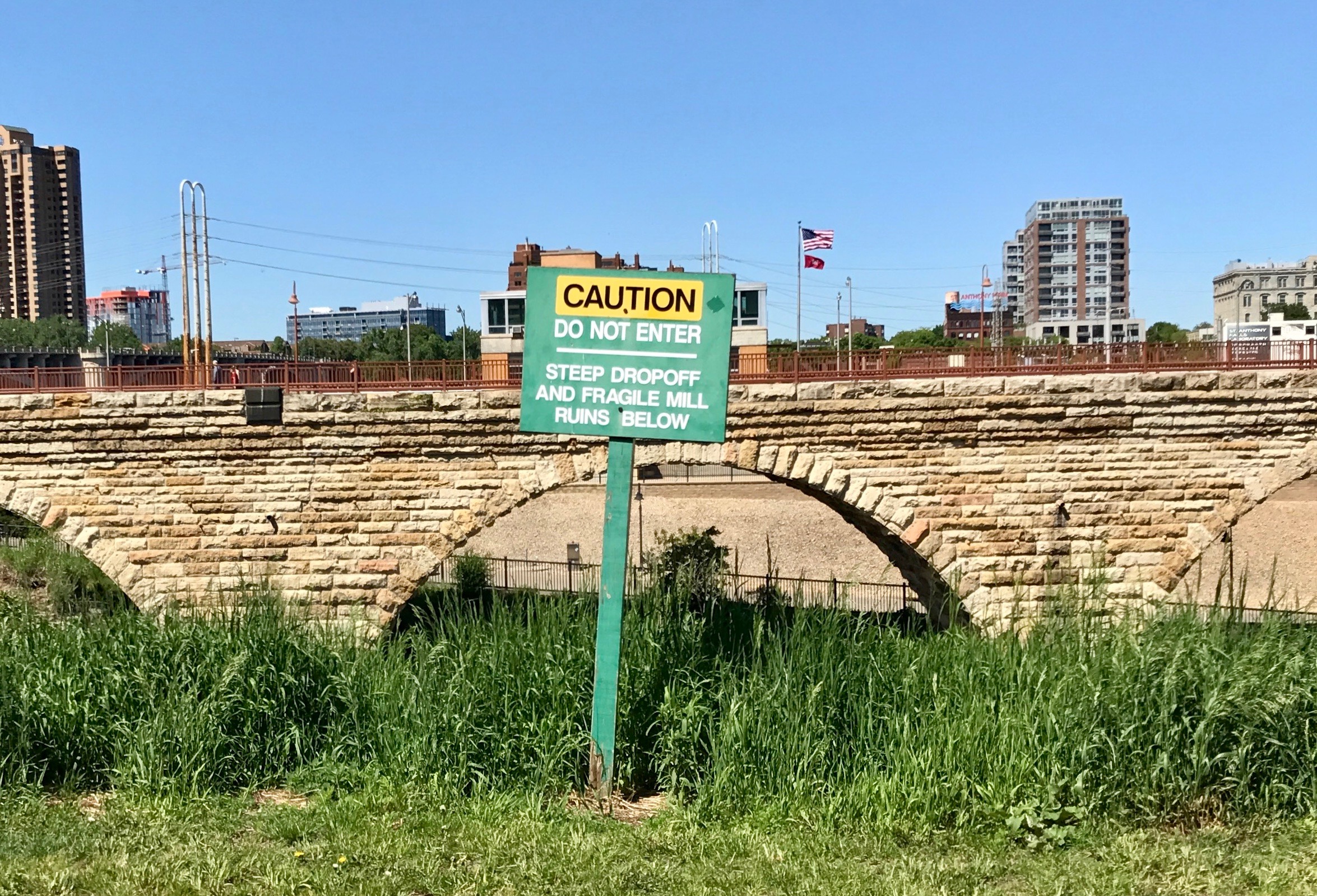
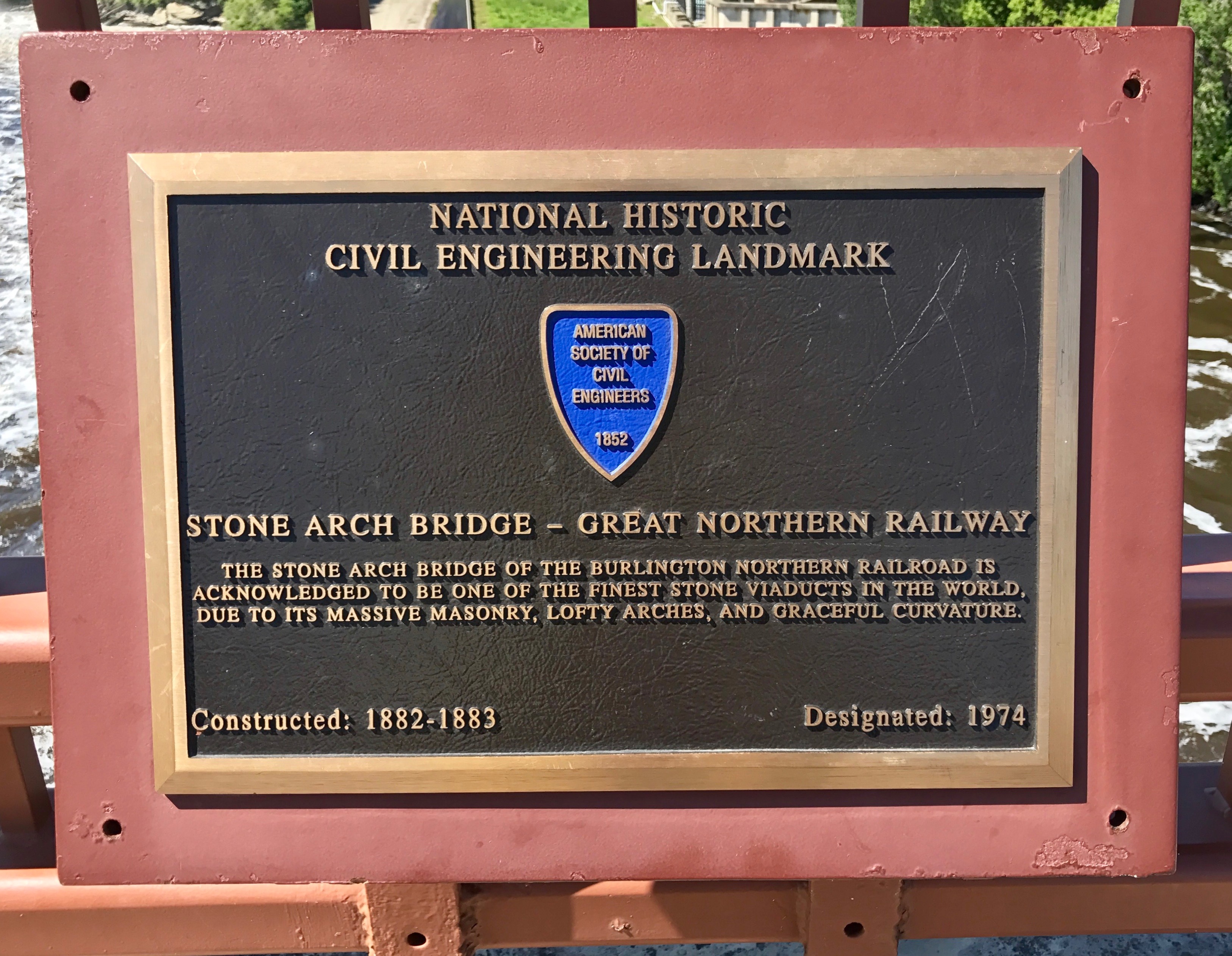
I decided to cross the river on that stone bridge I saw from the observation deck and I headed in that direction. Nothing like having a bird’s eye view to help you plan your route.Hmm. Mill City Museum. I guess I’ll have to put it on my “Next Time” list.This is the plaque that is above the archway. The Washburn Mill explosion was quite a disaster. I was getting closer to the bridge. There was really no need to warn me about staying away from a steep drop off. I guess if you went over the edge, this is what you might see on the way down.
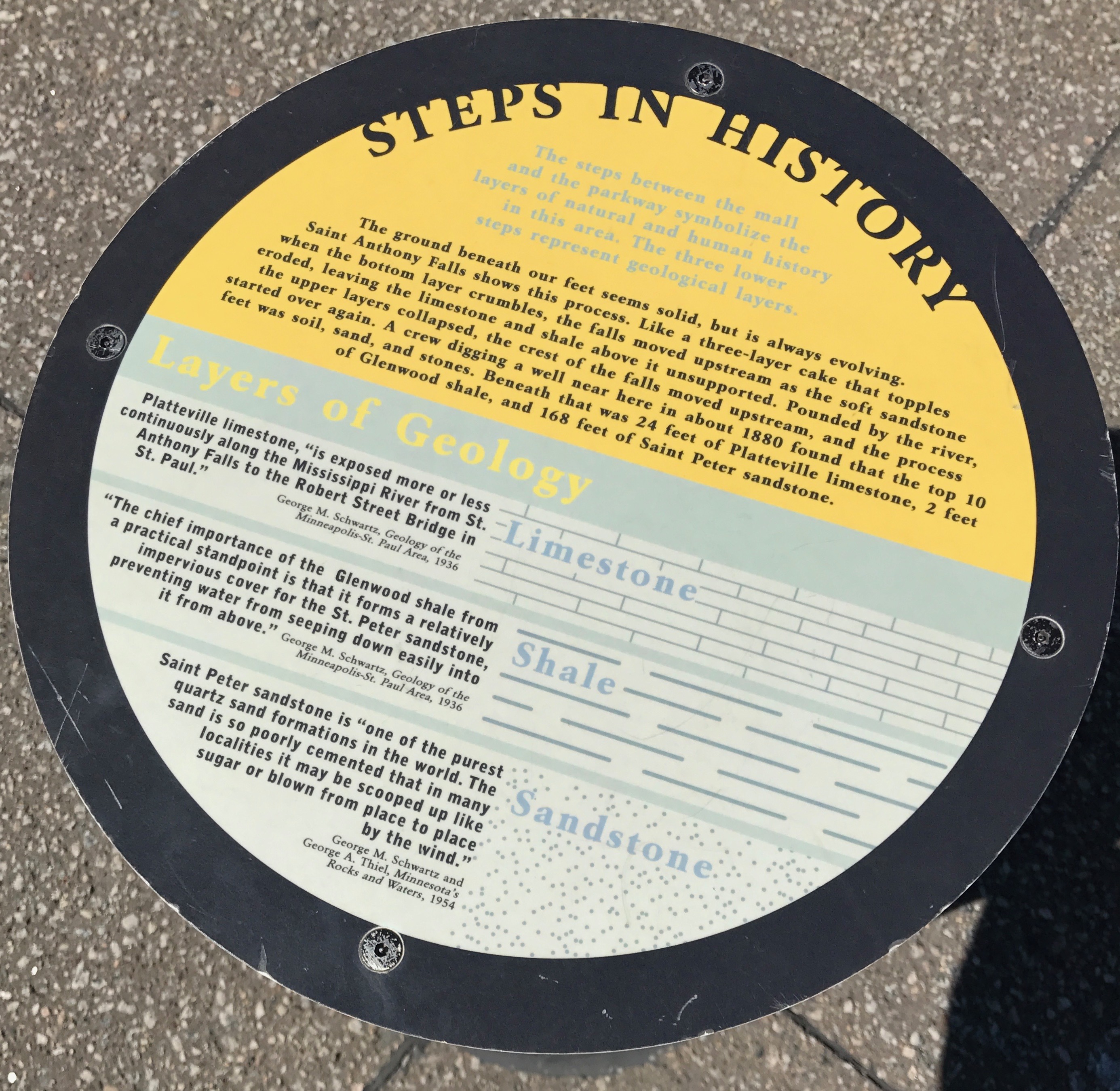
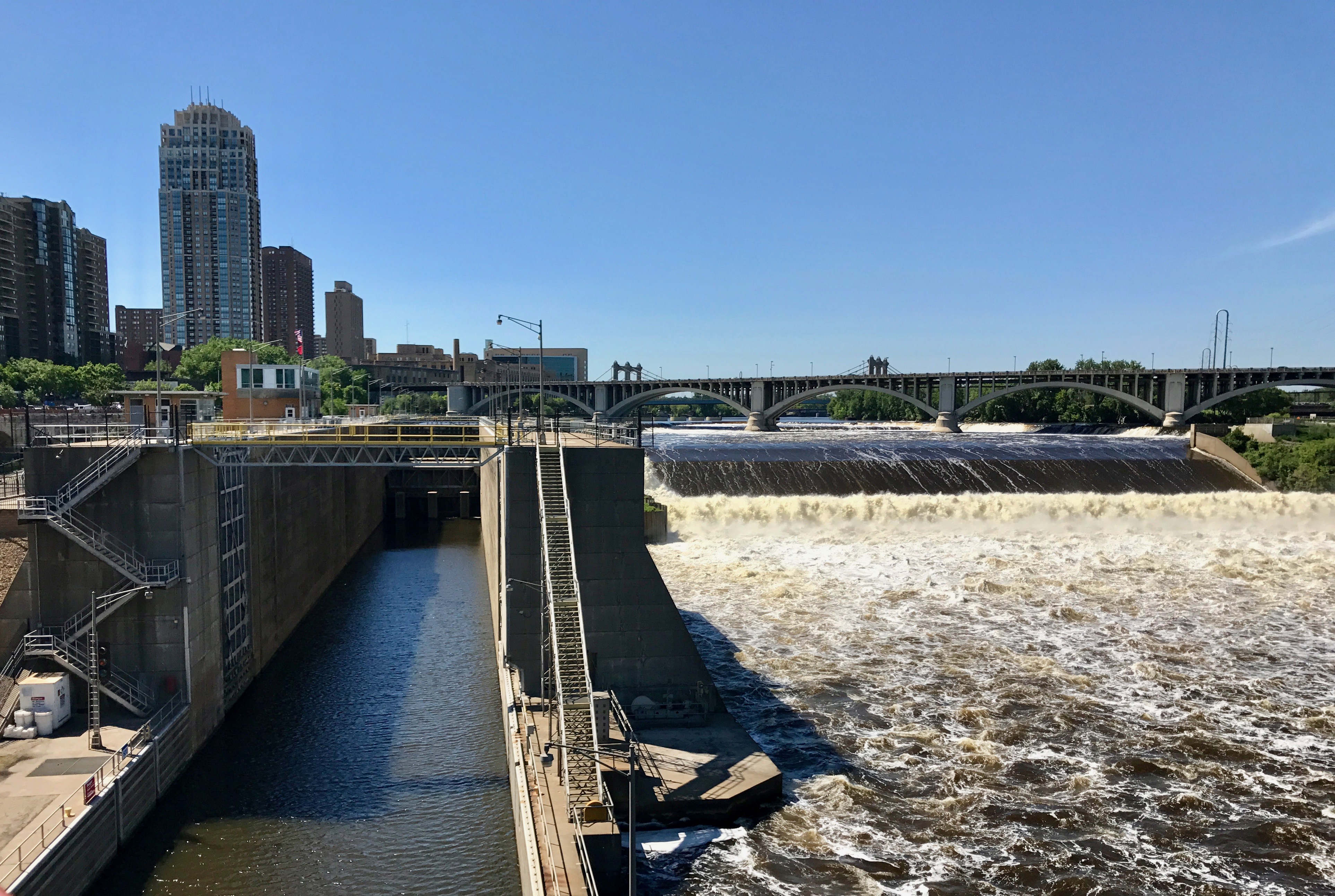
The Mississippi didn’t look particularly navigable from the observation deck. As I got closer, I could see how they did it. There were locks built along side the river.
I set out across the bridge, and discovered that it was a repurposed railroad bridge. The people of Minneapolis are really into maintaining their heritage.
Milling in the area began in the 1820s with the construction of a gristmill and a saw mill that was operated by the soldiers from Fort Snelling. Milling continued and grew until the national flour market shifted to Buffalo, New York as well other cities that were not identified on the historical plaques on the bridge.
I got across the bridge and found that I was less than clear on where I had parked Bart. I had a general idea, so I set off in that direction.
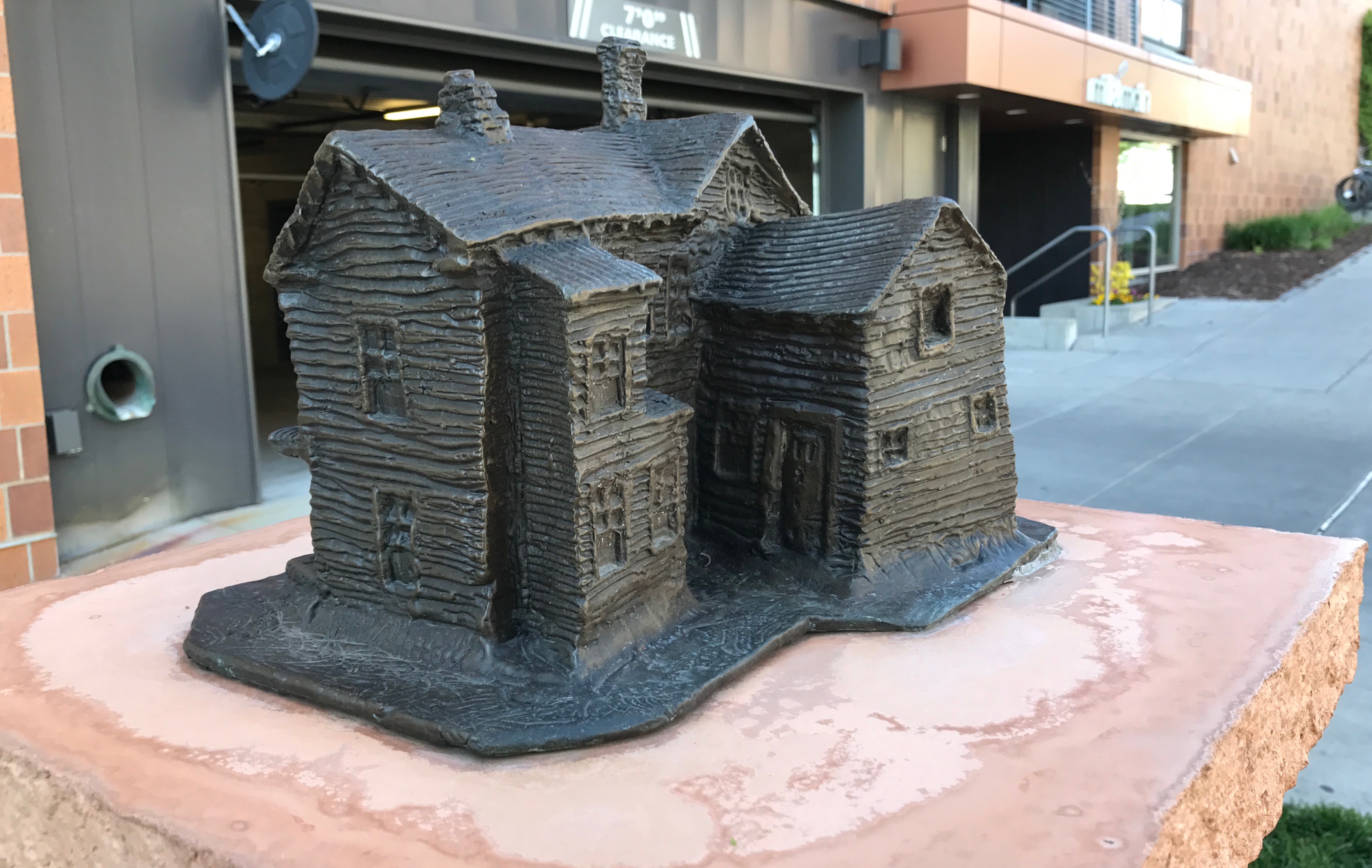
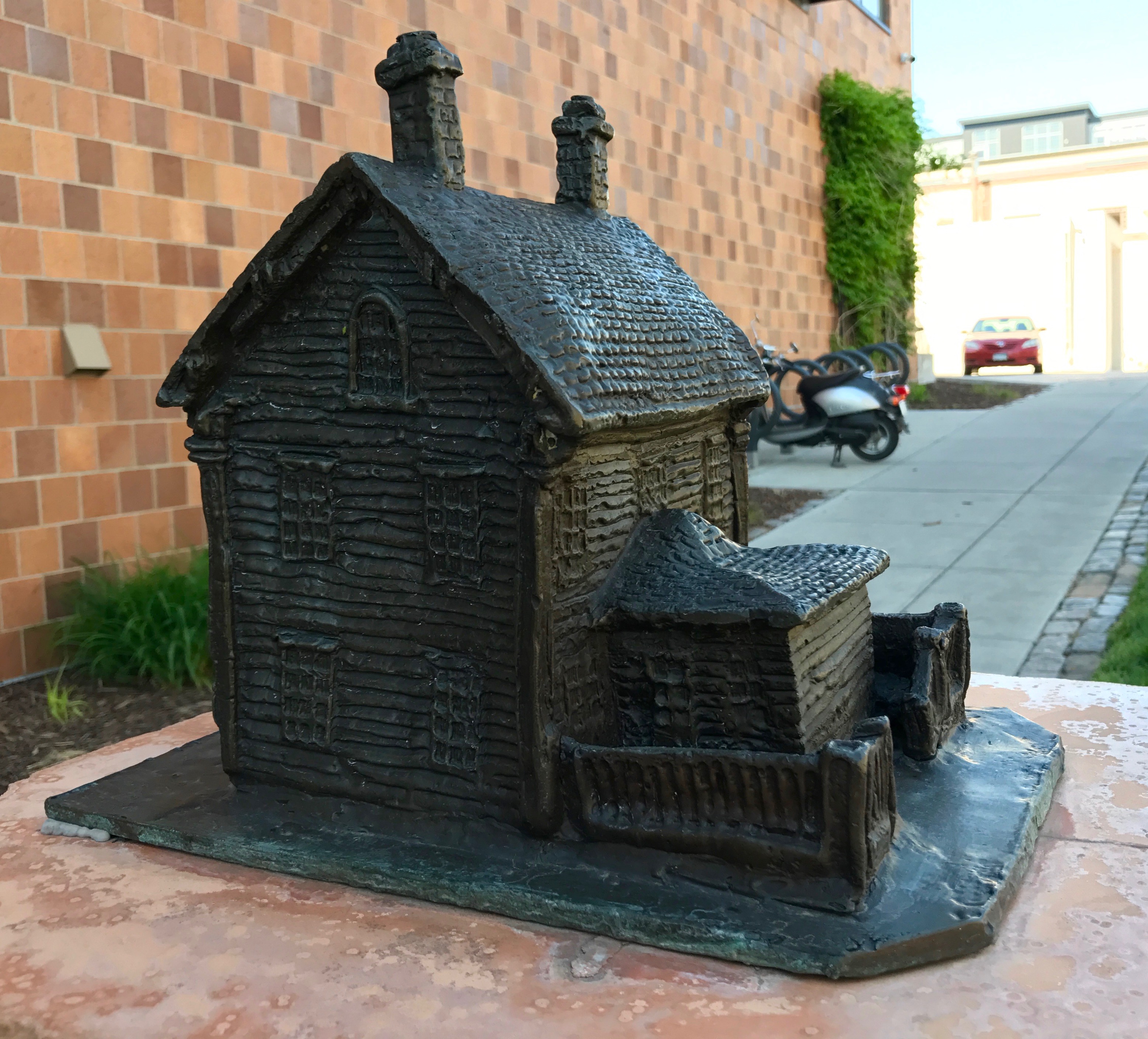
Along the way, I encountered these sculptures honoring the buildings that had been in the area. This is the Van Cleve House that was built in 1858. Horatio Van Cleve was a Civil War general. HIs wife, Charlotte, was an agent of social change who spoke out against slavery, for women’s rights and was even elected to the school board.Businessman John Dudley built this house in 1856. These buildings were built along Main Street in 1855, 1858 and 1890. They housed a hardware business, a bookstore and pharmacy as well as a saloon. You know what they say – All work and no play…The last sculpture I photographed was the Winthrop School/East High School. It was built in 1897 and 1900. The Winthrop School was in operation from 1867 until 1898, When it was replaced by East High School. Part of the school still stands, although I wasn’t sure which part it was.
By this time, I was getting tired, thirsty and a little anxious that I might not find Bart. I wish I had written down where I left him – or maybe taken a photo of the intersection or left a trail of bread crumbs. Something!
But, I took a deep breath and looked around.
And there he was! I had never been so happy to see that big red truck!
Time to go find something to drink and maybe some dinner.
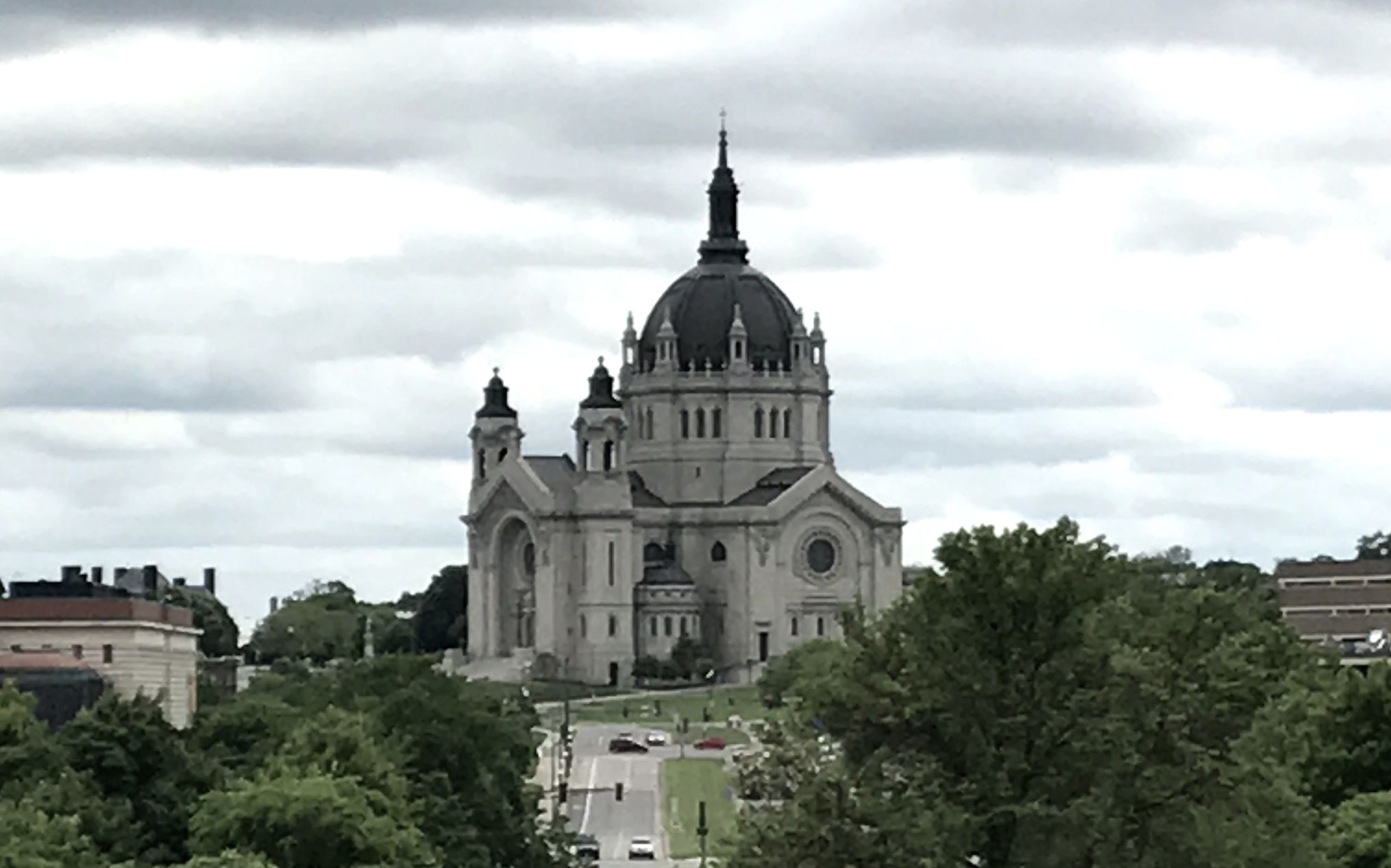
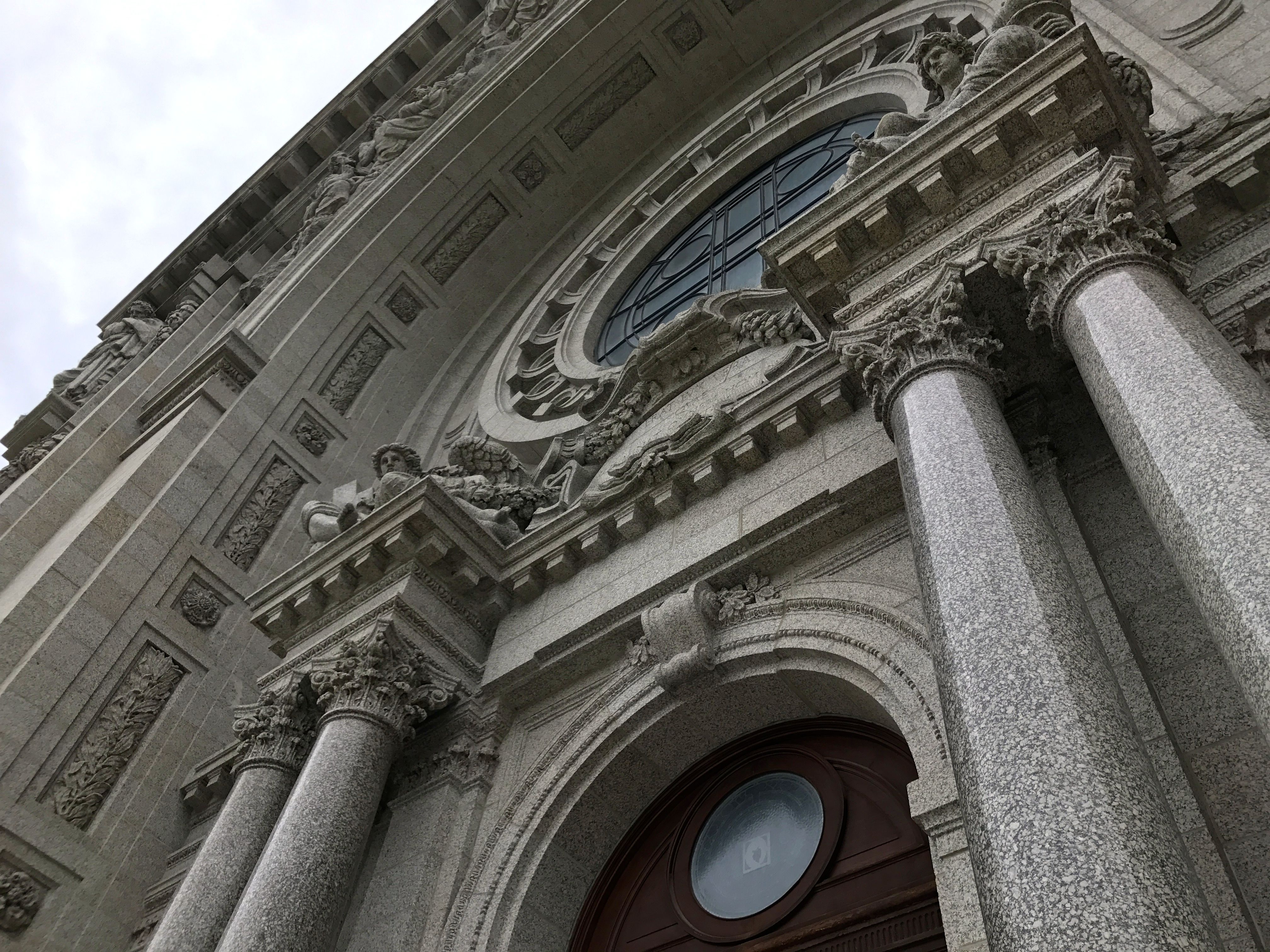
I headed over to what I presumed was the cathedral. It turns out the this diocese has two cathedrals. This one, which is the Cathedral of Saint Paul, and the Basilica of St. Mary in Minneapolis.
The copper-clad dome 76 feet in diameter and 186 feet high. It is the third largest completed church in the United States, as well as the fourth tallest, at least according to my preferred source. I guess my preferred source wasn’t considering mega-churches.
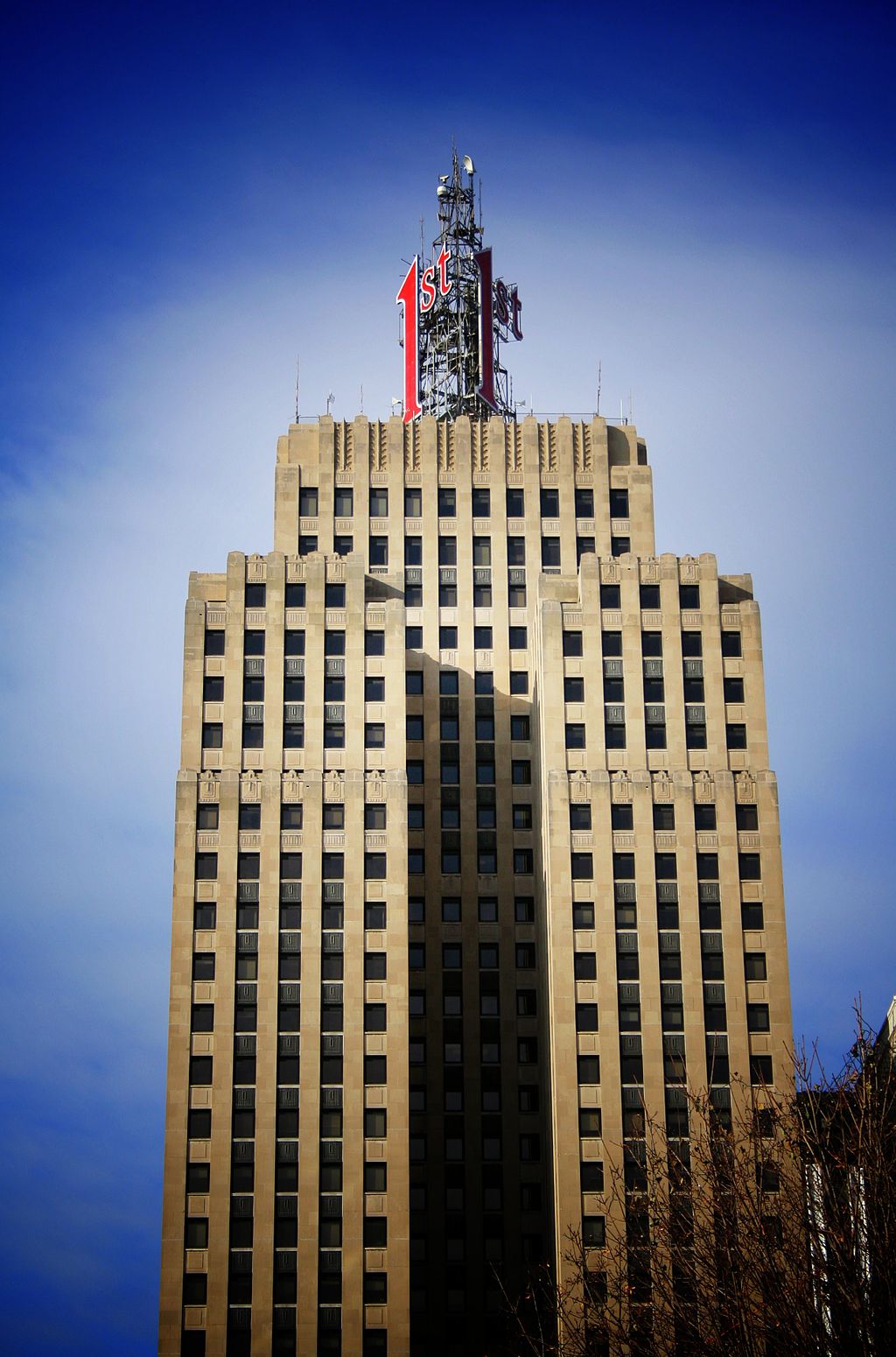
It was, however, the tallest building in St. Paul from when it opened in 1915 until 1931, when the First National Bank Building opened.
By Michael Hicks from Saint Paul, MN, USA – img_3137-lomoUploaded by xnatedawgx, CC BY 2.0, https://commons.wikimedia.org/w/index.php?curid=10402511
The Beaux-Arts era was definitely over when they designed this building. I include this picture of the First National Bank Building merely for reference. I was curious about the building that unseated the Cathedral as the Tallest Building in Saint Paul list and I had to look.
There was a parking lot nearby, and there was plenty of room for Bart on this weekday afternoon.
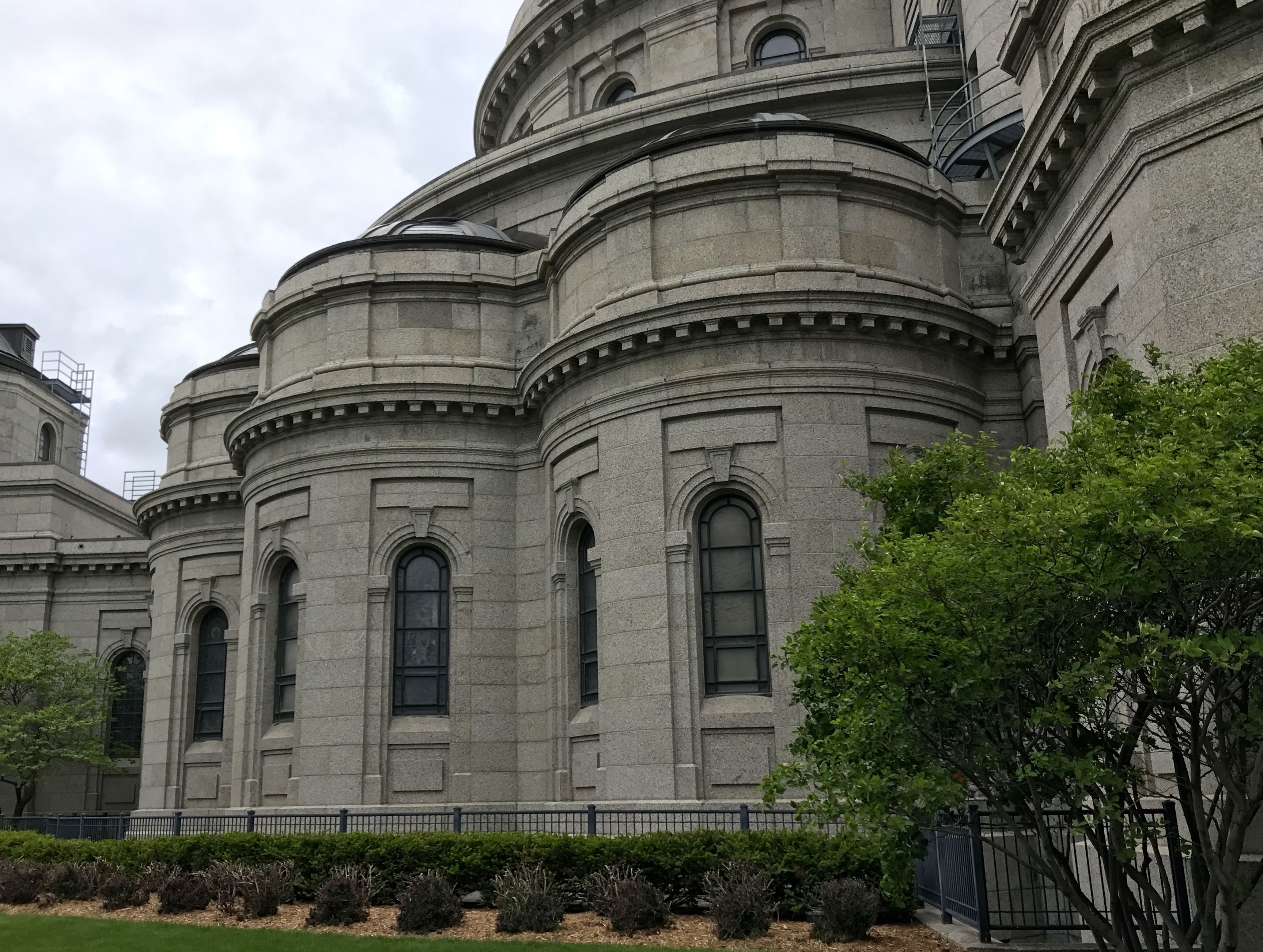
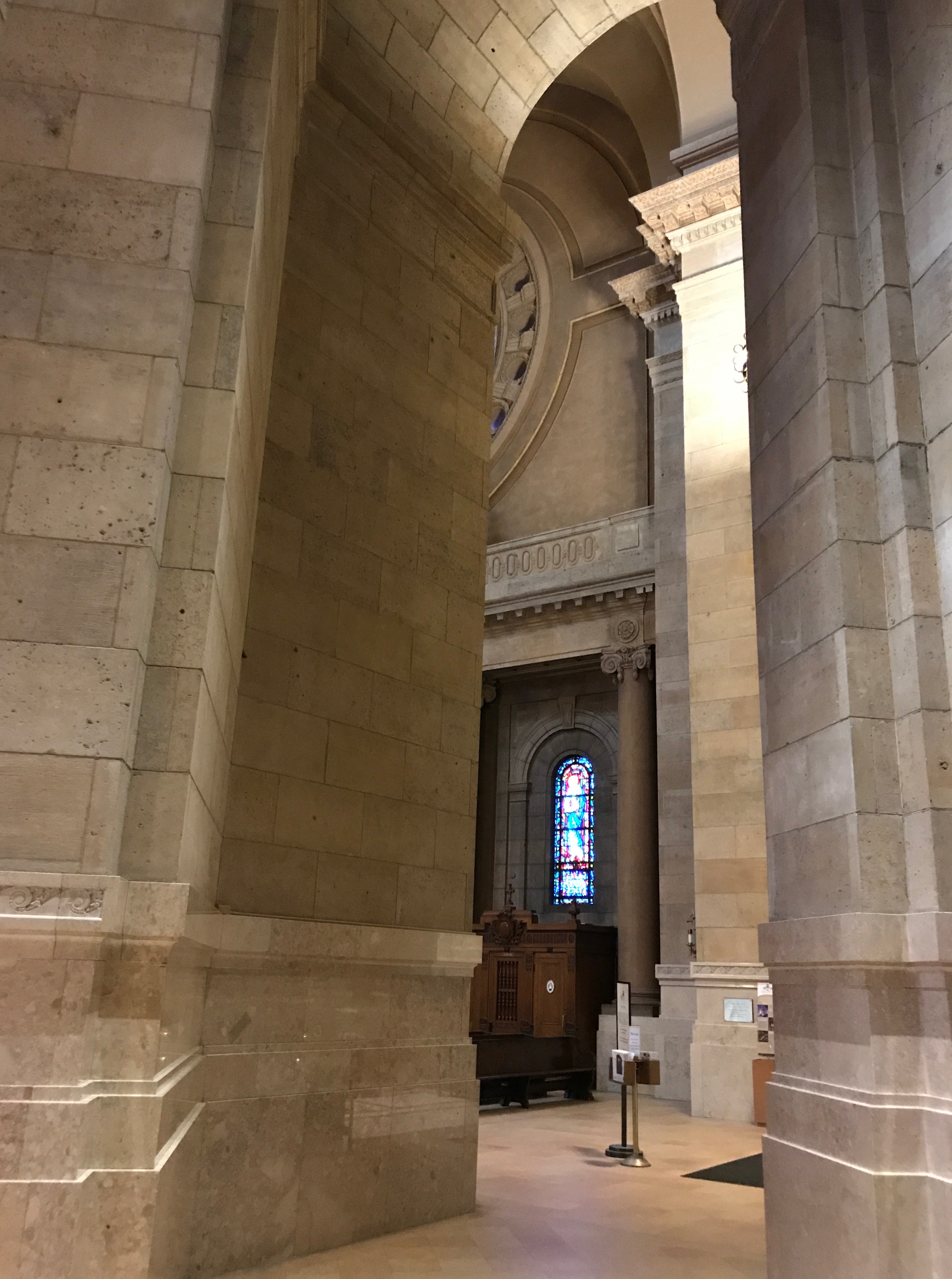
I walked past what I presumed were chapels off the apse.
I entered through the front doors into the Cathedral, which became the National Shrine of the Apostle Paul in 2009.
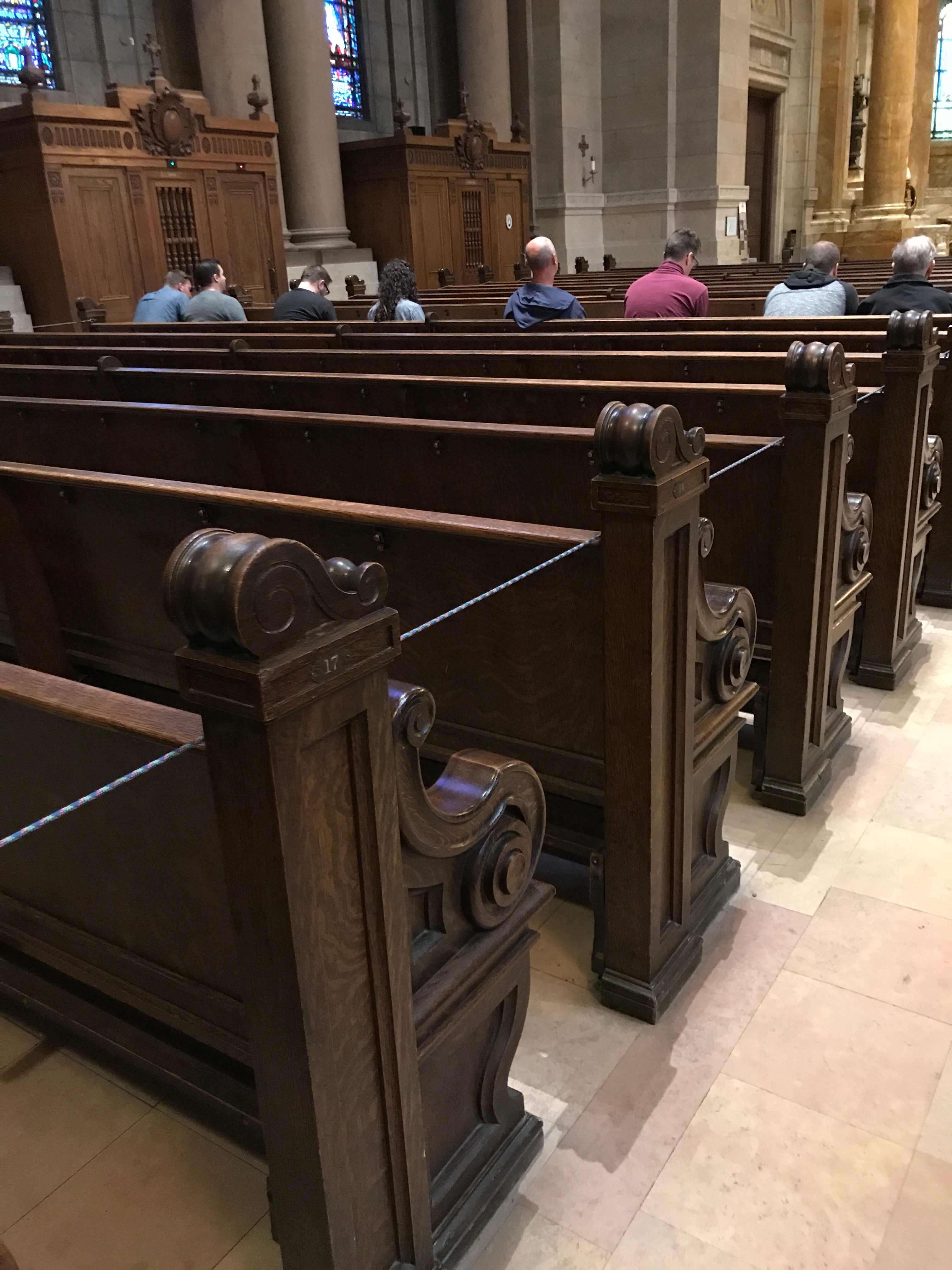
It looked like people were waiting to go to confession, which is one of the seven sacraments of the Catholic church. I tried to be as unobtrusive as possible as I took in the beauty of the building.
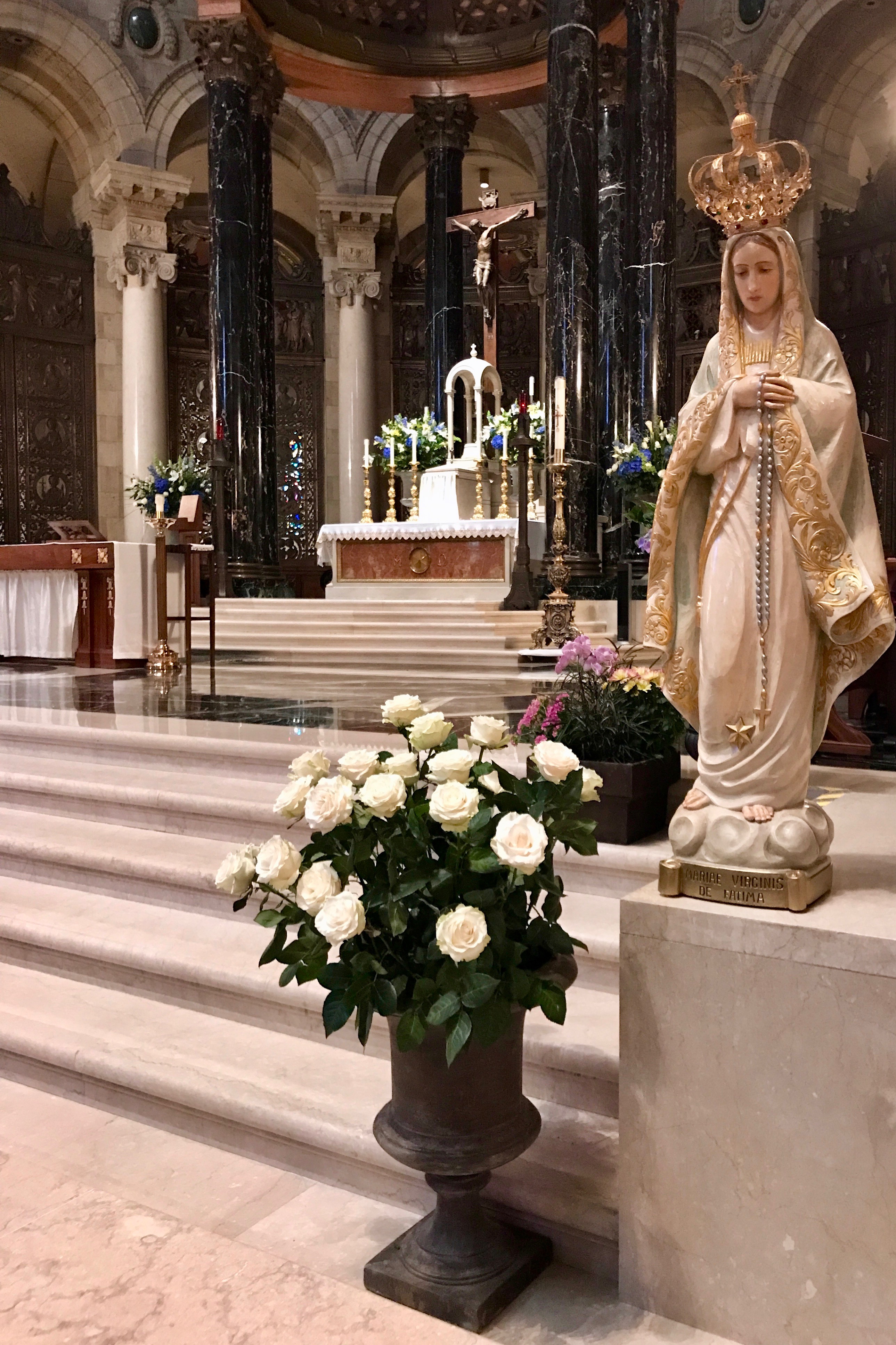
I came up on this statue of Mary. She is wearing a crown in this statue as recognition of one of her epithets, “Queen of Heaven.” (I love it when I learn a new word – or at least a new use of the word.
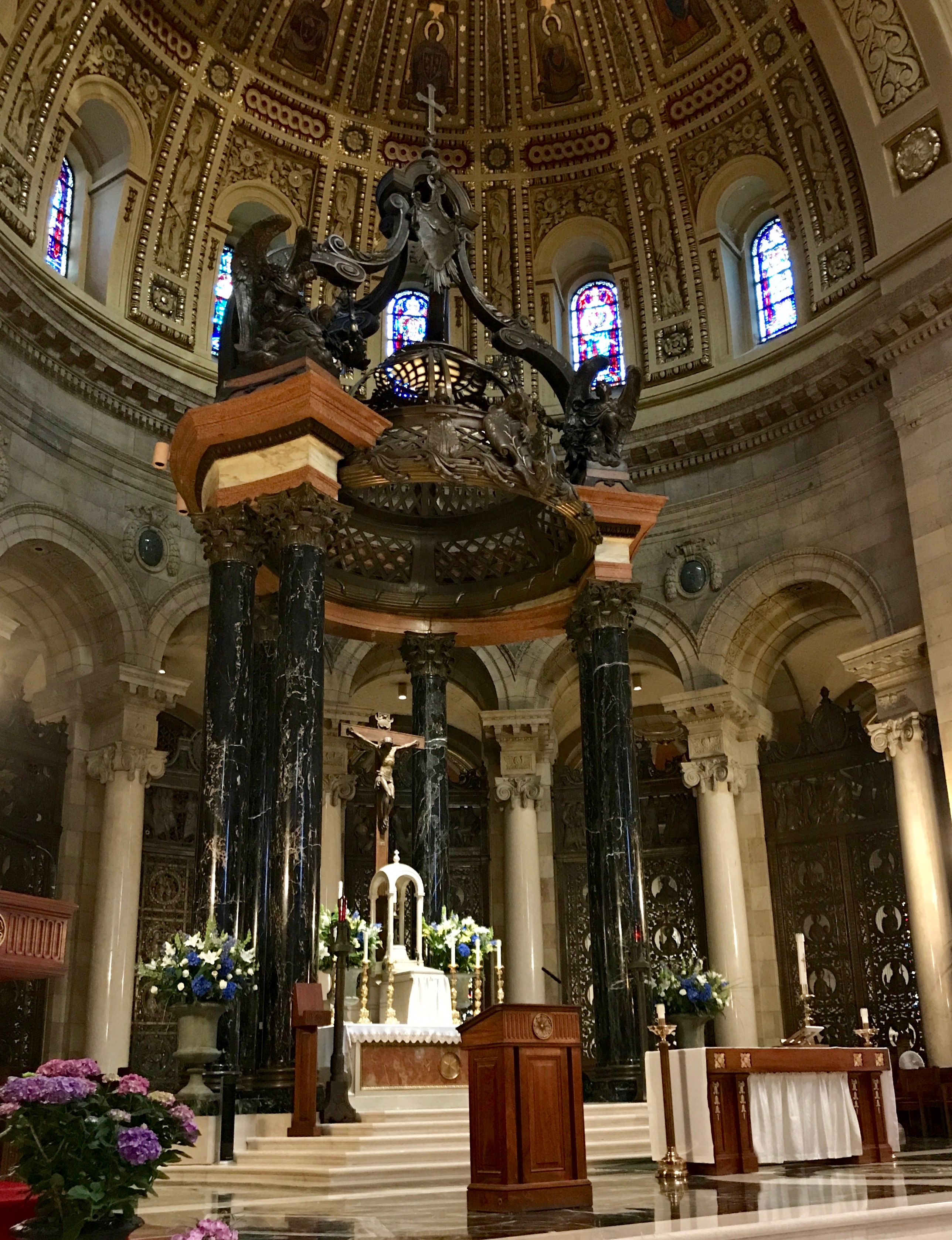
The life of St. Paul is commemorated in the baldachin over the altar. In case you didn’t know, a baldachin is a structure over high altars in cathedrals. Its more proper name is a ciborium, when it is architectural rather than a cloth canopy. I guess they like the idea of recalling the “good old days” when they actually used cloth canopies. Could it be that it is related to the chuppah that they use in Jewish wedding ceremonies?
Again, thanks to Sister Jeanne for all the art history lessons. Sure, I looked things up just to verify that I was remembering correctly, but my last art history course was in 1977. Wow! 41 years ago!
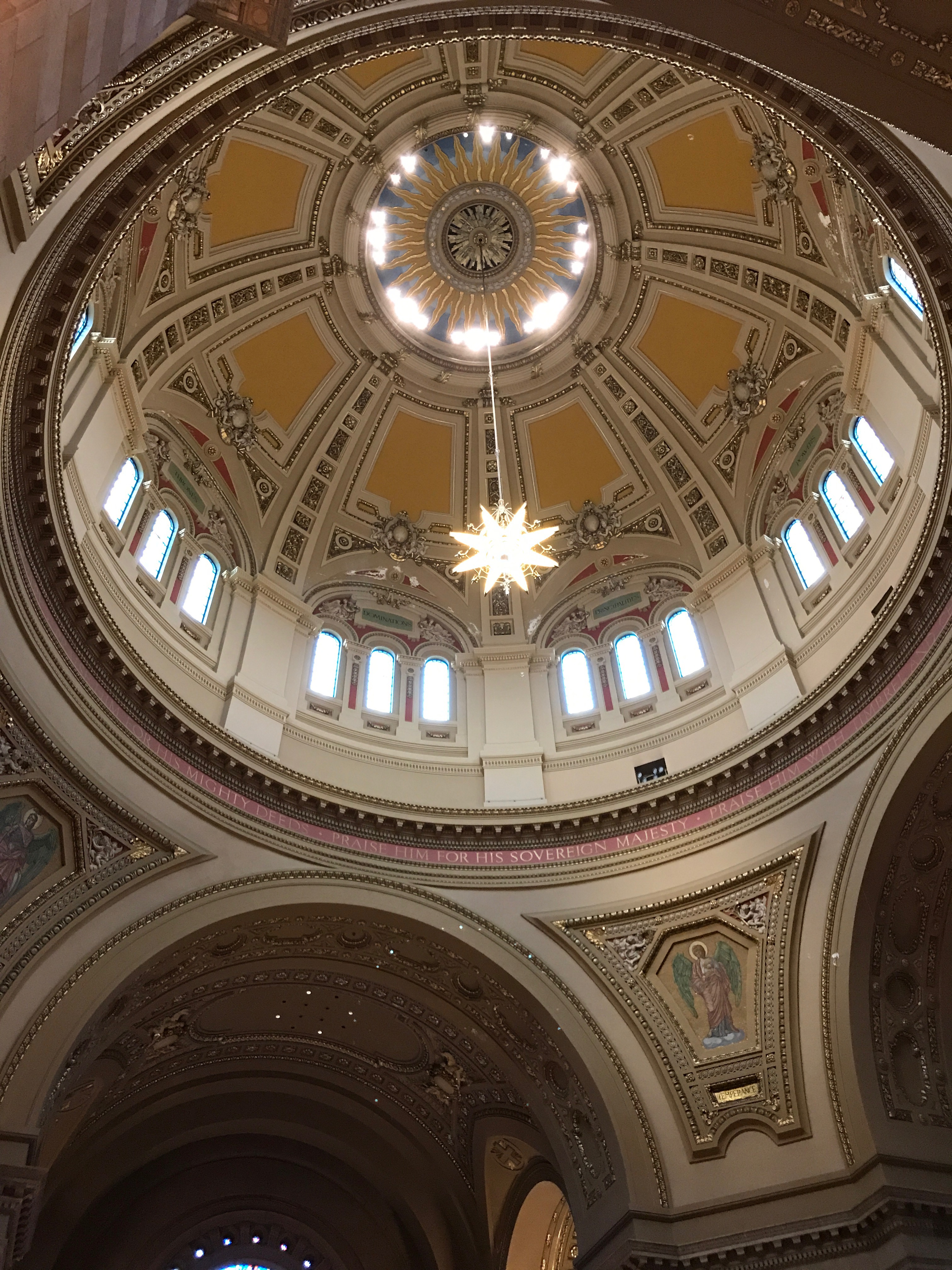
The dome of the cathedral is over the crossing, in front of the altar.. According to my preferred source, warm-colored paint and gold leaf were added during a major renovation of the dome in the 1950s.
The windows were rather magnificent. The light conditions made it hard to get good photos, but they were quite lovely. If you like stained glass windows, it would be worth a trip.
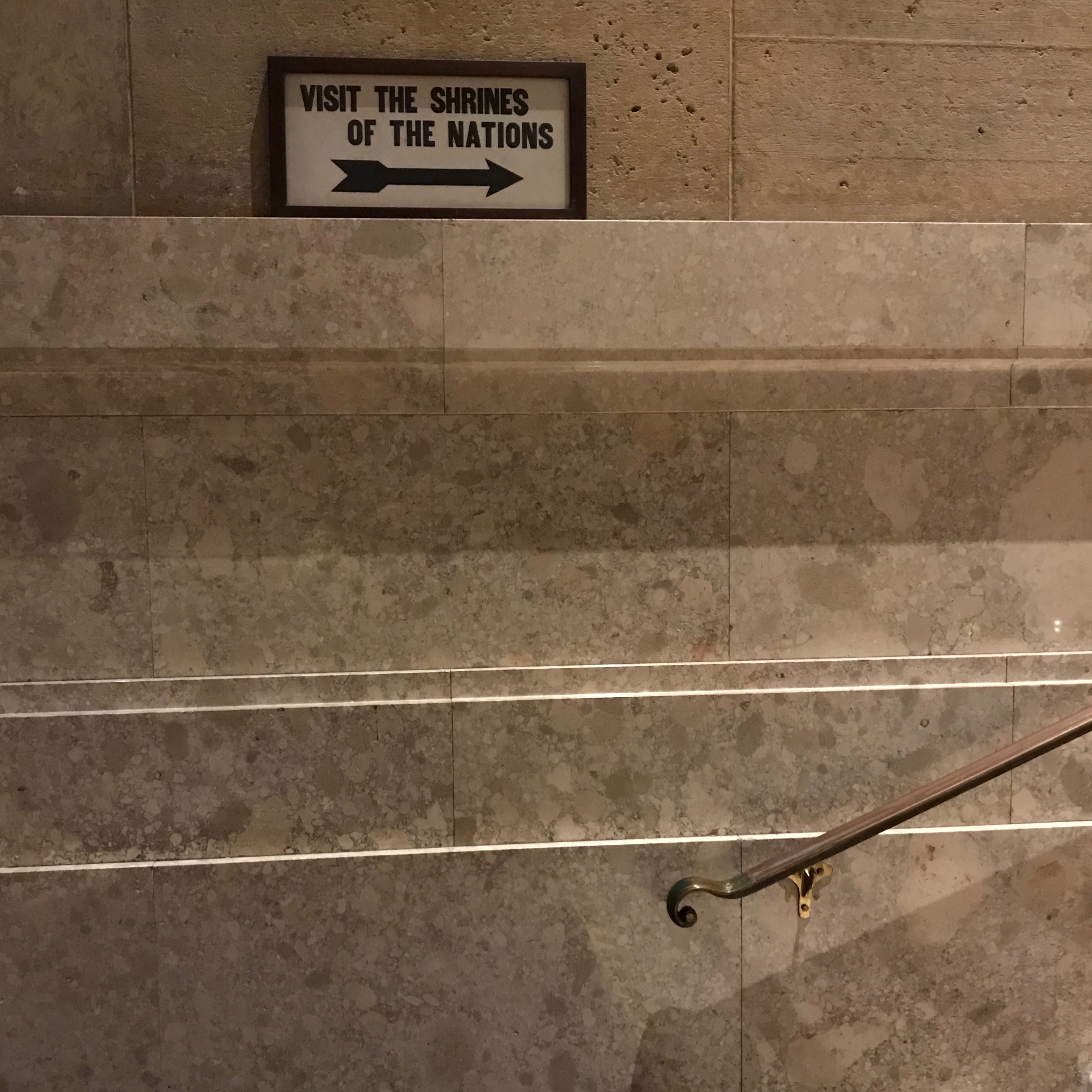
There was this small sign directing us to the Shrines of the Nations. I have no photos of these chapels, but the cathedral has six chapels dedicated to the parton saints of European ethnic groups that settled the area around the city: St. Anthony for the Italians, St. John the Baptist for the French Canadians, St. Patrick for the Irish, St. Boniface for the Germans, and Saints Cyril and Methods for the Slavs. There are also chapels dedicated to the Sacred Heart, to Mary, the Mother of Jesus, to St. Joseph, to St. Peter as well as St. Therese of Lisieux for the missionaries.
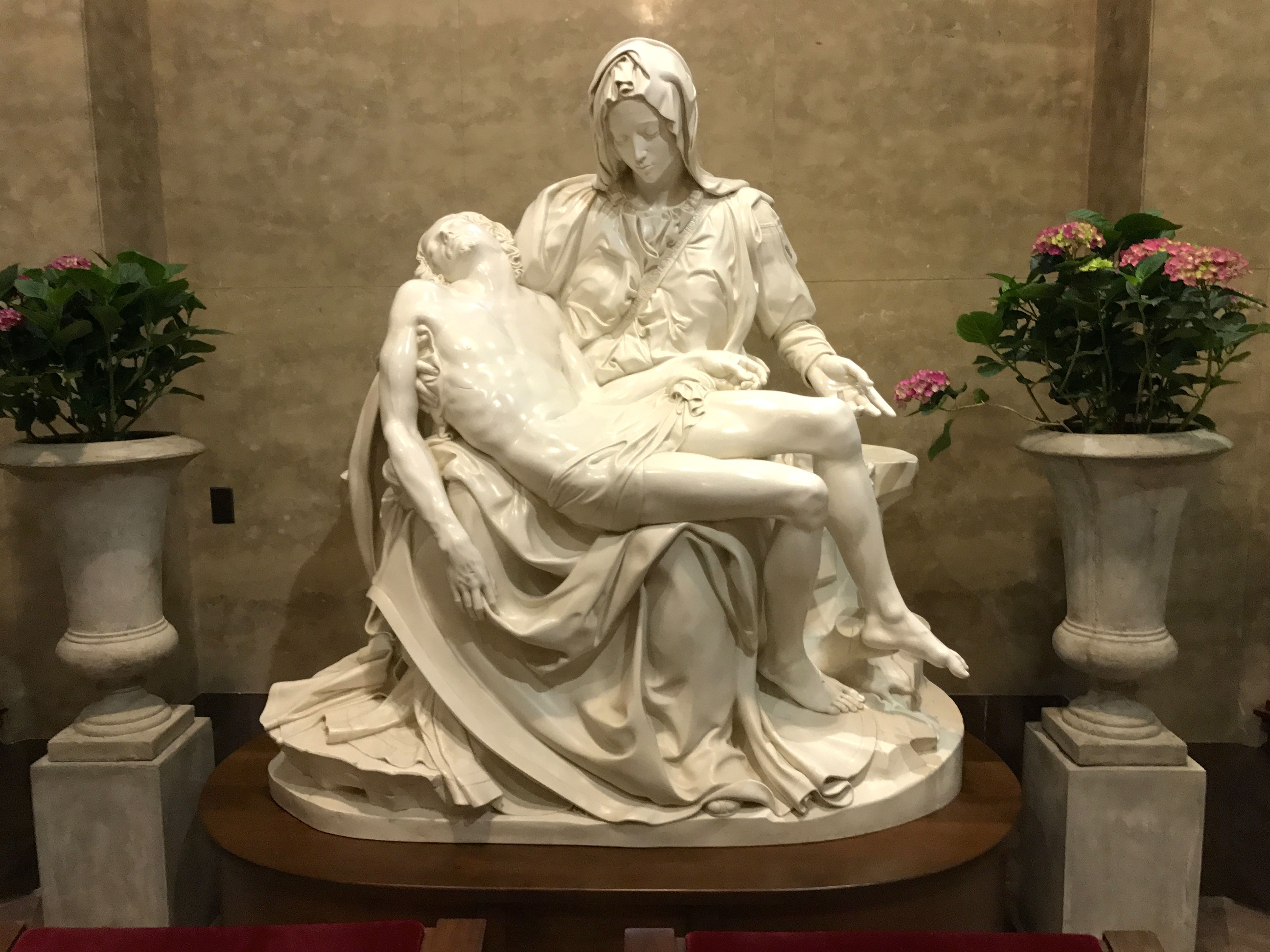
I spent a few minutes admiring the cathedral’s copy of Michelangelo’s Pietà. The original is in St. Peter’s Basilica in Vatican City. I remember the first time I saw it back in 1976. I stood there with my mouth hanging open for the longest time. It was breath taking. This one was nice, but it was much smaller than the original, which was 68.5 in × 76.8 in.
There were lovely details to be found.
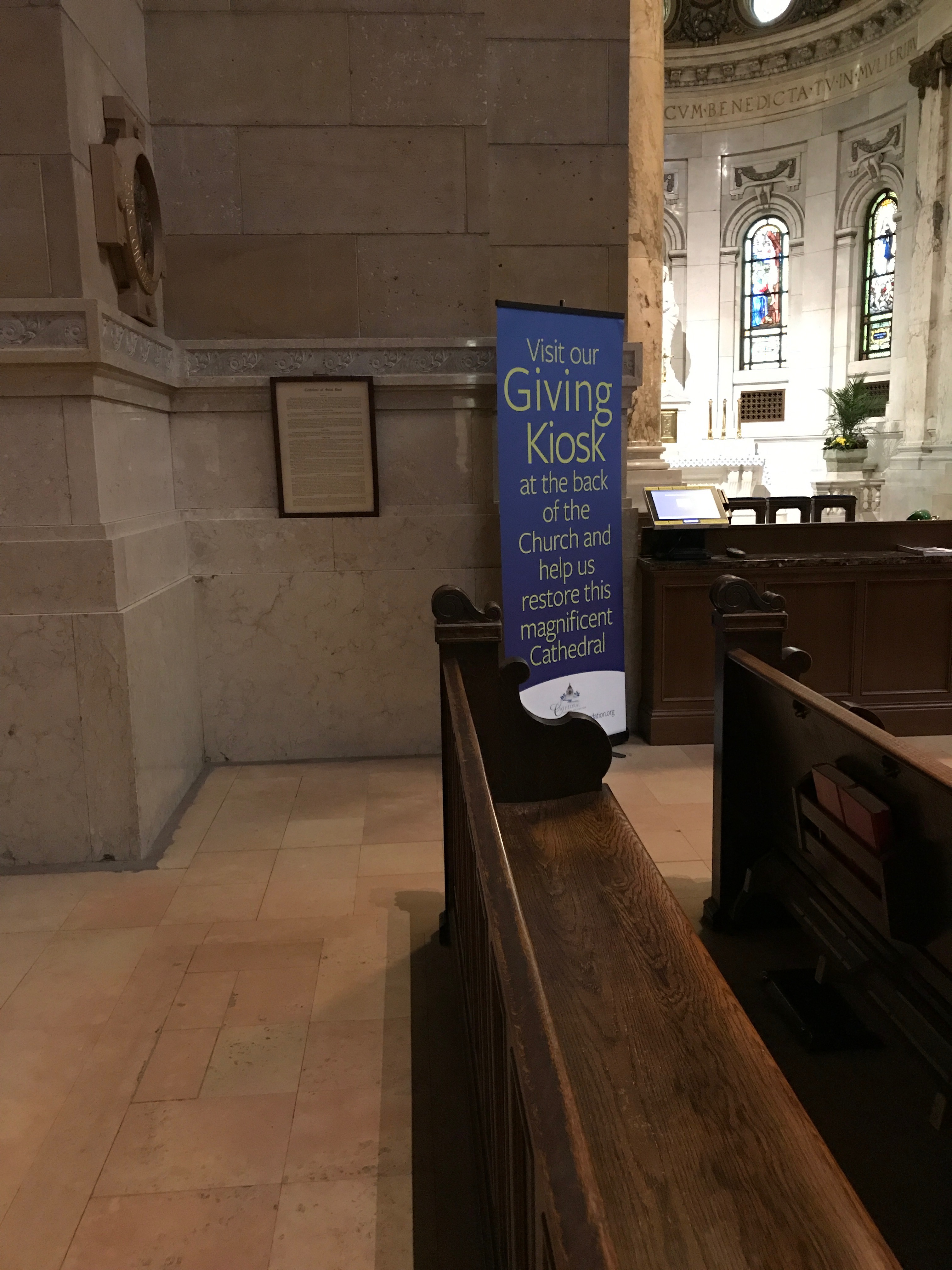
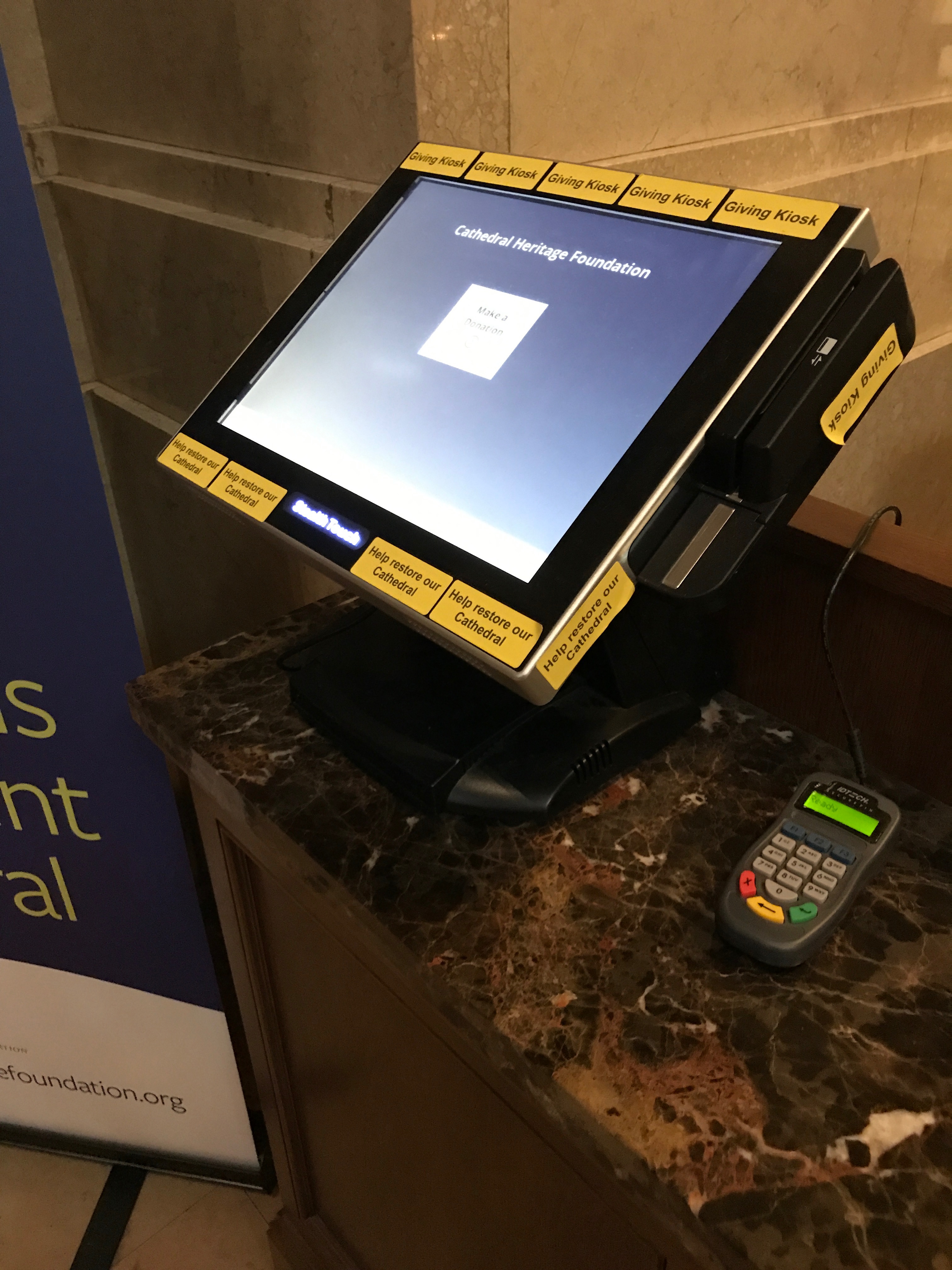
As I walked around, I noticed this banner that directed people to their Giving Kiosk.
They make giving easy. I know I do most of my transactions electronically these days.
I was about to leave when I noticed a sign that directed us to the lower level for more information. There was even an elevator! How could I turn that down?
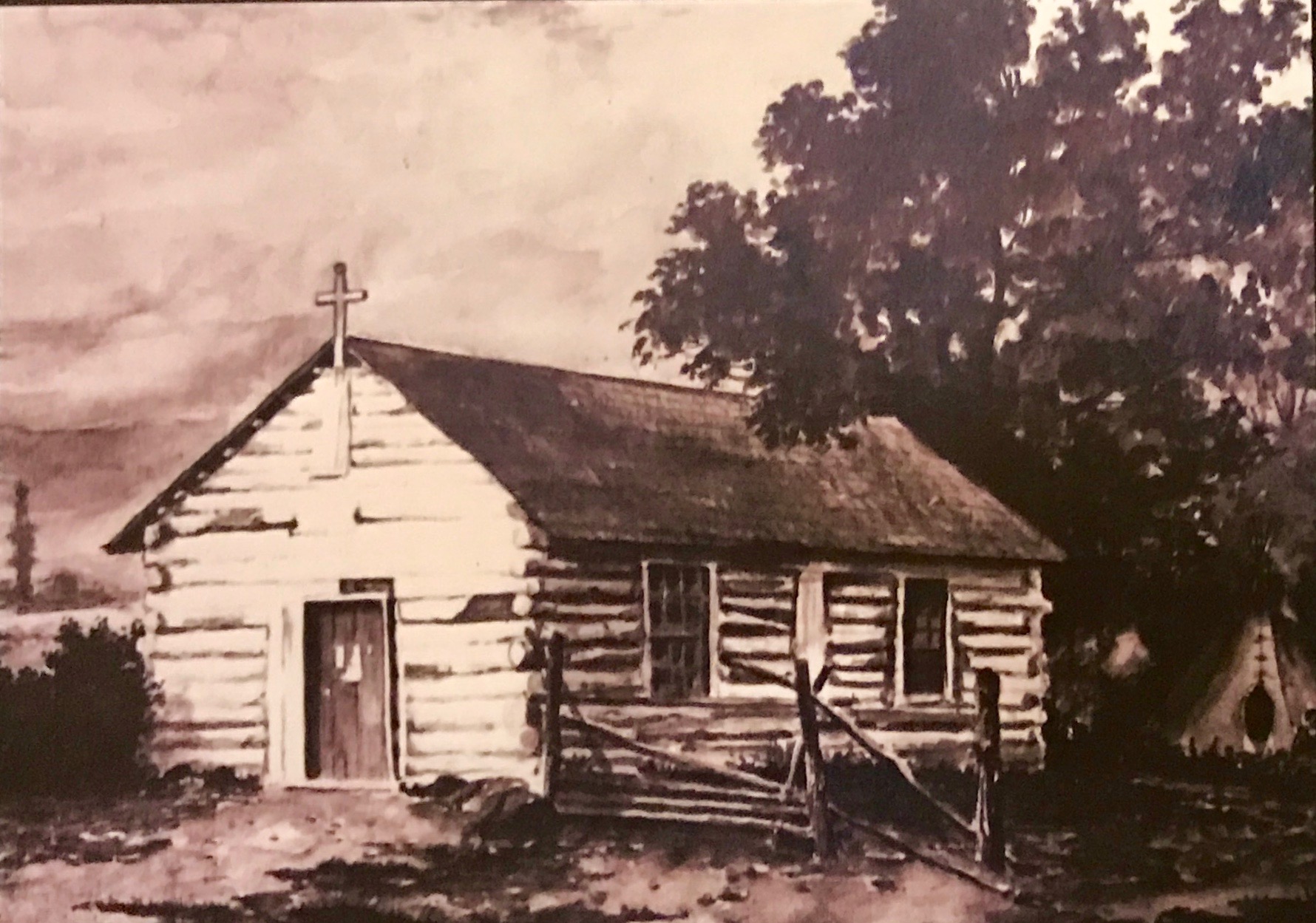
There was a drawing of the first church in what became the Diocese of St. Paul. It was built in 1841 and became the cathedral when Joseph Crétin was appointed as bishop of the newly established diocese in 1851. While this bears little resemblance to what we think of as a cathedral these days, a cathedral is the principal church of a diocese that contains the bishop’s seat, which is called a cathedra.
Bishop Crétin started immediately to build a larger church to serve the fast-growing population of St. Paul. The school was on the first floor, the church was on the second and the offices and living quarters for the bishop and his staff on the third floor.
The second building was still too small for the needs of the diocese, so the bishop began plans for a third cathedral. It was started in 1853 and completed in 1858. Its construction was delayed by the Panic of 1857 and Bishop Crétin’s death.
Incidentally, the Panic of 1857 was the first worldwide economic crisis and it started in Britain. In the United States, it was caused by the declining international economy and the over-expansion of the domestic economy. It was a fairly short-lived financial downturn. However, a proper recovery from the downturn didn’t happen until the Civil War in 1861. The banks didn’t recover until after the Civil War.
The Panic of 1857 is significant regarding the third cathedral for two reasons. The first reason is that it delayed its construction. The second reason that the cathedral had practically no ornamentation in an effort to cut costs.
I would be remiss in my report if I didn’t include the last thing I saw in the display.
There was also a nifty model of the fourth cathedral made of Legos.
And with that it was about time for me to head out.
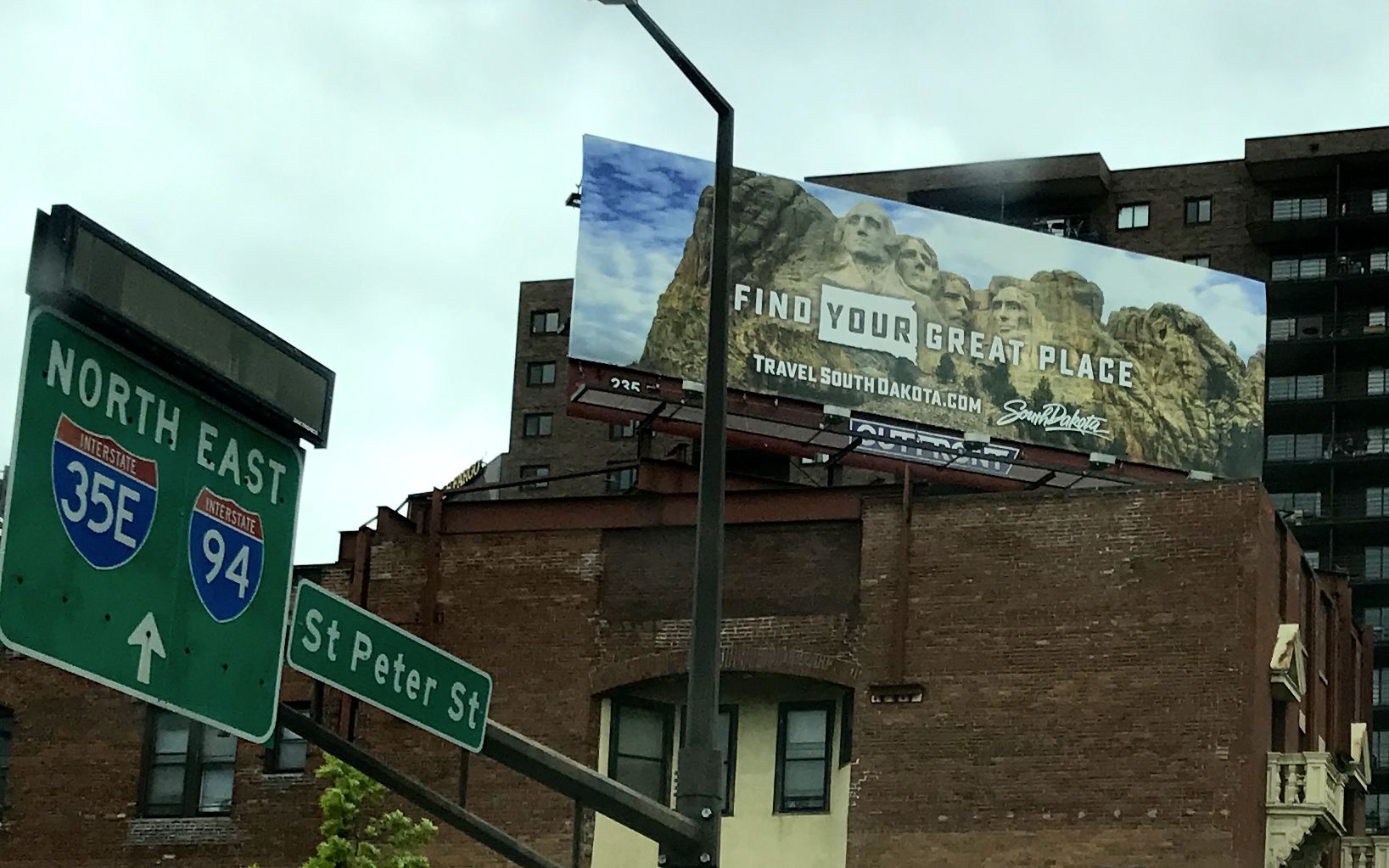
I drove around a bit. While stopped at an intersection, I spied this billboard for South Dakota. Too late! I’ve already done that state.
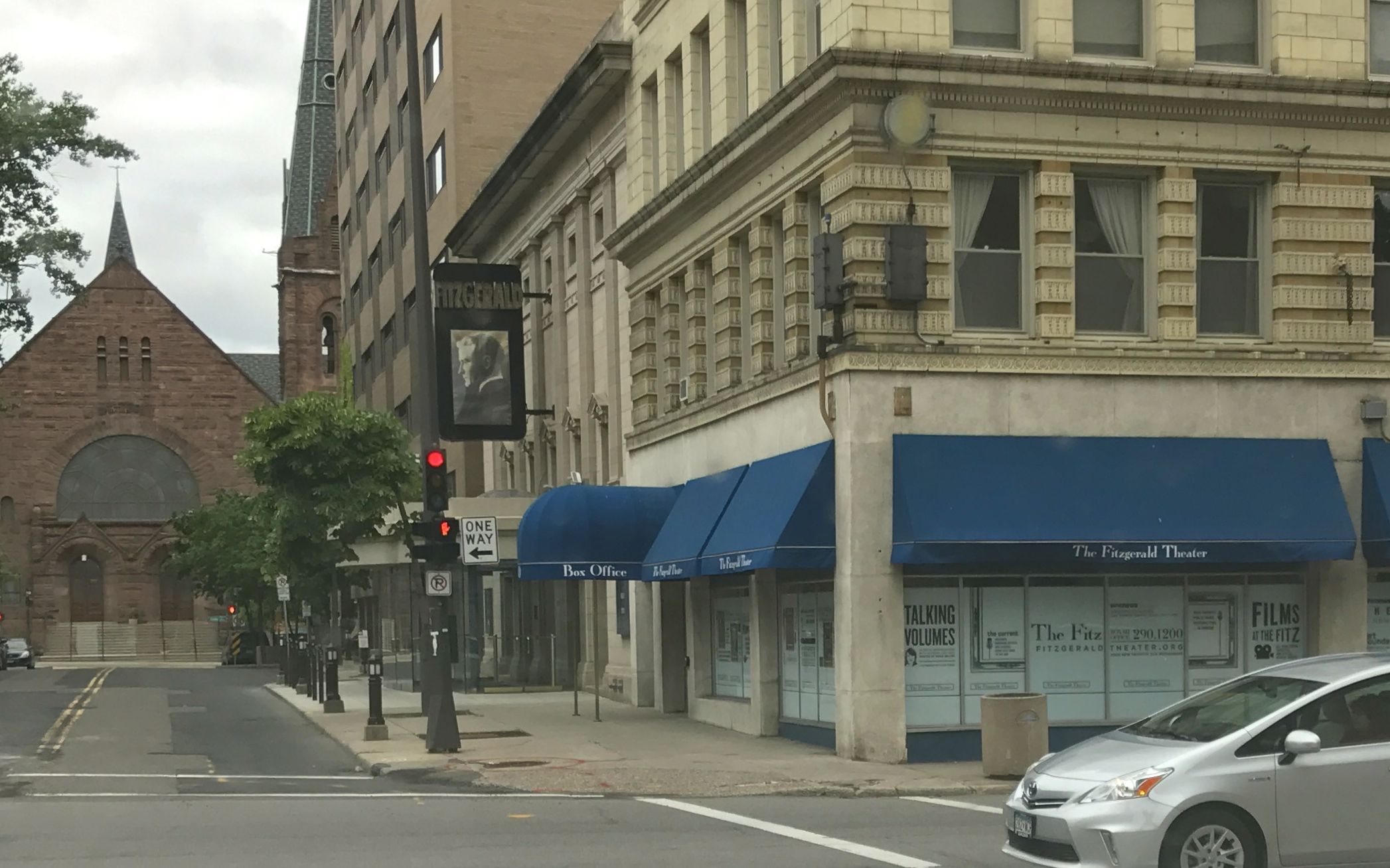
I was rather thrilled to see the Fitzgerald Theater. That was the home theater for A Prairie Home Companion hosted by Garrison Keillor from 1974 until 2016.
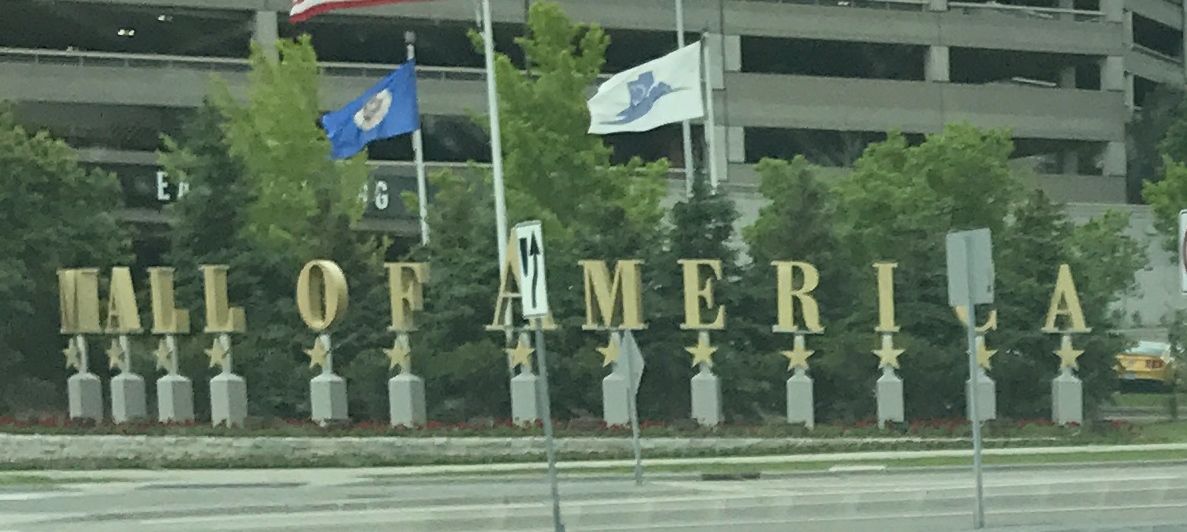
With that I was ready for dinner. I headed out to Mall of America.
Really, malls aren’t my thing, and ENORMOUS malls are even less appealing, but I figured it was one of those “while I’m in the area” places. Besides, I was hungry, and I figured that they had to have restaurants.
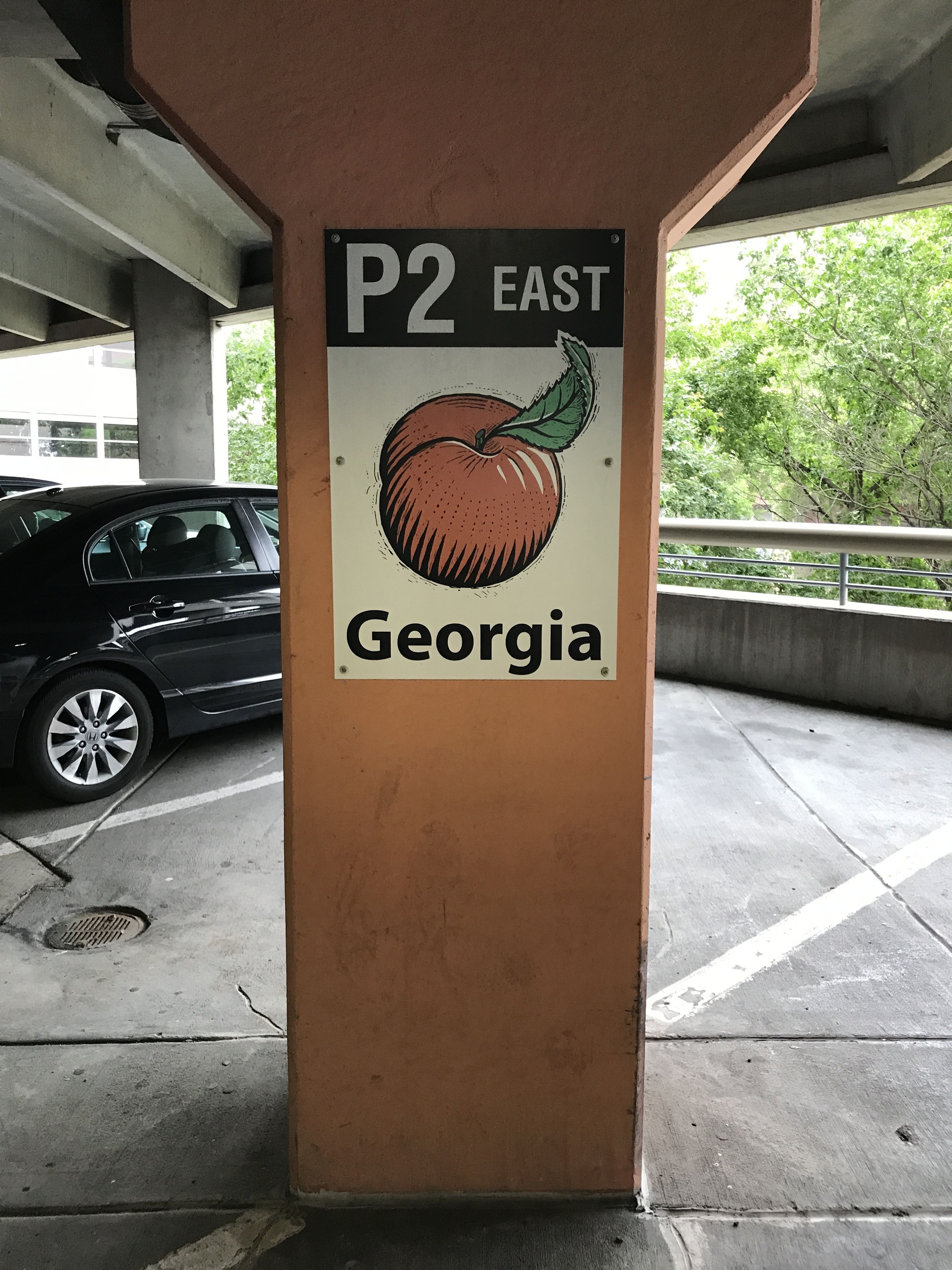
I parked and took this picture to help me find my car again. This is one place I didn’t want to have to wander around aimlessly when it was time to leave.
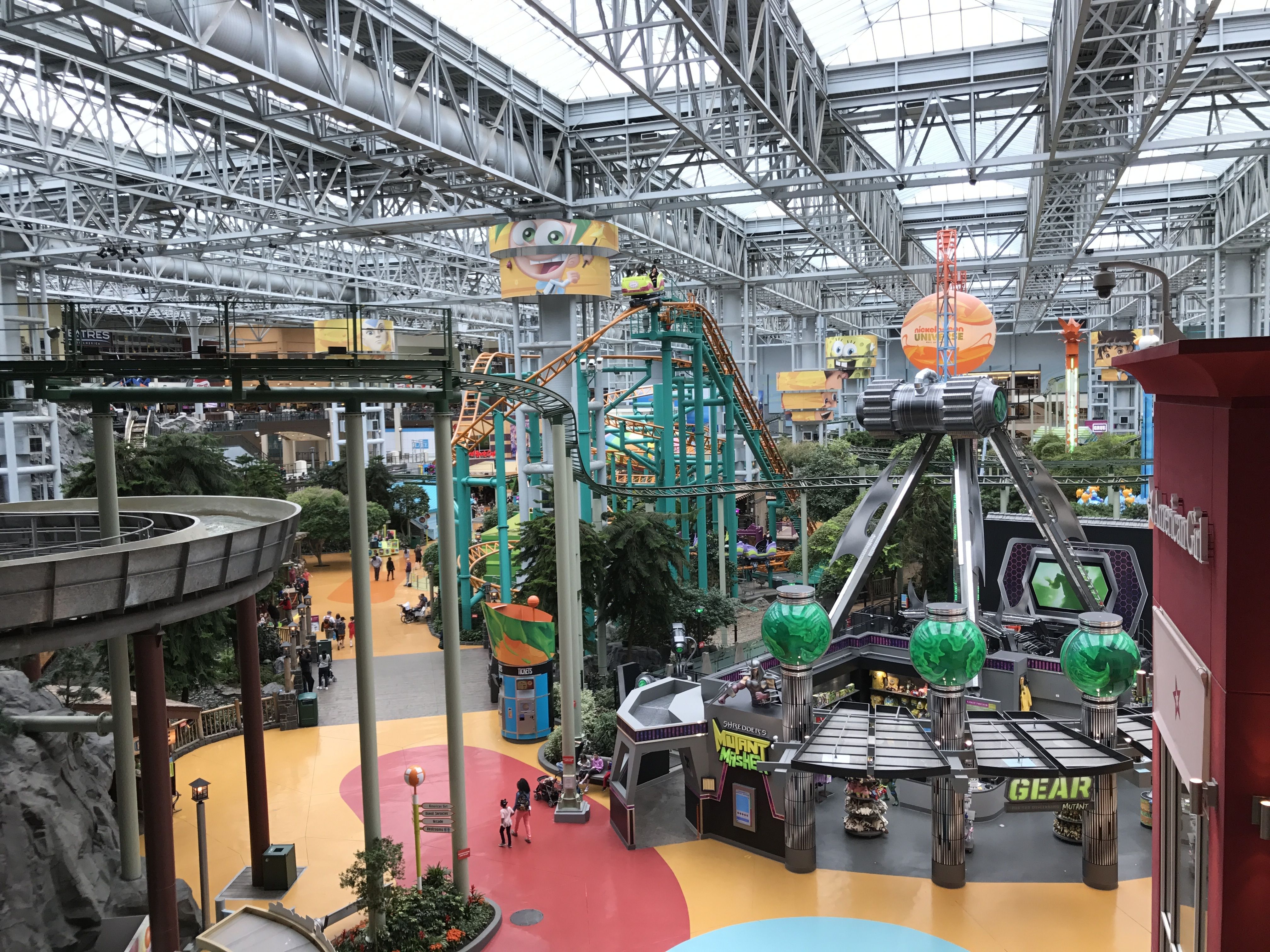
I wandered around for a bit, just looking at what there was to see. In addition to the usual assortment of stores, there was an amusement park.
I stood and looked for a while, but I didn’t find anything tempting enough to make me get any closer. Besides, I was getting hungry.
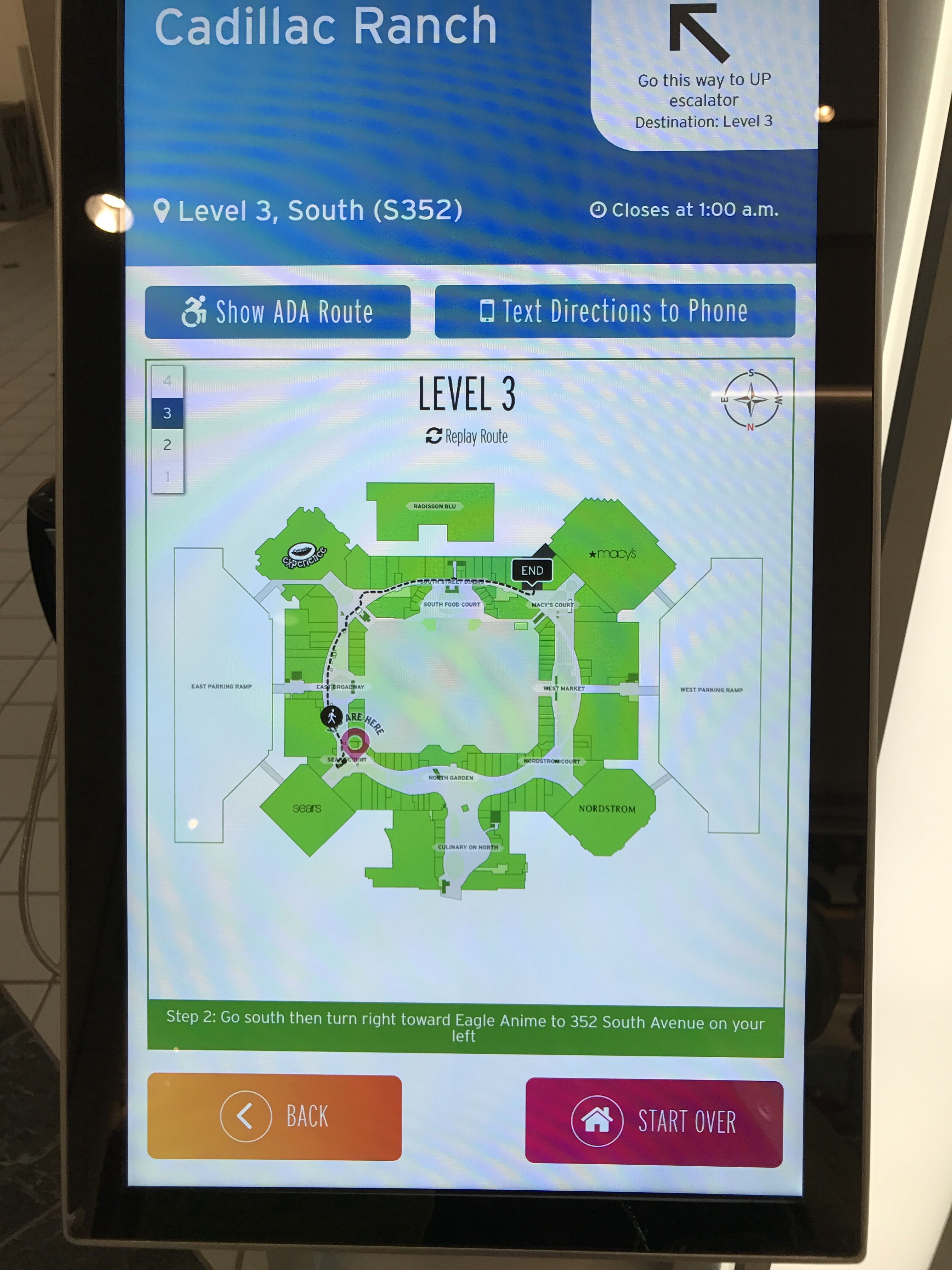
I found a kiosk that I could use to select a restaurant and then help me plan how to get there.
I chose Cadillac Ranch, not because I knew anything about the food, but because I had visited Cadillac Ranch when I visited Amarillo, Texas.
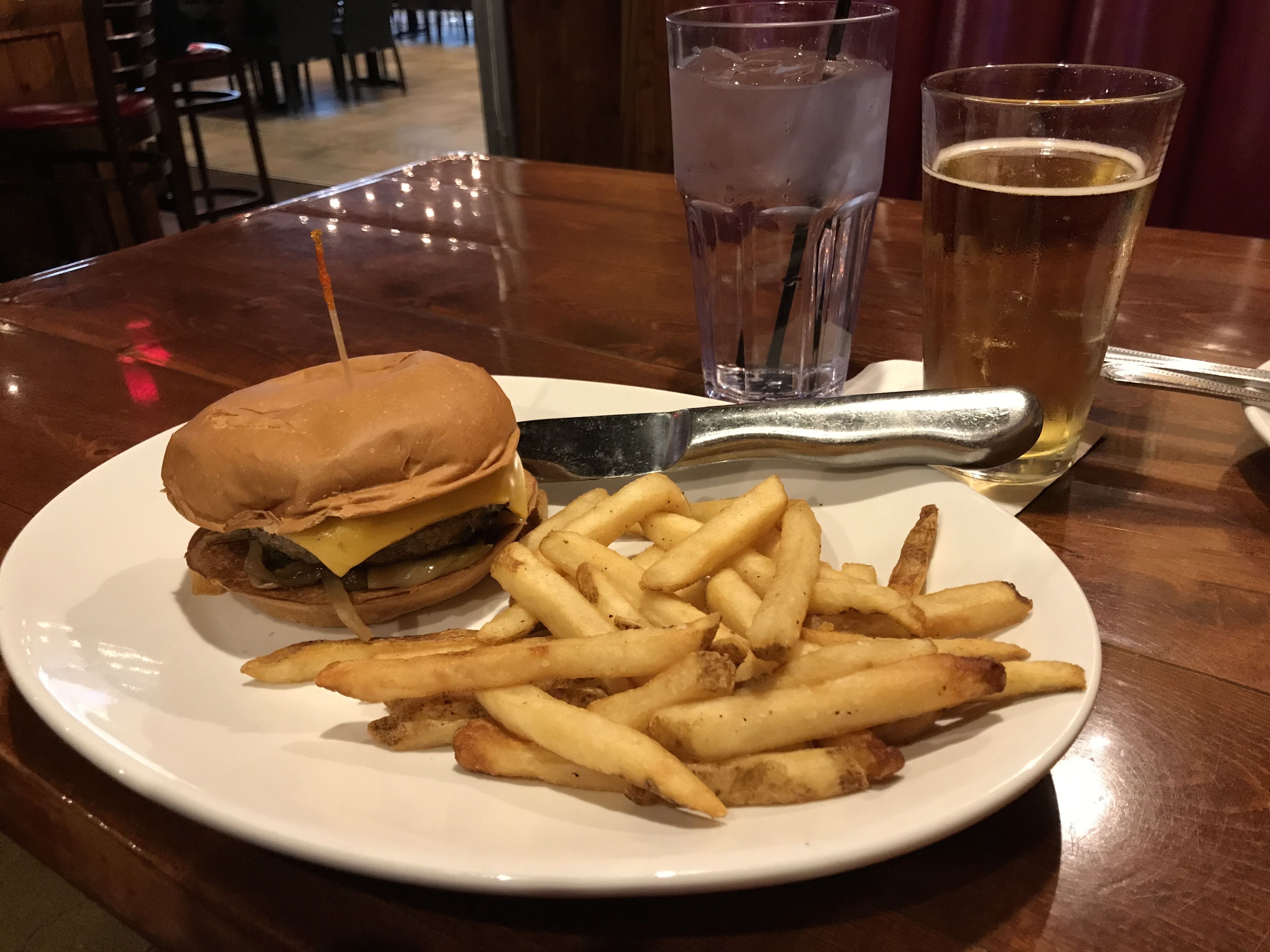
I had asked people what I should eat while I was in the area. They recommended a Juicy Lucy.
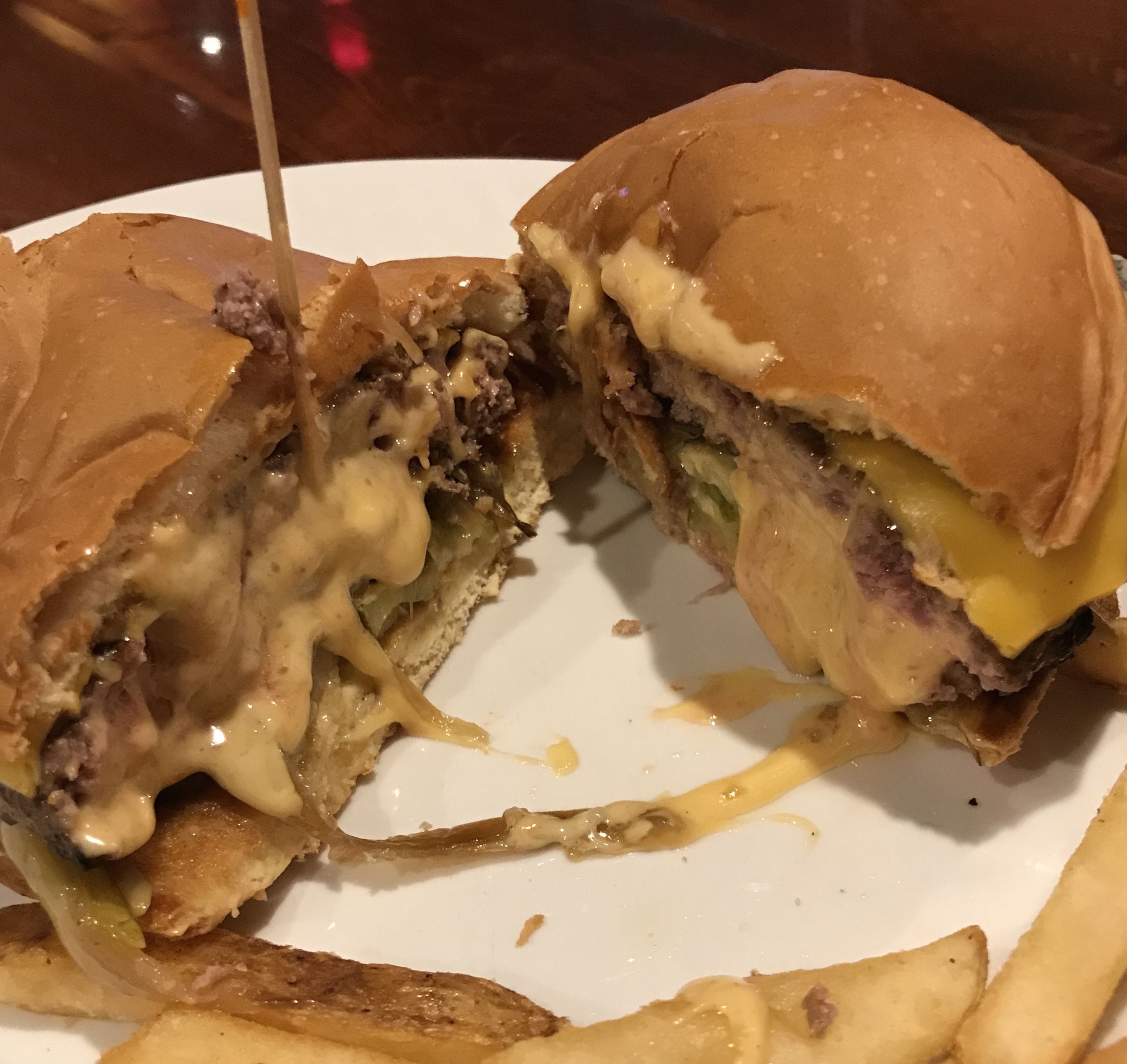
It was quite the burger.
Actually, it was kind of like a double cheeseburger with the cheese on the inside. I managed to eat my dinner. Sufficiently nourished, I head back to find Bart on the P2 floor of Georgia.
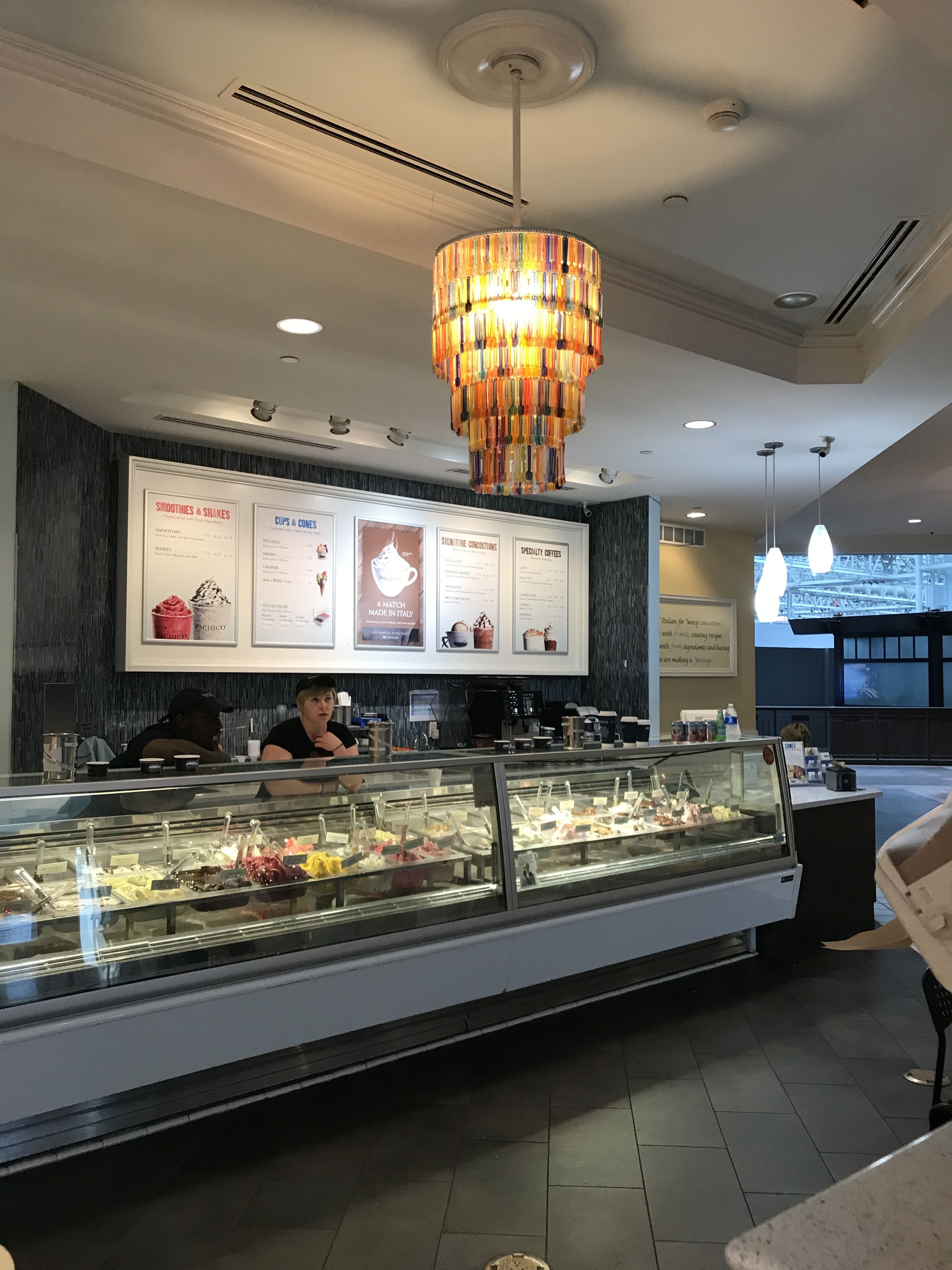
On the way out, I spied this gelato shop.
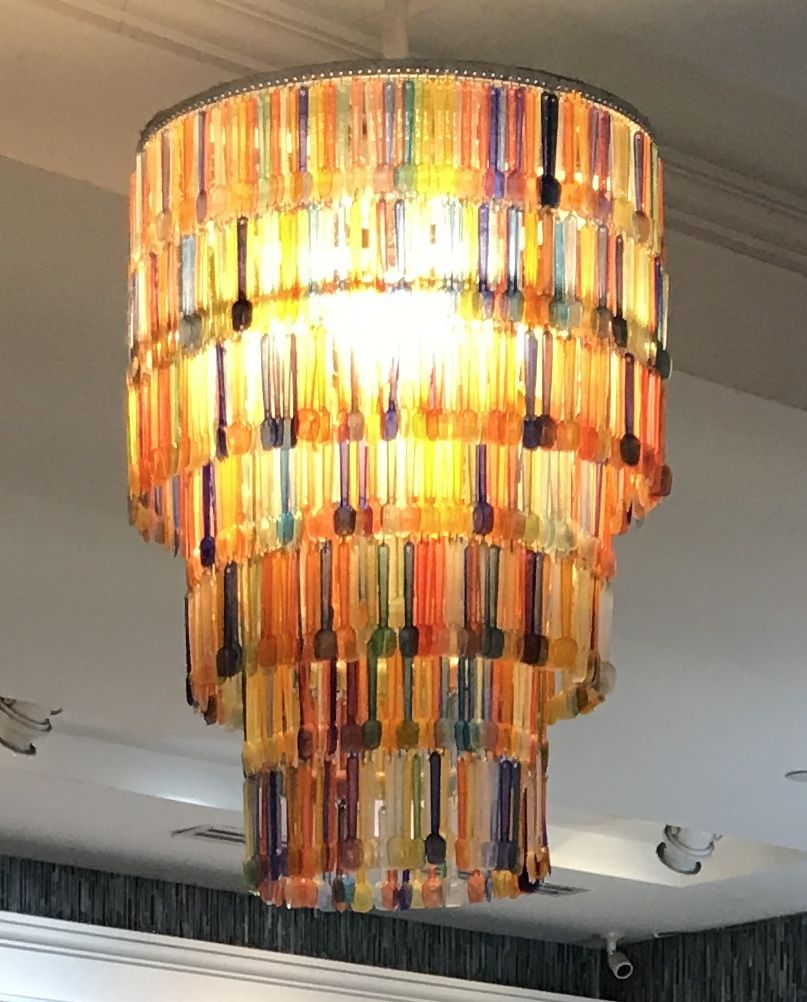
Actually, what caught my attention was the chandelier made of gelato spoons.
If you are like me, you said Minneapolis. But, no, the capital of Minnesota is St. Paul!
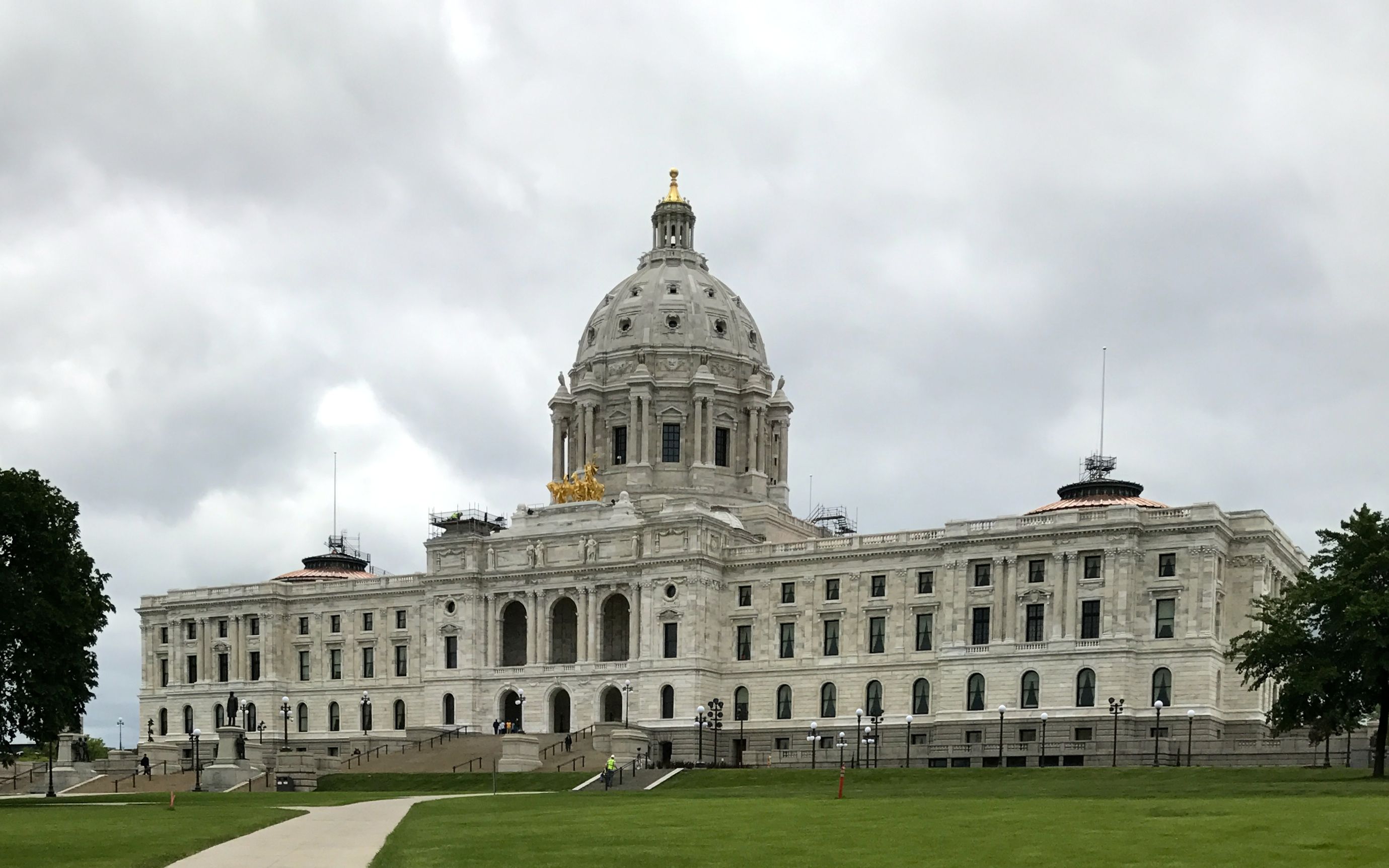
By this time I was going through capitol withdrawal. When was the last time I visited a state capitol building? Helena, Montana? It’s about time I rectified that situation.
It’s quite the grand building. It was designed by Cass Gilbert, who also designed the Arkansas and West Virginia State Capitols as well as the United States Supreme Court building.
You know, I thought I had written about the Arkansas Capitol when I wrote about the Helena, Montana capitol building. I was right! Oddly enough, my sources at that time said that the rejected design was by George R. Mann, who sold it to Arkansas. Sometimes you just don’t know which Wikipedia entry to believe!
In any event, Cass’ public buildings were in the Beaux Arts style, and reflect the optimistic American sense that the nation was heir to Greek democracy, Roman law and Renaissance humanism, according to my preferred source.
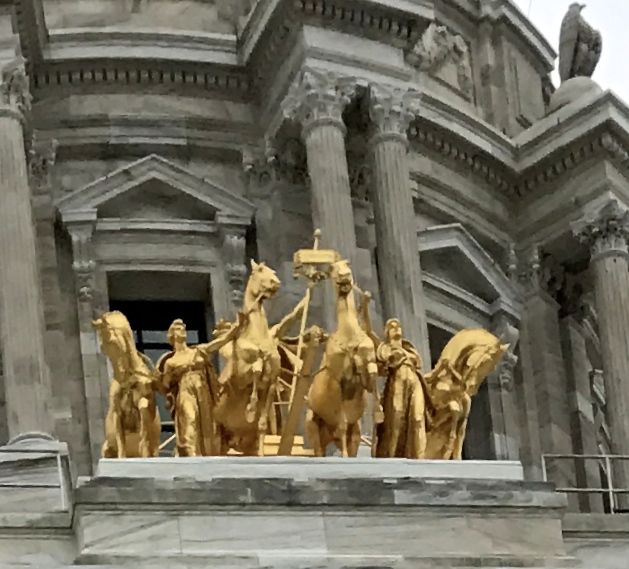
I was quite taken by the statue above the southern entrance. It is a gilded quadriga. Always curious, I had to look up the definition of “quadriga.” In case you didn’t know, a quadriga is a chariot drawn by four horses abreast. Incidentally, this was the Roman Empire’s equivalent of the Ancient Greek tethrippon, in case anyone asks.
The name of this sculpture is The Progress of the State. It was sculpted by Daniel Chester French and Edward Clark Potter. French is probably one of the most well-known sculptors of his era, as he also is responsible for the Lincoln statue in the Lincoln Memorial. Potter’s work is also well known, even if his name is less so. He was well-known for his equestrian and animal statues. His most famous works are the marble lions in front of the New York Public Library, Patience and Fortitude.
But back to this statue. The four horses represent the power of nature: earth, wind, fire and water. The women leading the horses symbolize civilization, and the man on the chariot represents prosperity.
I entered building and somehow slyly joined a tour.
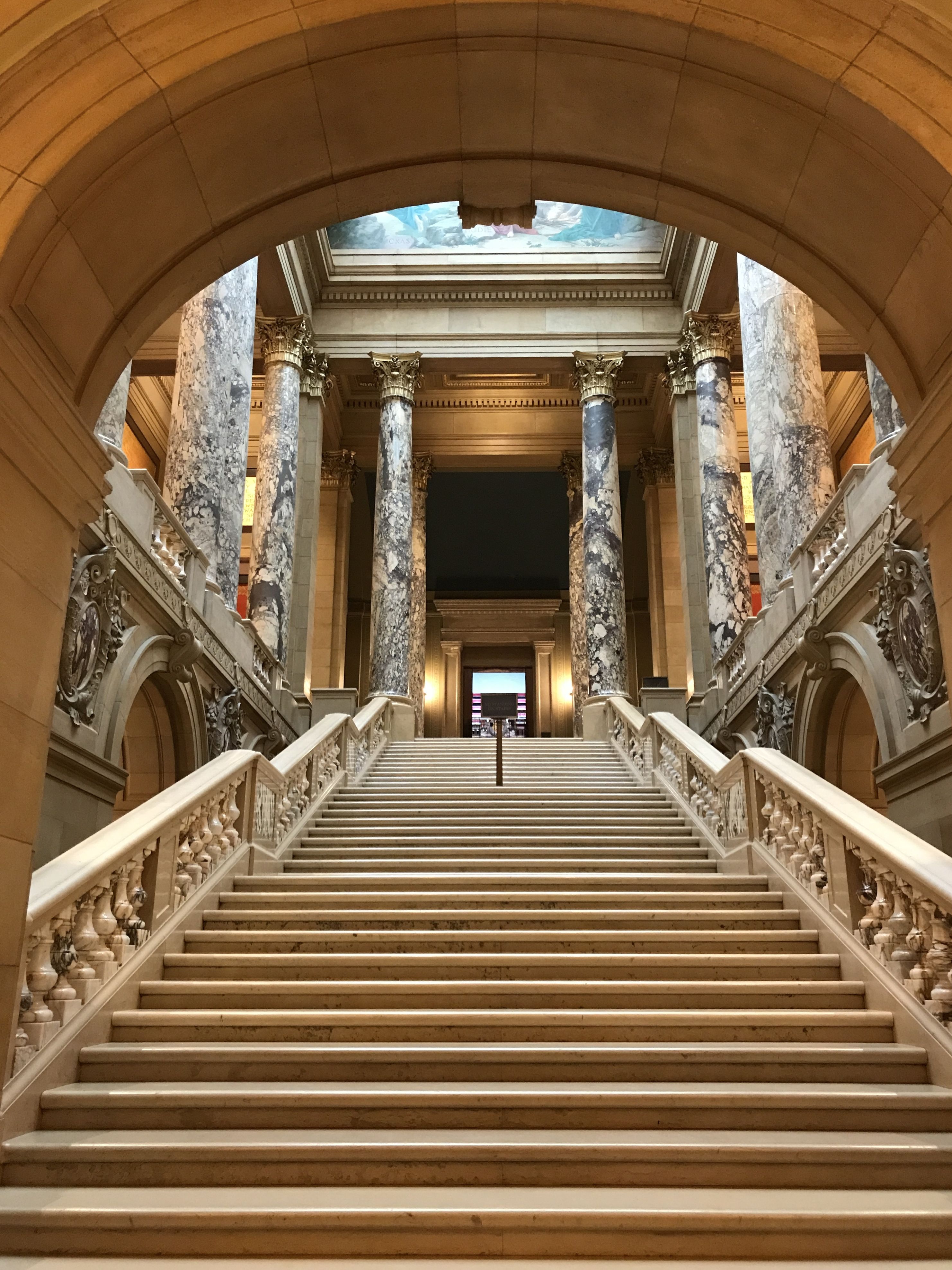
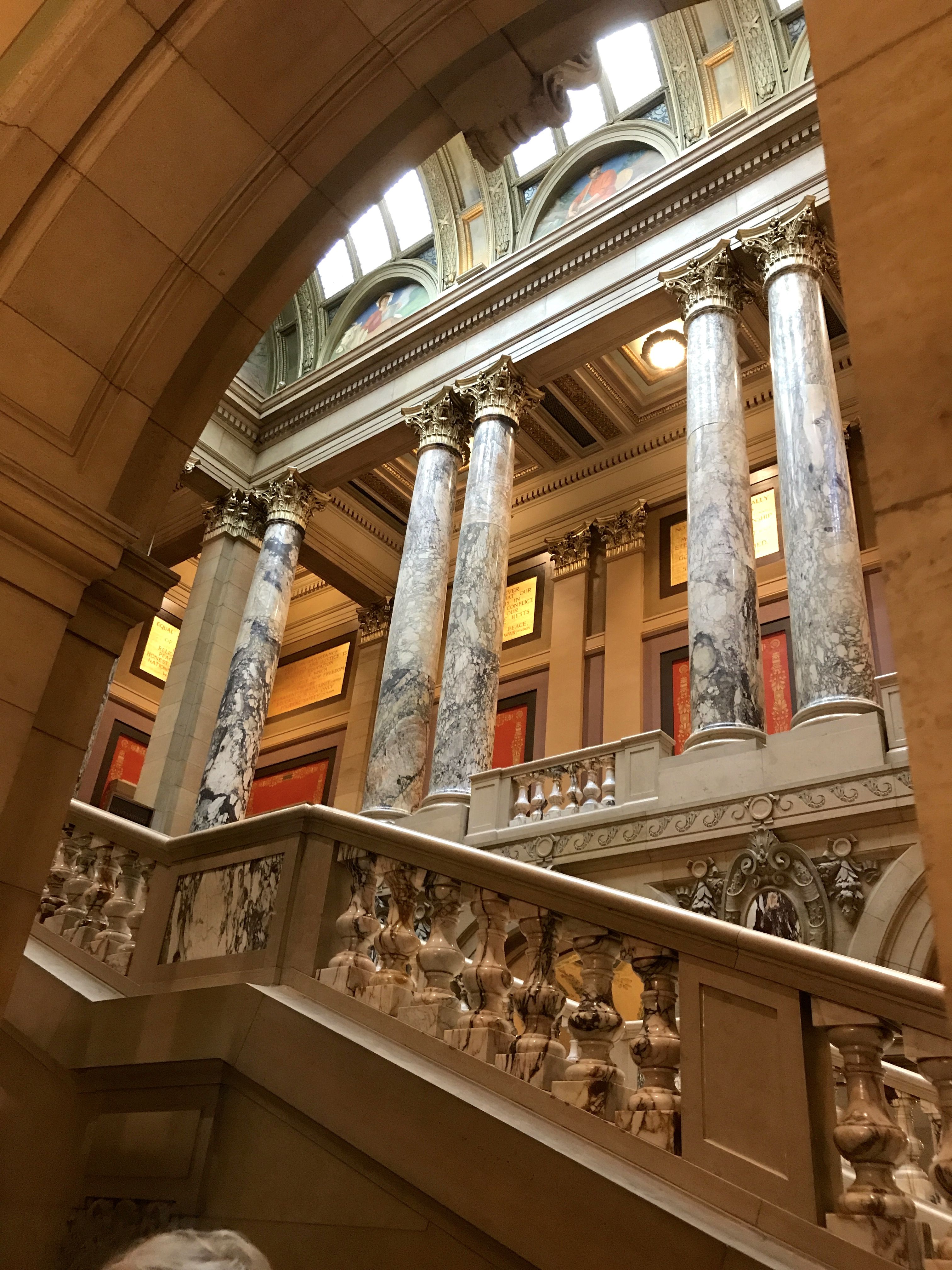
The interior was impressive.
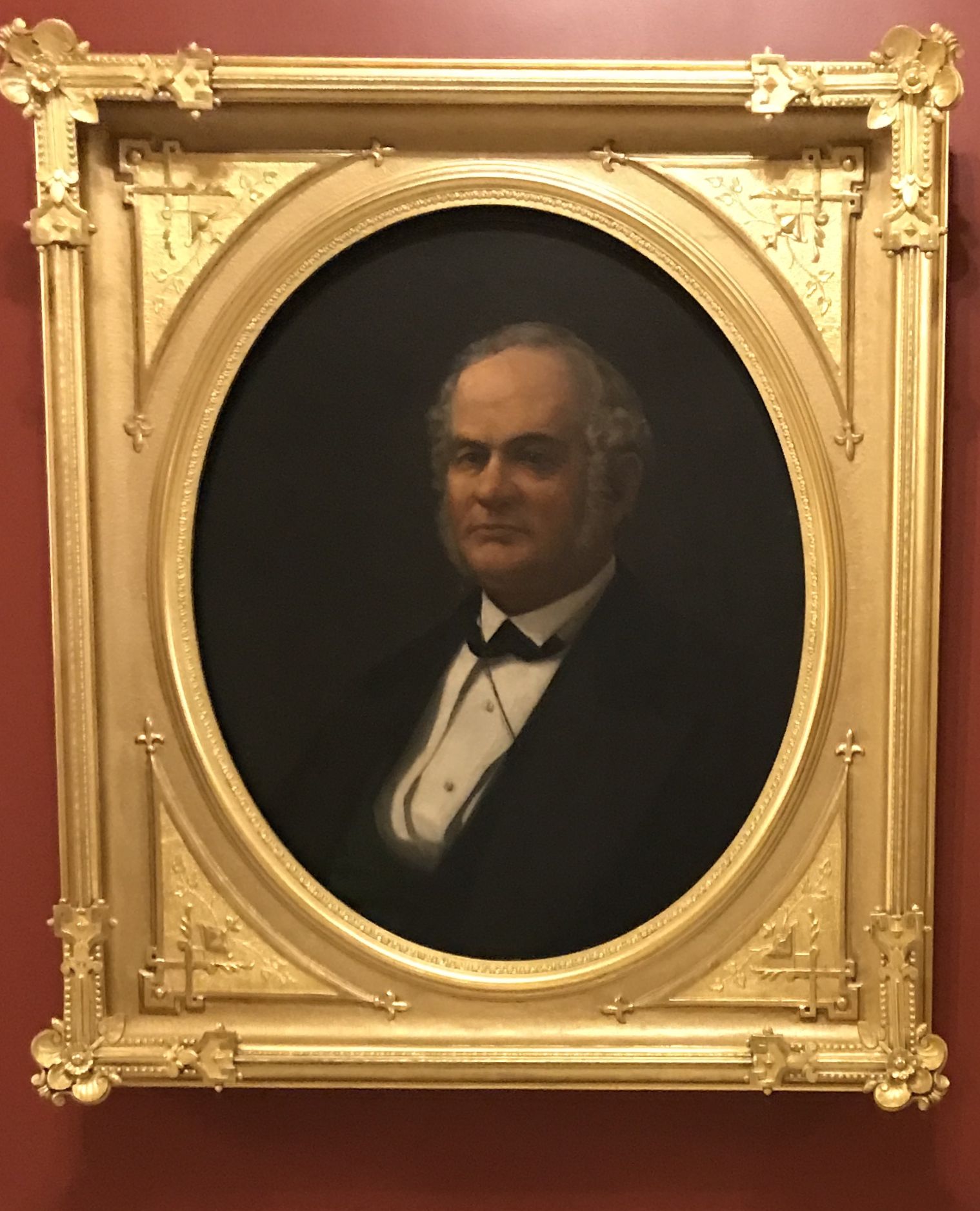
On the way to the governor’s office, we passed this portait of Alexander Ramsey. He was the second state governor, from 1860-1863.
It seemed odd to me that they would have the second governor’s portrait hanging and not the first. Did I miss it? After all, with a last name of Ramsey, we might be related!
Well, it turns out that he was quite the politician, and held a number of offices. Including being the second governor of the state, Zachary Taylor appointed him the first governor of the Minnesota Territory, 1849-1853. Before that, he was a member of the House of Representatives from Pennsylvania. He was also the mayor of St. Paul, a U. S. Senator and the Secretary of War under Rutherford B. Hayes.
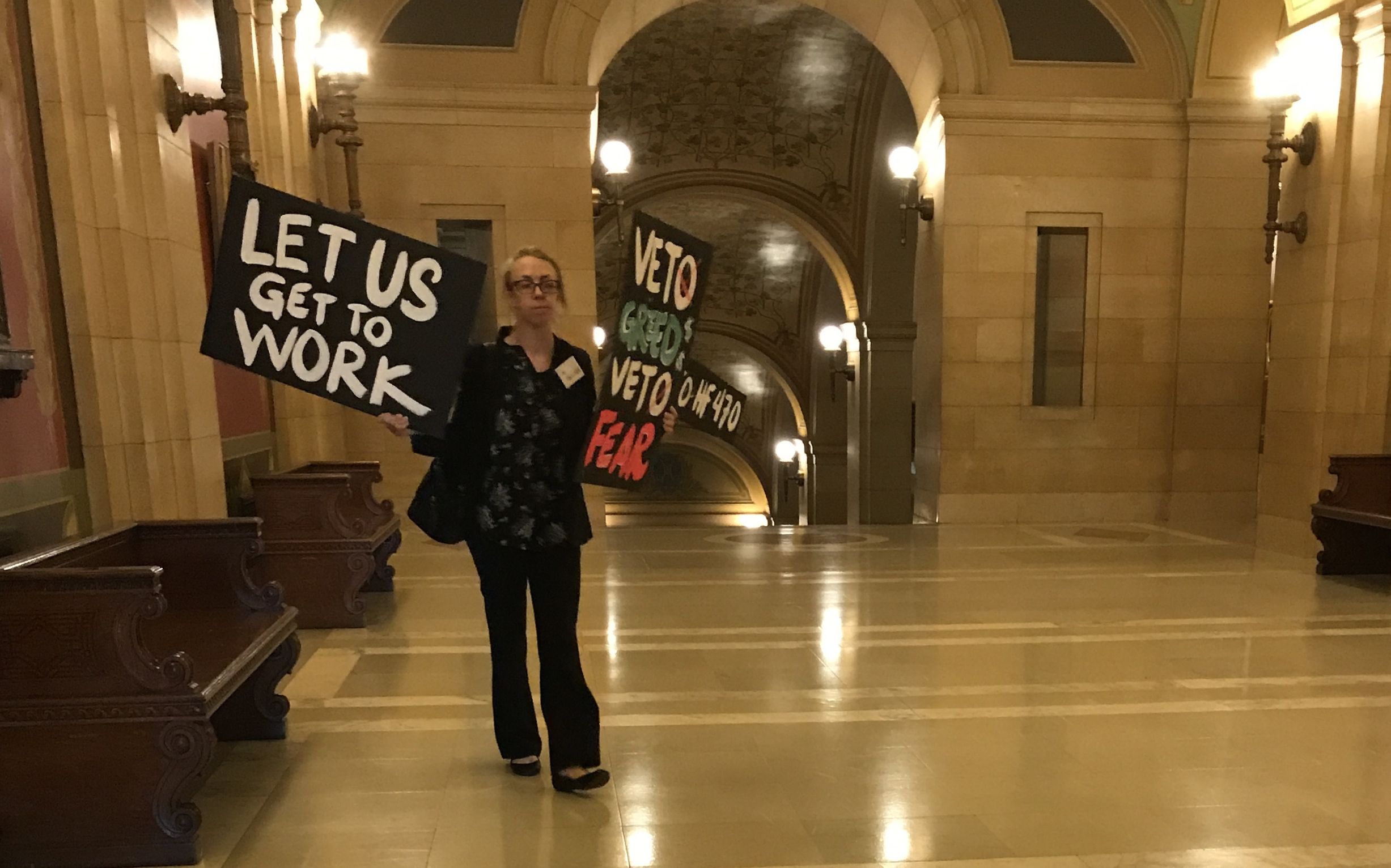
We got to peek inside the entrance to the governor’s office. What I was most impressed with, however, was in the hallway outside.
A woman was exercising her first amendment rights to free speech and to petition the Government for a redress of grievances. This was a peaceable assembly of one.
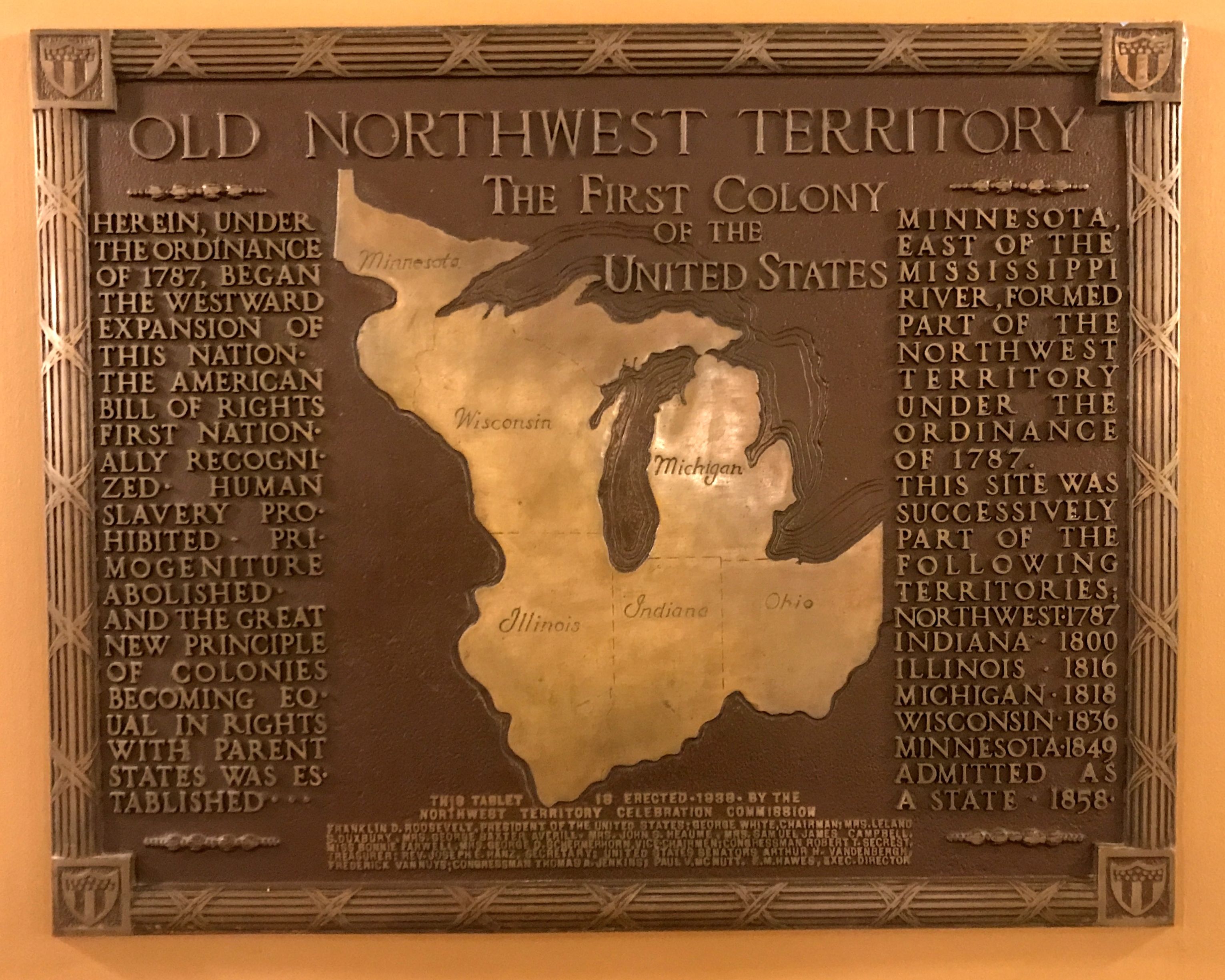
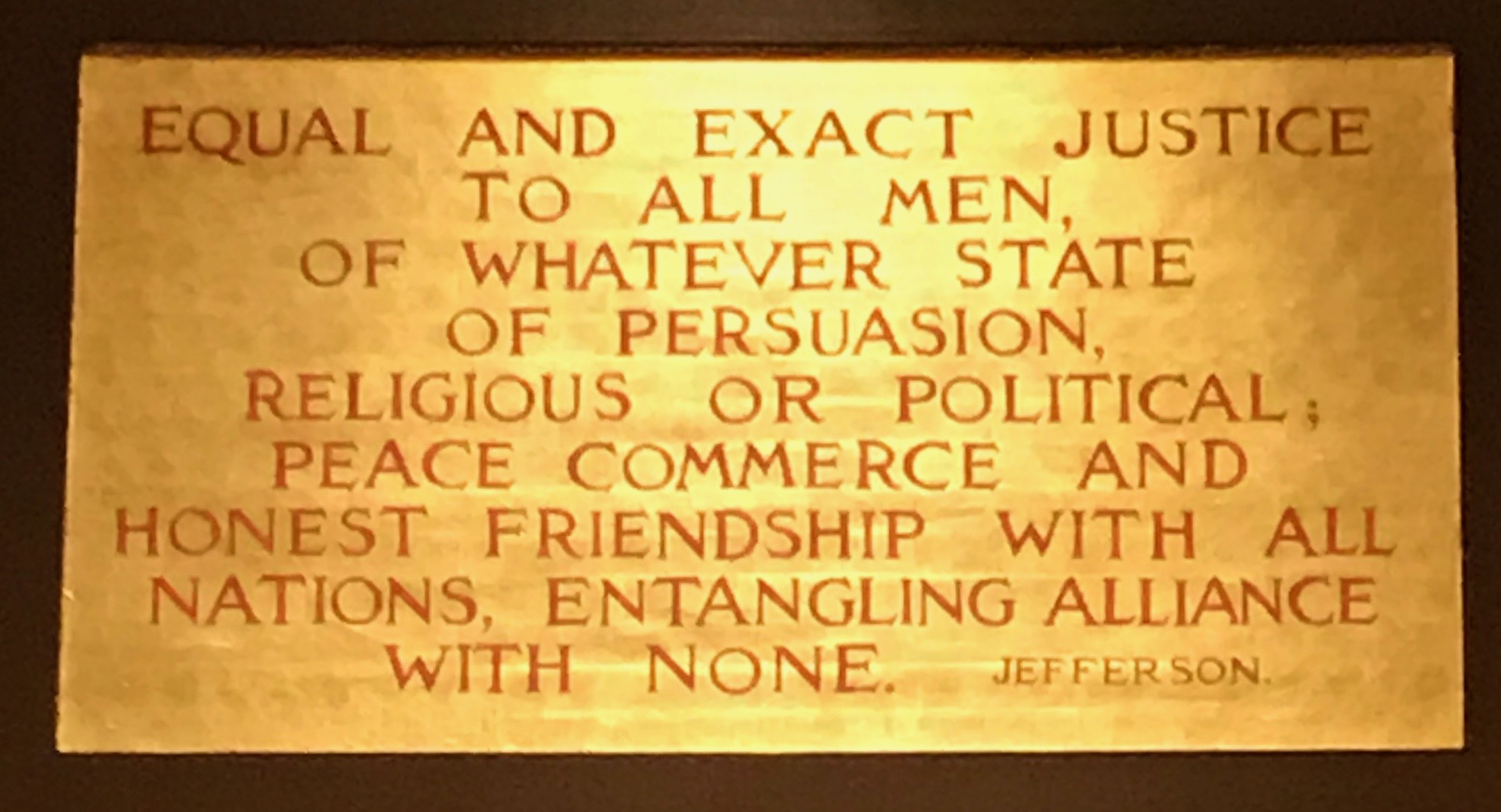
There were all sorts of interesting plaques and quotes throughout the building. You know, I never thought of the Northwest Territory as a colony.
Incidentally, this tablet was erected in 1938 by the Northwest Territory Celebration Commission. It must have been the sesquicentennial celebration.
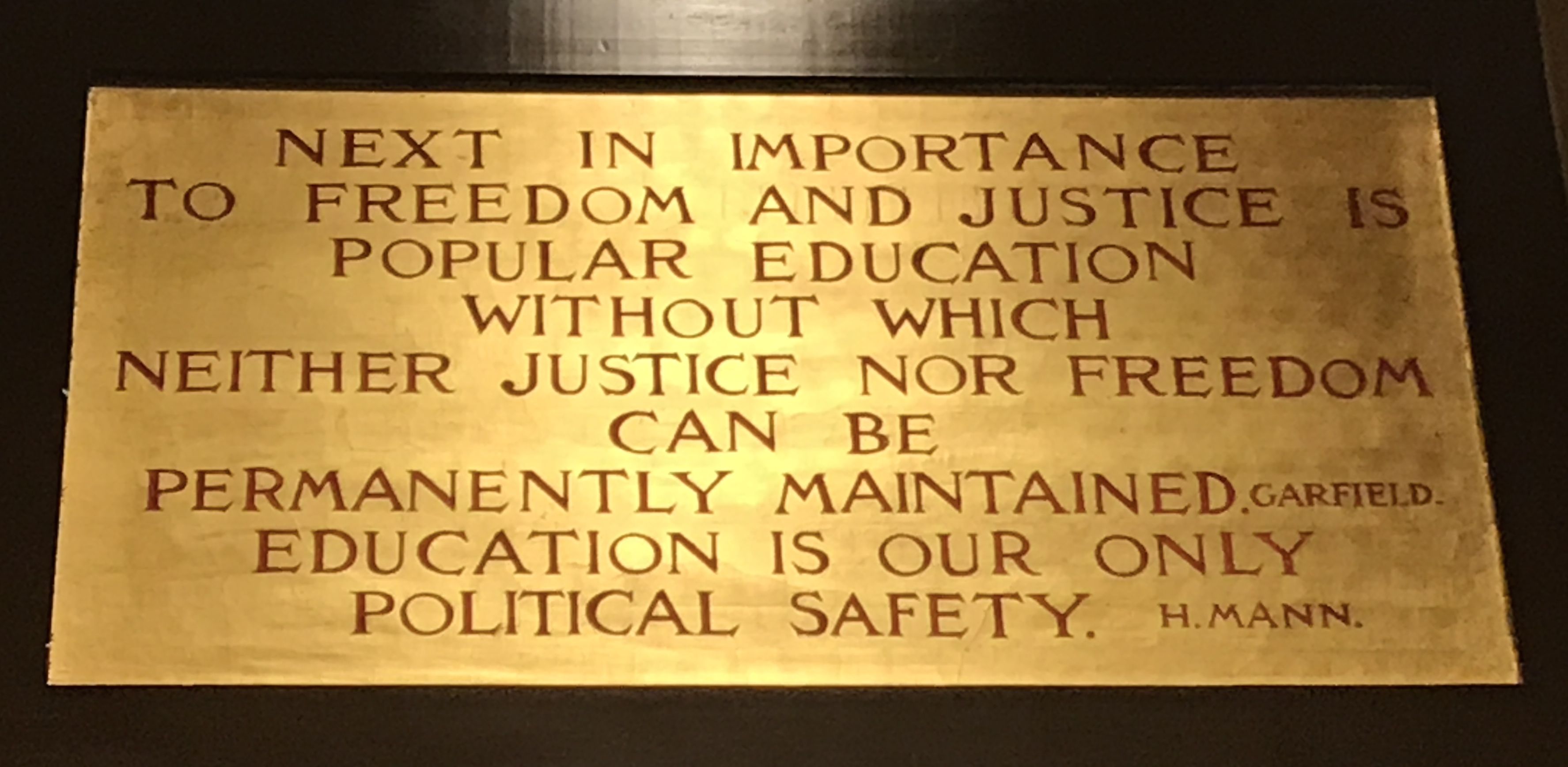
Here’s one of the quotes from around the building:
Here’s another quote.
While taking a tour can be a good thing, they do keep you moving. I rather prefer moseying around at my own pace. But it does save you from looking at a bunch of photos of interesting quotes.
Scattered around the building are decorations with the state motto, L’Étoile du Nord, or, the North Star. According to my preferred source, French was widely spoken in Minnesota until the end of the 20th century.
The rotunda was a marvel. It was modeled after Saint Peter’s Basilica in Rome. It is the second largest unsupported marble dome in the world, second only to Saint Peter’s.
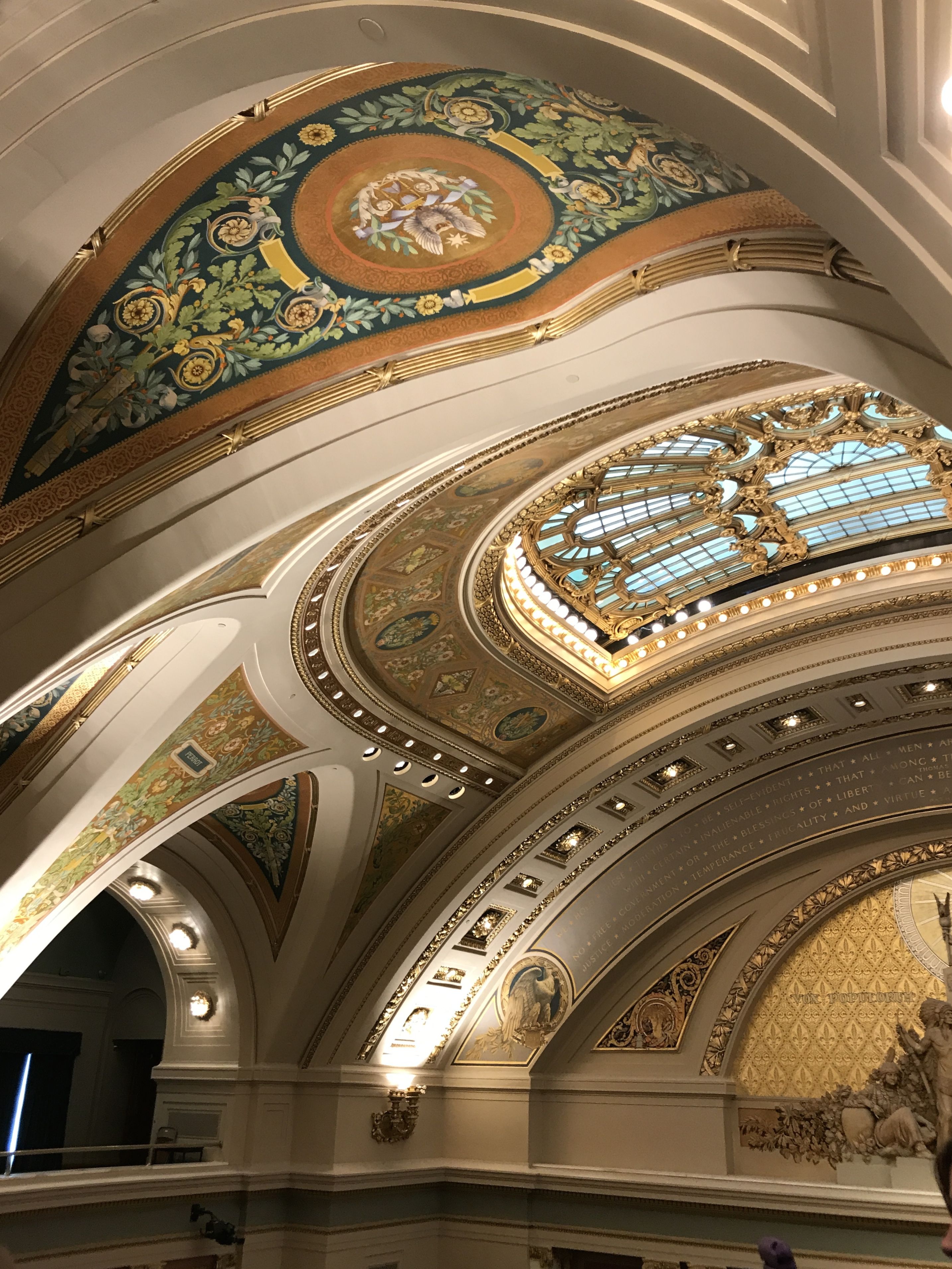
There were elegant details all over. This is a skylight in one of the legislative chambers.
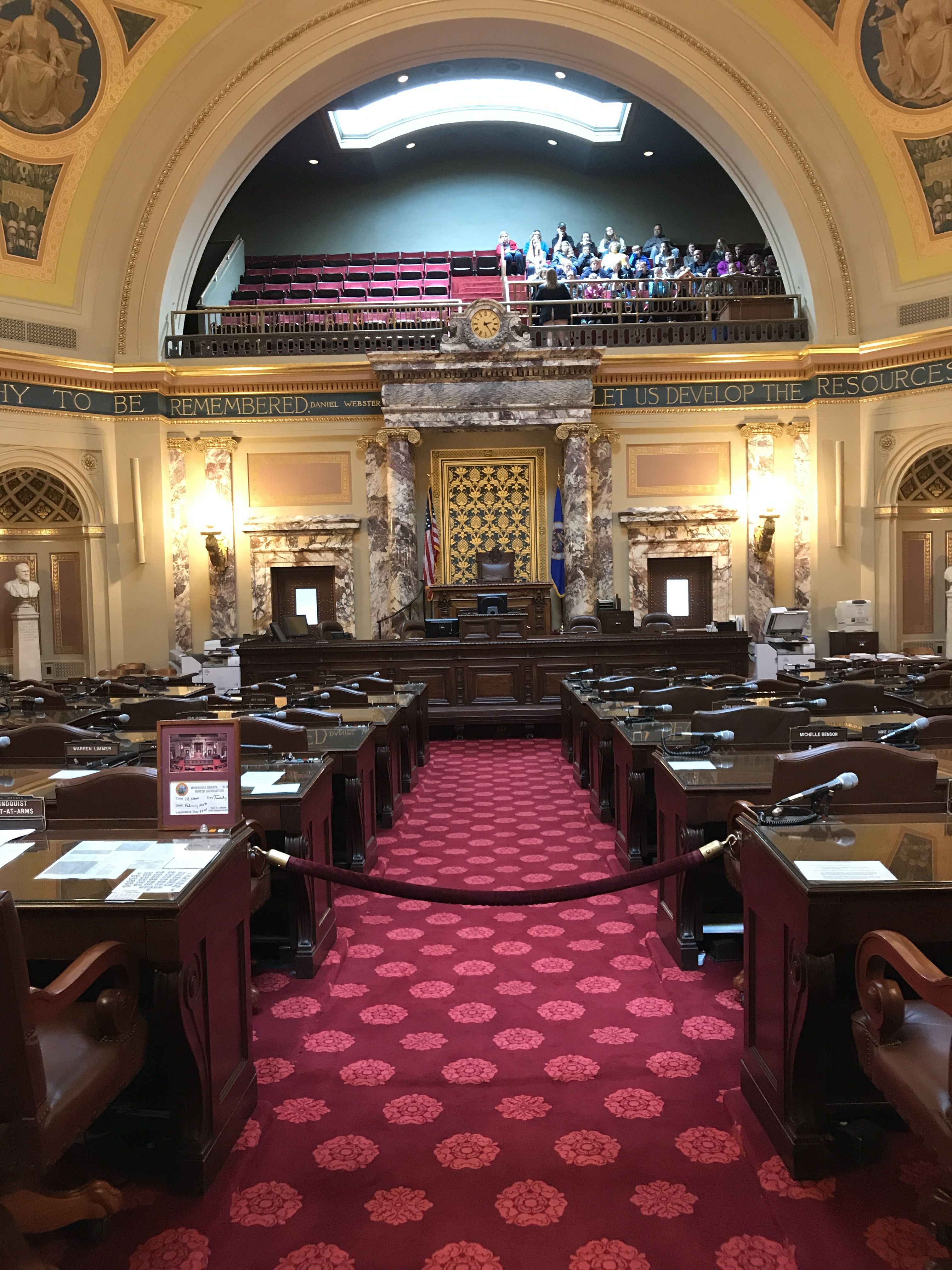
We got to peek into the Senate.
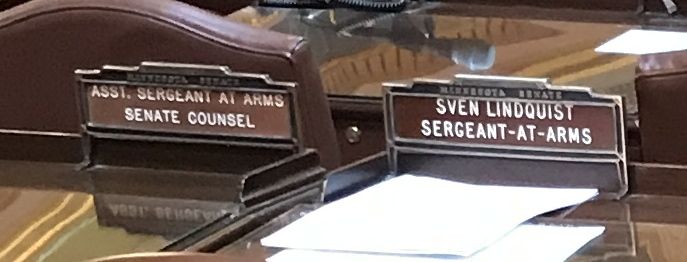
Thank goodness the Sergeant-at-Arms left his desk tidy. Incidentally, can you think of a more typical Minnesotan name than “Sven Lindquist?”
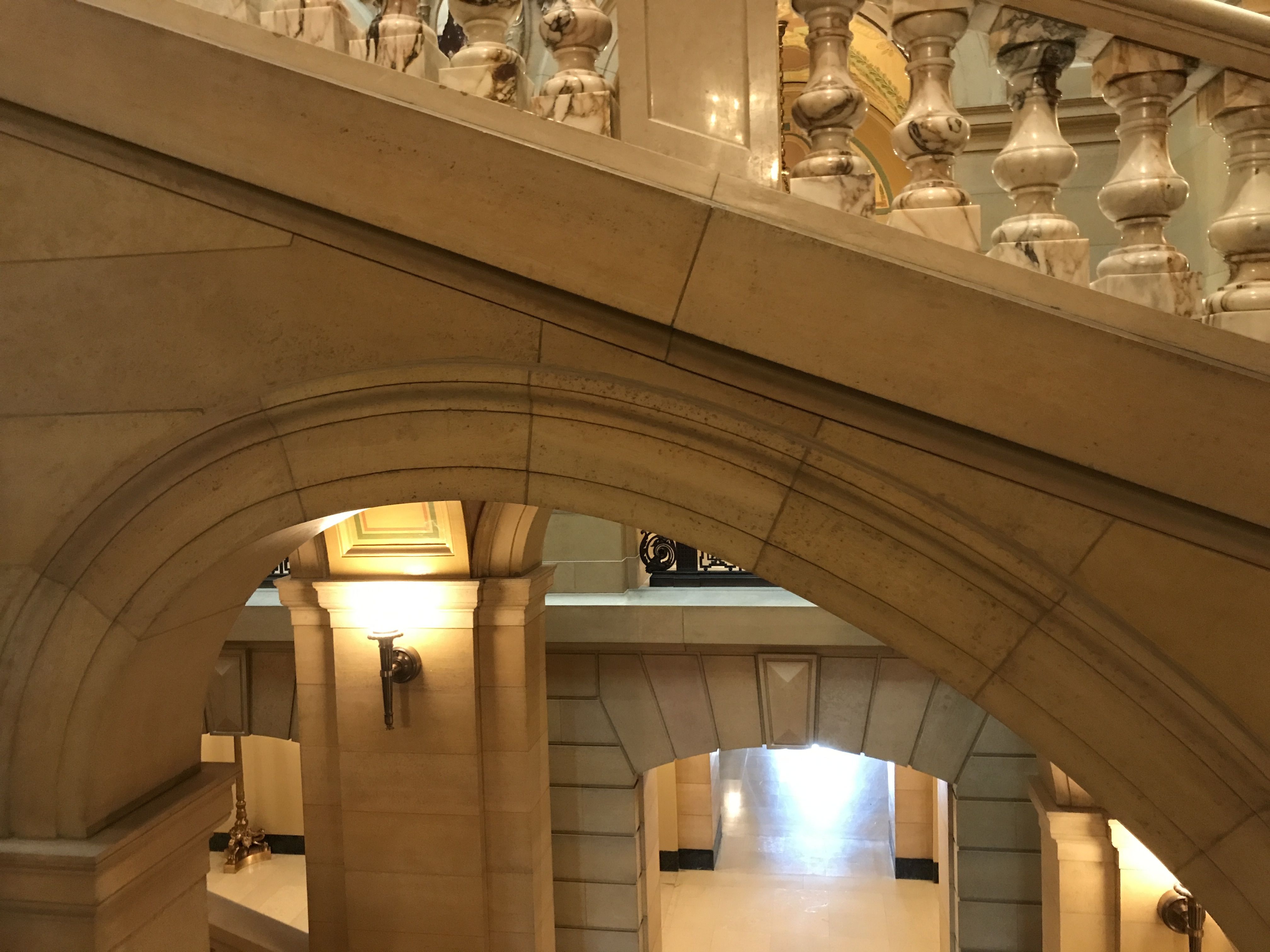
The building had many skylights. After all, it was built in the first years of the 20th century, when electrification was in its beginning stages.
And, with that, the tour was over.
I went back to Bart and looked around. I spied my next location to visit.
That looks like a cathedral! I wonder if it’s a basilica. I’d best go find out.
 I wonder how many backsides have graced this chair. It must be millions – or at least hundreds of thousands.