I had started to give some thought about the possibility that someone could just bring their truck up to Flo (the Airstream) and roll her away. I mean, I wasn’t all that worried that it would happen, but I got to thinking that maybe it might be a good idea to make her just a little more secure.
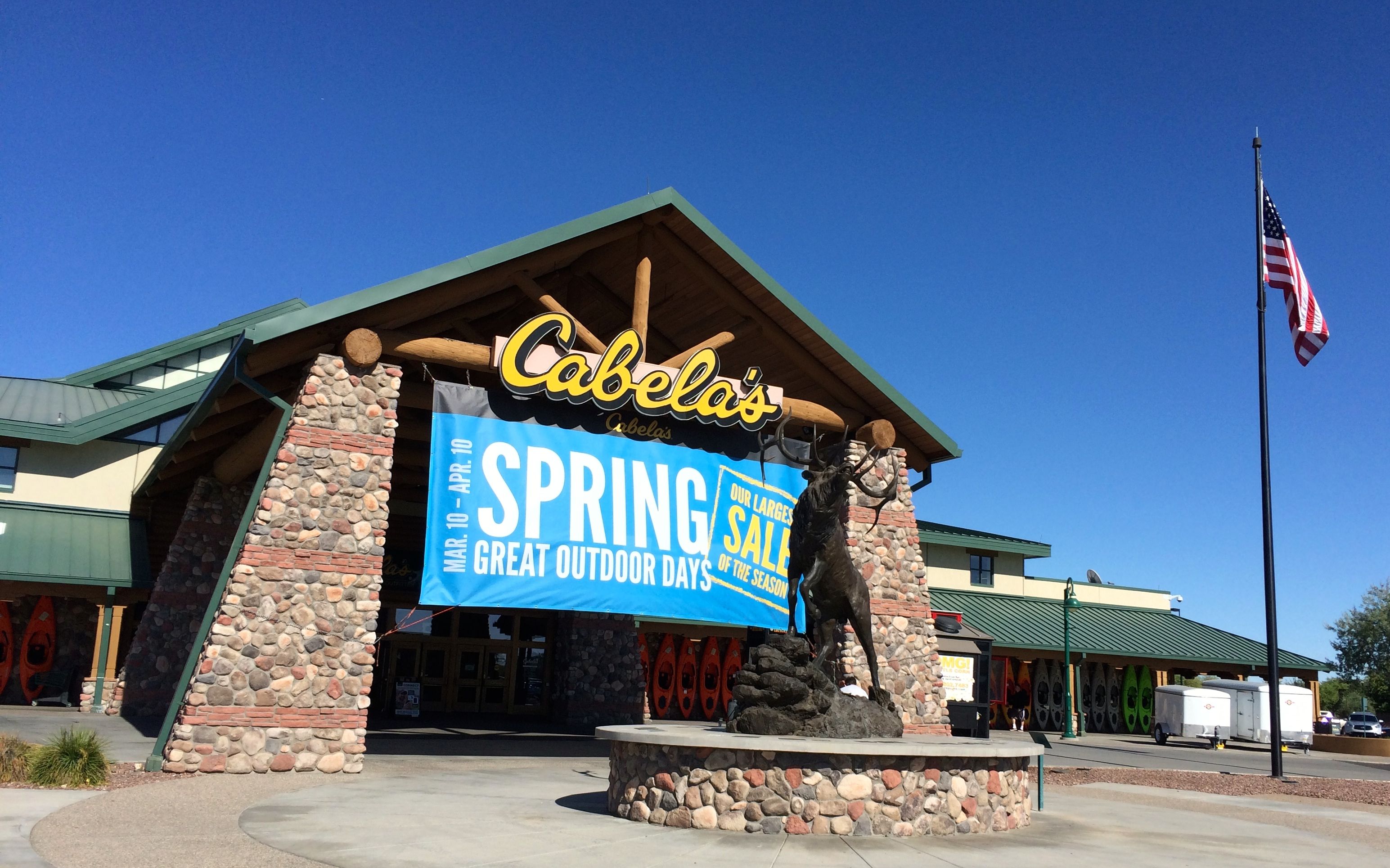
I started looking on line and Cabela’s had what I was looking for. So, Konnie and I had a little get-away to Cabela’s.
This was my first visit to a Cabela’s, and I could see why cities would compete to have this store.
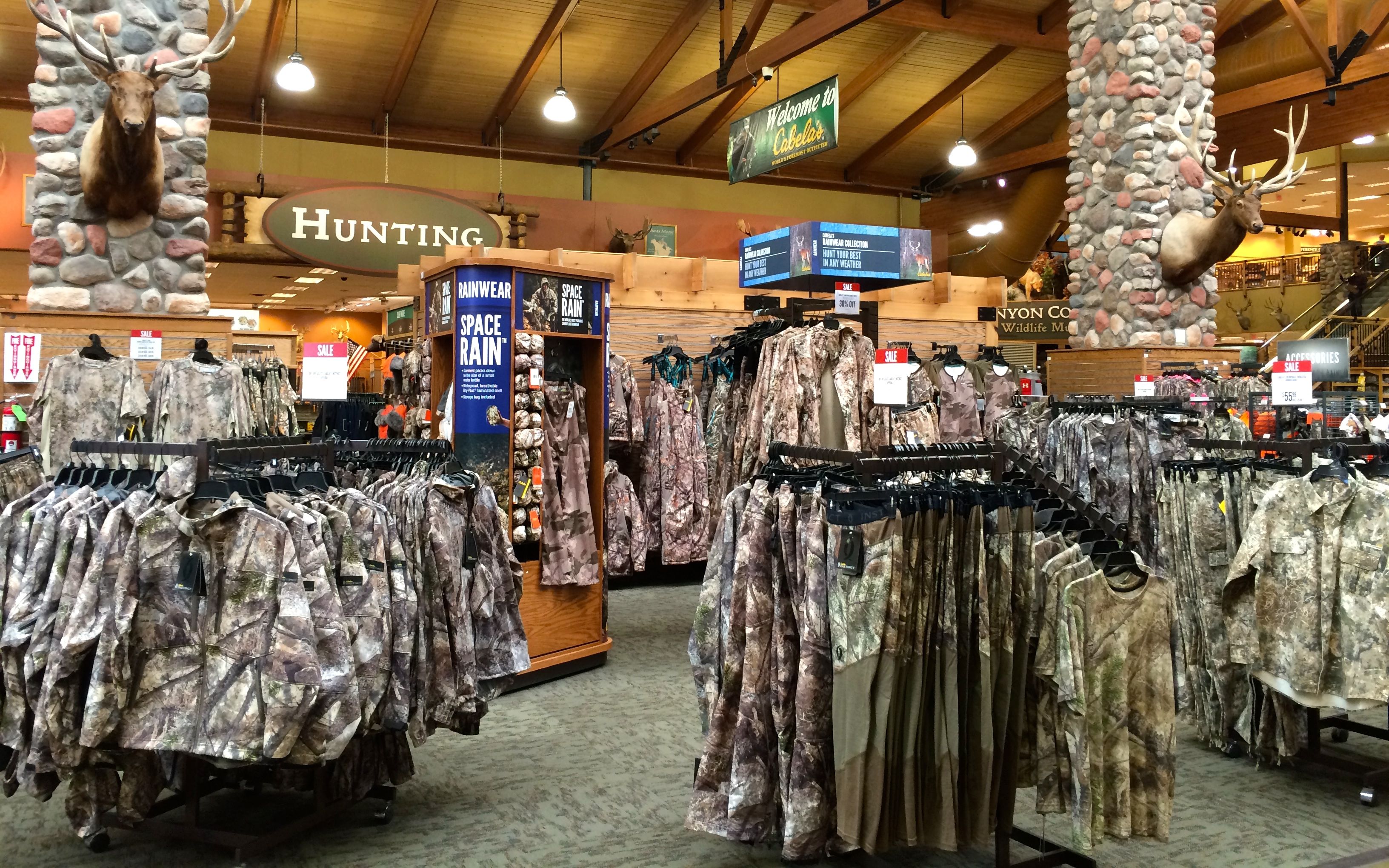
First of all, as I expected, there was cammo as far as the eye could see.
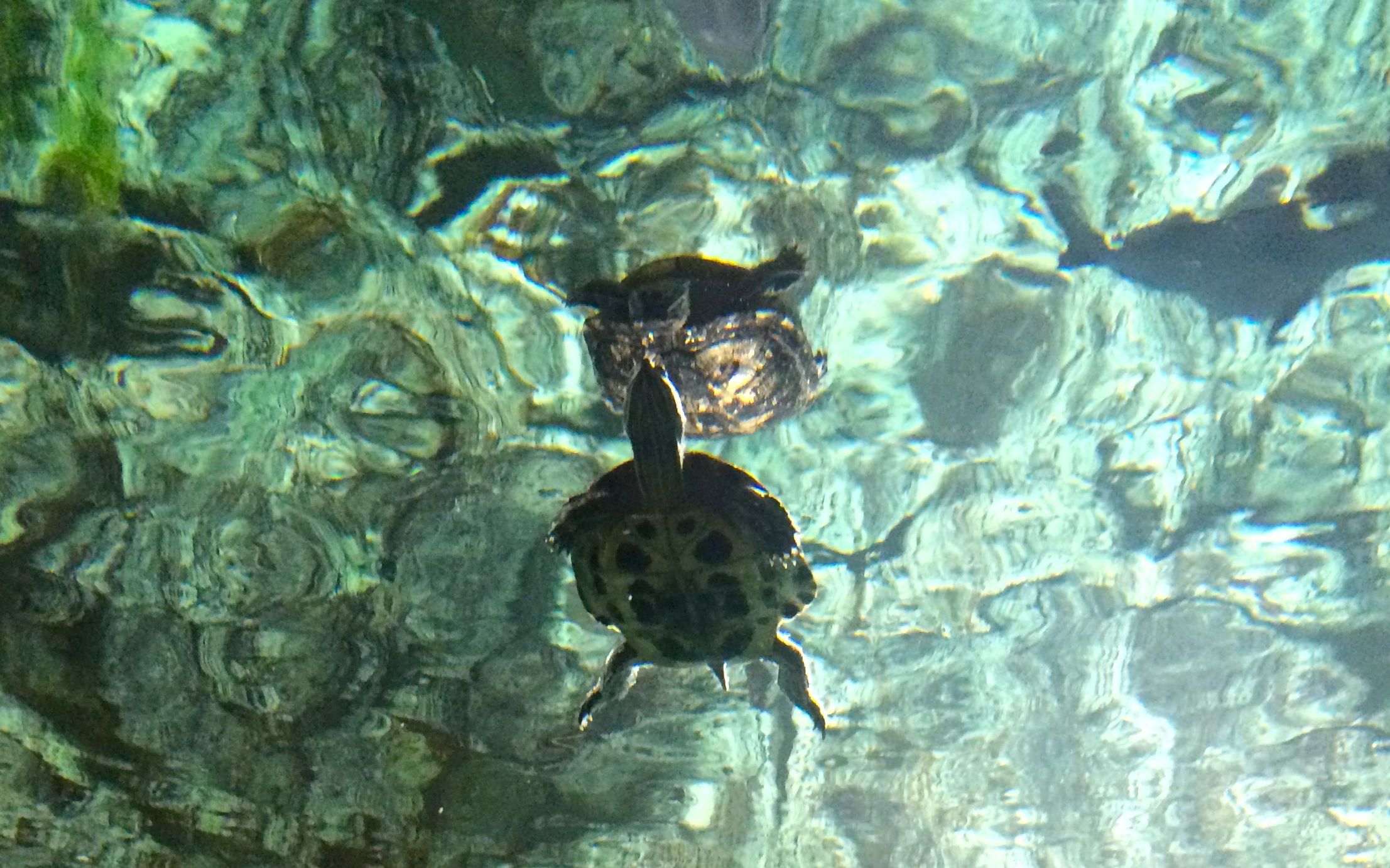
There were large fish tanks. They were a little dark for photography, but I did rather like this shot of a turtle.
That’s his reflection in the surface of the water.
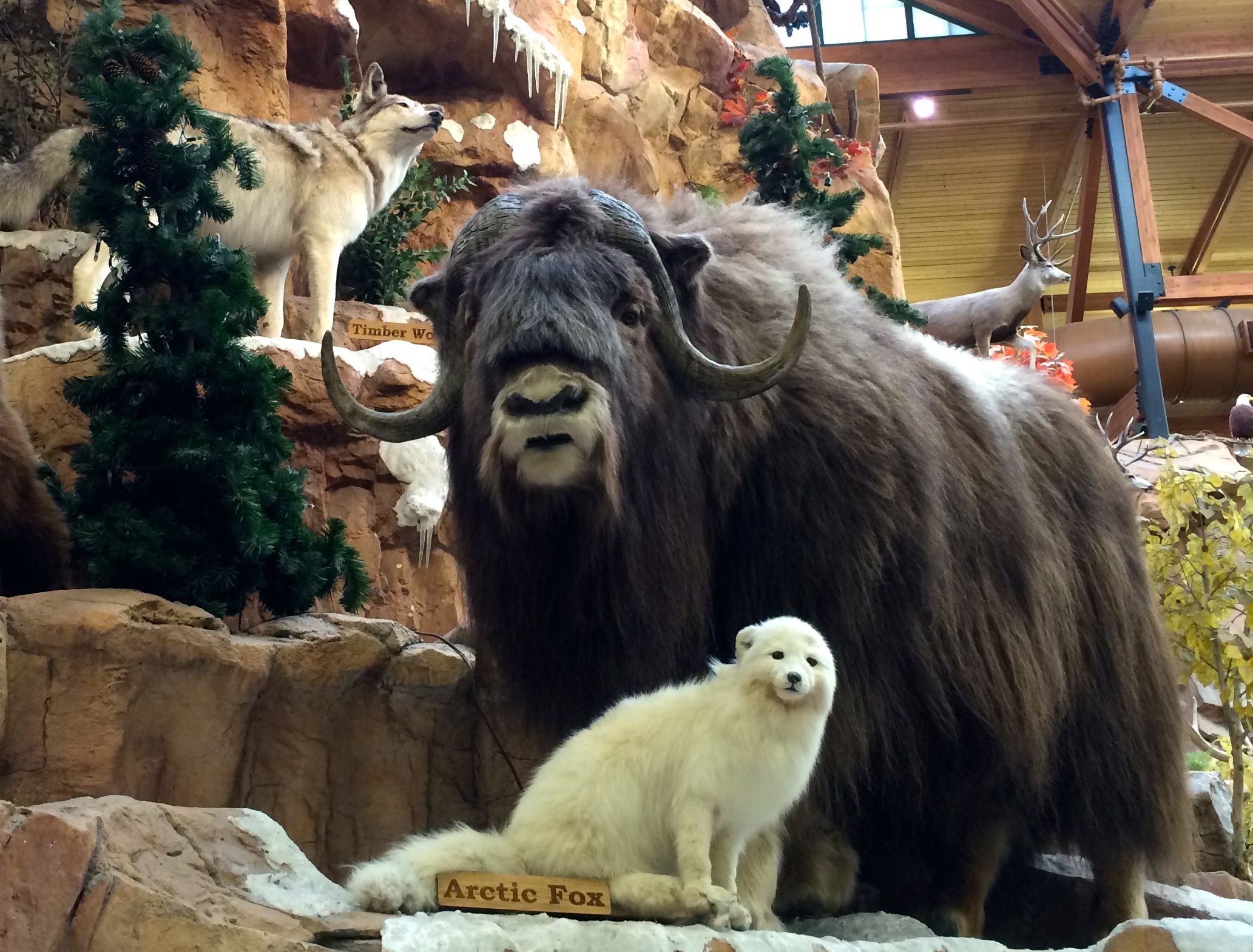
There was loads of taxidermy. I wish I had tried to get a shot of the flock of geese flying over the checkout counters by the door!
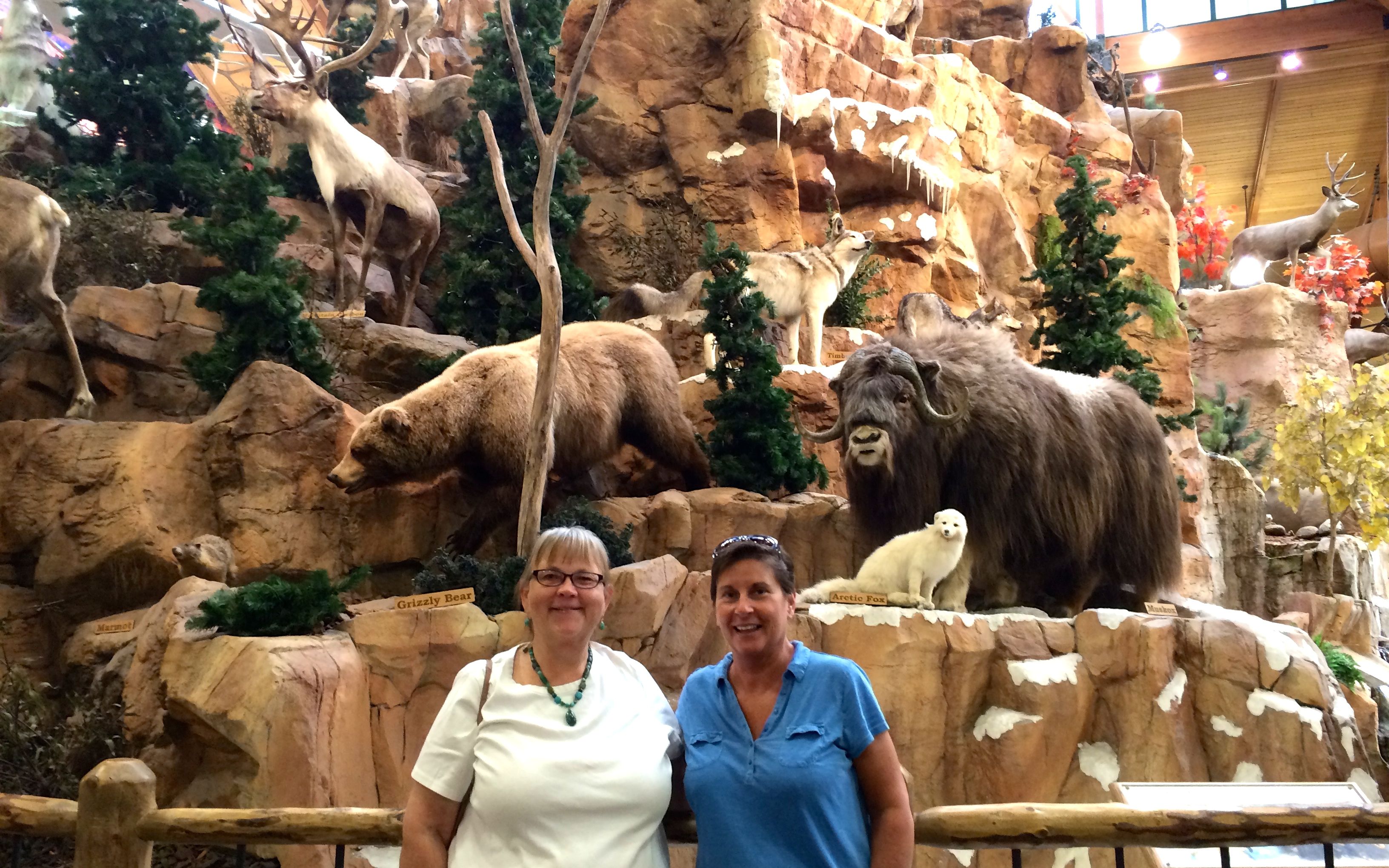
Of course, we had to have out pictures taken with the taxidermy.
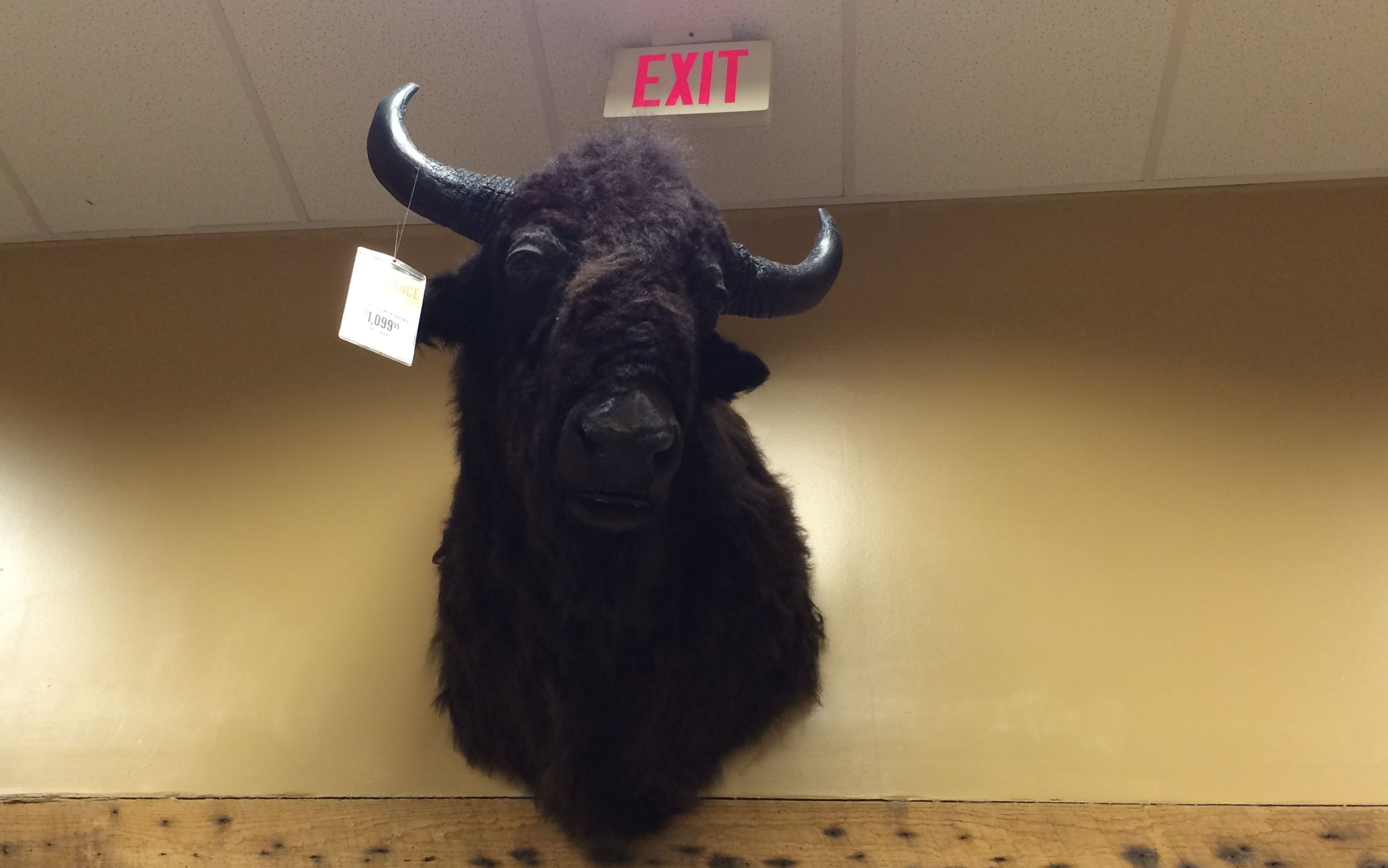
They even had a mounted buffalo head in the Bargain Den.
I’m not sure if the buffalo was marked down or not.
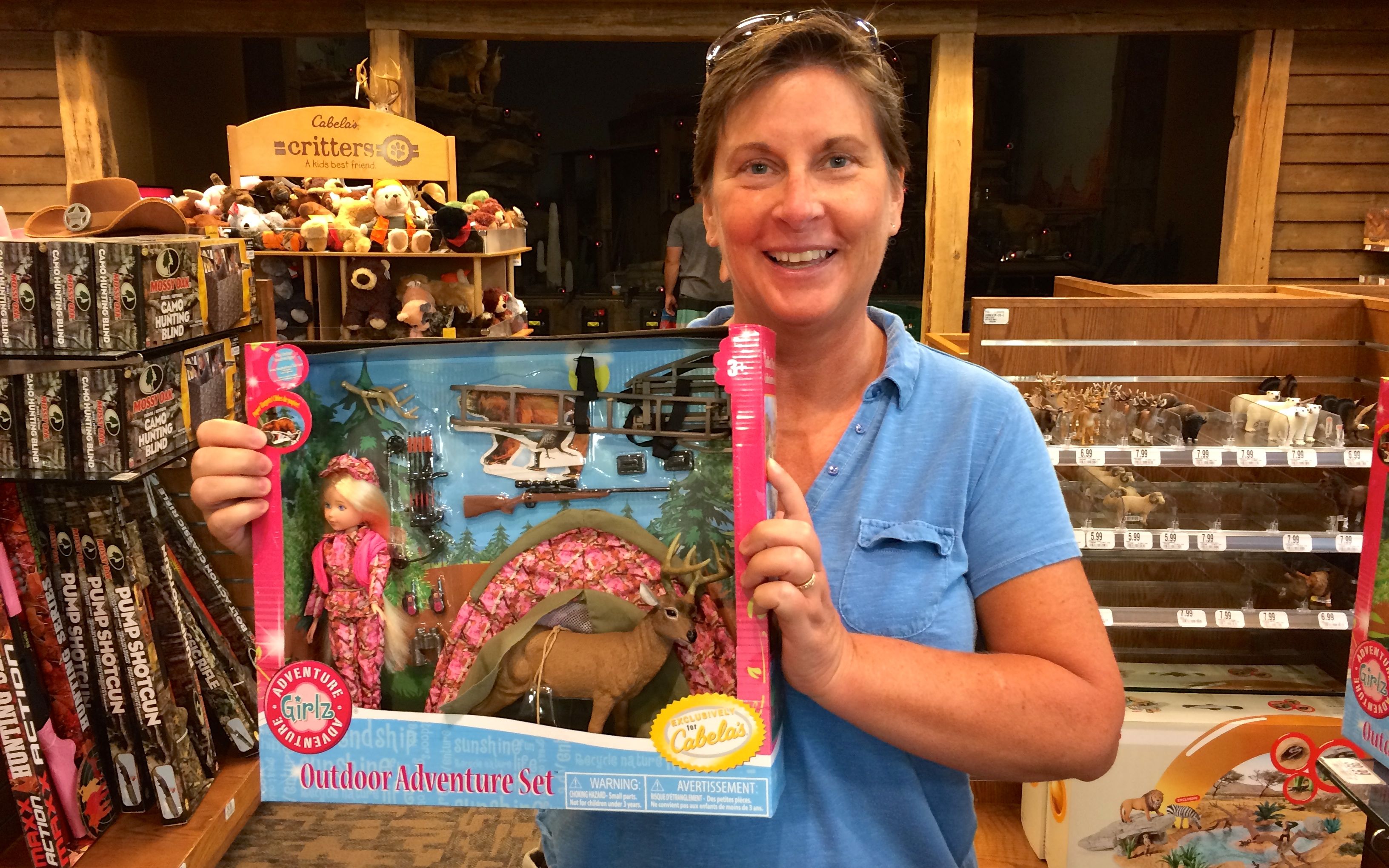
Konnie found Deerhunter Barbie.
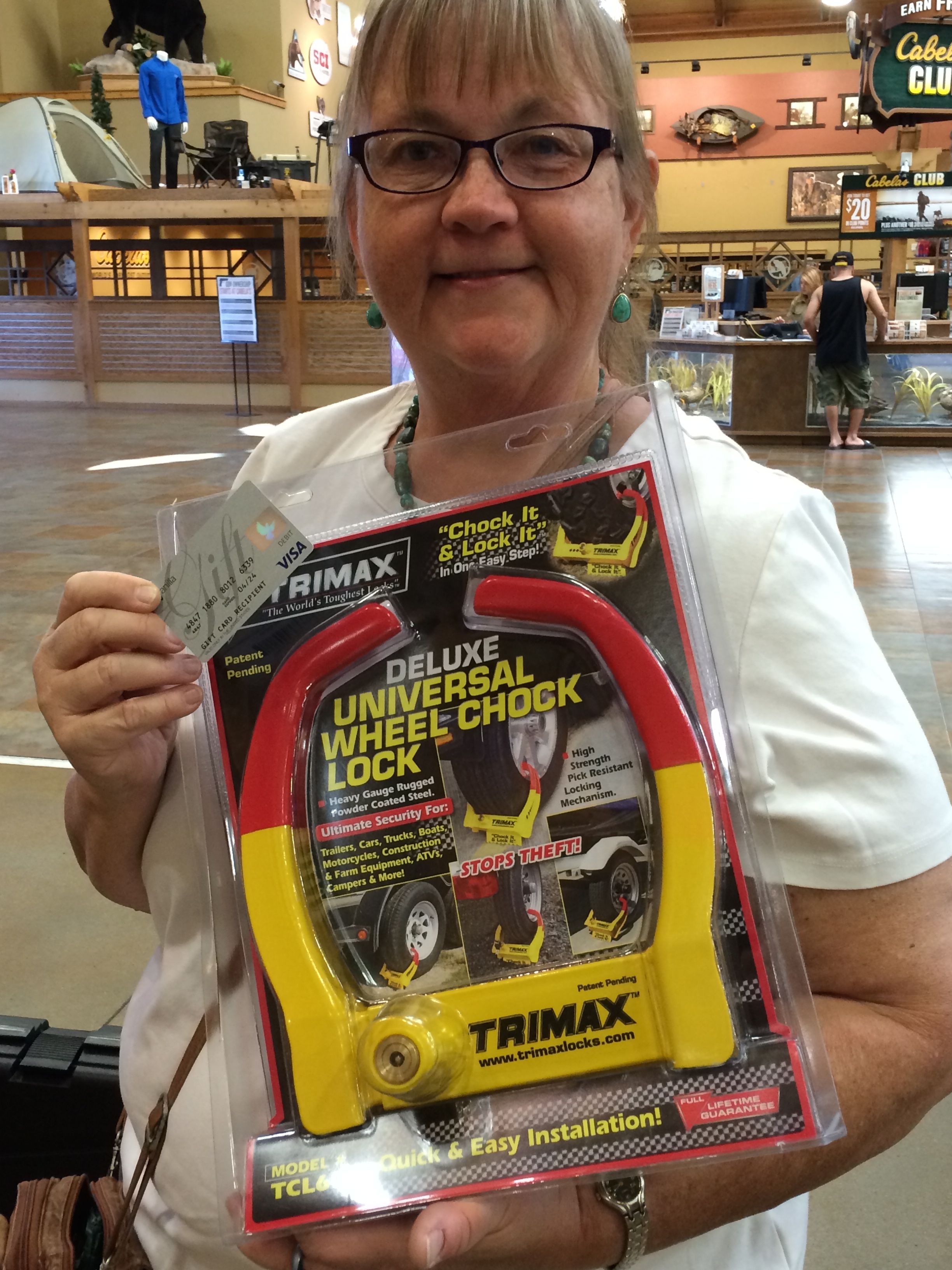
And I found what I came for. I used my birthday gift card from my brother, so happy birthday to me!
After our excursion to the wilds of Cabela’s, we were ready for sustenance. Konnie wanted to go to a place that was across the way.
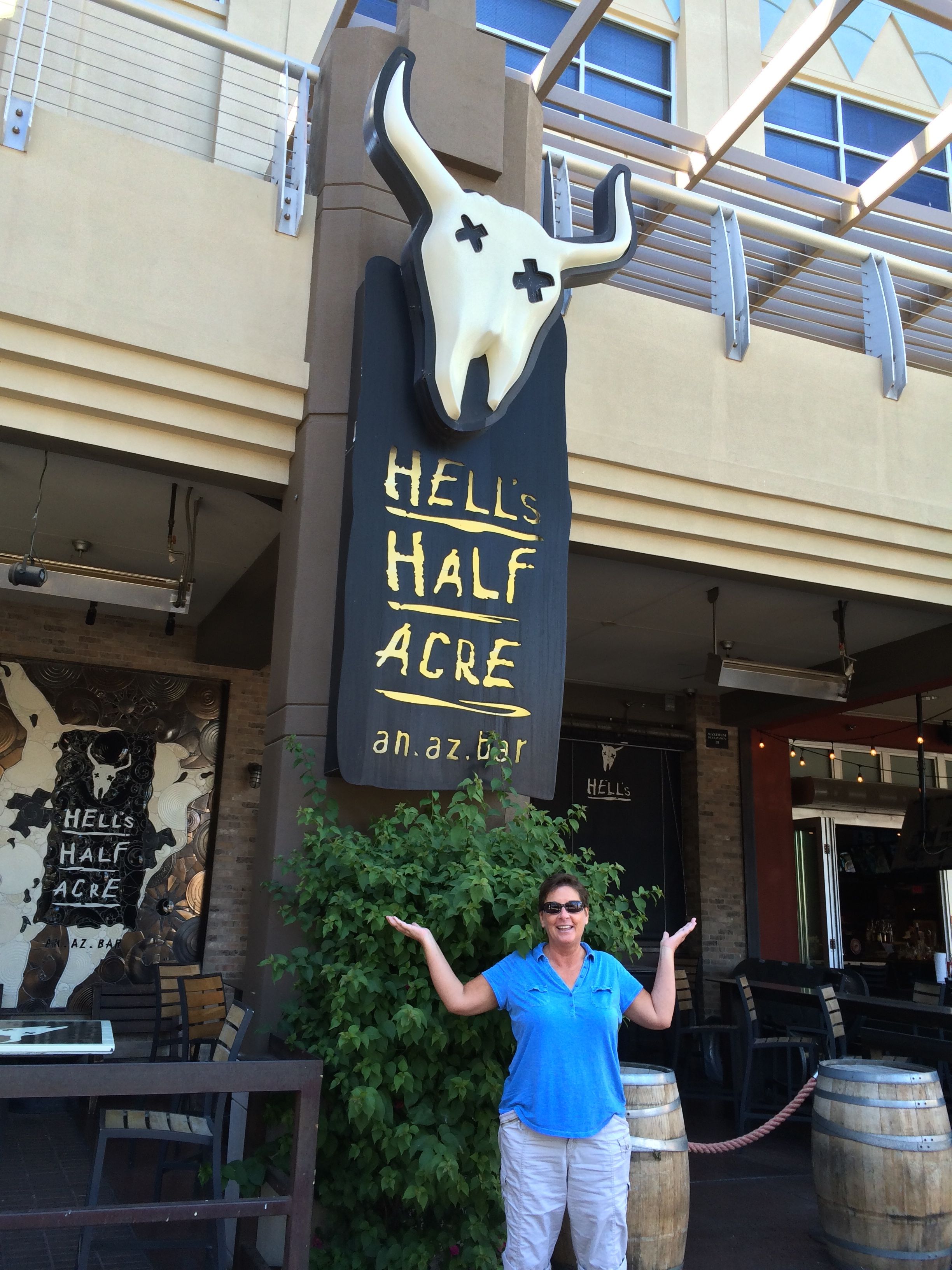
But Hell wouldn’t have us. They weren’t open for another half hour. No problem, though. We just went next door to Whiskey Rose. Not only were they open, but they had a happy hour menu with half-price appetizers!
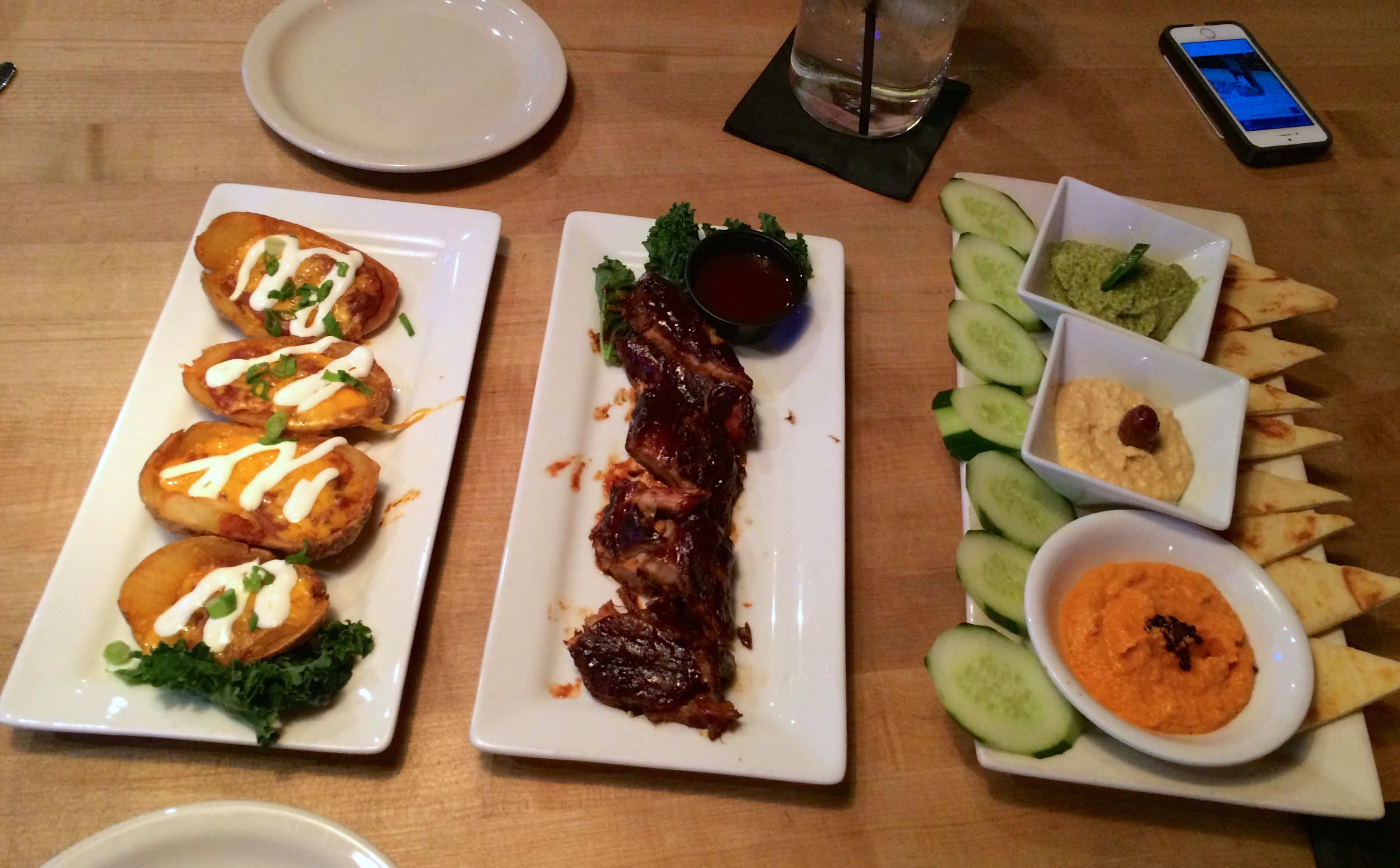
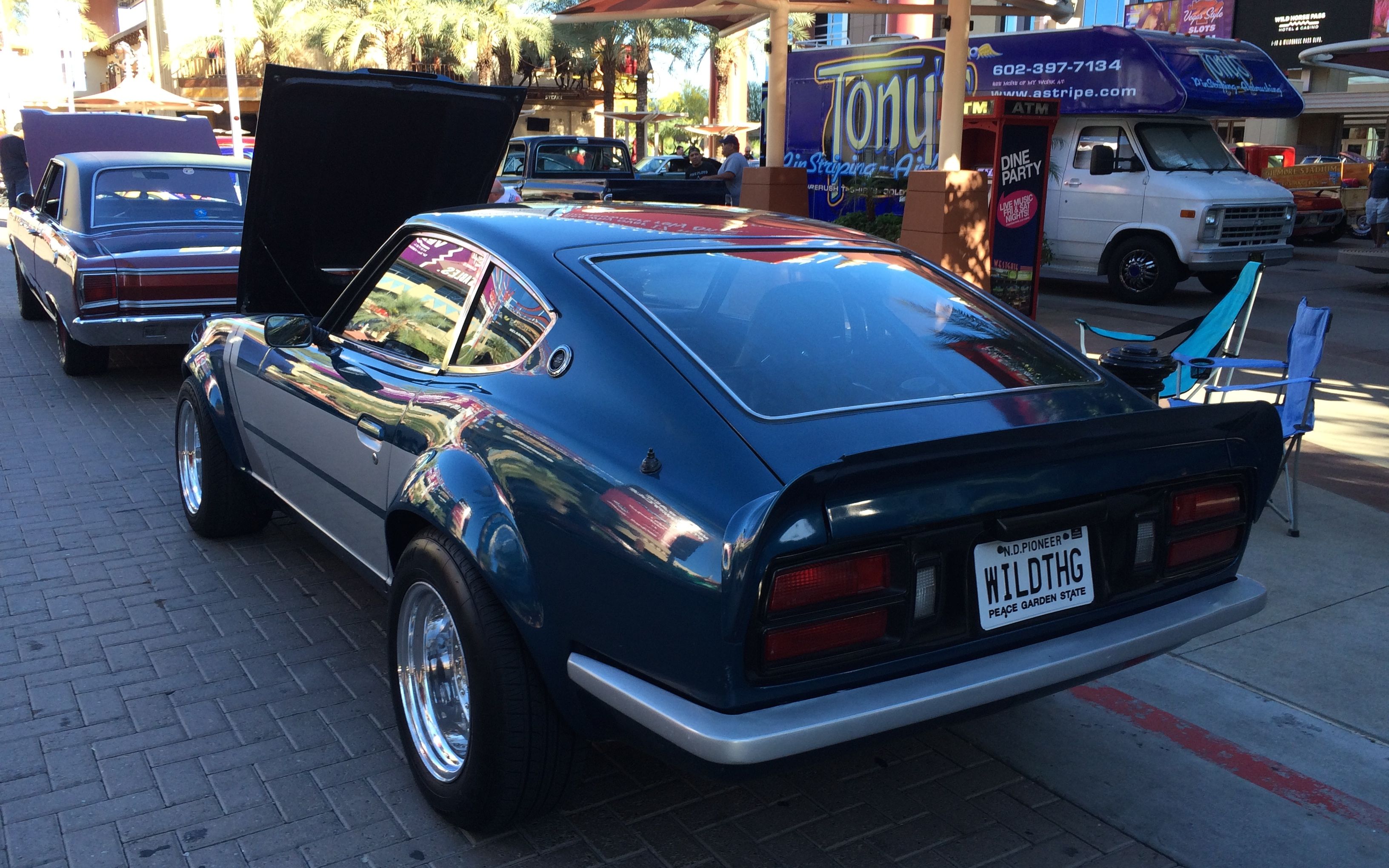
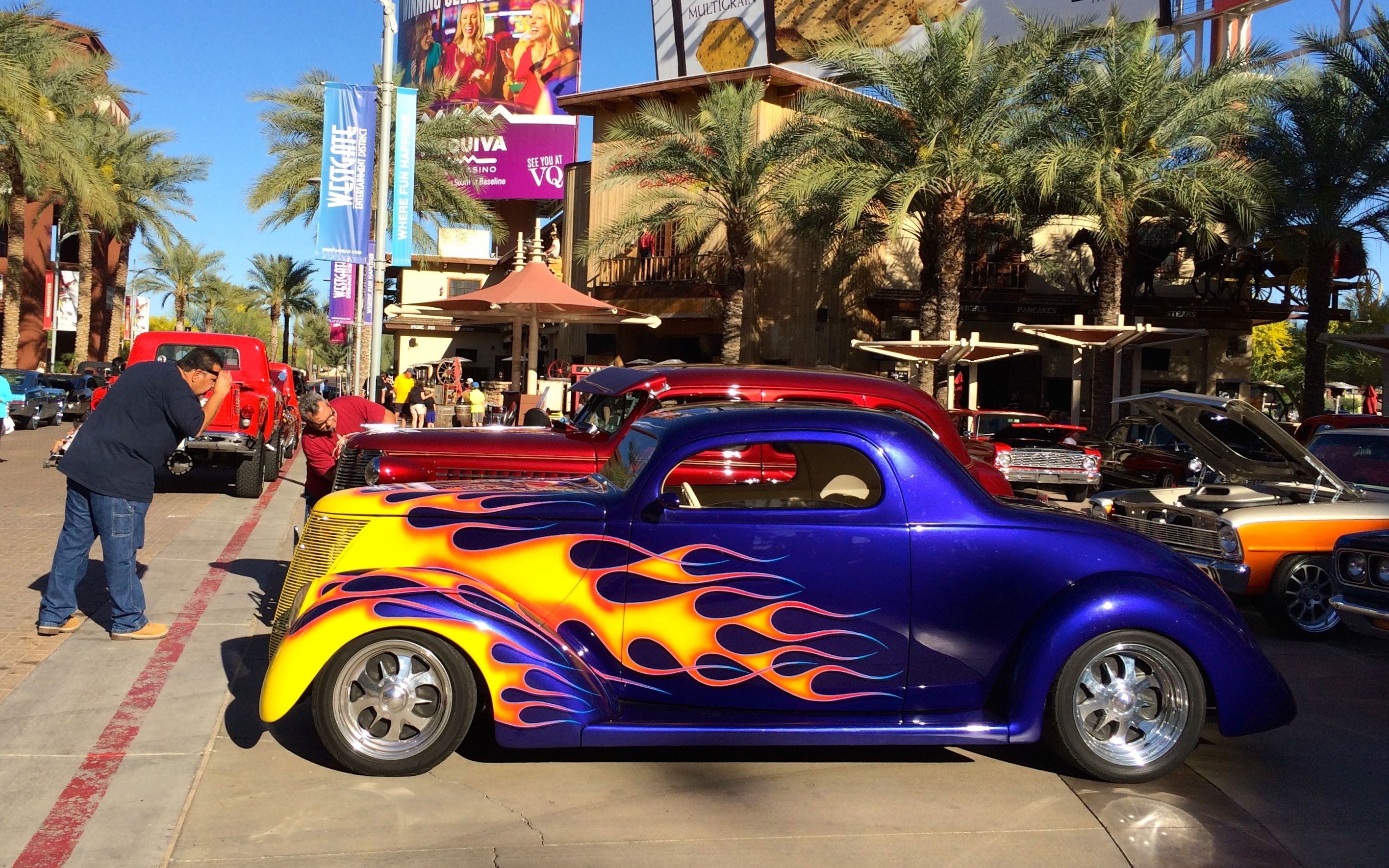
We had a nice assortment of snacks. When we left, we walked right into a vintage car show in the plaza in front of the restaurants.
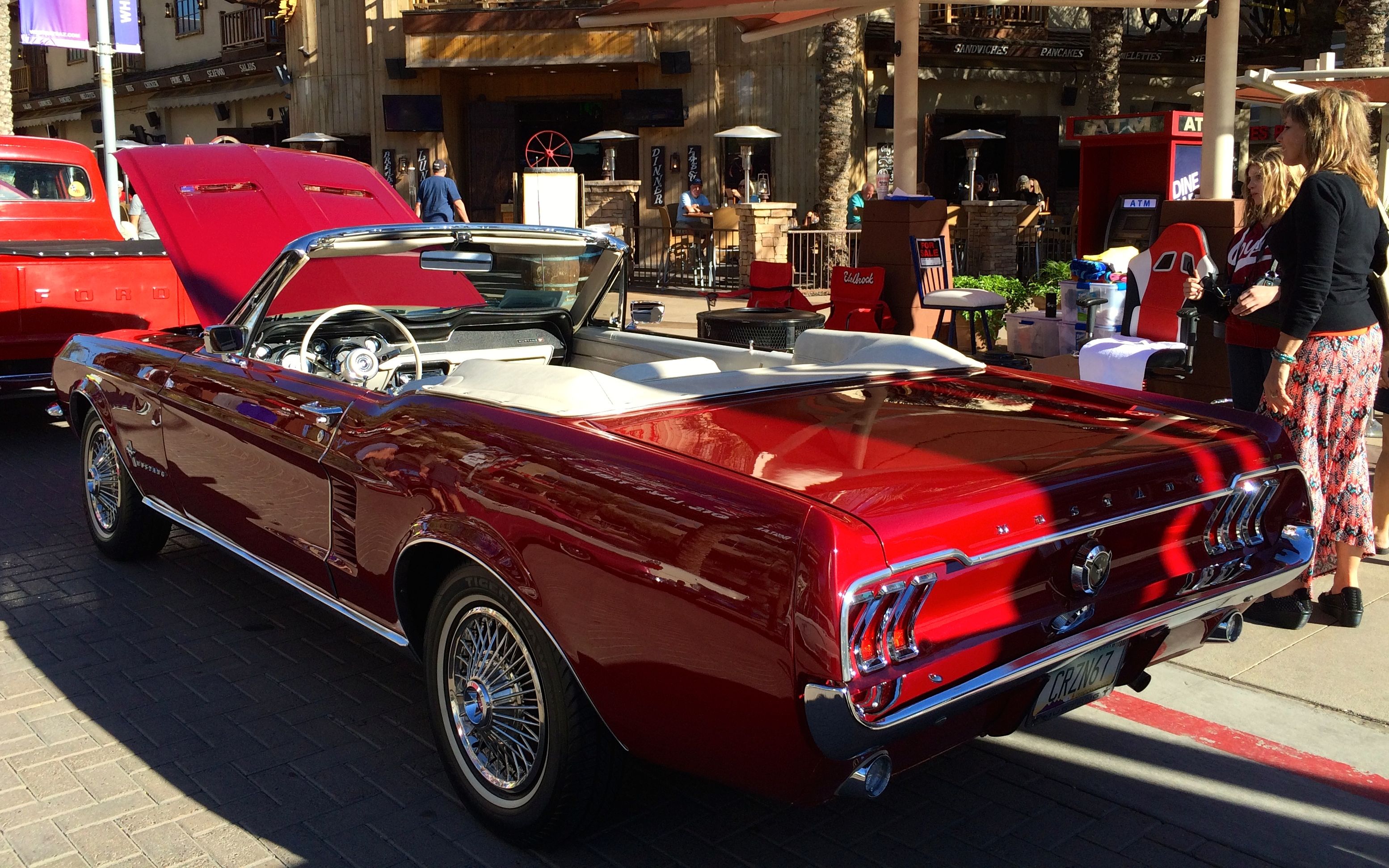
People were there and happy to talk about their cars. Of course, a Mustang is readily identifiable.
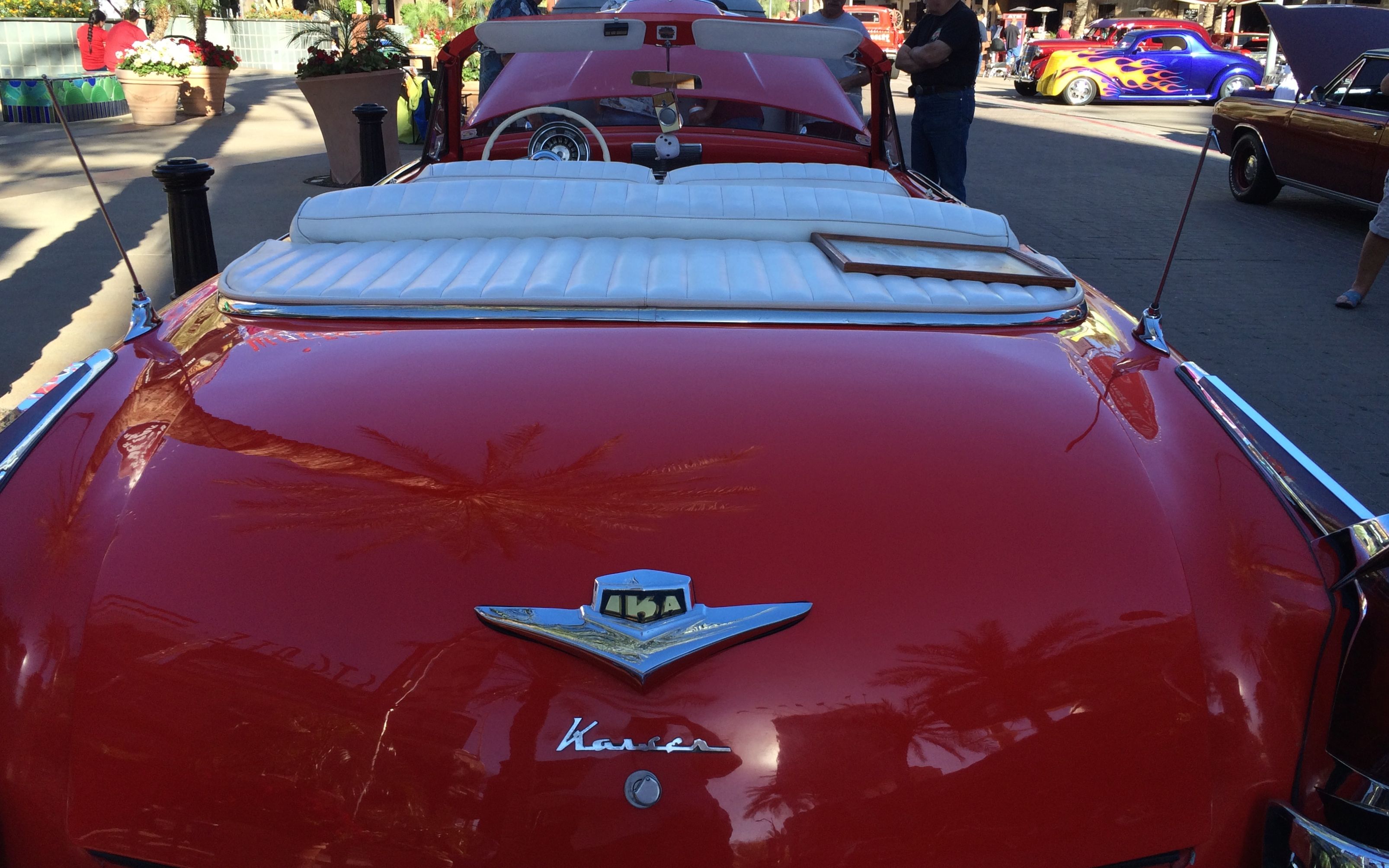
But some were unfamiliar. I don’t remember a Kaiser – although I am sure my father would have known all about it!
I know he fixed up a few of these Zs in his day.
This one was my favorite, though. It reminded me of my brothers’ Hot Wheels.
Well, glory be! April has been the least expensive month so far this year!
Campsites $477.84
Gas 380.97
Other purchases 347.32
Groceries 212.23
Eating out 167.70
Tourism and entertainment 86.00
RV maintenance 24.95
Laundry 13.50
Tolls and parking 0.00
Truck expenses 0.00
TOTAL $1,732.62
I had been hoping that the campsite expenses would have been lower, especially since I had free camping for eleven nights in April. But, I did spring for private campgrounds for six of those days.
Two nights, I found myself without a campsite and the weather took a turn for the worse, so I bit the bullet and took two nights in a “resort”. All the charm of parking in a gravel parking lot – but they had good showers, laundry facilities, pool and hot tub. I stuck my feet in the hot tub for a few minutes while I was waiting for the clothes to dry.
I sprung for four nights at Rudy’s RV Park just outside Bryce Canyon National Park. I didn’t know what I would find there, so, again, I bit the bullet. Little did I know that there was FREE camping in the National Forest between the RV Park and Bryce Canyon! I was the first person to post about this spot on Campendium.com, so I got to name it! Click on the link if you want to find out what I found.
I also decided to buy one of those trackers that keeps track of steps taken, amount of sleep and pulse rate. I haven’t figured out how to get the pulse function functioning, but I am doing really good with the sleeping.
I’m feeling good about April’s expenses.
I have a feeling that May is going to be another story. But more about that later.
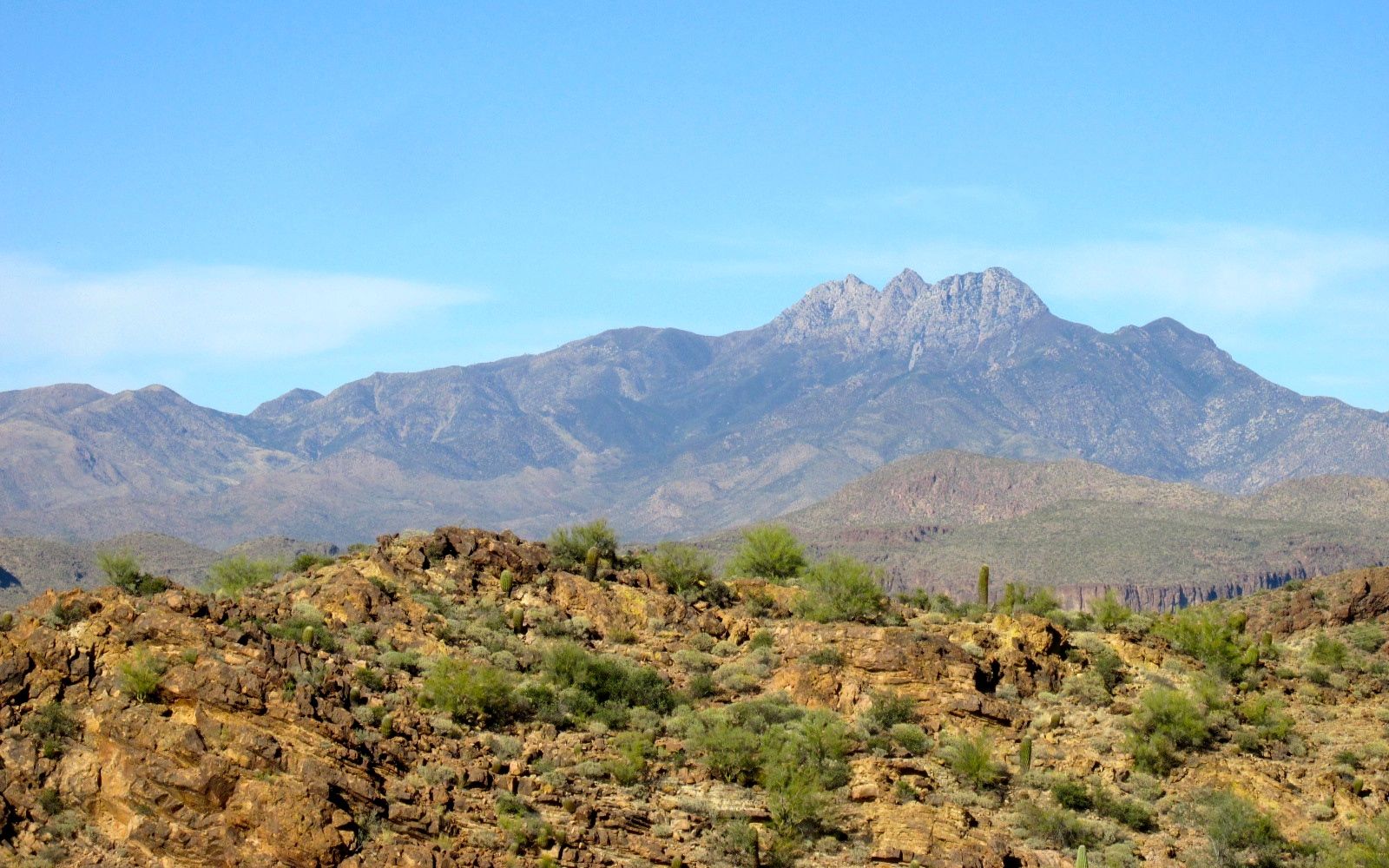
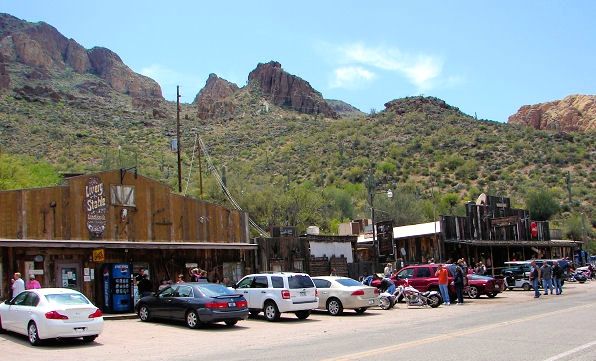
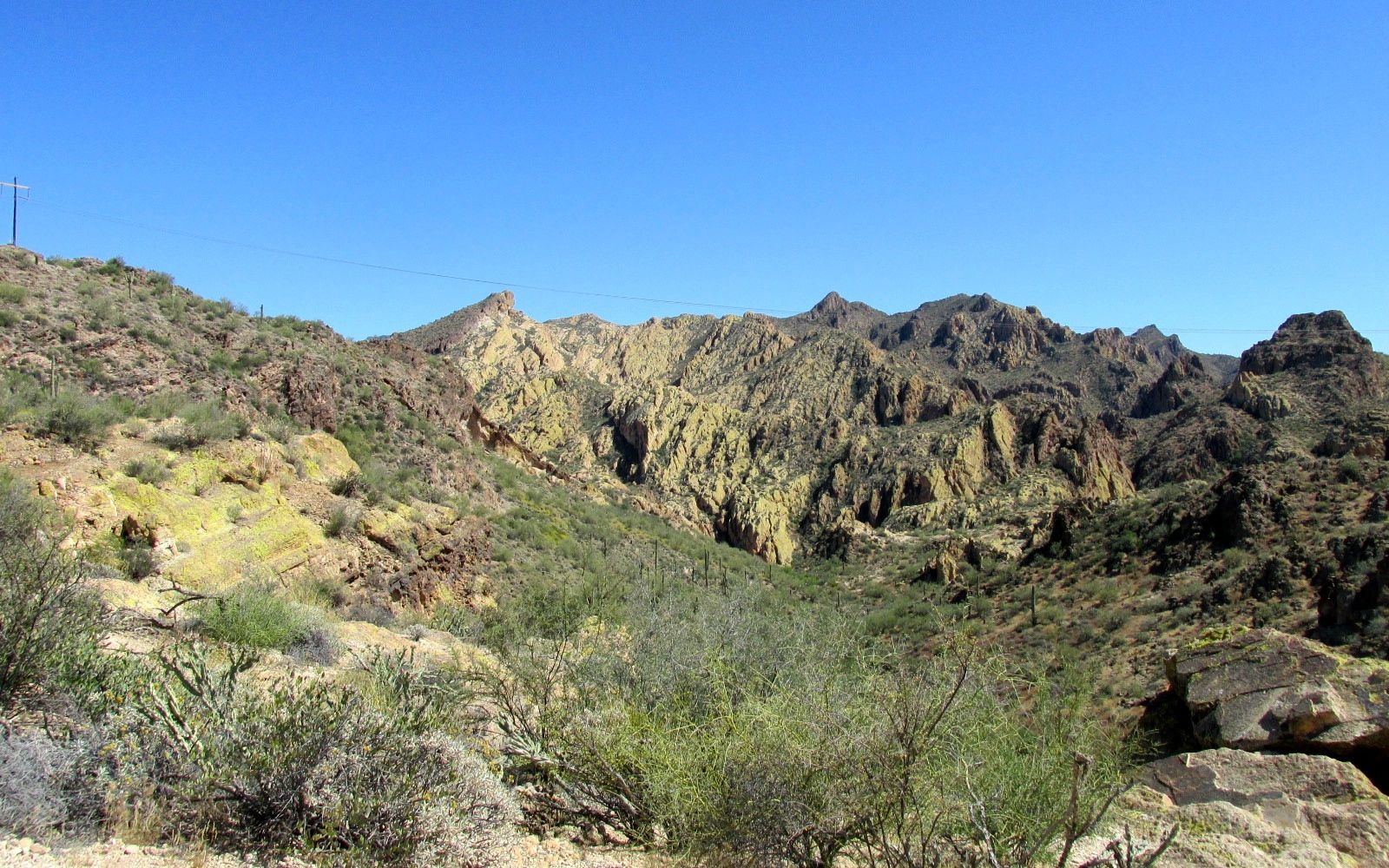
Konnie and I took a day trip out of Phoenix to Tortilla Flat. It’s about an hour drive east of town through the Tonto National Forest in the Superstition Mountain Range. There were some beautiful views!
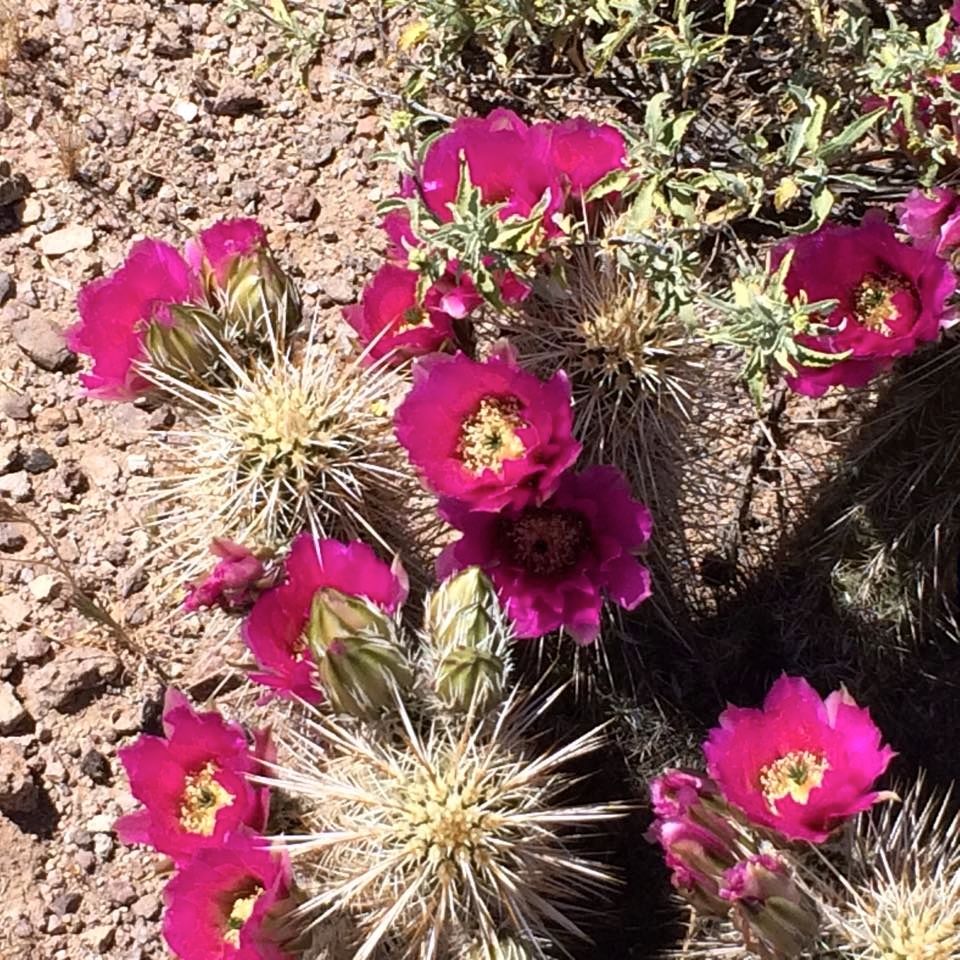
We had to stop and look at the flora.
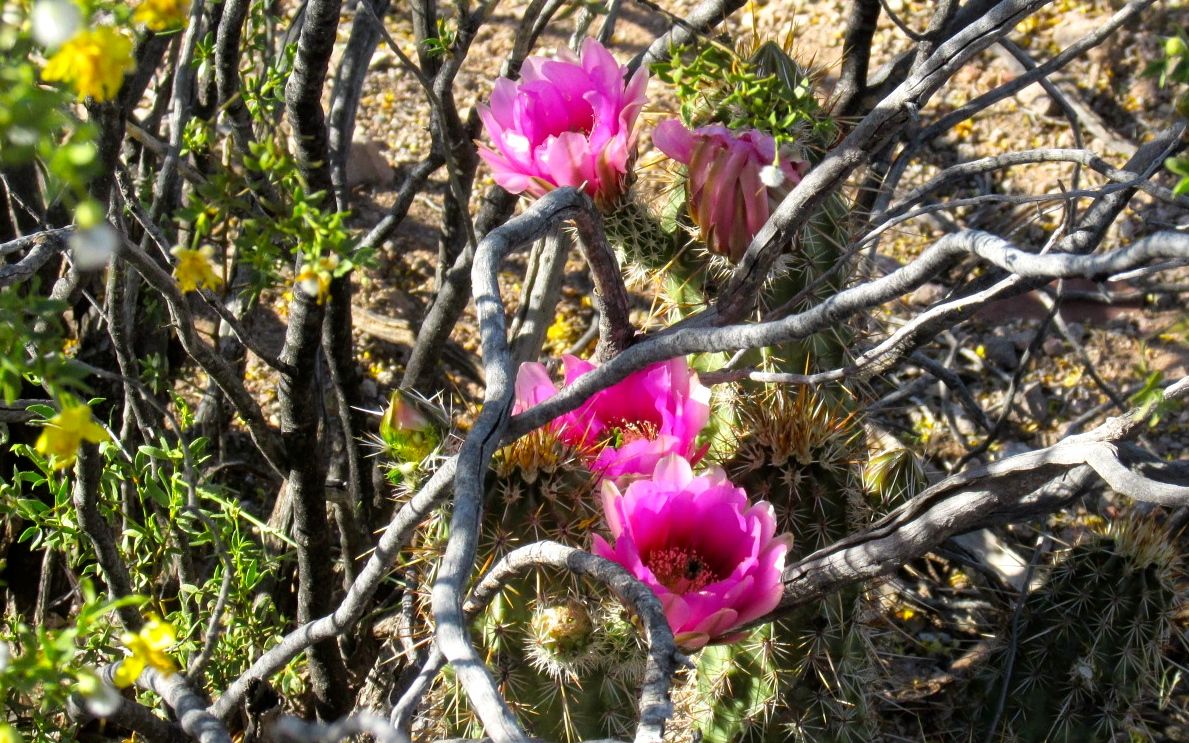
There were pink flowers.
And pink and yellow flowers.
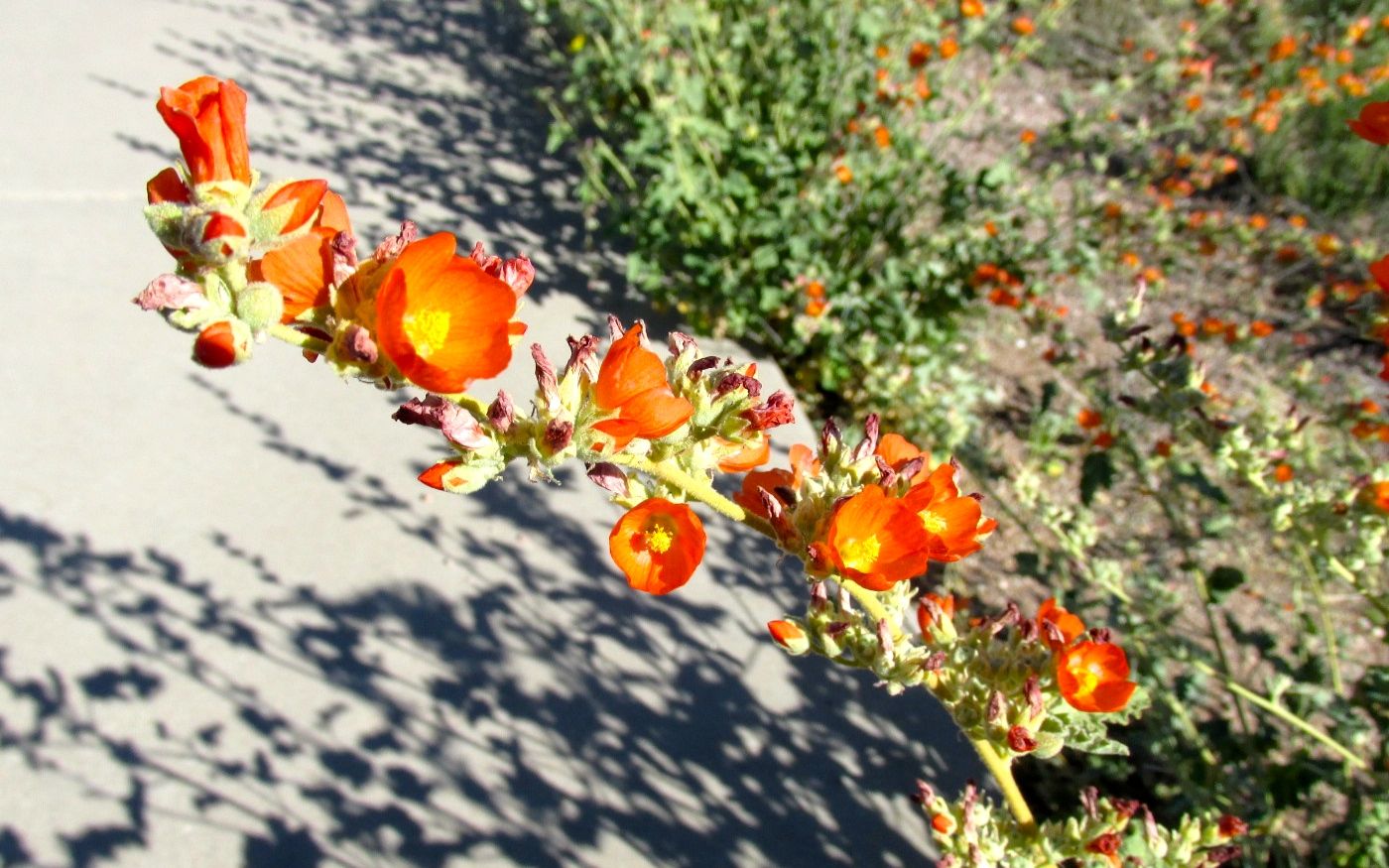
And orange flowers.
We looked for the fauna, too, but all we saw was some sort of lizard running away from us.
It’s so green that it’s almost hard to believe that this is a desert. Phoenix is one of the wettest deserts in the world, according to a statistic I saw somewhere. It gets about 8 inches of rain a year. In contrast, the Sahara gets only about one inch.
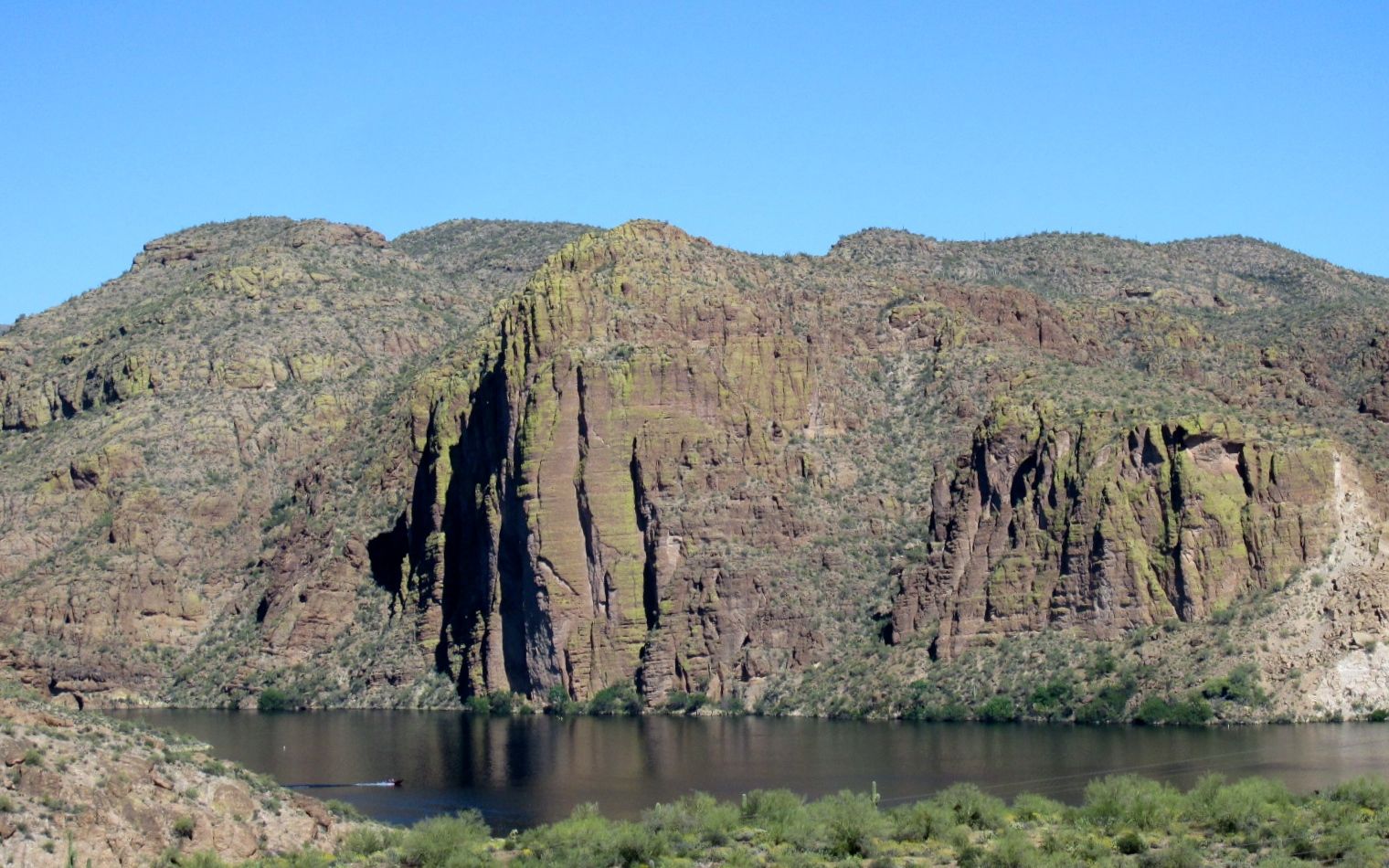
After winding our way up the mountain on the curvy two-lane road, we came to Canyon Lake.
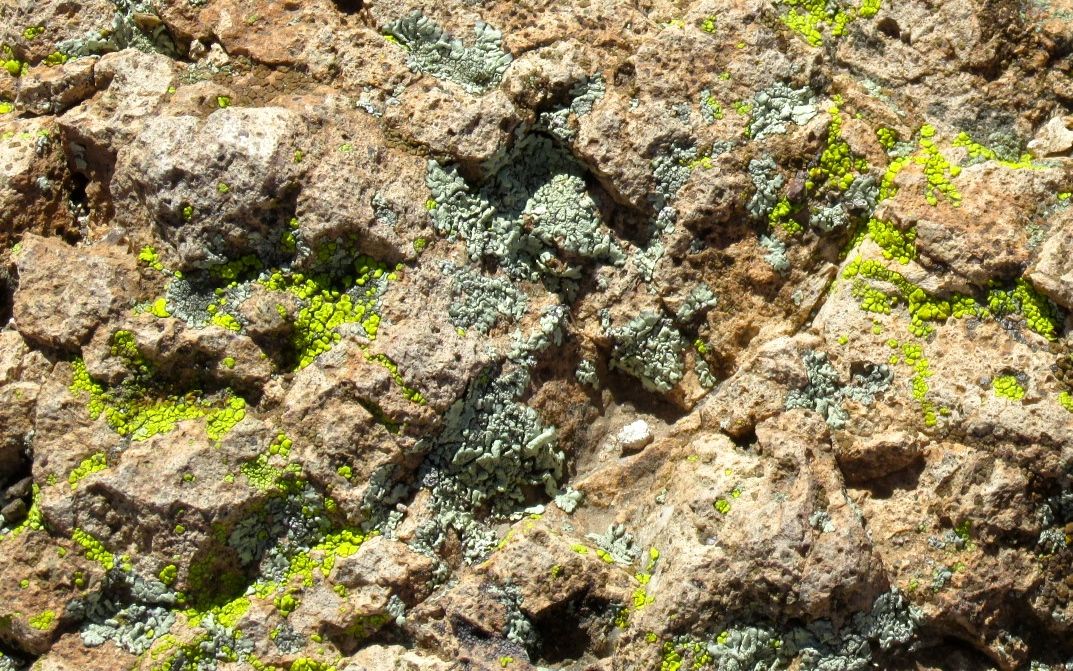
Isn’t it interesting how the rocks look green?
If you get up close, you can see that they are green because of lichens and mosses growing on the rocks.
After we crossed the one-lane bridge, of which I have no photo, we arrived at the central business district of Tortilla Flat.
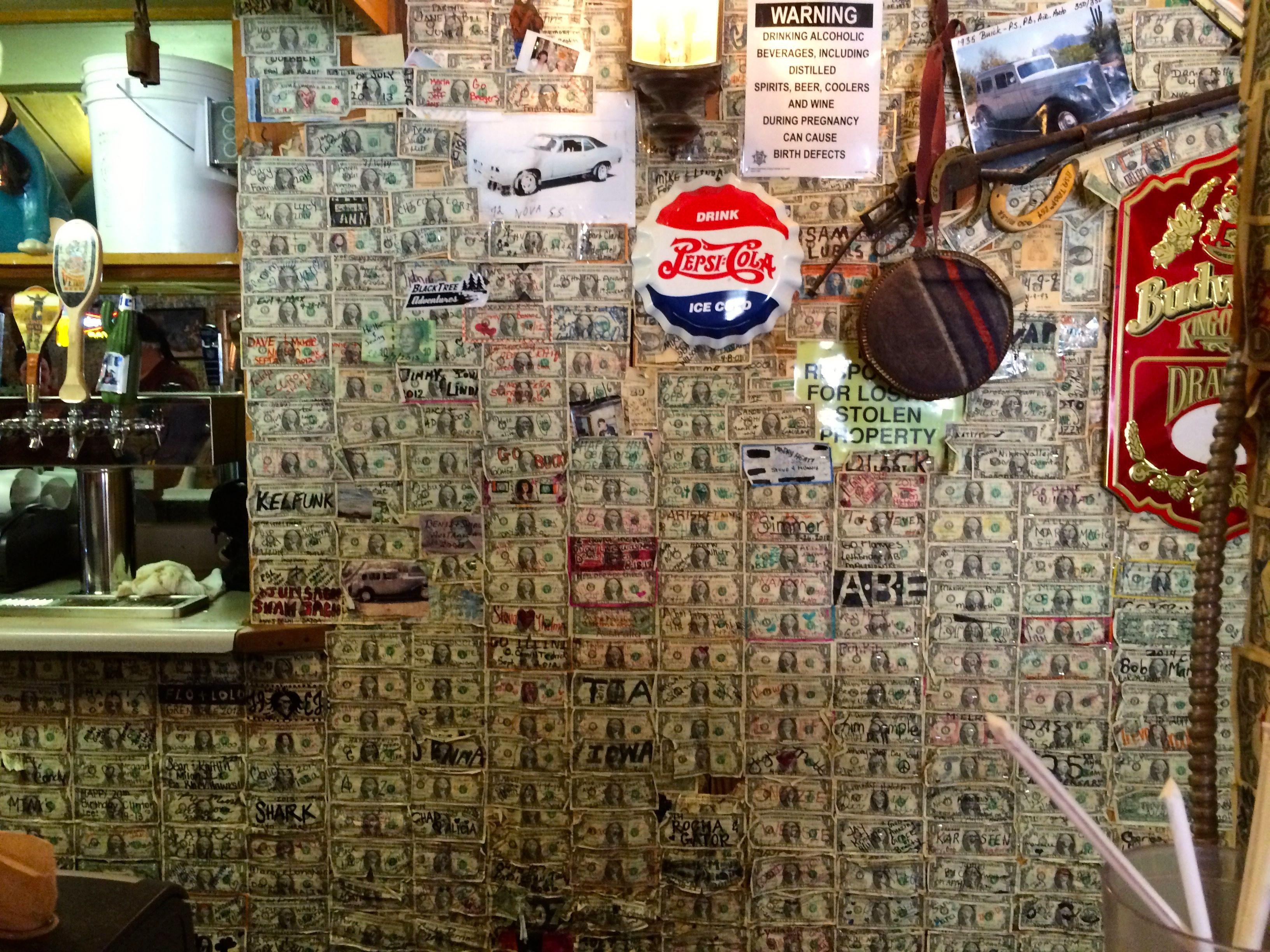
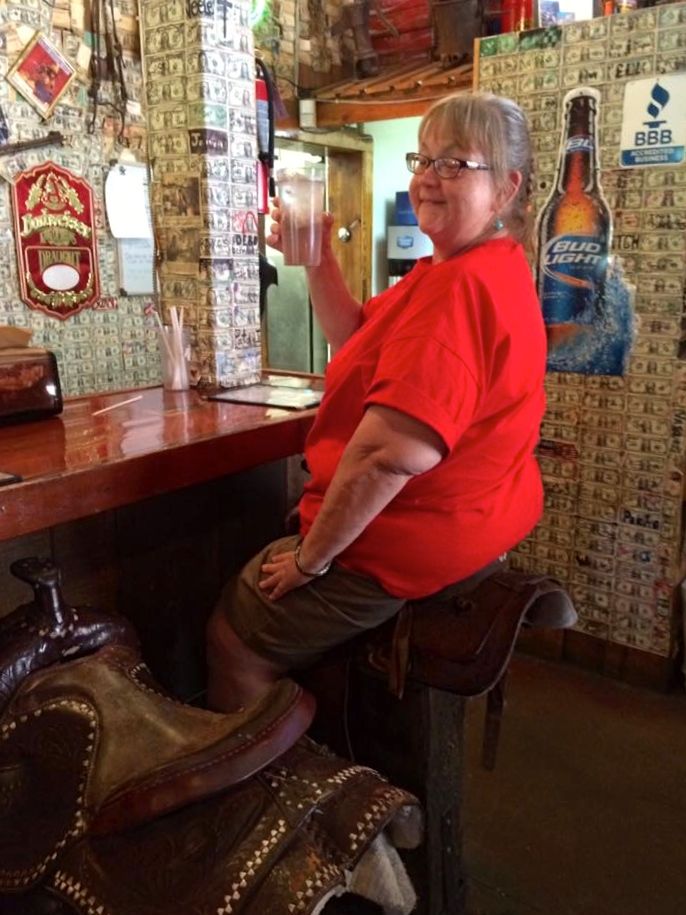
Our objective was to have lunch at Superstition Saloon and Restaurant. Konnie had told me about the walls covered with dollar bills.
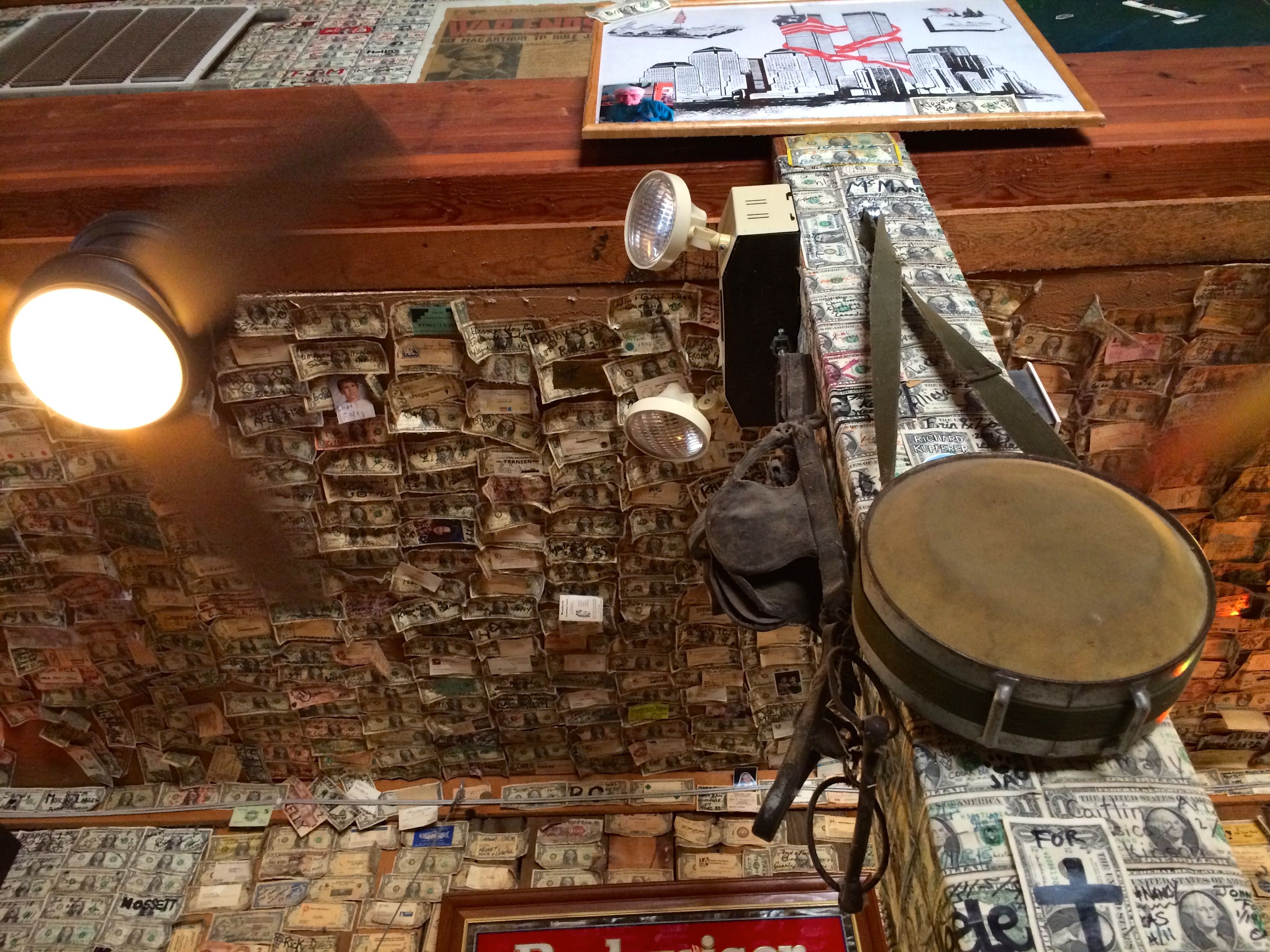
The ceilings were adorned with the mighty greenback as well.
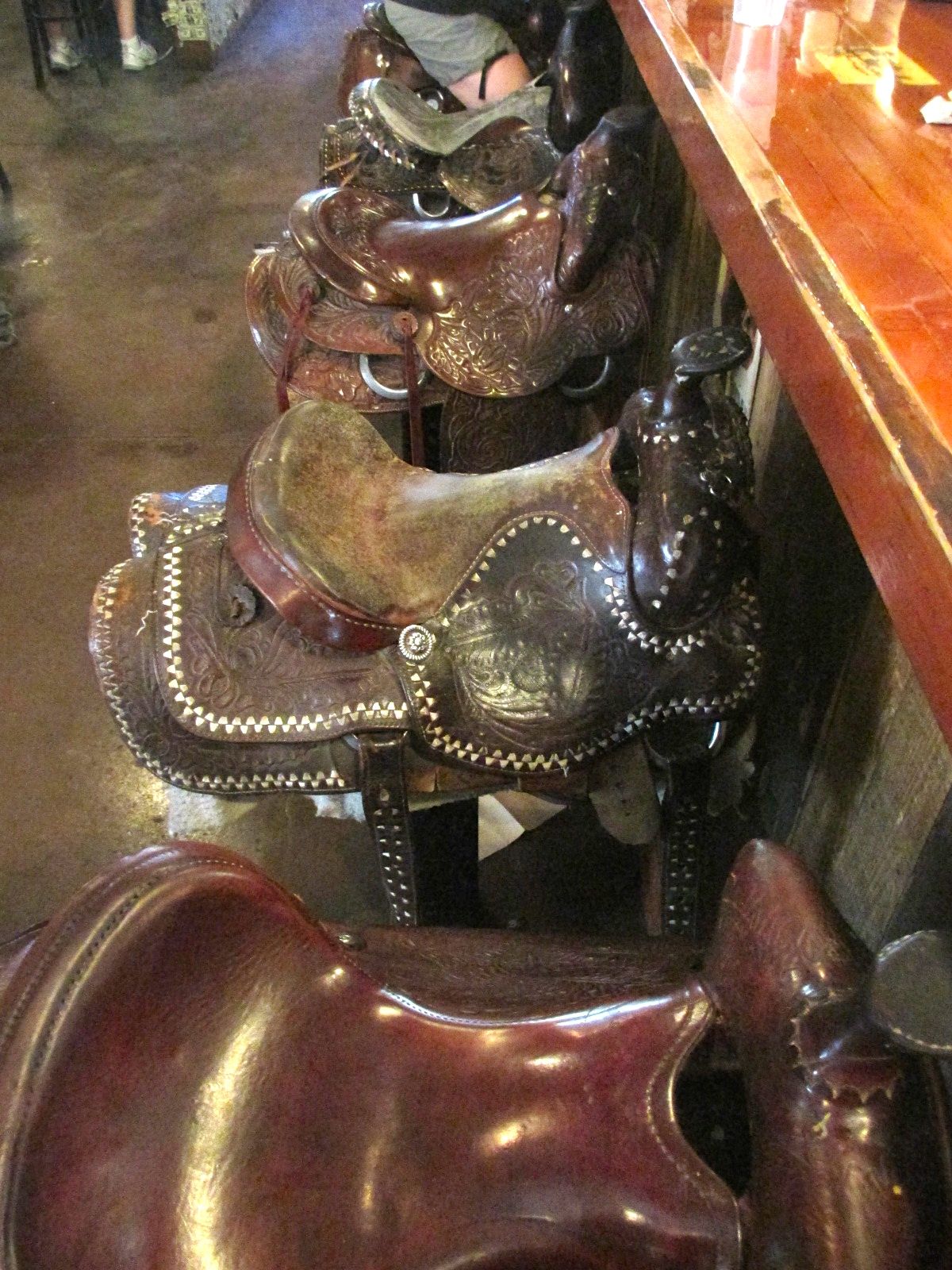
What she didn’t tell me about were the saddles used as stools at the bar.
We didn’t have to sit at the bar, but there was quite a wait to get a table. So, we mounted up and had lunch at the bar.
It would have been a little easier if they had left the stirrups attached.
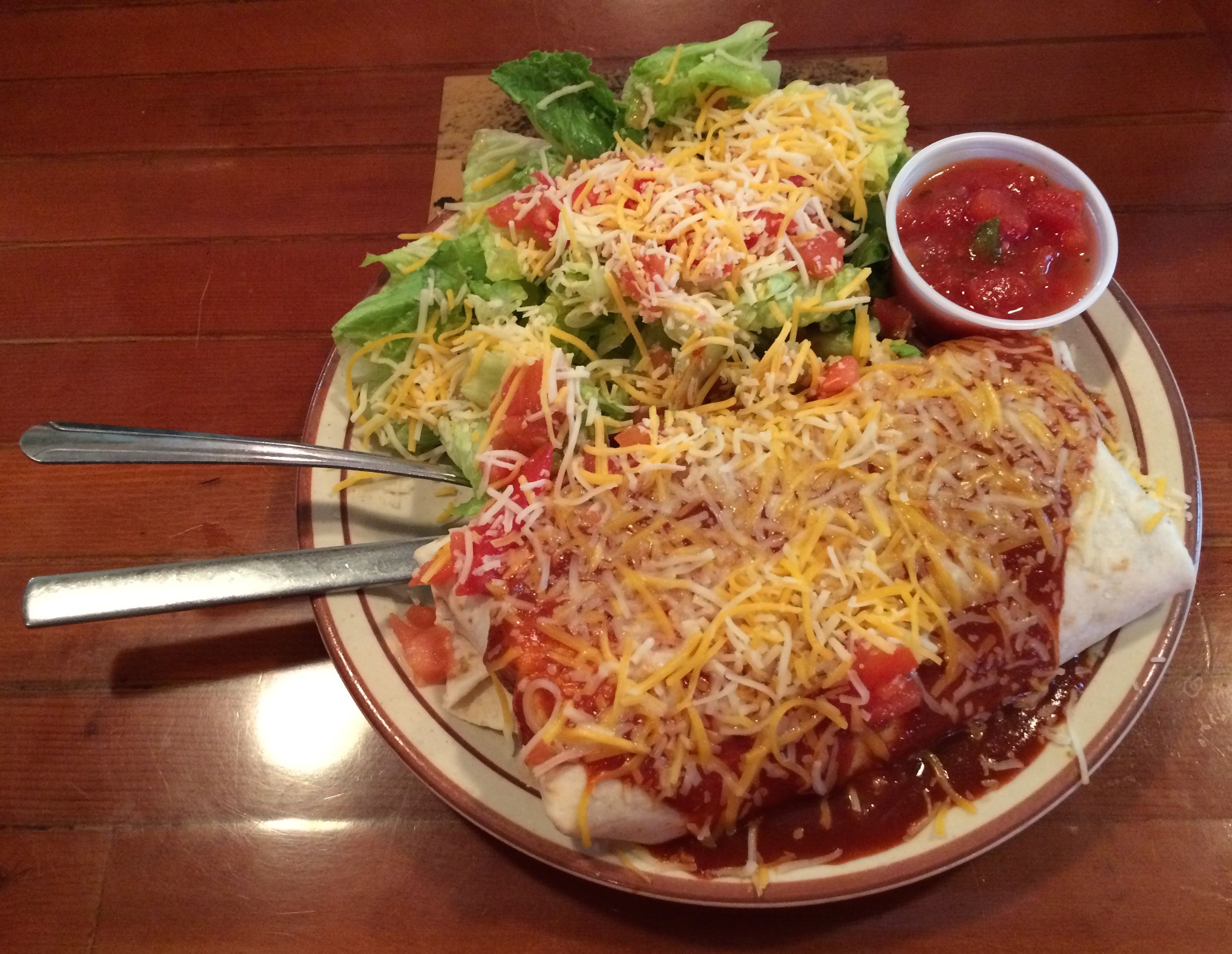
I opted for the beef and bean burrito.
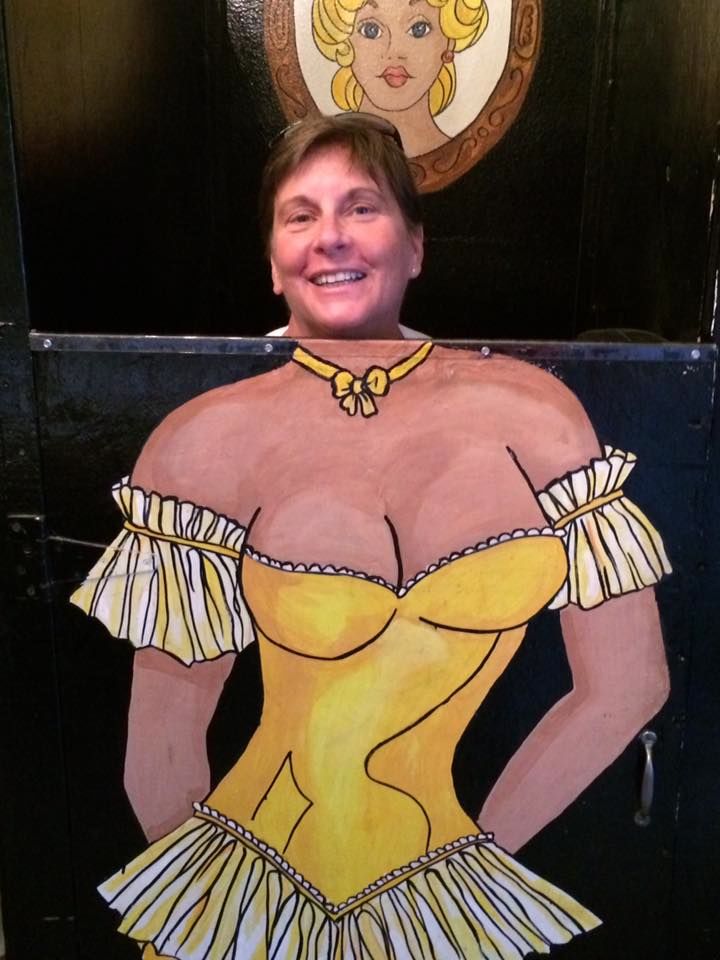
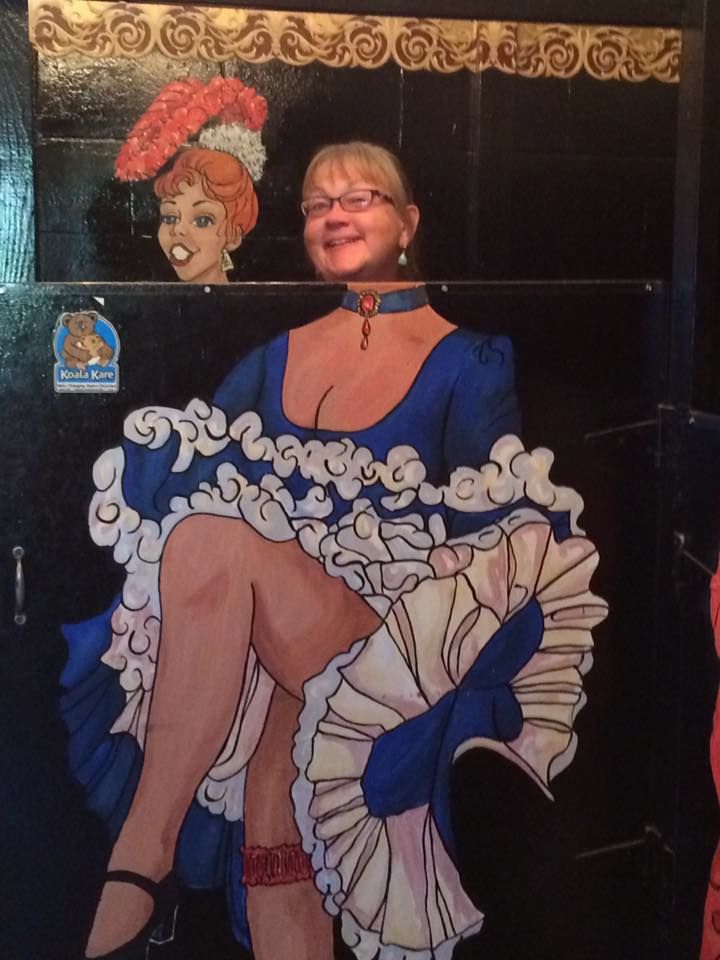
Everyone was telling us that we needed to be sure to take our pictures in the restroom.
Here’s Konnie!
And here I am!
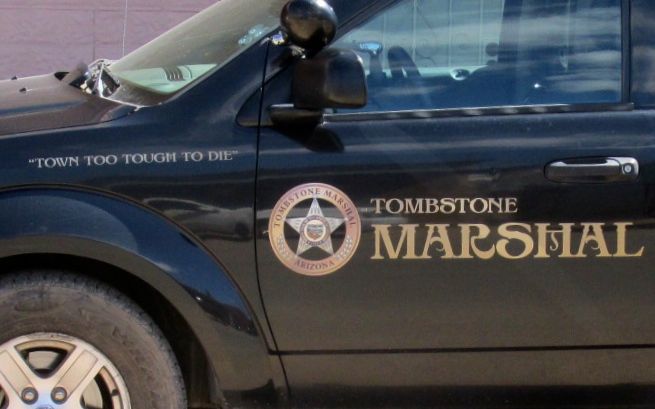
Oddly enough, Tortilla Flat bills itself as “The town to tough to die”. Hmm, where have I heard that before? Oh, right! Tombstone!
They also claim to have a population of six. Could be. It was crowded when we were there – but it was lunch time!
According to my research, Tortilla Flat started out in 1904 as a stagecoach stop for freight haulers on their way to the construction site for Roosevelt Dam. After they built the road, Roosevelt Dam became a big tourist attraction. Tortilla Flat was a stage stop for tourists and mail carriers through the 1930s. The interesting name, Tortilla Flat, came from a nearby butte shaped like a tortilla. I have to admit that I didn’t notice the tortilla-shaped butte while we were there.
After we finished out lunch and took our pictures in the restroom, we went to check out the other offerings of the town. Believe it or not, they actually had souvenirs for sale! (Where is that sarcasm font when you need it?)
At the ice cream shop, I decided to try the prickly pear ice cream. It was a lovely shade of pink, but I didn’t care for it. Neither did Konnie. I ended up throwing it out. Can you believe it? Ice cream that wasn’t worth eating?
On the way back to the city, we made a few more stops to take in the beauty.
Here is Konnie enjoying the wide open spaces.
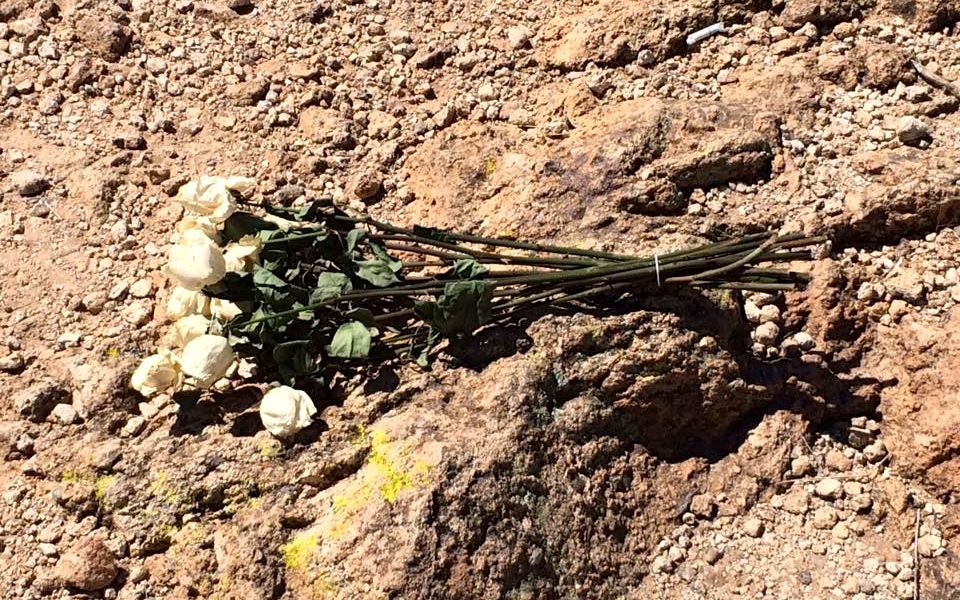
At one pull-off, we came across this bouquet of white roses left by the edge of a drop off. I wonder what the story was there. I can imagine it was a sad one.
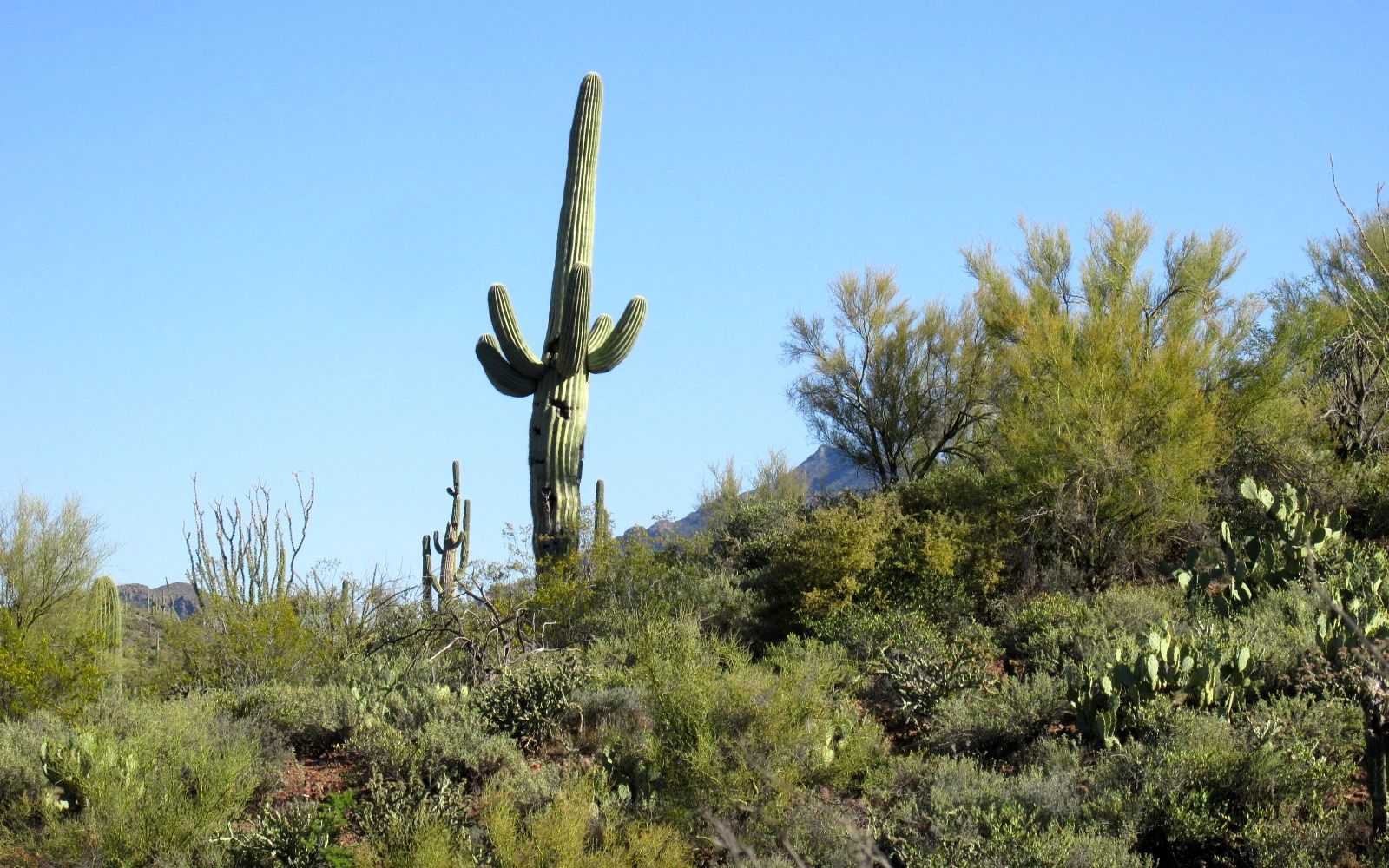
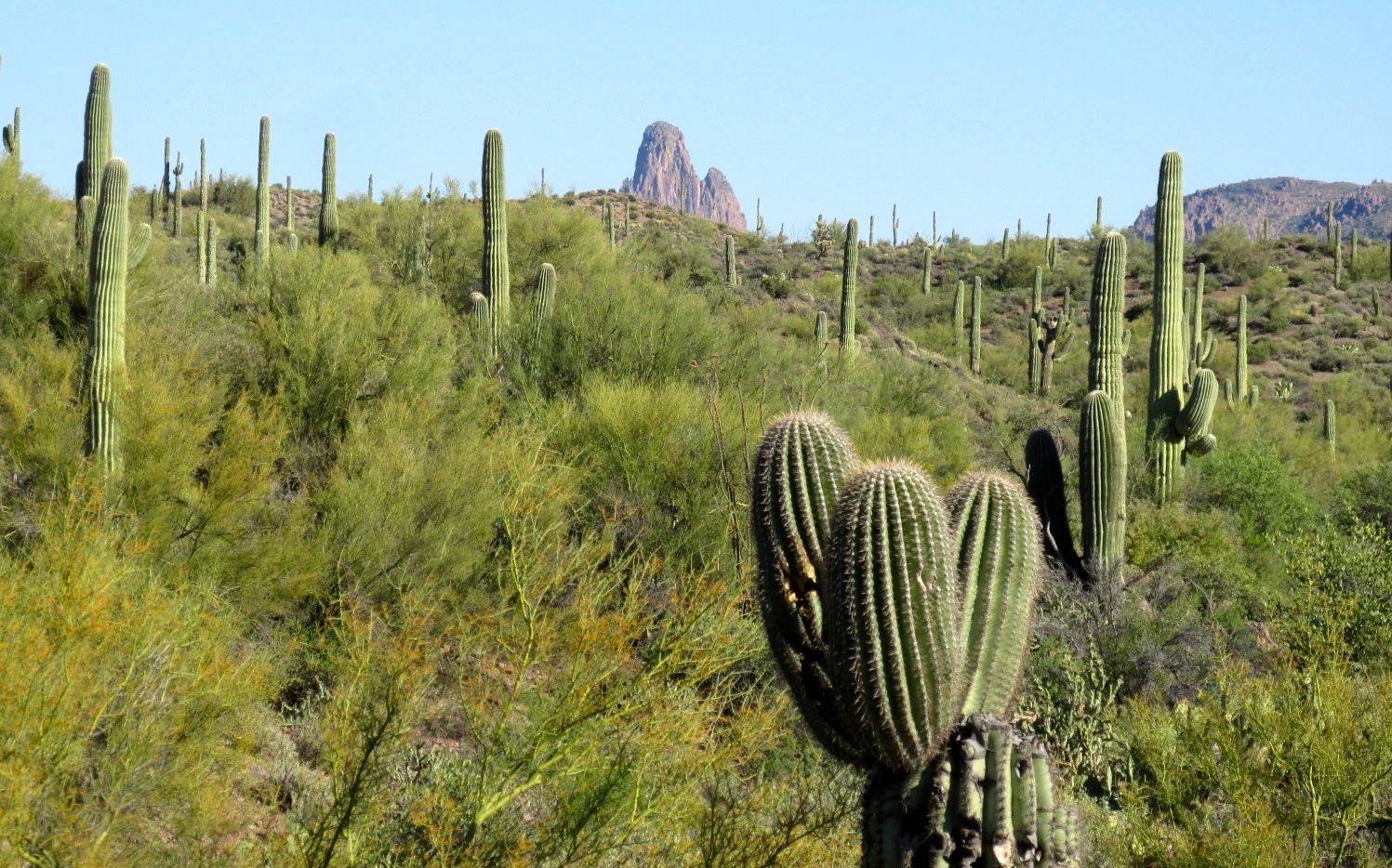
We saw the formation known as “The Weaver’s Needle”, rising up over the saguaro cactuses.
We had a lovely day, and it was time to be getting back. But I like the question this sign from the souvenir shop raises:
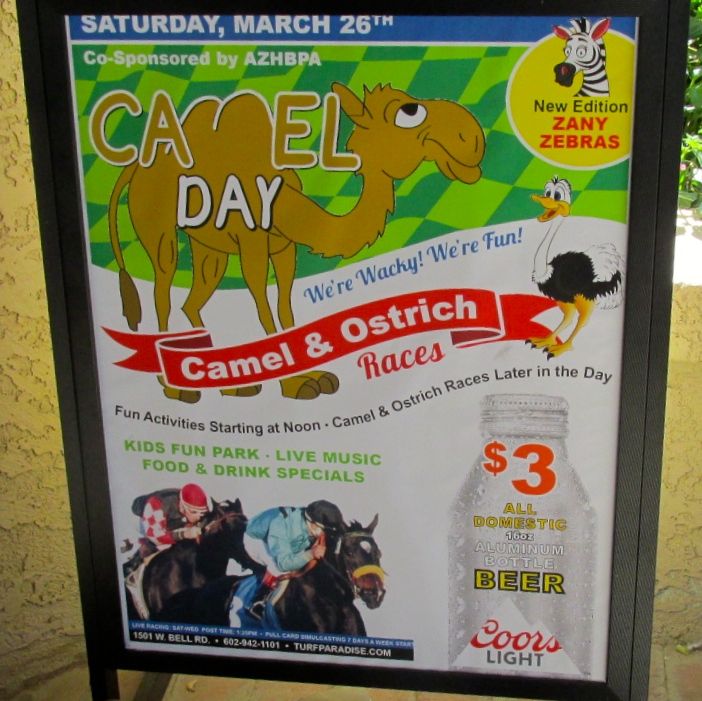
I admit that I do not normally go to the horse races. I vaguely remember going to the races when I was visiting friends in Chicago decades ago, but I don’t remember much about it. But, this race program sounded interesting. They were going to be running camels, ostriches and zebras! How could we resist?
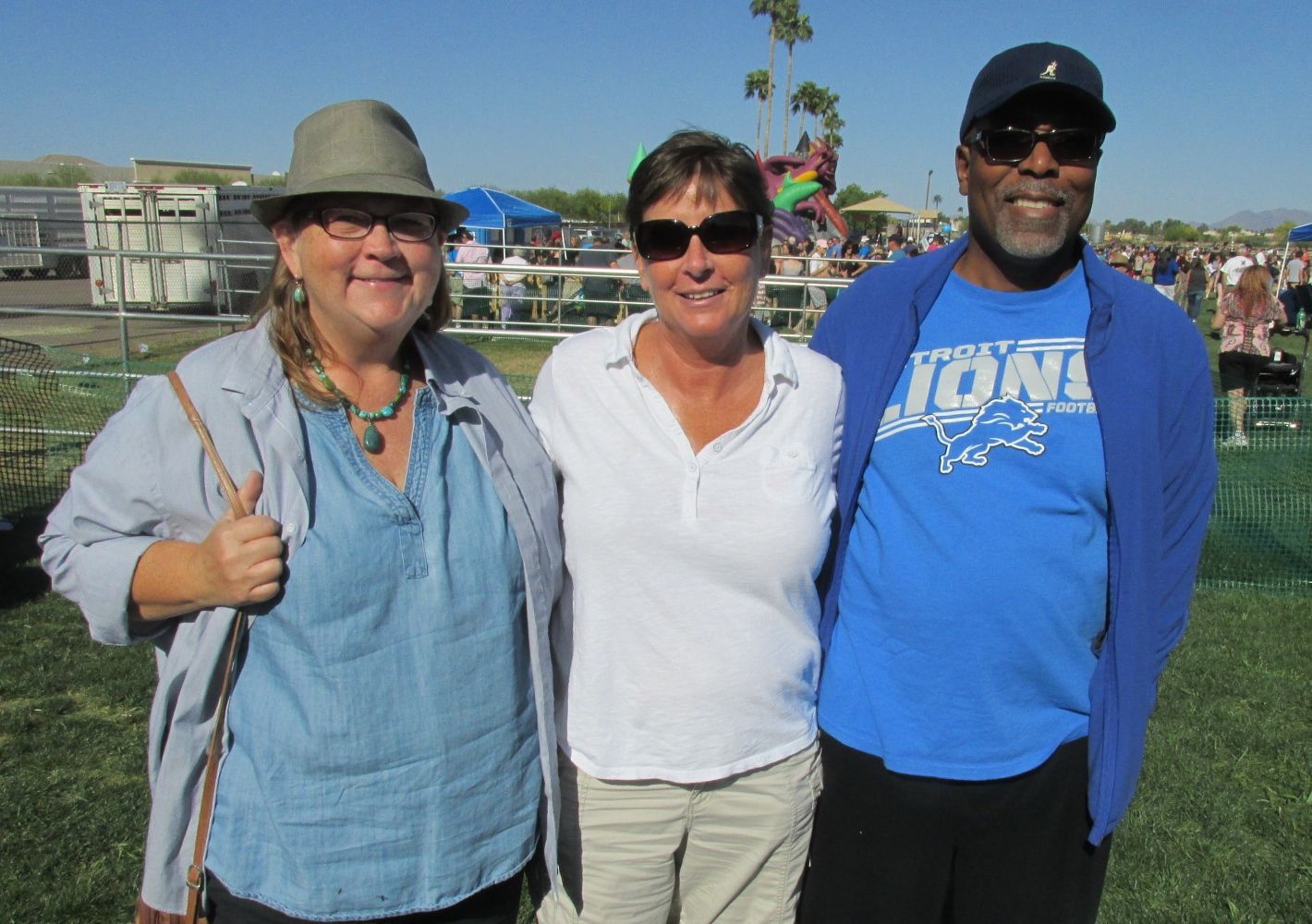
Neither Konnie nor Michael nor I really knew what was going on, but after Michael found a place to park – which was no mean feat – we plunked down our money and found a seat in the grandstand.
There were a few horse races first.
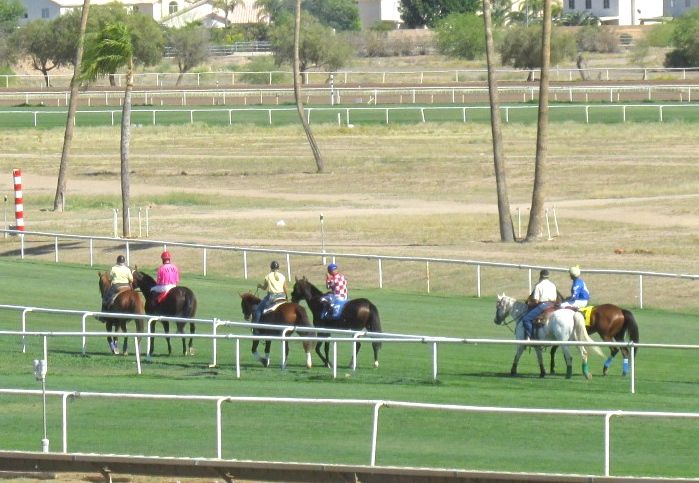
It was interesting trying to figure out what was going on. It seems that each race horse had a non-racehouse that escorted him to the gate. A horsey buddy system!
Here they are – heading to the gate.
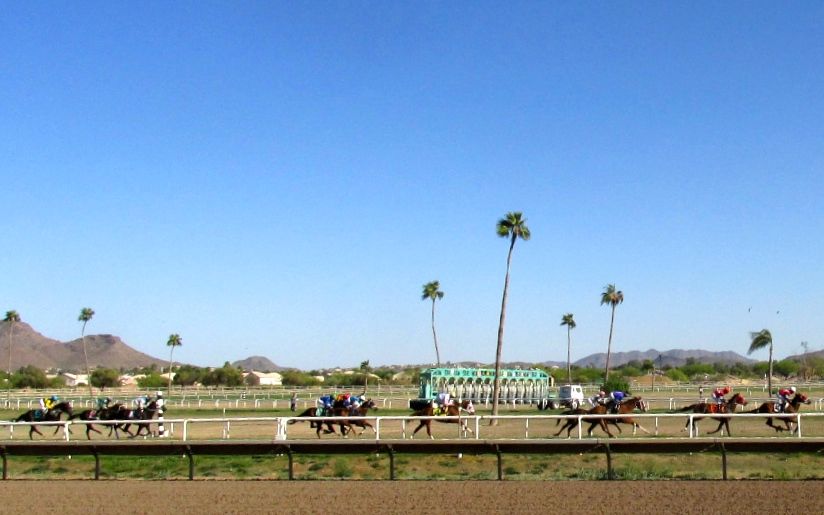
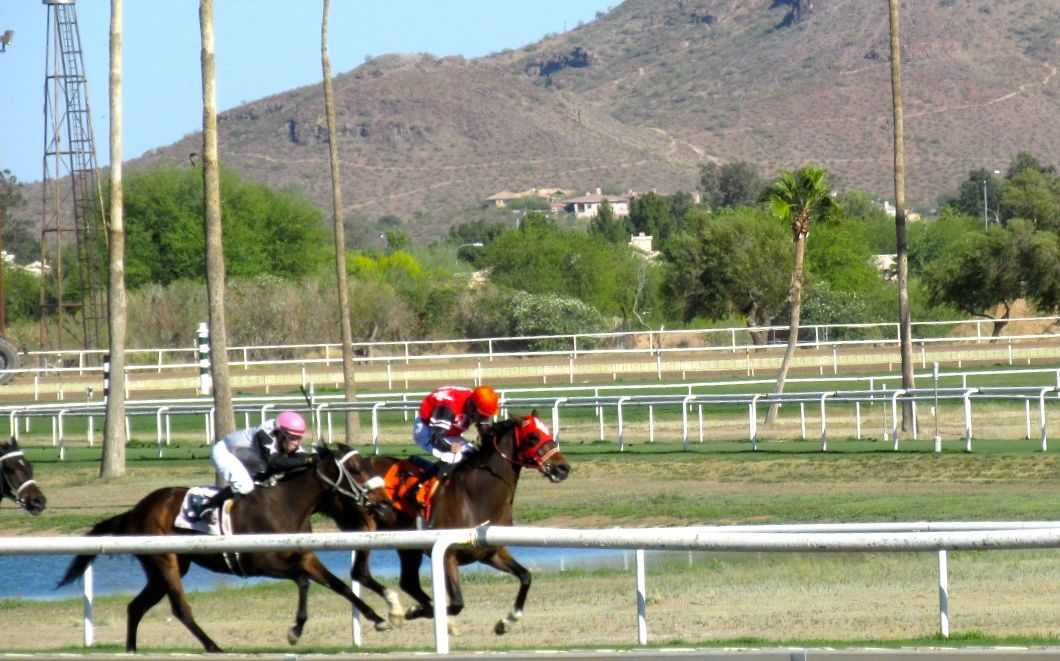
They go thundering by.
Eventually, they cross the finish line. Some are winners, some aren’t. The bets are paid off and about half an hour later, they run another race.
We wandered down from the grandstand to see what else we could see.
We found a guy snapping photos with his own camera and got into a conversation with him. I asked him if he wouldn’t mind taking a shot of us – and here we are!
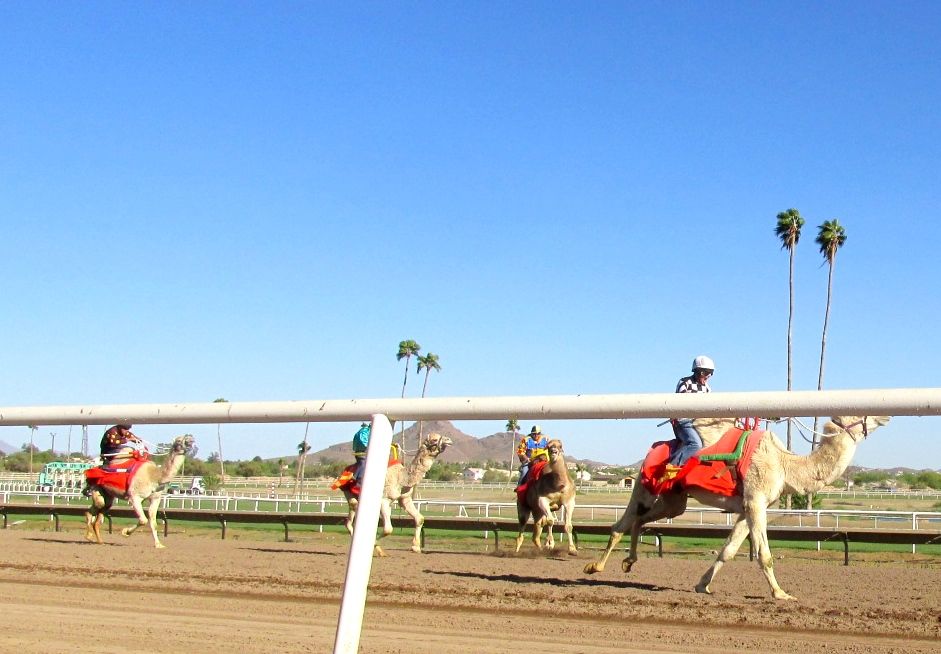
They had the camels out for us too look at. When they took them away, we figured it was time for the races we came to see.
There go the camels!
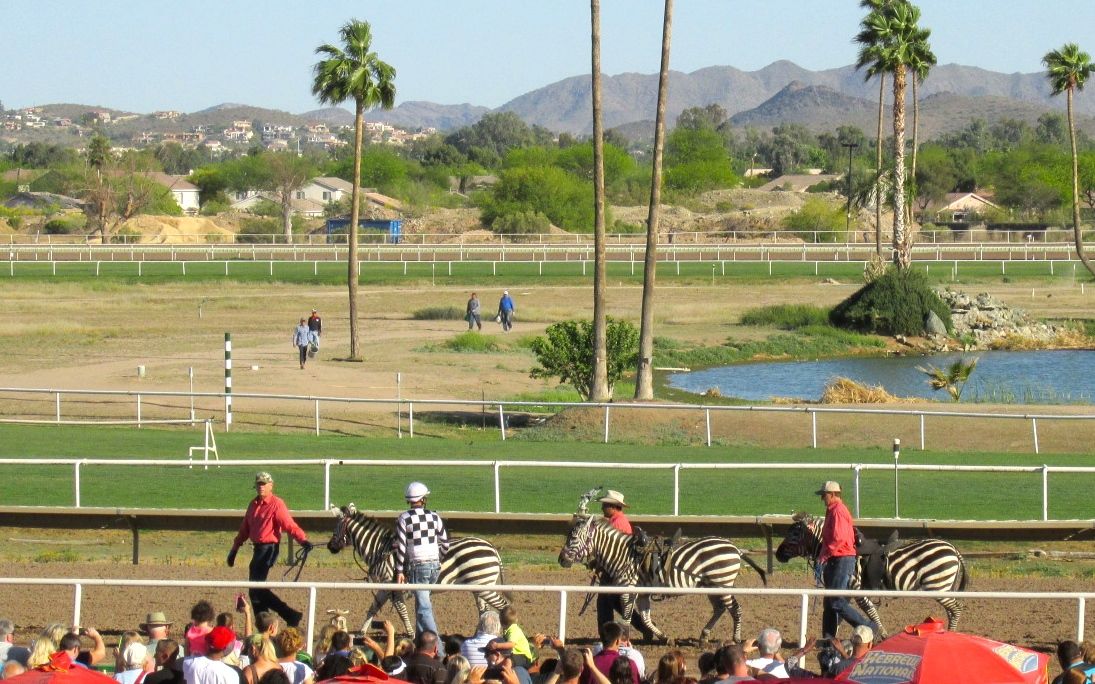
Here are the zebras being led to the starting gate.
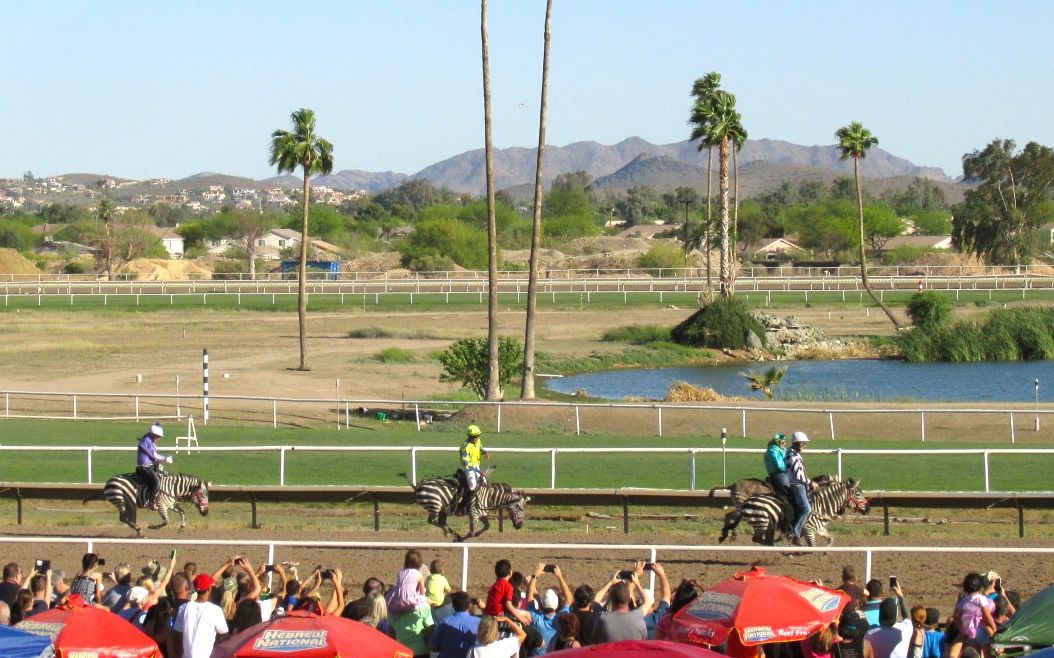
And there they go!
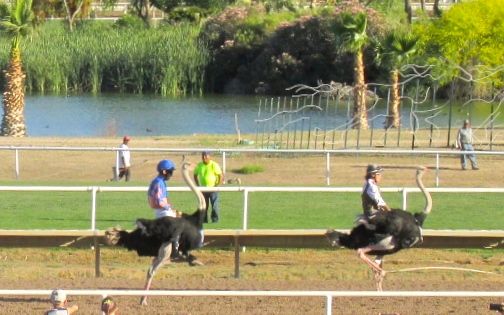
The last race we stayed for was the ostrich race. Here they are! Coming out of the gate!
They actually rode the ostriches and those birds could really move!
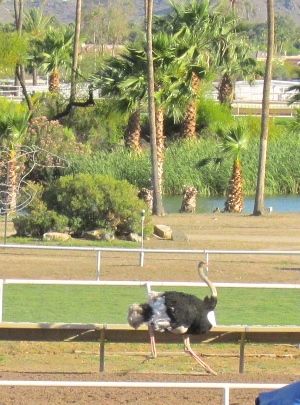
This one managed to go faster that the others because he was able to get rid of his rider.
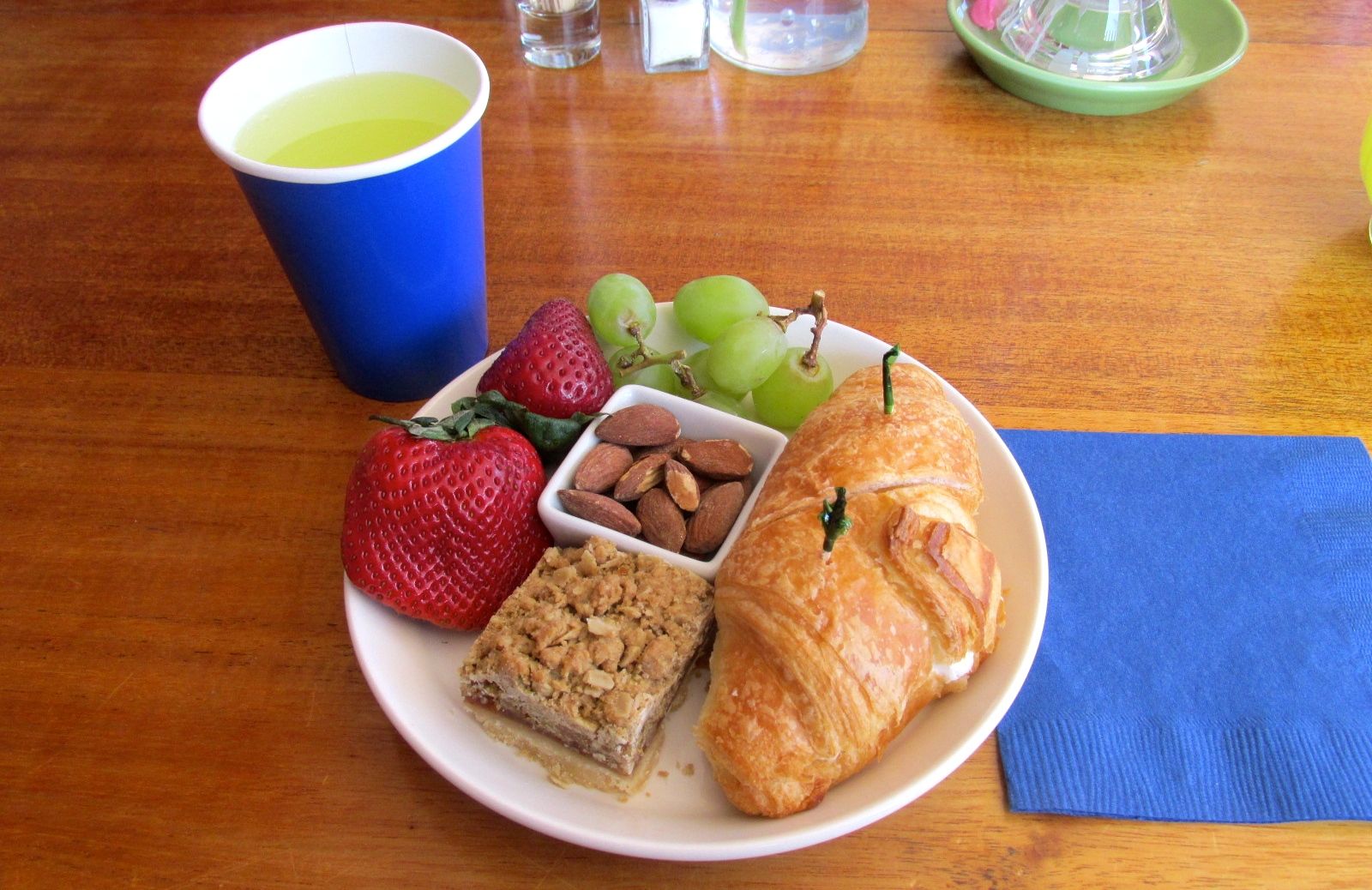
After passing the Chinese terracotta, we headed to the dining room that has been relocated to the other side of the building. They told us that the tour included a snack, but this was an elegant light lunch.
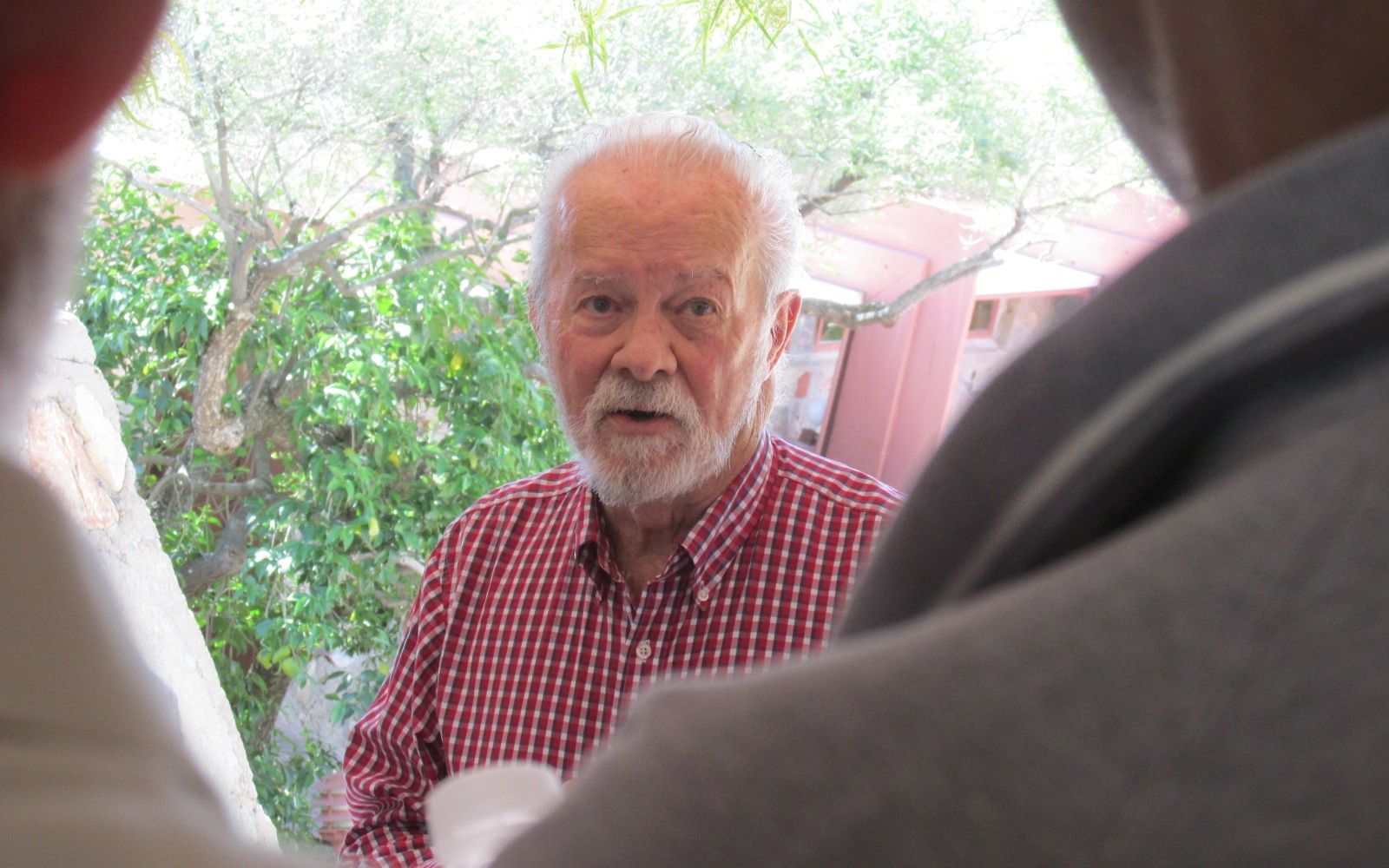
As we tucked in to our tasty treats, we were spoken to by Wright Fellow Arnold Roy.
It was inspiring to hear from one of the Fellows that actually worked with Wright. The Fellows can stay on as long as they care to live in community with the current fellows. They move to Taliesin in Spring Green, Wisconsin with the rest of the crew in the summer. In fact, I think I may have see him when I was there last summer.
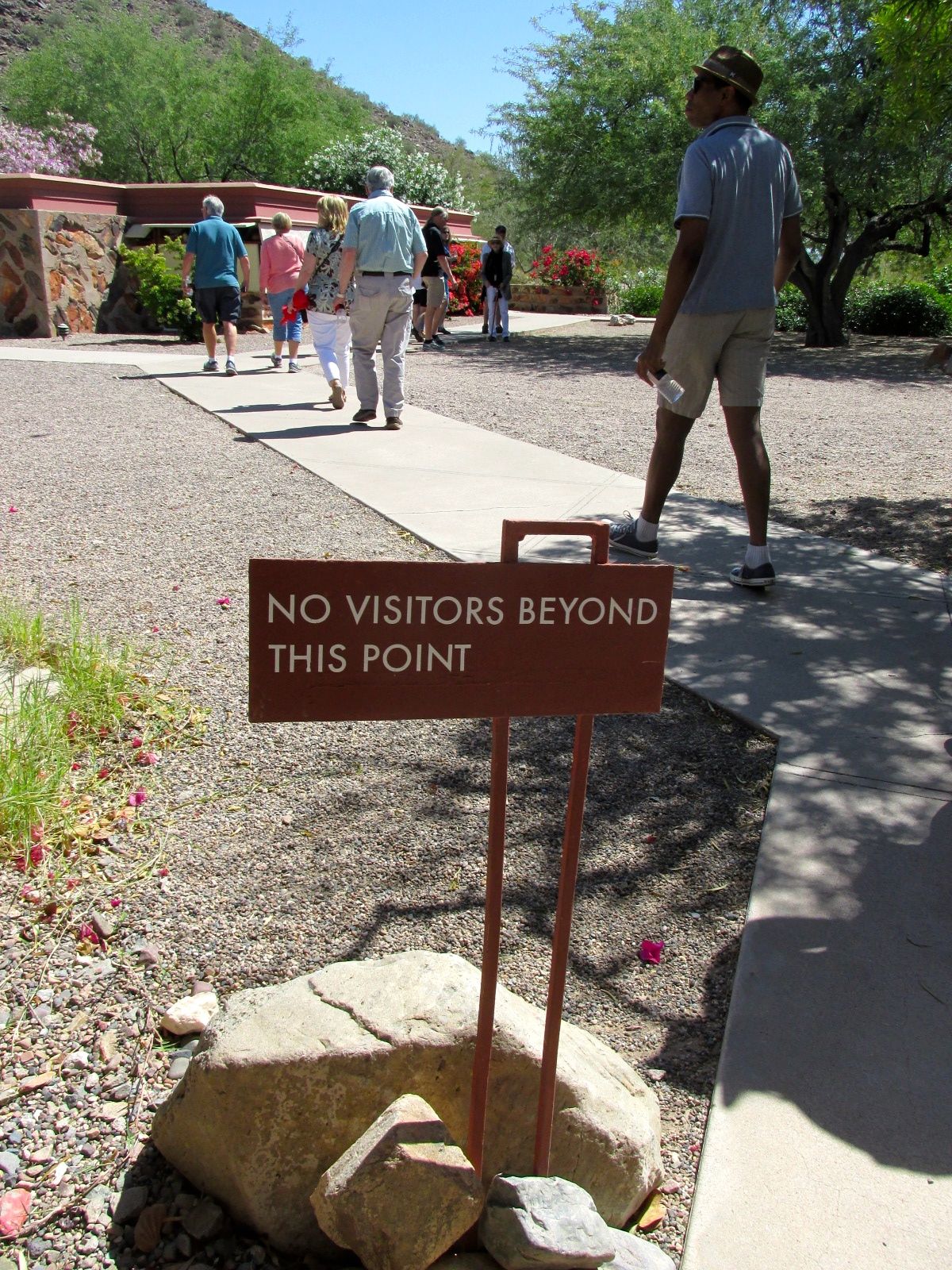
The lunch was lovely, but this sign is what made our tour of Taliesin West so special. We got to go to parts of the campus that are closed to the random, ordinary visitor.
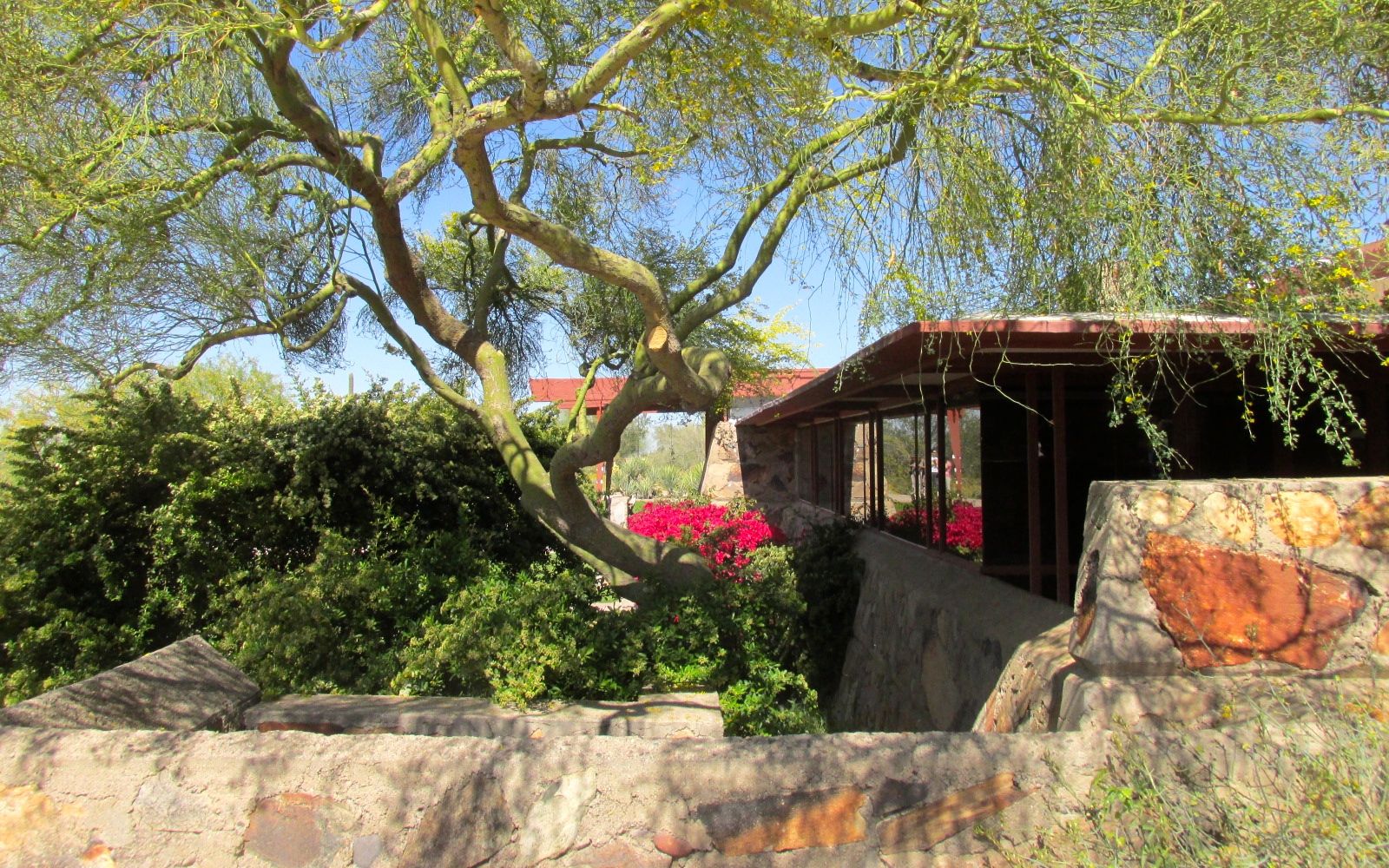
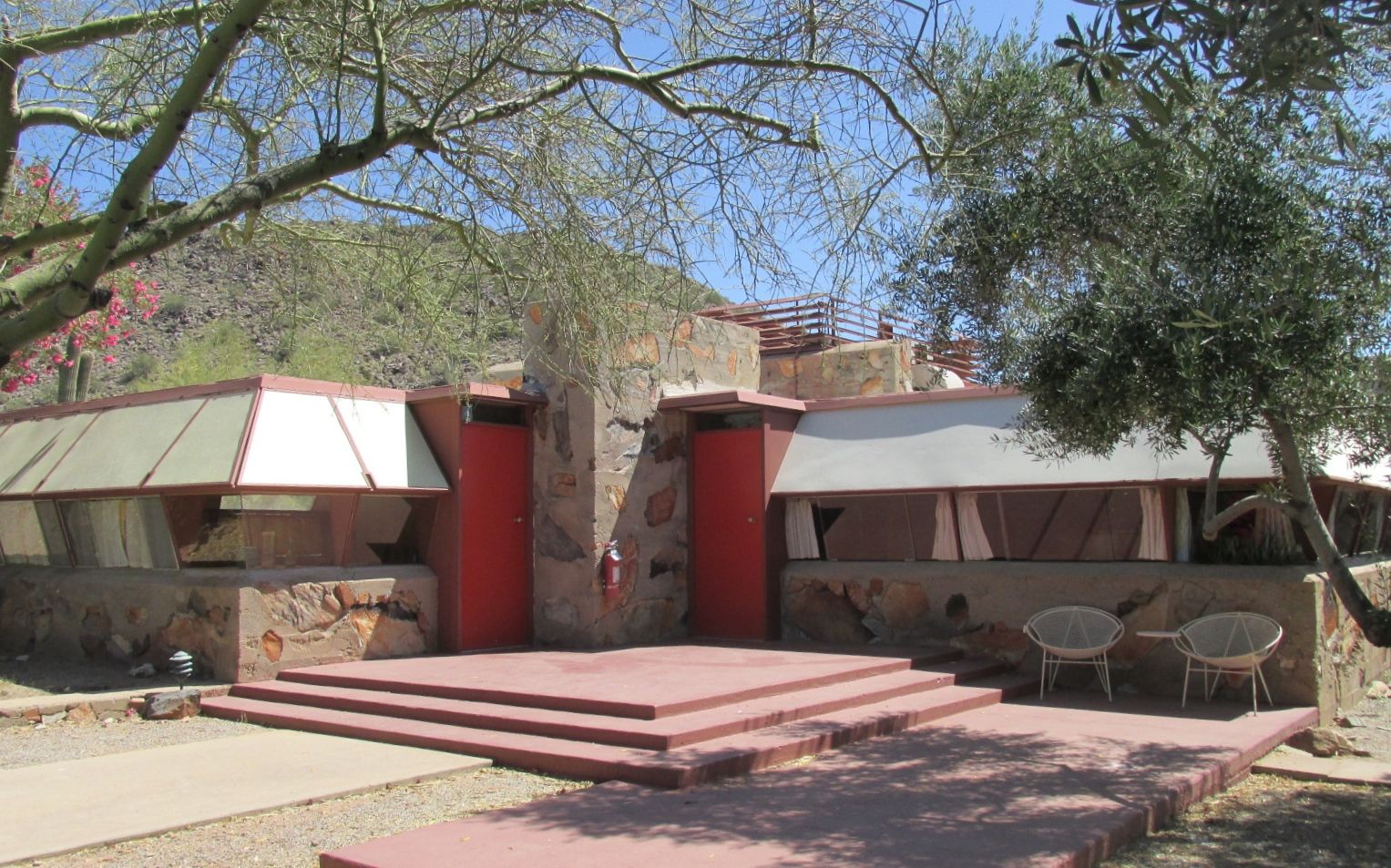
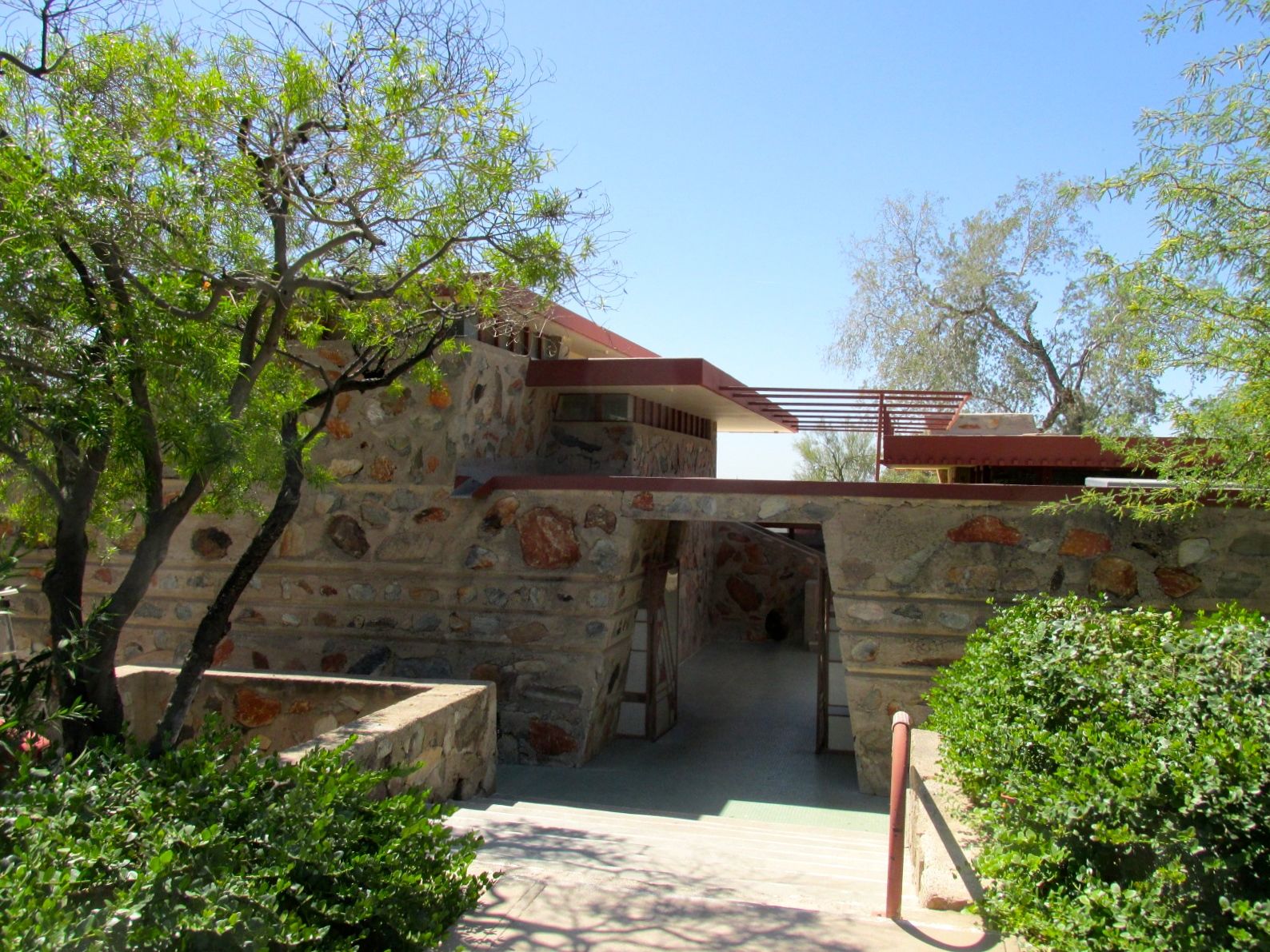
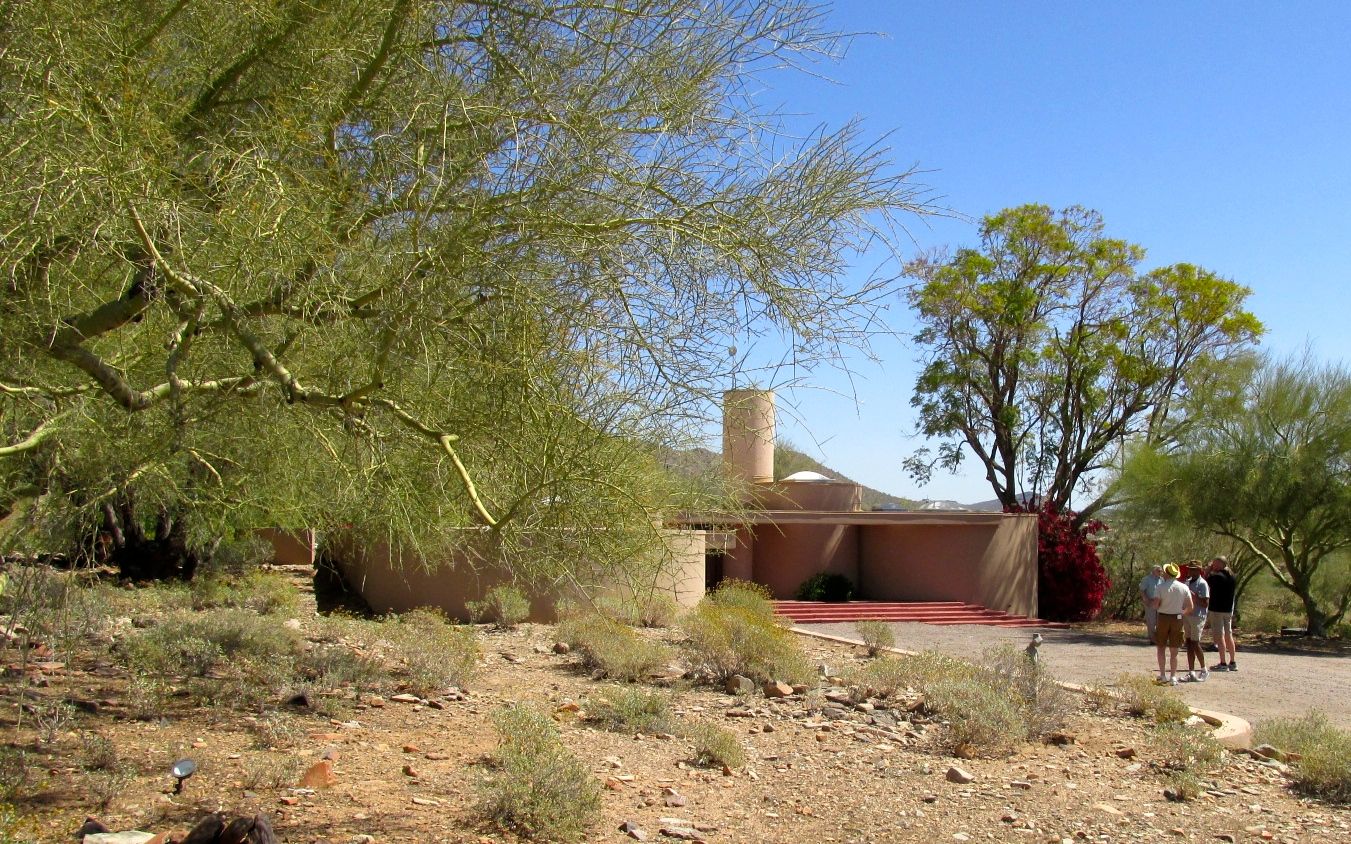
Not all the buildings were identified by functions – at least, I didn’t hear it if they were. I liked the cool airiness of this building. I imagine that it might have been a very pleasant dwelling.
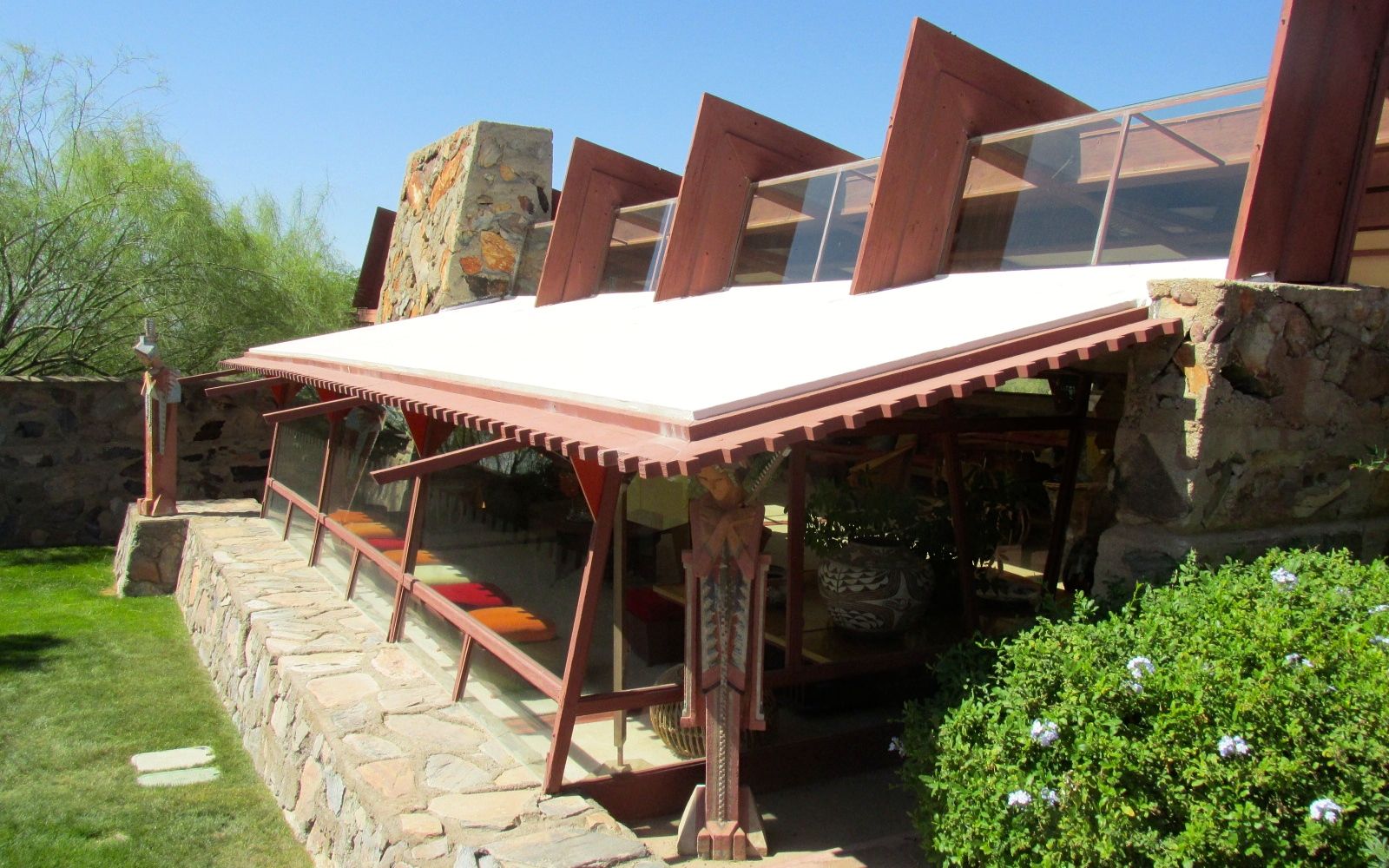
The roofline of this building is striking.
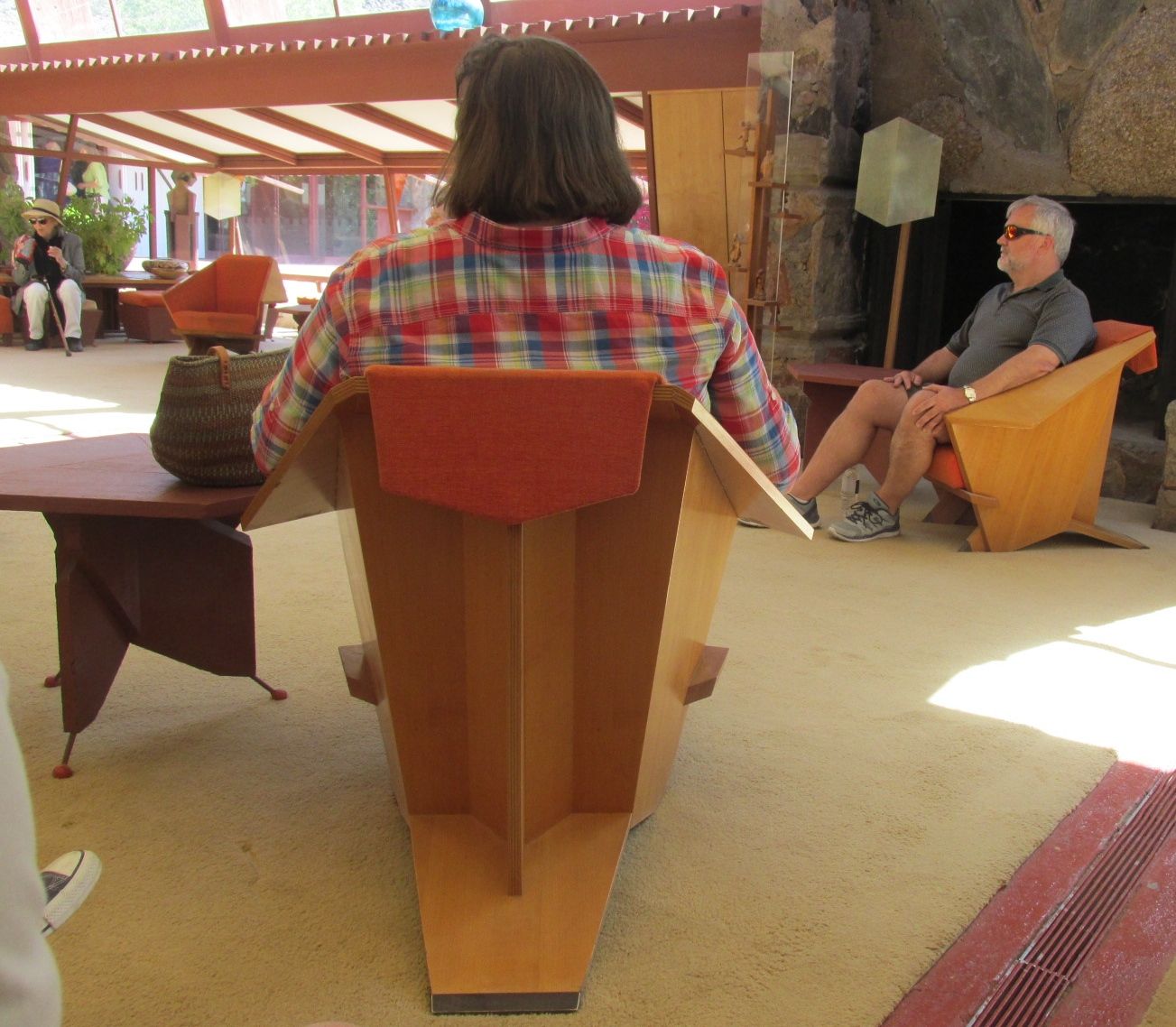
We sat for a while in one of the living rooms. I believe that our guide told us that these chairs were replicas. Only recently were the original chairs removed when it occurred to the foundation how much they were worth. They offer the replicas for sale now. I didn’t stop to find out how much they cost. I just don’t have the room in the Airstream for things like that.
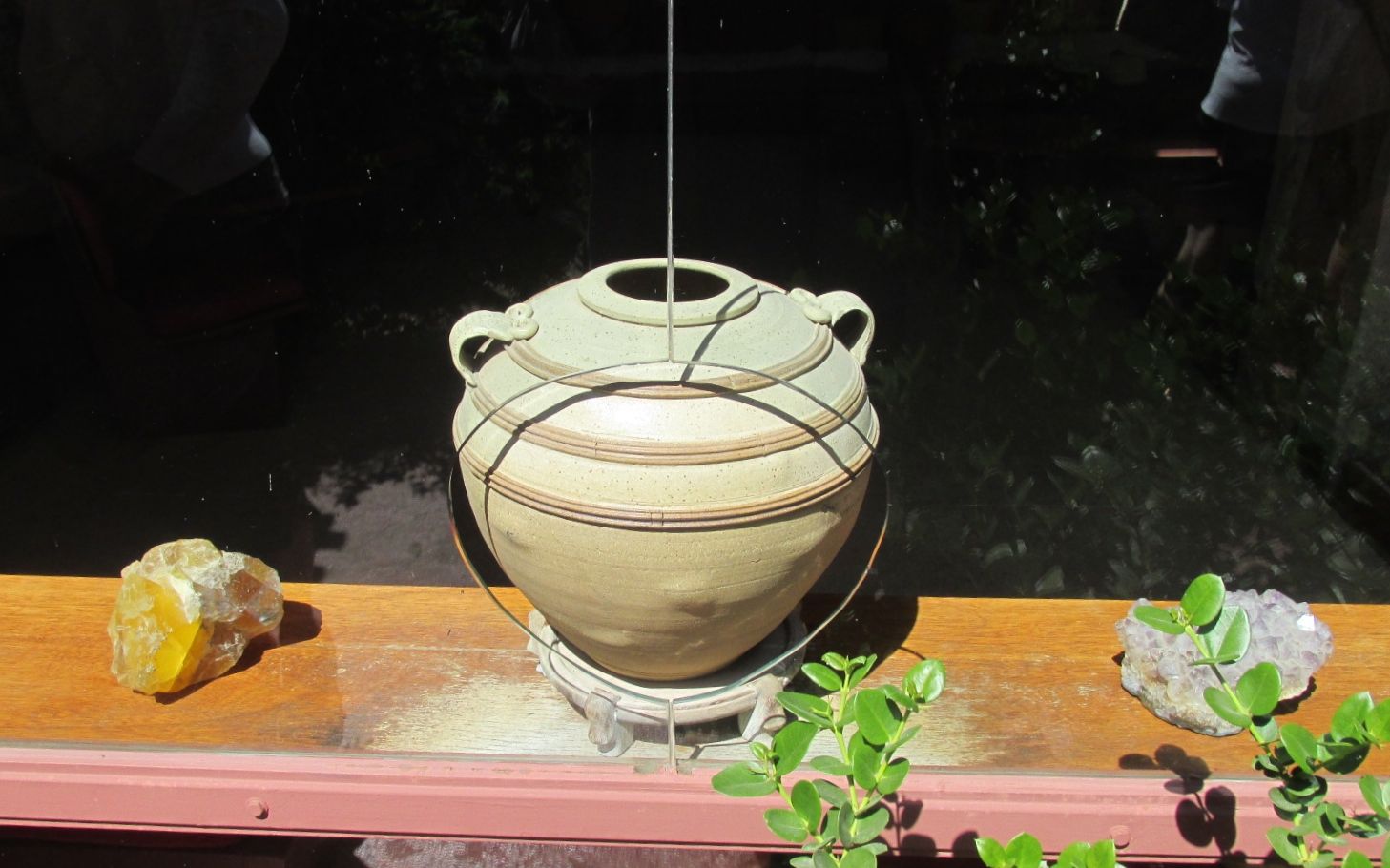
They had a couple of these large pots that stuck out thorough holes in the windows. The guide told me that is was part of the idea of bringing the outside in and the inside out. I kind of wondered if they put a hole there because that is where they wanted to put the pot – but the shelf wasn’t wide enough. They were just making it up as they went along a good portion of the time.
This is the guest house. I believe the guide said that there were four bedrooms and a couple living rooms in it. It used to receive a lot of use, but since the Frank Lloyd Wright archives moved to Columbia University in New York a couple of years ago, there have been fewer visitors.
We passed by the end of the guest house.
Through the gate we went and into the Wright’s quarters.
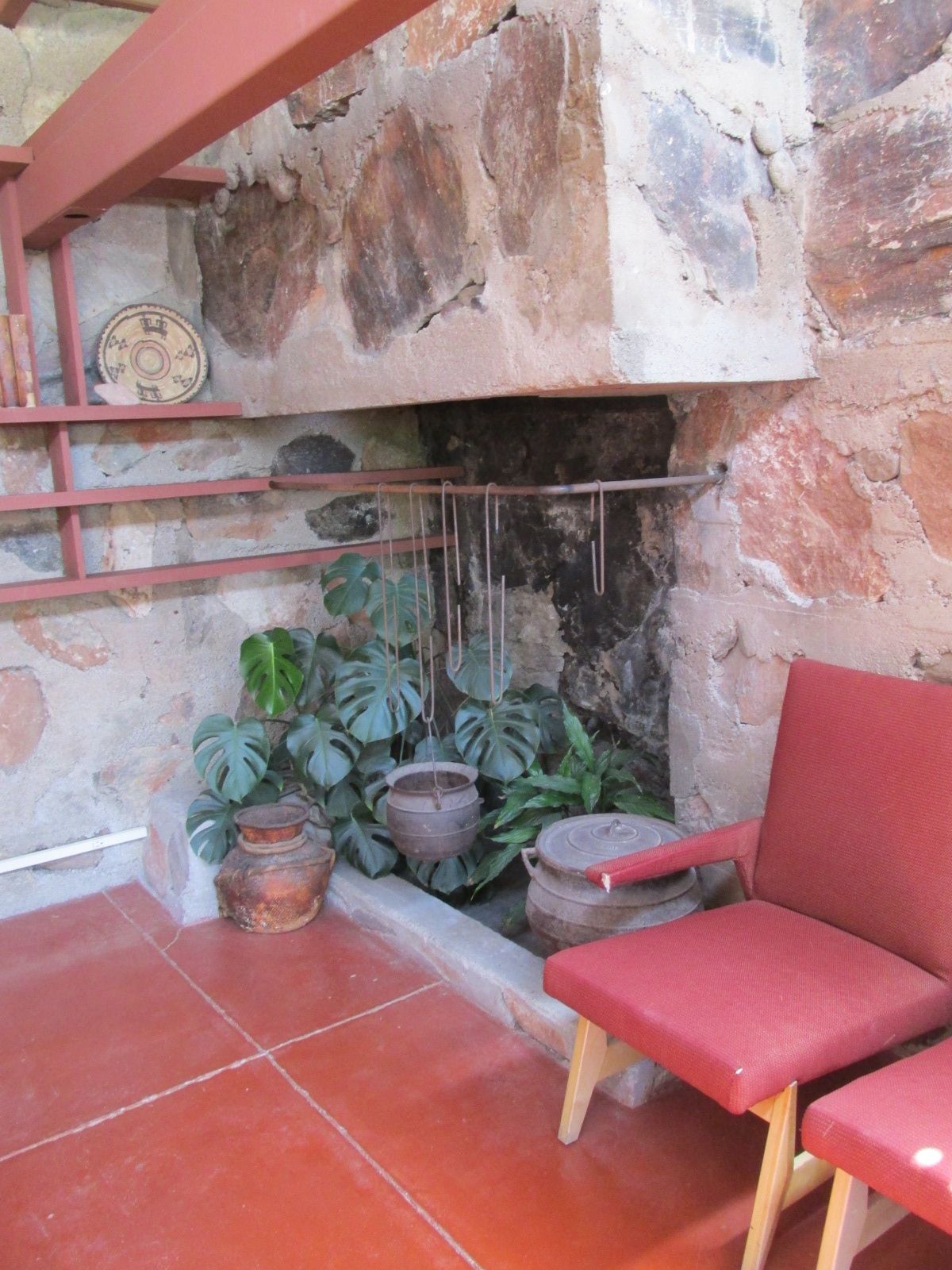
Of course, Frank had a fireplace in his bedroom.
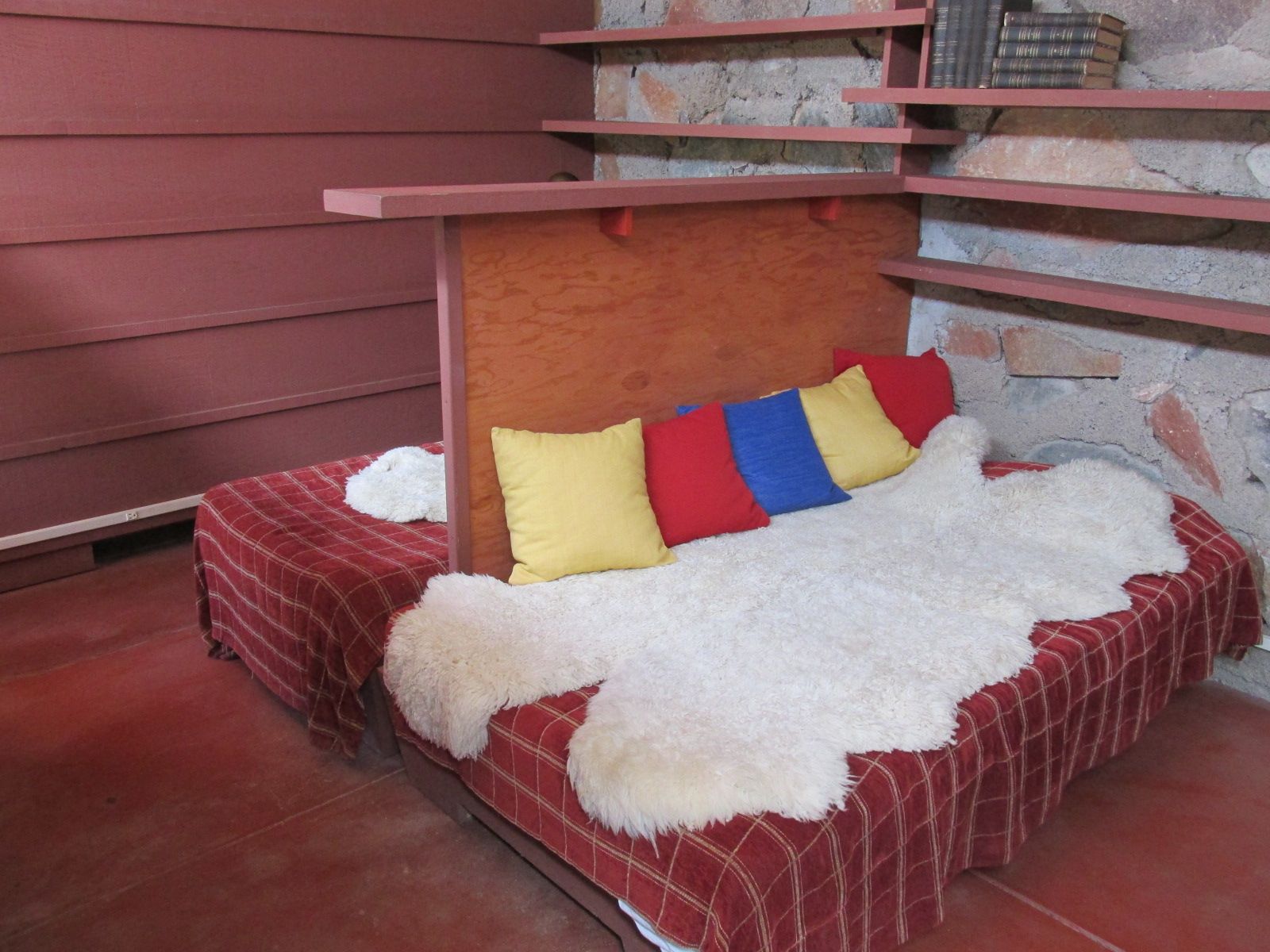
I found it interesting that he had two beds. Our guide told us that the one closer to us was taken outside for him to sleep on for his afternoon naps. Mrs. Wright had her own room, but I didn’t work quickly enough to capture a shot of it to include in this post.
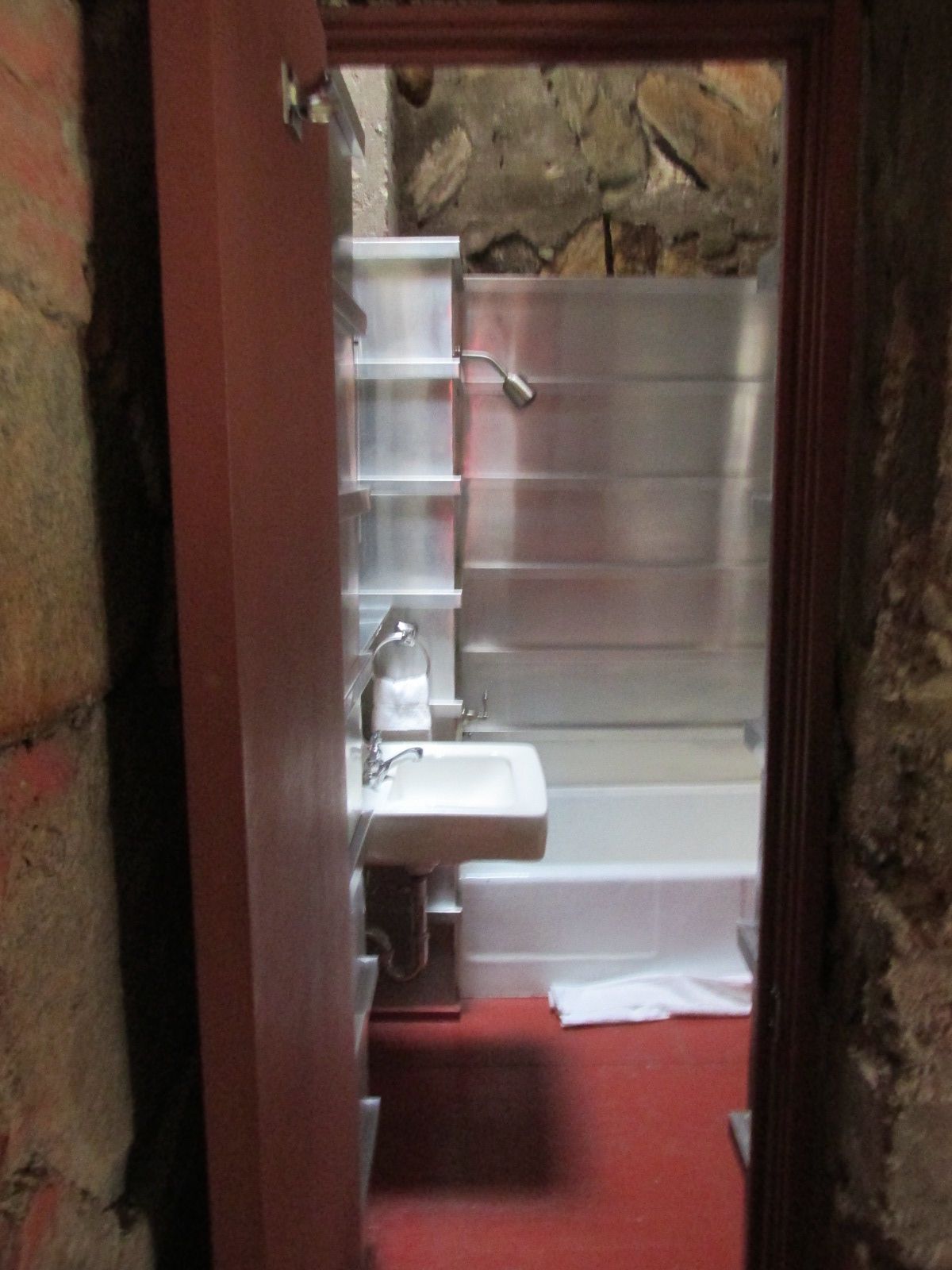
I was able to grab a shot of Mr. Wright’s bathroom, though. It looks quite modern. I wonder if it has been redone.
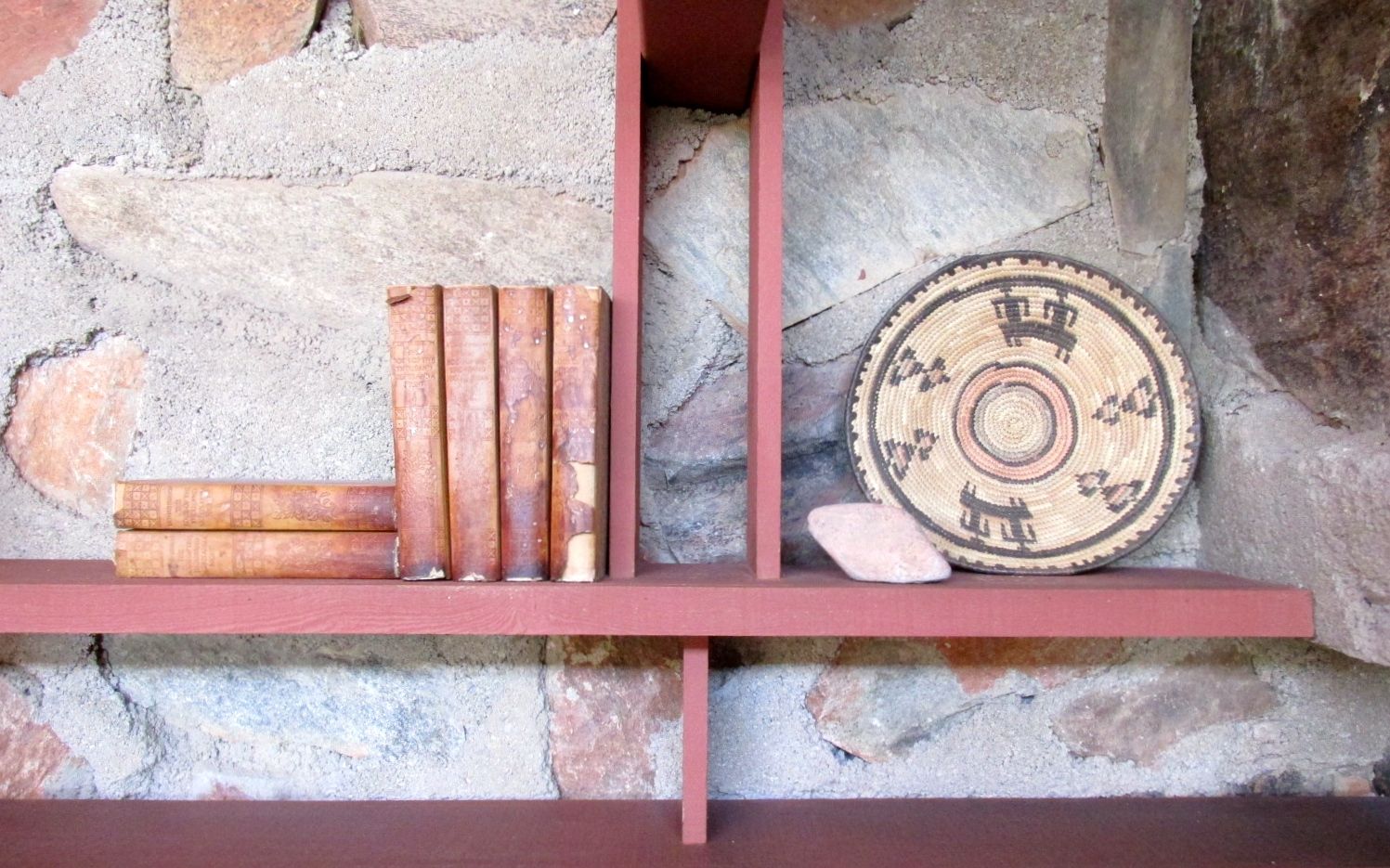
A shelf with some of Mr. Wright’s possessions.
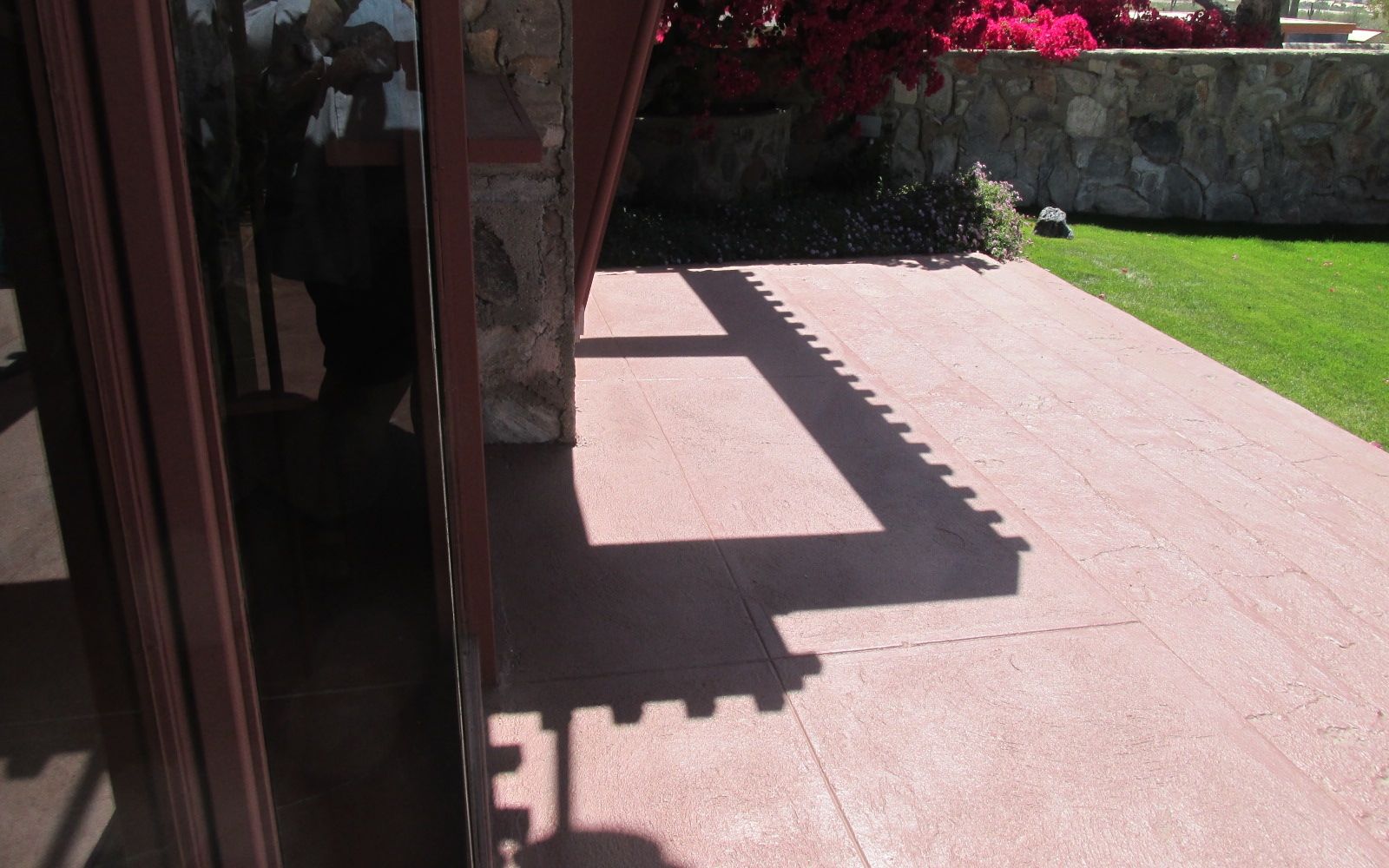
Outside his suite, you can see how the shifting shadows were used in the design of the space.
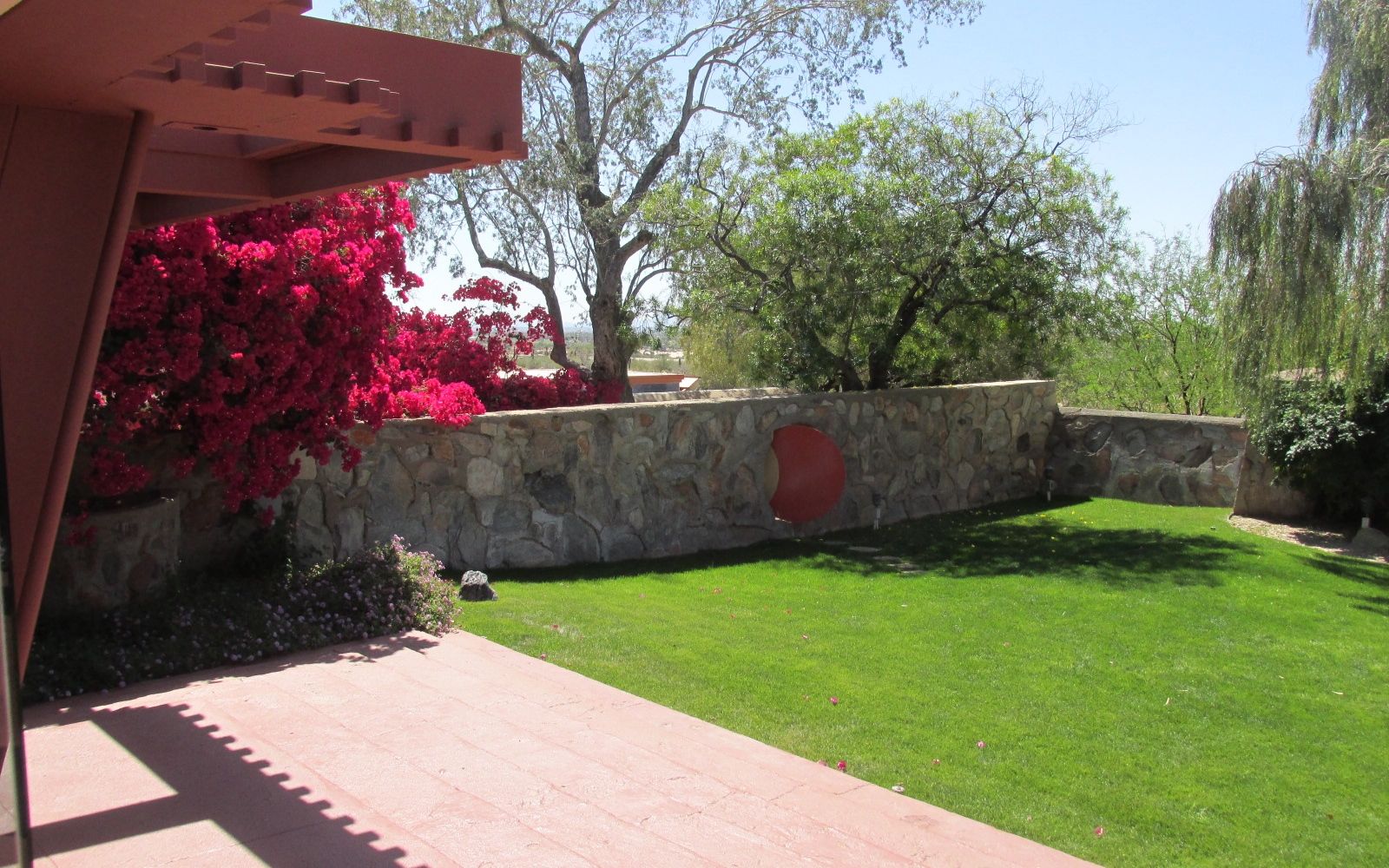
The orange circle in the wall is a moon gate, which was used to pass from one garden into another. This is the view from his bedroom suite.
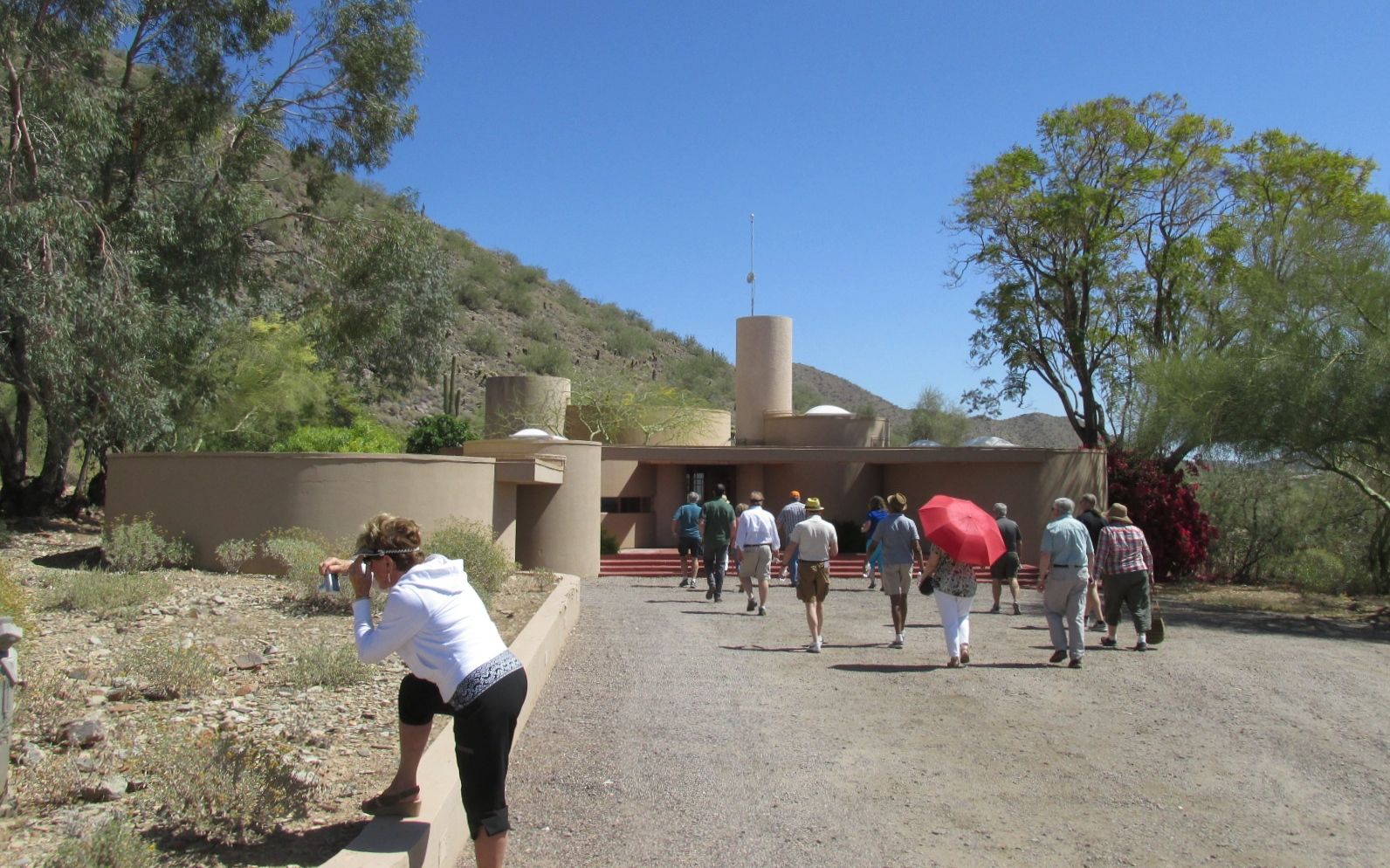
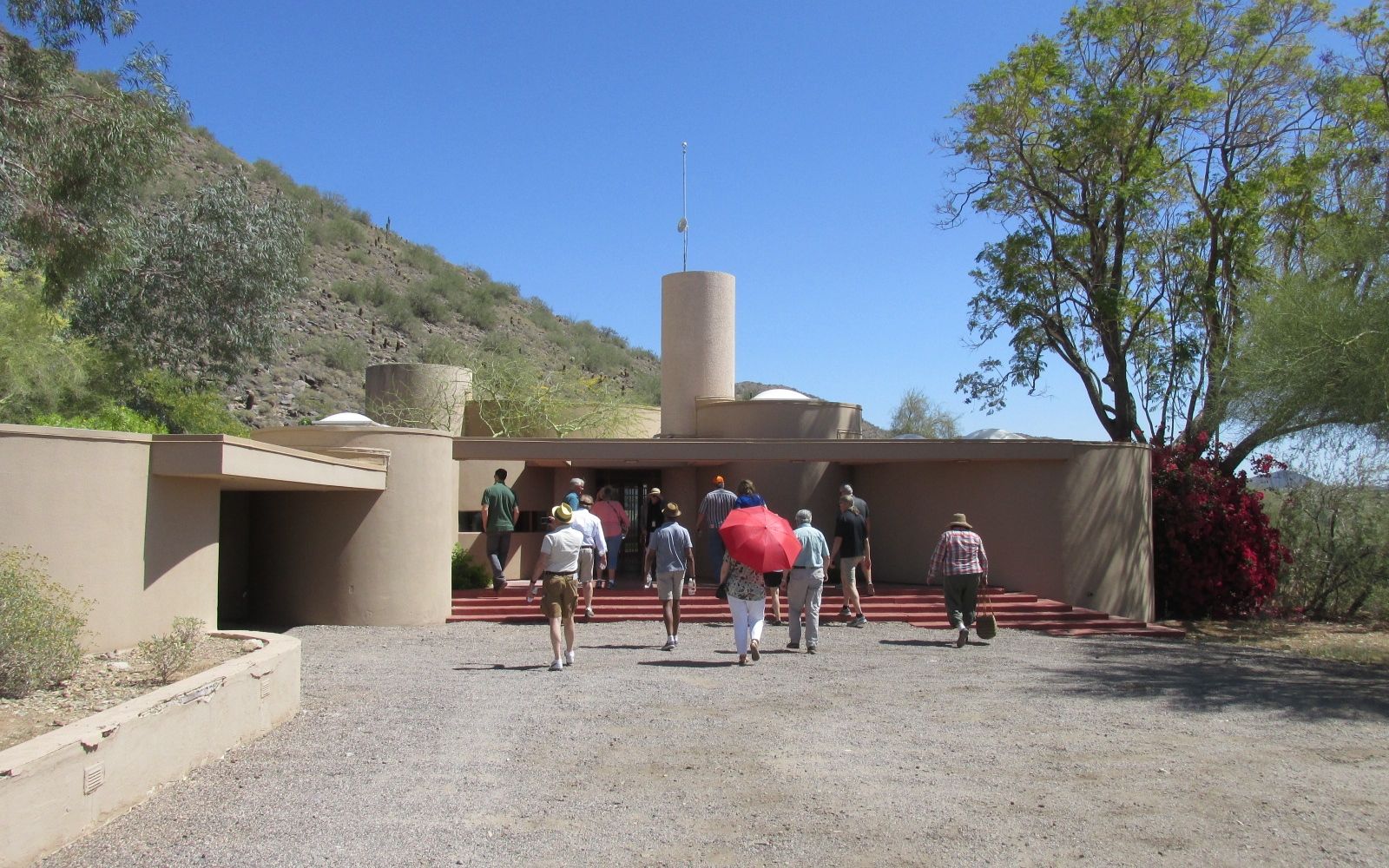
The farthest point of our trip was Bruce Pfeiffer’s house. Bruce was the foundation’s archivist, and he selected this design out of the archives of unbuilt works. Wright had originally designed this house for Ralph Jester, who was a costume designer for some famous Hollywood movies, such as The Ten Commandments and Solomon and Sheba. Jester didn’t care for Wright’s design and it wasn’t built.
As I approached the building, I have to admit that I didn’t care for it either. I didn’t feel the warmth that I felt toward the other buildings on the campus.
Bruce Pfeiffer needed a house for himself and his father. Olgivanna suggested that he use one of the designs in the archive, and the house was finally built.
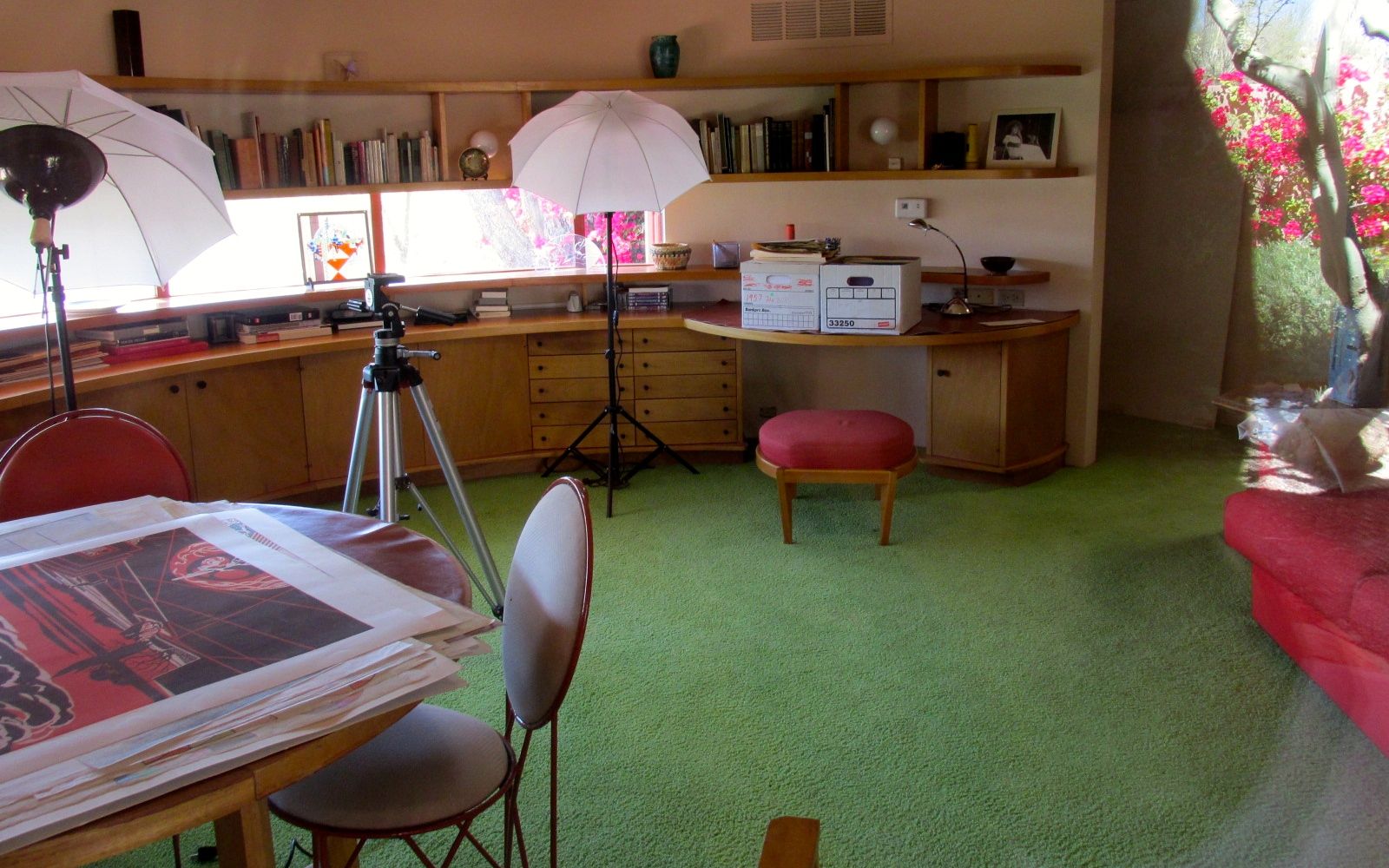
Once I was inside, however, I felt completely different. It was a very inviting building. There were three large round rooms. It seemed that the father had one and the son and the other. The third was a living room.
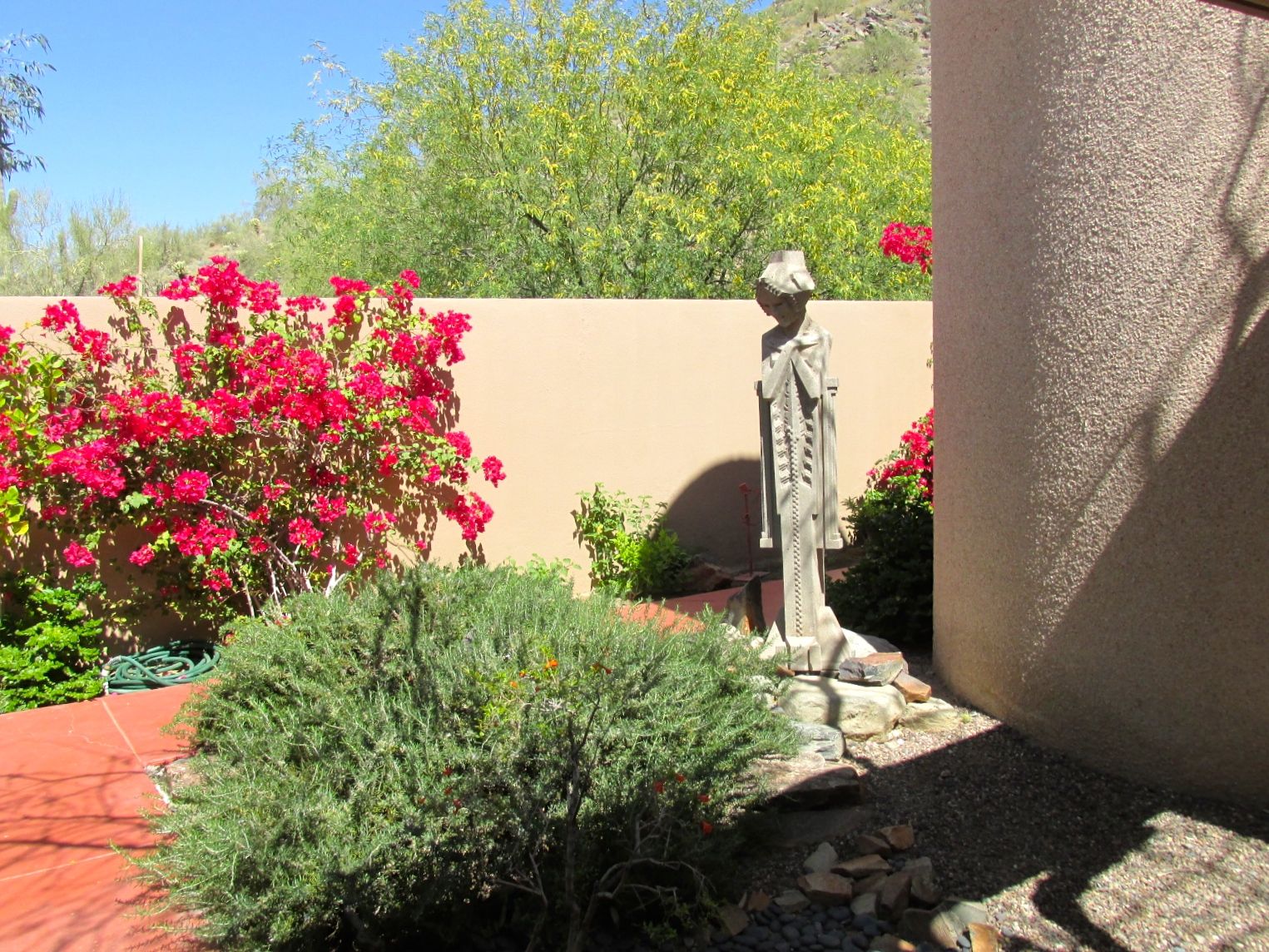
There was a small, interior courtyard with one of the sprite statues in it.
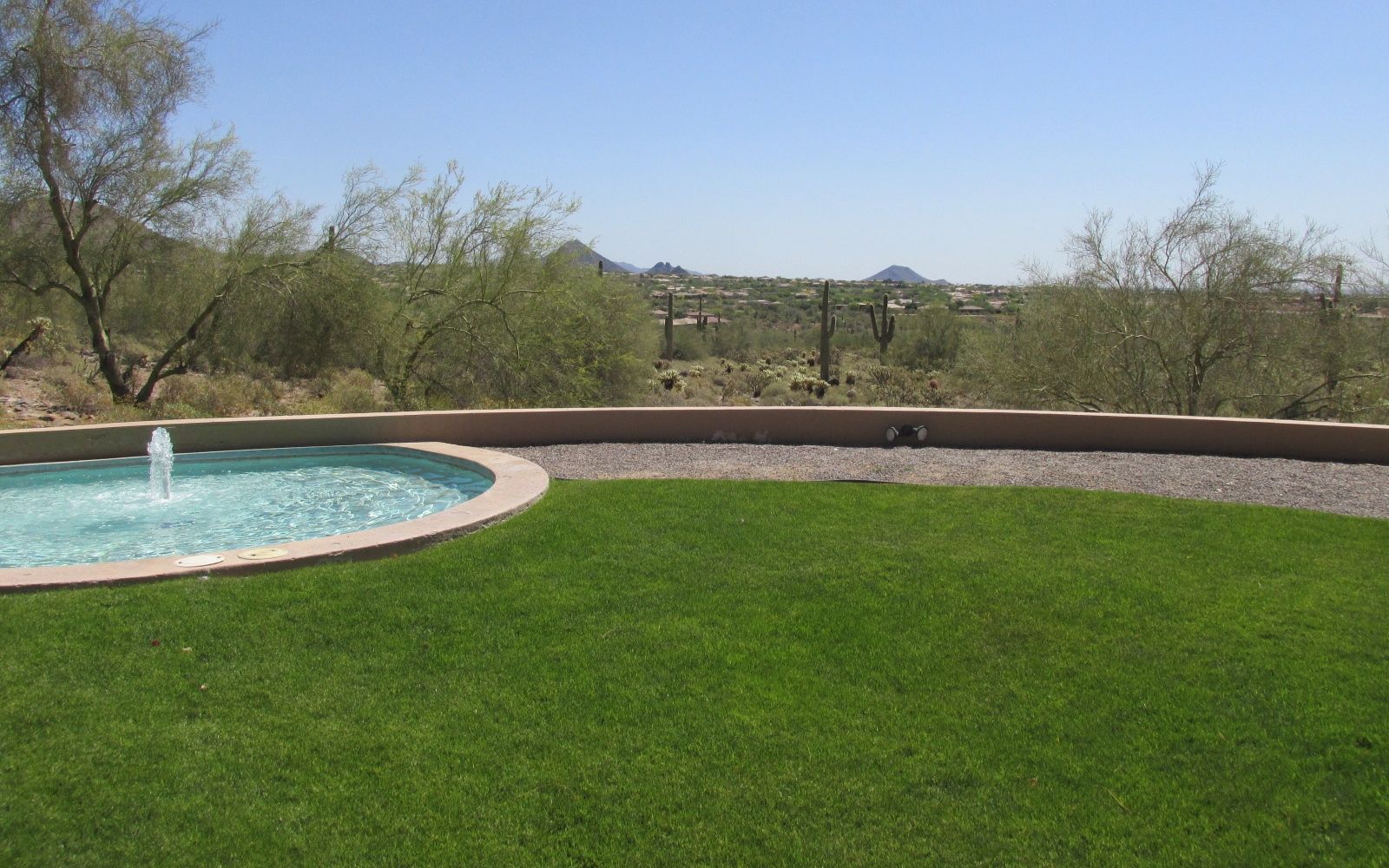
Off the living room was a large terrace. Our guide told us that in the original plans, the lawn was to have been a pool with an infinity edge. The water would go right over the lip of the pool and be recycled.
On the way back to the main part of the campus, I turned to look back at it one more time. I liked it better after having experienced it.
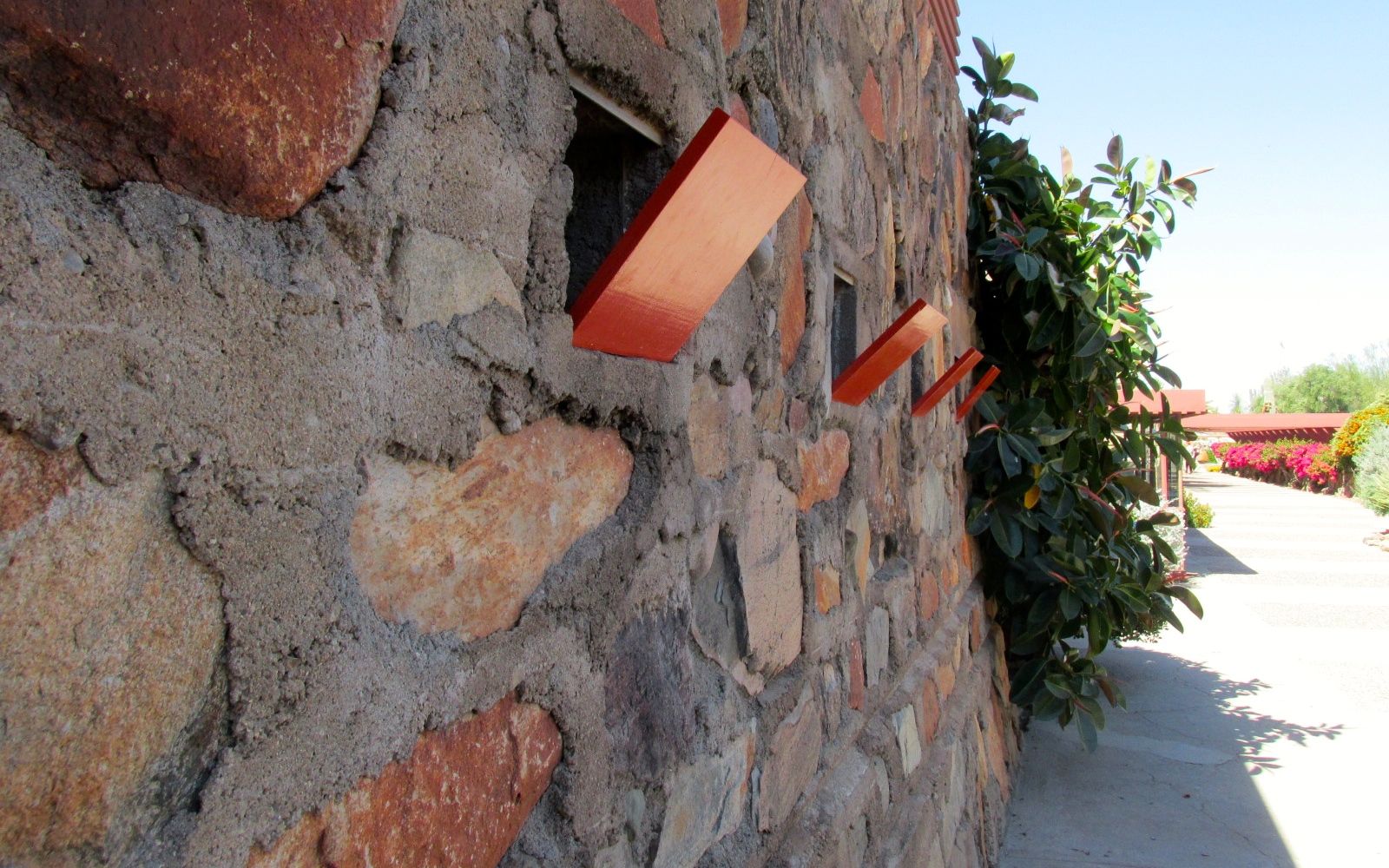
I spied these windows with square covers when we passed from one place to another. I didn’t see how they worked from the inside, but I am sure that they did the job. They looked interesting from the outside.
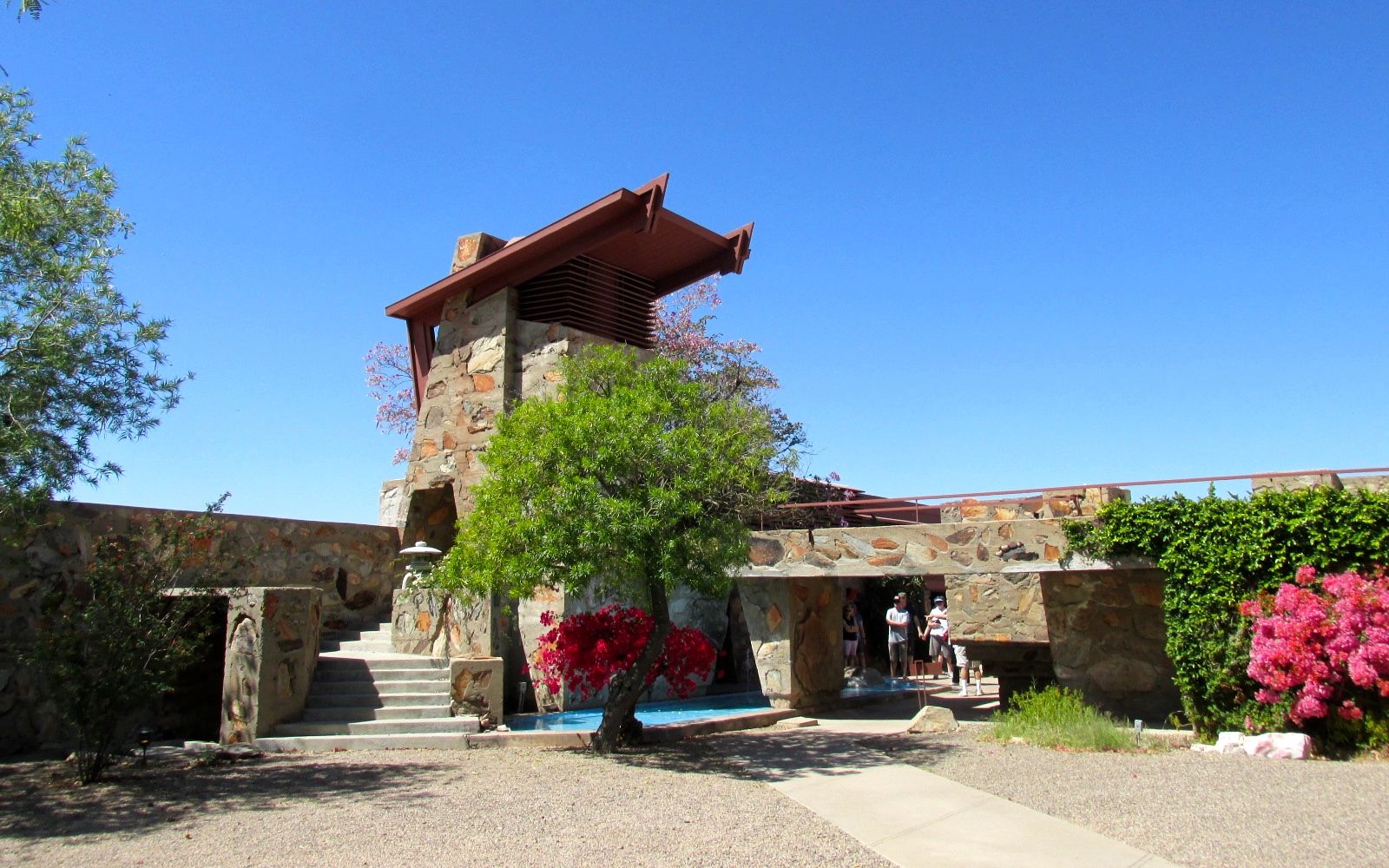
The campus is quite large, with many courtyards and buildings. I lost track of how this tower related to the rest of the buildings. I was taking notes as fast as I could, but I just couldn’t keep up with listening, walking, taking pictures AND taking notes.
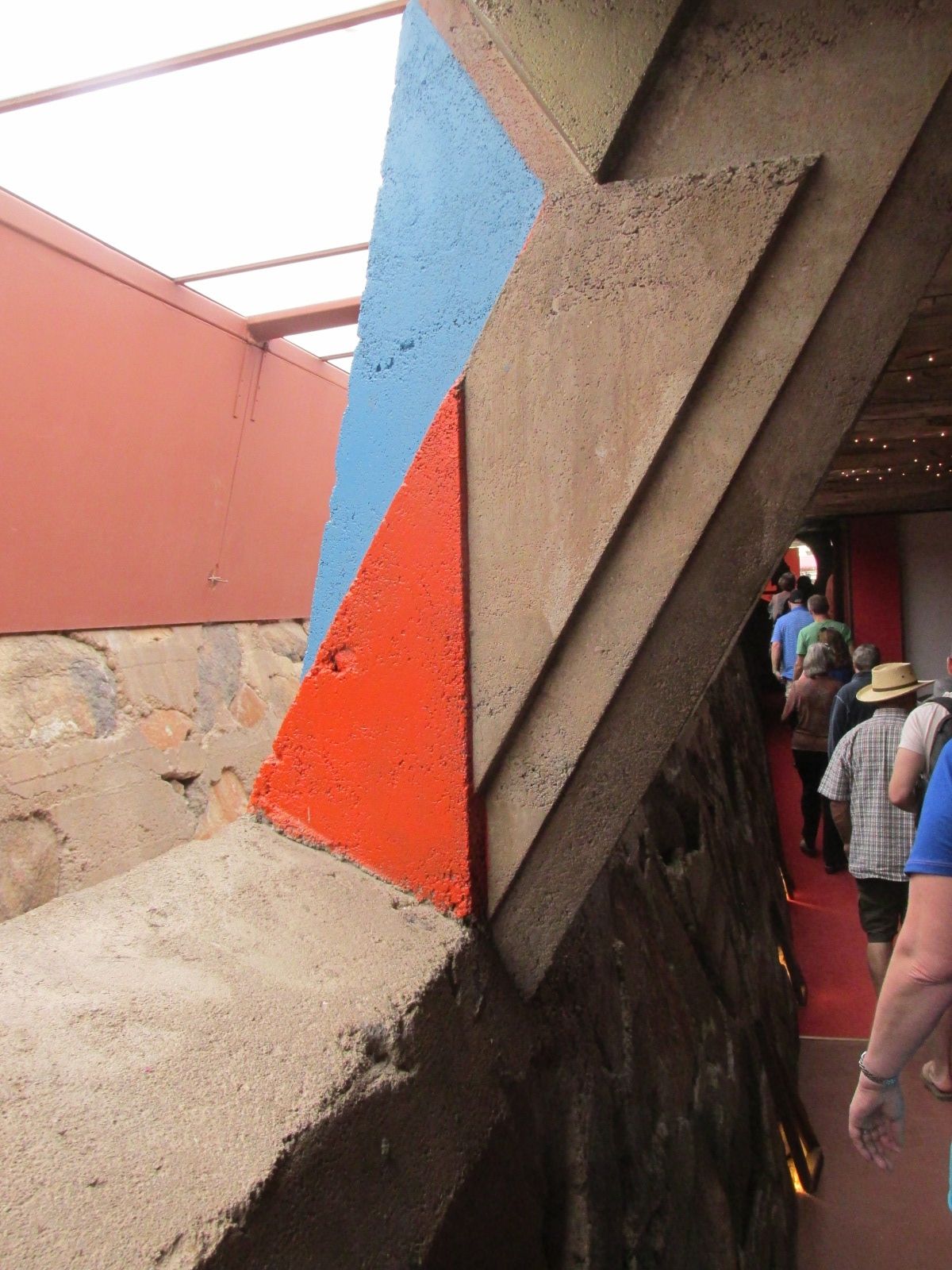
The last official stop of the tour – which lasted 45 minutes longer than the three hours that was advertised – was the Cabaret Theater. This is a detail from the passageway. Entertainment that they created themselves was a large part of the life of the Fellows.
All the tours passed through this point. We had to wait for our turn until another group finished up, and there was a tour right behind us. In addition to telling us about the building, we got the pitch to become members of the Frank Lloyd Wright Trust. They offered an attractive discount if we joined on the spot.
My friends, Konnie and Michael, were waiting for me, so I bid Taliesin West adieu and headed out.
It was hard to leave such peace and return to the hustle and bustle of modern Phoenix.
Any of you who have been following my budget blog posts already know that I don’t send my money lightly when it comes to entertainment and tourism. However, when it comes to Frank Lloyd Wright tours, I don’t skimp. I opted for the $70 Behind the Scenes tour – the most expensive tour they have listed.
I’m not bragging, just letting you know.
Not only was this tour expensive, it was scheduled to start at 9:15 AM and they wanted us to be there 15 – 30 minutes ahead of time. I am not a morning person anymore. Thirty years of getting up to teach has cured me.
Luckily, WestWorld was only a mile or two away from Taliesin West, so it wasn’t too painful to get there on time. I may have been the last member of my tour to check in, but I made it!
Our tour guide was a dynamo! She may have walked with a cane, but the rest of us had to focus to keep up with her.
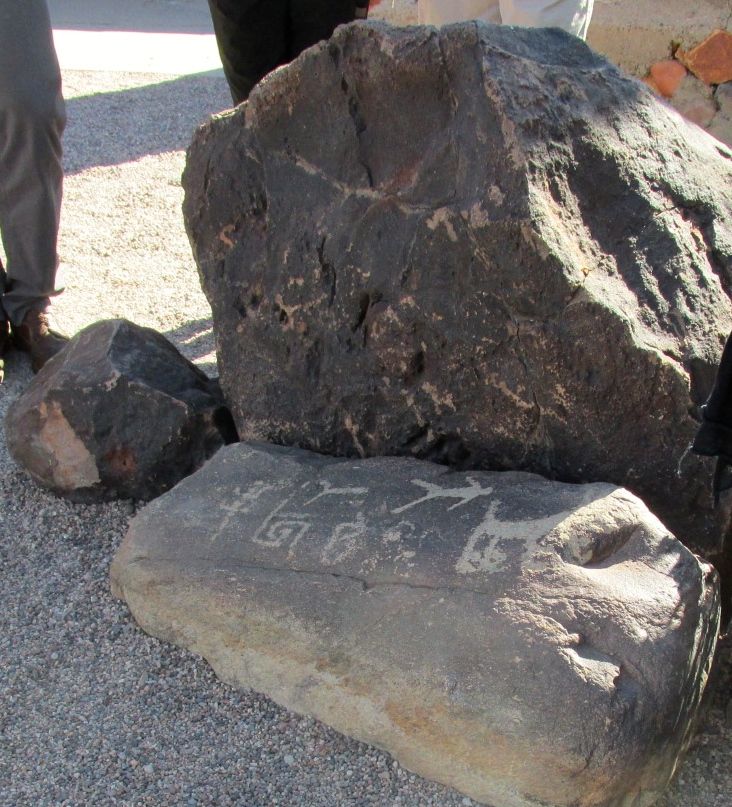
Our first stop was this grouping of petroglyphs that were found on the property. She pointed out one of them that Wright adapted for the Taliesin logo.
It’s pretty easy to pick out the one that inspired Wright’s design. The next stop was the office.
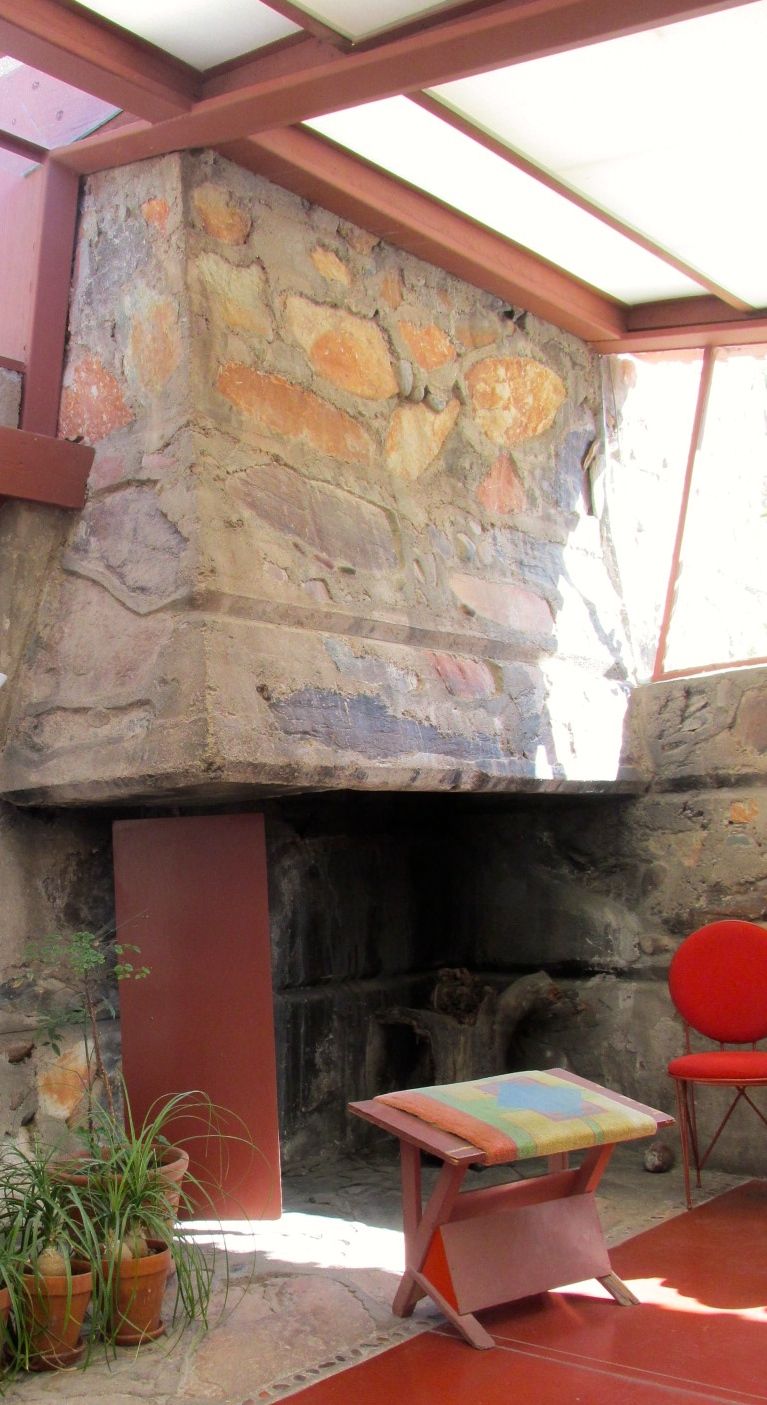
Of course, Wright would design a fireplace into his office. I imagine that it was for warmth as well as for its design qualities. While the desert is warm, there are cool mornings and nights. Also Wright was 70 when he began building Taliesin West in 1937. A little warmth during the cold times would be especially appreciated.
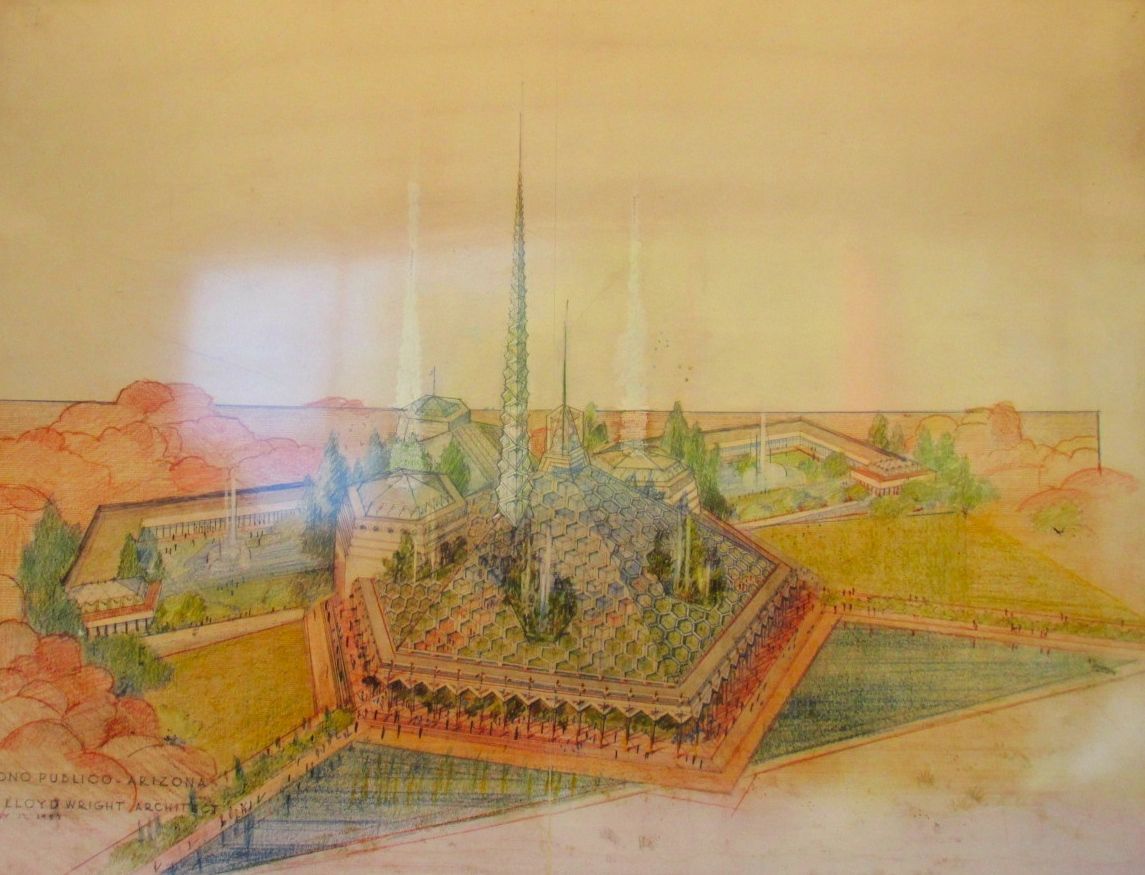
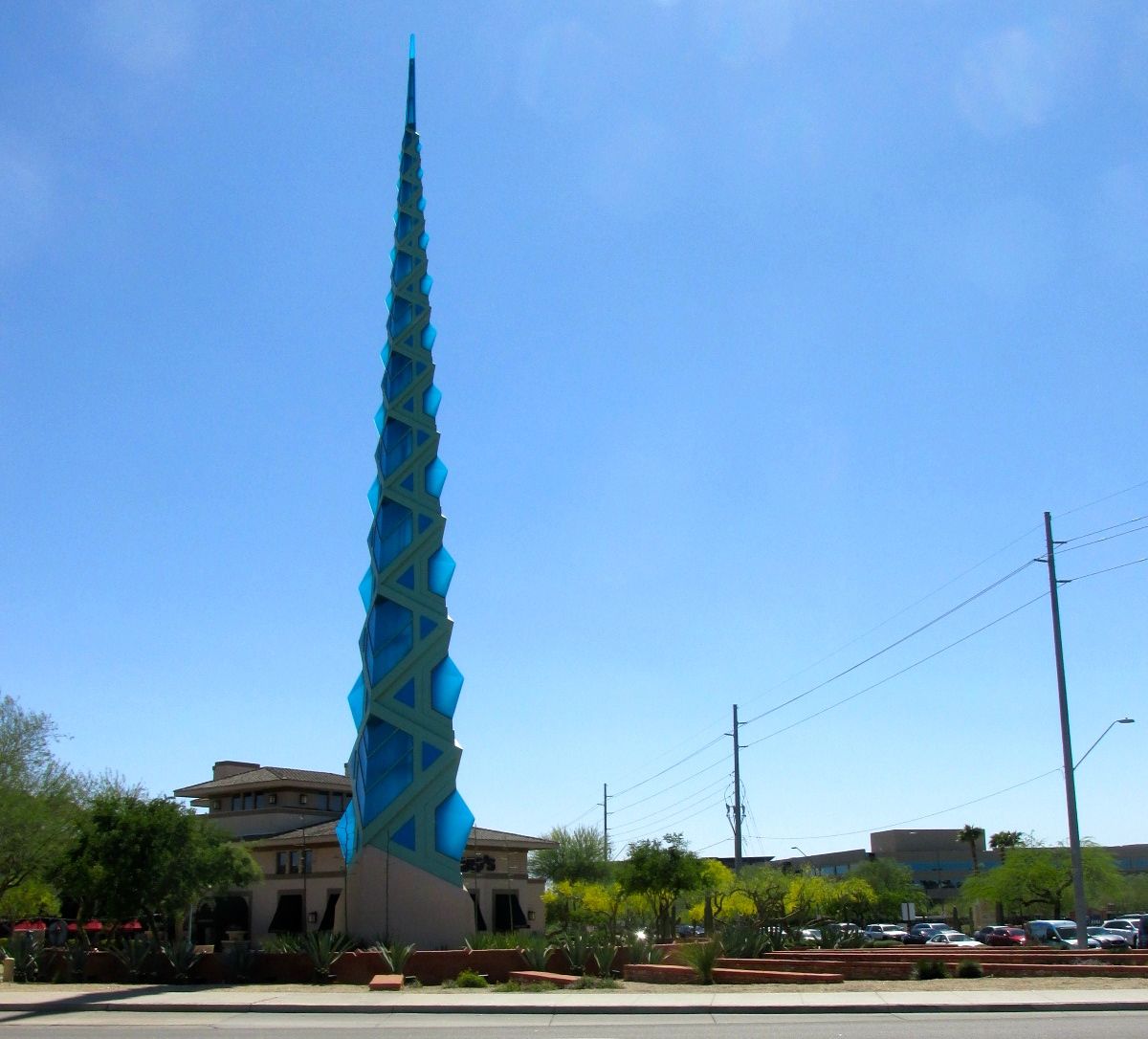
While we were in the office, our guide pointed out Wright’s proposal for a new state capital. He did it pro bono, but it wasn’t accepted.
Years after his passing, however, the spire was built on a corner. I spotted it when I was out an about, and I thought it looked a little Wright-esque. I was pleased to find that I was right.
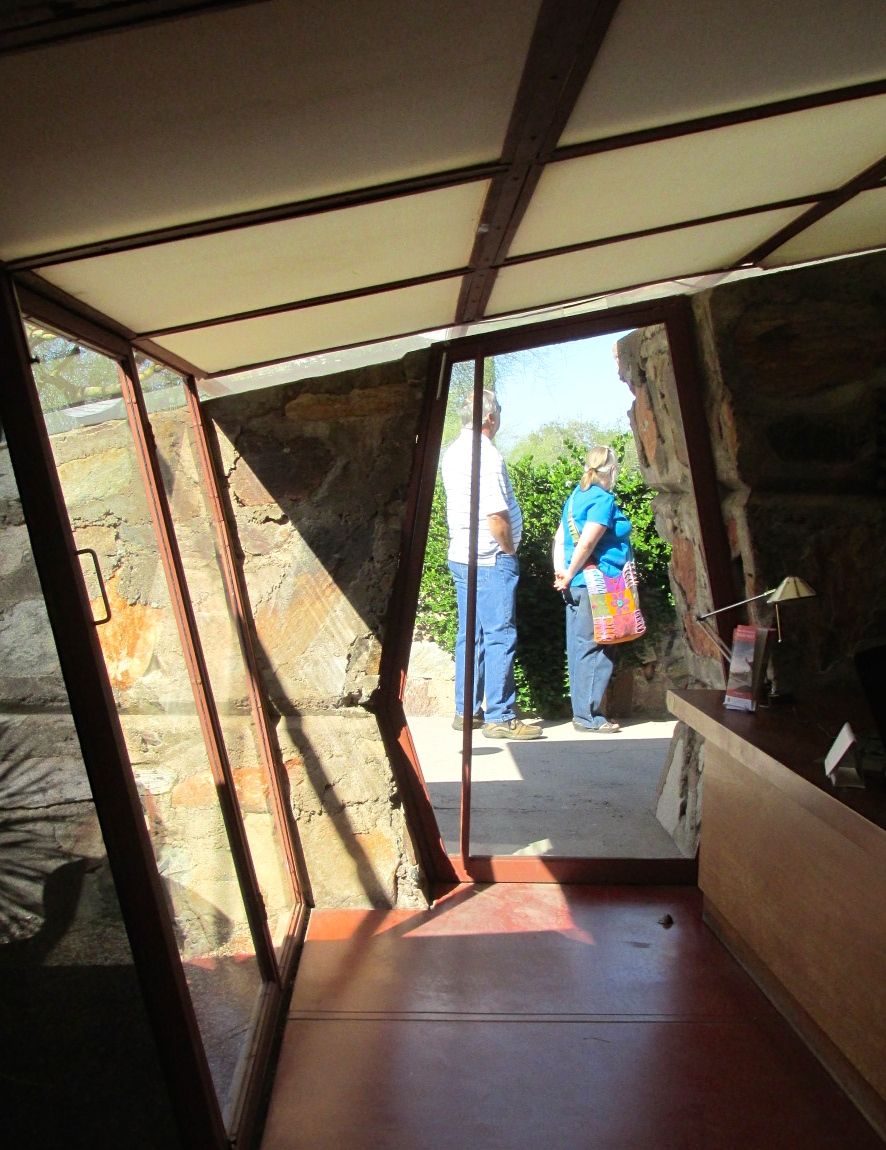
The door to the office was unique.
And you will notice the red floors and details. Cherokee red – a color that Wright used in many of his buildings. In fact, we were told that he always had a new car and that he went right out and had it painted Cherokee red. That was a bit of Wright trivia that I had never heard before.
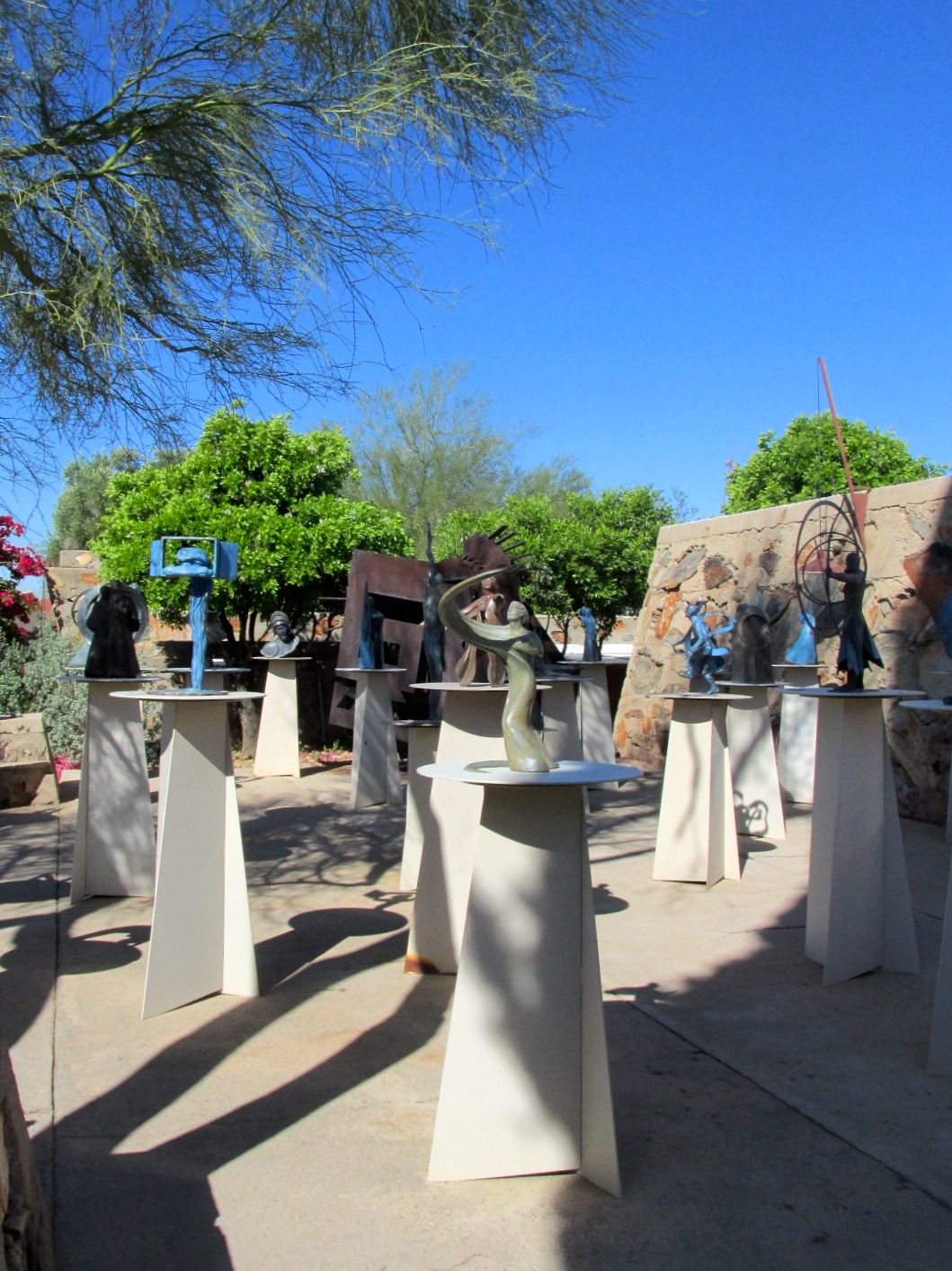
We paused to look at these sculptures in a courtyard outside the music hall. They were all made by Heloise Crista. She had started out as one of Wright’s Fellows, but decided to follow her sculpture interests. If I understand correctly, she still lives here and is continuing to work.
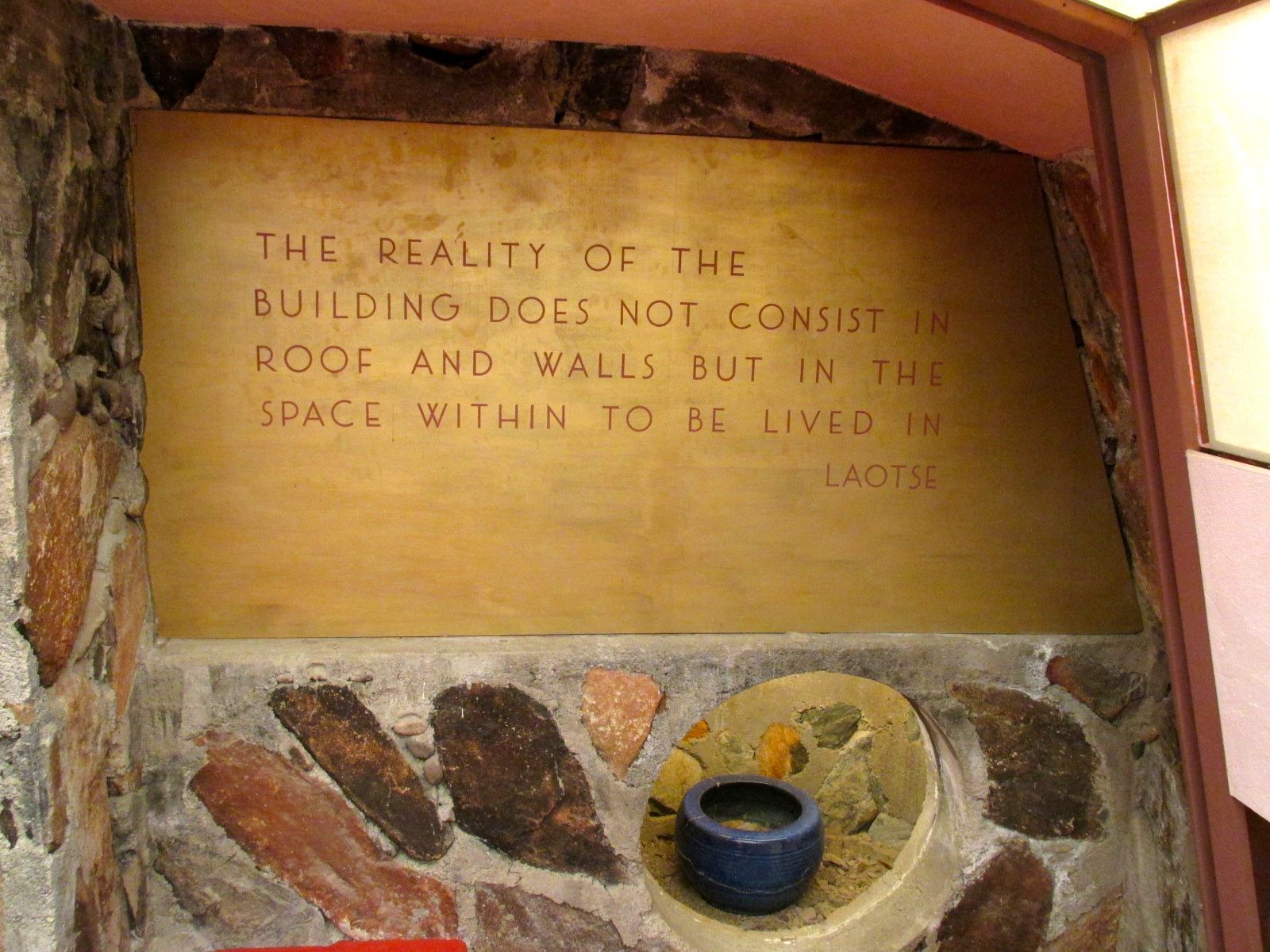
This quote greeted us as we entered the music hall.
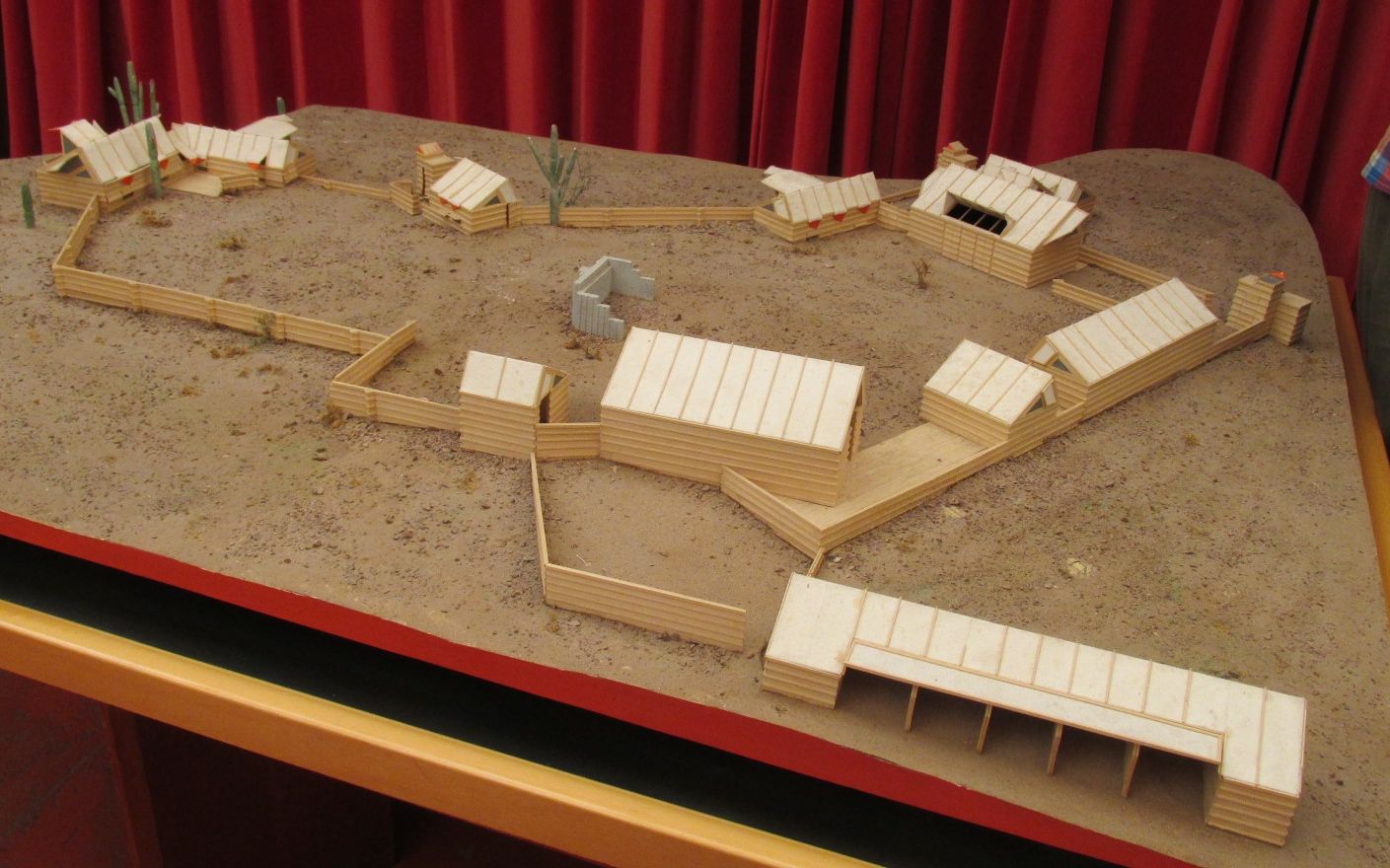
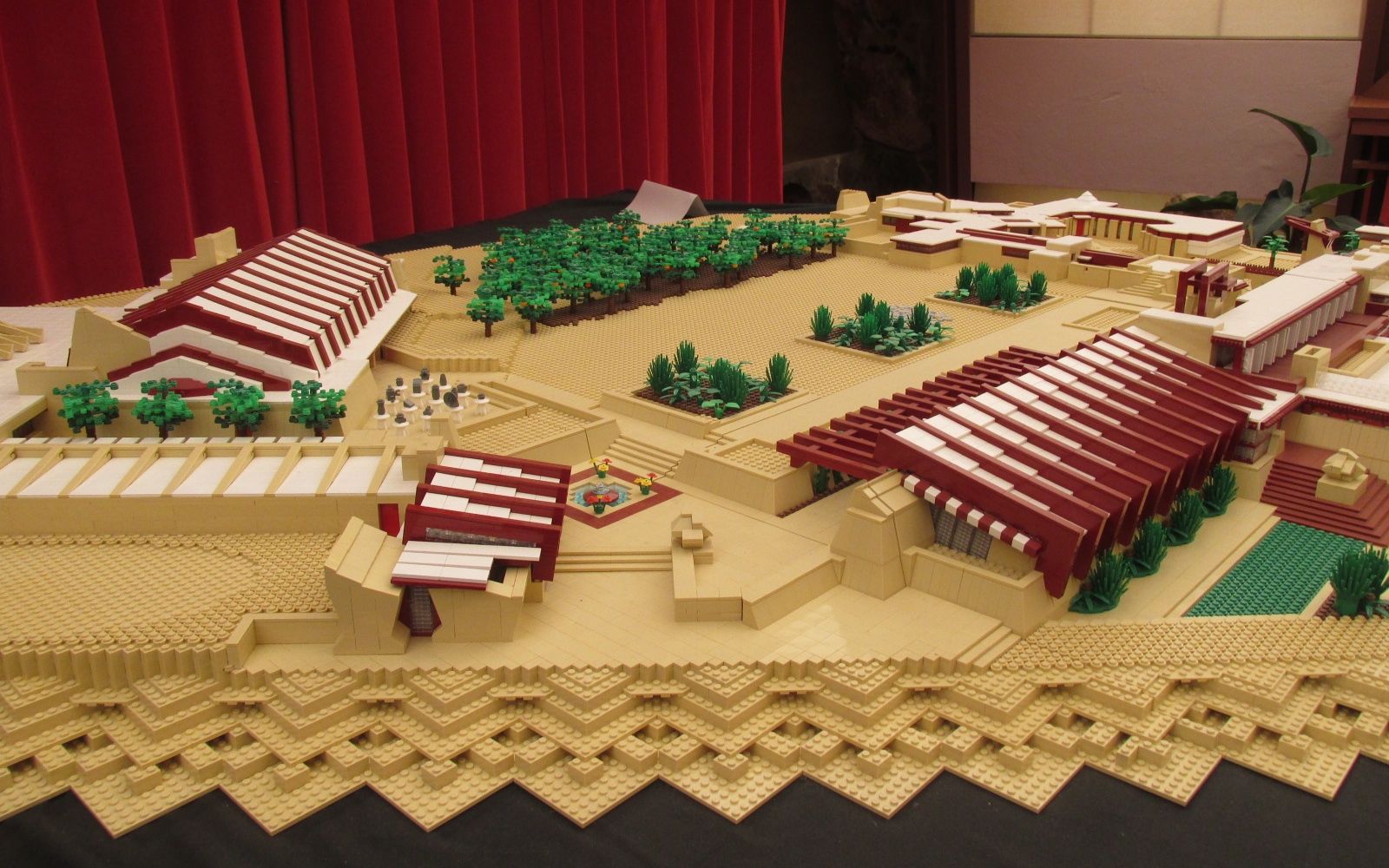
At the top of the music hall, there were some models.
This is a model of Ocotillo, Wright’s first attempt at an Arizona residence. He was going to work on a hotel in near Chandler. Unfortunately, the soil wasn’t suitable for building. They abandoned the site and the building materials were scavenged by the Apaches living in the area.
This model of Taliesin West was built out of Legos. When Wright was alive, he had a completely natural desert landscape. According to the guide, he told his wife, Olgivanna Lloyd Wright, who was 30 years his junior, that she could change things after he was gone. The model reflects the orange grove she put in as well as grass and other plantings.
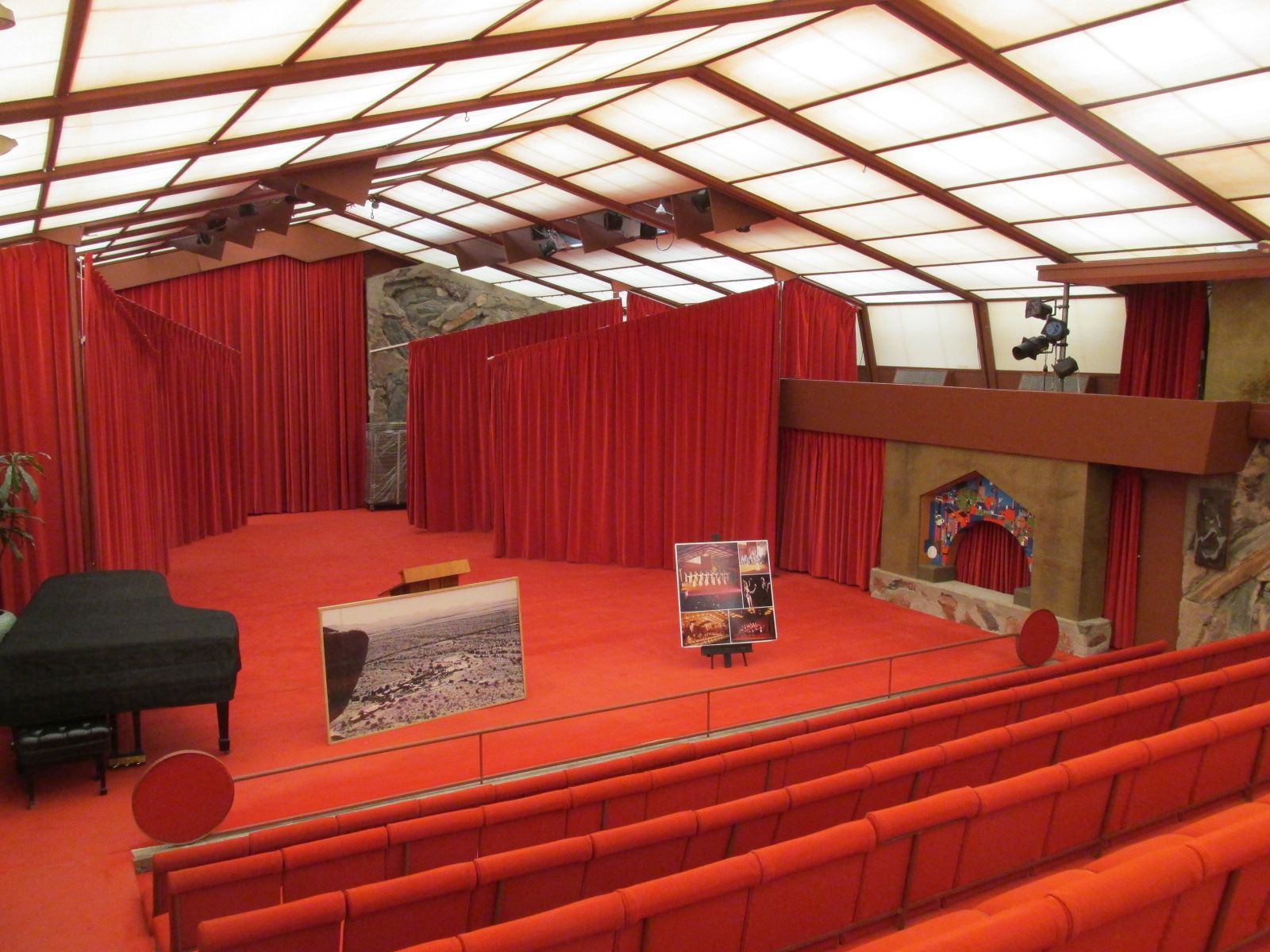
The grand piano is one of Wright’s pianos. He was a music enthusiast and often accepted fellows based on their musical ability.
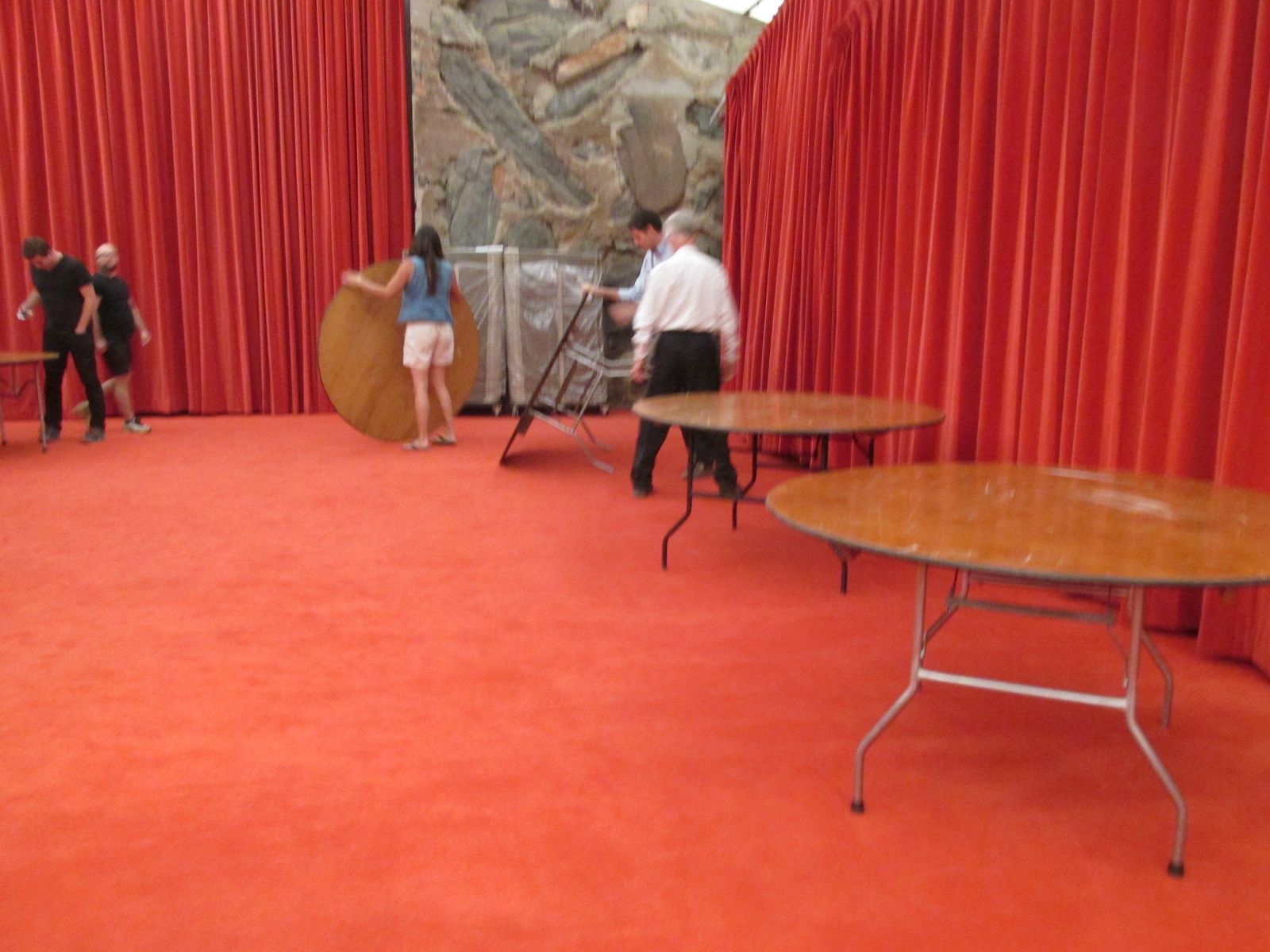
While our guide was talking, people came in and started setting up for a brunch the following day. The guide was not amused. She said that she was scheduled to be in the music hall at that time. They did stop, though, and let her finish her presentation.
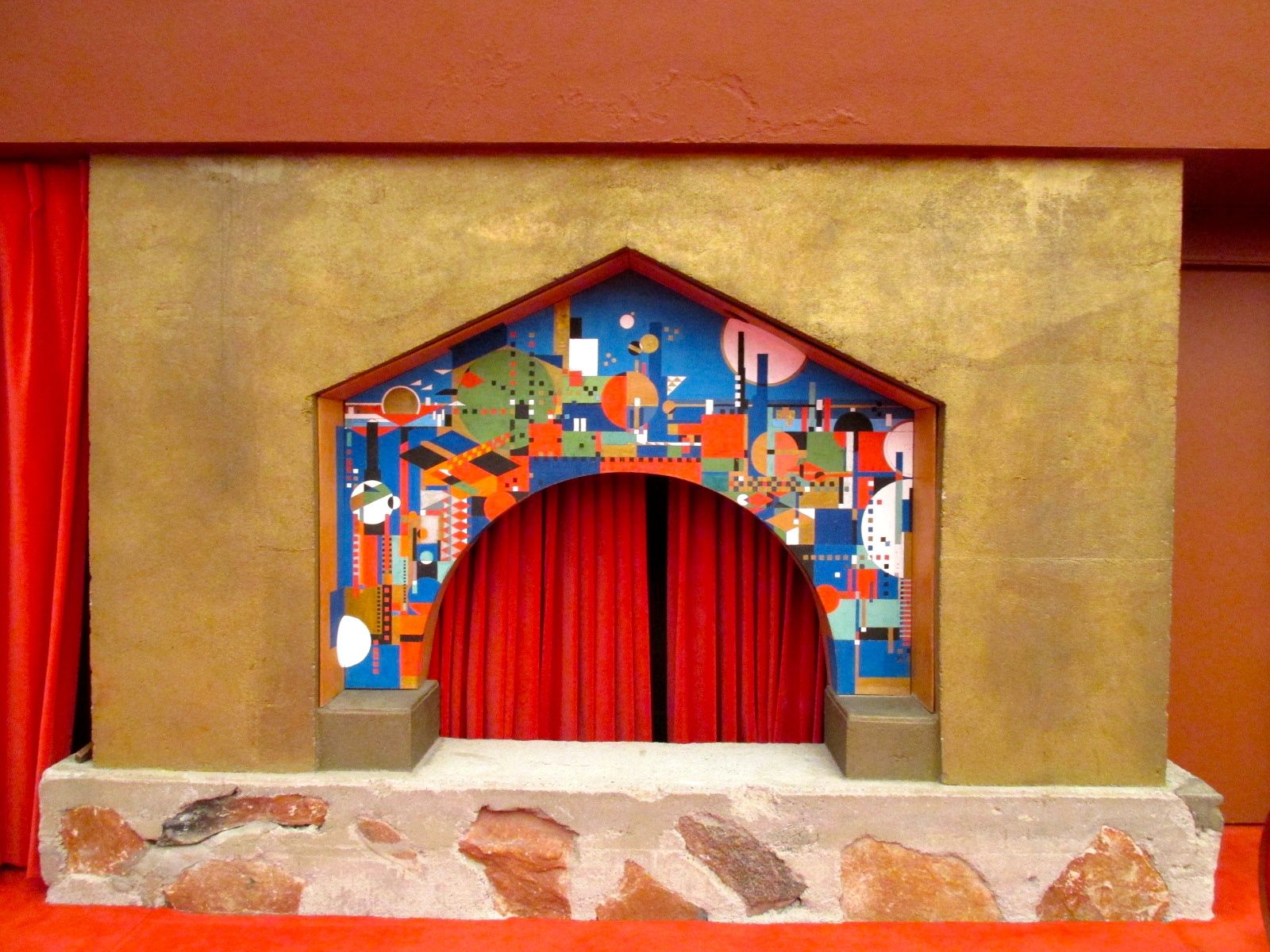
This structure was to the side of the stage. It looks like a fireplace to me, but the curtains would suggest that it is something else.
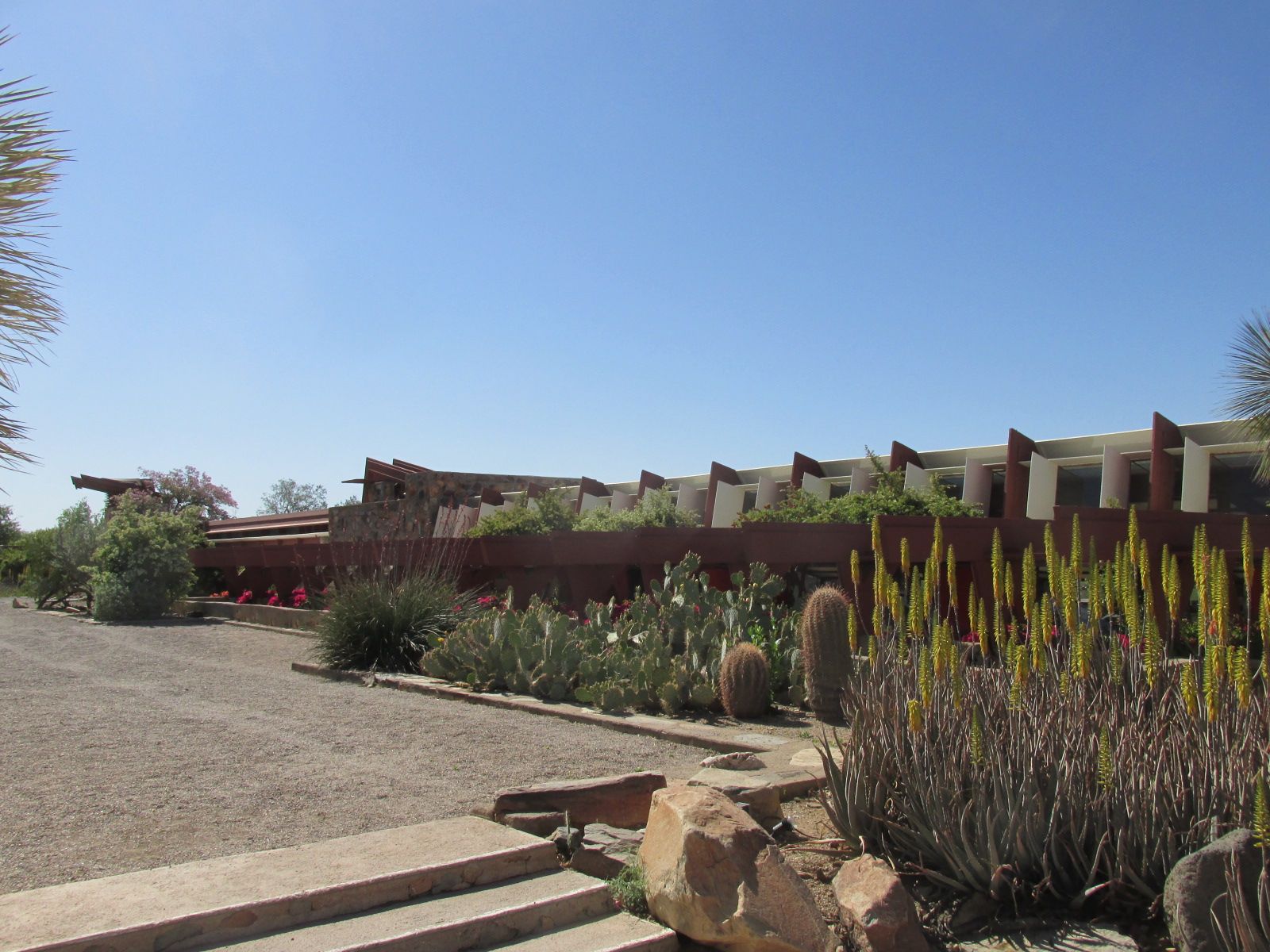
This is the back of the building with the drafting room.
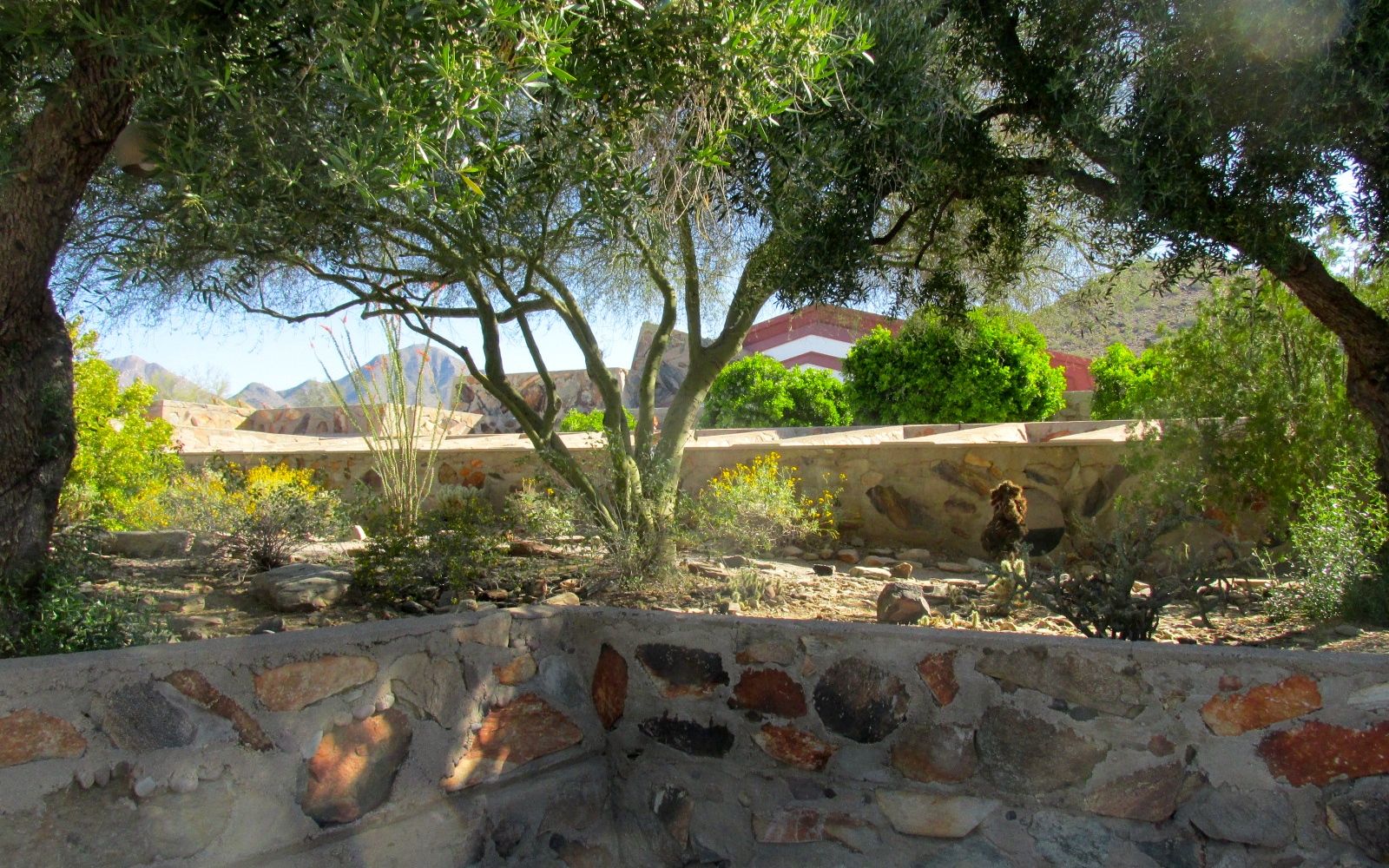
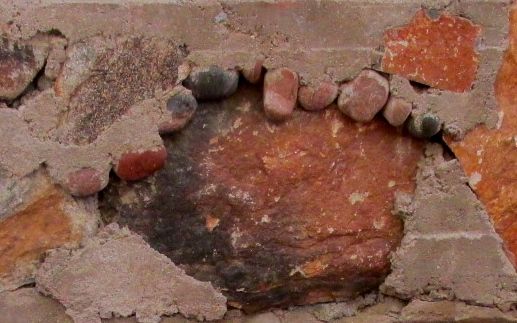
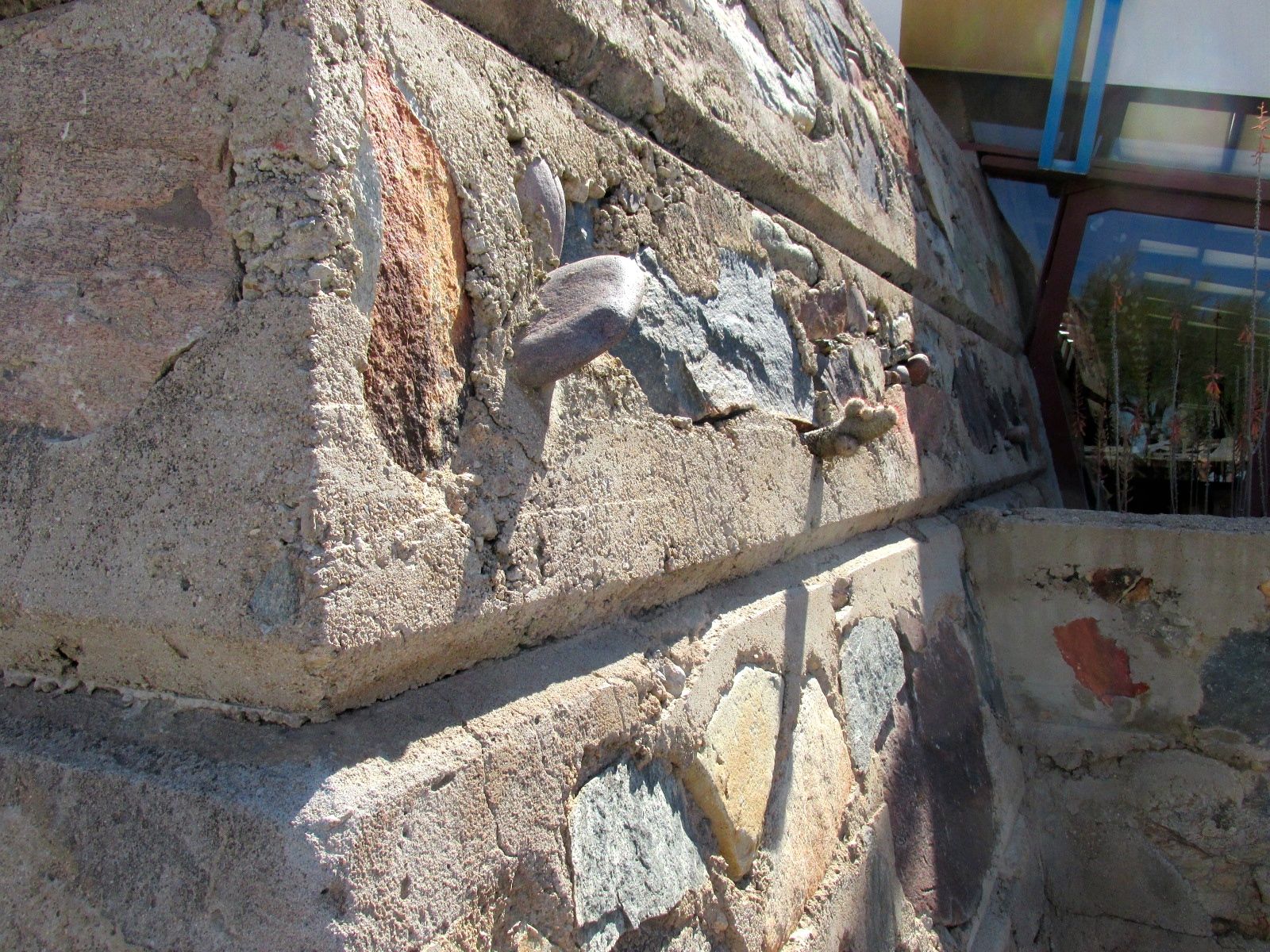
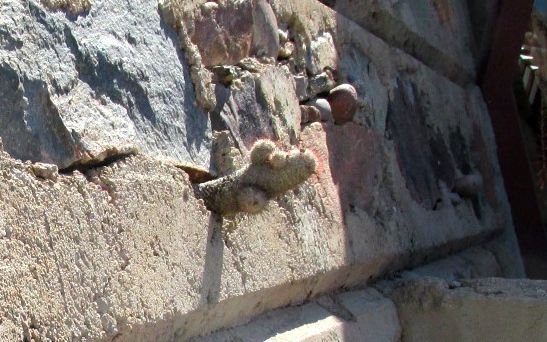
All the building was done by Wright’s Fellows. They took to using round river stones around the larger mountain rocks to keep the cement in place. If it covered the large rocks, they would have to scrape it off. Wright liked the technique and called them “goose eggs.”
It’s fairly easy to see a rounded stone sticking out of the wall, but if you look a little further down the wall, you can see a cactus growing out of a hole.
According to the guide, the cactus was planted there by a bird and is just growing there. I wonder how long it has been there and how much longer it will survive?
We came around the corner and were greeted by an unexpected expanse of green. I imagine that all the green was thanks to Olgivanna.
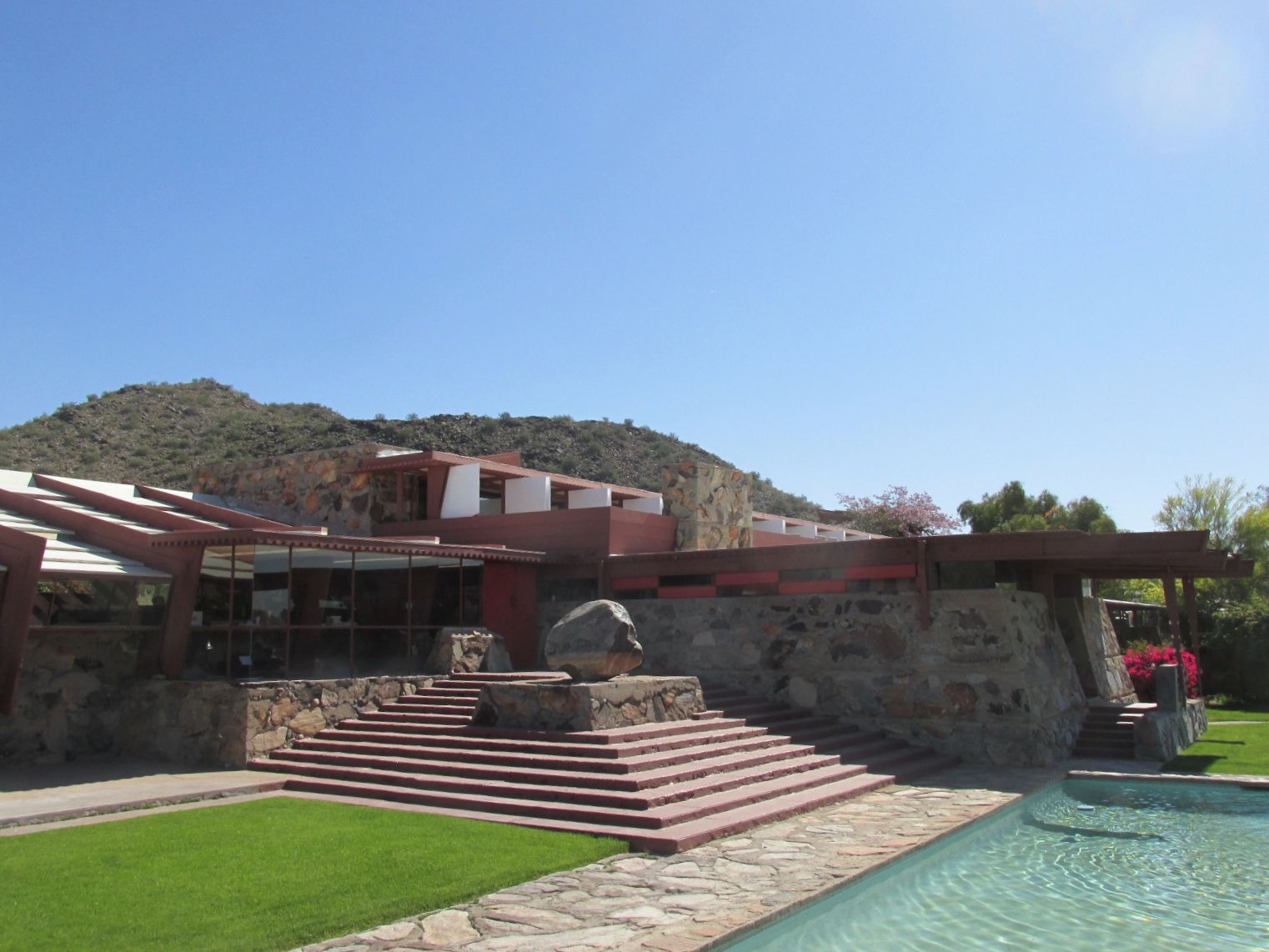
This is the other side of the building with the drafting hall. It was designed to be cooled by the breezes blowing across the shallow pool, up the steps and into the door, which was thrown open to take advantage of the weather.
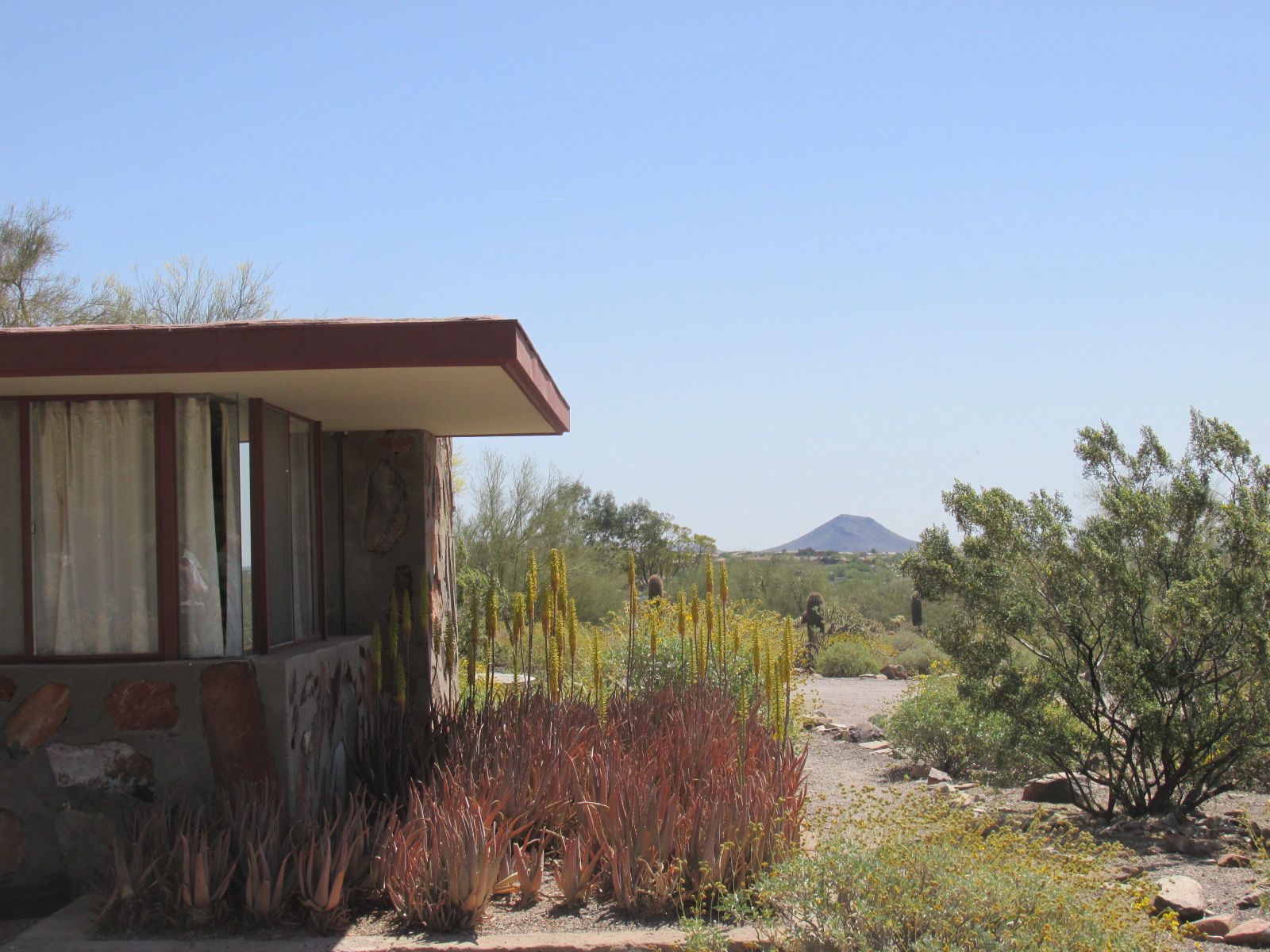
This view really shows how the buildings nestle into the Arizona landscape. In Wright’s words, “Arizona needs its own architecture… Arizona’s long, low, sweeping lines, uptilting planes. Surface patterned after such abstraction in line and color as find ‘realism’ in the patterns of the rattlesnake, the Gila monster, the chameleon, and the saguaro, cholla or staghorn – or is it the other way around—are inspiration enough.”
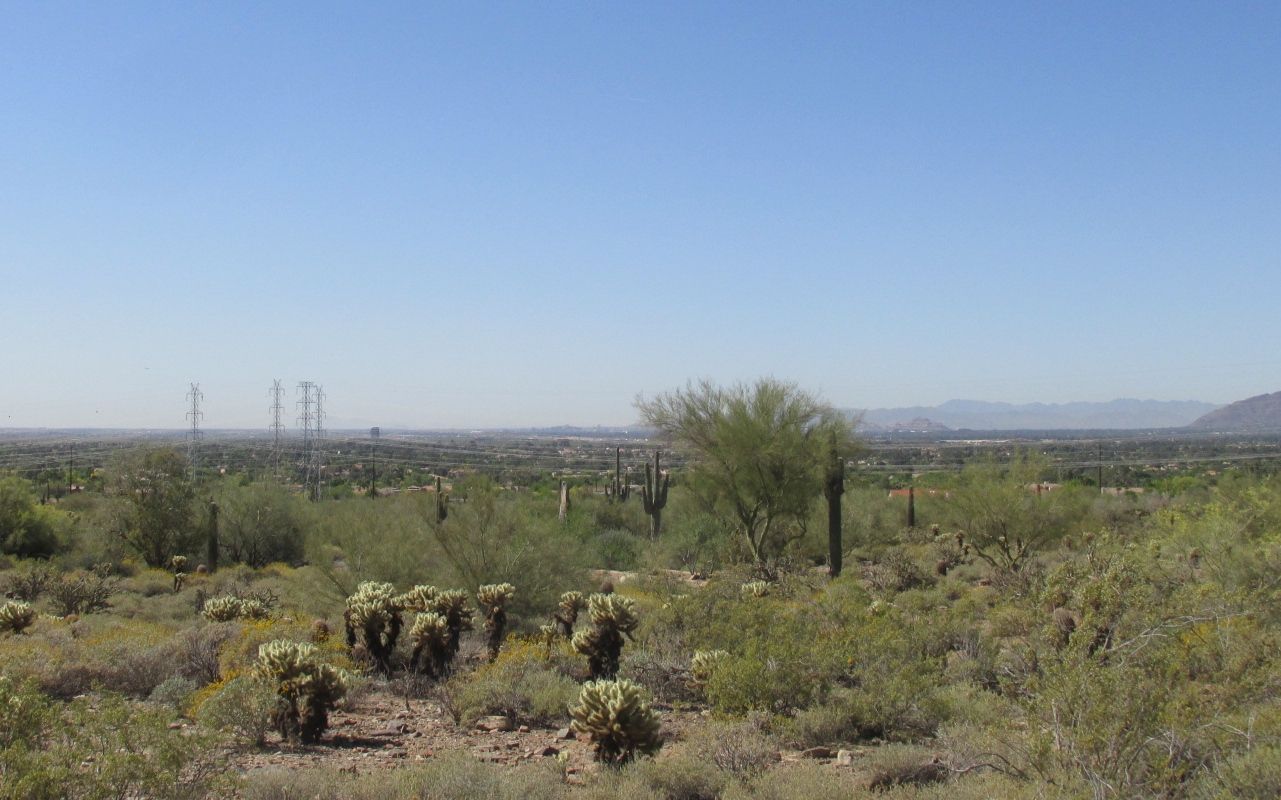
This is the view from this building. Wright was really angry about the electric wires that were strung across his view and through his land, thanks to eminent domain. The dining room used to look out on this vista. After the wires were strung, though, he moved the dining room to the other side of the building.
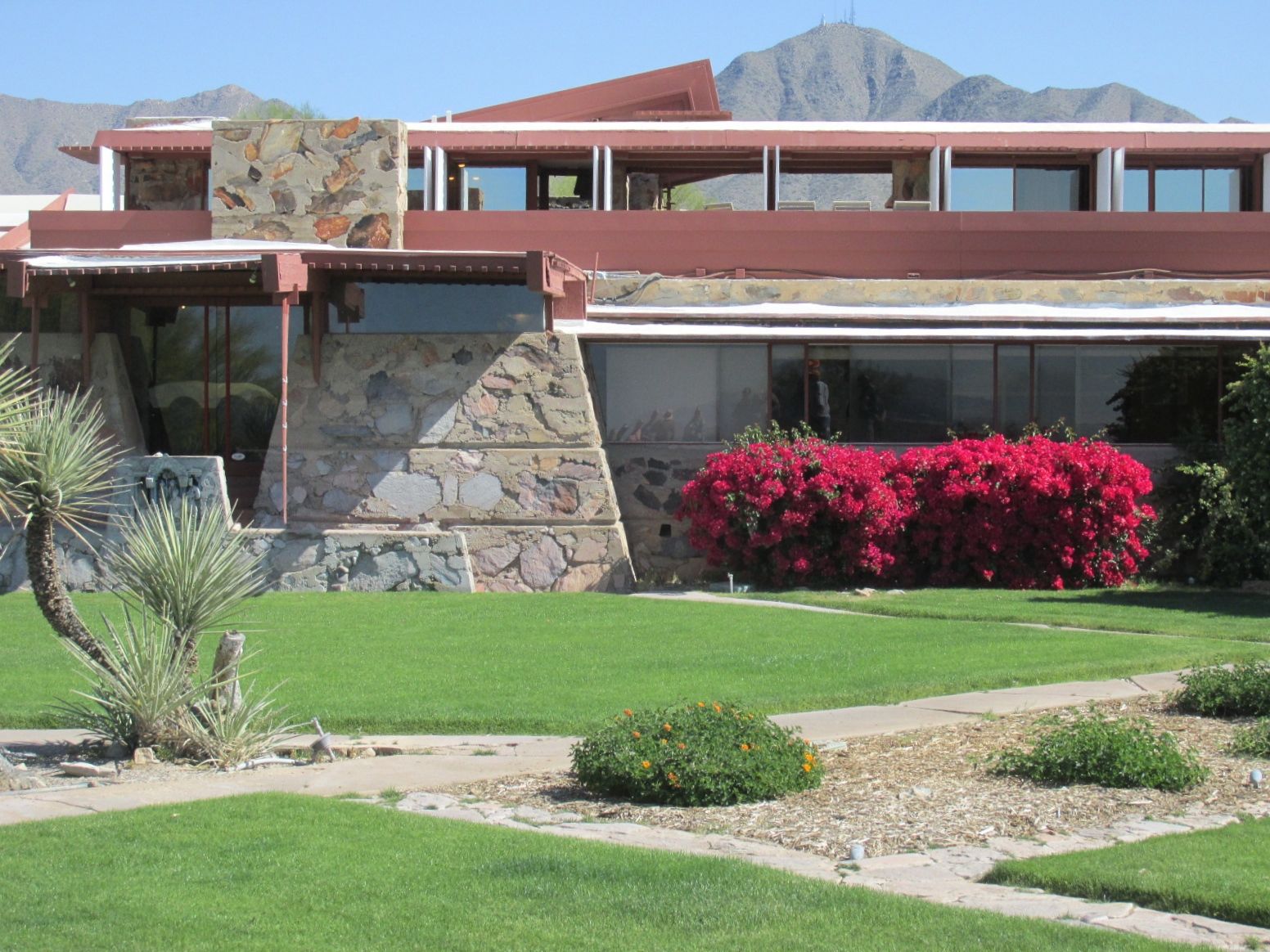
The windows above the bright bougainvilleas are from the original dining room. Now it is used as office space.
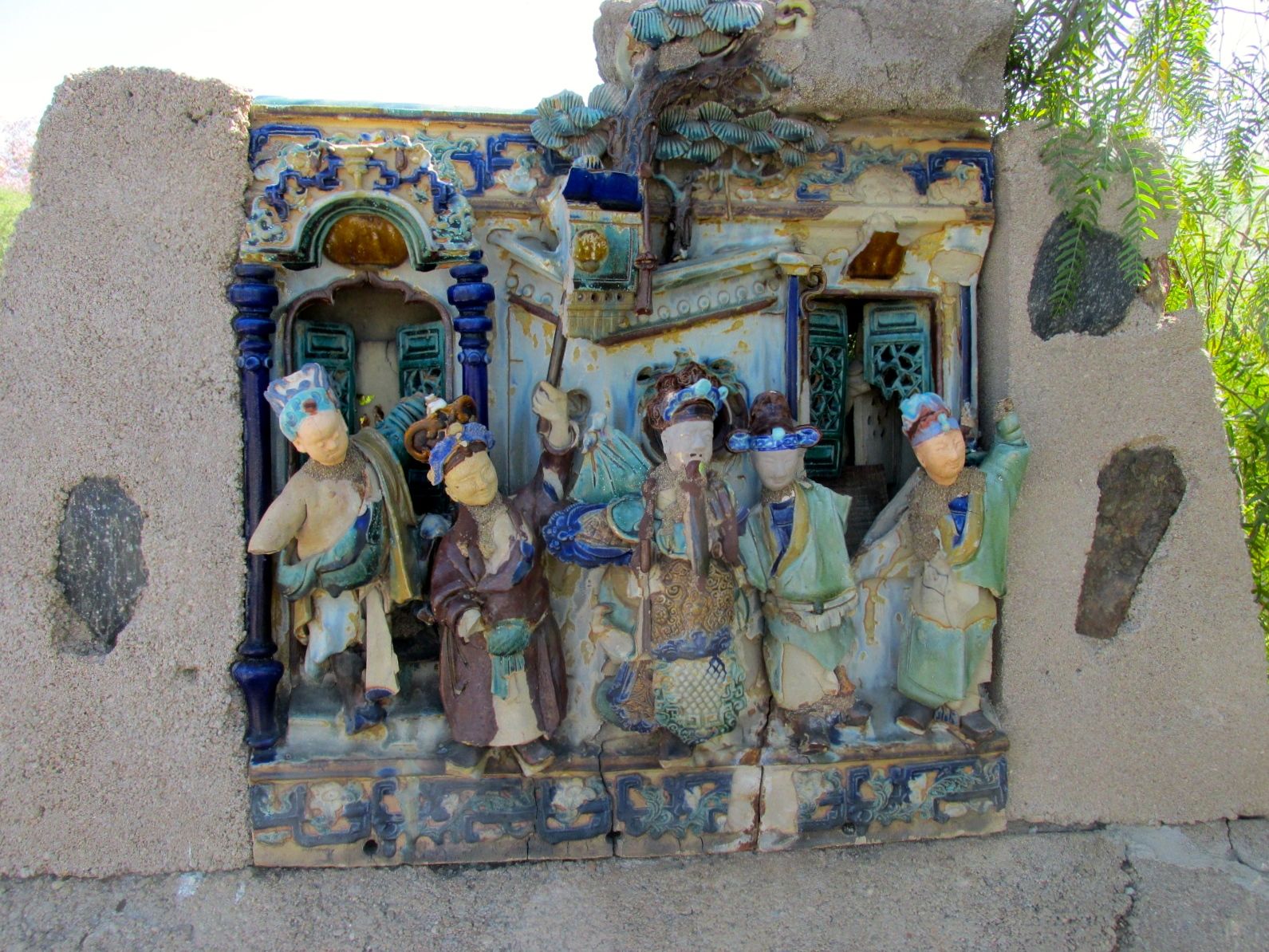
As we approached the dining room where we were to have our snack, we passed one of Wright’s Chinese terracottas.
Wright was an art collector and he acquired a dozen of these sculptures. They were broken when he got them, but one of his Fellows managed to repair them. The Fellow returned to continue and tend to the terracottas, but I think he has since passed on. The birds would come and snatch the pieces as they would break off and drop to the ground. You can see where some pieces should be that aren’t anymore.
And this is where I’ll pause for now. Come back for the next installment to see the rest of the tour.
When I got to Phoenix, all the plants looked like they were just about to burst forth with blooms.
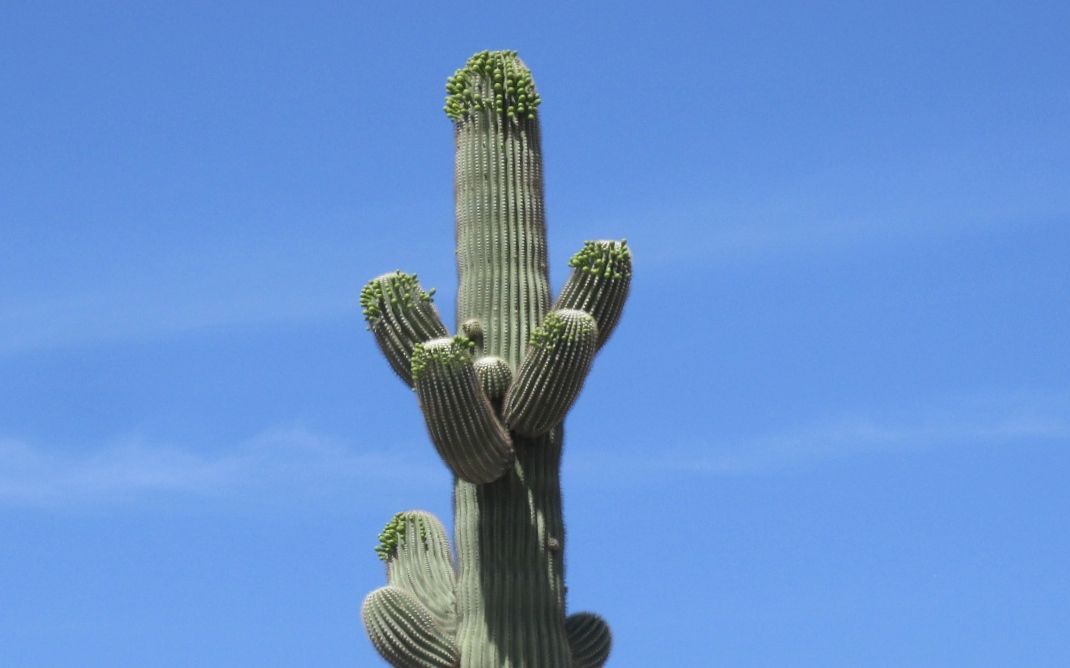
This saguaro looks like it’s about ready to put on a show.
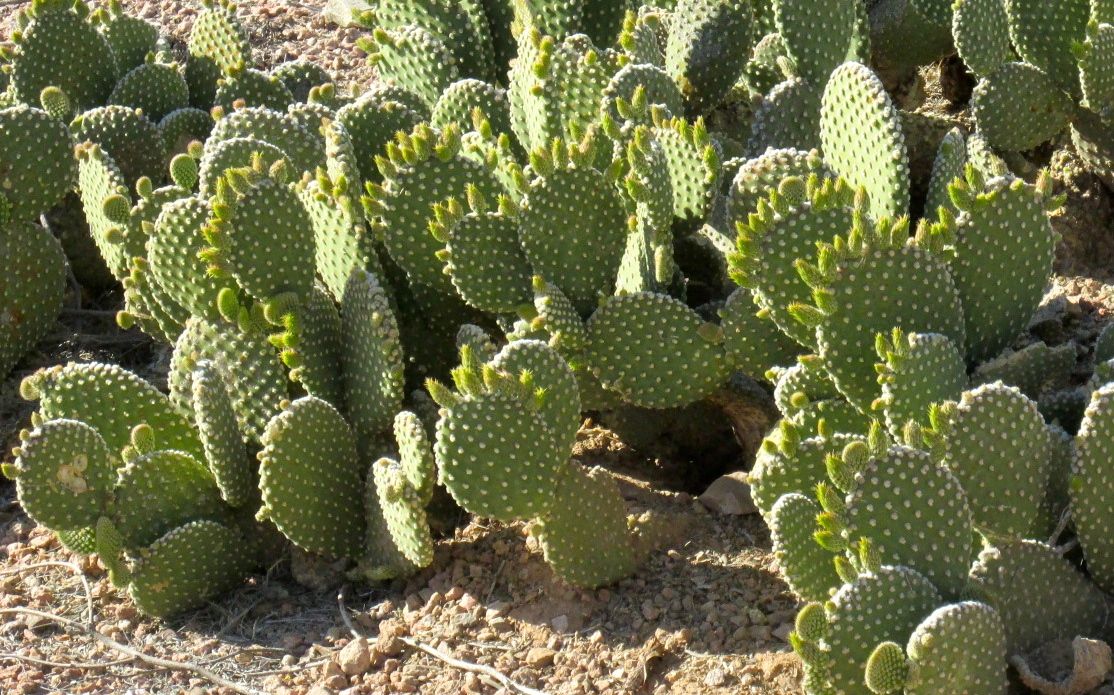
This prickly pear is covered with buds, too.
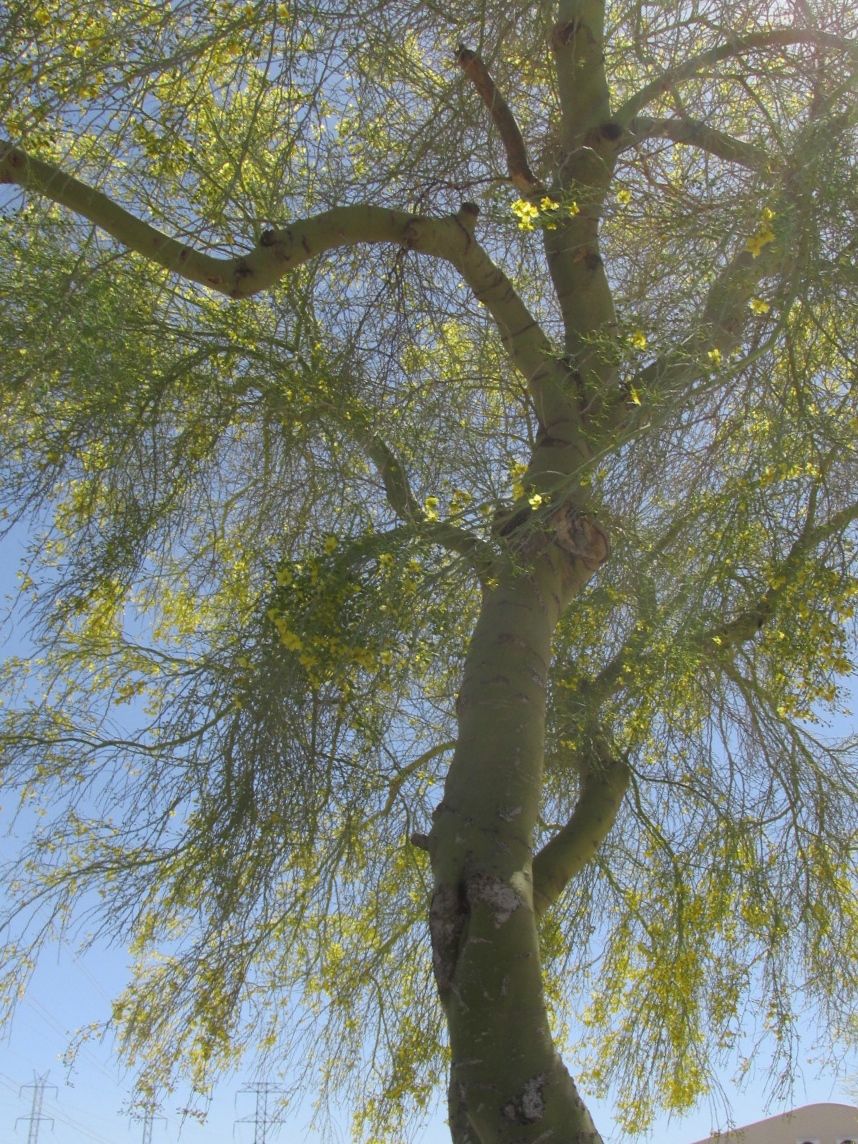
And don’t even get me started on the trees in bloom.
I got settled in at my campsite in WestWorld of Scottsdale, which is an exhibition center that focuses on equestrian events. I picked this place because it was located close to my friends from Kalamazoo, Konnie and Michael.
WestWorld is an interesting place to stay, even if it doesn’t exactly rock a wilderness vibe.
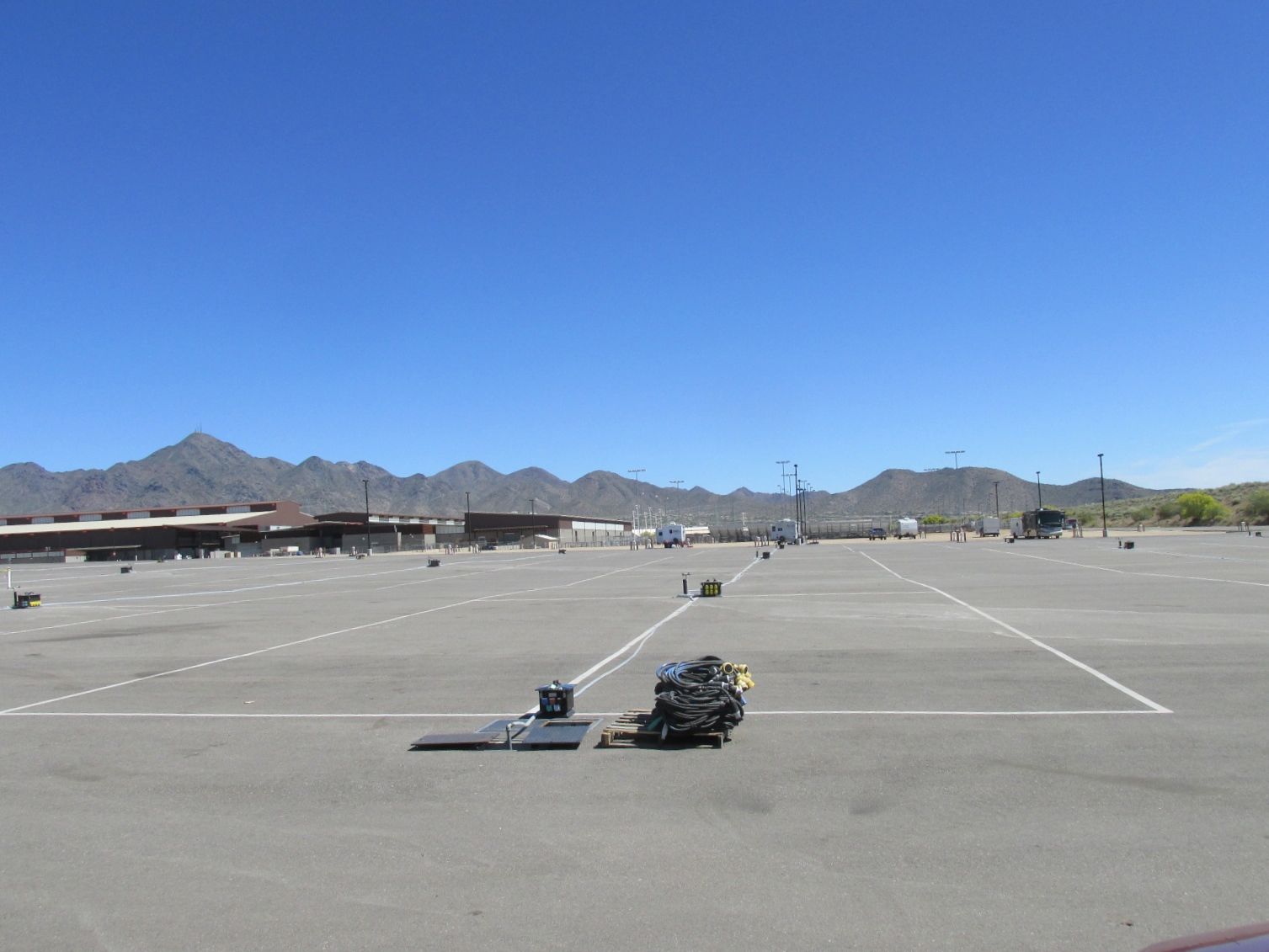
The view from my door
Yes, there’s a great view of the mountains, as long as you lift your eyes from the acres o’ asphalt.
While I was there, though, lots of things were happening.
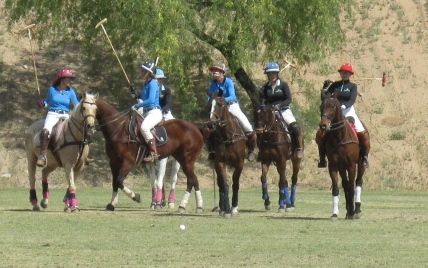
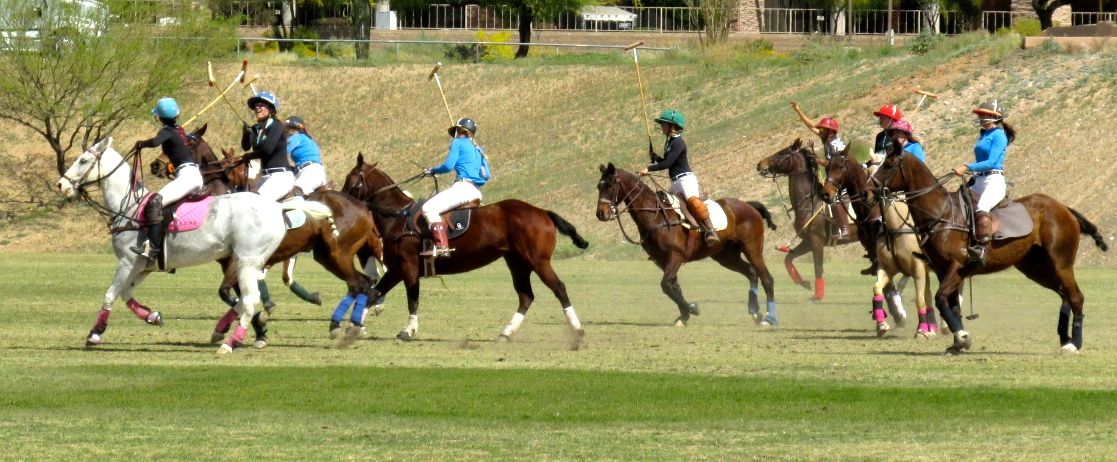
Polo
I wonder who won the chucker?
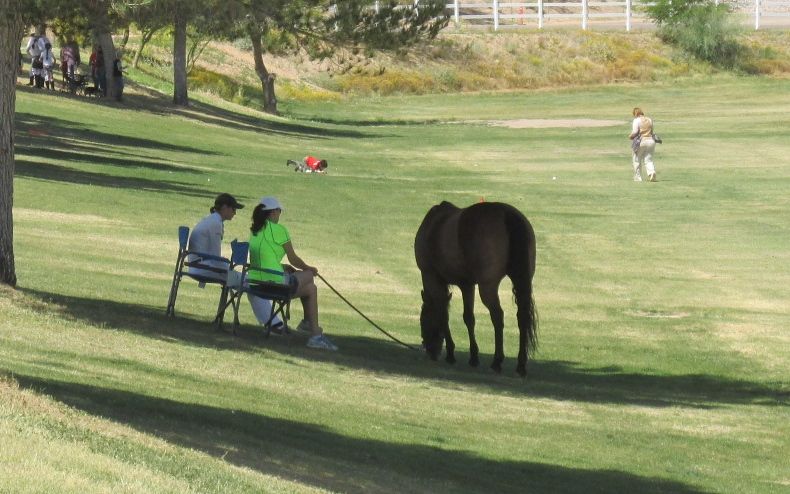
People were enjoying the match with their horse.
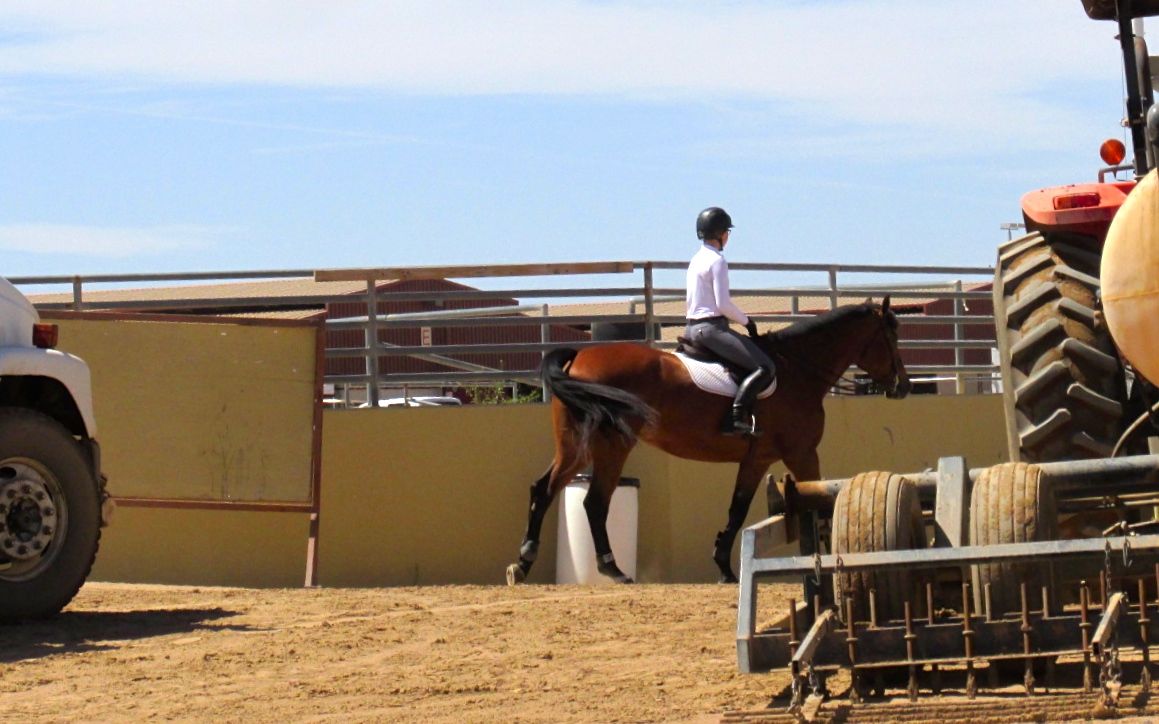
There were riders in the rings at the other end of the park. I looks like they were doing dressage, maybe. I did see them taking jumps under the lights one night.
Of course, after all that work, the horses need to be clean. Nobody likes a dirty horse.
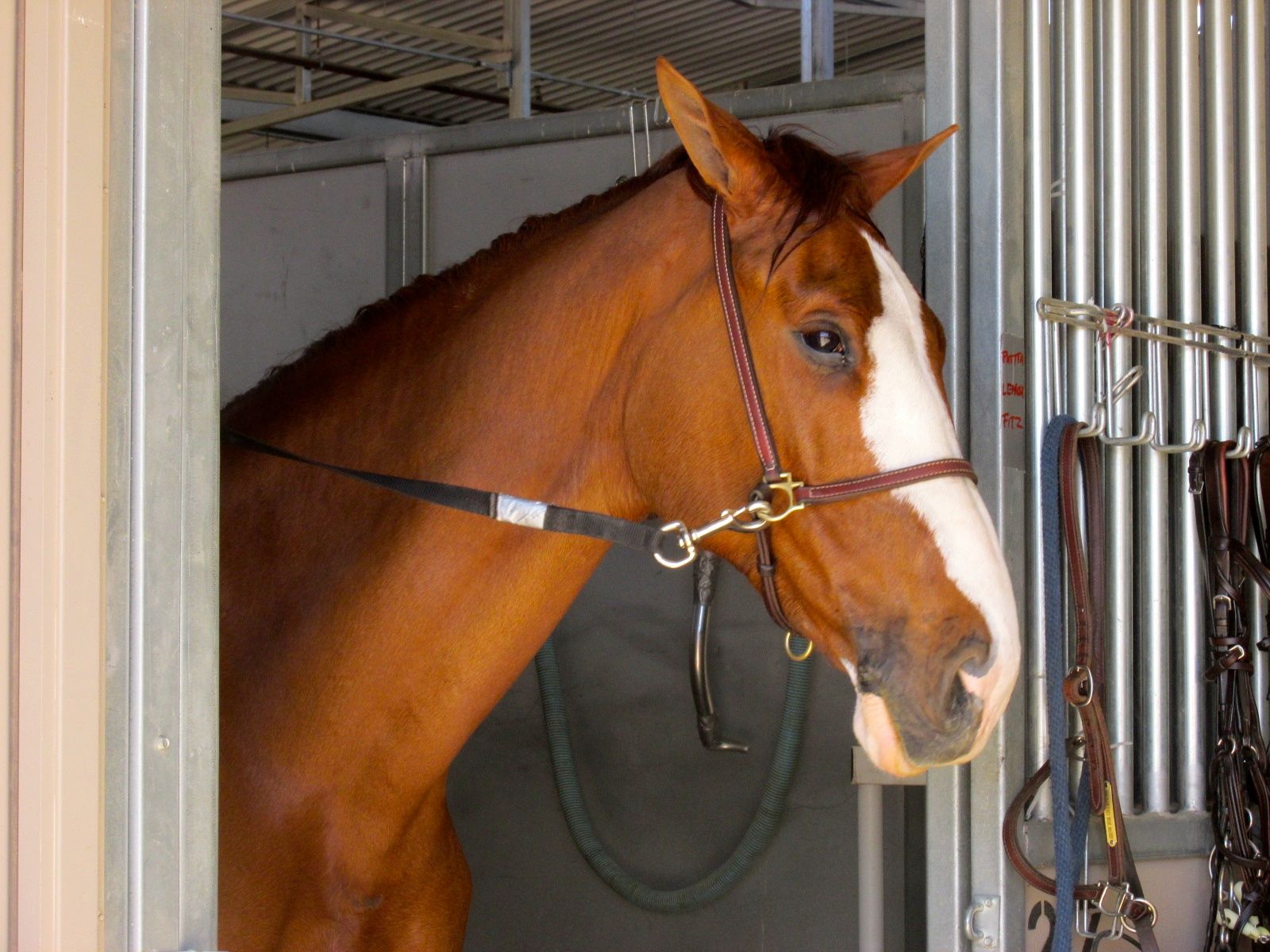
There were a number of different stables that were on site for the events.
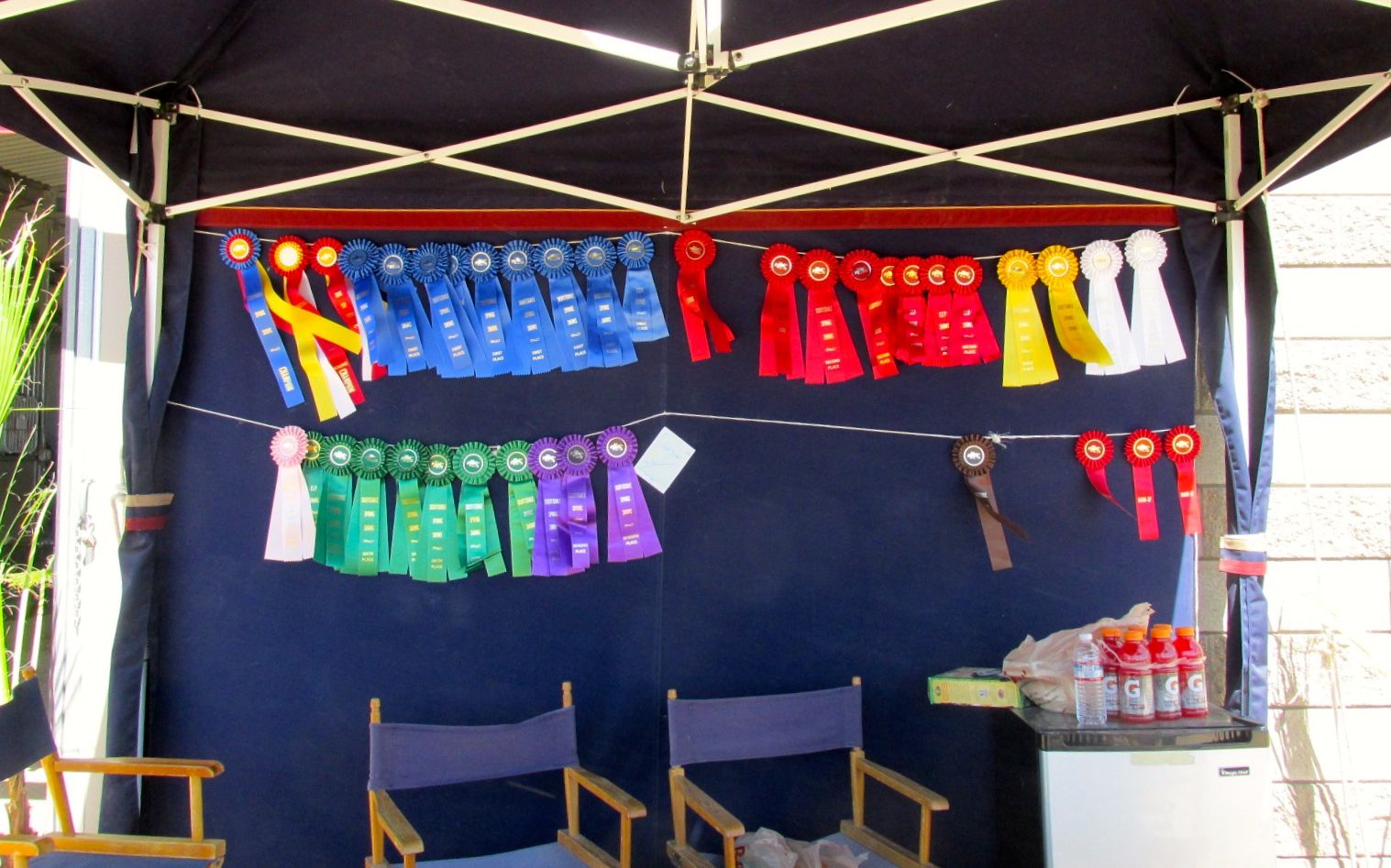
They all proudly displayed their ribbons and had comfortable places to sit when not doing horse-related activities.
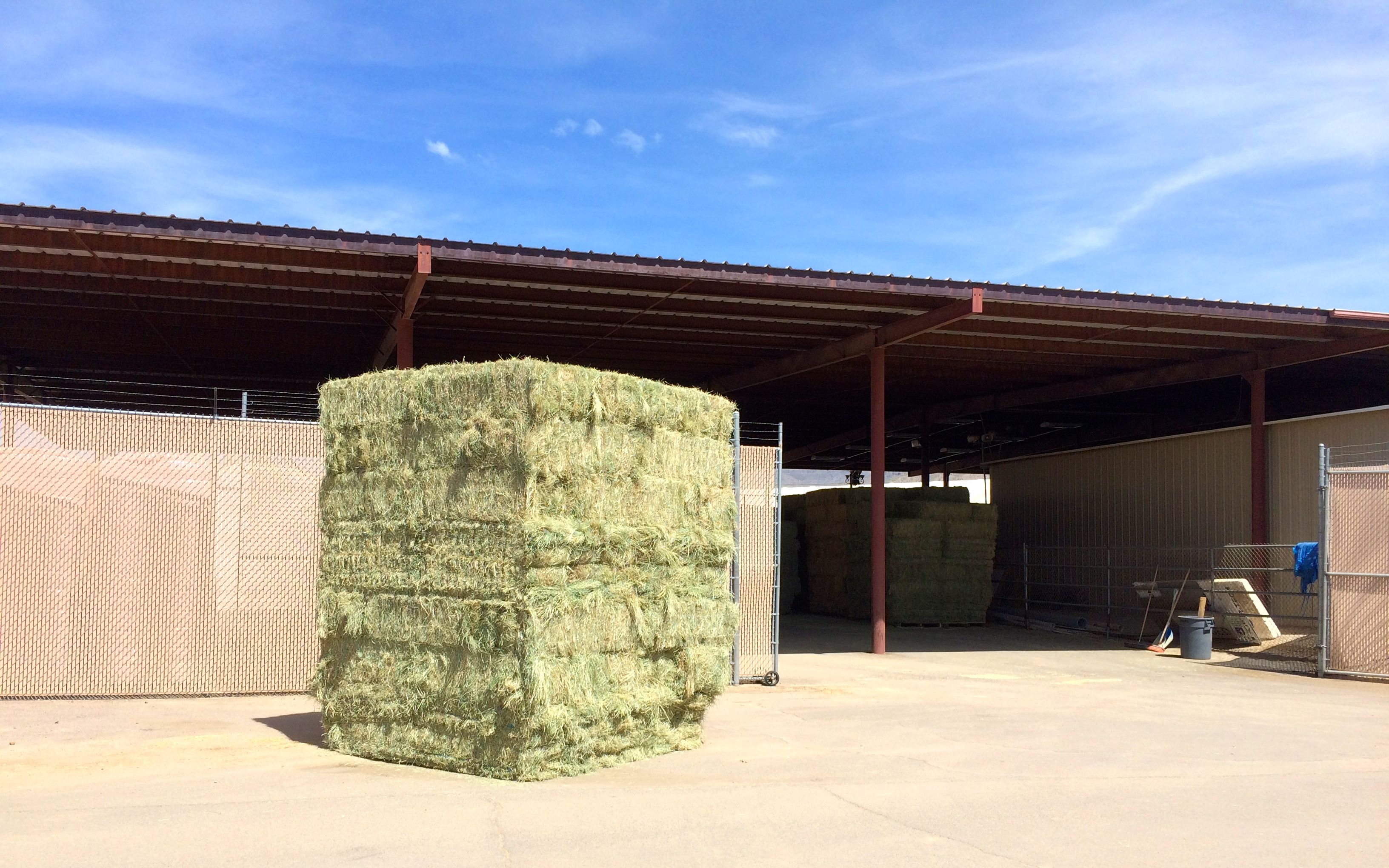
Hey! Hay!
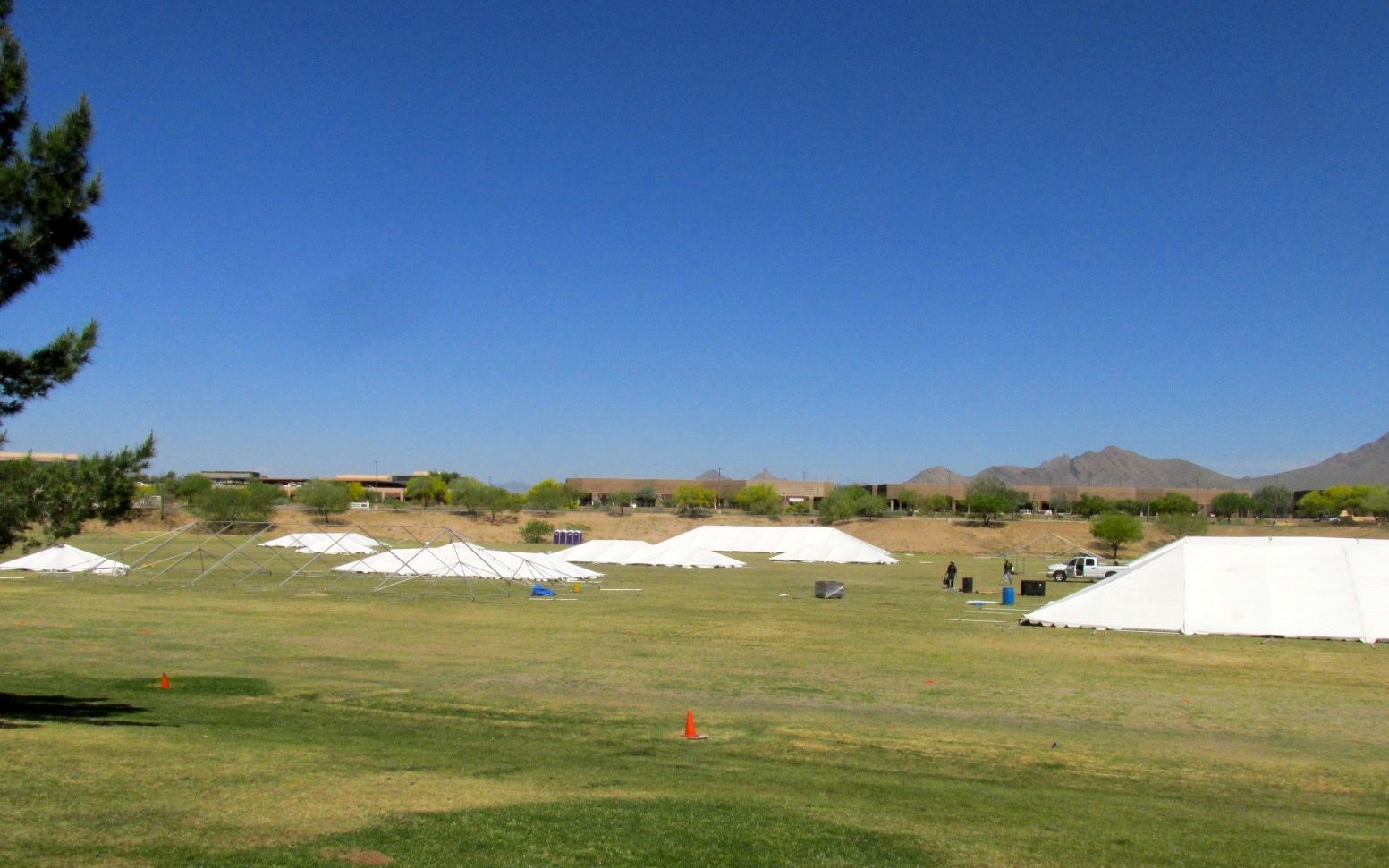
They also had a dog show taking place. It took them a couple of days to turn the polo field into the dog show market place.
One day they constructed the roofs of the tents, and then they raised them up the next day.
After the weekend, they tore down the dog show, the horse people went home and then they started getting ready for the next event – Arizona Bike Week. That was taking place after my departure, however
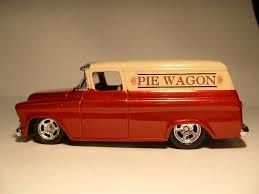
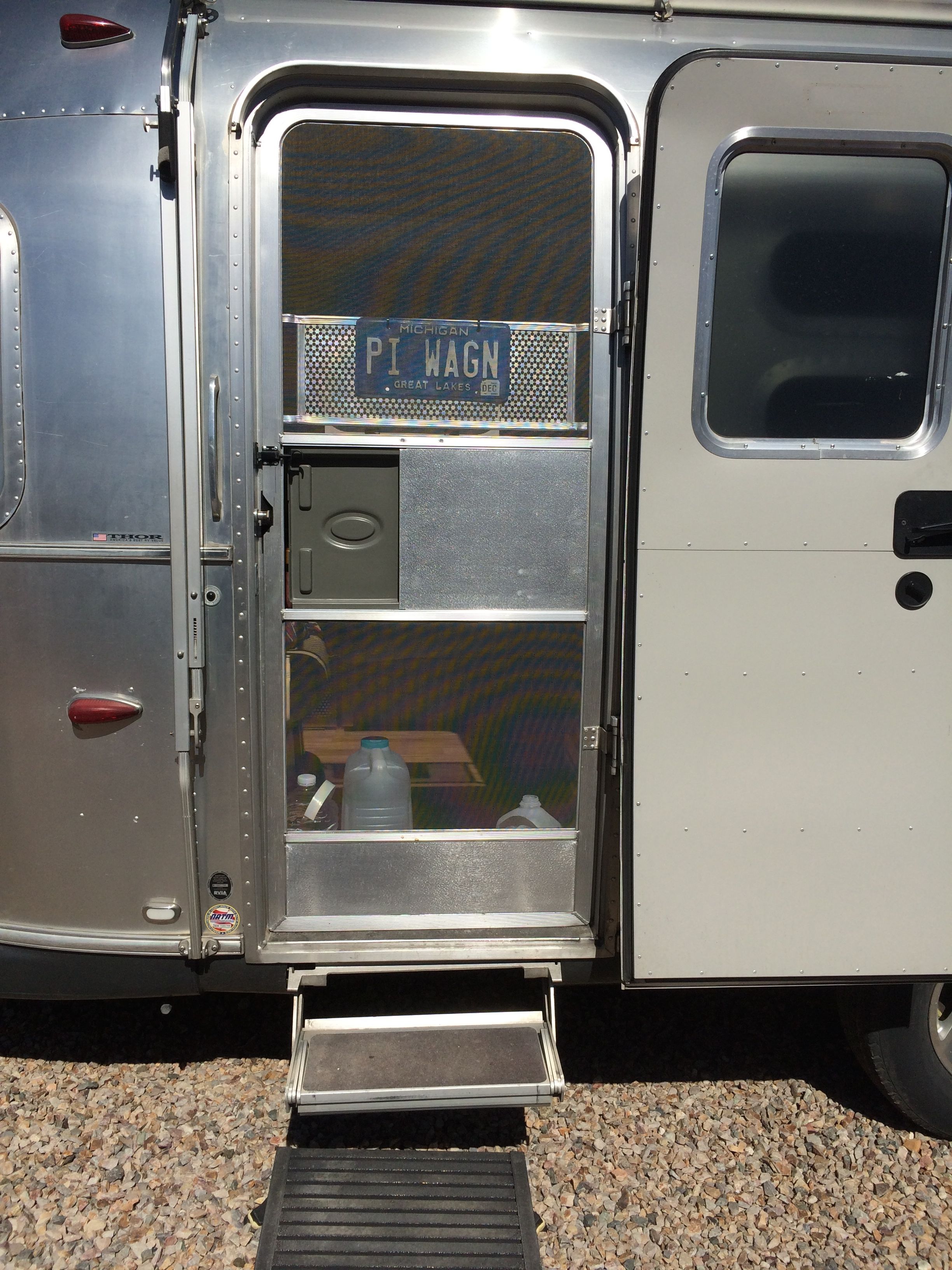
I did take advantage to a few spare minutes between hanging out with Konnie and Michael and my touristic responsibilities to personalize Flo a little. While cleaning out a cabinet, I found the license plate to my old PT Cruiser. My father always said that it looked like a Pie Wagon, so I got a personalized plate for it. It said, “PI WAGN”
I guess a pie wagon was a body style that was developed for bakeries.
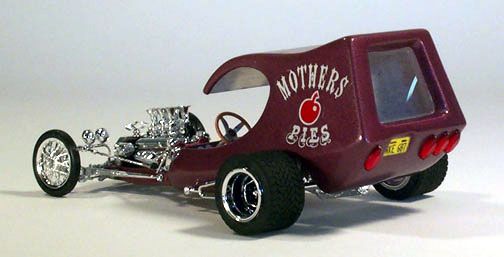
It was also a Funny Car style.
I decided to put the license plate on my screen door.
What would we do without cable ties?
Stay tuned for more of my adventures in the Phoenix area. Frank Lloyd Wright fans, get ready to hold on to your hats!
People kept telling me that I needed to see Bisbee. They said it was a really artsy community. That sounded like enough of a reason for a trip.
On the map, I saw that Fort Huachuca was along one of the routes I could take. The name sounded historic, and I thought that there might be something to see there. It turns out that it is an active military garrison that is is involved in patrolling the USA-Mexico boarder.
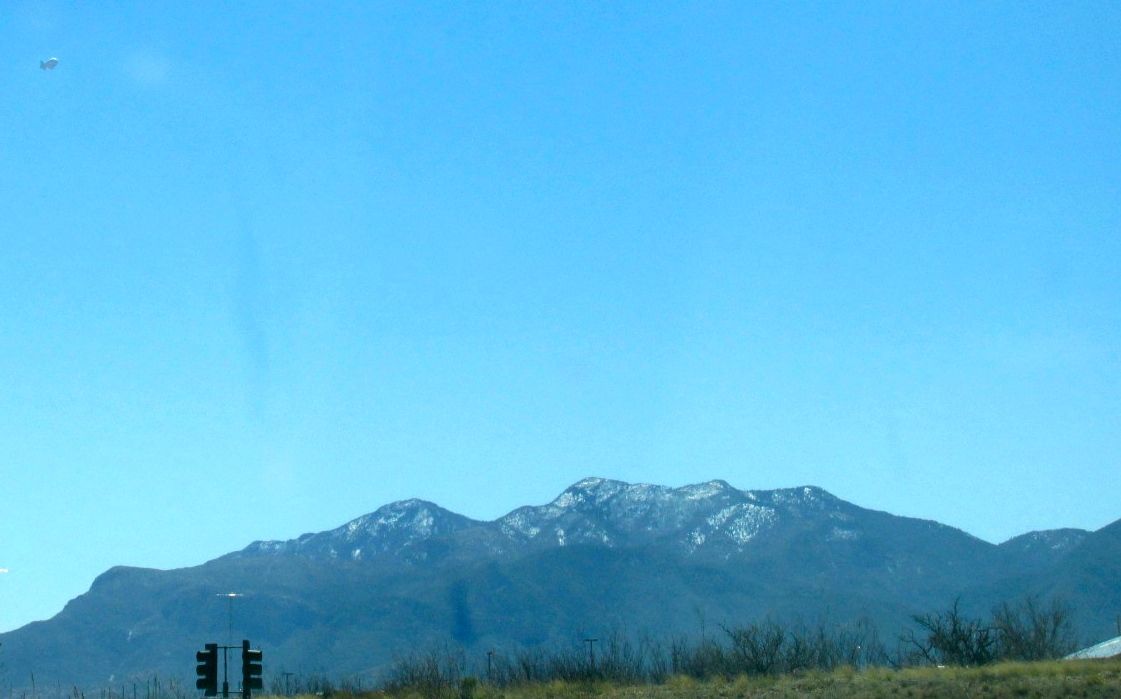
If you look in the upper left hand corner of this picture, you can see another one of those surveillance balloons, like I saw near Columbus, New Mexico.
Incidentally, Fort Huachuca was the home of the Buffalo Soldiers from 1913 – 1933. This was the African American soldiers that made up the 10th Cavalry Regiment. from 1916-1917, the base was commanded by Charles Young, the first African American to be promoted to colonel.
But, as this was an active Army base, I knew better than to just try to drive on and look around. So, I made a mental note to look up information on it when I got back and then I turned toward Bisbee.
Along the way, I saw large green trees in the distance, and then I saw a sign for the San Pedro Riparian National Conservation Area. I like trees and “riparian” is one of my favorite words. In case the word is new to you, riparian means “of, relating to, or situated on the banks of a river.”
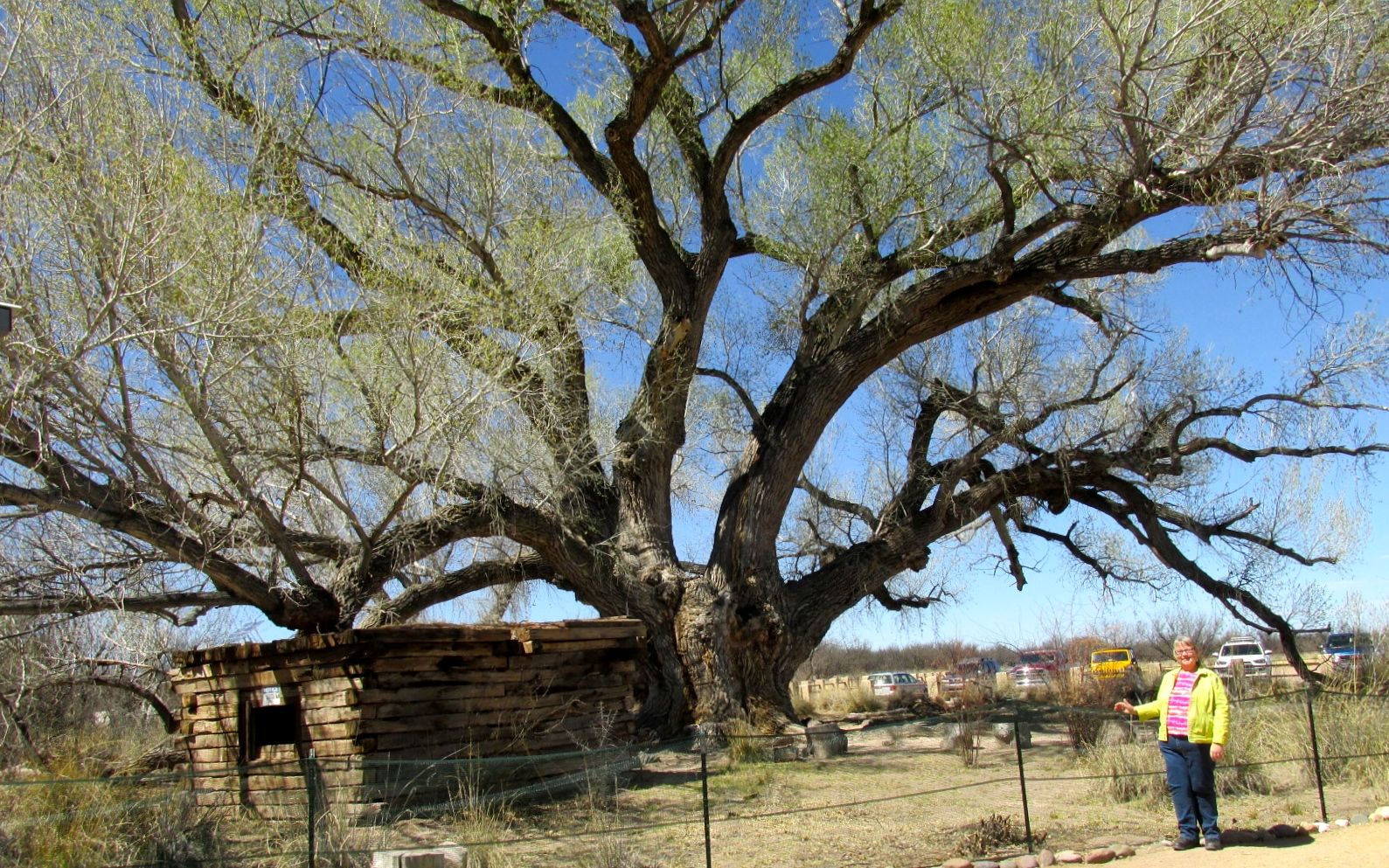
There are large cottonwoods that line the San Pedro River, and this one that was planted near the 1930’s ranch house that is used as a headquarters and gift shop. Since cottonwoods are rather weak trees and this one was getting close to the end of it’s natural lifespan, there is a risk that the branches could drop without warning. They have the tree fenced off to minimize the danger.
This cottonwood was probably between 100-150 years old. The require a lot of water and have very shallow root systems, so they usually grow near rivers, although people do plant them because they are great shade trees. Cottonwoods are part of the willow family. Willows frequently grow near water, too. It’s all in the family.
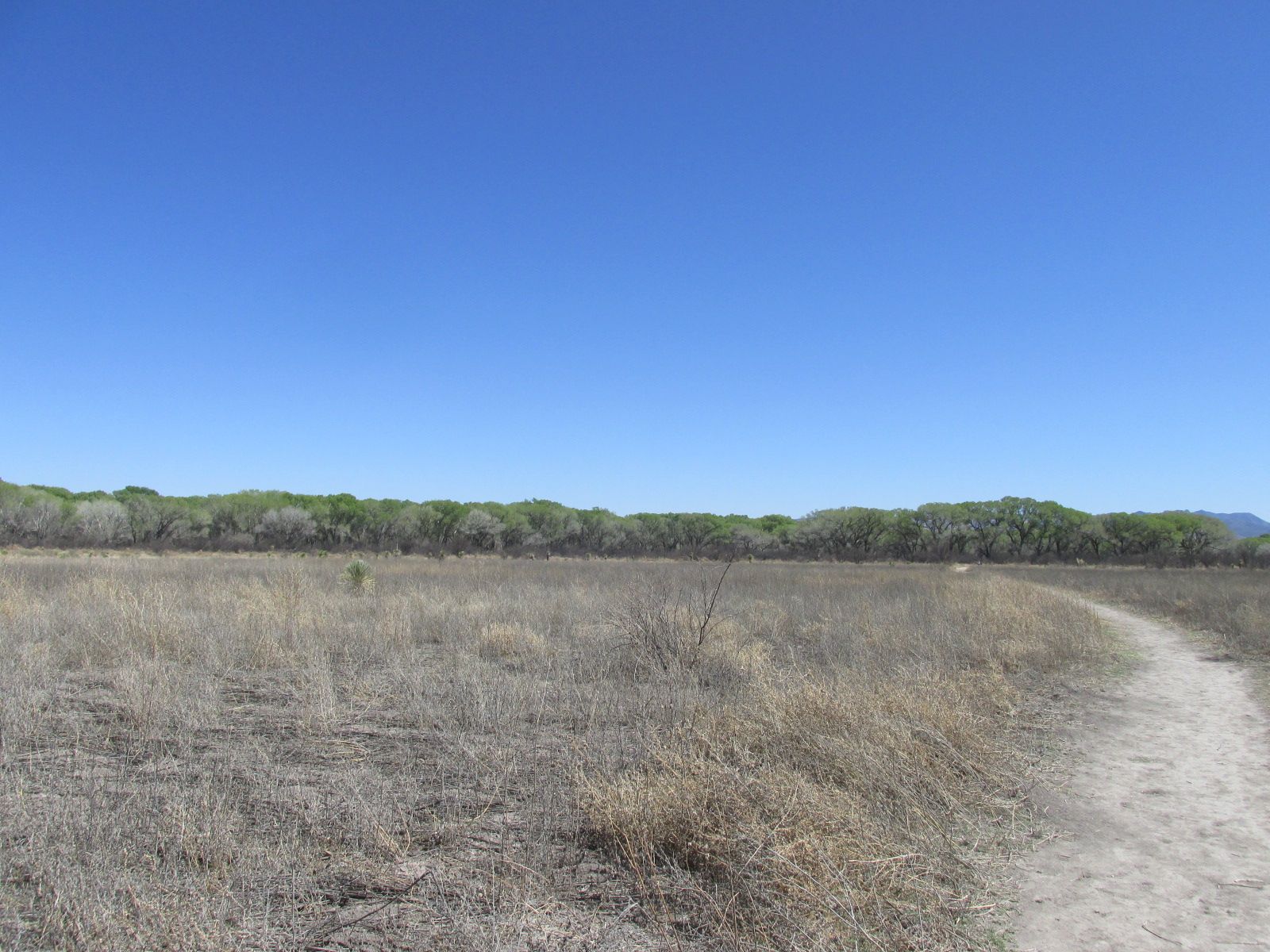
After admiring the huge cottonwood, I set off on the trail to the river.
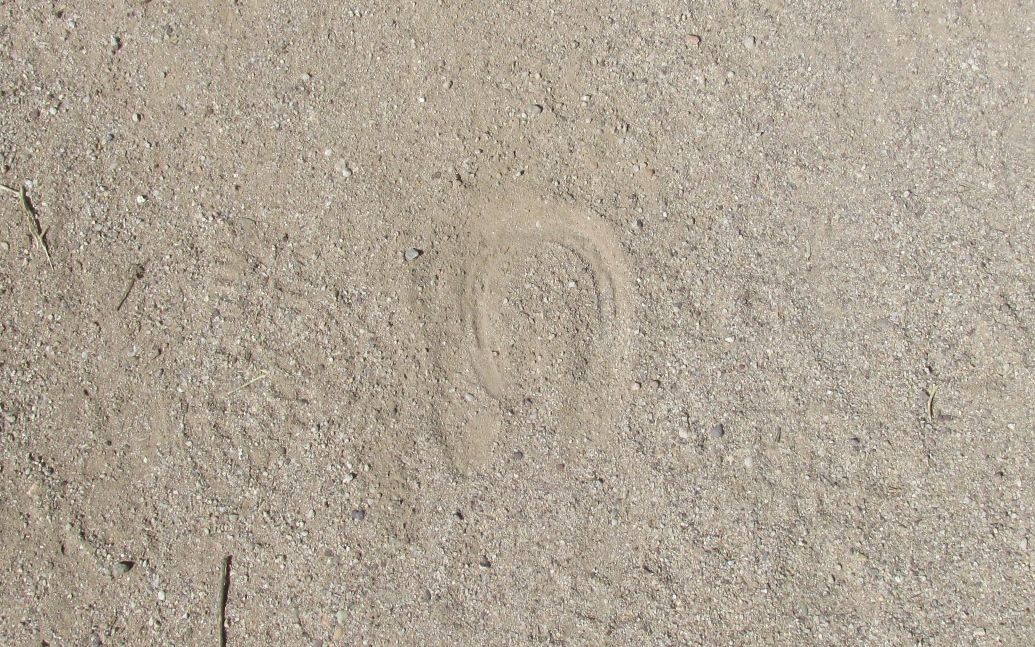
Along the way, I saw hoof prints. Horses! I wonder if I would see any?
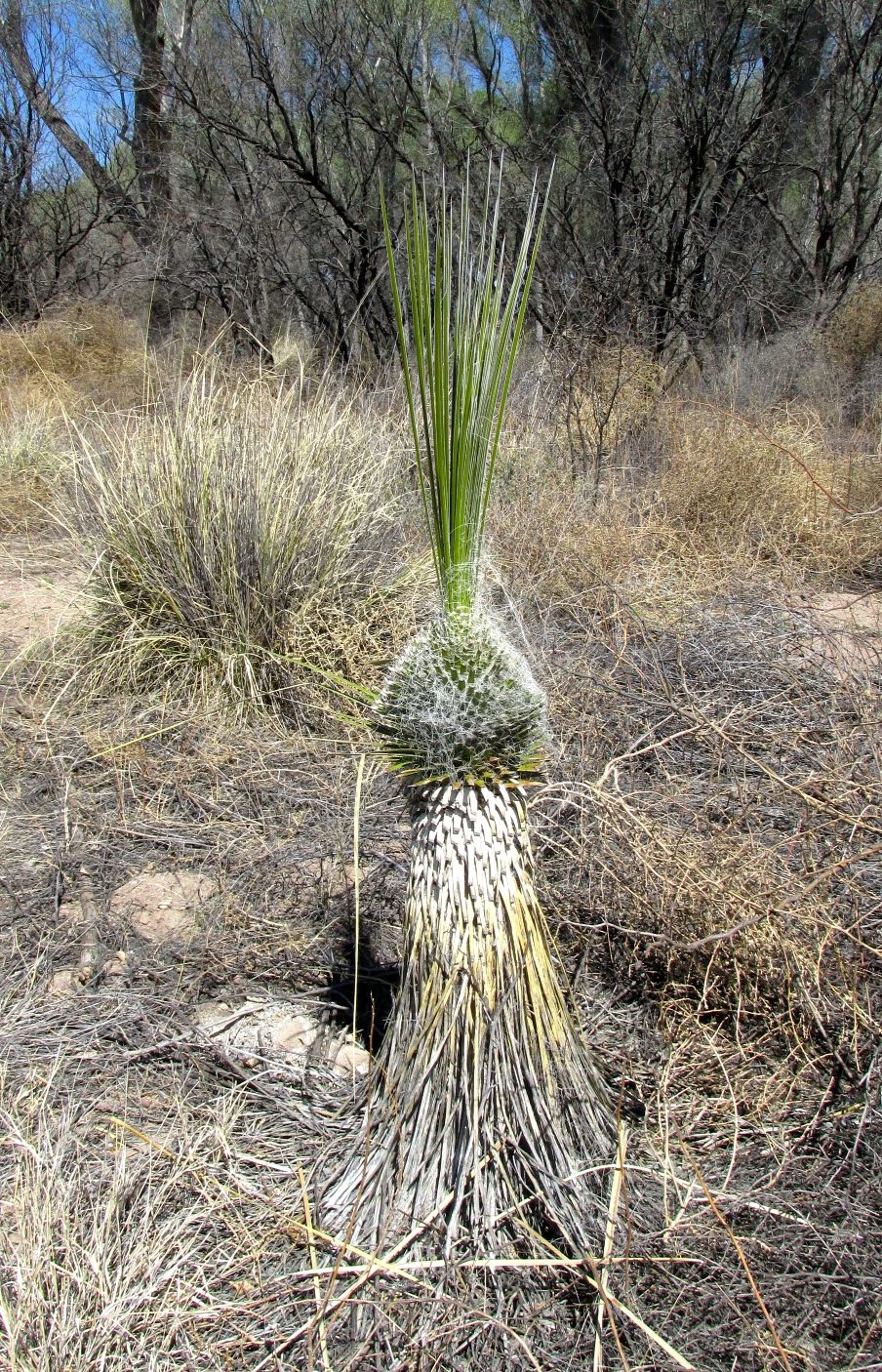
This cactus looked carefully manicured. I imagine that it must be a tasty treat for deer looking for forage. Either that, or rogue landscape artists were on the prowl.
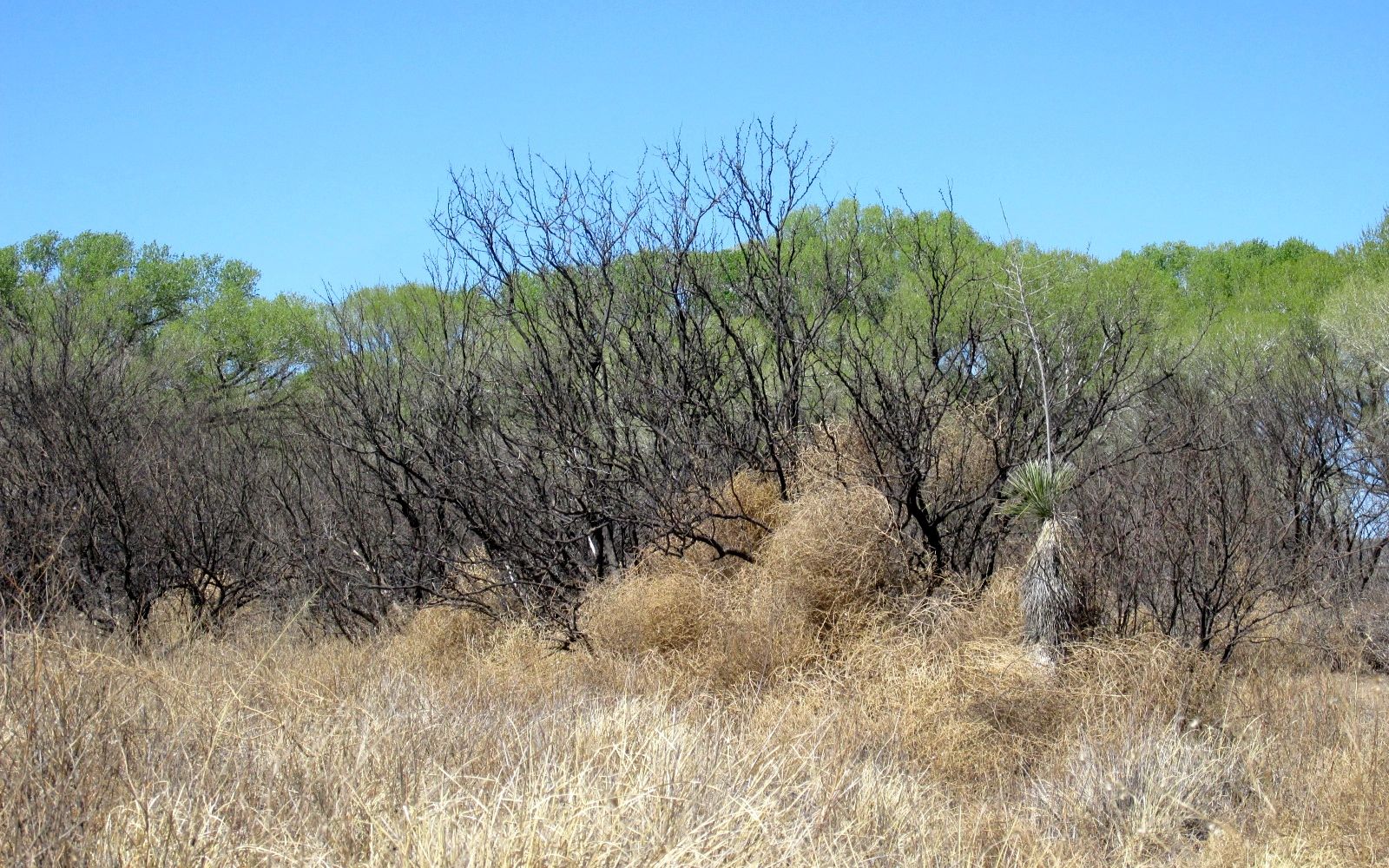
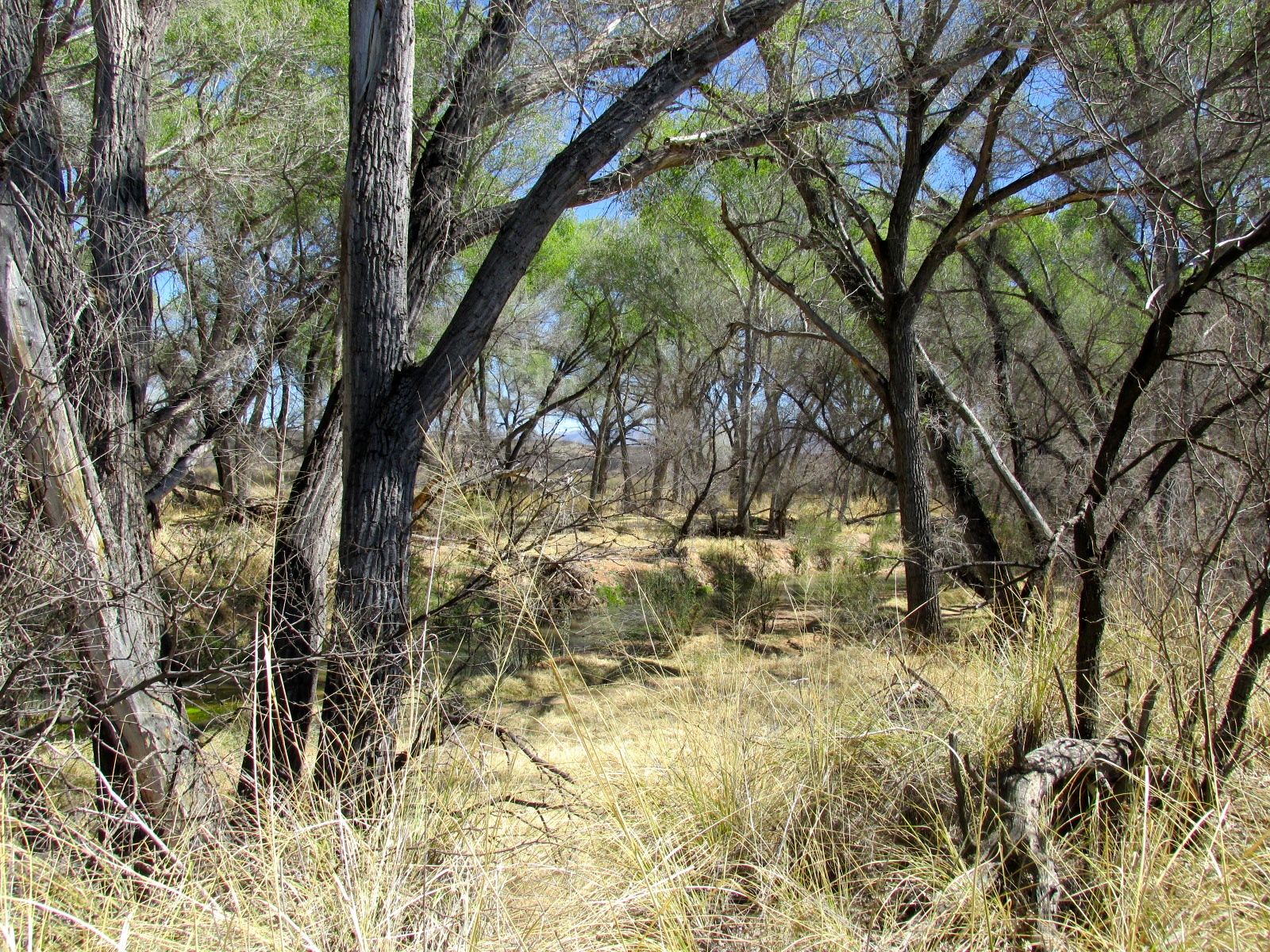
Tumbleweeds got caught in the small trees I saw along the way. And then I got close to the river. The trees were large and the buds were getting ready to burst.
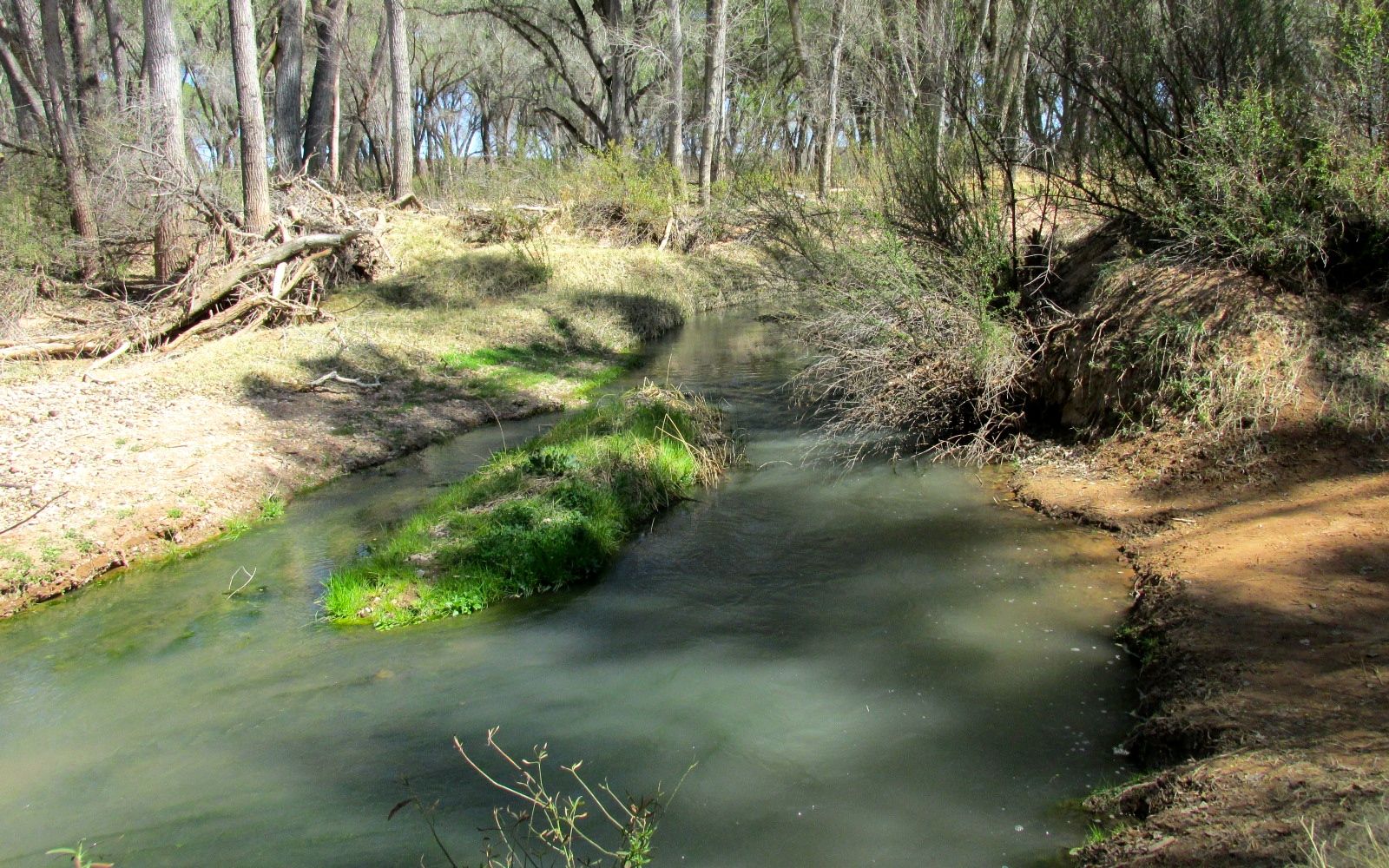
The river ran in channels that would shift depending on the flow.
The signs by the headquarters said that clusters of trees could be found where the banks of the river used to be. I was not equipped for wading or trying to cross the river, so I didn’t explore further than the edge. After my experience along the bank of Bull Run in Manassas, I was very careful where I stepped.
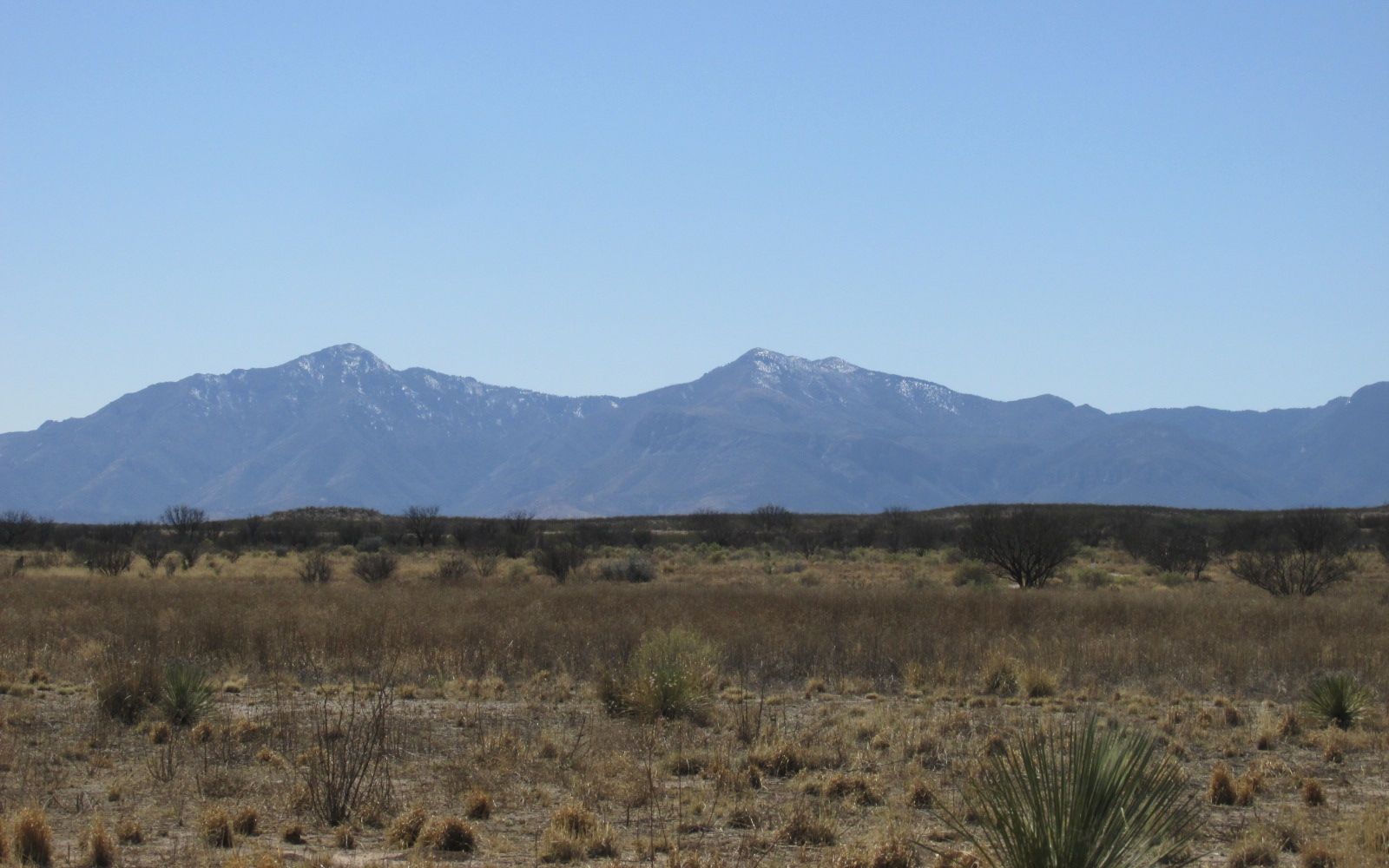
I turned my back to the river and headed toward the parking lot. What a beautiful view of the mountains!
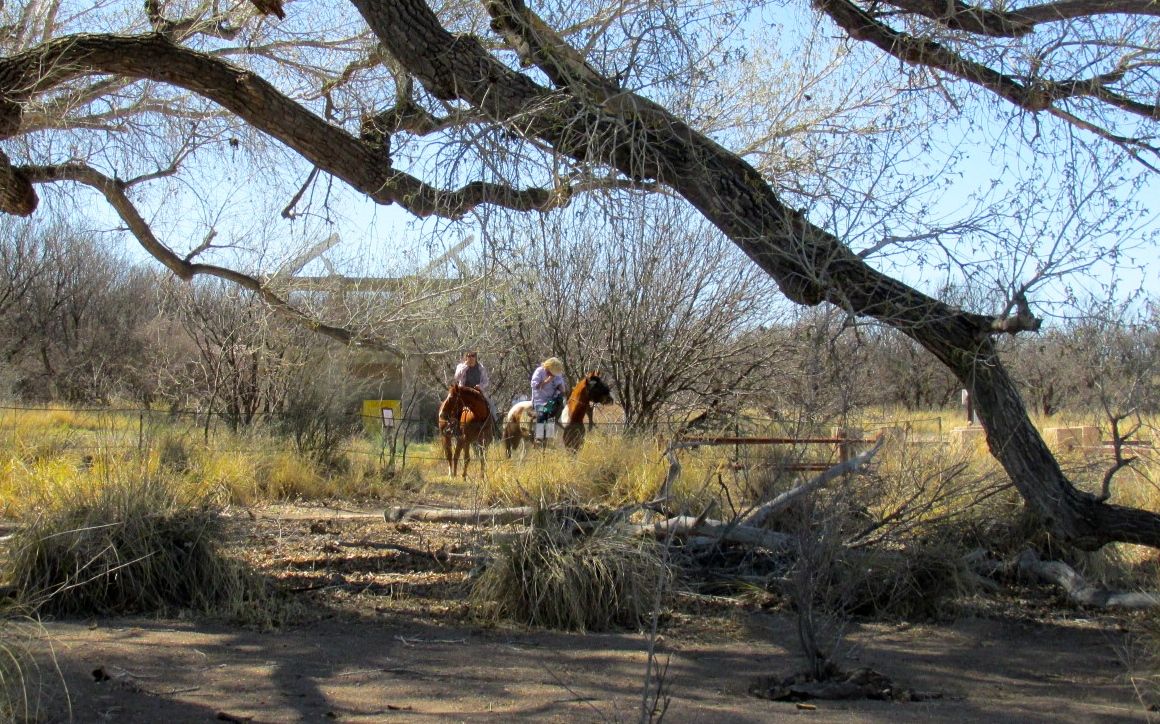
And I found the horses!
Back on the road to Bisbee, the road started climbing. I didn’t realize how high up the city was! The elevation of Benson is about 3,500 feet. The elevation of Bisbee is about 5,500 feet!
The last bit of road before you get to Bisbee is a tunnel that opened in 1958. It eliminated the winding and steep roads that ran over Mule Pass. The drive is still exciting enough.
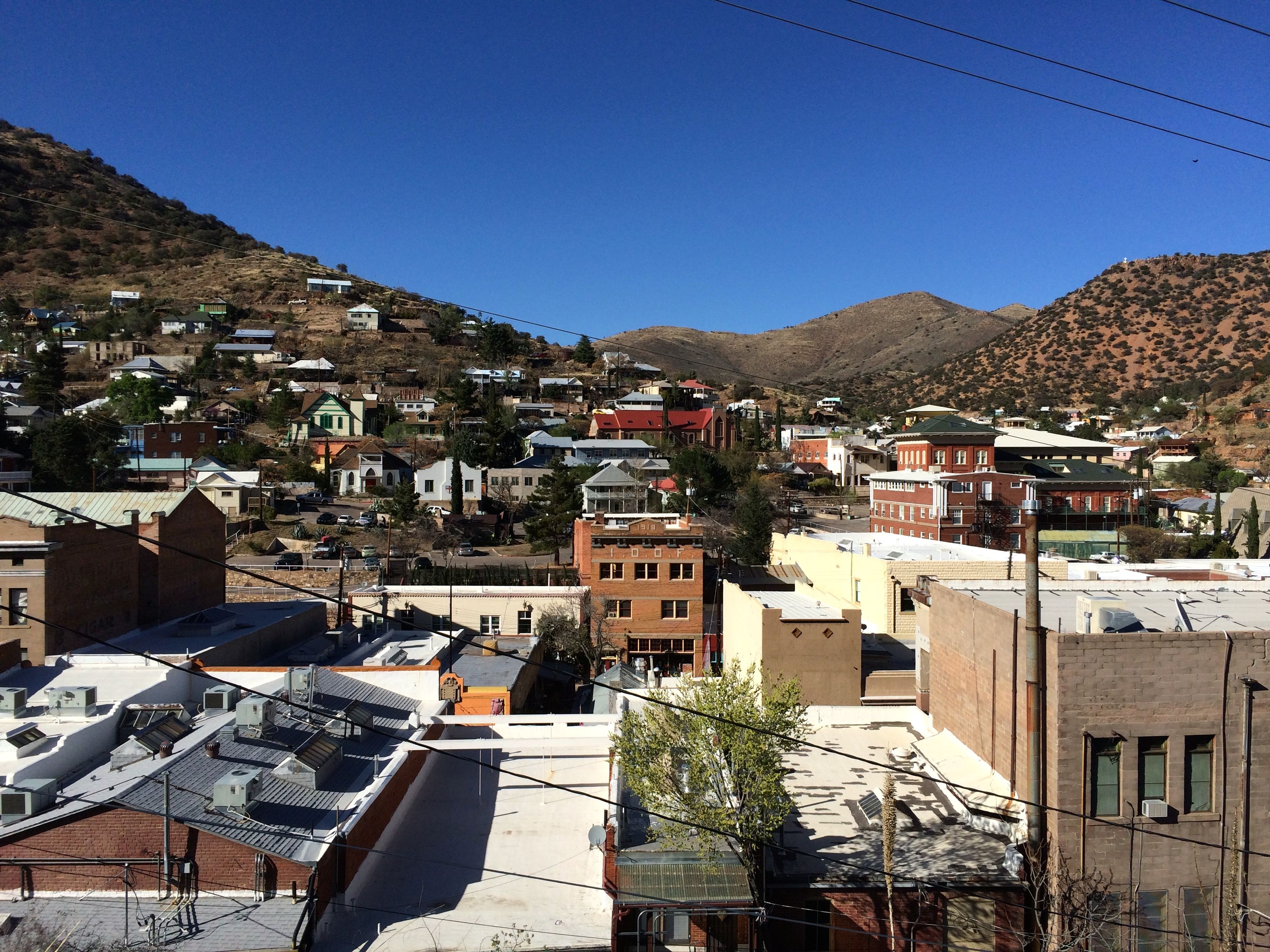
I pulled over to get some shots of the city.
Buildings run up and down the mountains.
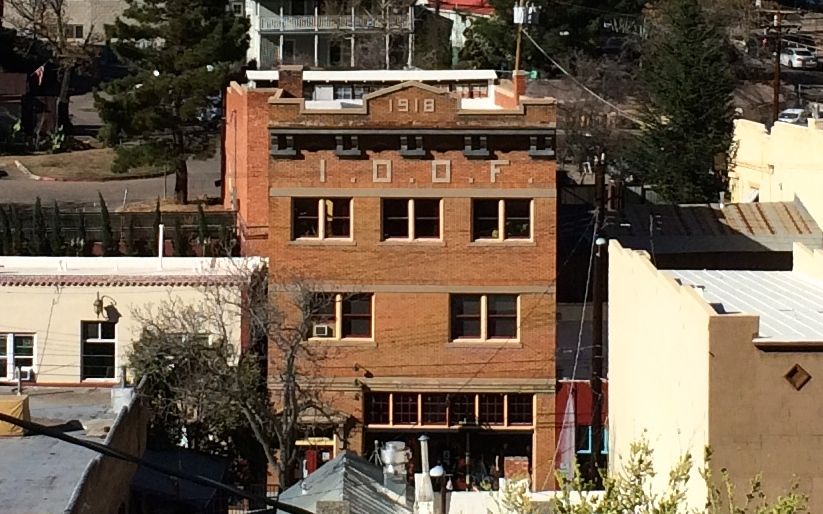
I thought it was interesting that the Oddfellows were here, too. They’re everywhere! I got into the town and tried to navigate around. The roads were narrow and the turns were tight.
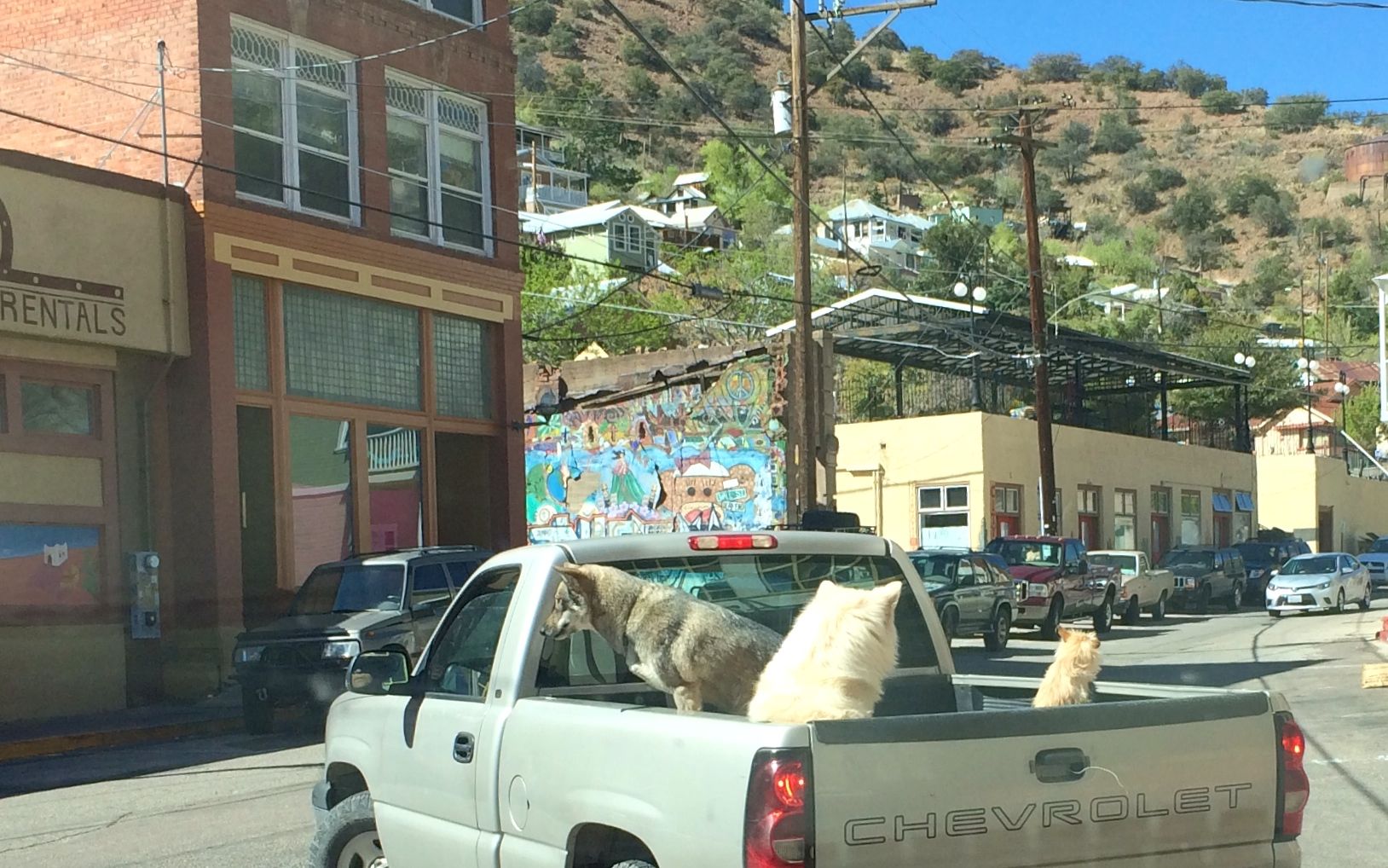
The dogs didn’t seem to mind, though.
There were interesting looking shops and restaurants. I wasn’t in the market to buy anything, but lunch sounded appealing. I saw a restaurant that looked promising and I even managed to find a place to park.
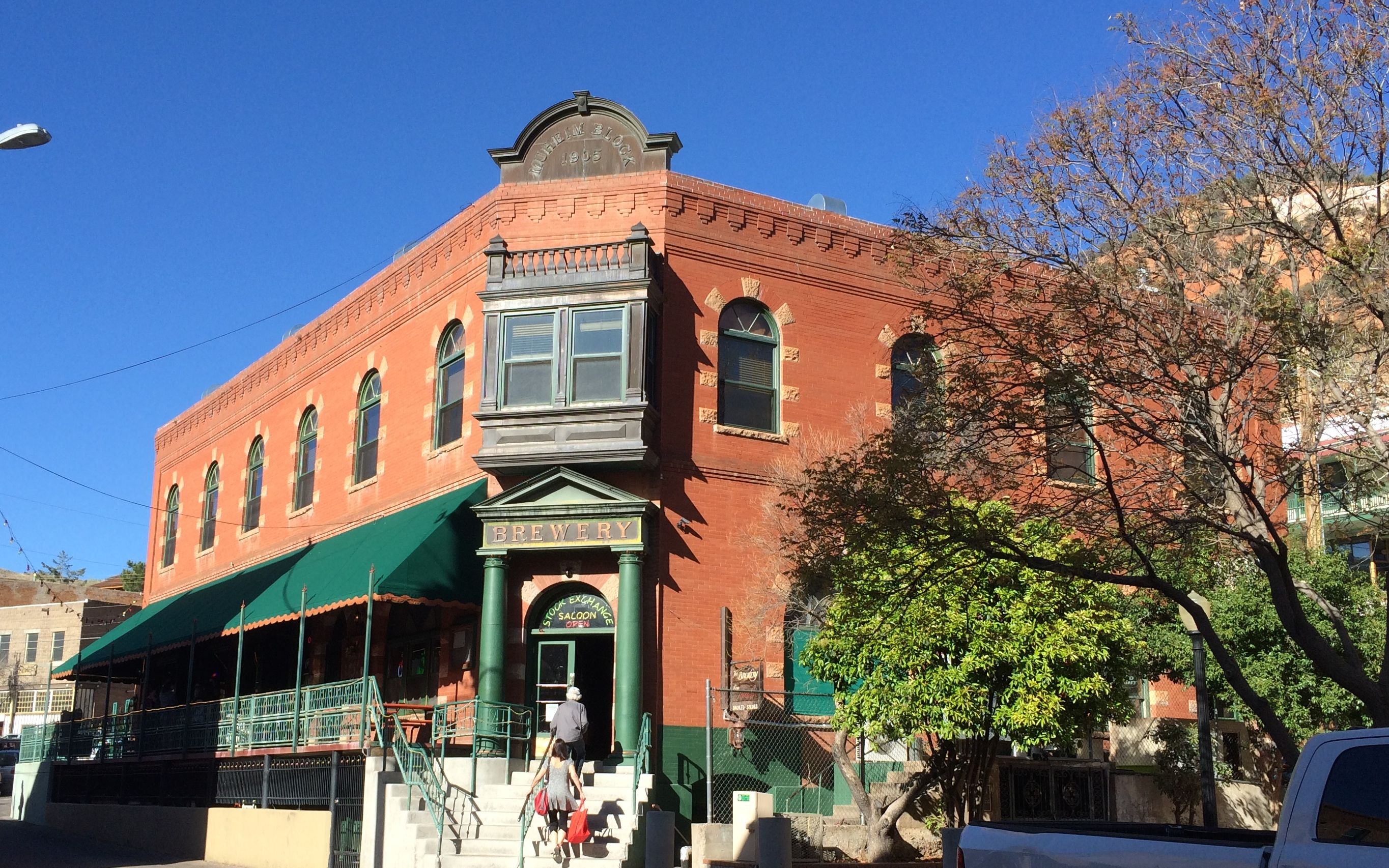
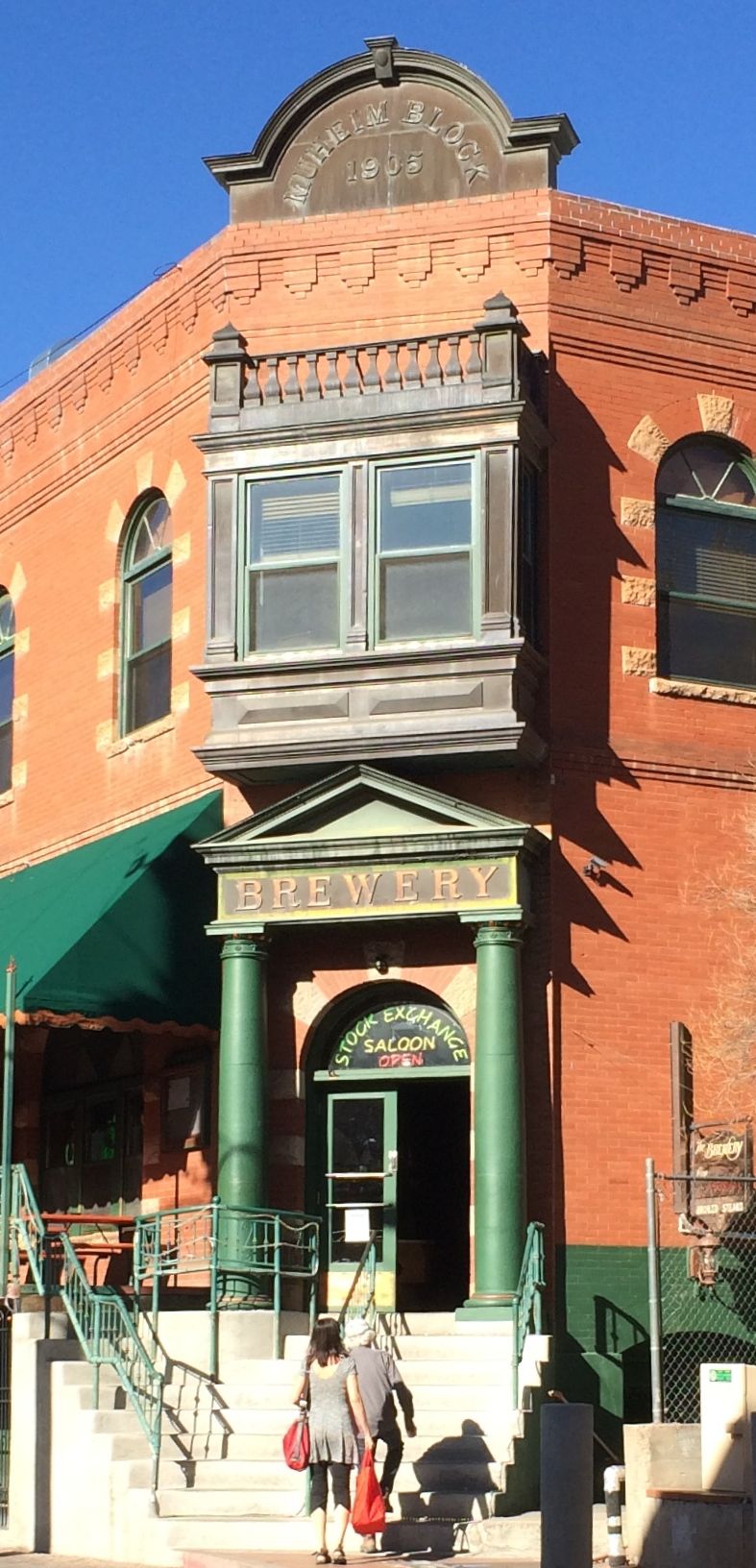
I parked right across from this building.
It was a brewery! Maybe I should have looked there. But, I ended up at a place that served tasty fish and chips.
After lunch, I looked at the museum across the street.
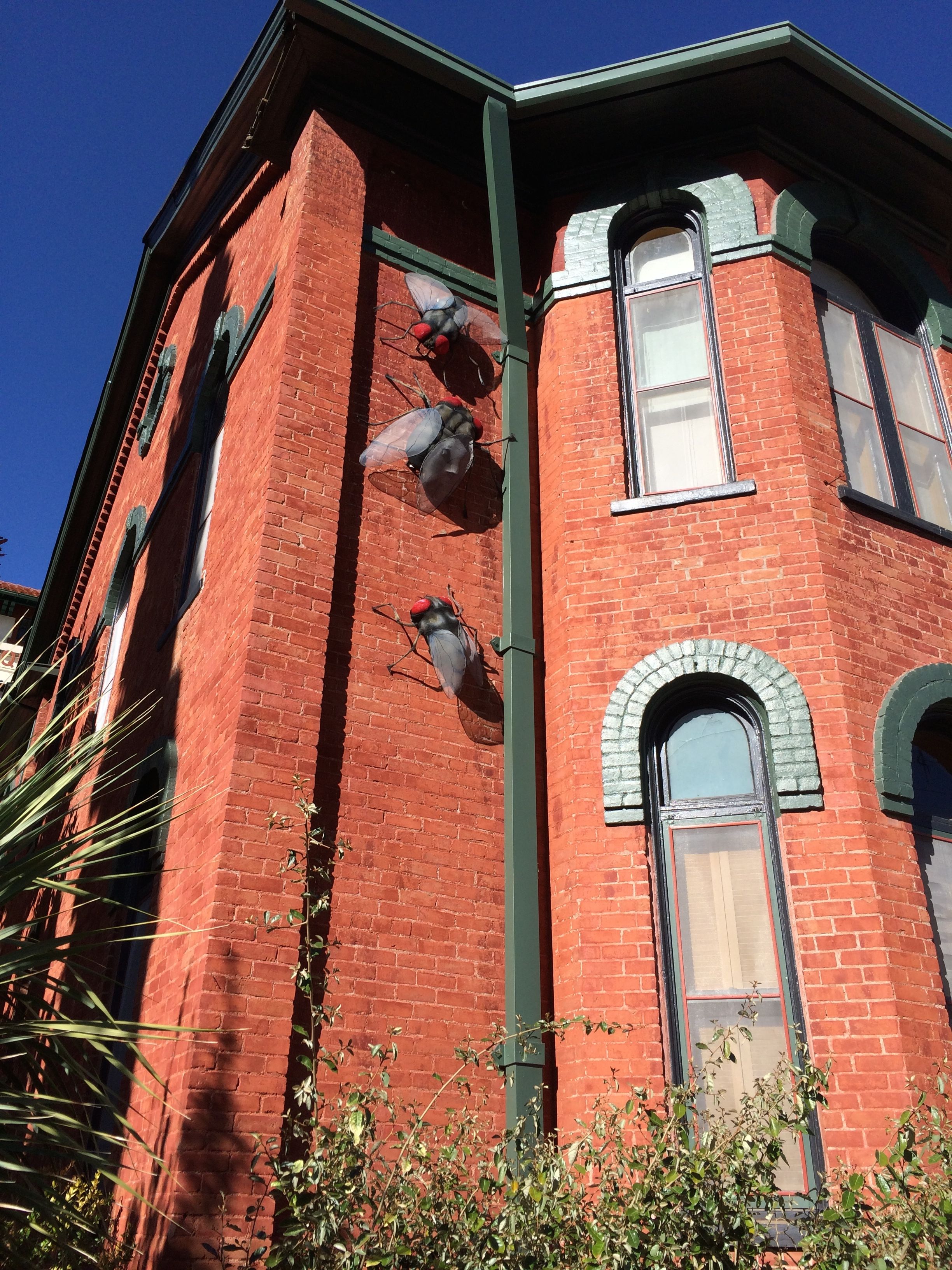
There were fly sculptures climbing up the outside! Apparently, they had a fly swatting contest in 1912 because flies were a public health problem. The contest is memorialized on the building. Personally, I’d just as soon forget about the flies.
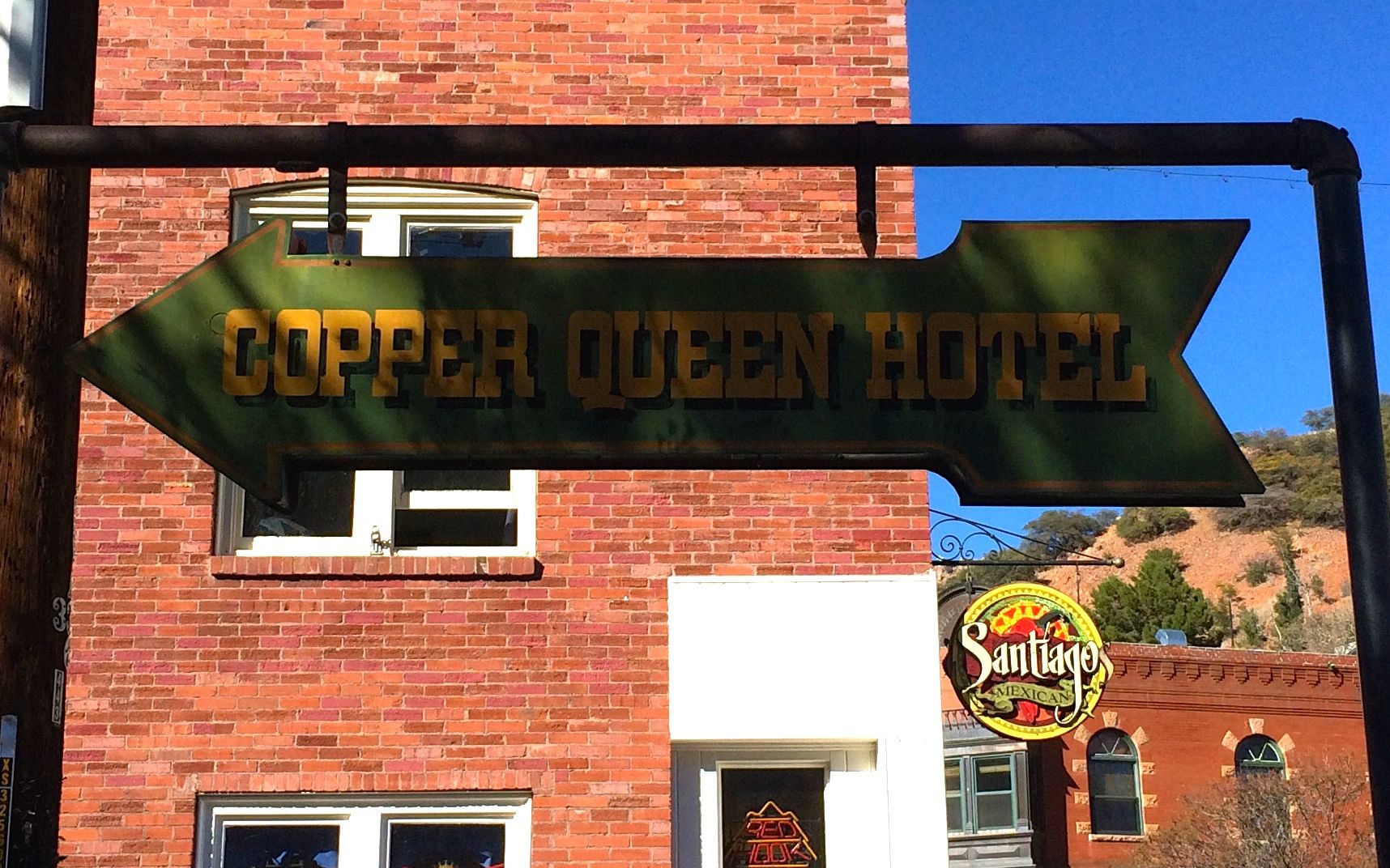
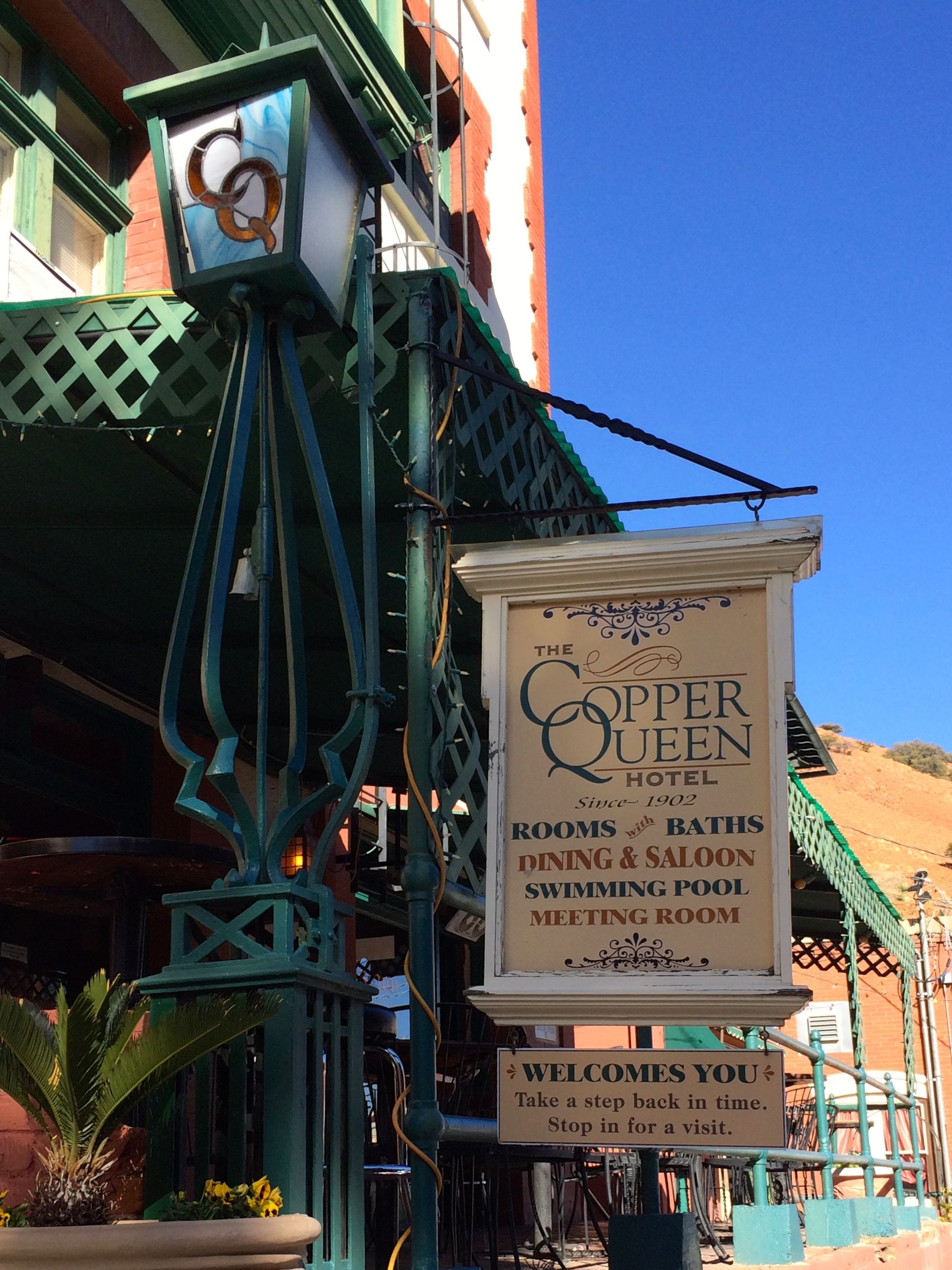
I followed the arrow to the Copper Queen Hotel.
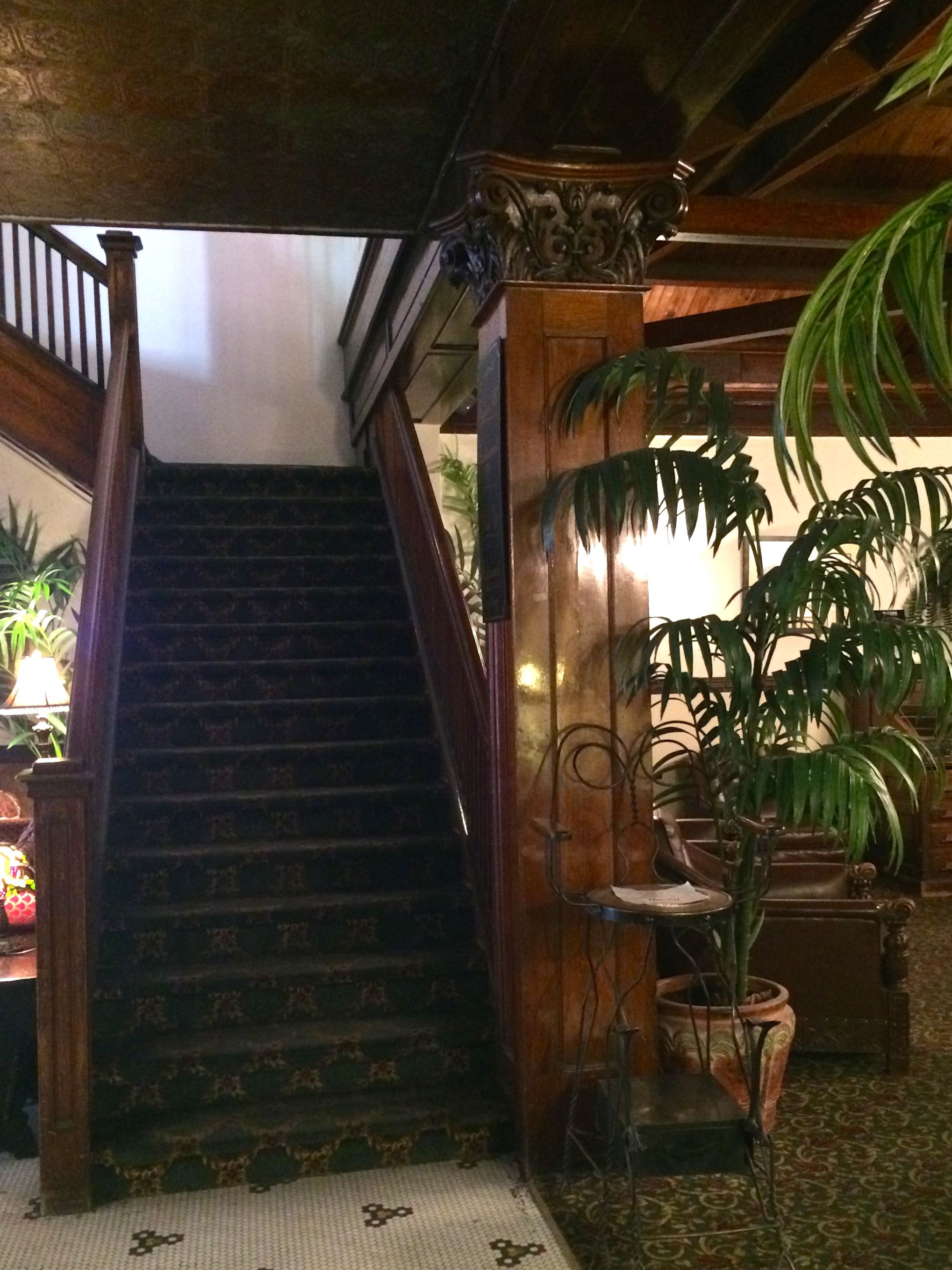
I entered and admired the lobby.
Notice the copper-colored tin ceiling. Heck! Maybe it was copper.
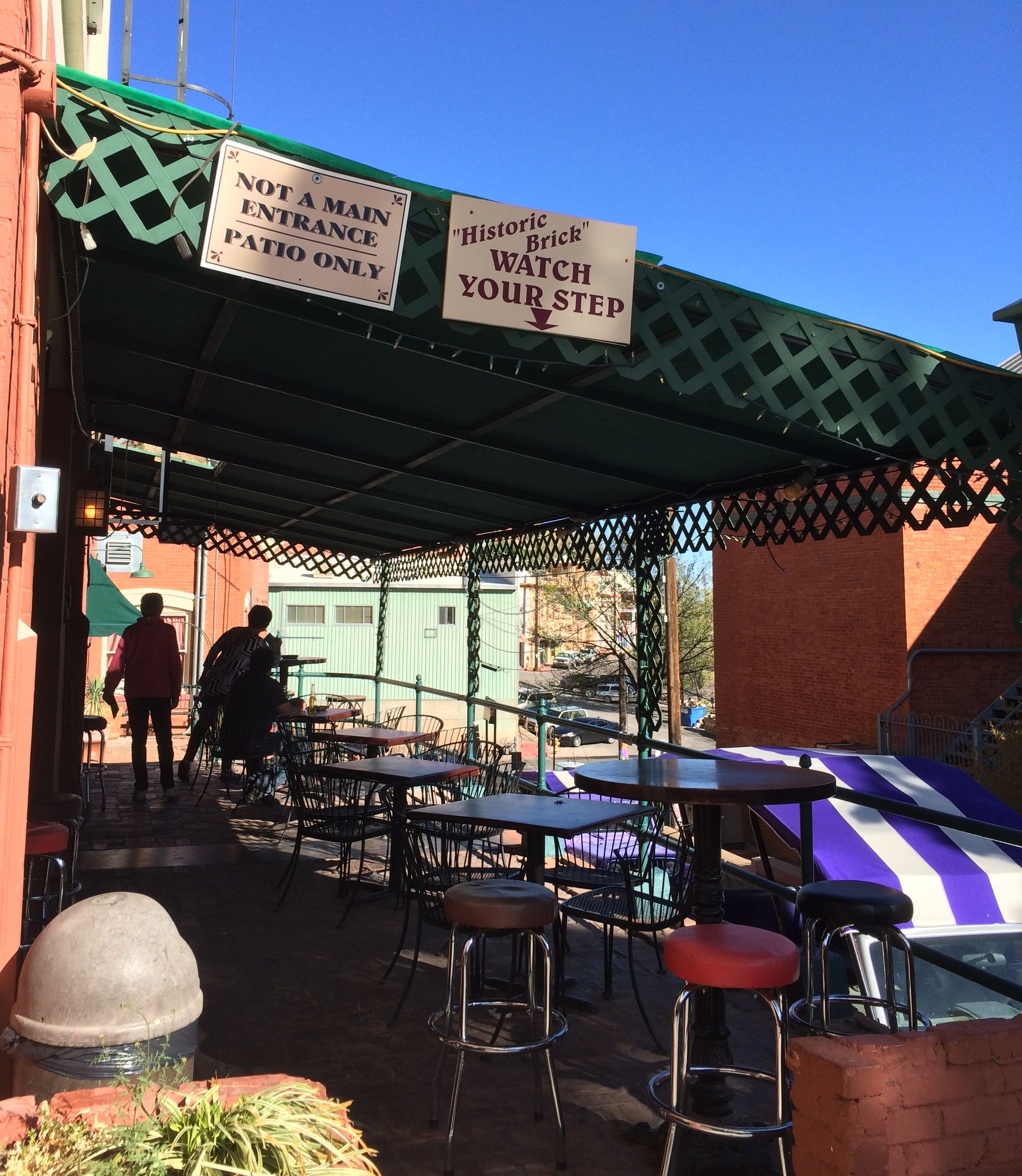
On my way out, I saw a sign that piqued my curiosity.
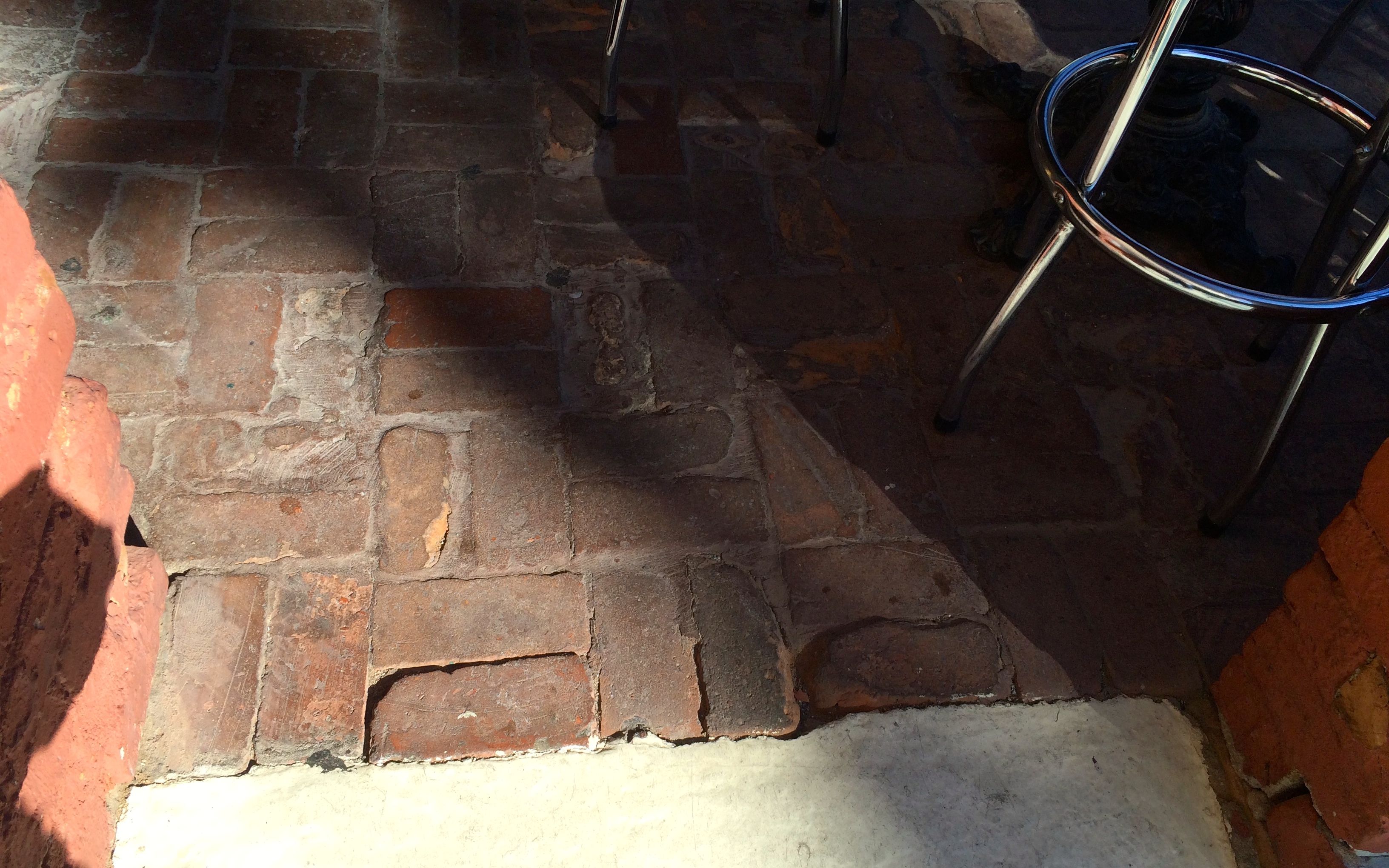
“Historic Brick – Watch Your Step”
I guess one of these is the historic brick.
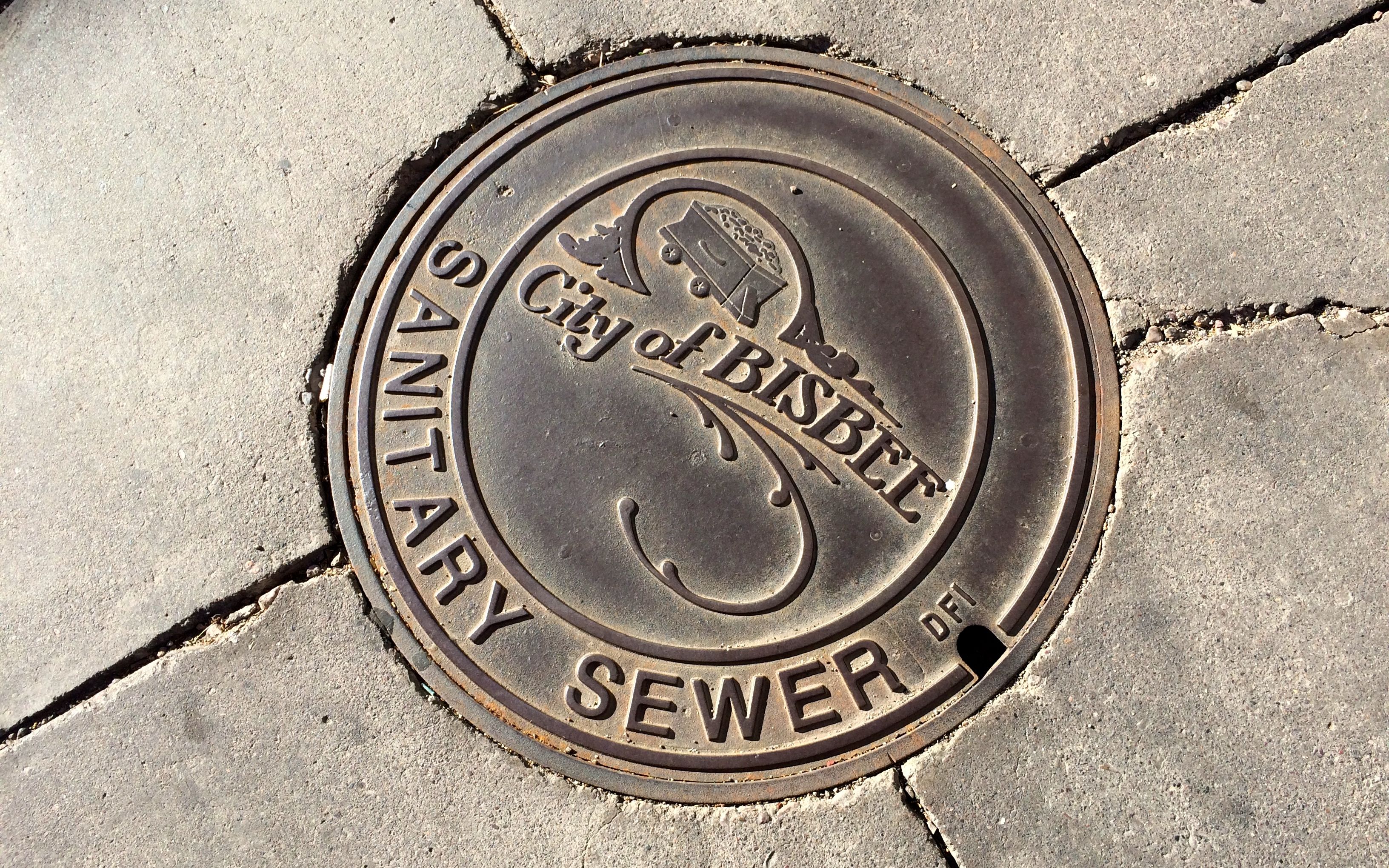
I thought this sewer cover was attractive. There is no reason why the mundane can’t be well-designed.
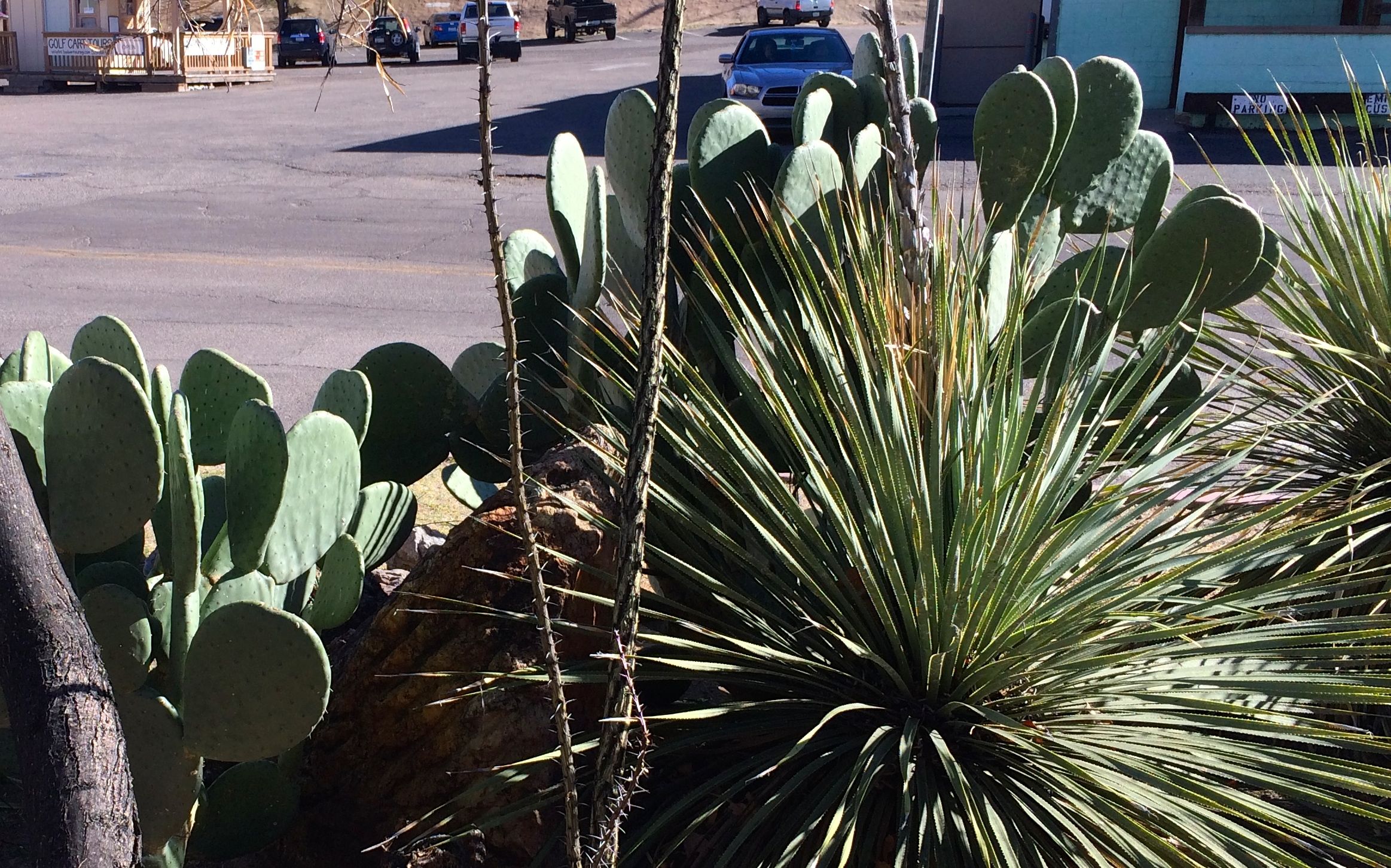
One thing that puzzled me, though, were these prickly pears. They had no spines. So, are these artificial cactus, or some sort of hybrid? Or, did someone take the spines off? Inquiring minds want to know!
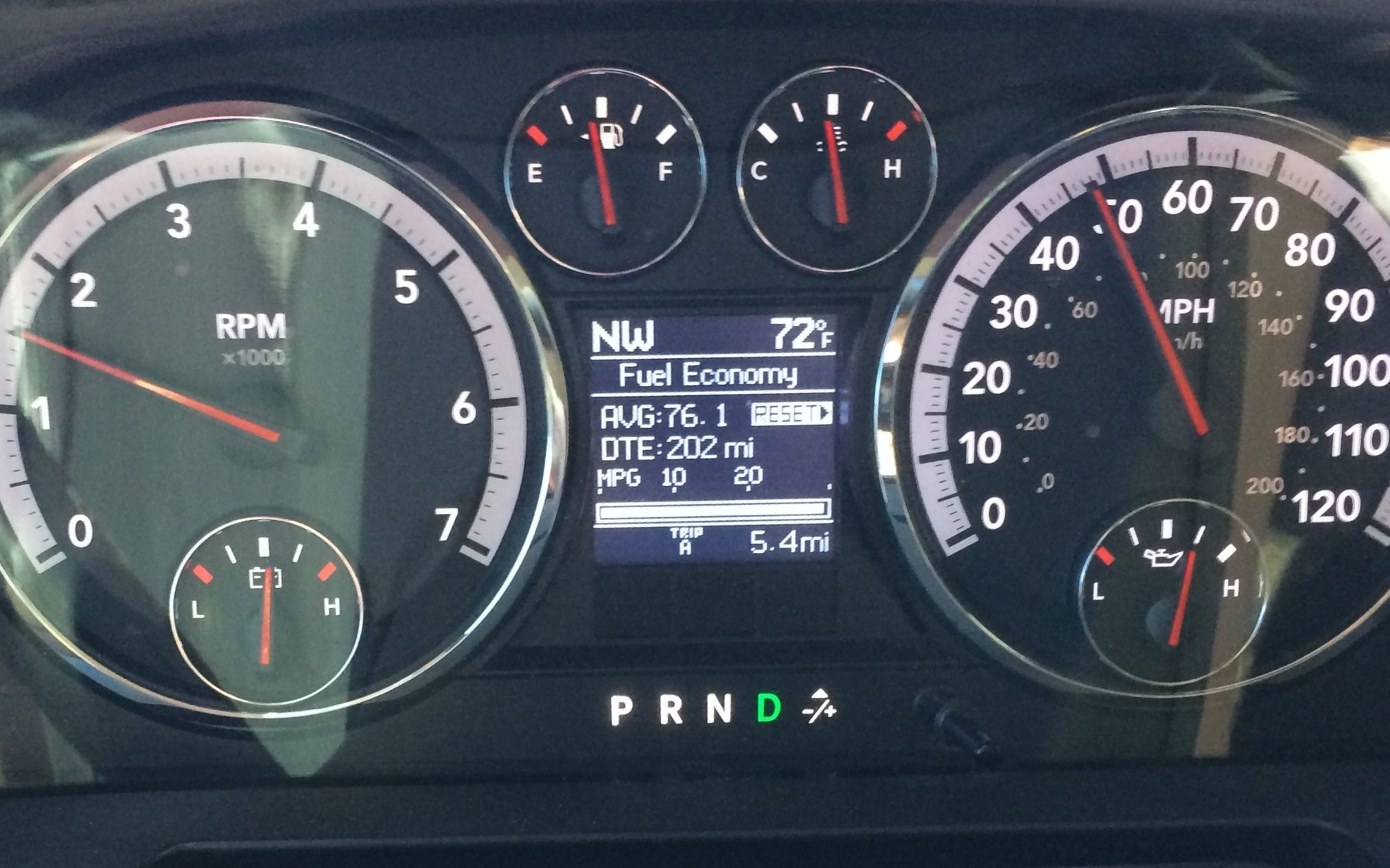
I am sure there were many more things to do, but I felt like I had done all I needed to do. So, I got back to Bart – the Big Ass Red Truck – and headed out of town. After I cleared the tunnel and started down, I cleared the setting that tells me the miles per gallon. I thought it would be fun to see how I’d do rolling downhill.
It was a bright sunny day, and I decided to take a trip down the road to Tombstone.
Tombstone is known for the gunfight at the O.K. Corral that took place in 1881, just three years after the town’s founding in 1879. The town’s mines produced between $40 million to $85 million in silver bullion by 1890. It’s population grew from around 100 to about 14,000 in fewer than seven years. Talk about a boom town!
Nowadays, the population is a little more than 1,300. The silver has run out, but they discovered something even more lucrative: tourism.
Tombstone: The town too tough to die
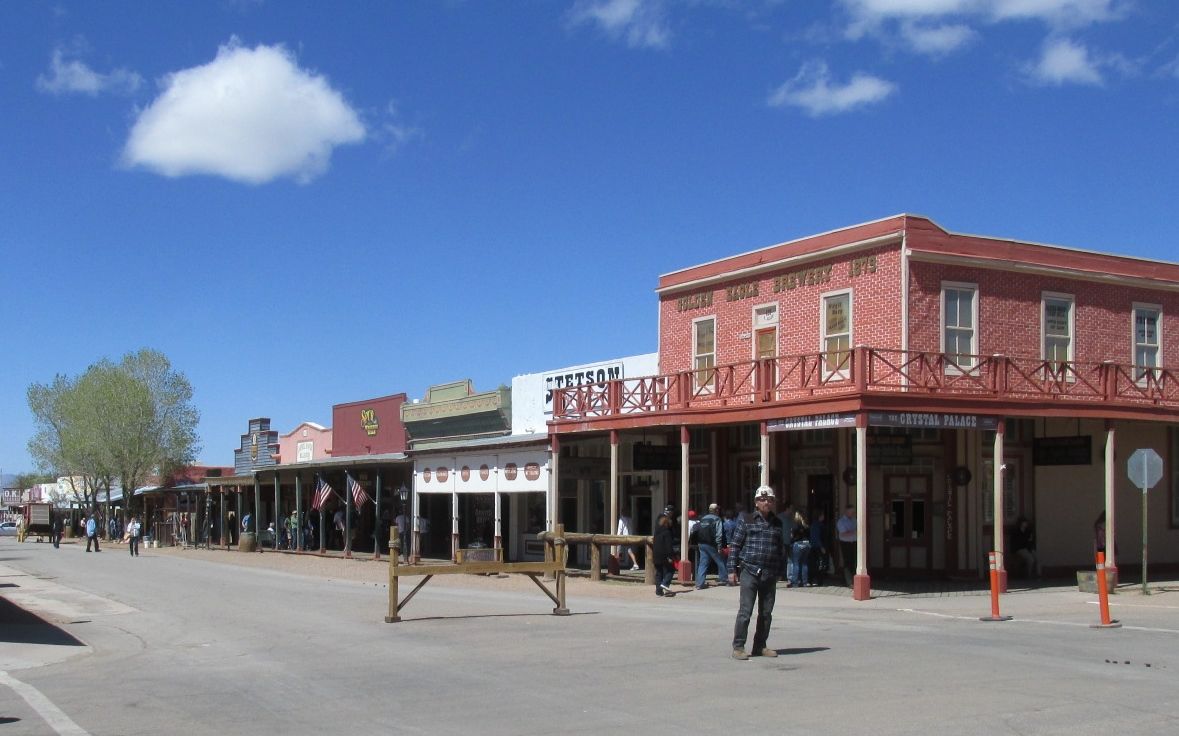
The town is just full of old west atmosphere. The wooden sidewalks now lead you right past all sorts of opportunities to participate in the local economy.
There are costumed folks up and down the street hawking shows, rides and tours.
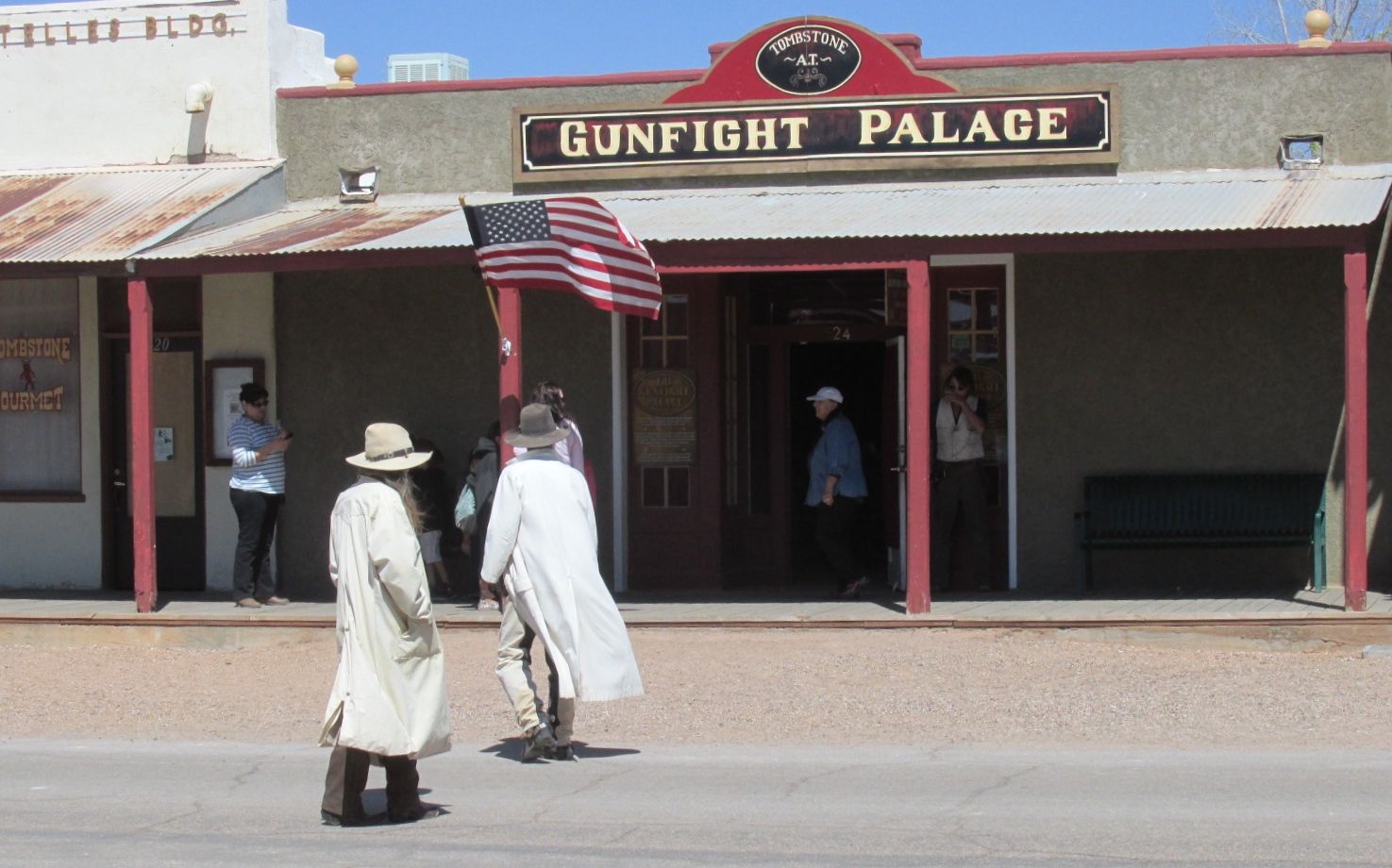
I am not sure if there were two or three gun fight shows. I didn’t go to any of them. For one thing, I would have had to pay for the privilege. That’s only logical; this is how they earn their livings. But, I manage to live my rolling lifestyle by choosing my entertainment carefully – and watching people pretend to kill each other wasn’t my idea of entertainment.
I also opted not to take part in any of the tours.
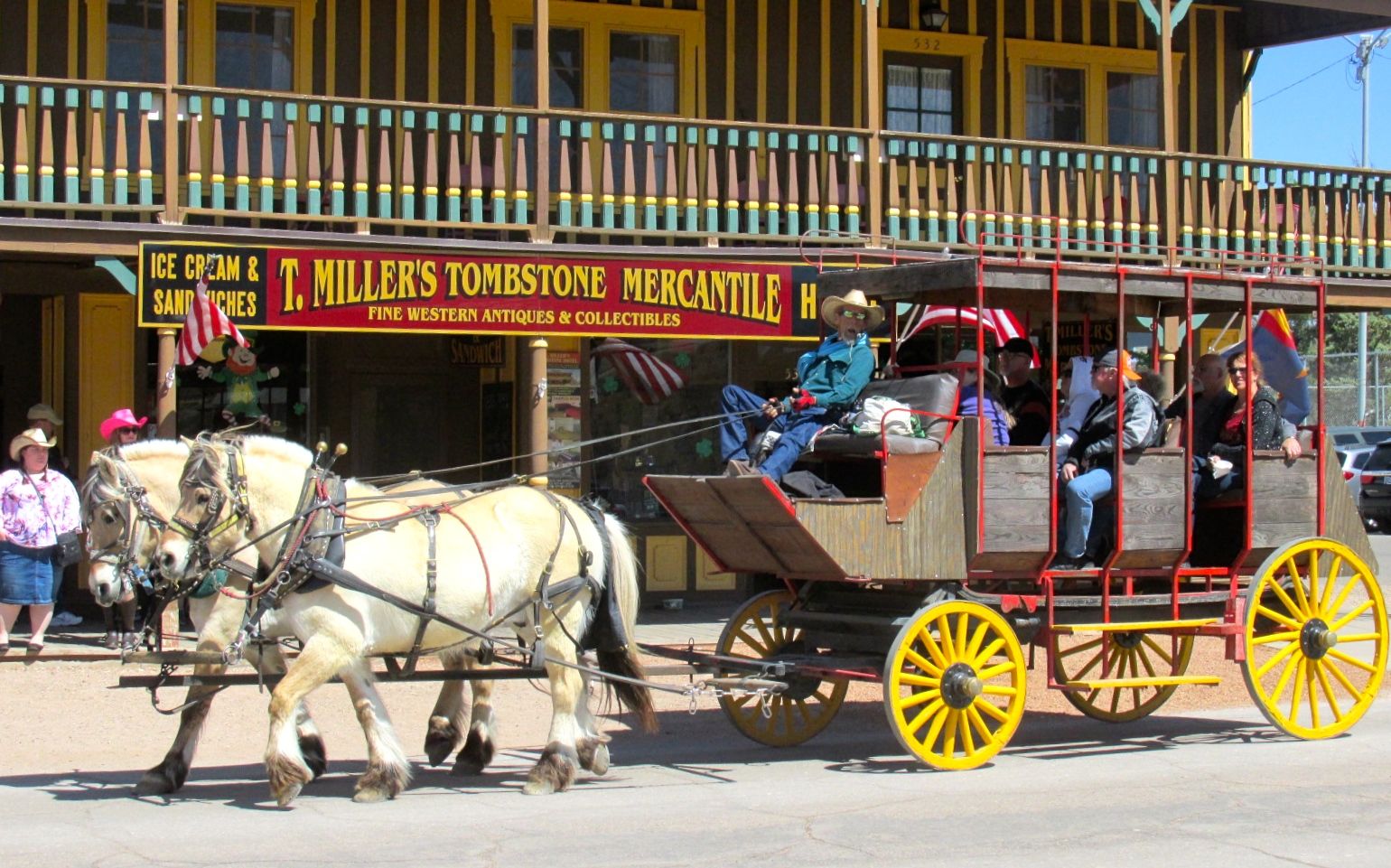
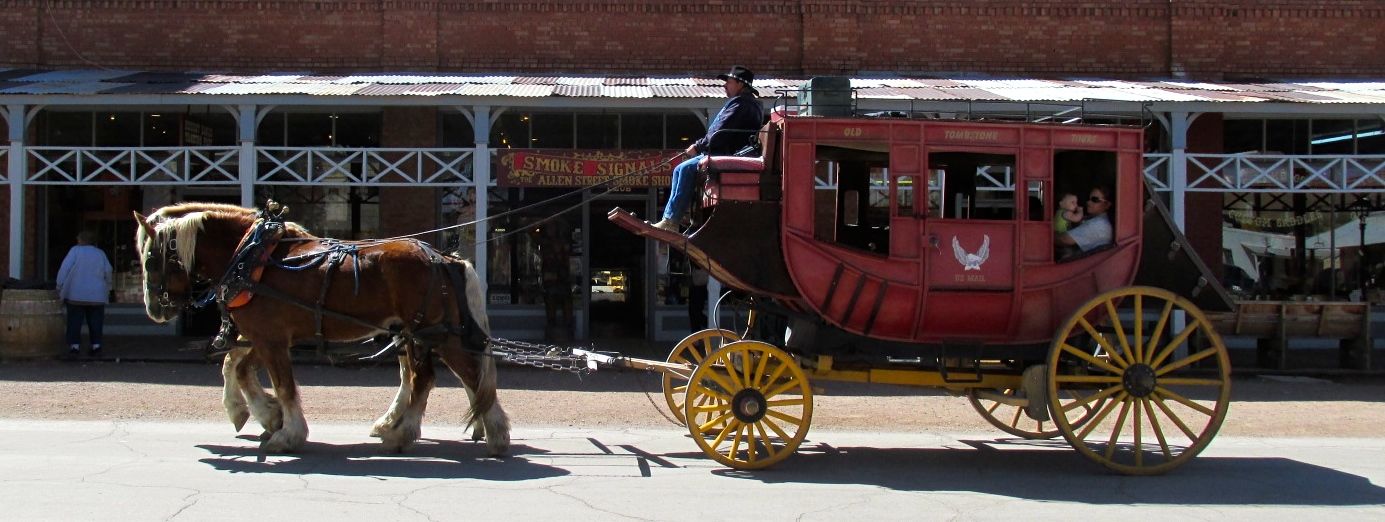
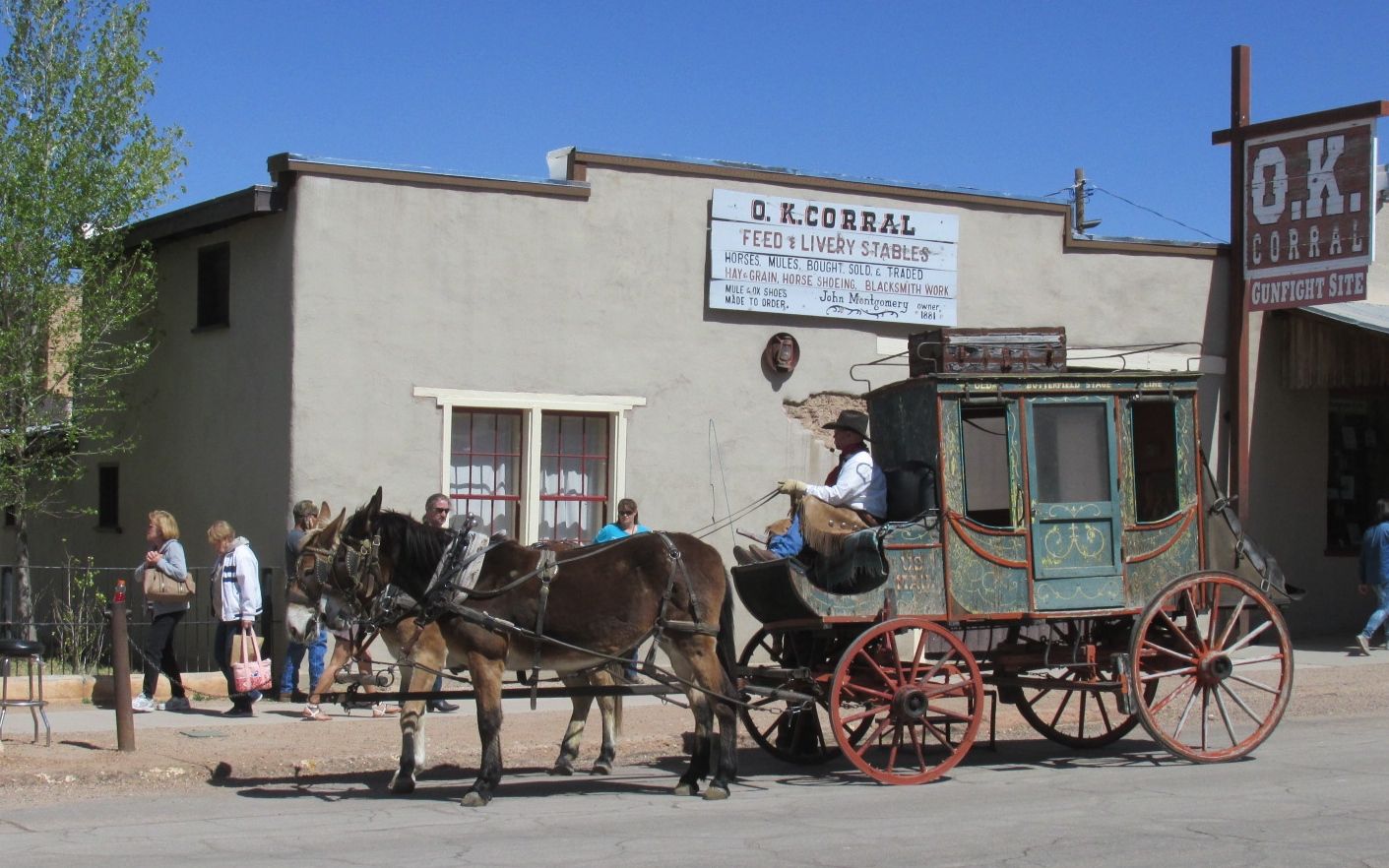
Here’s one wagon ride.
And another.
And yet another. I photographed this one in front of the O.K. Corral. And I didn’t pay to go into the Corral, either.
Admissions to the gift shops were free, however.
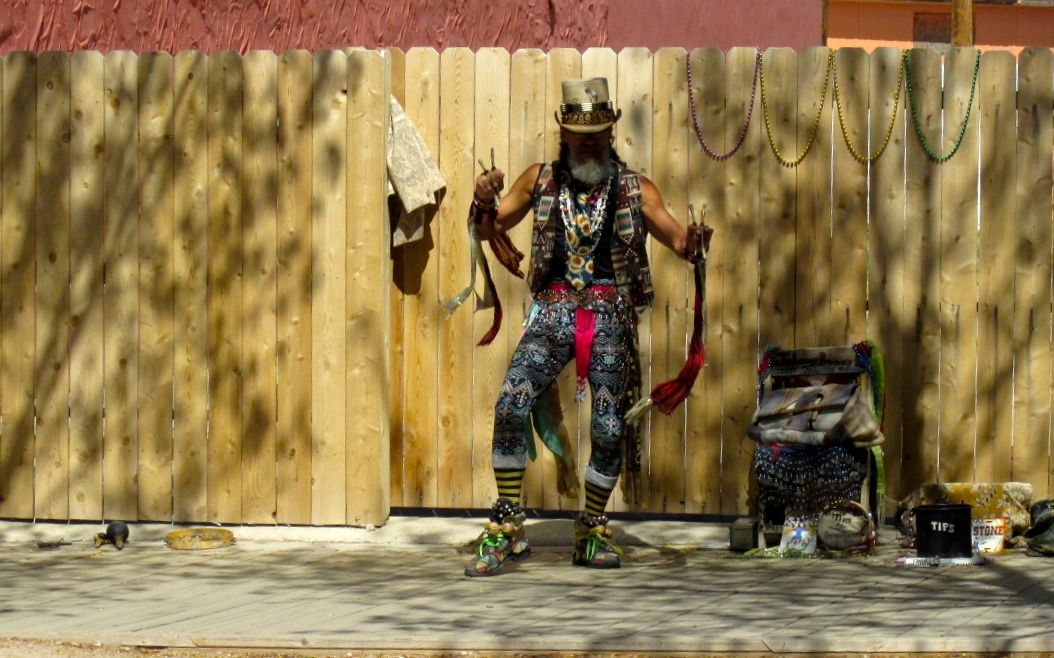
There was a frenetic busker performing. I am not quite sure what his talent was. He had a boom box playing some music and he seemed to have bells and rattles tied on his arms and legs and he was jumping around like he had some strange malady. People were crossing the street to avoid him. I was lucky in that I was already on the other side of the street.
One barker was trying to drum up business for a tour of the Tough Nut Mine. I walked over to see what they offered. The clerk selling tickets told me that I’d go down 100 feet, walk about 500 feet along the mine, see some silver ore and other minerals. After my trip down the copper mine last summer, I figured that there wouldn’t be much that I hadn’t seen before. I thanked her and went back to the main street.
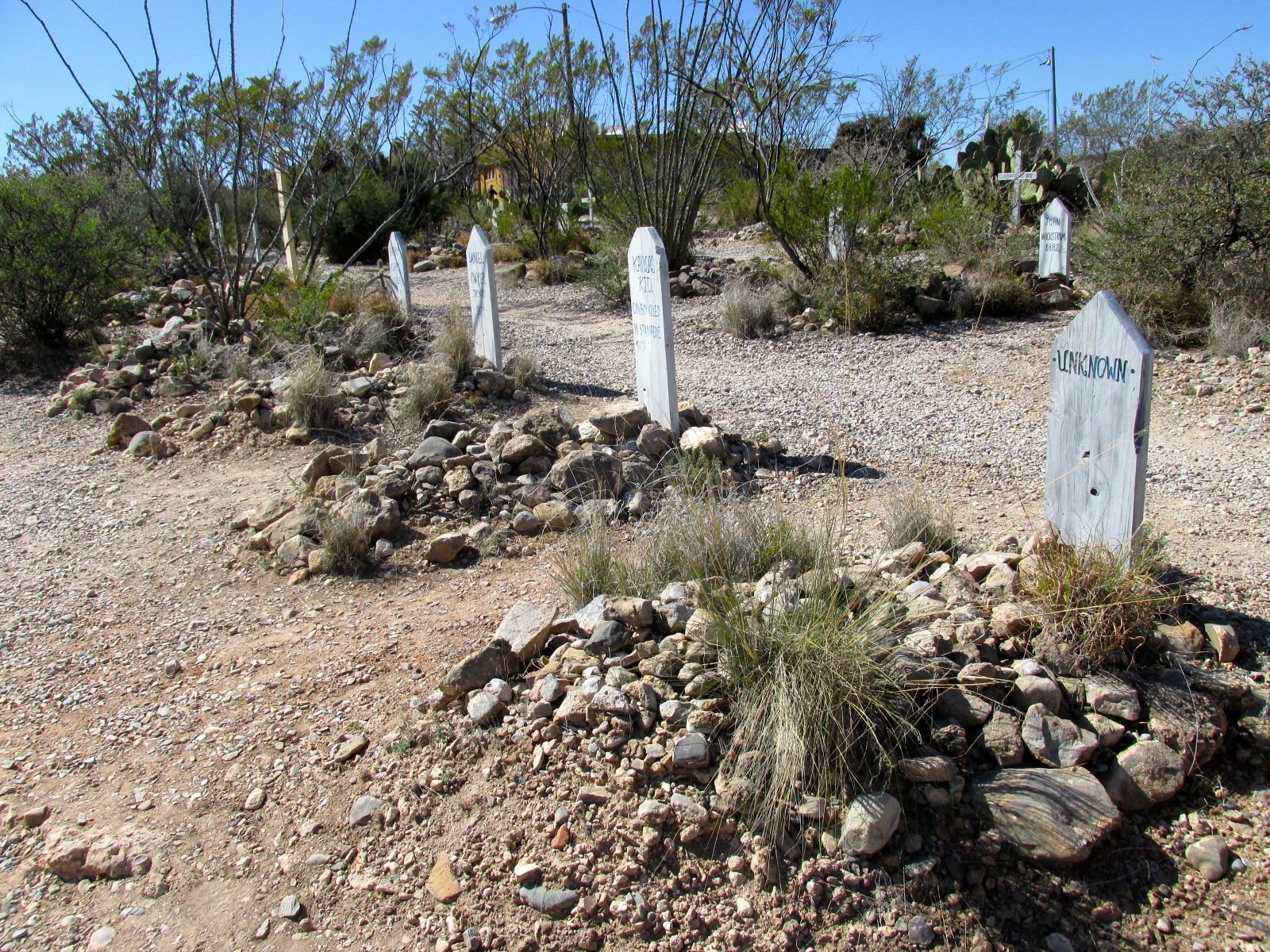
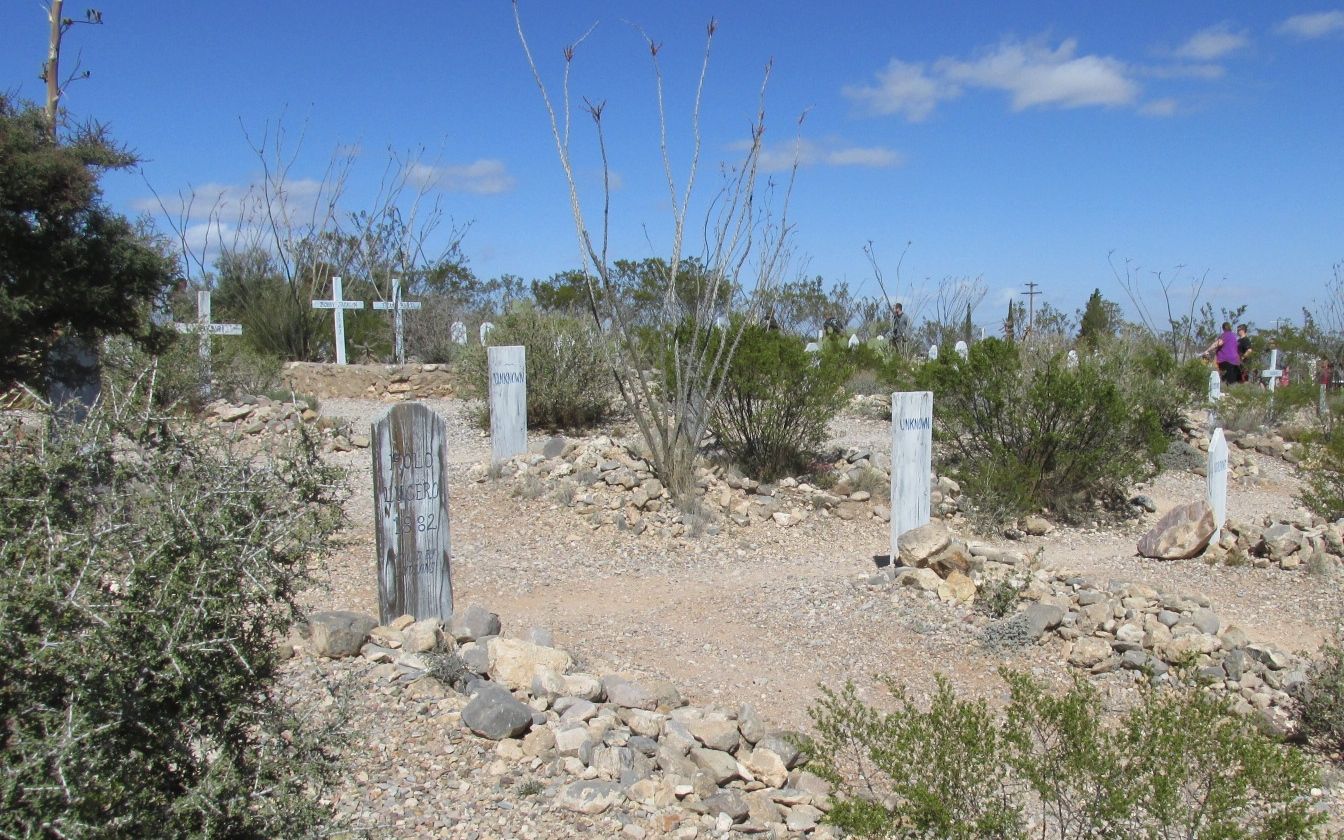
I passed Boothill on the way out of town and stopped to pay my respects.
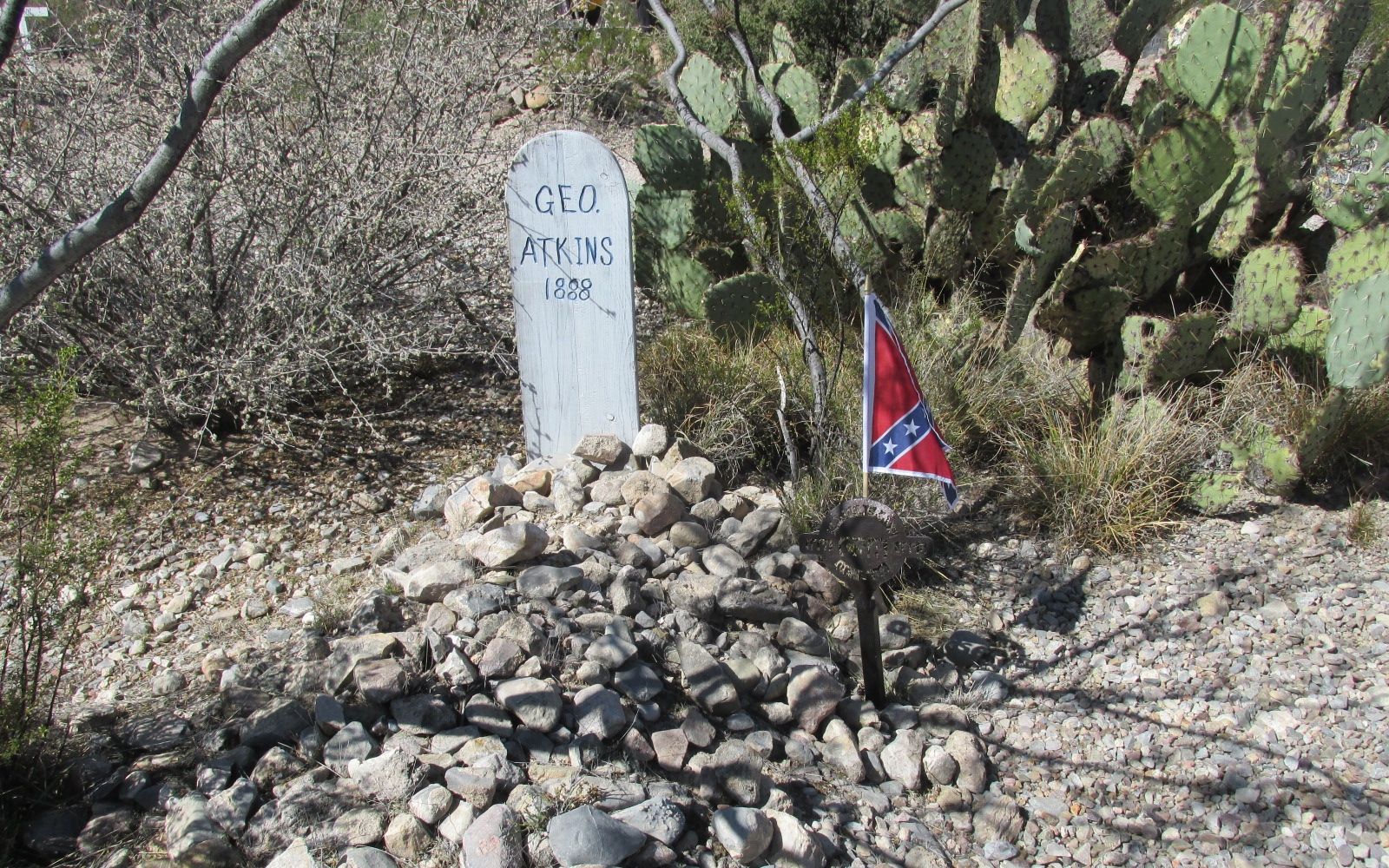
The graves were mostly like this. They had wooden markers and the graves were mounded up with rocks.
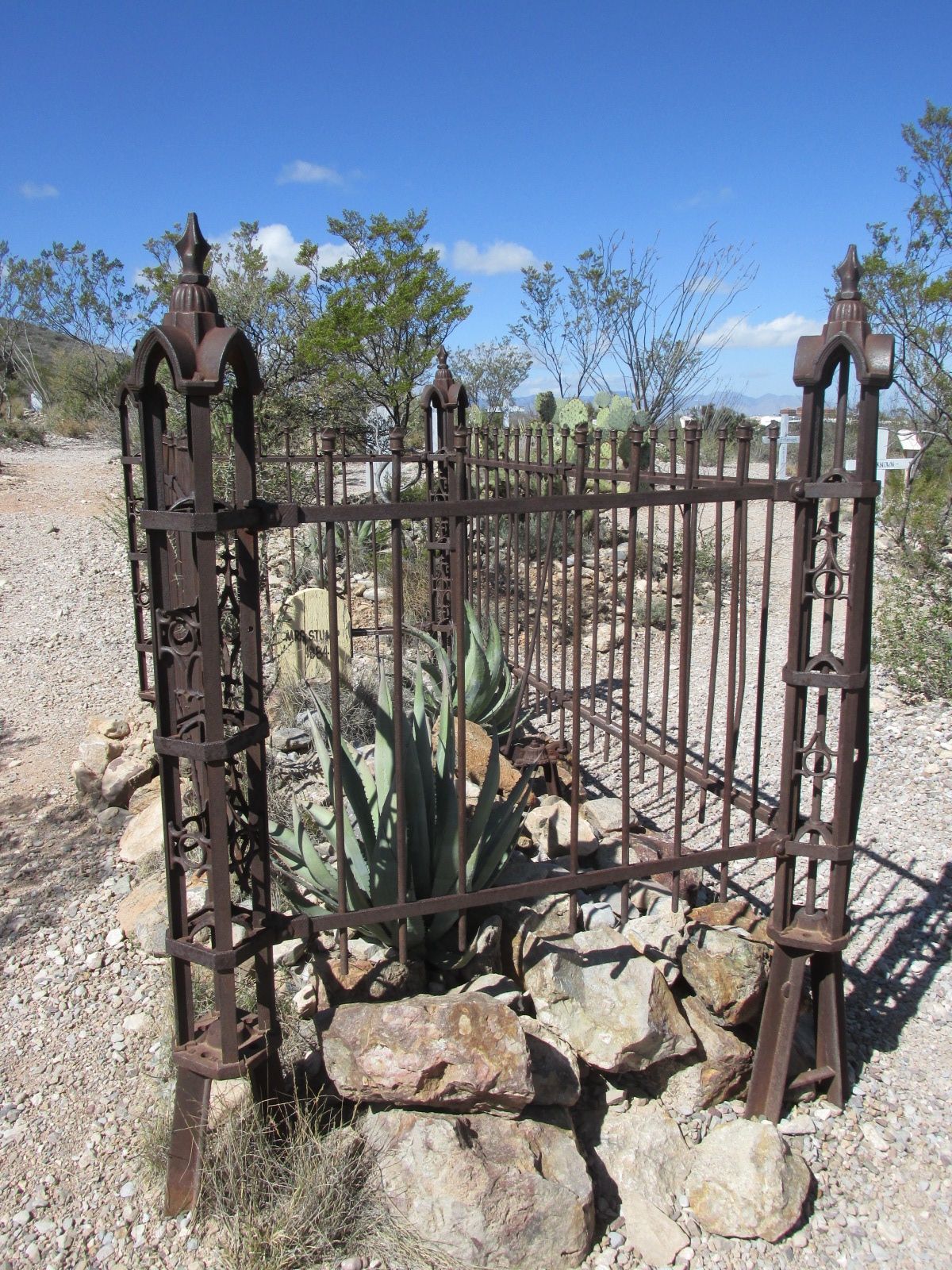
Mrs. Stump must have been especially beloved, though.
And Geo. Atkins has someone who is keeping up his grave.
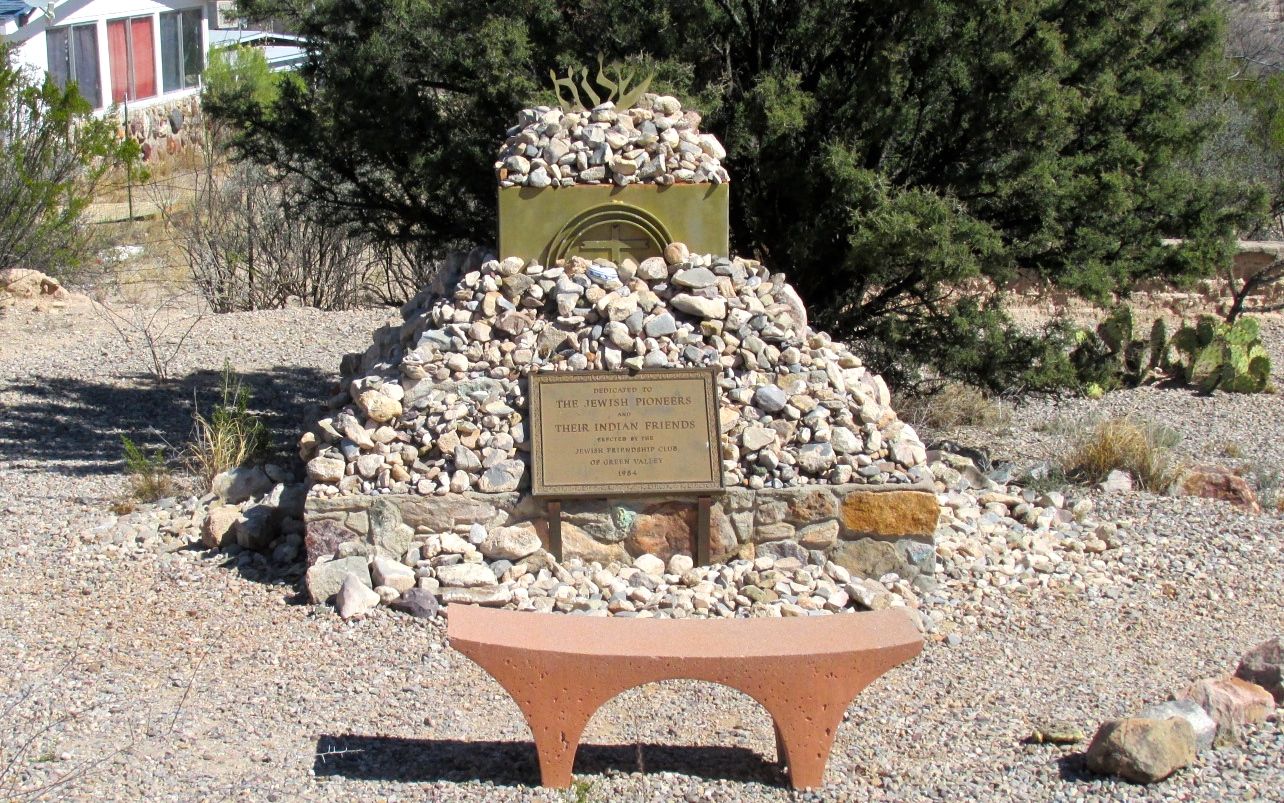
Down the hill, though, is a memorial to the Jewish Settlers and their Indian Friends.
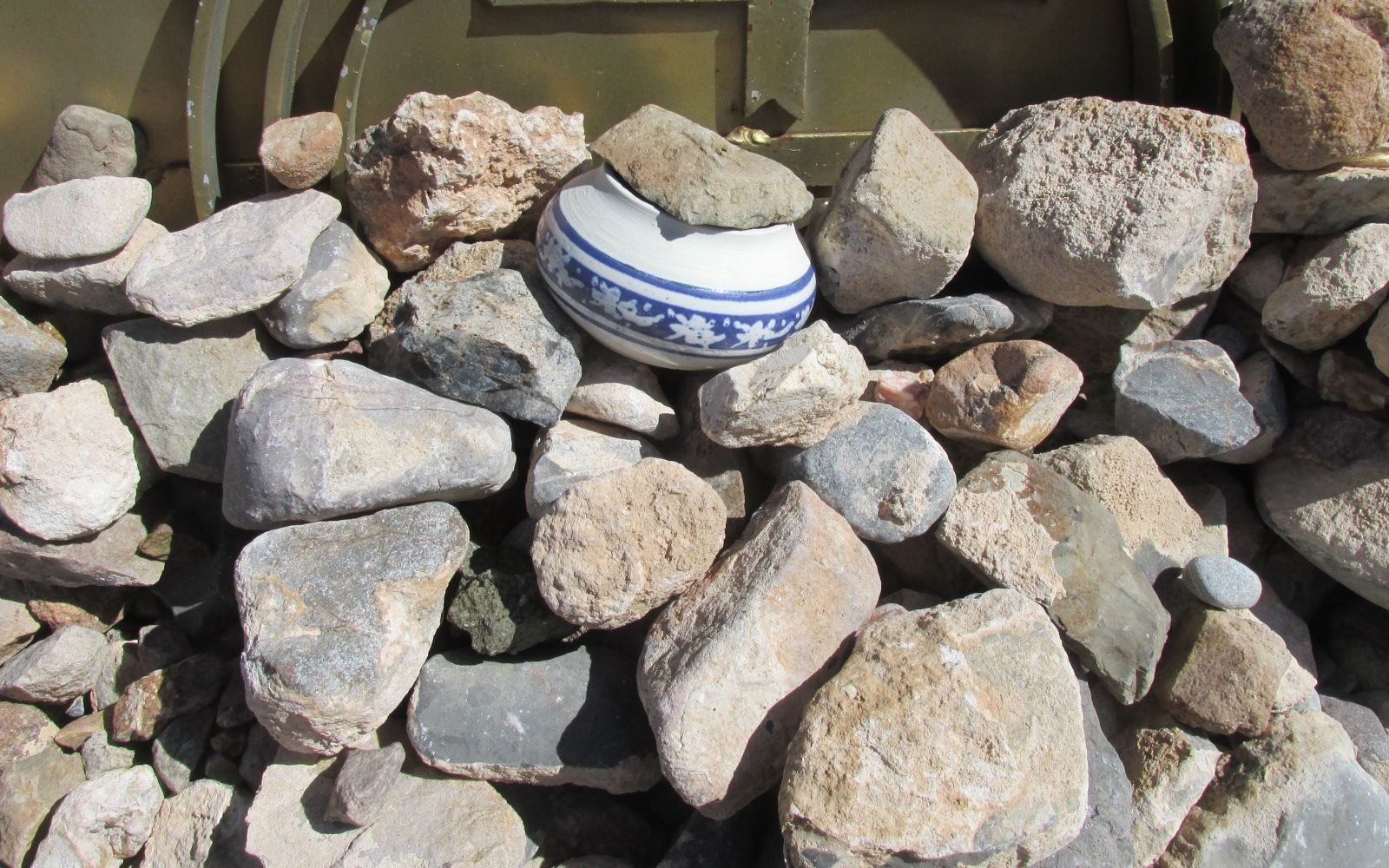
Nestled in with the rocks left behind by visitors is a small blue and white pot. I lifted up the rock and looked inside. It looked like they might have been someone’s ashes.
That was unexpected.
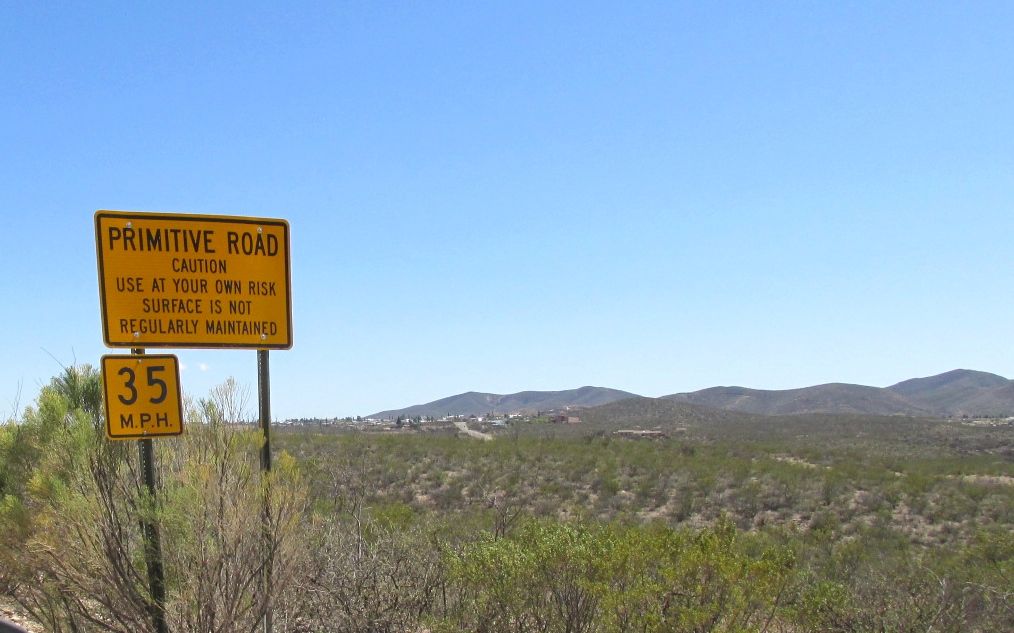
On my way out of town, I decided to take a drive that was on a brochure I picked up in the tourism office in Benson. It was a drive through the Coronado National Forest. It said that it was a dirt road and they recommended a four-wheel-drive vehicle with high clearance.
Check and check.
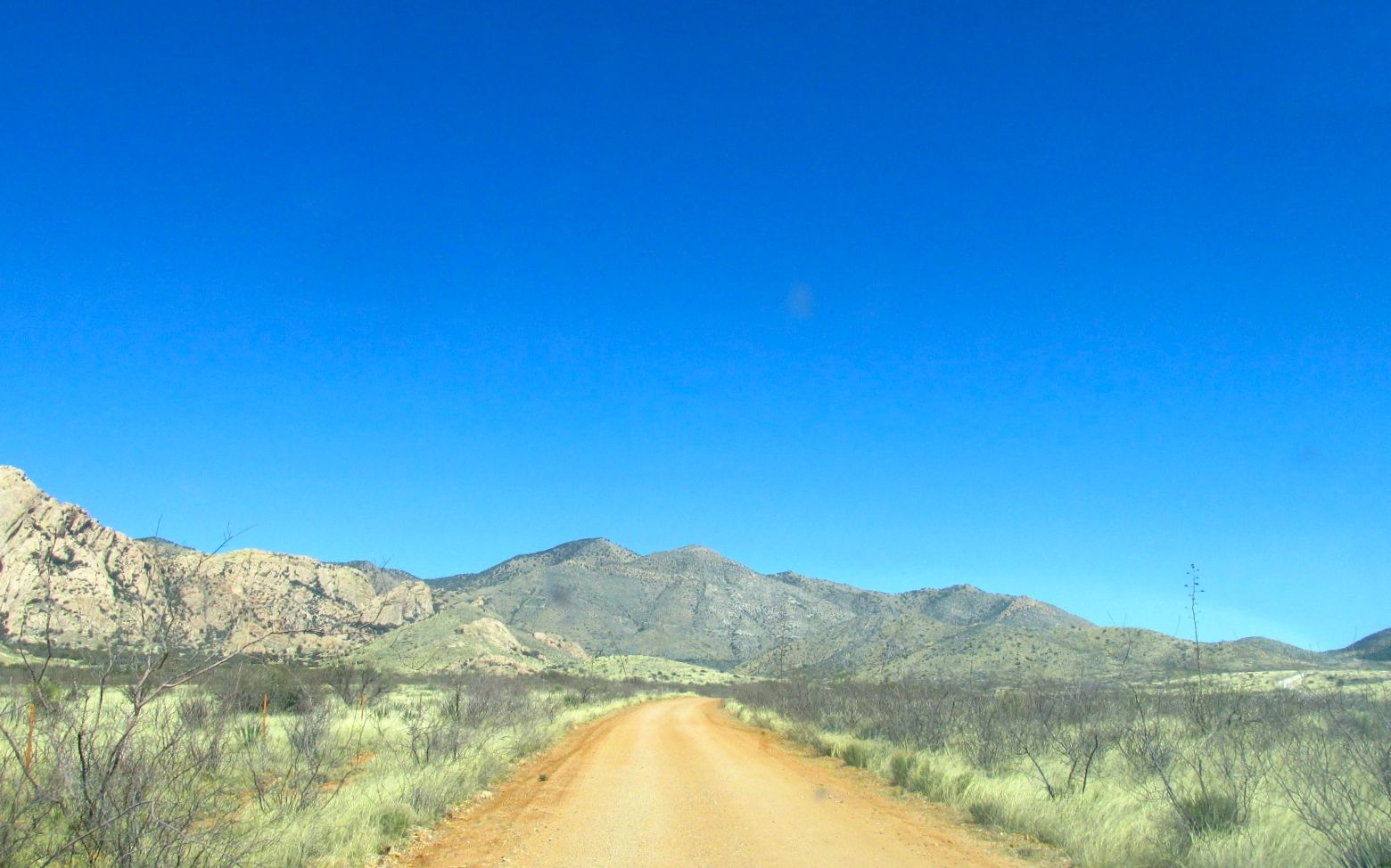
I made the turn off the pavement. “This doesn’t look too bad,” I thought. I drove along on this gravel road for a few miles.
Uh…Maybe things were were going to change.
The road got narrower and rougher and kept climbing.
I wonder where the road is going?
Up, up, up.
And over the pass.
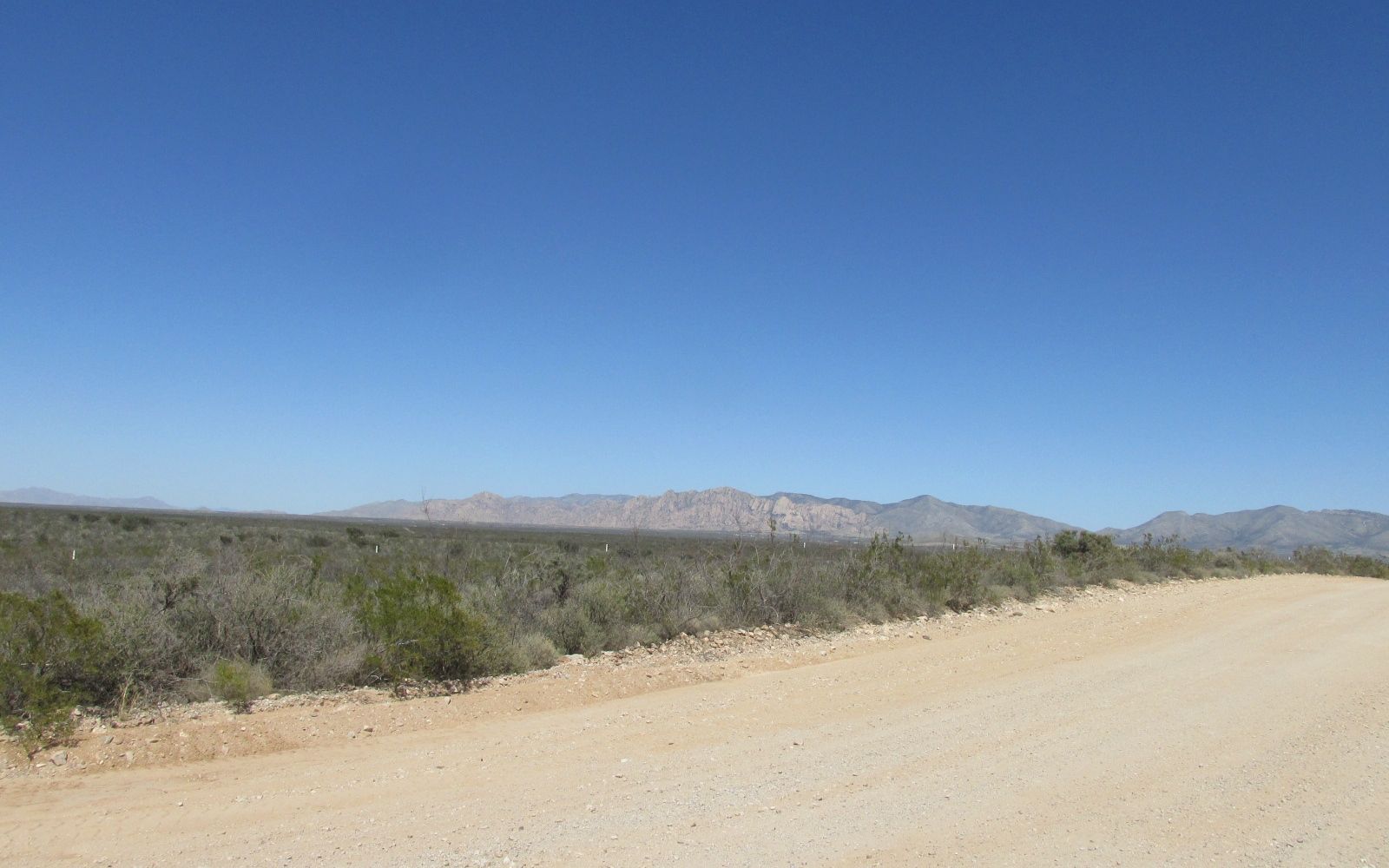
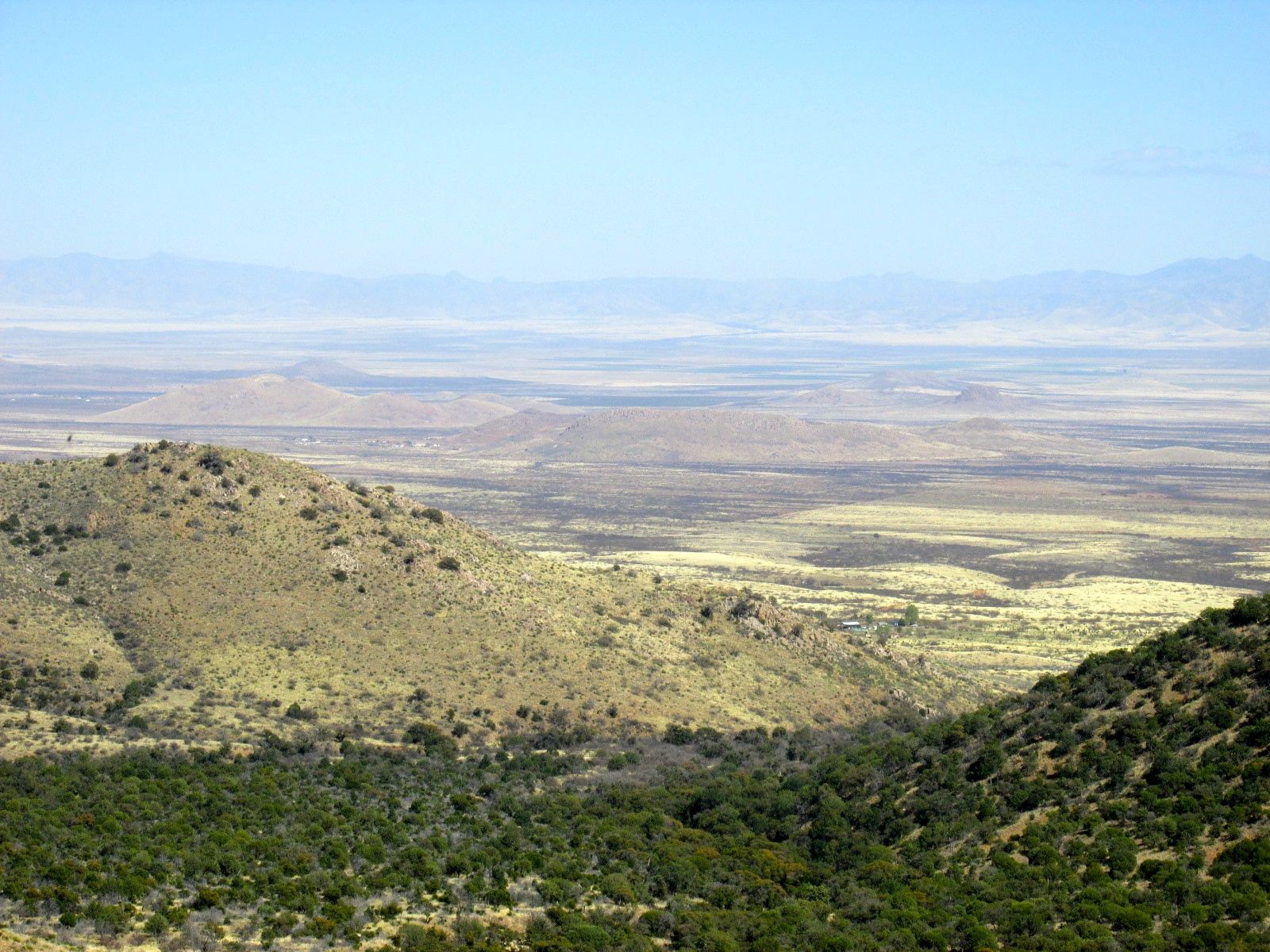
Wow! What a view!
I bounced my way down the mountain.
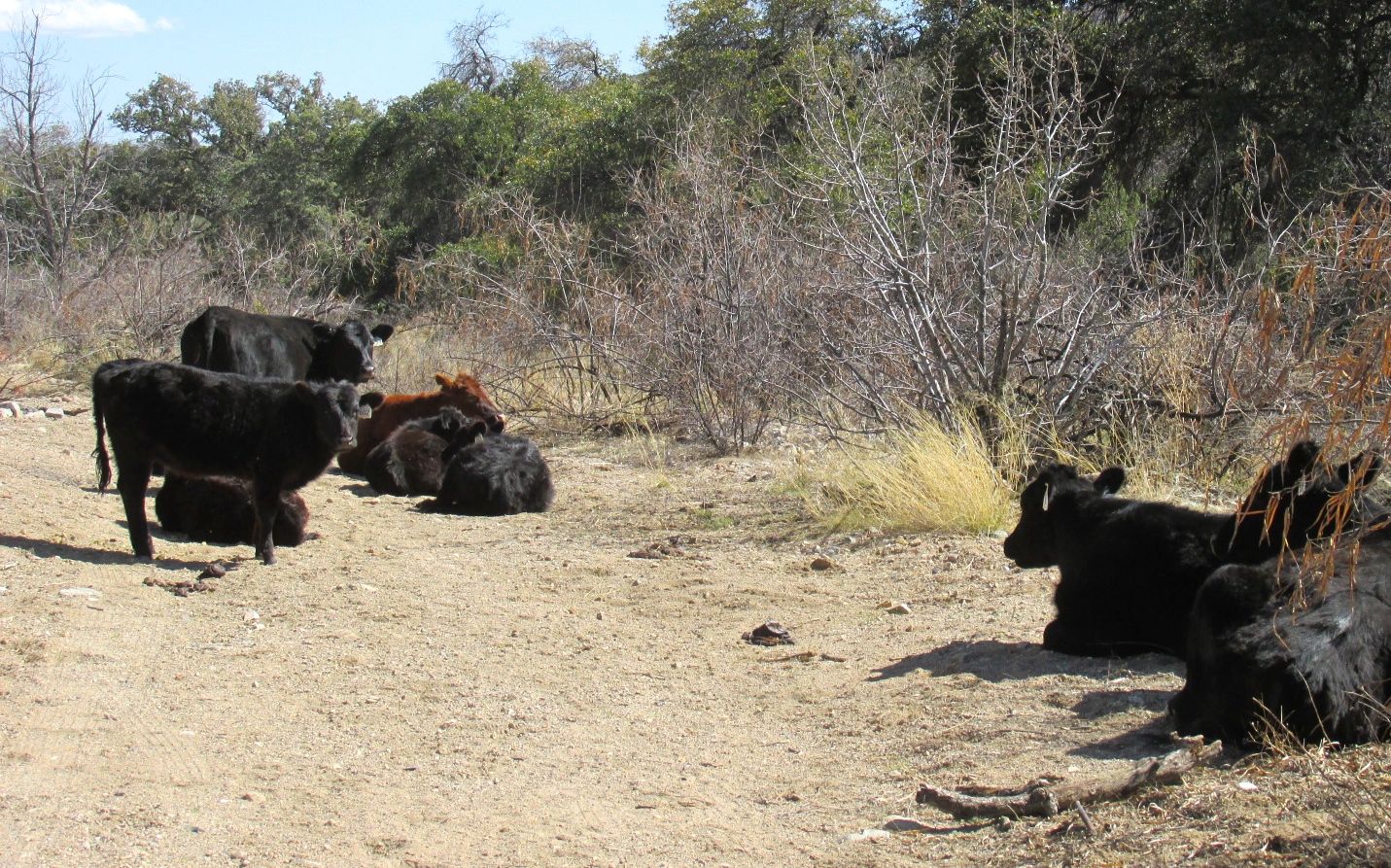
And I passed some cows. After all those signs warning me too look out for cows, I finally saw some.
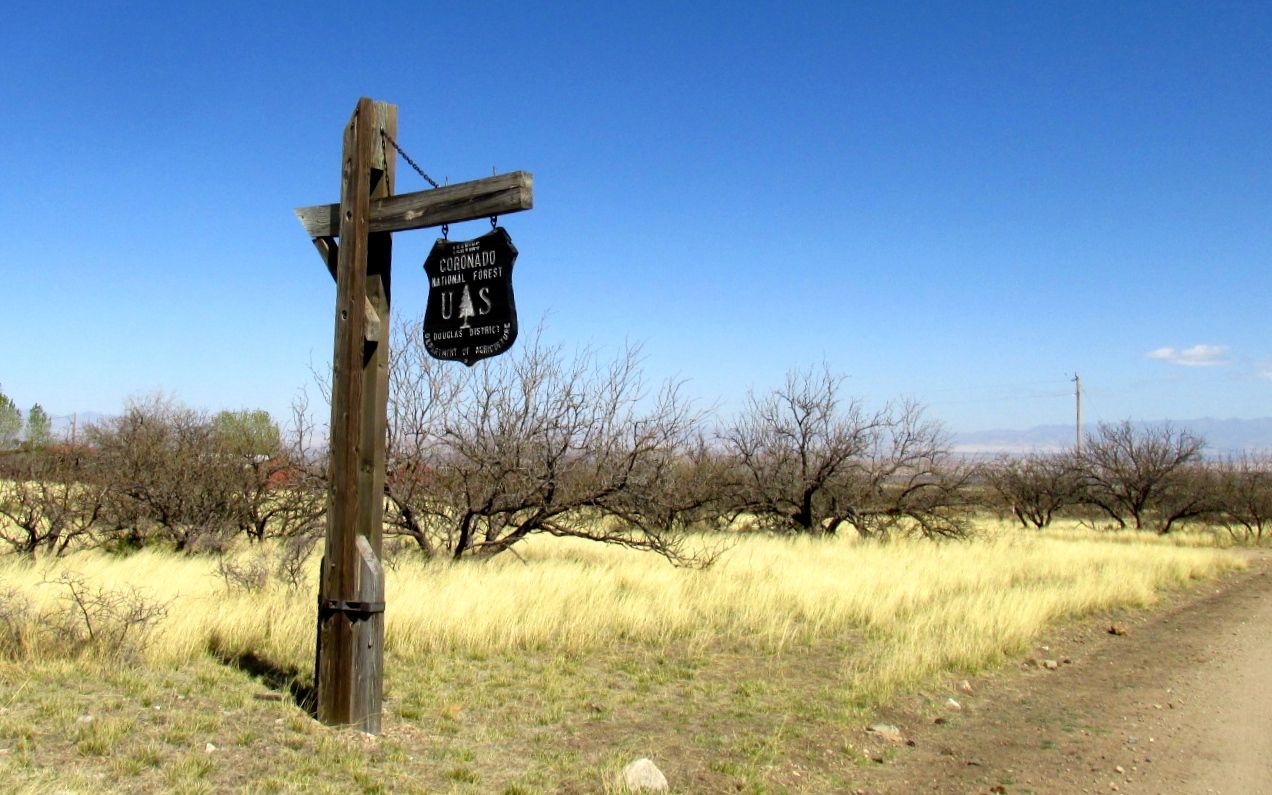
This is a sign for the Coronado National Forest that I saw on my way out. “Forest” means different things in different people, I guess.
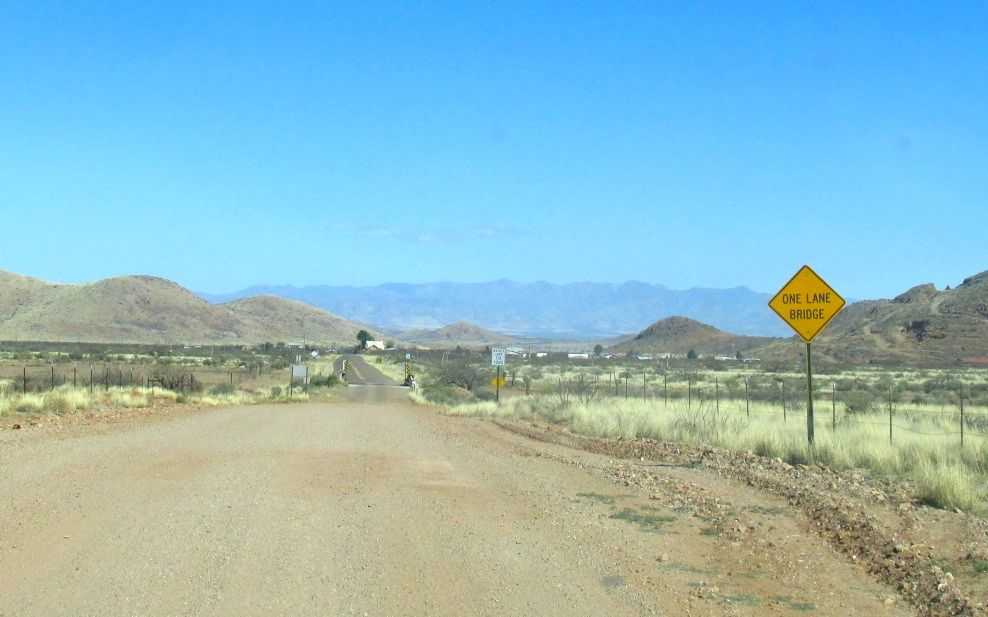
There was a one lane bridge just before I got back to the pavement. I didn’t have to wait to cross it.
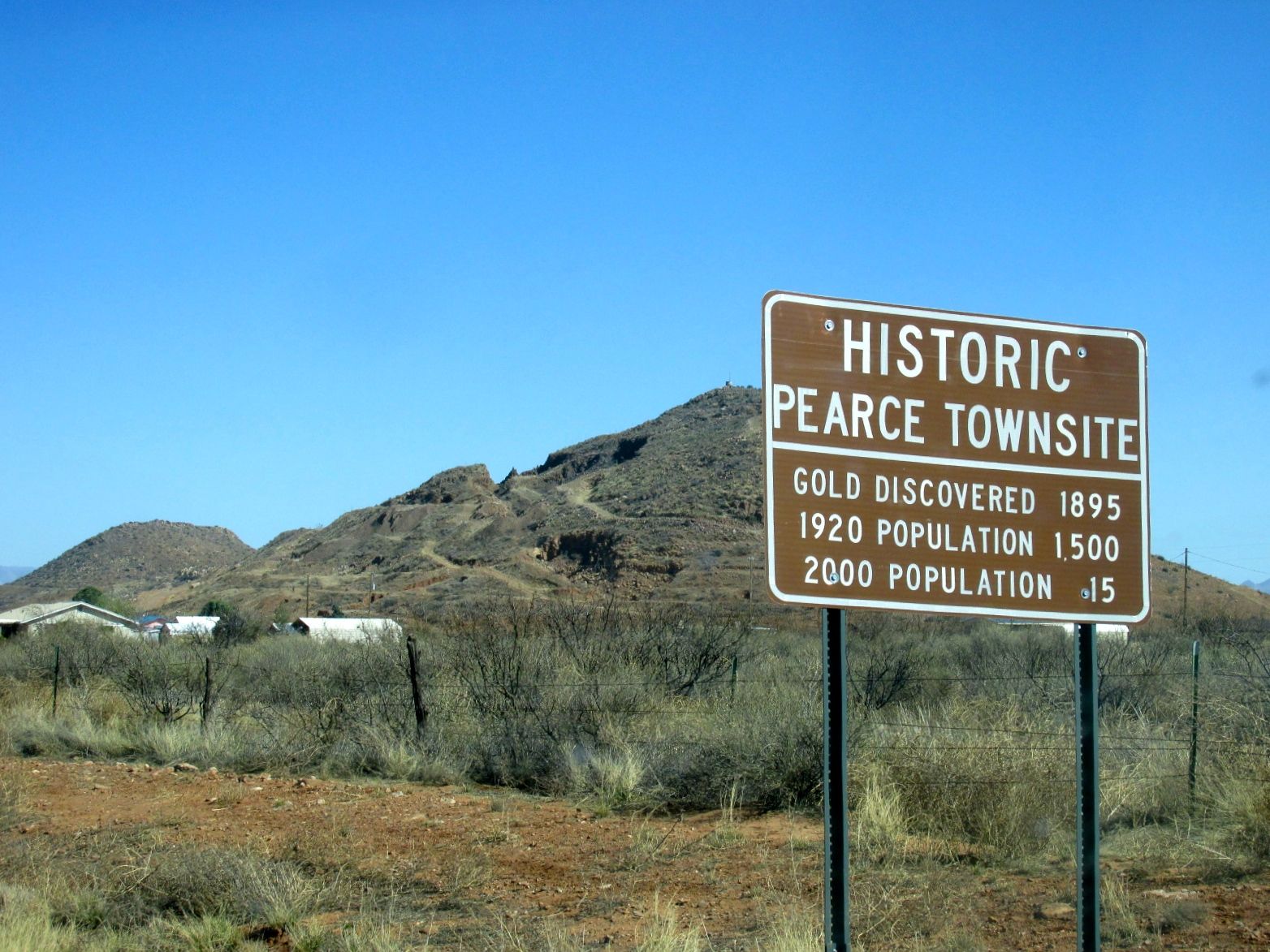
I saw some structures but no people. Perhaps the population has dropped even further.
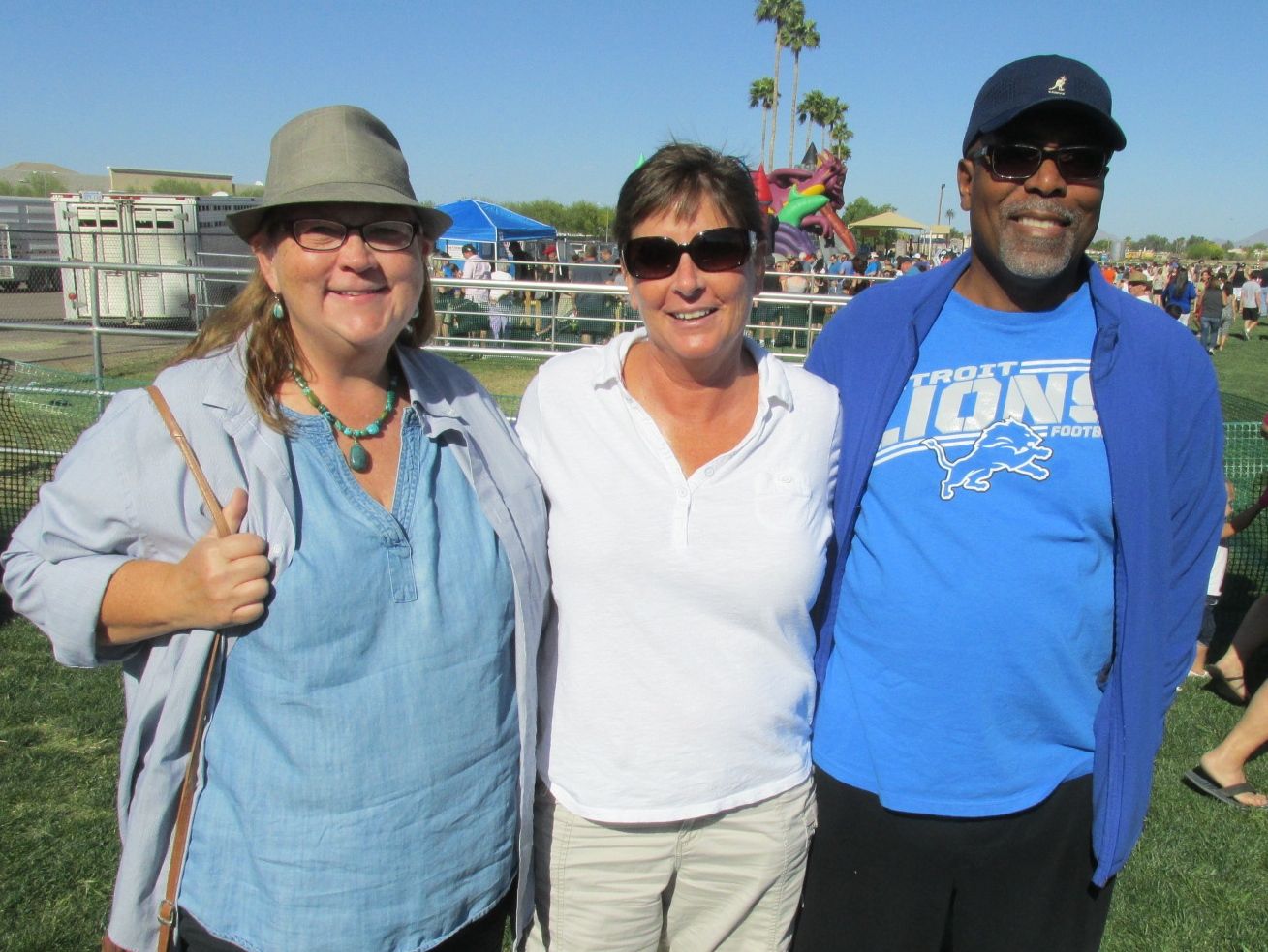
I love it when my travel plans mesh with my friends’ plans.
Anna and Carl were wintering in Tucson, and I got there just a few days before they were planning to head north. We met up to chat for a while one day and then another day we visited the Tucson Museum of Art and Historic Block.
I got so involved with the experience that I didn’t get as many photos as I might have liked. So, let me take this opportunity to invite you to visit it for yourself. Not only is it an art museum, but it also preserves some of the historic architecture of old Tucson.
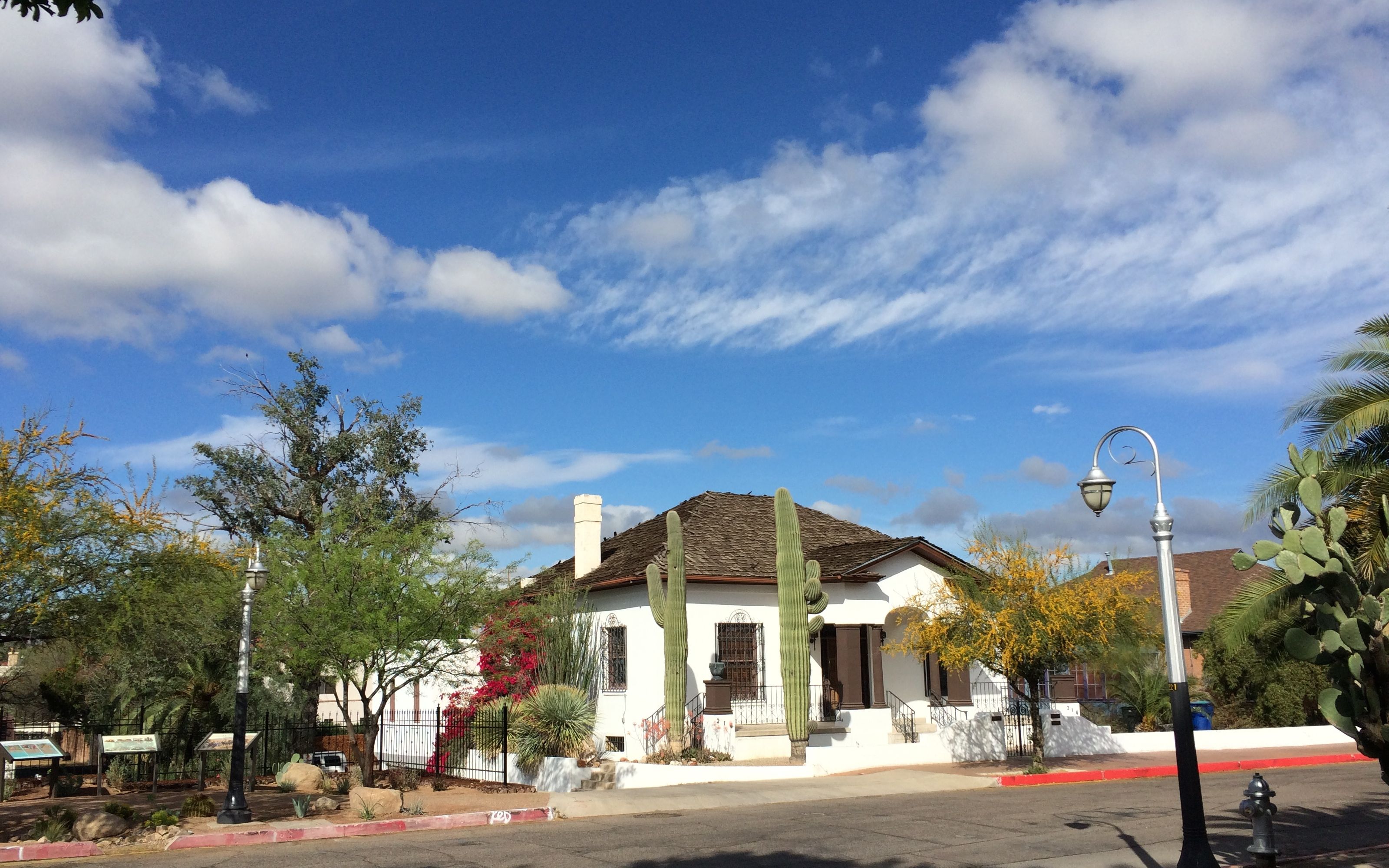
On certain days, they give tours of the historic block, and that’s on my list for “next time.” This building is across the street, and it has been repurposed into a legal office.
The museum, itself, is built on the site of the Presidio, back from when the area was controlled by the Spanish. They have a marker on the pavement that shows where it was. Parts of the museum are in old adobe houses that have been repurposed. After you pass through the old parts of the museum, you enter the modern part.
They had several interesting exhibits up while we were there. One exhibit was artwork based on the night. Another was a work by Ai Weiwei, based on the Chinese zodiac. My favorite exhibit was textiles from recycled materials. I think my works of art would have been right at home there.
Unfortunately, they only permit photos of work that is in their collection, and these exhibits were put together by others. At least, that’s what I understood. We were allowed to take pictures of things that they owned, so I do have a few to share.
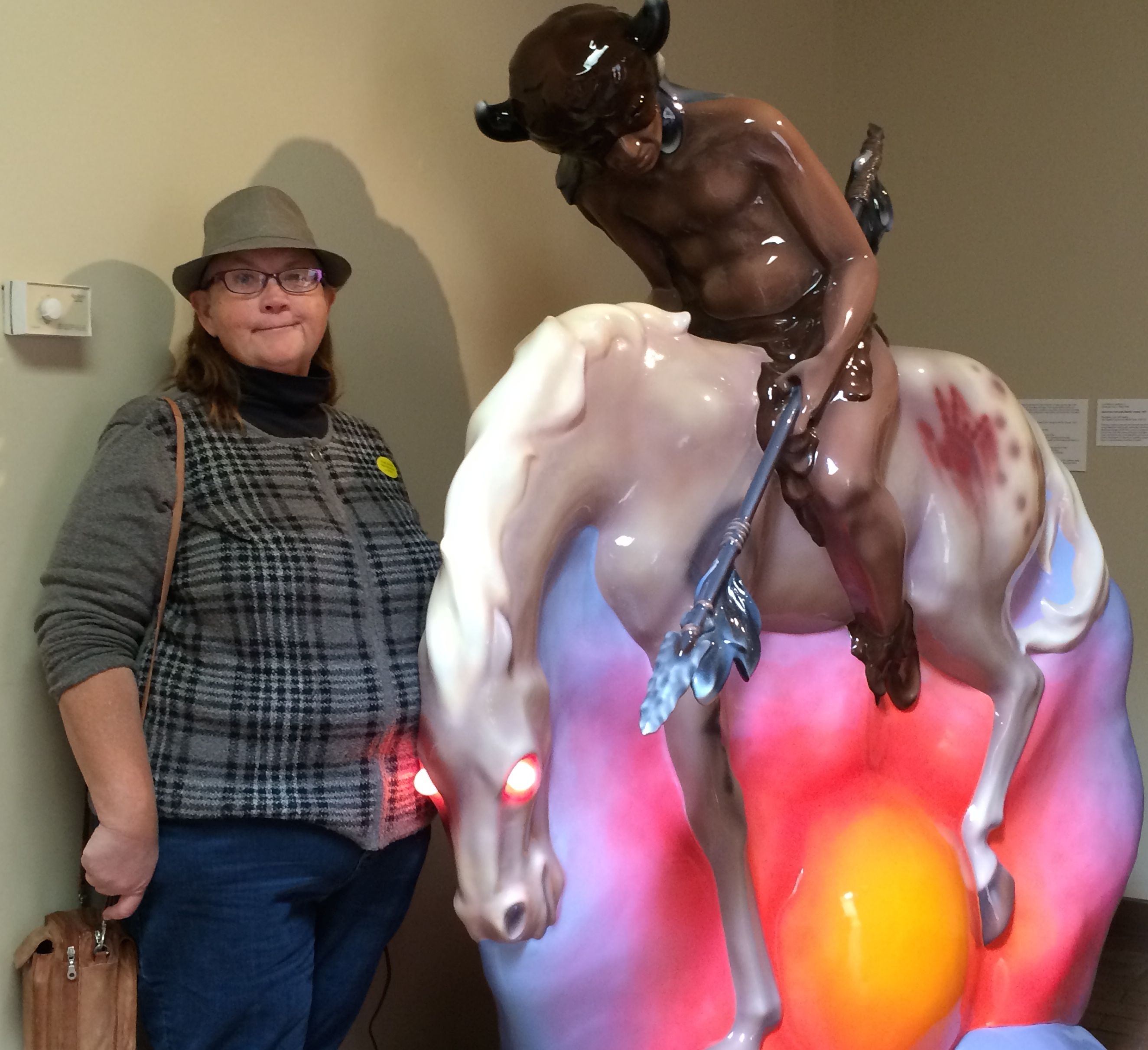
This statue is by the artist Luis Jimenez. He was a prolific artist who met an untimely end. While working on a 32 foot tall horse statue for the Denver Airport, he was crushed by the statue in his studio.
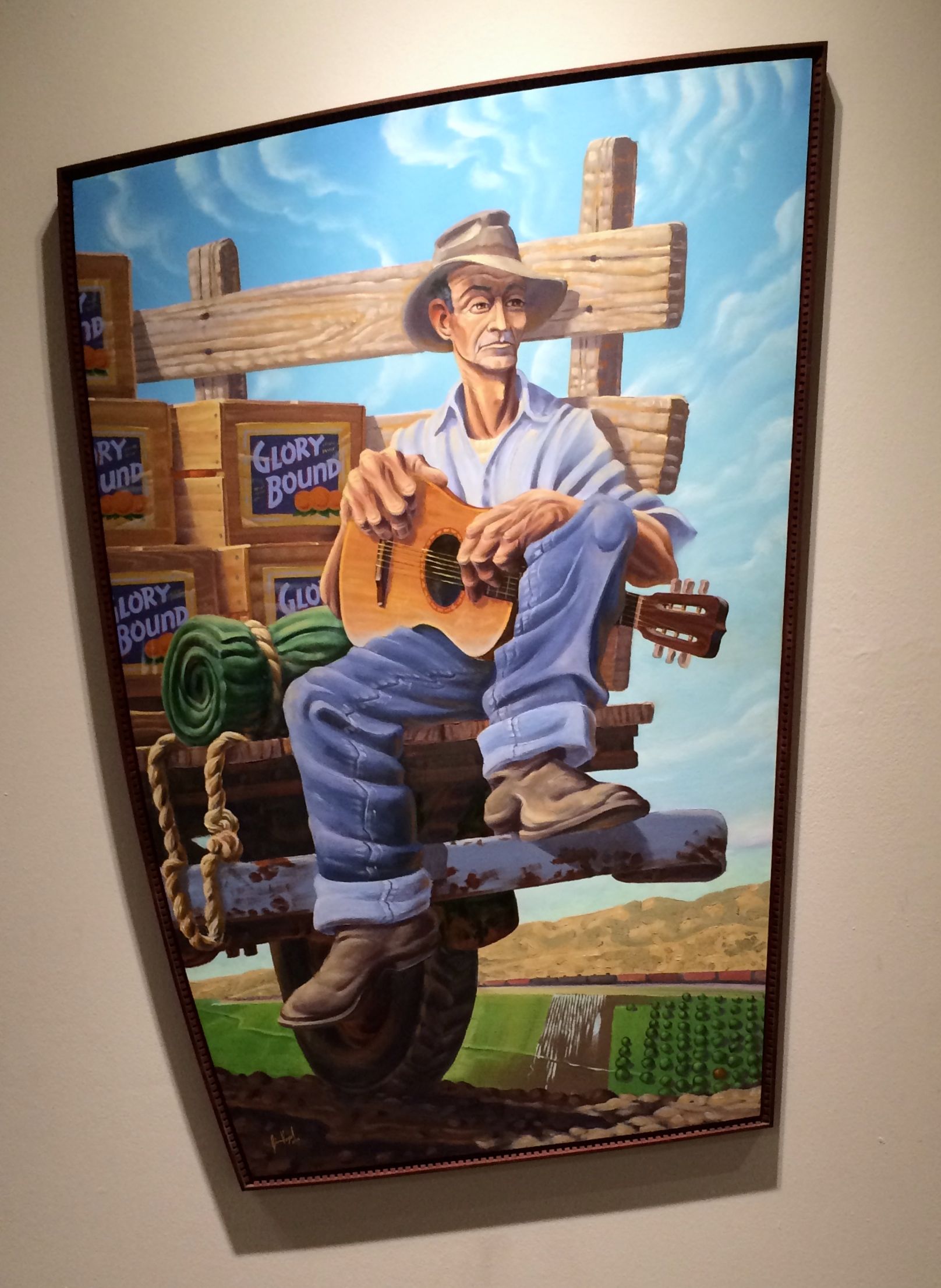
Here’s Woody Guthrie. I didn’t make note of the artist, but a Loyal Reader let me know that the name of the artist is Jim Vogel from Santa Fe. Thanks, Loyal Reader!
I didn’t catch this artist, either, but I love the idea of herding pigs. I wonder if it’s like herding cats?
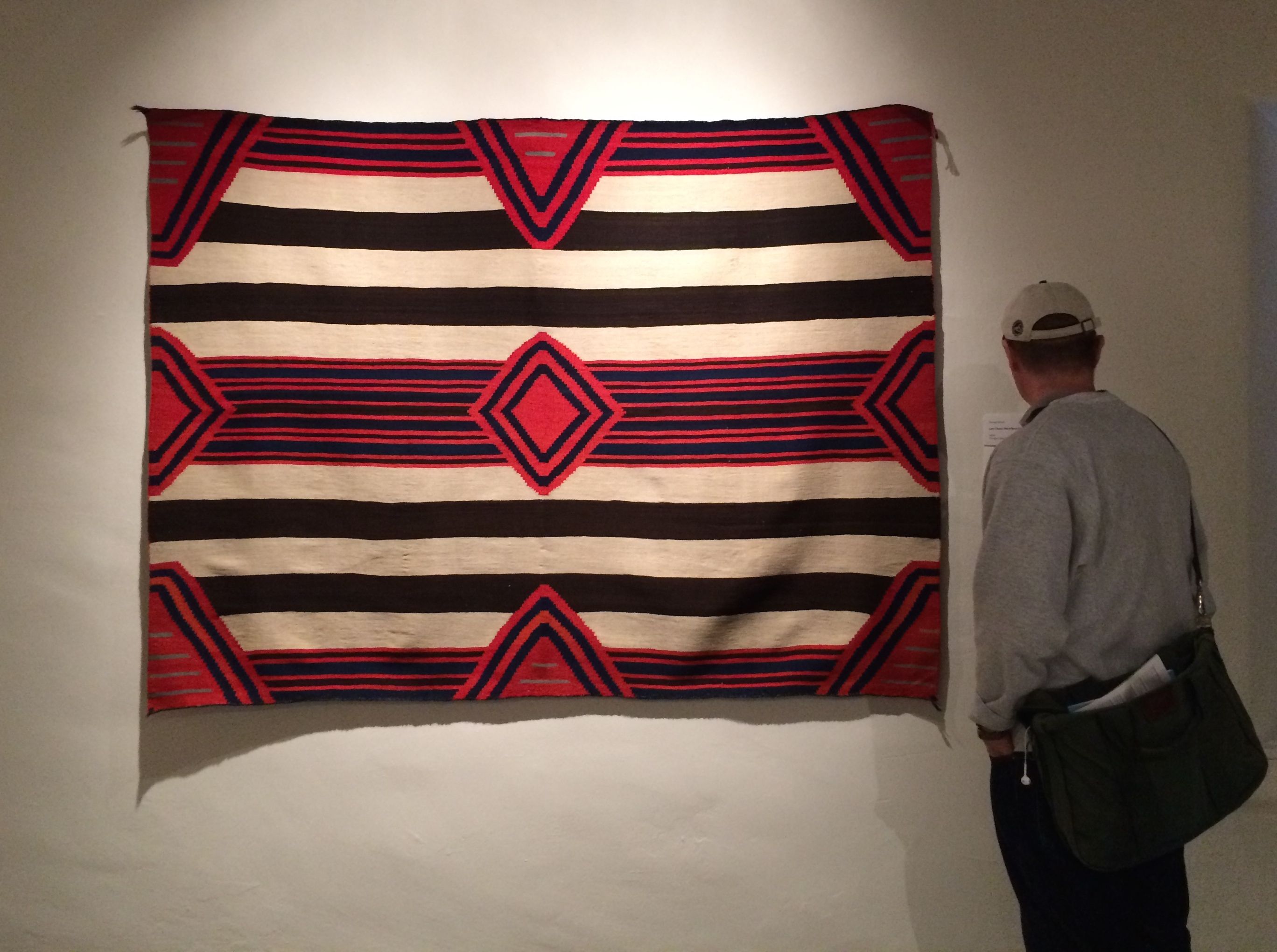
The guide told us that this is called a “Chief Blanket” and the red color of the wool comes from cochineal, an insect that grows on prickly pear. The insect lives beneath a white material, kind of like a web. In fact, I think I spotted it on a prickly pear outside the museum.
If you look carefully, you can see a little bit of red on the white material on the cactus pads.
Can you imagine how much work went into one of those blankets? They had to raise the sheep, shear them, clean and spin the wool, dye the yarn and THEN they could weave it. If they wanted to dye the yarn, they had to pick the bugs off the cactus! If you lined the bugs up, you could fit about five of them across the face of a quarter! How many bugs do you suppose it took to dye the yarn?
This ceiling in the older part of the museum is topped with the ribs of saguaro cactus. When there isn’t a lot of wood, you use what you have.
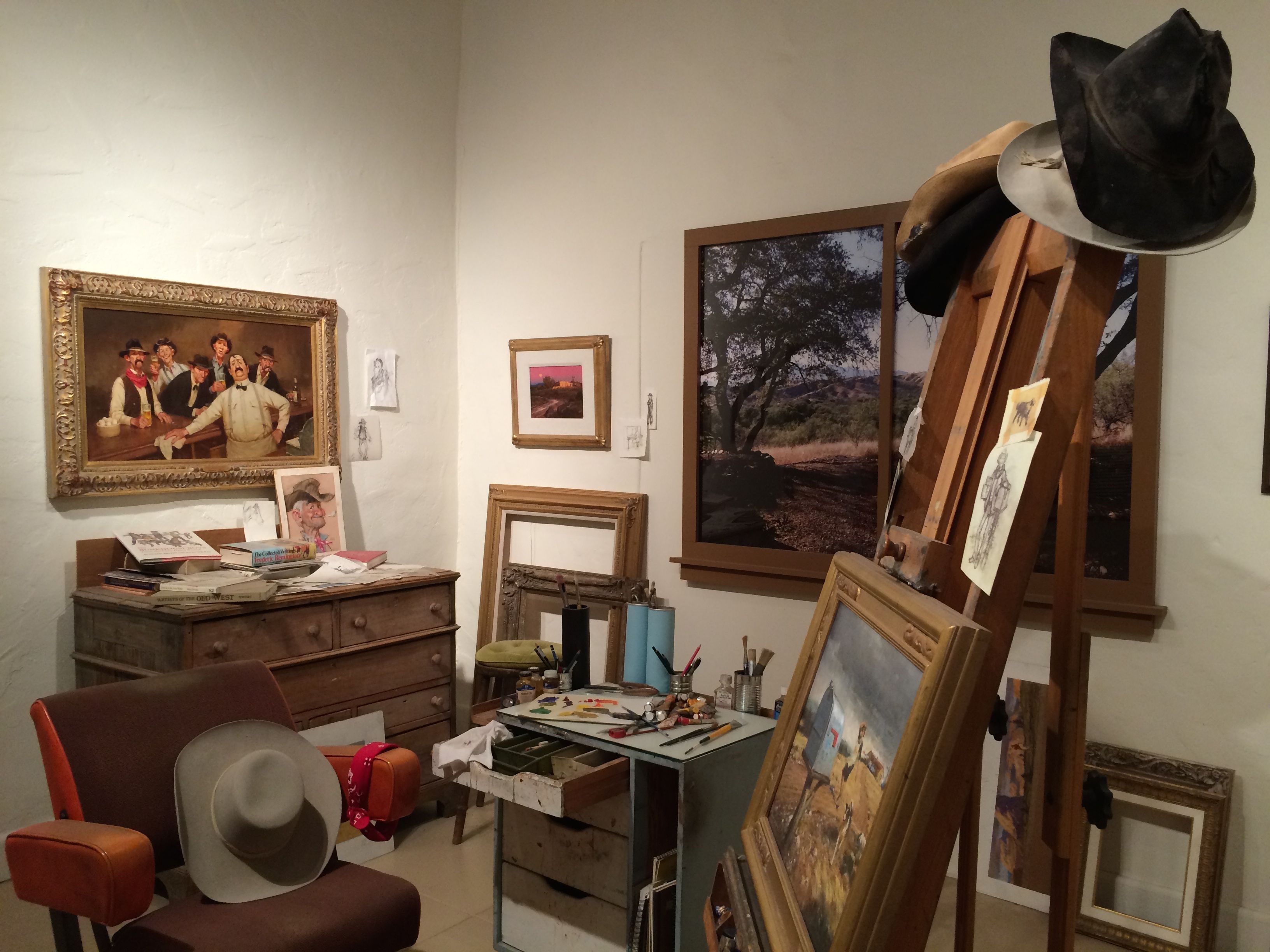
The studio of Duane Bryers is also in the older part of the museum. He was born in Michigan’s upper peninsula in 1911 and had a long career. In fact, on the easel is the last painting he was working on when he passed on in 2012! His family donated his studio to the museum. They even replicated the view out his window in Tucson.
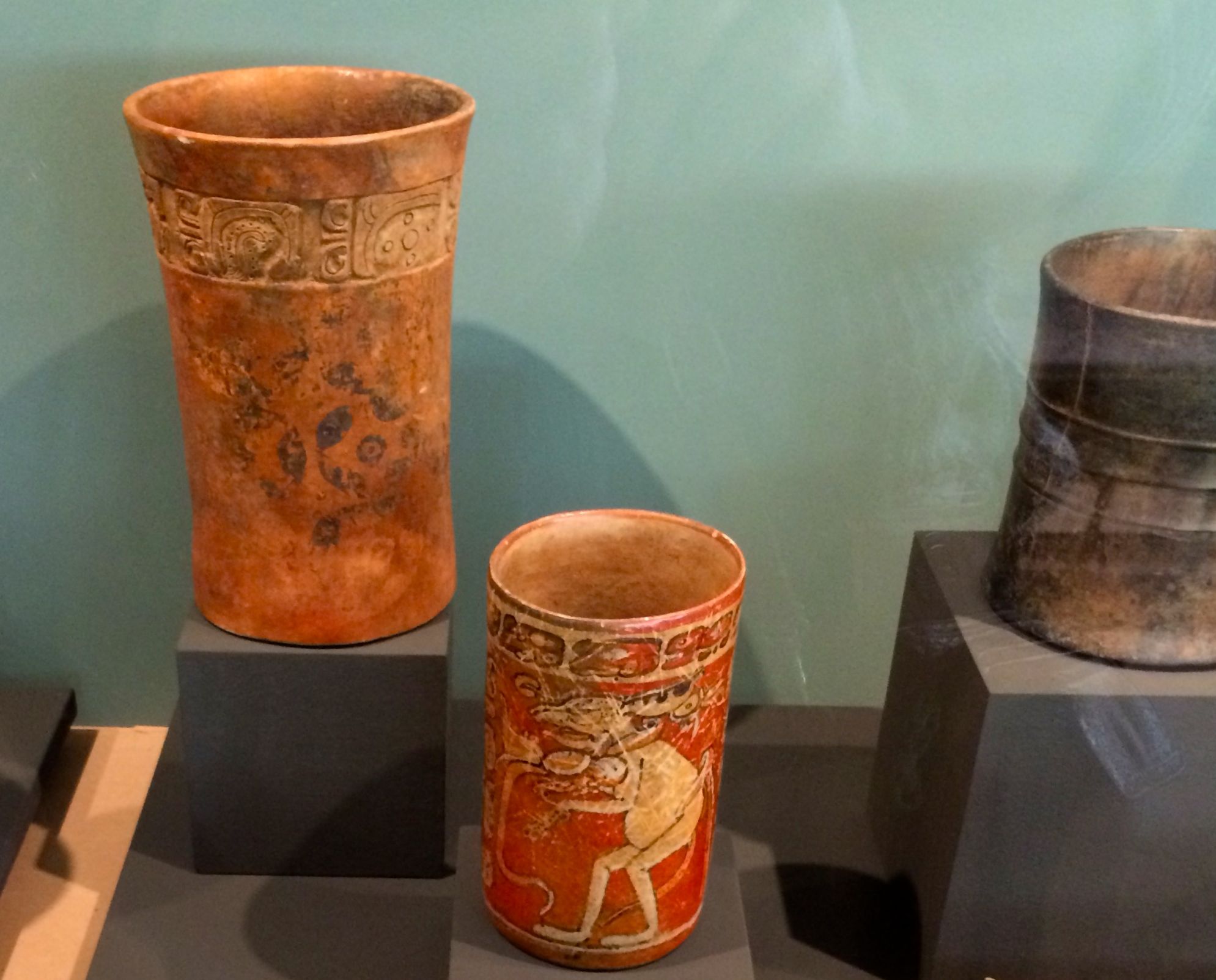
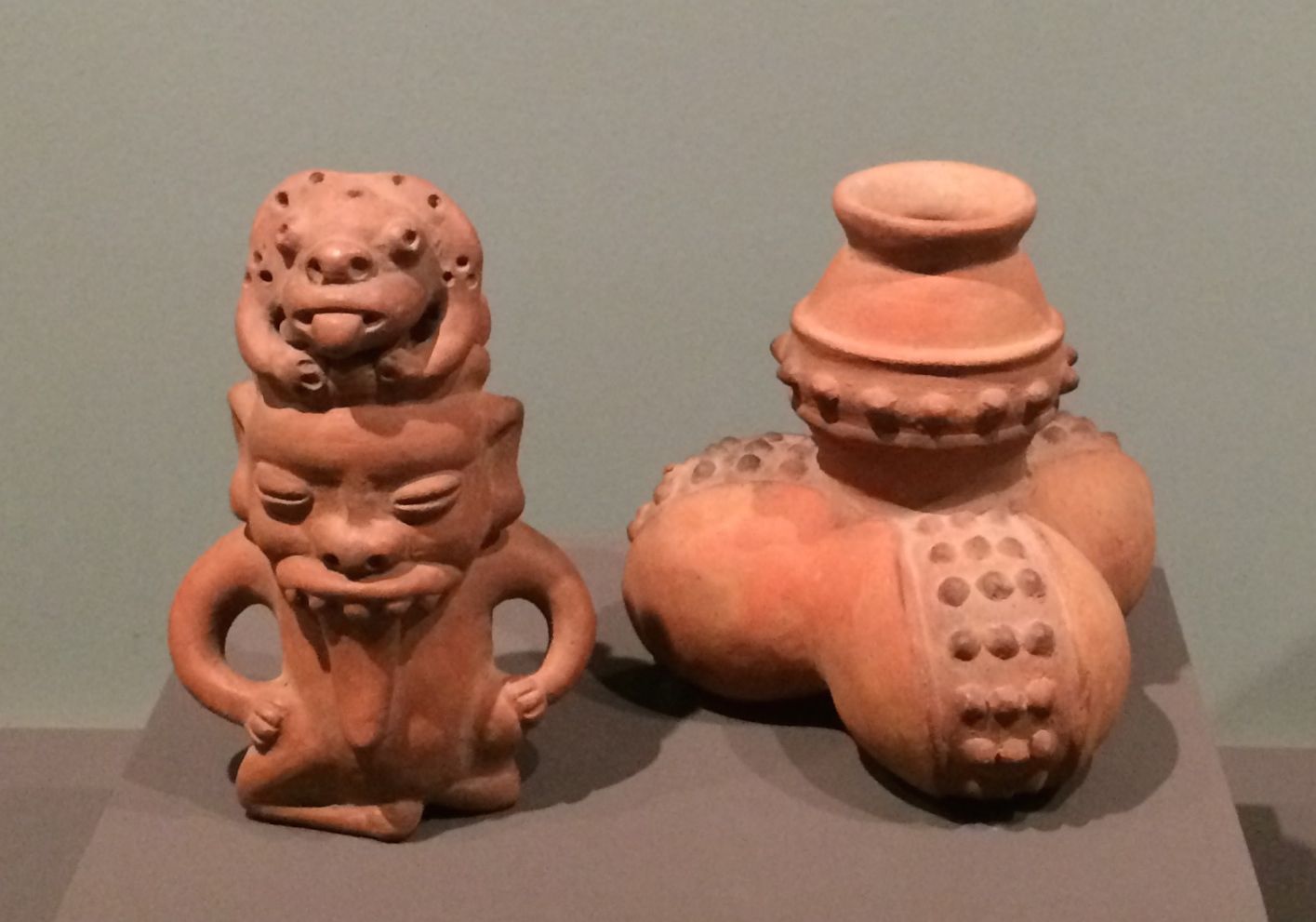
There was a lovely collection of pre-columbian work in the new part of the museum.
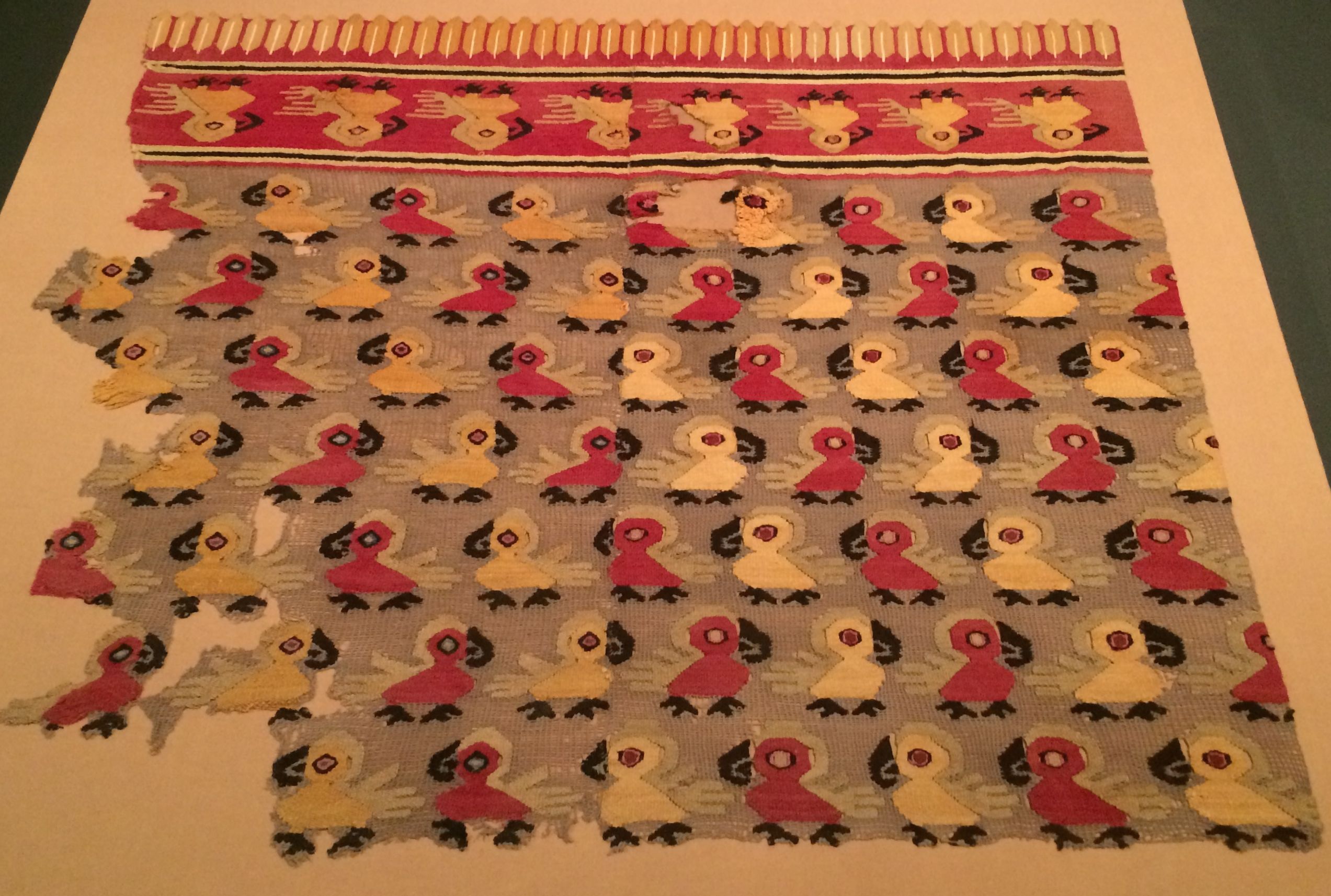
I like these birds. They almost look like a tessellation.
I always gravitate to familiar items. These remind me of the Mayan works I saw in Guatemala.
These posts made me smile.
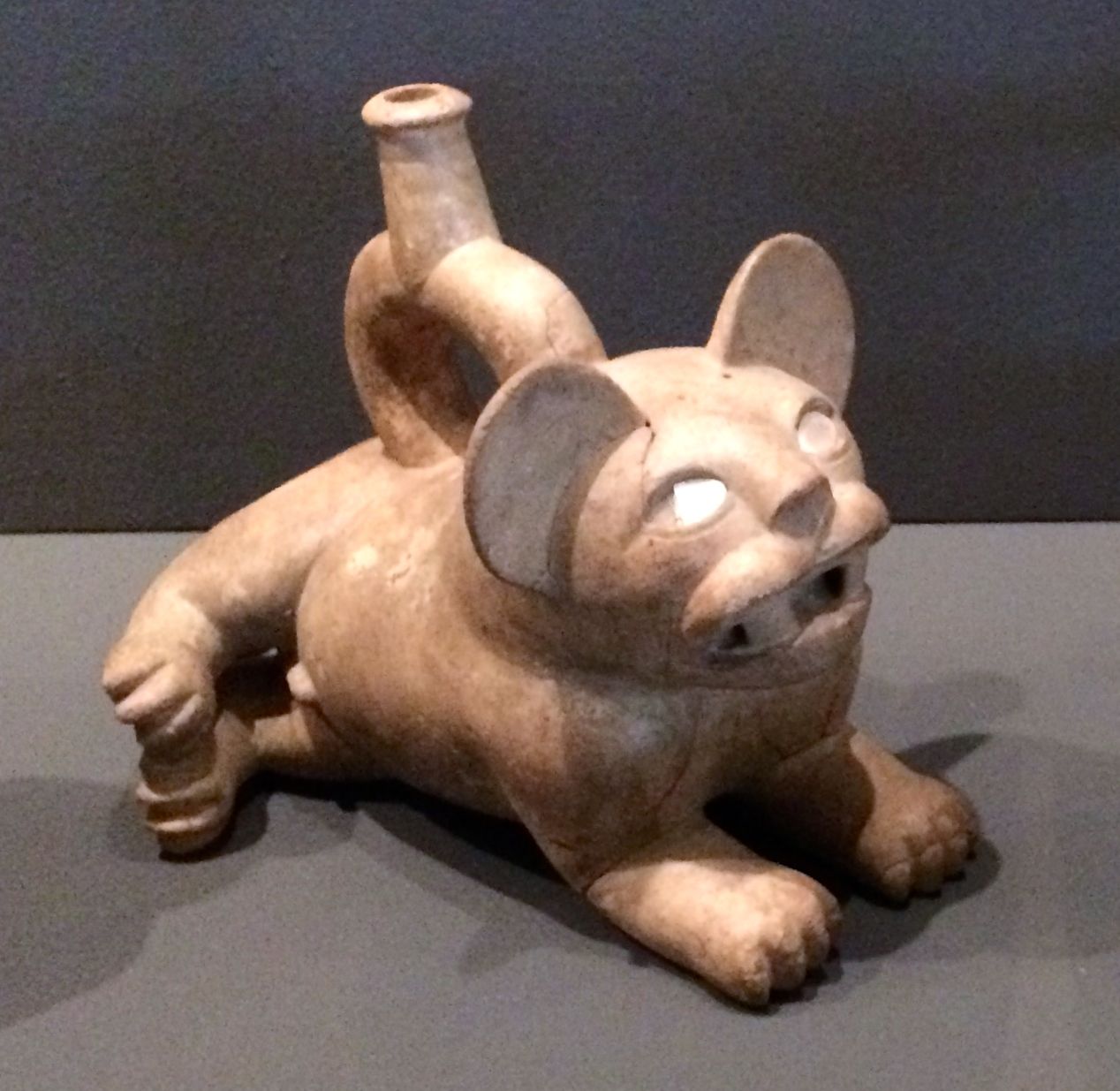
And this cat vessel is sweet.
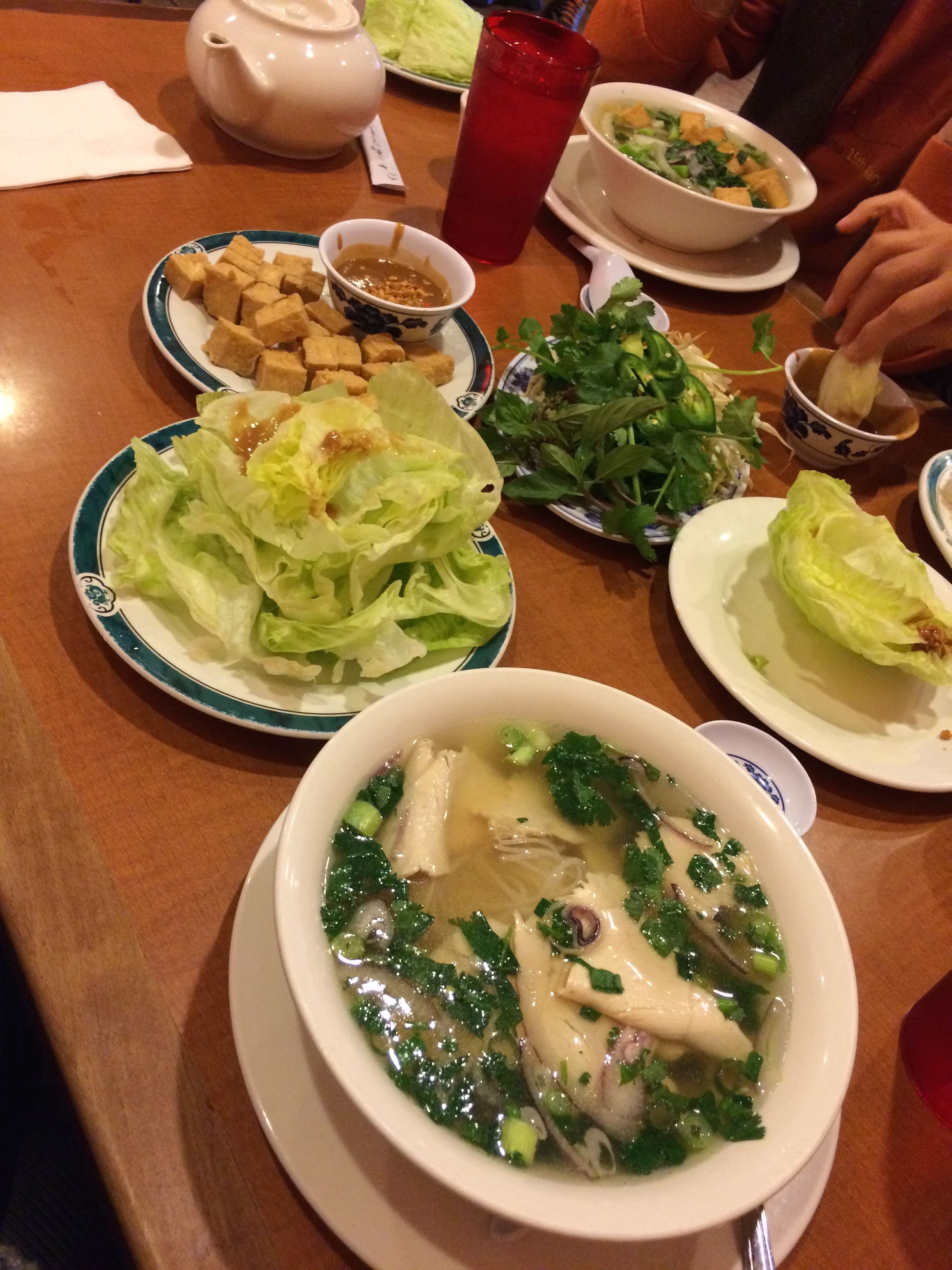
By the time we finished the third floor of the new building, it was time for lunch. We went to Miss Saigon and I got to try pho, which is soup.
We also had lettuce cups with peanut sauce and fried tofu. A plate full of basil, cilantro and sprouts was provided for the table to add to our dishes.
Full of friendship, art and lunch, it was time for a group shot.