Next Stop: Montgomery (April 2019)

After taking my leave of Scott and Lesley in Phenix City I headed west to Montgomery, Alabama. It was an easy drive, less than two hours down the road. I had planned a couple days in the city. My first day’s exploration took me to the State Capitol.
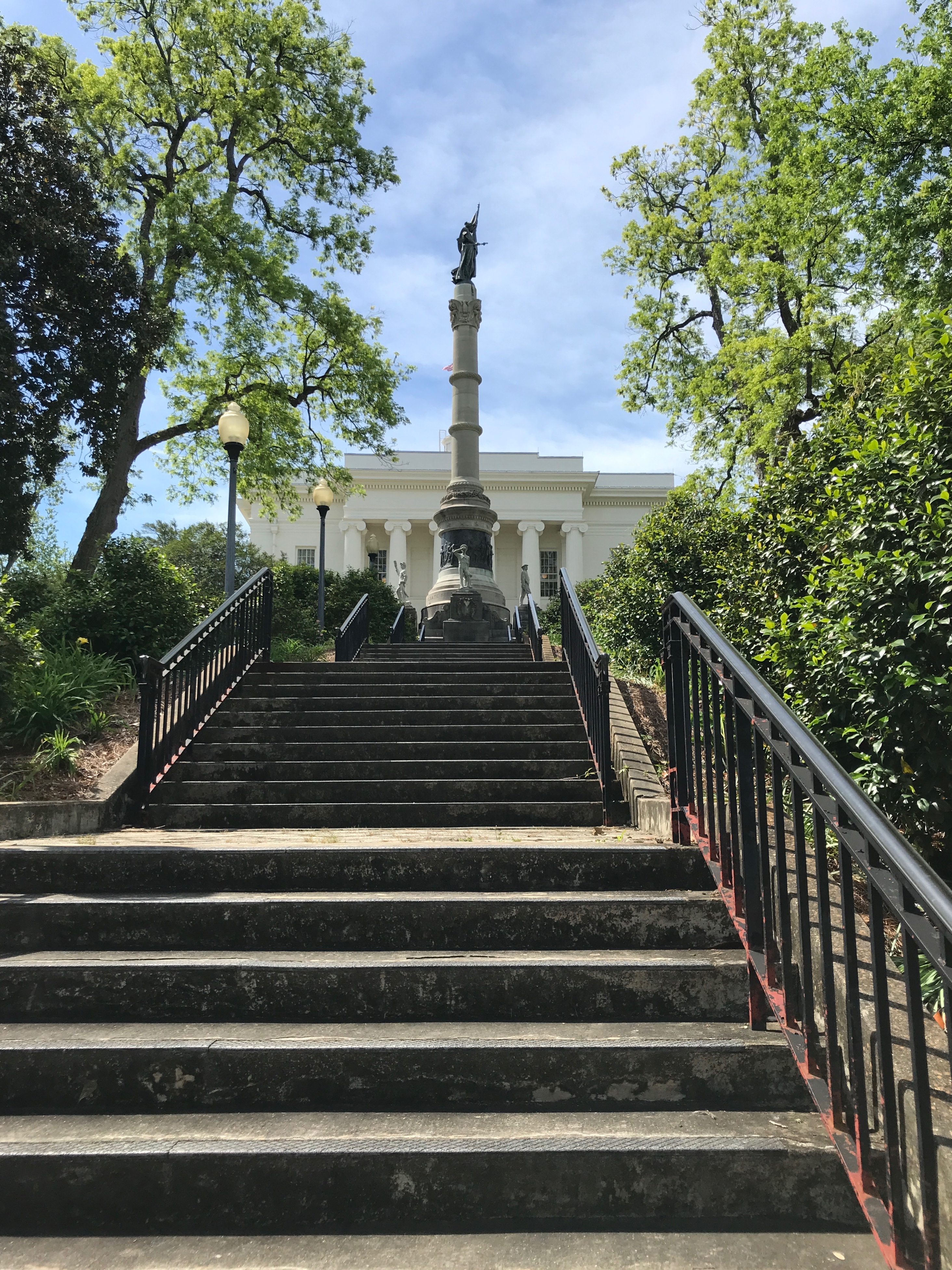
I found a place to park and started up.

“UP” being the operative word. What is with all the steps at state capitols?
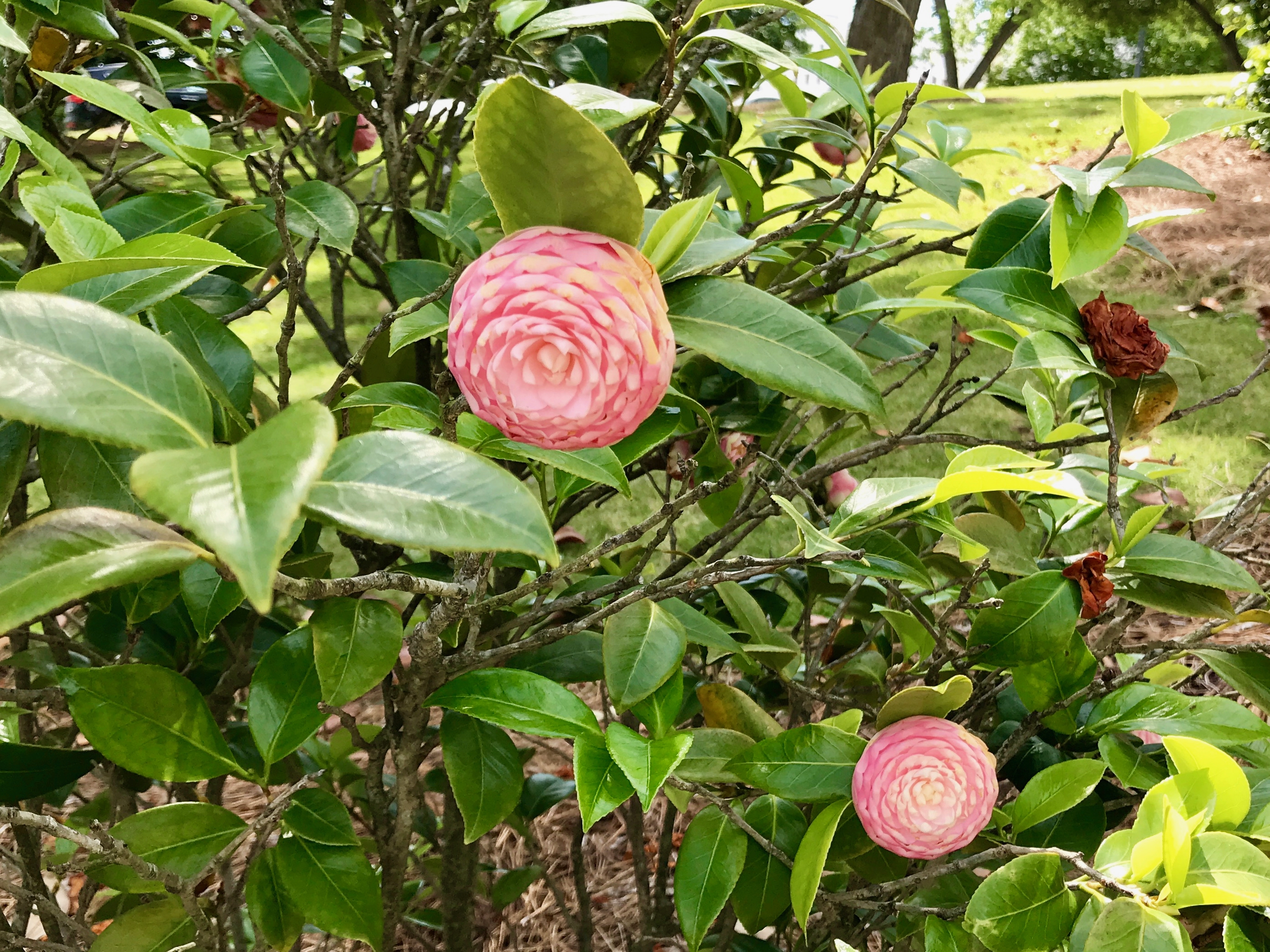
Along the way, I passed the state flower, the camellia.
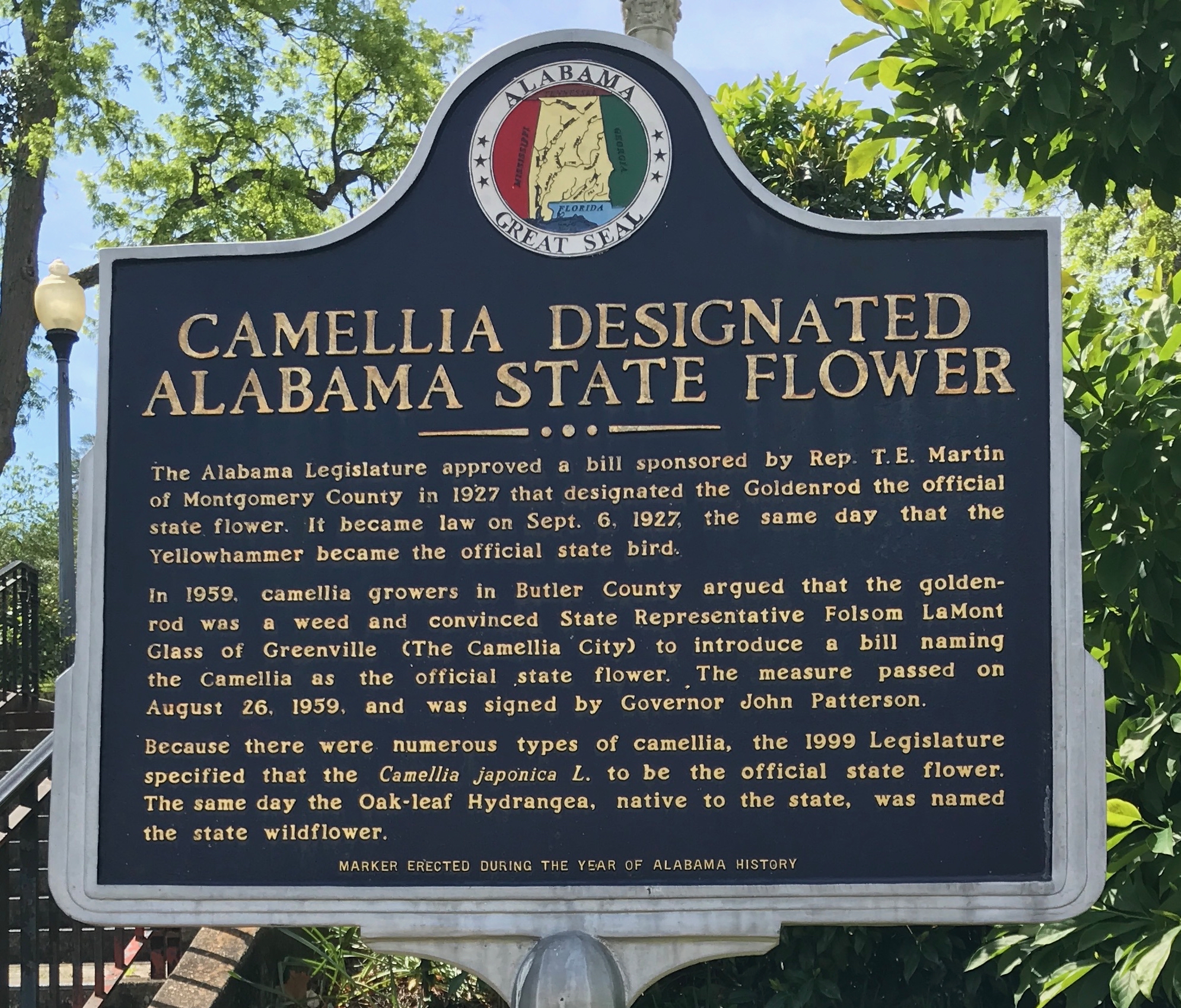
I thought it was interesting that the first flower that had been designated as the state flower was the goldenrod. If you read the sign, you can see that the goldenrod was chosen in 1927. In 1959, the camellia growers of Butler County convinced a state representative to introduce a bill naming their product as the official state flower. It was adopted and the camellia became the state flower and the oak-leaf hydrangea became the state wildflower.

Poor goldenrod was left out altogether.
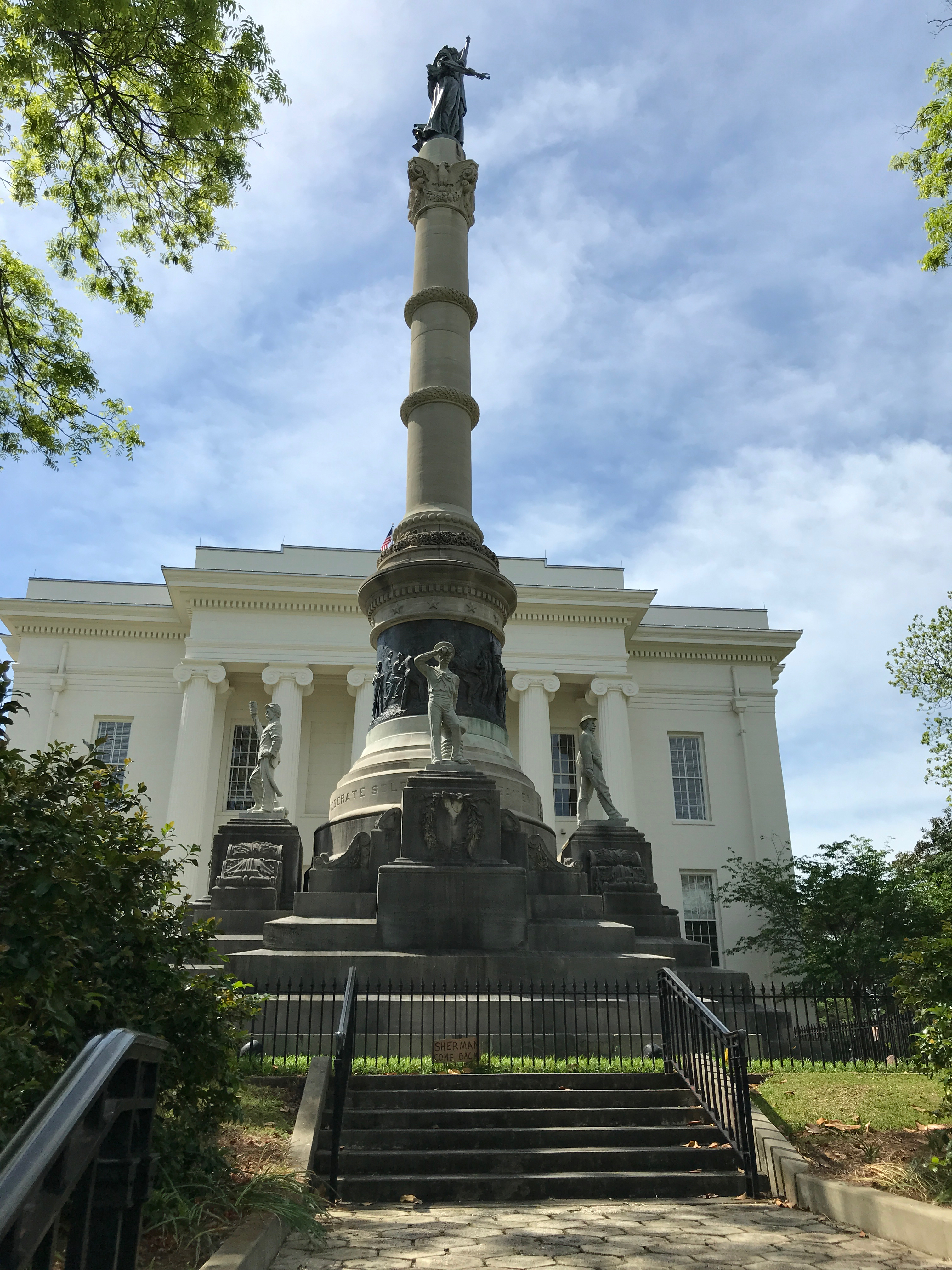
At the top of the stairs is the Confederate Memorial Monument, to honor the sacrifice of the state’s more than 122.000 veterans of the Civil War.

I always try to find out when memorials and such were set up. This one had been in the planning stage as far back as November 1865. According to my preferred source, (Wikipedia) “funding for the monument included $20,000 in the form of two grants from the state legislature, $10,000 contributed by the Ladies Memorial Association of Alabama, $6,755 from the Historical and Monumental Association of Alabama… and $5,000 from politicians.”

The monument was established in 1898.

It used to have flagpoles with the flags of the Confederate States of America, along with the Confederate Battle flag. These were removed on the morning of June 24, 2015, in the wake of the Charleston Church shooting of June 17, 2015.
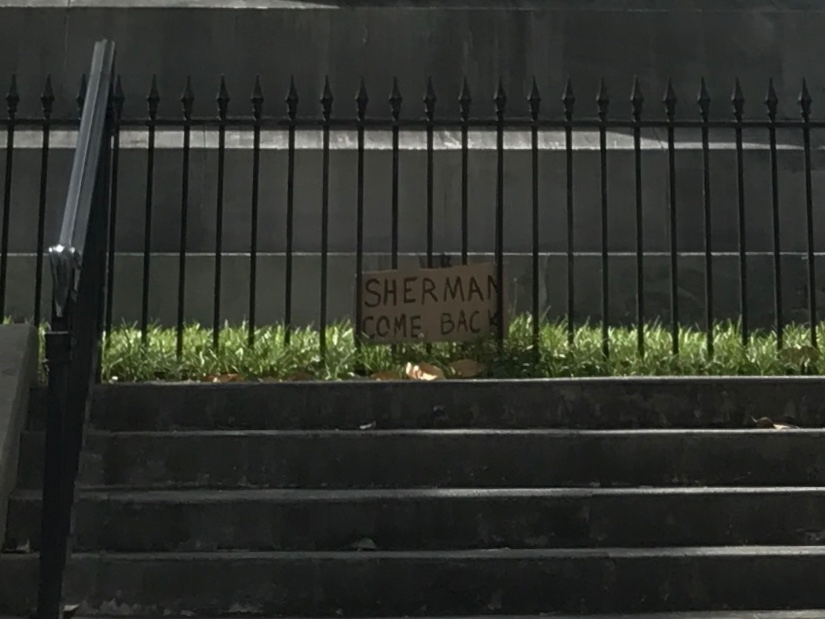
I found this sign confusing. Actually, I still wonder about it. At first, I assumed that it referred to General Sherman, but I couldn’t locate any information that indicated that he was ever in Montgomery.
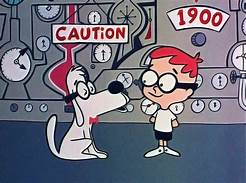
Do you suppose Mr. Peabody was looking for his boy, Sherman?
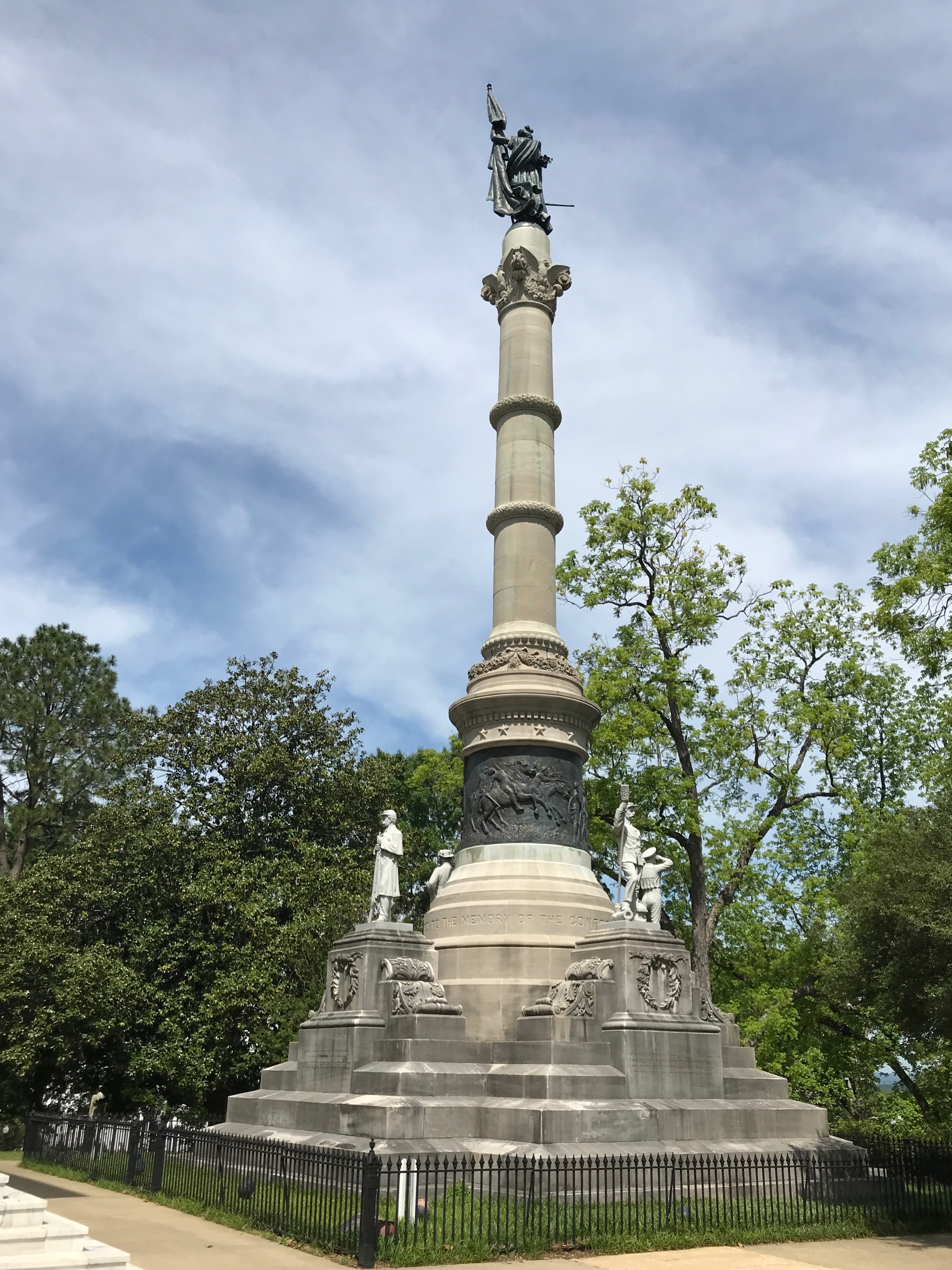
Here’s another view of the Memorial.
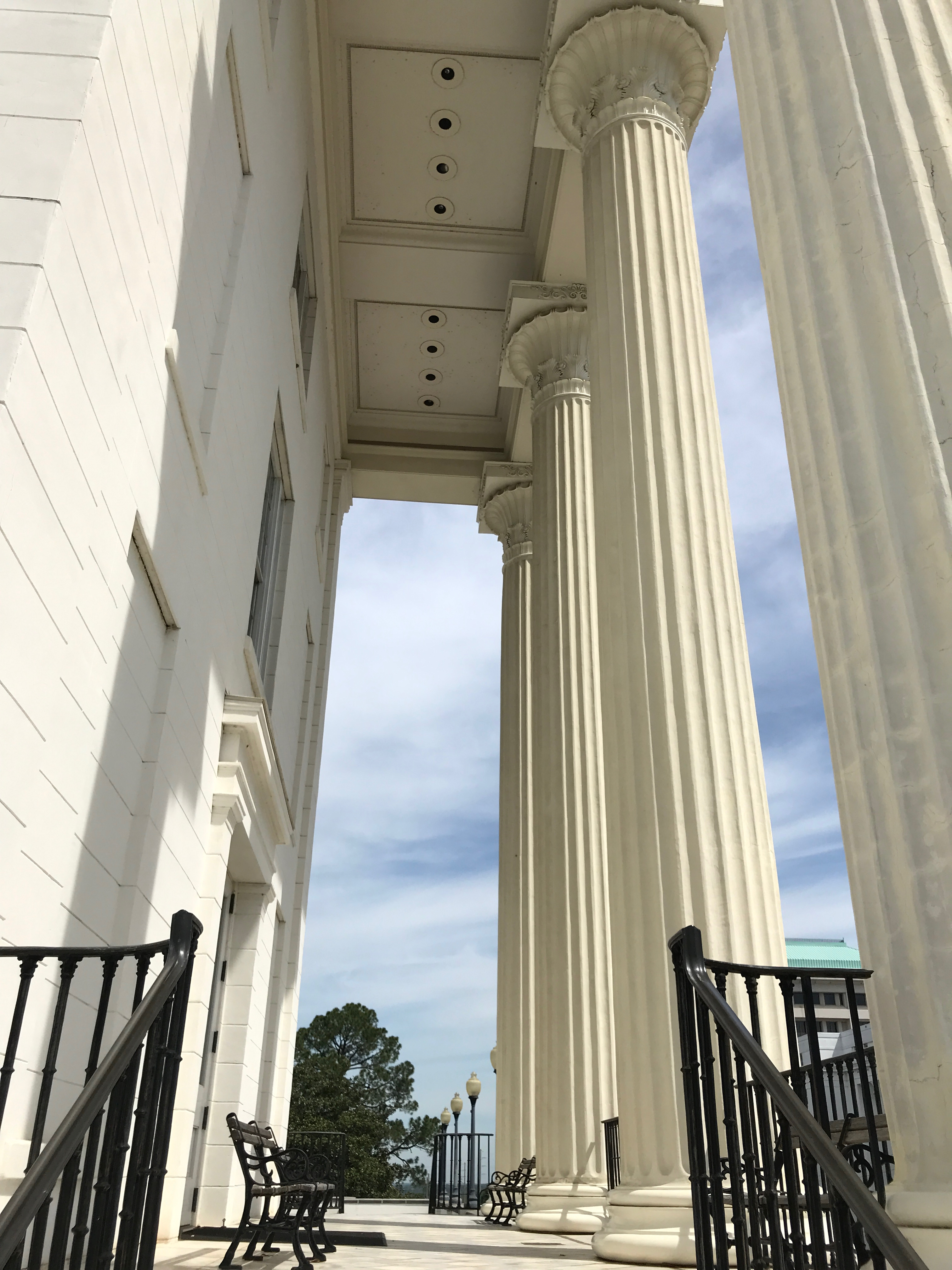
On to the Capitol.
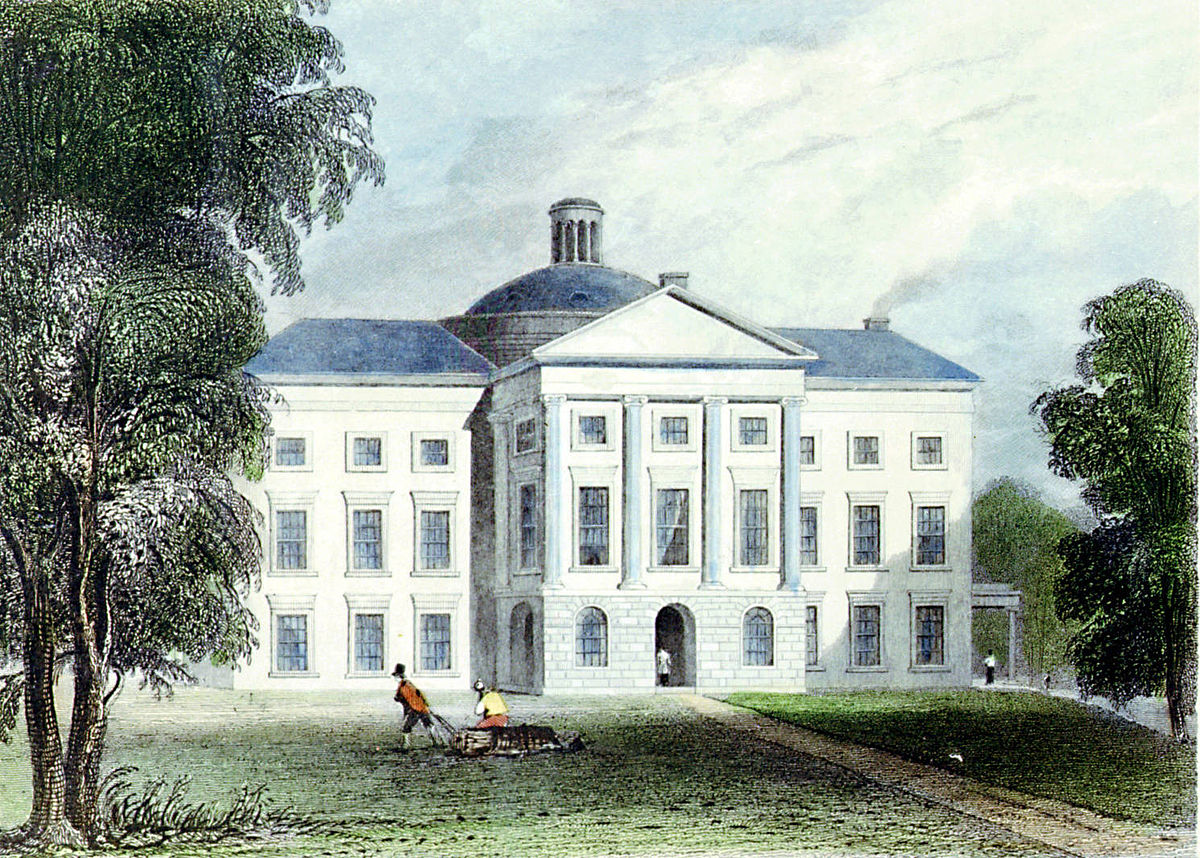
The current capitol building was built 1850-1851 on the site of a previous capitol that had burned down.

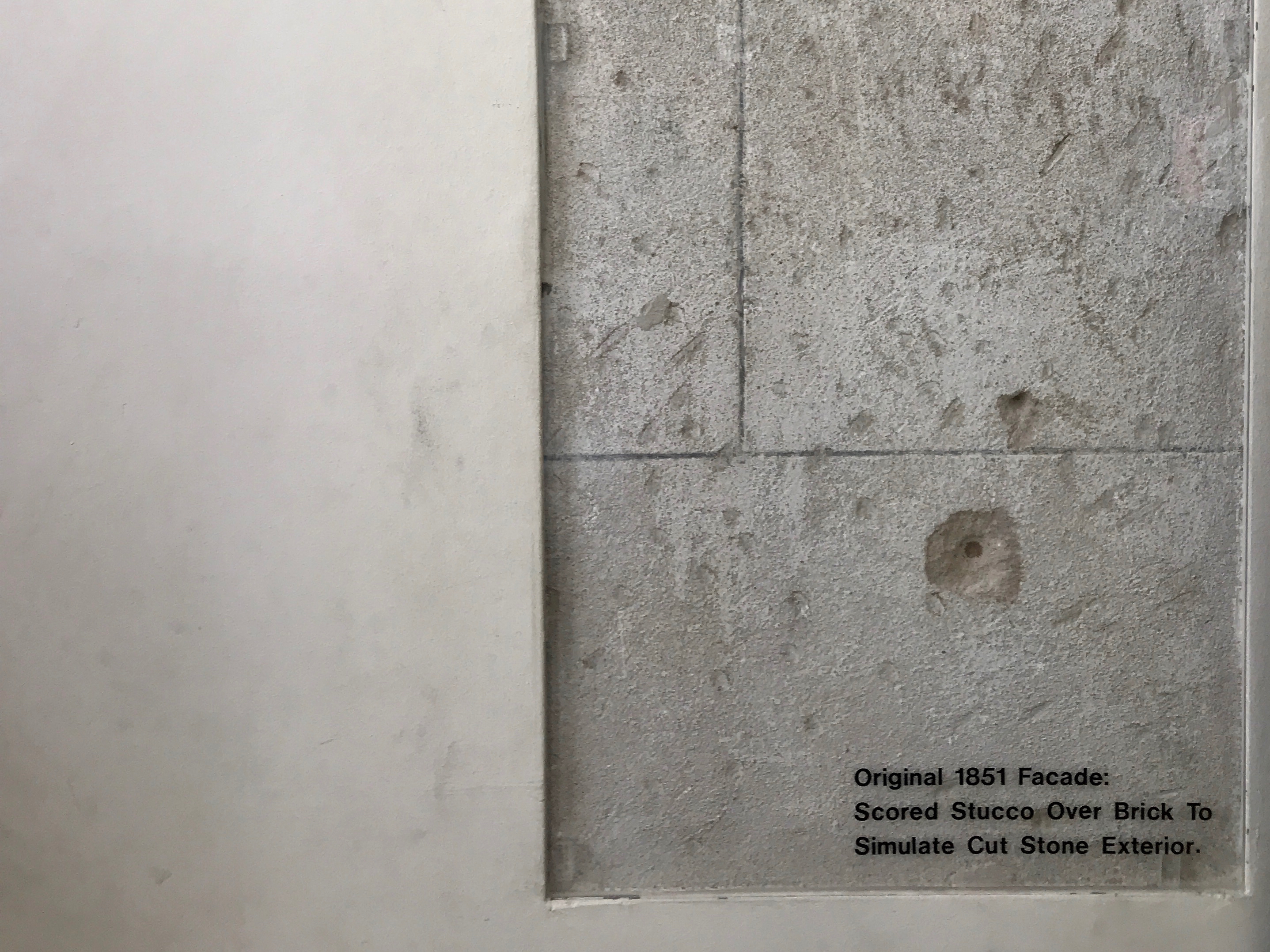
I thought this little “truth window”  was interesting. It reminded me of how George Washington’s Mount Vernon was actually a faux stone. It was wood that was stuccoed or plastered to look like stone.
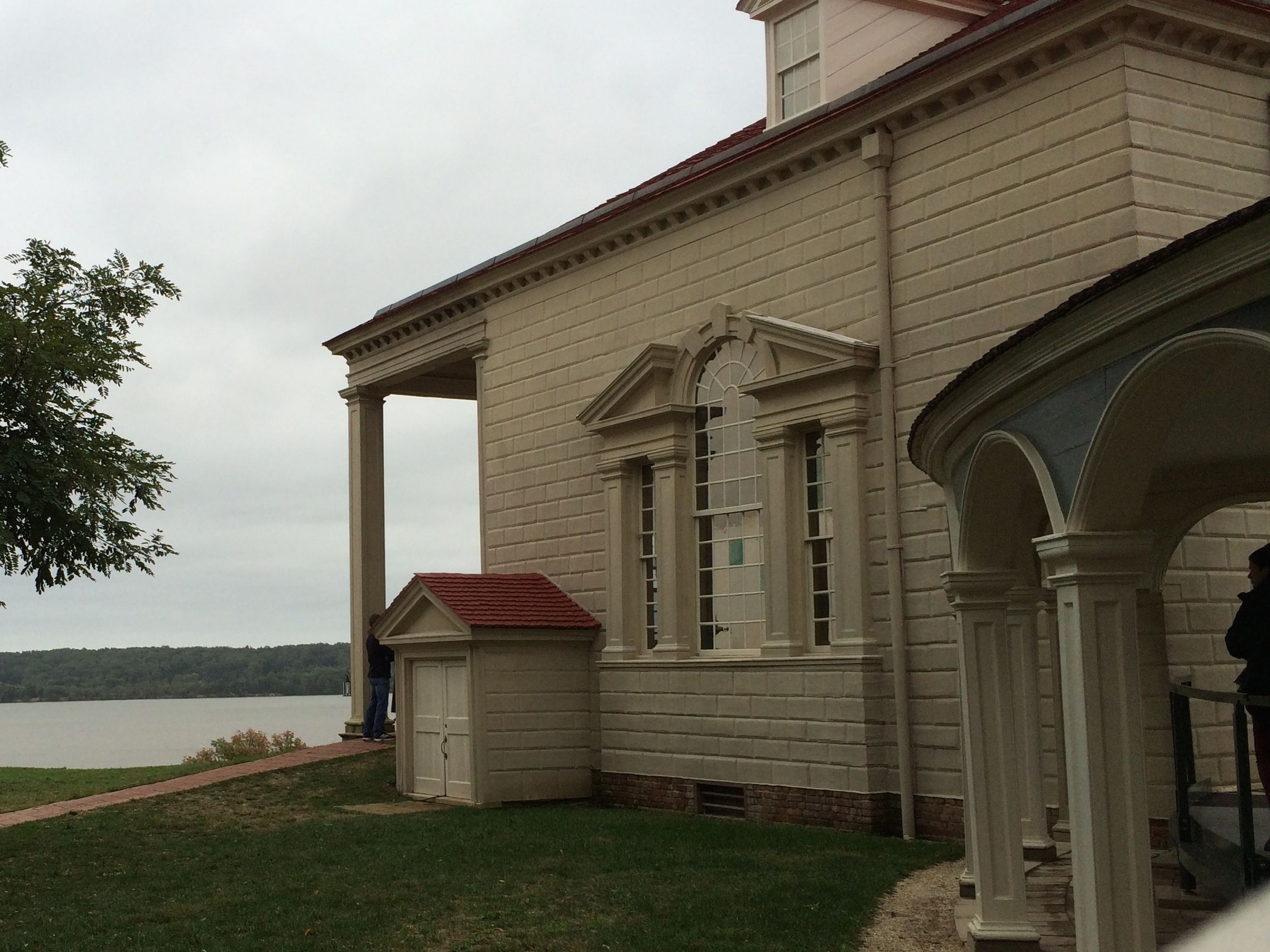
I took this photo when I visited Mount Vernon, back in 2015.
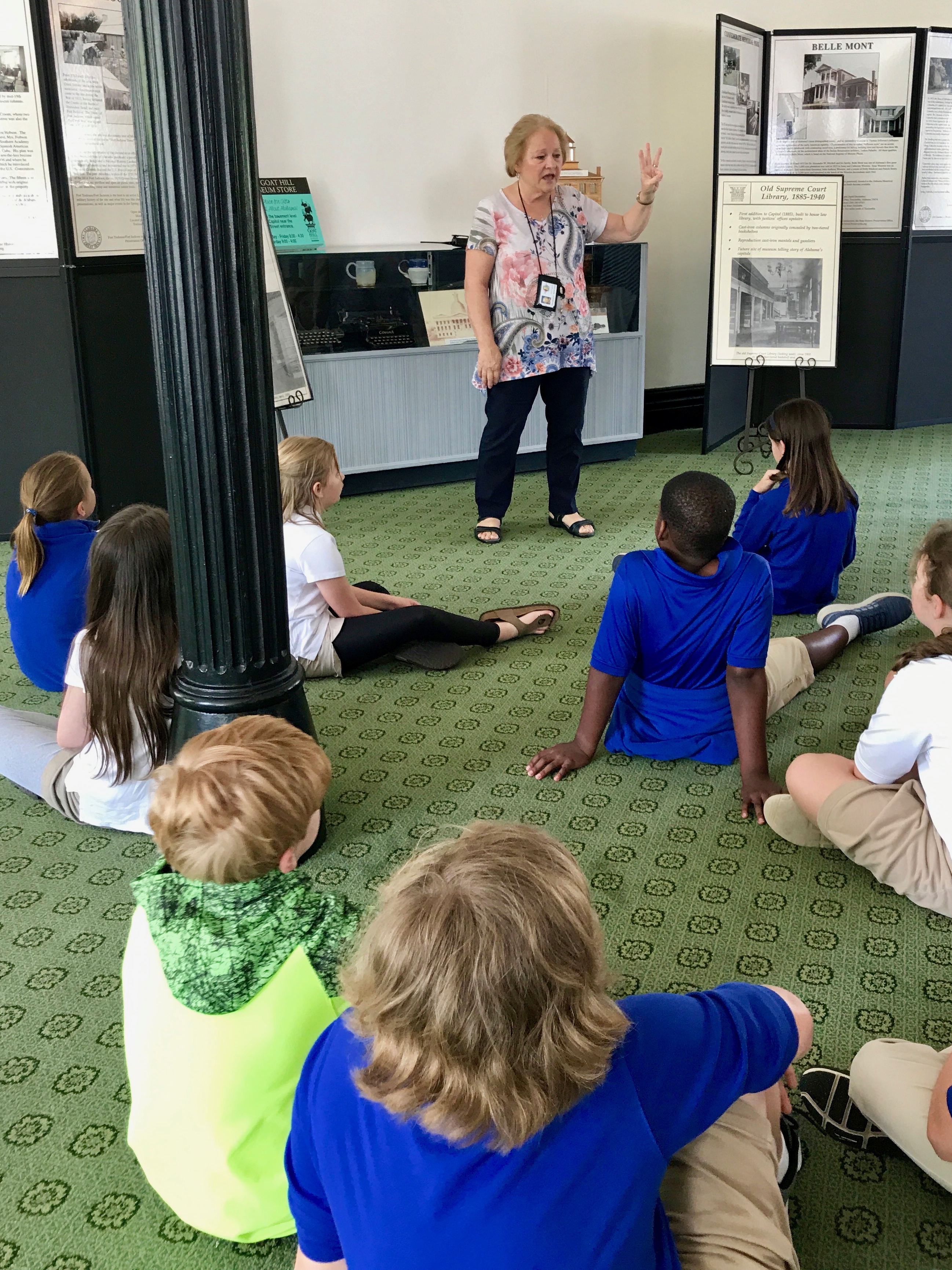
I happened upon a field trip in progress, and kind of hovered nearby. If I’m not in the way, and things are going well, sometimes I stick with groups. If not, I peal off and do my own thing.
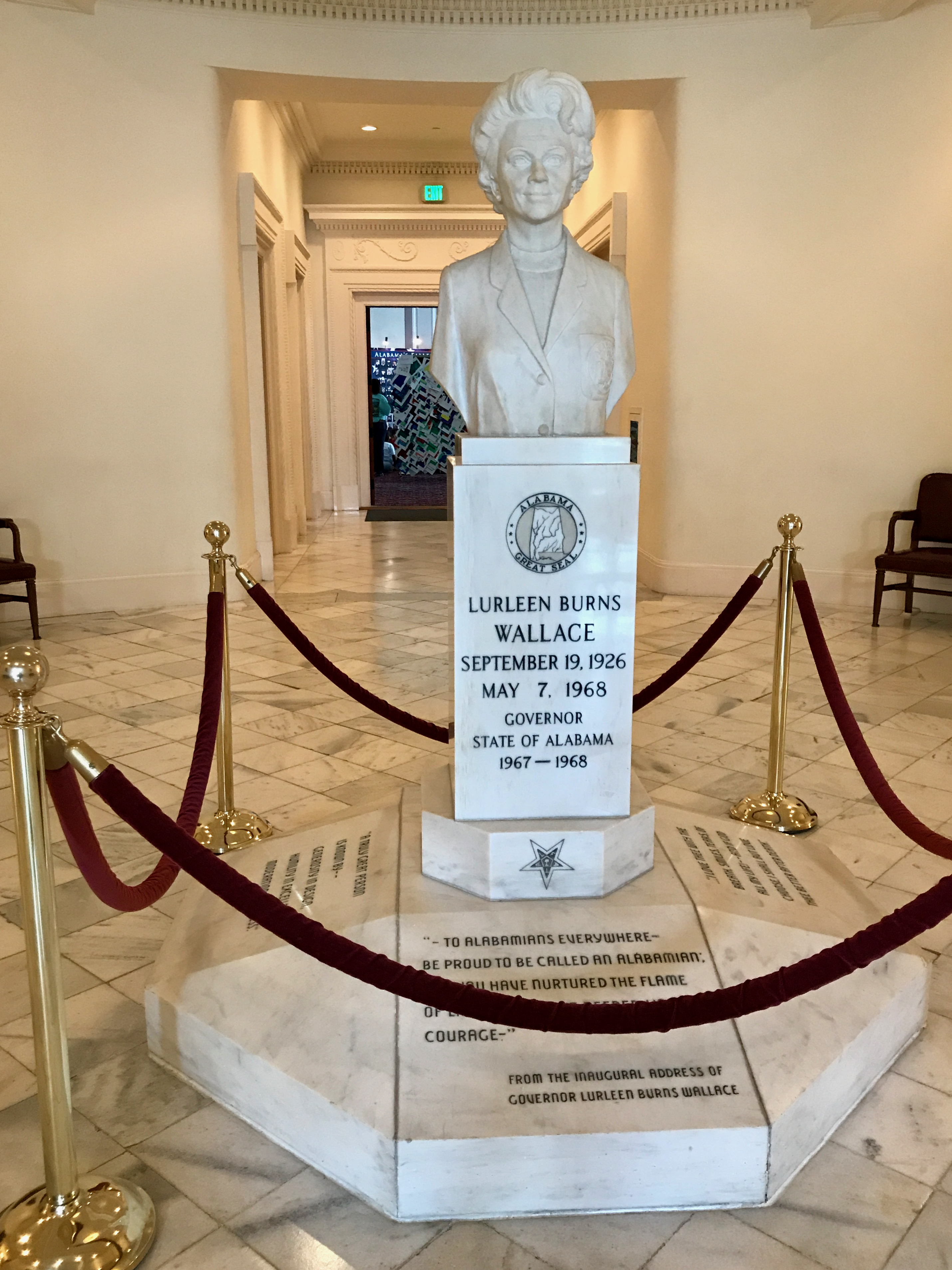
Many state capitols have extensive memorials to all the people who have served as governor. This is the only one I remember seeing inside the capitol. Lurleen Wallace became governor after her husband, George. She was the first female governor of the state. Kay Ivey, who took office inn 2017, is the second female governor of Alabama.
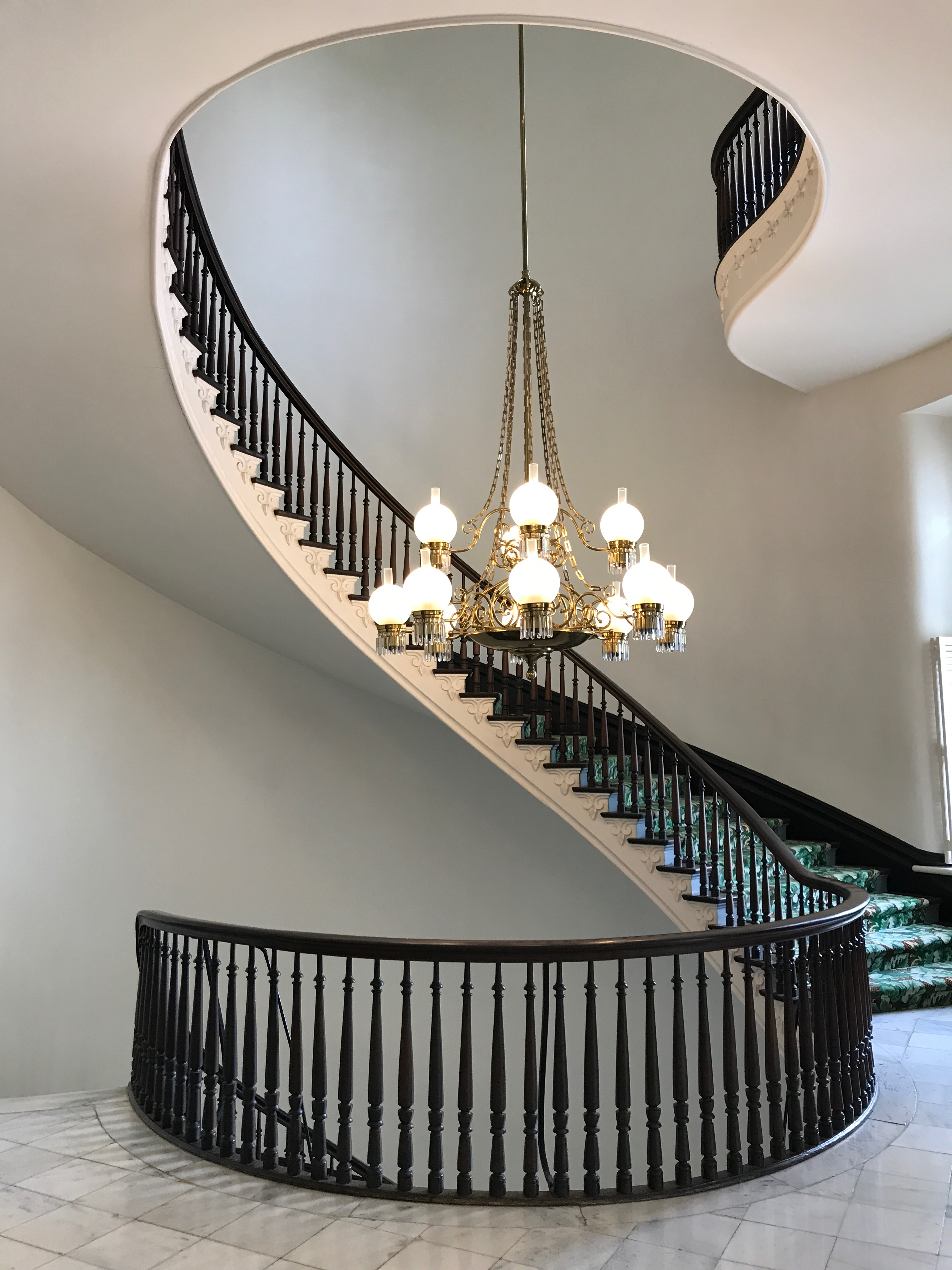
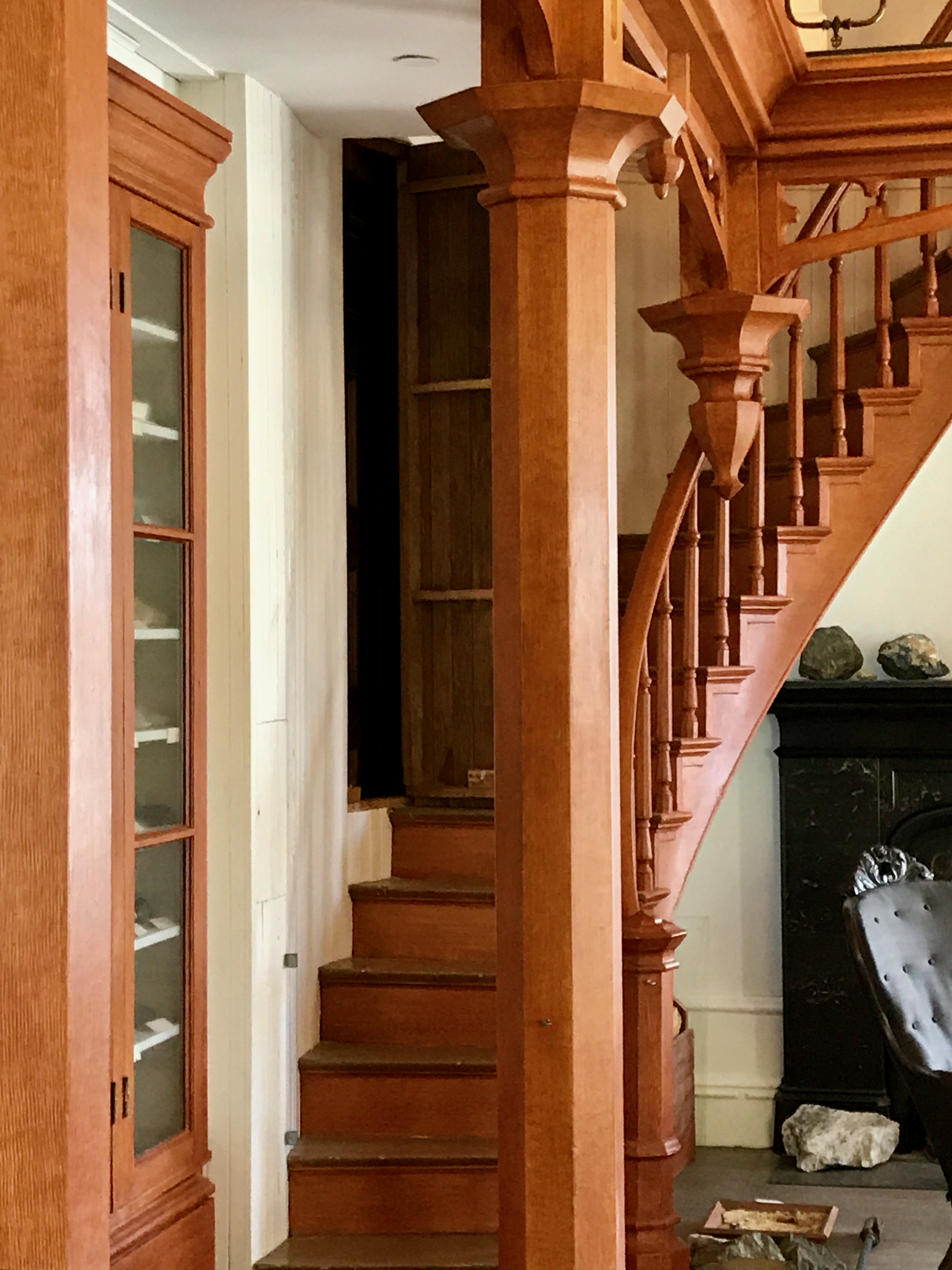
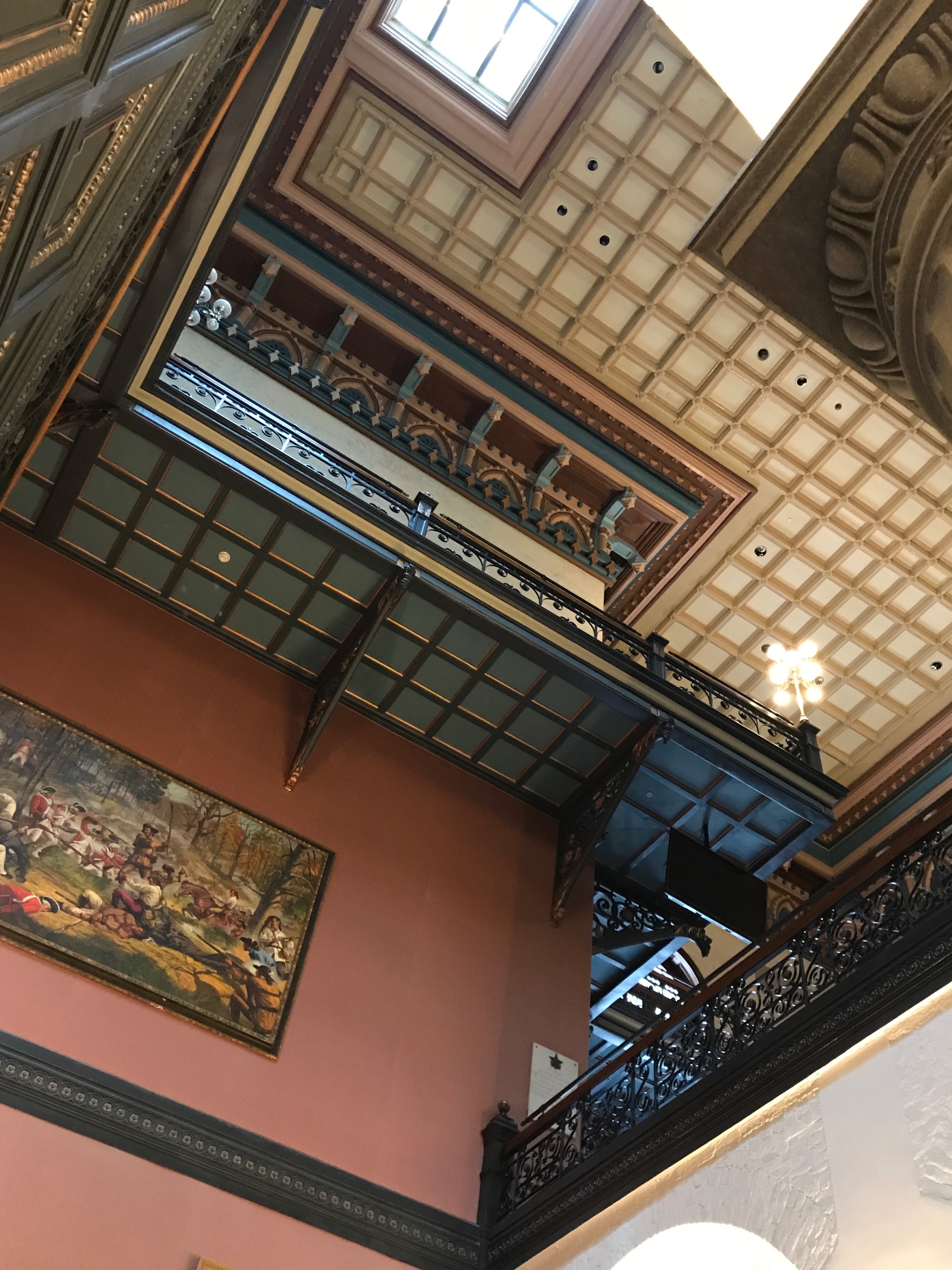
In my opinion, this cantilevered staircase is worth the visit.
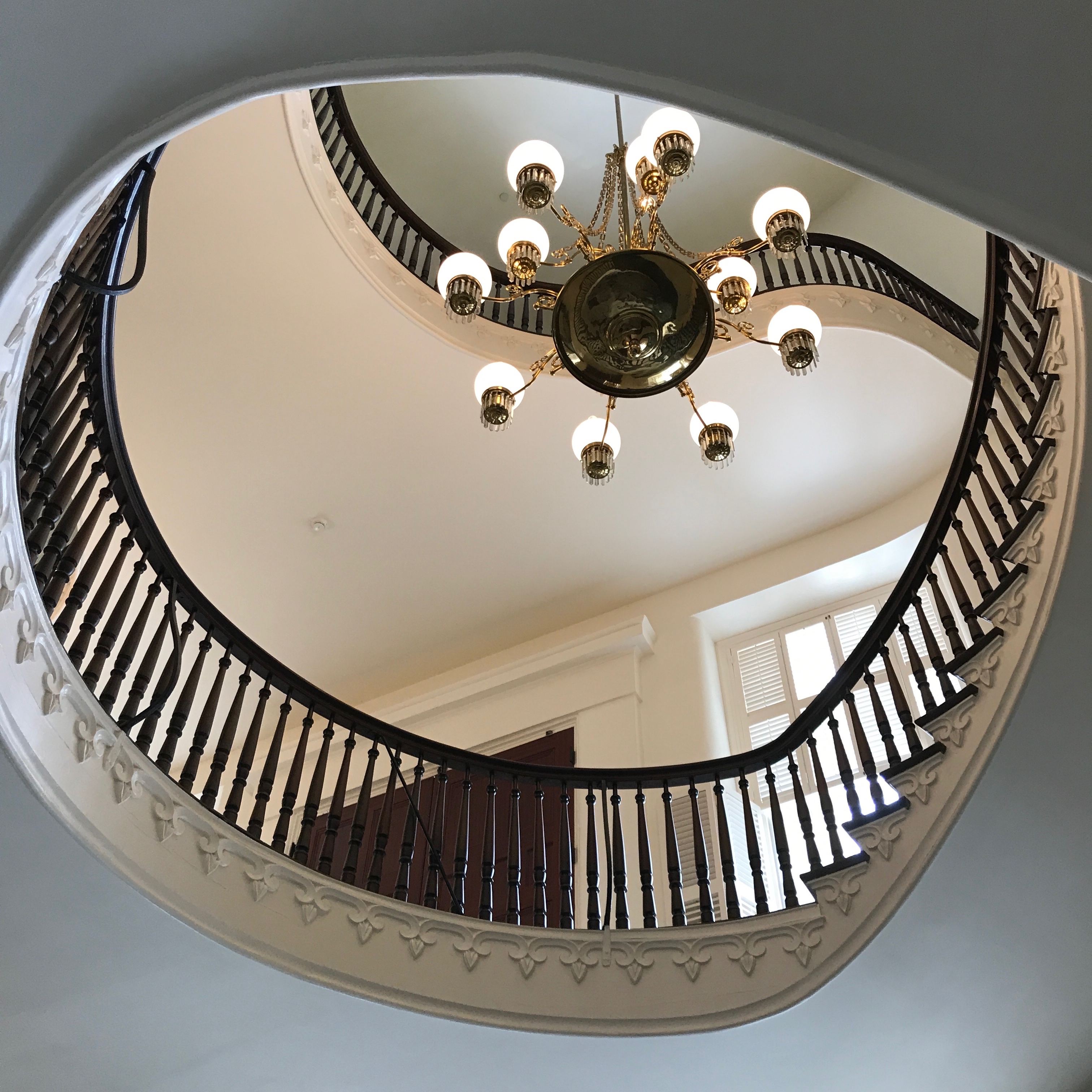
Its swoops and swirls are breathtaking.
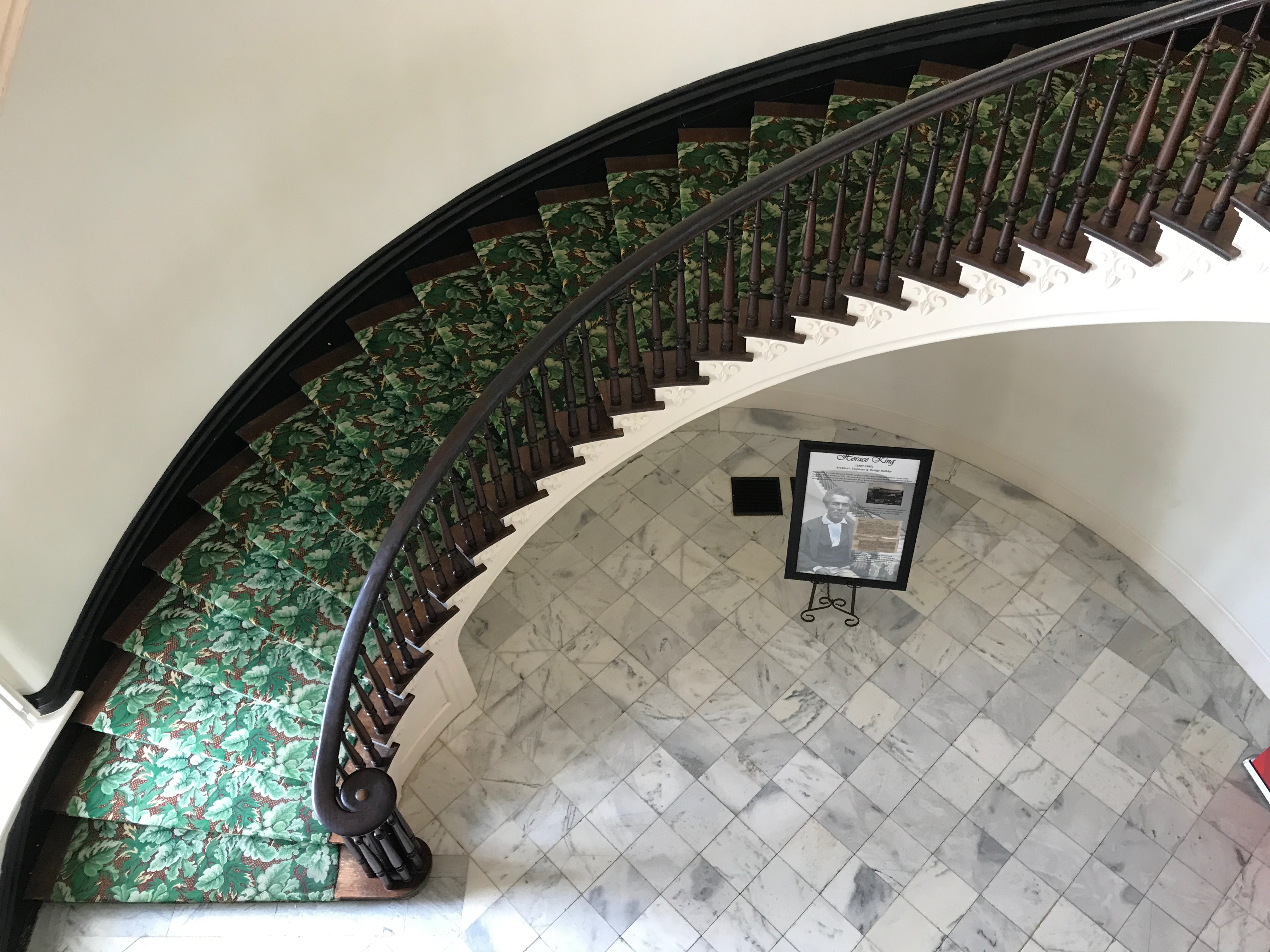
It was the creation of Horace King, architect, engineer and bridge builder.
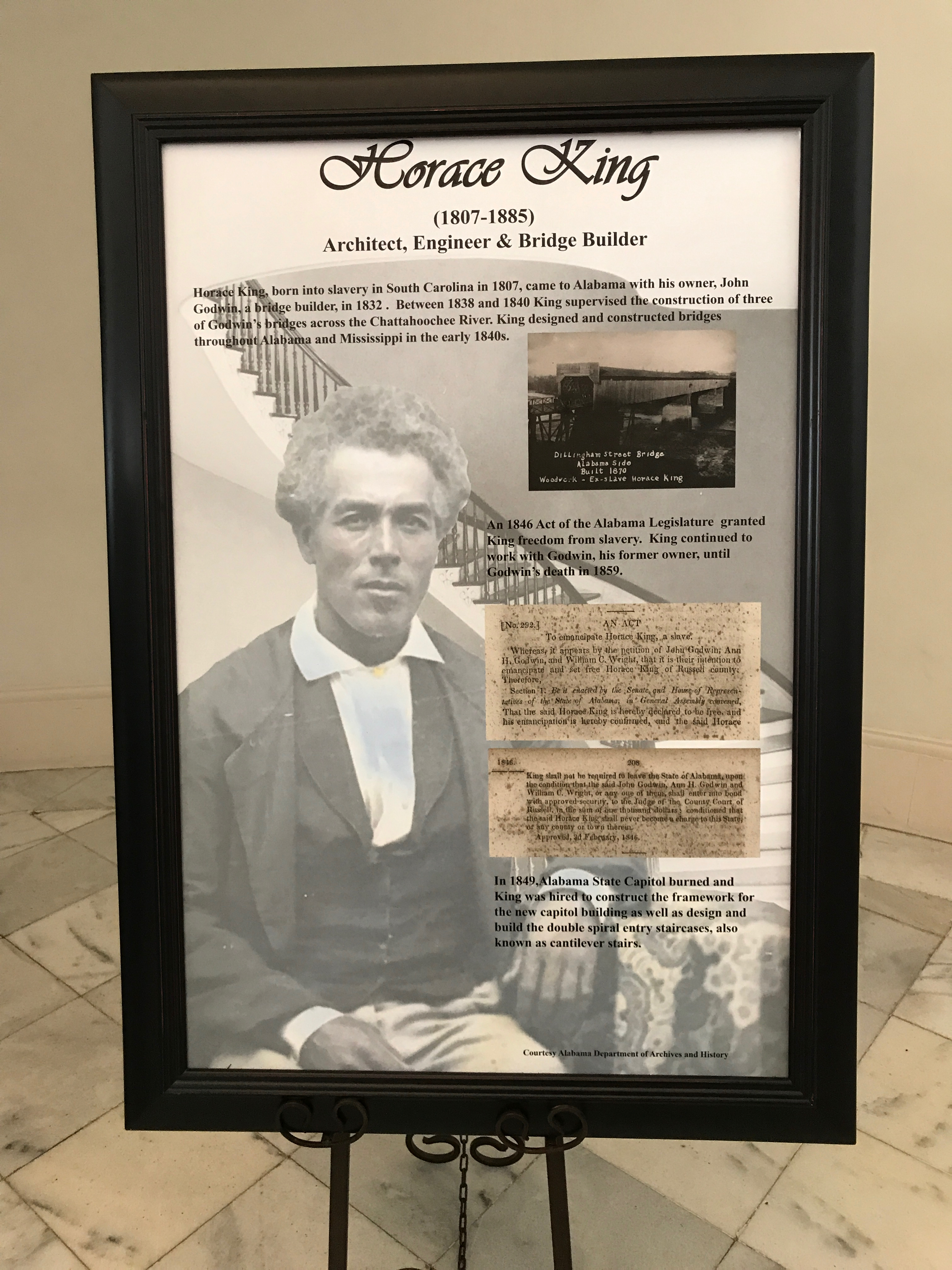
I found his story to be inspirational.

While born into slavery, his natural abilities convinced his owners to educate him and give him increasing responsibility and opportunity. He learned to read and write and became a proficient carpenter and mechanic by the time he was a teenager.

He partnered with his second owner to build many construction projects, including houses, bridges and cotton warehouses, and eventually began designing and directing construction on his own.

Despite his enslavement, he was allowed to keep a large portion of the income from his work. In 1846, he purchased his freedom. Under the Alabama law of the time, a freed slave was allowed to remain in the state for only year after manumission. One of the men he had built bridges for was a state senator, as well as a mill owner and businessman. He arranged for the state legislature to pass a special law giving King his freedom and exempting him from the manumission law.

It helps to have sought after skills and to have friends in high places.

I didn’t expect to find this, but King was also a slaveholder. In the 1850s, he purchased a slave who eventually became known as celebrated abolitionist J. Sella Martin. When King attempted to subdue Martin by flogging him, he was disappointed by the man’s resistance and sold him to a slave trader. (Click on the link for more information about his life.)

People are certainly complex.
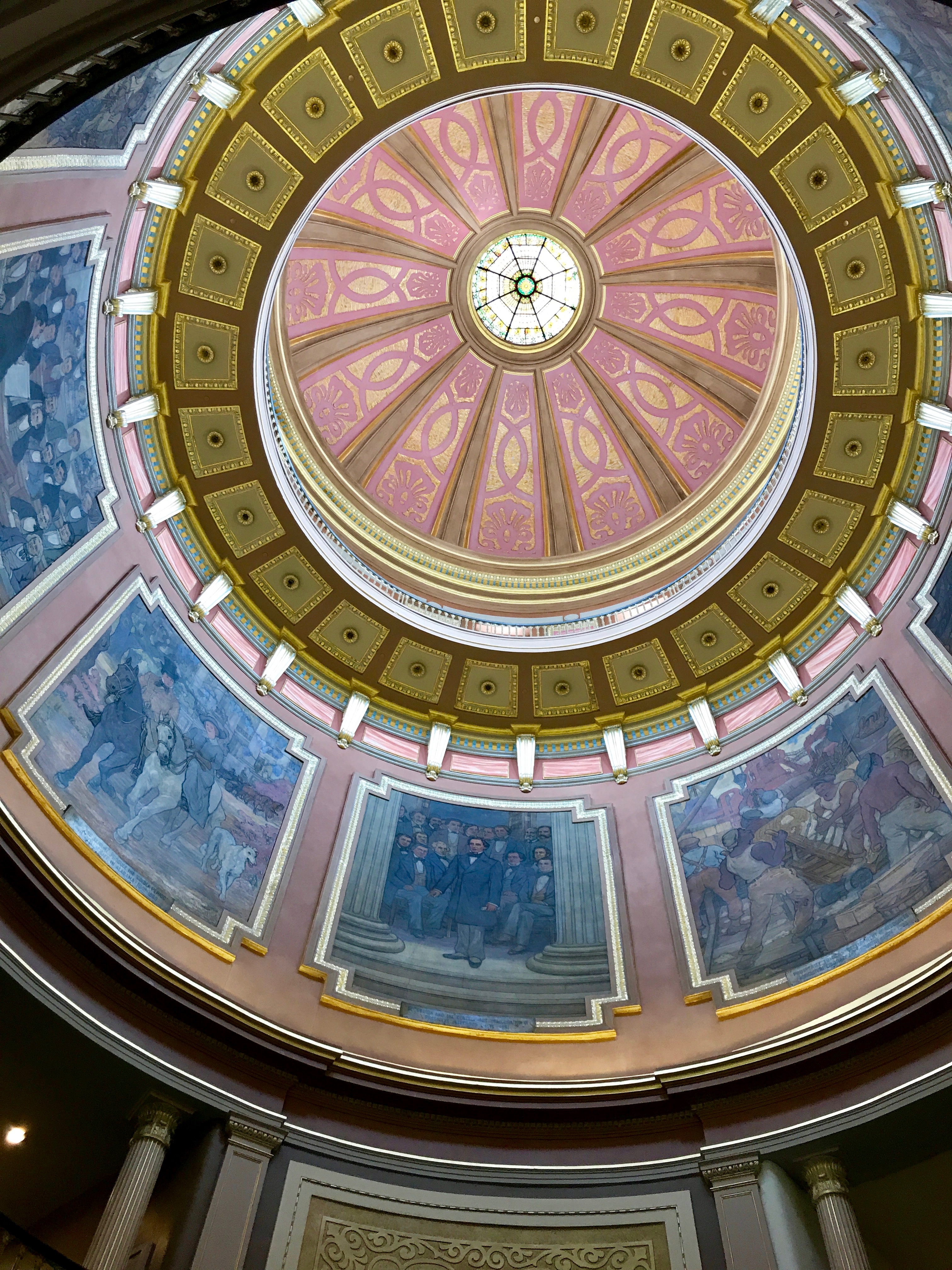
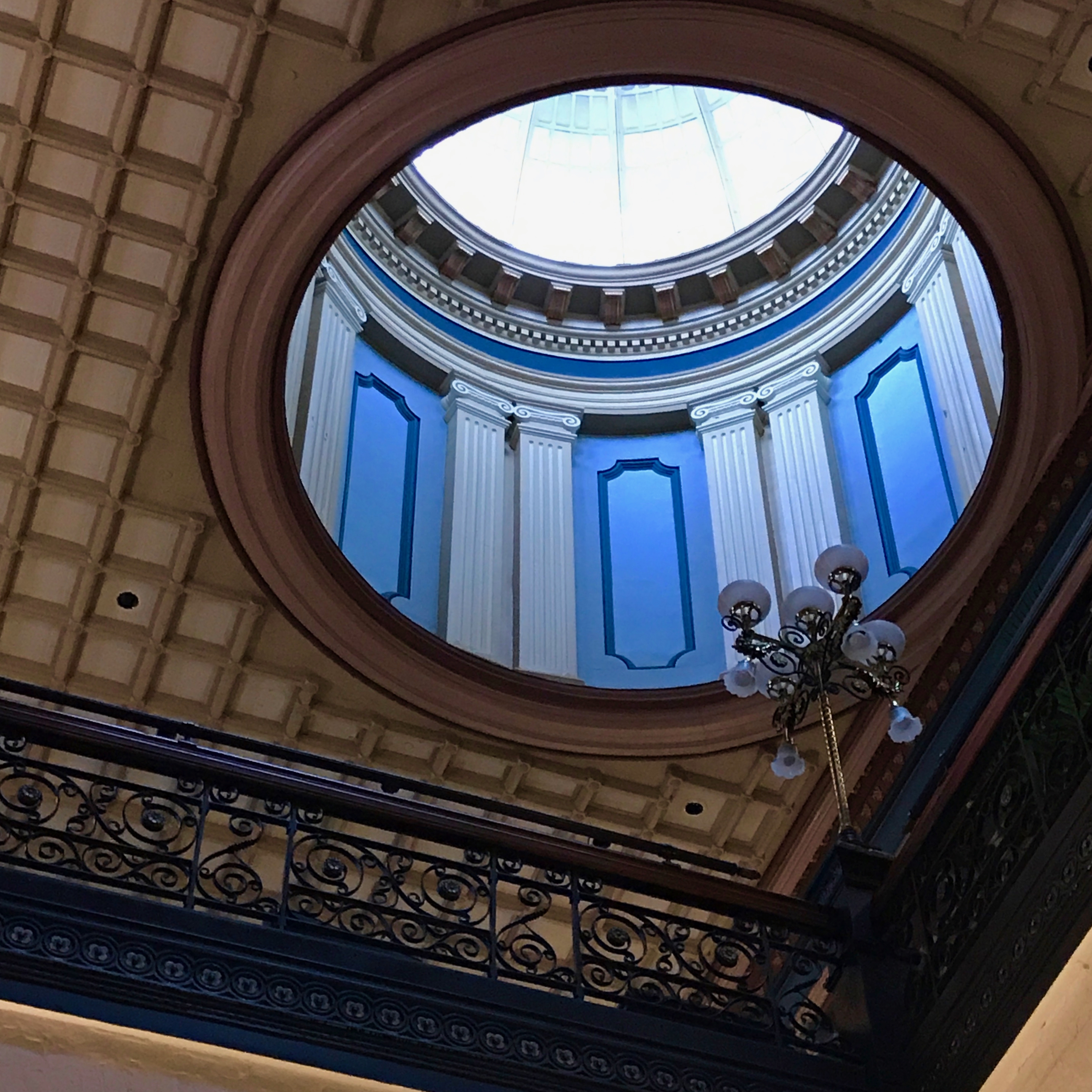
Back to the capitol building.  Here is a look up into the dome.
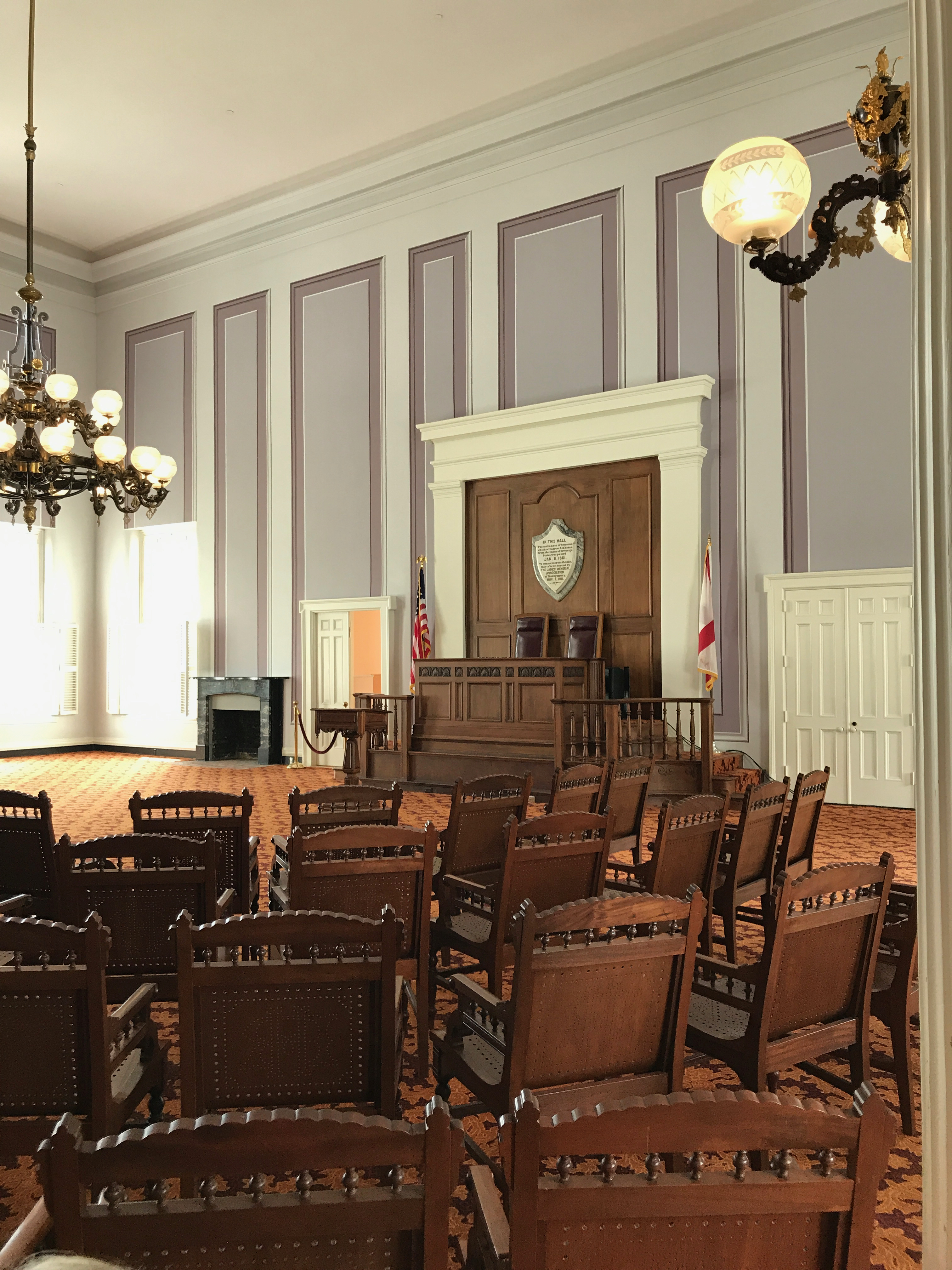
This is the House of Representatives chamber. In case you might think that this is where they currently meet, it isn’t.
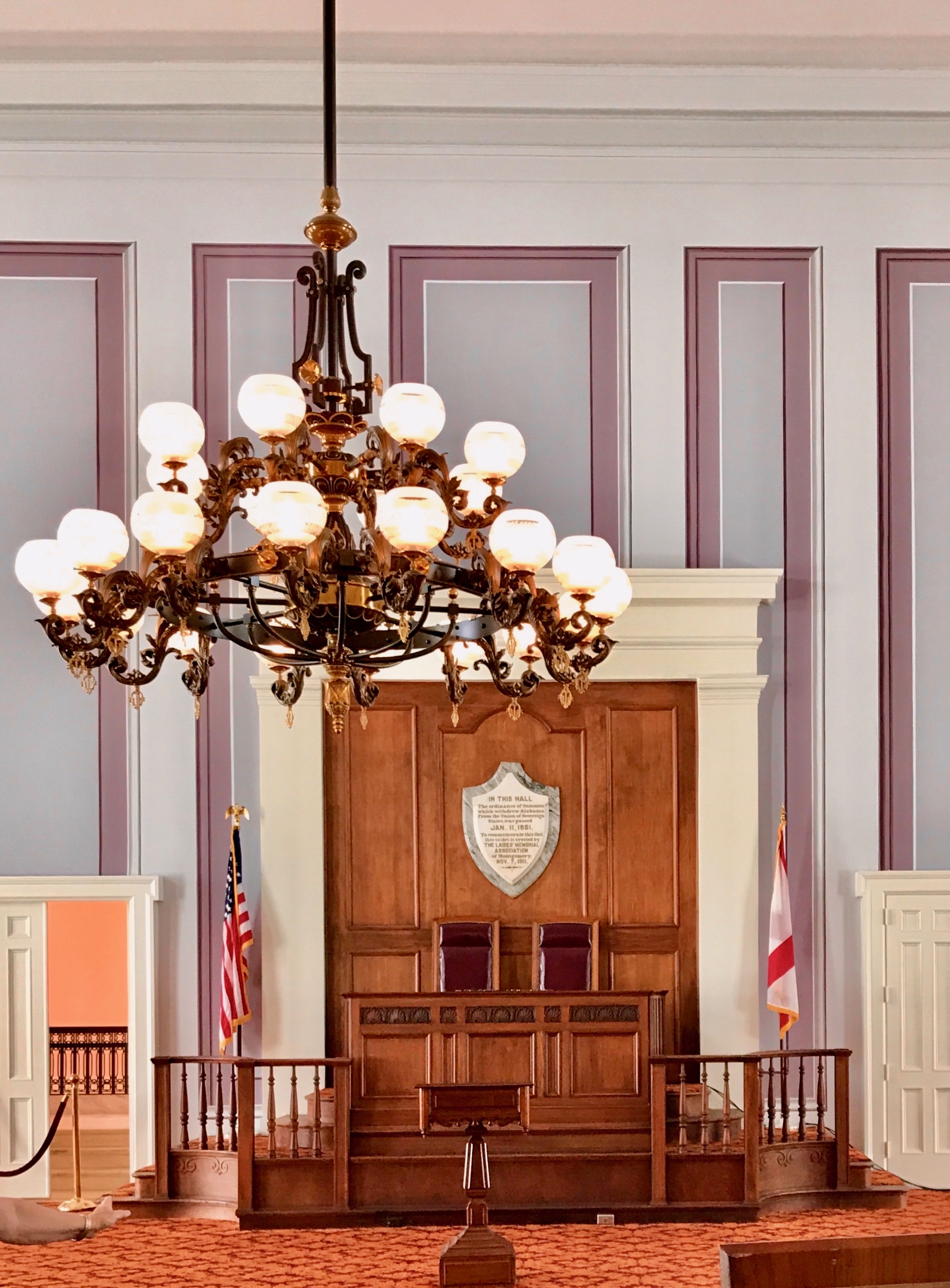
This building served as home to the Alabama Legislature until 1985, when it moved to the new Alabama State House. Officially, this move was temporary, since the Alabama Constitution requires that the Legislature meet in the capitol.

In 1984, a constitutional amendment was passed that allowed the Legislature to move to another building if the capitol were to be renovated. The renovation started in 1985 and was completed in 1992 by the architecture group Holmes and Holmes. When the capitol was reopened, the Governor of Alabama and numerous other state offices moved back into the building, but the legislature remained at the State House.
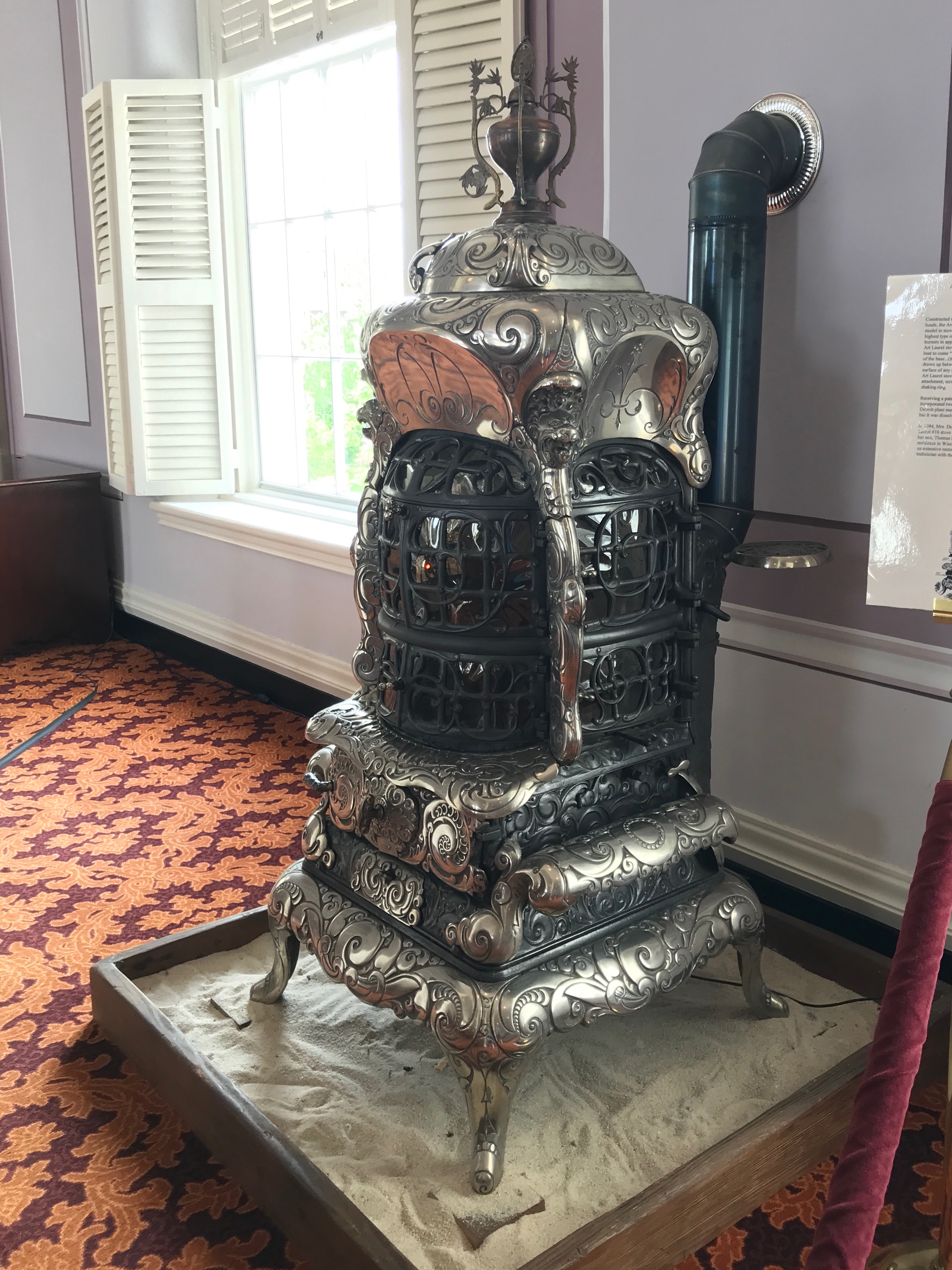
This 1904 stove made by the Art Stove Company, with plants in Detroit and Chicago. Apparently this was a top of the line stove. A 1904 catalog described it as  “…surpassing all other base burners in appearance, in heating capacity and economy of fuel.”

This particular stove came from a private residence in Wisconsin, and was donated to the Alabama Historical Society inn 1994 by Mrs. Dorothy Rapaich Echols of Montgomery in honor of her son, Thomas Rapaich. It was installed in the Old House Chamber after extensive restoration and cleaning by technician William Missildine.
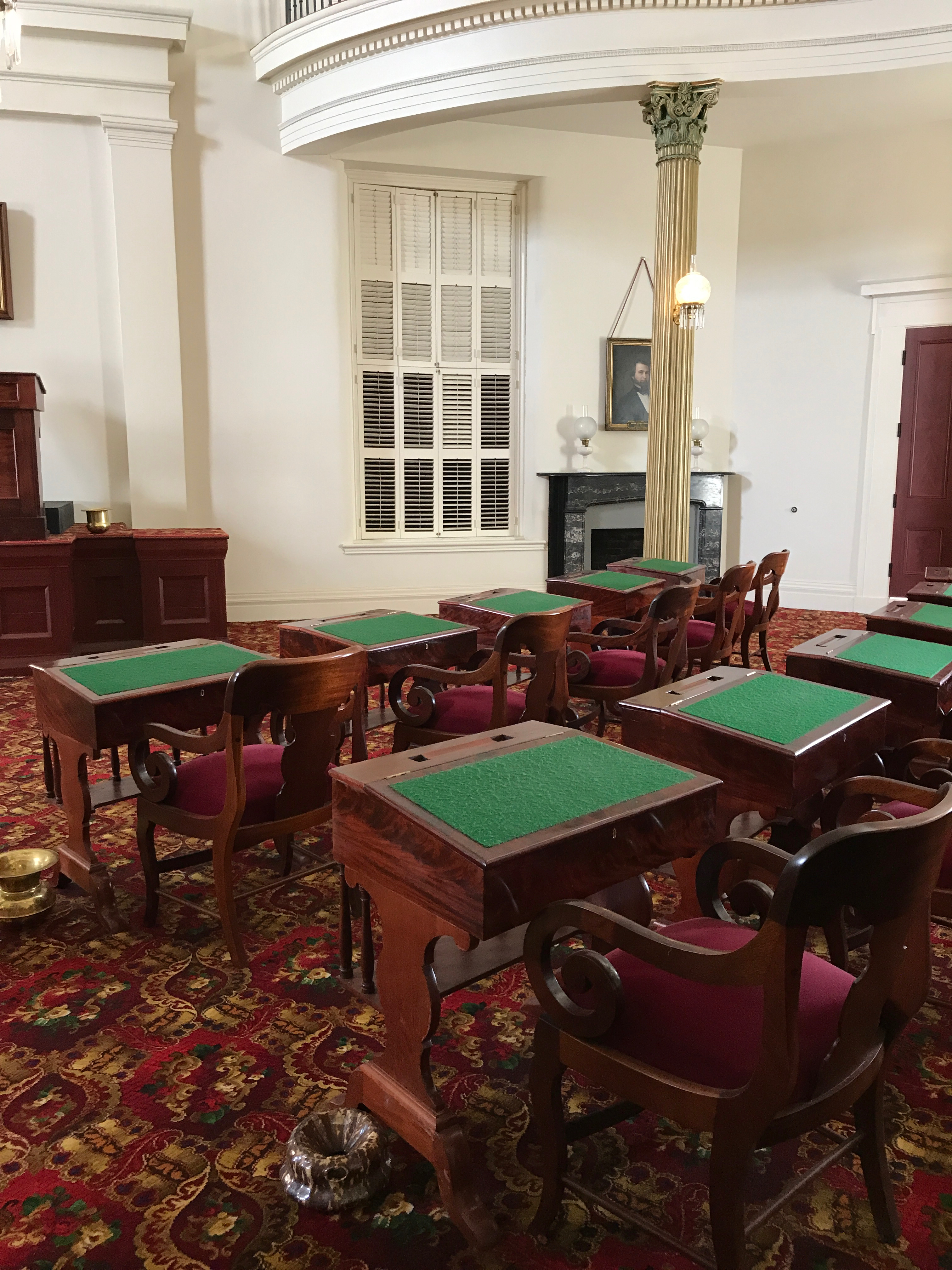
I took this photo in the Old Senate Chamber. I’d like to know why Senators always seem to get desks while Representatives have to make do with chairs. These desks are recreations of the originals.
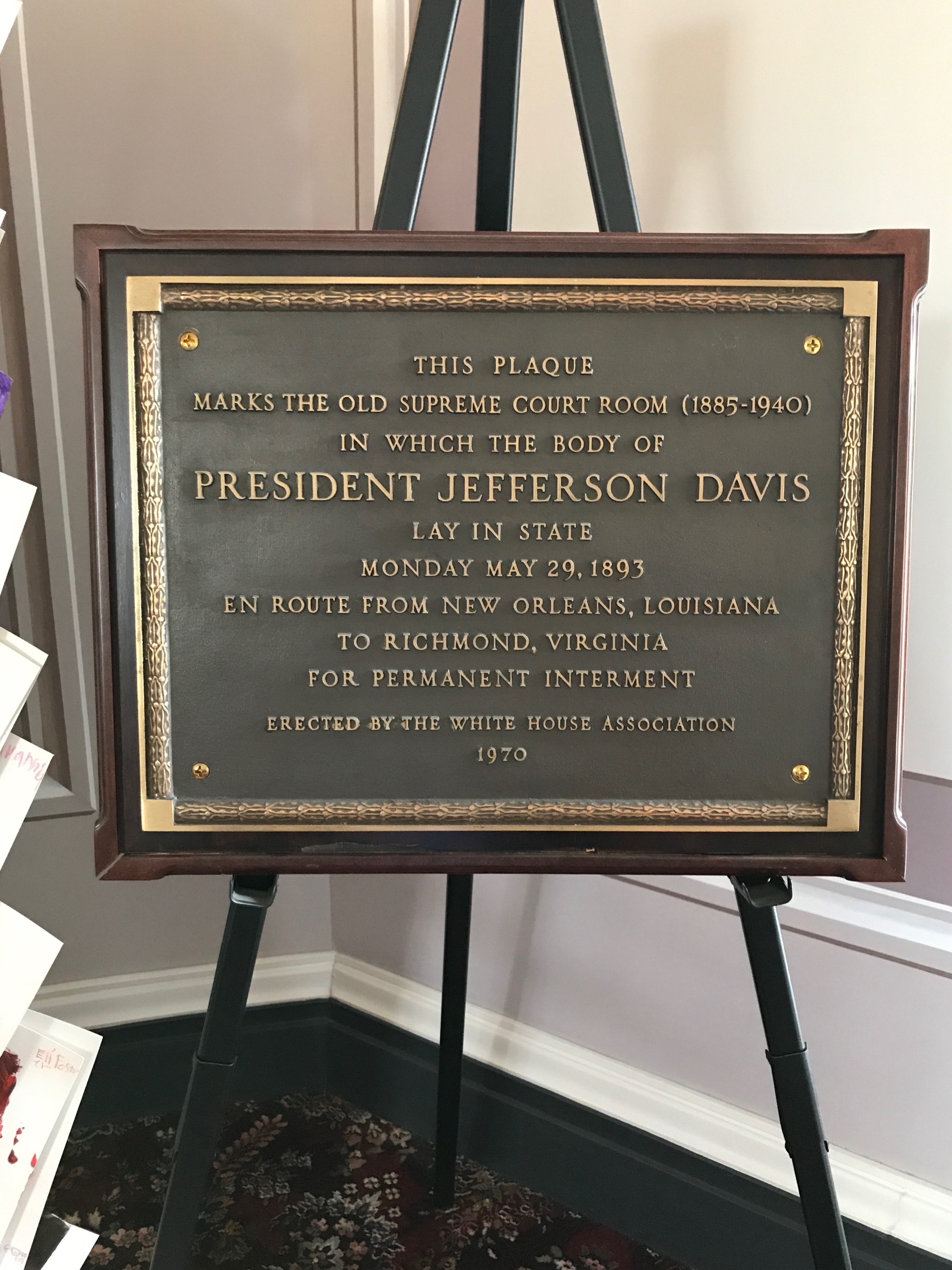
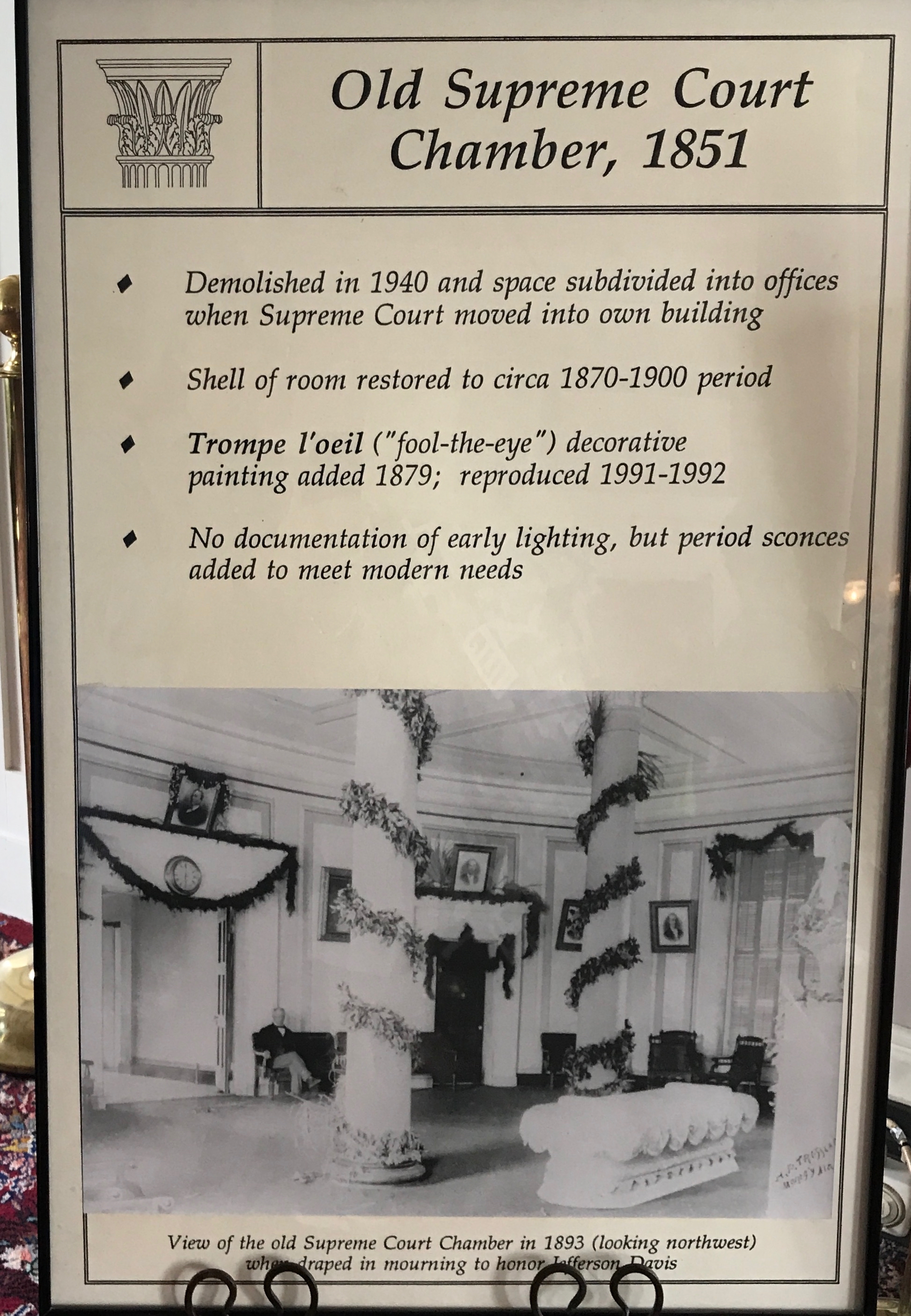
On to the recreation of the Old Supreme Court, where Jefferson Davis’ body lay in state in the first capitol of the Confederacy.
Then it was time to find an exit.

I went down a hall and ended up outside.
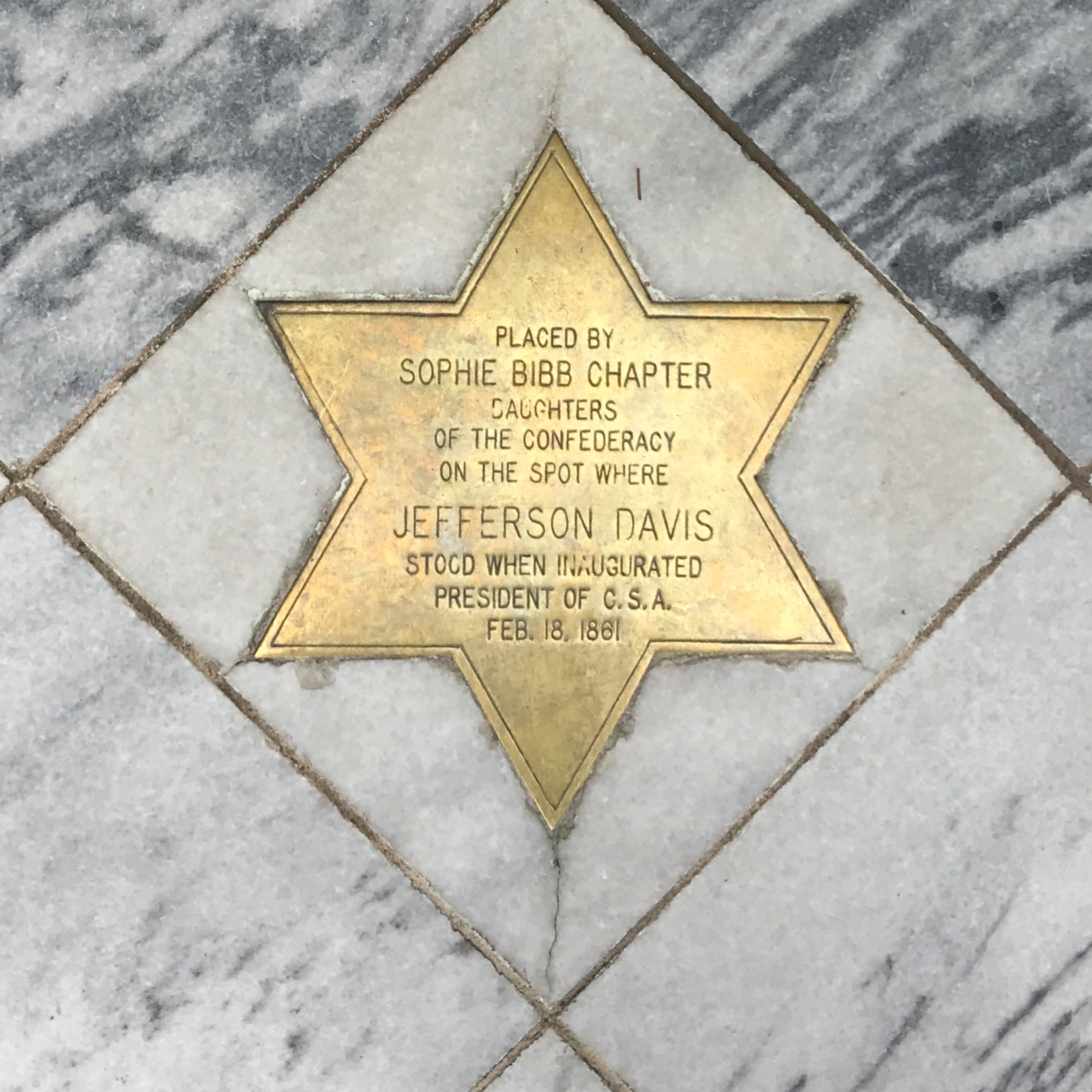
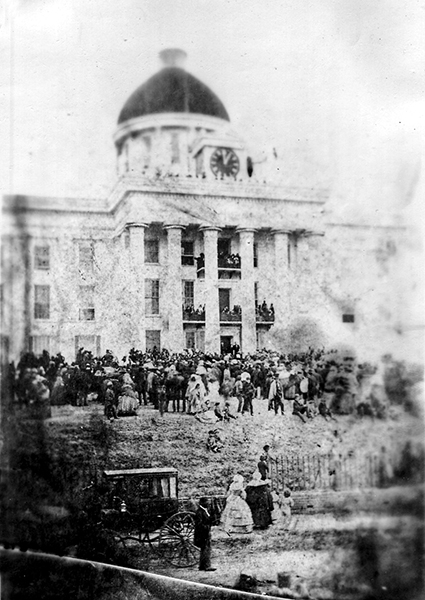
Apparently, he’s down there somewhere in the crowd.
I set off to see what I could see around the building.
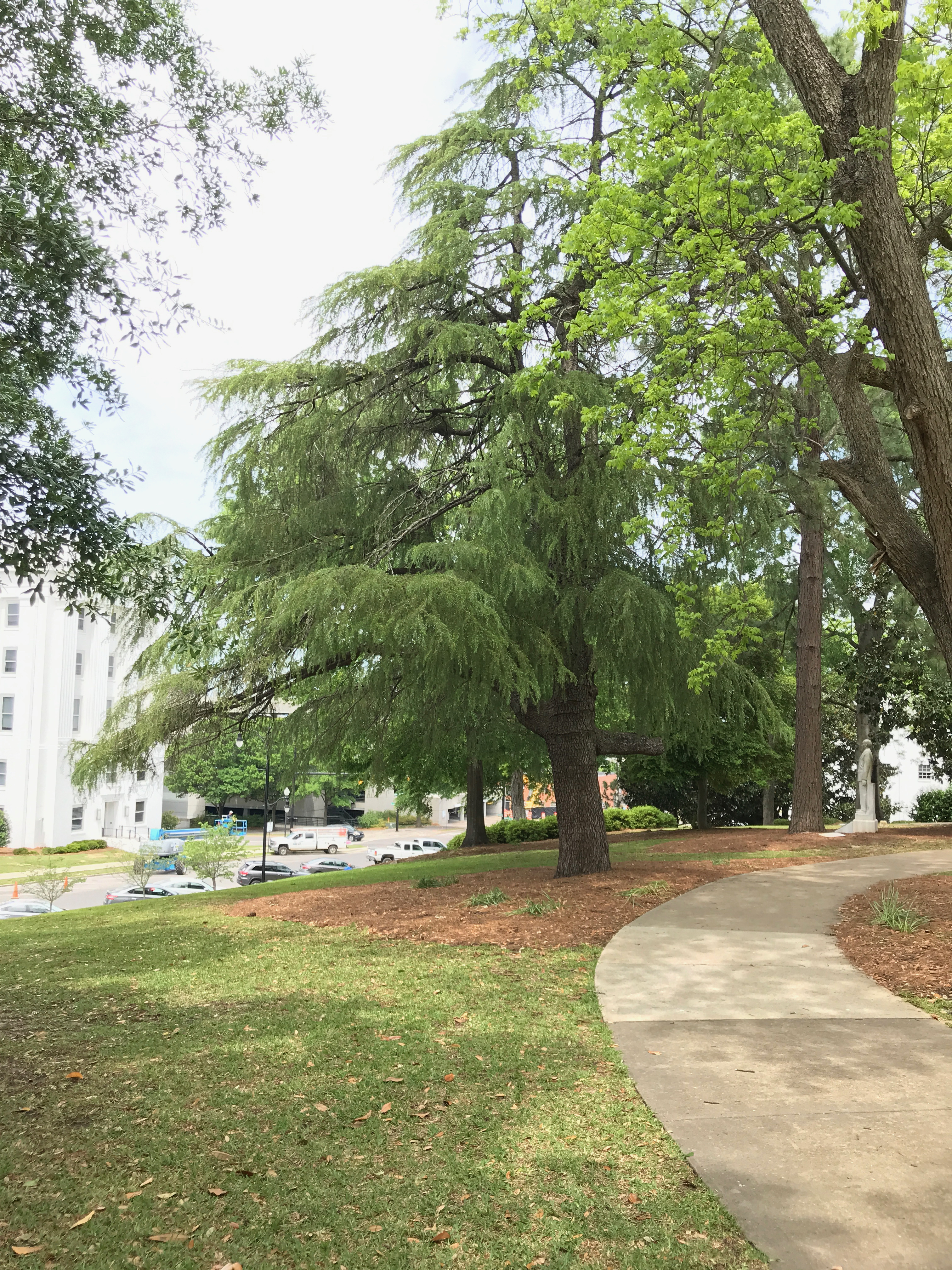
Nicely maintained walks.
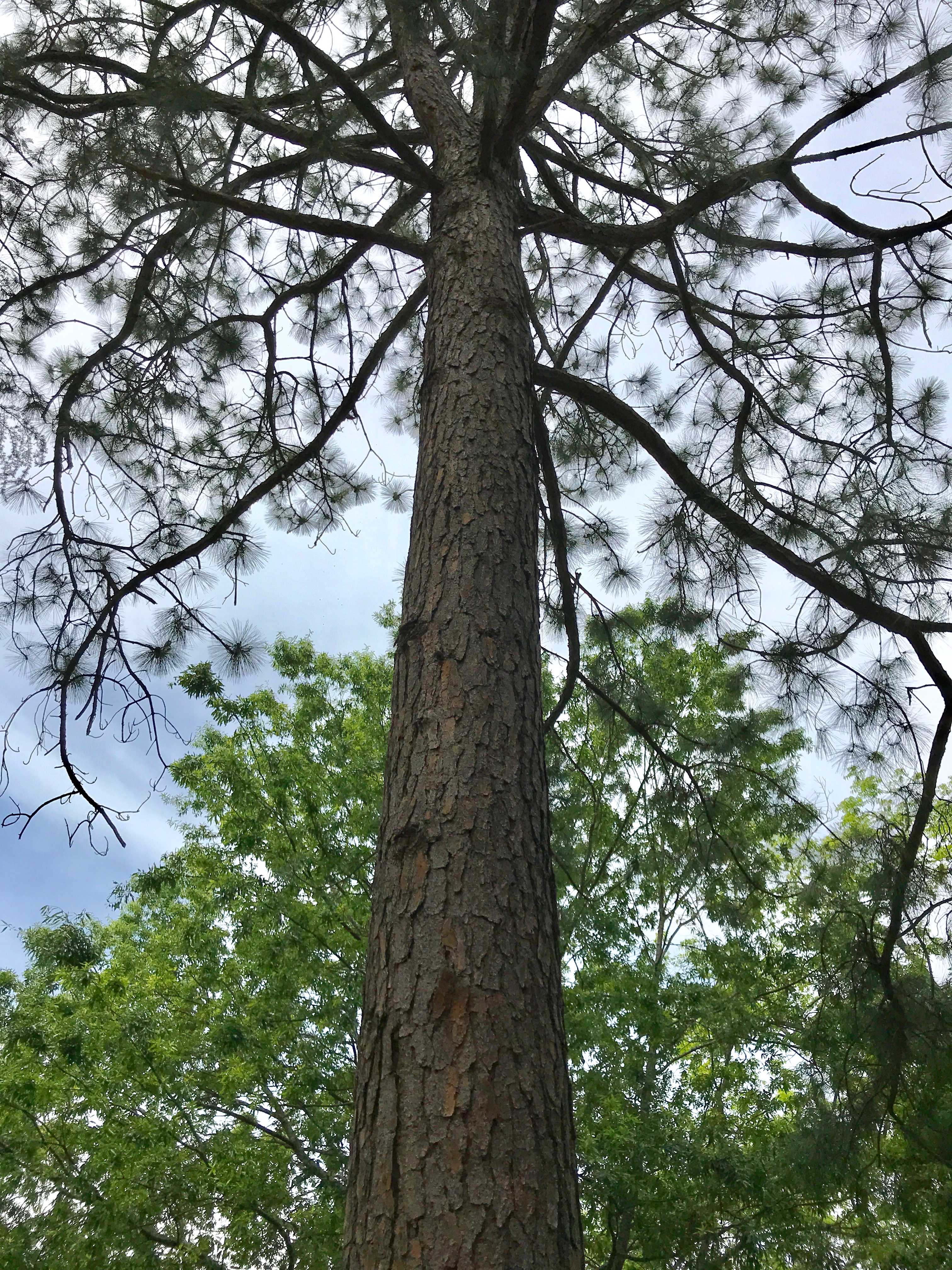
I came across a “Moon Tree”
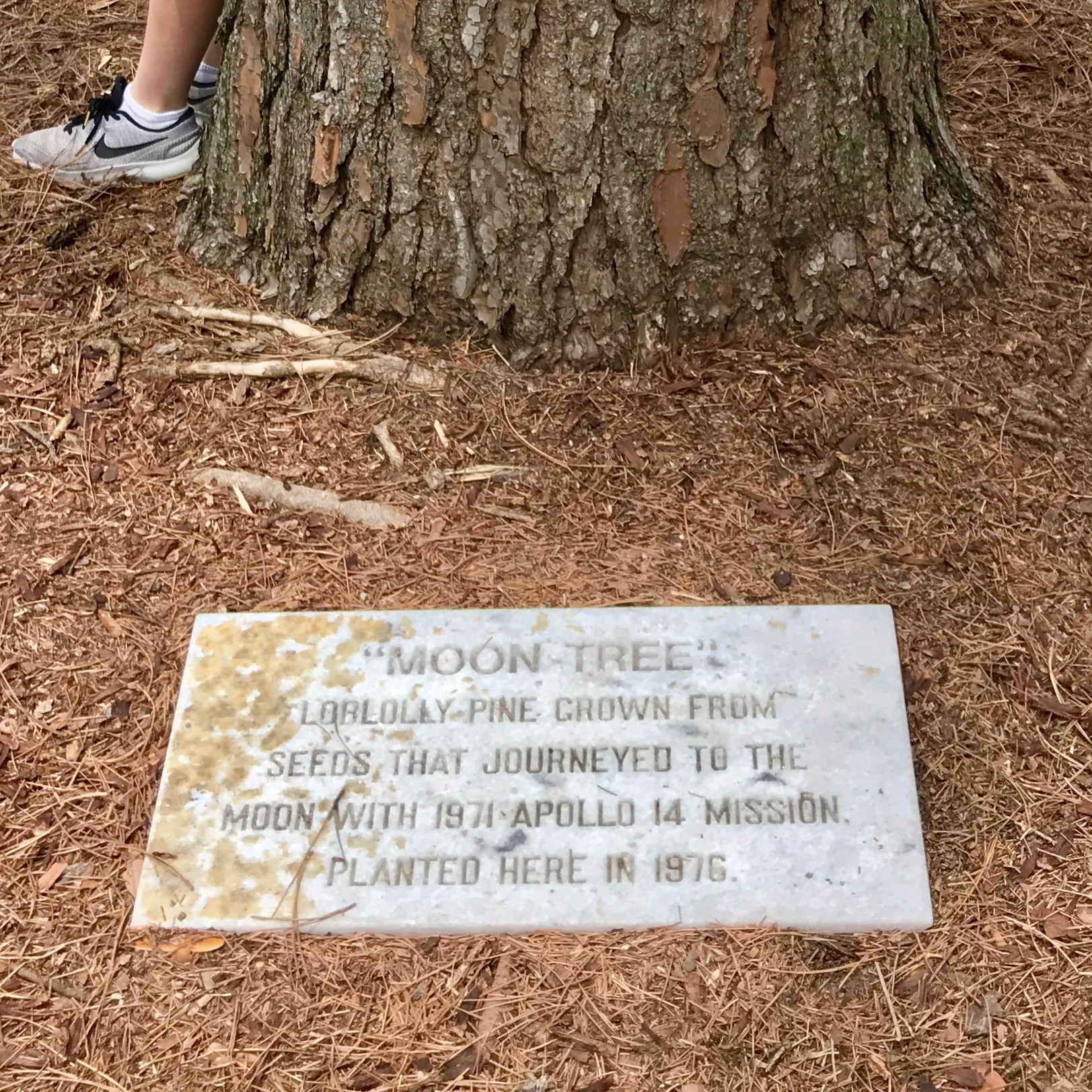
I wonder how large the tree was when they planted it in 1976? It’s grown well since then. It was probably about 45 years old when I took this photo.
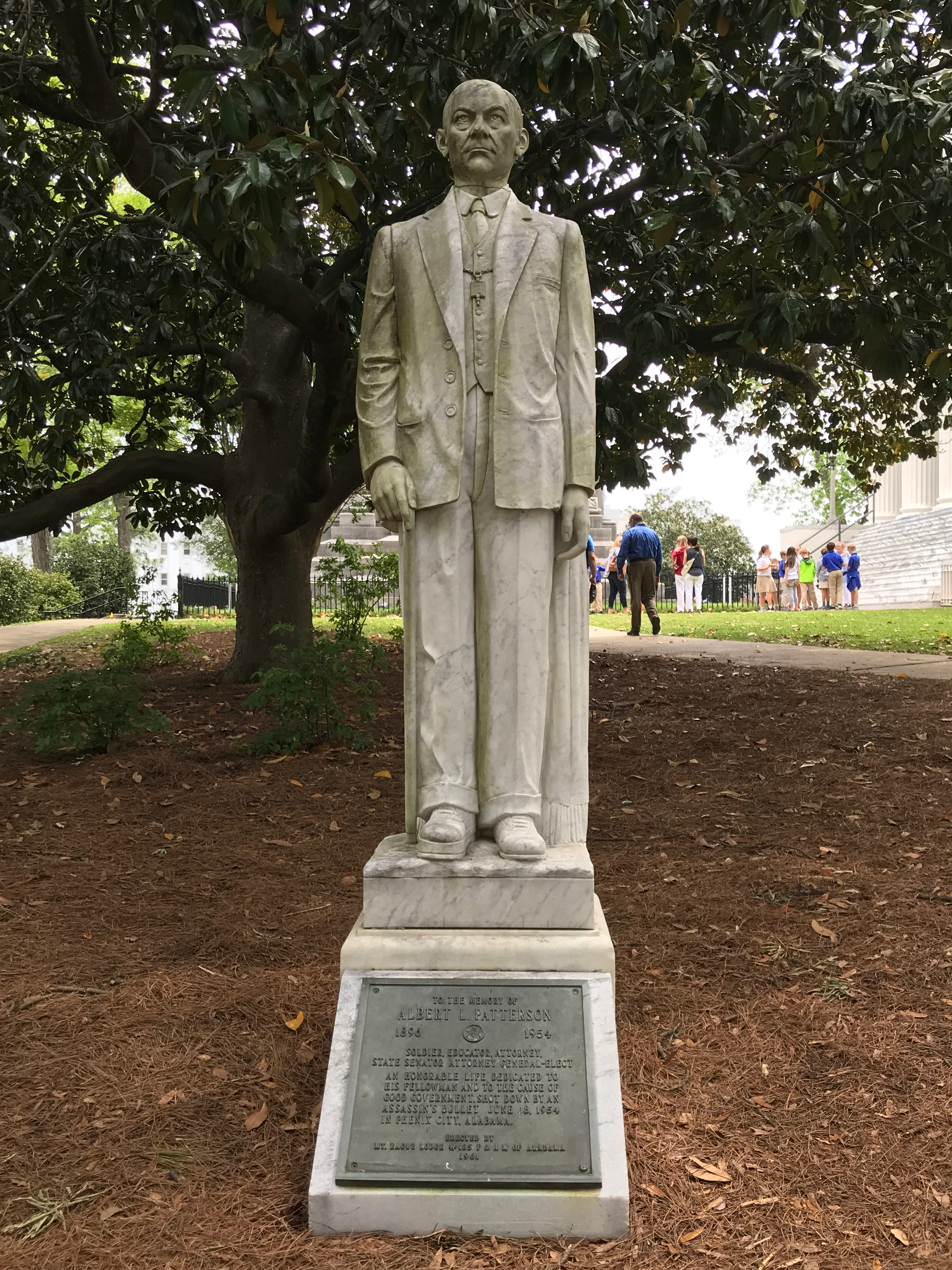
I came across this rather stiff looking statue of Albert L. Patterson, who was Attorney General – elect when he was assassinated in Phenix City in 1954. I remembered reading something about a Patterson being governor, but the plaque didn’t mention that, so I had to look up some information about him.
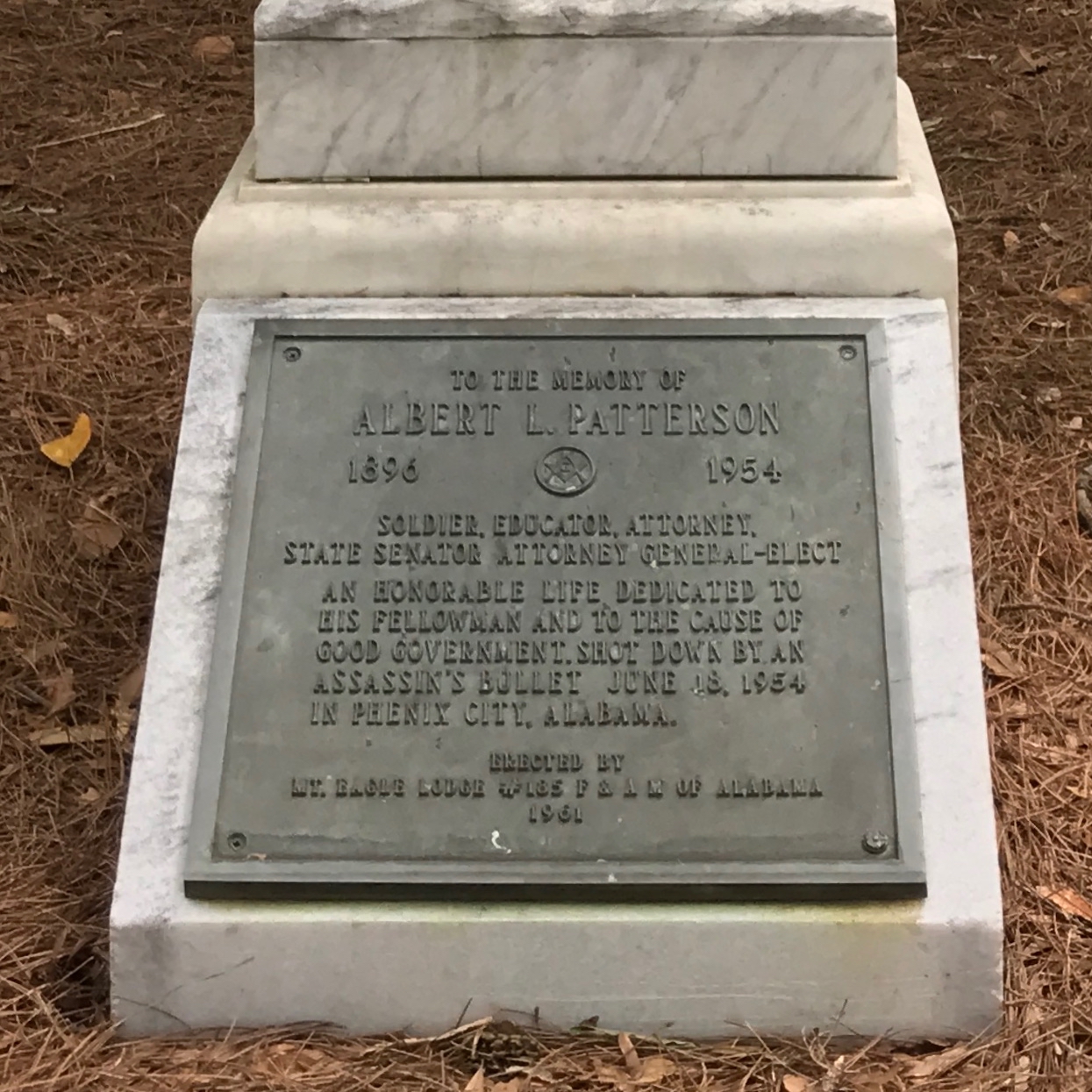
It turns out that it was his son who was governor, and when Albert ran for Attorney General, he ran on a platform of “reforming the rife corruption and vice in Phenix City.” He was well aware that his life was inn danger, as he commented to a church group one night earlier, “I have only a 100-to-1 chance of ever being sworn in as attorney general.”

Phenix City must have been quite the place, as the special grand jury handed down 734 indictments against local law enforcement officials and local business owners connected to organized crime. Chief Deputy Sheriff Albert Fuller was convicted and sentenced to life in prison.
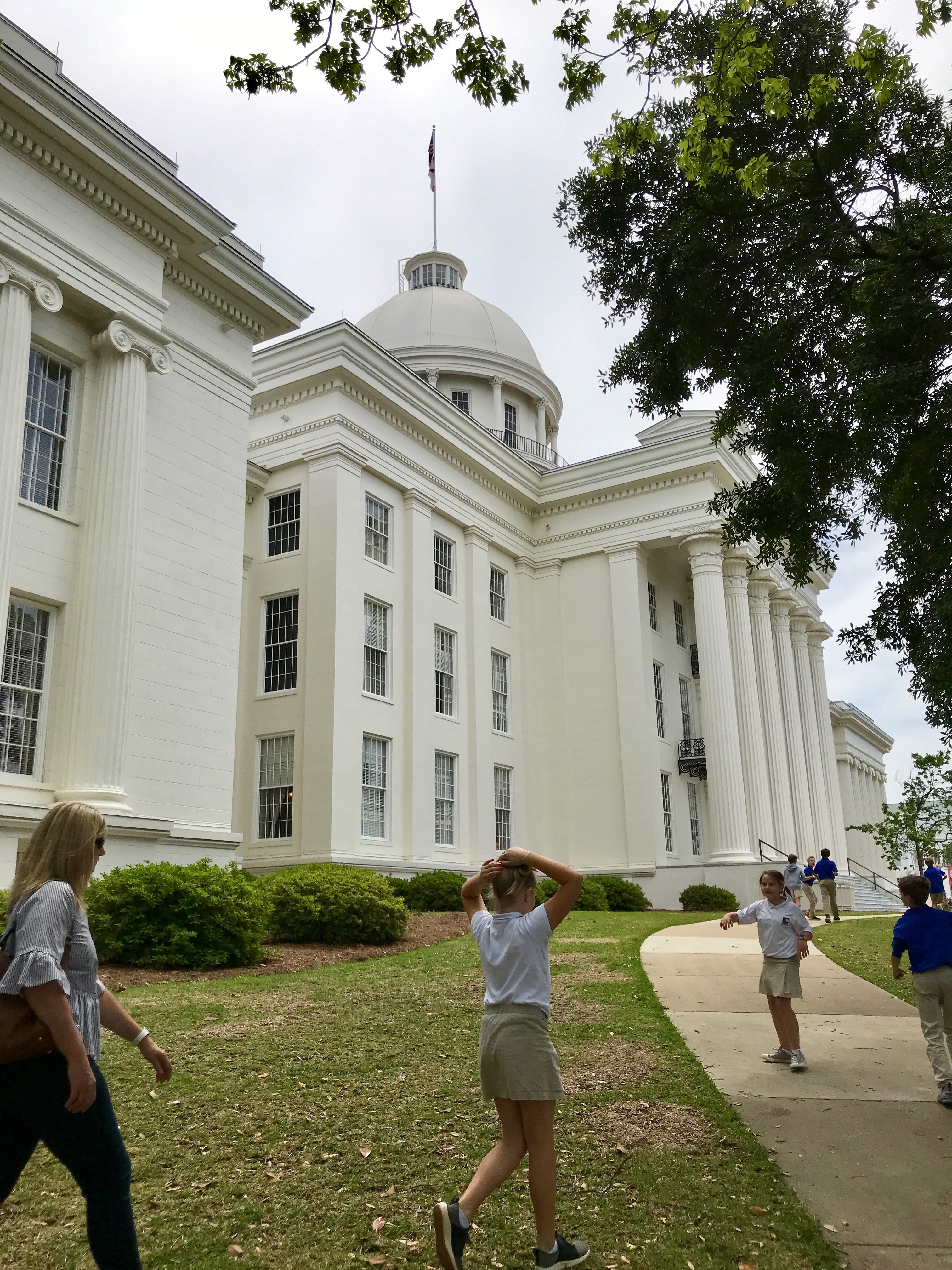
I continued on my walk.
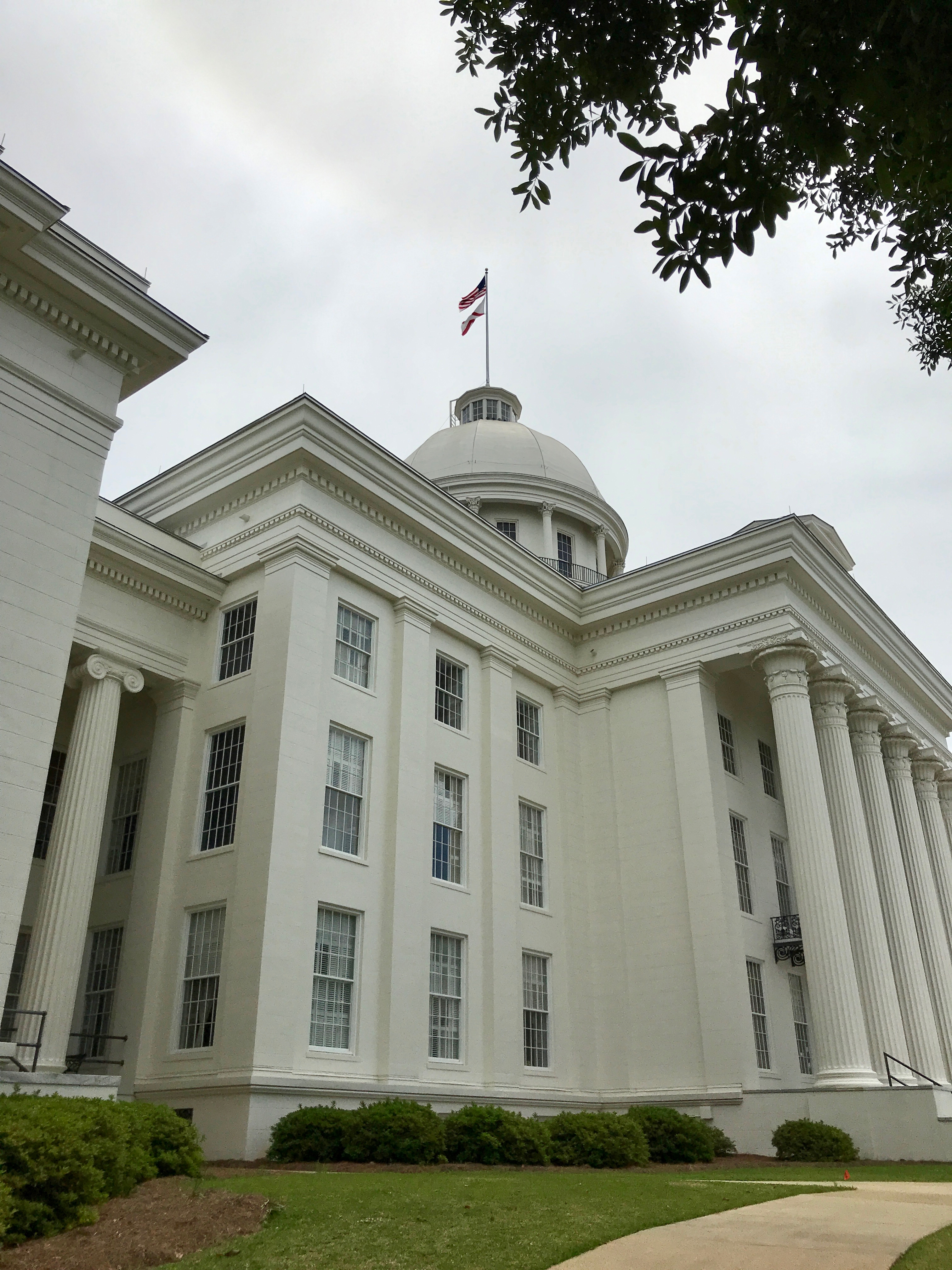
Around the building I went.
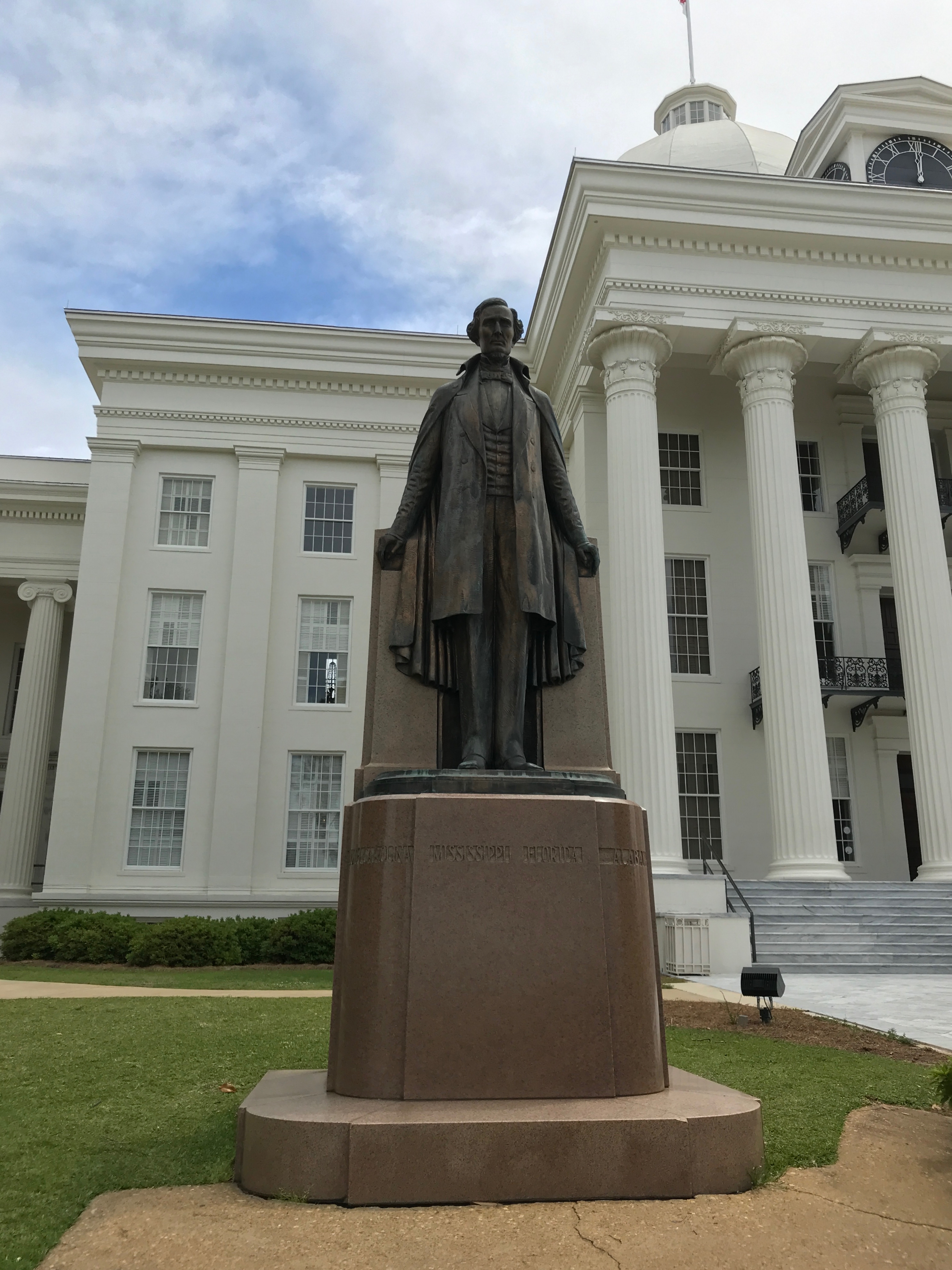
Jefferson Davis.
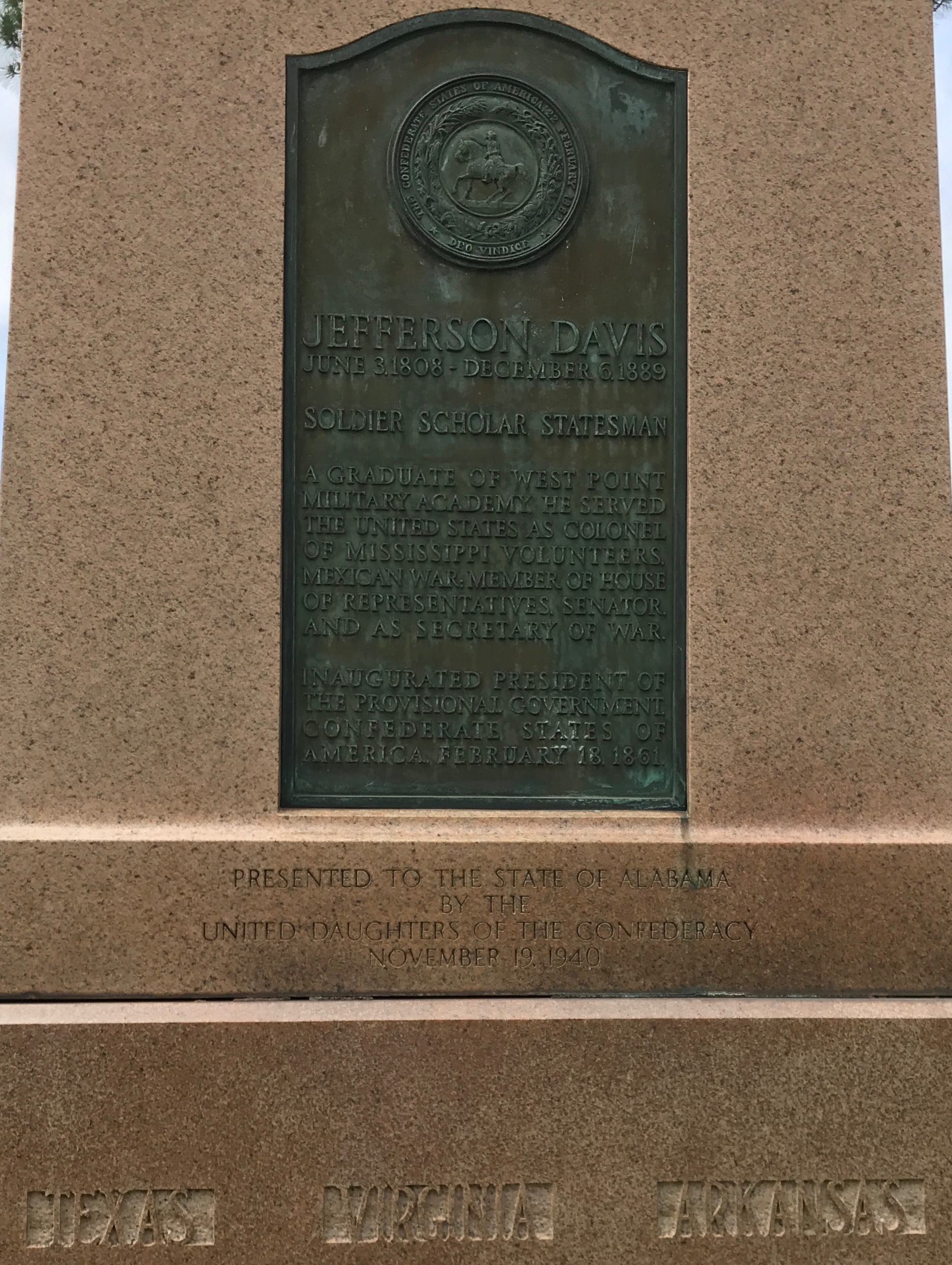
This statue was presented to the State of Alabama in 1940. That late date surprises me. It seems that most of the statue I’ve seen honoring Confederates were erected closer to the turn of the 20th century.
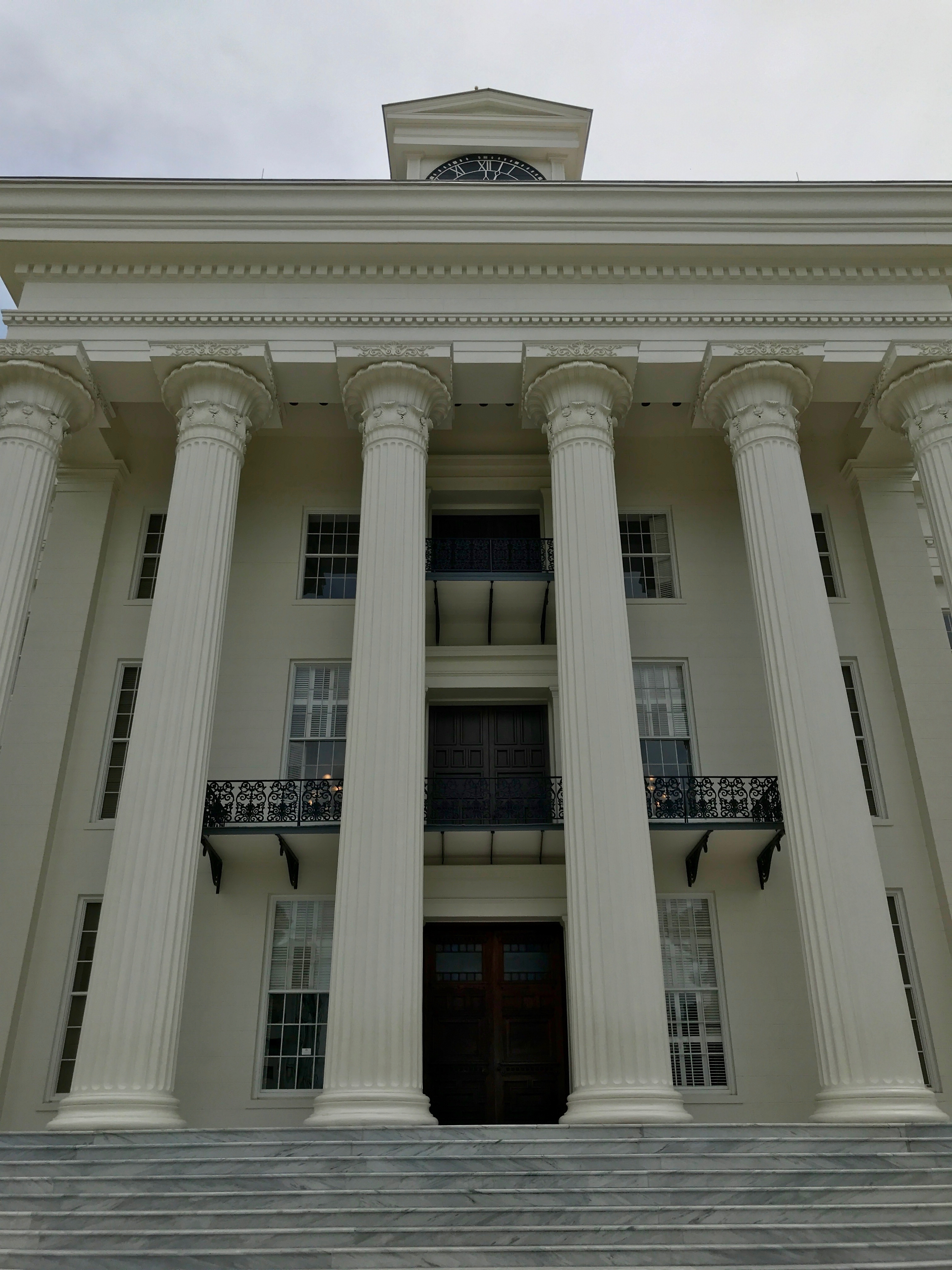
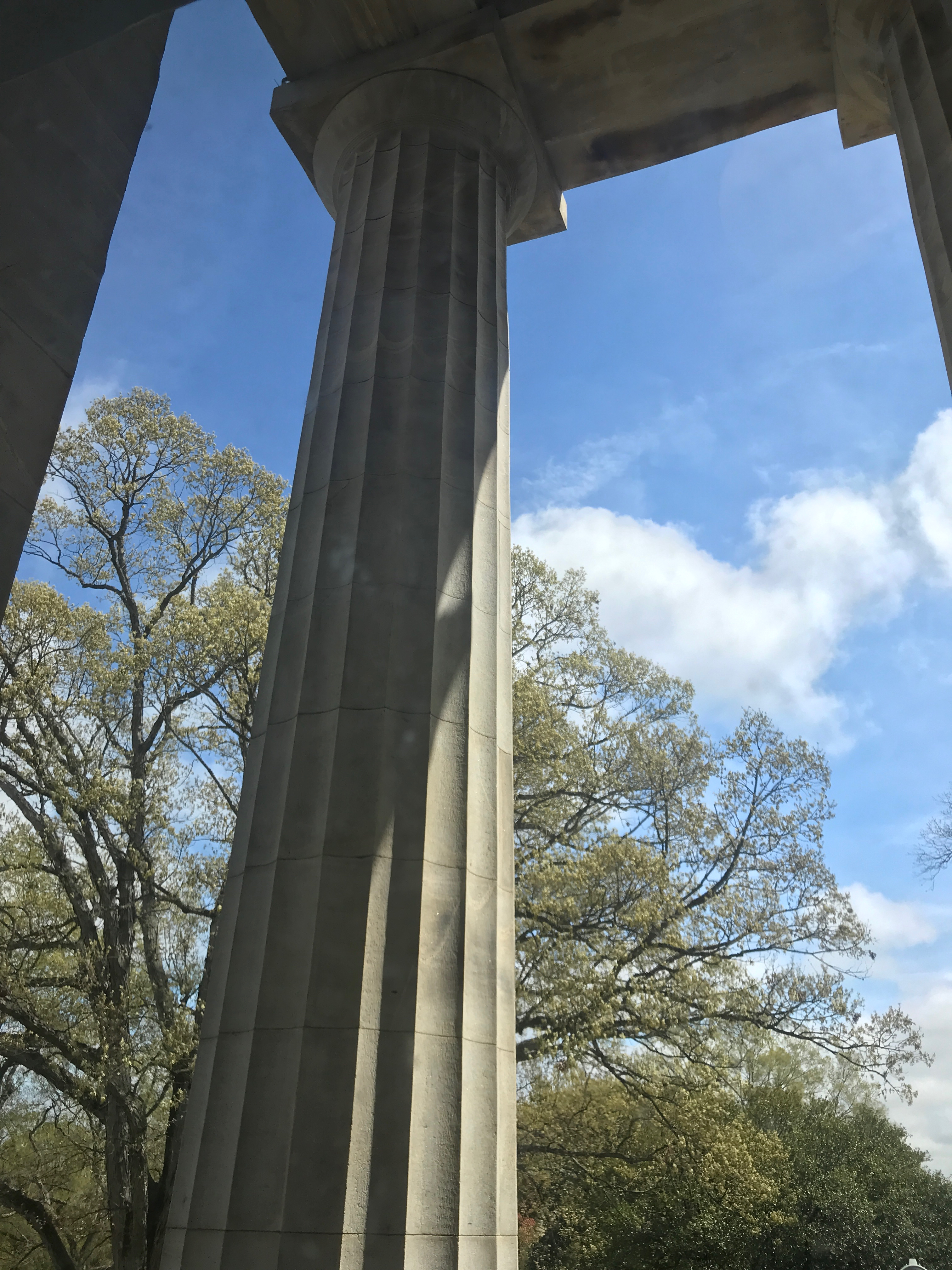
The columns give the building a stately air.
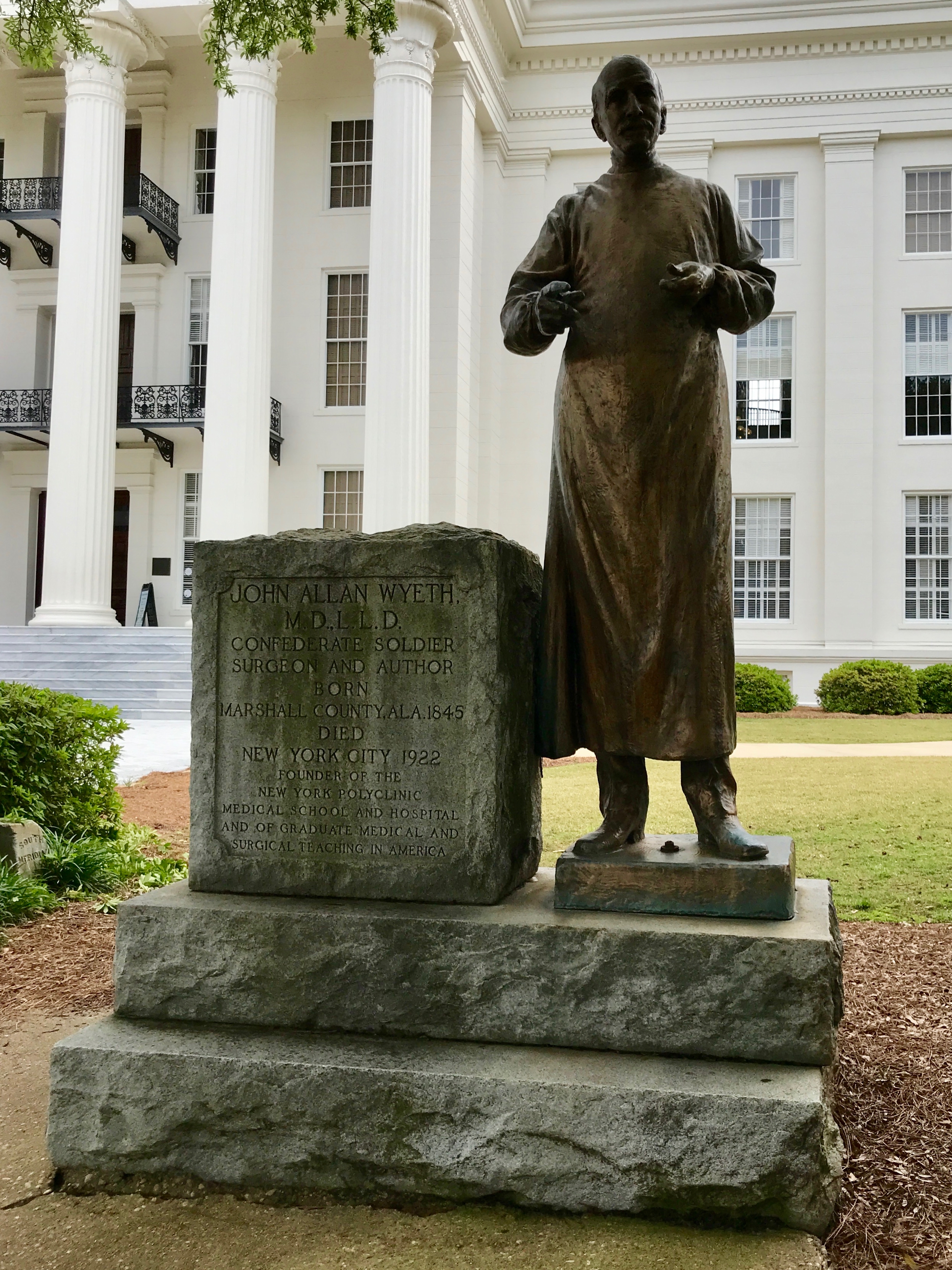
I came across another statue to another Confederate. I didn’t see a date on this statue, though.
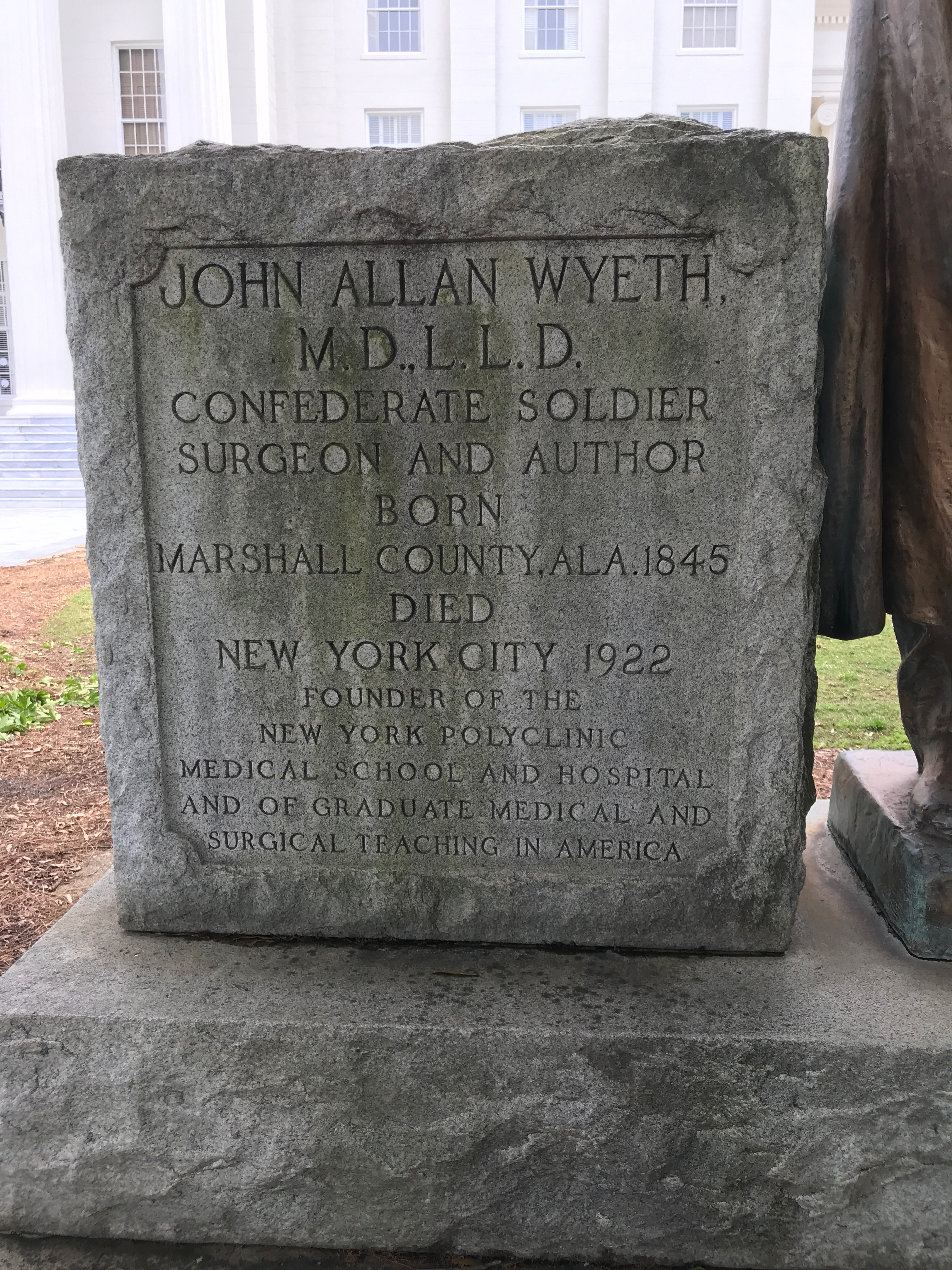
On to another statue.
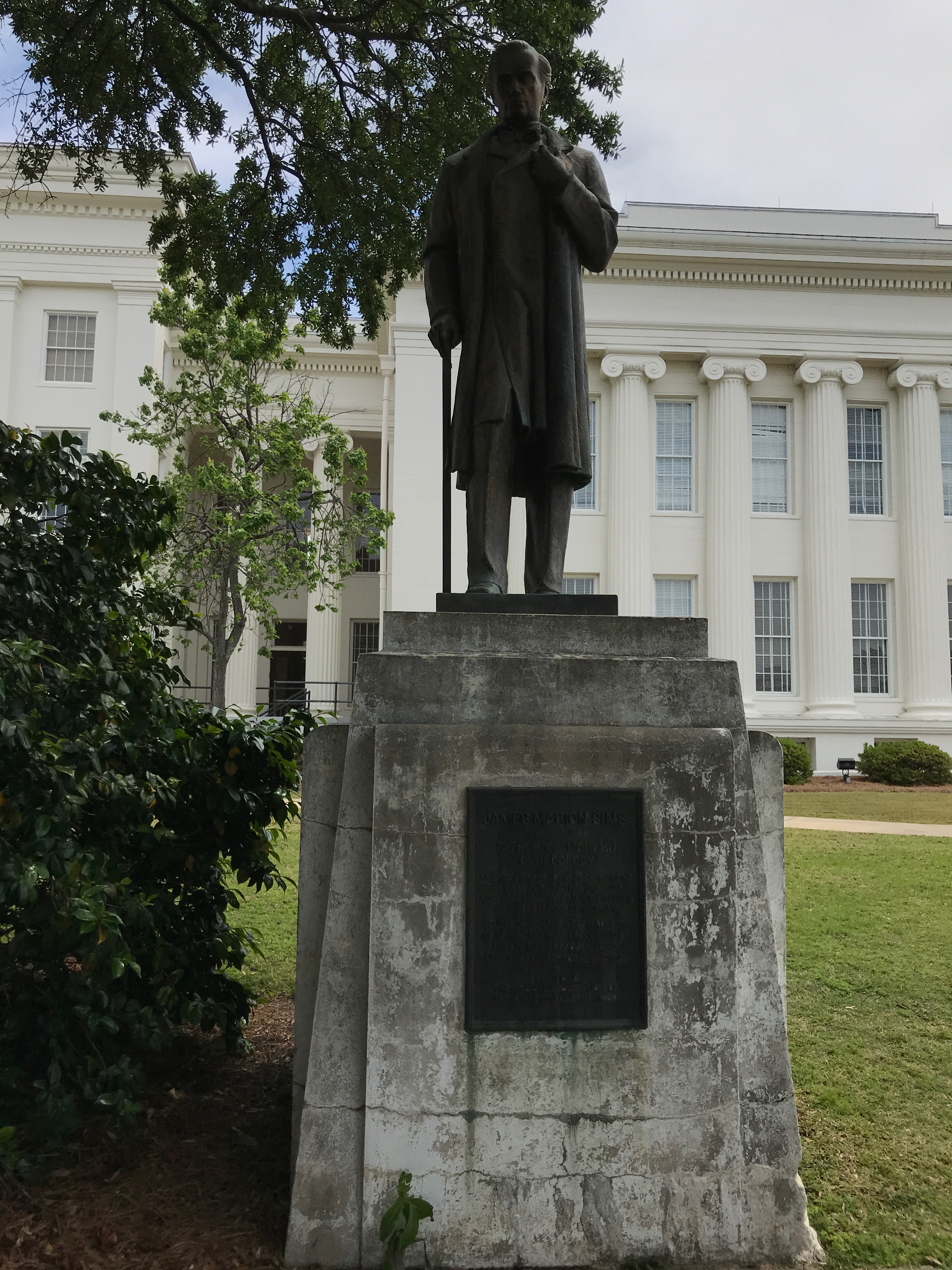
What is it with all these statues to the medical profession?
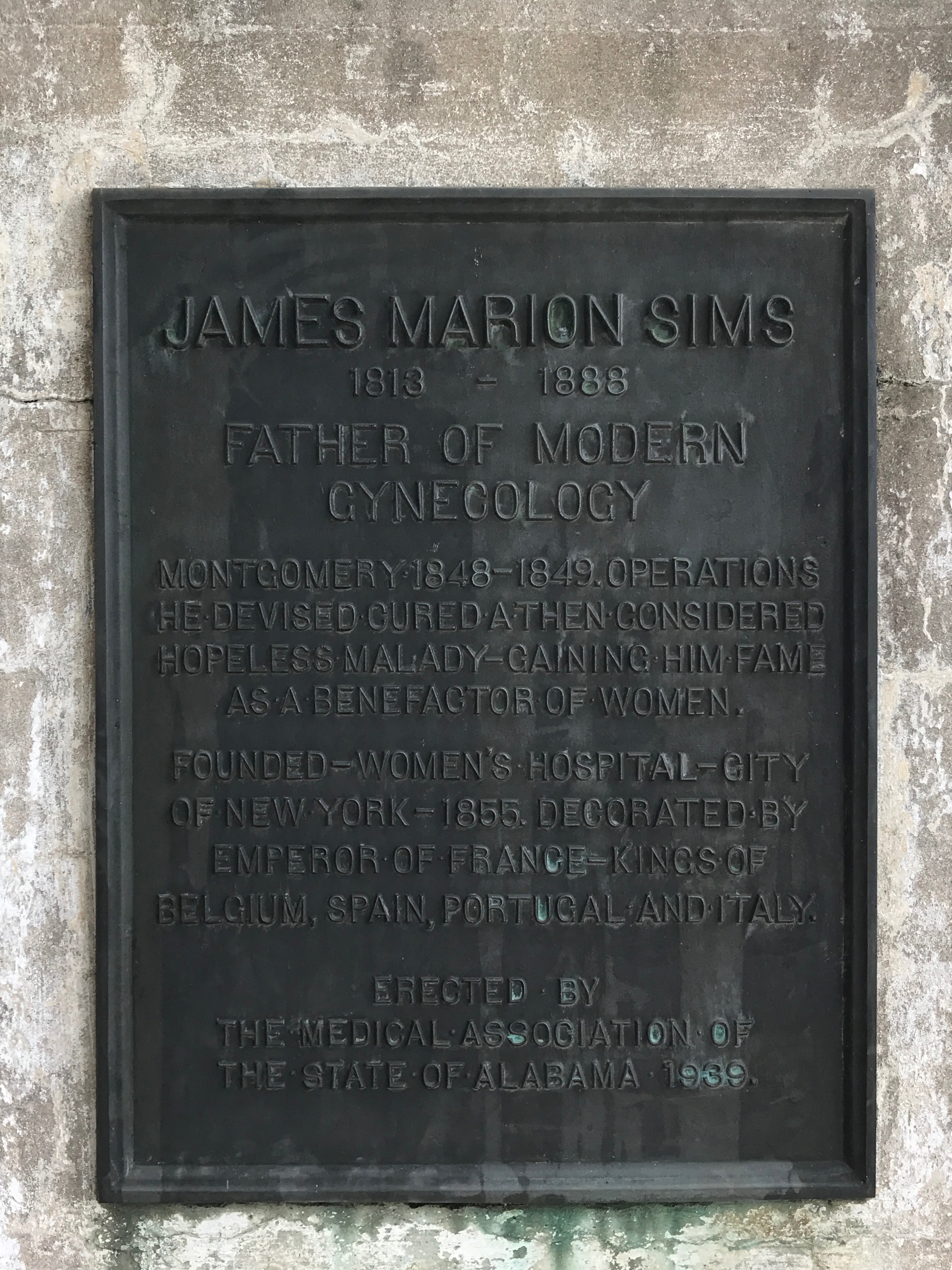
I wanted to know more, so of course I had to look. I kind of wish I hadn’t.

It turns out that J. Marion Simms  developed his surgical techniques by operating without anesthesia on enslaved black women. The father of modern gynecology – oh, and a Confederate spy. Of course there is a statue honoring him on the capitol grounds,

I guess I’m “glad” I didn’t know more when I was visiting.
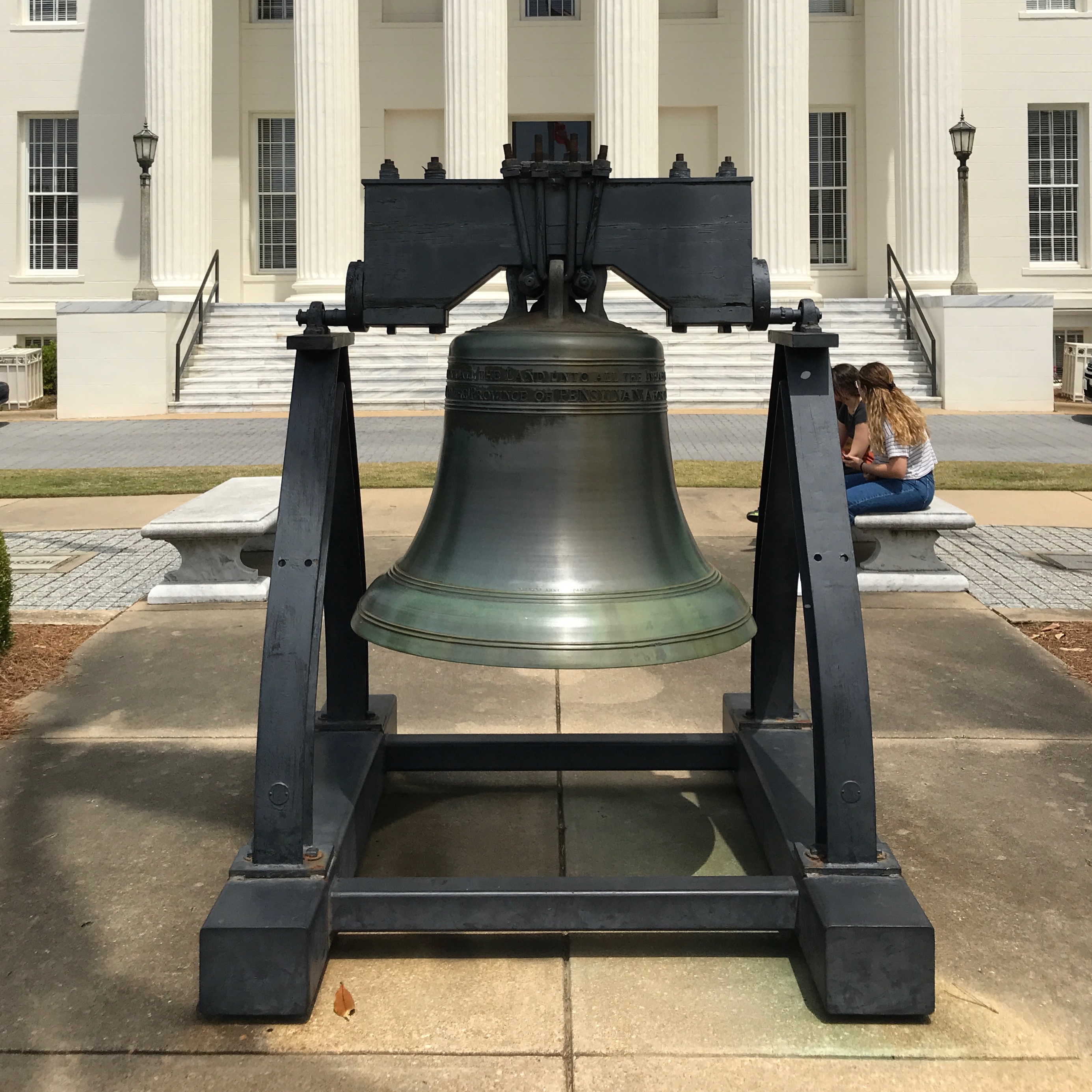
There is a copy of the Liberty Bell in front of the south portico near the Avenue of Flags.
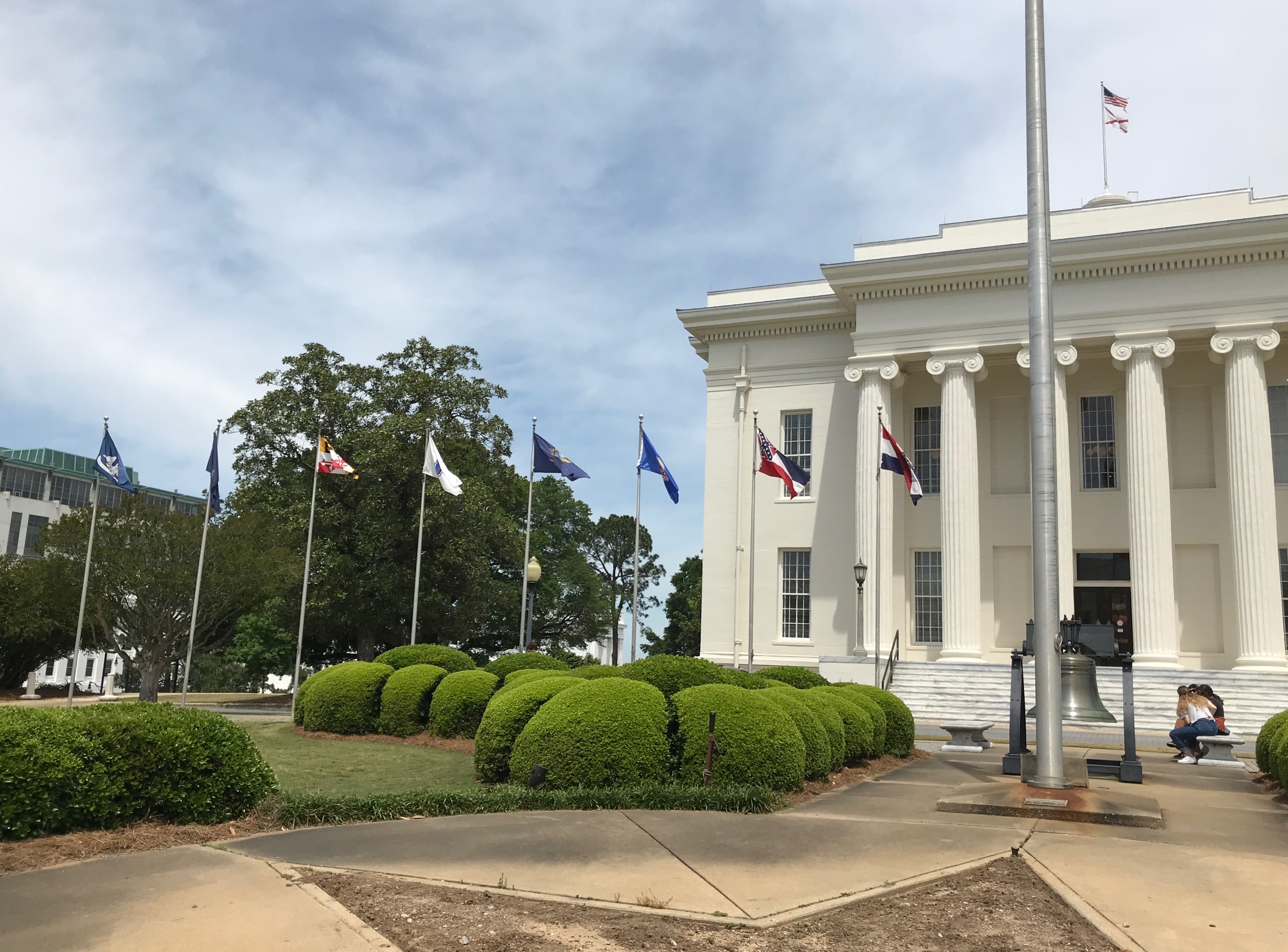
There are flags from all fifty states with a native stone from each state, engraved with its name, set at the base of each flagpole
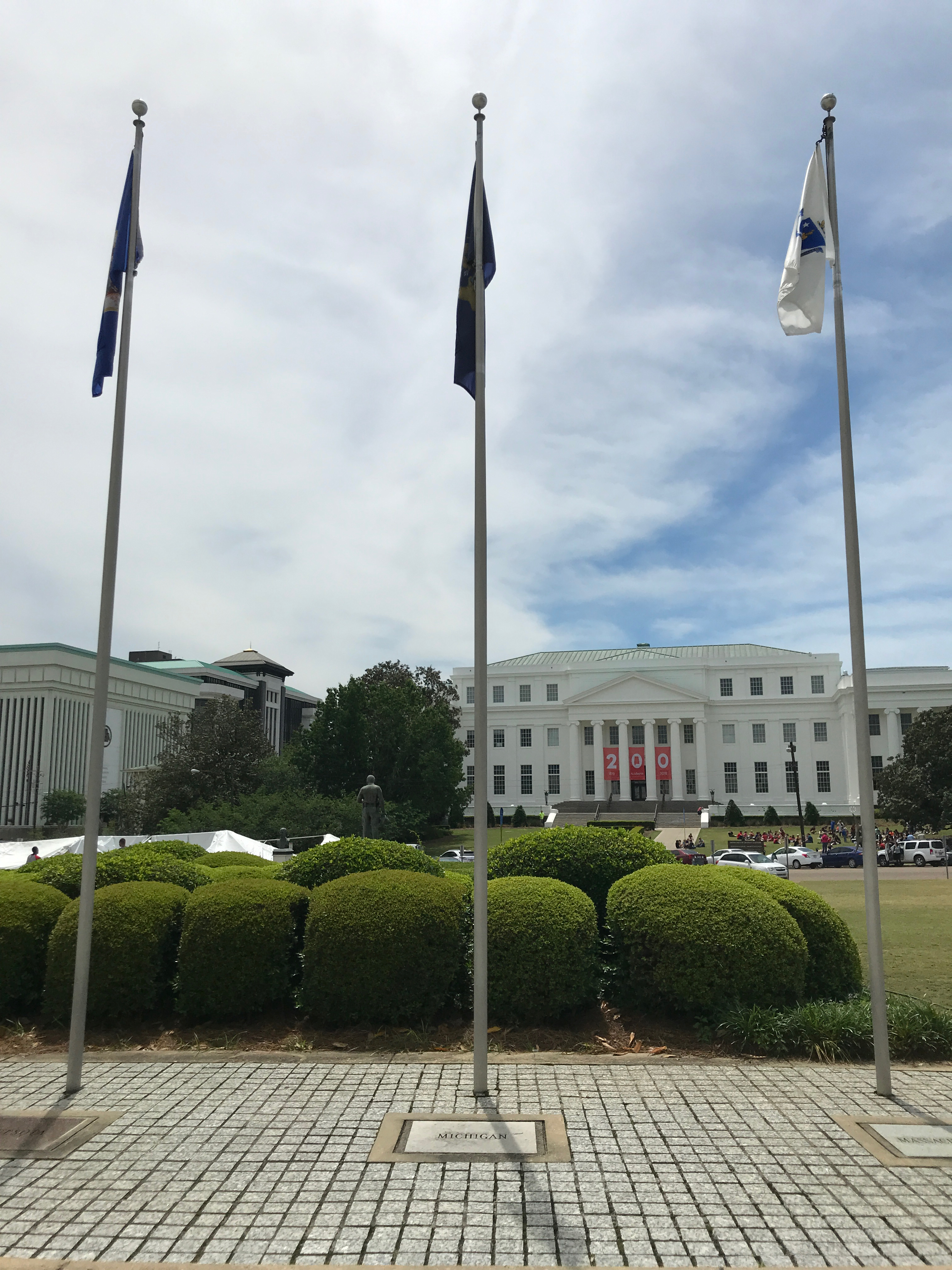
I had to look for Michigan’s flag.
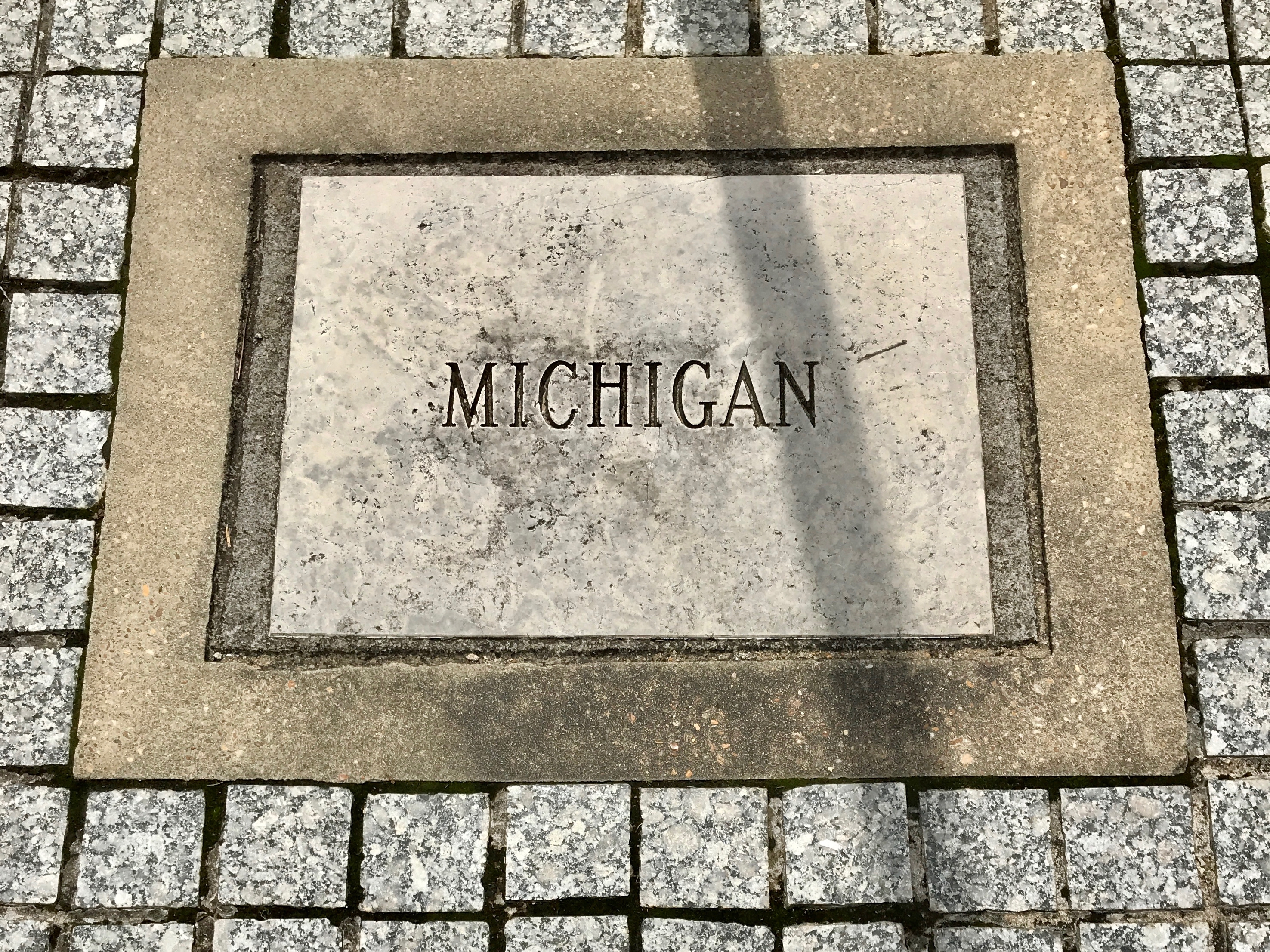
I wish I knew what stones they used for each state. Michigan’s looks like it might be limestone.
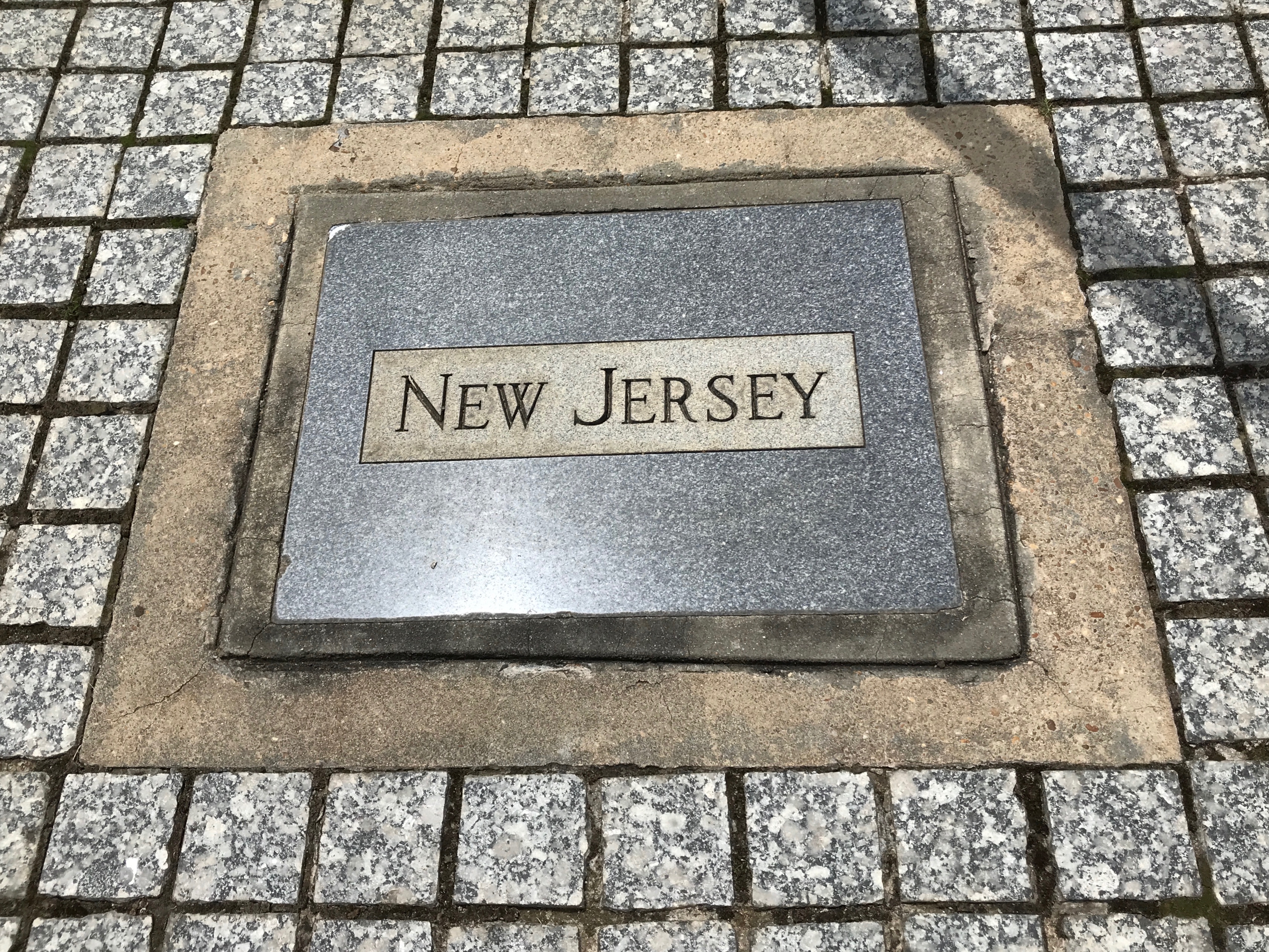
New Jersey’s looks like granite, but I don’t know if they have granite in that state. (I’m not going to look it up.)
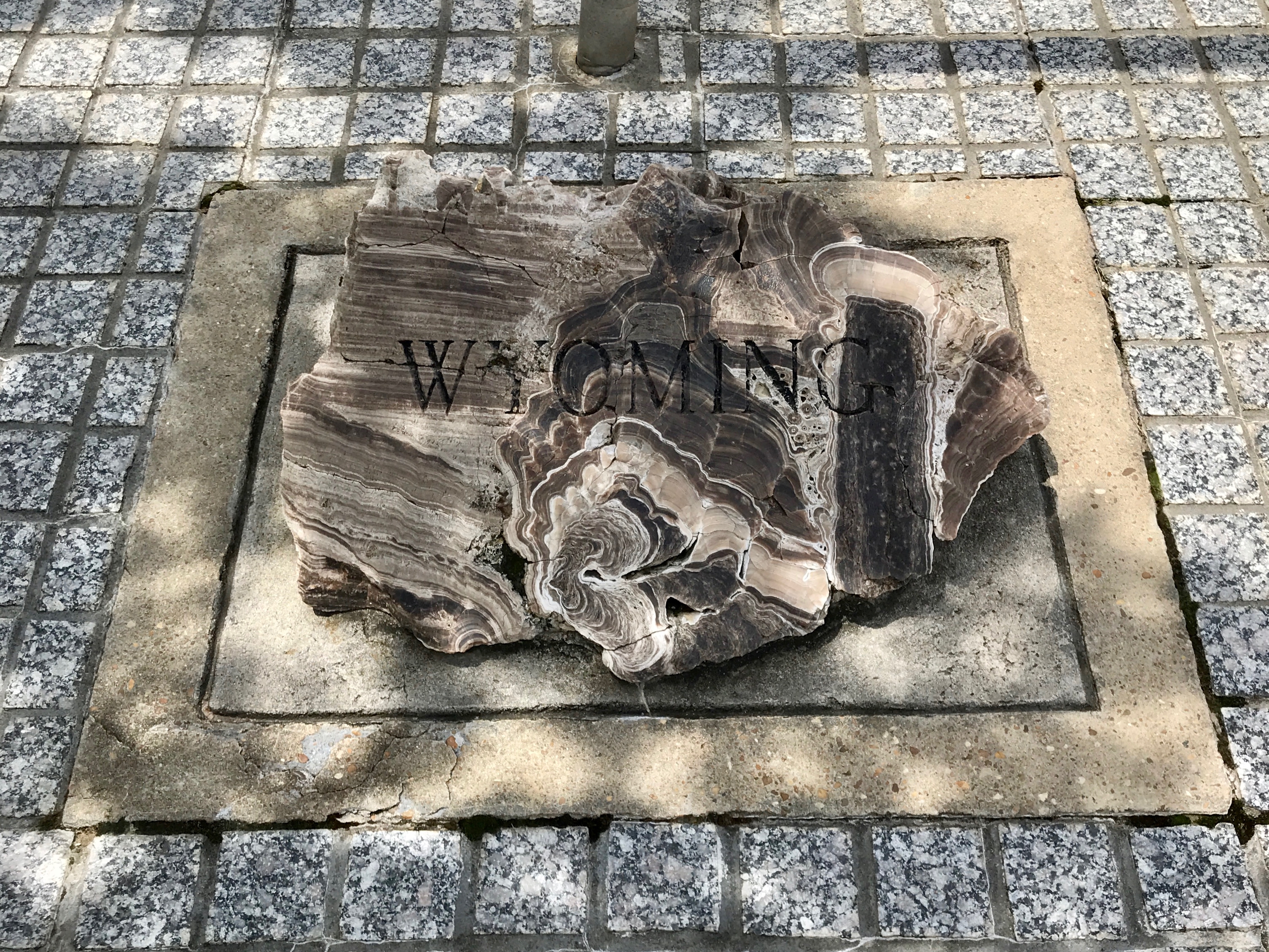
Wyoming’s is cool.
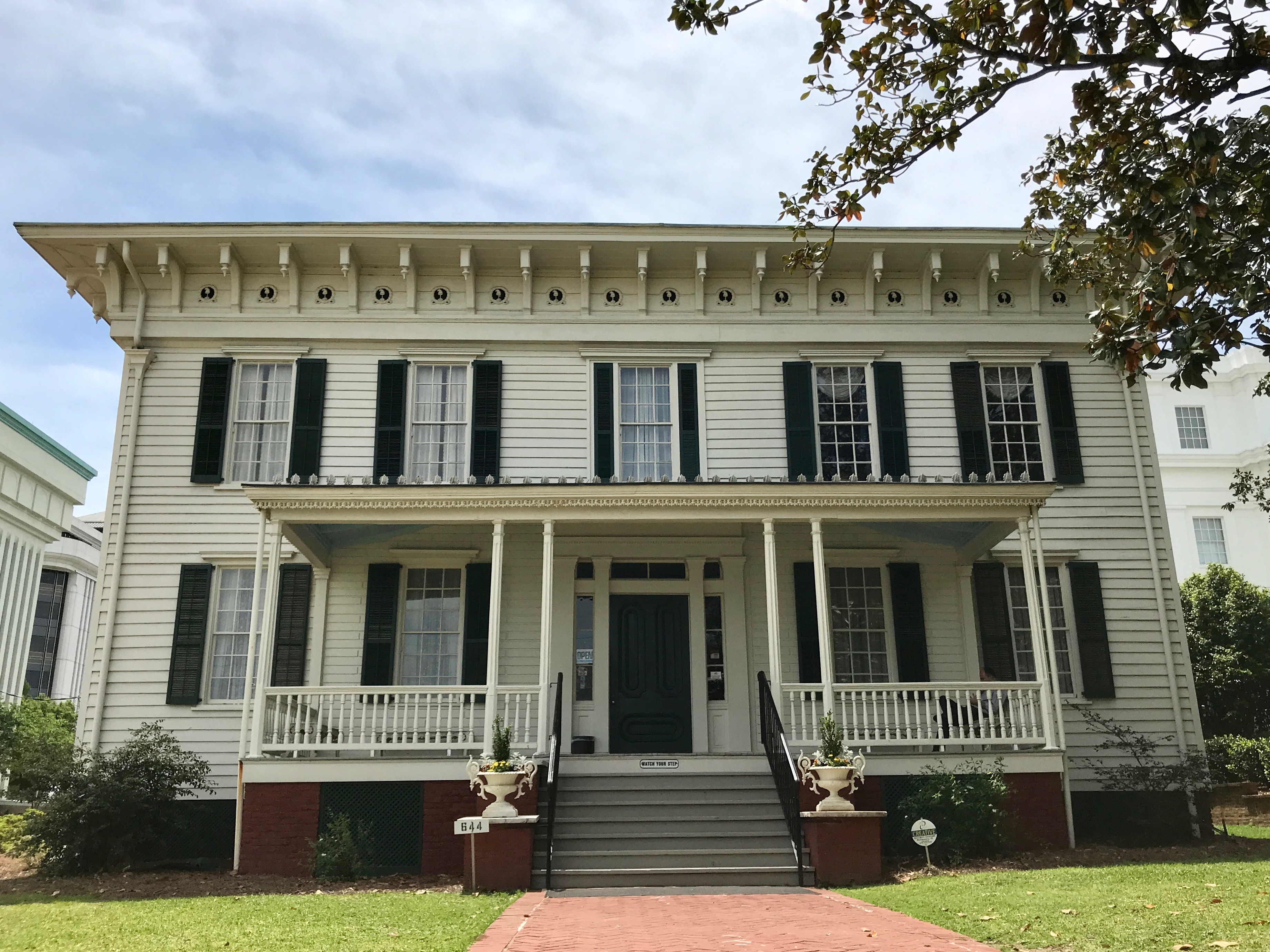
I continued down the Avenue of Flags and came to this rather comfortable looking house.
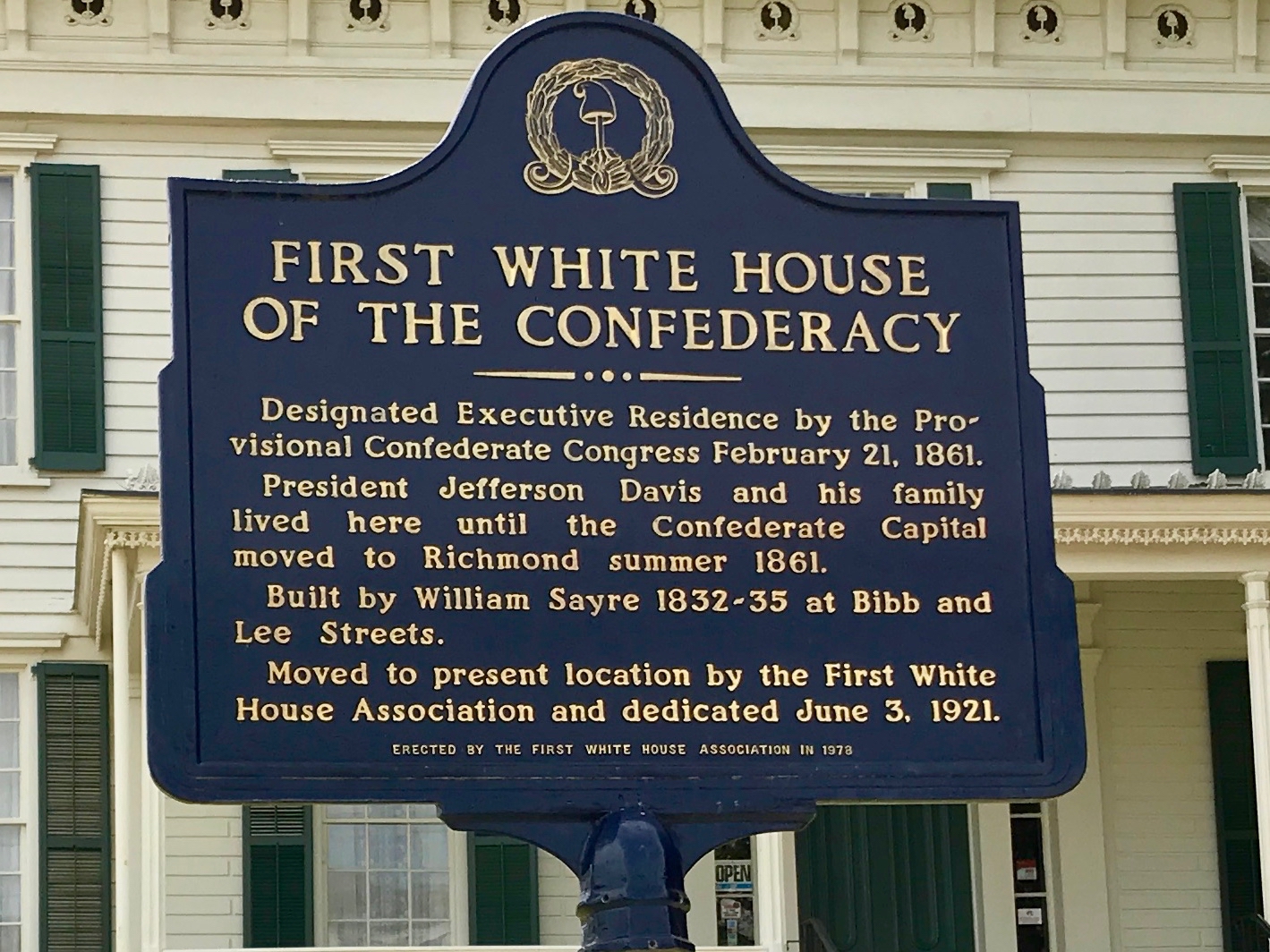
I’ll let you read the plaque to learn more about it.
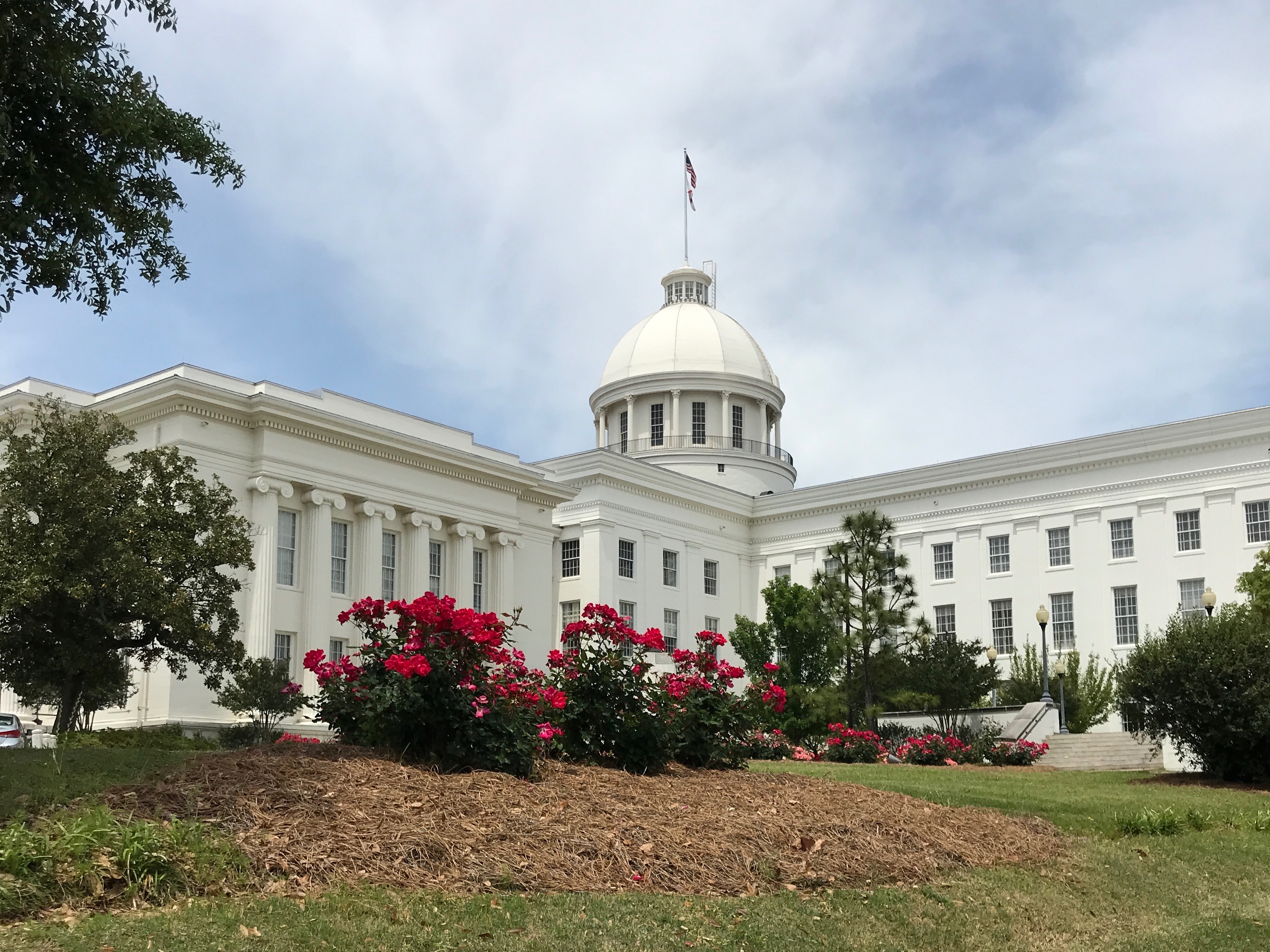
And with that, my trip to the Alabama State Capitol is complete.
Some Family Fun (April 2019)

I usually like to go places I haven’t been before, but when it comes to family, I’ll make an exception. It’s time for a visit with the Davison Family South in Alabama.

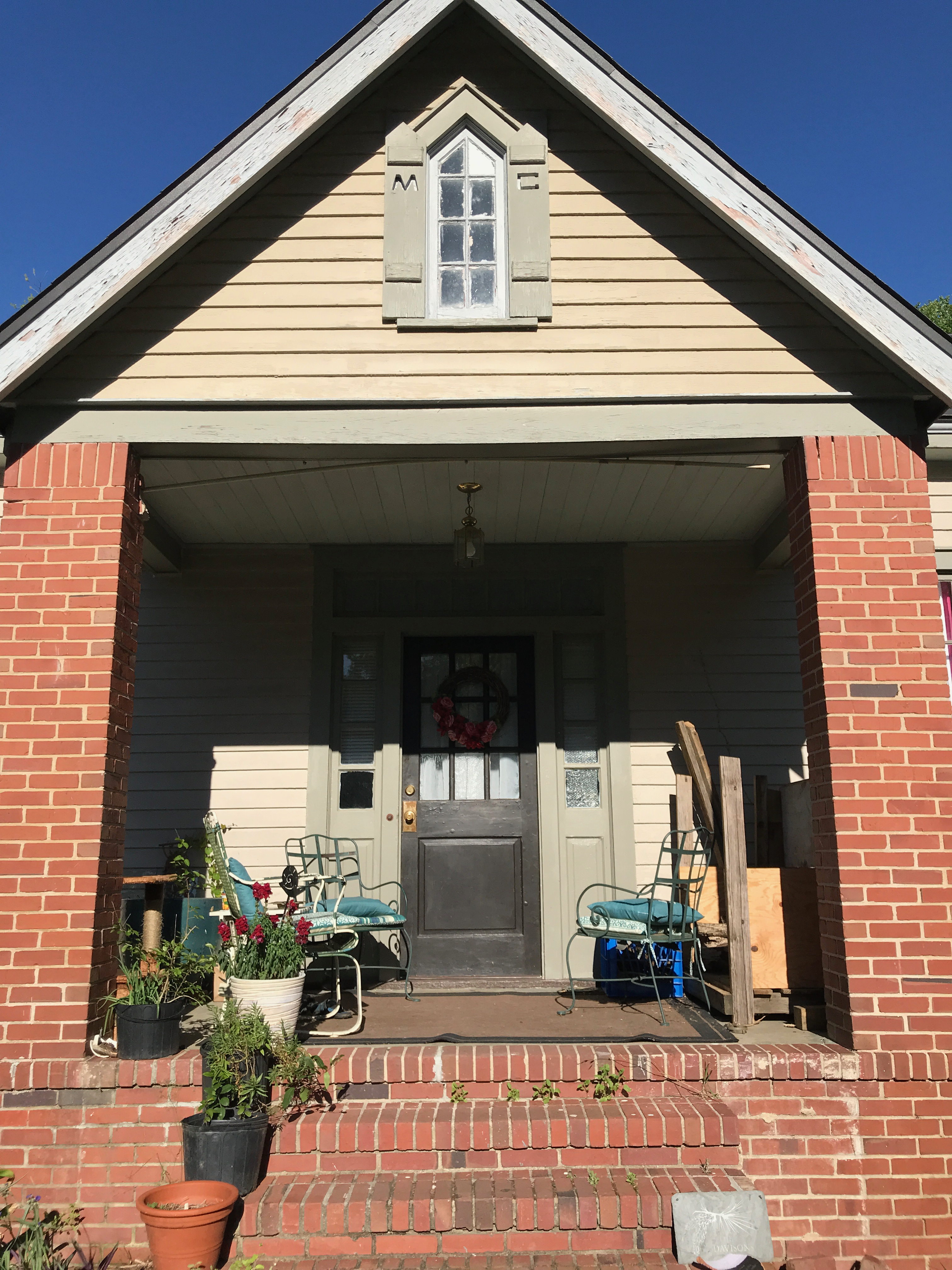
I always love seeing my brother Scott and his wife, Lesley. I think their front porch looks so homey! In all the places I’ve lived, I’ve never had a porch – and I still want one!

I get berthed next to their side porch and commence with the family fun.

Man! It’s no fair! They have a front porch, a side porch and a small porch on the back, too!

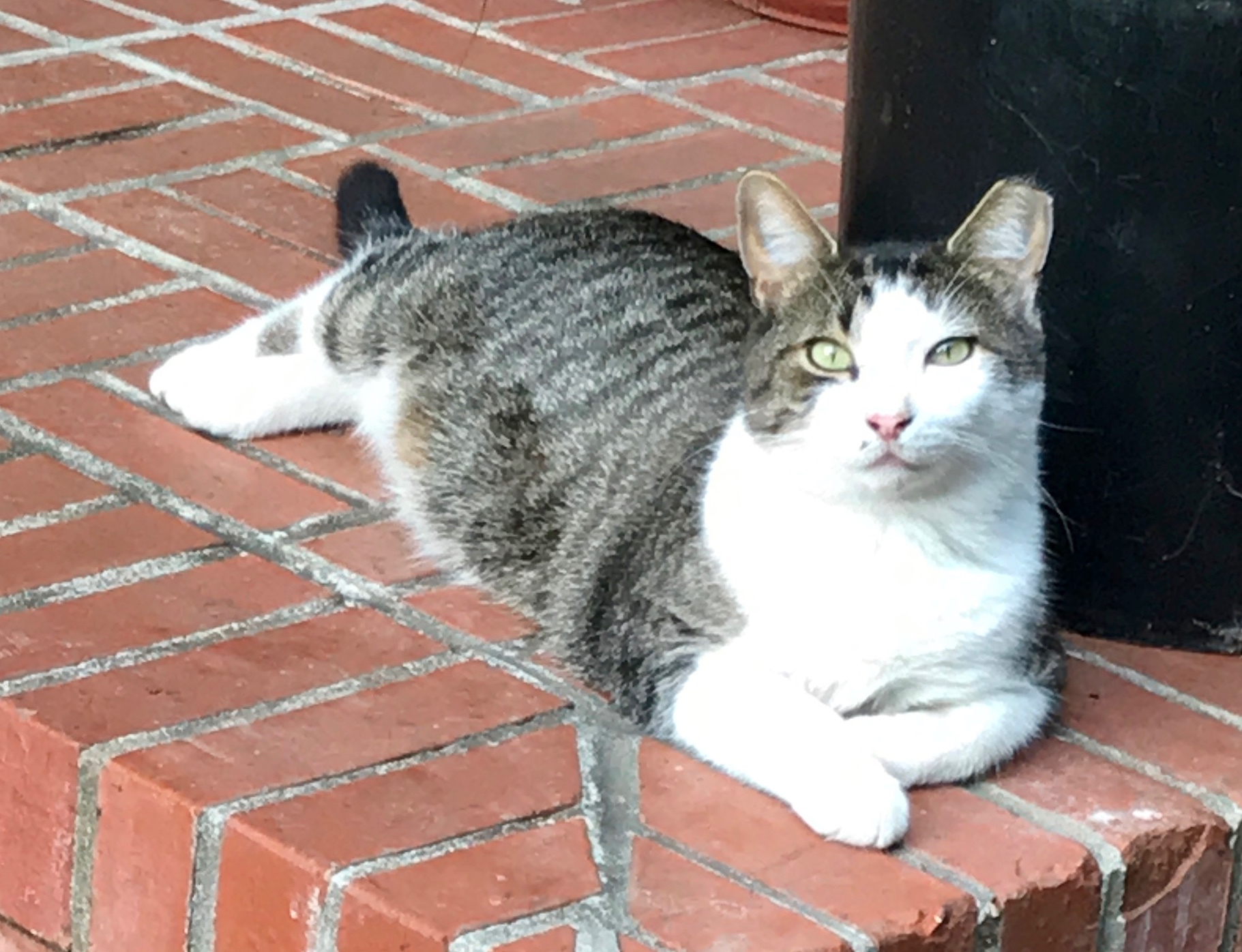
With all those porches, there’s bound to be a porch cat or two hanging around.

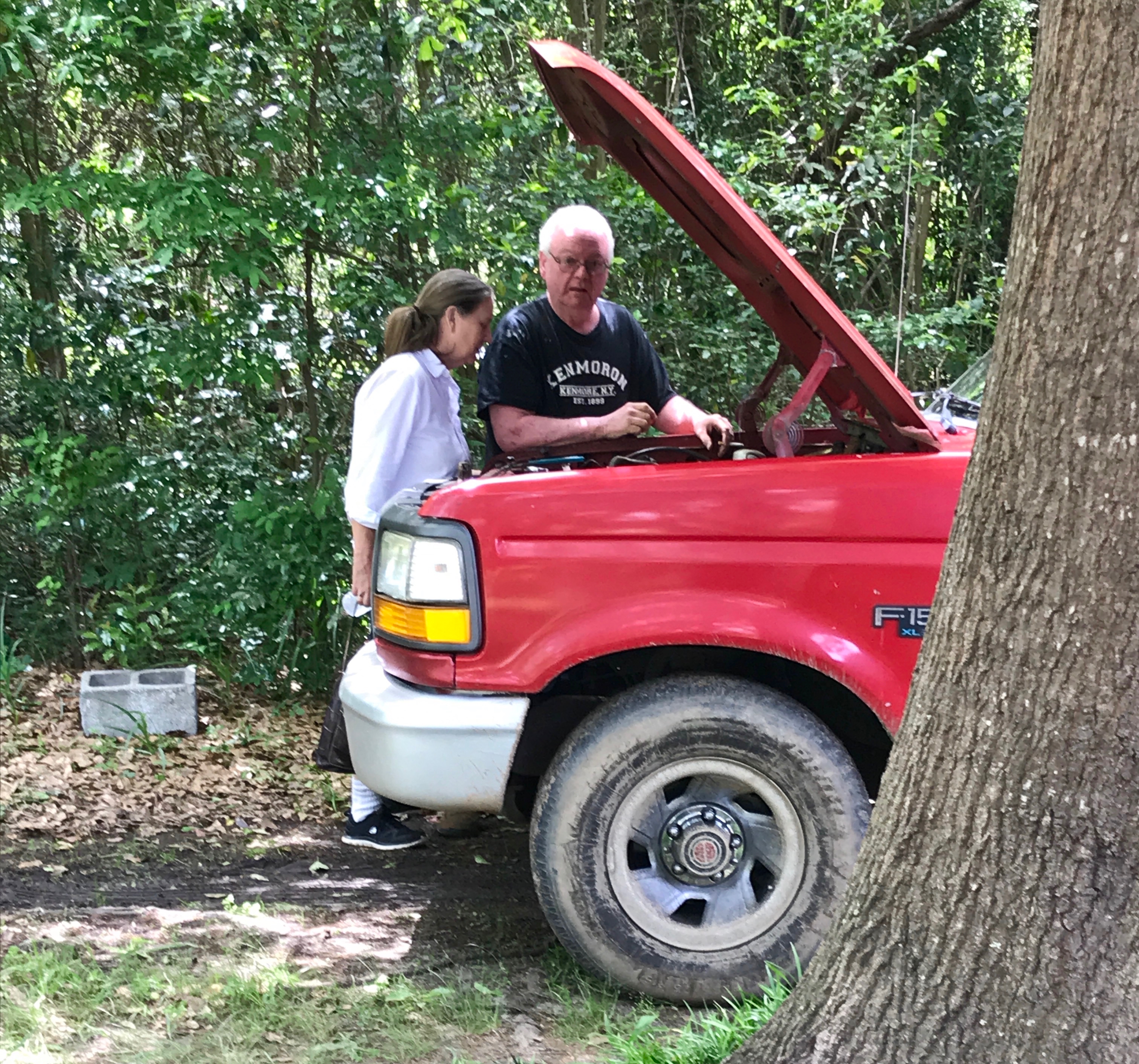
When you’re spending time with family, you just do ordinary stuff. It felt so good to watch Scott work on his truck, with Lesley at his side.

Lesley is an avid gardener.

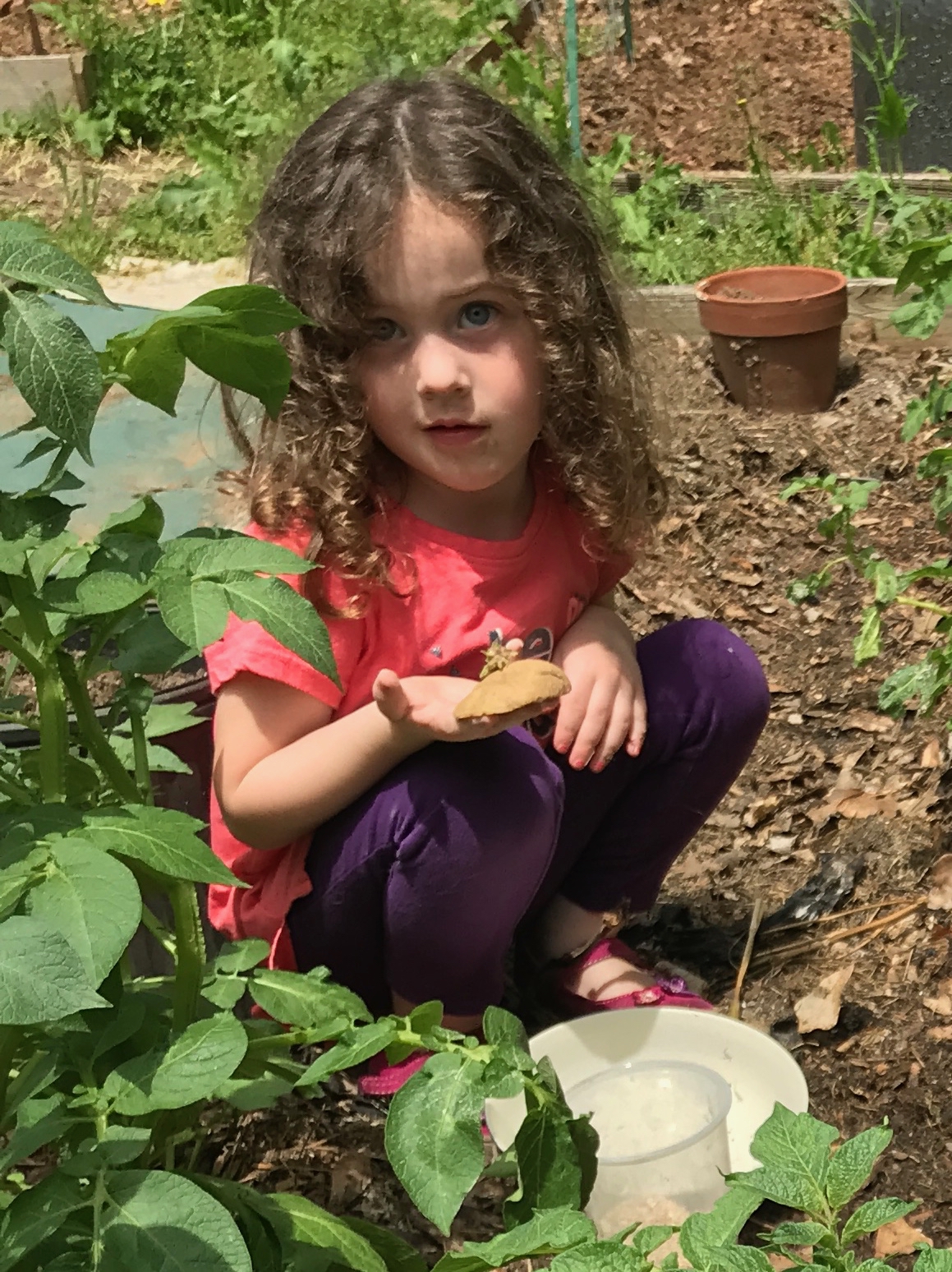
She gets her grandchildren involved. Here is Gwennie getting ready to plant a potato. She’s showing me the eyes that have sprouted.

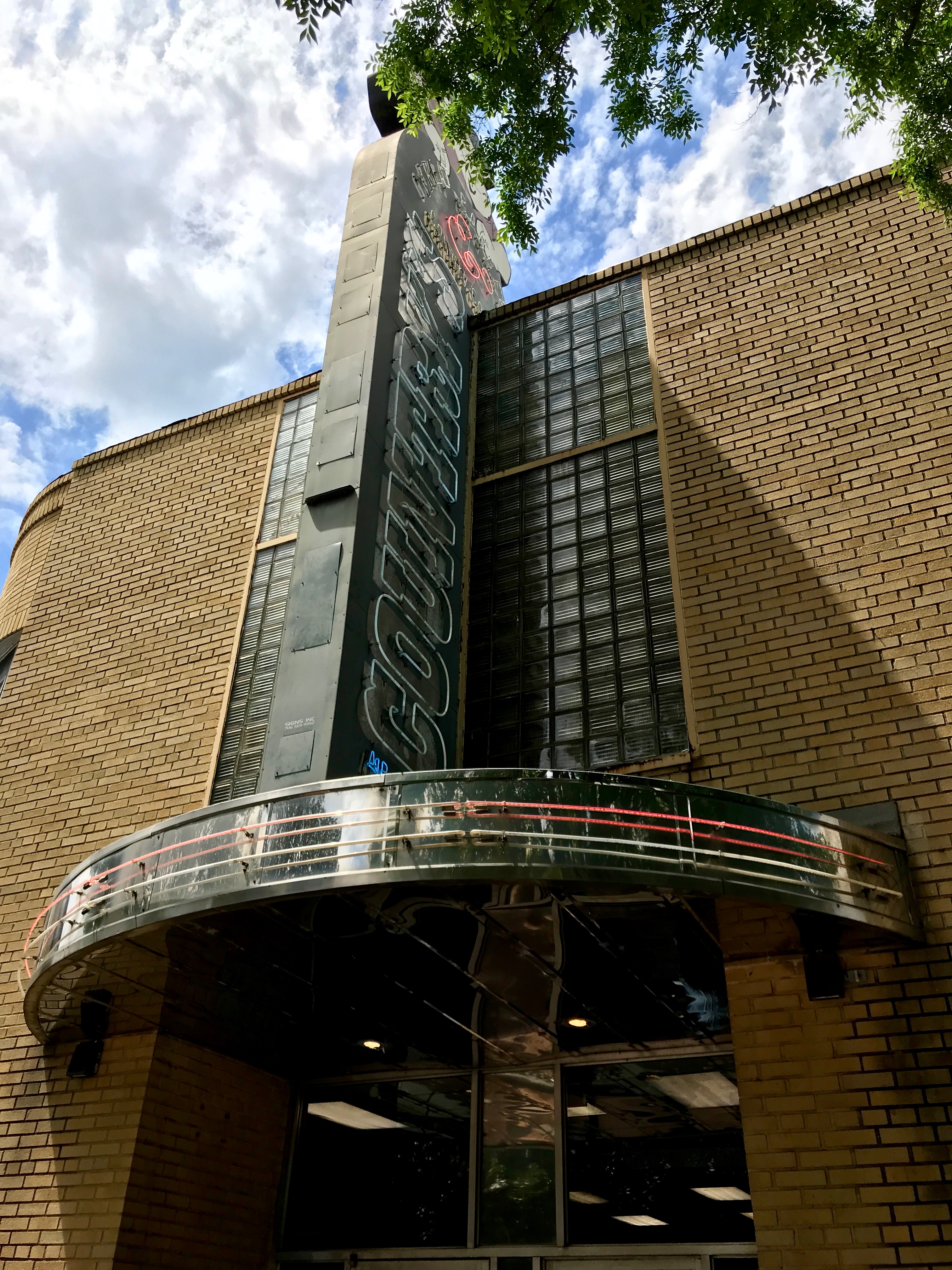
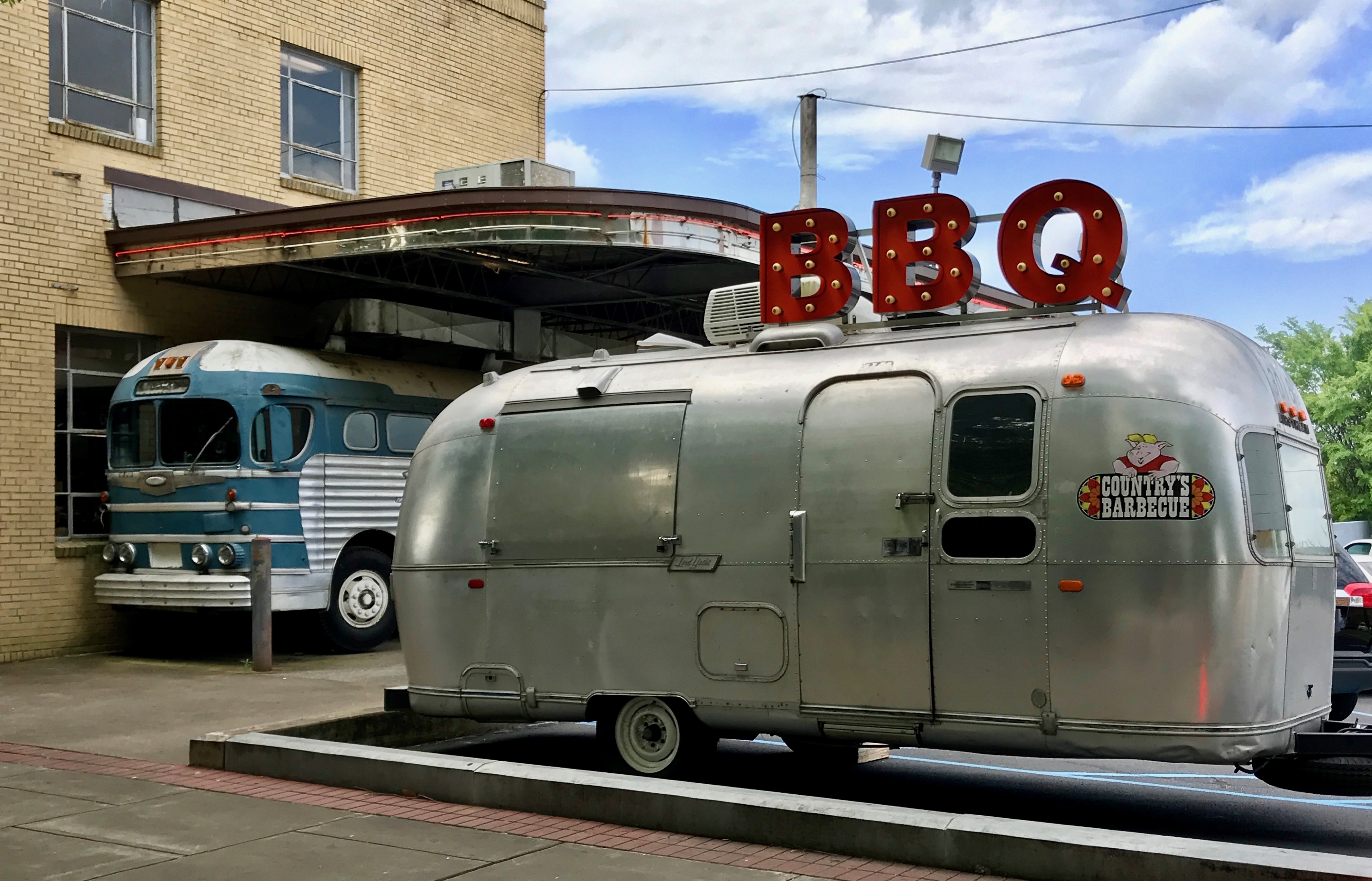
Now, Lesley is an excellent cook, as is Scott, but sometimes you just have to go out to eat. Scott took me across the river to Columbus, Georgia to Country’s Barbecue.

Does anyone recognize the building?

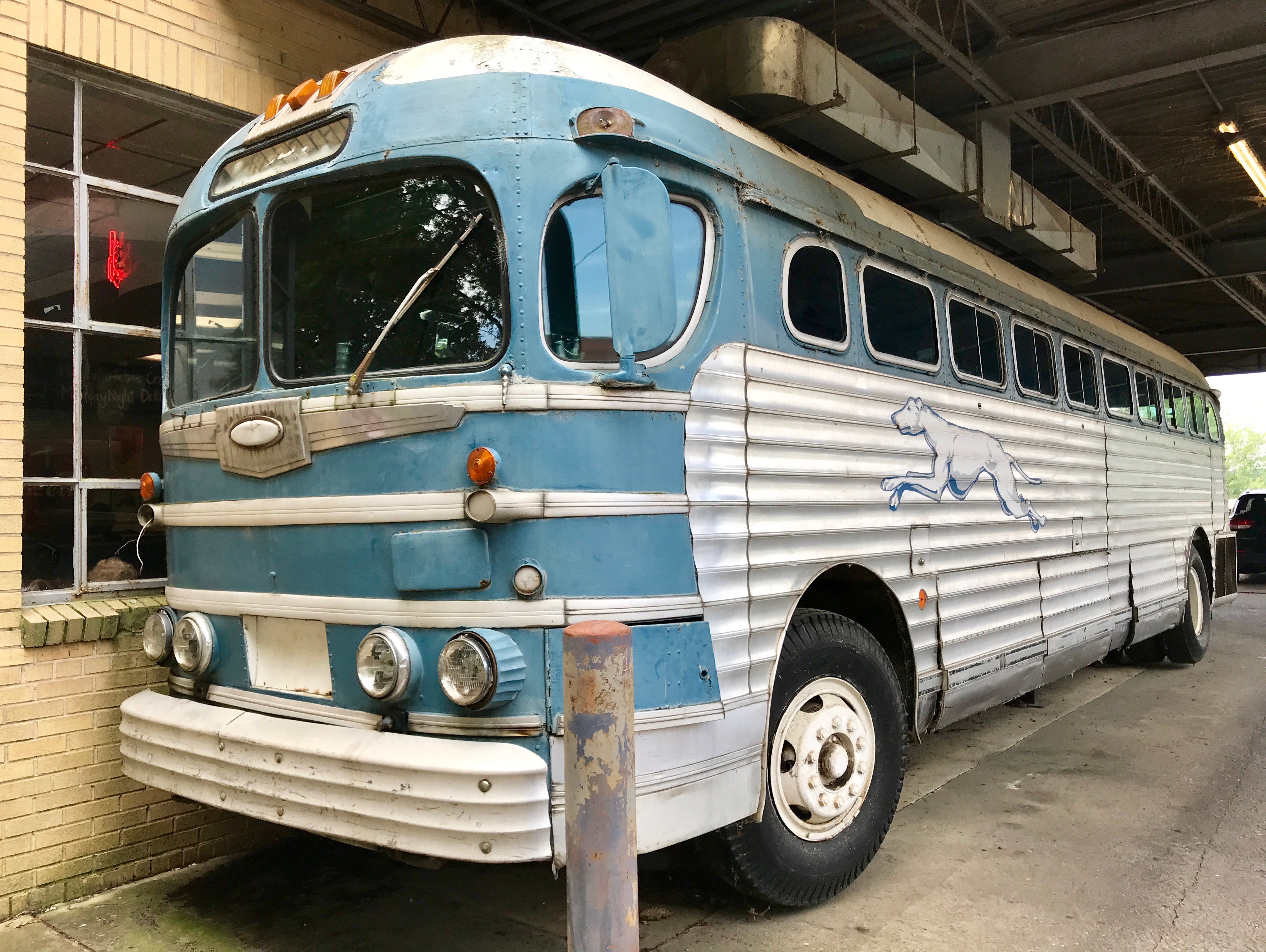
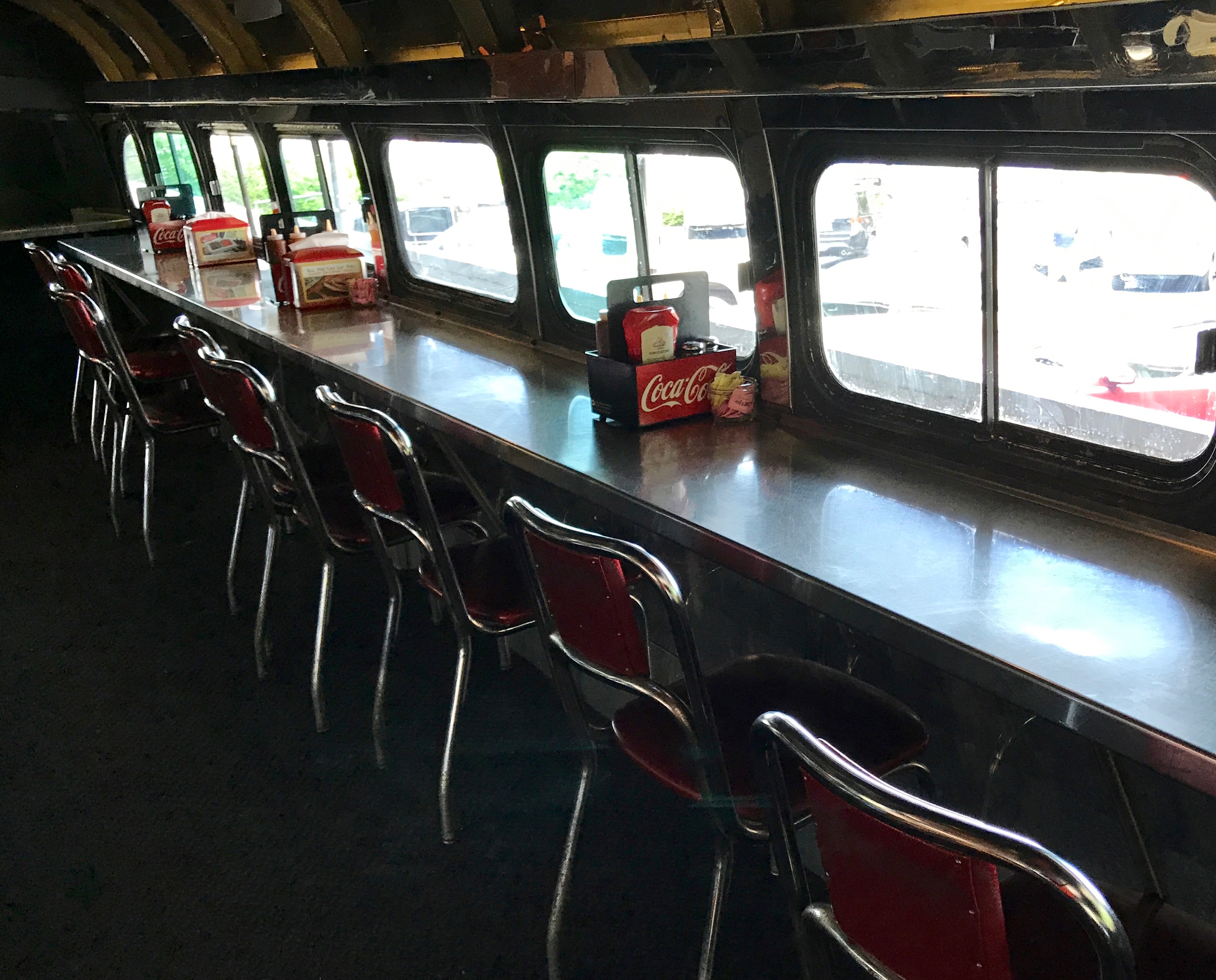
They converted an old Greyhound terminal!

It was kind of special to me to eat there, because my Grandmother used to take the bus from Crystal Beach, Ontario to visit us in Kenmore, New York. She’d arrive at the station in downtown Buffalo and then catch the NFTA bus out to us. She said that she’d take me to eat at the automat in the bus station, but we never got around to it. I wonder if they still have automats?

Anyway, I digress. Here we are, at Country’s Barbecue.

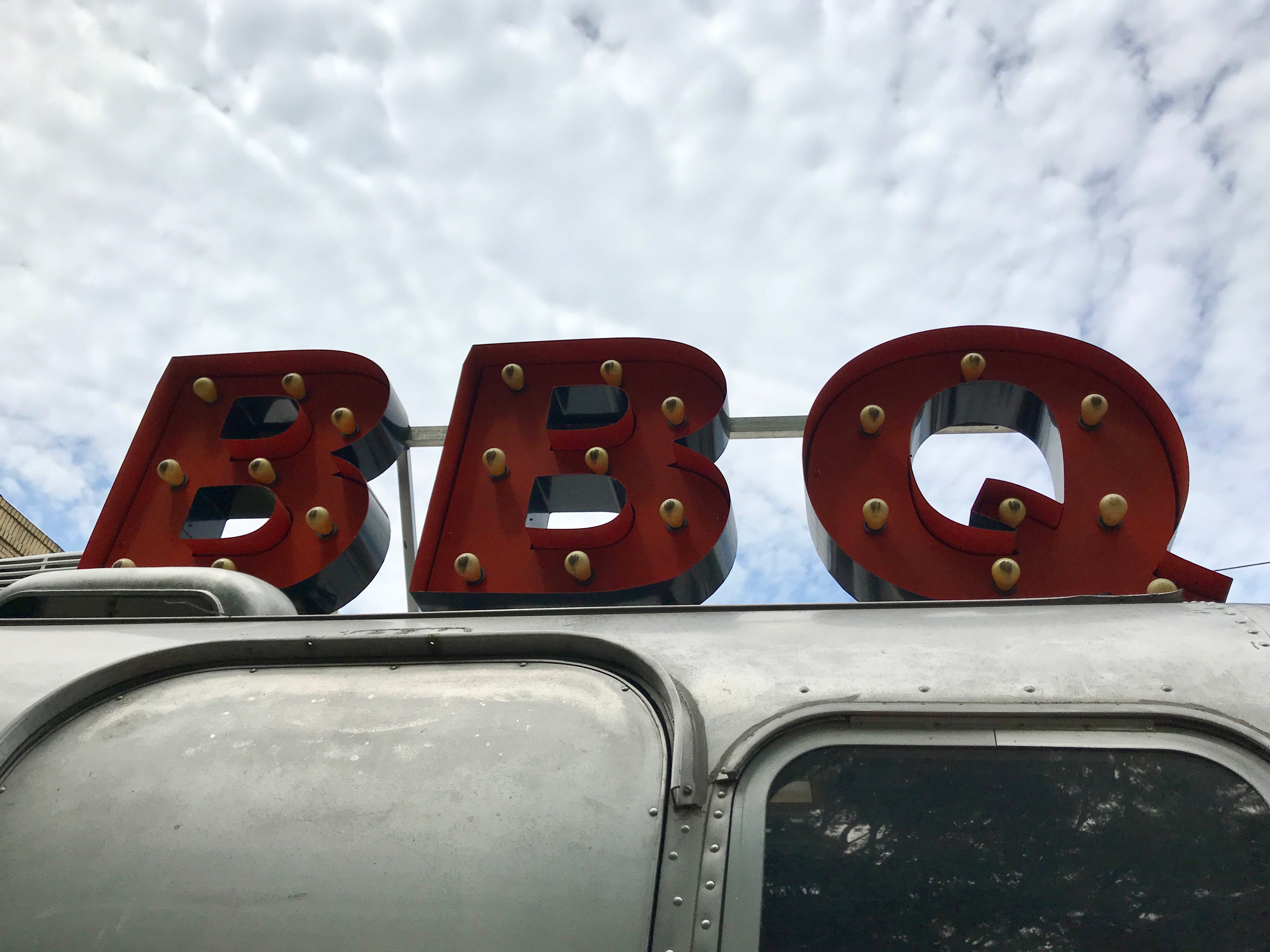
Sharp-eyed readers might recognize the trailer that the sign is on. Yep! It’s an Airstream!

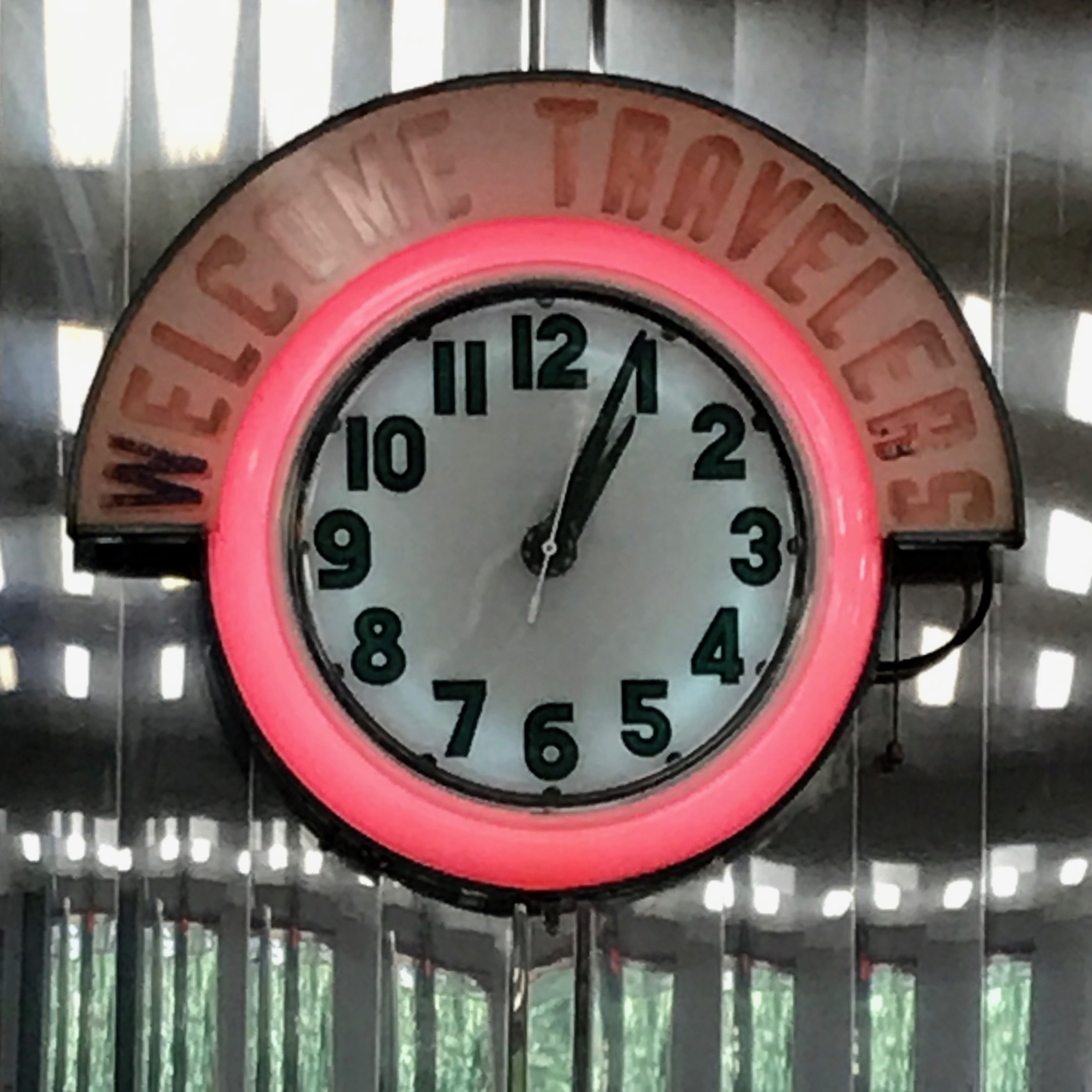
We go inside and order. I love all the art deco details.

You can eat inside, but we opted to eat in the bus.

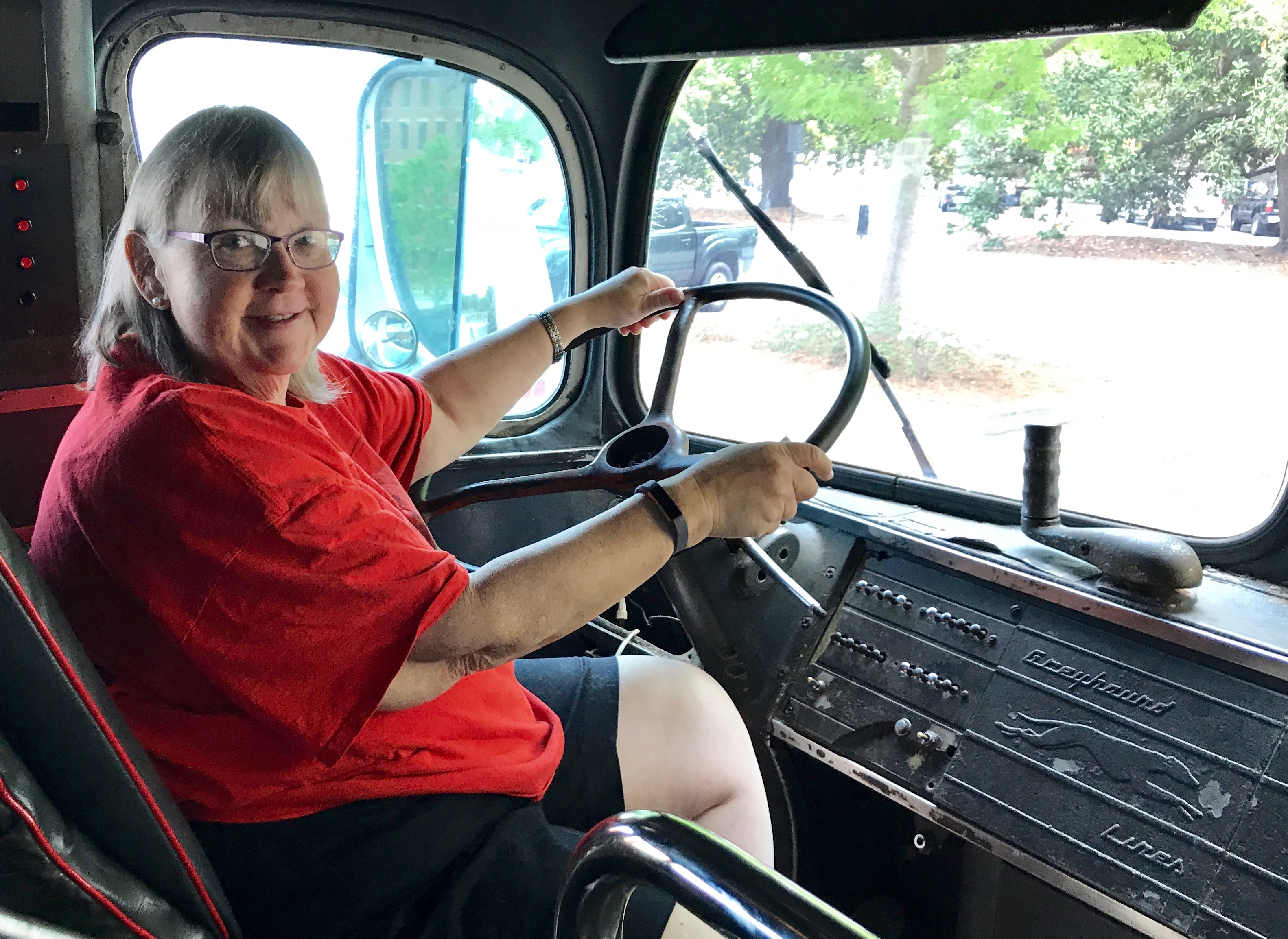
While we were waiting for our meals, we got to do a little pretend bus driving.

Get a load of the size of the steering wheel!

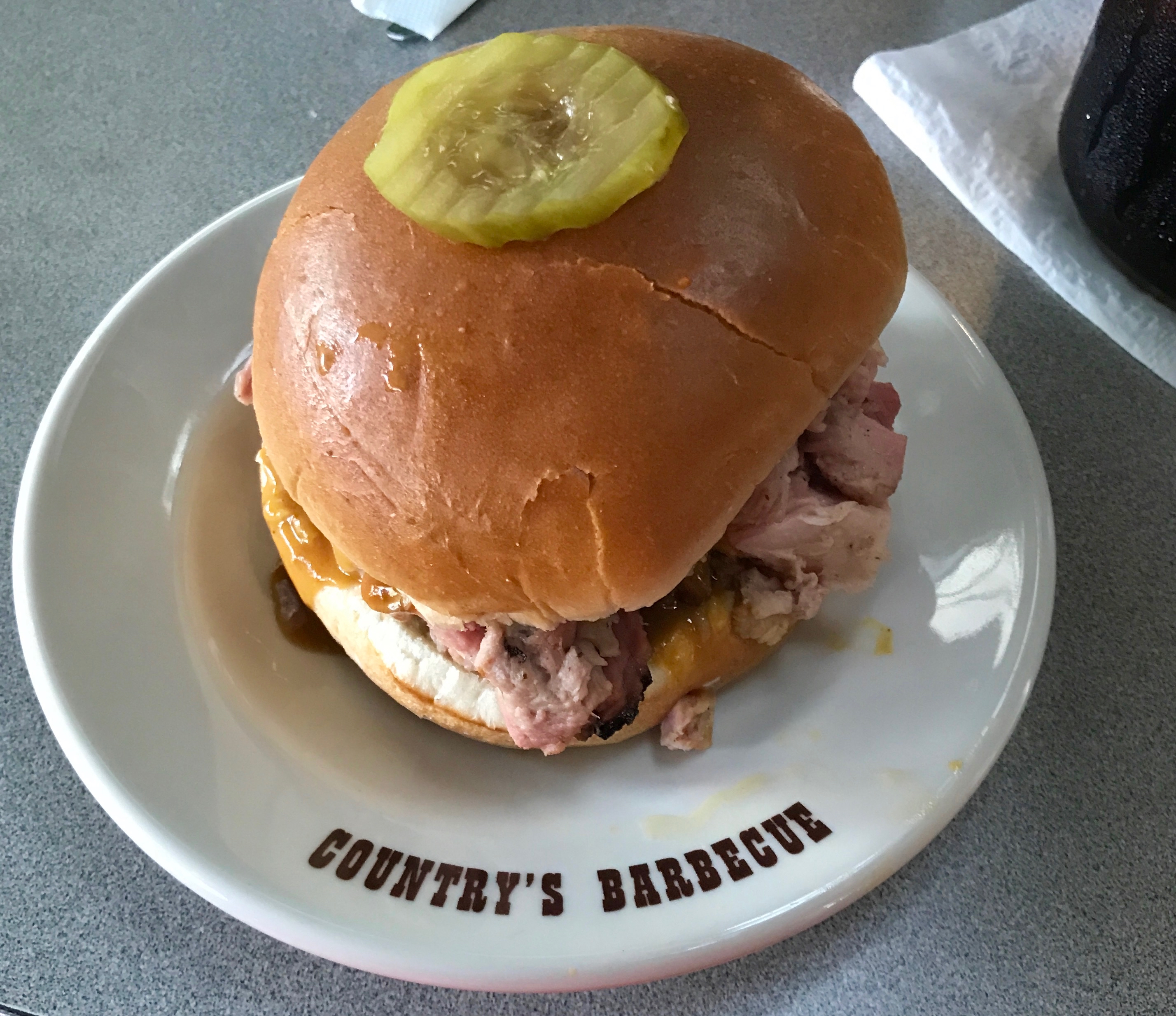
This is my lunch – according to my notes, it’s a chopped sandwich. I learned something about barbecue during this meal. You are supposed to add sauce to your food.

Duh! I could never figure out why people were so excited about barbecue. This northern girl is partial to her hamburgers, with ketchup, mustard and onions. To me, barbecue just seemed like a bunch on meat on a bun. But, put the sauce on it and it gets much tastier!

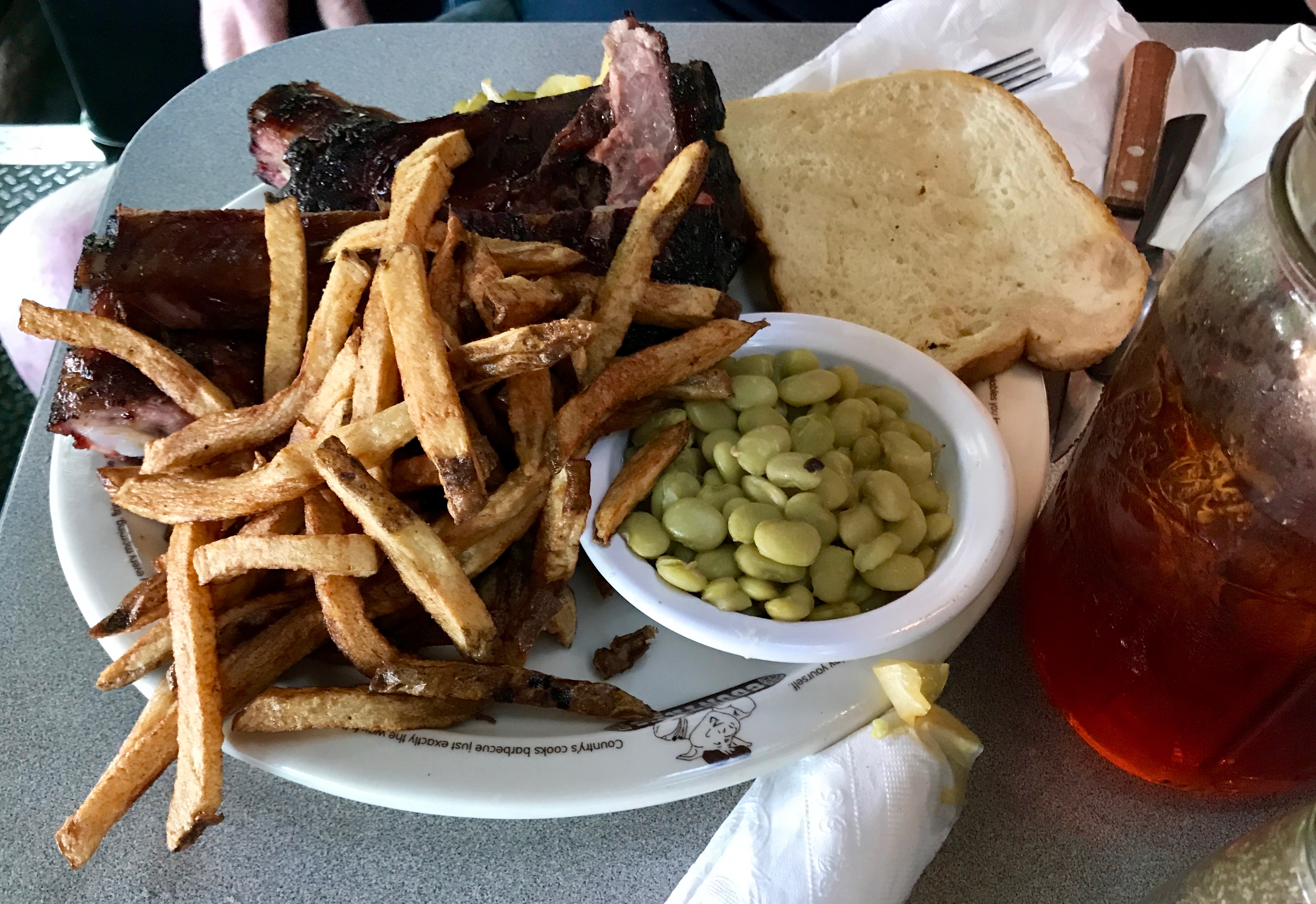
Scott opted for the ribs, fries and butter beans with iced tea.

Of course, we did some shopping during my visit.

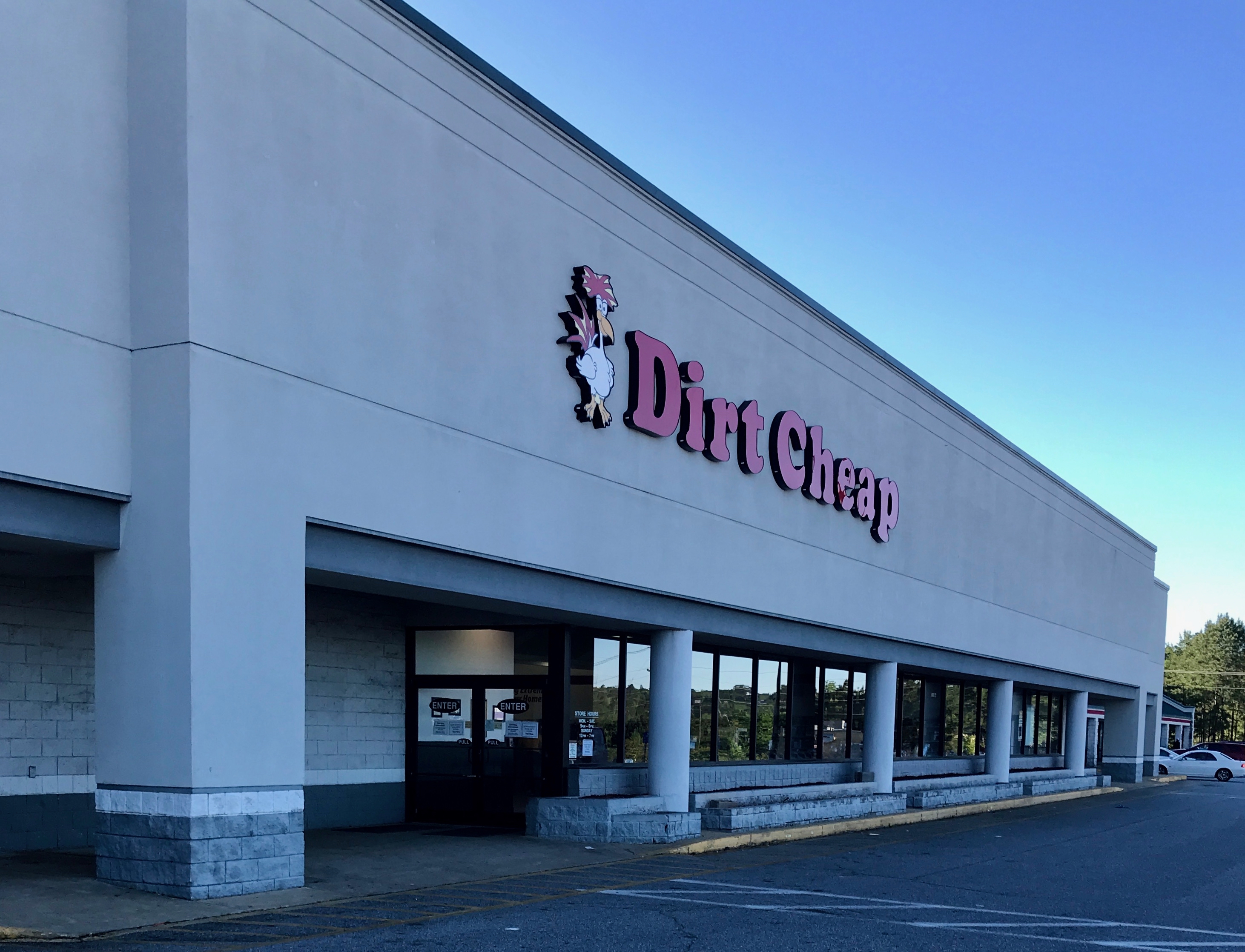
I prefer things that are free, but “dirt cheap” is the next best thing.

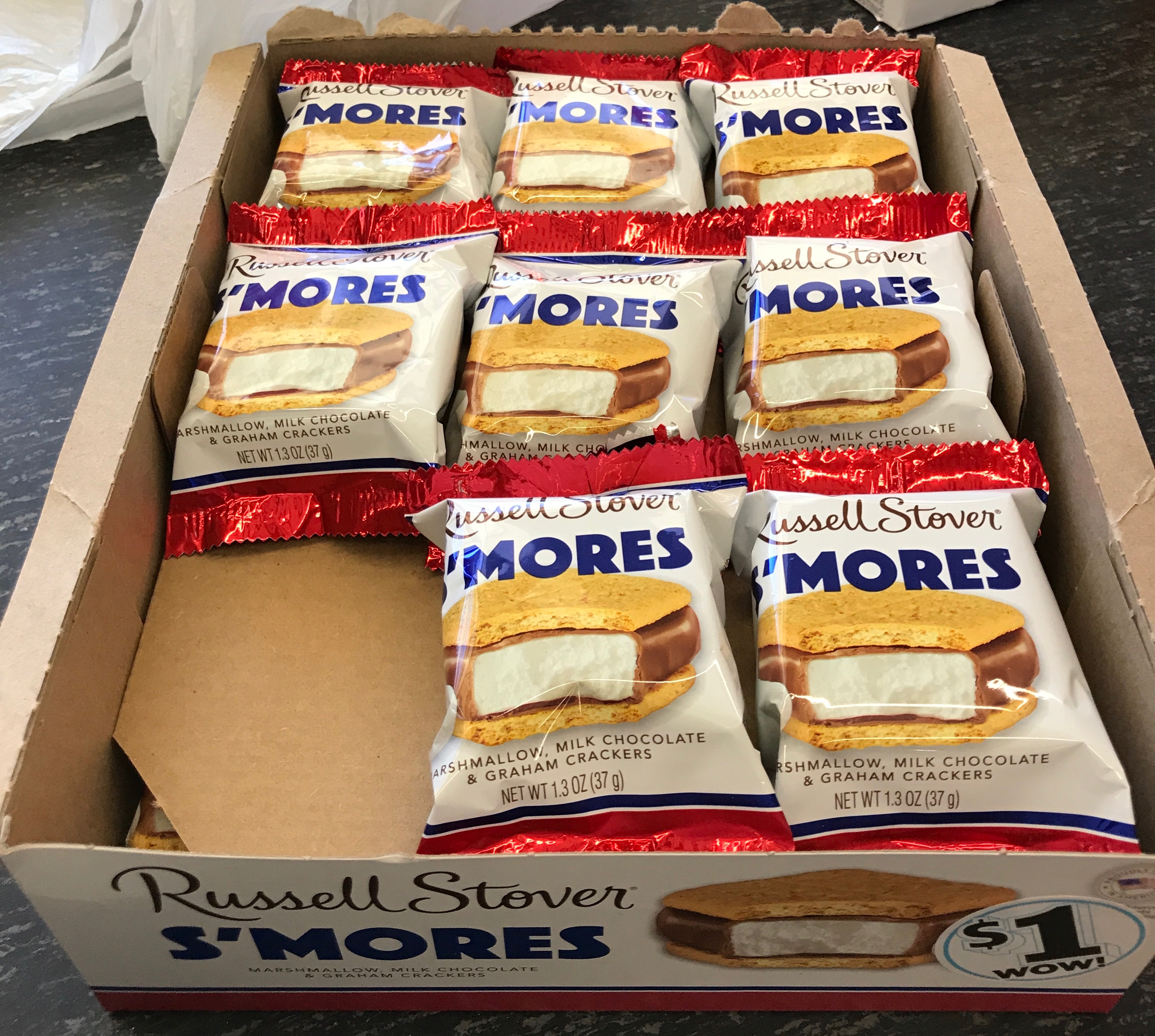
Hey! We could have used these S’mores at the Historicorps campsite!

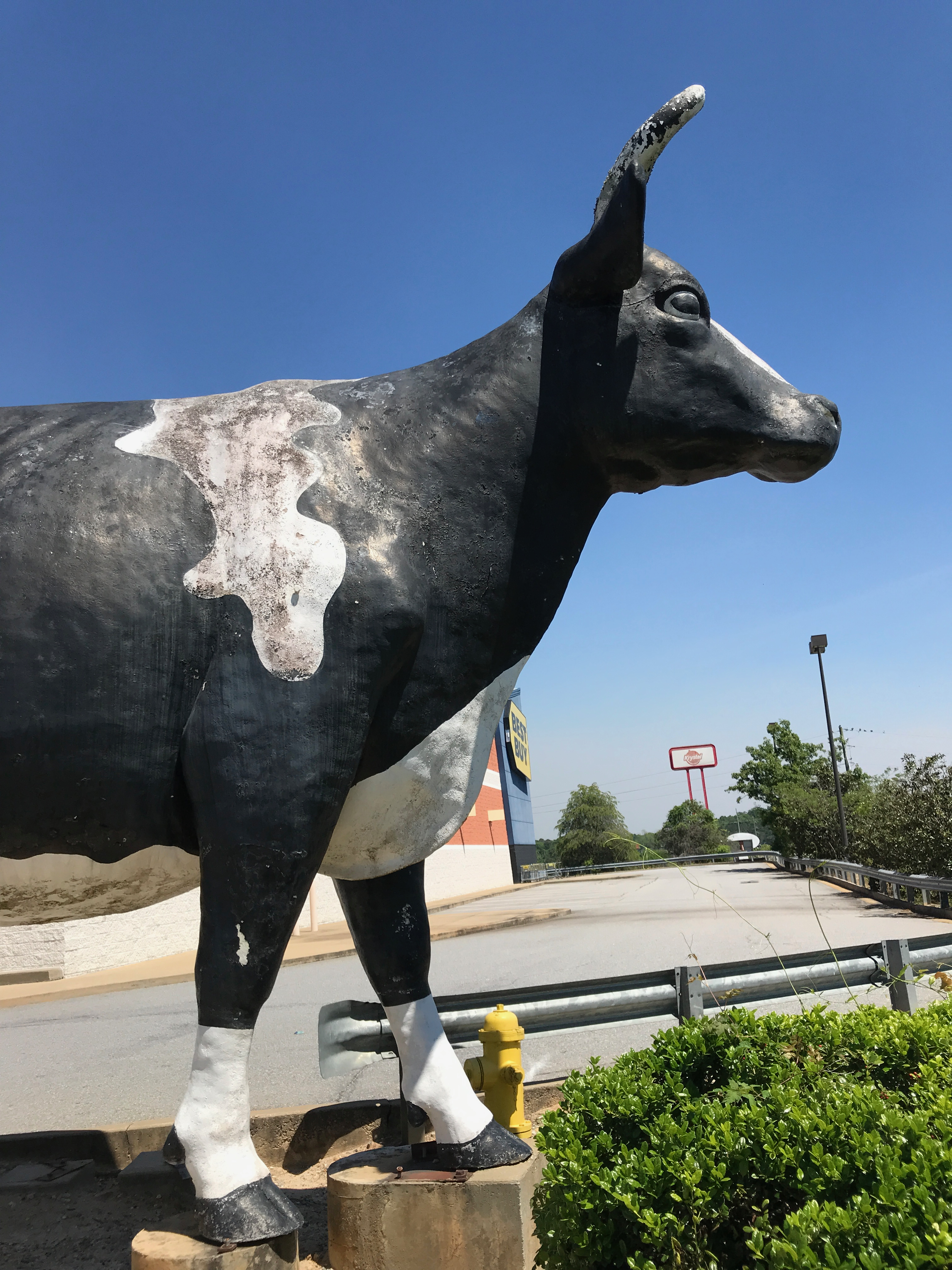
One day, I was out tooling around. I spied this large cow up on a hill looking down on the major thoroughfare. Of course I had to check it out.

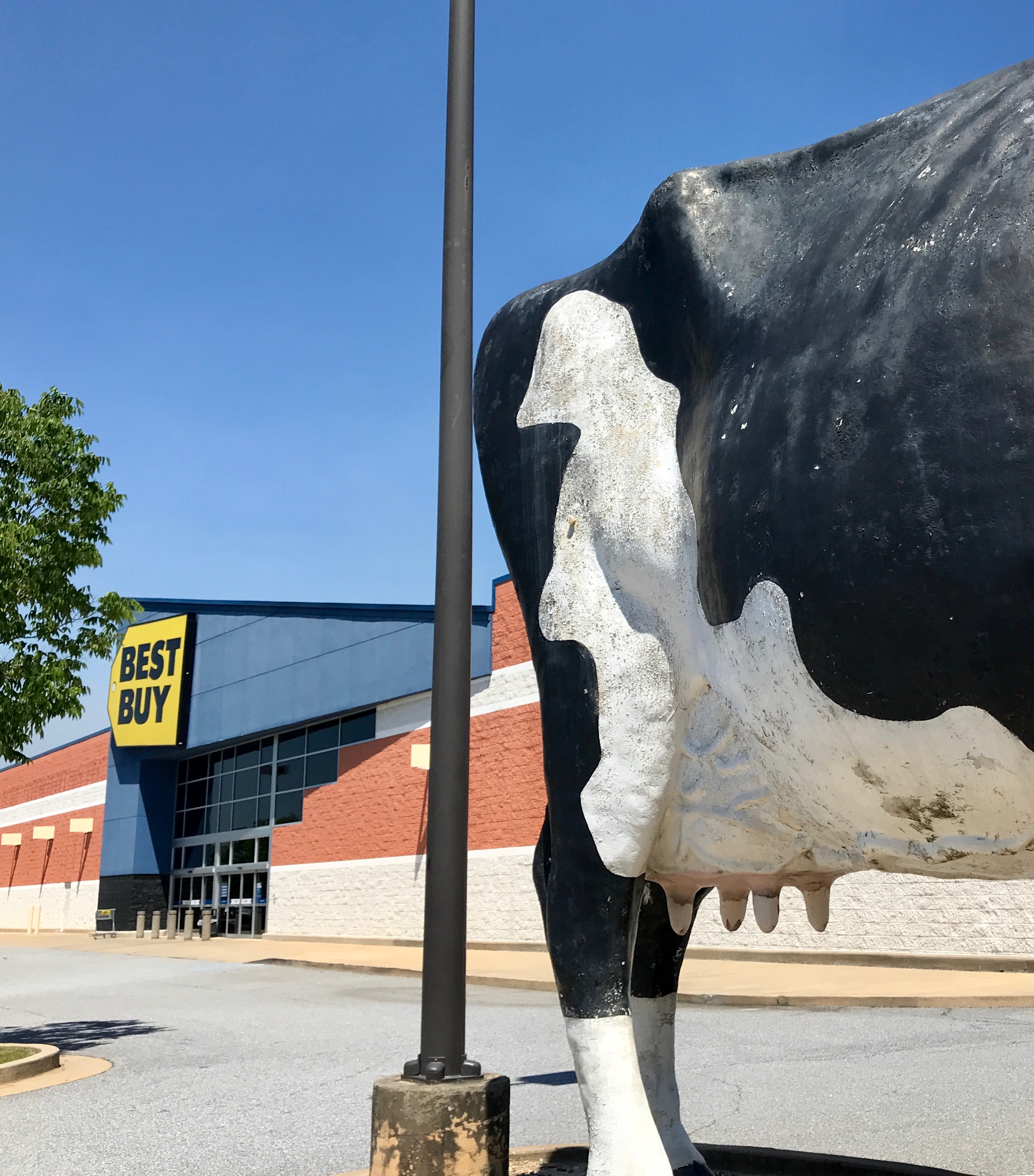
I was curious as to why there would be a cow in front of a Best Buy.

It made “udderly” no sense to me.

When I got back, I asked and Lesley told me (if I remember correctly) that there used to be a dairy store at that location and the cow was a local landmark.

My visit coincided with Easter, so we all went to church. Scott and Lesley, their children and grandchildren and maybe some in-laws, too were all there. This wasn’t Scott and Lesley’s usual church. Someone else in the family picked it out.

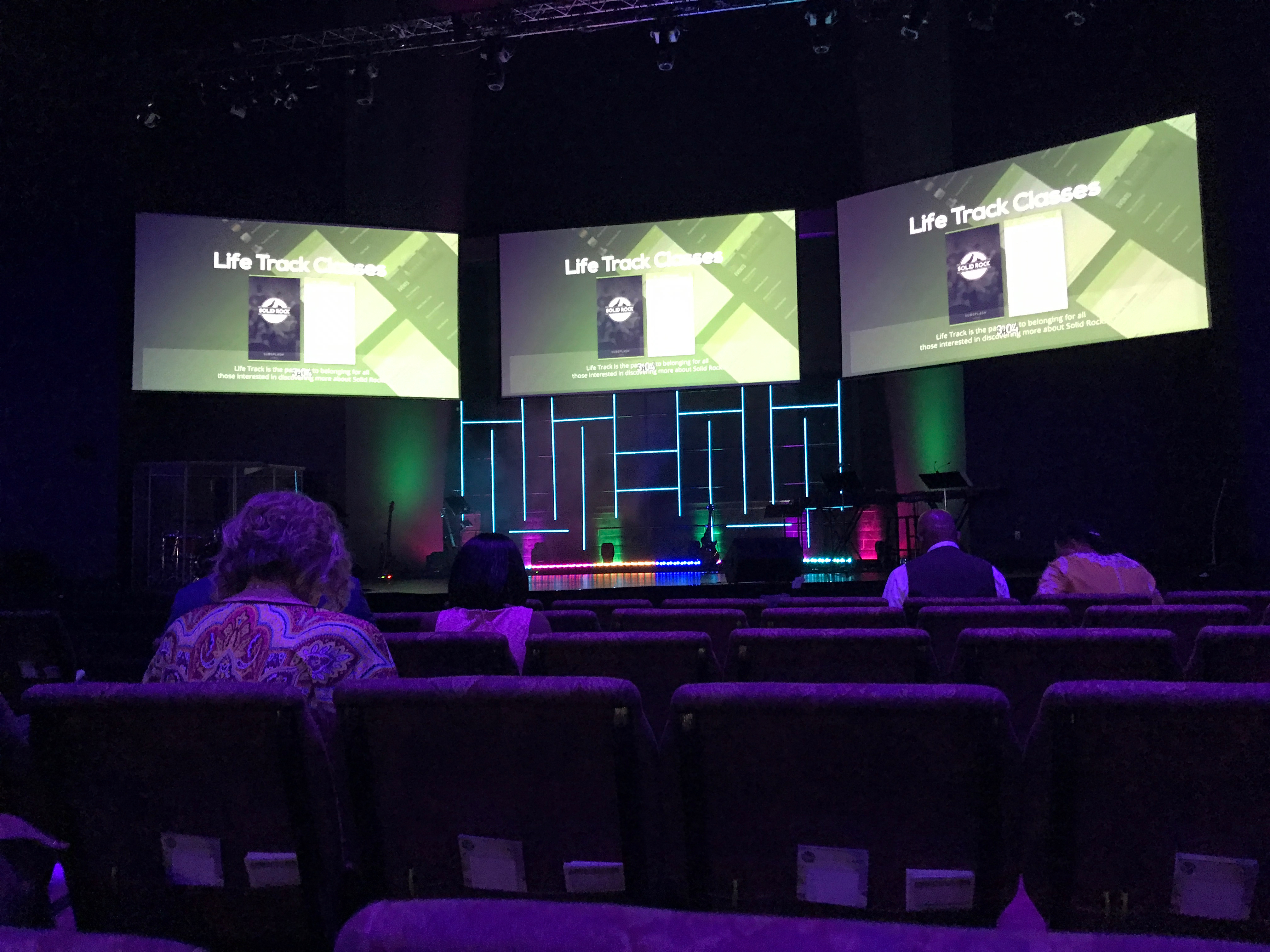
You know how I usually gripe about organ music? There was nary an organ to be seen. It was the most unusual church I’d ever been to. I snapped this photo while we were waiting for everyone to arrive. The screens in the front kept scrolling messages. Judging by the darkness of the interior, it kind of looks like this might have been the Easter vigil.

No, it was at 9:30 in the morning.

Two-foot long light sticks that change colors when you shake them were distributed. A rock band played. There were dancers. There was a lot of energy. I never really considered myself terribly traditional, but the experience seemed more like what I imagine a rave would be than a church service.

But, hey, it was something different. When in Rome…

Wait a minute, I’m sure this was nothing like Easter in Rome.

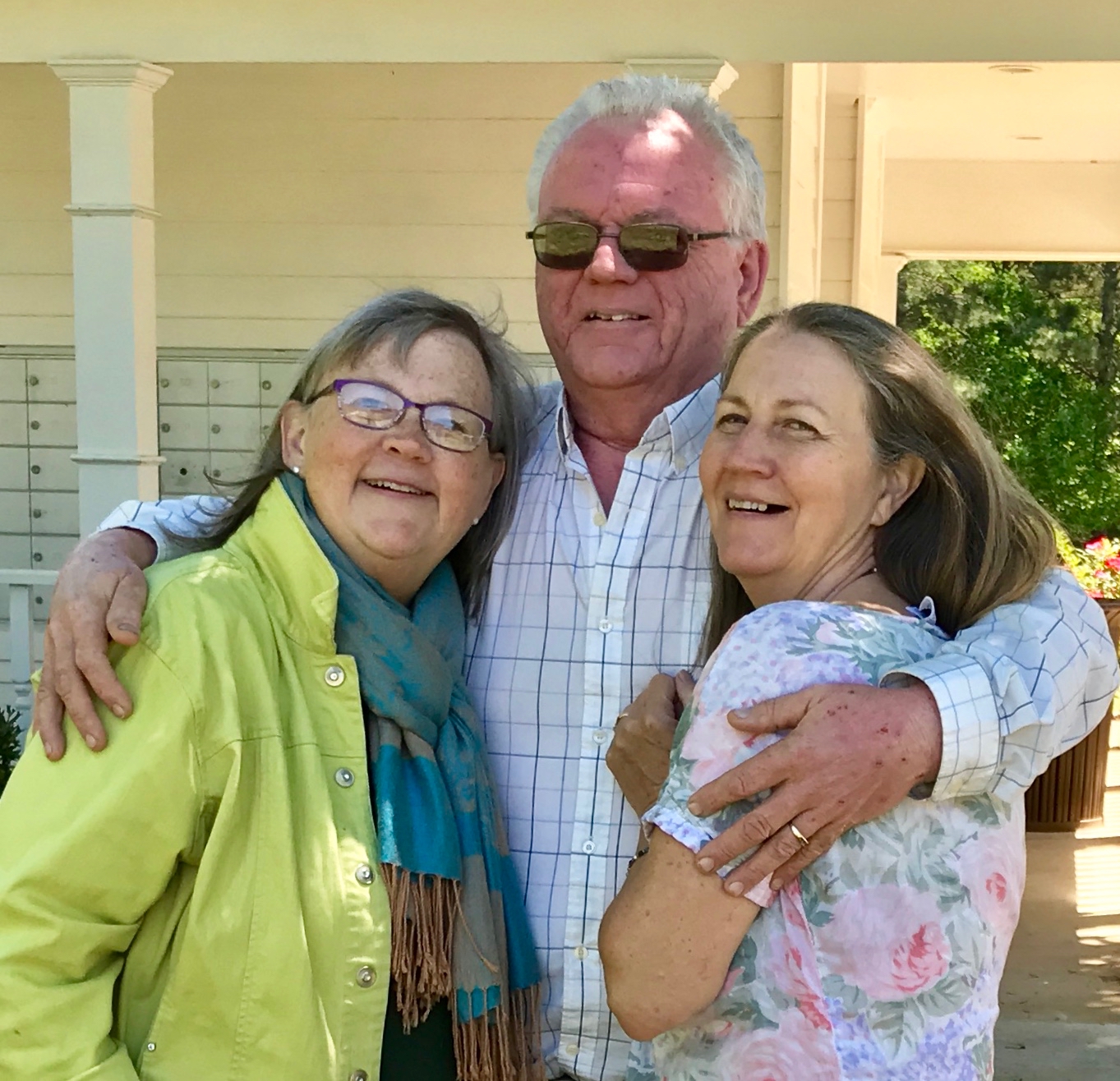
After church, we headed back to one of the kid’s places for Easter dinner. There was food galore! I got a photo of me with Scott and Lesley while I had someone there to take it.

The next day, it was time to roll on.

Thanks to Scott and Lesley for the hospitality!


After Bern (April 2019)

Okay, back to 2019 – a time before Covid shut downs and travel restrictions.

After I left Bern, I headed to South Carolina.

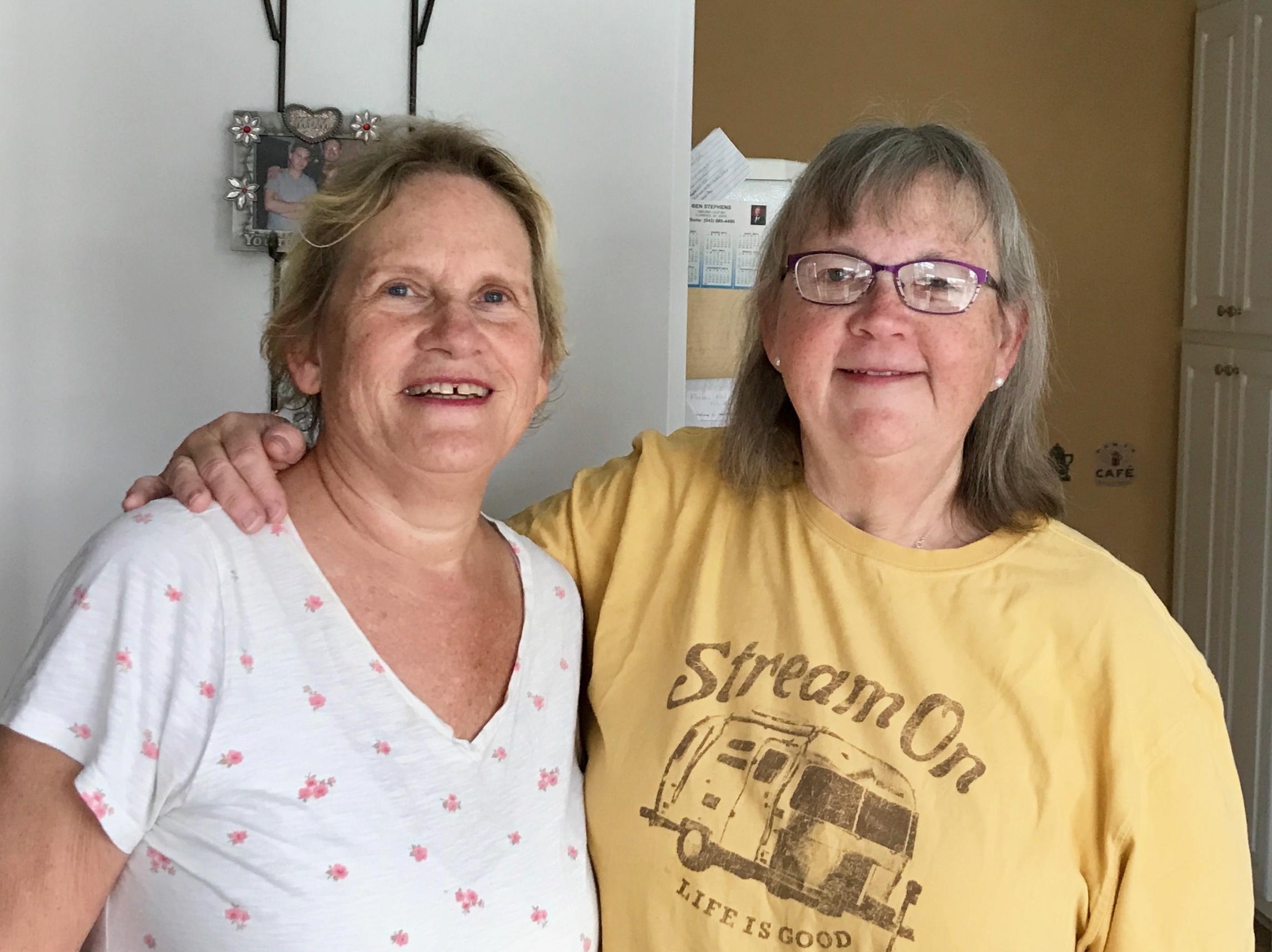
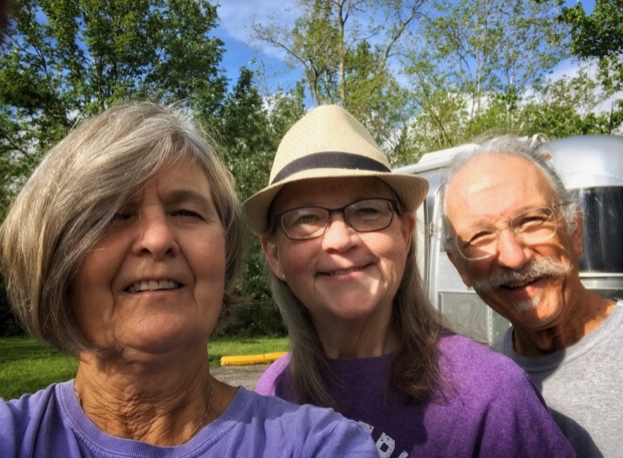
One thing I absolutely love about traveling around is meeting up with people I’ve met during my life. This time, it was Rosemary, a high school friend. Heavens! I hadn’t seen her in 46 years!

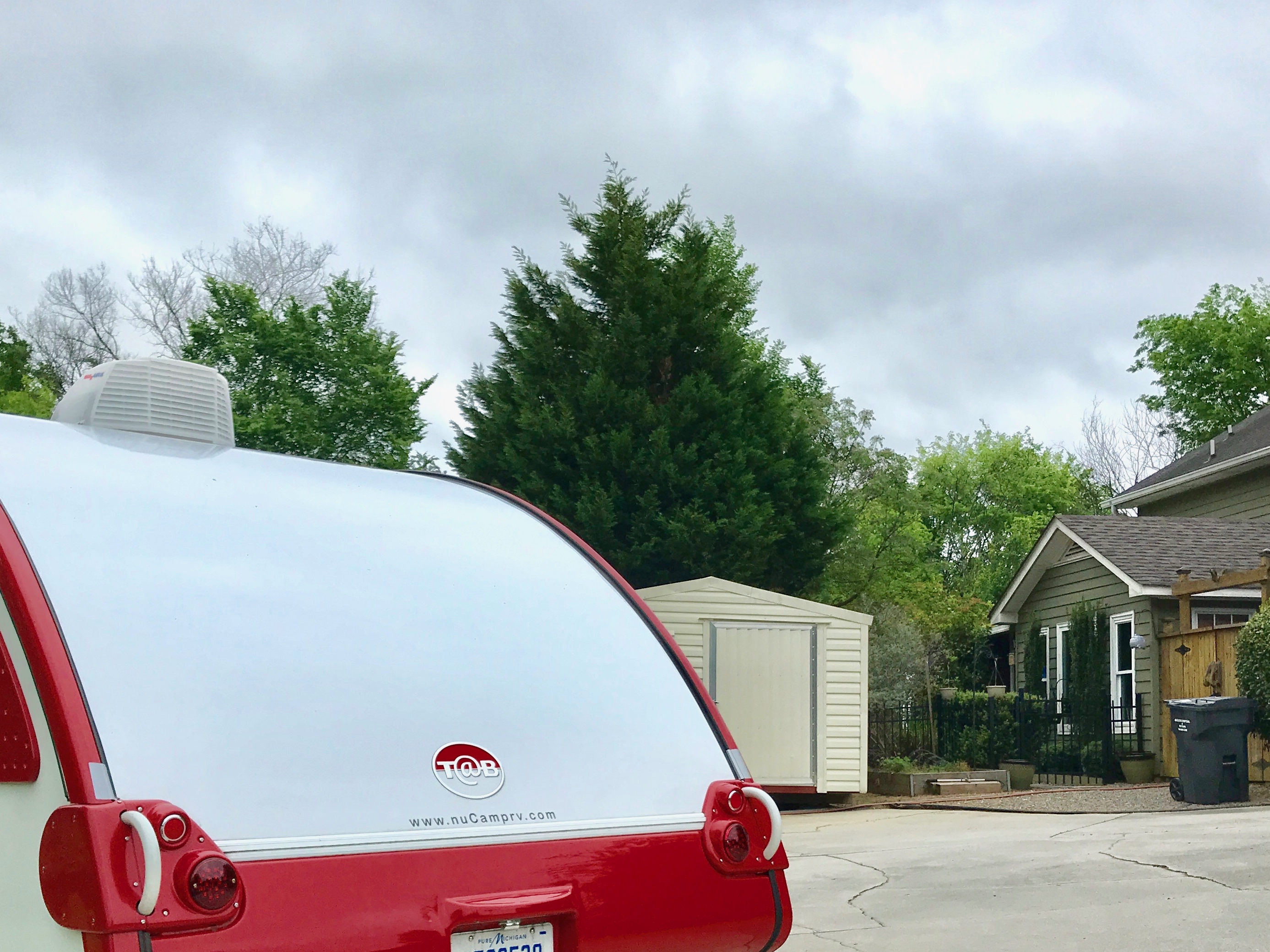
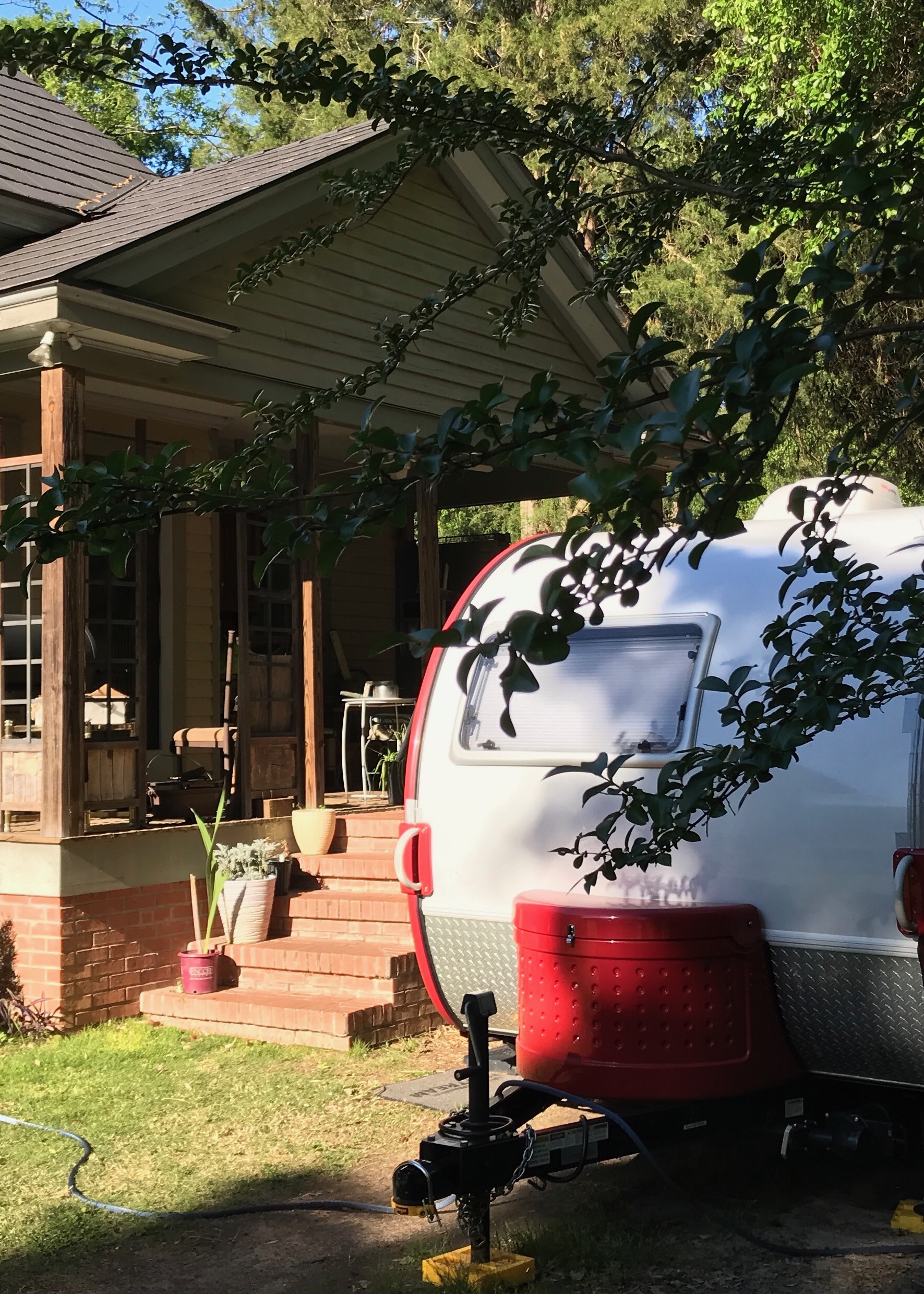
Old friends and I’m wearing an old T shirt. I should have been wearing a T@b shirt!

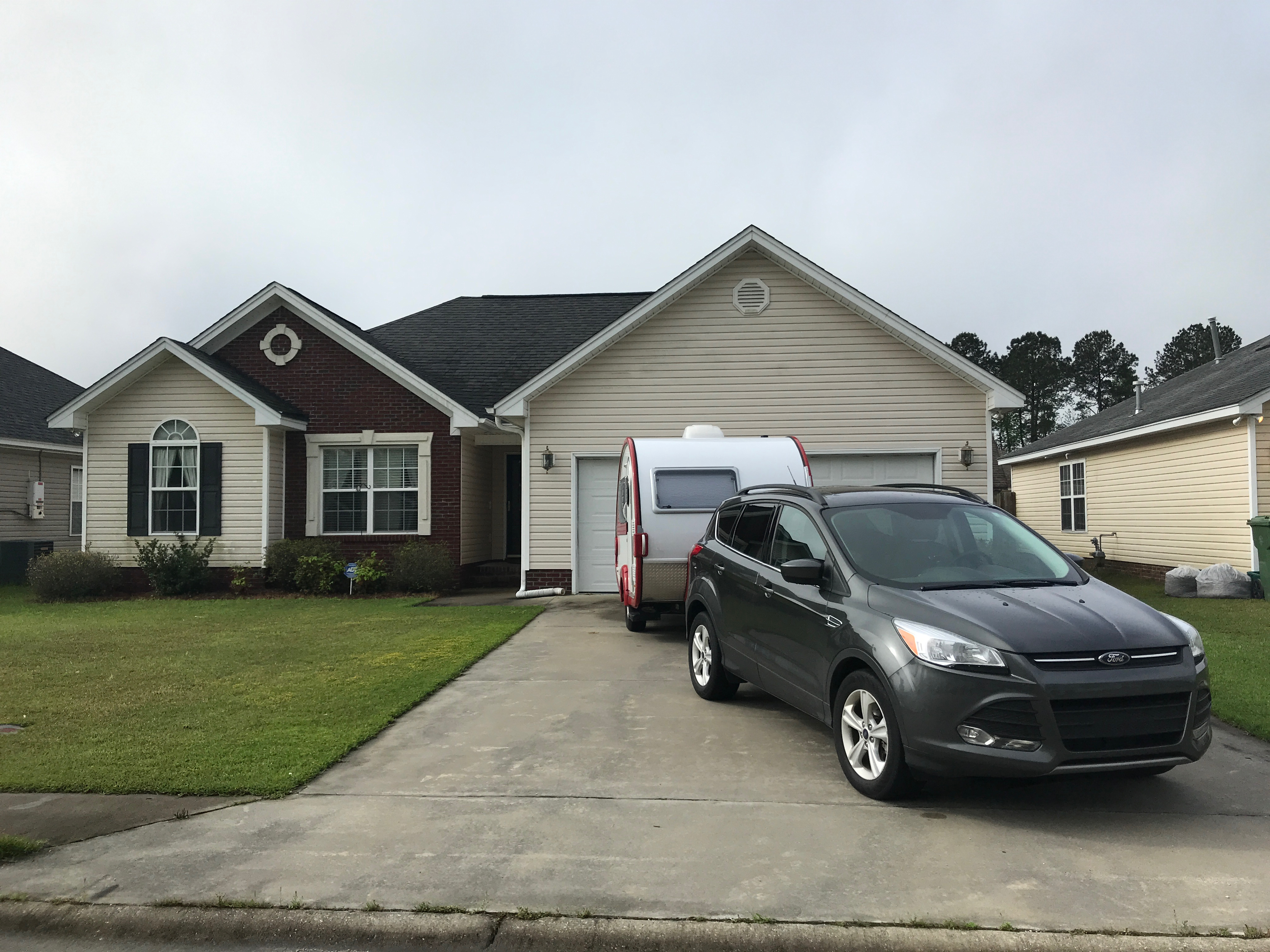
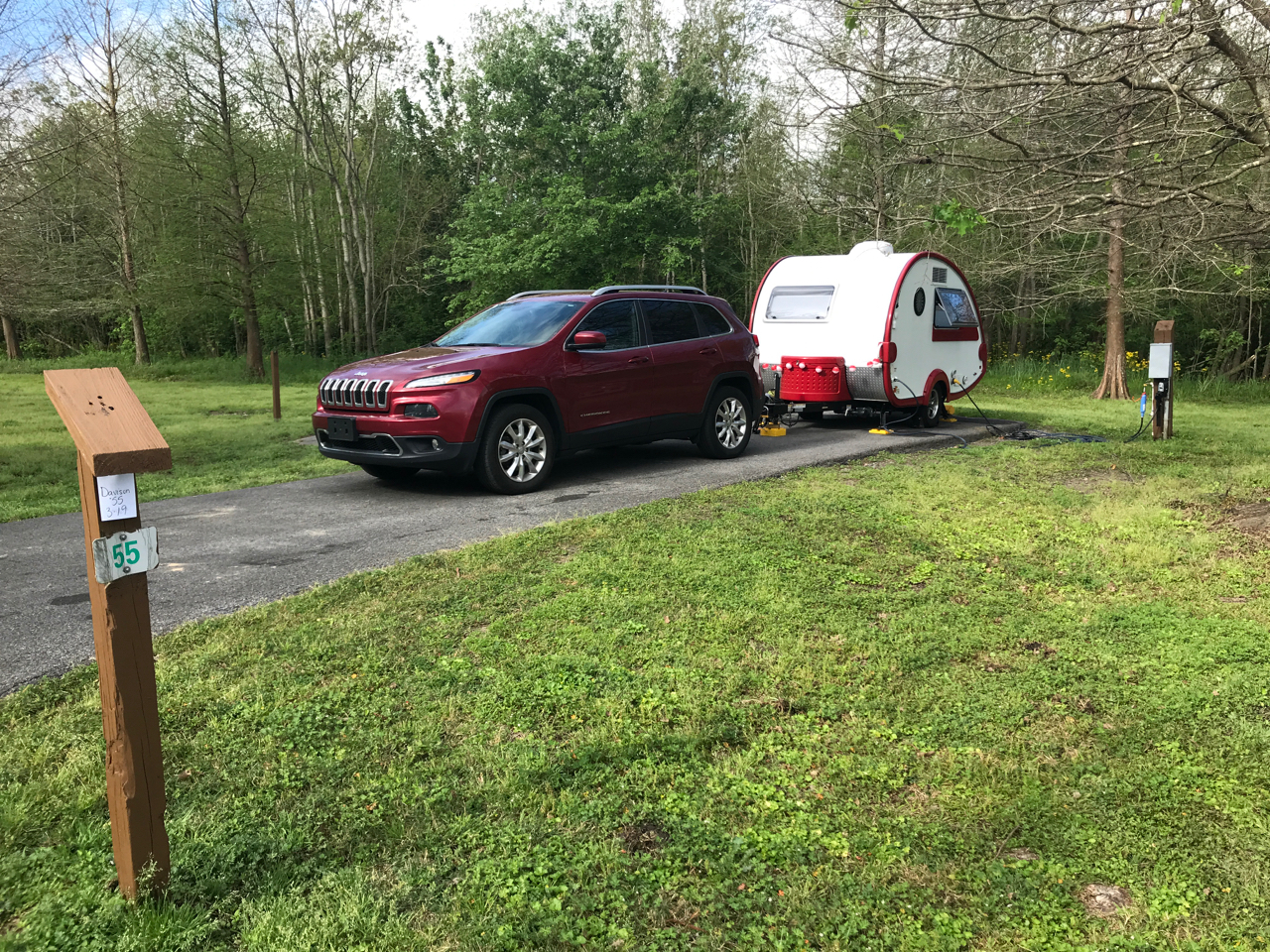
Hmm…maybe I should start a new photo series: Every house looks better with a T@b in the driveway…

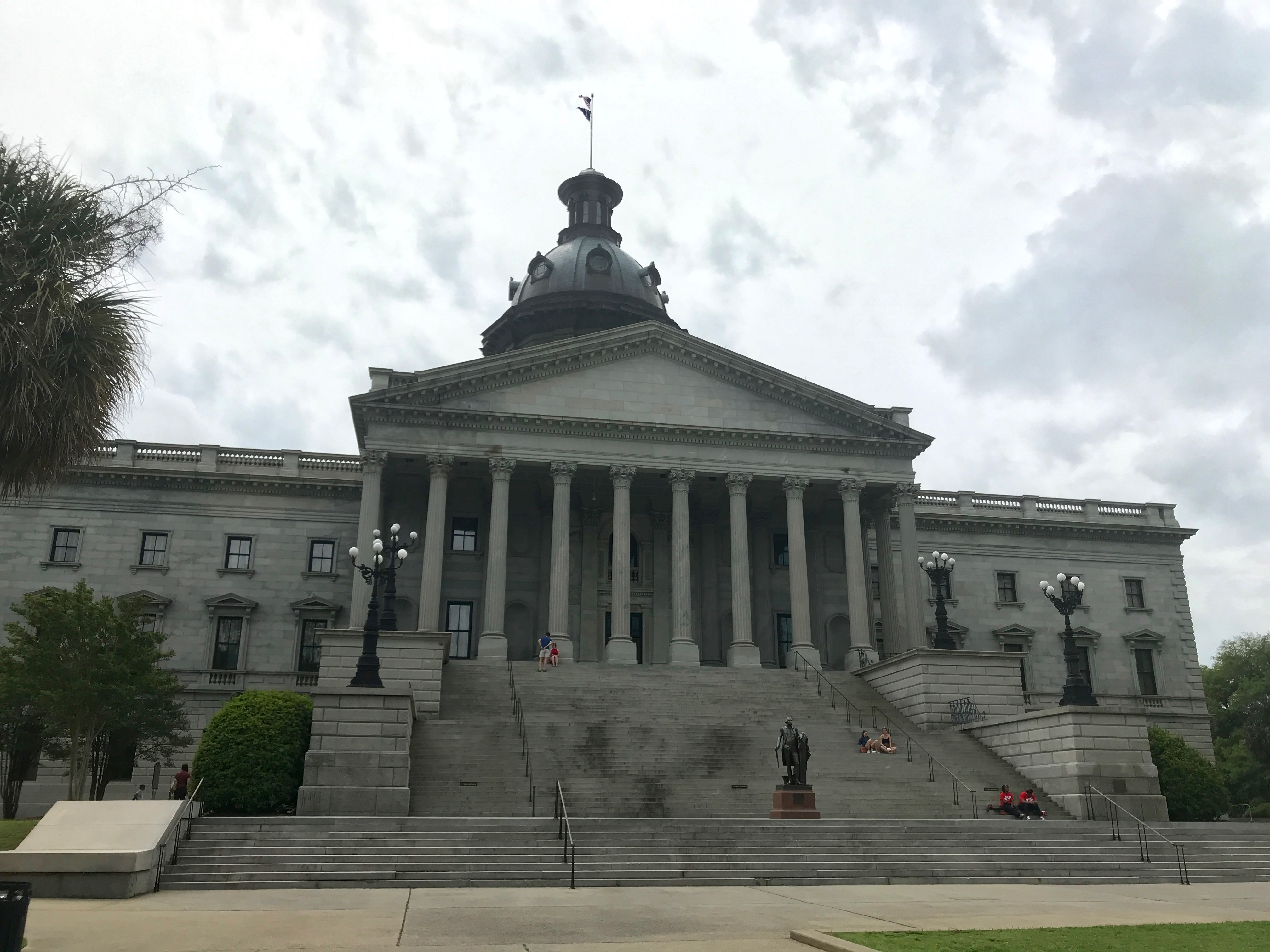
We caught up as best we could. In some ways, it’s easier to catch up when you haven’t seen someone in decades. It forces you to just hit the high points. It was a quick overnight, and then I was on to the South Carolina State Capitol in Columbia.

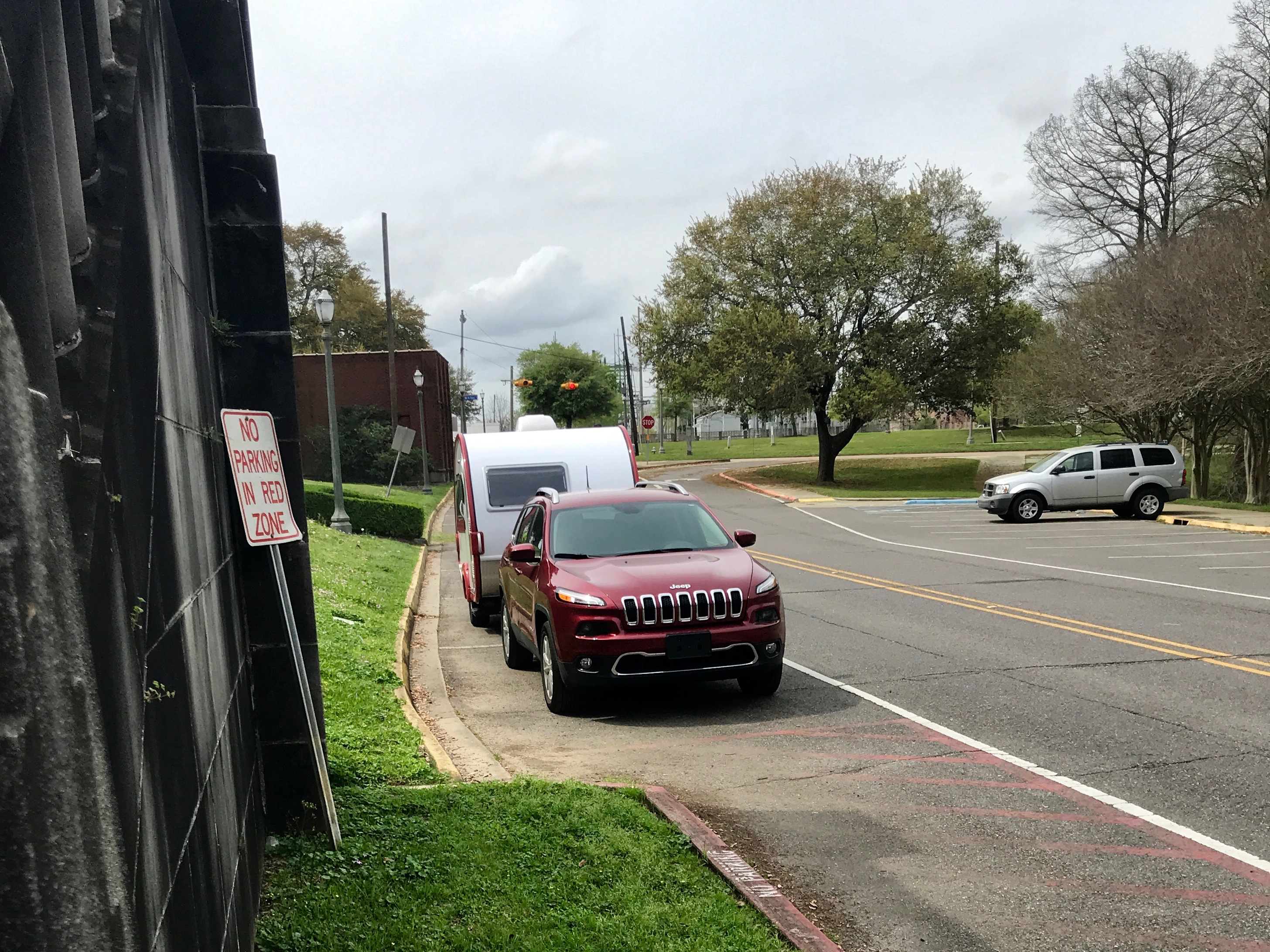
I couldn’t believe it, but I found a place nearby to park with the trailer hitched up.

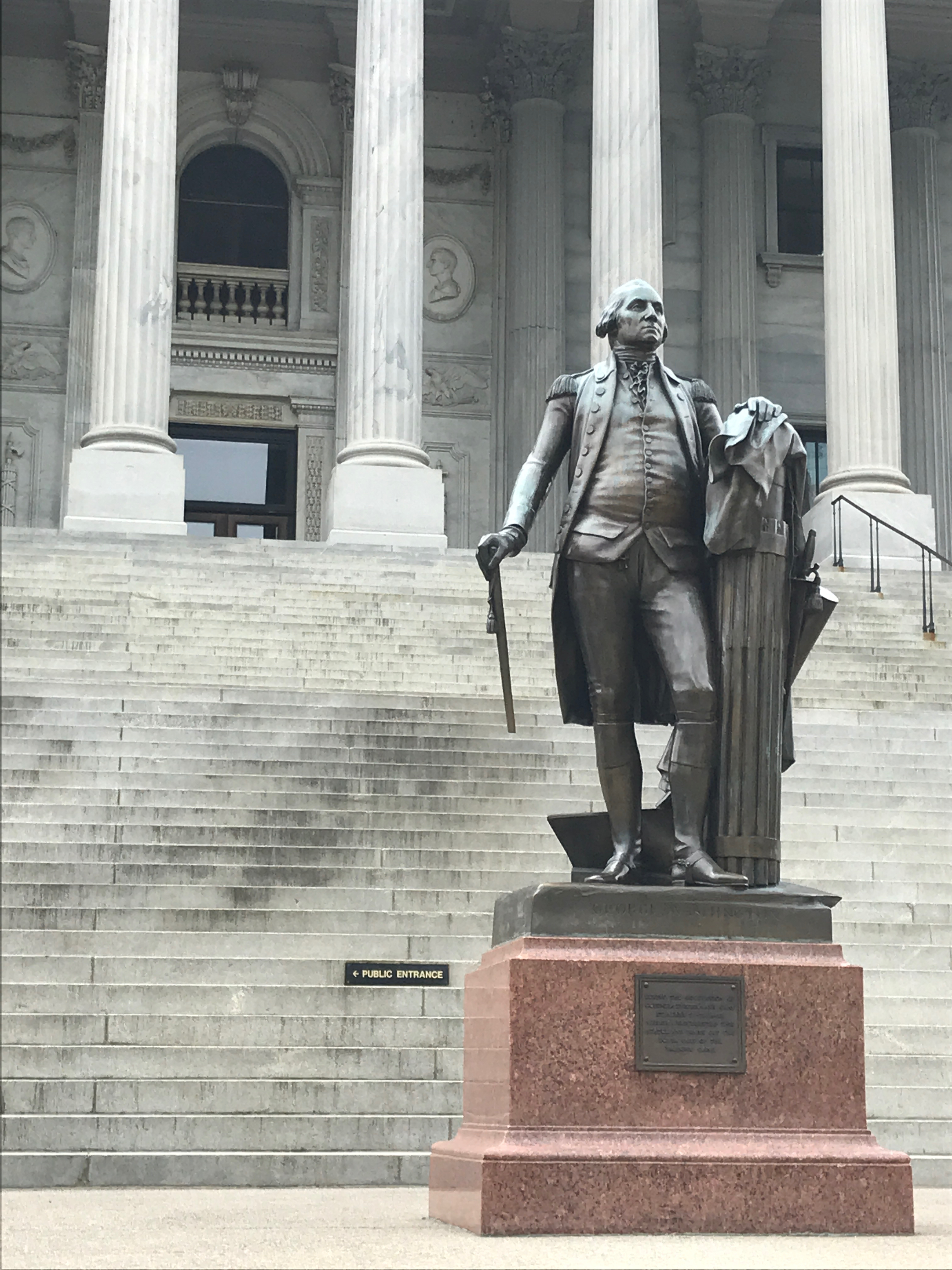
I walked toward it, wondering whose statue they chose to put in front.

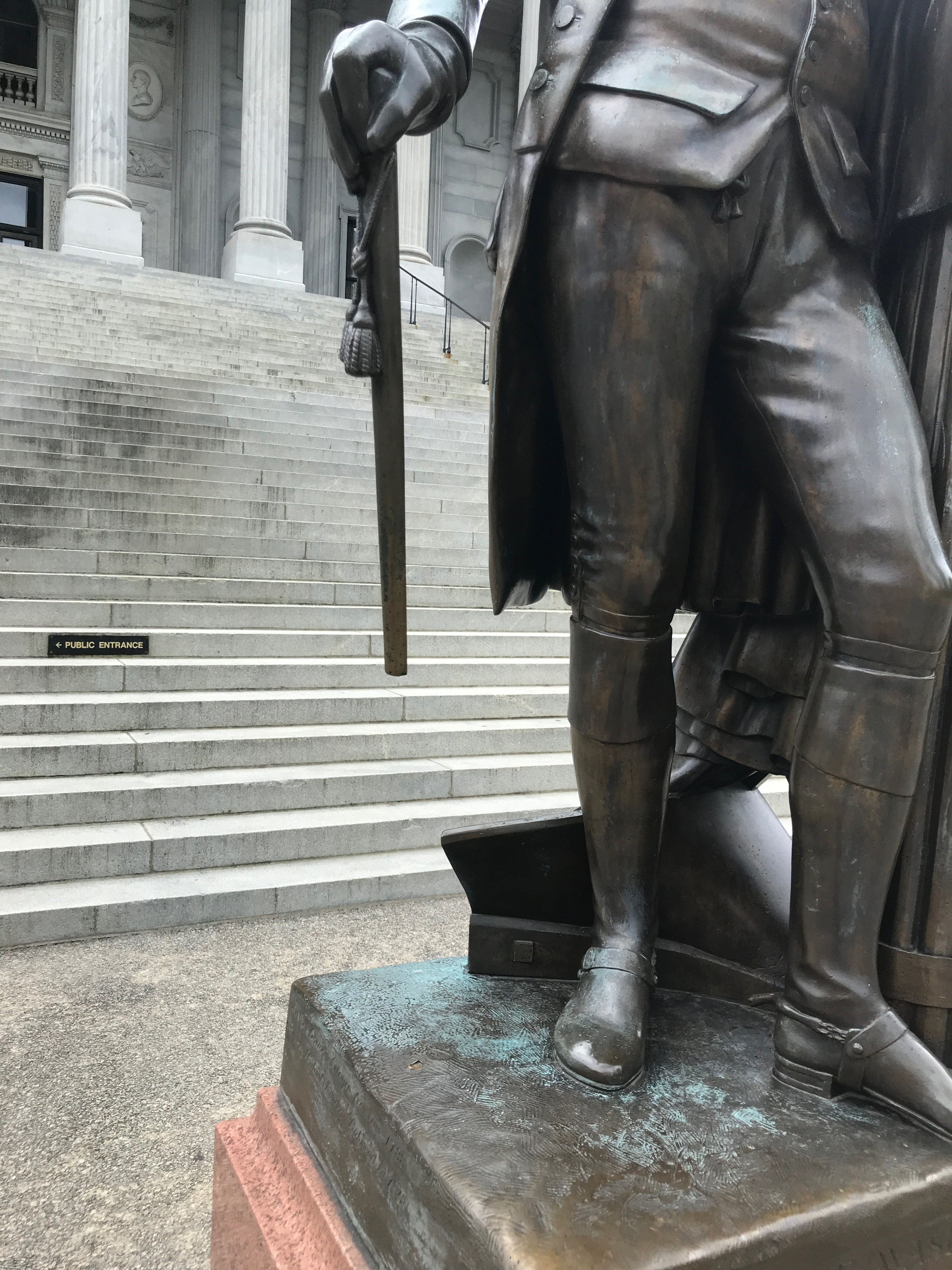
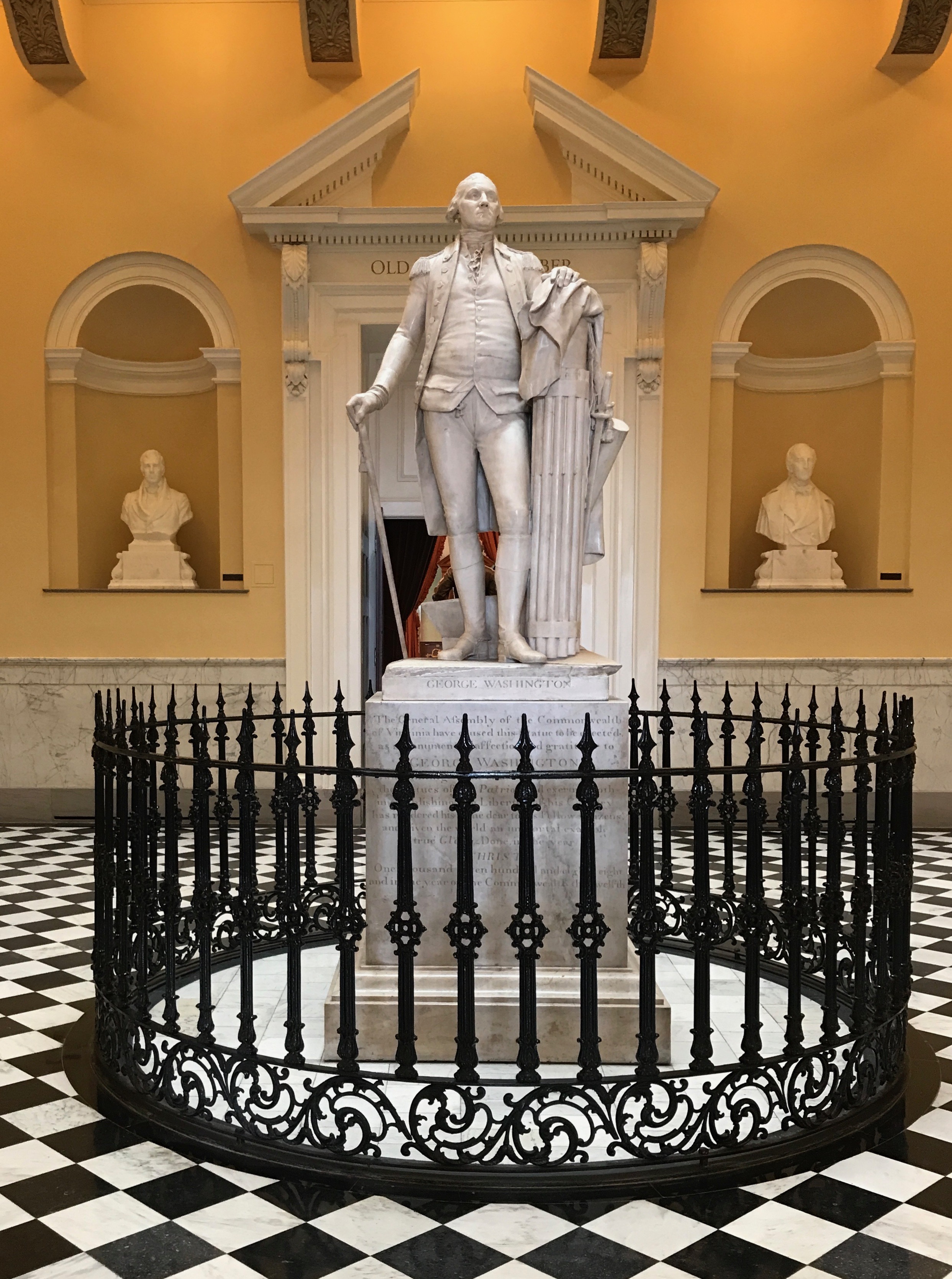
George Washington. But what’s the story with the walking stick?

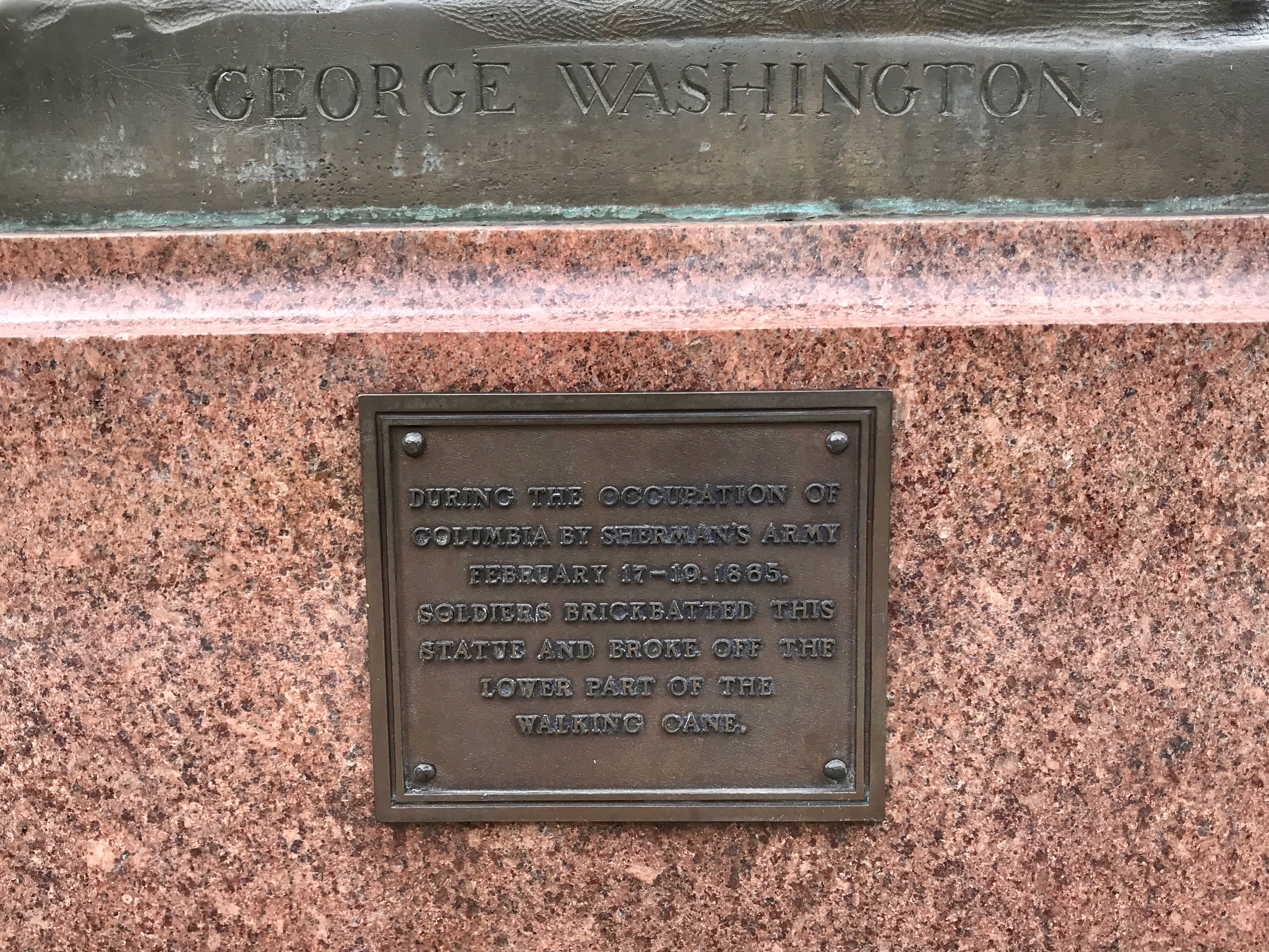
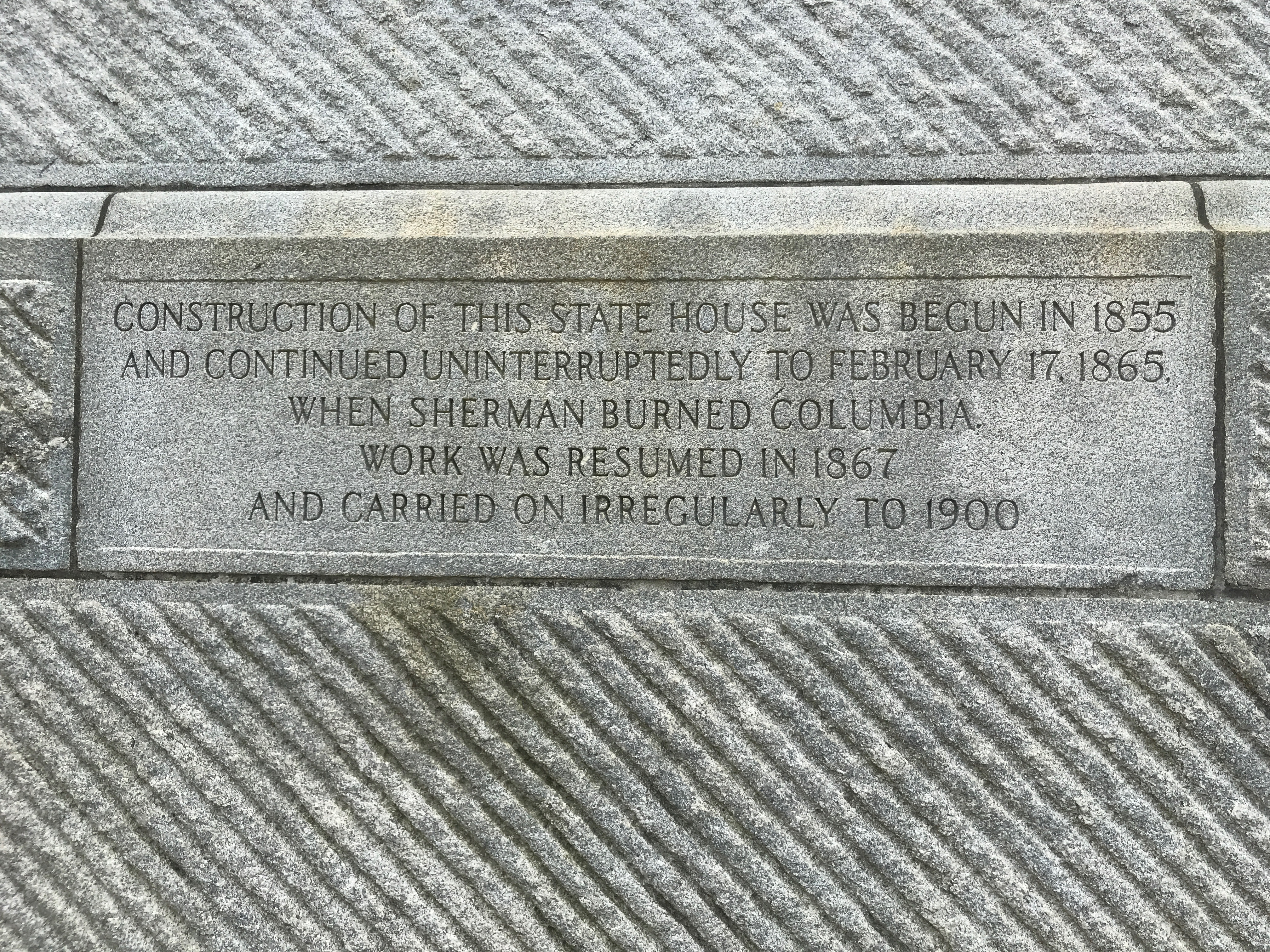
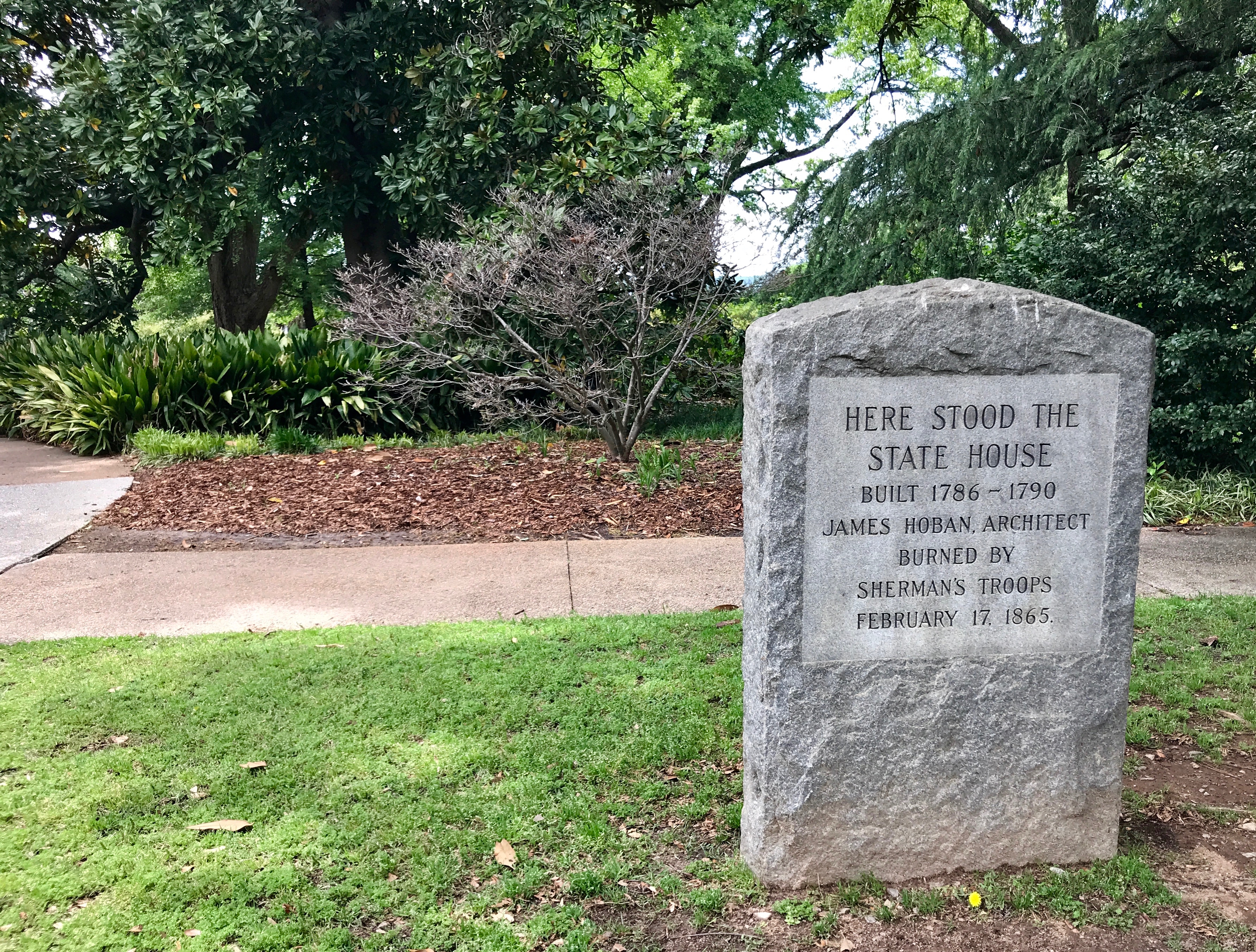
The inscription was interesting. The Union soldiers did it during Sherman’s occupation of Columbia in February 1865. “Soldiers brickbatted this statue…”

I had heard the term “brickbat” before, but I wasn’t completely sure of the definition.

According to Merriam Webster, there are two definitions.

1. a fragment of a hard material, such as a brick”
2. an uncomplimentary remark

I wonder if they meant that the soldiers literally threw chunks of bricks at the statue or if they meant to imply that the damage was an insult to George Washington?

The statue is interesting. It is a full-size bronze copy of a marble statue by Jean-Antoine Houdon for the Virginia State Capitol. Here’s a picture I took of the original when I was in Richmond.

According to the Historic Columbia website, Houdon depicted Washington resigning as commander-in-chief of the Continental Army: he relinquishes his power to the democracy (represented by his sword hanging on a bundle of thirteen reeds) in order to return to his farm (symbolized by the plow at his feet). Originally installed on the ground floor of the South Carolina State House, the statue expressed the kinship that antebellum South Carolina politicians felt with the revolutionary hero and slaveholder as they defended their own right to continue as a society defined by slavery.

The statue was moved from the ground floor of the statehouse outside in 1889 and to its current location in 1911. In its 1931 report, the Historical Commission of South Carolina reported an expenditure of $40 for a bronze plaque “reciting the abuse accorded it byFederal soldiers in February, 1865.”

So, I am guessing that “brickbat” in this case meant more of the second definition, perhaps with overtones of the first.

I came across the cornerstone. I guess the spirit of resentment is important to South Carolina.

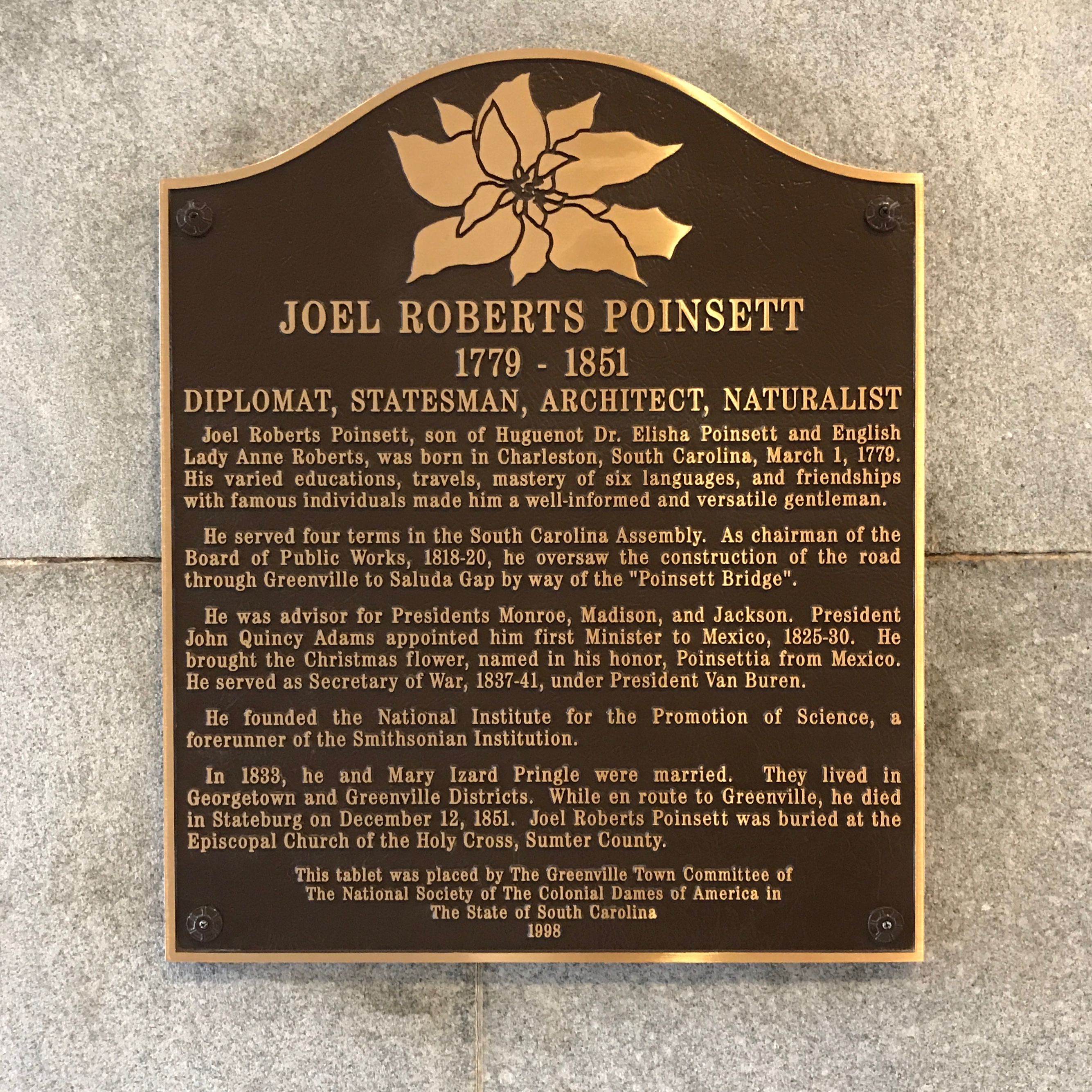
Here’s another bit of interesting information. The poinsettia has a tie to South Carolina.

I made my way inside.

There didn’t seem to be any tours being given when I visited, so I just roamed around a bit.

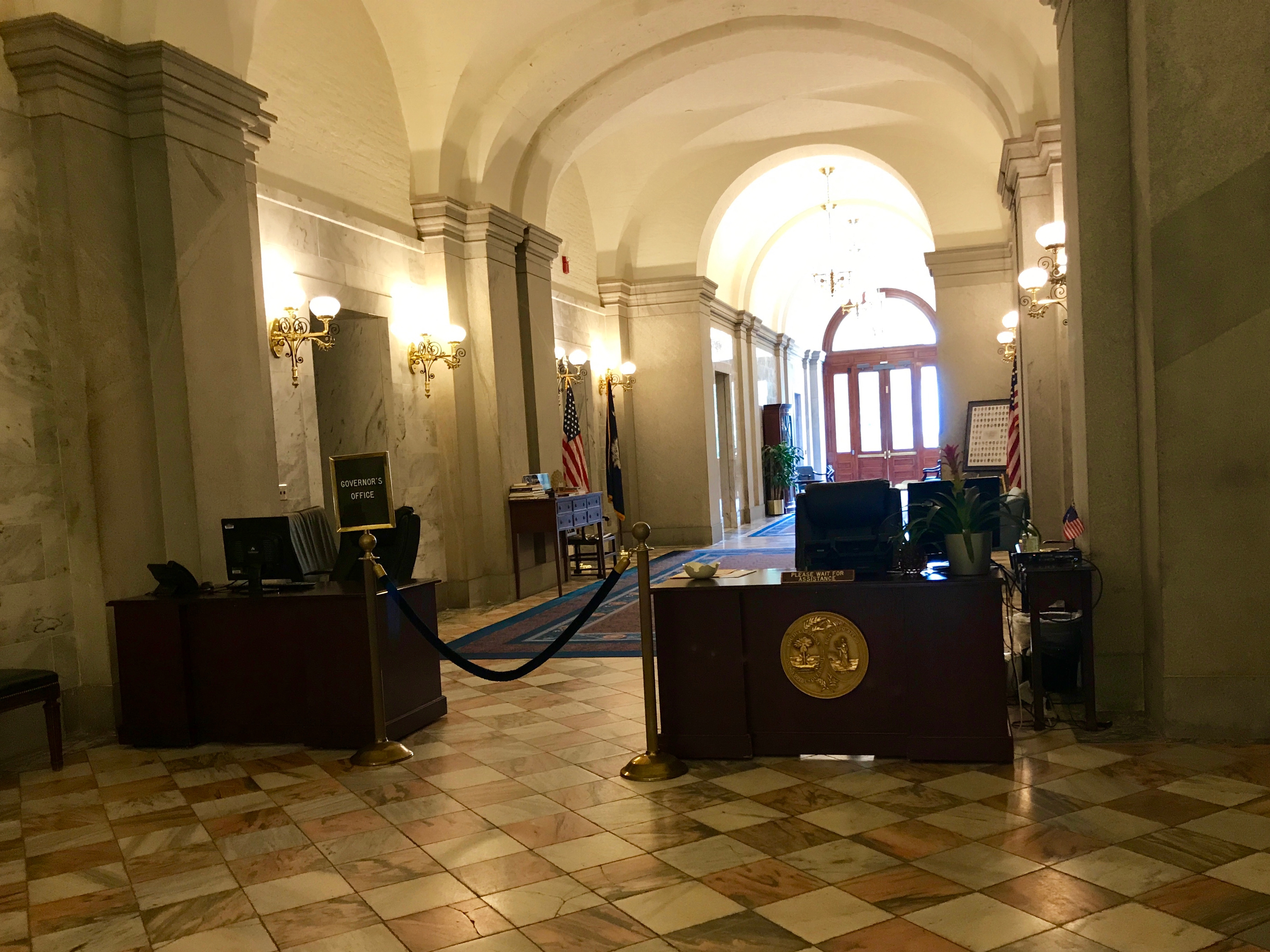
The governor’s office is down that hallway.

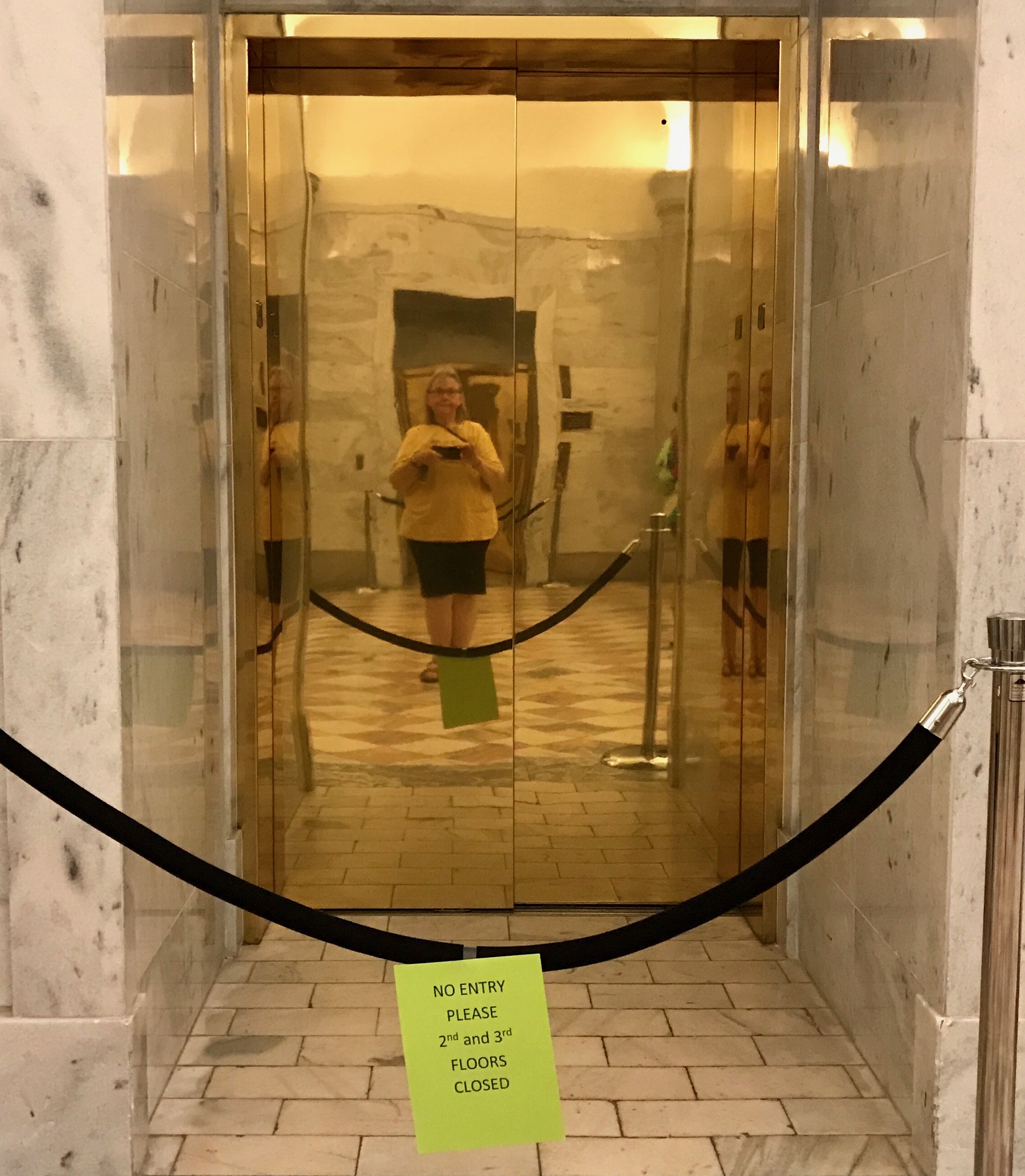
I took a selfie of my reflection in the elevator doors.

As I remember, this is in the lower level.

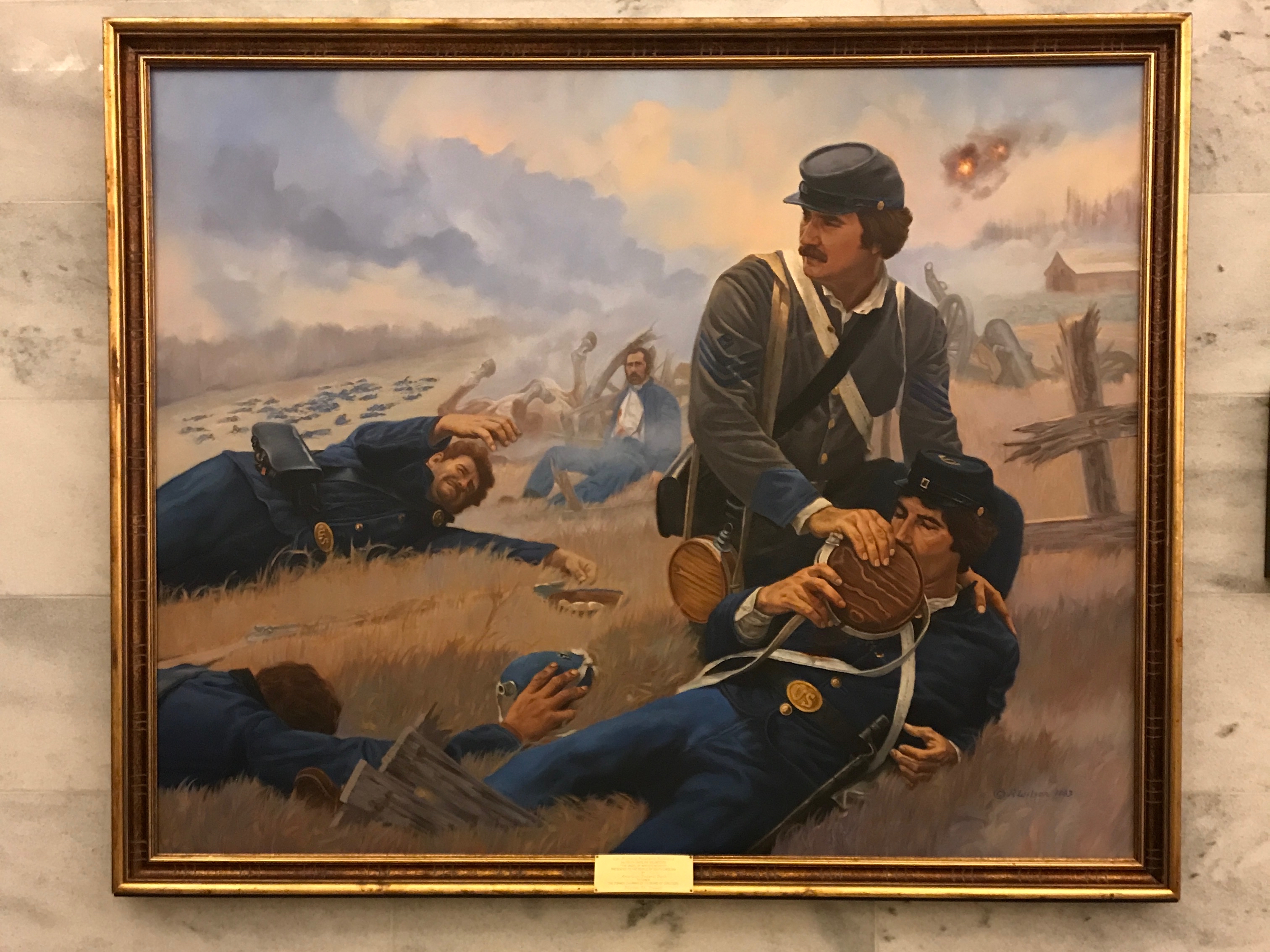
They had some displays in the basement. There was this painting of the Angel of Marye’s Heights.

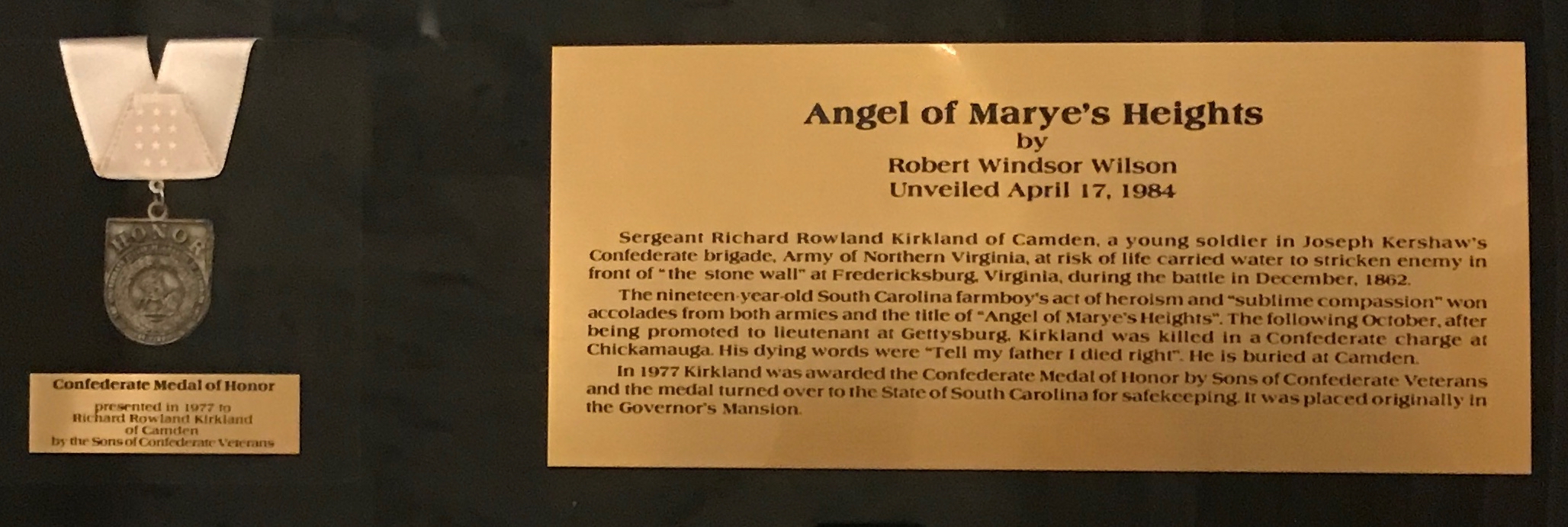
Sergeant Richard Rowland Kirkland took water to the enemy during the battle of Fredericksburg in December 1862. When he died during the battle of Chickamauga, his dying words were reported to be, “Tell my father I died right.”

He was awarded the Confederate Medal of Honor by Sons of Confederate Veterans in 1977.

I continued my explorations.

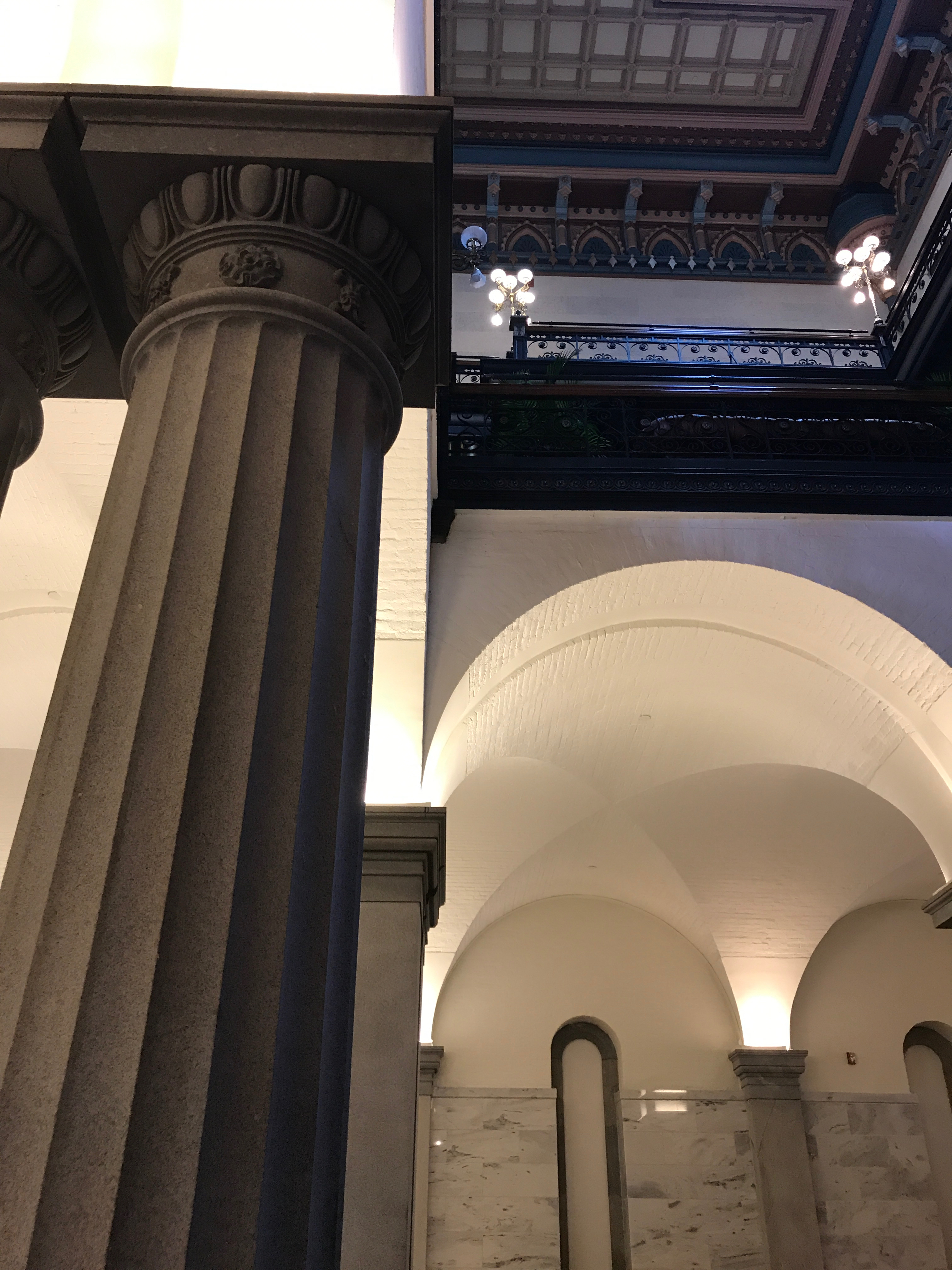
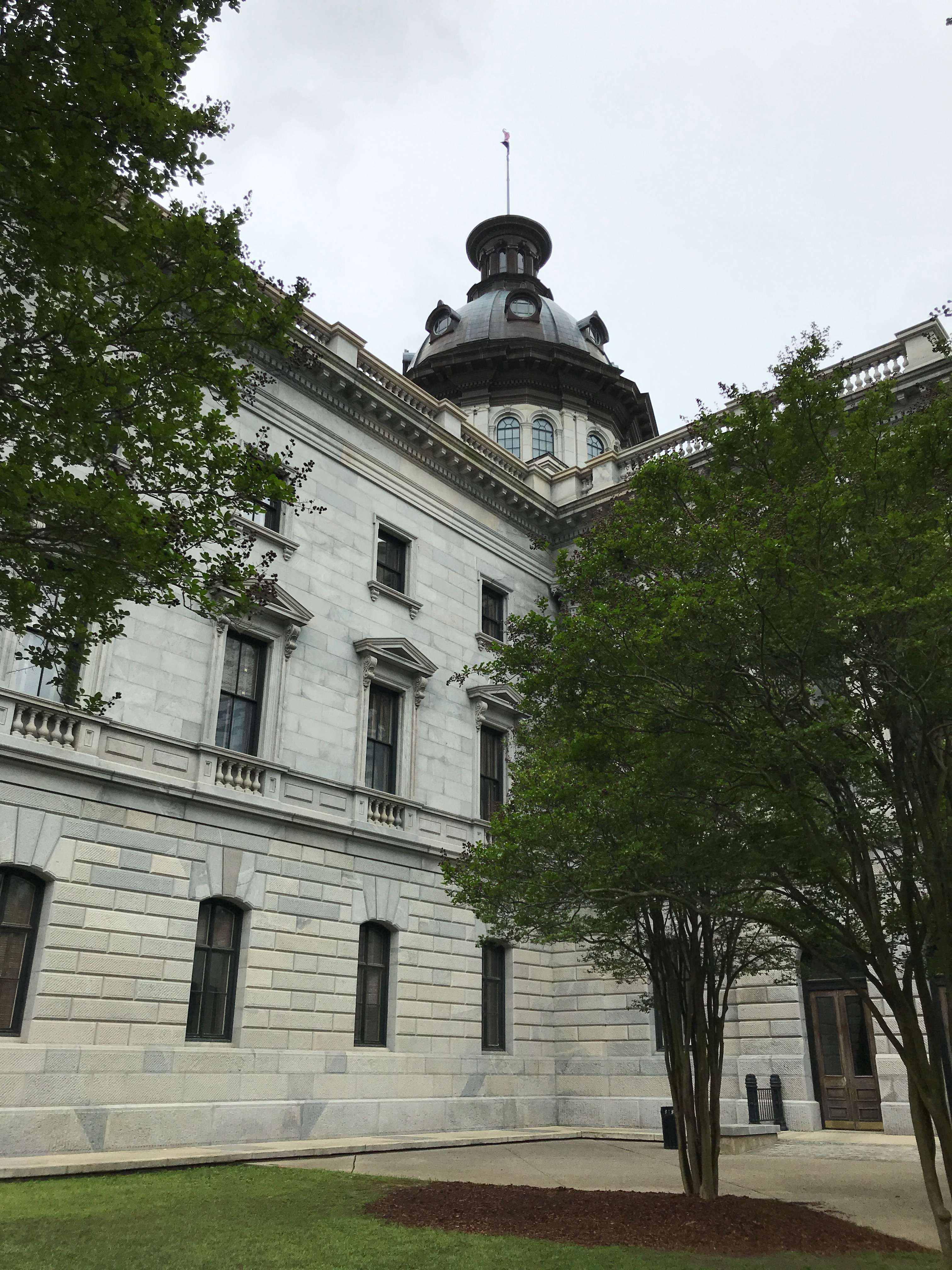
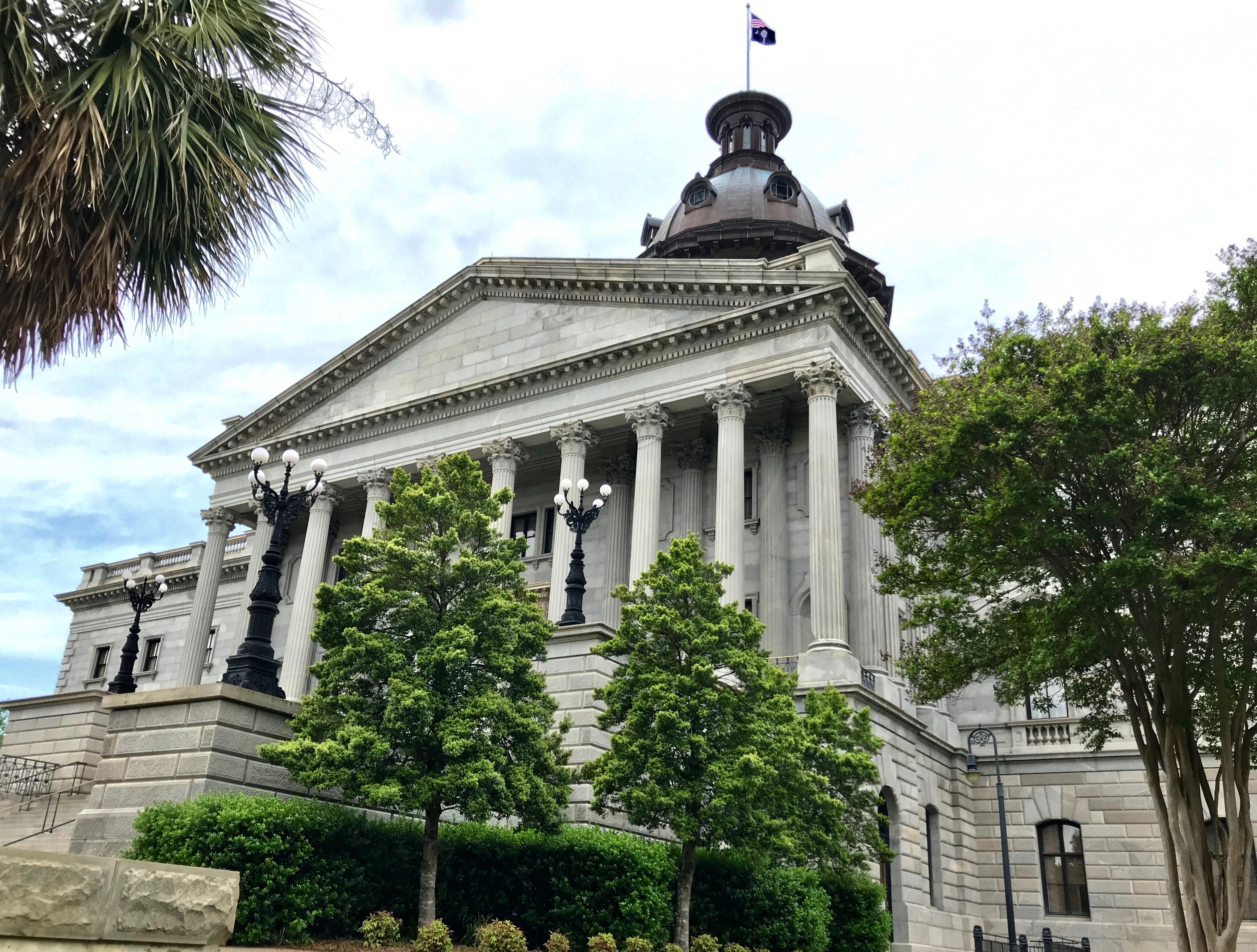
There appears to be quite a variety of architectural styles, probably due to the long time period that the building was under construction.

They did include a dome. I headed outside to see what else I could see.

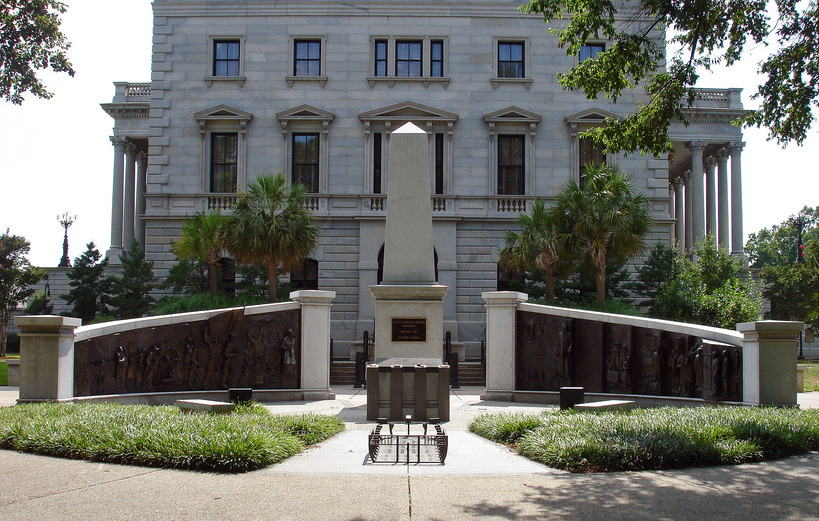
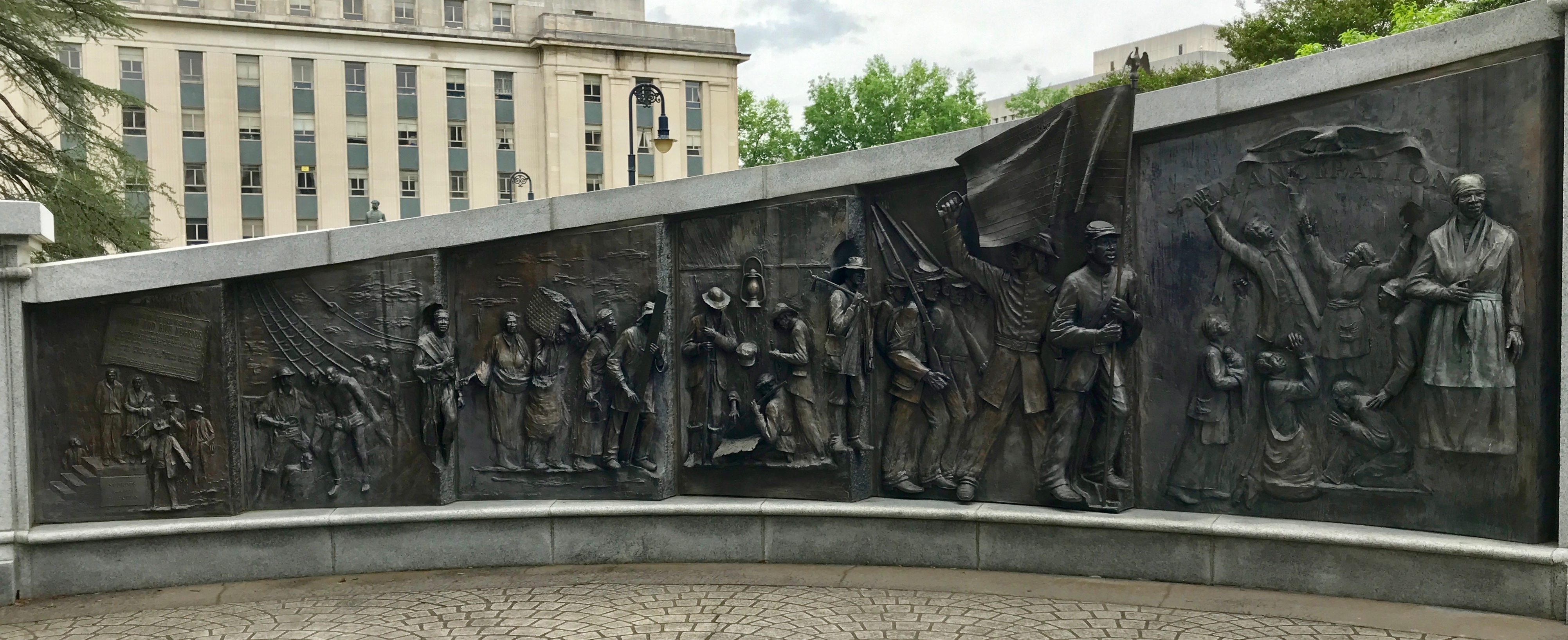
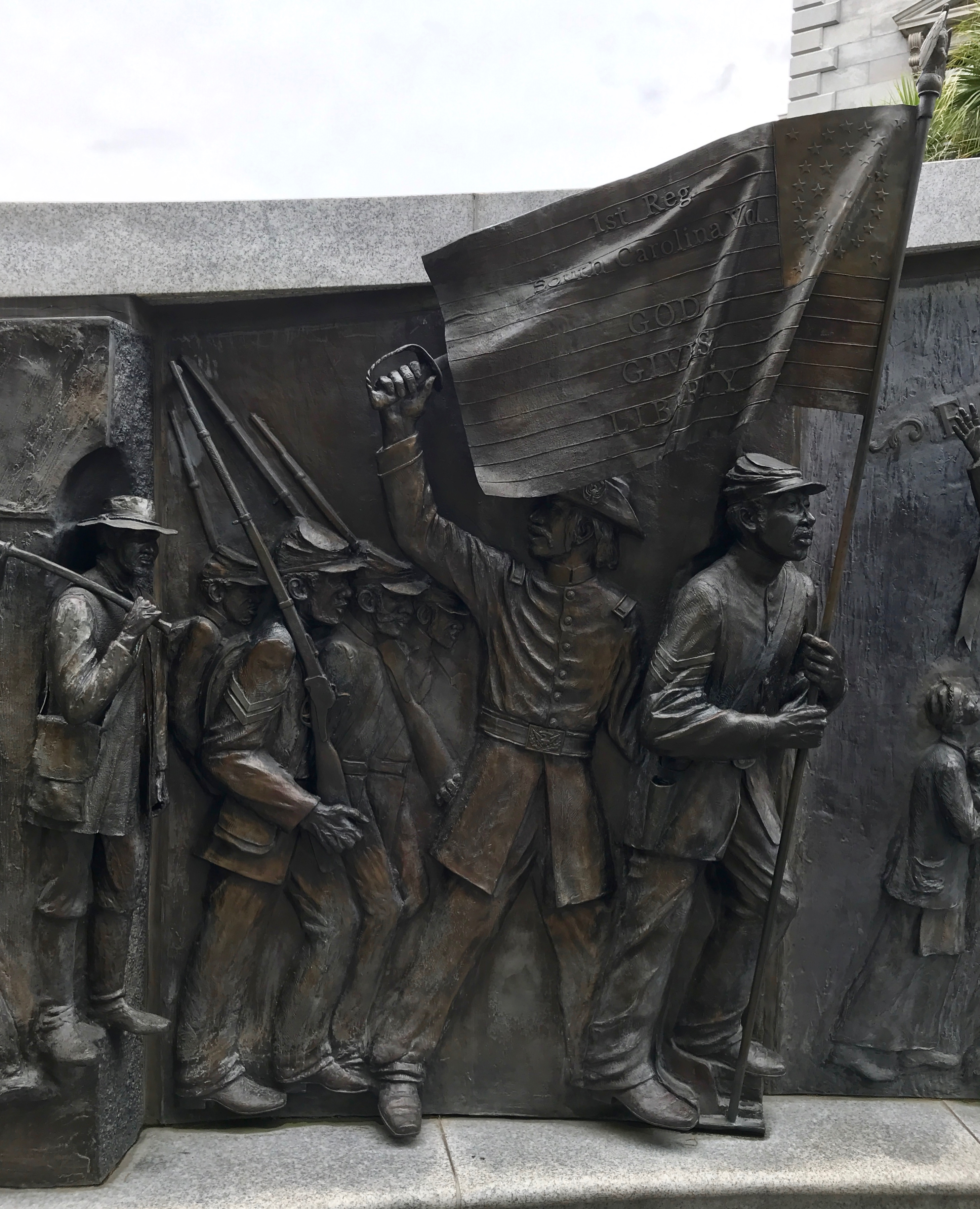
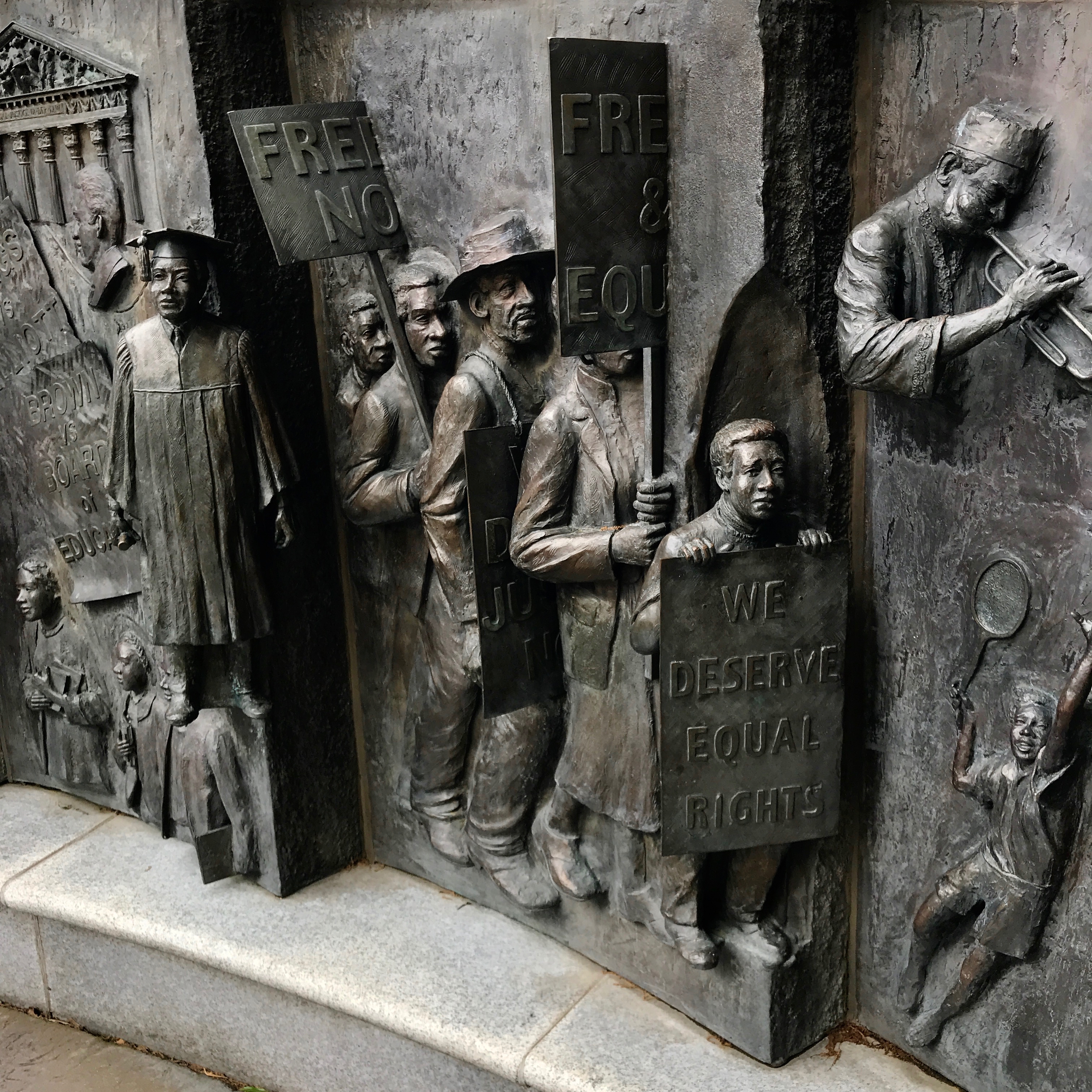
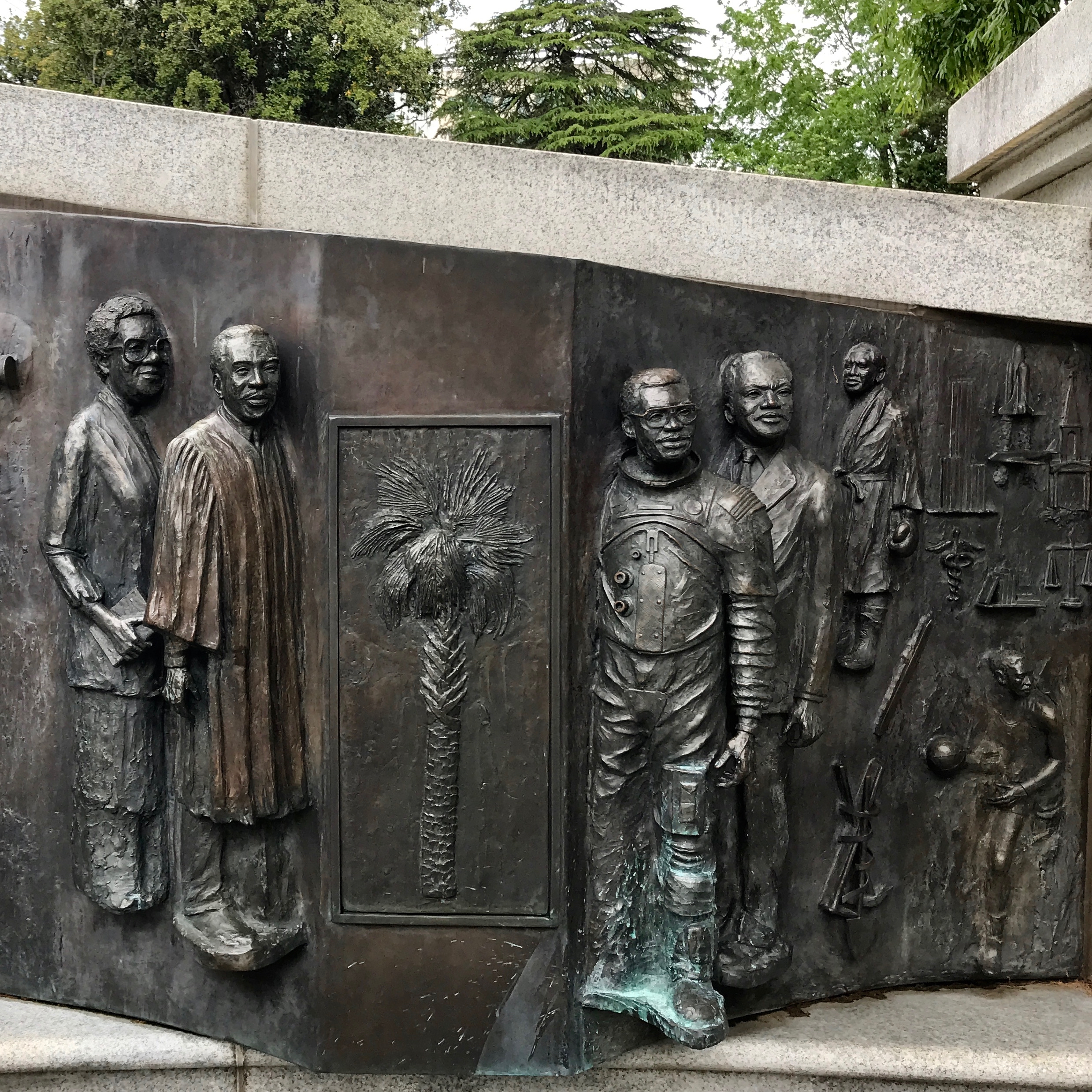
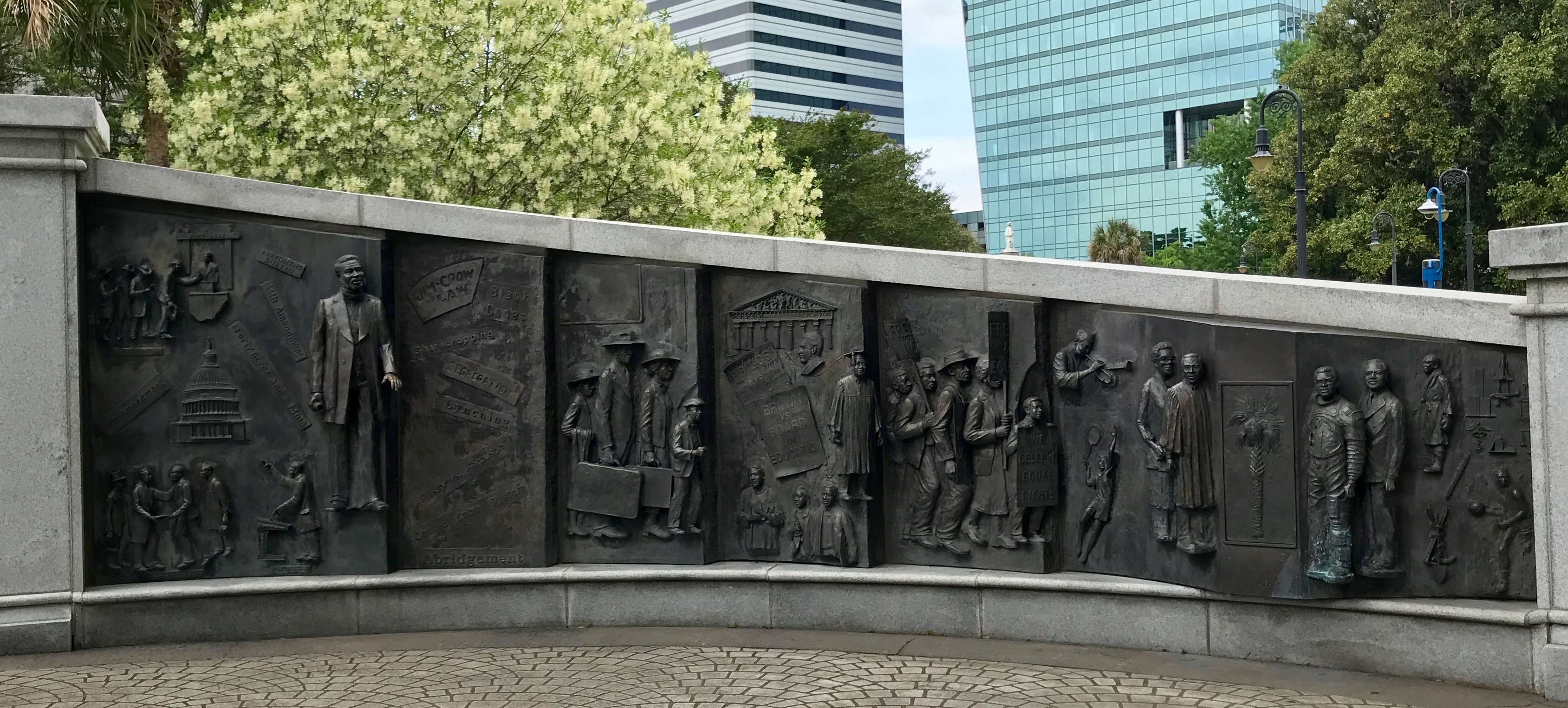
I continued around and came to the state’s African American History Monument.

I didn’t take this photo. I found it somewhere on the web. I don’t remember why I didn’t get an overall photo. I love my iPhone and the convenience it provides, but sometimes I wish I had a REAL camera.

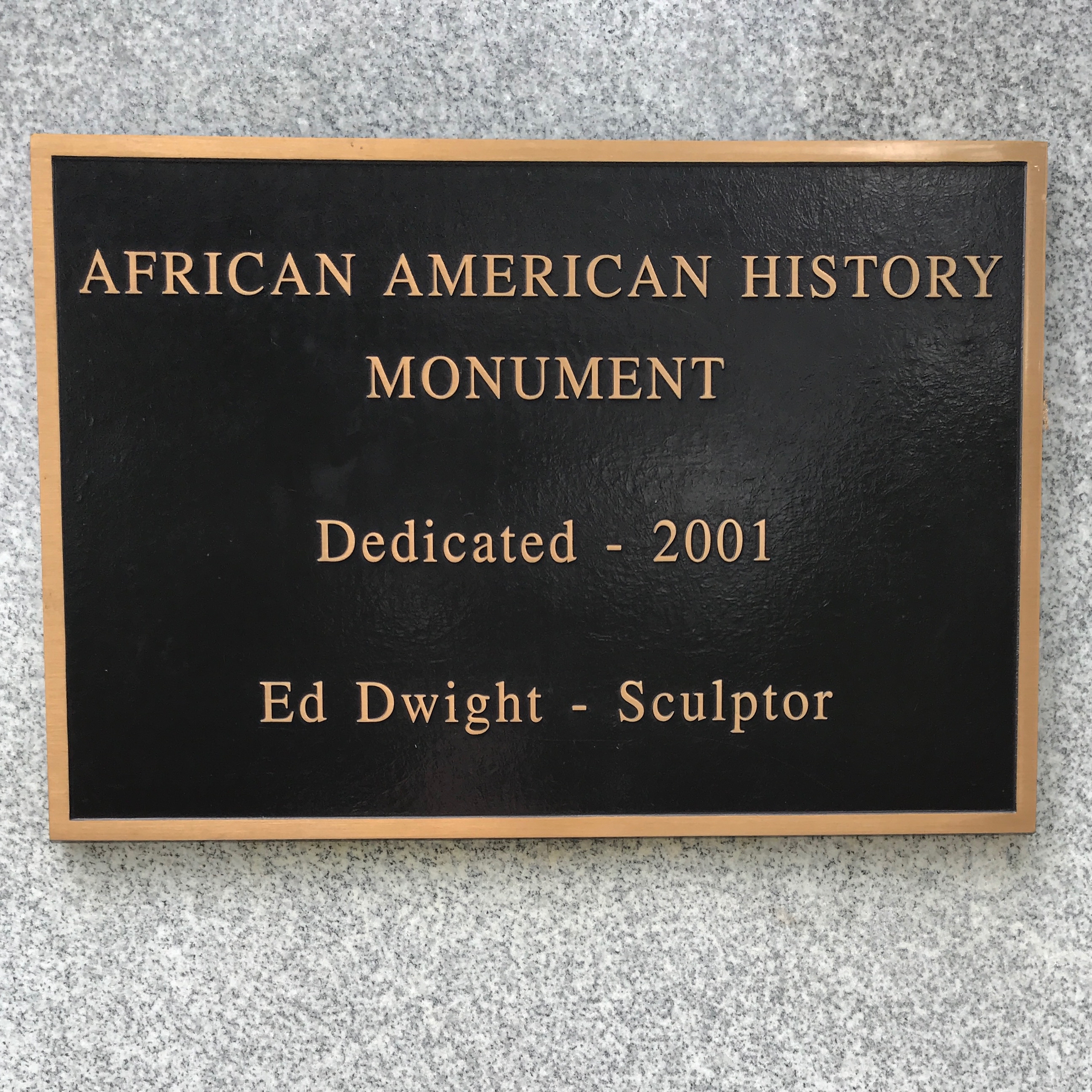
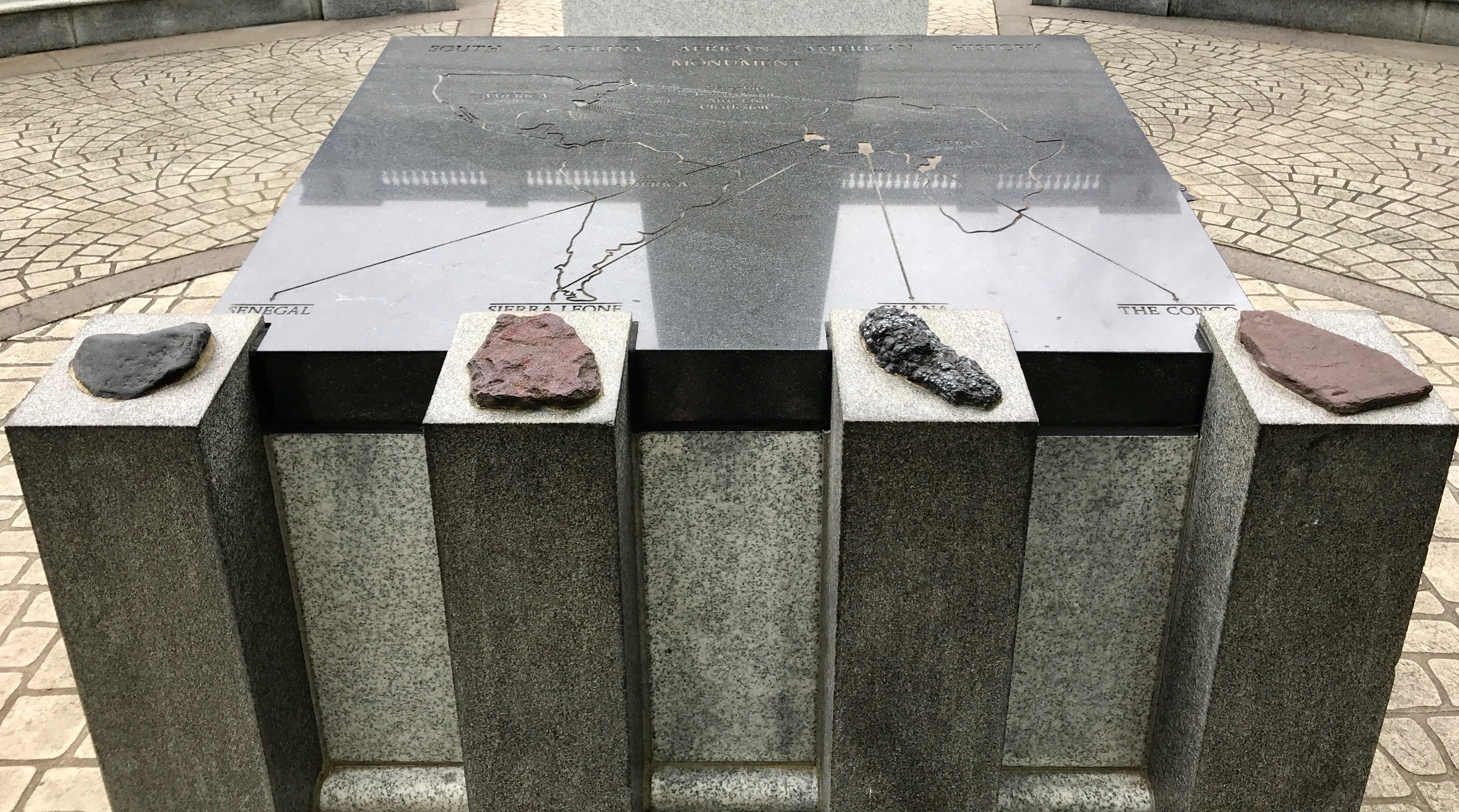
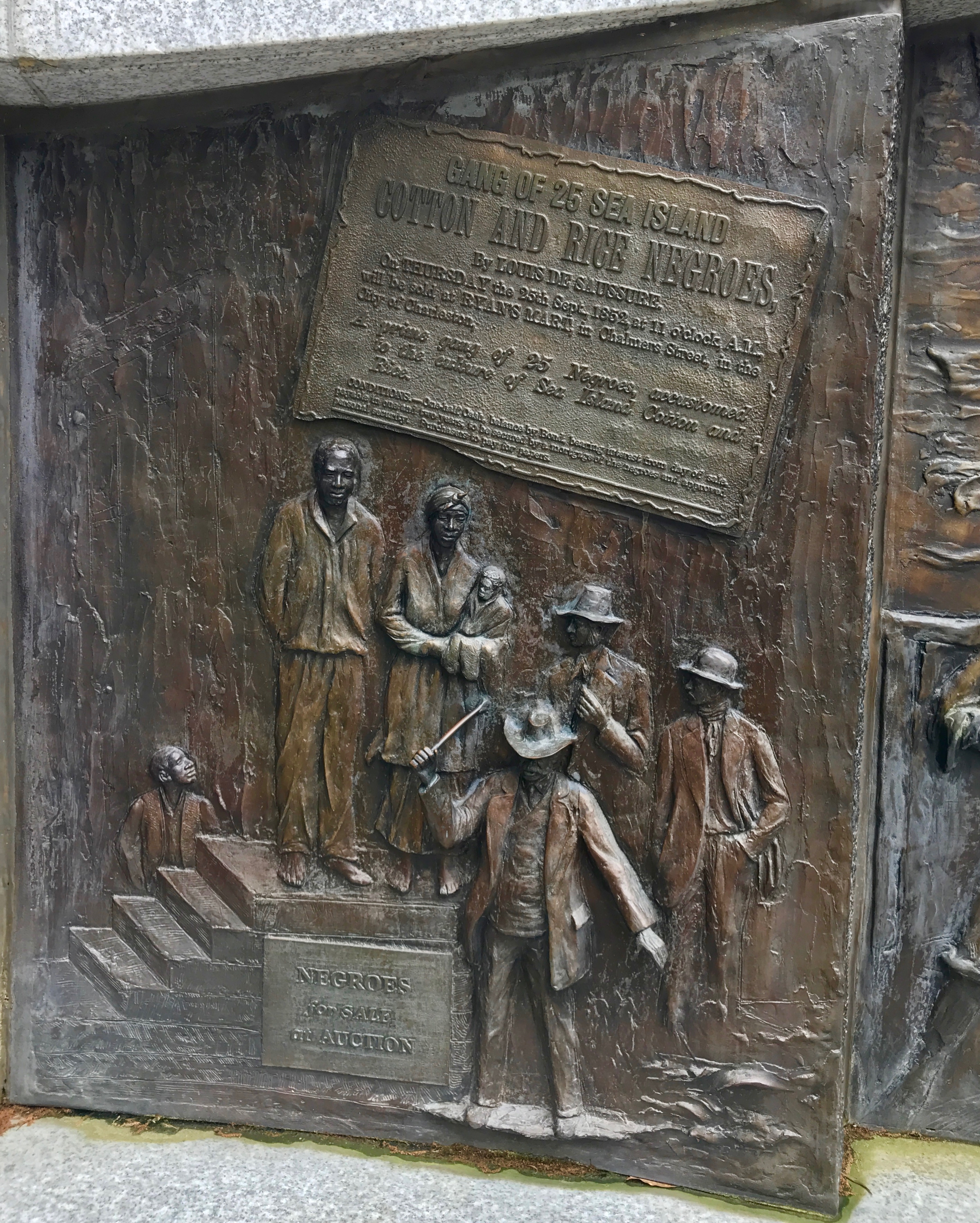
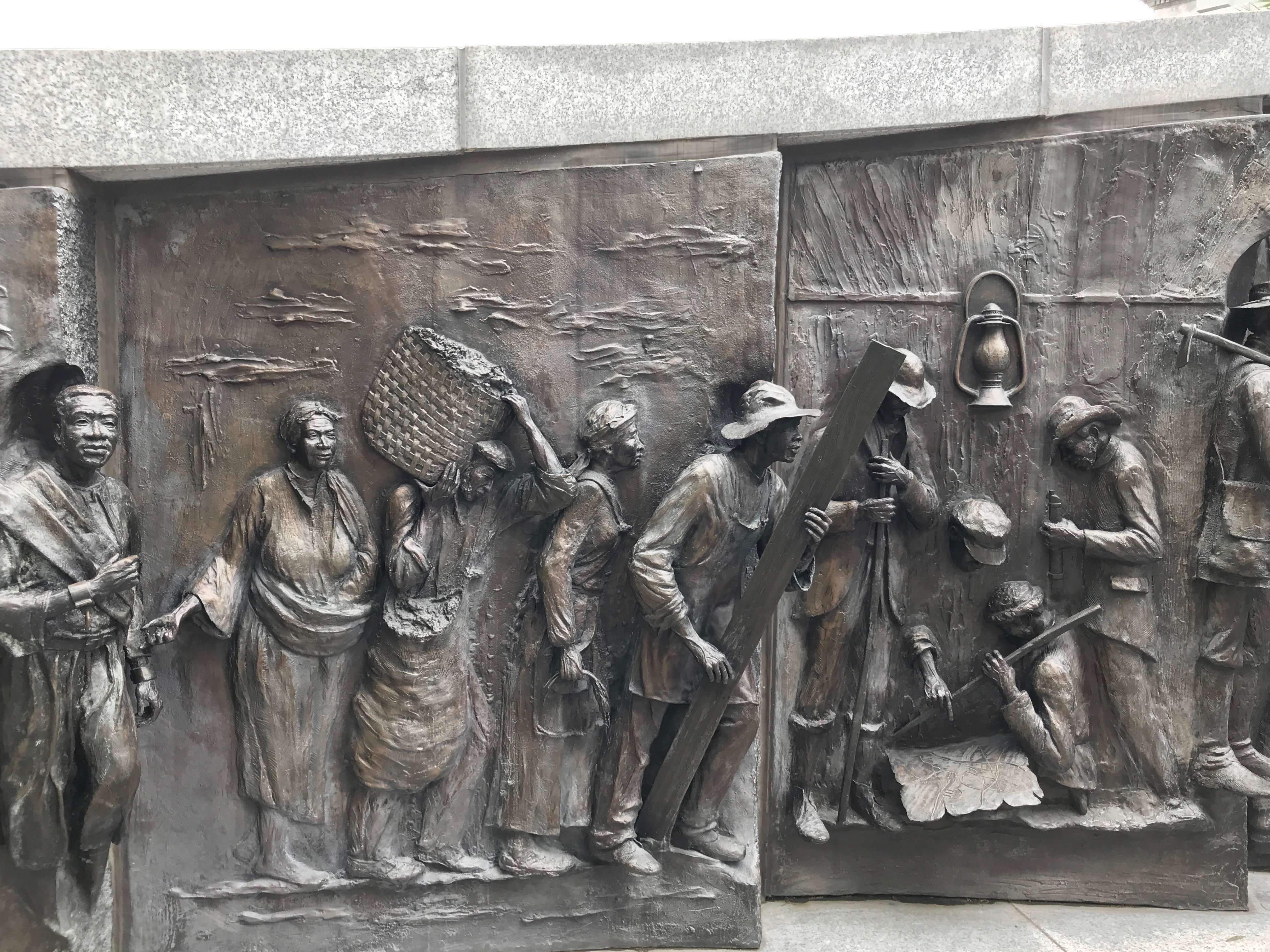
I did manage to capture details, though.

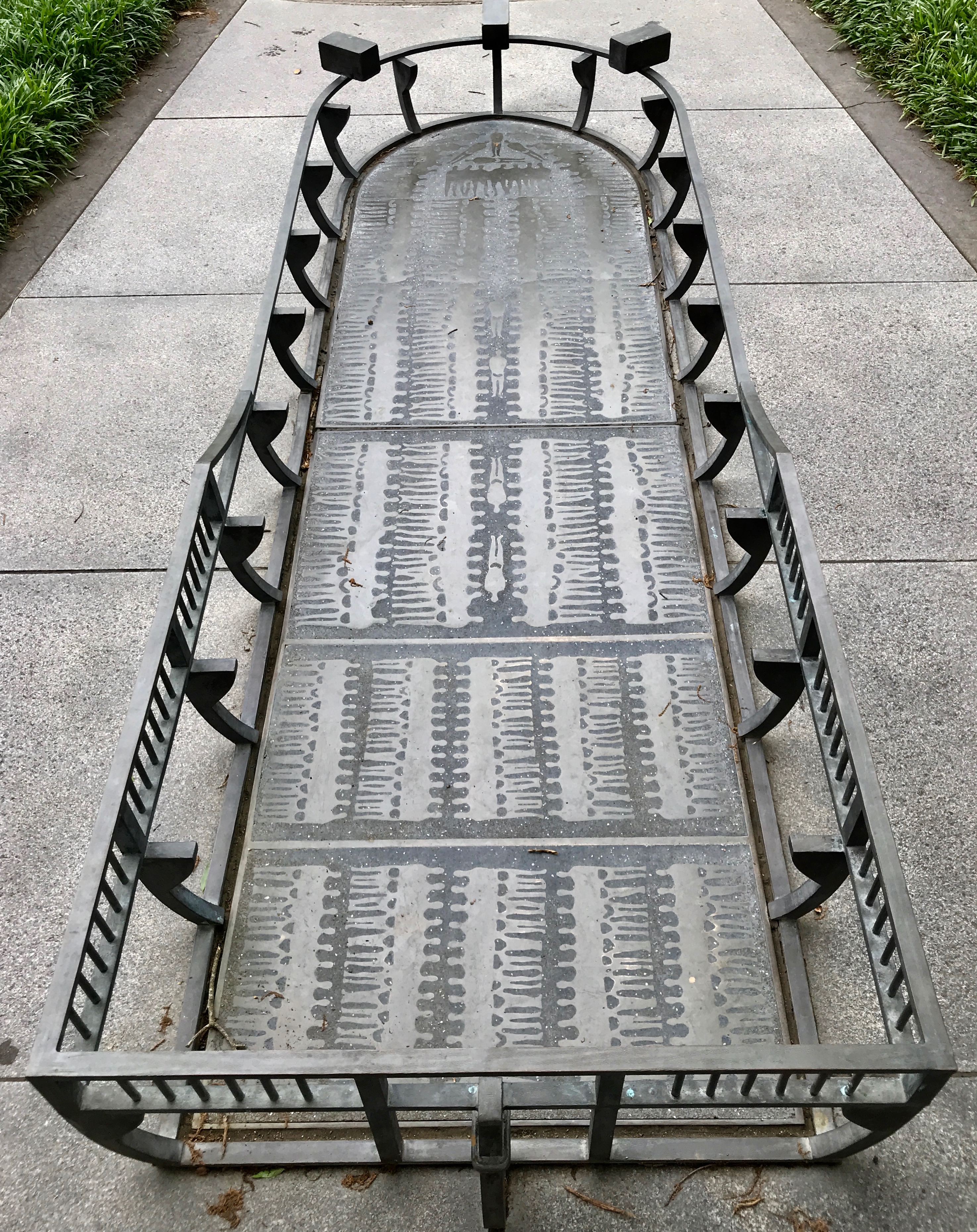
I like how they included information about the land the African Americans came from, complete with geological samples.

The hold of a slave ship is part of the monument.

It takes in the sweep of history.

It picks up on the left side, when the Africans landed in the Americas.

They were auctioned off, sent to work in the fields and then worked to escape.

They fought for their freedom during the Civil War.

The fight continued with hard work and perseverance.

Success.

I continued around the capitol.

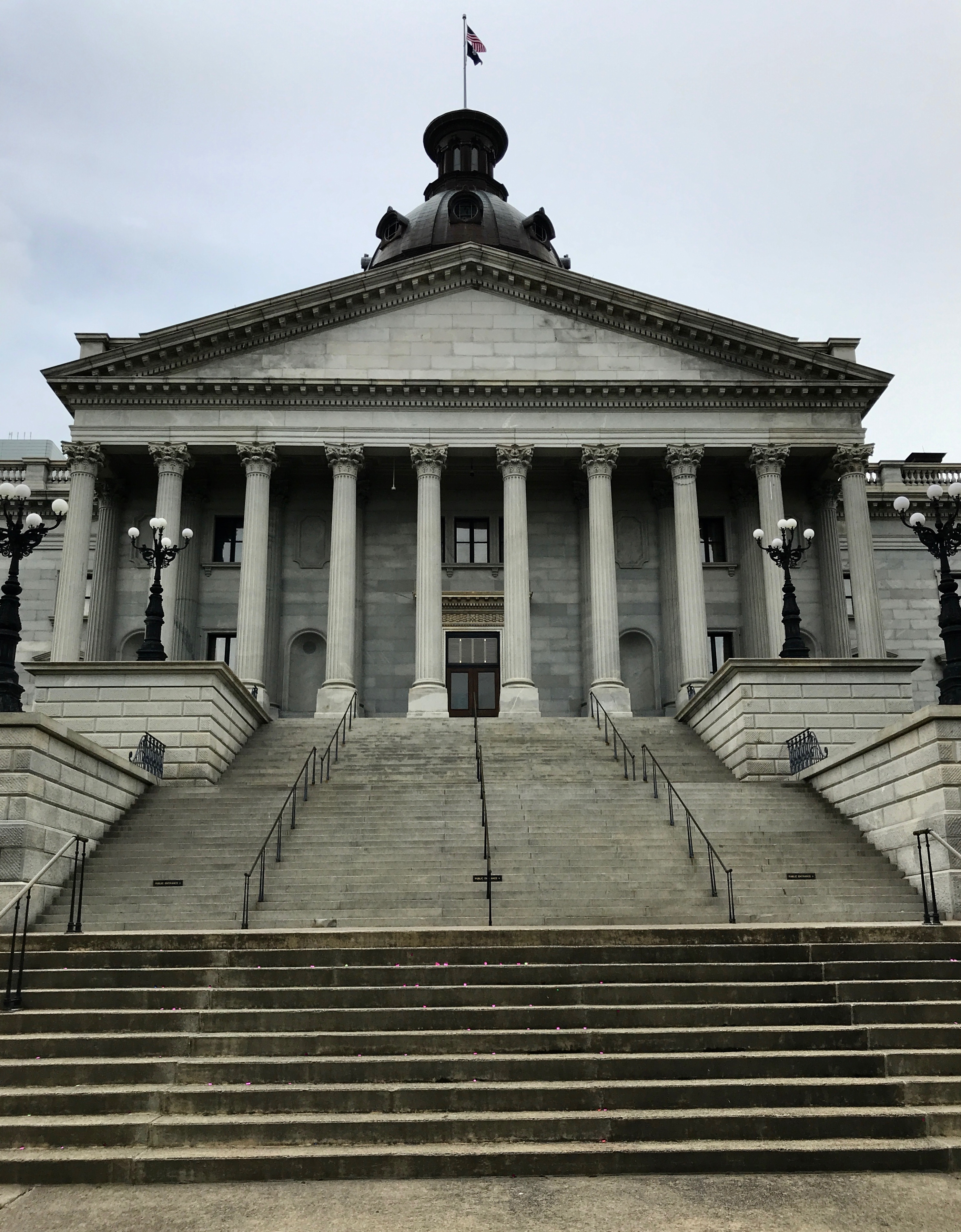
My goodness! Designers of state capitols sure do like their grand stairs.

I wonder how many there are?

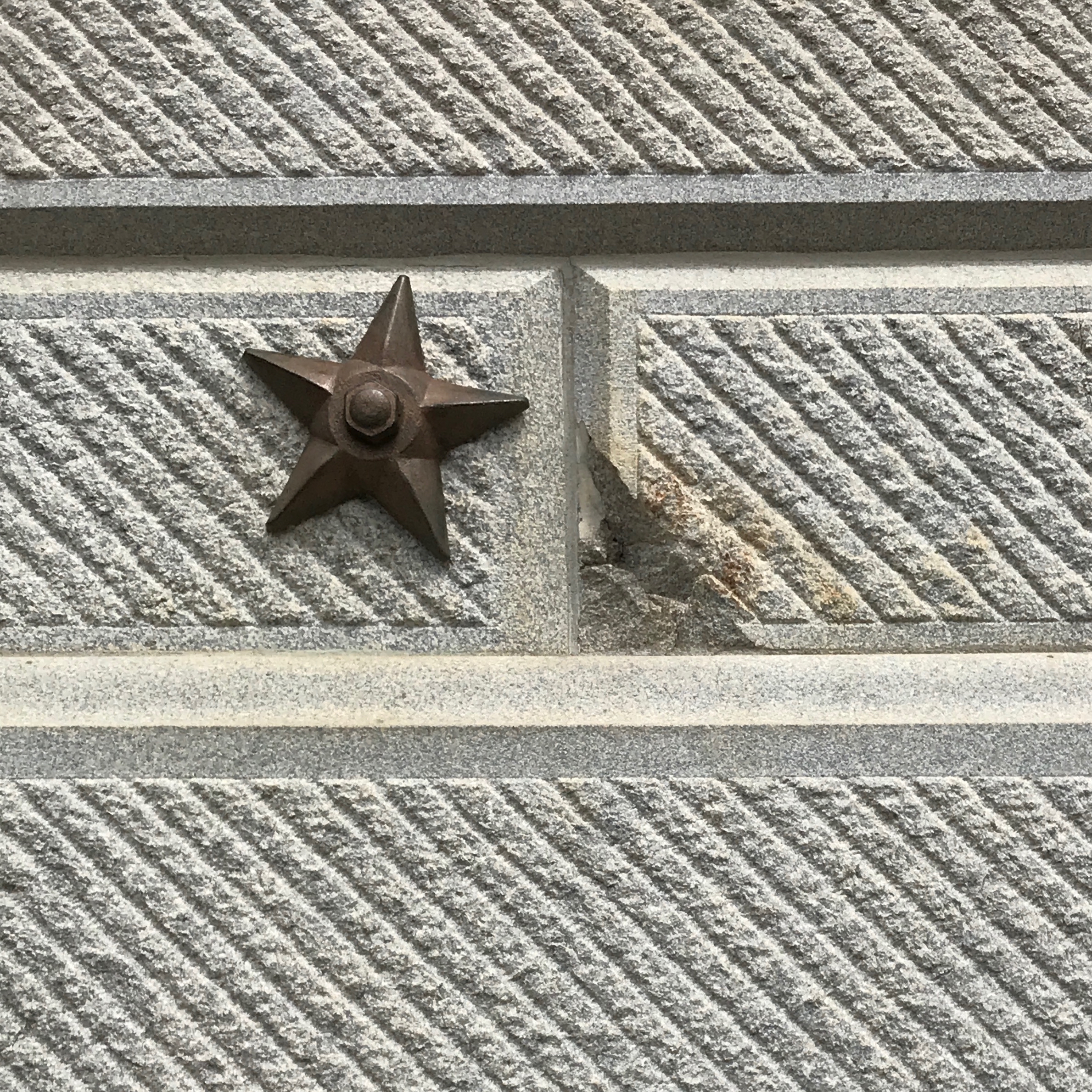
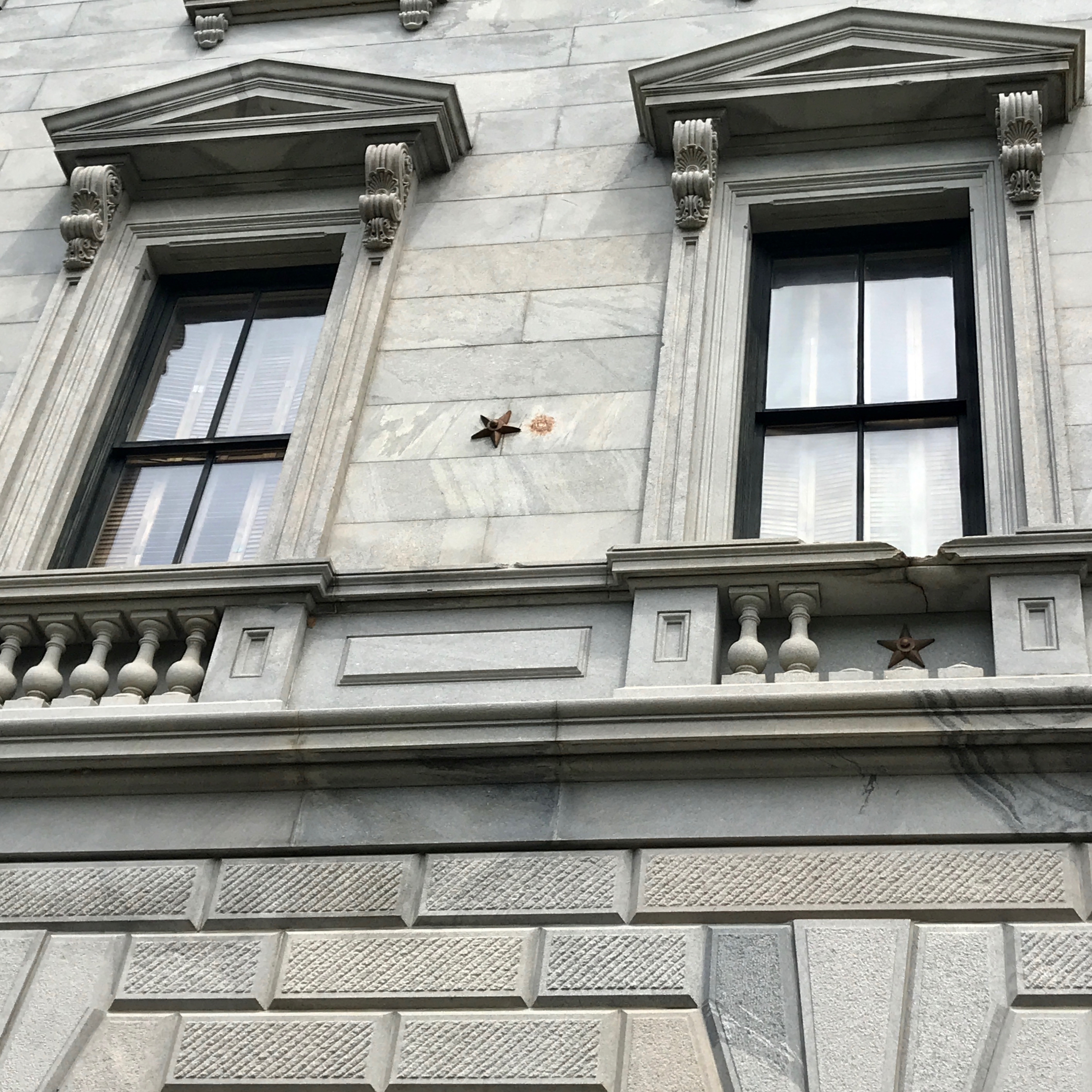
One thing some app I had told me to look for was damage from the Civil War marked with bronze stars.

Here’s one.

There are two more in this shot.


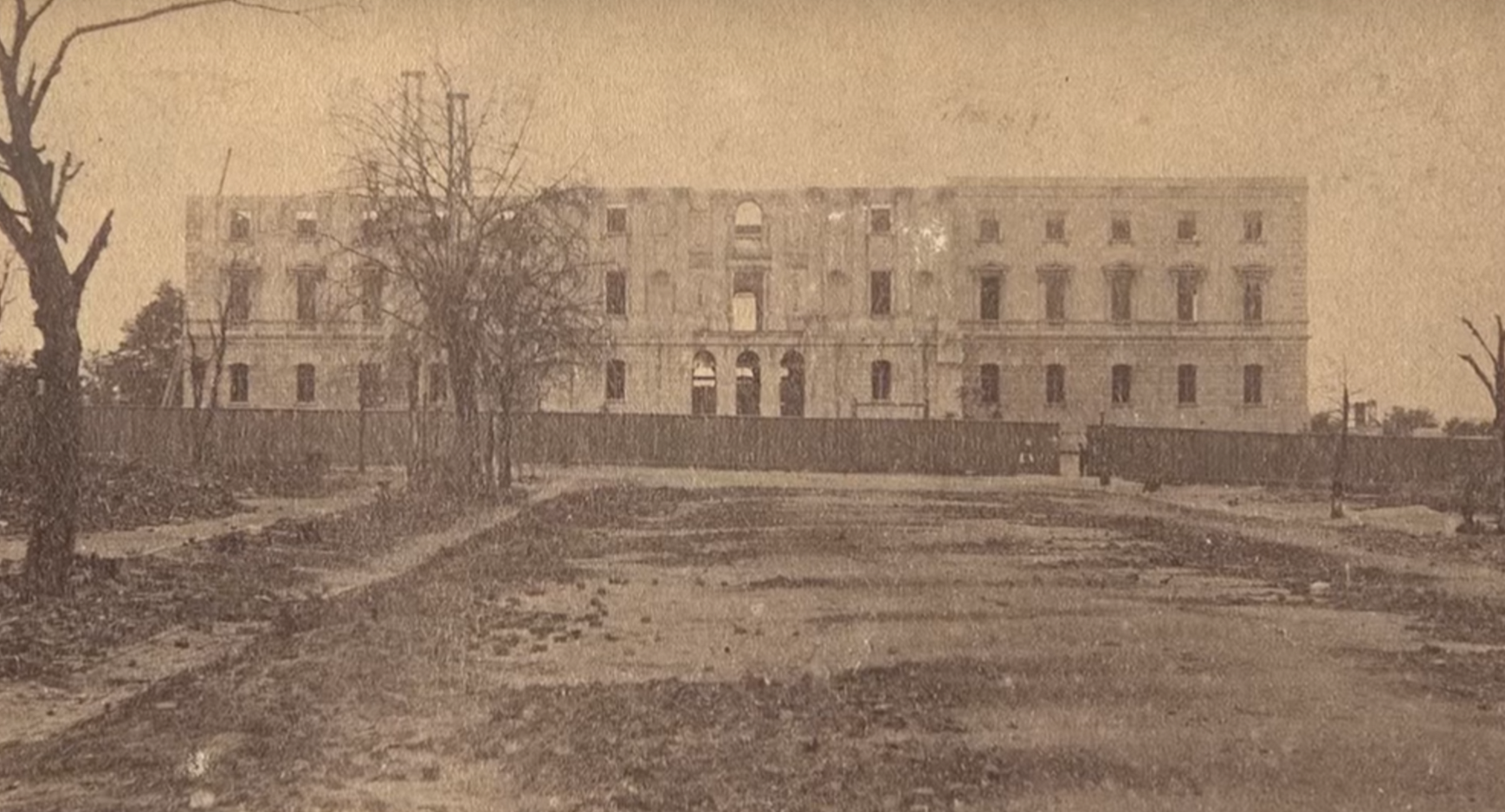
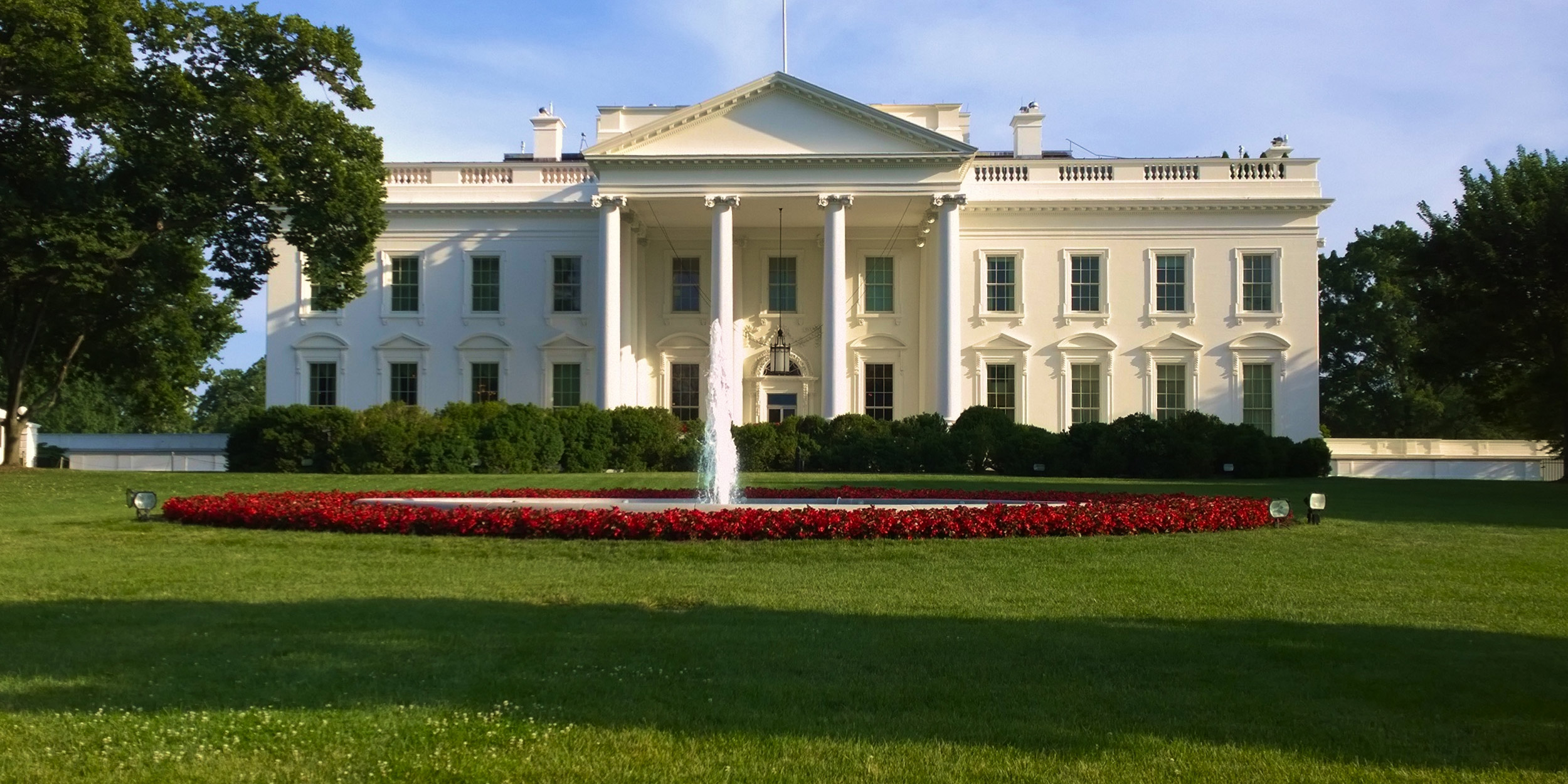
They were in the midst of building a new state house when the old one was burned. It was designed by James Hoban, who also designed the White House in Washington, DC.

I see the similarity.

I headed back to the car and T@B and I hit the road.

Oh, my! My rig is no comparison to the one next to it, although there is a similar color scheme.

I was heading to Augusta. A Facebook friend offered overnight parking.

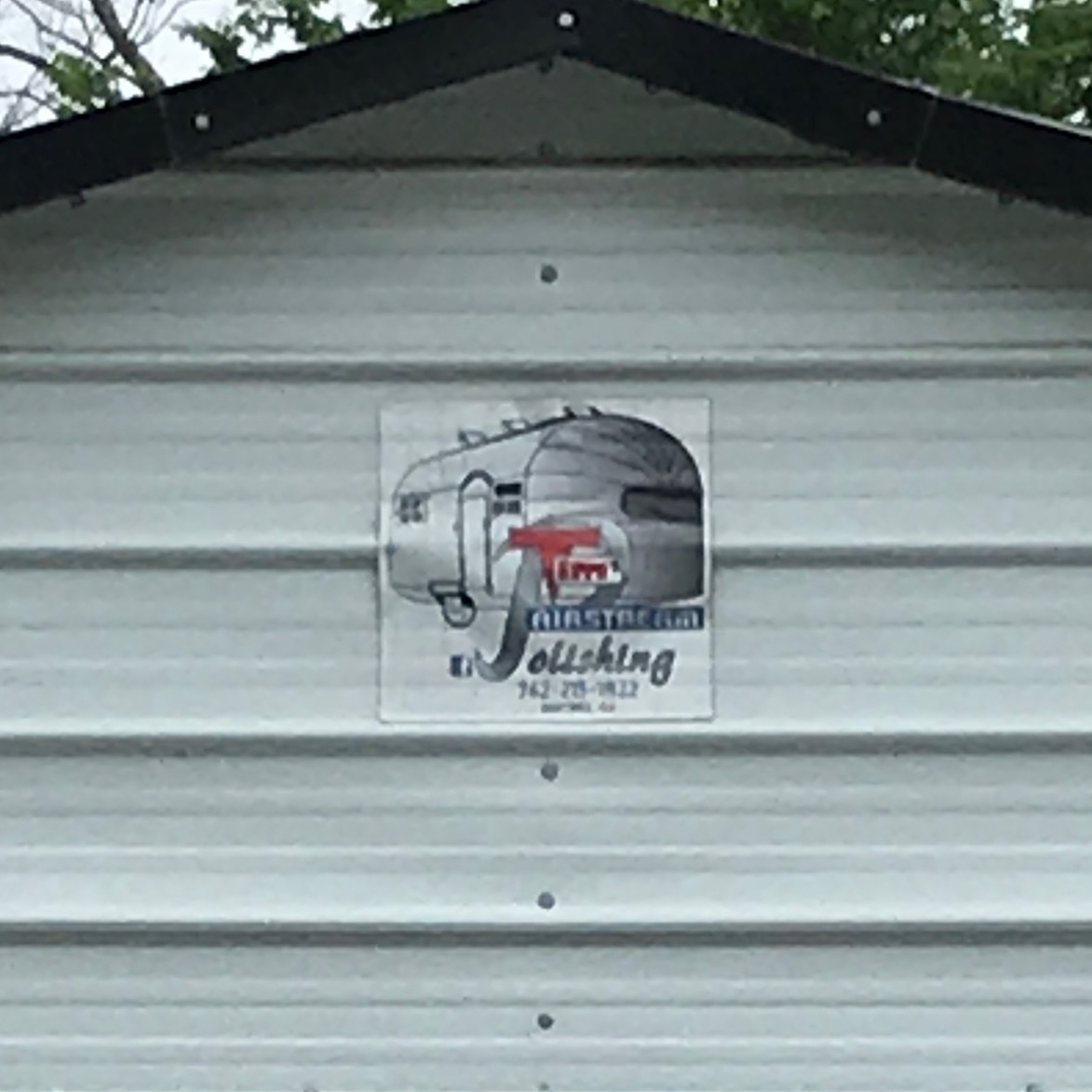
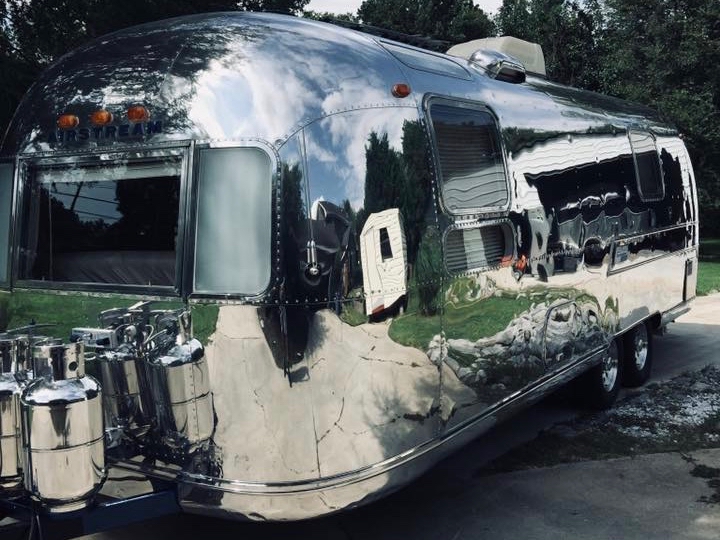
Tim does a beautiful job of polishing vintage Airstreams to a mirror finish.

Isn’t that pretty?

We spent time talking, but I didn’t get a photo of the two of us.

But, I did get a shot of the T@b in his driveway.

Next stop: Phenix City, Alabama

The Things You See Just Sitting in a Field (April 2019)

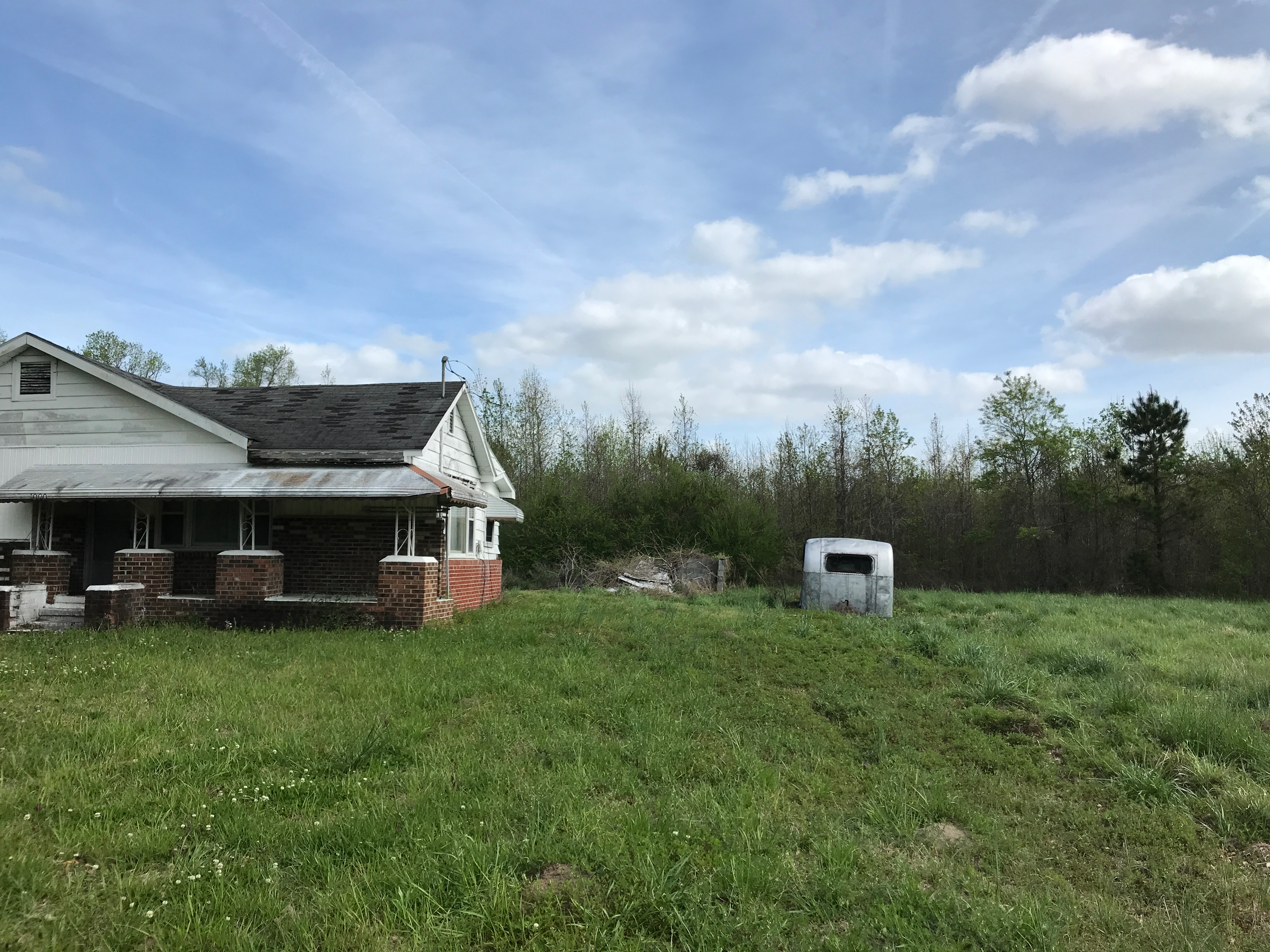
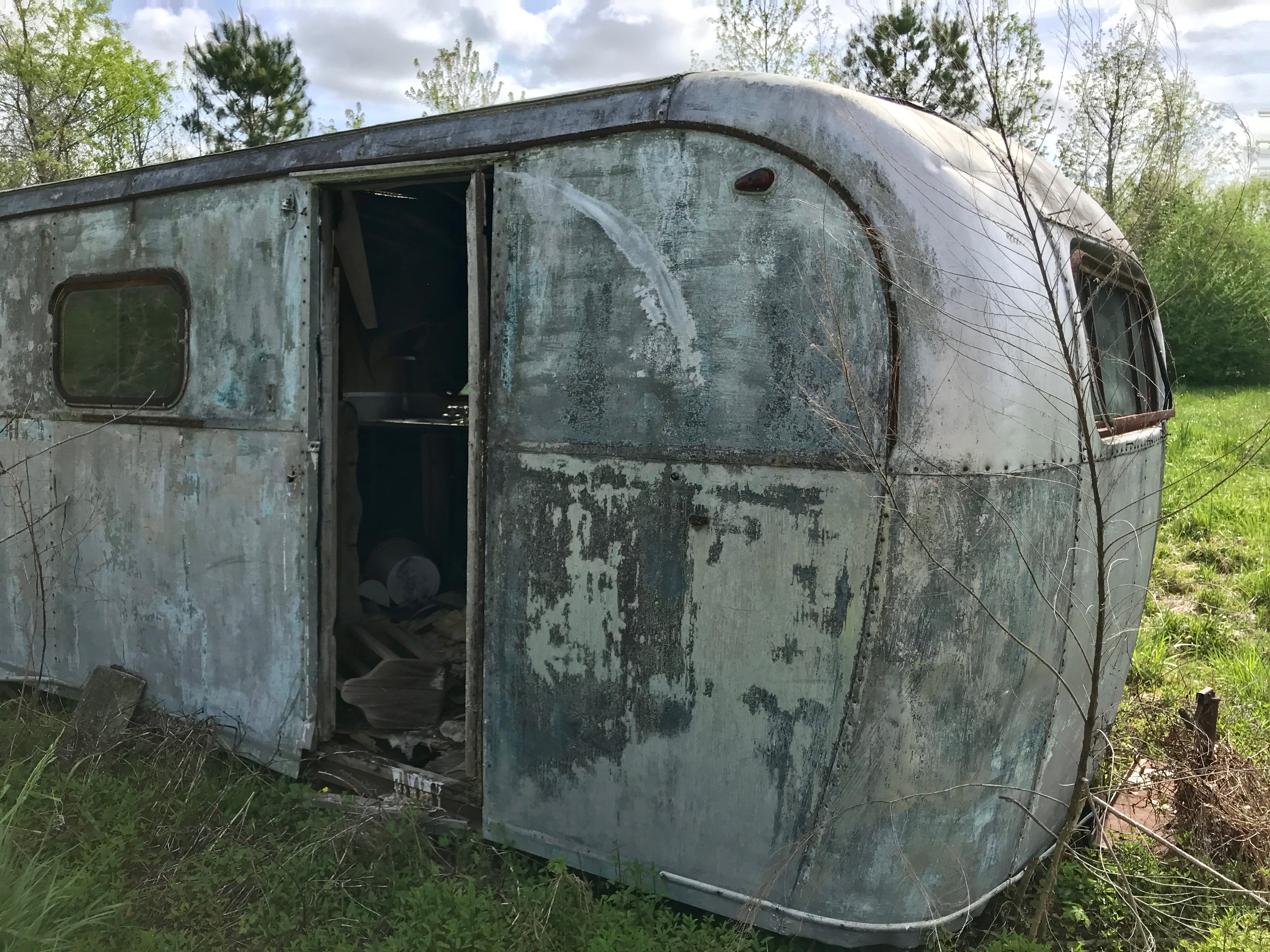
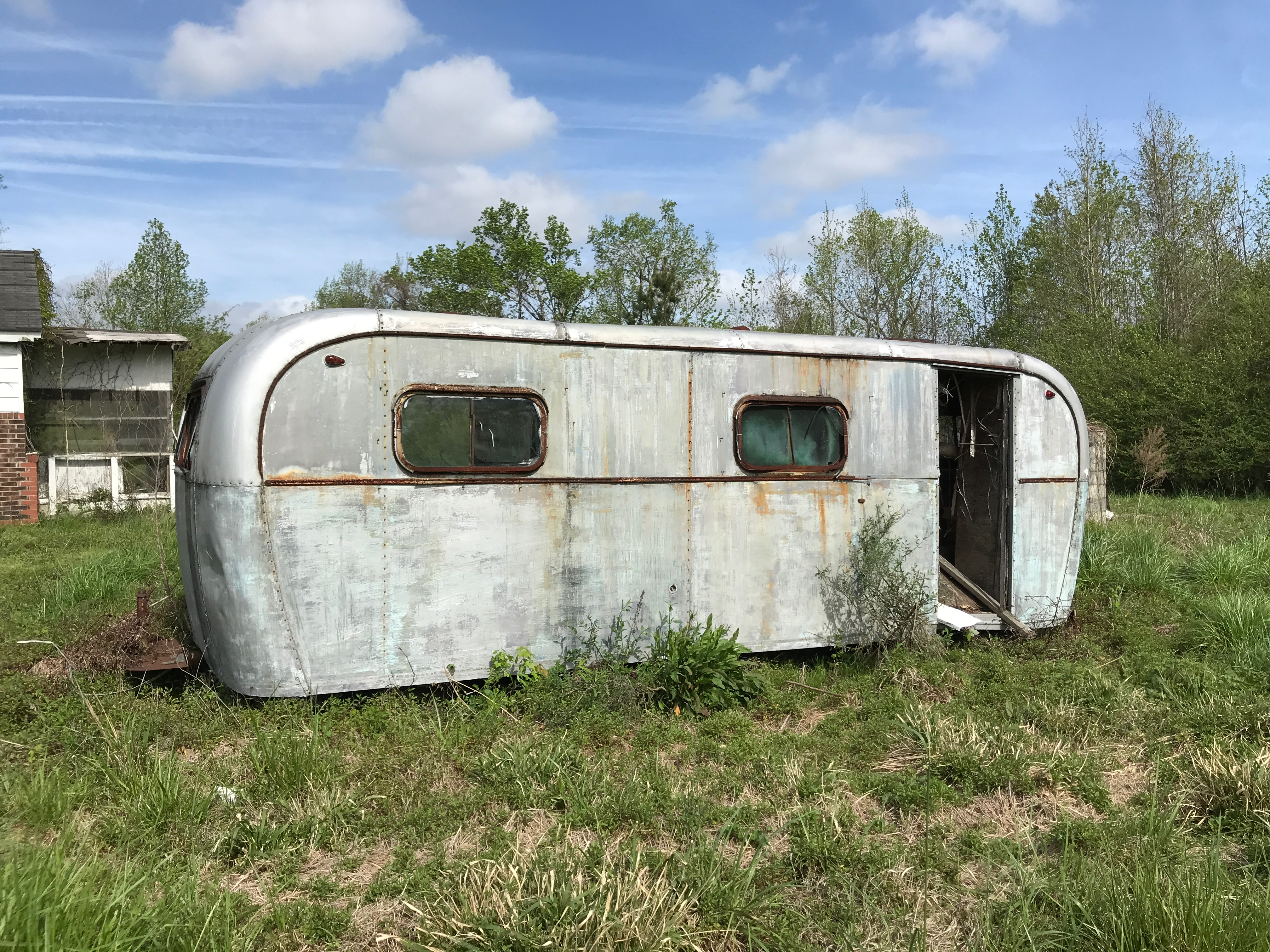
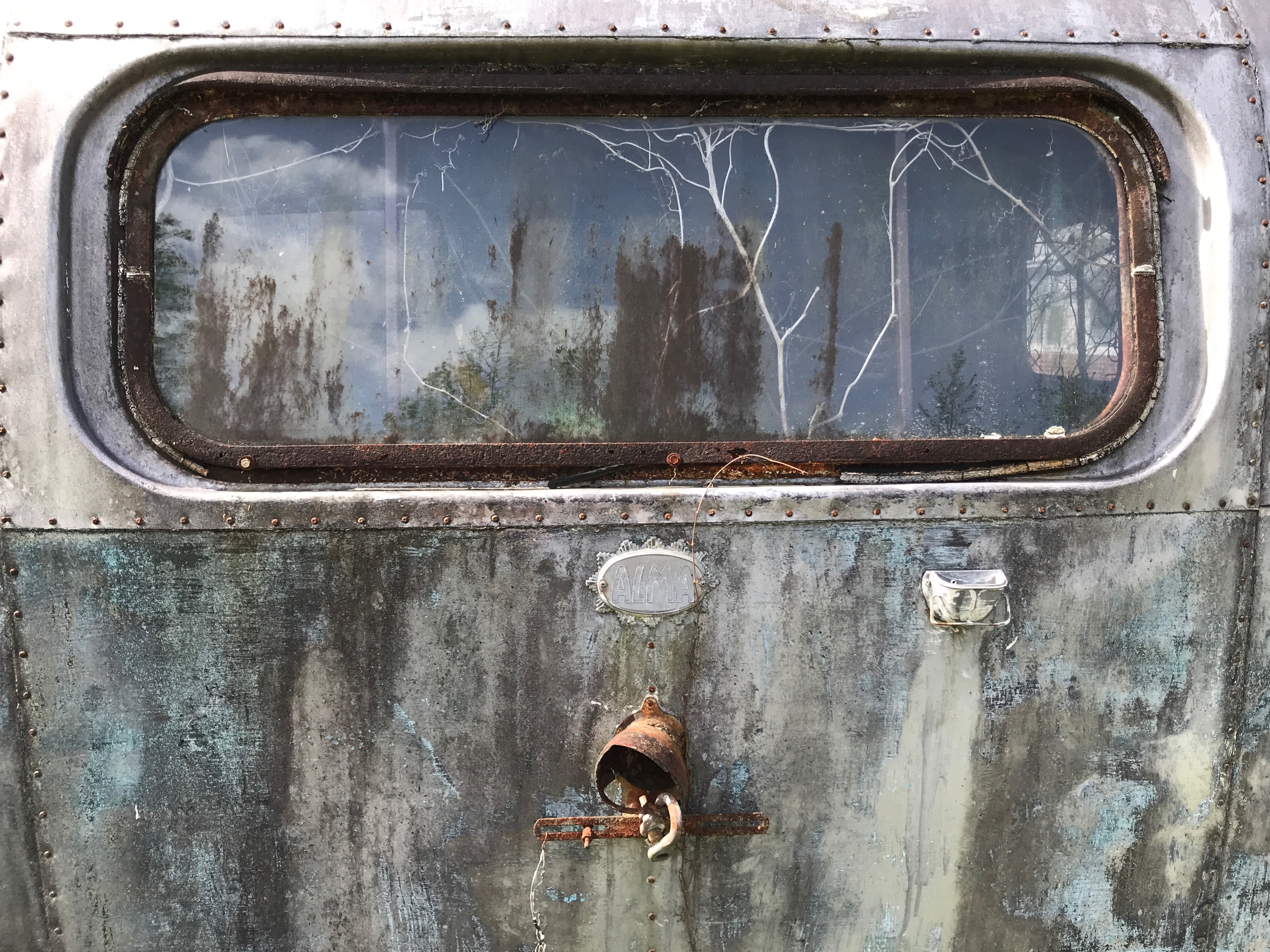
Every day, on my way to the job site in New Bern, I’d pass this poor neglected trailer. There never seemed to be anyone at the house, although it didn’t look as woebegone as the trailer.

One day, I decided to stop at take a look. It wasn’t an Airstream, but I wanted to see what it was.

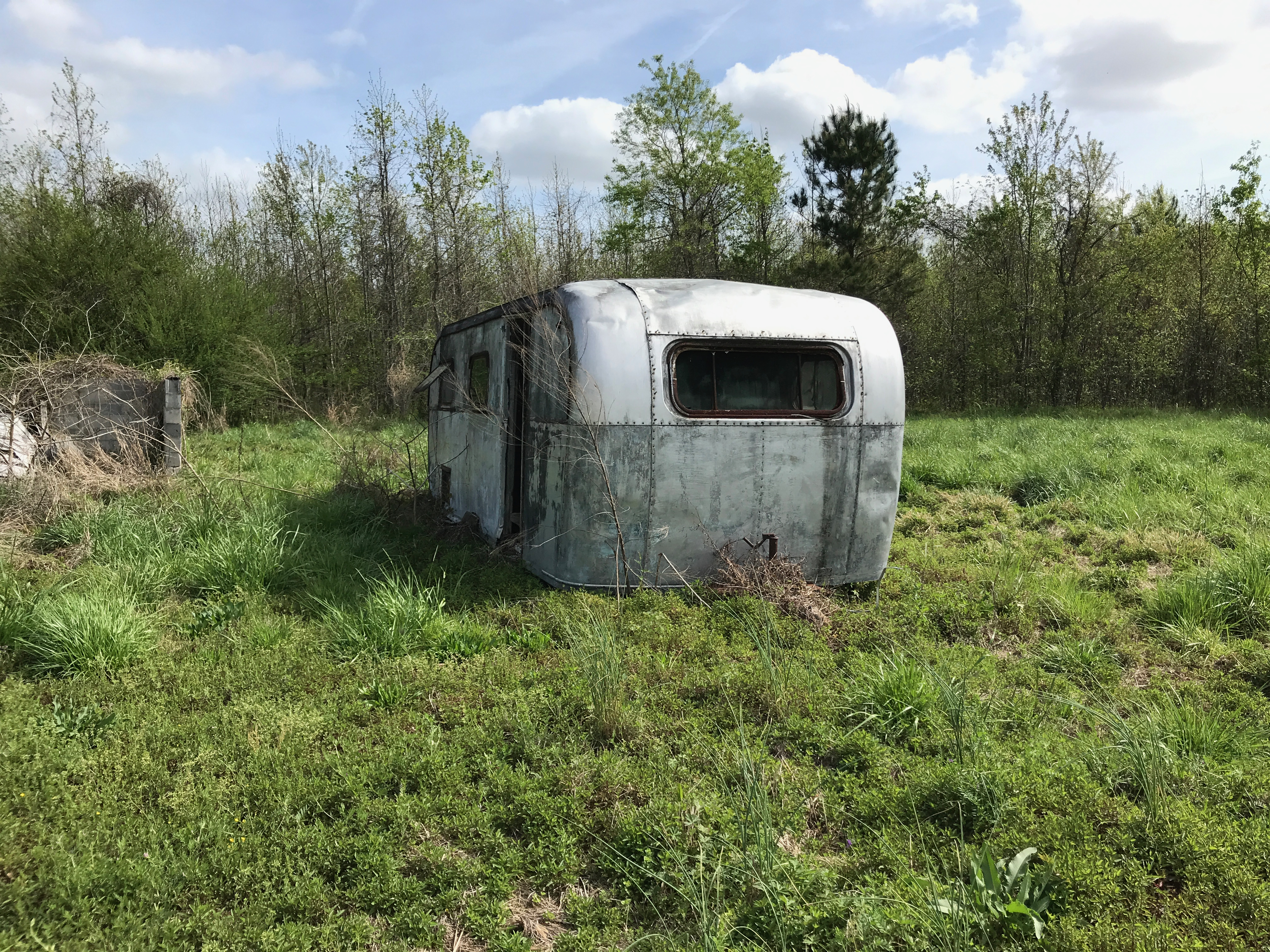
The poor thing seemed to have no wheels.

Or doors, for that matter.

It did have two entries, but neither one of them had doors.

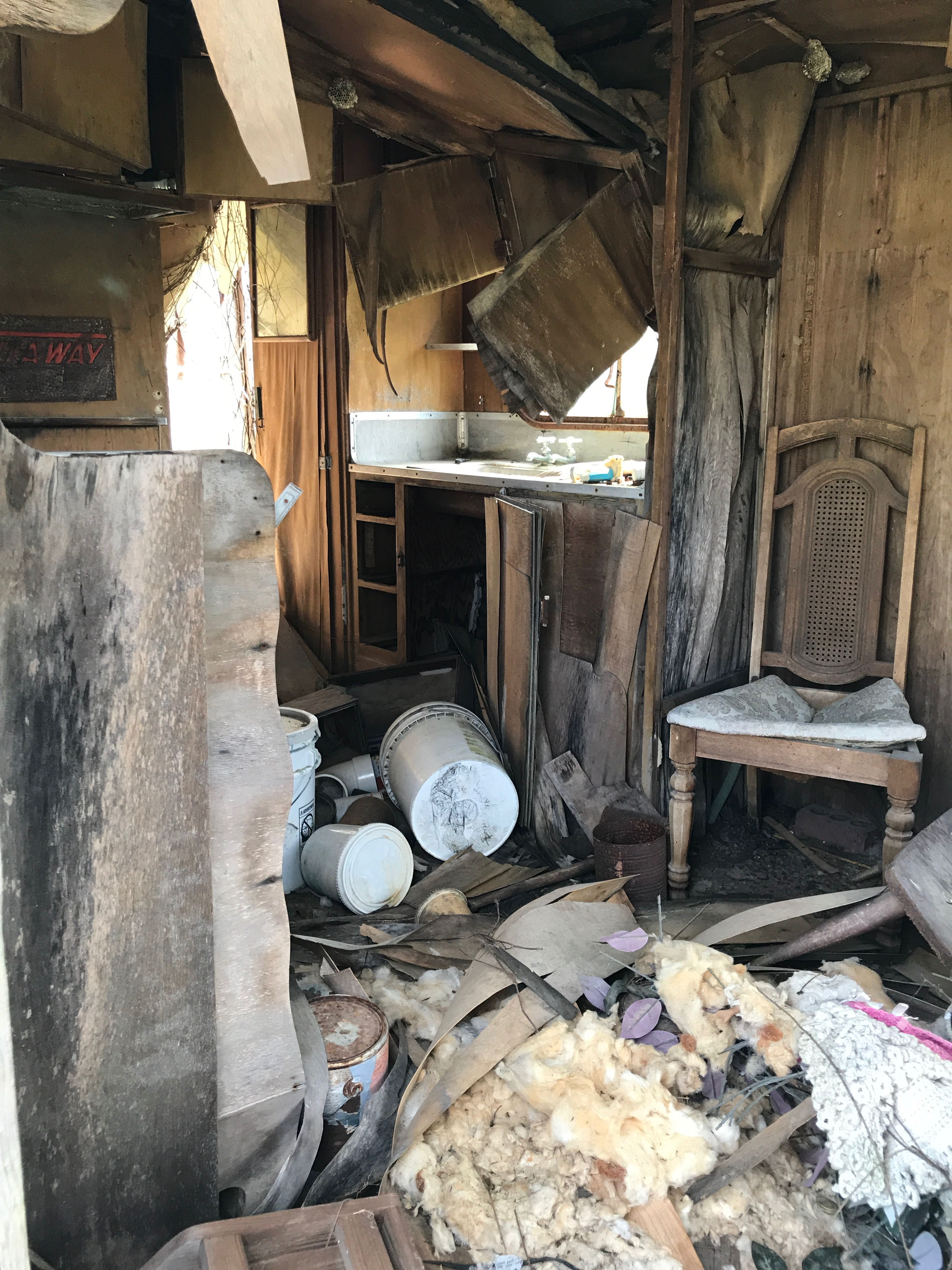
I took a peek inside.

Oh. My. Goodness!

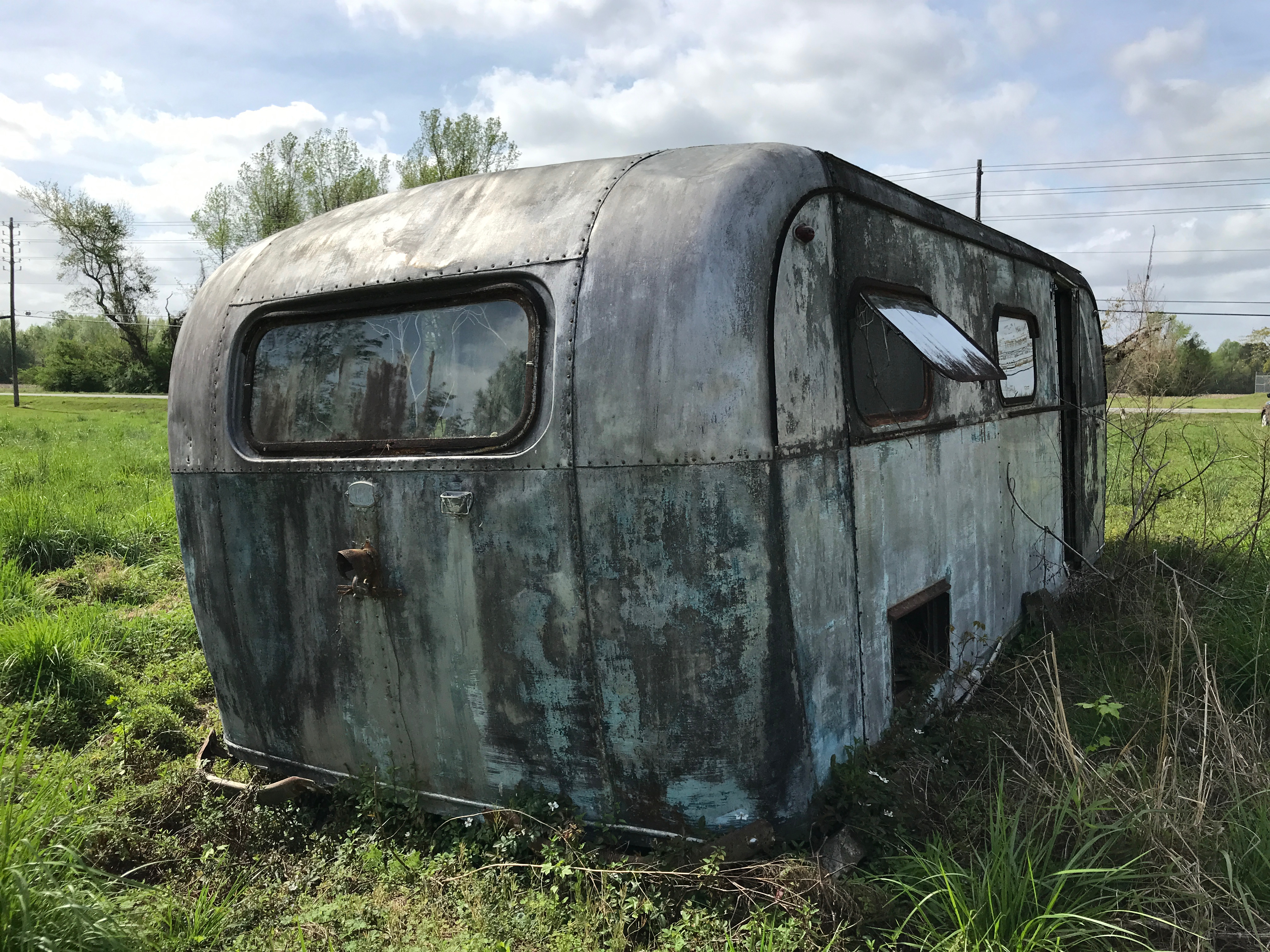
I continued my way around.

It’s a bad sign when you can see things growing inside.

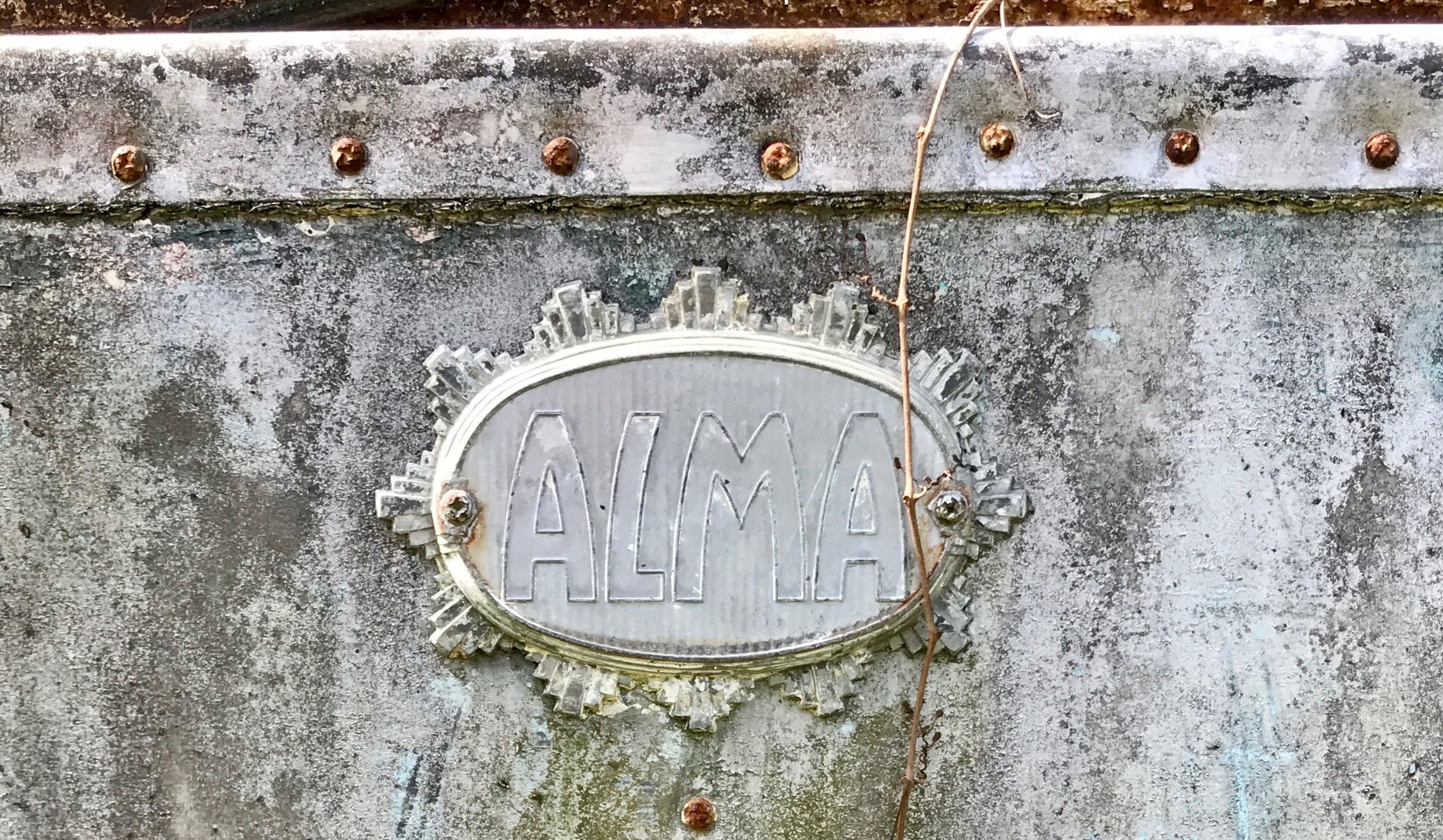
The name badge was rather classy. Alma. That gave me something to go on.

I found this information about the Alma Trailer Company in the Tin Can Tourists website.
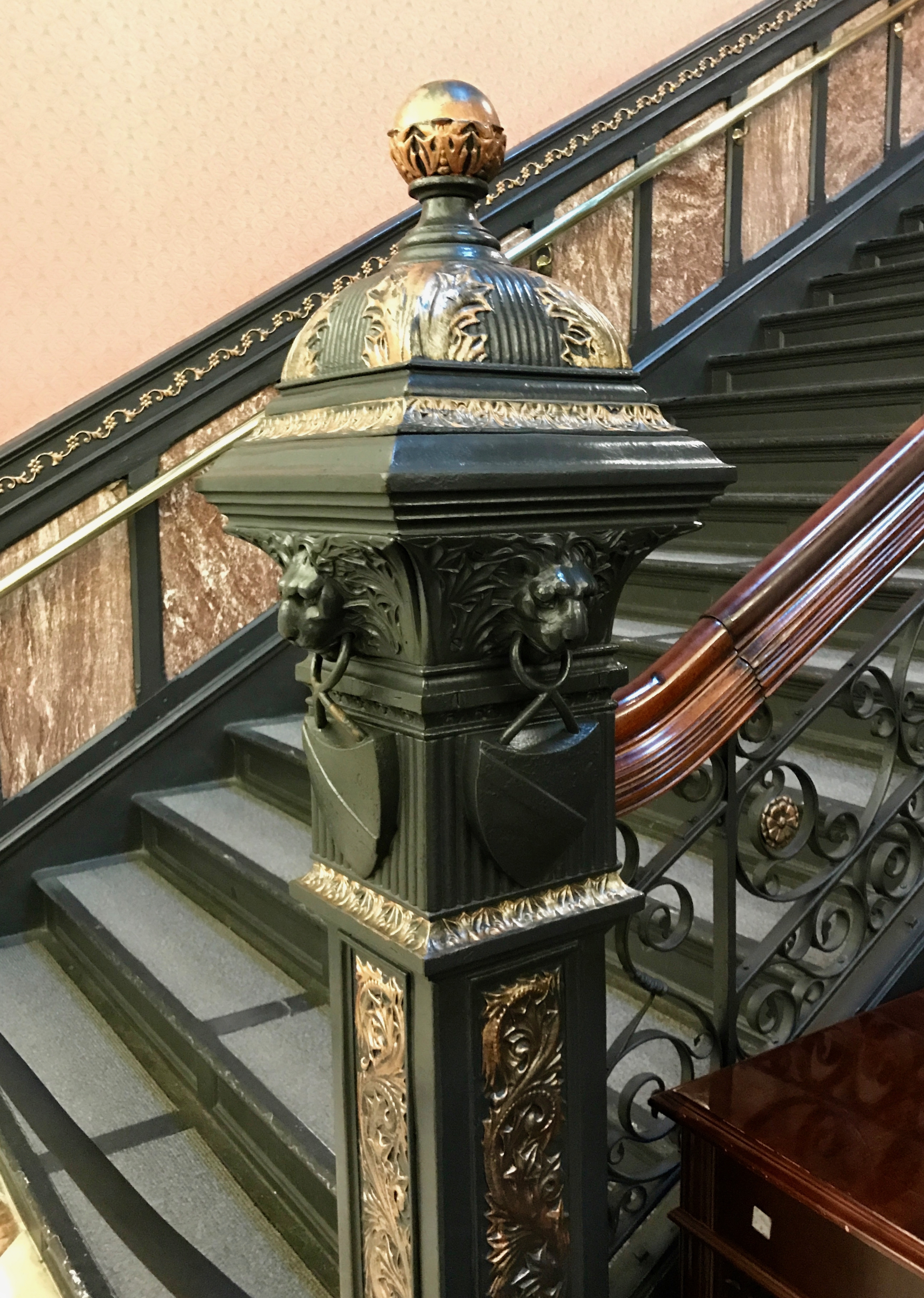
“The Alma Trailer Corp. was formed in 1934 by William and Harold Redmond and Allen Hathaway who was the designer and patent holder of the trailer. The Redman’s exited in 1937 to start the Redman Trailer Company. In the 40’s, Alma had the largest trailer factory in America and were selling Silver Moon trailers to the defense personal during Word War II. The Redman’s bought the company back in 1957.”

So, if you want to know more, that’s where you can look.

Enjoy!

HistoriCorps in New Bern, NC April 2019

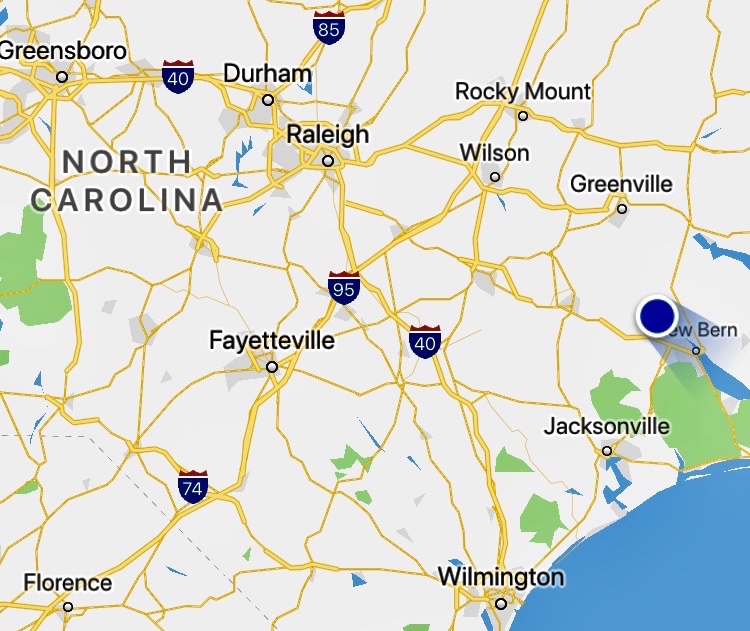
My next stop was New Bern, North Carolina, down toward the coast.

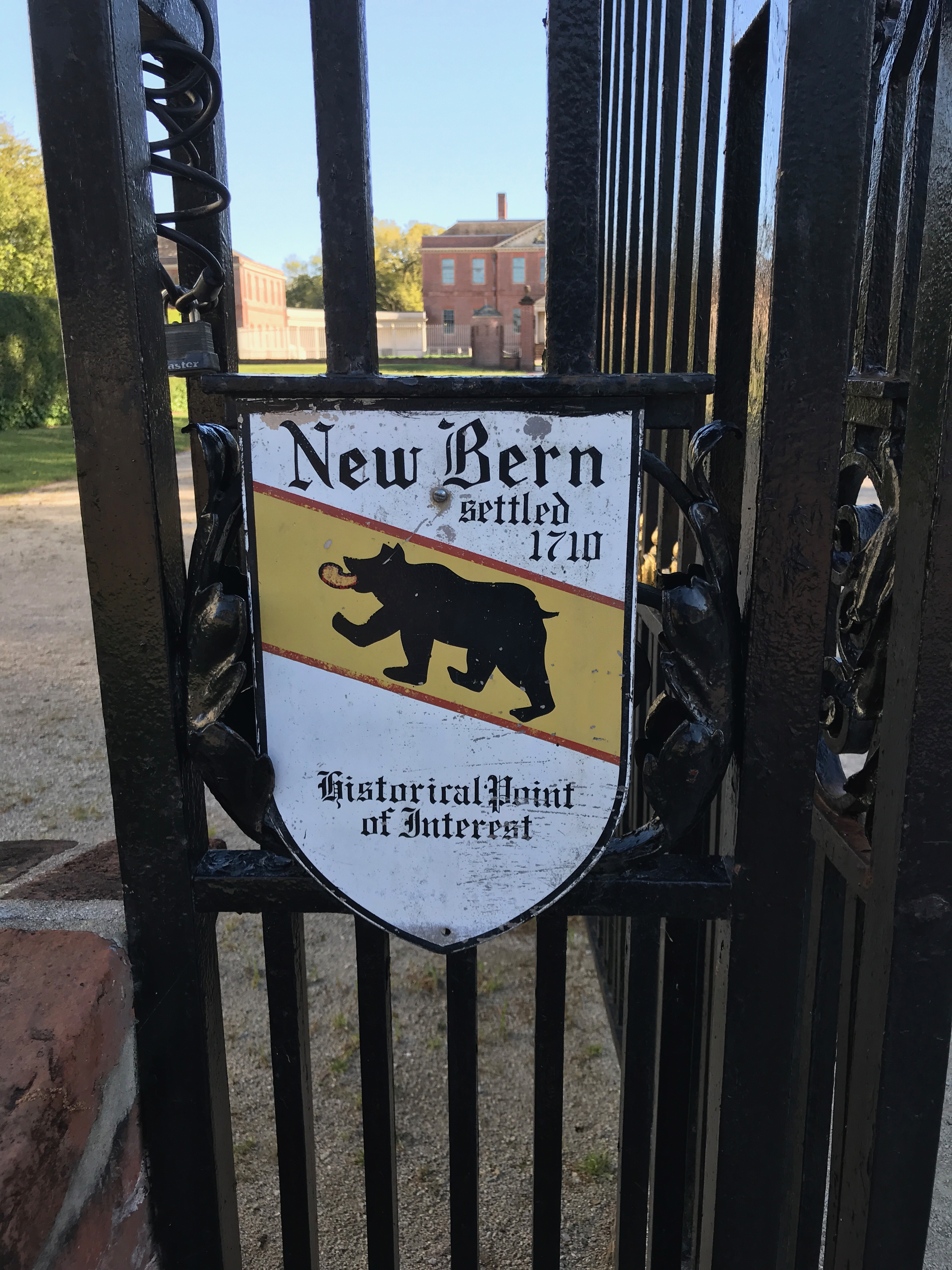
New Bern was settled in 1710. It’s the second oldest European settled town in North Carolina, after Bath. The previous inhabitants of the area were the Tuscarora, an Iroquoian-speaking people, who settled in the area and occupied the region for several hundred years before the first Europeans arrived. They had a village called Chattoka at the confluence of the Neuse and Trent Rivers, where the Palatines and Swiss established New Bern.

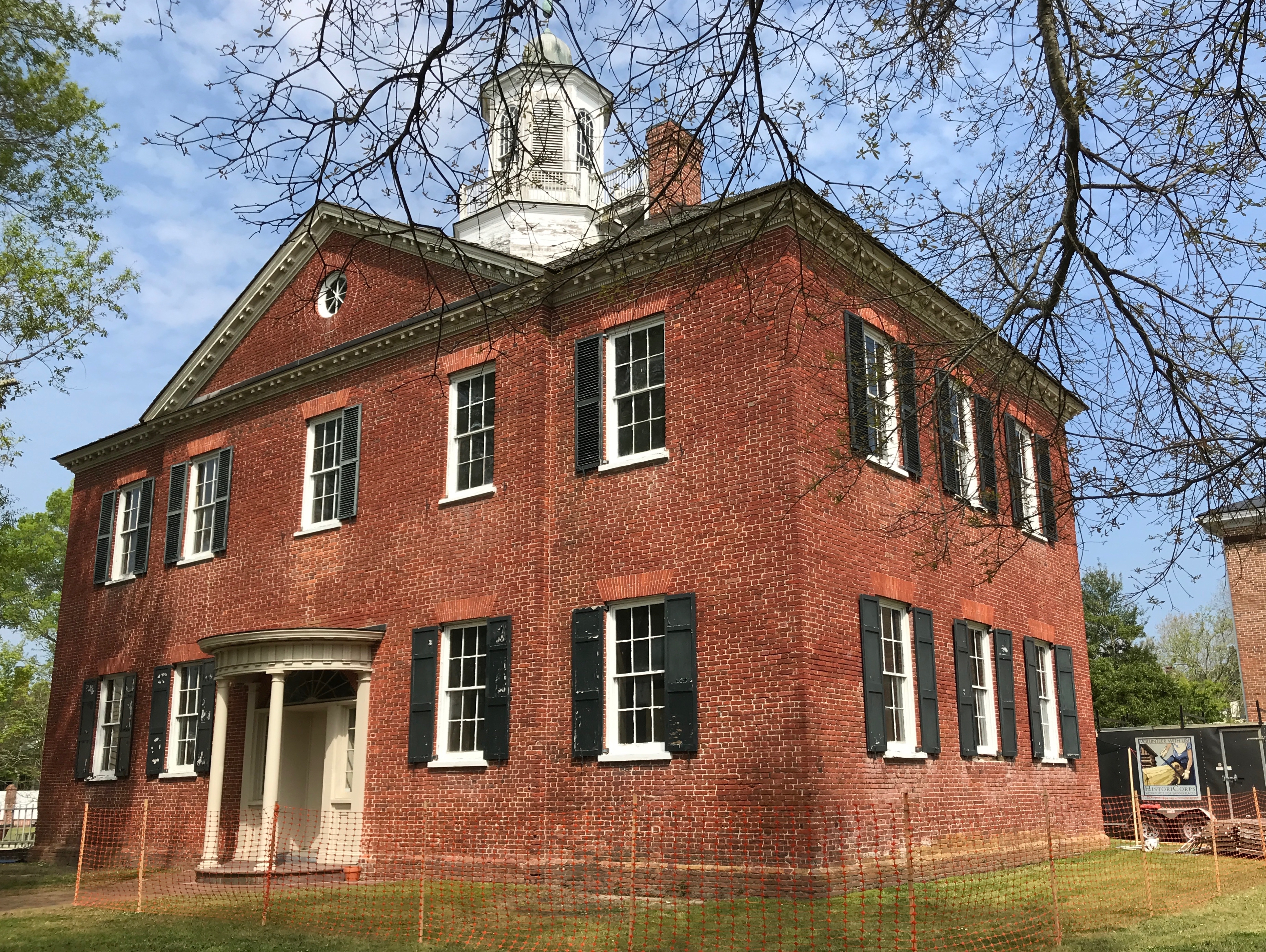
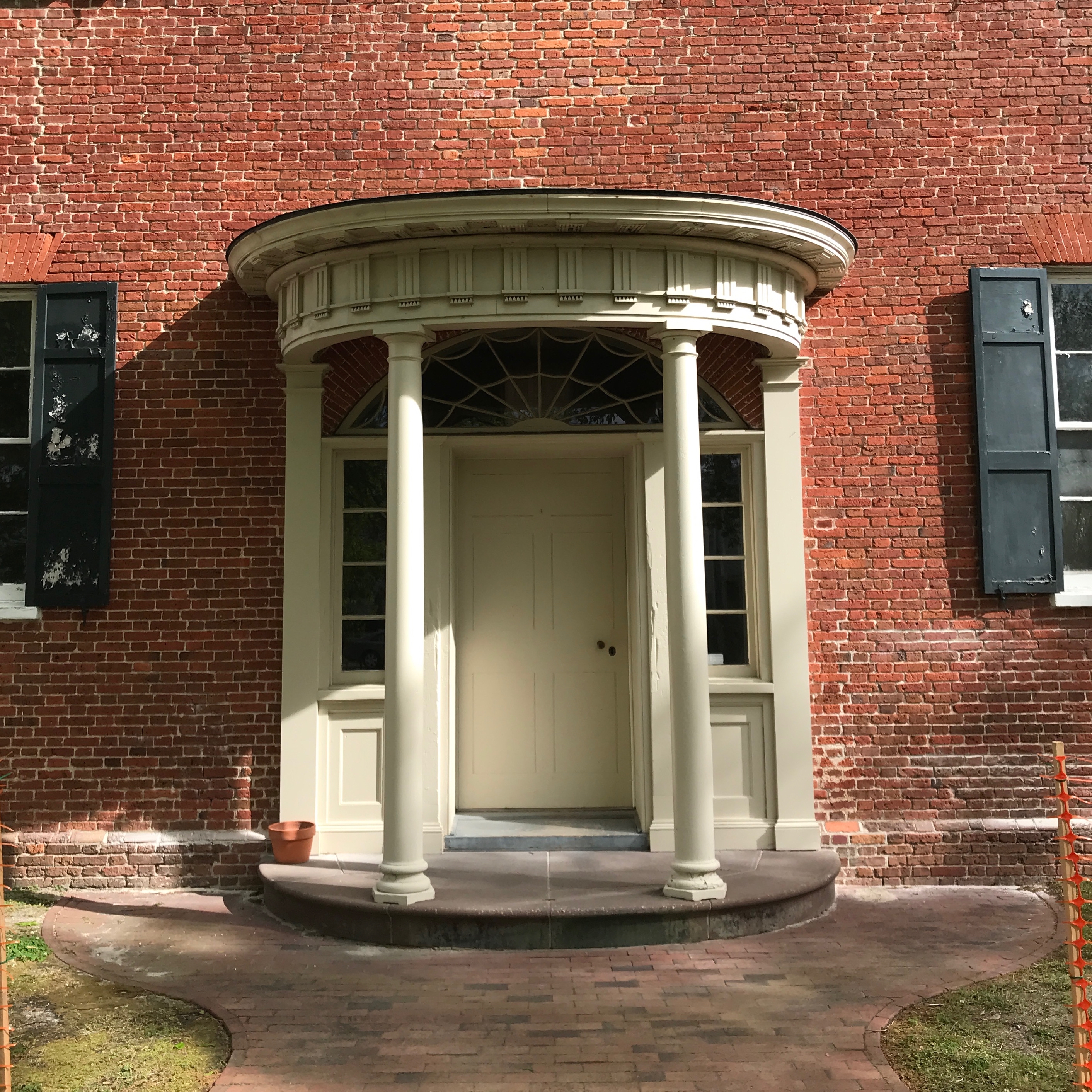
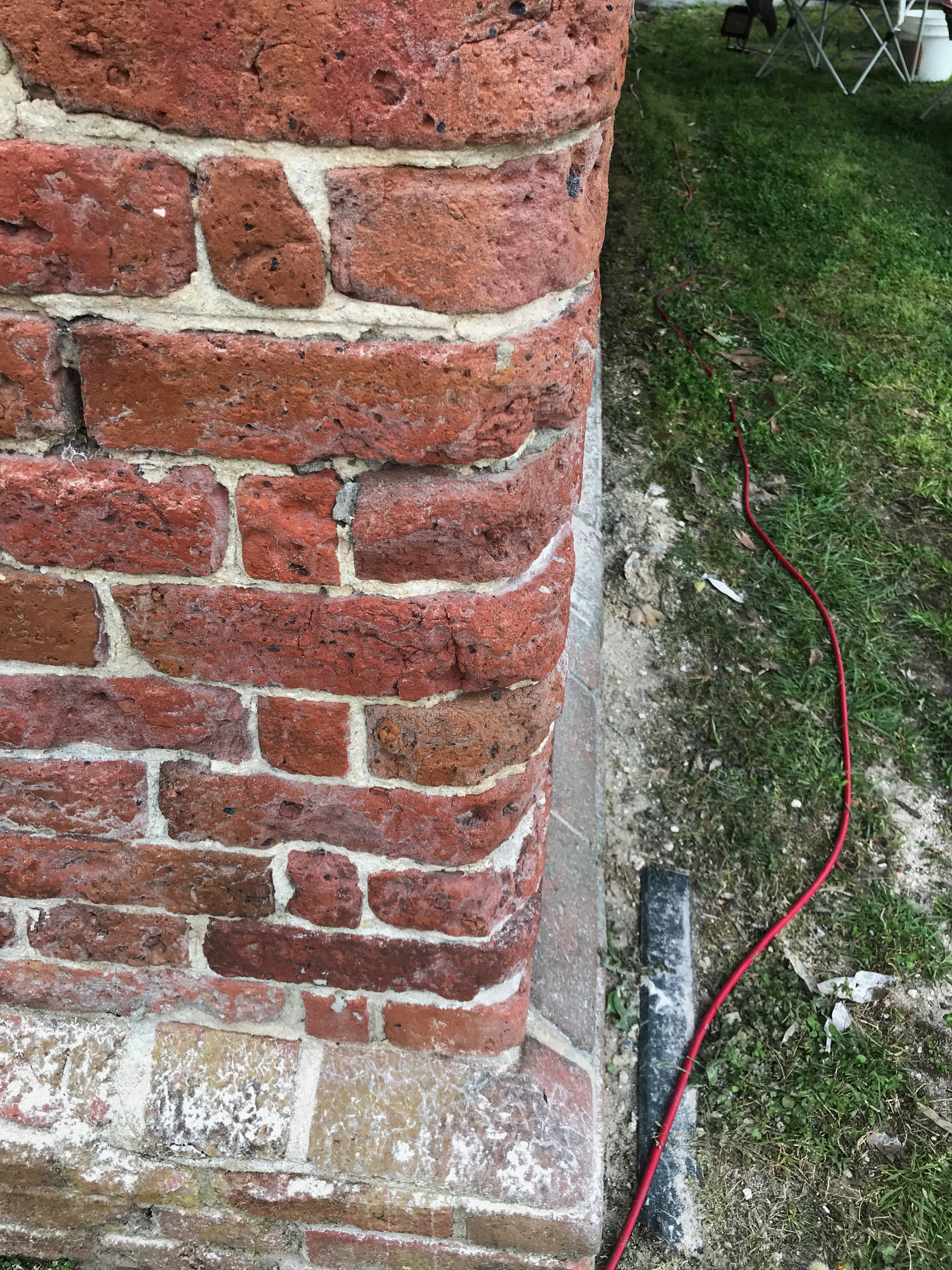
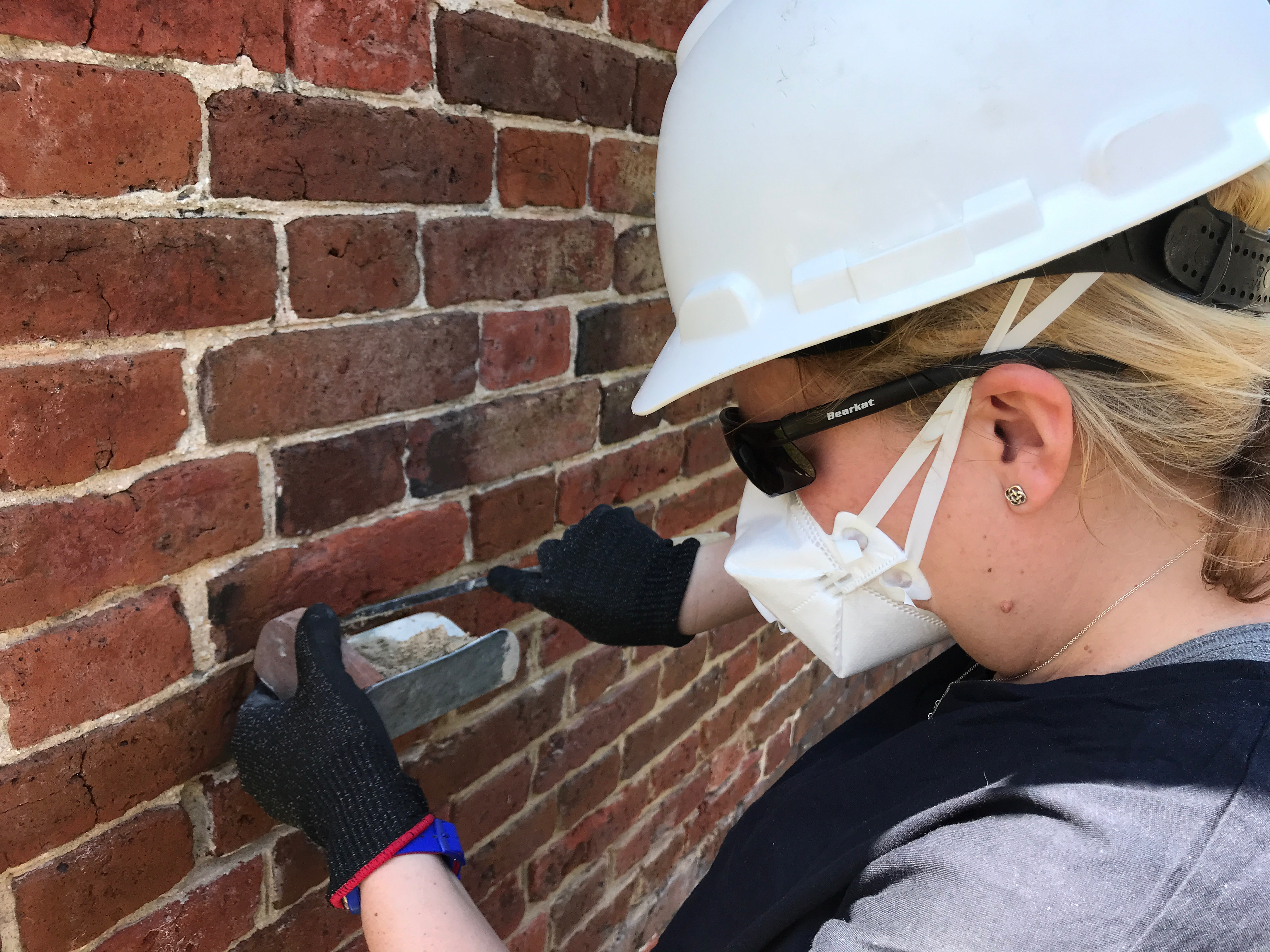
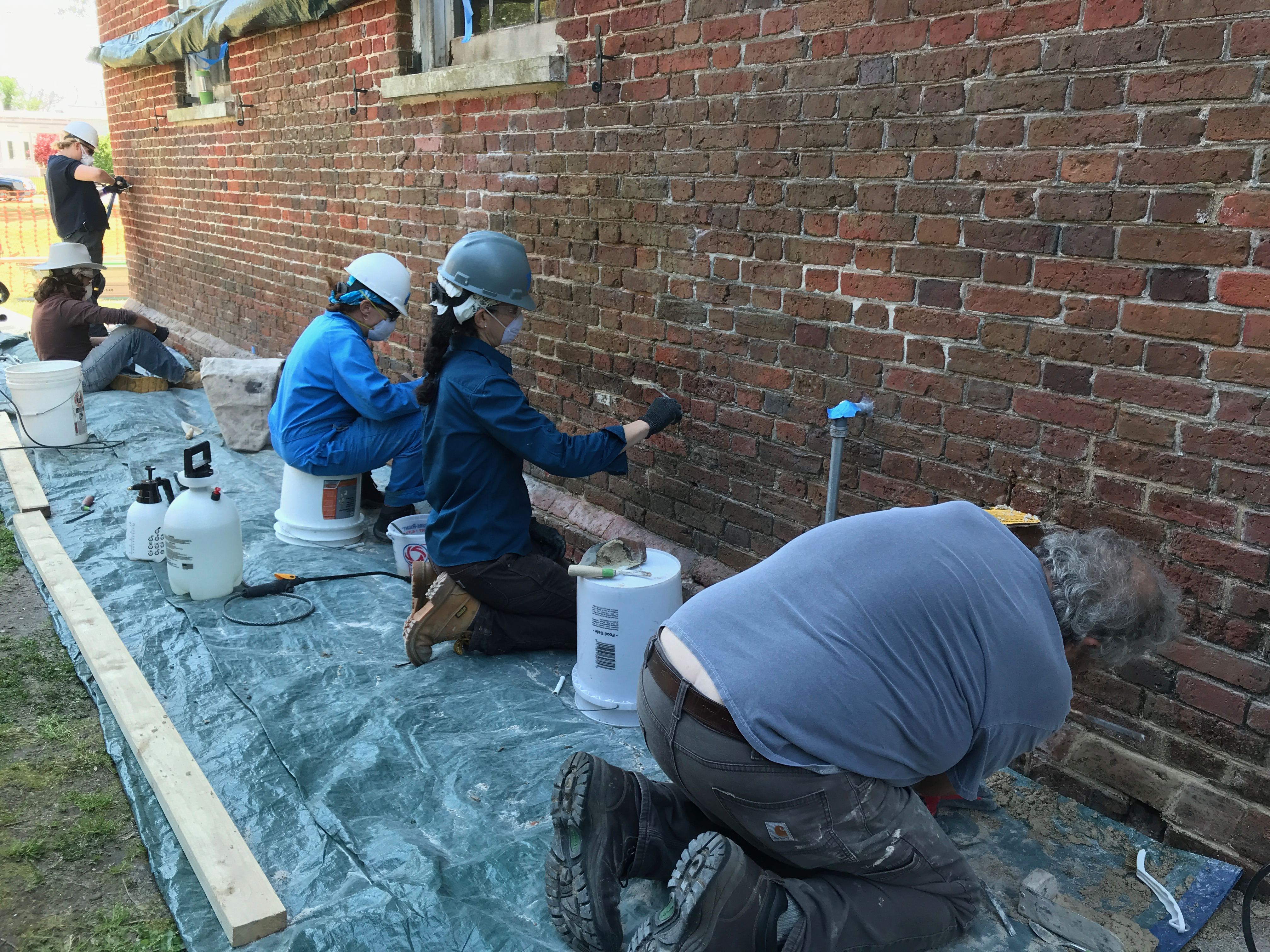
My purpose for visiting New Bern was to work on a project for HistoriCorps. I was part of the first week of a month-long project. Our mission was to work on repointing the bricks on New Bern Academy.

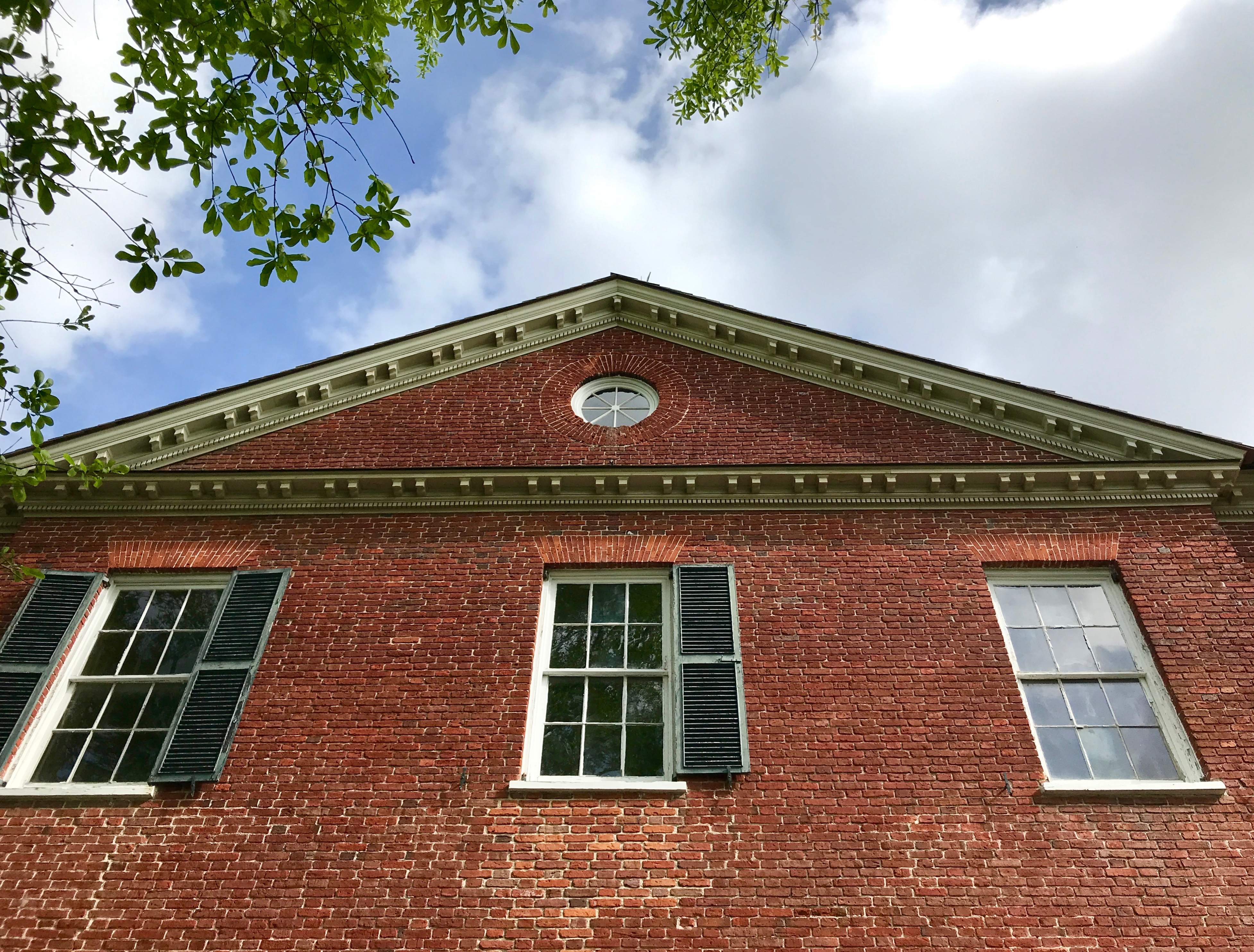
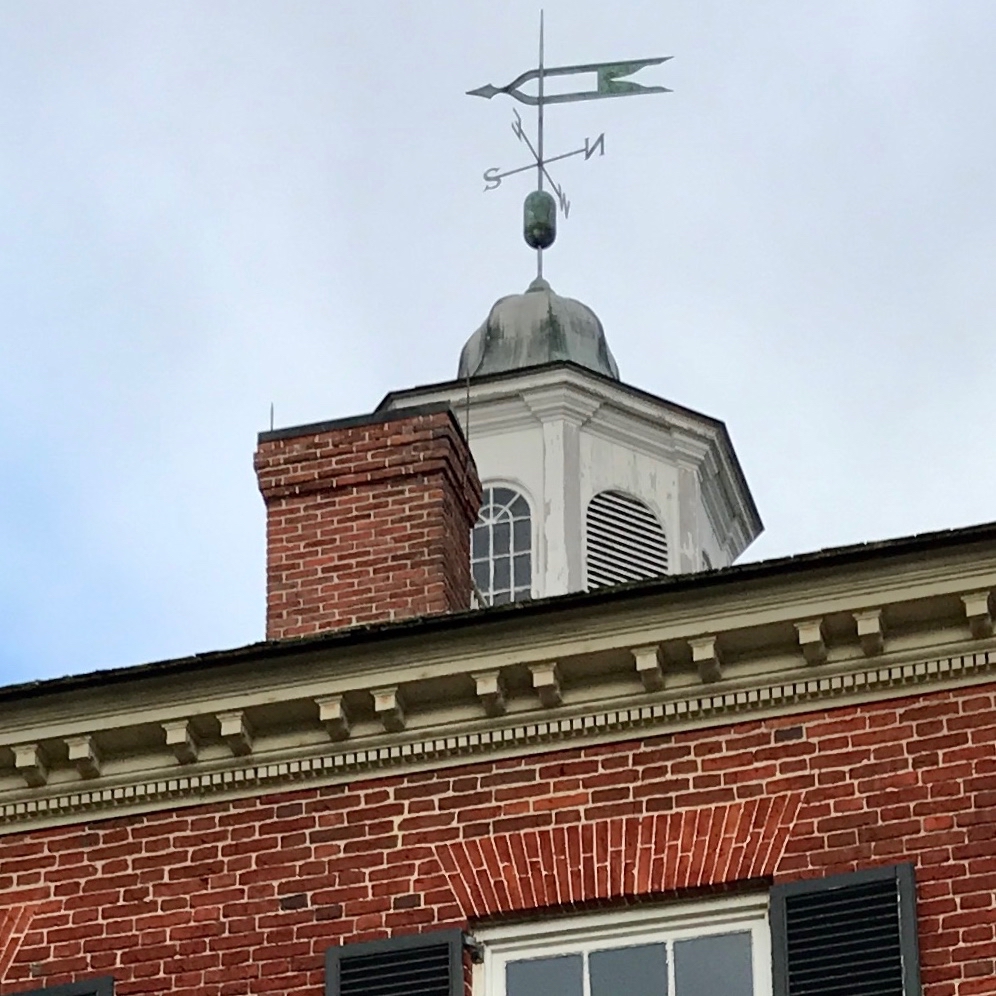
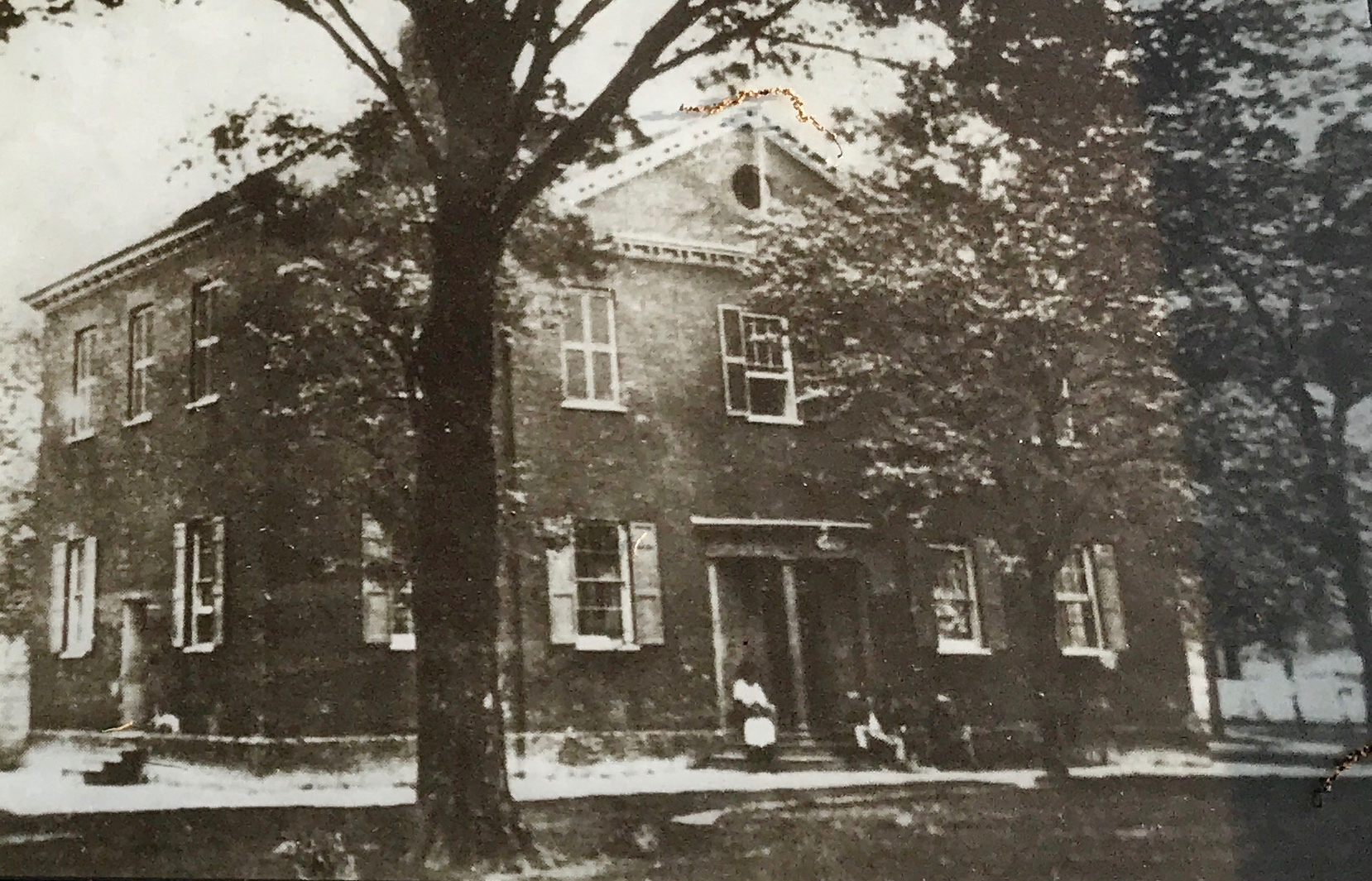
New Bern Academy was established in 1766. It was the first school established by law in North Carolina. Fire destroyed the original building in 1795 and this Federal-style structure was erected in 1810.

At first, the Society for the Propagation of the Gospel subsidized the teachers, who had to be members of the Anglican Church. Before it became a graded public school, the Academy followed the Lancasterian system, developed by Joseph Lancaster of England. Students were grouped by level of achievement rather than by age, and a pupil who had been promoted to a higher level lead each class.

The Academy’s roll as a school ended in 1972.

That is a lot of years of students! It was time for a little maintenance.
This structure served other functions as well as educational.
In 1861, Confederate authorities converted the New Bern Academy from a school to a hospital. In 1862, after defeating Confederate forces in the Battle of New Bern on March 14, the U.S. Army commandeered the structure to care for the wounded.

After all those years of use and misuse are evident.

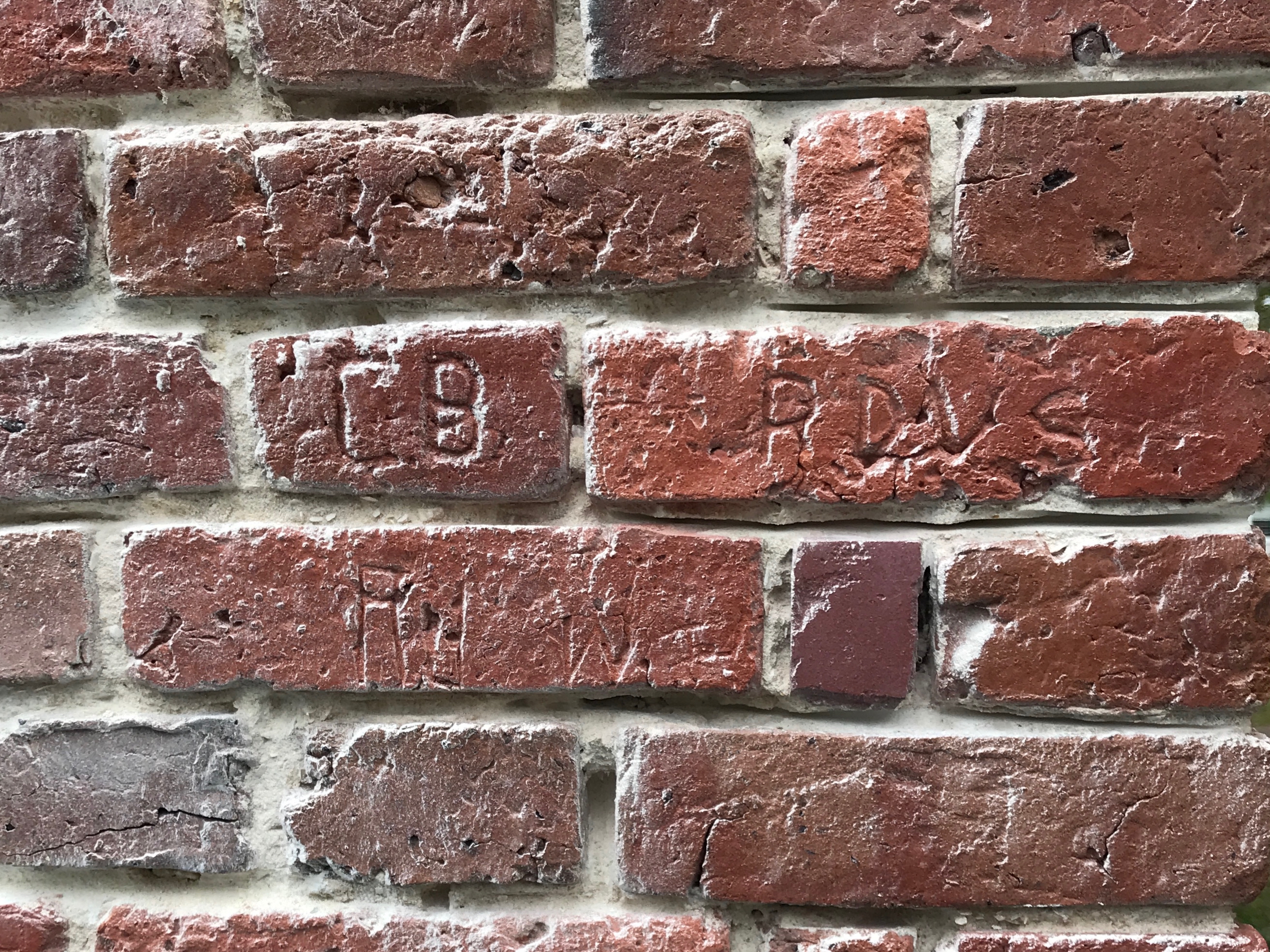
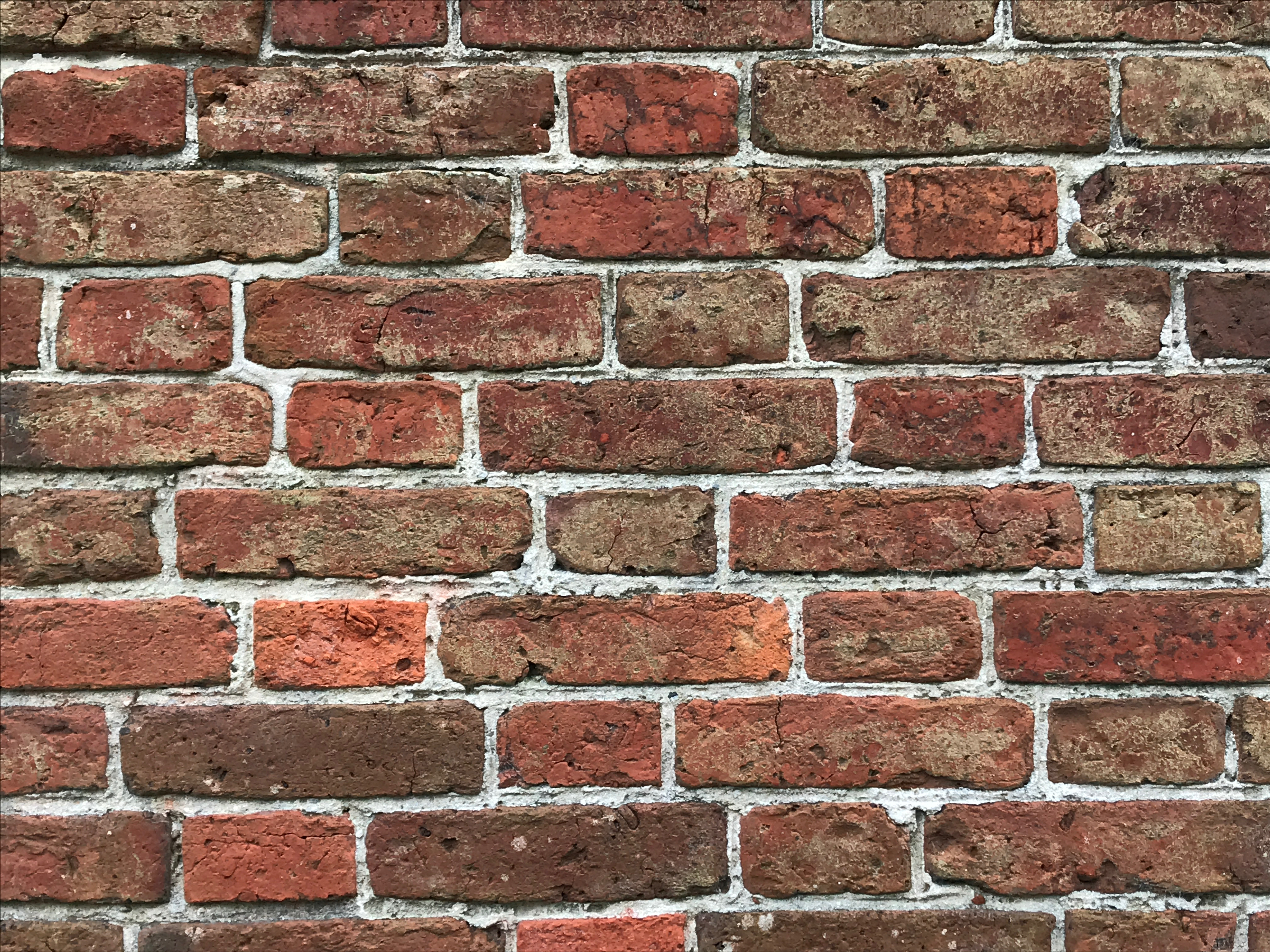
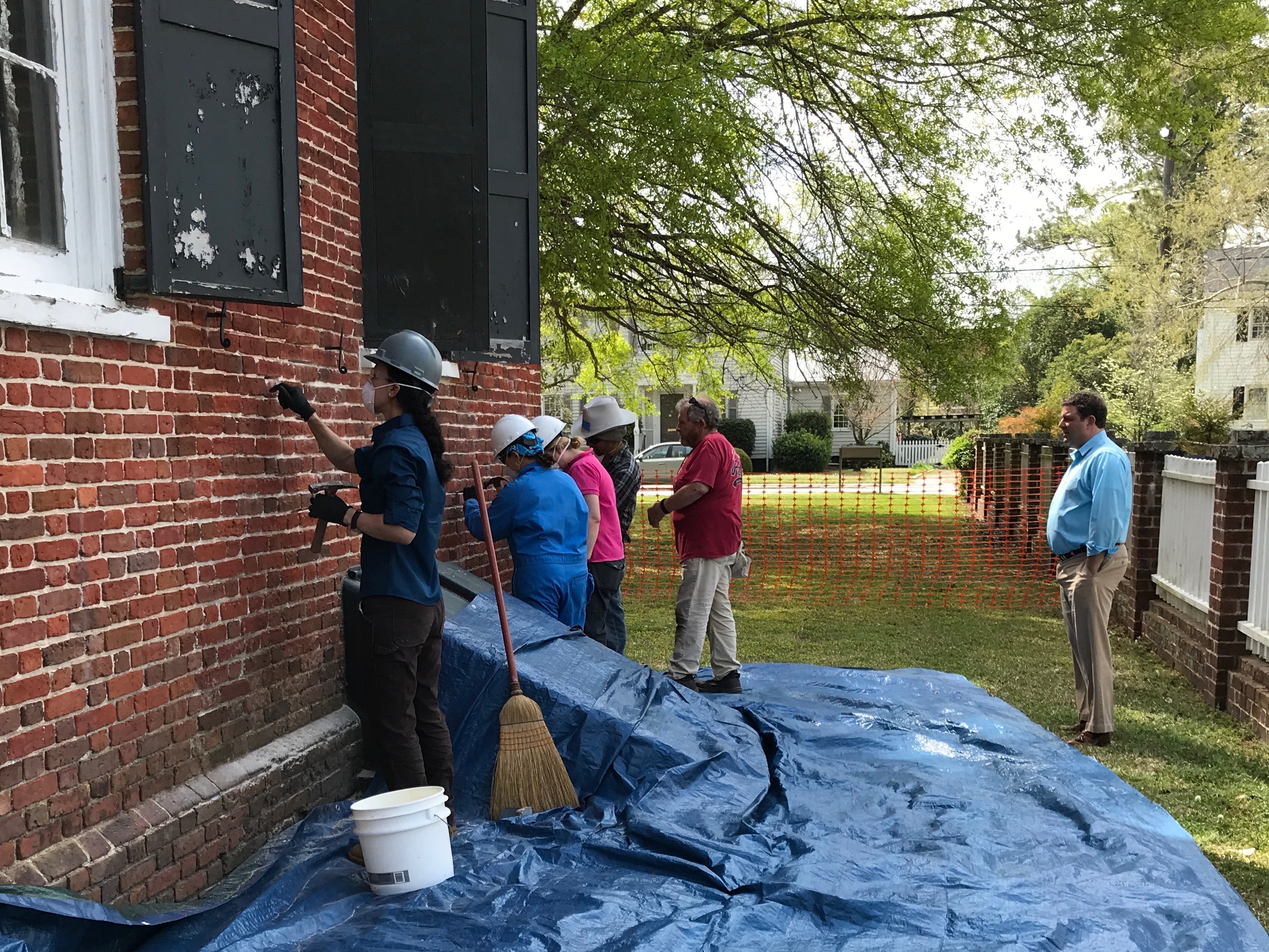
And that’s just why we were there. HistoriCorps to the rescue! Our job was to touch up the mortar between the bricks.

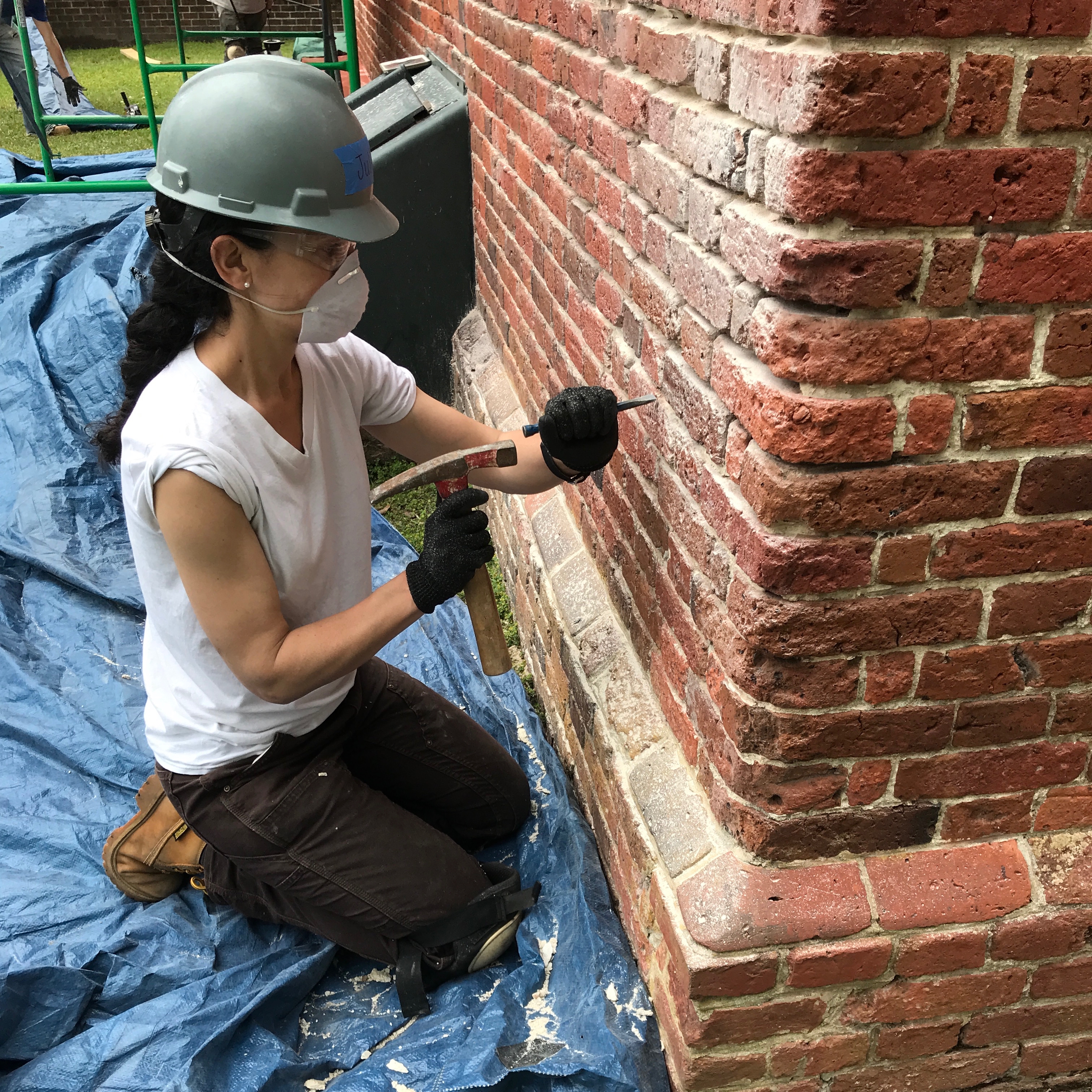
The first step is to get the loose and crumbling mortar out of the joints.

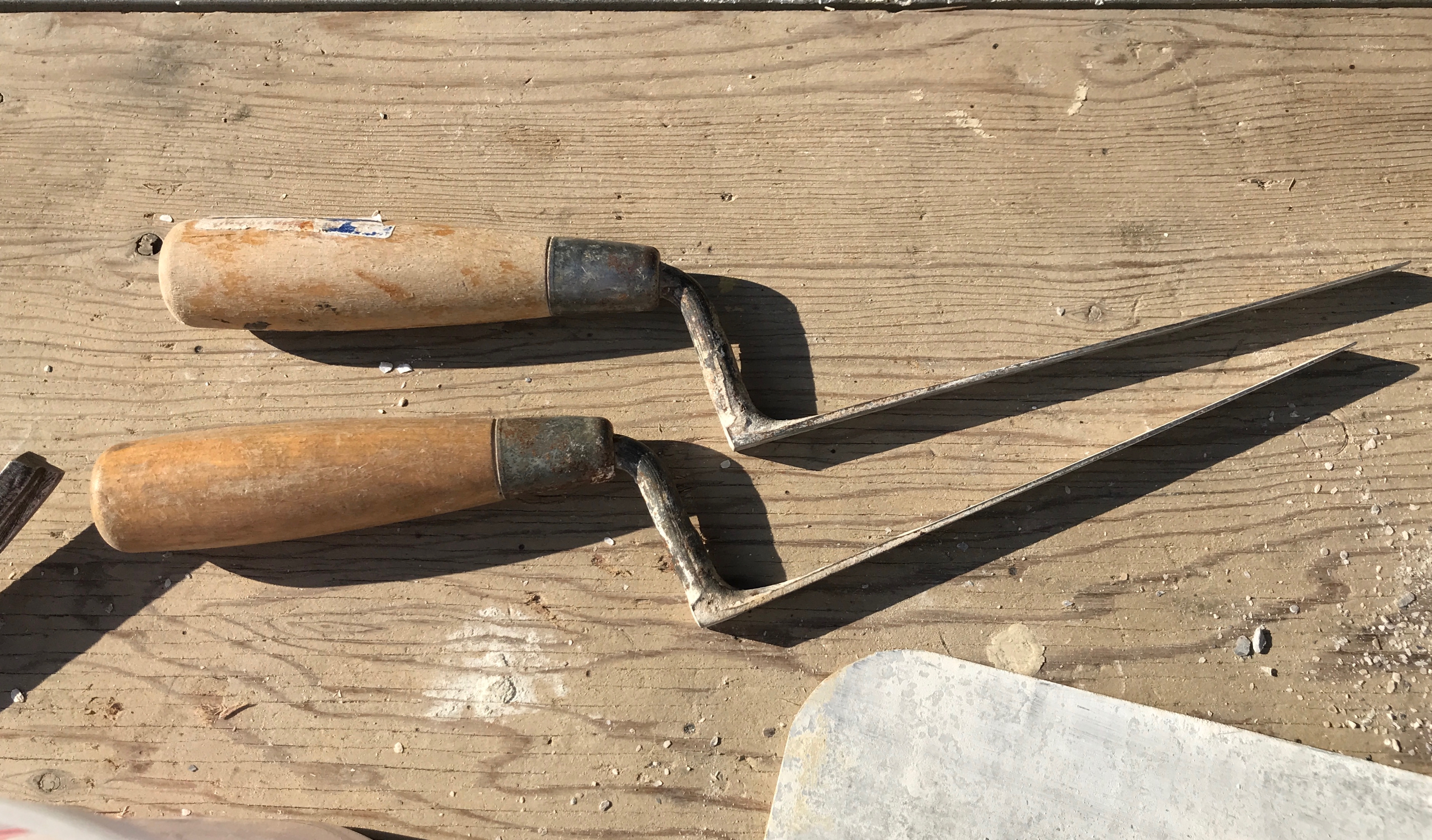
As I remember, the tools we used for that were pointing tools. We also used them for putting the mortar back in the joints.

Hammers and chisels were used as well.

Sometimes there was quite a bit of crumbly mortar that needed to be removed. I dug down as far as I could go.

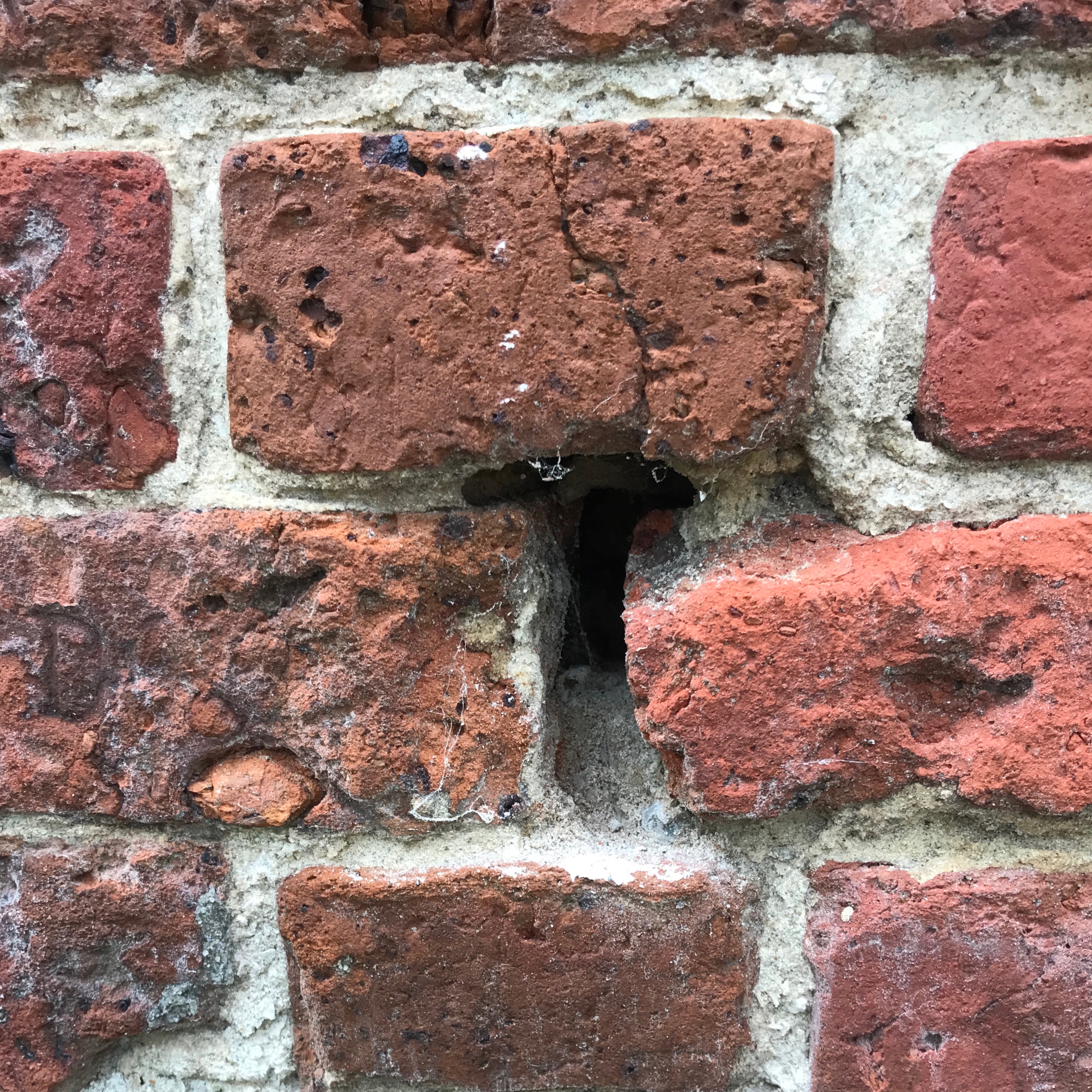
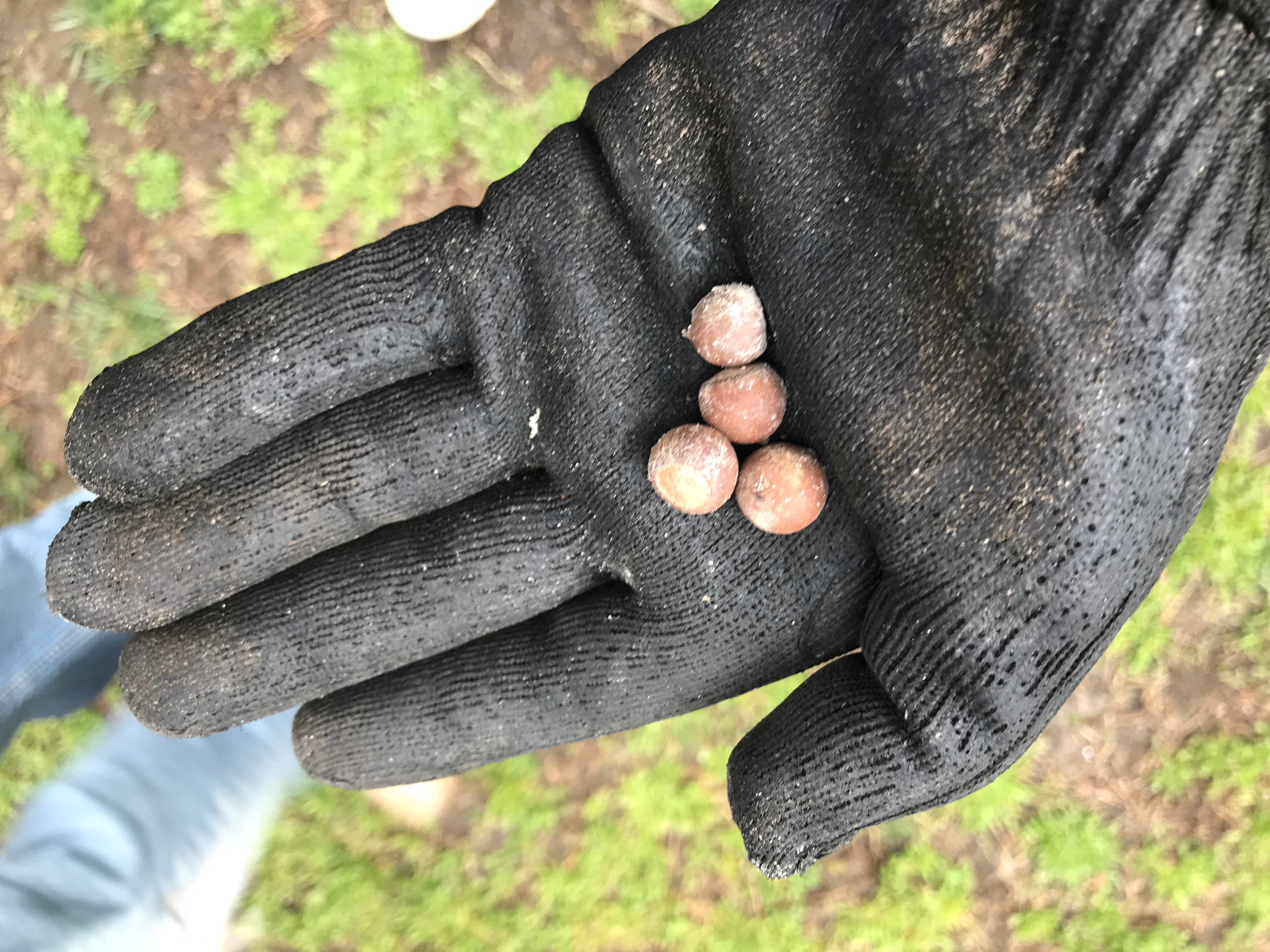
I was surprised when I dug these nuts out of the cracks.

After digging out the mortar that needed to removed, the next step was to replace it with fresh mortar.

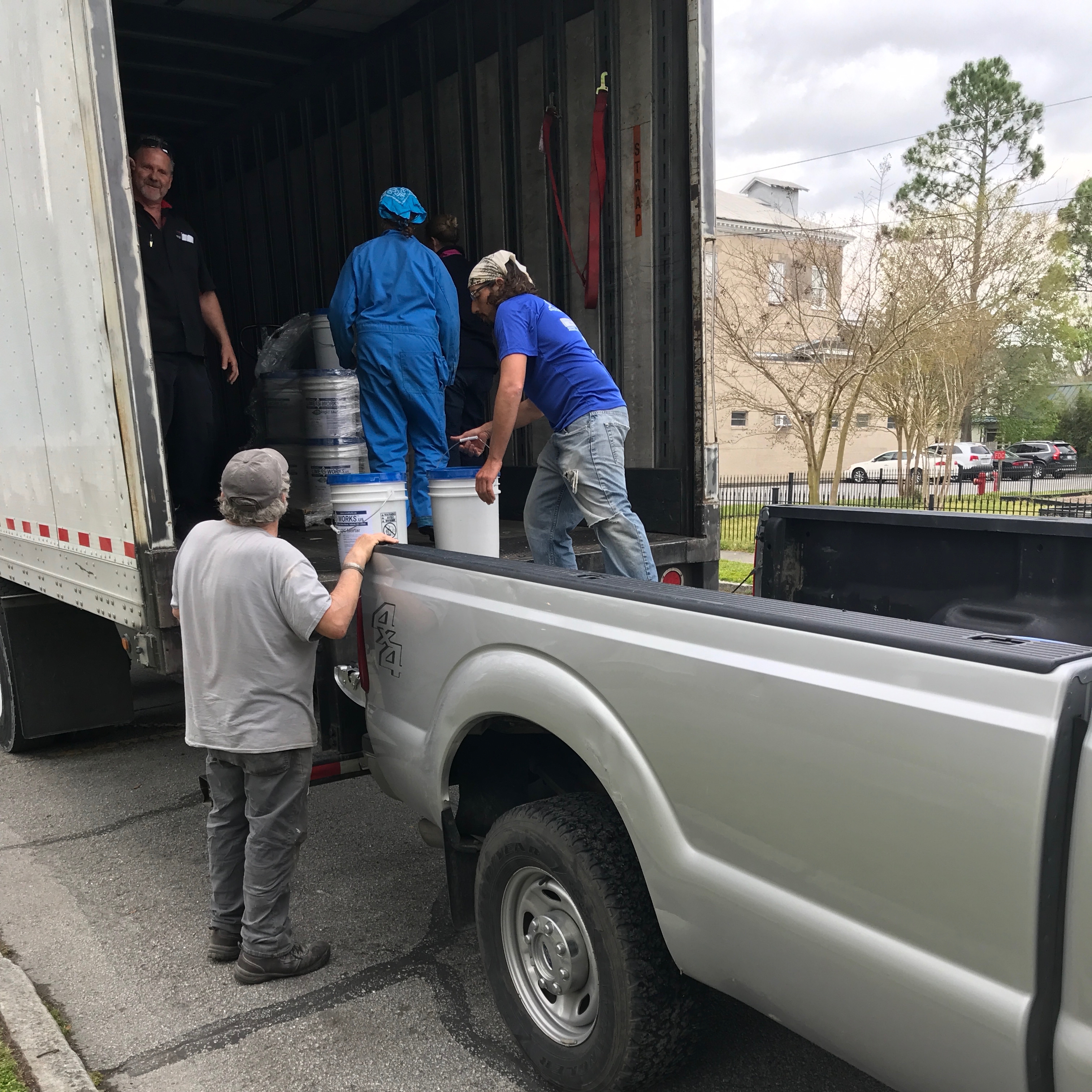
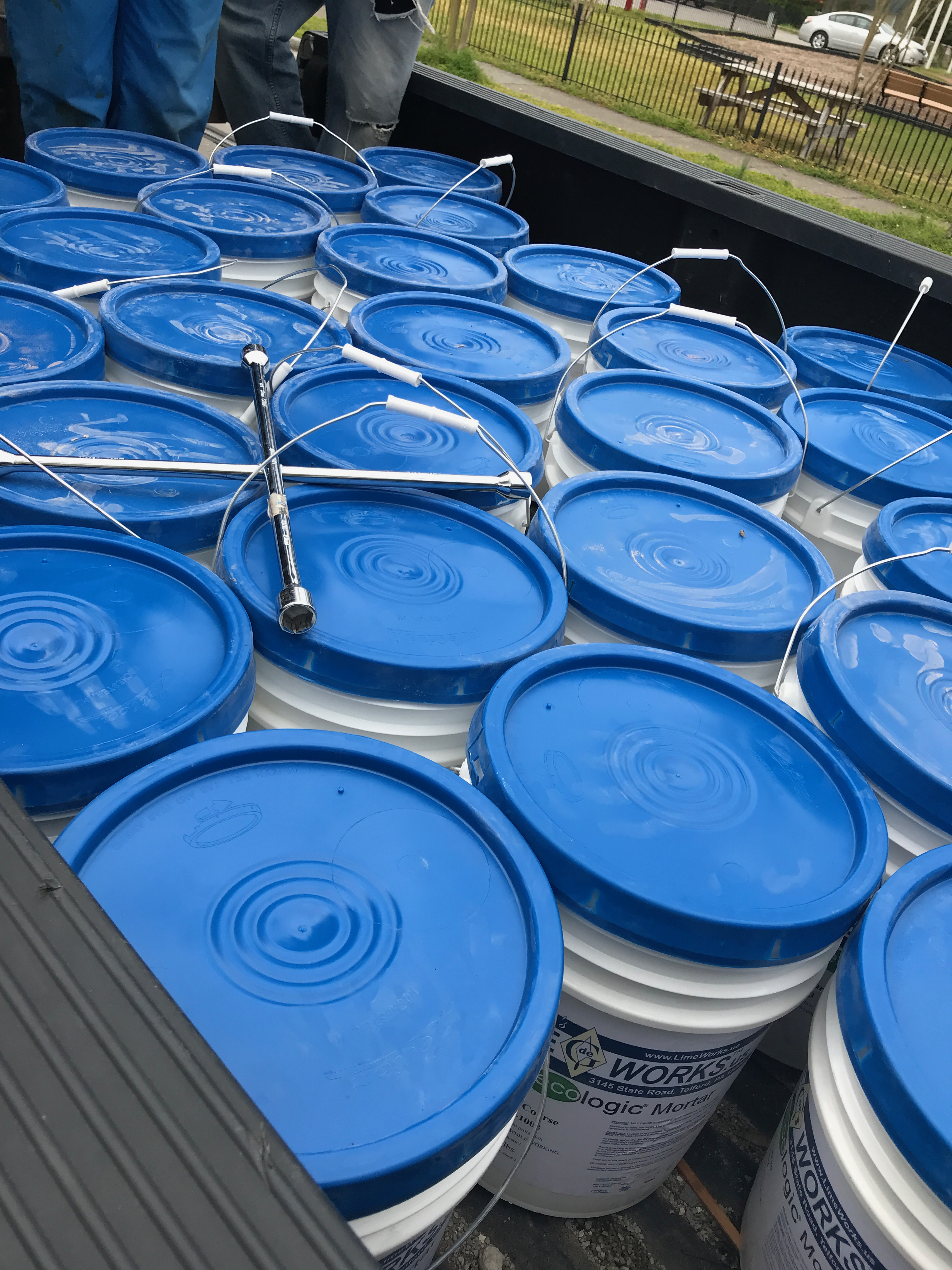
The shipment of mortar arrived. They offloaded it from the delivery truck to the pickup.

That’s a lot of mortar, but then, this was the first week of a four week job. There are a lot of bricks that need to be repointed. I believe that the windows were also on the schedule.

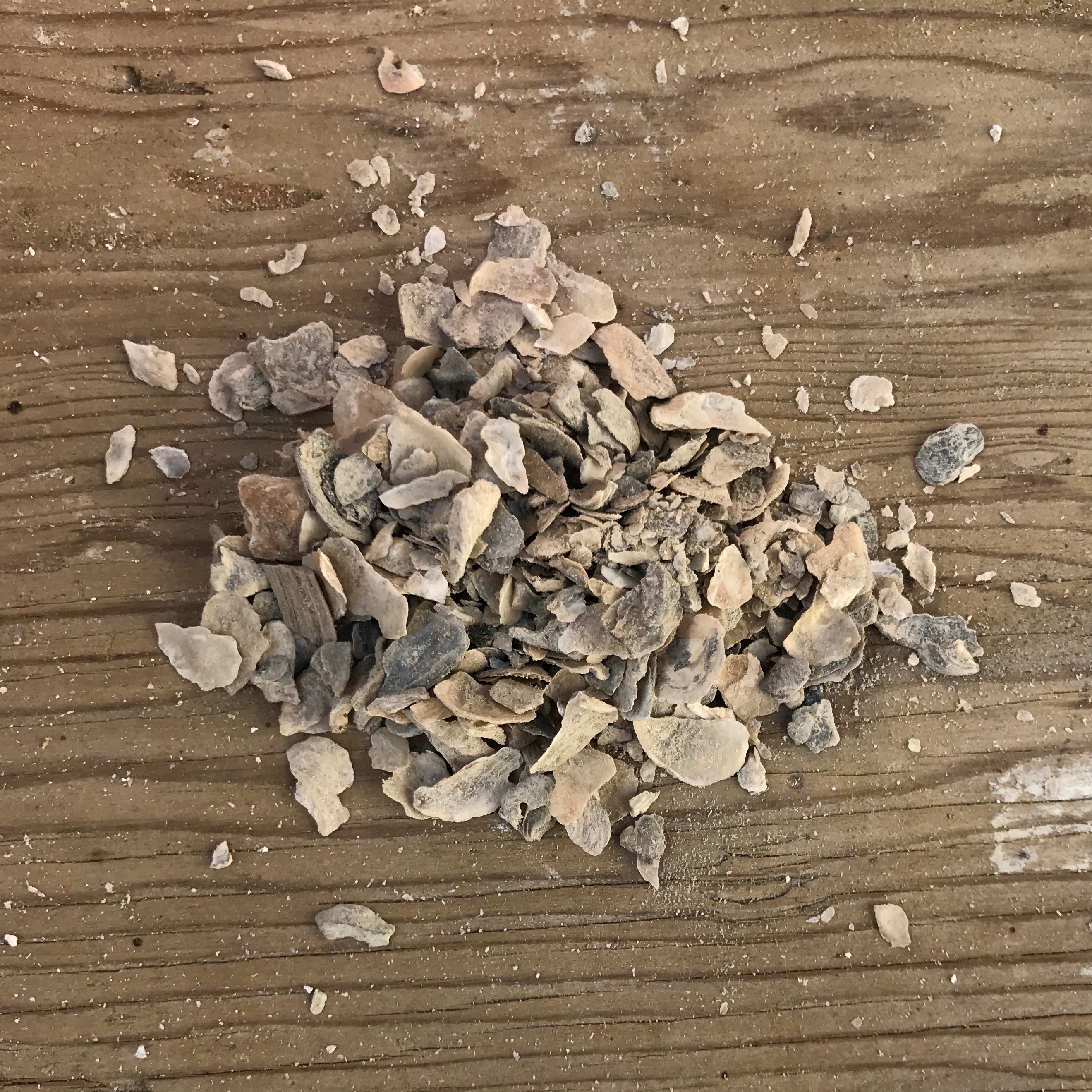
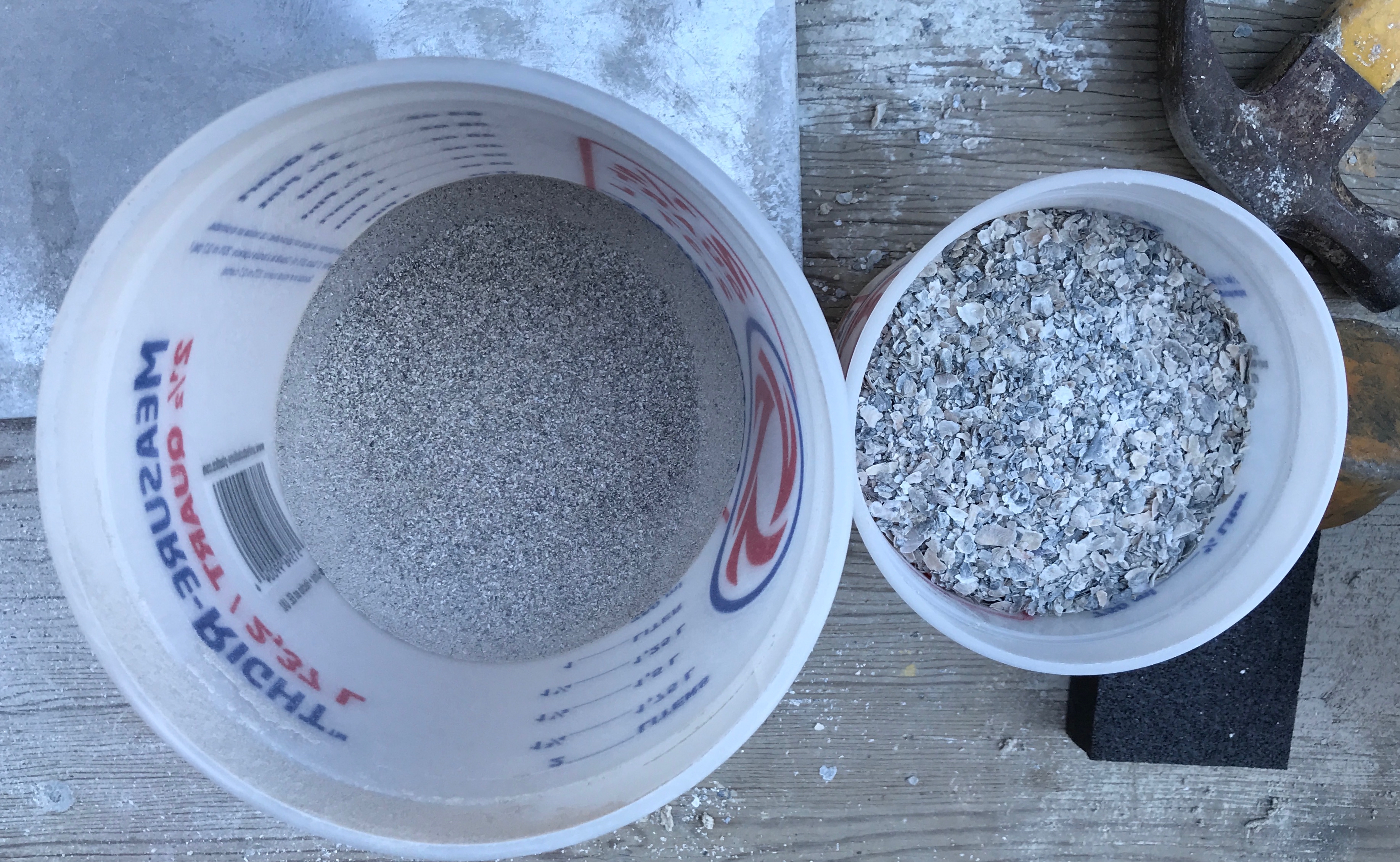
The name of this group is HistoriCorps, and they try to restore places in a manner that is historically accurate. To give the “store bought” mortar a 19th century vibe, oyster shells were mixed in.
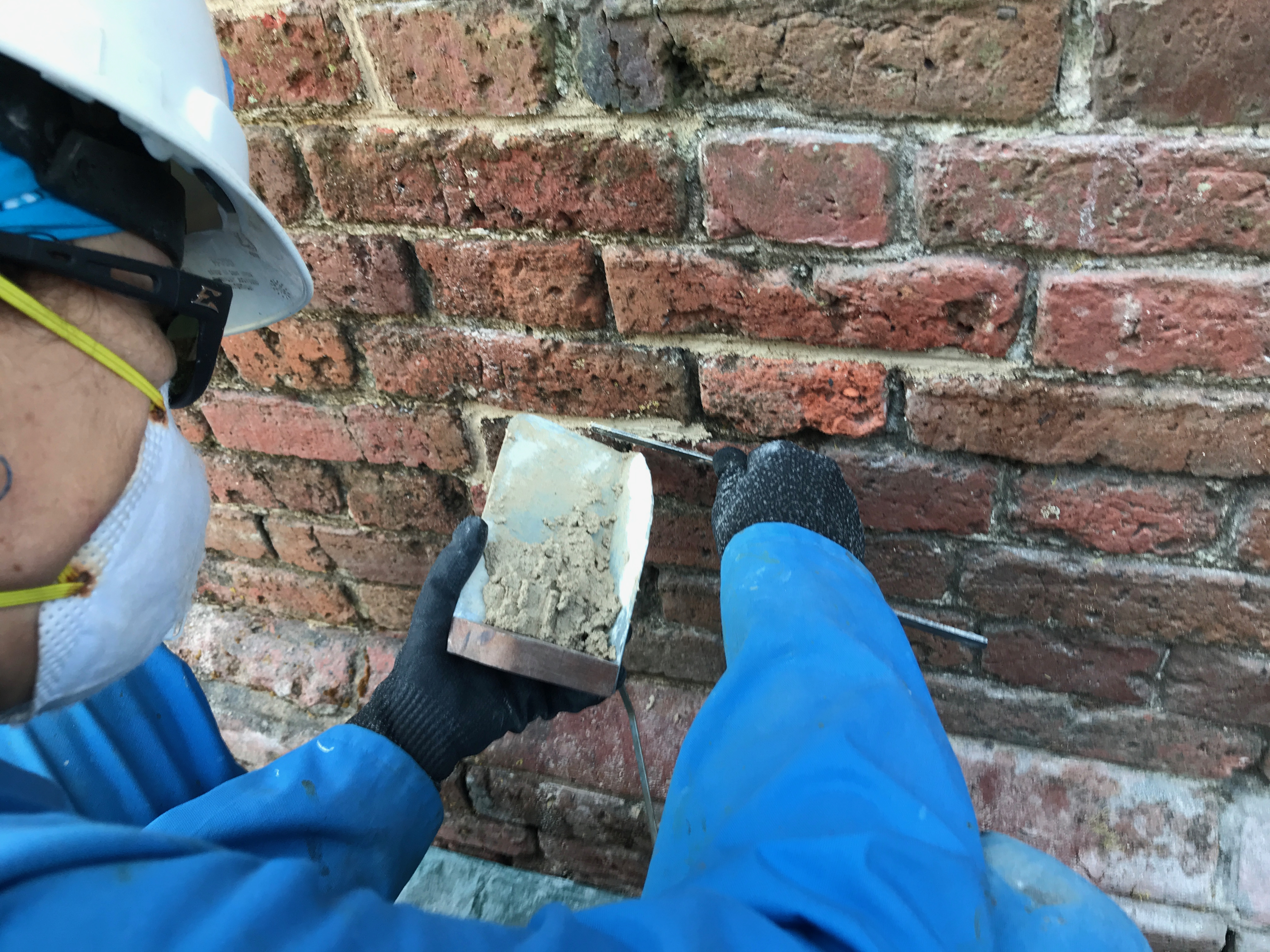
We didn’t harvest the shells ourselves. though.

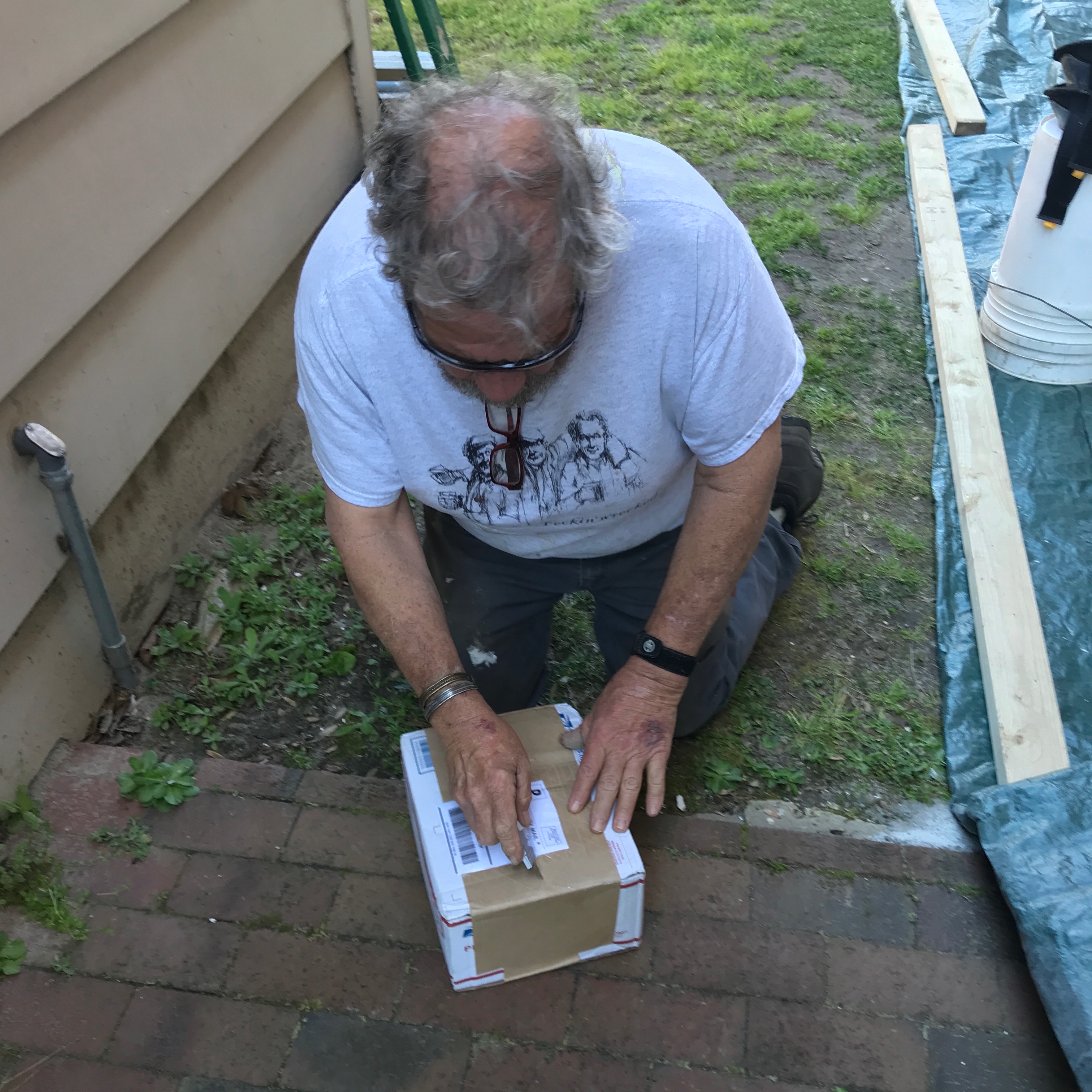
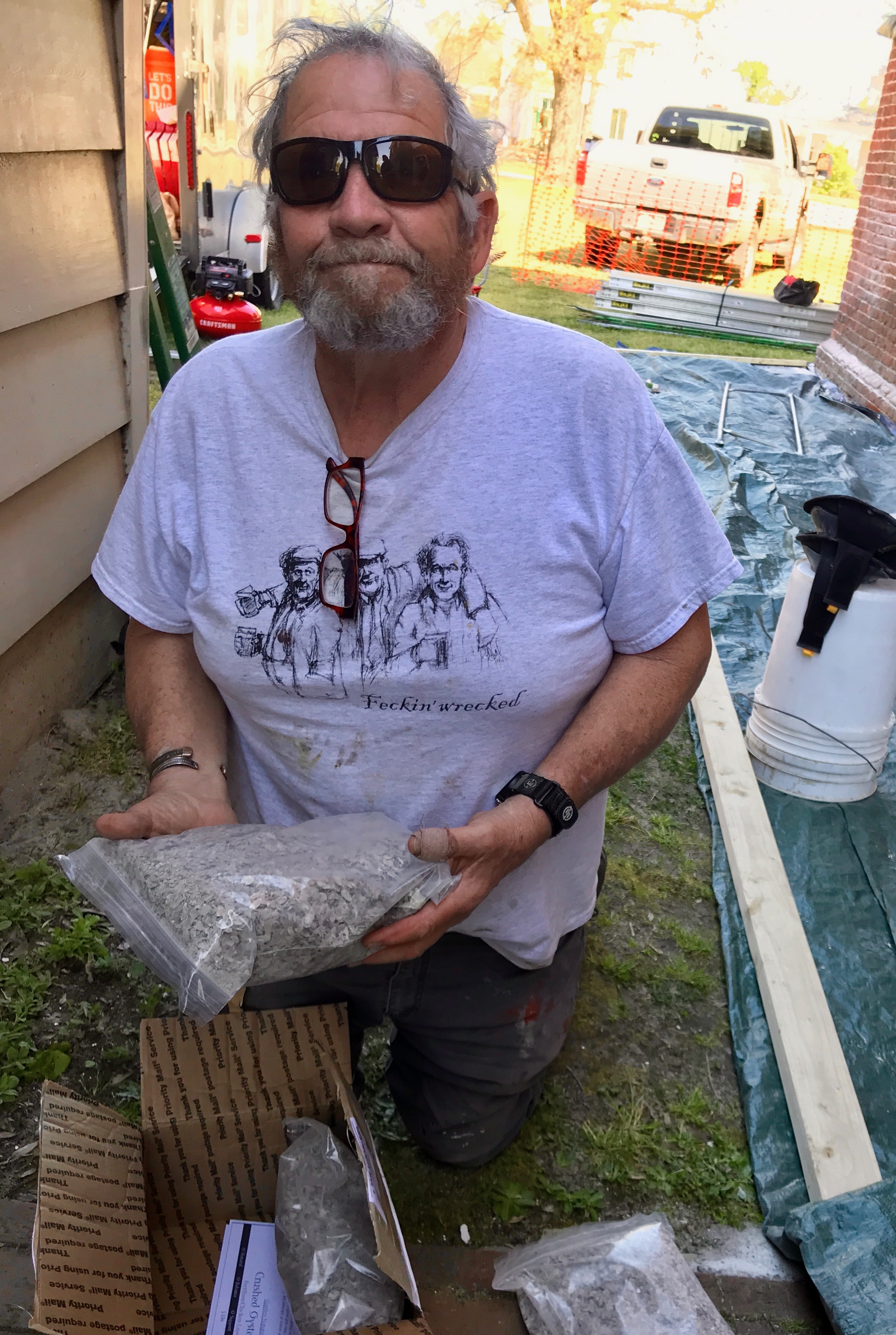
They were ordered online and were delivered right to the job site.
The shells weren’t whole when they arrived,  but they did require some processing.
I suppose, “back in the day” they would have ground them up with rocks.

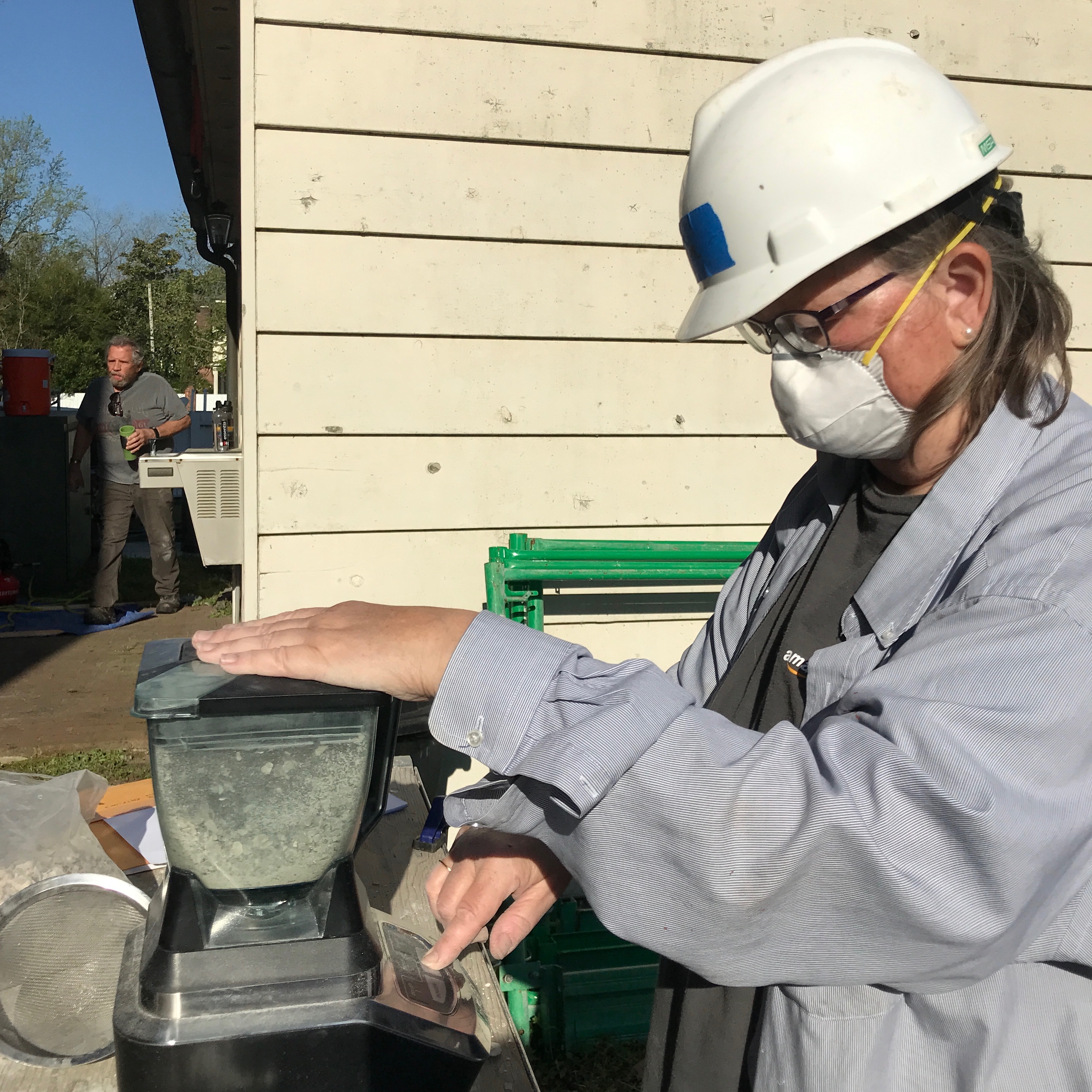
However, we opted for a thrift shop blender.

On a side note, when I saw myself wearing a mask in this photo, I didn’t even give it a second thought. I’ve been wearing masks for months now!

We got the shells ground up as finely as possible.

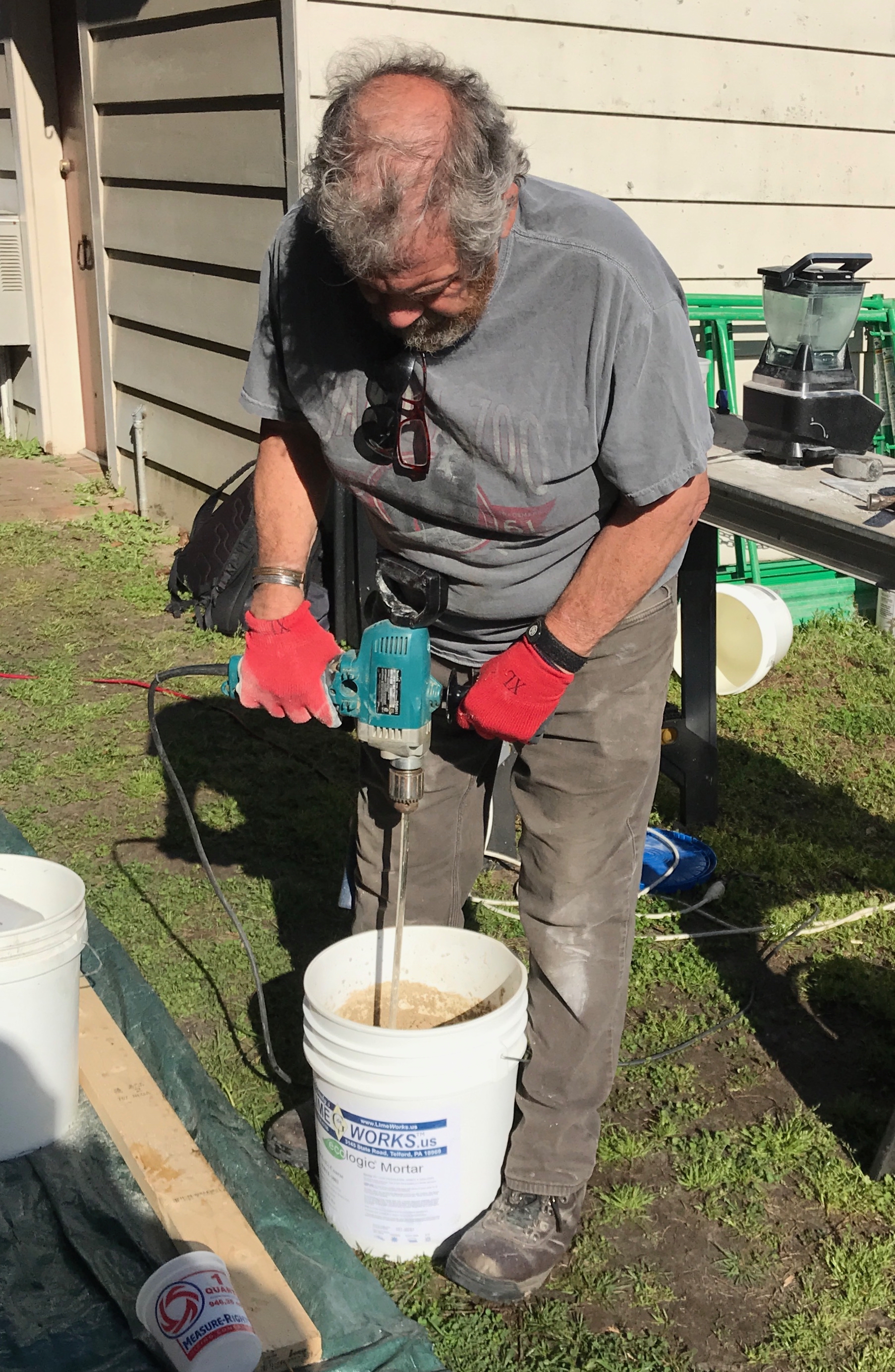
Mike mixed them into the mortar with another anachronistic tool and then it was time to get to busy fixing things up.

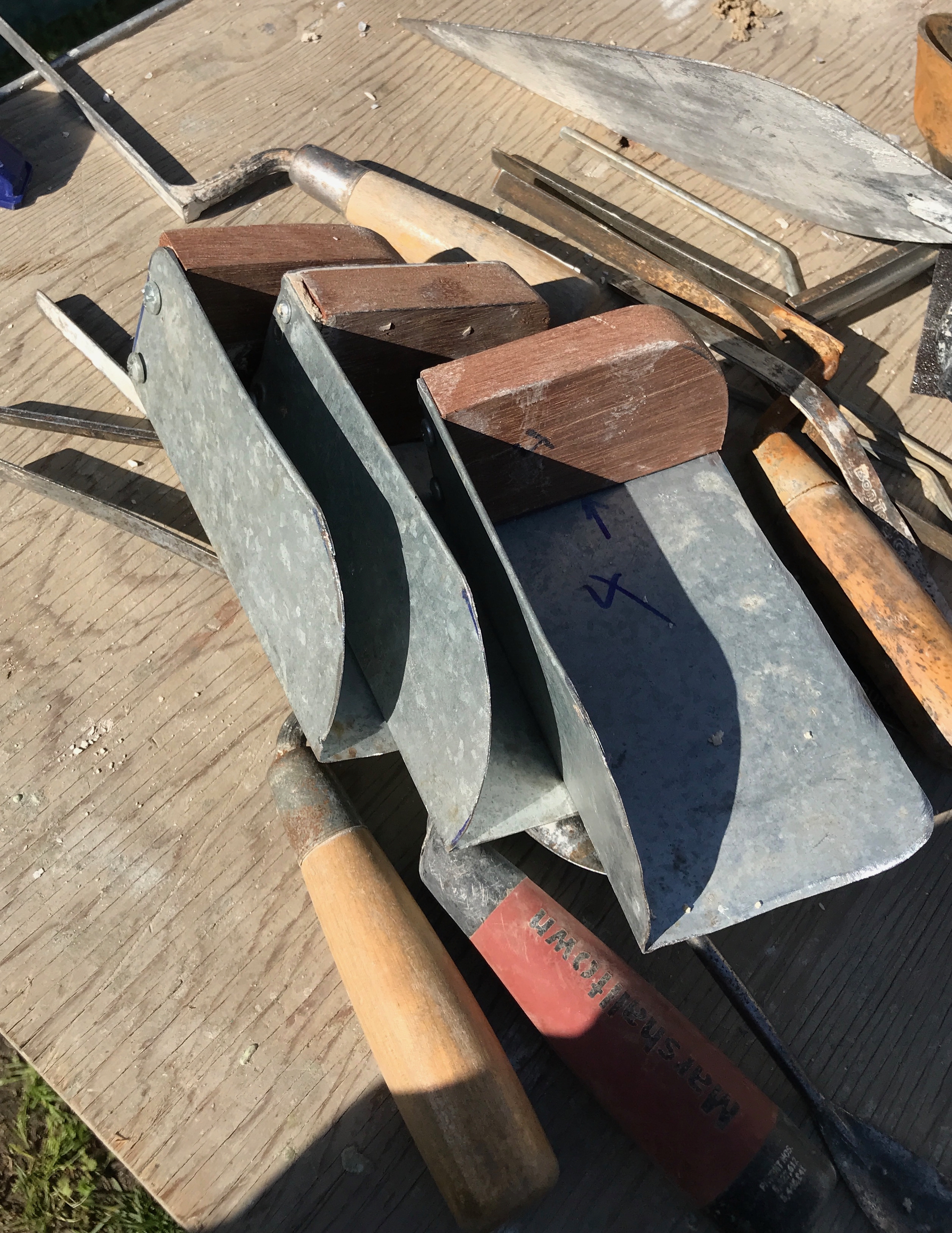
We used these small trays to hold the mortar while we worked.

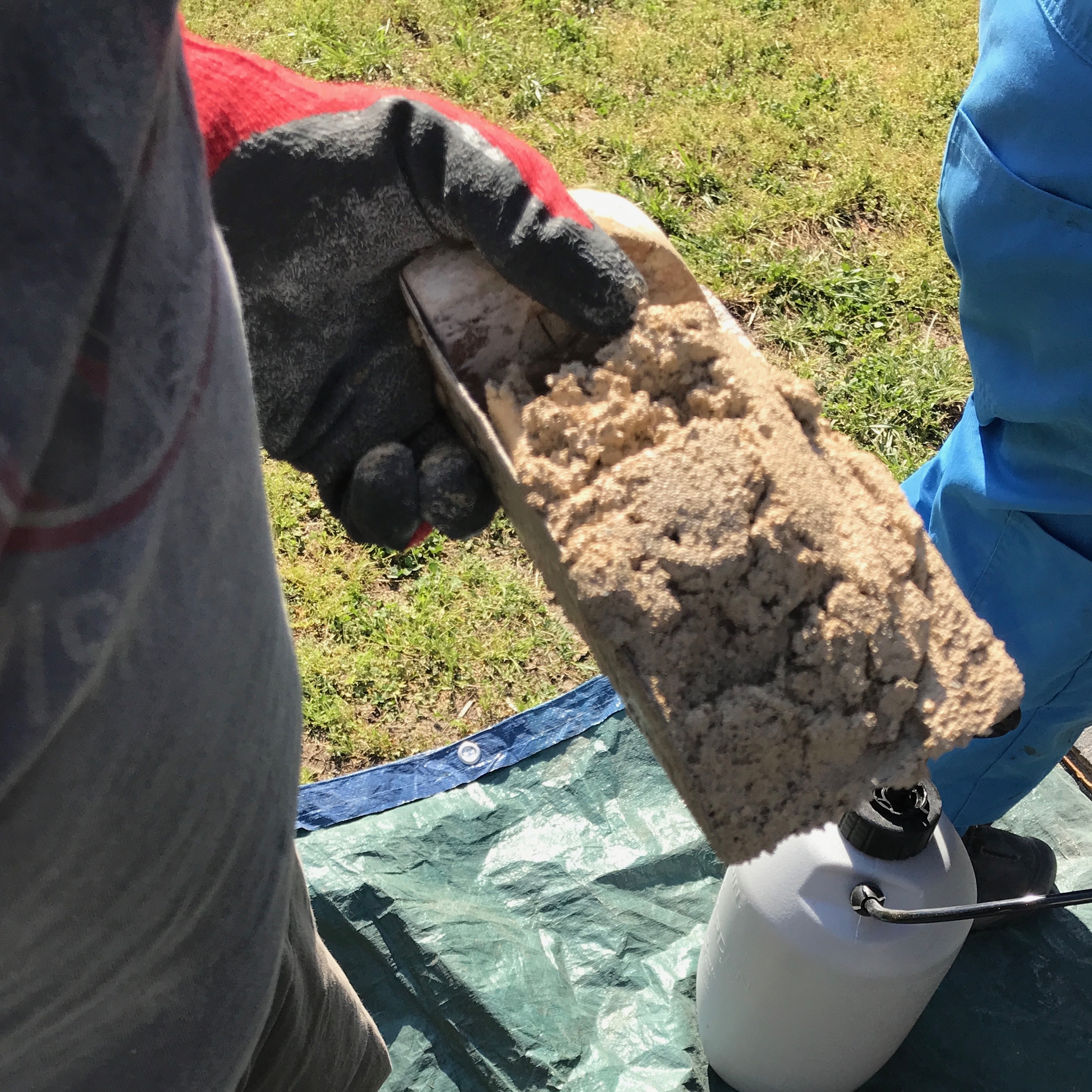
Here’s a tray that’s loaded up and ready to go.

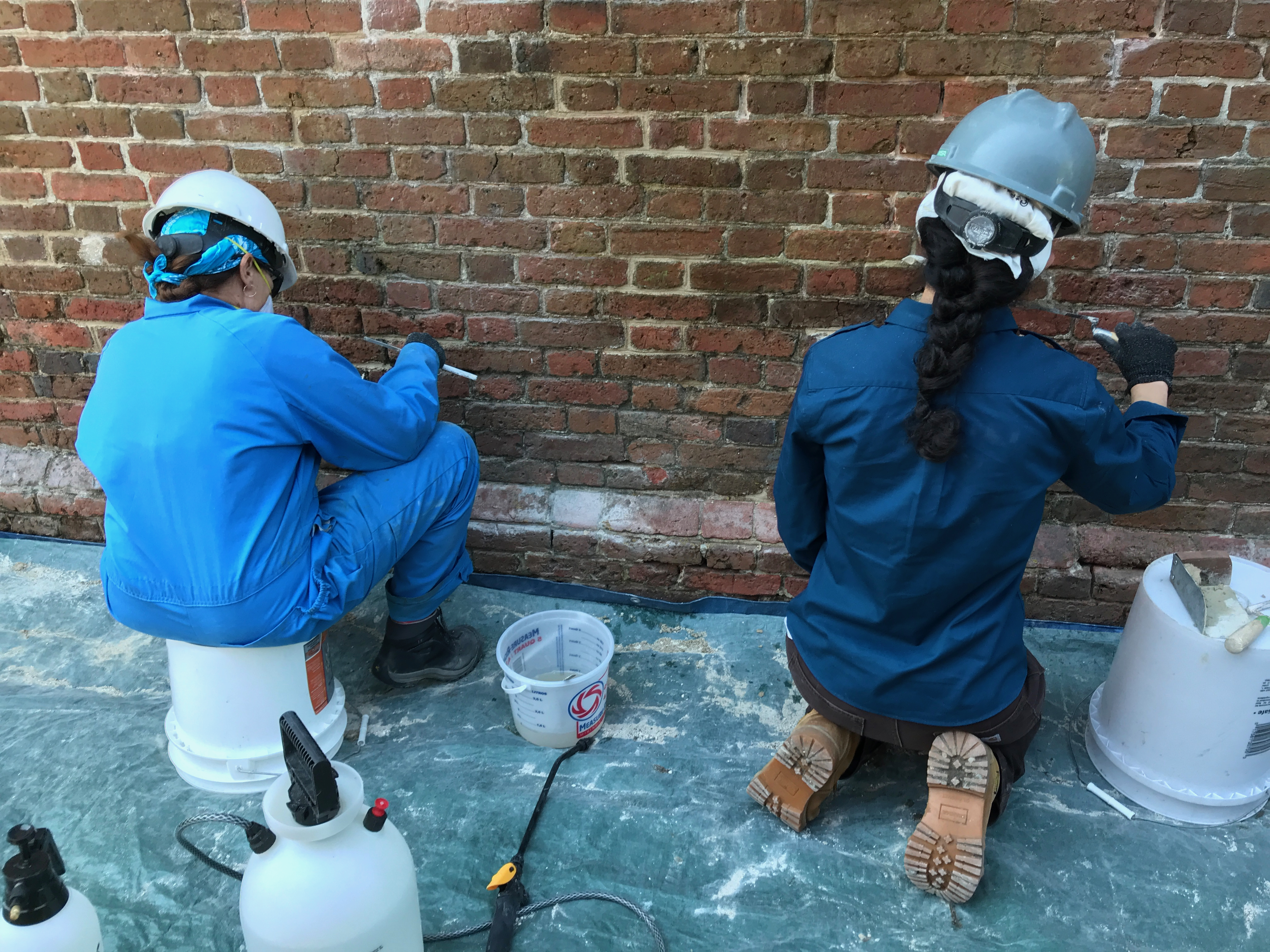
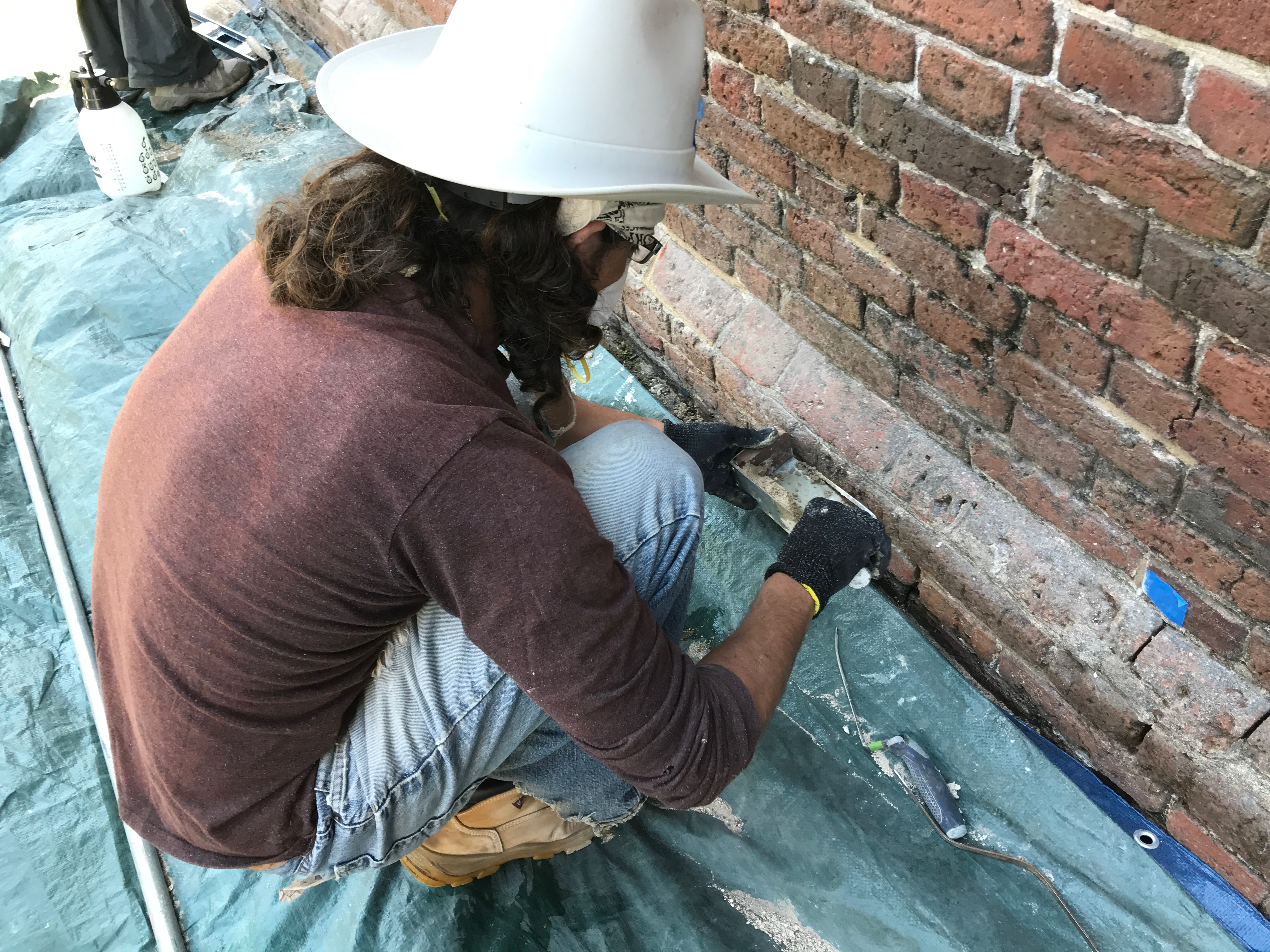
Then, we took the pointing tools and wedged the mortar into the spaces.

Here’s a section of the wall that has been repointed.

We all got busy.

Slip that mortar in.

Smooth it out.

Make it look good.

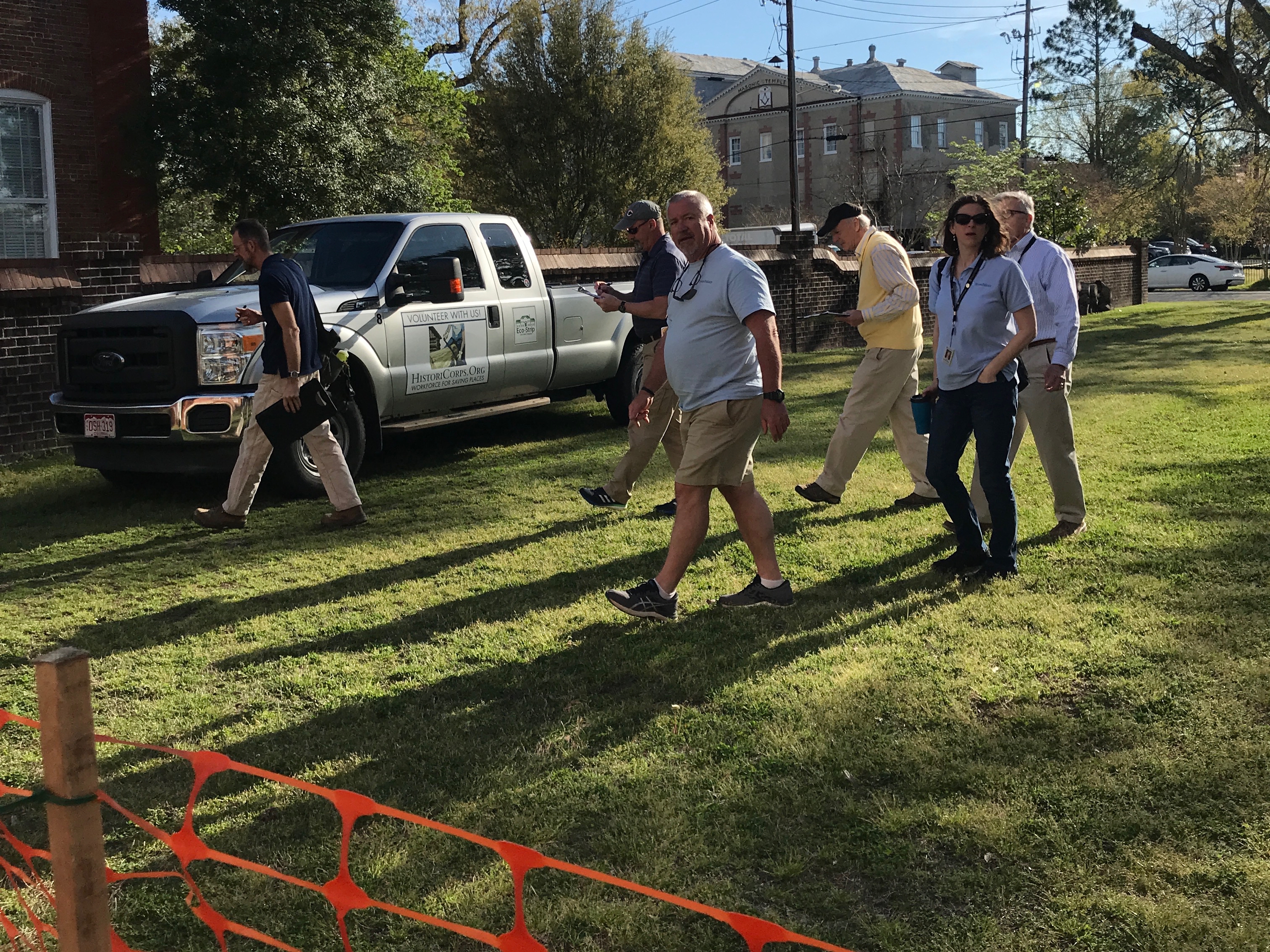
Speaking of looking good, clean and presentable visitors love to stop by Historicorps work sites, especially when we’re working in a town.


Yep, we’re doing it right.

It wasn’t all work-work-work.

We were camped out of town a few miles. Most folks slept in tents.

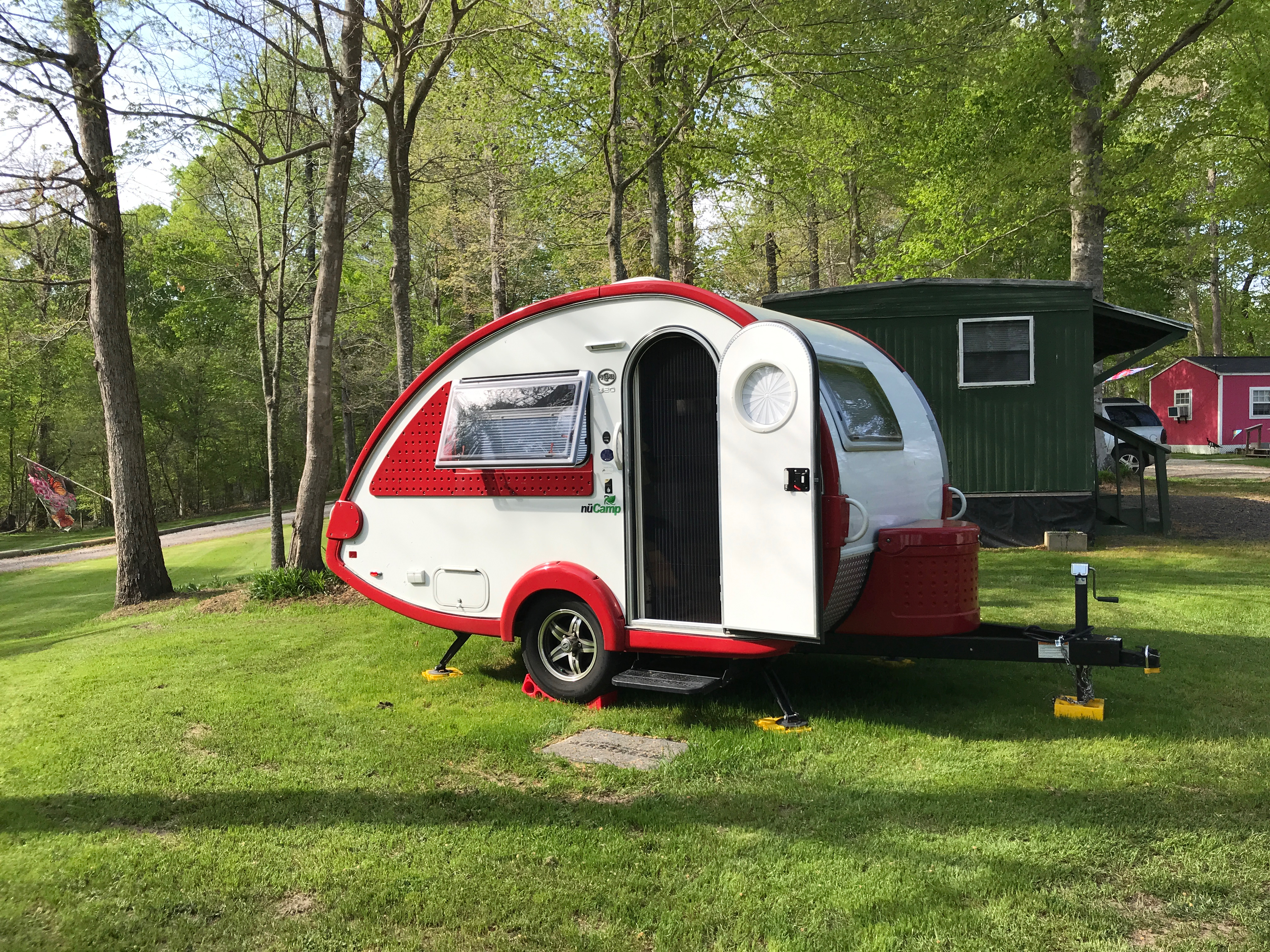
I had my sweet little T@b. strategically located next to the bath house.

Our meals were cooked over a camp stove in a tent. Breakfast and dinner were cooked for us, and we each packed out our lunches to take to the job site.

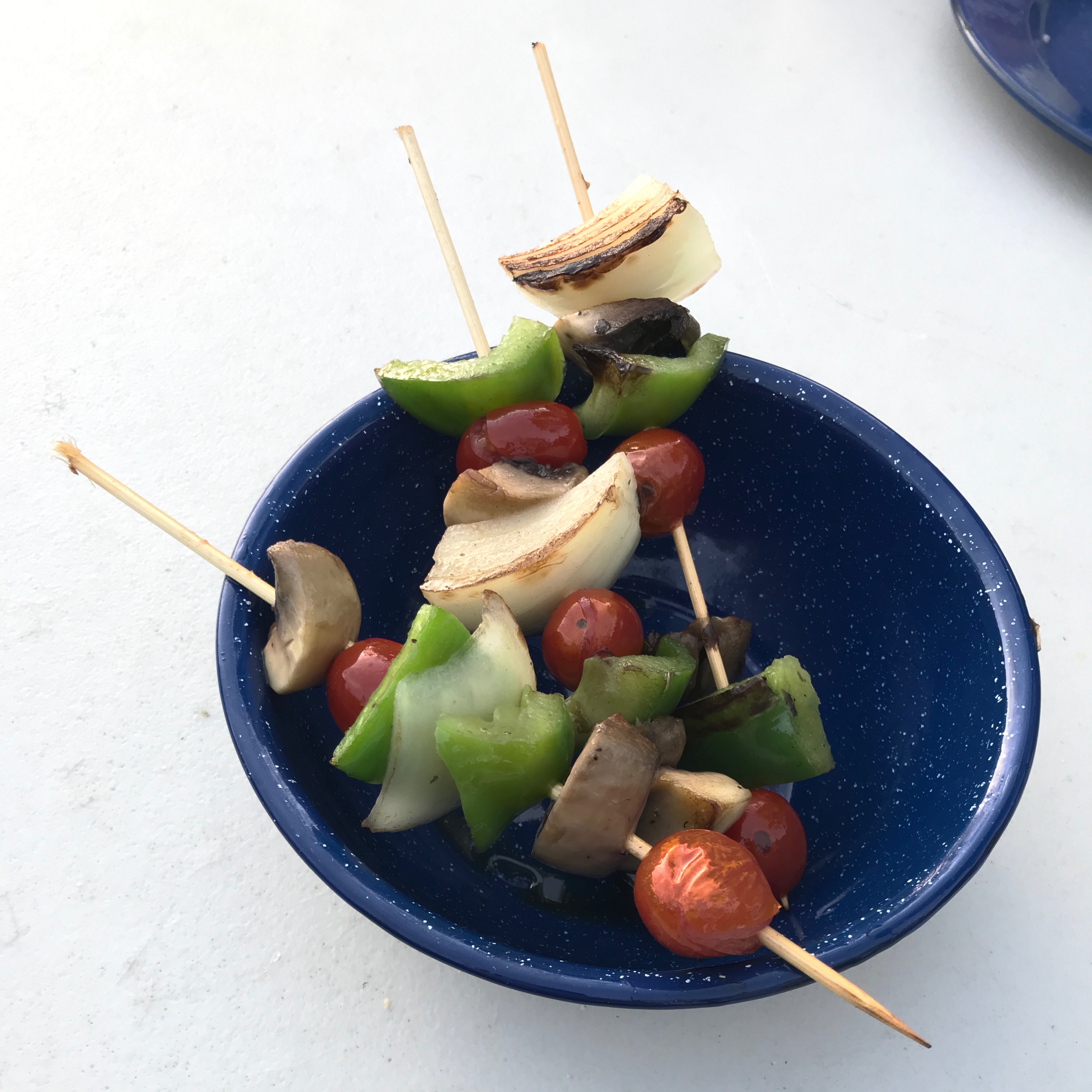
They fed us well. One night, we had shish kebabs.

We had s’mores for dessert.

The two women in the center of the photo were from Australia. I found that rather amazing. You never know who you’ll meet on a project!

They had never had s’mores, so we had them for dessert.

You know me…I always have to see what I can see. I took an afternoon to explore New Bern.

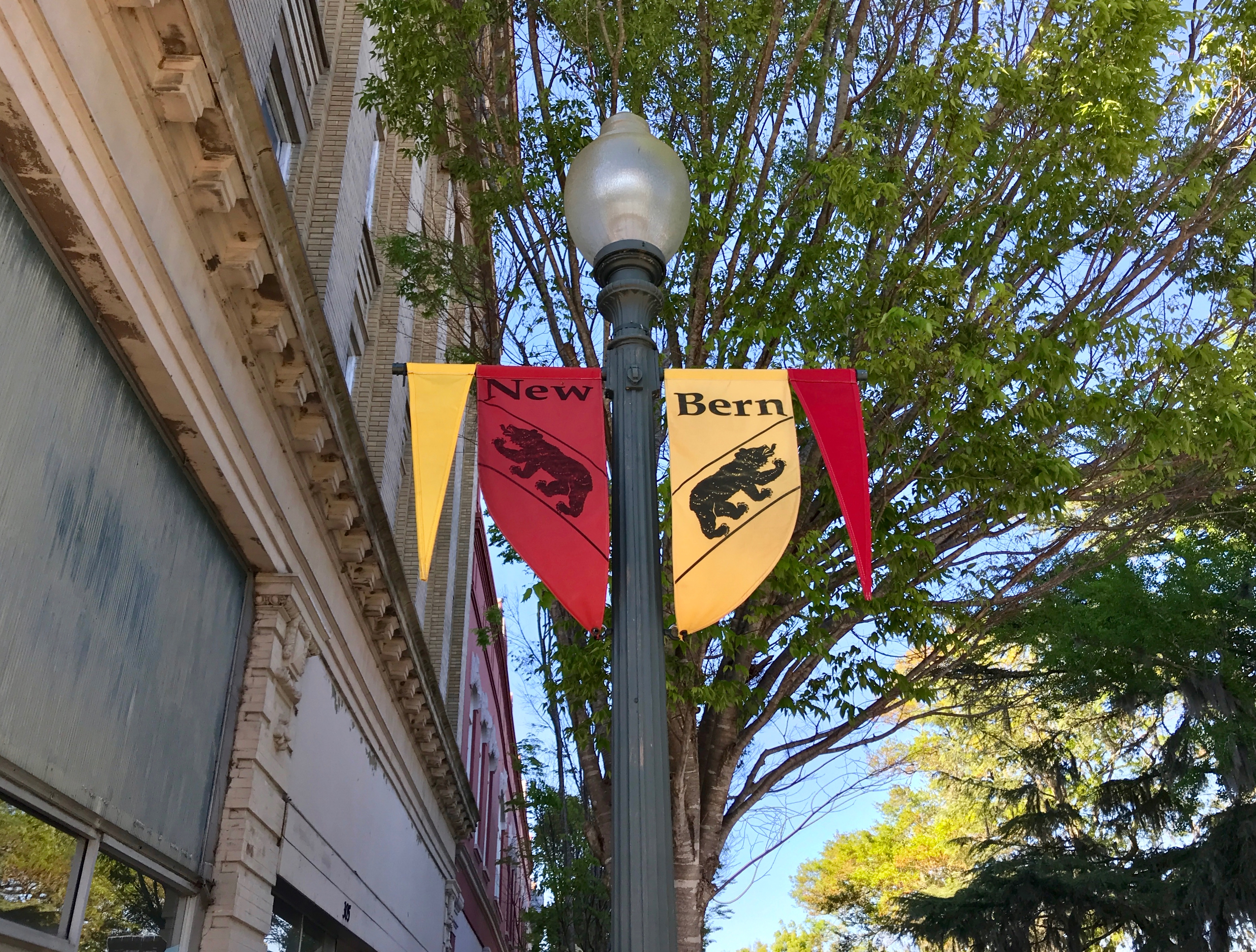
New Bern was settled by the Palatines and Swiss from the Bern region. The bear is the heraldic animal of Bern, Switzerland. (I had assumed that “bern” was German for bear, but apparently I was mistaken.)

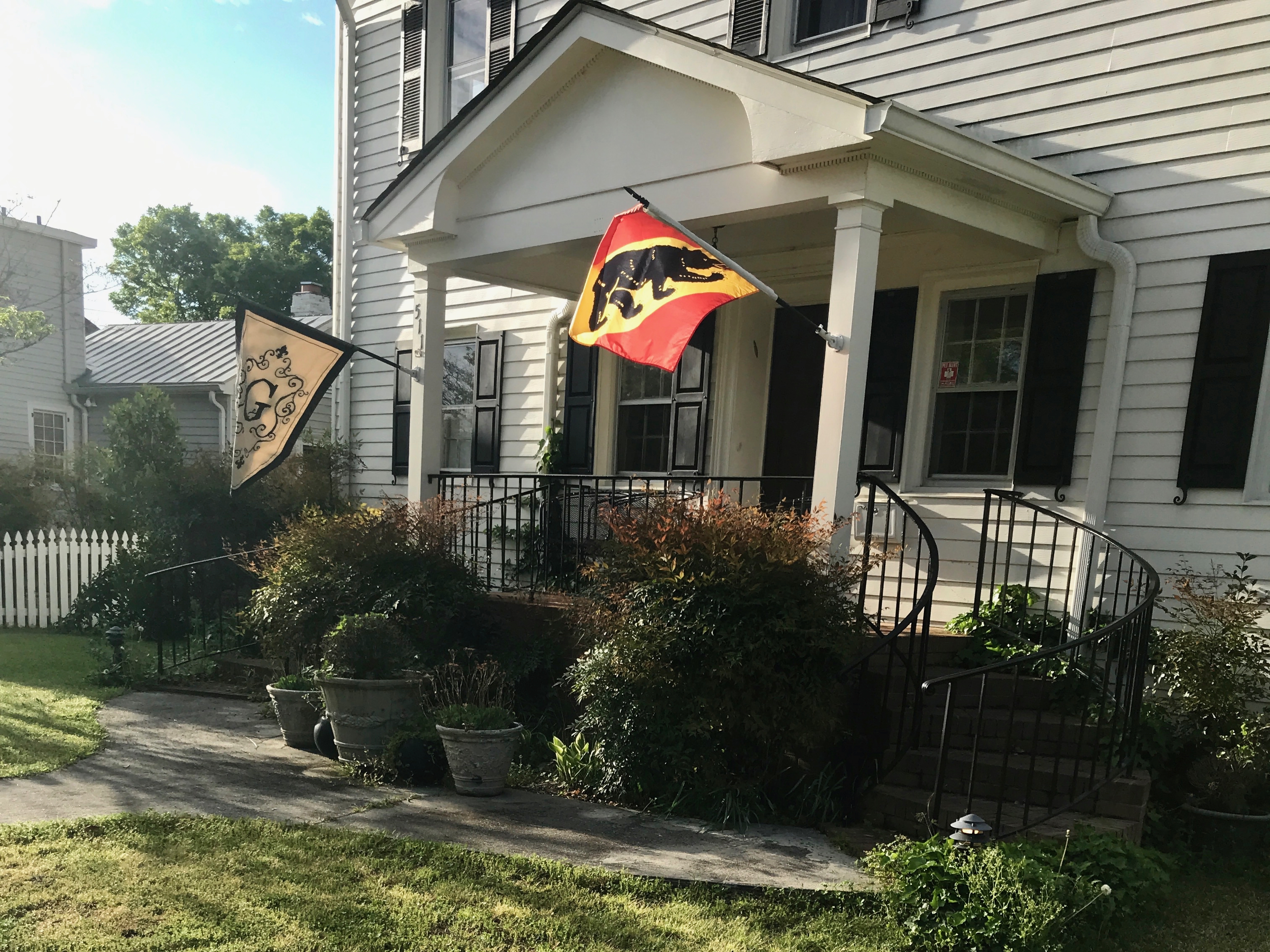
Bears are featured prominently in the town, from the banners on the lamp posts…

to flags on houses…

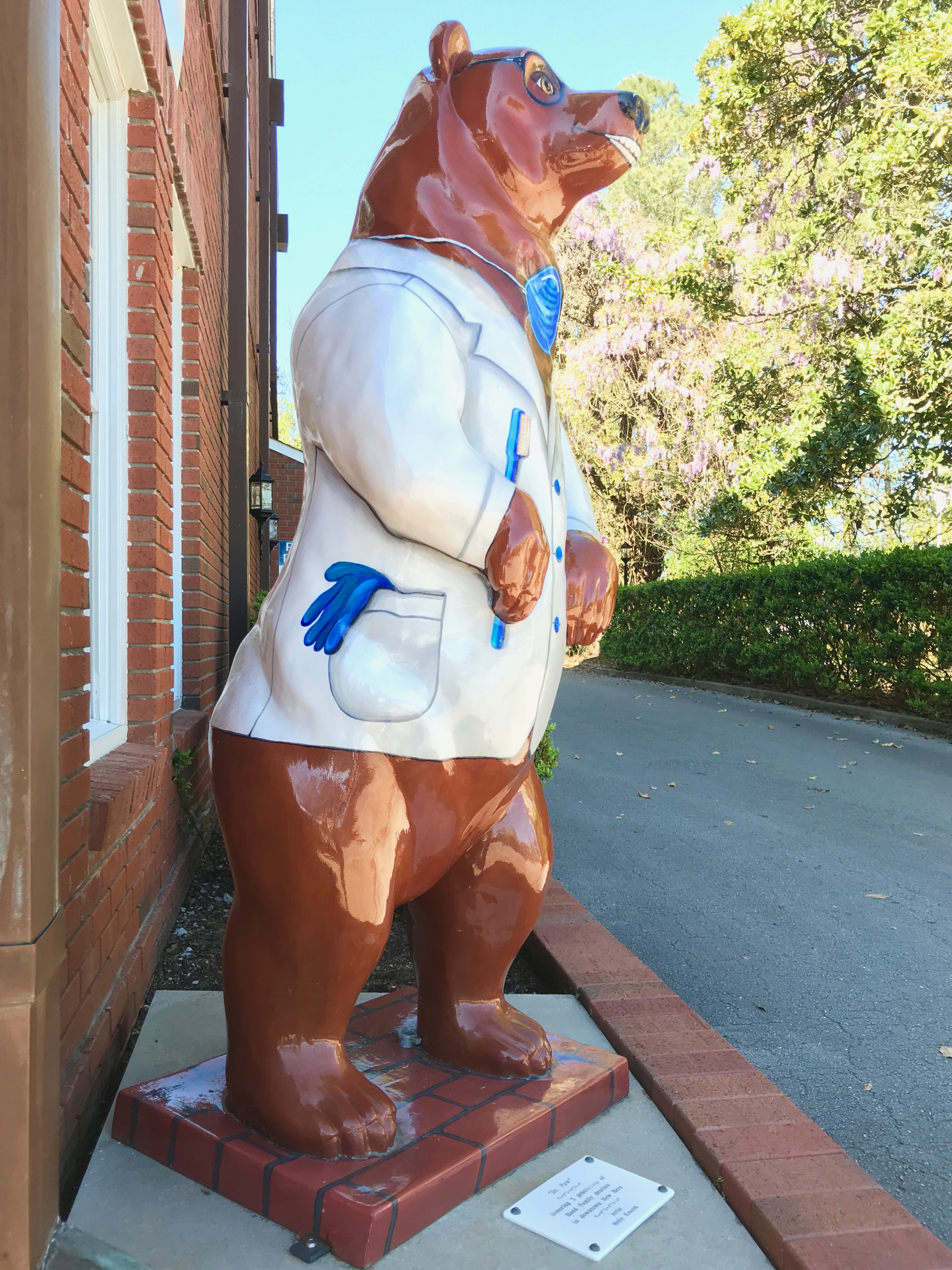
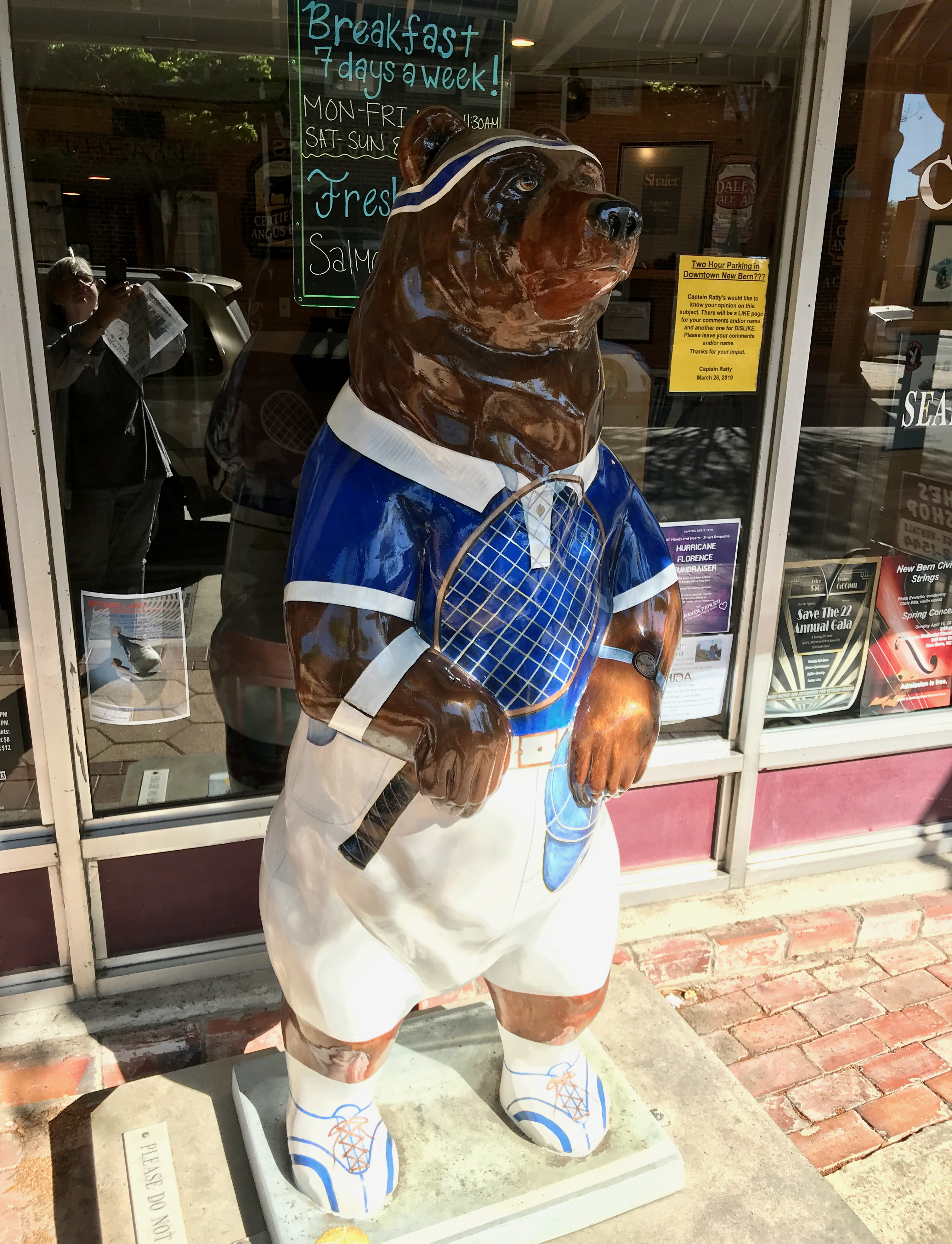
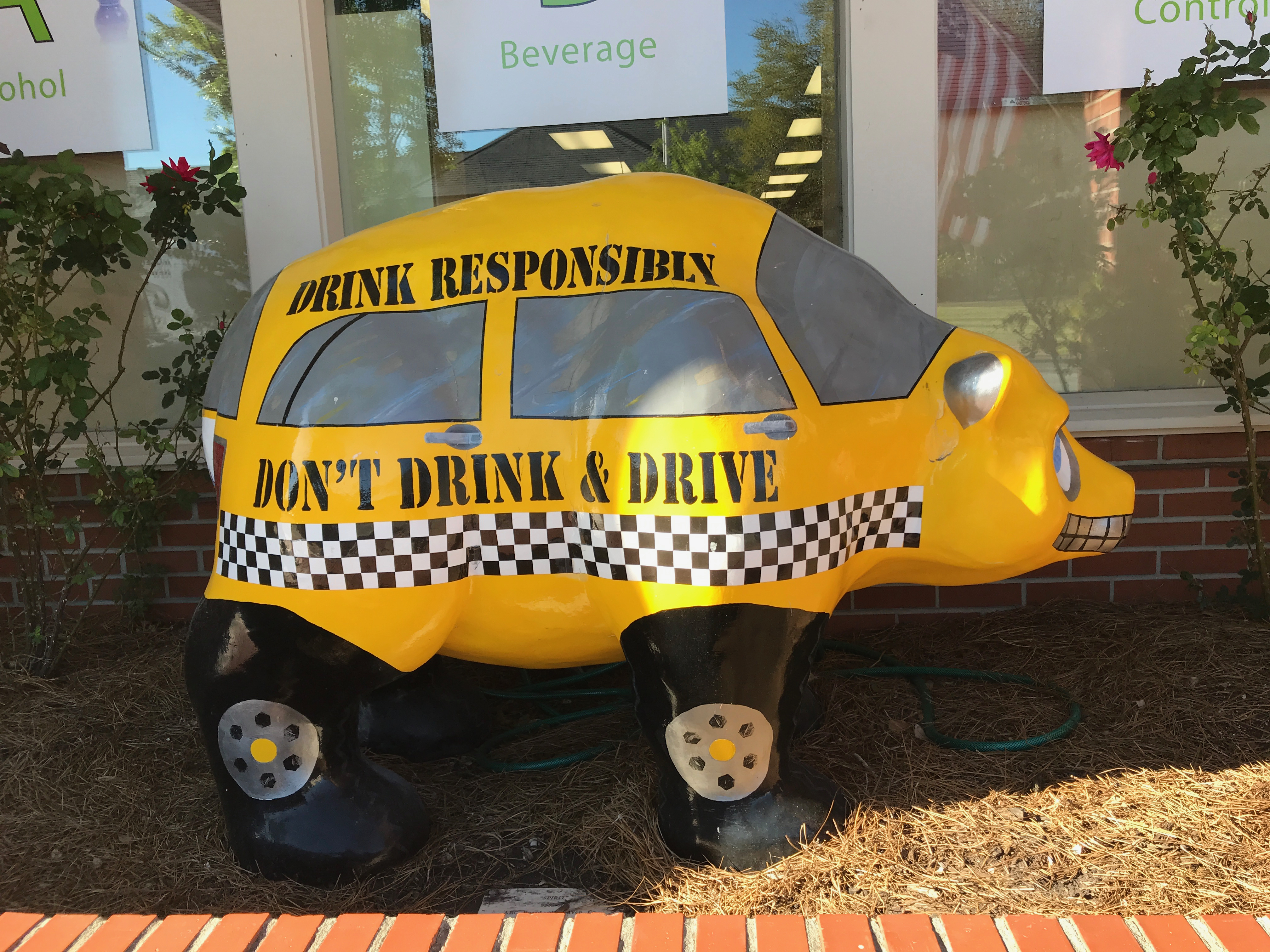
to creatively interpreted bear statues.


There was a dentist bear…

a tennis pro bear…

and this rather interesting version of a bear reimagined as a taxi.

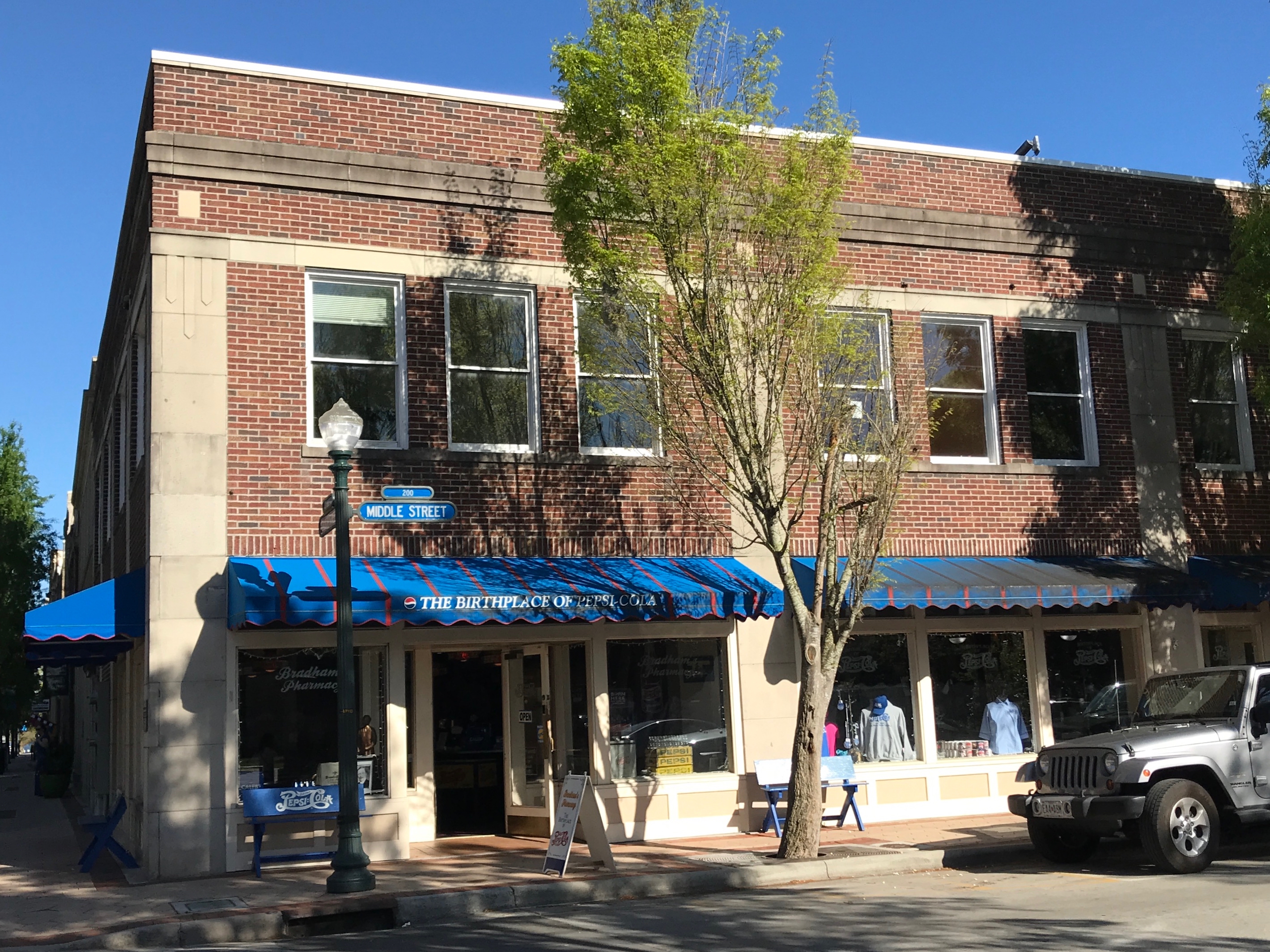
Can you read the words on the awning?

Yes, it’s the birthplace of Pepsi-Cola!

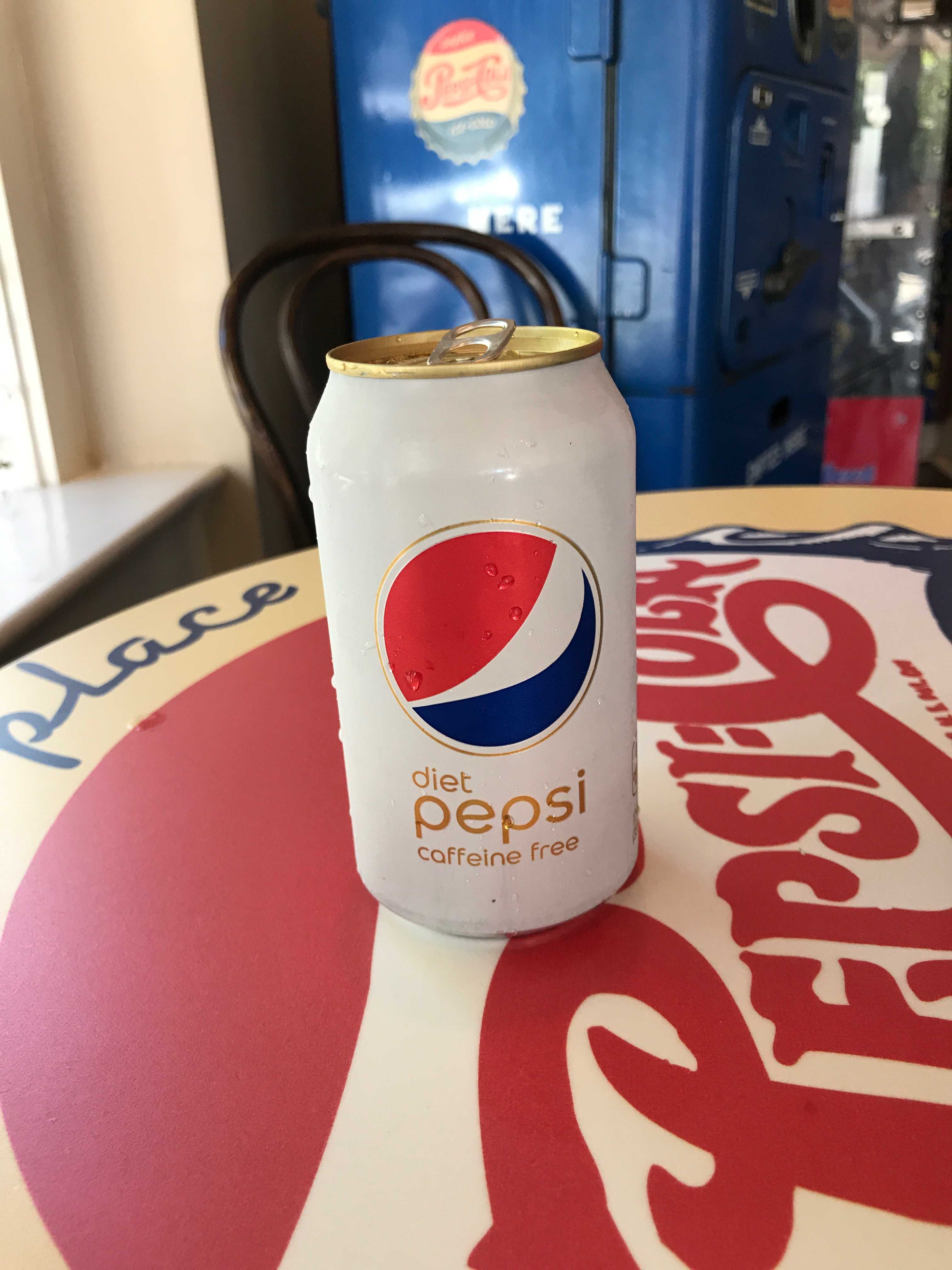
Now, I’m a Coca Cola person, but I had to take in all the memorabilia.

And, of course, I had to have one.

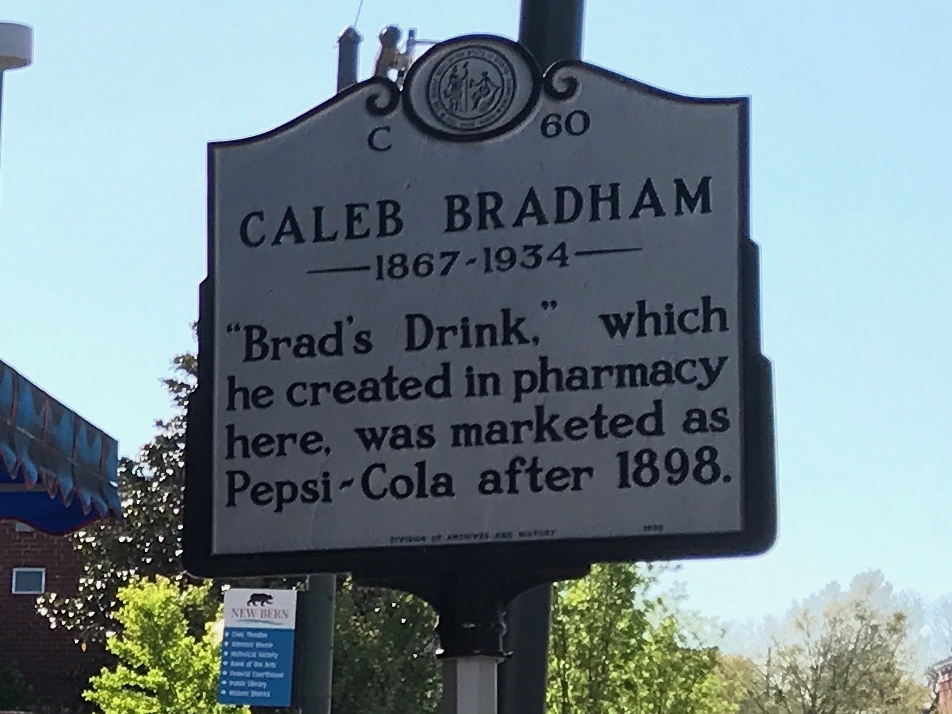
It was a picturesque town. There were loads of plaques that described the significance of the sites. Unfortunately, as the shadows deepened, the plaques got kind of hard to read. Maybe I’ll go back one day.

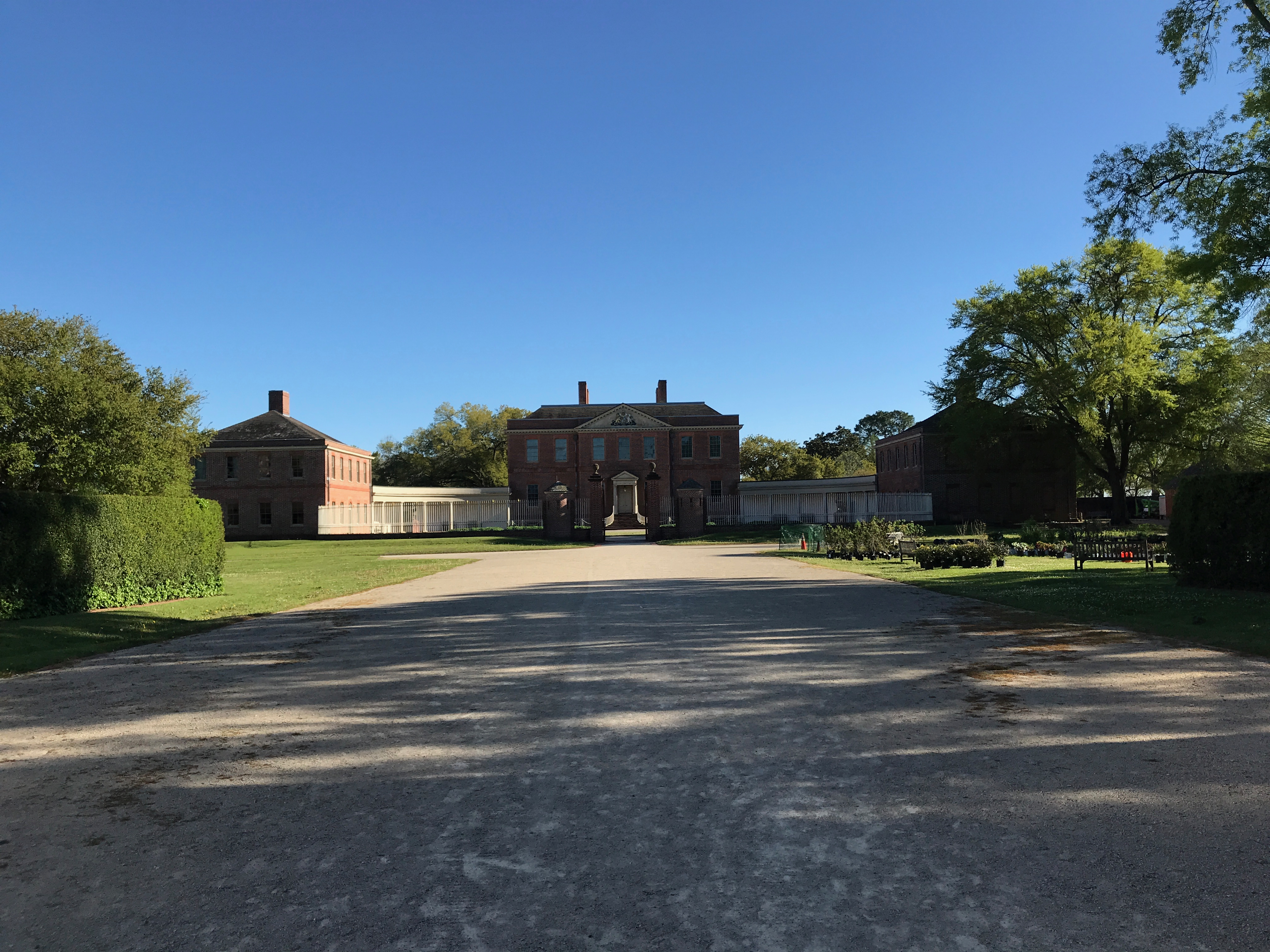
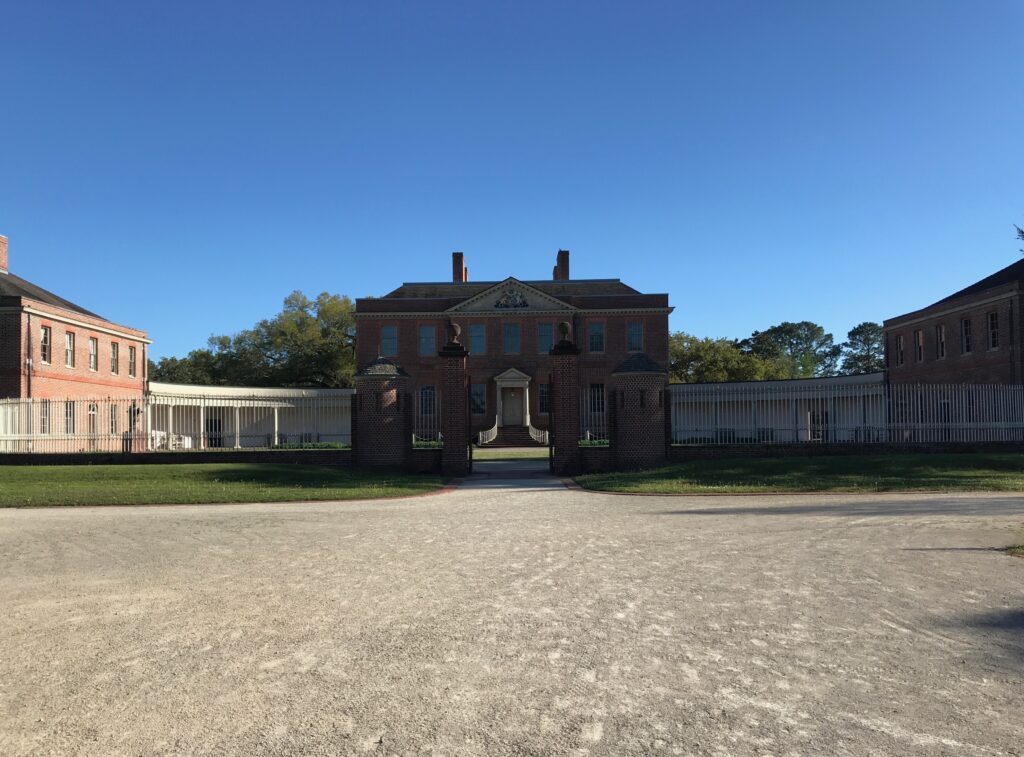
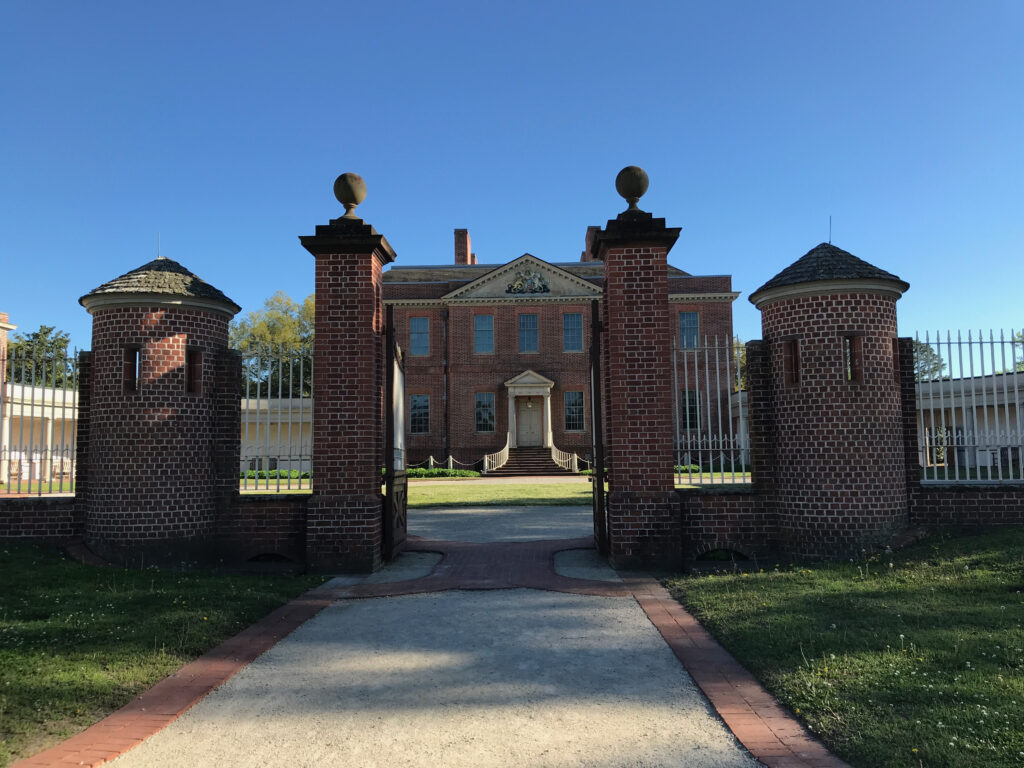
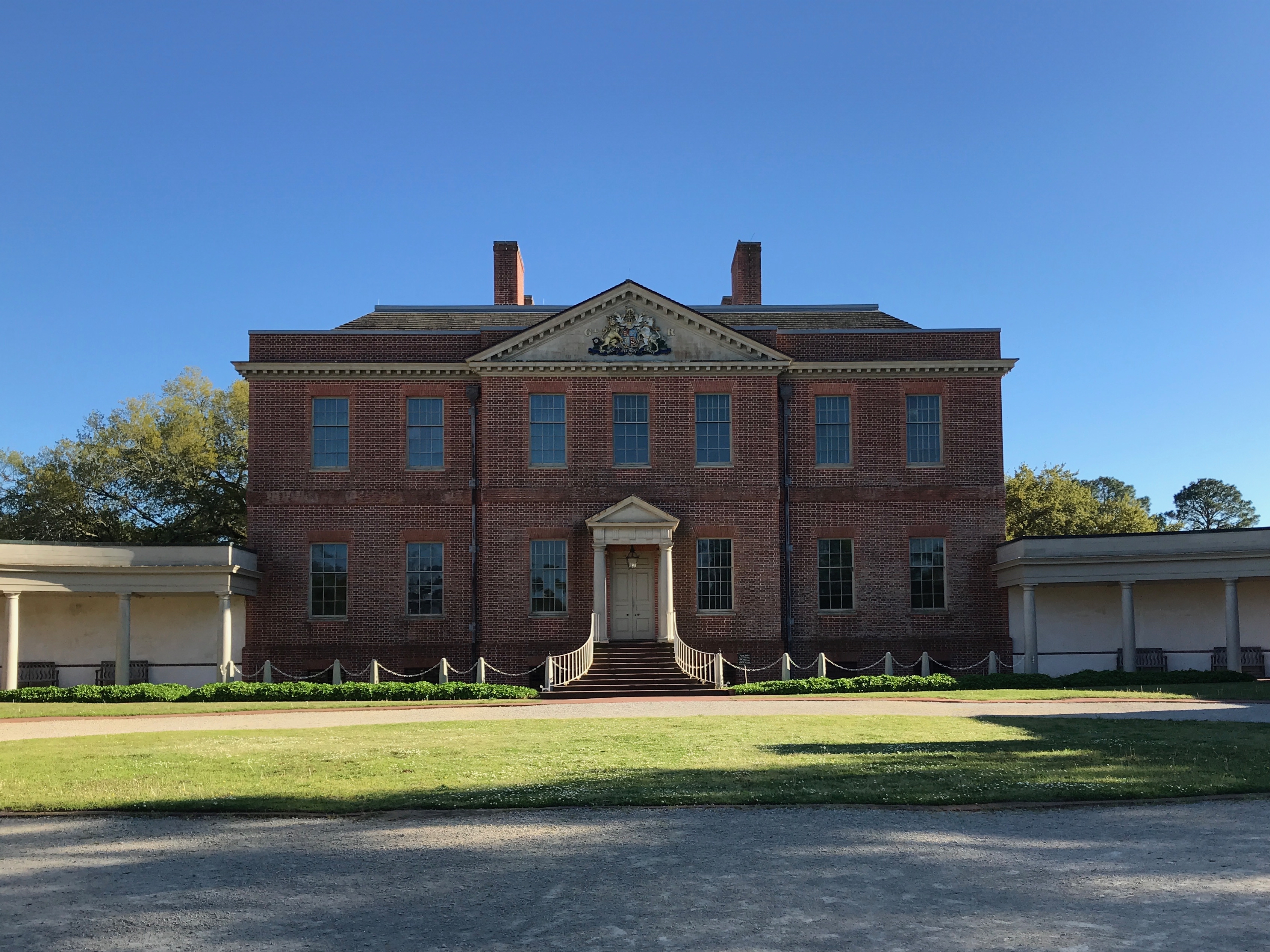
Tryon Palace is there, too. It was the official residence and administrative headquarters of the British governors of North Carolina from 1770 to 1775. In 1775, it was seized by patriot troops.

The Tryon Place of today is not the one that was built in the 1700s. Shortly after the state capital was moved to Raleigh, it burned to the ground. This building is a recreation that was constructed in the 1950s. Since it was a recreation, I wasn’t particularly interested in spending my limited time in touring it.

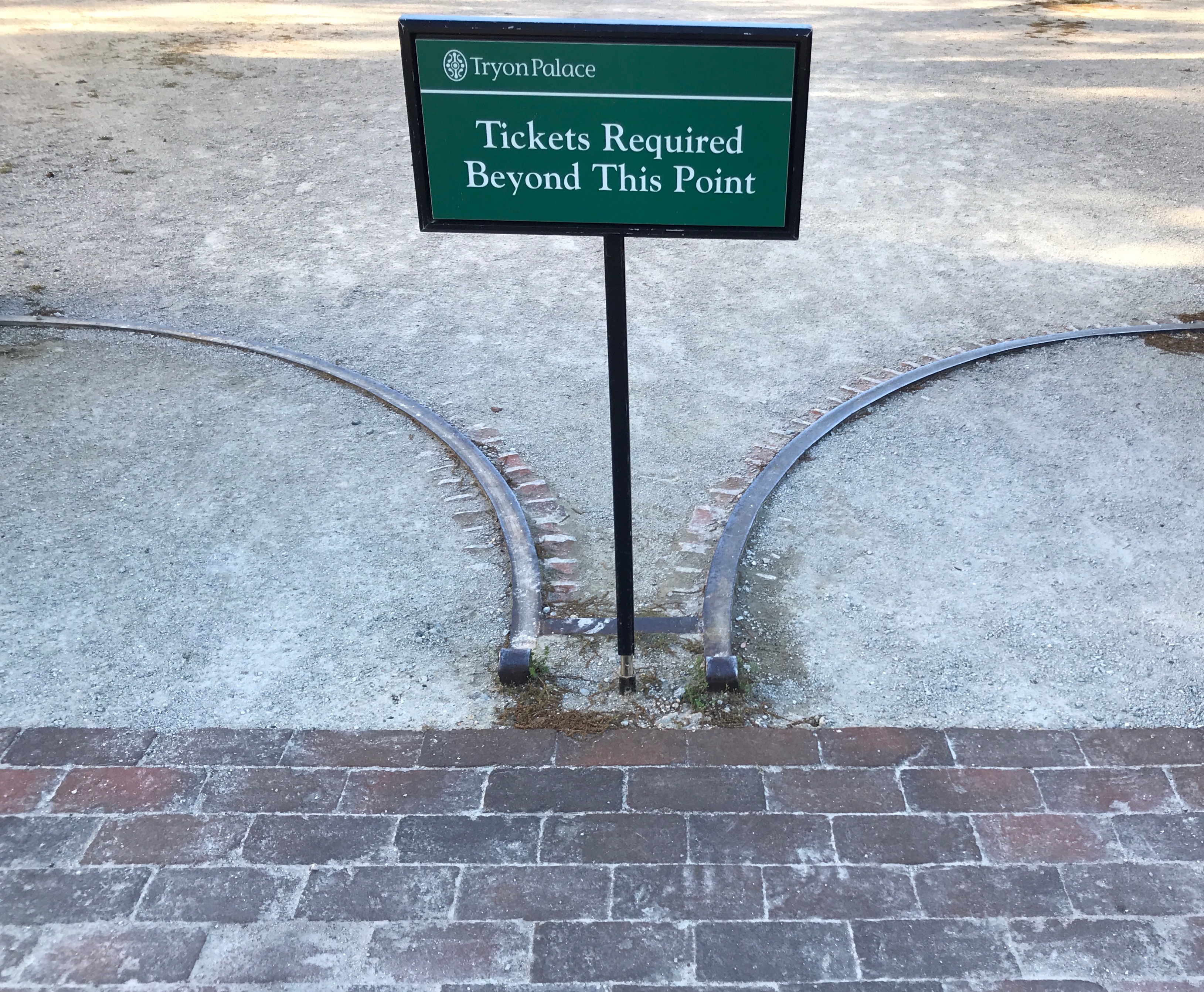
However, I took this sign as a challenge. In I went.

Closer…

Closer…

Closer…

And this is as close as I got.

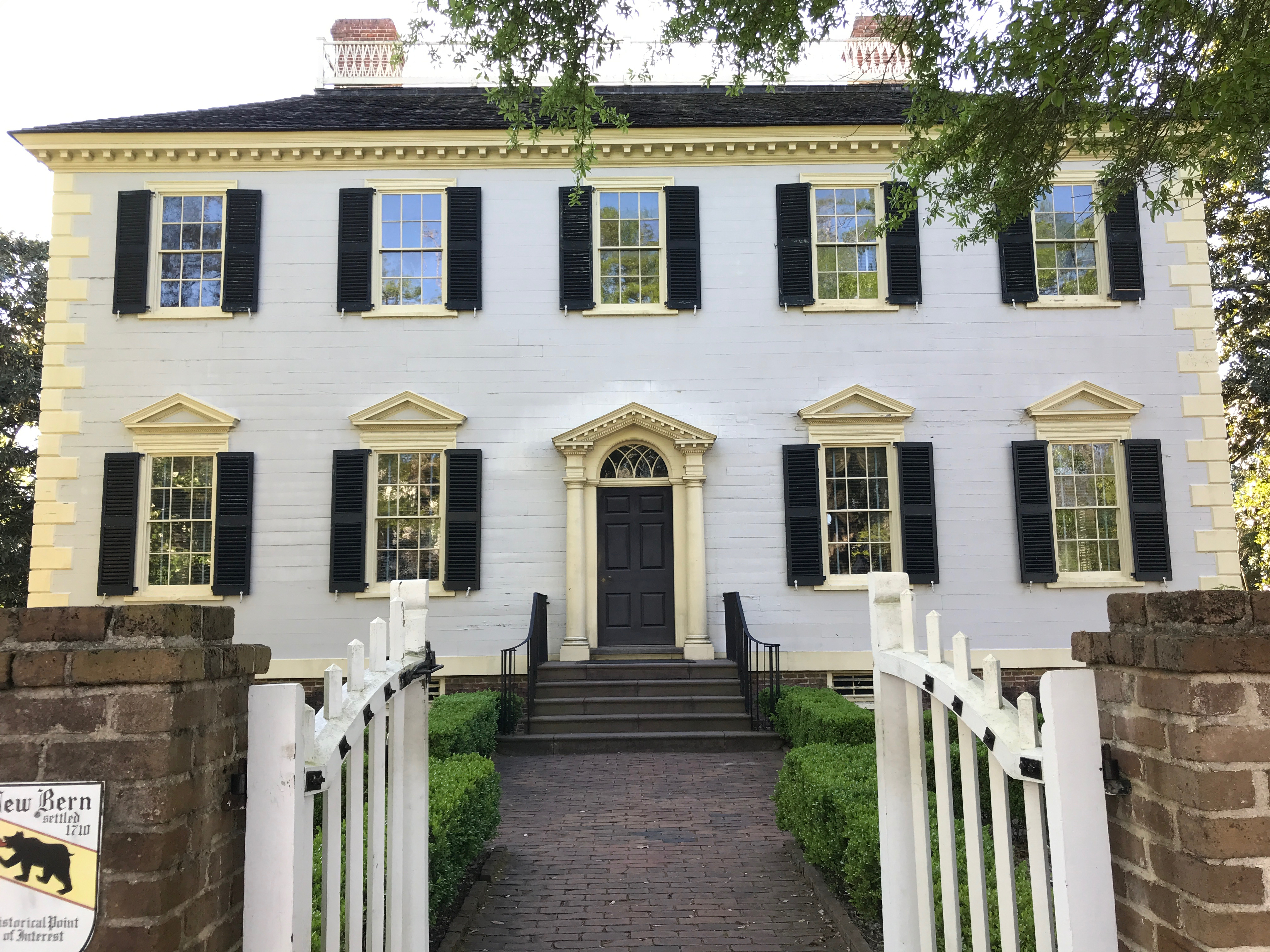
They also had some authentically old houses, like the John Wright Stanly House, which was the birthplace of two men who fought on opposing sides during the Civil War – Edward Stanly, the Unionist military governor of North Carolina, and Confederate General Lewis Addison Armistead, who was mortally wounded during the Battle of Gettysburg.

This house was built by John Wright Stanly between 1779 and 1783. It was moved two times after it was built. You know what they say…

Location,
Location,
Location.

If I remember correctly, they found a valuable resource on one of the prior locations.

Parking.

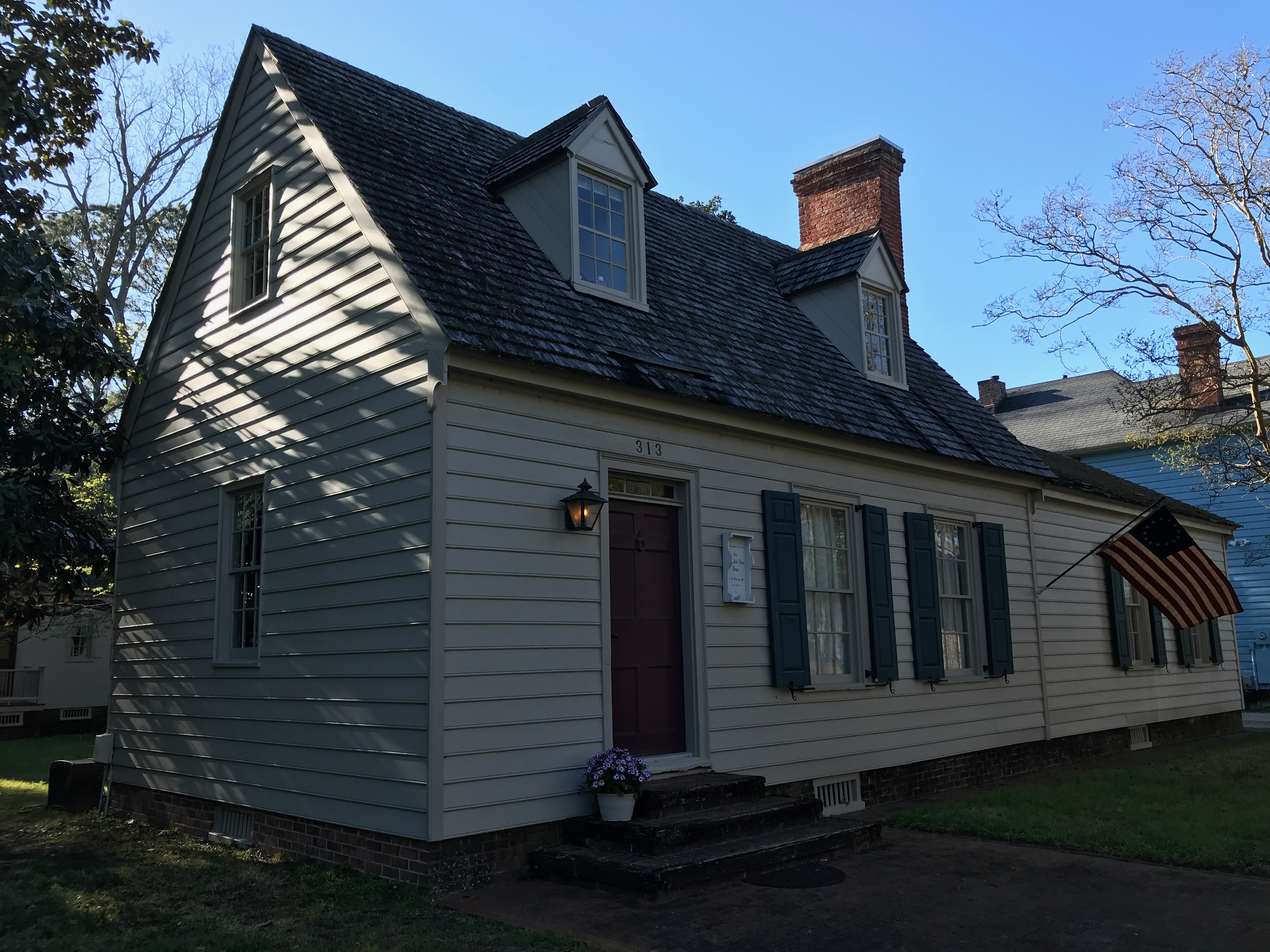
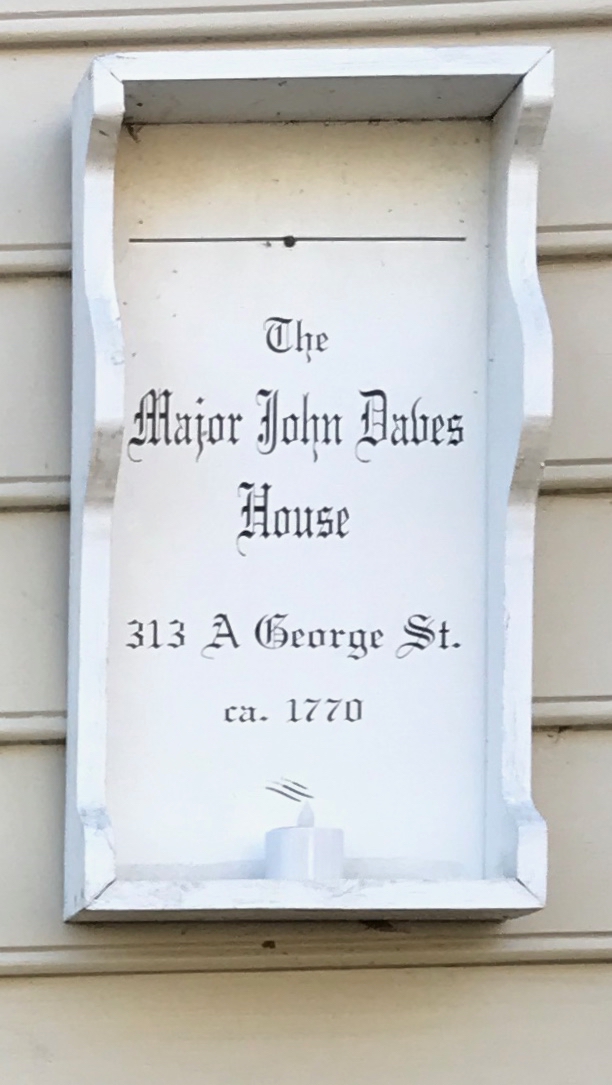
This house was built around 1770, just a little before the Stanly house. This is the Major John Daves House. I wonder who he was?

There was no biographical information and Wikipedia didn’t have anything, although it did suggest starting a page.

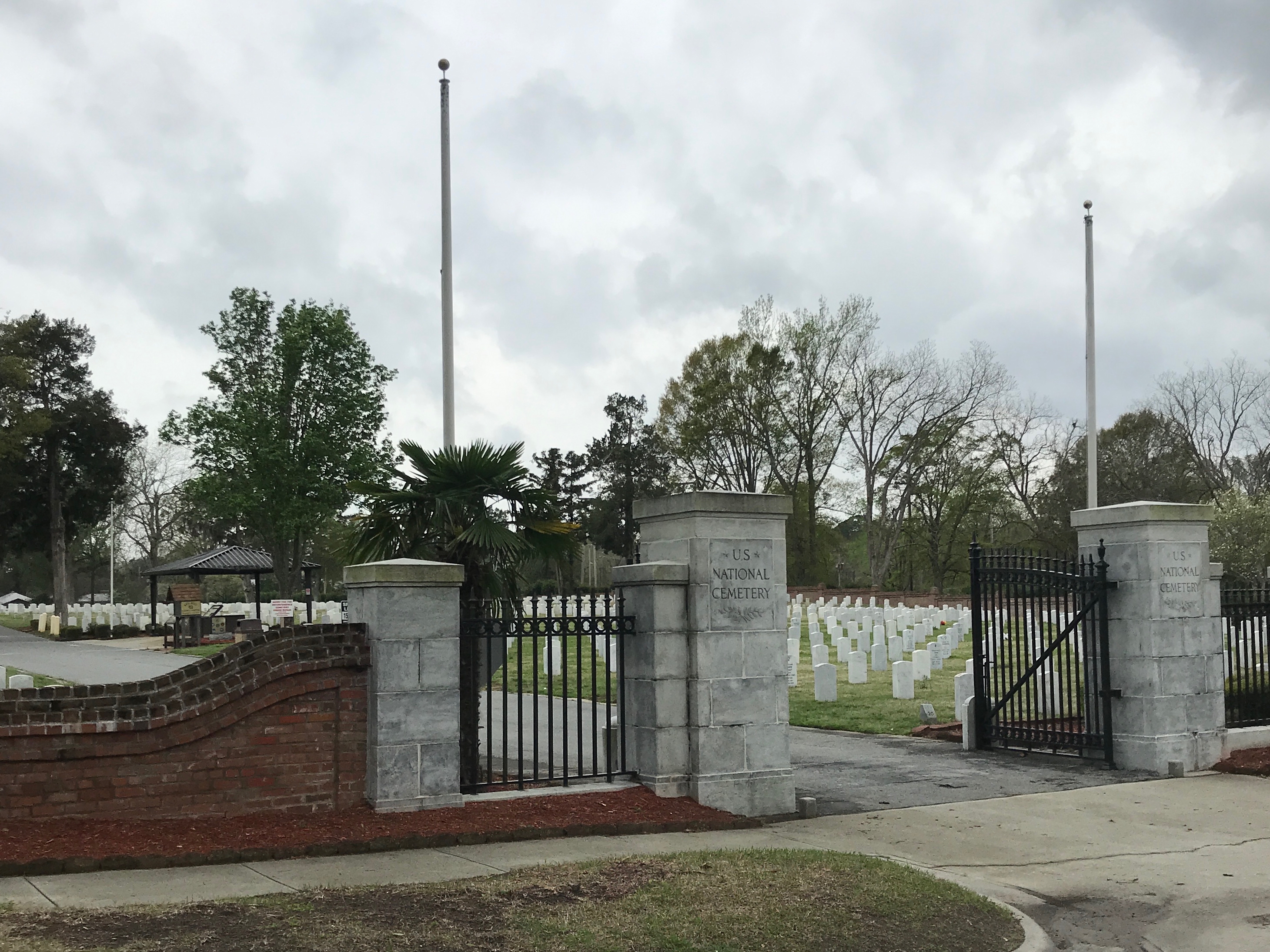
One day, I was trying to avoid waiting for a train, so I took a different route to the job site. I came across a National Cemetery.

The U.S. Army Quartermaster General’s Office purchased seven acres to develop New Bern National Cemetery.

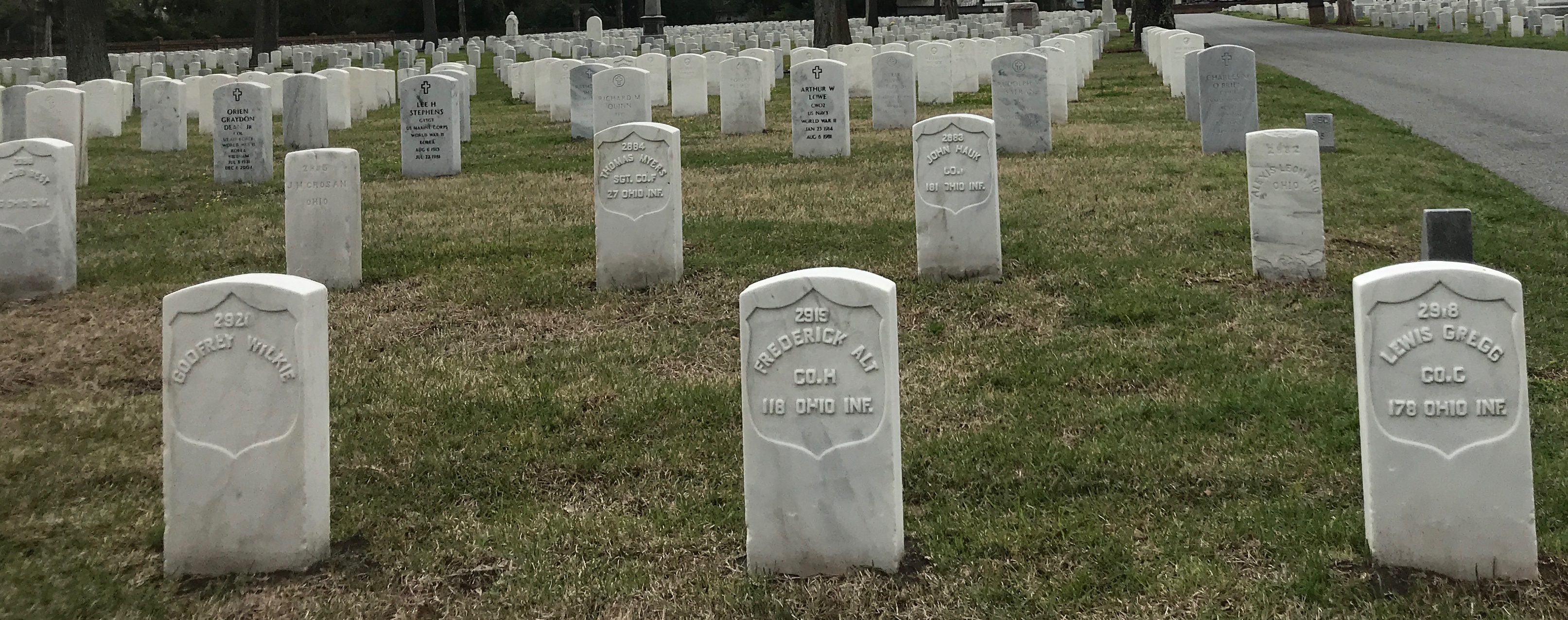
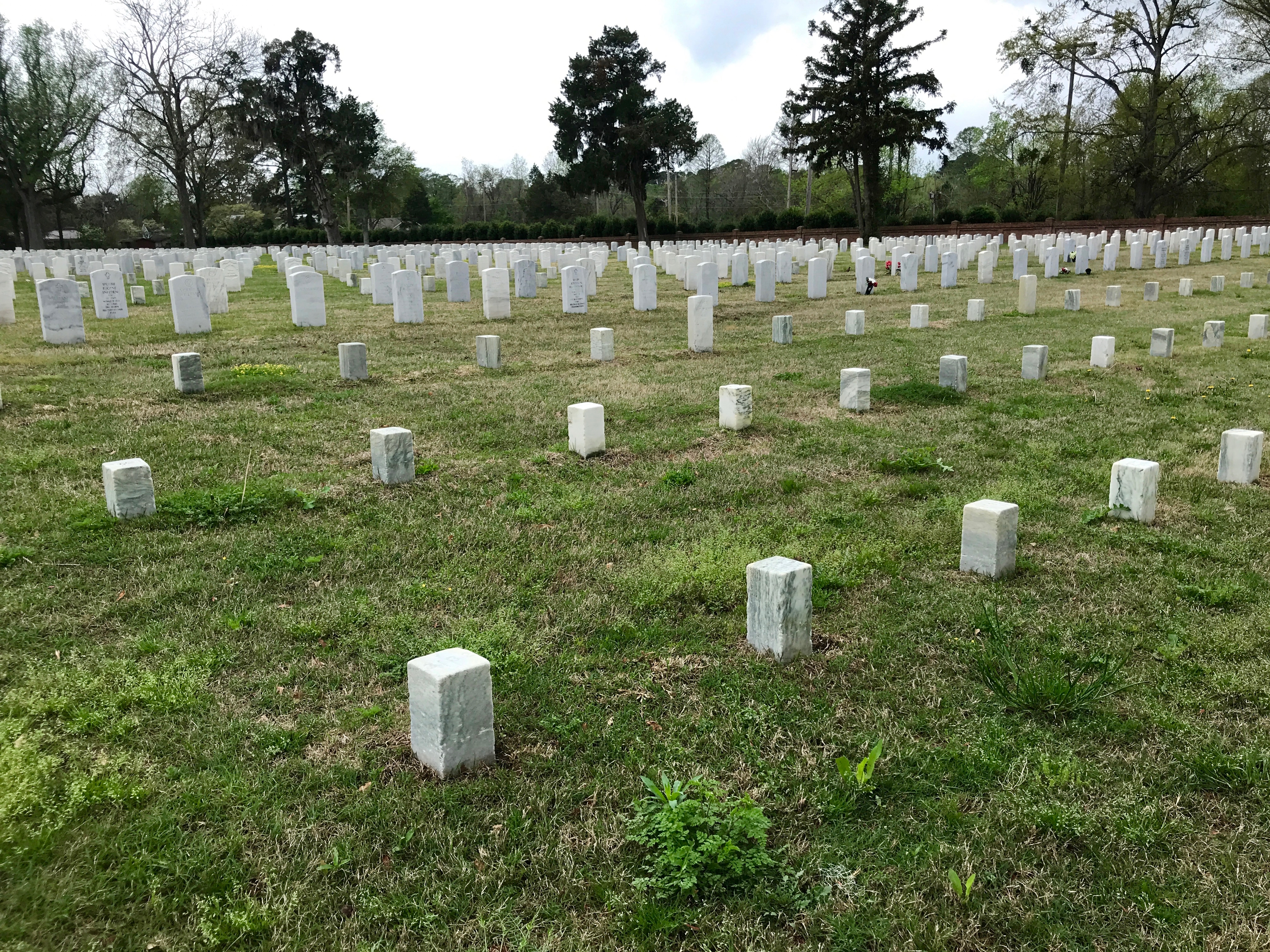
By 1874, there were 3,249 internments, including 140 civilians and 1.068 unknown soldiers.

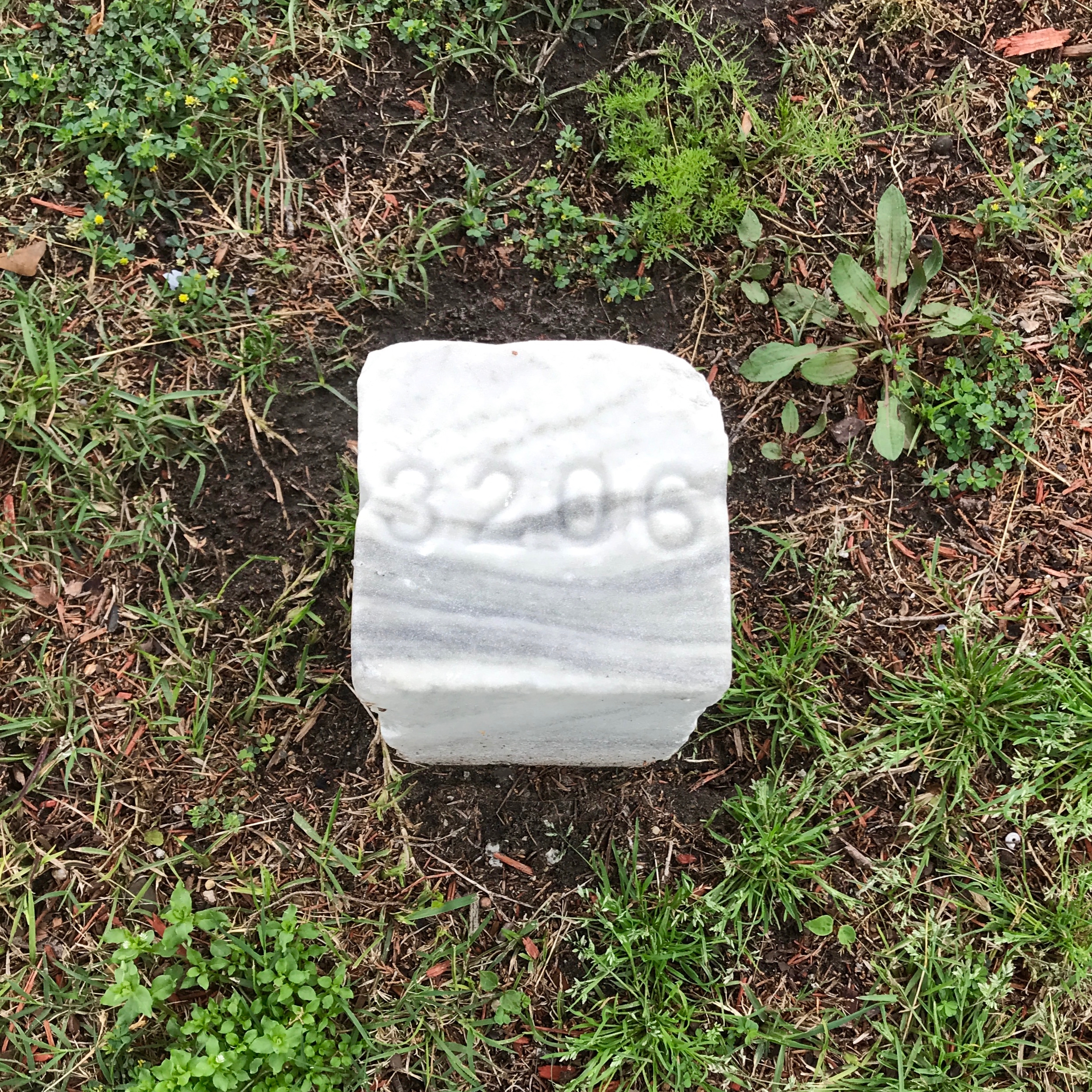
I always find it so humbling to think of people being marked with a number rather than a name.

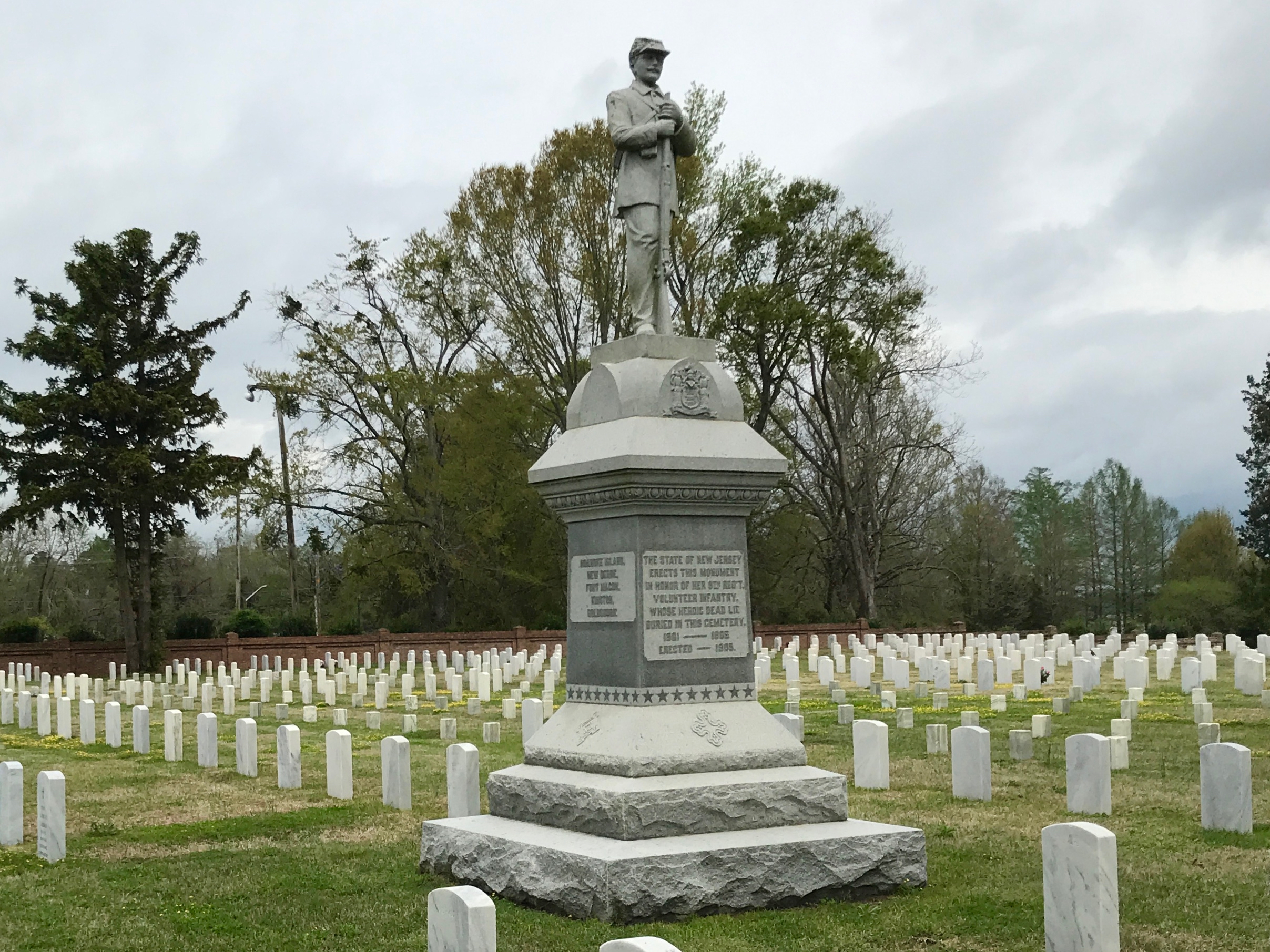
This monument was erected by the State of New Jersey in 1905. It honors the Ninth New Jersey Infantry. There are other monuments honoring Union soldiers that were all erected in the first decade of the 20th century.

Speaking of trains, I was surprised to see a train rolling down the street right by the Academy. If you listen carefully, you can hear the tapping of removing the mortar.

Just in case you couldn’t quite hear the tapping over the train, here’s a video of what it sounds like.

Before I knew it, it was time to wrap things up and head out.

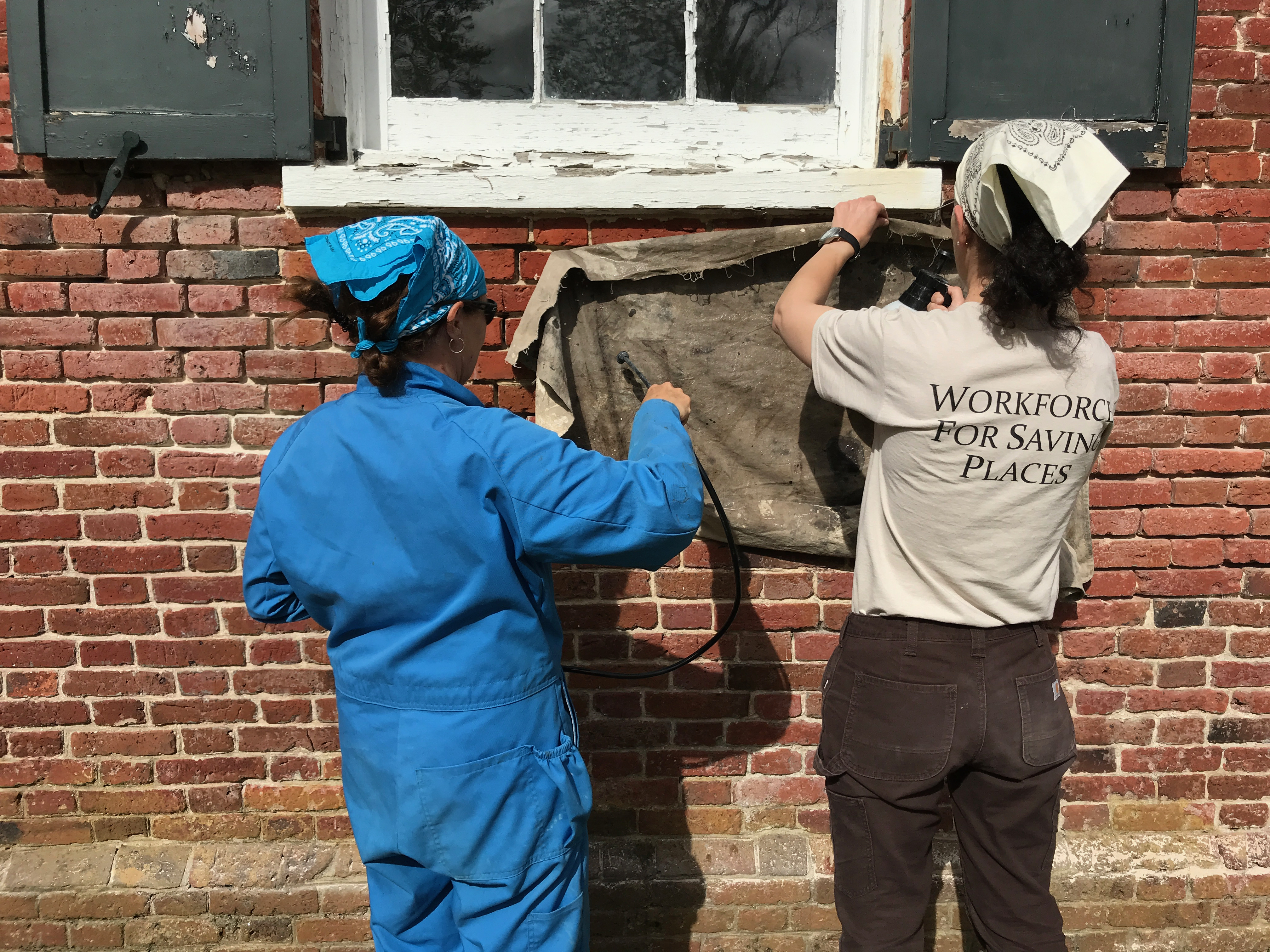
At the end of our session, we had to cover the areas that needed extra time to cure and spray them down with water.

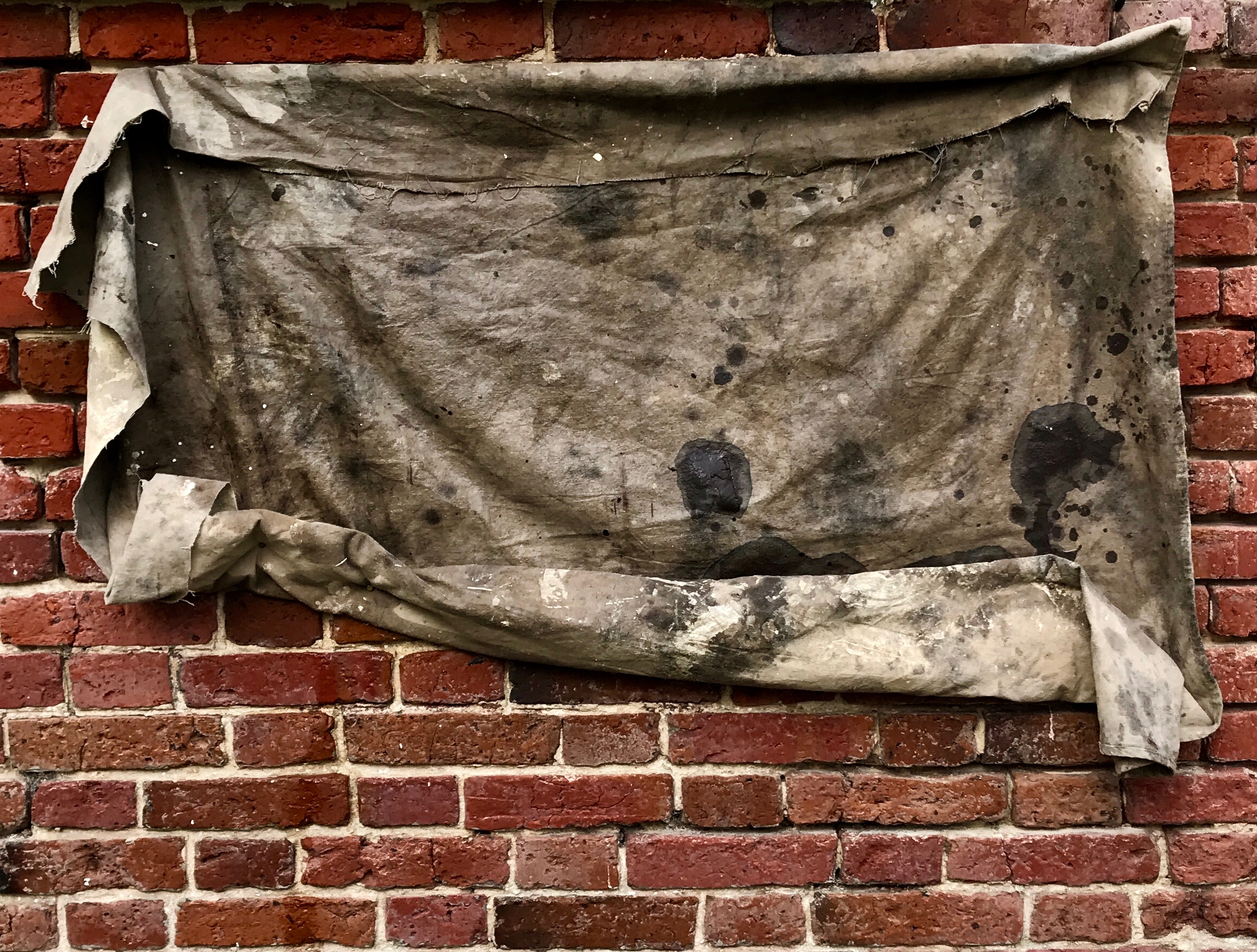
I thought the much-used tarp was quite interesting.

Another session of HistoriCorps is history!


North Carolina State Capitol (April 2019)

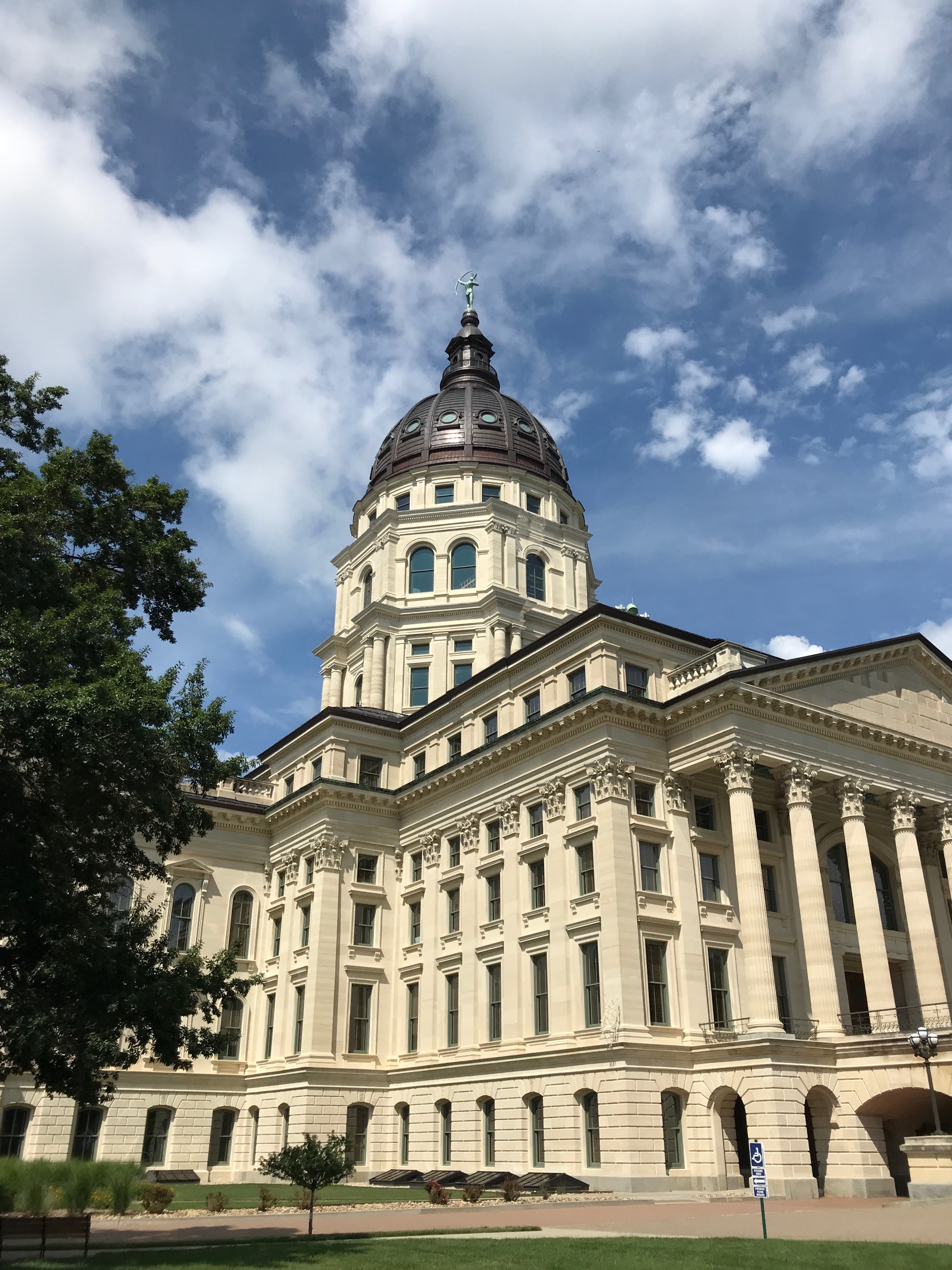
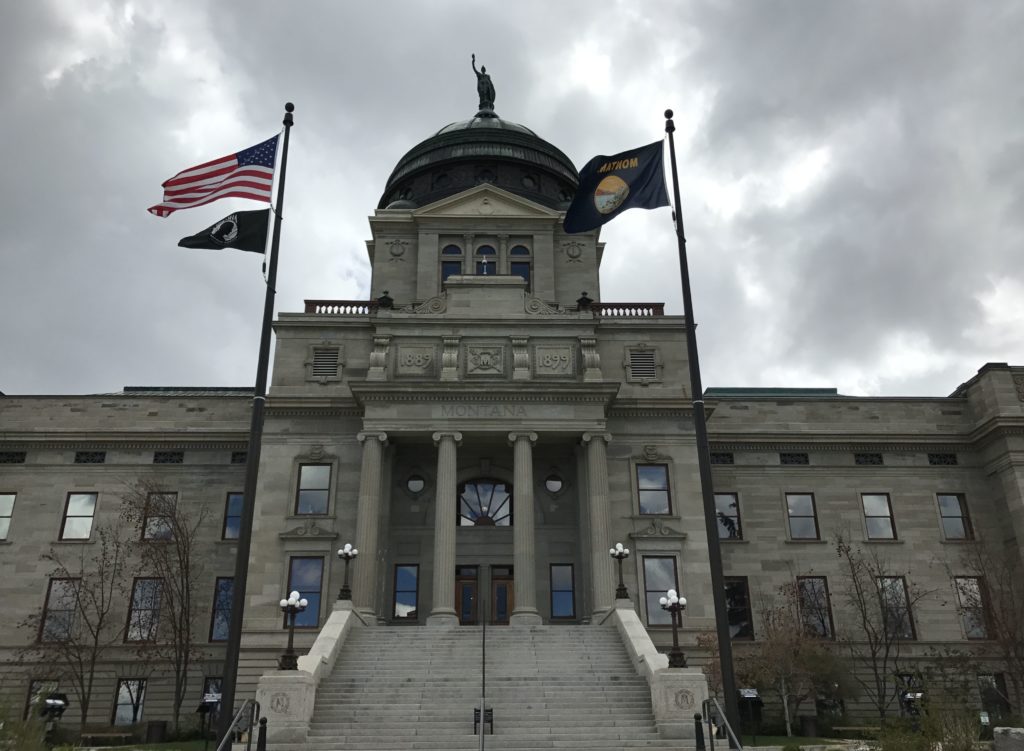
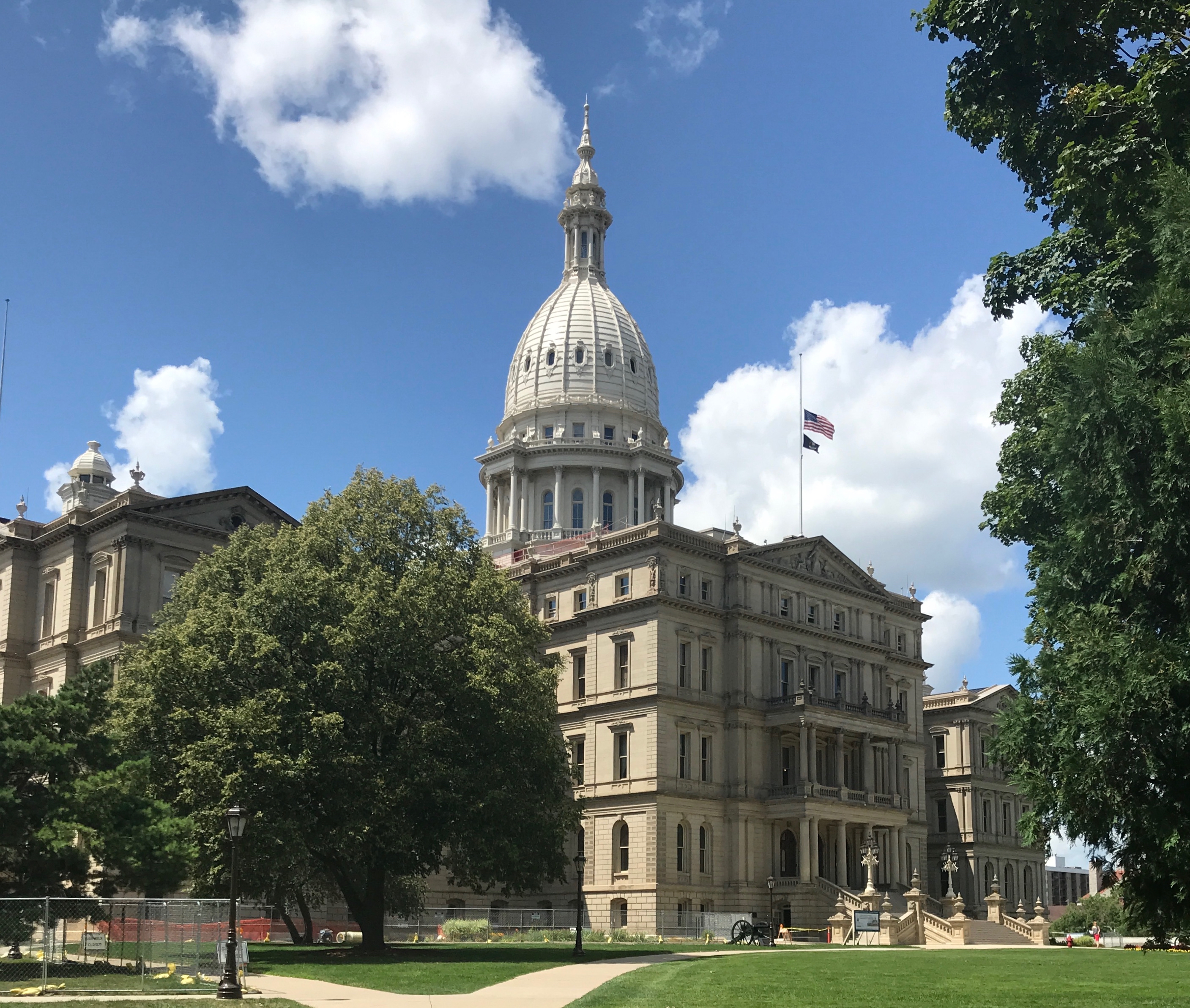
My true mission for stopping in Raleigh was to see the state capitol building. I’ve been trying to see as many as I can while I’m traveling. Some are what you might expect to see, with columns and domes,

like the Kansas capitol building in Topeka,

or the Montana capitol in Helena,

and the Michigan capitol in Lansing. They all follow the mold.

Some are more unusual, though.

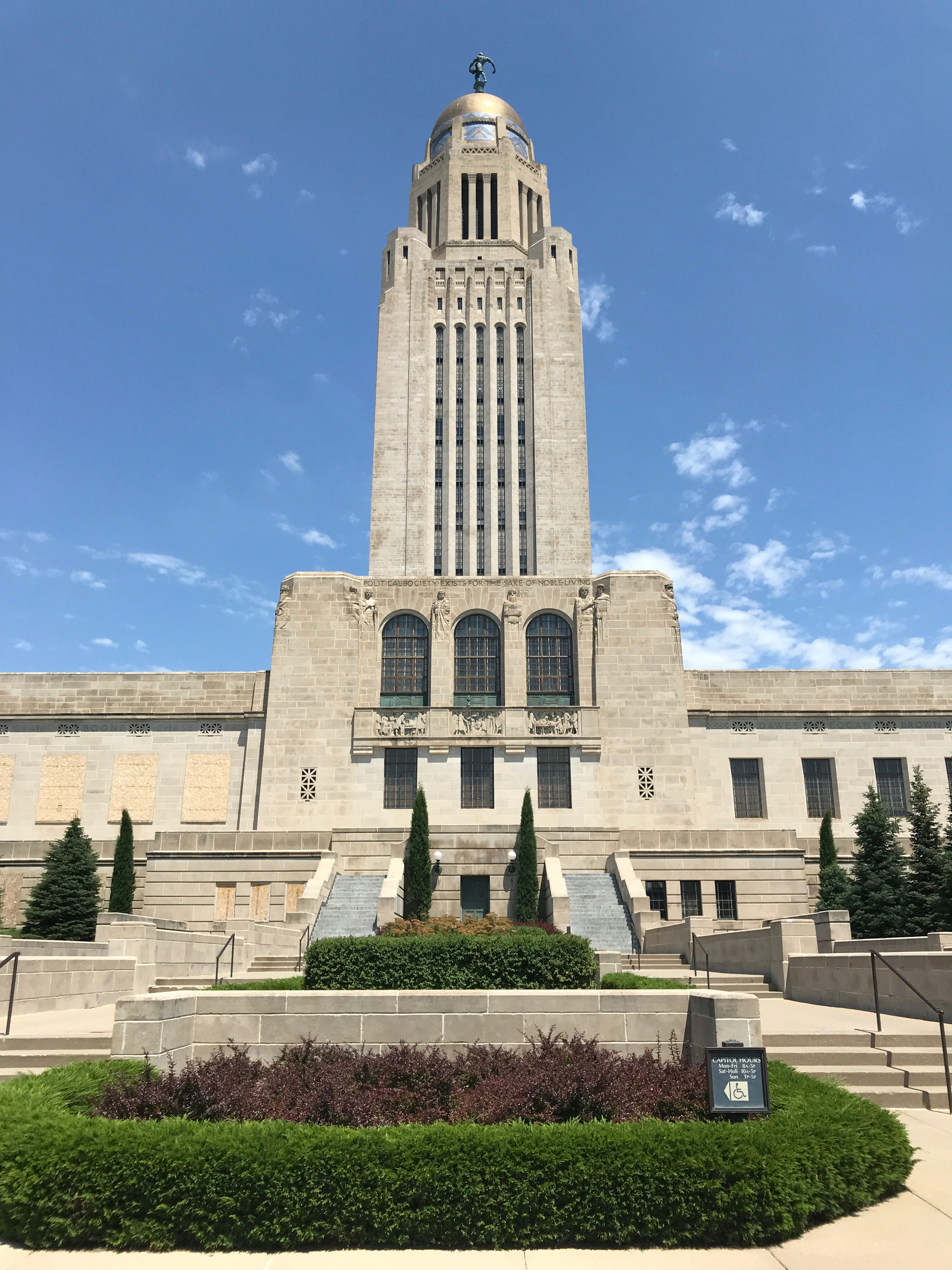
While the Nebraska state capitol in Lincoln is actually quite amazing, the exterior reminds me of a train station.

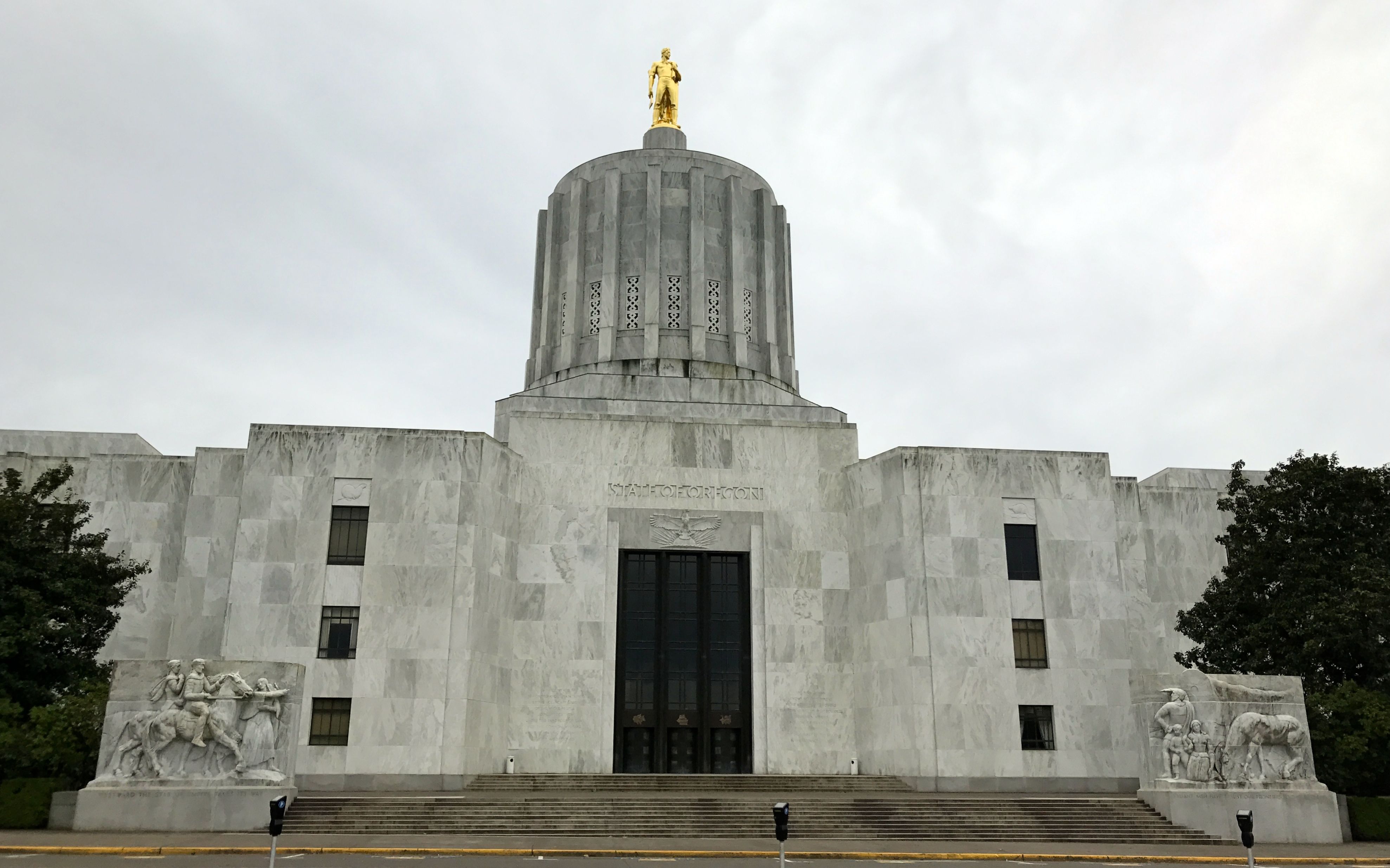
The Oregon state capitol in Salem was derided by critics for what looked to them like a paint can on top.

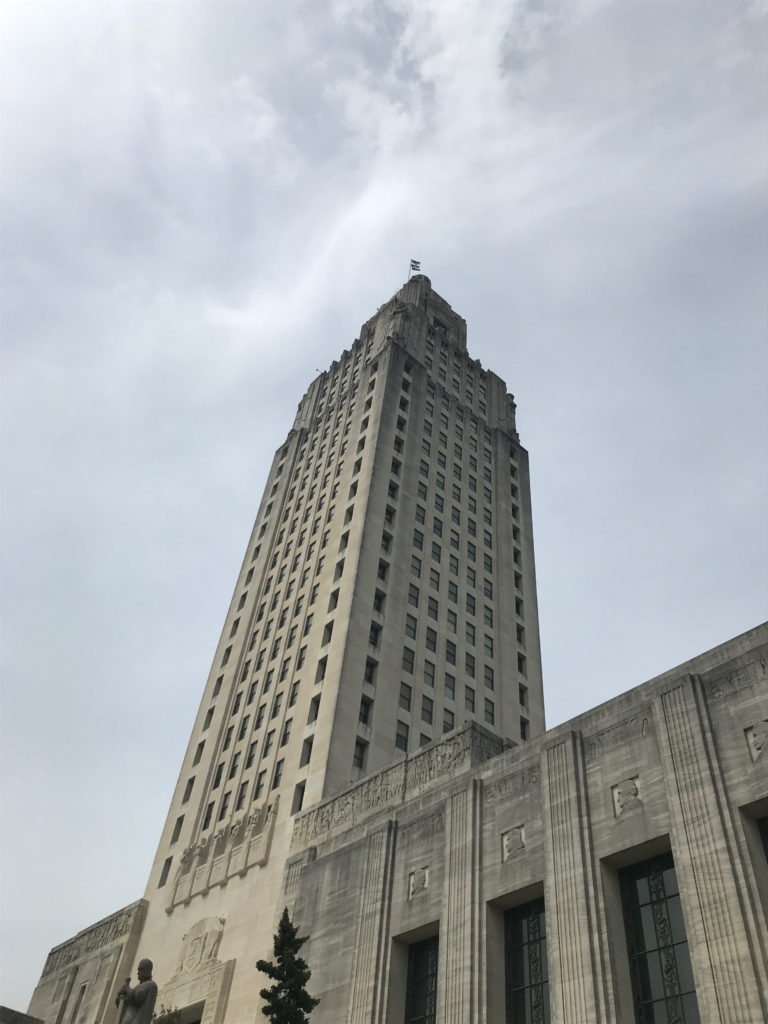
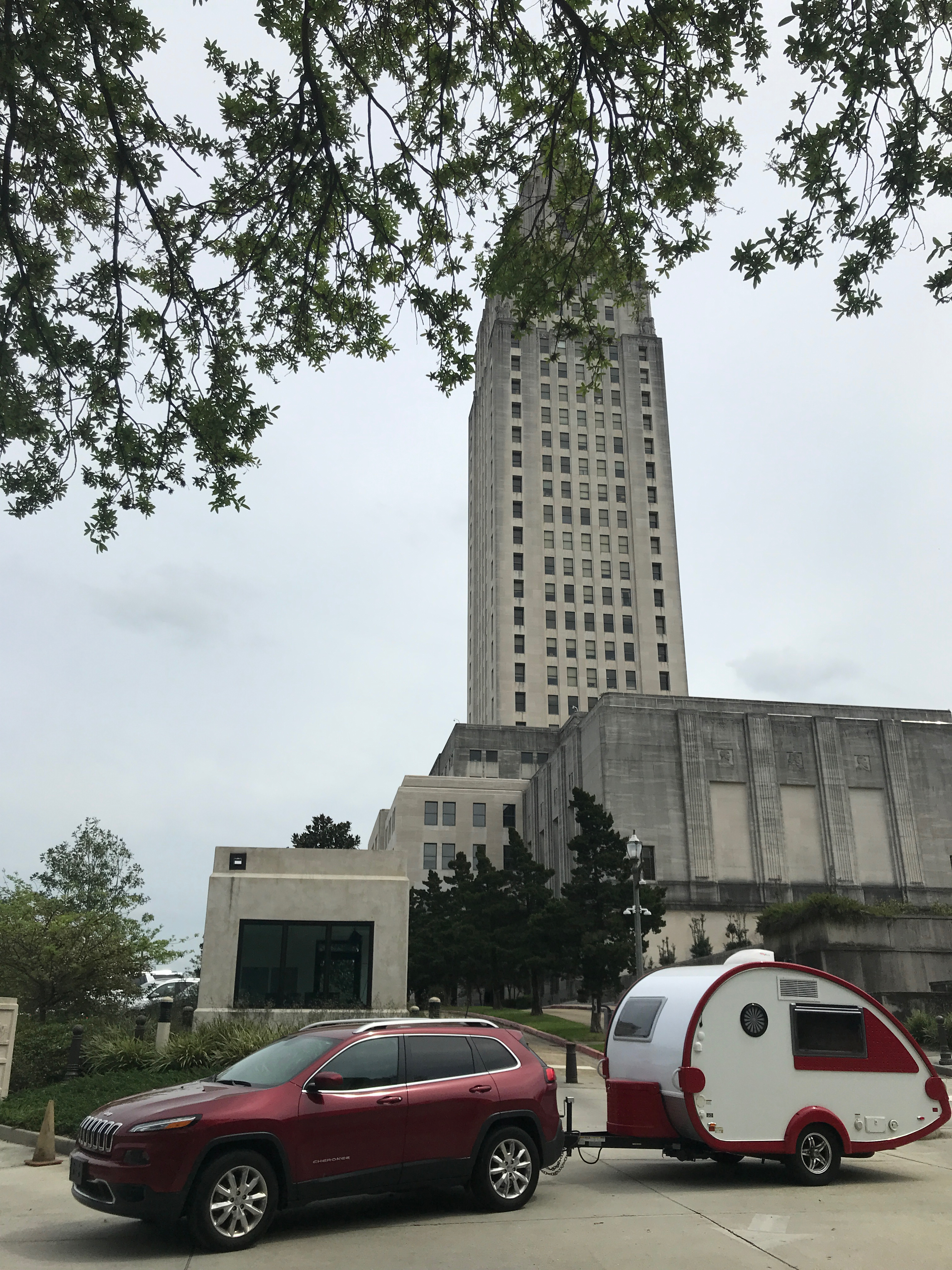
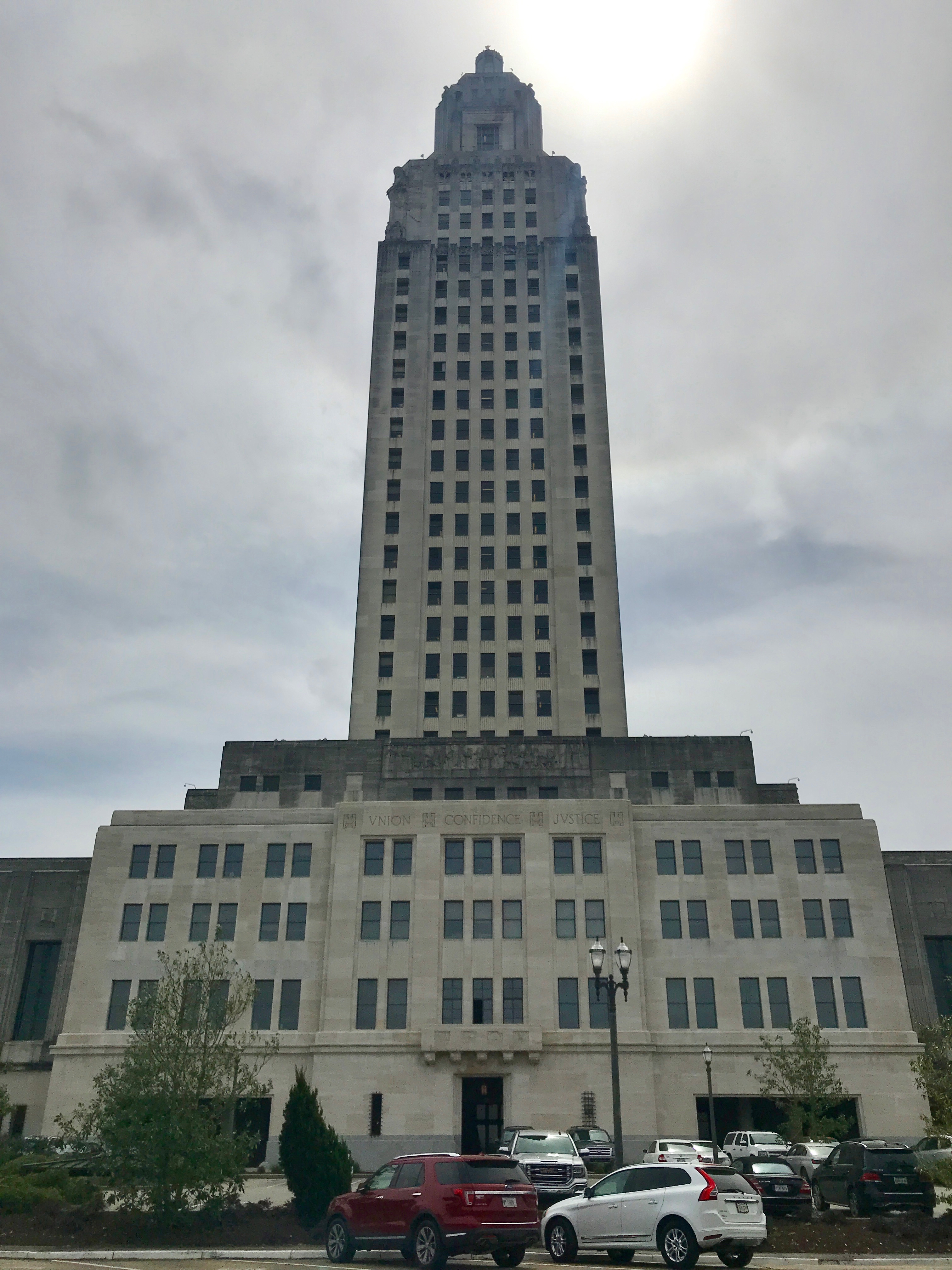
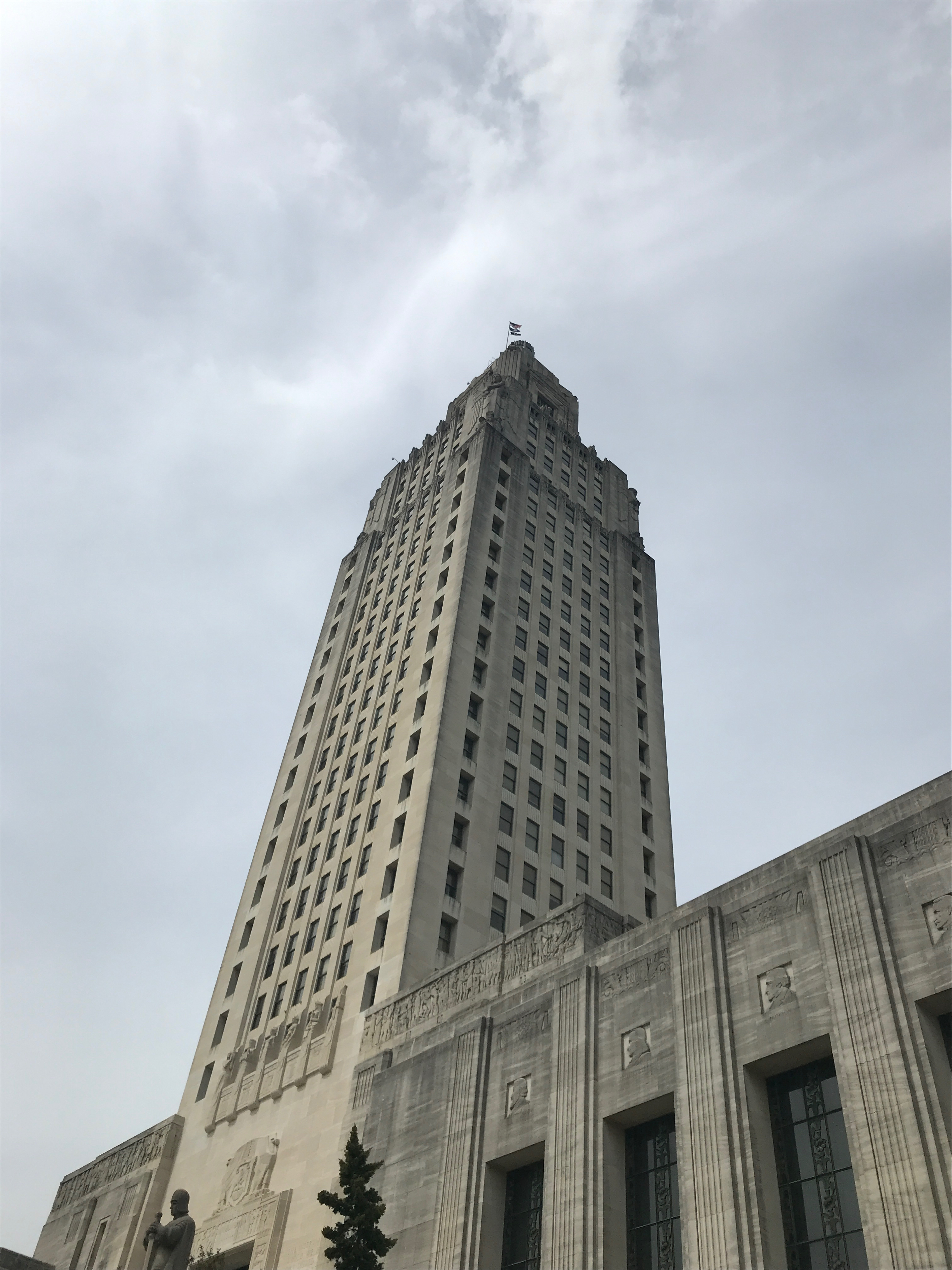
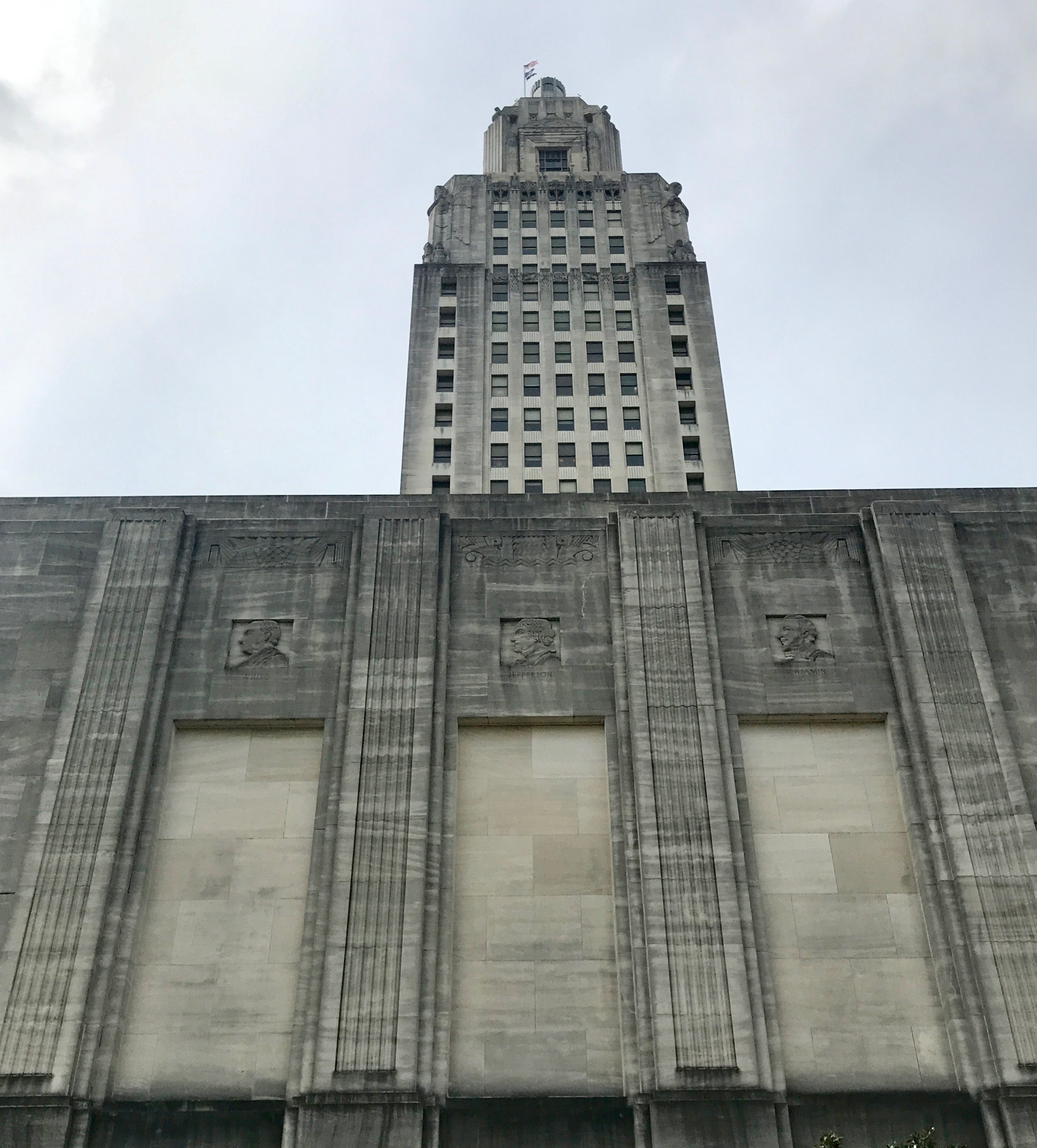
Louisiana’s state capitol in Baton Rouge is another capitol that breaks from tradition. It could be that they were all built in the 1930s in the Art Deco style that makes them so different.

Anyway, I wanted to see what North Carolina had to say for itself.

It turns out that they want to have it both ways.

They have a modern building that they use for actual governmental activities.

T-73-2-1LegBldgbyClayNolan (8271463337).jpg

They also have the old capitol, which is used mainly as a museum, although the governor and the immediate staff have offices on the first floor.

North Carolina State Capitol, Raleigh.jpg

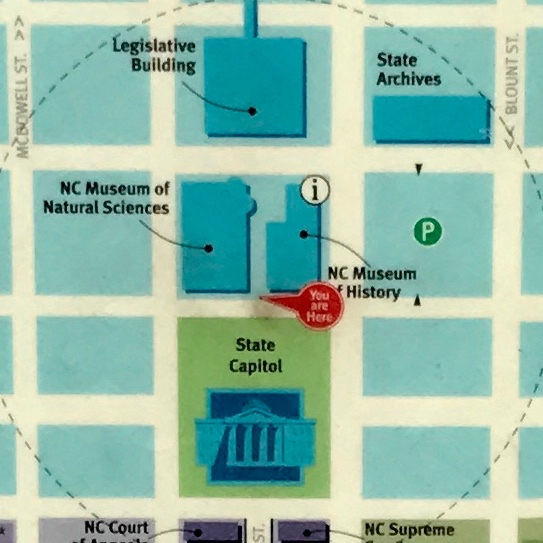
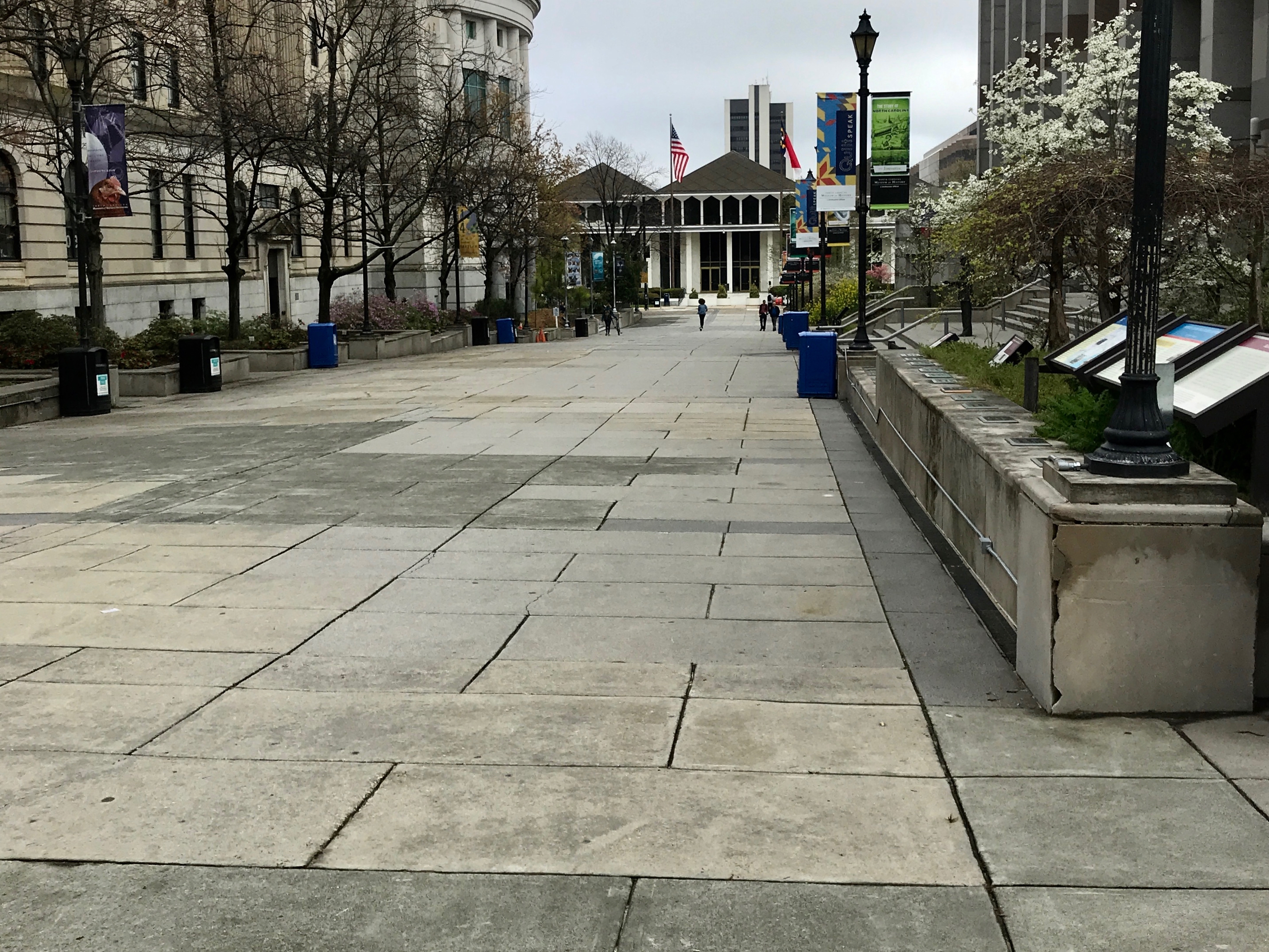
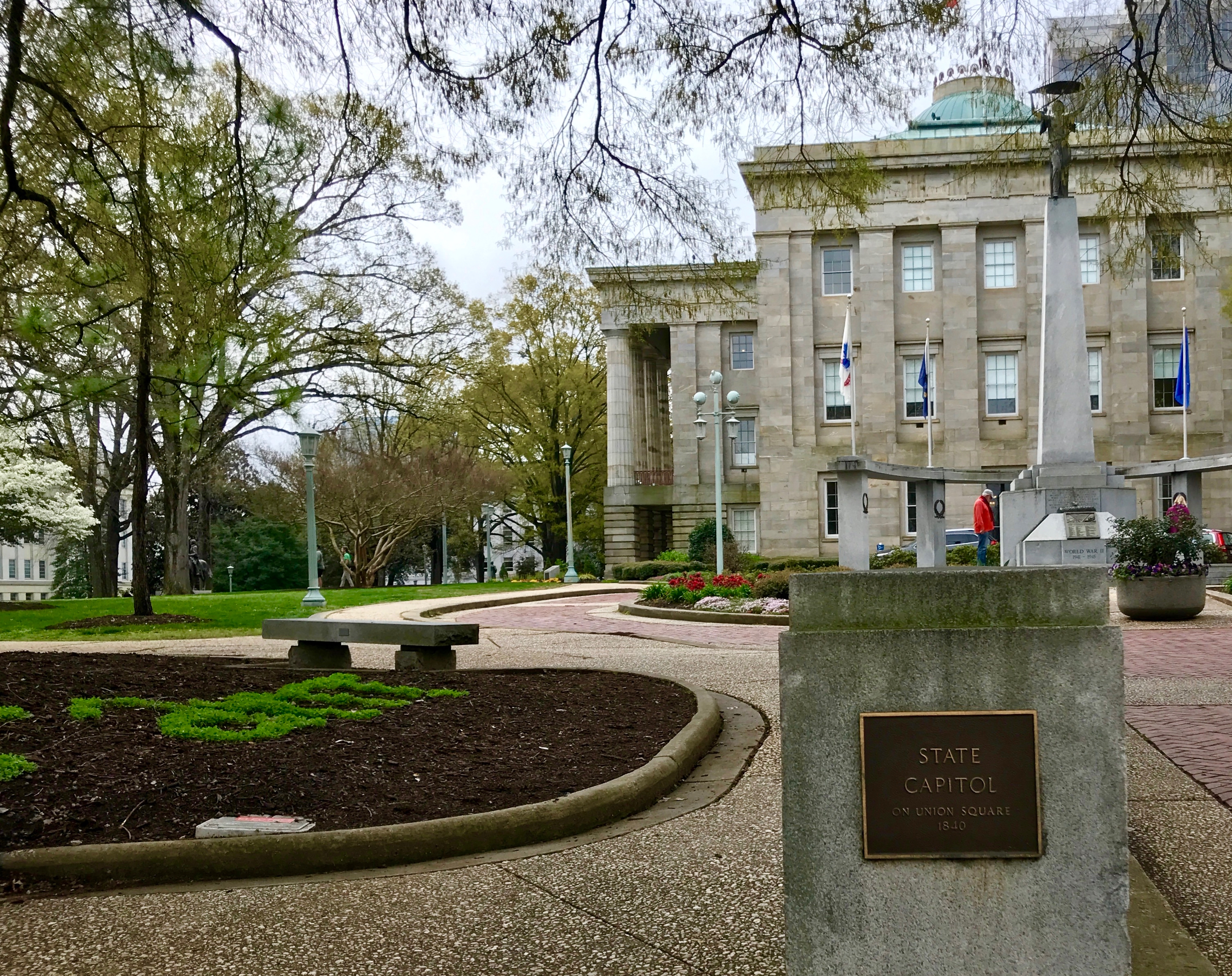
I arrived in the Capitol district, parked and started looking for the Capitol.

I do like maps that tell me where I am. Maps are most useful if you can locate yourself on it.

Hmm…Maybe I’ll check out the Legislative Building later.

That’s more like what I had in mind!

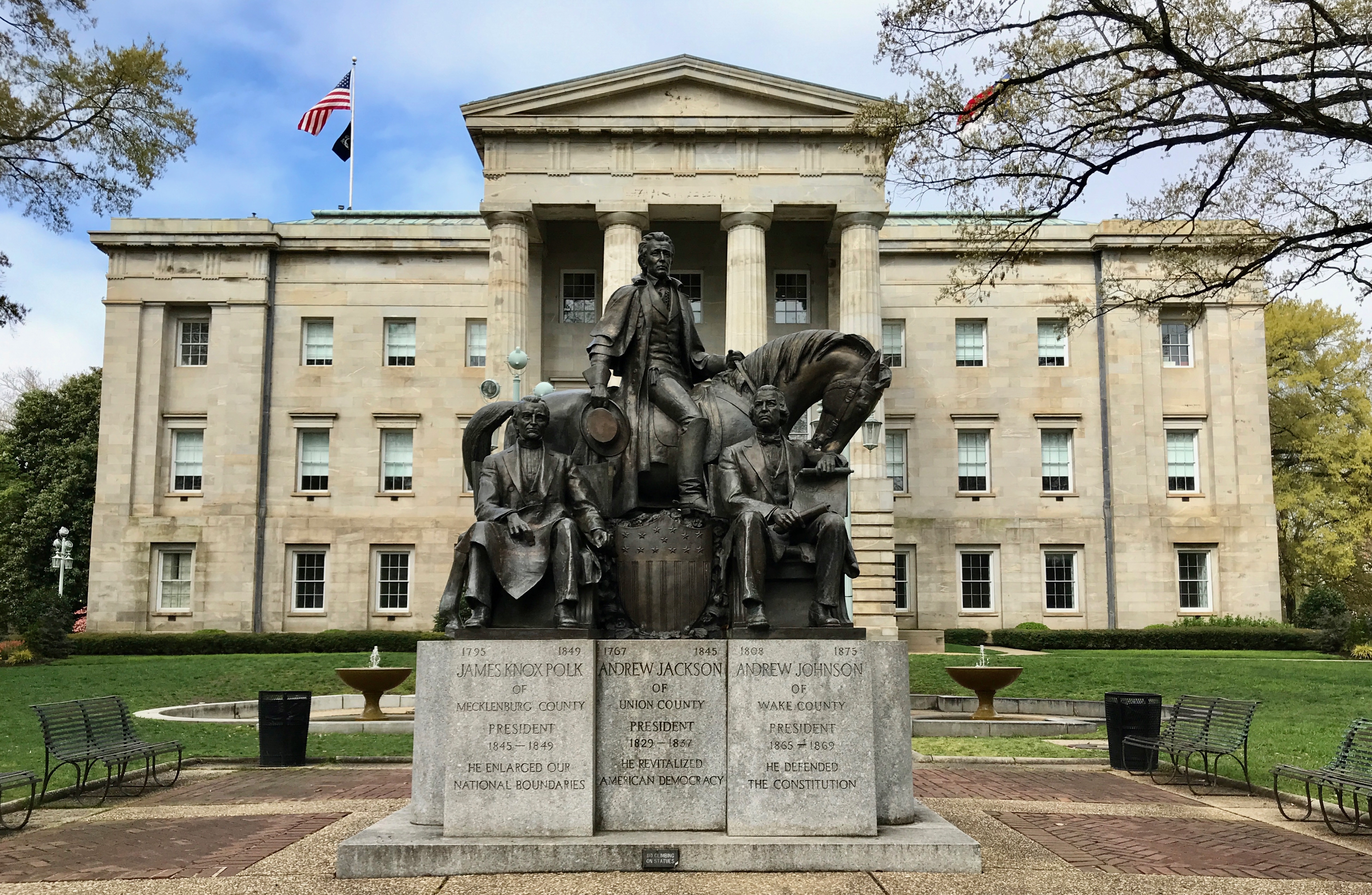
I walked around a bit, trying to get a good photo of the facade.

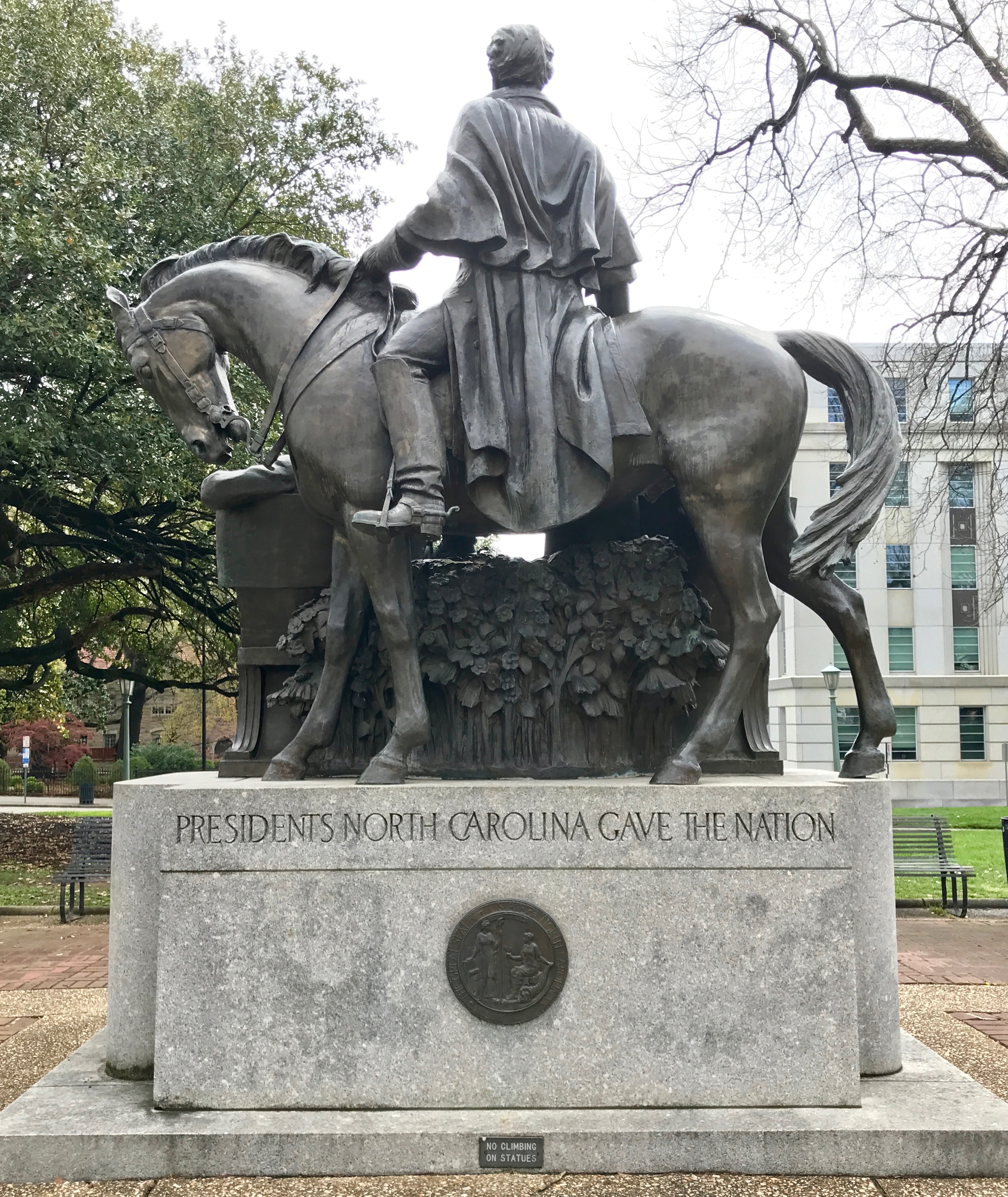
Holy moly! Would you look at those inscriptions?! I do believe Polk’s epigraph is accurate, although not necessarily laudable. The other inscriptions are definitely more in the range of opinion.

Interesting.

Anyway, I had located a door and I walked up to see if I could get in.

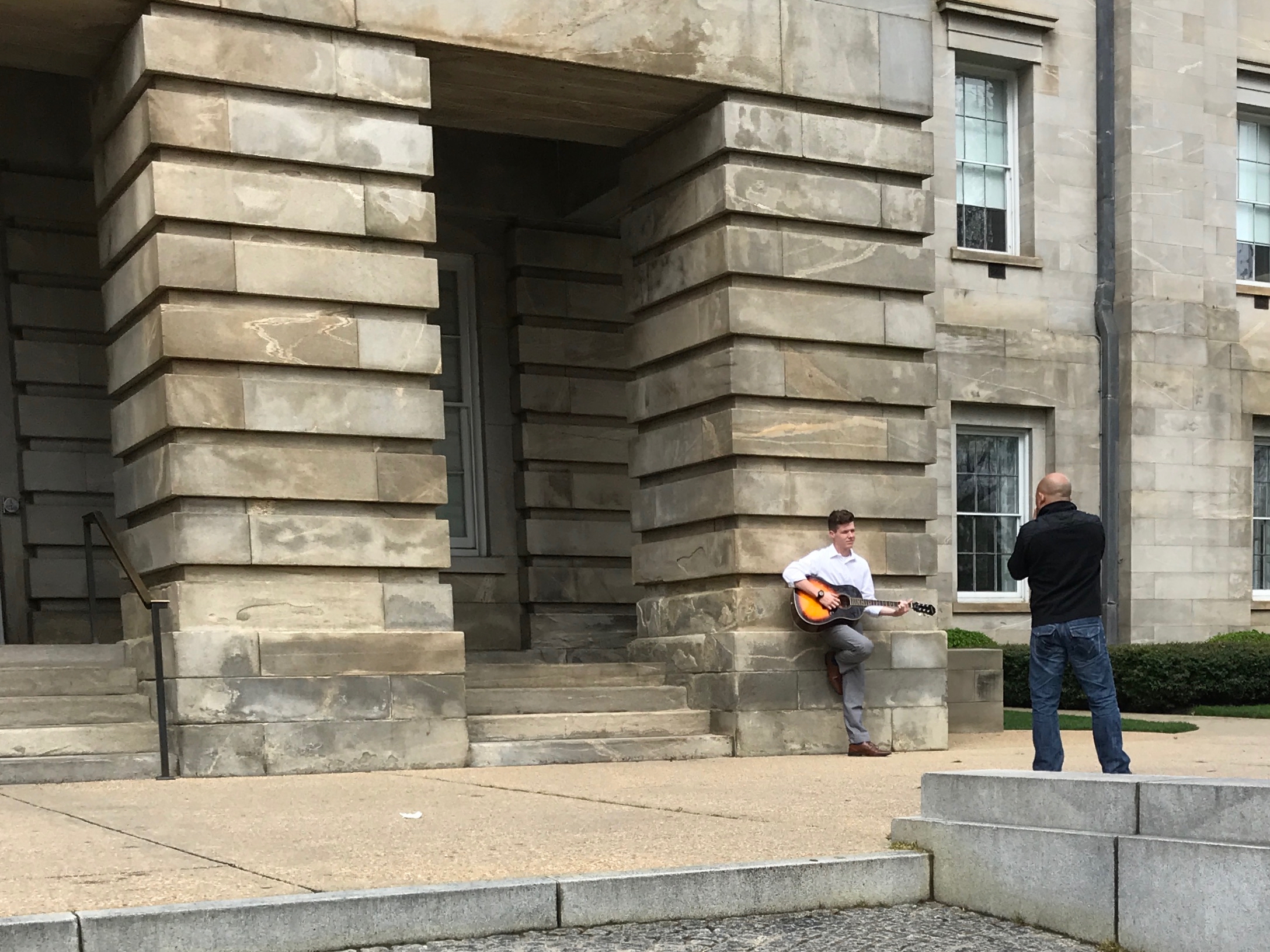
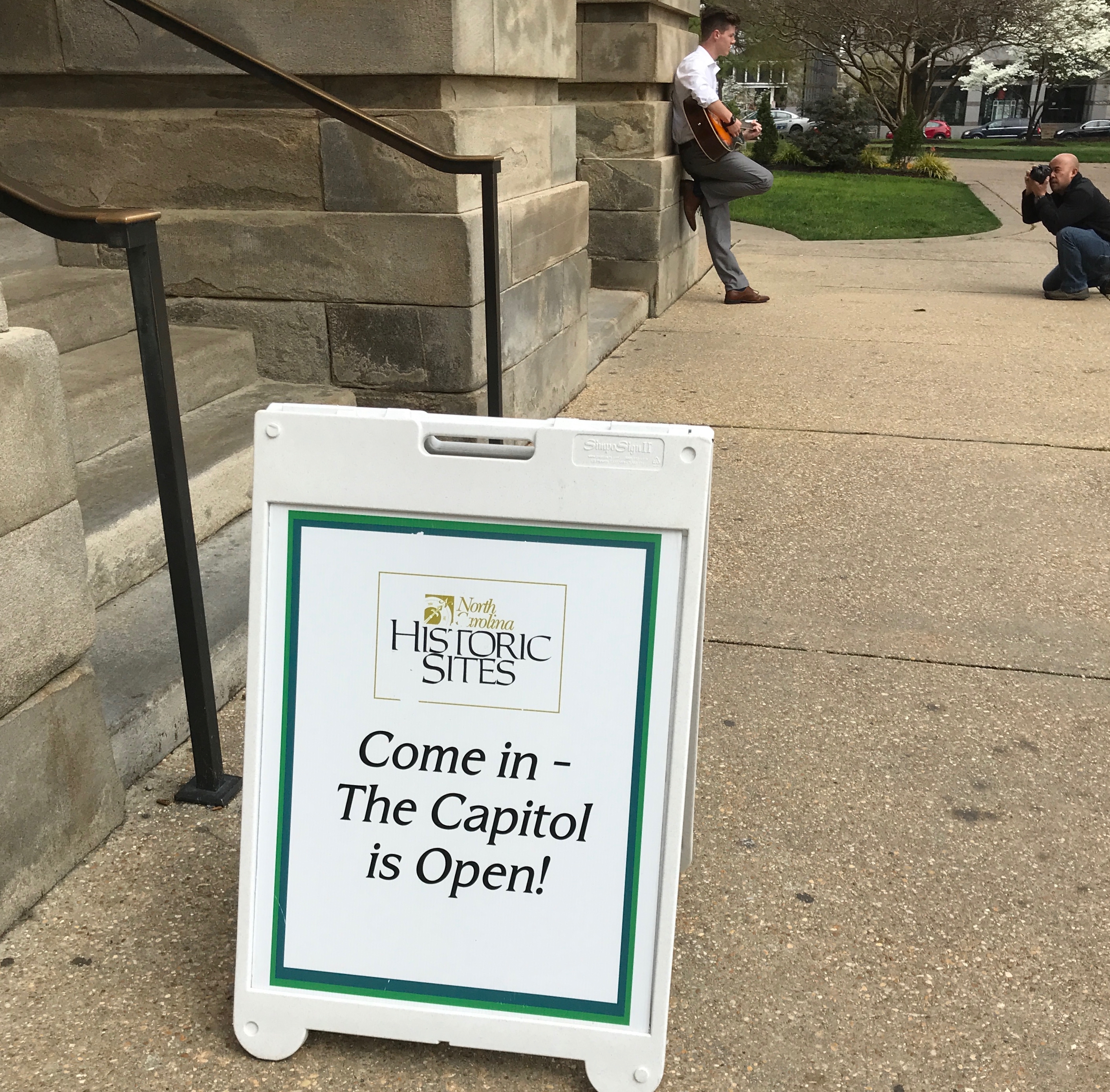
I happened upon a photo shoot.

Lucky me! I found the entrance and The Capitol is Open! (Many times, I have trouble finding the entrances or they are not open for visitors.)

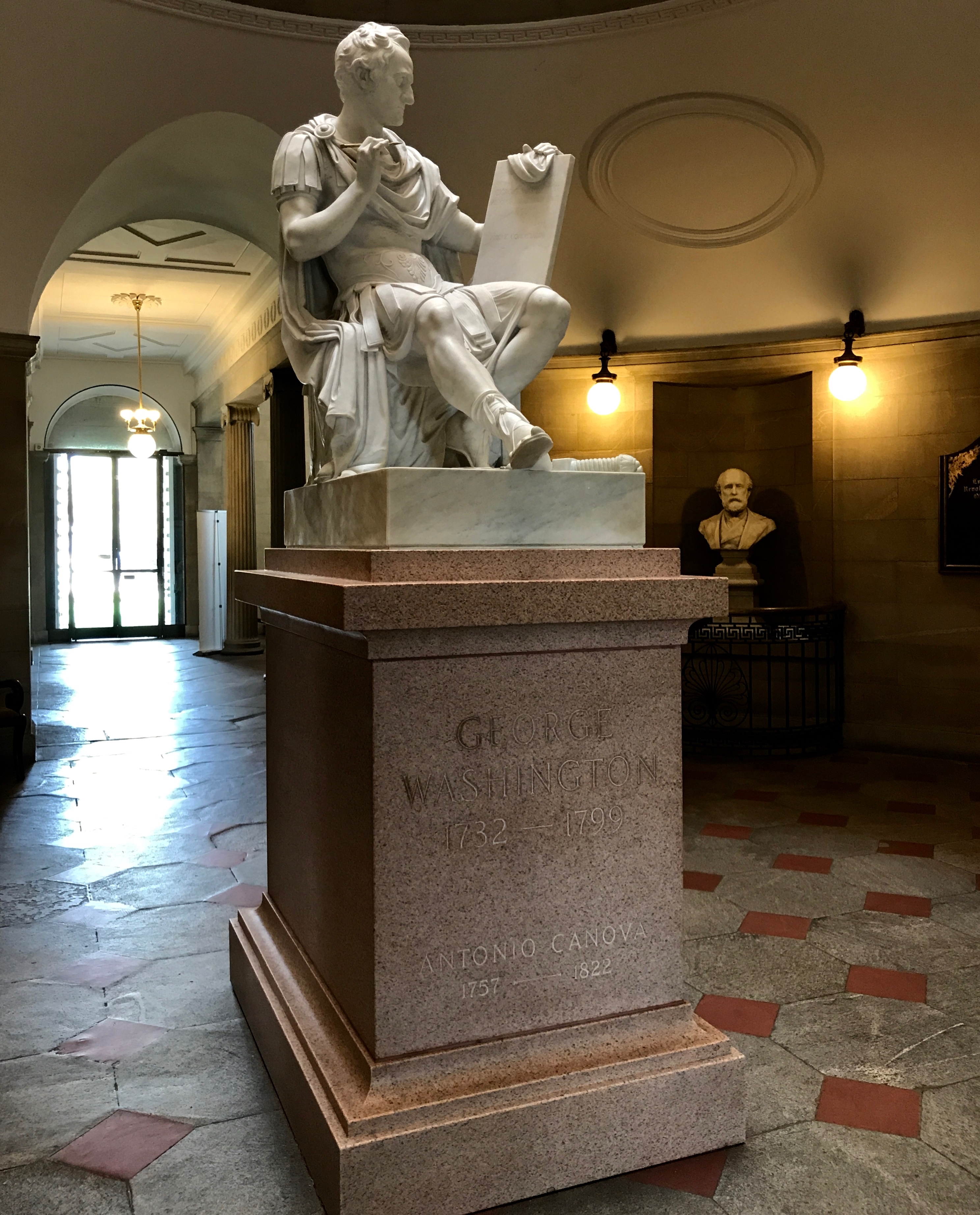
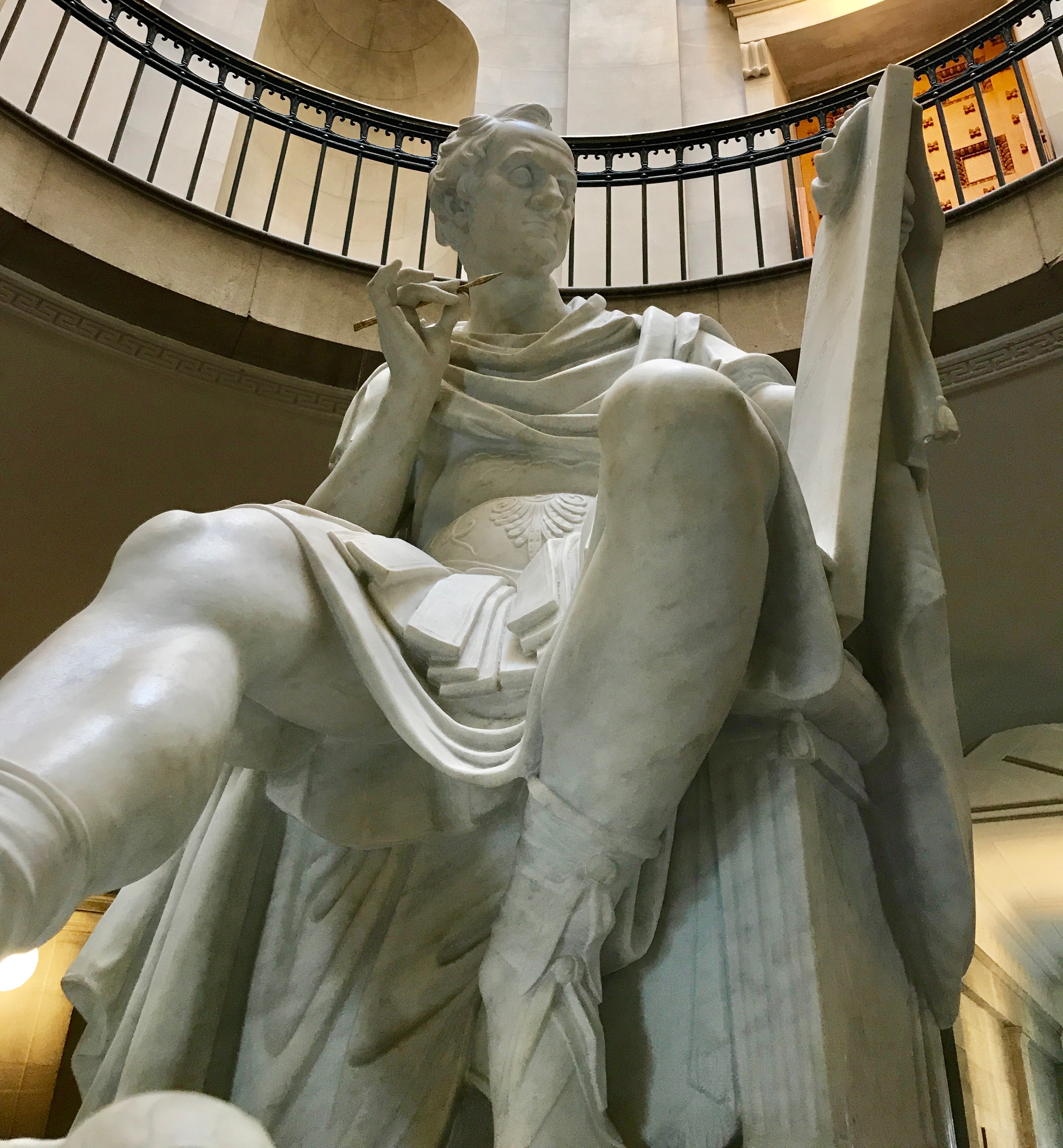
This is an interesting sculpture of George Washington.

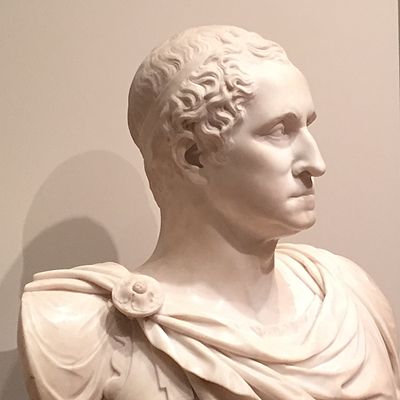
Even more interesting is the history of it. It was commissioned in 1815, sixteen years after Washington’s death. Thomas Jefferson decided that Antonio Canova should be the sculptor and that Thomas Appleton, American consul in Livorno, Italy should handle the negotiations. I suspect that part of the reason for selecting Appleton might have something to do with the fact that he owned a plaster copy of the marble bust of Washington by Guiseppe Ceracchi that Jefferson recommended as a model for the head.

The bust can be found at the Metropolitan Museum of Art, if your travels take you to New York City.

Canova started work on the statue in 1817 and finished it in 1820. Governor Miller  requested that the United States Navy transport it from Italy, and it arrived in Boston in July, 1821. It finally arrived in Raleigh in December.

After a citywide fire in Fayetteville in May of 1831, the state decided to protect the wooden roof of the state house with zinc sheets. On June 21, workers accidentally set the roof on fire while soldering nail heads to the zinc.

William Goodacre

The state house and Canova’s statue were both destroyed.

So, how do we have this statue, if the fire destroyed it?

A plaster replica was sent by the Italian government in 1910. You can see it at the North Carolina Museum of History. A marble copy was sculpted by Romano Via in 1970, and that is the one that I took a picture of.

Actually, I took several photos.

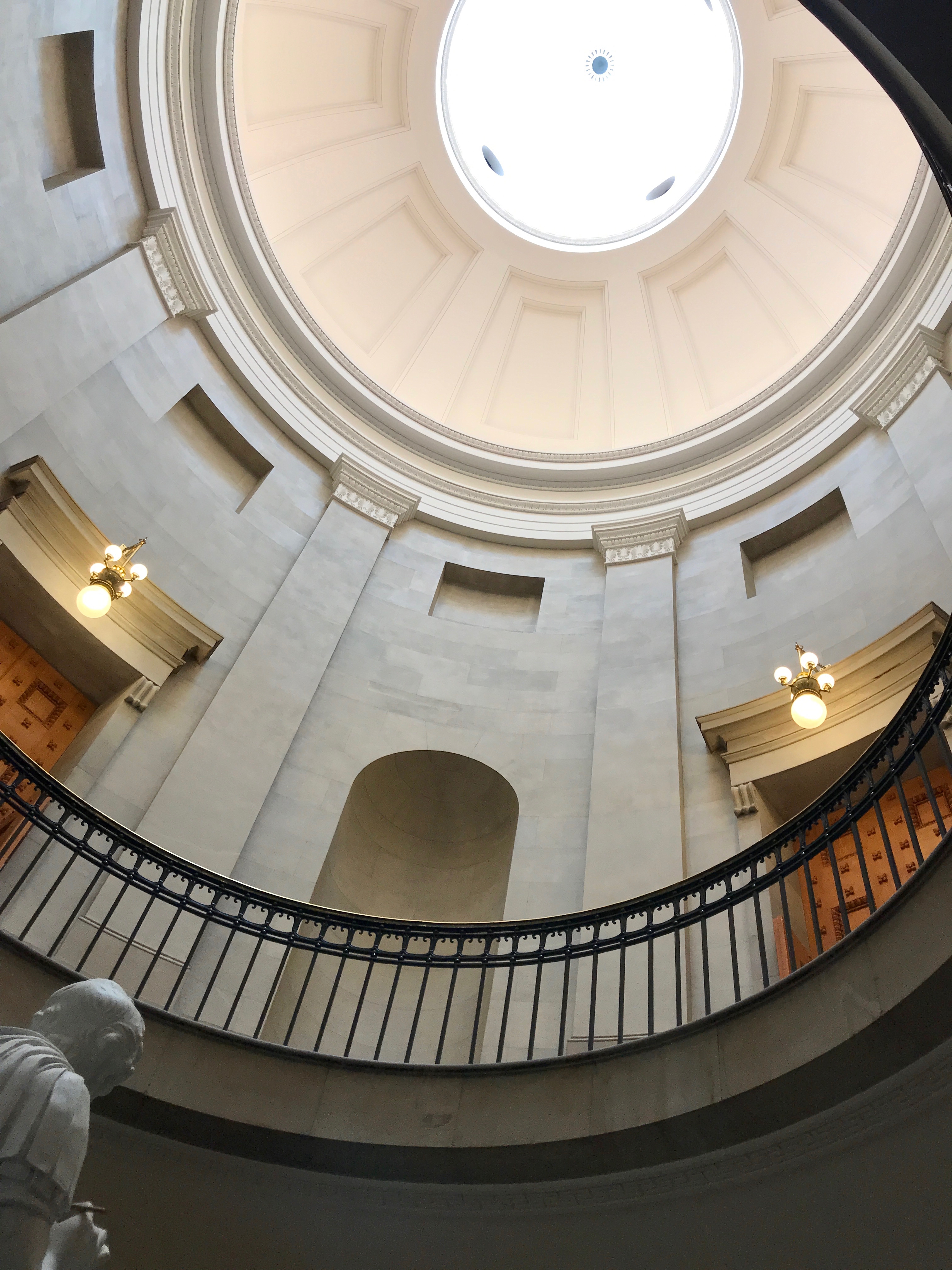
I do enjoy looking up into the domes that most state capitols seem to favor.

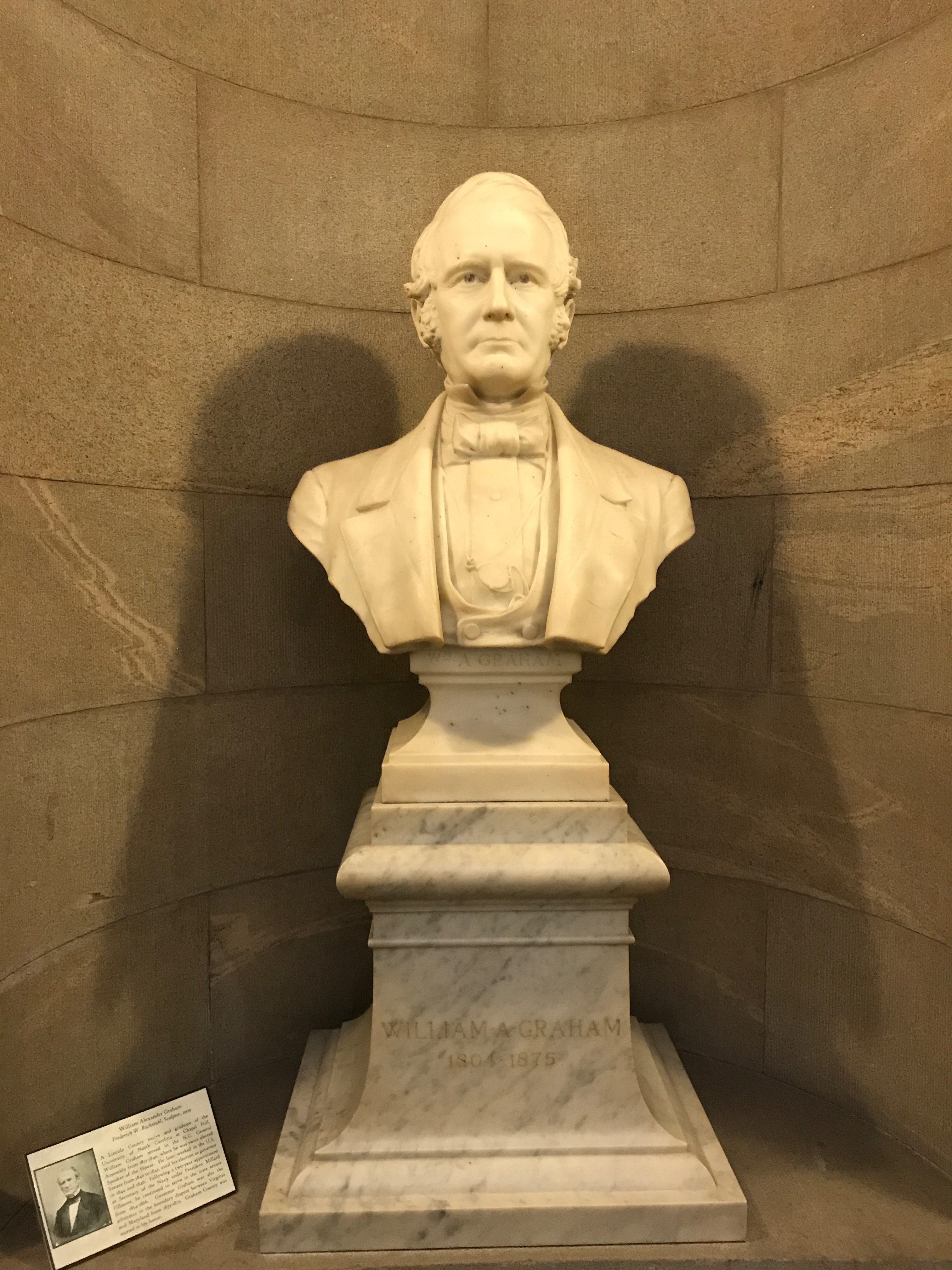
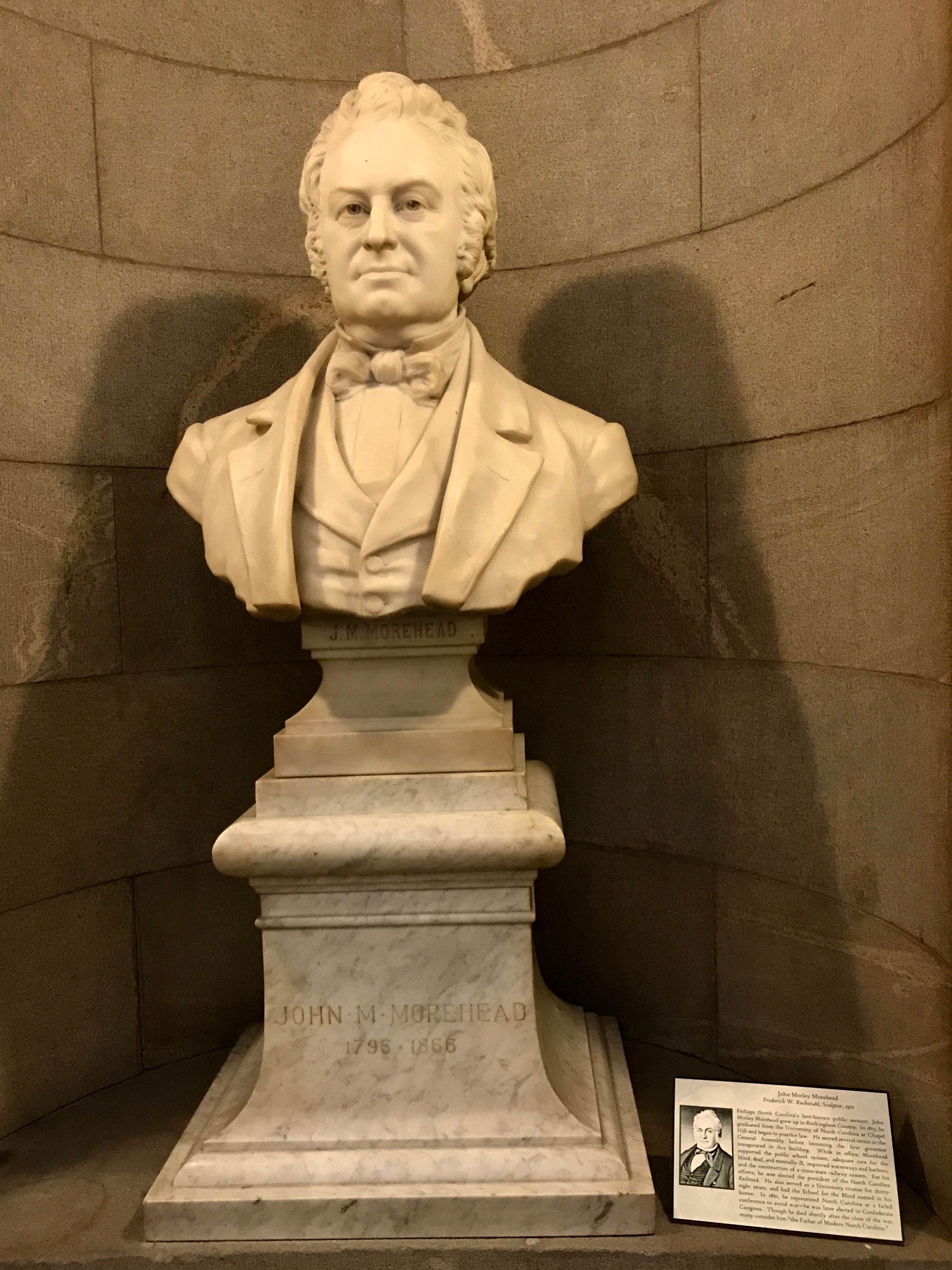
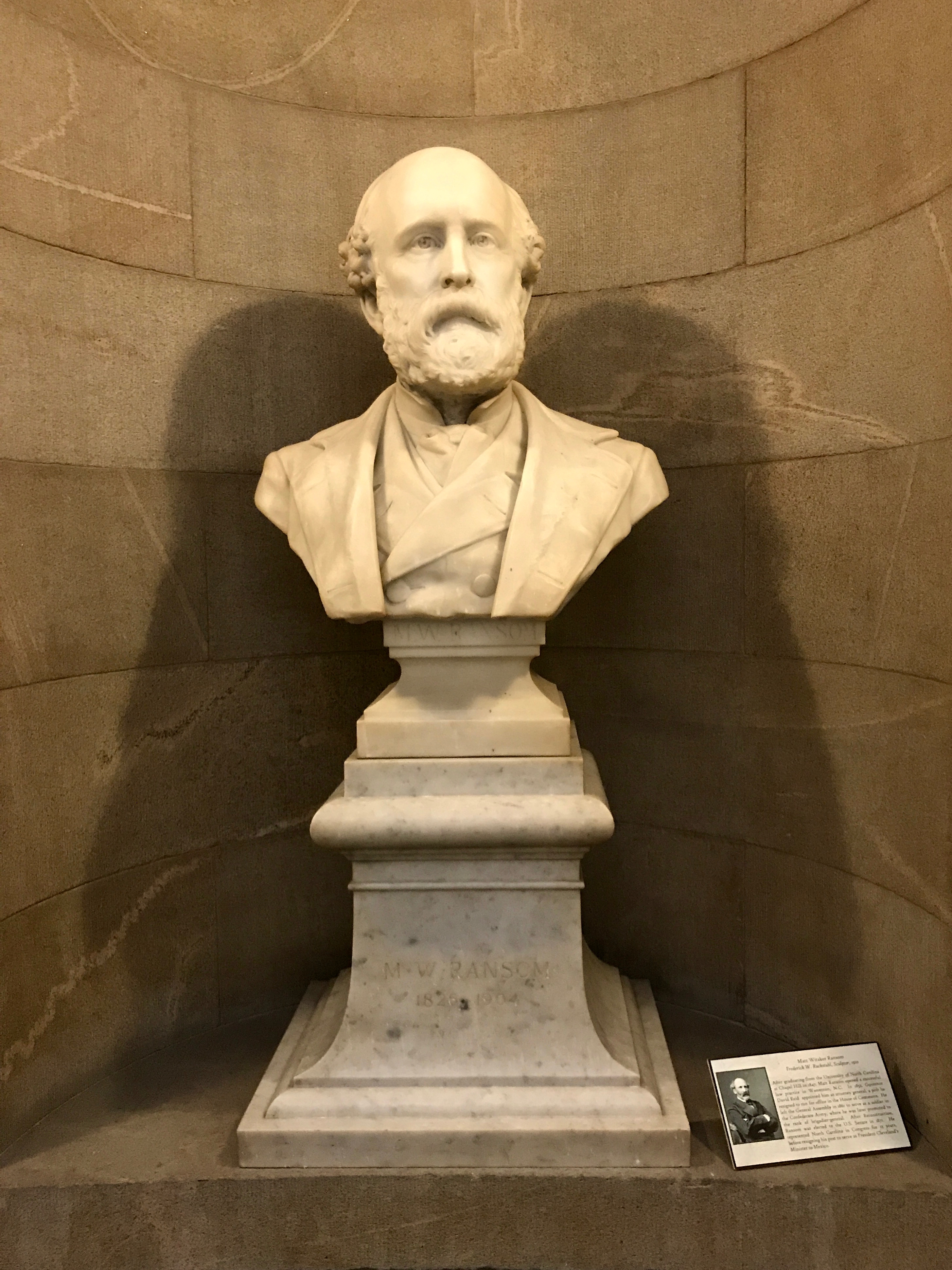
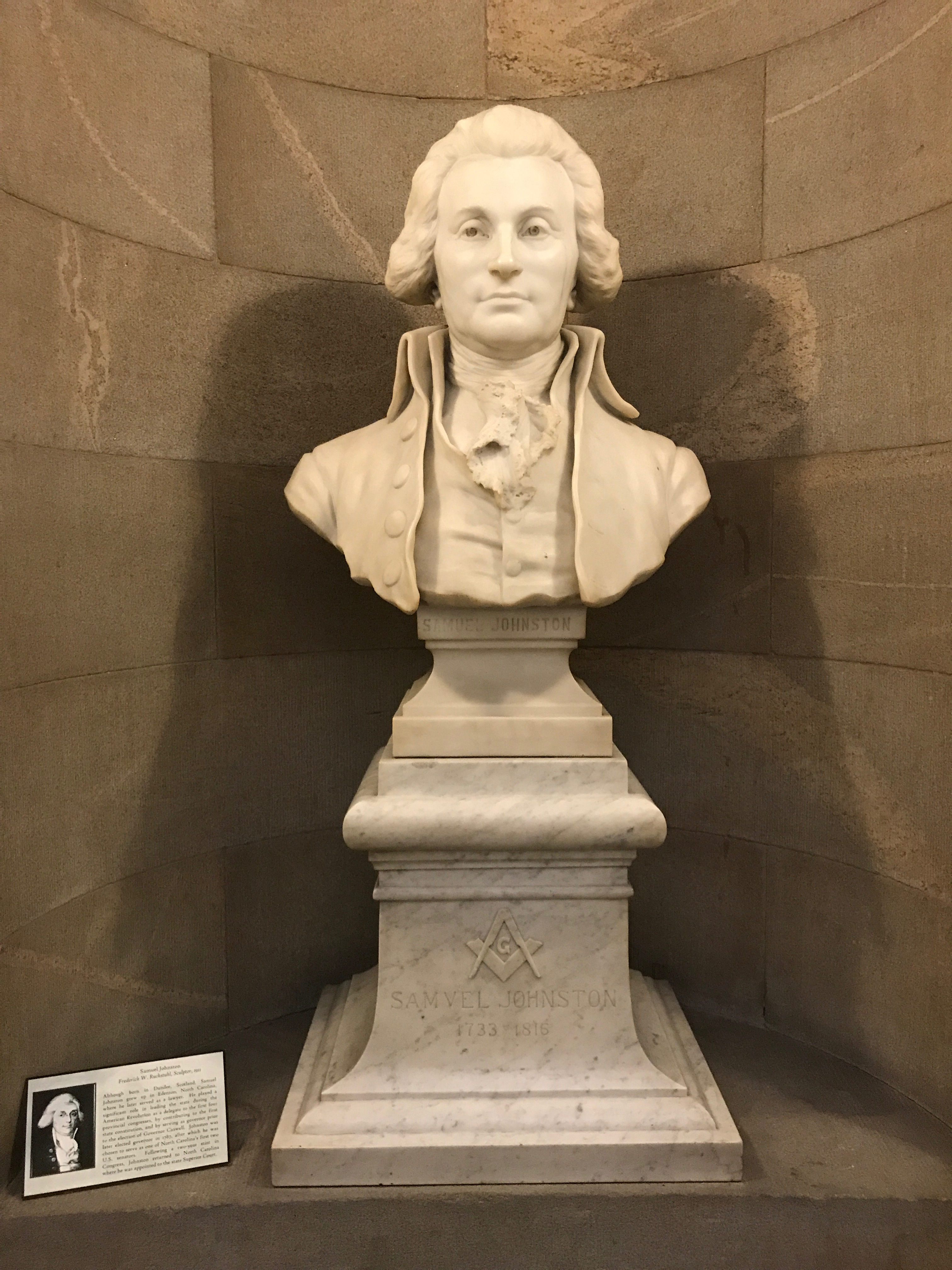
Around the rotunda, they had niches with busts of people they wanted to memorialize.

William Alexander Graham, who served in the General Assembly, the U.S. Senate, the Secretary of the Navy under Millard Fillmore, the State Senate and was governor. Oh, and he was in the Confederate senate. After the Civil War, he was elected to the the U.S. Senate, but couldn’t present his credentials because North Carolina was not readmitted to the Union until 1868.

John Morley Morehead served several terms in the General Assembly before being elected governor in 1840. While in office, Morehead supported the public school system, adequate care for the blind, deaf, and mentally ill, improved waterways and harbors and the construction of a cross-state railway system.

According to the plaque with the statue, his efforts were rewarded by election to serve as president of the North Carolina Railroad.

In 1862, he represented North Carolina at a failed conference to avoid war and was later elected to the Confederate Congress. According to the plaque, “Though he died shortly after the close of the war, many consider him “the Father of Modern North Carolina.”

Matt Witaker Ransom was a general in the Confederate Army and a Democratic U.S. Senator between 1872 and 1895, as well as attorney general and a member of the House of Commons prior to the Civil War. He was also appointed by President Grover Cleveland to serve as Minister to Mexico.

Samuel Johnston was born in Dundee, Scotland, although he grew up in Edenton, North Carolina. As you can probably tell from the hair and the attire, Johnston’s role in North Carolina goes back to the American Revolution. He was a delegate to the first four provincial congresses and contributed to the first state constitution, and later served as governor. He was chosen to serve as one of the state’s first two U.S, Senators.

This was back before Senators were directly elected by the voters, which didn’t happen until 1914.

After his stint in Congress, he returned to North Carolina and was appointed to the state Superior Court.

So, what does it look like North Carolina is trying to say about itself with their art choices so far? I’ll let you decide for yourself. Let me mention that the four busts were created by the same artist – Frederick W. Ruckstuhl – between 1909 and 1911.

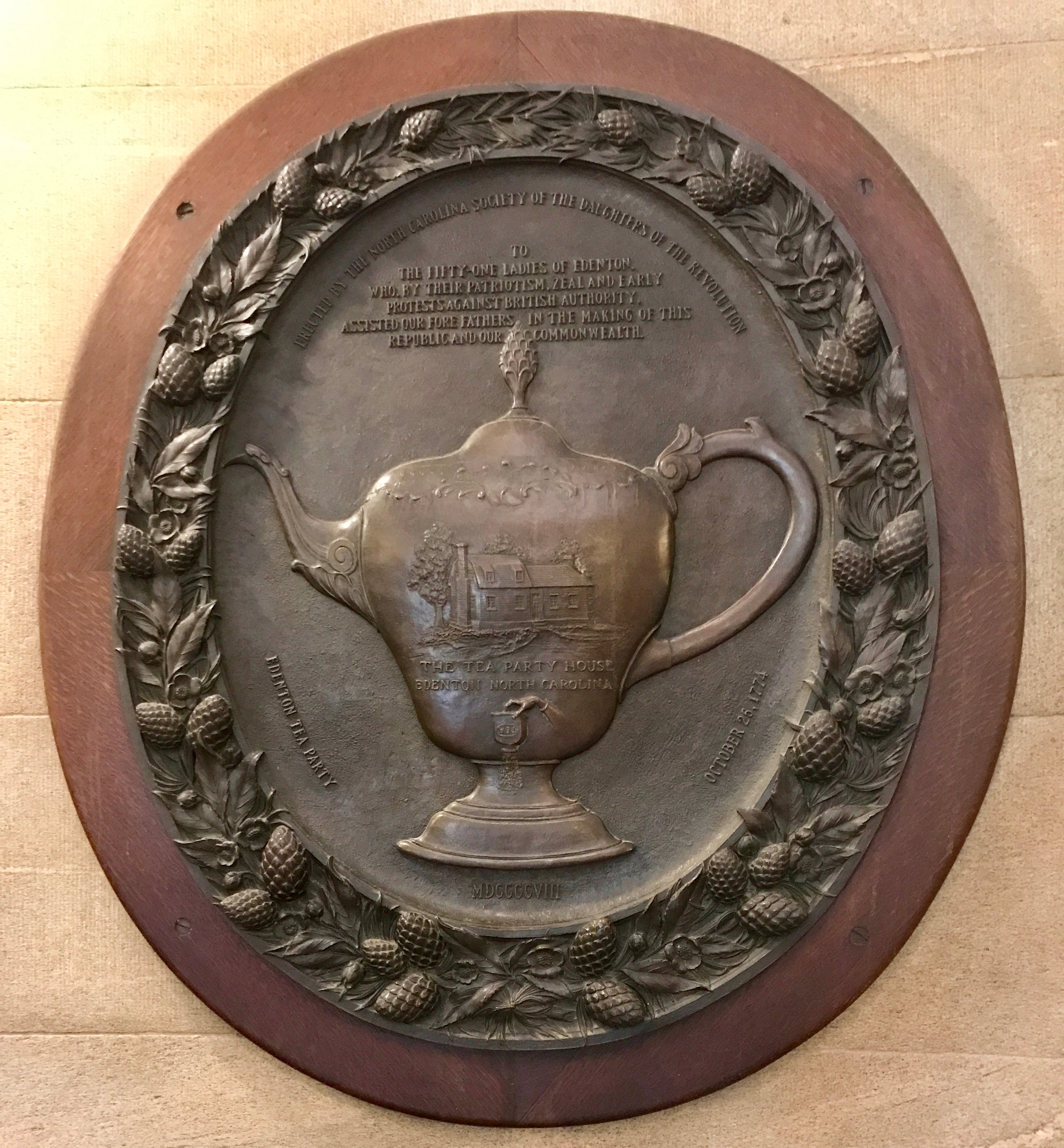
There were many more plaques in the rotunda, but I’m not going to share them all. They honored the thirteenth, fourteenth. fifteenth and nineteenth amendments, as well as a few more that pertained to the American Revolution, and this one that commemorated the Edenton Tea Party.

I wrote about it when I visited Edenton the year before this spring 2019 trip. You can read about my visit here.

In case my previous comments about the artwork came off as harsh, I do give the people of North Carolina credit for trying to offer information that would allow visitors to develop a more complete understanding of the state’s history.

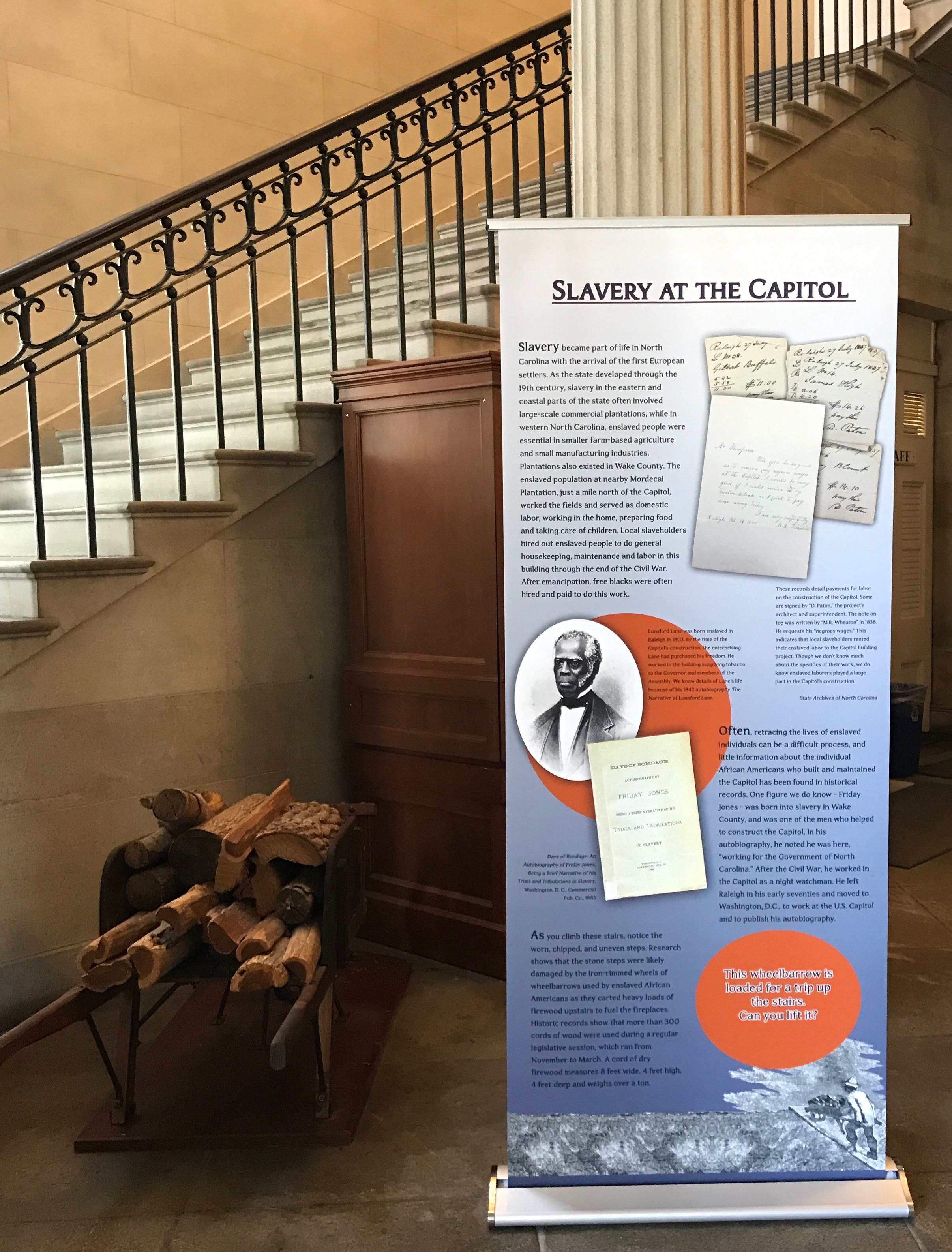
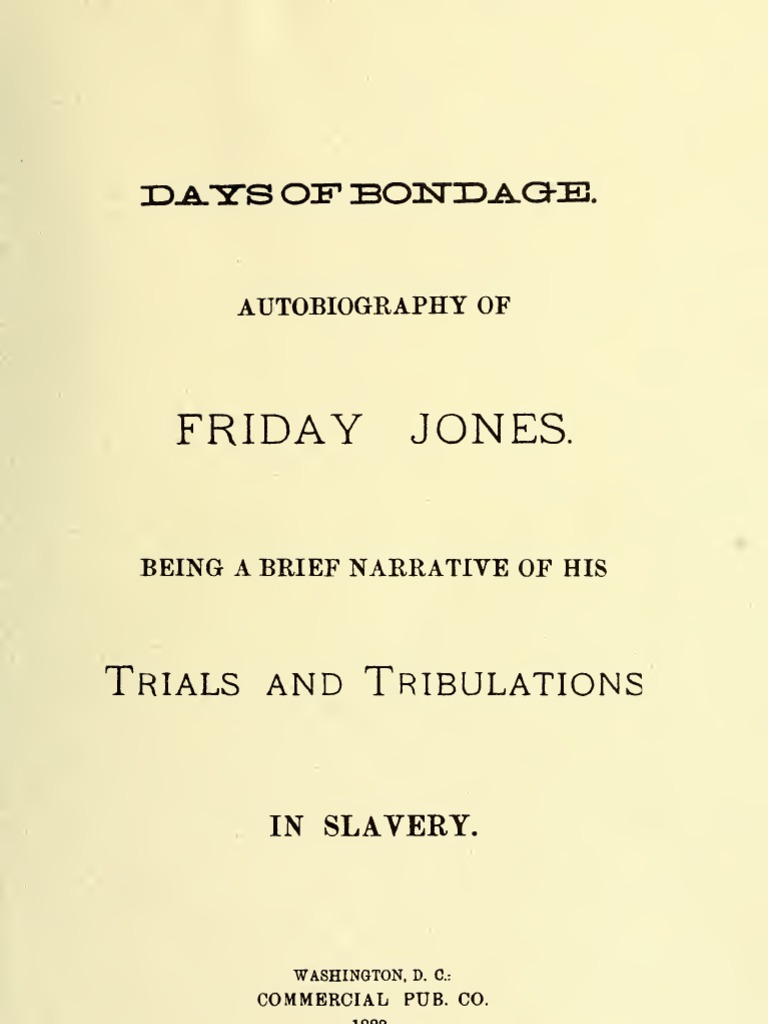
If you’re interested, you can also read the autobiography of Friday Jones, who was one of the enslaved people who built the Capitol.

You can buy it on Amazon or you can access it here, if you would like to read it for yourself.

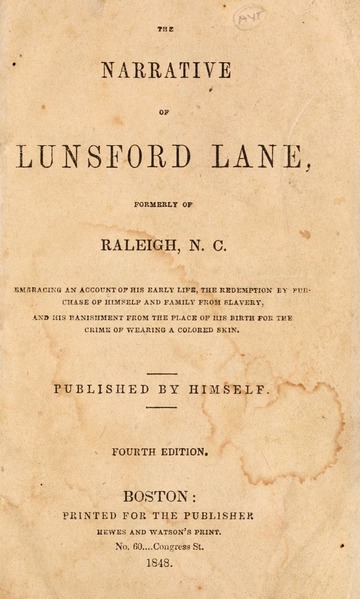
The portrait on the banner is of a person who did not help build the Capitol. This is because Lunsford Lane had purchase his freedom by the time the Capitol was under construction.

You can also read his narrative here or order it online.

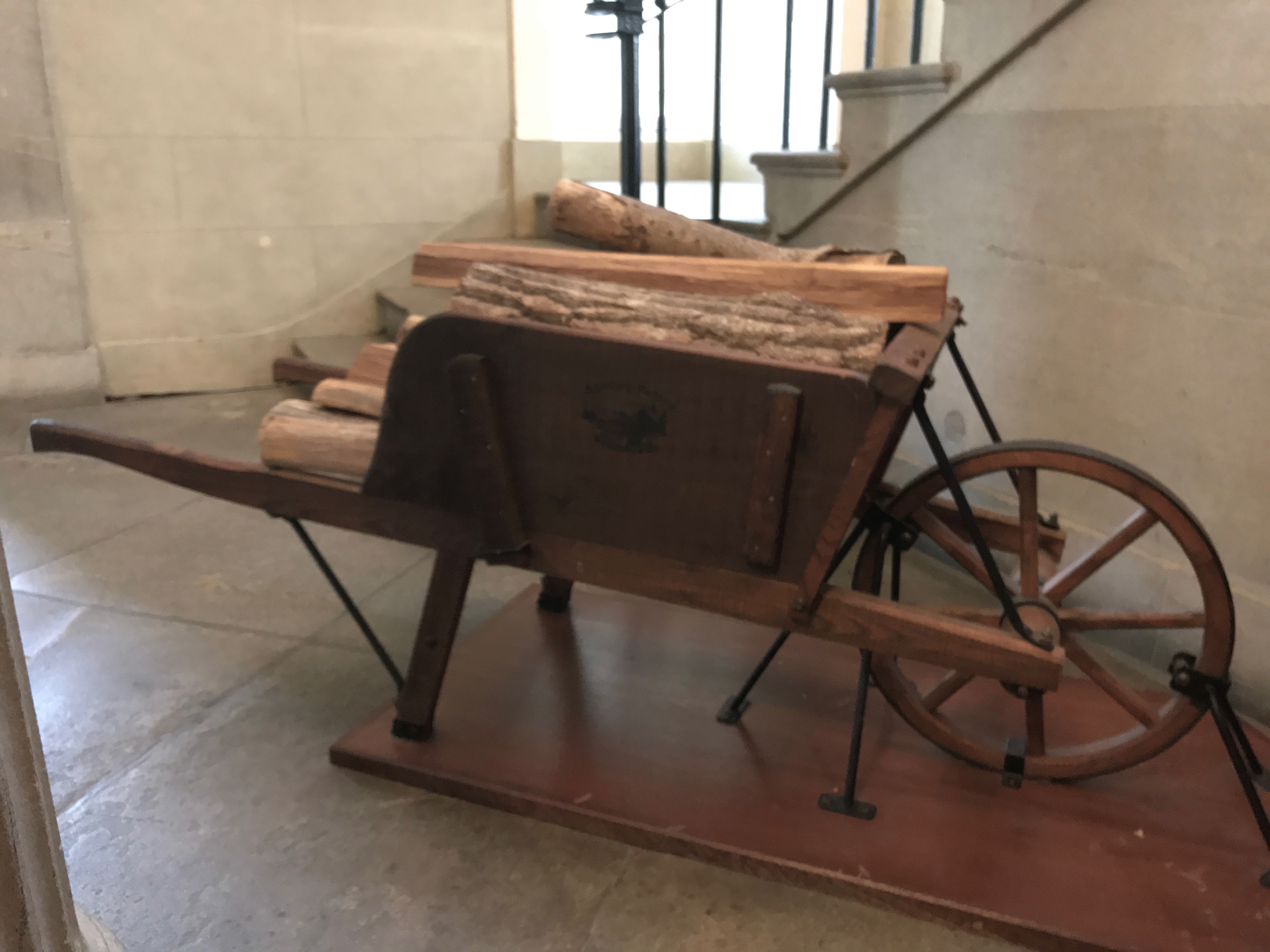
You might be wondering why there is a wheelbarrow full of wood in the building.  Historic records show that more than 300 cords of wood were used during a regular legislative session, which ran from November to March.

A cord of dry firewood measures eight feet wide, four feet high and four feet deep and weighs over a ton.

The enslaved African Americans used wheel barrows with iron-rimmed wheels to cart the firewood up to the legislative chambers. That would be 600,000 of wood muscled up those stairs. I wonder how much a single load weighs.

The orange oval at the bottom of the banner says, “This wheelbarrow is loaded for a trip up the stairs. Can you lift it?”

I’d say that is a rhetorical question, as the wheelbarrow looks securely fastened to the wooden base.

I went up the stairs. there were some displays that may have been interesting. Unfortunately, the lighting wasn’t good enough for me to study them well.

While looking around, a tour group showed up. It looked large enough for me to sneak in – so I did.

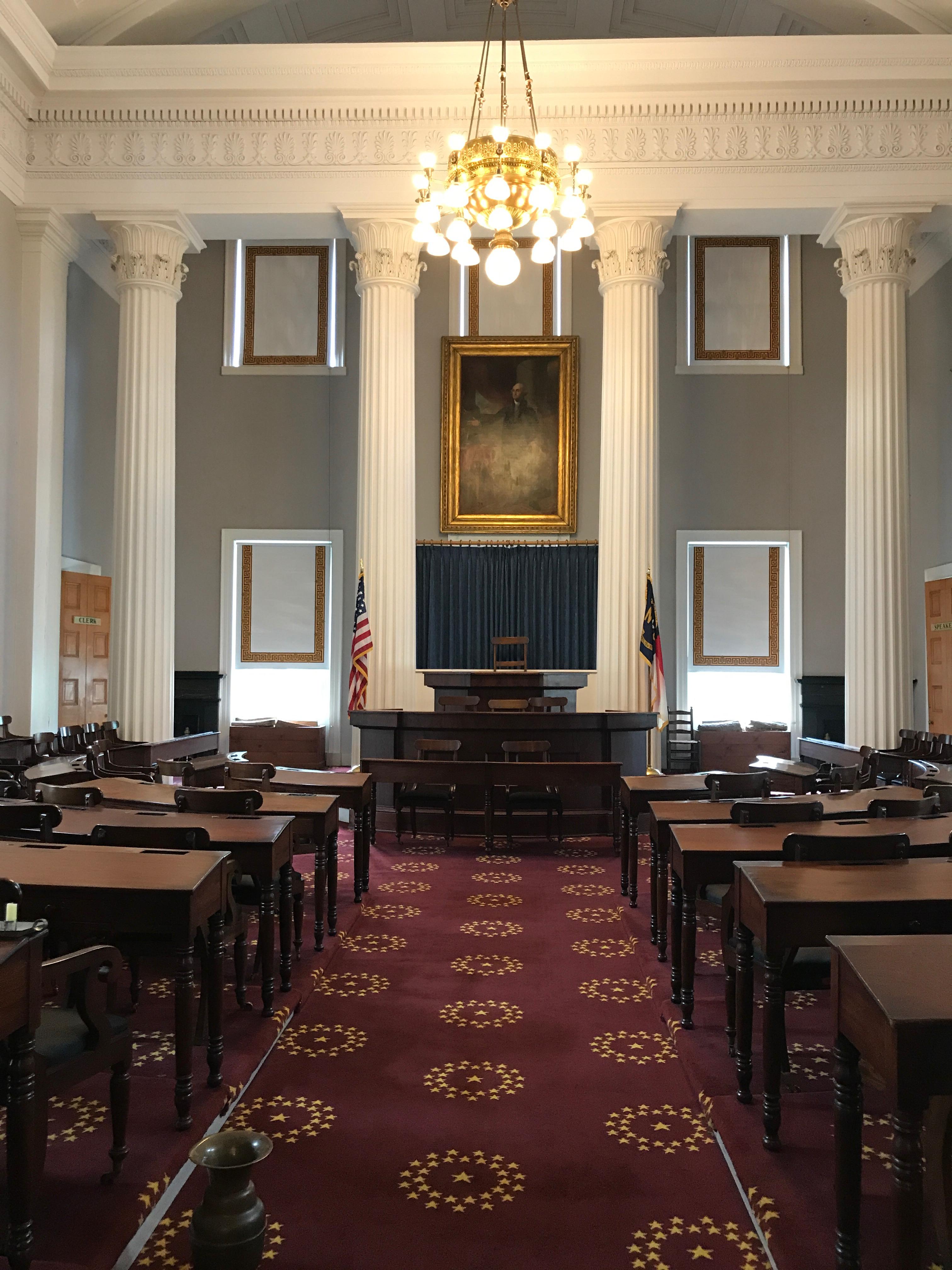
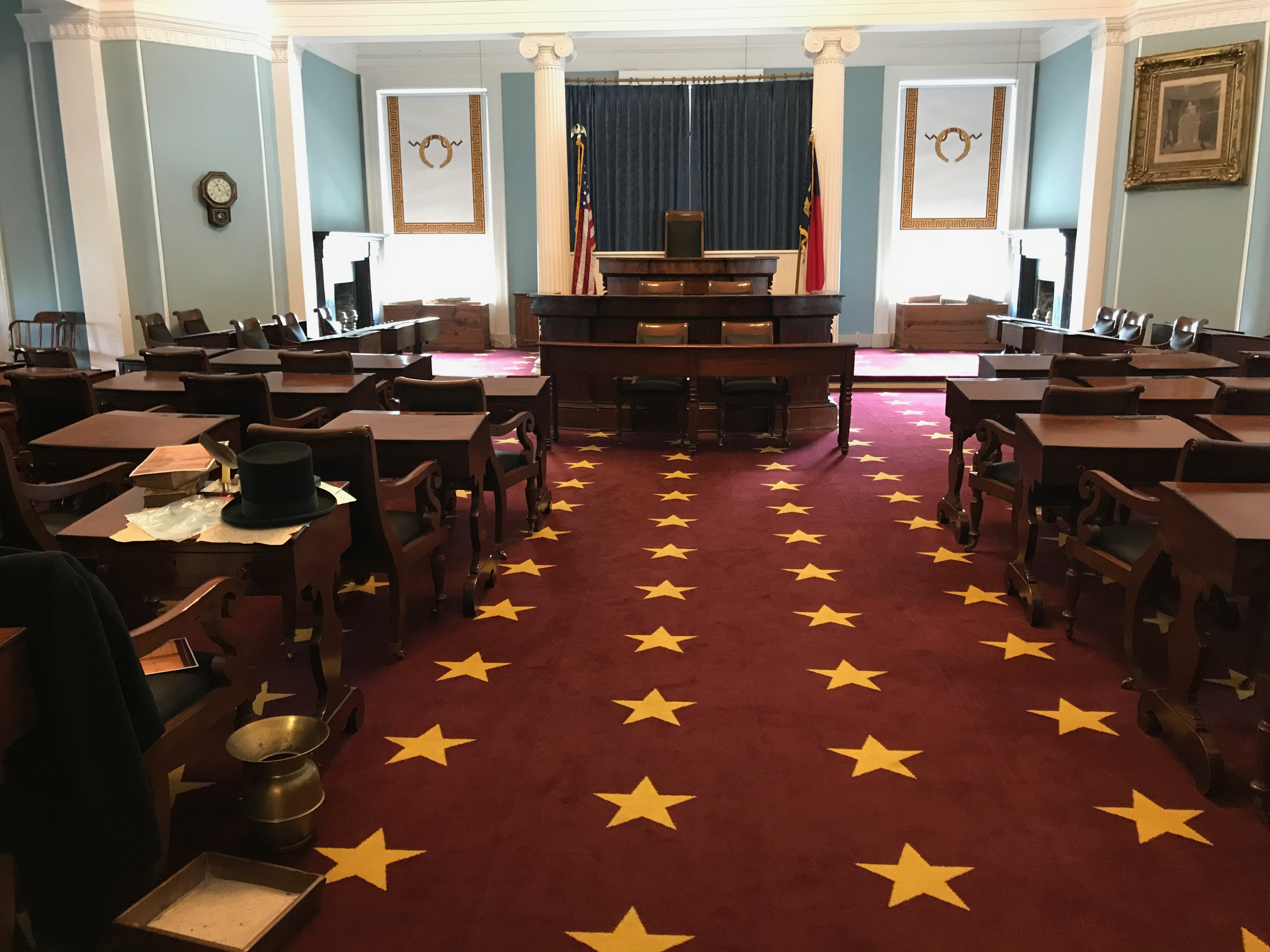
This is the House of Representatives, which was first known as the House of Commons. It was in this space in May 1861 that delegates from across the state unanimously voted to secede from the Union.

It was also in this space, once built and maintained by enslaved laborers, that Parker D. Robbins served two terms as one of North Carolina’s first African-American legislators.

Representative Robbins was an interesting person. He was a free Black and owned a 102 acre farm in North Carolina before the Civil War. After the War broke out, he went to Norfolk, Virginia and enlisted in the Union Army. He attained the rank of Sergeant-Major.

Robbins was one of fifteen Blacks to be elected to the North Carolina General Assembly in 1868 and served two terms. He was also a representative to the North Carolina Constitutional Convention. He was postmaster of the town of Harrellsville, North Carolina and held patents for a cotton cultivator and a saw sharpener.

By State Archives of North Carolina Raleigh, NC

Lillian Exum Clement was the first woman elected to serve in any state legislature in the southern United States. The nineteenth amendment was passed in 1920. Her term began in 1921. She defeated two male opponents in the primary election and then won the general election in a landslide, 10,368 to 41.

This is the Senate chamber, where Abraham H. Galloway served.

He was born into slavery in 1837 and escaped to Canada in 1857. He returned to North Carolina in 1862 to become a Union spy.

After the war, he traveled across the state, advocating equal rights and helping to organize the 1865 Freedmen’s Convention. New Hanover County chose him to attend the 1868 state constitutional convention and elected him to two consecutive terms in the NC Senate., where he supported women’s suffrage and labor rights. He died unexpectedly at the age of 33 while still in office. Six thousand people attended his funeral, an event the Christian Recorder called “the largest ever known in this states.”

I walked back out to the rotunda.

and looked down on The Father of Our Country.

There were a variety of other meeting rooms.

The details were simple yet elegant.

I guess it’s time to go upstairs.

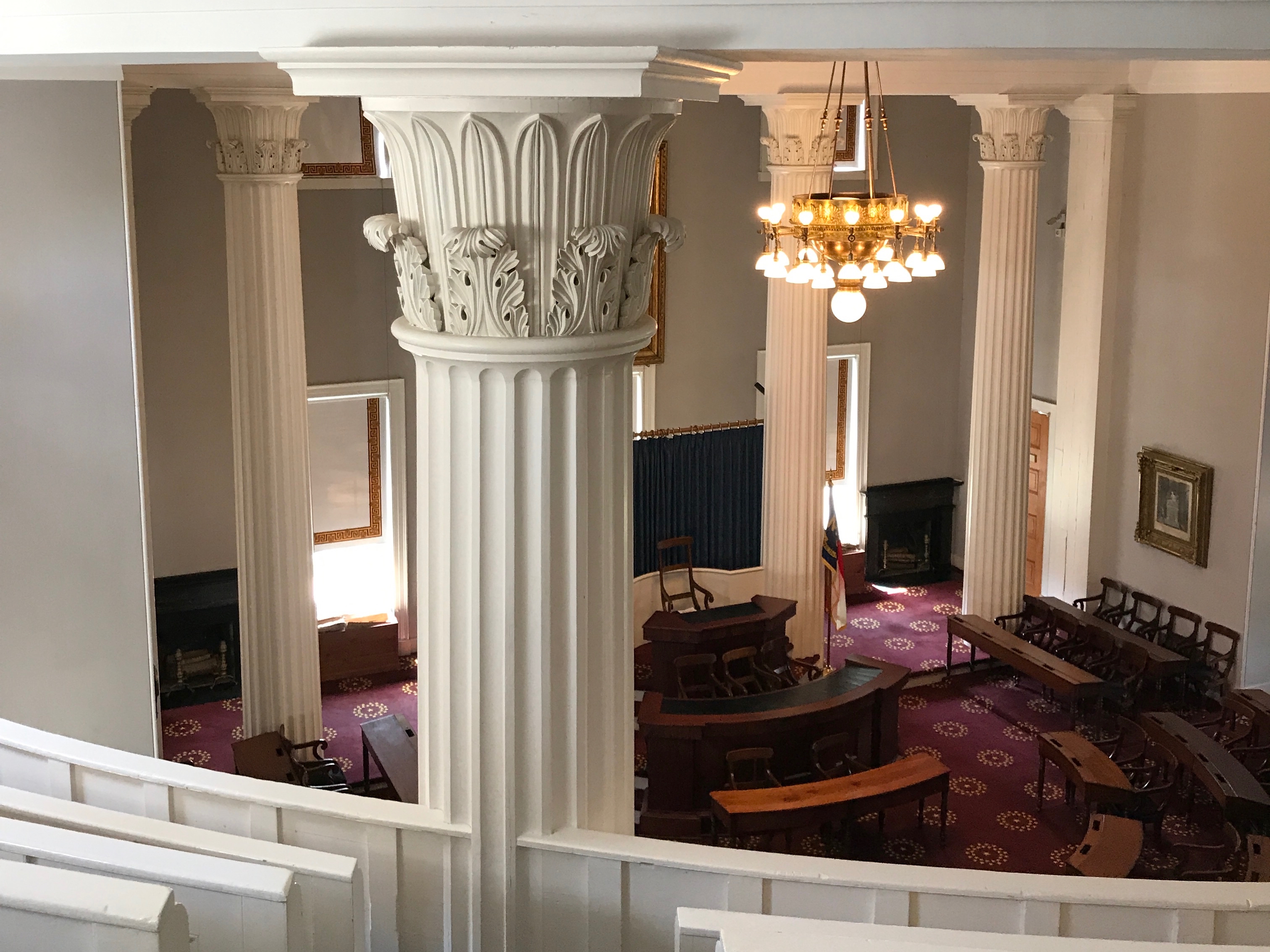
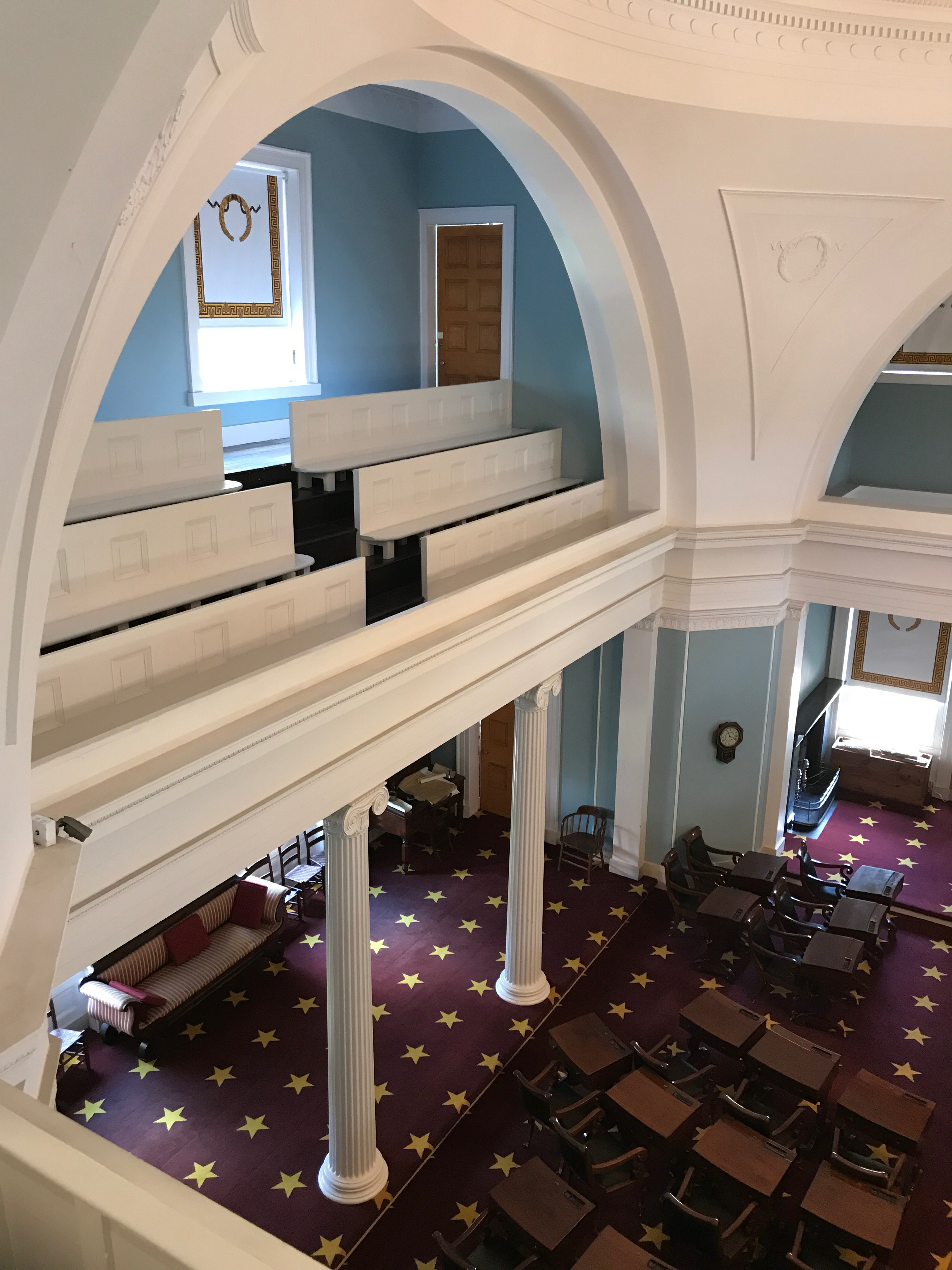
Here’s the view from the spectators’ gallery of the chamber of the house of representatives,

and a similar view of the Senate chamber.

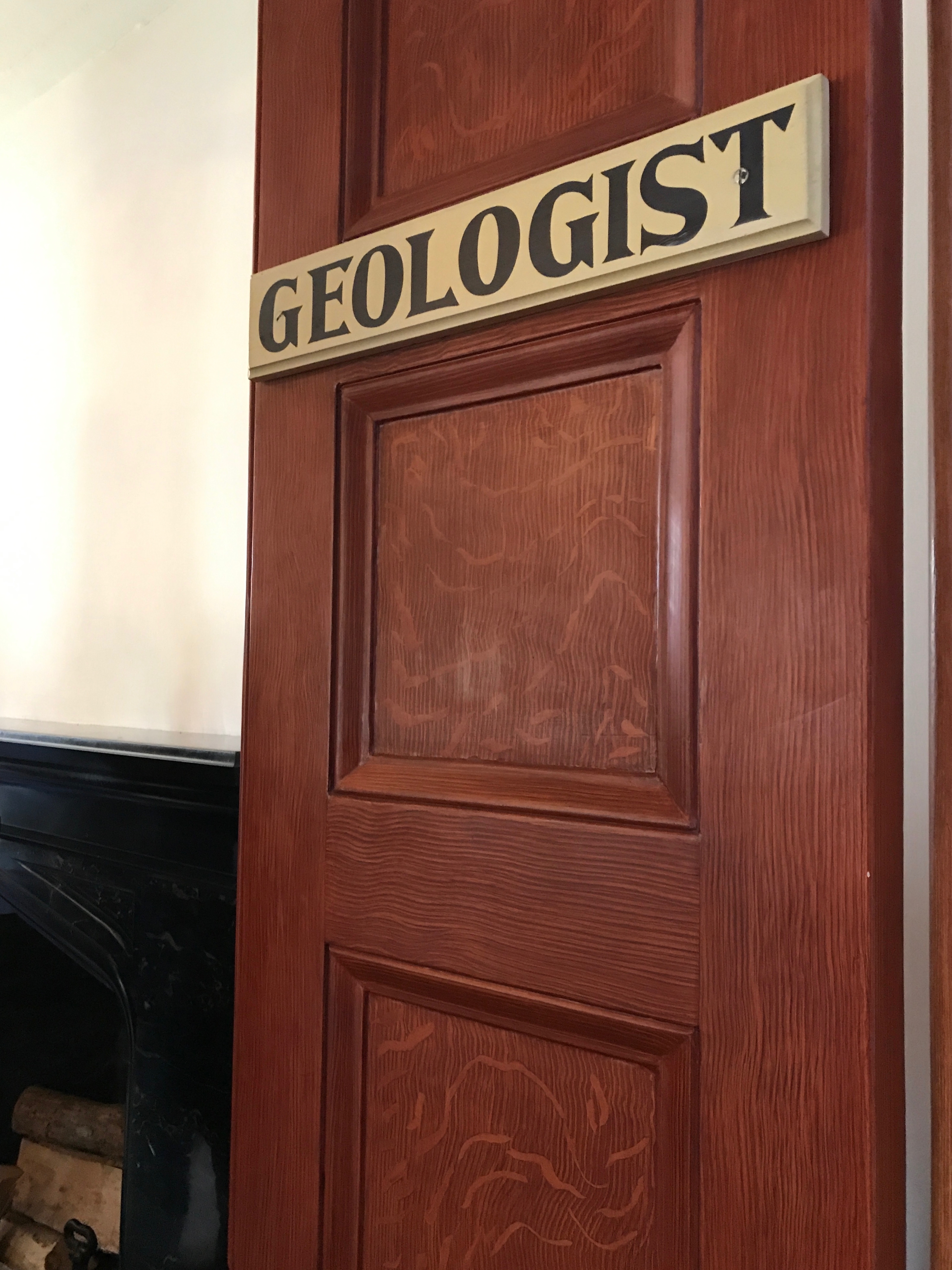
Ooh! We’re going to see the office of the State Geologist! I do like rocks!

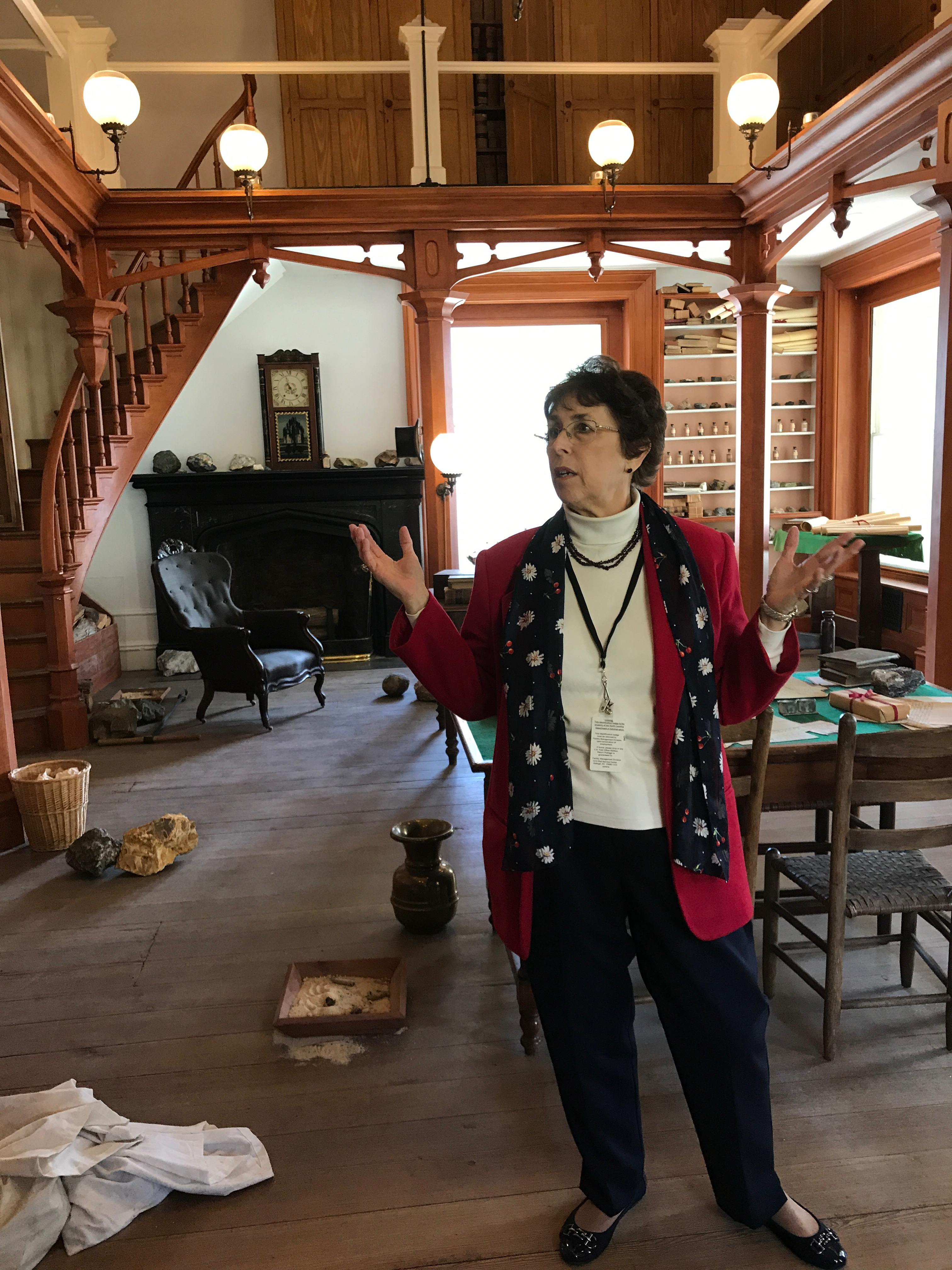
Our tour guide gave us a brief look at the office.

That’s some nice woodwork. (I like wood, too.)

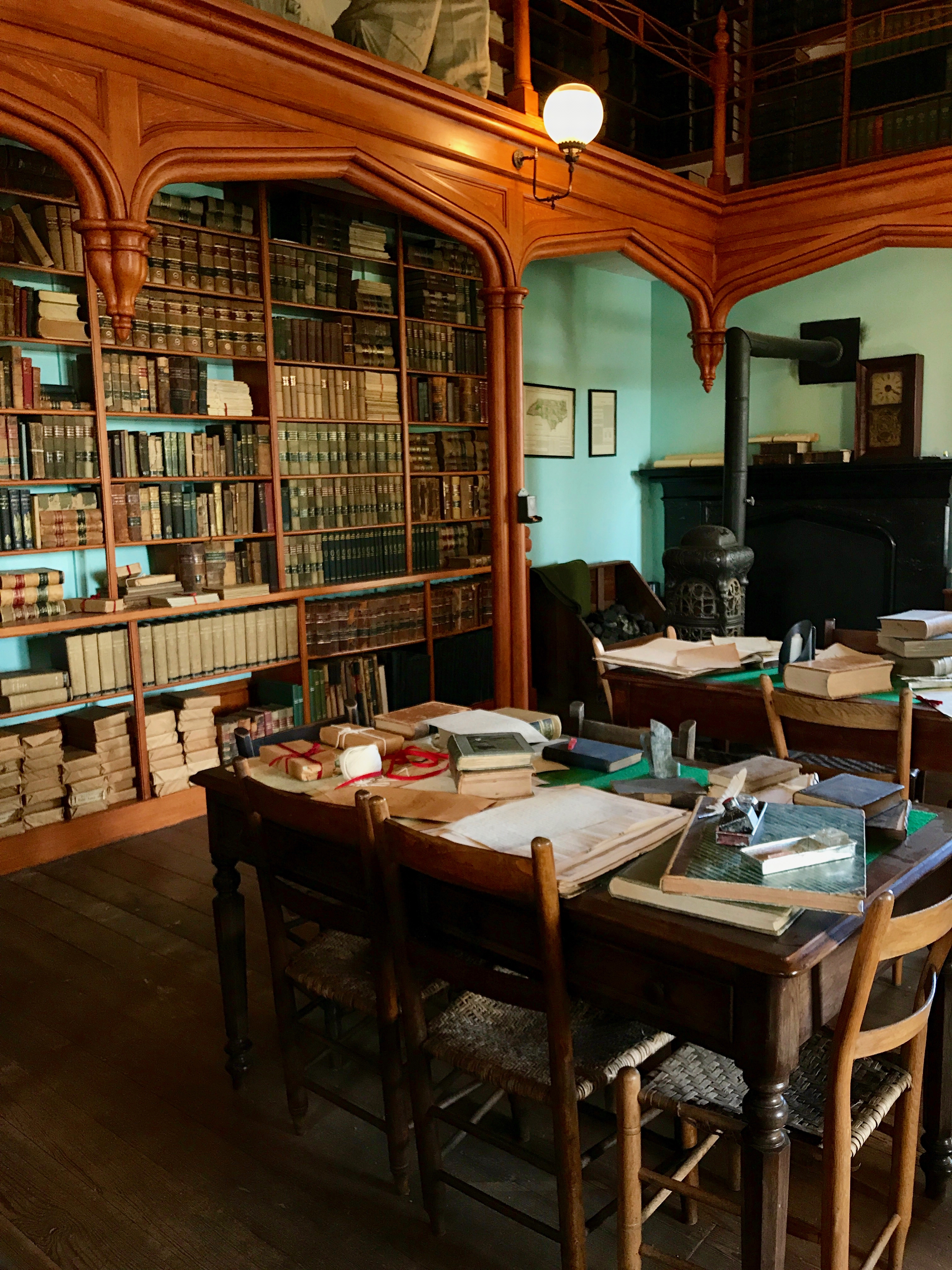
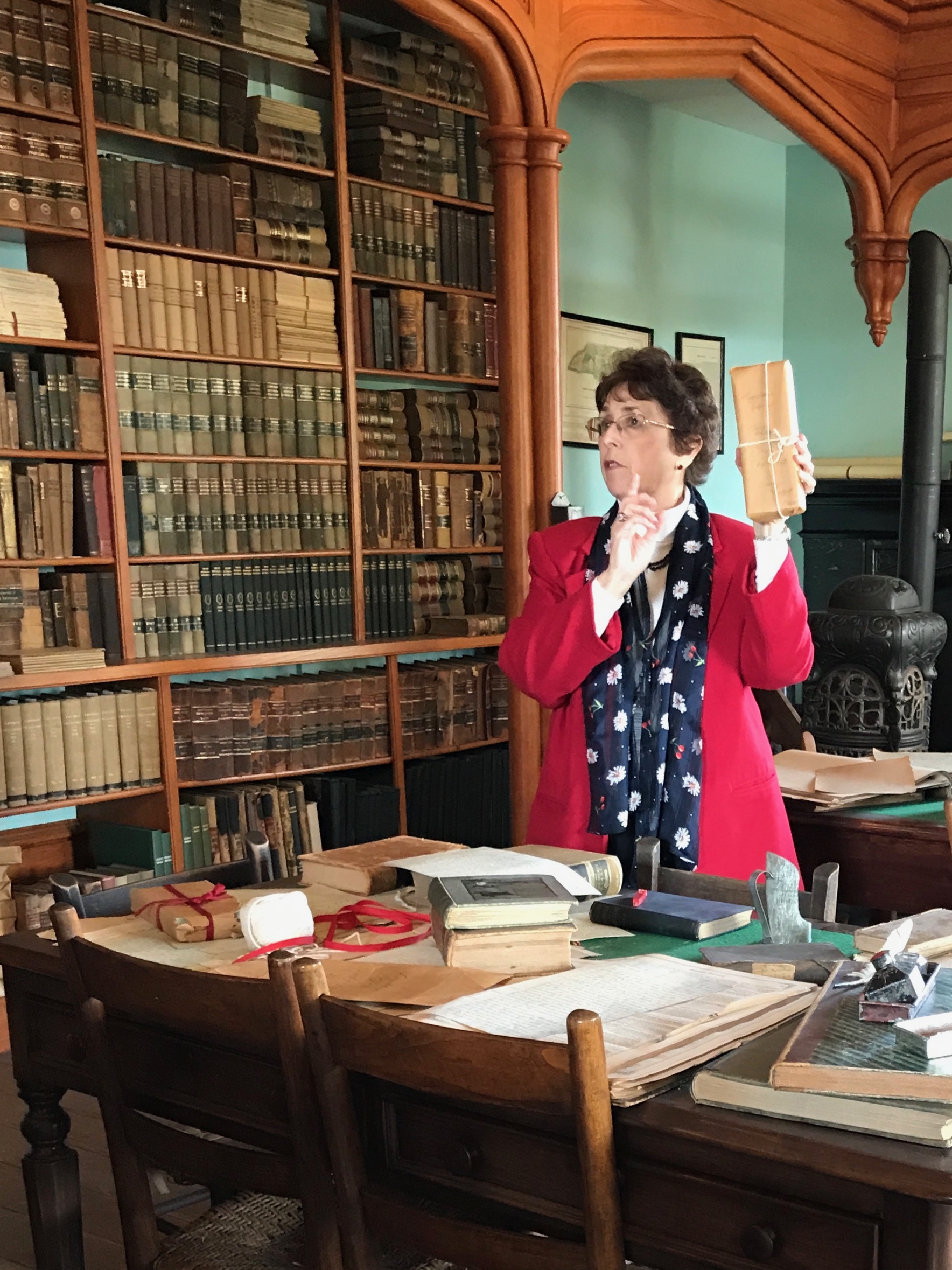
And now on to the library.

The guide told us that bills were wrapped up in paper and tied up with red tape. I guess the one she’s holding isn’t quite done yet.

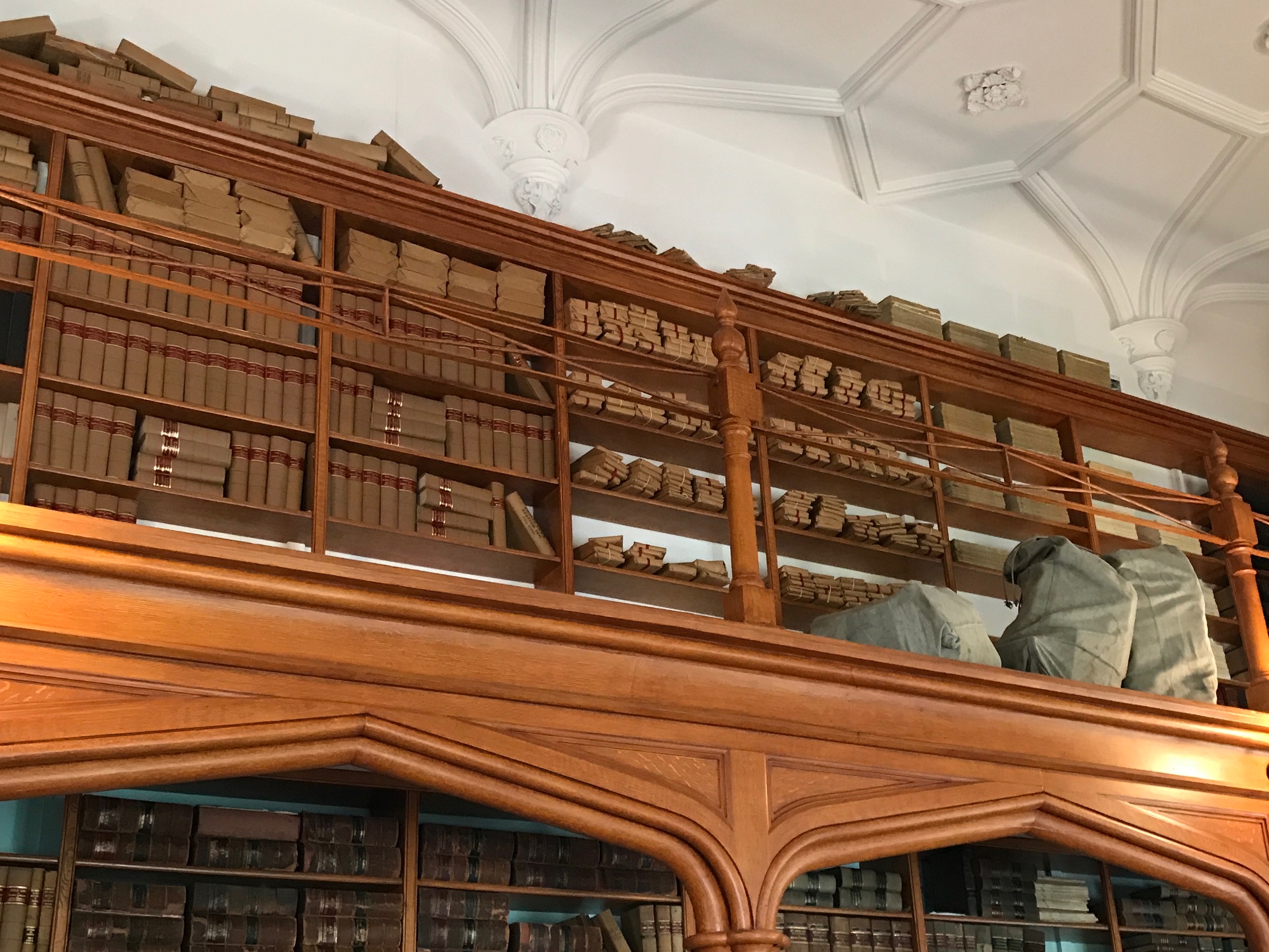
There is plenty of storage above the lower stacks.

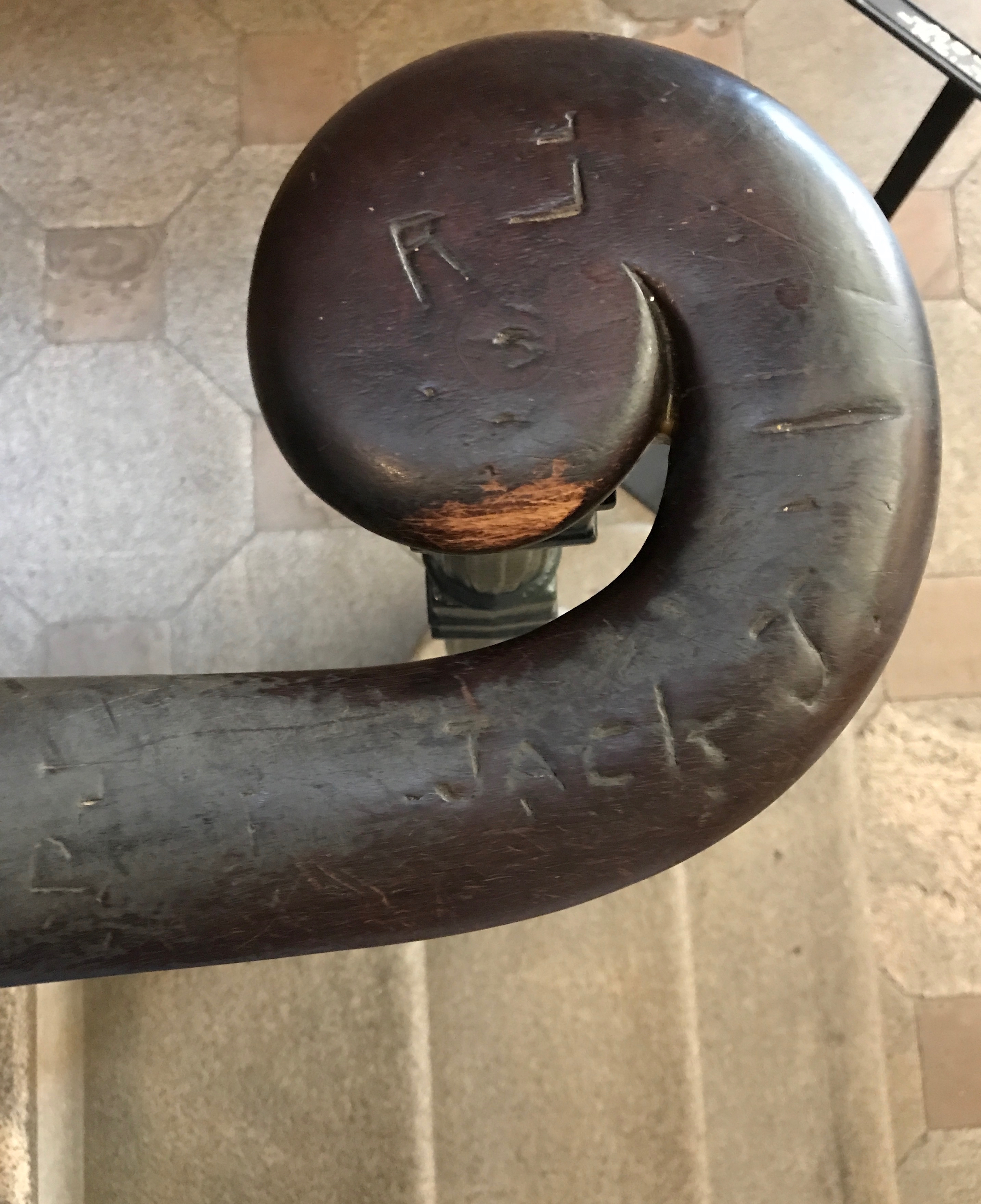
It does frustrate me when people feel the need to deface things. Well, Jack J. is now part of the historical record.

The tour ended and I went out to explore the rest of the grounds.

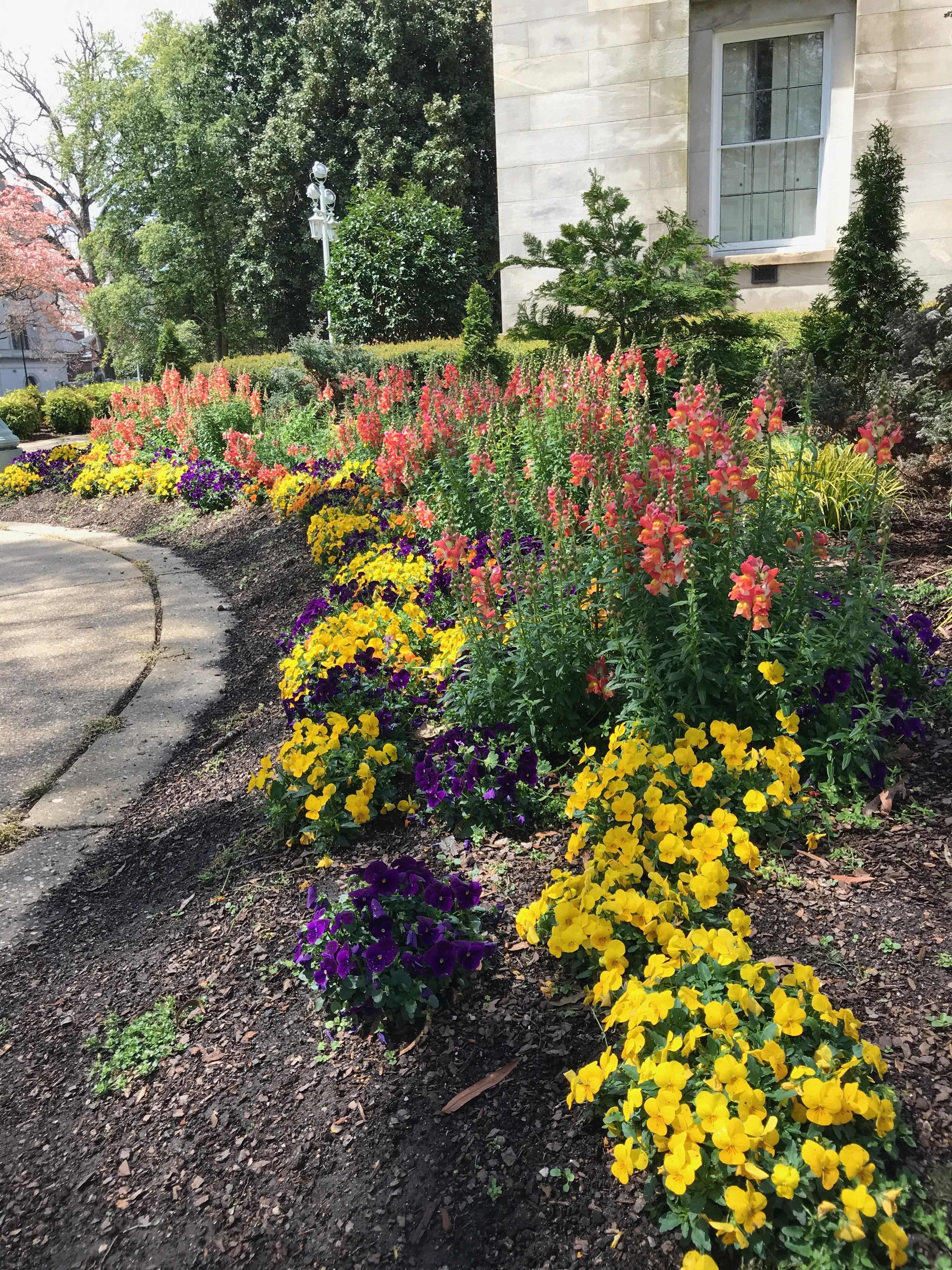
The landscaping and spring flowers were lovely.

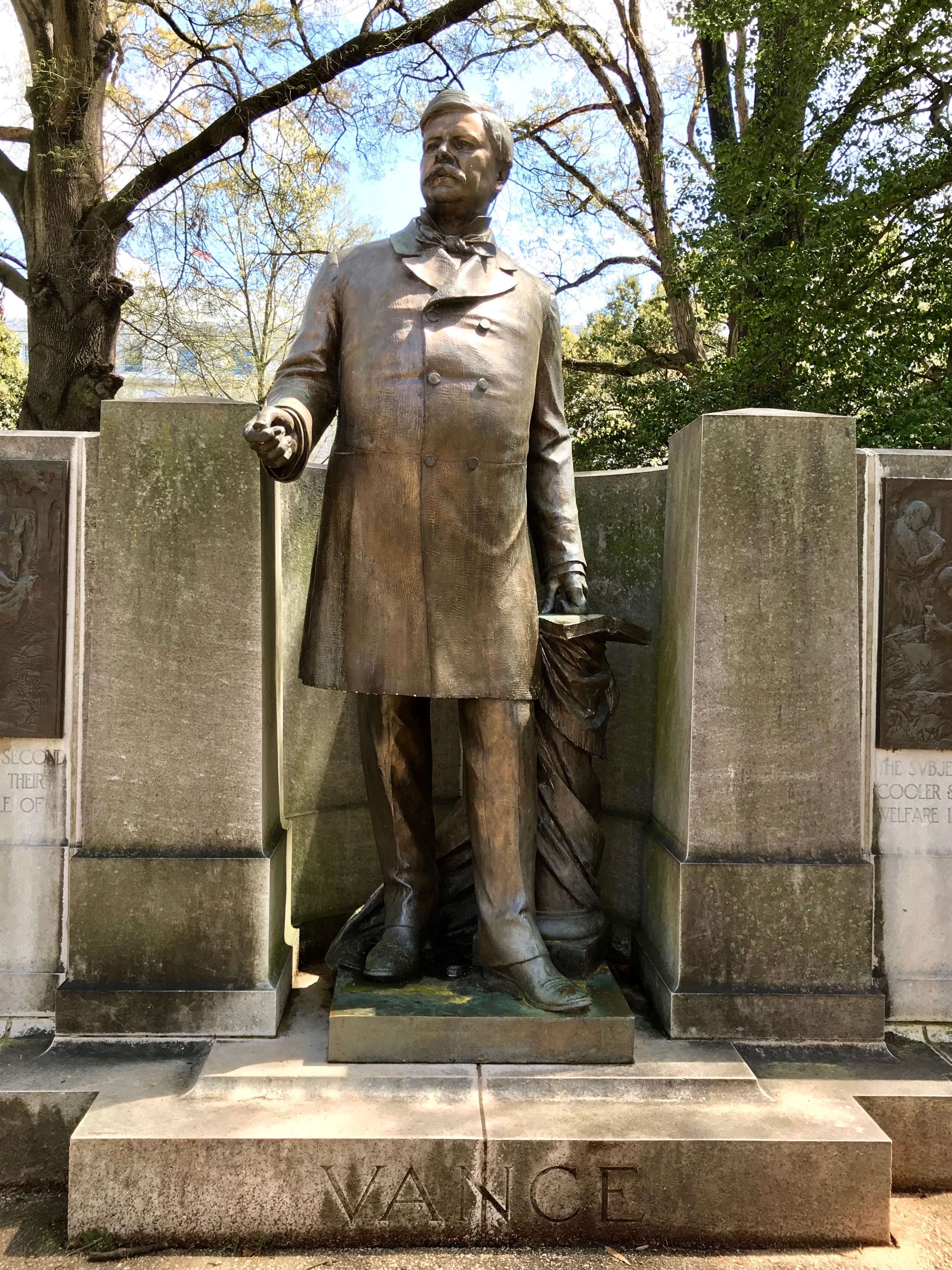
This memorial is to Zebulon Baird Vance, Confederate military officer, 37th and 43rd Governor of North Carolina. What did he do between his first and second terms as Governor? Among other things, he was a U.S. Senator.

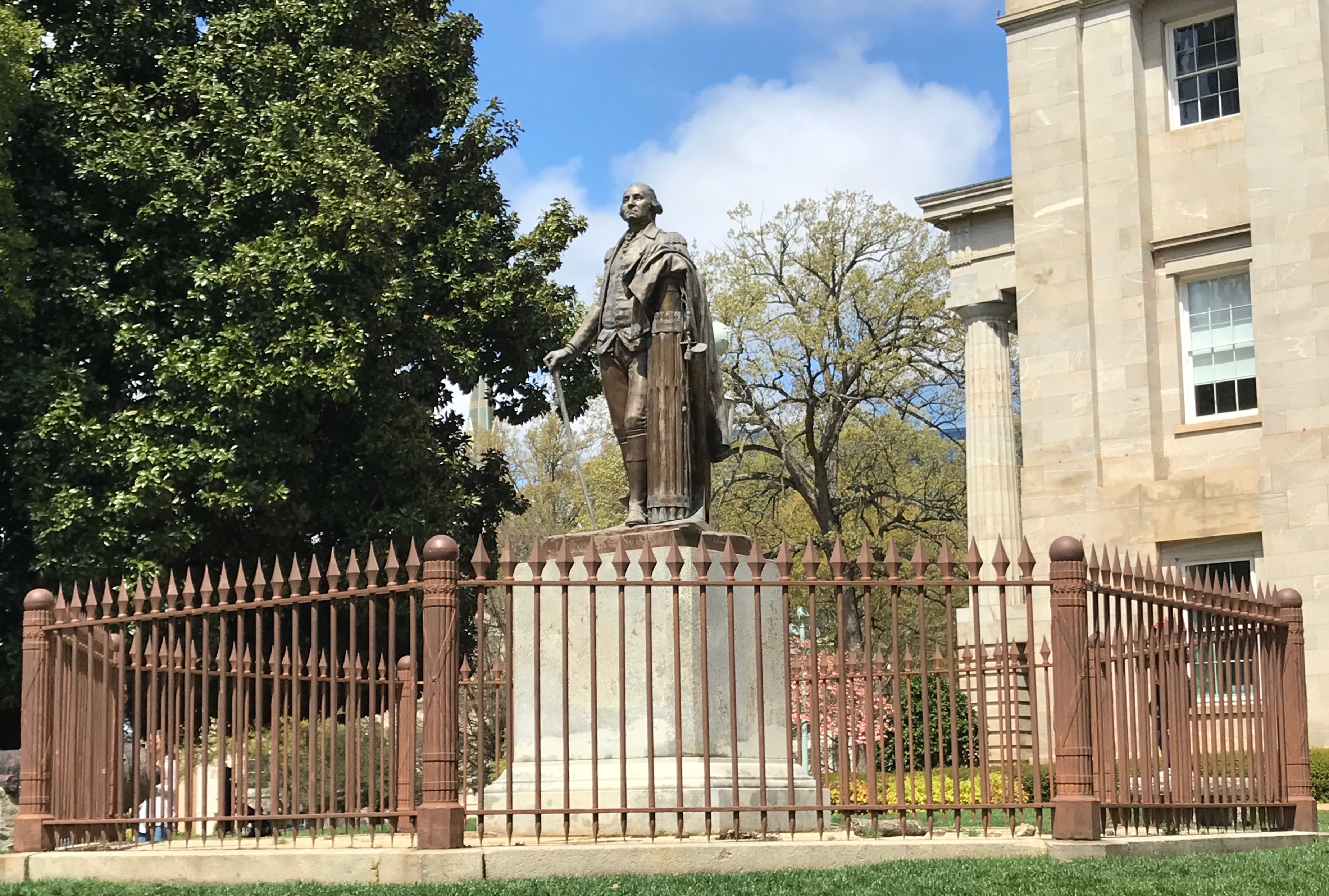
Ah! There’s a person I recognize. Another memorial to George Washington, this one was the work of Jean-Antoine Houdon. It cost $13,454 when it was dedicated on July 4, 1857. In 2021 dollars, that would be $409,615.

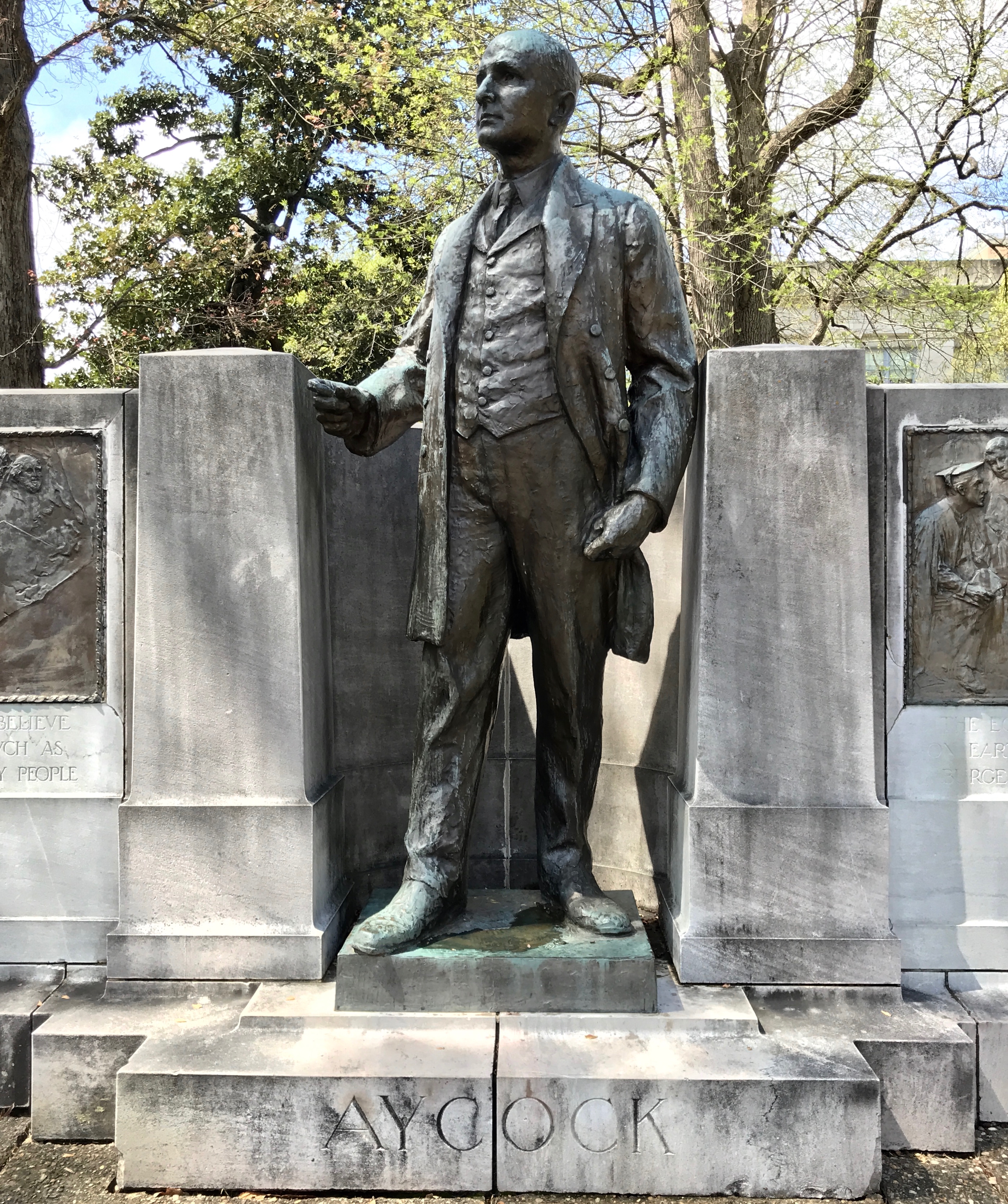
Here we have another governor memorial. Charles Brantley Aycock was North Carolina’s 50th Governor, and he served from 1901 to 1905. He was a strong proponent of the white supremacy campaigns of that period and was one of the leading perpetrators of the Wilmington Insurrection or 1898, in which whites took over the city government by force, the only successful coup d’état in U.S. history.

(Let’s keep it that way.)

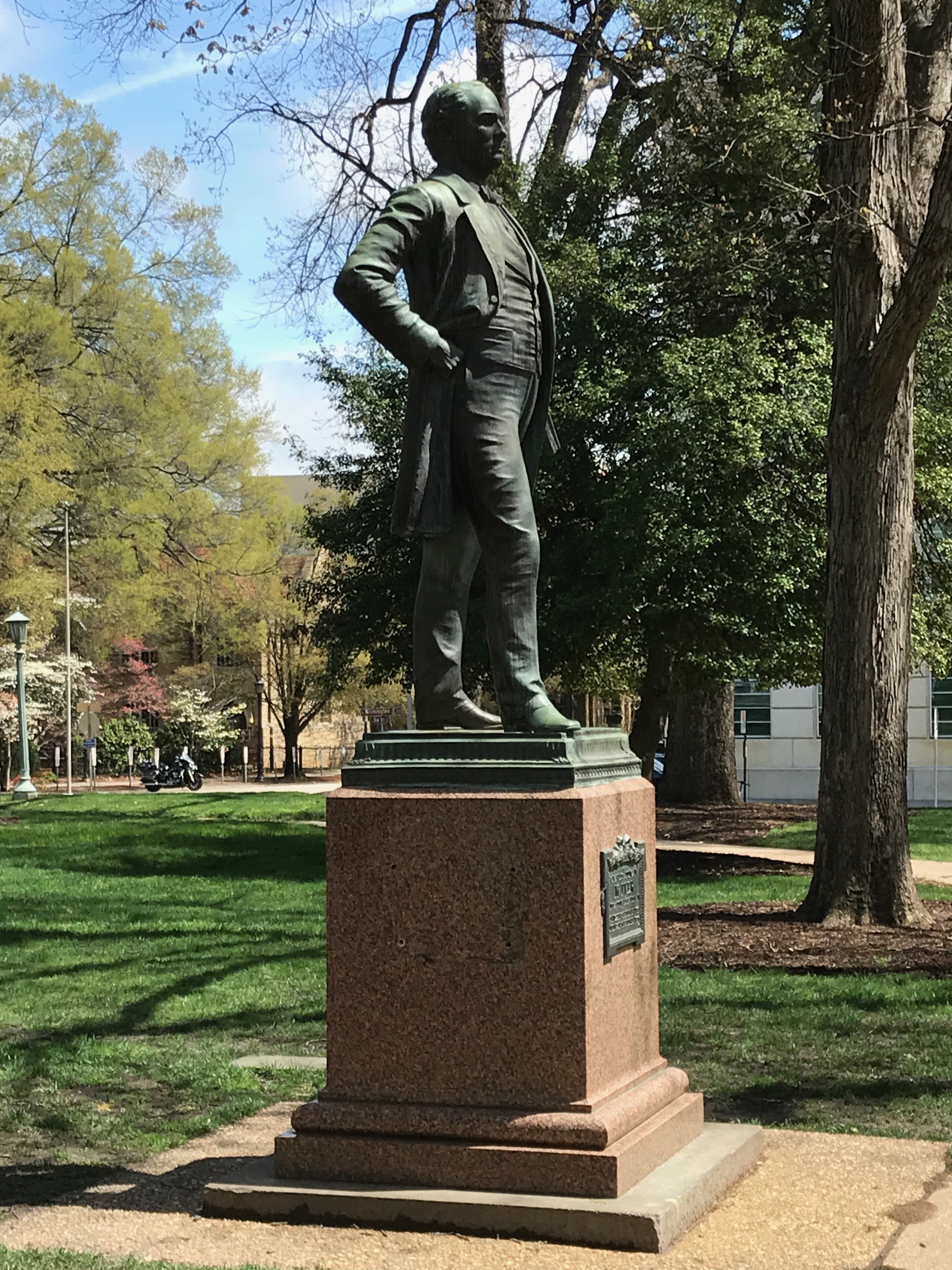
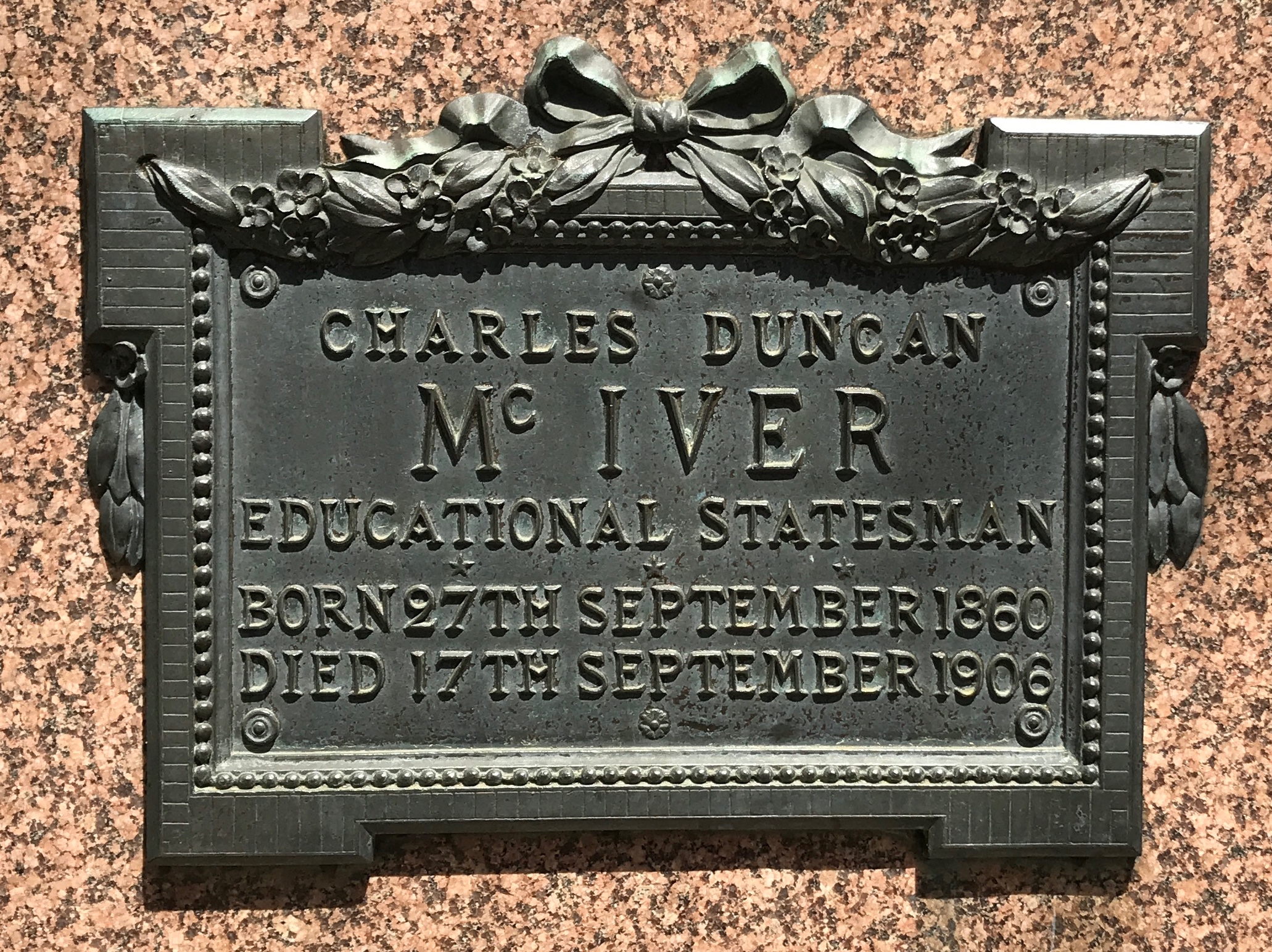
This statue is of Charles Duncan McIver.

He was the founder and first president of the institution now known as The University of North Carolina at Greensboro.

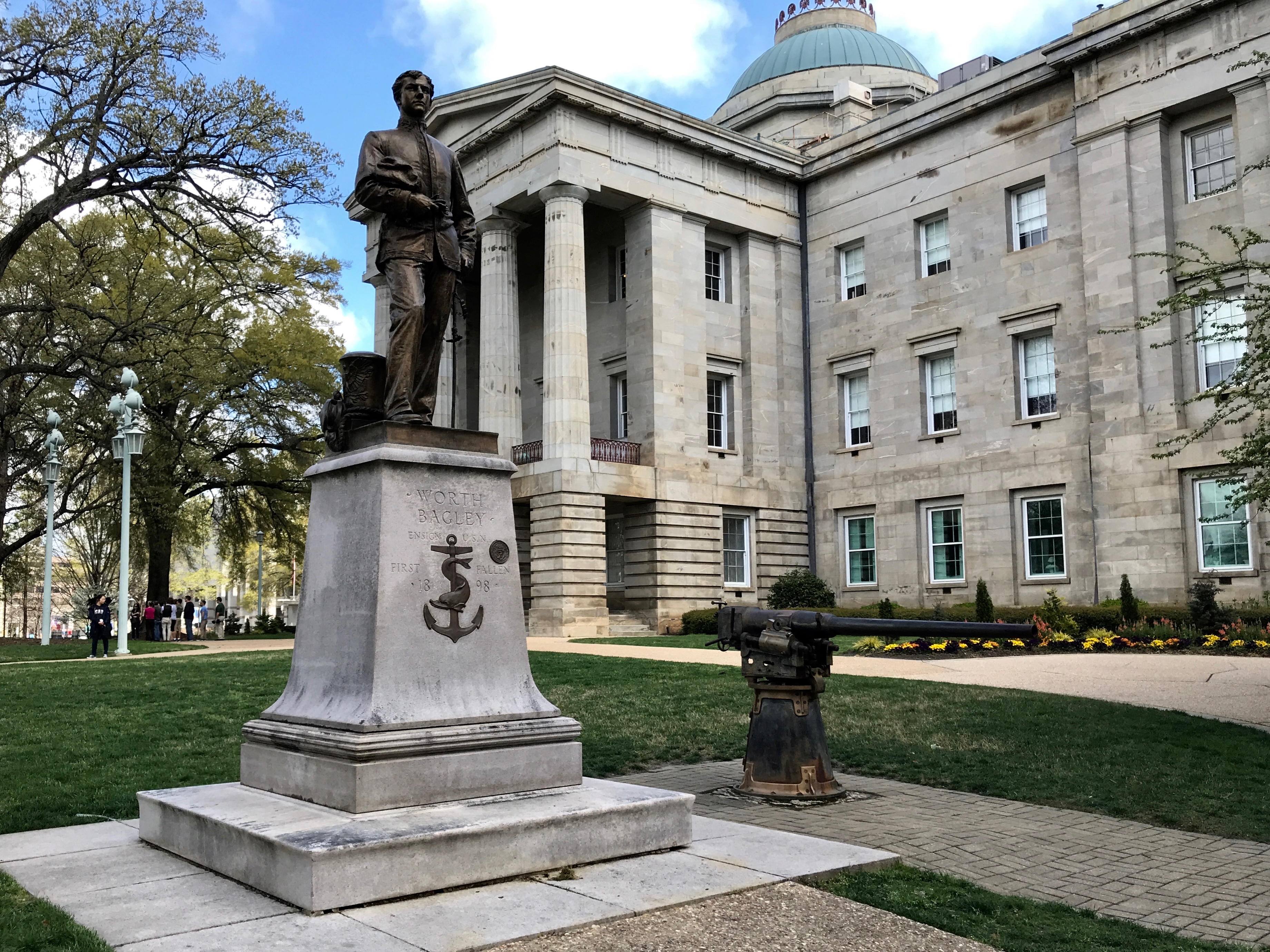
This statue is of Ensign Worth Bagley,  who was the only U.S. naval officer killed in action during the Spanish-American War.

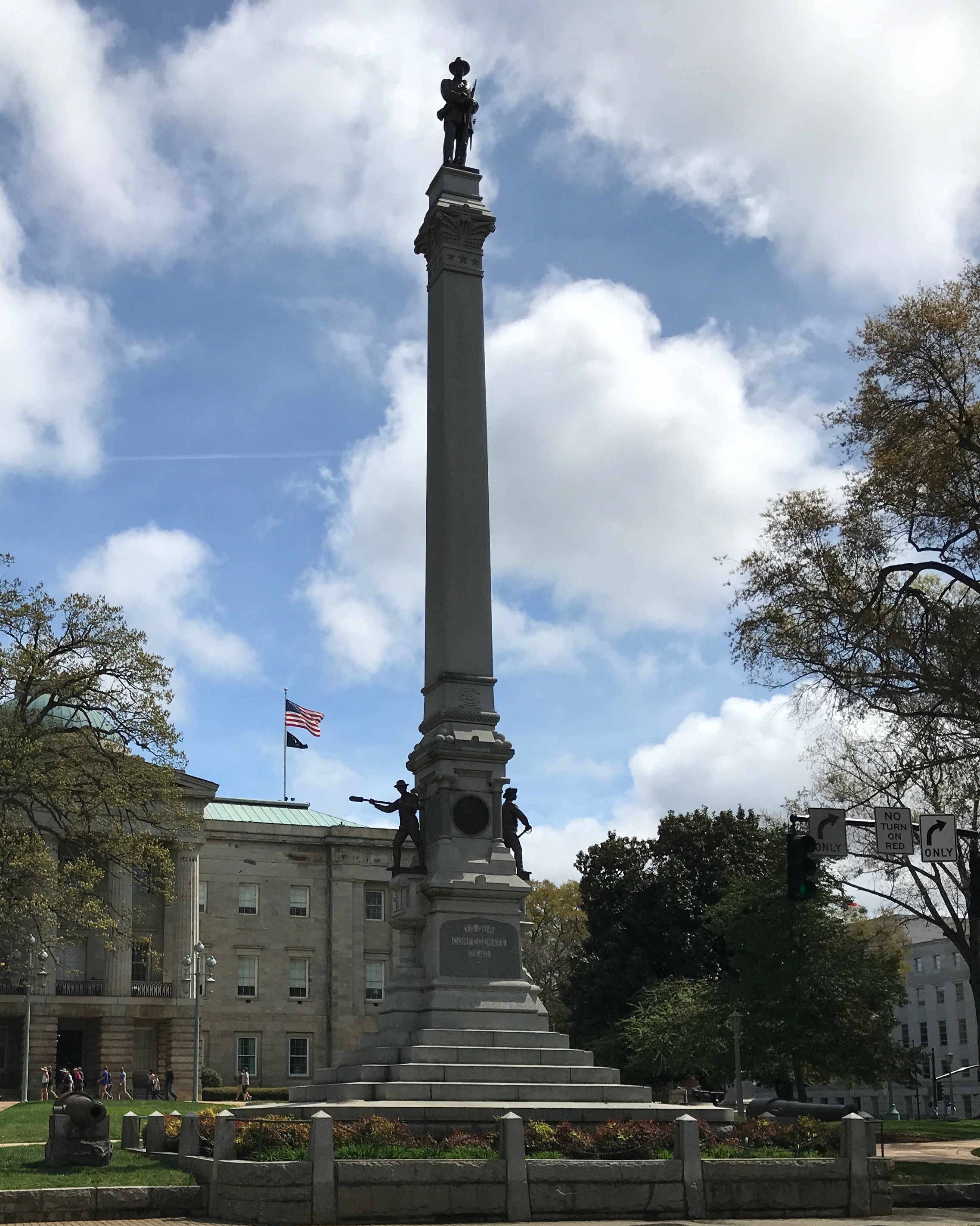
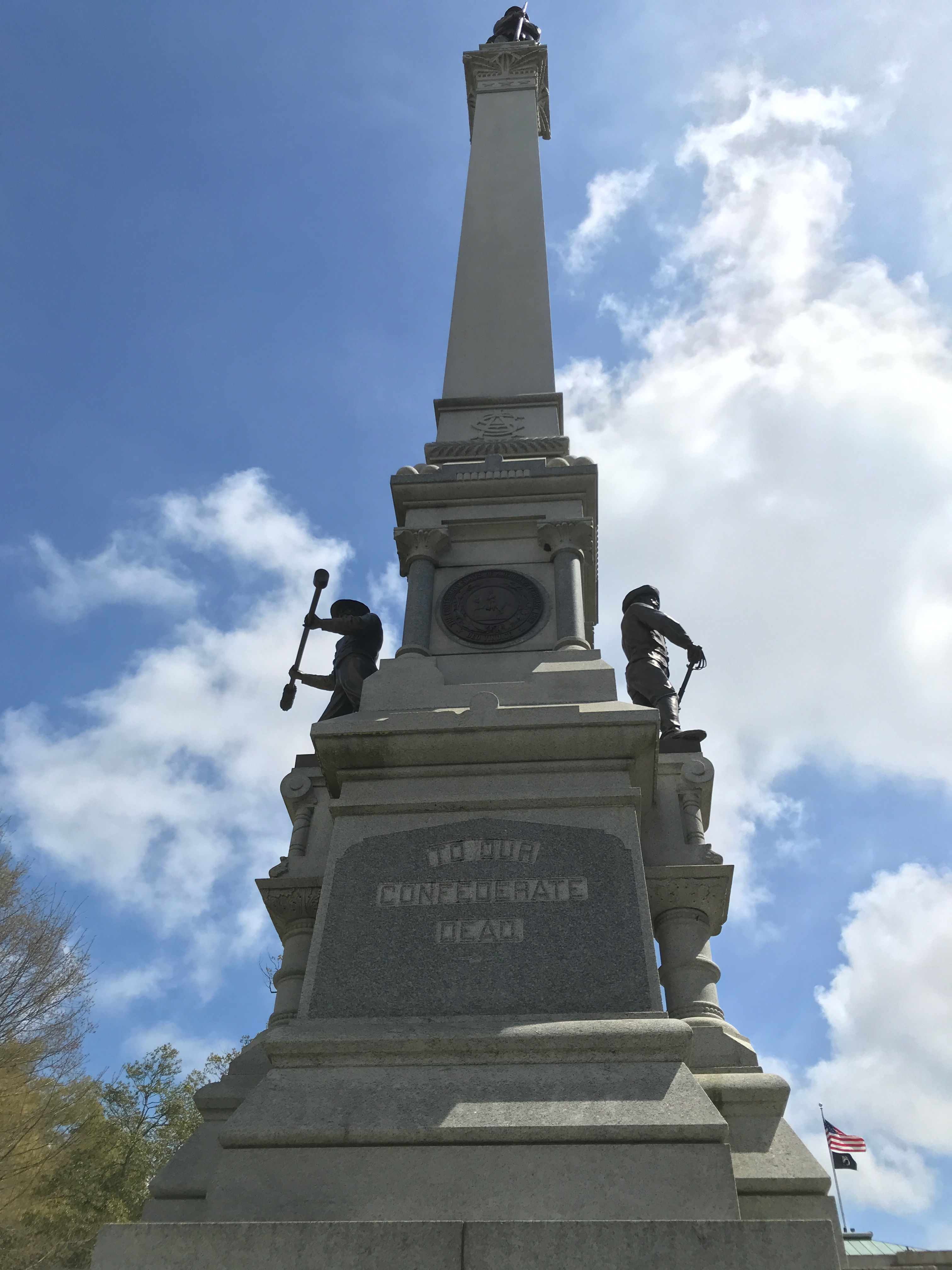
What do you suppose this large monument is for?

Yes, “To Our Confederate Dead.”

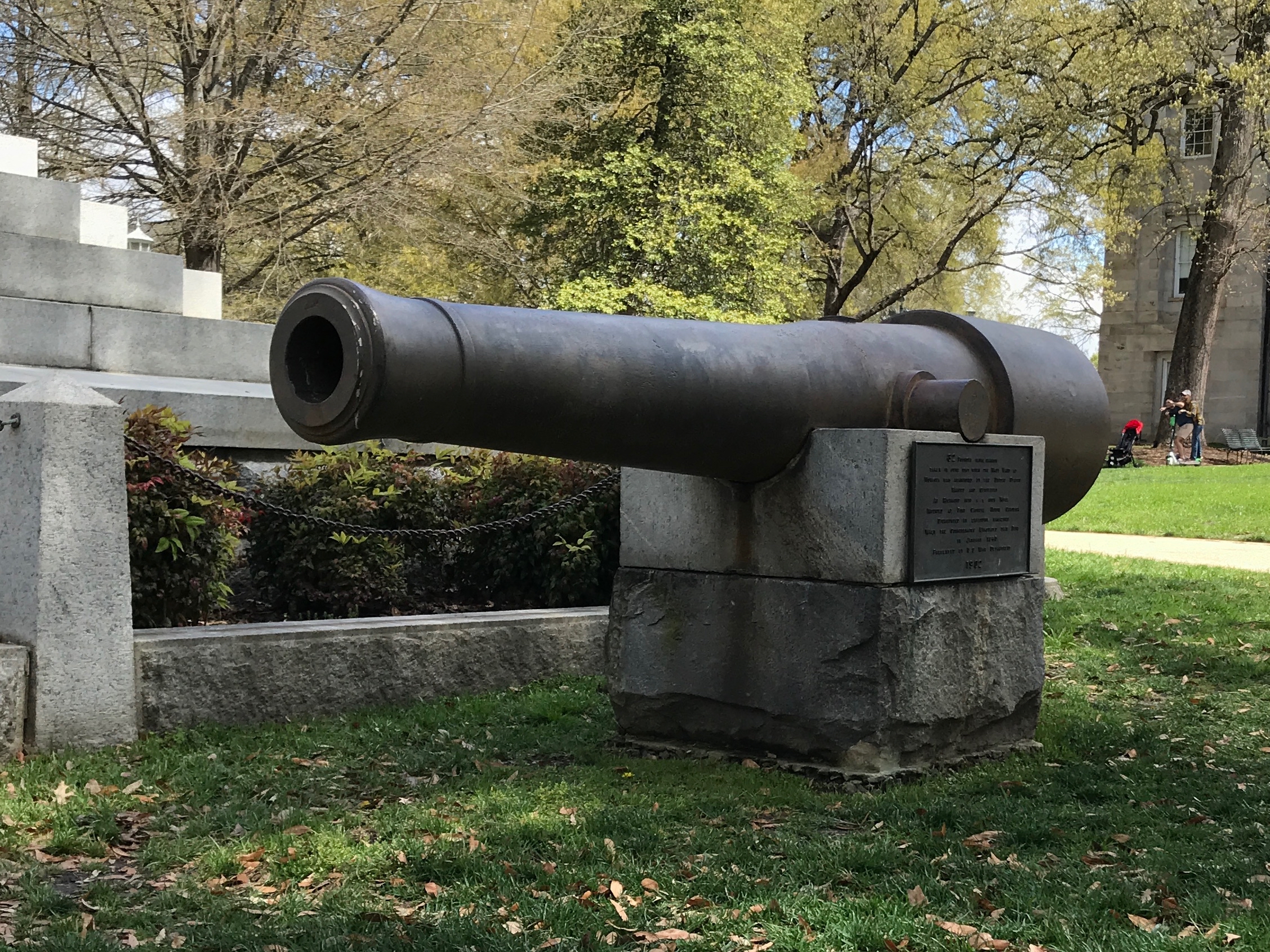
With cannon standing at the ready.

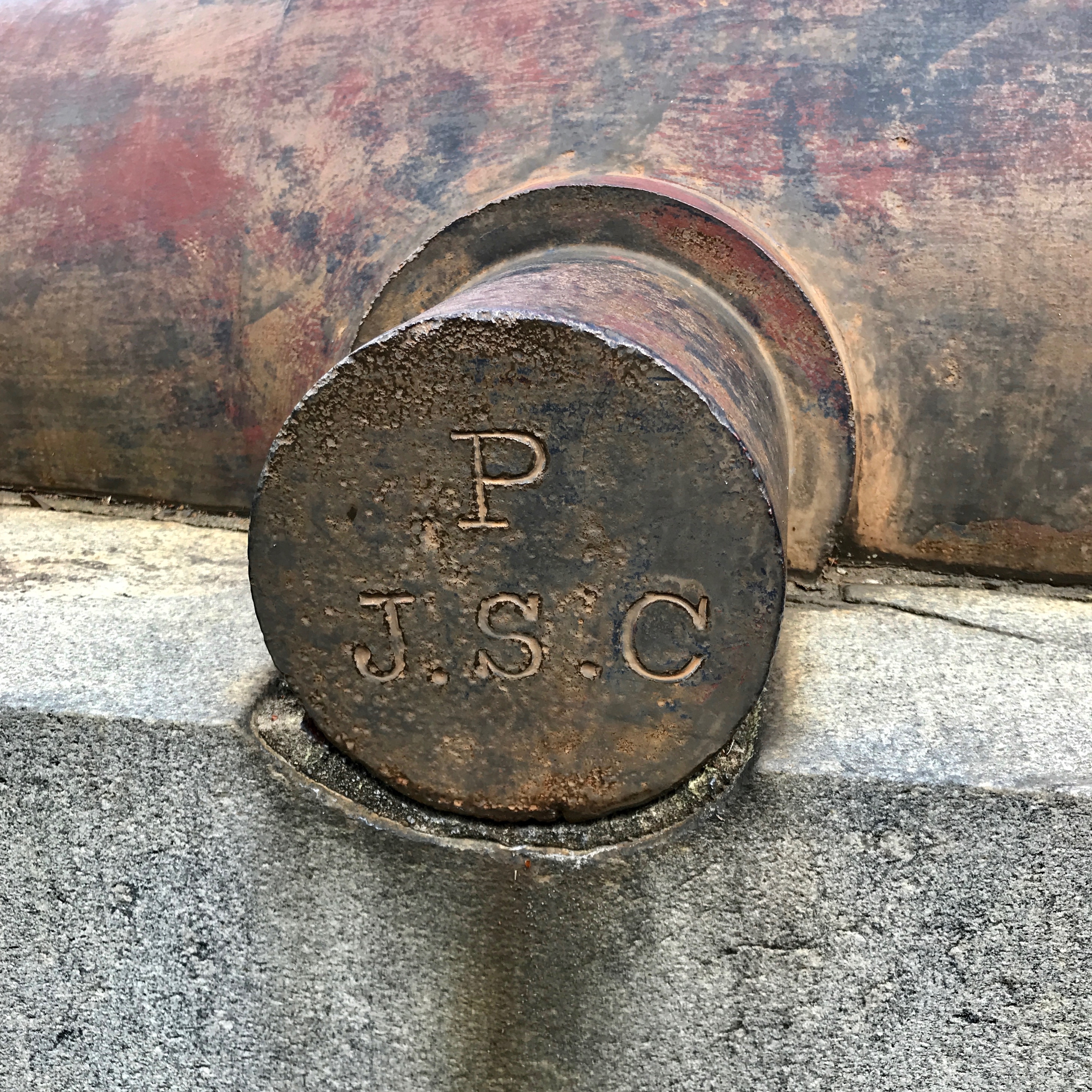
This 32 pounder naval cannon was taken in June of 1861 when the Navy Yard at Norfolk was abandoned by the Union. It was presented by the U.S. War Department in 1902.

I thought this shot of the cannon’s trunnion was interesting.

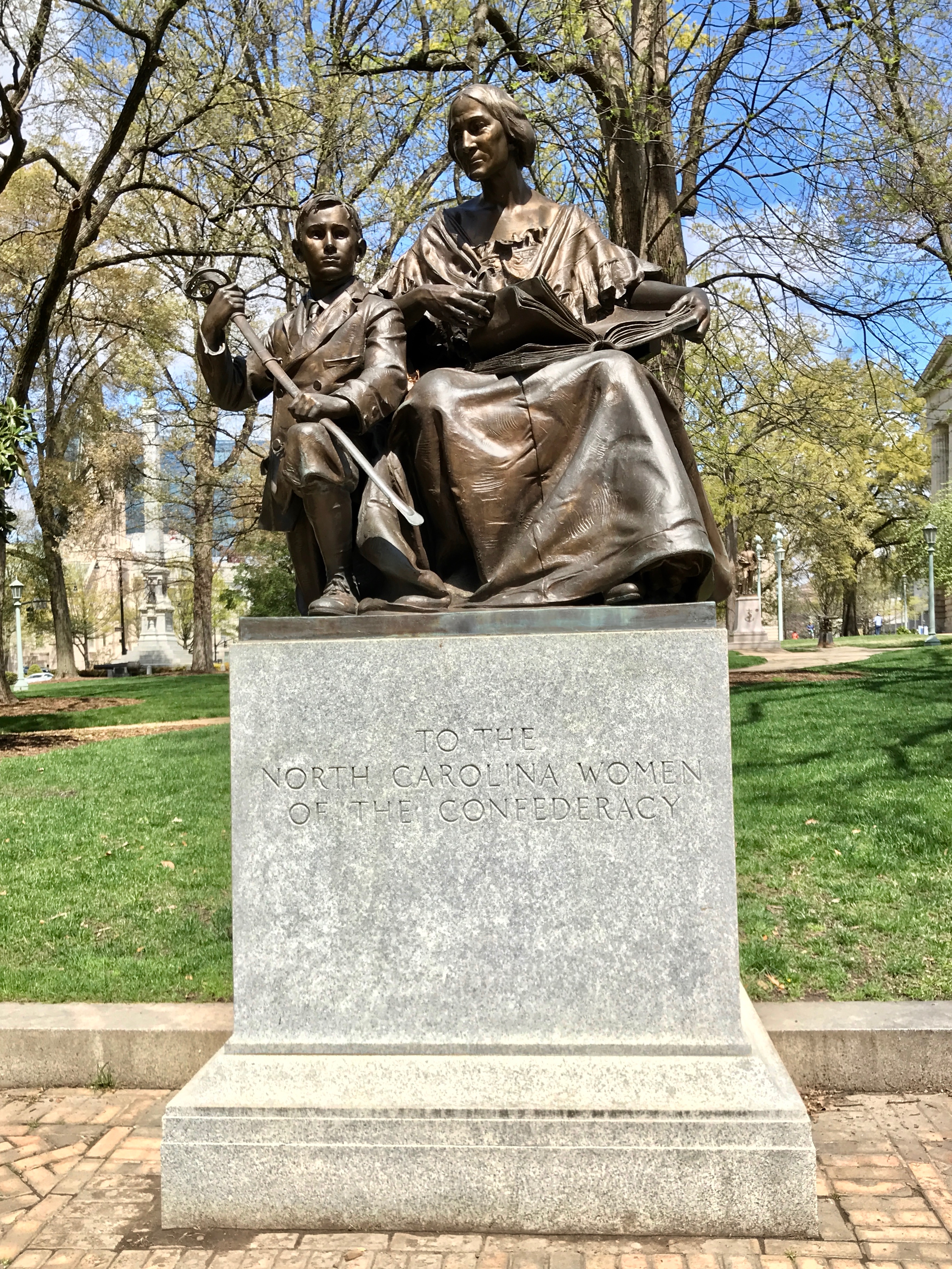
I appreciate that it was important to them to honor the women of the Confederacy,  too.

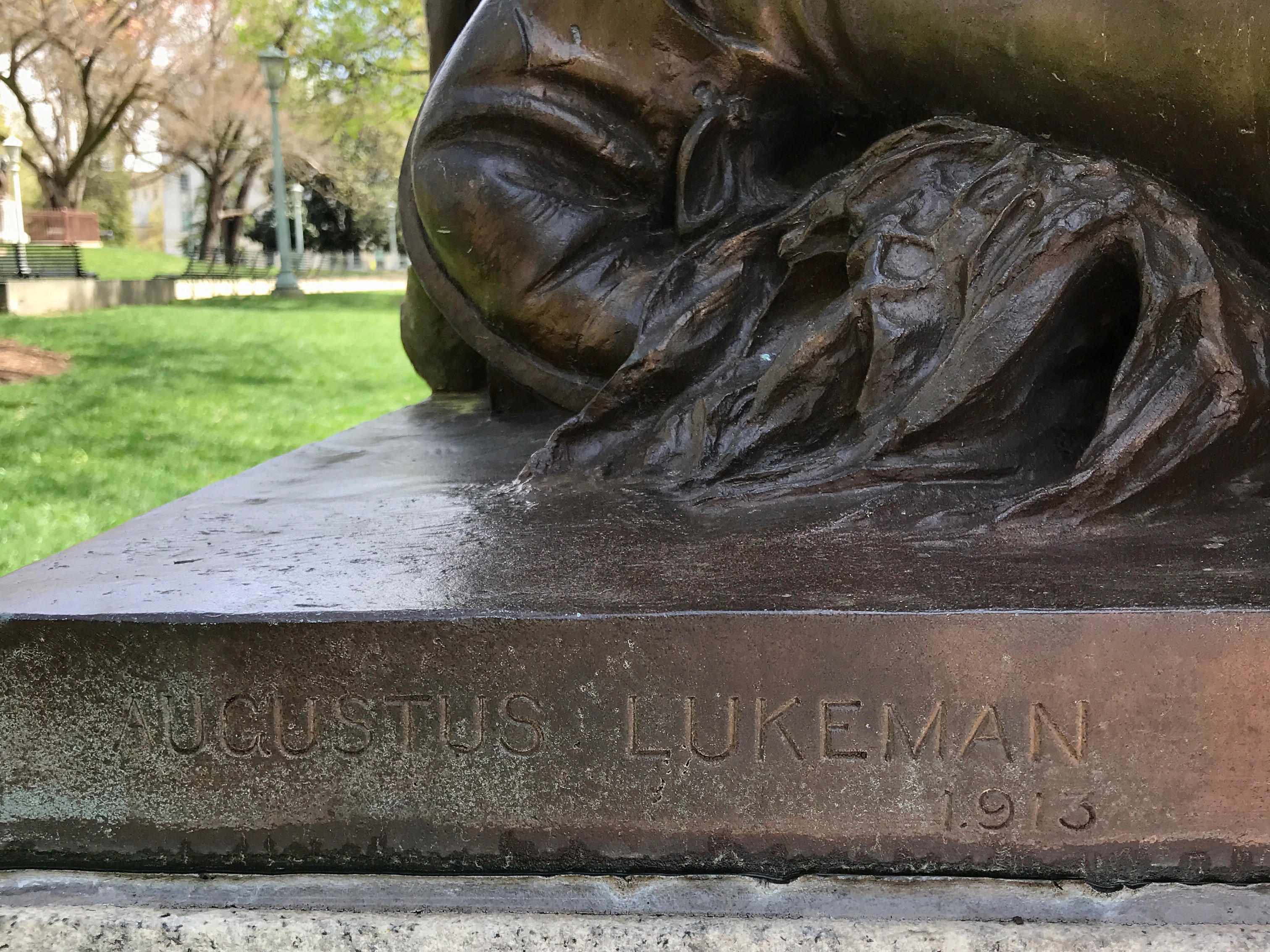
Augustus Lukeman created the statue in 1913,

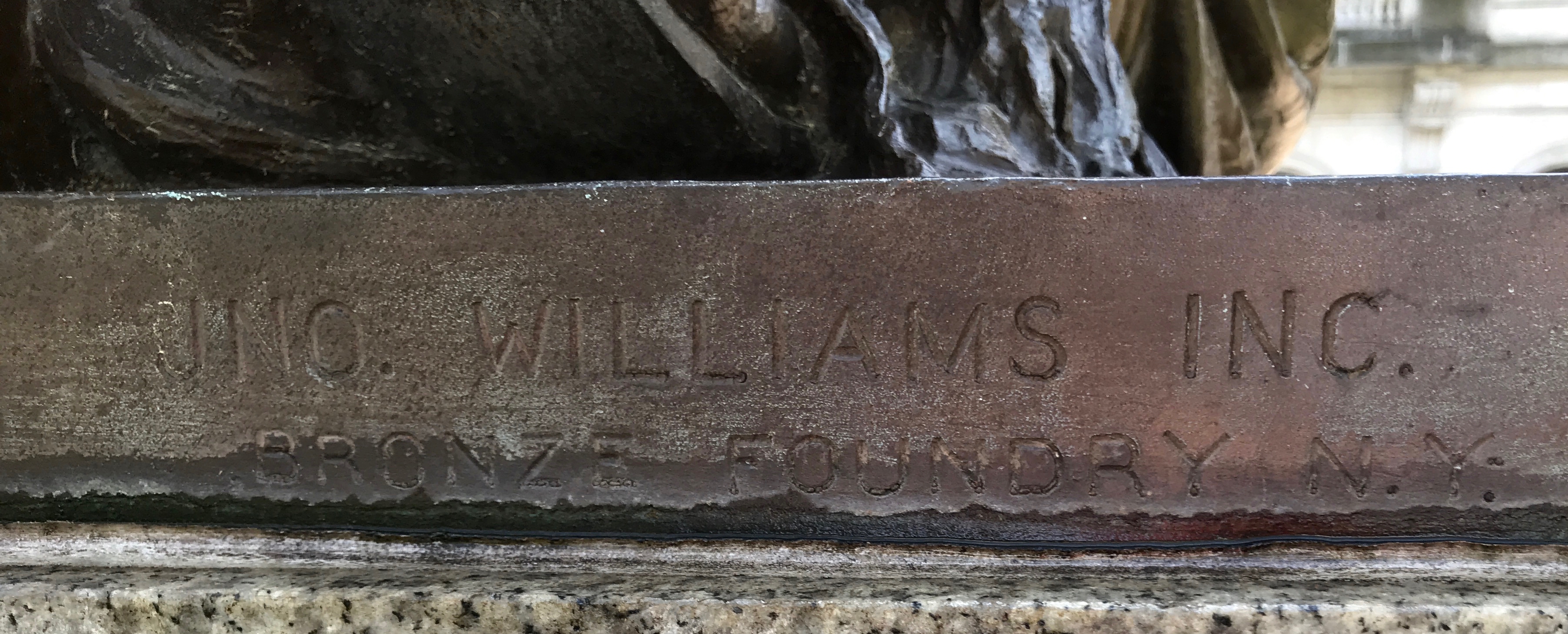
and it was formed at the JNC Williams Inc. Bronze Foundry in New York.

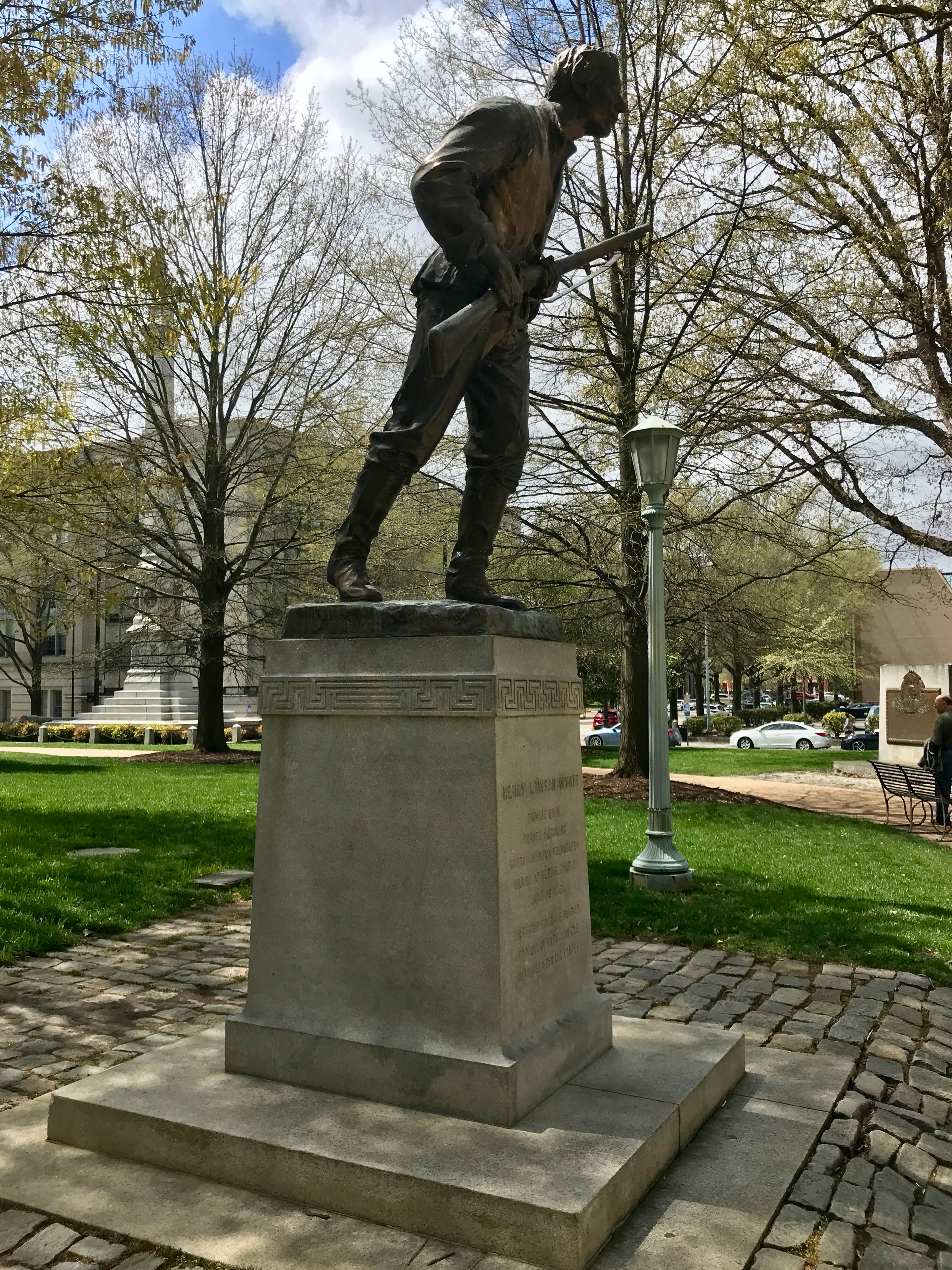
This statue is of Henry Lawson Wyatt. He died in the Battle of Big Bethel, one of the first skirmishes of the Civil War, making him the first enlisted soldier from North Carolina to die in battle.

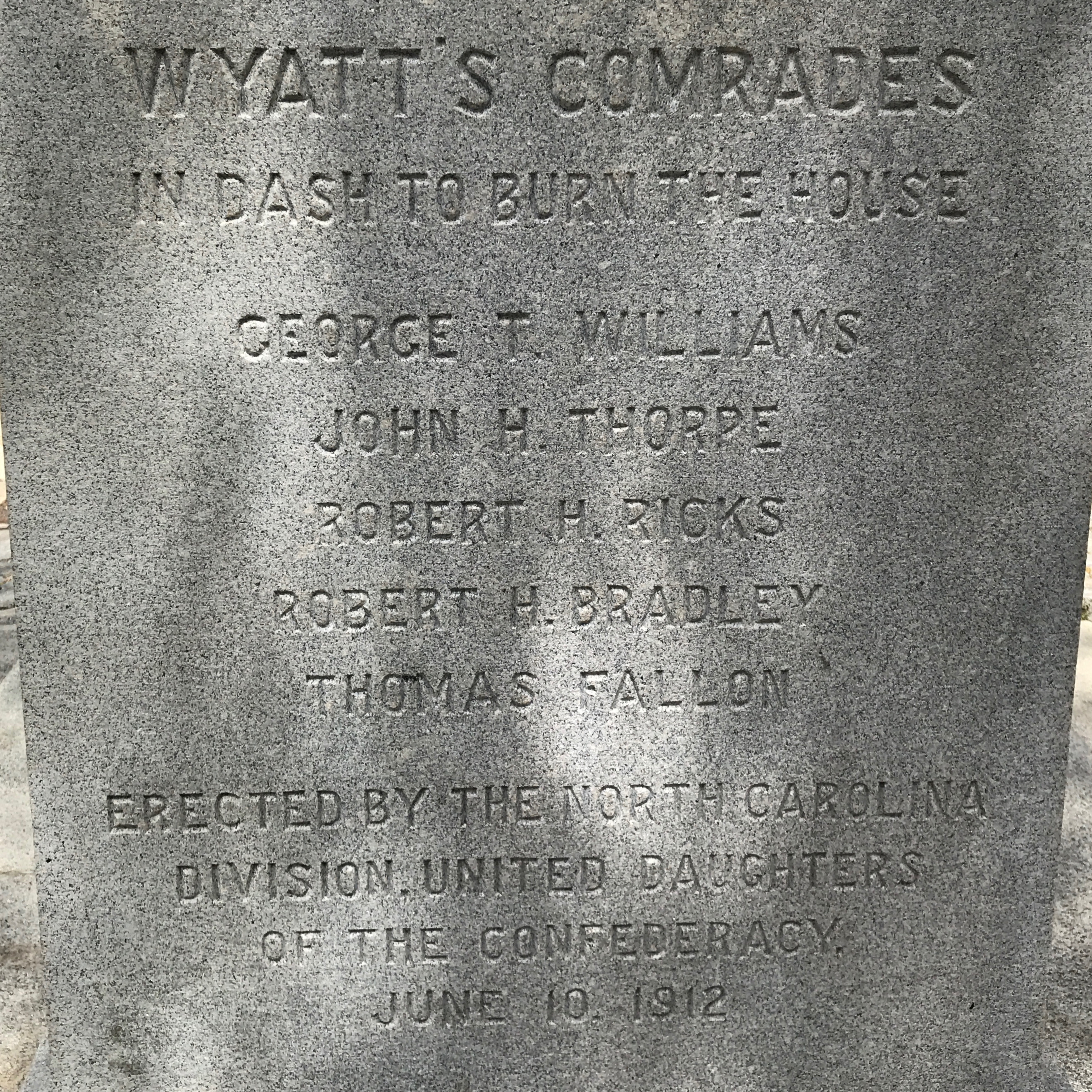
His comrades in arms are also honored on the plinth. I like to take note of when memorials were created and by whom. Notice that Wyatt was honored but the United Daughters of the Confederacy in 1912.

What do you suppose these last three memorials have in common, beside the Confederacy?

They were all removed June 21, 2020.

For more information on the removal of the Confederate monuments, you can click here.

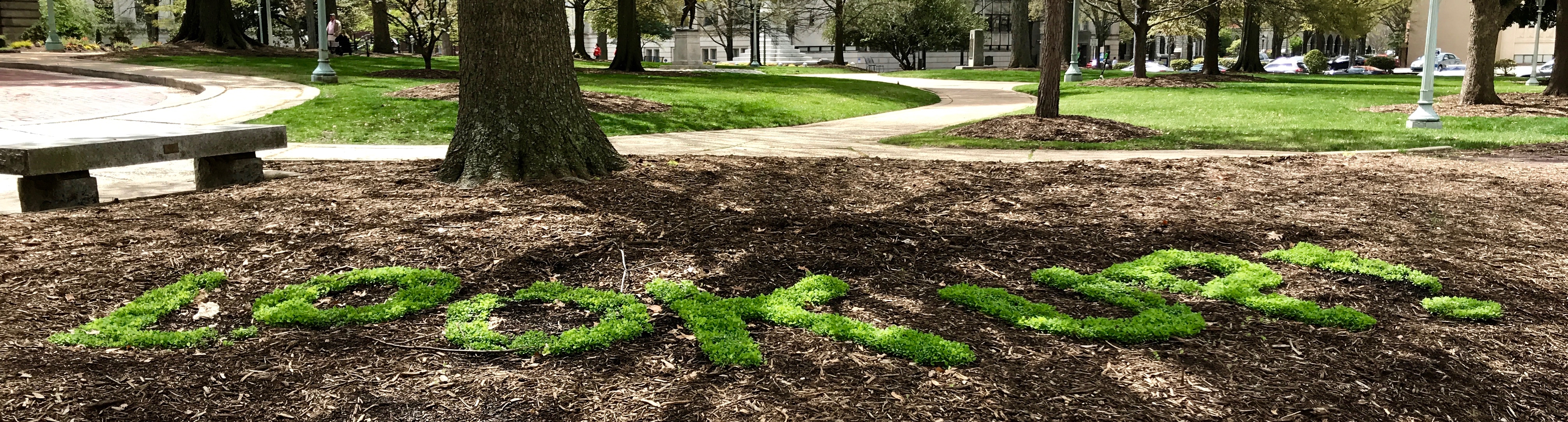
Look up!

I thought that was an interesting planting. I did look up. I noticed that the day was lovely and still young. So, I got on with my explorations.

I wandered about a bit more,

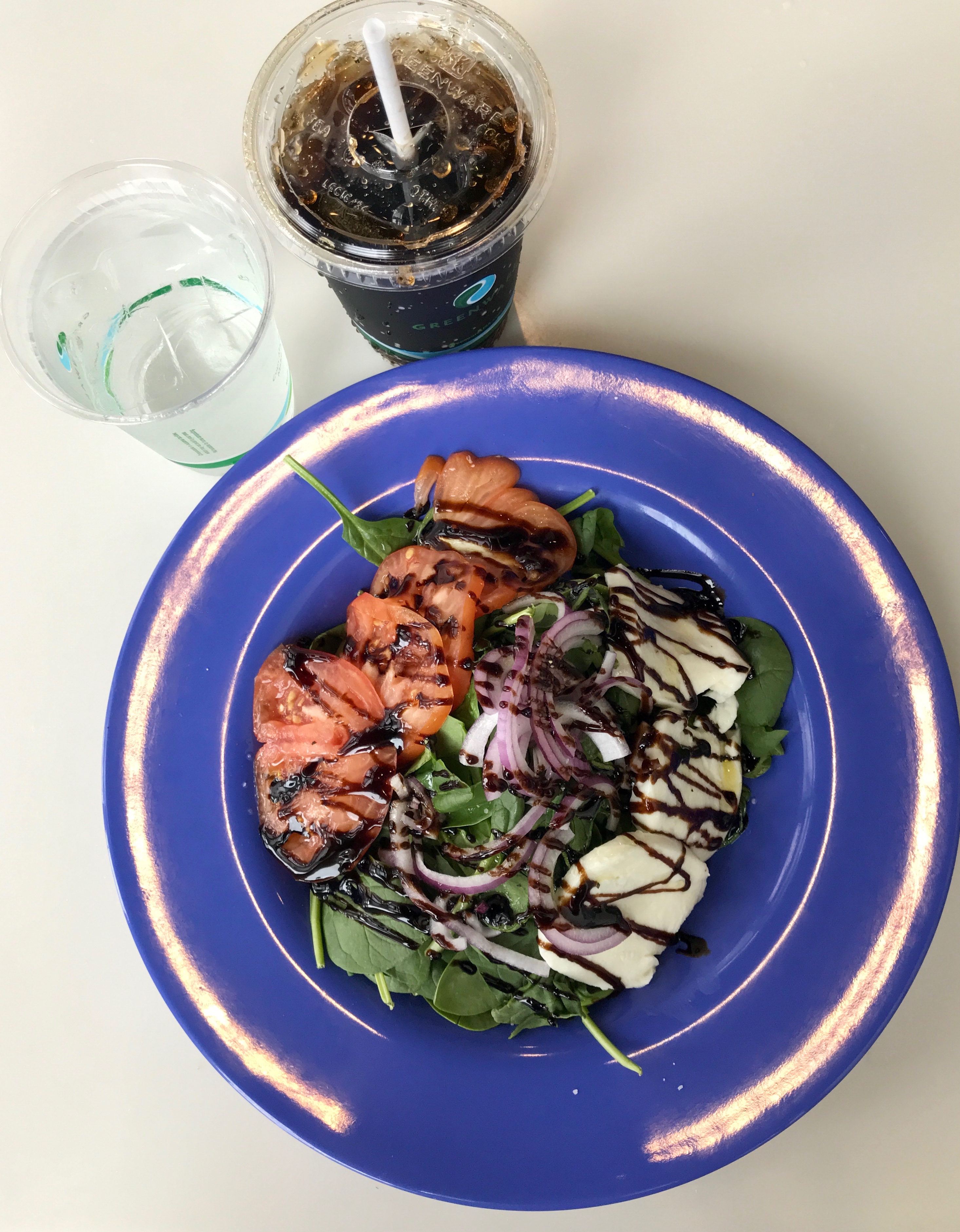
Grabbed a bit of lunch.

I poked my head into a few museums. I won’t bore you with the details of what was inside. I was running out of time and energy for looking at things. (If you’ve stuck with me this long, I’ll bet you are, too.)

Let me just share a few more statues that were in front of museums.

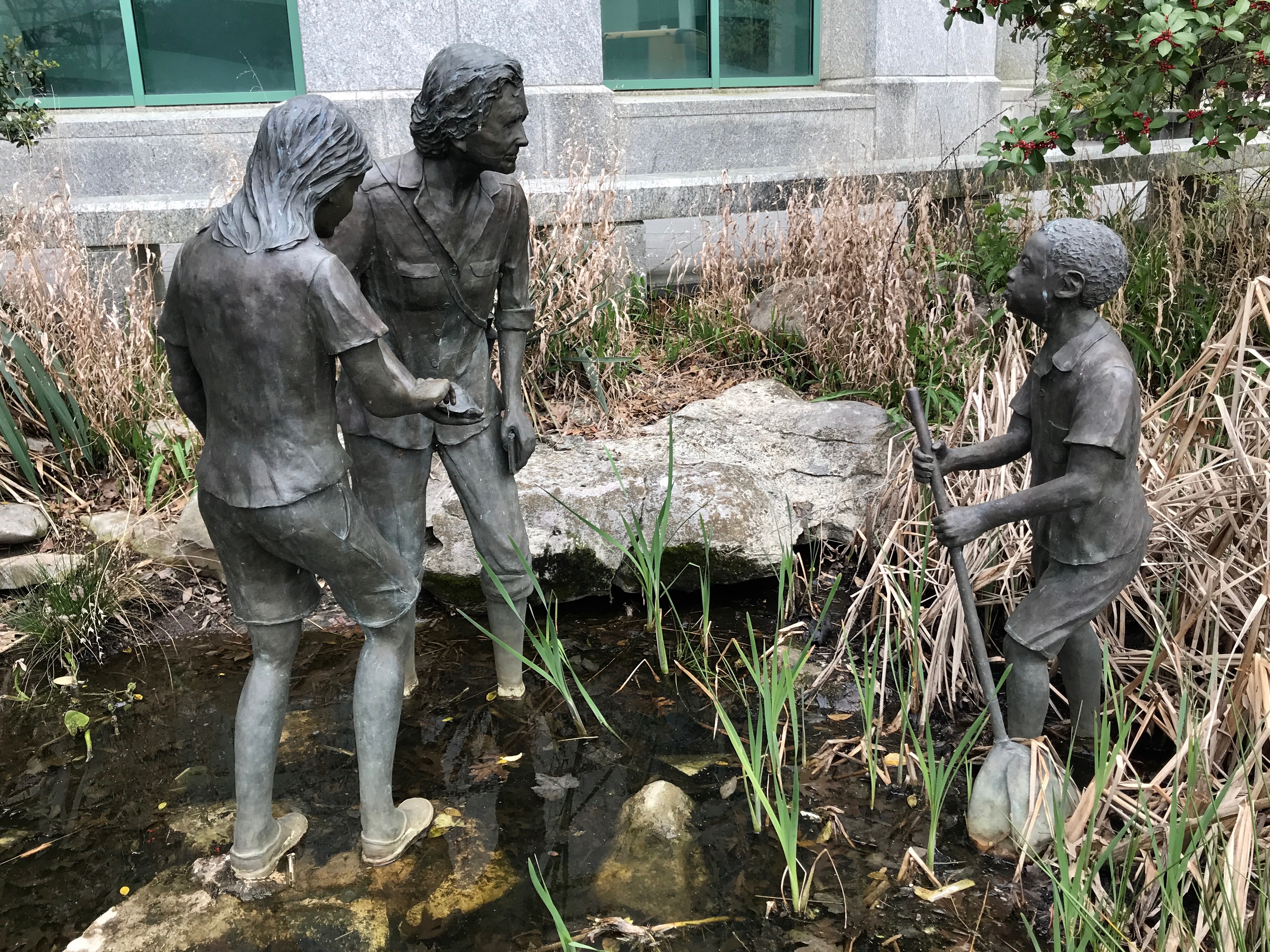
This statue grouping in front of the North Carolina Museum of Natural Sciences shows Rachel Carson sharing the wonders of the natural world with children.

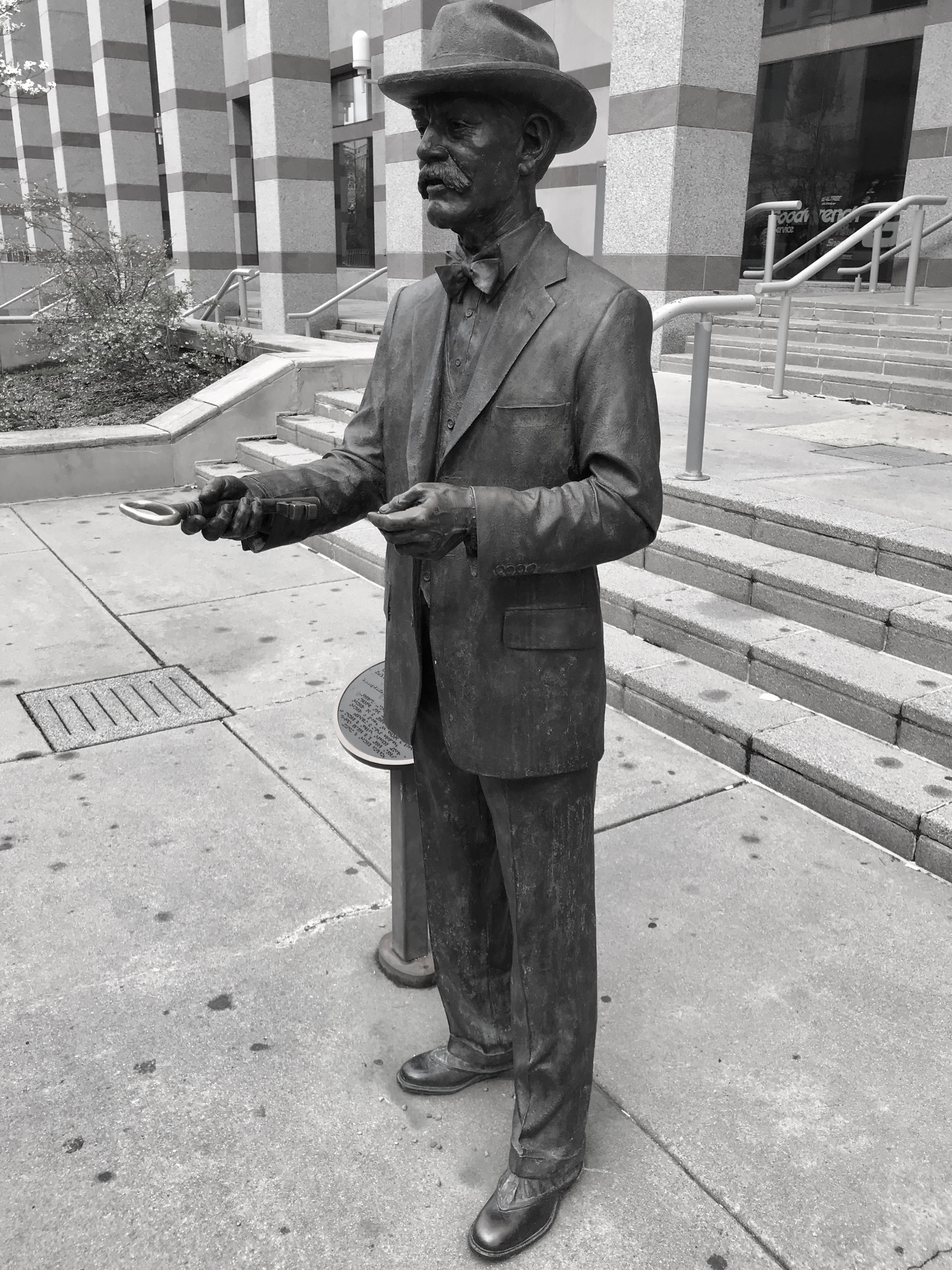
The North Carolina Museum of History has a trio of statues greeting you at the entrance.

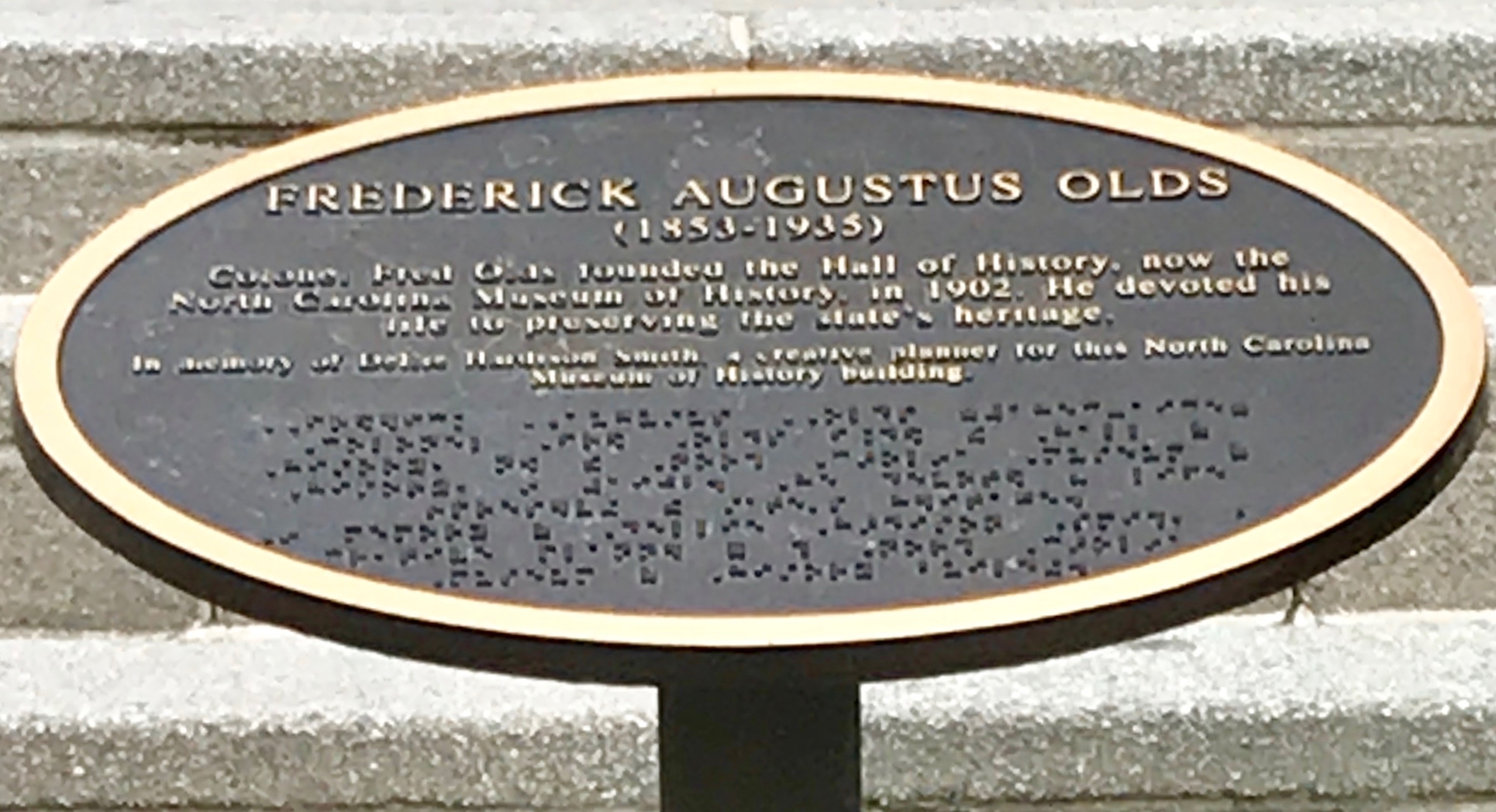
Frederick Augustus Olds was the founder.

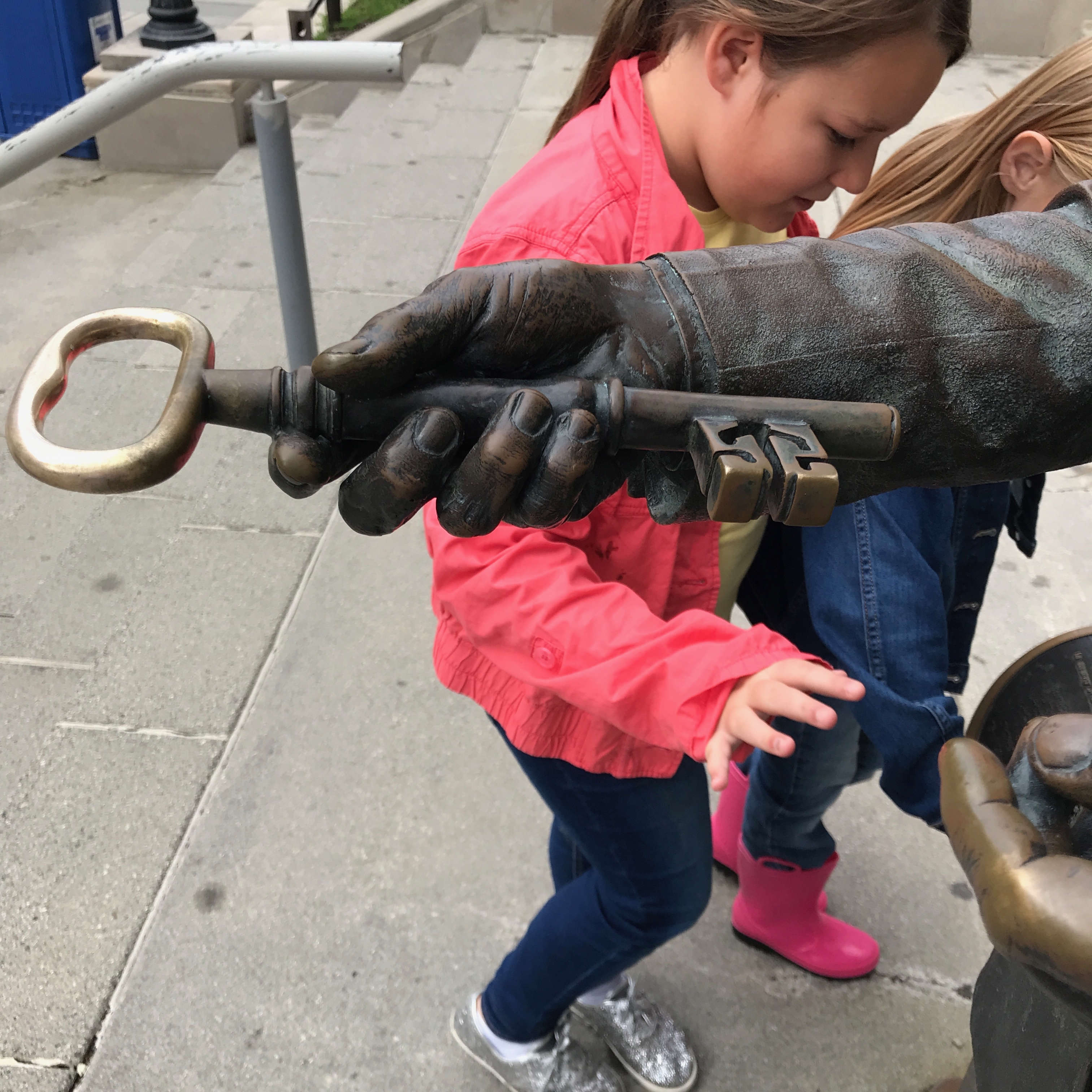
I like how he invites people to enter.

Does the key he’s extending represent knowledge that unlocks understanding and power?

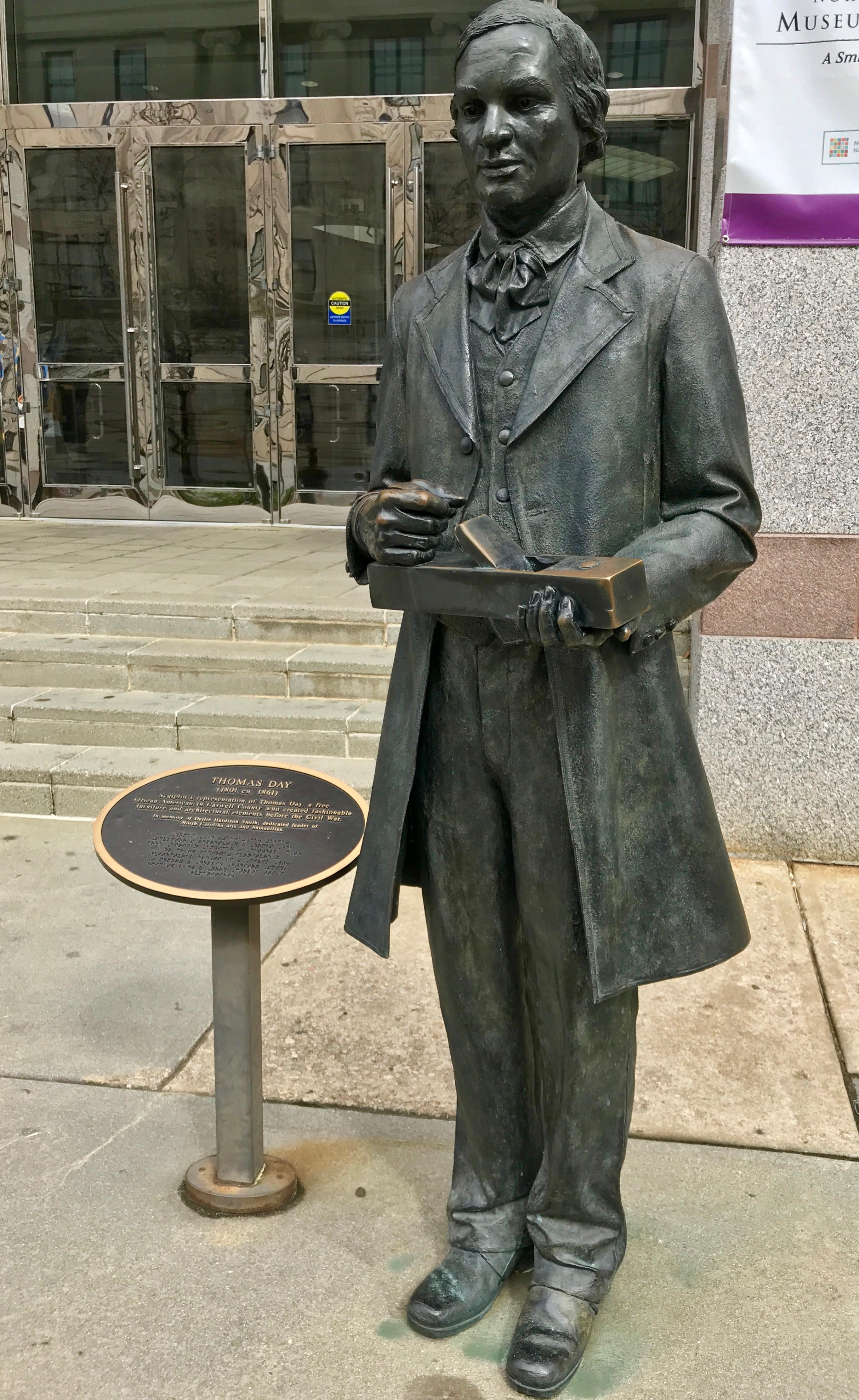
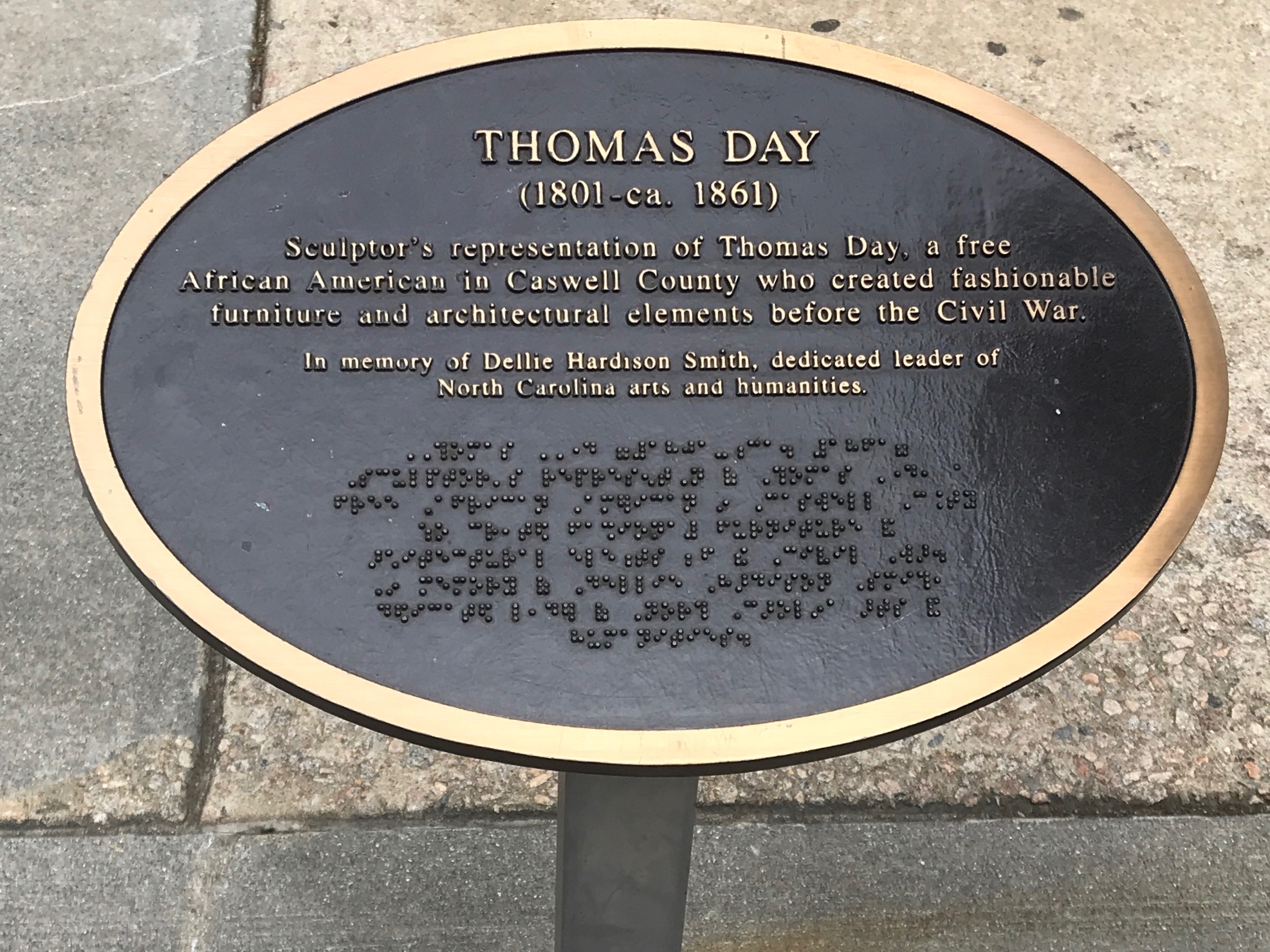
Thomas Day was a free African American who was a woodworker.

I appreciate the effort at inclusivity by including Braille text on the sign.


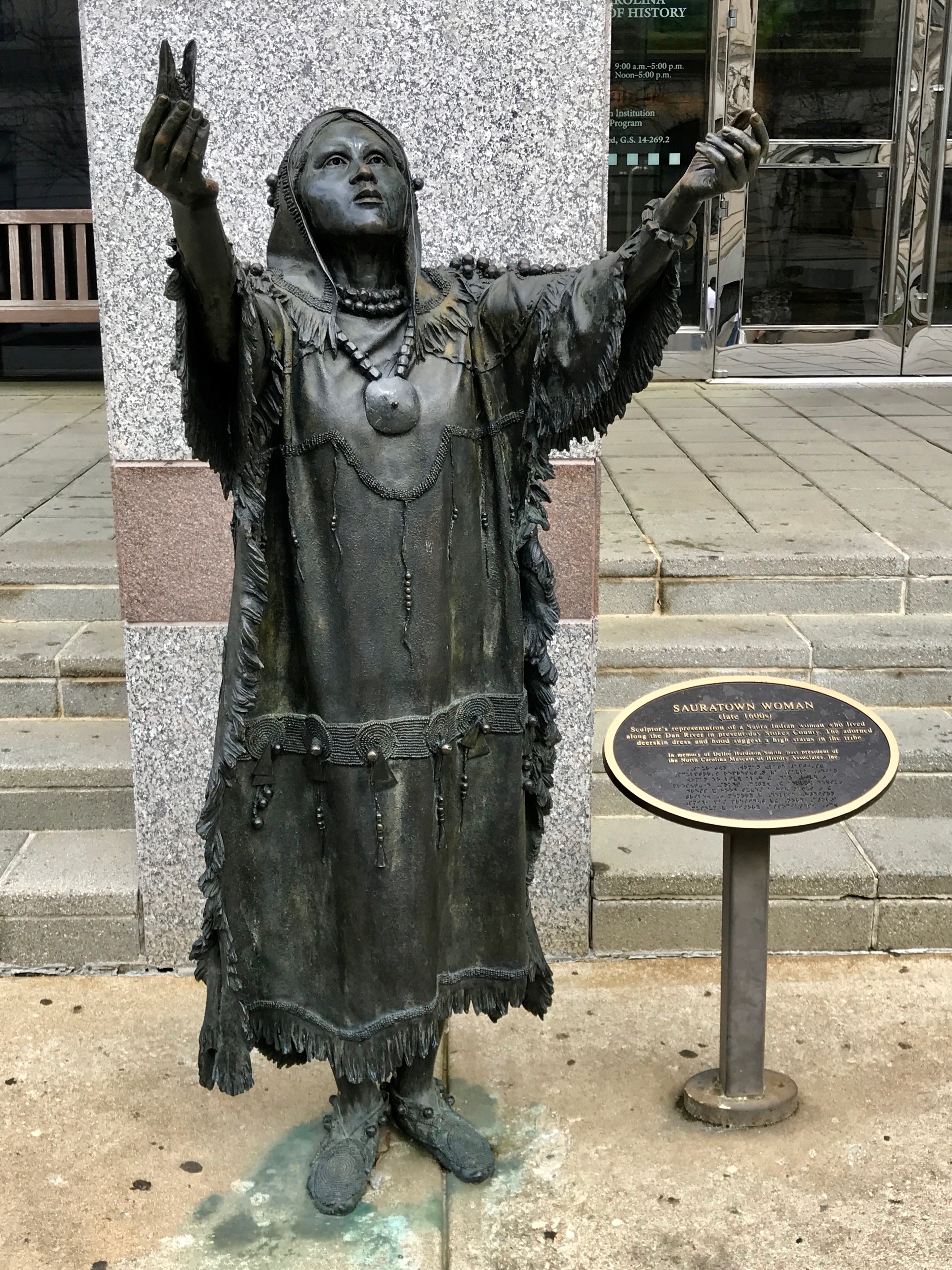
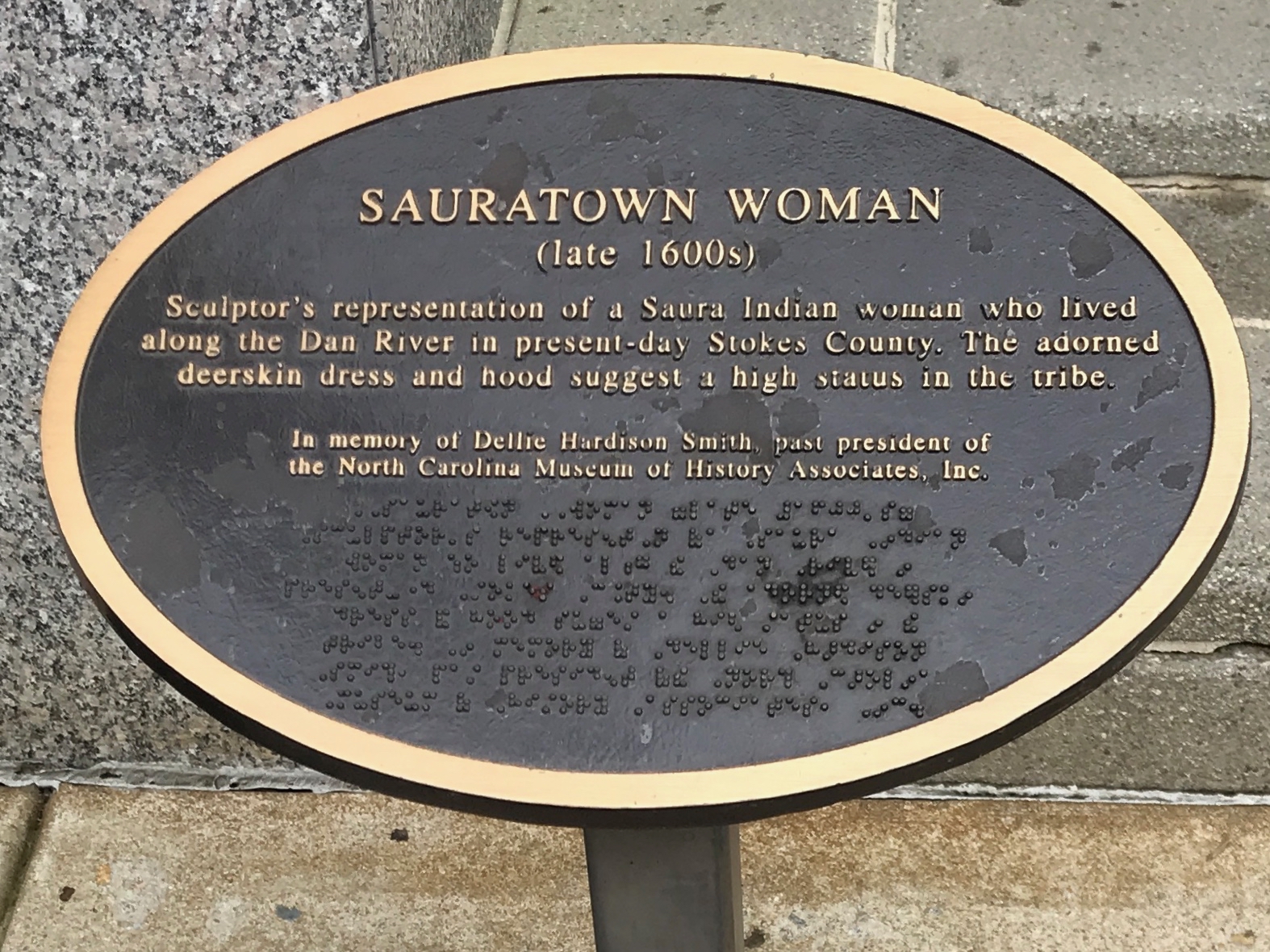
This statue is an artist’s representation of a member of the Saura tribe around 1600.

In these statues I passed, there were six figures.

Ratio to Male to Female – 3:3
Ratio of White to Non-white – 3:3

You can’t say that the people of North Carolina aren’t trying to offer a more balanced approach.

With that, it was time to head back to the campground to get ready for the next day’s adventures.


Raleigh? Really! (April 2019)

April 2021

Time really flies…or it doesn’t.

2020 has kind of evaporated. I don’t know about you, but there were a whole list of things I had hoped to accomplish during the Covid lockdowns.

I managed to spend some quality time with Cora.

I planted my first real garden.

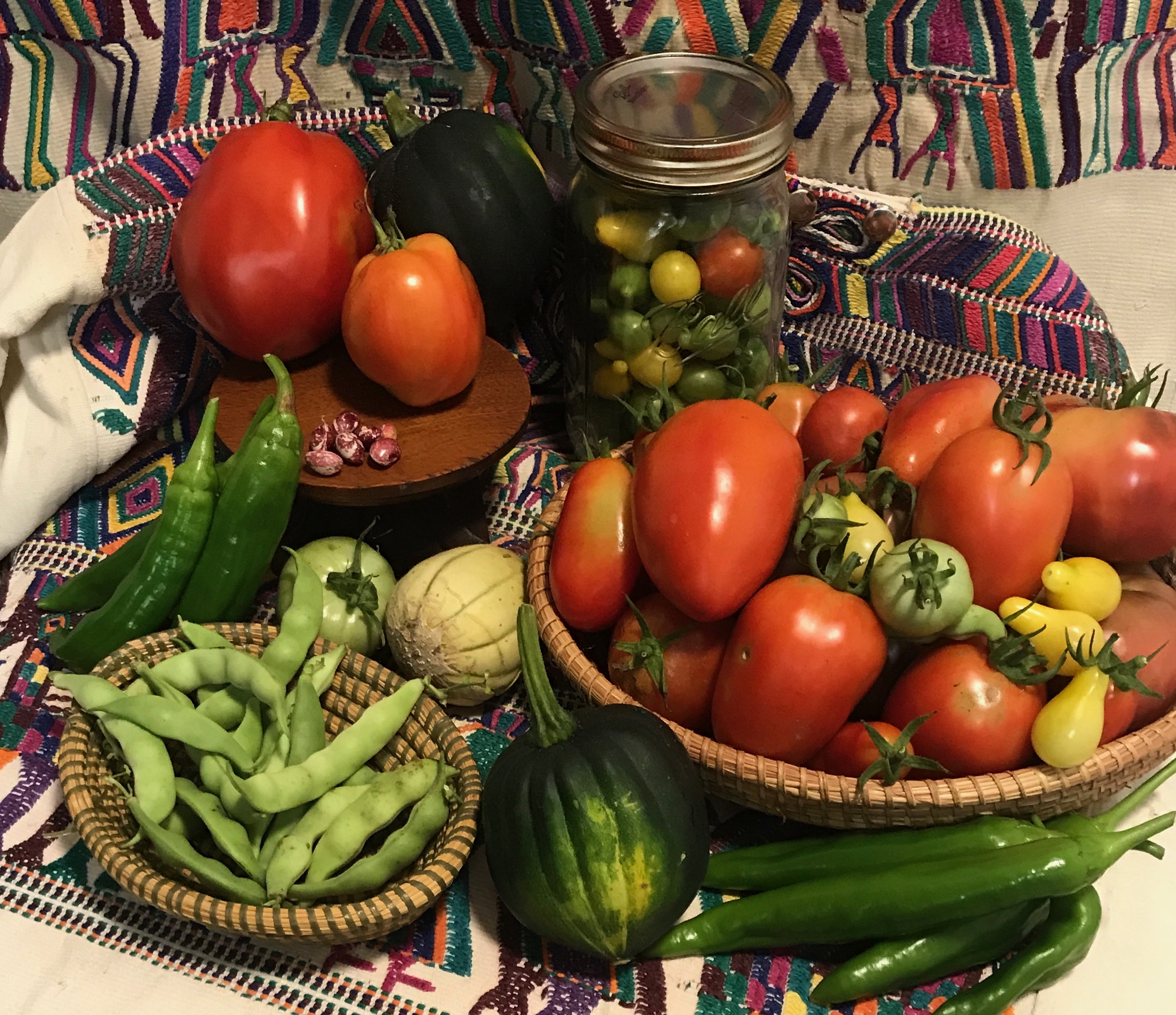
I amused myself by taking photos of each day’s harvest.

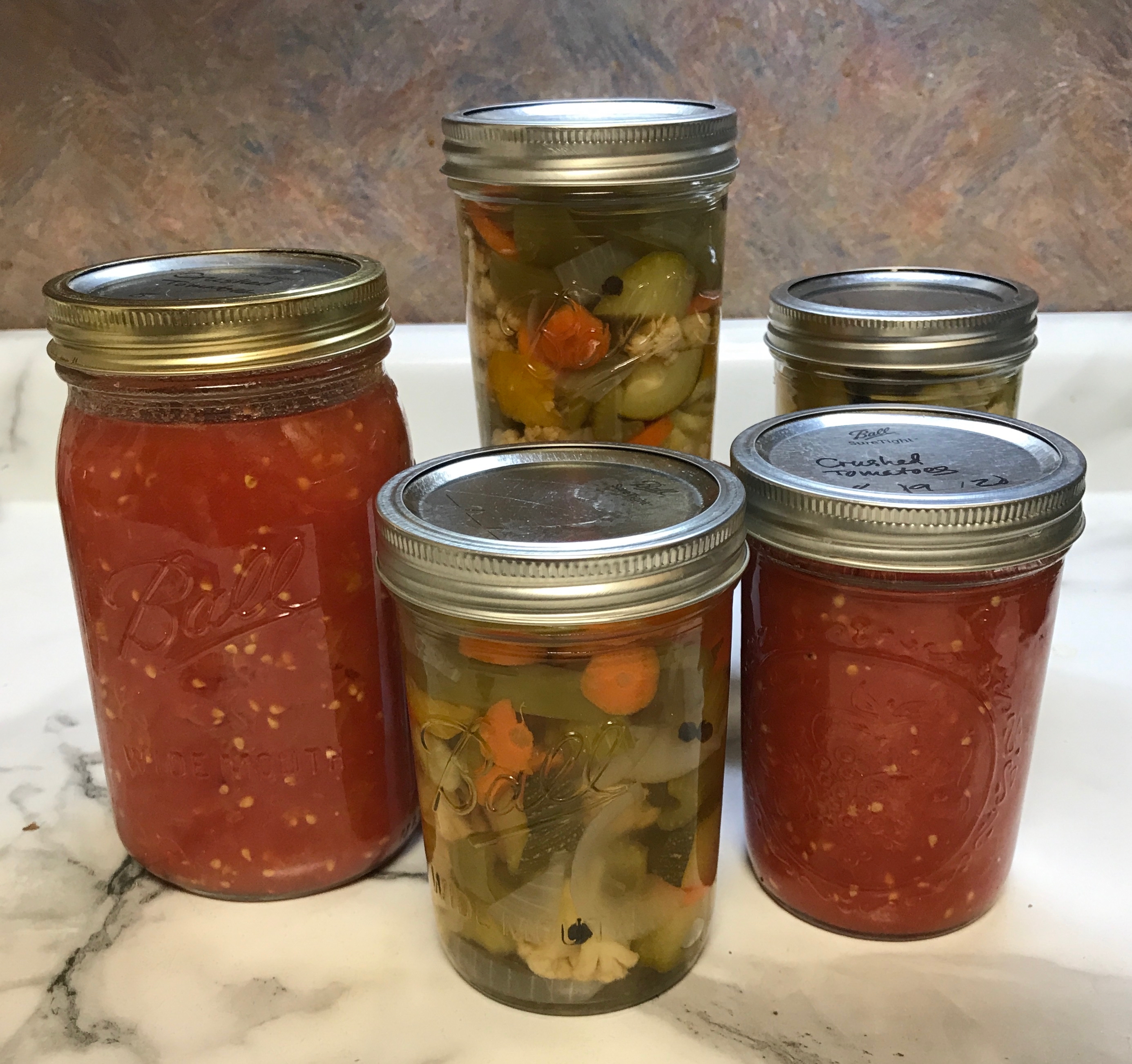
Then, I had to learn how to can all of what my garden grew.

Martha Stewart
“It’s a good thing.”

I have managed to avoid contracting the disease, and that is a Good Thing.

I am healthy. I am vaccinated. I am rarin’ to go! But, what to do about all those adventures I had in 2019? I am going to see how many I can reasonably record, and then declare a victory.

First things first: How much of what I did can I even remember? And, can I even remember how to write a post that anyone will want to read?

I guess we shall see.

Well, when I left off, I had just visited Frank and Debbie in Asheville, NC. My next goal was to visit the state capitol in Raleigh. I ended up camping at the North Carolina State Fairgrounds.

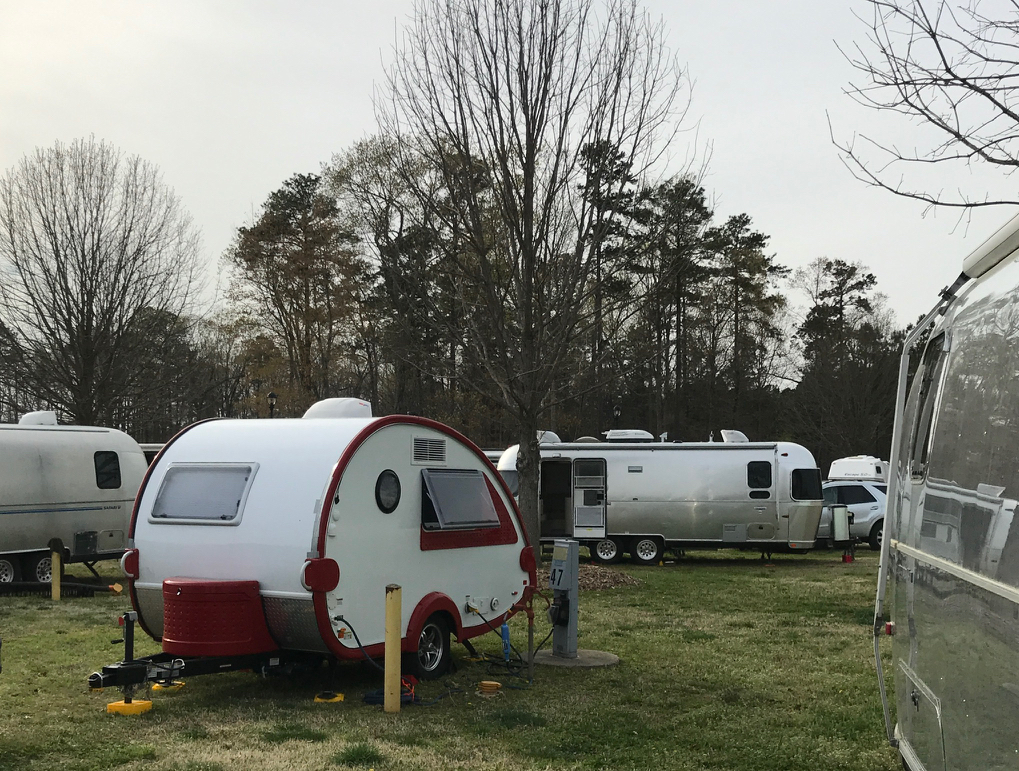
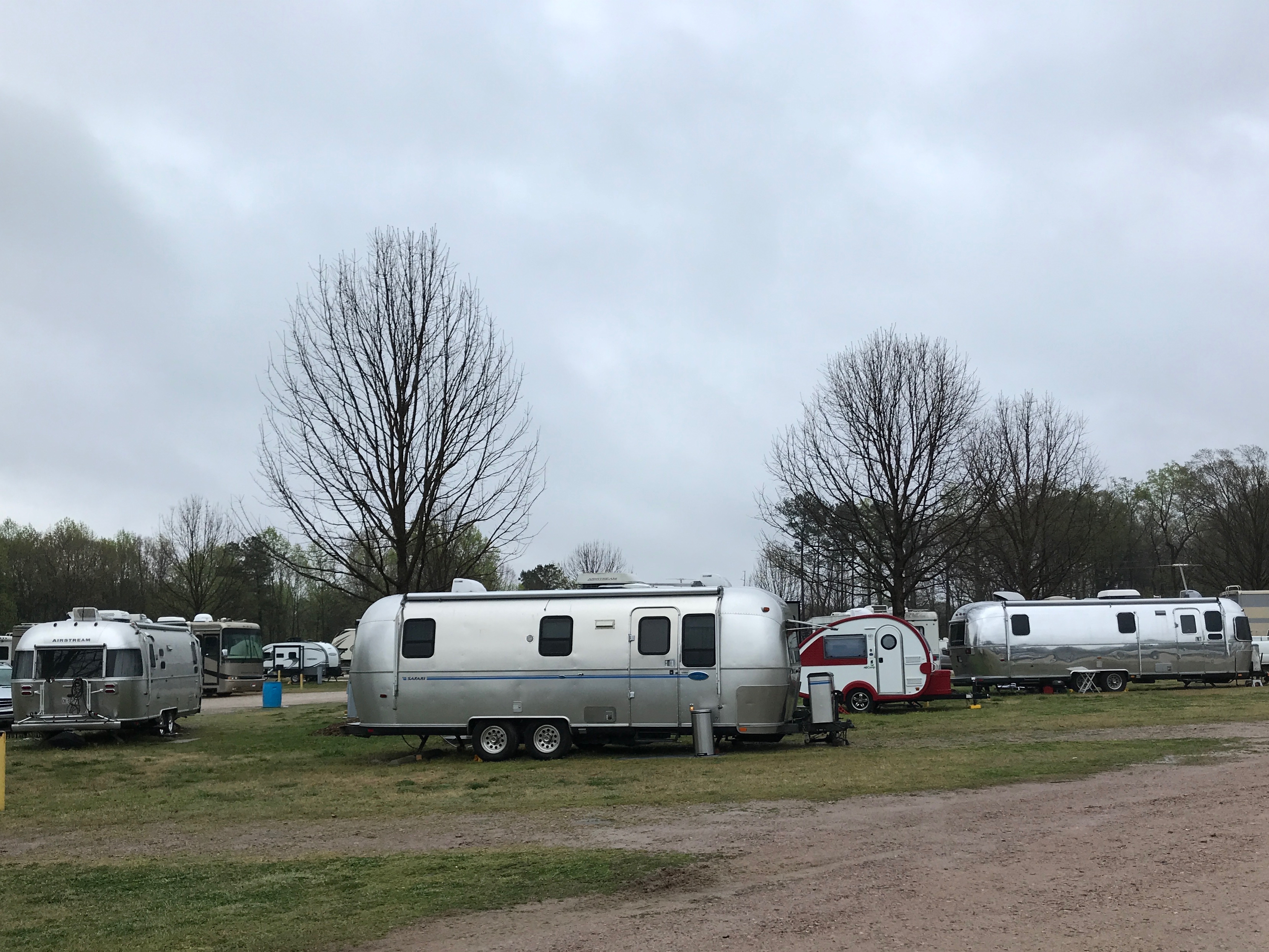
It felt like old home week! Here I was, nestled in with all the Airstreams! In fact, one of the ‘Streamers was a person I had worked with at Amazon back in 2014. What a small world!

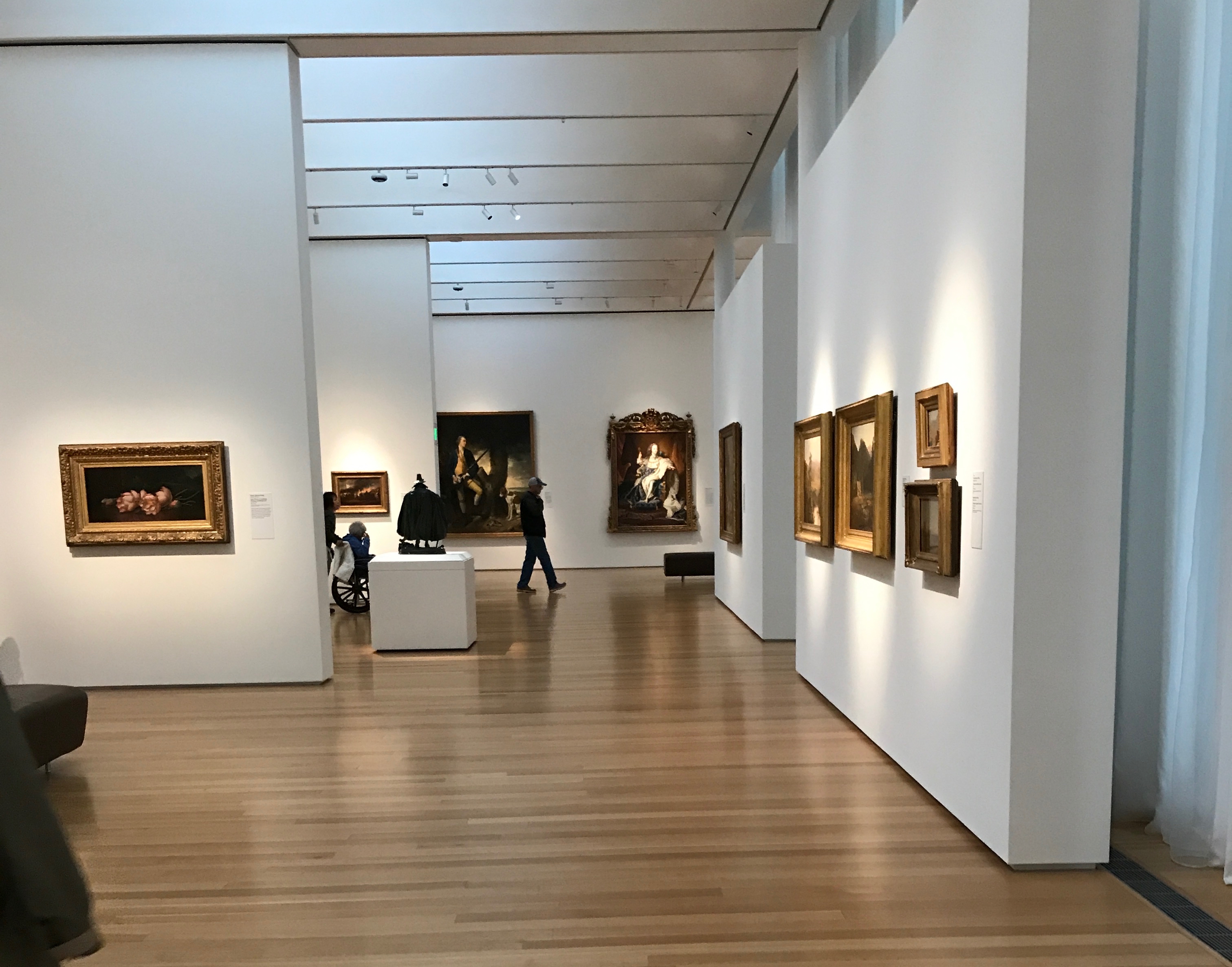
My first activity was a visit to the North Carolina Museum of Art.

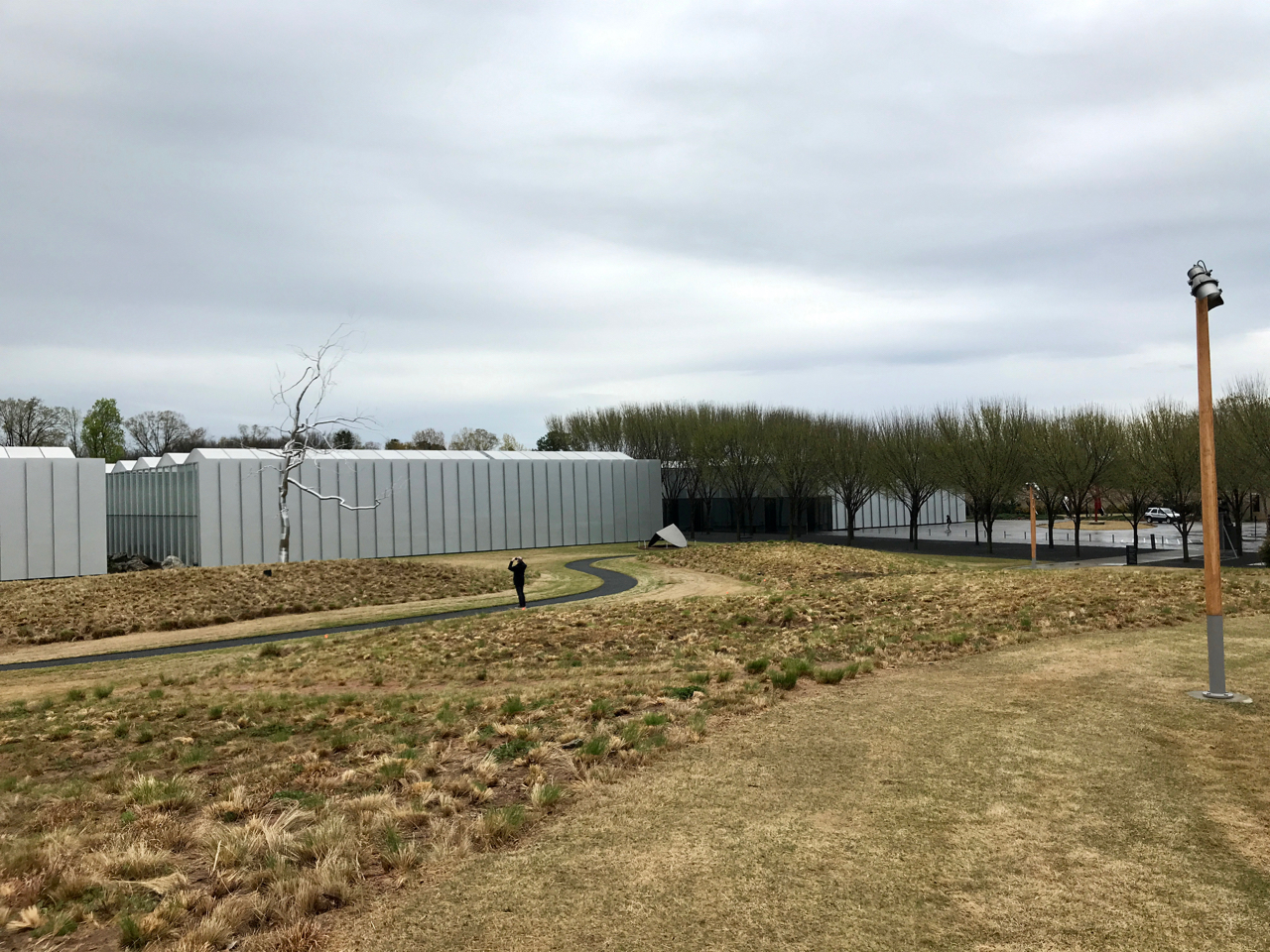
While the exterior was a bit austere, the collections were outstanding.

I snapped a lot of photos while I was there. In going through them to decide what would help tell the story of my visit, I have to admit I was overwhelmed. I’ll share a few, but if you are at all interested in art, I recommend that you make time for a visit if you find yourself in North Carolina.

(Actually, I’m sharing a few more than a few. But, there are so many more that I still have in my files.)

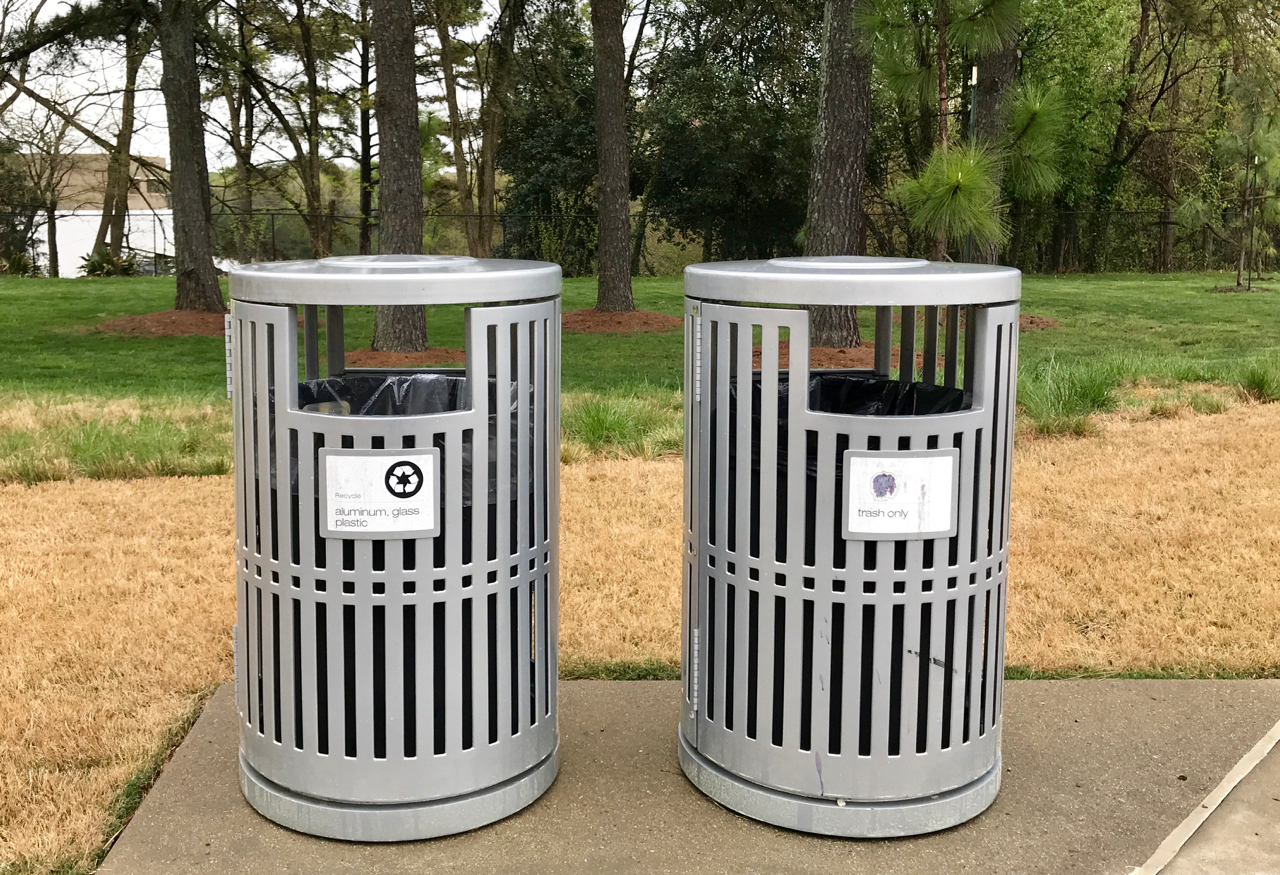
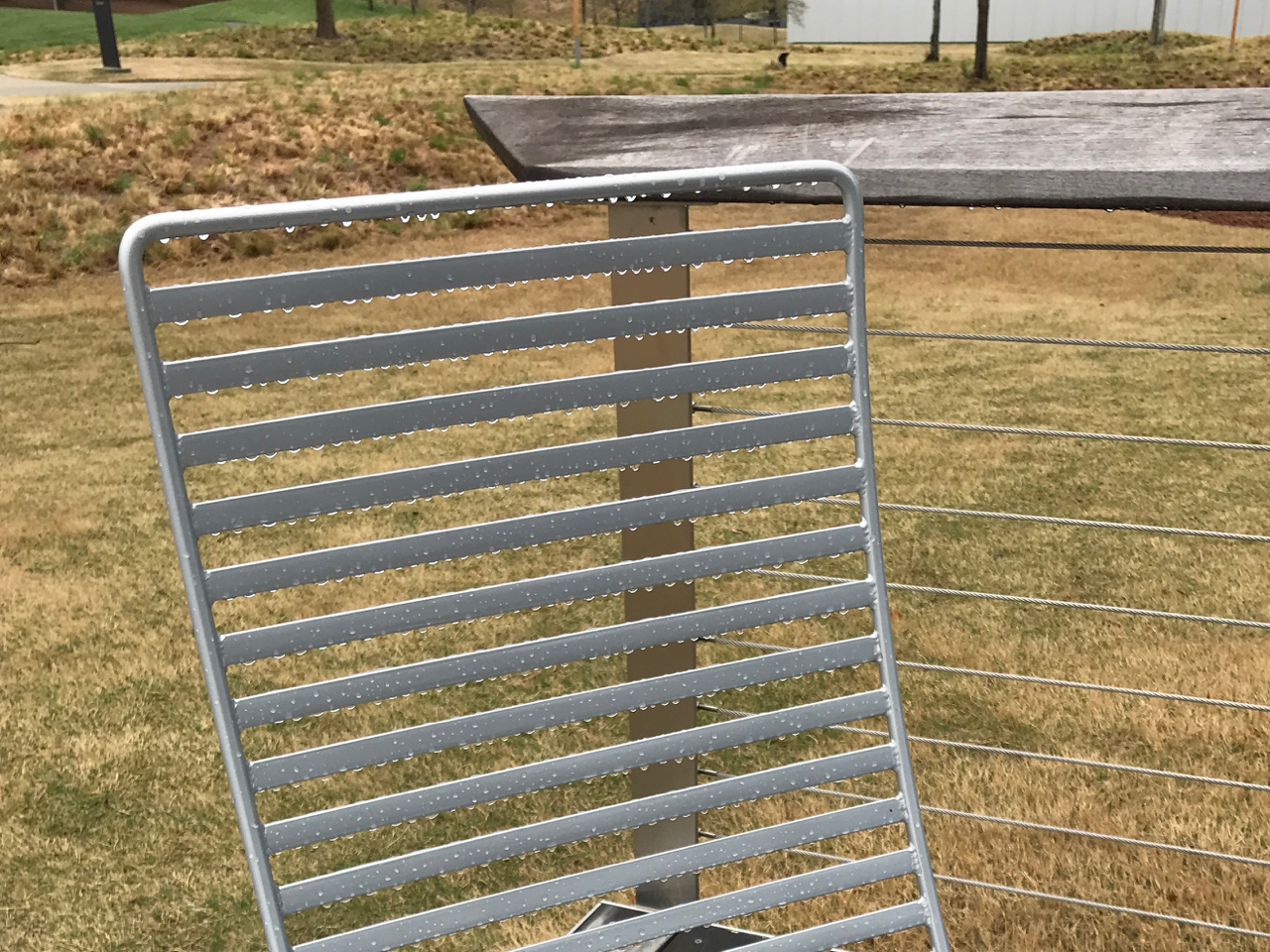
I mean, I was taken by their attention to details – like the trash and recycling receptacles.

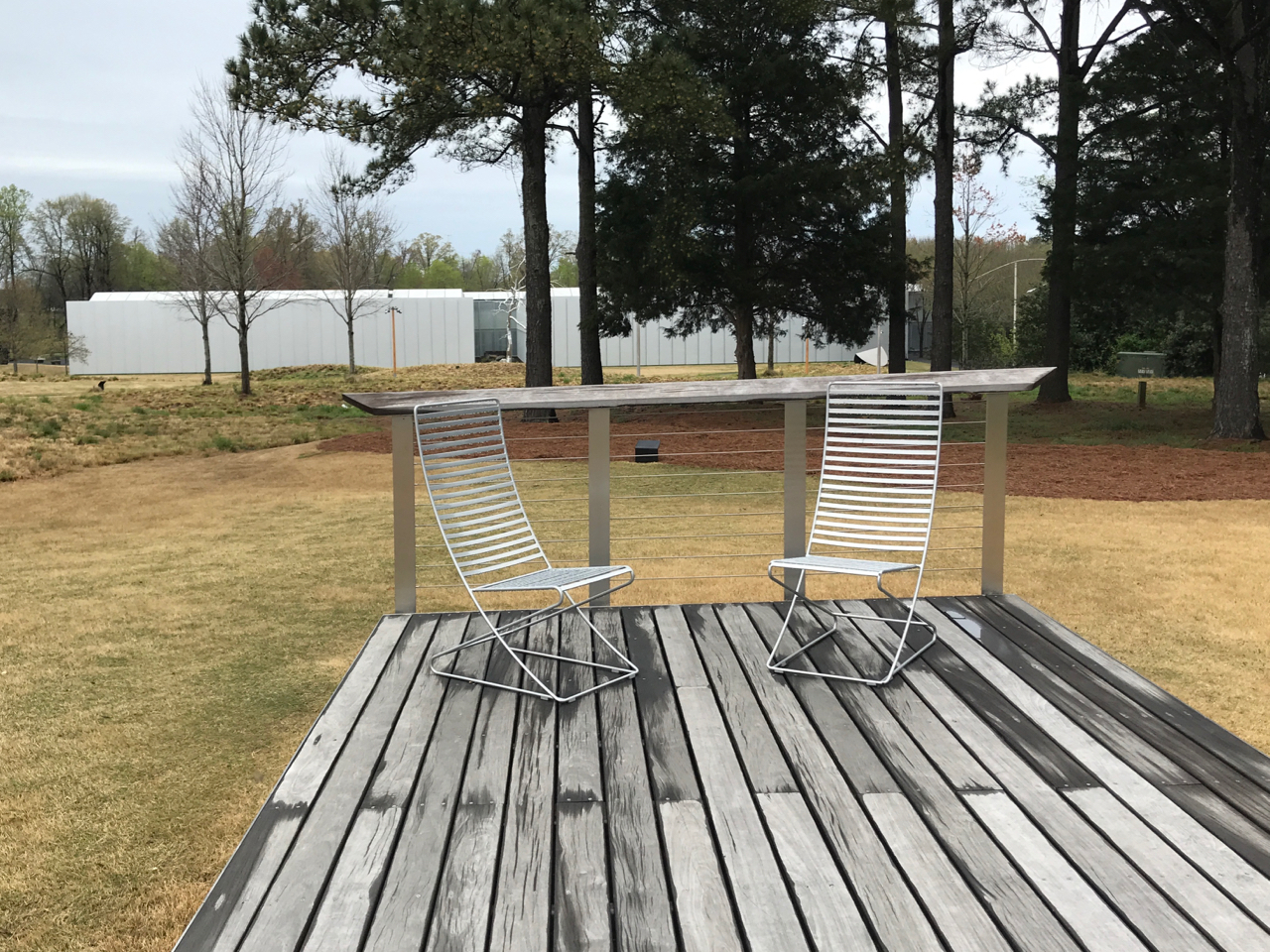
And how the trash receptacles complemented the chairs, which complemented the walkway with complemented the building.

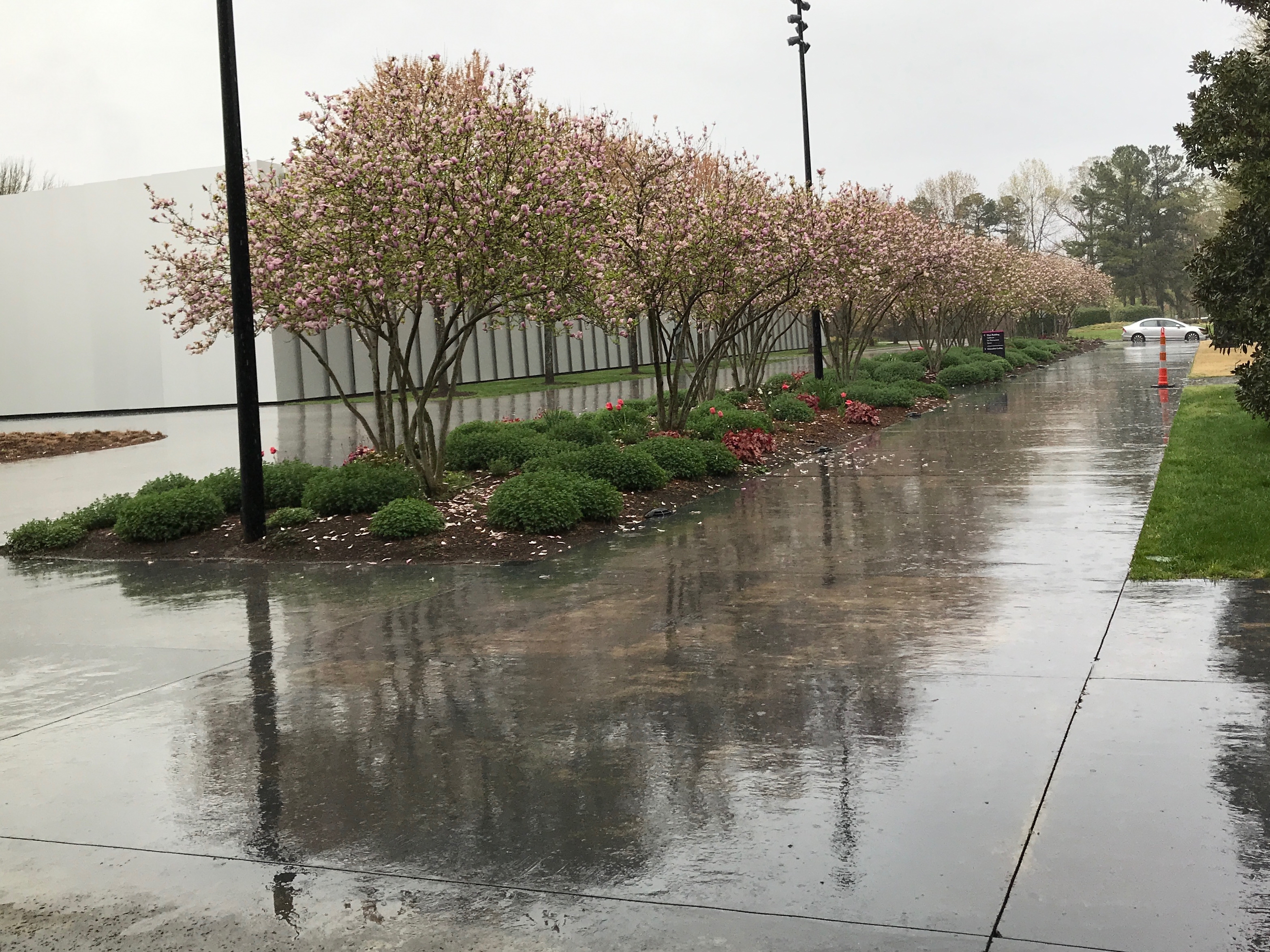
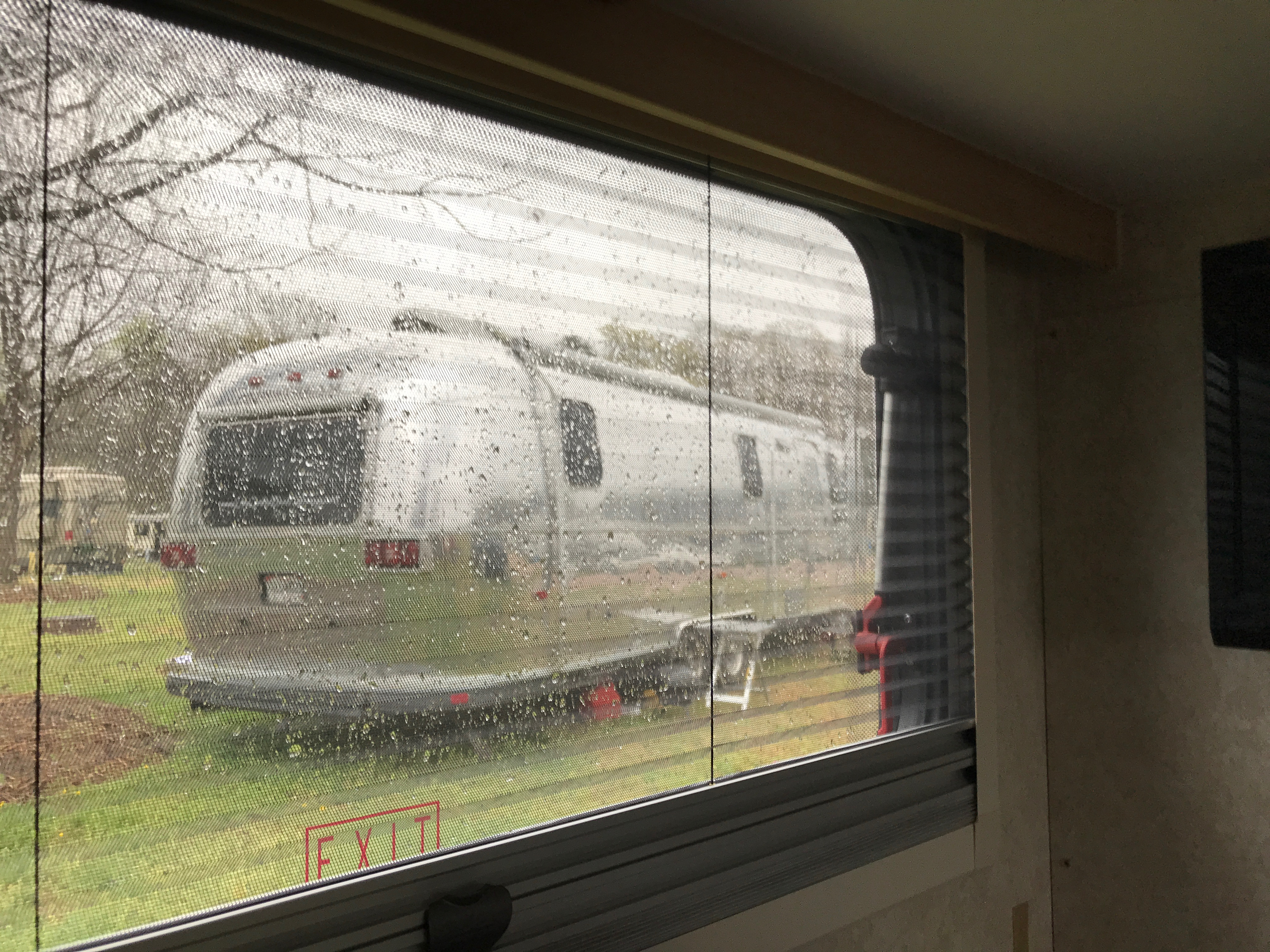
Even the drizzle added an artistic feature!

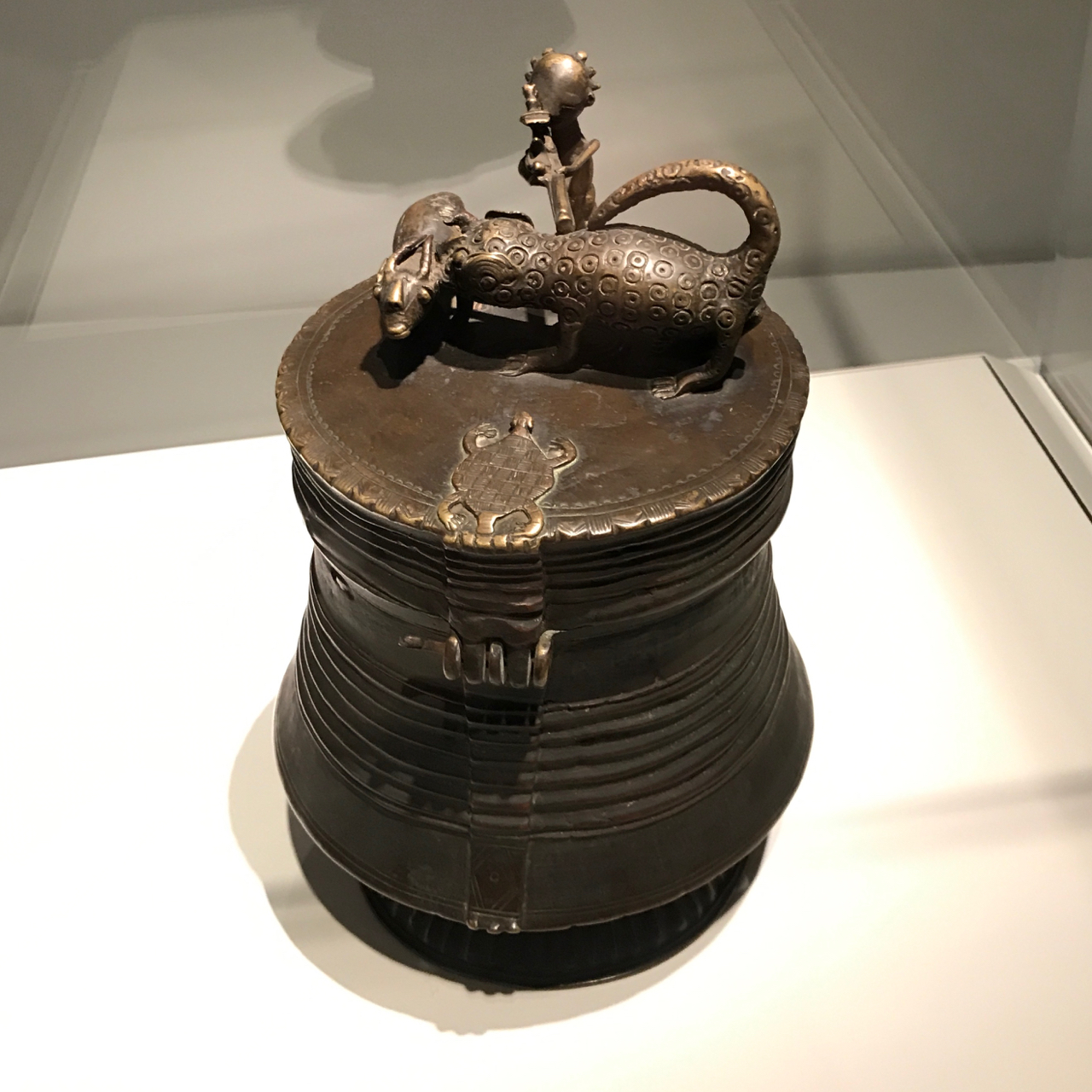
Anyway, the first building I entered was dedicated to African art.

There were the things you expect to see when you visit a museum of African art, like this 19th century prestige vessel from Ghana,

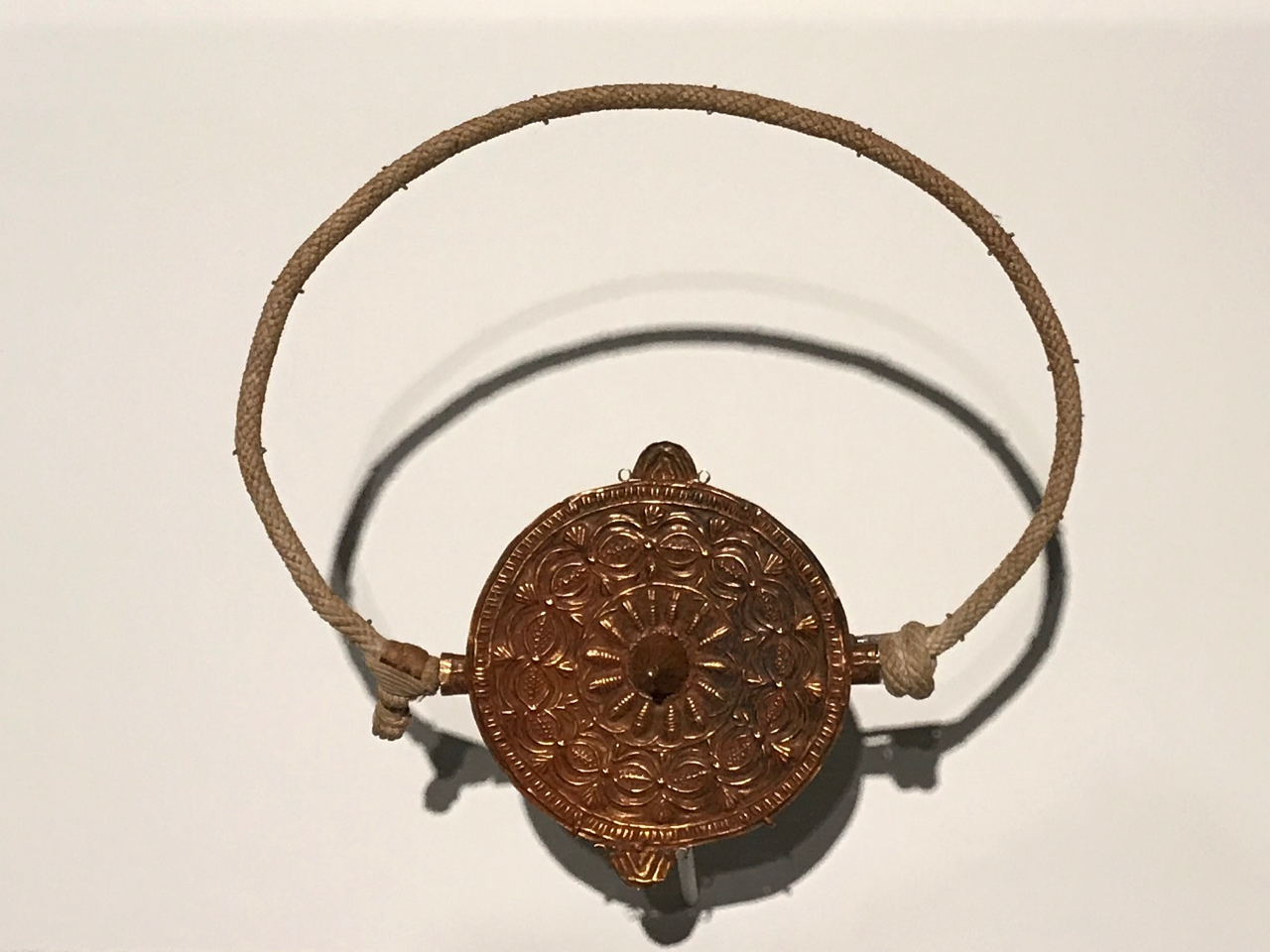
or this piece of jewelry,

or this mid 20th century women’s ceremonial skirt from the Democratic Republic of the Congo.

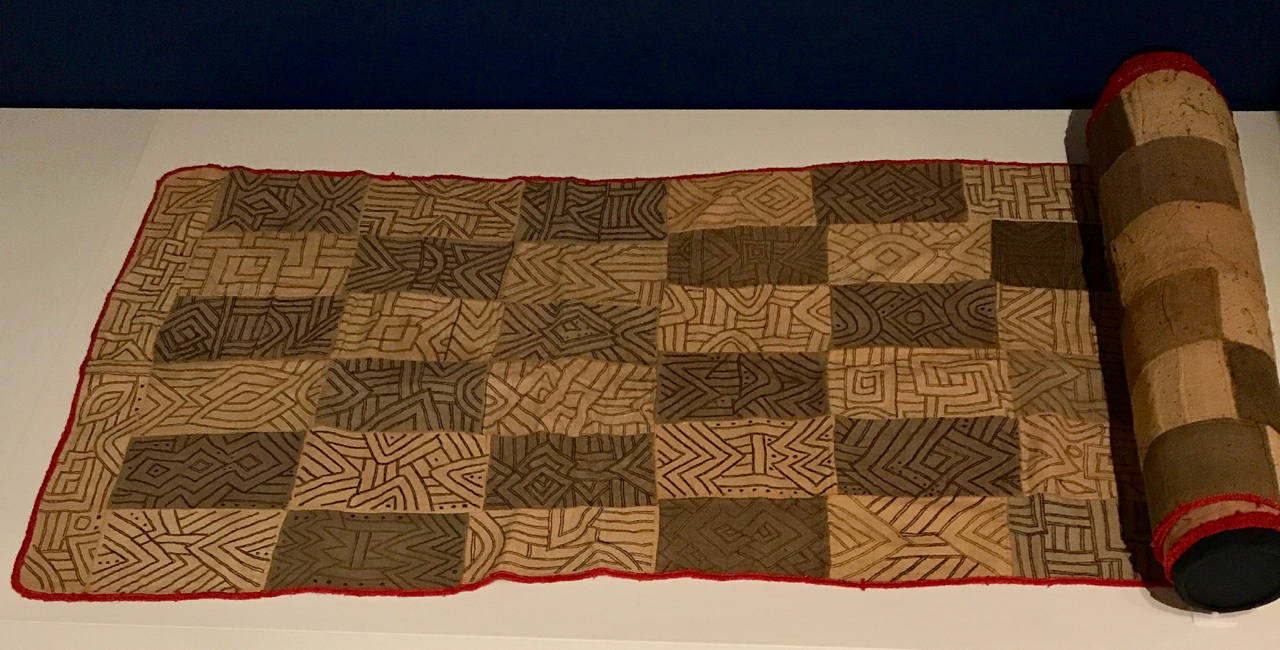
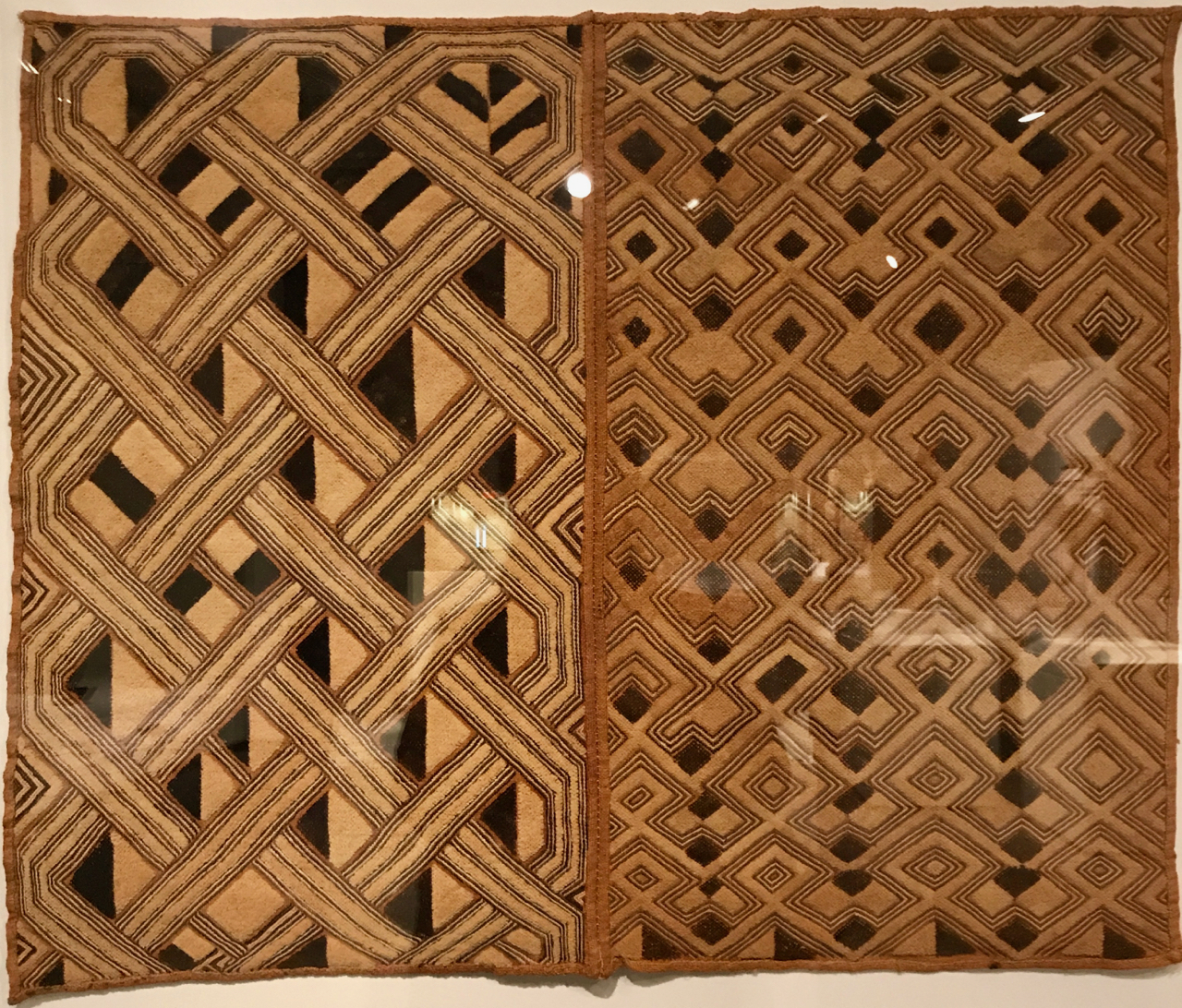
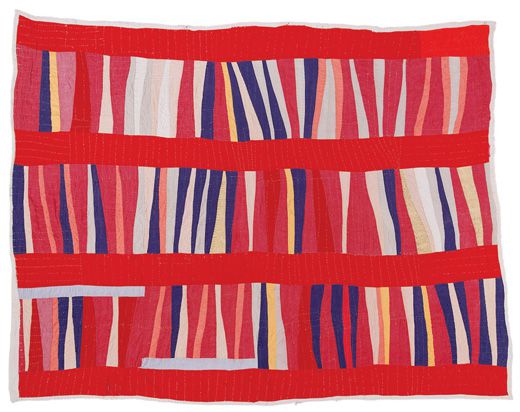
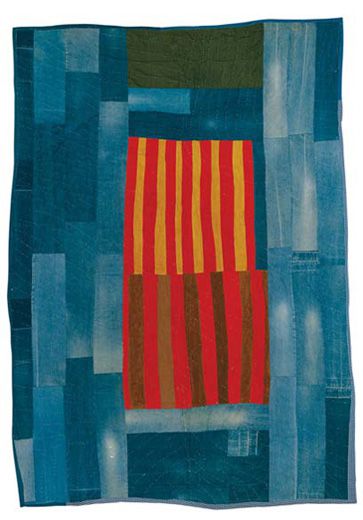
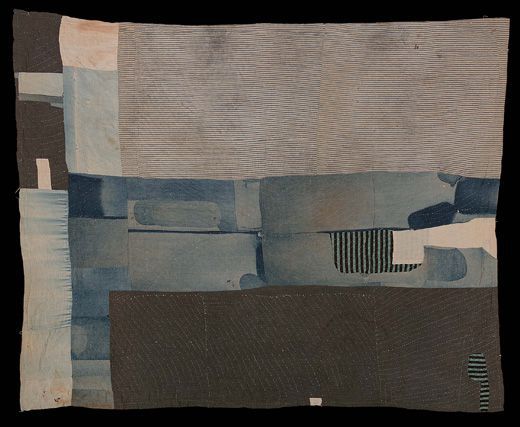
But they had some textiles I had never seen before, like this velvet from the Kasai region of the Democratic Republic of the Congo. From what I understand, the base cloth is woven by the men and the decorative elements are added by the women using an embroidery technique that adds a looped pile. The ends are cut leaving dense areas that are similar to velvet.

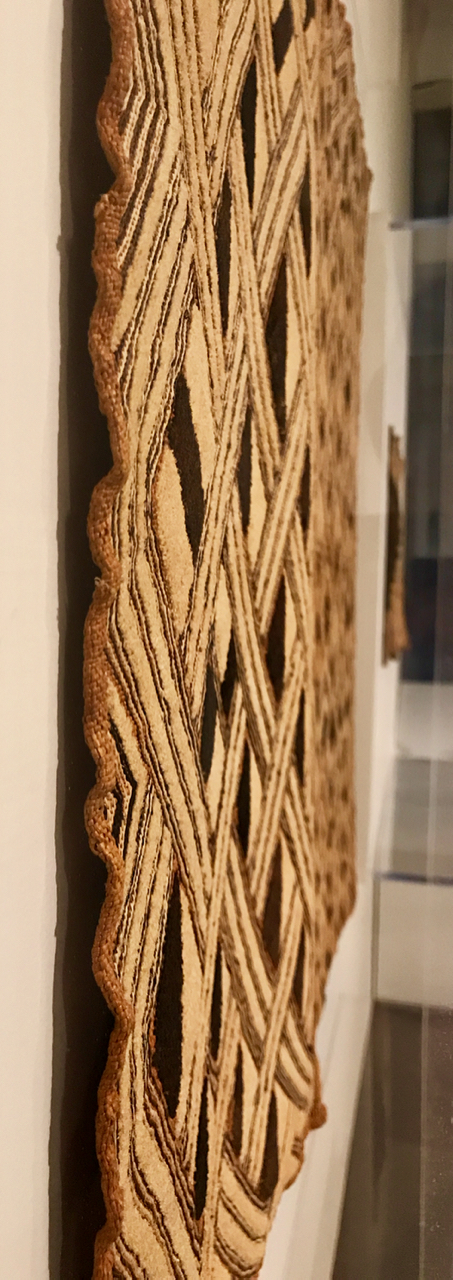
This photo taken the edge gives you a different view of the work.

Incidentally, the ceremonial skirt and the velvet are both made from raffia palm leaves. I would love to know how they process those fibers!

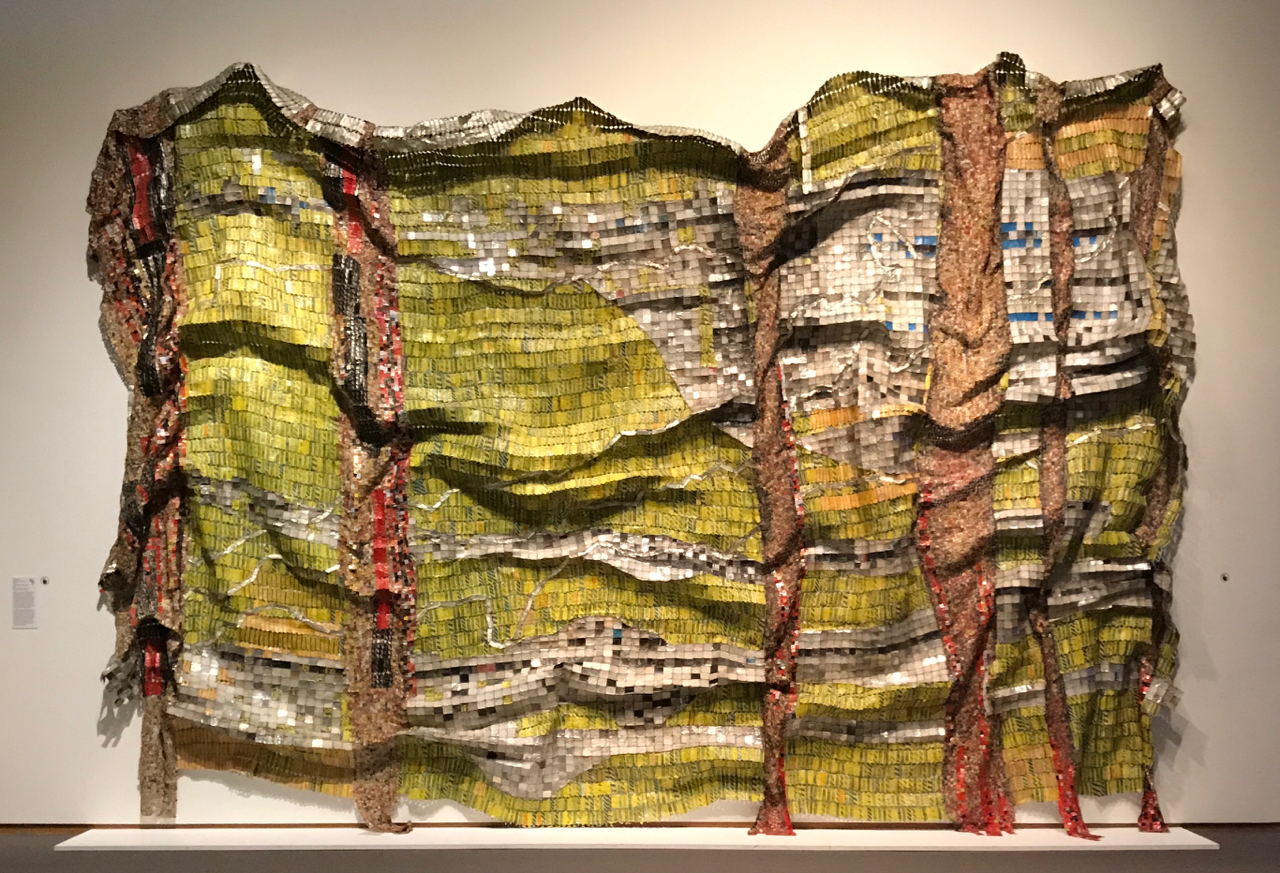
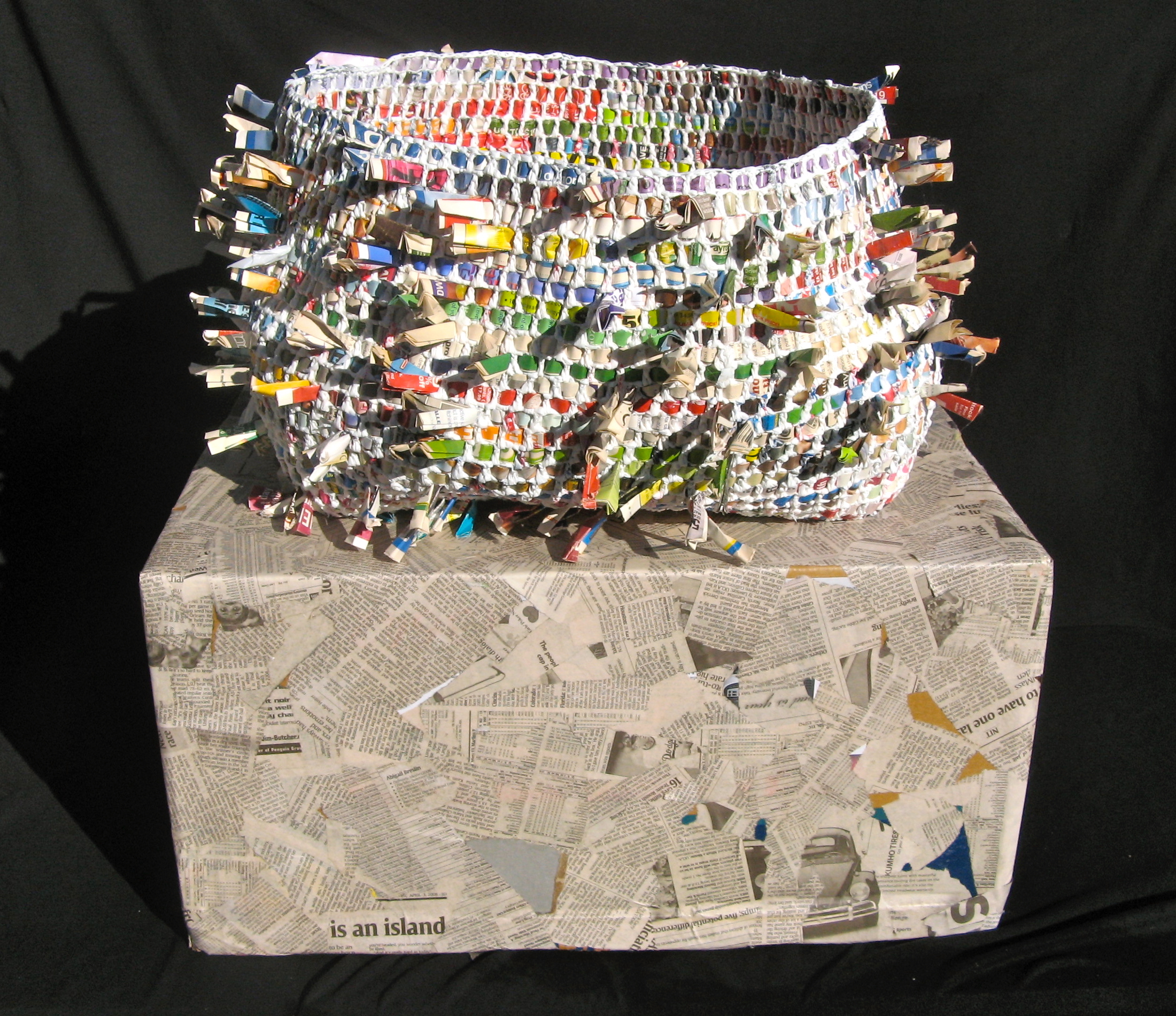
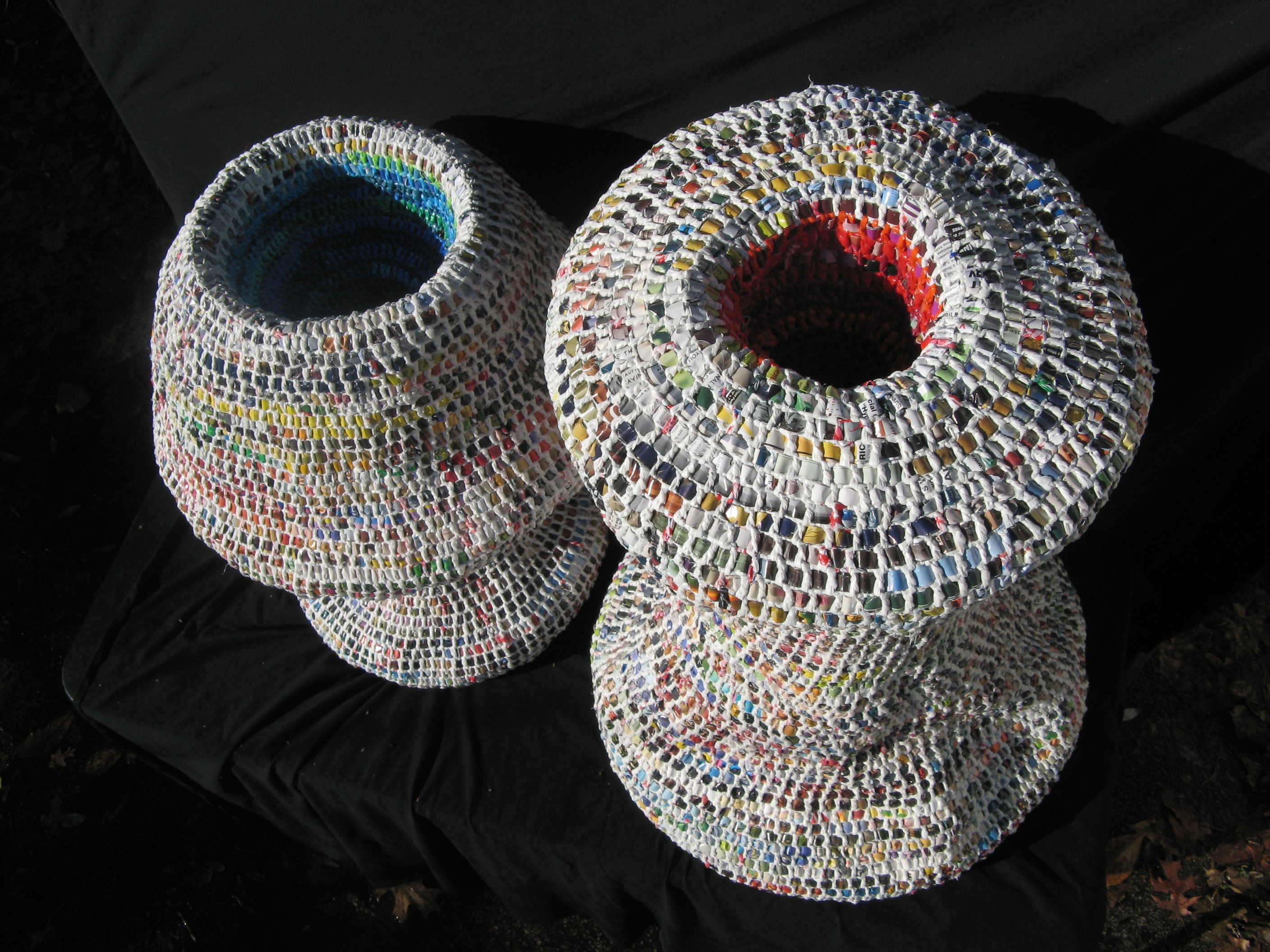
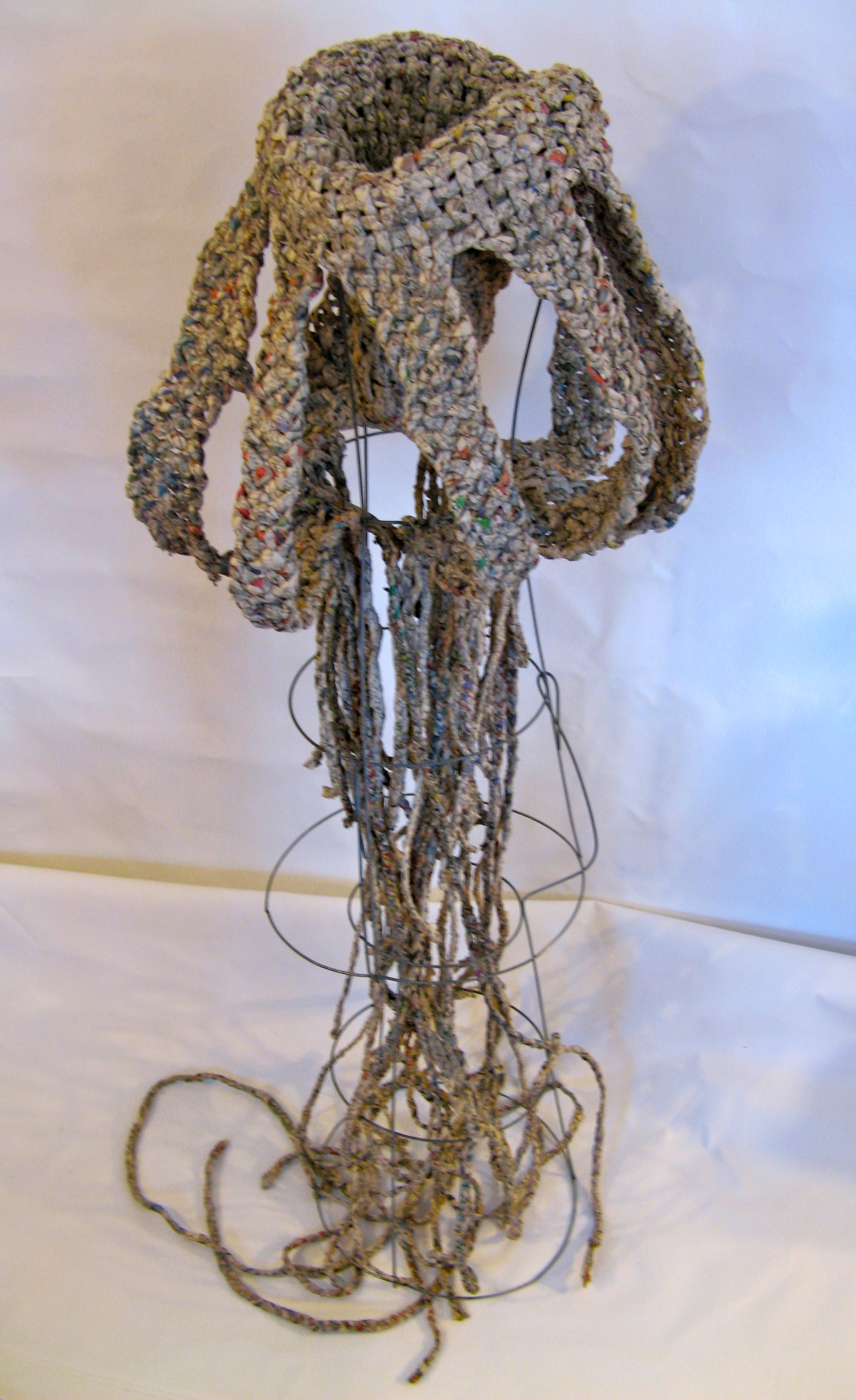
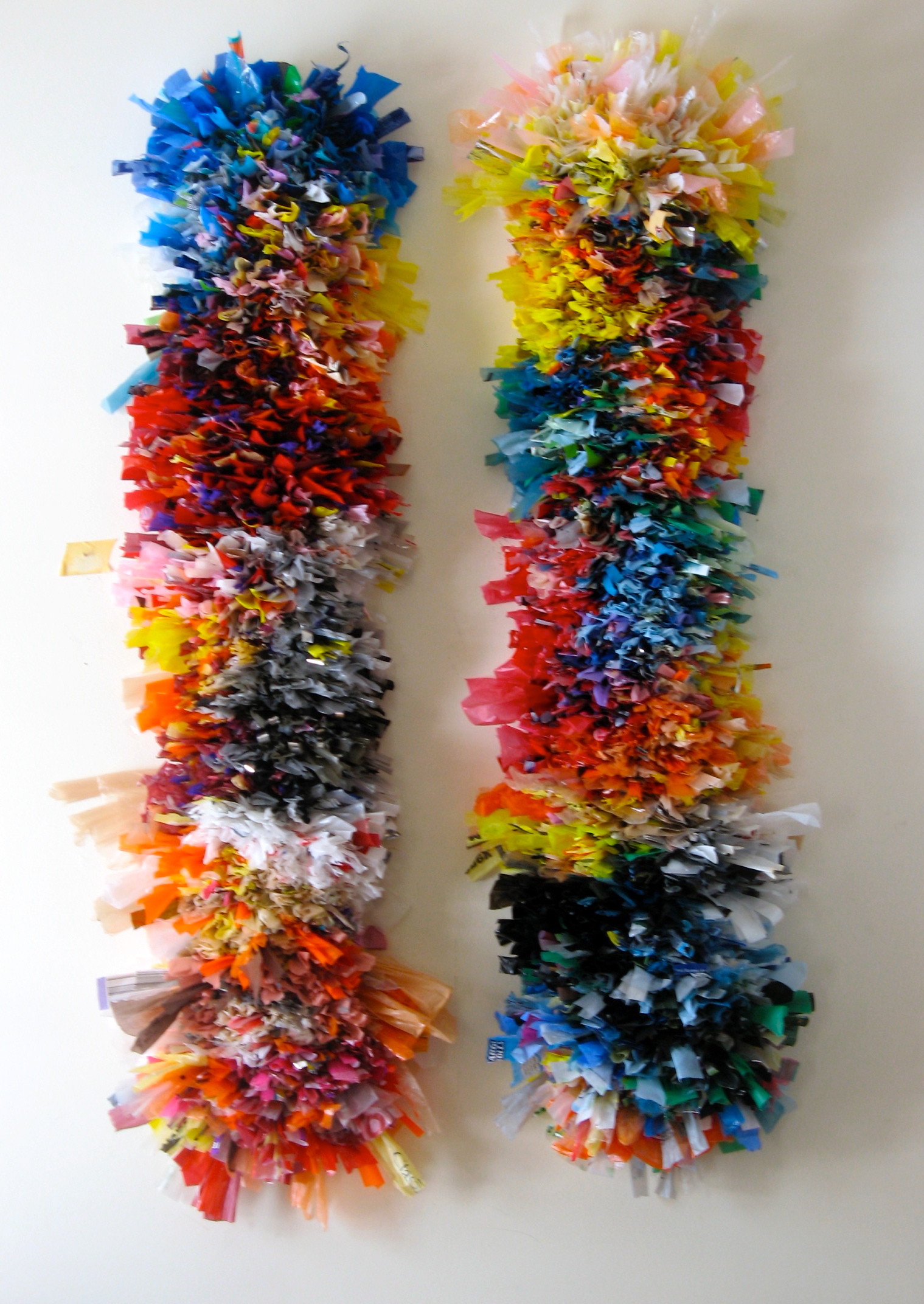
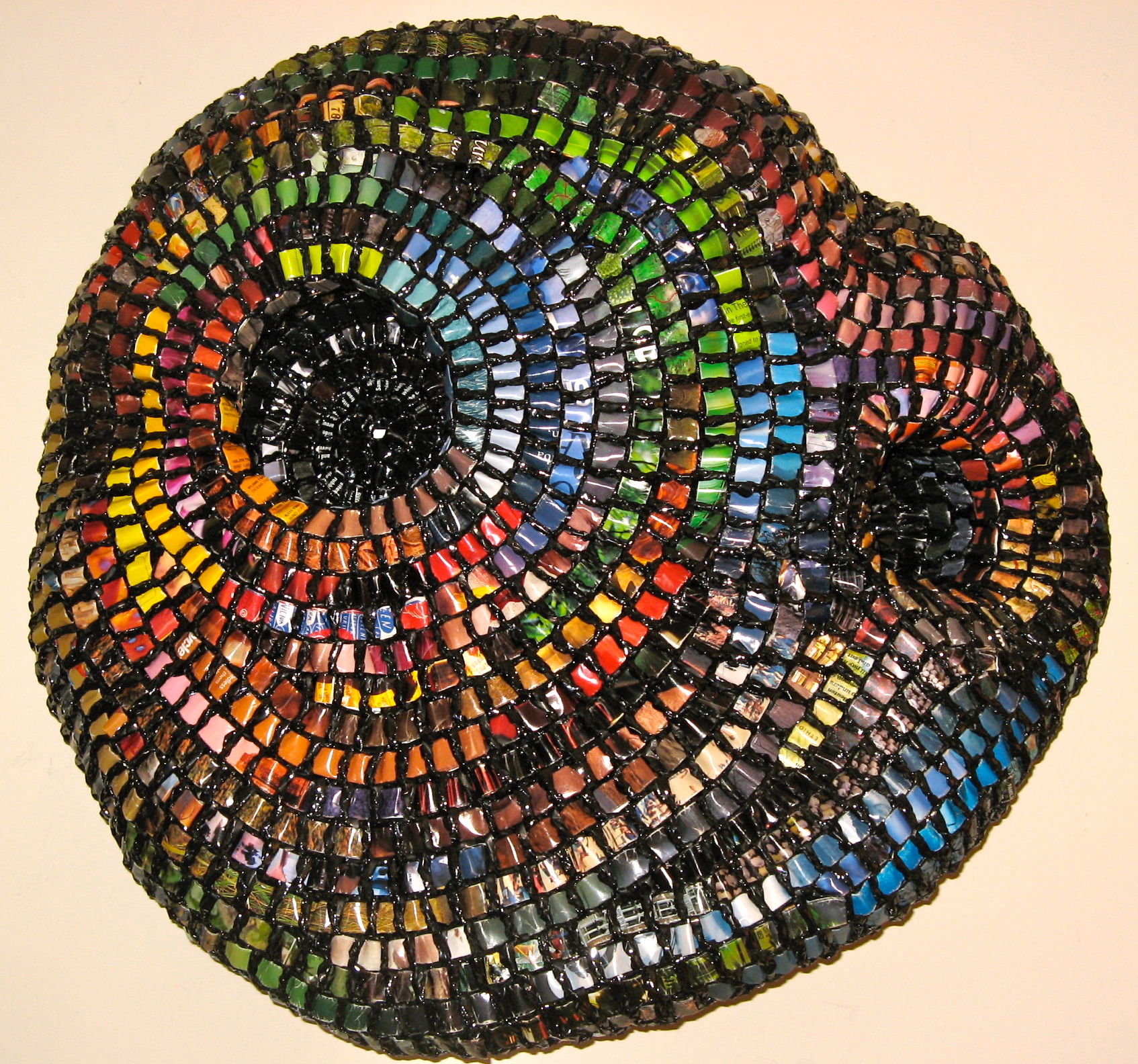
They had more recent textile-like work, as well. This piece is called “Lines that Link Humanity” and is by Ghanaian artist El Anatsui. It’s made from discarded bottle caps and liquor packaging. You all know how I love recycled things. Some day I’ll do a post about my sculptures made from plastic bags, videos,  newspapers, minutes from meetings and magazines.

Oh, what the heck! No time like the present. Here are some of my works of art.

Empty Cradle
Pair
Newspaper Octopus
Lines in the Sand
Double Nova

And now we return to the North Carolina Museum of Art.

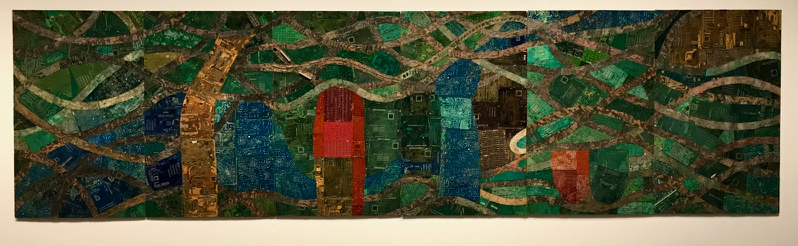
This is a work of art by Ethiopian artist Elias Sime. It’s made from recycled materials, such as buttons, batteries, bottle caps, clothes, dismembered computers and cell phones. This waste is shipped from all around the world to Addis Ababa and it is sold in huge open air markets.

This work of art is actually quite large. It’s made up of six panels and overall measures about 5’3″ by 20′.

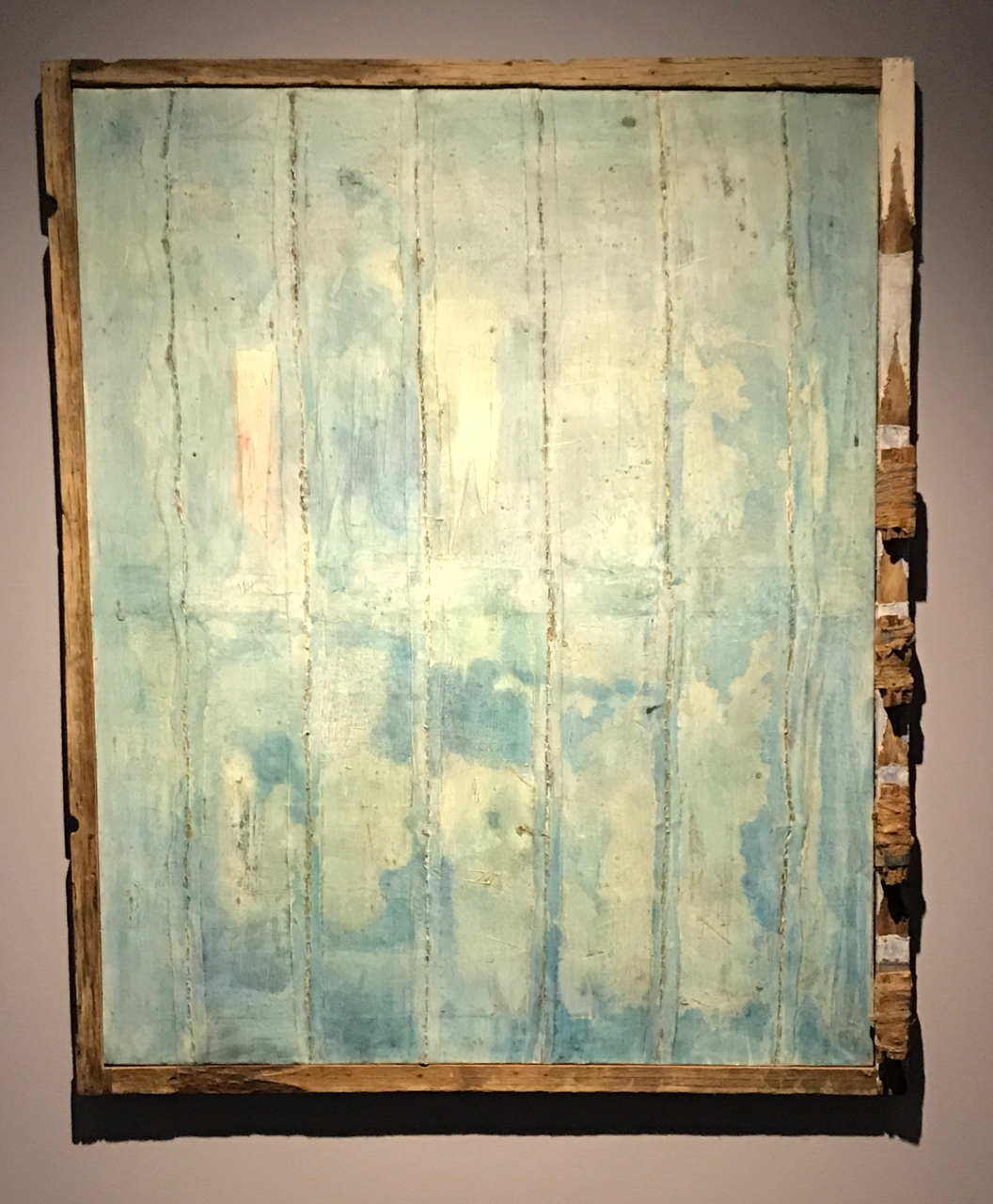
This work of art is by Senegalese artist Viyé Diba. According to the artist, blue is the symbol space and liberty. It’s created from recycled wood and cotton strip-woven cloth.

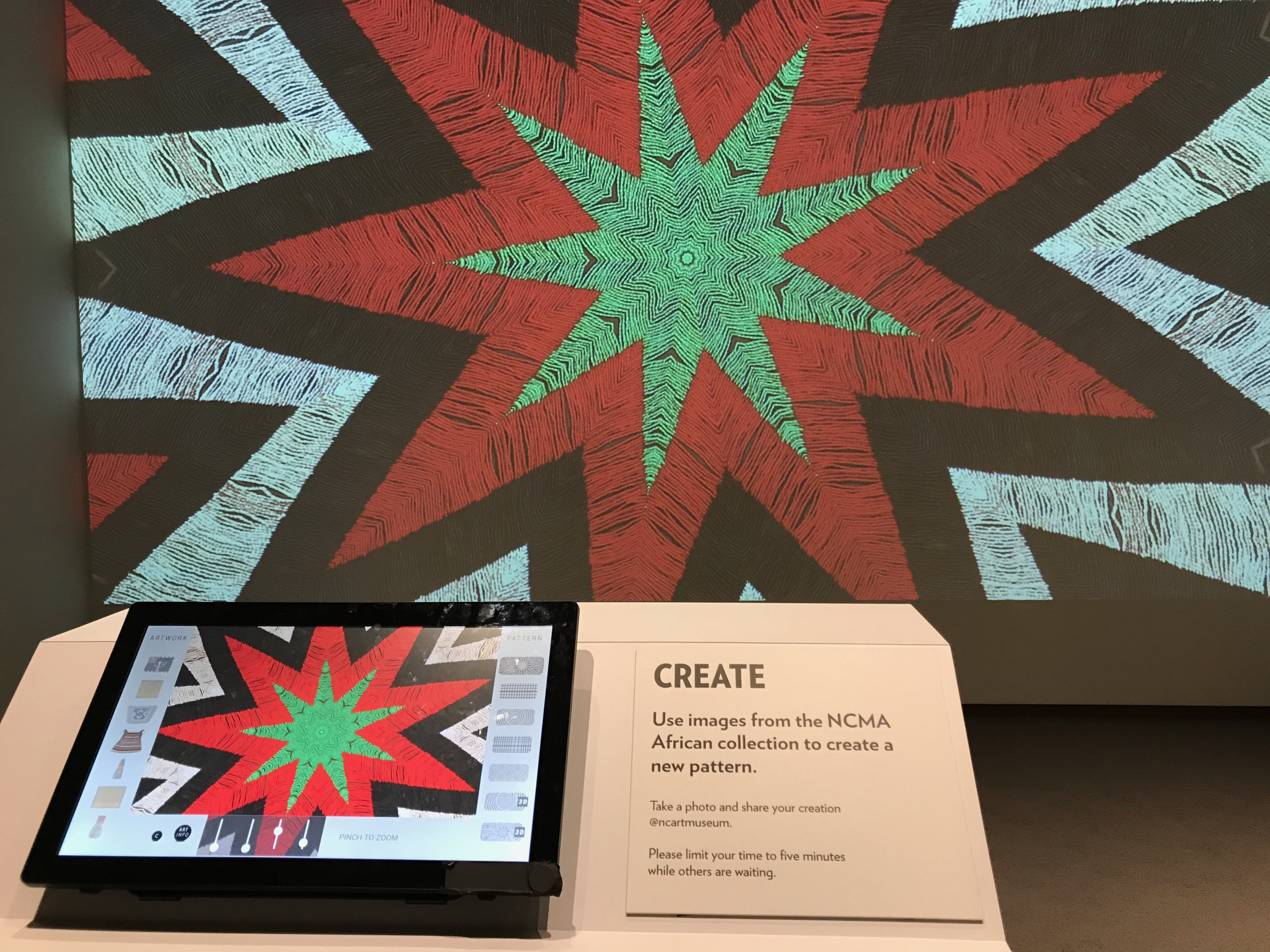
I have to admit, though, my favorite part of this part of the museum was the children’s section. And, luckily for me, there weren’t any children there that day.

I didn’t have to share!

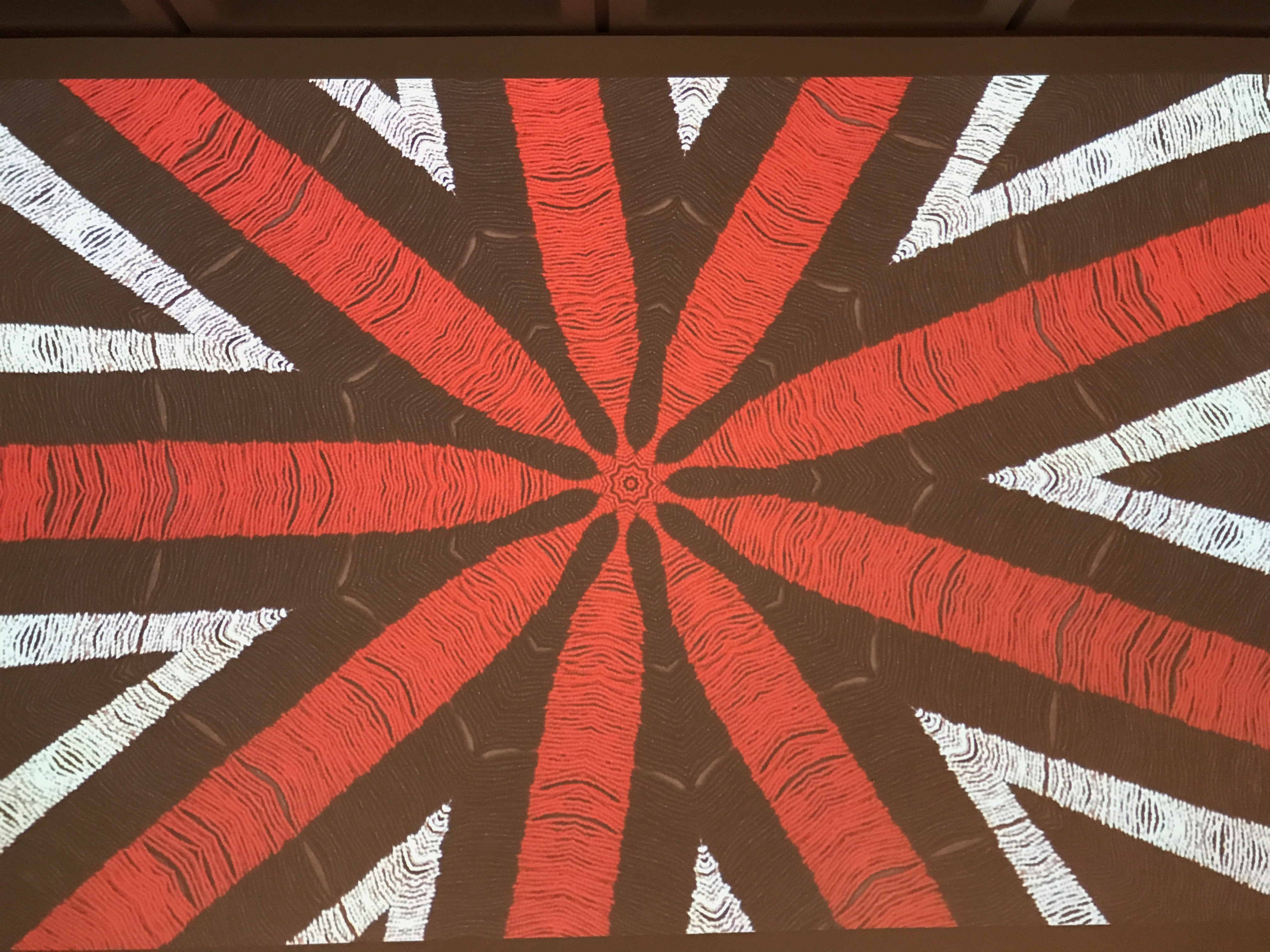
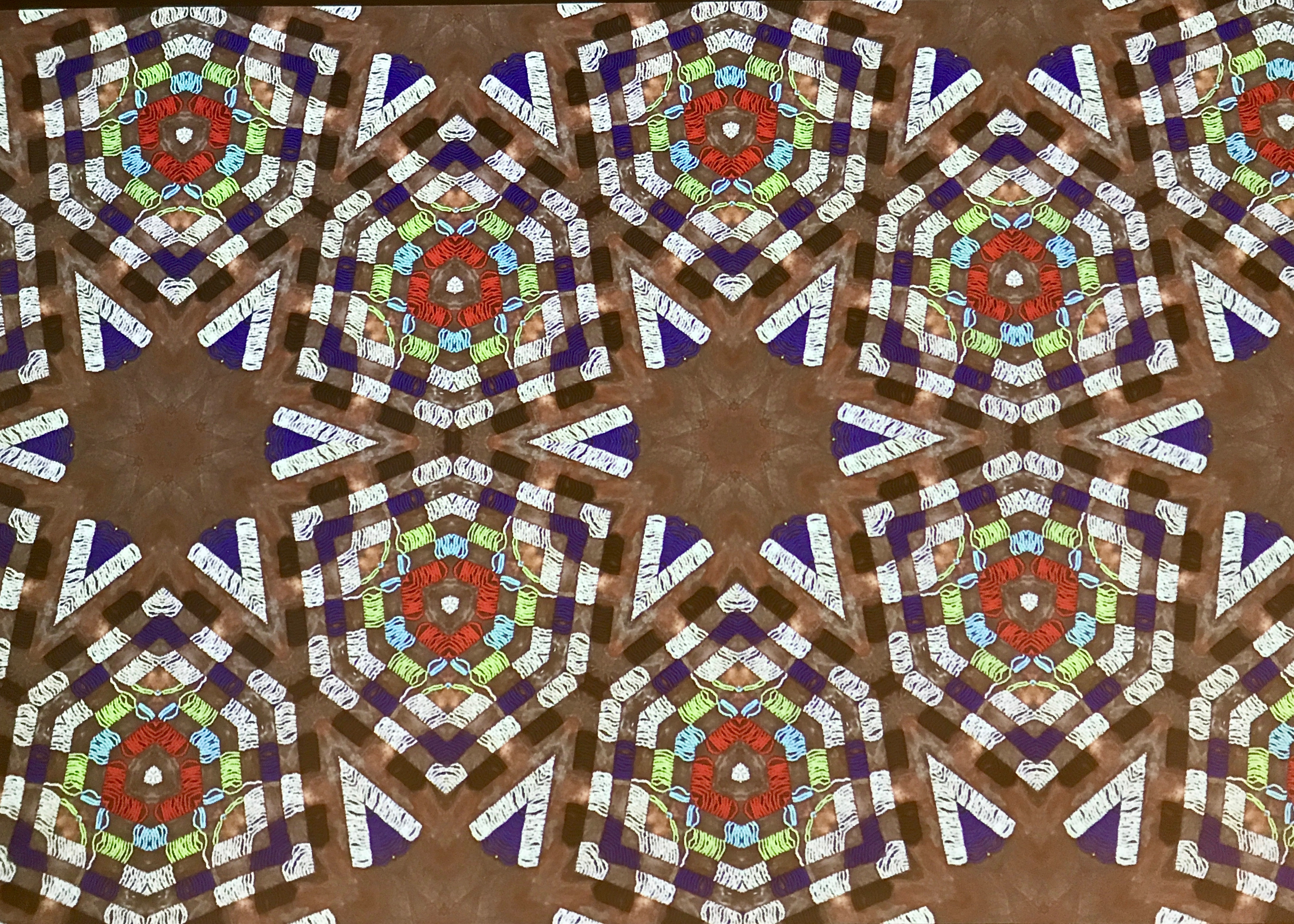
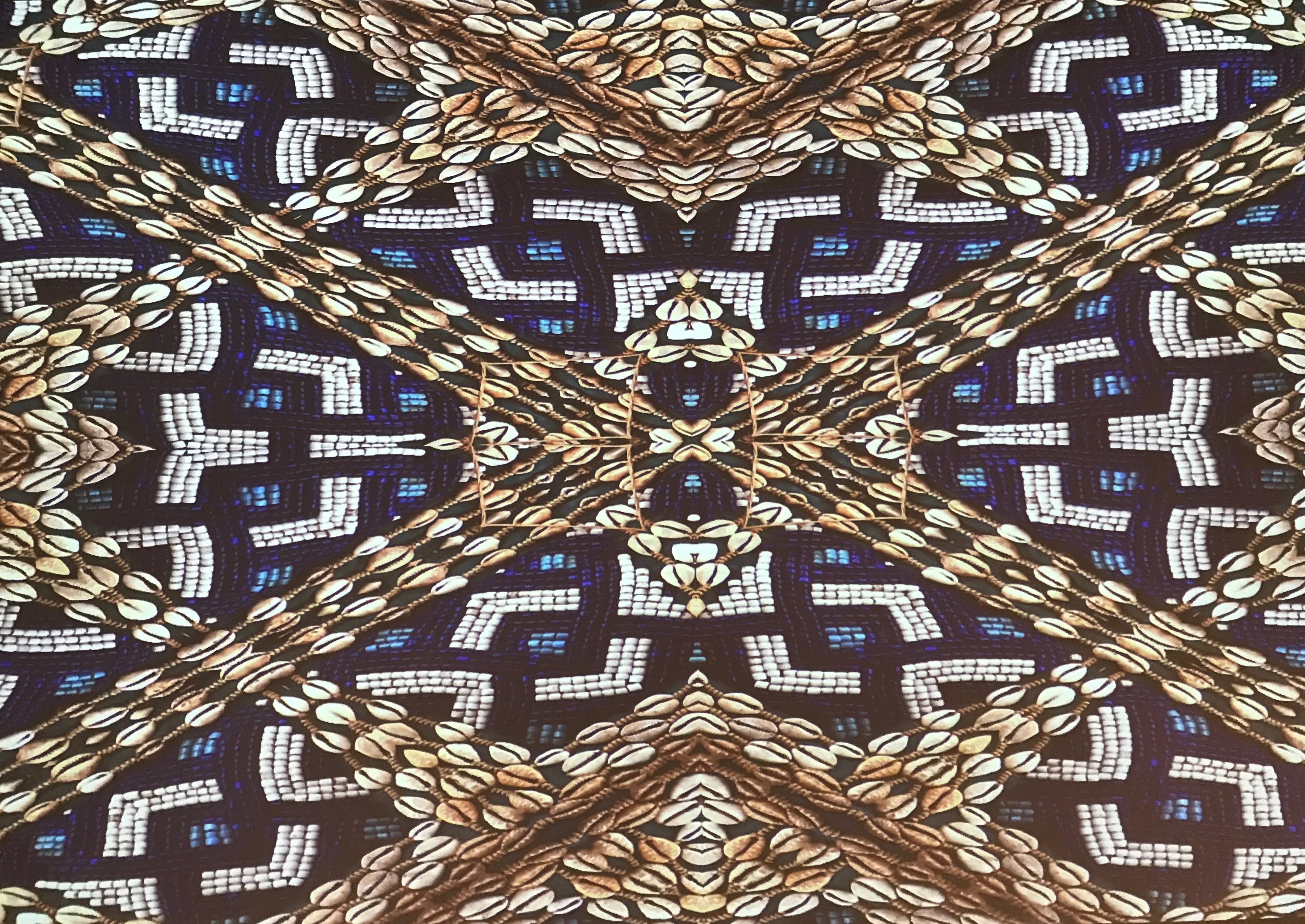
The system worked kind of like a kaleidoscope. You selected the pieces that interested you and then played around with them until you liked the results.

And play I did!

I was so glad no one else wanted to use it.

It was just mesmerizing!

I could easily see myself wearing some of these designs.

Or maybe a rug?

I just had a fantastic time playing with the system!

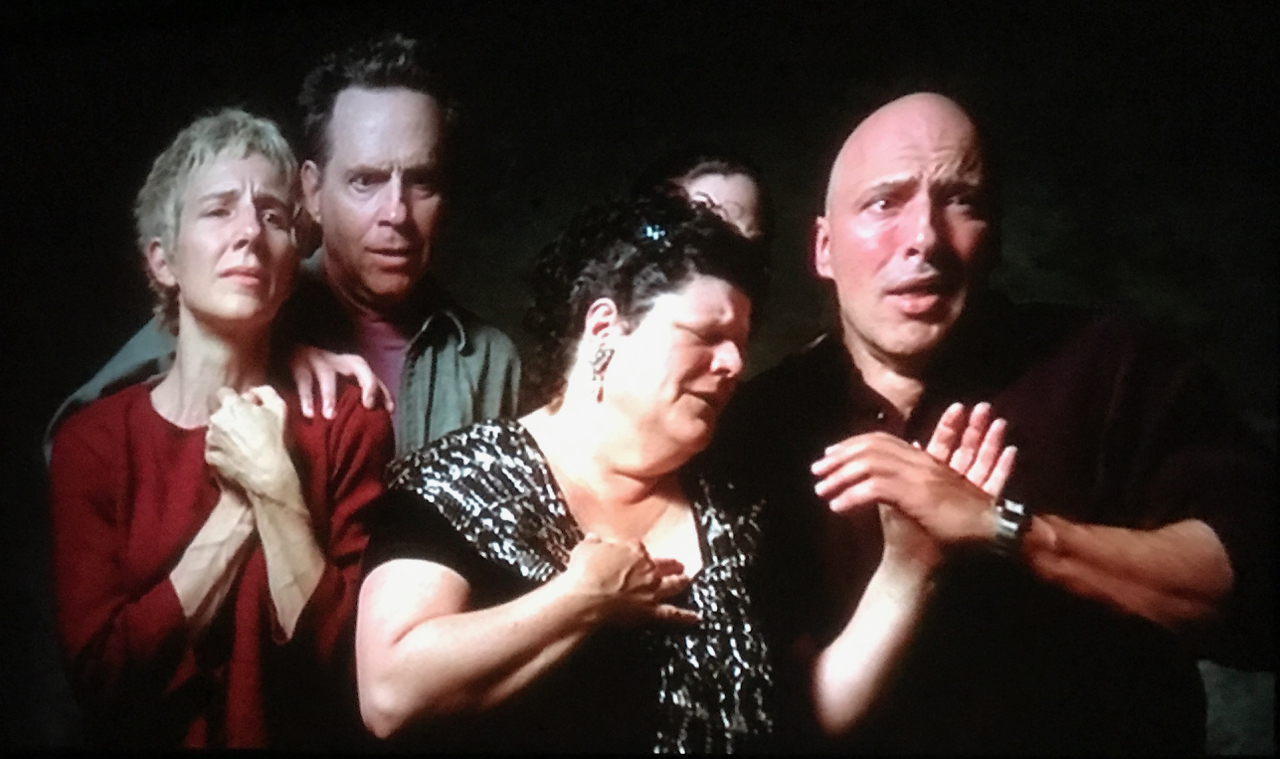
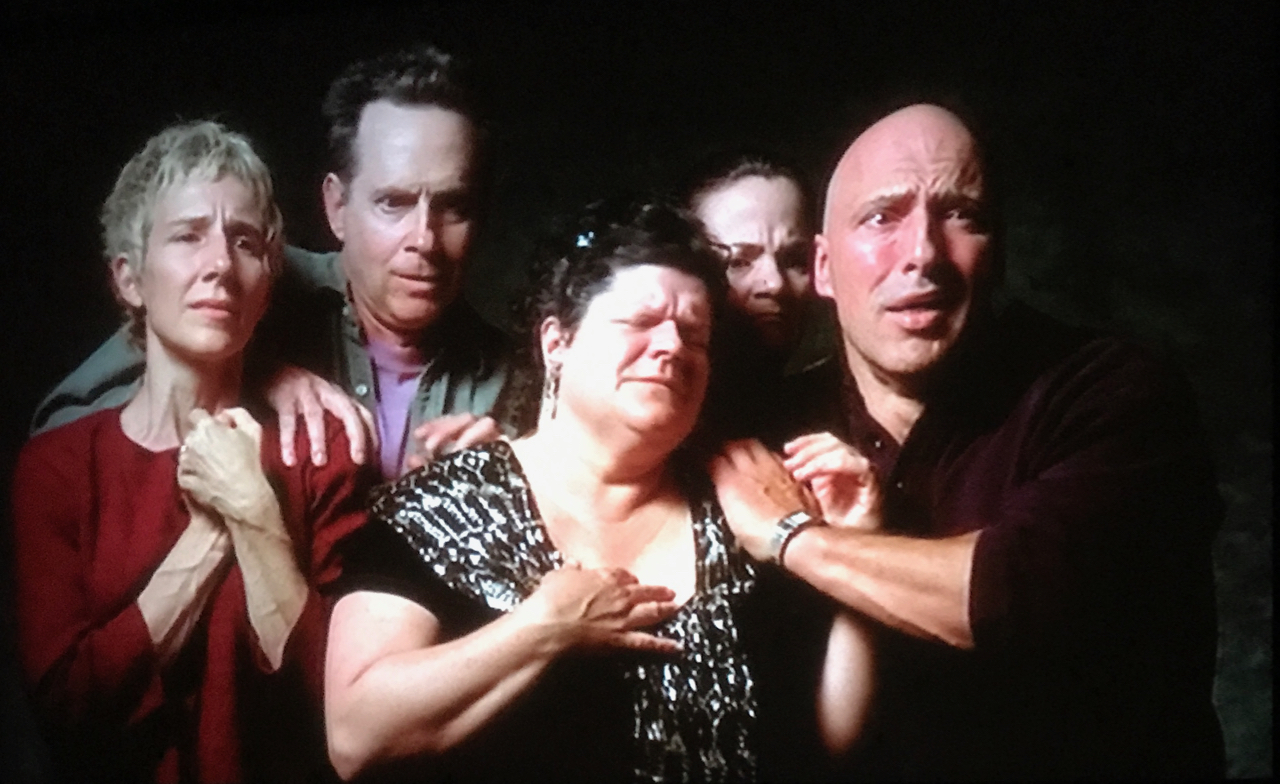
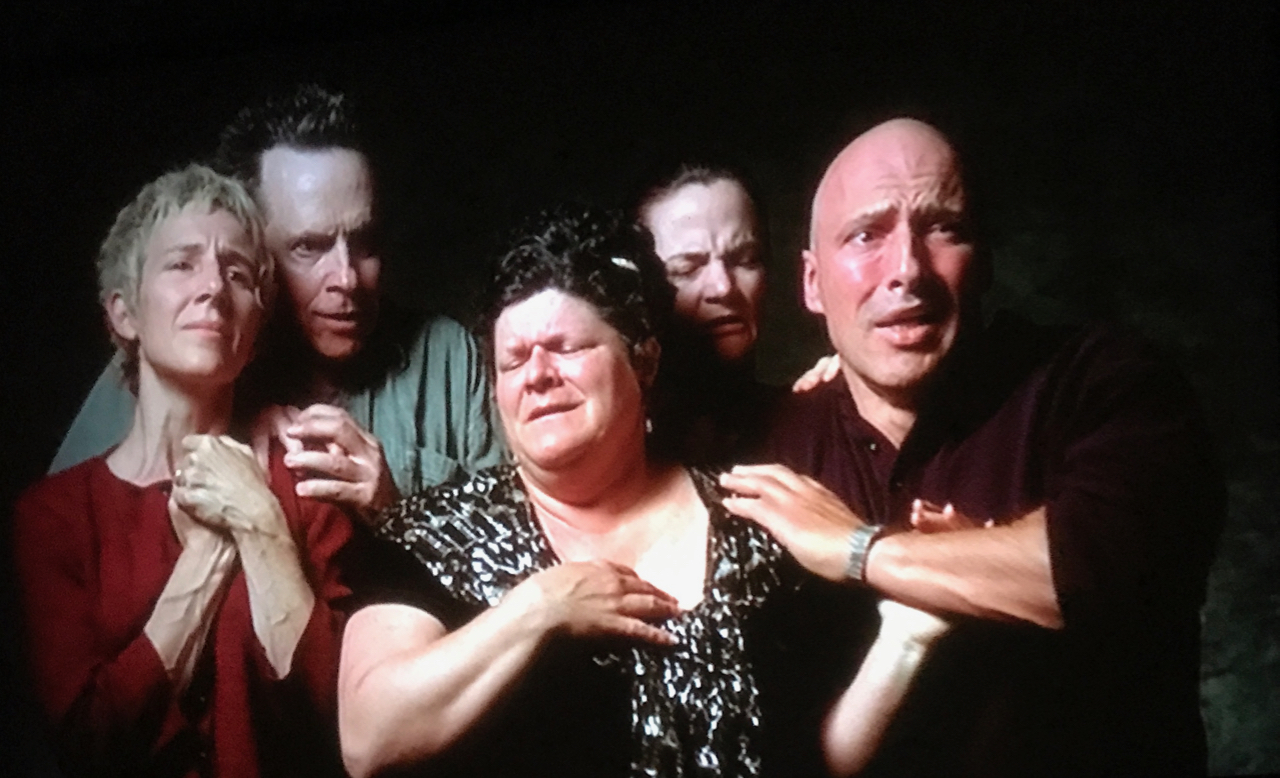
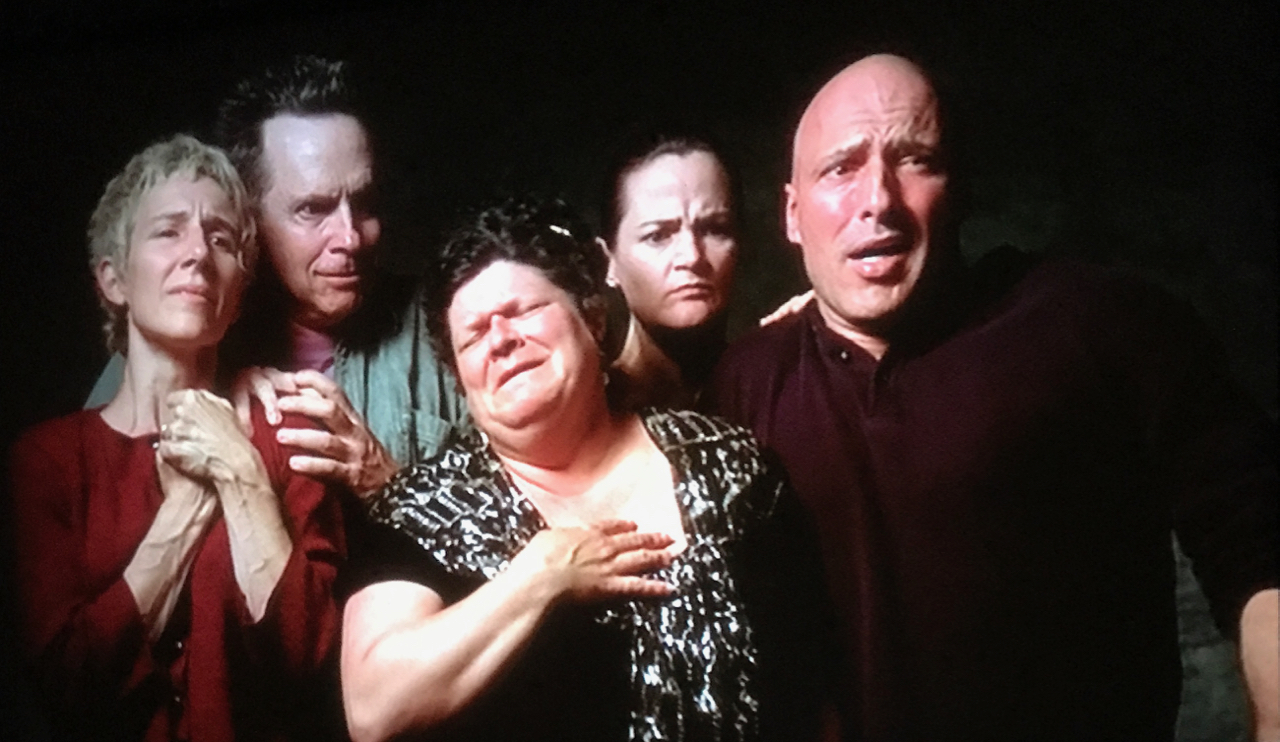
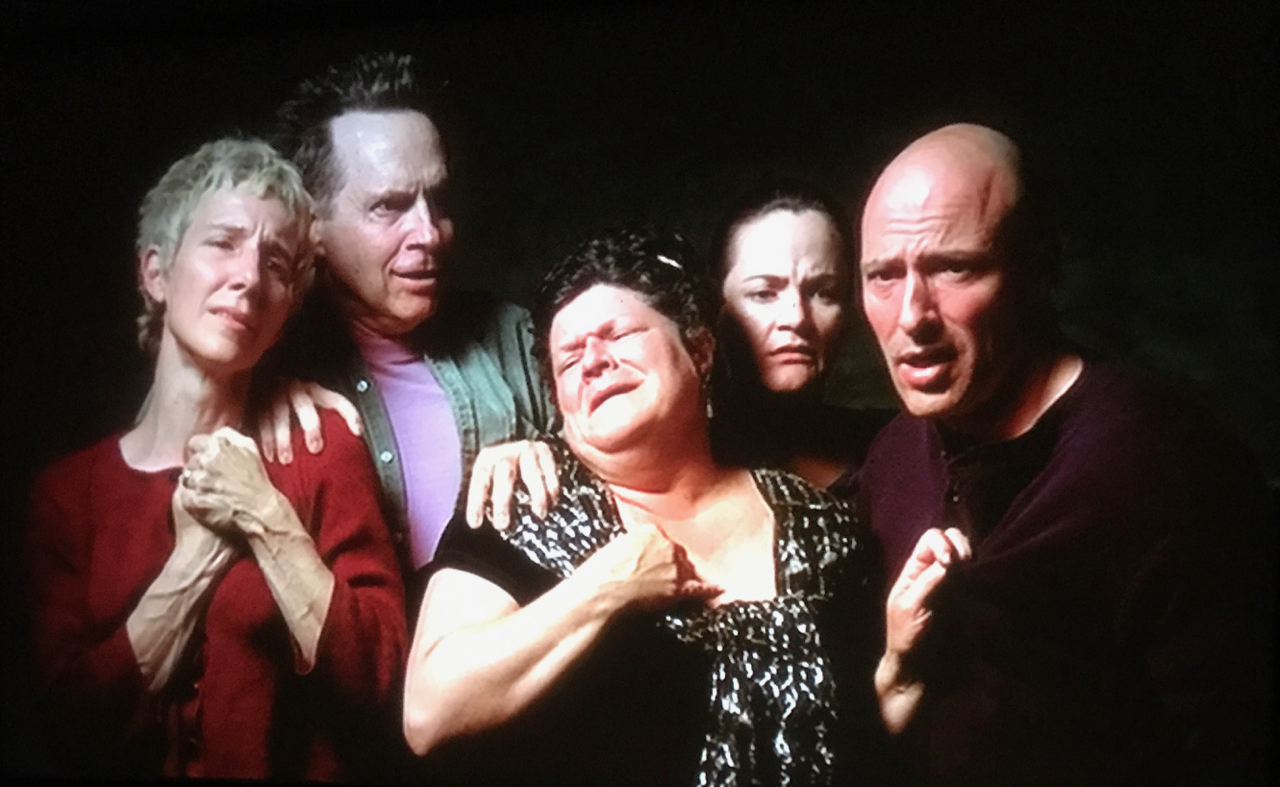
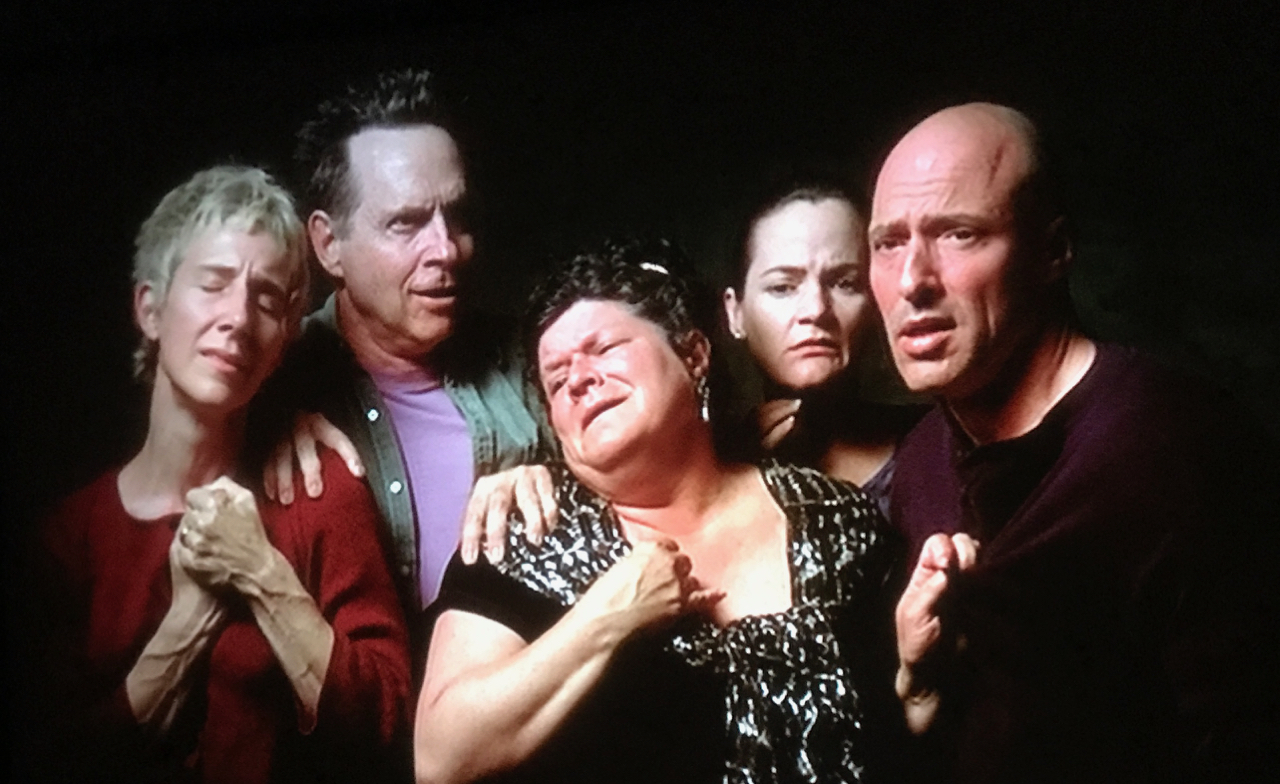
I was really taken with Bill Viola’s  2000 work, “The Quintet of Remembrance.” It’s hard to convey the impact of the work of art in a static medium, as he worked in video for this piece.

I love pieces that reference other cultures and artists. According to the information posted at the entrance to the room where the piece was playing, in this work, Viola, an American artist, references Hieronymus Bosch’s Christ Mocked (The Crowning with Thorns) (circa 1490-1500), Andrea Mantegna’s Adoration of the Magi (1495-1505) and Dieric Bouts’s Mater Dolorosa (Sorrowing Madonna) (1470-75).

Each of these paintings captures one moment in history.

Viola uses video to explore a series of sentiments relates to these paintings.

With the technology of digital video recording, sixty seconds of footage is slowed to fifteen minutes.

We’re allowed to observe actors’ interpretations of compassion, shock, grief, anger, fear and transcendence.

The video’s slow speed emphasizes subtle transitions from one feeling to another.

We are allowed to experience certain timeless, universal qualities of expressive emotions.

The changes are really subtle but captivating at the same time.

I could easily have watched it a few times, but I had much more museum to visit!

I left the annex and headed over to the main part of the museum.

Yep, it was still raining.

Once inside, I saw a sign for the cafe. I wasn’t ready for a break, but I thought I’d check it out.

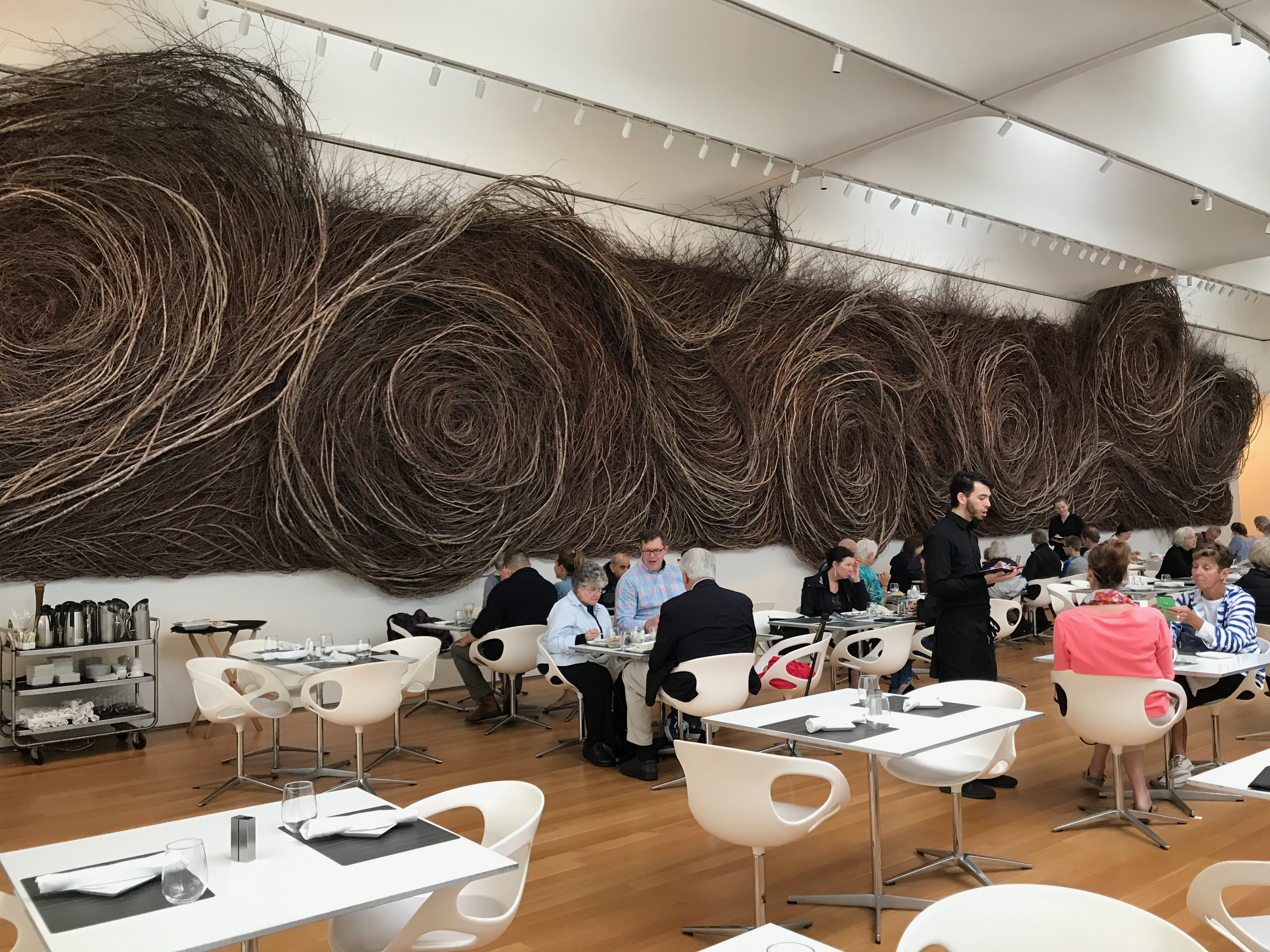
What a cool piece of art! And they have waiters?! I will definitely have to return some day. This looks like a place I’d like to eat!

Now, I suppose that there is a logical way to tour this museum. By looking over my photos and the order I took them, I think I may have gone the wrong way. Still, everything was well displayed and the lighting was wonderful.

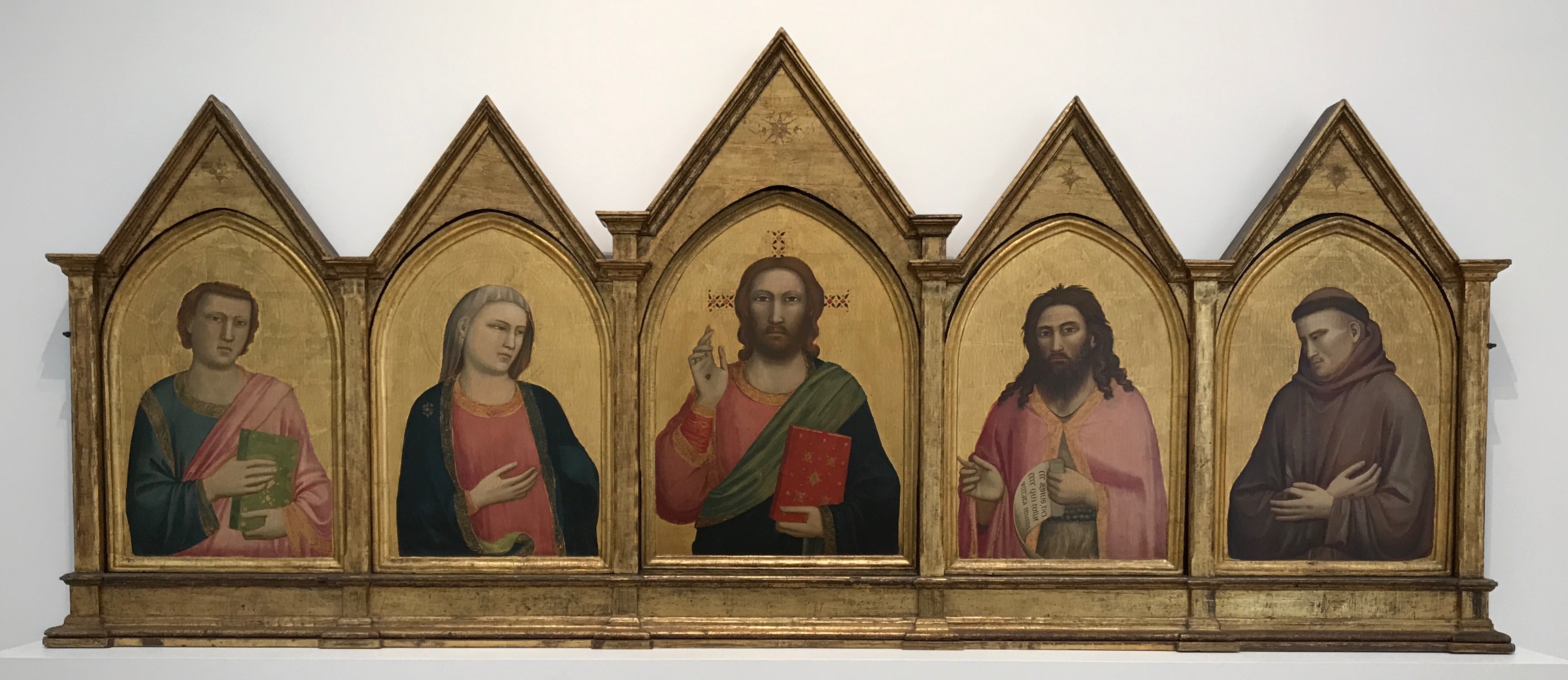
This altarpiece was created by Giotto di Bondone and Assistants somewhere around 1300. I was lucky enough to see the Scrovegni Chapel in Padua, Italy, on my last trip in 2006.

Giotto is one of the most influential artists who ever lived. He is credited from changing the flat, artificial styles of Byzantine art to a style more based on the study of nature. He was the first painter to paint his figures with believable bulk and weight and give them expressive gestures and features.

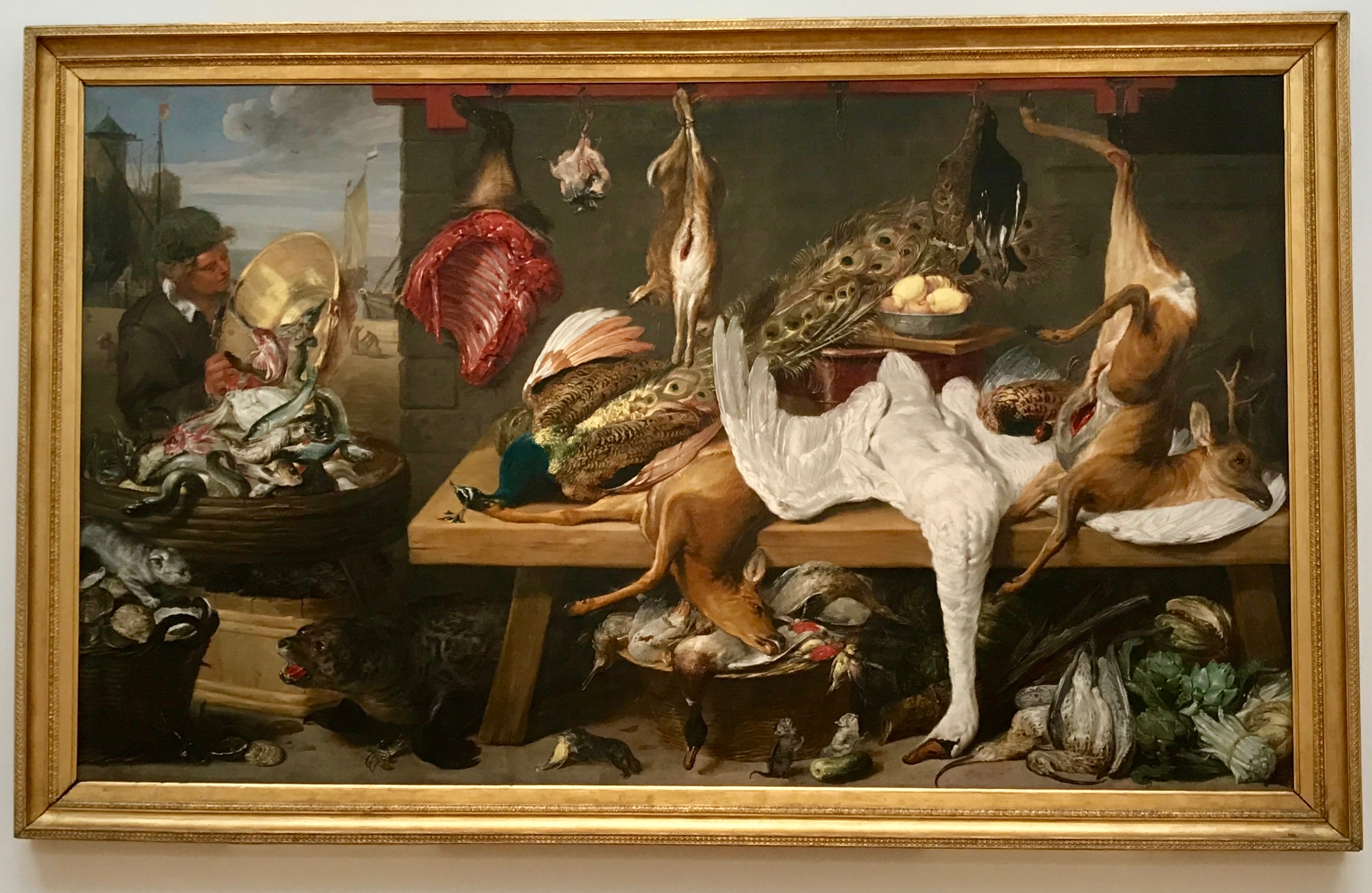
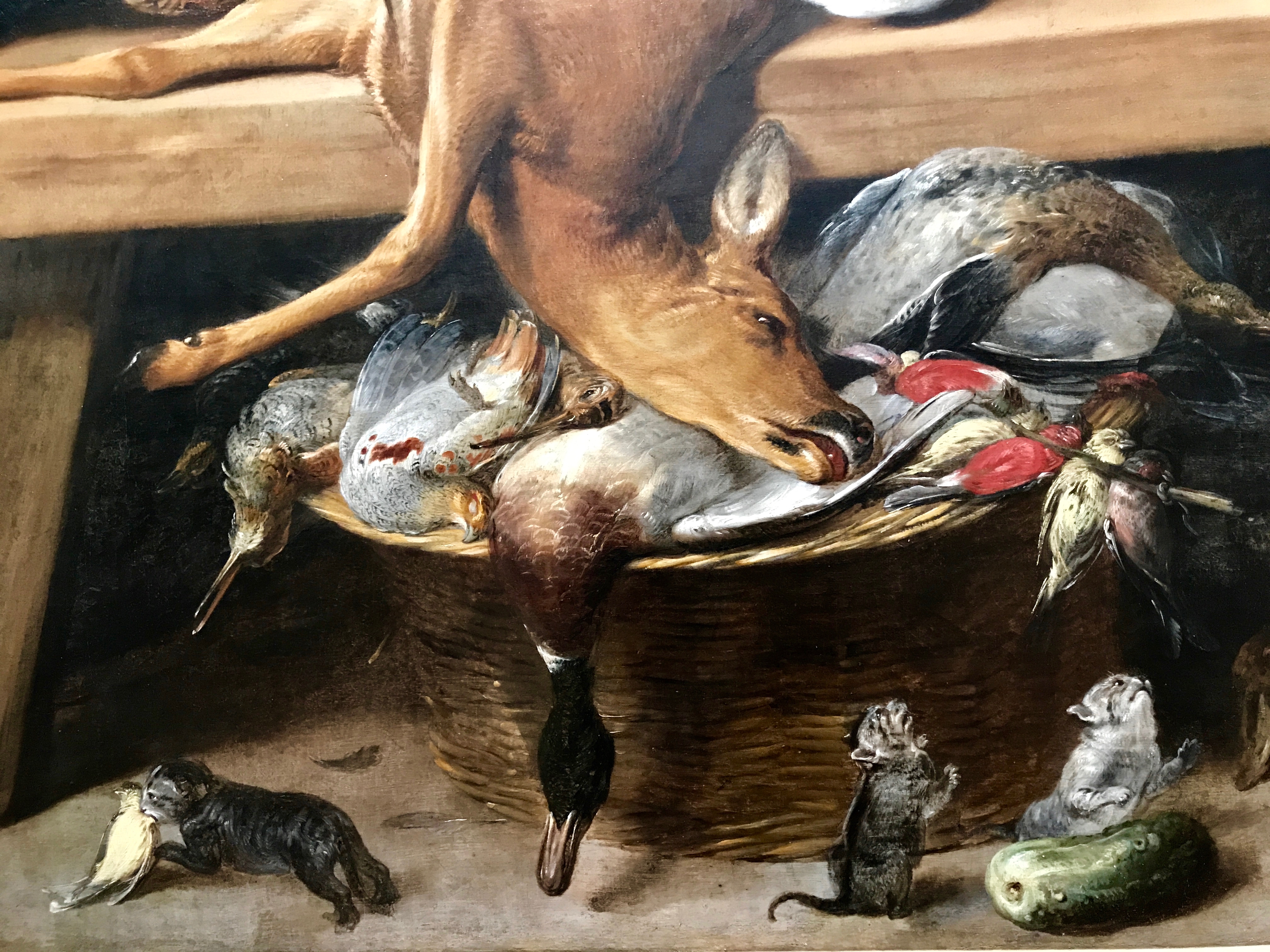
A mere 300 years or so later, Frans Snyders (and his Workshop) painted this work of art, “Market Scene on a Quay.”

The details in this painting are amazing.

I love the little kitties grabbing themselves some dinner!

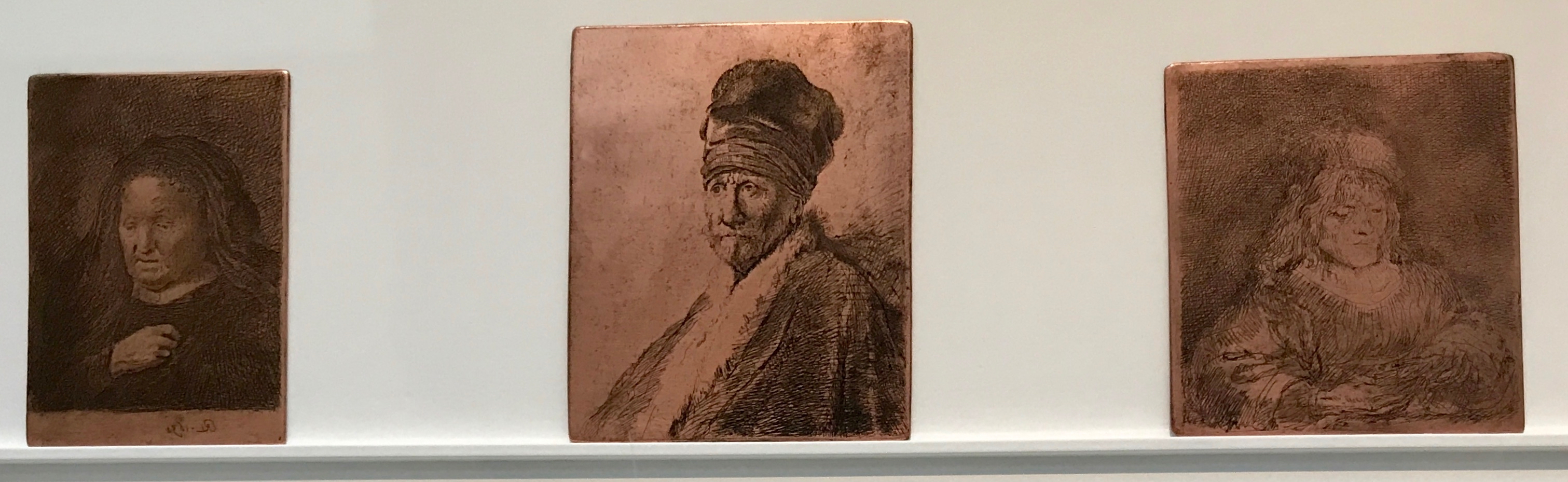
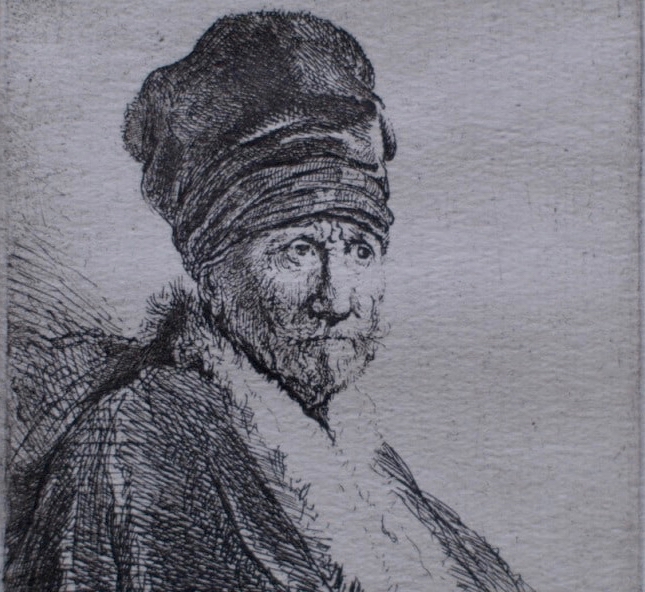
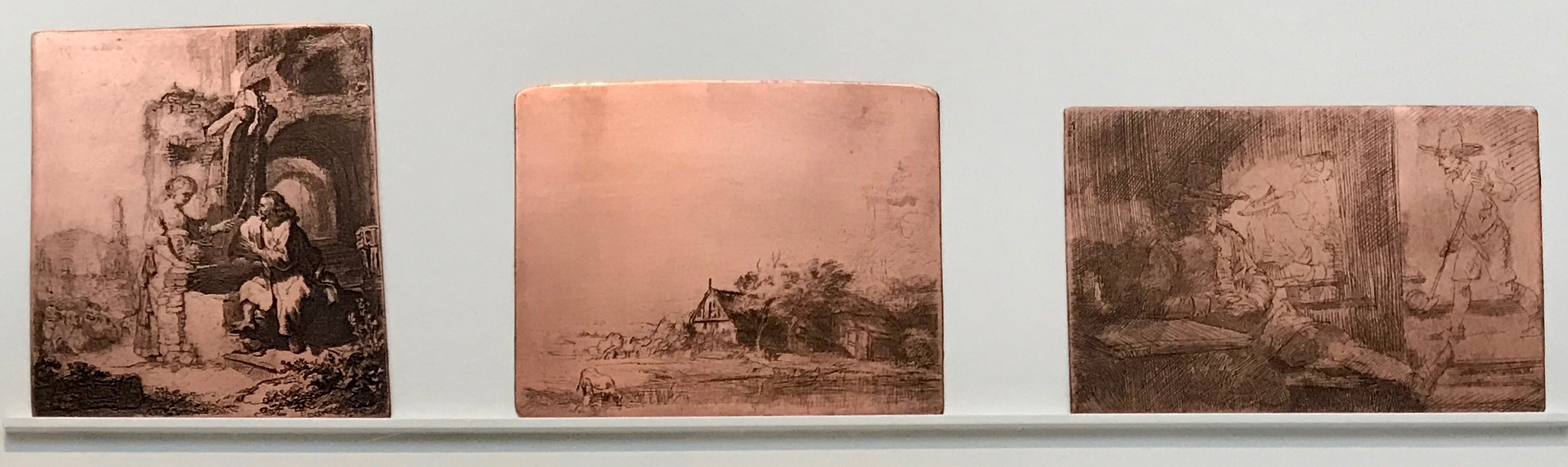
They had some Rembrandts, too, which were from the same era as the previous painting. Rembrandt worked in many media. These are not the finished works of art; they are the copper plates that produced the etchings.

The museum didn’t have the prints, but I did manage to find one on the internet to accompany the plates.

The plates had great value through the ages.

As they would get worn down from use, printers would re-etch the lines and keep on printing. Now they are valuable, because Rembrandt.

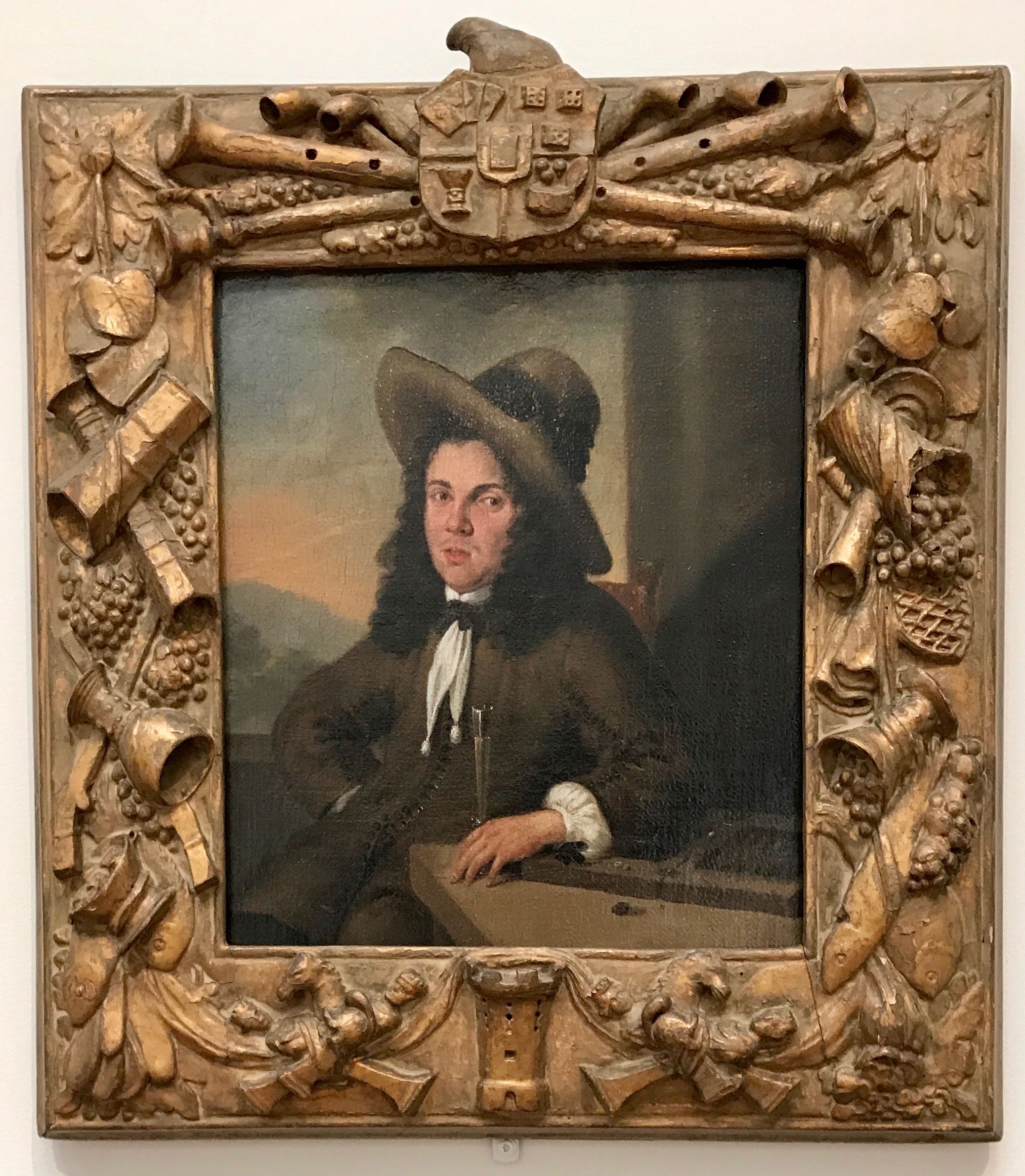
I’m not sure of the details of this painting, but I thought the way the frame reflected the subject matter was interesting. Could this fellow be given to drinking and gambling? If so, there’s an app for that!

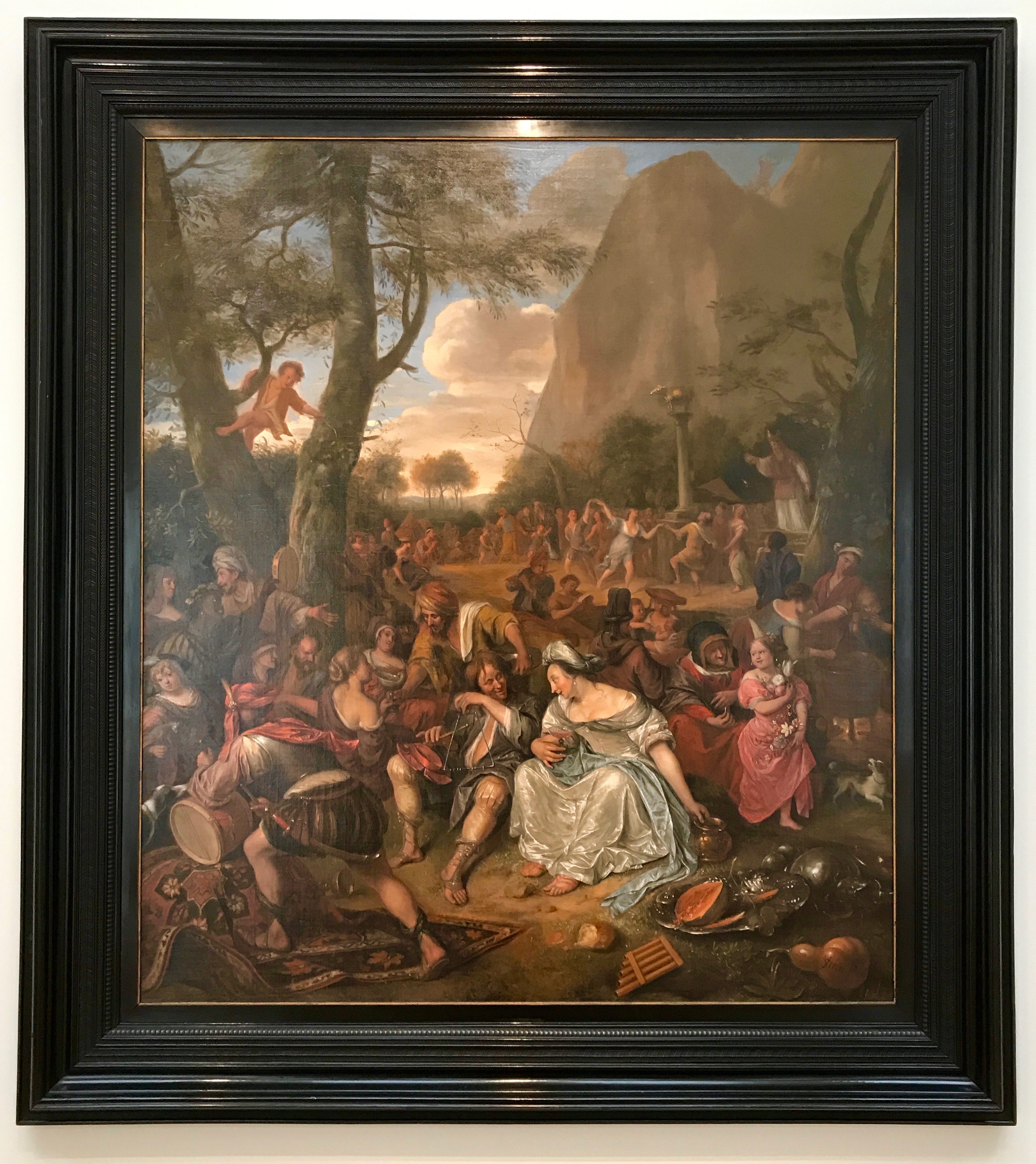
Speaking of debauchery, this painting by Jan Steen seems to fit the theme.

The Worship of the Golden Calf, painted around 1670, tells the story of what happened with the Israelites while Moses was away on Mount Sinai receiving the Ten Commandments.

Moses’ brother Aaron gave in to the demands of the people and created a golden calf for them to worship. you can read all about it in Exodus 24 in the Bible or click here.

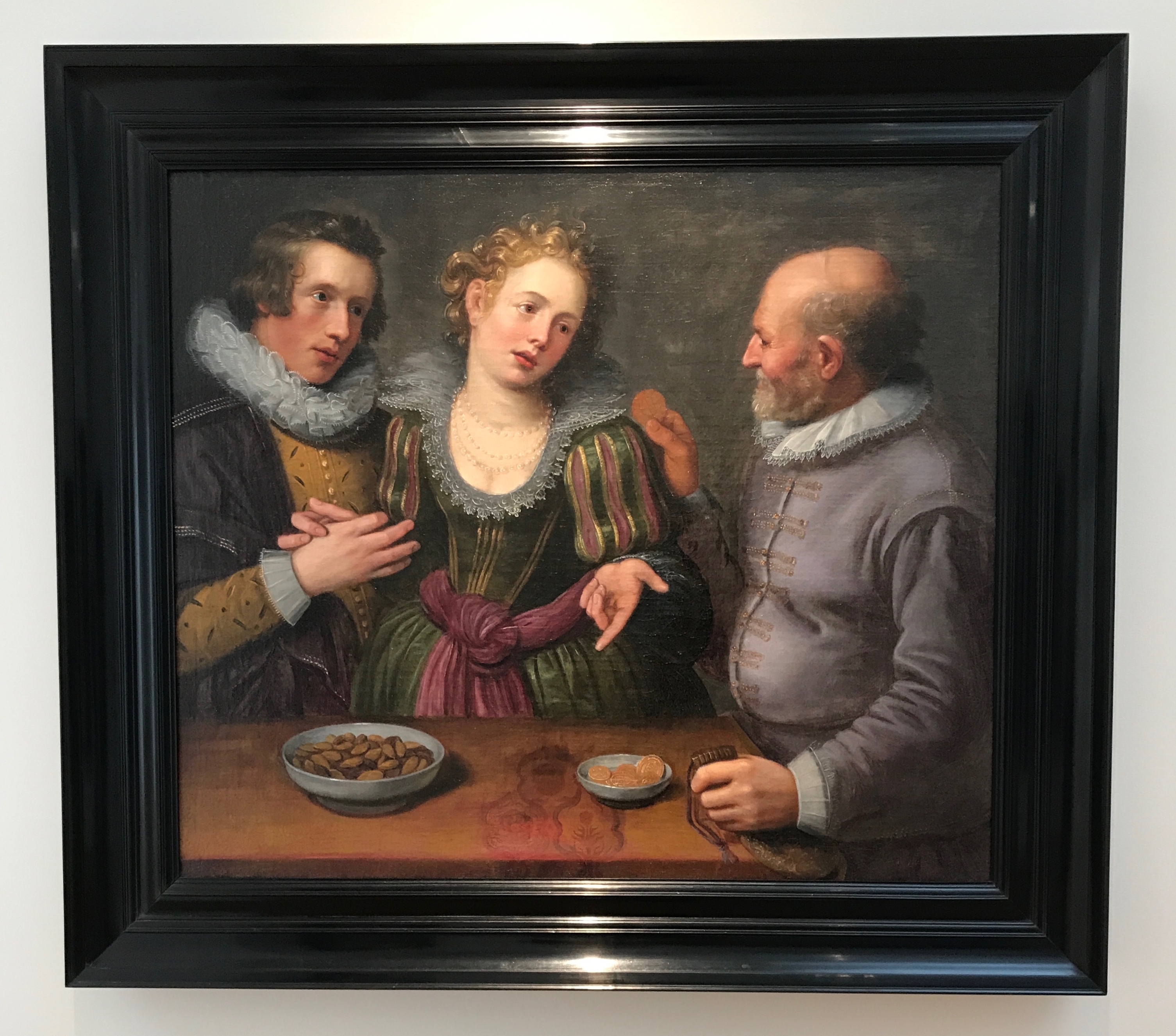
I’ll share one more painting from this section of the museum. This work of art, An Allegory of Unequal Love, is by Jacques de Gheyn II, and was painted in the 1620’s. I’ll let you study it on your own.

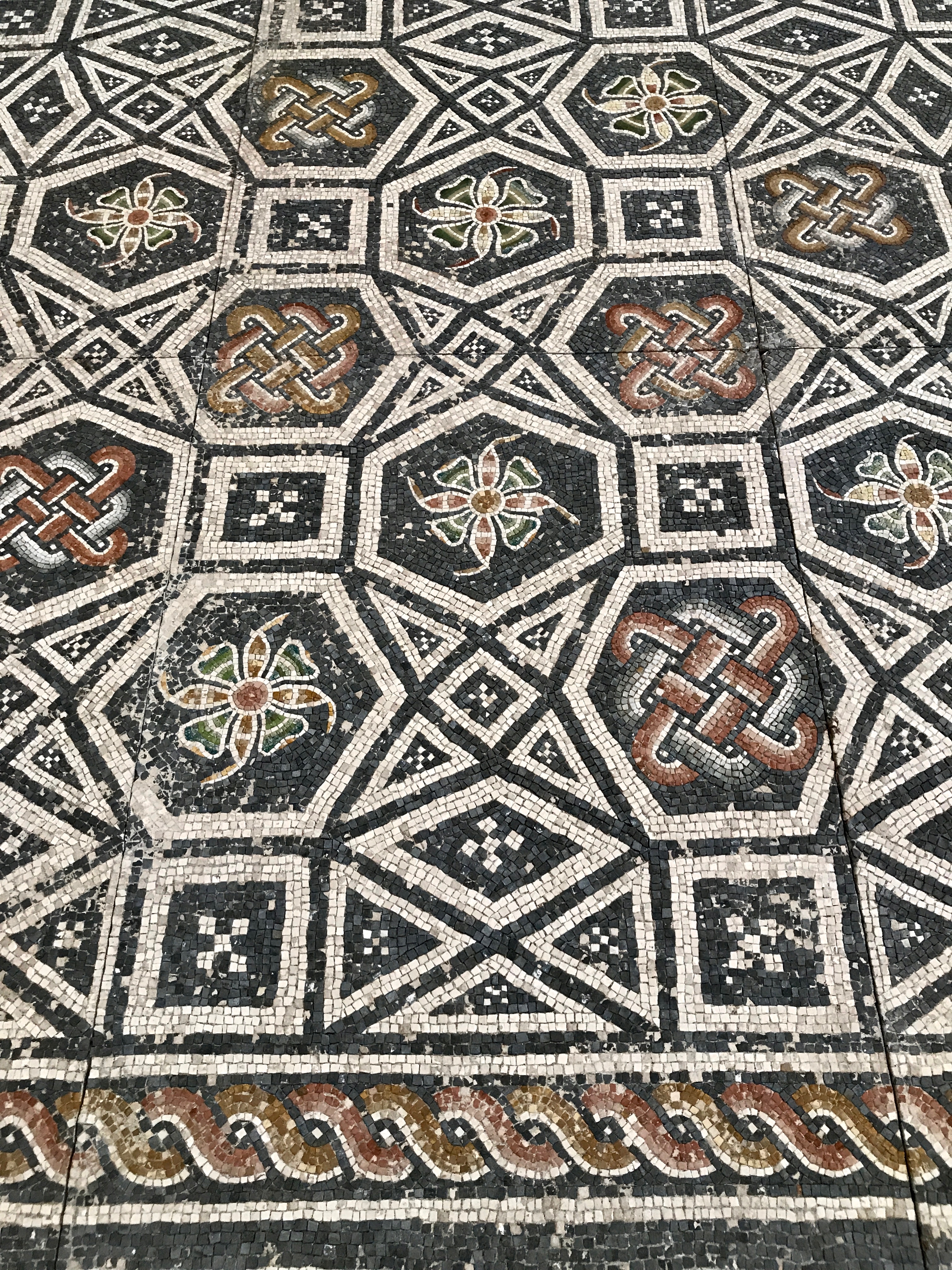
Moving on, I passed this second century Roman mosaic. Something tells me that I may not be proceeding through the collection in chronological order.

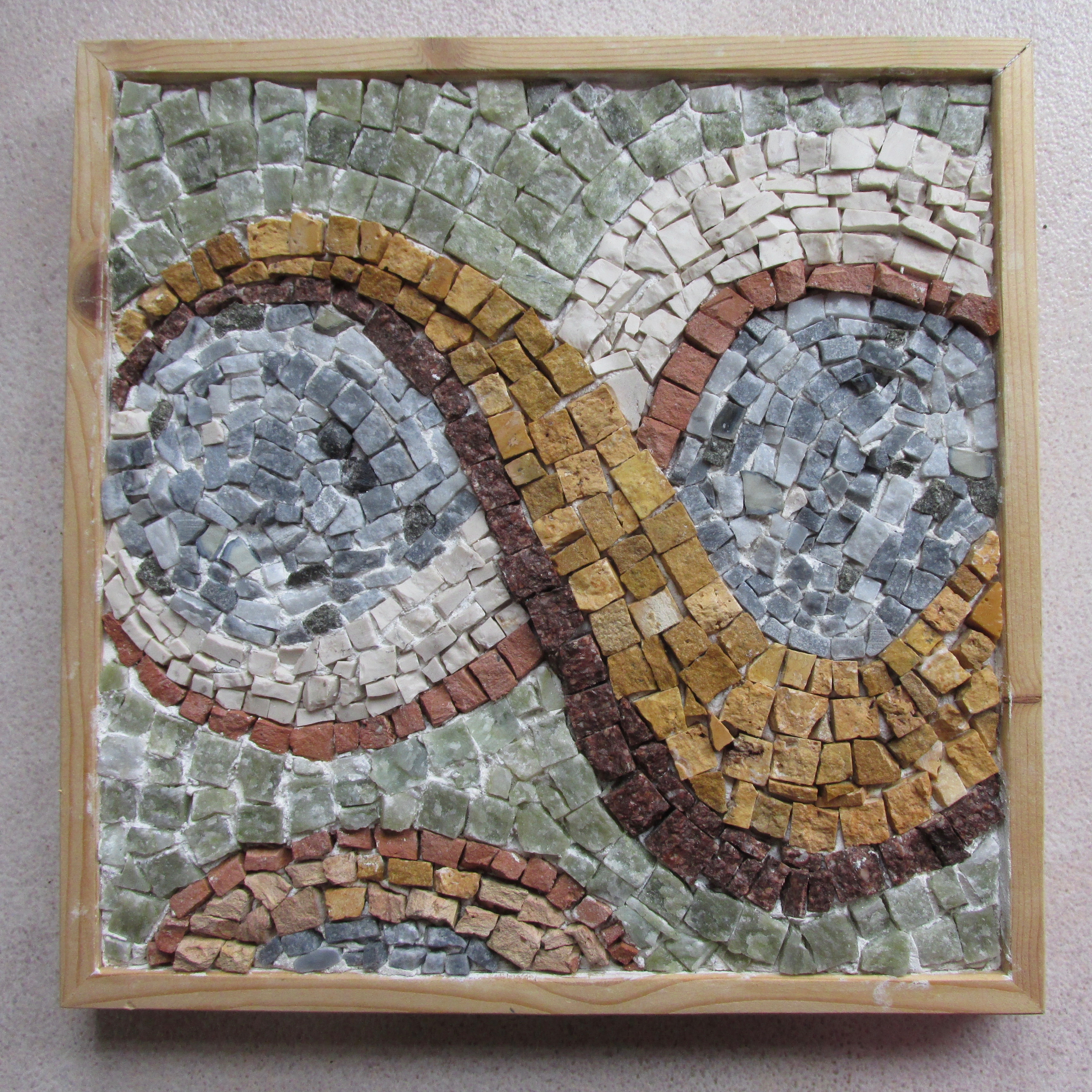
As long as I’m indulging myself, here’s a mosaic I made when I attended a mosaic course in Ravenna, Italy in 2006.

And, on we go…

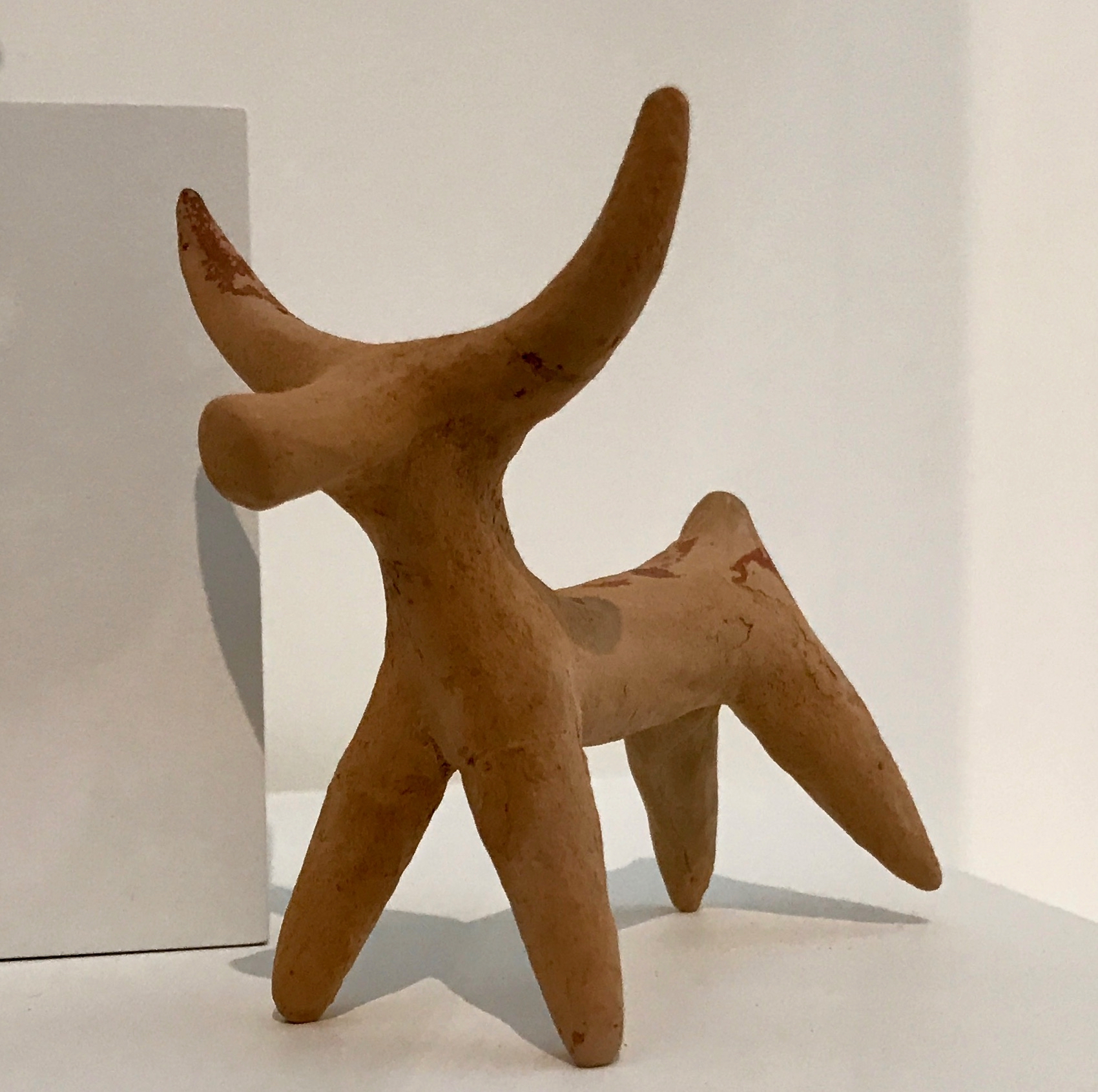
Apparently, I’m not proceeding in a chronologic or geographic order. This bull is from Greece and is from circa 1400-1200 BCE  – or AD if you are still rocking it old school.)

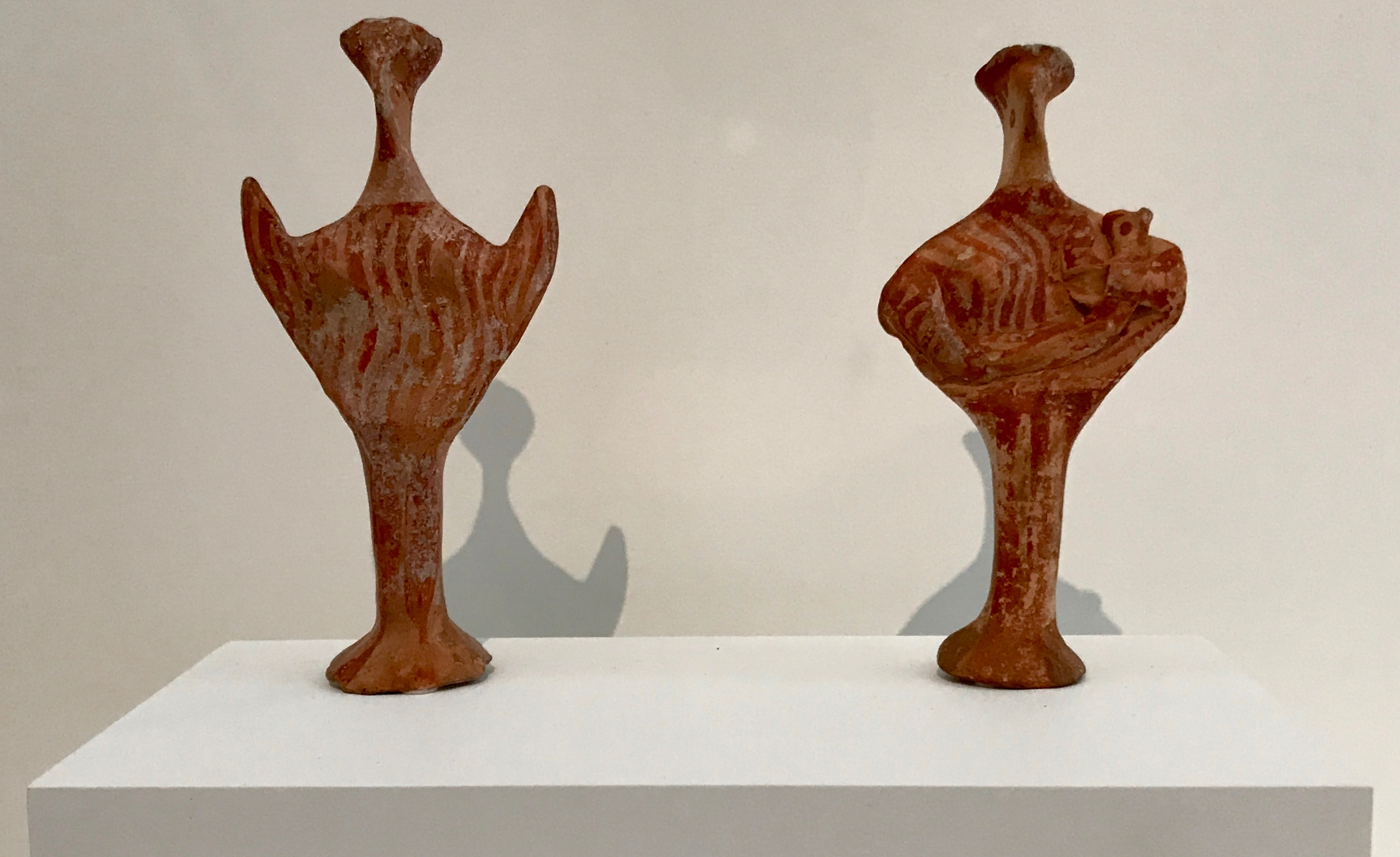
As always, women are a favorite subject. The one on the left is identified as “Idol” and the one on the right is “Woman holding child .”

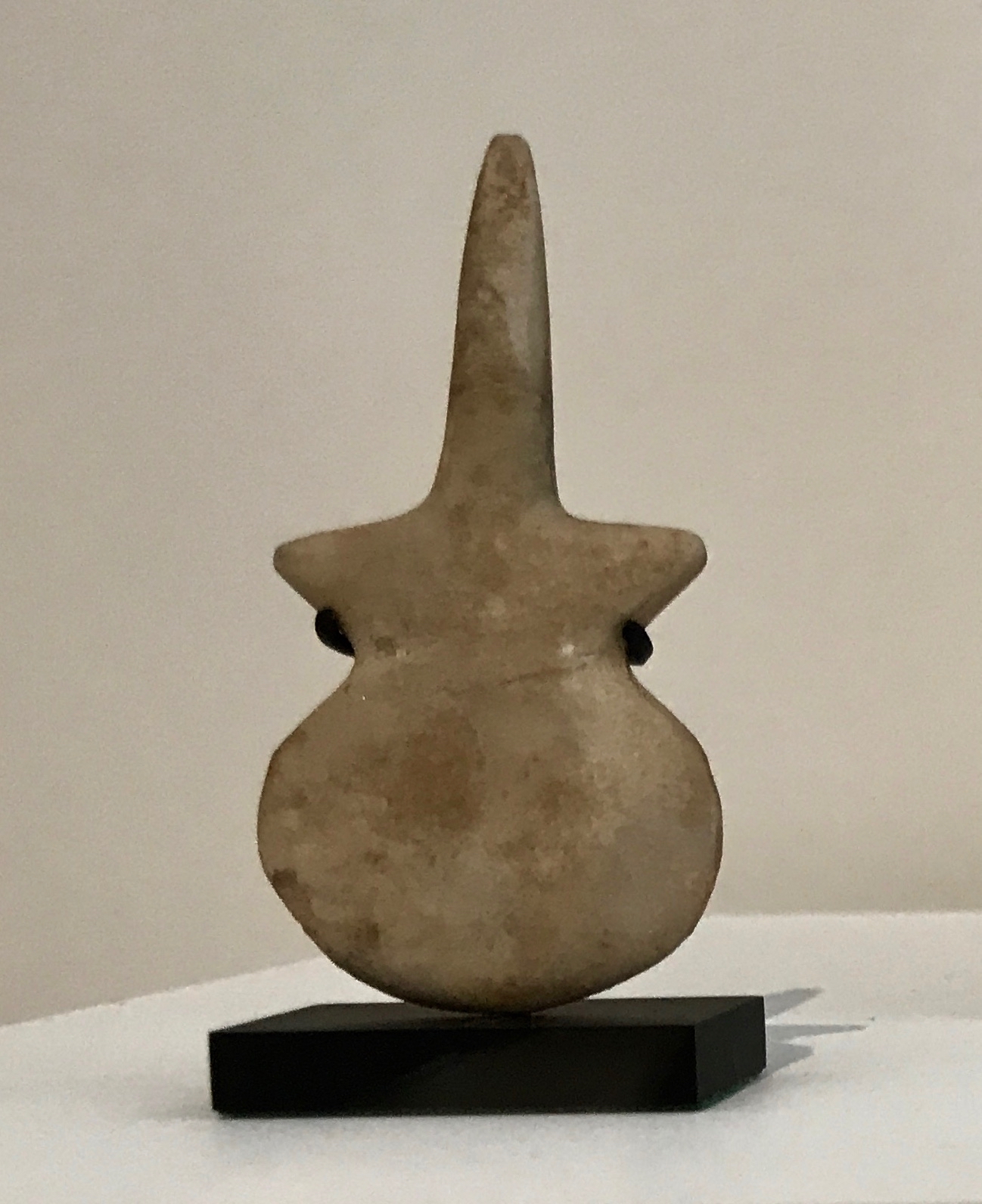
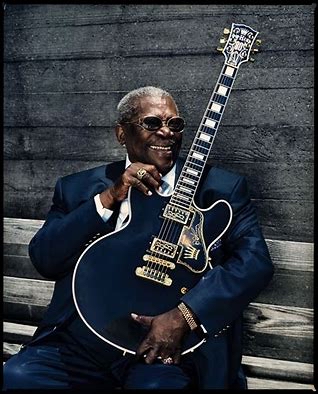
I didn’t make any notes about this, but I am sure this guitar-shaped figure is female.

After all, B.B. King named his guitar “Lucille.”

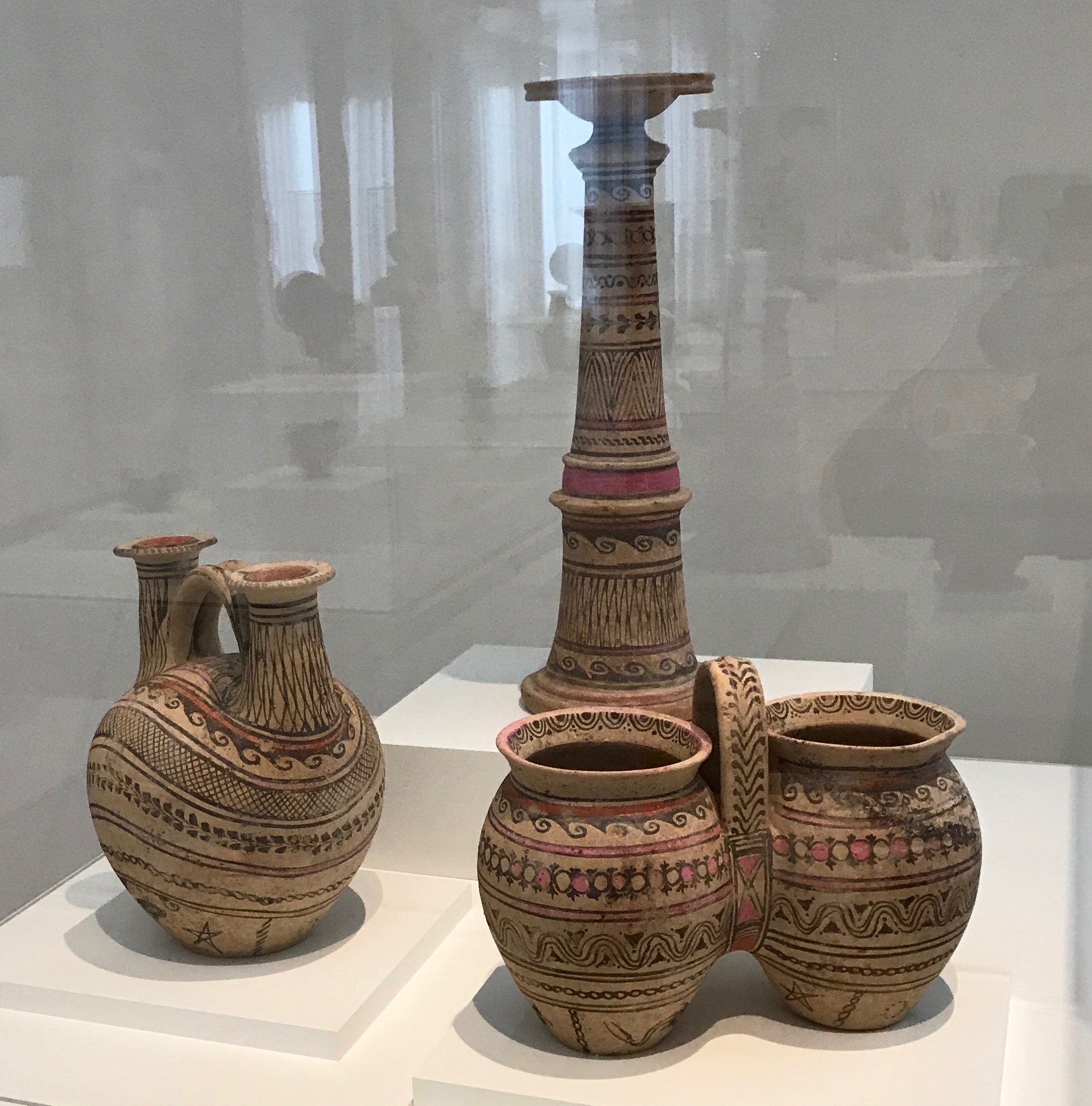
We’re still in Greece, but now we’re in the late 3rd or 4th century BCE.

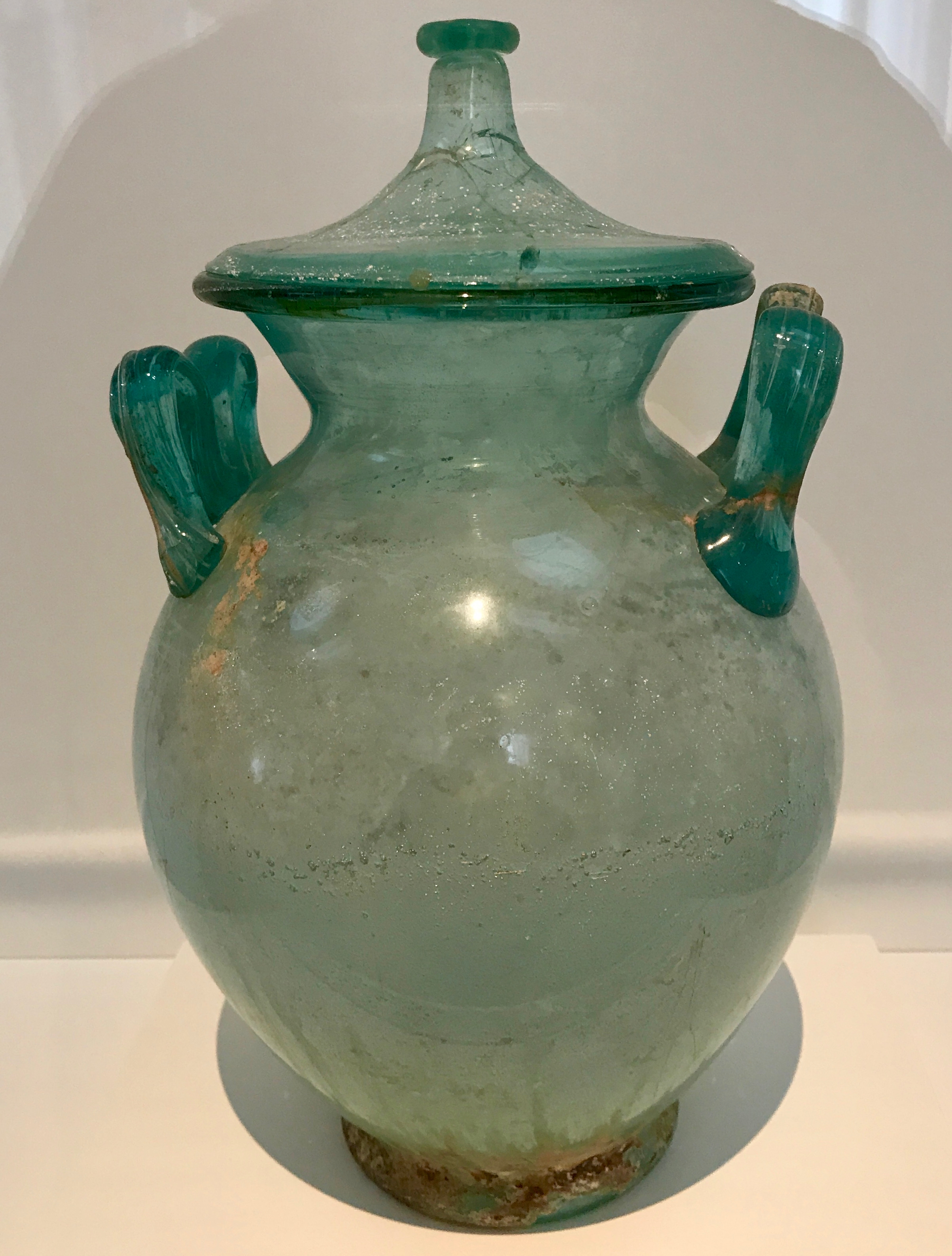
This is a blown glass Roman amphora from the 1st-2nd century. It would have been used as a burial urn inside a tomb. It held an egg-shaped lead vessel, which contained the ashes of the deceased.

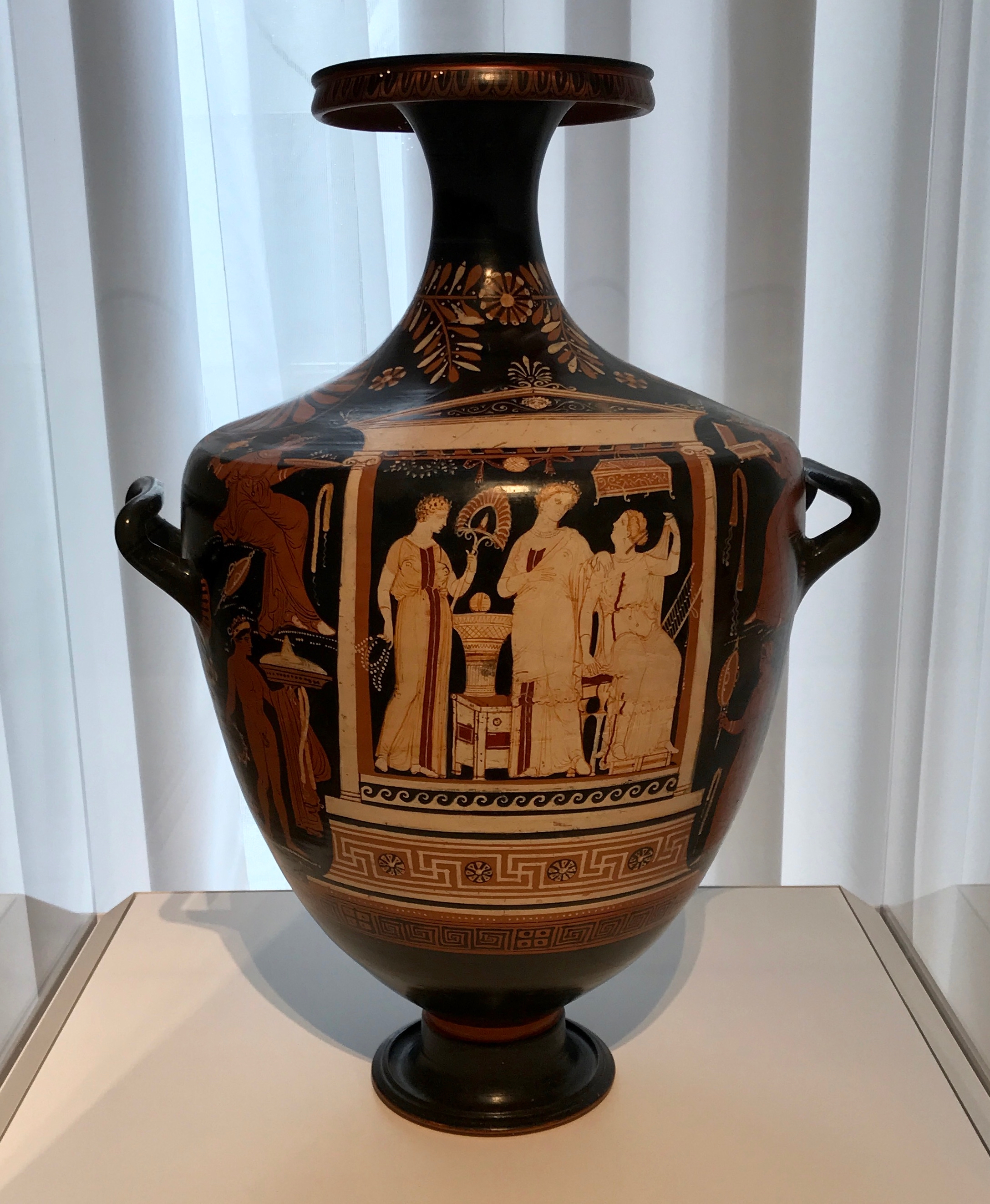
This is also funeral-related, but this Italian Hydria, from about 320 BCE would have stood above a grave. Libations for the deceased were poured into the vase. I wonder if there is an opening in the bottom for the drinks to drain right down to the deceased?

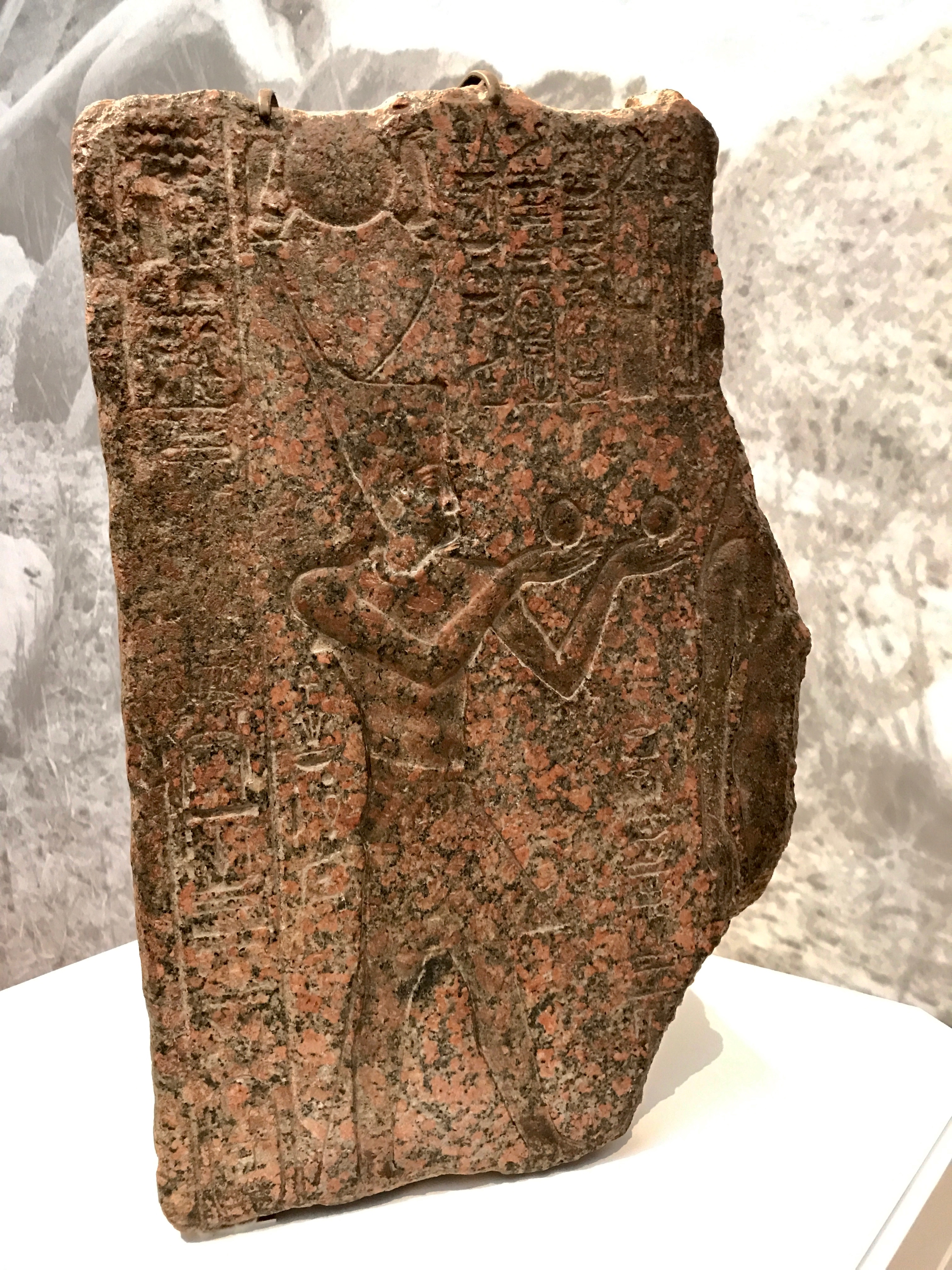
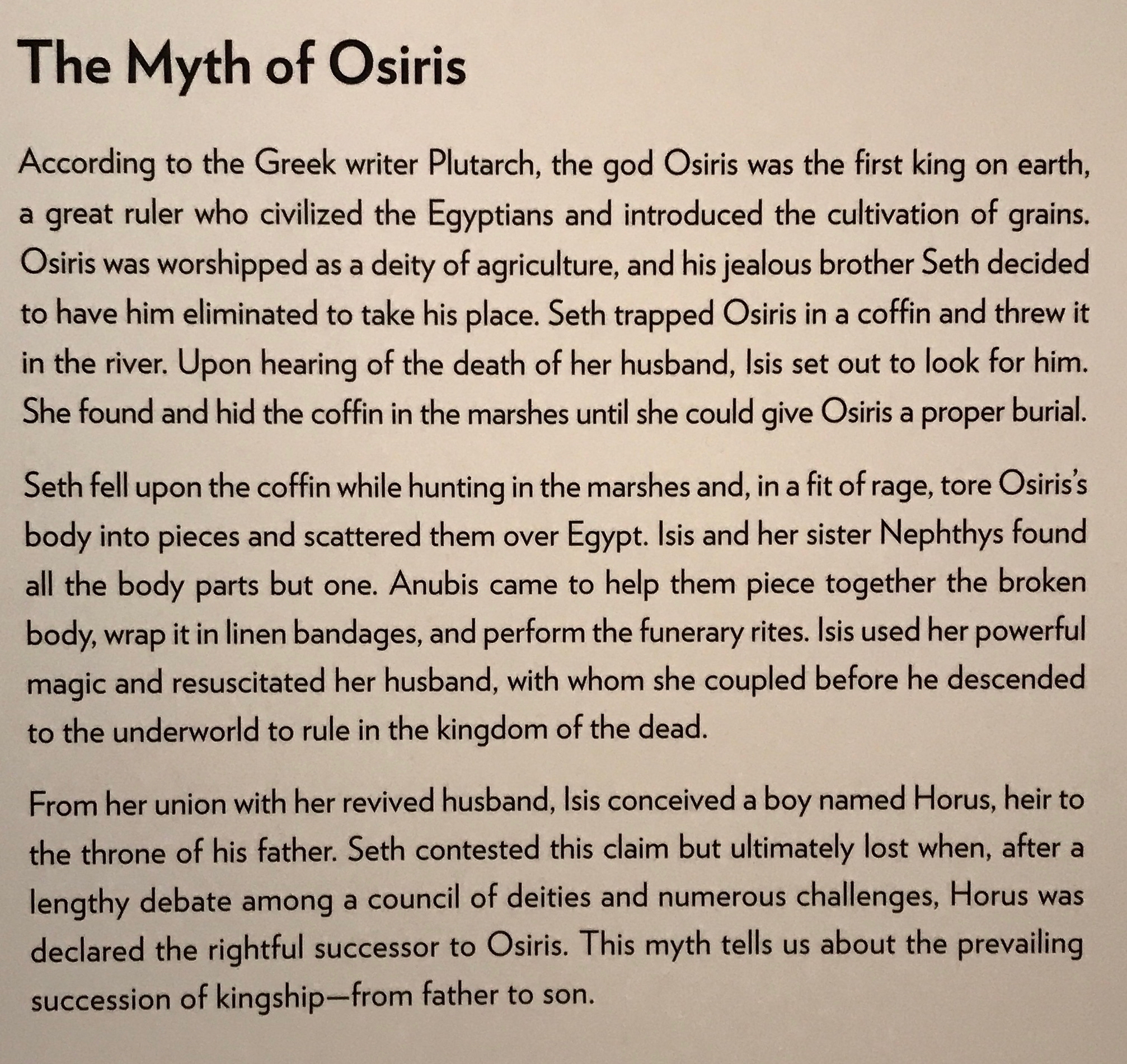
And now we’re in Egypt, at least for a hot minute.

Hold on a second!

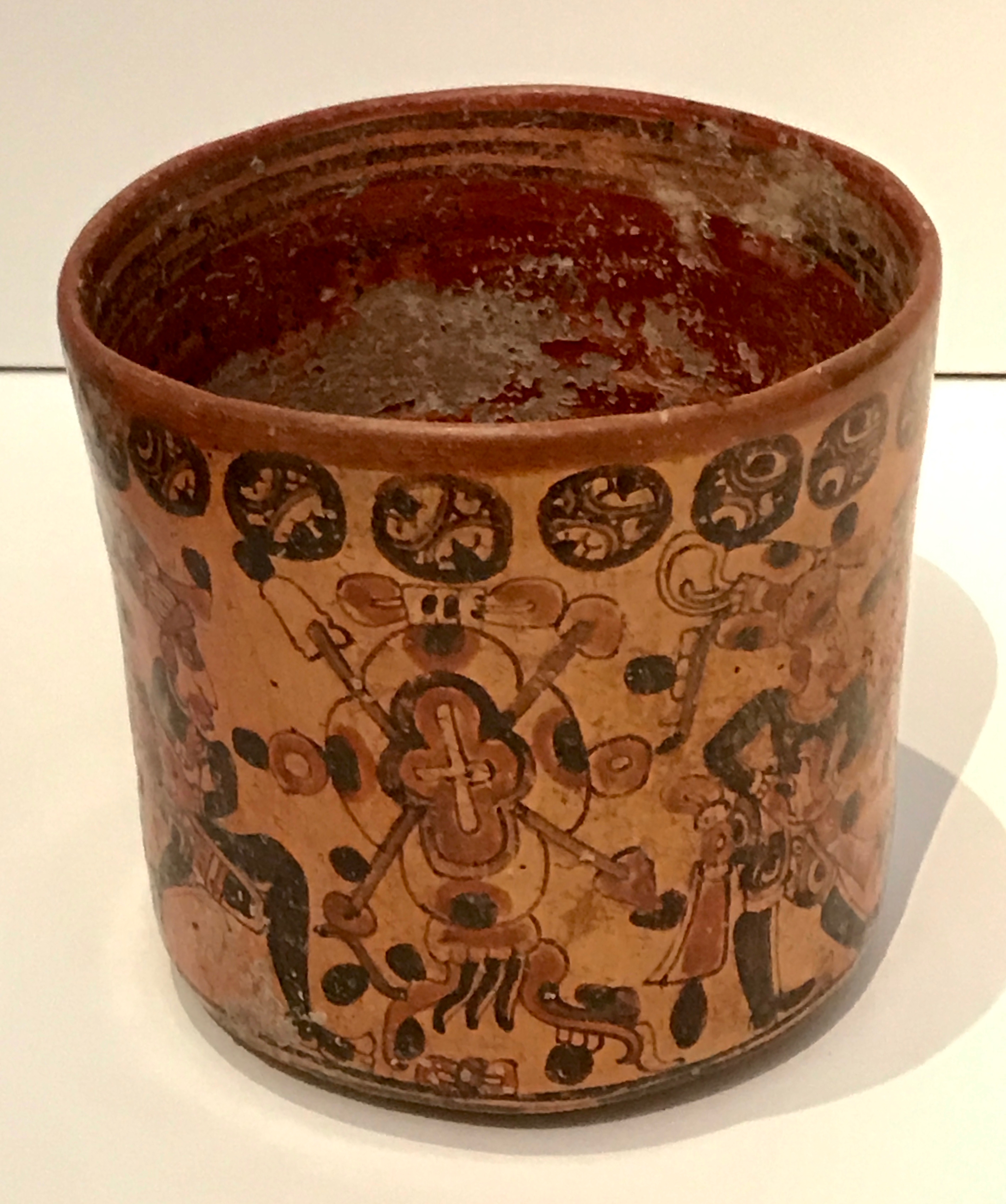
I was in Egypt and now I’m in Central America!?

I believe this one came from the Mayans near – or in – modern-day Honduras, and was created circa 650-850.

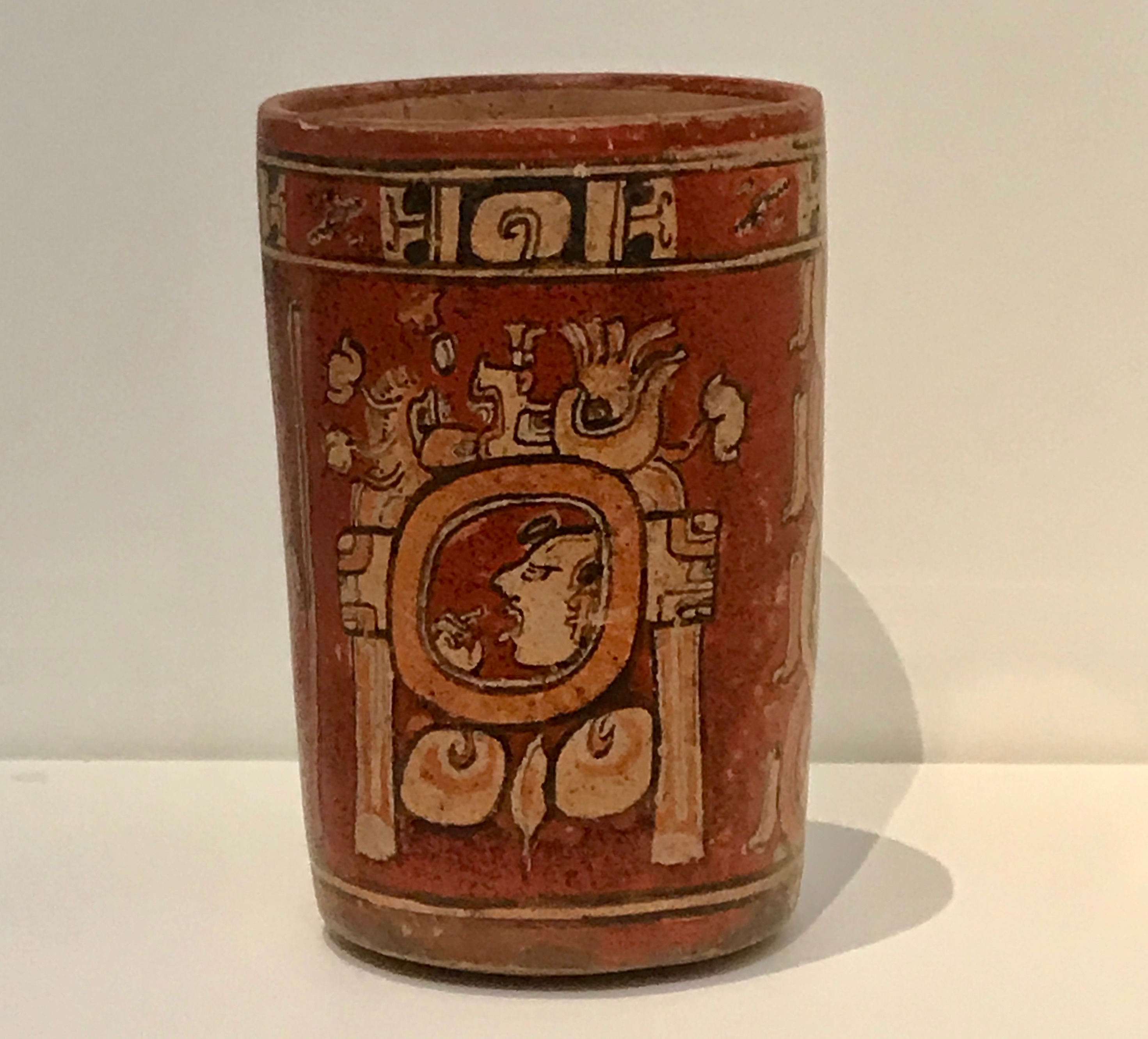
This looks like more of the Mayan artwork I’m familiar with. It is from Guatemala, circa 700-800.

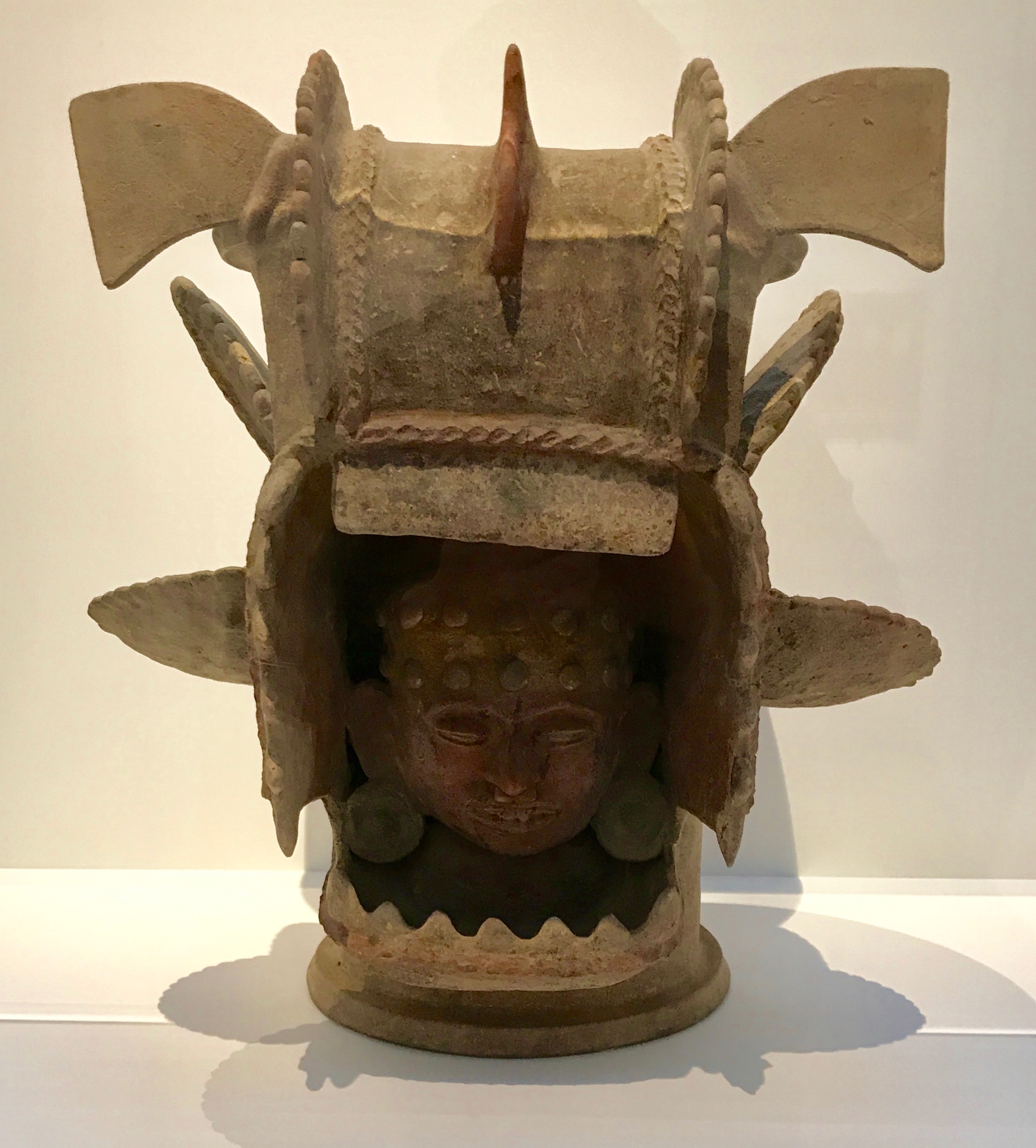
This is also from Guatemala – a terracotta censer from circa 350-550. It’s kind of amazing that such a fragile looking piece made it for so many years.

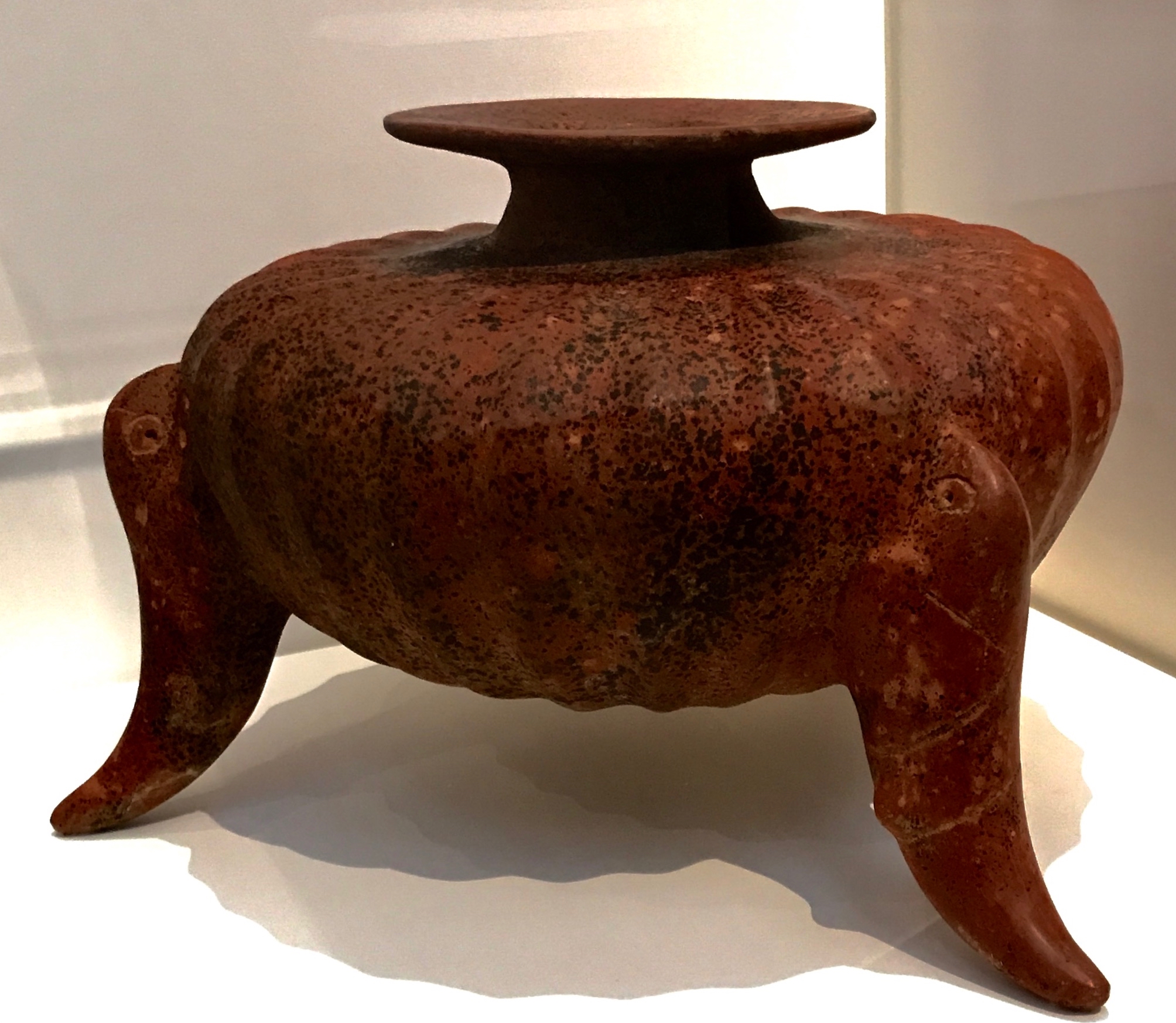
I loved this squash effigy jar, from Colima State, Mexico. The era it was created is a bit uncertain, circa 200 BCE – 300 CE.

In case you’re wondering, Colima is about 200 miles south of Puerto Vallarta, a favorite destination of The Pacific Princess.

I wonder if The Love Boat is in port these days?

I’m sure that I must have charted my own course through the museum, because now I’m in a wing dedicated to painting.

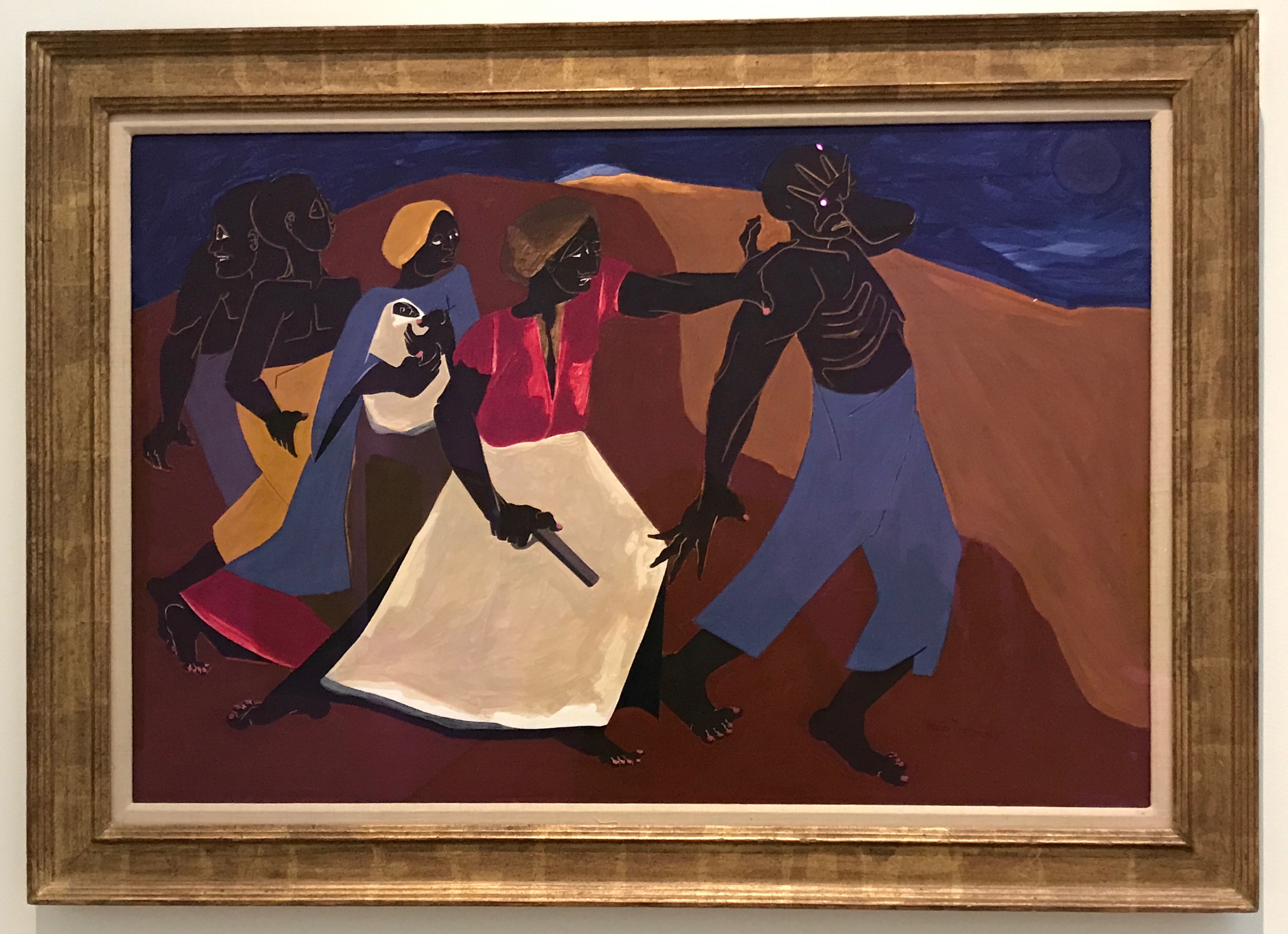
This work of art is by Jacob Lawrence. He painted Forward in 1967 and it is done in tempera on masonite. (And you thought tempera was only used by children in elementary art classes.)

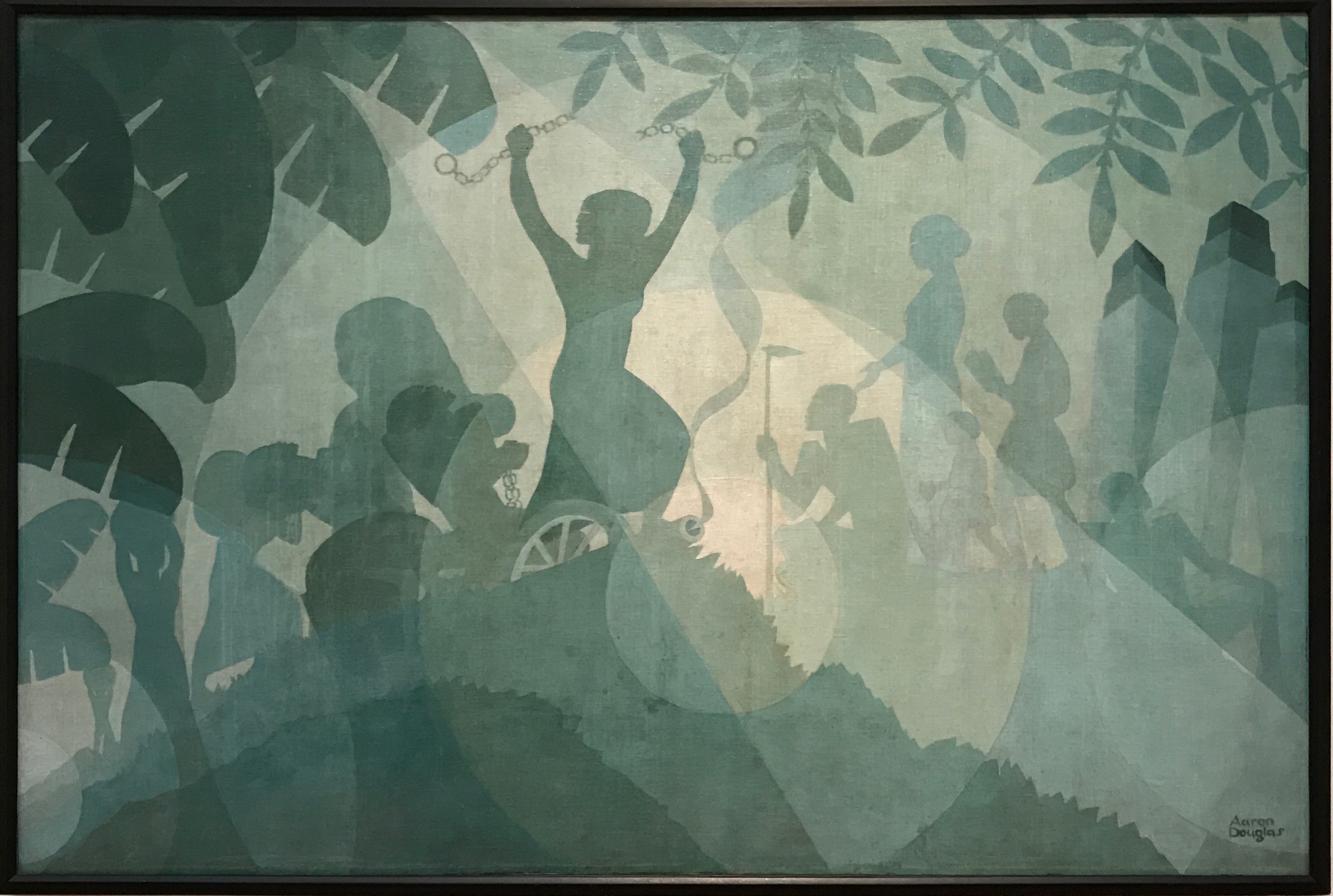
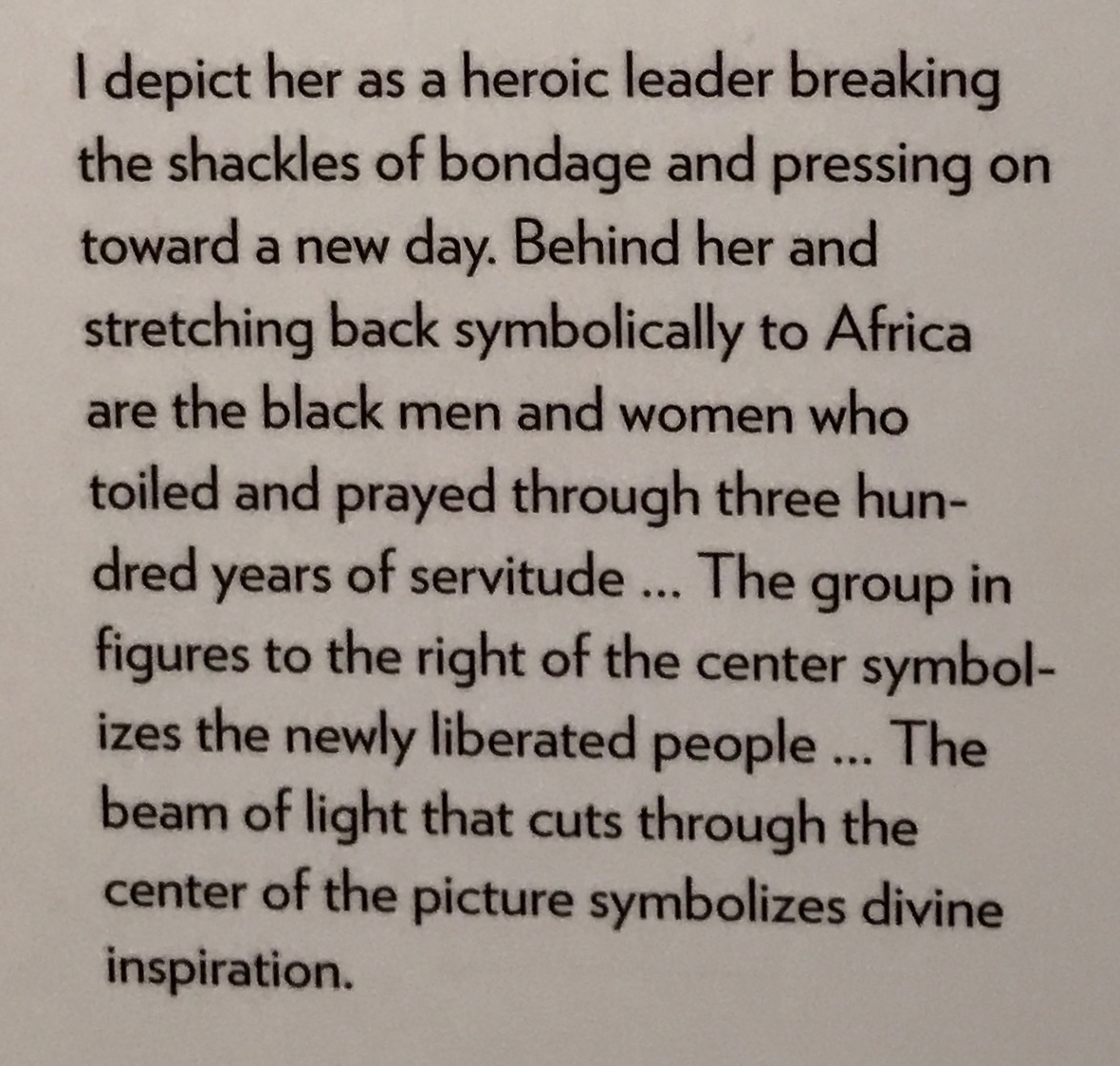
Harriet Tubman was painted by Aaron Douglas in 1931. It’s a mural-sized painting that was commissioned for the Bennett College for Women in Greensboro, North Carolina.

This is Aaron Douglas’ explanation of his painting.

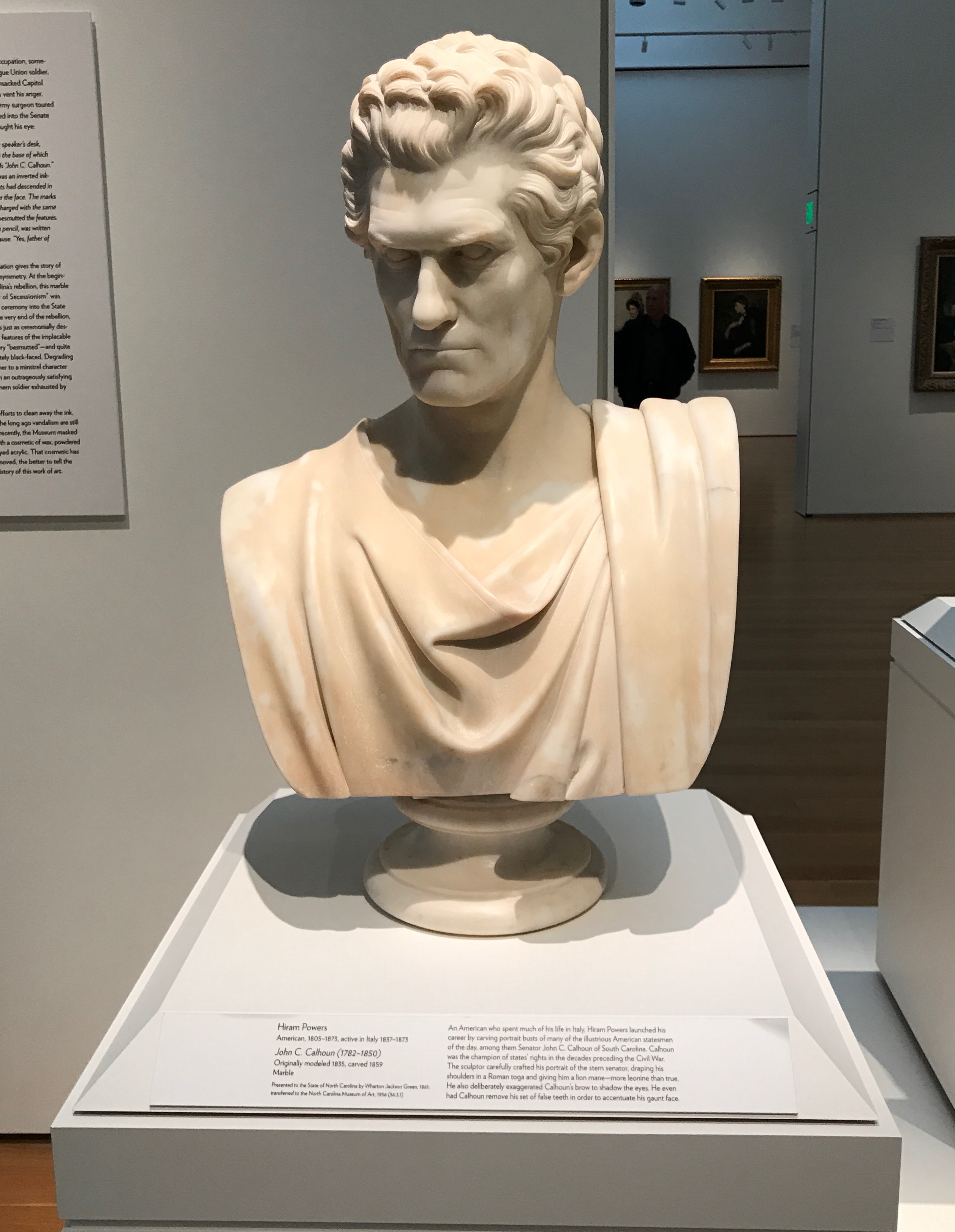
Are we back in Rome? Is this some ancient Roman?

No, this is South Carolinian Senator John C. Calhoun (1782-1850), as envisioned by Hiram Powers in 1835, an American sculptor who spent much of his life in Italy.

Powers took a number of artistic liberties with this portrait.

In addition to draping him in a Roman toga – not everyday attire in Calhoun’s era –  he gave him a “lion mane – more leonine than true. He also exaggerated Calhoun’s brow to shadow his eyes. He even had Calhoun remove his set of false teeth in order to accentuate his gaunt face.”

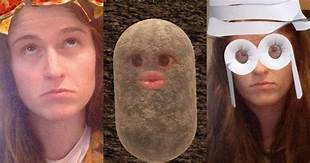
I suppose this was the 19th century version of a Snapchat filter.

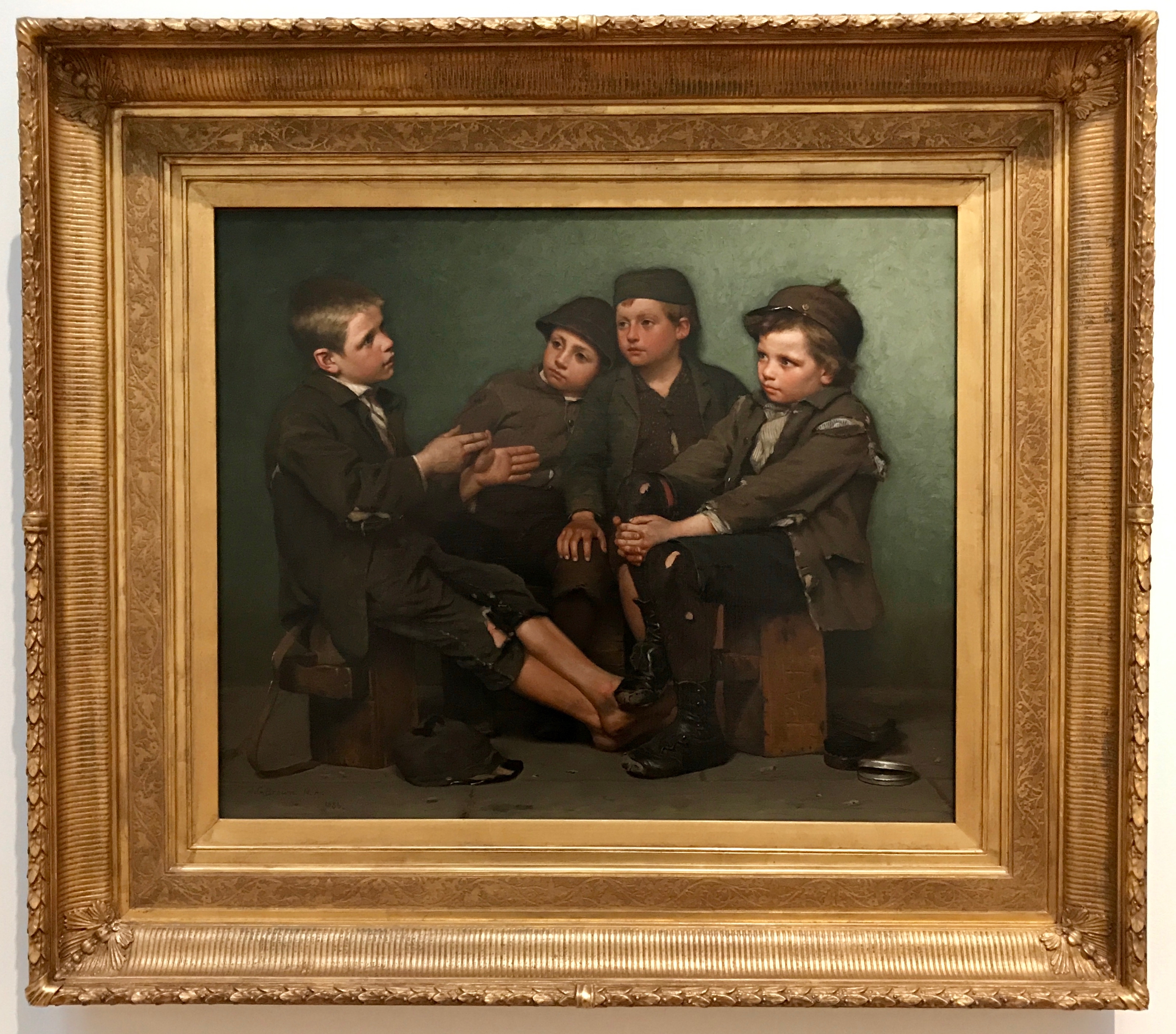
Immigration is part of the American story. This next painting is by John George Brown, an American artist who was born in Great Britain

A Tough Story was painted 1886. in the 1880s, the streets of New York City teemed with the children of the desperate poor, many newly arrived from Europe. In the paintings of the time, the squalor and viciousness of urban poverty are downplayed. Such depictions of young entrepreneurs were reassuring to wealthy Americans, many of whom considered themselves to be “self-made men.”

Even so, Brown is too honest to disguise the bone weariness in their eyes.

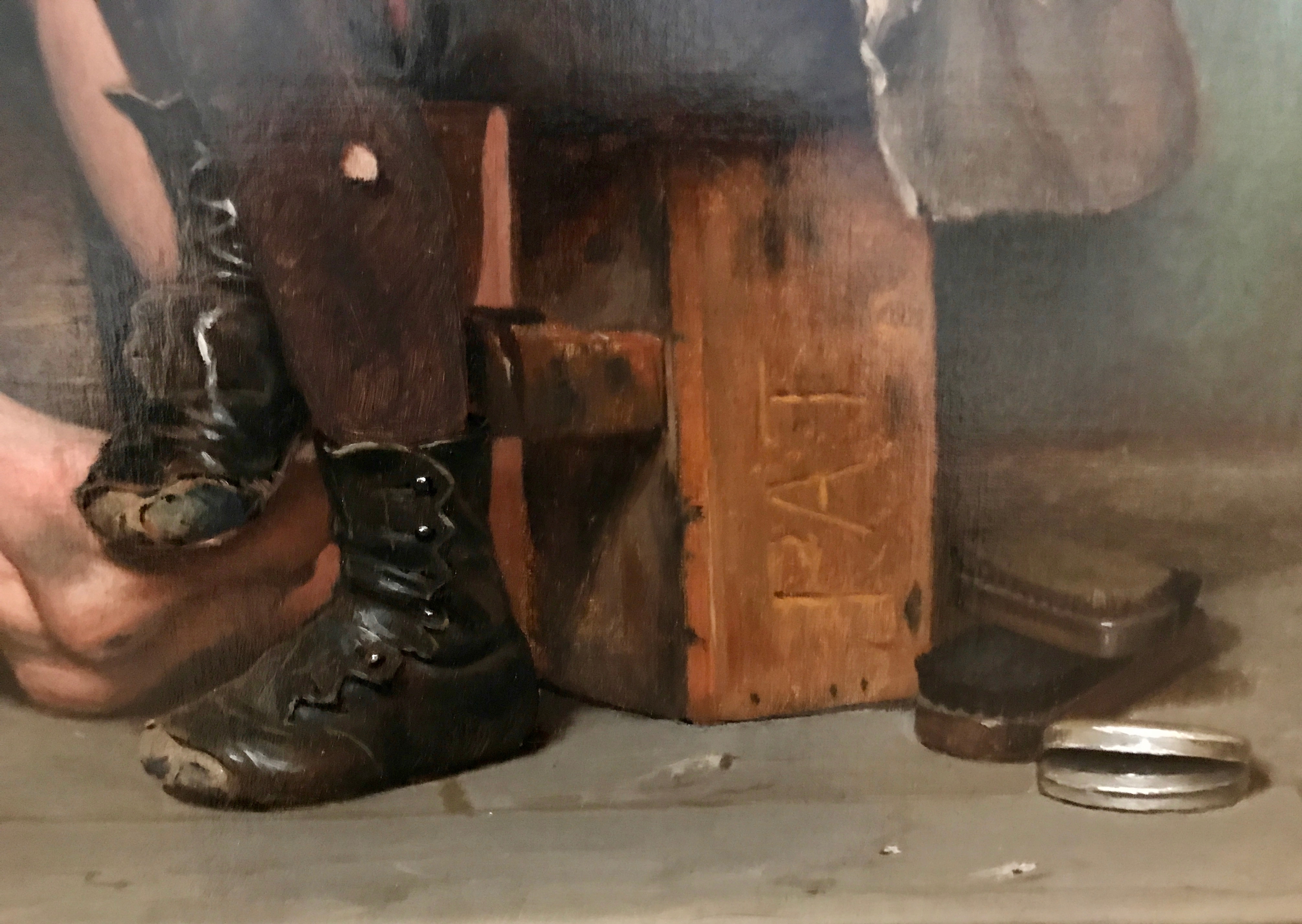
The name “Pat”, carved into one boy’s boot blacking box, identifies the lad as Irish born Paddy Ryan, one of the artist’s favorite models.

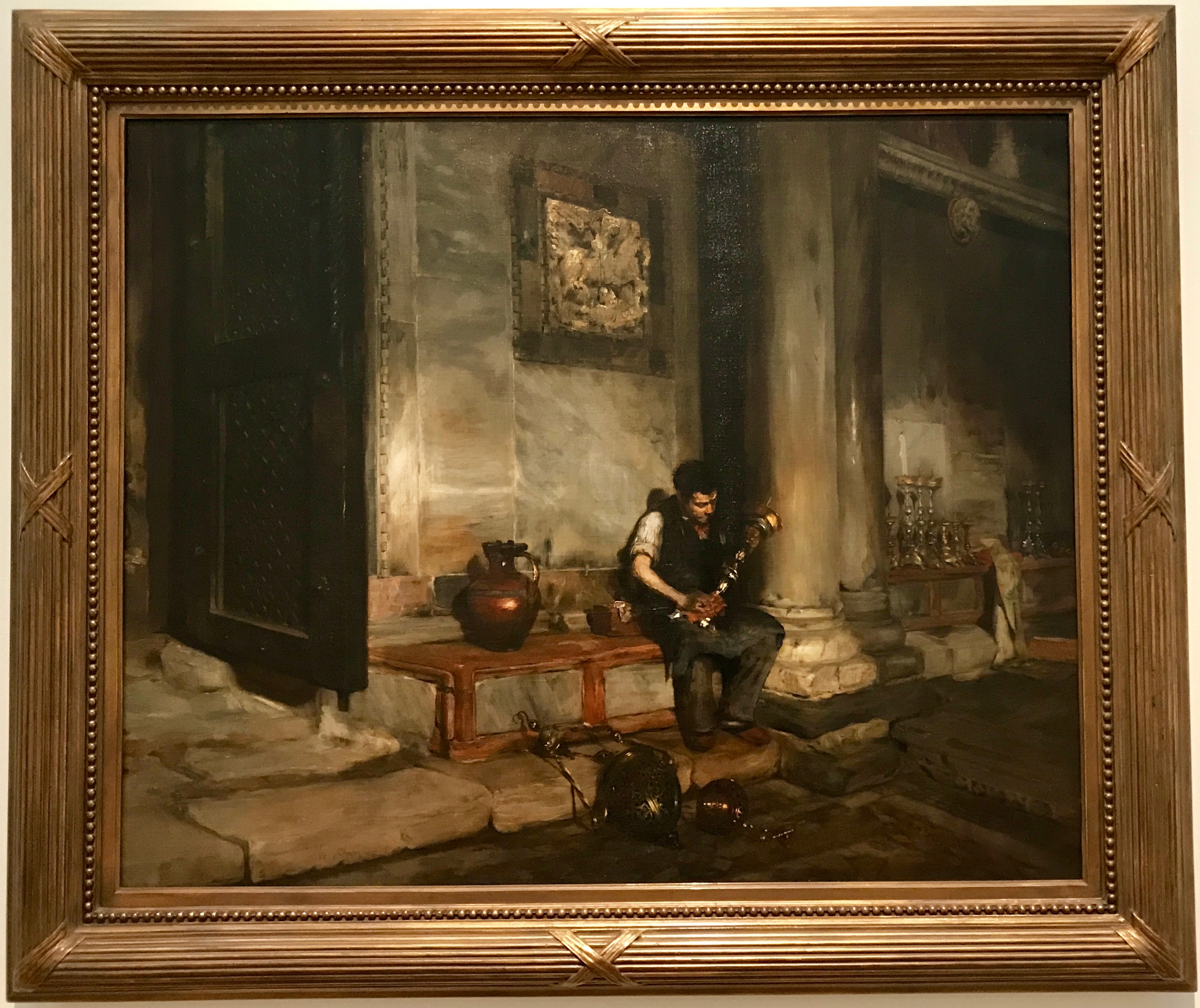
William Merritt Chase (1849-1916) studied in Munich for six years.

Before returning to New York, he spent nine months in Venice. Instead of painting the usual tourist views, Chase focused on scenes of everyday life glimpsed in the backstreets and markets.

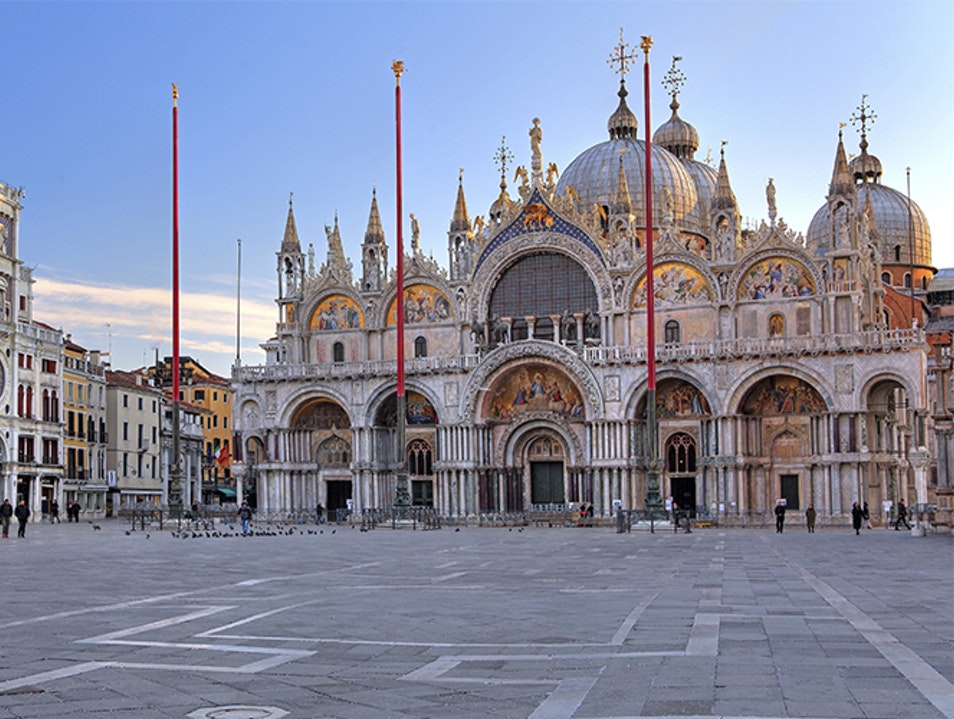
In this painting, In the Baptistry of St. Marks, Venice (1878), he used the the cavernous spaces of the great Basilica of St. Mark.

When the painting was later displayed in New York, one critic described it as “really a still-life study of brass, marble and other substances.”

In case you’ve forgotten, this is the Basilica of St. Mark in Venice.

Americans do get around.

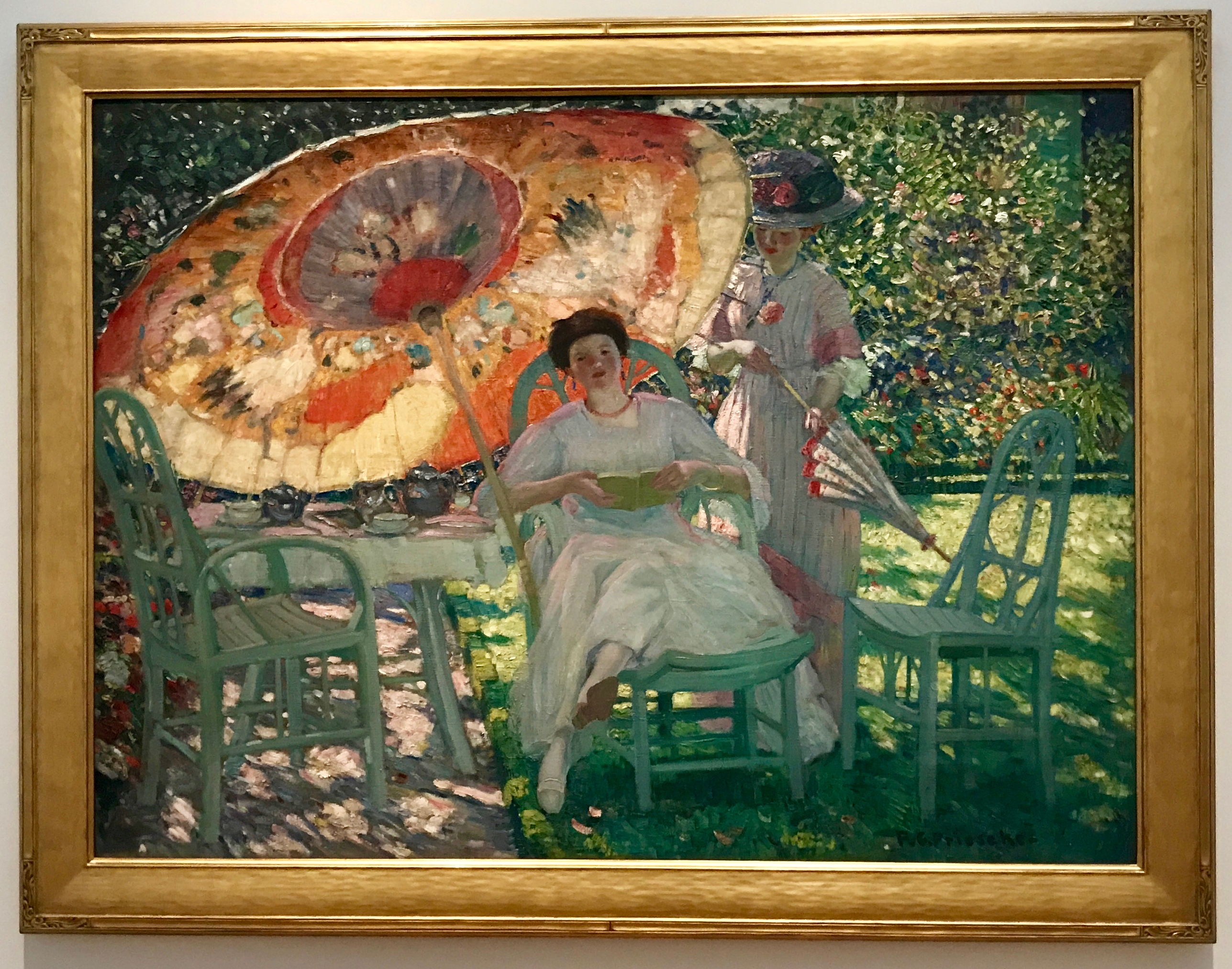
This painting, The Garden Parasol (1910), was painted by Frederick Carl Frieseke, An American artist who was active in France from 1898 until his death in 1939.

The painter poses his wife as a cultivated woman of leisure whose readings interrupted by the arrival of a visitor, that prompts her to look up from her book.

I found it interesting that he staged this scene in his garden in Giverny, France, where he spent many summers living near Claude Monet.

Now, why did I select this work of art from the literally hundreds of images I snapped in the museum? See if the title gives you a clue.

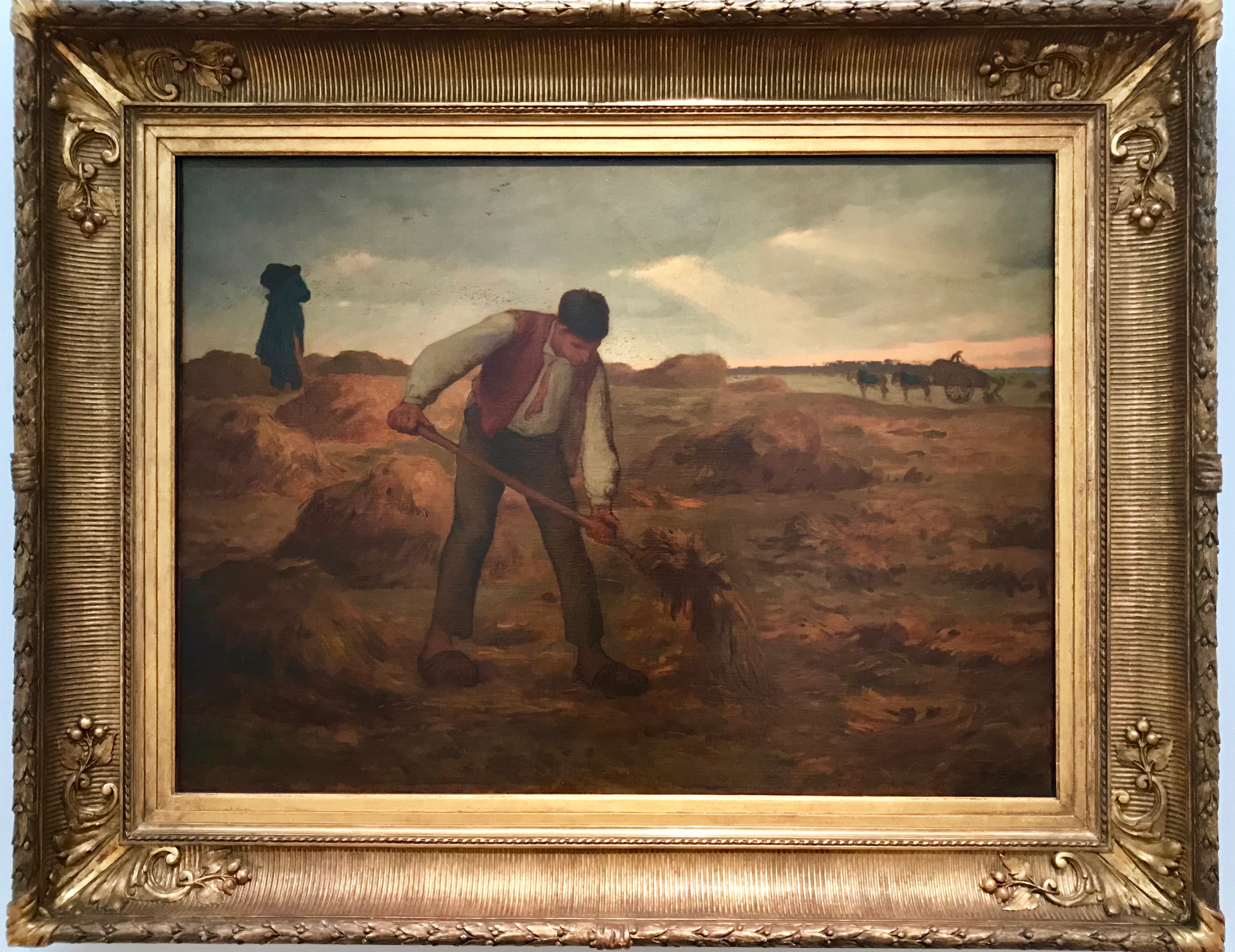
This is Peasant Spreading Manure (1854-1855) by Jean-Francois Millet.

If you guessed that it reminded me of my gardening last summer, you win! However, I didn’t have any manure to spread. I had to make do with compost. I had a healthy amount of compost, as I my lawnmower has a bag that I have to empty. I compost the clippings, the leaves in the fall, and the kitchen waste.

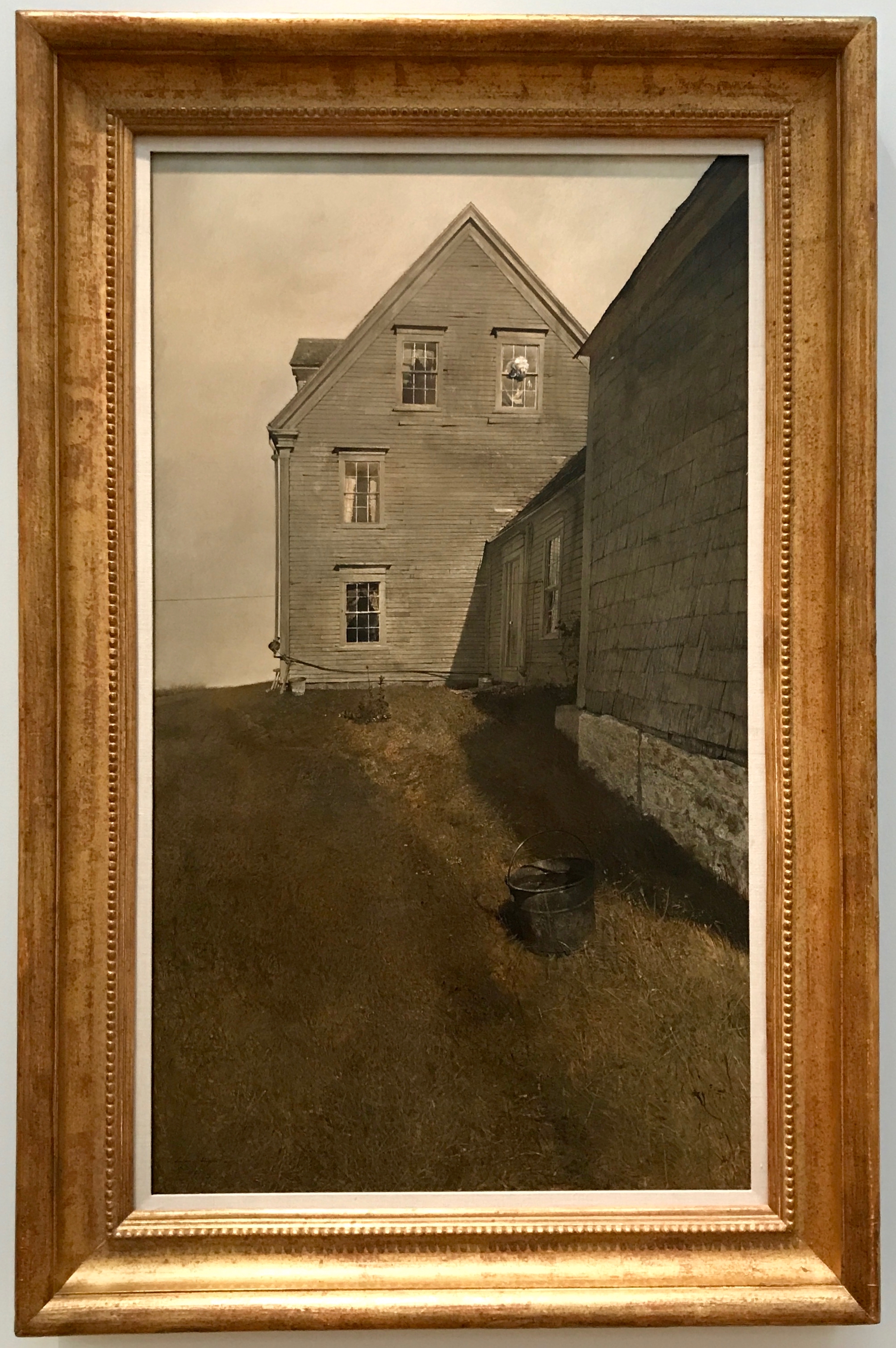
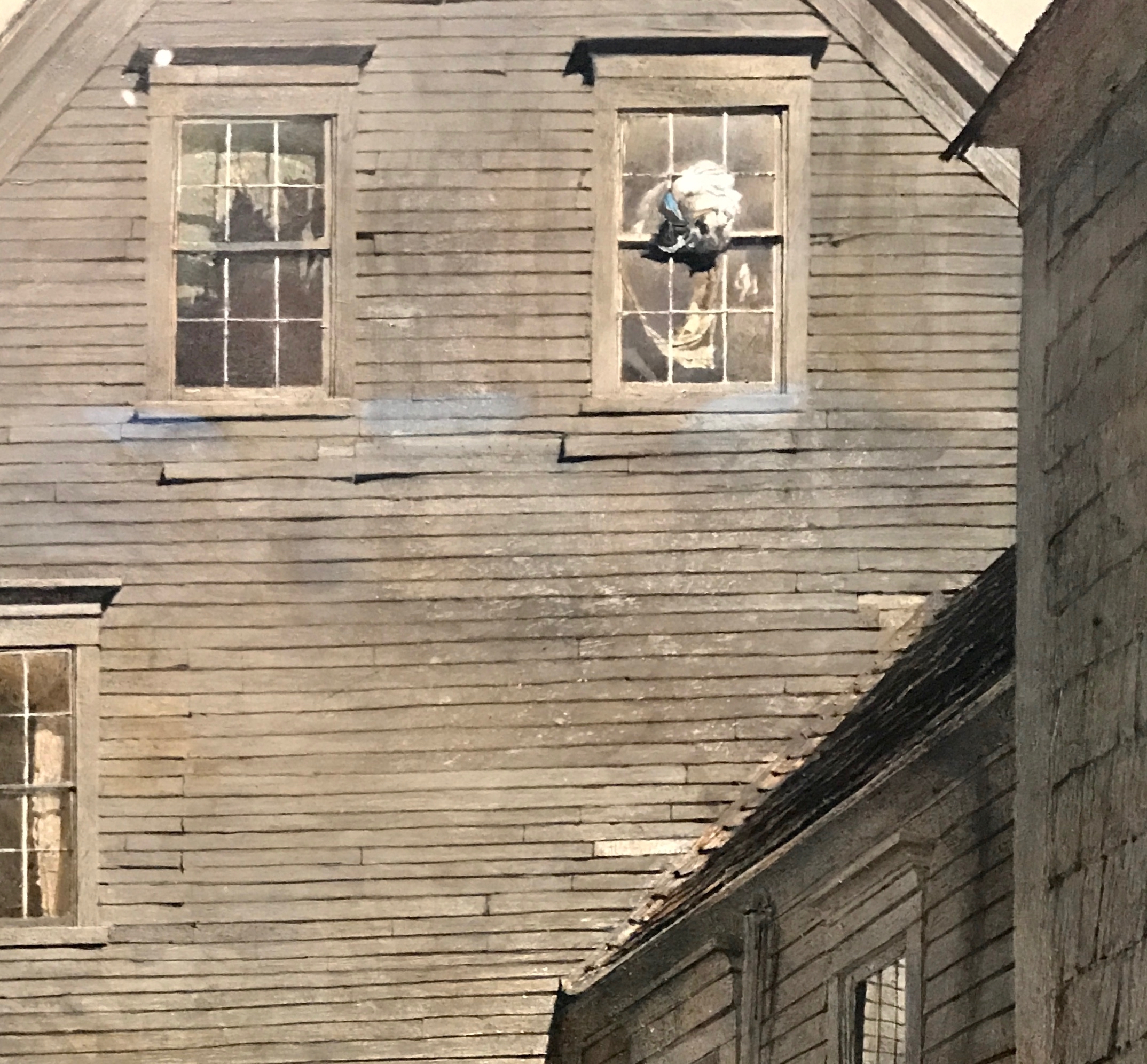
This painting is Weather Side (1965) by Andrew Wyeth. Does the house look familiar? I imagine it is the same house that is in his famous painting, Christina’s World (1948).

According to the information with posted with the painting, “Wyeth intended the decaying Maine house to be a surrogate portrait of his close friend Chistina Olson and her brother Alvaro. Wyeth studied every detail of the house for traces of its eccentric inhabitants: note the sheet stuffed in a broken attic window and Alvaro’s jerry-rigged system to collect rain water. Christina was crippled from polio and insisted on dragging her body around the house and yard. Out of sympathy Wyeth chose to paint the house from her low point of view.”

If you are still reading this post, you are probably wondering if I will ever stop.

The answer is, “Yes. Yes, I will.”

But bear with me for a few more works of art and then I’ll let you go.

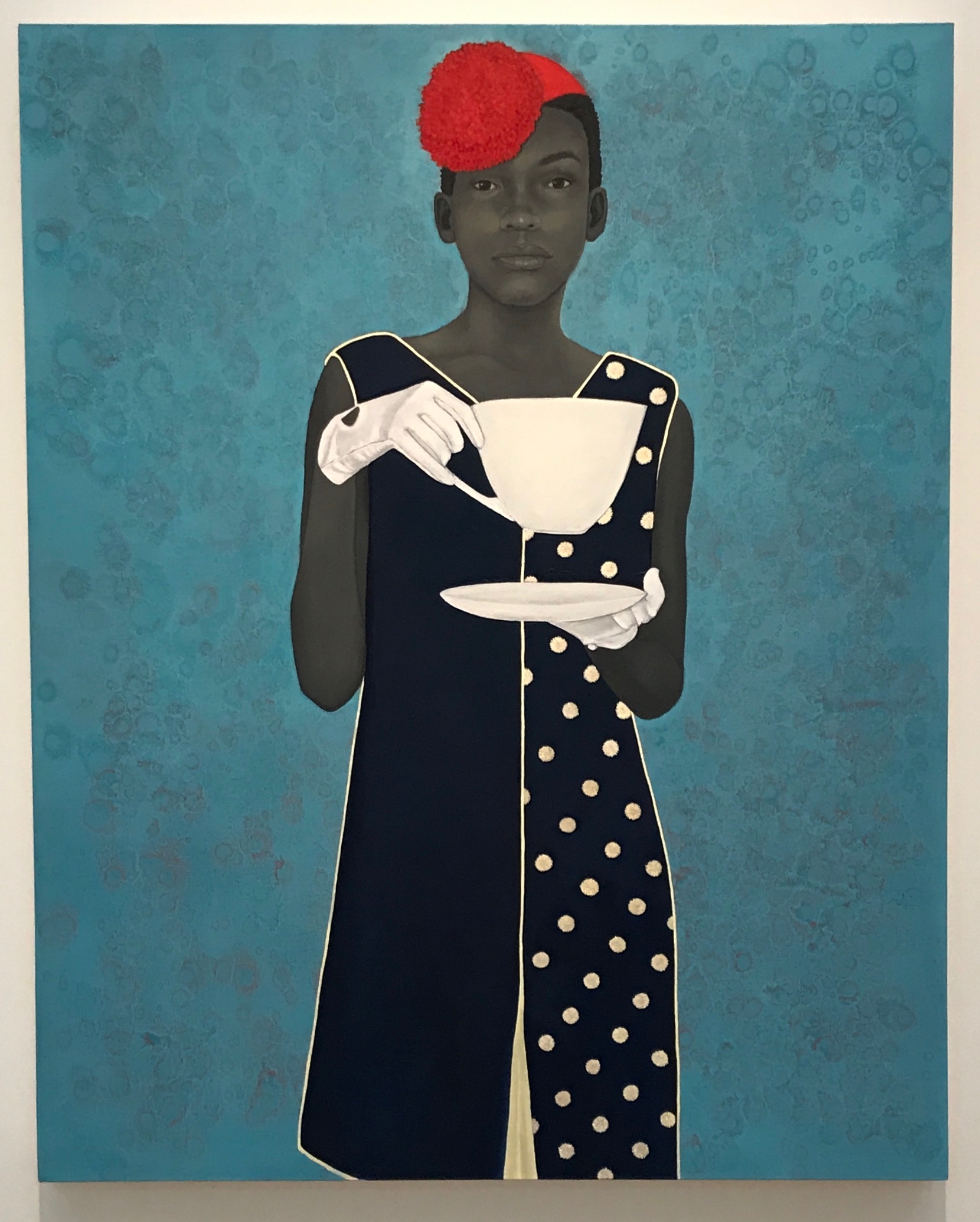
This is Miss Everything (Unsuppressed Deliverance) (2013) by Amy Sherald. I selected this work of art because Sherald is the artist Michelle Obama chose to do her official portrait.

According to the information with the painting, this “encapsulates Amy Sherald’s desire to build “alternative narratives” through her work. “Historically, people of color,” she says, ” are often shown looking away. But [this subject] has let that go and meets the viewer’s gaze. She assesses the viewer rather than being assessed.”

Sherald is known for her portraits of African Americans, all of whom are depicted with grey skin tones, forthright facial expressions, monochromatic backgrounds and vibrant clothing.

Quietly confronting issues of historic underrepresentation and stereotypical imagery, Sherald deliberately paints her subjects’ skin grey; doing so challenges the notion of color as race.”

The last work of art I will share with you is Light of Life by Yayoi Kusama.

It is a mirrored box and LED lighting system, an enclosed version of an infinity room, which are her most well-known works. You gaze into the work of art through portholes at your your reflection, other viewers, and a two minute show of colored lights.

Click on the play symbol to see what I saw.

According to Kusama, “Thousands of illuminated colors blinking at the speed of light. Isn’t that the very illusion of Life in our transient world?”

And, with that I headed back to the campground.

And it was still raining.

Next up: the North Carolina capitol.

Lake Bruin State Park

With so much free time on my hands, thanks to Covid-19, you might think I would have finished writing about my dinner trip to New Orleans in March by now. After all, I did get home almost three months ago.

But, if there is anything I excel at, it is letting time slip through my fingers.

Anyway, back to the trip.

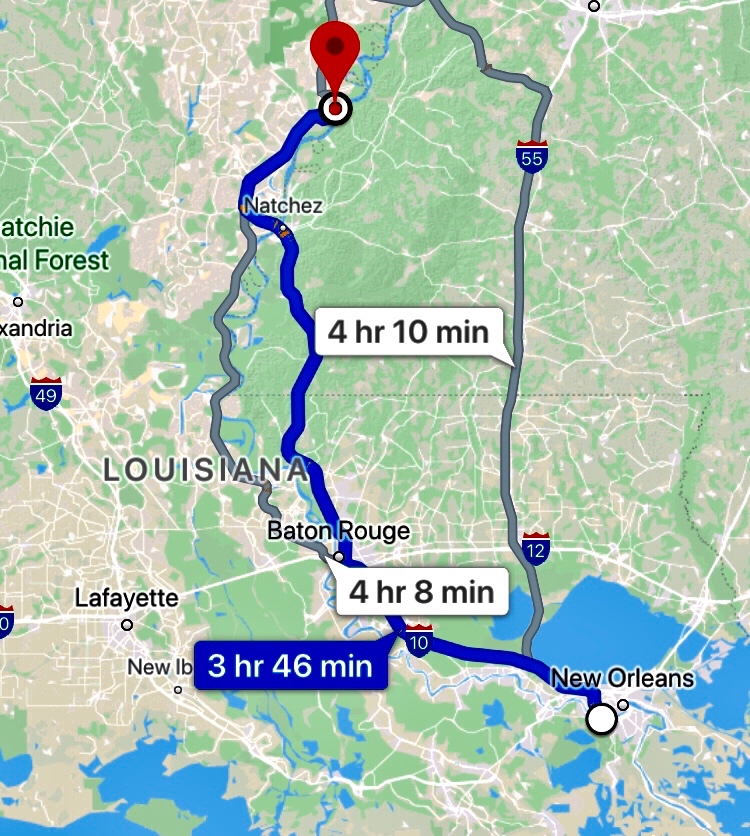
I left Baton Rouge and made my way to  Lake Bruin State Park in Saint Joseph, Louisiana. I booked two nights so that I could take a moment and consider my options. I still thought I could practice social distancing and travel, but I wanted to rest and think thing through before deciding to either continue my travels or to head home.

I got there just after 5:00, and the staff had already packed it in for the night. Usually they leave the park pass and any campground information at the office for late arrivals, but that didn’t seem to be the custom here.

However, there were plenty of available campsites. In fact, there were only about six or so campsites that were occupied. I picked one that they had listed as reserved for late arrivals and set up camp.

I had dinner and decided to just hang out in the T@b. The weather wasn’t that great and I was kind of tired. I had been driving for days!

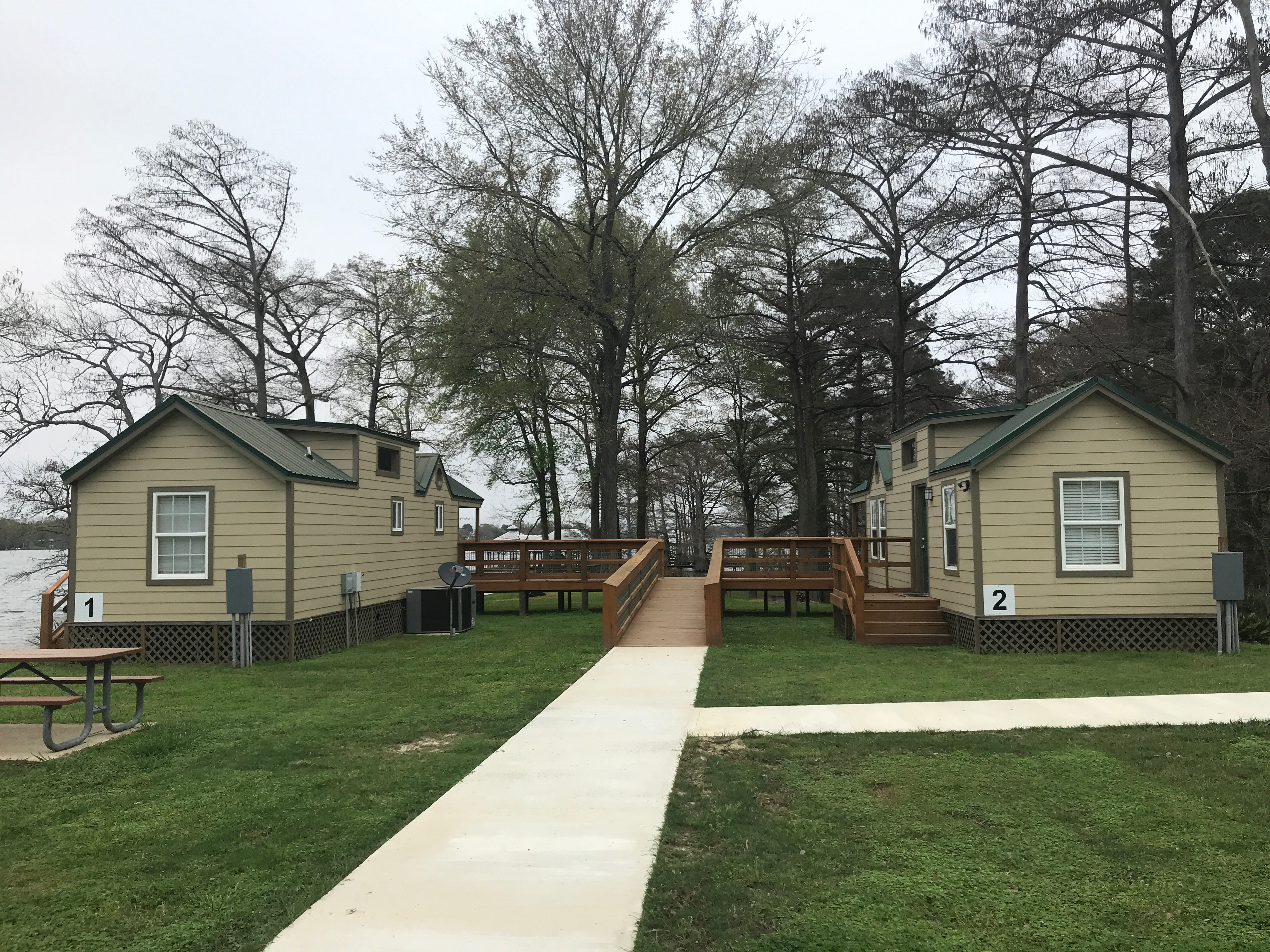
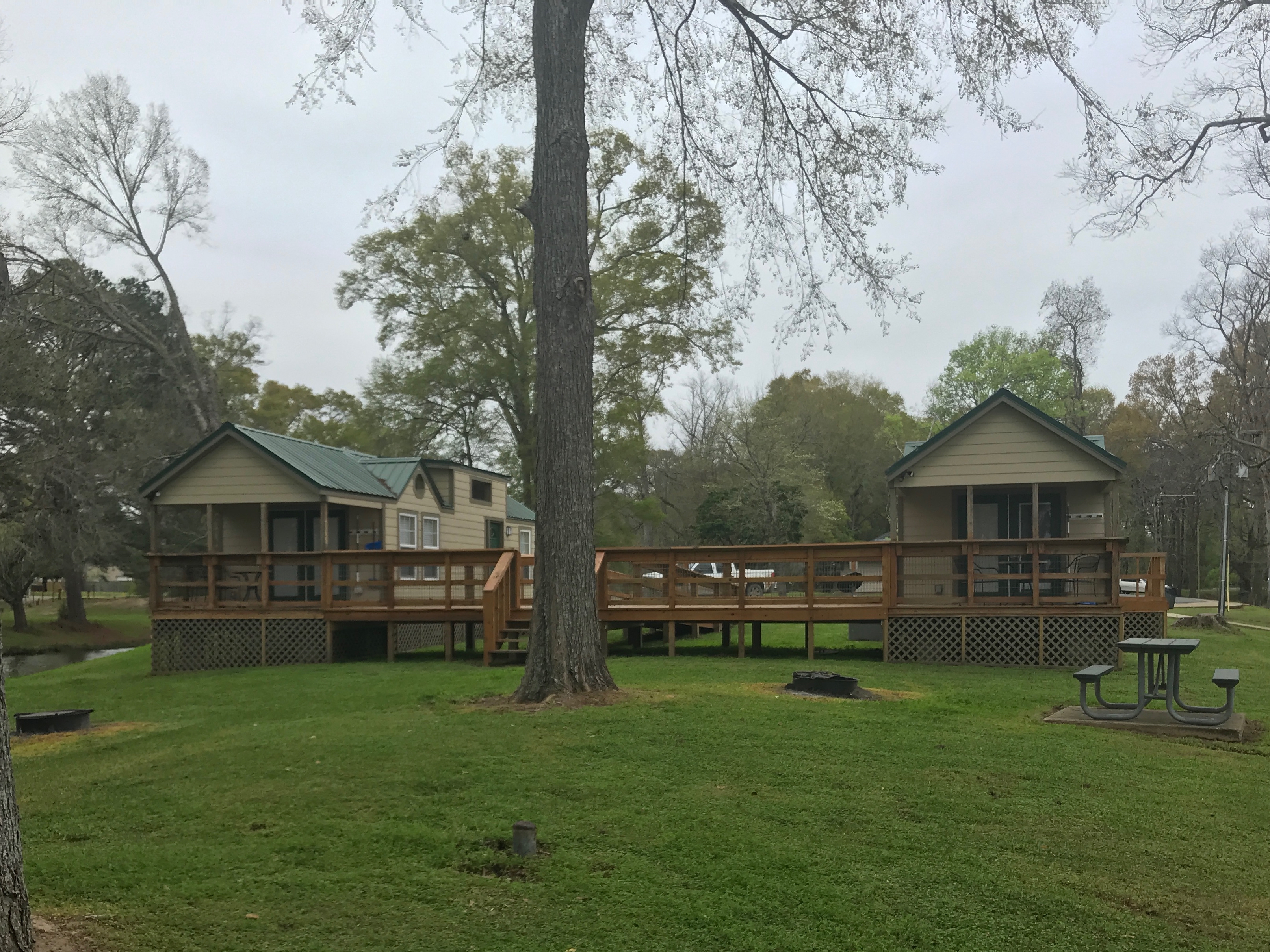
The next day, I set out to take a look at the campground. Not the only did they have campsites, they also rented cabins. I would have loved to take a look inside!

I’ll bet they are great for family reunions!

That connecting deck would make going back and forth really convenient, and I do love porches!

The main reason for the park is the lake. The water sounds so funny because I am standing on one of the several docks for fishing.

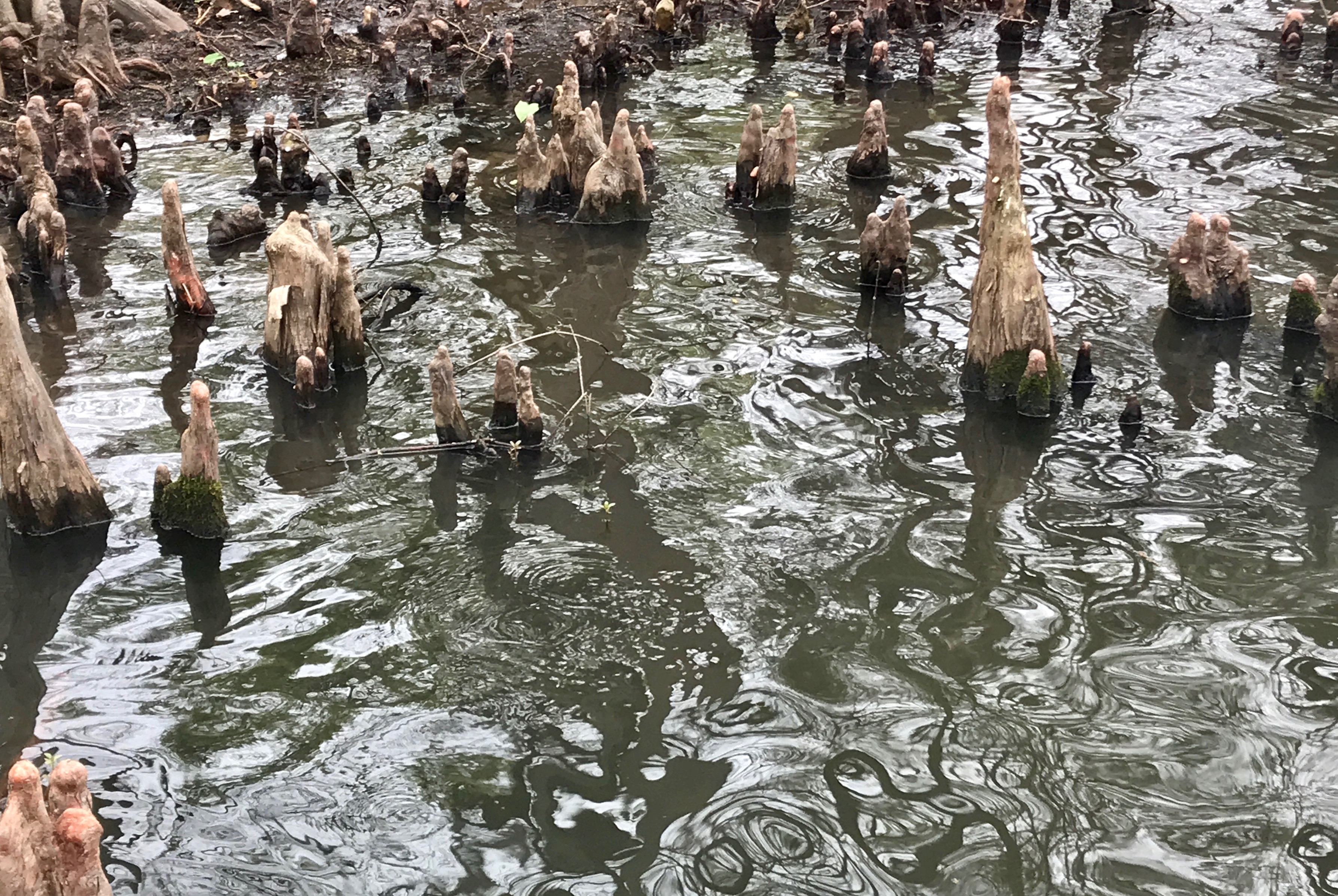
I was fascinated by the cypress knees. Auntie Lo used to have one in her living room. I wonder if my cousin Mark still has it? I’ll have to ask him next time I talk to him.

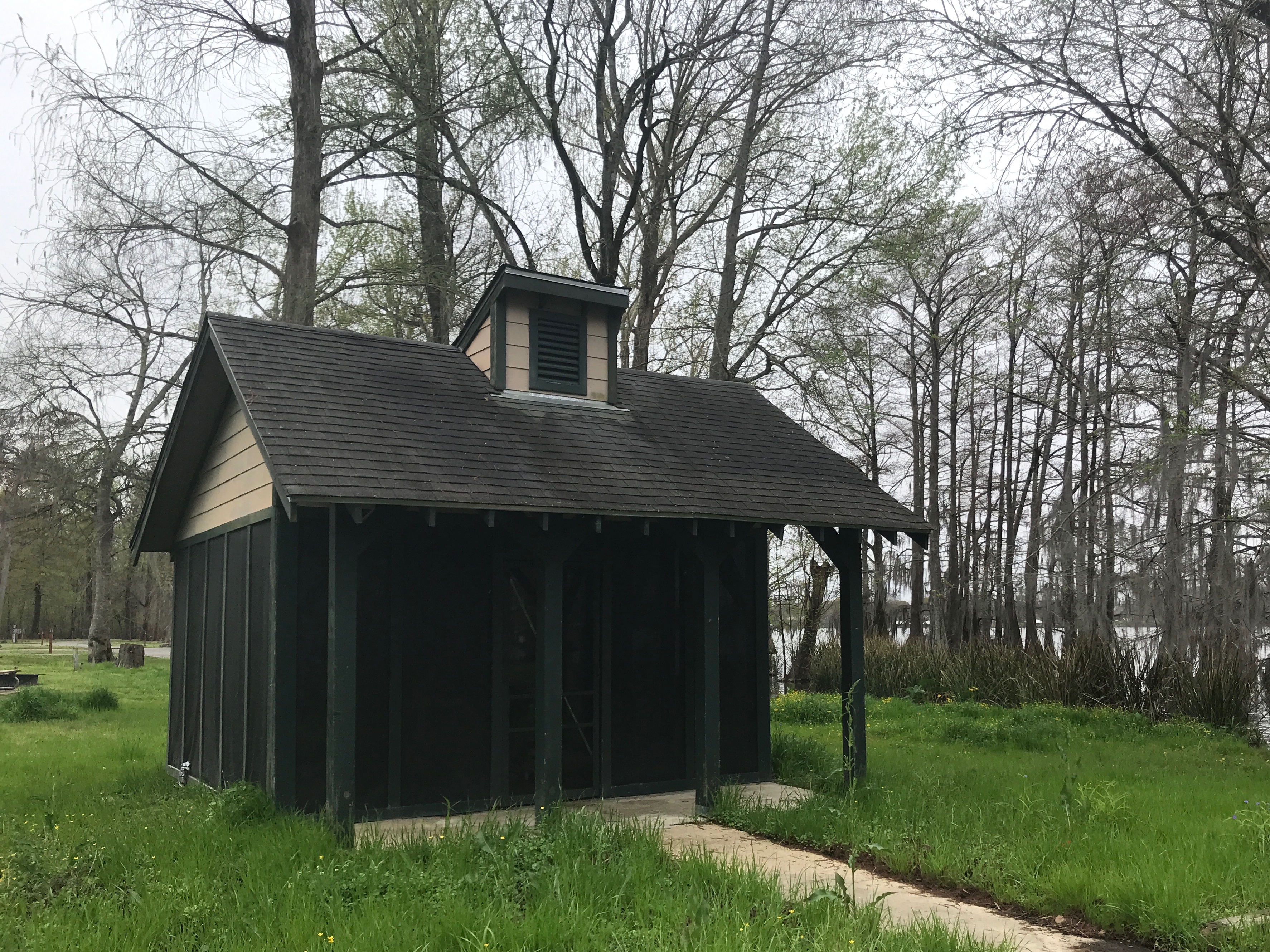
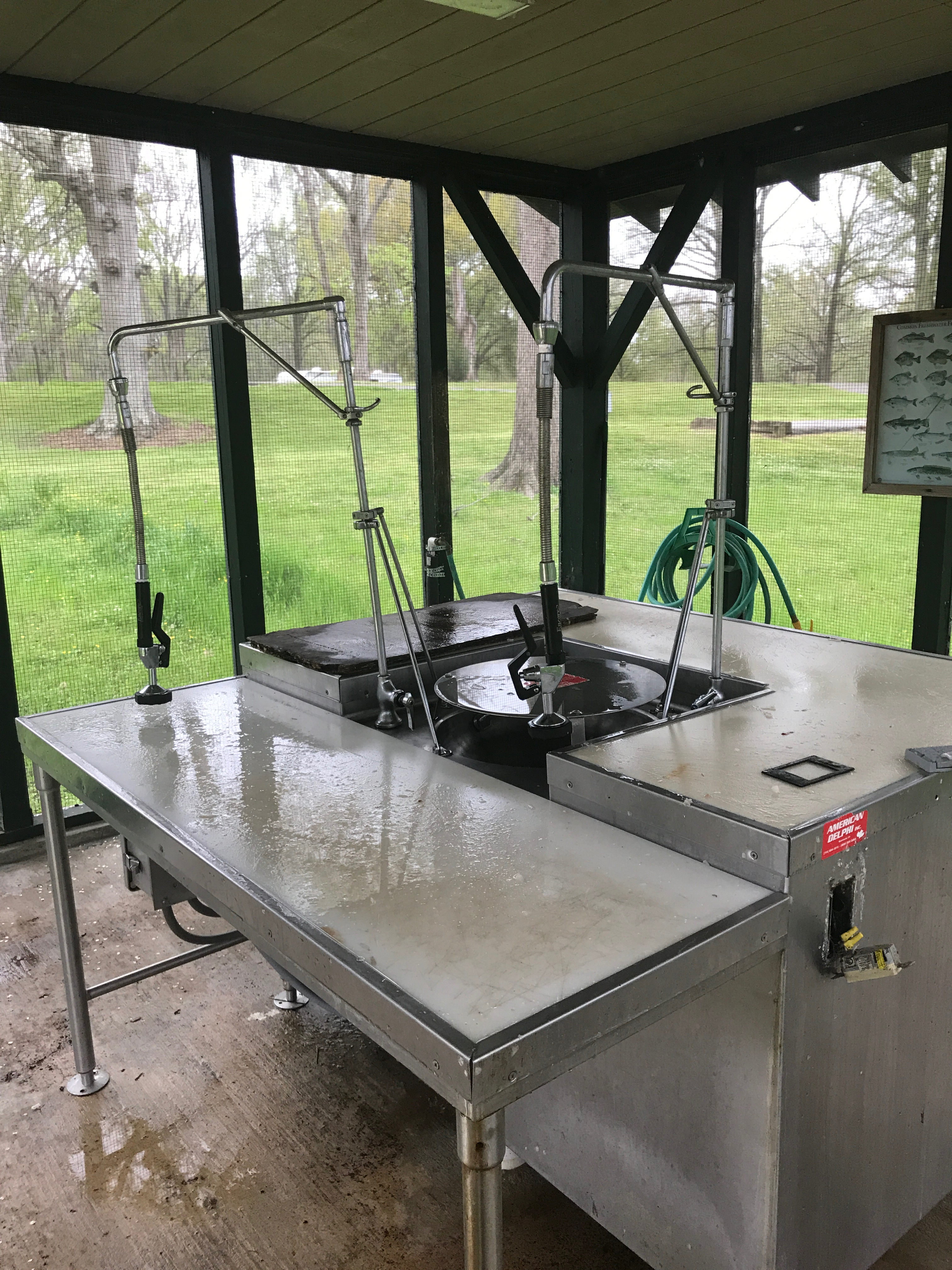
The people who stay here seem to be all about fishing. There are several docks for people to fish from, as well as places to moor boats. There is also this cute little shed for cleaning fish.

Brrr! Putting fish carcasses in a grinder?! I guess I’m really even more happy that I don’t like fish and that no one was there processing fish…

They do have quite the set up, though. The most I have ever seen at other parks is a can dedicated to fish “parts”. You know what they say…”Parts is parts.”

Now, if you wanted a deluxe campsite right by the fish shed, well you could have one. I imagine that you might have to book well in advance if you wanted to stay there during peak season.

This campsite had a little patio in addition to the requisite picnic table and fire ring… and a view of Lake Bruin.

I continued my stroll around the campground. Fish aren’t my thing, but I do like flowers.

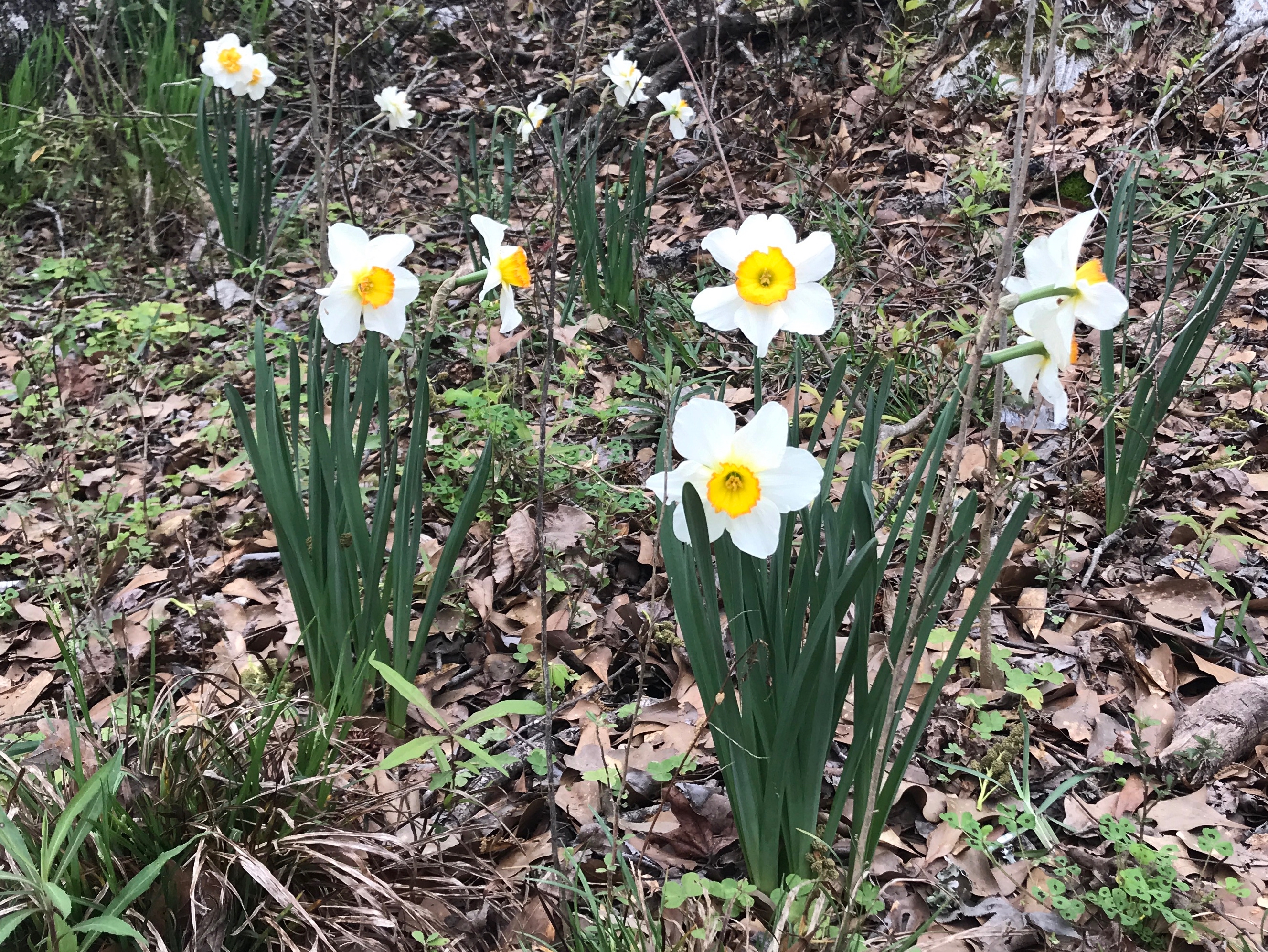
I always wonder how these cultivated-looking flowers get places you wouldn’t expect them. But, there they were, blooming merrily in the duff.

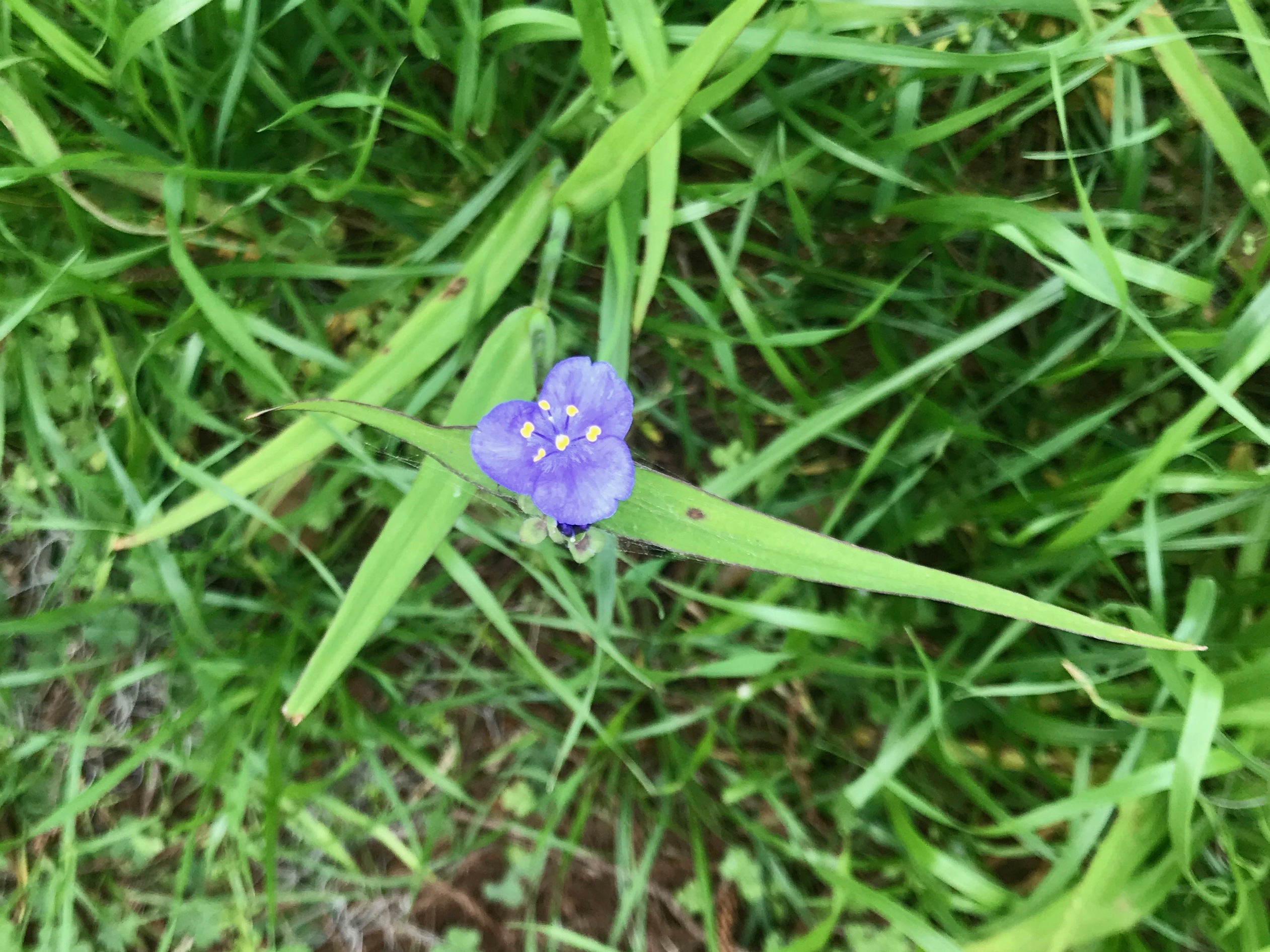
This one looked more at home.

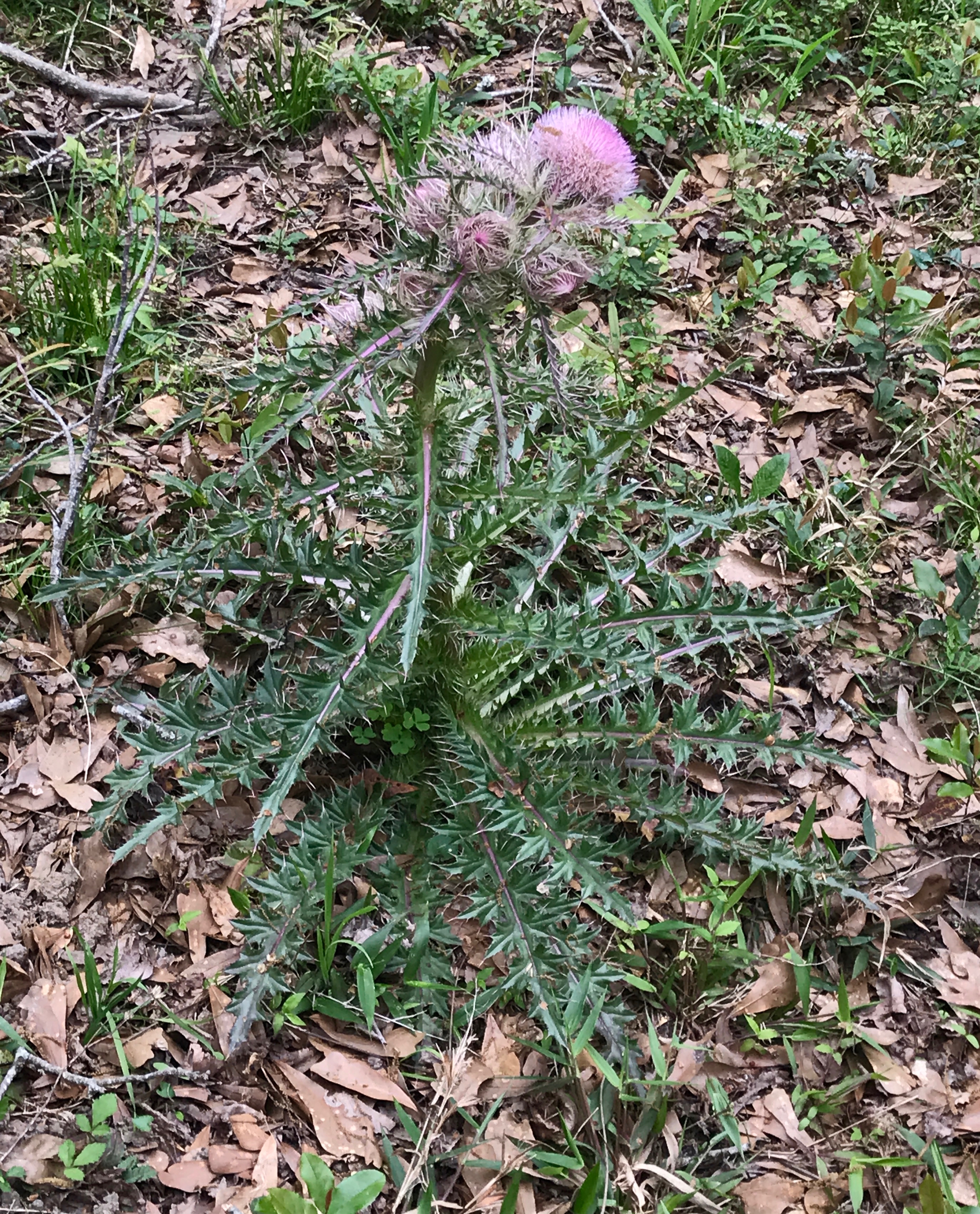
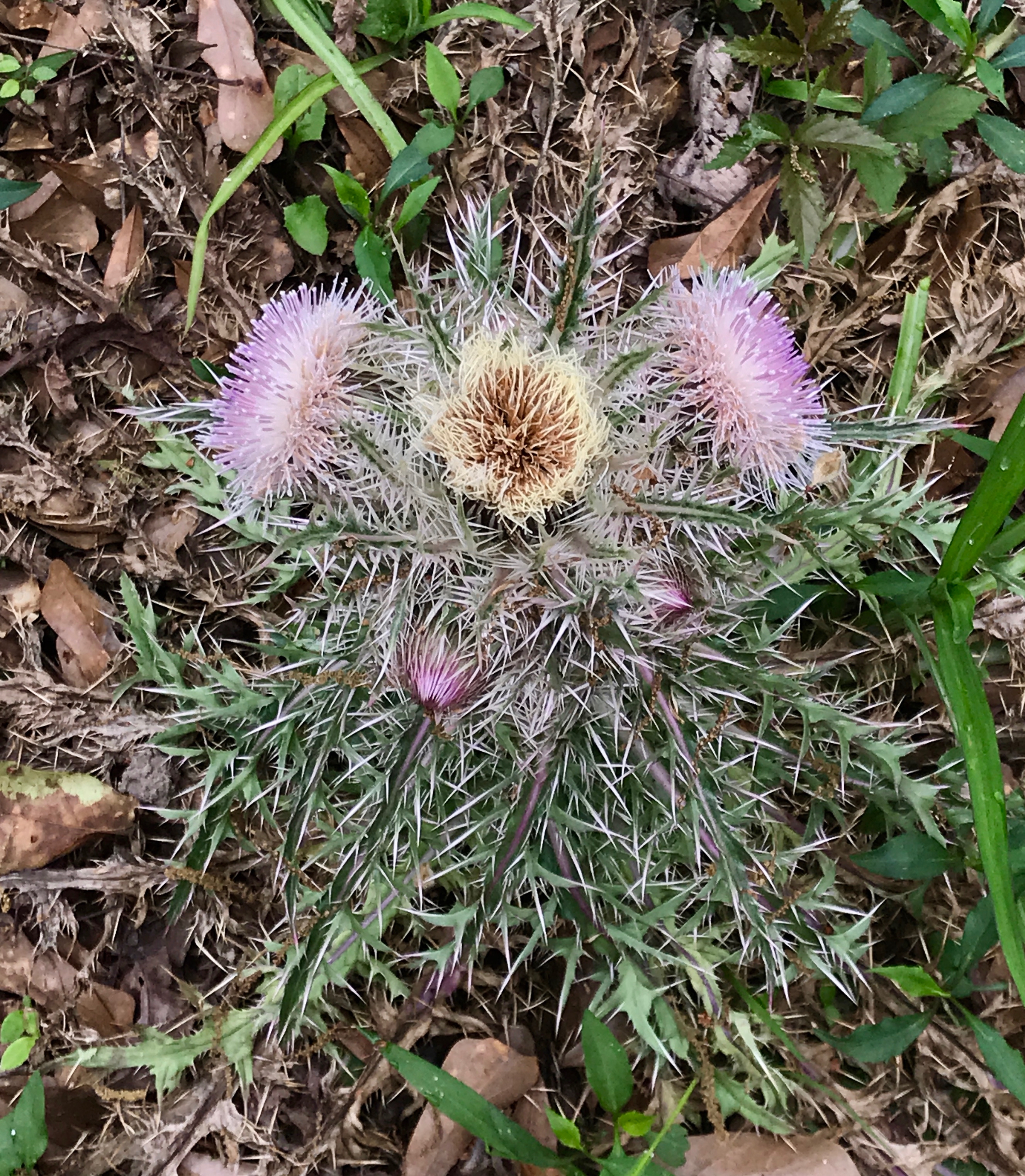
I was thrilled to find this plant so I could get a closer look. I had seen them along the various Interstates, but I couldn’t get a good view. It’s hard to do plant identification at 60 miles an hour.

I was glad to be able to see it better, but it definitely looks like something you’d better not touch!

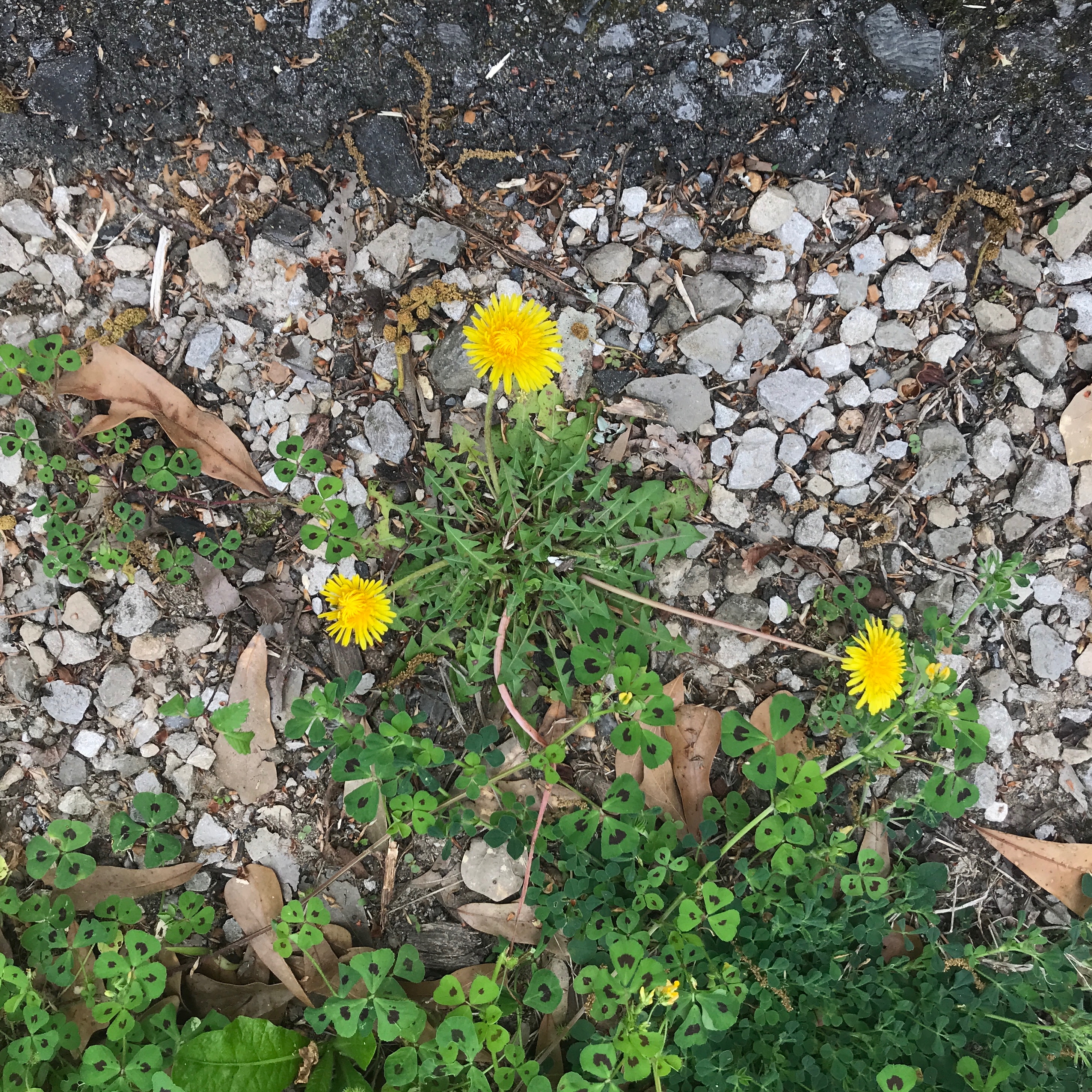
I happened upon a flower I could readily identify. Dandelions – the harbinger of spring!

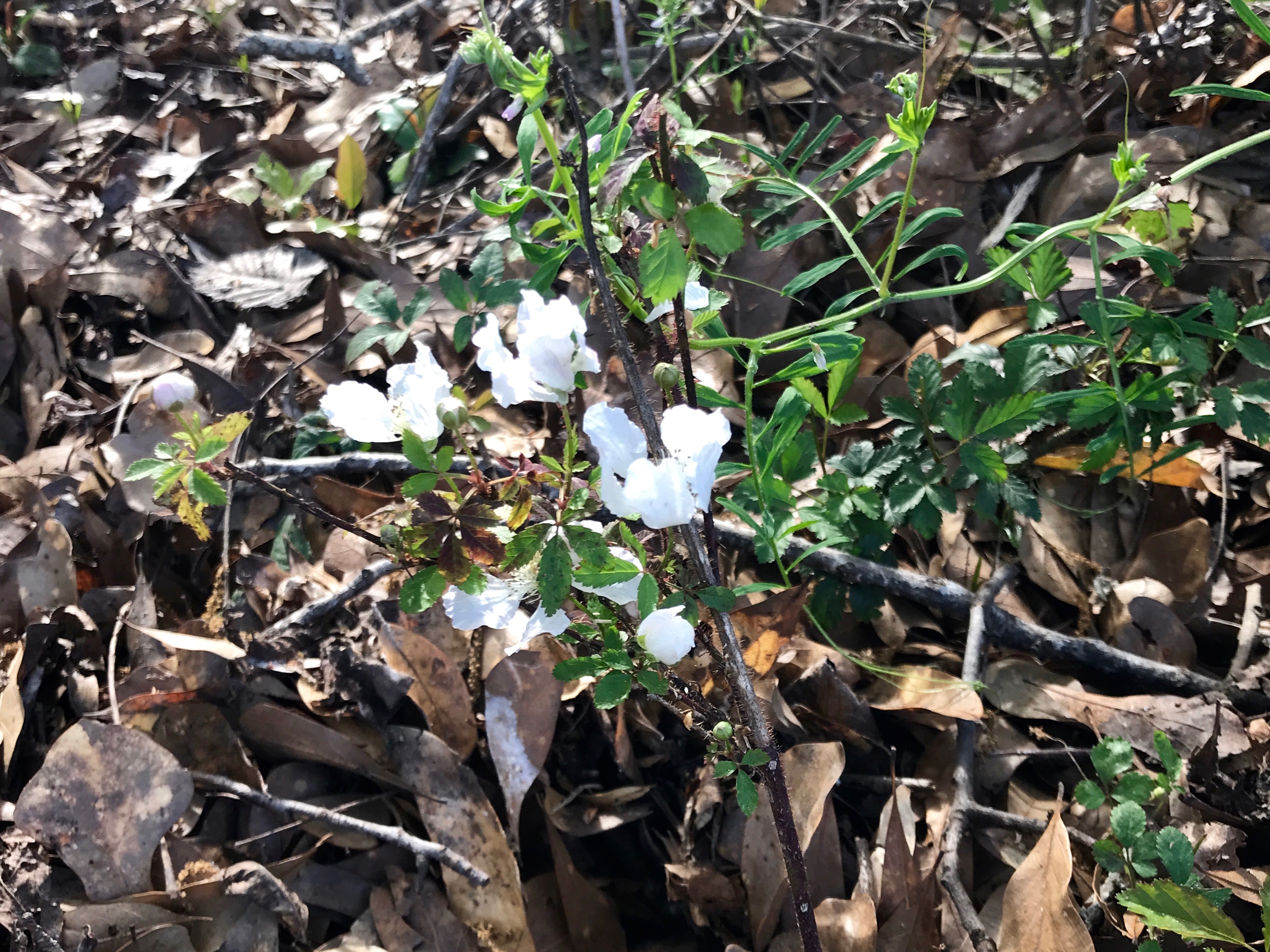
These little white blossoms on a vine by the side of the road outside the park. After I looped through the park, I decided to walk down the road a ways.

I noticed on Google maps that the Lake Bruin was near the Mississippi River.

In fact, I could hear the heavy sound of diesel motors running from my campsite. I assumed that they were pushing barges up or down the river. I wondered if I could see the river.

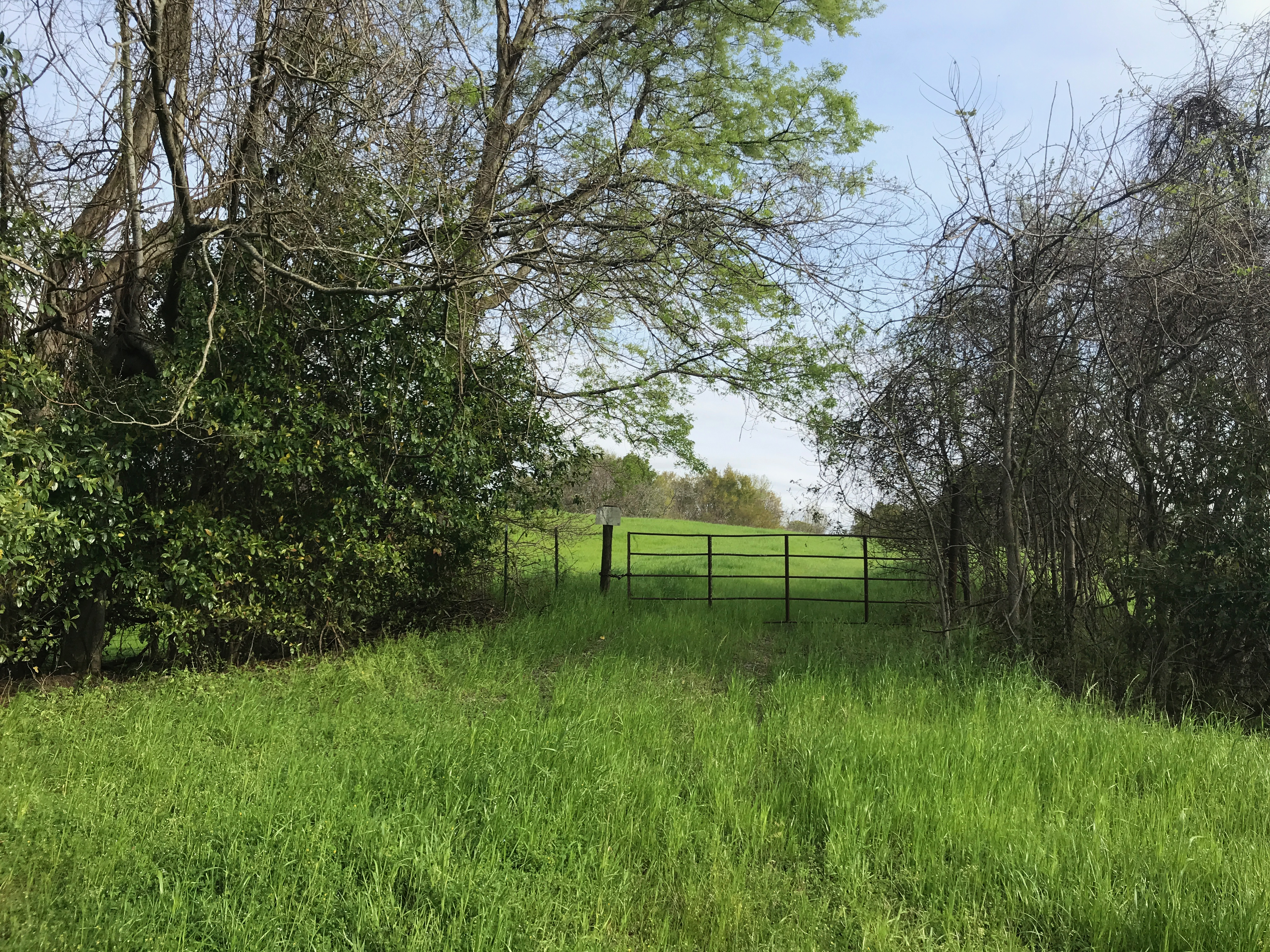
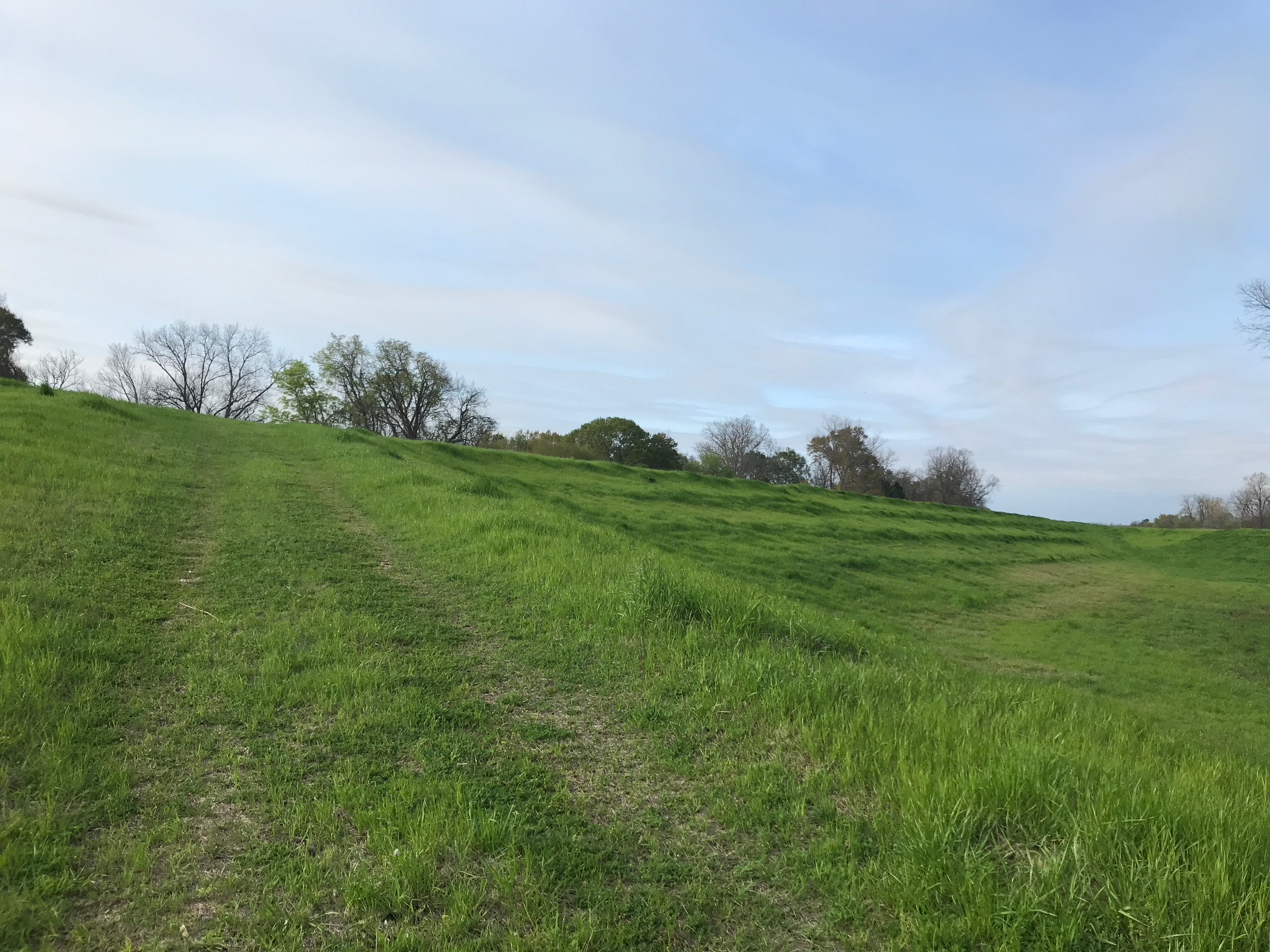
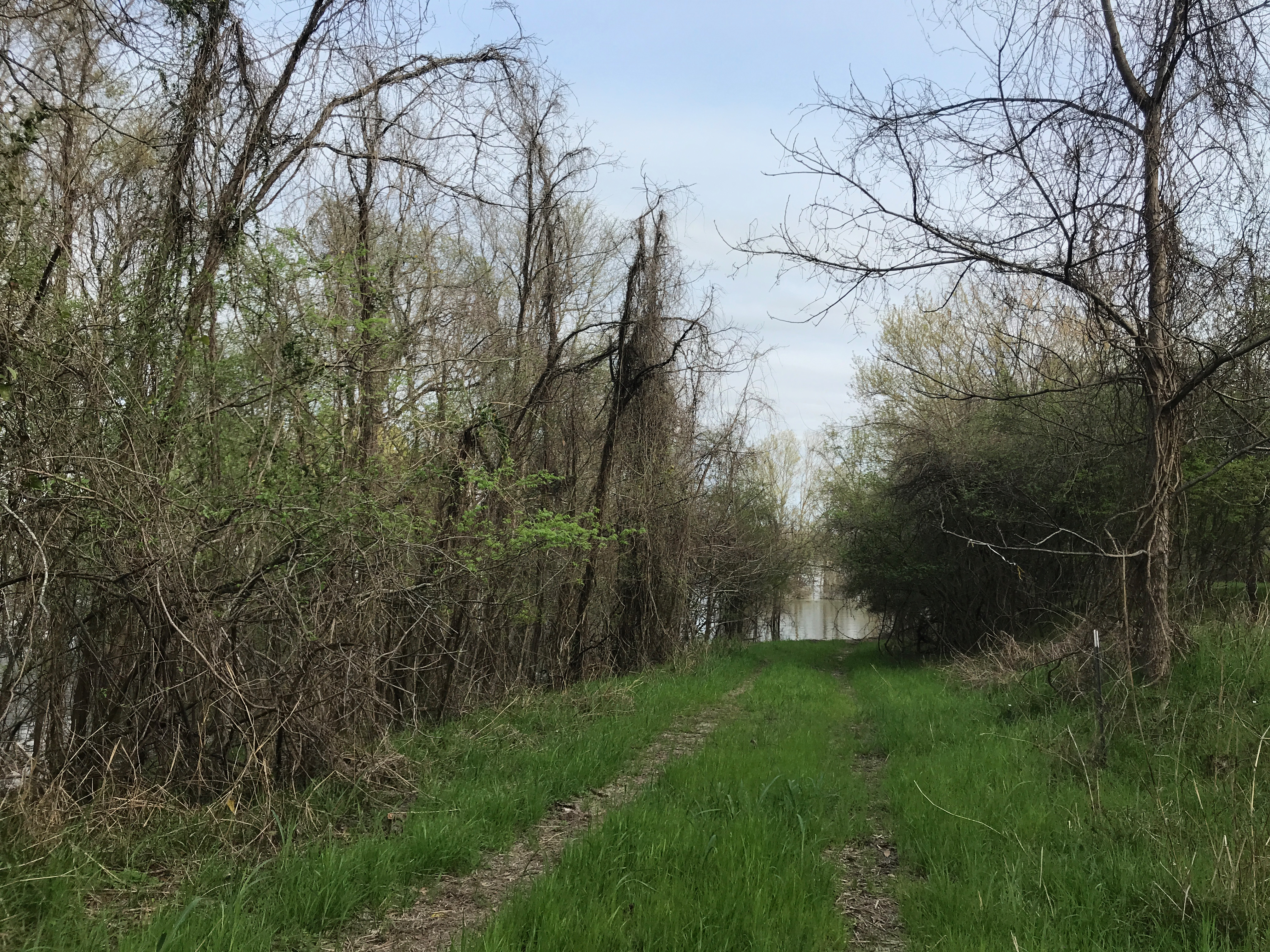
At the end of the road, I saw this gate. It looked like it guarded a way to get to the levee, so I went exploring. It didn’t have a “no trespassing” sign, although there might have been one there at one time or another.

I went through a gap in the fence next to the gate and climbed up one slope of the levee and down the other side.

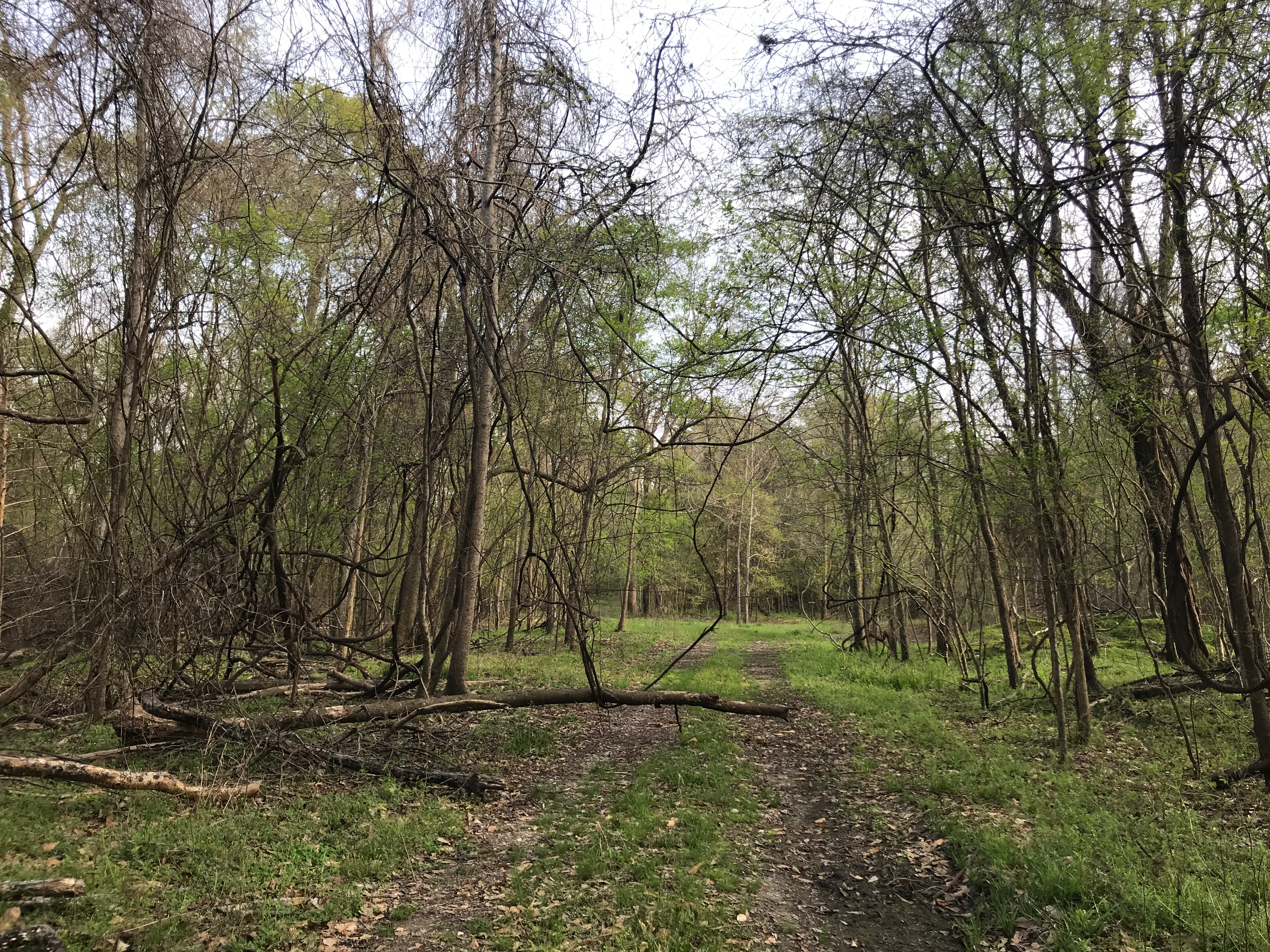
The road lead through some small trees. Judging by the branch suspended by the vine, the road is not used often.

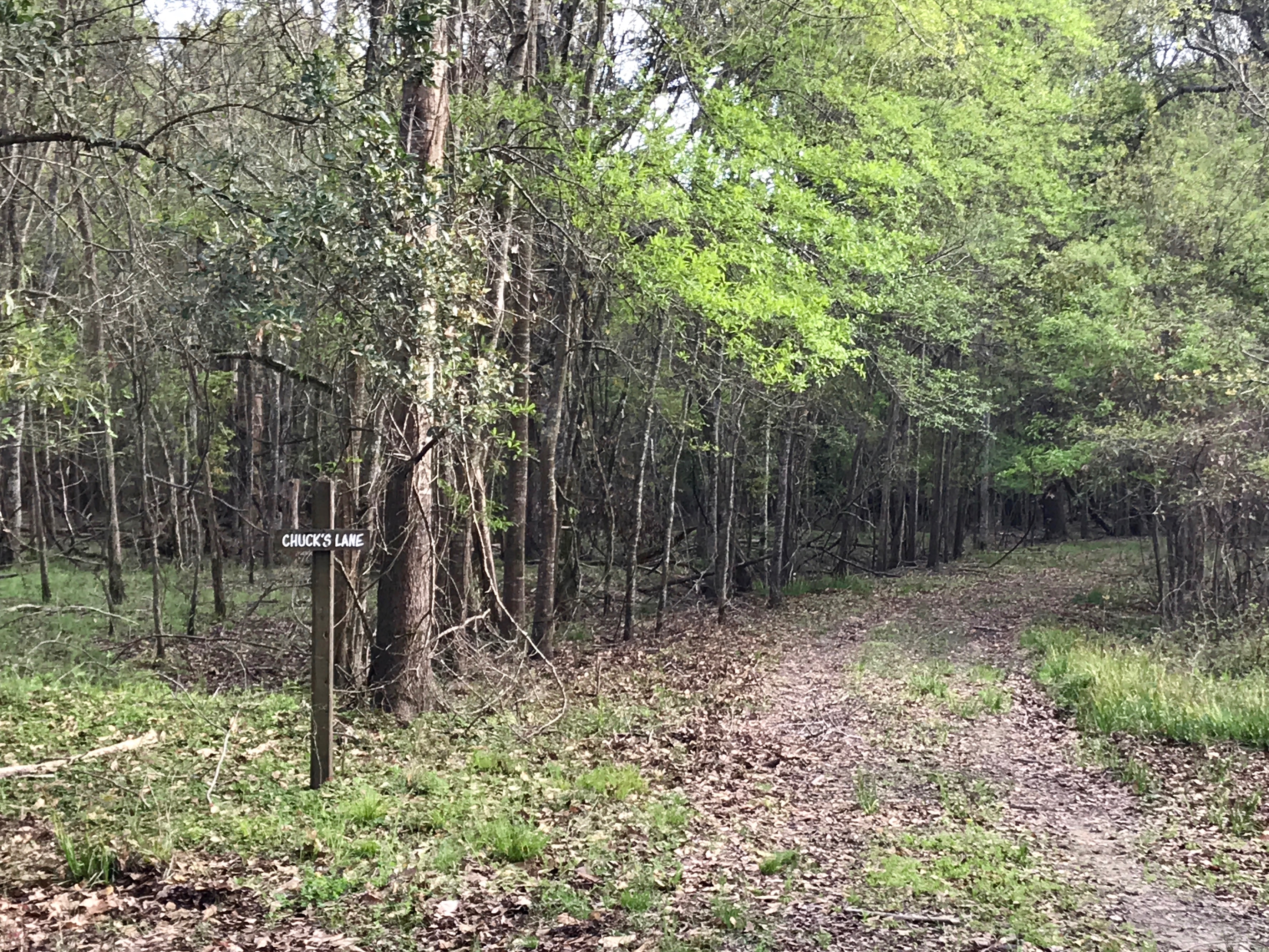
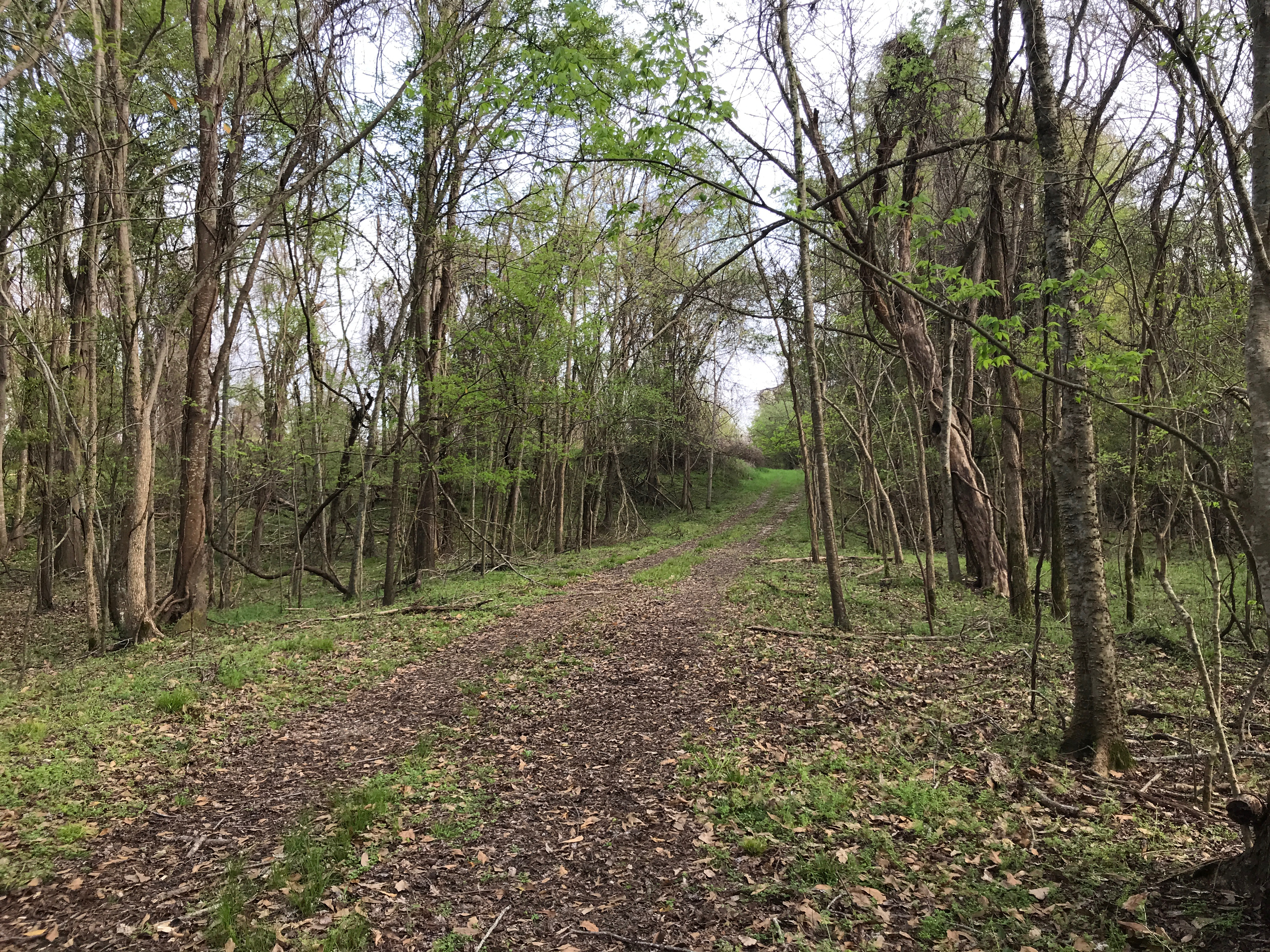
There was a sign that marked “Chuck’s Lane.” I didn’t want to run into Chuck, so I took the road to the left.

It climbed another small levee.

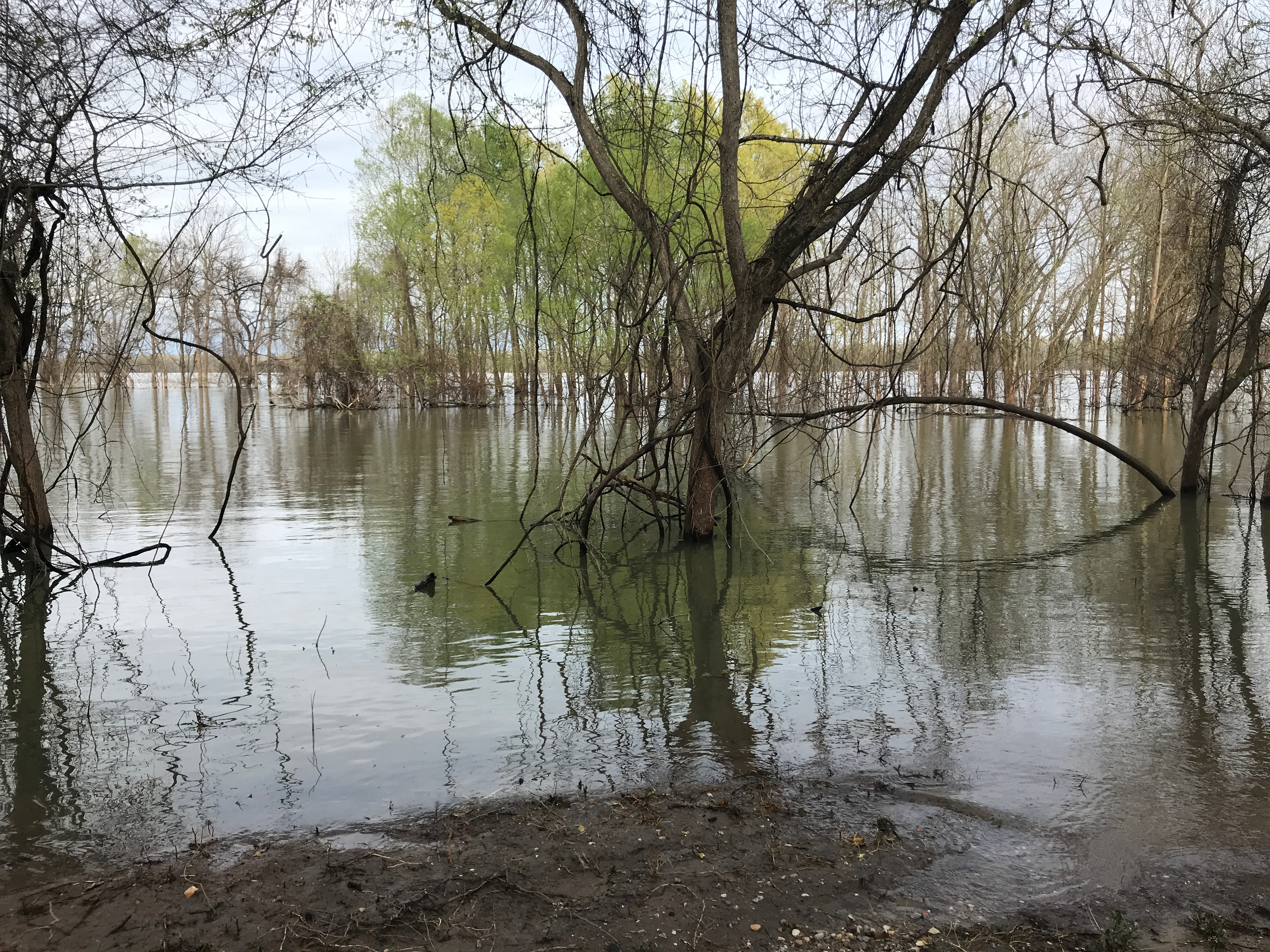
As I came down the other side, I could see the river!

The Gathering of Waters. The Big Muddy. Old Man River.

It looks like the river was running kind of high.

Well, I had made it to the river. Time to retrace my steps back to the campground.

I climbed up the levee closest to the main road.

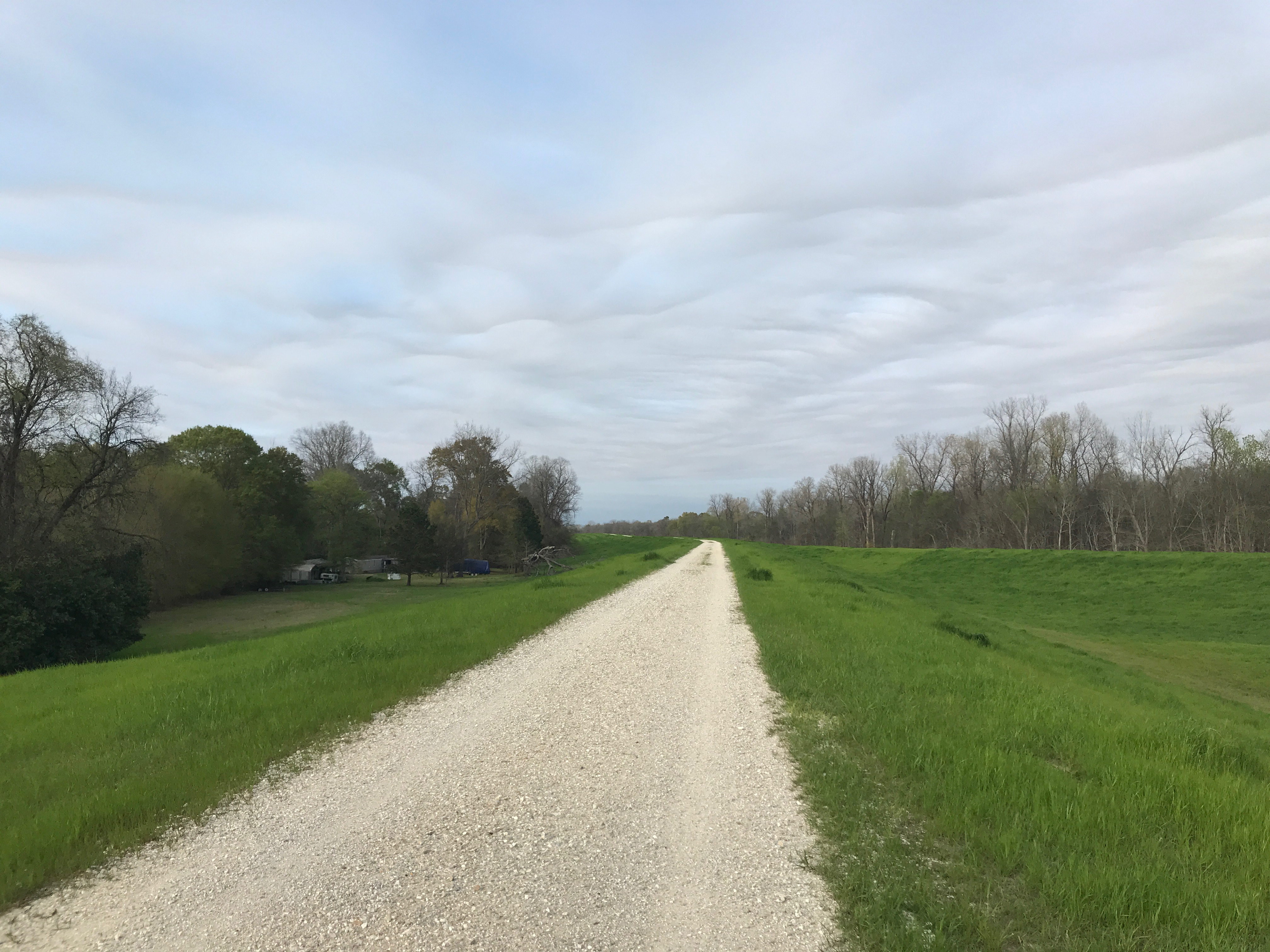
There is a road along the top of the levee. I imagine they need to check on the levee from time to time.

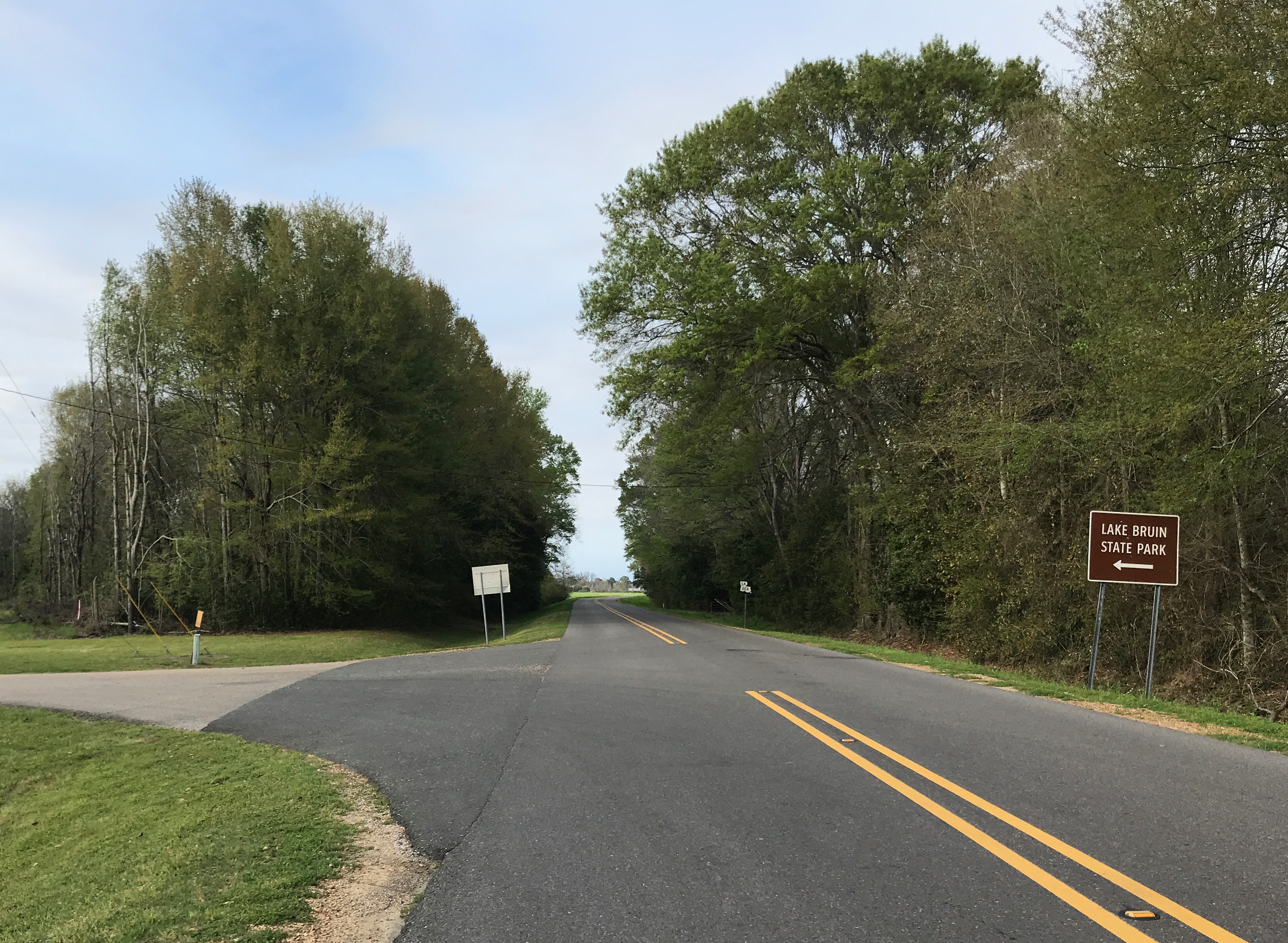
The sign pointed the way back to the park.

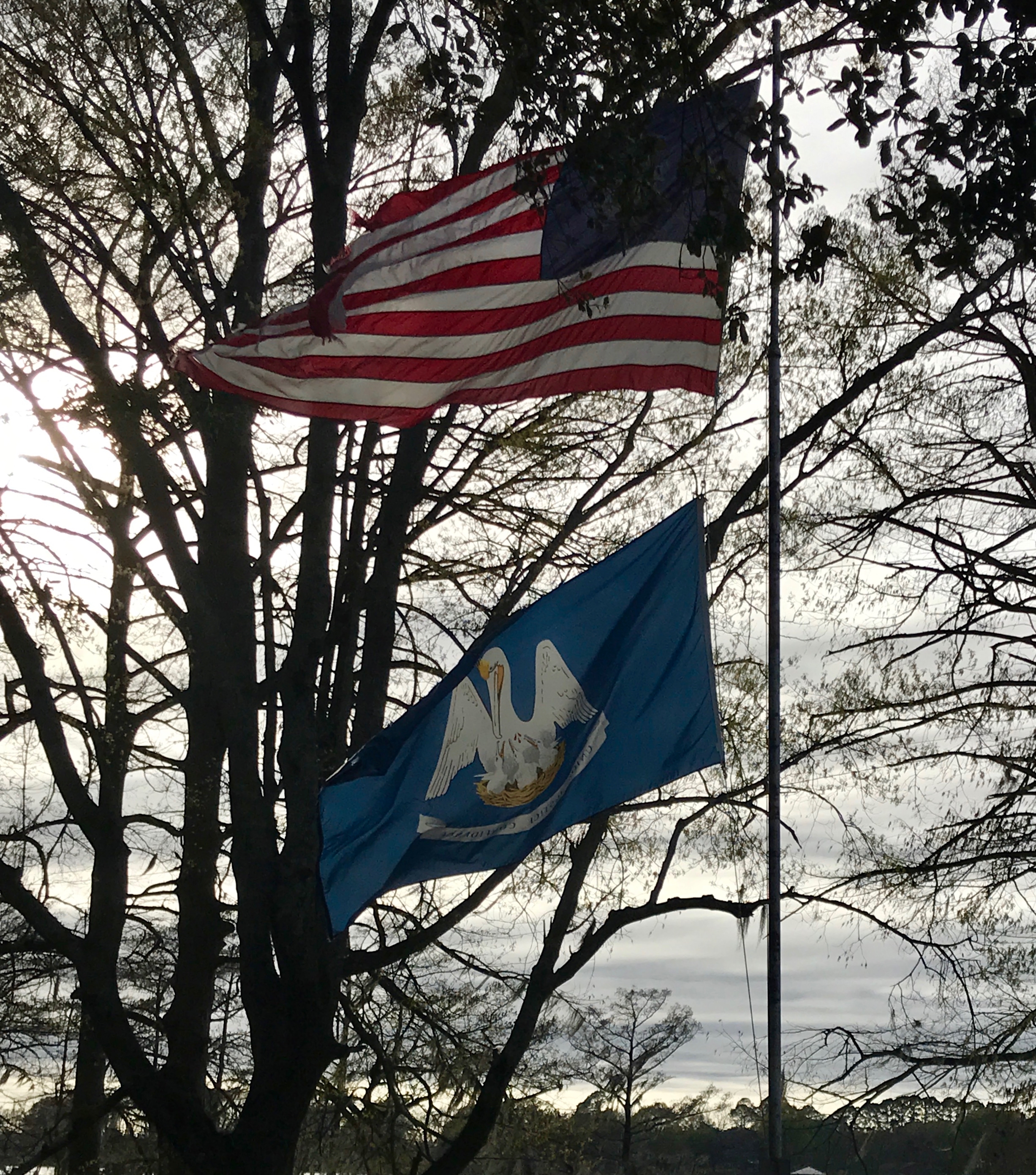
I managed to get a good shot of Louisiana’s state flag. I love the mother pelican feeding the babies! I checked, just to make sure I had the right bird. Well, I did, but according to State Symbols USA,  the mother bird is “nurturing its young by tearing at its own breast.” Ewww…

However, according to information on the website, pelicans DO NOT feed their young with their own blood.

“Pelicans do NOT tear at their own flesh to feed their young. This legend, which has taken on some religious significance as a symbol of self-sacrifice, dates back to at least medieval times. It may have begun as a result of misinterpretation of normal feeding behavior, in which the parent holds it bill down along its breast as young reach in to take fish from the parent’s bill or pouch. The truth is that pelican parents, facing starvation, would abandon their young and save themselves.”

I’m not sure if that makes me feel better or not.

Anyway, with the extra time I gave myself at the park to consider whether to continue traveling or return home, I came to the decision that there were enough unknowns that I might as well head for home.

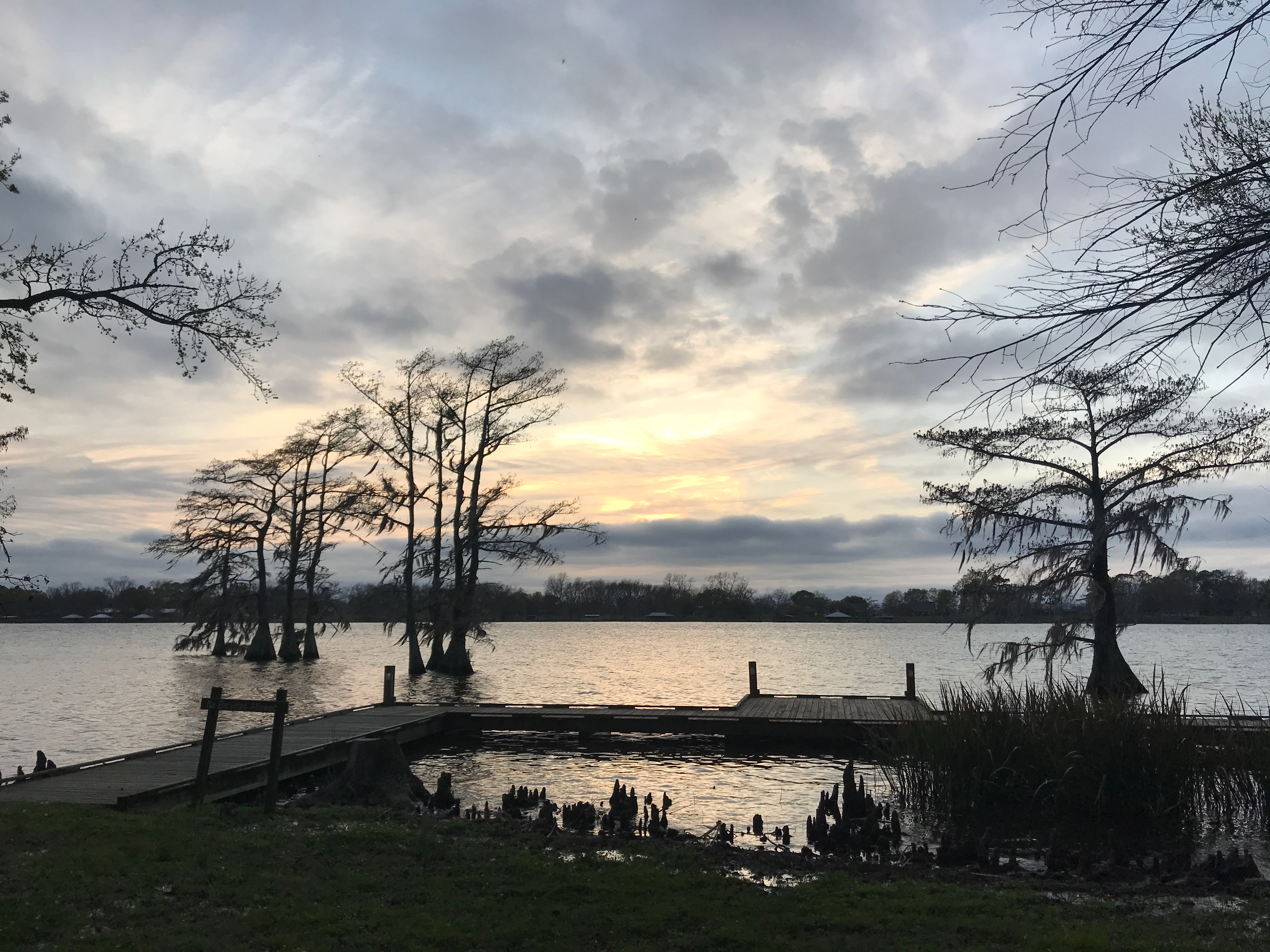
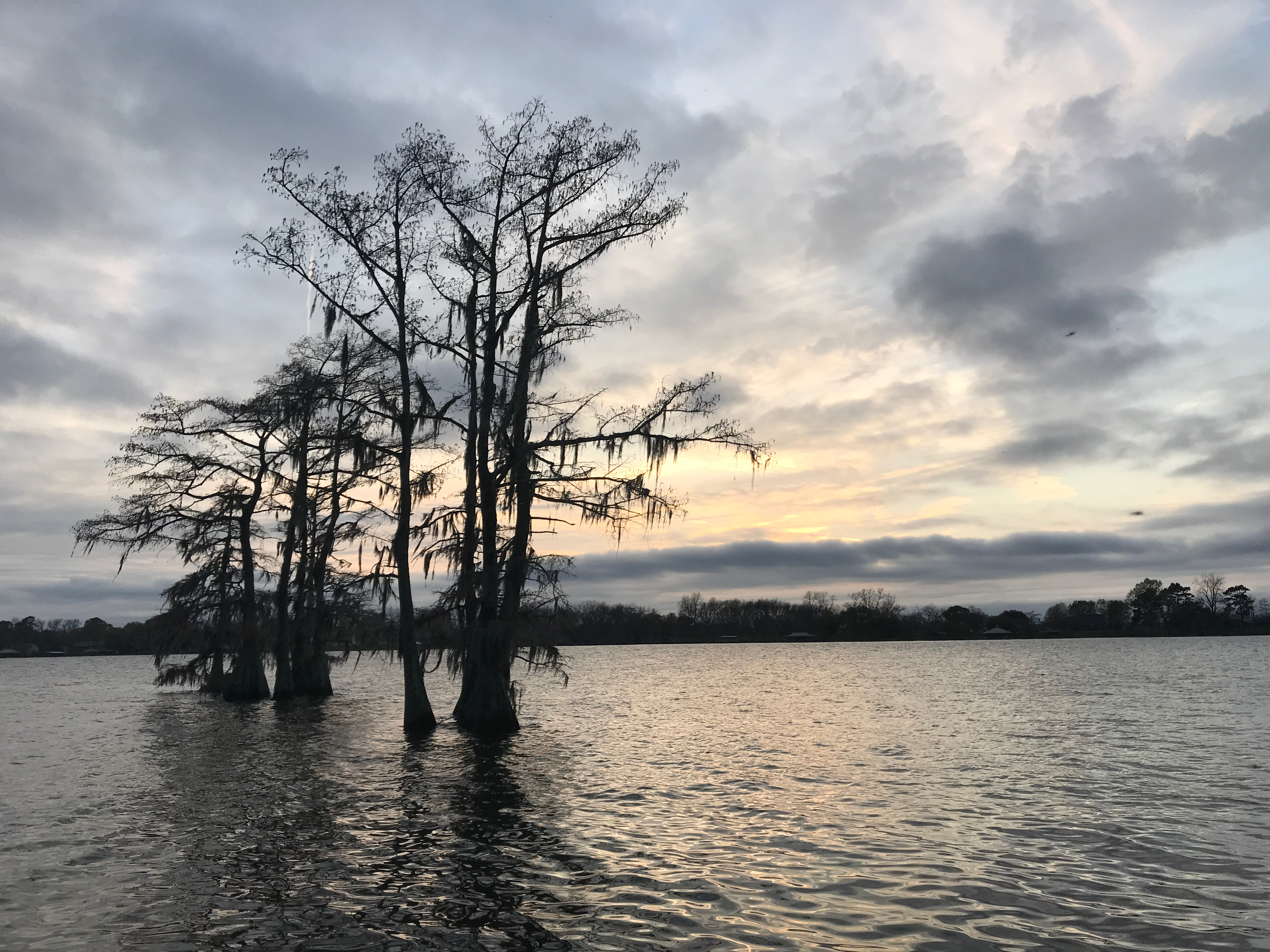
I was happy that there was a sunset to look at.

Here it is, over one of the several fishing docks.

And a shot from the dock, as well.

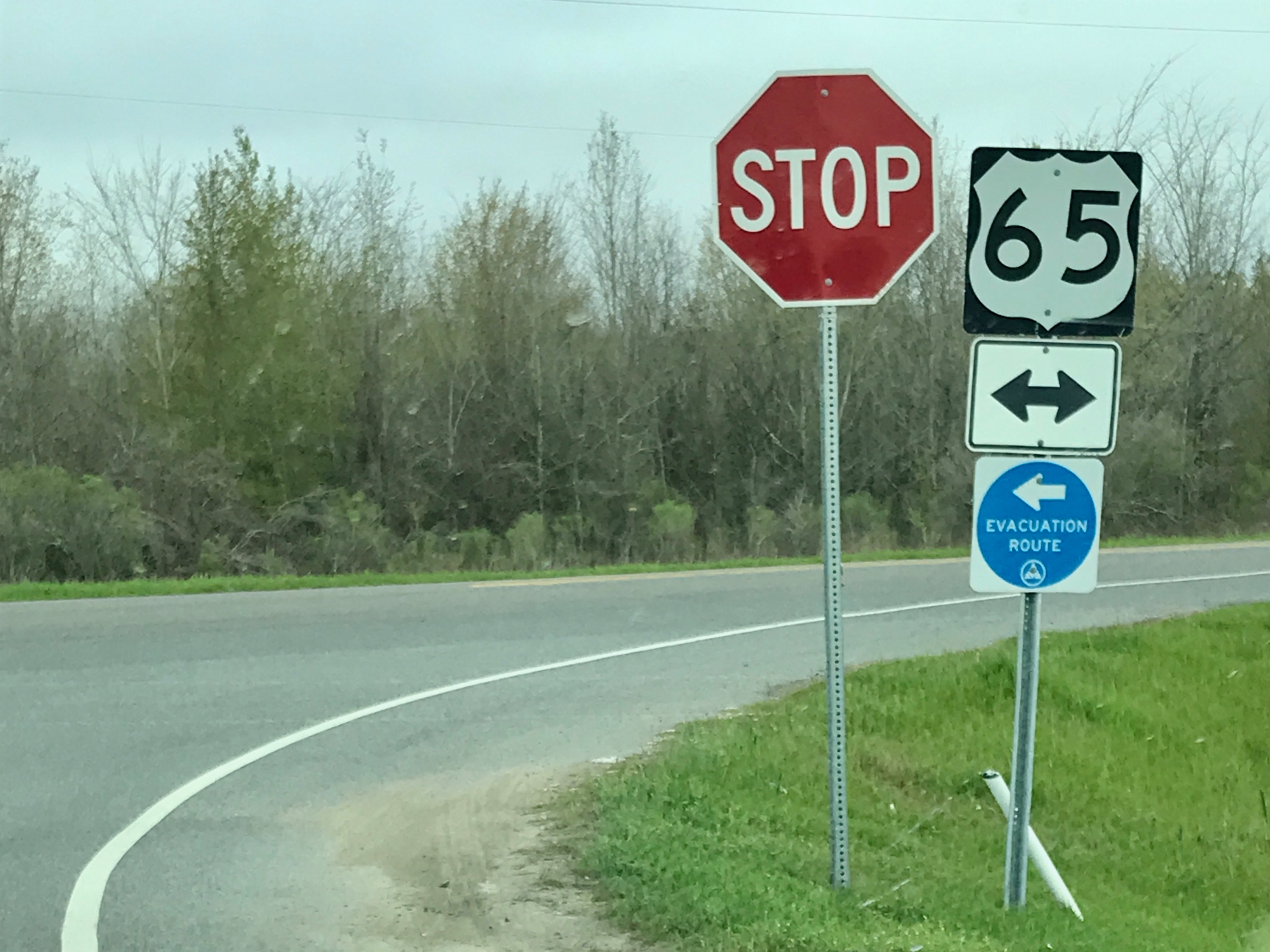
The next morning, I hitched up, emptied my tanks and headed out. I turned right at the corner and followed the directions to the Walmart in Vicksburg, Mississippi.

Yeah, I know…Walmart. I never shop there, but I had to rewinterize the trailer, as I was heading back to winter.

I entered through the doors near the grocery department, and marveled at the shelves that were picked clean. I did pick up a few things that I thought might be useful, if conditions were as grim at home.

I found the RV antifreeze and the funnel I use to put it in. I did flipped the levers, emptied the lines and added the antifreeze and then retraced my route.

I spent the night in the same Cracker Barrel I stayed in on the way down. I arrived late, but thought I’d grab breakfast in the morning.

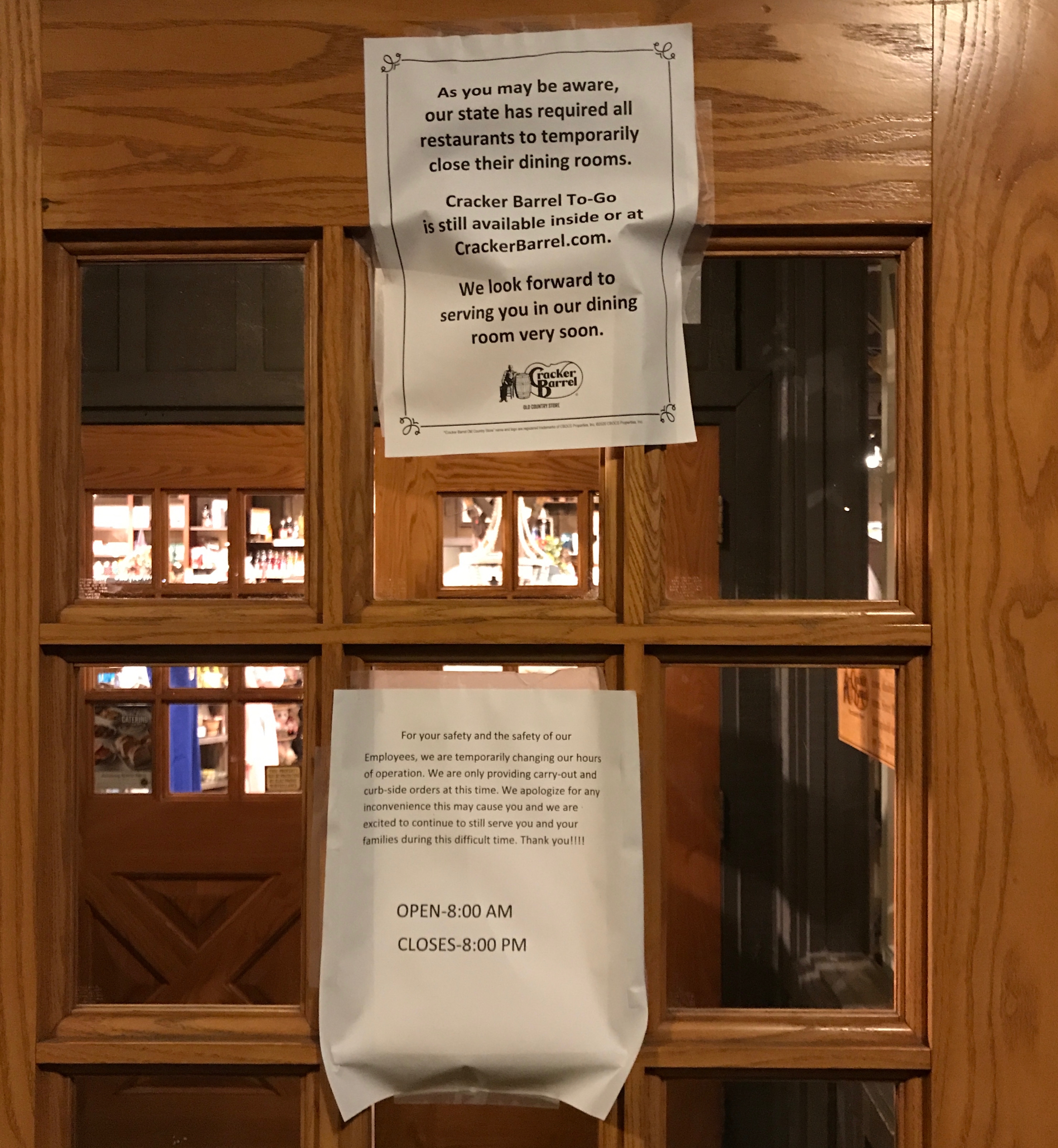
Uh, no breakfast this time.

I made do with the food I had with me. Heaven knows I had enough food! After all, I had brought along as much as I could, seeing as I had planned to be gone for about two months.

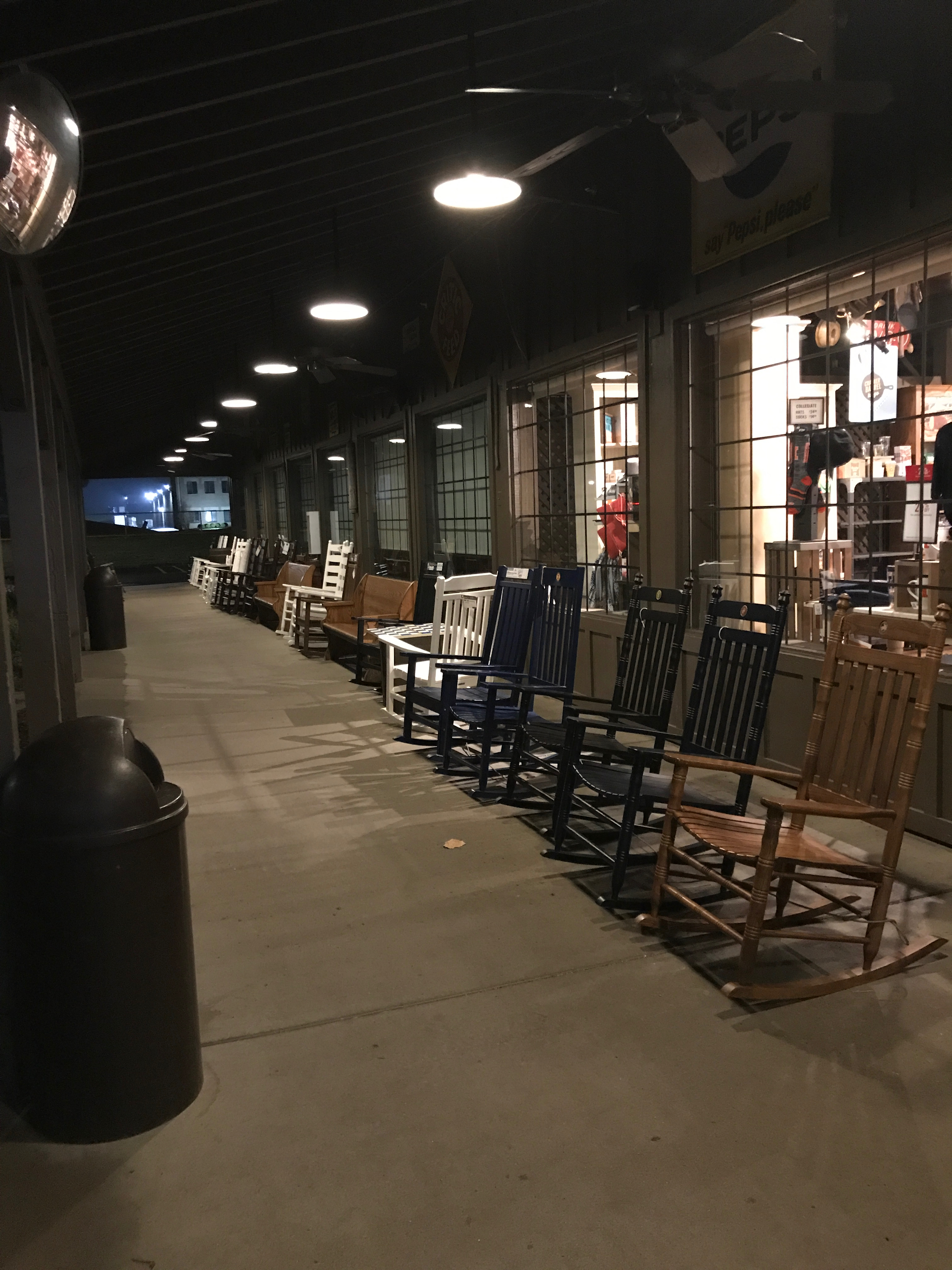
The Cracker Barrel front porch was eerie, sitting there empty, but with all the lights on.

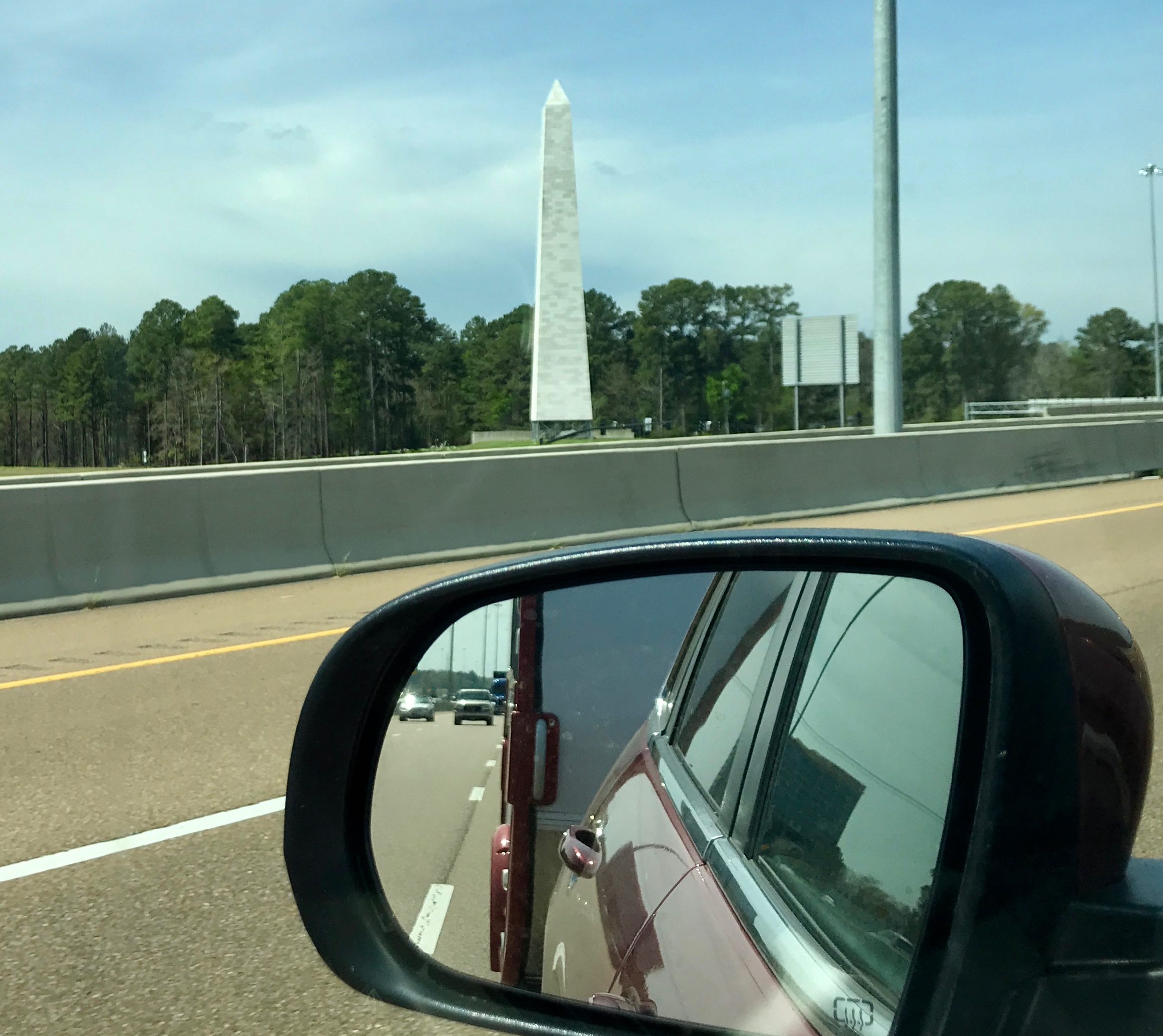
I’m not sure where this was, but someone I spoke with told me that they “hide” cell phone towers in obelisks.

Although I had just prepared the trailer for winter weather, the flowers at the rest stops were still blooming.

Good advice!

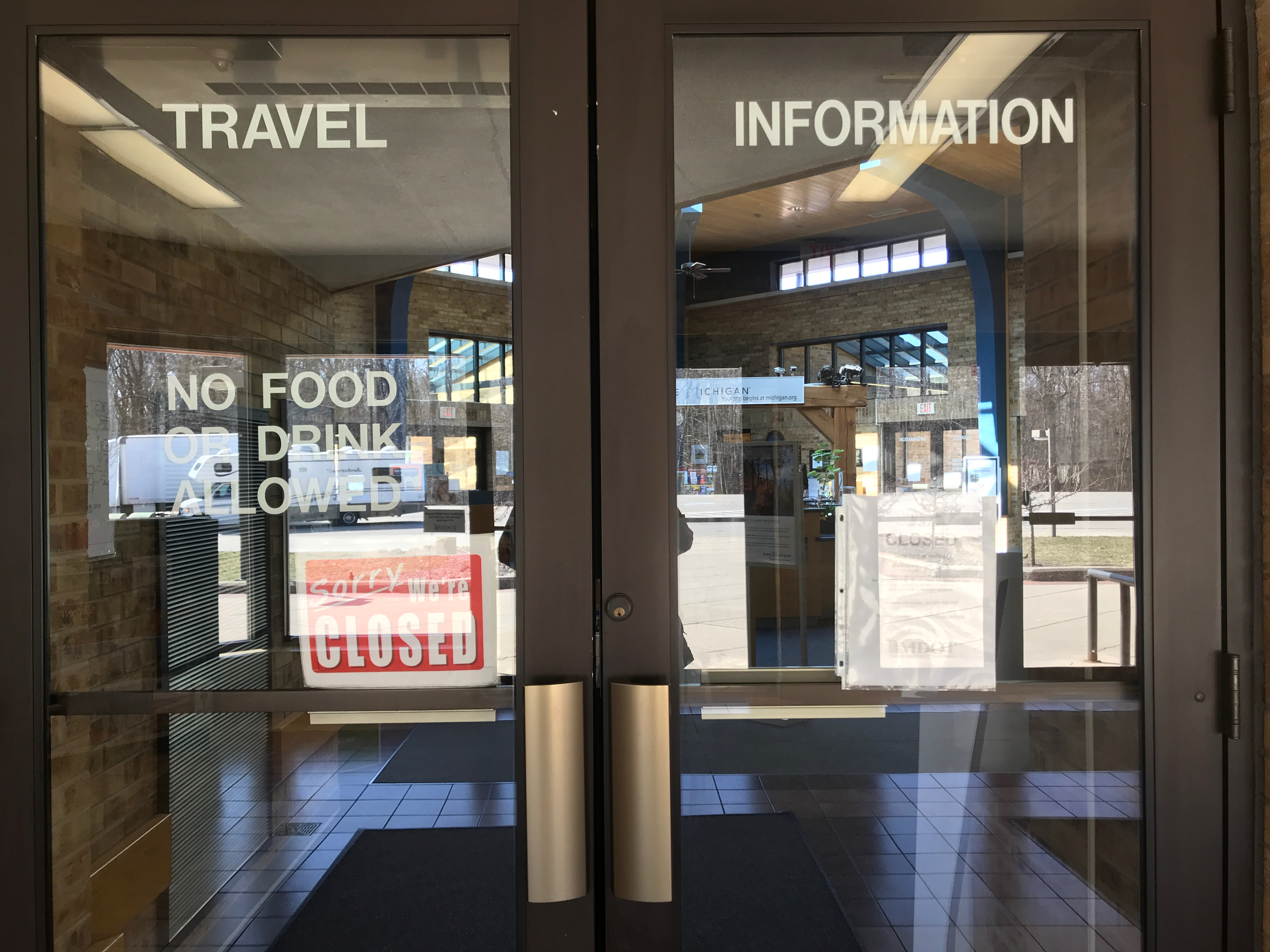
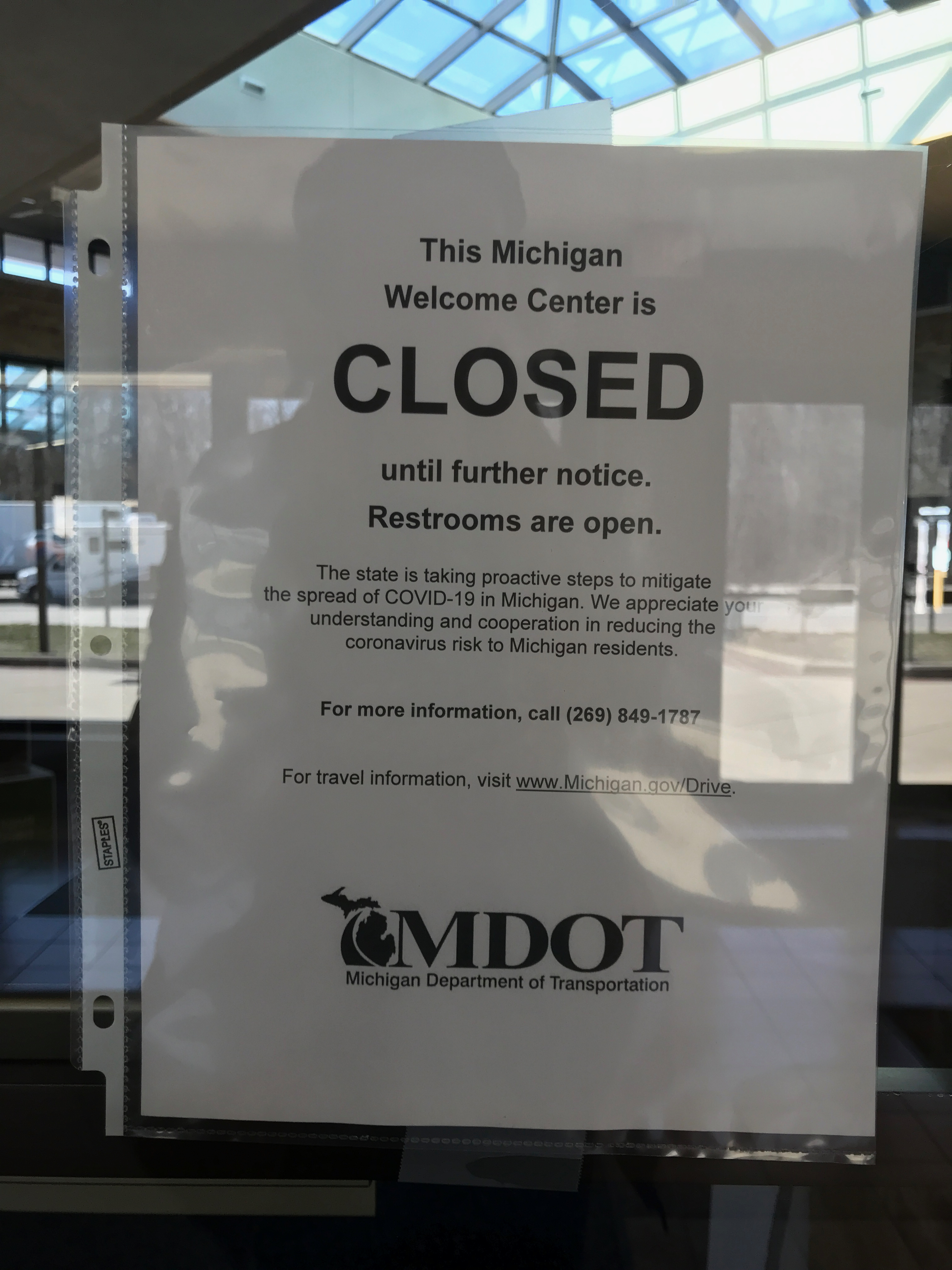
I got back to Michigan, and stopped to use the rest room at the Welcome Center.

The Welcome Center was closed, but at least the rest rooms were open.

Another few hours, and I was home.

Not too much changed since I left a week before, but I do appreciate the blue sky.

And, the weather is a little warmer, too.

But, really, I think this is the longest trip I’ve ever taken to meet friends for dinner!


Baton Rouge

In my last post, I shared that my route to my next campground lead through Baton Rouge, Louisiana’s state capital.

It was time for a little drive-by tourism!

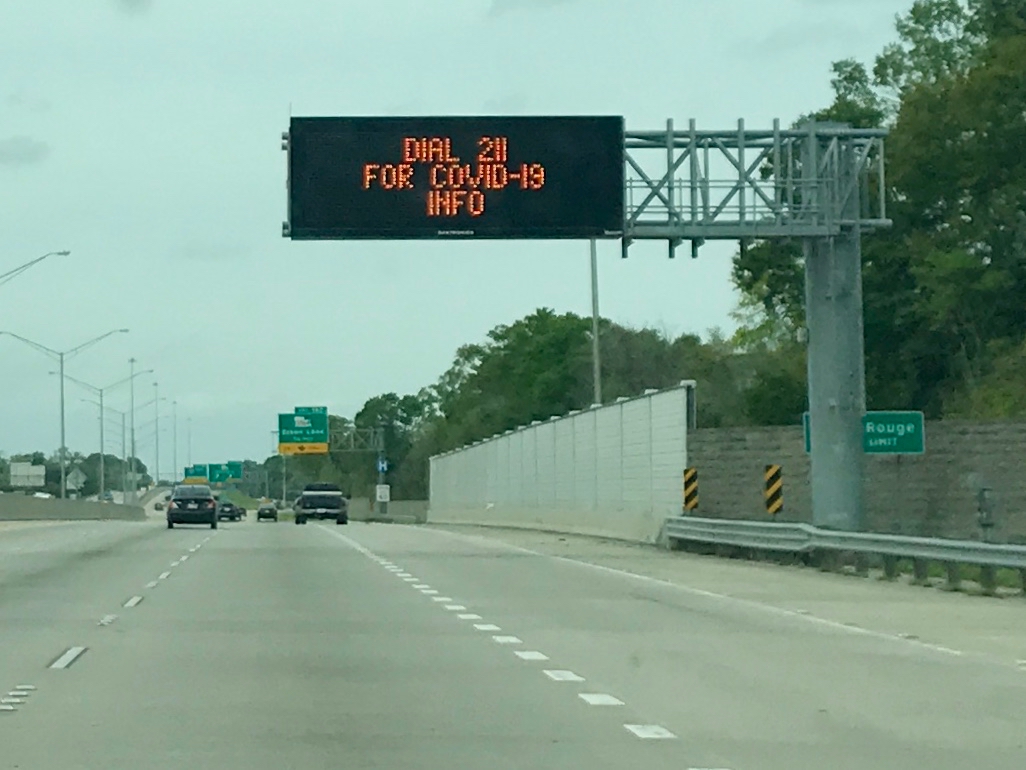
Along the way, I passed several of these signs, directing people where to access CoViD-19 information. As if my level of concern hadn’t been raised enough by the knock on my door that morning…

The streets were very empty, so it wasn’t too hard to make my way to the capitol. Of course it was Saturday, so maybe this is normal. Or, maybe, it’s the “new normal”.

(Note to self: make a list of the “New clichés” that are starting to get old.)

I snapped a few photos before I drew the attention of an official-looking vehicle with lights on the the roof. I waved and trotted back over to my Jeep. I wanted to be sure that I displayed an earnest amount of hustle to moving along.

I drove up a bit and looked for a place to turn around – or at least a safe place to assess my route out of town. Glory be, I found…

parking!

Loads of parking! I guess people were taking the warnings to maintain social distance seriously. Or, maybe it was just Saturday.

I decided to take a few minutes and walk around the outside of the capitol, which, I assumed, was closed.

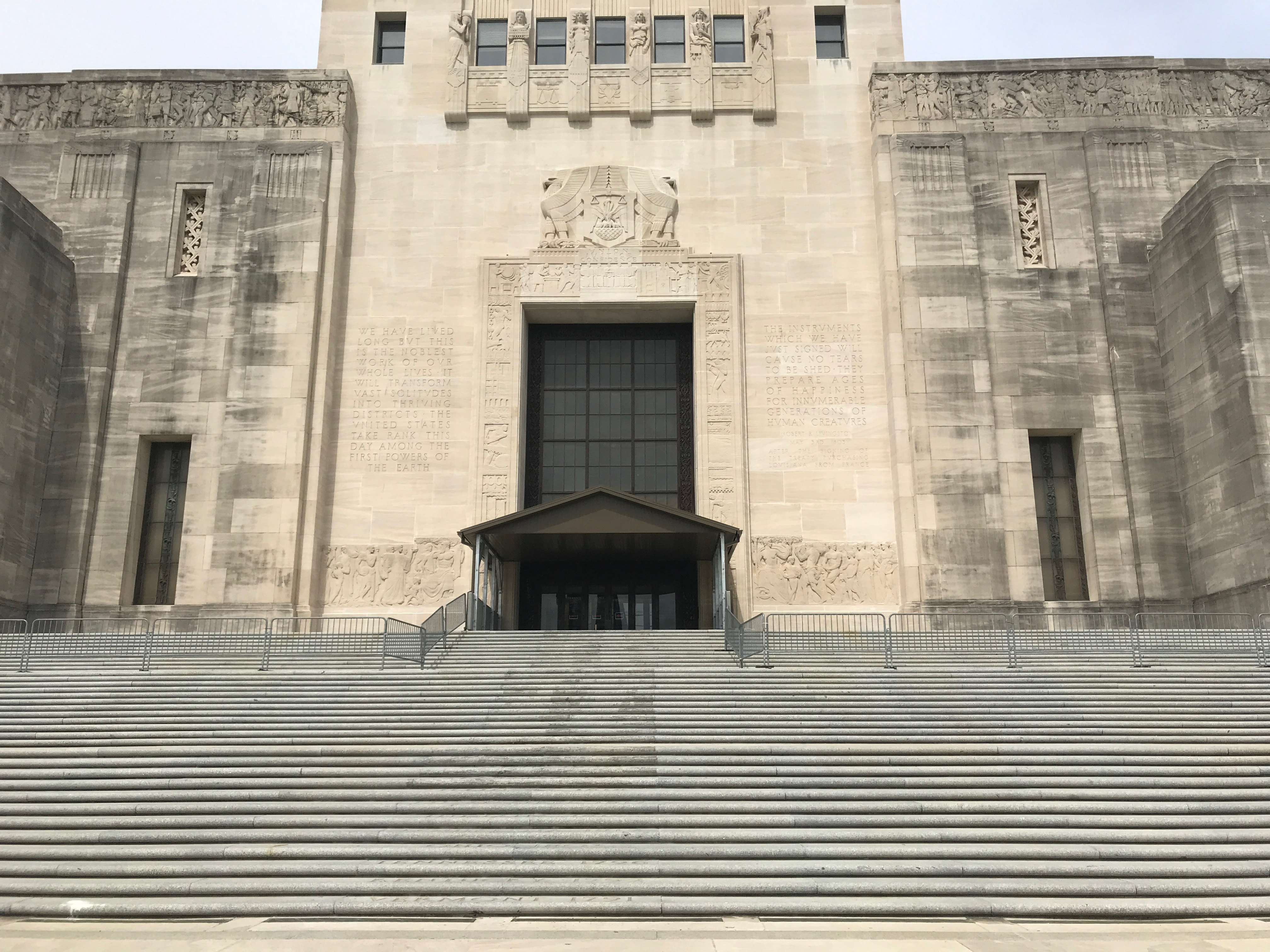
I finished mounting the stairs and got this good view of this Art Deco building.

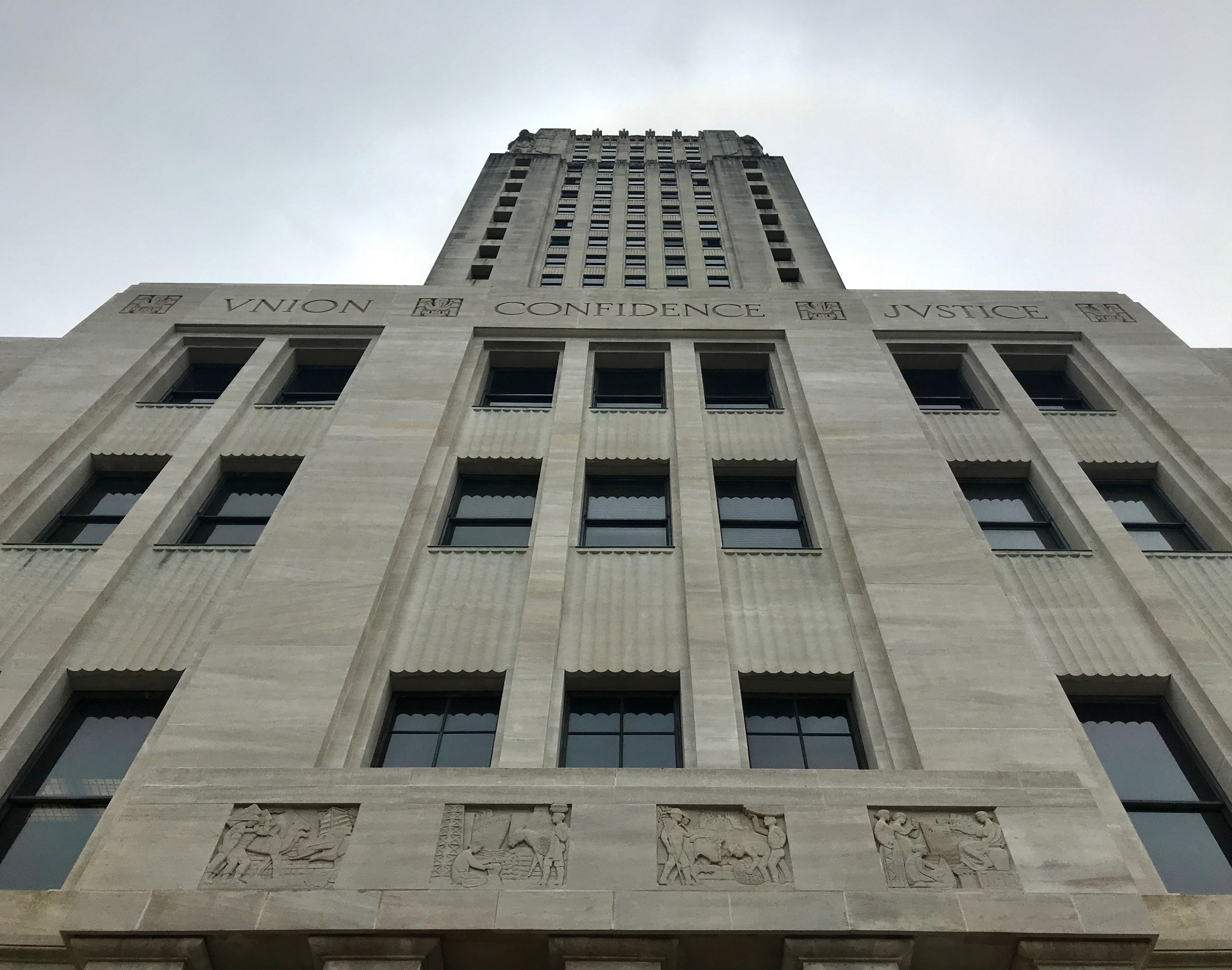
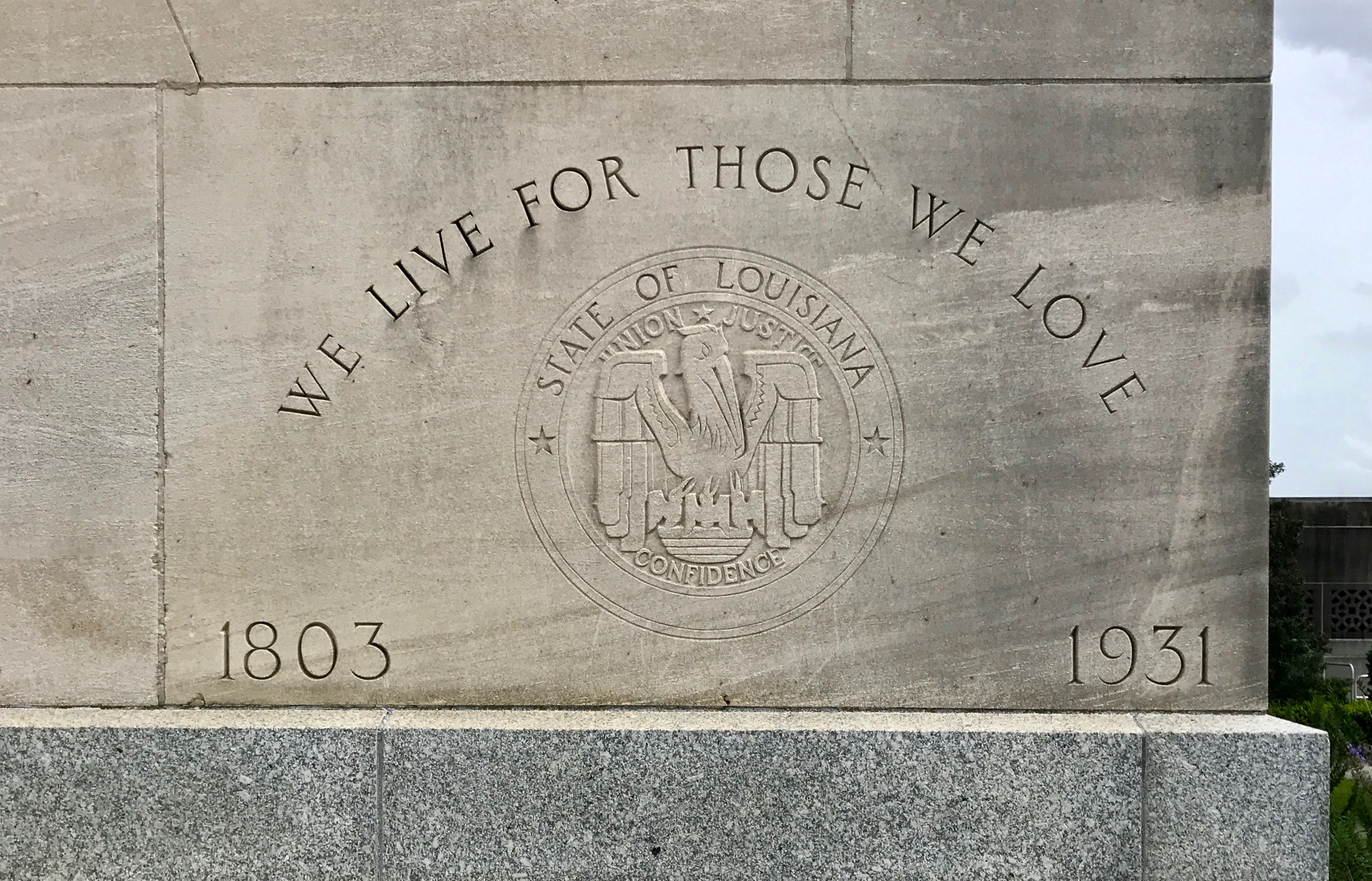
Union…Confidence…Justice.
Good motto.

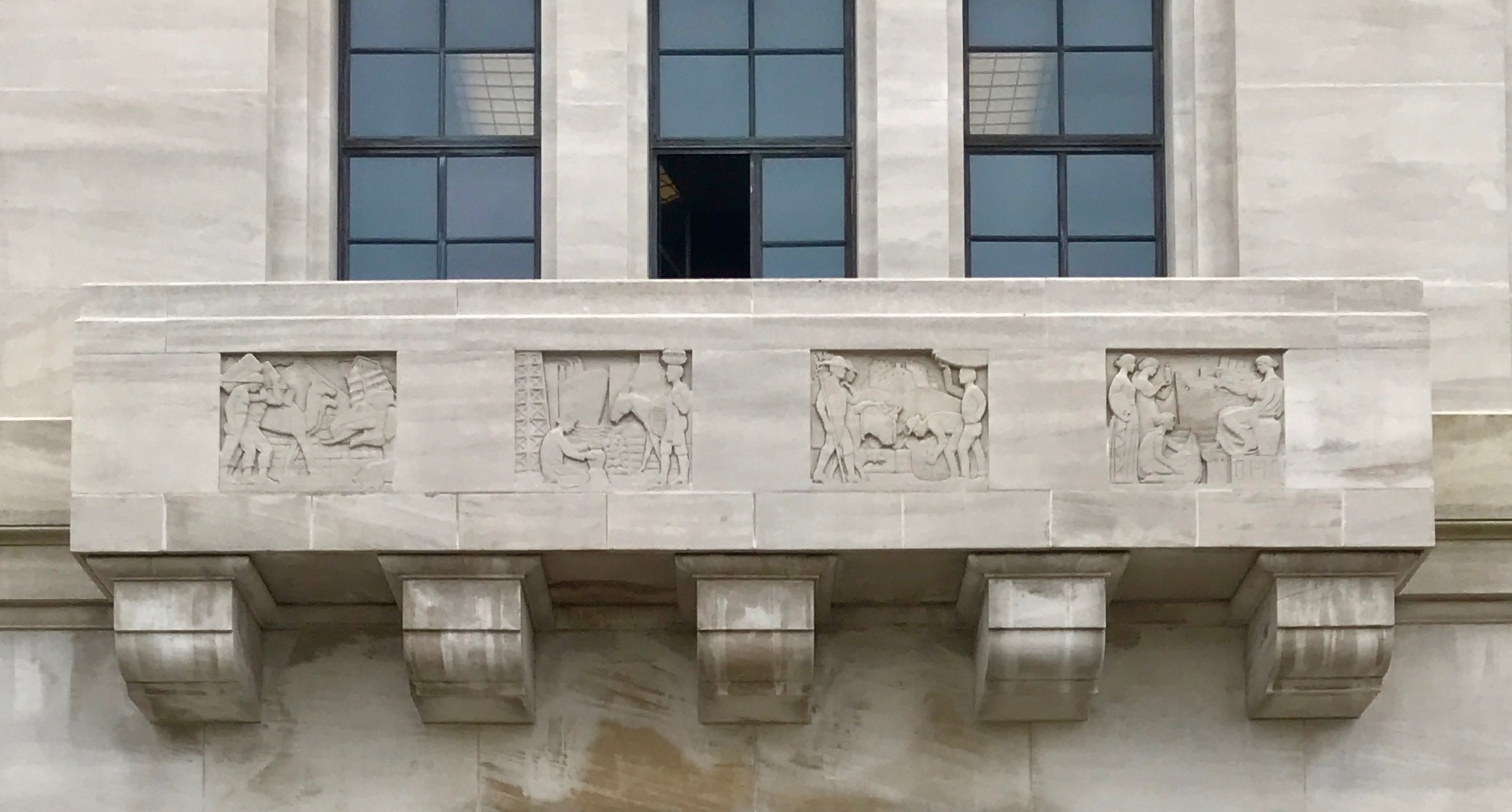
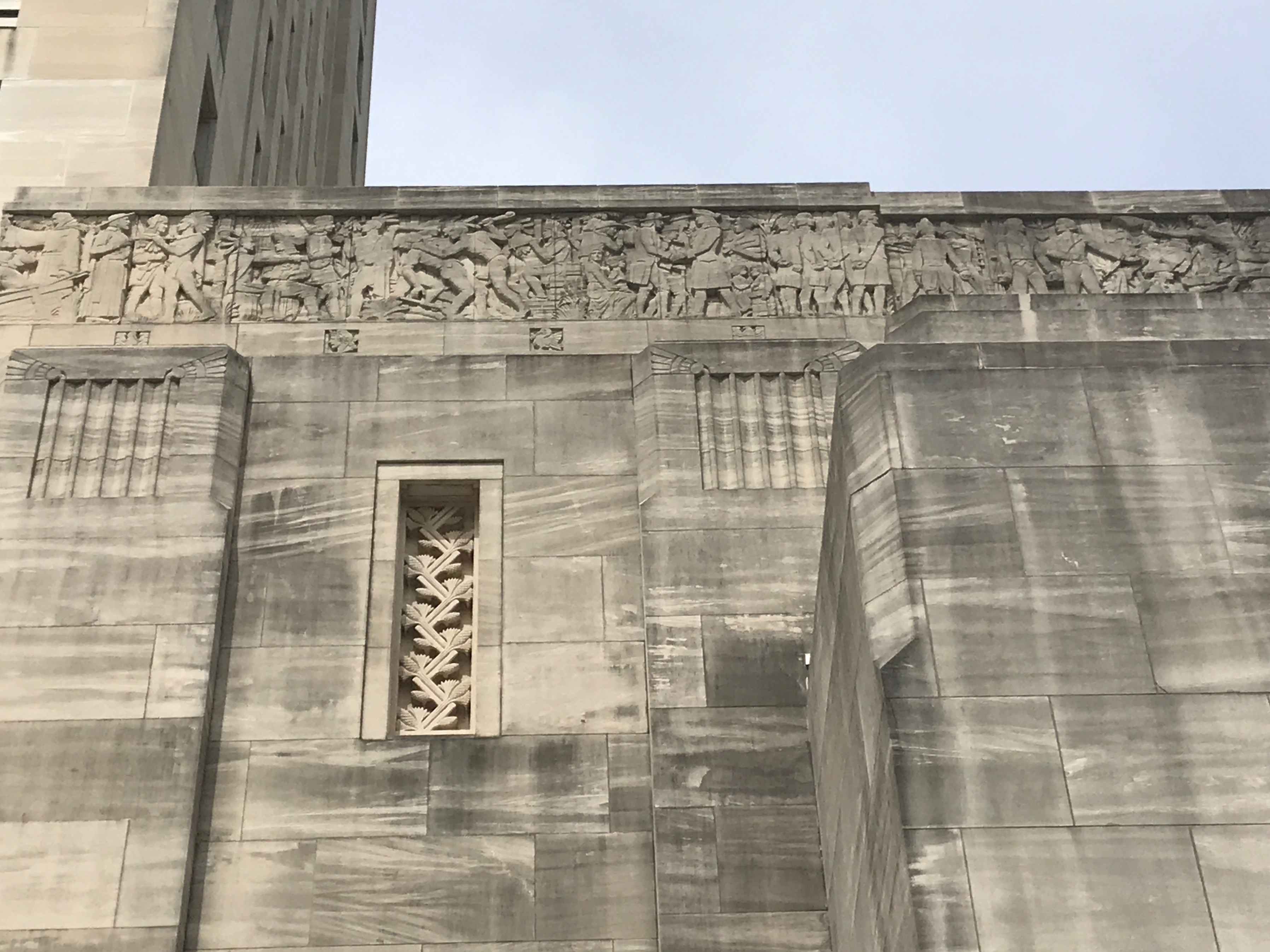
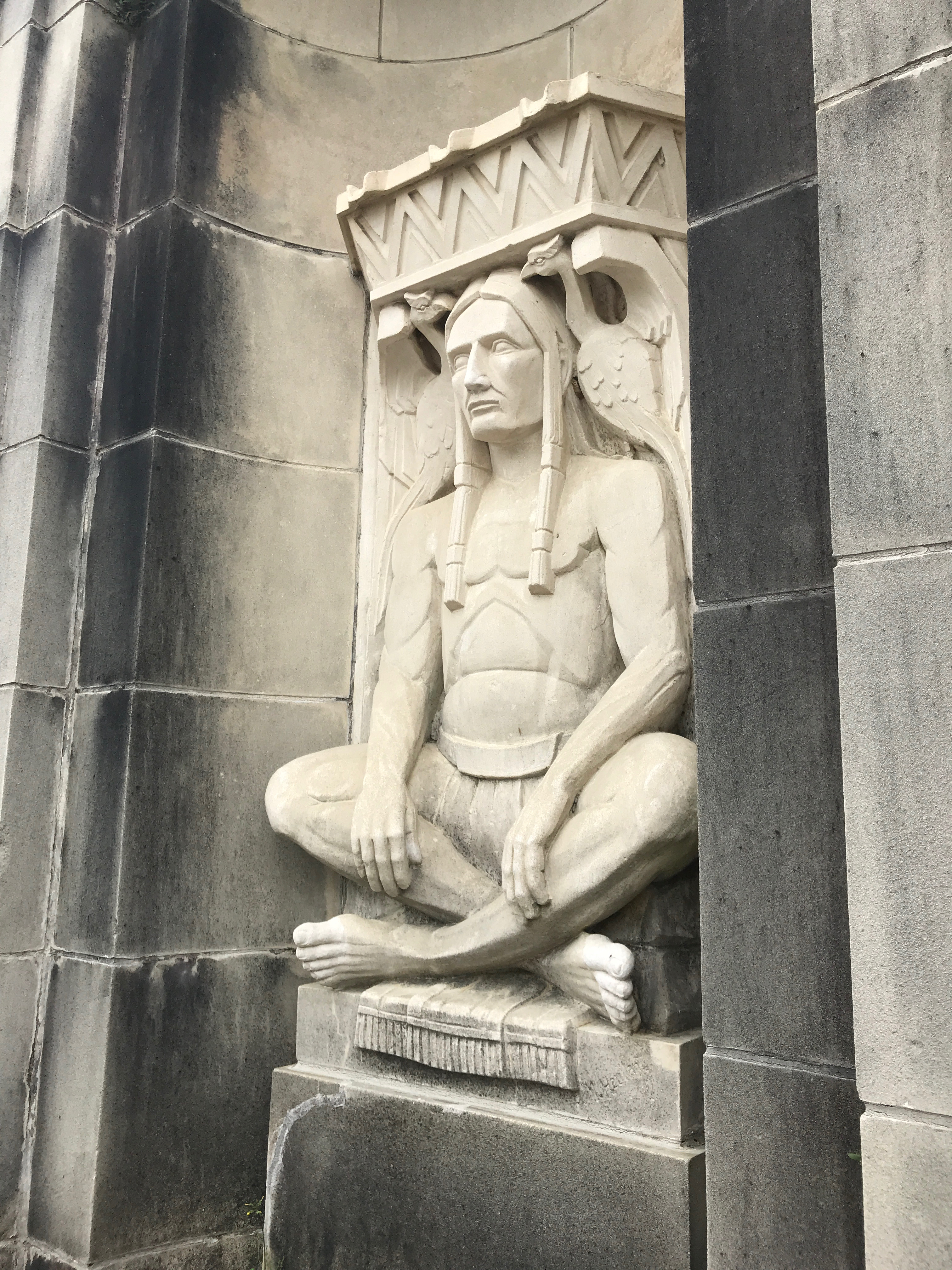
Although the building looks fairly unadorned from a distance, when you get up close, you can see all sorts of interesting details. I imagine that these all highlight scenes from Louisiana’s history, but I don’t know enough about this state’s history  to know for sure.

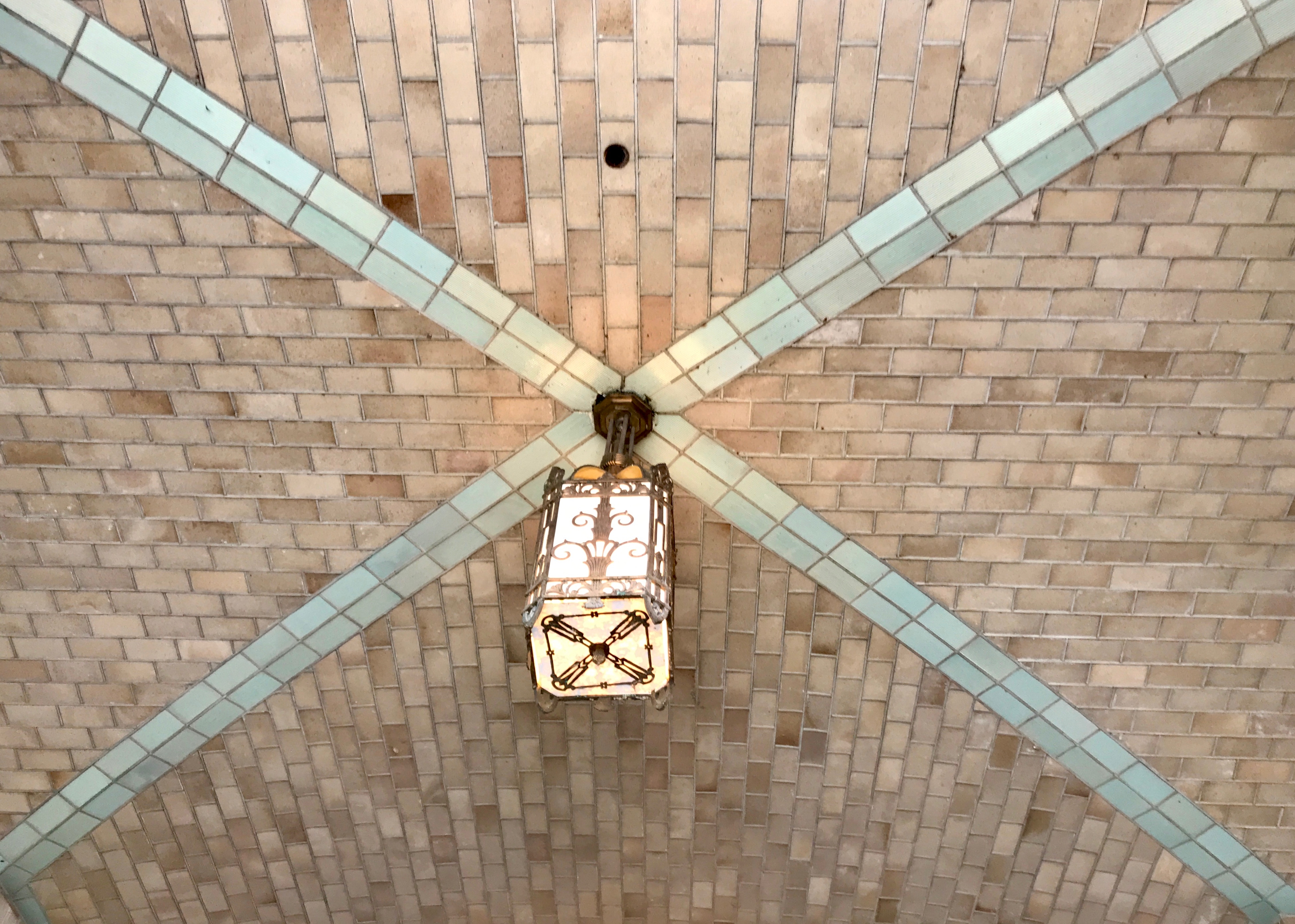
I continued to the porte cochere and looked up. The brick on the vault took me back to the first time I saw bricks used like that. It was 1976 and I was doing my study abroad program in Spain. Sister Jean had instilled in a passion for historically and artistically significant churches, so I never passed up an opportunity to visit them. I couldn’t believe that there were bricks and stones on the ceilings! (Okay, so they are really vaults, but I still thought of things over my head as ceilings. Isn’t education grand?)

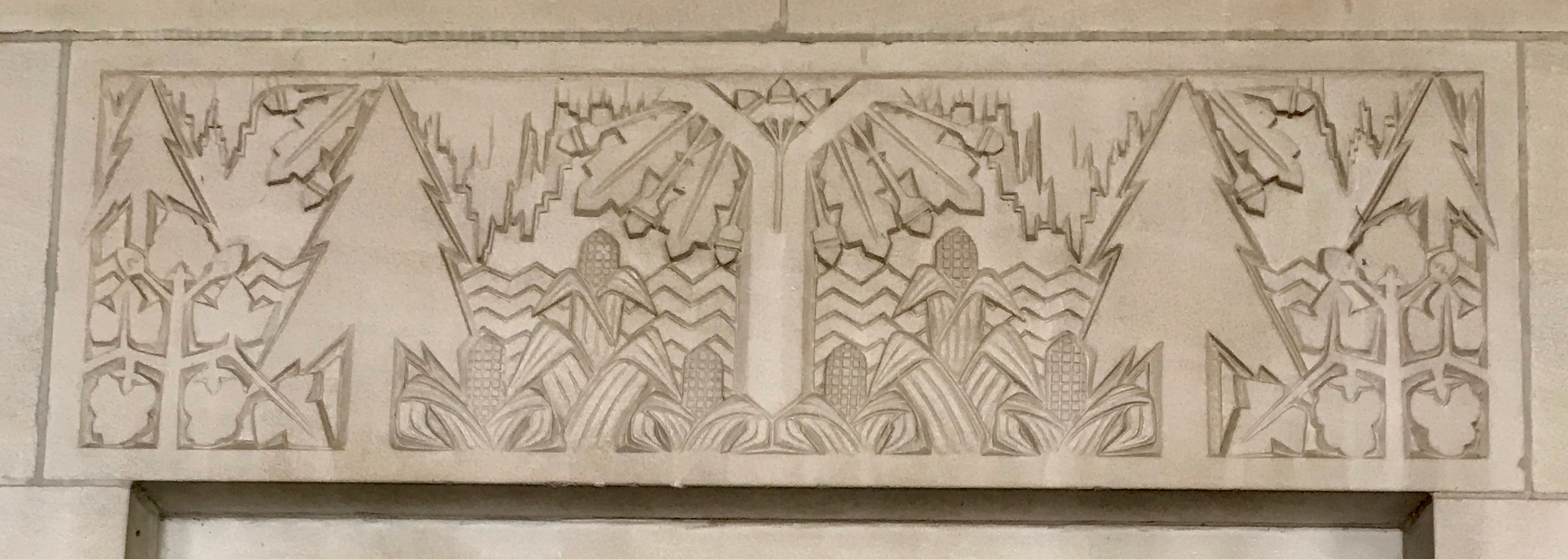
I continued around and encountered all these interesting design details. It looks like they are celebrating Louisiana’s agriculture and forestry.

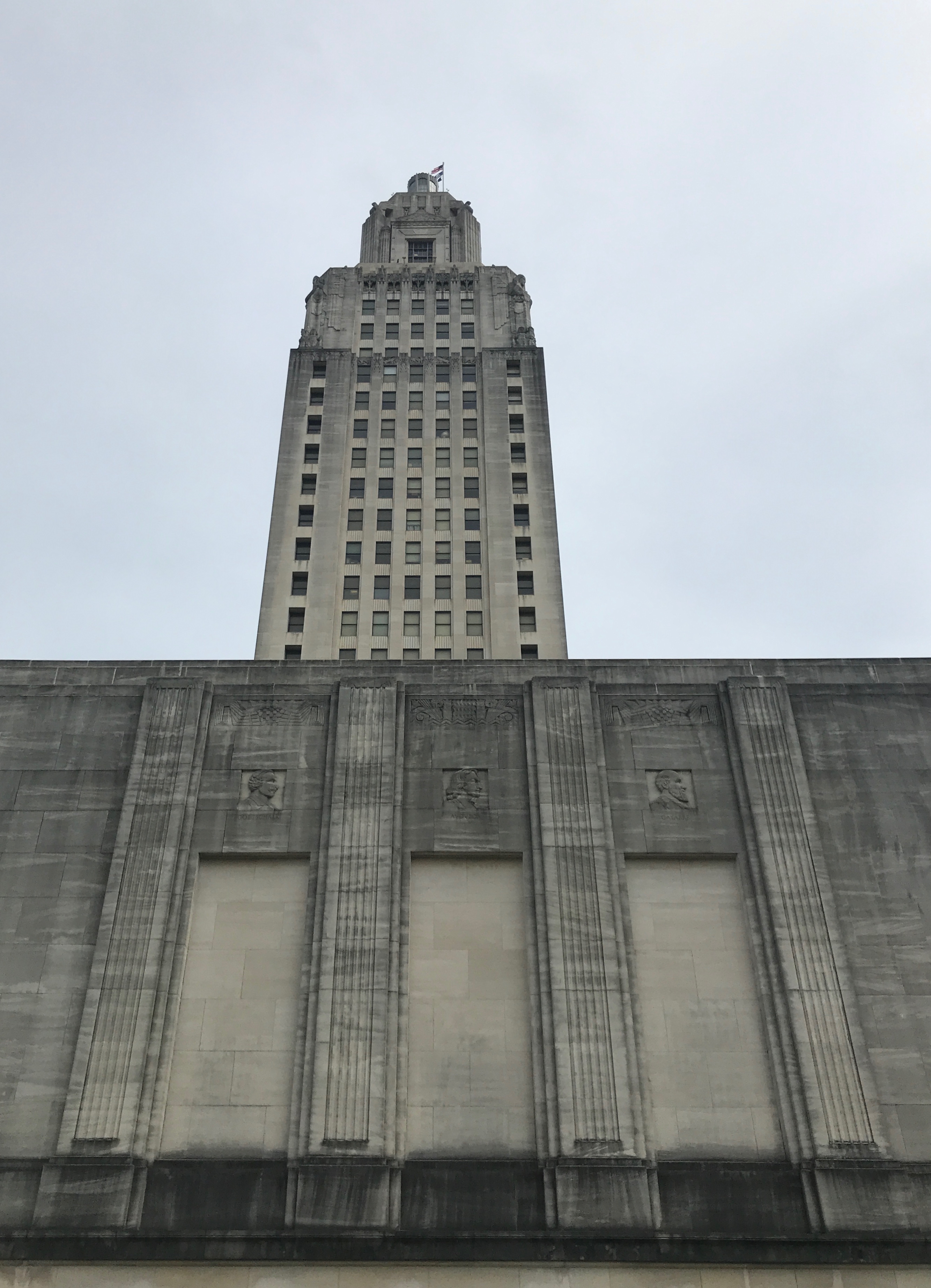
I rounded the building and walked along the side. The bas relief portraits honor Gottschalk, Audubon and Garrye. I assume that they are important to Louisiana.

Apparently, Gottschalk is Louis Moreau Gottschalk, a composer and pianist who was born in New Orleans in 1829.

Audubon, as in John James Audubon, has an interesting connection to Louisiana. While he didn’t spend much time here, he painted 32 of his famous bird paintings at Oakely Plantation House.

I am not sure who the third person is. I might not have been able to make out the name correctly.

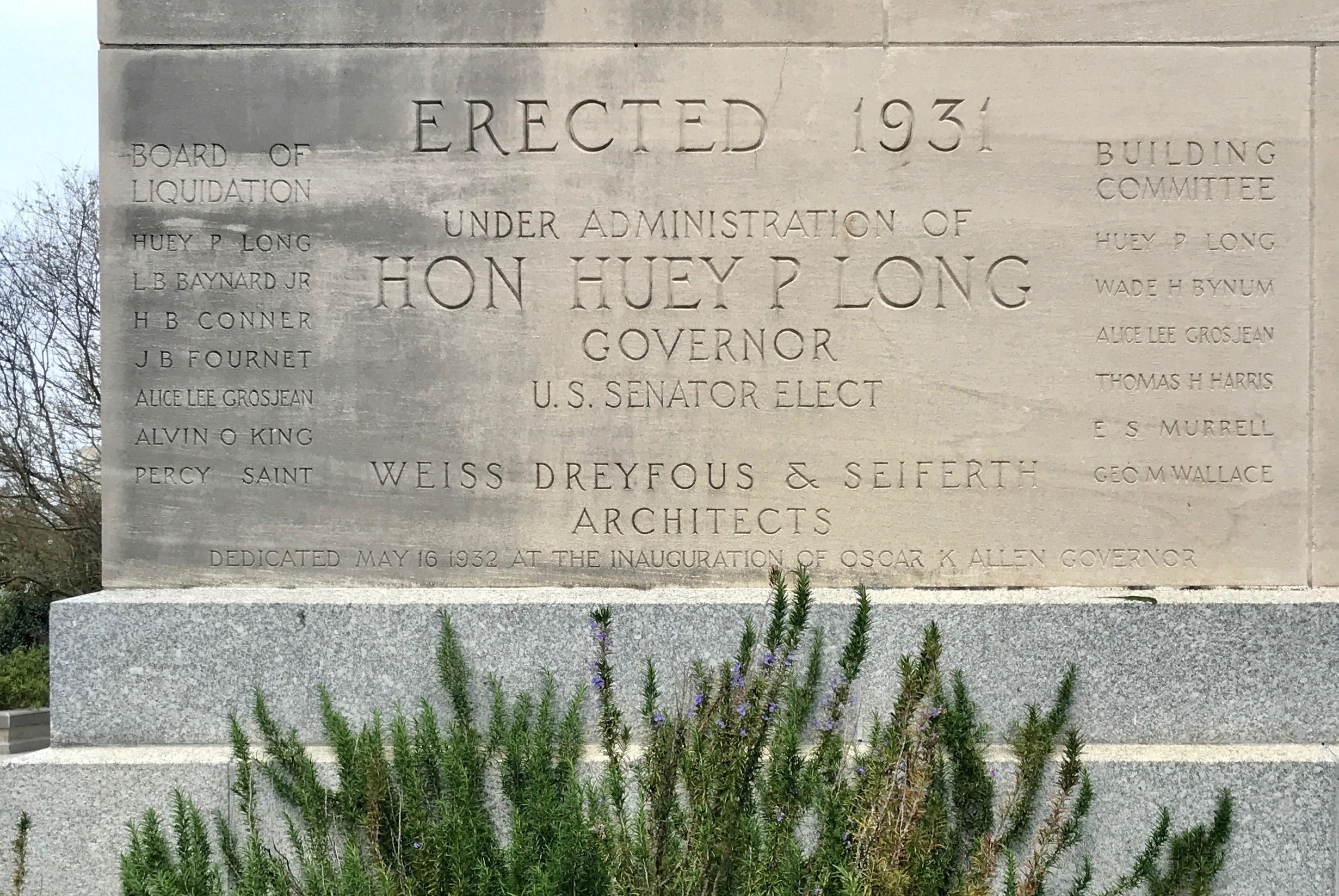
I got up to the corner, and what should I find? The cornerstone!

Huey P. Long – that is a person I need to read up on! If you spend a moment looking at that rather mundane cornerstone, you will notice that Huey P. Long’s name is on it three times. You can’t miss the “John Hancock” sort of inscription in the middle, which identifies him a governor and U.S. Senator Elect. He is also the first person listed in the Board of Liquidation on the left side and the first person listed in the Building Committee on the right side. That’s some sort of chutzpah. But, if you kind of squint, you can almost make out the sentence at the bottom, “Dedicated May 16, 1932 at the inauguration of Oscar K. Allen, Governor.”

Chutzpah, indeed!

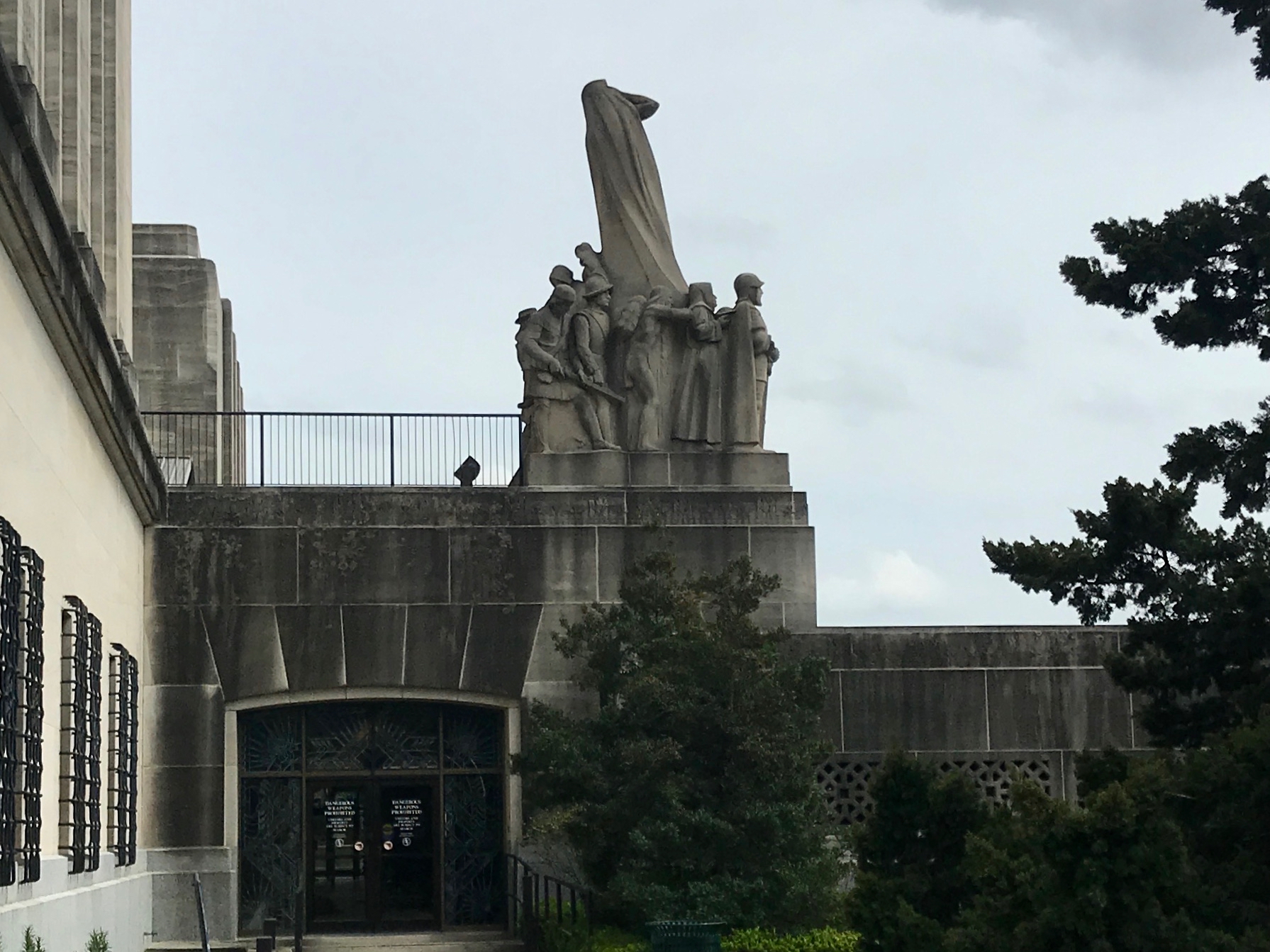
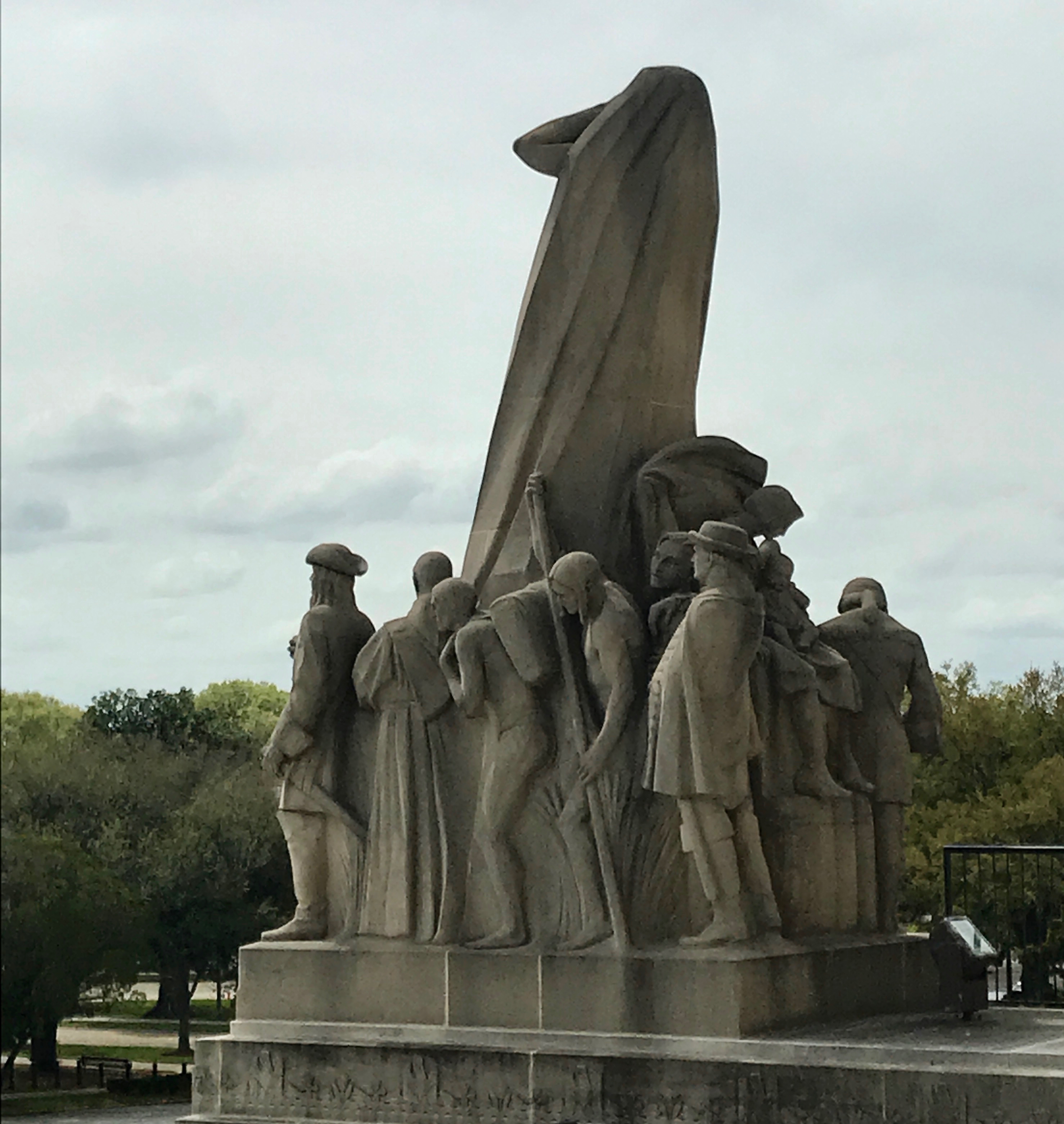
I started heading for the front and was a bit puzzled by this sculpture. It looked like they were trying to hold up something wrapped in a shroud.

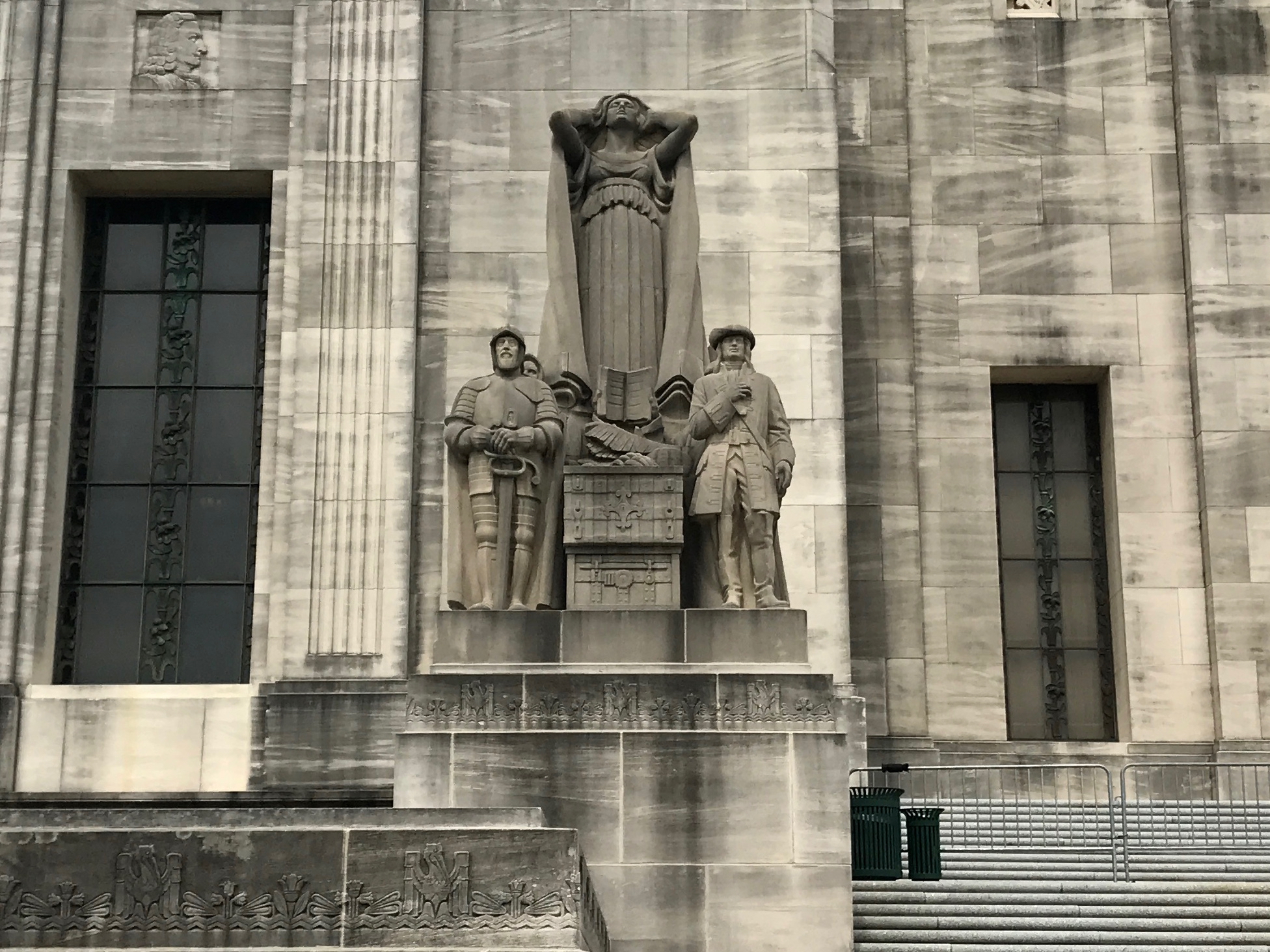
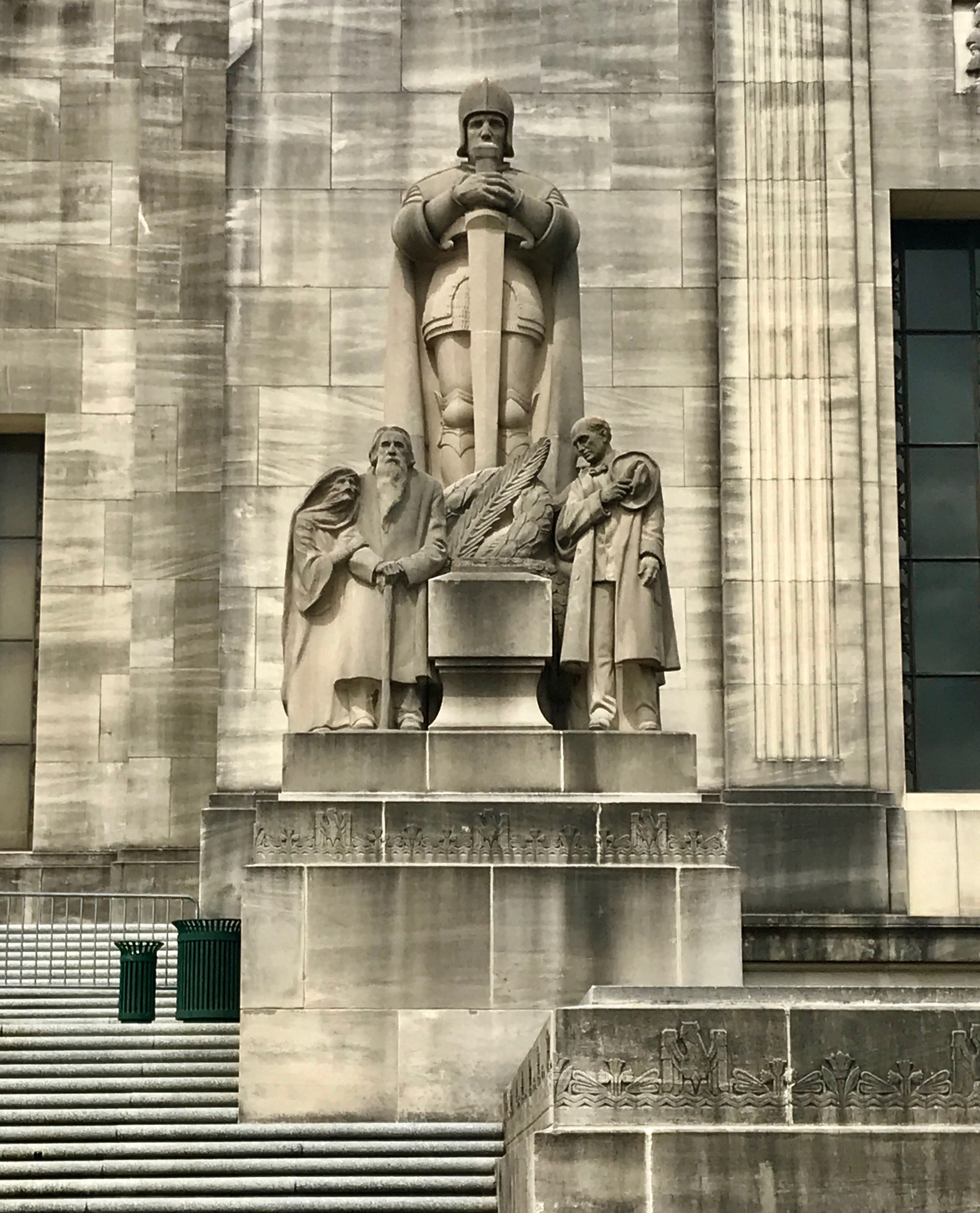
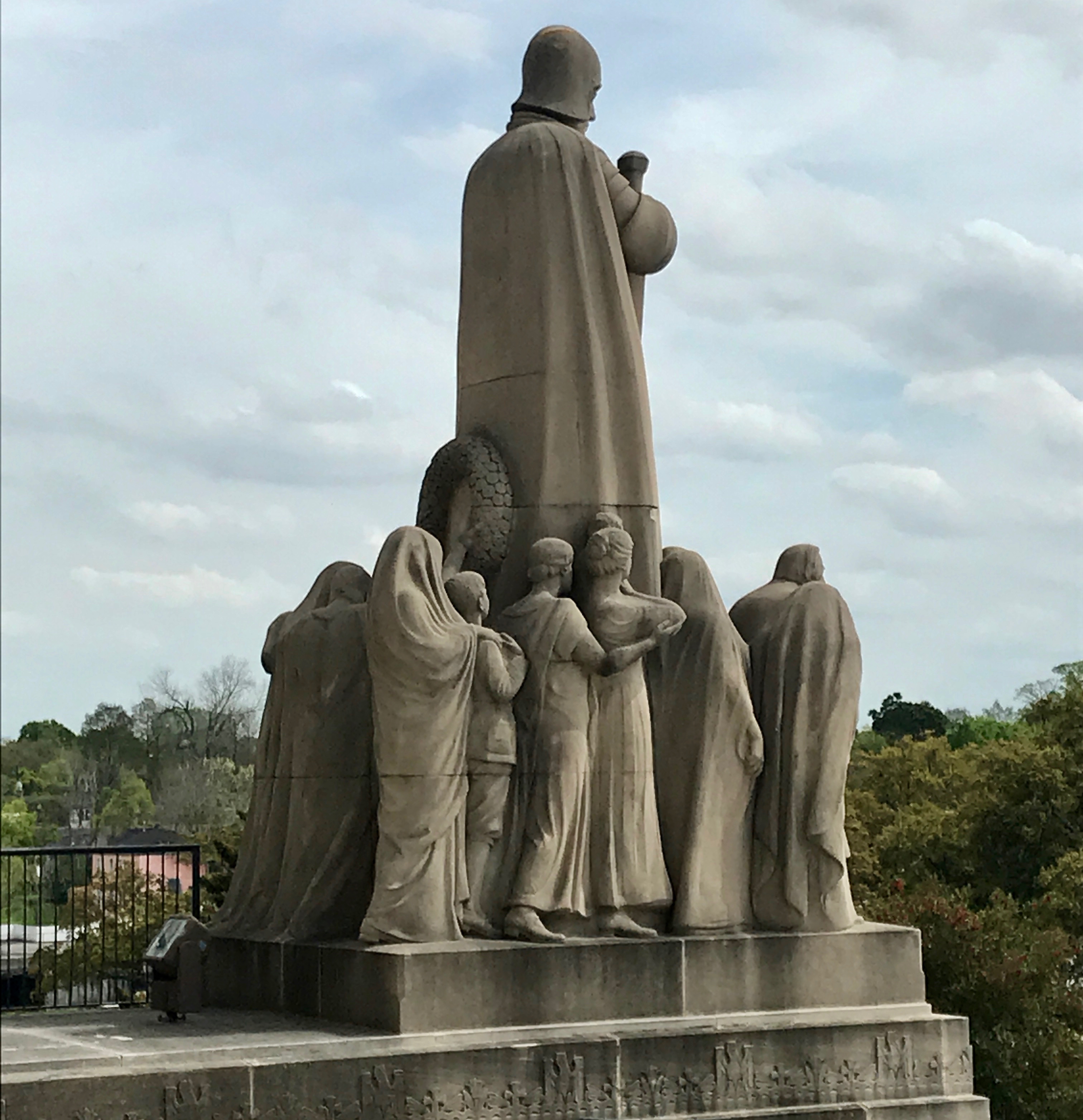
As I got to the front, I could see that it was one of a pair of statues flanking the entrance created by Lorado Taft. The statues are called Pioneers and Patriots.

They memorialize the early settlers and defenders of Louisiana.

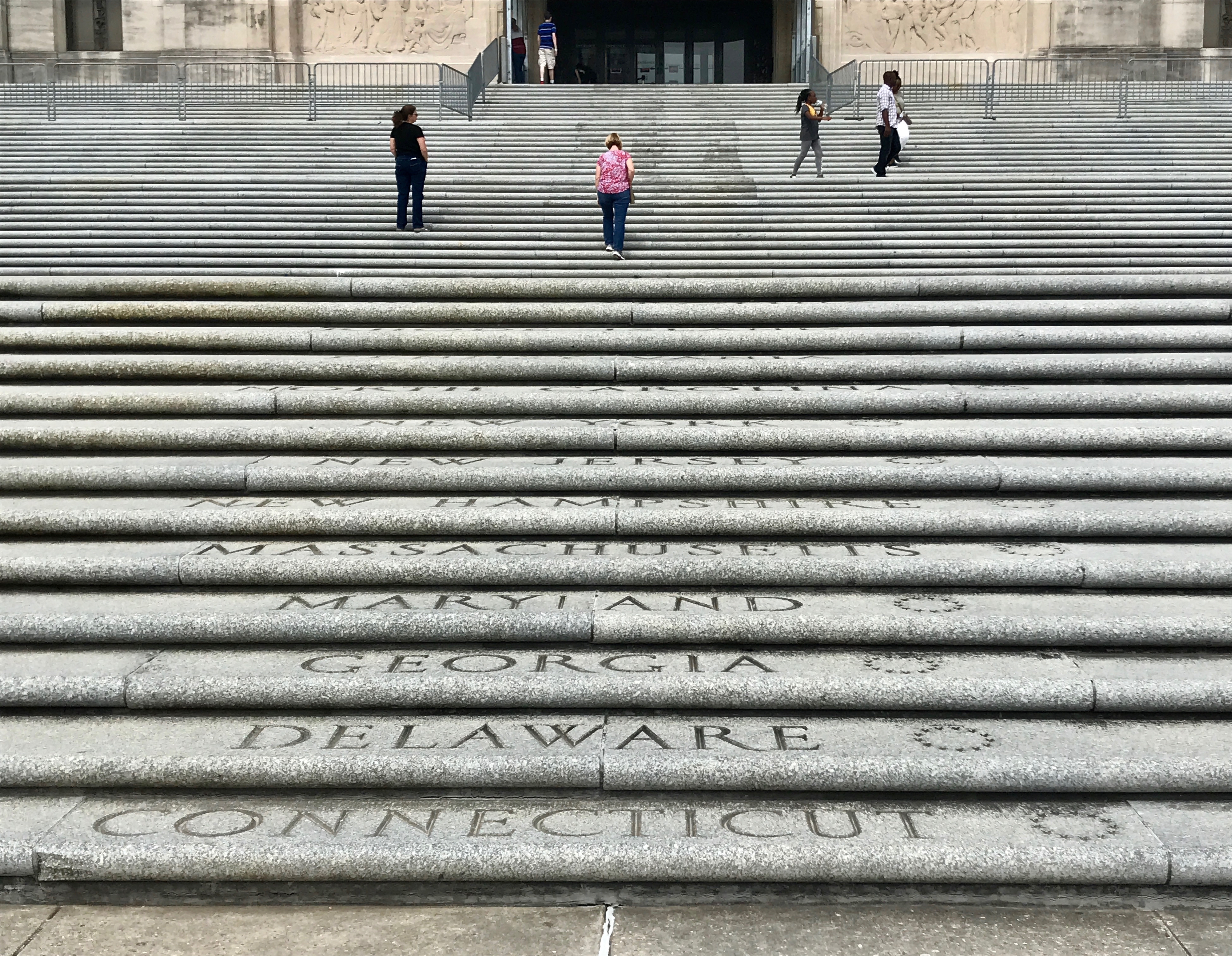
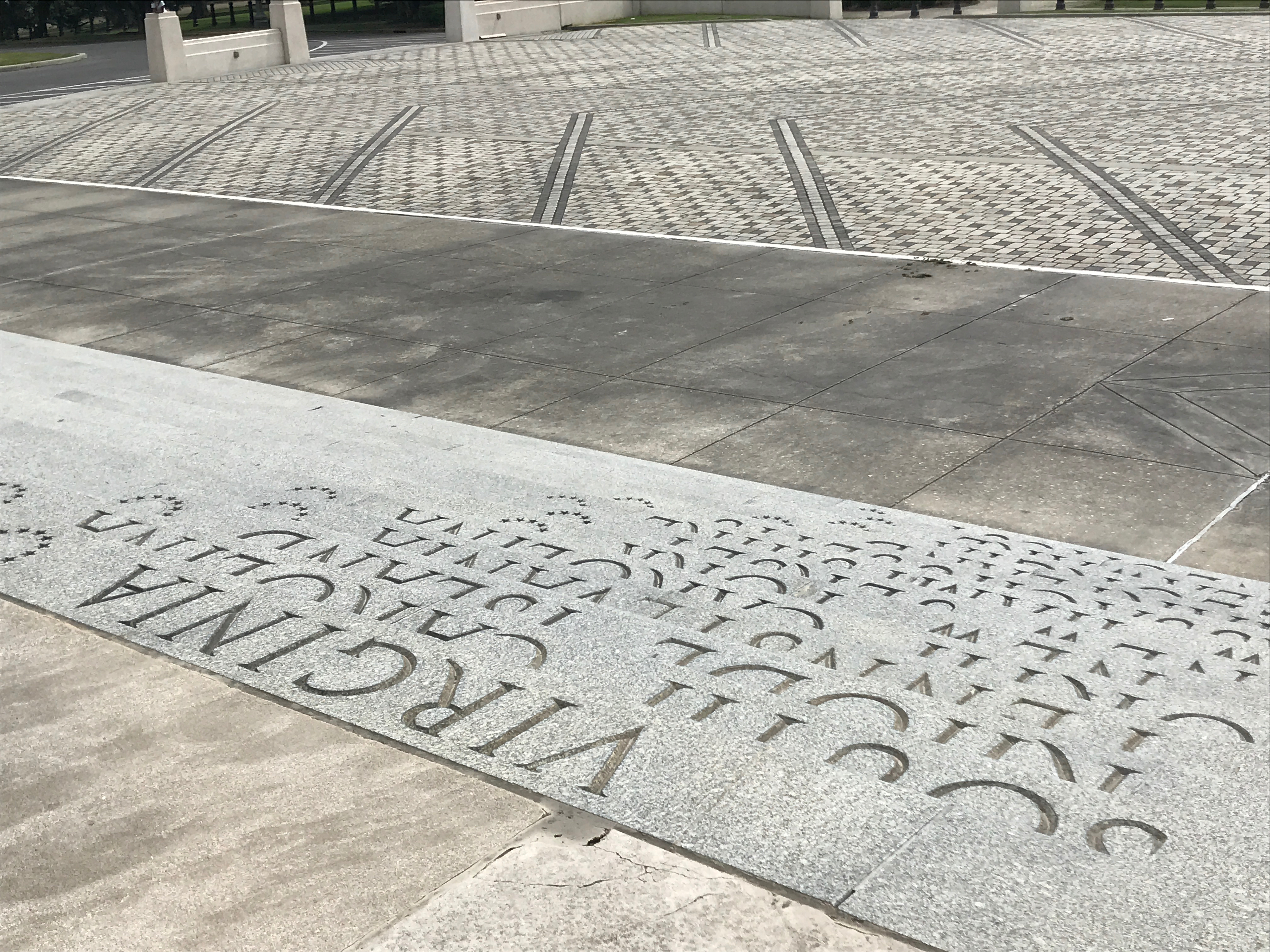
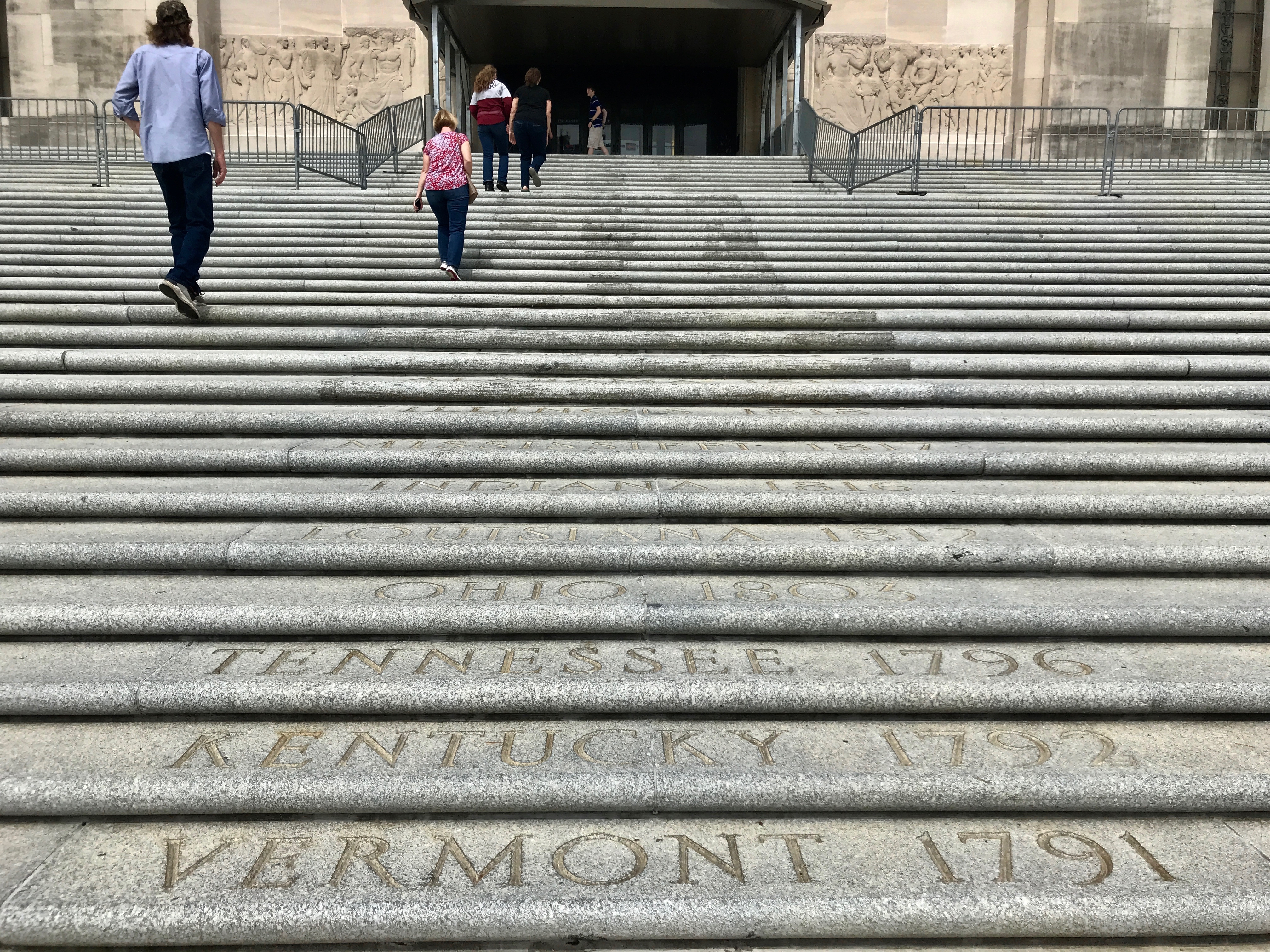
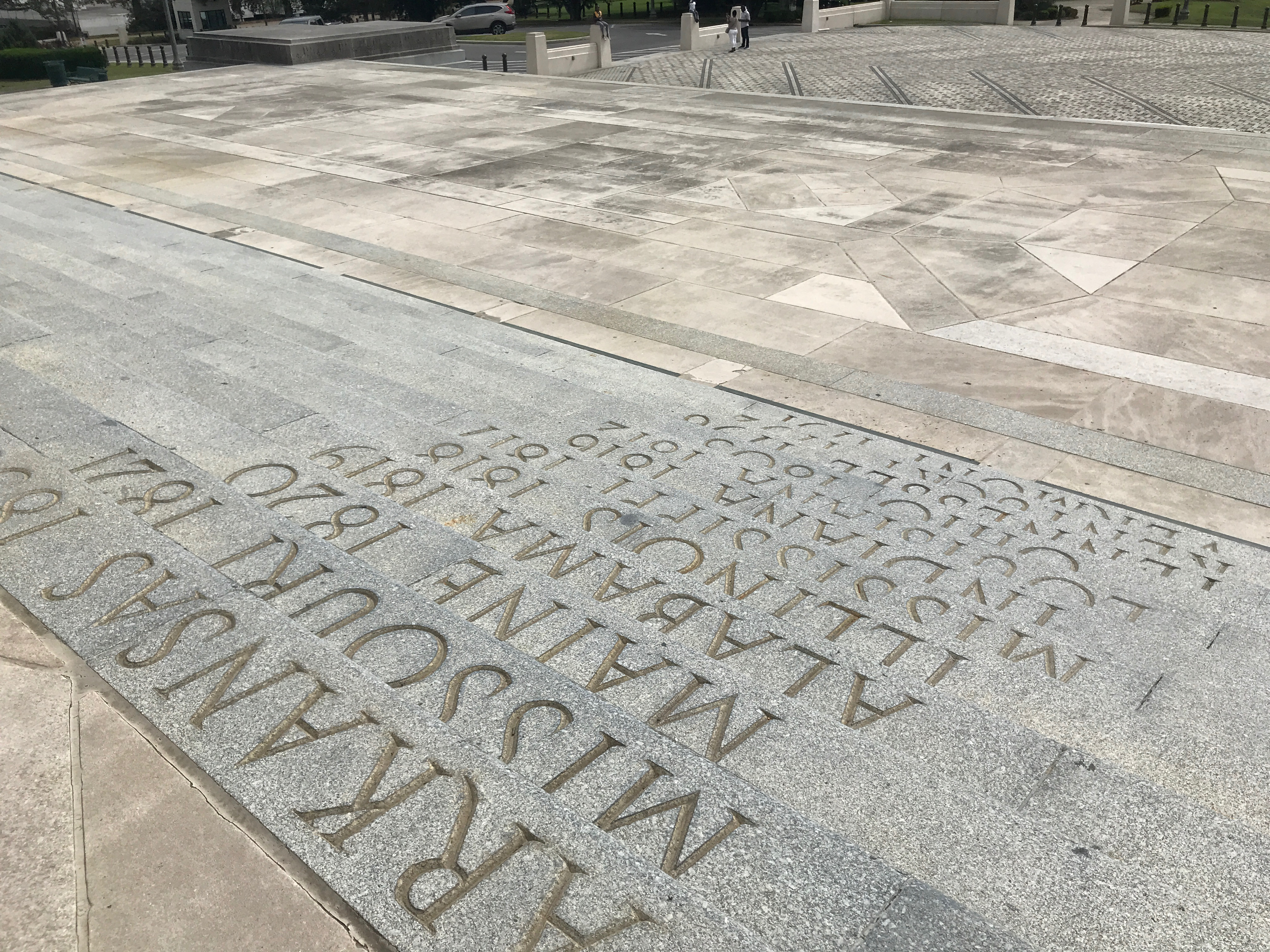
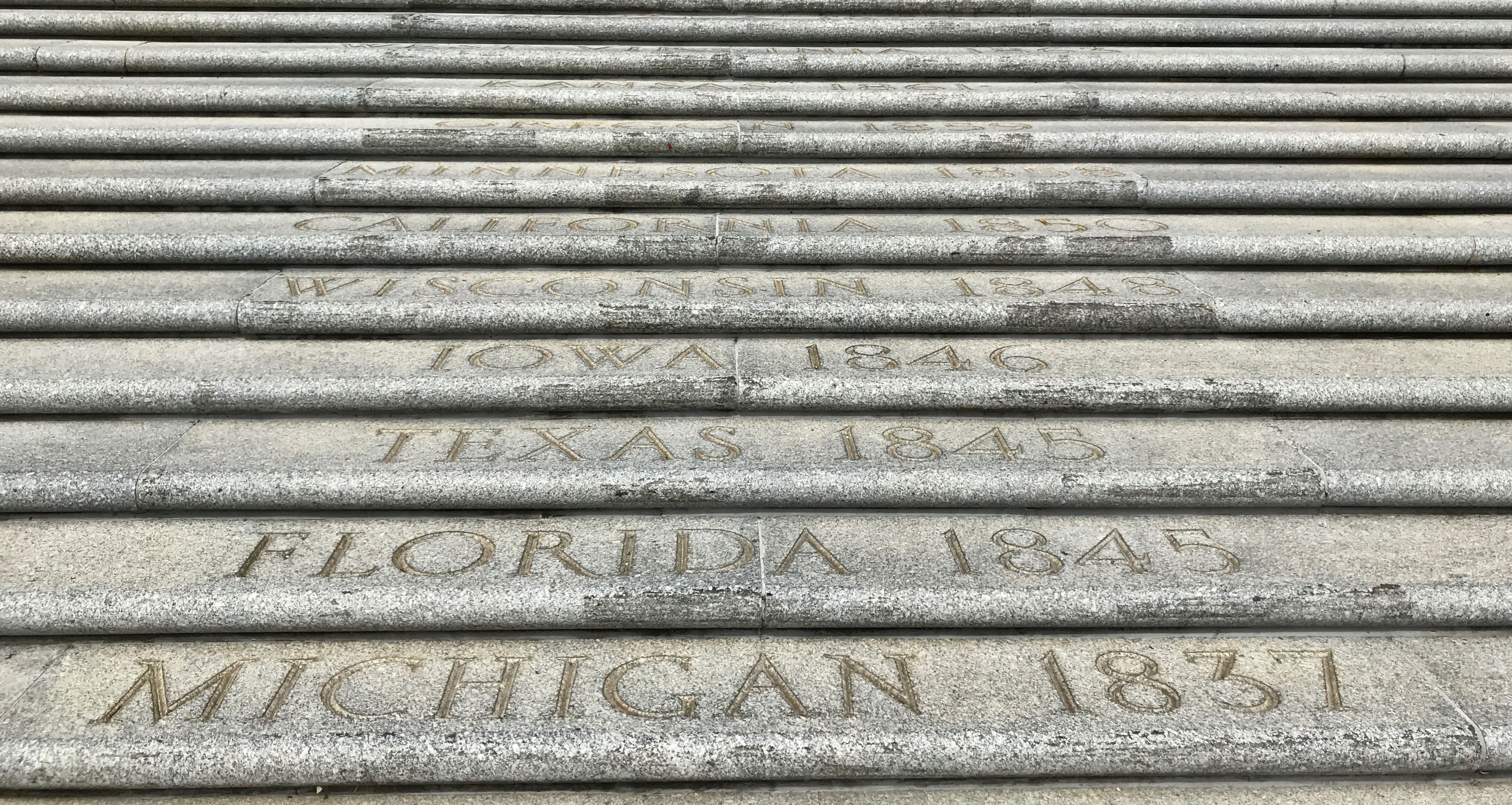
The front of the capitol has steps. Lots of steps. In fact, they call it the “Monumental Stairway.” They have 49 Minnesota granite steps, leading up to the entrance.

I do wonder why the chose to put Connecticut first. Delaware was the first state.

Just ask any Delawarean. They’ll tell you that Delaware was the first state to ratify the Constitution.

But, then, maybe they just decided to put the first thirteen states in alphabetical order.

I scaled the first fight and looked back down.

Then, I looked up at the entrance. Hmm…people seemed to be entering. I might as well check it out.

And another view down.

Why look! There’s Michigan!

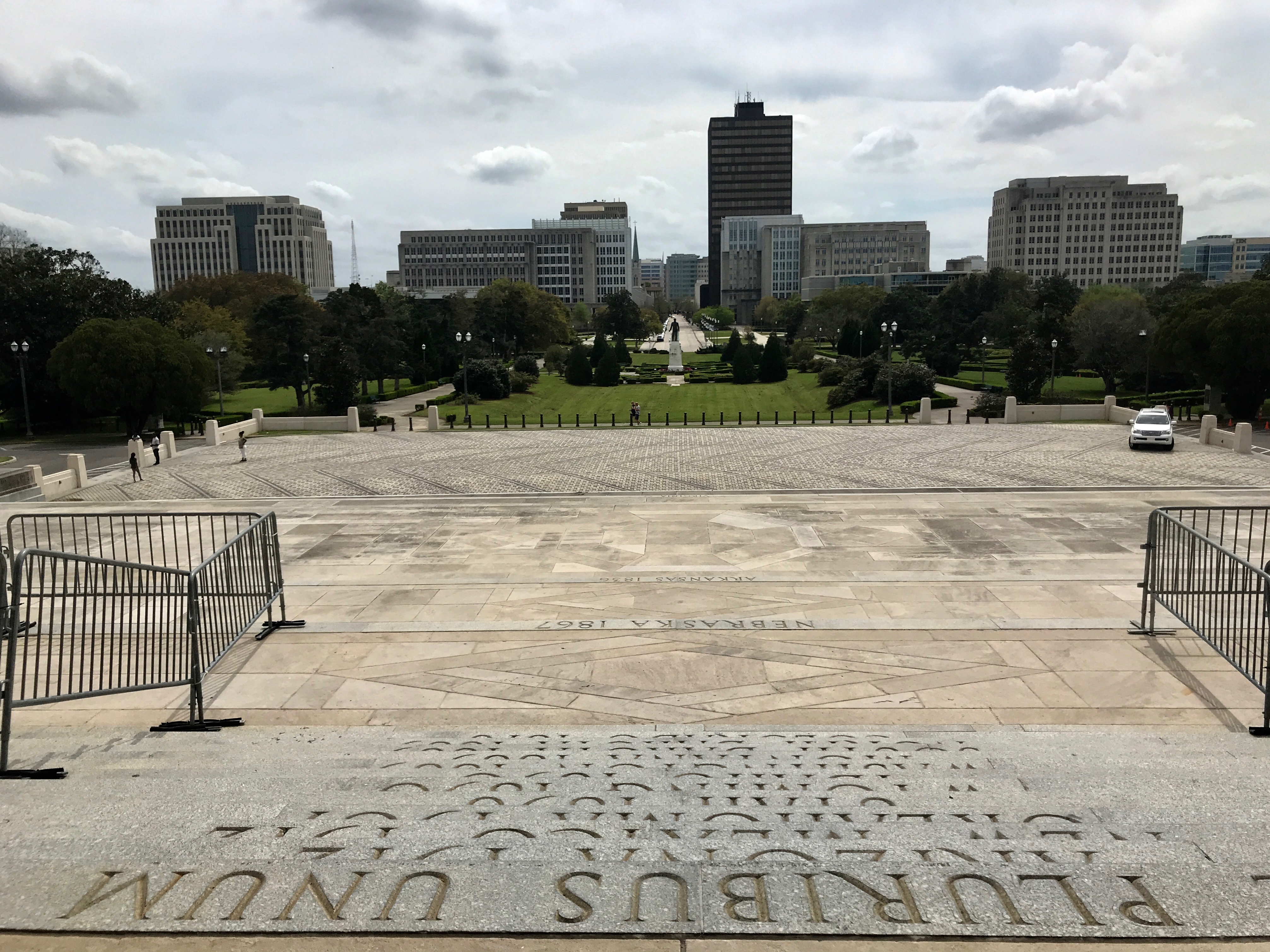
Why are there 49 steps in the “Monumental Stairway?”

When the building was built in 1931, there were 48 states. The last step before entering the building says, “E PLURIBUS UNUM.” This is the traditional motto of the U.S. of A. I’ll bet you knew that. I didn’t know that there is more than one way to translate it.

According to my Preferred Source, it can mean “Out of many, one.” It can also mean “One out of many”. I’m no Latin scholar, but those two translations seem to be contradictory.

The first one sounds like “We’re all in this together.” The second one sounds like “Me first!”

Anyway, back to the “Monumental Stairway.”

So, they included the 48 states in the Union in 1931, But what about Alaska and Hawaii?

They are written on the top step, on either side of the motto.

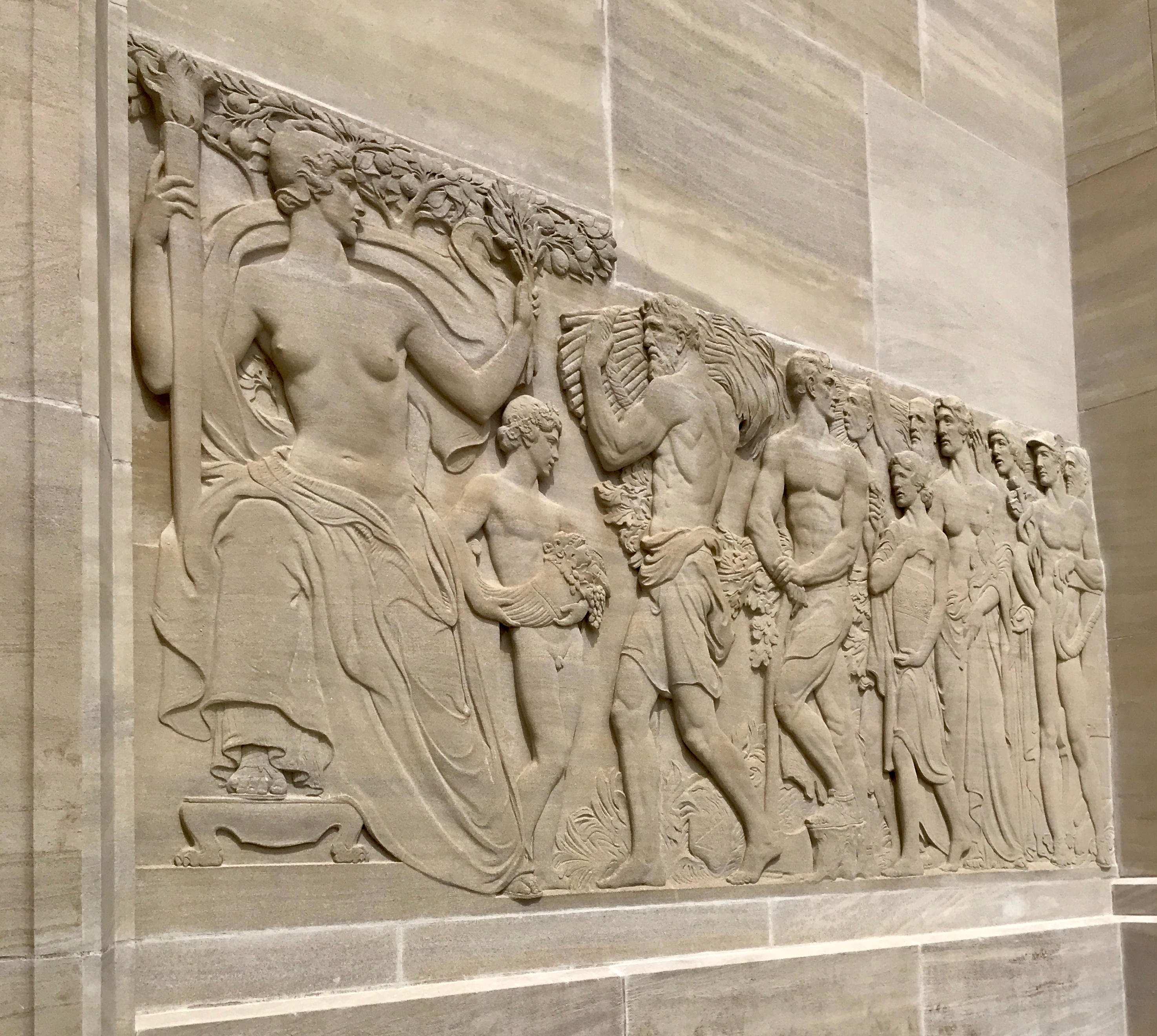
I proceeded to the door, This frieze was to the right side.

I entered and was greeted by a security guard.

Uh oh. I had my Airstream jackknife on my key chain. I asked him if they were able to hold it for me until I left. He told me that he’d take it and put it in a box where they dispose of contraband.

Hm. Well, that wouldn’t do. If I had thought I might have been able to enter, I would have left it in the Jeep. I asked him if he minded if I snapped a few pictures from my side of the barrier. He grudgingly gave me permission, but told me to stay out of the way.

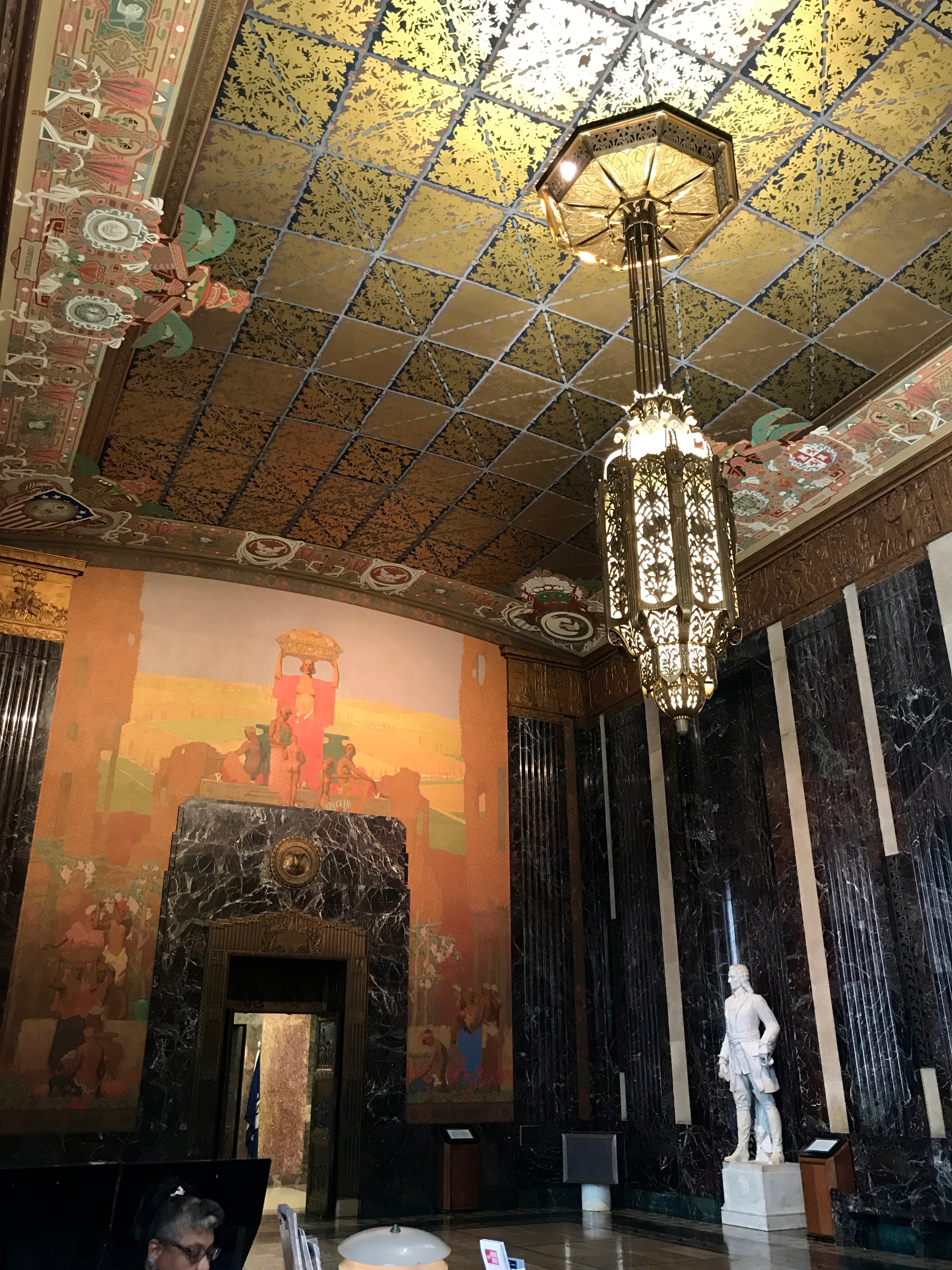
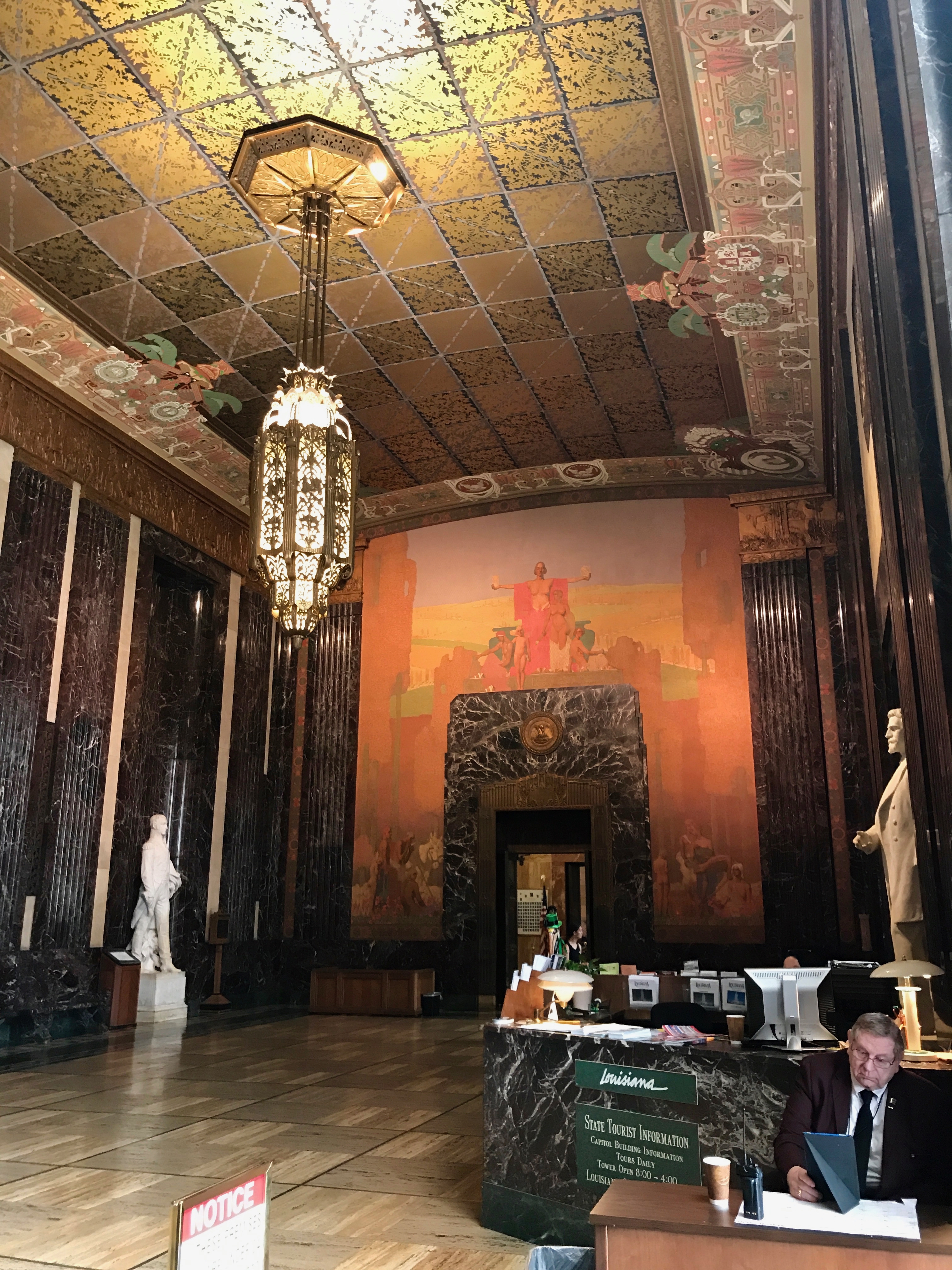
Rather impressive! First to the left…

…then to the right.

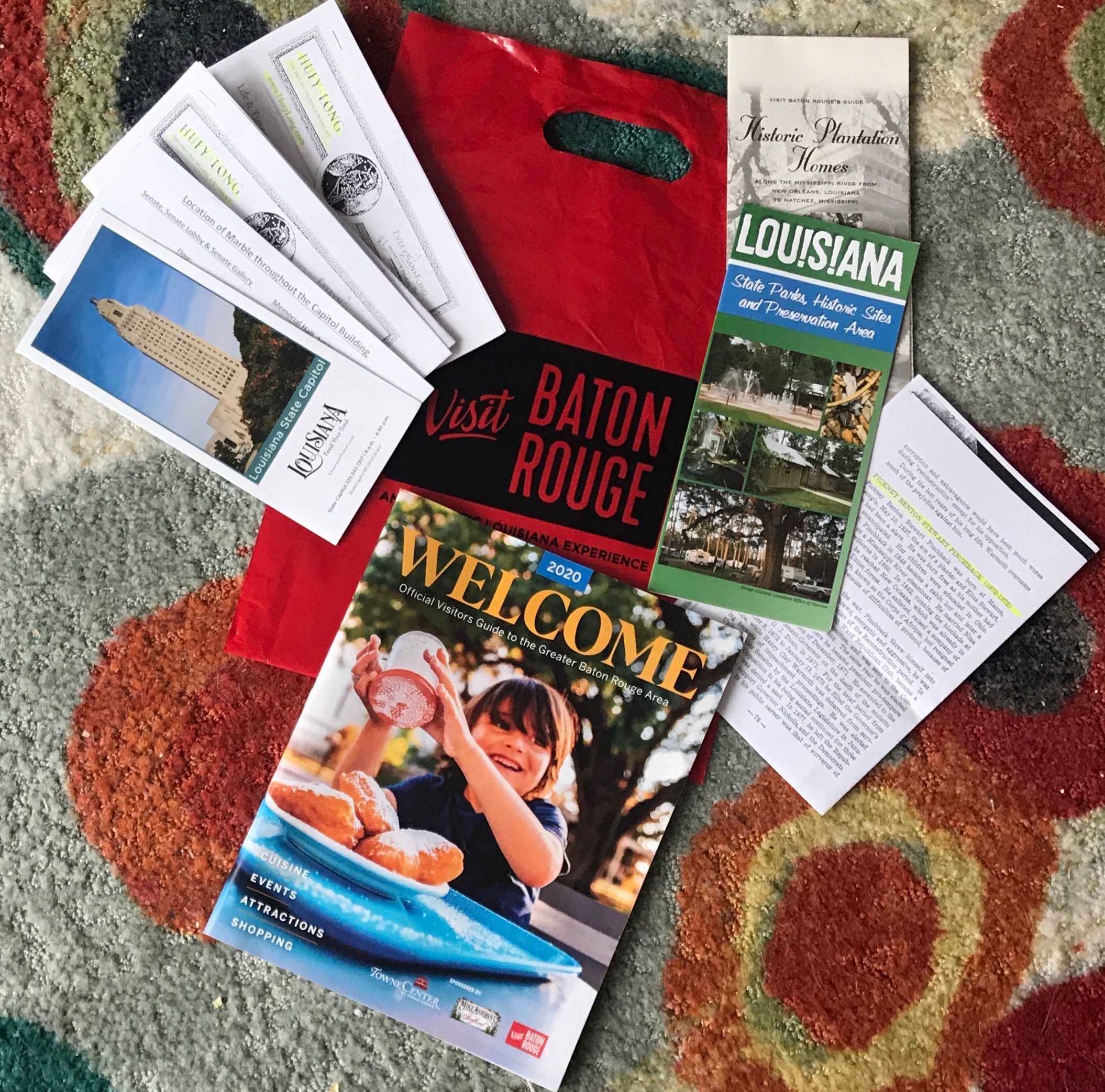
Since there seemed to be tourism information booths on both sides, I asked if there were any pamphlets about the capitol. The worker nearest me started gathering things together.

I didn’t get around to looking at the material until I got home. I guess they really do want me to return.

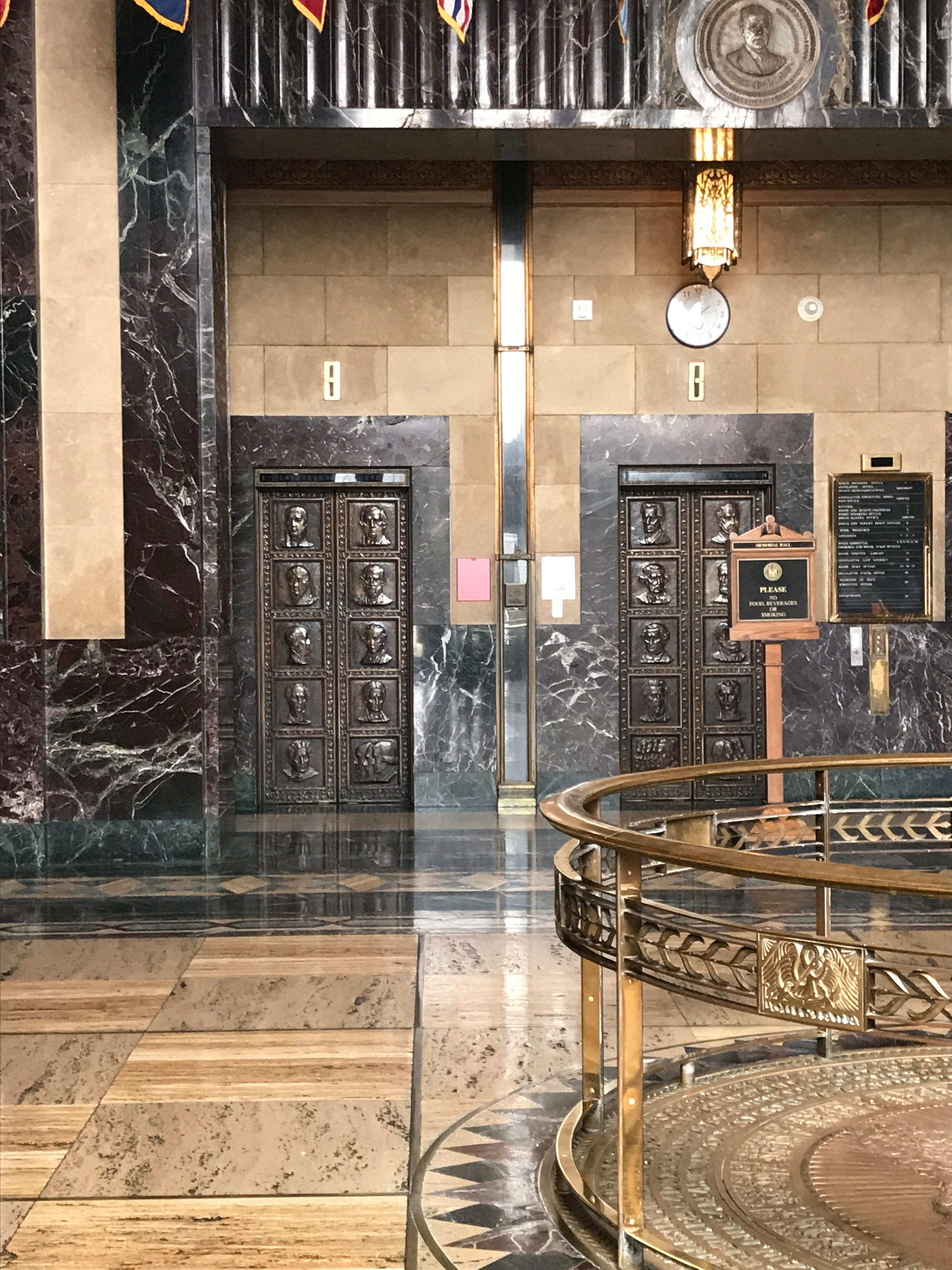
I thought those doors straight ahead were quite elaborate. I asked the guard what the doors were for.

“Elevators.” he grunted.

If those are the elevator doors, I imagine that the doors to the legislative chambers are stunning!

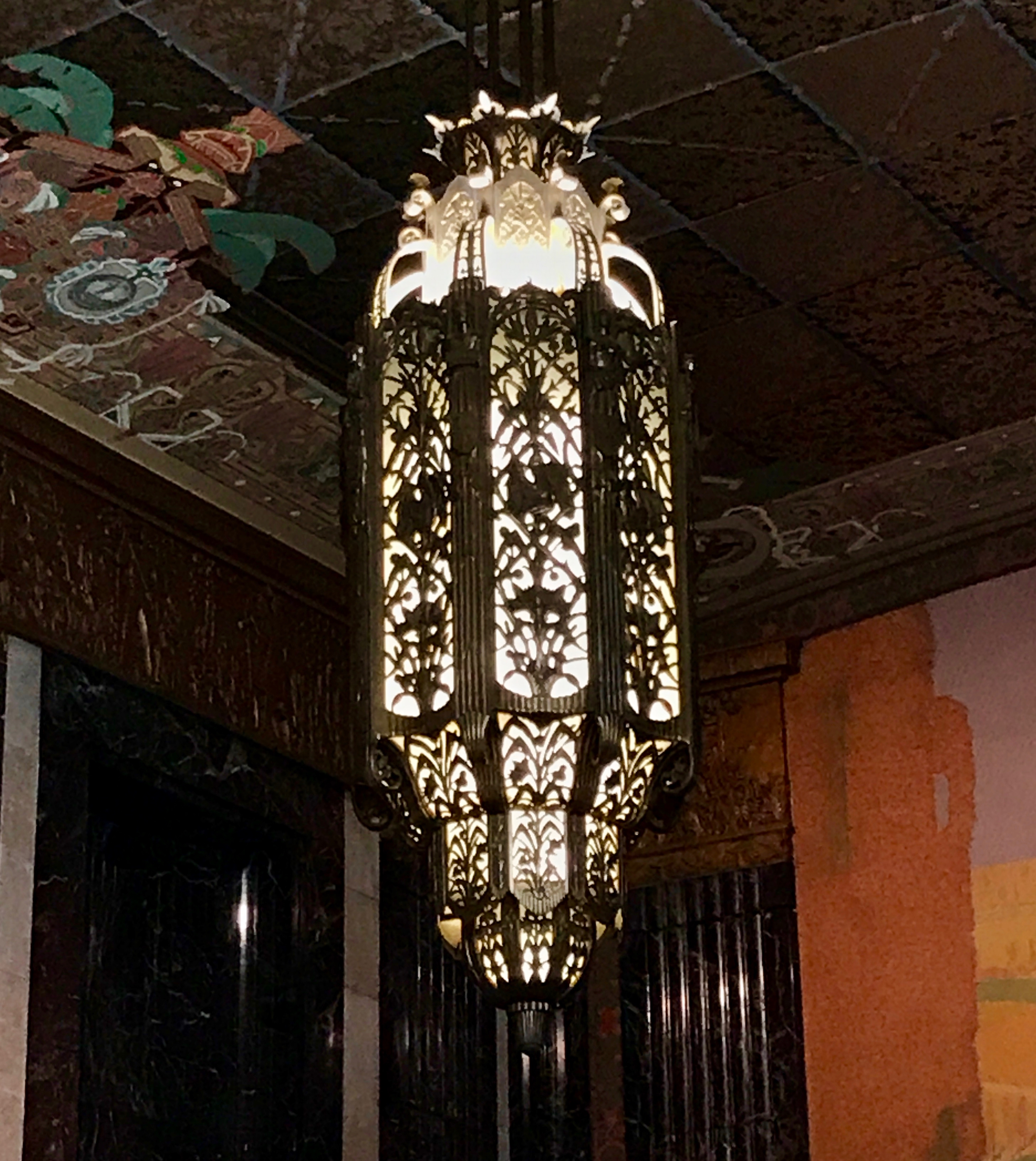
The lighting fixtures were elegant, as well.

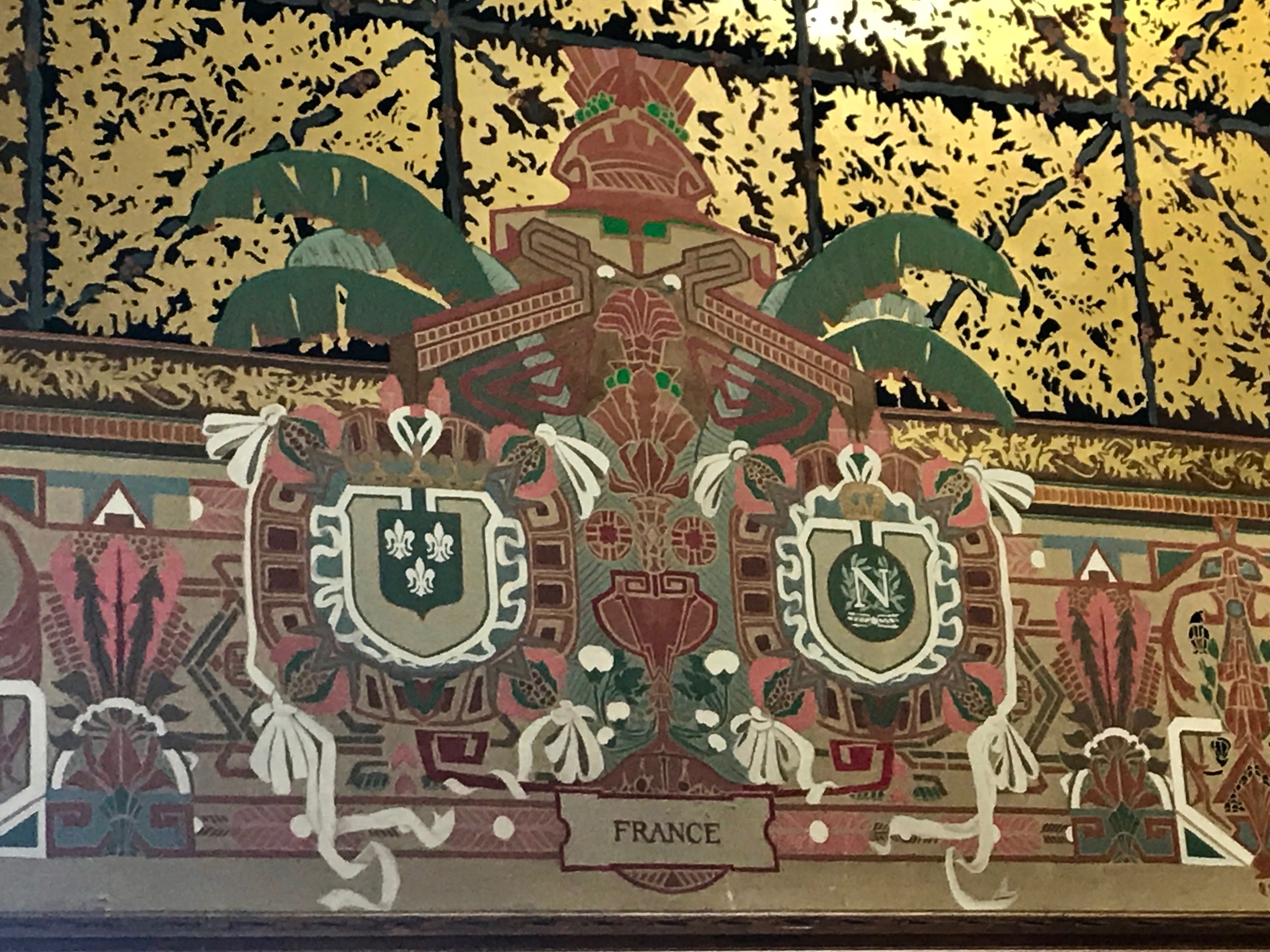
They paid homage to their French heritage, as well as Great Britain, Spain, the Republic of West Florida (who knew?) The Republic of Louisiana, the Confederate States of America (of course) as well as the United States of America.

And, with that, it was time to head out.

Here’s that statue from behind.

And here’s the other one.

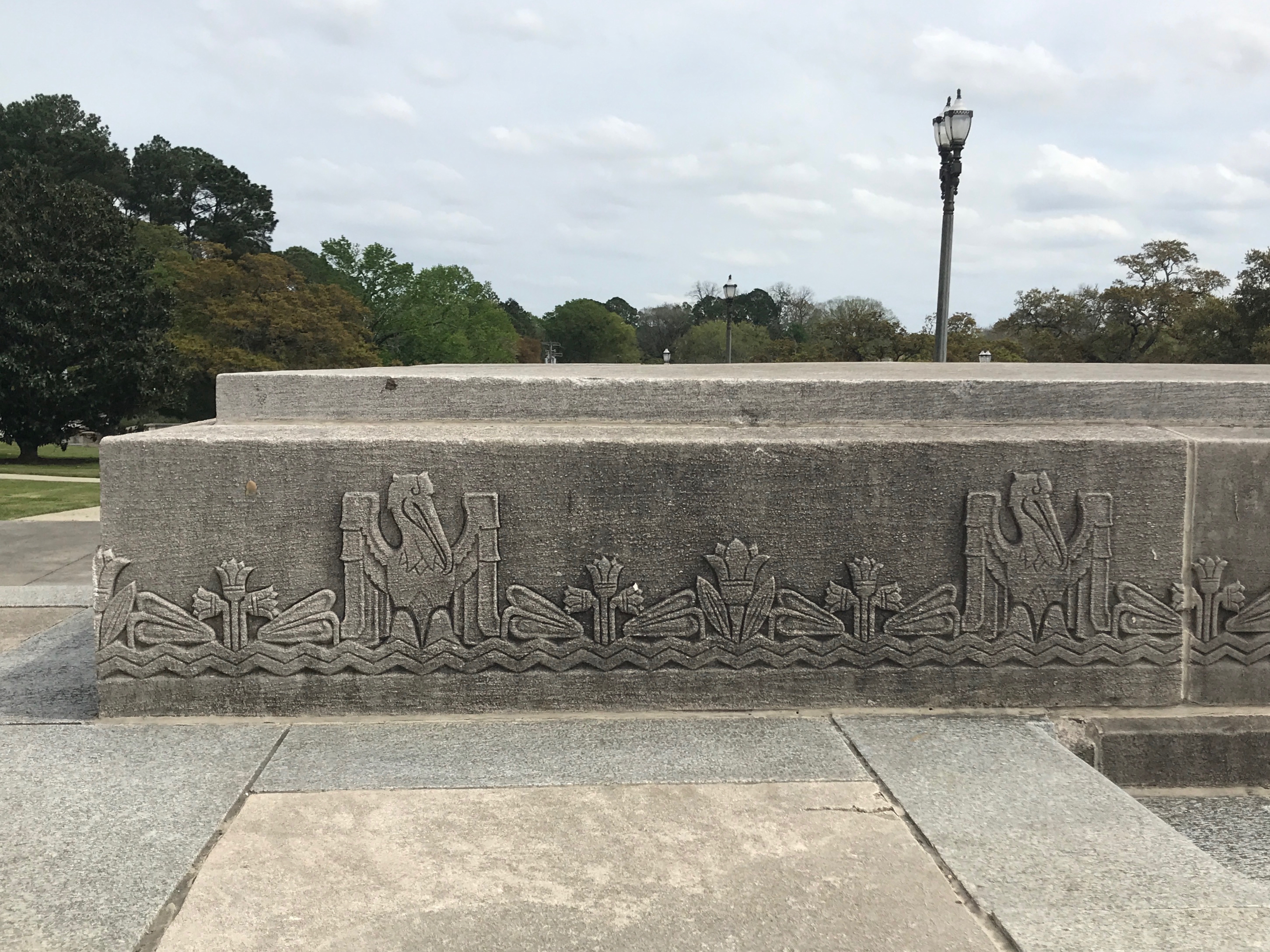
This frieze has pelican motifs, along with plants. The brown pelican is the state bird. The plants look like they are growing out of water, so they probably aren’t the state flower, which is the magnolia.

According to my Preferred Source, this frieze was designed by Ulric Ellerhusen, and runs along the top of the tower’s base. It depicts actions of Louisiana’s in wartime and peace, from colonization to World War I.

I stopped for a moment to grab a shot of the tower.

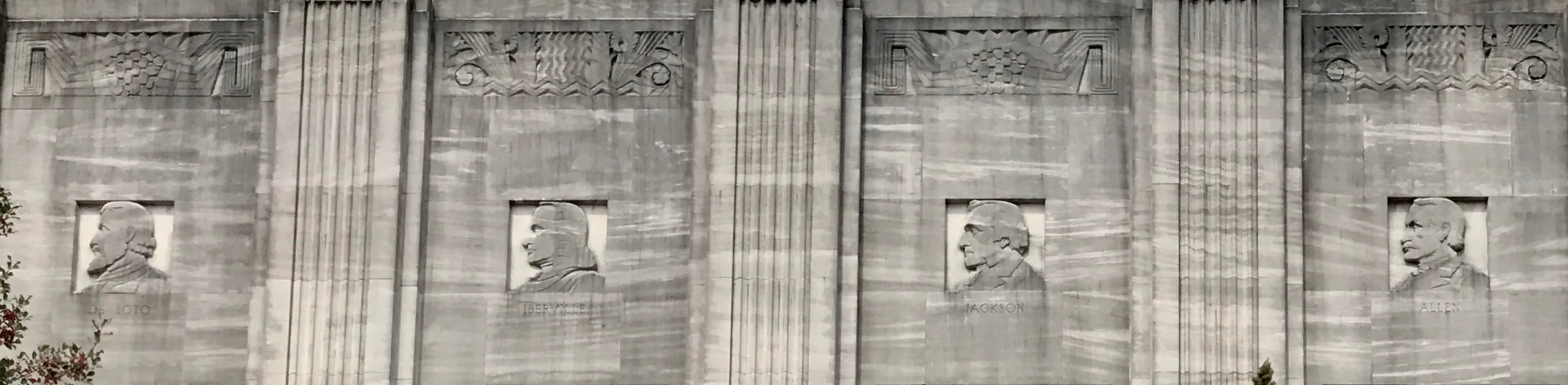
Incidentally, those portraits are of Hernando de Soto, Pierre Le Moyne d’Iberville,  Andrew Jackson, and Henry Watkins Allen.

De Soto, Spanish conquistador of Peru, among other places, is credited with discovering the Mississippi River. He died in Ferriday, Louisiana in 1542.

D’Iberville was a soldier, ship captain, explorer, colonial administrator, knight of the order or Saint-Louis, adventurer, privateer, trader, member of Compaignies Franches del la Marine, and founder of the French colony of LA Louisiane of New France. Busy fellow!

Jackson’s claim to fame in Louisiana’s history is his victory of the Battle of New Orleans during the War of 1812.  The battle was a decisive victory for the United States. Americans had about 60 casualties, while the British lost around 2,000. The only glitch was that the battle was fought on January 8, 1815, which was after the war was over. The Treaty of Ghent was signed on December 24, 1814, but the word hadn’t reached the men in the field yet.

Oops.

Allen was a brigadier general in the Confederate army and the 17th governor of Louisiana. He was born in Virginia, studied in Missouri, and then settled own for a time in Mississippi, where he taught, practiced law and served in the Mississippi House of Representatives. He fought in the Texas Revolution against Mexico and then went to Harvard to study law. Somehow, that prepared him for the life of a sugar plantation owner depending on slave labor.

He went to Europe in 1859 with the intention of taking part in the Italian struggle for independence, but he arrived too late. I guess he was like Jackson, and didn’t get the memo. So, he made the best of things and travels through Europe and then wrote a book about it.

Somehow, he managed to make it back in time to take part in the Civil War. He was wounded in the Battle of Shilo and right here in the Battle of Baton Rouge. He served as Governor of Louisiana from January 1864 to May 1865, then escaped to Mexico, where he died of a stomach disorder.

His travels weren’t over, even in death, as his body was returned to the United States. He’s buried in New Orleans.

And that’s more than you ever wanted to know about Henry Watkins Allen.

Oh, no! More portraits!

Lucky thing I couldn’t make out the names.

But this point, I was just about done with my quick walk around the capitol. I enjoyed the plantings.

I admired how they worked thew art deco designs into the fence.

Good old Morgan is now part of the historical record.

I do hope they weed the place. I imagine the roots can eventually cause a structure to fail. Ate least they don’t have to worry about the freeze-thaw cycle.

This sculpture was on my way back to the Jeep and T@b.

And, there they are!

Time to hit the road – only about three more hours of driving.


Bayou Segnette State Park

Over night, a friend posted a photo of his Airstream with a sign that said “COVID CONTAINMENT VESSEL” on it. I commented that I needed that sign, as I was was planning on practicing social distancing in my T@b.

He fixed my photo to match my intentions.

I got going, after I dewinterized and dumped and flushed my tanks. RV travel is not necessarily glamorous. But, every now and then, you find a lovely site with full hook ups and pleasant neighbors. (We chatted from at least six feet away.)

I left Mississippi and crossed into Louisiana. The Welcome Center was virtually empty. On a trip in normal times, I would have asked someone to take a photo of me. I wasn’t about to hand my phone to anyone, even if there had been someone nearby to ask. Social distancing, donchaknow?

I was impressed with the door pull on the rest room. The American Alligator is Louisiana’s state reptile, after all.

After a bunch more driving, much of it in stop-and-go traffic after I got off I-10, I arrived at Bayou Segnette State Park, in Westwego, right across the river from New Orleans.

This park seems to have it all! Camping, swimming, picnicking, cabins, boat launch, fishing. No wonder Pat and Shelly wanted to return to this park – location and amenities!

The landscaping was quite lovely, too.

I passed my friends’ campsite and got to mine, just a few spots away. I got set up – leveled (of course) with water and electricity hooked up.

After that, I went over to Pat and Shelly’s trailer to discuss what we might be able to do in New Orleans and still maintain social distancing.

The Mardi Gras Indians’ Super Sunday was definitely out. We thought we might be able to visit the New Orleans Museum of Art. There was an exhibit of Gee’s Bend quilts that was scheduled to close soon.

If you are unfamiliar with Gee’s Bend quilts,  click on the link above.

If you are only mildly curious, here are some samples of the work the women of Gee’s Bend have created.

They use the materials they have available to create these functional yet beautiful quilts.

This seemed like a reasonable activity. The museum’s website said they were still open. I called Lisa, the woman I visited back in 2016, to get her take on the idea.

I called Lisa, and chatted with her a bit. She was en route to pick up her son at college, which was being closed because of…well, you know. She said that the museum was still open, as far as she knew, and said that the Gee’s Bend exhibit was wonderful. She also recommended walking through the sculpture garden, which had a six acre expansion since my last visit. The sculpture garden seemed like a good option for some socially distanced culture.

We agreed to touch base on Monday and maybe get together for coffee or lunch.

Pat and Shelly were in the middle of making dinner, and invited me to join them. Of course, I gladly accepted. They were making rice and beans – my favorite. Rice and beans and friends, what could be better?

There is a photo, so there is proof it happened.

The next morning at 8:00, I was working on breakfast, when there was a knock at my door. I opened the door to be greeted by a park employee that said, “Good morning. I have a prepared statement I have to read.”

He proceeded to tell me that the campground was closed and that we had to leave by 2:00.

I texted Pat with the news. The workers hadn’t made it to them yet. I proceeded with preparations to hit the road. I tried to figure out where to head. I checked with Campendium.com and found a Louisiana state park that looked like it was about four hours away. I called, and they were still open, so I made a reservation for two nights. I wanted to give myself a little breather to figure out what I was going to do and to create a plan.

A while later, another worker came by and told us that they wanted to let us know that there was no immediate problem at the park. There was no illness detected. They were closing the park to prepare it for staging emergency responders.

In essence, we were vacating for the common good.

He also told us that our fees would be refunded and they would give us a credit for a return visit. I thought that was a thoughtful gesture.

So, I hooked up and joined the queue to exit the park.

Unfortunately, the road out of the park ran right by the dump station. That kind of slowed things down a bit. If I had known the terrain, I would have driven around the roadblock. But, I had time.

I guess I was just about the last one out. This was my view as I looked back at the park. Just yesterday, they park was completely full and each site was occupied.

When I could finally get past the trailers that needed to dump, I made my way to the exit. At the gate, I was met by a man who introduced himself as the Superintendent of State Parks, if I remember correctly. He thanked me for my cooperation and said that we would be getting a full refund as well as a gift card for as many as days as we had booked, because he hoped we would come back and visit later. He said that he had been called to a meeting at the capitol at 10:30, last night, and this all came together in a matter of hours.

I thought it was thoughtful of them to keep us informed.

I headed out, stopped at the nearest gas station and hit the road.

But, not before engaging in a little “panic shopping” – which seemed to be the latest national pastime. I bought a four pack of the flimsy toilet paper that breaks down easily in trailer holding tanks, Clorox, and two pounds of rice.


Hey! Isn’t Baton Rouge the state capital? Hmm…it IS on the way…

More to come.